SB 1111: State parks: operating agreements.
- Session Year: 2015-2016
- House: Senate
- Latest Version Date: 2016-09-23
Existing law vests control of the state park system with the Department of Parks and Recreation and authorizes the department to enter into an operating agreement with a qualified nonprofit organization for the development, improvement, restoration, care, maintenance, administration, or operation of a unit or units, or portion of a unit, of the state park system, subject to certain conditions and requirements.
This bill would repeal those provisions on January 1, 2025. The bill would also provide that an operating agreement may not eliminate jobs maintained under a memorandum of understanding.
This bill would authorize the department to enter into a statewide agreement with a park support organization, as defined, to facilitate the implementation of reforms recommended by the Parks Forward Commission and to develop and secure expertise, services, resources, and projects that are not readily available to the state park system for specified purposes relating to the funding, visitation, use, facilities, and staffing of state parks, as provided. The bill would require the department to take specified actions relating to the development and implementation of such an agreement and would authorize the Director of Parks and Recreation and the Director of Finance, or their designees, to serve as ex officio, nonvoting members of the park support organizations board of directors. The bill would require the department, if it enters into an agreement with a park support organization, to collaborate with the park support organization to develop an annual list of strategic initiatives and projects that are statewide priorities for the state park system and the park support organization and that the park support organization will undertake in partnership with the department. The bill would authorize the department to enter into supplementary agreements and leases, as provided, with the park support organization and receive donations of projects, services, and funds to be used for the support of the state park system, subject to the review and approval of the statewide agreement or substantial amendment of such an agreement by the Director of Finance.
Existing law authorizes the department to lease, for any use, all or any portion of any parcel of real property acquired for state park system purposes, if the director finds that the use would be compatible with the use of the real property as a unit or part of a unit and with the sound management and conservation of resources within the unit, but prohibits the department from entering into a lease that extends beyond 10 years unless certain conditions for the review and approval of a proposed lease as part of the annual budget process are met. Existing law imposes similar review and approval requirements of operating leases or agreements that are expected to generate over $500,000 in annual gross revenues.
This bill would revise certain of those conditions for the review and approval of a proposed lease or operating lease or agreement by the Joint Legislative Budget Committee, as specified. The bill would make those conditions applicable only to operating leases or agreements that are expected to generate over $1,000,000 in annual gross revenues.
Existing law vests control of the state park system with the Department of Parks and Recreation and authorizes the department to enter into an operating agreement with a qualified nonprofit organization for the development, improvement, restoration, care, maintenance, administration, or operation of a unit or units, or portion of a unit, of the state park system, as provided. Existing law provides that the department may enter into an operating agreement for the entirety of a park unit for no more than 20 park units. subject to certain conditions and requirements.
This bill would delete that provision. The repeal those provisions on January 1, 2025. The bill would also provide that an operating agreement may not eliminate jobs maintained under a memorandum of understanding
This bill would authorize the department to enter into a statewide agreement with a park support organization, as defined, to facilitate the implementation of reforms recommended by the Parks Forward Commission and to develop and secure expertise, services, resources, and projects that are not readily available to the state park system for specified purposes relating to the funding, maintenance, visitation, use, facilities, and staffing of state parks, as provided. The bill would require the department to take specified actions relating to the development and implementation of such an agreement and would authorize the Director of Parks and Recreation, or the directors designee, to serve as an ex officio, nonvoting member Recreation and the Director of Finance, or their designees, to serve as ex officio, nonvoting members of the park support organizations board of directors. The bill would require the department, if it enters into an agreement with a park support organization, to collaborate with the park support organization to develop an annual list of strategic initiatives and projects that are statewide priorities for the state park system and the park support organization. organization, and that the park support organization will undertake in partnership with the department. The bill would authorize the department to receive donations of projects, services, and funds to be used for the support of the state park system, subject to the review and approval of the agreement or substantial amendment of such an agreement by the Director of Finance.
Existing law authorizes the department to lease, for any use, all or any portion of any parcel of real property acquired for state park system purposes, if the director finds that the use would be compatible with the use of the real property as a unit or part of a unit and with the sound management and conservation of resources within the unit, but prohibits the department from entering into a lease that extends beyond 10 years unless certain conditions for the review and approval of a proposed lease as part of the annual budget process are met. Existing law imposes similar review and approval requirements of operating leases or agreements that are expected to generate over $500,000 in annual gross revenues.
This bill would revise certain of those conditions for the review and approval of a proposed lease or operating lease or agreement by the Joint Legislative Budget Committee, as specified. The bill would make those conditions applicable only to operating leases or agreements that are expected to generate over $1,000,000 in annual gross revenues.
Existing law vests control of the state park system with the Department of Parks and Recreation and authorizes the department to enter into an operating agreement with a qualified nonprofit organization for the development, improvement, restoration, care, maintenance, administration, or operation of a unit or units, or portion of a unit, of the state park system, as provided. Existing law provides that the department may only enter into an operating agreement for the entirety of a park unit for no more than 20 park units.
This bill would delete that provision. The bill would authorize the department to enter into a strategic partnership statewide agreement with a park support organization, as defined, to facilitate implementation of reforms recommended by the Parks Forward Commission and to develop and secure expertise, services, resources, and projects that are not readily available to the state park system for specified purposes relating to the funding, maintenance, visitation, use, facilities, and staffing of state parks, as provided. The bill would require the department to take specified actions relating to the development and implementation of such a strategic partnership an agreement and would authorize the Director of Parks and Recreation, or the directors designee, to serve as an ex officio, nonvoting member of the park support organizations board of directors. The bill would require the department department, if it enters into an agreement with a park support organization, to collaborate with the park support organization to develop an annual list of strategic initiatives and projects that are statewide priorities for the state park system. system and the park support organization. The bill would authorize the department to receive donations of projects, services, and funds to be used for the support of the state park system. The bill would specify that the Director of Finance and the Attorney General shall have 60 days to review and approve or disapprove any strategic partnership system, subject to the review and approval of the agreement or substantial amendment of such an agreement. agreement by the Director of Finance.
Existing law authorizes the department to lease, for any use, all or any portion of any parcel of real property acquired for state park system purposes, if the director finds that the use would be compatible with the use of the real property as a unit or part of a unit and with the sound management and conservation of resources within the unit, but prohibits the department from entering into a lease that extends beyond 10 years unless certain conditions for the review and approval of a proposed lease as part of the annual budget process are met. Existing law imposes similar review and approval requirements of operating leases or agreements that are expected to generate over $500,000 in annual gross revenues.
This bill would revise certain of those conditions for the review and approval of a proposed lease or operating lease or agreement by appropriate policy and fiscal Committees of the Legislature, including the Joint Legislative Budget Committee, as specified. The bill would make those conditions applicable only to operating leases or agreements that are expected to generate over $1,000,000 in annual gross revenues.
Existing law vests control of the state park system with the Department of Parks and Recreation and authorizes the department to enter into an operating agreement with a qualified nonprofit organization for the development, improvement, restoration, care, maintenance, administration, or operation of a unit or units, or portion of a unit, of the state parks park system, as provided. Existing law provides that the department may only enter into an operating agreement for the entirety of a park unit for no more than 20 park units.
This bill would delete this that provision. The bill would authorize the department to enter into a strategic partnership with a park support organization, as defined, to facilitate implementation of reforms recommended by the Parks Forward Commission and to develop and secure expertise, services, resources, and projects that are not readily available to the state park system for specified purposes relating to the funding, maintenance, visitation, use, facilities, and staffing of state parks, as provided. The bill would require the department to take specified actions relating to the development and implementation of such a strategic partnership and would authorize the Director of the Department of Parks and Recreation, or the directors designee, to serve as an ex officio, nonvoting member of the park support organizations board of directors. The bill would require the department to collaborate with the park support organization to develop an annual list of strategic initiatives and projects that are priorities for the state park system. The bill would authorize the department to receive donations of projects, services, and funds to be used for the support of the state park system. The bill would specify that the Director of Finance and the Attorney General shall have 60 days to review and approve or disapprove any strategic partnership agreement or substantial amendment of such an agreement.
Existing law authorizes the department to lease, for any use, all or any portion of any parcel of real property acquired for state park system purposes, if the director finds that the use would be compatible with the use of the real property as a unit or part of a unit and with the sound management and conservation of resources within the unit, but prohibits the department from entering into a lease that extends beyond 10 years unless certain conditions for the review and approval of a proposed lease as part of the annual budget process are met.
This bill would revise certain of those conditions for the review and approval of a proposed lease by appropriate policy and fiscal Committees of the Legislature, including the Joint Legislature Legislative Budget Committee, as specified.
Existing law vests control of the state park system with the Department of Parks and Recreation and authorizes the Department of Parks and Recreation department to enter into an operating agreement with a qualified nonprofit organization for the development, improvement, restoration, care, maintenance, administration, or operation of a unit or units, or portion of a unit, of the state parks system, as provided. Existing law provides that the department may only enter into an operating agreement for the entirety of a park unit for no more than 20 park units.
This bill would delete this provision. The bill would authorize the department to enter into a strategic partnership with a park support organization, as defined, to develop and secure expertise, services, resources, and projects that are not readily available to the state park system for specified purposes relating to the funding, maintenance, visitation, use, facilities, and staffing of state parks, as provided. The bill would require the department to take specified actions relating to the development and implementation of such a strategic partnership and would authorize the Director of the Department of Parks and Recreation, or the directors designee, to serve as an ex officio, nonvoting member of the park support organizations board of directors. The bill would require the department to collaborate with the park support organization to develop an annual list of strategic initiatives and projects that are priorities for the state park system. The bill would authorize the department to receive donations of projects, services, and funds to be used for the support of the state park system. The bill would specify that the Director of Finance and the Attorney General shall have 60 days to review and approve or disapprove any strategic partnership agreement or substantial amendment of such an agreement.
Existing law authorizes the department to lease, for any use, all or any portion of any parcel of real property acquired for state park system purposes, if the director finds that the use would be compatible with the use of the real property as a unit or part of a unit and with the sound management and conservation of resources within the unit, but prohibits the department from entering into a lease that extends beyond 10 years unless certain conditions for the review and approval of a proposed lease as part of the annual budget process are met.
This bill would revise certain of those conditions for the review and approval of a proposed lease by appropriate policy and fiscal Committees of the Legislature, including the Joint Legislature Budget Committee, as specified.
Existing law authorizes the Department of Parks and Recreation to enter into an operating agreement with a qualified nonprofit organization for the development, improvement, restoration, care, maintenance, administration, or operation of a unit or units, or portion of a unit, of the state parks system, as provided. Existing law provides that the department may only enter into an operating agreement for the entirety of a park unit for no more than 20 park units.
This bill would delete this provision.
The Legislature finds and declares all of the following:
(a)Changes to existing law are necessary to facilitate implementation of reforms that have been recommended by the Parks Forward Commission to ensure vibrant and sustainable parks for all Californians and for present and future generations.
(b)There are numerous existing local, regional, and statewide park support organizations collaborating with the Department of Parks and Recreation, managing and operating state parks, and providing resources and services to state parks.
(c)The Department of Parks and Recreation needs to establish a new strategic partnership with a nonprofit park support organization that would complement and support the work of the department and other park partners by bringing new resources, expertise, and flexibility to assist the department in accomplishing its mission.
SEC. 2.Article 1.5 (commencing with Section 520) is added to Chapter 1 of Division 1 of the Public Resources Code, to read:1.5.Park Support Organization520.For purposes of this article, the following terms shall have the following meanings:
(a)Park support organization means a nonprofit organization that meets all of the following requirements:
(1)Is exempt from taxation pursuant to Section 501(c)(3) of the Internal Revenue Code.
(2)Is established for the principal purposes of increasing park access and visitation in ways that serve all Californians and visitors to the state, promoting healthy lifestyles and community engagement, and supporting the protection and stewardship of Californias natural, cultural, and historical lands, sites, and resources.
(3)Complies with the Supervision of Trustees and Fundraisers for Charitable Purposes Act (Article 7 (commencing with Section 12580) of Chapter 6 of Part 2 of Division 3 of Title 2 of the Government Code).
(b)Priority list means the annual list of strategic initiatives and projects developed by the department and the park support organization pursuant to Section 523.
521.(a)The department may enter into a statewide agreement with a park support organization to facilitate the implementation of reforms recommended by the Parks Forward Commission and to develop and secure expertise, services, resources, and projects that are not readily available to the state park system, for all of the following purposes:
(1)To develop and engage new sources of public and private funding for the state park system, including philanthropic sources and enterprise and revenue generation activities, where appropriate.
(2)To support marketing and communications activities that promote the programs, amenities, and resources of the state park system, the department, and its partners.
(3)To support projects and programs that facilitate park access and visitation and enhance educational opportunities, particularly among younger and more diverse audiences.
(4)To promote the health and well-being of the states residents.
(5)To establish or improve, and support the completion of projects that establish or improve, state park visitor amenities and facilities.
(6)To recruit more diverse staffing and improve capacity for state park programs.
(7)To advance the protection and stewardship of natural, cultural, and historic lands, sites, and resources.
(b)If the department enters into an agreement with a park support organization, the park support organization, in consultation with the department, shall do all of the following:
(1)Communicate and coordinate with park agencies, partners, friends, and volunteers to ensure that activities undertaken pursuant to the agreement complement, support, facilitate, and amplify ongoing partnerships, programs, and projects in support of the state park system.
(2)Engage with public agencies and organizations that manage, operate, and support other parks and protected lands in the state.
522.The director and the Director of Finance, or their respective designees, may serve as ex officio, nonvoting members of the park support organizations board of directors in order to provide for effective communication and coordination of efforts between the departments and the park support organization.
522.5.The park support organization is not a state agency or state body.
523.(a)If the department enters into an agreement with a park support organization pursuant to Section 521, the department and the park support organization shall collaborate to develop an annual list of strategic initiatives and projects that are statewide priorities for the state park system and for the park support organization and that the park support organization will undertake in partnership with the department.
(b)(1)Any initiative or project included on the priority list shall be consistent with the purposes specified in subdivision (a) of Section 521.
(2)For the first three years of an agreement entered into pursuant to subdivision (a) of Section 521, the park support organization and the department shall prioritize a limited subset of focus areas and projects from the list of purposes specified in subdivision (a) of Section 521, consistent with paragraph (2) of subdivision (b) of Section 521.
(c)Any initiative or project included on the priority list shall be consistent with Sections 5001.2 and 5019.53 regarding protection of the natural, scenic, cultural, and ecological values of the state park system.
(d)The department shall post a copy of the priority list on its Internet Web site, and shall provide copies of the list to the chairpersons of the Senate Committee on Budget and Fiscal Review, the Assembly Committee on Budget, the Senate Committee on Natural Resources and Water, and the Assembly Committee on Water, Parks, and Wildlife.
524.(a)In order to advance the purposes described in subdivision (a) of Section 521, an agreement between the department and the park support organization pursuant to Section 521 shall, at a minimum, include and specify all of the following:
(1)Clear goals and objectives.
(2)Any commitments of oversight, staffing, and coordination that are needed to accomplish the goals and objectives.
(3)The process for developing the priority list pursuant to Section 523.
(b)(1)The department may develop and enter into supplementary agreements with the park support organization for the purposes of securing any expertise, capacity, or financial resources that may be needed to identify, plan, develop, or implement strategic initiatives and projects on the priority list. Any such agreement may include, but not be limited to, grants, contracts, memoranda of understanding, staff-sharing agreements, leases, and rights of entry onto state park property.
(2)Notwithstanding Section 5003.17, the department may lease to the park support organization, for a minimum rental of one dollar ($1.00) per year, real property that is owned by the state and included in any unit of the state park system, if the lease agreement requires the park support organization to construct, or provide for the construction of, a structure or improvement on the leased property and specifies that title to the structure or improvement shall vest in the state at the expiration of the lease term. The agreement may provide for the means or method by which title to the structure or improvement shall vest in the state before the expiration of that term.
(3)Notwithstanding Part 2 (commencing with Section 10100) of Division 2 of the Public Contract Code, any agreements entered into by the department pursuant to this subdivision shall be under the control of the department and shall not be subject to any advertising or competitive bidding requirements applicable to public works or other public projects.
(4)Any construction, alteration, demolition, installation, or repair work undertaken by or on behalf of a park support organization on property owned by the state pursuant to this section shall constitute a public work for purposes of Chapter 1 (commencing with Section 1720) of Part 7 of Division 2 of the Labor Code.
(c)The director may receive donations of projects, services, and funds from the park support organization as authorized by Sections 5005, 5009.1, 5009.2, and 5009.3.
(d)The Director of Finance shall have 60 days to review and approve or disapprove any agreement or any substantial amendment to such an agreement, proposed under subdivision (a). Upon approval of the agreement, or substantial amendment, the director may accept donations and enter into supplementary agreements as authorized under subdivisions (b) and (c).
525.Nothing in this article shall be interpreted as a limitation on the ability of the park support organization to apply for, receive, or administer grants, loans, or other funds from public entities other than the department. The park support organization shall consult with the department if the department may also be applying for those funds.
SEC. 3.Section 5003.17 of the Public Resources Code is amended to read:5003.17.(a)The department may lease, for any use, all or any portion of any parcel of real property acquired for state park system purposes, if the director finds that the use would be compatible with the use of the real property as a unit or part of a unit and with the sound management and conservation of resources within the unit.
(b)Rent shall be based on the fair market value of the property when used for the purpose for which it is leased. All rent shall be deposited pursuant to Section 5010.
(c)The lease term shall not exceed 10 years. All leases are subject to the approval of the Department of General Services.
(d)No lease shall be entered into that extends beyond the 10-year period unless both of the following conditions are met:
(1)At least 30 days prior written notice of the proposed lease, including a copy of the proposed lease, has been provided by the director to the Joint Legislative Budget Committee.
(2)The director has included with the proposed lease sufficient documentation to enable the Joint Legislative Budget Committee to determine whether the lease conforms to the requirements of this article and to evaluate fully all terms upon which the lease is proposed to be let, including the amount of the rent and other revenues that may be generated under the lease.
SEC. 4.Section 5080.40 of the Public Resources Code is amended to read:5080.40.(a)No operating lease or agreement shall be entered into, or amended, pursuant to this article unless at least 30 days written notice and a copy of the proposed operating lease or agreement, or amendment, has been provided by the director to the Joint Legislative Budget Committee.
(b)The director shall include with the proposed lease or agreement or amendment sufficient documentation to enable the Joint Legislative Budget Committee to evaluate fully the estimated operating costs and revenues and all terms upon which the lease or agreement or amendment is proposed to be entered into. Specifically, the documentation shall identify both of the following:
(1)Any anticipated costs to the state for operation or development under the lease or agreement or amendment and the anticipated state share of total operation and development costs.
(2)The anticipated annual revenues, net of operation costs, for the unit and the states share of these revenues.
(c)Leases or agreements shall be exempt from subdivisions (a) and (b) when all of the following conditions exist:
(1)The lease or agreement involves operation of only a portion of a unit of the state park system.
(2)The term of the lease or agreement is for a period of 20 years or less.
(3)The leases or agreements impact to the unit, including concessions revenue, will not exceed one million dollars ($1,000,000) in annual gross revenue generated on the property.
(4)The lease or agreement involves no significant change in state operational funding or staffing levels, and does not include present or future state expenditures for development of the unit.
(d)Amendments to existing leases or agreements shall be exempt from subdivisions (a) and (b) when all of the following conditions exist:
(1)The amendment involves operation of only a portion of a unit of the state park system.
(2)The amendments impact to the unit will not exceed one million dollars ($1,000,000) in annual gross revenue generated on the property.
(3)The amendment involves no significant change in state operational funding or staffing levels, and does not include present or future state expenditures for development of the unit.
SEC. 5.Section 5080.42 of the Public Resources Code is amended to read:5080.42.(a)Notwithstanding any other provision of this article, the department may enter into an operating agreement with a qualified nonprofit organization for the development, improvement, restoration, care, maintenance, administration, or operation of a unit or units, or portion of a unit, of the state park system, as agreed to by the director. The prohibition on park closures, pursuant to subdivision (a) of Section 541.5, does not limit the departments authority to enter into an operating agreement pursuant to this section, as provided in subdivision (e) of Section 541.5. The department may only enter into an operating agreement that involves the operation of the entirety of a park unit for no more than 20 park units. An operating agreement with a qualified nonprofit organization shall include, but shall not be limited to, the following conditions:
(1)The district superintendent for the department shall provide liaison with the department, the nonprofit organization, and the public.
(2)The nonprofit organization shall annually submit a written report to the department regarding its operating activities during the prior year and shall make copies of the report available to the public upon request. The report shall be available on the Internet Web sites of both the department and the nonprofit organization. The report shall include a full accounting of all revenues and expenditures for each unit of the state park system that the nonprofit organization operates pursuant to an operating agreement.
(3)(A)Except as provided in subparagraph (B), all revenues that the qualified nonprofit organization receives from a unit shall be expended only for the care, maintenance, operation, administration, improvement, or development of the unit. The qualified nonprofit organization may additionally contribute in-kind services and funds raised from outside entities for the care, maintenance, operation, administration, improvement, or development of the unit.
(B)If the qualified nonprofit organization determines that the revenues it has received from a unit are in excess of the revenues that are needed for the care, maintenance, operation, administration, improvement, or development of that unit, and that these funds are not already specified for or committed to specific purposes pursuant to an existing agreement or contract restricting the use of those funds, the qualified nonprofit organization may dedicate those excess revenues to another state park unit for that units care, maintenance, operation, administration, improvement, or development.
(4)General Fund moneys shall not be provided to a nonprofit organization to subsidize the operation or maintenance of a park unit. This paragraph applies to state parks, the full operation of which are turned over to a nonprofit organization, but does not apply to or preclude the department from entering into agreements with nonprofit organizations to operate a portion of a state park unit, or from entering into comanagement agreements with nonprofit organizations that involve the sharing of operational and financial responsibilities for the park unit and that have the effect of reducing state costs. This paragraph does not apply to park entrance fees, concession revenues, or any other revenues generated within a park operated by a nonprofit organization pursuant to this section.
(5)Jobs maintained under a memorandum of understanding between the state and the represented bargaining units shall not be eliminated pursuant to the agreement and shall continue to be state employment.
(b)An operating agreement entered into pursuant to subdivision (a) shall honor the existing term of a current concession contract for the state park unit subject to the operating agreement.
(c)An operating agreement entered into pursuant to subdivision (a) shall specify the duties that the nonprofit organization shall be responsible for carrying out relative to management and protection of natural, historical, and cultural resources, and shall identify those management duties that shall continue to be conducted by the department, so that all core operations of the park are delineated. Scientific, architectural, and engineering functions that require special expertise or professional training shall only be conducted by or under the supervision of qualified persons with applicable expertise or training and subject to oversight by the department.
(d)This section does not supersede the requirements of Section 5019.53 regarding the protection of natural, scenic, cultural, and ecological values.
(e)The nonprofit organization and the district superintendent for the department shall, following submittal of the annual report pursuant to subdivision (a), hold a joint public meeting for discussion of the report.
(f)If the department intends to enter into an operating agreement for the development, improvement, restoration, care, maintenance, administration, or operation of a unit or units, or a portion of a unit, the department shall notify the Member of the Legislature in whose district the unit is located, the Chair of the Senate Committee on Natural Resources and Water, the Chair of the Assembly Committee on Water, Parks, and Wildlife, and the chairs of the Assembly and Senate budget committees of that intention. The notification shall include estimated operating costs and revenues and core duties and responsibilities that are likely to be assigned to the nonprofit organization and the department.
(g)For purposes of this section, a qualified nonprofit organization is an organization that is all of the following:
(1)An organization that is exempt from taxation pursuant to Section 501(c)(3) of the Internal Revenue Code.
(2)An organization that has as its principal purpose and activity to provide visitor services in state parks, facilitate public access to park resources, improve park facilities, provide interpretive and educational services, or provide direct protection or stewardship of natural, cultural, or historical lands, or resources.
(3)An organization that is in compliance with the Supervision of Trustees and Fundraisers for Charitable Purposes Act (Article 7 (commencing with Section 12580) of Chapter 6 of Part 2 of Division 3 of Title 2 of the Government Code).
(h)(1)Notwithstanding Section 10231.5 of the Government Code, the department shall provide a report to the Legislature, on a biennial basis, of the status of operating agreements it has entered into pursuant to this section. The report shall include a list of units of the state park system with operating agreements, discussion of the management and operations of each unit subject to an operating agreement, an accounting of the revenues and expenditures incurred under each operating agreement, and an assessment of the benefit to the state from operating agreements entered into pursuant to this section.
(2)A report submitted pursuant to paragraph (1) shall be submitted in compliance with Section 9795 of the Government Code.
(i)This section shall remain in effect until January 1, 2025, and as of that date is repealed, unless a later enacted statute, that is enacted before January 1, 2025, deletes or extends that date.
The Legislature finds and declares all of the following:
(a)Changes to existing law are necessary to facilitate implementation of reforms that have been recommended by the Parks Forward Commission to ensure vibrant and sustainable parks for all Californians and for present and future generations.
(b)There are numerous existing local, regional, and statewide park support organizations collaborating with the Department of Parks and Recreation, managing and operating state parks, and providing resources and services to state parks.
(b)
(c)The Department of Parks and Recreation needs to establish a new strategic partnership with a nonprofit park support organization that would complement and support the work of the department and other park partners by bringing new resources, expertise, and flexibility to assist the department in accomplishing its mission.
SEC. 2.Article 1.5 (commencing with Section 520) is added to Chapter 1 of Division 1 of the Public Resources Code, to read:1.5.Park Support Organization520.For purposes of this article, the following terms shall have the following meanings:
(a)Park support organization means a nonprofit organization that meets all of the following requirements:
(1)Is exempt from taxation pursuant to Section 501(c)(3) of the Internal Revenue Code.
(2)Is established for the principal purposes of increasing park access and visitation in ways that serve all Californians and visitors to the state, promoting healthy lifestyles and community engagement, and supporting the protection and stewardship of Californias natural, cultural, and historical lands, sites, and resources.
(3)Complies with the Supervision of Trustees and Fundraisers for Charitable Purposes Act (Article 7 (commencing with Section 12580) of Chapter 6 of Part 2 of Division 3 of Title 2 of the Government Code).
(b)Priority list means the annual list of strategic initiatives and projects developed by the department and the park support organization pursuant to Section 523.
521.(a)The department may enter into a statewide agreement with a park support organization to facilitate the implementation of reforms recommended by the Parks Forward Commission and to develop and secure expertise, services, resources, and projects that are not readily available to the state park system, for all of the following purposes:
(1)To develop and engage new sources of public and private funding for the state park system, including philanthropic sources and enterprise and revenue generation activities, where appropriate.
(2)To support marketing and communications activities that promote the programs, amenities, and resources of the state park system, the department, and its partners.
(3)To support projects and programs that facilitate park access and visitation and enhance educational opportunities, particularly among younger and more diverse audiences.
(4)To promote the health and well-being of the states residents.
(5)To establish or improve, and aid in support the completion of projects that establish or improve, state park visitor amenities and facilities.
(6)To recruit more diverse staffing and improve capacity for state park programs.
(7)To advance the protection and stewardship of natural, cultural, and historic lands, sites, and resources.
(b)If the department enters into an agreement with a park support organization, the park support organization, in consultation with the department, shall do all of the following:
(1)Communicate and coordinate with park agencies, partners, friends, and volunteers to ensure that activities undertaken pursuant to the agreement complement, and do not supplant, support, facilitate, and amplify ongoing partnerships, programs, and projects in support of the state park system.
(2)Engage with public agencies and organizations that manage, operate, and support other parks and protected lands in the state.
522.The director, or the directors designee, director and the Director of Finance, or their respective designees, may serve as an ex officio, nonvoting member ex officio, nonvoting members of the park support organizations board of directors in order to provide for effective communication and coordination of efforts between the department departments and the park support organization.
522.5.The park support organization is not a state agency or state body.
523.(a)If the department enters into an agreement with a park support organization pursuant to this article, Section 521, the department and the park support organization shall collaborate to develop an annual list of strategic initiatives and projects that are statewide priorities for the state park system and for the park support organization and that the park support organization will undertake in partnership with the department.
(b)(1)Any initiative or project included on the priority list shall be consistent with the purposes specified in subdivision (a) of Section 521.
(2)For the first three years of the an agreement entered into pursuant to subdivision (a) of Section 524, 521, the park support organization and the department shall prioritize a limited subset of focus areas and projects from the list of purposes specified in subdivision (a) of Section 521, consistent with paragraph (2) of subdivision (b) of Section 521.
(c)Any initiative or project included on the priority list shall be consistent with Sections 5001.2 and 5019.53 regarding protection of the natural, scenic, cultural, and ecological values of the state park system.
(d)The department shall post a copy of the priority list on its Internet Web site, and shall provide copies of the list to the chairpersons of the Senate Committee on Budget and Fiscal Review, the Assembly Committee on Budget, the Senate Committee on Natural Resources and Water, and the Assembly Committee on Water, Parks, and Wildlife.
524.(a)In order to advance the purposes described in subdivision (a) of Section 521, an agreement between the department and the park support organization pursuant to Section 521 shall, at a minimum, include and specify all of the following:
(1)Clear goals and objectives.
(2)Any commitments of oversight, staffing, and coordination that are needed to accomplish the goals and objectives.
(3)The process for developing the priority list pursuant to Section 523.
(b)(1)The department may develop and enter into supplementary agreements with the park support organization for the purposes of securing any expertise, capacity, or financial resources that may be needed to identify, plan, develop, or implement strategic initiatives and projects on the priority list. Any such agreement may include, but not be limited to, grants, contracts, memoranda of understanding, staff-sharing agreements, leases, and rights of entry onto state park property.
(2)Notwithstanding Section 5003.17, the department may lease to the park support organization, for a minimum rental of one dollar ($1.00) per year, real property that is owned by the state and included in any unit of the state park system, if the lease agreement requires the park support organization to construct, or provide for the construction of, a structure or improvement on the leased property and specifies that title to the structure or improvement shall vest in the state at the expiration of the lease term. The agreement may provide for the means or method by which title to the structure or improvement shall vest in the state before the expiration of that term.
(3)Notwithstanding Part 2 (commencing with Section 10100) of Division 2 of the Public Contract Code, any agreements entered into by the department pursuant to this subdivision shall be under the control of the department and shall not be subject to any advertising or competitive bidding requirements applicable to public works or other public projects.
(4)Any construction, alteration, demolition, installation, or repair work undertaken by or on behalf of a park support organization on property owned by the state pursuant to this section shall constitute a public work for purposes of Chapter 1 (commencing with Section 1720) of Part 7 of Division 2 of the Labor Code.
(c)The director may receive donations of projects, services, and funds from the park support organization as authorized by Sections 5005, 5009.1, 5009.2, and 5009.3.
(d)Subject to the availability of funds appropriated for that purpose and pursuant to an agreement established under subdivision (b), the department may provide funds to the park support organization for purposes of identifying, planning, developing, or implementing strategic initiatives and projects on the priority list.
(1)Notwithstanding Part 2 (commencing with Section 10100) of Division 2 of the Public Contract Code, any agreement to transfer funds established pursuant to this subdivision shall be under the control of the department and shall not be subject to any advertising or competitive bidding requirements.
(2)Any construction, alteration, demolition, installation, repair, or maintenance work undertaken by or on behalf of a park support organization on property owned by the state pursuant to this section shall constitute a public work for purposes of Chapter 1 (commencing with Section 1720) of Part 7 of Division 2 of the Labor Code.
(e)
(d)The Director of Finance shall have 60 days to review and approve or disapprove any agreement or any substantial amendment to such an agreement, proposed under subdivision (a). Upon approval of the agreement, or substantial amendment, the director may accept donations and enter into supplementary agreements as authorized under subdivisions (b) and (c).
525.Nothing in this article shall be interpreted as a limitation on the ability of the park support organization to apply for, receive, or administer grants, loans, or other funds from public entities other than the department, if the park support organization consults with the department. Moreover, nothing in this article shall be interpreted as a limitation on the ability of the department to apply for, receive, or administer grants, loans, or other funds for park purposes from other entities. department. The park support organization shall consult with the department if the department may also be applying for those funds.
SEC. 3.Section 5003.17 of the Public Resources Code is amended to read:5003.17.(a)The department may lease, for any use, all or any portion of any parcel of real property acquired for state park system purposes, if the director finds that the use would be compatible with the use of the real property as a unit or part of a unit and with the sound management and conservation of resources within the unit.
(b)Rent shall be based on the fair market value of the property when used for the purpose for which it is leased. All rent shall be deposited pursuant to Section 5010.
(c)The lease term shall not exceed 10 years. All leases are subject to the approval of the Department of General Services.
(d)No lease shall be entered into that extends beyond the 10-year period unless both of the following conditions are met:
(1)At least 30 days prior written notice of the proposed lease, including a copy of the proposed lease, has been provided by the director to the Joint Legislative Budget Committee.
(2)The director has included with the proposed lease sufficient documentation to enable the Joint Legislative Budget Committee to determine whether the lease conforms to the requirements of this article and to evaluate fully all terms upon which the lease is proposed to be let, including the amount of the rent and other revenues that may be generated under the lease.
SEC. 4.Section 5080.40 of the Public Resources Code is amended to read:5080.40.(a)No operating lease or agreement shall be entered into, or amended, pursuant to this article unless at least 30 days written notice and a copy of the proposed operating lease or agreement, or amendment, has been provided by the director to the Joint Legislative Budget Committee.
(b)The director shall include with the proposed lease or agreement or amendment sufficient documentation to enable the Joint Legislative Budget Committee to evaluate fully the estimated operating costs and revenues and all terms upon which the lease or agreement or amendment is proposed to be entered into. Specifically, the documentation shall identify both of the following:
(1)Any anticipated costs to the state for operation or development under the lease or agreement or amendment and the anticipated state share of total operation and development costs.
(2)The anticipated annual revenues, net of operation costs, for the unit and the states share of these revenues.
(c)Leases or agreements shall be exempt from subdivisions (a) and (b) when all of the following conditions exist:
(1)The lease or agreement involves operation of only a portion of a unit of the state park system.
(2)The term of the lease or agreement is for a period of 20 years or less.
(3)The leases or agreements impact to the unit, including concessions revenue, will not exceed one million dollars ($1,000,000) in annual gross revenue generated on the property.
(4)The lease or agreement involves no significant change in state operational funding or staffing levels, and does not include present or future state expenditures for development of the unit.
(d)Amendments to existing leases or agreements shall be exempt from subdivisions (a) and (b) when all of the following conditions exist:
(1)The amendment involves operation of only a portion of a unit of the state park system.
(2)The amendments impact to the unit will not exceed one million dollars ($1,000,000) in annual gross revenue generated on the property.
(3)The amendment involves no significant change in state operational funding or staffing levels, and does not include present or future state expenditures for development of the unit.
SEC. 5.Section 5080.42 of the Public Resources Code is amended to read:5080.42.(a)Notwithstanding any other provision of this article, the department may enter into an operating agreement with a qualified nonprofit organization for the development, improvement, restoration, care, maintenance, administration, or operation of a unit or units, or portion of a unit, of the state park system, as agreed to by the director. The prohibition on park closures, pursuant to subdivision (a) of Section 541.5, does not limit the departments authority to enter into an operating agreement pursuant to this section, as provided in subdivision (e) of Section 541.5. The department may only enter into an operating agreement that involves the operation of the entirety of a park unit for no more than 20 park units. An operating agreement with a qualified nonprofit organization shall include, but shall not be limited to, the following conditions:
(1)The district superintendent for the department shall provide liaison with the department, the nonprofit organization, and the public.
(2)The nonprofit organization shall annually submit a written report to the department regarding its operating activities during the prior year and shall make copies of the report available to the public upon request. The report shall be available on the Internet Web sites of both the department and the nonprofit organization. The report shall include a full accounting of all revenues and expenditures for each unit of the state park system that the nonprofit organization operates pursuant to an operating agreement.
(3)(A)Except as provided in subparagraph (B), all revenues that the qualified nonprofit organization receives from a unit shall be expended only for the care, maintenance, operation, administration, improvement, or development of the unit. The qualified nonprofit organization may additionally contribute in-kind services and funds raised from outside entities for the care, maintenance, operation, administration, improvement, or development of the unit.
(B)If the qualified nonprofit organization determines that the revenues it has received from a unit are in excess of the revenues that are needed for the care, maintenance, operation, administration, improvement, or development of that unit, and that these funds are not already specified for or committed to specific purposes pursuant to an existing agreement or contract restricting the use of those funds, the qualified nonprofit organization may dedicate those excess revenues to another state park unit for that units care, maintenance, operation, administration, improvement, or development.
(4)General Fund moneys shall not be provided to a nonprofit organization to subsidize the operation or maintenance of a park unit. This paragraph applies to state parks, the full operation of which are turned over to a nonprofit organization, but does not apply to or preclude the department from entering into agreements with nonprofit organizations to operate a portion of a state park unit, or from entering into comanagement agreements with nonprofit organizations that involve the sharing of operational and financial responsibilities for the park unit and that have the effect of reducing state costs. This paragraph does not apply to park entrance fees, concession revenues, or any other revenues generated within a park operated by a nonprofit organization pursuant to this section.
(5)Jobs maintained under a memorandum of understanding between the state and the represented bargaining units shall not be eliminated pursuant to the agreement and shall continue to be state employment.
(b)An operating agreement entered into pursuant to subdivision (a) shall honor the existing term of a current concession contract for the state park unit subject to the operating agreement.
(c)An operating agreement entered into pursuant to subdivision (a) shall specify the duties that the nonprofit organization shall be responsible for carrying out relative to management and protection of natural, historical, and cultural resources, and shall identify those management duties that shall continue to be conducted by the department, so that all core operations of the park are delineated. Scientific, architectural, and engineering functions that require special expertise or professional training shall only be conducted by or under the supervision of qualified persons with applicable expertise or training and subject to oversight by the department.
(d)This section does not supersede the requirements of Section 5019.53 regarding the protection of natural, scenic, cultural, and ecological values.
(e)The nonprofit organization and the district superintendent for the department shall, following submittal of the annual report pursuant to subdivision (a), hold a joint public meeting for discussion of the report.
(f)If the department intends to enter into an operating agreement for the development, improvement, restoration, care, maintenance, administration, or operation of a unit or units, or a portion of a unit, the department shall notify the Member of the Legislature in whose district the unit is located, the Chair of the Senate Committee on Natural Resources and Water, the Chair of the Assembly Committee on Water, Parks, and Wildlife, and the chairs of the Assembly and Senate budget committees of that intention. The notification shall include estimated operating costs and revenues and core duties and responsibilities that are likely to be assigned to the nonprofit organization and the department.
(g)For purposes of this section, a qualified nonprofit organization is an organization that is all of the following:
(1)An organization that is exempt from taxation pursuant to Section 501(c)(3) of the Internal Revenue Code.
(2)An organization that has as its principal purpose and activity to provide visitor services in state parks, facilitate public access to park resources, improve park facilities, provide interpretive and educational services, or provide direct protection or stewardship of natural, cultural, or historical lands, or resources.
(3)An organization that is in compliance with the Supervision of Trustees and Fundraisers for Charitable Purposes Act (Article 7 (commencing with Section 12580) of Chapter 6 of Part 2 of Division 3 of Title 2 of the Government Code).
(h)(1)Notwithstanding Section 10231.5 of the Government Code, the department shall provide a report to the Legislature, on a biennial basis, of the status of operating agreements it has entered into pursuant to this section. The report shall include a list of units of the state park system with operating agreements, discussion of the management and operations of each unit subject to an operating agreement, an accounting of the revenues and expenditures incurred under each operating agreement, and an assessment of the benefit to the state from operating agreements entered into pursuant to this section.
(2)A report submitted pursuant to paragraph (1) shall be submitted in compliance with Section 9795 of the Government Code.
(i)This section shall remain in effect until January 1, 2025, and as of that date is repealed, unless a later enacted statute, that is enacted before January 1, 2025, deletes or extends that date.
The Legislature finds and declares all of the following:
(a)Changes to existing law are necessary to facilitate implementation of reforms that have been recommended by the Parks Forward Commission to ensure vibrant and sustainable parks for all Californians and for present and future generations.
(b)The Department of Parks and Recreation needs to establish a new strategic partnership with a nonprofit park support organization that would complement and support the work of the department by bringing new resources, expertise, and flexibility to assist the department in accomplishing its mission.
SEC. 2.Article 1.5 (commencing with Section 520) is added to Chapter 1 of Division 1 of the Public Resources Code, to read:1.5.Park Support Organization520.For purposes of this article, the following terms shall have the following meanings:
(a)Park support organization means a nonprofit organization that meets all of the following requirements:
(1)Is exempt from taxation pursuant to Section 501(c)(3) of the Internal Revenue Code.
(2)Is established for the principal purpose purposes of increasing park access and visitation in ways that serve all Californians and visitors to the state, promote promoting healthy lifestyles and community engagement, and support supporting the protection and stewardship of Californias natural, cultural, and historical lands, sites, and resources.
(3)Complies with the Supervision of Trustees and Fundraisers for Charitable Purposes Act (Article 7 (commencing with Section 12580) of Chapter 6 of Part 2 of Division 3 of Title 2 of the Government Code).
(b)Priority list means the annual list of strategic initiatives and projects developed by the department and the park support organization pursuant to Section 523.
521.(a)The department may enter into a strategic partnership statewide agreement with a park support organization to facilitate the implementation of reforms recommended by the Parks Forward Commission and to develop and secure expertise, services, resources, and projects that are not readily available to the state park system, for all of the following purposes:
(1)To develop and engage new sources of public and private funding for the state park system, including philanthropic sources and enterprise and revenue generation activities, where appropriate.
(2)To support marketing and communications activities that promote the programs, amenities, and resources of the state park system, the department, and its partners.
(3)To support projects and programs that facilitate park access and visitation, visitation and enhance educational opportunities, particularly among younger and more diverse audiences.
(4)To promote the human health and well-being of the states residents.
(5)To establish or improve, and aid in the completion of projects that establish or improve, state park visitor amenities and facilities.
(6)To recruit more diverse staffing and improve capacity for state park programs.
(7)To advance the protection and stewardship of natural, cultural, and historic lands, sites, and resources.
(b)If the department enters into a strategic partnership an agreement with a park support organization, the department park support organization, in consultation with the department, shall do all of the following:
(1)Collaborate with the park support organization, on an ongoing basis, to identify, develop, and implement strategic initiatives and projects that are priorities for the state park system.
(2)
(1)Communicate and coordinate with other park agencies, partners, friends, and volunteers to ensure that activities undertaken pursuant to the strategic partnership agreement complement, and do not supplant, ongoing partnerships, programs, and projects in support of the state park system.
(3)
(2)Engage with the park support organization and other public agencies and organizations that manage, operate, and support other parks and protected lands in the state.
522.The director, or the directors designee, may serve as an ex officio, nonvoting member of the park support organizations board of directors in order to provide for effective communication and coordination of efforts between the department and the park support organization.
523.(a)If the department forms a strategic partnership enters into an agreement with a park support organization pursuant to this article, the department and the park support organization shall collaborate with the park support organization to develop an annual list of strategic initiatives and projects that are statewide priorities for the state park system and for the park support organization and that the park support organization will undertake in partnership with the department.
(b)(1)Any initiative or project included on the priority list shall be consistent with the purposes specified in subdivision (a) of Section 521.
(2)For the first three years of the agreement entered into pursuant to subdivision (a) of Section 524, the park support organization and the department shall prioritize a limited subset of focus areas and projects from the list of purposes specified in subdivision (a) of Section 521, consistent with paragraph (2) of subdivision (b) of Section 521.
(c)The department shall ensure that the priority list is prepared in sufficient time to inform proposals for potential allocations of funding in the annual Budget Act.
(c)Any initiative or project included on the priority list shall be consistent with Sections 5001.2 and 5019.53 regarding protection of the natural, scenic, cultural, and ecological values of the state park system.
(d)The department shall post a copy of the priority list on its Internet Web site, and shall provide copies of the list to the chairpersons of the Senate Committee on Budget and Fiscal Review Committee, Review, the Assembly Committee on Budget, the Senate Committee on Natural Resources and Water, and the Assembly Committee on Water, Parks, and Wildlife.
524.(a)In order to establish and facilitate a strategic partnership as advance the purposes described in subdivision (a) of Section 521, the department shall enter into an agreement with between the department and the park support organization that, pursuant to Section 521 shall, at a minimum, shall include and specify all of the following:
(1)Clear goals and objectives.
(2)Any commitments of oversight, staffing, and coordination that are needed to accomplish the goals and objectives.
(3)The process for developing the priority list pursuant to Section 523.
(b)(1)The department may develop and enter into supplementary agreements with the park support organization for the purposes of securing any expertise, capacity, or financial resources that may be needed to identify, plan, develop, or implement strategic initiatives and projects on the priority list. Any such agreement may include, but not be limited to, grants, contracts, memoranda of understanding, staff-sharing agreements, leases, and rights of entry onto state park property.
(2)Notwithstanding Section 5003.17, the department may lease to the park support organization, for a minimum rental of one dollar ($1.00) per year, real property that is owned by the state and included in any unit of the state park system, if the lease agreement requires the park support organization to construct, or provide for the construction of, a structure or improvement on the leased property and specifies that title to the structure or improvement shall vest in the state at the expiration of the lease term. The agreement may provide for the means or method by which title to the structure or improvement shall vest in the state before the expiration of that term.
(3)Notwithstanding Part 2 (commencing with Section 10100) of Division 2 of the Public Contract Code, any agreements entered into by the department pursuant to this subdivision shall be under the control of the department and shall not be subject to any advertising or competitive bidding requirements applicable to public works or other public projects.
(c)The director may receive donations of projects, services, and funds from the park support organization as authorized by Sections 5005, 5009.1, 5009.2, and 5009.3.
(d)Subject to the availability of funds appropriated for that purpose and pursuant to an agreement established under subdivision (b), the department may provide funds to the park support organization for purposes of identifying, planning, developing, or implementing strategic initiatives and projects on the priority list.
(1)Notwithstanding Part 2 (commencing with Section 10100) of Division 2 of the Public Contract Code, any agreement to transfer funds established pursuant to this subdivision shall be under the control of the department and shall not be subject to any advertising or competitive bidding requirements.
(2)Any construction, alteration, demolition, installation, repair, or maintenance work undertaken by or on behalf of a park support organization on property owned by the state pursuant to this section shall constitute a public work for purposes of Chapter 1 (commencing with Section 1720) of Part 7 of Division 2 of the Labor Code.
(e)The Director of Finance and the Attorney General shall have 60 days to review and approve or disapprove any strategic partnership agreement or any substantial amendment to such an agreement, proposed under subdivision (a). Upon approval of the agreement, or substantial amendment, the director may accept donations and enter into agreements as authorized under subdivisions (b) and (c).
525.Nothing in this article shall be interpreted as a limitation on the ability of the park support organization to apply for, receive, or administer grants, loans, or other funds from public entities other than the department. department, if the park support organization consults with the department. Moreover, nothing in this article shall be interpreted as a limitation on the ability of the department to apply for, receive, or administer grants, loans, or other funds for park purposes from other entities.
SEC. 3.Section 5003.17 of the Public Resources Code is amended to read:5003.17.(a)The department may lease, for any use, all or any portion of any parcel of real property acquired for state park system purposes, if the director finds that the use would be compatible with the use of the real property as a unit or part of a unit and with the sound management and conservation of resources within the unit.
(b)Rent shall be based on the fair market value of the property when used for the purpose for which it is leased. All rent shall be deposited pursuant to Section 5010.
(c)The lease term shall not exceed 10 years. All leases are subject to the approval of the Department of General Services.
(d)No lease shall be entered into that extends beyond the 10-year period unless both of the following conditions are met:
(1)At least 30 days prior written notice of the proposed lease, including a copy of the proposed lease, has been provided by the director to the appropriate policy and fiscal committees of the Legislature, including the Joint Legislative Budget Committee.
(2)The director has included with the proposed lease sufficient documentation to enable the Joint Legislative Budget Committee, and any other appropriate legislative policy and fiscal committees, Committee to determine whether the lease conforms to the requirements of this article and to evaluate fully all terms upon which the lease is proposed to be let, including the amount of the rent and other revenues that may be generated under the lease.
SEC. 4.Section 5080.40 of the Public Resources Code is amended to read:5080.40.(a)No operating lease or agreement shall be entered into, or amended, pursuant to this article unless at least 30 days written notice and a copy of the proposed operating lease or agreement, or amendment, has been provided by the director to the appropriate policy and fiscal committees of the Legislature and to the Joint Legislative Budget Committee.
(b)The director shall include with the proposed lease or agreement or amendment sufficient documentation to enable the Joint Legislative Budget Committee, and any other appropriate policy or fiscal committees of the Legislature, Committee to evaluate fully the estimated operating costs and revenues and all terms upon which the lease or agreement or amendment is proposed to be entered into. Specifically, the documentation shall identify both of the following:
(1)Any anticipated costs to the state for operation or development under the lease or agreement or amendment and the anticipated state share of total operation and development costs.
(2)The anticipated annual revenues, net of operation costs, for the unit and the states share of these revenues.
(c)Leases or agreements shall be exempt from subdivisions (a) and (b) when all of the following conditions exist:
(1)The lease or agreement involves operation of only a portion of a unit of the state park system.
(2)The term of the lease or agreement is for a period of 20 years or less.
(3)The leases or agreements impact to the unit, including concessions revenue, will not exceed five hundred thousand dollars ($500,000) one million dollars ($1,000,000) in annual gross revenue generated on the property.
(4)The lease or agreement involves no significant change in state operational funding or staffing levels, and does not include present or future state expenditures for development of the unit.
(d)Amendments to existing leases or agreements shall be exempt from subdivisions (a) and (b) when all of the following conditions exist:
(1)The amendment involves operation of only a portion of a unit of the state park system.
(2)The amendments impact to the unit will not exceed five hundred thousand dollars ($500,000) one million dollars ($1,000,000) in annual gross revenue generated on the property.
(3)The amendment involves no significant change in state operational funding or staffing levels, and does not include present or future state expenditures for development of the unit.
SEC. 5.Section 5080.42 of the Public Resources Code is amended to read:5080.42.(a)Notwithstanding any other provision of this article, the department may enter into an operating agreement with a qualified nonprofit organization for the development, improvement, restoration, care, maintenance, administration, or operation of a unit or units, or portion of a unit, of the state park system, as agreed to by the director. The prohibition on park closures, pursuant to subdivision (a) of Section 541.5, does not limit the departments authority to enter into an operating agreement pursuant to this section, as provided in subdivision (e) of Section 541.5. An operating agreement with a qualified nonprofit organization shall include, but shall not be limited to, the following conditions:
(1)The district superintendent for the department shall provide liaison with the department, the nonprofit organization, and the public.
(2)The nonprofit organization shall annually submit a written report to the department regarding its operating activities during the prior year and shall make copies of the report available to the public upon request. The report shall be available on the Internet Web sites of both the department and the nonprofit organization. The report shall include a full accounting of all revenues and expenditures for each unit of the state park system that the nonprofit organization operates pursuant to an operating agreement.
(3)(A)Except as provided in subparagraph (B), all revenues that the qualified nonprofit organization receives from a unit shall be expended only for the care, maintenance, operation, administration, improvement, or development of the unit. The qualified nonprofit organization may additionally contribute in-kind services and funds raised from outside entities for the care, maintenance, operation, administration, improvement, or development of the unit.
(B)If the qualified nonprofit organization determines that the revenues it has received from a unit are in excess of the revenues that are needed for the care, maintenance, operation, administration, improvement, or development of that unit, and that these funds are not already specified for or committed to specific purposes pursuant to an existing agreement or contract restricting the use of those funds, the qualified nonprofit organization may dedicate those excess revenues to another state park unit for that units care, maintenance, operation, administration, improvement, or development.
(4)General Fund moneys shall not be provided to a nonprofit organization to subsidize the operation or maintenance of a park unit. This paragraph applies to state parks, the full operation of which are turned over to a nonprofit organization, but does not apply to or preclude the department from entering into agreements with nonprofit organizations to operate a portion of a state park unit, or from entering into comanagement agreements with nonprofit organizations that involve the sharing of operational and financial responsibilities for the park unit and that have the effect of reducing state costs. This paragraph does not apply to park entrance fees, concession revenues, or any other revenues generated within a park operated by a nonprofit organization pursuant to this section.
(b)An operating agreement entered into pursuant to subdivision (a) shall honor the existing term of a current concession contract for the state park unit subject to the operating agreement.
(c)An operating agreement entered into pursuant to subdivision (a) shall specify the duties that the nonprofit organization shall be responsible for carrying out relative to management and protection of natural, historical, and cultural resources, and shall identify those management duties that shall continue to be conducted by the department, so that all core operations of the park are delineated. Scientific, architectural, and engineering functions that require special expertise or professional training shall only be conducted by or under the supervision of qualified persons with applicable expertise or training and subject to oversight by the department.
(d)This section does not supersede the requirements of Section 5019.53 regarding the protection of natural, scenic, cultural, and ecological values.
(e)The nonprofit organization and the district superintendent for the department shall, following submittal of the annual report pursuant to subdivision (a), hold a joint public meeting for discussion of the report.
(f)If the department intends to enter into an operating agreement for the development, improvement, restoration, care, maintenance, administration, or operation of a unit or units, or a portion of a unit, the department shall notify the Member of the Legislature in whose district the unit is located, the Chair of the Senate Committee on Natural Resources and Water, the Chair of the Assembly Committee on Water, Parks, and Wildlife, and the chairs of the Assembly and Senate budget committees of that intention. The notification shall include estimated operating costs and revenues and core duties and responsibilities that are likely to be assigned to the nonprofit organization and the department.
(g)For purposes of this section, a qualified nonprofit organization is an organization that is all of the following:
(1)An organization that is exempt from taxation pursuant to Section 501(c)(3) of the Internal Revenue Code.
(2)An organization that has as its principal purpose and activity to provide visitor services in state parks, facilitate public access to park resources, improve park facilities, provide interpretive and educational services, or provide direct protection or stewardship of natural, cultural, or historical lands, or resources.
(3)An organization that is in compliance with the Supervision of Trustees and Fundraisers for Charitable Purposes Act (Article 7 (commencing with Section 12580) of Chapter 6 of Part 2 of Division 3 of Title 2 of the Government Code).
(h)(1)Notwithstanding Section 10231.5 of the Government Code, the department shall provide a report to the Legislature, on a biennial basis, of the status of operating agreements it has entered into pursuant to this section. The report shall include a list of units of the state park system with operating agreements, discussion of the management and operations of each unit subject to an operating agreement, an accounting of the revenues and expenditures incurred under each operating agreement, and an assessment of the benefit to the state from operating agreements entered into pursuant to this section.
(2)A report submitted pursuant to paragraph (1) shall be submitted in compliance with Section 9795 of the Government Code.
The Legislature finds and declares all of the following:
(a)Changes to existing law are necessary to facilitate implementation of reforms that have been recommended by the Parks Forward Commission to ensure vibrant and sustainable parks for all Californians and for present and future generations.
(b)The Department of Parks and Recreation needs to establish a new strategic partnership with a nonprofit park support organization that would complement and support the work of the department by bringing new resources, expertise, and flexibility to assist the department in accomplishing its mission.
SEC. 2.Article 1.5 (commencing with Section 520) is added to Chapter 1 of Division 1 of the Public Resources Code, to read:1.5.PARK SUPPORT ORGANIZATION520.For purposes of this article, the following terms shall have the following meanings:
(a)Park support organization means a nonprofit organization that meets all of the following requirements:
(1)Is exempt from taxation pursuant to Section 501(c)(3) of the Internal Revenue Code.
(2)Is established for the principal purpose of increasing park access and visitation in ways that serve all Californians and visitors to the state, promote healthy lifestyles and community engagement, and support the protection and stewardship of Californias natural, cultural, and historical lands, sites, and resources.
(3)Complies with the Supervision of Trustees and Fundraisers for Charitable Purposes Act (Article 7 (commencing with Section 12580) of Chapter 6 of Part 2 of Division 3 of Title 2 of the Government Code).
(b)Priority list means the annual list of strategic initiatives and projects developed by the department and the park support organization pursuant to Section 523.
521.(a)The department may enter into a strategic partnership with a park support organization to facilitate the implementation of reforms recommended by the Parks Forward Commission and to develop and secure expertise, services, resources, and projects that are not readily available to the state park system, for all of the following purposes:
(1)To develop and engage new sources of public and private funding for the state park system, including philanthropic sources and enterprise and revenue generation activities, where appropriate.
(2)To support marketing and communications activities that promote the programs, amenities, and resources of the state park system, the department, and its partners.
(3)To support projects that facilitate park access and visitation, particularly among younger and more diverse audiences.
(4)To promote the human health and well-being of the states residents.
(5)To establish and improve or improve, and aid in the completion of projects that establish or improve, state park visitor amenities and facilities.
(6)To recruit more diverse staffing and improve capacity for state park programs.
(7)To advance the protection and stewardship of natural, cultural, and historic lands, sites, and resources.
(b)If the department enters into a strategic partnership with a nonprofit park support organization, it the department shall do all of the following:
(1)Collaborate with the park support organization, on an ongoing basis, to identify, develop, and implement strategic initiatives and projects that are priorities for the state park system.
(2)Communicate and coordinate with other park agencies, partners, friends, and volunteers to ensure that activities undertaken pursuant to the strategic partnership complement, and do not supplant, ongoing partnerships, programs, and projects in support of the state park system.
(3)Engage with the park support organization and other public agencies and organizations that manage, operate, and support other parks and protected lands in the state.
522.The director, or the directors designee, may serve as an ex officio, nonvoting member of the park support organizations board of directors in order to provide for effective communication and coordination of efforts between the department and the park support organization.
523.(a)If the department forms a strategic partnership with a park support organization pursuant to this article, the department shall collaborate with the park support organization to develop an annual list of strategic initiatives and projects that are priorities for the state park system and that the park support organization will undertake in partnership with the department.
(b)(1)Any initiative or project included on the priority list shall be consistent with the purposes of specified in subdivision (a) of Section 521.
(2)For the first three years of the agreement entered into pursuant to subdivision (a) of Section 524, the park support organization and the department shall prioritize a limited subset of focus areas and projects from the list of purposes specified in subdivision (a) of Section 521, consistent with paragraph (2) of subdivision (b) of Section 521.
(c)The department shall ensure that the priority list is prepared in sufficient time to inform proposals for potential allocations of funding in the annual Budget Act.
(d)The department shall post a copy of the priority list on its Internet Web site, and shall provide copies of the list to the chairpersons of the Senate Budget and Fiscal Review Committee, the Assembly Committee on Budget, the Senate Committee on Natural Resources and Water Committee, Water, and the Assembly Committee on Water, Parks, and Wildlife Committee. Wildlife.
524.(a)In order to establish and facilitate a strategic partnership as described in subdivision (a) of Section 521, the department shall enter into an agreement with the park support organization that, at a minimum, shall include and specify all of the following:
(1)Clear goals and objectives.
(2)Any commitments of oversight, staffing, and coordination that are needed to accomplish the goals and objectives.
(3)The process for developing the priority list pursuant to Section 523.
(b)(1)The department may develop and enter into supplementary agreements with the park support organization for the purposes of securing any expertise, capacity, or financial resources that may be needed to identify, plan, develop, or implement strategic initiatives and projects on the priority list. Any such agreement may include, but not be limited to, grants, contracts, memoranda of understanding, staff-sharing agreements, leases, and rights of entry onto state park property.
(2)Notwithstanding Section 5003.17, the department may lease to the park support organization, for a minimum rental of one dollar ($1.00) per year, real property that is owned by the state and included in any unit of the state park system, if the lease agreement requires the park support organization to construct, or provide for the construction of, a structure or improvement on the leased property and specifies that title to the structure or improvement shall vest in the state at the expiration of the lease term. The agreement may provide for the means or method by which title to the structure or improvement shall vest in the state before the expiration of that term.
(3)Notwithstanding Part 2 (commencing with Section 10100) of Division 2 of the Public Contract Code, any agreements entered into by the department pursuant to this subdivision shall be under the control of the department and shall not be subject to any advertising or competitive bidding requirements applicable to public works or other public projects.
(c)The director may receive donations of projects, services, and funds from the park support organization as authorized by Sections 5005, 5009.1, 5009.2, and 5009.3.
(d)Subject to the availability of funds appropriated for that purpose and pursuant to an agreement established under subdivision (b), the department may provide funds to the park support organization for purposes of identifying, planning, developing, or implementing strategic initiatives and projects on the priority list.
(e)The Director of Finance and the Attorney General shall have 60 days to review and approve or disapprove any strategic partnership agreement or any substantial amendment to such agreement, proposed under subdivision (a). Upon approval of the agreement, or substantial amendment, the director may accept donations and enter into agreements as authorized under subdivisions (b) and (c).
525.Nothing in this article shall be interpreted as a limitation on the ability of the park support organization to apply for, receive, or administer grants, loans, or other funds from public entities other than the department.
SEC. 3.Section 5003.17 of the Public Resources Code is amended to read:5003.17.(a)The department may lease, for any use, all or any portion of any parcel of real property acquired for state park system purposes, if the director finds that the use would be compatible with the use of the real property as a unit or part of a unit and with the sound management and conservation of resources within the unit.
(b)Rent shall be based on the fair market value of the property when used for the purpose for which it is leased. All rent shall be deposited pursuant to Section 5010.
(c)The lease term shall not exceed 10 years. All leases are subject to the approval of the Department of General Services.
(d)No lease shall be entered into that extends beyond the 10-year period unless both of the following conditions are met:
(1)At least 30 days prior written notice of the proposed lease, including a copy of the proposed lease, has been provided by the director to the appropriate policy and fiscal committees of the Legislature, including the Joint Legislative Budget Committee.
(2)The director has included with the proposed lease sufficient documentation to enable the Joint Legislative Budget Committee, and any other appropriate legislative policy and fiscal committees, to determine whether the lease conforms to the requirements of this article and to evaluate fully all terms upon which the lease is proposed to be let, including the amount of the rent and other revenues that may be generated under the lease.
SEC. 4.Section 5080.40 of the Public Resources Code is amended to read:5080.40.(a)No operating lease or agreement shall be entered into, or amended, pursuant to this article unless at least 30 days written notice and a copy of the proposed operating lease or agreement, or amendment, has been provided by the director to the appropriate policy and fiscal committees of the Legislature and to the Joint Legislative Budget Committee.
(b)The director shall include with the proposed lease or agreement or amendment sufficient documentation to enable the Joint Legislative Budget Committee, and any other appropriate policy or fiscal committees of the Legislature, to evaluate fully the estimated operating costs and revenues and all terms upon which the lease or agreement or amendment is proposed to be entered into. Specifically, the documentation shall identify both of the following:
(1)Any anticipated costs to the state for operation or development under the lease or agreement or amendment and the anticipated state share of total operation and development costs.
(2)The anticipated annual revenues, net of operation costs, for the unit and the states share of these revenues.
(c)Leases or agreements shall be exempt from subdivisions (a) and (b) when all of the following conditions exist:
(1)The lease or agreement involves operation of only a portion of a unit of the state park system.
(2)The term of the lease or agreement is for a period of 20 years or less.
(3)The leases or agreements impact to the unit, including concessions revenue, will not exceed five hundred thousand dollars ($500,000) in annual gross revenue generated on the property.
(4)The lease or agreement involves no significant change in state operational funding or staffing levels, and does not include present or future state expenditures for development of the unit.
(d)Amendments to existing leases or agreements shall be exempt from subdivisions (a) and (b) when all of the following conditions exist:
(1)The amendment involves operation of only a portion of a unit of the state park system.
(2)The amendments impact to the unit will not exceed five hundred thousand dollars ($500,000) in annual gross revenue generated on the property.
(3)The amendment involves no significant change in state operational funding or staffing levels, and does not include present or future state expenditures for development of the unit.
SEC. 5.Section 5080.42 of the Public Resources Code is amended to read:5080.42.(a)Notwithstanding any other provision of this article, the department may enter into an operating agreement with a qualified nonprofit organization for the development, improvement, restoration, care, maintenance, administration, or operation of a unit or units, or portion of a unit, of the state park system, as agreed to by the director. The prohibition on park closures, pursuant to subdivision (a) of Section 541.5, does not limit the departments authority to enter into an operating agreement pursuant to this section, as provided in subdivision (e) of Section 541.5. An operating agreement with a qualified nonprofit organization shall include, but shall not be limited to, the following conditions:
(1)The district superintendent for the department shall provide liaison with the department, the nonprofit organization, and the public.
(2)The nonprofit organization shall annually submit a written report to the department regarding its operating activities during the prior year and shall make copies of the report available to the public upon request. The report shall be available on the Internet Web sites of both the department and the nonprofit organization. The report shall include a full accounting of all revenues and expenditures for each unit of the state park system that the nonprofit organization operates pursuant to an operating agreement.
(3)(A)Except as provided in subparagraph (B), all revenues that the qualified nonprofit organization receives from a unit shall be expended only for the care, maintenance, operation, administration, improvement, or development of the unit. The qualified nonprofit organization may additionally contribute in-kind services and funds raised from outside entities for the care, maintenance, operation, administration, improvement, or development of the unit.
(B)If the qualified nonprofit organization determines that the revenues it has received from a unit are in excess of the revenues that are needed for the care, maintenance, operation, administration, improvement, or development of that unit, and that these funds are not already specified for or committed to specific purposes pursuant to an existing agreement or contract restricting the use of those funds, the qualified nonprofit organization may dedicate those excess revenues to another state park unit for that units care, maintenance, operation, administration, improvement, or development.
(4)General Fund moneys shall not be provided to a nonprofit organization to subsidize the operation or maintenance of a park unit. This paragraph applies to state parks, the full operation of which are turned over to a nonprofit organization, but does not apply to or preclude the department from entering into agreements with nonprofit organizations to operate a portion of a state park unit, or from entering into comanagement agreements with nonprofit organizations that involve the sharing of operational and financial responsibilities for the park unit and that have the effect of reducing state costs. This paragraph does not apply to park entrance fees, concession revenues, or any other revenues generated within a park operated by a nonprofit organization pursuant to this section.
(b)An operating agreement entered into pursuant to subdivision (a) shall honor the existing term of a current concession contract for the state park unit subject to the operating agreement.
(c)An operating agreement entered into pursuant to subdivision (a) shall specify the duties that the nonprofit organization shall be responsible for carrying out relative to management and protection of natural, historical, and cultural resources, and shall identify those management duties that shall continue to be conducted by the department, so that all core operations of the park are delineated. Scientific, architectural, and engineering functions that require special expertise or professional training shall only be conducted by or under the supervision of qualified persons with applicable expertise or training and subject to oversight by the department.
(d)This section does not supersede the requirements of Section 5019.53 regarding the protection of natural, scenic, cultural, and ecological values.
(e)The nonprofit organization and the district superintendent for the department shall, following submittal of the annual report pursuant to subdivision (a), hold a joint public meeting for discussion of the report.
(f)If the department intends to enter into an operating agreement for the development, improvement, restoration, care, maintenance, administration, or operation of a unit or units, or a portion of a unit, the department shall notify the Member of the Legislature in whose district the unit is located, the Chair of the Senate Committee on Natural Resources and Water, the Chair of the Assembly Committee on Water, Parks, and Wildlife, and the chairs of the Assembly and Senate budget committees of that intention. The notification shall include estimated operating costs and revenues and core duties and responsibilities that are likely to be assigned to the nonprofit organization and the department.
(g)For purposes of this section, a qualified nonprofit organization is an organization that is all of the following:
(1)An organization that is exempt from taxation pursuant to Section 501(c)(3) of the Internal Revenue Code.
(2)An organization that has as its principal purpose and activity to provide visitor services in state parks, facilitate public access to park resources, improve park facilities, provide interpretive and educational services, or provide direct protection or stewardship of natural, cultural, or historical lands, or resources.
(3)An organization that is in compliance with the Supervision of Trustees and Fundraisers for Charitable Purposes Act, Article Act (Article 7 (commencing with Section 12580) of Chapter 6 of Part 2 of Division 3 of Title 2 of the Government Code. Code).
(h)(1)Notwithstanding Section 10231.5 of the Government Code, the department shall provide a report to the Legislature, on a biennial basis, of the status of operating agreements it has entered into pursuant to this section. The report shall include a list of units of the state park system with operating agreements, discussion of the management and operations of each unit subject to an operating agreement, an accounting of the revenues and expenditures incurred under each operating agreement, and an assessment of the benefit to the state from operating agreements entered into pursuant to this section.
(2)A report submitted pursuant to paragraph (1) shall be submitted in compliance with Section 9795 of the Government Code.
The Legislature finds and declares all of the following:
(a)Changes to existing law are necessary to facilitate implementation of reforms that have been recommended by the Parks Forward Commission to ensure vibrant and sustainable parks for all Californians and for present and future generations.
(b)The Department of Parks and Recreation needs to establish a new strategic partnership with a nonprofit park support organization that would complement and support the work of the department by bringing new resources, expertise, and flexibility to assist the department in accomplishing its mission.
SEC. 2.Article 1.5 (commencing with Section 520) is added to Chapter 1 of Division 1 of the Public Resources Code, to read:1.5.PARK SUPPORT ORGANIZATION520.For purposes of this article, the following terms shall have the following meanings:
(a)Park support organization means a nonprofit organization that meets all of the following requirements:
(1)Is exempt from taxation pursuant to Section 501(c)(3) of the Internal Revenue Code.
(2)Is established for the principal purpose of increasing park access and visitation in ways that serve all Californians and visitors to the state, promote healthy lifestyles and community engagement, and support the protection and stewardship of Californias natural, cultural, and historical lands, sites, and resources.
(3)Complies with the Supervision of Trustees and Fundraisers for Charitable Purposes Act (Article 7 (commencing with Section 12580) of Chapter 6 of Part 2 of Division 3 of Title 2 of the Government Code).
(b)Priority list means the annual list of strategic initiatives and projects developed by the department and park support organization pursuant to Section 523.
521.(a)The department may enter into a strategic partnership with a park support organization to develop and secure expertise, services, resources, and projects that are not readily available to the state park system, for all of the following purposes:
(1)To develop and engage new sources of public and private funding for the state park system, including philanthropic sources and enterprise and revenue generation activities, where appropriate.
(2)To support marketing and communications activities that promote the programs, amenities, and resources of the state park system, the department, and its partners.
(3)To support projects that facilitate park access and visitation, particularly among younger and more diverse audiences.
(4)To promote the human health and well-being of the states residents.
(5)To establish and improve state park visitor amenities and facilities.
(6)To recruit more diverse staffing and improve capacity for state park programs.
(7)To advance the protection and stewardship of natural, cultural, and historic lands, sites, and resources.
(b)If the department enters into a strategic partnership with a nonprofit park support organization, it shall do all of the following:
(1)Collaborate with the park support organization, on an ongoing basis, to identify, develop, and implement strategic initiatives and projects that are priorities for the state park system.
(2)Communicate and coordinate with other park agencies, partners, friends, and volunteers to ensure that activities undertaken pursuant to the strategic partnership complement, and do not supplant, ongoing partnerships, programs, and projects in support of the state park system.
(3)Engage with the park support organization and other public agencies and organizations that manage, operate, and support other parks and protected lands in the state.
522.The director, or the directors designee, may serve as an ex officio, nonvoting member of the park support organizations board of directors in order to provide for effective communication and coordination of efforts between the department and the park support organization.
523.(a)If the department forms a strategic partnership with a park support organization pursuant to this article, the department shall collaborate with the park support organization to develop an annual list of strategic initiatives and projects that are priorities for the state park system and that the park support organization will undertake in partnership with the department.
(b)Any initiative or project included on the priority list shall be consistent with the purposes of subdivision (a) of Section 521.
(c)The department shall ensure that the priority list is prepared in sufficient time to inform proposals for potential allocations of funding in the annual Budget Act.
(d)The department shall post a copy of the priority list on its Internet Web site, and shall provide copies of the list to the chairpersons of the Senate Budget and Fiscal Review Committee, the Assembly Committee on Budget, the Senate Natural Resources and Water Committee, and the Assembly Water, Parks, and Wildlife Committee.
524.(a)In order to establish and facilitate a strategic partnership as described in subdivision (a) of Section 521, the department shall enter into an agreement with the park support organization that, at a minimum, shall include and specify all of the following:
(1)Clear goals and objectives.
(2)Any commitments of oversight, staffing, and coordination that are needed to accomplish the goals and objectives.
(3)The process for developing the priority list pursuant to Section 523.
(b)(1)The department may develop and enter into supplementary agreements with the park support organization for the purposes of securing any expertise, capacity, or financial resources that may be needed to identify, plan, develop, or implement strategic initiatives and projects on the priority list. Any such agreement may include, but not be limited to, grants, contracts, memoranda of understanding, staff-sharing agreements, leases, and rights of entry onto state park property.
(2)Notwithstanding Section 5003.17, the department may lease to the park support organization, for a minimum rental of one dollar ($1.00) per year, real property that is owned by the state and included in any unit of the state park system, if the lease agreement requires the park support organization to construct, or provide for the construction of, a structure or improvement on the leased property and specifies that title to the structure or improvement shall vest in the state at the expiration of the lease term. The agreement may provide for the means or method by which title to the structure or improvement shall vest in the state before the expiration of that term.
(3)Notwithstanding Part 2 (commencing with Section 10100) of Division 2 of the Public Contract Code, any agreements entered into by the department pursuant to this subdivision shall be under the control of the department and shall not be subject to any advertising or competitive bidding requirements applicable to public works or other public projects.
(c)The director may receive donations of projects, services, and funds from the park support organization as authorized by Sections 5005, 5009.1, 5009.2, and 5009.3.
(d)Subject to the availability of funds appropriated for that purpose and pursuant to an agreement established under subdivision (b), the department may provide funds to the park support organization for purposes of identifying, planning, developing, or implementing strategic initiatives and projects on the priority list.
(e)The Director of Finance and the Attorney General shall have 60 days to review and approve or disapprove any strategic partnership agreement or any substantial amendment to such agreement, proposed under subdivision (a). Upon approval of the agreement, or substantial amendment, the director may accept donations and enter into agreements as authorized under subdivisions (b) and (c).
525.Nothing in this article shall be interpreted as a limitation on the ability of the park support organization to apply for, receive, or administer grants, loans, or other funds from public entities other than the department.
SEC. 3.Section 5003.17 of the Public Resources Code is amended to read:5003.17.(a)The department may lease, for any use, all or any portion of any parcel of real property acquired for state park system purposes, if the director finds that the use would be compatible with the use of the real property as a unit or part of a unit and with the sound management and conservation of resources within the unit.
(b)Rent shall be based on the fair market value of the property when used for the purpose for which it is leased. All rent shall be deposited pursuant to Section 5010.
(c)The lease term shall not exceed 10 years. All leases are subject to the approval of the Department of General Services.
(d)No lease shall be entered into that extends beyond the 10-year period unless the Legislature has reviewed and approved the proposed lease as part of the annual budget process, or the Public Works Board has determined that the proposed lease could not have been presented to the Legislature for review and approval in the course of its consideration of the Budget Bill and that it would be adverse to the interests of the public to defer that review and approval to a time when the Legislature next considers a Budget Bill. Upon making that determination, the board may review and approve the proposed lease after giving at least 20 days written notice to the Chairperson of the Joint Legislative Budget Committee and to the chairperson of the fiscal and appropriate policy committees of its intended action. All actions taken by the board pursuant to this subdivision shall be reported to the Legislature in the next Governors Budget. both of the following conditions are met:
(1)At least 30 days prior written notice of the proposed lease, including a copy of the proposed lease, has been provided by the director to the appropriate policy and fiscal committees of the Legislature, including the Joint Legislative Budget Committee.
(2)The director has included with the proposed lease sufficient documentation to enable the Joint Legislative Budget Committee, and any other appropriate legislative policy and fiscal committees, to determine whether the lease conforms to the requirements of this article and to evaluate fully all terms upon which the lease is proposed to be let, including the amount of the rent and other revenues that may be generated under the lease.
SEC. 4.Section 5080.40 of the Public Resources Code is amended to read:5080.40.(a)No operating lease or agreement shall be entered into, or amended, pursuant to this article unless one of the following has occurred: at least 30 days written notice and a copy of the proposed operating lease or agreement, or amendment, has been provided by the director to the appropriate policy and fiscal committees of the Legislature and to the Joint Legislative Budget Committee.
(1)The Legislature has reviewed the lease or agreement, or amendment, as part of the annual budget process or the requirements of paragraph (2) have been met.
(2)Following enactment of the annual Budget Act, the State Public Works Board determines that the proposed lease or agreement or amendment could not have been presented to the Legislature for review during the annual budget process, or that the proposed lease or agreement or amendment was reviewed during the annual budget process but it is necessary to revise the terms of the lease or agreement or amendment in a material respect, and the State Public Works Board determines that it is adverse to the interests of the public to defer that review to the next annual budget process. Upon making its determination, the State Public Works Board may review and approve the proposed lease or agreement or amendment, or any revision thereof, not sooner than 20 days after the board has provided written notification to the Chairperson of the Joint Legislative Budget Committee, the Chairperson of the Assembly Ways and Means Committee, and the Chairperson of the Senate Budget and Fiscal Review Committee of the intended action. All actions taken by the State Public Works Board pursuant to this paragraph shall be reported to the Legislature in the next Governors Budget.
(b)The department director shall include with the proposed lease or agreement or amendment sufficient documentation to enable the Legislature or the State Public Works Board, as the case may be, Joint Legislative Budget Committee, and any other appropriate policy or fiscal committees of the Legislature, to evaluate fully the estimated operating costs and revenues and all terms upon which the lease or agreement or amendment is proposed to be entered into. Specifically, the documentation shall identify both of the following:
(1)Any anticipated costs to the state for operation or development under the lease or agreement or amendment and the anticipated state share of total operation and development costs.
(2)The anticipated annual revenues, net of operation costs, for the unit and the states share of these revenues.
(c)Leases or agreements shall be exempt from subdivisions (a) and (b) when all of the following conditions exist:
(1)The lease or agreement involves operation of only a portion of a unit of the state park system.
(2)The term of the lease or agreement is for a period of 20 years or less.
(3)The leases or agreements impact to the unit, including concessions revenue, will not exceed five hundred thousand dollars ($500,000) in annual gross revenue generated on the property.
(4)The lease or agreement involves no significant change in state operational funding or staffing levels, and does not include present or future state expenditures for development of the unit.
(d)Amendments to existing leases or agreements shall be exempt from subdivisions (a) and (b) when all of the following conditions exist:
(1)The amendment involves operation of only a portion of a unit of the state park system.
(2)The amendments impact to the unit will not exceed five hundred thousand dollars ($500,000) in annual gross revenue generated on the property.
(3)The amendment involves no significant change in state operational funding or staffing levels, and does not include present or future state expenditures for development of the unit.
SECTION 1.SEC. 5.Section 5080.42 of the Public Resources Code is amended to read:5080.42.(a)Notwithstanding any other provision of this article, the department may enter into an operating agreement with a qualified nonprofit organization for the development, improvement, restoration, care, maintenance, administration, or operation of a unit or units, or portion of a unit, of the state park system, as agreed to by the director. The prohibition on park closures, pursuant to subdivision (a) of Section 541.5, does not limit the departments authority to enter into an operating agreement pursuant to this section, as provided in subdivision (e) of Section 541.5. An operating agreement with a qualified nonprofit organization shall include, but shall not be limited to, the following conditions:
(1)The district superintendent for the department shall provide liaison with the department, the nonprofit organization, and the public.
(2)The nonprofit organization shall annually submit a written report to the department regarding its operating activities during the prior year and shall make copies of the report available to the public upon request. The report shall be available on the Internet Web sites of both the department and the nonprofit organization. The report shall include a full accounting of all revenues and expenditures for each unit of the state park system that the nonprofit organization operates pursuant to an operating agreement.
(3)(A)Except as provided in subparagraph (B), all revenues that the qualified nonprofit organization receives from a unit shall be expended only for the care, maintenance, operation, administration, improvement, or development of the unit. The qualified nonprofit organization may additionally contribute in-kind services and funds raised from outside entities for the care, maintenance, operation, administration, improvement, or development of the unit.
(B)If the qualified nonprofit organization determines that the revenues it has received from a unit are in excess of the revenues that are needed for the care, maintenance, operation, administration, improvement, or development of that unit, and that these funds are not already specified for or committed to specific purposes pursuant to an existing agreement or contract restricting the use of those funds, the qualified nonprofit organization may dedicate those excess revenues to another state park unit for that units care, maintenance, operation, administration, improvement, or development.
(4)General Fund moneys shall not be provided to a nonprofit organization to subsidize the operation or maintenance of a park unit. This paragraph applies to state parks, the full operation of which are turned over to a nonprofit organization, but does not apply to or preclude the department from entering into agreements with nonprofit organizations to operate a portion of a state park unit, or from entering into comanagement agreements with nonprofit organizations that involve the sharing of operational and financial responsibilities for the park unit and that have the effect of reducing state costs. This paragraph does not apply to park entrance fees, concession revenues, or any other revenues generated within a park operated by a nonprofit organization pursuant to this section.
(b)An operating agreement entered into pursuant to subdivision (a) shall honor the existing term of a current concession contract for the state park unit subject to the operating agreement.
(c)An operating agreement entered into pursuant to subdivision (a) shall specify the duties that the nonprofit organization shall be responsible for carrying out relative to management and protection of natural, historical, and cultural resources, and shall identify those management duties that shall continue to be conducted by the department, so that all core operations of the park are delineated. Scientific, architectural, and engineering functions that require special expertise or professional training shall only be conducted by or under the supervision of qualified persons with applicable expertise or training and subject to oversight by the department.
(d)This section does not supersede the requirements of Section 5019.53 regarding the protection of natural, scenic, cultural, and ecological values.
(e)The nonprofit organization and the district superintendent for the department shall, following submittal of the annual report pursuant to subdivision (a), hold a joint public meeting for discussion of the report.
(f)If the department intends to enter into an operating agreement for the development, improvement, restoration, care, maintenance, administration, or operation of a unit or units, or a portion of a unit, the department shall notify the Member of the Legislature in whose district the unit is located, the Chair of the Senate Committee on Natural Resources and Water, the Chair of the Assembly Committee on Water, Parks, and Wildlife, and the chairs of the Assembly and Senate budget committees of that intention. The notification shall include estimated operating costs and revenues and core duties and responsibilities that are likely to be assigned to the nonprofit organization and the department.
(g)For purposes of this section, a qualified nonprofit organization is an organization that is all of the following:
(1)An organization that is exempt from taxation pursuant to Section 501(c)(3) of the Internal Revenue Code.
(2)An organization that has as its principal purpose and activity to provide visitor services in state parks, facilitate public access to park resources, improve park facilities, provide interpretive and educational services, or provide direct protection or stewardship of natural, cultural, or historical lands, or resources.
(3)An organization that is in compliance with the Supervision of Trustees and Fundraisers for Charitable Purposes Act, Article 7 (commencing with Section 12580) of Chapter 6 of Part 2 of Division 3 of Title 2 of the Government Code.
(h)(1)Notwithstanding Section 10231.5 of the Government Code, the department shall provide a report to the Legislature, on a biennial basis, of the status of operating agreements it has entered into pursuant to this section. The report shall include a list of units of the state park system with operating agreements, discussion of the management and operations of each unit subject to an operating agreement, an accounting of the revenues and expenditures incurred under each operating agreement, and an assessment of the benefit to the state from operating agreements entered into pursuant to this section.
(2)A report submitted pursuant to paragraph (1) shall be submitted in compliance with Section 9795 of the Government Code.
(a)Notwithstanding any other provision of this article, the department may enter into an operating agreement with a qualified nonprofit organization for the development, improvement, restoration, care, maintenance, administration, or operation of a unit or units, or portion of a unit, of the state park system, as agreed to by the director. The prohibition on park closures, pursuant to subdivision (a) of Section 541.5, does not limit the departments authority to enter into an operating agreement pursuant to this section, as provided in subdivision (e) of Section 541.5. The department may only enter into an operating agreement that involves the operation of the entirety of a park unit for no more than 20 park units. An operating agreement with a qualified nonprofit organization shall include, but shall not be limited to, the following conditions:
(1)The district superintendent for the department shall provide liaison with the department, the nonprofit organization, and the public.
(2)The nonprofit organization shall annually submit a written report to the department regarding its operating activities during the prior year and shall make copies of the report available to the public upon request. The report shall be available on the Internet Web sites of both the department and the nonprofit organization. The report shall include a full accounting of all revenues and expenditures for each unit of the state park system that the nonprofit organization operates pursuant to an operating agreement.
(3)(A)Except as provided in subparagraph (B), all revenues that the qualified nonprofit organization receives from a unit shall be expended only for the care, maintenance, operation, administration, improvement, or development of the unit. The qualified nonprofit organization may additionally contribute in-kind services and funds raised from outside entities for the care, maintenance, operation, administration, improvement, or development of the unit.
(B)If the qualified nonprofit organization determines that the revenues it has received from a unit are in excess of the revenues that are needed for the care, maintenance, operation, administration, improvement, or development of that unit, and that these funds are not already specified for or committed to specific purposes pursuant to an existing agreement or contract restricting the use of those funds, the qualified nonprofit organization may dedicate those excess revenues to another state park unit for that units care, maintenance, operation, administration, improvement, or development.
(4)General Fund moneys shall not be provided to a nonprofit organization to subsidize the operation or maintenance of a park unit. This paragraph applies to state parks, the full operation of which are turned over to a nonprofit organization, but does not apply to or preclude the department from entering into agreements with nonprofit organizations to operate a portion of a state park unit, or from entering into comanagement agreements with nonprofit organizations that involve the sharing of operational and financial responsibilities for the park unit and that have the effect of reducing state costs. This paragraph does not apply to park entrance fees, concession revenues, or any other revenues generated within a park operated by a nonprofit organization pursuant to this section.
(b)An operating agreement entered into pursuant to subdivision (a) shall honor the existing term of a current concession contract for the state park unit subject to the operating agreement.
(c)An operating agreement entered into pursuant to subdivision (a) shall specify the duties that the nonprofit organization shall be responsible for carrying out relative to management and protection of natural, historical, and cultural resources, and shall identify those management duties that shall continue to be conducted by the department, so that all core operations of the park are delineated. Scientific, architectural, and engineering functions that require special expertise or professional training shall only be conducted by or under the supervision of qualified persons with applicable expertise or training and subject to oversight by the department.
(d)This section does not supersede the requirements of Section 5019.53 regarding the protection of natural, scenic, cultural, and ecological values.
(e)The nonprofit organization and the district superintendent for the department shall, following submittal of the annual report pursuant to subdivision (a), hold a joint public meeting for discussion of the report.
(f)If the department intends to enter into an operating agreement for the development, improvement, restoration, care, maintenance, administration, or operation of a unit or units, or a portion of a unit, the department shall notify the Member of the Legislature in whose district the unit is located, the Chair of the Senate Committee on Natural Resources and Water, the Chair of the Assembly Committee on Water, Parks, and Wildlife, and the chairs of the Assembly and Senate budget committees of that intention. The notification shall include estimated operating costs and revenues and core duties and responsibilities that are likely to be assigned to the nonprofit organization and the department.
(g)For purposes of this section, a qualified nonprofit organization is an organization that is all of the following:
(1)An organization that is exempt from taxation pursuant to Section 501(c)(3) of the Internal Revenue Code.
(2)An organization that has as its principal purpose and activity to provide visitor services in state parks, facilitate public access to park resources, improve park facilities, provide interpretive and educational services, or provide direct protection or stewardship of natural, cultural, or historical lands, or resources.
(3)An organization that is in compliance with the Supervision of Trustees and Fundraisers for Charitable Purposes Act, Article 7 (commencing with Section 12580) of Chapter 6 of Part 2 of Division 3 of Title 2 of the Government Code.
(h)(1)Notwithstanding Section 10231.5 of the Government Code, the department shall provide a report to the Legislature, on a biennial basis, of the status of operating agreements it has entered into pursuant to this section. The report shall include a list of units of the state park system with operating agreements, discussion of the management and operations of each unit subject to an operating agreement, an accounting of the revenues and expenditures incurred under each operating agreement, and an assessment of the benefit to the state from operating agreements entered into pursuant to this section.
(2)A report submitted pursuant to paragraph (1) shall be submitted in compliance with Section 9795 of the Government Code.
|
Date
|
Status
|
|---|---|
| Sep 1, 2016 | Enrolled and presented to the Governor at 5 p.m. |
| Aug 26, 2016 | Assembly amendments concurred in. (Ayes 27. Noes 12. Page 5449.) Ordered to engrossing and enrolling. |
| Aug 26, 2016 | Assembly amendments concurred in. (Ayes 27. Noes 12.) Ordered to engrossing and enrolling. |
| Aug 25, 2016 | In Senate. Concurrence in Assembly amendments pending. |
| Aug 24, 2016 | Read third time. Passed. Ordered to the Senate. |
| Aug 19, 2016 | Read third time and amended. (Ayes 73. Noes 0. Page 5972.) |
| Aug 19, 2016 | Ordered to third reading. |
| Aug 19, 2016 | Read third time and amended. |
| Aug 18, 2016 | Read second time. Ordered to third reading. |
| Aug 17, 2016 | Read second time and amended. Ordered to second reading. |
| Aug 16, 2016 | From committee: Do pass as amended. (Ayes 15. Noes 0.) (August 11). |
| Aug 3, 2016 | August 3 set for first hearing. Placed on APPR. suspense file. |
| Jun 29, 2016 | Read second time and amended. Re-referred to Com. on APPR. |
| Jun 28, 2016 | From committee: Do pass as amended and re-refer to Com. on APPR. (Ayes 15. Noes 0.) (June 28). |
| Jun 23, 2016 | From committee with author's amendments. Read second time and amended. Re-referred to Com. on W., P., & W. |
| May 16, 2016 | Referred to Com. on W., P., & W. |
| May 10, 2016 | In Assembly. Read first time. Held at Desk. |
| May 9, 2016 | Read third time. Passed. (Ayes 36. Noes 0. Page 3805.) Ordered to the Assembly. |
| May 9, 2016 | Read third time. Passed. (Ayes 36. Noes 0.) Ordered to the Assembly. |
| May 3, 2016 | Read second time. Ordered to third reading. |
| May 2, 2016 | From committee: Be ordered to second reading pursuant to Senate Rule 28.8. |
| Apr 22, 2016 | Set for hearing May 2. |
| Mar 29, 2016 | From committee: Do pass and re-refer to Com. on APPR. (Ayes 9. Noes 0. Page 3313.) (March 29). Re-referred to Com. on APPR. |
| Mar 29, 2016 | From committee: Do pass and re-refer to Com. on APPR. (Ayes 9. Noes 0.) (March 29). Re-referred to Com. on APPR. |
| Mar 10, 2016 | Set for hearing March 29. |
| Feb 25, 2016 | Referred to Com. on N.R. & W. |
| Feb 18, 2016 | From printer. May be acted upon on or after March 19. |
| Feb 17, 2016 | Introduced. Read first time. To Com. on RLS. for assignment. To print. |
|
Date
|
Description
|
Location
|
Votes
|
|
|---|---|---|---|---|
| Aug 26, 2016 | Unfinished Business SB1111 Pavley Concurrence | Senate Floor |
Passed |
|
| Aug 24, 2016 | SB 1111 Pavley Senate Third Reading By LEVINE | Assembly Floor |
Passed |
|
| Aug 19, 2016 | SB 1111 Pavley Senate Third Reading Amendment Set #1 | Assembly Floor |
Passed |
|
| Aug 11, 2016 | Do pass as amended. | Assembly Standing Committee on Appropriations |
Passed |
|
| Jun 28, 2016 | Do pass as amended and be re-referred to the Committee on [Appropriations] | Assembly Standing Committee on Water, Parks, and Wildlife |
Passed |
|
| May 9, 2016 | Senate 3rd Reading SB1111 Pavley | Senate Floor |
Passed |
|
| Mar 29, 2016 | Do pass, but first be re-referred to the Committee on [Appropriations] | Senate Standing Committee on Natural Resources and Water |
Passed |
This list shows positions taken on this bill by organizations on the date displayed, which is linked to the original source.
Positions by individuals are not included.
Office of Senate Floor Analyses (916) 651-1520 Fax: (916) 327-4478 | SB |
UNFINISHED BUSINESS
Bill No: SB 1111
:
SENATE NATURAL RES. & WATER COMMITTEE: 9-0, 3/29/16
AYES: Pavley, Stone, Allen, Hertzberg, Hueso, Jackson, Monning, Vidak, Wolk
SENATE APPROPRIATIONS COMMITTEE: Senate Rule 28.8
SENATE FLOOR: 36-0, 5/9/16
AYES: Allen, Anderson, Berryhill, Block, Cannella, De León, Fuller, Galgiani, Glazer, Hall, Hancock, Hernandez, Hertzberg, Hill, Hueso, Huff, Jackson, Lara, Leno, Leyva, Liu, McGuire, Mendoza, Mitchell, Monning, Moorlach, Morrell, Nguyen, Nielsen, Pan, Pavley, Roth, Stone, Vidak, Wieckowski, Wolk
NO VOTE RECORDED: Bates, Beall, Gaines, Runner
ASSEMBLY FLOOR: 55-24, 8/24/16 - See last page for vote
DIGEST: This bill authorizes the Department of Parks and Recreation (DPR) to enter into a statewide agreement with a qualified nonprofit park support organization, and makes other changes relative to state park operating agreements.
Assembly Amendments add protections for existing state jobs at DPR, add provision that certain work done by the new nonprofit and paid for with public funds constitutes a public works project, and restore the provision in existing law that no more than 20 operating agreements may be entered into by and between DPR and nonprofits.
Existing law:
- Establishes the DPR and vests the DPR with control of the state park system.
- Authorizes the DPR to enter into an operating agreement with a qualified nonprofit organization to operate a unit or units of the state park system. Limits the number of operating agreements that the DPR may enter into where the agreement is for the entirety of a park unit to no more than 20 units.
- Prohibits a proposed state park concession contract, expected to involve a total investment or estimated annual gross sales in excess of $1 million, from being advertised for bid, negotiated, or materially amended unless and until at least 30 days advance written notice is provided to the appropriate policy and fiscal committees of the Legislature and the Joint Legislative Budget Committee (JLBC) for review.
- Prohibits the DPR from entering into an operating lease or agreement unless the Legislature has reviewed the lease or agreement as part of the annual budget process, or following enactment of the annual Budget Act, the State Public Works Board determines that the agreement could not be presented during the budget process and it would be adverse to the interests of the public to defer action to the next annual budget process, in which case the Public Works Board may review and approve the lease after giving the JLBC and the chair of the fiscal and appropriate policy committees 20 days written notice.
- Prohibits the DPR from entering a lease agreement for state park property that extends beyond a 10 year period unless the Legislature has reviewed and approved the proposed lease as part of the annual budget process, or following enactment of the Budget, the Public Works Board determines that the concession could not be presented for review as part of the budget process and it would be adverse to the interests of the public to defer action, in which case the Public Works Board may review and approve the lease after giving the JLBC and the chair of the fiscal and appropriate policy committees 20 days written notice.
- Authorizes the DPR to accept donations of funds, services and improvements for state parks.
This bill:
- States legislative findings and declarations regarding the need for changes in law to facilitate implementation of reforms recommended by the Parks Forward Commission, including enabling the DPR to establish a new strategic partnership with a nonprofit park support organization that complements and supports the work of the DPR by bringing new resources, expertise and flexibility to assist the DPR in accomplishing its mission.
- Authorizes the DPR to enter into a statewide agreement with a nonprofit park support organization to facilitate implementation of reforms recommended by the Parks Forward Commission, and to develop and secure expertise, services, resources, and projects that are not readily available to the state park system, for the following purposes:
- To develop and engage new sources of public and private funding for the state park system, including philanthropic sources and enterprise and revenue generation activities;
- To support marketing and communications activities that promote the state park system, the DPR, and its partners;
- To support projects and programs that facilitate park access and visitation, and enhance educational opportunities;
- To promote the health and wellbeing of the state's residents;
- To establish or improve, and support projects that establish or improve, state park visitor amenities and facilities;
- To recruit more diverse staffing and improve capacity for state park programs; and
- To advance protection and stewardship of natural, cultural, and historic resources.
- Requires the park support organization, if the DPR enters into an agreement with the entity, to do all of the following in consultation with the DPR:
- Communicate and coordinate with park agencies, partners, friends, and volunteers to ensure that activities undertaken pursuant to the agreement complement, support, facilitate, and amplify other ongoing partnerships, programs, and projects in support of the state park system; and
- Engage with public agencies and organizations that manage, operate, and support other parks and protected lands.
- Authorizes the director of the DPR and the director of the Department of Finance, or their designees to serve as ex officio, nonvoting members of the park support organization's board of directors.
- Requires the DPR and the park support organization to collaborate in developing an annual list of strategic initiatives and projects that are statewide priorities, and that the park support organization will undertake in partnership with the DPR. Requires the agreement to focus on a limited subset of focus areas and projects for the first three years, as specified. Requires any projects on the priority list to be consistent with specified policies regarding conservation and protection of the natural, historic, scenic, cultural, ecological, and wildlife resources and values of the state park system.
- Requires the DPR to post the priority list on its Web site and provide copies to legislative committees, as specified.
- Requires the agreement between the DPR and the park support organization to include clear goals and objectives, any commitments of oversight, staffing and coordination needed, and the process for developing the priority list of initiatives and projects.
- Authorizes the DPR to enter into supplementary agreements as may be needed to implement strategic initiatives and projects on the priority list that the DPR and support organization agree to undertake. Provides that such agreements may include grants, contracts, memoranda of understanding, staff-sharing agreements, leases, and rights of entry onto state park property.
- Specifically authorizes the DPR to lease to the park support organization for a minimum rental of $1 per year, real property in the state park system for the purposes of constructing a building or improvement on the property for use of the state park system, title to which will vest in the state park system.
- Clarifies the DPR may receive donations of projects, services, and funds from the park support organization as authorized under existing law.
- Provides that agreements entered into by the DPR with the park support organization shall not be subject to advertising or competitive bidding requirements. Clarifies that any construction, alteration, demolition, installation, or repair work undertaken by or on behalf of the park support organization on property owned by the state pursuant to this bill constitutes a public work for purposes of specified provisions of the Labor Code.
- Clarifies that nothing in this bill shall be interpreted as a limitation on the ability of the park support organization to apply for funds from other public entities, and requires the park support entity to consult with the DPR if the DPR may also be applying for those funds.
- Modifies existing law authorizing the DPR to enter into operating agreements with qualified nonprofit organizations for the operation of state parks to:
- Require that any jobs maintained under a memorandum of understanding between the state and represented bargaining units shall not be eliminated pursuant to an operating agreement and shall continue to be state employment.
- Add a sunset clause providing that the authority to enter into operating agreements with nonprofit organizations shall remain in effect only until January 1, 2025, and as of that date is repealed unless a later enacted statute deletes or extends that date.
- Requires 60 days review and approval of any strategic partnership agreement, or any substantial amendments to the agreement, by the Director of Finance.
- Amends existing law regarding approval of operating agreements and leases to require 30 days advance written notice of a proposed operating agreement or lease agreement to the JLBC. Requires the DPR to provide sufficient documentation to enable the JLBC to evaluate fully the proposed agreement and estimated costs and revenues. Provides that leases or agreements that, in addition to other criteria, will not exceed annual gross revenues of $1 million generated on the property are exempt from this requirement.
FISCAL EFFECT: Appropriation: Fiscal Com.: Local: No
According to the Assembly Appropriations Committee, increased annual costs of approximately $300,000 (General Fund) for the DPR to comply with the provisions of this bill.
Trust for Public Land
OPPOSITION: (Verified 8/17/16)
None received
ARGUMENTS IN SUPPORT: According to the author, one of the key recommendations of the Parks Forward Commission was that a new nonprofit public benefit organization be created to provide operational, financial, and strategic support to the DPR, and to other organizations that manage or operate parks and other protected lands in California, with state parks as its first priority. The Commission recommended that the nonprofit entity collaborate with the DPR to expand visitation by younger and more diverse audiences, improve and expand educational and interpretive programs, promote healthy lifestyles, improve protection and restoration of natural and cultural resources, and engage communities and partners. The primary focus of the support entity would be to complement and amplify the work of the DPR by bringing new resources, expertise, and flexibility to assist the DPR in its mission.
As envisioned by the Parks Forward Commission, this new nonprofit partner would be designed to complement, and not overlap with the roles of other existing park partners. The Commission indicated that the purpose of the new support entity would be to bring new expertise and resources, and to take on projects and programs not currently advanced by other organizations. The intent of the new partnership would be to build upon and add value to the network of existing park support organizations. Recognizing that support at the local level will continue to be a key driver for park success, the Commission recommended that where a local partner exists, the new park support organization work to support its efforts, and where a local partner does not exist, the support entity would step in to help.
ASSEMBLY FLOOR: 55-24, 8/24/16
AYES: Alejo, Arambula, Atkins, Bloom, Bonilla, Bonta, Brown, Burke, Calderon, Campos, Chau, Chiu, Chu, Cooley, Cooper, Dababneh, Dodd, Eggman, Frazier, Cristina Garcia, Eduardo Garcia, Gatto, Gipson, Gomez, Gonzalez, Gordon, Gray, Roger Hernández, Holden, Irwin, Jones-Sawyer, Lackey, Levine, Linder, Lopez, Low, McCarty, Medina, Mullin, Nazarian, O'Donnell, Olsen, Quirk, Ridley-Thomas, Rodriguez, Salas, Santiago, Mark Stone, Thurmond, Ting, Weber, Wilk, Williams, Wood, Rendon
NOES: Achadjian, Travis Allen, Baker, Bigelow, Brough, Chang, Chávez, Dahle, Beth Gaines, Gallagher, Grove, Hadley, Harper, Jones, Kim, Maienschein, Mathis, Mayes, Melendez, Obernolte, Patterson, Steinorth, Wagner, Waldron
NO VOTE RECORDED: Daly
8/25/16 17:54:16
SENATE THIRD READING
STR Bill Id:SB 1111
Author:(Pavley)
As Amended Ver:August 19, 2016
Majority vote
SENATE VOTE: 36-0
Committee | Votes | Ayes | Noes |
Water | 15-0 | Levine, Gallagher, Bigelow, Dodd, Eggman, Cristina Garcia, Eduardo Garcia, Gomez, Harper, Lopez, Mathis, Nazarian, Olsen, Salas, Williams |
|
Appropriations | 15-0 | Gonzalez, Bigelow, Bloom, Bonilla, Bonta, Chang, Eggman, Eduardo Garcia, Jones, Obernolte, Quirk, Santiago, Weber, Wood, McCarty |
|
SUMMARY: Authorizes the Department of Parks & Recreation (DPR) to enter into a statewide agreement with a qualified nonprofit park support organization, and makes other changes relative to state park operating agreements. Specifically, this bill:
- States legislative findings and declarations regarding the need for changes in law to facilitate implementation of reforms recommended by the Parks Forward Commission, including enabling the DPR to establish a new strategic partnership with a nonprofit park support organization that complements and supports the work of the DPR by bringing new resources, expertise and flexibility to assist the DPR in accomplishing its mission.
- Authorizes the DPR to enter into a statewide agreement with a nonprofit park support organization to facilitate implementation of reforms recommended by the Parks Forward Commission, and to develop and secure expertise, services, resources, and projects that are not readily available to the state park system, for the following purposes:
- To develop and engage new sources of public and private funding for the state park system, including philanthropic sources and enterprise and revenue generation activities;
- To support marketing and communications activities that promote the state park system, the DPR, and its partners;
- To support projects and programs that facilitate park access and visitation, and enhance educational opportunities;
- To promote the health and wellbeing of the state's residents;
- To establish or improve, and support projects that establish or improve, state park visitor amenities and facilities;
- To recruit more diverse staffing and improve capacity for state park programs; and
- To advance protection and stewardship of natural, cultural, and historic resources.
- Requires the park support organization, if the DPR enters into an agreement with the entity, to do all of the following in consultation with the DPR:
- Communicate and coordinate with park agencies, partners, friends, and volunteers to ensure that activities undertaken pursuant to the agreement complement, support, facilitate, and amplify other ongoing partnerships, programs, and projects in support of the state park system;
- Engage with public agencies and organizations that manage, operate, and support other parks and protected lands.
- Authorizes the director of the DPR and the director of the Department of Finance, or their designees to serve as ex officio, nonvoting members of the park support organization's board of directors.
- Requires the DPR and the park support organization to collaborate in developing an annual list of strategic initiatives and projects that are statewide priorities, and that the park support organization will undertake in partnership with the DPR. Requires the agreement to focus on a limited subset of focus areas and projects for the first three years, as specified. Requires any projects on the priority list to be consistent with specified policies regarding conservation and protection of the natural, historic, scenic, cultural, ecological, and wildlife resources and values of the state park system.
- Requires the DPR to post the priority list on its Web site and provide copies to legislative committees, as specified.
- Requires the agreement between the DPR and the park support organization to include clear goals and objectives, any commitments of oversight, staffing and coordination needed, and the process for developing the priority list of initiatives and projects.
- Authorizes the DPR to enter into supplementary agreements as may be needed to implement strategic initiatives and projects on the priority list that the DPR and support organization agree to undertake. Provides that such agreements may include grants, contracts, memoranda of understanding, staff-sharing agreements, leases, and rights of entry onto state park property.
- Specifically authorizes the DPR to lease to the park support organization for a minimum rental of one dollar per year, real property in the state park system for the purposes of constructing a building or improvement on the property for use of the state park system, title to which will vest in the state park system.
- Clarifies the DPR may receive donations of projects, services, and funds from the park support organization as authorized under existing law.
- Provides that agreements entered into by the DPR with the park support organization shall not be subject to advertising or competitive bidding requirements. Clarifies that any construction, alteration, demolition, installation, or repair work undertaken by or on behalf of the park support organization on property owned by the state pursuant to this bill constitutes a public work for purposes of specified provisions of the Labor Code.
- Clarifies that nothing in this bill shall be interpreted as a limitation on the ability of the park support organization to apply for funds from other public entities, and requires the park support entity to consult with the DPR if the DPR may also be applying for those funds.
- Modifies existing law authorizing the DPR to enter into operating agreements with qualified nonprofit organizations for the operation of state parks to:
- Require that any jobs maintained under a memorandum of understanding between the state and represented bargaining units shall not be eliminated pursuant to an operating agreement and shall continue to be state employment.
- Add a sunset clause providing that the authority to enter into operating agreements with nonprofit organizations shall remain in effect only until January 1, 2025, and as of that date is repealed unless a later enacted statute deletes or extends that date.
- Requires 60 days review and approval of any strategic partnership agreement, or any substantial amendments to the agreement, by the Director of Finance.
- Amends existing law regarding approval of operating agreements and leases to require 30 days advance written notice of a proposed operating agreement or lease agreement to the Joint Legislative Budget Committee (JLBC). Requires the DPR to provide sufficient documentation to enable the JLBC to evaluate fully the proposed agreement and estimated costs and revenues. Provides that leases or agreements that, in addition to other criteria, will not exceed annual gross revenues of $1 million generated on the property are exempt from this requirement.
EXISTING LAW:
- Establishes the DPR and vests the DPR with control of the state park system.
- Authorizes the DPR to enter into an operating agreement with a qualified nonprofit organization to operate a unit or units of the state park system. Limits the number of operating agreements that the DPR may enter into where the agreement is for the entirety of a park unit to no more than 20 units.
- Prohibits a proposed state park concession contract, expected to involve a total investment or estimated annual gross sales in excess of $1 million, from being advertised for bid, negotiated, or materially amended unless and until at least 30 days advance written notice is provided to the appropriate policy and fiscal committees of the Legislature and the JLBC for review.
- Prohibits the DPR from entering into an operating lease or agreement unless the Legislature has reviewed the lease or agreement as part of the annual budget process, or following enactment of the annual Budget Act, the State Public Works Board determines that the agreement could not be presented during the budget process and it would be adverse to the interests of the public to defer action to the next annual budget process, in which case the Public Works Board may review and approve the lease after giving the JLBC and the chair of the fiscal and appropriate policy committees 20 days written notice.
- Prohibits the DPR from entering a lease agreement for state park property that extends beyond a 10 year period unless the Legislature has reviewed and approved the proposed lease as part of the annual budget process, or following enactment of the Budget, the Public Works Board determines that the concession could not be presented for review as part of the budget process and it would be adverse to the interests of the public to defer action, in which case the Public Works Board may review and approve the lease after giving the JLBC and the chair of the fiscal and appropriate policy committees 20 days written notice.
- Authorizes the DPR to accept donations of funds, services and improvements for state parks.
FISCAL EFFECT: According to the Assembly Appropriations Committee analysis, increased annual costs of approximately $300,000 (General Fund) for the DPR to comply with the provisions of this bill.
COMMENTS: This bill authorizes the DPR to enter into a statewide agreement with a qualified nonprofit organization to provide services and support to the DPR for the benefit of the state park system. The author indicates that this bill makes changes in state law that are necessary to ensure the DPR can work effectively and efficiently with a new state park support organization.
The Parks Forward Commission recommended creation of an independent nonprofit entity to provide assistance to the DPR in areas where the DPR needs help, especially with the long-term stability of the state park system, and expanding the DPR's abilities to work with partners. The proposed new entity is required to work collaboratively with the DPR, while also engaging partners, local communities, and nonprofit groups. The entity is directed in this bill to develop new sources of public and private funding for the DPR, to support marketing and communications, to expand park access and visitation, particularly among younger and more diverse audiences, and to recruit more diverse staffing and capacity for state park programs, among other provisions.
The Legislature in 2011, in order to give the DPR additional tools to assist in avoiding park closures, passed legislation authorizing the DPR to enter into operating agreements with qualified nonprofit organizations to operate a state park unit. At that time, because this was new authority, a sunset clause of 2019 and limitations on the number of authorized operating agreements were included. Since that time, the DPR has entered into a number of successful operating agreements which have enabled parks to stay open that otherwise would have been subject to closure. These agreements have taken different forms – some are for a portion of a state park unit, some are for an entire unit, and others are donor agreements, where the DPR retains management of the park with the management paid for by non-state contributions. The sunset clause was removed last year in SB 204 (Pavley), Chapter 573, Statutes of 2015. This bill, as amended, adds back in a sunset date of 2025 on this existing authority.
The Legislature in 2012, following the threatened state park closures and other financial irregularities at state parks, called for creation of a multidisciplinary advisory council, to conduct an independent assessment and make recommendations to the Legislature and Governor on additional reforms needed to ensure the long-term sustainability of the state park system. The Parks Forward Commission was subsequently appointed by the Secretary of Natural Resources to conduct that review in 2013. The Commission released its final report on January 30, 2015. The report includes recommendations in several focus areas, including budgeting, organizational structure, technological capacity, partnerships, park access and relevancy, natural and cultural resources, and development of a diversified funding base. The Resources Agency and the DPR appointed a Transformation Team that is working on implementing many of the Parks Forward Commission's recommendations.
One of the key recommendations of the Parks Forward Commission was that a new nonprofit public benefit organization be created to provide operational, financial, and strategic support to the DPR, and to other organizations that manage or operate parks and other protected lands in California, with state parks as its first priority. The Commission recommended that the nonprofit entity collaborate with the DPR to expand visitation by younger and more diverse audiences, improve and expand educational and interpretive programs, promote healthy lifestyles, improve protection and restoration of natural and cultural resources, and engage communities and partners. The primary focus of the support entity would be to complement and amplify the work of the DPR by bringing new resources, expertise, and flexibility to assist the DPR in its mission.
As envisioned by the Parks Forward Commission, this new nonprofit partner would be designed to complement, and not overlap with the roles of other existing park partners. The Commission indicated that the purpose of the new support entity would be to bring new expertise and resources, and to take on projects and programs not currently advanced by other organizations. In addition, while the new entity's main priority would be to serve state parks, the Commission also envisioned it as potentially providing support to other local, regional and national parks throughout California. The intent of the new partnership would be to build upon and add value to the network of existing park support organizations. Recognizing that support at the local level will continue to be a key driver for park success, the Commission recommended that where a local partner exists, the new park support organization work to support its efforts, and where a local partner does not exist, the support entity would step in to help.
At the national level, Congress has authorized natural resource agencies to enter into similar partnership agreements with nonprofit organizations to provide support services to federal agencies. Examples include the National Park Foundation, which was created to provide support to the National Park Service, the National Forest Foundation, which was created to provide support to the United States Forest Service, and the National Fish and Wildlife Foundation, which provides support for the United States Fish and Wildlife Service.
In another provision, this bill changes the terms of when operating agreements and leases may be entered into by the DPR, to require a review by the JLBC rather than by the annual budget process and by the Public Works Board. This change is consistent with changes enacted last year for concession contracts to help streamline the process while ensuring continued legislative oversight.
Analysis Prepared by: Diane Colborn / W., P., & W. / (916) 319-2096 FN: 0004695
SENATE THIRD READING
STR Bill Id:SB 1111
Author:(Pavley)
As Amended Ver:August 17, 2016
Majority vote
SENATE VOTE: 36-0
Committee | Votes | Ayes | Noes |
Water | 15-0 | Levine, Gallagher, Bigelow, Dodd, Eggman, Cristina Garcia, Eduardo Garcia, Gomez, Harper, Lopez, Mathis, Nazarian, Olsen, Salas, Williams | |
Appropriations | 15-0 | Gonzalez, Bigelow, Bloom, Bonilla, Bonta, Chang, Eggman, Eduardo Garcia, Jones, Obernolte, Quirk, Santiago, Weber, Wood, McCarty |
|
SUMMARY: Deletes the limitation on the number of state park units for which the Department of Parks and Recreation (DPR) can enter into an operating agreement with a qualified nonprofit organization, where the agreement is to operate the entirety of the unit. Authorizes the DPR to enter into a statewide agreement with a qualified nonprofit park support organization. Specifically, this bill:
- Deletes the limitation on the number of state park units for which the DPR can enter into an operating agreement with a qualified nonprofit organization to operate, where the agreement is for operation of the entirety of a state park unit.
- States legislative findings and declarations regarding the need for changes in law to facilitate implementation of reforms recommended by the Parks Forward Commission, including enabling the DPR to establish a new strategic partnership with a nonprofit park support organization that complements and supports the work of the DPR by bringing new resources, expertise and flexibility to assist the DPR in accomplishing its mission.
- Authorizes the DPR to enter into a statewide agreement with a nonprofit park support organization to facilitate implementation of reforms recommended by the Parks Forward Commission, and to develop and secure expertise, services, resources, and projects that are not readily available to the state park system, for the following purposes:
- To develop and engage new sources of public and private funding for the state park system, including philanthropic sources and enterprise and revenue generation activities;
- To support marketing and communications activities that promote the state park system, the DPR, and its partners;
- To support projects and programs that facilitate park access and visitation, and enhance educational opportunities;
- To promote the health and wellbeing of the state's residents;
- To establish or improve, and aid in projects that establish or improve, state park visitor amenities and facilities;
- To recruit more diverse staffing and improve capacity for state park programs; and
- To advance protection and stewardship of natural, cultural, and historic resources.
- Requires the park support organization, if the DPR enters into an agreement with the entity, to do all of the following in consultation with the DPR:
- Communicate and coordinate with park agencies, partners, friends, and volunteers to ensure that activities undertaken pursuant to the agreement complement, and do not supplant, other ongoing partnerships, programs, and projects in support of the state park system;
- Engage with public agencies and organizations that manage, operate, and support other parks and protected lands.
- Authorizes the director of the DPR or the director's designee to serve as an ex officio, nonvoting member of the park support organization's board of directors.
- Requires the DPR and the park support organization to collaborate in developing an annual list of strategic initiatives and projects that are statewide priorities, and that the park support organization will undertake in partnership with the DPR. Requires the agreement to focus on a limited subset of focus areas and projects for the first three years, as specified. Requires any projects on the priority list to be consistent with specified policies regarding conservation and protection of the natural, historic, scenic, cultural, ecological, and wildlife resources and values of the state park system.
- Requires the DPR to post the priority list on its website and provide copies to legislative committees, as specified.
- Requires the agreement between the DPR and the park support organization to include clear goals and objectives, any commitments of oversight, staffing and coordination needed, and the process for developing the priority list of initiatives and projects.
- Authorizes the DPR to enter into supplementary agreements as may be needed to implement strategic initiatives and projects on the priority list that the DPR and support organization agree to undertake. Provides that such agreements may include grants, contracts, memoranda of understanding, staff-sharing agreements, leases, and rights of entry onto state park property.
- Specifically authorizes the DPR to lease to the park support organization for a minimum rental of one dollar per year, real property in the state park system for the purposes of constructing a building or improvement on the property for use of the state park system, title to which will vest in the state park system.
- Clarifies the DPR may receive donations of projects, services, and funds from the park support organization as authorized under existing law.
- Authorizes the DPR, subject to availability of funds appropriated for that purpose, to provide funds to the park support organization for purposes of identifying, planning, developing or implementing strategic initiatives and projects on the priority list. Provides that any agreement to transfer funds shall be under the control of the DPR, and shall not be subject to advertising or competitive bidding requirements. Further clarifies that any construction or maintenance work undertaken by or on behalf of the park support organization on property owned by the state pursuant to this bill constitutes a public work for purposes of specified provisions of the Labor Code.
- Requires 60 days review and approval of any strategic partnership agreement, or any substantial amendments to the agreement, by the Director of Finance.
- Amends existing law regarding approval of operating agreements and leases to require 30 days advance written notice of a proposed operating agreement or lease agreement to the Joint Legislative Budget Committee (JLBC). Requires the DPR to provide sufficient documentation to enable the JLBC to evaluate fully the proposed agreement and estimated costs and revenues. Provides that leases or agreements that, in addition to other criteria, will not exceed annual gross revenues of $1 million generated on the property are exempt from this requirement.
EXISTING LAW:
- Establishes the DPR and vests the DPR with control of the state park system.
- Authorizes the DPR to enter into an operating agreement with a qualified nonprofit organization to operate a unit or units of the state park system. Limits the number of operating agreements that the DPR may enter into where the agreement is for the entirety of a park unit to no more than 20 units.
- Prohibits a proposed state park concession contract, expected to involve a total investment or estimated annual gross sales in excess of $1 million, from being advertised for bid, negotiated, or materially amended unless and until at least 30 days advance written notice is provided to the appropriate policy and fiscal committees of the Legislature and the JLBC for review.
- Prohibits the DPR from entering into an operating lease or agreement unless the Legislature has reviewed the lease or agreement as part of the annual budget process, or following enactment of the annual Budget Act, the State Public Works Board determines that the agreement could not be presented during the budget process and it would be adverse to the interests of the public to defer action to the next annual budget process, in which case the Public Works Board may review and approve the lease after giving the JLBC and the chair of the fiscal and appropriate policy committees 20 days written notice.
- Prohibits the DPR from entering a lease agreement for state park property that extends beyond a 10 year period unless the Legislature has reviewed and approved the proposed lease as part of the annual budget process, or following enactment of the Budget, the Public Works Board determines that the concession could not be presented for review as part of the budget process and it would be adverse to the interests of the public to defer action, in which case the Public Works Board may review and approve the lease after giving the JLBC and the chair of the fiscal and appropriate policy committees 20 days written notice.
- Authorizes the DPR to accept donations of funds, services and improvements for state parks.
FISCAL EFFECT: According to the Assembly Appropriations Committee, increased annual costs of approximately $300,000 (General Fund) for the DPR to comply with the provisions of this bill.
COMMENTS: This bill eliminates the existing cap on the number of state park units that can be subject to a nonprofit operating agreement. It also authorizes the DPR to enter into a statewide agreement with a qualified nonprofit organization to provide services and support to the DPR for the benefit of the state park system. The author indicates that this bill makes changes in state law that are necessary to ensure the DPR can work effectively and efficiently with a new state park support organization.
According to the author, the limit of 20 state parks that may be subject to nonprofit operating agreements is somewhat arbitrary, and is likely to be exceeded in the not-too-distant future as more parks are operated pursuant to operating agreements. Currently, the DPR has identified nearly 15 parks that have operating agreements.
The Parks Forward Commission recommended creation of an independent non-profit entity to provide assistance to the DPR in areas where the DPR needs help, especially with the long-term stability of the state park system, and expanding the DPR's abilities to work with partners. The proposed new entity is required to work collaboratively with the DPR, while also engaging partners, local communities, and nonprofit groups. The entity is directed in this bill to develop new sources of public and private funding for the DPR, to support marketing and communications, to expand park access and visitation, particularly among younger and more diverse audiences, and to recruit more diverse staffing and capacity for state park programs, among other provisions.
The Legislature in 2011, in order to give the DPR additional tools to assist in avoiding park closures, passed legislation authorizing the DPR to enter into operating agreements with qualified nonprofit organizations to operate a state park unit. At that time, because this was new authority, a sunset clause and limitations on the number of authorized operating agreements were included. Since that time, the DPR has entered into a number of successful operating agreements which have enabled parks to stay open that otherwise would have been subject to closure. Examples include Jack London State Historic Park, Sugar Loaf Ridge State Park, and Austin Creek State Recreation Area in Sonoma County, China Camp State Park in Marin County, and the Bale Grist Mill State Historic Park in Napa County. These agreements have taken different forms – some are for a portion of a state park unit, some are for an entire unit, and others are donor agreements, where the DPR retains management of the park with the management paid for by non-state contributions.
The Legislature in 2012, following the threatened state park closures and other financial irregularities at state parks, called for creation of a multidisciplinary advisory council, to conduct an independent assessment and make recommendations to the Legislature and Governor on additional reforms needed to ensure the long-term sustainability of the state park system. The Parks Forward Commission was subsequently appointed by the Secretary of Natural Resources to conduct that review in 2013. The Commission released its final report on January 30, 2015. The report includes recommendations in several focus areas, including budgeting, organizational structure, technological capacity, partnerships, park access and relevancy, natural and cultural resources, and development of a diversified funding base. The Resources Agency and the DPR appointed a Transformation Team that is working on implementing many of the Parks Forward Commission's recommendations.
One of the key recommendations of the Parks Forward Commission was that a new nonprofit public benefit organization be created to provide operational, financial, and strategic support to the DPR, and to other organizations that manage or operate parks and other protected lands in California, with state parks as its first priority. The Commission recommended that the nonprofit entity collaborate with the DPR to expand visitation by younger and more diverse audiences, improve and expand educational and interpretive programs, promote healthy lifestyles, improve protection and restoration of natural and cultural resources, and engage communities and partners. The primary focus of the support entity would be to complement and amplify the work of the DPR by bringing new resources, expertise, and flexibility to assist the DPR in its mission.
As envisioned by the Parks Forward Commission, this new nonprofit partner would be designed to complement, and not overlap with the roles of other existing park partners. The Commission indicated that the purpose of the new support entity would be to bring new expertise and resources, and to take on projects and programs not currently advanced by other organizations. In addition, while the new entity's main priority would be to serve state parks, the Commission also envisioned it as potentially providing support to other local, regional and national parks throughout California. The intent of the new partnership would be to build upon and add value to the network of existing park support organizations. Recognizing that support at the local level will continue to be a key driver for park success, the Commission recommended that where a local partner exists, the new park support organization work to support its efforts, and where a local partner does not exist, the support entity would step in to help.
At the national level, Congress has authorized natural resource agencies to enter into similar partnership agreements with nonprofit organizations to provide support services to federal agencies. Examples include the National Park Foundation, which was created to provide support to the National Park Service, the National Forest Foundation, which was created to provide support to the United States Forest Service, and the National Fish and Wildlife Foundation, which provides support for the United States Fish and Wildlife Service.
In another provision, this bill changes the terms of when operating agreements and leases may be entered into by the DPR, to require a review by the JLBC rather than by the annual budget process and by the Public Works Board. This change is consistent with changes enacted last year for concession contracts to help streamline the process while ensuring continued legislative oversight.
Analysis Prepared by: Diane Colborn / W., P., & W. / (916) 319-2096 FN: 0004290
Date of Hearing: August 3, 2016
ASSEMBLY COMMITTEE ON APPROPRIATIONS
Lorena Gonzalez, Chair
SBPCA Bill Id:SB 1111
Author:(Pavley) – As Amended Ver:June 29, 2016
Policy Committee: | Water, Parks and Wildlife | Vote: | 15 - 0 |
|
| ||
|
|
Urgency: No State Mandated Local Program: No Reimbursable: No
SUMMARY:
This bill makes a variety of changes in state law to assist the Department of Parks and Recreation (DPR) in partnering with nonprofit organizations to operate state parks. Specifically, this bill:
- Deletes the limitation on the number of state park units with which DPR can enter into operating agreements with qualified nonprofit organizations to operate state parks.
- Authorizes DPR to enter into a strategic partnership with a nonprofit park support organization to develop and secure expertise, services, and resources that are not readily available to the state park system.
- Establishes requirements of DPR and the park support organization, including establishing agreements and annual lists for strategic initiatives.
- Authorizes DPR to lease a park unit to a park support organization for a minimum rental of one dollar per year.
- Requires the Director of Finance and Attorney General to review and approve any strategic partnership agreement within 60 days.
- Requires 30 days advance written notice of a proposed operating agreement or lease agreement to the Joint Legislative Budget Committee (JLBC) and the chairs of the appropriate policy and fiscal committees of the Legislature.
FISCAL EFFECT:
Increased annual costs of approximately $300,000 (GF) for DPR to comply with the provisions of this bill.
COMMENTS:
- Purpose. According to the author, this bill helps implement several recommendations of the Parks Forward Commission. The author notes this bill authorizes DPR to enter into a strategic partnership with a qualified nonprofit organization to provide services and support to DPR for the benefit of the state park system. Among other things, this bill makes changes in state law that are necessary to ensure the DPR can work effectively and efficiently with a new state park support organization.
- Background. Parks Forward, a 12-member independent commission of experts, citizens, advocates, and leaders, was created in 2013 to conduct an assessment of the State Park System and recommend improvements. The commission’s goal was to design and adopt a long-term plan for a financially sustainable State Park System that better meets the needs of all Californians.
A final report, released in February 2015, identifies key tasks to implement during the next two years, including creating a dedicated transformation team, opening pathways to leadership, creating a statewide nonprofit strategic partner, prioritizing necessary support, expanding park access for under-served and urban populations, and establishing a stable funding structure.
The report creates an action plan that includes a recommendation that Parks cooperate with public agencies and nonprofit organizations to collaboratively manage the state’s natural, historical, cultural, and recreational assets as an interconnected landscape of parks and open space. This bill is consistent with that recommendation.
Analysis Prepared by: Jennifer Galehouse / APPR. / (916) 319-2081
Date of Hearing: June 28, 2016
ASSEMBLY COMMITTEE ON WATER, PARKS, AND WILDLIFE
Marc Levine, Chair
SBPCA Bill Id:SB 1111
Author:(Pavley) – As Amended Ver:June 23, 2016
SENATE VOTE: 36-0
SUBJECT: State parks: operating agreements
SUMMARY: Deletes the limitation on the number of state park units for which the Department of Parks and Recreation (DPR) can enter into an operating agreement with a qualified nonprofit organization, where the agreement is to operate the entirety of the unit, and authorizes the DPR to enter into a strategic partnership with a qualified nonprofit organization. Specifically, this bill:
- Deletes the limitation on the number of state park units that the DPR can enter into an operating agreement with a qualified nonprofit organization to operate where the agreement is for operation of the entirety of a state park unit.
- States legislative findings and declarations regarding the need for changes in law to facilitate implementation of reforms recommended by the Parks Forward Commission, including enabling the DPR to establish a new strategic partnership with a nonprofit park support organization that complements and supports the work of the DPR by bringing new resources, expertise and flexibility to assist the DPR in accomplishing its mission.
- Authorizes the DPR to enter into a strategic partnership with a nonprofit park support organization to develop and secure expertise, services, resources, and projects that are not readily available to the state park system, for the following purposes:
- To develop and engage new sources of public and private funding for the state park system, including philanthropic sources and enterprise and revenue generation activities;
- To support marketing and communications activities that promote the state park system, the DPR, and its partners;
- To support projects that facilitate park access and visitation;
- To promote the human health and wellbeing of the state's residents;
- To establish and improve state park visitor amenities and facilities;
- To recruit more diverse staffing and improve capacity for state park programs; and
- To advance protection and stewardship of natural, cultural, and historic resources.
- Requires the DPR, if it enters into a strategic partnership, to do all of the following:
- Collaborate with the park support organization on an ongoing basis on strategic initiatives and projects that are priorities for the state park system;
- Communicate and coordinate with other park agencies, partners, friends, and volunteers to ensure that the strategic partnership activities complement, and do not supplant, other ongoing partnerships, programs, and projects in support of the state park system;
- Engage with the park support organization and other public agencies and organizations that manage, operate, and support other parks and protected lands.
- Authorizes the director of the DPR or the director's designee to serve as an ex officio, nonvoting member of the park support organization's board of directors.
- Requires the DPR to collaborate with the park support organization to develop an annual list of strategic initiatives and projects that are priorities for state parks, and that the park support organization will undertake in partnership with the DPR. Requires the DPR to ensure the priority list is prepared sufficiently in time to inform proposals for potential allocations of funding in the annual state budget.
- Requires the DPR to post the priority list on its website and provide copies to legislative committees, as specified.
- Requires the agreement between the DPR and the park support organization to include clear goals and objectives, any commitments of oversight, staffing and coordination needed, and the process for developing the priority list of initiatives and projects.
- Authorizes the DPR to enter into supplementary agreements as may be needed to implement strategic initiatives and projects on the priority list that the DPR and support organization agree to undertake. Provides that such agreements may include grants, contracts, memoranda of understanding (MOUs), staff-sharing agreements, leases, and rights of entry onto state park property. Provides that the agreements shall be under the charge and control of the DPR and shall not be subject to competitive bidding requirements.
- Specifically authorizes the DPR to lease to the park support organization for a minimum rental of one dollar per year, real property in the state park system for the purposes of constructing a building or improvement on the property for use of the state park system, title to which will vest in the state park system.
- Clarifies the DPR may receive donations of projects, services, and funds from the park support organization as authorized under existing law.
- Authorizes the DPR, subject to availability of funds appropriated for that purpose, to provide funds to the park support organization for purposes of identifying, planning, developing or implementing strategic initiatives and projects on the priority list.
- Requires 60 days review and approval of any strategic partnership agreement, or any substantial amendments to the agreement, by the Director of Finance and the Attorney General.
- Amends existing law regarding approval of operating agreements and leases to require 30 days advance written notice of a proposed operating agreement or lease agreement to the Joint Legislative Budget Committee (JLBC) and the chairs of the appropriate policy and fiscal committees of the Legislature. Requires the DPR to provide sufficient documentation to enable the JLBC to evaluate fully the proposed agreement and estimated costs and revenues.
EXISTING LAW:
- Establishes the DPR and vests the DPR with control of the state park system.
- Authorizes the DPR to enter into an operating agreement with a qualified nonprofit organization to operate a unit or units of the state park system. Limits the number of operating agreements that the DPR may enter into where the agreement is for the entirety of a park unit to no more than 20 units.
- Prohibits a proposed state park concession contract, expected to involve a total investment or estimated annual gross sales in excess of $1 million, from being advertised for bid, negotiated, or materially amended unless and until at least 30 days advance written notice is provided to the appropriate policy and fiscal committees of the Legislature and the JLBC for review.
- Prohibits the DPR from entering into an operating lease or agreement unless the Legislature has reviewed the lease or agreement as part of the annual budget process, or following enactment of the annual Budget Act, the State Public Works Board determines that the agreement could not be presented during the budget process and it would be adverse to the interests of the public to defer action to the next annual budget process, in which case the Public Works Board may review and approve the lease after giving the JLBC and the chair of the fiscal and appropriate policy committees 20 days written notice.
- Similarly prohibits the DPR from entering a lease agreement for state park property that extends beyond a 10 year period unless the Legislature has reviewed and approved the proposed lease as part of the annual budget process, or following enactment of the Budget, the Public Works Board determines that the concession could not be presented for review as part of the budget process and it would be adverse to the interests of the public to defer action, in which case the Public Works Board may review and approve the lease after giving the JLBC and the chair of the fiscal and appropriate policy committees 20 days written notice.
- Authorizes the DPR to accept donations of funds, services and improvements for state parks.
FISCAL EFFECT: According to the Senate Appropriations Committee analysis, pursuant to Senate Rule 28.8, negligible state costs.
COMMENTS: This bill eliminates the existing cap on the number of state park units that can be subject to a nonprofit operating agreement. It also authorizes the DPR to enter into a strategic partnership with a qualified nonprofit organization to provide services and support to the DPR for the benefit of the state park system. The author indicates that this bill makes changes in state law that are necessary to ensure the DPR can work effectively and efficiently with a new state park support organization.
- Author's Statement: According to the author, the limit of 20 state parks that may be subject to nonprofit operating agreements is somewhat arbitrary, and is likely to be exceeded in the not-too-distant future as more parks are operated pursuant to operating agreements. Currently, the DPR has identified nearly 15 parks that have operating agreements.
The Parks Forward Commission recommended creation of an independent non-profit entity to provide assistance to the DPR in areas where the DPR needs help, especially with the long-term stability of the state park system, and expanding the DPR’s abilities to work with partners. The proposed new entity is required to work collaboratively with the DPR, while also engaging partners, local communities, and nonprofit groups. The entity is directed in this bill to develop new sources of public and private funding for the DPR, to support marketing and communications, to expand park access and visitation, particularly among younger and more diverse audiences, and to recruit more diverse staffing and capacity for state park programs, among other provisions.
This bill provides that the nonprofit and the DPR would jointly develop priorities which is important to ensure that the nonprofit and the DPR work together as much as practical. This bill provides that the DPR and the entity may enter into an MOU to further the relationship between the two parties. The DPR is authorized to enter into agreements with the new entity to secure expertise or capacity not readily available to the DPR, and for projects that are mutually agreed upon. The DPR is authorized to enter into leases for $1 per year if the new entity constructs a building that is ultimately turned over to the DPR. Such buildings are not subject to competitive bidding requirements. This will result in a streamlined approach that the Parks Forward Commission recommended. The DPR is authorized to transfer funds to the nonprofit, subject to terms and conditions approved by the DPR and appropriation by the Legislature, and subject to review by the Department of Finance and the Attorney General.
In another provision, this bill changes the terms of when operating agreements and leases may be entered into by the DPR, to require a review by the JLBC rather than by the annual budget process and by the Public Works Board. This change is consistent with changes enacted last year for concession contracts that will help streamline the process while ensuring continued legislative oversight.
The author has indicated her intent to work with the Administration and other interested parties on further refinements to this bill as it moves through the legislative process. The committee may wish to reserve the right to rehear this bill if it is substantively amended after being approved by this committee.
- Background: The Legislature in 2011, in order to give the DPR additional tools to assist in avoiding park closures, passed legislation authorizing the DPR to enter into operating agreements with qualified nonprofit organizations to operate a state park unit. At that time, because this was new authority, a sunset clause and limitations on the number of authorized operating agreements were included. Since that time, the DPR has entered into a number of successful operating agreements which have enabled parks to stay open that otherwise would have been subject to closure. Examples include Jack London State Historic Park, Sugar Loaf State Park, and Austin Creek State Recreation Area in Sonoma County, China Camp State Park in Marin County, and the Bale Grist Mill State Historic Park in Napa County. These agreements have taken different forms – some are for a portion of a state park unit, some are for an entire unit, and others are donor agreements, where the DPR retains management of the park with the management paid for by non-state contributions.
The Legislature in 2012, following the threatened state park closures and other financial irregularities at state parks, called for creation of a multidisciplinary advisory council, to conduct an independent assessment and make recommendations to the Legislature and Governor on additional reforms needed to ensure the long-term sustainability of the state park system. The Parks Forward Commission was subsequently appointed by the Secretary of Natural Resources to conduct that review in 2013. The Commission released its final report on January 30, 2015. The report includes recommendations in several focus areas, including budgeting, organizational structure, technological capacity, partnerships, park access and relevancy, natural and cultural resources, and development of a diversified funding base.
The Resources Agency and the DPR appointed a Transformation Team that is working on implementing many of the Parks Forward Commission's recommendations.
One of the key recommendations of the Parks Forward Commission was that a new nonprofit public benefit organization be created to provide operational, financial, and strategic support to the DPR, and to other organizations that manage or operate parks and other protected lands in California, with state parks as its first priority. The Commission recommended that the nonprofit entity collaborate with the DPR to expand visitation by younger and more diverse audiences, improve and expand educational and interpretive programs, promote healthy lifestyles, improve protection and restoration of natural and cultural resources, and engage communities and partners. The primary focus of the support entity would be to complement and amplify the work of the DPR by bringing new resources, expertise, and flexibility to assist the DPR in accomplishing its mission.
As envisioned by the Parks Forward Commission, this new nonprofit partner would be designed to complement, and not overlap with the roles of other existing park partners, including, but not limited to, the California State Parks Foundation, a nonprofit park support organization which has been in existence advocating for state parks since 1969. The Commission indicated that the purpose of the new support entity would be to bring new expertise and resources, and to take on projects and programs not currently advanced by other organizations. In addition, while the new entity's main priority would be to serve state parks, the Commission also envisioned it as potentially providing support to other local, regional and national parks throughout California. The intent of the new partnership would be to build upon and add value to the network of existing park support organizations. Recognizing that support at the local level will continue to be a key driver for parks’ success, the Commission recommended that where a local partner exists, the new park support organization work to support its efforts, and where a local partner does not exist, the support entity would step in to help.
At the national level, Congress has authorized natural resource agencies to enter into similar partnership agreements with nonprofit organizations to provide support services to federal agencies. Examples include the National Park Foundation, which was created to provide support to the National Park Service, the National Forest Foundation, which was created to provide support to the United States Forest Service, and the National Fish and Wildlife Foundation, which provides support for the United States Fish and Wildlife Service.
- Prior and Related Legislation: AB 42 (Huffman), Chapter 450, Statues of 2011, authorized the DPR to enter into operating agreements with nonprofits to operate state park units that were threatened with closure.
AB 1589 (Huffman), Chapter 533, Statutes of 2012, and AB 1478 (Blumenfield), Chapter 530, Statues of 2012, both called for creation of an independent commission to conduct a comprehensive review and provide recommendations on long-term sustainability of the state park system, which led to creation of the Parks Forward Commission.
SB 204 (Pavley), Chapter 573, Statutes of 2015, among other things, deleted the January 1, 2019, repeal date on the law authorizing the DPR to enter into operating agreements with qualified nonprofit organizations for operation of a state park unit, thereby extending the operation of that section indefinitely. SB 204 also deleted a provision that previously limited operating agreements for the entirety of a unit to those that would prevent closure of a park unit.
AB 549 (Levine), Chapter 559, Statutes of 2015, among other things, expanded the authority of the DPR to enter into agreements to accept donations of funds, services or improvements to state park units. AB 549 also streamlined the process for approval of concession contracts while ensuring legislative oversight, by allowing the DPR to solicit bids and enter into a concession agreement after providing the JLBC, and appropriate fiscal and policy committees of the Legislature, with 30 days prior written notice and opportunity for review.
AB 2549 (Committee on Water, Parks and Wildlife) calls on the DPR to provide recommendations on ways to improve the general plan process for state parks. It also requires the DPR to provide quarterly accountings to donors of expenditures of donated funds. AB 2549 is currently pending in the Senate.
- Proposed Amendments: The following amendments are recommended for clarity, and to help focus the new entity's mission in order to optimize the chances for success:
Amend Section 521 (a) to read:
521 (a) The department may enter into a strategic partnership with a park support organization to facilitate implementation of reforms recommended by the Parks Forward Commission and develop and secure expertise, services, resources, and projects that are not readily available to the State Park System, for all the following purposes:
(1)…..
(5) To establish and improve, and aid in the completion of projects that establish or improve, visitor amenities and facilities;
Amend Section 523 (a) and (b) to read:
523. (a) If the department forms a strategic partnership with a park support organization pursuant to this article, the department shall annually collaborate with the park support organization to develop a list of strategic initiatives and projects that are priorities for the state park system and that the park support organization will undertake in partnership with the department.
(b) Any initiative or project included on the priority list shall be consistent with the purposes of subdivision (a) of Section 521. For the first three years of the agreement, the park support organization and the department shall prioritize a limited subset of focus areas and projects from the broader list of purposes specified in Section 521(a) and consistent with Section 521(b)(2).
- Support Arguments: This bill helps implement several recommendations of the Parks Forward Commission. The author notes this bill authorizes the DPR to enter into a strategic partnership with a qualified nonprofit organization to provide services and support to the DPR for the benefit of the state park system. Among other things, this bill makes changes in state law that are necessary to ensure the DPR can work effectively and efficiently with a new state park support organization.
- Opposition Arguments: None received
REGISTERED SUPPORT / OPPOSITION:
Support
The Trust for Public Lands
Opposition
None on file
Analysis Prepared by: Diane Colborn / W., P., & W. / (916) 319-2096
Office of Senate Floor Analyses (916) 651-1520 Fax: (916) 327-4478 | SB |
THIRD READING
Bill No: SB 1111
:
SENATE NATURAL RES. & WATER COMMITTEE: 9-0, 3/29/16
AYES: Pavley, Stone, Allen, Hertzberg, Hueso, Jackson, Monning, Vidak, Wolk
SENATE APPROPRIATIONS COMMITTEE: Senate Rule 28.8
DIGEST: This bill eliminates the statutory limit of 20 parks that could be subject to an operating agreement by which a local government or nonprofit organization could operate the park pursuant to a written agreement with the California Department of Parks and Recreation.
Existing law:
- Vests in the California Department of Parks and Recreation (DPR) the control of the state park system and responsibility for administering, protecting, developing, and interpreting state parks for the use and enjoyment of the public. DPR is also responsible for protecting the state park system from damage and preserving the peace.
- Establishes several recent changes that reacted to fiscal improprieties at DPR and established several reforms by which the department was empowered to improve its own fiscal health. To that end:
- The department’s authority to collect fees, rents, and other returns for the use of state parks was expanded;
- It was authorized to sell additional annual and regional passes and to enter a wider array of concession contracts;
- A revenue generation program was established;
- Ex-officio legislative members to the California State Parks and Recreation Commission were added; and
- State law directed the establishment of a citizen review panel, the Parks Forward Commission, whose final report was released earlier this year.
- Provides that the key recommendations of the Parks Forward Commission were to:
- Create a “transformation team” within DPR to improve internal procedures including technologies to assist with budgeting, planning, and project implementation. The work of this team is ongoing;
- Improve relationships with nonprofits and other partners;
- Develop an outside support entity to help the department with marketing, financial, and other aspects of the department’s work where an outside entity with greater business experience would be useful;
- Improve cultural and resource protection programs; and
- Expand access to parks including to those from park-poor and other disadvantaged communities.
This bill eliminates the statutory limit of 20 parks that could be subject to an operating agreement by which a local government or nonprofit organization could operate all or a part of a state park pursuant to a written agreement with DPR.
Comments
The author has acknowledged that this bill may be amended in the future to include other park reform proposals of the Parks Forward Commission.
FISCAL EFFECT: Appropriation: Fiscal Com.: Local:
California State Parks Foundation
Trust for Public Land
None received
ARGUMENTS IN SUPPORT: According to the author, as DPR begins expanding partnership arrangements as recommended by the Parks Forward Commission, the limit on 20 operating agreements will soon become a problem for expanding the number of operating agreements. There are already approximately 16 parks with operating agreements according to the DPR Web site. Last year’s legislation, SB 204 (Pavley, Chapter 573) authorized for the first time operating agreements for a specific part or aspect of a park, which will make it even more likely that the ceiling of 20 operating agreements is artificially low.
The California State Parks Foundation appreciates the confidence this bill reflects in the ability of nonprofits to enter into successful operating agreements with DPR. The Trust for Public Land considers the cap of 20 operating agreements to be somewhat arbitrary.
5/4/16 14:58:02
**** END ****
SENATE COMMITTEE ON NATURAL RESOURCES AND WATER
Senator Fran Pavley, Chair
2015 - 2016 Regular
Bill No: SB Hearing Date: March 29, 2016
Author: | Pavley | ||
Version: | February 17, 2016 | ||
Urgency: | No | Fiscal: | Yes |
Consultant: | William Craven | ||
Subject: State parks: operating agreements
BACKGROUND AND EXISTING LAW
- The California Department of Parks and Recreation (DPR) is vested with control of the state park system and responsibility for administering, protecting, developing, and interpreting state parks for the use and enjoyment of the public. DPR is also responsible for protecting the state park system from damage and preserving the peace.
2. Recent statutory changes that reacted to fiscal improprieties at DPR established several reforms by which the department was empowered to improve its own fiscal health. To that end:
a) The department’s authority to collect fees, rents, and other returns for the use of state parks was expanded;
b) It was authorized to sell additional annual and regional passes and to enter a wider array of concession contracts; and
c) A revenue generation program was established.
Also, ex-officio legislative members to the California State Parks and Recreation Commission were added, and state law also directed the establishment of a citizen review panel, the Parks Forward Commission, whose final report was released earlier this year.
3. The key recommendations of the Parks Forward Commission were to:
a) Create a “transformation team” within the department to improve internal procedures including technologies to assist with budgeting, planning, and project implementation. The work of this team is ongoing;
b) Improve relationships with nonprofits and other partners;
c) Develop an outside support entity to help the department with marketing, financial, and other aspects of the department’s work where an outside entity with greater business experience would be useful;
d) Improve cultural and resource protection programs;
e) Expand access to parks including to those from park-poor and other disadvantaged communities.
4. These recent changes were a part of what has developed into a concerted, year-by-year approach to reforms at the department by the Legislature. Last year, these recommendations were partially accomplished in AB 549 (Levine) and SB 204 (Pavley).
PROPOSED LAW
This bill would eliminate the statutory limit of 20 parks that could be subject to an operating agreement by which a local government or nonprofit organization could operate the park pursuant to a written agreement with the department.
ARGUMENTS IN SUPPORT
The author acknowledges that this bill is currently a work in progress and will eventually contain other provisions recommended by the Transformation Team, the Parks Forward Commission, the department, or others. This bill will continue the author’s work from last year with SB 204 that contained several provisions related to state parks, including the removal of impediments to partnership agreements with nonprofits, reforms to the park unit general planning process, and others. SB 204 achieved final passage with no opposition on the floor of either chamber.
The removal of the statutory limit of 20 parks is a good first step, according to the author. SB 204 last year authorized the department to enter into partial operating agreements so that a local government or nonprofit could operate specific aspects of a park, but not the entire park. With that change, the number of operating agreements could well exceed 20 in the foreseeable future.
Currently, the department’s website lists 13 parks with operating agreements, which omits the operating agreements at Presidio at Santa Barbara, Mendocino Woodlands, and the Marconi State Historic Park (Marconi Conference Center). Additionally there are several other types of agreements that allow partners to operate specified aspects of state parks, including concession agreements (such as at Bodie, Mono Lake, and Grover’s Hot Springs), and donor agreements (such as those involving the parks subject to an agreement with Friends of Santa Cruz State Parks and many others.) There are also 3 parks operated by a concessionaire. In short, the statutory limit of 20 may well be exceeded in the near future as more and more partnership agreements are considered by the department.
The Trust for Public Land supports the bill as a continuation of the author’s leadership on state park reforms. TPL notes that the department has been making great strides forward and points to the new revenue generation mechanisms, the transition to a new reservation system, and the new job classification for superintendents that does not require law enforcement certification.
ARGUMENTS IN OPPOSITION
None received.
COMMENTS
This may be a bill that returns to the Committee for a subsequent hearing as amendments are added.
SUPPORT
California State Parks Foundation
OPPOSITION
None Received
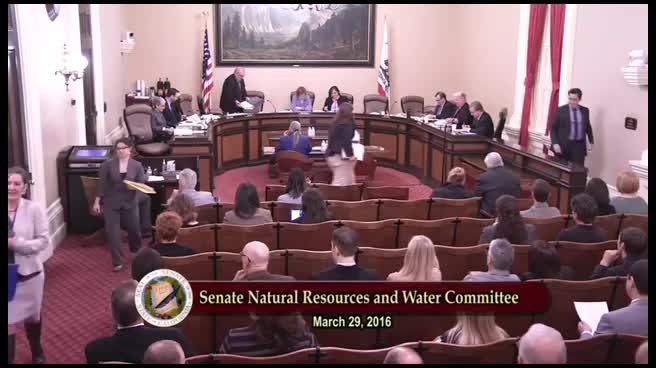
Bill Author

Bill Co-Author(s):