SB 1125: Employment relations: nail care salons: labor law compliance.
- Session Year: 2015-2016
- House: Senate
- Latest Version Date: 2016-03-28
The Barbering and Cosmetology Act provides for the licensure and regulation of barbers, cosmetologists, estheticians, manicurists, electrologists, and apprentices by the State Board of Barbering and Cosmetology. The act requires the licensure of any person, firm, or corporation operating an establishment engaged in a practice regulated by the board, as specified. Existing law imposes various duties on employers with respect to employment relations, including requiring the employer to, at the time of hiring, provide each employee with a written notice containing specified information about the terms of employment and the rights of the employee.
In the case of an establishment offering or proposing to offer nail care services, this bill would require the board to require an application for an establishment license to include a signed acknowledgment that the applicant understands that the applicant is responsible for compliance with any applicable labor laws of the state and the informational materials that the board selects or develops on basic labor laws, as specified.
Existing law regulates the wages, hours, and working conditions of employees with specified exceptions. Under existing law, these provisions apply to and include men, women, and minors employed in any occupation, trade, or industry, except as provided.
This bill would make nonsubstantive changes to these provisions.
The State Board of Barbering and Cosmetology shall require, as part of a complete application for an establishment license made pursuant to Section 7347 of the Business and Professions Code by an establishment providing or proposing to provide nail care services, that the applicant include a signed acknowledgment that the applicant understands both of the following:
(a)That establishments are responsible for compliance with any applicable labor laws of the state.
(b)Those informational materials on the basic labor laws of the state that the State Board of Barbering and Cosmetology shall select or develop. As used in this subdivision, basic labor laws shall include, but not be limited to, the following:
(1)Key differences between the legal rights, benefits, and obligations of an employee and an independent contractor.
(2)Wage and hour rights for hourly employees.
(3)Antidiscrimination laws relating to the use of a particular language in the workplace.
(4)Antiretaliation laws relating to a workers right to file complaints with the Department of Industrial Relations.
(5)How to obtain more information about labor law from the Department of Industrial Relations.
SECTION 1.Section 1171 of the Labor Code is amended to read:1171.The provisions of this chapter shall apply to and include men, women, and minors employed in any occupation, trade, or industry, whether compensation is measured by time, piece, or otherwise, but shall not include an individual employed as an outside salesperson or an individual participating in a national service program carried out using assistance provided under Section 12571 of Title 42 of the United States Code.
An individual participating in a national service program pursuant to Section 12571 of Title 42 of the United States Code shall be informed by the nonprofit, educational institution or other entity using his or her service, prior to the commencement of service of the requirement, if any, to work hours in excess of eight hours per day, or 40 hours per week, or both, and shall have the opportunity to opt out of that national service program at that time. Individuals participating in a national service program pursuant to Section 12571 of Title 42 of the United States Code shall not be discriminated against or be denied continued participation in the program for refusing to work overtime for a legitimate reason.
The provisions of this chapter shall apply to and include men, women, and minors employed in any occupation, trade, or industry, whether compensation is measured by time, piece, or otherwise, but shall not include any an individual employed as an outside salesman salesperson or any an individual participating in a national service program carried out using assistance provided under Section 12571 of Title 42 of the United States Code.
Any An individual participating in a national service program pursuant to Section 12571 of Title 42 of the United States Code shall be informed by the nonprofit, educational institution or other entity using his or her service, prior to the commencement of service of the requirement, if any, to work hours in excess of eight hours per day, or 40 hours per week, or both, and shall have the opportunity to opt out of that national service program at that time. Individuals participating in a national service program pursuant to Section 12571 of Title 42 of the United States Code shall not be discriminated against or be denied continued participation in the program for refusing to work overtime for a legitimate reason.
|
Date
|
Status
|
|---|---|
| Jun 28, 2016 | June 28 set for first hearing canceled at the request of author. |
| May 16, 2016 | Referred to Com. on B. & P. |
| May 10, 2016 | In Assembly. Read first time. Held at Desk. |
| May 9, 2016 | Read third time. Passed. (Ayes 36. Noes 0. Page 3805.) Ordered to the Assembly. |
| May 9, 2016 | Read third time. Passed. (Ayes 36. Noes 0.) Ordered to the Assembly. |
| May 3, 2016 | Read second time. Ordered to third reading. |
| May 2, 2016 | From committee: Be ordered to second reading pursuant to Senate Rule 28.8. |
| Apr 22, 2016 | Set for hearing May 2. |
| Apr 19, 2016 | From committee: Do pass and re-refer to Com. on APPR. (Ayes 9. Noes 0. Page 3591.) (April 18). Re-referred to Com. on APPR. |
| Apr 19, 2016 | From committee: Do pass and re-refer to Com. on APPR. (Ayes 9. Noes 0.) (April 18). Re-referred to Com. on APPR. |
| Apr 5, 2016 | Set for hearing April 18. |
| Mar 31, 2016 | Re-referred to Com. on B., P. & E.D. |
| Mar 28, 2016 | From committee with author's amendments. Read second time and amended. Re-referred to Com. on RLS. |
| Feb 25, 2016 | Referred to Com. on RLS. |
| Feb 18, 2016 | From printer. May be acted upon on or after March 19. |
| Feb 17, 2016 | Introduced. Read first time. To Com. on RLS. for assignment. To print. |
|
Date
|
Description
|
Location
|
Votes
|
|
|---|---|---|---|---|
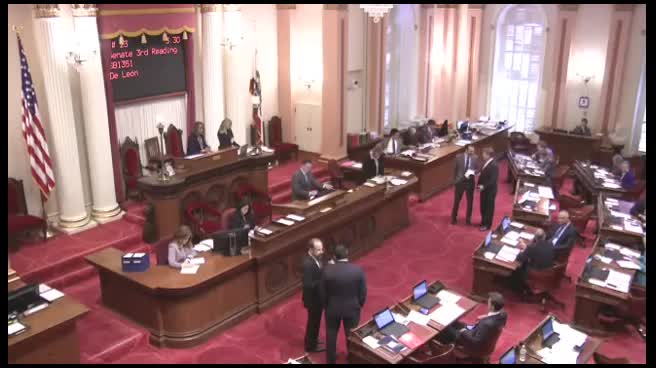
| May 9, 2016 | Senate 3rd Reading SB1125 Nguyen | Senate Floor |
Passed |
|
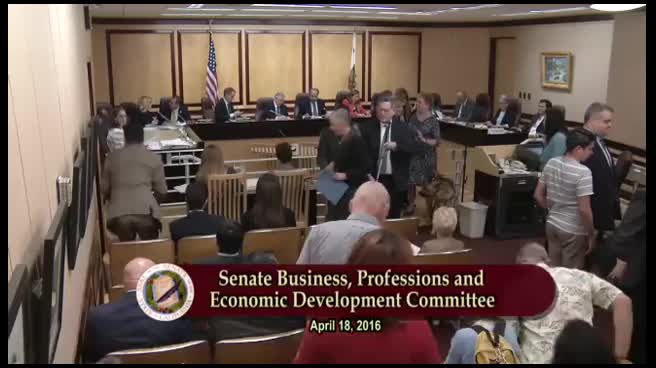
| Apr 18, 2016 | Do pass, but first be re-referred to the Committee on [Appropriations] | Senate Standing Committee on Business, Professions and Economic Development |
Passed |
This list shows positions taken on this bill by organizations on the date displayed, which is linked to the original source.
Positions by individuals are not included.
Office of Senate Floor Analyses (916) 651-1520 Fax: (916) 327-4478 | SB |
THIRD READING
Bill No: SB 1125
:
SENATE BUS, PROF. & ECON. DEV. COMMITTEE: 9-0, 4/18/16
AYES: Hill, Bates, Berryhill, Block, Galgiani, Hernandez, Jackson, Mendoza, Wieckowski
SENATE APPROPRIATIONS COMMITTEE: Senate Rule 28.8
DIGEST: This bill requires the Board of Barbering and Cosmetology (BBC), for an establishment license, if the establishment will offer nail care services, to include a signed acknowledgement that an applicant understands their responsibility to comply with any applicable state labor laws and comply with the informational materials BBC selects or develops related to basic labor laws.
Existing law:
- Provides for the licensure regulation of the practice of barbering, cosmetology, and electrolysis under the Barbering and Cosmetology Act (Act) by BBC.
- Establishes nail care as a specialty branch in the practice of cosmetology and defines nail care as the practice of cutting, trimming, polishing, coloring, tinting, cleansing, manicuring, or pedicuring the nails of any person or massaging or beautifying from the elbow to the fingertips or the knee to the toes of any person. (Business and Professions Code (BPC) § 7316 (c) (2))
- Defines “establishment” as any premises, building or part of a building where any activity licensed under the Act is practiced and sets forth requirements for licensure as an establishment by BBC. (BPC §§ 7346-7352)
- Requires an employer that permits patrons to pay gratuities by credit card to pay the employees the full amount of the gratuity that the patron indicated on the credit card slip, without any deductions for any credit card payment processing fees or costs that may be charged to the employer by the credit card company. (Labor Code (LAB) § 351)
This bill requires BBC, for an establishment license, if the establishment will offer nail care services, to include a signed acknowledgement that an applicant understands their responsibility to comply with any applicable state labor laws and comply with the informational materials BBC selects or develops related to basic labor laws.
Background
The author’s district includes the largest number of Vietnamese residents outside of Vietnam. According to the author, in just three of the 12 cities in the district, there are approximately 25,000 licensed cosmetologists. The author believes that it is important to be mindful of the cultural sensitivity around the communication with nail salon workers whether it is in English or Vietnamese and that sometimes basic labor laws can be overlooked. The author believes that having an establishment licensee sign an acknowledgement form will help with the overall understanding of California’s labor laws, thus helping to reinforce that all help reinforce that all nail care establishments are on the same page regarding state labor laws.
Nail care in California. Nail care is a specialty branch in the field of cosmetology. In California, a licensed cosmetologist can practice nail care and BBC also licenses manicurists as a separate license category. To become a licensed manicurist, an applicant must submit proof of completion to BBC of 400 training hours training covering all practices of a manicurist. BBC currently licenses 126,872 manicurists, 310,041 cosmetologists (whom can also perform nail care services) and 52,785 establishments. BBC does not include information in its establishment license data to differentiate between an establishment offering nail care services specifically or those offering other personal beautification services.
Concerns about nail salons and experiences of nail salon employees. Nail salons have been the focus of studies and media reports in recent years stemming from health, safety and labor concerns in these settings. In May 2015, the New York Times (NYT) published two articles stemming from interviews with more than 150 nail salon workers and owners that found that a cast majority of workers are paid below minimum wage and are sometimes not even paid. The articles found that workers “endure all manner of humiliation, including having their tips docked as punishment for minor transgressions, constant video monitoring by owners, even physical abuse.” The NYT also found that employers are rarely punished for labor and other violations and that in 2014, when the New York State Labor Department conducted its first nail salon sweep; investigators inspected 29 salons and found 116 wage violations. While only about a quarter of the more than 100 workers said they were paid an amount equivalent to the state’s minimum hourly wage, all but three said they had wages withheld in ways considered illegal, such as never getting overtime and many were unaware that working unpaid was against the law and their alarmingly low wages are also illegal.
A February 2016 follow up report in the NYT articles found that 40 percent of the salons inspected, as part of the Labor Department’s increased efforts to inspect following the original May articles, had underpaid employees, including one worker at a Manhattan salon who was paid $30 a day for 10-hour shifts, a manicurist in Queens who was paid only $200 for a 50-hour workweek, manicurists at seven salons who were forced to work for no pay or had to pay salon owners a fee, ostensibly to learn the trade and several owners admitted to submitting fake payroll records in an effort to fool investigators. The article highlighted that employers are often unfamiliar with the intricacies of state labor laws.
FISCAL EFFECT: Appropriation: Fiscal Com.: Local:
Professional Beauty Federation of California
None received
ARGUMENTS IN SUPPORT: Supporters note that this bill seeks to send a clear message to salon owners that they are legally obligated to follow all applicable labor laws in their operations and treatment of their employees.
5/4/16 15:04:10
SENATE COMMITTEE ON
BUSINESS, PROFESSIONS AND ECONOMIC DEVELOPMENT
Senator Jerry Hill, Chair
2015 - 2016 Regular
Bill No: Hearing Date: April 18, 2016
Author: | |||
Version: | March 28, 2016 | ||
Urgency: | No | Fiscal: | Yes |
Consultant: | Sarah Mason | ||
Subject:
SUMMARY:
Requires BBC, for an application for an establishment license, if the establishment will offer nail care services, to include a signed acknowledgement that an applicant understands their responsibility to comply with any applicable state labor laws and comply with the informational materials BBC selects or develops related to basic labor laws.
Existing law:
- Provides for the licensure regulation of the practice of barbering, cosmetology and electrolysis under the Barbering and Cosmetology Act (Act) by the Board of Barbering and Cosmetology (BBC).
- Establishes nail care as a specialty branch in the practice of cosmetology and defines nail care as the practice of cutting, trimming, polishing, coloring, tinting, cleansing, manicuring or pedicuring the nails of any person or massaging or beautifying from the elbow to the fingertips or the knee to the toes of any person. (BPC § 7316 (c) (2))
- Provides for licensure of manicurists by BBC to practice nail care and requires applicants to be over the age of 17, complete 10th grade in public California school or equivalent, not subject to a denial and have either completed a course in nail care from a BBC approved school or practiced nail care in another state for a period of time equivalent to the study and training of a BBC approved course or completed an apprenticeship program in nail care. (BPC § 7326)
- Defines “establishment” as any premises, building or part of a building where any activity licensed under the Act is practiced and sets forth requirements for licensure as an establishment by BBC. (BPC §§ 7346-7352)
- Requires BBC to maintain a program of random and targeted inspections of establishments to ensure compliance with applicable laws relating to the public health and safety and the conduct and operation of establishments. (BPC § 7353)
- Establishes the Division of Labor Standards Enforcement (DLSE) and grants the Chief of DLSE (Labor Commissioner) and his or her employees free access to all places of labor. States that any person, or agent or officer thereof, who refuses admission to the Labor Commissioner or deputy or agent or who, upon request, willfully neglects or refuses to furnish them any statistics or information, pertaining to their lawful duties is guilty of a misdemeanor, punishable by a fine of not more than one thousand dollars ($1,000). (Labor (LAB) Code §§ 83 and 90)
- States the policy of this state to vigorously enforce minimum labor standards in order to ensure employees are not required or permitted to work under substandard unlawful conditions or for employers that have not secured the payment of compensation, and to protect employers who comply with the law from those who attempt to gain a competitive advantage at the expense of their workers by failing to comply with minimum labor standards. Requires the Labor Commissioner to adopt an enforcement plan for the field enforcement unit which shall identify priorities for investigations to be undertaken by the unit that ensure the available resources will be concentrated in industries, occupations, and areas in which employees are relatively low paid and unskilled, and those in which there has been a history of violations and those with high rates of noncompliance with the law. (LAB § 90.5)
- Authorizes the Labor Commissioner, after investigation and upon determination that wages or monetary benefits are due and unpaid to any worker in the State of California, to collect such wages or benefits on behalf of the worker without assignment of such wages or benefits to the Commissioner. (LAB § 96.7)
- Authorizes the Labor Commissioner to investigate employee complaints and provide for a hearing in any action to recover wages, penalties, and other demands for compensation. (LAB § 98)
- Prohibits an employer or agent from collecting, taking, or receiving any gratuity or a part thereof that is paid, given to, or left for an employee by a patron, or deduct any amount from wages due an employee on account of a gratuity, or require an employee to credit the amount, or any part thereof, of a gratuity against and as a part of the wages due the employee from the employer. Provides that every gratuity is hereby declared to be the sole property of the employee or employees to whom it was paid, given, or left for. Requires an employer that permits patrons to pay gratuities by credit card to pay the employees the full amount of the gratuity that the patron indicated on the credit card slip, without any deductions for any credit card payment processing fees or costs that may be charged to the employer by the credit card company. Provides that payment of gratuities made by patrons using credit cards shall be made to the employees not later than the next regular payday following the date the patron authorized the credit card payment. (LAB § 351)
- Requires, at the time of hiring, an employer to provide each employee a written notice, in the language the employer normally uses to communicate employment-related information to the employee, containing information about the rate or rates of pay. (LAB § 2810.5)
This bill:
- Requires BBC, for an application for an establishment license, if the establishment will offer nail care services, to include a signed acknowledgement that an applicant understands their responsibility to comply with any applicable state labor laws and the informational materials selected or developed by BBC on “basic labor laws”. Specifies that “basic labor laws” includes, but is not limited to:
- Key differences between legal rights, benefits and obligations of an employee and an independent contractor;
- Wage and hour rights for hourly employees;
- Antidiscrimination laws relating to the use of a particular language in the workplace;
- Anti-retaliation laws relating to a worker’s right to file complaints with the Department of Industrial Relations (DIR); and
- How to obtain more information about labor law from DIR.
FISCAL EFFECT:
Unknown. This bill is keyed “fiscal” by Legislative Counsel.
COMMENTS:
- Purpose. The Author is the Sponsor of this bill. The Author’s district includes the largest number of Vietnamese residents outside of Vietnam. According to the Author, in just three of the twelve cities in the district, there are approximately 25,000 licensed cosmetologists. The Author believes that it is important to be mindful of the cultural sensitivity around the communication with nail salon workers whether it be in English or Vietnamese and that sometimes basic labor laws can be overlooked. The Author believes that having an establishment licensee sign an acknowledgement form will help with the overall understanding of California’s labor laws, thus helping to reinforce that all help reinforce that all nail care establishments are on the same page regarding state labor laws.
- Nail Care in California. Nail care is a specialty branch in the field of cosmetology. In California, a licensed cosmetologist can practice nail care and BBC also licenses manicurists as a separate license category. To become a licensed manicurist, an applicant must submit proof of completion to BBC of 400 training hours training covering all practices of a manicurist, according to the following:
- 300 hours of technical instruction and practical training in nail care – 60 hours of technical instruction in manicures and pedicures (water and oil manicures including hand and arm massage, complete pedicure including foot and ankle massage, application of artificial nails including liquid, gel, and powder brush-ons, nail tips, nail wraps and repairs, and nail analysis); 60 hours of practical operations in manicures and pedicures and 180 hours of nails
- 100 hours of technical instruction and practical training in health and safety – 10 hours on laws and regulations including the Act and BBC Rules and Regulations; 25 hours on chemistry pertaining to the practices of a manicurist including the chemical composition and purpose of nail care preparations, health and safety/hazardous substances, including training in chemicals and health in establishments, material safety data sheets, protection from hazardous chemicals and preventing chemical injuries, health and safety laws and agencies, ergonomics, and communicable diseases, including HIV/AIDS and Hepatitis B; 20 hours on disinfection and sanitation procedures to protect the health and safety of the consumer as well as the technician which entail disinfecting instruments and equipment as specified with special attention given to pedicure foot spa and basin disinfection procedures and; 10 hours in bacteriology, anatomy and physiology
BBC also recommends in its regulations that schools provide training in communication skills that includes professional ethics, salesmanship, decorum, record-keeping, client service record cards, basic tax responsibilities related to independent contractors, booth renters, employees, and employers
BBC currently licenses 126,872 manicurists, 310,041 cosmetologists (who can also perform nail care services) and 52,785 establishments. BBC does not include information in its establishment license data to differentiate between an establishment offering nail care services specifically or those offering other personal beautification services.
- Concerns About Nail Salons and Experiences of Nail Salon Employees. Nail salons have been the focus of studies and media reports in recent years stemming from health, safety and labor concerns in these settings. In May 2015, the New York Times (NYT) published two articles stemming from interviews with more than 150 nail salon workers and owners that found that a cast majority of workers are paid below minimum wage and are sometimes not even paid. The articles found that workers “endure all manner of humiliation, including having their tips docked as punishment for minor transgressions, constant video monitoring by owners, even physical abuse.” The NYT also found that employers are rarely punished for labor and other violations and that in 2014, when the New York State Labor Department conducted its first nail salon sweep, investigators inspected 29 salons and found 116 wage violations. While only about a quarter of the more than 100 workers said they were paid an amount equivalent to that state’s minimum hourly wage, all but three said they had wages withheld in ways considered illegal, such as never getting overtime and many were unaware that working unpaid was against the law and their alarmingly low wages are also illegal.
A February 2016 follow up report in the NYT articles found that 40 percent of the salons inspected, as part of the Labor Department’s increased efforts to inspect following the original May articles, underpaid employees, including one worker at a Manhattan salon who was paid $30 a day for 10-hour shifts, a manicurist in Queens who was paid only $200 for a 50-hour workweek, manicurists at seven salons who were forced to work for no pay or had to pay salon owners a fee, ostensibly to learn the trade and several owners admitted to submitting fake payroll records in an effort to fool investigators. The article highlighted that employers are often unfamiliar with the intricacies of state labor laws.
- Wages and Tips. In 2008, the Ford Foundation sponsored a survey of 4,387 workers in low-wage industries in the three largest U.S. cities: Chicago, Los Angeles and New York City. The report of that survey, titled Broken Laws, Unprotected Workers: Violations of Employment and Labor Laws in America's Cities, revealed that 26 percent of workers in the sample were paid less than the legally required minimum wage the prior work week, and 60 percent of these workers were underpaid by more than $1 per hour. In addition, 76 percent of the respondents who worked overtime in the previous week were not paid the legally required overtime rate by their employers.
The study also notes that minimum wage violation rates vary significantly by industry, and occupation. For example, some industries, such as apparel and textile manufacturing and personal and repair services have minimum wage violation rates that exceed 40 percent, while others, including restaurants, and retail and grocery stores, have rates of 20 to 25 percent. However, the study found that undocumented immigrant women were at the greatest risk of minimum wage violations. The study estimated that the workers in low-wage industries Chicago, Los Angeles, and New York City lose more than $56.4 million per week due to labor law violations.
A follow-up study by the UCLA Institute for Research and Labor and Employment was published in 2015, and that study utilized the data from the 2008 survey, but focused specifically on Los Angeles County. This study, titled Wage Theft and Workplace Violations in Los Angeles: The Failure of Employment and Labor Law for Low-Wage Workers focused on a survey results of 1,815 workers in Los Angeles County.
This study found similar results to the national survey: almost 30 percent of the workers sampled were paid less than the minimum wage in the prior work week, and 63.3 percent of these workers were underpaid by more than $1 per hour. Assuming a full-year work schedule, Los Angeles County survey respondents lost an average of $2,070.00 annually out of total earnings of $16,536.00. The study estimated that workers in low-wage industries in Los Angeles County lose more than $26.2 million per week as a result of employment and labor law violations.
Both of the studies make the same public policy recommendations to address these issues, which included strengthening government enforcement of existing employment and labor laws and stiffening the penalties.
The low rate of collections of wages has also been evaluated. According to a 2013 report published by the National Employment Law Project (NELP) and the UCLA Labor Center, only 17 percent of workers who prevailed in their wage claims before the DLSE and won a judgment were able to receive any payment between 2008 and 2011. Of those who did receive payment between 2008 and 2011, workers were able to collect 15 percent of what was owed. In short, the vast majority of wage theft victims received nothing, and those that received anything received little of what they were legally due.
Tips withheld by nail salon employers was highlighted in the New York Times series. According to the Internal Revenue Service, tips are discretionary (optional or extra) payments determined by a customer that employees receive from customers. Tips include cash tips received directly from customers, tips from customers who leave a tip through electronic settlement or payment (including a credit card, debit card, gift card, or any other electronic payment method), the value of any noncash tips, such as tickets, or other items of value and tip amounts received from other employees paid out through tip pools or tip splitting, or other formal or informal tip sharing arrangement. All cash and non-cash tips an employee receives are income and are subject to Federal income taxes. All cash tips received by an employee in any calendar month are subject to social security and Medicare taxes and must be reported to the employer, unless the tips received by the employee during a single calendar month while working for the employer total less than $20. Cash tips include tips received from customers, charged tips (e.g., credit and debit card charges) distributed to the employee by his or her employer, and tips received from other employees under any tip-sharing arrangement.
According to the United States Department of Labor (USDL), tipped employees are those who customarily and regularly receive more than $30 per month in tips. Tips are the property of the employee. The employer is prohibited from using an employee’s tips for any reason other than as a credit against its minimum wage obligation to the employee (“tip credit”) or in furtherance of a valid tip pool. Employers electing to use the tip credit provision must be able to show that tipped employees receive at least the minimum wage when direct (or cash) wages and the tip credit amount are combined. If an employee's tips combined with the employer's direct (or cash) wages of at least $2.13 per hour do not equal the minimum hourly wage of $7.25 per hour, the employer must make up the difference. USDL notes that a tip is the sole property of the tipped employee regardless of whether the employer takes a tip credit and that the Fair Labor Standards Act (FLSA) prohibits any arrangement between the employer and the tipped employee whereby any part of the tip received becomes the property of the employer. For example, even where a tipped employee receives at least $7.25 per hour in wages directly from the employer, the employee may not be required to turn over his or her tips to the employer.
USDL advises that where tips are charged on a credit card and the employer must pay the credit card company a percentage on each sale, the employer may pay the employee the tip, less that percentage. For example, where a credit card company charges an employer 3 percent on all sales charged to its credit service, the employer may pay the tipped employee 97 percent of the tips without violating the FLSA. However, this charge on the tip may not reduce the employee's wage below the required minimum wage. The amount due the employee must be paid no later than the regular pay day and may not be held while the employer is awaiting reimbursement from the credit card company.
- Related Legislation This Year. AB 1978 (Gonzalez) requires Chief of the Division of Labor Standards Enforcement (Labor Commissioner), to include information on the status of wage claims and retaliation complaints, including the average amount of time it takes for a wage claim to receive a preliminary hearing and the current backlog of claims and complaints in the annual report to the Legislature concerning the effectiveness of the field enforcement unit. (Status: This bill is pending in the Assembly Committee on Labor and Employment.)
AB 2025 (Gonzalez) requires BBC to make available and offer all written materials provided to licensees and applicants in English, Spanish, and Vietnamese. The bill also requires BBC to include labor laws that pertain to the types of licensees who may work in establishments as a required subject of instruction. Additionally, the bill adds requirements to licensure as an establishment, including knowledge of basic labor laws that pertain to the types of licensees who may work in the establishment (such as the differences between the legal rights, benefits, and obligations of an employee and an independent contractor, wage and hour rights for hourly employees, antidiscrimination laws relating to the use of a particular language in the workplace, anti-retaliation laws relating to a worker’s right to file complaints with the Department of Industrial Relations and how to obtain more information about labor law from the Department of Industrial Relations) and requires BBC to develop and add questions on basic labor laws to the application, select or create informational materials on basic labor laws in consultation with stakeholders and require establishment applicants to sign an acknowledgement that they understand that establishments are responsible for obeying state labor laws and they understand the BBC’s basic labor law materials. (Status: The bill is pending in the Assembly Committee on Business and Professions.)
AB 2125 (Chiu) requires the Department of Public Health (DPH) to publish guidelines, including one or more model ordinances, for cities, counties, and city and counties to voluntarily implement local healthy nail salon recognition programs with specified criteria for nail salons, including the use of less toxic nail polishes and polish removers and improved ventilation. (Status: The bill is pending in the Assembly Committee on Environmental Safety and Toxic Materials.)
AB 2437 (Ting) requires a nail care services establishment licensed by BBC to register with the Division of Labor Standards Enforcement within the Department of Industrial Relations and receive specified training regarding workplace rights and wage and hour laws including overtime compensation and requires the establishment to arrange for the training to be provided to its employees. The bill also requires BBC to deny the renewal of an establishment license to an establishment that provides nail care services if a final judgment has been made against the employer for failing to pay wages. (Status: The bill is pending in the Assembly Committee on Business and Professions.)
- Prior Related Legislation. SB 549 (Correa) would have authorized BBC to collect gender, language and ethnicity data from new licensure applicants and renewal licenses and posted certain information on the BBC’s website. (Status: The bill was vetoed by Governor Schwarzenegger who wrote that “The stated intent of this bill is based on the belief that the collection of statistics on the gender, ethnicity, and language preference of the Board of Barbering and Cosmetology (Board) licensees will lead to improved working conditions. Since that connection is specious at best, I do not believe this is an area that requires micromanagement of the Board”.)
AB 2689 (Tran) of 2008 would have established the Vietnamese Nail Worker Information Act which would require manufacturers and certain other persons that sell or use professional use-only nail care products to prepare, translate and provide material safety data sheets (MSDS) in the Vietnamese language to purchasers of the products as well as licensed professional nail care employees upon request. (Status: The bill was held under submission in the Assembly Committee on Appropriations.)
- BBC Is Not Able To Differentiate Between Establishment Types. This bill applies specifically to establishments that offer nail care services, however BBC does not currently classify licensed establishments based on the types of services they offer. BBC does not, for example, ask an applicant for an establishment license to list the type of establishment or whether the establishment will offer nail care services. If the Author intends for nail salons to be the only type of BBC licensed establishment where the applicant is required to acknowledge understanding of and responsibility to comply with state labor laws, the Author may wish to require BBC to collect establishment data about type of services provided, to then ensure that the provisions of the bill apply to applications for nail care services establishments.
SUPPORT AND OPPOSITION:
Support: None on file as of April 12, 2016.
Opposition: None on file as of April 12, 2016.
-- END --
Discussed in Hearing
 1MIN
Senate Floor
 6MIN
Senate Standing Committee on Business, Professions and Economic Development
Bill Author

Bill Co-Author(s):