SB 1135: Health care coverage: notice of timely access to care.
- Session Year: 2015-2016
- House: Senate
- Latest Version Date: 2016-09-23
Existing law, the Knox-Keene Health Care Service Plan Act of 1975, provides for the licensure and regulation of health care service plans by the Department of Managed Health Care and makes a willful violation of the act a crime. Existing law also provides for the regulation of health insurers by the Department of Insurance. Existing law requires each department to develop and adopt regulations to ensure that enrollees have access to needed health care services in a timely manner.
Existing law provides for the Medi-Cal program, which is administered by the State Department of Health Care Services, under which qualified low-income individuals receive health care services. The Medi-Cal program is, in part, governed and funded by federal Medicaid program provisions. Existing law requires each prepaid health plan to establish a grievance procedure under which enrollees may submit their grievances.
This bill would require a health care service plan contract or a health insurance policy that provides benefits through contracts with providers for alternative rates that is issued, renewed, or amended on or after July 1, 2017, to provide information to enrollees and insureds regarding the standards for timely access to health care services and other specified health care access information, including information related to receipt of interpreter services in a timely manner, no less than annually, and would make these provisions applicable to Medi-Cal managed care plans. The bill would also require a health care service plan or a health insurer that contracts with providers for alternative rates of payment to provide a contracting health care provider with specified information relating to the provision of referrals or health care services in a timely manner.
Because a willful violation of the bills provisions by a health care service plan would be a crime, the bill would impose a state-mandated local program.
The California Constitution requires the state to reimburse local agencies and school districts for certain costs mandated by the state. Statutory provisions establish procedures for making that reimbursement.
This bill would provide that no reimbursement is required by this act for a specified reason.
Existing law, the Knox-Keene Health Care Service Plan Act of 1975, provides for the licensure and regulation of health care service plans by the Department of Managed Health Care and makes a willful violation of the act a crime. Existing law also provides for the regulation of health insurers by the Department of Insurance. Existing law requires each department to develop and adopt regulations to ensure that enrollees have access to needed health care services in a timely manner.
Existing law provides for the Medi-Cal program, which is administered by the State Department of Health Care Services, under which qualified low-income individuals receive health care services. The Medi-Cal program is, in part, governed and funded by federal Medicaid program provisions. Existing law requires each prepaid health plan to establish a grievance procedure under which enrollees may submit their grievances.
This bill would require a health care service plan contract or a health insurance policy that provides benefits through contracts with providers for alternative rates that is issued, renewed, or amended on or after January July 1, 2017, to provide information to enrollees and insureds regarding the standards for timely access to health care services and other specified health care access information, including information related to receipt of interpreter services in a timely manner, no less than annually, and would make these provisions applicable to Medi-Cal managed care plans. The bill would also require a health care service plan or a health insurer that contracts with providers for alternative rates of payment to provide a contracting health care provider with specified information relating to the provision of referrals or health care services in a timely manner.
Because a willful violation of the bills provisions by a health care service plan would be a crime, the bill would impose a state-mandated local program.
The California Constitution requires the state to reimburse local agencies and school districts for certain costs mandated by the state. Statutory provisions establish procedures for making that reimbursement.
This bill would provide that no reimbursement is required by this act for a specified reason.
Existing law, the Knox-Keene Health Care Service Plan Act of 1975, provides for the licensure and regulation of health care service plans by the Department of Managed Health Care and makes a willful violation of the act a crime. Existing law also provides for the regulation of health insurers by the Department of Insurance. Existing law requires each department to develop and adopt regulations to ensure that enrollees have access to needed health care services in a timely manner.
Existing law provides for the Medi-Cal program, which is administered by the State Department of Health Care Services, under which qualified low-income individuals receive health care services. The Medi-Cal program is, in part, governed and funded by federal Medicaid program provisions. Existing law requires each prepaid health plan to establish a grievance procedure under which enrollees may submit their grievances.
This bill would require a health care service plan contract or a health insurance policy that is issued, renewed, or amended on or after January 1, 2017, to provide information to enrollees and insureds regarding the standards for timely access to health care services and other specified health care access information, including information related to receipt of interpreter services in a timely manner, no less than annually, and would make these provisions applicable to Medi-Cal managed care plans. The bill would also require a health care service plan or a health insurer to provide a contracting health care provider with specified information relating to the provision of referrals or health care services in a timely manner.
Because a willful violation of the bills provisions by a health care service plan would be a crime, the bill would impose a state-mandated local program.
The California Constitution requires the state to reimburse local agencies and school districts for certain costs mandated by the state. Statutory provisions establish procedures for making that reimbursement.
This bill would provide that no reimbursement is required by this act for a specified reason.
Existing law, the Knox-Keene Health Care Service Plan Act of 1975, provides for the licensure and regulation of health care service plans by the Department of Managed Health Care and makes a willful violation of the act a crime. Existing law also provides for the regulation of health insurers by the Department of Insurance. Existing law requires each department to develop and adopt regulations to ensure that enrollees have access to needed health care services in a timely manner.
Existing law provides for the Medi-Cal program, which is administered by the State Department of Health Care Services, under which qualified low-income individuals receive health care services. The Medi-Cal program is, in part, governed and funded by federal Medicaid program provisions. Existing law requires each prepaid health plan to establish a grievance procedure under which enrollees may submit their grievances.
This bill would require a health care service plan contract or a health insurance policy that is issued, renewed, or amended on or after January 1, 2017, to provide information to enrollees and insureds regarding the standards for timely access to health care services and other specified health care access information, including information related to receipt of interpreter services in a timely manner, no less than annually, and would make these provisions applicable to Medi-Cal managed care plans. The bill would require a health care service plan, including a Medi-Cal managed care plan, or health insurer to provide an enrollee or an insured with information regarding consumer assistance provided by the licensing agency, as specified. The bill would also require a health care service plan or a health insurer to provide a contracting health care provider with specified information relating to the provision of referrals or health care services in a timely manner.
Because a willful violation of the bills provisions by a health care service plan would be a crime, the bill would impose a state-mandated local program.
The California Constitution requires the state to reimburse local agencies and school districts for certain costs mandated by the state. Statutory provisions establish procedures for making that reimbursement.
This bill would provide that no reimbursement is required by this act for a specified reason.
Existing law, the Knox-Keene Health Care Service Plan Act of 1975, provides for the licensure and regulation of health care service plans by the Department of Managed Health Care and makes a willful violation of the act a crime. Existing law also provides for the regulation of health insurers by the Department of Insurance. Existing law requires each department to develop and adopt regulations to ensure that enrollees have access to needed health care services in a timely manner.
Existing law provides for the Medi-Cal program, which is administered by the State Department of Health Care Services, under which qualified low-income individuals receive health care services. The Medi-Cal program is, in part, governed and funded by federal Medicaid program provisions. Existing law requires each prepaid health plan to establish a grievance procedure under which enrollees may submit their grievances.
This bill would require a health care service plan contract or a health insurance policy that is issued, renewed, or amended on or after January 1, 2017, and that provides coverage for hospital, physician, or dental services, to require the plan or insurer to provide information to enrollees and insureds regarding the standards for timely access to health care services, including appointment wait times, the availability of triage or screening services by telephone, the availability of interpreter services at the time of an appointment, and information regarding consumer assistance provided by the licensing agencies, as specified. services and other specified health care access information, including information related to receipt of interpreter services in a timely manner, no less than annually, and would make these provisions applicable to Medi-Cal managed care plans. The bill would require a health care service plan, including a Medi-Cal managed care plan, or health insurer to provide an enrollee or an insured with information regarding consumer assistance provided by the licensing agency, as specified. The bill would also require a health care service plan or a health insurer to provide a contracting health care provider with specified information relating to the provision of referrals or health care services in a timely manner.
Because a willful violation of the bills provisions by a health care service plan would be a crime, the bill would impose a state-mandated local program.
The California Constitution requires the state to reimburse local agencies and school districts for certain costs mandated by the state. Statutory provisions establish procedures for making that reimbursement.
This bill would provide that no reimbursement is required by this act for a specified reason.
Existing law, the Knox-Keene Health Care Service Plan Act of 1975, provides for the licensure and regulation of health care service plans by the Department of Managed Health Care and makes a willful violation of the act a crime. Existing law also provides for the regulation of health insurers by the Department of Insurance. Existing law requires each department to develop and adopt regulations to ensure that enrollees have access to needed health care services in a timely manner.
This bill would require a health care service plan contract or a health insurance policy that is issued, renewed, or amended on or after January 1, 2017, and that provides coverage for hospital, physician, or dental services, to require the plan or insurer to provide information to enrollees and insureds regarding access to health care services, including appointment wait times, the availability of triage or screening services by telephone, the availability of interpreter services at the time of an appointment, and information regarding consumer assistance provided by the licensing agencies, as specified. The bill would also require a health care service plan or a health insurer to provide a contracting health care provider with specified information relating to the provision of referrals or health care services in a timely manner.
Because a willful violation of the bills provisions by a health care service plan would be a crime, the bill would impose a state-mandated local program.
The California Constitution requires the state to reimburse local agencies and school districts for certain costs mandated by the state. Statutory provisions establish procedures for making that reimbursement.
This bill would provide that no reimbursement is required by this act for a specified reason.
(a)A health care service plan contract that is issued, renewed, or amended on or after July 1, 2017, shall provide information to an enrollee regarding the standards for timely access to care adopted pursuant to Section 1367.03 and the information required by this section, including information related to receipt of interpreter services in a timely manner, no less than annually.
(b)A health care service plan at a minimum shall provide information regarding appointment wait times for urgent care, nonurgent primary care, nonurgent specialty care, and telephone screening established pursuant to Section 1367.03 to enrollees and contracting providers. The information shall also include notice of the availability of interpreter services at the time of the appointment pursuant to Section 1367.04. A health care service plan may indicate that exceptions to appointment wait times may apply if the department has found exceptions to be permissible.
(c)The information required to be provided pursuant to this section shall be provided to an enrollee with individual coverage upon initial enrollment and annually thereafter upon renewal, and to enrollees and subscribers with group coverage upon initial enrollment and annually thereafter upon renewal. A health care service plan may include this information with other materials sent to the enrollee. The information shall also be provided in the following manner:
(1)In a separate section of the evidence of coverage titled Timely Access to Care.
(2)At least annually, in or with newsletters, outreach, or other materials that are routinely disseminated to the plans enrollees.
(3)Commencing January 1, 2018, in a separate section of the provider directory published and maintained by the health care service plan pursuant to Section 1367.27. The separate section shall be titled Timely Access to Care.(4)On the Internet Web site published and maintained by the health care service plan, in a manner that allows enrollees and prospective enrollees to easily locate the information.(d)(1)A health care service plan shall provide the information required by this section to contracting providers on no less than an annual basis.
(2)A health care service plan shall also inform a contracting provider of all of the following:
(A)Information about a health care service plans obligation under California law to provide or arrange for timely access to care.
(B)How a contracting provider or enrollee can contact the health care service plan to obtain assistance if a patient is unable to obtain a timely referral to an appropriate provider.
(C)The toll-free telephone number for the Department of Managed Health Care where providers and enrollees can file a complaint if they are unable to obtain a timely referral to an appropriate provider.
(3)A health care service plan may comply with this subdivision by including the information with an existing communication with a contracting provider.
(e)This section shall apply to Medi-Cal managed care plan contracts entered into with the State Department of Health Care Services pursuant to Chapter 7 (commencing with Section 14000) or Chapter 8 (commencing with Section 14200) of Part 3 of Division 9 of the Welfare and Institutions Code.
SEC. 2.Section 10133.53 is added to the Insurance Code, to read:10133.53.(a)A health insurance policy that is issued, renewed, or amended on or after July 1, 2017, that provides benefits through contracts with providers for alternative rates pursuant to Section 10133 shall provide information to an insured regarding the standards for timely access to care adopted pursuant to Section 10133.5 and the information required by this section, including information related to receipt of interpreter services in a timely manner, no less than annually.
(b)A health insurer that contracts with providers for alternative rates of payment pursuant to Section 10133 shall, at a minimum, provide information regarding appointment wait times for urgent care, nonurgent primary care, nonurgent specialty care, and telephone screening established pursuant to Section 10133.5 to insureds and contracting providers. The information shall also include notice of the availability of interpreter services at the time of the appointment pursuant to Section 10133.8. A health insurer may indicate that exceptions to appointment wait times may apply if the department has found exceptions to be permissible.
(c)The information required to be provided pursuant to this section shall be provided to an insured with individual coverage upon initial enrollment and annually thereafter upon renewal, and to insureds and group policyholders with group coverage upon initial enrollment and annually thereafter upon renewal. An insurer may include this information with other materials sent to the insured. The information shall also be provided in the following manner:
(1)In a separate section of the evidence of coverage titled Timely Access to Care.
(2)At least annually, in or with newsletters, outreach, or other materials that are routinely disseminated to the policys insureds.
(3)Commencing January 1, 2018, in a separate section of the provider directory published and maintained by the insurer pursuant to Section 10133.15. The separate section shall be titled Timely Access to Care.(4)On the Internet Web site published and maintained by the insurer, in a manner that allows insureds and prospective insureds to easily locate the information.(d)(1)A health insurer shall provide the information required by this section to contracting providers on no less than an annual basis.
(2)A health insurer shall also inform a contracting provider of all of the following:
(A)Information about a health insurers obligation under California law to provide or arrange for timely access to care.
(B)How a contracting provider or insured can contact the health insurer to obtain assistance if a patient is unable to obtain a timely referral to an appropriate provider.
(C)The toll-free telephone number for the Department of Insurance where providers and insureds can file a complaint if they are unable to obtain a timely referral to an appropriate provider.
(3)A health insurer may comply with this subdivision by including the information with an existing communication with a contracting provider.
SEC. 3.No reimbursement is required by this act pursuant to Section 6 of Article XIIIB of the California Constitution because the only costs that may be incurred by a local agency or school district will be incurred because this act creates a new crime or infraction, eliminates a crime or infraction, or changes the penalty for a crime or infraction, within the meaning of Section 17556 of the Government Code, or changes the definition of a crime within the meaning of Section 6 of Article XIIIB of the California Constitution.
(a)A health care service plan contract that is issued, renewed, or amended on or after January July 1, 2017, shall provide information to an enrollee regarding the standards for timely access to care adopted pursuant to Section 1367.03 and the information required by this section, including information related to receipt of interpreter services in a timely manner, no less than annually.
(b)A health care service plan at a minimum shall provide information regarding appointment wait times for urgent care, nonurgent primary care, nonurgent specialty care, and telephone screening established pursuant to Section 1367.03 to enrollees and contracting providers. The information shall also include notice of the availability of interpreter services at the time of the appointment pursuant to Section 1367.04. A health care service plan may indicate that exceptions to appointment wait times may apply if the department has found exceptions to be permissible.
(c)The information required to be provided pursuant to this section shall be provided to an enrollee with individual coverage upon initial enrollment and annually thereafter upon renewal, and to enrollees and subscribers with group coverage upon initial enrollment and annually thereafter upon renewal. A health care service plan may include this information with other materials sent to the enrollee. The information shall also be provided in the following manner:
(1)In a separate section of the evidence of coverage titled Timely Access to Care.
(2)In the same manner and place that notice of language assistance programs is provided pursuant to Section 1367.04 and the regulations adopted thereunder.
(2)At least annually, in or with newsletters, outreach, or other materials that are routinely disseminated to the plans enrollees.
(3)In Commencing January 1, 2018, in a separate section of the provider directory published and maintained by the health care service plan pursuant to Section 1367.27. The separate section shall be titled Timely Access to Care.(4)On the Internet Web site published and maintained by the health care service plan, in a manner that allows enrollees and prospective enrollees to easily locate the information.(d)(1)A health care service plan shall also provide the information required by this section to contracting providers on no less than an annual basis, and shall additionally provide a contracting provider with the following information:
If one of your patients is unable to obtain a timely referral, either you or your patient may call the health care service plan or the Department of Managed Health Care Help Center at 1-888-HMO-2219 to obtain help.
California law requires a health care service plan to provide or arrange for the provision of covered health care services in a timely manner appropriate for the nature of the enrollees condition, consistent with good professional practice. If an appointment is delayed or extended, the referring or treating health care professional shall note in the relevant record that a longer waiting time will not have a detrimental effect on the health of the enrollee.
It is the obligation of the health care service plan to have sufficient numbers of contracted providers to maintain compliance with timely access to care for enrollees. If a contracting provider is unable to provide care in a timely manner consistent with the requirements for timely access to care, the health care service plan shall have in place policies and procedures to ensure that the enrollee shall receive timely access to care.
(d)(1)A health care service plan shall provide the information required by this section to contracting providers on no less than an annual basis.
(2)A health care service plan shall also inform a contracting provider of all of the following:
(A)Information about a health care service plans obligation under California law to provide or arrange for timely access to care.
(B)How a contracting provider or enrollee can contact the health care service plan to obtain assistance if a patient is unable to obtain a timely referral to an appropriate provider.
(C)The toll-free telephone number for the Department of Managed Health Care where providers and enrollees can file a complaint if they are unable to obtain a timely referral to an appropriate provider.
(2)
(3)A health care service plan may comply with this subdivision by including the information with an existing communication with a contracting provider.
(e)This section shall apply to Medi-Cal managed care plan contracts entered into with the State Department of Health Care Services pursuant to Chapter 7 (commencing with Section 14000) or Chapter 8 (commencing with Section 14200) of Part 3 of Division 9 of the Welfare and Institutions Code.
SEC. 2.Section 10133.53 is added to the Insurance Code, to read:10133.53.(a)A health insurance policy that is issued, renewed, or amended on or after January July 1, 2017, that provides benefits through contracts with providers for alternative rates pursuant to Section 10133 shall provide information to an insured regarding the standards for timely access to care adopted pursuant to Section 10133.5 and the information required by this section, including information related to receipt of interpreter services in a timely manner, no less than annually.
(b)A health insurer for a health insurance policy, as defined in subdivision (b) of Section 106, that provides or arranges for hospital or physician services at a minimum shall that contracts with providers for alternative rates of payment pursuant to Section 10133 shall, at a minimum, provide information regarding appointment wait times for urgent care, nonurgent primary care, nonurgent specialty care, and telephone screening established pursuant to Section 10133.5 to insureds and contracting providers. The information shall also include notice of the availability of interpreter services at the time of the appointment pursuant to Section 10133.8. A health insurer for a policy of health insurance may indicate that exceptions to appointment wait times may apply if the department has found exceptions to be permissible.
(c)The information required to be provided pursuant to this section shall be provided to an insured with individual coverage upon initial enrollment and annually thereafter upon renewal, and to insureds and group policyholders with group coverage upon initial enrollment and annually thereafter upon renewal. An insurer may include this information with other materials sent to the insured. The information shall also be provided in the following manner:
(1)In a separate section of the evidence of coverage titled Timely Access to Care.
(2)In the same manner and place that notice of language assistance programs is provided pursuant to Section 10133.8 and the regulations adopted thereunder.
(2)At least annually, in or with newsletters, outreach, or other materials that are routinely disseminated to the policys insureds.
(3)In Commencing January 1, 2018, in a separate section of the provider directory published and maintained by the insurer pursuant to Section 10133.15. The separate section shall be titled Timely Access to Care.(4)On the Internet Web site published and maintained by the insurer, in a manner that allows insureds and prospective insureds to easily locate the information.(d)(1)A health insurer shall also provide the information required by this section to contracting providers on no less than an annual basis, and shall additionally provide a contracting provider with the following information:
If one of your patients is unable to obtain a timely referral, either you or your patient may call the health insurer or the Department of Insurance at 1-800-927-4357 to obtain help.
California law requires a health insurer to provide or arrange for the provision of covered health care services in a timely manner appropriate for the nature of the insureds condition, consistent with good professional practice. If an appointment is delayed or extended, the referring or treating health care professional shall note in the relevant record that a longer waiting time will not have a detrimental effect on the health of the insured.
It is the obligation of the health insurer to have sufficient numbers of contracted providers to maintain compliance with timely access to care for insureds. If a contracting provider is unable to provide care in a timely manner consistent with the requirements for timely access to care, the health insurer shall have in place policies and procedures to ensure that the insured shall receive timely access to care.
(d)(1)A health insurer shall provide the information required by this section to contracting providers on no less than an annual basis.
(2)A health insurer shall also inform a contracting provider of all of the following:
(A)Information about a health insurers obligation under California law to provide or arrange for timely access to care.
(B)How a contracting provider or insured can contact the health insurer to obtain assistance if a patient is unable to obtain a timely referral to an appropriate provider.
(C)The toll-free telephone number for the Department of Insurance where providers and insureds can file a complaint if they are unable to obtain a timely referral to an appropriate provider.
(2)
(3)A health insurer may comply with this subdivision by including the information with an existing communication with a contracting provider.
SEC. 3.
No reimbursement is required by this act pursuant to Section 6 of Article XIIIB of the California Constitution because the only costs that may be incurred by a local agency or school district will be incurred because this act creates a new crime or infraction, eliminates a crime or infraction, or changes the penalty for a crime or infraction, within the meaning of Section 17556 of the Government Code, or changes the definition of a crime within the meaning of Section 6 of Article XIIIB of the California Constitution.
(a)A health care service plan contract that is issued, renewed, or amended on or after January 1, 2017, shall provide information to an enrollee regarding the standards for timely access to care adopted pursuant to Section 1367.03 and the information required by this section, including information related to receipt of interpreter services in a timely manner, no less than annually.
(b)A health care service plan at a minimum shall provide information regarding appointment wait times for urgent care, nonurgent primary care, nonurgent specialty care, and telephone screening established pursuant to Section 1367.03 to enrollees and contracting providers. The information shall also include notice of the availability of interpreter services at the time of the appointment pursuant to Section 1367.04. A health care service plan may indicate that exceptions to appointment wait times may apply if the department has found exceptions to be permissible.
(c)The information required to be provided pursuant to this section shall be provided to an enrollee with individual coverage upon initial enrollment and annually thereafter upon renewal, and to enrollees and subscribers with group coverage upon initial enrollment and annually thereafter upon renewal. The information shall also be provided in the following manner:
(1)In a separate section of the evidence of coverage titled Timely Access to Care.
(2)In the same manner and place that notice of language assistance programs is provided pursuant to Section 1367.04 and the regulations adopted thereunder.
(3)In a separate section of the provider directory published and maintained by the health care service plan pursuant to Section 1367.27. The separate section shall be titled Timely Access to Care.
(4)On the Internet Web site published and maintained by the health care service plan, in a manner that allows enrollees and prospective enrollees to easily locate the information.
(d)(1)A health care service plan shall also provide the information required by this section to contracting providers on no less than an annual basis, and shall additionally provide a contracting provider with the following information:
If one of your patients is unable to obtain a timely referral, either you or your patient may call the health care service plan or the Department of Managed Health Care Help Center at 1-888-HMO-2219 to obtain help.
California law requires a health care service plan to provide or arrange for the provision of covered health care services in a timely manner appropriate for the nature of the enrollees condition, consistent with good professional practice. If an appointment is delayed or extended, the referring or treating health care professional shall note in the relevant record that a longer waiting time will not have a detrimental effect on the health of the enrollee.
It is the obligation of the health care service plan to have sufficient numbers of contracted providers to maintain compliance with timely access to care for enrollees. If a contracting provider is unable to provide care in a timely manner consistent with the requirements for timely access to care, the health care service plan shall have in place policies and procedures to ensure that the enrollee shall receive timely access to care.
(2)A health care service plan may comply with this subdivision by including the information with an existing communication with a contracting provider.
(e)This section shall apply to plans with Medi-Cal managed care plan contracts entered into with the State Department of Health Care Services pursuant to Chapter 7 (commencing with Section 14000) and or Chapter 8 (commencing with Section 14200) of Part 3 of Division 9 of the Welfare and Institutions Code.
SEC. 2.Section 10133.53 is added to the Insurance Code, to read:10133.53.(a)A policy of health insurance policy that is issued, renewed, or amended on or after January 1, 2017, shall provide information to an insured regarding the standards for timely access to care adopted pursuant to Section 10133.5 and the information required by this section, including information related to receipt of interpreter services in a timely manner, no less than annually.
(b)A health insurer for a policy of health insurance, health insurance policy, as defined in subdivision (b) of Section 106, that provides or arranges for hospital or physician services at a minimum shall provide information regarding appointment wait times for urgent care, nonurgent primary care, nonurgent specialty care, and telephone screening established pursuant to Section 10133.5 to insureds and contracting providers. The information shall also include notice of the availability of interpreter services at the time of the appointment pursuant to Section 10133.8. A health insurer for a policy of health insurance may indicate that exceptions to appointment wait times may apply if the department has found exceptions to be permissible.
(c)The information required to be provided pursuant to this section shall be provided to an insured with individual coverage upon initial enrollment and annually thereafter upon renewal, and to insureds and group policyholders with group coverage upon initial enrollment and annually thereafter upon renewal. The information shall also be provided in the following manner:
(1)In a separate section of the evidence of coverage titled Timely Access to Care.
(2)In the same manner and place that notice of language assistance programs is provided pursuant to Section 10133.8 and the regulations adopted thereunder.
(3)In a separate section of the provider directory published and maintained by the insurer pursuant to Section 10133.15. The separate section shall be titled Timely Access to Care.
(4)On the Internet Web site published and maintained by the insurer, in a manner that allows insureds and prospective insureds to easily locate the information.
(d)(1)A health insurer shall also provide the information required by this section to contracting providers on no less than an annual basis, and shall additionally provide a contracting provider with the following information:
If one of your patients is unable to obtain a timely referral, either you or your patient may call the health insurer or the Department of Insurance at 1-800-927-4357 to obtain help.
California law requires a health insurer to provide or arrange for the provision of covered health care services in a timely manner appropriate for the nature of the insureds condition, consistent with good professional practice. If an appointment is delayed or extended, the referring or treating health care professional shall note in the relevant record that a longer waiting time will not have a detrimental effect on the health of the insured.
It is the obligation of the health insurer to have sufficient numbers of contracted providers to maintain compliance with timely access to care for insureds. If a contracting provider is unable to provide care in a timely manner consistent with the requirements for timely access to care, the health insurer shall have in place policies and procedures to ensure that the insured shall receive timely access to care.
(2)A health insurer may comply with this subdivision by including the information with an existing communication with a contracting provider.
SEC. 3.
No reimbursement is required by this act pursuant to Section 6 of Article XIIIB of the California Constitution because the only costs that may be incurred by a local agency or school district will be incurred because this act creates a new crime or infraction, eliminates a crime or infraction, or changes the penalty for a crime or infraction, within the meaning of Section 17556 of the Government Code, or changes the definition of a crime within the meaning of Section 6 of Article XIIIB of the California Constitution.
(a)A health care service plan contract that is issued, renewed, or amended on or after January 1, 2017, shall provide information to an enrollee regarding the standards for timely access to care adopted pursuant to Section 1367.03 and the information required by this section, including information related to receipt of interpreter services in a timely manner, no less than annually.
(b)A health care service plan at a minimum shall provide information regarding appointment wait times for urgent care, nonurgent primary care, nonurgent specialty care, and telephone screening established pursuant to Section 1367.03 to enrollees and contracting providers. The information shall also include notice of the availability of interpreter services at the time of the appointment pursuant to Section 1367.04. A health care service plan may indicate that exceptions to appointment wait times may apply if the department has found exceptions to be permissible.
(c)The information required to be provided pursuant to this section shall be provided to an enrollee with individual coverage upon initial enrollment and annually thereafter upon renewal, and to enrollees and subscribers with group coverage upon initial enrollment and annually thereafter upon renewal. The information shall be provided in the following manner:
(1)In a separate section of the evidence of coverage titled Timely Access to Care.
(2)In the same manner and place that notice of language assistance programs is provided pursuant to Section 1367.04 and the regulations adopted thereunder.
(3)In a separate section of the provider directory published and maintained by the health care service plan pursuant to Section 1367.27. The separate section shall be titled Timely Access to Care.
(4)On the Internet Web site published and maintained by the health care service plan, in a manner that allows enrollees and prospective enrollees to easily locate the information.
(d)A health care service plan shall also provide the information required by this section to contracting providers on no less than an annual basis, and shall additionally provide a contracting provider with the following information:
If one of your patients is unable to obtain a timely referral, either you or your patient may call the health care service plan or the Department of Managed Health Care Help Center at 1-888-HMO-2219 to obtain help.
California law requires a health care service plan to provide or arrange for the provision of covered health care services in a timely manner appropriate for the nature of the enrollees condition, consistent with good professional practice. If an appointment is delayed or extended, the referring or treating health care professional shall note in the relevant record that a longer waiting time will not have a detrimental effect on the health of the enrollee.
It is the obligation of the health care service plan to have sufficient numbers of contracted providers to maintain compliance with timely access to care for enrollees. If a contracting provider is unable to provide care in a timely manner consistent with the requirements for timely access to care, the health care service plan shall have in place policies and procedures to ensure that the enrollee shall receive timely access to care.
(e)This section shall apply to plans with Medi-Cal managed care plan contracts with the State Department of Health Care Services pursuant to Chapter 7 (commencing with Section 14000) and Chapter 8 (commencing with Section 14200) of Part 3 of Division 9 of the Welfare and Institutions Code.
SEC. 2.Section 1368.02 of the Health and Safety Code is amended to read:1368.02.(a)The director shall establish and maintain a toll-free telephone number for the purpose of receiving complaints regarding health care service plans regulated by the director.
(b)(1)Every health care service plan shall include the departments toll-free telephone number and Internet Web site address on the card presented by enrollees to providers as proof of coverage. The departments toll-free telephone number and Internet Web site address shall be displayed immediately below the toll-free telephone number for the health care service plan. The health care service plan may include the following statement on the card:
Please contact us first regarding any complaint. If you wish to complain directly to the government agency that licenses this health plan, please call 1-888-HMO-2219.
(2)Every health care service plan shall publish the departments toll-free telephone number, the departments TDD line for the hearing and speech impaired, the plans telephone number, and the departments Internet Web site address, on every plan contract, on every evidence of coverage, on copies of plan grievance procedures, on plan complaint forms, and on all written notices to enrollees required under the grievance process of the plan, including any written communications to an enrollee that offer the enrollee the opportunity to participate in the grievance process of the plan and on all
written responses to grievances. The departments telephone number, the departments TDD line, the plans telephone number, and the departments Internet Web site address shall be displayed by the plan in each of these documents in 12-point boldface type in the following regular type statement:
The California Department of Managed Health Care is responsible for regulating health care service plans. If you have a grievance against your health plan, you should first telephone your health plan at (insert health plans telephone number) and use your health plans grievance process before contacting the department. Utilizing this grievance procedure does not prohibit any potential legal rights or remedies that may be available to you. If you need help with a grievance involving an emergency, a grievance that has not been satisfactorily resolved by your health plan,
or a grievance that has remained unresolved for more than 30 days, you may call the department for assistance. You may also be eligible for an Independent Medical Review (IMR). If you are eligible for IMR, the IMR process will provide an impartial review of medical decisions made by a health plan related to the medical necessity of a proposed service or treatment, coverage decisions for treatments that are experimental or investigational in nature and payment disputes for emergency or urgent medical services. The department also has a toll-free telephone number (1-888-HMO-2219) and a TDD line (1-877-688-9891) for the hearing and speech impaired. The departments Internet Web site http://www.hmohelp.ca.gov has complaint forms, IMR application forms and instructions online.
(a)A policy of health insurance that is issued, renewed, or amended on or after January 1, 2017, shall provide information to an insured regarding the standards for timely access to care adopted pursuant to Section 10133.5 and the information required by this section, including information related to receipt of interpreter services in a timely manner, no less than annually.
(b)A health insurer for a policy of health insurance, as defined in subdivision (b) of Section 106, that provides or arranges for hospital or physician services at a minimum shall provide information regarding appointment wait times for urgent care, nonurgent primary care, nonurgent specialty care, and telephone screening established pursuant to Section 10133.5 to insureds and contracting providers. The information shall also include notice of the availability of interpreter services at the time of the appointment pursuant to Section 10133.8. A health insurer for a policy of health insurance may indicate that exceptions to appointment wait times may apply if the department has found exceptions to be permissible.
(c)The information required to be provided pursuant to this section shall be provided to an insured with individual coverage upon initial enrollment and annually thereafter upon renewal, and to insureds and group policy holders policyholders with group coverage upon initial enrollment and annually thereafter upon renewal. The information shall be provided in the following manner:
(1)In a separate section of the evidence of coverage titled Timely Access to Care.
(2)In the same manner and place that notice of language assistance programs is provided pursuant to Section 10133.8 and the regulations adopted thereunder.
(3)In a separate section of the provider directory published and maintained by the insurer pursuant to Section 10133.15. The separate section shall be titled Timely Access to Care.
(4)On the Internet Web site published and maintained by the insurer, in a manner that allows insureds and prospective insureds to easily locate the information.
(d)A health insurer shall also provide the information required by this section to contracting providers on no less than an annual basis, and shall additionally provide a contracting provider with the following information:
If one of your patients is unable to obtain a timely referral, either you or your patient may call the health insurer or the Department of Insurance at 1-800-927-4357 to obtain help.
California law requires a health insurer to provide or arrange for the provision of covered health care services in a timely manner appropriate for the nature of the insureds condition, consistent with good professional practice. If an appointment is delayed or extended, the referring or treating health care professional shall note in the relevant record that a longer waiting time will not have a detrimental effect on the health of the insured.
It is the obligation of the health insurer to have sufficient numbers of contracted providers to maintain compliance with timely access to care for insureds. If a contracting provider is unable to provide care in a timely manner consistent with the requirements for timely access to care, the health insurer shall have in place policies and procedures to ensure that the insured shall receive timely access to care.
SEC. 4.Section 10133.662 is added to the Insurance Code, to read:10133.662.
Every health insurer shall include the departments toll-free telephone number and Internet Web site address on the card presented by insureds to providers as proof of coverage. The departments toll-free telephone number and Internet Web site address shall be displayed immediately below the toll-free telephone number for the insurer. The insurer may include the following statement on the card:
Please contact us first regarding any complaint. If you wish to complain directly to the government agency that licenses this insurer, please call 1-800-927-4357.
Medi-Cal managed care plans shall include on the card presented by enrollees to providers as proof of coverage the toll-free telephone number for the departments Medi-Cal Managed Care Office of the Ombudsman. A plan may omit this information if it complies with paragraph (1) of subdivision (b) of Section 1368.02 of the Health and Safety Code.
SEC. 6.SEC. 3.No reimbursement is required by this act pursuant to Section 6 of Article XIIIB of the California Constitution because the only costs that may be incurred by a local agency or school district will be incurred because this act creates a new crime or infraction, eliminates a crime or infraction, or changes the penalty for a crime or infraction, within the meaning of Section 17556 of the Government Code, or changes the definition of a crime within the meaning of Section 6 of Article XIIIB of the California Constitution.
(a)A health care service plan contract that is issued, renewed, or amended on or after January 1, 2017, shall provide that the health care service plan shall provide information to an enrollee regarding the standards for timely access to care adopted pursuant to Section 1367.03 and the information required by this section, including information related to receipt of interpreter services in a timely manner, no less than annually.
(b)A health care service plan that provides or arranges for hospital or physician services shall at a minimum provide the following information regarding timely access to care to enrollees and contracting providers: at a minimum shall provide information regarding appointment wait times for urgent care, nonurgent primary care, nonurgent specialty care, and telephone screening established pursuant to Section 1367.03 to enrollees and contracting providers. The information shall also include notice of the availability of interpreter services at the time of the appointment pursuant to Section 1367.04. A health care service plan may indicate that exceptions to appointment wait times may apply if the department has found exceptions to be permissible.
(1)An urgent care appointment shall be offered to the enrollee within 48 hours of a request for an appointment, unless prior authorization is required.
(2)A nonurgent primary care appointment shall be offered to the enrollee within 10 business days of a request for an appointment.
(3)A nonurgent appointment with a specialist shall be offered to the enrollee within 15 business days of a request for an appointment.
(4)Triage or screening services are available by telephone to the enrollee 24 hours per day, 7 days per week, from a designated telephone number. A call made to that number shall be returned by a qualified health professional within 30 minutes.
(5)Interpreter services shall be available at the time of the appointment, if needed.
(c)A health care service plan that provides coverage for dental services, either directly or through a contract with another entity, shall at a minimum provide the following information regarding timely access to care to enrollees and providers:
(1)Urgent care shall be offered to an enrollee within 72 hours of a request for an appointment.
(2)Nonurgent care shall be offered to an enrollee within 36 days of a request for an appointment.
(3)Preventive care shall be offered to an enrollee within 40 days of a request for an appointment.
(4)Interpreter services shall be available at the time of the appointment, if needed.
(d)
(c)The information required to be provided pursuant to this section shall be provided to an enrollee with individual coverage upon initial enrollment and annually thereafter upon renewal, and to enrollees and subscribers with group coverage upon initial enrollment and annually thereafter upon renewal. The information shall be provided in the following manner:
(1)In a separate section of the evidence of coverage titled Timely Access to Care.
(2)In the same manner and place that notice of language assistance programs is provided pursuant to Section 1367.04 and the regulations adopted thereunder.
(3)In a separate section of the provider directory published and maintained by the health care service plan pursuant to Section 1367.27. The separate section shall be titled Timely Access to Care.
(4)On the Internet Web site published and maintained by the health care service plan, in a manner that allows enrollees and prospective enrollees to easily locate the information.
(e)
(d)A health care service plan shall also provide the information required by this section to contracting providers on no less than an annual basis, and shall additionally provide a contracting provider with the following information:
If one of your patients is unable to obtain a timely referral, either you or your patient may call the health care service plan or the Department of Managed Health Care Help Center at 1-888-HMO-2219 to obtain help.
California California law requires a health care service plan to provide or arrange for the provision of covered health care services in a timely manner appropriate for the nature of the enrollees condition, consistent with good professional practice. If an appointment is delayed or extended, the referring or treating health care professional shall note in the relevant record that a longer waiting time will not have a detrimental effect on the health of the enrollee.
It It is the obligation of the health care service plan to have sufficient numbers of contracted providers to maintain compliance with timely access to care for enrollees. If a contracting provider is unable to provide care in a timely manner consistent with the requirements for timely access to care, the health care service plan shall have in place policies and procedures to ensure that the enrollee shall receive timely access to care.
(e)This section shall apply to plans with Medi-Cal managed care plan contracts with the State Department of Health Care Services pursuant to Chapter 7 (commencing with Section 14000) and Chapter 8 (commencing with Section 14200) of Part 3 of Division 9 of the Welfare and Institutions Code.
SEC. 2.Section 1368.02 of the Health and Safety Code is amended to read:1368.02.(a)The director shall establish and maintain a toll-free telephone number for the purpose of receiving complaints regarding health care service plans regulated by the director.
(b)(1)Every health care service plan shall include the departments toll-free telephone number and Internet Web site address on the card presented by enrollees to providers as proof of coverage. The departments toll-free telephone number and Internet Web site address shall be displayed immediately below the toll-free telephone number for the health care service plan. The health care service plan may include the following statement on the card:
Please contact us first regarding any complaint. If you wish to complain directly to the government agency that licenses this health plan, please call 1-888-HMO-2219.
(2)Every health care service plan shall publish the departments toll-free telephone number, the departments TDD line for the hearing and speech impaired, the plans telephone number, and the departments Internet Web site address, on every plan contract, on every evidence of coverage, on copies of plan grievance procedures, on plan complaint forms, and on all written notices to enrollees required under the grievance process of the plan, including any written communications to an enrollee that offer the enrollee the opportunity to participate in the grievance process of the plan and on all
written responses to grievances. The departments telephone number, the departments TDD line, the plans telephone number, and the departments Internet Web site address shall be displayed by the plan in each of these documents in 12-point boldface type in the following regular type statement:
The California Department of Managed Health Care is responsible for regulating health care service plans. If you have a grievance against your health plan, you should first telephone your health plan at (insert health plans telephone number) and use your health plans grievance process before contacting the department. Utilizing this grievance procedure does not prohibit any potential legal rights or remedies that may be available to you. If you need help with a grievance involving an emergency, a grievance that has not been satisfactorily resolved by your health plan,
or a grievance that has remained unresolved for more than 30 days, you may call the department for assistance. You may also be eligible for an Independent Medical Review (IMR). If you are eligible for IMR, the IMR process will provide an impartial review of medical decisions made by a health plan related to the medical necessity of a proposed service or treatment, coverage decisions for treatments that are experimental or investigational in nature and payment disputes for emergency or urgent medical services. The department also has a toll-free telephone number (1-888-HMO-2219) and a TDD line (1-877-688-9891) for the hearing and speech impaired. The departments Internet Web site http://www.hmohelp.ca.gov has complaint forms, IMR application forms and instructions online.
(a)A policy of health insurance that is issued, renewed, or amended on or after January 1, 2017, shall provide that the insurer shall provide information to an insured regarding the standards for timely access to care adopted pursuant to Section 10133.5 and the information required by this section, including information related to receipt of interpreter services in a timely manner, no less than annually.
(b)A health insurer for a policy of health insurance, as defined in subdivision (b) of Section 106, that provides or arranges for hospital or physician services shall at a minimum provide the following information regarding timely access to care to insureds and contracting providers: at a minimum shall provide information regarding appointment wait times for urgent care, nonurgent primary care, nonurgent specialty care, and telephone screening established pursuant to Section 10133.5 to insureds and contracting providers. The information shall also include notice of the availability of interpreter services at the time of the appointment pursuant to Section 10133.8. A health insurer for a policy of health insurance may indicate that exceptions to appointment wait times may apply if the department has found exceptions to be permissible.
(1)An urgent care appointment shall be offered to the insured within 48 hours of a request for an appointment, unless prior authorization is required.
(2)A nonurgent primary care appointment shall be offered to the insured within 10 business days of a request for an appointment.
(3)A nonurgent appointment with a specialist shall be offered to the insured within 15 business days of a request for an appointment.
(4)Triage or screening services are available by telephone to the insured 24 hours per day, 7 days per week, from a designated telephone number. A call made to that number shall be returned by a qualified health professional within 30 minutes.
(5)Interpreter services shall be available at the time of the appointment, if needed.
(c)A policy of health insurance that provides coverage for dental services, either directly or through a contract with another entity, shall at a minimum provide the following information regarding timely access to care to insureds and providers:
(1)Urgent care shall be offered to the insured within 72 hours of a request for an appointment.
(2)Nonurgent care shall be offered to the insured within 36 days of a request for an appointment.
(3)Preventive care shall be offered to the insured within 40 days of a request for an appointment.
(4)Interpreter services shall be available at the time of the appointment, if needed.
(d)
(c)The information required to be provided pursuant to this section shall be provided to an insured with individual coverage upon initial enrollment and annually thereafter upon renewal, and to insureds and group policy holders with group coverage upon initial enrollment and annually thereafter upon renewal. The information shall be provided in the following manner:
(1)In a separate section of the evidence of coverage titled Timely Access to Care.
(2)In the same manner and place that notice of language assistance programs is provided pursuant to Section 10133.8 and the regulations adopted thereunder.
(3)In a separate section of the provider directory published and maintained by the insurer pursuant to Section 10133.15. The separate section shall be titled Timely Access to Care.
(4)On the Internet Web site published and maintained by the insurer, in a manner that allows insureds and prospective insureds to easily locate the information.
(e)
(d)A health insurer shall also provide the information required by this section to contracting providers on no less than an annual basis, and shall additionally provide a contracting provider with the following information:
If one of your patients is unable to obtain a timely referral, either you or your patient may call the health insurer or the Department of Insurance at 1-800-927-4357 to obtain help.
California California law requires a health insurer to provide or arrange for the provision of covered health care services in a timely manner appropriate for the nature of the insureds condition, consistent with good professional practice. If an appointment is delayed or extended, the referring or treating health care professional shall note in the relevant record that a longer waiting time will not have a detrimental effect on the health of the insured.
It It is the obligation of the health insurer to have sufficient numbers of contracted providers to maintain compliance with timely access to care for insureds. If a contracting provider is unable to provide care in a timely manner consistent with the requirements for timely access to care, the health insurer shall have in place policies and procedures to ensure that the insured shall receive timely access to care.
SEC. 4.Section 10133.662 is added to the Insurance Code, to read:10133.662.
Every health insurer shall include the departments toll-free telephone number and Internet Web site address on the card presented by insureds to providers as proof of coverage. The departments toll-free telephone number and Internet Web site address shall be displayed immediately below the toll-free telephone number for the insurer. The insurer may include the following statement on the card:
Please contact us first regarding any complaint. If you wish to complain directly to the government agency that licenses this insurer, please call 1-800-927-4357.
Medi-Cal managed care plans shall include on the card presented by enrollees to providers as proof of coverage the toll-free telephone number for the departments Medi-Cal Managed Care Office of the Ombudsman. A plan may omit this information if it complies with paragraph (1) of subdivision (b) of Section 1368.02 of the Health and Safety Code.
SEC. 5.SEC. 6.No reimbursement is required by this act pursuant to Section 6 of Article XIIIB of the California Constitution because the only costs that may be incurred by a local agency or school district will be incurred because this act creates a new crime or infraction, eliminates a crime or infraction, or changes the penalty for a crime or infraction, within the meaning of Section 17556 of the Government Code, or changes the definition of a crime within the meaning of Section 6 of Article XIIIB of the California Constitution.
(a)A health care service plan contract that is issued, renewed, or amended on or after January 1, 2017, shall provide that the health care service plan shall provide information to an enrollee regarding the standards for timely access to care adopted pursuant to Section 1367.03 and the information required by this section, including information related to receipt of interpreter services in a timely manner, no less than annually.
(b)A health care service plan that provides or arranges for hospital or physician services shall at a minimum provide the following information regarding timely access to care to enrollees and contracting providers:
(1)An urgent care appointment shall be offered to the enrollee within 48 hours of a request for an appointment, unless prior authorization is required.
(2)A nonurgent primary care appointment shall be offered to the enrollee within 10 business days of a request for an appointment.
(3)A nonurgent appointment with a specialist shall be offered to the enrollee within 15 business days of a request for an appointment.
(4)Triage or screening services are available by telephone to the enrollee 24 hours per day, 7 days per week, from a designated telephone number. A call made to that number shall be returned by a qualified health professional within 30 minutes.
(5)Interpreter services shall be available at the time of the appointment, if needed.
(c)A health care service plan that provides coverage for dental services, either directly or through a contract with another entity, shall at a minimum provide the following information regarding timely access to care to enrollees and providers:
(1)Urgent care shall be offered to an enrollee within 72 hours of a request for an appointment.
(2)Nonurgent care shall be offered to an enrollee within 36 days of a request for an appointment.
(3)Preventive care shall be offered to an enrollee within 40 days of a request for an appointment.
(4)Interpreter services shall be available at the time of the appointment, if needed.
(d)The information required to be provided pursuant to this section shall be provided to an enrollee with individual coverage upon initial enrollment and annually thereafter upon renewal, and to enrollees and subscribers with group coverage upon initial enrollment and annually thereafter upon renewal. The information shall be provided in the following manner:
(1)In a separate section of the evidence of coverage titled Timely Access to Care.
(2)In the same manner and place that notice of language assistance programs is provided pursuant to Section 1367.04 and the regulations adopted thereunder.
(3)In a separate section of the provider directory published and maintained by the health care service plan pursuant to Section 1367.27. The separate section shall be titled Timely Access to Care.
(4)On the Internet Web site published and maintained by the health care service plan, in a manner that allows enrollees and prospective enrollees to easily locate the information.
(e)A health care service plan shall also provide the information required by this section to contracting providers on no less than an annual basis, and shall additionally provide a contracting provider with the following information:
If one of your patients is unable to obtain a timely referral, either you or your patient may call the health care service plan or the Department of Managed Health Care Help Center at 1-888-HMO-2219 to obtain help.
California law requires a health care service plan to provide or arrange for the provision of covered health care services in a timely manner appropriate for the nature of the enrollees condition, consistent with good professional practice. If an appointment is delayed or extended, the referring or treating health care professional shall note in the relevant record that a longer waiting time will not have a detrimental effect on the health of the enrollee.
It is the obligation of the health care service plan to have sufficient numbers of contracted providers to maintain compliance with timely access to care for enrollees. If a contracting provider is unable to provide care in a timely manner consistent with the requirements for timely access to care, the health care service plan shall have in place policies and procedures to ensure that the enrollee shall receive timely access to care.
SEC. 2.Section 1368.02 of the Health and Safety Code is amended to read:1368.02.
(a)The director shall establish and maintain a toll-free telephone number for the purpose of receiving complaints regarding health care service plans regulated by the director.
(b)(1)Every health care service plan shall include the departments toll-free telephone number and Internet Web site address on the card presented by enrollees to providers as proof of coverage. The departments toll-free telephone number and Internet Web site address shall be displayed immediately below the toll-free telephone number for the health care service plan. The health care service plan may include the following statement on the card:
Please contact us first regarding any complaint. If you wish to complain directly to the government agency that licenses this health plan, please call 1-888-HMO-2219.
(2)Every health care service plan shall publish the departments toll-free telephone number, the departments TDD line for the hearing and speech impaired, the plans telephone number, and the departments Internet Web site address, on every plan contract, on every evidence of coverage, on copies of plan grievance procedures, on plan complaint forms, and on all written notices to enrollees required under the grievance
process of the plan, including any written communications to an enrollee that offer the enrollee the opportunity to participate in the grievance process of the plan and on all written responses to grievances. The departments telephone number, the departments TDD line, the plans telephone number, and the departments Internet Web site address shall be displayed by the plan in each of these documents in 12-point boldface type in the following regular type statement:
The California Department of Managed Health Care is responsible for regulating health care service plans. If you have a grievance against your health plan, you should first telephone your health plan at (insert health plans telephone number) and use your health plans grievance process before contacting the department. Utilizing this grievance procedure does not prohibit any potential legal rights or remedies that may be available to you. If you need help with a grievance involving an emergency,
a grievance that has not been satisfactorily resolved by your health plan, or a grievance that has remained unresolved for more than 30 days, you may call the department for assistance. You may also be eligible for an Independent Medical Review (IMR). If you are eligible for IMR, the IMR process will provide an impartial review of medical decisions made by a health plan related to the medical necessity of a proposed service or treatment, coverage decisions for treatments that are experimental or investigational in nature and payment disputes for emergency or urgent medical services. The department also has a toll-free telephone number (1-888-HMO-2219) and a TDD line (1-877-688-9891) for the hearing and speech impaired. The departments Internet Web site http://www.hmohelp.ca.gov has complaint forms, IMR application forms and instructions online.
(a)A policy of health insurance that is issued, renewed, or amended on or after January 1, 2017, shall provide that the insurer shall provide information to an insured regarding the standards for timely access to care adopted pursuant to Section 10133.5 and the information required by this section, including information related to receipt of interpreter services in a timely manner, no less than annually.
(b)A health insurer for a policy of health insurance, as defined in subdivision (b) of Section 106, that provides or arranges for hospital or physician services shall at a minimum provide the following information regarding timely access to care to insureds and contracting providers:
(1)An urgent care appointment shall be offered to the insured within 48 hours of a request for an appointment, unless prior authorization is required.
(2)A nonurgent primary care appointment shall be offered to the insured within 10 business days of a request for an appointment.
(3)A nonurgent appointment with a specialist shall be offered to the insured within 15 business days of a request for an appointment.
(4)Triage or screening services are available by telephone to the insured 24 hours per day, 7 days per week, from a designated telephone number. A call made to that number shall be returned by a qualified health professional within 30 minutes.
(5)Interpreter services shall be available at the time of the appointment, if needed.
(c)A policy of health insurance that provides coverage for dental services, either directly or through a contract with another entity, shall at a minimum provide the following information regarding timely access to care to insureds and providers:
(1)Urgent care shall be offered to the insured within 72 hours of a request for an appointment.
(2)Nonurgent care shall be offered to the insured within 36 days of a request for an appointment.
(3)Preventive care shall be offered to the insured within 40 days of a request for an appointment.
(4)Interpreter services shall be available at the time of the appointment, if needed.
(d)The information required to be provided pursuant to this section shall be provided to an insured with individual coverage upon initial enrollment and annually thereafter upon renewal, and to insureds and group policy holders with group coverage upon initial enrollment and annually thereafter upon renewal. The information shall be provided in the following manner:
(1)In a separate section of the evidence of coverage titled Timely Access to Care.
(2)In the same manner and place that notice of language assistance programs is provided pursuant to Section 10133.8 and the regulations adopted thereunder.
(3)In a separate section of the provider directory published and maintained by the insurer pursuant to Section 10133.15. The separate section shall be titled Timely Access to Care.
(4)On the Internet Web site published and maintained by the insurer, in a manner that allows insureds and prospective insureds to easily locate the information.
(e)A health insurer shall also provide the information required by this section to contracting providers on no less than an annual basis, and shall additionally provide a contracting provider with the following information:
If one of your patients is unable to obtain a timely referral, either you or your patient may call the health insurer or the Department of Insurance at 1-800-927-4357 to obtain help.
California law requires a health insurer to provide or arrange for the provision of covered health care services in a timely manner appropriate for the nature of the insureds condition, consistent with good professional practice. If an appointment is delayed or extended, the referring or treating health care professional shall note in the relevant record that a longer waiting time will not have a detrimental effect on the health of the insured.
It is the obligation of the health insurer to have sufficient numbers of contracted providers to maintain compliance with timely access to care for insureds. If a contracting provider is unable to provide care in a timely manner consistent with the requirements for timely access to care, the health insurer shall have in place policies and procedures to ensure that the insured shall receive timely access to care.
SEC. 4.Section 10133.662 is added to the Insurance Code, to read:10133.662.
Every health insurer shall include the departments toll-free telephone number and Internet Web site address on the card presented by insureds to providers as proof of coverage. The departments toll-free telephone number and Internet Web site address shall be displayed immediately below the toll-free telephone number for the insurer. The insurer may include the following statement on the card:
Please contact us first regarding any complaint. If you wish to complain directly to the government agency that licenses this insurer, please call 1-800-927-4357.
SEC. 5.No reimbursement is required by this act pursuant to Section 6 of Article XIIIB of the California Constitution because the only costs that may be incurred by a local agency or school district will be incurred because this act creates a new crime or infraction, eliminates a crime or infraction, or changes the penalty for a crime or infraction, within the meaning of Section 17556 of the Government Code, or changes the definition of a crime within the meaning of Section 6 of Article XIIIB of the California Constitution.
|
Date
|
Status
|
|---|---|
| Aug 30, 2016 | Enrolled and presented to the Governor at 1:30 p.m. |
| Aug 24, 2016 | Assembly amendments concurred in. (Ayes 28. Noes 11.) Ordered to engrossing and enrolling. |
| Aug 19, 2016 | In Senate. Concurrence in Assembly amendments pending. |
| Aug 18, 2016 | Read third time. Passed. (Ayes 58. Noes 19. Page 5892.) Ordered to the Senate. |
| Aug 18, 2016 | Read third time. Passed. Ordered to the Senate. |
| Aug 15, 2016 | Ordered to third reading. |
| Aug 15, 2016 | Read third time and amended. |
| Aug 4, 2016 | Read second time. Ordered to third reading. |
| Aug 3, 2016 | From committee: Do pass. (Ayes 15. Noes 5.) (August 3). |
| Jun 30, 2016 | Read second time and amended. Re-referred to Com. on APPR. |
| Jun 29, 2016 | From committee: Do pass as amended and re-refer to Com. on APPR. (Ayes 13. Noes 4.) (June 28). |
| Jun 13, 2016 | Referred to Com. on HEALTH. |
| Jun 2, 2016 | Read third time. Passed. (Ayes 29. Noes 10. Page 4141.) Ordered to the Assembly. |
| Jun 2, 2016 | In Assembly. Read first time. Held at Desk. |
| Jun 2, 2016 | Read third time. Passed. (Ayes 29. Noes 10.) Ordered to the Assembly. |
| Jun 1, 2016 | Read second time and amended. Ordered to third reading. |
| May 31, 2016 | From committee: Do pass as amended. (Ayes 5. Noes 2. Page 4004.) (May 27). |
| May 31, 2016 | From committee: Do pass as amended. (Ayes 5. Noes 2.) (May 27). |
| May 20, 2016 | Set for hearing May 27. |
| Apr 25, 2016 | April 25 hearing: Placed on APPR. suspense file. |
| Apr 15, 2016 | Set for hearing April 25. |
| Apr 7, 2016 | From committee: Do pass and re-refer to Com. on APPR. (Ayes 8. Noes 1. Page 3445.) (April 6). Re-referred to Com. on APPR. |
| Apr 7, 2016 | From committee: Do pass and re-refer to Com. on APPR. (Ayes 8. Noes 1.) (April 6). Re-referred to Com. on APPR. |
| Mar 30, 2016 | From committee with author's amendments. Read second time and amended. Re-referred to Com. on HEALTH. |
| Mar 30, 2016 | Set for hearing April 6. |
| Mar 28, 2016 | March 30 set for first hearing canceled at the request of author. |
| Mar 15, 2016 | Set for hearing March 30. |
| Mar 3, 2016 | Referred to Com. on HEALTH. |
| Feb 19, 2016 | From printer. May be acted upon on or after March 20. |
| Feb 18, 2016 | Introduced. Read first time. To Com. on RLS. for assignment. To print. |
|
Date
|
Description
|
Location
|
Votes
|
|
|---|---|---|---|---|
| Aug 24, 2016 | Unfinished Business SB1135 Monning Concurrence | Senate Floor |
Passed |
|
| Aug 18, 2016 | SB 1135 Monning Senate Third Reading By SANTIAGO | Assembly Floor |
Passed |
|
| Aug 3, 2016 | Do pass. | Assembly Standing Committee on Appropriations |
Passed |
|
| Jun 28, 2016 | Do pass as amended and be re-referred to the Committee on [Appropriations] | Assembly Standing Committee on Health |
Passed |
|
| Jun 2, 2016 | Senate 3rd Reading SB1135 Monning | Senate Floor |
Passed |
|
| May 27, 2016 | Do pass as amended | Senate Standing Committee on Appropriations |
Passed |
|
| Apr 25, 2016 | Placed on suspense file | Senate Standing Committee on Appropriations |
Passed |
|
| Apr 6, 2016 | Do pass, but first be re-referred to the Committee on [Appropriations] | Senate Standing Committee on Health |
Passed |
This list shows positions taken on this bill by organizations on the date displayed, which is linked to the original source.
Positions by individuals are not included.
Office of Senate Floor Analyses (916) 651-1520 Fax: (916) 327-4478 | SB |
UNFINISHED BUSINESS
Bill No: SB 1135
:
SENATE HEALTH COMMITTEE: 8-1, 4/6/16
AYES: Hernandez, Nguyen, Hall, Mitchell, Monning, Pan, Roth, Wolk
NOES: Nielsen
SENATE APPROPRIATIONS COMMITTEE: 5-2, 5/27/16
AYES: Lara, Beall, Hill, McGuire, Mendoza
NOES: Bates, Nielsen
SENATE FLOOR: 29-10, 6/2/16
AYES: Allen, Beall, Block, Cannella, De León, Galgiani, Glazer, Hall, Hancock, Hernandez, Hertzberg, Hill, Hueso, Jackson, Lara, Leno, Leyva, Liu, McGuire, Mendoza, Mitchell, Monning, Nguyen, Pan, Pavley, Roth, Vidak, Wieckowski, Wolk
NOES: Anderson, Bates, Berryhill, Fuller, Gaines, Huff, Moorlach, Morrell, Nielsen, Stone
NO VOTE RECORDED: Runner
ASSEMBLY FLOOR: 58-19, 8/18/16 - See last page for vote
SOURCE: Health Access California
DIGEST: This bill requires health plans, health insurers and Medi-Cal managed care plans to notify enrollees and contracted providers about information on timely access to care standards and information about interpreter services, at least annually.
Assembly Amendments change the effective date to contracts or policies issued, renewed, or amended after July 1, 2017 (from January); permit a health care plan or insurer to include the information with other materials sent to the enrollee or insured; delete a requirement that the information be provided where language assistance notifications are required; require at least annually, in or with newsletters, outreach, or other materials that are routinely disseminated to the plan’s enrollees; require the information in the provider directory commencing January 1, 2018; and delete the specific notice language and instead indicate information that a plan or insurer must provide to a contracting provider, and permit the information to be provided with an existing communication with a contracting provider.
Existing law:
- Establishes the Department of Managed Health Care (DMHC) to regulate health plans, the California Department of Insurance (CDI) to regulate insurers, including health insurers, and the Department of Health Care Services (DHCS) to administer the Medi-Cal program.
- Requires DMHC to develop and adopt regulations to ensure that enrollees have access to needed health care services in a timely manner and consider specified indicators of timeliness of access to care, such as waiting times for appointments and referrals.
- Requires, pursuant to CDI regulations, insurers to disclose annually, in insurer newsletters or comparable communications to covered persons, CDI’s standards for timely access, the insurer’s process for ensuring timely access, and what steps a covered person should take when experiencing access problems inconsistent with timely access standards, including when and how to access applicable CDI and insurer helplines.
This bill:
- Requires a health plan contract or health insurance policy issued, renewed, or amended on or after July 1, 2017, to provide information to an enrollee or insured regarding the standards for timely access to care, as specified, including information related to receipt of interpreter services in a timely manner, no less than annually.
- Requires information about appointment wait times for urgent care, nonurgent primary care, nonurgent specialty care, and telephone screening to enrollees, insureds and contracted providers. Specifies the information that must be provided no less than annually to contracted providers.
- Requires the information to be provided to consumers upon initial enrollment, annually upon renewal, and to contracting providers no less than on an annual basis. Permits the information to be included with other materials. Requires the information to be provided at least annually, in or with newsletters, outreach, or other materials that are routinely disseminated to enrollees or insureds.
- Requires, commencing January 1, 2018, the information to be provided in a separate section of the provider directory titled “Timely Access to Care.” Requires the information to be provided on the plan or insurer’s Internet Web site.
- Applies the provisions of this bill as described above, to plans with Medi-Cal managed care plan contracts with DHCS, as specified.
FISCAL EFFECT: Appropriation: Fiscal Com.: Local:
According to the Assembly Appropriations Committee, administrative costs to the CDI of $65,000 in 2016-17 and $79,000 in 2017-18 (Insurance Fund) and minor and absorbable costs to DMHC (DMHC Managed Care Fund) to verify plans and insurers comply with this requirement.
Health Access California (source)
AARP
ALS Association Golden West Chapter
American for Democratic Action, Southern California
Asian Law Alliance
Autism Speaks
California Academy of Family Physicians
California Chapter of the American College of Emergency Physicians
California Catholic Conference
CaliforniaHealth+ Advocates
California Labor Federation
California Pan-Ethnic Health Network
California School Employees Association
California State Council of the Service Employees International Union
California Teachers Association
CALPIRG
Center for Autism and Related Disorders
Coalition of California Welfare Rights Organizations, Inc.
Congress of California Seniors
Consumers Union
Doctors for America, California
Los Angeles Professional Peace Officers Association
Mental Health America of California
Mexican American Legal Defense and Education Fund
National Alliance of Mental Illness
National Health Law Program
National Multiple Sclerosis Society – CA Action Network
National Union of Healthcare Workers
Organization of SMUD Employees
Planned Parenthood Affiliates of California
San Diego County Court Employees Association
San Francisco Bay Area Physicians for Social Responsibility
San Luis Obispo County Employees Association
Western Center on Law and Poverty
OPPOSITION: (Verified 8/16/16)
None received
ARGUMENTS IN SUPPORT: Health Access California, the sponsor of this bill, writes that very few consumers know these timely access consumer protections exist or where to complain to state regulators if they do not get timely access to care or care in the language they speak. Consumers Union writes that California stands out among the states for its strong, quantified standards for how quickly enrollees are entitled to get care, from primary care check-ups to urgent care. Yet, many consumers do not realize they have these important rights to prompt care, as well as to interpreter services to ensure clear communication with their health care provider. This bill ensures that enrollees get this important information. The Los Angeles Professional Peace Officers Association states that consumers do not know where to complain when they need help getting the care they need when they need it. Western Center on Law and Poverty writes that over 10 million Californians are enrolled in Medi-Cal managed care plans but these individuals make up a small fraction of individuals who file complaints with DMHC despite representing a third of lives in health plans DMHC regulates. The National Union of Healthcare Workers (NUHW) writes that in recent years they have filed a successful complaint with DMHC regarding a plan’s failure to provide timely access to thousands of California consumers seeking mental health services. As a result of NUHW’s work with consumers, they learned that many consumers are unaware of their right to receive timely care. The California Chapter of the American College of Emergency Physicians writes that emergency physicians see the effects of inadequate access to care on the patients they treat. Many patients present to the emergency department seeking care for health conditions that have significantly deteriorated because care was delayed due to inability to access primary and specialty providers. Similarly, emergency physician routinely treat an emergency condition that requires follow up care, but even with the help of emergency department staff, the patient is unable to book the needed follow-up appointment because of inadequate networks.
ASSEMBLY FLOOR: 58-19, 8/18/16
AYES: Alejo, Arambula, Atkins, Baker, Bloom, Bonilla, Bonta, Brown, Burke, Calderon, Campos, Chang, Chau, Chiu, Chu, Cooley, Cooper, Dababneh, Daly, Dodd, Eggman, Frazier, Cristina Garcia, Eduardo Garcia, Gatto, Gipson, Gomez, Gonzalez, Gordon, Gray, Hadley, Holden, Irwin, Jones-Sawyer, Lackey, Levine, Linder, Lopez, Low, Maienschein, McCarty, Medina, Mullin, Nazarian, O'Donnell, Quirk, Ridley-Thomas, Rodriguez, Salas, Santiago, Mark Stone, Thurmond, Ting, Waldron, Weber, Williams, Wood, Rendon
NOES: Achadjian, Travis Allen, Bigelow, Brough, Chávez, Dahle, Beth Gaines, Gallagher, Grove, Harper, Jones, Kim, Mathis, Mayes, Melendez, Obernolte, Patterson, Wagner, Wilk
NO VOTE RECORDED: Roger Hernández, Olsen, Steinorth
8/19/16 19:37:26
**** END ****
SENATE THIRD READING
STR Bill Id:SB 1135
Author:(Monning)
As Amended Ver:August 15, 2016
Majority vote
SENATE VOTE: 29-10
Committee | Votes | Ayes | Noes |
Health | 13-4 | Wood, Bonilla, Burke, Campos, Chiu, Gomez, Roger Hernández, Lackey, Nazarian, Ridley-Thomas, Rodriguez, Santiago, McCarty | Maienschein, Patterson, Steinorth, Waldron |
Appropriations | 15-5 | Gonzalez, Bloom, Bonilla, Bonta, Calderon, Chang, Daly, Eggman, Eduardo Garcia, Holden, Quirk, Santiago, Weber, Wood, Chau | Bigelow, Gallagher, Jones, Obernolte, Wagner |
SUMMARY: Requires a health care service plan (health plan) or health insurer to provide enrollees or insureds with information regarding standards for timely access to care (timely access standards) pursuant to existing law for health plan and insurer contracts effective July 1, 2017. A health plan or health insurer may include the timely access standard information with other materials sent to the enrollee or insured and must be provided in a separate section of the evidence of coverage; at least annually in or with newsletters, outreach or other materials; and beginning, January 1, 2018, in a separate section of the health plan or health insurer's provider directory.
FISCAL EFFECT: According to the Assembly Appropriations Committee, administrative costs to the California Department of Insurance (CDI) of $65,000 in 2016-17 and $79,000 in 2017-18 (Insurance Fund) and minor and absorbable costs to the Department of Managed Health Care (DMHC Managed Care Fund) to verify plans and insurers comply with this requirement.
COMMENTS: According to the author, very few California consumers know that they are entitled to timely access to care and in their preferred language. In addition, a recent survey found that an overwhelming majority do not even know which state regulator oversees their health plan or how to file a complaint with the appropriate regulator should an issue arise. The goal of this bill is to help inform consumers about their timely access rights so consumers are better able to insure health plan accountability in meeting timely access standards. In addition, by informing consumers about their timely access rights, more accurate data can be compiled for policymakers and regulators and assist in determining network adequacy.
Timely access requirements. Both the DMHC and CDI have similar timely access regulations which require each health plan or health insurer to contract with adequate numbers of physicians and other health care providers in each geographic area to meet clinical and time elapsed standards. For example, the DMHC includes the following appointment wait times on its Web site:
Urgent Appointments: | Wait Time |
for services that don't need prior approval | 48 hours |
for services that do need prior approval | 96 hours |
Non-Urgent Appointments | Wait Time |
Primary care appointment | 10 business days |
Specialist appointment | 15 business days |
Appointment with a mental health care provider (who is not a physician) | 10 business days |
Appointment for other services to diagnose or treat a health condition | 15 business days |
The applicable waiting time for an appointment may be shorter or longer as clinically appropriate based on the opinion of a qualified health care professional acting within the scope of his or her practice consistent with professionally recognized standards of practice.
Medi-Cal timely access requirements. According to Medi-Cal managed care contract provisions, Medi-Cal managed care plans are required to meet the same timely access standards as established by DMHC. Excerpts from those contracts include the following: Contractor shall establish acceptable accessibility standards in accordance
Consumer complaints. In the Fall of 2014, Consumer Representatives to the National Association of Insurance Commissioners fielded a survey of all 50 state insurance commissioners to assess their work on network adequacy and the commissioners reported that consumer complaints are one of the strongest resources state agencies have for monitoring network adequacy issues. In the spring of 2015, the Consumer Reports National Research Center conducted a survey of 825 privately-insured English speaking Californians to learn more about their experience with surprise medical bills. One of the most striking findings of the survey was that most California consumers do not understand that they can complain to a state agency about health insurance. Specifically, the results indicate that 85% of privately insured Californians do not know which state agency is tasked with handling complaints about health insurance. And only a small percentage (11%) surveyed believe that a state agency is responsible for resolving health insurance billing issues. More than two-thirds of Californians (71%) are unaware of their right to appeal to the state or an independent medical expert if a health plan refuses coverage for medical services they think they need.
Health Access California, sponsor of this bill, states that this bill will provide consumers with information about their existing rights so that they can get the care they need, when they need it, in a language they can understand.
Analysis Prepared by: Kristene Mapile / HEALTH / (916) 319-2097 FN: 0004055
SENATE THIRD READING
STR Bill Id:SB 1135
Author:(Monning)
As Amended Ver:June 30, 2016
Majority vote
SENATE VOTE: 29-10
Committee | Votes | Ayes | Noes |
Health | 13-4 | Wood, Bonilla, Burke, Campos, Chiu, Gomez, Roger Hernández, Lackey, Nazarian, Ridley-Thomas, Rodriguez, Santiago, McCarty | Maienschein, Patterson, Steinorth, Waldron |
Appropriations | 15-5 | Gonzalez, Bloom, Bonilla, Bonta, Calderon, Chang, Daly, Eggman, Eduardo Garcia, Holden, Quirk, Santiago, Weber, Wood, Chau | Bigelow, Gallagher, Jones, Obernolte, Wagner |
SUMMARY: Requires a health care service plan (health plan) or health insurer to provide enrollees or insureds with information regarding standards for timely access to care (timely access standards) and interpreter services pursuant to existing law for health plan and insurer contracts effective July 1, 2017.
FISCAL EFFECT: According to the Assembly Appropriations Committee, administrative costs to the California Department of Insurance (CDI) of $65,000 in 2016-17 and $79,000 in 2017-18 (Insurance Fund) and minor and absorbable costs to the Department of Managed Health Care (DMHC Managed Care Fund) to verify plans and insurers comply with this requirement.
COMMENTS: According to the author, very few California consumers know that they are entitled to timely access to care and in their preferred language. In addition, a recent survey found that an overwhelming majority do not even know which state regulator oversees their health plan or how to file a complaint with the appropriate regulator should an issue arise. The goal of this bill is to help inform consumers about their timely access rights so consumers are better able to insure health plan accountability in meeting timely access standards. In addition, by informing consumers about their timely access rights, more accurate data can be compiled for policymakers and regulators and assist in determining network adequacy.
Timely access requirements. Both the DMHC and CDI have similar timely access regulations which require each health plan or health insurer to contract with adequate numbers of physicians and other health care providers in each geographic area to meet clinical and time elapsed standards. For example, the DMHC includes the following appointment wait times on its Web site:
Urgent Appointments: | Wait Time |
for services that don’t need prior approval | 48 hours |
for services that do need prior approval | 96 hours |
Non-Urgent Appointments | Wait Time |
Primary care appointment | 10 business days |
Specialist appointment | 15 business days |
Appointment with a mental health care provider (who is not a physician) | 10 business days |
Appointment for other services to diagnose or treat a health condition | 15 business days |
The applicable waiting time for an appointment may be shorter or longer as clinically appropriate based on the opinion of a qualified health care professional acting within the scope of his or her practice consistent with professionally recognized standards of practice.
Medi-Cal timely access requirements. According to Medi-Cal managed care contract provisions, Medi-Cal managed care plans are required to meet the same timely access standards as established by DMHC. Excerpts from those contracts include the following: Contractor shall establish acceptable accessibility standards in accordance
Consumer complaints. In the Fall of 2014, Consumer Representatives to the National Association of Insurance Commissioners fielded a survey of all 50 state insurance commissioners to assess their work on network adequacy and the commissioners reported that consumer complaints are one of the strongest resources state agencies have for monitoring network adequacy issues. In the spring of 2015, the Consumer Reports National Research Center conducted a survey of 825 privately-insured English speaking Californians to learn more about their experience with surprise medical bills. One of the most striking findings of the survey was that most California consumers do not understand that they can complain to a state agency about health insurance. Specifically, the results indicate that 85% of privately insured Californians do not know which state agency is tasked with handling complaints about health insurance. And only a small percentage (11%) surveyed believe that a state agency is responsible for resolving health insurance billing issues. More than two-thirds of Californians (71%) are unaware of their right to appeal to the state or an independent medical expert if a health plan refuses coverage for medical services they think they need.
Health Access California, sponsor of this bill, states that this bill will provide consumers with information about their existing rights so that they can get the care they need, when they need it, in a language they can understand. The Western Center of Law and Poverty states that very few people know about the consumer protection in existing law. The California Pan-Ethnic Health Network writes that providing notice of timely access and language assistance services will help to ensure all Californians can access culturally and linguistically appropriate care when they need it. The California Labor Federation, AFL-CIO, states that educating consumers is one of the most effective strategies to enforce existing laws on timely care and language access.
Analysis Prepared by: Kristene Mapile / HEALTH / (916) 319-2097 FN: 0003760
Date of Hearing: August 3, 2016
ASSEMBLY COMMITTEE ON APPROPRIATIONS
Lorena Gonzalez, Chair
SBPCA Bill Id:SB 1135
Author:(Monning) – As Amended Ver:June 30, 2016
Policy Committee: | Health | Vote: | 13 - 4 |
Urgency: No State Mandated Local Program: Yes Reimbursable: No
SUMMARY:
This bill requires health plans and insurers to provide enrollees or insureds with information regarding standards for timely access to care (timely access standards) and interpreter services pursuant to existing law.
FISCAL EFFECT:
Administrative costs to the California Department of Insurance of $65,000 in 2016-17 and $79,000 in 2017-18 and (Insurance Fund) and minor and absorbable costs to the Department of Managed Health Care (Managed Care Fund) to verify plans and insurers comply with this requirement.
COMMENTS:
- Purpose. According to the author, few California consumers know that they are entitled to timely access to care and in their preferred language. The goal of this bill is to help inform consumers about their timely access rights so consumers are better able to insure health plan accountability in meeting timely access standards.
- Timely Access Standards and Language Services. Current law requires health plans and insurers to provide timely access to care. For example, a primary care visit must be available within 10 days. Health plans and insurers are not required to provide specific notice of those timely access rights to their enrollees, although some health plans or health insurers may do so as part of the information they provide to enrollees on covered benefits and health care networks. Current law also requires plans and insurers to provide an interpreter when requested.
- Prior Legislation.
- SB 964 (Hernandez), Chapter 573, Statutes of 2014, requires a health plan to annually report specified network adequacy data, including separate Medi-Cal managed care and individual market product line data, to DMHC as part of its annual timely access compliance report, and requires DMHC to review the network adequacy data.
- AB 2179 (Cohn), Chapter 797, Statutes of 2002, required DMHC and CDI to develop and adopt regulations to ensure that enrollees have access to needed health care services.
Analysis Prepared by: Lisa Murawski / APPR. / (916) 319-2081
Date of Hearing: June 28, 2016
ASSEMBLY COMMITTEE ON HEALTH
Jim Wood, Chair
SBPCA Bill Id:SB 1135
Author:(Monning) – As Amended Ver:June 1, 2016
SENATE VOTE: 29-10
SUBJECT: Health care coverage: notice of timely access to care.
SUMMARY: Requires a health care service plan (health plan) or health insurer to provide enrollees or insureds with information regarding standards for timely access to care (timely access standards) and interpreter services pursuant to existing law. Specifically, this bill:
- Requires a health plan contract or health insurance policy that is issued, renewed, or amended on or after January 1, 2017, to provide information, no less than annually, to an enrollee or insured regarding the timely access standards pursuant to existing law, including information related to the provision of interpreter services in a timely manner.
- Requires a health plan or health insurer to provide information regarding appointment wait times for urgent care, nonurgent primary care, nonurgent specialty care, and telephone screening established in existing law. Requires information to also include notice of the availability of interpreter services at the time of the appointment consistent with existing law. Allows a health plan or health insurer to indicate that exceptions to appointment wait times may apply if the Department of Managed Health Care (DMHC) or California Department of Insurance (CDI) has found exceptions to be permissible.
- Requires information to be provided to an enrollee or insured with individual coverage and to enrollees and subscribers or policyholders with group coverage upon initial enrollment and annually thereafter upon renewal. Requires information to be provided as follows:
- In a separate section of the evidence of coverage titled “Timely Access to Care;”
- In the same manner and place that notice of language assistance programs are provided pursuant to existing law;
- In a separate section, titled “Timely Access of Care,” of the provider directory published and maintained by the health plan and health insurer pursuant to existing law; and,
- On the Internet Website published and maintained by the health plan or health insurer, in a manner that allows current and prospective enrollees or insureds to easily locate the information.
- Requires health plans to provide the following information to contracting providers no less than annually, and include the following:
“If one of your patients is unable to obtain a timely referral, either you or your patient may call the health care service plan or the Department of Managed Health Care Help Center at 1-888-HMO-2219 to obtain help.
California law requires a health care service plan to provide or arrange for the provision of covered health care services in a timely manner appropriate for the nature of the enrollee’s condition, consistent with good professional practice. If an appointment is delayed or extended, the referring or treating health care professional shall note in the relevant record that a longer waiting time will not have a detrimental effect on the health of the enrollee.
It is the obligation of the health care service plan to have sufficient numbers of contracted providers to maintain compliance with timely access to care for enrollees. If a contracting provider is unable to provide care in a timely manner consistent with the requirements for timely access to care, the health care service plan shall have in place policies and procedures to ensure that the enrollee shall receive timely access to care.”
- Requires health insurers to provide the information to contracting providers on a no less than annual basis, and include the following:
“If one of your patients is unable to obtain a timely referral, either you or your patient may call the health insurer or the Department of Insurance at 1-800-927-4357 to obtain help.
California law requires a health insurer to provide or arrange for the provision of covered health care services in a timely manner appropriate for the nature of the insured’s condition, consistent with good professional practice. If an appointment is delayed or extended, the referring or treating health care professional shall note in the relevant record that a longer waiting time will not have a detrimental effect on the health of the insured.
It is the obligation of the health insurer to have sufficient numbers of contracted providers to maintain compliance with timely access to care for insureds. If a contracting provider is unable to provide care in a timely manner consistent with the requirements for timely access to care, the health insurer shall have in place policies and procedures to ensure that the insured shall receive timely access to care.”
- Applies similar notice requirements to Medi-Cal managed care plan contracts with the Department of Health Care Services (DHCS).
EXISTING LAW:
- Establishes the DMHC to regulate health plans, the CDI to regulate health insurers, and the DHCS to administer the Medi-Cal program.
- Requires DMHC to develop and adopt regulations to ensure that enrollees have access to needed health care services in a timely manner and consider the following as indicators of timeliness of access to care:
- Waiting times for appointments with physicians, including primary care and specialty physicians;
- Timeliness of care in an episode of illness, including the timeliness of referrals and obtaining other services, if needed; and,
- Waiting time to speak to a physician, registered nurse, or other qualified health professional acting within his or her scope of practice who is trained to screen or triage an enrollee who may need care.
- Requires DMHC, in developing these timely access standards, to consider clinical appropriateness, the nature of the specialty, the urgency of care, and the requirements of other provisions of law, including provisions governing utilization review that may affect timeliness of access.
- Requires DMHC to develop and adopt regulations establishing standards and requirements to provide health plan enrollees with appropriate access to language assistance in obtaining health care services, including that health plans have notices advising limited-English-proficient (LEP) persons of the availability of free language assistance and other outreach materials that are provided to enrollees. Pursuant to regulations, requires the health plan to describe the process of including the notice with all vital documents, all enrollment materials and all correspondence, if any, from the plan confirming a new or renewed enrollment, and the process of including statements, in English and in threshold languages, about the availability of free language assistance services and how to access them, in or with brochures, newsletters, outreach and marketing materials, and other materials that are routinely disseminated to the plan’s enrollees.
- Requires CDI to promulgate regulations to ensure that insureds have the opportunity to access needed health care services in a timely manner and ensure adequacy of the number and locations of facilities and providers and consider the regulations adopted by DMHC in an effort to accomplish maximum accessibility within a cost efficient system of indemnification.
- Requires, pursuant to CDI regulations, insurers to disclose annually, in insurer newsletters or comparable communications to covered persons, CDI’s standards for timely access, the insurer’s process for ensuring timely access, and the steps a covered person should take when experiencing access problems inconsistent with timely access standards, including when and how to access applicable CDI and insurer helplines.
- Requires CDI to promulgate regulations applicable to all individual and group policies of health insurance establishing standards and requirements to provide insureds with appropriate access to translated materials and language assistance in obtaining covered benefits, including notices advising LEP persons of the availability of free language assistance and other outreach materials that are provided to insureds. Pursuant to CDI regulations, this notice must be included in all welcome and renewal packets, letters, correspondence, brochures, newsletters, outreach and marketing materials, and any other materials sent to insureds.
- Requires a health plan, and a health insurer that contracts with providers for alternative rates of payment, to publish and maintain a provider directory or directories with information on contracting providers that deliver health care services to the health plan’s enrollees or the health insurer’s insureds, and requires the health plan or health insurer to make an online provider directory or directories available on the health plan or health insurer’s Internet Website, as specified.
FISCAL EFFECT: According to the Senate Appropriations Committee:
- Minor costs are anticipated for enforcement of this bill’s requirements by the DMHC (Managed Care Fund).
- Minor costs are anticipated for enforcement of this bill’s requirements by the CDI (Insurance Fund).
- No significant increase in Medi-Cal utilization or costs is anticipated under this bill. Medi-Cal managed care plans are required to comply with existing timely access requirements and are already required to notify enrollees of those requirements. It is not anticipated that providing the additional information under this bill will significantly increase enrollee utilization of services.
COMMENTS:
- PURPOSE OF THIS BILL. According to the author, very few California consumers know that they are entitled to timely access to care and in their preferred language. In addition, a recent survey found that an overwhelming majority do not even know which state regulator oversees their health plan or how to file a complaint with the appropriate regulator should an issue arise. The goal of this bill is to help inform consumers about their timely access rights so consumers are better able to insure health plan accountability in meeting timely access standards. In addition, by informing consumers about their timely access rights, more accurate data can be compiled for policymakers and regulators and assist in determining network adequacy.
- BACKGROUND.
- Timely access requirements. Both the DMHC and CDI have similar timely access regulations which require each health plan or health insurer to contract with adequate numbers of physicians and other health care providers in each geographic area to meet clinical and time elapsed standards. For example, the DMHC includes the following appointment wait times on its Website:
Urgent Appointments: | Wait Time |
for services that don’t need prior approval | 48 hours |
for services that do need prior approval | 96 hours |
Non-Urgent Appointments | Wait Time |
Primary care appointment | 10 business days |
Specialist appointment | 15 business days |
Appointment with a mental health care provider (who is not a physician) | 10 business days |
Appointment for other services to diagnose or treat a health condition | 15 business days |
The applicable waiting time for an appointment may be shorter or longer as clinically appropriate based on the opinion of a qualified health care professional acting within the scope of his or her practice consistent with professionally recognized standards of practice. If the waiting time is extended, it must be noted in the relevant record that a longer waiting time will not have a detrimental impact on the health of the enrollee. In areas with provider shortages, health plans must still meet their obligation to arrange for enrollees to receive timely care as necessary for their health condition. If timely appointments are not available in a particular area, a health plan must refer enrollees to, or assist enrollees in locating, available and accessible contracted providers in neighboring service areas. Health plans are also required to provide or make available telephone triage or screening services 24 hours a day, seven days a week to determine the urgency of an enrollee’s condition. Health plans must also provide triage that is performed by qualified health care professionals, and, if needed, a call back must be made to an enrollee within 30 minutes. Additionally, health plans must ensure that during normal business hours, the telephone waiting time for an enrollee to speak with a knowledgeable and competent plan customer service representative does not exceed 10 minutes.
- Medi-Cal timely access requirements. According to Medi-Cal managed care contract provisions, Medi-Cal managed care plans are required to meet the same timely access standards as established by DMHC. Excerpts from those contracts include the following: Contractor shall establish acceptable accessibility standards in accordance with Title 28 CCR Section 1300.67.2 (DMHC’s timely access regulations) and as specified below. DHCS will review and approve standards for reasonableness. Contractor shall ensure that Contracting Providers offer hours of operation similar to commercial Members or comparable to Medi-Cal fee-for-service, if the provider serves only Medi-Cal Members. Contractor shall communicate, enforce, and monitor providers’ compliance with these standards. The contract goes on to list the same standards as in a) directly above.
- Consumer complaints. In the Fall of 2014, Consumer Representatives to the National Association of Insurance Commissioners (NAIC) fielded a survey of all 50 state insurance commissioners to assess their work on network adequacy and the commissioners reported that consumer complaints are one of the strongest resources state agencies have for monitoring network adequacy issues. In the spring of 2015, the Consumer Reports National Research Center conducted a survey of 825 privately-insured English speaking Californians to learn more about their experience with surprise medical bills. One of the most striking findings of the survey was that most California consumers do not understand that they can complain to a state agency about health insurance. Specifically, the results indicate that 85% of privately insured Californians do not know which state agency is tasked with handling complaints about health insurance. And only a small percentage (11%) surveyed believe that a state agency is responsible for resolving health insurance billing issues. More than two-thirds of Californians (71%) are unaware of their right to appeal to the state or an independent medical expert if a health plan refuses coverage for medical services they think they need.
- Office of the Patient Advocate (OPA). SB 857 (Committee on Budget and Fiscal Review), revises the responsibilities of the OPA to: i) clarify that the OPA is not the primary source of direct assistance to consumers; ii) clarify OPA’s responsibilities to track, analyze, and produce reports with data collected from calls, about problems and complaints by, and questions from, consumers about health care coverage received by health consumer call centers and helplines operated by other departments, regulators or governmental entities; iii) require OPA to make recommendations for the standardization of reporting on complaints, grievances, questions, and requests for assistance; and, iv) requires OPA to develop model protocols, in consultation with each call center, consumer advocate, and other stakeholders that may be used by call centers for responding to and referring calls that are outside the jurisdiction of the call center or regulator.
OPA is required to conduct a complaint data report as a baseline in order to make recommendations for improvements and uniformity among systems; and, for the Legislature, the public, and advocates having a more robust picture of the adequacy of existing help lines. The first complaint data report was due to the Legislature on July 1, 2015 and OPA published its first report in May of this year. OPA notes this is the first report and is considered a baseline review of California’s health care complaint data. The report also identified gaps in data due in part to the reporting entities not having previously collected some of the requested data elements. Since the reporting entities did not use common complaint codes, OPA will continue to work with each reporting entity to standardize data collection and enable additional analysis in subsequent reports.
- SUPPORT. Health Access California, sponsor of this bill, states that this bill will provide consumers with information about their existing rights so that they can get the care they need, when they need it, in a language they can understand. The Western Center of Law and Poverty states that very few people know about the consumer protection in existing law. The California Pan-Ethnic Health Network writes that providing notice of timely access and language assistance services will help to ensure all Californians can access culturally and linguistically appropriate care when they need it. The California Labor Federation, AFL-CIO, states that educating consumers is one of the most effective strategies to enforce existing laws on timely care and language access.
- PREVIOUS LEGISLATION.
- SB 137 (Hernandez), Chapter 649, Statutes of 2015, requires a health plan or health insurer to make available a provider directory or directories that provide information on contracting providers, including those that accept new patients and prohibits a provider directory from including information on a provider that does not have a current contract with the plan or insurer.
- SB 964 (Hernandez), Chapter 573, Statutes of 2014, requires a health plan to annually report specified network adequacy data, including separate Medi-Cal managed care and individual market product line data, as specified, to DMHC as part of its annual timely access compliance report, and requires DMHC to review the network adequacy data for compliance with existing requirements.
- SB 853 (Escutia), Chapter 713, Statutes of 2003, requires DMHC and CDI to adopt regulations by January 1, 2006 to ensure enrollees and insureds have access to language assistance in obtaining health care services.
- AB 2179 (Cohn), Chapter 797, Statutes of 2002, requires DMHC and CDI to develop and adopt regulations to ensure that enrollees have access to needed health care services.
- TECHNICAL AMENDMENTS. The author is proposing to clarify that a health plan or health insurer may comply with this bill’s requirement through existing communication with a contracting provider.
REGISTERED SUPPORT / OPPOSITION:
Support
Health Access California (sponsor)
AARP
Amyotrophic Lateral Sclerosis Association Golden West Chapter
Asian Law Alliance
Autism Speaks
California Academy of Family Physicians
California Chapter of the American College of Emergency Physicians
California Congress of Seniors
California Immigrant Policy Center
California Labor Federation, AFL-CIO
California Pan-Ethnic Health Network
California School Employees Association, AFL-CIO
California State Council of the Service Employees International Union
California Teachers Association
CaliforniaHealth+ Advocates
CALPIRG
Center for Autism and Related Disorders
Coalition of California Welfare Rights Organizations
Congress of California Seniors
Consumers Union
Doctors for America
Los Angeles Professional Peace Officers Association
Mental Health America of California
Mexican American Legal Defense and Education Fund
National Alliance on Mental Illness
National Association of Social Workers – California Chapter
National Health Law Program
National Multiple Sclerosis Society
National Union of Healthcare Workers
Organization of SMUD Employees
Physicians for Social Responsibility San Francisco Bay Area Chapter
Planned Parenthood Affiliates of California
San Luis Obispo County Employees Association
Union of Healthcare Workers
Western Center on Law and Poverty
Opposition
Association of California Life and Health Insurance Companies
California Association of Health Plans (prior version)
Analysis Prepared by: Kristene Mapile / HEALTH / (916) 319-2097
Office of Senate Floor Analyses (916) 651-1520 Fax: (916) 327-4478 | SB 1135 |
THIRD READING
Bill No: SB 1135
Amended: 6/1/16
SENATE HEALTH COMMITTEE: 8-1, 4/6/16
AYES: Hernandez, Nguyen, Hall, Mitchell, Monning, Pan, Roth, Wolk
NOES: Nielsen
SENATE APPROPRIATIONS COMMITTEE: 5-2, 5/27/16
AYES: Lara, Beall, Hill, McGuire, Mendoza
NOES: Bates, Nielsen
SUBJECT: Health care coverage: notice of timely access to care
SOURCE: Health Access California
DIGEST: This bill requires health plans, health insurers and Medi-Cal managed care plans to notify enrollees and contracted providers about information on timely access to care standards and information about interpreter services, at least annually.
Existing law:
- Establishes the Department of Managed Health Care (DMHC) to regulate health plans, the California Department of Insurance (CDI) to regulate insurers, including health insurers, and the Department of Health Care Services (DHCS) to administer the Medi-Cal program.
- Requires DMHC to develop and adopt regulations to ensure that enrollees have access to needed health care services in a timely manner and consider specified indicators of timeliness of access to care, such as waiting times for appointments and referrals.
- Requires, pursuant to CDI regulations, insurers to disclose annually, in insurer newsletters or comparable communications to covered persons, CDI’s standards for timely access, the insurer’s process for ensuring timely access, and what steps a covered person should take when experiencing access problems inconsistent with timely access standards, including when and how to access applicable CDI and insurer helplines.
This bill:
- Requires a health plan contract or health insurance policy issued, renewed, or amended on or after January 1, 2017, to provide information to an enrollee or insured regarding the standards for timely access to care, as specified, including information related to receipt of interpreter services in a timely manner, no less than annually.
- Requires the information to be provided to consumers upon initial enrollment, annually upon renewal, and to contracting providers no less than on an annual basis. Specifies the requirements of the notices to consumers and providers.
- Applies the provisions of this bill as described above, to plans with Medi-Cal managed care plan contracts with DHCS, as specified.
Comments
- Author’s statement. According to the author, very few California consumers know that they are entitled to timely access to care and in their preferred language. In addition, a recent survey found that an overwhelming majority do not even know which state regulator oversees their health plan or how to file a complaint with the appropriate regulator should an issue arise. The goal of SB 1135 is to help inform consumers about their timely access rights and who to call when they are having health issues. Better consumer knowledge on their rights and how to file a complaint could lead to better adherence to timely access requirements and provide more accurate consumer complaint data for state regulators and policymakers.
- Timely access requirements. Both the DMHC and CDI have similar timely access regulations which require each health plan or health insurer to contract with adequate numbers of physicians and other health care providers in each geographic area to meet clinical and time elapsed standards. The DMHC standards include:
- Enrollees must be offered appointments for covered health care services within a time period appropriate for their condition(s);
- Enrollees must be offered appointments within the following timeframes:
- Within 48 hours of a request for an urgent care appointment for services that do not require prior authorization.
- Within 96 hours of a request for an urgent appointment for services that do require prior authorization.
- Within 10 business days of a request for non-urgent primary care appointments.
- Within 15 business days of a request for an appointment with a specialist.
- Within 10 business days of a request for an appointment with non-physician mental health care providers.
- Within 15 business days of a request for a non-urgent appointment for ancillary services for the diagnosis or treatment of injury, illness or other health condition.
- The applicable waiting time for an appointment may be shorter or longer as clinically appropriate based on the opinion of a qualified health care professional acting within the scope of his or her practice consistent with professionally recognized standards of practice. If the waiting time is extended, it must be noted in the relevant record that a longer waiting time will not have a detrimental impact on the health of the enrollee;
- In areas with provider shortages, plans must still meet their obligation to arrange for enrollees to receive timely care as necessary for their health condition. If timely appointments are not available in a particular area, a plan must refer enrollees to or assist enrollees in locating available and accessible contracted providers in neighboring service areas; and,
- Health plans and insurers also are required to:
- Provide or make available telephone triage or screening services 24 hours a day, seven days a week to determine the urgency of an enrollee’s condition.
- Triage must be performed by qualified health care professionals, and, if needed, a call back must be made to an enrollee within 30 minutes.
- Ensure that during normal business hours, the telephone waiting time for an enrollee to speak with a knowledgeable and competent plan customer service representative does not exceed 10 minutes.
- Medi-Cal timely access requirements. According to Medi-Cal managed care contract provisions, Medi-Cal managed care plans are required to meet the same timely access standards as established by DMHC. Excerpts from those contracts include the following: Contractor shall establish acceptable accessibility standards in accordance with Title 28 California Code of Regulations Section 1300.67.2 (DMHC’s timely access regulations. DHCS will review and approve standards for reasonableness. Contractor shall ensure that Contracting Providers offer hours of operation similar to commercial Members or comparable to Medi-Cal fee-for-service, if the provider serves only Medi-Cal Members. Contractor shall communicate, enforce, and monitor providers’ compliance with these standards. The contract goes on to list the same standards as in 2) directly above.
- Consumer complaints. In the spring of 2015, the Consumer Reports National Research Center conducted a survey of 825 privately-insured English speaking Californians to learn more about their experience with surprise medical bills. One of the most striking findings of the survey was that most California consumers do not understand that they can complain to a state agency about health insurance. Specifically, the results indicate that 85% of privately insured Californians do not know which state agency is tasked with handling complaints about health insurance. And only a small percentage (11%) surveyed believe that a state agency is responsible for resolving health insurance billing issues. More than two-thirds of Californians (71%) are unaware of their right to appeal to the state or an independent medical expert if a health plan refuses coverage for medical services they think they need.
The Consumer Reports survey indicates that even when consumers are aware of the complaint system it does not always work as effectively as it should. For example, DHCS’ Medi-Cal Managed Care Office of the Ombudsman has the authority to investigate and resolve complaints by Medi-Cal beneficiaries about health plans. Yet, a report by the State Auditor, commissioned in 2015 at the request of the Joint Legislative Audit Committee, found substantial shortcomings in the Office’s handling of such complaints, with its telephone system unable to respond to 7,000 to 45,000 calls from consumers per month. During the audit period, the Ombudsman Office chief stated that due to staffing limitations at that time it could not handle 50–70% of the calls it received and that the Office was losing data due to hardware inadequacies. Funding was approved in the 2015-16 Budget to provide more staffing for DHCS for this phone line. In addition, DHCS is implementing an updated telephone system that is expected to increase response times, increase queue capacity from 30 callers to more than 500 callers, provide the ability to collect data regarding wait times, call times, abandonment rates, and other full call center monitoring functions and provides supervisors the ability to adjust resources. - Consumer complaint oversight. SB 857 (Committee on Budget and Fiscal Review, Chapter 31, Statues of 2014) revised the responsibilities of the Office of Patient Advocate (OPA) to: (a) clarify that OPA is not the primary source of direct assistance to consumers; (b) clarify OPA’s responsibilities to track, analyze, and produce reports with data collected from calls, about problems and complaints by, and questions from, consumers about health care coverage received by health consumer call centers and helplines operated by other departments, regulators or governmental entities; (c) require OPA to make recommendations for the standardization of reporting on complaints, grievances, questions, and requests for assistance; and (d) require OPA to develop model protocols, in consultation with each call center, consumer advocates and other stakeholders that may be used by call centers for responding to and referring calls that are outside the jurisdiction of the call center or regulator. According to the Senate Budget Subcommittee #3 on Health and Human Services, March 3, 2015 agenda, at the request of the Brown Administration, the requirement that OPA be a single point of entry for consumer assistance and inquiries with its own 1-800 number for all health care consumer entries was repealed. This was based on the assertion that existing consumer assistance help lines such as the DMHC and the DHCS’ Managed Care Ombudsman Program were more than adequate and another line would be redundant. In exchange, the OPA responsibilities as an oversight agency were expanded. As part of this agreement, OPA was required to conduct complaint data report as a baseline in order to make recommendations for improvements and uniformity among systems; and for the Legislature, the public, and advocates to have a more robust picture of the adequacy of existing help lines.
The first complaint data report was due to the Legislature on July 1, 2015. The report was released in May of 2016.
FISCAL EFFECT: Appropriation: No Fiscal Com.: Yes Local: Yes
According to the Senate Appropriations Committee:
- Minor costs are anticipated for enforcement of the bill’s requirements by the DMHC (Managed Care Fund).
- Minor costs are anticipated for enforcement of the bill’s requirements by the CDI (Insurance Fund).
- No significant increase in Medi-Cal utilization or costs are anticipated under the bill. Medi-Cal managed care plans are required to comply with existing timely access requirements and are already required to notify enrollees of those requirements. It is not anticipated that providing the additional information under the bill will significantly increase enrollee utilization of services.
Health Access California (source)
AARP
ALS Association Golden West Chapter
Asian Law Alliance
Autism Speaks
California Academy of Family Physicians
California Chapter of the American College of Emergency Physicians
California Catholic Conference
CaliforniaHealth+ Advocates
California Labor Federation
California Pan-Ethnic Health Network
California School Employees Association
California State Council of the Service Employees International Union
California Teachers Association
CALPIRG
Center for Autism and Related Disorders
Coalition of California Welfare Rights Organizations, Inc.
Congress of California Seniors
Consumers Union
Doctors for America, California
Los Angeles Professional Peace Officers Association
Mexican American Legal Defense and Education Fund
National Alliance of Mental Illness
National Multiple Sclerosis Society – CA Action Network
National Union of Healthcare Workers
Organization of SMUD Employees
Planned Parenthood Affiliates of California
San Diego County Court Employees Association
San Francisco Bay Area Physicians for Social Responsibility
San Luis Obispo County Employees Association
Western Center on Law and Poverty
OPPOSITION: (Verified 5/27/16)
America’s Health Insurance Plans
Association of California Life and Health Insurance Companies
California Association of Health Plans
ARGUMENTS IN SUPPORT: Health Access California, the sponsor of this bill, writes that very few consumers know these timely access consumer protections exist or where to complain to state regulators if they do not get timely access to care or care in the language they speak. Consumers Union writes that California stands out among the states for its strong, quantified standards for how quickly enrollees are entitled to get care, from primary care check-ups to urgent care. Yet, many consumers do not realize they have these important rights to prompt care, as well as to interpreter services to ensure clear communication with their health care provider. This bill ensures that enrollees get this important information. The Los Angeles Professional Peace Officers Association states that consumers do not know where to complain when they need help getting the care they need when they need it. Western Center on Law and Poverty writes that over 10 million Californians are enrolled in Medi-Cal managed care plans but these individuals make up a small fraction of individuals who file complaints with DMHC despite representing a third of lives in health plans DMHC regulates. The National Union of Healthcare Workers (NUHW) writes that in recent years they have filed a successful complaint with DMHC regarding a plan’s failure to provide timely access to thousands of California consumers seeking mental health services. As a result of NUHW’s work with consumers, they learned that many consumers are unaware of their right to receive timely care. The California Chapter of the American College of Emergency Physicians writes that emergency physicians see the effects of inadequate access to care on the patients they treat. Many patients present to the emergency department seeking care for health conditions that have significantly deteriorated because care was delayed due to inability to access primary and specialty providers. Similarly, emergency physician routinely treat an emergency condition that requires follow up care, but even with the help of emergency department staff, the patient is unable to book the needed follow-up appointment because of inadequate networks.
ARGUMENTS IN OPPOSITION: The Association of California Life and Health Insurance Companies writes that it is unclear what problem the bill is trying to solve. Currently, CDI requires insurers to adhere to exceptionally rigorous network adequacy standards and insurers are already required to provide much of the same information that would be required under this bill.
Prepared by: Teri Boughton / HEALTH / (916) 651-4111
6/1/16 18:41:34
**** END ****
SENATE COMMITTEE ON APPROPRIATIONS
Senator Ricardo Lara, Chair
2015 - 2016 Regular Session
SB 1135 (Monning) - Health care coverage: notice of timely access to care
Version: March 30, 2016 | Policy Vote: HEALTH 8 - 1 |
Urgency: No | Mandate: Yes |
Hearing Date: May 27, 2016 | Consultant: Brendan McCarthy |
Bill Summary:
SB 1135 would require health plans and health insurers (including Medi-Cal managed care plans) to notify enrollees and contracted providers about existing requirements to provide timely access to covered health care services. The bill would require health plans and health insurers (including Medi-Cal managed care plans) to include the appropriate regulatory agency’s phone number on an enrollee’s proof of coverage card.
*********** ANALYSIS ADDENDUM – SUSPENSE FILE ***********
The following information is revised to reflect amendments
adopted by the committee on May 27, 2016
Fiscal Impact:
- Minor costs are anticipated for enforcement of the bill’s requirements by the Department of Managed Health Care (Managed Care Fund).
- Minor costs are anticipated for enforcement of the bill’s requirements by the Department of Insurance (Insurance Fund).
- No significant increase in Medi-Cal utilization or costs are anticipated under the bill. Medi-Cal managed care plans are required to comply with existing timely access requirements and are already required to notify enrollees of those requirements. It is not anticipated that providing the additional information under the bill will significantly increase enrollee utilization of services.
Committee Amendments:
Delete the requirement that health plans and health insurers include their regulatory agency’s phone number on proof of coverage cards.
-- END --
SENATE COMMITTEE ON
Senator Ricardo Lara, Chair
2015 - 2016 Regular Session
SB 1135 (Monning) - Health care coverage: notice of timely access to care
Version: | Policy Vote: |
Urgency: | Mandate: |
Hearing Date: | Consultant: |
This bill meets the criteria for referral to the Suspense File.
Bill Summary:
SB 1135 would require health plans and health insurers (including Medi-Cal managed care plans) to notify enrollees and contracted providers about existing requirements to provide timely access to covered health care services. The bill would require health plans and health insurers (including Medi-Cal managed care plans) to include the appropriate regulatory agency’s phone number on an enrollee’s proof of coverage card.
Fiscal Impact:
- Likely costs in the tens of millions per year for the Department of Managed Health Care to respond to questions and complaints from health plan enrollees and take enforcement action against health plans, when appropriate (Managed Care Fund). See staff comments below.
- Likely costs in the low millions for the Department of Insurance to respond to questions and complaints from Health insurance enrollees and take enforcement action against health insurers, when appropriate (Insurance Fund). See staff comments below.
- Likely costs in the millions for the Medi-Cal Managed Care Office of the Ombudsman to respond to questions and complaints from enrollees in Medi-Cal managed care plans not regulated by the Department of Managed Health Care (General Fund and federal funds). See staff comments below.
- No significant increase in Medi-Cal utilization or costs are anticipated under the bill. Medi-Cal managed care plans are required to comply with existing timely access requirements and are already required to notify enrollees of those requirements. It is not anticipated that providing the additional information under the bill will significantly increase enrollee utilization of services.
Background:
Under current law, health plans and health insurers are required to meet timely access standards – under which they are required to ensure that enrollees have access to covered benefits in specified timeframes. Health plans and health insurers are not required to provide specific notice of those timely access rights to their enrollees, although some health plans or health insurers may do so as part of the information they provide to enrollees on covered benefits and health care networks. Medi-Cal managed care plans are required to provide such information to enrollees upon enrollment and ever year, under the plans’ contracts with the Department of Health Care Services.
Proposed Law:
SB 1135 would require health plans and health insurers (including Medi-Cal managed care plans) to notify enrollees and contracted providers about existing requirements to provide timely access to covered health care services. The bill would require health plans and health insurers (including Medi-Cal managed care plans) to include the appropriate regulatory agency’s phone number on an enrollee’s proof of coverage card.
Specific provisions of the bill would:
- Require health plan contracts or health insurance contracts to provide information on requirements for timely access to care for enrollees and enrollee rights to interpretation services;
- Require such disclosures to include specific information on timely access requirements in law and regulation;
- Require the information to be provided upon enrollment and annually thereafter;
- Require the information to be provided in specified ways, including in the enrollee’s evidence of coverage, in provider directories, and on the health plan or health insurer’s website;
- Require the same information to be provided annually to providers that contract with a health plan or health insurer;
- Apply these requirements to Medi-Cal managed care plans;
- Require health plans and health insurers to provide the toll-free number and website for either the Department of Managed Health Care or the Department of Insurance on the enrollee’s proof of coverage card;
- Require Medi-Cal managed care plans not regulated by the Department of Managed Health Care to provide the toll-free number for the Medi-Cal Managed Care Office of the Ombudsman on the enrollee’s proof of coverage card.
Staff Comments:
Under current law and practice, enrollees in health plans and health insurance have proof of coverage cards which include the health plan or health insurer’s toll-free number for enrollee questions or complaints about covered benefits, access to services, and other issues. According to data collected by the Department of Managed Health Care, about 7% of the state’s 25 million health plan enrollees contact their health plan each month. On the other hand, the Department gets about 100,000 calls per year from health plan enrollees. This indicates that a relatively small number of enrollees either need to contact the Department or are aware that they can contact the Department if they are unhappy with their health plan’s response.
By putting the Department of Managed Health Care’s toll-free line on the enrollee’s proof of coverage card, enrollee awareness of the option to contact the Department will increase dramatically. It is likely that the number of enrollees who contact the Department (either instead of calling their health plan or if they are not satisfied with the health plan’s response) will rise dramatically. According to calculations by the Department, if even 3% of the enrollees who contact their plan each year call the Department for assistance, it will result in over 500,000 additional calls per year. At that call volume, the cost to the Department to respond to calls and take enforcement action when appropriate will be about $50 million per year.
Health insurance companies would also be required to provide the toll-free number for the Department of Insurance. Medi-Cal managed care plans not regulated by the Department of Managed Health Care would be required to provide the toll-free number for the Medi-Cal Office of the Ombudsman. It is likely that both of those departments would receive a similar call volume in proportion to their enrollments. The cost estimates above assume that a similar proportion of their enrollees contact those departments each year, at a similar cost per call to operate their call centers.
The only costs that may be incurred by a local agency relate to crimes and infractions. Under the California Constitution, such costs are not reimbursable by the state.
-- END --
SENATE COMMITTEE ON HEALTH
Senator Ed Hernandez, O.D., Chair
BILL NO: SB 1135
AUTHOR: | Monning | ||
VERSION: | March 30, 2016 | ||
HEARING DATE: | April 6, 2016 | ||
CONSULTANT: | Teri Boughton | ||
SUBJECT: Health care coverage: notice of timely access to care
SUMMARY:
Requires health plans, health insurers and Medi-Cal managed care plans to notify enrollees and contracted providers about information on timely access to care standards and information about interpreter services, at least annually, and requires the toll-free telephone number of the Department of Managed Health Care, California Department of Insurance, or the Medi-Cal Managed Care Office of the Ombudsman to be provided on the enrollee or insureds proof of coverage card.
Existing law:
- Establishes the Department of Managed Health Care (DMHC) to regulate health plans, the California Department of Insurance (CDI) to regulate insurers, including health insurers, and the Department of Health Care Services (DHCS) to administer the Medi-Cal program.
- Requires DMHC to develop and adopt regulations to ensure that enrollees have access to needed health care services in a timely manner and consider the following as indicators of timeliness of access to care:
- Waiting times for appointments with physicians, including primary care and specialty physicians;
Timeliness of care in an episode of illness, including the timeliness of referrals and obtaining other services, if needed; and, - Waiting time to speak to a physician, registered nurse, or other qualified health professional acting within his or her scope of practice who is trained to screen or triage an enrollee who may need care.
- Waiting times for appointments with physicians, including primary care and specialty physicians;
- Requires DMHC in developing these standards for timeliness of access to consider clinical appropriateness, the nature of the specialty, the urgency of care, and the requirements of other provisions of law, including provisions governing utilization review that may affect timeliness of access.
- Requires DMHC to develop and adopt regulations establishing standards and requirements to provide health plan enrollees with appropriate access to language assistance in obtaining health care services, including that plans have notices advising limited-English-proficient persons of the availability of free language assistance and other outreach materials that are provided to enrollees. Pursuant to regulations, requires the plan to describe processes for including the notice with all vital documents, all enrollment materials and all correspondence, if any, from the plan confirming a new or renewed enrollment, and processes for including statements, in English and in threshold languages, about the availability of free language assistance services and how to access them, in or with brochures, newsletters, outreach and marketing materials and other materials that are routinely disseminated to the plan’s enrollees.
- Requires CDI to promulgate regulations to ensure that insureds have the opportunity to access needed health care service in a timely manner and ensure adequacy of number and locations of facilities and providers and consider the regulations adopted by DMHC in an effort to accomplish maximum accessibility within a cost efficient system of indemnification.
- Requires, pursuant to CDI regulations, insurers to disclose annually, in insurer newsletters or comparable communications to covered persons, CDI’s standards for timely access, the insurer’s process for ensuring timely access, and what steps a covered person should take when experiencing access problems inconsistent with timely access standards, including when and how to access applicable CDI and insurer helplines.
- Requires CDI to promulgate regulations applicable to all individual and group policies of health insurance establishing standards and requirements to provide insureds with appropriate access to translated materials and language assistance in obtaining covered benefits, including notices advising limited-English-proficient persons of the availability of free language assistance and other outreach materials that are provided to insureds. Pursuant to CDI regulations, this notice must be included in all welcome and renewal packets, letters, correspondence, brochures, newsletters, outreach and marketing materials, and any other materials sent to insureds.
This bill:
- Requires a health plan contract or health insurance policy issued, renewed, or amended on or after January 1, 2017 to provide information to an enrollee or insured regarding the standards for timely access to care, as specified, including information related to receipt of interpreter services in a timely manner, no less than annually.
- Requires, at a minimum, a health plan or health insurer to provide information regarding appointment wait times for urgent care, non-urgent primary care, non-urgent specialty care, and telephone screening, as specified, to enrollees, insureds and contracting providers. Authorizes a health plan or insurer to indicate that exceptions to appointment wait times may apply if DMHC or CDI has found exceptions permissible.
- Requires the information to be provided upon initial enrollment and annually upon renewal, and in the following manner:
- In a separate section of the evidence of coverage titled “Timely Access to Care;”
- In the same manner and place that notice of language assistance programs is provided, as specified;
- In a separate section of the provider directory published and maintained by the health plan or insurer and titled “Timely Access to Care;” and,
- On the Internet Web site published and maintained by the health plan or insurer, in a manner that allows enrollees or insureds, and prospective enrollees or insureds to easily locate the information.
- Requires the information to be provided to contracting providers on no less than an annual basis, and to additionally provide the following statement:
If one of your patients is unable to obtain a timely referral, either you or your patient may call the health plan/health insurer or the DMHC Help Center at 1-888-HMO-2219 or the CDI at 1-800-927-4357 to obtain help.
California law requires a health plan or health insurer to provide or arrange for the provision of covered health care services in a timely manner appropriate for the nature of the enrollee’s condition, consistent with good professional practice. If an appointment is delayed or extended, the referring or treating health care professional shall note in the relevant record that a longer waiting time will not have a detrimental effect on the health of the enrollee or insured.
It is the obligation of the health plan or health insurer to have sufficient numbers of contracted providers to maintain compliance with timely access to care for enrollees or insureds. If a contracting provider is unable to provide care in a timely manner consistent with the requirements for timely access to care, the health plan or health insurer shall have in place policies and procedures to ensure that the enrollee or insured shall receive timely access to care.
- Applies the provisions of this bill as described above, to plans with Medi-Cal managed care plan contracts with DHCS, as specified.
- Requires every health plan or health insurer to include the DMHC’s or CDI’s toll-free telephone number and Internet Web site address on the card presented by enrollees or insureds to providers as proof of coverage, displayed immediately below the health plan’s or health insurer’s toll-free number.
- Requires Medi-Cal managed care plans to include on the card presented by enrollees to providers as proof of coverage the toll-free telephone number for DHCS’ Medi-Cal Managed Care Office of the Ombudsman. Authorizes a plan to omit this information if it complies with 6) above.
FISCAL EFFECT:
This bill has not been analyzed by a fiscal committee.
COMMENTS:
- Author’s statement. According to the author, very few California consumers know that they are entitled to timely access to care and in their preferred language. In addition, a recent survey found that an overwhelming majority do not even know which state regulator oversees their health plan or how to file a complaint with the appropriate regulator should an issue arise. The goal of SB 1135 is to help inform consumers about their timely access rights and who to call when they are having health issues. Better consumer knowledge on their rights and how to file a complaint could lead to better adherence to timely access requirements and provide more accurate consumer complaint data for state regulators and policymakers.
- Timely access requirements. Both the DMHC and CDI have similar timely access regulations which require each health plan or health insurer to contract with adequate numbers of physicians and other health care providers in each geographic area to meet clinical and time elapsed standards. The DMHC standards include:
- Enrollees must be offered appointments for covered health care services within a time period appropriate for their condition(s);
- Enrollees must be offered appointments within the following timeframes:
- Within 48 hours of a request for an urgent care appointment for services that do not require prior authorization.
- Within 96 hours of a request for an urgent appointment for services that do require prior authorization.
- Within 10 business days of a request for non-urgent primary care appointments.
- Within 15 business days of a request for an appointment with a specialist.
- Within 10 business days of a request for an appointment with non-physician mental health care providers.
- Within 15 business days of a request for a non-urgent appointment for ancillary services for the diagnosis or treatment of injury, illness or other health condition.
- The applicable waiting time for an appointment may be shorter or longer as clinically appropriate based on the opinion of a qualified health care professional acting within the scope of his or her practice consistent with professionally recognized standards of practice. If the waiting time is extended, it must be noted in the relevant record that a longer waiting time will not have a detrimental impact on the health of the enrollee;
- In areas with provider shortages, plans must still meet their obligation to arrange for enrollees to receive timely care as necessary for their health condition. If timely
appointments are not available in a particular area, a plan must refer enrollees to or assist enrollees in locating available and accessible contracted providers in neighboring service areas; and, - Health plans and insurers also are required to:
- Provide or make available telephone triage or screening services 24 hours a day, 7 days a week to determine the urgency of an enrollee’s condition.
- Triage must be performed by qualified health care professionals, and, if needed, a call back must be made to an enrollee within 30 minutes.
- Ensure that during normal business hours, the telephone waiting time for an enrollee to speak with a knowledgeable and competent plan customer service representative does not exceed 10 minutes.
- Medi-Cal timely access requirements. According to Medi-Cal managed care contract provisions, Medi-Cal managed care plans are required to meet the same timely access standards as established by DMHC. Excerpts from those contracts include the following: Contractor shall establish acceptable accessibility standards in accordance with Title 28 CCR Section 1300.67.2 (DMHC’s timely access regulations) and as specified below. DHCS will review and approve standards for reasonableness. Contractor shall ensure that Contracting Providers offer hours of operation similar to commercial Members or comparable to Medi-Cal fee-for-service, if the provider serves only Medi-Cal Members. Contractor shall communicate, enforce, and monitor providers’ compliance with these standards. The contract goes on to list the same standards as in 2) directly above.
- Consumer complaints. In the spring of 2015, the Consumer Reports National Research Center conducted a survey of 825 privately-insured English speaking Californians to learn more about their experience with surprise medical bills. One of the most striking findings of the survey was that most California consumers do not understand that they can complain to a state agency about health insurance. Specifically, the results indicate that 85% of privately insured Californians do not know which state agency is tasked with handling complaints about health insurance. And only a small percentage (11%) surveyed believe that a state agency is responsible for resolving health insurance billing issues. More than two-thirds of Californians (71%) are unaware of their right to appeal to the state or an independent medical expert if a health plan refuses coverage for medical services they think they need.
The Consumer Reports survey indicates that even when consumers are aware of the complaint system it does not always work as effectively as it should. For example, DHCS’ Medi-Cal Managed Care Office of the Ombudsman has the authority to investigate and resolve complaints by Medi-Cal beneficiaries about health plans. Yet, a report by the State Auditor, commissioned in 2015 at the request of the Joint Legislative Audit Committee, found substantial shortcomings in the Office’s handling of such complaints, with its telephone system unable to respond to 7,000 to 45,000 calls from consumers per month. During the audit period, the Ombudsman Office chief stated that due to staffing limitations at that time it could not handle 50–70% of the calls it received and that the Office was losing data due to hardware inadequacies. Funding was approved in the 2015-16 Budget to provide more staffing for DHCS for this phone line. In addition, DHCS is implementing an updated telephone system that is expected to increase response times, increase queue capacity from 30 callers to more than 500 callers, provide the ability to collect data regarding wait times, call times, abandonment rates, and other full call center monitoring functions and provides supervisors the ability to adjust resources. - Consumer complaint oversight. SB 857 (Committee on Budget and Fiscal Review, Chapter 31, Statues of 2014), revised the responsibilities of the Office of Patient Advocate (OPA) to: (1) clarify that OPA is not the primary source of direct assistance to consumers; (2) clarify OPA’s responsibilities to track, analyze, and produce reports with data collected from calls, about problems and complaints by, and questions from, consumers about health care coverage received by health consumer call centers and helplines operated by other departments, regulators or governmental entities; (3) require OPA to make recommendations for the standardization of reporting on complaints, grievances, questions, and requests for assistance; and (4) require OPA to develop model protocols, in consultation with each call center, consumer advocates and other stakeholders that may be used by call centers for responding to and referring calls that are outside the jurisdiction of the call center or regulator. According to the Senate Budget Subcommittee #3 on Health and Human Services, March 3, 2015 agenda, at the request of the Brown Administration, the requirement that OPA be a single point of entry for consumer assistance and inquiries with its own 1-800 number for all health care consumer entries was repealed. This was based on the assertion that existing consumer assistance help lines such as the DMHC and the DHCS’ Managed Care Ombudsman Program were more than adequate and another line would be redundant. In exchange, the OPA responsibilities as an oversight agency were expanded. As part of this agreement, OPA was required to conduct complaint data report as a baseline in order to make recommendations for improvements and uniformity among systems; and for the Legislature, the public, and advocates to have a more robust picture of the adequacy of existing help lines.
The first complaint data report was due to the Legislature on July 1, 2015. This report has not yet been finalized or made public. - Prior legislation. SB 137 (Hernandez, Chapter 649, Statutes of 2015), requires a health plan or insurer to make available a provider directory or directories that provide information on contracting providers, including those that accept new patients and prohibits a provider directory from including information on a provider that does not have a current contract with the plan or insurer.
SB 857 (Committee on Budget and Fiscal Review, Chapter 31, Statues of 2014), revises the responsibilities of the OPA.
SB 964 (Hernandez, Chapter 573, Statutes of 2014), requires a health plan to annually report specified network adequacy data, including separate Medi-Cal managed care and individual market product line data, as specified, to DMHC as a part of its annual timely access compliance report, and requires DMHC to review the network adequacy data for compliance with Knox-Keene Health plan Act of 1975 requirements.
SB 853 (Escutia, Chapter 713, Statutes of 2003), requires DMHC and CDI to adopt regulations by January 1, 2006 to ensure enrollees and insureds have access to language assistance in obtaining health care services.
AB 2179 (Cohn, Chapter 797, Statutes of 2002), requires DMHC and CDI to develop and adopt regulations to ensure that enrollees have access to needed health care services.
- Support. Health Access California, the sponsor of this bill, writes that very few consumers know these timely access consumer protections exist or where to complain to state regulators if they do not get timely access to care or care in the language they speak. Consumers Union writes that California stands out among the states for its strong, quantified standards for how quickly enrollees are entitled to get care, from primary care check-ups to urgent care. Yet, many consumers do not realize they have these important rights to prompt care, as well as to interpreter services to ensure clear communication with their health care provider. This bill would ensure that enrollees get this important information. The Los Angeles Professional Peace Officers Association states that existing law already requires the health plan’s toll-free number to be included on the insurance card but not the toll-free number for DMHC or CDI. Consumers do not know where to complain when they need help getting the care they need when they need it. Western Center on Law and Poverty writes that over 10 million Californians are enrolled in Medi-Cal managed care plans but these individuals make up a small fraction of individuals who file complaints with DMHC despite representing a third of lives in health plans DMHC regulates. Western Center adds that there are over two million Medi-Cal beneficiaries in County Organized Health Systems that are not licensed by either DMHC or CDI, and the Medi-Cal Managed Care Office of the Ombudsman is available to assist these beneficiaries. The National Union of Healthcare Workers (NUHW) writes that in recent years they have filed a successful complaint with DMHC regarding a plan’s failure to provide timely access to thousands of California consumers seeking mental health services. As a result of NUHW’s work with consumers, they learned that many consumers are unaware of their right to receive timely care. The California Chapter of the American College of Emergency Physicians writes that emergency physicians see the effects of inadequate access to care on the patients they treat. Many patients present to the emergency department seeking care for health conditions that have significantly deteriorated because care was delayed due to inability to access primary and specialty providers. Similarly, emergency physician routinely treat an emergency condition that requires follow up care, but even with the help of emergency department staff, the patient is unable to book the needed follow-up appointment because of inadequate networks.
- Opposition. The Association of California Life and Health Insurance Companies (ACLHIC) writes that it is unclear what problem the bill is trying to solve. Currently, CDI requires insurers to adhere to exceptionally rigorous network adequacy standards and insurers are already required to provide much of the same information that would be required under this bill. Furthermore, with respect to providing additional information on an insurance identification card, ACLHIC believes that adding additional text to an already overly crowded space may unduly lead to confusion rather than provide the useful benefit intended under this bill.
SUPPORT AND OPPOSITION:
Support: Health Access California (sponsor)
ALS Association Golden West Chapter
Asian Law Alliance
Autism Speaks
California Chapter of the American College of Emergency Physicians
California Catholic Conference
California Pan-Ethnic Health Network
California State Council of the Service Employees International Union
CALPIRG
Center for Autism and Related Disorders
Coalition of California Welfare Rights Organizations, Inc.
Congress of California Seniors
Consumers Union
Los Angeles Professional Peace Officers Association
Mexican American Legal Defense and Education Fund
National Alliance of Mental Illness
National Multiple Sclerosis Society – CA Action Network
National Union of Healthcare Workers
Planned Parenthood Affiliates of California
San Francisco Bay Area Physicians for Social Responsibility
SEIU California
Western Center on Law and Poverty
Oppose: Association of California Life & Health Insurance Companies
California Association of Health Plans
-- END --
Discussed in Hearing
 1MIN
Assembly Standing Committee on Utilities and Energy
 2MIN
Senate Floor
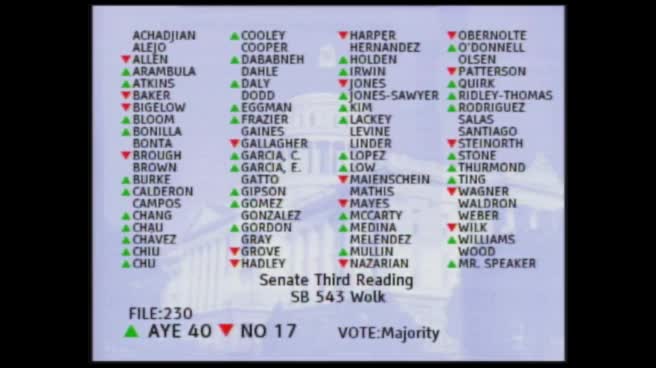 1MIN
Assembly Floor
 2MIN
Assembly Floor
 3MIN
Assembly Standing Committee on Appropriations
 10MIN
Assembly Standing Committee on Health
 2MIN
Senate Floor
 4MIN
Senate Standing Committee on Appropriations
Bill Author

Bill Co-Author(s):