SB 1139: Health professionals: medical degree programs: healing arts residency training programs: undocumented immigrants: nonimmigrant aliens: scholarships, loans, and loan repayment.
- Session Year: 2015-2016
- House: Senate
- Latest Version Date: 2016-09-28
(1)Existing law, known as the Medical Practice Act, provides for licensing and regulation of physicians and surgeons by the Medical Board of California and imposes various requirements in that regard. Existing law requires an applicant for a license as a physician and surgeon to successfully complete a specified medical curriculum, a clinical instruction program, and a training program. Existing law provides that nothing in the Medical Practice Act shall be construed to prohibit a foreign medical graduate from engaging in the practice of medicine whenever and wherever required as part of a clinical service program, subject to certain conditions.
This bill would prohibit a student, including a person without lawful immigration status, a person who is exempt from nonresident tuition pursuant to a specified statute, or a person who fits into both of those categories, who meets the requirements for admission to a medical degree program at any public or private postsecondary educational institution that offers such a program from being denied admission to that program based on his or her citizenship status or immigration status. The bill would also prohibit such a student from being denied admission, based on his or her citizenship status or immigration status, to a healing arts residency training program whose participants are not paid. These provisions would not apply, except as provided, to a nonimmigrant alien, as defined in a specified provision of federal law.
(2)Existing law establishes the Office of Statewide Health Planning and Development and makes the office responsible for administering various programs with respect to the health care professions.
This bill would prohibit specified programs administered by the office from denying an application based on the citizenship status or immigration status of the applicant.
(1)Existing law, known as the Medical Practice Act, provides for licensing and regulation of physicians and surgeons by the Medical Board of California and imposes various requirements in that regard. Existing law requires an applicant for a license as a physician and surgeon to successfully complete a specified medical curriculum, a clinical instruction program, and a training program. Existing law provides that nothing in the Medical Practice Act shall be construed to prohibit a foreign medical graduate from engaging in the practice of medicine whenever and wherever required as part of a clinical service program, subject to certain conditions.
This bill would prohibit a student, including a person without lawful immigration status, a person who is exempt from nonresident tuition pursuant to a specified statute, or a person who fits into both of those categories, who meets the requirements for admission to a medical school degree program at any public or private postsecondary educational institution that offers such a program from being denied admission to that program based on his or her citizenship status or immigration status. The bill would also prohibit such a student from being denied admission, based on his or her citizenship status or immigration status, to a healing arts residency training program whose participants are not paid. These provisions would not apply, except as provided, to a nonimmigrant alien, as defined in a specified provision of federal law.
(2)Existing law establishes the Office of Statewide Health Planning and Development and makes the office responsible for administering various programs with respect to the health care professions.
This bill would prohibit specified programs administered by the office from denying an application based on the citizenship status or immigration status of the applicant.
(1)Existing law, known as the Medical Practice Act, provides for licensing and regulation of physicians and surgeons by the Medical Board of California and imposes various requirements in that regard. Existing law requires an applicant for a license as a physician and surgeon to successfully complete a specified medical curriculum, a clinical instruction program, and a training program. Existing law provides that nothing in the Medical Practice Act shall be construed to prohibit a foreign medical graduate from engaging in the practice of medicine whenever and wherever required as part of a clinical service program, subject to certain conditions.
Existing law, known as the Donahoe Higher Education Act, sets forth, among other things, the missions and functions of Californias public and independent segments of higher education and their respective institutions of higher education. Existing law establishes the University of California, under the administration of the Regents of the University of California, as one of the segments of public postsecondary education in this state. The University of California operates medical schools at its Davis, Irvine, Los Angeles, San Diego, and San Francisco campuses, and a medical school will open at its Riverside campus in the 201617 academic year.
This bill would provide that any prohibit a student, including a person without lawful immigration status, a person who is exempt from nonresident tuition pursuant to a specified statute, or a person who fits into both of those categories, who meets the requirements for admission is eligible to participate in to a medical school program and a medical residency training program at any public or private postsecondary educational institution that offers such a program. The bill would prohibit the denial of participation in one of these programs program from being denied admission to that program based on the his or her citizenship status or immigration status of the applicant. status. The bill would also prohibit such a student from being denied admission, based on his or her citizenship status or immigration status, to a healing arts residency training program whose participants are not paid. These provisions would not apply to a nonimmigrant alien, as defined in a specified provision of federal law.
(2)Existing law establishes the Office of Statewide Health Planning and Development and makes the office responsible for administering various programs with respect to the health care professions.
This bill would prohibit specified programs administered by the office from denying an application based on the citizenship status or immigration status of the applicant.
(1)Existing law, known as the Medical Practice Act, provides for licensing and regulation of physicians and surgeons by the Medical Board of California and imposes various requirements in that regard. Existing law requires an applicant for a license as a physician and surgeon to successfully complete a specified medical curriculum, a clinical instruction program, and a training program. Existing law provides that nothing in the Medical Practice Act shall be construed to prohibit a foreign medical graduate from engaging in the practice of medicine whenever and wherever required as part of a clinical service program, subject to certain conditions.
Existing law, known as the Donahoe Higher Education Act, sets forth, among other things, the missions and functions of Californias public and independent segments of higher education and their respective institutions of higher education. Existing law establishes the University of California, under the administration of the Regents of the University of California, as one of the segments of public postsecondary education in this state. The University of California operates medical schools at its Davis, Irvine, Los Angeles, San Diego, and San Francisco campuses, and a medical school will open at its Riverside campus in the 201617 academic year.
This bill would provide that any student, including a person without lawful immigration status, a person who is exempt from nonresident tuition pursuant to a specified statute, or a person who fits into both of those categories, who meets the requirements for admission is eligible to participate in a medical school program and a medical residency training program at any public or private postsecondary educational institution that offers such a program. The bill would prohibit the denial of participation in one of these programs based on the citizenship status or immigration status of the applicant.
(2)Existing law establishes the Office of Statewide Health Planning and Development and makes the office responsible for administering various programs with respect to the health care professions.
This bill would prohibit specified programs administered by the office from denying an application based on the citizenship status or immigration status of the applicant.
(1)Existing law, known as the Medical Practice Act, provides for licensing and regulation of physicians and surgeons by the Medical Board of California and imposes various requirements in that regard. Existing law requires an applicant for a license as a physician and surgeon to successfully complete a specified medical curriculum, a clinical instruction program, and a training program. Existing law provides that nothing in the Medical Practice Act shall be construed to prohibit a foreign medical graduate from engaging in the practice of medicine whenever and wherever required as part of a clinical service program, subject to certain conditions.
Existing law, known as the Donahoe Higher Education Act, sets forth, among other things, the missions and functions of Californias public and independent segments of higher education and their respective institutions of higher education. Existing law establishes the University of California, under the administration of the Regents of the University of California, as one of the segments of public postsecondary education in this state. The University of California operates medical schools at its Davis, Irvine, Los Angeles, San Diego, and San Francisco campuses, and a medical school will open at its Riverside campus in the 201617 academic year.
This bill would provide that any student, including a person without lawful immigration status, a person who is exempt from nonresident tuition pursuant to a specified statute, or a person who fits into both of those categories, who meets the requirements for admission is eligible to participate in a medical school program and a medical residency training program at any public or private postsecondary educational institution that offers such a program. The bill would also encourage the University of California to develop a process for awarding student financial aid that may include, but not be limited to, grants, scholarships, and stipends, in lieu of employment for students in a medical residency training program whose participation is authorized by this bill.
(2)Existing law requires establishes the Office of Statewide Health Planning and Development to establish a nonprofit public benefit corporation known as the Health Professions Education Foundation to perform various duties with respect to implementing health professions scholarship and loan programs. and makes the office responsible for administering various programs with respect to the health care professions.
This bill would prohibit specified programs within the foundation, including programs which are funded by the continuously appropriated Health Professions Education Fund, the Medically Underserved Account for Physicians, and the Mental Health Services Fund, administered by the office from denying an application based on the citizenship status or immigration status of the applicant.
(1)Existing law, known as the Medical Practice Act, provides for licensing and regulation of physicians and surgeons by the Medical Board of California and imposes various requirements in that regard. Existing law requires an applicant for a license as a physician and surgeon to successfully complete a specified medical curriculum, a clinical instruction program, and a training program. Existing law provides that nothing in the Medical Practice Act shall be construed to prohibit a foreign medical graduate from engaging in the practice of medicine whenever and wherever required as part of a clinical service program, subject to certain conditions.
Existing law, known as the Donahoe Higher Education Act, sets forth, among other things, the missions and functions of Californias public and independent segments of higher education and their respective institutions of higher education. Existing law establishes the University of California, under the administration of the Regents of the University of California, as one of the segments of public postsecondary education in this state. The University of California operates medical schools at its Davis, Irvine, Los Angeles, San Diego, and San Francisco campuses, and a medical school will open at its Riverside campus in the 201617 academic year.
This bill would provide that any student, including a person without lawful immigration status, a person who is exempt from nonresident tuition pursuant to a specified statute, or a person who fits into both of those categories, who meets the requirements for admission is eligible to participate in a medical school program and a medical residency training program at any public or private postsecondary educational institution that offers such a program. The bill would also encourage the University of California to develop a process for awarding student financial aid that may include, but not be limited to, grants, scholarships, and stipends, in lieu of employment for students in a medical residency training program whose participation is authorized by this bill.
Existing
(2)Existing law requires the Office of Statewide Health Planning and Development to establish a nonprofit public benefit corporation known as the Health Professions Education Foundation to perform various duties with respect to implementing health professions scholarship and loan programs.
This bill would prohibit specified programs within the foundation, including programs which are funded by the continuously appropriated Health Professions Education Fund, the Medically Underserved Account for Physicians, and the Mental Health Services Fund, from denying an application based on the citizenship status or immigration status of the applicant.
Existing law requires the Office of Statewide Health Planning and Development to establish a nonprofit public benefit corporation known as the Health Professions Education Foundation to perform various duties with respect to implementing health professions scholarship and loan programs.
This bill would prohibit specified programs within the foundation, including programs which are funded by the continuously appropriated Health Professions Education Fund, the Medically Underserved Account for Physicians, and the Mental Health Services Fund, from denying an application based on the citizenship status or immigration status of the applicant.
(a)Notwithstanding any other law, except as specified in subdivision (b), no student, including a person without lawful immigration status, a person who is exempt from nonresident tuition pursuant to Section 68130.5 of the Education Code, or a person who is both without lawful immigration status and exempt from nonresident tuition pursuant to Section 68130.5 of the Education Code, who meets the requirements for admission to a medical degree program at any public or private postsecondary educational institution that offers that program shall be denied admission to that program based on his or her citizenship status or immigration status.
(b)Except for students granted status pursuant to Section 1101(a)(15)(T) or (U) of Title 8 of the United States Code, this section shall not apply to a nonimmigrant alien within the meaning of paragraph (15) of subdivision (a) of Section 1101 of Title 8 of the United States Code, as that paragraph exists on January 1, 2017.
SEC. 2.Section 2064.4 is added to the Business and Professions Code, to read:2064.4.(a)Notwithstanding any other law, except as specified in subdivision (b), no student, including a person without lawful immigration status, a person who is exempt from nonresident tuition pursuant to Section 68130.5 of the Education Code, or a person who is both without lawful immigration status and exempt from nonresident tuition pursuant to Section 68130.5 of the Education Code, who meets the requirements for admission to a healing arts residency training program whose participants are not paid shall be denied admission to that program based on his or her citizenship status or immigration status.
(b)Except for students granted status pursuant to Section 1101(a)(15)(T) or (U) of Title 8 of the United States Code, this section shall not apply to a nonimmigrant alien within the meaning of paragraph (15) of subdivision (a) of Section 1101 of Title 8 of the United States Code, as that paragraph exists on January 1, 2017.
SEC. 3.Section 128371 is added to the Health and Safety Code, to read:128371.(a)The Legislature finds and declares that it is in the best interest of the State of California to provide persons who are not lawfully present in the United States with the state benefits provided by those programs listed in subdivision (d), and therefore, enacts this section pursuant to Section 1621(d) of Title 8 of the United States Code.
(b)A program listed in subdivision (d) shall not deny an application based on the citizenship status or immigration status of the applicant.
(c)For any program listed in subdivision (d), when mandatory disclosure of a social security number is required, an applicant shall provide his or her social security number, if one has been issued, or an individual tax identification number that has been or will be submitted.
(d)This section shall apply to all of the following:
(1)Programs supported through the Health Professions Education Fund pursuant to Section 128355.
(2)The Registered Nurse Education Fund created pursuant to Section 128400.
(3)The Mental Health Practitioner Education Fund created pursuant to Section 128458.
(4)The Vocational Nurse Education Fund created pursuant to Section 128500.
(5)The Medically Underserved Account for Physicians created pursuant to Section 128555.
(6)Loan forgiveness and scholarship programs created pursuant to Section 5820 of the Welfare and Institutions Code.
(7)The Song-Brown Health Care Workforce Training Act created pursuant to Article 1 (commencing with Section 128200) of Chapter 4.
(8)To the extent permitted under federal law, the program administered by the office pursuant to the federal National Health Service Corps State Loan Repayment Program (42 U.S.C. Sec. 254q-1), commonly known as the California State Loan Repayment Program.
(9)The programs administered by the office pursuant to the Health Professions Career Opportunity Program (Section 127885), commonly known as the Mini Grants Program, and Californias Student/Resident Experiences and Rotations in Community Health, commonly known as the Cal-SEARCH program.
(a)Notwithstanding any other law, except as specified in subdivision (b), no student, including a person without lawful immigration status, a person who is exempt from nonresident tuition pursuant to Section 68130.5 of the Education Code, or a person who is both without lawful immigration status and exempt from nonresident tuition pursuant to Section 68130.5 of the Education Code, who meets the requirements for admission to a medical school degree program at any public or private postsecondary educational institution that offers that program shall be denied admission to that program based on his or her citizenship status or immigration status.
(b)This Except for students granted status pursuant to Section 1101(a)(15)(T) or (U) of Title 8 of the United States Code, this section shall not apply to a nonimmigrant alien within the meaning of paragraph (15) of subdivision (a) of Section 1101 of Title 8 of the United States Code, as that paragraph exists on January 1, 2017.
SEC. 2.Section 2064.4 is added to the Business and Professions Code, to read:2064.4.(a)Notwithstanding any other law, except as specified in subdivision (b), no student, including a person without lawful immigration status, a person who is exempt from nonresident tuition pursuant to Section 68130.5 of the Education Code, or a person who is both without lawful immigration status and exempt from nonresident tuition pursuant to Section 68130.5 of the Education Code, who meets the requirements for admission to a healing arts residency training program whose participants are not paid shall be denied admission to that program based on his or her citizenship status or immigration status.
(b)This Except for students granted status pursuant to Section 1101(a)(15)(T) or (U) of Title 8 of the United States Code, this section shall not apply to a nonimmigrant alien within the meaning of paragraph (15) of subdivision (a) of Section 1101 of Title 8 of the United States Code, as that paragraph exists on January 1, 2017.
SEC. 3.Section 128371 is added to the Health and Safety Code, to read:128371.(a)The Legislature finds and declares that it is in the best interest of the State of California to provide persons who are not lawfully present in the United States with the state benefits provided by those programs listed in subdivision (d), and therefore, enacts this section pursuant to Section 1621(d) of Title 8 of the United States Code.
(b)A program listed in subdivision (d) shall not deny an application based on the citizenship status or immigration status of the applicant.
(c)For any program listed in subdivision (d), when mandatory disclosure of a social security number is required, an applicant shall provide his or her social security number, if one has been issued, or an individual tax identification number that has been or will be submitted.
(d)This section shall apply to all of the following:
(1)Programs supported through the Health Professions Education Fund pursuant to Section 128355.
(2)The Registered Nurse Education Fund created pursuant to Section 128400.
(3)The Mental Health Practitioner Education Fund created pursuant to Section 128458.
(4)The Vocational Nurse Education Fund created pursuant to Section 128500.
(5)The Medically Underserved Account for Physicians created pursuant to Section 128555.
(6)Loan forgiveness and scholarship programs created pursuant to Section 5820 of the Welfare and Institutions Code.
(7)The Song-Brown Health Care Workforce Training Act created pursuant to Article 1 (commencing with Section 128200) of Chapter 4.
(8)To the extent permitted under federal law, the program administered by the office pursuant to the federal National Health Service Corps State Loan Repayment Program (42 U.S.C. Sec. 254q-1), commonly known as the California State Loan Repayment Program.
(9)The programs administered by the office pursuant to the Health Professions Career Opportunity Program (Section 127885), commonly known as the Mini Grants Program, and Californias Student/Resident Experiences and Rotations in Community Health, commonly known as the Cal-SEARCH program.
(a)Notwithstanding any other law, any except as specified in subdivision (b), no student, including a person without lawful immigration status, a person who is exempt from nonresident tuition pursuant to Section 68130.5 of the Education Code, or a person who is both without lawful immigration status and exempt from nonresident tuition pursuant to Section 68130.5 of the Education Code, who meets the requirements for admission is eligible to participate in a medical school program and a medical residency training program at any public or private postsecondary educational institution that offers such a program and shall not to a medical school program at any public or private postsecondary educational institution that offers that program shall be denied participation admission to that program based on the his or her citizenship status or immigration status of the applicant. status.
(b)This section shall not apply to a nonimmigrant alien within the meaning of paragraph (15) of subdivision (a) of Section 1101 of Title 8 of the United States Code, as that paragraph exists on January 1, 2017.
SEC. 2.Section 2064.4 is added to the Business and Professions Code, to read:2064.4.(a)Notwithstanding any other law, except as specified in subdivision (b), no student, including a person without lawful immigration status, a person who is exempt from nonresident tuition pursuant to Section 68130.5 of the Education Code, or a person who is both without lawful immigration status and exempt from nonresident tuition pursuant to Section 68130.5 of the Education Code, who meets the requirements for admission to a healing arts residency training program whose participants are not paid shall be denied admission to that program based on his or her citizenship status or immigration status.
(b)This section shall not apply to a nonimmigrant alien within the meaning of paragraph (15) of subdivision (a) of Section 1101 of Title 8 of the United States Code, as that paragraph exists on January 1, 2017.
SEC. 2.SEC. 3.Section 128371 is added to the Health and Safety Code, to read:128371.(a)The Legislature finds and declares that it is in the best interest of the State of California to provide persons who are not lawfully present in the United States with the state benefits provided by those programs listed in subdivision (d), and therefore, enacts this section pursuant to Section 1621(d) of Title 8 of the United States Code.
(b)A program listed in subdivision (d) shall not deny an application based on the citizenship status or immigration status of the applicant.
(c)For any program listed in subdivision (d), when mandatory disclosure of a social security number is required, an applicant shall provide his or her social security number, if one has been issued, or an individual tax identification number that has been or will be submitted.
(d)This section shall apply to all of the following:
(1)Programs supported through the Health Professions Education Fund pursuant to Section 128355.
(2)The Registered Nurse Education Fund created pursuant to Section 128400.
(3)The Mental Health Practitioner Education Fund created pursuant to Section 128458.
(4)The Vocational Nurse Education Fund created pursuant to Section 128500.
(5)The Medically Underserved Account for Physicians created pursuant to Section 128555.
(6)Loan forgiveness and scholarship programs created pursuant to Section 5820 of the Welfare and Institutions Code.
(7)The Song-Brown Health Care Workforce Training Act created pursuant to Article 1 (commencing with Section 128200) of Chapter 4.
(8)To the extent permitted under federal law, the program administered by the office pursuant to the federal National Health Service Corps State Loan Repayment Program (42 U.S.C. Sec. 254q-1), commonly known as the California State Loan Repayment Program.
(9)The programs administered by the office pursuant to the Health Professions Career Opportunity Program (Section 127885), commonly known at as the Mini Grants Program and the Program, and Californias Student/Resident Experiences and Rotations in Community Health, or CalSEARCH, Program. Health, commonly known as the Cal-SEARCH program.
Notwithstanding any other law, any student, including a person without lawful immigration status, a person who is exempt from nonresident tuition pursuant to Section 68130.5 of the Education Code, or a person who is both without lawful immigration status and exempt from nonresident tuition pursuant to Section 68130.5 of the Education Code, who meets the requirements for admission is eligible to participate in a medical school program and a medical residency training program at any public or private postsecondary educational institution that offers such a program. program and shall not be denied participation based on the citizenship status or immigration status of the applicant.
SEC. 2.Section 128371 is added to the Health and Safety Code, to read:128371.(a)The Legislature finds and declares that it is in the best interest of the State of California to provide persons who are not lawfully present in the United States with the state benefits provided by those programs listed in subdivision (d), and therefore, enacts this section pursuant to Section 1621(d) of Title 8 of the United States Code.
(b)A program listed in subdivision (d) shall not deny an application based on the citizenship status or immigration status of the applicant.
(c)For any program listed in subdivision (d), when mandatory disclosure of a social security number is required, an applicant shall provide his or her social security number, if one has been issued, or an individual tax identification number that has been or will be submitted.
(d)This section shall apply to all of the following:
(1)Programs supported through the Health Professions Education Fund pursuant to Section 128355.
(2)The Registered Nurse Education Fund created pursuant to Section 128400.
(3)The Mental Health Practitioner Education Fund created pursuant to Section 128458.
(4)The Vocational Nurse Education Fund created pursuant to Section 128500.
(5)The Medically Underserved Account for Physicians created pursuant to Section 128555.
(6)Loan forgiveness and scholarship programs created pursuant to Section 5820 of the Welfare and Institutions Code.
(7)The Song-Brown Health Care Workforce Training Act created pursuant to Article 1 (commencing with Section 128200) of Chapter 4.
(8)To the extent permitted under federal law, the program administered by the office pursuant to the federal National Health Service Corps State Loan Repayment Program (42 U.S.C. Sec. 254q-1), commonly known as the California State Loan Repayment Program.
(9)The programs administered by the office pursuant to the Health Professions Career Opportunity Program (Section 127885), commonly known at the Mini Grants Program and the Californias Student/Resident Experiences and Rotations in Community Health, or CalSEARCH, Program.
Notwithstanding any other law: law, any student, including a person without lawful immigration status, a person who is exempt from nonresident tuition pursuant to Section 68130.5 of the Education Code, or a person who is both without lawful immigration status and exempt from nonresident tuition pursuant to Section 68130.5 of the Education Code, who meets the requirements for admission is eligible to participate in a medical school program and a medical residency training program at any public or private postsecondary educational institution that offers such a program.
(a)Any student, including a person without lawful immigration status, a person who is exempt from nonresident tuition pursuant to Section 68130.5 of the Education Code, or a person who is both without lawful immigration status and exempt from nonresident tuition pursuant to Section 68130.5 of the Education Code, who meets the requirements for admission is eligible to participate in a medical school program and a medical residency training program at any public or private postsecondary educational institution that offers such a program.
(b)The University of California is encouraged to develop a process for awarding student financial aid that may include, but not be limited to, grants, scholarships, and stipends, in lieu of employment for students in a medical residency training program whose participation is authorized by this section.
SEC. 2.Section 128371 is added to the Health and Safety Code, to read:128371.(a)The Legislature finds and declares that it is in the best interest of the State of California to provide persons who are not lawfully present in the United States with the state benefits provided by Health Professions Education Foundation programs, those programs listed in subdivision (d), and therefore, enacts this section pursuant to Section 1621(d) of Title 8 of the United States Code.
(b)A program listed in subdivision (d) shall not deny an application based on the citizenship status or immigration status of the applicant.
(c)For any program listed in subdivision (d), when mandatory disclosure of a social security number is required, an applicant shall provide his or her social security number, if one has been issued, or an individual tax identification number that has been or will be submitted.
(d)This section shall apply to all of the following:
(1)Programs supported through the Health Professions Education Fund pursuant to Section 128355.
(2)The Registered Nurse Education Fund created pursuant to Section 128400.
(3)The Mental Health Practitioner Education Fund created pursuant to Section 128458.
(4)The Vocational Nurse Education Fund created pursuant to Section 128500.
(5)The Medically Underserved Account for Physicians created pursuant to Section 128555.
(6)Loan forgiveness and scholarship programs created pursuant to Section 5820 of the Welfare and Institutions Code.
(7)The Song-Brown Health Care Workforce Training Act created pursuant to Article 1 (commencing with Section 128200) of Chapter 4.
(8)To the extent permitted under federal law, the program administered by the office pursuant to the federal National Health Service Corps State Loan Repayment Program (42 U.S.C. Sec. 254q-1), commonly known as the California State Loan Repayment Program.
(9)The programs administered by the office pursuant to the Health Professions Career Opportunity Program (Section 127885), commonly known at the Mini Grants Program and the Californias Student/Resident Experiences and Rotations in Community Health, or CalSEARCH, Program.
Notwithstanding any other law:
(a)Any student, including a person without lawful immigration status, a person who is exempt from nonresident tuition pursuant to Section 68130.5 of the Education Code, or a person who is both without lawful immigration status and exempt from nonresident tuition pursuant to Section 68130.5 of the Education Code, who meets the requirements for admission is eligible to participate in a medical school program and a medical residency training program at any public or private postsecondary educational institution that offers such a program.
(b)The University of California is encouraged to develop a process for awarding student financial aid that may include, but not be limited to, grants, scholarships, and stipends, in lieu of employment for students in a medical residency training program whose participation is authorized by this section.
SEC. 2.Section 128371 is added to the Health and Safety Code, to read:128371.(a)The Legislature finds and declares that it is in the best interest of the State of California to provide persons who are not lawfully present in the United States with the state benefits provided by Health Professions Education Foundation programs, and therefore, enacts this section pursuant to Section 1621(d) of Title 8 of the United States Code.
(b)A program within the Health Professions Education Foundation listed in subdivision (d) shall not deny an application based on the citizenship status or immigration status of the applicant.
(c)For any program within the Health Professions Education Foundation, listed in subdivision (d), when mandatory disclosure of a social security number is required, an applicant shall provide his or her social security number, if one has been issued, or an individual tax identification number that has been or will be submitted.
(d)This section shall apply to all of the following:
(1)Programs supported through the Health Professions Education Fund pursuant to Section 128355.
(2)The Registered Nurse Education Fund created pursuant to Section 128400.
(3)The Mental Health Practitioner Education Fund created pursuant to Section 128458.
(4)The Vocational Nurse Education Fund created pursuant to Section 128500.
(5)The Medically Underserved Account for Physicians created pursuant to Section 128555.
(6)The Steven M. Thompson Medical School Scholarship Account created pursuant to Section 128580.
(7)
(6)Loan forgiveness and scholarship programs created pursuant to Section 5820 of the Welfare and Institutions Code.
(7)The Song-Brown Health Care Workforce Training Act created pursuant to Article 1 (commencing with Section 128200) of Chapter 4.
(8)To the extent permitted under federal law, the program administered by the office pursuant to the federal National Health Service Corps State Loan Repayment Program (42 U.S.C. Sec. 254q-1), commonly known as the California State Loan Repayment Program.
(9)The programs administered by the office pursuant to the Health Professions Career Opportunity Program (Section 127885), commonly known at the Mini Grants Program and the Californias Student/Resident Experiences and Rotations in Community Health, or CalSEARCH, Program.
Notwithstanding any other law:
(a)Any student, including a person without lawful immigration status, a person who is exempt from nonresident tuition pursuant to Section 68130.5 of the Education Code, or a person who is both without lawful immigration status and exempt from nonresident tuition pursuant to Section 68130.5 of the Education Code, who meets the requirements for admission is eligible to participate in a medical school program and a medical residency training program at any public or private postsecondary educational institution that offers such a program.
(b)The University of California is encouraged to develop a process for awarding student financial aid that may include, but not be limited to, grants, scholarships, and stipends, in lieu of employment for students in a medical residency training program whose participation is authorized by this section.
SECTION 1.SEC. 2.Section 128371 is added to the Health and Safety Code, to read:128371.(a)The Legislature finds and declares that it is in the best interest of the State of California to provide persons who are not lawfully present in the United States with the state benefits provided by the Health Professions Education Foundation Programs, programs, and therefore, enacts this section pursuant to subsection (d) of Section 1621 Section 1621(d) of Title 8 of the United States Code.
(b)A program within the Health Professions Education Foundation shall not deny an application based on the citizenship status or immigration status of the applicant.
(c)For any program within the Health Professions Education Foundation, when mandatory disclosure of a social security number is required, an applicant shall provide his or her social security number, if one has been issued, or an individual tax identification number that has been or will be submitted.
(d)This section shall apply to all of the following:
(1)Programs supported through the Health Professions Education Fund pursuant to Section 128355.
(2)The Registered Nurse Education Fund created pursuant to Section 128400.
(3)The Mental Health Practitioner Education Fund created pursuant to Section 128458.
(4)The Vocational Nurse Education Fund created pursuant to Section 128500.
(5)The Medically Underserved Account for Physicians created pursuant to Section 128555.
(6)The Steven M. Thompson Medical School Scholarship Account created pursuant to Section 128580.
(7)Loan forgiveness and scholarship programs created pursuant to Section 5820 of the Welfare and Institutions Code.
(a)The Legislature finds and declares that it is in the best interest of the State of California to provide persons who are not lawfully present in the United States with the state benefits provided by the Health Professions Education Foundation Programs, and therefore, enacts this section pursuant to subsection (d) of Section 1621 of Title 8 of the United States Code.
(b)A program within the Health Professions Education Foundation shall not deny an application based on the citizenship status or immigration status of the applicant.
(c)For any program within the Health Professions Education Foundation, when mandatory disclosure of a social security number is required, an applicant shall provide his or her social security number, if one has been issued, or an individual tax identification number that has been or will be submitted.
(d)This section shall apply to all of the following:
(1)Programs supported through the Health Professions Education Fund pursuant to Section 128355.
(2)The Registered Nurse Education Fund created pursuant to Section 128400.
(3)The Mental Health Practitioner Education Fund created pursuant to Section 128458.
(4)The Vocational Nurse Education Fund created pursuant to Section 128500.
(5)The Medically Underserved Account for Physicians created pursuant to Section 128555.
(6)The Steven M. Thompson Medical School Scholarship Account created pursuant to 128580.
(7)Loan forgiveness and scholarship programs created pursuant to Section 5820 of the Welfare and Institutions Code.
|
Date
|
Status
|
|---|---|
| Sep 8, 2016 | Enrolled and presented to the Governor at 5 p.m. |
| Aug 30, 2016 | Assembly amendments concurred in. (Ayes 28. Noes 11. Page 5531.) Ordered to engrossing and enrolling. |
| Aug 30, 2016 | Assembly amendments concurred in. (Ayes 28. Noes 11.) Ordered to engrossing and enrolling. |
| Aug 29, 2016 | In Senate. Concurrence in Assembly amendments pending. |
| Aug 18, 2016 | Read third time. Passed. (Ayes 56. Noes 20. Page 5893.) Ordered to the Senate. |
| Aug 18, 2016 | Read third time. Passed. Ordered to the Senate. |
| Aug 15, 2016 | Ordered to third reading. |
| Aug 15, 2016 | Read third time and amended. |
| Aug 4, 2016 | Read second time. Ordered to third reading. |
| Aug 3, 2016 | From committee: Do pass. (Ayes 14. Noes 5.) (August 3). |
| Aug 1, 2016 | From committee with author's amendments. Read second time and amended. Re-referred to Com. on APPR. |
| Jun 30, 2016 | Read second time and amended. Re-referred to Com. on APPR. |
| Jun 29, 2016 | From committee: Do pass as amended and re-refer to Com. on APPR. (Ayes 13. Noes 4.) (June 28). |
| Jun 21, 2016 | From committee with author's amendments. Read second time and amended. Re-referred to Com. on HEALTH. |
| Jun 6, 2016 | Referred to Com. on HEALTH. |
| Jun 1, 2016 | In Assembly. Read first time. Held at Desk. |
| May 31, 2016 | Read third time. Passed. (Ayes 28. Noes 11. Page 4044.) Ordered to the Assembly. |
| May 31, 2016 | Read third time. Passed. (Ayes 28. Noes 11.) Ordered to the Assembly. |
| May 27, 2016 | From committee: Do pass. (Ayes 5. Noes 2. Page 4004.) (May 27). |
| May 27, 2016 | Read second time. Ordered to third reading. |
| May 27, 2016 | From committee: Do pass. (Ayes 5. Noes 2.) (May 27). |
| May 20, 2016 | Set for hearing May 27. |
| May 9, 2016 | May 9 hearing: Placed on APPR. suspense file. |
| May 4, 2016 | Set for hearing May 9. |
| Apr 19, 2016 | Read second time and amended. Re-referred to Com. on APPR. |
| Apr 18, 2016 | From committee: Do pass as amended and re-refer to Com. on APPR. (Ayes 7. Noes 2. Page 3559.) (April 13). |
| Apr 18, 2016 | From committee: Do pass as amended and re-refer to Com. on APPR. (Ayes 7. Noes 2.) (April 13). |
| Apr 4, 2016 | From committee with author's amendments. Read second time and amended. Re-referred to Com. on HEALTH. |
| Mar 16, 2016 | Set for hearing April 13. |
| Mar 3, 2016 | Referred to Com. on HEALTH. |
| Feb 19, 2016 | From printer. May be acted upon on or after March 20. |
| Feb 18, 2016 | Introduced. Read first time. To Com. on RLS. for assignment. To print. |
|
Date
|
Description
|
Location
|
Votes
|
|
|---|---|---|---|---|
| Aug 30, 2016 | Unfinished Business SB1139 Lara Concurrence | Senate Floor |
Passed |
|
| Aug 18, 2016 | SB 1139 Lara Senate Third Reading By ARAMBULA | Assembly Floor |
Passed |
|
| Aug 3, 2016 | Do pass. | Assembly Standing Committee on Appropriations |
Passed |
|
| Jun 28, 2016 | Do pass as amended and be re-referred to the Committee on [Appropriations] | Assembly Standing Committee on Health |
Passed |
|
| May 31, 2016 | Senate 3rd Reading SB1139 Lara | Senate Floor |
Passed |
|
| May 27, 2016 | Do pass | Senate Standing Committee on Appropriations |
Passed |
|
| May 9, 2016 | Placed on suspense file | Senate Standing Committee on Appropriations |
Passed |
|
| Apr 13, 2016 | Do pass as amended, but first amend, and re-refer to the Committee on [Appropriations] | Senate Standing Committee on Health |
Passed |
This list shows positions taken on this bill by organizations on the date displayed, which is linked to the original source.
Positions by individuals are not included.
Office of Senate Floor Analyses (916) 651-1520 Fax: (916) 327-4478 | SB |
UNFINISHED BUSINESS
Bill No: SB 1139
:
SENATE HEALTH COMMITTEE: 7-2, 4/13/16
AYES: Hernandez, Hall, Mitchell, Monning, Pan, Roth, Wolk
NOES: Nguyen, Nielsen
SENATE APPROPRIATIONS COMMITTEE: 5-2, 5/27/16
AYES: Lara, Beall, Hill, McGuire, Mendoza
NOES: Bates, Nielsen
SENATE FLOOR: 28-11, 5/31/16
AYES: Allen, Beall, Block, Cannella, De León, Galgiani, Glazer, Hall, Hancock, Hernandez, Hertzberg, Hill, Hueso, Jackson, Lara, Leno, Leyva, Liu, McGuire, Mendoza, Mitchell, Monning, Pan, Pavley, Roth, Vidak, Wieckowski, Wolk
NOES: Anderson, Bates, Berryhill, Fuller, Gaines, Huff, Moorlach, Morrell, Nguyen, Nielsen, Stone
NO VOTE RECORDED: Runner
ASSEMBLY FLOOR: 56-20, 8/18/16 - See last page for vote
SOURCE: California Pan-Ethnic Health Network
Pre-Health Dreamers
DIGEST: This bill prohibits a student, including a person without lawful immigration status, and/or a person who is exempt from nonresident tuition, who meets the requirements for admission to a medical degree program at any public or private postsecondary educational institution that offers such a program, or who meets the requirements for admission to a healing arts residency training program whose participants are not paid, from being denied admission based on his or her citizenship or immigration status. Prohibits specified grant and loan repayment and forgiveness programs from denying an application based on an applicant’s citizenship or immigration status.
Assembly Amendments (1) delete a provision that encouraged the University of California to develop a process for awarding student financial aid; (2) specify that except for certain classes of students granted status under specified federal immigration law, this bill does not apply to nonimmigrant aliens, as specified; and (3) make other technical, conforming changes.
Existing law:
- Establishes the California Healthcare Workforce Policy Commission (Commission) and requires the Commission to, among other things, identify specific areas of the state where unmet priority needs for primary care family physicians and registered nurses exist; establish standards for family practice training programs, family practice residency programs, primary care physician assistants programs, and programs that train primary care nurse practitioners; and review and make recommendations to Office of Statewide Planning and Development (OSHPD) concerning the funding of those programs.
- Establishes the Health Professions Education Foundation (HPEF) within OSHPD. Requires HPEF to solicit and receive funds from foundations and other private and public sources and to provide financial assistance in the form of scholarships or loans to students in the health professions who are from underrepresented groups.
- Establishes, under the HPEF, scholarship, loan, and loan repayment programs for registered nurses, vocational nurses, geriatric nurse practitioners, clinical nurse specialists, and mental health professionals who agree to practice for specified periods of time in underserved areas and in designated practice settings, as specified.
This bill:
- Prohibits a student, including a person without lawful immigration status, and/or a person who is exempt from nonresident tuition, who meets the requirements for admission to a medical degree program at any public or private postsecondary educational institution that offers such a program, or who meets the requirements for admission to a healing arts residency training program whose participants are not paid, from being denied admission based on his or her citizenship or immigration status.
- Prohibits programs within the HPEF from denying an application based on the citizenship status or immigration status of the applicant.
- Requires an applicant, when mandatory disclosure of a social security number (SSN) is required, to provide his or her SSN, if one has been issued, or an individual taxpayer identification number (ITIN) that has been or will be submitted.
- Applies 2) and 3) to the following programs:
- Programs supported through HPEF;
- The Registered Nurse Education Fund;
- The Mental Health Practitioner Education Fund;
- The Vocational Nurse Education Fund;
- The Medically Underserved Account for Physicians;
- Loan forgiveness and scholarship programs created through the Mental Health Services Act;
- The Song-Brown Health Care Workforce Training Act; and ,
- The programs administered pursuant to the Health Professions Career Opportunity Program, commonly known as the Mini Grants Program, and California’s Student/Resident Experiences and Rotations in Community Health, commonly known as the Cal-SEARCH program.
- Specifies that except for certain classes of students granted status under specified federal immigration law, this bill does not apply to nonimmigrant aliens, as specified.
Comments
- Author’s statement. According to the author, there are currently 168 designated medically underserved areas in California across all 58 counties. Patients in medically underserved areas face significant challenges to access health care services. The limited resources and lack of specialty services in these communities leads to longer waiting times and longer journeys to appointments. SB 1139 would increase the number of physicians and health care workers in medically underserved areas by ensuring that all individuals who wish to pursue a medical profession may compete for scholarships and loan repayments available under HPEF, which targets health professionals who are able to provide culturally and linguistically appropriate care within medically underserved areas. Currently the HPEF only allows for the submission of SSN, which bars undocumented individuals seeking medical professions from applying. This bill would reduce barriers to undocumented individuals by enabling an applicant to provide an ITIN in lieu of a SSN, and prohibit the HPEF from barring an applicant based on his or her immigration status, while also addressing service gaps that are desperately needed in those communities.
- Statewide shortages of health care providers. Statewide shortages of health care providers currently exist in several major health professions. Recent health care workforce research indicates that health professional shortage, distribution, and diversity issues impact access to primary, allied, mental, and dental health care in California today. The demand for these health care professions is also forecasted to grow faster than professions in other industries. Additionally, health care workforce needs are projected to increase dramatically due to population aging, growth, and diversity. This existing shortage is expected intensify as about 4.7 million more Californians have gained access to health insurance as a result of the implementation of the Affordable Care Act. Inability to meet health care workforce needs will have serious adverse consequences on health access, quality, and cost.
- Presidential action on immigration. In November 2014, President Obama announced that the federal Department of Homeland Security (DHS) would not deport certain undocumented parents of U.S. citizens and parents of lawful permanent residents. President Obama also announced an expansion of the Deferred Action for Childhood Arrivals (DACA) program for youth who came to the United States as children. Under a directive from the secretary of DHS, these parents and youth may be granted a type of temporary permission to stay in the U.S. called “deferred action.” Deferred action is a form of administrative relief from deportation whereby DHS authorizes a noncitizen to remain in the U.S. temporarily. These individuals may also apply for an employment authorization document (a work permit) during the deferred action period. A grant of deferred action is temporary and does not grant citizenship or permanent lawful status. However, a person granted deferred action is considered by the federal government to be lawfully present for as long as the grant of deferred action status. These actions are expected to affect up to 4.4 million people, according to DHS.
The United States Citizenship and Immigration Services announced that, due to a federal court order, it would not begin accepting requests for the expansion of DACA on February 18, 2015 as originally planned and has suspended implementation of Deferred Action for Parents of Americans and Lawful Permanent Residents (DAPA). The court's temporary injunction, issued February 16, 2015, does not affect the existing DACA and individuals can continue to request an initial grant of DACA or renewal of DACA under the original guidelines. Separately, the Texas federal court preliminarily blocked, on procedural grounds, the President’s DAPA and expanded DACA initiatives (but not original DACA) on February 16, 2015. The Department of Justice appealed this order, and arguments were heard on July 10, 2015. On November 9, 2015, a divided panel of the Fifth Circuit Court of Appeals upheld the lower court’s ruling in a 2-1 decision. The following day, the Department of Justice announced its intention to seek Supreme Court review of the Fifth Circuit’s decision. On January 19, 2016, the Supreme Court agreed to take the case and heard oral arguments on April 18th, with a decision being announced in late June 2016.
- Impact of DACA on medical schools. According to a perspective published in the journal Academic Medicine in December 2014, it is difficult to estimate the full impact of DACA on the medical school applicant pool as DACA may also increase undergraduate completion among this group. One estimate in California indicated that only about 10% to 20% of undocumented students who graduated from high school enrolled in college. This is in contrast to the general population in which the percentage of high school graduates who subsequently enrolled in college was 68.2% in 2011. Moreover, the national graduation rate for bachelor’s degrees (completion in six years or less) is about 59%. A low estimate of potential, undocumented students in medical school can be estimated by applying current rates of enrollment of undergraduate education among undocumented students (10%) and subsequent entry into the field of medicine (about 2%–3%) to estimates of total DACA potentials in the United States (1.8 million). This results in an estimated 5,400 new, largely underrepresented minority physicians in the coming decades. A low estimate, using the same method but imputing the current, general graduation rate (59%) to DACA students, puts the number at about 3,000 potential future physicians.
- Financial aid for DACA students. According to the Academic Medicine article, the price tag of a medical education is extremely high. Financing a medical education is a challenge for all medical students, but it is particularly difficult for DACA students because they are legally excluded from receiving federal financial aid. DACA students may be eligible, however, to apply for private need- and merit-based scholarships, private loans, school loans, and institutional aid. Also, some state laws allow undocumented students to apply for publicly funded grants. Medical schools can assist DACA students by offering financial planning advice early on, in order to prevent financial status from being a prohibitive barrier to their matriculation in the face of limited options for financial assistance. Medical schools can further encourage students to join their programs by creating flexible and generous scholarship packages and providing paid opportunities, such as research positions, within their programs. Whereas some states expect DACA students to pay more expensive international student fees for their education, 12 states have passed laws allowing DACA students to qualify for in-state tuition at public universities, including California and Texas, the two states with the largest populations of DACA students.
FISCAL EFFECT: Appropriation: Fiscal Com.: Local:
According to Assembly Appropriations Committee:
Administrative costs to OSHPD to modify regulations for health care workforce grant, loan forgiveness, and scholarship programs in the range of $60,000 (Health Professions Education Fund, funded by various fees, grants, and private donations), as well as potential minor costs to review additional applications.
California Pan-Ethnic Health Network (co-source)
Pre-Health Dreamers (co-source)
American Academy of Pediatrics
American Civil Liberties Union of California
Asian Law Alliance
California Immigrant Policy Center
California Mental Health Connection
California Primary Care Association
California State Council of the Service Employees International Union
Community Health Partnership
Courage Campaign
Department of Medicine at the University of California, Irvine
Doctors for America
Educators for Fair Consideration
The Greenling Institute
Having Our Say Coalition
Health Access California
Inland Empire Immigrant Youth Coalition
Latino Medical Student Association
National Association of Social Workers
National Immigration Law Center
Services, Immigrant Right, and Education Network
Stanford University’s Latino Medical Student Association
Western Center on Law & Poverty
Six Individual Letters
OPPOSITION: (Verified 8/18/16)
Californians for Population Stabilization
ARGUMENTS IN SUPPORT: The Pre-Health Dreamers state that in California alone, there are 285 undocumented students in the PHD network and among them 169 are interested in medicine, 16 in dentistry, 26 in nursing, six in pharmacy, and many others interested in allied health professions. PHD states that they believe that their members can contribute significantly to the quality of care in California because many are often bilingual and bi-cultural, and are deeply motivated to give back to their communities, which are often underserved. The California Pan-Ethnic Health Network states that undocumented individuals can serve as key practitioners to address chronic shortages of medical professionals and they deserve to compete in state programs that help defray the cost of their training, especially when their licensing fees support these very programs. Numerous supporters write that most undocumented students, including those in the medical field, face major challenges financing their education because they struggle to access loans, and do not qualify for federal loan forgiveness programs. The Asian Law Alliance writes that this bill will ensure that all individuals who wish to pursue a medical profession may compete for scholarships and loan repayments available under HPEF. The National Immigration Law Center writes that this bill promotes public health by increasing the pool of qualified health professionals who will provide culturally and linguistically competent medical services in underserved areas. The American Academy of Pediatrics, California states that while this bill underwrites a motion that is the ethically right thing to do in support of our medial trainees, it will also further our goals of building a larger, stronger healthcare workforce. The Western Center on Law and Poverty states that this bill will ensure that all people, regardless of their immigration status, have access to the state’s scholarship and loan forgiveness programs for health professionals. Educators for Fair Consideration states that most undocumented students, including those in the medical field, face major challenges financing their education because they struggle to access loans, and do not qualify for federal loan forgiveness programs. SEIU California writes that they are committed to working toward comprehensive immigration reform at the federal level to remove barriers to education for immigrants, however, until those changes can happen at the federal level, they support improvement of state law to ensure that no one is discriminated against based solely on their immigration status. The California Primary Care Association writes that clinics cannot provide timely, quality, culturally competent care if they do not have the health care workforce needed to provide that care and that this bill w California Pan-Ethnic Health Network il provide for health professional students who plan to practice in the underserved communities of California.
ARGUMENTS IN OPPOSITION: Californians for Population Stabilization writes that there is a limited amount of money available for scholarship and loan forgiveness programs, and giving those funds to illegal immigrants simply reduces the pool available to legal students. CAPS further asserts that the State of California has done an abysmal job of maintaining infrastructure, protecting open spaces, and providing quality public education, and much of its failure is due to the flood of illegal immigration that has overwhelmed the state.
ASSEMBLY FLOOR: 56-20, 8/18/16
AYES: Alejo, Arambula, Atkins, Baker, Bloom, Bonilla, Bonta, Brown, Burke, Calderon, Campos, Chang, Chau, Chiu, Chu, Cooley, Cooper, Dababneh, Daly, Dodd, Eggman, Frazier, Cristina Garcia, Eduardo Garcia, Gatto, Gipson, Gomez, Gonzalez, Gordon, Gray, Hadley, Holden, Irwin, Jones-Sawyer, Lackey, Levine, Linder, Lopez, Low, McCarty, Medina, Mullin, Nazarian, O'Donnell, Quirk, Ridley-Thomas, Rodriguez, Salas, Santiago, Mark Stone, Thurmond, Ting, Weber, Williams, Wood, Rendon
NOES: Travis Allen, Bigelow, Brough, Dahle, Beth Gaines, Gallagher, Grove, Harper, Jones, Kim, Maienschein, Mathis, Mayes, Melendez, Obernolte, Patterson, Steinorth, Wagner, Waldron, Wilk
NO VOTE RECORDED: Achadjian, Chávez, Roger Hernández, Olsen
8/29/16 10:34:41
SENATE THIRD READING
STR Bill Id:SB 1139
Author:(Lara)
As Amended Ver:August 15, 2016
Majority vote
SENATE VOTE: 28-11
Committee | Votes | Ayes | Noes |
Health | 13-4 | Wood, Bonilla, Burke, Campos, Chiu, Gomez, Roger Hernández, Lackey, Nazarian, Ridley-Thomas, Rodriguez, Santiago, McCarty | Maienschein, Patterson, Steinorth, Waldron |
Appropriations | 14-5 | Gonzalez, Bloom, Bonilla, Bonta, Calderon, Daly, Eggman, Eduardo Garcia, Holden, Quirk, Santiago, Weber, Wood, Chau | Bigelow, Gallagher, Jones, Obernolte, Wagner |
SUMMARY: Prohibits a student, including a person without lawful immigration status, and/or a person who is exempt from nonresident tuition, who meets the requirements for admission to a medical degree program at any public or private postsecondary educational institution that offers such a program, or who meets the requirements for admission to a healing arts residency training program whose participants are not paid, from being denied admission based on his or her citizenship or immigration status. Prohibits specified grant and loan forgiveness programs from denying an application based on an applicants' citizenship or immigration status. Specifically, this bill:
- Prohibits grant and loan forgiveness programs from denying an application based on the citizenship status or immigration status of an applicant.
- Requires an applicant, for grant and loan forgiveness programs, when mandatory disclosure of a social security number (SSN) is required, to provide his or her SSN, if one has been issued, or an individual taxpayer identification number (ITIN) that has been or will be submitted.
- Applies 1) and 2) above, to the following programs:
- Programs supported through Health Professions Education Foundation (HPEF);
- The Registered Nurse Education Fund;
- The Mental Health Practitioner Education Fund;
- The Vocational Nurse Education Fund;
- The Medically Underserved Account for Physicians;
- Loan forgiveness and scholarship programs created through the Mental Health Services Act;
- The Song-Brown Health Care Workforce Training Act, and,
- To the extent permitted under federal law, the California State Loan Repayment Program; and, the Mini Grants Program and the California's Student/Resident Experiences and Rotations in Community Health, or CalSEARCH Program.
- Clarifies that except for certain classes of students granted status under specified federal immigration law, this bill does not apply to nonimmigrant aliens, as specified.
FISCAL EFFECT: According to the Assembly Appropriations Committee, administrative costs to the Office of Statewide Health Planning and Development (OSHPD) to modify regulations for health care workforce grant, loan forgiveness, and scholarship programs in the range of $60,000 (Health Professions Education Fund, funded by various fees, grants, and private donations), as well as potential minor costs to review additional applications.
COMMENTS: According to the author, there are currently 168 designated medically underserved areas in California across all 58 counties. Patients in medically underserved areas face significant challenges to access health care services and the limited resources and lack of specialty services in these communities leads to longer waiting times and longer journeys to appointments. The author states this bill would help to increase the number of physicians and health care workers in medically underserved areas by ensuring that all individuals who wish to pursue a medical profession may compete for scholarships and loan repayments available under the HPEF, which targets health professionals who are able to provide culturally and linguistically appropriate care within medically underserved areas.
Physician supply in California. A 2014 California HealthCare Foundation (CHCF) report, "California Physicians: Surplus or Scarcity?" found that the number of physicians in California increased 39% from 1993 to 2011, and has outpaced the state's 20% growth rate in the general population. However, demand for physician services is expected to increase with the aging of the state's population and the implementation of the Patient Protection and Affordable Care Act. The report also notes Latinos were underrepresented among physicians. While 38% of the state's population was Latino, only 4% of physicians were Latinos.
Access to healthcare. California is home to the largest number of primary care physicians and nurse practitioners in the country. However, the state ranks 23rd in the number of primary care physicians per resident. The CHCF report states that California has only 35 to 49 primary care physicians per 100,000 Medi-Cal enrollees. Federal guidelines call for the state to have 60 to 80 doctors per 100,000 patients.
Supreme Court's Decision on Immigration. On June 23, 2016, the Supreme Court announced that it had deadlocked on the case United States v. Texas, No. 15-674 which effectively blocked President Obama's immigration plan. The Deferred Action for Parents of Americans and Lawful Permanent Residents (DAPA), and Deferred Action for Childhood Arrivals (DACA) would have shielded from deportation and/or made eligible for work permits three categories of unauthorized immigrants:
- DAPA (parents). Unauthorized parents of children who are United States citizens or legal permanent residents born on or before November 20, 2014 would be shielded from deportation. To qualify parents must have been in the United States (U.S.) since January 1, 2010;
- DACA (children). Unauthorized immigrants born after June 15, 1981 who were brought to the U.S. before their 16th birthday and have been in the country since June 15, 2007; and,
- Expanded DACA. Unauthorized immigrants brought to the U.S. as children before January 2010.
The status of young people who had qualified for the initial DACA program, which was created in 2012, was not at issue in the Supreme Court case. According to a February 2016 Migration Policy Institute report, "Deferred Action for Unauthorized Immigrant Parents: Analysis of DAPA's Potential effects on Families and Children," more than 10 million people live in households with at least one potentially DAPA-eligible adult, and the majority of those eligible for all of the president's initiatives live in California, Texas, and New York.
Impact of DACA on medical schools. According to a perspective published in the journal Academic Medicine in December 2014, it is difficult to estimate the full impact of DACA on the medical school applicant pool as DACA may also increase undergraduate completion among this group. One estimate in California indicated that only about 10% to 20% of undocumented students who graduated from high school enrolled in college. This is in contrast to the general population in which the percentage of high school graduates who subsequently enrolled in college was 68.2% in 2011. Moreover, the national graduation rate for bachelor's degrees (completion in six years or less) is about 59%. A low estimate of potential, undocumented students in medical school can be estimated by applying current rates of enrollment of undergraduate education among undocumented students (10%) and subsequent entry into the field of medicine (about 2%-3%) to estimates of total DACA potentials in the United States (1.8 million). This results in an estimated 5,400 new largely underrepresented minority physicians in the coming decades.
Financial aid for DACA students. According to the Academic Medicine article, the price tag of a medical education is extremely high. Financing a medical education is a challenge for all medical students, but it is particularly difficult for DACA students because they are legally excluded from receiving federal financial aid. DACA students may be eligible, however, to apply for private need- and merit-based scholarships, private loans, school loans, and institutional aid. Some states expect DACA students to pay more expensive international student fees for their education, 12 states have passed laws allowing DACA students to qualify for in-state tuition at public universities, including California and Texas, the two states with the largest populations of DACA students.
Analysis Prepared by: Lara Flynn / HEALTH / (916) 319-2097 FN: 0004151
SENATE THIRD READING
STR Bill Id:SB 1139
Author:(Lara)
As Amended Ver:August 1, 2016
Majority vote
SENATE VOTE: 28-11
Committee | Votes | Ayes | Noes |
Health | 13-4 | Wood, Bonilla, Burke, Campos, Chiu, Gomez, Roger Hernández, Lackey, Nazarian, Ridley-Thomas, Rodriguez, Santiago, McCarty | Maienschein, Patterson, Steinorth, Waldron |
Appropriations | 14-5 | Gonzalez, Bloom, Bonilla, Bonta, Calderon, Daly, Eggman, Eduardo Garcia, Holden, Quirk, Santiago, Weber, Wood, Chau | Bigelow, Gallagher, Jones, Obernolte, Wagner |
SUMMARY: Prohibits a student, including a person without lawful immigration status, and/or a person who is exempt from nonresident tuition, who meets the requirements for admission to a medical school program at any public or private postsecondary educational institution that offers such a program, or who meets the requirements for admission to a healing arts residency training program whose participants are not paid, from being denied admission based on his or her citizenship or immigration status. Prohibits specified grant and loan forgiveness programs from denying an application based on an applicants' citizenship or immigration status. Specifically, this bill:
- Prohibits grant and loan forgiveness programs from denying an application based on the citizenship status or immigration status of an applicant.
- Requires an applicant, for grant and loan forgiveness programs, when mandatory disclosure of a social security number (SSN) is required, to provide his or her SSN, if one has been issued, or an individual taxpayer identification number (ITIN) that has been or will be submitted.
- Applies 1) and 2) above to the following programs:
- Programs supported through Health Professions Education Foundation (HPEF);
- The Registered Nurse Education Fund;
- The Mental Health Practitioner Education Fund;
- The Vocational Nurse Education Fund;
- The Medically Underserved Account for Physicians;
- Loan forgiveness and scholarship programs created through the Mental Health Services Act;
- The Song-Brown Health Care Workforce Training Act, and,
- To the extent permitted under federal law, the California State Loan Repayment Program; and, the Mini Grants Program and the California's Student/Resident Experiences and Rotations in Community Health, or CalSEARCH Program.
- Clarifies that this bill does not apply to nonimmigrant aliens, as specified.
FISCAL EFFECT: According to the Assembly Appropriations Committee, administrative costs to the Office of Statewide Health Planning and Development (OSHPD) to modify regulations for health care workforce grant, loan forgiveness, and scholarship programs in the range of $60,000 (Health Professions Education Fund, funded by various fees, grants, and private donations), as well as potential minor costs to review additional applications.
COMMENTS: According to the author, there are currently 168 designated medically underserved areas in California across all 58 counties. Patients in medically underserved areas face significant challenges to access health care services and the limited resources and lack of specialty services in these communities leads to longer waiting times and longer journeys to appointments. The author states this bill would help to increase the number of physicians and health care workers in medically underserved areas by ensuring that all individuals who wish to pursue a medical profession may compete for scholarships and loan repayments available under the HPEF, which targets health professionals who are able to provide culturally and linguistically appropriate care within medically underserved areas.
Physician supply in California. A 2014 California HealthCare Foundation (CHCF) report, "California Physicians: Surplus or Scarcity?" found that the number of physicians in California increased 39% from 1993 to 2011, and has outpaced the state's 20% growth rate in the general population. However, demand for physician services is expected to increase with the aging of the state's population and the implementation of the Patient Protection and Affordable Care Act. The report also notes Latinos were underrepresented among physicians. While 38% of the state's population was Latino, only 4% of physicians were Latinos.
Access to healthcare. California is home to the largest number of primary care physicians and nurse practitioners in the country. However, the state ranks 23rd in the number of primary care physicians per resident. The CHCF report states that California has only 35 to 49 primary care physicians per 100,000 Medi-Cal enrollees. Federal guidelines call for the state to have 60 to 80 doctors per 100,000 patients.
Supreme Court's Decision on Immigration. On June 23, 2016, the Supreme Court announced that it had deadlocked on the case United States v. Texas, No. 15-674 which effectively blocked President Obama's immigration plan. The Deferred Action for Parents of Americans and Lawful Permanent Residents (DAPA), and Deferred Action for Childhood Arrivals (DACA) would have shielded from deportation and/or made eligible for work permits three categories of unauthorized immigrants:
- DAPA (parents). Unauthorized parents of children who are United States citizens or legal permanent residents born on or before November 20, 2014 would be shielded from deportation. To qualify parents must have been in the United States (U.S.) since January 1, 2010;
- DACA (children). Unauthorized immigrants born after June 15, 1981 who were brought to the U.S. before their 16th birthday and have been in the country since June 15, 2007; and,
- Expanded DACA. Unauthorized immigrants brought to the U.S. as children before January 2010.
The status of young people who had qualified for the initial DACA program, which was created in 2012, was not at issue in the Supreme Court case. According to a February 2016 Migration Policy Institute report, "Deferred Action for Unauthorized Immigrant Parents: Analysis of DAPA's Potential effects on Families and Children," more than 10 million people live in households with at least one potentially DAPA-eligible adult, and the majority of those eligible for all of the president's initiatives live in California, Texas, and New York.
Impact of DACA on medical schools. According to a perspective published in the journal Academic Medicine in December 2014, it is difficult to estimate the full impact of DACA on the medical school applicant pool as DACA may also increase undergraduate completion among this group. One estimate in California indicated that only about 10% to 20% of undocumented students who graduated from high school enrolled in college. This is in contrast to the general population in which the percentage of high school graduates who subsequently enrolled in college was 68.2% in 2011. Moreover, the national graduation rate for bachelor's degrees (completion in six years or less) is about 59%. A low estimate of potential, undocumented students in medical school can be estimated by applying current rates of enrollment of undergraduate education among undocumented students (10%) and subsequent entry into the field of medicine (about 2%-3%) to estimates of total DACA potentials in the United States (1.8 million). This results in an estimated 5,400 new largely underrepresented minority physicians in the coming decades.
Financial aid for DACA students. According to the Academic Medicine article, the price tag of a medical education is extremely high. Financing a medical education is a challenge for all medical students, but it is particularly difficult for DACA students because they are legally excluded from receiving federal financial aid. DACA students may be eligible, however, to apply for private need- and merit-based scholarships, private loans, school loans, and institutional aid. Some states expect DACA students to pay more expensive international student fees for their education, 12 states have passed laws allowing DACA students to qualify for in-state tuition at public universities, including California and Texas, the two states with the largest populations of DACA students.
Analysis Prepared by: Lara Flynn / HEALTH / (916) 319-2097 FN: 0003765
Date of Hearing: August 3, 2016
ASSEMBLY COMMITTEE ON APPROPRIATIONS
Lorena Gonzalez, Chair
SBPCA Bill Id:SB 1139
Author:(Lara) – As Amended Ver:August 1, 2016
Policy Committee: | Health | Vote: | 13 - 4 |
Urgency: No State Mandated Local Program: No Reimbursable: No
SUMMARY:
This bill prohibits denying admission to several types of health professions programs based on an applicants' citizenship or immigration status. Specifically, this bill:
- Prohibits specified health care workforce grant, loan forgiveness, and scholarship programs administered by the Office of Statewide Health Planning and Development (OSHPD) from denying an application based on an applicants' citizenship or immigration status.
- Specifies applicants to medical programs at any public or private postsecondary educational institution may not be denied admission on the basis of citizenship status or immigrant status.
- Specifies healing arts residency training program applicant may not be denied admission on the basis of citizenship status or immigrant status, if the program's participants are unpaid.
- Provides that (2) and (3) do not apply to certain nonimmigrant individuals.
FISCAL EFFECT:
Administrative costs to OSHPD to modify regulations for health care workforce grant, loan forgiveness, and scholarship programs in the range of $60,000 (Health Professions Education Fund, funded by various fees, grants, and private donations), as well as potential minor costs to review additional applications.
COMMENTS:
- Purpose. This bill intends to reduce barriers to undocumented individuals to access health care workforce programs, while also addressing service gaps that are desperately needed in immigrant communities. The author also explains that undocumented students face challenges when applying to medical schools and medical residency training programs due to their citizenship or immigration status. This bill would clarify the eligibility of undocumented individuals who meet the requirements to apply to medical schools and certain healthcare residency training programs.
- Background. OSHPD administers several healthcare workforce programs, which generally provide a financial benefit to practitioners who agree to practice in federally designated medically underserved areas. These programs can help offset the large expense incurred while pursuing a medical education, while enhancing access to care in disadvantaged communities.
According to the Immigrant Policy Center, there are roughly 1.4 million immigrants who may qualify for "deferred action" on immigration enforcement for youth and young adults who were brought to the United States as children, including 412,000 in California. For these young people, a career in the medical profession can prove difficult based on various barriers to entry, which this bill attempts to address.
- Recent Amendments. A prior version of this bill prohibited denial of admission to medical residency programs based on citizenship or immigration status. Because residency programs are generally administered as employment relationships and persons without satisfactory immigration status are not legally authorized to work pursuant to federal law, this provision was recently removed from the bill. The bill currently prohibits denying admission to such programs on the basis of citizenship status or immigrant status if the program's participants are unpaid.
Analysis Prepared by: Lisa Murawski / APPR. / (916) 319-2081
Date of Hearing: June 28, 2016
ASSEMBLY COMMITTEE ON HEALTH
Jim Wood, Chair
SBPCA Bill Id:SB 1139
Author:(Lara) – As Amended Ver:June 21, 2016
SENATE VOTE: 28-11
SUBJECT: Health professionals: medical residency programs: undocumented immigrants: scholarships, loans, and loan repayment.
SUMMARY: Makes eligible any student, including a person without lawful immigration status, and/or a person who is exempt from nonresident tuition, who meets the requirements for admission, to participate in a medical school program and a medical residency training program. Prohibits specified grant and loan forgiveness programs from denying an application based on an applicants' citizenship or immigration status. Specifically, this bill:
- Prohibits grant and loan forgiveness programs from denying an application based on the citizenship status or immigration status of an applicant.
- Requires an applicant, for grant and loan forgiveness programs, when mandatory disclosure of a social security number (SSN) is required, to provide his or her SSN, if one has been issued, or an individual taxpayer identification number (ITIN) that has been or will be submitted.
- Applies 1) and 2) above to the following programs:
- Programs supported through Health Professions Education Foundation (HPEF);
- The Registered Nurse Education Fund;
- The Mental Health Practitioner Education Fund;
- The Vocational Nurse Education Fund;
- The Medically Underserved Account for Physicians;
- Loan forgiveness and scholarship programs created through the Mental Health Services Act;
- The Song-Brown Health Care Workforce Training Act, and,
- To the extent permitted under federal law, the California State Loan Repayment Program; and, the Mini Grants Program and the California’s Student/Resident Experiences and Rotations in Community Health, or CalSEARCH Program.
EXISTING LAW:
- Establishes the California Healthcare Workforce Policy Commission (Commission) and requires the Commission to, among other things, identify specific areas of the state where unmet priority needs for primary care family physicians and registered nurses exist; establish standards for family practice training programs, family practice residency programs, primary care physician assistants programs, and programs that train primary care nurse practitioners; and review and make recommendations to the Office of Statewide Health Planning and Development (OSHPD) concerning the funding of those programs.
- Establishes the HPEF within OSHPD. Requires HPEF to solicit and receive funds from foundations and other private and public sources and to provide financial assistance in the form of scholarships or loans to students in the health professions who are from underrepresented groups.
- Establishes, under the HPEF, scholarship, loan, and loan repayment programs for registered nurses, vocational nurses, geriatric nurse practitioners, clinical nurse specialists, and mental health professionals who agree to practice for specified periods of time in underserved areas and in designated practice settings, as specified.
FISCAL EFFECT: According to the Senate Appropriations Committee:
- Unknown fiscal impact on University of California (UC) medical residency programs (General Fund, federal funds, and UC enterprise funds). Under current practice, undocumented immigrants who are authorized to work in the United States and have a social security number can enter a UC residency program. However, the bill would make undocumented immigrants who are not authorized to work in the United States eligible for UC medical residency programs. Medical residents are employees of UC medical centers, rather than students. UC indicates that if medical residency programs were to admit undocumented immigrants without authorization to work, UC could be in violation of federal law. In addition, because medical residency placements are mostly funded by the federal government, funding would not be available for undocumented medical residents.
In theory, the UC could create residency “look-alike” positions that were classified as students, not employees, and were funded without using federal funds. The number of undocumented students who would apply for and be admitted to such a program is unknown. Nationwide, the average Medicare subsidy to hospitals per residency slot is about $110,000 per year. The UC would have to cover all the costs of offering such residency slots. Historically, the state General Fund has not been used to support medical residency training. To the extent that UC would allow medical residency training in some form without federal financial support, there would be pressure on the state to provide General Fund support for such programs.
- Unknown cost pressure on various programs that provide financial support for medical professionals (various special funds). OSHPD operates several programs that provide financial support for health professionals who agree to provide service in areas that are medically underserved. Under current law and practice, OSHPD does not allow undocumented individuals to access those programs. By expanding eligibility for those programs, the bill will impose cost pressures on those funds, due to a larger population who would be eligible for existing funds. The size of the impact is not known, because there is limited information available about the number of undocumented individuals who would be eligible for funding under the bill. Based on the current undocumented population in the state and available information about college attendance rates in the undocumented population and the number of college students going into medicine, staff estimates fewer than 50 undocumented immigrants are likely to apply for funding per year. (This estimate also assumes a much higher percentage of undocumented would be willing to provide services in medically underserved areas and therefore would be eligible for these programs than is the case for the larger population of health care workers.)
COMMENTS:
- PURPOSE OF THIS BILL. According to the author, there are currently 168 designated medically underserved areas in California across all 58 counties. Patients in medically underserved areas face significant challenges to access health care services and the limited resources and lack of specialty services in these communities leads to longer waiting times and longer journeys to appointments. The author states this bill would help to increase the number of physicians and health care workers in medically underserved areas by ensuring that all individuals who wish to pursue a medical profession may compete for scholarships and loan repayments available under the HPEF, which targets health professionals who are able to provide culturally and linguistically appropriate care within medically underserved areas. Currently the HPEF only allows for the submission of an SSN, which bars undocumented individuals seeking medical professions from applying. This bill would reduce barriers to undocumented individuals by enabling an applicant to provide an ITIN in lieu of a SSN, and prohibit the HPEF from barring an applicant based on his or her immigration status, while also addressing service gaps that are desperately needed in those communities. The author contends that, additionally, undocumented students also face challenges when applying to medical schools and medical residency training programs, as their immigration status may hold precedent over their academic qualifications, prompting admission personnel to question their eligibility. The author concludes, to address this barrier, this bill would clarify the eligibility of undocumented individuals who meet the requirements to apply to medical schools, and medical residency training programs.
- BACKGROUND.
- Physician supply in California. A 2014 California HealthCare Foundation (CHCF) report, "California Physicians: Surplus or Scarcity?" found that the number of physicians in California increased 39% from 1993 to 2011, and has outpaced the state's 20% growth rate in the general population. However, demand for physician services is expected to increase with the aging of the state's population and the implementation of the Patient Protection and Affordable Care Act (ACA). The CHCF report states that ensuring access to care is also a concern, as close to one-third of California's physicians are near retirement age: slightly more than 30% of California physicians were over the age of 60 - only New Mexico had a larger proportion of physicians in this age group. The report also notes Latinos were underrepresented among physicians. While 38% of the state's population was Latino, only 4% of physicians were Latinos.
- Access to healthcare. California is home to the largest number of primary care physicians and nurse practitioners in the country. However, the state ranks 23rd in the number of primary care physicians per resident. The CHCF report states that California has only 35 to 49 primary care physicians per 100,000 Medi-Cal enrollees. Federal guidelines call for the state to have 60 to 80 doctors per 100,000 patients. The supply of primary care physicians also varies substantially across California’s counties. The number of primary care physicians actively practicing in California counties is, in too many cases, at the bottom range of, or below, the state's need. According to 2011 Health Resources and Services Administration data, 29 of California’s 58 counties fall at the lower end or below the needed supply range for primary care physicians. In other words, half of Californians live in a community where they do not have adequate access to the health care services they need.
- Supreme Court's Decision on Immigration. On June 23, 2016, the Supreme Court announced that it had deadlocked on the case United States v. Texas, No. 15-674 which effectively blocked President Obama's immigration plan.
The Deferred Action for Parents of Americans and Lawful Permanent Residents (DAPA), and Deferred Action for Childhood Arrivals (DACA) would have shielded from deportation and/or made eligible for work permits three categories of unauthorized immigrants:- DAPA (parents). Unauthorized parents of children who are United States citizens or legal permanent residents born on or before November 20, 2014 would be shielded from deportation. To qualify parents must have been in the US since January 1, 2010;
- DACA (children). Unauthorized immigrants born after June 15, 1981 who were brought to the US before their 16th birthday and have been in the country since June 15, 2007; and,
- Expanded DACA. Unauthorized immigrants brought to the US as children before January 2010.
- DAPA (parents). Unauthorized parents of children who are United States citizens or legal permanent residents born on or before November 20, 2014 would be shielded from deportation. To qualify parents must have been in the US since January 1, 2010;
- Physician supply in California. A 2014 California HealthCare Foundation (CHCF) report, "California Physicians: Surplus or Scarcity?" found that the number of physicians in California increased 39% from 1993 to 2011, and has outpaced the state's 20% growth rate in the general population. However, demand for physician services is expected to increase with the aging of the state's population and the implementation of the Patient Protection and Affordable Care Act (ACA). The CHCF report states that ensuring access to care is also a concern, as close to one-third of California's physicians are near retirement age: slightly more than 30% of California physicians were over the age of 60 - only New Mexico had a larger proportion of physicians in this age group. The report also notes Latinos were underrepresented among physicians. While 38% of the state's population was Latino, only 4% of physicians were Latinos.
The status of young people who had qualified for the initial DACA program, which was created in 2012, was not at issue in the Supreme Court case. According to a February 2016 Migration Policy Institute report, "Deferred Action for Unauthorized Immigrant Parents: Analysis of DAPA's Potential effects on Families and Children," more than 10 million people live in households with at least one potentially DAPA-eligible adult, and the majority of those eligible for all of the president's initiatives live in California, Texas, and New York.
- Impact of DACA on medical schools. According to a perspective published in the journal Academic Medicine in December 2014, it is difficult to estimate the full impact of DACA on the medical school applicant pool as DACA may also increase undergraduate completion among this group. One estimate in California indicated that only about 10% to 20% of undocumented students who graduated from high school enrolled in college. This is in contrast to the general population in which the percentage of high school graduates who subsequently enrolled in college was 68.2% in 2011. Moreover, the national graduation rate for bachelor’s degrees (completion in six years or less) is about 59%. A low estimate of potential, undocumented students in medical school can be estimated by applying current rates of enrollment of undergraduate education among undocumented students (10%) and subsequent entry into the field of medicine (about 2%-3%) to estimates of total DACA potentials in the U.S. (1.8 million). This results in an estimated 5,400 new largely underrepresented minority physicians in the coming decades.
- Financial aid for DACA students. According to the Academic Medicine article, the price tag of a medical education is extremely high. Financing a medical education is a challenge for all medical students, but it is particularly difficult for DACA students because they are legally excluded from receiving federal financial aid. DACA students may be eligible, however, to apply for private need- and merit-based scholarships, private loans, school loans, and institutional aid. Also, some state laws allow undocumented students to apply for publicly funded grants. Medical schools can assist DACA students by offering financial planning advice early on, in order to prevent financial status from being a prohibitive barrier to their matriculation in the face of limited options for financial assistance. Medical schools can further encourage students to join their programs by creating flexible and generous scholarship packages and providing paid opportunities, such as research positions, within their programs. Whereas some states expect DACA students to pay more expensive international student fees for their education, 12 states have passed laws allowing DACA students to qualify for in-state tuition at public universities, including California and Texas, the two states with the largest populations of DACA students.
- California workforce development programs. The state currently operates a number of programs designed to increase the number of health care professionals practicing in medically underserved areas:
- HPEF. Established in 1987 and housed within OSHPD, HPEF is a non-profit foundation statutorily created to provide financial incentives to aspiring and practicing health professionals. The HPEF offers six scholarships and seven loan repayment programs in several allied health professions, including nursing, mental health, dentistry, and medicine. Scholarship programs provide financial assistance to healthcare students who are attending a California accredited college or university and agree to practice in California’s underserved communities upon graduation. Loan repayment programs are offered to working health professionals to assist in repayment of their education debt in exchange for a service obligation. Service obligations are typically one to three years, and vary depending on the program. Awards range from $4,000 to $105,000 dependent on profession and length of service obligation. HPEF has increased access to care in the state’s underserved areas via 6,693 awards totaling more than $60 million to health practitioner awardees serving in 57 of the state’s 58 counties;
- California State Loan Repayment Program (SLRP). Provides educational loan repayment assistance to primary health care professionals who provide health care services in federally designated Health Professional Shortage Areas (HPSAs). Eligible health professionals include physicians specializing in primary care fields, nurse practitioners, certified nurse-midwives, general practice dentists, registered dental hygienists, clinical or counseling psychologists, clinical social workers, licensed counselors, pharmacists, physician assistants, psychiatric nurse specialists, and marriage and family therapists. Eligible health professionals must be employed by or have accepted employment at a SLRP Certified Eligible Site (which includes rural health clinics, community health clinics, county facilities, and federally qualified health centers) and must commit to providing full-time or half-time primary care services in a HPSA for a minimum of two years. Health professionals may receive up to $50,000 in exchange for a two year full-time service obligation and/or $25,000 for a two year half-time service obligation; individuals can receive up to $150,000 over six years at full-time and $75,00 for half-time. SLRP award amounts are matched by the site(s) in which the health professional is practicing, on a dollar-for-dollar basis, in addition to salary. The SLRP is funded through a grant from the Health Resources and Services Administration Bureau of Clinician Recruitment and Service, National Health Service Corps (NHSC) and is administered by OSHPD;
- Steven M. Thompson Physician Corps Loan Repayment Program. This program is available for individuals who have a valid, unrestricted license to practice medicine in California as an allopathic or osteopathic physician and surgeon. This program encourages recently licensed physicians and surgeons to practice in HPSAs and Primary Care Shortage Areas (PCSA) in California. Physicians and surgeons pay an additional $25 fee during initial and renewal of licensure to fund the program. The program repays up to $105,000 in educational loans in exchange for full-time service for a three-year commitment for those currently employed or who have accepted employment in an HPSA or PCSA. Priority consideration is given to applicants who are best suited to meet the cultural and linguistic needs and demands of patients from medically underserved populations and who meet one or more of the following: speak a Medi-Cal threshold language; come from an economically disadvantaged background; have received significant training in cultural and linguistically appropriate service delivery; and have three years of experience providing health care services to medically underserved populations or in a medically underserved area. Preference is also given to those who agree to practice in a medically underserved area and who agree to serve a medically underserved population. Up to 20% of the available funds may be awarded to program applicants from specialties outside of the primary care specialties, including psychiatry, anesthesiology, emergency medicine, endocrinology and diabetes, general surgery, pediatric emergency medicine, and child neurology;
- Song-Brown Program. The Song-Brown Program was established in 1973 to increase the number of family physicians in the state and increase the number of family medicine residency programs. Currently, Song-Brown provides financial support to family medicine and primary care residency (Internal Medicine, OB/GYN, and Pediatric) programs, family nurse practitioner programs, primary care physician assistant training programs, and registered nurse education programs. Funding is provided to institutions that provide clinical training and education in underserved areas, and healthcare to the state’s underserved population;
- Mini Grants Program (Mini Grants). Provides grants to organizations supporting underrepresented and economically disadvantaged students in pursuit of careers in health care. Organizations receive grants of up to $15,000 to engage in health career conferences, workshops, and/or career exploration activities. Since 2005, over $2.2 million has been awarded to support organizations engaging in these activities serving nearly 56,000 students statewide. In 2014 to 2015, via partial funding from Mental Health Services Act (MHSA) Workforce Education and Training, the California Endowment, and the California State Office of Rural Health, OSHPD awarded 46 Mini Grants to organizations for a sum of $603,706. This will help support 16,555 students from demographically underrepresented groups to pursue healthcare careers;
- CalSEARCH. Provides grants to organizations that support student and resident rotations from primary care and mental health disciplines in community clinics, health centers, and public mental health system sites which expose students, residents and practitioners to underserved communities. Organizations awarded receive funding to administer the program and to provide students, residents, and preceptors and mentors a small stipend for completing the program. In addition to completing a rotation in an underserved area, participants are also required to complete a community project. From 2009 to 2012, 150 students and residents were supported via an American Recovery and Reinvestment Act grant. In 2014 to 2015, via funding from the MHSA Workforce Education and Training and The California Endowment, OSHPD granted 12 awards to organizations for a sum of $317,000 which will help support 92 participants statewide;
- Licensed Mental Health Services Provider Education Program. This program is available to individuals who are licensed/registered mental health professionals with either the Board of Behavioral Sciences or the Board of Psychology. According to OSHPD, the following individuals qualify for this program: licensed psychologist, registered psychologist, postdoctoral psychological fellow/trainee, Licensed Marriage and Family Therapist, marriage and family therapist intern, Licensed Clinical Social Worker, and Associate Clinical Social Worker. These individuals pay an additional $10 fee during initial and renewal license/registration to fund the program. For a 24-month service obligation at a “qualified facility,” providing a minimum of 32 hours of direct patient care, an individual may receive up to $15,000 for loan repayment. Applicants can only receive two awards for a total possible award of up to $30,000 for loan repayment. “Qualified facility” is defined as: (1) a publicly funded facility; (2) a publicly funded or public Mental Health (MH) facility; or, (3) a nonprofit, private MH facility that contracts with a county MH entity or facility to provide MH services. Selection of awards is based on the following criteria: work experience, cultural and linguistic competence, career goals, community service, community background, and fluency in a language other than English. Priority is given to individuals whose community background and commitment indicates the likelihood of long-term employment in a qualified facility even after the service obligation has ended; and,
- Mental Health Loan Assumption Program (MHLAP). MHLAP was created by the MHSA, which provided funding to develop a loan forgiveness program in order to retain qualified professionals working within the Public Mental Health System (PMHS). Through the Workforce Education and Training component of the Act, $10 million is allocated yearly to loan assumption awards. An award recipient may receive up to $10,000 to repay educational loans in exchange for a 12-month service obligation in a hard-to-fill or retain position within the County PMHS. Counties determine which professions are eligible for their county's hard-to-fill or retain positions. Some of the eligible professions include, but are not limited to, Registered or Licensed Psychologists, Registered or Licensed Psychiatrists, Postdoctoral Psychological Assistants, Postdoctoral Psychological Trainees, Registered or Licensed Marriage and Family Therapists, Registered or Licensed Clinical Social Workers, Licensed Professional Clinical Counselors, Licensed Professional Clinical Counselor Interns, and Registered or Licensed Psychiatric Mental Health Nurse Practitioners in California.
- HPEF. Established in 1987 and housed within OSHPD, HPEF is a non-profit foundation statutorily created to provide financial incentives to aspiring and practicing health professionals. The HPEF offers six scholarships and seven loan repayment programs in several allied health professions, including nursing, mental health, dentistry, and medicine. Scholarship programs provide financial assistance to healthcare students who are attending a California accredited college or university and agree to practice in California’s underserved communities upon graduation. Loan repayment programs are offered to working health professionals to assist in repayment of their education debt in exchange for a service obligation. Service obligations are typically one to three years, and vary depending on the program. Awards range from $4,000 to $105,000 dependent on profession and length of service obligation. HPEF has increased access to care in the state’s underserved areas via 6,693 awards totaling more than $60 million to health practitioner awardees serving in 57 of the state’s 58 counties;
- Impact of DACA on medical schools. According to a perspective published in the journal Academic Medicine in December 2014, it is difficult to estimate the full impact of DACA on the medical school applicant pool as DACA may also increase undergraduate completion among this group. One estimate in California indicated that only about 10% to 20% of undocumented students who graduated from high school enrolled in college. This is in contrast to the general population in which the percentage of high school graduates who subsequently enrolled in college was 68.2% in 2011. Moreover, the national graduation rate for bachelor’s degrees (completion in six years or less) is about 59%. A low estimate of potential, undocumented students in medical school can be estimated by applying current rates of enrollment of undergraduate education among undocumented students (10%) and subsequent entry into the field of medicine (about 2%-3%) to estimates of total DACA potentials in the U.S. (1.8 million). This results in an estimated 5,400 new largely underrepresented minority physicians in the coming decades.
- SUPPORT. The California Pan-Ethnic Health Network and the Pre-Health DREAMERS are the cosponsors of this bill and state with implementation of the ACA, more Californians than ever are newly insured but experience shortages of primary care providers. The cosponsors note that while the state and federal government have established various workforce development programs to address the shortage of culturally and linguistically appropriate health care providers, these programs often maintain citizenship and immigration restrictions that bar otherwise qualified and willing undocumented individuals from participating. The co-sponsors point out that higher education; undocumented individuals attending a University of California or California State University are eligible for in-state tuition and, beginning in the 2015-2016 academic school year, have access to the state funded DREAM program. The co-sponsors conclude that HPEF provides scholarships or loan repayments to health professionals for providing direct patient care in Medically Underserved Areas and is funded in large part through health professional licensing surcharges, and given the need for culturally and linguistically appropriate providers in underserved areas; undocumented individuals can serve as key practitioners to address chronic shortages of medical professionals.
The Mexican American Legal Defense and Educational Fund supports this bill and notes that the organization worked on past legislation to provide professional licenses regardless of immigration status and believes this bill is the next logical step in the process to ensure that immigrants are integrated into California.
Western Center on Law and Poverty, the Latino Medical Student Association, the California Academy of Family Physicians, and many other organizations support this bill, noting that undocumented providers would be uniquely positioned to serve diverse and underserved communities and that patients in underserved areas face significant challenges to access health care services. - RELATED LEGISLATION. SB 826 (Leno) which enacts the 2016-17 Budget clearly demonstrates the Legislatures' commitment to providing additional funds for graduate medical education by appropriating $33 million each year for three years, totaling $100 million as follows:
- $62 million to support existing primary care residency slots;
- $10 million to support the creation of new primary care physician residency programs;
- $10 million to fund new primary care residencies slots at existing residency programs;
- $17 million to support existing Teaching Health Center primary care residencies; and,
- $1 million to support the SLRP.
- PREVIOUS LEGISLATION.
- SB 1210 (Lara) Chapter 754, Statutes of 2014, establishes the California DREAM Loan Program (CDLP) for purposes of extending loans to students who meet the requirements established by AB 540 (Firebaugh), Chapter 814, Statutes of 2001, and have financial need, and authorizes any campus of the UC and the California State University to participate, as specified. This bill also declares the Legislatures' intent that funds be appropriated to participating institutions annually for the CDLP; requires that participating institutions annually contribute discretionary funds as specified, in their CDLP revolving fund; and entitles each participating institution to an administrative cost allowance equal to 5% of the loan funds it awards each year.
- SB 1159 (Lara) Chapter 752, Statutes of 2014, prohibits licensing boards under the Department of Consumer Affairs from denying licensure to an applicant based on his/her citizenship or immigration status, and requires a licensing board and the State Bar of California to require, by January 1, 2016, that an applicant for licensure provide his/her individual ITIN or an SSN for an initial or renewal license.
- SB 150 (Lara) Chapter 575, Statutes of 2013, authorizes a community college district to exempt pupils attending community colleges as a special part-time student from paying nonresident tuition.
- AB 540 qualifies long-term California residents, as specified, regardless of citizenship status, for lower "resident" fee payments at the California Community Colleges and the California State University.
- TECHNICAL AMENDMENT. In order to clarify the bills intent it should be amended as follows:
2064.3. Notwithstanding any otherlaw:law, any student, including a person without lawful immigration status, a person who is exempt from nonresident tuition pursuant to Section 68130.5 of the Education Code, or a person who is both without lawful immigration status and exempt from nonresident tuition pursuant to Section 68130.5 of the Education Code, who meets the requirements for admission is eligible to participate in a medical school program and a medical residency training program at any public or private postsecondary educational institution that offers such a program and shall not be denied based on the citizenship status or immigration status of the applicant..
REGISTERED SUPPORT / OPPOSITION:
Support
California Pan-Ethnic Health Network (cosponsor)
Pre-Health DREAMERS (cosponsor)
ACCESS Women's Health Justice
ACT for Women and Girls
Alianza
American Academy of Pediatrics, California
American Civil Liberties Union of California
Asian Americans Advancing Justice
Asian and Pacific Islander Obesity Prevention Alliance
Black Women for Wellness
California Academy of Family Physicians
CaliforniaHealth+Advocates
California Immigrant Policy Center
California Latinas for Reproductive Justice
California Mental Health Connection
California Nurses Association
California Partnership
California Primary Care Association
California Psychological Association
California State Council of the Service Employees International Union
Cambodian Family Community Center
Central Valley Partnership for Citizenship
Coalition for Humane Immigrant Rights of Los Angeles
Community Health Partnership of Santa Clara
Council of Mexican Foundations
Courage Campaign
Doctors for America
Educators for Fair Consideration
El Centro Binacional para el Desarrollo Indigena Oaxaqueño (Fresno, Greenfield)
El Quinto Sol de America
Fathers and Families of San Joaquin Valley
Fresno Center for New Americans
Greenlining Institute
Having Our Say
Health Access California
Inland Empire Immigrant Youth Coalition
Korean Community Center of the East Bay
Korean Resource Center
Latino Coalition for a health California
Latino Medical Student Association
Madera Coalition
Mexican American Legal Defense and Educational Fund
Mid-City CAN
National Association of Social Workers
Nile Sisters Development Initiative
PALS for Health
Roots Community Health Center
Services, Immigrant Rights, and Education Network
South Asian Network
Southeast Asia Resource Action Center
Stanford University Latino Medical Student Association
Street Level Health Project
United Farm Workers
Venice Family Clinic
Village Connect, Inc.
Vision y Compromiso
Western Center on Law & Poverty
Two individuals
Opposition
None on file.
Analysis Prepared by: Lara Flynn / HEALTH / (916) 319-2097
Office of Senate Floor Analyses (916) 651-1520 Fax: (916) 327-4478 | SB |
THIRD READING
Bill No: SB 1139
:
SENATE HEALTH COMMITTEE: 7-2, 4/13/16
AYES: Hernandez, Hall, Mitchell, Monning, Pan, Roth, Wolk
NOES: Nguyen, Nielsen
SENATE APPROPRIATIONS COMMITTEE: 5-2, 5/27/16
AYES: Lara, Beall, Hill, McGuire, Mendoza
NOES: Bates, Nielsen
SOURCE: California Pan-Ethnic Health Network
Pre-Health Dreamers
DIGEST: This bill deems eligible any student, including a person without lawful immigration status and/or a person who is exempt from nonresident tuition, who meets the requirements for admission to participate in a medical school program and a medical residency training program. Prohibits specified grant and loan repayment and forgiveness programs from denying an application based on an applicant’s citizenship or immigration status. Requires an applicant, when mandatory disclosure of a social security number is required, to provide it if one has been issued, or an individual taxpayer identification number that has been or will be submitted.
Existing law:
- Establishes the California Healthcare Workforce Policy Commission (Commission) and requires the Commission to, among other things, identify specific areas of the state where unmet priority needs for primary care family physicians and registered nurses exist; establish standards for family practice training programs, family practice residency programs, primary care physician assistants programs, and programs that train primary care nurse practitioners; and review and make recommendations to Office of Statewide Planning and Development (OSHPD) concerning the funding of those programs.
- Establishes the Health Professions Education Foundation (HPEF) within OSHPD. Requires HPEF to solicit and receive funds from foundations and other private and public sources and to provide financial assistance in the form of scholarships or loans to students in the health professions who are from underrepresented groups.
- Establishes, under the HPEF, scholarship, loan, and loan repayment programs for registered nurses, vocational nurses, geriatric nurse practitioners, clinical nurse specialists, and mental health professionals who agree to practice for specified periods of time in underserved areas and in designated practice settings, as specified.
This bill:
- Deems eligible any student, including a person without lawful immigration status, a person who is exempt from nonresident tuition, or a person who is both without lawful immigration status and exempt from nonresident tuition, and who meets the requirements for admission to participate in a medical school program and a medical residency training program at any public or private postsecondary educational institution that offers such a program.
- Encourages the University of California to develop a process for awarding student financial aid that may include, but not be limited to, grants, scholarships, and stipends, in lieu of employment for students in a medical residency training program whose participation is authorized by this section.
- Prohibits programs within the HPEF from denying an application based on the citizenship status or immigration status of the applicant.
- Requires an applicant, for HPEF programs, when mandatory disclosure of a social security number (SSN) is required, to provide his or her SSN, if one has been issued, or an individual taxpayer identification number (ITIN) that has been or will be submitted.
- Applies 3) and 4) to the following programs:
- Programs supported through HPEF;
- The Registered Nurse Education Fund;
- The Mental Health Practitioner Education Fund;
- The Vocational Nurse Education Fund;
- The Medically Underserved Account for Physicians;
- Loan forgiveness and scholarship programs created through the Mental Health; Services Act;
- The Song-Brown Health Care Workforce Training Act
- To the extent permitted under federal law, the California State Loan Repayment Program; and, The Mini Grants Program and the California’s Student/Resident Experiences and Rotations in Community Health, or CalSEARCH, Program.
Comments
- Author’s statement. According to the author, there are currently 168 designated medically underserved areas in California across all 58 counties. Patients in medically underserved areas face significant challenges to access health care services. The limited resources and lack of specialty services in these communities leads to longer waiting times and longer journeys to appointments. SB 1139 would increase the number of physicians and health care workers in medically underserved areas by ensuring that all individuals who wish to pursue a medical profession may compete for scholarships and loan repayments available under HPEF, which targets health professionals who are able to provide culturally and linguistically appropriate care within medically underserved areas. Currently the HPEF only allows for the submission of SSN, which bars undocumented individuals seeking medical professions from applying. This bill would reduce barriers to undocumented individuals by enabling an applicant to provide an ITIN in lieu of a SSN, and prohibit the HPEF from barring an applicant based on his or her immigration status, while also addressing service gaps that are desperately needed in those communities.
- Statewide shortages of health care providers. Statewide shortages of health care providers currently exist in several major health professions. Recent health care workforce research indicates that health professional shortage, distribution, and diversity issues impact access to primary, allied, mental, and dental health care in California today. The demand for these health care professions is also forecasted to grow faster than professions in other industries. Additionally, health care workforce needs are projected to increase dramatically due to population aging, growth, and diversity. This existing shortage is expected intensify as about 4.7 million more Californians have gained access to health insurance as a result of the implementation of the Affordable Care Act. Inability to meet health care workforce needs will have serious adverse consequences on health access, quality, and cost.
- Presidential action on immigration. In November 2014, President Obama announced that the federal Department of Homeland Security (DHS) would not deport certain undocumented parents of U.S. citizens and parents of lawful permanent residents. President Obama also announced an expansion of the Deferred Action for Childhood Arrivals (DACA) program for youth who came to the United States as children. Under a directive from the secretary of DHS, these parents and youth may be granted a type of temporary permission to stay in the U.S. called “deferred action.” Deferred action is a form of administrative relief from deportation whereby DHS authorizes a noncitizen to remain in the U.S. temporarily. These individuals may also apply for an employment authorization document (a work permit) during the deferred action period. A grant of deferred action is temporary and does not grant citizenship or permanent lawful status. However, a person granted deferred action is considered by the federal government to be lawfully present for as long as the grant of deferred action status. These actions are expected to affect up to 4.4 million people, according to DHS.
The United States Citizenship and Immigration Services (USCIS) announced that, due to a federal court order, it would not begin accepting requests for the expansion of DACA on February 18, 2015 as originally planned and has suspended implementation of Deferred Action for Parents of Americans and Lawful Permanent Residents (DAPA). The court's temporary injunction, issued February 16, 2015, does not affect the existing DACA and individuals can continue to request an initial grant of DACA or renewal of DACA under the original guidelines. Separately, the Texas federal court preliminarily blocked, on procedural grounds, the President’s DAPA and expanded DACA initiatives (but not original DACA) on February 16, 2015. The Department of Justice appealed this order, and arguments were heard on July 10, 2015. On November 9, 2015, a divided panel of the Fifth Circuit Court of Appeals upheld the lower court’s ruling in a 2-1 decision. The following day, the Department of Justice announced its intention to seek Supreme Court review of the Fifth Circuit’s decision. On January 19, 2016, the Supreme Court agreed to take the case and heard oral arguments on April 18th, with a decision being announced in late June 2016.
- Impact of DACA on medical schools. According to a perspective published in the journal Academic Medicine in December 2014, it is difficult to estimate the full impact of DACA on the medical school applicant pool as DACA may also increase undergraduate completion among this group. One estimate in California indicated that only about 10% to 20% of undocumented students who graduated from high school enrolled in college. This is in contrast to the general population in which the percentage of high school graduates who subsequently enrolled in college was 68.2% in 2011. Moreover, the national graduation rate for bachelor’s degrees (completion in six years or less) is about 59%. A low estimate of potential, undocumented students in medical school can be estimated by applying current rates of enrollment of undergraduate education among undocumented students (10%) and subsequent entry into the field of medicine (about 2%–3%) to estimates of total DACA potentials in the United States (1.8 million). This results in an estimated 5,400 new, largely underrepresented minority physicians in the coming decades. A low estimate, using the same method but imputing the current, general graduation rate (59%) to DACA students, puts the number at about 3,000 potential future physicians.
- Financial aid for DACA students. According to the Academic Medicine article, the price tag of a medical education is extremely high. Financing a medical education is a challenge for all medical students, but it is particularly difficult for DACA students because they are legally excluded from receiving federal financial aid. DACA students may be eligible, however, to apply for private need- and merit-based scholarships, private loans, school loans, and institutional aid. Also, some state laws allow undocumented students to apply for publicly funded grants. Medical schools can assist DACA students by offering financial planning advice early on, in order to prevent financial status from being a prohibitive barrier to their matriculation in the face of limited options for financial assistance. Medical schools can further encourage students to join their programs by creating flexible and generous scholarship packages and providing paid opportunities, such as research positions, within their programs. Whereas some states expect DACA students to pay more expensive international student fees for their education, 12 states have passed laws allowing DACA students to qualify for in-state tuition at public universities, including California and Texas, the two states with the largest populations of DACA students.
FISCAL EFFECT: Appropriation: Fiscal Com.: Local:
According to the Senate Appropriations Committee:
- Unknown fiscal impact on University of California medical residency programs (General Fund, federal funds, and UC enterprise funds). Under current practice, undocumented immigrants who are authorized to work in the United States and have a social security number can enter a UC residency program. However, the bill would make undocumented immigrants who are not authorized to work in the United States eligible for UC medical residency programs. Medical residents are employees of UC medical centers, rather than students. UC indicates that if medical residency programs were to admit undocumented immigrants without authorization to work, UC could be in violation of federal law. In addition, because medical residency placements are mostly funded by the federal government, funding would not be available for undocumented medical residents
In theory, the University could create residency “look-alike” positions that were classified as students, not employees, and were funded without using federal funds. The number of undocumented students who would apply for and be admitted to such a program is unknown. Nationwide, the average Medicare subsidy to hospitals per residency slot is about $110,000 per year. The University would have to cover all the costs of offering such residency slots. Historically, the state General Fund has not been used to support medical residency training. To the extent that UC would allow medical residency training in some form without federal financial support, there would be pressure on the state to provide General Fund support for such programs.
- Unknown cost pressure on various programs that provide financial support for medical professionals (various special funds). OSHPD operates several programs that provide financial support for health professionals who agree to provide service in areas that are medically underserved. Under current law and practice, the Office does not allow undocumented individuals to access those programs. By expanding eligibility for those programs, the bill will impose cost pressures on those funds, due to a larger population who would be eligible for existing funds. The size of the impact is not known, because there is limited information available about the number of undocumented individuals who would be eligible for funding under the bill. Based on the current undocumented population in the state and available information about college attendance rates in the undocumented population and the number of college students going into medicine, staff estimates fewer than 50 undocumented immigrants are likely to apply for funding per year. (This estimate also assumes a much higher percentage of undocumented would be willing to provide services in medically underserved areas and therefore would be eligible for these programs than is the case for the larger population of health care workers.)
California Pan-Ethnic Health Network (co-source)
Pre-Health Dreamers (co-source)
American Academy of Pediatrics
American Civil Liberties Union of California
Asian Law Alliance
California Immigrant Policy Center
California Mental Health Connection
California Primary Care Association
California State Council of the Service Employees International Union
Community Health Partnership
Courage Campaign
Department of Medicine at the University of California, Irvine
Doctors for America
Educators for Fair Consideration
The Greenling Institute
Having Our Say Coalition
Health Access California
Inland Empire Immigrant Youth Coalition
Latino Medical Student Association
National Association of Social Workers
National Immigration Law Center
Services, Immigrant Right, and Education Network
Stanford University’s Latino Medical Student Association
Western Center on Law & Poverty
Six Individual Letters
OPPOSITION: (Verified 5/27/16)
Californians for Population Stabilization
ARGUMENTS IN SUPPORT: The Pre-Health Dreamers state that in California alone, there are 285 undocumented students in the PHD network and among them 169 are interested in medicine, 16 in dentistry, 26 in nursing, six in pharmacy, and many others interested in allied health professions. PHD states that they believe that their members can contribute significantly to the quality of care in California because many are often bilingual and bi-cultural, and are deeply motivated to give back to their communities, which are often underserved. The California Pan-Ethnic Health Network states that undocumented individuals can serve as key practitioners to address chronic shortages of medical professionals and they deserve to compete in state programs that help defray the cost of their training, especially when their licensing fees support these very programs. Numerous supporters write that most undocumented students, including those in the medical field, face major challenges financing their education because they struggle to access loans, and do not qualify for federal loan forgiveness programs. The Asian Law Alliance writes that this bill will ensure that all individuals who wish to pursue a medical profession may compete for scholarships and loan repayments available under HPEF. The National Immigration Law Center writes that this bill promotes public health by increasing the pool of qualified health professionals who will provide culturally and linguistically competent medical services in underserved areas. The American Academy of Pediatrics, California states that while this bill underwrites a motion that is the ethically right thing to do in support of our medial trainees, it will also further our goals of building a larger, stronger healthcare workforce. The Western Center on Law and Poverty states that this bill will ensure that all people, regardless of their immigration status, have access to the state’s scholarship and loan forgiveness programs for health professionals. Educators for Fair Consideration states that most undocumented students, including those in the medical field, face major challenges financing their education because they struggle to access loans, and do not qualify for federal loan forgiveness programs. SEIU California writes that they are committed to working toward comprehensive immigration reform at the federal level to remove barriers to education for immigrants, however, until those changes can happen at the federal level, they support improvement of state law to ensure that no one is discriminated against based solely on their immigration status. The California Primary Care Association writes that clinics cannot provide timely, quality, culturally competent care if they do not have the health care workforce needed to provide that care and that this bill w California Pan-Ethnic Health Network il provide for health professional students who plan to practice in the underserved communities of California.
ARGUMENTS IN OPPOSITION: Californians for Population Stabilization writes that there is a limited amount of money available for scholarship and loan forgiveness programs, and giving those funds to illegal immigrants simply reduces the pool available to legal students. CAPS further asserts that the State of California has done an abysmal job of maintaining infrastructure, protecting open spaces, and providing quality public education, and much of its failure is due to the flood of illegal immigration that has overwhelmed the state.
Prepared by:
****END****
SENATE COMMITTEE ON APPROPRIATIONS
Senator Ricardo Lara, Chair
2015 - 2016 Regular Session
SB 1139 (Lara) - Health professionals: medical residency programs: undocumented immigrants: scholarships, loans, and loan repayment
Version: April 19, 2016 | Policy Vote: HEALTH 7 - 2 |
Urgency: No | Mandate: No |
Hearing Date: May 9, 2016 | Consultant: Brendan McCarthy |
This bill meets the criteria for referral to the Suspense File.
Bill Summary:
SB 1139 would make undocumented immigrants eligible for admission to medical schools, medical residency programs, and specified state programs that provide financial support to health professionals.
Fiscal Impact:
- Unknown fiscal impact on University of California medical residency programs (General Fund, federal funds, and UC enterprise funds). Under current practice, undocumented immigrants who are authorized to work in the United States and have a social security number can enter a UC residency program. However, the bill would make undocumented immigrants who are not authorized to work in the United States eligible for UC medical residency programs. Medical residents are employees of UC medical centers, rather than students. UC indicates that if medical residency programs were to admit undocumented immigrants without authorization to work, UC could be in violation of federal law. In addition, because medical residency placements are mostly funded by the federal government, funding would not be available for undocumented medical residents
In theory, the University could create residency “look-alike” positions that were classified as students, not employees, and were funded without using federal funds. The number of undocumented students who would apply for and be admitted to such a program is unknown. Nationwide, the average Medicare subsidy to hospitals per residency slot is about $110,000 per year. The University would have to cover all the costs of offering such residency slots. Historically, the state General Fund has not been used to support medical residency training. To the extent that UC would allow medical residency training in some form without federal financial support, there would be pressure on the state to provide General Fund support for such programs.
- Unknown cost pressure on various programs that provide financial support for medical professionals (various special funds). The Office of Statewide Health Planning and Development operates several programs that provide financial support for health professionals who agree to provide service in areas that are medically underserved. Under current law and practice, the Office does not allow undocumented individuals to access those programs. By expanding eligibility for those programs, the bill will impose cost pressures on those funds, due to a larger population who would be eligible for existing funds. The size of the impact is not known, because there is limited information available about the number of undocumented individuals who would be eligible for funding under the bill. Based on the current undocumented population in the state and available information about college attendance rates in the undocumented population and the number of college students going into medicine, staff estimates fewer than 50 undocumented immigrants are likely to apply for funding per year. (This estimate also assumes a much higher percentage of undocumented would be willing to provide services in medically underserved areas and therefore would be eligible for these programs than is the case for the larger population of health care workers.)
Background:
The University of California operates six medical schools (and one small physician training program at UC Berkeley). The University employs about 2,500 medical residents at hospitals and health facilities. Medical residents are employed by their sponsoring university or hospital. As such, they must be legally authorized to work in the United States and have a social security number (under federal law). Medical residency placements are mostly funded by the federal Medicaid program, which does not allow federal funding to go to undocumented immigrants.
Under current law, the Office of Statewide Health Planning and Development operates several programs to provide financial support to health professionals. These programs provide scholarships, loan repayments, and financial support for medical residency programs. Generally, these programs are designed to provide financial support to individuals who agree to provide care in medically underserved areas of the state. Funding for these programs comes from additional assessments on health professional license fees, fine and penalty revenues assessed on health plans, the Mental Health Services Act, and other sources. Under current law, undocumented immigrants are not allowed to access these programs. In 2014-15, the Office provided funding to about 2,000 individuals. However, roughly 1,300 of those individuals were funded with Mental Health Services Act funding that was one-time in nature.
Proposed Law:
SB 1139 would make undocumented immigrants eligible for admission to medical schools, medical residency programs, and specified state programs that provide financial support to health professionals.
Specific provisions of the bill would:
- Authorize individuals who do not have lawful immigration status and/or who are exempt from nonresident tuition to participate in medical school programs and medical residency training programs;
- Encourage the University of California to develop a process for awarding financial aid in lieu of employment for individuals covered by the bill;
- Prohibit the Office of Statewide Health Planning and Development from denying an application for one of several specified financial support programs based on citizenship or immigration status;
- Authorize an applicant for a financial support program administered by the Office to provide an individual tax identification number rather than a social security number when applying.
Staff Comments:
Under current state law, undocumented individuals can access public university programs. Based on an individual’s state residency, graduation from a California high school, and other criteria, undocumented residents of the state can qualify for in-state tuition at California public universities.
Undocumented immigrants are generally prohibited from receiving federal benefits or working legally in the United States. This prohibition limits access to certain state program (such as Medi-Cal in most cases or federal financial aid for students). Prohibitions on employing undocumented immigrants generally prevent medical residency programs from employing undocumented immigrants and most residency placements are funded by the federal Medicare program.
Under an executive action of President Obama, certain undocumented immigrants who came to the United States as children have been granted deferred action. Those individuals are shielded from deportation, are authorized to work legally in the United States, and can receive a social security number. About 300,000 Californians are subject to this executive order (referred to as “DACA”). In addition, President Obama issued a second executive order in 2014 that would have shielded additional young immigrants and parents of lawful US residents from deportation. The second executive action has been stayed by the courts while undergoing judicial review.
-- END --
SENATE COMMITTEE ON HEALTH
Senator Ed Hernandez, O.D., Chair
BILL NO: SB 1139
AUTHOR: | Lara | ||
VERSION: | April 4, 2016 | ||
HEARING DATE: | April 13, 2016 | ||
CONSULTANT: | Melanie Moreno | ||
SUBJECT: Health professionals: medical residency programs: undocumented immigrants: scholarships, loans, and loan repayment
SUMMARY:
- Deems eligible any student, including a person without lawful immigration status and/or a person who is exempt from nonresident tuition, who meets the requirements for admission to participate in a medical school program and a medical residency training program. Prohibits specified grant and loan repayment and forgiveness programs from denying an application based on an applicant’s citizenship or immigration status. Requires an applicant, when mandatory disclosure of a social security number is required, to provide it if one has been issued, or an individual taxpayer identification number that has been or will be submitted.
Existing law:
- Establishes the California Healthcare Workforce Policy Commission (Commission) and requires the Commission to, among other things, identify specific areas of the state where unmet priority needs for primary care family physicians and registered nurses exist; establish standards for family practice training programs, family practice residency programs, primary care physician assistants programs, and programs that train primary care nurse practitioners; and review and make recommendations to OSHPD concerning the funding of those programs that are submitted to the Health Professions Development Program for participation in the state medical contract program.
- Establishes the Health Professions Education Foundation (HPEF) within OSHPD. Requires t HPEF to solicit and receive funds from foundations and other private and public sources and to provide financial assistance in the form of scholarships or loans to students in the health professions who are from underrepresented groups. Provides that HPEF is governed by a board consisting of 13 members appointed by the Governor, Speaker of the Assembly, and Senate Rules Committee.
- Establishes, under the HPEF, scholarship, loan, and loan repayment programs for registered nurses, vocational nurses, geriatric nurse practitioners, clinical nurse specialists, and mental health professionals who agree to practice for specified periods of time in underserved areas and in designated practice settings, as specified.
- Establishes within OSHPD the Health Professions Education Fund to receive funds for scholarships and loans to students from underrepresented groups who are enrolled in or accepted to schools of medicine, dentistry, nursing, and other health professions. Provides that moneys in the fund are continuously appropriated.
This bill:
- Deems eligible any student, including a person without lawful immigration status, a person who is exempt from nonresident tuition, or a person who is both without lawful immigration status and exempt from nonresident tuition, and who meets the requirements for admission to participate in a medical school program and a medical residency training program at any public or private postsecondary educational institution that offers such a program.
- Encourages the University of California to develop a process for awarding student financial aid that may include, but not be limited to, grants, scholarships, and stipends, in lieu of employment for students in a medical residency training program whose participation is authorized by this section.
- Prohibits programs within the HPEF from denying an application based on the citizenship status or immigration status of the applicant.
- Requires an applicant, for HPEF programs, when mandatory disclosure of a social security number (SSN) is required, to provide his or her SSN, if one has been issued, or an individual taxpayer identification number (ITIN) that has been or will be submitted.
- Applies 3) and 4) to the following programs:
- Programs supported through HPEF;
- The Registered Nurse Education Fund;
- The Mental Health Practitioner Education Fund;
- The Vocational Nurse Education Fund;
- The Medically Underserved Account for Physicians;
- The Steven M. Thompson Medical School Scholarship Account; and,
- Loan forgiveness and scholarship programs created through the Mental Health; Services Act (MHSA).
FISCAL EFFECT:
This bill has not been analyzed by a fiscal committee.
COMMENTS:
- Author’s statement. According to the author, there are currently 168 designated medically underserved areas in California across all 58 counties. Patients in medically underserved areas face significant challenges to access health care services. The limited resources and lack of specialty services in these communities leads to longer waiting times and longer journeys to appointments. SB 1139 would increase the number of physicians and health care workers in medically underserved areas by ensuring that all individuals who wish to pursue a medical profession may compete for scholarships and loan repayments available under HPEF, which targets health professionals who are able to provide culturally and linguistically appropriate care within medically underserved areas. Currently the HPEF only allows for the submission of SSN, which bars undocumented individuals seeking medical professions from applying. This bill would reduce barriers to undocumented individuals by enabling an applicant to provide an ITIN in lieu of a SSN, and prohibit the HPEF from barring an applicant based on his or her immigration status, while also addressing service gaps that are desperately needed in those communities.
- Background. Statewide shortages of health care providers currently exist in several major health professions. Recent health care workforce research indicates that health professional shortage, distribution, and diversity issues impact access to primary, allied, mental, and dental health care in California today. The demand for these health care professions is also forecasted to grow faster than professions in other industries. Additionally, health care workforce needs are projected to increase dramatically due to population aging, growth, and diversity. This existing shortage is expected intensify as about 4.7 million more Californians have gained access to health insurance as a result of the implementation of the Affordable Care Act. Inability to meet health care workforce needs will have serious adverse consequences on health access, quality, and cost.
- Presidential action on immigration. In November 2014, President Obama announced that the federal Department of Homeland Security (DHS) would not deport certain undocumented parents of U.S. citizens and parents of lawful permanent residents (LPRs). President Obama also announced an expansion of the Deferred Action for Childhood Arrivals (DACA) program for youth who came to the United States as children. Under a directive from the secretary of DHS, these parents and youth may be granted a type of temporary permission to stay in the U.S. called “deferred action.” Deferred action is a form of administrative relief from deportation whereby DHS authorizes a noncitizen to remain in the U.S. temporarily. These individuals may also apply for an employment authorization document (a work permit) during the deferred action period. A grant of deferred action is temporary and does not grant citizenship or permanent lawful status. However, a person granted deferred action is considered by the federal government to be lawfully present for as long as the grant of deferred action status. These actions are expected to affect up to 4.4 million people, according to DHS.
The United States Citizenship and Immigration Services (USCIS) announced that, due to a federal court order, it would not begin accepting requests for the expansion of DACA on February 18, 2015 as originally planned and has suspended implementation of Deferred Action for Parents of Americans and Lawful Permanent Residents (DAPA). The court's temporary injunction, issued February 16, 2015, does not affect the existing DACA and individuals can continue to request an initial grant of DACA or renewal of DACA under the original guidelines. Separately, the Texas federal court preliminarily blocked, on procedural grounds, the President’s DAPA and expanded DACA initiatives (but not original DACA) on February 16, 2015. The Department of Justice appealed this order, and arguments were heard on July 10, 2015. On November 9, 2015, a divided panel of the Fifth Circuit Court of Appeals upheld the lower court’s ruling in a 2-1 decision. The following day, the Department of Justice announced its intention to seek Supreme Court review of the Fifth Circuit’s decision. On January 19, 2016, the Supreme Court agreed to take the case and will hear oral arguments on April 18th, with a decision being announced in late June 2016.
- Impact of DACA on medical schools. According to a perspective published in the journal Academic Medicine in December 2014, it is difficult to estimate the full impact of DACA on the medical school applicant pool as DACA may also increase undergraduate completion among this group. One estimate in California indicated that only about 10% to 20% of undocumented students who graduated from high school enrolled in college. This is in contrast to the general population in which the percentage of high school graduates who subsequently enrolled in college was 68.2% in 2011. Moreover, the national graduation rate for bachelor’s degrees (completion in six years or less) is about 59%. A low estimate of potential, undocumented students in medical school can be estimated by applying current rates of enrollment of undergraduate education among undocumented students (10%) and subsequent entry into the field of medicine (about 2%–3%) to estimates of total DACA potentials in the United States (1.8 million). This results in an estimated 5,400 new, largely underrepresented minority physicians in the coming decades. A low estimate, using the same method but imputing the current, general graduation rate (59%) to DACA students, puts the number at about 3,000 potential future physicians.
- Financial aid for DACA students. According to the Academic Medicine article, the price tag of a medical education is extremely high. Financing a medical education is a challenge for all medical students, but it is particularly difficult for DACA students because they are legally excluded from receiving federal financial aid. DACA students may be eligible, however, to apply for private need- and merit-based scholarships, private loans, school loans, and institutional aid. Also, some state laws allow undocumented students to apply for publicly funded grants. Medical schools can assist DACA students by offering financial planning advice early on, in order to prevent financial status from being a prohibitive barrier to their matriculation in the face of limited options for financial assistance. Medical schools can further encourage students to join their programs by creating flexible and generous scholarship packages and providing paid opportunities, such as research positions, within their programs. Whereas some states expect DACA students to pay more expensive international student fees for their education, 12 states have passed laws allowing DACA students to qualify for in-state tuition at public universities, including California and Texas, the two states with the largest populations of DACA students.
- California workforce development programs. The state currently operates a number of programs designed to increase the number of health care professionals practicing in medically underserved areas:
- Health Professions Education Foundation (HPEF). Established in 1987 and housed within OSHPD, HPEF is a non-profit foundation statutorily created to provide financial incentives to aspiring and practicing health professionals. The foundation offers six scholarships and seven loan repayment programs in several allied health professions, including nursing, mental health, dentistry, and medicine. Scholarship programs provide financial assistance to healthcare students who are attending a California accredited college or university and agree to practice in California’s underserved communities upon graduation. Loan repayment programs are offered to working health professionals to assist in repayment of their education debt in exchange for a service obligation. Service obligations are typically one to three years, and vary depending on the program. Awards range from $4,000 to $105,000 dependent on profession and length of service obligation. HPEF has increased access to care in the state’s underserved areas via 6,693 awards totaling more than $60 million to health practitioner awardees serving in 57 of the state’s 58 counties;
- California State Loan Repayment Program (SLRP). Provides educational loan repayment assistance to primary health care professionals who provide health care services in federally designated Health Professional Shortage Areas (HPSAs). Eligible health professionals include physicians specializing in primary care fields, nurse practitioners, certified nurse-midwives, general practice dentists, registered dental hygienists, clinical or counseling psychologists, clinical social workers, licensed counselors, pharmacists, physician assistants, psychiatric nurse specialists, and marriage and family therapists. Eligible health professionals must be employed by or have accepted employment at a SLRP Certified Eligible Site (which includes rural health clinics, community health clinics, county facilities, and federally qualified health centers) and must commit to providing full-time or half-time primary care services in a HPSA for a minimum of two years. Health professionals may receive up to $50,000 in exchange for a two year full-time service obligation and/or $25,000 for a two year half-time service obligation; individuals can receive up to $150,000 over six years at full-time and $75,00 for half-time. SLRP award amounts are matched by the site(s) in which the health professional is practicing, on a dollar-for-dollar basis, in addition to salary. The SLRP is funded through a grant from the Health Resources and Services Administration Bureau of Clinician Recruitment and Service, National Health Service Corps (NHSC) and is administered by OSHPD;
- Steven M. Thompson Physician Corps Loan Repayment Program. This program is available for individuals who have a valid, unrestricted license to practice medicine in California as an allopathic or osteopathic physician and surgeon. This program encourages recently licensed physicians and surgeons to practice in HPSAs and Primary Care Shortage Areas (PCSA) in California. Physicians and surgeons pay an additional $25 fee during initial and renewal of licensure to fund the program. The program repays up to $105,000 in educational loans in exchange for full-time service for a three-year commitment for those currently employed or who have accepted employment in an HPSA or PCSA. Priority consideration is given to applicants who are best suited to meet the cultural and linguistic needs and demands of patients from medically underserved populations and who meet one or more of the following: speak a Medi-Cal threshold language; come from an economically disadvantaged background; have received significant training in cultural and linguistically appropriate service delivery; and have three years of experience providing health care services to medically underserved populations or in a medically underserved area. Preference is also given to those who agree to practice in a medically underserved area and who agree to serve a medically underserved population. Up to 20% of the available funds may be awarded to program applicants from specialties outside of the primary care specialties, including psychiatry, anesthesiology, emergency medicine, endocrinology and diabetes, general surgery, pediatric emergency medicine, and child neurology;
- Song-Brown Program. The Song-Brown Program was established in 1973 to increase the number of family physicians in the state and increase the number of family medicine residency programs. Currently, Song-Brown provides financial support to family medicine and primary care residency (Internal Medicine, OB/GYN and Pediatric) programs, family nurse practitioner programs, primary care physician assistant training programs, and registered nurse education programs. Funding is provided to institutions that provide clinical training and education in underserved areas, and healthcare to the state’s underserved population;
- Mini Grants Program (Mini Grants). Provides grants to organizations supporting underrepresented and economically disadvantaged students in pursuit of careers in health care. Organizations receive grants of up to $15,000 to engage in health career conferences, workshops, and/or career exploration activities. Since 2005, over $2.2 million has been awarded to support organizations engaging in these activities serving nearly 56,000 students statewide. In 2014 to 2015, via partial funding from Mental Health Services Act (MHSA) Workforce Education and Training, the California Endowment, and the California State Office of Rural Health, OSHPD awarded 46 Mini Grants to organizations for a sum of $603,706. This will help support 16,555 students from demographically underrepresented groups to pursue healthcare careers;
- California Student/Resident Experiences and Rotations in Community Health (CalSEARCH. Provides grants to organizations that support student and resident rotations from primary care and mental health disciplines in community clinics, health centers, and public mental health system sites which expose students, residents and practitioners to underserved communities. Organizations awarded receive funding to administer the program and to provide students, residents, and preceptors and mentors a small stipend for completing the program. In addition to completing a rotation in an underserved area, participants are also required to complete a community project. From 2009 to 2012, 150 students and residents were supported via an American Recovery and Reinvestment Act grant. In 2014 to2015, via funding from the MHSA Workforce Education and Training and The California Endowment, OSHPD granted 12 awards to organizations for a sum of $317,000 which will help support 92 participants statewide;
- Licensed Mental Health Services Provider Education Program. This program is available to individuals who are licensed/registered mental health professionals with either the Board of Behavioral Sciences or the Board of Psychology. According to OSHPD, the following individuals qualify for this program: licensed psychologist, registered psychologist, postdoctoral psychological fellow/trainee, LMFT, marriage and family therapist intern, LCSW, and ACSW. These individuals pay an additional $10 fee during initial and renewal license/registration to fund the program. For a 24-month service obligation at a “qualified facility,” providing a minimum of 32 hours of direct patient care, an individual may receive up to $15,000 for loan repayment. Applicants can only receive two awards for a total possible award of up to $30,000 for loan repayment. “Qualified facility” is defined as: 1) a publicly funded facility, 2) a publicly funded or public MH facility, or 3) a nonprofit, private MH facility that contracts with a county MH entity or facility to provide MH services. Selection of awards is based on the following criteria: work experience, cultural and linguistic competence, career goals, community service, community background, and fluency in a language other than English. Priority is given to individuals whose community background and commitment indicates the likelihood of long-term employment in a qualified facility even after the service obligation has ended; and,
- Mental Health Loan Assumption Program. MHLAP was created by the MHSA, which provided funding to develop a loan forgiveness program in order to retain qualified professionals working within the Public Mental Health System (PMHS). Through the Workforce Education and Training component of the Act, $10 million is allocated yearly to loan assumption awards. An award recipient may receive up to $10,000 to repay educational loans in exchange for a 12-month service obligation in a hard-to-fill or retain position within the County PMHS. Counties determine which professions are eligible for their county's hard-to-fill or retain positions. Some of the eligible professions include, but are not limited to, Registered or Licensed Psychologists, Registered or Licensed Psychiatrists, Postdoctoral Psychological Assistants, Postdoctoral Psychological Trainees, Registered or Licensed Marriage and Family Therapists, Registered or Licensed Clinical Social Workers, Licensed Professional Clinical Counselors, Licensed Professional Clinical Counselor Interns, and Registered or Licensed Psychiatric Mental Health Nurse Practitioners in California. Support, managerial and/or fiscal staff may be eligible.
- Support. The Pre-Health Dreamers state that in California alone, there are 285 undocumented students in the PHD network and among them 169 are interested in medicine, 16 in dentistry, 26 in nursing, six in pharmacy, and many others interested in allied health professions. PHD states that they believe that their members can contribute significantly to the quality of care in California because many are often bilingual and bi-cultural, and are deeply motivated to give back to their communities, which are often underserved. The California Pan-Ethnic Health Network states that undocumented individuals can serve as key practitioners to address chronic shortages of medical professionals and they deserve to compete in state programs that help defray the cost of their training, especially when their licensing fees support these very programs. Numerous supporters write that most undocumented students, including those in the medical field, face major challenges financing their education because they struggle to access loans, and do not qualify for federal loan forgiveness programs. The Asian Law Alliance writes that this bill will ensure that all individuals who wish to pursue a medical profession may compete for scholarships and loan repayments available under HPEF. The National Immigration Law Center writes that this bill promotes public health by increasing the pool of qualified health professionals who will provide culturally and linguistically competent medical services in underserved areas. The American Academy of Pediatrics, California states that while this bill underwrites a motion that is the ethically right thing to do in support of our medial trainees, it will also further our goals of building a larger, stronger healthcare workforce. The Western Center on Law and Poverty states that this bill will ensure that all people, regardless of their immigration status, have access to the state’s scholarship and loan forgiveness programs for health professionals. Educators for Fair Consideration states that most undocumented students, including those in the medical field, face major challenges financing their education because they struggle to access loans, and do not qualify for federal loan forgiveness programs. SEIU California writes that they are committed to working toward comprehensive immigration reform at the federal level to remove barriers to education for immigrants, however, until those changes can happen at the federal level, they support improvement of state law to ensure that no one is discriminated against based solely on their immigration status. The California Primary Care Association writes that clinics cannot provide timely, quality, culturally competent care if they do not have the health care workforce needed to provide that care and that this bill w California Pan-Ethnic Health Network il provide for health professional students who plan to practice in the underserved communities of California.
- Opposition. Californians for Population Stabilization writes that there is a limited amount of money available for scholarship and loan forgiveness programs, and giving those funds to illegal immigrants simply reduces the pool available to legal students. CAPS further asserts that the State of California has done an abysmal job of maintaining infrastructure, protecting open spaces, and providing quality public education, and much of its failure is due to the flood of illegal immigration that has overwhelmed the state.
- Amendments. The author has agreed to take the following amendments:
(b) A program within the Health Professions Education Foundation A program listed in (d) shall not deny an application based on the citizenship status or immigration status of the applicant.
(c) For any program within the Health Professions Education Foundation listed in (d), when mandatory disclosure of a social security number is required, an applicant shall provide his or her social security number, if one has been issued, or an individual tax identification number that has been or will be submitted.
(d) This section shall apply to all of the following:
(1) Programs supported through the Health Professions Education Fund pursuant to Section 128355.
(2) The Registered Nurse Education Fund created pursuant to Section 128400.
(3) The Mental Health Practitioner Education Fund created pursuant to Section 128458.
(4) The Vocational Nurse Education Fund created pursuant to Section 128500.
(5) The Medically Underserved Account for Physicians created pursuant to Section 128555.
(6) The Steven M. Thompson Medical School Scholarship Account created pursuant to Section 128580.
(7) Loan forgiveness and scholarship programs created pursuant to Section 5820 of the Welfare and Institutions Code.
(8) The Song-Brown Program created pursuant to 128200.
(9) To the extent permitted under federal law, the California State Loan Repayment Program authorized under the U.S. Public Health Services Act Title III, Section 3381(a)-(1) (42 U.S.C.) Section 254q-1(a)-(i).
(10) The Mini Grants Program and the CalSEARCH Program created pursuant to Section 127885.
SUPPORT AND OPPOSITION:
Support: California Pan-Ethnic Health Network (sponsor)
Pre-Health Dreamers (sponsor)
American Academy of Pediatrics
American Civil Liberties Union of California
Asian Law Alliance
California Immigrant Policy Center
California Mental Health Connection
California Primary Care Association
California State Council of the Service Employees International Union (SEIU)
Community Health Partnership
Courage Campaign
Department of Medicine at the University of California, Irvine
Doctors for America
Educators for Fair Consideration
The Greenling Institute
Having Our Say Coalition
Health Access California
Inland Empire Immigrant Youth Coalition
Latino Medical Student Association
National Association of Social Workers
National Immigration Law Center
Services, Immigrant Right, and Education Network (SIREN)
Stanford University’s Latino Medical Student Association
Western Center on Law & Poverty
Six Individual Letters
Oppose: Californians for Population Stabilization
-- END --
Discussed in Hearing
 1MIN
Senate Floor
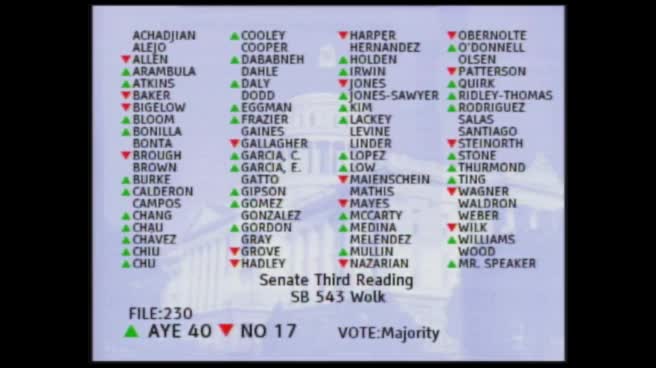 2MIN
Assembly Floor
 1MIN
Assembly Floor
 1MIN
Assembly Standing Committee on Appropriations
 8MIN
Assembly Standing Committee on Health
 3MIN
Senate Floor
 34MIN
Senate Standing Committee on Health
Bill Author