SB 1160: Workers' compensation.
- Session Year: 2015-2016
- House: Senate
- Latest Version Date: 2016-09-30
Existing law establishes a workers compensation system, administered by the Administrative Director of the Division of Workers Compensation, to compensate an employee for injuries sustained in the course of his or her employment.
Existing law requires the administrative director to develop and make available informational material written in plain language that describes the overall workers compensation claims process, as specified.
This bill would require the administrative director to adopt regulations to provide employees with notice regarding access to medical treatment following the denial of a claim under the workers compensation system.
Existing law requires the Administrative Director of the Division of Workers Compensation of the Department of Industrial Relations to develop a workers compensation information system in consultation with the Insurance Commissioner and the Workers Compensation Insurance Rating Bureau, with certain data to be collected electronically and to be compatible with the Electronic Data Interchange System of the International Association of Industrial Accident Boards and Commissions. Existing law requires the administrative director to assess an administrative penalty of not more than $5,000 in a single year against a claims administrator for a violation of those data reporting requirements.
This bill would increase that penalty assessment to not more than $10,000. The bill would require the administrative director to post on the Division of Workers Compensation Internet Web site a list of claims administrators who are in violation of the data reporting requirements.
Existing law requires every employer to establish a utilization review process, and defines utilization review as utilization review or utilization management functions that prospectively, retrospectively, or concurrently review and approve, modify, delay, or deny, based in whole or in part on medical necessity to cure and relieve, treatment recommendations by physicians, prior to, retrospectively, or concurrent with providing medical treatment services. Existing law also provides for an independent medical review process to resolve disputes over utilization review decisions, as defined.
This bill would revise and recast provisions relating to utilization review, as specified, with regard to injuries occurring on or after January 1, 2018. Among other things, the bill would set forth the medical treatment services that would be subject to prospective utilization review under these provisions, as provided. The bill would authorize retrospective utilization review for treatment provided under these provisions under limited circumstances, as specified. The bill would establish procedures for prospective and retrospective utilization reviews and set forth provisions for removal of a physician or provider under designated circumstances. On and after January 1, 2018, the bill would establish new procedures for reviewing determinations regarding the medical necessity of medication prescribed pursuant to the drug formulary adopted by the administrative director, as provided. The bill would make conforming changes to related provisions to implement these changes.
The bill would, commencing July 1, 2018, require each utilization review process to be accredited by an independent, nonprofit organization to certify that the utilization review process meets specified criteria, including, but not limited to, timeliness in issuing a utilization review decision, the scope of medical material used in issuing a utilization review decision, and requiring a policy preventing financial incentives to doctors and other providers based on the utilization review decision. The bill would require the administrative director to adopt rules to implement the selection of an independent, nonprofit organization for accreditation purposes, as specified. The bill would authorize the administrative director to adopt rules to require additional specific criteria for measuring the quality of a utilization review process for purposes of accreditation and provide for certain exemptions. The bill would require the administrative director to develop a system for electronic reporting of documents related to utilization review performed by each employer, to be administered by the division. The bill would require the administrative director, on or after March 1, 2019, to contract with an outside independent research organization to evaluate and report on the impact of provision of medical treatment within the first 30 days after a claim is filed, for claims filed on or after January 1, 2017, to January 1, 2019. The bill would require the report to be completed before January 1, 2020, and to be distributed to the administrative director, the Senate Committee on Labor and Industrial Relations, and the Assembly Committee on Insurance.
Existing law requires every lien claimant to file its lien with the appeals board in writing upon a form approved by the appeals board. Existing law requires a lien to be accompanied by a full statement or itemized voucher supporting the lien and justifying the right to reimbursement, as specified.
This bill would require certain lien claimants that file a lien under these provisions to do so by filing a declaration, under penalty of perjury, that includes specified information. The bill would require current lien claimants to also file the declaration by a specified date. The bill would make a failure to file a declaration under these provisions grounds for dismissal of a lien. Because the bill would expand the crime of perjury, the bill would impose a state-mandated local program.
The bill would also automatically stay any physician or provider lien upon the filing of criminal charges against that person or entity for specified offenses involving medical fraud, as provided. The bill would authorize the administrative director to adopt regulations to implement that provision. The bill would state findings and declarations of the Legislature in connection with these provisions.
Existing law prohibits the assignment of a lien under these provisions, except under limited circumstances, as specified.
This bill would, for liens filed after January 1, 2017, invalidate any assignment of a lien made in violation of these provisions, by operation of law.
Existing law requires the administrative director, in consultation with the Commission on Health and Safety and Workers Compensation, to adopt, after public hearings, a medical treatment utilization schedule to incorporate evidence-based, peer-reviewed, nationally recognized standards of care recommended by the commission, as specified.
This bill would authorize the administrative director to make updates to the utilization schedule by order, which would not be subject to the Administrative Procedure Act, as specified. The bill would require any order adopted pursuant to these provisions to be published on the Internet Web site of the division.
Existing law requires a deponent to receive certain expenses and reimbursements if an employer or insurance carrier requests a deposition to be taken of an injured employee, or any person claiming benefits as a dependent of an injured employee. Existing law authorizes the deponent to receive a reasonable allowance for attorneys fees, if represented by an attorney licensed in this state.
This bill would authorize the administrative director to determine the range of reasonable fees to be paid to a deponent.
Existing law provides that it is the responsibility of any party producing a witness requiring an interpreter to arrange for the presence of a qualified interpreter. Existing law sets forth the qualifications of a qualified interpreter for these purposes, and provides for the settings under which a qualified interpreter may render services.
This bill would require the administrative director to promulgate regulations establishing criteria to verify the identity and credentials of individuals that provide interpreter services under these provisions.
Existing law requires physicians, as defined, who attend to injured or ill employees to file reports with specific information prescribed by law.
This bill would revise those reporting requirements, as prescribed.
This bill would incorporate changes to Section 4610 of the Labor Code proposed by AB 2503, to be operative as specified if both bills are enacted.
Existing constitutional provisions require that a statute that limits the right of access to the meetings of public bodies or the writings of public officials and agencies be adopted with findings demonstrating the interest protected by the limitation and the need for protecting that interest.
This bill would make legislative findings to that effect.
The California Constitution requires the state to reimburse local agencies and school districts for certain costs mandated by the state. Statutory provisions establish procedures for making that reimbursement.
This bill would provide that no reimbursement is required by this act for a specified reason.
Existing law establishes a workers compensation system, administered by the Administrative Director of the Division of Workers Compensation, to compensate an employee for injuries sustained in the course of his or her employment.
Existing law requires the administrative director to develop and make available informational material written in plain language that describes the overall workers compensation claims process, as specified.
This bill would require the administrative director to adopt regulations to provide employees with notice regarding access to medical treatment following the denial of a claim under the workers compensation system.
Existing law requires the Administrative Director of the Division of Workers Compensation of the Department of Industrial Relations to develop a workers compensation information system in consultation with the Insurance Commissioner and the Workers Compensation Insurance Rating Bureau, with certain data to be collected electronically and to be compatible with the Electronic Data Interchange System of the International Association of Industrial Accident Boards and Commissions. Existing law requires the administrative director to assess an administrative penalty of not more than $5,000 in a single year against a claims administrator for a violation of those data reporting requirements.
This bill would increase that penalty assessment to not more than $10,000. The bill would require the administrative director to post on the Division of Workers Compensation Internet Web site a list of claims administrators who are in violation of the data reporting requirements.
Existing law requires every employer to establish a utilization review process, and defines utilization review as utilization review or utilization management functions that prospectively, retrospectively, or concurrently review and approve, modify, delay, or deny, based in whole or in part on medical necessity to cure and relieve, treatment recommendations by physicians, prior to, retrospectively, or concurrent with providing medical treatment services. Existing law also provides for an independent medical review process to resolve disputes over utilization review decisions, as defined.
This bill would revise and recast provisions relating to utilization review, as specified, with regard to injuries occurring on or after January 1, 2018. Among other things, the bill would set forth the medical treatment services that would be subject to prospective utilization review under these provisions, as provided. The bill would authorize retrospective utilization review for treatment provided under these provisions under limited circumstances, as specified. The bill would establish procedures for prospective and retrospective utilization reviews and set forth provisions for removal of a physician or provider under designated circumstances. On and after January 1, 2018, the bill would establish new procedures for reviewing determinations regarding the medical necessity of medication prescribed pursuant to the drug formulary adopted by the administrative director, as provided. The bill would make conforming changes to related provisions to implement these changes.
The bill would, commencing July 1, 2018, require each utilization review process to be accredited by an independent, nonprofit organization to certify that the utilization review process meets specified criteria, including, but not limited to, timeliness in issuing a utilization review decision, the scope of medical material used in issuing a utilization review decision, and requiring a policy preventing financial incentives to doctors and other providers based on the utilization review decision. The bill would require the administrative director to adopt rules to implement the selection of an independent, nonprofit organization for accreditation purposes, as specified. The bill would authorize the administrative director to adopt rules to require additional specific criteria for measuring the quality of a utilization review process for purposes of accreditation and provide for certain exemptions. The bill would require the administrative director to develop a system for electronic reporting of documents related to utilization review performed by each employer, to be administered by the division. The bill would require the administrative director, on or after March 1, 2019, to contract with an outside independent research organization to evaluate and report on the impact of provision of medical treatment within the first 30 days after a claim is filed, for claims filed on or after January 1, 2017, to January 1, 2019. The bill would require the report to be completed before January 1, 2020, and to be distributed to the administrative director, the Senate Committee on Labor and Industrial Relations, and the Assembly Committee on Insurance.
Existing law requires every lien claimant to file its lien with the appeals board in writing upon a form approved by the appeals board. Existing law requires a lien to be accompanied by a full statement or itemized voucher supporting the lien and justifying the right to reimbursement, as specified.
This bill would require certain lien claimants that file a lien under these provisions to do so by filing a declaration, under penalty of perjury, that includes specified information. The bill would require current lien claimants to also file the declaration by a specified date. The bill would make a failure to file a declaration under these provisions grounds for dismissal of a lien. Because the bill would expand the crime of perjury, the bill would impose a state-mandated local program.
The bill would also automatically stay any physician or provider lien upon the filing of criminal charges against that person or entity for specified offenses involving medical fraud, as provided. The bill would authorize the administrative director to adopt regulations to implement that provision. The bill would state findings and declarations of the Legislature in connection with these provisions.
Existing law prohibits the assignment of a lien under these provisions, except under limited circumstances, as specified.
This bill would, for liens filed after January 1, 2017, invalidate any assignment of a lien made in violation of these provisions, by operation of law.
Existing law requires the administrative director, in consultation with the Commission on Health and Safety and Workers Compensation, to adopt, after public hearings, a medical treatment utilization schedule to incorporate evidence-based, peer-reviewed, nationally recognized standards of care recommended by the commission, as specified.
This bill would authorize the administrative director to make updates to the utilization schedule by order, which would not be subject to the Administrative Procedure Act, as specified. The bill would require any order adopted pursuant to these provisions to be published on the Internet Web site of the division.
Existing law requires a deponent to receive certain expenses and reimbursements if an employer or insurance carrier requests a deposition to be taken of an injured employee, or any person claiming benefits as a dependent of an injured employee. Existing law authorizes the deponent to receive a reasonable allowance for attorneys fees, if represented by an attorney licensed in this state.
This bill would authorize the administrative director to determine the range of reasonable fees to be paid to a deponent.
Existing law provides that it is the responsibility of any party producing a witness requiring an interpreter to arrange for the presence of a qualified interpreter. Existing law sets forth the qualifications of a qualified interpreter for these purposes, and provides for the settings under which a qualified interpreter may render services.
This bill would require the administrative director to promulgate regulations establishing criteria to verify the identity and credentials of individuals that provide interpreter services under these provisions.
Existing law requires physicians, as defined, who attend to injured or ill employees to file reports with specific information prescribed by law.
This bill would revise those reporting requirements, as prescribed.
This bill would incorporate changes to Section 4610 of the Labor Code proposed by AB 2503, to be operative as specified if both bills are enacted.
Existing constitutional provisions require that a statute that limits the right of access to the meetings of public bodies or the writings of public officials and agencies be adopted with findings demonstrating the interest protected by the limitation and the need for protecting that interest.
This bill would make legislative findings to that effect.
The California Constitution requires the state to reimburse local agencies and school districts for certain costs mandated by the state. Statutory provisions establish procedures for making that reimbursement.
This bill would provide that no reimbursement is required by this act for a specified reason.
Existing law establishes a workers compensation system, administered by the Administrative Director of the Division of Workers Compensation, to compensate an employee for injuries sustained in the course of his or her employment.
Existing law requires the administrative director to develop and make available informational material written in plain language that describes the overall workers compensation claims process, as specified.
This bill would require the administrative director to adopt regulations to provide employees with notice regarding access to medical treatment following the denial of a claim under the workers compensation system.
Existing law requires the Administrative Director of the Division of Workers Compensation of the Department of Industrial Relations to develop a workers compensation information system in consultation with the Insurance Commissioner and the Workers Compensation Insurance Rating Bureau, with certain data to be collected electronically and to be compatible with the Electronic Data Interchange System of the International Association of Industrial Accident Boards and Commissions. Existing law requires the administrative director to assess an administrative penalty of not more than $5,000 in a single year against a claims administrator for a violation of those data reporting requirements.
This bill would increase that penalty assessment to not more than $10,000. The bill would require the administrative director to post on the Division of Workers Compensation Internet Web site a list of claims administrators who are in violation of the data reporting requirements.
Existing law requires every employer to establish a utilization review process, and defines utilization review as utilization review or utilization management functions that prospectively, retrospectively, or concurrently review and approve, modify, delay, or deny, based in whole or in part on medical necessity to cure and relieve, treatment recommendations by physicians, prior to, retrospectively, or concurrent with providing medical treatment services. Existing law also provides for an independent medical review process to resolve disputes over utilization review decisions, as defined.
This bill would revise and recast provisions relating to utilization review, as specified, with regard to injuries occurring on or after January 1, 2018. Among other things, the bill would set forth the medical treatment services that would be subject to prospective utilization review under these provisions, as provided. The bill would authorize retrospective utilization review for treatment provided under these provisions under limited circumstances, as specified. The bill would establish procedures for prospective and retrospective utilization reviews and set forth provisions for removal of a physician or provider under designated circumstances. On and after January 1, 2018, the bill would establish new procedures for reviewing determinations regarding the medical necessity of medication prescribed pursuant to the drug formulary adopted by the administrative director, as provided. The bill would make conforming changes to related provisions to implement these changes.
The bill would, commencing July 1, 2018, require each utilization review process to be accredited by an independent, nonprofit organization to certify that the utilization review process meets specified criteria, including, but not limited to, timeliness in issuing a utilization review decision, the scope of medical material used in issuing a utilization review decision, and requiring a policy preventing financial incentives to doctors and other providers based on the utilization review decision. The bill would require the administrative director to adopt rules to implement the selection of an independent, nonprofit organization for accreditation purposes, and as specified. The bill would authorize the administrative director to adopt rules to require additional specific criteria for measuring the quality of a utilization review process for purposes of accreditation and provide for certain exemptions. The bill would require the administrative director to develop a system for electronic reporting of documents related to utilization review performed by each employer, to be administered by the division. The bill would require the administrative director, on or after March 1, 2019, to contract with an outside independent research organization to evaluate and report on the impact of provision of medical treatment within the first 30 days after a claim is filed, for claims filed on or after January 1, 2017, to January 1, 2019. The bill would require the report to be completed before January 1, 2020, and to be distributed to the administrative director, the Senate Committee on Labor and Industrial Relations, and the Assembly Committee on Insurance.
Existing law requires every lien claimant to file its lien with the appeals board in writing upon a form approved by the appeals board. Existing law requires a lien to be accompanied by a full statement or itemized voucher supporting the lien and justifying the right to reimbursement, as specified.
This bill would require certain lien claimants that file a lien under these provisions to do so by filing a declaration, under penalty of perjury, that includes specified information. The bill would require current lien claimants to also file the declaration by a specified date. The bill would make a failure to file a declaration under these provisions grounds for dismissal of a lien. Because the bill would expand the crime of perjury, the bill would impose a state-mandated local program.
The bill would also automatically stay any physician or provider lien upon the filing of criminal charges against that person or entity for specified offenses involving medical fraud, as provided. The bill would authorize the administrative director to adopt regulations to implement that provision. The bill would state findings and declarations of the Legislature in connection with these provisions.
Existing law prohibits the assignment of a lien under these provisions, except under limited circumstances, as specified.
This bill would, for liens filed after January 1, 2017, invalidate any assignment of a lien made in violation of these provisions, by operation of law.
Existing law requires the administrative director, in consultation with the Commission on Health and Safety and Workers Compensation, to adopt, after public hearings, a medical treatment utilization schedule, schedule to incorporate evidence-based, peer-reviewed, nationally recognized standards of care recommended by the commission, as specified.
This bill would authorize the administrative director to make updates to the utilization schedule by order, which would not be subject to the Administrative Procedure Act, as specified. The bill would require any order adopted pursuant to these provisions to be published on the Internet Web site of the division.
Existing law requires a deponent to receive certain expenses and reimbursements if an employer or insurance carrier requests a deposition to be taken of an injured employee, or any person claiming benefits as a dependent of an injured employee. Existing law authorizes the deponent to receive a reasonable allowance for attorneys fees, if represented by an attorney licensed in this state.
This bill would authorize the administrative director to determine the range of reasonable fees to be paid to a deponent.
Existing law provides that it is the responsibility of any party producing a witness requiring an interpreter to arrange for the presence of a qualified interpreter. Existing law sets forth the qualifications of a qualified interpreter for these purposes, and provides for the settings under which a qualified interpreter may render services.
This bill would require the administrative director to promulgate regulations establishing criteria to verify the identity and credentials of individuals that provide interpreter services under these provisions.
Existing law requires physicians, as defined, who attend to injured or ill employees to file reports with specific information prescribed by law.
This bill would revise those reporting requirements, as prescribed.
This bill would incorporate changes to Section 4610 of the Labor Code proposed by AB 2503, to be operative as specified if both bills are enacted.
Existing constitutional provisions require that a statute that limits the right of access to the meetings of public bodies or the writings of public officials and agencies be adopted with findings demonstrating the interest protected by the limitation and the need for protecting that interest.
This bill would make legislative findings to that effect.
The California Constitution requires the state to reimburse local agencies and school districts for certain costs mandated by the state. Statutory provisions establish procedures for making that reimbursement.
This bill would provide that no reimbursement is required by this act for a specified reason.
Existing law establishes a workers compensation system, administered by the Administrative Director of the Division of Workers Compensation, to compensate an employee for injuries sustained in the course of his or her employment.
Existing law requires the administrative director to develop and make available informational material written in plain language that describes the overall workers compensation claims process, as specified.
This bill would require the administrative director to adopt regulations to provide employees with notice regarding access to medical treatment following the denial of a claim under the workers compensation system.
Existing law requires the Administrative Director of the Division of Workers Compensation of the Department of Industrial Relations to develop a workers compensation information system in consultation with the Insurance Commissioner and the Workers Compensation Insurance Rating Bureau, with certain data to be collected electronically and to be compatible with the Electronic Data Interchange System of the International Association of Industrial Accident Boards and Commissions. Existing law requires the administrative director to assess an administrative penalty of not more than $5,000 in a single year against a claims administrator for a violation of those data reporting requirements.
This bill would increase that penalty assessment to not more than $10,000. The bill would require the administrative director to post on the Division of Workers Compensation Internet Web site a list of claims administrators who are in violation of the data reporting requirements. The bill would require penalty assessments, commencing January 1, 2019, of not less than $15,000 and not more than $45,000 for those violators if certain criteria are met.
Existing law requires an employer to provide all medical services reasonably required to cure or relieve the injured worker from the effects of the injury. Under existing law, an employee may be treated by a physician of his or her own choice at a facility of his or her choice. Existing law requires the administrative director to adopt guidelines that govern the extent and scope of that medical treatment. Under existing law, an employee is entitled to no more than 24 chiropractic, 24 occupational therapy, and 24 physical therapy visits per industrial injury. Existing law makes these restrictions on visits inapplicable to postsurgical physical medicine and postsurgical rehabilitation services.
This bill would instead make those restrictions on the numbers of visits inapplicable to physical medicine and rehabilitation services. The bill would require the administrative director to adopt regulations for these purposes, as specified.
Existing law requires every employer to establish a utilization review process, and defines utilization review as utilization review or utilization management functions that prospectively, retrospectively, or concurrently review and approve, modify, delay, or deny, based in whole or in part on medical necessity to cure and relieve, treatment recommendations by physicians, prior to, retrospectively, or concurrent with providing medical treatment services. Existing law also provides for an independent medical review process to resolve disputes over utilization review decisions, as defined.
This bill would revise and recast provisions relating to utilization review, as specified, with regard to injuries occurring on or after January 1, 2018. Among other things, the bill would set forth the medical treatment services that would be subject to prospective utilization review under these provisions, as provided. The bill would authorize retrospective utilization review for treatment provided under these provisions under limited circumstances, as specified. The bill would establish procedures for prospective and retrospective utilization reviews and set forth provisions for removal of a physician or provider under designated circumstances. On and after January 1, 2018, the bill would establish new procedures for reviewing determinations regarding the medical necessity of medication prescribed pursuant to the drug formulary adopted by the administrative director, as provided. The bill would make conforming changes to related provisions to implement these changes.
This
The bill would, commencing July 1, 2018, require each utilization review process to be accredited by an independent, nonprofit organization to certify that the utilization review process meets specified criteria, including, but not limited to, timeliness in issuing a utilization review decision, the scope of medical material used in issuing a utilization review decision, and requiring a policy preventing financial incentives to doctors and other providers based on the utilization review decision. The bill would require the administrative director to adopt rules to implement the selection of an independent, nonprofit organization for those certification purposes. accreditation purposes, and as specified. The bill would authorize the administrative director to adopt rules to require additional specific criteria for measuring the quality of a utilization review process for purposes of certification. accreditation and provide for certain exemptions. The bill would require the administrative director to develop a system for electronic reporting of documents related to utilization review performed by each employer, to be administered by the division.
Existing law requires every lien claimant to file its lien with the appeals board in writing upon a form approved by the appeals board. Existing law requires a lien to be accompanied by a full statement or itemized voucher supporting the lien and justifying the right to reimbursement, as specified.
This bill would require certain lien claimants that file a lien under these provisions to do so by filing a declaration, under penalty of perjury, that includes specified information. The bill would require current lien claimants to also file the declaration by a specified date. The bill would make a failure to file a declaration under these provisions grounds for dismissal of a lien. Because the bill would expand the crime of perjury, the bill would impose a state-mandated local program.
The bill would also automatically stay any physician or provider lien upon the filing of criminal charges against that person or entity for specified offenses involving medical fraud, as provided. The bill would authorize the administrative director to adopt regulations to implement that provision.
Existing law prohibits the assignment of a lien under these provisions, except under limited circumstances, as specified.
This bill would, for liens filed after January 1, 2017, invalidate any assignment of a lien made in violation of these provisions, by operation of law.
Existing law requires the administrative director, in consultation with the Commission on Health and Safety and Workers Compensation, to adopt, after public hearings, a medical treatment utilization schedule, to incorporate evidence-based, peer-reviewed, nationally recognized standards of care recommended by the commission, as specified.
This bill would authorize the administrative director to make updates to the utilization schedule by order, which would not be subject to the Administrative Procedure Act, as specified. The bill would require any order adopted pursuant to these provisions to be published on the Internet Web site of the division.
Existing law requires a deponent to receive certain expenses and reimbursements if an employer or insurance carrier requests a deposition to be taken of an injured employee, or any person claiming benefits as a dependent of an injured employee. Existing law authorizes the deponent to a reasonable allowance for attorneys fees, if represented by an attorney licensed in this state.
This bill would authorize the administrative director to determine the range of reasonable fees to be paid to a deponent.
Existing law provides that it is the responsibility of any party producing a witness requiring an interpreter to arrange for the presence of a qualified interpreter. Existing law sets forth the qualifications of a qualified interpreter for these purposes, and provides for the settings under which a qualified interpreter may render services.
This bill would require the administrative director to promulgate regulations establishing criteria to verify the identity and credentials of individuals that provide interpreter services under these provisions.
Existing law requires physicians, as defined, who attend to injured or ill employees to file reports with specific information prescribed by law.
This bill would revise those reporting requirements, as prescribed.
Existing constitutional provisions require that a statute that limits the right of access to the meetings of public bodies or the writings of public officials and agencies be adopted with findings demonstrating the interest protected by the limitation and the need for protecting that interest.
This bill would make legislative findings to that effect.
The California Constitution requires the state to reimburse local agencies and school districts for certain costs mandated by the state. Statutory provisions establish procedures for making that reimbursement.
This bill would provide that no reimbursement is required by this act for a specified reason.
Existing law establishes a workers compensation system, administered by the Administrative Director of the Division of Workers Compensation, to compensate an employee for injuries sustained in the course of his or her employment.
Existing law requires the Administrative Director of the Division of Workers Compensation of the Department of Industrial Relations to develop a workers compensation information system in consultation with the Insurance Commissioner and the Workers Compensation Insurance Rating Bureau, with certain data to be collected electronically and to be compatible with the Electronic Data Interchange System of the International Association of Industrial Accident Boards and Commissions. Existing law requires the administrative director to assess an administrative penalty of not more than $5,000 in a single year against a claims administrator for a violation of those data reporting requirements.
This bill would increase that penalty assessment to not more than $10,000. The bill would require the administrative director to post on the Division of Workers Compensation Internet Web site a list of claims administrators who are in violation of the data reporting requirements. The bill would require penalty assessments, commencing January 1, 2019, of not less than $15,000 and not more than $45,000 for those violators if certain criteria are met, and commencing January 1, 2020, would authorize penalty assessments of not less than $100,000 for violators who engage in a pattern or practice of failing to comply with the data reporting requirements. met.
Existing law requires employers to secure the payment of compensation for injured employees in one or more specified ways. When an employer has failed to secure the payment of compensation as required, existing law requires the administrative director to issue and serve on the employer a stop order, prohibiting the use of employee labor by the employer until the employers compliance.
This bill would similarly authorize a stop order until the employer complies if the administrative director finds that an employer or claims administrator engages in a pattern or practice of failing to comply with specified data reporting requirements.
Existing law requires an employer to provide all medical services reasonably required to cure or relieve the injured worker from the effects of the injury. Under existing law, an employee may be treated by a physician of his or her own choice at a facility of his or her choice. Existing law requires the administrative director to adopt guidelines that govern the extent and scope of that medical treatment. Under existing law, an employee is entitled to no more than 24 chiropractic, 24 occupational therapy, and 24 physical therapy visits per industrial injury. Existing law makes these restrictions on visits inapplicable to postsurgical physical medicine and postsurgical rehabilitation services.
This bill would instead make those restrictions on the numbers of visits inapplicable to physical medicine and rehabilitation services. The bill would provide that for injuries covered by the official utilization schedule, if the specific clinical topic of an injury covered by the official utilization schedule has not been updated in 5 or more years, authorized treatment shall be in accordance with other evidence-based medical treatment guidelines that are recognized generally by the national medical community and scientifically based if the guideline is 5 or less years old. The bill would require the administrative director to adopt regulations for these purposes, as specified.
Existing law requires every employer to establish a utilization review process, and defines utilization review as utilization review or utilization management functions that prospectively, retrospectively, or concurrently review and approve, modify, delay, or deny, based in whole or in part on medical necessity to cure and relieve, treatment recommendations by physicians, prior to, retrospectively, or concurrent with providing medical treatment services. Existing law also provides for an independent medical review process to resolve disputes over utilization review decisions, as defined.
This bill would, commencing July 1, 2018, require each utilization review process to be accredited by an independent, nonprofit organization to certify that the utilization review process meets specified criteria, including, but not limited to, timeliness in issuing a utilization review decision, the scope of medical material used in issuing a utilization review decision, and requiring a policy preventing financial incentives to doctors and other providers based on the utilization review decision. The bill would require the administrative director to adopt rules to implement the selection of an independent, nonprofit organization for those certification purposes. The bill would authorize the administrative director to adopt rules to require additional specific criteria for measuring the quality of a utilization review process for purposes of certification.
Existing law provides as part of the utilization review process, that the definition of medical treatment provided to employees is that treatment that is reasonably required to cure or relieve the injured employee of the effects of his or her injury and based on specified standards, including, among others, guidelines adopted by the administrative director, as specified.
This bill would require the guidelines adopted by the administrative director to be evidence-based medical treatment guidelines that are scientifically based and recognized generally by the national medical community.
Existing law establishes a workers compensation system, administered by the Administrative Director of the Division of Workers Compensation, to compensate an employee for injuries sustained in the course of his or her employment. Existing
Existing law requires the Administrative Director of the Division of Workers Compensation of the Department of Industrial Relations to develop a workers compensation information system in consultation with the Insurance Commissioner and the Workers Compensation Insurance Rating Bureau, with certain data to be collected electronically and to be compatible with the Electronic Data Interchange System of the International Association of Industrial Accident Boards and Commissions. Existing law requires the administrative director to assess an administrative penalty of not more than $5,000 in a single year against a claims administrator for a violation of those data reporting requirements.
This bill would increase that penalty assessment to not more than $10,000. The bill would require the administrative director to post on the Division of Workers Compensation Web site a list of claims administrators who are in violation of the data reporting requirements. The bill would require penalty assessments, commencing January 1, 2019, of not less than $15,000 and not more than $45,000 for those violators if certain criteria are met, and commencing January 1, 2020, would authorize penalty assessments of not less than $100,000 for violators who engage in a pattern or practice of failing to comply with the data reporting requirements.
Existing law requires employers to secure the payment of compensation for injured employees in one or more specified ways. When an employer has failed to secure the payment of compensation as required, existing law requires the administrative director to issue and serve on the employer a stop order, prohibiting the use of employee labor by the employer until the employers compliance.
This bill would similarly authorize a stop order until the employer complies if the administrative director finds that an employer or claims administrator engages in a pattern or practice of failing to comply with specified data reporting requirements.
Existing law requires an employer to provide all medical services reasonably required to cure or relieve the injured worker from the effects of the injury. Under existing law, an employee may be treated by a physician of his or her own choice at a facility of his or her choice. Existing law requires the administrative director to adopt guidelines that govern the extent and scope of that medical treatment. Under existing law, an employee is entitled to no more than 24 chiropractic, 24 occupational therapy, and 24 physical therapy visits per industrial injury. Existing law makes these restrictions on visits inapplicable to postsurgical physical medicine and postsurgical rehabilitation services.
This bill would instead make those restrictions on the numbers of visits inapplicable to physical medicine and rehabilitation services. The bill would provide that for injuries covered by the official utilization schedule, if the specific clinical topic of an injury covered by the official utilization schedule has not been updated in 5 or more years, authorized treatment shall be in accordance with other evidence-based medical treatment guidelines that are recognized generally by the national medical community and scientifically based if the guideline is 5 or less years old.
Existing law requires every employer to establish a utilization review process, and defines utilization review as utilization review or utilization management functions that prospectively, retrospectively, or concurrently review and approve, modify, delay, or deny, based in whole or in part on medical necessity to cure and relieve, treatment recommendations by physicians, prior to, retrospectively, or concurrent with providing medical treatment services. Existing law also provides for an independent medical review process to resolve disputes over utilization review decisions, as defined.
This bill would, commencing July 1, 2018, require each utilization review process to be accredited by an independent, nonprofit organization to certify that the utilization review process meets specified criteria, including, but not limited to, timeliness in issuing a utilization review decision, the scope of medical material used in issuing a utilization review decision, and requiring a policy preventing financial incentives to doctors and other providers based on the utilization review decision. The bill would require the administrative director to adopt rules to implement the selection of an independent, nonprofit organization for those certification purposes. The bill would authorize the administrative director to adopt rules to require additional specific criteria for measuring the quality of a utilization review process for purposes of certification.
Existing law provides as part of the utilization review process, that the definition of medical treatment provided to employees is that treatment that is reasonably required to cure or relieve the injured employee of the effects of his or her injury and based on specified standards, including, among others, guidelines adopted by the administrative director, as specified.
This bill would require the guidelines adopted by the administrative director to be evidence-based medical treatment guidelines that are scientifically based and recognized generally by the national medical community.
Existing law establishes a workers compensation system, administered by the Administrative Director of the Division of Workers Compensation, to compensate an employee for injuries sustained in the course of his or her employment. Existing law requires every employer to establish a utilization review process, and defines utilization review as utilization review or utilization management functions that prospectively, retrospectively, or concurrently review and approve, modify, delay, or deny, based in whole or in part on medical necessity to cure and relieve, treatment recommendations by physicians, prior to, retrospectively, or concurrent with providing medical treatment services. Existing law also provides for an independent medical review process to resolve disputes over utilization review decisions, as defined.
This bill would, commencing July 1, 2018, require each utilization review process to be accredited by an independent, nonprofit organization to certify that the utilization review process meets specified criteria, including, but not limited to, timeliness in issuing a utilization review decision, the scope of medical material used in issuing a utilization review decision, and requiring a policy preventing financial incentives to doctors and other providers based on the utilization review decision. The bill would require the administrative director to adopt rules to implement the selection of an independent, nonprofit organization for those certification purposes. The bill would authorize the administrative director to adopt rules to require additional specific criteria for measuring the quality of a utilization review process for purposes of certification.
This bill would make technical, nonsubstantive changes to those provisions.
Existing law establishes a workers compensation system, administered by the Administrative Director of the Division of Workers Compensation, to compensate an employee for injuries sustained in the course of his or her employment. Existing law requires every employer to establish a utilization review process, and defines utilization review as utilization review or utilization management functions that prospectively, retrospectively, or concurrently review and approve, modify, delay, or deny, based in whole or in part on medical necessity to cure and relieve, treatment recommendations by physicians, prior to, retrospectively, or concurrent with providing medical treatment services. Existing law also provides for an independent medical review process to resolve disputes over utilization review decisions, as defined.
This bill would make technical, nonsubstantive changes to those provisions.
(a)For the purpose of this section, claims administrator means a self-administered workers compensation insurer; or a self-administered self-insured employer; or a self-administered legally uninsured employer; or a self-administered joint powers authority; or a third-party claims administrator for an insurer, a self-insured employer, a legally uninsured employer, or a joint powers authority.
(b)With respect to injuries resulting in lost time beyond the employees work shift at the time of injury or medical treatment beyond first aid:
(1)If the claims administrator obtains knowledge that the employer has not provided a claim form or a notice of potential eligibility for benefits to the employee, it shall provide the form and notice to the employee within three working days of its knowledge that the form or notice was not provided.
(2)If the claims administrator cannot determine if the employer has provided a claim form and notice of potential eligibility for benefits to the employee, the claims administrator shall provide the form and notice to the employee within 30 days of the administrators date of knowledge of the claim.
(c)The administrative director, in consultation with the Commission on Health and Safety and Workers Compensation, shall prescribe reasonable rules and regulations, including notice of the right to consult with an attorney, where appropriate, for serving on the employee (or employees dependents, in the case of death), the following:
(1)Notices dealing with the payment, nonpayment, or delay in payment of temporary disability, permanent disability, supplemental job displacement, and death benefits.
(2)Notices of any change in the amount or type of benefits being provided, the termination of benefits, the rejection of any liability for compensation, and an accounting of benefits paid.
(3)Notices of rights to select the primary treating physician, written continuity of care policies, requests for a comprehensive medical evaluation, and offers of regular, modified, or alternative work.
(d)The administrative director, in consultation with the Commission on Health and Safety and Workers Compensation, shall develop, make fully accessible on the departments Internet Web site, and make available at district offices informational material written in plain language that describes the overall workers compensation claims process, including the rights and obligations of employees and employers at every stage of a claim when a notice is required.
(e)Each notice prescribed by the administrative director shall be written in plain language, shall reference the informational material described in subdivision (d) to enable employees to understand the context of the notices, and shall clearly state the Internet Web site address and contact information that an employee may use to access the informational material.
(f)On or before January 1, 2018, the administrative director shall adopt regulations to provide employees with notice that they may access medical treatment outside of the workers compensation system following the denial of their claim.
SEC. 2.Section 138.6 of the Labor Code is amended to read:138.6.(a)The administrative director, in consultation with the Insurance Commissioner and the Workers Compensation Insurance Rating Bureau, shall develop a cost-efficient workers compensation information system, which shall be administered by the division. The administrative director shall adopt regulations specifying the data elements to be collected by electronic data interchange.
(b)The information system shall do the following:
(1)Assist the department to manage the workers compensation system in an effective and efficient manner.
(2)Facilitate the evaluation of the efficiency and effectiveness of the delivery system.
(3)Assist in measuring how adequately the system indemnifies injured workers and their dependents.
(4)Provide statistical data for research into specific aspects of the workers compensation program.
(c)The data collected electronically shall be compatible with the Electronic Data Interchange System of the International Association of Industrial Accident Boards and Commissions. The administrative director may adopt regulations authorizing the use of other nationally recognized data transmission formats in addition to those set forth in the Electronic Data Interchange System for the transmission of data required pursuant to this section. The administrative director shall accept data transmissions in any authorized format. If the administrative director determines that any authorized data transmission format is not in general use by claims administrators, conflicts with the requirements of state or federal law, or is obsolete, the administrative director may adopt regulations eliminating that data transmission format from those authorized pursuant to this subdivision.
(d)(1)The administrative director shall assess an administrative penalty against a claims administrator for a violation of data reporting requirements adopted pursuant to this section. The administrative director shall promulgate a schedule of penalties providing for an assessment of no more than ten thousand dollars ($10,000) against a claims administrator in any single year, calculated as follows:
(A)No more than one hundred dollars ($100) multiplied by the number of violations in that year that resulted in a required data report not being submitted or not being accepted.
(B)No more than fifty dollars ($50) multiplied by the number of violations in that year that resulted in a required report being late or accepted with an error.
(C)Multiple errors in a single report shall be counted as a single violation.
(D)No penalty shall be assessed pursuant to Section 129.5 for any violation of data reporting requirements for which a penalty has been or may be assessed pursuant to this section.
(2)The schedule promulgated by the administrative director pursuant to paragraph (1) shall establish threshold rates of violations that shall be excluded from the calculation of the assessment, as follows:
(A)The threshold rate for reports that are not submitted or are submitted but not accepted shall not be less than 3 percent of the number of reports that are required to be filed by or on behalf of the claims administrator.
(B)The threshold rate for reports that are accepted with an error shall not be less than 3 percent of the number of reports that are accepted with an error.
(C)The administrative director shall set higher threshold rates as appropriate in recognition of the fact that the data necessary for timely and accurate reporting may not be always available to a claims administrator or the claims administrators agents.
(D)The administrative director may establish higher thresholds for particular data elements that commonly are not reasonably available.
(3)The administrative director may estimate the number of required data reports that are not submitted by comparing a statistically valid sample of data available to the administrative director from other sources with the data reported pursuant to this section.
(4)All penalties assessed pursuant to this section shall be deposited in the Workers Compensation Administration Revolving Fund.
(5)The administrative director shall publish an annual report disclosing the compliance rates of claims administrators and post the report and a list of claims administrators who are in violation of the data reporting requirements on the Internet Web site of the Division of Workers Compensation.
SEC. 3.Section 4610 of the Labor Code is amended to read:4610.(a)For purposes of this section, utilization review means utilization review or utilization management functions that prospectively, retrospectively, or concurrently review and approve, modify, or deny, based in whole or in part on medical necessity to cure and relieve, treatment recommendations by physicians, as defined in Section 3209.3, prior to, retrospectively, or concurrent with the provision of medical treatment services pursuant to Section 4600.
(b)Every employer shall establish a utilization review process in compliance with this section, either directly or through its insurer or an entity with which an employer or insurer contracts for these services.
(c)Each utilization review process shall be governed by written policies and procedures. These policies and procedures shall ensure that decisions based on the medical necessity to cure and relieve of proposed medical treatment services are consistent with the schedule for medical treatment utilization adopted pursuant to Section 5307.27. These policies and procedures, and a description of the utilization process, shall be filed with the administrative director and shall be disclosed by the employer to employees, physicians, and the public upon request.
(d)If an employer, insurer, or other entity subject to this section requests medical information from a physician in order to determine whether to approve, modify, or deny requests for authorization, the employer shall request only the information reasonably necessary to make the determination. The employer, insurer, or other entity shall employ or designate a medical director who holds an unrestricted license to practice medicine in this state issued pursuant to Section 2050 or 2450 of the Business and Professions Code. The medical director shall ensure that the process by which the employer or other entity reviews and approves, modifies, or denies requests by physicians prior to, retrospectively, or concurrent with the provision of medical treatment services, complies with the requirements of this section. Nothing in this section shall be construed as restricting the existing authority of the Medical Board of California.
(e)No person other than a licensed physician who is competent to evaluate the specific clinical issues involved in the medical treatment services, and where these services are within the scope of the physicians practice, requested by the physician may modify or deny requests for authorization of medical treatment for reasons of medical necessity to cure and relieve.
(f)The criteria or guidelines used in the utilization review process to determine whether to approve, modify, or deny medical treatment services shall be all of the following:
(1)Developed with involvement from actively practicing physicians.
(2)Consistent with the schedule for medical treatment utilization adopted pursuant to Section 5307.27.
(3)Evaluated at least annually, and updated if necessary.
(4)Disclosed to the physician and the employee, if used as the basis of a decision to modify or deny services in a specified case under review.
(5)Available to the public upon request. An employer shall only be required to disclose the criteria or guidelines for the specific procedures or conditions requested. An employer may charge members of the public reasonable copying and postage expenses related to disclosing criteria or guidelines pursuant to this paragraph. Criteria or guidelines may also be made available through electronic means. No charge shall be required for an employee whose physicians request for medical treatment services is under review.
(g)In determining whether to approve, modify, or deny requests by physicians prior to, retrospectively, or concurrent with the provisions of medical treatment services to employees all of the following requirements shall be met:
(1)Prospective or concurrent decisions shall be made in a timely fashion that is appropriate for the nature of the employees condition, not to exceed five working days from the receipt of the information reasonably necessary to make the determination, but in no event more than 14 days from the date of the medical treatment recommendation by the physician. In cases where the review is retrospective, a decision resulting in denial of all or part of the medical treatment service shall be communicated to the individual who received services, or to the individuals designee, within 30 days of receipt of information that is reasonably necessary to make this determination. If payment for a medical treatment service is made within the time prescribed by Section 4603.2, a retrospective decision to approve the service need not otherwise be communicated.
(2)When the employees condition is such that the employee faces an imminent and serious threat to his or her health, including, but not limited to, the potential loss of life, limb, or other major bodily function, or the normal timeframe for the decisionmaking process, as described in paragraph (1), would be detrimental to the employees life or health or could jeopardize the employees ability to regain maximum function, decisions to approve, modify, or deny requests by physicians prior to, or concurrent with, the provision of medical treatment services to employees shall be made in a timely fashion that is appropriate for the nature of the employees condition, but not to exceed 72 hours after the receipt of the information reasonably necessary to make the determination.
(3)(A)Decisions to approve, modify, or deny requests by physicians for authorization prior to, or concurrent with, the provision of medical treatment services to employees shall be communicated to the requesting physician within 24 hours of the decision. Decisions resulting in modification or denial of all or part of the requested health care service shall be communicated to physicians initially by telephone or facsimile, and to the physician and employee in writing within 24 hours for concurrent review, or within two business days of the decision for prospective review, as prescribed by the administrative director. If the request is not approved in full, disputes shall be resolved in accordance with Section 4610.5, if applicable, or otherwise in accordance with Section 4062.
(B)In the case of concurrent review, medical care shall not be discontinued until the employees physician has been notified of the decision and a care plan has been agreed upon by the physician that is appropriate for the medical needs of the employee. Medical care provided during a concurrent review shall be care that is medically necessary to cure and relieve, and an insurer or self-insured employer shall only be liable for those services determined medically necessary to cure and relieve. If the insurer or self-insured employer disputes whether or not one or more services offered concurrently with a utilization review were medically necessary to cure and relieve, the dispute shall be resolved pursuant to Section 4610.5, if applicable, or otherwise pursuant to Section 4062. Any compromise between the parties that an insurer or self-insured employer believes may result in payment for services that were not medically necessary to cure and relieve shall be reported by the insurer or the self-insured employer to the licensing board of the provider or providers who received the payments, in a manner set forth by the respective board and in such a way as to minimize reporting costs both to the board and to the insurer or self-insured employer, for evaluation as to possible violations of the statutes governing appropriate professional practices. No fees shall be levied upon insurers or self-insured employers making reports required by this section.
(4)Communications regarding decisions to approve requests by physicians shall specify the specific medical treatment service approved. Responses regarding decisions to modify or deny medical treatment services requested by physicians shall include a clear and concise explanation of the reasons for the employers decision, a description of the criteria or guidelines used, and the clinical reasons for the decisions regarding medical necessity. If a utilization review decision to deny a medical service is due to incomplete or insufficient information, the decision shall specify the reason for the decision and specify the information that is needed.
(5)If the employer, insurer, or other entity cannot make a decision within the timeframes specified in paragraph (1) or (2) because the employer or other entity is not in receipt of all of the information reasonably necessary and requested, because the employer requires consultation by an expert reviewer, or because the employer has asked that an additional examination or test be performed upon the employee that is reasonable and consistent with good medical practice, the employer shall immediately notify the physician and the employee, in writing, that the employer cannot make a decision within the required timeframe, and specify the information requested but not received, the expert reviewer to be consulted, or the additional examinations or tests required. The employer shall also notify the physician and employee of the anticipated date on which a decision may be rendered. Upon receipt of all information reasonably necessary and requested by the employer, the employer shall approve, modify, or deny the request for authorization within the timeframes specified in paragraph (1) or (2).
(6)A utilization review decision to modify or deny a treatment recommendation shall remain effective for 12 months from the date of the decision without further action by the employer with regard to any further recommendation by the same physician for the same treatment unless the further recommendation is supported by a documented change in the facts material to the basis of the utilization review decision.
(7)Utilization review of a treatment recommendation shall not be required while the employer is disputing liability for injury or treatment of the condition for which treatment is recommended pursuant to Section 4062.
(8)If utilization review is deferred pursuant to paragraph (7), and it is finally determined that the employer is liable for treatment of the condition for which treatment is recommended, the time for the employer to conduct retrospective utilization review in accordance with paragraph (1) shall begin on the date the determination of the employers liability becomes final, and the time for the employer to conduct prospective utilization review shall commence from the date of the employers receipt of a treatment recommendation after the determination of the employers liability.
(h)Every employer, insurer, or other entity subject to this section shall maintain telephone access for physicians to request authorization for health care services.
(i)If the administrative director determines that the employer, insurer, or other entity subject to this section has failed to meet any of the timeframes in this section, or has failed to meet any other requirement of this section, the administrative director may assess, by order, administrative penalties for each failure. A proceeding for the issuance of an order assessing administrative penalties shall be subject to appropriate notice to, and an opportunity for a hearing with regard to, the person affected. The administrative penalties shall not be deemed to be an exclusive remedy for the administrative director. These penalties shall be deposited in the Workers Compensation Administration Revolving Fund.
(j)This section shall remain in effect only until January 1, 2018, and as of that date is repealed, unless a later enacted statute, that is enacted before January 1, 2018, deletes or extends that date.
SEC. 3.5.Section 4610 of the Labor Code is amended to read:4610.(a)For purposes of this section, utilization review means utilization review or utilization management functions that prospectively, retrospectively, or concurrently review and approve, modify, or deny, based in whole or in part on medical necessity to cure and relieve, treatment recommendations by physicians, as defined in Section 3209.3, prior to, retrospectively, or concurrent with the provision of medical treatment services pursuant to Section 4600.
(b)Each employer shall establish a utilization review process in compliance with this section, either directly or through its insurer or an entity with which an employer or insurer contracts for these services.
(c)Each utilization review process shall be governed by written policies and procedures. These policies and procedures shall ensure that decisions based on the medical necessity to cure and relieve of proposed medical treatment services are consistent with the schedule for medical treatment utilization adopted pursuant to Section 5307.27. These policies and procedures, and a description of the utilization process, shall be filed with the administrative director and shall be disclosed by the employer to employees, physicians, and the public upon request.
(d)Unless otherwise indicated in this section, a physician providing treatment under Section 4600 shall send any request for authorization for medical treatment, with supporting documentation, to the claims administrator for the employer, insurer, or other entity according to rules adopted by the administrative director. If an employer, insurer, or other entity subject to this section requests medical information from a physician in order to determine whether to approve, modify, or deny requests for authorization, that employer, insurer, or other entity shall request only the information reasonably necessary to make the determination. The employer, insurer, or other entity shall employ or designate a medical director who holds an unrestricted license to practice medicine in this state issued pursuant to Section 2050 or 2450 of the Business and Professions Code. The medical director shall ensure that the process by which the employer or other entity reviews and approves, modifies, or denies requests by physicians prior to, retrospectively, or concurrent with the provision of medical treatment services, complies with the requirements of this section. Nothing in this section shall be construed as restricting the existing authority of the Medical Board of California.
(e)A person other than a licensed physician who is competent to evaluate the specific clinical issues involved in the medical treatment services, if these services are within the scope of the physicians practice, requested by the physician, shall not modify or deny requests for authorization of medical treatment for reasons of medical necessity to cure and relieve.
(f)The criteria or guidelines used in the utilization review process to determine whether to approve, modify, or deny medical treatment services shall be all of the following:
(1)Developed with involvement from actively practicing physicians.
(2)Consistent with the schedule for medical treatment utilization adopted pursuant to Section 5307.27.
(3)Evaluated at least annually, and updated if necessary.
(4)Disclosed to the physician and the employee, if used as the basis of a decision to modify or deny services in a specified case under review.
(5)Available to the public upon request. An employer shall only be required to disclose the criteria or guidelines for the specific procedures or conditions requested. An employer may charge members of the public reasonable copying and postage expenses related to disclosing criteria or guidelines pursuant to this paragraph. Criteria or guidelines may also be made available through electronic means. A charge shall not be required for an employee whose physicians request for medical treatment services is under review.
(g)In determining whether to approve, modify, or deny requests by physicians prior to, retrospectively, or concurrent with the provisions of medical treatment services to employees all of the following requirements shall be met:
(1)Prospective or concurrent decisions shall be made in a timely fashion that is appropriate for the nature of the employees condition, not to exceed five working days from the receipt of the information reasonably necessary to make the determination, but in no event more than 14 days from the date of the medical treatment recommendation by the physician. In cases where the review is retrospective, a decision resulting in denial of all or part of the medical treatment service shall be communicated to the individual who received services, or to the individuals designee, within 30 days of receipt of the information that is reasonably necessary to make this determination. If payment for a medical treatment service is made within the time prescribed by Section 4603.2, a retrospective decision to approve the service need not otherwise be communicated.
(2)If the employees condition is one in which the employee faces an imminent and serious threat to his or her health, including, but not limited to, the potential loss of life, limb, or other major bodily function, or the normal timeframe for the decisionmaking process, as described in paragraph (1), would be detrimental to the employees life or health or could jeopardize the employees ability to regain maximum function, decisions to approve, modify, or deny requests by physicians prior to, or concurrent with, the provision of medical treatment services to employees shall be made in a timely fashion that is appropriate for the nature of the employees condition, but not to exceed 72 hours after the receipt of the information reasonably necessary to make the determination.
(3)(A)Decisions to approve, modify, or deny requests by physicians for authorization prior to, or concurrent with, the provision of medical treatment services to employees shall be communicated to the requesting physician within 24 hours of the decision. Decisions resulting in modification or denial of all or part of the requested health care service shall be communicated to physicians initially by telephone or facsimile, and to the physician and employee in writing within 24 hours for concurrent review, or within two business days of the decision for prospective review, as prescribed by the administrative director. If the request is not approved in full, disputes shall be resolved in accordance with Section 4610.5, if applicable, or otherwise in accordance with Section 4062.
(B)In the case of concurrent review, medical care shall not be discontinued until the employees physician has been notified of the decision and a care plan has been agreed upon by the physician that is appropriate for the medical needs of the employee. Medical care provided during a concurrent review shall be care that is medically necessary to cure and relieve, and an insurer or self-insured employer shall only be liable for those services determined medically necessary to cure and relieve. If the insurer or self-insured employer disputes whether or not one or more services offered concurrently with a utilization review were medically necessary to cure and relieve, the dispute shall be resolved pursuant to Section 4610.5, if applicable, or otherwise pursuant to Section 4062. A compromise between the parties that an insurer or self-insured employer believes may result in payment for services that were not medically necessary to cure and relieve shall be reported by the insurer or the self-insured employer to the licensing board of the provider or providers who received the payments, in a manner set forth by the respective board and in a way that minimizes reporting costs both to the board and to the insurer or self-insured employer, for evaluation as to possible violations of the statutes governing appropriate professional practices. Fees shall not be levied upon insurers or self-insured employers making reports required by this section.
(4)Communications regarding decisions to approve requests by physicians shall specify the specific medical treatment service approved. Responses regarding decisions to modify or deny medical treatment services requested by physicians shall include a clear and concise explanation of the reasons for the employers decision, a description of the criteria or guidelines used, and the clinical reasons for the decisions regarding medical necessity. If a utilization review decision to deny a medical service is due to incomplete or insufficient information, the decision shall specify the reason for the decision and specify the information that is needed.
(5)If the employer, insurer, or other entity cannot make a decision within the timeframes specified in paragraph (1) or (2) because the employer or other entity is not in receipt of all of the information reasonably necessary and requested, because the employer requires consultation by an expert reviewer, or because the employer has asked that an additional examination or test be performed upon the employee that is reasonable and consistent with good medical practice, the employer shall immediately notify the physician and the employee, in writing, that the employer cannot make a decision within the required timeframe, and specify the information requested but not received, the expert reviewer to be consulted, or the additional examinations or tests required. The employer shall also notify the physician and employee of the anticipated date on which a decision may be rendered. Upon receipt of all information reasonably necessary and requested by the employer, the employer shall approve, modify, or deny the request for authorization within the timeframes specified in paragraph (1) or (2).
(6)A utilization review decision to modify or deny a treatment recommendation shall remain effective for 12 months from the date of the decision without further action by the employer with regard to a further recommendation by the same physician for the same treatment unless the further recommendation is supported by a documented change in the facts material to the basis of the utilization review decision.
(7)Utilization review of a treatment recommendation shall not be required while the employer is disputing liability for injury or treatment of the condition for which treatment is recommended pursuant to Section 4062.
(8)If utilization review is deferred pursuant to paragraph (7), and it is finally determined that the employer is liable for treatment of the condition for which treatment is recommended, the time for the employer to conduct retrospective utilization review in accordance with paragraph (1) shall begin on the date the determination of the employers liability becomes final, and the time for the employer to conduct prospective utilization review shall commence from the date of the employers receipt of a treatment recommendation after the determination of the employers liability.
(h)Each employer, insurer, or other entity subject to this section shall maintain telephone access for physicians to request authorization for health care services.
(i)If the administrative director determines that the employer, insurer, or other entity subject to this section has failed to meet any of the timeframes in this section, or has failed to meet any other requirement of this section, the administrative director may assess, by order, administrative penalties for each failure. A proceeding for the issuance of an order assessing administrative penalties shall be subject to appropriate notice to, and an opportunity for a hearing with regard to, the person affected. The administrative penalties shall not be deemed to be an exclusive remedy for the administrative director. These penalties shall be deposited in the Workers Compensation Administration Revolving Fund.
(j)This section shall remain in effect only until January 1, 2018, and as of that date is repealed, unless a later enacted statute, that is enacted before January 1, 2018, deletes or extends that date.
SEC. 4.Section 4610 is added to the Labor Code, to read:4610.(a)For purposes of this section, utilization review means utilization review or utilization management functions that prospectively, retrospectively, or concurrently review and approve, modify, or deny, based in whole or in part on medical necessity to cure and relieve, treatment recommendations by physicians, as defined in Section 3209.3, prior to, retrospectively, or concurrent with the provision of medical treatment services pursuant to Section 4600.
(b)For all dates of injury occurring on or after January 1, 2018, emergency treatment services and medical treatment rendered for a body part or condition that is accepted as compensable by the employer and is addressed by the medical treatment utilization schedule adopted pursuant to Section 5307.7, by a member of the medical provider network or health care organization, or by a physician predesignated pursuant to subdivision (d) of Section 4600, within the 30 days following the initial date of injury, shall be authorized without prospective utilization review, except as provided in subdivision (c). The services rendered under this subdivision shall be consistent with the medical treatment utilization schedule. In the event that the employee is not subject to treatment with a medical provider network, health care organization, or predesignated physician pursuant to subdivision (d) of Section 4600, the employee shall be eligible for treatment under this section within 30 days following the initial date of injury if the treatment is rendered by a physician or facility selected by the employer. For treatment rendered by a medical provider network physician, health care organization physician, a physician predesignated pursuant to subdivision (d) of Section 4600, or an employer-selected physician, the report required under Section 6409 and a complete request for authorization shall be submitted by the physician within five days following the employees initial visit and evaluation.
(c)Unless authorized by the employer or rendered as emergency medical treatment, the following medical treatment services, as defined in rules adopted by the administrative director, that are rendered through a member of the medical provider network or health care organization, a predesignated physician, an employer-selected physician, or an employer-selected facility, within the 30 days following the initial date of injury, shall be subject to prospective utilization review under this section:
(1)Pharmaceuticals, to the extent they are neither expressly exempted from prospective review nor authorized by the drug formulary adopted pursuant to Section 5307.27.
(2)Nonemergency inpatient and outpatient surgery, including all presurgical and postsurgical services.
(3)Psychological treatment services.
(4)Home health care services.
(5)Imaging and radiology services, excluding X-rays.
(6)All durable medical equipment, whose combined total value exceeds two hundred fifty dollars ($250), as determined by the official medical fee schedule.
(7)Electrodiagnostic medicine, including, but not limited to, electromyography and nerve conduction studies.
(8)Any other service designated and defined through rules adopted by the administrative director.
(d)Any request for payment for treatment provided under subdivision (b) shall comply with Section 4603.2 and be submitted to the employer, or its insurer or claims administrator, within 30 days of the date the service was provided.
(e)If a physician fails to submit the report required under Section 6409 and a complete request for authorization, as described in subdivision (b), an employer may remove the physicians ability under this subdivision to provide further medical treatment to the employee that is exempt from prospective utilization review.
(f)An employer may perform retrospective utilization review for any treatment provided pursuant to subdivision (b) solely for the purpose of determining if the physician is prescribing treatment consistent with the schedule for medical treatment utilization, including, but not limited to, the drug formulary adopted pursuant to Section 5307.27.
(1)If it is found after retrospective utilization reviews that there is a pattern and practice of the physician or provider failing to render treatment consistent with the schedule for medical treatment utilization, including the drug formulary, the employer may remove the ability of the predesignated physician, employer-selected physician, or the member of the medical provider network or health care organization under this subdivision to provide further medical treatment to any employee that is exempt from prospective utilization review. The employer shall notify the physician or provider of the results of the retrospective utilization review and the requirement for prospective utilization review for all subsequent medical treatment.
(2)The results of retrospective utilization review may constitute a showing of good cause for an employers petition requesting a change of physician or provider pursuant to Section 4603 and may serve as grounds for termination of the physician or provider from the medical provider network or health care organization.
(g)Every employer shall establish a utilization review process in compliance with this section, either directly or through its insurer or an entity with which an employer or insurer contracts for these services.
(1)Each utilization review process that modifies or denies requests for authorization of medical treatment shall be governed by written policies and procedures. These policies and procedures shall ensure that decisions based on the medical necessity to cure and relieve of proposed medical treatment services are consistent with the schedule for medical treatment utilization, including the drug formulary, adopted pursuant to Section 5307.27.
(2)The employer, insurer, or other entity shall employ or designate a medical director who holds an unrestricted license to practice medicine in this state issued pursuant to Section 2050 or Section 2450 of the Business and Professions Code. The medical director shall ensure that the process by which the employer or other entity reviews and approves, modifies, or denies requests by physicians prior to, retrospectively, or concurrent with the provision of medical treatment services complies with the requirements of this section. Nothing in this section shall be construed as restricting the existing authority of the Medical Board of California.
(3)(A)No person other than a licensed physician who is competent to evaluate the specific clinical issues involved in the medical treatment services, and where these services are within the scope of the physicians practice, requested by the physician may modify or deny requests for authorization of medical treatment for reasons of medical necessity to cure and relieve or due to incomplete or insufficient information under subdivisions (i) and (j).
(B)(i)The employer, or any entity conducting utilization review on behalf of the employer, shall neither offer nor provide any financial incentive or consideration to a physician based on the number of modifications or denials made by the physician under this section.
(ii)An insurer or third-party administrator shall not refer utilization review services conducted on behalf of an employer under this section to an entity in which the insurer or third-party administrator has a financial interest as defined under Section 139.32. This prohibition does not apply if the insurer or third-party administrator provides the employer and the administrative director with prior written disclosure of both of the following:
(I)The entity conducting the utilization review services.
(II)The insurer or third-party administrators financial interest in the entity.
(C)The administrative director has authority pursuant to this section to review any compensation agreement, payment schedule, or contract between the employer, or any entity conducting utilization review on behalf of the employer, and the utilization review physician. Any information disclosed to the administrative director pursuant to this paragraph shall be considered confidential information and not subject to disclosure pursuant to the California Public Records Act (Chapter 3.5 (commencing with Section 6250) of Division 7 of Title 1 of the Government Code). Disclosure of the information to the administrative director pursuant to this subdivision shall not waive the provisions of the Evidence Code relating to privilege.
(4)A utilization review process that modifies or denies requests for authorization of medical treatment shall be accredited on or before July 1, 2018, and shall retain active accreditation while providing utilization review services, by an independent, nonprofit organization to certify that the utilization review process meets specified criteria, including, but not limited to, timeliness in issuing a utilization review decision, the scope of medical material used in issuing a utilization review decision, peer-to-peer consultation, internal appeal procedure, and requiring a policy preventing financial incentives to doctors and other providers based on the utilization review decision. The administrative director shall adopt rules to implement the selection of an independent, nonprofit organization for those accreditation purposes. Until those rules are adopted, the administrative director shall designate URAC as the accrediting organization. The administrative director may adopt rules to do any of the following:
(A)Require additional specific criteria for measuring the quality of a utilization review process for purposes of accreditation.
(B)Exempt nonprofit, public sector internal utilization review programs from the accreditation requirement pursuant to this section, if the administrative director has adopted minimum standards applicable to nonprofit, public sector internal utilization review programs that meet or exceed the accreditation standards developed pursuant to this section.
(5)On or before July 1, 2018, each employer, either directly or through its insurer or an entity with which an employer or insurer contracts for utilization review services, shall submit a description of the utilization review process that modifies or denies requests for authorization of medical treatment and the written policies and procedures to the administrative director for approval. Approved utilization review process descriptions and the accompanying written policies and procedures shall be disclosed by the employer to employees and physicians and made available to the public by posting on the employers, claims administrators, or utilization review organizations Internet Web site.
(h)The criteria or guidelines used in the utilization review process to determine whether to approve, modify, or deny medical treatment services shall be all of the following:
(1)Developed with involvement from actively practicing physicians.
(2)Consistent with the schedule for medical treatment utilization, including the drug formulary, adopted pursuant to Section 5307.27.
(3)Evaluated at least annually, and updated if necessary.
(4)Disclosed to the physician and the employee, if used as the basis of a decision to modify or deny services in a specified case under review.
(5)Available to the public upon request. An employer shall only be required to disclose the criteria or guidelines for the specific procedures or conditions requested. An employer may charge members of the public reasonable copying and postage expenses related to disclosing criteria or guidelines pursuant to this paragraph. Criteria or guidelines may also be made available through electronic means. No charge shall be required for an employee whose physicians request for medical treatment services is under review.
(i)In determining whether to approve, modify, or deny requests by physicians prior to, retrospectively, or concurrent with the provisions of medical treatment services to employees, all of the following requirements shall be met:
(1)Except for treatment requests made pursuant to the formulary, prospective or concurrent decisions shall be made in a timely fashion that is appropriate for the nature of the employees condition, not to exceed five working days from the receipt of a request for authorization for medical treatment and supporting information reasonably necessary to make the determination, but in no event more than 14 days from the date of the medical treatment recommendation by the physician. Prospective decisions regarding requests for treatment covered by the formulary shall be made no more than five working days from the date of receipt of the request for authorization for medical treatment. The request for authorization and supporting documentation may be submitted electronically under rules adopted by the administrative director.
(2)In cases where the review is retrospective, a decision resulting in denial of all or part of the medical treatment service shall be communicated to the individual who received services, or to the individuals designee, within 30 days of receipt of information that is reasonably necessary to make this determination. If payment for a medical treatment service is made within the time prescribed by Section 4603.2, a retrospective decision to approve the service need not otherwise be communicated.
(3)When the employees condition is such that the employee faces an imminent and serious threat to his or her health, including, but not limited to, the potential loss of life, limb, or other major bodily function, or the normal timeframe for the decisionmaking process, as described in paragraph (1), would be detrimental to the employees life or health or could jeopardize the employees ability to regain maximum function, decisions to approve, modify, or deny requests by physicians prior to, or concurrent with, the provision of medical treatment services to employees shall be made in a timely fashion that is appropriate for the nature of the employees condition, but not to exceed 72 hours after the receipt of the information reasonably necessary to make the determination.
(4)(A)Final decisions to approve, modify, or deny requests by physicians for authorization prior to, or concurrent with, the provision of medical treatment services to employees shall be communicated to the requesting physician within 24 hours of the decision by telephone, facsimile, or, if agreed to by the parties, secure email.
(B)Decisions resulting in modification or denial of all or part of the requested health care service shall be communicated in writing to the employee, and to the physician if the initial communication under subparagraph (A) was by telephone, within 24 hours for concurrent review, or within two business days of the decision for prospective review, as prescribed by the administrative director. If the request is modified or denied, disputes shall be resolved in accordance with Section 4610.5, if applicable, or otherwise in accordance with Section 4062.
(C)In the case of concurrent review, medical care shall not be discontinued until the employees physician has been notified of the decision and a care plan has been agreed upon by the physician that is appropriate for the medical needs of the employee. Medical care provided during a concurrent review shall be care that is medically necessary to cure and relieve, and an insurer or self-insured employer shall only be liable for those services determined medically necessary to cure and relieve. If the insurer or self-insured employer disputes whether or not one or more services offered concurrently with a utilization review were medically necessary to cure and relieve, the dispute shall be resolved pursuant to Section 4610.5, if applicable, or otherwise pursuant to Section 4062. Any compromise between the parties that an insurer or self-insured employer believes may result in payment for services that were not medically necessary to cure and relieve shall be reported by the insurer or the self-insured employer to the licensing board of the provider or providers who received the payments, in a manner set forth by the respective board and in such a way as to minimize reporting costs both to the board and to the insurer or self-insured employer, for evaluation as to possible violations of the statutes governing appropriate professional practices. No fees shall be levied upon insurers or self-insured employers making reports required by this section.
(5)Communications regarding decisions to approve requests by physicians shall specify the specific medical treatment service approved. Responses regarding decisions to modify or deny medical treatment services requested by physicians shall include a clear and concise explanation of the reasons for the employers decision, a description of the criteria or guidelines used, and the clinical reasons for the decisions regarding medical necessity. If a utilization review decision to deny a medical service is due to incomplete or insufficient information, the decision shall specify all of the following:
(A)The reason for the decision.
(B)A specific description of the information that is needed.
(C)The date(s) and time(s) of attempts made to contact the physician to obtain the necessary information.
(D)A description of the manner in which the request was communicated.
(j)(1)If an employer, insurer, or other entity subject to this section requests medical information from a physician in order to determine whether to approve, modify, or deny requests for authorization, the employer shall request only the information reasonably necessary to make the determination.
(2)If the employer, insurer, or other entity cannot make a decision within the timeframes specified in paragraph (1), (2), or (3) of subdivision (i) because the employer or other entity is not in receipt of, or in possession of, all of the information reasonably necessary to make a determination, the employer shall immediately notify the physician and the employee, in writing, that the employer cannot make a decision within the required timeframe, and specify the information that must be provided by the physician for a determination to be made. Upon receipt of all information reasonably necessary and requested by the employer, the employer shall approve, modify, or deny the request for authorization within the timeframes specified in paragraph (1), (2), or (3) of subdivision (i).
(k)A utilization review decision to modify, or deny a treatment recommendation shall remain effective for 12 months from the date of the decision without further action by the employer with regard to any further recommendation by the same physician, or another physician within the requesting physicians practice group, for the same treatment unless the further recommendation is supported by a documented change in the facts material to the basis of the utilization review decision.
(l)Utilization review of a treatment recommendation shall not be required while the employer is disputing liability for injury or treatment of the condition for which treatment is recommended pursuant to Section 4062.
(m)If utilization review is deferred pursuant to subdivision (l), and it is finally determined that the employer is liable for treatment of the condition for which treatment is recommended, the time for the employer to conduct retrospective utilization review in accordance with paragraph (2) of subdivision (i) shall begin on the date the determination of the employers liability becomes final, and the time for the employer to conduct prospective utilization review shall commence from the date of the employers receipt of a treatment recommendation after the determination of the employers liability.
(n)Every employer, insurer, or other entity subject to this section shall maintain telephone access during California business hours for physicians to request authorization for health care services and to conduct peer-to-peer discussions regarding issues, including the appropriateness of a requested treatment, modification of a treatment request, or obtaining additional information needed to make a medical necessity decision.
(o)The administrative director shall develop a system for the mandatory electronic reporting of documents related to every utilization review performed by each employer, which shall be administered by the Division of Workers Compensation. The administrative director shall adopt regulations specifying the documents to be submitted by the employer and the authorized transmission format and timeframe for their submission. For purposes of this subdivision, employer means the employer, the insurer of an insured employer, a claims administrator, or a utilization review organization, or other entity acting on behalf of any of them.
(p)If the administrative director determines that the employer, insurer, or other entity subject to this section has failed to meet any of the timeframes in this section, or has failed to meet any other requirement of this section, the administrative director may assess, by order, administrative penalties for each failure. A proceeding for the issuance of an order assessing administrative penalties shall be subject to appropriate notice to, and an opportunity for a hearing with regard to, the person affected. The administrative penalties shall not be deemed to be an exclusive remedy for the administrative director. These penalties shall be deposited in the Workers Compensation Administration Revolving Fund.
(q)The administrative director shall contract with an outside, independent research organization on or after March 1, 2019, to evaluate the impact of the provision of medical treatment within the first 30 days after a claim is filed, for a claim filed on or after January 1, 2017, and before January 1, 2019. The report shall be provided to the administrative director, the Senate Committee on Labor and Industrial Relations, and the Assembly Committee on Insurance before January 1, 2020.
(r)This section shall become operative on January 1, 2018.
SEC. 4.5.Section 4610 is added to the Labor Code, to read:4610.(a)For purposes of this section, utilization review means utilization review or utilization management functions that prospectively, retrospectively, or concurrently review and approve, modify, or deny, based in whole or in part on medical necessity to cure and relieve, treatment recommendations by physicians, as defined in Section 3209.3, prior to, retrospectively, or concurrent with the provision of medical treatment services pursuant to Section 4600.
(b)For all dates of injury occurring on or after January 1, 2018, emergency treatment services and medical treatment rendered for a body part or condition that is accepted as compensable by the employer and is addressed by the medical treatment utilization schedule adopted pursuant to Section 5307.7, by a member of the medical provider network or health care organization, or by a physician predesignated pursuant to subdivision (d) of Section 4600, within the 30 days following the initial date of injury, shall be authorized without prospective utilization review, except as provided in subdivision (c). The services rendered under this subdivision shall be consistent with the medical treatment utilization schedule. In the event that the employee is not subject to treatment with a medical provider network, health care organization, or predesignated physician pursuant to subdivision (d) of Section 4600, the employee shall be eligible for treatment under this section within 30 days following the initial date of injury if the treatment is rendered by a physician or facility selected by the employer. For treatment rendered by a medical provider network physician, health care organization physician, a physician predesignated pursuant to subdivision (d) of Section 4600, or an employer-selected physician, the report required under Section 6409 and a complete request for authorization shall be submitted by the physician within five days following the employees initial visit and evaluation.
(c)Unless authorized by the employer or rendered as emergency medical treatment, the following medical treatment services, as defined in rules adopted by the administrative director, that are rendered through a member of the medical provider network or health care organization, a predesignated physician, an employer-selected physician, or an employer-selected facility, within the 30 days following the initial date of injury, shall be subject to prospective utilization review under this section:
(1)Pharmaceuticals, to the extent they are neither expressly exempted from prospective review nor authorized by the drug formulary adopted pursuant to Section 5307.27.
(2)Nonemergency inpatient and outpatient surgery, including all presurgical and postsurgical services.
(3)Psychological treatment services.
(4)Home health care services.
(5)Imaging and radiology services, excluding X-rays.
(6)All durable medical equipment, whose combined total value exceeds two hundred fifty dollars ($250), as determined by the official medical fee schedule.
(7)Electrodiagnostic medicine, including, but not limited to, electromyography and nerve conduction studies.
(8)Any other service designated and defined through rules adopted by the administrative director.
(d)Any request for payment for treatment provided under subdivision (b) shall comply with Section 4603.2 and be submitted to the employer, or its insurer or claims administrator, within 30 days of the date the service was provided.
(e)If a physician fails to submit the report required under Section 6409 and a complete request for authorization, as described in subdivision (b), an employer may remove the physicians ability under this subdivision to provide further medical treatment to the employee that is exempt from prospective utilization review.
(f)An employer may perform retrospective utilization review for any treatment provided pursuant to subdivision (b) solely for the purpose of determining if the physician is prescribing treatment consistent with the schedule for medical treatment utilization, including, but not limited to, the drug formulary adopted pursuant to Section 5307.27.
(1)If it is found after retrospective utilization reviews that there is a pattern and practice of the physician or provider failing to render treatment consistent with the schedule for medical treatment utilization, including the drug formulary, the employer may remove the ability of the predesignated physician, employer-selected physician, or the member of the medical provider network or health care organization under this subdivision to provide further medical treatment to any employee that is exempt from prospective utilization review. The employer shall notify the physician or provider of the results of the retrospective utilization review and the requirement for prospective utilization review for all subsequent medical treatment.
(2)The results of retrospective utilization review may constitute a showing of good cause for an employers petition requesting a change of physician or provider pursuant to Section 4603 and may serve as grounds for termination of the physician or provider from the medical provider network or health care organization.
(g)Each employer shall establish a utilization review process in compliance with this section, either directly or through its insurer or an entity with which an employer or insurer contracts for these services.
(1)Each utilization review process that modifies or denies requests for authorization of medical treatment shall be governed by written policies and procedures. These policies and procedures shall ensure that decisions based on the medical necessity to cure and relieve of proposed medical treatment services are consistent with the schedule for medical treatment utilization, including the drug formulary, adopted pursuant to Section 5307.27.
(2)Unless otherwise indicated in this section, a physician providing treatment under Section 4600 shall send any request for authorization for medical treatment, with supporting documentation, to the claims administrator for the employer, insurer, or other entity according to rules adopted by the administrative director. The employer, insurer, or other entity shall employ or designate a medical director who holds an unrestricted license to practice medicine in this state issued pursuant to Section 2050 or 2450 of the Business and Professions Code. The medical director shall ensure that the process by which the employer or other entity reviews and approves, modifies, or denies requests by physicians prior to, retrospectively, or concurrent with the provision of medical treatment services complies with the requirements of this section. Nothing in this section shall be construed as restricting the existing authority of the Medical Board of California.
(3)(A)A person other than a licensed physician who is competent to evaluate the specific clinical issues involved in the medical treatment services, if these services are within the scope of the physicians practice, requested by the physician, shall not modify or deny requests for authorization of medical treatment for reasons of medical necessity to cure and relieve or due to incomplete or insufficient information under subdivisions (i) and (j).
(B)(i)The employer, or any entity conducting utilization review on behalf of the employer, shall neither offer nor provide any financial incentive or consideration to a physician based on the number of modifications or denials made by the physician under this section.
(ii)An insurer or third-party administrator shall not refer utilization review services conducted on behalf of an employer under this section to an entity in which the insurer or third-party administrator has a financial interest as defined under Section 139.32. This prohibition does not apply if the insurer or third-party administrator provides the employer and the administrative director with prior written disclosure of both of the following:
(I)The entity conducting the utilization review services.
(II)The insurer or third-party administrators financial interest in the entity.
(C)The administrative director has authority pursuant to this section to review any compensation agreement, payment schedule, or contract between the employer, or any entity conducting utilization review on behalf of the employer, and the utilization review physician. Any information disclosed to the administrative director pursuant to this paragraph shall be considered confidential information and not subject to disclosure pursuant to the California Public Records Act (Chapter 3.5 (commencing with Section 6250) of Division 7 of Title 1 of the Government Code). Disclosure of the information to the administrative director pursuant to this subdivision shall not waive the provisions of the Evidence Code relating to privilege.
(4)A utilization review process that modifies or denies requests for authorization of medical treatment shall be accredited on or before July 1, 2018, and shall retain active accreditation while providing utilization review services, by an independent, nonprofit organization to certify that the utilization review process meets specified criteria, including, but not limited to, timeliness in issuing a utilization review decision, the scope of medical material used in issuing a utilization review decision, peer-to-peer consultation, internal appeal procedure, and requiring a policy preventing financial incentives to doctors and other providers based on the utilization review decision. The administrative director shall adopt rules to implement the selection of an independent, nonprofit organization for those accreditation purposes. Until those rules are adopted, the administrative director shall designate URAC as the accrediting organization. The administrative director may adopt rules to do any of the following:
(A)Require additional specific criteria for measuring the quality of a utilization review process for purposes of accreditation.
(B)Exempt nonprofit, public sector internal utilization review programs from the accreditation requirement pursuant to this section, if the administrative director has adopted minimum standards applicable to nonprofit, public sector internal utilization review programs that meet or exceed the accreditation standards developed pursuant to this section.
(5)On or before July 1, 2018, each employer, either directly or through its insurer or an entity with which an employer or insurer contracts for utilization review services, shall submit a description of the utilization review process that modifies or denies requests for authorization of medical treatment and the written policies and procedures to the administrative director for approval. Approved utilization review process descriptions and the accompanying written policies and procedures shall be disclosed by the employer to employees and physicians and made available to the public by posting on the employers, claims administrators, or utilization review organizations Internet Web site.
(h)The criteria or guidelines used in the utilization review process to determine whether to approve, modify, or deny medical treatment services shall be all of the following:
(1)Developed with involvement from actively practicing physicians.
(2)Consistent with the schedule for medical treatment utilization, including the drug formulary, adopted pursuant to Section 5307.27.
(3)Evaluated at least annually, and updated if necessary.
(4)Disclosed to the physician and the employee, if used as the basis of a decision to modify or deny services in a specified case under review.
(5)Available to the public upon request. An employer shall only be required to disclose the criteria or guidelines for the specific procedures or conditions requested. An employer may charge members of the public reasonable copying and postage expenses related to disclosing criteria or guidelines pursuant to this paragraph. Criteria or guidelines may also be made available through electronic means. A charge shall not be required for an employee whose physicians request for medical treatment services is under review.
(i)In determining whether to approve, modify, or deny requests by physicians prior to, retrospectively, or concurrent with the provisions of medical treatment services to employees, all of the following requirements shall be met:
(1)Except for treatment requests made pursuant to the formulary, prospective or concurrent decisions shall be made in a timely fashion that is appropriate for the nature of the employees condition, not to exceed five working days from the receipt of a request for authorization for medical treatment and supporting information reasonably necessary to make the determination, but in no event more than 14 days from the date of the medical treatment recommendation by the physician. Prospective decisions regarding requests for treatment covered by the formulary shall be made no more than five working days from the date of receipt of the medical treatment request. The request for authorization and supporting documentation may be submitted electronically under rules adopted by the administrative director.
(2)In cases where the review is retrospective, a decision resulting in denial of all or part of the medical treatment service shall be communicated to the individual who received services, or to the individuals designee, within 30 days of the receipt of the information that is reasonably necessary to make this determination. If payment for a medical treatment service is made within the time prescribed by Section 4603.2, a retrospective decision to approve the service need not otherwise be communicated.
(3)If the employees condition is one in which the employee faces an imminent and serious threat to his or her health, including, but not limited to, the potential loss of life, limb, or other major bodily function, or the normal timeframe for the decisionmaking process, as described in paragraph (1), would be detrimental to the employees life or health or could jeopardize the employees ability to regain maximum function, decisions to approve, modify, or deny requests by physicians prior to, or concurrent with, the provision of medical treatment services to employees shall be made in a timely fashion that is appropriate for the nature of the employees condition, but not to exceed 72 hours after the receipt of the information reasonably necessary to make the determination.
(4)(A)Final decisions to approve, modify, or deny requests by physicians for authorization prior to, or concurrent with, the provision of medical treatment services to employees shall be communicated to the requesting physician within 24 hours of the decision by telephone, facsimile, or, if agreed to by the parties, secure email.
(B)Decisions resulting in modification or denial of all or part of the requested health care service shall be communicated in writing to the employee, and to the physician if the initial communication under subparagraph (A) was by telephone, within 24 hours for concurrent review, or within two business days of the decision for prospective review, as prescribed by the administrative director. If the request is modified or denied, disputes shall be resolved in accordance with Section 4610.5, if applicable, or otherwise in accordance with Section 4062.
(C)In the case of concurrent review, medical care shall not be discontinued until the employees physician has been notified of the decision and a care plan has been agreed upon by the physician that is appropriate for the medical needs of the employee. Medical care provided during a concurrent review shall be care that is medically necessary to cure and relieve, and an insurer or self-insured employer shall only be liable for those services determined medically necessary to cure and relieve. If the insurer or self-insured employer disputes whether or not one or more services offered concurrently with a utilization review were medically necessary to cure and relieve, the dispute shall be resolved pursuant to Section 4610.5, if applicable, or otherwise pursuant to Section 4062. A compromise between the parties that an insurer or self-insured employer believes may result in payment for services that were not medically necessary to cure and relieve shall be reported by the insurer or the self-insured employer to the licensing board of the provider or providers who received the payments, in a manner set forth by the respective board and in a way that minimizes reporting costs both to the board and to the insurer or self-insured employer, for evaluation as to possible violations of the statutes governing appropriate professional practices. Fees shall not be levied upon insurers or self-insured employers making reports required by this section.
(5)Communications regarding decisions to approve requests by physicians shall specify the specific medical treatment service approved. Responses regarding decisions to modify or deny medical treatment services requested by physicians shall include a clear and concise explanation of the reasons for the employers decision, a description of the criteria or guidelines used, and the clinical reasons for the decisions regarding medical necessity. If a utilization review decision to deny a medical service is due to incomplete or insufficient information, the decision shall specify all of the following:
(A)The reason for the decision.
(B)A specific description of the information that is needed.
(C)The date(s) and time(s) of attempts made to contact the physician to obtain the necessary information.
(D)A description of the manner in which the request was communicated.
(j)(1)Unless otherwise indicated in this section, a physician providing treatment under Section 4600 shall send any request for authorization for medical treatment, with supporting documentation, to the claims administrator for the employer, insurer, or other entity according to rules adopted by the administrative director. If an employer, insurer, or other entity subject to this section requests medical information from a physician in order to determine whether to approve, modify, or deny requests for authorization, that employer, insurer, or other entity shall request only the information reasonably necessary to make the determination.
(2)If the employer, insurer, or other entity cannot make a decision within the timeframes specified in paragraph (1), (2), or (3) of subdivision (i) because the employer or other entity is not in receipt of, or in possession of, all of the information reasonably necessary to make a determination, the employer shall immediately notify the physician and the employee, in writing, that the employer cannot make a decision within the required timeframe, and specify the information that must be provided by the physician for a determination to be made. Upon receipt of all information reasonably necessary and requested by the employer, the employer shall approve, modify, or deny the request for authorization within the timeframes specified in paragraph (1), (2), or (3) of subdivision (i).
(k)A utilization review decision to modify or deny a treatment recommendation shall remain effective for 12 months from the date of the decision without further action by the employer with regard to a further recommendation by the same physician, or another physician within the requesting physicians practice group, for the same treatment unless the further recommendation is supported by a documented change in the facts material to the basis of the utilization review decision.
(l)Utilization review of a treatment recommendation shall not be required while the employer is disputing liability for injury or treatment of the condition for which treatment is recommended pursuant to Section 4062.
(m)If utilization review is deferred pursuant to subdivision (l), and it is finally determined that the employer is liable for treatment of the condition for which treatment is recommended, the time for the employer to conduct retrospective utilization review in accordance with paragraph (2) of subdivision (i) shall begin on the date the determination of the employers liability becomes final, and the time for the employer to conduct prospective utilization review shall commence from the date of the employers receipt of a treatment recommendation after the determination of the employers liability.
(n)Each employer, insurer, or other entity subject to this section shall maintain telephone access during California business hours for physicians to request authorization for health care services and to conduct peer-to-peer discussions regarding issues, including the appropriateness of a requested treatment, modification of a treatment request, or obtaining additional information needed to make a medical necessity decision.
(o)The administrative director shall develop a system for the mandatory electronic reporting of documents related to every utilization review performed by each employer, which shall be administered by the Division of Workers Compensation. The administrative director shall adopt regulations specifying the documents to be submitted by the employer and the authorized transmission format and timeframe for their submission. For purposes of this subdivision, employer means the employer, the insurer of an insured employer, a claims administrator, or a utilization review organization, or other entity acting on behalf of any of them.
(p)If the administrative director determines that the employer, insurer, or other entity subject to this section has failed to meet any of the timeframes in this section, or has failed to meet any other requirement of this section, the administrative director may assess, by order, administrative penalties for each failure. A proceeding for the issuance of an order assessing administrative penalties shall be subject to appropriate notice to, and an opportunity for a hearing with regard to, the person affected. The administrative penalties shall not be deemed to be an exclusive remedy for the administrative director. These penalties shall be deposited in the Workers Compensation Administration Revolving Fund.
(q)The administrative director shall contract with an outside, independent research organization on or after March 1, 2019, to evaluate the impact of the provision of medical treatment within the first 30 days after a claim is filed, for a claim filed on or after January 1, 2017, and before January 1, 2019. The report shall be provided to the administrative director, the Senate Committee on Labor and Industrial Relations, and the Assembly Committee on Insurance before January 1, 2020.
(r)This section shall become operative on January 1, 2018.
SEC. 5.Section 4610.5 of the Labor Code is amended to read:4610.5.(a)This section applies to the following disputes:
(1)Any dispute over a utilization review decision regarding treatment for an injury occurring on or after January 1, 2013.
(2)Any dispute over a utilization review decision if the decision is communicated to the requesting physician on or after July 1, 2013, regardless of the date of injury.
(3)Any dispute occurring on or after January 1, 2018, over medication prescribed pursuant to the drug formulary adopted pursuant to Section 5307.27.
(b)A dispute described in subdivision (a) shall be resolved only in accordance with this section.
(c)For purposes of this section and Section 4610.6, the following definitions apply:
(1)Disputed medical treatment means medical treatment that has been modified or denied by a utilization review decision on the basis of medical necessity.
(2)Medically necessary and medical necessity mean medical treatment that is reasonably required to cure or relieve the injured employee of the effects of his or her injury and based on the following standards, which shall be applied as set forth in the medical treatment utilization schedule, including the drug formulary, adopted by the administrative director pursuant to Section 5307.27:
(A)The guidelines, including the drug formulary, adopted by the administrative director pursuant to Section 5307.27.
(B)Peer-reviewed scientific and medical evidence regarding the effectiveness of the disputed service.
(C)Nationally recognized professional standards.
(D)Expert opinion.
(E)Generally accepted standards of medical practice.
(F)Treatments that are likely to provide a benefit to a patient for conditions for which other treatments are not clinically efficacious.
(3)Utilization review decision means a decision pursuant to Section 4610 to modify or deny, based in whole or in part on medical necessity to cure or relieve, a treatment recommendation or recommendations by a physician prior to, retrospectively, or concurrent with, the provision of medical treatment services pursuant to Section 4600 or subdivision (c) of Section 5402. Utilization review decision may also mean a determination, occurring on or after January 1, 2018, by a physician regarding the medical necessity of medication prescribed pursuant to the drug formulary adopted pursuant to Section 5307.27.
(4)Unless otherwise indicated by context, employer means the employer, the insurer of an insured employer, a claims administrator, or a utilization review organization, or other entity acting on behalf of any of them.
(d)If a utilization review decision denies or modifies a treatment recommendation based on medical necessity, the employee may request an independent medical review as provided by this section.
(e)A utilization review decision may be reviewed or appealed only by independent medical review pursuant to this section. Neither the employee nor the employer shall have any liability for medical treatment furnished without the authorization of the employer if the treatment is modified or denied by a utilization review decision, unless the utilization review decision is overturned by independent medical review in accordance with this section.
(f)As part of its notification to the employee regarding an initial utilization review decision based on medical necessity that denies or modifies a treatment recommendation, the employer shall provide the employee with a one-page form prescribed by the administrative director, and an addressed envelope, which the employee may return to the administrative director or the administrative directors designee to initiate an independent medical review. The employee may also request independent medical review electronically under rules adopted by the administrative director. The employer shall include on the form any information required by the administrative director to facilitate the completion of the independent medical review. The form shall also include all of the following:
(1)Notice that the utilization review decision is final unless the employee requests independent medical review.
(2)A statement indicating the employees consent to obtain any necessary medical records from the employer or insurer and from any medical provider the employee may have consulted on the matter, to be signed by the employee.
(3)Notice of the employees right to provide information or documentation, either directly or through the employees physician, regarding the following:
(A)The treating physicians recommendation indicating that the disputed medical treatment is medically necessary for the employees medical condition.
(B)Medical information or justification that a disputed medical treatment, on an urgent care or emergency basis, was medically necessary for the employees medical condition.
(C)Reasonable information supporting the employees position that the disputed medical treatment is or was medically necessary for the employees medical condition, including all information provided to the employee by the employer or by the treating physician, still in the employees possession, concerning the employers or the physicians decision regarding the disputed medical treatment, as well as any additional material that the employee believes is relevant.
(g)The independent medical review process may be terminated at any time upon the employers written authorization of the disputed medical treatment. Notice of the authorization, any settlement or award that may resolve the medical treatment dispute, or the requesting physician withdrawing the request for treatment, shall be communicated to the independent medical review organization by the employer within five days.
(h)(1)The employee may submit a request for independent medical review to the division. The request may be made electronically under rules adopted by the administrative director. The request shall be made no later than as follows:
(A)For formulary disputes, 10 days after the service of the utilization review decision to the employee.
(B)For all other medical treatment disputes, 30 days after the service of the utilization review decision to the employee.
(2)If at the time of a utilization review decision the employer is also disputing liability for the treatment for any reason besides medical necessity, the time for the employee to submit a request for independent medical review to the administrative director or administrative directors designee is extended to 30 days after service of a notice to the employee showing that the other dispute of liability has been resolved.
(3)If the employer fails to comply with subdivision (f)at the time of notification of its utilization review decision, the time limitations for the employee to submit a request for independent medical review shall not begin to run until the employer provides the required notice to the employee.
(4)A provider of emergency medical treatment when the employee faced an imminent and serious threat to his or her health, including, but not limited to, the potential loss of life, limb, or other major bodily function, may submit a request for independent medical review on its own behalf. A request submitted by a provider pursuant to this paragraph shall be submitted to the administrative director or administrative directors designee within the time limitations applicable for an employee to submit a request for independent medical review.
(i)An employer shall not engage in any conduct that has the effect of delaying the independent review process. Engaging in that conduct or failure of the employer to promptly comply with this section is a violation of this section and, in addition to any other fines, penalties, and other remedies available to the administrative director, the employer shall be subject to an administrative penalty in an amount determined pursuant to regulations to be adopted by the administrative director, not to exceed five thousand dollars ($5,000) for each day that proper notification to the employee is delayed. The administrative penalties shall be paid to the Workers Compensation Administration Revolving Fund.
(j)For purposes of this section, an employee may designate a parent, guardian, conservator, relative, or other designee of the employee as an agent to act on his or her behalf. A designation of an agent executed prior to the utilization review decision shall not be valid. The requesting physician may join with or otherwise assist the employee in seeking an independent medical review, and may advocate on behalf of the employee.
(k)The administrative director or his or her designee shall expeditiously review requests and immediately notify the employee and the employer in writing as to whether the request for an independent medical review has been approved, in whole or in part, and, if not approved, the reasons therefor. If there appears to be any medical necessity issue, the dispute shall be resolved pursuant to an independent medical review, except that, unless the employer agrees that the case is eligible for independent medical review, a request for independent medical review shall be deferred if at the time of a utilization review decision the employer is also disputing liability for the treatment for any reason besides medical necessity.
(l)Upon notice from the administrative director that an independent review organization has been assigned, the employer shall electronically provide to the independent medical review organization under rules adopted by the administrative director a copy and list of all of the following documents within 10 days of notice of assignment:
(1)A copy of all of the employees medical records in the possession of the employer or under the control of the employer relevant to each of the following:
(A)The employees current medical condition.
(B)The medical treatment being provided by the employer.
(C)The request for authorization and utilization review decision.
(2)A copy of all information provided to the employee by the employer concerning employer and provider decisions regarding the disputed treatment.
(3)A copy of any materials the employee or the employees provider submitted to the employer in support of the employees request for the disputed treatment.
(4)A copy of any other relevant documents or information used by the employer or its utilization review organization in determining whether the disputed treatment should have been provided, and any statements by the employer or its utilization review organization explaining the reasons for the decision to deny or modify the recommended treatment on the basis of medical necessity. The employer shall concurrently provide a copy of the documents required by this paragraph to the employee and the requesting physician, except that documents previously provided to the employee or physician need not be provided again if a list of those documents is provided.
(m)Any newly developed or discovered relevant medical records in the possession of the employer after the initial documents are provided to the independent medical review organization shall be forwarded immediately to the independent medical review organization. The employer shall concurrently provide a copy of medical records required by this subdivision to the employee or the employees treating physician, unless the offer of medical records is declined or otherwise prohibited by law. The confidentiality of medical records shall be maintained pursuant to applicable state and federal laws.
(n)If there is an imminent and serious threat to the health of the employee, as specified in subdivision (c)of Section 1374.33 of the Health and Safety Code, all necessary information and documents required by subdivision (l)shall be delivered to the independent medical review organization within 24 hours of approval of the request for review.
(o)The employer shall promptly issue a notification to the employee, after submitting all of the required material to the independent medical review organization, that lists documents submitted and includes copies of material not previously provided to the employee or the employees designee.
(p)The claims administrator who issued the utilization review decision in dispute shall notify the independent medical review organization if there is a change in the claims administrator responsible for the claim. Notice shall be given to the independent medical review organization within five working days of the change in administrator taking effect.
SEC. 6.Section 4610.6 of the Labor Code is amended to read:4610.6.(a)Upon receipt of a case pursuant to Section 4610.5, an independent medical review organization shall conduct the review in accordance with this article and any regulations or orders of the administrative director. The organizations review shall be limited to an examination of the medical necessity of the disputed medical treatment.
(b)Upon receipt of information and documents related to a case, the medical reviewer or reviewers selected to conduct the review by the independent medical review organization shall promptly review all pertinent medical records of the employee, provider reports, and any other information submitted to the organization or requested from any of the parties to the dispute by the reviewers. If the reviewers request information from any of the parties, a copy of the request and the response shall be provided to all of the parties. The reviewer or reviewers shall also review relevant information related to the criteria set forth in subdivision (c).
(c)Following its review, the reviewer or reviewers shall determine whether the disputed health care service was medically necessary based on the specific medical needs of the employee and the standards of medical necessity as defined in subdivision (c) of Section 4610.5.
(d)(1)The organization shall complete its review and make its determination in writing, and in laypersons terms to the maximum extent practicable, and the determination shall be issued, as follows:
(A)For a dispute over medication prescribed pursuant to the drug formulary submitted under subdivision (h) of Section 4610.5, within five working days from the date of receipt of the request for review and supporting documentation, or within less time as prescribed by the administrative director.
(B)For all other medical treatment disputes submitted for review under subdivision (h) of Section 4610.5, within 30 days of receipt of the request for review and supporting documentation, or within less time as prescribed by the administrative director.
(C)If the disputed medical treatment has not been provided and the employees provider or the administrative director certifies in writing that an imminent and serious threat to the health of the employee may exist, including, but not limited to, serious pain, the potential loss of life, limb, or major bodily function, or the immediate and serious deterioration of the health of the employee, the analyses and determinations of the reviewers shall be expedited and rendered within three days of the receipt of the information.
(2)Subject to the approval of the administrative director, the deadlines for analyses and determinations involving both regular and expedited reviews may be extended for up to three days in extraordinary circumstances or for good cause.
(e)The medical professionals analyses and determinations shall state whether the disputed health care service is medically necessary. Each analysis shall cite the employees medical condition, the relevant documents in the record, and the relevant findings associated with the provisions of subdivision (c) to support the determination. If more than one medical professional reviews the case, the recommendation of the majority shall prevail. If the medical professionals reviewing the case are evenly split as to whether the disputed health care service should be provided, the decision shall be in favor of providing the service.
(f)The independent medical review organization shall provide the administrative director, the employer, the employee, and the employees provider with the analyses and determinations of the medical professionals reviewing the case, and a description of the qualifications of the medical professionals. The independent medical review organization shall keep the names of the reviewers confidential in all communications with entities or individuals outside the independent medical review organization. If more than one medical professional reviewed the case and the result was differing determinations, the independent medical review organization shall provide each of the separate reviewers analyses and determinations.
(g)The determination of the independent medical review organization shall be deemed to be the determination of the administrative director and shall be binding on all parties.
(h)A determination of the administrative director pursuant to this section may be reviewed only by a verified appeal from the medical review determination of the administrative director, filed with the appeals board for hearing pursuant to Chapter 3 (commencing with Section 5500) of Part 4 and served on all interested parties within 30 days of the date of mailing of the determination to the aggrieved employee or the aggrieved employer. The determination of the administrative director shall be presumed to be correct and shall be set aside only upon proof by clear and convincing evidence of one or more of the following grounds for appeal:
(1)The administrative director acted without or in excess of the administrative directors powers.
(2)The determination of the administrative director was procured by fraud.
(3)The independent medical reviewer was subject to a material conflict of interest that is in violation of Section 139.5.
(4)The determination was the result of bias on the basis of race, national origin, ethnic group identification, religion, age, sex, sexual orientation, color, or disability.
(5)The determination was the result of a plainly erroneous express or implied finding of fact, provided that the mistake of fact is a matter of ordinary knowledge based on the information submitted for review pursuant to Section 4610.5 and not a matter that is subject to expert opinion.
(i)If the determination of the administrative director is reversed, the dispute shall be remanded to the administrative director to submit the dispute to independent medical review by a different independent review organization. In the event that a different independent medical review organization is not available after remand, the administrative director shall submit the dispute to the original medical review organization for review by a different reviewer in the organization. In no event shall a workers compensation administrative law judge, the appeals board, or any higher court make a determination of medical necessity contrary to the determination of the independent medical review organization.
(j)Upon receiving the determination of the administrative director that a disputed health care service is medically necessary, the employer shall promptly implement the decision as provided by this section unless the employer has also disputed liability for any reason besides medical necessity. In the case of reimbursement for services already rendered, the employer shall reimburse the provider or employee, whichever applies, within 20 days, subject to resolution of any remaining issue of the amount of payment pursuant to Sections 4603.2 to 4603.6, inclusive. In the case of services not yet rendered, the employer shall authorize the services within five working days of receipt of the written determination from the independent medical review organization, or sooner if appropriate for the nature of the employees medical condition, and shall inform the employee and provider of the authorization.
(k)Failure to pay for services already provided or to authorize services not yet rendered within the time prescribed by subdivision (l) is a violation of this section and, in addition to any other fines, penalties, and other remedies available to the administrative director, the employer shall be subject to an administrative penalty in an amount determined pursuant to regulations to be adopted by the administrative director, not to exceed five thousand dollars ($5,000) for each day the decision is not implemented. The administrative penalties shall be paid to the Workers Compensation Administration Revolving Fund.
(l)The costs of independent medical review and the administration of the independent medical review system shall be borne by employers through a fee system established by the administrative director. After considering any relevant information on program costs, the administrative director shall establish a reasonable, per-case reimbursement schedule to pay the costs of independent medical review organization reviews and the cost of administering the independent medical review system, which may vary depending on the type of medical condition under review and on other relevant factors.
(m)The administrative director may publish the results of independent medical review determinations after removing individually identifiable information.
(n)If any provision of this section, or the application thereof to any person or circumstances, is held invalid, the remainder of the section, and the application of its provisions to other persons or circumstances, shall not be affected thereby.
SEC. 7.Section 4615 is added to the Labor Code, to read:4615.(a)Any lien filed by or on behalf of a physician or provider of medical treatment services under Section 4600 or medical-legal services under Section 4621, and any accrual of interest related to the lien, shall be automatically stayed upon the filing of criminal charges against that physician or provider for an offense involving fraud against the workers compensation system, medical billing fraud, insurance fraud, or fraud against the Medicare or Medi-Cal programs. The stay shall be in effect from the time of the filing of the charges until the disposition of the criminal proceedings. The administrative director may promulgate rules for the implementation of this section.
(b)The administrative director shall promptly post on the divisions Internet Web site the names of any physician or provider of medical treatment services whose liens were stayed pursuant to this section.
SEC. 8.Section 4903.05 of the Labor Code is amended to read:4903.05.(a)Every lien claimant shall file its lien with the appeals board in writing upon a form approved by the appeals board. The lien shall be accompanied by a full statement or itemized voucher supporting the lien and justifying the right to reimbursement and proof of service upon the injured worker or, if deceased, upon the workers dependents, the employer, the insurer, and the respective attorneys or other agents of record. For liens filed on or after January 1, 2017, the lien shall also be accompanied by an original bill in addition to either the full statement or itemized voucher supporting the lien. Medical records shall be filed only if they are relevant to the issues being raised by the lien.
(b)Any lien claim for expenses under subdivision (b) of Section 4903 or for claims of costs shall be filed with the appeals board electronically using the form approved by the appeals board. The lien shall be accompanied by a proof of service and any other documents that may be required by the appeals board. The service requirements for Section 4603.2 are not modified by this section.
(c)(1)For liens filed on or after January 1, 2017, any lien claim for expenses under subdivision (b) of Section 4903 that is subject to a filing fee under this section shall be accompanied at the time of filing by a declaration stating, under penalty of perjury, that the dispute is not subject to an independent bill review and independent medical review under Sections 4603.6 and 4610.5, respectively, that the lien claimant satisfies one of the following:
(A)Is the employees treating physician providing care through a medical provider network.
(B)Is the agreed medical evaluator or qualified medical evaluator.
(C)Has provided treatment authorized by the employer or claims administrator under Section 4610.
(D)Has made a diligent search and determined that the employer does not have a medical provider network in place.
(E)Has documentation that medical treatment has been neglected or unreasonably refused to the employee as provided by Section 4600.
(F)Can show that the expense was incurred for an emergency medical condition, as defined by subdivision (b) of Section 1317.1 of the Health and Safety Code.
(G)Is a certified interpreter rendering services during a medical-legal examination, a copy service providing medical-legal services, or has an expense allowed as a lien under rules adopted by the administrative director.
(2)Lien claimants shall have until July 1, 2017, to file a declaration pursuant to paragraph (1) for any lien claim filed before January 1, 2017, for expenses pursuant to subdivision (b) of Section 4903 that is subject to a filing fee under this section.
(3)The failure to file a signed declaration under this subdivision shall result in the dismissal of the lien with prejudice by operation of law. Filing of a false declaration shall be grounds for dismissal with prejudice after notice.
(d)All liens filed on or after January 1, 2013, for expenses under subdivision (b) of Section 4903 or for claims of costs shall be subject to a filing fee as provided by this subdivision.
(1)The lien claimant shall pay a filing fee of one hundred fifty dollars ($150) to the Division of Workers Compensation prior to filing a lien and shall include proof that the filing fee has been paid. The fee shall be collected through an electronic payment system that accepts major credit cards and any additional forms of electronic payment selected by the administrative director. If the administrative director contracts with a service provider for the processing of electronic payments, any processing fee shall be absorbed by the division and not added to the fee charged to the lien filer.
(2)On or after January 1, 2013, a lien submitted for filing that does not comply with paragraph (1) shall be invalid, even if lodged with the appeals board, and shall not operate to preserve or extend any time limit for filing of the lien.
(3)The claims of two or more providers of goods or services shall not be merged into a single lien.
(4)The filing fee shall be collected by the administrative director. All fees shall be deposited in the Workers Compensation Administration Revolving Fund and applied for the purposes of that fund.
(5)The administrative director shall adopt reasonable rules and regulations governing the procedure for the collection of the filing fee, including emergency regulations as necessary to implement this section.
(6)Any lien filed for goods or services that are not the proper subject of a lien may be dismissed upon request of a party by verified petition or on the appeals boards own motion. If the lien is dismissed, the lien claimant will not be entitled to reimbursement of the filing fee.
(7)No filing fee shall be required for a lien filed by a health care service plan licensed pursuant to Section 1349 of the Health and Safety Code, a group disability insurer under a policy issued in this state pursuant to the provisions of Section 10270.5 of the Insurance Code, a self-insured employee welfare benefit plan, as defined in Section 10121 of the Insurance Code, that is issued in this state, a Taft-Hartley health and welfare fund, or a publicly funded program providing medical benefits on a nonindustrial basis.
SEC. 9.Section 4903.8 of the Labor Code is amended to read:4903.8.(a)(1)Any order or award for payment of a lien filed pursuant to subdivision (b) of Section 4903 shall be made for payment only to the person who was entitled to payment for the expenses as provided in subdivision (b) of Section 4903 at the time the expenses were incurred, who is the lien owner, and not to an assignee unless the person has ceased doing business in the capacity held at the time the expenses were incurred and has assigned all right, title, and interest in the remaining accounts receivable to the assignee.
(2)All liens filed pursuant to subdivision (b) of Section 4903 shall be filed in the name of the lien owner only, and no payment shall be made to any lien claimant without evidence that he or she is the owner of that lien.
(3)Paragraph (1) does not apply to an assignment that was completed prior to January 1, 2013, or that was required by a contract that became enforceable and irrevocable prior to January 1, 2013. This paragraph is declarative of existing law.
(4)For liens filed after January 1, 2017, the lien shall not be assigned unless the person has ceased doing business in the capacity held at the time the expenses were incurred and has assigned all right, title, and interest in the remaining accounts receivable to the assignee. The assignment of a lien, in violation of this paragraph is invalid by operation of law.
(b)If there has been an assignment of a lien, either as an assignment of all right, title, and interest in the accounts receivable or as an assignment for collection, a true and correct copy of the assignment shall be filed and served.
(1)If the lien is filed on or after January 1, 2013, and the assignment occurs before the filing of the lien, the copy of the assignment shall be served at the time the lien is filed.
(2)If the lien is filed on or after January 1, 2013, and the assignment occurs after the filing of the lien, the copy of the assignment shall be served within 20 days of the date of the assignment.
(3)If the lien is filed before January 1, 2013, the copy of the assignment shall be served by January 1, 2014, or with the filing of a declaration of readiness or at the time of a lien hearing, whichever is earliest.
(c)If there has been more than one assignment of the same receivable or bill, the appeals board may set the matter for hearing on whether the multiple assignments constitute bad-faith actions or tactics that are frivolous, harassing, or intended to cause unnecessary delay or expense. If so found by the appeals board, appropriate sanctions, including costs and attorneys fees, may be awarded against the assignor, assignee, and their respective attorneys.
(d)At the time of filing of a lien on or after January 1, 2013, or in the case of a lien filed before January 1, 2013, at the earliest of the filing of a declaration of readiness, a lien hearing, or January 1, 2014, supporting documentation shall be filed including one or more declarations under penalty of perjury by a natural person or persons competent to testify to the facts stated, declaring both of the following:
(1)The services or products described in the bill for services or products were actually provided to the injured employee.
(2)The billing statement attached to the lien truly and accurately describes the services or products that were provided to the injured employee.
(e)A lien submitted for filing on or after January 1, 2013, for expenses provided in subdivision (b) of Section 4903, that does not comply with the requirements of this section shall be deemed to be invalid, whether or not accepted for filing by the appeals board, and shall not operate to preserve or extend any time limit for filing of the lien.
(f)This section shall take effect without regulatory action. The appeals board and the administrative director may promulgate regulations and forms for the implementation of this section.
SEC. 10.Section 5307.27 of the Labor Code is amended to read:5307.27.(a)The administrative director, in consultation with the Commission on Health and Safety and Workers Compensation, shall adopt, after public hearings, a medical treatment utilization schedule, that shall incorporate the evidence-based, peer-reviewed, nationally recognized standards of care recommended by the commission pursuant to Section 77.5, and that shall address, at a minimum, the frequency, duration, intensity, and appropriateness of all treatment procedures and modalities commonly performed in workers compensation cases. Evidence-based updates to the utilization schedule shall be made through an order exempt from Sections 5307.3 and 5307.4, and the rulemaking provisions of the Administrative Procedure Act (Chapter 3.5 (commencing with Section 11340) of Part 1 of Division 3 of Title 2 of the Government Code), but the administrative director shall allow at least a 30-day period for public comment and a public hearing. The administrative director shall provide responses to submitted comments prior to the effective date of the updates. All orders issued pursuant to this subdivision shall be published on the Internet Web site of the Division of Workers Compensation.
(b)On or before July 1, 2017, the medical treatment utilization schedule adopted by the administrative director shall include a drug formulary using evidence-based medicine. Nothing in this section shall prohibit the authorization of medications that are not in the formulary when the variance is demonstrated, consistent with subdivision (a) of Section 4604.5.
(c)The drug formulary shall include a phased implementation for workers injured prior to July 1, 2017, in order to ensure injured workers safely transition to medications pursuant to the formulary.
(d)This section shall apply to all prescribers and dispensers of medications serving injured workers under the workers compensation system.
SEC. 11.Section 5710 of the Labor Code is amended to read:5710.(a)The appeals board, a workers compensation judge, or any party to the action or proceeding, may, in any investigation or hearing before the appeals board, cause the deposition of witnesses residing within or without the state to be taken in the manner prescribed by law for like depositions in civil actions in the superior courts of this state under Title 4 (commencing with Section 2016.010) of Part 4 of the Code of Civil Procedure. To that end the attendance of witnesses and the production of records may be required. Depositions may be taken outside the state before any officer authorized to administer oaths. The appeals board or a workers compensation judge in any proceeding before the appeals board may cause evidence to be taken in other jurisdictions before the agency authorized to hear workers compensation matters in those other jurisdictions.
(b)If the employer or insurance carrier requests a deposition to be taken of an injured employee, or any person claiming benefits as a dependent of an injured employee, the deponent is entitled to receive in addition to all other benefits:
(1)All reasonable expenses of transportation, meals, and lodging incident to the deposition.
(2)Reimbursement for any loss of wages incurred during attendance at the deposition.
(3)One copy of the transcript of the deposition, without cost.
(4)A reasonable allowance for attorneys fees for the deponent, if represented by an attorney licensed by the State Bar of this state. The fee shall be discretionary with, and, if allowed, shall be set by, the appeals board, but shall be paid by the employer or his or her insurer. The administrative director shall, on or before July 1, 2018, determine the range of reasonable fees to be paid.
(5)If interpretation services are required because the injured employee or deponent does not proficiently speak or understand the English language, upon a request from either, the employer shall pay for the services of a language interpreter certified or deemed certified pursuant to Article 8 (commencing with Section 11435.05) of Chapter 4.5 of Part 1 of Division 3 of Title 2 of, or Section 68566 of, the Government Code. The fee to be paid by the employer shall be in accordance with the fee schedule adopted by the administrative director and shall include any other deposition-related events as permitted by the administrative director.
SEC. 12.Section 5811 of the Labor Code is amended to read:5811.(a)No fees shall be charged by the clerk of any court for the performance of any official service required by this division, except for the docketing of awards as judgments and for certified copies of transcripts thereof. In all proceedings under this division before the appeals board, costs as between the parties may be allowed by the appeals board.
(b)(1)It shall be the responsibility of any party producing a witness requiring an interpreter to arrange for the presence of a qualified interpreter.
(2)A qualified interpreter is a language interpreter who is certified, or deemed certified, pursuant to Article 8 (commencing with Section 11435.05) of Chapter 4.5 of Part 1 of Division 3 of Title 2 of, or Section 68566 of, the Government Code. The duty of an interpreter is to accurately and impartially translate oral communications and transliterate written materials, and not to act as an agent or advocate. An interpreter shall not disclose to any person who is not an immediate participant in the communications the content of the conversations or documents that the interpreter has interpreted or transliterated unless the disclosure is compelled by court order. An attempt by any party or attorney to obtain disclosure is a bad faith tactic that is subject to Section 5813.
Interpreter fees that are reasonably, actually, and necessarily incurred shall be paid by the employer under this section, provided they are in accordance with the fee schedule adopted by the administrative director.
A qualified interpreter may render services during the following:
(A)A deposition.
(B)An appeals board hearing.
(C)A medical treatment appointment or medical-legal examination.
(D)During those settings which the administrative director determines are reasonably necessary to ascertain the validity or extent of injury to an employee who does not proficiently speak or understand the English language.
(c)The administrative director shall promulgate regulations establishing criteria to verify the identity and credentials of individuals who provide interpreter services in all necessary settings and proceedings within the workers compensation system. Those regulations shall be adopted no later than January 1, 2018.
SEC. 13.Section 6409 of the Labor Code is amended to read:6409.(a)Every physician as defined in Section 3209.3 who attends any injured employee shall file a complete report of that occupational injury or occupational illness in a manner prescribed by the administrative director of the Division of Workers Compensation. The report shall include a diagnosis, the injured employees description of how the injury or illness occurred, any treatment rendered at the time of the examination, any work restrictions resulting from the injury or illness, a treatment plan, and other content as prescribed by the administrative director. The form shall be filed electronically with the Division of Workers Compensation and the employer, or if insured, with the employers insurer, within five days of the initial examination. If the treatment is for pesticide poisoning or a condition suspected to be pesticide poisoning, the physician shall also, within 24 hours of the initial examination, file a complete report with the local health officer by facsimile transmission or other means. If the treatment is for pesticide poisoning or a condition suspected to be pesticide poisoning, the physician shall not be compensated for the initial diagnosis and treatment unless the report is filed with the Division of Workers Compensation, the employer, or if insured, with the employers insurer, and includes or is accompanied by a signed affidavit which certifies that a copy of the report was filed with the local health officer pursuant to this section.
(b)As used in this section, occupational illness means any abnormal condition or disorder caused by exposure to environmental factors associated with employment, including acute and chronic illnesses or diseases which may be caused by inhalation, absorption, ingestion, or direct contact.
SEC. 14.The Legislature finds and declares that Sections 4 and 4.5 of this act, which add Section 4610 to the Labor Code, impose a limitation on the publics right of access to the meetings of public bodies or the writings of public officials and agencies within the meaning of Section 3 of Article I of the California Constitution. Pursuant to that constitutional provision, the Legislature makes the following findings to demonstrate the interest protected by this limitation and the need for protecting that interest:
The limitations on the peoples rights of access set forth in this act are necessary to protect the privacy and integrity of information submitted to the Administrative Director of the Division of Workers Compensation pursuant to Section 4610 of the Labor Code.
SEC. 15.The amendment of paragraphs (1) and (2) of subdivision (a) of Section 4903.8 of the Labor Code made by this act does not constitute a change in, but is declaratory of, existing law.
SEC. 16.The Legislature finds and declares the following:
(a)Section 4 of Article XIV of the California Constitution vests the Legislature with plenary power to create and to enforce a complete system of workers compensation by appropriate legislation, and that plenary power includes, without limitation, the power and authority to make full provision for the manner and means by which any lien for compensation for those services may be filed or enforced within the workers compensation system.
(b)Despite prior legislative action to reform the lien filing and recovery process within the workers compensation system, including Senate Bill 863 in 2012, there continues to be abuse of the lien process within the workers compensation system by some providers of medical treatment and other medical-legal services who have engaged in fraud or other criminal conduct within the workers compensation system, or who have engaged in medical billing fraud, insurance fraud, or fraud against the federal Medicare or Medi-Cal systems.
(c)Notwithstanding fraudulent and criminal conduct by some providers of medical treatment or other medical-legal services, those providers have continued to file and to collect on liens within the workers compensation system while criminal charges alleging fraud within the workers compensation system, or medical billing or insurance fraud, or fraud within the federal Medicare or Medi-Cal systems, are pending against those providers.
(d)The ability of providers of medical treatment or other medical-legal services to continue to file and to collect on liens, while criminal charges are pending against the provider, including through the use of lien or collection assignments, has created excessive and unnecessary administrative burdens for the workers compensation system, has resulted in pressure on employers and insurers to settle liens that may in fact have arisen from prior or ongoing criminal conduct, has threatened the health and safety of workers who may be referred for or receive medical treatment or other medical-legal services that not reasonable and necessary, has allowed continued funding of fraudulent practices through ongoing lien collections during the pendency of criminal proceedings, and has undermined public confidence in the workers compensation system.
(e)Therefore, in order to ensure the efficient, just, and orderly administration of the workers compensation system, and to accomplish substantial justice in all cases, the Legislature declares that it is necessary to enact legislation to provide that any lien filed by, or for recovery of compensation for services rendered by, any provider of medical treatment or other medical-legal services shall be automatically stayed upon the filing of criminal charges against that provider for an offense involving fraud against the workers compensation system, medical billing fraud, insurance fraud, or fraud against the federal Medicare or Medi-Cal programs, and that the stay shall remain in effect until the resolution of the criminal proceedings.
SEC. 17.(a)Section 3.5 of this bill incorporates amendments to Section 4610 of the Labor Code proposed by both this bill and Assembly Bill 2503. It shall only become operative if (1) both bills are enacted and become effective on or before January 1, 2017, (2) each bill amends Section 4610 of the Labor Code, and (3) this bill is enacted after Assembly Bill 2503, in which case Section 3 of this bill shall not become operative.
(b)Section 4.5 of this bill incorporates, in Section 4610 of the Labor Code as proposed to be added by this bill, amendments to Section 4610 of the Labor Code that are proposed by Assembly Bill 2503. It shall only become operative if (1) both bills are enacted on or before January 1, 2017, (2) Assembly Bill 2503 amends Section 4610 of the Labor Code, and (3) this bill adds Section 4610 to the Labor Code, in which case, regardless of the order in which this bill and Assembly Bill 2503 are enacted, Section 4 of this bill shall not become operative.
SEC. 18.No reimbursement is required by this act pursuant to Section 6 of Article XIIIB of the California Constitution because the only costs that may be incurred by a local agency or school district will be incurred because this act creates a new crime or infraction, eliminates a crime or infraction, or changes the penalty for a crime or infraction, within the meaning of Section 17556 of the Government Code, or changes the definition of a crime within the meaning of Section 6 of Article XIIIB of the California Constitution.
(a)For the purpose of this section, claims administrator means a self-administered workers compensation insurer; or a self-administered self-insured employer; or a self-administered legally uninsured employer; or a self-administered joint powers authority; or a third-party claims administrator for an insurer, a self-insured employer, a legally uninsured employer, or a joint powers authority.
(b)With respect to injuries resulting in lost time beyond the employees work shift at the time of injury or medical treatment beyond first aid:
(1)If the claims administrator obtains knowledge that the employer has not provided a claim form or a notice of potential eligibility for benefits to the employee, it shall provide the form and notice to the employee within three working days of its knowledge that the form or notice was not provided.
(2)If the claims administrator cannot determine if the employer has provided a claim form and notice of potential eligibility for benefits to the employee, the claims administrator shall provide the form and notice to the employee within 30 days of the administrators date of knowledge of the claim.
(c)The administrative director, in consultation with the Commission on Health and Safety and Workers Compensation, shall prescribe reasonable rules and regulations, including notice of the right to consult with an attorney, where appropriate, for serving on the employee (or employees dependents, in the case of death), the following:
(1)Notices dealing with the payment, nonpayment, or delay in payment of temporary disability, permanent disability, supplemental job displacement, and death benefits.
(2)Notices of any change in the amount or type of benefits being provided, the termination of benefits, the rejection of any liability for compensation, and an accounting of benefits paid.
(3)Notices of rights to select the primary treating physician, written continuity of care policies, requests for a comprehensive medical evaluation, and offers of regular, modified, or alternative work.
(d)The administrative director, in consultation with the Commission on Health and Safety and Workers Compensation, shall develop, make fully accessible on the departments Internet Web site, and make available at district offices informational material written in plain language that describes the overall workers compensation claims process, including the rights and obligations of employees and employers at every stage of a claim when a notice is required.
(e)Each notice prescribed by the administrative director shall be written in plain language, shall reference the informational material described in subdivision (d) to enable employees to understand the context of the notices, and shall clearly state the Internet Web site address and contact information that an employee may use to access the informational material.
(f)On or before January 1, 2018, the administrative director shall adopt regulations to provide employees with notice that they may access medical treatment outside of the workers compensation system following the denial of their claim.
SEC. 2.Section 138.6 of the Labor Code is amended to read:138.6.(a)The administrative director, in consultation with the Insurance Commissioner and the Workers Compensation Insurance Rating Bureau, shall develop a cost-efficient workers compensation information system, which shall be administered by the division. The administrative director shall adopt regulations specifying the data elements to be collected by electronic data interchange.
(b)The information system shall do the following:
(1)Assist the department to manage the workers compensation system in an effective and efficient manner.
(2)Facilitate the evaluation of the efficiency and effectiveness of the delivery system.
(3)Assist in measuring how adequately the system indemnifies injured workers and their dependents.
(4)Provide statistical data for research into specific aspects of the workers compensation program.
(c)The data collected electronically shall be compatible with the Electronic Data Interchange System of the International Association of Industrial Accident Boards and Commissions. The administrative director may adopt regulations authorizing the use of other nationally recognized data transmission formats in addition to those set forth in the Electronic Data Interchange System for the transmission of data required pursuant to this section. The administrative director shall accept data transmissions in any authorized format. If the administrative director determines that any authorized data transmission format is not in general use by claims administrators, conflicts with the requirements of state or federal law, or is obsolete, the administrative director may adopt regulations eliminating that data transmission format from those authorized pursuant to this subdivision.
(d)(1)The administrative director shall assess an administrative penalty against a claims administrator for a violation of data reporting requirements adopted pursuant to this section. The administrative director shall promulgate a schedule of penalties providing for an assessment of no more than ten thousand dollars ($10,000) against a claims administrator in any single year, calculated as follows:
(A)No more than one hundred dollars ($100) multiplied by the number of violations in that year that resulted in a required data report not being submitted or not being accepted.
(B)No more than fifty dollars ($50) multiplied by the number of violations in that year that resulted in a required report being late or accepted with an error.
(C)Multiple errors in a single report shall be counted as a single violation.
(D)No penalty shall be assessed pursuant to Section 129.5 for any violation of data reporting requirements for which a penalty has been or may be assessed pursuant to this section.
(2)The schedule promulgated by the administrative director pursuant to paragraph (1) shall establish threshold rates of violations that shall be excluded from the calculation of the assessment, as follows:
(A)The threshold rate for reports that are not submitted or are submitted but not accepted shall not be less than 3 percent of the number of reports that are required to be filed by or on behalf of the claims administrator.
(B)The threshold rate for reports that are accepted with an error shall not be less than 3 percent of the number of reports that are accepted with an error.
(C)The administrative director shall set higher threshold rates as appropriate in recognition of the fact that the data necessary for timely and accurate reporting may not be always available to a claims administrator or the claims administrators agents.
(D)The administrative director may establish higher thresholds for particular data elements that commonly are not reasonably available.
(3)The administrative director may estimate the number of required data reports that are not submitted by comparing a statistically valid sample of data available to the administrative director from other sources with the data reported pursuant to this section.
(4)All penalties assessed pursuant to this section shall be deposited in the Workers Compensation Administration Revolving Fund.
(5)The administrative director shall publish an annual report disclosing the compliance rates of claims administrators and post the report and a list of claims administrators who are in violation of the data reporting requirements on the Internet Web site of the Division of Workers Compensation.
SEC. 3.Section 4610 of the Labor Code is amended to read:4610.(a)For purposes of this section, utilization review means utilization review or utilization management functions that prospectively, retrospectively, or concurrently review and approve, modify, or deny, based in whole or in part on medical necessity to cure and relieve, treatment recommendations by physicians, as defined in Section 3209.3, prior to, retrospectively, or concurrent with the provision of medical treatment services pursuant to Section 4600.
(b)Every employer shall establish a utilization review process in compliance with this section, either directly or through its insurer or an entity with which an employer or insurer contracts for these services.
(c)Each utilization review process shall be governed by written policies and procedures. These policies and procedures shall ensure that decisions based on the medical necessity to cure and relieve of proposed medical treatment services are consistent with the schedule for medical treatment utilization adopted pursuant to Section 5307.27. These policies and procedures, and a description of the utilization process, shall be filed with the administrative director and shall be disclosed by the employer to employees, physicians, and the public upon request.
(d)If an employer, insurer, or other entity subject to this section requests medical information from a physician in order to determine whether to approve, modify, or deny requests for authorization, the employer shall request only the information reasonably necessary to make the determination. The employer, insurer, or other entity shall employ or designate a medical director who holds an unrestricted license to practice medicine in this state issued pursuant to Section 2050 or 2450 of the Business and Professions Code. The medical director shall ensure that the process by which the employer or other entity reviews and approves, modifies, or denies requests by physicians prior to, retrospectively, or concurrent with the provision of medical treatment services, complies with the requirements of this section. Nothing in this section shall be construed as restricting the existing authority of the Medical Board of California.
(e)No person other than a licensed physician who is competent to evaluate the specific clinical issues involved in the medical treatment services, and where these services are within the scope of the physicians practice, requested by the physician may modify or deny requests for authorization of medical treatment for reasons of medical necessity to cure and relieve.
(f)The criteria or guidelines used in the utilization review process to determine whether to approve, modify, or deny medical treatment services shall be all of the following:
(1)Developed with involvement from actively practicing physicians.
(2)Consistent with the schedule for medical treatment utilization adopted pursuant to Section 5307.27.
(3)Evaluated at least annually, and updated if necessary.
(4)Disclosed to the physician and the employee, if used as the basis of a decision to modify or deny services in a specified case under review.
(5)Available to the public upon request. An employer shall only be required to disclose the criteria or guidelines for the specific procedures or conditions requested. An employer may charge members of the public reasonable copying and postage expenses related to disclosing criteria or guidelines pursuant to this paragraph. Criteria or guidelines may also be made available through electronic means. No charge shall be required for an employee whose physicians request for medical treatment services is under review.
(g)In determining whether to approve, modify, or deny requests by physicians prior to, retrospectively, or concurrent with the provisions of medical treatment services to employees all of the following requirements shall be met:
(1)Prospective or concurrent decisions shall be made in a timely fashion that is appropriate for the nature of the employees condition, not to exceed five working days from the receipt of the information reasonably necessary to make the determination, but in no event more than 14 days from the date of the medical treatment recommendation by the physician. In cases where the review is retrospective, a decision resulting in denial of all or part of the medical treatment service shall be communicated to the individual who received services, or to the individuals designee, within 30 days of receipt of information that is reasonably necessary to make this determination. If payment for a medical treatment service is made within the time prescribed by Section 4603.2, a retrospective decision to approve the service need not otherwise be communicated.
(2)When the employees condition is such that the employee faces an imminent and serious threat to his or her health, including, but not limited to, the potential loss of life, limb, or other major bodily function, or the normal timeframe for the decisionmaking process, as described in paragraph (1), would be detrimental to the employees life or health or could jeopardize the employees ability to regain maximum function, decisions to approve, modify, or deny requests by physicians prior to, or concurrent with, the provision of medical treatment services to employees shall be made in a timely fashion that is appropriate for the nature of the employees condition, but not to exceed 72 hours after the receipt of the information reasonably necessary to make the determination.
(3)(A)Decisions to approve, modify, or deny requests by physicians for authorization prior to, or concurrent with, the provision of medical treatment services to employees shall be communicated to the requesting physician within 24 hours of the decision. Decisions resulting in modification or denial of all or part of the requested health care service shall be communicated to physicians initially by telephone or facsimile, and to the physician and employee in writing within 24 hours for concurrent review, or within two business days of the decision for prospective review, as prescribed by the administrative director. If the request is not approved in full, disputes shall be resolved in accordance with Section 4610.5, if applicable, or otherwise in accordance with Section 4062.
(B)In the case of concurrent review, medical care shall not be discontinued until the employees physician has been notified of the decision and a care plan has been agreed upon by the physician that is appropriate for the medical needs of the employee. Medical care provided during a concurrent review shall be care that is medically necessary to cure and relieve, and an insurer or self-insured employer shall only be liable for those services determined medically necessary to cure and relieve. If the insurer or self-insured employer disputes whether or not one or more services offered concurrently with a utilization review were medically necessary to cure and relieve, the dispute shall be resolved pursuant to Section 4610.5, if applicable, or otherwise pursuant to Section 4062. Any compromise between the parties that an insurer or self-insured employer believes may result in payment for services that were not medically necessary to cure and relieve shall be reported by the insurer or the self-insured employer to the licensing board of the provider or providers who received the payments, in a manner set forth by the respective board and in such a way as to minimize reporting costs both to the board and to the insurer or self-insured employer, for evaluation as to possible violations of the statutes governing appropriate professional practices. No fees shall be levied upon insurers or self-insured employers making reports required by this section.
(4)Communications regarding decisions to approve requests by physicians shall specify the specific medical treatment service approved. Responses regarding decisions to modify or deny medical treatment services requested by physicians shall include a clear and concise explanation of the reasons for the employers decision, a description of the criteria or guidelines used, and the clinical reasons for the decisions regarding medical necessity. If a utilization review decision to deny a medical service is due to incomplete or insufficient information, the decision shall specify the reason for the decision and specify the information that is needed.
(5)If the employer, insurer, or other entity cannot make a decision within the timeframes specified in paragraph (1) or (2) because the employer or other entity is not in receipt of all of the information reasonably necessary and requested, because the employer requires consultation by an expert reviewer, or because the employer has asked that an additional examination or test be performed upon the employee that is reasonable and consistent with good medical practice, the employer shall immediately notify the physician and the employee, in writing, that the employer cannot make a decision within the required timeframe, and specify the information requested but not received, the expert reviewer to be consulted, or the additional examinations or tests required. The employer shall also notify the physician and employee of the anticipated date on which a decision may be rendered. Upon receipt of all information reasonably necessary and requested by the employer, the employer shall approve, modify, or deny the request for authorization within the timeframes specified in paragraph (1) or (2).
(6)A utilization review decision to modify or deny a treatment recommendation shall remain effective for 12 months from the date of the decision without further action by the employer with regard to any further recommendation by the same physician for the same treatment unless the further recommendation is supported by a documented change in the facts material to the basis of the utilization review decision.
(7)Utilization review of a treatment recommendation shall not be required while the employer is disputing liability for injury or treatment of the condition for which treatment is recommended pursuant to Section 4062.
(8)If utilization review is deferred pursuant to paragraph (7), and it is finally determined that the employer is liable for treatment of the condition for which treatment is recommended, the time for the employer to conduct retrospective utilization review in accordance with paragraph (1) shall begin on the date the determination of the employers liability becomes final, and the time for the employer to conduct prospective utilization review shall commence from the date of the employers receipt of a treatment recommendation after the determination of the employers liability.
(h)Every employer, insurer, or other entity subject to this section shall maintain telephone access for physicians to request authorization for health care services.
(i)If the administrative director determines that the employer, insurer, or other entity subject to this section has failed to meet any of the timeframes in this section, or has failed to meet any other requirement of this section, the administrative director may assess, by order, administrative penalties for each failure. A proceeding for the issuance of an order assessing administrative penalties shall be subject to appropriate notice to, and an opportunity for a hearing with regard to, the person affected. The administrative penalties shall not be deemed to be an exclusive remedy for the administrative director. These penalties shall be deposited in the Workers Compensation Administration Revolving Fund.
(j)This section shall remain in effect only until January 1, 2018, and as of that date is repealed, unless a later enacted statute, that is enacted before January 1, 2018, deletes or extends that date.
SEC. 3.5.Section 4610 of the Labor Code is amended to read:4610.(a)For purposes of this section, utilization review means utilization review or utilization management functions that prospectively, retrospectively, or concurrently review and approve, modify, or deny, based in whole or in part on medical necessity to cure and relieve, treatment recommendations by physicians, as defined in Section 3209.3, prior to, retrospectively, or concurrent with the provision of medical treatment services pursuant to Section 4600.
(b)Each employer shall establish a utilization review process in compliance with this section, either directly or through its insurer or an entity with which an employer or insurer contracts for these services.
(c)Each utilization review process shall be governed by written policies and procedures. These policies and procedures shall ensure that decisions based on the medical necessity to cure and relieve of proposed medical treatment services are consistent with the schedule for medical treatment utilization adopted pursuant to Section 5307.27. These policies and procedures, and a description of the utilization process, shall be filed with the administrative director and shall be disclosed by the employer to employees, physicians, and the public upon request.
(d)Unless otherwise indicated in this section, a physician providing treatment under Section 4600 shall send any request for authorization for medical treatment, with supporting documentation, to the claims administrator for the employer, insurer, or other entity according to rules adopted by the administrative director. If an employer, insurer, or other entity subject to this section requests medical information from a physician in order to determine whether to approve, modify, or deny requests for authorization, that employer, insurer, or other entity shall request only the information reasonably necessary to make the determination. The employer, insurer, or other entity shall employ or designate a medical director who holds an unrestricted license to practice medicine in this state issued pursuant to Section 2050 or 2450 of the Business and Professions Code. The medical director shall ensure that the process by which the employer or other entity reviews and approves, modifies, or denies requests by physicians prior to, retrospectively, or concurrent with the provision of medical treatment services, complies with the requirements of this section. Nothing in this section shall be construed as restricting the existing authority of the Medical Board of California.
(e)A person other than a licensed physician who is competent to evaluate the specific clinical issues involved in the medical treatment services, if these services are within the scope of the physicians practice, requested by the physician, shall not modify or deny requests for authorization of medical treatment for reasons of medical necessity to cure and relieve.
(f)The criteria or guidelines used in the utilization review process to determine whether to approve, modify, or deny medical treatment services shall be all of the following:
(1)Developed with involvement from actively practicing physicians.
(2)Consistent with the schedule for medical treatment utilization adopted pursuant to Section 5307.27.
(3)Evaluated at least annually, and updated if necessary.
(4)Disclosed to the physician and the employee, if used as the basis of a decision to modify or deny services in a specified case under review.
(5)Available to the public upon request. An employer shall only be required to disclose the criteria or guidelines for the specific procedures or conditions requested. An employer may charge members of the public reasonable copying and postage expenses related to disclosing criteria or guidelines pursuant to this paragraph. Criteria or guidelines may also be made available through electronic means. A charge shall not be required for an employee whose physicians request for medical treatment services is under review.
(g)In determining whether to approve, modify, or deny requests by physicians prior to, retrospectively, or concurrent with the provisions of medical treatment services to employees all of the following requirements shall be met:
(1)Prospective or concurrent decisions shall be made in a timely fashion that is appropriate for the nature of the employees condition, not to exceed five working days from the receipt of the information reasonably necessary to make the determination, but in no event more than 14 days from the date of the medical treatment recommendation by the physician. In cases where the review is retrospective, a decision resulting in denial of all or part of the medical treatment service shall be communicated to the individual who received services, or to the individuals designee, within 30 days of receipt of the information that is reasonably necessary to make this determination. If payment for a medical treatment service is made within the time prescribed by Section 4603.2, a retrospective decision to approve the service need not otherwise be communicated.
(2)If the employees condition is one in which the employee faces an imminent and serious threat to his or her health, including, but not limited to, the potential loss of life, limb, or other major bodily function, or the normal timeframe for the decisionmaking process, as described in paragraph (1), would be detrimental to the employees life or health or could jeopardize the employees ability to regain maximum function, decisions to approve, modify, or deny requests by physicians prior to, or concurrent with, the provision of medical treatment services to employees shall be made in a timely fashion that is appropriate for the nature of the employees condition, but not to exceed 72 hours after the receipt of the information reasonably necessary to make the determination.
(3)(A)Decisions to approve, modify, or deny requests by physicians for authorization prior to, or concurrent with, the provision of medical treatment services to employees shall be communicated to the requesting physician within 24 hours of the decision. Decisions resulting in modification or denial of all or part of the requested health care service shall be communicated to physicians initially by telephone or facsimile, and to the physician and employee in writing within 24 hours for concurrent review, or within two business days of the decision for prospective review, as prescribed by the administrative director. If the request is not approved in full, disputes shall be resolved in accordance with Section 4610.5, if applicable, or otherwise in accordance with Section 4062.
(B)In the case of concurrent review, medical care shall not be discontinued until the employees physician has been notified of the decision and a care plan has been agreed upon by the physician that is appropriate for the medical needs of the employee. Medical care provided during a concurrent review shall be care that is medically necessary to cure and relieve, and an insurer or self-insured employer shall only be liable for those services determined medically necessary to cure and relieve. If the insurer or self-insured employer disputes whether or not one or more services offered concurrently with a utilization review were medically necessary to cure and relieve, the dispute shall be resolved pursuant to Section 4610.5, if applicable, or otherwise pursuant to Section 4062. A compromise between the parties that an insurer or self-insured employer believes may result in payment for services that were not medically necessary to cure and relieve shall be reported by the insurer or the self-insured employer to the licensing board of the provider or providers who received the payments, in a manner set forth by the respective board and in a way that minimizes reporting costs both to the board and to the insurer or self-insured employer, for evaluation as to possible violations of the statutes governing appropriate professional practices. Fees shall not be levied upon insurers or self-insured employers making reports required by this section.
(4)Communications regarding decisions to approve requests by physicians shall specify the specific medical treatment service approved. Responses regarding decisions to modify or deny medical treatment services requested by physicians shall include a clear and concise explanation of the reasons for the employers decision, a description of the criteria or guidelines used, and the clinical reasons for the decisions regarding medical necessity. If a utilization review decision to deny a medical service is due to incomplete or insufficient information, the decision shall specify the reason for the decision and specify the information that is needed.
(5)If the employer, insurer, or other entity cannot make a decision within the timeframes specified in paragraph (1) or (2) because the employer or other entity is not in receipt of all of the information reasonably necessary and requested, because the employer requires consultation by an expert reviewer, or because the employer has asked that an additional examination or test be performed upon the employee that is reasonable and consistent with good medical practice, the employer shall immediately notify the physician and the employee, in writing, that the employer cannot make a decision within the required timeframe, and specify the information requested but not received, the expert reviewer to be consulted, or the additional examinations or tests required. The employer shall also notify the physician and employee of the anticipated date on which a decision may be rendered. Upon receipt of all information reasonably necessary and requested by the employer, the employer shall approve, modify, or deny the request for authorization within the timeframes specified in paragraph (1) or (2).
(6)A utilization review decision to modify or deny a treatment recommendation shall remain effective for 12 months from the date of the decision without further action by the employer with regard to a further recommendation by the same physician for the same treatment unless the further recommendation is supported by a documented change in the facts material to the basis of the utilization review decision.
(7)Utilization review of a treatment recommendation shall not be required while the employer is disputing liability for injury or treatment of the condition for which treatment is recommended pursuant to Section 4062.
(8)If utilization review is deferred pursuant to paragraph (7), and it is finally determined that the employer is liable for treatment of the condition for which treatment is recommended, the time for the employer to conduct retrospective utilization review in accordance with paragraph (1) shall begin on the date the determination of the employers liability becomes final, and the time for the employer to conduct prospective utilization review shall commence from the date of the employers receipt of a treatment recommendation after the determination of the employers liability.
(h)Each employer, insurer, or other entity subject to this section shall maintain telephone access for physicians to request authorization for health care services.
(i)If the administrative director determines that the employer, insurer, or other entity subject to this section has failed to meet any of the timeframes in this section, or has failed to meet any other requirement of this section, the administrative director may assess, by order, administrative penalties for each failure. A proceeding for the issuance of an order assessing administrative penalties shall be subject to appropriate notice to, and an opportunity for a hearing with regard to, the person affected. The administrative penalties shall not be deemed to be an exclusive remedy for the administrative director. These penalties shall be deposited in the Workers Compensation Administration Revolving Fund.
(j)This section shall remain in effect only until January 1, 2018, and as of that date is repealed, unless a later enacted statute, that is enacted before January 1, 2018, deletes or extends that date.
SEC. 4.Section 4610 is added to the Labor Code, to read:4610.(a)For purposes of this section, utilization review means utilization review or utilization management functions that prospectively, retrospectively, or concurrently review and approve, modify, or deny, based in whole or in part on medical necessity to cure and relieve, treatment recommendations by physicians, as defined in Section 3209.3, prior to, retrospectively, or concurrent with the provision of medical treatment services pursuant to Section 4600.
(b)For all dates of injury occurring on or after January 1, 2018, emergency treatment services and medical treatment rendered for a body part or condition that is accepted as compensable by the employer and is addressed by the medical treatment utilization schedule adopted pursuant to Section 5307.7, by a member of the medical provider network or health care organization, or by a physician predesignated pursuant to subdivision (d) of Section 4600, within the 30 days following the initial date of injury, shall be authorized without prospective utilization review, except as provided in subdivision (c). The services rendered under this subdivision shall be consistent with the medical treatment utilization schedule. In the event that the employee is not subject to treatment with a medical provider network, health care organization, or predesignated physician pursuant to subdivision (d) of Section 4600, the employee shall be eligible for treatment under this section within 30 days following the initial date of injury if the treatment is rendered by a physician or facility selected by the employer. For treatment rendered by a medical provider network physician, health care organization physician, a physician predesignated pursuant to subdivision (d) of Section 4600, or an employer-selected physician, the report required under Section 6409 and a complete request for authorization shall be submitted by the physician within five days following the employees initial visit and evaluation.
(c)Unless authorized by the employer or rendered as emergency medical treatment, the following medical treatment services, as defined in rules adopted by the administrative director, that are rendered through a member of the medical provider network or health care organization, a predesignated physician, an employer-selected physician, or an employer-selected facility, within the 30 days following the initial date of injury, shall be subject to prospective utilization review under this section:
(1)Pharmaceuticals, to the extent they are neither expressly exempted from prospective review nor authorized by the drug formulary adopted pursuant to Section 5307.27.
(2)Nonemergency inpatient and outpatient surgery, including all presurgical and postsurgical services.
(3)Psychological treatment services.
(4)Home health care services.
(5)Imaging and radiology services, excluding X-rays.
(6)All durable medical equipment, whose combined total value exceeds two hundred fifty dollars ($250), as determined by the official medical fee schedule.
(7)Electrodiagnostic medicine, including, but not limited to, electromyography and nerve conduction studies.
(8)Any other service designated and defined through rules adopted by the administrative director.
(d)Any request for payment for treatment provided under subdivision (b) shall comply with Section 4603.2 and be submitted to the employer, or its insurer or claims administrator, within 30 days of the date the service was provided.
(e)If a physician fails to submit the report required under Section 6409 and a complete request for authorization, as described in subdivision (b), an employer may remove the physicians ability under this subdivision to provide further medical treatment to the employee that is exempt from prospective utilization review.
(f)An employer may perform retrospective utilization review for any treatment provided pursuant to subdivision (b) solely for the purpose of determining if the physician is prescribing treatment consistent with the schedule for medical treatment utilization, including, but not limited to, the drug formulary adopted pursuant to Section 5307.27.
(1)If it is found after retrospective utilization reviews that there is a pattern and practice of the physician or provider failing to render treatment consistent with the schedule for medical treatment utilization, including the drug formulary, the employer may remove the ability of the predesignated physician, employer-selected physician, or the member of the medical provider network or health care organization under this subdivision to provide further medical treatment to any employee that is exempt from prospective utilization review. The employer shall notify the physician or provider of the results of the retrospective utilization review and the requirement for prospective utilization review for all subsequent medical treatment.
(2)The results of retrospective utilization review may constitute a showing of good cause for an employers petition requesting a change of physician or provider pursuant to Section 4603 and may serve as grounds for termination of the physician or provider from the medical provider network or health care organization.
(g)Every employer shall establish a utilization review process in compliance with this section, either directly or through its insurer or an entity with which an employer or insurer contracts for these services.
(1)Each utilization review process that modifies or denies requests for authorization of medical treatment shall be governed by written policies and procedures. These policies and procedures shall ensure that decisions based on the medical necessity to cure and relieve of proposed medical treatment services are consistent with the schedule for medical treatment utilization, including the drug formulary, adopted pursuant to Section 5307.27.
(2)The employer, insurer, or other entity shall employ or designate a medical director who holds an unrestricted license to practice medicine in this state issued pursuant to Section 2050 or Section 2450 of the Business and Professions Code. The medical director shall ensure that the process by which the employer or other entity reviews and approves, modifies, or denies requests by physicians prior to, retrospectively, or concurrent with the provision of medical treatment services complies with the requirements of this section. Nothing in this section shall be construed as restricting the existing authority of the Medical Board of California.
(3)(A)No person other than a licensed physician who is competent to evaluate the specific clinical issues involved in the medical treatment services, and where these services are within the scope of the physicians practice, requested by the physician may modify or deny requests for authorization of medical treatment for reasons of medical necessity to cure and relieve or due to incomplete or insufficient information under subdivisions (i) and (j).
(B)(i)The employer, or any entity conducting utilization review on behalf of the employer, shall neither offer nor provide any financial incentive or consideration to a physician based on the number of modifications or denials made by the physician under this section.
(ii)An insurer or third-party administrator shall not refer utilization review services conducted on behalf of an employer under this section to an entity in which the insurer or third-party administrator has a financial interest as defined under Section 139.32. This prohibition does not apply if the insurer or third-party administrator provides the employer and the administrative director with prior written disclosure of both of the following:
(I)The entity conducting the utilization review services.
(II)The insurer or third-party administrators financial interest in the entity.
(C)The administrative director has authority pursuant to this section to review any compensation agreement, payment schedule, or contract between the employer, or any entity conducting utilization review on behalf of the employer, and the utilization review physician. Any information disclosed to the administrative director pursuant to this paragraph shall be considered confidential information and not subject to disclosure pursuant to the California Public Records Act (Chapter 3.5 (commencing with Section 6250) of Division 7 of Title 1 of the Government Code). Disclosure of the information to the administrative director pursuant to this subdivision shall not waive the provisions of the Evidence Code relating to privilege.
(4)A utilization review process that modifies or denies requests for authorization of medical treatment shall be accredited on or before July 1, 2018, and shall retain active accreditation while providing utilization review services, by an independent, nonprofit organization to certify that the utilization review process meets specified criteria, including, but not limited to, timeliness in issuing a utilization review decision, the scope of medical material used in issuing a utilization review decision, peer-to-peer consultation, internal appeal procedure, and requiring a policy preventing financial incentives to doctors and other providers based on the utilization review decision. The administrative director shall adopt rules to implement the selection of an independent, nonprofit organization for those accreditation purposes. Until those rules are adopted, the administrative director shall designate URAC as the accrediting organization. The administrative director may adopt rules to do any of the following:
(A)Require additional specific criteria for measuring the quality of a utilization review process for purposes of accreditation.
(B)Exempt nonprofit, public sector internal utilization review programs from the accreditation requirement pursuant to this section, if the administrative director has adopted minimum standards applicable to nonprofit, public sector internal utilization review programs that meet or exceed the accreditation standards developed pursuant to this section.
(5)On or before July 1, 2018, each employer, either directly or through its insurer or an entity with which an employer or insurer contracts for utilization review services, shall submit a description of the utilization review process that modifies or denies requests for authorization of medical treatment and the written policies and procedures to the administrative director for approval. Approved utilization review process descriptions and the accompanying written policies and procedures shall be disclosed by the employer to employees and physicians and made available to the public by posting on the employers, claims administrators, or utilization review organizations Internet Web site.
(h)The criteria or guidelines used in the utilization review process to determine whether to approve, modify, or deny medical treatment services shall be all of the following:
(1)Developed with involvement from actively practicing physicians.
(2)Consistent with the schedule for medical treatment utilization, including the drug formulary, adopted pursuant to Section 5307.27.
(3)Evaluated at least annually, and updated if necessary.
(4)Disclosed to the physician and the employee, if used as the basis of a decision to modify or deny services in a specified case under review.
(5)Available to the public upon request. An employer shall only be required to disclose the criteria or guidelines for the specific procedures or conditions requested. An employer may charge members of the public reasonable copying and postage expenses related to disclosing criteria or guidelines pursuant to this paragraph. Criteria or guidelines may also be made available through electronic means. No charge shall be required for an employee whose physicians request for medical treatment services is under review.
(i)In determining whether to approve, modify, or deny requests by physicians prior to, retrospectively, or concurrent with the provisions of medical treatment services to employees, all of the following requirements shall be met:
(1)Except for treatment requests made pursuant to the formulary, prospective or concurrent decisions shall be made in a timely fashion that is appropriate for the nature of the employees condition, not to exceed five working days from the receipt of a request for authorization for medical treatment and supporting information reasonably necessary to make the determination, but in no event more than 14 days from the date of the medical treatment recommendation by the physician. Prospective decisions regarding requests for treatment covered by the formulary shall be made no more than five working days from the date of receipt of the request for authorization for medical treatment. The request for authorization and supporting documentation may be submitted electronically under rules adopted by the administrative director.
(2)In cases where the review is retrospective, a decision resulting in denial of all or part of the medical treatment service shall be communicated to the individual who received services, or to the individuals designee, within 30 days of receipt of information that is reasonably necessary to make this determination. If payment for a medical treatment service is made within the time prescribed by Section 4603.2, a retrospective decision to approve the service need not otherwise be communicated.
(3)When the employees condition is such that the employee faces an imminent and serious threat to his or her health, including, but not limited to, the potential loss of life, limb, or other major bodily function, or the normal timeframe for the decisionmaking process, as described in paragraph (1), would be detrimental to the employees life or health or could jeopardize the employees ability to regain maximum function, decisions to approve, modify, or deny requests by physicians prior to, or concurrent with, the provision of medical treatment services to employees shall be made in a timely fashion that is appropriate for the nature of the employees condition, but not to exceed 72 hours after the receipt of the information reasonably necessary to make the determination.
(4)(A)Final decisions to approve, modify, or deny requests by physicians for authorization prior to, or concurrent with, the provision of medical treatment services to employees shall be communicated to the requesting physician within 24 hours of the decision by telephone, facsimile, or, if agreed to by the parties, secure email.
(B)Decisions resulting in modification or denial of all or part of the requested health care service shall be communicated in writing to the employee, and to the physician if the initial communication under subparagraph (A) was by telephone, within 24 hours for concurrent review, or within two business days of the decision for prospective review, as prescribed by the administrative director. If the request is modified or denied, disputes shall be resolved in accordance with Section 4610.5, if applicable, or otherwise in accordance with Section 4062.
(C)In the case of concurrent review, medical care shall not be discontinued until the employees physician has been notified of the decision and a care plan has been agreed upon by the physician that is appropriate for the medical needs of the employee. Medical care provided during a concurrent review shall be care that is medically necessary to cure and relieve, and an insurer or self-insured employer shall only be liable for those services determined medically necessary to cure and relieve. If the insurer or self-insured employer disputes whether or not one or more services offered concurrently with a utilization review were medically necessary to cure and relieve, the dispute shall be resolved pursuant to Section 4610.5, if applicable, or otherwise pursuant to Section 4062. Any compromise between the parties that an insurer or self-insured employer believes may result in payment for services that were not medically necessary to cure and relieve shall be reported by the insurer or the self-insured employer to the licensing board of the provider or providers who received the payments, in a manner set forth by the respective board and in such a way as to minimize reporting costs both to the board and to the insurer or self-insured employer, for evaluation as to possible violations of the statutes governing appropriate professional practices. No fees shall be levied upon insurers or self-insured employers making reports required by this section.
(5)Communications regarding decisions to approve requests by physicians shall specify the specific medical treatment service approved. Responses regarding decisions to modify or deny medical treatment services requested by physicians shall include a clear and concise explanation of the reasons for the employers decision, a description of the criteria or guidelines used, and the clinical reasons for the decisions regarding medical necessity. If a utilization review decision to deny a medical service is due to incomplete or insufficient information, the decision shall specify all of the following:
(A)The reason for the decision.
(B)A specific description of the information that is needed.
(C)The date(s) and time(s) of attempts made to contact the physician to obtain the necessary information.
(D)A description of the manner in which the request was communicated.
(j)(1)If an employer, insurer, or other entity subject to this section requests medical information from a physician in order to determine whether to approve, modify, or deny requests for authorization, the employer shall request only the information reasonably necessary to make the determination.
(2)If the employer, insurer, or other entity cannot make a decision within the timeframes specified in paragraph (1), (2), or (3) of subdivision (i) because the employer or other entity is not in receipt of, or in possession of, all of the information reasonably necessary to make a determination, the employer shall immediately notify the physician and the employee, in writing, that the employer cannot make a decision within the required timeframe, and specify the information that must be provided by the physician for a determination to be made. Upon receipt of all information reasonably necessary and requested by the employer, the employer shall approve, modify, or deny the request for authorization within the timeframes specified in paragraph (1), (2), or (3) of subdivision (i).
(k)A utilization review decision to modify, or deny a treatment recommendation shall remain effective for 12 months from the date of the decision without further action by the employer with regard to any further recommendation by the same physician, or another physician within the requesting physicians practice group, for the same treatment unless the further recommendation is supported by a documented change in the facts material to the basis of the utilization review decision.
(l)Utilization review of a treatment recommendation shall not be required while the employer is disputing liability for injury or treatment of the condition for which treatment is recommended pursuant to Section 4062.
(m)If utilization review is deferred pursuant to subdivision (l), and it is finally determined that the employer is liable for treatment of the condition for which treatment is recommended, the time for the employer to conduct retrospective utilization review in accordance with paragraph (2) of subdivision (i) shall begin on the date the determination of the employers liability becomes final, and the time for the employer to conduct prospective utilization review shall commence from the date of the employers receipt of a treatment recommendation after the determination of the employers liability.
(n)Every employer, insurer, or other entity subject to this section shall maintain telephone access during California business hours for physicians to request authorization for health care services and to conduct peer-to-peer discussions regarding issues, including the appropriateness of a requested treatment, modification of a treatment request, or obtaining additional information needed to make a medical necessity decision.
(o)The administrative director shall develop a system for the mandatory electronic reporting of documents related to every utilization review performed by each employer, which shall be administered by the Division of Workers Compensation. The administrative director shall adopt regulations specifying the documents to be submitted by the employer and the authorized transmission format and timeframe for their submission. For purposes of this subdivision, employer means the employer, the insurer of an insured employer, a claims administrator, or a utilization review organization, or other entity acting on behalf of any of them.
(p)If the administrative director determines that the employer, insurer, or other entity subject to this section has failed to meet any of the timeframes in this section, or has failed to meet any other requirement of this section, the administrative director may assess, by order, administrative penalties for each failure. A proceeding for the issuance of an order assessing administrative penalties shall be subject to appropriate notice to, and an opportunity for a hearing with regard to, the person affected. The administrative penalties shall not be deemed to be an exclusive remedy for the administrative director. These penalties shall be deposited in the Workers Compensation Administration Revolving Fund.
(q)The administrative director shall contract with an outside, independent research organization on or after March 1, 2019, to evaluate the impact of the provision of medical treatment within the first 30 days after a claim is filed, for a claim filed on or after January 1, 2017, and before January 1, 2019. The report shall be provided to the administrative director, the Senate Committee on Labor and Industrial Relations, and the Assembly Committee on Insurance before January 1, 2020.
(r)This section shall become operative on January 1, 2018.
SEC. 4.5.Section 4610 is added to the Labor Code, to read:4610.(a)For purposes of this section, utilization review means utilization review or utilization management functions that prospectively, retrospectively, or concurrently review and approve, modify, or deny, based in whole or in part on medical necessity to cure and relieve, treatment recommendations by physicians, as defined in Section 3209.3, prior to, retrospectively, or concurrent with the provision of medical treatment services pursuant to Section 4600.
(b)For all dates of injury occurring on or after January 1, 2018, emergency treatment services and medical treatment rendered for a body part or condition that is accepted as compensable by the employer and is addressed by the medical treatment utilization schedule adopted pursuant to Section 5307.7, by a member of the medical provider network or health care organization, or by a physician predesignated pursuant to subdivision (d) of Section 4600, within the 30 days following the initial date of injury, shall be authorized without prospective utilization review, except as provided in subdivision (c). The services rendered under this subdivision shall be consistent with the medical treatment utilization schedule. In the event that the employee is not subject to treatment with a medical provider network, health care organization, or predesignated physician pursuant to subdivision (d) of Section 4600, the employee shall be eligible for treatment under this section within 30 days following the initial date of injury if the treatment is rendered by a physician or facility selected by the employer. For treatment rendered by a medical provider network physician, health care organization physician, a physician predesignated pursuant to subdivision (d) of Section 4600, or an employer-selected physician, the report required under Section 6409 and a complete request for authorization shall be submitted by the physician within five days following the employees initial visit and evaluation.
(c)Unless authorized by the employer or rendered as emergency medical treatment, the following medical treatment services, as defined in rules adopted by the administrative director, that are rendered through a member of the medical provider network or health care organization, a predesignated physician, an employer-selected physician, or an employer-selected facility, within the 30 days following the initial date of injury, shall be subject to prospective utilization review under this section:
(1)Pharmaceuticals, to the extent they are neither expressly exempted from prospective review nor authorized by the drug formulary adopted pursuant to Section 5307.27.
(2)Nonemergency inpatient and outpatient surgery, including all presurgical and postsurgical services.
(3)Psychological treatment services.
(4)Home health care services.
(5)Imaging and radiology services, excluding X-rays.
(6)All durable medical equipment, whose combined total value exceeds two hundred fifty dollars ($250), as determined by the official medical fee schedule.
(7)Electrodiagnostic medicine, including, but not limited to, electromyography and nerve conduction studies.
(8)Any other service designated and defined through rules adopted by the administrative director.
(d)Any request for payment for treatment provided under subdivision (b) shall comply with Section 4603.2 and be submitted to the employer, or its insurer or claims administrator, within 30 days of the date the service was provided.
(e)If a physician fails to submit the report required under Section 6409 and a complete request for authorization, as described in subdivision (b), an employer may remove the physicians ability under this subdivision to provide further medical treatment to the employee that is exempt from prospective utilization review.
(f)An employer may perform retrospective utilization review for any treatment provided pursuant to subdivision (b) solely for the purpose of determining if the physician is prescribing treatment consistent with the schedule for medical treatment utilization, including, but not limited to, the drug formulary adopted pursuant to Section 5307.27.
(1)If it is found after retrospective utilization reviews that there is a pattern and practice of the physician or provider failing to render treatment consistent with the schedule for medical treatment utilization, including the drug formulary, the employer may remove the ability of the predesignated physician, employer-selected physician, or the member of the medical provider network or health care organization under this subdivision to provide further medical treatment to any employee that is exempt from prospective utilization review. The employer shall notify the physician or provider of the results of the retrospective utilization review and the requirement for prospective utilization review for all subsequent medical treatment.
(2)The results of retrospective utilization review may constitute a showing of good cause for an employers petition requesting a change of physician or provider pursuant to Section 4603 and may serve as grounds for termination of the physician or provider from the medical provider network or health care organization.
(g)Each employer shall establish a utilization review process in compliance with this section, either directly or through its insurer or an entity with which an employer or insurer contracts for these services.
(1)Each utilization review process that modifies or denies requests for authorization of medical treatment shall be governed by written policies and procedures. These policies and procedures shall ensure that decisions based on the medical necessity to cure and relieve of proposed medical treatment services are consistent with the schedule for medical treatment utilization, including the drug formulary, adopted pursuant to Section 5307.27.
(2)Unless otherwise indicated in this section, a physician providing treatment under Section 4600 shall send any request for authorization for medical treatment, with supporting documentation, to the claims administrator for the employer, insurer, or other entity according to rules adopted by the administrative director. The employer, insurer, or other entity shall employ or designate a medical director who holds an unrestricted license to practice medicine in this state issued pursuant to Section 2050 or 2450 of the Business and Professions Code. The medical director shall ensure that the process by which the employer or other entity reviews and approves, modifies, or denies requests by physicians prior to, retrospectively, or concurrent with the provision of medical treatment services complies with the requirements of this section. Nothing in this section shall be construed as restricting the existing authority of the Medical Board of California.
(3)(A)A person other than a licensed physician who is competent to evaluate the specific clinical issues involved in the medical treatment services, if these services are within the scope of the physicians practice, requested by the physician, shall not modify or deny requests for authorization of medical treatment for reasons of medical necessity to cure and relieve or due to incomplete or insufficient information under subdivisions (i) and (j).
(B)(i)The employer, or any entity conducting utilization review on behalf of the employer, shall neither offer nor provide any financial incentive or consideration to a physician based on the number of modifications or denials made by the physician under this section.
(ii)An insurer or third-party administrator shall not refer utilization review services conducted on behalf of an employer under this section to an entity in which the insurer or third-party administrator has a financial interest as defined under Section 139.32. This prohibition does not apply if the insurer or third-party administrator provides the employer and the administrative director with prior written disclosure of both of the following:
(I)The entity conducting the utilization review services.
(II)The insurer or third-party administrators financial interest in the entity.
(C)The administrative director has authority pursuant to this section to review any compensation agreement, payment schedule, or contract between the employer, or any entity conducting utilization review on behalf of the employer, and the utilization review physician. Any information disclosed to the administrative director pursuant to this paragraph shall be considered confidential information and not subject to disclosure pursuant to the California Public Records Act (Chapter 3.5 (commencing with Section 6250) of Division 7 of Title 1 of the Government Code). Disclosure of the information to the administrative director pursuant to this subdivision shall not waive the provisions of the Evidence Code relating to privilege.
(4)A utilization review process that modifies or denies requests for authorization of medical treatment shall be accredited on or before July 1, 2018, and shall retain active accreditation while providing utilization review services, by an independent, nonprofit organization to certify that the utilization review process meets specified criteria, including, but not limited to, timeliness in issuing a utilization review decision, the scope of medical material used in issuing a utilization review decision, peer-to-peer consultation, internal appeal procedure, and requiring a policy preventing financial incentives to doctors and other providers based on the utilization review decision. The administrative director shall adopt rules to implement the selection of an independent, nonprofit organization for those accreditation purposes. Until those rules are adopted, the administrative director shall designate URAC as the accrediting organization. The administrative director may adopt rules to do any of the following:
(A)Require additional specific criteria for measuring the quality of a utilization review process for purposes of accreditation.
(B)Exempt nonprofit, public sector internal utilization review programs from the accreditation requirement pursuant to this section, if the administrative director has adopted minimum standards applicable to nonprofit, public sector internal utilization review programs that meet or exceed the accreditation standards developed pursuant to this section.
(5)On or before July 1, 2018, each employer, either directly or through its insurer or an entity with which an employer or insurer contracts for utilization review services, shall submit a description of the utilization review process that modifies or denies requests for authorization of medical treatment and the written policies and procedures to the administrative director for approval. Approved utilization review process descriptions and the accompanying written policies and procedures shall be disclosed by the employer to employees and physicians and made available to the public by posting on the employers, claims administrators, or utilization review organizations Internet Web site.
(h)The criteria or guidelines used in the utilization review process to determine whether to approve, modify, or deny medical treatment services shall be all of the following:
(1)Developed with involvement from actively practicing physicians.
(2)Consistent with the schedule for medical treatment utilization, including the drug formulary, adopted pursuant to Section 5307.27.
(3)Evaluated at least annually, and updated if necessary.
(4)Disclosed to the physician and the employee, if used as the basis of a decision to modify or deny services in a specified case under review.
(5)Available to the public upon request. An employer shall only be required to disclose the criteria or guidelines for the specific procedures or conditions requested. An employer may charge members of the public reasonable copying and postage expenses related to disclosing criteria or guidelines pursuant to this paragraph. Criteria or guidelines may also be made available through electronic means. A charge shall not be required for an employee whose physicians request for medical treatment services is under review.
(i)In determining whether to approve, modify, or deny requests by physicians prior to, retrospectively, or concurrent with the provisions of medical treatment services to employees, all of the following requirements shall be met:
(1)Except for treatment requests made pursuant to the formulary, prospective or concurrent decisions shall be made in a timely fashion that is appropriate for the nature of the employees condition, not to exceed five working days from the receipt of a request for authorization for medical treatment and supporting information reasonably necessary to make the determination, but in no event more than 14 days from the date of the medical treatment recommendation by the physician. Prospective decisions regarding requests for treatment covered by the formulary shall be made no more than five working days from the date of receipt of the medical treatment request. The request for authorization and supporting documentation may be submitted electronically under rules adopted by the administrative director.
(2)In cases where the review is retrospective, a decision resulting in denial of all or part of the medical treatment service shall be communicated to the individual who received services, or to the individuals designee, within 30 days of the receipt of the information that is reasonably necessary to make this determination. If payment for a medical treatment service is made within the time prescribed by Section 4603.2, a retrospective decision to approve the service need not otherwise be communicated.
(3)If the employees condition is one in which the employee faces an imminent and serious threat to his or her health, including, but not limited to, the potential loss of life, limb, or other major bodily function, or the normal timeframe for the decisionmaking process, as described in paragraph (1), would be detrimental to the employees life or health or could jeopardize the employees ability to regain maximum function, decisions to approve, modify, or deny requests by physicians prior to, or concurrent with, the provision of medical treatment services to employees shall be made in a timely fashion that is appropriate for the nature of the employees condition, but not to exceed 72 hours after the receipt of the information reasonably necessary to make the determination.
(4)(A)Final decisions to approve, modify, or deny requests by physicians for authorization prior to, or concurrent with, the provision of medical treatment services to employees shall be communicated to the requesting physician within 24 hours of the decision by telephone, facsimile, or, if agreed to by the parties, secure email.
(B)Decisions resulting in modification or denial of all or part of the requested health care service shall be communicated in writing to the employee, and to the physician if the initial communication under subparagraph (A) was by telephone, within 24 hours for concurrent review, or within two business days of the decision for prospective review, as prescribed by the administrative director. If the request is modified or denied, disputes shall be resolved in accordance with Section 4610.5, if applicable, or otherwise in accordance with Section 4062.
(C)In the case of concurrent review, medical care shall not be discontinued until the employees physician has been notified of the decision and a care plan has been agreed upon by the physician that is appropriate for the medical needs of the employee. Medical care provided during a concurrent review shall be care that is medically necessary to cure and relieve, and an insurer or self-insured employer shall only be liable for those services determined medically necessary to cure and relieve. If the insurer or self-insured employer disputes whether or not one or more services offered concurrently with a utilization review were medically necessary to cure and relieve, the dispute shall be resolved pursuant to Section 4610.5, if applicable, or otherwise pursuant to Section 4062. A compromise between the parties that an insurer or self-insured employer believes may result in payment for services that were not medically necessary to cure and relieve shall be reported by the insurer or the self-insured employer to the licensing board of the provider or providers who received the payments, in a manner set forth by the respective board and in a way that minimizes reporting costs both to the board and to the insurer or self-insured employer, for evaluation as to possible violations of the statutes governing appropriate professional practices. Fees shall not be levied upon insurers or self-insured employers making reports required by this section.
(5)Communications regarding decisions to approve requests by physicians shall specify the specific medical treatment service approved. Responses regarding decisions to modify or deny medical treatment services requested by physicians shall include a clear and concise explanation of the reasons for the employers decision, a description of the criteria or guidelines used, and the clinical reasons for the decisions regarding medical necessity. If a utilization review decision to deny a medical service is due to incomplete or insufficient information, the decision shall specify all of the following:
(A)The reason for the decision.
(B)A specific description of the information that is needed.
(C)The date(s) and time(s) of attempts made to contact the physician to obtain the necessary information.
(D)A description of the manner in which the request was communicated.
(j)(1)Unless otherwise indicated in this section, a physician providing treatment under Section 4600 shall send any request for authorization for medical treatment, with supporting documentation, to the claims administrator for the employer, insurer, or other entity according to rules adopted by the administrative director. If an employer, insurer, or other entity subject to this section requests medical information from a physician in order to determine whether to approve, modify, or deny requests for authorization, that employer, insurer, or other entity shall request only the information reasonably necessary to make the determination.
(2)If the employer, insurer, or other entity cannot make a decision within the timeframes specified in paragraph (1), (2), or (3) of subdivision (i) because the employer or other entity is not in receipt of, or in possession of, all of the information reasonably necessary to make a determination, the employer shall immediately notify the physician and the employee, in writing, that the employer cannot make a decision within the required timeframe, and specify the information that must be provided by the physician for a determination to be made. Upon receipt of all information reasonably necessary and requested by the employer, the employer shall approve, modify, or deny the request for authorization within the timeframes specified in paragraph (1), (2), or (3) of subdivision (i).
(k)A utilization review decision to modify or deny a treatment recommendation shall remain effective for 12 months from the date of the decision without further action by the employer with regard to a further recommendation by the same physician, or another physician within the requesting physicians practice group, for the same treatment unless the further recommendation is supported by a documented change in the facts material to the basis of the utilization review decision.
(l)Utilization review of a treatment recommendation shall not be required while the employer is disputing liability for injury or treatment of the condition for which treatment is recommended pursuant to Section 4062.
(m)If utilization review is deferred pursuant to subdivision (l), and it is finally determined that the employer is liable for treatment of the condition for which treatment is recommended, the time for the employer to conduct retrospective utilization review in accordance with paragraph (2) of subdivision (i) shall begin on the date the determination of the employers liability becomes final, and the time for the employer to conduct prospective utilization review shall commence from the date of the employers receipt of a treatment recommendation after the determination of the employers liability.
(n)Each employer, insurer, or other entity subject to this section shall maintain telephone access during California business hours for physicians to request authorization for health care services and to conduct peer-to-peer discussions regarding issues, including the appropriateness of a requested treatment, modification of a treatment request, or obtaining additional information needed to make a medical necessity decision.
(o)The administrative director shall develop a system for the mandatory electronic reporting of documents related to every utilization review performed by each employer, which shall be administered by the Division of Workers Compensation. The administrative director shall adopt regulations specifying the documents to be submitted by the employer and the authorized transmission format and timeframe for their submission. For purposes of this subdivision, employer means the employer, the insurer of an insured employer, a claims administrator, or a utilization review organization, or other entity acting on behalf of any of them.
(p)If the administrative director determines that the employer, insurer, or other entity subject to this section has failed to meet any of the timeframes in this section, or has failed to meet any other requirement of this section, the administrative director may assess, by order, administrative penalties for each failure. A proceeding for the issuance of an order assessing administrative penalties shall be subject to appropriate notice to, and an opportunity for a hearing with regard to, the person affected. The administrative penalties shall not be deemed to be an exclusive remedy for the administrative director. These penalties shall be deposited in the Workers Compensation Administration Revolving Fund.
(q)The administrative director shall contract with an outside, independent research organization on or after March 1, 2019, to evaluate the impact of the provision of medical treatment within the first 30 days after a claim is filed, for a claim filed on or after January 1, 2017, and before January 1, 2019. The report shall be provided to the administrative director, the Senate Committee on Labor and Industrial Relations, and the Assembly Committee on Insurance before January 1, 2020.
(r)This section shall become operative on January 1, 2018.
SEC. 5.Section 4610.5 of the Labor Code is amended to read:4610.5.(a)This section applies to the following disputes:
(1)Any dispute over a utilization review decision regarding treatment for an injury occurring on or after January 1, 2013.
(2)Any dispute over a utilization review decision if the decision is communicated to the requesting physician on or after July 1, 2013, regardless of the date of injury.
(3)Any dispute occurring on or after January 1, 2018, over medication prescribed pursuant to the drug formulary adopted pursuant to Section 5307.27.
(b)A dispute described in subdivision (a) shall be resolved only in accordance with this section.
(c)For purposes of this section and Section 4610.6, the following definitions apply:
(1)Disputed medical treatment means medical treatment that has been modified or denied by a utilization review decision on the basis of medical necessity.
(2)Medically necessary and medical necessity mean medical treatment that is reasonably required to cure or relieve the injured employee of the effects of his or her injury and based on the following standards, which shall be applied as set forth in the medical treatment utilization schedule, including the drug formulary, adopted by the administrative director pursuant to Section 5307.27:
(A)The guidelines, including the drug formulary, adopted by the administrative director pursuant to Section 5307.27.
(B)Peer-reviewed scientific and medical evidence regarding the effectiveness of the disputed service.
(C)Nationally recognized professional standards.
(D)Expert opinion.
(E)Generally accepted standards of medical practice.
(F)Treatments that are likely to provide a benefit to a patient for conditions for which other treatments are not clinically efficacious.
(3)Utilization review decision means a decision pursuant to Section 4610 to modify or deny, based in whole or in part on medical necessity to cure or relieve, a treatment recommendation or recommendations by a physician prior to, retrospectively, or concurrent with, the provision of medical treatment services pursuant to Section 4600 or subdivision (c) of Section 5402. Utilization review decision may also mean a determination, occurring on or after January 1, 2018, by a physician regarding the medical necessity of medication prescribed pursuant to the drug formulary adopted pursuant to Section 5307.27.
(4)Unless otherwise indicated by context, employer means the employer, the insurer of an insured employer, a claims administrator, or a utilization review organization, or other entity acting on behalf of any of them.
(d)If a utilization review decision denies or modifies a treatment recommendation based on medical necessity, the employee may request an independent medical review as provided by this section.
(e)A utilization review decision may be reviewed or appealed only by independent medical review pursuant to this section. Neither the employee nor the employer shall have any liability for medical treatment furnished without the authorization of the employer if the treatment is modified or denied by a utilization review decision, unless the utilization review decision is overturned by independent medical review in accordance with this section.
(f)As part of its notification to the employee regarding an initial utilization review decision based on medical necessity that denies or modifies a treatment recommendation, the employer shall provide the employee with a one-page form prescribed by the administrative director, and an addressed envelope, which the employee may return to the administrative director or the administrative directors designee to initiate an independent medical review. The employee may also request independent medical review electronically under rules adopted by the administrative director. The employer shall include on the form any information required by the administrative director to facilitate the completion of the independent medical review. The form shall also include all of the following:
(1)Notice that the utilization review decision is final unless the employee requests independent medical review.
(2)A statement indicating the employees consent to obtain any necessary medical records from the employer or insurer and from any medical provider the employee may have consulted on the matter, to be signed by the employee.
(3)Notice of the employees right to provide information or documentation, either directly or through the employees physician, regarding the following:
(A)The treating physicians recommendation indicating that the disputed medical treatment is medically necessary for the employees medical condition.
(B)Medical information or justification that a disputed medical treatment, on an urgent care or emergency basis, was medically necessary for the employees medical condition.
(C)Reasonable information supporting the employees position that the disputed medical treatment is or was medically necessary for the employees medical condition, including all information provided to the employee by the employer or by the treating physician, still in the employees possession, concerning the employers or the physicians decision regarding the disputed medical treatment, as well as any additional material that the employee believes is relevant.
(g)The independent medical review process may be terminated at any time upon the employers written authorization of the disputed medical treatment. Notice of the authorization, any settlement or award that may resolve the medical treatment dispute, or the requesting physician withdrawing the request for treatment, shall be communicated to the independent medical review organization by the employer within five days.
(h)(1)The employee may submit a request for independent medical review to the division. The request may be made electronically under rules adopted by the administrative director. The request shall be made no later than as follows:
(A)For formulary disputes, 10 days after the service of the utilization review decision to the employee.
(B)For all other medical treatment disputes, 30 days after the service of the utilization review decision to the employee.
(2)If at the time of a utilization review decision the employer is also disputing liability for the treatment for any reason besides medical necessity, the time for the employee to submit a request for independent medical review to the administrative director or administrative directors designee is extended to 30 days after service of a notice to the employee showing that the other dispute of liability has been resolved.
(3)If the employer fails to comply with subdivision (f)at the time of notification of its utilization review decision, the time limitations for the employee to submit a request for independent medical review shall not begin to run until the employer provides the required notice to the employee.
(4)A provider of emergency medical treatment when the employee faced an imminent and serious threat to his or her health, including, but not limited to, the potential loss of life, limb, or other major bodily function, may submit a request for independent medical review on its own behalf. A request submitted by a provider pursuant to this paragraph shall be submitted to the administrative director or administrative directors designee within the time limitations applicable for an employee to submit a request for independent medical review.
(i)An employer shall not engage in any conduct that has the effect of delaying the independent review process. Engaging in that conduct or failure of the employer to promptly comply with this section is a violation of this section and, in addition to any other fines, penalties, and other remedies available to the administrative director, the employer shall be subject to an administrative penalty in an amount determined pursuant to regulations to be adopted by the administrative director, not to exceed five thousand dollars ($5,000) for each day that proper notification to the employee is delayed. The administrative penalties shall be paid to the Workers Compensation Administration Revolving Fund.
(j)For purposes of this section, an employee may designate a parent, guardian, conservator, relative, or other designee of the employee as an agent to act on his or her behalf. A designation of an agent executed prior to the utilization review decision shall not be valid. The requesting physician may join with or otherwise assist the employee in seeking an independent medical review, and may advocate on behalf of the employee.
(k)The administrative director or his or her designee shall expeditiously review requests and immediately notify the employee and the employer in writing as to whether the request for an independent medical review has been approved, in whole or in part, and, if not approved, the reasons therefor. If there appears to be any medical necessity issue, the dispute shall be resolved pursuant to an independent medical review, except that, unless the employer agrees that the case is eligible for independent medical review, a request for independent medical review shall be deferred if at the time of a utilization review decision the employer is also disputing liability for the treatment for any reason besides medical necessity.
(l)Upon notice from the administrative director that an independent review organization has been assigned, the employer shall electronically provide to the independent medical review organization under rules adopted by the administrative director a copy and list of all of the following documents within 10 days of notice of assignment:
(1)A copy of all of the employees medical records in the possession of the employer or under the control of the employer relevant to each of the following:
(A)The employees current medical condition.
(B)The medical treatment being provided by the employer.
(C)The request for authorization and utilization review decision.
(2)A copy of all information provided to the employee by the employer concerning employer and provider decisions regarding the disputed treatment.
(3)A copy of any materials the employee or the employees provider submitted to the employer in support of the employees request for the disputed treatment.
(4)A copy of any other relevant documents or information used by the employer or its utilization review organization in determining whether the disputed treatment should have been provided, and any statements by the employer or its utilization review organization explaining the reasons for the decision to deny or modify the recommended treatment on the basis of medical necessity. The employer shall concurrently provide a copy of the documents required by this paragraph to the employee and the requesting physician, except that documents previously provided to the employee or physician need not be provided again if a list of those documents is provided.
(m)Any newly developed or discovered relevant medical records in the possession of the employer after the initial documents are provided to the independent medical review organization shall be forwarded immediately to the independent medical review organization. The employer shall concurrently provide a copy of medical records required by this subdivision to the employee or the employees treating physician, unless the offer of medical records is declined or otherwise prohibited by law. The confidentiality of medical records shall be maintained pursuant to applicable state and federal laws.
(n)If there is an imminent and serious threat to the health of the employee, as specified in subdivision (c)of Section 1374.33 of the Health and Safety Code, all necessary information and documents required by subdivision (l)shall be delivered to the independent medical review organization within 24 hours of approval of the request for review.
(o)The employer shall promptly issue a notification to the employee, after submitting all of the required material to the independent medical review organization, that lists documents submitted and includes copies of material not previously provided to the employee or the employees designee.
(p)The claims administrator who issued the utilization review decision in dispute shall notify the independent medical review organization if there is a change in the claims administrator responsible for the claim. Notice shall be given to the independent medical review organization within five working days of the change in administrator taking effect.
SEC. 6.Section 4610.6 of the Labor Code is amended to read:4610.6.(a)Upon receipt of a case pursuant to Section 4610.5, an independent medical review organization shall conduct the review in accordance with this article and any regulations or orders of the administrative director. The organizations review shall be limited to an examination of the medical necessity of the disputed medical treatment.
(b)Upon receipt of information and documents related to a case, the medical reviewer or reviewers selected to conduct the review by the independent medical review organization shall promptly review all pertinent medical records of the employee, provider reports, and any other information submitted to the organization or requested from any of the parties to the dispute by the reviewers. If the reviewers request information from any of the parties, a copy of the request and the response shall be provided to all of the parties. The reviewer or reviewers shall also review relevant information related to the criteria set forth in subdivision (c).
(c)Following its review, the reviewer or reviewers shall determine whether the disputed health care service was medically necessary based on the specific medical needs of the employee and the standards of medical necessity as defined in subdivision (c) of Section 4610.5.
(d)(1)The organization shall complete its review and make its determination in writing, and in laypersons terms to the maximum extent practicable, and the determination shall be issued, as follows:
(A)For a dispute over medication prescribed pursuant to the drug formulary submitted under subdivision (h) of Section 4610.5, within five working days from the date of receipt of the request for review and supporting documentation, or within less time as prescribed by the administrative director.
(B)For all other medical treatment disputes submitted for review under subdivision (h) of Section 4610.5, within 30 days of receipt of the request for review and supporting documentation, or within less time as prescribed by the administrative director.
(C)If the disputed medical treatment has not been provided and the employees provider or the administrative director certifies in writing that an imminent and serious threat to the health of the employee may exist, including, but not limited to, serious pain, the potential loss of life, limb, or major bodily function, or the immediate and serious deterioration of the health of the employee, the analyses and determinations of the reviewers shall be expedited and rendered within three days of the receipt of the information.
(2)Subject to the approval of the administrative director, the deadlines for analyses and determinations involving both regular and expedited reviews may be extended for up to three days in extraordinary circumstances or for good cause.
(e)The medical professionals analyses and determinations shall state whether the disputed health care service is medically necessary. Each analysis shall cite the employees medical condition, the relevant documents in the record, and the relevant findings associated with the provisions of subdivision (c) to support the determination. If more than one medical professional reviews the case, the recommendation of the majority shall prevail. If the medical professionals reviewing the case are evenly split as to whether the disputed health care service should be provided, the decision shall be in favor of providing the service.
(f)The independent medical review organization shall provide the administrative director, the employer, the employee, and the employees provider with the analyses and determinations of the medical professionals reviewing the case, and a description of the qualifications of the medical professionals. The independent medical review organization shall keep the names of the reviewers confidential in all communications with entities or individuals outside the independent medical review organization. If more than one medical professional reviewed the case and the result was differing determinations, the independent medical review organization shall provide each of the separate reviewers analyses and determinations.
(g)The determination of the independent medical review organization shall be deemed to be the determination of the administrative director and shall be binding on all parties.
(h)A determination of the administrative director pursuant to this section may be reviewed only by a verified appeal from the medical review determination of the administrative director, filed with the appeals board for hearing pursuant to Chapter 3 (commencing with Section 5500) of Part 4 and served on all interested parties within 30 days of the date of mailing of the determination to the aggrieved employee or the aggrieved employer. The determination of the administrative director shall be presumed to be correct and shall be set aside only upon proof by clear and convincing evidence of one or more of the following grounds for appeal:
(1)The administrative director acted without or in excess of the administrative directors powers.
(2)The determination of the administrative director was procured by fraud.
(3)The independent medical reviewer was subject to a material conflict of interest that is in violation of Section 139.5.
(4)The determination was the result of bias on the basis of race, national origin, ethnic group identification, religion, age, sex, sexual orientation, color, or disability.
(5)The determination was the result of a plainly erroneous express or implied finding of fact, provided that the mistake of fact is a matter of ordinary knowledge based on the information submitted for review pursuant to Section 4610.5 and not a matter that is subject to expert opinion.
(i)If the determination of the administrative director is reversed, the dispute shall be remanded to the administrative director to submit the dispute to independent medical review by a different independent review organization. In the event that a different independent medical review organization is not available after remand, the administrative director shall submit the dispute to the original medical review organization for review by a different reviewer in the organization. In no event shall a workers compensation administrative law judge, the appeals board, or any higher court make a determination of medical necessity contrary to the determination of the independent medical review organization.
(j)Upon receiving the determination of the administrative director that a disputed health care service is medically necessary, the employer shall promptly implement the decision as provided by this section unless the employer has also disputed liability for any reason besides medical necessity. In the case of reimbursement for services already rendered, the employer shall reimburse the provider or employee, whichever applies, within 20 days, subject to resolution of any remaining issue of the amount of payment pursuant to Sections 4603.2 to 4603.6, inclusive. In the case of services not yet rendered, the employer shall authorize the services within five working days of receipt of the written determination from the independent medical review organization, or sooner if appropriate for the nature of the employees medical condition, and shall inform the employee and provider of the authorization.
(k)Failure to pay for services already provided or to authorize services not yet rendered within the time prescribed by subdivision (l) is a violation of this section and, in addition to any other fines, penalties, and other remedies available to the administrative director, the employer shall be subject to an administrative penalty in an amount determined pursuant to regulations to be adopted by the administrative director, not to exceed five thousand dollars ($5,000) for each day the decision is not implemented. The administrative penalties shall be paid to the Workers Compensation Administration Revolving Fund.
(l)The costs of independent medical review and the administration of the independent medical review system shall be borne by employers through a fee system established by the administrative director. After considering any relevant information on program costs, the administrative director shall establish a reasonable, per-case reimbursement schedule to pay the costs of independent medical review organization reviews and the cost of administering the independent medical review system, which may vary depending on the type of medical condition under review and on other relevant factors.
(m)The administrative director may publish the results of independent medical review determinations after removing individually identifiable information.
(n)If any provision of this section, or the application thereof to any person or circumstances, is held invalid, the remainder of the section, and the application of its provisions to other persons or circumstances, shall not be affected thereby.
SEC. 7.Section 4615 is added to the Labor Code, to read:4615.(a)Any lien filed by or on behalf of a physician or provider of medical treatment services under Section 4600 or medical-legal services under Section 4621, and any accrual of interest related to the lien, shall be automatically stayed upon the filing of criminal charges against that physician or provider for an offense involving fraud against the workers compensation system, medical billing fraud, insurance fraud, or fraud against the Medicare or Medi-Cal programs. The stay shall be in effect from the time of the filing of the charges until the disposition of the criminal proceedings. The administrative director may promulgate rules for the implementation of this section.
(b)The administrative director shall promptly post on the divisions Internet Web site the names of any physician or provider of medical treatment services whose liens were stayed pursuant to this section.
SEC. 8.Section 4903.05 of the Labor Code is amended to read:4903.05.(a)Every lien claimant shall file its lien with the appeals board in writing upon a form approved by the appeals board. The lien shall be accompanied by a full statement or itemized voucher supporting the lien and justifying the right to reimbursement and proof of service upon the injured worker or, if deceased, upon the workers dependents, the employer, the insurer, and the respective attorneys or other agents of record. For liens filed on or after January 1, 2017, the lien shall also be accompanied by an original bill in addition to either the full statement or itemized voucher supporting the lien. Medical records shall be filed only if they are relevant to the issues being raised by the lien.
(b)Any lien claim for expenses under subdivision (b) of Section 4903 or for claims of costs shall be filed with the appeals board electronically using the form approved by the appeals board. The lien shall be accompanied by a proof of service and any other documents that may be required by the appeals board. The service requirements for Section 4603.2 are not modified by this section.
(c)(1)For liens filed on or after January 1, 2017, any lien claim for expenses under subdivision (b) of Section 4903 that is subject to a filing fee under this section shall be accompanied at the time of filing by a declaration stating, under penalty of perjury, that the dispute is not subject to an independent bill review and independent medical review under Sections 4603.6 and 4610.5, respectively, that the lien claimant satisfies one of the following:
(A)Is the employees treating physician providing care through a medical provider network.
(B)Is the agreed medical evaluator or qualified medical evaluator.
(C)Has provided treatment authorized by the employer or claims administrator under Section 4610.
(D)Has made a diligent search and determined that the employer does not have a medical provider network in place.
(E)Has documentation that medical treatment has been neglected or unreasonably refused to the employee as provided by Section 4600.
(F)Can show that the expense was incurred for an emergency medical condition, as defined by subdivision (b) of Section 1317.1 of the Health and Safety Code.
(G)Is a certified interpreter rendering services during a medical-legal examination, a copy service providing medical-legal services, or has an expense allowed as a lien under rules adopted by the administrative director.
(2)Lien claimants shall have until July 1, 2017, to file a declaration pursuant to paragraph (1) for any lien claim filed before January 1, 2017, for expenses pursuant to subdivision (b) of Section 4903 that is subject to a filing fee under this section.
(3)The failure to file a signed declaration under this subdivision shall result in the dismissal of the lien with prejudice by operation of law. Filing of a false declaration shall be grounds for dismissal with prejudice after notice.
(d)All liens filed on or after January 1, 2013, for expenses under subdivision (b) of Section 4903 or for claims of costs shall be subject to a filing fee as provided by this subdivision.
(1)The lien claimant shall pay a filing fee of one hundred fifty dollars ($150) to the Division of Workers Compensation prior to filing a lien and shall include proof that the filing fee has been paid. The fee shall be collected through an electronic payment system that accepts major credit cards and any additional forms of electronic payment selected by the administrative director. If the administrative director contracts with a service provider for the processing of electronic payments, any processing fee shall be absorbed by the division and not added to the fee charged to the lien filer.
(2)On or after January 1, 2013, a lien submitted for filing that does not comply with paragraph (1) shall be invalid, even if lodged with the appeals board, and shall not operate to preserve or extend any time limit for filing of the lien.
(3)The claims of two or more providers of goods or services shall not be merged into a single lien.
(4)The filing fee shall be collected by the administrative director. All fees shall be deposited in the Workers Compensation Administration Revolving Fund and applied for the purposes of that fund.
(5)The administrative director shall adopt reasonable rules and regulations governing the procedure for the collection of the filing fee, including emergency regulations as necessary to implement this section.
(6)Any lien filed for goods or services that are not the proper subject of a lien may be dismissed upon request of a party by verified petition or on the appeals boards own motion. If the lien is dismissed, the lien claimant will not be entitled to reimbursement of the filing fee.
(7)No filing fee shall be required for a lien filed by a health care service plan licensed pursuant to Section 1349 of the Health and Safety Code, a group disability insurer under a policy issued in this state pursuant to the provisions of Section 10270.5 of the Insurance Code, a self-insured employee welfare benefit plan, as defined in Section 10121 of the Insurance Code, that is issued in this state, a Taft-Hartley health and welfare fund, or a publicly funded program providing medical benefits on a nonindustrial basis.
SEC. 9.Section 4903.8 of the Labor Code is amended to read:4903.8.(a)(1)Any order or award for payment of a lien filed pursuant to subdivision (b) of Section 4903 shall be made for payment only to the person who was entitled to payment for the expenses as provided in subdivision (b) of Section 4903 at the time the expenses were incurred, who is the lien owner, and not to an assignee unless the person has ceased doing business in the capacity held at the time the expenses were incurred and has assigned all right, title, and interest in the remaining accounts receivable to the assignee.
(2)All liens filed pursuant to subdivision (b) of Section 4903 shall be filed in the name of the lien owner only, and no payment shall be made to any lien claimant without evidence that he or she is the owner of that lien.
(3)Paragraph (1) does not apply to an assignment that was completed prior to January 1, 2013, or that was required by a contract that became enforceable and irrevocable prior to January 1, 2013. This paragraph is declarative of existing law.
(4)For liens filed after January 1, 2017, the lien shall not be assigned unless the person has ceased doing business in the capacity held at the time the expenses were incurred and has assigned all right, title, and interest in the remaining accounts receivable to the assignee. The assignment of a lien, in violation of this paragraph is invalid by operation of law.
(b)If there has been an assignment of a lien, either as an assignment of all right, title, and interest in the accounts receivable or as an assignment for collection, a true and correct copy of the assignment shall be filed and served.
(1)If the lien is filed on or after January 1, 2013, and the assignment occurs before the filing of the lien, the copy of the assignment shall be served at the time the lien is filed.
(2)If the lien is filed on or after January 1, 2013, and the assignment occurs after the filing of the lien, the copy of the assignment shall be served within 20 days of the date of the assignment.
(3)If the lien is filed before January 1, 2013, the copy of the assignment shall be served by January 1, 2014, or with the filing of a declaration of readiness or at the time of a lien hearing, whichever is earliest.
(c)If there has been more than one assignment of the same receivable or bill, the appeals board may set the matter for hearing on whether the multiple assignments constitute bad-faith actions or tactics that are frivolous, harassing, or intended to cause unnecessary delay or expense. If so found by the appeals board, appropriate sanctions, including costs and attorneys fees, may be awarded against the assignor, assignee, and their respective attorneys.
(d)At the time of filing of a lien on or after January 1, 2013, or in the case of a lien filed before January 1, 2013, at the earliest of the filing of a declaration of readiness, a lien hearing, or January 1, 2014, supporting documentation shall be filed including one or more declarations under penalty of perjury by a natural person or persons competent to testify to the facts stated, declaring both of the following:
(1)The services or products described in the bill for services or products were actually provided to the injured employee.
(2)The billing statement attached to the lien truly and accurately describes the services or products that were provided to the injured employee.
(e)A lien submitted for filing on or after January 1, 2013, for expenses provided in subdivision (b) of Section 4903, that does not comply with the requirements of this section shall be deemed to be invalid, whether or not accepted for filing by the appeals board, and shall not operate to preserve or extend any time limit for filing of the lien.
(f)This section shall take effect without regulatory action. The appeals board and the administrative director may promulgate regulations and forms for the implementation of this section.
SEC. 10.Section 5307.27 of the Labor Code is amended to read:5307.27.(a)The administrative director, in consultation with the Commission on Health and Safety and Workers Compensation, shall adopt, after public hearings, a medical treatment utilization schedule, that shall incorporate the evidence-based, peer-reviewed, nationally recognized standards of care recommended by the commission pursuant to Section 77.5, and that shall address, at a minimum, the frequency, duration, intensity, and appropriateness of all treatment procedures and modalities commonly performed in workers compensation cases. Evidence-based updates to the utilization schedule shall be made through an order exempt from Sections 5307.3 and 5307.4, and the rulemaking provisions of the Administrative Procedure Act (Chapter 3.5 (commencing with Section 11340) of Part 1 of Division 3 of Title 2 of the Government Code), but the administrative director shall allow at least a 30-day period for public comment and a public hearing. The administrative director shall provide responses to submitted comments prior to the effective date of the updates. All orders issued pursuant to this subdivision shall be published on the Internet Web site of the Division of Workers Compensation.
(b)On or before July 1, 2017, the medical treatment utilization schedule adopted by the administrative director shall include a drug formulary using evidence-based medicine. Nothing in this section shall prohibit the authorization of medications that are not in the formulary when the variance is demonstrated, consistent with subdivision (a) of Section 4604.5.
(c)The drug formulary shall include a phased implementation for workers injured prior to July 1, 2017, in order to ensure injured workers safely transition to medications pursuant to the formulary.
(d)This section shall apply to all prescribers and dispensers of medications serving injured workers under the workers compensation system.
SEC. 11.Section 5710 of the Labor Code is amended to read:5710.(a)The appeals board, a workers compensation judge, or any party to the action or proceeding, may, in any investigation or hearing before the appeals board, cause the deposition of witnesses residing within or without the state to be taken in the manner prescribed by law for like depositions in civil actions in the superior courts of this state under Title 4 (commencing with Section 2016.010) of Part 4 of the Code of Civil Procedure. To that end the attendance of witnesses and the production of records may be required. Depositions may be taken outside the state before any officer authorized to administer oaths. The appeals board or a workers compensation judge in any proceeding before the appeals board may cause evidence to be taken in other jurisdictions before the agency authorized to hear workers compensation matters in those other jurisdictions.
(b)If the employer or insurance carrier requests a deposition to be taken of an injured employee, or any person claiming benefits as a dependent of an injured employee, the deponent is entitled to receive in addition to all other benefits:
(1)All reasonable expenses of transportation, meals, and lodging incident to the deposition.
(2)Reimbursement for any loss of wages incurred during attendance at the deposition.
(3)One copy of the transcript of the deposition, without cost.
(4)A reasonable allowance for attorneys fees for the deponent, if represented by an attorney licensed by the State Bar of this state. The fee shall be discretionary with, and, if allowed, shall be set by, the appeals board, but shall be paid by the employer or his or her insurer. The administrative director shall, on or before July 1, 2018, determine the range of reasonable fees to be paid.
(5)If interpretation services are required because the injured employee or deponent does not proficiently speak or understand the English language, upon a request from either, the employer shall pay for the services of a language interpreter certified or deemed certified pursuant to Article 8 (commencing with Section 11435.05) of Chapter 4.5 of Part 1 of Division 3 of Title 2 of, or Section 68566 of, the Government Code. The fee to be paid by the employer shall be in accordance with the fee schedule adopted by the administrative director and shall include any other deposition-related events as permitted by the administrative director.
SEC. 12.Section 5811 of the Labor Code is amended to read:5811.(a)No fees shall be charged by the clerk of any court for the performance of any official service required by this division, except for the docketing of awards as judgments and for certified copies of transcripts thereof. In all proceedings under this division before the appeals board, costs as between the parties may be allowed by the appeals board.
(b)(1)It shall be the responsibility of any party producing a witness requiring an interpreter to arrange for the presence of a qualified interpreter.
(2)A qualified interpreter is a language interpreter who is certified, or deemed certified, pursuant to Article 8 (commencing with Section 11435.05) of Chapter 4.5 of Part 1 of Division 3 of Title 2 of, or Section 68566 of, the Government Code. The duty of an interpreter is to accurately and impartially translate oral communications and transliterate written materials, and not to act as an agent or advocate. An interpreter shall not disclose to any person who is not an immediate participant in the communications the content of the conversations or documents that the interpreter has interpreted or transliterated unless the disclosure is compelled by court order. An attempt by any party or attorney to obtain disclosure is a bad faith tactic that is subject to Section 5813.
Interpreter fees that are reasonably, actually, and necessarily incurred shall be paid by the employer under this section, provided they are in accordance with the fee schedule adopted by the administrative director.
A qualified interpreter may render services during the following:
(A)A deposition.
(B)An appeals board hearing.
(C)A medical treatment appointment or medical-legal examination.
(D)During those settings which the administrative director determines are reasonably necessary to ascertain the validity or extent of injury to an employee who does not proficiently speak or understand the English language.
(c)The administrative director shall promulgate regulations establishing criteria to verify the identity and credentials of individuals who provide interpreter services in all necessary settings and proceedings within the workers compensation system. Those regulations shall be adopted no later than January 1, 2018.
SEC. 13.Section 6409 of the Labor Code is amended to read:6409.(a)Every physician as defined in Section 3209.3 who attends any injured employee shall file a complete report of that occupational injury or occupational illness in a manner prescribed by the administrative director of the Division of Workers Compensation. The report shall include a diagnosis, the injured employees description of how the injury or illness occurred, any treatment rendered at the time of the examination, any work restrictions resulting from the injury or illness, a treatment plan, and other content as prescribed by the administrative director. The form shall be filed electronically with the Division of Workers Compensation and the employer, or if insured, with the employers insurer, within five days of the initial examination. If the treatment is for pesticide poisoning or a condition suspected to be pesticide poisoning, the physician shall also, within 24 hours of the initial examination, file a complete report with the local health officer by facsimile transmission or other means. If the treatment is for pesticide poisoning or a condition suspected to be pesticide poisoning, the physician shall not be compensated for the initial diagnosis and treatment unless the report is filed with the Division of Workers Compensation, the employer, or if insured, with the employers insurer, and includes or is accompanied by a signed affidavit which certifies that a copy of the report was filed with the local health officer pursuant to this section.
(b)As used in this section, occupational illness means any abnormal condition or disorder caused by exposure to environmental factors associated with employment, including acute and chronic illnesses or diseases which may be caused by inhalation, absorption, ingestion, or direct contact.
SEC. 14.The Legislature finds and declares that Sections 4 and 4.5 of this act, which add Section 4610 to the Labor Code, impose a limitation on the publics right of access to the meetings of public bodies or the writings of public officials and agencies within the meaning of Section 3 of Article I of the California Constitution. Pursuant to that constitutional provision, the Legislature makes the following findings to demonstrate the interest protected by this limitation and the need for protecting that interest:
The limitations on the peoples rights of access set forth in this act are necessary to protect the privacy and integrity of information submitted to the Administrative Director of the Division of Workers Compensation pursuant to Section 4610 of the Labor Code.
SEC. 15.The amendment of paragraphs (1) and (2) of subdivision (a) of Section 4903.8 of the Labor Code made by this act does not constitute a change in, but is declaratory of, existing law.
SEC. 16.The Legislature finds and declares the following:
(a)Section 4 of Article XIV of the California Constitution vests the Legislature with plenary power to create and to enforce a complete system of workers compensation by appropriate legislation, and that plenary power includes, without limitation, the power and authority to make full provision for the manner and means by which any lien for compensation for those services may be filed or enforced within the workers compensation system.
(b)Despite prior legislative action to reform the lien filing and recovery process within the workers compensation system, including Senate Bill 863 in 2012, there continues to be abuse of the lien process within the workers compensation system by some providers of medical treatment and other medical-legal services who have engaged in fraud or other criminal conduct within the workers compensation system, or who have engaged in medical billing fraud, insurance fraud, or fraud against the federal Medicare or Medi-Cal systems.
(c)Notwithstanding fraudulent and criminal conduct by some providers of medical treatment or other medical-legal services, those providers have continued to file and to collect on liens within the workers compensation system while criminal charges alleging fraud within the workers compensation system, or medical billing or insurance fraud, or fraud within the federal Medicare or Medi-Cal systems, are pending against those providers.
(d)The ability of providers of medical treatment or other medical-legal services to continue to file and to collect on liens, while criminal charges are pending against the provider, including through the use of lien or collection assignments, has created excessive and unnecessary administrative burdens for the workers compensation system, has resulted in pressure on employers and insurers to settle liens that may in fact have arisen from prior or ongoing criminal conduct, has threatened the health and safety of workers who may be referred for or receive medical treatment or other medical-legal services that not reasonable and necessary, has allowed continued funding of fraudulent practices through ongoing lien collections during the pendency of criminal proceedings, and has undermined public confidence in the workers compensation system.
(e)Therefore, in order to ensure the efficient, just, and orderly administration of the workers compensation system, and to accomplish substantial justice in all cases, the Legislature declares that it is necessary to enact legislation to provide that any lien filed by, or for recovery of compensation for services rendered by, any provider of medical treatment or other medical-legal services shall be automatically stayed upon the filing of criminal charges against that provider for an offense involving fraud against the workers compensation system, medical billing fraud, insurance fraud, or fraud against the federal Medicare or Medi-Cal programs, and that the stay shall remain in effect until the resolution of the criminal proceedings.
SEC. 17.(a)Section 3.5 of this bill incorporates amendments to Section 4610 of the Labor Code proposed by both this bill and Assembly Bill 2503. It shall only become operative if (1) both bills are enacted and become effective on or before January 1, 2017, (2) each bill amends Section 4610 of the Labor Code, and (3) this bill is enacted after Assembly Bill 2503, in which case Section 3 of this bill shall not become operative.
(b)Section 4.5 of this bill incorporates, in Section 4610 of the Labor Code as proposed to be added by this bill, amendments to Section 4610 of the Labor Code that are proposed by Assembly Bill 2503. It shall only become operative if (1) both bills are enacted on or before January 1, 2017, (2) Assembly Bill 2503 amends Section 4610 of the Labor Code, and (3) this bill adds Section 4610 to the Labor Code, in which case, regardless of the order in which this bill and Assembly Bill 2503 are enacted, Section 4 of this bill shall not become operative.
SEC. 18.No reimbursement is required by this act pursuant to Section 6 of Article XIIIB of the California Constitution because the only costs that may be incurred by a local agency or school district will be incurred because this act creates a new crime or infraction, eliminates a crime or infraction, or changes the penalty for a crime or infraction, within the meaning of Section 17556 of the Government Code, or changes the definition of a crime within the meaning of Section 6 of Article XIIIB of the California Constitution.
(a)For the purpose of this section, claims administrator means a self-administered workers compensation insurer; or a self-administered self-insured employer; or a self-administered legally uninsured employer; or a self-administered joint powers authority; or a third-party claims administrator for an insurer, a self-insured employer, a legally uninsured employer, or a joint powers authority.
(b)With respect to injuries resulting in lost time beyond the employees work shift at the time of injury or medical treatment beyond first aid:
(1)If the claims administrator obtains knowledge that the employer has not provided a claim form or a notice of potential eligibility for benefits to the employee, it shall provide the form and notice to the employee within three working days of its knowledge that the form or notice was not provided.
(2)If the claims administrator cannot determine if the employer has provided a claim form and notice of potential eligibility for benefits to the employee, the claims administrator shall provide the form and notice to the employee within 30 days of the administrators date of knowledge of the claim.
(c)The administrative director, in consultation with the Commission on Health and Safety and Workers Compensation, shall prescribe reasonable rules and regulations, including notice of the right to consult with an attorney, where appropriate, for serving on the employee (or employees dependents, in the case of death), the following:
(1)Notices dealing with the payment, nonpayment, or delay in payment of temporary disability, permanent disability, supplemental job displacement, and death benefits.
(2)Notices of any change in the amount or type of benefits being provided, the termination of benefits, the rejection of any liability for compensation, and an accounting of benefits paid.
(3)Notices of rights to select the primary treating physician, written continuity of care policies, requests for a comprehensive medical evaluation, and offers of regular, modified, or alternative work.
(d)The administrative director, in consultation with the Commission on Health and Safety and Workers Compensation, shall develop, make fully accessible on the departments Internet Web site, and make available at district offices informational material written in plain language that describes the overall workers compensation claims process, including the rights and obligations of employees and employers at every stage of a claim when a notice is required.
(e)Each notice prescribed by the administrative director shall be written in plain language, shall reference the informational material described in subdivision (d) to enable employees to understand the context of the notices, and shall clearly state the Internet Web site address and contact information that an employee may use to access the informational material.
(f)On or before January 1, 2018, the administrative director shall adopt regulations to provide employees with notice that they may access medical treatment outside of the workers compensation system following the denial of their claim.
SEC. 2.Section 138.6 of the Labor Code is amended to read:138.6.(a)The administrative director, in consultation with the Insurance Commissioner and the Workers Compensation Insurance Rating Bureau, shall develop a cost-efficient workers compensation information system, which shall be administered by the division. The administrative director shall adopt regulations specifying the data elements to be collected by electronic data interchange.
(b)The information system shall do the following:
(1)Assist the department to manage the workers compensation system in an effective and efficient manner.
(2)Facilitate the evaluation of the efficiency and effectiveness of the delivery system.
(3)Assist in measuring how adequately the system indemnifies injured workers and their dependents.
(4)Provide statistical data for research into specific aspects of the workers compensation program.
(c)The data collected electronically shall be compatible with the Electronic Data Interchange System of the International Association of Industrial Accident Boards and Commissions. The administrative director may adopt regulations authorizing the use of other nationally recognized data transmission formats in addition to those set forth in the Electronic Data Interchange System for the transmission of data required pursuant to this section. The administrative director shall accept data transmissions in any authorized format. If the administrative director determines that any authorized data transmission format is not in general use by claims administrators, conflicts with the requirements of state or federal law, or is obsolete, the administrative director may adopt regulations eliminating that data transmission format from those authorized pursuant to this subdivision.
(d)(1)The administrative director shall assess an administrative penalty against a claims administrator for a violation of data reporting requirements adopted pursuant to this section. The administrative director shall promulgate a schedule of penalties providing for an assessment of no more than ten thousand dollars ($10,000) against a claims administrator in any single year, calculated as follows:
(A)No more than one hundred dollars ($100) multiplied by the number of violations in that year that resulted in a required data report not being submitted or not being accepted.
(B)No more than fifty dollars ($50) multiplied by the number of violations in that year that resulted in a required report being late or accepted with an error.
(C)Multiple errors in a single report shall be counted as a single violation.
(D)No penalty shall be assessed pursuant to Section 129.5 for any violation of data reporting requirements for which a penalty has been or may be assessed pursuant to this section.
(2)The schedule promulgated by the administrative director pursuant to paragraph (1) shall establish threshold rates of violations that shall be excluded from the calculation of the assessment, as follows:
(A)The threshold rate for reports that are not submitted or are submitted but not accepted shall not be less than 3 percent of the number of reports that are required to be filed by or on behalf of the claims administrator.
(B)The threshold rate for reports that are accepted with an error shall not be less than 3 percent of the number of reports that are accepted with an error.
(C)The administrative director shall set higher threshold rates as appropriate in recognition of the fact that the data necessary for timely and accurate reporting may not be always available to a claims administrator or the claims administrators agents.
(D)The administrative director may establish higher thresholds for particular data elements that commonly are not reasonably available.
(3)The administrative director may estimate the number of required data reports that are not submitted by comparing a statistically valid sample of data available to the administrative director from other sources with the data reported pursuant to this section.
(4)All penalties assessed pursuant to this section shall be deposited in the Workers Compensation Administration Revolving Fund.
(5)The administrative director shall publish an annual report disclosing the compliance rates of claims administrators and post the report and a list of claims administrators who are in violation of the data reporting requirements on the Internet Web site of the Division of Workers Compensation.
SEC. 3.Section 4610 of the Labor Code is amended to read:4610.(a)For purposes of this section, utilization review means utilization review or utilization management functions that prospectively, retrospectively, or concurrently review and approve, modify, or deny, based in whole or in part on medical necessity to cure and relieve, treatment recommendations by physicians, as defined in Section 3209.3, prior to, retrospectively, or concurrent with the provision of medical treatment services pursuant to Section 4600.
(b)Every employer shall establish a utilization review process in compliance with this section, either directly or through its insurer or an entity with which an employer or insurer contracts for these services.
(c)Each utilization review process shall be governed by written policies and procedures. These policies and procedures shall ensure that decisions based on the medical necessity to cure and relieve of proposed medical treatment services are consistent with the schedule for medical treatment utilization adopted pursuant to Section 5307.27. These policies and procedures, and a description of the utilization process, shall be filed with the administrative director and shall be disclosed by the employer to employees, physicians, and the public upon request.
(d)If an employer, insurer, or other entity subject to this section requests medical information from a physician in order to determine whether to approve, modify, or deny requests for authorization, the employer shall request only the information reasonably necessary to make the determination. The employer, insurer, or other entity shall employ or designate a medical director who holds an unrestricted license to practice medicine in this state issued pursuant to Section 2050 or 2450 of the Business and Professions Code. The medical director shall ensure that the process by which the employer or other entity reviews and approves, modifies, or denies requests by physicians prior to, retrospectively, or concurrent with the provision of medical treatment services, complies with the requirements of this section. Nothing in this section shall be construed as restricting the existing authority of the Medical Board of California.
(e)No person other than a licensed physician who is competent to evaluate the specific clinical issues involved in the medical treatment services, and where these services are within the scope of the physicians practice, requested by the physician may modify or deny requests for authorization of medical treatment for reasons of medical necessity to cure and relieve.
(f)The criteria or guidelines used in the utilization review process to determine whether to approve, modify, or deny medical treatment services shall be all of the following:
(1)Developed with involvement from actively practicing physicians.
(2)Consistent with the schedule for medical treatment utilization adopted pursuant to Section 5307.27.
(3)Evaluated at least annually, and updated if necessary.
(4)Disclosed to the physician and the employee, if used as the basis of a decision to modify or deny services in a specified case under review.
(5)Available to the public upon request. An employer shall only be required to disclose the criteria or guidelines for the specific procedures or conditions requested. An employer may charge members of the public reasonable copying and postage expenses related to disclosing criteria or guidelines pursuant to this paragraph. Criteria or guidelines may also be made available through electronic means. No charge shall be required for an employee whose physicians request for medical treatment services is under review.
(g)In determining whether to approve, modify, or deny requests by physicians prior to, retrospectively, or concurrent with the provisions of medical treatment services to employees all of the following requirements shall be met:
(1)Prospective or concurrent decisions shall be made in a timely fashion that is appropriate for the nature of the employees condition, not to exceed five working days from the receipt of the information reasonably necessary to make the determination, but in no event more than 14 days from the date of the medical treatment recommendation by the physician. In cases where the review is retrospective, a decision resulting in denial of all or part of the medical treatment service shall be communicated to the individual who received services, or to the individuals designee, within 30 days of receipt of information that is reasonably necessary to make this determination. If payment for a medical treatment service is made within the time prescribed by Section 4603.2, a retrospective decision to approve the service need not otherwise be communicated.
(2)When the employees condition is such that the employee faces an imminent and serious threat to his or her health, including, but not limited to, the potential loss of life, limb, or other major bodily function, or the normal timeframe for the decisionmaking process, as described in paragraph (1), would be detrimental to the employees life or health or could jeopardize the employees ability to regain maximum function, decisions to approve, modify, or deny requests by physicians prior to, or concurrent with, the provision of medical treatment services to employees shall be made in a timely fashion that is appropriate for the nature of the employees condition, but not to exceed 72 hours after the receipt of the information reasonably necessary to make the determination.
(3)(A)Decisions to approve, modify, or deny requests by physicians for authorization prior to, or concurrent with, the provision of medical treatment services to employees shall be communicated to the requesting physician within 24 hours of the decision. Decisions resulting in modification or denial of all or part of the requested health care service shall be communicated to physicians initially by telephone or facsimile, and to the physician and employee in writing within 24 hours for concurrent review, or within two business days of the decision for prospective review, as prescribed by the administrative director. If the request is not approved in full, disputes shall be resolved in accordance with Section 4610.5, if applicable, or otherwise in accordance with Section 4062.
(B)In the case of concurrent review, medical care shall not be discontinued until the employees physician has been notified of the decision and a care plan has been agreed upon by the physician that is appropriate for the medical needs of the employee. Medical care provided during a concurrent review shall be care that is medically necessary to cure and relieve, and an insurer or self-insured employer shall only be liable for those services determined medically necessary to cure and relieve. If the insurer or self-insured employer disputes whether or not one or more services offered concurrently with a utilization review were medically necessary to cure and relieve, the dispute shall be resolved pursuant to Section 4610.5, if applicable, or otherwise pursuant to Section 4062. Any compromise between the parties that an insurer or self-insured employer believes may result in payment for services that were not medically necessary to cure and relieve shall be reported by the insurer or the self-insured employer to the licensing board of the provider or providers who received the payments, in a manner set forth by the respective board and in such a way as to minimize reporting costs both to the board and to the insurer or self-insured employer, for evaluation as to possible violations of the statutes governing appropriate professional practices. No fees shall be levied upon insurers or self-insured employers making reports required by this section.
(4)Communications regarding decisions to approve requests by physicians shall specify the specific medical treatment service approved. Responses regarding decisions to modify or deny medical treatment services requested by physicians shall include a clear and concise explanation of the reasons for the employers decision, a description of the criteria or guidelines used, and the clinical reasons for the decisions regarding medical necessity. If a utilization review decision to deny a medical service is due to incomplete or insufficient information, the decision shall specify the reason for the decision and specify the information that is needed.
(5)If the employer, insurer, or other entity cannot make a decision within the timeframes specified in paragraph (1) or (2) because the employer or other entity is not in receipt of all of the information reasonably necessary and requested, because the employer requires consultation by an expert reviewer, or because the employer has asked that an additional examination or test be performed upon the employee that is reasonable and consistent with good medical practice, the employer shall immediately notify the physician and the employee, in writing, that the employer cannot make a decision within the required timeframe, and specify the information requested but not received, the expert reviewer to be consulted, or the additional examinations or tests required. The employer shall also notify the physician and employee of the anticipated date on which a decision may be rendered. Upon receipt of all information reasonably necessary and requested by the employer, the employer shall approve, modify, or deny the request for authorization within the timeframes specified in paragraph (1) or (2).
(6)A utilization review decision to modify or deny a treatment recommendation shall remain effective for 12 months from the date of the decision without further action by the employer with regard to any further recommendation by the same physician for the same treatment unless the further recommendation is supported by a documented change in the facts material to the basis of the utilization review decision.
(7)Utilization review of a treatment recommendation shall not be required while the employer is disputing liability for injury or treatment of the condition for which treatment is recommended pursuant to Section 4062.
(8)If utilization review is deferred pursuant to paragraph (7), and it is finally determined that the employer is liable for treatment of the condition for which treatment is recommended, the time for the employer to conduct retrospective utilization review in accordance with paragraph (1) shall begin on the date the determination of the employers liability becomes final, and the time for the employer to conduct prospective utilization review shall commence from the date of the employers receipt of a treatment recommendation after the determination of the employers liability.
(h)Every employer, insurer, or other entity subject to this section shall maintain telephone access for physicians to request authorization for health care services.
(i)If the administrative director determines that the employer, insurer, or other entity subject to this section has failed to meet any of the timeframes in this section, or has failed to meet any other requirement of this section, the administrative director may assess, by order, administrative penalties for each failure. A proceeding for the issuance of an order assessing administrative penalties shall be subject to appropriate notice to, and an opportunity for a hearing with regard to, the person affected. The administrative penalties shall not be deemed to be an exclusive remedy for the administrative director. These penalties shall be deposited in the Workers Compensation Administration Revolving Fund.
(j)This section shall remain in effect only until January 1, 2018, and as of that date is repealed, unless a later enacted statute, that is enacted before January 1, 2018, deletes or extends that date.
SEC. 3.5.Section 4610 of the Labor Code is amended to read:4610.(a)For purposes of this section, utilization review means utilization review or utilization management functions that prospectively, retrospectively, or concurrently review and approve, modify, delay, or deny, based in whole or in part on medical necessity to cure and relieve, treatment recommendations by physicians, as defined in Section 3209.3, prior to, retrospectively, or concurrent with the provision of medical treatment services pursuant to Section 4600.
(b)Every Each employer shall establish a utilization review process in compliance with this section, either directly or through its insurer or an entity with which an employer or insurer contracts for these services.
(c)Each utilization review process shall be governed by written policies and procedures. These policies and procedures shall ensure that decisions based on the medical necessity to cure and relieve of proposed medical treatment services are consistent with the schedule for medical treatment utilization adopted pursuant to Section 5307.27. These policies and procedures, and a description of the utilization process, shall be filed with the administrative director and shall be disclosed by the employer to employees, physicians, and the public upon request.
(d)Unless otherwise indicated in this section, a physician providing treatment under Section 4600 shall send any request for authorization for medical treatment, with supporting documentation, to the claims administrator for the employer, insurer, or other entity according to rules adopted by the administrative director. If an employer, insurer, or other entity subject to this section requests medical information from a physician in order to determine whether to approve, modify, delay, or deny requests for authorization, the employer that employer, insurer, or other entity shall request only the information reasonably necessary to make the determination. The employer, insurer, or other entity shall employ or designate a medical director who holds an unrestricted license to practice medicine in this state issued pursuant to Section 2050 or Section 2450 of the Business and Professions Code. The medical director shall ensure that the process by which the employer or other entity reviews and approves, modifies, delays, or denies requests by physicians prior to, retrospectively, or concurrent with the provision of medical treatment services, complies with the requirements of this section. Nothing in this section shall be construed as restricting the existing authority of the Medical Board of California.
(e)No A person other than a licensed physician who is competent to evaluate the specific clinical issues involved in the medical treatment services, and where if these services are within the scope of the physicians practice, requested by the physician may modify, delay, physician, shall not modify or deny requests for authorization of medical treatment for reasons of medical necessity to cure and relieve.
(f)The criteria or guidelines used in the utilization review process to determine whether to approve, modify, delay, or deny medical treatment services shall be all of the following:
(1)Developed with involvement from actively practicing physicians.
(2)Consistent with the schedule for medical treatment utilization adopted pursuant to Section 5307.27.
(3)Evaluated at least annually, and updated if necessary.
(4)Disclosed to the physician and the employee, if used as the basis of a decision to modify, delay, modify or deny services in a specified case under review.
(5)Available to the public upon request. An employer shall only be required to disclose the criteria or guidelines for the specific procedures or conditions requested. An employer may charge members of the public reasonable copying and postage expenses related to disclosing criteria or guidelines pursuant to this paragraph. Criteria or guidelines may also be made available through electronic means. No A charge shall not be required for an employee whose physicians request for medical treatment services is under review.
(g)In determining whether to approve, modify, delay, or deny requests by physicians prior to, retrospectively, or concurrent with the provisions of medical treatment services to employees all of the following requirements shall be met:
(1)Prospective or concurrent decisions shall be made in a timely fashion that is appropriate for the nature of the employees condition, not to exceed five working days from the receipt of the information reasonably necessary to make the determination, but in no event more than 14 days from the date of the medical treatment recommendation by the physician. In cases where the review is retrospective, a decision resulting in denial of all or part of the medical treatment service shall be communicated to the individual who received services, or to the individuals designee, within 30 days of receipt of the information that is reasonably necessary to make this determination. If payment for a medical treatment service is made within the time prescribed by Section 4603.2, a retrospective decision to approve the service need not otherwise be communicated.
(2)When If the employees condition is such that one in which the employee faces an imminent and serious threat to his or her health, including, but not limited to, the potential loss of life, limb, or other major bodily function, or the normal timeframe for the decisionmaking process, as described in paragraph (1), would be detrimental to the employees life or health or could jeopardize the employees ability to regain maximum function, decisions to approve, modify, delay, or deny requests by physicians prior to, or concurrent with, the provision of medical treatment services to employees shall be made in a timely fashion that is appropriate for the nature of the employees condition, but not to exceed 72 hours after the receipt of the information reasonably necessary to make the determination.
(3)(A)Decisions to approve, modify, delay, or deny requests by physicians for authorization prior to, or concurrent with, the provision of medical treatment services to employees shall be communicated to the requesting physician within 24 hours of the decision. Decisions resulting in modification, delay, modification or denial of all or part of the requested health care service shall be communicated to physicians initially by telephone or facsimile, and to the physician and employee in writing within 24 hours for concurrent review, or within two business days of the decision for prospective review, as prescribed by the administrative director. If the request is not approved in full, disputes shall be resolved in accordance with Section 4610.5, if applicable, or otherwise in accordance with Section 4062.
(B)In the case of concurrent review, medical care shall not be discontinued until the employees physician has been notified of the decision and a care plan has been agreed upon by the physician that is appropriate for the medical needs of the employee. Medical care provided during a concurrent review shall be care that is medically necessary to cure and relieve, and an insurer or self-insured employer shall only be liable for those services determined medically necessary to cure and relieve. If the insurer or self-insured employer disputes whether or not one or more services offered concurrently with a utilization review were medically necessary to cure and relieve, the dispute shall be resolved pursuant to Section 4610.5, if applicable, or otherwise pursuant to Section 4062. Any A compromise between the parties that an insurer or self-insured employer believes may result in payment for services that were not medically necessary to cure and relieve shall be reported by the insurer or the self-insured employer to the licensing board of the provider or providers who received the payments, in a manner set forth by the respective board and in such a way as to minimize that minimizes reporting costs both to the board and to the insurer or self-insured employer, for evaluation as to possible violations of the statutes governing appropriate professional practices. No fees Fees shall not be levied upon insurers or self-insured employers making reports required by this section.
(4)Communications regarding decisions to approve requests by physicians shall specify the specific medical treatment service approved. Responses regarding decisions to modify, delay, modify or deny medical treatment services requested by physicians shall include a clear and concise explanation of the reasons for the employers decision, a description of the criteria or guidelines used, and the clinical reasons for the decisions regarding medical necessity. If a utilization review decision to deny or delay a medical service is due to incomplete or insufficient information, the decision shall specify the reason for the decision and specify the information that is needed.
(5)If the employer, insurer, or other entity cannot make a decision within the timeframes specified in paragraph (1) or (2) because the employer or other entity is not in receipt of all of the information reasonably necessary and requested, because the employer requires consultation by an expert reviewer, or because the employer has asked that an additional examination or test be performed upon the employee that is reasonable and consistent with good medical practice, the employer shall immediately notify the physician and the employee, in writing, that the employer cannot make a decision within the required timeframe, and specify the information requested but not received, the expert reviewer to be consulted, or the additional examinations or tests required. The employer shall also notify the physician and employee of the anticipated date on which a decision may be rendered. Upon receipt of all information reasonably necessary and requested by the employer, the employer shall approve, modify, or deny the request for authorization within the timeframes specified in paragraph (1) or (2).
(6)A utilization review decision to modify, delay, modify or deny a treatment recommendation shall remain effective for 12 months from the date of the decision without further action by the employer with regard to any a further recommendation by the same physician for the same treatment unless the further recommendation is supported by a documented change in the facts material to the basis of the utilization review decision.
(7)Utilization review of a treatment recommendation shall not be required while the employer is disputing liability for injury or treatment of the condition for which treatment is recommended pursuant to Section 4062.
(8)If utilization review is deferred pursuant to paragraph (7), and it is finally determined that the employer is liable for treatment of the condition for which treatment is recommended, the time for the employer to conduct retrospective utilization review in accordance with paragraph (1) shall begin on the date the determination of the employers liability becomes final, and the time for the employer to conduct prospective utilization review shall commence from the date of the employers receipt of a treatment recommendation after the determination of the employers liability.
(h)Every Each employer, insurer, or other entity subject to this section shall maintain telephone access for physicians to request authorization for health care services.
(i)If the administrative director determines that the employer, insurer, or other entity subject to this section has failed to meet any of the timeframes in this section, or has failed to meet any other requirement of this section, the administrative director may assess, by order, administrative penalties for each failure. A proceeding for the issuance of an order assessing administrative penalties shall be subject to appropriate notice to, and an opportunity for a hearing with regard to, the person affected. The administrative penalties shall not be deemed to be an exclusive remedy for the administrative director. These penalties shall be deposited in the Workers Compensation Administration Revolving Fund.
(j)This section shall remain in effect only until January 1, 2018, and as of that date is repealed, unless a later enacted statute, that is enacted before January 1, 2018, deletes or extends that date.
SEC. 4.Section 4610 is added to the Labor Code, to read:4610.(a)For purposes of this section, utilization review means utilization review or utilization management functions that prospectively, retrospectively, or concurrently review and approve, modify, or deny, based in whole or in part on medical necessity to cure and relieve, treatment recommendations by physicians, as defined in Section 3209.3, prior to, retrospectively, or concurrent with the provision of medical treatment services pursuant to Section 4600.
(b)For all dates of injury occurring on or after January 1, 2018, emergency treatment services and medical treatment rendered for a body part or condition that is accepted as compensable by the employer, employer and is addressed by the medical treatment utilization schedule adopted pursuant to Section 5307.7, by a member of the medical provider network or health care organization, or by a physician predesignated pursuant to subdivision (d) of Section 4600, within the 30 days following the initial date of injury, shall be authorized without prospective utilization review, except as provided in subdivision (c). The services rendered under this subdivision shall be consistent with the medical treatment utilization schedule. In the event that the employee is not subject to treatment with a medical provider network, health care organization, or predesignated physician pursuant to subdivision (d) of Section 4600, the employee shall be eligible for treatment under this section within 30 days following the initial date of injury if the treatment is rendered by a physician or facility selected by the employer. For treatment rendered by a medical provider network physician, health care organization physician, a physician predesignated pursuant to subdivision (d) of Section 4600, or an employer-selected physician, the report required under Section 6409 and a complete request for authorization shall be submitted by the physician within five days following the employees initial visit and evaluation.
(c)Unless authorized by the employer or rendered as emergency medical treatment, the following medical treatment services, as defined in rules adopted by the administrative director, that are rendered through a member of the medical provider network or health care organization, a predesignated physician, an employer-selected physician, or an employer-selected facility, within the 30 days following the initial date of injury, shall be subject to prospective utilization review under this section:
(1)Services provided for a condition or occupational injury or illness that is not addressed or allowed for in the medical treatment utilization schedule guidelines adopted pursuant to Section 5307.27.
(2)
(1)Pharmaceuticals, to the extent they are neither expressly exempted from prospective review nor authorized by the drug formulary adopted pursuant to Section 5307.27.
(3)Non-emergency
(2)Nonemergency inpatient and outpatient surgery, including all presurgical and postsurgical services.
(4)
(3)Psychological treatment services.
(5)
(4)Home health care services.
(6)
(5)Imaging and radiology services, excluding X-rays.
(7)
(6)All durable medical equipment, whose combined total value exceeds two hundred fifty dollars ($250), as determined by the official medical fee schedule.
(8)
(7)Electrodiagnostic medicine, including, but not limited to, electromyography and nerve conduction studies.
(9)
(8)Any other service designated and defined through rules adopted by the administrative director.
(d)Any request for payment for treatment provided under subdivision (b) shall comply with Section 4603.2 and be submitted to the employer, or its insurer or claims administrator, within 30 days of the date the service was provided.
(e)If a physician fails to submit the report required under Section 6409 and a complete request for authorization, as described in subdivision (b), an employer may remove the physicians ability under this subdivision to provide further medical treatment to the employee that is exempt from prospective utilization review.
(f)An employer may perform retrospective utilization review for any treatment provided pursuant to subdivision (b) solely for the purpose of determining if the physician is prescribing treatment consistent with the schedule for medical treatment utilization, including, but not limited to, the drug formulary adopted pursuant to Section 5307.27.
(1)If it is found after retrospective utilization reviews that there is a pattern and practice of the physician or provider failing to render treatment consistent with the schedule for medical treatment utilization, including the drug formulary, the employer may remove the ability of the predesignated physician, employer-selected physician, or the member of the medical provider network or health care organization under this subdivision to provide further medical treatment to any employee that is exempt from prospective utilization review. The employer shall notify the physician or provider of the results of the retrospective utilization review and the requirement for prospective utilization review for all subsequent medical treatment.
(2)The results of retrospective utilization review may constitute a showing of good cause for an employers petition requesting a change of physician or provider pursuant to Section 4603 and may serve as grounds for termination of the physician or provider from the medical provider network or health care organization.
(g)Every employer shall establish a utilization review process in compliance with this section, either directly or through its insurer or an entity with which an employer or insurer contracts for these services.
(1)Each utilization review process that modifies or denies requests for authorization of medical treatment shall be governed by written policies and procedures. These policies and procedures shall ensure that decisions based on the medical necessity to cure and relieve of proposed medical treatment services are consistent with the schedule for medical treatment utilization, including the drug formulary, adopted pursuant to Section 5307.27.
(2)The employer, insurer, or other entity shall employ or designate a medical director who holds an unrestricted license to practice medicine in this state issued pursuant to Section 2050 or Section 2450 of the Business and Professions Code. The medical director shall ensure that the process by which the employer or other entity reviews and approves, modifies, or denies requests by physicians prior to, retrospectively, or concurrent with the provision of medical treatment services complies with the requirements of this section. Nothing in this section shall be construed as restricting the existing authority of the Medical Board of California.
(3)(A)No person other than a licensed physician who is competent to evaluate the specific clinical issues involved in the medical treatment services, and where these services are within the scope of the physicians practice, requested by the physician may modify or deny requests for authorization of medical treatment for reasons of medical necessity to cure and relieve or due to incomplete or insufficient information under subdivisions (i) and (j).
(B)(i)The employer, or any entity conducting utilization review on behalf of the employer, shall neither offer nor provide any financial incentive or consideration to a physician based on the number of modifications, delays, modifications or denials made by the physician under this section.
(ii)An insurer or third-party administrator shall not refer utilization review services conducted on behalf of an employer under this section to an entity in which the insurer or third-party administrator has a financial interest as defined under Section 139.32. This prohibition does not apply if the insurer or third-party administrator provides the employer and the administrative director with prior written disclosure of both of the following:
(I)The entity conducting the utilization review services.
(II)The insurer or third-party administrators financial interest in the entity.
(C)The administrative director has authority pursuant to this section to review any compensation agreement, payment schedule, or contract between the employer, or any entity conducting utilization review on behalf of the employer, and the utilization review physician. Any information disclosed to the administrative director pursuant to this paragraph shall be considered confidential information and not subject to disclosure pursuant to the California Public Records Act (Chapter 3.5 (commencing with Section 6250) of Division 7 of Title 1 of the Government Code). Disclosure of the information to the administrative director pursuant to this subdivision shall not waive the provisions of the Evidence Code relating to privilege.
(4)A utilization review process that modifies or denies requests for authorization of medical treatment shall be accredited on or before July 1, 2018, and shall retain active accreditation while providing utilization review services, by an independent, nonprofit organization to certify that the utilization review process meets specified criteria, including, but not limited to, timeliness in issuing a utilization review decision, the scope of medical material used in issuing a utilization review decision, peer-to-peer consultation, internal appeal procedure, and requiring a policy preventing financial incentives to doctors and other providers based on the utilization review decision. The administrative director shall adopt rules to implement the selection of an independent, nonprofit organization for those accreditation purposes. Until those rules are adopted, the administrative director shall designate URAC as the accrediting organization. The administrative director may adopt rules to do any of the following:
(A)Require additional specific criteria for measuring the quality of a utilization review process for purposes of accreditation.
(B)Exempt nonprofit, public sector internal utilization review programs from the accreditation requirement pursuant to this section, if the administrative director has adopted minimum standards applicable to nonprofit, public sector internal utilization review programs that meet or exceed the accreditation standards developed pursuant to this section.
(5)On or before July 1, 2018, each employer, either directly or through its insurer or an entity with which an employer or insurer contracts for utilization review services, shall submit a description of the utilization review process that modifies or denies requests for authorization of medical treatment and the written policies and procedures to the administrative director for approval. Approved utilization review process descriptions and the accompanying written policies and procedures shall be disclosed by the employer to employees and physicians and made available to the public by posting on the employers, claims administrators, or utilization review organizations Internet Web site.
(h)The criteria or guidelines used in the utilization review process to determine whether to approve, modify, or deny medical treatment services shall be all of the following:
(1)Developed with involvement from actively practicing physicians.
(2)Consistent with the schedule for medical treatment utilization, including the drug formulary, adopted pursuant to Section 5307.27.
(3)Evaluated at least annually, and updated if necessary.
(4)Disclosed to the physician and the employee, if used as the basis of a decision to modify or deny services in a specified case under review.
(5)Available to the public upon request. An employer shall only be required to disclose the criteria or guidelines for the specific procedures or conditions requested. An employer may charge members of the public reasonable copying and postage expenses related to disclosing criteria or guidelines pursuant to this paragraph. Criteria or guidelines may also be made available through electronic means. No charge shall be required for an employee whose physicians request for medical treatment services is under review.
(i)In determining whether to approve, modify, or deny requests by physicians prior to, retrospectively, or concurrent with the provisions of medical treatment services to employees, all of the following requirements shall be met:
(1)Except for treatment requests made pursuant to the formulary, prospective or concurrent decisions shall be made in a timely fashion that is appropriate for the nature of the employees condition, not to exceed five working days from the receipt of a request for authorization for medical treatment and supporting information reasonably necessary to make the determination, but in no event more than 14 days from the date of the medical treatment recommendation by the physician. Prospective decisions regarding requests for treatment covered by the formulary shall be made no more than five working days from the date of the medical treatment request. receipt of the request for authorization for medical treatment. The request for authorization and supporting documentation may be submitted electronically under rules adopted by the administrative director.
(2)In cases where the review is retrospective, a decision resulting in denial of all or part of the medical treatment service shall be communicated to the individual who received services, or to the individuals designee, within 30 days of receipt of information that is reasonably necessary to make this determination. If payment for a medical treatment service is made within the time prescribed by Section 4603.2, a retrospective decision to approve the service need not otherwise be communicated.
(3)When the employees condition is such that the employee faces an imminent and serious threat to his or her health, including, but not limited to, the potential loss of life, limb, or other major bodily function, or the normal timeframe for the decisionmaking process, as described in paragraph (1), would be detrimental to the employees life or health or could jeopardize the employees ability to regain maximum function, decisions to approve, modify, or deny requests by physicians prior to, or concurrent with, the provision of medical treatment services to employees shall be made in a timely fashion that is appropriate for the nature of the employees condition, but not to exceed 72 hours after the receipt of the information reasonably necessary to make the determination.
(4)(A)Final decisions to approve, modify, or deny requests by physicians for authorization prior to, or concurrent with, the provision of medical treatment services to employees shall be communicated to the requesting physician within 24 hours of the decision by telephone, facsimile, or, if agreed to by the parties, secure email.
(B)Decisions resulting in modification or denial of all or part of the requested health care service shall be communicated in writing to the employee, and to the physician if the initial communication under subparagraph (A) was by telephone, within 24 hours for concurrent review, or within two business days of the decision for prospective review, as prescribed by the administrative director. If the request is modified or denied, disputes shall be resolved in accordance with Section 4610.5, if applicable, or otherwise in accordance with Section 4062.
(C)In the case of concurrent review, medical care shall not be discontinued until the employees physician has been notified of the decision and a care plan has been agreed upon by the physician that is appropriate for the medical needs of the employee. Medical care provided during a concurrent review shall be care that is medically necessary to cure and relieve, and an insurer or self-insured employer shall only be liable for those services determined medically necessary to cure and relieve. If the insurer or self-insured employer disputes whether or not one or more services offered concurrently with a utilization review were medically necessary to cure and relieve, the dispute shall be resolved pursuant to Section 4610.5, if applicable, or otherwise pursuant to Section 4062. Any compromise between the parties that an insurer or self-insured employer believes may result in payment for services that were not medically necessary to cure and relieve shall be reported by the insurer or the self-insured employer to the licensing board of the provider or providers who received the payments, in a manner set forth by the respective board and in such a way as to minimize reporting costs both to the board and to the insurer or self-insured employer, for evaluation as to possible violations of the statutes governing appropriate professional practices. No fees shall be levied upon insurers or self-insured employers making reports required by this section.
(5)Communications regarding decisions to approve requests by physicians shall specify the specific medical treatment service approved. Responses regarding decisions to modify or deny medical treatment services requested by physicians shall include a clear and concise explanation of the reasons for the employers decision, a description of the criteria or guidelines used, and the clinical reasons for the decisions regarding medical necessity. If a utilization review decision to deny a medical service is due to incomplete or insufficient information, the decision shall specify all of the following:
(A)The reason for the decision.
(B)A specific description of the information that is needed.
(C)The date(s) and time(s) of attempts made to contact the physician to obtain the necessary information.
(D)A description of the manner in which the request was communicated.
(j)(1)If an employer, insurer, or other entity subject to this section requests medical information from a physician in order to determine whether to approve, modify, or deny requests for authorization, the employer shall request only the information reasonably necessary to make the determination.
(2)If the employer, insurer, or other entity cannot make a decision within the timeframes specified in paragraph (1), (2), or (3) of subdivision (i) because the employer or other entity is not in receipt of, or in possession of, all of the information reasonably necessary to make a determination, the employer shall immediately notify the physician and the employee, in writing, that the employer cannot make a decision within the required timeframe, and specify the information that must be provided by the physician for a determination to be made. Upon receipt of all information reasonably necessary and requested by the employer, the employer shall approve, modify, or deny the request for authorization within the timeframes specified in paragraph (1), (2), or (3) of subdivision (i).
(k)A utilization review decision to modify, delay, or deny a treatment recommendation shall remain effective for 12 months from the date of the decision without further action by the employer with regard to any further recommendation by the same physician, or another physician within the requesting physicians practice group, for the same treatment unless the further recommendation is supported by a documented change in the facts material to the basis of the utilization review decision.
(l)Utilization review of a treatment recommendation shall not be required while the employer is disputing liability for injury or treatment of the condition for which treatment is recommended pursuant to Section 4062.
(m)If utilization review is deferred pursuant to subdivision (l), and it is finally determined that the employer is liable for treatment of the condition for which treatment is recommended, the time for the employer to conduct retrospective utilization review in accordance with paragraph (2) of subdivision (i) shall begin on the date the determination of the employers liability becomes final, and the time for the employer to conduct prospective utilization review shall commence from the date of the employers receipt of a treatment recommendation after the determination of the employers liability.
(n)Every employer, insurer, or other entity subject to this section shall maintain telephone access during California business hours for physicians to request authorization for health care services and to conduct peer-to-peer discussions regarding issues, including the appropriateness of a requested treatment, modification of a treatment request, or obtaining additional information needed to make a medical necessity decision.
(o)The administrative director shall develop a system for the mandatory electronic reporting of documents related to every utilization review performed by each employer, which shall be administered by the Division of Workers Compensation. The administrative director shall adopt regulations specifying the documents to be submitted by the employer and the authorized transmission format and timeframe for their submission. For purposes of this subdivision, employer means the employer, the insurer of an insured employer, a claims administrator, or a utilization review organization, or other entity acting on behalf of any of them.
(p)If the administrative director determines that the employer, insurer, or other entity subject to this section has failed to meet any of the timeframes in this section, or has failed to meet any other requirement of this section, the administrative director may assess, by order, administrative penalties for each failure. A proceeding for the issuance of an order assessing administrative penalties shall be subject to appropriate notice to, and an opportunity for a hearing with regard to, the person affected. The administrative penalties shall not be deemed to be an exclusive remedy for the administrative director. These penalties shall be deposited in the Workers Compensation Administration Revolving Fund.
(q)The administrative director shall contract with an outside, independent research organization on or after March 1, 2019, to evaluate the impact of the provision of medical treatment within the first 30 days after a claim is filed, for a claim filed on or after January 1, 2017, and before January 1, 2019. The report shall be provided to the administrative director, the Senate Committee on Labor and Industrial Relations, and the Assembly Committee on Insurance before January 1, 2020.
(q)
(r)This section shall become operative on January 1, 2018.
SEC. 4.5.Section 4610 is added to the Labor Code, to read:4610.(a)For purposes of this section, utilization review means utilization review or utilization management functions that prospectively, retrospectively, or concurrently review and approve, modify, or deny, based in whole or in part on medical necessity to cure and relieve, treatment recommendations by physicians, as defined in Section 3209.3, prior to, retrospectively, or concurrent with the provision of medical treatment services pursuant to Section 4600.
(b)For all dates of injury occurring on or after January 1, 2018, emergency treatment services and medical treatment rendered for a body part or condition that is accepted as compensable by the employer and is addressed by the medical treatment utilization schedule adopted pursuant to Section 5307.7, by a member of the medical provider network or health care organization, or by a physician predesignated pursuant to subdivision (d) of Section 4600, within the 30 days following the initial date of injury, shall be authorized without prospective utilization review, except as provided in subdivision (c). The services rendered under this subdivision shall be consistent with the medical treatment utilization schedule. In the event that the employee is not subject to treatment with a medical provider network, health care organization, or predesignated physician pursuant to subdivision (d) of Section 4600, the employee shall be eligible for treatment under this section within 30 days following the initial date of injury if the treatment is rendered by a physician or facility selected by the employer. For treatment rendered by a medical provider network physician, health care organization physician, a physician predesignated pursuant to subdivision (d) of Section 4600, or an employer-selected physician, the report required under Section 6409 and a complete request for authorization shall be submitted by the physician within five days following the employees initial visit and evaluation.
(c)Unless authorized by the employer or rendered as emergency medical treatment, the following medical treatment services, as defined in rules adopted by the administrative director, that are rendered through a member of the medical provider network or health care organization, a predesignated physician, an employer-selected physician, or an employer-selected facility, within the 30 days following the initial date of injury, shall be subject to prospective utilization review under this section:
(1)Pharmaceuticals, to the extent they are neither expressly exempted from prospective review nor authorized by the drug formulary adopted pursuant to Section 5307.27.
(2)Nonemergency inpatient and outpatient surgery, including all presurgical and postsurgical services.
(3)Psychological treatment services.
(4)Home health care services.
(5)Imaging and radiology services, excluding X-rays.
(6)All durable medical equipment, whose combined total value exceeds two hundred fifty dollars ($250), as determined by the official medical fee schedule.
(7)Electrodiagnostic medicine, including, but not limited to, electromyography and nerve conduction studies.
(8)Any other service designated and defined through rules adopted by the administrative director.
(d)Any request for payment for treatment provided under subdivision (b) shall comply with Section 4603.2 and be submitted to the employer, or its insurer or claims administrator, within 30 days of the date the service was provided.
(e)If a physician fails to submit the report required under Section 6409 and a complete request for authorization, as described in subdivision (b), an employer may remove the physicians ability under this subdivision to provide further medical treatment to the employee that is exempt from prospective utilization review.
(f)An employer may perform retrospective utilization review for any treatment provided pursuant to subdivision (b) solely for the purpose of determining if the physician is prescribing treatment consistent with the schedule for medical treatment utilization, including, but not limited to, the drug formulary adopted pursuant to Section 5307.27.
(1)If it is found after retrospective utilization reviews that there is a pattern and practice of the physician or provider failing to render treatment consistent with the schedule for medical treatment utilization, including the drug formulary, the employer may remove the ability of the predesignated physician, employer-selected physician, or the member of the medical provider network or health care organization under this subdivision to provide further medical treatment to any employee that is exempt from prospective utilization review. The employer shall notify the physician or provider of the results of the retrospective utilization review and the requirement for prospective utilization review for all subsequent medical treatment.
(2)The results of retrospective utilization review may constitute a showing of good cause for an employers petition requesting a change of physician or provider pursuant to Section 4603 and may serve as grounds for termination of the physician or provider from the medical provider network or health care organization.
(g)Each employer shall establish a utilization review process in compliance with this section, either directly or through its insurer or an entity with which an employer or insurer contracts for these services.
(1)Each utilization review process that modifies or denies requests for authorization of medical treatment shall be governed by written policies and procedures. These policies and procedures shall ensure that decisions based on the medical necessity to cure and relieve of proposed medical treatment services are consistent with the schedule for medical treatment utilization, including the drug formulary, adopted pursuant to Section 5307.27.
(2)Unless otherwise indicated in this section, a physician providing treatment under Section 4600 shall send any request for authorization for medical treatment, with supporting documentation, to the claims administrator for the employer, insurer, or other entity according to rules adopted by the administrative director. The employer, insurer, or other entity shall employ or designate a medical director who holds an unrestricted license to practice medicine in this state issued pursuant to Section 2050 or 2450 of the Business and Professions Code. The medical director shall ensure that the process by which the employer or other entity reviews and approves, modifies, or denies requests by physicians prior to, retrospectively, or concurrent with the provision of medical treatment services complies with the requirements of this section. Nothing in this section shall be construed as restricting the existing authority of the Medical Board of California.
(3)(A)A person other than a licensed physician who is competent to evaluate the specific clinical issues involved in the medical treatment services, if these services are within the scope of the physicians practice, requested by the physician, shall not modify or deny requests for authorization of medical treatment for reasons of medical necessity to cure and relieve or due to incomplete or insufficient information under subdivisions (i) and (j).
(B)(i)The employer, or any entity conducting utilization review on behalf of the employer, shall neither offer nor provide any financial incentive or consideration to a physician based on the number of modifications or denials made by the physician under this section.
(ii)An insurer or third-party administrator shall not refer utilization review services conducted on behalf of an employer under this section to an entity in which the insurer or third-party administrator has a financial interest as defined under Section 139.32. This prohibition does not apply if the insurer or third-party administrator provides the employer and the administrative director with prior written disclosure of both of the following:
(I)The entity conducting the utilization review services.
(II)The insurer or third-party administrators financial interest in the entity.
(C)The administrative director has authority pursuant to this section to review any compensation agreement, payment schedule, or contract between the employer, or any entity conducting utilization review on behalf of the employer, and the utilization review physician. Any information disclosed to the administrative director pursuant to this paragraph shall be considered confidential information and not subject to disclosure pursuant to the California Public Records Act (Chapter 3.5 (commencing with Section 6250) of Division 7 of Title 1 of the Government Code). Disclosure of the information to the administrative director pursuant to this subdivision shall not waive the provisions of the Evidence Code relating to privilege.
(4)A utilization review process that modifies or denies requests for authorization of medical treatment shall be accredited on or before July 1, 2018, and shall retain active accreditation while providing utilization review services, by an independent, nonprofit organization to certify that the utilization review process meets specified criteria, including, but not limited to, timeliness in issuing a utilization review decision, the scope of medical material used in issuing a utilization review decision, peer-to-peer consultation, internal appeal procedure, and requiring a policy preventing financial incentives to doctors and other providers based on the utilization review decision. The administrative director shall adopt rules to implement the selection of an independent, nonprofit organization for those accreditation purposes. Until those rules are adopted, the administrative director shall designate URAC as the accrediting organization. The administrative director may adopt rules to do any of the following:
(A)Require additional specific criteria for measuring the quality of a utilization review process for purposes of accreditation.
(B)Exempt nonprofit, public sector internal utilization review programs from the accreditation requirement pursuant to this section, if the administrative director has adopted minimum standards applicable to nonprofit, public sector internal utilization review programs that meet or exceed the accreditation standards developed pursuant to this section.
(5)On or before July 1, 2018, each employer, either directly or through its insurer or an entity with which an employer or insurer contracts for utilization review services, shall submit a description of the utilization review process that modifies or denies requests for authorization of medical treatment and the written policies and procedures to the administrative director for approval. Approved utilization review process descriptions and the accompanying written policies and procedures shall be disclosed by the employer to employees and physicians and made available to the public by posting on the employers, claims administrators, or utilization review organizations Internet Web site.
(h)The criteria or guidelines used in the utilization review process to determine whether to approve, modify, or deny medical treatment services shall be all of the following:
(1)Developed with involvement from actively practicing physicians.
(2)Consistent with the schedule for medical treatment utilization, including the drug formulary, adopted pursuant to Section 5307.27.
(3)Evaluated at least annually, and updated if necessary.
(4)Disclosed to the physician and the employee, if used as the basis of a decision to modify or deny services in a specified case under review.
(5)Available to the public upon request. An employer shall only be required to disclose the criteria or guidelines for the specific procedures or conditions requested. An employer may charge members of the public reasonable copying and postage expenses related to disclosing criteria or guidelines pursuant to this paragraph. Criteria or guidelines may also be made available through electronic means. A charge shall not be required for an employee whose physicians request for medical treatment services is under review.
(i)In determining whether to approve, modify, or deny requests by physicians prior to, retrospectively, or concurrent with the provisions of medical treatment services to employees, all of the following requirements shall be met:
(1)Except for treatment requests made pursuant to the formulary, prospective or concurrent decisions shall be made in a timely fashion that is appropriate for the nature of the employees condition, not to exceed five working days from the receipt of a request for authorization for medical treatment and supporting information reasonably necessary to make the determination, but in no event more than 14 days from the date of the medical treatment recommendation by the physician. Prospective decisions regarding requests for treatment covered by the formulary shall be made no more than five working days from the date of receipt of the medical treatment request. The request for authorization and supporting documentation may be submitted electronically under rules adopted by the administrative director.
(2)In cases where the review is retrospective, a decision resulting in denial of all or part of the medical treatment service shall be communicated to the individual who received services, or to the individuals designee, within 30 days of the receipt of the information that is reasonably necessary to make this determination. If payment for a medical treatment service is made within the time prescribed by Section 4603.2, a retrospective decision to approve the service need not otherwise be communicated.
(3)If the employees condition is one in which the employee faces an imminent and serious threat to his or her health, including, but not limited to, the potential loss of life, limb, or other major bodily function, or the normal timeframe for the decisionmaking process, as described in paragraph (1), would be detrimental to the employees life or health or could jeopardize the employees ability to regain maximum function, decisions to approve, modify, or deny requests by physicians prior to, or concurrent with, the provision of medical treatment services to employees shall be made in a timely fashion that is appropriate for the nature of the employees condition, but not to exceed 72 hours after the receipt of the information reasonably necessary to make the determination.
(4)(A)Final decisions to approve, modify, or deny requests by physicians for authorization prior to, or concurrent with, the provision of medical treatment services to employees shall be communicated to the requesting physician within 24 hours of the decision by telephone, facsimile, or, if agreed to by the parties, secure email.
(B)Decisions resulting in modification or denial of all or part of the requested health care service shall be communicated in writing to the employee, and to the physician if the initial communication under subparagraph (A) was by telephone, within 24 hours for concurrent review, or within two business days of the decision for prospective review, as prescribed by the administrative director. If the request is modified or denied, disputes shall be resolved in accordance with Section 4610.5, if applicable, or otherwise in accordance with Section 4062.
(C)In the case of concurrent review, medical care shall not be discontinued until the employees physician has been notified of the decision and a care plan has been agreed upon by the physician that is appropriate for the medical needs of the employee. Medical care provided during a concurrent review shall be care that is medically necessary to cure and relieve, and an insurer or self-insured employer shall only be liable for those services determined medically necessary to cure and relieve. If the insurer or self-insured employer disputes whether or not one or more services offered concurrently with a utilization review were medically necessary to cure and relieve, the dispute shall be resolved pursuant to Section 4610.5, if applicable, or otherwise pursuant to Section 4062. A compromise between the parties that an insurer or self-insured employer believes may result in payment for services that were not medically necessary to cure and relieve shall be reported by the insurer or the self-insured employer to the licensing board of the provider or providers who received the payments, in a manner set forth by the respective board and in a way that minimizes reporting costs both to the board and to the insurer or self-insured employer, for evaluation as to possible violations of the statutes governing appropriate professional practices. Fees shall not be levied upon insurers or self-insured employers making reports required by this section.
(5)Communications regarding decisions to approve requests by physicians shall specify the specific medical treatment service approved. Responses regarding decisions to modify or deny medical treatment services requested by physicians shall include a clear and concise explanation of the reasons for the employers decision, a description of the criteria or guidelines used, and the clinical reasons for the decisions regarding medical necessity. If a utilization review decision to deny a medical service is due to incomplete or insufficient information, the decision shall specify all of the following:
(A)The reason for the decision.
(B)A specific description of the information that is needed.
(C)The date(s) and time(s) of attempts made to contact the physician to obtain the necessary information.
(D)A description of the manner in which the request was communicated.
(j)(1)Unless otherwise indicated in this section, a physician providing treatment under Section 4600 shall send any request for authorization for medical treatment, with supporting documentation, to the claims administrator for the employer, insurer, or other entity according to rules adopted by the administrative director. If an employer, insurer, or other entity subject to this section requests medical information from a physician in order to determine whether to approve, modify, or deny requests for authorization, that employer, insurer, or other entity shall request only the information reasonably necessary to make the determination.
(2)If the employer, insurer, or other entity cannot make a decision within the timeframes specified in paragraph (1), (2), or (3) of subdivision (i) because the employer or other entity is not in receipt of, or in possession of, all of the information reasonably necessary to make a determination, the employer shall immediately notify the physician and the employee, in writing, that the employer cannot make a decision within the required timeframe, and specify the information that must be provided by the physician for a determination to be made. Upon receipt of all information reasonably necessary and requested by the employer, the employer shall approve, modify, or deny the request for authorization within the timeframes specified in paragraph (1), (2), or (3) of subdivision (i).
(k)A utilization review decision to modify or deny a treatment recommendation shall remain effective for 12 months from the date of the decision without further action by the employer with regard to a further recommendation by the same physician, or another physician within the requesting physicians practice group, for the same treatment unless the further recommendation is supported by a documented change in the facts material to the basis of the utilization review decision.
(l)Utilization review of a treatment recommendation shall not be required while the employer is disputing liability for injury or treatment of the condition for which treatment is recommended pursuant to Section 4062.
(m)If utilization review is deferred pursuant to subdivision (l), and it is finally determined that the employer is liable for treatment of the condition for which treatment is recommended, the time for the employer to conduct retrospective utilization review in accordance with paragraph (2) of subdivision (i) shall begin on the date the determination of the employers liability becomes final, and the time for the employer to conduct prospective utilization review shall commence from the date of the employers receipt of a treatment recommendation after the determination of the employers liability.
(n)Each employer, insurer, or other entity subject to this section shall maintain telephone access during California business hours for physicians to request authorization for health care services and to conduct peer-to-peer discussions regarding issues, including the appropriateness of a requested treatment, modification of a treatment request, or obtaining additional information needed to make a medical necessity decision.
(o)The administrative director shall develop a system for the mandatory electronic reporting of documents related to every utilization review performed by each employer, which shall be administered by the Division of Workers Compensation. The administrative director shall adopt regulations specifying the documents to be submitted by the employer and the authorized transmission format and timeframe for their submission. For purposes of this subdivision, employer means the employer, the insurer of an insured employer, a claims administrator, or a utilization review organization, or other entity acting on behalf of any of them.
(p)If the administrative director determines that the employer, insurer, or other entity subject to this section has failed to meet any of the timeframes in this section, or has failed to meet any other requirement of this section, the administrative director may assess, by order, administrative penalties for each failure. A proceeding for the issuance of an order assessing administrative penalties shall be subject to appropriate notice to, and an opportunity for a hearing with regard to, the person affected. The administrative penalties shall not be deemed to be an exclusive remedy for the administrative director. These penalties shall be deposited in the Workers Compensation Administration Revolving Fund.
(q)The administrative director shall contract with an outside, independent research organization on or after March 1, 2019, to evaluate the impact of the provision of medical treatment within the first 30 days after a claim is filed, for a claim filed on or after January 1, 2017, and before January 1, 2019. The report shall be provided to the administrative director, the Senate Committee on Labor and Industrial Relations, and the Assembly Committee on Insurance before January 1, 2020.
(r)This section shall become operative on January 1, 2018.
SEC. 5.Section 4610.5 of the Labor Code is amended to read:4610.5.(a)This section applies to the following disputes:
(1)Any dispute over a utilization review decision regarding treatment for an injury occurring on or after January 1, 2013.
(2)Any dispute over a utilization review decision if the decision is communicated to the requesting physician on or after July 1, 2013, regardless of the date of injury.
(3)Any dispute occurring on or after January 1, 2018, over medication prescribed pursuant to the drug formulary adopted pursuant to Section 5307.27.
(b)A dispute described in subdivision (a) shall be resolved only in accordance with this section.
(c)For purposes of this section and Section 4610.6, the following definitions apply:
(1)Disputed medical treatment means medical treatment that has been modified or denied by a utilization review decision on the basis of medical necessity.
(2)Medically necessary and medical necessity mean medical treatment that is reasonably required to cure or relieve the injured employee of the effects of his or her injury and based on the following standards, which shall be applied as set forth in the medical treatment utilization schedule, including the drug formulary, adopted by the administrative director pursuant to Section 5307.27:
(A)The guidelines, including the drug formulary, adopted by the administrative director pursuant to Section 5307.27.
(B)Peer-reviewed scientific and medical evidence regarding the effectiveness of the disputed service.
(C)Nationally recognized professional standards.
(D)Expert opinion.
(E)Generally accepted standards of medical practice.
(F)Treatments that are likely to provide a benefit to a patient for conditions for which other treatments are not clinically efficacious.
(3)Utilization review decision means a decision pursuant to Section 4610 to modify or deny, based in whole or in part on medical necessity to cure or relieve, a treatment recommendation or recommendations by a physician prior to, retrospectively, or concurrent with, the provision of medical treatment services pursuant to Section 4600 or subdivision (c) of Section 5402. Utilization review decision may also mean a determination, occurring on or after January 1, 2018, by a physician regarding the medical necessity of medication prescribed pursuant to the drug formulary adopted pursuant to Section 5307.27.
(4)Unless otherwise indicated by context, employer means the employer, the insurer of an insured employer, a claims administrator, or a utilization review organization, or other entity acting on behalf of any of them.
(d)If a utilization review decision denies or modifies a treatment recommendation based on medical necessity, the employee may request an independent medical review as provided by this section.
(e)A utilization review decision may be reviewed or appealed only by independent medical review pursuant to this section. Neither the employee nor the employer shall have any liability for medical treatment furnished without the authorization of the employer if the treatment is modified or denied by a utilization review decision, unless the utilization review decision is overturned by independent medical review in accordance with this section.
(f)As part of its notification to the employee regarding an initial utilization review decision based on medical necessity that denies or modifies a treatment recommendation, the employer shall provide the employee with a one-page form prescribed by the administrative director, and an addressed envelope, which the employee may return to the administrative director or the administrative directors designee to initiate an independent medical review. The employee may also request independent medical review electronically under rules adopted by the administrative director. The employer shall include on the form any information required by the administrative director to facilitate the completion of the independent medical review. The form shall also include all of the following:
(1)Notice that the utilization review decision is final unless the employee requests independent medical review.
(2)A statement indicating the employees consent to obtain any necessary medical records from the employer or insurer and from any medical provider the employee may have consulted on the matter, to be signed by the employee.
(3)Notice of the employees right to provide information or documentation, either directly or through the employees physician, regarding the following:
(A)The treating physicians recommendation indicating that the disputed medical treatment is medically necessary for the employees medical condition.
(B)Medical information or justification that a disputed medical treatment, on an urgent care or emergency basis, was medically necessary for the employees medical condition.
(C)Reasonable information supporting the employees position that the disputed medical treatment is or was medically necessary for the employees medical condition, including all information provided to the employee by the employer or by the treating physician, still in the employees possession, concerning the employers or the physicians decision regarding the disputed medical treatment, as well as any additional material that the employee believes is relevant.
(g)The independent medical review process may be terminated at any time upon the employers written authorization of the disputed medical treatment. Notice of the authorization, any settlement or award that may resolve the medical treatment dispute, or the requesting physician withdrawing the request for treatment, shall be communicated to the independent medical review organization by the employer within five days.
(h)(1)The employee may submit a request for independent medical review to the division. The request may be made electronically under rules adopted by the administrative director. The request shall be made no later than as follows:
(A)For formulary disputes, 10 days after the service of the utilization review decision to the employee.
(B)For all other medical treatment disputes, 30 days after the service of the utilization review decision to the employee.
(2)If at the time of a utilization review decision the employer is also disputing liability for the treatment for any reason besides medical necessity, the time for the employee to submit a request for independent medical review to the administrative director or administrative directors designee is extended to 30 days after service of a notice to the employee showing that the other dispute of liability has been resolved.
(3)If the employer fails to comply with subdivision (f)at the time of notification of its utilization review decision, the time limitations for the employee to submit a request for independent medical review shall not begin to run until the employer provides the required notice to the employee.
(4)A provider of emergency medical treatment when the employee faced an imminent and serious threat to his or her health, including, but not limited to, the potential loss of life, limb, or other major bodily function, may submit a request for independent medical review on its own behalf. A request submitted by a provider pursuant to this paragraph shall be submitted to the administrative director or administrative directors designee within the time limitations applicable for an employee to submit a request for independent medical review.
(i)An employer shall not engage in any conduct that has the effect of delaying the independent review process. Engaging in that conduct or failure of the employer to promptly comply with this section is a violation of this section and, in addition to any other fines, penalties, and other remedies available to the administrative director, the employer shall be subject to an administrative penalty in an amount determined pursuant to regulations to be adopted by the administrative director, not to exceed five thousand dollars ($5,000) for each day that proper notification to the employee is delayed. The administrative penalties shall be paid to the Workers Compensation Administration Revolving Fund.
(j)For purposes of this section, an employee may designate a parent, guardian, conservator, relative, or other designee of the employee as an agent to act on his or her behalf. A designation of an agent executed prior to the utilization review decision shall not be valid. The requesting physician may join with or otherwise assist the employee in seeking an independent medical review, and may advocate on behalf of the employee.
(k)The administrative director or his or her designee shall expeditiously review requests and immediately notify the employee and the employer in writing as to whether the request for an independent medical review has been approved, in whole or in part, and, if not approved, the reasons therefor. If there appears to be any medical necessity issue, the dispute shall be resolved pursuant to an independent medical review, except that, unless the employer agrees that the case is eligible for independent medical review, a request for independent medical review shall be deferred if at the time of a utilization review decision the employer is also disputing liability for the treatment for any reason besides medical necessity.
(l)Upon notice from the administrative director that an independent review organization has been assigned, the employer shall electronically provide to the independent medical review organization under rules adopted by the administrative director a copy and list of all of the following documents within 10 days of notice of assignment:
(1)A copy of all of the employees medical records in the possession of the employer or under the control of the employer relevant to each of the following:
(A)The employees current medical condition.
(B)The medical treatment being provided by the employer.
(C)The request for authorization and utilization review decision.
(2)A copy of all information provided to the employee by the employer concerning employer and provider decisions regarding the disputed treatment.
(3)A copy of any materials the employee or the employees provider submitted to the employer in support of the employees request for the disputed treatment.
(4)A copy of any other relevant documents or information used by the employer or its utilization review organization in determining whether the disputed treatment should have been provided, and any statements by the employer or its utilization review organization explaining the reasons for the decision to deny or modify the recommended treatment on the basis of medical necessity. The employer shall concurrently provide a copy of the documents required by this paragraph to the employee and the requesting physician, except that documents previously provided to the employee or physician need not be provided again if a list of those documents is provided.
(m)Any newly developed or discovered relevant medical records in the possession of the employer after the initial documents are provided to the independent medical review organization shall be forwarded immediately to the independent medical review organization. The employer shall concurrently provide a copy of medical records required by this subdivision to the employee or the employees treating physician, unless the offer of medical records is declined or otherwise prohibited by law. The confidentiality of medical records shall be maintained pursuant to applicable state and federal laws.
(n)If there is an imminent and serious threat to the health of the employee, as specified in subdivision (c)of Section 1374.33 of the Health and Safety Code, all necessary information and documents required by subdivision (l)shall be delivered to the independent medical review organization within 24 hours of approval of the request for review.
(o)The employer shall promptly issue a notification to the employee, after submitting all of the required material to the independent medical review organization, that lists documents submitted and includes copies of material not previously provided to the employee or the employees designee.
(p)The claims administrator who issued the utilization review decision in dispute shall notify the independent medical review organization if there is a change in the claims administrator responsible for the claim. Notice shall be given to the independent medical review organization within five working days of the change in administrator taking effect.
SEC. 6.Section 4610.6 of the Labor Code is amended to read:4610.6.(a)Upon receipt of a case pursuant to Section 4610.5, an independent medical review organization shall conduct the review in accordance with this article and any regulations or orders of the administrative director. The organizations review shall be limited to an examination of the medical necessity of the disputed medical treatment.
(b)Upon receipt of information and documents related to a case, the medical reviewer or reviewers selected to conduct the review by the independent medical review organization shall promptly review all pertinent medical records of the employee, provider reports, and any other information submitted to the organization or requested from any of the parties to the dispute by the reviewers. If the reviewers request information from any of the parties, a copy of the request and the response shall be provided to all of the parties. The reviewer or reviewers shall also review relevant information related to the criteria set forth in subdivision (c).
(c)Following its review, the reviewer or reviewers shall determine whether the disputed health care service was medically necessary based on the specific medical needs of the employee and the standards of medical necessity as defined in subdivision (c) of Section 4610.5.
(d)(1)The organization shall complete its review and make its determination in writing, and in laypersons terms to the maximum extent practicable, and the determination shall be issued, as follows:
(A)For a dispute over medication prescribed pursuant to the drug formulary submitted under subdivision (h) of Section 4610.5, within five working days from the date of receipt of the request for review and supporting documentation, or within less time as prescribed by the administrative director.
(B)For all other medical treatment disputes submitted for review under subdivision (h) of Section 4610.5, within 30 days of receipt of the request for review and supporting documentation, or within less time as prescribed by the administrative director.
(C)If the disputed medical treatment has not been provided and the employees provider or the administrative director certifies in writing that an imminent and serious threat to the health of the employee may exist, including, but not limited to, serious pain, the potential loss of life, limb, or major bodily function, or the immediate and serious deterioration of the health of the employee, the analyses and determinations of the reviewers shall be expedited and rendered within three days of the receipt of the information.
(2)Subject to the approval of the administrative director, the deadlines for analyses and determinations involving both regular and expedited reviews may be extended for up to three days in extraordinary circumstances or for good cause.
(e)The medical professionals analyses and determinations shall state whether the disputed health care service is medically necessary. Each analysis shall cite the employees medical condition, the relevant documents in the record, and the relevant findings associated with the provisions of subdivision (c) to support the determination. If more than one medical professional reviews the case, the recommendation of the majority shall prevail. If the medical professionals reviewing the case are evenly split as to whether the disputed health care service should be provided, the decision shall be in favor of providing the service.
(f)The independent medical review organization shall provide the administrative director, the employer, the employee, and the employees provider with the analyses and determinations of the medical professionals reviewing the case, and a description of the qualifications of the medical professionals. The independent medical review organization shall keep the names of the reviewers confidential in all communications with entities or individuals outside the independent medical review organization. If more than one medical professional reviewed the case and the result was differing determinations, the independent medical review organization shall provide each of the separate reviewers analyses and determinations.
(g)The determination of the independent medical review organization shall be deemed to be the determination of the administrative director and shall be binding on all parties.
(h)A determination of the administrative director pursuant to this section may be reviewed only by a verified appeal from the medical review determination of the administrative director, filed with the appeals board for hearing pursuant to Chapter 3 (commencing with Section 5500) of Part 4 and served on all interested parties within 30 days of the date of mailing of the determination to the aggrieved employee or the aggrieved employer. The determination of the administrative director shall be presumed to be correct and shall be set aside only upon proof by clear and convincing evidence of one or more of the following grounds for appeal:
(1)The administrative director acted without or in excess of the administrative directors powers.
(2)The determination of the administrative director was procured by fraud.
(3)The independent medical reviewer was subject to a material conflict of interest that is in violation of Section 139.5.
(4)The determination was the result of bias on the basis of race, national origin, ethnic group identification, religion, age, sex, sexual orientation, color, or disability.
(5)The determination was the result of a plainly erroneous express or implied finding of fact, provided that the mistake of fact is a matter of ordinary knowledge based on the information submitted for review pursuant to Section 4610.5 and not a matter that is subject to expert opinion.
(i)If the determination of the administrative director is reversed, the dispute shall be remanded to the administrative director to submit the dispute to independent medical review by a different independent review organization. In the event that a different independent medical review organization is not available after remand, the administrative director shall submit the dispute to the original medical review organization for review by a different reviewer in the organization. In no event shall a workers compensation administrative law judge, the appeals board, or any higher court make a determination of medical necessity contrary to the determination of the independent medical review organization.
(j)Upon receiving the determination of the administrative director that a disputed health care service is medically necessary, the employer shall promptly implement the decision as provided by this section unless the employer has also disputed liability for any reason besides medical necessity. In the case of reimbursement for services already rendered, the employer shall reimburse the provider or employee, whichever applies, within 20 days, subject to resolution of any remaining issue of the amount of payment pursuant to Sections 4603.2 to 4603.6, inclusive. In the case of services not yet rendered, the employer shall authorize the services within five working days of receipt of the written determination from the independent medical review organization, or sooner if appropriate for the nature of the employees medical condition, and shall inform the employee and provider of the authorization.
(k)Failure to pay for services already provided or to authorize services not yet rendered within the time prescribed by subdivision (l) is a violation of this section and, in addition to any other fines, penalties, and other remedies available to the administrative director, the employer shall be subject to an administrative penalty in an amount determined pursuant to regulations to be adopted by the administrative director, not to exceed five thousand dollars ($5,000) for each day the decision is not implemented. The administrative penalties shall be paid to the Workers Compensation Administration Revolving Fund.
(l)The costs of independent medical review and the administration of the independent medical review system shall be borne by employers through a fee system established by the administrative director. After considering any relevant information on program costs, the administrative director shall establish a reasonable, per-case reimbursement schedule to pay the costs of independent medical review organization reviews and the cost of administering the independent medical review system, which may vary depending on the type of medical condition under review and on other relevant factors.
(m)The administrative director may publish the results of independent medical review determinations after removing individually identifiable information.
(n)If any provision of this section, or the application thereof to any person or circumstances, is held invalid, the remainder of the section, and the application of its provisions to other persons or circumstances, shall not be affected thereby.
SEC. 7.Section 4615 is added to the Labor Code, to read:4615.(a)Any lien filed by or on behalf of a physician or provider of medical treatment services under Section 4600 or medical-legal services under Section 4060, 4621, and any accrual of interest related to the lien, shall be automatically stayed upon the filing of criminal charges against that physician or provider for an offense involving fraud against the workers compensation system, medical billing fraud, insurance fraud, or fraud against the Medicare or Medi-Cal programs. The stay shall be in effect from the time of the filing of the charges until the disposition of the criminal proceedings. The administrative director may promulgate rules for the implementation of this section.
(b)The administrative director shall promptly post on the divisions Internet Web site the names of any physician or provider of medical treatment services whose liens were stayed pursuant to this section.
SEC. 8.Section 4903.05 of the Labor Code is amended to read:4903.05.(a)Every lien claimant shall file its lien with the appeals board in writing upon a form approved by the appeals board. The lien shall be accompanied by a full statement or itemized voucher supporting the lien and justifying the right to reimbursement and proof of service upon the injured worker or, if deceased, upon the workers dependents, the employer, the insurer, and the respective attorneys or other agents of record. For liens filed on or after January 1, 2017, the lien shall also be accompanied by an original bill in addition to either the full statement or itemized voucher supporting the lien. Medical records shall be filed only if they are relevant to the issues being raised by the lien.
(b)Any lien claim for expenses under subdivision (b) of Section 4903 or for claims of costs shall be filed with the appeals board electronically using the form approved by the appeals board. The lien shall be accompanied by a proof of service and any other documents that may be required by the appeals board. The service requirements for Section 4603.2 are not modified by this section.
(c)(1)For liens filed on or after January 1, 2017, any lien claim for expenses under subdivision (b) of Section 4903 that is subject to a filing fee under this section shall be accompanied at the time of filing by a declaration stating, under penalty of perjury, that the dispute is not subject to an independent bill review and independent medical review under Section Sections 4603.6 and 4610.5, respectively, that the lien claimant satisfies one of the following:
(A)Is the employees treating physician providing care through a medical provider network.
(B)Is the agreed medical evaluator or qualified medical evaluator.
(C)Has provided treatment authorized by the employer or claims administrator under Section 4610.
(D)Has made a diligent search and determined that the employer does not have a medical provider network in place.
(E)Has documentation that medical treatment has been neglected or unreasonably refused to the employee. employee as provided by Section 4600.
(F)Can show that the expense was incurred for an emergency medical condition, as defined by subdivision (b) of Section 1317.1 of the Health and Safety Code.
(G)Is a certified interpreter rendering services during a medical-legal examination, a copy service providing medical-legal services, or has an expense allowed as a lien under rules adopted by the administrative director.
(2)For all liens filed prior to January 1, 2017, lien claimants shall have until July 1, 2017, to file the declaration provided under paragraph (1).
(2)Lien claimants shall have until July 1, 2017, to file a declaration pursuant to paragraph (1) for any lien claim filed before January 1, 2017, for expenses pursuant to subdivision (b) of Section 4903 that is subject to a filing fee under this section.
(3)The failure to file a signed declaration under this subdivision shall result in the dismissal of the lien with prejudice by operation of law. Filing of a false declaration shall be grounds for dismissal with prejudice after notice.
(d)All liens filed on or after January 1, 2013, for expenses under subdivision (b) of Section 4903 or for claims of costs shall be subject to a filing fee as provided by this subdivision.
(1)The lien claimant shall pay a filing fee of one hundred fifty dollars ($150) to the Division of Workers Compensation prior to filing a lien and shall include proof that the filing fee has been paid. The fee shall be collected through an electronic payment system that accepts major credit cards and any additional forms of electronic payment selected by the administrative director. If the administrative director contracts with a service provider for the processing of electronic payments, any processing fee shall be absorbed by the division and not added to the fee charged to the lien filer.
(2)On or after January 1, 2013, a lien submitted for filing that does not comply with paragraph (1) shall be invalid, even if lodged with the appeals board, and shall not operate to preserve or extend any time limit for filing of the lien.
(3)The claims of two or more providers of goods or services shall not be merged into a single lien.
(4)The filing fee shall be collected by the administrative director. All fees shall be deposited in the Workers Compensation Administration Revolving Fund and applied for the purposes of that fund.
(5)The administrative director shall adopt reasonable rules and regulations governing the procedure for the collection of the filing fee, including emergency regulations as necessary to implement this section.
(6)Any lien filed for goods or services that are not the proper subject of a lien may be dismissed upon request of a party by verified petition or on the appeals boards own motion. If the lien is dismissed, the lien claimant will not be entitled to reimbursement of the filing fee.
(7)No filing fee shall be required for a lien filed by a health care service plan licensed pursuant to Section 1349 of the Health and Safety Code, a group disability insurer under a policy issued in this state pursuant to the provisions of Section 10270.5 of the Insurance Code, a self-insured employee welfare benefit plan, as defined in Section 10121 of the Insurance Code, that is issued in this state, a Taft-Hartley health and welfare fund, or a publicly funded program providing medical benefits on a nonindustrial basis.
SEC. 9.Section 4903.8 of the Labor Code is amended to read:4903.8.(a)(1)Any order or award for payment of a lien filed pursuant to subdivision (b) of Section 4903 shall be made for payment only to the person who was entitled to payment for the expenses as provided in subdivision (b) of Section 4903 at the time the expenses were incurred, who is the lien owner, and not to an assignee unless the person has ceased doing business in the capacity held at the time the expenses were incurred and has assigned all right, title, and interest in the remaining accounts receivable to the assignee.
(2)All liens filed pursuant to subdivision (b) of Section 4903 shall be filed in the name of the lien owner only, and no payment shall be made to any lien claimant without evidence that he or she is the owner of that lien.
(3)Paragraph (1) does not apply to an assignment that was completed prior to January 1, 2013, or that was required by a contract that became enforceable and irrevocable prior to January 1, 2013. This paragraph is declarative of existing law.
(4)For liens filed after January 1, 2017, the lien shall not be assigned unless the person has ceased doing business in the capacity held at the time the expenses were incurred and has assigned all right, title, and interest in the remaining accounts receivable to the assignee. The assignment of a lien, in violation of this paragraph is invalid by operation of law.
(b)If there has been an assignment of a lien, either as an assignment of all right, title, and interest in the accounts receivable or as an assignment for collection, a true and correct copy of the assignment shall be filed and served.
(1)If the lien is filed on or after January 1, 2013, and the assignment occurs before the filing of the lien, the copy of the assignment shall be served at the time the lien is filed.
(2)If the lien is filed on or after January 1, 2013, and the assignment occurs after the filing of the lien, the copy of the assignment shall be served within 20 days of the date of the assignment.
(3)If the lien is filed before January 1, 2013, the copy of the assignment shall be served by January 1, 2014, or with the filing of a declaration of readiness or at the time of a lien hearing, whichever is earliest.
(c)If there has been more than one assignment of the same receivable or bill, the appeals board may set the matter for hearing on whether the multiple assignments constitute bad-faith actions or tactics that are frivolous, harassing, or intended to cause unnecessary delay or expense. If so found by the appeals board, appropriate sanctions, including costs and attorneys fees, may be awarded against the assignor, assignee, and their respective attorneys.
(d)At the time of filing of a lien on or after January 1, 2013, or in the case of a lien filed before January 1, 2013, at the earliest of the filing of a declaration of readiness, a lien hearing, or January 1, 2014, supporting documentation shall be filed including one or more declarations under penalty of perjury by a natural person or persons competent to testify to the facts stated, declaring both of the following:
(1)The services or products described in the bill for services or products were actually provided to the injured employee.
(2)The billing statement attached to the lien truly and accurately describes the services or products that were provided to the injured employee.
(e)A lien submitted for filing on or after January 1, 2013, for expenses provided in subdivision (b) of Section 4903, that does not comply with the requirements of this section shall be deemed to be invalid, whether or not accepted for filing by the appeals board, and shall not operate to preserve or extend any time limit for filing of the lien.
(f)This section shall take effect without regulatory action. The appeals board and the administrative director may promulgate regulations and forms for the implementation of this section.
SEC. 10.Section 5307.27 of the Labor Code is amended to read:5307.27.(a)The administrative director, in consultation with the Commission on Health and Safety and Workers Compensation, shall adopt, after public hearings, a medical treatment utilization schedule, that shall incorporate the evidence-based, peer-reviewed, nationally recognized standards of care recommended by the commission pursuant to Section 77.5, and that shall address, at a minimum, the frequency, duration, intensity, and appropriateness of all treatment procedures and modalities commonly performed in workers compensation cases. Evidence-based updates to the utilization schedule shall be made through an order exempt from Sections 5307.3 and 5307.4, and the rulemaking provisions of the Administrative Procedure Act (Chapter 3.5 (commencing with Section 11340) of Part 1 of Division 3 of Title 2 of the Government Code), but the administrative director shall allow at least a 30-day period for public comment and a public hearing. The administrative director shall provide responses to submitted comments prior to the effective date of the updates. All orders issued pursuant to this subdivision shall be published on the Internet Web site of the Division of Workers Compensation.
(b)On or before July 1, 2017, the medical treatment utilization schedule adopted by the administrative director shall include a drug formulary using evidence-based medicine. Nothing in this section shall prohibit the authorization of medications that are not in the formulary when the variance is demonstrated, consistent with subdivision (a) of Section 4604.5.
(c)The drug formulary shall include a phased implementation for workers injured prior to July 1, 2017, in order to ensure injured workers safely transition to medications pursuant to the formulary.
(d)This section shall apply to all prescribers and dispensers of medications serving injured workers under the workers compensation system.
SEC. 11.Section 5710 of the Labor Code is amended to read:5710.(a)The appeals board, a workers compensation judge, or any party to the action or proceeding, may, in any investigation or hearing before the appeals board, cause the deposition of witnesses residing within or without the state to be taken in the manner prescribed by law for like depositions in civil actions in the superior courts of this state under Title 4 (commencing with Section 2016.010) of Part 4 of the Code of Civil Procedure. To that end the attendance of witnesses and the production of records may be required. Depositions may be taken outside the state before any officer authorized to administer oaths. The appeals board or a workers compensation judge in any proceeding before the appeals board may cause evidence to be taken in other jurisdictions before the agency authorized to hear workers compensation matters in those other jurisdictions.
(b)If the employer or insurance carrier requests a deposition to be taken of an injured employee, or any person claiming benefits as a dependent of an injured employee, the deponent is entitled to receive in addition to all other benefits:
(1)All reasonable expenses of transportation, meals, and lodging incident to the deposition.
(2)Reimbursement for any loss of wages incurred during attendance at the deposition.
(3)One copy of the transcript of the deposition, without cost.
(4)A reasonable allowance for attorneys fees for the deponent, if represented by an attorney licensed by the State Bar of this state. The fee shall be discretionary with, and, if allowed, shall be set by, the appeals board, but shall be paid by the employer or his or her insurer. The administrative director shall shall, on or before July 1, 2018, determine the range of reasonable fees to be paid.
(5)If interpretation services are required because the injured employee or deponent does not proficiently speak or understand the English language, upon a request from either, the employer shall pay for the services of a language interpreter certified or deemed certified pursuant to Article 8 (commencing with Section 11435.05) of Chapter 4.5 of Part 1 of Division 3 of Title 2 of, or Section 68566 of, the Government Code. The fee to be paid by the employer shall be in accordance with the fee schedule adopted by the administrative director and shall include any other deposition-related events as permitted by the administrative director.
SEC. 12.Section 5811 of the Labor Code is amended to read:5811.(a)No fees shall be charged by the clerk of any court for the performance of any official service required by this division, except for the docketing of awards as judgments and for certified copies of transcripts thereof. In all proceedings under this division before the appeals board, costs as between the parties may be allowed by the appeals board.
(b)(1)It shall be the responsibility of any party producing a witness requiring an interpreter to arrange for the presence of a qualified interpreter.
(2)A qualified interpreter is a language interpreter who is certified, or deemed certified, pursuant to Article 8 (commencing with Section 11435.05) of Chapter 4.5 of Part 1 of Division 3 of Title 2 of, or Section 68566 of, the Government Code. The duty of an interpreter is to accurately and impartially translate oral communications and transliterate written materials, and not to act as an agent or advocate. An interpreter shall not disclose to any person who is not an immediate participant in the communications the content of the conversations or documents that the interpreter has interpreted or transliterated unless the disclosure is compelled by court order. An attempt by any party or attorney to obtain disclosure is a bad faith tactic that is subject to Section 5813.
Interpreter fees that are reasonably, actually, and necessarily incurred shall be paid by the employer under this section, provided they are in accordance with the fee schedule adopted by the administrative director.
A qualified interpreter may render services during the following:
(A)A deposition.
(B)An appeals board hearing.
(C)A medical treatment appointment or medical-legal examination.
(D)During those settings which the administrative director determines are reasonably necessary to ascertain the validity or extent of injury to an employee who does not proficiently speak or understand the English language.
(c)The administrative director shall promulgate regulations establishing criteria to verify the identity and credentials of individuals who provide interpreter services in all necessary settings and proceedings within the workers compensation system. Those regulations shall be adopted no later than January 1, 2018.
SEC. 13.Section 6409 of the Labor Code is amended to read:6409.(a)Every physician as defined in Section 3209.3 who attends any injured employee shall file a complete report of that occupational injury or occupational illness in a manner prescribed by the administrative director of the Division of Workers Compensation. The report shall include a diagnosis, the injured employees description of how the injury or illness occurred, any treatment rendered at the time of the examination, any work restrictions resulting from the injury or illness, a treatment plan, and other content as prescribed by the administrative director. The form shall be filed electronically with the Division of Workers Compensation and the employer, or if insured, with the employers insurer, within five days of the initial examination. If the treatment is for pesticide poisoning or a condition suspected to be pesticide poisoning, the physician shall also, within 24 hours of the initial examination, file a complete report with the local health officer by facsimile transmission or other means. If the treatment is for pesticide poisoning or a condition suspected to be pesticide poisoning, the physician shall not be compensated for the initial diagnosis and treatment unless the report is filed with the Division of Workers Compensation, the employer, or if insured, with the employers insurer, and includes or is accompanied by a signed affidavit which certifies that a copy of the report was filed with the local health officer pursuant to this section.
(b)As used in this section, occupational illness means any abnormal condition or disorder caused by exposure to environmental factors associated with employment, including acute and chronic illnesses or diseases which may be caused by inhalation, absorption, ingestion, or direct contact.
SEC. 14.The Legislature finds and declares that Section 4 Sections 4 and 4.5 of this act, which adds add Section 4610 to the Labor Code, imposes impose a limitation on the publics right of access to the meetings of public bodies or the writings of public officials and agencies within the meaning of Section 3 of Article I of the California Constitution. Pursuant to that constitutional provision, the Legislature makes the following findings to demonstrate the interest protected by this limitation and the need for protecting that interest:
The limitations on the peoples rights of access set forth in this act are necessary to protect the privacy and integrity of information submitted to the Administrative Director of the Division of Workers Compensation pursuant to subparagraph (C) of paragraph (3) of subdivision (g) of Section 4610 of the Labor Code.
SEC. 15.The amendment of paragraphs (1) and (2) of subdivision (a) of Section 4903.8 of the Labor Code made by this act does not constitute a change in, but is declaratory of, existing law.
SEC. 16.The Legislature finds and declares the following:
(a)Section 4 of Article XIV of the California Constitution vests the Legislature with plenary power to create and to enforce a complete system of workers compensation by appropriate legislation, and that plenary power includes, without limitation, the power and authority to make full provision for the manner and means by which any lien for compensation for those services may be filed or enforced within the workers compensation system.
(b)Despite prior legislative action to reform the lien filing and recovery process within the workers compensation system, including Senate Bill 863 in 2012, there continues to be abuse of the lien process within the workers compensation system by some providers of medical treatment and other medical-legal services who have engaged in fraud or other criminal conduct within the workers compensation system, or who have engaged in medical billing fraud, insurance fraud, or fraud against the federal Medicare or Medi-Cal systems.
(c)Notwithstanding fraudulent and criminal conduct by some providers of medical treatment or other medical-legal services, those providers have continued to file and to collect on liens within the workers compensation system while criminal charges alleging fraud within the workers compensation system, or medical billing or insurance fraud, or fraud within the federal Medicare or Medi-Cal systems, are pending against those providers.
(d)The ability of providers of medical treatment or other medical-legal services to continue to file and to collect on liens, while criminal charges are pending against the provider, including through the use of lien or collection assignments, has created excessive and unnecessary administrative burdens for the workers compensation system, has resulted in pressure on employers and insurers to settle liens that may in fact have arisen from prior or ongoing criminal conduct, has threatened the health and safety of workers who may be referred for or receive medical treatment or other medical-legal services that not reasonable and necessary, has allowed continued funding of fraudulent practices through ongoing lien collections during the pendency of criminal proceedings, and has undermined public confidence in the workers compensation system.
(e)Therefore, in order to ensure the efficient, just, and orderly administration of the workers compensation system, and to accomplish substantial justice in all cases, the Legislature declares that it is necessary to enact legislation to provide that any lien filed by, or for recovery of compensation for services rendered by, any provider of medical treatment or other medical-legal services shall be automatically stayed upon the filing of criminal charges against that provider for an offense involving fraud against the workers compensation system, medical billing fraud, insurance fraud, or fraud against the federal Medicare or Medi-Cal programs, and that the stay shall remain in effect until the resolution of the criminal proceedings.
SEC. 17.(a)Section 3.5 of this bill incorporates amendments to Section 4610 of the Labor Code proposed by both this bill and Assembly Bill 2503. It shall only become operative if (1) both bills are enacted and become effective on or before January 1, 2017, (2) each bill amends Section 4610 of the Labor Code, and (3) this bill is enacted after Assembly Bill 2503, in which case Section 3 of this bill shall not become operative.
(b)Section 4.5 of this bill incorporates, in Section 4610 of the Labor Code as proposed to be added by this bill, amendments to Section 4610 of the Labor Code that are proposed by Assembly Bill 2503. It shall only become operative if (1) both bills are enacted on or before January 1, 2017, (2) Assembly Bill 2503 amends Section 4610 of the Labor Code, and (3) this bill adds Section 4610 to the Labor Code, in which case, regardless of the order in which this bill and Assembly Bill 2503 are enacted, Section 4 of this bill shall not become operative.
SEC. 16.SEC. 18.No reimbursement is required by this act pursuant to Section 6 of Article XIIIB of the California Constitution because the only costs that may be incurred by a local agency or school district will be incurred because this act creates a new crime or infraction, eliminates a crime or infraction, or changes the penalty for a crime or infraction, within the meaning of Section 17556 of the Government Code, or changes the definition of a crime within the meaning of Section 6 of Article XIIIB of the California Constitution.
(a)For the purpose of this section, claims administrator means a self-administered workers compensation insurer; or a self-administered self-insured employer; or a self-administered legally uninsured employer; or a self-administered joint powers authority; or a third-party claims administrator for an insurer, a self-insured employer, a legally uninsured employer, or a joint powers authority.
(b)With respect to injuries resulting in lost time beyond the employees work shift at the time of injury or medical treatment beyond first aid:
(1)If the claims administrator obtains knowledge that the employer has not provided a claim form or a notice of potential eligibility for benefits to the employee, it shall provide the form and notice to the employee within three working days of its knowledge that the form or notice was not provided.
(2)If the claims administrator cannot determine if the employer has provided a claim form and notice of potential eligibility for benefits to the employee, the claims administrator shall provide the form and notice to the employee within 30 days of the administrators date of knowledge of the claim.
(c)The administrative director, in consultation with the Commission on Health and Safety and Workers Compensation, shall prescribe reasonable rules and regulations, including notice of the right to consult with an attorney, where appropriate, for serving on the employee (or employees dependents, in the case of death), the following:
(1)Notices dealing with the payment, nonpayment, or delay in payment of temporary disability, permanent disability, supplemental job displacement, and death benefits.
(2)Notices of any change in the amount or type of benefits being provided, the termination of benefits, the rejection of any liability for compensation, and an accounting of benefits paid.
(3)Notices of rights to select the primary treating physician, written continuity of care policies, requests for a comprehensive medical evaluation, and offers of regular, modified, or alternative work.
(d)The administrative director, in consultation with the Commission on Health and Safety and Workers Compensation, shall develop, make fully accessible on the departments Internet Web site, and make available at district offices informational material written in plain language that describes the overall workers compensation claims process, including the rights and obligations of employees and employers at every stage of a claim when a notice is required.
(e)Each notice prescribed by the administrative director shall be written in plain language, shall reference the informational material described in subdivision (d) to enable employees to understand the context of the notices, and shall clearly state the Internet Web site address and contact information that an employee may use to access the informational material.
(f)On or before January 1, 2018, the administrative director shall adopt regulations to provide employees with notice that they may access medical treatment outside of the workers compensation system following the denial of their claim.
SECTION 1.SEC. 2.Section 138.6 of the Labor Code is amended to read:138.6.(a)The administrative director, in consultation with the Insurance Commissioner and the Workers Compensation Insurance Rating Bureau, shall develop a cost-efficient workers compensation information system, which shall be administered by the division. The administrative director shall adopt regulations specifying the data elements to be collected by electronic data interchange.
(b)The information system shall do the following:
(1)Assist the department to manage the workers compensation system in an effective and efficient manner.
(2)Facilitate the evaluation of the efficiency and effectiveness of the delivery system.
(3)Assist in measuring how adequately the system indemnifies injured workers and their dependents.
(4)Provide statistical data for research into specific aspects of the workers compensation program.
(c)The data collected electronically shall be compatible with the Electronic Data Interchange System of the International Association of Industrial Accident Boards and Commissions. The administrative director may adopt regulations authorizing the use of other nationally recognized data transmission formats in addition to those set forth in the Electronic Data Interchange System for the transmission of data required pursuant to this section. The administrative director shall accept data transmissions in any authorized format. If the administrative director determines that any authorized data transmission format is not in general use by claims administrators, conflicts with the requirements of state or federal law, or is obsolete, the administrative director may adopt regulations eliminating that data transmission format from those authorized pursuant to this subdivision.
(d)(1)The administrative director shall assess an administrative penalty against a claims administrator for a violation of data reporting requirements adopted pursuant to this section. The administrative director shall promulgate a schedule of penalties providing for an assessment of no more than ten thousand dollars ($10,000) against a claims administrator in any single year, calculated as follows:
(A)No more than one hundred dollars ($100) multiplied by the number of violations in that year that resulted in a required data report not being submitted or not being accepted.
(B)No more than fifty dollars ($50) multiplied by the number of violations in that year that resulted in a required report being late or accepted with an error.
(C)Multiple errors in a single report shall be counted as a single violation.
(D)No penalty shall be assessed pursuant to Section 129.5 for any violation of data reporting requirements for which a penalty has been or may be assessed pursuant to this section.
(2)The schedule promulgated by the administrative director pursuant to paragraph (1) shall establish threshold rates of violations that shall be excluded from the calculation of the assessment, as follows:
(A)The threshold rate for reports that are not submitted or are submitted but not accepted shall not be less than 3 percent of the number of reports that are required to be filed by or on behalf of the claims administrator.
(B)The threshold rate for reports that are accepted with an error shall not be less than 3 percent of the number of reports that are accepted with an error.
(C)The administrative director shall set higher threshold rates as appropriate in recognition of the fact that the data necessary for timely and accurate reporting may not be always available to a claims administrator or the claims administrators agents.
(D)The administrative director may establish higher thresholds for particular data elements that commonly are not reasonably available.
(3)The administrative director may estimate the number of required data reports that are not submitted by comparing a statistically valid sample of data available to the administrative director from other sources with the data reported pursuant to this section.
(4)All penalties assessed pursuant to this section shall be deposited in the Workers Compensation Administration Revolving Fund.
(5)The administrative director shall publish an annual report disclosing the compliance rates of claims administrators and post the report and a list of claims administrators who are in violation of the data reporting requirements on the Internet Web site of the Division of Workers Compensation.
(e)Commencing January 1, 2019, the administrative director shall assess an additional administrative penalty against a claims administrator for a violation of data reporting requirements adopted pursuant to this section of not less than fifteen thousand dollars ($15,000) and not more than forty-five thousand dollars ($45,000) in any single year if both of the following are applicable:
(1)In the immediate previous year, the claims adjuster was assessed a penalty of eight thousand dollars ($8,000) or more.
(2)In the current year, the claims adjuster will be assessed a penalty of eight thousand dollars ($8,000) or more.
SEC. 2.Section 4604.5 of the Labor Code is amended to read:4604.5.(a)The recommended guidelines set forth in the medical treatment utilization schedule adopted by the administrative director pursuant to Section 5307.27 shall be presumptively correct on the issue of extent and scope of medical treatment. The presumption is rebuttable and may be controverted by a preponderance of the scientific medical evidence establishing that a variance from the guidelines reasonably is required to cure or relieve the injured worker from the effects of his or her injury. The presumption created is one affecting the burden of proof.
(b)The recommended guidelines set forth in the schedule adopted pursuant to subdivision (a) shall reflect practices that are evidence and scientifically based, nationally recognized, and peer reviewed. The guidelines shall be designed to assist providers by offering an analytical framework for the evaluation and treatment of injured workers, and shall constitute care in accordance with Section 4600 for all injured workers diagnosed with industrial conditions.
(c)(1)Notwithstanding the medical treatment utilization schedule, for injuries occurring on and after January 1, 2004, an employee shall be entitled to no more than 24 chiropractic, 24 occupational therapy, and 24 physical therapy visits per industrial injury.
(2)(A)Paragraph (1) shall not apply when an employer authorizes, in writing, additional visits to a health care practitioner for physical medicine services. Payment or authorization for treatment beyond the limits set forth in paragraph (1) shall not be deemed a waiver of the limits set forth by paragraph (1) with respect to future requests for authorization.
(B)The Legislature finds and declares that the amendments made to subparagraph (A) by the act adding this subparagraph are declaratory of existing law.
(3)Paragraph (1) shall not apply to visits for physical medicine and rehabilitation services provided in compliance with a rehabilitation treatment utilization schedule established by the administrative director pursuant to Section 5307.27. The administrative director shall adopt regulations to effectuate this paragraph on or before January 1, 2018.
(d)For all injuries not covered by the official utilization schedule adopted pursuant to Section 5307.27, authorized treatment shall be in accordance with other evidence-based medical treatment guidelines that are recognized generally by the national medical community and scientifically based.
SEC. 3.Section 4610 of the Labor Code is amended to read:4610.(a)For purposes of this section, utilization review means utilization review or utilization management functions that prospectively, retrospectively, or concurrently review and approve, modify, delay, or deny, based in whole or in part on medical necessity to cure and relieve, treatment recommendations by physicians, as defined in Section 3209.3, prior to, retrospectively, or concurrent with the provision of medical treatment services pursuant to Section 4600.
(b)Every employer shall establish a utilization review process in compliance with this section, either directly or through its insurer or an entity with which an employer or insurer contracts for these services.
(c)Each utilization review process shall be governed by written policies and procedures. These policies and procedures shall ensure that decisions based on the medical necessity to cure and relieve or proposed medical treatment services are consistent with the schedule for medical treatment utilization adopted pursuant to Section 5307.27. These policies and procedures, and a description of the utilization process, shall be filed with the administrative director and shall be disclosed by the employer to employees, physicians, and the public upon request.
(d)If an employer, insurer, or other entity subject to this section requests medical information from a physician in order to determine whether to approve, modify, delay, or deny requests for authorization, the employer shall request only the information reasonably necessary to make the determination. The employer, insurer, or other entity shall employ or designate a medical director who holds an unrestricted license to practice medicine in this state issued pursuant to Section 2050 or 2450 of the Business and Professions Code. The medical director shall ensure that the process by which the employer or other entity reviews and approves, modifies, delays, or denies requests by physicians prior to, retrospectively, or concurrent with the provision of medical treatment services, complies with the requirements of this section. Nothing in this section shall be construed as restricting the existing authority of the Medical Board of California.
(e)A person other than a licensed physician who is competent to evaluate the specific clinical issues involved in the medical treatment services, and where these services are within the scope of the physicians practice, requested by the physician shall not modify, delay, or deny requests for authorization of medical treatment for reasons of medical necessity to cure and relieve.
(f)The criteria or guidelines used in the utilization review process to determine whether to approve, modify, delay, or deny medical treatment services shall be all of the following:
(1)Developed with involvement from actively practicing physicians.
(2)Consistent with the schedule for medical treatment utilization adopted pursuant to Section 5307.27.
(3)Evaluated at least annually, and updated if necessary.
(4)Disclosed to the physician and the employee, if used as the basis of a decision to modify, delay, or deny services in a specified case under review.
(5)Available to the public upon request. An employer shall only be required to disclose the criteria or guidelines for the specific procedures or conditions requested. An employer may charge members of the public reasonable copying and postage expenses related to disclosing criteria or guidelines pursuant to this paragraph. Criteria or guidelines may also be made available through electronic means. No charge shall be required for an employee whose physicians request for medical treatment services is under review.
(g)In determining whether to approve, modify, delay, or deny requests by physicians prior to, retrospectively, or concurrent with the provisions of medical treatment services to employees all of the following requirements shall be met:
(1)Prospective or concurrent decisions shall be made in a timely fashion that is appropriate for the nature of the employees condition, not to exceed five working days from the receipt of the information reasonably necessary to make the determination, but in no event more than 14 days from the date of the medical treatment recommendation by the physician. In cases where the review is retrospective, a decision resulting in denial of all or part of the medical treatment service shall be communicated to the individual who received services, or to the individuals designee, within 30 days of receipt of information that is reasonably necessary to make this determination. If payment for a medical treatment service is made within the time prescribed by Section 4603.2, a retrospective decision to approve the service need not otherwise be communicated.
(2)When the employees condition is such that the employee faces an imminent and serious threat to his or her health, including, but not limited to, the potential loss of life, limb, or other major bodily function, or the normal timeframe for the decisionmaking process, as described in paragraph (1), would be detrimental to the employees life or health or could jeopardize the employees ability to regain maximum function, decisions to approve, modify, delay, or deny requests by physicians prior to, or concurrent with, the provision of medical treatment services to employees shall be made in a timely fashion that is appropriate for the nature of the employees condition, but not to exceed 72 hours after the receipt of the information reasonably necessary to make the determination.
(3)(A)Decisions to approve, modify, delay, or deny requests by physicians for authorization prior to, or concurrent with, the provision of medical treatment services to employees shall be communicated to the requesting physician within 24 hours of the decision. Decisions resulting in modification, delay, or denial of all or part of the requested health care service shall be communicated to physicians initially by telephone or facsimile, and to the physician and employee in writing within 24 hours for concurrent review, or within two business days of the decision for prospective review, as prescribed by the administrative director. If the request is not approved in full, disputes shall be resolved in accordance with Section 4610.5, if applicable, or otherwise in accordance with Section 4062.
(B)In the case of concurrent review, medical care shall not be discontinued until the employees physician has been notified of the decision and a care plan has been agreed upon by the physician that is appropriate for the medical needs of the employee. Medical care provided during a concurrent review shall be care that is medically necessary to cure and relieve, and an insurer or self-insured employer shall only be liable for those services determined medically necessary to cure and relieve. If the insurer or self-insured employer disputes whether or not one or more services offered concurrently with a utilization review were medically necessary to cure and relieve, the dispute shall be resolved pursuant to Section 4610.5, if applicable, or otherwise pursuant to Section 4062. Any compromise between the parties that an insurer or self-insured employer believes may result in payment for services that were not medically necessary to cure and relieve shall be reported by the insurer or the self-insured employer to the licensing board of the provider or providers who received the payments, in a manner set forth by the respective board and in such a way as to minimize reporting costs both to the board and to the insurer or self-insured employer, for evaluation as to possible violations of the statutes governing appropriate professional practices. No fees shall be levied upon insurers or self-insured employers making reports required by this section.
(4)Communications regarding decisions to approve requests by physicians shall specify the specific medical treatment service approved. Responses regarding decisions to modify, delay, or deny medical treatment services requested by physicians shall include a clear and concise explanation of the reasons for the employers decision, a description of the criteria or guidelines used, and the clinical reasons for the decisions regarding medical necessity. If a utilization review decision to deny or delay a medical service is due to incomplete or insufficient information, the decision shall specify the reason for the decision and specify the information that is needed.
(5)If the employer, insurer, or other entity cannot make a decision within the timeframes specified in paragraph (1) or (2) because the employer or other entity is not in receipt of all of the information reasonably necessary and requested, because the employer requires consultation by an expert reviewer, or because the employer has asked that an additional examination or test be performed upon the employee that is reasonable and consistent with good medical practice, the employer shall immediately notify the physician and the employee, in writing, that the employer cannot make a decision within the required timeframe, and specify the information requested but not received, the expert reviewer to be consulted, or the additional examinations or tests required. The employer shall also notify the physician and employee of the anticipated date on which a decision may be rendered. Upon receipt of all information reasonably necessary and requested by the employer, the employer shall approve, modify, or deny the request for authorization within the timeframes specified in paragraph (1) or (2).
(6)A utilization review decision to modify, delay, or deny a treatment recommendation shall remain effective for 12 months from the date of the decision without further action by the employer with regard to any further recommendation by the same physician for the same treatment unless the further recommendation is supported by a documented change in the facts material to the basis of the utilization review decision.
(7)Utilization review of a treatment recommendation shall not be required while the employer is disputing liability for injury or treatment of the condition for which treatment is recommended pursuant to Section 4062.
(8)If utilization review is deferred pursuant to paragraph (7), and it is finally determined that the employer is liable for treatment of the condition for which treatment is recommended, the time for the employer to conduct retrospective utilization review in accordance with paragraph (1) shall begin on the date the determination of the employers liability becomes final, and the time for the employer to conduct prospective utilization review shall commence from the date of the employers receipt of a treatment recommendation after the determination of the employers liability.
(h)Every employer, insurer, or other entity subject to this section shall maintain telephone access for physicians to request authorization for health care services.
(i)If the administrative director determines that the employer, insurer, or other entity subject to this section has failed to meet any of the timeframes in this section, or has failed to meet any other requirement of this section, the administrative director may assess, by order, administrative penalties for each failure. A proceeding for the issuance of an order assessing administrative penalties shall be subject to appropriate notice to, and an opportunity for a hearing with regard to, the person affected. The administrative penalties shall not be deemed to be an exclusive remedy for the administrative director. These penalties shall be deposited in the Workers Compensation Administration Revolving Fund.
(j)A utilization review process shall be accredited on or before July 1, 2018, and every three years thereafter, or more frequently if deemed necessary by the administrative director, by an independent, nonprofit organization to certify that the utilization review process meets specified criteria, including, but not limited to, timeliness in issuing a utilization review decision, the scope of medical material used in issuing a utilization review decision, and requiring a policy preventing financial incentives to doctors and other providers based on the utilization review decision. The administrative director shall adopt rules to implement the selection of an independent, nonprofit organization for those certification purposes. The administrative director may adopt rules to require additional specific criteria for measuring the quality of a utilization review process for purposes of certification.
SEC. 3.Section 4610 of the Labor Code is amended to read:4610.(a)For purposes of this section, utilization review means utilization review or utilization management functions that prospectively, retrospectively, or concurrently review and approve, modify, delay, or deny, based in whole or in part on medical necessity to cure and relieve, treatment recommendations by physicians, as defined in Section 3209.3, prior to, retrospectively, or concurrent with the provision of medical treatment services pursuant to Section 4600.
(b)Every employer shall establish a utilization review process in compliance with this section, either directly or through its insurer or an entity with which an employer or insurer contracts for these services.
(c)Each utilization review process shall be governed by written policies and procedures. These policies and procedures shall ensure that decisions based on the medical necessity to cure and relieve of proposed medical treatment services are consistent with the schedule for medical treatment utilization adopted pursuant to Section 5307.27. These policies and procedures, and a description of the utilization process, shall be filed with the administrative director and shall be disclosed by the employer to employees, physicians, and the public upon request.
(d)If an employer, insurer, or other entity subject to this section requests medical information from a physician in order to determine whether to approve, modify, delay, or deny requests for authorization, the employer shall request only the information reasonably necessary to make the determination. The employer, insurer, or other entity shall employ or designate a medical director who holds an unrestricted license to practice medicine in this state issued pursuant to Section 2050 or Section 2450 of the Business and Professions Code. The medical director shall ensure that the process by which the employer or other entity reviews and approves, modifies, delays, or denies requests by physicians prior to, retrospectively, or concurrent with the provision of medical treatment services, complies with the requirements of this section. Nothing in this section shall be construed as restricting the existing authority of the Medical Board of California.
(e)No person other than a licensed physician who is competent to evaluate the specific clinical issues involved in the medical treatment services, and where these services are within the scope of the physicians practice, requested by the physician may modify, delay, modify or deny requests for authorization of medical treatment for reasons of medical necessity to cure and relieve.
(f)The criteria or guidelines used in the utilization review process to determine whether to approve, modify, delay, or deny medical treatment services shall be all of the following:
(1)Developed with involvement from actively practicing physicians.
(2)Consistent with the schedule for medical treatment utilization adopted pursuant to Section 5307.27.
(3)Evaluated at least annually, and updated if necessary.
(4)Disclosed to the physician and the employee, if used as the basis of a decision to modify, delay, modify or deny services in a specified case under review.
(5)Available to the public upon request. An employer shall only be required to disclose the criteria or guidelines for the specific procedures or conditions requested. An employer may charge members of the public reasonable copying and postage expenses related to disclosing criteria or guidelines pursuant to this paragraph. Criteria or guidelines may also be made available through electronic means. No charge shall be required for an employee whose physicians request for medical treatment services is under review.
(g)In determining whether to approve, modify, delay, modify, or deny requests by physicians prior to, retrospectively, or concurrent with the provisions of medical treatment services to employees all of the following requirements shall be met:
(1)Prospective or concurrent decisions shall be made in a timely fashion that is appropriate for the nature of the employees condition, not to exceed five working days from the receipt of the information reasonably necessary to make the determination, but in no event more than 14 days from the date of the medical treatment recommendation by the physician. In cases where the review is retrospective, a decision resulting in denial of all or part of the medical treatment service shall be communicated to the individual who received services, or to the individuals designee, within 30 days of receipt of information that is reasonably necessary to make this determination. If payment for a medical treatment service is made within the time prescribed by Section 4603.2, a retrospective decision to approve the service need not otherwise be communicated.
(2)When the employees condition is such that the employee faces an imminent and serious threat to his or her health, including, but not limited to, the potential loss of life, limb, or other major bodily function, or the normal timeframe for the decisionmaking process, as described in paragraph (1), would be detrimental to the employees life or health or could jeopardize the employees ability to regain maximum function, decisions to approve, modify, delay, or deny requests by physicians prior to, or concurrent with, the provision of medical treatment services to employees shall be made in a timely fashion that is appropriate for the nature of the employees condition, but not to exceed 72 hours after the receipt of the information reasonably necessary to make the determination.
(3)(A)Decisions to approve, modify, delay, or deny requests by physicians for authorization prior to, or concurrent with, the provision of medical treatment services to employees shall be communicated to the requesting physician within 24 hours of the decision. Decisions resulting in modification, delay, modification or denial of all or part of the requested health care service shall be communicated to physicians initially by telephone or facsimile, and to the physician and employee in writing within 24 hours for concurrent review, or within two business days of the decision for prospective review, as prescribed by the administrative director. If the request is not approved in full, disputes shall be resolved in accordance with Section 4610.5, if applicable, or otherwise in accordance with Section 4062.
(B)In the case of concurrent review, medical care shall not be discontinued until the employees physician has been notified of the decision and a care plan has been agreed upon by the physician that is appropriate for the medical needs of the employee. Medical care provided during a concurrent review shall be care that is medically necessary to cure and relieve, and an insurer or self-insured employer shall only be liable for those services determined medically necessary to cure and relieve. If the insurer or self-insured employer disputes whether or not one or more services offered concurrently with a utilization review were medically necessary to cure and relieve, the dispute shall be resolved pursuant to Section 4610.5, if applicable, or otherwise pursuant to Section 4062. Any compromise between the parties that an insurer or self-insured employer believes may result in payment for services that were not medically necessary to cure and relieve shall be reported by the insurer or the self-insured employer to the licensing board of the provider or providers who received the payments, in a manner set forth by the respective board and in such a way as to minimize reporting costs both to the board and to the insurer or self-insured employer, for evaluation as to possible violations of the statutes governing appropriate professional practices. No fees shall be levied upon insurers or self-insured employers making reports required by this section.
(4)Communications regarding decisions to approve requests by physicians shall specify the specific medical treatment service approved. Responses regarding decisions to modify, delay, modify or deny medical treatment services requested by physicians shall include a clear and concise explanation of the reasons for the employers decision, a description of the criteria or guidelines used, and the clinical reasons for the decisions regarding medical necessity. If a utilization review decision to deny or delay a medical service is due to incomplete or insufficient information, the decision shall specify the reason for the decision and specify the information that is needed.
(5)If the employer, insurer, or other entity cannot make a decision within the timeframes specified in paragraph (1) or (2) because the employer or other entity is not in receipt of all of the information reasonably necessary and requested, because the employer requires consultation by an expert reviewer, or because the employer has asked that an additional examination or test be performed upon the employee that is reasonable and consistent with good medical practice, the employer shall immediately notify the physician and the employee, in writing, that the employer cannot make a decision within the required timeframe, and specify the information requested but not received, the expert reviewer to be consulted, or the additional examinations or tests required. The employer shall also notify the physician and employee of the anticipated date on which a decision may be rendered. Upon receipt of all information reasonably necessary and requested by the employer, the employer shall approve, modify, or deny the request for authorization within the timeframes specified in paragraph (1) or (2).
(6)A utilization review decision to modify, delay, modify or deny a treatment recommendation shall remain effective for 12 months from the date of the decision without further action by the employer with regard to any further recommendation by the same physician for the same treatment unless the further recommendation is supported by a documented change in the facts material to the basis of the utilization review decision.
(7)Utilization review of a treatment recommendation shall not be required while the employer is disputing liability for injury or treatment of the condition for which treatment is recommended pursuant to Section 4062.
(8)If utilization review is deferred pursuant to paragraph (7), and it is finally determined that the employer is liable for treatment of the condition for which treatment is recommended, the time for the employer to conduct retrospective utilization review in accordance with paragraph (1) shall begin on the date the determination of the employers liability becomes final, and the time for the employer to conduct prospective utilization review shall commence from the date of the employers receipt of a treatment recommendation after the determination of the employers liability.
(h)Every employer, insurer, or other entity subject to this section shall maintain telephone access for physicians to request authorization for health care services.
(i)If the administrative director determines that the employer, insurer, or other entity subject to this section has failed to meet any of the timeframes in this section, or has failed to meet any other requirement of this section, the administrative director may assess, by order, administrative penalties for each failure. A proceeding for the issuance of an order assessing administrative penalties shall be subject to appropriate notice to, and an opportunity for a hearing with regard to, the person affected. The administrative penalties shall not be deemed to be an exclusive remedy for the administrative director. These penalties shall be deposited in the Workers Compensation Administration Revolving Fund.
(j)This section shall remain in effect only until January 1, 2018, and as of that date is repealed, unless a later enacted statute, that is enacted before January 1, 2018, deletes or extends that date.
SEC. 4.Section 4610 is added to the Labor Code, to read:4610.(a)For purposes of this section, utilization review means utilization review or utilization management functions that prospectively, retrospectively, or concurrently review and approve, modify, or deny, based in whole or in part on medical necessity to cure and relieve, treatment recommendations by physicians, as defined in Section 3209.3, prior to, retrospectively, or concurrent with the provision of medical treatment services pursuant to Section 4600.
(b)For all dates of injury occurring on or after January 1, 2018, emergency treatment services and medical treatment rendered for a body part or condition accepted as compensable by the employer, by a member of the medical provider network or health care organization, or by a physician predesignated pursuant to subdivision (d) of Section 4600, within the 30 days following the initial date of injury, shall be authorized without prospective utilization review, except as provided in subdivision (c). In the event that the employee is not subject to treatment with a medical provider network, health care organization, or predesignated physician pursuant to subdivision (d) of Section 4600, the employee shall be eligible for treatment under this section within 30 days following the initial date of injury if the treatment is rendered by a physician or facility selected by the employer. For treatment rendered by a medical provider network physician, health care organization physician, a physician predesignated pursuant to subdivision (d) of Section 4600, or an employer-selected physician, the report required under Section 6409 and a complete request for authorization shall be submitted by the physician within five days following the employees initial visit and evaluation.
(c)Unless authorized by the employer or rendered as emergency medical treatment, the following medical treatment services, as defined in rules adopted by the administrative director, that are rendered through a member of the medical provider network or health care organization, a predesignated physician, an employer-selected physician, or an employer-selected facility, within the 30 days following the initial date of injury, shall be subject to prospective utilization review under this section:
(1)Services provided for a condition or occupational injury or illness that is not addressed or allowed for in the medical treatment utilization schedule guidelines adopted pursuant to Section 5307.27.
(2)Pharmaceuticals, to the extent they are neither expressly exempted from prospective review nor authorized by the drug formulary adopted pursuant to Section 5307.27.
(3)Non-emergency inpatient and outpatient surgery, including all presurgical and postsurgical services.
(4)Psychological treatment services.
(5)Home health care services.
(6)Imaging and radiology services, excluding X-rays.
(7)All durable medical equipment, whose combined total value exceeds two hundred fifty dollars ($250), as determined by the official medical fee schedule.
(8)Electrodiagnostic medicine, including, but not limited to, electromyography and nerve conduction studies.
(9)Any other service designated and defined through rules adopted by the administrative director.
(d)Any request for payment for treatment provided under subdivision (b) shall comply with Section 4603.2 and be submitted to the employer, or its insurer or claims administrator, within 30 days of the date the service was provided.
(e)If a physician fails to submit the report required under Section 6409 and a complete request for authorization, as described in subdivision (b), an employer may remove the physicians ability under this subdivision to provide further medical treatment to the employee that is exempt from prospective utilization review.
(f)An employer may perform retrospective utilization review for any treatment provided pursuant to subdivision (b) solely for the purpose of determining if the physician is prescribing treatment consistent with the schedule for medical treatment utilization, including, but not limited to, the drug formulary adopted pursuant to Section 5307.27.
(1)If it is found after retrospective utilization reviews that there is a pattern and practice of the physician or provider failing to render treatment consistent with the schedule for medical treatment utilization, including the drug formulary, the employer may remove the ability of the predesignated physician, employer-selected physician, or the member of the medical provider network or health care organization under this subdivision to provide further medical treatment to any employee that is exempt from prospective utilization review. The employer shall notify the physician or provider of the results of the retrospective utilization review and the requirement for prospective utilization review for all subsequent medical treatment.
(2)The results of retrospective utilization review may constitute a showing of good cause for an employers petition requesting a change of physician or provider pursuant to Section 4603 and may serve as grounds for termination of the physician or provider from the medical provider network or health care organization.
(g)Every employer shall establish a utilization review process in compliance with this section, either directly or through its insurer or an entity with which an employer or insurer contracts for these services.
(1)Each utilization review process that modifies or denies requests for authorization of medical treatment shall be governed by written policies and procedures. These policies and procedures shall ensure that decisions based on the medical necessity to cure and relieve of proposed medical treatment services are consistent with the schedule for medical treatment utilization, including the drug formulary, adopted pursuant to Section 5307.27.
(2)The employer, insurer, or other entity shall employ or designate a medical director who holds an unrestricted license to practice medicine in this state issued pursuant to Section 2050 or Section 2450 of the Business and Professions Code. The medical director shall ensure that the process by which the employer or other entity reviews and approves, modifies, or denies requests by physicians prior to, retrospectively, or concurrent with the provision of medical treatment services complies with the requirements of this section. Nothing in this section shall be construed as restricting the existing authority of the Medical Board of California.
(3)(A)No person other than a licensed physician who is competent to evaluate the specific clinical issues involved in the medical treatment services, and where these services are within the scope of the physicians practice, requested by the physician may modify or deny requests for authorization of medical treatment for reasons of medical necessity to cure and relieve or due to incomplete or insufficient information under subdivisions (i) and (j).
(B)(i)The employer, or any entity conducting utilization review on behalf of the employer, shall neither offer nor provide any financial incentive or consideration to a physician based on the number of modifications, delays, or denials made by the physician under this section.
(ii)An insurer or third-party administrator shall not refer utilization review services conducted on behalf of an employer under this section to an entity in which the insurer or third-party administrator has a financial interest as defined under Section 139.32. This prohibition does not apply if the insurer or third-party administrator provides the employer and the administrative director with prior written disclosure of both of the following:
(I)The entity conducting the utilization review services.
(II)The insurer or third-party administrators financial interest in the entity.
(C)The administrative director has authority pursuant to this section to review any compensation agreement, payment schedule, or contract between the employer, or any entity conducting utilization review on behalf of the employer, and the utilization review physician. Any information disclosed to the administrative director pursuant to this paragraph shall be considered confidential information and not subject to disclosure pursuant to the California Public Records Act (Chapter 3.5 (commencing with Section 6250) of Division 7 of Title 1 of the Government Code). Disclosure of the information to the administrative director pursuant to this subdivision shall not waive the provisions of the Evidence Code relating to privilege.
(4)A utilization review process that modifies or denies requests for authorization of medical treatment shall be accredited on or before July 1, 2018, and shall retain active accreditation while providing utilization review services, by an independent, nonprofit organization to certify that the utilization review process meets specified criteria, including, but not limited to, timeliness in issuing a utilization review decision, the scope of medical material used in issuing a utilization review decision, peer-to-peer consultation, internal appeal procedure, and requiring a policy preventing financial incentives to doctors and other providers based on the utilization review decision. The administrative director shall adopt rules to implement the selection of an independent, nonprofit organization for those accreditation purposes. Until those rules are adopted, the administrative director shall designate URAC as the accrediting organization. The administrative director may adopt rules to do any of the following:
(A)Require additional specific criteria for measuring the quality of a utilization review process for purposes of accreditation.
(B)Exempt nonprofit, public sector internal utilization review programs from the accreditation requirement pursuant to this section, if the administrative director has adopted minimum standards applicable to nonprofit, public sector internal utilization review programs that meet or exceed the accreditation standards developed pursuant to this section.
(5)On or before July 1, 2018, each employer, either directly or through its insurer or an entity with which an employer or insurer contracts for utilization review services, shall submit a description of the utilization review process that modifies or denies requests for authorization of medical treatment and the written policies and procedures to the administrative director for approval. Approved utilization review process descriptions and the accompanying written policies and procedures shall be disclosed by the employer to employees and physicians and made available to the public by posting on the employers, claims administrators, or utilization review organizations Internet Web site.
(h)The criteria or guidelines used in the utilization review process to determine whether to approve, modify, or deny medical treatment services shall be all of the following:
(1)Developed with involvement from actively practicing physicians.
(2)Consistent with the schedule for medical treatment utilization, including the drug formulary, adopted pursuant to Section 5307.27.
(3)Evaluated at least annually, and updated if necessary.
(4)Disclosed to the physician and the employee, if used as the basis of a decision to modify or deny services in a specified case under review.
(5)Available to the public upon request. An employer shall only be required to disclose the criteria or guidelines for the specific procedures or conditions requested. An employer may charge members of the public reasonable copying and postage expenses related to disclosing criteria or guidelines pursuant to this paragraph. Criteria or guidelines may also be made available through electronic means. No charge shall be required for an employee whose physicians request for medical treatment services is under review.
(i)In determining whether to approve, modify, or deny requests by physicians prior to, retrospectively, or concurrent with the provisions of medical treatment services to employees, all of the following requirements shall be met:
(1)Except for treatment requests made pursuant to the formulary, prospective or concurrent decisions shall be made in a timely fashion that is appropriate for the nature of the employees condition, not to exceed five working days from the receipt of a request for authorization for medical treatment and supporting information reasonably necessary to make the determination, but in no event more than 14 days from the date of the medical treatment recommendation by the physician. Prospective decisions regarding requests for treatment covered by the formulary shall be made no more than five days from the date of the medical treatment request. The request for authorization and supporting documentation may be submitted electronically under rules adopted by the administrative director.
(2)In cases where the review is retrospective, a decision resulting in denial of all or part of the medical treatment service shall be communicated to the individual who received services, or to the individuals designee, within 30 days of receipt of information that is reasonably necessary to make this determination. If payment for a medical treatment service is made within the time prescribed by Section 4603.2, a retrospective decision to approve the service need not otherwise be communicated.
(3)When the employees condition is such that the employee faces an imminent and serious threat to his or her health, including, but not limited to, the potential loss of life, limb, or other major bodily function, or the normal timeframe for the decisionmaking process, as described in paragraph (1), would be detrimental to the employees life or health or could jeopardize the employees ability to regain maximum function, decisions to approve, modify, or deny requests by physicians prior to, or concurrent with, the provision of medical treatment services to employees shall be made in a timely fashion that is appropriate for the nature of the employees condition, but not to exceed 72 hours after the receipt of the information reasonably necessary to make the determination.
(4)(A)Final decisions to approve, modify, or deny requests by physicians for authorization prior to, or concurrent with, the provision of medical treatment services to employees shall be communicated to the requesting physician within 24 hours of the decision by telephone, facsimile, or, if agreed to by the parties, secure email.
(B)Decisions resulting in modification or denial of all or part of the requested health care service shall be communicated in writing to the employee, and to the physician if the initial communication under subparagraph (A) was by telephone, within 24 hours for concurrent review, or within two business days of the decision for prospective review, as prescribed by the administrative director. If the request is modified or denied, disputes shall be resolved in accordance with Section 4610.5, if applicable, or otherwise in accordance with Section 4062.
(C)In the case of concurrent review, medical care shall not be discontinued until the employees physician has been notified of the decision and a care plan has been agreed upon by the physician that is appropriate for the medical needs of the employee. Medical care provided during a concurrent review shall be care that is medically necessary to cure and relieve, and an insurer or self-insured employer shall only be liable for those services determined medically necessary to cure and relieve. If the insurer or self-insured employer disputes whether or not one or more services offered concurrently with a utilization review were medically necessary to cure and relieve, the dispute shall be resolved pursuant to Section 4610.5, if applicable, or otherwise pursuant to Section 4062. Any compromise between the parties that an insurer or self-insured employer believes may result in payment for services that were not medically necessary to cure and relieve shall be reported by the insurer or the self-insured employer to the licensing board of the provider or providers who received the payments, in a manner set forth by the respective board and in such a way as to minimize reporting costs both to the board and to the insurer or self-insured employer, for evaluation as to possible violations of the statutes governing appropriate professional practices. No fees shall be levied upon insurers or self-insured employers making reports required by this section.
(5)Communications regarding decisions to approve requests by physicians shall specify the specific medical treatment service approved. Responses regarding decisions to modify or deny medical treatment services requested by physicians shall include a clear and concise explanation of the reasons for the employers decision, a description of the criteria or guidelines used, and the clinical reasons for the decisions regarding medical necessity. If a utilization review decision to deny a medical service is due to incomplete or insufficient information, the decision shall specify all of the following:
(A)The reason for the decision.
(B)A specific description of the information that is needed.
(C)The date(s) and time(s) of attempts made to contact the physician to obtain the necessary information.
(D)A description of the manner in which the request was communicated.
(j)(1)If an employer, insurer, or other entity subject to this section requests medical information from a physician in order to determine whether to approve, modify, or deny requests for authorization, the employer shall request only the information reasonably necessary to make the determination.
(2)If the employer, insurer, or other entity cannot make a decision within the timeframes specified in paragraph (1), (2), or (3) of subdivision (i) because the employer or other entity is not in receipt of, or in possession of, all of the information reasonably necessary to make a determination, the employer shall immediately notify the physician and the employee, in writing, that the employer cannot make a decision within the required timeframe, and specify the information that must be provided by the physician for a determination to be made. Upon receipt of all information reasonably necessary and requested by the employer, the employer shall approve, modify, or deny the request for authorization within the timeframes specified in paragraph (1), (2), or (3) of subdivision (i).
(k)A utilization review decision to modify, delay, or deny a treatment recommendation shall remain effective for 12 months from the date of the decision without further action by the employer with regard to any further recommendation by the same physician, or another physician within the requesting physicians practice group, for the same treatment unless the further recommendation is supported by a documented change in the facts material to the basis of the utilization review decision.
(l)Utilization review of a treatment recommendation shall not be required while the employer is disputing liability for injury or treatment of the condition for which treatment is recommended pursuant to Section 4062.
(m)If utilization review is deferred pursuant to subdivision (l), and it is finally determined that the employer is liable for treatment of the condition for which treatment is recommended, the time for the employer to conduct retrospective utilization review in accordance with paragraph (2) of subdivision (i) shall begin on the date the determination of the employers liability becomes final, and the time for the employer to conduct prospective utilization review shall commence from the date of the employers receipt of a treatment recommendation after the determination of the employers liability.
(n)Every employer, insurer, or other entity subject to this section shall maintain telephone access during California business hours for physicians to request authorization for health care services and to conduct peer-to-peer discussions regarding issues, including the appropriateness of a requested treatment, modification of a treatment request, or obtaining additional information needed to make a medical necessity decision.
(o)The administrative director shall develop a system for the mandatory electronic reporting of documents related to every utilization review performed by each employer, which shall be administered by the Division of Workers Compensation. The administrative director shall adopt regulations specifying the documents to be submitted by the employer and the authorized transmission format and timeframe for their submission. For purposes of this subdivision, employer means the employer, the insurer of an insured employer, a claims administrator, or a utilization review organization, or other entity acting on behalf of any of them.
(p)If the administrative director determines that the employer, insurer, or other entity subject to this section has failed to meet any of the timeframes in this section, or has failed to meet any other requirement of this section, the administrative director may assess, by order, administrative penalties for each failure. A proceeding for the issuance of an order assessing administrative penalties shall be subject to appropriate notice to, and an opportunity for a hearing with regard to, the person affected. The administrative penalties shall not be deemed to be an exclusive remedy for the administrative director. These penalties shall be deposited in the Workers Compensation Administration Revolving Fund.
(q)This section shall become operative on January 1, 2018.
SEC. 5.Section 4610.5 of the Labor Code is amended to read:4610.5.(a)This section applies to the following disputes:
(1)Any dispute over a utilization review decision regarding treatment for an injury occurring on or after January 1, 2013.
(2)Any dispute over a utilization review decision if the decision is communicated to the requesting physician on or after July 1, 2013, regardless of the date of injury.
(3)Any dispute occurring on or after January 1, 2018, over medication prescribed pursuant to the drug formulary adopted pursuant to Section 5307.27.
(b)A dispute described in subdivision (a) shall be resolved only in accordance with this section.
(c)For purposes of this section and Section 4610.6, the following definitions apply:
(1)Disputed medical treatment means medical treatment that has been modified, delayed, modified or denied by a utilization review decision. decision on the basis of medical necessity.
(2)Medically necessary and medical necessity mean medical treatment that is reasonably required to cure or relieve the injured employee of the effects of his or her injury and based on the following standards, which shall be applied in the order listed, allowing reliance on a lower ranked standard only if every higher ranked standard is inapplicable to the employees medical condition: as set forth in the medical treatment utilization schedule, including the drug formulary, adopted by the administrative director pursuant to Section 5307.27:
(A)The guidelines guidelines, including the drug formulary, adopted by the administrative director pursuant to Section 5307.27.
(B)Peer-reviewed scientific and medical evidence regarding the effectiveness of the disputed service.
(C)Nationally recognized professional standards.
(D)Expert opinion.
(E)Generally accepted standards of medical practice.
(F)Treatments that are likely to provide a benefit to a patient for conditions for which other treatments are not clinically efficacious.
(3)Utilization review decision means a decision pursuant to Section 4610 to modify, delay, modify or deny, based in whole or in part on medical necessity to cure or relieve, a treatment recommendation or recommendations by a physician prior to, retrospectively, or concurrent with, the provision of medical treatment services pursuant to Section 4600 or subdivision (c) of Section 5402. Utilization review decision may also mean a determination, occurring on or after January 1, 2018, by a physician regarding the medical necessity of medication prescribed pursuant to the drug formulary adopted pursuant to Section 5307.27.
(4)Unless otherwise indicated by context, employer means the employer, the insurer of an insured employer, a claims administrator, or a utilization review organization, or other entity acting on behalf of any of them.
(d)If a utilization review decision denies, modifies, or delays denies or modifies a treatment recommendation, recommendation based on medical necessity, the employee may request an independent medical review as provided by this section.
(e)A utilization review decision may be reviewed or appealed only by independent medical review pursuant to this section. Neither the employee nor the employer shall have any liability for medical treatment furnished without the authorization of the employer if the treatment is delayed, modified, modified or denied by a utilization review decision decision, unless the utilization review decision is overturned by independent medical review in accordance with this section.
(f)As part of its notification to the employee regarding an initial utilization review decision based on medical necessity that denies, modifies, or delays denies or modifies a treatment recommendation, the employer shall provide the employee with a form not to exceed two pages, one-page form prescribed by the administrative director, and an addressed envelope, which the employee may return to the administrative director or the administrative directors designee to initiate an independent medical review. The employee may also request independent medical review electronically under rules adopted by the administrative director. The employer shall include on the form any information required by the administrative director to facilitate the completion of the independent medical review. The form shall also include all of the following:
(1)Notice that the utilization review decision is final unless the employee requests independent medical review.
(2)A statement indicating the employees consent to obtain any necessary medical records from the employer or insurer and from any medical provider the employee may have consulted on the matter, to be signed by the employee.
(3)Notice of the employees right to provide information or documentation, either directly or through the employees physician, regarding the following:
(A)The treating physicians recommendation indicating that the disputed medical treatment is medically necessary for the employees medical condition.
(B)Medical information or justification that a disputed medical treatment, on an urgent care or emergency basis, was medically necessary for the employees medical condition.
(C)Reasonable information supporting the employees position that the disputed medical treatment is or was medically necessary for the employees medical condition, including all information provided to the employee by the employer or by the treating physician, still in the employees possession, concerning the employers or the physicians decision regarding the disputed medical treatment, as well as any additional material that the employee believes is relevant.
(g)The independent medical review process may be terminated at any time upon the employers written authorization of the disputed medical treatment. Notice of the authorization, any settlement or award that may resolve the medical treatment dispute, or the requesting physician withdrawing the request for treatment, shall be communicated to the independent medical review organization by the employer within five days.
(h)(1)The employee may submit a request for independent medical review to the division no later than 30 days after the service of the utilization review decision to the employee. division. The request may be made electronically under rules adopted by the administrative director. The request shall be made no later than as follows:
(A)For formulary disputes, 10 days after the service of the utilization review decision to the employee.
(B)For all other medical treatment disputes, 30 days after the service of the utilization review decision to the employee.
(2)If at the time of a utilization review decision the employer is also disputing liability for the treatment for any reason besides medical necessity, the time for the employee to submit a request for independent medical review to the administrative director or administrative directors designee is extended to 30 days after service of a notice to the employee showing that the other dispute of liability has been resolved.
(3)If the employer fails to comply with subdivision (f)at the time of notification of its utilization review decision, the time limitations for the employee to submit a request for independent medical review shall not begin to run until the employer provides the required notice to the employee.
(4)A provider of emergency medical treatment when the employee faced an imminent and serious threat to his or her health, including, but not limited to, the potential loss of life, limb, or other major bodily function, may submit a request for independent medical review on its own behalf. A request submitted by a provider pursuant to this paragraph shall be submitted to the administrative director or administrative directors designee within the time limitations applicable for an employee to submit a request for independent medical review.
(i)An employer shall not engage in any conduct that has the effect of delaying the independent review process. Engaging in that conduct or failure of the employer to promptly comply with this section is a violation of this section and, in addition to any other fines, penalties, and other remedies available to the administrative director, the employer shall be subject to an administrative penalty in an amount determined pursuant to regulations to be adopted by the administrative director, not to exceed five thousand dollars ($5,000) for each day that proper notification to the employee is delayed. The administrative penalties shall be paid to the Workers Compensation Administration Revolving Fund.
(j)For purposes of this section, an employee may designate a parent, guardian, conservator, relative, or other designee of the employee as an agent to act on his or her behalf. A designation of an agent executed prior to the utilization review decision shall not be valid. The requesting physician may join with or otherwise assist the employee in seeking an independent medical review, and may advocate on behalf of the employee.
(k)The administrative director or his or her designee shall expeditiously review requests and immediately notify the employee and the employer in writing as to whether the request for an independent medical review has been approved, in whole or in part, and, if not approved, the reasons therefor. If there appears to be any medical necessity issue, the dispute shall be resolved pursuant to an independent medical review, except that, unless the employer agrees that the case is eligible for independent medical review, a request for independent medical review shall be deferred if at the time of a utilization review decision the employer is also disputing liability for the treatment for any reason besides medical necessity.
(l)Upon notice from the administrative director that an independent review organization has been assigned, the employer shall electronically provide to the independent medical review organization under rules adopted by the administrative director a copy and list of all of the following documents within 10 days of notice of assignment:
(1)A copy of all of the employees medical records in the possession of the employer or under the control of the employer relevant to each of the following:
(A)The employees current medical condition.
(B)The medical treatment being provided by the employer.
(C)The disputed medical treatment requested by the employee. request for authorization and utilization review decision.
(2)A copy of all information provided to the employee by the employer concerning employer and provider decisions regarding the disputed treatment.
(3)A copy of any materials the employee or the employees provider submitted to the employer in support of the employees request for the disputed treatment.
(4)A copy of any other relevant documents or information used by the employer or its utilization review organization in determining whether the disputed treatment should have been provided, and any statements by the employer or its utilization review organization explaining the reasons for the decision to deny, modify, or delay deny or modify the recommended treatment on the basis of medical necessity. The employer shall concurrently provide a copy of the documents required by this paragraph to the employee and the requesting physician, except that documents previously provided to the employee or physician need not be provided again if a list of those documents is provided.
(m)Any newly developed or discovered relevant medical records in the possession of the employer after the initial documents are provided to the independent medical review organization shall be forwarded immediately to the independent medical review organization. The employer shall concurrently provide a copy of medical records required by this subdivision to the employee or the employees treating physician, unless the offer of medical records is declined or otherwise prohibited by law. The confidentiality of medical records shall be maintained pursuant to applicable state and federal laws.
(n)If there is an imminent and serious threat to the health of the employee, as specified in subdivision (c)of Section 1374.33 of the Health and Safety Code, all necessary information and documents required by subdivision (l)shall be delivered to the independent medical review organization within 24 hours of approval of the request for review.
(o)The employer shall promptly issue a notification to the employee, after submitting all of the required material to the independent medical review organization, that lists documents submitted and includes copies of material not previously provided to the employee or the employees designee.
(p)The claims administrator who issued the utilization review decision in dispute shall notify the independent medical review organization if there is a change in the claims administrator responsible for the claim. Notice shall be given to the independent medical review organization within five working days of the change in administrator taking effect.
SEC. 6.Section 4610.6 of the Labor Code is amended to read:4610.6.(a)Upon receipt of a case pursuant to Section 4610.5, an independent medical review organization shall conduct the review in accordance with this article and any regulations or orders of the administrative director. The organizations review shall be limited to an examination of the medical necessity of the disputed medical treatment.
(b)Upon receipt of information and documents related to a case, the medical reviewer or reviewers selected to conduct the review by the independent medical review organization shall promptly review all pertinent medical records of the employee, provider reports, and any other information submitted to the organization or requested from any of the parties to the dispute by the reviewers. If the reviewers request information from any of the parties, a copy of the request and the response shall be provided to all of the parties. The reviewer or reviewers shall also review relevant information related to the criteria set forth in subdivision (c).
(c)Following its review, the reviewer or reviewers shall determine whether the disputed health care service was medically necessary based on the specific medical needs of the employee and the standards of medical necessity as defined in subdivision (c) of Section 4610.5.
(d)(1)The organization shall complete its review and make its determination in writing, and in laypersons terms to the maximum extent practicable, within 30 days of the receipt of the request for review and supporting documentation, or within less time as prescribed by the administrative director. If and the determination shall be issued, as follows:
(A)For a dispute over medication prescribed pursuant to the drug formulary submitted under subdivision (h) of Section 4610.5, within five working days from the date of receipt of the request for review and supporting documentation, or within less time as prescribed by the administrative director.
(B)For all other medical treatment disputes submitted for review under subdivision (h) of Section 4610.5, within 30 days of receipt of the request for review and supporting documentation, or within less time as prescribed by the administrative director.
(C)If the disputed medical treatment has not been provided and the employees provider or the administrative director certifies in writing that an imminent and serious threat to the health of the employee may exist, including, but not limited to, serious pain, the potential loss of life, limb, or major bodily function, or the immediate and serious deterioration of the health of the employee, the analyses and determinations of the reviewers shall be expedited and rendered within three days of the receipt of the information. Subject
(2)Subject to the approval of the administrative director, the deadlines for analyses and determinations involving both regular and expedited reviews may be extended for up to three days in extraordinary circumstances or for good cause.
(e)The medical professionals analyses and determinations shall state whether the disputed health care service is medically necessary. Each analysis shall cite the employees medical condition, the relevant documents in the record, and the relevant findings associated with the provisions of subdivision (c) to support the determination. If more than one medical professional reviews the case, the recommendation of the majority shall prevail. If the medical professionals reviewing the case are evenly split as to whether the disputed health care service should be provided, the decision shall be in favor of providing the service.
(f)The independent medical review organization shall provide the administrative director, the employer, the employee, and the employees provider with the analyses and determinations of the medical professionals reviewing the case, and a description of the qualifications of the medical professionals. The independent medical review organization shall keep the names of the reviewers confidential in all communications with entities or individuals outside the independent medical review organization. If more than one medical professional reviewed the case and the result was differing determinations, the independent medical review organization shall provide each of the separate reviewers analyses and determinations.
(g)The determination of the independent medical review organization shall be deemed to be the determination of the administrative director and shall be binding on all parties.
(h)A determination of the administrative director pursuant to this section may be reviewed only by a verified appeal from the medical review determination of the administrative director, filed with the appeals board for hearing pursuant to Chapter 3 (commencing with Section 5500) of Part 4 and served on all interested parties within 30 days of the date of mailing of the determination to the aggrieved employee or the aggrieved employer. The determination of the administrative director shall be presumed to be correct and shall be set aside only upon proof by clear and convincing evidence of one or more of the following grounds for appeal:
(1)The administrative director acted without or in excess of the administrative directors powers.
(2)The determination of the administrative director was procured by fraud.
(3)The independent medical reviewer was subject to a material conflict of interest that is in violation of Section 139.5.
(4)The determination was the result of bias on the basis of race, national origin, ethnic group identification, religion, age, sex, sexual orientation, color, or disability.
(5)The determination was the result of a plainly erroneous express or implied finding of fact, provided that the mistake of fact is a matter of ordinary knowledge based on the information submitted for review pursuant to Section 4610.5 and not a matter that is subject to expert opinion.
(i)If the determination of the administrative director is reversed, the dispute shall be remanded to the administrative director to submit the dispute to independent medical review by a different independent review organization. In the event that a different independent medical review organization is not available after remand, the administrative director shall submit the dispute to the original medical review organization for review by a different reviewer in the organization. In no event shall a workers compensation administrative law judge, the appeals board, or any higher court make a determination of medical necessity contrary to the determination of the independent medical review organization.
(j)Upon receiving the determination of the administrative director that a disputed health care service is medically necessary, the employer shall promptly implement the decision as provided by this section unless the employer has also disputed liability for any reason besides medical necessity. In the case of reimbursement for services already rendered, the employer shall reimburse the provider or employee, whichever applies, within 20 days, subject to resolution of any remaining issue of the amount of payment pursuant to Sections 4603.2 to 4603.6, inclusive. In the case of services not yet rendered, the employer shall authorize the services within five working days of receipt of the written determination from the independent medical review organization, or sooner if appropriate for the nature of the employees medical condition, and shall inform the employee and provider of the authorization.
(k)Failure to pay for services already provided or to authorize services not yet rendered within the time prescribed by subdivision (l) is a violation of this section and, in addition to any other fines, penalties, and other remedies available to the administrative director, the employer shall be subject to an administrative penalty in an amount determined pursuant to regulations to be adopted by the administrative director, not to exceed five thousand dollars ($5,000) for each day the decision is not implemented. The administrative penalties shall be paid to the Workers Compensation Administration Revolving Fund.
(l)The costs of independent medical review and the administration of the independent medical review system shall be borne by employers through a fee system established by the administrative director. After considering any relevant information on program costs, the administrative director shall establish a reasonable, per-case reimbursement schedule to pay the costs of independent medical review organization reviews and the cost of administering the independent medical review system, which may vary depending on the type of medical condition under review and on other relevant factors.
(m)The administrative director may publish the results of independent medical review determinations after removing individually identifiable information.
(n)If any provision of this section, or the application thereof to any person or circumstances, is held invalid, the remainder of the section, and the application of its provisions to other persons or circumstances, shall not be affected thereby.
SEC. 7.Section 4615 is added to the Labor Code, to read:4615.Any lien filed by or on behalf of a physician or provider of medical treatment services under Section 4600 or medical-legal services under Section 4060, and any accrual of interest related to the lien, shall be automatically stayed upon the filing of criminal charges against that physician or provider for an offense involving fraud against the workers compensation system, medical billing fraud, insurance fraud, or fraud against the Medicare or Medi-Cal programs. The stay shall be in effect from the time of the filing of the charges until the disposition of the criminal proceedings. The administrative director may promulgate rules for the implementation of this section.
SEC. 8.Section 4903.05 of the Labor Code is amended to read:4903.05.(a)Every lien claimant shall file its lien with the appeals board in writing upon a form approved by the appeals board. The lien shall be accompanied by a full statement or itemized voucher supporting the lien and justifying the right to reimbursement and proof of service upon the injured worker or, if deceased, upon the workers dependents, the employer, the insurer, and the respective attorneys or other agents of record. Medical records shall be filed only if they are relevant to the issues being raised by the lien.
(b)Any lien claim for expenses under subdivision (b) of Section 4903 or for claims of costs shall be filed with the appeals board electronically using the form approved by the appeals board. The lien shall be accompanied by a proof of service and any other documents that may be required by the appeals board. The service requirements for Section 4603.2 are not modified by this section.
(c)(1)For liens filed on or after January 1, 2017, any lien claim for expenses under subdivision (b) of Section 4903 that is subject to a filing fee under this section shall be accompanied at the time of filing by a declaration stating, under penalty of perjury, that the dispute is not subject to an independent bill review under Section 4603.6 and that the lien claimant satisfies one of the following:
(A)Is the employees treating physician providing care through a medical provider network.
(B)Is the agreed medical evaluator or qualified medical evaluator.
(C)Has provided treatment authorized by the employer or claims administrator under Section 4610.
(D)Has made a diligent search and determined that the employer does not have a medical provider network in place.
(E)Has documentation that medical treatment has been neglected or unreasonably refused to the employee.
(F)Can show that the expense was incurred for an emergency medical condition, as defined by subdivision (b) of Section 1317.1 of the Health and Safety Code.
(2)For all liens filed prior to January 1, 2017, lien claimants shall have until July 1, 2017, to file the declaration provided under paragraph (1).
(3)The failure to file a signed declaration under this subdivision shall result in the dismissal of the lien with prejudice by operation of law. Filing of a false declaration shall be grounds for dismissal with prejudice after notice.
(c)
(d)All liens filed on or after January 1, 2013, for expenses under subdivision (b) of Section 4903 or for claims of costs shall be subject to a filing fee as provided by this subdivision.
(1)The lien claimant shall pay a filing fee of one hundred fifty dollars ($150) to the Division of Workers Compensation prior to filing a lien and shall include proof that the filing fee has been paid. The fee shall be collected through an electronic payment system that accepts major credit cards and any additional forms of electronic payment selected by the administrative director. If the administrative director contracts with a service provider for the processing of electronic payments, any processing fee shall be absorbed by the division and not added to the fee charged to the lien filer.
(2)On or after January 1, 2013, a lien submitted for filing that does not comply with paragraph (1) shall be invalid, even if lodged with the appeals board, and shall not operate to preserve or extend any time limit for filing of the lien.
(3)The claims of two or more providers of goods or services shall not be merged into a single lien.
(4)The filing fee shall be collected by the administrative director. All fees shall be deposited in the Workers Compensation Administration Revolving Fund and applied for the purposes of that fund.
(5)The administrative director shall adopt reasonable rules and regulations governing the procedure for the collection of the filing fee, including emergency regulations as necessary to implement this section.
(6)Any lien filed for goods or services that are not the proper subject of a lien may be dismissed upon request of a party by verified petition or on the appeals boards own motion. If the lien is dismissed, the lien claimant will not be entitled to reimbursement of the filing fee.
(7)No filing fee shall be required for a lien filed by a health care service plan licensed pursuant to Section 1349 of the Health and Safety Code, a group disability insurer under a policy issued in this state pursuant to the provisions of Section 10270.5 of the Insurance Code, a self-insured employee welfare benefit plan, as defined in Section 10121 of the Insurance Code, that is issued in this state, a Taft-Hartley health and welfare fund, or a publicly funded program providing medical benefits on a nonindustrial basis.
SEC. 9.Section 4903.8 of the Labor Code is amended to read:4903.8.(a)(1)Any order or award for payment of a lien filed pursuant to subdivision (b) of Section 4903 shall be made for payment only to the person who was entitled to payment for the expenses as provided in subdivision (b) of Section 4903 at the time the expenses were incurred, and not to an assignee incurred, who is the lien owner, and not to an assignee unless the person has ceased doing business in the capacity held at the time the expenses were incurred and has assigned all right, title, and interest in the remaining accounts receivable to the assignee.
(2)All liens filed pursuant to subdivision (b) of Section 4903 shall be filed in the name of the lien owner only, and no payment shall be made to any lien claimant without evidence that he or she is the owner of that lien.
(2)
(3)Paragraph (1) does not apply to an assignment that was completed prior to January 1, 2013, or that was required by a contract that became enforceable and irrevocable prior to January 1, 2013. This paragraph is declarative of existing law.
(4)For liens filed after January 1, 2017, the lien shall not be assigned unless the person has ceased doing business in the capacity held at the time the expenses were incurred and has assigned all right, title, and interest in the remaining accounts receivable to the assignee. The assignment of a lien, in violation of this paragraph is invalid by operation of law.
(b)If there has been an assignment of a lien, either as an assignment of all right, title, and interest in the accounts receivable or as an assignment for collection, a true and correct copy of the assignment shall be filed and served.
(1)If the lien is filed on or after January 1, 2013, and the assignment occurs before the filing of the lien, the copy of the assignment shall be served at the time the lien is filed.
(2)If the lien is filed on or after January 1, 2013, and the assignment occurs after the filing of the lien, the copy of the assignment shall be served within 20 days of the date of the assignment.
(3)If the lien is filed before January 1, 2013, the copy of the assignment shall be served by January 1, 2014, or with the filing of a declaration of readiness or at the time of a lien hearing, whichever is earliest.
(c)If there has been more than one assignment of the same receivable or bill, the appeals board may set the matter for hearing on whether the multiple assignments constitute bad-faith actions or tactics that are frivolous, harassing, or intended to cause unnecessary delay or expense. If so found by the appeals board, appropriate sanctions, including costs and attorneys fees, may be awarded against the assignor, assignee, and their respective attorneys.
(d)At the time of filing of a lien on or after January 1, 2013, or in the case of a lien filed before January 1, 2013, at the earliest of the filing of a declaration of readiness, a lien hearing, or January 1, 2014, supporting documentation shall be filed including one or more declarations under penalty of perjury by a natural person or persons competent to testify to the facts stated, declaring both of the following:
(1)The services or products described in the bill for services or products were actually provided to the injured employee.
(2)The billing statement attached to the lien truly and accurately describes the services or products that were provided to the injured employee.
(e)A lien submitted for filing on or after January 1, 2013, for expenses provided in subdivision (b) of Section 4903, that does not comply with the requirements of this section shall be deemed to be invalid, whether or not accepted for filing by the appeals board, and shall not operate to preserve or extend any time limit for filing of the lien.
(f)This section shall take effect without regulatory action. The appeals board and the administrative director may promulgate regulations and forms for the implementation of this section.
SEC. 10.Section 5307.27 of the Labor Code is amended to read:5307.27.(a)The administrative director, in consultation with the Commission on Health and Safety and Workers Compensation, shall adopt, after public hearings, a medical treatment utilization schedule, that shall incorporate the evidence-based, peer-reviewed, nationally recognized standards of care recommended by the commission pursuant to Section 77.5, and that shall address, at a minimum, the frequency, duration, intensity, and appropriateness of all treatment procedures and modalities commonly performed in workers compensation cases. Evidence-based updates to the utilization schedule shall be made through an order exempt from Sections 5307.3 and 5307.4, and the rulemaking provisions of the Administrative Procedure Act (Chapter 3.5 (commencing with Section 11340) of Part 1 of Division 3 of Title 2 of the Government Code), but the administrative director shall allow at least a 30-day period for public comment and a public hearing. The administrative director shall provide responses to submitted comments prior to the effective date of the updates. All orders issued pursuant to this subdivision shall be published on the Internet Web site of the Division of Workers Compensation.
(b)On or before July 1, 2017, the medical treatment utilization schedule adopted by the administrative director shall include a drug formulary using evidence-based medicine. Nothing in this section shall prohibit the authorization of medications that are not in the formulary when the variance is demonstrated, consistent with subdivision (a) of Section 4604.5.
(c)The drug formulary shall include a phased implementation for workers injured prior to July 1, 2017, in order to ensure injured workers safely transition to medications pursuant to the formulary.
(d)This section shall apply to all prescribers and dispensers of medications serving injured workers under the workers compensation system.
SEC. 11.Section 5710 of the Labor Code is amended to read:5710.(a)The appeals board, a workers compensation judge, or any party to the action or proceeding, may, in any investigation or hearing before the appeals board, cause the deposition of witnesses residing within or without the state to be taken in the manner prescribed by law for like depositions in civil actions in the superior courts of this state under Title 4 (commencing with Section 2016.010) of Part 4 of the Code of Civil Procedure. To that end the attendance of witnesses and the production of records may be required. Depositions may be taken outside the state before any officer authorized to administer oaths. The appeals board or a workers compensation judge in any proceeding before the appeals board may cause evidence to be taken in other jurisdictions before the agency authorized to hear workers compensation matters in those other jurisdictions.
(b)If the employer or insurance carrier requests a deposition to be taken of an injured employee, or any person claiming benefits as a dependent of an injured employee, the deponent is entitled to receive in addition to all other benefits:
(1)All reasonable expenses of transportation, meals, and lodging incident to the deposition.
(2)Reimbursement for any loss of wages incurred during attendance at the deposition.
(3)One copy of the transcript of the deposition, without cost.
(4)A reasonable allowance for attorneys fees for the deponent, if represented by an attorney licensed by the State Bar of this state. The fee shall be discretionary with, and, if allowed, shall be set by, the appeals board, but shall be paid by the employer or his or her insurer. The administrative director shall determine the range of reasonable fees to be paid.
(5)If interpretation services are required because the injured employee or deponent does not proficiently speak or understand the English language, upon a request from either, the employer shall pay for the services of a language interpreter certified or deemed certified pursuant to Article 8 (commencing with Section 11435.05) of Chapter 4.5 of Part 1 of Division 3 of Title 2 of, or Section 68566 of, the Government Code. The fee to be paid by the employer shall be in accordance with the fee schedule adopted by the administrative director and shall include any other deposition-related events as permitted by the administrative director.
SEC. 12.Section 5811 of the Labor Code is amended to read:5811.(a)No fees shall be charged by the clerk of any court for the performance of any official service required by this division, except for the docketing of awards as judgments and for certified copies of transcripts thereof. In all proceedings under this division before the appeals board, costs as between the parties may be allowed by the appeals board.
(b)(1)It shall be the responsibility of any party producing a witness requiring an interpreter to arrange for the presence of a qualified interpreter.
(2)A qualified interpreter is a language interpreter who is certified, or deemed certified, pursuant to Article 8 (commencing with Section 11435.05) of Chapter 4.5 of Part 1 of Division 3 of Title 2 of, or Section 68566 of, the Government Code. The duty of an interpreter is to accurately and impartially translate oral communications and transliterate written materials, and not to act as an agent or advocate. An interpreter shall not disclose to any person who is not an immediate participant in the communications the content of the conversations or documents that the interpreter has interpreted or transliterated unless the disclosure is compelled by court order. An attempt by any party or attorney to obtain disclosure is a bad faith tactic that is subject to Section 5813.
Interpreter fees that are reasonably, actually, and necessarily incurred shall be paid by the employer under this section, provided they are in accordance with the fee schedule adopted by the administrative director.
A qualified interpreter may render services during the following:
(A)A deposition.
(B)An appeals board hearing.
(C)A medical treatment appointment or medical-legal examination.
(D)During those settings which the administrative director determines are reasonably necessary to ascertain the validity or extent of injury to an employee who does not proficiently speak or understand the English language.
(c)The administrative director shall promulgate regulations establishing criteria to verify the identity and credentials of individuals who provide interpreter services in all necessary settings and proceedings within the workers compensation system. Those regulations shall be adopted no later than January 1, 2018.
SEC. 13.Section 6409 of the Labor Code is amended to read:6409.(a)Every physician as defined in Section 3209.3 who attends any injured employee shall file a complete report of every that occupational injury or occupational illness to the employee in a manner prescribed by the administrative director of the Division of Workers Compensation. The report shall include a diagnosis, the injured employees description of how the injury or illness occurred, any treatment rendered at the time of the examination, any work restrictions resulting from the injury or illness, a treatment plan, and other content as prescribed by the administrative director. The form shall be filed electronically with the Division of Workers Compensation and the employer, or if insured, with the employers insurer, on forms prescribed for that purpose by the Department of Industrial Relations. A portion of the form shall be completed by the injured employee, if he or she is able to do so, describing how the injury or illness occurred. The form shall be filed within five days of the initial examination. Inability or failure of an injured employee to complete his or her portion of the form shall not affect the employees rights under this code, and shall not excuse any delay in filing the form. The employer or insurer, as the case may be, shall file the physicians report with the department within five days of receipt. Each report of occupational injury or occupational illness shall indicate the social security number of the injured employee. If the treatment is for pesticide poisoning or a condition suspected to be pesticide poisoning, the physician shall also file a complete report, which need not include the affidavit required pursuant to this section, with the department, and also, within 24 hours of the initial examination shall examination, file a complete report with the local health officer by facsimile transmission or other means. If the treatment is for pesticide poisoning or a condition suspected to be pesticide poisoning, the physician shall not be compensated for the initial diagnosis and treatment unless the report is filed with the Division of Workers Compensation, the employer, or if insured, with the employers insurer, and includes or is accompanied by a signed affidavit which certifies that a copy of the report was filed with the local health officer pursuant to this section.
(b)As used in this section, occupational illness means any abnormal condition or disorder caused by exposure to environmental factors associated with employment, including acute and chronic illnesses or diseases which may be caused by inhalation, absorption, ingestion, or direct contact.
SEC. 14.The Legislature finds and declares that Section 4 of this act, which adds Section 4610 to the Labor Code, imposes a limitation on the publics right of access to the meetings of public bodies or the writings of public officials and agencies within the meaning of Section 3 of Article I of the California Constitution. Pursuant to that constitutional provision, the Legislature makes the following findings to demonstrate the interest protected by this limitation and the need for protecting that interest:
The limitations on the peoples rights of access set forth in this act are necessary to protect the privacy and integrity of information submitted to the Administrative Director of the Division of Workers Compensation pursuant to subparagraph (C) of paragraph (3) of subdivision (g) of Section 4610 of the Labor Code.
SEC. 15.The amendment of subdivision (a) of Section 4903.8 of the Labor Code made by this act does not constitute a change in, but is declaratory of, existing law.
SEC. 16.No reimbursement is required by this act pursuant to Section 6 of Article XIIIB of the California Constitution because the only costs that may be incurred by a local agency or school district will be incurred because this act creates a new crime or infraction, eliminates a crime or infraction, or changes the penalty for a crime or infraction, within the meaning of Section 17556 of the Government Code, or changes the definition of a crime within the meaning of Section 6 of Article XIIIB of the California Constitution.
(a)The administrative director, in consultation with the Insurance Commissioner and the Workers Compensation Insurance Rating Bureau, shall develop a cost-efficient workers compensation information system, which shall be administered by the division. The administrative director shall adopt regulations specifying the data elements to be collected by electronic data interchange.
(b)The information system shall do the following:
(1)Assist the department to manage the workers compensation system in an effective and efficient manner.
(2)Facilitate the evaluation of the efficiency and effectiveness of the delivery system.
(3)Assist in measuring how adequately the system indemnifies injured workers and their dependents.
(4)Provide statistical data for research into specific aspects of the workers compensation program.
(c)The data collected electronically shall be compatible with the Electronic Data Interchange System of the International Association of Industrial Accident Boards and Commissions. The administrative director may adopt regulations authorizing the use of other nationally recognized data transmission formats in addition to those set forth in the Electronic Data Interchange System for the transmission of data required pursuant to this section. The administrative director shall accept data transmissions in any authorized format. If the administrative director determines that any authorized data transmission format is not in general use by claims administrators, conflicts with the requirements of state or federal law, or is obsolete, the administrative director may adopt regulations eliminating that data transmission format from those authorized pursuant to this subdivision.
(d)(1)The administrative director shall assess an administrative penalty against a claims administrator for a violation of data reporting requirements adopted pursuant to this section. The administrative director shall promulgate a schedule of penalties providing for an assessment of no more than ten thousand dollars ($10,000) against a claims administrator in any single year, calculated as follows:
(A)No more than one hundred dollars ($100) multiplied by the number of violations in that year that resulted in a required data report not being submitted or not being accepted.
(B)No more than fifty dollars ($50) multiplied by the number of violations in that year that resulted in a required report being late or accepted with an error.
(C)Multiple errors in a single report shall be counted as a single violation.
(D)No penalty shall be assessed pursuant to Section 129.5 for any violation of data reporting requirements for which a penalty has been or may be assessed pursuant to this section.
(2)The schedule promulgated by the administrative director pursuant to paragraph (1) shall establish threshold rates of violations that shall be excluded from the calculation of the assessment, as follows:
(A)The threshold rate for reports that are not submitted or are submitted but not accepted shall not be less than 3 percent of the number of reports that are required to be filed by or on behalf of the claims administrator.
(B)The threshold rate for reports that are accepted with an error shall not be less than 3 percent of the number of reports that are accepted with an error.
(C)The administrative director shall set higher threshold rates as appropriate in recognition of the fact that the data necessary for timely and accurate reporting may not be always available to a claims administrator or the claims administrators agents.
(D)The administrative director may establish higher thresholds for particular data elements that commonly are not reasonably available.
(3)The administrative director may estimate the number of required data reports that are not submitted by comparing a statistically valid sample of data available to the administrative director from other sources with the data reported pursuant to this section.
(4)All penalties assessed pursuant to this section shall be deposited in the Workers Compensation Administration Revolving Fund.
(5)The administrative director shall publish an annual report disclosing the compliance rates of claims administrators and post the report and a list of claims administrators who are in violation of the data reporting requirements on the Internet Web site of the Division of Workers Compensation.
(e)(1)Commencing January 1, 2019, the administrative director shall assess an additional administrative penalty against a claims administrator for a violation of data reporting requirements adopted pursuant to this section of not less than fifteen thousand dollars ($15,000) and not more than forty-five thousand dollars ($45,000) in any single year if both of the following are applicable:
(A)
(1)In the immediate previous year, the claims adjuster was assessed a penalty of eight thousand dollars ($8,000) or more.
(B)
(2)In the current year, the claims adjuster will be assessed a penalty of eight thousand dollars ($8,000) or more.
(2)Commencing January 1, 2020, the administrative director may assess an additional administrative penalty against a claims administrator for a pattern or practice of failing to comply with the data reporting requirements adopted pursuant to this section of not less than one hundred thousand ($100,000) in any single year.
SEC. 2.Section 3710.1 of the Labor Code is amended to read:3710.1.(a)If an employer has failed to secure the payment of compensation as required by Section 3700, the director shall issue and serve on the employer a stop order prohibiting the use of employee labor by the employer until the employers compliance with the provisions of Section 3700. The stop order shall become effective immediately upon service. An employee affected by the work stoppage shall be paid by the employer for time lost, not exceeding 10 days, pending compliance by the employer. An employer may protest the stop order by making and filing with the director a written request for a hearing within 20 days after service of the stop order. The hearing shall be held within five days from the date of filing the request. The director shall notify the employer of the time and place of the hearing by mail. At the conclusion of the hearing the stop order shall be immediately affirmed or dismissed, and within 24 hours thereafter the director shall issue and serve on all parties to the hearing by registered or certified mail a written notice of findings and findings. A writ of mandate may be taken from the findings to the appropriate superior court. A writ shall be taken within 45 days after the mailing of the notice of findings and findings.
(b)If the administrative director finds that an employer or claims administrator engages in a pattern or practice of failing to comply with the data reporting requirements required by Section 138.6, the director may issue and serve a stop order on that employer prohibiting the use of employee labor by the employer until the employers compliance with the provisions of Section 138.6. The stop order shall become effective immediately upon service. An employee affected by the work stoppage shall be paid by the employer for time lost, not exceeding 10 days, pending compliance by the employer. The employer may protest the stop order by making and filing with the director a written request for a hearing within 20 days after service of the stop order. The hearing shall be held within five days from the date of filing the request. The director shall notify the employer of the time and place of the hearing by mail. At the conclusion of the hearing the stop order shall be immediately affirmed or dismissed, and within 24 hours thereafter the director shall issue and serve on all parties to the hearing by registered or certified mail a written notice of findings and findings. A writ of mandate may be taken from the findings to the appropriate superior court. A writ shall be taken within 45 days after the mailing of the notice of findings and findings.
SEC. 3.SEC. 2.Section 4604.5 of the Labor Code is amended to read:4604.5.(a)The recommended guidelines set forth in the medical treatment utilization schedule adopted by the administrative director pursuant to Section 5307.27 shall be presumptively correct on the issue of extent and scope of medical treatment. The presumption is rebuttable and may be controverted by a preponderance of the scientific medical evidence establishing that a variance from the guidelines reasonably is required to cure or relieve the injured worker from the effects of his or her injury. The presumption created is one affecting the burden of proof.
(b)The recommended guidelines set forth in the schedule adopted pursuant to subdivision (a) shall reflect practices that are evidence and scientifically based, nationally recognized, and peer reviewed. The guidelines shall be designed to assist providers by offering an analytical framework for the evaluation and treatment of injured workers, and shall constitute care in accordance with Section 4600 for all injured workers diagnosed with industrial conditions.
(c)(1)Notwithstanding the medical treatment utilization schedule, for injuries occurring on and after January 1, 2004, an employee shall be entitled to no more than 24 chiropractic, 24 occupational therapy, and 24 physical therapy visits per industrial injury.
(2)(A)Paragraph (1) shall not apply when an employer authorizes, in writing, additional visits to a health care practitioner for physical medicine services. Payment or authorization for treatment beyond the limits set forth in paragraph (1) shall not be deemed a waiver of the limits set forth by paragraph (1) with respect to future requests for authorization.
(B)The Legislature finds and declares that the amendments made to subparagraph (A) by the act adding this subparagraph are declaratory of existing law.
(3)Paragraph (1) shall not apply to visits for physical medicine and rehabilitation services provided in compliance with a rehabilitation treatment utilization schedule established by the administrative director pursuant to Section 5307.27. The administrative director shall adopt regulations to effectuate this paragraph on or before January 1, 2018.
(d)(1)For all injuries not covered by the official utilization schedule adopted pursuant to Section 5307.27, authorized treatment shall be in accordance with other evidence-based medical treatment guidelines that are recognized generally by the national medical community and scientifically based.
(2)For injuries covered by the official utilization schedule adopted pursuant to Section 5307.27, if the specific clinical topic of an injury covered by the official utilization schedule has not been updated in five or more years, authorized treatment shall be in accordance with other evidence-based medical treatment guidelines that are recognized generally by the national medical community and scientifically based if the guideline is five or less years old.
SEC. 4.SEC. 3.Section 4610 of the Labor Code is amended to read:4610.(a)For purposes of this section, utilization review means utilization review or utilization management functions that prospectively, retrospectively, or concurrently review and approve, modify, delay, or deny, based in whole or in part on medical necessity to cure and relieve, treatment recommendations by physicians, as defined in Section 3209.3, prior to, retrospectively, or concurrent with the provision of medical treatment services pursuant to Section 4600.
(b)Every employer shall establish a utilization review process in compliance with this section, either directly or through its insurer or an entity with which an employer or insurer contracts for these services.
(c)Each utilization review process shall be governed by written policies and procedures. These policies and procedures shall ensure that decisions based on the medical necessity to cure and relieve of or proposed medical treatment services are consistent with the schedule for medical treatment utilization adopted pursuant to Section 5307.27. These policies and procedures, and a description of the utilization process, shall be filed with the administrative director and shall be disclosed by the employer to employees, physicians, and the public upon request.
(d)If an employer, insurer, or other entity subject to this section requests medical information from a physician in order to determine whether to approve, modify, delay, or deny requests for authorization, the employer shall request only the information reasonably necessary to make the determination, and shall provide a physician at least 72 hours to respond to any request for medical information. determination. The employer, insurer, or other entity shall employ or designate a medical director who holds an unrestricted license to practice medicine in this state issued pursuant to Section 2050 or Section 2450 of the Business and Professions Code. The medical director shall ensure that the process by which the employer or other entity reviews and approves, modifies, delays, or denies requests by physicians prior to, retrospectively, or concurrent with the provision of medical treatment services, complies with the requirements of this section. Nothing in this section shall be construed as restricting the existing authority of the Medical Board of California.
(e)A person other than a licensed physician who is competent to evaluate the specific clinical issues involved in the medical treatment services, and where these services are within the scope of the physicians practice, requested by the physician shall not modify, delay, or deny requests for authorization of medical treatment for reasons of medical necessity to cure and relieve.
(f)The criteria or guidelines used in the utilization review process to determine whether to approve, modify, delay, or deny medical treatment services shall be all of the following:
(1)Developed with involvement from actively practicing physicians.
(2)Consistent with the schedule for medical treatment utilization adopted pursuant to Section 5307.27.
(3)Evaluated at least annually, and updated if necessary.
(4)Disclosed to the physician and the employee, if used as the basis of a decision to modify, delay, or deny services in a specified case under review.
(5)Available to the public upon request. An employer shall only be required to disclose the criteria or guidelines for the specific procedures or conditions requested. An employer may charge members of the public reasonable copying and postage expenses related to disclosing criteria or guidelines pursuant to this paragraph. Criteria or guidelines may also be made available through electronic means. No charge shall be required for an employee whose physicians request for medical treatment services is under review.
(g)In determining whether to approve, modify, delay, or deny requests by physicians prior to, retrospectively, or concurrent with the provisions of medical treatment services to employees all of the following requirements shall be met:
(1)Prospective or concurrent decisions shall be made in a timely fashion that is appropriate for the nature of the employees condition, not to exceed five working days from the receipt of the information reasonably necessary to make the determination, but in no event more than 14 days from the date of the medical treatment recommendation by the physician. In cases where the review is retrospective, a decision resulting in denial of all or part of the medical treatment service shall be communicated to the individual who received services, or to the individuals designee, within 30 days of receipt of information that is reasonably necessary to make this determination. If payment for a medical treatment service is made within the time prescribed by Section 4603.2, a retrospective decision to approve the service need not otherwise be communicated.
(2)When the employees condition is such that the employee faces an imminent and serious threat to his or her health, including, but not limited to, the potential loss of life, limb, or other major bodily function, or the normal timeframe for the decisionmaking process, as described in paragraph (1), would be detrimental to the employees life or health or could jeopardize the employees ability to regain maximum function, decisions to approve, modify, delay, or deny requests by physicians prior to, or concurrent with, the provision of medical treatment services to employees shall be made in a timely fashion that is appropriate for the nature of the employees condition, but not to exceed 72 hours after the receipt of the information reasonably necessary to make the determination.
(3)(A)Decisions to approve, modify, delay, or deny requests by physicians for authorization prior to, or concurrent with, the provision of medical treatment services to employees shall be communicated to the requesting physician within 24 hours of the decision. Decisions resulting in modification, delay, or denial of all or part of the requested health care service shall be communicated to physicians initially by telephone or facsimile, and to the physician and employee in writing within 24 hours for concurrent review, or within two business days of the decision for prospective review, as prescribed by the administrative director. If the request is not approved in full, disputes shall be resolved in accordance with Section 4610.5, if applicable, or otherwise in accordance with Section 4062.
(B)In the case of concurrent review, medical care shall not be discontinued until the employees physician has been notified of the decision and a care plan has been agreed upon by the physician that is appropriate for the medical needs of the employee. Medical care provided during a concurrent review shall be care that is medically necessary to cure and relieve, and an insurer or self-insured employer shall only be liable for those services determined medically necessary to cure and relieve. If the insurer or self-insured employer disputes whether or not one or more services offered concurrently with a utilization review were medically necessary to cure and relieve, the dispute shall be resolved pursuant to Section 4610.5, if applicable, or otherwise pursuant to Section 4062. Any compromise between the parties that an insurer or self-insured employer believes may result in payment for services that were not medically necessary to cure and relieve shall be reported by the insurer or the self-insured employer to the licensing board of the provider or providers who received the payments, in a manner set forth by the respective board and in such a way as to minimize reporting costs both to the board and to the insurer or self-insured employer, for evaluation as to possible violations of the statutes governing appropriate professional practices. No fees shall be levied upon insurers or self-insured employers making reports required by this section.
(4)Communications regarding decisions to approve requests by physicians shall specify the specific medical treatment service approved. Responses regarding decisions to modify, delay, or deny medical treatment services requested by physicians shall include a clear and concise explanation of the reasons for the employers decision, a description of the criteria or guidelines used, and the clinical reasons for the decisions regarding medical necessity. If a utilization review decision to deny or delay a medical service is due to incomplete or insufficient information, the decision shall specify the reason for the decision and specify the information that is needed.
(5)If the employer, insurer, or other entity cannot make a decision within the timeframes specified in paragraph (1) or (2) because the employer or other entity is not in receipt of all of the information reasonably necessary and requested, because the employer requires consultation by an expert reviewer, or because the employer has asked that an additional examination or test be performed upon the employee that is reasonable and consistent with good medical practice, the employer shall immediately notify the physician and the employee, in writing, that the employer cannot make a decision within the required timeframe, and specify the information requested but not received, the expert reviewer to be consulted, or the additional examinations or tests required. The employer shall also notify the physician and employee of the anticipated date on which a decision may be rendered. Upon receipt of all information reasonably necessary and requested by the employer, the employer shall approve, modify, or deny the request for authorization within the timeframes specified in paragraph (1) or (2).
(6)A utilization review decision to modify, delay, or deny a treatment recommendation shall remain effective for 12 months from the date of the decision without further action by the employer with regard to any further recommendation by the same physician for the same treatment unless the further recommendation is supported by a documented change in the facts material to the basis of the utilization review decision.
(7)Utilization review of a treatment recommendation shall not be required while the employer is disputing liability for injury or treatment of the condition for which treatment is recommended pursuant to Section 4062.
(8)If utilization review is deferred pursuant to paragraph (7), and it is finally determined that the employer is liable for treatment of the condition for which treatment is recommended, the time for the employer to conduct retrospective utilization review in accordance with paragraph (1) shall begin on the date the determination of the employers liability becomes final, and the time for the employer to conduct prospective utilization review shall commence from the date of the employers receipt of a treatment recommendation after the determination of the employers liability.
(h)Every employer, insurer, or other entity subject to this section shall maintain telephone access for physicians to request authorization for health care services.
(i)If the administrative director determines that the employer, insurer, or other entity subject to this section has failed to meet any of the timeframes in this section, or has failed to meet any other requirement of this section, the administrative director may assess, by order, administrative penalties for each failure. A proceeding for the issuance of an order assessing administrative penalties shall be subject to appropriate notice to, and an opportunity for a hearing with regard to, the person affected. The administrative penalties shall not be deemed to be an exclusive remedy for the administrative director. These penalties shall be deposited in the Workers Compensation Administration Revolving Fund.
(j)A utilization review process shall be accredited on or before July 1, 2018, and every three years thereafter, or more frequently if deemed necessary by the administrative director, by an independent, nonprofit organization to certify that the utilization review process meets specified criteria, including, but not limited to, timeliness in issuing a utilization review decision, the scope of medical material used in issuing a utilization review decision, and requiring a policy preventing financial incentives to doctors and other providers based on the utilization review decision. The administrative director shall adopt rules to implement the selection of an independent, nonprofit organization for those certification purposes. The administrative director may adopt rules to require additional specific criteria for measuring the quality of a utilization review process for purposes of certification.
SEC. 5.Section 4610.5 of the Labor Code is amended to read:4610.5.(a)This section applies to the following disputes:
(1)Any dispute over a utilization review decision regarding treatment for an injury occurring on or after January 1, 2013.
(2)Any dispute over a utilization review decision if the decision is communicated to the requesting physician on or after July 1, 2013, regardless of the date of injury.
(b)A dispute described in subdivision (a) shall be resolved only in accordance with this section.
(c)For purposes of this section and Section 4610.6, the following definitions apply:
(1)Disputed medical treatment means medical treatment that has been modified, delayed, or denied by a utilization review decision.
(2)Medically necessary and medical necessity mean medical treatment that is reasonably required to cure or relieve the injured employee of the effects of his or her injury and based on the following standards, which shall be applied in the order listed, allowing reliance on a lower ranked standard only if every higher ranked standard is inapplicable to the employees medical condition:
(A)The guidelines adopted by the administrative director pursuant to Section 5307.27 or, pursuant to subdivision (d) of Section 4604.5, evidence-based medical treatment guidelines that are scientifically based and recognized generally by the national medical community.
(B)Peer-reviewed scientific and medical evidence regarding the effectiveness of the disputed service.
(C)Nationally recognized professional standards.
(D)Expert opinion.
(E)Generally accepted standards of medical practice.
(F)Treatments that are likely to provide a benefit to a patient for conditions for which other treatments are not clinically efficacious.
(3)Utilization review decision means a decision pursuant to Section 4610 to modify, delay, or deny, based in whole or in part on medical necessity to cure or relieve, a treatment recommendation or recommendations by a physician prior to, retrospectively, or concurrent with, the provision of medical treatment services pursuant to Section 4600 or subdivision (c) of Section 5402.
(4)Unless otherwise indicated by context, employer means the employer, the insurer of an insured employer, a claims administrator, or a utilization review organization, or other entity acting on behalf of any of them.
(d)If a utilization review decision denies, modifies, or delays a treatment recommendation, the employee may request an independent medical review as provided by this section.
(e)A utilization review decision may be reviewed or appealed only by independent medical review pursuant to this section. Neither the employee nor the employer shall have any liability for medical treatment furnished without the authorization of the employer if the treatment is delayed, modified, or denied by a utilization review decision unless the utilization review decision is overturned by independent medical review in accordance with this section.
(f)As part of its notification to the employee regarding an initial utilization review decision that denies, modifies, or delays a treatment recommendation, the employer shall provide the employee with a form not to exceed two pages, prescribed by the administrative director, and an addressed envelope, which the employee may return to the administrative director or the administrative directors designee to initiate an independent medical review. The employer shall include on the form any information required by the administrative director to facilitate the completion of the independent medical review. The form shall also include all of the following:
(1)Notice that the utilization review decision is final unless the employee requests independent medical review.
(2)A statement indicating the employees consent to obtain any necessary medical records from the employer or insurer and from any medical provider the employee may have consulted on the matter, to be signed by the employee.
(3)Notice of the employees right to provide information or documentation, either directly or through the employees physician, regarding the following:
(A)The treating physicians recommendation indicating that the disputed medical treatment is medically necessary for the employees medical condition.
(B)Medical information or justification that a disputed medical treatment, on an urgent care or emergency basis, was medically necessary for the employees medical condition.
(C)Reasonable information supporting the employees position that the disputed medical treatment is or was medically necessary for the employees medical condition, including all information provided to the employee by the employer or by the treating physician, still in the employees possession, concerning the employers or the physicians decision regarding the disputed medical treatment, as well as any additional material that the employee believes is relevant.
(g)The independent medical review process may be terminated at any time upon the employers written authorization of the disputed medical treatment.
(h)(1)The employee may submit a request for independent medical review to the division no later than 30 days after the service of the utilization review decision to the employee.
(2)If at the time of a utilization review decision the employer is also disputing liability for the treatment for any reason besides medical necessity, the time for the employee to submit a request for independent medical review to the administrative director or administrative directors designee is extended to 30 days after service of a notice to the employee showing that the other dispute of liability has been resolved.
(3)If the employer fails to comply with subdivision (f)at the time of notification of its utilization review decision, the time limitations for the employee to submit a request for independent medical review shall not begin to run until the employer provides the required notice to the employee.
(4)A provider of emergency medical treatment when the employee faced an imminent and serious threat to his or her health, including, but not limited to, the potential loss of life, limb, or other major bodily function, may submit a request for independent medical review on its own behalf. A request submitted by a provider pursuant to this paragraph shall be submitted to the administrative director or administrative directors designee within the time limitations applicable for an employee to submit a request for independent medical review.
(i)An employer shall not engage in any conduct that has the effect of delaying the independent review process. Engaging in that conduct or failure of the employer to promptly comply with this section is a violation of this section and, in addition to any other fines, penalties, and other remedies available to the administrative director, the employer shall be subject to an administrative penalty in an amount determined pursuant to regulations to be adopted by the administrative director, not to exceed five thousand dollars ($5,000) for each day that proper notification to the employee is delayed. The administrative penalties shall be paid to the Workers Compensation Administration Revolving Fund.
(j)For purposes of this section, an employee may designate a parent, guardian, conservator, relative, or other designee of the employee as an agent to act on his or her behalf. A designation of an agent executed prior to the utilization review decision shall not be valid. The requesting physician may join with or otherwise assist the employee in seeking an independent medical review, and may advocate on behalf of the employee.
(k)The administrative director or his or her designee shall expeditiously review requests and immediately notify the employee and the employer in writing as to whether the request for an independent medical review has been approved, in whole or in part, and, if not approved, the reasons therefor. If there appears to be any medical necessity issue, the dispute shall be resolved pursuant to an independent medical review, except that, unless the employer agrees that the case is eligible for independent medical review, a request for independent medical review shall be deferred if at the time of a utilization review decision the employer is also disputing liability for the treatment for any reason besides medical necessity.
(l)Upon notice from the administrative director that an independent review organization has been assigned, the employer shall provide to the independent medical review organization all of the following documents within 10 days of notice of assignment:
(1)A copy of all of the employees medical records in the possession of the employer or under the control of the employer relevant to each of the following:
(A)The employees current medical condition.
(B)The medical treatment being provided by the employer.
(C)The disputed medical treatment requested by the employee.
(2)A copy of all information provided to the employee by the employer concerning employer and provider decisions regarding the disputed treatment.
(3)A copy of any materials the employee or the employees provider submitted to the employer in support of the employees request for the disputed treatment.
(4)A copy of any other relevant documents or information used by the employer or its utilization review organization in determining whether the disputed treatment should have been provided, and any statements by the employer or its utilization review organization explaining the reasons for the decision to deny, modify, or delay the recommended treatment on the basis of medical necessity. The employer shall concurrently provide a copy of the documents required by this paragraph to the employee and the requesting physician, except that documents previously provided to the employee or physician need not be provided again if a list of those documents is provided.
(m)Any newly developed or discovered relevant medical records in the possession of the employer after the initial documents are provided to the independent medical review organization shall be forwarded immediately to the independent medical review organization. The employer shall concurrently provide a copy of medical records required by this subdivision to the employee or the employees treating physician, unless the offer of medical records is declined or otherwise prohibited by law. The confidentiality of medical records shall be maintained pursuant to applicable state and federal laws.
(n)If there is an imminent and serious threat to the health of the employee, as specified in subdivision (c)of Section 1374.33 of the Health and Safety Code, all necessary information and documents required by subdivision (l)shall be delivered to the independent medical review organization within 24 hours of approval of the request for review.
(o)The employer shall promptly issue a notification to the employee, after submitting all of the required material to the independent medical review organization, that lists documents submitted and includes copies of material not previously provided to the employee or the employees designee.
(a)The administrative director, in consultation with the Insurance Commissioner and the Workers Compensation Insurance Rating Bureau, shall develop a cost-efficient workers compensation information system, which shall be administered by the division. The administrative director shall adopt regulations specifying the data elements to be collected by electronic data interchange.
(b)The information system shall do the following:
(1)Assist the department to manage the workers compensation system in an effective and efficient manner.
(2)Facilitate the evaluation of the efficiency and effectiveness of the delivery system.
(3)Assist in measuring how adequately the system indemnifies injured workers and their dependents.
(4)Provide statistical data for research into specific aspects of the workers compensation program.
(c)The data collected electronically shall be compatible with the Electronic Data Interchange System of the International Association of Industrial Accident Boards and Commissions. The administrative director may adopt regulations authorizing the use of other nationally recognized data transmission formats in addition to those set forth in the Electronic Data Interchange System for the transmission of data required pursuant to this section. The administrative director shall accept data transmissions in any authorized format. If the administrative director determines that any authorized data transmission format is not in general use by claims administrators, conflicts with the requirements of state or federal law, or is obsolete, the administrative director may adopt regulations eliminating that data transmission format from those authorized pursuant to this subdivision.
(d)(1)The administrative director shall assess an administrative penalty against a claims administrator for a violation of data reporting requirements adopted pursuant to this section. The administrative director shall promulgate a schedule of penalties providing for an assessment of no more than five thousand dollars ($5,000) ten thousand dollars ($10,000) against a claims administrator in any single year, calculated as follows:
(A)No more than one hundred dollars ($100) multiplied by the number of violations in that year that resulted in a required data report not being submitted or not being accepted.
(B)No more than fifty dollars ($50) multiplied by the number of violations in that year that resulted in a required report being late or accepted with an error.
(C)Multiple errors in a single report shall be counted as a single violation.
(D)No penalty shall be assessed pursuant to Section 129.5 for any violation of data reporting requirements for which a penalty has been or may be assessed pursuant to this section.
(2)The schedule promulgated by the administrative director pursuant to paragraph (1) shall establish threshold rates of violations that shall be excluded from the calculation of the assessment, as follows:
(A)The threshold rate for reports that are not submitted or are submitted but not accepted shall not be less than 3 percent of the number of reports that are required to be filed by or on behalf of the claims administrator.
(B)The threshold rate for reports that are accepted with an error shall not be less than 3 percent of the number of reports that are accepted with an error.
(C)The administrative director shall set higher threshold rates as appropriate in recognition of the fact that the data necessary for timely and accurate reporting may not be always available to a claims administrator or the claims administrators agents.
(D)The administrative director may establish higher thresholds for particular data elements that commonly are not reasonably available.
(3)The administrative director may estimate the number of required data reports that are not submitted by comparing a statistically valid sample of data available to the administrative director from other sources with the data reported pursuant to this section.
(4)All penalties assessed pursuant to this section shall be deposited in the Workers Compensation Administration Revolving Fund.
(5)The administrative director shall publish an annual report disclosing the compliance rates of claims administrators. administrators and post the report and a list of claims administrators who are in violation of the data reporting requirements on the Web site of the Division of Workers Compensation.
(e)(1)Commencing January 1, 2019, the administrative director shall assess an additional administrative penalty against a claims administrator for a violation of data reporting requirements adopted pursuant to this section of not less than fifteen thousand dollars ($15,000) and not more than forty-five thousand dollars ($45,000) in any single year if both of the following are applicable:
(A)In the immediate previous year, the claims adjuster was assessed a penalty of eight thousand dollars ($8,000) or more.
(B)In the current year, the claims adjuster will be assessed a penalty of eight thousand dollars ($8,000) or more.
(2)Commencing January 1, 2020, the administrative director may assess an additional administrative penalty against a claims administrator for a pattern or practice of failing to comply with the data reporting requirements adopted pursuant to this section of not less than one hundred thousand ($100,000) in any single year.
SEC. 2.Section 3710.1 of the Labor Code is amended to read:3710.1.(a)Where If an employer has failed to secure the payment of compensation as required by Section 3700, the director shall issue and serve on such the employer a stop order prohibiting the use of employee labor by such the employer until the employers compliance with the provisions of Section 3700. Such The stop order shall become effective immediately upon service. Any An employee so affected by such the work stoppage shall be paid by the employer for such time lost, not exceeding 10 days, pending compliance by the employer. Such An employer may protest the stop order by making and filing with the director a written request for a hearing within 20 days after service of such the stop order. Such The hearing shall be held within 5 five days from the date of filing such the request. The director shall notify the employer of the time and place of the hearing by mail. At the conclusion of the hearing the stop order shall be immediately affirmed or dismissed, and within 24 hours thereafter the director shall issue and serve on all parties to the hearing by registered or certified mail a written notice of findings and findings. A writ of mandate may be taken from the findings to the appropriate superior court. Such A writ must shall be taken within 45 days after the mailing of the notice of findings and findings.
(b)If the administrative director finds that an employer or claims administrator engages in a pattern or practice of failing to comply with the data reporting requirements required by Section 138.6, the director may issue and serve a stop order on that employer prohibiting the use of employee labor by the employer until the employers compliance with the provisions of Section 138.6. The stop order shall become effective immediately upon service. An employee affected by the work stoppage shall be paid by the employer for time lost, not exceeding 10 days, pending compliance by the employer. The employer may protest the stop order by making and filing with the director a written request for a hearing within 20 days after service of the stop order. The hearing shall be held within five days from the date of filing the request. The director shall notify the employer of the time and place of the hearing by mail. At the conclusion of the hearing the stop order shall be immediately affirmed or dismissed, and within 24 hours thereafter the director shall issue and serve on all parties to the hearing by registered or certified mail a written notice of findings and findings. A writ of mandate may be taken from the findings to the appropriate superior court. A writ shall be taken within 45 days after the mailing of the notice of findings and findings.
SEC. 3.Section 4604.5 of the Labor Code is amended to read:4604.5.(a)The recommended guidelines set forth in the medical treatment utilization schedule adopted by the administrative director pursuant to Section 5307.27 shall be presumptively correct on the issue of extent and scope of medical treatment. The presumption is rebuttable and may be controverted by a preponderance of the scientific medical evidence establishing that a variance from the guidelines reasonably is required to cure or relieve the injured worker from the effects of his or her injury. The presumption created is one affecting the burden of proof.
(b)The recommended guidelines set forth in the schedule adopted pursuant to subdivision (a) shall reflect practices that are evidence and scientifically based, nationally recognized, and peer reviewed. The guidelines shall be designed to assist providers by offering an analytical framework for the evaluation and treatment of injured workers, and shall constitute care in accordance with Section 4600 for all injured workers diagnosed with industrial conditions.
(c)(1)Notwithstanding the medical treatment utilization schedule, for injuries occurring on and after January 1, 2004, an employee shall be entitled to no more than 24 chiropractic, 24 occupational therapy, and 24 physical therapy visits per industrial injury.
(2)(A)Paragraph (1) shall not apply when an employer authorizes, in writing, additional visits to a health care practitioner for physical medicine services. Payment or authorization for treatment beyond the limits set forth in paragraph (1) shall not be deemed a waiver of the limits set forth by paragraph (1) with respect to future requests for authorization.
(B)The Legislature finds and declares that the amendments made to subparagraph (A) by the act adding this subparagraph are declaratory of existing law.
(3)Paragraph (1) shall not apply to visits for postsurgical physical medicine and postsurgical rehabilitation services provided in compliance with a postsurgical rehabilitation treatment utilization schedule established by the administrative director pursuant to Section 5307.27. The administrative director shall adopt regulations to effectuate this paragraph on or before January 1, 2018.
(d)(1)For all injuries not covered by the official utilization schedule adopted pursuant to Section 5307.27, authorized treatment shall be in accordance with other evidence-based medical treatment guidelines that are recognized generally by the national medical community and scientifically based.
(2)For injuries covered by the official utilization schedule adopted pursuant to Section 5307.27, if the specific clinical topic of an injury covered by the official utilization schedule has not been updated in five or more years, authorized treatment shall be in accordance with other evidence-based medical treatment guidelines that are recognized generally by the national medical community and scientifically based if the guideline is five or less years old.
SECTION 1.SEC. 4.Section 4610 of the Labor Code is amended to read:4610.(a)For purposes of this section, utilization review means utilization review or utilization management functions that prospectively, retrospectively, or concurrently review and approve, modify, delay, or deny, based in whole or in part on medical necessity to cure and relieve, treatment recommendations by physicians, as defined in Section 3209.3, prior to, retrospectively, or concurrent with the provision of medical treatment services pursuant to Section 4600.
(b)Every employer shall establish a utilization review process in compliance with this section, either directly or through its insurer or an entity with which an employer or insurer contracts for these services.
(c)Each utilization review process shall be governed by written policies and procedures. These policies and procedures shall ensure that decisions based on the medical necessity to cure and relieve of proposed medical treatment services are consistent with the schedule for medical treatment utilization adopted pursuant to Section 5307.27. These policies and procedures, and a description of the utilization process, shall be filed with the administrative director and shall be disclosed by the employer to employees, physicians, and the public upon request.
(d)If an employer, insurer, or other entity subject to this section requests medical information from a physician in order to determine whether to approve, modify, delay, or deny requests for authorization, the employer shall request only the information reasonably necessary to make the determination. determination, and shall provide a physician at least 72 hours to respond to any request for medical information. The employer, insurer, or other entity shall employ or designate a medical director who holds an unrestricted license to practice medicine in this state issued pursuant to Section 2050 or Section 2450 of the Business and Professions Code. The medical director shall ensure that the process by which the employer or other entity reviews and approves, modifies, delays, or denies requests by physicians prior to, retrospectively, or concurrent with the provision of medical treatment services, complies with the requirements of this section. Nothing in this section shall be construed as restricting the existing authority of the Medical Board of California.
(e)A person other than a licensed physician who is competent to evaluate the specific clinical issues involved in the medical treatment services, and where these services are within the scope of the physicians practice, requested by the physician shall not modify, delay, or deny requests for authorization of medical treatment for reasons of medical necessity to cure and relieve.
(f)The criteria or guidelines used in the utilization review process to determine whether to approve, modify, delay, or deny medical treatment services shall be all of the following:
(1)Developed with involvement from actively practicing physicians.
(2)Consistent with the schedule for medical treatment utilization adopted pursuant to Section 5307.27.
(3)Evaluated at least annually, and updated if necessary.
(4)Disclosed to the physician and the employee, if used as the basis of a decision to modify, delay, or deny services in a specified case under review.
(5)Available to the public upon request. An employer shall only be required to disclose the criteria or guidelines for the specific procedures or conditions requested. An employer may charge members of the public reasonable copying and postage expenses related to disclosing criteria or guidelines pursuant to this paragraph. Criteria or guidelines may also be made available through electronic means. No charge shall be required for an employee whose physicians request for medical treatment services is under review.
(g)In determining whether to approve, modify, delay, or deny requests by physicians prior to, retrospectively, or concurrent with the provisions of medical treatment services to employees all of the following requirements shall be met:
(1)Prospective or concurrent decisions shall be made in a timely fashion that is appropriate for the nature of the employees condition, not to exceed five working days from the receipt of the information reasonably necessary to make the determination, but in no event more than 14 days from the date of the medical treatment recommendation by the physician. In cases where the review is retrospective, a decision resulting in denial of all or part of the medical treatment service shall be communicated to the individual who received services, or to the individuals designee, within 30 days of receipt of information that is reasonably necessary to make this determination. If payment for a medical treatment service is made within the time prescribed by Section 4603.2, a retrospective decision to approve the service need not otherwise be communicated.
(2)When the employees condition is such that the employee faces an imminent and serious threat to his or her health, including, but not limited to, the potential loss of life, limb, or other major bodily function, or the normal timeframe for the decisionmaking process, as described in paragraph (1), would be detrimental to the employees life or health or could jeopardize the employees ability to regain maximum function, decisions to approve, modify, delay, or deny requests by physicians prior to, or concurrent with, the provision of medical treatment services to employees shall be made in a timely fashion that is appropriate for the nature of the employees condition, but not to exceed 72 hours after the receipt of the information reasonably necessary to make the determination.
(3)(A)Decisions to approve, modify, delay, or deny requests by physicians for authorization prior to, or concurrent with, the provision of medical treatment services to employees shall be communicated to the requesting physician within 24 hours of the decision. Decisions resulting in modification, delay, or denial of all or part of the requested health care service shall be communicated to physicians initially by telephone or facsimile, and to the physician and employee in writing within 24 hours for concurrent review, or within two business days of the decision for prospective review, as prescribed by the administrative director. If the request is not approved in full, disputes shall be resolved in accordance with Section 4610.5, if applicable, or otherwise in accordance with Section 4062.
(B)In the case of concurrent review, medical care shall not be discontinued until the employees physician has been notified of the decision and a care plan has been agreed upon by the physician that is appropriate for the medical needs of the employee. Medical care provided during a concurrent review shall be care that is medically necessary to cure and relieve, and an insurer or self-insured employer shall only be liable for those services determined medically necessary to cure and relieve. If the insurer or self-insured employer disputes whether or not one or more services offered concurrently with a utilization review were medically necessary to cure and relieve, the dispute shall be resolved pursuant to Section 4610.5, if applicable, or otherwise pursuant to Section 4062. Any compromise between the parties that an insurer or self-insured employer believes may result in payment for services that were not medically necessary to cure and relieve shall be reported by the insurer or the self-insured employer to the licensing board of the provider or providers who received the payments, in a manner set forth by the respective board and in such a way as to minimize reporting costs both to the board and to the insurer or self-insured employer, for evaluation as to possible violations of the statutes governing appropriate professional practices. No fees shall be levied upon insurers or self-insured employers making reports required by this section.
(4)Communications regarding decisions to approve requests by physicians shall specify the specific medical treatment service approved. Responses regarding decisions to modify, delay, or deny medical treatment services requested by physicians shall include a clear and concise explanation of the reasons for the employers decision, a description of the criteria or guidelines used, and the clinical reasons for the decisions regarding medical necessity. If a utilization review decision to deny or delay a medical service is due to incomplete or insufficient information, the decision shall specify the reason for the decision and specify the information that is needed.
(5)If the employer, insurer, or other entity cannot make a decision within the timeframes specified in paragraph (1) or (2) because the employer or other entity is not in receipt of all of the information reasonably necessary and requested, because the employer requires consultation by an expert reviewer, or because the employer has asked that an additional examination or test be performed upon the employee that is reasonable and consistent with good medical practice, the employer shall immediately notify the physician and the employee, in writing, that the employer cannot make a decision within the required timeframe, and specify the information requested but not received, the expert reviewer to be consulted, or the additional examinations or tests required. The employer shall also notify the physician and employee of the anticipated date on which a decision may be rendered. Upon receipt of all information reasonably necessary and requested by the employer, the employer shall approve, modify, or deny the request for authorization within the timeframes specified in paragraph (1) or (2).
(6)A utilization review decision to modify, delay, or deny a treatment recommendation shall remain effective for 12 months from the date of the decision without further action by the employer with regard to any further recommendation by the same physician for the same treatment unless the further recommendation is supported by a documented change in the facts material to the basis of the utilization review decision.
(7)Utilization review of a treatment recommendation shall not be required while the employer is disputing liability for injury or treatment of the condition for which treatment is recommended pursuant to Section 4062.
(8)If utilization review is deferred pursuant to paragraph (7), and it is finally determined that the employer is liable for treatment of the condition for which treatment is recommended, the time for the employer to conduct retrospective utilization review in accordance with paragraph (1) shall begin on the date the determination of the employers liability becomes final, and the time for the employer to conduct prospective utilization review shall commence from the date of the employers receipt of a treatment recommendation after the determination of the employers liability.
(h)Every employer, insurer, or other entity subject to this section shall maintain telephone access for physicians to request authorization for health care services.
(i)If the administrative director determines that the employer, insurer, or other entity subject to this section has failed to meet any of the timeframes in this section, or has failed to meet any other requirement of this section, the administrative director may assess, by order, administrative penalties for each failure. A proceeding for the issuance of an order assessing administrative penalties shall be subject to appropriate notice to, and an opportunity for a hearing with regard to, the person affected. The administrative penalties shall not be deemed to be an exclusive remedy for the administrative director. These penalties shall be deposited in the Workers Compensation Administration Revolving Fund.
(j)A utilization review process shall be accredited on or before July 1, 2018, and every five three years thereafter, or more frequently if deemed necessary by the administrative director, by an independent, nonprofit organization to certify that the utilization review process meets specified criteria, including, but not limited to, timeliness in issuing a utilization review decision, the scope of medical material used in issuing a utilization review decision, and requiring a policy preventing financial incentives to doctors and other providers based on the utilization review decision. The administrative director shall adopt rules to implement the selection of an independent, nonprofit organization for those certification purposes. The administrative director may adopt rules to require additional specific criteria for measuring the quality of a utilization review process for purposes of certification.
SEC. 5.Section 4610.5 of the Labor Code is amended to read:4610.5.(a)This section applies to the following disputes:
(1)Any dispute over a utilization review decision regarding treatment for an injury occurring on or after January 1, 2013.
(2)Any dispute over a utilization review decision if the decision is communicated to the requesting physician on or after July 1, 2013, regardless of the date of injury.
(b)A dispute described in subdivision (a) shall be resolved only in accordance with this section.
(c)For purposes of this section and Section 4610.6, the following definitions apply:
(1)Disputed medical treatment means medical treatment that has been modified, delayed, or denied by a utilization review decision.
(2)Medically necessary and medical necessity mean medical treatment that is reasonably required to cure or relieve the injured employee of the effects of his or her injury and based on the following standards, which shall be applied in the order listed, allowing reliance on a lower ranked standard only if every higher ranked standard is inapplicable to the employees medical condition:
(A)The guidelines adopted by the administrative director pursuant to Section 5307.27. 5307.27 or, pursuant to subdivision (d) of Section 4604.5, evidence-based medical treatment guidelines that are scientifically based and recognized generally by the national medical community.
(B)Peer-reviewed scientific and medical evidence regarding the effectiveness of the disputed service.
(C)Nationally recognized professional standards.
(D)Expert opinion.
(E)Generally accepted standards of medical practice.
(F)Treatments that are likely to provide a benefit to a patient for conditions for which other treatments are not clinically efficacious.
(3)Utilization review decision means a decision pursuant to Section 4610 to modify, delay, or deny, based in whole or in part on medical necessity to cure or relieve, a treatment recommendation or recommendations by a physician prior to, retrospectively, or concurrent with, the provision of medical treatment services pursuant to Section 4600 or subdivision (c) of Section 5402.
(4)Unless otherwise indicated by context, employer means the employer, the insurer of an insured employer, a claims administrator, or a utilization review organization, or other entity acting on behalf of any of them.
(d)If a utilization review decision denies, modifies, or delays a treatment recommendation, the employee may request an independent medical review as provided by this section.
(e)A utilization review decision may be reviewed or appealed only by independent medical review pursuant to this section. Neither the employee nor the employer shall have any liability for medical treatment furnished without the authorization of the employer if the treatment is delayed, modified, or denied by a utilization review decision unless the utilization review decision is overturned by independent medical review in accordance with this section.
(f)As part of its notification to the employee regarding an initial utilization review decision that denies, modifies, or delays a treatment recommendation, the employer shall provide the employee with a form not to exceed two pages, prescribed by the administrative director, and an addressed envelope, which the employee may return to the administrative director or the administrative directors designee to initiate an independent medical review. The employer shall include on the form any information required by the administrative director to facilitate the completion of the independent medical review. The form shall also include all of the following:
(1)Notice that the utilization review decision is final unless the employee requests independent medical review.
(2)A statement indicating the employees consent to obtain any necessary medical records from the employer or insurer and from any medical provider the employee may have consulted on the matter, to be signed by the employee.
(3)Notice of the employees right to provide information or documentation, either directly or through the employees physician, regarding the following:
(A)The treating physicians recommendation indicating that the disputed medical treatment is medically necessary for the employees medical condition.
(B)Medical information or justification that a disputed medical treatment, on an urgent care or emergency basis, was medically necessary for the employees medical condition.
(C)Reasonable information supporting the employees position that the disputed medical treatment is or was medically necessary for the employees medical condition, including all information provided to the employee by the employer or by the treating physician, still in the employees possession, concerning the employers or the physicians decision regarding the disputed medical treatment, as well as any additional material that the employee believes is relevant.
(g)The independent medical review process may be terminated at any time upon the employers written authorization of the disputed medical treatment.
(h)(1)The employee may submit a request for independent medical review to the division no later than 30 days after the service of the utilization review decision to the employee.
(2)If at the time of a utilization review decision the employer is also disputing liability for the treatment for any reason besides medical necessity, the time for the employee to submit a request for independent medical review to the administrative director or administrative directors designee is extended to 30 days after service of a notice to the employee showing that the other dispute of liability has been resolved.
(3)If the employer fails to comply with subdivision (f)at the time of notification of its utilization review decision, the time limitations for the employee to submit a request for independent medical review shall not begin to run until the employer provides the required notice to the employee.
(4)A provider of emergency medical treatment when the employee faced an imminent and serious threat to his or her health, including, but not limited to, the potential loss of life, limb, or other major bodily function, may submit a request for independent medical review on its own behalf. A request submitted by a provider pursuant to this paragraph shall be submitted to the administrative director or administrative directors designee within the time limitations applicable for an employee to submit a request for independent medical review.
(i)An employer shall not engage in any conduct that has the effect of delaying the independent review process. Engaging in that conduct or failure of the employer to promptly comply with this section is a violation of this section and, in addition to any other fines, penalties, and other remedies available to the administrative director, the employer shall be subject to an administrative penalty in an amount determined pursuant to regulations to be adopted by the administrative director, not to exceed five thousand dollars ($5,000) for each day that proper notification to the employee is delayed. The administrative penalties shall be paid to the Workers Compensation Administration Revolving Fund.
(j)For purposes of this section, an employee may designate a parent, guardian, conservator, relative, or other designee of the employee as an agent to act on his or her behalf. A designation of an agent executed prior to the utilization review decision shall not be valid. The requesting physician may join with or otherwise assist the employee in seeking an independent medical review, and may advocate on behalf of the employee.
(k)The administrative director or his or her designee shall expeditiously review requests and immediately notify the employee and the employer in writing as to whether the request for an independent medical review has been approved, in whole or in part, and, if not approved, the reasons therefor. If there appears to be any medical necessity issue, the dispute shall be resolved pursuant to an independent medical review, except that, unless the employer agrees that the case is eligible for independent medical review, a request for independent medical review shall be deferred if at the time of a utilization review decision the employer is also disputing liability for the treatment for any reason besides medical necessity.
(l)Upon notice from the administrative director that an independent review organization has been assigned, the employer shall provide to the independent medical review organization all of the following documents within 10 days of notice of assignment:
(1)A copy of all of the employees medical records in the possession of the employer or under the control of the employer relevant to each of the following:
(A)The employees current medical condition.
(B)The medical treatment being provided by the employer.
(C)The disputed medical treatment requested by the employee.
(2)A copy of all information provided to the employee by the employer concerning employer and provider decisions regarding the disputed treatment.
(3)A copy of any materials the employee or the employees provider submitted to the employer in support of the employees request for the disputed treatment.
(4)A copy of any other relevant documents or information used by the employer or its utilization review organization in determining whether the disputed treatment should have been provided, and any statements by the employer or its utilization review organization explaining the reasons for the decision to deny, modify, or delay the recommended treatment on the basis of medical necessity. The employer shall concurrently provide a copy of the documents required by this paragraph to the employee and the requesting physician, except that documents previously provided to the employee or physician need not be provided again if a list of those documents is provided.
(m)Any newly developed or discovered relevant medical records in the possession of the employer after the initial documents are provided to the independent medical review organization shall be forwarded immediately to the independent medical review organization. The employer shall concurrently provide a copy of medical records required by this subdivision to the employee or the employees treating physician, unless the offer of medical records is declined or otherwise prohibited by law. The confidentiality of medical records shall be maintained pursuant to applicable state and federal laws.
(n)If there is an imminent and serious threat to the health of the employee, as specified in subdivision (c)of Section 1374.33 of the Health and Safety Code, all necessary information and documents required by subdivision (l)shall be delivered to the independent medical review organization within 24 hours of approval of the request for review.
(o)The employer shall promptly issue a notification to the employee, after submitting all of the required material to the independent medical review organization, that lists documents submitted and includes copies of material not previously provided to the employee or the employees designee.
(a)For purposes of this section, utilization review means utilization review or utilization management functions that prospectively, retrospectively, or concurrently review and approve, modify, delay, or deny, based in whole or in part on medical necessity to cure and relieve, treatment recommendations by physicians, as defined in Section 3209.3, prior to, retrospectively, or concurrent with the provision of medical treatment services pursuant to Section 4600.
(b)Every employer shall establish a utilization review process in compliance with this section, either directly or through its insurer or an entity with which an employer or insurer contracts for these services.
(c)Each utilization review process shall be governed by written policies and procedures. These policies and procedures shall ensure that decisions based on the medical necessity to cure and relieve of proposed medical treatment services are consistent with the schedule for medical treatment utilization adopted pursuant to Section 5307.27. These policies and procedures, and a description of the utilization process, shall be filed with the administrative director and shall be disclosed by the employer to employees, physicians, and the public upon request.
(d)If an employer, insurer, or other entity subject to this section requests medical information from a physician in order to determine whether to approve, modify, delay, or deny requests for authorization, the employer shall request only the information reasonably necessary to make the determination. The employer, insurer, or other entity shall employ or designate a medical director who holds an unrestricted license to practice medicine in this state issued pursuant to Section 2050 or Section 2450 of the Business and Professions Code. The medical director shall ensure that the process by which the employer or other entity reviews and approves, modifies, delays, or denies requests by physicians prior to, retrospectively, or concurrent with the provision of medical treatment services, complies with the requirements of this section. Nothing in this section shall be construed as restricting the existing authority of the Medical Board of California.
(e)No A person other than a licensed physician who is competent to evaluate the specific clinical issues involved in the medical treatment services, and where these services are within the scope of the physicians practice, requested by the physician may shall not modify, delay, or deny requests for authorization of medical treatment for reasons of medical necessity to cure and relieve.
(f)The criteria or guidelines used in the utilization review process to determine whether to approve, modify, delay, or deny medical treatment services shall be all of the following:
(1)Developed with involvement from actively practicing physicians.
(2)Consistent with the schedule for medical treatment utilization adopted pursuant to Section 5307.27.
(3)Evaluated at least annually, and updated if necessary.
(4)Disclosed to the physician and the employee, if used as the basis of a decision to modify, delay, or deny services in a specified case under review.
(5)Available to the public upon request. An employer shall only be required to disclose the criteria or guidelines for the specific procedures or conditions requested. An employer may charge members of the public reasonable copying and postage expenses related to disclosing criteria or guidelines pursuant to this paragraph. Criteria or guidelines may also be made available through electronic means. No charge shall be required for an employee whose physicians request for medical treatment services is under review.
(g)In determining whether to approve, modify, delay, or deny requests by physicians prior to, retrospectively, or concurrent with the provisions of medical treatment services to employees all of the following requirements shall be met:
(1)Prospective or concurrent decisions shall be made in a timely fashion that is appropriate for the nature of the employees condition, not to exceed five working days from the receipt of the information reasonably necessary to make the determination, but in no event more than 14 days from the date of the medical treatment recommendation by the physician. In cases where the review is retrospective, a decision resulting in denial of all or part of the medical treatment service shall be communicated to the individual who received services, or to the individuals designee, within 30 days of receipt of information that is reasonably necessary to make this determination. If payment for a medical treatment service is made within the time prescribed by Section 4603.2, a retrospective decision to approve the service need not otherwise be communicated.
(2)When the employees condition is such that the employee faces an imminent and serious threat to his or her health, including, but not limited to, the potential loss of life, limb, or other major bodily function, or the normal timeframe for the decisionmaking process, as described in paragraph (1), would be detrimental to the employees life or health or could jeopardize the employees ability to regain maximum function, decisions to approve, modify, delay, or deny requests by physicians prior to, or concurrent with, the provision of medical treatment services to employees shall be made in a timely fashion that is appropriate for the nature of the employees condition, but not to exceed 72 hours after the receipt of the information reasonably necessary to make the determination.
(3)(A)Decisions to approve, modify, delay, or deny requests by physicians for authorization prior to, or concurrent with, the provision of medical treatment services to employees shall be communicated to the requesting physician within 24 hours of the decision. Decisions resulting in modification, delay, or denial of all or part of the requested health care service shall be communicated to physicians initially by telephone or facsimile, and to the physician and employee in writing within 24 hours for concurrent review, or within two business days of the decision for prospective review, as prescribed by the administrative director. If the request is not approved in full, disputes shall be resolved in accordance with Section 4610.5, if applicable, or otherwise in accordance with Section 4062.
(B)In the case of concurrent review, medical care shall not be discontinued until the employees physician has been notified of the decision and a care plan has been agreed upon by the physician that is appropriate for the medical needs of the employee. Medical care provided during a concurrent review shall be care that is medically necessary to cure and relieve, and an insurer or self-insured employer shall only be liable for those services determined medically necessary to cure and relieve. If the insurer or self-insured employer disputes whether or not one or more services offered concurrently with a utilization review were medically necessary to cure and relieve, the dispute shall be resolved pursuant to Section 4610.5, if applicable, or otherwise pursuant to Section 4062. Any compromise between the parties that an insurer or self-insured employer believes may result in payment for services that were not medically necessary to cure and relieve shall be reported by the insurer or the self-insured employer to the licensing board of the provider or providers who received the payments, in a manner set forth by the respective board and in such a way as to minimize reporting costs both to the board and to the insurer or self-insured employer, for evaluation as to possible violations of the statutes governing appropriate professional practices. No fees shall be levied upon insurers or self-insured employers making reports required by this section.
(4)Communications regarding decisions to approve requests by physicians shall specify the specific medical treatment service approved. Responses regarding decisions to modify, delay, or deny medical treatment services requested by physicians shall include a clear and concise explanation of the reasons for the employers decision, a description of the criteria or guidelines used, and the clinical reasons for the decisions regarding medical necessity. If a utilization review decision to deny or delay a medical service is due to incomplete or insufficient information, the decision shall specify the reason for the decision and specify the information that is needed.
(5)If the employer, insurer, or other entity cannot make a decision within the timeframes specified in paragraph (1) or (2) because the employer or other entity is not in receipt of all of the information reasonably necessary and requested, because the employer requires consultation by an expert reviewer, or because the employer has asked that an additional examination or test be performed upon the employee that is reasonable and consistent with good medical practice, the employer shall immediately notify the physician and the employee, in writing, that the employer cannot make a decision within the required timeframe, and specify the information requested but not received, the expert reviewer to be consulted, or the additional examinations or tests required. The employer shall also notify the physician and employee of the anticipated date on which a decision may be rendered. Upon receipt of all information reasonably necessary and requested by the employer, the employer shall approve, modify, or deny the request for authorization within the timeframes specified in paragraph (1) or (2).
(6)A utilization review decision to modify, delay, or deny a treatment recommendation shall remain effective for 12 months from the date of the decision without further action by the employer with regard to any further recommendation by the same physician for the same treatment unless the further recommendation is supported by a documented change in the facts material to the basis of the utilization review decision.
(7)Utilization review of a treatment recommendation shall not be required while the employer is disputing liability for injury or treatment of the condition for which treatment is recommended pursuant to Section 4062.
(8)If utilization review is deferred pursuant to paragraph (7), and it is finally determined that the employer is liable for treatment of the condition for which treatment is recommended, the time for the employer to conduct retrospective utilization review in accordance with paragraph (1) shall begin on the date the determination of the employers liability becomes final, and the time for the employer to conduct prospective utilization review shall commence from the date of the employers receipt of a treatment recommendation after the determination of the employers liability.
(h)Every employer, insurer, or other entity subject to this section shall maintain telephone access for physicians to request authorization for health care services.
(i)If the administrative director determines that the employer, insurer, or other entity subject to this section has failed to meet any of the timeframes in this section, or has failed to meet any other requirement of this section, the administrative director may assess, by order, administrative penalties for each failure. A proceeding for the issuance of an order assessing administrative penalties shall be subject to appropriate notice to, and an opportunity for a hearing with regard to, the person affected. The administrative penalties shall not be deemed to be an exclusive remedy for the administrative director. These penalties shall be deposited in the Workers Compensation Administration Revolving Fund.
(j)A utilization review process shall be accredited on or before July 1, 2018, and every five years thereafter, by an independent, nonprofit organization to certify that the utilization review process meets specified criteria, including, but not limited to, timeliness in issuing a utilization review decision, the scope of medical material used in issuing a utilization review decision, and requiring a policy preventing financial incentives to doctors and other providers based on the utilization review decision. The administrative director shall adopt rules to implement the selection of an independent, nonprofit organization for those certification purposes. The administrative director may adopt rules to require additional specific criteria for measuring the quality of a utilization review process for purposes of certification.
SECTION 1.Section 4610.5 of the Labor Code is amended to read:4610.5.(a)This section applies to the following disputes:
(1)A dispute over a utilization review decision regarding treatment for an injury occurring on or after January 1, 2013.
(2)A dispute over a utilization review decision if the decision is communicated to the requesting physician on or after July 1, 2013, regardless of the date of injury.
(b)A dispute described in subdivision (a) shall be resolved only in accordance with this section.
(c)For purposes of this section and Section 4610.6, the following definitions apply:
(1)Disputed medical treatment means medical treatment that has been modified, delayed, or denied by a utilization review decision.
(2)Medically necessary and medical necessity mean medical treatment that is reasonably required to cure or relieve the injured employee of the effects of his or her injury and based on the following standards, which shall be applied in the order listed, allowing reliance on a lower ranked standard only if every higher ranked standard is inapplicable to the employees medical condition:
(A)The guidelines adopted by the administrative director pursuant to Section 5307.27.
(B)Peer-reviewed scientific and medical evidence regarding the effectiveness of the disputed service.
(C)Nationally recognized professional standards.
(D)Expert opinion.
(E)Generally accepted standards of medical practice.
(F)Treatments that are likely to provide a benefit to a patient for conditions for which other treatments are not clinically efficacious.
(3)Utilization review decision means a decision pursuant to Section 4610 to modify, delay, or deny, based in whole or in part on medical necessity to cure or relieve, a treatment recommendation or recommendations by a physician prior to, retrospectively, or concurrent with, the provision of medical treatment services pursuant to Section 4600 or subdivision (c) of Section 5402.
(4)Unless otherwise indicated by context, employer means the employer, the insurer of an insured employer, a claims administrator, or a utilization review organization, or other entity acting on behalf of any of them.
(d)If a utilization review decision denies, modifies, or delays a treatment recommendation, the employee may request an independent medical review as provided by this section.
(e)A utilization review decision may be reviewed or appealed only by independent medical review pursuant to this section. Neither the employee nor the employer shall have any liability for medical treatment furnished without the authorization of the employer if the treatment is delayed, modified, or denied by a utilization review decision unless the utilization review decision is overturned by independent medical review in accordance with this section.
(f)As part of its notification to the employee regarding an initial utilization review decision that denies, modifies, or delays a treatment recommendation, the employer shall provide the employee with a form not to exceed two pages, prescribed by the administrative director, and an addressed envelope, which the employee may return to the administrative director or the administrative directors designee to initiate an independent medical review. The employer shall include on the form any information required by the administrative director to facilitate the completion of the independent medical review. The form shall also include all of the following:
(1)Notice that the utilization review decision is final unless the employee requests independent medical review.
(2)A statement indicating the employees consent to obtain any necessary medical records from the employer or insurer and from any medical provider the employee may have consulted on the matter, to be signed by the employee.
(3)Notice of the employees right to provide information or documentation, either directly or through the employees physician, regarding the following:
(A)The treating physicians recommendation indicating that the disputed medical treatment is medically necessary for the employees medical condition.
(B)Medical information or justification that a disputed medical treatment, on an urgent care or emergency basis, was medically necessary for the employees medical condition.
(C)Reasonable information supporting the employees position that the disputed medical treatment is or was medically necessary for the employees medical condition, including all information provided to the employee by the employer or by the treating physician, still in the employees possession, concerning the employers or the physicians decision regarding the disputed medical treatment, as well as any additional material that the employee believes is relevant.
(g)The independent medical review process may be terminated at any time upon the employers written authorization of the disputed medical treatment.
(h)(1)The employee may submit a request for independent medical review to the division no later than 30 days after the service of the utilization review decision to the employee.
(2)If at the time of a utilization review decision the employer is also disputing liability for the treatment for any reason besides medical necessity, the time for the employee to submit a request for independent medical review to the administrative director or administrative directors designee is extended to 30 days after service of a notice to the employee showing that the other dispute of liability has been resolved.
(3)If the employer fails to comply with subdivision (f)at the time of notification of its utilization review decision, the time limitations for the employee to submit a request for independent medical review shall not begin to run until the employer provides the required notice to the employee.
(4)A provider of emergency medical treatment when the employee faced an imminent and serious threat to his or her health, including, but not limited to, the potential loss of life, limb, or other major bodily function, may submit a request for independent medical review on its own behalf. A request submitted by a provider pursuant to this paragraph shall be submitted to the administrative director or administrative directors designee within the time limitations applicable for an employee to submit a request for independent medical review.
(i)An employer shall not engage in any conduct that has the effect of delaying the independent review process. Engaging in that conduct or failure of the employer to promptly comply with this section is a violation of this section and, in addition to any other fines, penalties, and other remedies available to the administrative director, the employer shall be subject to an administrative penalty in an amount determined pursuant to regulations to be adopted by the administrative director, not to exceed five thousand dollars ($5,000) for each day that proper notification to the employee is delayed. The administrative penalties shall be paid to the Workers Compensation Administration Revolving Fund.
(j)For purposes of this section, an employee may designate a parent, guardian, conservator, relative, or other designee of the employee as an agent to act on his or her behalf. A designation of an agent executed prior to the utilization review decision shall not be valid. The requesting physician may join with or otherwise assist the employee in seeking an independent medical review, and may advocate on behalf of the employee.
(k)The administrative director or his or her designee shall expeditiously review requests and immediately notify the employee and the employer in writing as to whether the request for an independent medical review has been approved, in whole or in part, and, if not approved, the reasons therefor. If there appears to be any medical necessity issue, the dispute shall be resolved pursuant to an independent medical review, except that, unless the employer agrees that the case is eligible for independent medical review, a request for independent medical review shall be deferred if at the time of a utilization review decision the employer is also disputing liability for the treatment for any reason besides medical necessity.
(l)Upon notice from the administrative director that an independent review organization has been assigned, the employer shall provide to the independent medical review organization all of the following documents within 10 days of notice of assignment:
(1)A copy of all of the employees medical records in the possession of the employer or under the control of the employer relevant to each of the following:
(A)The employees current medical condition.
(B)The medical treatment being provided by the employer.
(C)The disputed medical treatment requested by the employee.
(2)A copy of all information provided to the employee by the employer concerning employer and provider decisions regarding the disputed treatment.
(3)A copy of any materials the employee or the employees provider submitted to the employer in support of the employees request for the disputed treatment.
(4)A copy of any other relevant documents or information used by the employer or its utilization review organization in determining whether the disputed treatment should have been provided, and any statements by the employer or its utilization review organization explaining the reasons for the decision to deny, modify, or delay the recommended treatment on the basis of medical necessity. The employer shall concurrently provide a copy of the documents required by this paragraph to the employee and the requesting physician, except that documents previously provided to the employee or physician need not be provided again if a list of those documents is provided.
(m)Any newly developed or discovered relevant medical records in the possession of the employer after the initial documents are provided to the independent medical review organization shall be forwarded immediately to the independent medical review organization. The employer shall concurrently provide a copy of medical records required by this subdivision to the employee or the employees treating physician, unless the offer of medical records is declined or otherwise prohibited by law. The confidentiality of medical records shall be maintained pursuant to applicable state and federal laws.
(n)If there is an imminent and serious threat to the health of the employee, as specified in subdivision (c)of Section 1374.33 of the Health and Safety Code, all necessary information and documents required by subdivision (l)shall be delivered to the independent medical review organization within 24 hours of approval of the request for review.
(o)The employer shall promptly issue a notification to the employee, after submitting all of the required material to the independent medical review organization, that lists documents submitted and includes copies of material not previously provided to the employee or the employees designee.
(a)This section applies to the following disputes:
(1)Any A dispute over a utilization review decision regarding treatment for an injury occurring on or after January 1, 2013.
(2)Any A dispute over a utilization review decision if the decision is communicated to the requesting physician on or after July 1, 2013, regardless of the date of injury.
(b)A dispute described in subdivision (a) shall be resolved only in accordance with this section.
(c)For purposes of this section and Section 4610.6, the following definitions apply:
(1)Disputed medical treatment means medical treatment that has been modified, delayed, or denied by a utilization review decision.
(2)Medically necessary and medical necessity mean medical treatment that is reasonably required to cure or relieve the injured employee of the effects of his or her injury and based on the following standards, which shall be applied in the order listed, allowing reliance on a lower ranked standard only if every higher ranked standard is inapplicable to the employees medical condition:
(A)The guidelines adopted by the administrative director pursuant to Section 5307.27.
(B)Peer-reviewed scientific and medical evidence regarding the effectiveness of the disputed service.
(C)Nationally recognized professional standards.
(D)Expert opinion.
(E)Generally accepted standards of medical practice.
(F)Treatments that are likely to provide a benefit to a patient for conditions for which other treatments are not clinically efficacious.
(3)Utilization review decision means a decision pursuant to Section 4610 to modify, delay, or deny, based in whole or in part on medical necessity to cure or relieve, a treatment recommendation or recommendations by a physician prior to, retrospectively, or concurrent with, the provision of medical treatment services pursuant to Section 4600 or subdivision (c) of Section 5402.
(4)Unless otherwise indicated by context, employer means the employer, the insurer of an insured employer, a claims administrator, or a utilization review organization, or other entity acting on behalf of any of them.
(d)If a utilization review decision denies, modifies, or delays a treatment recommendation, the employee may request an independent medical review as provided by this section.
(e)A utilization review decision may be reviewed or appealed only by independent medical review pursuant to this section. Neither the employee nor the employer shall have any liability for medical treatment furnished without the authorization of the employer if the treatment is delayed, modified, or denied by a utilization review decision unless the utilization review decision is overturned by independent medical review in accordance with this section.
(f)As part of its notification to the employee regarding an initial utilization review decision that denies, modifies, or delays a treatment recommendation, the employer shall provide the employee with a form not to exceed two pages, prescribed by the administrative director, and an addressed envelope, which the employee may return to the administrative director or the administrative directors designee to initiate an independent medical review. The employer shall include on the form any information required by the administrative director to facilitate the completion of the independent medical review. The form shall also include all of the following:
(1)Notice that the utilization review decision is final unless the employee requests independent medical review.
(2)A statement indicating the employees consent to obtain any necessary medical records from the employer or insurer and from any medical provider the employee may have consulted on the matter, to be signed by the employee.
(3)Notice of the employees right to provide information or documentation, either directly or through the employees physician, regarding the following:
(A)The treating physicians recommendation indicating that the disputed medical treatment is medically necessary for the employees medical condition.
(B)Medical information or justification that a disputed medical treatment, on an urgent care or emergency basis, was medically necessary for the employees medical condition.
(C)Reasonable information supporting the employees position that the disputed medical treatment is or was medically necessary for the employees medical condition, including all information provided to the employee by the employer or by the treating physician, still in the employees possession, concerning the employers or the physicians decision regarding the disputed medical treatment, as well as any additional material that the employee believes is relevant.
(g)The independent medical review process may be terminated at any time upon the employers written authorization of the disputed medical treatment.
(h)(1)The employee may submit a request for independent medical review to the division no later than 30 days after the service of the utilization review decision to the employee.
(2)If at the time of a utilization review decision the employer is also disputing liability for the treatment for any reason besides medical necessity, the time for the employee to submit a request for independent medical review to the administrative director or administrative directors designee is extended to 30 days after service of a notice to the employee showing that the other dispute of liability has been resolved.
(3)If the employer fails to comply with subdivision (f)at the time of notification of its utilization review decision, the time limitations for the employee to submit a request for independent medical review shall not begin to run until the employer provides the required notice to the employee.
(4)A provider of emergency medical treatment when the employee faced an imminent and serious threat to his or her health, including, but not limited to, the potential loss of life, limb, or other major bodily function, may submit a request for independent medical review on its own behalf. A request submitted by a provider pursuant to this paragraph shall be submitted to the administrative director or administrative directors designee within the time limitations applicable for an employee to submit a request for independent medical review.
(i)An employer shall not engage in any conduct that has the effect of delaying the independent review process. Engaging in that conduct or failure of the employer to promptly comply with this section is a violation of this section and, in addition to any other fines, penalties, and other remedies available to the administrative director, the employer shall be subject to an administrative penalty in an amount determined pursuant to regulations to be adopted by the administrative director, not to exceed five thousand dollars ($5,000) for each day that proper notification to the employee is delayed. The administrative penalties shall be paid to the Workers Compensation Administration Revolving Fund.
(j)For purposes of this section, an employee may designate a parent, guardian, conservator, relative, or other designee of the employee as an agent to act on his or her behalf. A designation of an agent executed prior to the utilization review decision shall not be valid. The requesting physician may join with or otherwise assist the employee in seeking an independent medical review, and may advocate on behalf of the employee.
(k)The administrative director or his or her designee shall expeditiously review requests and immediately notify the employee and the employer in writing as to whether the request for an independent medical review has been approved, in whole or in part, and, if not approved, the reasons therefor. If there appears to be any medical necessity issue, the dispute shall be resolved pursuant to an independent medical review, except that, unless the employer agrees that the case is eligible for independent medical review, a request for independent medical review shall be deferred if at the time of a utilization review decision the employer is also disputing liability for the treatment for any reason besides medical necessity.
(l)Upon notice from the administrative director that an independent review organization has been assigned, the employer shall provide to the independent medical review organization all of the following documents within 10 days of notice of assignment:
(1)A copy of all of the employees medical records in the possession of the employer or under the control of the employer relevant to each of the following:
(A)The employees current medical condition.
(B)The medical treatment being provided by the employer.
(C)The disputed medical treatment requested by the employee.
(2)A copy of all information provided to the employee by the employer concerning employer and provider decisions regarding the disputed treatment.
(3)A copy of any materials the employee or the employees provider submitted to the employer in support of the employees request for the disputed treatment.
(4)A copy of any other relevant documents or information used by the employer or its utilization review organization in determining whether the disputed treatment should have been provided, and any statements by the employer or its utilization review organization explaining the reasons for the decision to deny, modify, or delay the recommended treatment on the basis of medical necessity. The employer shall concurrently provide a copy of the documents required by this paragraph to the employee and the requesting physician, except that documents previously provided to the employee or physician need not be provided again if a list of those documents is provided.
(m)Any newly developed or discovered relevant medical records in the possession of the employer after the initial documents are provided to the independent medical review organization shall be forwarded immediately to the independent medical review organization. The employer shall concurrently provide a copy of medical records required by this subdivision to the employee or the employees treating physician, unless the offer of medical records is declined or otherwise prohibited by law. The confidentiality of medical records shall be maintained pursuant to applicable state and federal laws.
(n)If there is an imminent and serious threat to the health of the employee, as specified in subdivision (c)of Section 1374.33 of the Health and Safety Code, all necessary information and documents required by subdivision (l)shall be delivered to the independent medical review organization within 24 hours of approval of the request for review.
(o)The employer shall promptly issue a notification to the employee, after submitting all of the required material to the independent medical review organization, that lists documents submitted and includes copies of material not previously provided to the employee or the employees designee.
|
Date
|
Status
|
|---|---|
| Sep 9, 2016 | Enrolled and presented to the Governor at 3:30 p.m. |
| Aug 31, 2016 | Assembly amendments concurred in. (Ayes 35. Noes 3. Page 5558.) Ordered to engrossing and enrolling. |
| Aug 31, 2016 | From committee: That the Assembly amendments be concurred in. (Ayes 5. Noes 0. Page 5607.) |
| Aug 31, 2016 | From committee: Be re-referred to Com. on L. & I.R. pursuant to Senate Rule 29.10(d). (Ayes 5. Noes 0. Page 5549.) Re-referred to Com. on L. & I.R. |
| Aug 31, 2016 | Assembly amendments concurred in. (Ayes 35. Noes 3.) Ordered to engrossing and enrolling. |
| Aug 31, 2016 | From committee: That the Assembly amendments be concurred in. (Ayes 5. Noes 0.) |
| Aug 31, 2016 | From committee: Be re-referred to Com. on L. & I.R. pursuant to Senate Rule 29.10(d). (Ayes 5. Noes 0.) Re-referred to Com. on L. & I.R. |
| Aug 31, 2016 | Re-referred to Com. on RLS. pursuant to Senate Rule 29.10(d). |
| Aug 30, 2016 | Read third time. Passed. (Ayes 80. Noes 0. Page 6477.) Ordered to the Senate. |
| Aug 30, 2016 | In Senate. Concurrence in Assembly amendments pending. |
| Aug 30, 2016 | Read third time. Passed. Ordered to the Senate. |
| Aug 29, 2016 | Ordered to third reading. |
| Aug 29, 2016 | Read second time and amended. Ordered to second reading. |
| Aug 29, 2016 | Read second time and amended. Ordered to third reading. |
| Aug 26, 2016 | From committee: Do pass as amended. (Ayes 12. Noes 0.) (August 25). |
| Aug 18, 2016 | Re-referred to Com. on INS. pursuant to Assembly Rule 77.2. |
| Aug 18, 2016 | Ordered to third reading. |
| Aug 18, 2016 | Read third time and amended. |
| Aug 15, 2016 | Read second time. Ordered to third reading. |
| Aug 12, 2016 | From committee: Do pass. (Ayes 14. Noes 5.) (August 11). |
| Aug 3, 2016 | August 3 set for first hearing. Placed on APPR. suspense file. |
| Jun 22, 2016 | From committee: Do pass and re-refer to Com. on APPR. (Ayes 8. Noes 4.) (June 22). Re-referred to Com. on APPR. |
| Jun 20, 2016 | From committee with author's amendments. Read second time and amended. Re-referred to Com. on INS. |
| Jun 6, 2016 | Referred to Com. on INS. |
| Jun 1, 2016 | In Assembly. Read first time. Held at Desk. |
| May 31, 2016 | Read third time. Passed. (Ayes 26. Noes 12. Page 4045.) Ordered to the Assembly. |
| May 31, 2016 | Read third time. Passed. (Ayes 26. Noes 12.) Ordered to the Assembly. |
| May 27, 2016 | From committee: Do pass. (Ayes 5. Noes 2. Page 4004.) (May 27). |
| May 27, 2016 | Read second time. Ordered to third reading. |
| May 27, 2016 | From committee: Do pass. (Ayes 5. Noes 2.) (May 27). |
| May 20, 2016 | Set for hearing May 27. |
| Apr 25, 2016 | April 25 hearing: Placed on APPR. suspense file. |
| Apr 15, 2016 | Set for hearing April 25. |
| Apr 13, 2016 | From committee: Do pass and re-refer to Com. on APPR. (Ayes 4. Noes 1. Page 3520.) (April 13). Re-referred to Com. on APPR. |
| Apr 13, 2016 | From committee: Do pass and re-refer to Com. on APPR. (Ayes 4. Noes 1.) (April 13). Re-referred to Com. on APPR. |
| Apr 6, 2016 | From committee with author's amendments. Read second time and amended. Re-referred to Com. on L. & I.R. |
| Apr 5, 2016 | Set for hearing April 13. |
| Mar 31, 2016 | Re-referred to Com. on L. & I.R. |
| Mar 28, 2016 | From committee with author's amendments. Read second time and amended. Re-referred to Com. on RLS. |
| Mar 3, 2016 | Referred to Com. on RLS. |
| Feb 19, 2016 | From printer. May be acted upon on or after March 20. |
| Feb 18, 2016 | Introduced. Read first time. To Com. on RLS. for assignment. To print. |
|
Date
|
Description
|
Location
|
Votes
|
|
|---|---|---|---|---|
| Aug 31, 2016 | Unfinished Business SB1160 Mendoza Concurrence | Senate Floor |
Passed |
|
| Aug 31, 2016 | That the Assembly amendments be concurred in | Senate Standing Committee on Labor and Industrial Relations |
Passed |
|
| Aug 30, 2016 | SB 1160 Mendoza Senate Third Reading By DALY | Assembly Floor |
Passed |
|
| Aug 25, 2016 | Do pass as amended. | Assembly Standing Committee on Insurance |
Passed |
|
| Aug 11, 2016 | Do pass. | Assembly Standing Committee on Appropriations |
Passed |
|
| Jun 22, 2016 | Do pass and be re-referred to the Committee on [Appropriations] | Assembly Standing Committee on Insurance |
Passed |
|
| May 31, 2016 | Senate 3rd Reading SB1160 Mendoza | Senate Floor |
Passed |
|
| May 27, 2016 | Do pass | Senate Standing Committee on Appropriations |
Passed |
|
| Apr 25, 2016 | Placed on suspense file | Senate Standing Committee on Appropriations |
Passed |
|
| Apr 13, 2016 | Do pass, but first be re-referred to the Committee on [Appropriations] | Senate Standing Committee on Labor and Industrial Relations |
Passed |
This list shows positions taken on this bill by organizations on the date displayed, which is linked to the original source.
Positions by individuals are not included.
SENATE COMMITTEE ON LABOR AND INDUSTRIAL RELATIONS
Senator Tony Mendoza, Chair
2015 - 2016 Regular
Bill No: SB 1160 Hearing Date: August 31, 2016
Author: | Mendoza | ||
Version: | August 29, 2016 | ||
Urgency: | No | Fiscal: | Yes |
Consultant: | Gideon L. Baum | ||
Subject: Workers’ compensation
KEY ISSUE
Should the Legislature expedite medical care at the beginning of an injured worker’s claim, modernize data collection in the workers’ compensation system, and implement anti-fraud measures in the filing and collection of liens?
ANALYSIS
Existing law:
- Establishes a workers’ compensation system that provides benefits to an employee who suffers from an injury or illness that arises out of and in the course of employment, irrespective of fault. This system requires all employers to secure payment of benefits by either securing the consent of the Department of Industrial Relations to self-insure or by securing insurance against liability from an insurance company duly authorized by the state.
- Provides that medical, surgical, chiropractic, acupuncture, and hospital treatment, including nursing, medicines, medical and surgical supplies, crutches, and apparatuses, including orthotic and prosthetic devices and services, that is reasonably required to cure or relieve the injured worker from the effects of his or her injury shall be provided by the employer. (Labor Code §4600)
- Requires the administrative director of the Division of Workers’ Compensation to create a Medical Treatment Utilization Schedule (MTUS), which is evidence-based, peer reviewed, and addresses, at a minimum, the frequency, duration, intensity, and appropriateness of all treatment procedures and modalities commonly performed in workers’ compensation cases. The MTUS is presumed to be correct, unless rebutted by a preponderance of evidence. (Labor Code §§5307.27 and 4604.5)
- Requires that all employers create a utilization review process, which is a process that prospectively, retrospectively, or concurrently review and approve, modify, delay, or deny, based in whole or in part on medical necessity to cure and relieve, treatment recommendations by physicians, prior to, retrospectively, or concurrent with the provision of medical treatment services. (Labor Code §4610)
- Requires that each utilization review (UR) process shall be governed by written policies and that these policies and procedures, and a description of the utilization process, must be filed with the administrative director and shall be disclosed by the employer to employees, physicians, and the public upon request. (Labor Code §4610(c))
- Provides that, in the event over a dispute over a utilization review decision on or after July 1, 2014, all disputes must be submitted for Independent Medical Review (IMR). The independent reviewer’s information must be kept confidential.
(Labor Code §§4610.5 and 4610.6) - Requires that, in the absence of fraud, error, or illegal conduct, the IMR decision is final and binding. (Labor Code §4610.6)
- Requires the administrative director to create and maintain a workers’ compensation information system (WCIS), which is used to assist DIR to manage the workers’ compensation system in an effective manner, as well as measuring how adequately the system indemnifies injured workers and their dependents. Penalties for failing to report data to the WCIS are capped at $5,000 per year. (Labor Code §138.6)
This Bill makes a series of significant, wide-ranging changes to the operation and UR processes, approval of UR processes, and lien filing and collection. Specifically, this bill:
UR Operation:
- Provides that, with respect to medical treatment that is provided through a medical provider network (MPN), a health care organization (HCO), other employer directed provider, or a pre-designated physician, no prospective UR may be undertaken for the first 30 days of treatment.
- Provides several exceptions to the “no UR” rule, including surgery, medications not covered by the formulary, psychological treatment, imaging, other than x-ray imaging, durable medical equipment if total costs for all DME exceeds $250, and home health care services.
- Requires any treatment provided within the first 30 days to be reported to the employer or claims administrator, and a failure by the provider to properly report treatment constitutes grounds to revoke the “no UR” rule as to that provider.
- Authorizes an employer to conduct retrospective UR for the purposes of ensuring that the provider is complying with evidence-based medicine standards, and if a pattern or practice of failing to do so is discovered this would be grounds to revoke the “no UR” rule, or to remove the provider from the MPN.
UR Process Approval:
- Explicitly prohibits an employer or claims administrator from providing a UR organization with financial incentives to deny or modify treatment.
- Requires financial interest disclosure of UR entities be shared with the Division of Workers’ Compensation (DWC).
- Requires any UR organization to obtain accreditation from an accrediting entity specified by the DWC, subject to exceptions for certain public entities that have internal systems approved by the DWC. The accreditation entity must be independent and non-profit. Until the rules are approved by the AD, the accreditation entity will be URAC.
- Provides authority to the DWC to approve UR processes.
UR and Medical Guideline Modernization:
- Requires, through the URAC accreditation process, the availability of peer-to-peer communication in the event of a UR modification or denial.
- Requires the AD to develop a mandatory electronic system for sharing documents necessary to conduct UR.
- Adopts new procedures designed to better facilitate delivery of information for purposes of independent medical review (IMR).
- Establishes an expedited 5-day time frame for IMR decisions related to medications on the formulary.
- Provides that the medical treatment utilization schedule (MTUS) may be updated with evidence-based medicine standards by an expedited process.
Anti-Fraud Measures:
- Requires, for liens filed on or after January 1, 2017, a lien filer to specify in the lien filing the basis upon which the lien is authorized.
- Requires these same data elements to be added to pre-existing liens, but allows until July 1, 2017 for lien filers to comply.
- Provides that the failure to comply with the requirements noted above results in a dismissal of the lien with prejudice.
- Provides that in the event a lien filer is charged with workers’ compensation fraud, Medi-Cal fraud, or Medicare fraud, all liens are stayed pending resolution of the charges.
- Prohibits, for liens on or after January 1, 2017, any assignment of liens unless the person has ceased doing business in the capacity held at the time the expenses were incurred and has assigned all right, title, and interest in the remaining accounts receivable to the assignee. The assignment of a lien, in violation of this paragraph is invalid by operation of law.
- Clarifies existing law on liens assigned between 2013 and 2016 by codifying Chorn v. WCAB (2016), 2016 Cal. App. LEXIS 232 and states these amendments to be declaratory of existing law.
COMMENTS
1. SB 1160: Renewing the Grand Compromise
In 1914, California embarked on a quest for justice – justice for both California’s injured workers and California’s employers. At the heart of this quest, enshrined in by the State Constitution and statutes, is a grand compromise between injured workers and employers. In creating a mandatory workers’ compensation system, injured workers gave up their right to pursue tort claims against an employer due to an industrial injury, while employers were required to pay for appropriate medical care and, if necessary, indemnity benefits.
In anticipating disputes, the Constitution requires that the administration of the workers’ compensation system be conducted “[T]o the end that the administration of such legislation shall accomplish substantial justice in all cases expeditiously, inexpensively, and without incumbrance of any character….” Unfortunately, it is here that many stakeholders feel the workers’ compensation system has failed them, in the form of unnecessary medical disputes and persistent and unchecked fraud.
A product of multiple oversight hearings, extensive stakeholder feedback, and significant research, SB 1160 seeks to address these challenges through reforms in two areas: utilization review and workers’ compensation liens. These reforms will be discussed below.
2. SB 1160 and Utilization Review:
Utilization Review (UR) is the review process for medical treatment recommendations by physicians to see if the request for medical treatment is medically necessary. The full UR process varies by vendor, but it generally involves initial review by a non-physician, with higher level review(s) being conducted by a physician or physicians. Only a licensed physician who is competent to evaluate the specific clinical issues involved in the medical treatment services may modify or deny a request for medical treatment.
Recently, UR has become an increasingly notable area of concern from a variety of stakeholders. Specifically, both injured workers and medical providers report delays and denials of medical care due to the UR process. While existing research does not support the argument of significant delays or denials due to UR, recent research suggests that, while such delays and denials may not be system-wide, they may be specific to certain employers or UR entities. This suggests, in part, that the implementation of best-practices across the system will lead to improvements for injured workers who are having their care delayed or denied.
SB 1160 seeks to address the reported challenges with the UR in two ways. First, SB 1160 eases the requirements of UR within the first 30 days of a worker’s injury, with certain exceptions. Employers are still able to conduct retrospective review, and SB 1160 provides tools to employers in the event that a medical provider abuses the workers’ compensation system.
Second, SB 1160 requires that all UR entities rise to meet the “best practices” of the industry. This includes URAC accreditation, a voluntary peer-to-peer process between doctors in the event of a medical dispute, and a prohibition on the use of financial incentives to deny or modify medical care. SB 1160 also provides for an expedited, transparent process for updating existing medical guidelines, ensuring that UR decisions are based on the best available medical science.
Finally, SB 1160 also requires the Division of Workers’ Compensation (DWC) to create a database that captures UR decisions and documentation. With this information, SB 1160 will shine a bright light on how UR impacts claims, both system-wide and for specific employers and UR entities. This data will make possible targeted audits and legislative initiatives that address unnecessary medical disputes, while preserving important protections against unnecessary and abusive medical treatment.
3. SB 1160 and the Workers’ Compensation Liens Process:
In a recent letter to the Commission on Health and Safety and Workers’ Compensation, the author of SB 1160 identified fraud as a specter haunting the workers’ compensation system and presenting a fundamental challenge to the operation of system for all stakeholders. Specifically, the letter cited the recent press coverage by the Center of Investigative Reporting, which detailed more than $1 billion in fraudulent activity by a variety of medical providers. While all of the schemes were different, each had one common feature: the use of the workers’ compensation lien system to monetize the fraud.
Despite the criminal charges, medical bills and workers’ compensation liens from doctors charged or even convicted of medical fraud continue to be pursued. For example, Dr. Philip Sobol, who pled guilty in connection with his involvement with the Pacific Hospital kickback scheme and is facing up to 10 years in prison, is still filing workers’ compensation liens and seeking payment for treatment that is likely fraudulent. In theory, these workers’ compensation liens could go towards paying his $5.2 million in restitution due to his fraudulent activities. Additionally, Dr. Sobol’s medical license remains active – the Medical Board has yet to take adverse action.
Overall, DWC places the dollar amount of liens held by providers who have been charged or convicted of workers’ compensation fraud at $600 million – or 17% of all liens in the system.
SB 1160 addresses fraud in the workers’ compensation lien process in three ways:
First, SB 1160 requires that, when a medical provider is charged with workers’ compensation, Medicare, or Medi-Cal fraud, his or her liens must be stayed until criminal charges are resolved. If the medical provider is cleared of all charges, his or her liens will be adjudicated in the same way as other liens without prejudice. Similar anti-fraud provisions are utilized by the Medi-Cal and Medicare systems in their fight against medical fraud.
Second, SB 1160 requires all lien claimants to file a declaration as to which specific category provided under existing law allows the claimant to file a lien. As the statute that provides the specific categories for filing a lien is unchanged by SB 1160, the causes for filing a lien under existing law remain unchanged by SB 1160 – including denied industrial injuries. The only change is that a lien claimant must now file a declaration to support an assertion of rights.
Third, SB 1160 prospectively prohibits lien assignments in the workers’ compensation system, unless the medical provider has ceased doing business. SB 1160 also clarifies the law on lien assignments made between 2013 and 2016. As this is an area of considerable discussion among stakeholders, this facet will be discussed in more detail below.
4. SB 1160 and Lien Assignments:
Some stakeholders have noted that assignment and factoring of accounts receivable are common in many industries. Generally speaking, accounts receivable can be sold to a third party or used as collateral for a loan in order to allow a business to maximize cash flow and not focus on chasing down payment. The business generally receives 50-85% of the amount of the receivables, with the remainder going to the third party.
This is not what is happening in California’s workers’ compensation system.
Through lawsuits, grand jury transcripts, and research, anti-fraud investigators have put forward a common scenario by which lien assignments are used to drive fraud. In our hypothetical, a compound pharmacy company contracts with a third party marketing company. This company is in fact an illegal “running and capping” organization, which pays doctors and attorneys illegal kickbacks to prescribe the pharmacy’s products.
To capitalize this scheme, a lien assignment firm buys the company’s accounts receivable and files them as liens, paying only 20% of the face value of the receivables. This provides the capital necessary for the pharmacy to compound products, as well as pay the marketing firm for kickbacks. For the lien assignment company, any lien settlement above 20 cents on the dollar is nearly pure profit. As the cost of a compound medication can be manipulated by the costs of the ingredients, this allows all participants to grow their profit margins based on volume. In short, all participants make money, with employers paying exorbitant costs and injured workers receiving substandard, profit-driven care.
In 2012, the Legislature sought to limit this practice with the passage of SB 863, which created new requirements limiting assignments to medical providers that are going out of business (Labor Code §4903.8). However, some workers’ compensation judges have found existing law to be unclear, leading to a phenomena where liens are filed in a provider’s name, with payment going to that provider, but then the provider returns all or a portion of the payment to the third party assignment company, which actually owns the lien. This repayment is generally governed by a contractual agreement that is unknown to the workers’ compensation judge awarding the lien. This was not what the Legislature had in mind with the passage of SB 863.
SB 1160 explicitly prohibits any assigning or factoring of a lien on or after January 1, 2017, unless the medical provider is no longer in business in the capacity in which they filed a lien. For liens assigned between 2013 and 2016, SB 1160 codifies the recent appellate court decision, Chorn v. WCAB (2016), 2016 Cal. App. LEXIS 232, which found that restrictions on lien assignments were constitutional and that “The effect of section 4903.8 is to prohibit WCAB from ordering or awarding lien payments to anyone other than the medical provider who incurred the expense.”
5. Proponent Arguments:
Proponents argue that SB 1160 addresses several areas of concern within our current system relating to how insurers and employers dispute treatment requests. Proponents argue that, while UR decisions should focus on if the treatment aligns with our Medical Treatment Utilization Schedule (MTUS), medically necessary treatment is inappropriately delayed or denied via UR, generating needless costs for employers and pointless delays for workers. Proponents argue that SB 1160 limits unnecessary UR in the first 30 days, and provides a voluntary peer-to-peer communication process between doctors. Proponents also argue that independent accreditation will ensure that UR entities are making medical care decisions timely and in an appropriate manner. Finally, proponents argue that, while SB 863 made great strides to eliminate fraudulent liens, fraudulent liens continue to be problematic and SB 1160 helps resolve this by placing important safeguards in the lien process, including ending the assignment of liens to third parties—unless the provider has left that business—and require a declaration of lien filers to ensure that these requests for payments are filed for appropriate reasons.
6. Opponent Arguments:
Opponents argue that SB 1160 will result in significant financial losses for lien claimants. Specifically, opponents are concerned that they will not have sufficient time to file declarations and avoid losing their liens. Opponents further argue that, in order to comply with the provisions of SB 1160, they may need to request that the WCAB compel documentation from employers on claims, overwhelming to local WCABs Opponents also argue that the lien disclosure may overturn settled law that gives specific rights to injured workers to self-procure medical treatment in the event of a denial by the employer. Finally, some opponents have raised concerns about the provisions of SB 1160 which stay workers’ compensation liens in the event of criminal charges related to workers’ compensation fraud. These opponents argue that this provision may not hold up in court, and therefore should be removed from the bill.
7. Prior Legislation:
SB 863 (DeLeon), Chapter 363, Statutes of 2012, was discussed above.
SUPPORT
California Professional Firefighters (Sponsor)
California Labor Federation, AFL-CIO (Sponsor)
Acclamation Insurance Management Services
California Alliance of Self-Insured Groups
California Medical Association
California Occupational Medicine Physicians
Communication Workers of America, District 9
Orange County Professional Firefighters Association, Local 3631
Risk Insurance Management Society
Small Business California
U.S. HelathWorks Medical Group
UPS
Western Occupational and Environmental Association
OPPOSITION
California Neurology Society
California Society of Industrial Medicine and Surgery
California Society of Physical Medicine and Rehabilitation
California Workers’ Compensation Interpreters Association
California Workers’ Compensation Services Association
Voters Injured at WORK
-- END --
Office of Senate Floor Analyses (916) 651-1520 Fax: (916) 327-4478 | SB 1160 |
UNFINISHED BUSINESS
Bill No: SB 1160
Amended: 8/29/16
SENATE LABOR AND IND. REL. COMMITTEE: 4-1, 4/13/16
AYES: Mendoza, Jackson, Leno, Mitchell
NOES: Stone
SENATE APPROPRIATIONS COMMITTEE: 5-2, 5/27/16
AYES: Lara, Beall, Hill, McGuire, Mendoza
NOES: Bates, Nielsen
SENATE LABOR AND IND. REL. COMMITTEE: 5-0, 8/31/16 (pursuant to Senate Rule 29.10)
AYES: Mendoza, Stone, Jackson, Leno, Mitchell
SENATE FLOOR: 26-12, 5/31/16
AYES: Allen, Beall, Block, De León, Galgiani, Glazer, Hall, Hancock, Hernandez, Hertzberg, Hill, Hueso, Jackson, Lara, Leno, Leyva, Liu, McGuire, Mendoza, Mitchell, Monning, Pan, Pavley, Roth, Wieckowski, Wolk
NOES: Anderson, Bates, Berryhill, Fuller, Gaines, Huff, Moorlach, Morrell, Nguyen, Nielsen, Stone, Vidak
NO VOTE RECORDED: Cannella, Runner
ASSEMBLY FLOOR: 80-0, 8/30/16 - See last page for vote
SUBJECT: Workers’ compensation
SOURCE: California Labor Federation, AFL-CIO
California Professional Firefighters
DIGEST: This bill expedites medical care at the beginning of an injured worker’s claim, modernizes data collection in the workers’ compensation system, and implements anti-fraud measures in the filing and collection of liens.
Assembly Amendments rewrite the bill, creating, among other things, the 30 day utilization review (UR) period and the anti-fraud measures.
Existing law:
- Establishes a workers’ compensation system that provides benefits to an employee who suffers from an injury or illness that arises out of and in the course of employment, irrespective of fault. This system requires all employers to secure payment of benefits through the consent of the Department of Industrial Relations (DIR) to self-insure or by securing insurance against liability from a state authorized insurance company.
- Provides that medical, surgical, chiropractic, acupuncture, and hospital treatment, including nursing, medicines, medical and surgical supplies, crutches, and apparatuses, including orthotic and prosthetic devices and services, that is reasonably required to cure or relieve the injured worker be provided by the employer. (Labor Code §4600)
- Requires the administrative director (AD) of the Division of Workers’ Compensation (DWC) to create a Medical Treatment Utilization Schedule (MTUS), which is evidence-based, peer reviewed, and addresses, at a minimum, the frequency, duration, intensity, and appropriateness of all treatment procedures and modalities commonly performed in workers’ compensation cases. The MTUS is presumed to be correct, unless rebutted by a preponderance of evidence. (Labor Code §§5307.27 and 4604.5)
- Requires that all employers create an UR process, which is a process that prospectively, retrospectively, or concurrently review and approves, modifies, delays, or denies, based in whole or in part on medical necessity to cure and relieve, treatment recommendations by physicians, prior to, retrospectively, or concurrent with the provision of medical treatment services. (Labor Code §4610)
- Requires that each UR process be governed by written policies, procedures, and a description of the utilization process, must be filed with the AD and disclosed by the employer to employees, physicians, and the public upon request. [Labor Code §4610(c)]
- Provides that, in the event of a dispute over a UR decision on or after July 1, 2014, all disputes must be submitted for Independent Medical Review (IMR). The independent reviewer’s information must be kept confidential. (Labor Code §§4610.5 and 4610.6)
- Requires that, in the absence of fraud, error, or illegal conduct, the IMR decision is final and binding. (Labor Code §4610.6)
- Requires the AD to create and maintain a workers’ compensation information system (WCIS), which is used to assist DIR to manage the workers’ compensation system in an effective manner, as well as measure how adequately the system indemnifies injured workers and their dependents. Penalties for failing to report data to the WCIS are capped at $5,000 per year. (Labor Code §138.6)
This bill makes a series of significant, wide-ranging changes to the operation and UR processes, approval of UR processes, and lien filing and collection. Specifically, this bill:
UR Operation:
- Provides that, with respect to medical treatment that is provided through a medical provider network (MPN), a health care organization (HCO), other employer-directed provider, or a pre-designated physician, no prospective UR may be undertaken for the first 30 days of treatment.
- Provides several exceptions to the “no UR” rule, including surgery, medications not covered by the formulary, psychological treatment, non x-ray imaging, durable medical equipment (DME) if total costs for all DME exceeds $250, and home health care services.
- Requires any treatment provided within the first 30 days to be reported to the employer or claims administrator - failure by the provider to properly report treatment can lead to revocation of the “no UR” rule.
- Authorizes an employer to conduct retrospective UR to ensure compliance with evidence-based medicine standards, and if a pattern of non-compliance is discovered, the “no UR” rule could be revoked or the provider removed from the MPN.
UR Process Approval:
- Prohibits explicitly an employer or claims administrator from providing a UR organization with financial incentives to deny or modify treatment.
- Requires financial interest disclosure of UR entities be shared with DWC.
- Requires any UR organization to be accredited by an entity specified by the DWC, subject to exceptions for certain public entities that have internal systems approved by the DWC. The entity must be independent and non-profit. Until the rules are approved by the AD, the entity will be URAC.
- Provides authority to the DWC to approve UR processes.
UR and Medical Guideline Modernization:
- Requires, through the URAC accreditation process, the availability of peer-to-peer communication in the event of a UR modification or denial.
- Requires the AD to develop a mandatory electronic system for sharing documents necessary to conduct UR.
- Adopts new procedures designed to better facilitate delivery of information for purposes of IMR.
- Establishes an expedited five-day time frame for IMR decisions related to medications on the formulary.
- Provides that MTUS may be updated with evidence-based medicine standards by an expedited process.
Anti-Fraud Measures:
- Requires, for liens filed on or after January 1, 2017, a lien filer to specify in the lien filing the basis upon which the lien is authorized.
- Requires these same data elements to be added to pre-existing liens, but allows until July 1, 2017, for lien filers to comply.
- Provides that the failure to comply with the requirements noted above results in a dismissal of the lien with prejudice.
- Provides that in the event a lien filer is charged with workers’ compensation fraud, Medi-Cal fraud, or Medicare fraud, all liens are stayed pending resolution of the charges.
- Prohibits, for liens on or after January 1, 2017, any assignment of liens unless the person has ceased doing business in the capacity held at the time the expenses were incurred and has assigned all rights, title, and interest in the remaining accounts receivable to the assignee. The assignment of a lien, in violation of this paragraph is invalid by operation of law.
- Clarifies existing law on liens assigned between 2013 and 2016 by codifying Chorn v. WCAB (Workers’ Compensation Appeals Board) (2016), 2016 Cal. App. LEXIS 232 and states these amendments to be declaratory of existing law.
Comments
SB 1160 and utilization review:
UR is the review process for medical treatment recommendations by physicians to see if the request for medical treatment is medically necessary. The UR process varies by vendor, but generally involves initial review by a non-physician, with higher level review(s) being conducted by a physician(s). Only a licensed physician who is competent to evaluate the specific clinical issues involved in the medical treatment services may modify or deny a request for treatment.
Recently, UR has become a growing area of concern. Both injured workers and medical providers report delays and denials of medical care due to the UR process. While such delays and denials may not be system-wide, they may be specific to certain employers or UR entities. This suggests, in part, that the implementation of best-practices across the system will lead to improvements for injured workers who are having their care delayed or denied.
SB 1160 addresses the reported challenges with the UR in two ways. First, SB 1160 eases the requirements of UR within the first 30 days of a worker’s injury, with certain exceptions. Employers are still able to conduct retrospective review, and SB 1160 provides tools to employers in the event a medical provider abuses the workers’ compensation system.
Second, SB 1160 requires that all UR entities rise to meet the “best practices” of the industry. This includes URAC accreditation, a voluntary peer-to-peer process between doctors in the event of a medical dispute, and a prohibition on the use of financial incentives to deny or modify medical care. SB 1160 also provides for an expedited, transparent process for updating existing medical guidelines, ensuring that UR decisions are based on the best available medical science.
Finally, SB 1160 also requires DWC to create a database that captures UR decisions and documentation. This data will make possible targeted audits and legislative initiatives that address unnecessary medical disputes, while preserving important protections against unnecessary and abusive medical treatment.
SB 1160 and the workers’ compensation liens process:
In a recent letter to the Commission on Health and Safety and Workers’ Compensation, the author of SB 1160 identified fraud in the workers’ compensation system as a fundamental challenge. Specifically, the letter cited the recent press coverage by the Center of Investigative Reporting, which detailed more than $1 billion in fraudulent activity by a variety of medical providers. The schemes have one common feature: the use of the workers’ compensation lien system to monetize the fraud. Despite the criminal charges, medical bills and workers’ compensation liens from doctors charged or even convicted of medical fraud continue to be pursued. Please see Senate Labor and Industrial Relations Committee policy analysis for an example of these schemes.
Overall, DWC places the dollar amount of liens held by providers who have been charged or convicted of workers’ compensation fraud at $600 million – or 17% of all liens in the system.
SB 1160 addresses fraud in the workers’ compensation lien process in three ways:
First, SB 1160 requires that, when a medical provider is charged with workers’ compensation, Medicare, or Medi-Cal fraud, his or her liens must be stayed until criminal charges are resolved. If the medical provider is cleared of all charges, his or her liens will be adjudicated in the same way as other liens without prejudice.
Second, SB 1160 requires all lien claimants to file a declaration as to which specific category provided under existing law allows the claimant to file a lien. As the statute that provides the specific categories for filing a lien is unchanged by SB 1160, the causes for filing a lien under existing law remain unchanged by SB 1160 – including denied industrial injuries. The only change is that a lien claimant must now file a declaration to support an assertion of rights.
Third, SB 1160 prospectively prohibits lien assignments in the workers’ compensation system, unless the medical provider has ceased doing business. SB 1160 also clarifies the law on lien assignments made between 2013 and 2016.
SB 1160 and lien assignments:
Some stakeholders have noted that assignment and factoring of accounts receivable are common in many industries. Generally speaking, accounts receivable can be sold to a third party or used as collateral for a loan in order to allow a business to maximize cash flow and not focus on chasing down payment. The business generally receives 50-85% of the amount of the receivables, with the remainder going to the third party.
In California, through lawsuits, grand jury transcripts, and research, anti-fraud investigators have put forward a common scenario by which lien assignments are used to drive fraud. In our hypothetical, a compound pharmacy company contracts with a third party marketing company. This company is in fact an illegal “running and capping” organization, which pays doctors and attorneys illegal kickbacks to prescribe the pharmacy’s products.
To capitalize this scheme, a lien assignment firm buys the company’s accounts receivable and files them as liens, paying only 20% of the face value of the receivables. This provides the capital necessary for the pharmacy to compound products, as well as pay the marketing firm for kickbacks. For the lien assignment company, any lien settlement above 20 cents on the dollar is nearly pure profit. As the cost of a compound medication can be manipulated by the costs of the ingredients, this allows all participants to grow their profit margins based on volume. In short, all participants make money, with employers paying exorbitant costs and injured workers receiving substandard, profit-driven care.
SB 1160 explicitly prohibits any assigning or factoring of a lien on or after January 1, 2017, unless the medical provider is no longer in business in the capacity in which they filed a lien. For liens assigned between 2013 and 2016, SB 1160 codifies the recent appellate court decision, Chorn v. WCAB (2016), 2016 Cal. App. LEXIS 232, which found that restrictions on lien assignments were constitutional and that “The effect of section 4903.8 is to prohibit WCAB from ordering or awarding lien payments to anyone other than the medical provider who incurred the expense.”
FISCAL EFFECT: Appropriation: Fiscal Com.: Local:
Unknown with recent amendments.
California Labor Federation, AFL-CIO (co-source)
California Professional Firefighters (co-source)
Acclamation Insurance Management Services
California Alliance of Self-Insured Groups
California Medical Association
California Occupational Medicine Physicians
Communication Workers of America, District 9
Orange County Professional Firefighters Association, Local 3631
Risk Insurance Management Society
Small Business California
U.S. HealthWorks Medical Group
UPS
Western Occupational and Environmental Association
OPPOSITION: (Verified 8/31/16)
California Neurology Society
California Society of Industrial Medicine and Surgery
California Society of Physical Medicine and Rehabilitation
California Workers’ Compensation Interpreters Association
California Workers’ Compensation Services Association
Voters Injured at WORK
ARGUMENTS IN SUPPORT: Proponents argue that, while UR decisions should focus on whether the treatment aligns with their MTUS, medically necessary treatment is inappropriately delayed or denied via UR, generating needless costs for employers and pointless delays for workers. Proponents argue this bill limits unnecessary UR in the first 30 days, and provides a voluntary peer-to-peer communication process between doctors. Proponents also argue that independent accreditation will ensure that UR entities are making medical care decisions timely and in an appropriate manner. Finally, proponents argue that, while SB 863 made great strides to eliminate fraud, fraudulent liens continue to be problematic and SB 1160 helps resolve this by placing important safeguards in the lien process, including ending the assignment of liens to third parties—unless the provider has left that business—and require a declaration of lien filers to ensure that these requests for payments are filed for appropriate reasons.
ARGUMENTS IN OPPOSITION: Opponents argue that SB 1160 will result in significant financial losses for lien claimants. Specifically, opponents are concerned that they will not have sufficient time to file declarations and avoid losing their liens. Opponents further argue that, in order to comply, they may need to request that the WCAB compel documentation from employers on claims, overwhelming to local WCABs. Opponents also argue that the lien disclosure may overturn settled law that gives specific rights to injured workers to self-procure medical treatment in the event of a denial by the employer. Finally, some opponents have raised concerns about the provisions which stay workers’ compensation liens in the event of criminal charges related to workers’ compensation fraud. These opponents argue that this provision may not hold up in court, and therefore should be removed from this bill.
ASSEMBLY FLOOR: 80-0, 8/30/16
AYES: Achadjian, Alejo, Travis Allen, Arambula, Atkins, Baker, Bigelow, Bloom, Bonilla, Bonta, Brough, Brown, Burke, Calderon, Campos, Chang, Chau, Chávez, Chiu, Chu, Cooley, Cooper, Dababneh, Dahle, Daly, Dodd, Eggman, Frazier, Beth Gaines, Gallagher, Cristina Garcia, Eduardo Garcia, Gatto, Gipson, Gomez, Gonzalez, Gordon, Gray, Grove, Hadley, Harper, Roger Hernández, Holden, Irwin, Jones, Jones-Sawyer, Kim, Lackey, Levine, Linder, Lopez, Low, Maienschein, Mathis, Mayes, McCarty, Medina, Melendez, Mullin, Nazarian, Obernolte, O'Donnell, Olsen, Patterson, Quirk, Ridley-Thomas, Rodriguez, Salas, Santiago, Steinorth, Mark Stone, Thurmond, Ting, Wagner, Waldron, Weber, Wilk, Williams, Wood, Rendon
Prepared by: Gideon L. Baum / L. & I.R. / (916) 651-1556
8/31/16 14:00:04
**** END ****
SENATE THIRD READING
STR Bill Id:SB 1160
Author:(Mendoza)
As Amended Ver:August 29, 2016
Majority vote
SENATE VOTE: 26-12
Committee | Votes | Ayes | Noes |
Insurance | 12-0 | Daly, Melendez, Travis Allen, Bigelow, Chu, Cooley, Cooper, Dababneh, Dahle, Frazier, Gatto, Rodriguez |
SUMMARY: Prohibits, subject to exceptions, prospective utilization review (UR) in the first 30 days of a claim if the treatment is being provided by an employer directed provider, or a pre-designated physician; clarifies and enhances the rules governing the assignment and filing of liens, and makes a number of changes to the rules governing UR. Specifically, this bill:
- Increases from $5,000 to $10,000 the potential penalty for a failure of a claims administrator to file required workers' compensation data with the Division of Workers' Compensation (DWC).
- Contains findings and Legislative intent with respect to liens
- Provides that, with respect to medical treatment that is provided through a medical provider network (MPN), a health care organization (HCO), other employer directed provider, or a pre-designated physician, no prospective UR may be undertaken for the first 30 days of treatment.
- Provides several exceptions to the "no UR" rule, including surgery, medications not covered by the formulary, psychological treatment, imaging, other than x-ray imaging, durable medical equipment if total costs for all durable medical equipment (DME) exceed $250, and home health care services.
- Requires any treatment provided within the first 30 days to be reported to the employer or claims administrator, and a failure by the provider to properly report treatment constitutes grounds to revoke the "no UR" rule as to that provider.
- Requires the Administrative Director (AD) of the DWC to contract, by March 1, 2019, with an outside, independent research organization to evaluate the impact of the "no UR" rule on claims filed between January 1, 2017, and December 31, 2018, and report to the DWC and the Legislature no later than December 31, 2019.
- Authorizes an employer to conduct retrospective UR for the purposes of ensuring that the provider is complying with evidence-based medicine standards, and if a pattern or practice of failing to do so is discovered this would be grounds to revoke the "no UR" rule, or to remove the provider from the MPN.
- Prohibits an employer or claims administrator from providing a UR organization with financial incentives to deny or modify treatment.
- Authorizes the AD to review any contracts with a UR organization, but any of these contracts in possession of the AD do not constitute public records.
- Requires any UR organization to obtain accreditation from an accrediting entity specified by the AD, subject to exceptions for certain public entities that have internal systems approved by the AD.
- Requires prospective UR decisions relating to formulary drugs after the first 30 days of a claim to be conducted within 5 days after the claims administrator receives the request for authorization.
- Adopts new procedures designed to facilitate better communication between UR entities and providers.
- Requires the AD to develop a mandatory electronic system for sharing documents necessary to conduct UR.
- Adopts new procedures designed to better facilitate delivery of information for purposes of independent medical review (IMR).
- Establishes an expedited five day time frame for IMR decisions related to medications on the formulary.
- Provides that the medical treatment utilization schedule (MTUS) may be updated with evidence-based medicine standards by an expedited process.
- Redefines "medical necessity" and "medically necessary" by reference to the MTUS and to the drug formulary.
- Requires a lien filer to specify in the lien filing the basis upon which the lien is authorized.
- Adds specific data requirements that must be included in any lien filed on or after January 1, 2017.
- Requires, for liens filed between January 1, 2013, and January 1, 2017, that the lien filer comply with these filing notice and data requirements by July 1, 2017.
- Requires these same data elements to be added to pre-existing liens, but allows until July 1, 2017, for lien filers to comply.
- Provides that the failure to comply with the requirements noted above results in a dismissal of the lien with prejudice.
- Provides that in the event a lien filer is charged with workers' compensation fraud, all liens are stayed pending resolution of the charges.
- Requires to AD to post on the DWC website the name and an internet link to the indictment of any provider subject to the lien stay.
- Clarifies the existing rule that liens are not assignable by a provider, unless that provider is going out of business, and states these amendments to be declaratory of existing law.
- Directs the AD to adopt a fee schedule for certain attorney services by July 1, 2018.
- Recasts the requirements for the physician's initial report of injury, and require the AD to adopt regulations to implement these requirements.
- Includes technical and conforming changes to implement the amendments, above.
EXISTING LAW:
- Establishes a comprehensive system to provide benefits, including medical treatment, to employees who are injured or suffer conditions that arise out of or in the course of employment.
- Requires medical treatment to be evidence-based, as detailed in the MTUS adopted and maintained by the AD.
- Provides for a Workers' Compensation Information System (WCIS), and mandates that specified claims data be filed by entities that pay workers' compensation claims.
- Authorizes the AD to impose a fine of up to $5,000 per year for a failure of an employer or claims administrator to comply with the law.
- Requires every employer or insurer to maintain a UR process, which is the mechanism for the employer or insurer to review, delay, modify or deny treatment requested by a treating medical provider.
- Allows an employer to subject any requested treatment to UR, either prospectively or retrospectively.
- Authorizes providers to file a lien in the event the provider believes he or she is entitled to compensation for services rendered, and empowers the Workers' Compensation Appeals Board (WCAB) to adjudicate the lien either in connection with the underlying case or in a separate proceeding.
- Requires a filing fee of $150 to file a lien, which is refundable in the event the lien claimant succeeds in obtaining payment on the lien.
- Prohibits a medical provider from assigning lien rights to a third party unless the provider is going out of business.
- Requires disputes over medical treatment to be resolved via IMR.
- Requires the AD to adopt a prescription drug formulary for use in the workers' compensation system.
FISCAL EFFECT: Unknown.
Comments:
- Purpose. This bill represents the Administration's proposal to address two concerns in the workers' compensation system. First, it is designed to smooth what are perceived as the rough edges of the UR process, which some stakeholders believe is causing unnecessary delay or denial of appropriate medical treatment. Second, it is designed to clarify the rules governing liens, which has been an area of abuse that was addressed by SB 863 (De León), Chapter 363, the 2012 workers' compensation reform bill. However, the Administration believes the lien rules require updating and clarification. While the current bill contains mostly new language that is in print for the first time, a broad array of workers' compensation stakeholders have been meeting with the DWC, and have been privy to the developing draft for some time. The recent amendment to the bill has been expected.
- Utilization review. Utilization review is the only mechanism an insurer or employer has to object to treatment that is being recommended for an injured worker by a treating provider. The procedure is detailed in statute. A claims adjuster is not authorized to modify or deny medical treatment – only a provider who is trained and experienced similarly to the recommending provider can overrule a requested treatment. Typically insurers and employers retain a UR firm, which in turn has contracts with a network of qualified providers who are schooled in the mandated-by-statute evidence-based medicine principles that govern medical treatment in California’s workers' compensation system.
Proponents of the bill have become concerned that there is too much treatment being denied or modified via UR, and in particular see wide variations among insurers and employers in how utilization review is being used. They recognize, however, that there is not good data on UR practices, and this is one reason why this bill proposes to increase penalties on claims administrators that fail to file mandated claims data with the DWC. This bill also increases the AD's authority to review contracts that might create a financial conflict of interest. However, the concern with UR is more deep-seated. Some proponents believe that UR is used as an intentional delaying tactic. This bill attempts to ensure that some issues, such as disputes about treatment based on drugs listed for use in the (not yet adopted) formulary are handled in an expedited fashion.
- No UR within the first 30 days. Subject to a list of exceptions for more sensitive treatments, the bill provides that there shall be no UR in the first 30 days when the injured worker goes to a provider who is recommended by the insurer or employer, or if the injured worker predesignated their primary care provider to be their workers' compensation physician in case they are injured on the job. Some claims administrators suggest that this is a "best practices" approach, and that treatment provided quickly may be the best way to get an injured worker back to work sooner. These claims administrators also note that early treatments are not typically the sort of complex medical issues that generate debate over medical necessity or appropriateness. Others are not convinced that "no UR" isn’t an invitation to certain providers to "over treat" and pad their billings. In any event, insurers and employers have grudgingly agreed that this part of the proposal is acceptable, provided that lien reform is also a part of the package.
- Medical necessity. This bill proposes a modification of the definition of medical necessity by referring to the MTUS, which defines or refers to appropriate guidelines that govern appropriate treatment for most conditions or injuries. However, there are potentially some conditions or injuries that are not addressed by the MTUS, and the concern has been expressed that the changes to the statute leave it unclear how to determine appropriate treatment in these circumstances. The AD has pointed out in response that the MTUS itself identifies how to proceed when a condition or injury is not addressed substantively. Specifically, in Title 8 of the California Code of Regulations, Section 9792.21.1, it states "(2) In the limited situation where a medical condition or injury is not addressed by the MTUS or if the MTUS presumption of correctness is being challenged, then:" The regulation proceeds to describe in detail how the standards of evidence-based medicine are to be applied in these situations. Proponents have argued that this bill's language does not alter this regulation in any way, and that the intent of this bill is that this regulation controls in those limited situations where the MTUS itself does not address a condition or injury directly.
- Lien filing requirements. This bill establishes two new requirements that are necessary when a lien is filed. First, this bill requires additional data to be included in the filing so that, on its face, it is much easier to ascertain what services were provided, and the reasons those services were provided. Second, this bill requires the lien filer to specify from a list of statutory categories the basis upon which the lien is being pursued by a proper lien filer. The filing notification contained in the proposed amendments to Labor Code Section 4903.05 does not expand the circumstances under which the law authorizes a lien to be filed. Those authorizations are contained in other substantive Labor Code provisions. This bill is merely requiring that the lien filer specify the basis upon which the lien would be lawful.
- Assignment of liens. Current law governing the assignment of liens was adopted by SB 863 after stakeholders concluded that lien abuse was rampant, and that the inappropriate (although not necessarily illegal) use of liens was encouraging wasteful expenses to the workers' compensation system. The SB 863 language provided that a lien payment "shall be made for payment only to the person who was entitled to payment for the expenses... at the time the expenses were incurred, and not to an assignee" unless the provider were going out of business. This language was commonly understood to mean that a health care provider could pursue a lien on his/her own behalf, but could not assign the lien to another party. Indeed, the Court of Appeal in Chorn v Workers' Compensation Appeals Board, decided in March of this year, stated: "The effect of [Labor Code] Section 4903.8 is to prohibit WCAB from ordering or awarding lien payments to anyone other than the medical provider who incurred the expense."
Notwithstanding the apparent prohibition on assignment of liens, some financiers opted to rely on an alternative interpretation of the statute that would effectively continue the widespread practice of purchasing the right to the proceeds of workers' compensation liens. Based on their business judgment that the status quo was more or less unchanged, these financiers continued to purchase medical receivables – lien rights to payment for workers’ compensation treatments. Their interpretation of the SB 863 language appears to be that, so long as the name of the original provider is used to file the lien and payment is made to the provider, it does not matter that the right to payment on the underlying lien had already been assigned to the financier.
This bill addresses this problem by adding language to the lien assignment provision of the Labor Code that is consistent with Chorn, and declares these changes to be declaratory of existing law. In the end, a court is likely to rule on whether the original intent of SB 863 controls liens filed by assignees since SB 863 took effect, or whether the financiers' interpretation of the statute is correct.
- Continued lien abuse. Despite the efforts of the Legislature and the DWC to control lien abuses in California's workers' compensation system, the number of, and dollar value of, workers' compensation liens has returned to pre-SB 863 levels. According to the DWC, in the time period from 2011 through 2015, over $600 million of workers' compensation liens have been filed – and allowed to be pursued – on behalf of providers who have either been convicted of or indicted for workers' compensation fraud.
Not all workers' compensation liens are abusive, and in fact this bill is proposing rules that will govern when liens are appropriate, and what data elements are required when a lien is filed. Many providers, including providers who participate in insurer or employer-established MPNs, will end up with payment disputes that result in liens. This is not the source of the primary lien abuses faced by the workers' compensation system.
Many providers establish their practices, whether these are physician offices, chiropractic or other physical medicine clinics, or imaging and related testing facilities, for the sole purpose of treating injured workers outside of the established system (and if media reports and recent prosecutions are to be believed, NOT providing treatment but billing anyway), and then filing liens as the sole means of obtaining payment. In essence, these providers find ways (sometimes legal, but frequently illicit) to provide treatment without the approvals or evidence-based medicine oversight built into the workers' compensation system, and seek to be paid much later by filing liens. Treating injured workers outside of the system is contrary to a number of policies that have been pursued in recent years, including evidence-based medicine treatment guidelines, utilization review by qualified health care providers, and independent medical review.
It is impossible in the overcrowded workers' compensation courts to individually adjudicate all of these liens, and payors complain that they are forced by workers' compensation judges to settle by paying substantial funds on liens that are believed to be inappropriate.
- How capital encourages abuse. A small medical practice could hardly stay in business if the only way it gets paid is months or years later when the workers' compensation case is finally resolved. Therefore these providers look to financiers who will pay them now in exchange for assigning the lien rights to the financiers. In this sense, these financiers are directly enabling and incentivizing the lien providers and their oftentimes abusive behavior. Commencing January 1, 2017, this bill establishes a clear barrier to the assignment of liens.
Analysis Prepared by: Mark Rakich / INS. / (916) 319-2086 FN: 0004959
Date of Hearing: August 25, 2016
ASSEMBLY COMMITTEE ON INSURANCE
Tom Daly, Chair
SBPCA Bill Id:SB 1160
Author:(Mendoza) – As Amended Ver:August 18, 2016
SENATE VOTE: 26-12
SUBJECT: Workers’ compensation
SUMMARY: Prohibits, subject to exceptions, prospective utilization review (UR) in the first 30 days of a claim if the treatment is being provided by an employer directed provider, or a pre-designated physician; clarifies and enhances the rules governing the assignment and filing of liens, and makes a number of changes to the rules governing UR. Specifically, this bill:
1) Deletes the current content of the bill, with the exception of the provision that increases from $5000 to $10,000 the potential penalty for a failure of a claims administrator to file required workers’ compensation data with the Division of Workers’ Compensation (DWC).
2) Provides that, with respect to medical treatment that is provided through a medical provider network (MPN), a health care organization (HCO), other employer directed provider, or a pre-designated physician, no prospective UR may be undertaken for the first 30 days of treatment.
3) Provides several exceptions to the “no UR” rule, including surgery, medications not covered by the formulary, psychological treatment, imaging, other than x-ray imaging, durable medical equipment if total costs for all DME exceeds $250, and home health care services.
4) Requires any treatment provided within the first 30 days to be reported to the employer or claims administrator, and a failure by the provider to properly report treatment constitutes grounds to revoke the “no UR” rule as to that provider.
5) Authorizes an employer to conduct retrospective UR for the purposes of ensuring that the provider is complying with evidence-based medicine standards, and if a pattern or practice of failing to do so is discovered this would be grounds to revoke the “no UR” rule, or to remove the provider from the MPN.
6) Prohibits an employer or claims administrator from providing a UR organization with financial incentives to deny or modify treatment.
7) Authorizes the Administrative Director (AD) of the DWC to review any contracts with a UR organization, but any of these contracts in possession of the AD do not constitute public records.
8) Requires any UR organization to obtain accreditation from an accrediting entity specified by the AD, subject to exceptions for certain public entities that have internal systems approved by the AD.
9) Requires prospective UR decisions relating to formulary drugs after the first 30 days of a claim to be conducted within 5 days after the claims administrator receives the request for authorization.
10) Adopt new procedures designed to facilitate better communication between UR entities and providers.
11) Requires the AD to develop a mandatory electronic system for sharing documents necessary to conduct UR.
12) Adopts new procedures designed to better facilitate delivery of information for purposes of independent medical review (IMR).
13) Establishes an expedited 5-day time frame for IMR decisions related to medications on the formulary.
14) Provides that the medical treatment utilization schedule (MTUS) may be updated with evidence-based medicine standards by an expedited process.
15) Redefines “medical necessity” and “medically necessary” by reference to the MTUS and to the drug formulary.
16) Requires a lien filer to specify in the lien filing the basis upon which the lien is authorized.
17) Adds specific data requirements that must be included in any lien filed on or after January 1, 2017.
18) Requires these same data elements to be added to pre-existing liens, but allows until July 1, 2017 for lien filers to comply.
19) Provides that the failure to comply with the requirements noted above results in a dismissal of the lien with prejudice.
20) Provides that in the event a lien filer is charged with workers’ compensation fraud, all liens are stayed pending resolution of the charges.
21) Clarifies the existing rule that liens are not assignable by a provider, unless that provider is going out of business, and states these amendments to be declaratory of existing law.
22) Directs the AD to adopt a fee schedule for certain attorney services.
23) Recasts the requirements for the physician’s initial report of injury, and require the AD to adopt regulations to implement these requirements.
24) Includes technical and conforming changes to implement the amendments, above.
EXISTING LAW:
1) Establishes a comprehensive system to provide benefits, including medical treatment, to employees who are injured or suffer conditions that arise out of or in the course of employment.
2) Requires medical treatment to be evidence-based, as detailed in the MTUS adopted and maintained by the AD.
3) Provides for a Workers’ Compensation Information System (WCIS), and mandates that specified claims data be filed by entities that pay workers’ compensation claims.
4) Authorizes the AD to impose a fine of up to $5000 per year for a failure of an employer or claims administrator to comply with the law.
5) Requires every employer or insurer to maintain a UR process, which is the mechanism for the employer or insurer to review, delay, modify or deny treatment requested by a treating medical provider.
6) Allows an employer to subject any requested treatment to UR, either prospectively or retrospectively.
7) Authorizes providers to file a lien in the event the provider believes he or she is entitled to compensation for services rendered, and empowers the WCAB to adjudicate the lien either in connection with the underlying case or in a separate proceeding.
8) Requires a filing fee of $150 to file a lien, which is refundable in the event the lien claimant succeeds in obtaining payment on the lien.
9) Prohibits a medical provider from assigning lien rights to a third party unless the provider is going out of business.
10) Requires disputes over medical treatment to be resolved via IMR.
11) Requires the AD to adopt a prescription drug formulary for use in the workers’ compensation system.
FISCAL EFFECT: Undetermined
Comments:
1) Purpose. SB 1160 represents the Administration’s proposal to address two concerns in the workers’ compensation system. First, it is designed to smooth what are perceived as the rough edges of the UR process, which some stakeholders believe is causing unnecessary delay or denial of appropriate medical treatment. Second, it is designed to clarify the rules governing liens, which has been an area of abuse that was addressed by SB 863 (Statutes 2012, Chapter 363), the 2012 workers’ compensation reform bill. However, the Administration believes the lien rules require updating and clarification. While the current bill contains mostly new language that is in print for the first time, a broad array of workers’ compensation stakeholders have been meeting with the DWC, and have been privy to the developing draft for some time. The recent amendment to the bill has been expected.
2) Utilization review. Utilization review is the only mechanism an insurer or employer has to object to treatment that is being recommended for an injured worker by a treating provider. The procedure is detailed in statute. A claims adjuster is not authorized to modify or deny medical treatment – only a provider who is trained and experienced similarly to the recommending provider can overrule a requested treatment. Typically insurers and employers retain a UR firm, which in turn has contracts with a network of qualified providers who are schooled in the mandated-by-statute evidence-based medicine principles that govern medical treatment in California’s workers’ compensation system.
Proponents of the bill have become concerned that there is too much treatment being denied or modified via UR, and in particular see wide variations among insurers and employers in how utilization review is being used. They recognize, however, that there is not good data on UR practices, and this is one reason why the bill proposes to increase penalties on claims administrators that fail to file mandated claims data with the DWC. The bill also increases the AD’s authority to review contracts that might create a financial conflict of interest. However, the concern with UR is more deep-seated. Some proponents believe that UR is used as an intentional delaying tactic. The bill attempts to ensure that some issues, such as disputes about treatment based on drugs listed for use in the (not yet adopted) formulary are handled in an expedited fashion.
3) No UR within the first 30 days. Subject to a list of exceptions for more sensitive treatments, the bill provides that there shall be no UR in the first 30 days when the injured worker goes to a provider who is recommended by the insurer or employer, or if the injured worker predesignated their primary care provider to be their workers’ compensation physician in case they are injured on the job. Some claims administrators suggest that this is a “best practices” approach, and that treatment provided quickly may be the best way to get an injured worker back to work sooner. These claims administrators also note that early treatments are not typically the sort of complex medical issues that generate debate over medical necessity or appropriateness. Others are not convinced that “no UR” isn’t an invitation to certain providers to “over treat” and pad their billings. In any event, insurers and employers have grudgingly agreed that this part of the proposal is acceptable, provided that lien reform is also a part of the package.
4) Medical necessity. The bill proposes a modification of the definition of medical necessity by referring to the MTUS, which defines or refers to appropriate guidelines that govern appropriate treatment for most conditions or injuries. However, there are potentially some conditions or injuries that are not addressed by the MTUS, and the concern has been expressed that the changes to the statute leave it unclear how to determine appropriate treatment in these circumstances. The AD has pointed out in response that the MTUS itself identifies how to proceed when a condition or injury is not addressed substantively. Specifically, in Title 8 of the California Code of Regulations, Section 9792.21.1, it states “(2) In the limited situation where a medical condition or injury is not addressed by the MTUS or if the MTUS presumption of correctness is being challenged, then:” The regulation proceeds to describe in detail how the standards of evidence-based medicine are to be applied in these situations. Proponents have argued that the bill’s language does not alter this regulation in any way, and that the intent of the bill is that this regulation controls in those limited situations where the MTUS itself does not address a condition or injury directly.
5) Lien filing requirements. The bill establishes two new requirements that are necessary when a lien is filed. First, the bill requires additional data to be included in the filing so that, on its face, it is much easier to ascertain what services were provided, and the reasons those services were provided. Second, the bill requires the lien filer to specify from a list of statutory categories the basis upon which the lien is being pursued by a proper lien filer. The filing notification contained in the proposed amendments to Labor Code Section 4903.05 does not expand the circumstances under which the law authorizes a lien to be filed. Those authorizations are contained in other substantive Labor Code provisions. The bill is merely requiring that the lien filer specify the basis upon which the lien would be lawful.
6) Assignment of liens. Current law governing the assignment of liens was adopted by SB 863 after stakeholders concluded that lien abuse was rampant, and that the inappropriate (although not necessarily illegal) use of liens was encouraging wasteful expenses to the workers’ compensation system. The SB 863 language provided that a lien payment “shall be made for payment only to the person who was entitled to payment for the expenses . . . at the time the expenses were incurred, and not to an assignee” unless the provider were going out of business. This language was commonly understood to mean that a health care provider could pursue a lien on his/her own behalf, but could not assign the lien to another party. Indeed, the Court of Appeal in Chorn v Workers’ Compensation Appeals Board, decided in March of this year, stated: “The effect of section 4903.8 is to prohibit WCAB from ordering or awarding lien payments to anyone other than the medical provider who incurred the expense.”
Notwithstanding the apparent prohibition on assignment of liens, some financiers opted to rely on an alternative interpretation of the statute that would effectively continue the widespread practice of purchasing the right to the proceeds of workers’ compensation liens. Based on their business judgment that the status quo was more or less unchanged, these financiers continued to purchase medical receivables – lien rights to payment for workers’ compensation treatments. Their interpretation of the SB 863 language appears to be that, so long as the name of the original provider is used to file the lien and payment is made to the provider, it does not matter that the right to payment on the underlying lien had already been assigned to the financier.
SB 1160 addresses this problem by adding language to the lien assignment provision of the Labor Code that is consistent with Chorn, and declares these changes to be declaratory of existing law. In the end, a court is likely to rule on whether the original intent of SB 863 controls liens filed by assignees since SB 863 took effect, or whether the financiers’ interpretation of the statute is correct.
7) Continued lien abuse. Despite the efforts of the Legislature and the DWC to control lien abuses in California’s workers’ compensation system, the number of, and dollar value of, workers’ compensation liens has returned to pre-SB 863 levels. According to the DWC, in the time period from 2011 through 2015, over $600,000,000 of workers’ compensation liens have been filed – and allowed to be pursued – on behalf of providers who have either been convicted of or indicted for workers’ compensation fraud.
Not all workers’ compensation liens are abusive, and in fact SB 1160 is proposing rules that will govern when liens are appropriate, and what data elements are required when a lien is filed. Many providers, including providers who participate in insurer or employer-established MPNs, will end up with payment disputes that result in liens. This is not the source of the primary lien abuses faced by the workers’ compensation system.
Many providers establish their practices, whether these are physician offices, chiropractic or other physical medicine clinics, or imaging and related testing facilities, for the sole purpose of treating injured workers outside of the established system (and if media reports and recent prosecutions are to be believed, NOT providing treatment but billing anyway), and then filing liens as the sole means of obtaining payment. In essence, these providers find ways (sometimes legal, but frequently illicit) to provide treatment without the approvals or evidence-based medicine oversight built into the workers’ compensation system, and seek to be paid much later by filing liens. Treating injured workers outside of the system is contrary to a number of policies that have been pursued in recent years, including evidence-based medicine treatment guidelines, utilization review by qualified health care providers, and independent medical review.
It is impossible in the overcrowded workers’ compensation courts to individually adjudicate all of these liens, and payors complain that they are forced by workers’ compensation judges to settle by paying substantial funds on liens that are believed to be inappropriate.
8) How capital encourages abuse. A small medical practice could hardly stay in business if the only way it gets paid is months or years later when the workers’ compensation case is finally resolved. Therefore these providers look to financiers who will pay them now in exchange for assigning the lien rights to the financiers. In this sense, these financiers are directly enabling and incentivizing the lien providers and their oftentimes abusive behavior. Commencing January 1, 2017, SB 1160 establishes a clear barrier to the assignment of liens.
9) Technical and clarifying amendments. A number of technical and clarifying amendments will be presented at the hearing of the bill. These amendments will address drafting errors, overlooked conforming changes, as well as new provisions intended to improve the effectiveness of the bill’s goals. The amendments will be available prior to the hearing.
Analysis Prepared by: Mark Rakich / INS. / (916) 319-2086
SENATE THIRD READING
STR Bill Id:SB 1160
Author:(Mendoza)
As Amended Ver:June 20, 2016
Majority vote
SENATE VOTE: 26-12
Committee | Votes | Ayes | Noes |
Insurance | 8-4 | Daly, Chu, Cooley, Cooper, Dababneh, Frazier, Gatto, Rodriguez | Melendez, Travis Allen, Bigelow, Dahle |
Appropriations | 14-5 | Gonzalez, Bloom, Bonilla, Bonta, Calderon, Daly, Eggman, Eduardo Garcia, Holden, Quirk, Santiago, Weber, Wood, McCarty | Bigelow, Gallagher, Jones, Obernolte, Wagner |
SUMMARY: Requires utilization review entities to be certified; increases penalties for the failure to comply with data filing requirements; and modifies a statutory treatment guideline. Specifically, this bill:
- Requires a utilization review (UR) entity to be accredited by July 1, 2018, and every three years thereafter.
- Authorizes the Administrative Director (AD) of the Division of Workers' Compensation (DWC) to require more frequent re-accreditation if he or she deems it necessary.
- Specifies criteria that the accrediting organization will use to evaluate UR processes.
- Requires the AD to adopt rules governing the organization that will provide the accreditation, and authorizes the AD to expand the criteria that the organization will apply.
- Modifies the 24-visit cap on chiropractic, physical therapy and occupational therapy visits, by specifying that in cases involving physical medicine rehabilitative services to the extent the cap is inconsistent with evidence-based treatment guidelines to be adopted by the AD, the guideline adopted by the AD prevails.
- Requires the AD to adopt regulations designed to create a more efficient workers' compensation claim information system, including specifying the data elements to be collected.
- Requires the AD to publicly post the identities of those who fail to submit the claims data as required by law.
- Establishes enhanced penalties for the failure to comply with workers' compensation claim data filing requirements, as follows:
- Increases the basic fine for failure to file appropriate data from up to $5,000 to up to $10,000.
- Establishes enhanced penalties of between $15,000 and $45,000 for mandated data filers that have incurred more than $8,000 in fines in successive years.
EXISTING LAW:
- Establishes a comprehensive system to provide benefits, including medical treatment, to employees who are injured or suffer conditions that arise out of or in the course of employment.
- Requires treatment to be evidence-based, as detailed in a Medical Treatment Utilization Schedule adopted and maintained by the AD.
- Limits the number of chiropractic, physical therapy, or occupational therapy visits to no more than 24.
- Provides for a Workers' Compensation Information System (WCIS), and mandates that specified claims data be filed by entities that pay workers' compensation claims.
- Authorizes the AD to impose a fine of up to $5,000 per year for a failure of a required filer to comply with the law.
- Requires every employer or insurer to maintain a UR process, which is the mechanism for the employer or insurer to review, delay, modify or deny treatment requested by a treating medical provider.
FISCAL EFFECT: According to the Appropriations Committee, the DWC indicated, with respect to a much broader version of this bill, that it would incur first-year costs ranging from $950,000 to $1.8 million (special fund) to administer the bill, while ongoing costs may be in the hundreds of thousands of dollars.
COMMENTS:
- Purpose. According to the author, UR has come under some scrutiny by stakeholders, many of whom argue that it is leading to a significant number of injured workers being denied care. This claim, however, is not currently supported by the data. The California Workers' Compensation Institute (CWCI) found that only approximately 25% of medical treatment requests go through UR, with approximately 75% of the medical treatment requests approved. Once the approvals from UR and Independent Medical Review (IMR) are included, more than 94% of treatment is approved OVERALL in California's workers' compensation system. However, there appear to be discrepancies between payors at the rate they approve, modify, delay, or deny treatment through UR. For example, in a recent RAND presentation before the Commission on Health and Safety and Workers' Compensation, a sample of payor data showed that a public self-insured employer with an in-house UR process approved treatment at the initial claims adjuster level about 90% of the time, while a Third Party Administrator (TPA) who also had an in-house UR process approved treatment at the initial claims adjuster level only about 50% of the time. While that same TPA eventually approved a similar level of treatment, it is unclear why the TPA would send more treatment through the full UR process. While the RAND study is preliminary and the numbers above may change as the study is finalized, these numbers suggest that the UR process discrepancies between payors may explain stakeholder concerns surrounding the UR process, and require exploration to explain.
- WCIS. It has recently become apparent that some entities that are required to submit data to WCIS have simply decided to pay the annual $5,000 fine and ignore filing requirements. WCIS is an important data base because it allows researchers to sort and analyze claim data in the ongoing effort to improve efficiency the workers' compensation system, ensure better care for injured workers, and control costs for employers. The failure to submit the required data can create a substantial impediment to that ongoing work. This is why this bill proposes increased and, for ongoing recalcitrant employers, stepped up penalties.
- Physical medicine. This bill proposes a change to the 24-visit cap on physical medicine. There is already an exception to the cap for post-surgical care. In that case, the AD has adopted specific treatment guidelines that control over the hard caps in cases where the guidelines apply. This bill proposes a similar approach for a broader scope of rehabilitation treatment. The caps would remain in place, but be supplanted only to the extent that an evidence-based treatment guideline adopted by the AD is applicable.
- Opposition. The bill has substantial opposition. In response, the author has recently made substantial amendments to the bill, deleting several provisions of the greatest concern to the opposition. While it may not be true for every opponent, a number of the opposing organizations have indicated that even though they cannot change their position, they are comfortable working with the author as the bill moves to the Assembly Floor.
Analysis Prepared by: Mark Rakich / INS. / (916) 319-2086 FN: 0004122
Date of Hearing: August 3, 2016
ASSEMBLY COMMITTEE ON APPROPRIATIONS
Lorena Gonzalez, Chair
SBPCA Bill Id:SB 1160
Author:(Mendoza) – As Amended Ver:June 20, 2016
Policy Committee: | Insurance | Vote: | 8 - 4 |
Urgency: No State Mandated Local Program: No Reimbursable: No
SUMMARY:
This bill makes changes to the states workers' compensation system, including the following:
- Requires, by July 1, 2018, entities that conduct utilization review of medical treatment requests in the workers' compensation system to be accredited by an independent organization meeting specified criteria.
- Modifies the 24-visit cap on chiropractic, physical therapy and occupational therapy visits, by specifying that in cases involving physical medicine rehabilitative services, to the extent the cap is inconsistent with evidence-based treatment guidelines to be adopted by the Department of Industrial Relations (DIR), the guideline adopted by the AD prevails.
- Requires DIR to adopt rules to implement (1) and (2).
- Enhances penalties for the failure to comply with workers’ compensation claim data filing requirements.
FISCAL EFFECT:
DIR will incur costs for additional staff to manage an increased number of mandatory penalties, as well as staff and contract costs to update medical treatment guidelines for rehabilitative services and to implement an accreditation requirement. First-year costs may range from $950,000 to $1.8 million, while ongoing costs may be in the hundreds of thousands of dollars annually (Workers' Compensation Administration Revolving Fund).
COMMENTS:
- Purpose and Background. This bill addresses three separate, related issues:
- It increases penalties for entities who fail to report workers' compensation data for use in the Workers' Compensation Information System (WCIS) administered by DIR. WCIS is an important database that allows researchers to analyze claims in order to improve the workers' compensation system. The author indicates certain entities prefer to simply pay the maximum $5,000 fine and ignore reporting requirements, and this will discourage such behavior.
- It proposes a change to the 24-visit cap on rehabilitative chiropractic, physical therapy and occupational therapy visits. There is already an exception to the cap for post-surgical care. In that case, DIR has adopted specific treatment guidelines that control over the hard caps in cases where the guidelines apply. The bill proposes a similar approach for a broader scope of rehabilitation treatment. The caps would remain in place, but be supplanted only to the extent that an evidence-based treatment guideline adopted by DIR is applicable.
- It requires accreditation of entities performing utilization review. According to URAC, an accrediting agency, accreditation ensures the adequacy of health utilization management programs through evaluation against broadly recognized standards and measures. Some other states already require such accreditation in their workers' compensation program.
- Support. This bill is sponsored by the California Professional Firefighters, and supported by the California Labor Federation and Small Business California.
- Opposition. Numerous business groups and insurance industry groups expressed opposition to a prior version this bill, largely based on provisions that were stripped from the bill prior to today's hearing. Current opposition is unknown.
- Related Legislation. SB 563 (Pan), also being heard today, increases oversight of utilization review organizations by DIR.
Analysis Prepared by: Lisa Murawski / APPR. / (916) 319-2081
Date of Hearing: June 22, 2016
ASSEMBLY COMMITTEE ON INSURANCE
Tom Daly, Chair
SBPCA Bill Id:SB 1160
Author:(Mendoza) – As Amended Ver:June 20, 2016
SENATE VOTE: 26-12
SUBJECT: Workers’ compensation: utilization review
SUMMARY: Requires utilization review entities to be certified; increases penalties for the failure to comply with data filing requirements; and modifies a statutory treatment guideline. Specifically, this bill:
- Requires a utilization review (UR) entity to be accredited by July 1, 2018, and every 3 years thereafter.
- Authorizes the Administrative Director (AD) of the Division of Workers’ Compensation (DWC) to require more frequent re-accreditation if he or she deems it necessary.
- Specifies criteria that the accrediting organization will use to evaluate UR processes.
- Requires the AD to adopt rules governing the organization that will provide the acreditation, and authorizes the AD to expand the criteria that the organization will apply.
- Modifies the 24-visit cap on chiropractic, physical therapy and occupational therapy visits, by specifying that in cases involving physical medicine rehabilitative services to the extent the cap is inconsistent with evidence-based treatment guidelines to be adopted by the AD, the guideline adopted by the AD prevails.
- Requires the AD to adopt regulations designed to create a more efficient workers’ compensation claim information system, including specifying the data elements to be collected.
- Requires the AD to publicly post the identities of those who fail to submit the claims data as required by law.
- Establishes enhanced penalties for the failure to comply with workers’ compensation claim data filing requirements, as follows:
- Increases the basic fine for failure to file appropriate data from up to $5000 to up to $10,000.
- Establishes enhanced penalties of between $15,000 and $45,000 for mandated data filers that have incurred more than $8000 in fines in successive years.
EXISTING LAW:
- Establishes a comprehensive system to provide benefits, including medical treatment, to employees who are injured or suffer conditions that arise out of or in the course of employment.
- Requires treatment to be evidence-based, as detailed in a Medical Treatment Utilization Schedule adopted and maintained by the Administrative Director AD.
- Limits the number of chiropractic, physical therapy, or occupational therapy visits to no more than 24.
- Provides for a Workers’ Compensation Information System (WCIS), and mandates that specified claims data be filed by entities that pay workers’ compensation claims.
- Authorizes the AD to impose a fine of up to $5000 per year for a failure of a required filer to comply with the law.
- Requires every employer or insurer to maintain a UR process, which is the mechanism for the employer or insurer to review, delay, modify or deny treatment requested by a treating medical provider.
FISCAL EFFECT: According to the Senate Appropriations Committee, the DWC indicated, with respect to a much broader version of this bill, that it would incur first-year costs ranging from $932,000 to $1.8 million (special fund) to administer the bill. Ongoing costs would likely range from $900,000 to $1.2 million annually. Additionally, the bill would likely result in increased penalty revenue, the magnitude of which is unknown.
COMMENTS:
- Purpose. According to the author, UR has come under some scrutiny by stakeholders, many of whom argue that it is leading to a significant number of injured workers being denied care. This claim, however, is not currently supported by the data. The California Workers’ Compensation Institute (CWCI) found that only approximately 25% of medical treatment requests go through UR, with approximately 75% of the medical treatment requests approved. Once the approvals from UR and Independent Medical Review (IMR) are included, more than 94% of treatment is approved OVERALL in California’s workers’ compensation system. However, there appear to be discrepancies between payors at the rate they approve, modify, delay, or deny treatment through UR. For example, in a recent RAND presentation before the Commission on Health and Safety and Workers’ Compensation, a sample of payor data showed that a public self-insured employer with an in-house UR process approved treatment at the initial claims adjuster level about 90% of the time, while a Third Party Administrator who also had an in-house UR process approved treatment at the initial claims adjuster level only about 50% of the time. While that same TPA eventually approved a similar level of treatment, it is unclear why the TPA would send more treatment through the full UR process. While the RAND study is preliminary and the numbers above may change as the study is finalized, these numbers suggest that the UR process discrepancies between payors may explain stakeholder concerns surrounding the UR process, and require exploration to explain.
- WCIS. It has recently become apparent that some entities that are required to submit data to WCIS have simply decided to pay the annual $5000 fine and ignore filing requirements. WCIS is an important data base because it allows researchers to sort and analyze claim data in the ongoing effort to improve efficiency the workers’ compensation system, ensure better care for injured workers, and control costs for employers. The failure to submit the required data can create a substantial impediment to that ongoing work. This is why the bill proposes increased and, for ongoing recalcitrant employers, stepped up penalties.
- Physical medicine. The bill proposes a change to the 24-visit cap on physical medicine. There is already an exception to the cap for post-surgical care. In that case, the AD has adopted specific treatment guidelines that control over the hard caps in cases where the guidelines apply. The bill proposes a similar approach for a broader scope of rehabilitation treatment. The caps would remain in place, but be supplanted only to the extent that an evidence-based treatment guideline adopted by the AD is applicable.
- Opposition. The bill has substantial opposition. In response, the author has recently made substantial amendments to the bill, deleting several provisions of the greatest concern to the opposition. While it may not be true for every opponent, a number of the opposing organizations have indicated that even though they cannot change their position, they are comfortable working with the author as the bill moves to the Assembly Floor.
REGISTERED SUPPORT / OPPOSITION:
Support
California Labor Federation
California Professional Firefighters (CPF)
Small Business California
Opposition
California Chamber of Commerce
Acclamation Insurance Management Services
Allied Managed Care
ALPHA Fund
American Insurance Fund
Association of California Healthcare Districts
Association of California Insurance Companies
California Asian Pacific Chamber of Commerce
California Association of Joint Powers Authorities
California Coalition on Workers' Compensation
California Farm Bureau Federation
California Grocers Association
California League of Food Processors
California Manufacturer and Technology Association
California Professional Association of Specialty Contractors
California Restaurant Association
California Retailers Association
California State Association of Counties
California Chamber of Commerce
Desert Hot Springs Chamber of Commerce
El Dorado County Chamber of Commerce
Employers Group
Greater Conejo Valley Chamber of Commerce
Greater Fresno Area Chamber of Commerce
Grimmway Enterprises
League of California Cities
Metro Risk Management
National Association of Mutual Insurance Companies
National Federation of Independent Business
North Orange County Chamber of Commerce
Safeway, Inc. (Albertsons Companies)
Santa Maria Chamber of Commerce Visitor & Convention Bureau
Schools Insurance Authority
Sedgwick Claims Management Services, Inc.
Southwest California Legislative Council
The Chamber of the Santa Barbara Region
The Cheesecake Factory
UPS
Valley Industry & Commerce Association
Analysis Prepared by: Mark Rakich / INS. / (916) 319-2086
Office of Senate Floor Analyses (916) 651-1520 Fax: (916) 327-4478 | SB |
THIRD READING
Bill No: SB 1160
:
SENATE LABOR & IND. REL. COMMITTEE: 4-1, 4/13/16
AYES: Mendoza, Jackson, Leno, Mitchell
NOES: Stone
SENATE APPROPRIATIONS COMMITTEE: 5-2, 5/27/16
AYES: Lara, Beall, Hill, McGuire, Mendoza
NOES: Bates, Nielsen
SOURCE: California Professional Firefighters
DIGEST: This bill increases administrative penalties for employers who refuse to submit injury and medical data to the Workers’ Compensation Information System, expands existing guidelines on the provision of physical therapy and occupational therapy, and ensures that up-to-date evidence-based guidelines are used in the provision of medical treatment.
Existing law:
- Establishes a workers’ compensation system that provides benefits to an employee who suffers from an injury or illness that arises out of and in the course of employment, irrespective of fault. This system requires all employers to secure payment of benefits by either securing the consent of the Department of Industrial Relations (DIR) to self-insure or by securing insurance against liability from an insurance company duly authorized by the state.
- Requires that, if an employer is found to be employing individuals without workers’ compensation coverage, the director of DIR serves a stop order prohibiting the use of employees until workers’ compensation coverage is secured. An employer may protest the stop order by making and filing with the director a written request for a hearing within 20 days after service of the stop order. The hearing shall be held within five days from the date of filing the request. (Labor Code §3710.1)
- Provides that medical, surgical, chiropractic, acupuncture, and hospital treatment, including nursing, medicines, medical and surgical supplies, crutches, and apparatuses, including orthotic and prosthetic devices and services, that is reasonably required to cure or relieve the injured worker from the effects of his or her injury shall be provided by the employer. (Labor Code §4600)
- Requires the administrative director of the Division of Workers’ Compensation (DWC) to create a Medical Treatment Utilization Schedule (MTUS), which is evidence-based, peer reviewed, and addresses, at a minimum, the frequency, duration, intensity, and appropriateness of all treatment procedures and modalities commonly performed in workers’ compensation cases. The MTUS is presumed to be correct, unless rebutted by a preponderance of evidence. (Labor Code §§5307.27 and 4604.5)
- Limits injured workers to 24 chiropractic, 24 occupational therapy, and 24 physical therapy visits per industrial injury. Employers are not prohibited from granting additional visits if necessary, however. (Labor Code §4604.5)
- Requires that all employers create a utilization review (UR) process, which is a process that prospectively, retrospectively, or concurrently review and approve, modify, delay, or deny, based in whole or in part on medical necessity to cure and relieve, treatment recommendations by physicians, prior to, retrospectively, or concurrent with the provision of medical treatment services. (Labor Code §4610)
- Requires that each UR process shall be governed by written policies and that these policies and procedures, and a description of the utilization process, must be filed with the administrative director and shall be disclosed by the employer to employees, physicians, and the public upon request. (Labor Code §4610(c))
- Provides that, in the event over a dispute over a UR decision on or after July 1, 2014, all disputes must be submitted for Independent Medical Review (IMR). The independent reviewer’s information must be kept confidential. (Labor Code §§4610.5 and 4610.6)
- Requires that, in the absence of fraud, error, or illegal conduct, the IMR decision is final and binding. (Labor Code §4610.6)
- Requires the administrative director to create and maintain a Workers’ Compensation Information System (WCIS), which is used to assist DIR to manage the workers’ compensation system in an effective manner, as well as measuring how adequately the system indemnifies injured workers and their dependents. Penalties for failing to report data to the WCIS are capped at $5,000 per year. (Labor Code §138.6)
This bill:
- Reforms the penalty structure of failing to comply with the data collection requirements of the WCIS. Specifically, this bill:
- Increases the minimum penalty for failing to report workers’ compensation data to the WCIS from $5,000 to $10,000.
- Requires the posting of a list of claims administrators who are out of compliance with the WCIS data reporting requirements on the DIR Web site.
- Provides that starting January 1, 2019, the administrative director must assess an additional penalties of not less than $15,000 and not more than $45,000 if the following is true:
- In the immediate previous year, the claims adjuster was assessed a penalty of $8,000 or more.
- In the current year, the claims adjuster will be assessed a penalty of $8,000 or more in the current year.
- Provides that Starting January 1, 2020, the administrative director may assess an additional administrative penalty against a claims administrator for a pattern or practice of failing to comply with the data reporting requirements adopted pursuant to this bill of not less than $100,000 in any single year.
- Permits the director of DIR, if the administrative director of DWC finds that an employer of claims administrator engages in a pattern or practice of failing to comply with the data reporting requirements, to issue and serve a stop order on that employer prohibiting the use of employee labor by the employer until the employer’s compliance with the date reporting requirements. The stop order shall become effective immediately upon service.
- Modifies the operation of UR, IMR, and the MTUS. Specifically, this bill:
- Expands and recasts the existing post-surgical guidelines in the MTUS to cover physical medicine and rehabilitation for both post-surgical treatment and return-to-work treatment and require the DWC to adopt regulations to effectuate this expansion on or before January 1, 2018.
- Requires that, for injuries covered by the MTUS, if a specific clinical topic in the MTUS has not been updated in five or more years, authorized medical treatment for injured workers must be in accordance with other medical treatment guidelines that are recognized generally by the national medical community and scientifically based if the guideline is five or less years old.
- Requires that, if an employer requires additional information in order to make UR decision to approve, modify, delay, or deny medical treatment, the employer must provide a physician at least 72 hours to respond to any request for medical treatment.
- Requires that, on or before July 1, 2018, all UR processes must be accredited by an independent, nonprofit organization to certify the UR process meets specified criteria, including, but not limited to, timeliness in issuing a UR decision, the scope of medical material used in issuing a UR decision, and requiring a policy preventing financial incentives to doctors and other providers based on the UR decision. UR processes would need to be re-accredited every three years, or more frequently as required by the DWC.
- Requires the DWC to adopt rules to implement the selection of an independent, nonprofit organization for those certification purposes. The DWC may also adopt rules to require additional specific criteria for measuring the quality of a UR process for purposes of certification.
Comments
- What is Utilization Review?
In California’s workers’ compensation system, an employer or insurer cannot deny treatment. When an employer or insurer receives a request for medical treatment, the employer or insurer can either approve the treatment or, if the employer or insurer believes that a physician’s request for treatment is medically unnecessary or harmful, the employer or insurer must send the request to UR.
UR is the review process for medical treatment recommendations by physicians to see if the request for medical treatment is medically necessary. The full UR process varies by vendor, but it generally involves initial review by a non-physician, with higher level review(s) being conducted by a physician or physicians. Only a licensed physician who is competent to evaluate the specific clinical issues involved in the medical treatment services may modify, delay, or deny a request for medical treatment. If the UR physician does modify, delay, or deny the medical treatment, then the injured worker can appeal the decision to IMR, but without the UR decision there cannot be an IMR decision.
This process is triggered by the physician submitting a Request for Authorization for Medical Treatment (RFA), which is a DWC form where the physician details his or her diagnosis and treatment, and must include an additional form which provides a narrative and substantiates the need for treatment. As was discussed above, an employer or insurer cannot contest or in any way delay or deny treatment without sending the RFA through UR. (see State Compensation Insurance Fund v. WCAB (Sandhagen), 44 CAL. 4TH 230 (2008)).
- Recent Research on UR
Recently, UR has come under some scrutiny by stakeholders, many of whom argue that it is leading to a significant number of injured workers being denied care. This claim, however, is not currently supported by the data. As was discussed at the Senate Labor and Industrial Relations Committee’s March 25th oversight hearing, a recent study by the California Workers’ Compensation Institute found that only approximately 25% of medical treatment requests go through UR, with approximately 75% of the medical treatment requests approved. Once the approvals from UR and IMR are included, more than 94% of treatment is approved OVERALL in California’s workers’ compensation system.
However, there appear to be discrepancies between payors at the rate they approve, modify, delay, or deny treatment through UR. For example, in a recent RAND presentation before the Commission on Health and Safety and Workers’ Compensation, a sample of payor data showed that a public self-insured employer with an in-house UR process approved treatment at the initial claims adjuster level about 90% of the time, while a Third Party Administrator (TPA) who also had an in-house UR process approved treatment at the initial claims adjuster level about 50% of the time. While that same TPA eventually approved a similar level of treatment, it is unclear why the TPA would send more treatment through the full UR process. While the RAND study is preliminary and the numbers above may change as the study is finalized, these numbers suggest that the UR process discrepancies between payors may explain stakeholder concerns surrounding the UR process, and require exploration to explain.
- The Goals of SB 1160:
SB 1160 is an evolving reform bill that seeks to address stakeholder concerns with varies components of the workers’ compensation system. These components will be discussed in detail below.
WCIS penalties. WCIS is a database that is run by DWC that is populated by employer data on workplace injuries and medical bills. Through this data, the DWC is able to monitor and measure how well the workers’ compensation system is operating. Additionally, researchers use the WCIS to study the system in order to better understand how laws and regulations impact injured workers and employers. Without this system, the DWC is reduced to educated guesses and anecdotes in regulating and improving the workers’ compensation system.
Unfortunately, according to several stakeholders, compliance and data quality remain an issue with the WCIS. While significant improvements have occurred in the past few years, the system may still have holes in its data collection, particularly among public entities. This creates blind spots in our data that disproportionately impact public sector employees, such as police officers, fire fighters, and other first responders.
Under current law, the maximum penalty for not providing data to the WCIS is $5,000 per year. Compared to other states, this penalty amount is quite low. In Texas, for example, the penalties are $25,000 per day. It is likely that the higher penalty amounts have assisted Texas in the development of their database. SB 1160 seeks to strike a balance by doubling the penalty to $10,000 per year, which is still far lower than Texas, but then create a gradually increasing penalty schedule designed to encourage non-compliant employers to comply with the data requirements. In order to reach maximum penalties allowed under SB 1160, an employer would need to be significantly out of compliance for at least three years and not showing any improvement in a pattern or practice of refusing to provide data to the WCIS.
UR/IMR process reforms and MTUS enhancement. In talking to medical stakeholders throughout California, one common area of friction between physicians and payors that generally led to UR and IMR is physical therapy/occupational therapy, and one common area of friction after medical treatment was elevated to UR was a lack of peer-to-peer communication and unclear policies and procedures. SB 1160 seeks to address these challenges in three ways.
First, SB 1160 expands an existing chapter within the MTUS on post-surgical physical medicine, which provides specific physical/occupational therapy duration guidelines for recovering from surgeries. By expanding this guideline to include pre-surgical and return-to- work physical medicine, SB 1160 would provide additional guidance to employers and medical providers on appropriate physical/occupational therapy treatments. Further, by placing this guideline in the MTUS and excluding the physical medicine guidelines from the 24 visit caps, SB 1160 provides the DWC with the opportunity to craft regulations that would specify the application of UR to this new physical medicine guideline.
Second, SB 1160 requires that, if a UR process needs additional information in order to approve or deny a treatment, the medical provider must be given at least 72 hours to respond to the request for additional information. Currently, a medical provider can be given as little as 24 or 48 hours to respond to a voicemail asking for additional information, which can be difficult for a medical provider seeing a full complement of injured workers each day. Without the information in question, a UR vendor could deny treatment, leading to delays in medical treatment for injured workers. By requiring 72 hours, SB 1160 will hopefully encourage peer-to-peer communication among medical providers and speed up high quality medical care for injured workers.
Finally, this bill requires all UR processes to be accredited by an independent, nonprofit entity to certify that the UR process meets specified criteria. SB 1160 explicitly includes both timeliness in issuing UR decisions and policies preventing financial incentives to doctors based on medical decisions as criteria for review. One existing accreditation entity, URAC, currently measures UR processes against those criteria, as well as more than 70 other components.
Additionally, SB 1160 requires that, for injuries covered by the MTUS, if a specific clinical topic in the MTUS has not been updated in five or more years, medical treatment needs to be in accordance with other, more current medical treatment guidelines that are recognized generally by the national medical community and scientifically based. This will ensure that medical treatment is based on the latest in medical research, as well as ensure that out-of-date medical treatment guidelines are not granted the imprimatur of being presumed correct.
FISCAL EFFECT: Appropriation: No Fiscal Com.: Yes Local: No
According to the Senate Appropriations Committee, DIR indicates that it would incur first-year costs ranging from $932,000 to $1.8 million (special fund) to administer this bill. Ongoing costs would likely range from $900,000 to $1.2 million annually. Additionally, this bill would likely result in increased penalty revenue, the magnitude of which is unknown.
California Professional Firefighters (source)
California Labor Federation, AFL-CIO
Orange County Professional Firefighters Association, Local 3631
OPPOSITION: (Verified 5/27/16)
American College of Occupational and Environmental Medicine
Reed Group LTD
ARGUMENTS IN SUPPORT: Proponents argue that SB 1160 will help ensure timely and appropriate care for injured workers. Specifically, proponents argue that SB 1160 will improve compliance with the WCIS through higher penalties, allowing for reliable data to improve efforts to prevent workplace injuries. Proponents also note that SB 1160 will help improve the provision of medical care for injured workers by ensuring that only up-to-date medical guidelines are used in the treatment of injured workers. Finally, proponents note that SB 1160 will create a physical medicine guideline, which will hopefully reduce medical disputes and ensure that injured workers receive the occupational therapy and physical therapy they require to return to work.
ARGUMENTS IN OPPOSITION: The American College of Occupational and Environmental Medicine (ACOEM) has a oppose-unless-amended position to SB 1160, raising concerns about provisions of this bill that address out-of-date medical guidelines. Specifically, ACOEM notes that, once the MTUS is five or more years out of date, doctors and claims adjusters may use different medical guidelines, leading to confusion in what is and is not appropriate care. ACOEM argues that, rather than deviating from MTUS if the guidelines are five years old or older, SB 1160 should instead require that the MTUS be automatically updated in order to avoid out-of-date medical guidelines being used in the workers’ compensation system.
Prepared by: Gideon L. Baum / L. & I.R. / (916) 651-1556
5/28/16 16:57:32
**** END ****
SENATE COMMITTEE ON APPROPRIATIONS
Senator Ricardo Lara, Chair
2015 - 2016 Regular Session
SB 1160 (Mendoza) - Workers’ compensation: utilization review
Version: April 6, 2016 | Policy Vote: L. & I.R. 4 - 1 |
Urgency: No | Mandate: No |
Hearing Date: April 25, 2016 | Consultant: Robert Ingenito |
This bill meets the criteria for referral to the Suspense File.
Bill Summary:
SB 1160 would (1) increase administrative penalties for employers who refuse to submit injury and medical data to the Workers’ Compensation Information System, (2) expand existing guidelines on the provision of physical therapy and occupational therapy, and (3) ensure that up-to-date evidence-based guidelines are used in the provision of medical treatment.
Fiscal Impact:
The Department of Industrial Relations (DIR) indicates that it would incur first-year costs ranging from $932,000 to $1.8 million (special fund) to administer the bill. Ongoing costs would likely range from $900,000 to $1.2 million annually. Additionally, the bill would likely result in increased penalty revenue, the magnitude of which is unknown.
Background:
In California’s workers’ compensation system, an employer or insurer cannot deny treatment. When an employer or insurer receives a request for medical treatment, it can either approve the treatment or, if it believes that a physician’s request for treatment is medically unnecessary or harmful, then it must send the request to Utilization Review.
Utilization Review (UR) is the review process for medical treatment recommendations by physicians to determine whether the request for medical treatment is medically necessary. The full UR process varies, but generally involves initial review by a non-physician, with higher level review(s) being conducted by one or more physicians. Only a licensed physician who is competent to evaluate the specific clinical issues involved in the medical treatment services may modify, delay, or deny a request for medical treatment. If the UR physician does modify, delay, or deny the medical treatment, then the injured worker can appeal the decision to Independent Medical Review (IMR), but without the UR decision there cannot be an IMR decision.
This process begins with the physician submitting a Request for Authorization for Medical Treatment (RFA), which is a Division of Workers’ Compensation (DWC) form where the physician details diagnosis and treatment. The physician must include an additional form which provides a narrative and substantiates the need for treatment. As was discussed above, an employer or insurer cannot contest or in any way delay or deny treatment without sending the RFA through UR.
Current law requires the administrative director of the Division of Workers’ Compensation to create a Medical Treatment Utilization Schedule (MTUS), which is evidence-based, peer reviewed, and addresses, at a minimum, the frequency, duration, intensity, and appropriateness of all treatment procedures and modalities commonly performed in workers’ compensation cases. The MTUS is presumed to be correct, unless rebutted by a preponderance of evidence.
The Workers’ Compensation Information System (WCIS) is a database that is run by the DIR’s Division of Workers’ Compensation (DWC) that serves as a warehouse of employer data on workplace injuries and medical bills. DWC uses this data to determine the effectiveness of the workers’ compensation system. Additionally, researchers use the WCIS to study the system in order to better understand how laws and regulations impact injured workers and employers. To the extent that information reported into WCIS is erroneous or incomplete, its effectiveness as a tool to evaluate the workers’ compensation system is reduced.
Proposed Law:
This bill would reform the penalty structure of failing to comply with the data collection requirements of the WCIS. Specifically, this bill would do all of the following:
- Increase the minimum penalty from $5,000 to $10,000 for failing to report workers’ compensation data to WCIS.
- Require the posting to DIR’s internet site of a list of claims administrators who are out of compliance with the WCIS data reporting requirements.
- Require, beginning January 1, 2019, DIR to assess additional penalties of not less than $15,000 and not more than $45,000 if (1) in the immediate previous year, the claims adjuster was assessed a penalty of $8,000 or more, and (2) in the current year, the claims adjuster will be assessed a penalty of $8,000 or more.
- Authorize, starting January 1, 2020, DIR to assess an additional administrative penalty against a claims administrator for a pattern or practice of failing to comply with the data reporting requirements adopted pursuant to this section of not less than $100,000 in any single year.
- Permit the director of DIR, if the administrative director of DWC finds that an employer of claims administrator engages in a pattern or practice of failing to comply with the data reporting requirements, to issue and serve a stop order on that employer prohibiting the use of employee labor by the employer until the employer’s compliance with the date reporting requirements. The stop order shall become effective immediately upon service.
Additionally, this bill would modify the operation of UR, IMR, and the Medical Treatment Utilization Schedule. Specifically, this bill would do all of the following:
- Expand and recast the existing post-surgical guidelines in the MTUS to cover physical medicine and rehabilitation for both post-surgical treatment and return-to-work treatment and require the DWC to adopt regulations to effectuate this expansion on or before January 1, 2018.
- Require that, for injuries covered by the MTUS, if a specific clinical topic in the MTUS has not been updated in five or more years, authorized medical treatment for injured workers must be in accordance with other medical treatment guidelines that are recognized generally by the national medical community and scientifically based if the guideline is five or less years old.
- Require that, if an employer requires additional information in order to make UR decision to approve, modify, delay, or deny medical treatment, the employer must provide a physician at least 72 hours to respond to any request for medical treatment.
- Require that, on or before July 1, 2018, all UR processes must be accredited by an independent, nonprofit organization to certify the UR process meets specified criteria, including, but not limited to, timeliness in issuing a utilization review decision, the scope of medical material used in issuing a utilization review decision, and requiring a policy preventing financial incentives to doctors and other providers based on the utilization review decision. UR processes would need to be re-accredited every three years, or more frequently as required by the DWC.
- Require DWC to adopt rules to implement the selection of an independent, nonprofit organization for those certification purposes. The DWC may also adopt rules to require additional specific criteria for measuring the quality of a utilization review process for purposes of certification.
Related Legislation:
SB 228 (Alarcon), Chapter 639, Statutes of 2003, required employers to implement a utilization review process, as well as required the administrative director to create the MTUS.
Staff Comments:
Under current law, as noted previously, the maximum penalty for not providing data to WCIS is $5,000 per year. This penalty is low compared to that of other states. Texas, for example, assesses penalties at $25,000 per day, which is likely a contributing factor behind that state’s robust database. This bill would double the current law penalty to $10,000 per year, but then create a gradually progressive penalty schedule designed to incentivize non-compliant employers to comply with the data requirements. An employer would need to be significantly out of compliance for at least three years and not showing any improvement in a pattern or practice of refusing to provide data to the WCIS in order to reach maximum penalties allowed under the bill.
This bill seeks to address two general areas of current conflict: (1) friction between physicians and payors related to physical /occupational therapy, and (2) lack of peer-to-peer communication and unclear policies and procedures after medical treatment is elevated to UR. It would address these challenges as follows:
- The bill would expand an existing chapter within the MTUS related to post-surgical physical medicine, which provides specific physical/occupational therapy duration guidelines for recovering from surgeries. By expanding this guideline to include pre-surgical and return-to-work physical medicine, the bill would provide additional guidance to employers and medical providers on appropriate physical/occupational therapy treatments. Additionally, it would provide DIR with the opportunity to craft regulations that would specify the application of UR to this new physical medicine guideline.
- The bill would require that, if a UR process needs additional information in order to approve or deny a treatment, the medical provider must be given at least 72 hours to respond to the request for additional information. Currently, a medical provider can be given as little as 24 or 48 hours to respond to a voicemail asking for additional information, which can be difficult for a medical provider seeing a full schedule of injured workers on a given day. Without the information in question, a UR vendor could deny treatment, leading to delays in medical treatment for injured workers. By requiring 72 hours, the bill attempts to encourage peer-to-peer communication among medical providers and hasten high quality medical care for injured workers.
- Finally, this bill would require all UR processes to be accredited by an independent, nonprofit entity to certify that the UR process meets specified criteria. SB 1160 explicitly includes both timeliness in issuing UR decisions and policies preventing financial incentives to doctors based on medical decisions as criteria for review. One existing accreditation entity, URAC, currently measures UR processes against those criteria, as well as more than 70 other components.
Additionally, as noted previously, the bill would require that, for injuries covered by the MTUS, if a specific clinical topic has not been updated in five or more years, medical treatment needs to be in accordance with other, more current guidelines that are both scientifically based and recognized generally by the national medical community. This will ensure that medical treatment is based on the latest in medical research, as well as ensure that out-of-date medical treatment guidelines are not presumed to be correct.
DIR notes that additional staff would be necessary to implement the WCIS penalty structure proposed by the bill, reflecting the assumption that each claims administrator in the system will be assessed the maximum amount of penalties suggested by SB 1160 each year. To the extent that the proportion of claims adjusters currently paying the maximum penalty is less than 100 percent, DIR staffing needs would be lower.
Implement a new physical medicine and rehabilitation treatment guideline would require DIR to obtain external expertise to either develop new guidelines from current research and/or extract evidence-based guidelines from existing national guidelines, including the necessary economic analysis that would accompany the regulatory rulemaking process. These guidelines would require continual review and updating to ensure the most recent research is considered. Outreach and education would also be necessary to ensure medical professionals and others involved in the prescribing process have adequate notice and information.
DIR pegs the additional staffing and contracting costs as follows: first-year costs ranging from $932,000 to $1.8 million (special fund), and ongoing costs would likely range from $900,000 to $1.2 million annually.
It is unclear why the creation of physical medicine guideline would require any additional outreach or education relative to other changes to the MTUS or fee schedules for medical providers. These regulatory changes are generally communicated through public forums and emails, as well as the regulatory process itself. Consequently, such outreach could be done in concert with the outreach and education for other changes to the MTUS.
-- END --
SENATE COMMITTEE ON LABOR AND INDUSTRIAL RELATIONS
Senator Tony Mendoza, Chair
2015 - 2016 Regular
Bill No: SB 1160 Hearing Date: April 13, 2016
Author: | Mendoza | ||
Version: | April 6, 2016 | ||
Urgency: | No | Fiscal: | Yes |
Consultant: | Gideon Baum | ||
Subject: Workers’ compensation: utilization review
KEY ISSUE
Should the Legislature increase administrative penalties for employers who refuse to submit injury and medical data to the Workers’ Compensation Information System?
Should the Legislature expand existing guidelines on the provision of physical therapy and occupational therapy, as well as ensure that up-to-date evidence-based guidelines are used in the provision of medical treatment?
ANALYSIS
Existing law:
- Establishes a workers’ compensation system that provides benefits to an employee who suffers from an injury or illness that arises out of and in the course of employment, irrespective of fault. This system requires all employers to secure payment of benefits by either securing the consent of the Department of Industrial Relations to self-insure or by securing insurance against liability from an insurance company duly authorized by the state.
- Requires that, if an employer is found to be employing individuals without workers’ compensation coverage, the director of the Department of Industrial Relations (DIR) serves a stop order prohibiting the use of employees until workers’ compensation coverage is secured. An employer may protest the stop order by making and filing with the director a written request for a hearing within 20 days after service of the stop order. The hearing shall be held within five days from the date of filing the request.
(Labor Code §3710.1) - Provides that medical, surgical, chiropractic, acupuncture, and hospital treatment, including nursing, medicines, medical and surgical supplies, crutches, and apparatuses, including orthotic and prosthetic devices and services, that is reasonably required to cure or relieve the injured worker from the effects of his or her injury shall be provided by the employer. (Labor Code §4600)
- Requires the administrative director of the Division of Workers’ Compensation to create a Medical Treatment Utilization Schedule (MTUS), which is evidence-based, peer reviewed, and addresses, at a minimum, the frequency, duration, intensity, and appropriateness of all treatment procedures and modalities commonly performed in workers’ compensation cases. The MTUS is presumed to be correct, unless rebutted by a preponderance of evidence. (Labor Code §§5307.27 and 4604.5)
- Limits injured workers to 24 chiropractic, 24 occupational therapy, and 24 physical therapy visits per industrial injury. Employers are not prohibited from granting additional visits if necessary, however. (Labor Code §4604.5)
- Requires that all employers create a utilization review process, which is a process that prospectively, retrospectively, or concurrently review and approve, modify, delay, or deny, based in whole or in part on medical necessity to cure and relieve, treatment recommendations by physicians, prior to, retrospectively, or concurrent with the provision of medical treatment services. (Labor Code §4610)
- Requires that each utilization review (UR) process shall be governed by written policies and that these policies and procedures, and a description of the utilization process, must be filed with the administrative director and shall be disclosed by the employer to employees, physicians, and the public upon request. (Labor Code §4610(c))
- Provides that, in the event over a dispute over a utilization review decision on or after July 1, 2014, all disputes must be submitted for Independent Medical Review (IMR). The independent reviewer’s information must be kept confidential.
(Labor Code §§4610.5 and 4610.6) - Requires that, in the absence of fraud, error, or illegal conduct, the IMR decision is final and binding. (Labor Code §4610.6)
- Requires the administrative director to create and maintain a workers’ compensation information system (WCIS), which is used to assist DIR to manage the workers’ compensation system in an effective manner, as well as measuring how adequately the system indemnifies injured workers and their dependents. Penalties for failing to report data to the WCIS are capped at $5,000 per year. (Labor Code §138.6)
This bill would reform the penalty structure of failing to comply with the data collection requirements of the WCIS. Specifically, this bill would:
- Increase the minimum penalty for failing to report workers’ compensation data to the WCIS from $5,000 to $10,000;
- Require the posting of a list of claims administrators who are out of compliance with the WCIS data reporting requirements on the DIR website;
- Starting January 1, 2019, the administrative director must assess an additional penalties of not less than $15,000 and not more than $45,000 if the following is true:
- In the immediate previous year, the claims adjuster was assessed a penalty of $8,000 or more.
- In the current year, the claims adjuster will be assessed a penalty of $8,000 or more in the current year.
- Starting January 1, 2020, the administrative director may assess an additional administrative penalty against a claims administrator for a pattern or practice of failing to comply with the data reporting requirements adopted pursuant to this section of not less than $100,000 in any single year.
- Permits the director of DIR, if the administrative director of DWC finds that an employer of claims administrator engages in a pattern or practice of failing to comply with the data reporting requirements, to issue and serve a stop order on that employer prohibiting the use of employee labor by the employer until the employer’s compliance with the date reporting requirements. The stop order shall become effective immediately upon service.
This bill would also modify the operation of Utilization Review (UR), Independent Medical Review (IMR), and the Medical Treatment Utilization Schedule. Specifically, this bill would:
- Expand and recast the existing post-surgical guidelines in the MTUS to cover physical medicine and rehabilitation for both post-surgical treatment and return-to-work treatment and require the DWC to adopt regulations to effectuate this expansion on or before January 1, 2018;
- Require that, for injuries covered by the MTUS, if a specific clinical topic in the MTUS has not been updated in 5 or more years, authorized medical treatment for injured workers must be in accordance with other medical treatment guidelines that are recognized generally by the national medical community and scientifically based if the guideline is five or less years old;
- Require that, if an employer requires additional information in order to make UR decision to approve, modify, delay, or deny medical treatment, the employer must provide a physician at least 72 hours to respond to any request for medical treatment;
- Require that, on or before July 1, 2018, all UR processes must be accredited by an independent, nonprofit organization to certify the UR process meets specified criteria, including, but not limited to, timeliness in issuing a utilization review decision, the scope of medical material used in issuing a utilization review decision, and requiring a policy preventing financial incentives to doctors and other providers based on the utilization review decision. UR processes would need to be re-accredited every three years, or more frequently as required by the DWC.
- Require the DWC to adopt rules to implement the selection of an independent, nonprofit organization for those certification purposes. The DWC may also adopt rules to require additional specific criteria for measuring the quality of a utilization review process for purposes of certification.
COMMENTS
1. What is Utilization Review (UR)?
In California’s workers’ compensation system, an employer or insurer cannot deny treatment. When an employer or insurer receives a request for medical treatment, the employer or insurer can either approve the treatment or, if the employer or insurer believes that a physician’s request for treatment is medically unnecessary or harmful, the employer or insurer must send the request to Utilization Review.
Utilization Review (UR) is the review process for medical treatment recommendations by physicians to see if the request for medical treatment is medically necessary. The full UR process varies by vendor, but it generally involves initial review by a non-physician, with higher level review(s) being conducted by a physician or physicians. Only a licensed physician who is competent to evaluate the specific clinical issues involved in the medical treatment services may modify, delay, or deny a request for medical treatment. If the UR physician does modify, delay, or deny the medical treatment, then the injured worker can appeal the decision to Independent Medical Review (IMR), but without the UR decision there cannot be an IMR decision.
This process is triggered by the physician submitting a Request for Authorization for Medical Treatment (RFA), which is a Division of Workers’ Compensation (DWC) form where the physician details his or her diagnosis and treatment, and must include an additional form which provides a narrative and substantiates the need for treatment. As was discussed above, an employer or insurer cannot contest or in any way delay or deny treatment without sending the RFA through UR. (see State Compensation Insurance Fund v. WCAB (Sandhagen), 44 CAL. 4TH 230 (2008)).
2. Recent Research on UR:
Recently, UR has come under some scrutiny by stakeholders, many of whom argue that it is leading to a significant number of injured workers being denied care. This claim, however, is not currently supported by the data. As was discussed at the Committee’s March 25th oversight hearing, a recent study by the California Workers’ Compensation Institute (CWCI) found that only approximately 25% of medical treatment requests go through UR, with approximately 75% of the medical treatment requests approved. Once the approvals from UR and Independent Medical Review (IMR) are included, more than 94% of treatment is approved OVERALL in California’s workers’ compensation system.
HOWEVER, there appear to be discrepancies between payors at the rate they approve, modify, delay, or deny treatment through UR. For example, in a recent RAND presentation before the Commission on Health and Safety and Workers’ Compensation, a sample of payor data showed that a public self-insured employer with an in-house UR process approved treatment at the initial claims adjuster level about 90% of the time, while a Third Party Administrator who also had an in-house UR process approved treatment at the initial claims adjuster level about 50% of the time. While that same TPA eventually approved a similar level of treatment, it is unclear why the TPA would send more treatment through the full UR process. While the RAND study is preliminary and the numbers above may change as the study is finalized, these numbers suggest that the UR process discrepancies between payors may explain stakeholder concerns surrounding the UR process, and require exploration to explain.
3. The Goals of SB 1160:
SB 1160 is an evolving reform bill that seeks to address stakeholder concerns with varies components of the workers’ compensation system. These components will be discussed in detail below.
WCIS Penalties
The Workers’ Compensation Information System (WCIS) is a database that is run by the Division of Workers’ Compensation (DWC) that is populated by employer data on workplace injuries and medical bills. Through this data, the DWC is able to monitor and measure how well the workers’ compensation system is operating. Additionally, researchers use the WCIS to study the system in order to better understand how laws and regulations impact injured workers and employers. Without this system, the DWC is reduced to educated guesses and anecdotes in regulating and improving the workers’ compensation system.
Unfortunately, according to several stakeholders, compliance and data quality remain an issue with the WCIS. While significant improvements have occurred in the past few years, the system may still have holes in its data collection, particularly among public entities. This creates blind spots in our data that disproportionately impact public sector employees, such as police officers, fire fighters, and other first responders.
Under current law, the maximum penalty for not providing data to the WCIS is $5,000 per year. Compared to other states, this penalty amount is quite low. In Texas, for example, the penalties are $25,000 per day. It is likely that the higher penalty amounts have assisted Texas in the development of their database. SB 1160 seeks to strike a balance by doubling the penalty to $10,000 per year, which is still far lower than Texas, but then create a gradually increasing penalty schedule designed to encourage non-compliant employers to comply with the data requirements. In order to reach maximum penalties allowed under SB 1160, an employer would need to be significantly out of compliance for at least three years and not showing any improvement in a pattern or practice of refusing to provide data to the WCIS.
UR/IMR Process Reforms and MTUS Enhancements
In talking to medical stakeholders throughout California, one common area of friction between physicians and payors that generally led to UR and IMR is physical therapy/occupational therapy, and one common area of friction after medical treatment was elevated to UR was a lack of peer-to-peer communication and unclear policies and procedures. SB 1160 seeks to address these challenges in three ways.
First, SB 1160 expands an existing chapter within the MTUS on post-surgical physical medicine, which provides specific physical/occupational therapy duration guidelines for recovering from surgeries. By expanding this guideline to include pre-surgical and return-to-work physical medicine, SB 1160 would provide additional guidance to employers and medical providers on appropriate physical/occupational therapy treatments. Further, by placing this guideline in the MTUS and excluding the physical medicine guidelines from the 24 visit caps, SB 1160 provides the DWC with the opportunity to craft regulations that would specify the application of UR to this new physical medicine guideline.
Second, SB 1160 requires that, if a UR process needs additional information in order to approve or deny a treatment, the medical provider must be given at least 72 hours to respond to the request for additional information. Currently, a medical provider can be given as little as 24 or 48 hours to respond to a voicemail asking for additional information, which can be difficult for a medical provider seeing a full complement of injured workers each day. Without the information in question, a UR vendor could deny treatment, leading to delays in medical treatment for injured workers. By requiring 72 hours, SB 1160 will hopefully encourage peer-to-peer communication among medical providers and speed up high quality medical care for injured workers.
Finally, this bill requires all UR processes to be accredited by an independent, nonprofit entity to certify that the UR process meets specified criteria. SB 1160 explicitly includes both timeliness in issuing UR decisions and policies preventing financial incentives to doctors based on medical decisions as criteria for review. One existing accreditation entity, URAC, currently measures UR processes against those criteria, as well as more than 70 other components.
Additionally, SB 1160 would require that, for injuries covered by the MTUS, if a specific clinical topic in the MTUS has not been updated in 5 or more years, medical treatment needs to be in accordance with other, more current medical treatment guidelines that are recognized generally by the national medical community and scientifically based. This will ensure that medical treatment is based on the latest in medical research, as well as ensure that out-of-date medical treatment guidelines are not granted the imprimatur of being presumed correct.
4. Proponent Arguments:
Proponents argue that SB 1160 will help ensure timely and appropriate care for injured workers. Specifically, proponents argue that SB 1160 will improve compliance with the WCIS through higher penalties, allowing for reliable data to improve efforts to prevent workplace injuries. Proponents also note that SB 1160 will help improve the provision of medical care for injured workers by ensuring that only up-to-date medical guidelines are used in the treatment of injured workers. Finally, proponents note that SB 1160 will create a physical medicine guideline, which will hopefully reduce medical disputes and ensure that injured workers receive the occupational therapy and physical therapy they require to return to work.
5. Prior Legislation:
SB 228 (Alarcon), Chapter 639, Statutes of 2003, required employers to implement a utilization review process, as well as required the administrative director to create the MTUS.
SUPPORT
California Professional Firefighters (Sponsor)
California Labor Federation, AFL-CIO
OPPOSITION
None on file.
-- END --
Discussed in Hearing
 38MIN
Senate Standing Committee on Labor and Industrial Relations
 4MIN
Senate Floor
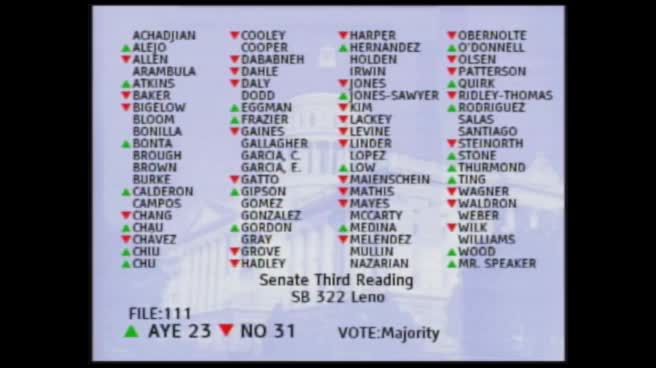 2MIN
Assembly Floor
 30MIN
Assembly Standing Committee on Insurance
 47SEC
Assembly Floor
 24MIN
Assembly Standing Committee on Insurance
 3MIN
Senate Floor
 13MIN
Senate Standing Committee on Labor and Industrial Relations
Bill Author

Bill Co-Author(s):