SB 1172: Tidelands and submerged lands: City of Albany.
- Session Year: 2015-2016
- House: Senate
- Latest Version Date: 2016-09-24
Existing law grants in trust to the City of Albany certain designated tidelands and submerged lands, both filled and unfilled, for specified uses. The grant, among other things, requires that those lands be used in conformity with the Albany Waterfront Plan and be improved in accordance with the plan on or before January 1, 1988, or title therein shall revert to the state. Existing law imposes various requirements regarding public rights in the granted lands, leasing of lands by the city, management and disposition of revenues from the lands, and the determination of boundaries of the lands granted that are subject to the jurisdiction of the San Francisco Bay Conservation and Development Commission. Existing law requires 85% of excess trust revenues, as specified, to be transmitted to the Treasurer and deposited in the General Fund.
This bill would delete those provisions and instead require that, on and after January 1, 2022, the use of those trust lands, as described, conform to an approved trust lands use plan, prescribed by the bill, and all leases or agreements proposed or entered into by the City of Albany, as trustee of those lands, also be consistent with the public trust doctrine, as defined, and conform to the plan. The bill would require the trustee, on or before September 30, 2022, and on or before September 30 of every succeeding 5th year thereafter, to submit a report to the State Lands Commission. By imposing new duties on a local government with regard to providing for the use and management of those trust lands, the bill would impose a state-mandated local program.
Existing law, the Kapiloff Land Bank Act, creates the Land Bank Fund and continuously appropriates money in the fund, subject to a statutory trust, to the State Lands Commission, acting as the Land Bank Trustee, to acquire real property or any interest in real property for the purposes of public trust settlements.
The bill would require on June 30, 2021, and at the end of every fiscal year thereafter, that 20% of all gross revenue generated from the City of Albany trust lands be transmitted to the commission and, of this amount transmitted, would require the commission to allocate 80% to the Treasurer for deposit in the General Fund and 20% for deposit in the Land Bank Fund for expenditure by the commission pursuant to the act, thereby making an appropriation.
The California Constitution requires the state to reimburse local agencies and school districts for certain costs mandated by the state. Statutory provisions establish procedures for making that reimbursement.
This bill would provide that no reimbursement is required by this act for a specified reason.
Existing law grants in trust to the City of Albany certain designated tidelands and submerged lands, both filled and unfilled, for specified uses. The grant, among other things, requires that those lands be used in conformity with the Albany Waterfront Plan and be improved in accordance with the plan on or before January 1, 1988, or title therein shall revert to the state. Existing law imposes various requirements regarding public rights in the granted lands, leasing of lands by the city, management and disposition of revenues from the lands, and the determination of boundaries of the lands granted that are subject to the jurisdiction of the San Francisco Bay Conservation and Development Commission. Existing law requires 85% of excess trust revenues, as specified, to be transmitted to the Treasurer and deposited in the General Fund.
This bill would delete those provisions and instead require that, on and after January 1, 2022, the use of those trust lands, as described, conform to an approved trust lands use plan, prescribed by the bill, and all leases or agreements proposed or entered into by the City of Albany, as trustee of those lands, also be consistent with the public trust doctrine, as defined, and conform to the plan. The bill would require the trustee, on or before September 30, 2022, and on or before September 30 of every succeeding 5th year thereafter, to submit a report to the State Lands Commission. By imposing new duties on a local government with regard to providing for the use and management of those trust lands, the bill would impose a state-mandated local program.
Existing law, the Kapiloff Land Bank Act, creates the Land Bank Fund and continuously appropriates money in the fund, subject to a statutory trust, to the commission, State Lands Commission, acting as the Land Bank Trustee, to acquire real property or any interest in real property for the purposes of public trust settlements.
The bill would require on June 30, 2021, and at the end of every fiscal year thereafter, that 20% of all gross revenue generated from the City of Albany trust lands be transmitted to the commission and, of this amount transmitted, would require the commission to allocate 80% to the Treasurer for deposit in the General Fund and 20% for deposit in the Land Bank Fund for expenditure by the commission pursuant to the act, thereby making an appropriation.
The California Constitution requires the state to reimburse local agencies and school districts for certain costs mandated by the state. Statutory provisions establish procedures for making that reimbursement.
This bill would provide that no reimbursement is required by this act for a specified reason.
Existing law grants in trust to the City of Albany certain designated tidelands and submerged lands, both filled and unfilled, for specified uses. The grant, among other things, requires that those lands be used in conformity with the Albany Waterfront Plan and be improved in accordance with the plan on or before January 1, 1988, or title therein shall revert to the state. Existing law imposes various requirements regarding public rights in the granted lands, leasing of lands by the city, management and disposition of revenues from the lands, and the determination of boundaries of the lands granted that are subject to the jurisdiction of the San Francisco Bay Conservation and Development Commission. Existing law requires 85% of excess trust revenues, as specified, to be transmitted to the Treasurer and deposited in the General Fund.
This bill would delete those provisions and instead require that, on and after January 1, 2022, the use of those trust lands, as described, conform to an approved trust lands use plan, prescribed by the bill, and all leases or agreements proposed or entered into by the City of Albany, as trustee of those lands, also be consistent with the public trust doctrine, as defined, and conform to the plan. The bill would require the trustee, on or before September 30, 2022, and on or before September 30 of every succeeding 5th year thereafter, to submit a report to the State Lands Commission. By imposing new duties on a local government with regard to providing for the use and management of those trust lands, the bill would impose a state-mandated local program.
Existing law, the Kapiloff Land Bank Act, creates the Land Bank Fund and continuously appropriates money in the fund, subject to a statutory trust, to the commission, acting as the Land Bank Trustee, to acquire real property or any interest in real property for the purposes of public trust settlements.
The bill would require on June 30, 2021, and at the end of every fiscal year thereafter, that 20% of all gross revenue generated from the trust lands be transmitted to the commission and, of this amount transmitted, would require the commission to allocate 80% to the Treasurer for deposit in the General Fund and 20% for deposit in the Land Bank Fund for expenditure by the commission pursuant to the act, thereby making an appropriation.
The California Constitution requires the state to reimburse local agencies and school districts for certain costs mandated by the state. Statutory provisions establish procedures for making that reimbursement.
This bill would provide that no reimbursement is required by this act for a specified reason.
Chapter 211 of the Statutes of 1919, as amended by Chapter 1223 of the Statutes of 1977, is repealed.
SEC. 2.(a)For the purposes of this act, the following definitions shall apply:
(1)Act means Sections 2 to 10, inclusive, of the act enacting this section.
(2)Commission means the State Lands Commission.
(3)Public trust doctrine means the common law doctrine, as enunciated by the court in Marks v. Whitney (1971) 6 Cal.3d 251 and National Audubon Society v. Superior Court (1983) 33 Cal.3d 419 and other relevant judicial decisions, specifying the states authority as sovereign to exercise a continuous supervision and control over the navigable waters of the state, the lands underlying those waters, and nonnavigable tributaries to navigable waters, including the protection of maritime or water dependent commerce, navigation, and fisheries, and the preservation of lands in their natural state for scientific study, open space, wildlife habitat, and water-oriented recreation.
(4)State means the State of California.
(5)Trustee means the City of Albany, a municipal corporation.
(6)Trust lands means Parcel 1, Parcel 2, and Parcel 3, as described in Section 10 of this act, situated in the County of Alameda.
(7)Trust revenues means all revenues received from trust lands and trust assets.
(8)Trust lands use plan or plan means the trust lands use plan required to be submitted by the trustee to the commission pursuant to Section 4 of this act.
(9)Trust lands use report means the report of the trustees utilization of the trust lands required to be submitted by the trustee pursuant to Section 5 of this act.
(b)There is hereby granted in trust to the City of Albany, and to its successors, all of the rights, title, and interest of the state, held by the state by virtue of its sovereignty, in and to three parcels of land situated in the County of Alameda as described in Section 10 of this act.
(c)The Legislature finds and declares that the City of Albany intends that the lands granted in subdivision (b) shall be included as part of McLaughlin Eastshore State Park.
SEC. 3.The trust grant specified in subdivision (b) of Section 2 of this act is subject to all of the following express conditions:
(a)The trust lands shall be held by the trustee in trust for the benefit of all the people of the state for purposes consistent with the public trust doctrine, including, but not limited to, maritime or water-dependent commerce, navigation, and fisheries, and preservation of the lands in their natural state for scientific study, open space, wildlife habitat, and water-oriented recreation.
(b)On and after January 1, 2022, the use of the trust lands shall conform to an approved trust lands use plan, as required by Section 4 of this act.
(c)The trustee shall not, at any time, grant, convey, give, or otherwise alienate or hypothecate the trust lands, or any part of the trust lands, to any person, firm, entity, or corporation for any purposes whatsoever.
(d)The trustee may lease the trust lands, or any part of the trust lands, for limited periods, not exceeding 49 years, for purposes consistent with the trust upon which those lands are held, as specified in subdivision (a). The trustee may collect and retain rents and other trust revenues from those leases, under rules and regulations adopted in accordance with subdivision (d) of Section 4 of this act, and in accordance with all of the following requirements:
(1)On and after January 1, 2022, all leases or agreements proposed or entered into by the trustee shall be consistent with the trust lands use plan approved by the commission, as required by Section 4 of this act. Any leases entered into prior to January 1, 2022, shall be consistent with the public trust doctrine and the terms of subdivision (a).
(2)The lease rental rates shall be for a fair annual rent.
(3)The lease shall be in the best interest of the state.
(e)When managing, conducting, operating, or controlling the trust lands or an improvement, betterment, or structure on the trust lands, the trustee or his or her successor shall not discriminate in rates, tolls, or charges for any use or service in connection with those actions and shall not discriminate against or unlawfully segregate any person or group of persons because of race, religious creed, color, national origin, ancestry, physical disability, mental disability, medical condition, genetic information, marital status, sex, gender, gender identity, gender expression, age, sexual orientation, or military and veteran status, in accordance with Article 1 (commencing with Section 12940) of Chapter 6 of Part 2.8 of Division 3 of Title 2 of the Government Code and other state antidiscrimination laws, for any use or service in connection with those actions.
(f)The state shall have the right to use, without charge, a transportation, landing, or storage improvement, betterment, or structure constructed upon the trust lands for a vessel or other watercraft or railroad owned or operated by, or under contract to, the state.
(g)The trust lands are subject to the express reservation and condition that the state may, at any time in the future, use those lands or any portion of those lands for highway purposes without compensation to the trustee or a person, firm, or public or private corporation claiming a right to those lands, except, if improvements have been placed with legal authority upon the property taken by the state for highway purposes, compensation shall be made to the person entitled to the value of the interest in the improvements taken or the damages to that interest.
(h)There is reserved to the people of the state the right to fish in the waters over the trust lands, with the right of convenient access to those waters over the trust lands for this purpose.
(i)There is excepted and reserved to the state all remains or artifacts of archaeological or historical significance and all deposits of minerals in the trust lands, including, but not limited to, all substances specified in Section 6407 of the Public Resources Code, and the right to prospect for, mine, and remove those deposits from the lands.
(j)Prior to entering into a lease, franchise, or agreement concerning the trust lands, the governing body of the trustee shall first adopt a resolution declaring its intention to take that action. The resolution shall describe the lands or improvements that are the subject of the lease, franchise, or agreement in such a manner as to identify them accurately and shall specify the minimum rental or other consideration and the other terms and conditions of the lease, franchise, or agreement. The resolution shall be submitted to the commission prior to entering into a lease, franchise, or agreement.
(k)The trustee shall reimburse the commission for all expenses incurred in the administration of this act, including periodic audits or investigations.
SEC. 4.(a)On or before January 1, 2022, the trustee shall submit to the commission a trust lands use plan describing any proposed development, preservation, or other use of the trust lands. The trustee shall thereafter submit to the commission for approval all changes or amendments to, or extensions of, the trust lands use plan. The trustee may apply to the commission for, and the commission may approve, reasonable extensions of time to meet this deadline.
(b)The commission shall review with reasonable promptness the trust lands use plan submitted by the trustee and any changes or amendments to determine whether they are consistent with the public trust doctrine and the requirements of this act. Based upon its review, the commission shall either approve or disapprove the plan. If the commission disapproves the plan, the commission shall notify the trustee and the trustee shall submit a revised plan to the commission no later than 180 days after the date of notice of disapproval. If the commission determines the revised plan is inconsistent with the public trust doctrine or the requirements of this act, all rights, title, and interest of the trustee in and to the trust lands and improvements on the trust lands shall revert to the state.
(c)The trust lands use plan shall consist of a plan, program, or other document that includes all of the following:
(1)A general description of the type of uses planned or proposed for the trust lands. The location of these land uses shall be shown on a map or aerial photograph.
(2)The projected statewide benefit to be derived from the planned or proposed uses of the trust lands, including, but not limited to, financial benefit.
(3)The proposed method of financing the planned or proposed uses of the trust lands, including estimated capital costs, annual operating costs, and anticipated annual trust revenues.
(4)An estimated timetable for the implementation of the trust lands use plan or each phase of the plan.
(5)A description of how the trustee proposes to protect and preserve natural and manmade resources and facilities located on trust lands and operated in connection with the use of the trust lands, including, but not limited to, addressing impacts from sea level rise.
(d)The governing body of the trustee shall also submit to the commission, as part of the trust lands use plan, for its approval procedures, rules, and regulations to govern the use of or development of the trust lands. These rules and regulations shall include, but are not limited to, lease rates, the basis upon which the rates are established, lease terms and conditions, provisions for renegotiation of rates and terms and assignments, and any other information as may be required by the commission.
(e)Upon request, the trustee shall submit to the commission a copy of all leases and agreements entered into, renewed, or renegotiated.
SEC. 5.(a)On or before September 30, 2022, and on or before September 30 of every succeeding fifth year, the trustee shall submit a report of its utilization of the trust lands for each immediately preceding five-calendar-year period ending with June 30 of the calendar year in which the report is required to be submitted.
(b)The report required by this section shall include all of the following:
(1)A general description of the uses to which the trust lands have been placed during the period covered by the report.
(2)A list of the holders of leases or permits that have been granted or issued by the trustee. The list shall specify all of the following, as to each holder:
(A)The use to which the trust lands have been placed by the owner or holder.
(B)The consideration provided for in each lease or permit and the consideration actually received by the trustee for the lease or permit granted or issued.
(C)An enumeration of the restrictions that the trustee has placed on the use of the trust lands, and each area of the trust lands, for the period covered by the report.
(c)A report shall not be required if the utilization of the trust lands within the immediately preceding five-calendar-year period is identical to the utilization of the trust lands as stated in a previously submitted report. If a new report is not submitted, the trustee shall submit a letter to the commission stating that its utilization of the trust lands has not changed during the immediately preceding five-calendar-year period. The letter required in this section shall also include the name and date of the utilization report that contains the applicable uses of the trust lands.
SEC. 6.(a)The trustee shall demonstrate good faith in carrying out the provisions of its trust lands use plan and amending it when necessary in accordance with subdivision (a) of Section 4 of this act.
(b)If the commission determines that the trustee has substantially failed to improve, restore, preserve, or maintain the trust lands, as required by the trust lands use plan, or has unreasonably delayed implementation of the trust lands use plan, all rights, title, and interest of the trustee in and to the trust lands and improvements on the trust lands shall revert to the state.
SEC. 7.(a)(1)The trustee shall establish and maintain accounting procedures, in accordance with generally accepted accounting principles, providing accurate records of all revenues received from the trust lands and trust assets and of all expenditures of those revenues.
(2)All trust revenues received from trust lands and trust assets shall be expended only for those uses and purposes consistent with this act. The trustee shall provide for the segregation of the revenues derived from the use of the trust lands by the trustee from other city municipal funds, so as to ensure that trust revenues are only expended to enhance or maintain the trust lands in accordance with the uses and purposes for which the trust lands are held.
(3)Trust revenues may be expended to acquire appropriate upland properties to benefit and enhance the trust, subject to a determination by the commission that this acquisition is consistent with this act and in the best interests of the state. Property acquired with these trust revenues shall be considered an asset of the trust and subject to the terms and conditions of this act.
(b)The trustee shall comply with Section 6306 of the Public Resources Code.
(c)(1)Before expending trust revenues for any single capital improvement on the trust lands involving an amount in excess of two hundred fifty thousand dollars ($250,000) in the aggregate, the trustee shall file with the commission a detailed description of the capital improvement not less than 120 days prior to the time of any disbursement of trust revenues for, or in connection with, that capital improvement.
(2)Within 120 days after the time of a filing specified in paragraph (1), the commission shall determine whether the capital improvement is in the statewide interest and benefit and, if the filing is made on or before December 1, 2021, whether it is consistent with subdivision (a) of Section 3 of this act or, if the filing is made on or after January 1, 2022, whether it is consistent with the trust lands use plan. The commission may request the opinion of the Attorney General on the matter, and if the commission makes this request, the Attorney General shall deliver a copy of the opinion to the trustee with the notice of its determination.
(3)If the commission notifies the trustee that the capital improvement is not authorized, the trustee shall not disburse any trust revenues for, or in connection with, the capital improvement, unless it is determined to be authorized by a final order or judgment of a court of competent jurisdiction.
(4)The trustee may bring suit against the state to secure an order or judgment for purposes of paragraph (3). The suit shall have priority over all other civil matters. Service shall be made upon the executive officer of the commission and the Attorney General, and the Attorney General shall defend the state in that suit. If judgment is given against the state in the suit, no costs may be recovered.
(d)On June 30, 2021, and at the end of every fiscal year thereafter, 20 percent of all gross revenue generated from the trust lands shall be transmitted to the commission. Of this amount transmitted, the commission shall allocate 80 percent to the Treasurer for deposit in the General Fund and 20 percent to the Treasurer for deposit in the Land Bank Fund, created pursuant to Section 8610 of the Public Resources Code, for expenditure pursuant to the Kapiloff Land Bank Act (Division 7 (commencing with Section 8600) of the Public Resources Code) for management of the commissions granted lands program.
(e)The commission may, from time to time, institute a formal inquiry to determine that the terms and conditions of this act, and amendments to this act, have been complied with and that all other applicable provisions of law concerning the trust lands are being complied with in good faith.
(f)The commission shall approve in advance of expenditure any reimbursement for expenditures of nontrust revenues for improvements made to the trust or, if not approved, those expenditures shall be deemed a gift to the trust.
SEC. 8.(a)If the commission finds that the trustee has violated or is about to violate the terms of its trust grant or any other principle of law relating to its obligation under the public trust doctrine or under this act, the commission shall notify the trustee of the violation.
(b)The trustee shall have 30 days from the receipt of a notice of violation to conform to the terms of its grant and the principles of law under the public trust doctrine. If the trustee fails or refuses to take those actions, the commission may bring an action to enforce the rights of the state and people as settlor beneficiary of the public trust doctrine.
(c)The Attorney General shall represent the state in all actions or proceedings taken pursuant to this section. If the judgment is given against the state in the action or proceeding, no costs shall be recovered from the state and people.
SEC. 9.The requirements of Section 6359 of the Public Resources Code do not apply to the trust lands granted pursuant to this act.
SEC. 10.The trust lands granted in Section 3 are three parcels of tide and submerged lands situated in and adjacent to the bed of San Francisco Bay, Alameda County, State of California, more particularly described as follows:
PARCEL 1
COMMENCING at point A as shown on the Map of the Grant to the City of Albany, recorded July 24, 1963, in Book 43 of Maps, page 12A, Alameda County Records, said point A having California Zone 2 coordinates of x = 1,469,703.82 feet and y = 511,851.40 feet, thence along the northerly boundary of said Grant S 74 21 53 E, 2573.92 feet to point B as shown on said map and being the TRUE POINT OF BEGINNING, thence continuing along the boundary of said grant the following ten courses:
(1)N 01 08 07 E, 661.08 feet;
(2)S 88 51 53 E, 661.58 feet;
(3)N 01 08 07 E, 876.29 feet;
(4)N 75 19 34 E, 1636.95 feet;
(5)S 88 51 53 E, 409.57 feet;
(6)S 01 08 07 W, 1321.66 feet;
(7)N 88 51 53 W, 661.05 feet;
(8)S 01 08 07 W, 1322.17 feet;
(9)N 88 51 53 W, 1550.05 feet;
(10)S 32 12 53 E, 1582.80 feet;
thence N 88 51 53 W, 1305.22 feet; thence N 01 08 07 E, 1983.26 feet to the True Point of Beginning.
Coordinates, bearings, and distances used in the above description are based on the California Coordinate System, Zone 2.
PARCEL 2
BEGINNING at Point J as shown on said Map of Grant to the City of Albany, recorded July 24, 1963, said point J having California Zone 2 coordinates of x = 1,474,154.14 feet and y = 510,458.00 feet, thence along the boundary of said grant the following two courses:
(1)N 88 51 53 W, 1550.05 feet;
(2)S 32 12 53 E, 1582.80 feet;
thence N 28 20 17 E, 1487.26 feet to the point of beginning. Coordinates, bearings, and distances used in the above description are based on the California Coordinate System, Zone 2.
PARCEL 3
All of that certain parcel of land described as Parcel 1 in deed to the City of Albany, recorded January 15, 1942, in Liber 4159, page 296, Alameda County Records.
SEC. 11.No reimbursement is required by this act pursuant to Section 6 of Article XIIIB of the California Constitution because the only costs that may be incurred by a local agency or school district are the result of a program for which legislative authority was requested by that local agency or school district, within the meaning of Section 17556 of the Government Code and Section 6 of Article XIIIB of the California Constitution.
Chapter 211 of the Statutes of 1919, as amended by Chapter 1223 of the Statutes of 1977, is repealed.
SEC. 2.(a)For the purposes of this act, the following definitions shall apply:
(1)Act means Sections 2 to 10, inclusive, of the act enacting this section.
(2)Commission means the State Lands Commission.
(3)Public trust doctrine means the common law doctrine, as enunciated by the court in National Audubon Society v. Superior Court (1983) 33 Cal.3d 419 and other relevant judicial decisions, specifying the states authority as sovereign to exercise a continuous supervision and control over the navigable waters of the state, the lands underlying those waters, and nonnavigable tributaries to navigable waters, including the maritime or water dependent commerce, navigation, and fisheries, and the preservation of lands in their natural state for scientific study, open space, wildlife habitat, and water-oriented recreation.
(4)State means the State of California.
(5)Trustee means the City of Albany, a municipal corporation.
(6)Trust lands means Parcel 1, Parcel 2, and Parcel 3, as described in Section 10 of this act, situated in the County of Alameda.
(7)Trust revenues means all revenues received from trust lands and trust assets.
(8)Trust lands use plan or plan means the trust lands use plan required to be submitted by the trustee to the commission pursuant to Section 4 of this act.
(9)Trust lands use report means the report of the trustees utilization of the trust lands required to be submitted by the trustee pursuant to Section 5 of this act.
(b)There is hereby granted in trust to the City of Albany, and to its successors, all of the rights, title, and interest of the state, held by the state by virtue of its sovereignty, in and to three parcels of land situated in the County of Alameda as described in Section 10 of this act.
SEC. 3.The trust grant specified in subdivision (b) of Section 2 of this act is subject to all of the following express conditions:
(a)The trust lands shall be held by the trustee in trust for the benefit of all the people of the state for purposes consistent with the public trust doctrine, including, but not limited to, maritime or water-dependent commerce, navigation, and fisheries, preservation of the lands in their natural state for scientific study, open space, wildlife habitat, and water-oriented recreation.
(b)On and after January 1, 2022, the use of the trust lands shall conform to an approved trust lands use plan, as required by Section 4 of this act.
(c)The trustee shall not, at any time, grant, convey, give, or otherwise alienate or hypothecate the trust lands, or any part of the trust lands, to any person, firm, entity, or corporation for any purposes whatsoever.
(d)The trustee may lease the trust lands, or any part of the trust lands, for limited periods, not exceeding 49 years, for purposes consistent with the trust upon which those lands are held, as specified in subdivision (a). The trustee may collect and retain rents and other trust revenues from those leases, under rules and regulations adopted in accordance with subdivision (d) of Section 4 of this act, and in accordance with all of the following requirements:
(1)On and after January 1, 2022, all leases or agreements proposed or entered into by the trustee shall be consistent with the trust lands use plan approved by the commission, as required by Section 4 of this act. Any leases entered into prior to January 1, 2022, shall be consistent with the public trust doctrine and the terms of subdivision (a).
(2)The lease rental rates shall be for a fair annual rent.
(3)The lease shall be in the best interest of the state.
(e)When managing, conducting, operating, or controlling the trust lands or an improvement, betterment, or structure on the trust lands, the trustee or his or her successor shall not discriminate in rates, tolls, or charges for any use or service in connection with those actions and shall not discriminate against or unlawfully segregate any person or group of persons because of race, religious creed, color, national origin, ancestry, physical disability, mental disability, medical condition, genetic information, marital status, sex, gender, gender identify, identity, gender expression, age, sexual orientation, or military and veteran status, in accordance with Article 1 (commencing with Section 12940) of Chapter 6 of Part 2.8 of Division 3 of Title 2 of the Government Code and other state antidiscrimination laws, for any use or service in connection with those actions.
(f)The state shall have the right to use, without charge, a transportation, landing, or storage improvement, betterment, or structure constructed upon the trust lands for a vessel or other watercraft or railroad owned or operated by, or under contract to, the state.
(g)The trust lands are subject to the express reservation and condition that the state may, at any time in the future, use those lands or any portion of those lands for highway purposes without compensation to the trustee or a person, firm, or public or private corporation claiming a right to those lands, except, if improvements have been placed with legal authority upon the property taken by the state for highway purposes, compensation shall be made to the person entitled to the value of the interest in the improvements taken or the damages to that interest.
(h)There is reserved to the people of the state the right to fish in the waters over the trust lands, with the right of convenient access to those waters over the trust lands for this purpose.
(i)There is excepted and reserved to the state all remains or artifacts of archaeological or historical significance and all deposits of minerals in the trust lands, including, but not limited to, all substances specified in Section 6407 of the Public Resources Code, and the right to prospect for, mine, and remove those deposits from the lands.
(j)Prior to entering into a lease, franchise, or agreement concerning the trust lands, the governing body of the trustee shall first adopt a resolution declaring its intention to take that action. The resolution shall describe the lands or improvements that are the subject of the lease, franchise, or agreement in such a manner as to identify them accurately and shall specify the minimum rental or other consideration and the other terms and conditions of the lease, franchise, or agreement. The resolution shall be submitted to the commission prior to entering into a lease, franchise, or agreement.
(k)The trustee shall reimburse the commission for all expenses incurred in the administration of this act, including periodic audits or investigations.
SEC. 4.(a)On or before January 1, 2022, the trustee shall submit to the commission a trust lands use plan describing any proposed development, preservation, or other use of the trust lands. The trustee shall thereafter submit to the commission for approval all changes or amendments to, or extensions of, the trust lands use plan. The trustee may apply to the commission for, and the commission may approve, reasonable extensions of time to meet this deadline.
(b)The commission shall review with reasonable promptness the trust lands use plan submitted by the trustee and any changes or amendments to determine whether they are consistent with the public trust doctrine and the requirements of this act. Based upon its review, the commission shall either approve or disapprove the plan. If the commission disapproves the plan, the commission shall notify the trustee and the trustee shall submit a revised plan to the commission no later than 180 days after the date of notice of disapproval. If the commission determines the revised plan is inconsistent with the public trust doctrine or the requirements of this act, all rights, title, and interest of the trustee in and to the trust lands and improvements on the trust lands shall revert to the state.
(c)The trust lands use plan shall consist of a plan, program, or other document that includes all of the following:
(1)A general description of the type of uses planned or proposed for the trust lands. The location of these land uses shall be shown on a map or aerial photograph.
(2)The projected statewide benefit to be derived from the planned or proposed uses of the trust lands, including, but not limited to, financial benefit.
(3)The proposed method of financing the planned or proposed uses of the trust lands, including estimated capital costs, annual operating costs, and anticipated annual trust revenues.
(4)An estimated timetable for the implementation of the trust lands use plan or each phase of the plan.
(5)A description of how the trustee proposes to protect and preserve natural and manmade resources and facilities located on trust lands and operated in connection with the use of the trust lands, including, but not limited to, addressing impacts from sea level rise.
(d)The governing body of the trustee shall also submit to the commission, as part of the trust lands use plan, for its approval, approval procedures, rules, and regulations to govern the use of or development of the trust lands. These rules and regulations shall include, but are not limited to, lease rates, the basis upon which the rates are established, lease terms and conditions, provisions for renegotiation of rates and terms and assignments, and any other information as may be required by the commission.
(e)Upon request, the trustee shall submit to the commission a copy of all leases and agreements entered into, renewed, or renegotiated.
SEC. 5.(a)On or before September 30, 2022, and on or before September 30 of every succeeding fifth year, the trustee shall submit a report of its utilization of the trust lands for each immediately preceding five-calendar-year period ending with June 30 of the calendar year in which the report is required to be submitted.
(b)The report required by this section shall include all of the following:
(1)A general description of the uses to which the trust lands have been placed during the period covered by the report.
(2)A list of the holders of leases or permits that have been granted or issued by the trustee, which trustee. The list shall specify all of the following, as to each holder:
(A)The use to which the trust lands have been placed by the owner or holder.
(B)The consideration provided for in each lease or permit and the consideration actually received by the trustee for the lease or permit granted or issued.
(C)An enumeration of the restrictions that the trustee has placed on the use of the trust lands, and each area of the trust lands, for the period covered by the report.
(c)A report shall not be required if the utilization of the trust lands within the immediately preceding five-calendar-year period is identical to the utilization of the trust lands as stated in a previously submitted report. If a new report is not submitted, the trustee shall submit a letter to the commission stating that its utilization of the trust lands has not changed during the immediately preceding five-calendar-year period. The letter required in this section shall also include the name and date of the utilization report that contains the applicable uses of the trust lands.
SEC. 6.(a)The trustee shall demonstrate good faith in carrying out the provisions of its trust lands use plan and amending it when necessary in accordance with subdivision (a) of Section 4 of this act.
(b)If the commission determines that the trustee has substantially failed to improve, restore, preserve, or maintain the trust lands, as required by the trust lands use plan, or has unreasonably delayed implementation of the trust lands use plan, all rights, title, and interest of the trustee in and to the trust lands and improvements on the trust lands shall revert to the state.
SEC. 7.(a)(1)The trustee shall establish and maintain accounting procedures, in accordance with generally accepted accounting principles, providing accurate records of all revenues received from the trust lands and trust assets and of all expenditures of those revenues.
(2)All trust revenues received from trust lands and trust assets shall be expended only for those uses and purposes consistent with this act. The trustee shall provide for the segregation of funds the revenues derived from the use of the trust lands by the trustee from other city municipal funds, so as to ensure that trust revenues are only expended to enhance or maintain the trust lands in accordance with the uses and purposes for which the trust lands are held.
(3)Trust revenues may be expended to acquire appropriate upland properties to benefit and enhance the trust, subject to a determination by the commission that this acquisition is consistent with this act and in the best interests of the state. Property acquired with these trust revenues shall be considered an asset of the trust and subject to the terms and conditions of this act.
(b)The trustee shall comply with Section 6306 of the Public Resources Code.
(c)(1)Before expending trust revenues for any single capital improvement on the trust lands involving an amount in excess of two hundred fifty thousand dollars ($250,000) in the aggregate, the trustee shall file with the commission a detailed description of the capital improvement not less than 120 days prior to the time of any disbursement of trust revenues for, or in connection with, that capital improvement.
(2)Within 120 days after the time of a filing specified in paragraph (1), the commission shall determine whether the capital improvement is in the statewide interest and benefit and, if the filing is made on or before December 1, 2021, whether it is consistent with subdivision (a) of Section 3 of this act or, if the filing is made on or after January 1, 2022, whether it is consistent with the trust lands use plan. The commission may request the opinion of the Attorney General on the matter, and if the commission makes this request, the Attorney General shall deliver a copy of the opinion to the trustee with the notice of its determination.
(3)If the commission notifies the trustee that the capital improvement is not authorized, the trustee shall not disburse any trust revenues for, or in connection with, the capital improvement, unless it is determined to be authorized by a final order or judgment of a court of competent jurisdiction.
(4)The trustee may bring suit against the state for the purpose of securing to secure an order or judgment for purposes of paragraph (3), which (3). The suit shall have priority over all other civil matters. Service shall be made upon the executive officer of the commission and the Attorney General, and the Attorney General shall defend the state in that suit. If judgment is given against the state in the suit, no costs may be recovered.
(d)On June 30, 2021, and at the end of every fiscal year thereafter, 20 percent of all gross revenue generated from the trust lands shall be transmitted to the commission. Of this amount transmitted, the commission shall allocate 80 percent to the Treasurer for deposit in the General Fund and 20 percent to the Treasurer for deposit in the Land Bank Fund Fund, created pursuant to Section 8610 of the Public Resources Code, for expenditure pursuant to Division the Kapiloff Land Bank Act (Division 7 (commencing with Section 8600) of the Public Resources Code Code) for management of the commissions granted lands program.
(e)The commission may, from time to time, institute a formal inquiry to determine that the terms and conditions of this act, and amendments to this act, have been complied with and that all other applicable provisions of law concerning the trust lands are being complied with in good faith.
(f)The commission shall approve in advance of expenditure any reimbursement for expenditures of nontrust revenues for improvements made to the trust or, if not approved, those expenditures shall be deemed a gift to the trust.
SEC. 8.(a)If the commission finds that the trustee has violated or is about to violate the terms of its trust grant or any other principle of law relating to its obligation under the public trust doctrine or under this act, the commission shall notify the trustee of the violation.
(b)The trustee shall have 30 days from the receipt of a notice of violation to conform to the terms of its grant and the principles of law under the public trust doctrine. If the trustee fails or refuses to take those actions, the commission may bring an action to enforce the rights of the state and people as settlor beneficiary of the public trust doctrine.
(c)The Attorney General shall represent the state and people in all actions or proceedings taken pursuant to this section. If the judgment is given against the state in the action or proceeding, no costs shall be recovered from the state and people.
SEC. 9.(a)On or before January 1, 2019, the commission shall survey, monument, and record a plat and a metes and bounds description of the trust lands in the office of the county recorder in the County of Alameda. Upon recordation, the survey, monuments, plat, and metes and bounds description shall be binding upon the state, the trustee, and its successors in interest.
(b)The cost of the survey and recordation shall be paid by the trustee.
(c)
SEC. 9.The requirements of Section 6359 of the Public Resources Code do not apply to the trust lands granted pursuant to this act.
SEC. 10.The trust lands granted in Section 3 are three parcels of tide and submerged lands situated in and adjacent to the bed of San Francisco Bay, Alameda County, State of California, more particularly described as follows:
PARCEL 1
COMMENCING at point A as shown on the Map of the Grant to the City of Albany, recorded July 24, 1963, in Book 43 of Maps, page 12A, Alameda County Records, said point A having California Zone 2 coordinates of x = 1,469,703.82 feet and y = 511,851.40 feet, thence along the northerly boundary of said Grant S 74 21 53 E, 2573.92 feet to point B as shown on said map and being the TRUE POINT OF BEGINNING, thence continuing along the boundary of said grant the following ten courses. courses:
(1)N 01 08 07 E, 661.08 feet;
(2)S 88 51 53 E, 661.58 feet;
(3)N 01 08 07 E, 876.29 feet;
(4)N 75 19 34 E, 1636.95 feet;
(5)S 88 51 53 E, 409.57 feet;
(6)S 01 08 07 W, 1321.66 feet;
(7)N 88 51 53 W, 661.05 feet;
(8)S 01 08 07 W, 1322.17 feet;
(9)N 88 51 53 W, 1550.05 feet;
(10)S 32 12 53 E, 1582.80 feet;
thence N 88 51 53 W, 1305.22 feet; thence N 01 08 07 E, 1983.26 feet to the True Point of Beginning.
Coordinates, bearings, and distances used in the above description are based on the California Coordinate System, Zone 2.
PARCEL 2
BEGINNING at Point J as shown on said Map of Grant to The the City of Albany, recorded July 24, 1963, said point J having California Zone 2 coordinates of x = 1,474,154.14 feet and y = 510,458.00 feet, thence along the boundary of said grant the following two course: courses:
(1)N 88 51 53 W, 1550.05 feet;
(2)S 32 12 53 E, 1582.80 feet;
thence N 28 20 20 17 E, 1487.26 feet to the point of beginning. Coordinates, bearings, and distances used in the above description are based on the California Coordinate System, Zone 2.
PARCEL 3
All of that certain parcel of land described as Parcel 1 in deed to the City of Albany, recorded January 15, 1942, in Liber 4159, page 296, Alameda County Records.
SEC. 11.No reimbursement is required by this act pursuant to Section 6 of Article XIIIB of the California Constitution because the only costs that may be incurred by a local agency or school district are the result of a program for which legislative authority was requested by that local agency or school district, within the meaning of Section 17556 of the Government Code and Section 6 of Article XIIIB of the California Constitution.
Chapter 211 of the Statutes of 1919, as amended by Chapter 1223 of the Statutes of 1977, is repealed.
SEC. 2.(a)For the purposes of this act, the following definitions shall apply:
(1)Act means Sections 2 to 10, inclusive, of the act enacting this section.
(2)Commission means the State Lands Commission.
(3)Public trust doctrine means the common law doctrine, as enunciated by the court in National Audubon Society v. Superior Court (1983) 33 Cal.3d 419 and other relevant judicial decisions, specifying the states authority as sovereign to exercise a continuous supervision and control over the navigable waters of the state, the lands underlying those waters, and nonnavigable tributaries to navigable waters, including the maritime or water dependent commerce, navigation, and fisheries, and the preservation of lands in their natural state for scientific study, open space, wildlife habitat, and water-oriented recreation.
(4)State means the State of California.
(5)Trustee means the City of Albany, a municipal corporation.
(6)Trust lands means Parcel 1, Parcel 2, and Parcel 3, as described in Section 10 of this act, situated in the County of Alameda.
(7)Trust revenues means all revenues received from trust lands and trust assets.
(8)Trust lands use plan or plan means the trust lands use plan required to be submitted by the trustee to the commission pursuant to Section 4 of this act.
(9)Trust lands use report means the report of the trustees utilization of the trust lands required to be submitted by the trustee pursuant to Section 5 of this act.
(b)There is hereby granted in trust to the City of Albany, and to its successors, all of the rights, title, and interest of the state, held by the state by virtue of its sovereignty, in and to three parcels of land situated in the County of Alameda as described in Section 10 of this act.
SEC. 3.The trust grant specified in subdivision (b) of Section 2 of this act is subject to all of the following express conditions:
(a)The trust lands shall be held by the trustee in trust for the benefit of all the people of the state for purposes consistent with the public trust doctrine, including, but not limited to, maritime or water-dependent commerce, navigation, and fisheries, preservation of the lands in their natural state for scientific study, open space, wildlife habitat, and water-oriented recreation.
(b)On and after January 1, 2022, the use of the trust lands shall conform to an approved trust lands use plan, as required by Section 4 of this act.
(c)The trustee shall not, at any time, grant, convey, give, or otherwise alienate or hypothecate the trust lands, or any part of the trust lands, to any person, firm, entity, or corporation for any purposes whatsoever.
(d)The trustee may lease the trust lands, or any part of the trust lands, for limited periods, not exceeding 49 years, for purposes consistent with the trust upon which those lands are held, as specified in subdivision (a). The trustee may collect and retain rents and other trust revenues from those leases, under rules and regulations adopted in accordance with subdivision (d) of Section 4 of this act, and in accordance with all of the following requirements:
(1)On and after January 1, 2022, all leases or agreements proposed or entered into by the trustee shall be consistent with the trust lands use plan approved by the commission, as required by Section 4 of this act. Any leases entered into prior to January 1, 2022, shall be consistent with the public trust doctrine and the terms of subdivision (a).
(2)The lease rental rates shall be for a fair annual rent.
(3)The lease shall be in the best interest of the state.
(e)When managing, conducting, operating, or controlling the trust lands or an improvement, betterment, or structure on the trust lands, the trustee or his or her successor shall not discriminate in rates, tolls, or charges for any use or service in connection with those actions and shall not discriminate against or unlawfully segregate any person or group of persons because of race, religious creed, color, national origin, ancestry, physical disability, mental disability, medical condition, genetic information, marital status, sex, gender, gender identify, gender expression, age, sexual orientation, or military and veteran status, in accordance with Article 1 (commencing with Section 12940) of Chapter 6 of Part 2.8 of Division 3 of Title 2 of the Government Code and other state antidiscrimination laws, for any use or service in connection with those actions.
(f)The state shall have the right to use, without charge, a transportation, landing, or storage improvement, betterment, or structure constructed upon the trust lands for a vessel or other watercraft or railroad owned or operated by, or under contract to, the state.
(g)The trust lands are subject to the express reservation and condition that the state may, at any time in the future, use those lands or any portion of those lands for highway purposes without compensation to the trustee or a person, firm, or public or private corporation claiming a right to those lands, except, if improvements have been placed with legal authority upon the property taken by the state for highway purposes, compensation shall be made to the person entitled to the value of the interest in the improvements taken or the damages to that interest.
(h)There is reserved to the people of the state the right to fish in the waters over the trust lands, with the right of convenient access to those waters over the trust lands for this purpose.
(i)There is excepted and reserved to the state all remains or artifacts of archaeological or historical significance and all deposits of minerals in the trust lands, including, but not limited to, all substances specified in Section 6407 of the Public Resources Code, and the right to prospect for, mine, and remove those deposits from the lands.
(j)Prior to entering into a lease, franchise, or agreement concerning the trust lands, the governing body of the trustee shall first adopt a resolution declaring its intention to take that action. The resolution shall describe the lands or improvements that are the subject of the lease, franchise, or agreement in such a manner as to identify them accurately and shall specify the minimum rental or other consideration and the other terms and conditions of the lease, franchise, or agreement. The resolution shall be submitted to the commission prior to entering into a lease, franchise, or agreement.
(k)The trustee shall reimburse the commission for all expenses incurred in the administration of this act, including periodic audits or investigations.
SEC. 4.(a)On or before January 1, 2022, the trustee shall submit to the commission a trust lands use plan describing any proposed development, preservation, or other use of the trust lands. The trustee shall thereafter submit to the commission for approval all changes or amendments to, or extensions of, the trust lands use plan. The trustee may apply to the commission for, and the commission may approve, reasonable extensions of time to meet this deadline.
(b)The commission shall review with reasonable promptness the trust lands use plan submitted by the trustee and any changes or amendments to determine whether they are consistent with the public trust doctrine and the requirements of this act. Based upon its review, the commission shall either approve or disapprove the plan. If the commission disapproves the plan, the commission shall notify the trustee and the trustee shall submit a revised plan to the commission no later than 180 days after the date of notice of disapproval. If the commission determines the revised plan is inconsistent with the public trust doctrine or the requirements of this act, all rights, title, and interest of the trustee in and to the trust lands and improvements on the trust lands shall revert to the state.
(c)The trust lands use plan shall consist of a plan, program, or other document that includes all of the following:
(1)A general description of the type of uses planned or proposed for the trust lands. The location of these land uses shall be shown on a map or aerial photograph.
(2)The projected statewide benefit to be derived from the planned or proposed uses of the trust lands, including, but not limited to, financial benefit.
(3)The proposed method of financing the planned or proposed uses of the trust lands, including estimated capital costs, annual operating costs, and anticipated annual trust revenues.
(4)An estimated timetable for implementation of the trust lands use plan or each phase of the plan.
(5)A description of how the trustee proposes to protect and preserve natural and manmade resources and facilities located on trust lands and operated in connection with the use of the trust lands, including, but not limited to, addressing impacts from sea level rise.
(d)The governing body of the trustee shall also submit to the commission, as part of the trust lands use plan, for its approval, procedures, rules, and regulations to govern the use of or development of the trust lands. These rules and regulations shall include, but are not limited to, lease rates, the basis upon which the rates are established, lease terms and conditions, provisions for renegotiation of rates and terms and assignments, and any other information as may be required by the commission.
(e)Upon request, the trustee shall submit to the commission a copy of all leases and agreements entered into, renewed, or renegotiated.
SEC. 5.(a)On or before September 30, 2022, and on or before September 30 of every succeeding fifth year, the trustee shall submit a report of its utilization of the trust lands for each immediately preceding five-calendar-year period ending with June 30 of the calendar year in which the report is required to be submitted.
(b)The report required by this section shall include all of the following:
(1)A general description of the uses to which the trust lands have been placed during the period covered by the report.
(2)A list of the holders of leases or permits that have been granted or issued by the trustee, which list shall specify all of the following, as to each holder:
(A)The use to which the trust lands have been placed by the owner or holder.
(B)The consideration provided for in each lease or permit and the consideration actually received by the trustee for the lease or permit granted or issued.
(C)An enumeration of the restrictions that the trustee has placed on the use of the trust lands, and each area of the trust lands, for the period covered by the report.
(c)A report shall not be required if the utilization of the trust lands within the immediately preceding five-calendar-year period is identical to the utilization of the trust lands as stated in a previously submitted report. If a new report is not submitted, the trustee shall submit a letter to the commission stating that its utilization of the trust lands has not changed during the immediately preceding five-calendar-year period. The letter required in this section shall also include the name and date of the utilization report that contains the applicable uses of the trust lands.
SEC. 6.(a)The trustee shall demonstrate good faith in carrying out the provisions of its trust lands use plan and amending it when necessary in accordance with subdivision (a) of Section 4 of this act.
(b)If the commission determines that the trustee has substantially failed to improve, restore, preserve, or maintain the trust lands, as required by the trust lands use plan, or has unreasonably delayed implementation of the trust lands use plan, all rights, title, and interest of the trustee in and to the trust lands and improvements on the trust lands shall revert to the state.
SEC. 7.(a)(1)The trustee shall establish and maintain accounting procedures, in accordance with generally accepted accounting principles, providing accurate records of all revenues received from the trust lands and trust assets and of all expenditures of those revenues.
(2)All trust revenues received from trust lands and trust assets shall be expended only for those uses and purposes consistent with this act. The trustee shall provide for the segregation of funds derived from the use of the trust lands by the trustee from other city municipal funds, so as to ensure that trust revenues are only expended to enhance or maintain the trust lands in accordance with the uses and purposes for which the trust lands are held.
(3)Trust revenues may be expended to acquire appropriate upland properties to benefit and enhance the trust, subject to a determination by the commission that this acquisition is consistent with this act and in the best interests of the state. Property acquired with these trust revenues shall be considered an asset of the trust and subject to the terms and conditions of this act.
(b)The trustee shall comply with Section 6306 of the Public Resources Code.
(c)(1)Before expending trust revenues for any single capital improvement on the trust lands involving an amount in excess of two hundred fifty thousand dollars ($250,000) in the aggregate, the trustee shall file with the commission a detailed description of the capital improvement not less than 120 days prior to the time of any disbursement of trust revenues for, or in connection with, that capital improvement.
(2)Within 120 days after the time of a filing specified in paragraph (1), the commission shall determine whether the capital improvement is in the statewide interest and benefit and, if the filing is made on or before December 1, 2021, whether it is consistent with subdivision (a) of Section 3 of this act or, if the filing is made on or after January 1, 2022, whether it is consistent with the trust lands use plan. The commission may request the opinion of the Attorney General on the matter, and if the commission makes this request, the Attorney General shall deliver a copy of the opinion to the trustee with the notice of its determination.
(3)If the commission notifies the trustee that the capital improvement is not authorized, the trustee shall not disburse any trust revenues for, or in connection with, the capital improvement, unless it is determined to be authorized by a final order or judgment of a court of competent jurisdiction.
(4)The trustee may bring suit against the state for the purpose of securing an order or judgment for purposes of paragraph (3), which suit shall have priority over all other civil matters. Service shall be made upon the executive officer of the commission and the Attorney General, and the Attorney General shall defend the state in that suit. If judgment is given against the state in the suit, no costs may be recovered.
(d)On June 30, 2021, and at the end of every fiscal year thereafter, 20 percent of all gross revenue generated from the trust lands shall be transmitted to the commission. Of this amount transmitted, the commission shall allocate 80 percent to the Treasurer for deposit in the General Fund and 20 percent to the Treasurer for deposit in the Land Bank Fund for expenditure pursuant to Division 7 (commencing with Section 8600) of the Public Resources Code for management of the commissions granted lands program.
(e)The commission may, from time to time, institute a formal inquiry to determine that the terms and conditions of this act, and amendments to this act, have been complied with and that all other applicable provisions of law concerning the trust lands are being complied with in good faith.
(f)The commission shall approve in advance of expenditure any reimbursement for expenditures of nontrust revenues for improvements made to the trust or, if not approved, those expenditures shall be deemed a gift to the trust.
SEC. 8.(a)If the commission finds that the trustee has violated or is about to violate the terms of its trust grant or any other principle of law relating to its obligation under the public trust doctrine or under this act, the commission shall notify the trustee of the violation.
(b)The trustee shall have 30 days from receipt of a notice of violation to conform to the terms of its grant and the principles of law under the public trust doctrine. If the trustee fails or refuses to take those actions, the commission may bring an action to enforce the rights of the state and people as settlor beneficiary of the public trust doctrine.
(c)The Attorney General shall represent the state and people in all actions or proceedings taken pursuant to this section. If the judgment is given against the state in the action or proceeding, no costs shall be recovered from the state and people.
SEC. 9.(a)On or before January 1, 2019, the commission shall survey, monument, and record a plat and a metes and bounds description of the trust lands in the office of the county recorder in the County of Alameda. Upon recordation, the survey, monuments, plat, and metes and bounds description shall be binding upon the state, the trustee, and its successors in interest.
(b)The cost of the survey and recordation shall be paid by the trustee.
(c)The requirements of Section 6359 of the Public Resources Code do not apply to the trust lands granted pursuant to this act.
SEC. 10.The trust lands granted in Section 3 are three parcels of tide and submerged lands situated in and adjacent to the bed of San Francisco Bay, Alameda County, State of California, more particularly described as follows:
PARCEL 1
COMMENCING at point A as shown on the Map of the Grant to the City of Albany, recorded July 24, 1963, in Book 43 of Maps, page 12A, Alameda County Records, said point A having California Zone 2 coordinates of x = 1,469,703.82 feet and y = 511,851.40 feet, thence along the northerly boundary of said Grant S 74 21 53 E, 2573.92 feet to point B as shown on said map and being the TRUE POINT OF BEGINNING, thence continuing along the boundary of said grant the following ten courses.
(1)N 01 08 07 E, 661.08 feet;
(2)S 88 51 53 E, 661.58 feet;
(3)N 01 08 07 E, 876.29 feet;
(4)N 75 19 34 E, 1636.95 feet;
(5)S 88 51 53 E, 409.57 feet;
(6)S 01 08 07 W, 1321.66 feet;
(7)N 88 51 53 W, 661.05 feet;
(8)S 01 08 07 W, 1322.17 feet;
(9)N 88 51 53 W, 1550.05 feet;
(10)S 32 12 53 E, 1582.80 feet;
thence N 88 51 53 W, 1305.22 feet; thence N 01 08 07 E, 1983.26 feet to the True Point of Beginning.
Coordinates, bearings, and distances used in the above description are based on the California Coordinate System, Zone 2.
PARCEL 2
BEGINNING at Point J as shown on said Map of Grant to The City of Albany, recorded July 24, 1963, said point J having California Zone 2 coordinates of x = 1,474,154.14 feet and y = 510,458.00 feet, thence along the boundary of said grant the following two course:
(1)N 88 51 53 W, 1550.05 feet;
(2)S 32 12 53 E, 1582.80 feet;
thence N 28 20 17 E, 1487.26 feet to the point of beginning. Coordinates, bearings, and distances used in the above description are based on the California Coordinate System, Zone 2.
PARCEL 3
All of that certain parcel of land described as Parcel 1 in deed to the City of Albany, recorded January 15, 1942, in Liber 4159, page 296, Alameda County Records.
SEC. 11.No reimbursement is required by this act pursuant to Section 6 of Article XIIIB of the California Constitution because the only costs that may be incurred by a local agency or school district are the result of a program for which legislative authority was requested by that local agency or school district, within the meaning of Section 17556 of the Government Code and Section 6 of Article XIIIB of the California Constitution.
|
Date
|
Status
|
|---|---|
| Aug 31, 2016 | Enrolled and presented to the Governor at 3 p.m. |
| Aug 25, 2016 | Assembly amendments concurred in. (Ayes 39. Noes 0. Page 5427.) Ordered to engrossing and enrolling. |
| Aug 25, 2016 | Assembly amendments concurred in. (Ayes 39. Noes 0.) Ordered to engrossing and enrolling. |
| Aug 23, 2016 | Ordered to special consent calendar. |
| Aug 19, 2016 | In Senate. Concurrence in Assembly amendments pending. |
| Aug 15, 2016 | Read third time. Passed. (Ayes 78. Noes 0. Page 5823.) Ordered to the Senate. |
| Aug 15, 2016 | Read third time. Passed. Ordered to the Senate. |
| Aug 10, 2016 | Read second time. Ordered to consent calendar. |
| Aug 10, 2016 | Read second time. Ordered to third reading. |
| Aug 9, 2016 | Read second time and amended. Ordered to second reading. |
| Aug 8, 2016 | From committee: Do pass as amended. Ordered to consent calendar. (Ayes 20. Noes 0.) (August 3). |
| Aug 1, 2016 | From committee with author's amendments. Read second time and amended. Re-referred to Com. on APPR. |
| Jun 30, 2016 | From committee: Do pass and re-refer to Com. on APPR. with recommendation: To consent calendar. (Ayes 9. Noes 0.) (June 29). Re-referred to Com. on APPR. |
| Jun 15, 2016 | Read second time and amended. Re-referred to Com. on L. GOV. |
| Jun 14, 2016 | From committee: Do pass as amended and re-refer to Com. on L. GOV. (Ayes 9. Noes 0.) (June 13). |
| May 5, 2016 | Referred to Coms. on NAT. RES. and L. GOV. |
| Apr 14, 2016 | Read third time. Passed. (Ayes 38. Noes 0. Page 3549.) Ordered to the Assembly. |
| Apr 14, 2016 | Read third time. Passed. (Ayes 38. Noes 0.) Ordered to the Assembly. |
| Apr 14, 2016 | In Assembly. Read first time. Held at Desk. |
| Apr 12, 2016 | Read second time. Ordered to consent calendar. |
| Apr 11, 2016 | From committee: Be ordered to second reading pursuant to Senate Rule 28.8 and ordered to consent calendar. |
| Apr 1, 2016 | Set for hearing April 11. |
| Mar 29, 2016 | From committee: Do pass and re-refer to Com. on APPR. with recommendation: To consent calendar. (Ayes 9. Noes 0. Page 3313.) (March 29). Re-referred to Com. on APPR. |
| Mar 29, 2016 | From committee: Do pass and re-refer to Com. on APPR. with recommendation: To consent calendar. (Ayes 9. Noes 0.) (March 29). Re-referred to Com. on APPR. |
| Mar 9, 2016 | Set for hearing March 29. |
| Mar 3, 2016 | Referred to Com. on N.R. & W. |
| Feb 19, 2016 | From printer. May be acted upon on or after March 20. |
| Feb 18, 2016 | Introduced. Read first time. To Com. on RLS. for assignment. To print. |
|
Date
|
Description
|
Location
|
Votes
|
|
|---|---|---|---|---|
| Aug 25, 2016 | Special Consent SB1172 Hancock | Senate Floor |
Passed |
|
| Aug 15, 2016 | SB 1172 Hancock Consent Calendar Second Day | Assembly Floor |
Passed |
|
| Aug 3, 2016 | Do pass as amended. To Consent Calendar. | Assembly Standing Committee on Appropriations |
Passed |
|
| Jun 29, 2016 | Do pass and be re-referred to the Committee on [Appropriations] with recommendation: To Consent Calendar | Assembly Standing Committee on Local Government |
Passed |
|
| Jun 13, 2016 | Do pass as amended and be re-referred to the Committee on [Local Government] | Assembly Standing Committee on Natural Resources |
Passed |
|
| Apr 14, 2016 | Consent Calendar 2nd SB1172 Hancock | Senate Floor |
Passed |
|
| Mar 29, 2016 | Do pass, but first be re-referred to the Committee on [Appropriations] with the recommendation: To Consent Calendar | Senate Standing Committee on Natural Resources and Water |
Passed |
This list shows positions taken on this bill by organizations on the date displayed, which is linked to the original source.
Positions by individuals are not included.
Office of Senate Floor Analyses (916) 651-1520 Fax: (916) 327-4478 | SB |
UNFINISHED BUSINESS
Bill No: SB 1172
:
SENATE NATURAL RES. & WATER COMMITTEE: 9-0, 3/29/16
AYES: Pavley, Stone, Allen, Hertzberg, Hueso, Jackson, Monning, Vidak, Wolk
SENATE APPROPRIATIONS COMMITTEE: Senate Rule 28.8
SENATE FLOOR: 38-0, 4/14/16 (Consent)
AYES: Allen, Anderson, Bates, Beall, Berryhill, Block, Cannella, De León, Fuller, Gaines, Galgiani, Glazer, Hall, Hancock, Hernandez, Hertzberg, Hill, Hueso, Huff, Jackson, Lara, Leno, Leyva, Liu, Mendoza, Mitchell, Monning, Moorlach, Morrell, Nguyen, Nielsen, Pan, Pavley, Roth, Stone, Vidak, Wieckowski, Wolk
NO VOTE RECORDED: McGuire, Runner
ASSEMBLY FLOOR: 78-0, 8/15/16 (Consent) - See last page for vote
DIGEST: This bill repeals the existing granting statute to the City of Albany to eliminate the requirement that the trust lands be used in a manner consistent with the obsolete Waterfront Plan from 1977. This bill replaces that outdated granting statute with a new grant of public trust lands that is consistent with city’s current waterfront improvement plans.
Assembly Amendments clarify the definition of Public Trust Doctrine to mean the common law doctrine as enunciated by the court in Marks v. Whitney (1971) 6 Cal.3d 251 and National Audubon Society v. Superior Court (1983) 33 Cal. 3d 419 and other relevant judicial decisions. These judicial decisions specify the state’s authority as sovereign to exercise a continuous supervision and control over the navigable waters of the state, the lands underlying those waters, and nonnavigable tributaries to navigable waters, including the protection of maritime or water dependent commerce, navigation, and fisheries, and the preservation of lands in their natural state for scientific study, open space, wildlife habitat, and water-oriented recreation.
Existing law:
- Protects, pursuant to the common law doctrine of public trust (Public Trust Doctrine), the public's right to use California's waterways for commerce, navigation, fishing, boating, natural habitat protection, and other water-oriented activities. The Public Trust Doctrine provides that filled and unfilled tide and submerged lands and the beds of lakes, streams, and other navigable waterways (public trust lands) are to be held in trust by the state for the benefit of the people of California.
- Establishes that the State Lands Commission (SLC) is the steward and manager of the state's public trust lands. SLC has direct administrative control over the state's public trust lands and oversight authority over public trust lands granted by the Legislature to local public agencies (granted lands).
- Grants the City of Albany (city) three parcels of submerged tidelands along the San Francisco Bay waterfront for the establishment, improvement, and conduct of a harbor and other structures and utilities necessary for the promotion of commerce and navigation.
- Amends the original granting statute to require future developments be consistent with the Albany Waterfront Plan of 1977, which permits recreation-oriented development, including a small craft marina and retail complex.
- Authorizes the City to grant franchises and leases on the granted land for up to 66 years.
- Allocates, excess revenue from the granted land as follows: 85% to the General Fund, and 15% to the City.
This bill:
- Requires the city to submit a trust lands use plan to the SLC for approval on or before January 1, 2022. The plan must describe (a) any proposed development, preservation, or other use of the trust lands; (b) the projected statewide benefit; (c) the proposed method of financing any development; (d) an estimated timetable for implementing each phase of the plan; and (e) how the city proposes to protect the resources and facilities on the trust lands, particularly from the impacts of sea level rise.
- Requires the city to submit a report to the SLC on or before September 30, 2022, and every five years thereafter describing how the trust lands have been used.
- Requires the city to establish an accounting system to track revenue received from the trust lands and any associated assets. Any revenue received must be kept separate from other city money and can only be spent in a way that is consistent with this bill.
- Requires the city to get approval from the SLC before spending trust revenues for any large capital improvement project ($250,000 or greater).
- Requires 20 percent of trust revenue be transmitted to the SLC. Of this amount transmitted, 80 percent will be put in the General Fund and the remaining 20 percent will be deposited in the Land Bank Fund pursuant to Division 7 (commencing with Section 8600) of the Public Resources Code. Money in the Land Bank Fund is used to manage the SLC’s granted lands program.
- Permits the city to lease the land, under specified conditions, for less than 50 years.
Background
Since 1850, the California Legislature has periodically granted public trust lands to local jurisdictions to hold and manage according to various terms and conditions. These lands remain subject to the Public Trust Doctrine and the SLC oversees the grants to ensure the use and management of the trust lands is consistent with the Public Trust Doctrine and granting statutes.
Chapter 211, Statutes of 1919 granted the city three parcels of submerged tidelands along the San Francisco Bay waterfront. These lands include what is now known as the Albany Neck and Bulb portion of the waterfront. The Neck and Bulb are located at the base of Buchanan Street and protrude into the bay. That granting statute was later amended (Chapter 1223, Statutes of 1977) to require future development is consistent with the Albany Waterfront Plan. The Albany Waterfront Plan reflected the city’s plans at that time for recreation-oriented development, including constructing a small craft marina and retail complex. However, the plan was never implemented.
Since 1977, policy at the local, regional, and state levels has shifted away from commercial waterfront development on the publically-owned portion of the Albany waterfront. The city is currently in the process of developing a new plan for improving the Albany Neck and Bulb area and transitioning the area to become part of the McLaughlin Eastshore State Park. The McLaughlin Eastshore State Park includes tidelands and upland property along 8.5 miles of shoreline extending from the City of Richmond in the north to Emeryville and Oakland in the south. The Albany Bulb and Neck is currently open to the public for recreational uses.
At its December 7, 2015 city council meeting, the city authorized city staff to work with the SLC and the Legislature to draft legislation updating the terms of the tidelands grant on the city-owned portion of the Albany waterfront. This bill is the result of those efforts.
FISCAL EFFECT: Appropriation: Fiscal Com.: Local:
According to the Assembly Appropriations Committee:
- Potential minor revenue increase. Existing law requires 85% of excess trust revenues to be deposited in the GF. This bill requires 20% of annual gross revenue to be transmitted to the state. Of that amount, 20% is deposited into the Land Bank Fund for use by SLC and the remaining 80% is deposited into the GF.
Historically, granted lands rarely generate excess revenue. The change from a percentage of excess trust revenues to annual gross revenue could increase revenue to the state, both to the GF and SLC. However, this area is currently used as public open space and does not generate revenue. It is unlikely that this bill will result in a significant change to state revenue.
- SLC costs are absorbable within existing resources.
City of Albany
State Lands Commission
OPPOSITION: (Verified 8/15/16)
None received
ARGUMENTS IN SUPPORT: The author stated that this bill is designed to assist the “City of Albany with managing and improving its waterfront.”
According to the State Lands Commission, “…the city is in the process of developing a new plan to improve its waterfront and transition the Neck and Bulb area to become part of the McLaughlin Eastshore State Park. The city’s legislative granting statute, however, is inconsistent with the city’s current waterfront improvement plans. SB 1172 eliminates the requirement that the trust lands are used in a manner that is consistent with the obsolete Waterfront Plan. The bill requires the city to submit a new land use plan and sea-level rise analysis to the commission for approval. The bill also modernizes non-discrimination language in the granting statute to reflect current law, aligns the city’s financial reporting requirements with current law, and deletes various obsolete provisions.”
ASSEMBLY FLOOR: 78-0, 8/15/16
AYES: Achadjian, Alejo, Travis Allen, Arambula, Atkins, Baker, Bigelow, Bloom, Bonilla, Bonta, Brough, Brown, Burke, Calderon, Campos, Chang, Chau, Chávez, Chiu, Chu, Cooley, Cooper, Dababneh, Dahle, Daly, Dodd, Eggman, Frazier, Beth Gaines, Gallagher, Cristina Garcia, Eduardo Garcia, Gatto, Gipson, Gomez, Gonzalez, Gordon, Gray, Grove, Hadley, Harper, Holden, Irwin, Jones, Jones-Sawyer, Kim, Lackey, Levine, Linder, Lopez, Low, Maienschein, Mathis, Mayes, McCarty, Medina, Melendez, Mullin, Nazarian, Obernolte, O'Donnell, Patterson, Quirk, Ridley-Thomas, Rodriguez, Salas, Santiago, Steinorth, Mark Stone, Thurmond, Ting, Wagner, Waldron, Weber, Wilk, Williams, Wood, Rendon
NO VOTE RECORDED: Roger Hernández, Olsen
8/19/16 19:54:01
**** END ****
Date of Hearing: August 3, 2016
ASSEMBLY COMMITTEE ON APPROPRIATIONS
Lorena Gonzalez, Chair
SBPCA Bill Id:SB 1172
Author:(Hancock) – As Amended Ver:August 1, 2016
Policy Committee: | Natural Resources | Vote: | 9 - 0 |
Local Government | 9 - 0 |
Urgency: No State Mandated Local Program: Yes Reimbursable: No
SUMMARY:
This bill repeals the granting statute that requires tidelands and submerged lands granted in trust to the City of Albany (City) to be used and improved in accordance with the Albany Waterfront Plan and instead requires the City to create and submit a trust lands use plan to the State Lands Commission (SLC) for approval. Specifically, this bill:
- Requires the City to submit a trust lands use plan to SLC for approval on or before January 1, 2022.
- Requires the City to submit a report to SLC on or before September 30, 2022, and every five years thereafter, of its utilization of the trust lands.
- Requires the City to establish an accounting system to track revenue received from the trust lands and any associated assets. Requires any revenue received to be kept separate from other City money and only expended in a manner consistent with this bill.
- Requires the City to obtain approval from SLC before spending trust revenues for any large capital improvement project ($250,000 or greater).
- Requires 20% of trust revenue be transmitted to SLC. Requires, of this amount transmitted, 80% to be put in the General Fund (GF) and the remaining 20% to be deposited in the Land Bank Fund.
- Permits the City to lease the land, under specified conditions, for less than 50 years.
FISCAL EFFECT:
- Potential minor revenue increase. Existing law requires 85% of excess trust revenues to be deposited in the GF. This bill requires 20% of annual gross revenue to be transmitted to the state. Of that amount, 20% is deposited into the Land Bank Fund for use by SLC and the remaining 80% is deposited into the GF.
Historically, granted lands rarely generate excess revenue. The change from a percentage of excess trust revenues to annual gross revenue could increase revenue to the state, both to the GF and SLC. However, this area is currently used as public open space and does not generate revenue. It is unlikely that this bill will result in a significant change to state revenue.
- SLC costs are absorbable within existing resources.
COMMENTS:
- Purpose. The City of Albany owns tide and submerged lands along its waterfront that are held in trust for the public. The City manages the lands under the common law Public Trust Doctrine and its legislative granting statutes. The lands include a former landfill site and an area known as the Bulb and Neck portion of the waterfront. According to the author, this bill amends the City's granting statute to align with the City's current plans for its waterfront.
- Background. In 1919, the state granted the City three parcels of submerged tidelands along the San Francisco Bay waterfront. These lands include what is now known as the Albany Neck and Bulb portion of the waterfront. The Neck and Bulb are located at the base of Buchanan Street and protrude into the bay. That granting statute was later amended (Chapter 1223, Statutes of 1977) to require future development to be consistent with the Albany Waterfront Plan. The Albany Waterfront Plan reflected the City’s plans at that time for recreation-oriented development, including constructing a small craft marina and retail complex. However, the plan was never implemented.
Since 1977, policy at the local, regional, and state levels has shifted away from commercial waterfront development on the publically-owned portion of the Albany waterfront. The City is currently in the process of developing a new plan for improving the Albany Neck and Bulb area and transitioning the area to become part of the McLaughlin Eastshore State Park.
- Technical Amendments. The following technical amendment was agreed upon in the Assembly Natural Resources Committee to further clarify the definition of Public trust doctrine. In order to meet deadlines, this bill was passed without adopting the amendment. The Committee recommends adopting this clarification.
On Page 2, at line 8, amend paragraph (3) as follows:
Public trust doctrine” means the common law doctrine, as enunciated by the court in Marks v. Whitney (1971) 6 Cal.3d 251 and National Audubon Society v. Superior Court (1983) 33 Cal.3d 419 and other relevant judicial decisions, specifying the state’s authority as sovereign to exercise a continuous supervision and control over the navigable waters of the state, the lands underlying those waters, and nonnavigable tributaries to navigable waters, including the protection of maritime or water dependent commerce, navigation, and fisheries, and the preservation of lands in their natural state for scientific study, open space, wildlife habitat, and water-oriented recreation.
Analysis Prepared by: Jennifer Galehouse / APPR. / (916) 319-2081
Date of Hearing: June 29, 2016
ASSEMBLY COMMITTEE ON LOCAL GOVERNMENT
Susan Talamantes Eggman, Chair
SBPCA Bill Id:SB 1172
Author:(Hancock) – As Amended Ver:June 15, 2016
SENATE VOTE: 38-0
SUBJECT: Tidelands and submerged lands: City of Albany.
SUMMARY: Repeals the existing granting statute to the City of Albany (City) to eliminate the requirement that the trust lands be used in a manner consistent with an obsolete Waterfront Plan from 1977, and replaces the outdated granting statute with a new grant of public trust lands that is consistent with the City’s current waterfront improvement plans. Specifically, this bill:
- Requires the City to submit a trust lands use plan to State Lands Commission (SLC) for approval on or before January 1, 2022. Requires the plan to include all of the following:
- Any proposed development, preservation, or other use of the trust lands;
- The projected statewide benefit;
- The proposed method of financing any development;
- An estimated timetable for implementing each phase of the plan; and,
- The City's proposal to protect the resources and facilities on the trust lands, particularly from the impacts of sea level rise.
- Requires the City to submit a report to SLC on or before September 30, 2022, and every five years thereafter, the utilization of the trust lands.
- Requires the City to establish an accounting system to track revenue received from the trust lands and any associated assets. Requires any revenue received to be kept separate from other City money and only expended in a manner consistent with this bill.
- Requires the City to obtain approval from SLC before spending trust revenues for any large capital improvement project ($250,000 or greater).
- Requires 20% of trust revenue be transmitted to SLC. Requires, of this amount transmitted, 80% to be put in the General Fund and the remaining 20% to be deposited in the Land Bank Fund.
- Permits the City to lease the land, under specified conditions, for less than 50 years.
EXISTING LAW:
- Protects, pursuant to the common law public trust doctrine, the public's right to use California's waterways for water-dependent commerce, navigation, fishing, boating, natural habitat protection, and other water-oriented activities. Establishes, pursuant to the public trust doctrine, that filled and unfilled tide and submerged lands and the beds of lakes, streams, and other navigable waterways are to be held in trust by the state for the benefit
of the people of California. - Requires the SLC to be the steward and manager of the state's public trust lands. Gives the SLC direct administrative control over the state's public trust lands and oversight authority over public trust lands granted by the Legislature to local public agencies.
- Grants, in trust, state public trust lands to over 80 local public agencies (local trustees) to be managed for the benefit of all the people of the state and pursuant to the Public Trust Doctrine and terms of the applicable granting statutes.
- Grants the City three parcels of submerged tidelands along the San Francisco Bay waterfront for the establishment, improvement, and conduct of a harbor and other structures and utilities necessary for the promotion of commerce and navigation.
- Requires future developments to be consistent with the Albany Waterfront Plan of 1977, which permits recreation-oriented development, including a small craft marina and retail complex. Authorizes the City to grant franchises and leases on the granted land for up to
66 years.
FISCAL EFFECT: According to the Senate Appropriations Committee, pursuant to Senate Rule 28.8, negligible state costs.
COMMENTS:
- Public Trust and Granted Lands. The common law doctrine of the public trust (Public Trust Doctrine) protects the public's right to use California's waterways for commerce, navigation, fishing, boating, natural habitat protection, and other water-oriented activities. The Public Trust Doctrine provides that filled and unfilled tide and submerged lands and the beds of lakes, streams, and other navigable waterways, known as public trust lands, are to be held in trust by the state for the benefit of the people of California.
Only in rare cases may the public trust be terminated, and only where consistent with the purposes and needs of the trust. For over 100 years, in more than 300 statutes, the Legislature has granted public trust lands to local trustees so the lands can be managed locally for the benefit of the people of California. There are over 80 trustees in the state, including the ports of Los Angeles, Long Beach, San Diego, San Francisco, Oakland, Richmond, Benicia, and Eureka. While these trust lands are managed locally, SLC has oversight authority to ensure those local trustees are complying with the public trust doctrine and the applicable granting statutes.
- The Albany Neck and Bulb. In 1919, the state granted the City three parcels of submerged tidelands along the San Francisco Bay waterfront. These lands include what is now known as the Albany Neck and Bulb portion of the waterfront. The Neck and Bulb are located at the base of Buchanan Street and protrude into the bay. This granting statute was later amended (Chapter 1223, Statutes of 1977) to require that future development is consistent with the Albany Waterfront Plan. The Albany Waterfront Plan reflected the City’s plans at that time for recreation-oriented development, including constructing a small craft marina and retail complex. However, the plan was never implemented.
The City is currently in the process of developing a new plan for improving the Albany Neck and Bulb area and transitioning the area to become part of the McLaughlin Eastshore State Park. The McLaughlin Eastshore State Park includes tidelands and upland property along 8.5 miles of shoreline extending from the City of Richmond in the north to Emeryville and Oakland in the south. McLaughlin Eastshore State Park is operated by the East Bay Regional Park District. The Albany Bulb and Neck is currently open to the public for recreational uses. This bill would allow the City to enter into an agreement with East Bay Regional Park District to manage the Albany Neck and Bulb as part of the McLaughlin Eastshore State Park.
- Bill Summary. This bill repeals the existing granting statute to the City of Albany to eliminate the requirement that the trust lands be used in a manner consistent with the obsolete Waterfront Plan from 1977. This bill replaces that outdated granting statute with a new grant of public trust lands that is consistent with the city’s current waterfront improvement plans. This bill is sponsored by the City and SLC.
- Author's Statement. According to the author, "This is a District bill to assist the City of Albany with managing and improving its waterfront. The City of Albany owns tide and submerged lands along its waterfront that are held in trust for the public. The City manages the lands under the common law Public Trust Doctrine and its legislative granting statutes. The lands include a former landfill site and an area known as the Bulb and Neck portion of the waterfront. SB 1172 amends the City's granting statute to align with the City's current plans for its waterfront."
- Arguments in Support. Supporters argue that this bill eliminates the requirement that the trust lands are used in a manner that is consistent with the obsolete Waterfront Plan and require the City to submit a new land use plan and sea level rise analysis to the SLC for approval. Additionally this bill modernizes non-discrimination language in the granting statute to reflect current law, and aligns the City's financial reporting requirement with current law.
- Arguments in Opposition. None on file.
- Double-Referral. This bill was heard by the Natural Resources Committee on June 13, 2016, where it passed with a 9-0 vote.
REGISTERED SUPPORT / OPPOSITION:
Support Opposition
California State Lands Commission [SPONSOR] None on file
City of Albany [SPONSOR]
East Bay Regional Park District
Analysis Prepared by: Misa Lennox / L. GOV. / (916) 319-3958
Date of Hearing: June 13, 2016
ASSEMBLY COMMITTEE ON NATURAL RESOURCES
Das Williams, Chair
SBPCA Bill Id:SB 1172
Author:(Hancock) – As Introduced Ver:February 18, 2016
SENATE VOTE: 38-0
SUBJECT: Tidelands and submerged lands: City of Albany
SUMMARY: Repeals the existing granting statute to the City of Albany (City) to eliminate the requirement that the trust lands be used in a manner consistent with the obsolete Waterfront Plan from 1977. Replaces that outdated granting statute with a new grant of public trust lands that is consistent with the City’s current waterfront improvement plans.
EXISTING LAW:
- Protects, pursuant to the common law doctrine of the public trust (Public Trust Doctrine), the public's right to use California's waterways for commerce, navigation, fishing, boating, natural habitat protection, and other water-oriented activities. The Public Trust Doctrine provides that filled and unfilled tide and submerged lands and the beds of lakes, streams, and other navigable waterways (public trust lands) are to be held in trust by the state for the benefit of the people of California.
- Establishes that the State Lands Commission (SLC) is the steward and manager of the state's public trust lands. SLC has direct administrative control over the state's public trust lands and oversight authority over public trust lands granted by the Legislature to local public agencies (granted lands).
- Grants the City three parcels of submerged tidelands along the San Francisco Bay waterfront for the establishment, improvement, and conduct of a harbor and other structures and utilities necessary for the promotion of commerce and navigation.
- Require future developments be consistent with the Albany Waterfront Plan of 1977, which permits recreation-oriented development, including a small craft marina and retail complex.
- Authorizes the City to grant franchises and leases on the granted land for up to 66 years.
- Allocates, excess revenue from the granted land as follows: 85% to the General Fund, and 15% to the City.
THIS BILL:
- Requires the City to submit a trust lands use plan to SLC for approval on or before January 1, 2022. The plan must describe (a) any proposed development, preservation, or other use of the trust lands; (b) the projected statewide benefit; (c) the proposed method of financing any development; (d) an estimated timetable for implementing each phase of the plan; and (e) how the City proposes to protect the resources and facilities on the trust lands, particularly from the impacts of sea level rise.
- Requires the City to submit a report to SLC on or before September 30, 2022, and every five years thereafter, describing how the trust lands have been used.
- Requires the City to establish an accounting system to track revenue received from the trust lands and any associated assets. Any revenue received must be kept separate from other City money and can only be spent in a way that is consistent with this bill.
- Requires the City to get approval from SLC before spending trust revenues for any large capital improvement project ($250,000 or greater).
- Requires 20% of trust revenue be transmitted to SLC. Of this amount transmitted, 80% will be put in the General Fund and the remaining 20% will be deposited in the Land Bank Fund. Money in the Land Bank Fund is used to manage SLC granted lands program.
- Permits the City to lease the land under certain conditions for less than 50 years.
- Requires, on or before January 1, 2019, SLC to survey, monument, and record a plat and a metes and bounds description of the trust lands in the office of the county recorder in the County of Alameda.
FISCAL EFFECT: According to the Senate Appropriations Committee, pursuant to Senate Rule 28.8, negligible state costs.
COMMENTS:
- Public Trust. The foundational principle of the common law Public Trust Doctrine is that it is an affirmative duty of the state to protect the people’s common heritage in navigable waters for their common use. The traditional uses allowed under the Public Trust Doctrine were described as water-related commerce, navigation, and fisheries. As a common law doctrine, the courts have significantly shaped the Public Trust Doctrine in a number of important ways. Courts have found that the public uses to which sovereign lands are subject are sufficiently flexible to encompass changing public needs. The courts have also found that preservation of these lands in their natural state, so that they may serve as ecological units for scientific study, as open space, and as environments that provide food and habitat for birds and marine life, are appropriate uses under the common law Public Trust Doctrine. Courts have also made clear that sovereign lands subject to the Public Trust Doctrine cannot be sold into private ownership.
- Background on Granted Lands. For over 100 years, the Legislature has granted public trust lands to local governments so the lands can be managed locally for the benefit of the people of California. There are over 80 trustees in the state, including the ports of Los Angeles, Long Beach, San Diego, San Francisco, Oakland, Richmond, Benicia, and Eureka. While these trust lands are managed locally, SLC has oversight authority to ensure those local trustees are complying with the Public Trust Doctrine and the applicable granting statutes.
- The Albany Neck and Bulb. In 1919, the state granted the City three parcels of submerged tidelands along the San Francisco Bay waterfront. These lands include what is now known as the Albany Neck and Bulb portion of the waterfront. The Neck and Bulb are located at the base of Buchanan Street and protrude into the bay. That granting statute was later amended (Chapter 1223, Statutes of 1977) to require future development is consistent with the Albany Waterfront Plan. The Albany Waterfront Plan reflected the City’s plans at that time for recreation-oriented development, including constructing a small craft marina and retail complex. However, the plan was never implemented.
Since 1977, policy at the local, regional, and state levels has shifted away from commercial waterfront development on the publically-owned portion of the Albany waterfront. The City is currently in the process of developing a new plan for improving the Albany Neck and Bulb area and transitioning the area to become part of the McLaughlin Eastshore State Park. The McLaughlin Eastshore State Park includes tidelands and upland property along 8.5 miles of shoreline extending from the City of Richmond in the north to Emeryville and Oakland in the south. McLaughlin Eastshore State Park is operated by the East Bay Regional Park District. The Albany Bulb and Neck is currently open to the public for recreational uses. This bill would allow the City to enter into an agreement with East Bay Regional Park District to manage the Albany Neck and Bulb as part of the McLaughlin Eastshore State Park.
- Amendment. This bill requires SLC to conduct a survey to record a metes and bounds description of the trust lands. However, the bill already has a detailed land description and the land has already been surveyed in the past. The author and committee may wish to consider amending the bill to remove the survey requirement.
- Double Referral. This bill has been double referred to the Assembly Local Government Committee.
REGISTERED SUPPORT / OPPOSITION:
Support
City of Albany
State Lands Commission
Opposition
None on file
Analysis Prepared by: Michael Jarred / NAT. RES. / (916) 319-2092
Office of Senate Floor Analyses (916) 651-1520 Fax: (916) 327-4478 | SB |
CONSENT
Bill No: SB 1172
:
SENATE NATURAL RES. & WATER COMMITTEE: 9-0, 3/29/16
AYES: Pavley, Stone, Allen, Hertzberg, Hueso, Jackson, Monning, Vidak, Wolk
SENATE APPROPRIATIONS COMMITTEE: Senate Rule 28.8
DIGEST: This bill repeals the existing granting statute to the City of Albany to eliminate the requirement that the trust lands be used in a manner consistent with the obsolete Waterfront Plan from 1977. This bill replaces that outdated granting statute with a new grant of public trust lands that is consistent with the city’s current waterfront improvement plans.
Existing law:
- Grants the City of Albany (city) three parcels of submerged tidelands along the San Francisco Bay waterfront for the establishment, improvement, and conduct of a harbor and other structures and utilities necessary for the promotion of commerce and navigation.
- Amends the original granting statute to require future developments be consistent with the Albany Waterfront Plan of 1977, which permits recreation-oriented development, including a small craft marina and retail complex.
This bill:
- Requires the city to submit a trust lands use plan to the State Lands Commission (commission) for approval on or before January 1, 2022. The plan must describe (a) any proposed development, preservation, or other use of the trust lands; (b) the projected statewide benefit; (c) the proposed method of financing any development; (d) an estimated timetable for implementing each phase of the plan; and (e) how the city proposes to protect the resources and facilities on the trust lands, particularly from the impacts of sea level rise.
- Requires the city to submit a report to the commission on or before
September 30, 2022, and every five years thereafter, describing how the trust lands have been used. - Requires the city to establish an accounting system to track revenue received from the trust lands and any associated assets. Any revenue received must be kept separate from other city money and can only be spent in a way that is consistent with this bill.
- Requires the city to get approval from the commission before spending trust revenues for any large capital improvement project ($250,000 or greater).
- Requires 20 percent of trust revenue be transmitted to the commission. Of this amount transmitted, 80 percent will be put in the General Fund and the remaining 20 percent will be deposited in the Land Bank Fund pursuant to Division 7 (commencing with Section 8600) of the Public Resources Code. Money in the Land Bank Fund is used to manage the commission’s granted lands program.
- Permits the city to lease the land under certain conditions.
Background
Since 1850, the California Legislature has periodically granted public trust lands to local jurisdictions to hold and manage according to various terms and conditions. These lands remain subject to the Public Trust Doctrine and the commission oversees the grants to ensure the use and management of the trust lands is consistent with the Public Trust Doctrine and granting statutes.
Chapter 211 of the Statutes of 1919 granted the city three parcels of submerged tidelands along the San Francisco Bay waterfront. These lands include what is now known as the Albany Neck and Bulb portion of the waterfront. The Neck and Bulb are located at the base of Buchanan Street and protrude into the bay. That granting statute was later amended (Chapter 1223, Statutes of 1977) to require future development is consistent with the Albany Waterfront Plan. The Albany Waterfront Plan reflected the city’s plans at that time for recreation-oriented development, including constructing a small craft marina and retail complex. However, the plan was never implemented.
Since 1977, policy at the local, regional, and state levels has shifted away from commercial waterfront development on the publically-owned portion of the Albany waterfront. The city is currently in the process of developing a new plan for improving the Albany Neck and Bulb area and transitioning the area to become part of the McLaughlin Eastshore State Park. The McLaughlin Eastshore State Park includes tidelands and upland property along 8.5 miles of shoreline extending from the City of Richmond in the north to Emeryville and Oakland in the south. The Albany Bulb and Neck is currently open to the public for recreational uses.
At its December 7, 2015 city council meeting, the city authorized city staff to work with the commission and the Legislature to draft legislation updating the terms of the tidelands grant on the city-owned portion of the Albany waterfront. This bill is the result of those efforts.
FISCAL EFFECT: Appropriation: Fiscal Com.: Local:
California State Lands Commission
City of Albany
OPPOSITION: (Verified 4/11/16)
None received
ARGUMENTS IN SUPPORT: The author stated that this bill is designed to assist the “City of Albany with managing and improving its waterfront.”
According to the State Lands Commission, “…the city is in the process of developing a new plan to improve its waterfront and transition the Neck and Bulb area to become part of the McLaughlin Eastshore State Park. The city’s legislative granting statute, however, is inconsistent with the city’s current waterfront improvement plans. SB 1172 eliminates the requirement that the trust lands are used in a manner that is consistent with the obsolete Waterfront Plan. The bill requires the city to submit a new land use plan and sea-level rise analysis to the commission for approval. The bill also modernizes non-discrimination language in the granting statute to reflect current law, aligns the city’s financial reporting requirements with current law, and deletes various obsolete provisions.”
4/13/16 15:56:47
**** END ****
SENATE COMMITTEE ON NATURAL RESOURCES AND WATER
Senator Fran Pavley, Chair
2015 - 2016 Regular
Bill No: SB 1172 Hearing Date: March 29, 2016
Author: | |||
Version: |
| ||
Urgency: | Fiscal: | ||
Consultant: | |||
Subject: Tidelands and submerged lands: City of Albany
BACKGROUND AND EXISTING LAW
Since 1850, the California Legislature has periodically granted public trust lands to local jurisdictions to hold and manage according to various terms and conditions. These lands remain subject to the Public Trust Doctrine and the State Lands Commission (commission) oversees the grants to ensure the use and management of the trust lands is consistent with the Public Trust Doctrine and granting statutes.
In 1919, the Legislature granted the City of Albany (city) three parcels of submerged tidelands along the San Francisco Bay waterfront (Chapter 211, Statutes of 1919). These lands include what is known as the Albany Neck and Bulb portion of the waterfront. The Neck and Bulb are located at the base of Buchanan Street and protrude into the bay.
In 1977, the city adopted the Albany Waterfront Plan, which reflected the city’s plans at that time for recreational-oriented development, including constructing a small craft marina and retail complex. Later that year, the Legislature amended the original trust lands grant from 1919 to require that future development is consistent with the Albany Waterfront Plan (Chapter 1223, Statutes of 1977). However, the plan was never implemented.
Since 1977, policy at the local, regional, and State levels has shifted away from commercial waterfront development on the publically-owned portion of the Albany waterfront. The city is currently in the process of developing a new plan for improving the Albany Neck and Bulb area and transitioning the area to become part of the McLaughlin Eastshore State Park. The McLaughlin Eastshore State Park includes tidelands and upland property along 8.5 miles of shoreline extending from the City of Richmond in the north to Emeryville and Oakland in the south. The Albany Bulb and Neck is currently open to the public for recreational uses.
At its December 7, 2015 city council meeting, the City of Albany authorized city staff to work with the commission and the State Legislature to draft legislation updating the terms of the tidelands grant on the city-owned portion of the Albany waterfront. This bill is the result of those efforts.
PROPOSED LAW
This bill would repeal the city’s granting statute (Chapter 211, Statutes of 1919, as amended by Chapter 1223, Statutes of 1977) to eliminate the requirement that the trust lands are used in a manner that is consistent with the obsolete Waterfront Plan from 1977. This bill would replace the outdated granting statute with a new grant of public trust lands that is consistent with the city’s current waterfront improvement plans.
This bill would establish several terms and conditions.
- Require the city to submit a trust lands use plan to the commission for approval on or before January 1, 2022. The plan must describe (1) any proposed development, preservation, or other use of the trust lands; (2) the projected statewide benefit; (3) the proposed method of financing any development; (4) an estimated timetable for implementing each phase of the plan; and (5) how the city proposes to protect the resources and facilities on the trust lands, particularly from the impacts of sea level rise.
- Require the city to submit a report to the commission on or before September 30, 2022 and every five years thereafter describing how the trust lands have been used.
- Require the city to establish an accounting system to track revenue received from the trust lands and any associated assets. Any revenue received must be kept separate from other city money and can only be spent in a way that is consistent with this bill.
- Require the city to get approval from the commission before spending trust revenues for any large capital improvement project ($250,000 or greater).
- Require 20 percent of trust revenue be transmitted to the commission. Of this amount transmitted, 80 percent will be put in the General Fund and the remaining 20 percent will be deposited in the Land Bank Fund pursuant to Division 7 (commencing with Section 8600) of the Public Resources Code. Money in the Land Bank Fund is used to manage the commission’s granted lands program.
- Permit the city to lease the land under certain conditions.
ARGUMENTS IN SUPPORT
The author stated that the bill is designed to assist the “City of Albany with managing and improving its waterfront.”
According to the State Lands Commission, “…the city is in the process of developing a new plan to improve its waterfront and transition the Neck and Bulb area to become part of the McLaughlin Eastshore State Park. The city’s legislative granting statute, however, is inconsistent with the city’s current waterfront improvement plans. SB 1172 eliminates the requirement that the trust lands are used in a manner that is consistent with the obsolete Waterfront Plan. The bill requires the city to submit a new land use plan and sea-level rise analysis to the commission for approval. The bill also modernizes non-discrimination language in the granting statute to reflect current law, aligns the city’s financial reporting requirements with current law, and deletes various obsolete provisions.”
ARGUMENTS IN OPPOSITION
None received.
COMMENTS
Similar bills: From time to time, cities have sought to change existing granting statutes in order to implement new plans on public trust land. For example, in 2014 the Legislature passed and the Governor signed SB 1424 (Wolk) at the request of the commission and the City of Martinez. SB 1424 repealed an existing statute and replaced it with a new statute that added an additional parcel. The terms of the grant are very similar to the terms outlined in this bill, including the requirement that the city submit a trust lands use plan, provide updates every five years, and transfer 20 percent of trust revenue to the commission. Similarly, SB 551 (DeSaulnier) was passed by the Legislature and signed by the Governor in 2011 and it contained similar conditions as outlined in this bill.
Current uses of the land: The tidelands were built up over time using construction debris and have been since colonized by native and non-native vegetation. It is currently used for passive recreational activities, including hiking, dog walking, bird watching, and sightseeing. Visitors and local artists have taken advantage of the abundant construction debris to construct ephemeral works of art that include murals, sculptures, installations, and graffiti. Recently, the Albany City Council asked the Police Department to begin enforcing the city’s no camping policy on the Bulb, and existing homeless encampments have been removed.
Financial conditions follow current practices: For most past public land grants, SLC has only required that excess trust revenues shall be returned to the state, effectively leaving no revenues to the state from granted trust lands. SB 551 of 2011 allows the state to receive 20% of gross revenues, ensuring the state receives revenue from granted trust lands. SLC stated that this revenue sharing provision would encourage grantees to appropriately develop tidelands while providing income to the General Fund and a revenue stream for grant oversight within SLC.
Potential benefits to the state and the City of Albany: In 2002, State Parks adopted the General Plan for the McLaughlin Eastshore State Park calling for a balance of open-space recreational activities and habitat conservation efforts. The Albany Neck and Bulb lands were included in the General Plan. Developments proposed in the General Plan include constructing restrooms and drinking fountains, and adding utilities near the east end of the Albany Neck.
SUGGESTED AMENDMENTS
None.
SUPPORT
California State Lands Commission (sponsor)
OPPOSITION
None received.
-- END --
Discussed in Hearing
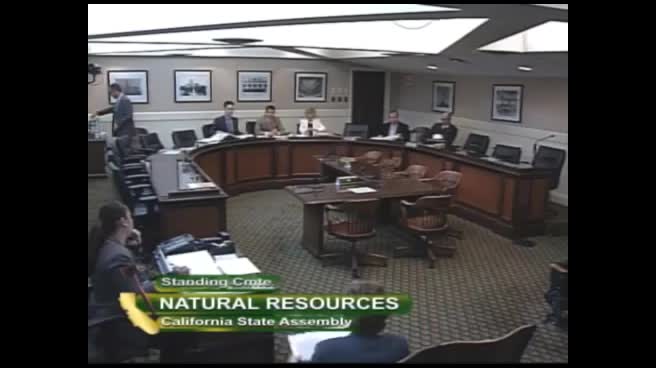 3MIN
Assembly Standing Committee on Natural Resources
Bill Author

Bill Co-Author(s):