SB 1210: Sales and use taxes: exemption: school supplies.
- Session Year: 2015-2016
- House: Senate
- Latest Version Date: 2016-05-04
Existing sales and use tax laws impose a tax on retailers measured by the gross receipts from the sale of tangible personal property sold at retail in this state, or on the storage, use, or other consumption in this state of tangible personal property purchased from a retailer for storage, use, or other consumption in this state. Existing law provides various exemptions from the taxes imposed by those laws.
This bill would provide an exemption from those taxes for the gross receipts from the sale of, and the storage, use, or other consumption of, clothing, footwear, school supplies, books, computers, and education educational computer software, subject to specified limits, during a specified 2-day period in August of each year, commencing in 2017.
The Bradley-Burns Uniform Local Sales and Use Tax Law authorizes counties and cities to impose local sales and use taxes in conformity with the Sales and Use Tax Law, and existing law authorizes districts, as specified, to impose transactions and use taxes in accordance with the Transactions and Use Tax Law, which generally conforms to the Sales and Use Tax Law. Exemptions from state sales and use taxes are incorporated into these laws.
This bill would specify that this exemption does not apply to local sales and use taxes, transactions and use taxes, and specified state taxes from which revenues are deposited into the Local Public Safety Fund, the Local Revenue Fund, the Local Revenue Fund 2011, the States states Education Protection Account, or the Fiscal Recovery Fund.
This bill would take effect immediately as a tax levy.
Existing sales and use tax laws impose a tax on retailers measured by the gross receipts from the sale of tangible personal property sold at retail in this state, or on the storage, use, or other consumption in this state of tangible personal property purchased from a retailer for storage, use, or other consumption in this state. Existing law provides various exemptions from the taxes imposed by those laws.
This bill would provide an exemption from those taxes for the gross receipts from the sale of, and the storage, use, or other consumption of, clothing, footwear, school supplies, books, computers, and education computer software, during a specified 2-day period in August of each year, commencing in 2017.
The Bradley-Burns Uniform Local Sales and Use Tax Law authorizes counties and cities to impose local sales and use taxes in conformity with the Sales and Use Tax Law, and existing law authorizes districts, as specified, to impose transactions and use taxes in accordance with the Transactions and Use Tax Law, which generally conforms to the Sales and Use Tax Law. Exemptions from state sales and use taxes are incorporated into these laws.
This bill would specify that this exemption does not apply to local sales and use taxes, transactions and use taxes, and specified state taxes from which revenues are deposited into the Local Public Safety Fund, the Local Revenue Fund, the Local Revenue Fund 2011, the States Education Protection Account, or the Fiscal Recovery Fund.
This bill would take effect immediately as a tax levy.
(a)In 2017 and each calendar year thereafter, for the two-day period beginning at 12:01 a.m. on the second Saturday of August and ending at 11:59 p.m. on the following day, there are exempted from the taxes imposed by this part the gross receipts from the sale of, and the storage, use, or other consumption in this state of, clothing, footwear, school supplies, books, computers, and educational computer software qualified tangible personal property if that sale is transacted at the retailers physical place of business.
(b)For purposes of this section, the following terms have the following meanings:
(1)Qualified tangible personal property means all of the following:
(A)Clothing, if the gross receipts or sales price from the sale or purchase of the clothing is one hundred dollars ($100) or less.
(B)Footwear, if the gross receipts or sales price from the sale or purchase of the footwear is one hundred dollars ($100) or less.
(C)School supplies, if the gross receipts or sales price from the sale or purchase of the school supply is sixty dollars ($60) or less.
(D)Books, if the gross receipts or sales price from the sale or purchase of the book is one hundred dollars ($100) or less.
(E)Computers, for the portion of the gross receipts or sales price from the sale or purchase of the computer that does not exceed one thousand dollars ($1,000).
(F)Educational computer software, for the portion of the gross receipts or sales price from the sale or purchase of the educational computer software that does not exceed three hundred dollars ($300).
(2)School supplies means all of the following:
(A)Binders.
(B)Book bags and backpacks.
(C)Calculators.
(D)Cellophane tape.
(E)Blackboard chalk.
(F)Compasses.
(G)Composition books.
(H)Crayons.
(I)Erasers.
(J)Facial tissue.
(K)Expandable folders, pocket folders, plastic folders, and manila folders.
(L)Glue, paste, and paste sticks.
(M)Highlighters.
(N)Index cards.
(O)Index card boxes.
(P)Legal pads.
(Q)Lunch boxes.
(R)Markers.
(S)Notebooks.
(T)Paper of all of the following types:
(i)Loose leaf ruled notebook paper.
(ii)Copy paper.
(iii)Graph paper.
(iv)Tracing paper.
(v)Manila paper.
(vi)Colored paper.
(vii)Poster board.
(viii)Construction paper.
(U)Pencil boxes and other school supply boxes.
(V)Pencil sharpeners.
(W)Pencils.
(X)Pens.
(Y)Protractors.
(Z)Rulers.
(AA)Scissors.
(AB)Writing tablets.
(b)
(c)(1)Notwithstanding any provision of the Bradley-Burns Uniform Local Sales and Use Tax Law (Part 1.5 (commencing with Section 7200)) or the Transactions and Use Tax Law (Part 1.6 (commencing with Section 7251)), the exemption established by this section shall not apply with respect to any tax levied by a county, city, or district pursuant to, or in accordance with, either of those laws.
(2)Notwithstanding subdivision (a), the exemption provided by this section shall not apply with respect to any tax levied pursuant to Section 6051.2, 6051.15, 6201.2, or 6201.15, or pursuant to Section 35 or 36 of Article XIII of the California Constitution.
SEC. 2.This act provides for a tax levy within the meaning of Article IV of the Constitution and shall go into immediate effect.
(a)In 2017 and each calendar year thereafter, for the two-day period beginning at 12:01 a.m. on the second Saturday of August and ending at 11:59 p.m. on the following day, there are exempted from the taxes imposed by this part the gross receipts from the sale of, and the storage, use, or other consumption in this state of, clothing, footwear, school supplies, books, computers, and educational computer software if that sale is transacted at the retailers physical place of business.
(b)(1)Notwithstanding any provision of the Bradley-Burns Uniform Local Sales and Use Tax Law (Part 1.5 (commencing with Section 7200)) or the Transactions and Use Tax Law (Part 1.6 (commencing with Section 7251)), the exemption established by this section shall not apply with respect to any tax levied by a county, city, or district pursuant to, or in accordance with, either of those laws.
(2)Notwithstanding subdivision (a), the exemption provided by this section shall not apply with respect to any tax levied pursuant to Section 6051.2, 6051.15, 6201.2, or 6201.15, or pursuant to Section 35 or 36 of Article XIII of the California Constitution.
SEC. 2.This act provides for a tax levy within the meaning of Article IV of the Constitution and shall go into immediate effect.
|
Date
|
Status
|
|---|---|
| May 27, 2016 | May 27 hearing: Held in committee and under submission. |
| May 20, 2016 | Set for hearing May 27. |
| May 16, 2016 | May 16 hearing: Placed on APPR. suspense file. (Ayes 7. Noes 0.) |
| May 6, 2016 | Set for hearing May 16. |
| May 4, 2016 | Read second time and amended. Re-referred to Com. on APPR. |
| May 3, 2016 | From committee: Do pass as amended and re-refer to Com. on APPR. (Ayes 6. Noes 0. Page 3699.) (April 27). |
| May 3, 2016 | From committee: Do pass as amended and re-refer to Com. on APPR. (Ayes 6. Noes 0.) (April 27). |
| Apr 5, 2016 | Set for hearing April 27. |
| Mar 3, 2016 | Referred to Com. on GOV. & F. |
| Feb 19, 2016 | From printer. May be acted upon on or after March 20. |
| Feb 18, 2016 | Introduced. Read first time. To Com. on RLS. for assignment. To print. |
|
Date
|
Description
|
Location
|
Votes
|
|
|---|---|---|---|---|
| May 16, 2016 | Placed on suspense file | Senate Standing Committee on Appropriations |
Passed |
|
| Apr 27, 2016 | Do pass as amended, but first amend, and re-refer to the Committee on [Appropriations] | Senate Standing Committee on Governance and Finance |
Passed |
This list shows positions taken on this bill by organizations on the date displayed, which is linked to the original source.
Positions by individuals are not included.
SENATE COMMITTEE ON
Senator Ricardo Lara, Chair
2015 - 2016 Regular Session
SB 1210 (Gaines) - Sales and use taxes: exemption: school supplies
Version: | Policy Vote: |
Urgency: | Mandate: |
Hearing Date: | Consultant: |
This bill meets the criteria for referral to the Suspense File.
Bill Summary:
SB 1210 would provide a partial sales and use tax (SUT) exemption for clothing, footwear, school supplies, books, computers, and educational software, subject to specified limits, for two days each August.
Fiscal Impact:
The Board of Equalization (BOE) indicates that this bill would result in an annual General Fund revenue loss of $12 million. The agency would incur significant costs to administer the partial SUT exemption (General Fund). These costs have yet to be determined, but would reach at a minimum the hundreds of thousands of dollars annually.
Background:
Except where a specific exemption or exclusion is provided, current law imposes the SUT on all retailers for the privilege of selling tangible personal property (TPP) at retail in California, or on the storage, use, or other consumption in this state of TPP purchased from a retailer.
After the state collects SUT revenue ($48 billion in 2013-14), it allocates the money to various state and local funds. Roughly half—collected from an approximately 3.9 percent rate—goes to the General Fund and can be spent on any state program, such as education, health care, and criminal justice. Another 1.25 percent, known as the Bradley-Burns rate, goes to cities and counties for general purposes. Three sales tax funds have uniform state rates and support specified programs—an approximately 1.1 percent rate for 2011 realignment (county-administered criminal justice, mental health, and social service programs); a 0.5 percent rate for 1991 realignment (county-administered health and social services programs); and a 0.5 percent rate for city and county public safety programs pursuant to Proposition 172 (1993). Additionally, some local governments levy optional local rates—known as Transactions and Use Taxes (TUTs)—and a small portion of these funds are used for general purposes. As of January 1, 2017, the average statewide SUT rate will be 8.21 percent.
State law fully exempts many items from SUT (such as prescription drugs, food, and poultry litter), while other items are exempted from the state sales tax, but not the local share, such as farm equipment and machinery, diesel fuel used for farming and food processing, teleproduction and postproduction equipment, timber harvesting equipment and machinery, and racehorse breeding stock. Partial SUT exemptions are difficult for both retailers and the BOE, and complicate return preparation and processing. Moreover, errors attributable to these partial exemptions occur frequently, resulting in additional return processing workload for BOE.
Proposed Law:
This bill would provide an annual two day partial “sales and use tax holiday” for back to school supplies. Specifically, the bill would (1) provide a General Fund (3.9375 percent rate) SUT exemption for the sale of, and the storage, use, or other consumption in this state of clothing, footwear, specified school supplies, books, computers, and educational computer software, (2) require purchases to be made at the retailer’s physical place of business, and (3) apply to transaction beginning at 12:01 a.m. on the second Saturday of August and ending at 11:59 p.m. on the following day each year, beginning in 2017.
The bill would specify limits for each qualified TPP, which vary by category. The clothing, footwear and books limit is $100. The school supplies limit is $60. The initial $1,000 and $300 are exempt for computers and educational software.
Staff Comments:
The BOE revenue estimate primarily employs spending data from the Census Bureau and the Bureau of Economic Analysis, and excludes all electronic sales (internet), mail order, and other direct selling. The figures are for the entire nation, requiring BOE to assume a California share (12 percent, proportional to population). Collectively, BOE assumes that total annual sales of items impacted by the bill are estimated to be $38 billion. BOE further assumes that two days of sales (plus the impact of people timing their purchases to qualify for the SUT exemption) total $313 million. At the General Fund SUT, the estimated revenue loss would be $12 million.
BOE notes that partial SUT exemptions complicate tax administration. BOE would incur costs to notify affected taxpayers, modify tax returns, revise regulations and pamphlets, answer inquiries from industry and the public, program changes, audit claimed amounts, revise sales tax returns, and review returns with claimed exemptions. In addition, administrative costs would also be incurred in computer programming, return analysis, and return processing. These costs have yet to be determined, but will reach at a minimum the hundreds of thousands of dollars annually.
-- END --
SENATE COMMITTEE ON GOVERNANCE AND FINANCE
Senator Robert M. Hertzberg, Chair
2015 - 2016 Regular
Bill No: | SB 1210 | Hearing Date: | 4/27/16 |
Author: | Gaines | Tax Levy: | Yes |
Version: | 2/18/16 | Fiscal: | Yes |
Consultant: | Bouaziz | ||
Sales and use taxes: exemption: school supplies
Provides an annual two day partial “sales and use tax holiday” for back to school supplies.
Background
State law imposes a sales and use tax (SUT) on the sale, storage, or use of tangible personal property unless exempted by state law. Cities and Counties may increase the SUT rate up to 2% as a transactions and use tax for either specific or general purposes with a vote of the people.
The current state SUT is 7.5%, but beginning January 1, 2017, the state SUT rate on tangible personal property will be 7.25% and imposed as follows:
Rate | Jurisdiction | Purpose/Authority | |
|---|---|---|---|
3.9375% | State (General Fund) | State general purposes | |
1.0625% |
| Realignment of local public safety services | |
0.50% | State (Local Revenue Fund) | Local governments to fund health and welfare programs | |
0.50% | State (Local Public Safety Fund) | Local governments to fund public safety services | |
1.25% | Local (City/County) 1.00% City and County | City and county general operations. Dedicated to county transportation purposes | |
7.25% | Total Statewide Rate |
State law fully exempts many items from SUT (prescription drugs, food, poultry litter), while other items are exempted from the state sales tax, but not the local share, such as farm equipment and machinery, diesel fuel used for farming and food processing, teleproduction and postproduction equipment, timber harvesting equipment and machinery, and racehorse breeding stock.
Proposed Law
Senate Bill 1210 provides an annual two day partial “sales and use tax holiday” for back to school supplies. Specifically, the bill:
- Provides a General Fund (3.9375% rate) sales and use tax exemption for the sale of, and the storage, use, or other consumption in this state of clothing, footwear, school supplies, books, computers, and educational computer software.
- Requires purchases to be made at the retailer’s physical place of business.
- Applies to transaction beginning at 12:01 a.m. on the second Saturday of August and ending at 11:59 p.m. on the following day each year, beginning 2017.
State Revenue Impact
According to the Board of Equalization, SB 1210 results in yearly revenue losses of $16 million.
Comments
1. Purpose of the bill. According to the author, “For many families in California, back-to-school expenses can be a heavy financial burden. Parents are required to provide the classroom with an increasing number of school supplies, ensure that their children have clothes and shoes that fit and meet dress codes, and purchase multiple high-cost items like backpacks and even computers. Simply providing their children with these bare necessities to be successful during the school year is often financially undoable. Senate Bill 1210 is modeled after successful programs in other states. By lessening the financial burden on parents, our state’s children benefit. Additionally, this tax holiday weekend brings in significant revenue for retailers, while giving parents a much needed tax break. Senate Bill 1210 only exempts the portion of sales and use tax which is deposited into the state’s general fund, ensuring that local governments’ budgets are not impacted. By lessening the financial burden on parents, California is setting students up for success and investing in our state’s future.”
2. A new tax expenditure. Existing law provides various credits, deductions, exclusions, and exemptions for particular taxpayer groups. In the late 1960s, U.S. Treasury officials began arguing that these features of the tax law should be referred to as "expenditures," since they are generally enacted to accomplish some governmental purpose and there is a determinable cost associated with each (in the form of foregone revenues). This bill would create new tax expenditure, costing the general fund almost $16 million dollars in foregone revenue each year. The tradeoff for providing new tax expenditure, resulting in revenue losses, is higher taxes or reductions to other services or programs.
3. How is tax expenditure different from a direct expenditure? As the Department of Finance notes in its annual Tax Expenditure Report, there are several key differences between tax expenditures and direct expenditures. First, tax expenditures are reviewed less frequently than direct expenditures once they are put in place. This can offer taxpayers greater certainty, but it can also result in tax expenditures remaining a part of the tax code without demonstrating any public benefit. Second, there is generally no control over the amount of revenue losses associated with any given tax expenditure. Finally, once enacted, it takes a two-thirds vote to rescind an existing tax expenditure absent a sunset date. This effectively results in a "one-way ratchet" whereby tax expenditures can be conferred by majority vote, but cannot be rescinded, irrespective of their efficacy, without a supermajority vote.
4. Incentive? Generally, tax expenditures are enacted to encourage socially beneficial behavior that would not take place without a financial incentive. This bill may instead shift behavior that would have otherwise occurred and incentivize all school supply shopping to occur in a small time period, costing the state without growing sales overall. Given that parents and students are required to purchase schools supplies, it is unclear whether the tax incentive ultimately encourages new behavior or rewards behavior that was going to occur regardless.
5. Burden on retailers. Sales tax holidays create complexities for tax code compliance. Specifically, creating a sales tax exemption that only lasts for two days would place an additional burden on retailers to program their cash registers to exempt certain products on certain dates. This may require retailers to incur costs to accommodate the change. Increased sales activity during this period could potentially offset those costs.
Additionally, under current law, when merchandise is returned for other merchandise, the law considers the transaction as two separate transactions: (1) a rescission of the original sale and (2) a separate sale of the replacement merchandise. For example, if a customer purchases a computer and exchanges the computer for a laptop, the transaction is regarded under the law as a separate sale of the laptop and a rescission of the original sale of the computer. To report the correct amount of tax, the retailer may deduct the sales price of the computer from taxable sales, and must include the sales price of the laptop. Under the proposed holiday period, if the same computer is purchased during the sales tax holiday period and exchanged for the laptop after the holiday period, the proposed exemption would not apply to the exchange; the law recognizes that transaction as occurring after the exempt holiday period. This complexity may lead to retailer reporting errors. Rain checks could also create confusion. Current law provides that a retailer-issued rain check does not constitute a sale of tangible personal property. Therefore, the exemption would not apply when a retailer issues a rain check to the customer for an out of stock item during the holiday period and the customer uses the rain check to purchase the item after the proposed holiday period.
6. Other states. Currently, fourteen states will hold a sales tax holiday in 2016: Alabama, Arkansas, Connecticut, Iowa, Louisiana, Maryland, Mississippi, Missouri, New Mexico, Oklahoma, South Carolina, Tennessee, Texas, and Virginia. Eligible items include clothing, computers, school supplies, energy star products, firearms and hunting supplies, hurricane preparedness items, and severe weather preparedness kits. For most states, the exemption applies to specified items.
7. Let’s get clear. SB 1210 establishes an annual two day partial “sales and use tax holiday” for back to school supplies. Specifically, the bill exempts sales of clothing, footwear, school supplies, books, computers, and educational computer software if that sale is transacted at the retailer’s physical place of business from the General Fund portion (3.9375%) of SUT. However, the bill does not define the type of items within each category, nor does the bill limit the number of items in each category that may be purchased. Furthermore, the bill does not require an individual to prove the purchase is by or for a student. The Committee may wish to consider limiting the types and number of items that may be purchased, and requiring some proof that the items are being purchased by a or for a current student.
Support and Opposition
(4/21/16)
Support: California Catholic Conference.
Opposition: California Tax Reform Association.
-- END --
Discussed in Hearing
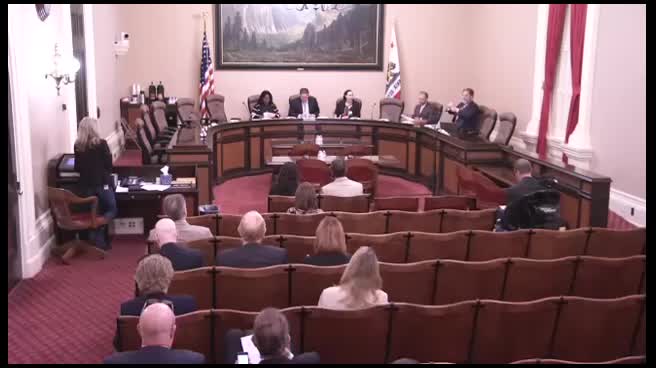 10MIN
Senate Standing Committee on Governance and Finance
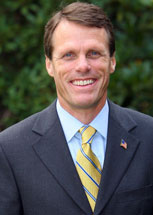
Bill Author
Bill Co-Author(s):