SB 1291: Medi-Cal: specialty mental health: minor and nonminor dependents.
- Session Year: 2015-2016
- House: Senate
- Latest Version Date: 2016-09-29
Existing law provides for the Medi-Cal program, which is administered by the State Department of Health Care Services, under which qualified low-income individuals receive health care services, including specialty mental health services. The Medi-Cal program is, in part, governed and funded by federal Medicaid program provisions. Under existing law, specialty mental health services are provided by mental health plans and the department is responsible for conducting investigations and audits of claims and reimbursements for expenditures for specialty mental health services provided by mental health plans to Medi-Cal eligible individuals.
This bill would require annual mental health plan reviews to be conducted by an external quality review organization (EQRO) and, commencing July 1, 2018, would require those reviews to include specific data for Medi-Cal eligible minor and nonminor dependents in foster care, including the number of Medi-Cal eligible minor and nonminor dependents in foster care served each year. The bill would require the department to share data with county boards of supervisors, including data that will assist in the development of mental health service plans and performance outcome system data and metrics, as specified.
This bill would require the department to post any corrective action plan prepared by the mental health plan to address deficiencies identified by the EQRO review and the EQRO data on its Internet Web site, as specified. The bill would also require the department to notify the mental health plan of any deficiencies and would require the mental health plan to provide a written corrective action plan to the department.
Existing law provides for the Medi-Cal program, which is administered by the State Department of Health Care Services, under which qualified low-income individuals receive health care services, including specialty mental health services. The Medi-Cal program is, in part, governed and funded by federal Medicaid program provisions. Under existing law, specialty mental health services are provided by mental health plans and the department is responsible for conducting investigations and audits of claims and reimbursements for expenditures for specialty mental health services provided by mental health plans to Medi-Cal eligible individuals.
This bill would require annual mental health plan reviews to be conducted by an external quality review organization (EQRO) and, commencing July 1, 2018, would require those reviews to include specific data for Medi-Cal eligible minor and nonminor dependents in foster care, including the number of Medi-Cal eligible minor and nonminor dependents in foster care served each year. The bill would require the department to share data with county boards of supervisors, including data that will assist in the development of mental health service plans and performance outcome system data and metrics, as specified.
This bill would require the department to post any corrective action plan prepared by the mental health plan to address deficiencies identified by the EQRO review and the EQRO data on its Internet Web site, as specified. The bill would also require the department to notify the mental health plan of any deficiencies and would require the mental health plan to provide a written corrective action plan to the department.
Existing law provides for the Medi-Cal program, which is administered by the State Department of Health Care Services, under which qualified low-income individuals receive health care services, including specialty mental health services. The Medi-Cal program is, in part, governed and funded by federal Medicaid program provisions. Under existing law, specialty mental health services are provided by mental health plans and the department is responsible for conducting investigations and audits of claims and reimbursements for expenditures for specialty mental health services provided by mental health plans to Medi-Cal eligible individuals.
This bill would require each mental health plan, annually on or before July 1 of each year, to submit a foster care mental health service plan to the department detailing the service array, from prevention to crisis services, available to Medi-Cal eligible children and youth under the jurisdiction of the juvenile court and their families. The This bill would require annual mental health plan reviews to be conducted by an external quality review organization (EQRO) and and, commencing July 1, 2018, would require those reviews to include specific data for Medi-Cal eligible children and youth under the jurisdiction of the juvenile court and their families, minor and nonminor dependents in foster care, including the number of Medi-Cal eligible children and youth under the jurisdiction of the juvenile court minor and nonminor dependents in foster care served each year. The bill would require the department to share data with county boards of supervisors, including data that will assist in the development of county foster care mental health service plans and performance outcome system data and metrics, as specified.
This bill would require the department to post the plans, any corrective action plan prepared by the mental health plan to address deficiencies identified by the EQRO review, review and the EQRO data on its Internet Web site, as specified. The bill would also require the department to notify the mental health plan of any deficiencies and would require the mental health plan to provide a written corrective action plan to the department.
Existing law provides for the Medi-Cal program, which is administered by the State Department of Health Care Services, under which qualified low-income individuals receive health care services, including specialty mental health services. The Medi-Cal program is, in part, governed and funded by federal Medicaid program provisions. Under existing law, specialty mental health services are provided by mental health plans and the department is responsible for conducting investigations and audits of claims and reimbursements for expenditures for specialty mental health services provided by mental health plans to Medi-Cal eligible individuals.
This bill would require each mental health plan, annually on or before July 1 of each year, to submit a foster care mental health service plan to the department detailing the service array, from prevention to crisis services, available to Medi-Cal eligible children and youth under the jurisdiction of the juvenile court and their families. The bill would require annual mental health plan reviews to be conducted by an external quality review organization (EQRO) and to include specific data for Medi-Cal eligible children and youth under the jurisdiction of the juvenile court and their families, including the number of Medi-Cal eligible children and youth under the jurisdiction of the juvenile court served each year. The bill would require the department to share data with county boards of supervisors, including data that will assist in the development of county foster youth care mental health service plans and performance outcome system data and metrics, as specified.
This bill would require the department to post the plans, any corrective action plan prepared by the mental health plan to address deficiencies identified by the EQRO review, and the EQRO data on its Internet Web site, as specified. The bill would also require the department to notify the mental health plan of any deficiencies and would require the mental health plan to provide a written corrective action plan to the department.
Existing law provides for the Medi-Cal program, which is administered by the State Department of Health Care Services, under which qualified low-income individuals receive health care services, including specialty mental health services. The Medi-Cal program is, in part, governed and funded by federal Medicaid program provisions. Under existing law, specialty mental health services are provided by mental health plans and the department is responsible for conducting investigations and audits of claims and reimbursements for expenditures for specialty mental health services provided by mental health plans to Medi-Cal eligible individuals.
This bill would require each mental health plan, annually on or before July 1 of each year, to submit a foster care mental health service plan to the department detailing the service array, from prevention to crisis services, available to Medi-Cal eligible children and youth under the jurisdiction of the juvenile court and their families. The bill would require annual mental health plan reviews to be conducted by an external quality review organization (EQRO) and to include specific data for Medi-Cal eligible children and youth under the jurisdiction of the juvenile court and their families, including the number of Medi-Cal eligible children and youth under the jurisdiction of the juvenile court served each year. The bill would require the department to share data with county boards of supervisors, including data that will assist in the development of foster youth mental health plans and performance outcome system data and metrics, as specified.
This bill would require the department to post the plans and plans, any corrective action plan prepared by the mental health plan to address deficiencies identified by the EQRO review review, and the EQRO data on its Internet Web site. site, as specified. The bill would also require the department to notify the mental health plan of any deficiencies and would require the mental health plan to provide a written corrective action plan to the department.
Existing law provides for the Medi-Cal program, which is administered by the State Department of Health Care Services, under which qualified low-income individuals receive health care services, including specialty mental health services. The Medi-Cal program is, in part, governed and funded by federal Medicaid program provisions. Under existing law, specialty mental health services are provided by mental health plans and the department is responsible for conducting investigations and audits of claims and reimbursements for expenditures for specialty mental health services provided by mental health plans to Medi-Cal eligible individuals.
This bill would require each mental health plan, annually on or before July 1 of each year, to submit a foster care mental health service plan to the department detailing the service array, from prevention to crisis services, available to Medi-Cal eligible children and youth under the jurisdiction of the juvenile court and their families. The bill would require annual mental health plan reviews to be conducted by an external quality review organization (EQRO) and to include specific data for Medi-Cal eligible children and youth under the jurisdiction of the juvenile court and their families, including the number of Medi-Cal eligible children and youth under the jurisdiction of the juvenile court served each year.
This bill would require the department to review post the plans and the EQRO reviews and post them any corrective action plan prepared by the mental health plan to address deficiencies identified by the EQRO review on its Internet Web site. The bill would also require the department to notify the mental health plan of any deficiencies and would require the mental health plan to provide a written corrective action plan to the department. The bill would also authorize the director, if he or she believes that a mental health plan is substantially failing to comply with any provision pertaining to the administration of specified benefits for children and youth under the jurisdiction of the juvenile court, to take specified action, including imposing certain sanctions.
Existing law provides for the Medi-Cal program, which is administered by the State Department of Health Care Services, under which qualified low-income individuals receive health care services, including specialty mental health services. The Medi-Cal program is, in part, governed and funded by federal Medicaid program provisions. Under existing law, specialty mental health services are provided by mental health plans and the department is responsible for conducting investigations and audits of claims and reimbursements for expenditures for specialty mental health services provided by mental health plans to Medi-Cal eligible individuals.
This bill would require each mental health plan, annually on or before July 1 of each year, to submit a foster care mental health service plan to the department detailing the service array, from prevention to crisis services, available to Medi-Cal eligible children and youth under the jurisdiction of the juvenile court and their families. The bill would require annual mental health plan reviews to be conducted by an external quality review organization (EQRO) and to include specific data for Medi-Cal eligible children and youth under the jurisdiction of the juvenile court and their families, including the number of Medi-Cal eligible children and youth under the jurisdiction of the juvenile court served each year.
This bill would require the department to review the plans and the EQRO reviews and post them on its Internet Web site. The bill would also require the department to notify the mental health plan of any deficiencies and would require the mental health plan to provide a written corrective action plan to the department. The bill would also authorize the director, if he or she believes that a mental health plan is substantially failing to comply with any provision pertaining to the administration of specified benefits for children and youth under the jurisdiction of the juvenile court, to take specified action, including imposing certain sanctions.
Existing law provides for the Medi-Cal program, which is administered by the State Department of Health Care Services, under which qualified low-income individuals receive health care services, including specialty mental health services. The Medi-Cal program is, in part, governed and funded by federal Medicaid Program program provisions. Under existing law, specialty mental health services are provided by mental health plans and the department is responsible for conducting investigations and audits of claims and reimbursements for expenditures for specialty mental health services provided by mental health plans to Medi-Cal eligible individuals.
This bill would require each mental health plan, annually on or before July 1 of each year, to submit a foster care mental health service plan to the department detailing the service array, from prevention to crisis services, available to Medi-Cal eligible children and youth under the jurisdiction of the juvenile court and their families. The bill would require annual mental health plan reviews to be conducted by an external quality review organization (EQRO) and to include specific data for Medi-Cal eligible children and youth under the jurisdiction of the juvenile court and their families, including the number of Medi-Cal eligible children and youth under the jurisdiction of the juvenile court served each year.
This bill would require the department to review the plans and the EQRO reviews and post them on its Internet Web site. The bill would also require the department to notify the mental health plan of any deficiencies and would require the mental health plan to provide a written corrective action plan to the department. The bill would also authorize the director, if he or she believes that a mental health plan is substantially failing to comply with any provision pertaining to the administration of specified benefits for children and youth under the jurisdiction of the juvenile court, to take specified action, including bringing an action for injunctive relief or imposing certain sanctions.
Existing law provides for the Medi-Cal program, which is administered by the State Department of Health Care Services, under which qualified low-income individuals receive health care services, including specialty mental health services. The Medi-Cal program is, in part, governed and funded by federal Medicaid Program provisions. Under existing law, specialty mental health services are provided by mental health plans and the department is responsible for conducting investigations and audits of claims and reimbursements for expenditures for specialty mental health services provided by mental health plans to Medi-Cal eligible individuals.
This bill would require each mental health plan, annually on or before July 1 of each year, to submit a foster care mental health service plan to the department detailing the service array, from prevention to crisis services, available to Medi-Cal eligible children and youth under the jurisdiction of the juvenile court and their families. The bill would require annual mental health plan reviews to be conducted by an external quality review organization (EQRO) and to include specific data for Medi-Cal eligible children and youth under the jurisdiction of the juvenile court and their families, including the number of Medi-Cal eligible children and youth under the jurisdiction of the juvenile court served each year.
This bill would require the department to review the plans and the EQRO reviews and post them on its Internet Web site. The bill would also require the department to notify the mental health plan of any deficiencies and would require the mental health plan to provide a written corrective action plan to the department. The bill would also authorize the director, if he or she believes that a mental health plan is substantially failing to comply with any provision pertaining to the administration of specified benefits for children and youth under the jurisdiction of the juvenile court, to take specified action, including bringing an action for injunctive relief or imposing certain sanctions.
(a)A mental health plan review shall be conducted annually by an external quality review organization (EQRO) pursuant to federal regulations at 42 C.F.R. 438.350 et seq.. Commencing July 1, 2018, the review shall include specific data for Medi-Cal eligible minor and nonminor dependents in foster care, including all of the following:
(1)The number of Medi-Cal eligible minor and nonminor dependents in foster care served each year.
(2)Details on the types of mental health services provided to children, including prevention and treatment services. These types of services may include, but are not limited to, screenings, assessments, home-based mental health services, outpatient services, day treatment services or inpatient services, psychiatric hospitalizations, crisis interventions, case management, and psychotropic medication support services.
(3)Access to, and timeliness of, mental health services, as described in Sections 1300.67.2, 1300.67.2.1, and 1300.67.2.2 of Title 28 of the California Code of Regulations and consistent with Section 438.206 of Title 42 of the Code of Federal Regulations, available to Medi-Cal eligible minor and nonminor dependents in foster care.
(4)Quality of mental health services available to Medi-Cal eligible minor and nonminor dependents in foster care.
(5)Translation and interpretation services, consistent with Section 438.10(c)(4) and (5) of Title 42 of the Code of Federal Regulations and Section 1810.410 of Title 9 of the California Code of Regulations, available to Medi-Cal eligible minor and nonminor dependents in foster care.
(6)Performance data for Medi-Cal eligible minor and nonminor dependents in foster care.
(7)Utilization data for Medi-Cal eligible minor and nonminor dependents in foster care.
(8)Medication monitoring consistent with the child welfare psychotropic medication measures developed by the State Department of Social Services and any Healthcare Effectiveness Data and Information Set (HEDIS) measures related to psychotropic medications, including, but not limited to, the following:
(A)Follow-Up Care for Children Prescribed Attention Deficit Hyperactivity Disorder Medication (HEDIS ADD).
(B)Use of Multiple Concurrent Antipsychotics in Children and Adolescents (HEDIS APC).
(C)Use of First-Line Psychosocial Care for Children and Adolescents on Antipsychotics (HEDIS APP).
(D)Metabolic Monitoring for Children and Adolescents on Antipsychotics (HEDIS APM).
(b)(1)The department shall post the EQRO data disaggregated by Medi-Cal eligible minor and nonminor dependents in foster care on the departments Internet Web site in a manner that is publicly accessible.
(2)The department shall review the EQRO data for Medi-Cal eligible minor and nonminor dependents in foster care.
(3)If the EQRO identifies deficiencies in a mental health plans ability to serve Medi-Cal eligible minor and nonminor dependents in foster care, the department shall notify the mental health plan in writing of identified deficiencies.
(4)The mental health plan shall provide a written corrective action plan to the department within 60 days of receiving the notice required pursuant to paragraph (2). The department shall notify the mental health plan of approval of the corrective action plan or shall request changes, if necessary, within 30 days after receipt of the corrective action plan. Final corrective action plans shall be made publicly available by, at minimum, posting on the departments Internet Web site.
(c)To the extent possible, the department shall, in connection with its duty to implement Section 14707.5, share with county boards of supervisors data that will assist in the development of mental health service plans, such as data described in federal regulations at 42 C.F.R. 438.350 et seq., subdivision (c) of Section 16501.4, and paragraph (1) of subdivision (a) of Section 1538.8 of the Health and Safety Code.
(d)The department shall annually share performance outcome system data with county boards of supervisors for the purpose of informing mental health service plans. Performance outcome system data shared with county boards of supervisors shall include, but not be limited to, the following disaggregated data for Medi-Cal eligible minor and nonminor dependents in foster care:
(1)The number of youth receiving specialty mental health services.
(2)The racial distribution of youth receiving specialty mental health services.
(3)The gender distribution of youth receiving specialty mental health services.
(4)The number of youth, by race, with one or more specialty mental health service visits.
(5)The number of youth, by race, with five or more specialty mental health service visits.
(6)Utilization data for intensive home services, intensive care coordination, case management, therapeutic behavioral services, medication support services, crisis intervention, crisis stabilization, full-day intensive treatment, full-day treatment, full-day rehabilitation, and hospital inpatient days.
(7)A unique count of youth receiving specialty mental health services who are arriving, exiting, and continuing with services.
(e)The department shall ensure that the performance outcome system data metrics include disaggregated data for Medi-Cal eligible minor and nonminor dependents in foster care. These data shall be in a format that can be analyzed.
(a)A mental health plan review shall be conducted annually by an external quality review organization (EQRO) pursuant to federal regulations at 42 C.F.R. 438.350 et seq.. Commencing July 1, 2018, the review shall include specific data for Medi-Cal eligible minor and nonminor dependents in foster care, including all of the following:
(1)The number of Medi-Cal eligible minor and nonminor dependents in foster care served each year.
(2)Details on the types of mental health services provided to children, including prevention and treatment services. These types of services may include, but are not limited to, screenings, assessments, home-based mental health services, outpatient services, day treatment services or inpatient services, psychiatric hospitalizations, crisis interventions, case management, and psychotropic medication support services.
(3)Access to, and timeliness of, mental health services, as described in Sections 1300.67.2, 1300.67.2.1, and 1300.67.2.2 of Title 28 of the California Code of Regulations and consistent with Section 438.206 of Title 42 of the Code of Federal Regulations, available to Medi-Cal eligible minor and nonminor dependents in foster care.
(4)Quality of mental health services available to Medi-Cal eligible minor and nonminor dependents in foster care.
(5)Translation and interpretation services, consistent with Section 438.10(c)(4) and (5) of Title 42 of the Code of Federal Regulations and Section 1810.410 of Title 9 of the California Code of Regulations, available to Medi-Cal eligible minor and nonminor dependents in foster care.
(6)Performance data for Medi-Cal eligible minor and nonminor dependents in foster care.
(7)Utilization data for Medi-Cal eligible minor and nonminor dependents in foster care.
(8)Medication monitoring consistent with the child welfare psychotropic medication measures developed by the State Department of Social Services and any Healthcare Effectiveness Data and Information Set (HEDIS) measures related to psychotropic medications, including, but not limited to, the following:
(A)Follow-Up Care for Children Prescribed Attention Deficit Hyperactivity Disorder Medication (HEDIS ADD).
(B)Use of Multiple Concurrent Antipsychotics in Children and Adolescents (HEDIS APC).
(C)Use of First-Line Psychosocial Care for Children and Adolescents on Antipsychotics (HEDIS APP).
(D)Metabolic Monitoring for Children and Adolescents on Antipsychotics (HEDIS APM).
(b)(1)The department shall post the EQRO data disaggregated by Medi-Cal eligible minor and nonminor dependents in foster care on the departments Internet Web site in a manner that is publicly accessible.
(2)The department shall review the EQRO data for Medi-Cal eligible minor and nonminor dependents in foster care.
(3)If the EQRO identifies deficiencies in a mental health plans ability to serve Medi-Cal eligible minor and nonminor dependents in foster care, the department shall notify the mental health plan in writing of identified deficiencies.
(4)The mental health plan shall provide a written corrective action plan to the department within 60 days of receiving the notice required pursuant to paragraph (2). The department shall notify the mental health plan of approval of the corrective action plan or shall request changes, if necessary, within 30 days after receipt of the corrective action plan. Final corrective action plans shall be made publicly available by, at minimum, posting on the departments Internet Web site.
(c)To the extent possible, the department shall, in connection with its duty to implement Section 14707.5, share with county boards of supervisors data that will assist in the development of mental health service plans, such as data described in federal regulations at 42 C.F.R. 438.350 et seq., subdivision (c) of Section 16501.4, and paragraph (1) of subdivision (a) of Section 1538.8 of the Health and Safety Code.
(d)The department shall annually share performance outcome system data with county boards of supervisors for the purpose of informing mental health service plans. Performance outcome system data shared with county boards of supervisors shall include, but not be limited to, the following disaggregated data for Medi-Cal eligible minor and nonminor dependents in foster care:
(1)The number of youth receiving specialty mental health services.
(2)The racial distribution of youth receiving specialty mental health services.
(3)The gender distribution of youth receiving specialty mental health services.
(4)The number of youth, by race, with one or more specialty mental health service visits.
(5)The number of youth, by race, with five or more specialty mental health service visits.
(6)Utilization data for intensive home services, intensive care coordination, case management, therapeutic behavioral services, medication support services, crisis intervention, crisis stabilization, full-day intensive treatment, full-day treatment, full-day rehabilitation, and hospital inpatient days.
(7)A unique count of youth receiving specialty mental health services who are arriving, exiting, and continuing with services.
(e)The department shall ensure that the performance outcome system data metrics include disaggregated data for Medi-Cal eligible minor and nonminor dependents in foster care. These data shall be in a format that can be analyzed.
(a)Each mental health plan shall submit an annual foster care mental health service plan to the department detailing the service array, from prevention to crisis services, available to Medi-Cal eligible children and youth under the jurisdiction of the juvenile court and their families. These plans shall be consistent with the Special Terms and Conditions outlined in the federal Centers for Medicare and Medicaid Services (CMS) approved waiver authorized under Section 1915 of the Social Security Act, and Sections 438.204, 438.240, and 438.358 of Title 42 of the Code of Federal Regulations. Plans shall be submitted by July 1 of each year, beginning in 2017. Prior to submission to the department, the board of supervisors of each county mental health plan shall approve the plan. The plan shall include, but not be limited to, all of the following elements:
(1)The number of Medi-Cal eligible children and youth under the jurisdiction of the juvenile court served each year.
(2)The number of family members, including foster parents, of children and youth under the jurisdiction of the juvenile court served by the mental health plans.
(3)Details on the types of mental health services provided to children and youth under the jurisdiction of the juvenile court and their families, including prevention and treatment services. These types of services may include, but are not limited to, screenings, assessments, home-based mental health services, outpatient services, day treatment services, or inpatient services, psychiatric hospitalizations, crisis interventions, case management, and psychotropic medication support services.
(4)Access to, and timeliness of, mental health services, as described in Sections 1300.67.2, 1300.67.2.1, and 1300.67.2.2 of Title 28 of the California Code of Regulations and consistent with Section 438.206 of Title 42 of the Code of Federal Regulations available to Medi-Cal eligible children and youth under the jurisdiction of the juvenile court.
(5)Quality of mental health services available to Medi-Cal eligible children and youth under the jurisdiction of the juvenile court.
(6)Translation and interpretation services, consistent with Section 438.10(c)(4) and (5) of Title 42 of the Code of Federal Regulations and Section 1810.410 of Title 9 of the California Code of Regulations available to Medi-Cal eligible children and youth under the jurisdiction of the juvenile court.
(7)Coordination with other systems, including regional centers, special education local plan areas, child welfare, and probation.
(8)Family and caregiver education and support.
(9)Performance data for Medi-Cal eligible children and youth under the jurisdiction of the juvenile court in the annual external quality review report required by Section 14717.5.
(10)Utilization data for Medi-Cal eligible children and youth under the jurisdiction of the juvenile court in the annual external quality review report required by Section 14717.5.
(11)Medication monitoring consistent with the child welfare psychotropic medication measures developed by the State Department of Social Services and any Healthcare Effectiveness Data and Information Set (HEDIS) measures related to psychotropic medications, including, but not limited to, the following:
(A)Follow-Up Care for Children Prescribed Attention Deficit Hyperactivity Disorder Medication (HEDIS ADD).
(B)Use of Multiple Concurrent Antipsychotics in Children and Adolescents (HEDIS APC).
(C)Use of First-Line Psychosocial Care for Children and Adolescents on Antipsychotics (HEDIS APP).
(D)Metabolic Monitoring for Children and Adolescents on Antipsychotics (HEDIS APM).
(b)The department shall post each plan on its Internet Web site in a manner that is publicly accessible.
SEC. 2.SECTION 1.Section 14717.5 is added to the Welfare and Institutions Code, to read:14717.5.(a)A mental health plan review shall be conducted annually by an external quality review organization (EQRO). The (EQRO) pursuant to federal regulations at 42 C.F.R. 438.350 et seq.. Commencing July 1, 2018, the review shall include specific data for Medi-Cal eligible children and youth under the jurisdiction of the juvenile court and their families, minor and nonminor dependents in foster care, including all of the following:
(1)The number of Medi-Cal eligible children and youth under the jurisdiction of the juvenile court minor and nonminor dependents in foster care served each year.
(2)The number of family members, including foster parents, of children and youth under the jurisdiction of the juvenile court served by the mental health plans.
(3)
(2)Details on the types of mental health services provided to children and their caregivers, children, including prevention and treatment services. These types of services may include, but are not limited to, screenings, assessments, home-based mental health services, outpatient services, day treatment services or inpatient services, psychiatric hospitalizations, crisis interventions, case management, and psychotropic medication support services.
(4)
(3)Access to, and timeliness of, mental health services, as described in Sections 1300.67.2, 1300.67.2.1, and 1300.67.2.2 of Title 28 of the California Code of Regulations and consistent with Section 438.206 of Title 42 of the Code of Federal Regulations, available to Medi-Cal eligible children and youth under the jurisdiction of the juvenile court. minor and nonminor dependents in foster care.
(5)
(4)Quality of mental health services available to Medi-Cal eligible children and youth under the jurisdiction of the juvenile court. minor and nonminor dependents in foster care.
(6)
(5)Translation and interpretation services, consistent with Section 438.10(c)(4) and (5) of Title 42 of the Code of Federal Regulations and Section 1810.410 of Title 9 of the California Code of Regulations, available to Medi-Cal eligible children and youth under the jurisdiction of the juvenile court. minor and nonminor dependents in foster care.
(7)
(6)Performance data for Medi-Cal eligible children and youth under the jurisdiction of the juvenile court. minor and nonminor dependents in foster care.
(8)
(7)Utilization data for Medi-Cal eligible children and youth under the jurisdiction of the juvenile court. minor and nonminor dependents in foster care.
(9)
(8)Medication monitoring consistent with the child welfare psychotropic medication measures developed by the State Department of Social Services and any Healthcare Effectiveness Data and Information Set (HEDIS) measures related to psychotropic medications, including, but not limited to, the following:
(A)Follow-Up Care for Children Prescribed Attention Deficit Hyperactivity Disorder Medication (HEDIS ADD).
(B)Use of Multiple Concurrent Antipsychotics in Children and Adolescents (HEDIS APC).
(C)Use of First-Line Psychosocial Care for Children and Adolescents on Antipsychotics (HEDIS APP).
(D)Metabolic Monitoring for Children and Adolescents on Antipsychotics (HEDIS APM).
(b)(1)The department shall post the EQRO data disaggregated by Medi-Cal eligible children and youth under the jurisdiction of the juvenile court minor and nonminor dependents in foster care on the departments Internet Web site in a manner that is publicly accessible.
(2)The department shall review the EQRO data for Medi-Cal eligible children and youth under the jurisdiction of the juvenile court and their families. minor and nonminor dependents in foster care.
(3)If the EQRO identifies deficiencies in a mental health plans ability to serve Medi-Cal eligible children and youth under the jurisdiction of the juvenile court, minor and nonminor dependents in foster care, the department shall notify the mental health plan in writing of identified deficiencies.
(4)The mental health plan shall provide a written corrective action plan to the department within 60 days of receiving the notice required pursuant to paragraph (2). The department shall notify the mental health plan of approval of the corrective action plan or shall request changes, if necessary, within 30 days after receipt of the corrective action plan. Final corrective action plans shall be made publicly available by, at minimum, posting on the departments Internet Web site.
(c)To the extent possible, the department shall, in connection with its duty to implement Section 14707.5, share with county boards of supervisors data that will assist in the development of foster care mental health service plans, such as data described in federal regulations at 42 C.F.R. 438.350 et seq., subdivision (c) of Section 16501.4 16501.4, and paragraph (1) of subdivision (a) of Section 1538.8 of the Health and Safety Code.
(d)The department shall annually share performance outcome system data with county boards of supervisors for the purpose of informing foster care mental health service plans. Performance outcome system data shared with county boards of supervisors shall include, but not be limited to, the following disaggregated data for Medi-Cal eligible children and youth under the jurisdiction of the juvenile court: minor and nonminor dependents in foster care:
(1)The number of youth receiving specialty mental health services.
(2)The racial distribution of youth receiving specialty mental health services.
(3)The gender distribution of youth receiving specialty mental health services.
(4)The number of youth, by race, with one or more specialty mental health service visits.
(5)The number of youth, by race, with five or more specialty mental health service visits.
(6)Utilization data for intensive home services, intensive care coordination, case management, therapeutic behavioral services, medication support services, crisis intervention, crisis stabilization, full-day intensive treatment, full-day treatment, full-day rehabilitation, and hospital inpatient days.
(7)A unique count of youth receiving specialty mental health services who are arriving, exiting, and continuing with services.
(e)The department shall ensure that the performance outcome system data metrics include disaggregated data for Medi-Cal eligible children and youth under the jurisdiction of the juvenile court. minor and nonminor dependents in foster care. These data shall be in a format that can be analyzed.
(a)Each mental health plan shall submit an annual foster care mental health service plan to the department detailing the service array, from prevention to crisis services, available to Medi-Cal eligible children and youth under the jurisdiction of the juvenile court and their families. These plans shall be consistent with the Special Terms and Conditions outlined in the federal Centers for Medicare and Medicaid Services (CMS) approved waiver authorized under Section 1915 of the Social Security Act, and Sections 438.204, 438.240, and 438.358 of Title 42 of the Code of Federal Regulations. Plans shall be submitted by July 1 of each year, beginning in 2017. Prior to submission to the department, the board of supervisors of each county mental health plan shall approve the plan. The plan shall include, but not be limited to, all of the following elements:
(1)The number of Medi-Cal eligible children and youth under the jurisdiction of the juvenile court served each year.
(2)The number of family members, including foster parents, of children and youth under the jurisdiction of the juvenile court served by the county mental health plans.
(3)Details on the types of mental health services provided to children and youth under the jurisdiction of the juvenile court and their families, including prevention and treatment services. These types of services may include, but are not limited to, screenings, assessments, home-based mental health services, outpatient services, day treatment services, or inpatient services, psychiatric hospitalizations, crisis interventions, case management, and psychotropic medication support services.
(4)Access to to, and timeliness of of, mental health services, as described in Sections 1300.67.2, 1300.67.2.1, and 1300.67.2.2 of Title 28 of the California Code of Regulations and consistent with Section 438.206 of Title 42 of the Code of Federal Regulations available to Medi-Cal eligible children and youth under the jurisdiction of the juvenile court.
(5)Quality of mental health services available to Medi-Cal eligible children and youth under the jurisdiction of the juvenile court.
(6)Translation and interpretation services, consistent with Section 438.10(c)(4) and (5) of Title 42 of the Code of Federal Regulations and Section 1810.410 of Title 9 of the California Code of Regulations available to Medi-Cal eligible children and youth under the jurisdiction of the juvenile court.
(7)Coordination with other systems, including regional centers, special education local plan areas, child welfare, and probation.
(8)Family and caregiver education and support.
(9)Performance data for Medi-Cal eligible children and youth under the jurisdiction of the juvenile court in the annual external quality review report required by Section 14717.5.
(10)Utilization data for Medi-Cal eligible children and youth under the jurisdiction of the juvenile court in the annual external quality review report required by Section 14717.5.
(11)Medication monitoring consistent with the child welfare psychotropic medication measures developed by the State Department of Social Services and any Healthcare Effectiveness Data and Information Set (HEDIS) measures related to psychotropic medications, including, but not limited to, the following:
(A)Follow-Up Care for Children Prescribed Attention Deficit Hyperactivity Disorder Medication (HEDIS ADD).
(B)Use of Multiple Concurrent Antipsychotics in Children and Adolescents (HEDIS APC).
(C)Use of First-Line Psychosocial Care for Children and Adolescents on Antipsychotics (HEDIS APP).
(D)Metabolic Monitoring for Children and Adolescents on Antipsychotics (HEDIS APM).
(b)The department shall post each plan on its Internet Web site in a manner that is publicly accessible.
SEC. 2.Section 14717.5 is added to the Welfare and Institutions Code, to read:14717.5.(a)A mental health plan review shall be conducted annually by an external quality review organization (EQRO). The review shall include specific data for Medi-Cal eligible children and youth under the jurisdiction of the juvenile court and their families, including all of the following:
(1)The number of Medi-Cal eligible children and youth under the jurisdiction of the juvenile court served each year.
(2)The number of family members, including foster parents, of children and youth under the jurisdiction of the juvenile court, including foster parents, court served by the mental health plans.
(3)Details on the types of mental health services provided to children and their caregivers, including prevention and treatment services. These types of services may include, but are not limited to, screenings, assessments, home-based mental health services, outpatient services, day treatment services or inpatient services, psychiatric hospitalizations, crisis interventions, case management, and psychotropic medication support services.
(4)Access to to, and timeliness of of, mental health services, as described in Sections 1300.67.2, 1300.67.2.1, and 1300.67.2.2 of Title 28 of the California Code of Regulations and consistent with Section 438.206 of Title 42 of the Code of Federal Regulations Regulations, available to Medi-Cal eligible children and youth under the jurisdiction of the juvenile court.
(5)Quality of mental health services available to Medi-Cal eligible children and youth under the jurisdiction of the juvenile court.
(6)Translation and interpretation services, consistent with Section 438.10(c)(4) and (5) of Title 42 of the Code of Federal Regulations and Section 1810.410 of Title 9 of the California Code of Regulations Regulations, available to Medi-Cal eligible children and youth under the jurisdiction of the juvenile court.
(7)Performance data for Medi-Cal eligible children and youth under the jurisdiction of the juvenile court.
(8)Utilization data for Medi-Cal eligible children and youth under the jurisdiction of the juvenile court.
(9)Medication monitoring consistent with the child welfare psychotropic medication measures developed by the State Department of Social Services and any Healthcare Effectiveness Data and Information Set (HEDIS) measures related to psychotropic medications, including, but not limited to, the following:
(A)Follow-Up Care for Children Prescribed Attention Deficit Hyperactivity Disorder Medication (HEDIS ADD).
(B)Use of Multiple Concurrent Antipsychotics in Children and Adolescents (HEDIS APC).
(C)Use of First-Line Psychosocial Care for Children and Adolescents on Antipsychotics (HEDIS APP).
(D)Metabolic Monitoring for Children and Adolescents on Antipsychotics (HEDIS APM).
(b)(1)The department shall post the EQRO data disaggregated by Medi-Cal eligible children and youth under the jurisdiction of the juvenile court on the departments Internet Web site in a manner that is publicly accessible.
(2)The department shall review the EQRO data for Medi-Cal eligible children and youth under the jurisdiction of the juvenile court and their families.
(3)If the EQRO identifies deficiencies in a mental health plans ability to serve Medi-Cal eligible children and youth under the jurisdiction of the juvenile court, the department shall notify the mental health plan in writing of identified deficiencies.
(4)The mental health plan shall provide a written corrective action plan to the department within 60 days of receiving the notice required pursuant to paragraph (2). The department shall notify the mental health plan of approval of the corrective action plan or shall request changes, if necessary, within 30 days after receipt of the corrective action plan. Final corrective action plans shall be made publicly available by, at minimum, posting on the departments Internet Web site.
(c)To the extent possible, the department shall, in connection with its duty to implement Section 14707.5, share with county boards of supervisors data that will assist in the development of foster youth care mental health service plans, such as data described in subdivision (c) of Section 16501.4 and paragraph (1) of subdivision (a) of Section 1538.8 of the Health and Safety Code.
(d)The department shall annually share performance outcome system data with county boards of supervisors for the purpose of informing foster youth care mental health service plans. Performance outcome system data shared with county boards of supervisors shall include, but not be limited to, the following disaggregated data for Medi-Cal eligible children and youth under the jurisdiction of the juvenile court:
(1)The number of youth receiving specialty mental health services.
(2)The racial distribution of youth receiving specialty mental health services.
(3)The gender distribution of youth receiving specialty mental health services.
(4)The number of youth, by race, with one or more specialty mental health service visits.
(5)The number of youth, by race, with five or more specialty mental health service visits.
(6)Utilization data for intensive home services, intensive care coordination, case management, therapeutic behavioral services, medication support services, crisis intervention, crisis stabilization, full-day intensive treatment, full-day treatment, full-day rehabilitation, and hospital inpatient days.
(7)A unique count of youth receiving specialty mental health services who are arriving, exiting, and continuing with services.
(e)The department shall ensure that the performance outcome system data metrics include disaggregated data for Medi-Cal eligible children and youth under the jurisdiction of the juvenile court. These data shall be in a format that can be analyzed.
(a)Each mental health plan shall submit an annual foster care mental health service plan to the department detailing the service array, from prevention to crisis services, available to Medi-Cal eligible children and youth under the jurisdiction of the juvenile court and their families. These plans shall be consistent with the Special Terms and Conditions outlined in the federal Centers for Medicare and Medicaid Services (CMS) approved waiver authorized under Section 1915 of the Social Security Act, Sections 438.204, 438.240, and 438.358 of Title 42 of the Code of Federal Regulations. Plans shall be submitted by July 1 of each year, beginning in 2017. Prior to submission to the department, the board of supervisors of each mental health plan shall approve the plan. The plan shall include, but not be limited to, all of the following elements:
(1)The number of Medi-Cal eligible children and youth under the jurisdiction of the juvenile court served each year.
(2)The number of family members, including foster parents, of children and youth under the jurisdiction of the juvenile court served by the county mental health plans.
(3)Details on the types of mental health services provided to children and youth under the jurisdiction of the juvenile court and their families, including prevention and treatment services. These types of services may include, but are not limited to, screenings, assessments, home-based mental health services, outpatient services, day treatment services, or inpatient services, psychiatric hospitalizations, crisis interventions, case management, and psychotropic medication support services.
(4)Access to and timeliness of mental health services, as described in Sections 1300.67.2, 1300.67.2.1, and 1300.67.2.2 of Title 28 of the California Code of Regulations and consistent with Section 438.206 of Title 42 of the Code of Federal Regulations available to Medi-Cal eligible children and youth under the jurisdiction of the juvenile court.
(5)Quality of mental health services available to Medi-Cal eligible children and youth under the jurisdiction of the juvenile court.
(6)Translation and interpretation services, consistent with Section 438.10(c)(4) and (5) of Title 42 of the Code of Federal Regulations and Section 1810.410 of Title 9 of the California Code of Regulations available to Medi-Cal eligible children and youth under the jurisdiction of the juvenile court.
(7)Coordination with other systems, including regional centers, special education local plan areas, child welfare, and probation.
(8)Family and caregiver education and support.
(9)Performance data for Medi-Cal eligible children and youth under the jurisdiction of the juvenile court in the annual external quality review report required by Section 14717.5.
(10)Utilization data for Medi-Cal eligible children and youth under the jurisdiction of the juvenile court in the annual external quality review report required by Section 14717.5.
(11)Medication monitoring consistent with the Healthcare Effectiveness Data and Information Set (HEDIS), including, but not limited to, the child welfare psychotropic medication measures developed by the State Department of Social Services and the following HEDIS any Healthcare Effectiveness Data and Information Set (HEDIS) measures related to psychotropic medications: medications, including, but not limited to, the following:
(A)Follow-Up Care for Children Prescribed Attention Deficit Hyperactivity Disorder Medication (HEDIS ADD), which measures the number of children 6 to 12 years of age, inclusive, who have a visit with a provider with prescribing authority within 30 days of the new prescription. ADD).
(B)Use of Multiple Concurrent Antipsychotics in Children and Adolescents (HEDIS APC), which does both of the following: APC).
(i)Measures the number of children receiving an antipsychotic medication for at least 60 out of 90 days and the number of children who additionally receive a second antipsychotic medication that overlaps with the first.
(ii)Reports a total rate and age stratifications, including 6 to 11 years of age, inclusive, and 12 to 17 years of age, inclusive.
(C)Use of First-Line Psychosocial Care for Children and Adolescents on Antipsychotics (HEDIS APP), which measures whether a child has received psychosocial services 90 days before through 30 days after receiving a new prescription for an antipsychotic medication. APP).
(D)Metabolic Monitoring for Children and Adolescents on Antipsychotics (HEDIS APM), which does both of the following: APM).
(i)Measures testing for glucose or HbA1c and lipid or cholesterol of a child who has received at least two different antipsychotic prescriptions on different days.
(ii)Reports a total rate and age stratifications, including 6 to 11 years of age, inclusive, and 12 to 17 years of age, inclusive.
(b)The department shall post each plan on its Internet Web site. site in a manner that is publicly accessible.
SEC. 2.Section 14717.5 is added to the Welfare and Institutions Code, to read:14717.5.(a)A mental health plan review shall be conducted annually by an external quality review organization (EQRO). The review shall include specific data for Medi-Cal eligible children and youth under the jurisdiction of the juvenile court and their families, including all of the following:
(1)The number of Medi-Cal eligible children and youth under the jurisdiction of the juvenile court served each year.
(2)The number of family members, including foster parents, of children and youth under the jurisdiction of the juvenile court, including foster parents, served by the mental health plans.
(3)Details on the types of mental health services provided to children and their caregivers, including prevention and treatment services. These types of services may include, but are not limited to, screenings, assessments, home-based mental health services, outpatient services, day treatment services or inpatient services, psychiatric hospitalizations, crisis interventions, case management, and psychotropic medication support services.
(4)Access to and timeliness of mental health services, as described in Sections 1300.67.2, 1300.67.2.1, and 1300.67.2.2 of Title 28 of the California Code of Regulations and consistent with Section 438.206 of Title 42 of the Code of Federal Regulations available to Medi-Cal eligible children and youth under the jurisdiction of the juvenile court.
(5)Quality of mental health services available to Medi-Cal eligible children and youth under the jurisdiction of the juvenile court.
(6)Translation and interpretation services, consistent with Section 438.10(c)(4) and (5) of Title 42 of the Code of Federal Regulations and Section 1810.410 of Title 9 of the California Code of Regulations available to Medi-Cal eligible children and youth under the jurisdiction of the juvenile court.
(7)Performance data for Medi-Cal eligible children and youth under the jurisdiction of the juvenile court.
(8)Utilization data for Medi-Cal eligible children and youth under the jurisdiction of the juvenile court.
(9)Medication monitoring consistent with the Healthcare Effectiveness Data and Information Set (HEDIS), including, but not limited to, the child welfare psychotropic medication measures developed by the State Department of Social Services and the following HEDIS any Healthcare Effectiveness Data and Information Set (HEDIS) measures related to psychotropic medications: medications, including, but not limited to, the following:
(A)Follow-Up Care for Children Prescribed Attention Deficit Hyperactivity Disorder Medication (HEDIS ADD), which measures the number of children 6 to 12 years of age, inclusive, who have a visit with a provider with prescribing authority within 30 days of the new prescription. ADD).
(B)Use of Multiple Concurrent Antipsychotics in Children and Adolescents (HEDIS APC), which does both of the following: APC).
(i)Measures the number of children receiving an antipsychotic medication for at least 60 out of 90 days and the number of children who additionally receive a second antipsychotic medication that overlaps with the first.
(ii)Reports a total rate and age stratifications, including 6 to 11 years of age, inclusive, and 12 to 17 years of age, inclusive.
(C)Use of First-Line Psychosocial Care for Children and Adolescents on Antipsychotics (HEDIS APP), which measures whether a child has received psychosocial services 90 days before through 30 days after receiving a new prescription for an antipsychotic medication. APP).
(D)Metabolic Monitoring for Children and Adolescents on Antipsychotics (HEDIS APM), which does both of the following: APM).
(i)Measures testing for glucose or HbA1c and lipid or cholesterol of a child who has received at least two different antipsychotic prescriptions on different days.
(ii)Reports a total rate and age stratifications, including 6 to 11 years of age, inclusive, and 12 to 17 years of age, inclusive.
(b)(1)The department shall review post the EQRO data disaggregated by Medi-Cal eligible children and youth under the jurisdiction of the juvenile court on the departments Internet Web site in a manner that is publicly accessible.
(2)The department shall review the EQRO data for Medi-Cal eligible children and youth under the jurisdiction of the juvenile court and their families.
(2)
(3)If the EQRO identifies deficiencies in a mental health plans ability to serve Medi-Cal eligible children and youth under the jurisdiction of the juvenile court, the department shall notify the mental health plan in writing of identified deficiencies.
(3)
(4)The mental health plan shall provide a written corrective action plan to the department within 60 days of receiving the notice required pursuant to paragraph (2). The department shall notify the mental health plan of approval of the corrective action plan or shall request changes, if necessary, within 30 days after receipt of the corrective action plan. Final corrective action plans shall be made publicly available by, at minimum, posting on the departments Internet Web site.
(c)To the extent possible, the department shall, in connection with its duty to implement Section 14707.5, share with county boards of supervisors data that will assist in the development of foster youth mental health plans, such as data described in subdivision (c) of Section 16501.4 and paragraph (1) of subdivision (a) of Section 1538.8 of the Health and Safety Code.
(d)The department shall annually share performance outcome system data with county boards of supervisors for the purpose of informing foster youth mental health plans. Performance outcome system data shared with county boards of supervisors shall include, but not be limited to, the following disaggregated data for Medi-Cal eligible children and youth under the jurisdiction of the juvenile court:
(1)The number of youth receiving specialty mental health services.
(2)The racial distribution of youth receiving specialty mental health services.
(3)The gender distribution of youth receiving specialty mental health services.
(4)The number of youth, by race, with one or more specialty mental health service visits.
(5)The number of youth, by race, with five or more specialty mental health service visits.
(6)Utilization data for intensive home services, intensive care coordination, case management, therapeutic behavioral services, medication support services, crisis intervention, crisis stabilization, full-day intensive treatment, full-day treatment, full-day rehabilitation, and hospital inpatient days.
(7)A unique count of youth receiving specialty mental health services who are arriving, exiting, and continuing with services.
(e)The department shall ensure that the performance outcome system data metrics include disaggregated data for Medi-Cal eligible children and youth under the jurisdiction of the juvenile court. These data shall be in a format that can be analyzed.
(a)Each mental health plan shall submit an annual foster care mental health service plan to the department detailing the service array, from prevention to crisis services, available to Medi-Cal eligible children and youth under the jurisdiction of the juvenile court and their families. These plans shall be consistent with the Special Terms and Conditions outlined in the federal Centers for Medicare and Medicaid Services (CMS) approved waiver authorized under Section 1915 of the Social Security Act, Sections 438.204, 438.240, and 438.358 of Title 42 of the Code of Federal Regulations. Plans shall be submitted by July 1 of each year, beginning in 2017. Prior to submission to the department, the board of supervisors of each mental health plan shall approve the plan. The plan shall include, but not be limited to, all of the following elements:
(1)The number of Medi-Cal eligible children and youth under the jurisdiction of the juvenile court served each year.
(2)The number of family members, including foster parents, of children and youth under the jurisdiction of the juvenile court served by the county mental health plans.
(3)Details on the types of mental health services provided to children and youth under the jurisdiction of the juvenile court and their families, including prevention and treatment services. These types of services may include, but are not limited to, screenings, assessments, home-based mental health services, outpatient services, day treatment services, or inpatient services, psychiatric hospitalizations, crisis interventions, case management, and psychotropic medication support services.
(4)Access to and timeliness of mental health services, as described in Sections 1300.67.2, 1300.67.2.1, and 1300.67.2.2 of Title 28 of the California Code of Regulations and consistent with Section 438.206 of Title 42 of the Code of Federal Regulations available to Medi-Cal eligible children and youth under the jurisdiction of the juvenile court.
(5)Quality of mental health services available to Medi-Cal eligible children and youth under the jurisdiction of the juvenile court.
(6)Translation and interpretation services, consistent with Section 438.10(c)(4) and (5) of Title 42 of the Code of Federal Regulations and Section 1810.410 of Title 9 of the California Code of Regulations available to Medi-Cal eligible children and youth under the jurisdiction of the juvenile court.
(7)Coordination with other systems, including regional centers, special education local plan areas, child welfare, and probation.
(8)Family and caregiver education and support.
(9)Performance data for Medi-Cal eligible children and youth under the jurisdiction of the juvenile court in the annual external quality review report required by Section 14717.5.
(10)Utilization data for Medi-Cal eligible children and youth under the jurisdiction of the juvenile court in the annual external quality review report required by Section 14717.5.
(11)Medication monitoring consistent with the Healthcare Effectiveness Data and Information Set (HEDIS), including, but not limited to, the child welfare psychotropic medication measures developed by the State Department of Social Services and the following HEDIS measures related to psychotropic medications:
(A)Follow-Up Care for Children Prescribed Attention Deficit Hyperactivity Disorder Medication (HEDIS ADD), which measures the number of children 6 to 12 years of age, inclusive, who have a visit with a provider with prescribing authority within 30 days of the new prescription.
(B)Use of Multiple Concurrent Antipsychotics in Children and Adolescents (HEDIS APC), which does both of the following:
(i)Measures the number of children receiving an antipsychotic medication for at least 60 out of 90 days and the number of children who additionally receive a second antipsychotic medication that overlaps with the first.
(ii)Reports a total rate and age stratifications, including 6 to 11 years of age, inclusive, and 12 to 17 years of age, inclusive.
(C)Use of First-Line Psychosocial Care for Children and Adolescents on Antipsychotics (HEDIS APP), which measures whether a child has received psychosocial services 90 days before through 30 days after receiving a new prescription for an antipsychotic medication.
(D)Metabolic Monitoring for Children and Adolescents on Antipsychotics (HEDIS APM), which does both of the following:
(i)Measures testing for glucose or HbA1c and lipid or cholesterol of a child who has received at least two different antipsychotic prescriptions on different days.
(ii)Reports a total rate and age stratifications, including 6 to 11 years of age, inclusive, and 12 to 17 years of age, inclusive.
(b)The department shall review the plan required pursuant to subdivision (a) and shall post each plan on its Internet Web site.
(c)(1)If the department identifies deficiencies in a plan, the department shall notify the mental health plan, in writing, of those deficiencies pursuant to subdivision (e) of Section 14712.
(2)After notification, the mental health plan shall provide a written corrective action plan to the department within 60 days. The department shall notify the mental health plan of approval or shall request changes, if necessary, within 30 days after receiving the corrective action plan. Final plans shall be made publicly available by, at minimum, posting on the departments Internet Web site.
SEC. 2.Section 14717.5 is added to the Welfare and Institutions Code, to read:14717.5.(a)A mental health plan review shall be conducted annually by an external quality review organization (EQRO). The review shall include specific data for Medi-Cal eligible children and youth under the jurisdiction of the juvenile court and their families, including all of the following:
(1)The number of Medi-Cal eligible children and youth under the jurisdiction of the juvenile court served each year.
(2)The number of family members, including foster parents, of children and youth under the jurisdiction of the juvenile court, including foster parents, served by the mental health plans.
(3)Details on the types of mental health services provided to children and their caregivers, including prevention and treatment services. These types of services may include, but are not limited to, screenings, assessments, home-based mental health services, outpatient services, day treatment services or inpatient services, psychiatric hospitalizations, crisis interventions, case management, and psychotropic medication support services.
(4)Access to and timeliness of mental health services, as described in Sections 1300.67.2, 1300.67.2.1, and 1300.67.2.2 of Title 28 of the California Code of Regulations and consistent with Section 438.206 of Title 42 of the Code of Federal Regulations available to Medi-Cal eligible children and youth under the jurisdiction of the juvenile court.
(5)Quality of mental health services available to Medi-Cal eligible children and youth under the jurisdiction of the juvenile court.
(6)Translation and interpretation services, consistent with Section 438.10(c)(4) and (5) of Title 42 of the Code of Federal Regulations and Section 1810.410 of Title 9 of the California Code of Regulations available to Medi-Cal eligible children and youth under the jurisdiction of the juvenile court.
(7)Performance data for Medi-Cal eligible children and youth under the jurisdiction of the juvenile court.
(8)Utilization data for Medi-Cal eligible children and youth under the jurisdiction of the juvenile court.
(9)Medication monitoring consistent with the Healthcare Effectiveness Data and Information Set (HEDIS), including, but not limited to, the child welfare psychotropic medication measures developed by the State Department of Social Services and the following HEDIS measures related to psychotropic medications:
(A)Follow-Up Care for Children Prescribed Attention Deficit Hyperactivity Disorder Medication (HEDIS ADD), which measures the number of children 6 to 12 years of age, inclusive, who have a visit with a provider with prescribing authority within 30 days of the new prescription.
(B)Use of Multiple Concurrent Antipsychotics in Children and Adolescents (HEDIS APC), which does both of the following:
(i)Measures the number of children receiving an antipsychotic medication for at least 60 out of 90 days and the number of children who additionally receive a second antipsychotic medication that overlaps with the first.
(ii)Reports a total rate and age stratifications, including 6 to 11 years of age, inclusive, and 12 to 17 years of age, inclusive.
(C)Use of First-Line Psychosocial Care for Children and Adolescents on Antipsychotics (HEDIS APP), which measures whether a child has received psychosocial services 90 days before through 30 days after receiving a new prescription for an antipsychotic medication.
(D)Metabolic Monitoring for Children and Adolescents on Antipsychotics (HEDIS APM), which does both of the following:
(i)Measures testing for glucose or HbA1c and lipid or cholesterol of a child who has received at least two different antipsychotic prescriptions on different days.
(ii)Reports a total rate and age stratifications, including 6 to 11 years of age, inclusive, and 12 to 17 years of age, inclusive.
(b)(1)The department shall review the EQRO data for Medi-Cal eligible children and youth under the jurisdiction of the juvenile court and their families.
(2)If the EQRO identifies deficiencies in a mental health plans ability to serve Medi-Cal eligible children and youth under the jurisdiction of the juvenile court, the department shall notify the mental health plan in writing of identified deficiencies.
(3)The mental health plan shall provide a written corrective action plan to the department within 60 days of receiving the notice required pursuant to paragraph (2). The department shall notify the mental health plan of approval of the corrective action plan or shall request changes, if necessary, within 30 days after receipt of the corrective action plan. Final corrective action plans shall be made publicly available by, at minimum, posting on the departments Internet Web site.
(c)The department shall conduct annual audits of each mental health plan for the administration of EPSDT benefits for children and youth under the jurisdiction of the juvenile court, consistent with Section 14707.5, unless the director determines there is good cause for additional reviews. The reviews shall use the standards and criteria established pursuant to Sections 1300.67.2, 130067.2.1, and 1300.67.2.2 of Title 28 of the California Code of Regulations related to access to, and timelines of, services adopted pursuant to the Knox-Keene Health Care Service Plan Act of 1975, as appropriate. The department may contract with professional organizations, as appropriate, to perform the periodic review required by this section. The department, or its designee, shall make a finding of fact with respect to the ability of the mental health plan to provide quality health care services, effectiveness of peer review, and utilization control mechanisms, and the overall performance of the mental health plan in providing mental health care benefits to its enrollees. The director shall publicly report the findings of finalized annual audits conducted pursuant to this section as soon as possible, but no later than 90 days following completion of a corrective action plan initiated pursuant to the audit, if any, unless the director determines, in his or her discretion, that additional time is reasonably necessary to fully and fairly report the results of the audit.
(d)If the director believes that a mental health plan is substantially failing to comply with any provision of this code or any regulation pertaining to the administration of EPSDT benefits for children and youth under the jurisdiction of the juvenile court, and the director determines that formal action may be necessary to secure compliance, he or she shall inform the county behavioral health director and the board of supervisors of that failure. The notice to the county behavioral health director and board of supervisors shall be in writing and shall allow the county and the mental health plan a period of time specified by the department, but in no case less than 30 days, to correct the failure to comply with the law or regulations. If within the specified period the county and the mental health plan do not comply or provide reasonable assurances in writing that they will comply within the additional time as the director may allow, the director may order a representative of the county to appear at a hearing before the director to show cause why the director should not take administrative action to secure compliance. The county shall be given at least 30 days notice of the hearing. The director shall consider the case on the record established at the hearing and, within 30 days, shall render proposed findings and a proposed decision on the issues. The proposed findings and decisions shall be submitted to the county, and the county shall have the opportunity to appear within 10 days, at a time and place as may be determined by the director, for the purpose of presenting oral arguments respecting the proposed findings and decisions. Thereupon, the director shall make final findings and issue a final administrative decision.
(e)If the director determines, based on the record established at the hearing pursuant to subdivision (d), that the county is failing to comply with laws or regulations pertaining to a program administered by the department, and that administrative sanctions are necessary to secure compliance, the director may invoke sanctions allowable under subdivision (e) of Section 14712.
(a)Each mental health plan shall submit an annual foster care mental health service plan to the department detailing the service array, from prevention to crisis services, available to Medi-Cal eligible children and youth under the jurisdiction of the juvenile court and their families. These plans shall be consistent with the Special Terms and Conditions outlined in the federal Centers for Medicare and Medicaid Services (CMS) approved waiver authorized under Section 1915 of the Social Security Act, Sections 438.204, 438.240 and 438.358 of Title 42 of the Code of Federal Regulations. Plans shall be submitted by July 1 of each year, beginning in 2017. Prior to submission to the department, the board of supervisors of each mental health plan shall approve the plan. The plan shall include, but not be limited to, all of the following elements:
(1)The number of Medi-Cal eligible children and youth under the jurisdiction of the juvenile court served each year.
(2)The number of family members members, including foster parents, of children and youth under the jurisdiction of the juvenile court served by the county mental health plans.
(3)Details on the types of mental health services provided to children and youth under the jurisdiction of the juvenile court and their families, including prevention and treatment services. These types of services may include, but are not limited to, screenings, assessments, home-based mental health services, outpatient services, day treatment services, or inpatient services, psychiatric hospitalizations, crisis interventions, case management, and psychotropic medication support services.
(4)Access to and timeliness of mental health services services, as described in Sections 1300.67.2, 1300.67.2.1, and 1300.67.2.2 of Title 28 of the California Code of Regulations and consistent with Section 438.206 of Title 42 of the Code of Federal Regulations available to Medi-Cal eligible children and youth under the jurisdiction of the juvenile court.
(5)Quality of mental health services available to Medi-Cal eligible children and youth under the jurisdiction of the juvenile court.
(6)Translation and interpretation services services, consistent with Section 438.10(c)(4) and (5) of Title 42 of the Code of Federal Regulations and Section 1810.410 of Title 9 of the California Code of Regulations available to Medi-Cal eligible children and youth under the jurisdiction of the juvenile court.
(7)Coordination with other systems, including regional centers, special education local plan areas, child welfare, and probation.
(8)Family and caregiver education and support.
(9)Performance data for Medi-Cal eligible children and youth under the jurisdiction of the juvenile court in the annual external quality review report required by Section 14717.5.
(10)Utilization data for Medi-Cal eligible children and youth under the jurisdiction of the juvenile court in the annual external quality review report required by Section 14717.5.
(11)Medication monitoring. monitoring consistent with the Healthcare Effectiveness Data and Information Set (HEDIS), including, but not limited to, the child welfare psychotropic medication measures developed by the State Department of Social Services and the following HEDIS measures related to psychotropic medications:
(A)Follow-Up Care for Children Prescribed Attention Deficit Hyperactivity Disorder Medication (HEDIS ADD), which measures the number of children 6 to 12 years of age, inclusive, who have a visit with a provider with prescribing authority within 30 days of the new prescription.
(B)Use of Multiple Concurrent Antipsychotics in Children and Adolescents (HEDIS APC), which does both of the following:
(i)Measures the number of children receiving an antipsychotic medication for at least 60 out of 90 days and the number of children who additionally receive a second antipsychotic medication that overlaps with the first.
(ii)Reports a total rate and age stratifications, including 6 to 11 years of age, inclusive, and 12 to 17 years of age, inclusive.
(C)Use of First-Line Psychosocial Care for Children and Adolescents on Antipsychotics (HEDIS APP), which measures whether a child has received psychosocial services 90 days before through 30 days after receiving a new prescription for an antipsychotic medication.
(D)Metabolic Monitoring for Children and Adolescents on Antipsychotics (HEDIS APM), which does both of the following:
(i)Measures testing for glucose or HbA1c and lipid or cholesterol of a child who has received at least two different antipsychotic prescriptions on different days.
(ii)Reports a total rate and age stratifications, including 6 to 11 years of age, inclusive, and 12 to 17 years of age, inclusive.
(b)The department shall review the plan required pursuant to subdivision (a) and shall post each plan on its Internet Web site.
(c)(1)If the department identifies deficiencies in a plan, the department shall notify the mental health plan, in writing, of those deficiencies. deficiencies pursuant to subdivision (e) of Section 14712.
(2)After notification, the mental health plan shall provide a written corrective action plan to the department within 60 days. The department shall notify the mental health plan of approval or shall request changes, if necessary, within 30 days after receiving the corrective action plan. Final plans shall be made publicly available by, at minimum, posting on the departments Internet Web site.
SEC. 2.Section 14717.5 is added to the Welfare and Institutions Code, to read:14717.5.(a)A mental health plan review shall be conducted annually by an external quality review organization (EQRO). The review shall include specific data for Medi-Cal eligible children and youth under the jurisdiction of the juvenile court and their families, including all of the following:
(1)The number of Medi-Cal eligible children and youth under the jurisdiction of the juvenile court served each year.
(2)The number of family members members, including foster parents, of children and youth under the jurisdiction of the juvenile court, including foster parents, served by the mental health plans.
(3)Details on the types of mental health services provided to children and their caregivers, including prevention and treatment services. These types of services may include, but are not limited to, screenings, assessments, home-based mental health services, outpatient services, day treatment services or inpatient services, psychiatric hospitalizations, crisis interventions, case management, and psychotropic medication support services.
(4)Access to and timeliness of mental health services services, as described in Sections 1300.67.2, 1300.67.2.1, and 1300.67.2.2 of Title 28 of the California Code of Regulations and consistent with Section 438.206 of Title 42 of the Code of Federal Regulations available to Medi-Cal eligible children and youth under the jurisdiction of the juvenile court.
(5)Quality of mental health services available to Medi-Cal eligible children and youth under the jurisdiction of the juvenile court.
(6)Translation and interpretation services services, consistent with Section 438.10(c)(4) and (5) of Title 42 of the Code of Federal Regulations and Section 1810.410 of Title 9 of the California Code of Regulations available to Medi-Cal eligible children and youth under the jurisdiction of the juvenile court.
(7)Performance data for Medi-Cal eligible children and youth under the jurisdiction of the juvenile court.
(8)Utilization data for Medi-Cal eligible children and youth under the jurisdiction of the juvenile court.
(9)Medication monitoring. monitoring consistent with the Healthcare Effectiveness Data and Information Set (HEDIS), including, but not limited to, the child welfare psychotropic medication measures developed by the State Department of Social Services and the following HEDIS measures related to psychotropic medications:
(A)Follow-Up Care for Children Prescribed Attention Deficit Hyperactivity Disorder Medication (HEDIS ADD), which measures the number of children 6 to 12 years of age, inclusive, who have a visit with a provider with prescribing authority within 30 days of the new prescription.
(B)Use of Multiple Concurrent Antipsychotics in Children and Adolescents (HEDIS APC), which does both of the following:
(i)Measures the number of children receiving an antipsychotic medication for at least 60 out of 90 days and the number of children who additionally receive a second antipsychotic medication that overlaps with the first.
(ii)Reports a total rate and age stratifications, including 6 to 11 years of age, inclusive, and 12 to 17 years of age, inclusive.
(C)Use of First-Line Psychosocial Care for Children and Adolescents on Antipsychotics (HEDIS APP), which measures whether a child has received psychosocial services 90 days before through 30 days after receiving a new prescription for an antipsychotic medication.
(D)Metabolic Monitoring for Children and Adolescents on Antipsychotics (HEDIS APM), which does both of the following:
(i)Measures testing for glucose or HbA1c and lipid or cholesterol of a child who has received at least two different antipsychotic prescriptions on different days.
(ii)Reports a total rate and age stratifications, including 6 to 11 years of age, inclusive, and 12 to 17 years of age, inclusive.
(b)(1)The department shall review the EQRO data for Medi-Cal eligible children and youth under the jurisdiction of the juvenile court and their families.
(2)If the EQRO identifies deficiencies in a mental health plans ability to serve Medi-Cal eligible children and youth under the jurisdiction of the juvenile court, the department shall notify the mental health plan in writing of identified deficiencies.
(3)The mental health plan shall provide a written corrective action plan to the department within 60 days of receiving the notice required pursuant to paragraph (2). The department shall notify the mental health plan of approval of the corrective action plan or shall request changes, if necessary, within 30 days after receipt of the corrective action plan. Final corrective action plans shall be made publicly available by, at minimum, posting on the departments Internet Web site.
(c)The department shall conduct annual audits of each mental health plan for the administration of EPSDT benefits for children and youth under the jurisdiction of the juvenile court, consistent with Section 14707.5, unless the director determines there is good cause for additional reviews. The reviews shall use the standards and criteria established pursuant to Sections 1300.67.2, 130067.2.1, and 1300.67.2.2 of Title 28 of the California Code of Regulations related to access to, and timelines of, services adopted pursuant to the Knox-Keene Health Care Service Plan Act of 1975, as appropriate. The department may contract with professional organizations, as appropriate, to perform the periodic review required by this section. The department, or its designee, shall make a finding of fact with respect to the ability of the mental health plan to provide quality health care services, effectiveness of peer review, and utilization control mechanisms, and the overall performance of the mental health plan in providing mental health care benefits to its enrollees. The director shall publicly report the findings of finalized annual audits conducted pursuant to this section as soon as possible, but no later than 90 days following completion of a corrective action plan initiated pursuant to the audit, if any, unless the director determines, in his or her discretion, that additional time is reasonably necessary to fully and fairly report the results of the audit.
(d)If the director believes that a mental health plan is substantially failing to comply with any provision of this code or any regulation pertaining to the administration of EPSDT benefits for children and youth under the jurisdiction of the juvenile court, and the director determines that formal action may be necessary to secure compliance, he or she shall inform the county behavioral health director and the board of supervisors of that failure. The notice to the county behavioral health director and board of supervisors shall be in writing and shall allow the county and the mental health plan a period of time specified by the department, but in no case less than 30 days, to correct the failure to comply with the law or regulations. If within the specified period the county and the mental health plan do not comply or provide reasonable assurances in writing that they will comply within the additional time as the director may allow, the director may order a representative of the county to appear at a hearing before the director to show cause why the director should not take administrative action to secure compliance. The county shall be given at least 30 days notice of the hearing. The director shall consider the case on the record established at the hearing and, within 30 days, shall render proposed findings and a proposed decision on the issues. The proposed findings and decisions shall be submitted to the county, and the county shall have the opportunity to appear within 10 days, at a time and place as may be determined by the director, for the purpose of presenting oral arguments respecting the proposed findings and decisions. Thereupon, the director shall make final findings and issue a final administrative decision.
(e)If the director determines, based on the record established at the hearing pursuant to subdivision (d), that the county is failing to comply with laws or regulations pertaining to a program administered by the department, or if the Department of Human Resources certifies to the director that a county is not in conformity with established merit system standards under Part 2.5 (commencing with Section 19800) of Division 5 of Title 2 of the Government Code, and that administrative sanctions are necessary to secure compliance, the director may invoke either of the following sanctions, except that the sanctions shall not be invoked concurrently: sanctions allowable under subdivision (e) of Section 14712.
(1)Withhold all or part of state and federal funds from the county until the county demonstrates to the director that it has complied.
(2)(A)Suspend all or part of an existing contract with the mental health plan and assume, temporarily, direct responsibility for the administration of all or part of any programs administered by the department in the county until the county provides reasonable written assurances to the director of its intention and ability to comply. During the period of direct state administrative responsibility, the director or his or her authorized representative shall have all of the powers and responsibilities of the county director, except that he or she shall not be subject to the authority of the board of supervisors.
(B)(i)In the event that the director invokes sanctions pursuant to this section, the county shall be responsible for providing any funds necessary for the continued operation of all programs administered by the department in the county. If a county fails or refuses to provide these funds, including a sufficient amount to reimburse all costs incurred by the department in directly administering a program in the county, the Controller may deduct an amount certified by the director as necessary for the continued operation of these programs by the department from any state or federal funds payable to the county for any purpose.
(ii)In the event of a state-imposed sanction, the amount of the sanction shall be no greater than the amount of county funds that the county would be required to contribute to fully match the General Fund allocation for the particular program or programs for which the county is being sanctioned for those programs that are not public safety programs realigned pursuant to 2011 Realignment Legislation.
(iii)In the event of a state-imposed sanction pursuant to this paragraph for the public safety programs realigned pursuant to 2011 Realignment Legislation that are administered by the State Department of Health Care Services, the amount of the sanction shall be no greater than the amount of funding originally provided to the county in the 201112 fiscal year for the particular program from the Behavioral Services Subaccount within the Support Services Account of the Local Revenue Fund 2011, as adjusted by the countys share of the additional incremental funding provided pursuant to paragraph (1) of subdivision (f) of Section 30027.5 of, paragraph (1) of subdivision (f) of Section 30027.6 of, paragraph (1) of subdivision (f) of Section 30027.7 of, and paragraph (1) of subdivision (f) of Section 30027.8 of, the Government Code, the estimated growth funding for the program from the Support Services Growth Subaccount within the Sales and Use Tax Growth Account, and any adjustment to the county allocation pursuant to subdivision (a) of Section 30029.6 of the Government Code.
(a)Each mental health plan shall submit an annual foster care mental health service plan to the department detailing the service array, from prevention to crisis services, available to Medi-Cal eligible children and youth under the jurisdiction of the juvenile court and their families. Plans shall be submitted by July 1 of each year, beginning in 2017. Prior to submission to the department, the board of supervisors of each mental health plan shall approve the plan. The plan shall include, but not be limited to, all of the following elements:
(1)The number of Medi-Cal eligible children and youth under the jurisdiction of the juvenile court served each year.
(2)The number of family members of children and youth under the jurisdiction of the juvenile court served by the county mental health plans.
(3)Details on the types of services provided to children and youth under the jurisdiction of the juvenile court and their families, including prevention and treatment services.
(4)Access to and timeliness of mental health services available to Medi-Cal eligible children and youth under the jurisdiction of the juvenile court.
(5)Quality of mental health services available to Medi-Cal eligible children and youth under the jurisdiction of the juvenile court.
(6)Translation and interpretation services available to Medi-Cal eligible children and youth under the jurisdiction of the juvenile court.
(7)Coordination with other systems, including regional centers, special education local plan areas, child welfare, and probation.
(8)Family and caregiver education and support.
(9)Performance data for Medi-Cal eligible children and youth under the jurisdiction of the juvenile court in the annual external quality review report required by Section 14717.5.
(10)Utilization data for Medi-Cal eligible children and youth under the jurisdiction of the juvenile court in the annual external quality review report required by Section 14717.5.
(11)Medication monitoring.
(b)The department shall review the plan required pursuant to subdivision (a) and shall post each plan on its Internet Web site.
(c)(1)If the department identifies deficiencies in a plan, the department shall notify the mental health plan, in writing, of those deficiencies.
(2)After notification, the mental health plan shall provide a written corrective action plan to the department within 60 days. The department shall notify the mental health plan of approval or shall request changes, if necessary, within 30 days after receiving the corrective action plan. Final plans shall be made publicly available by, at minimum, posting on the departments Internet Web site.
SEC. 2.Section 14717.5 is added to the Welfare and Institutions Code, to read:14717.5.(a)A mental health plan review shall be conducted annually by an external quality review organization (EQRO). The review shall include specific data for Medi-Cal eligible children and youth under the jurisdiction of the juvenile court and their families, including all of the following:
(1)The number of Medi-Cal eligible children and youth under the jurisdiction of the juvenile court served each year.
(2)The number of family members of children and youth under the jurisdiction of the juvenile court, including foster parents, served by the mental health plans.
(3)Details on the types of services provided to children and their caregivers, including prevention and treatment services.
(4)Access to and timeliness of mental health services available to Medi-Cal eligible children and youth under the jurisdiction of the juvenile court.
(5)Quality of mental health services available to Medi-Cal eligible children and youth under the jurisdiction of the juvenile court.
(6)Translation and interpretation services available to Medi-Cal eligible children and youth under the jurisdiction of the juvenile court.
(7)Performance data for Medi-Cal eligible children and youth under the jurisdiction of the juvenile court.
(8)Utilization data for Medi-Cal eligible children and youth under the jurisdiction of the juvenile court.
(9)Medication monitoring.
(b)(1)The department shall review the EQRO data for Medi-Cal eligible children and youth under the jurisdiction of the juvenile court and their families.
(2)If the EQRO identifies deficiencies in a mental health plans ability to serve Medi-Cal eligible children and youth under the jurisdiction of the juvenile court, the department shall notify the mental health plan in writing of identified deficiencies.
(3)The mental health plan shall provide a written corrective action plan to the department within 60 days of receiving the notice required pursuant to paragraph (2). The department shall notify the mental health plan of approval of the corrective action plan or shall request changes, if necessary, within 30 days after receipt of the corrective action plan. Final corrective action plans shall be made publicly available by, at minimum, posting on the departments Internet Web site.
(c)The department shall conduct annual audits of each mental health plan for the administration of EPSDT benefits for children and youth under the jurisdiction of the juvenile court, unless the director determines there is good cause for additional reviews. The reviews shall use the standards and criteria established pursuant to the Knox-Keene Health Care Service Plan Act of 1975, as appropriate. The department may contract with professional organizations, as appropriate, to perform the periodic review required by this section. The department, or its designee, shall make a finding of fact with respect to the ability of the mental health plan to provide quality health care services, effectiveness of peer review, and utilization control mechanisms, and the overall performance of the mental health plan in providing mental health care benefits to its enrollees. The director shall publicly report the findings of finalized annual audits conducted pursuant to this section as soon as possible, but no later than 90 days following completion of a corrective action plan initiated pursuant to the audit, if any, unless the director determines, in his or her discretion, that additional time is reasonably necessary to fully and fairly report the results of the audit.
(d)If the director believes that a mental health plan is substantially failing to comply with any provision of this code or any regulation pertaining to the administration of EPSDT benefits for children and youth under the jurisdiction of the juvenile court, and the director determines that formal action may be necessary to secure compliance, he or she shall inform the county behavioral health director and the board of supervisors of that failure. The notice to the county behavioral health director and board of supervisors shall be in writing and shall allow the county and the mental health plan a period of time specified by the department, but in no case less than 30 days, to correct the failure to comply with the law or regulations. If within the specified period the county and the mental health plan do not comply or provide reasonable assurances in writing that they will comply within the additional time as the director may allow, the director may take one or both of the following actions:
(1)Bring an action for injunctive relief to secure immediate compliance. A county that is found to be failing to substantially comply with the law or regulations pertaining to a program administered by the department may be enjoined by any court of competent jurisdiction. The court may make orders or judgments as necessary to secure county compliance.
(2)Order order a representative of the county to appear at a hearing before the director to show cause why the director should not take administrative action to secure compliance. The county shall be given at least 30 days notice of the hearing. The director shall consider the case on the record established at the hearing and, within 30 days, shall render proposed findings and a proposed decision on the issues. The proposed findings and decisions shall be submitted to the county, and the county shall have the opportunity to appear within 10 days, at a time and place as may be determined by the director, for the purpose of presenting oral arguments respecting the proposed findings and decisions. Thereupon, the director shall make final findings and issue a final administrative decision.
(e)If the director determines, based on the record established at the hearing pursuant to paragraph (2) of subdivision (d), that the county is failing to comply with laws or regulations pertaining to a program administered by the department, or if the Department of Human Resources certifies to the director that a county is not in conformity with established merit system standards under Part 2.5 (commencing with Section 19800) of Division 5 of Title 2 of the Government Code, and that administrative sanctions are necessary to secure compliance, the director may invoke either of the following sanctions, except that the sanctions shall not be invoked concurrently:
(1)Withhold all or part of state and federal funds from the county until the county demonstrates to the director that it has complied.
(2)(A)Suspend all or part of an existing contract with the mental health plan and assume, temporarily, direct responsibility for the administration of all or part of any programs administered by the department in the county until the county provides reasonable written assurances to the director of its intention and ability to comply. During the period of direct state administrative responsibility, the director or his or her authorized representative shall have all of the powers and responsibilities of the county director, except that he or she shall not be subject to the authority of the board of supervisors.
(B)(i)In the event that the director invokes sanctions pursuant to this section, the county shall be responsible for providing any funds necessary for the continued operation of all programs administered by the department in the county. If a county fails or refuses to provide these funds, including a sufficient amount to reimburse all costs incurred by the department in directly administering a program in the county, the Controller may deduct an amount certified by the director as necessary for the continued operation of these programs by the department from any state or federal funds payable to the county for any purpose.
(ii)In the event of a state-imposed sanction, the amount of the sanction shall be no greater than the amount of county funds that the county would be required to contribute to fully match the General Fund allocation for the particular program or programs for which the county is being sanctioned for those programs that are not public safety programs realigned pursuant to 2011 Realignment Legislation.
(iii)In the event of a state-imposed sanction pursuant to this paragraph for the public safety programs realigned pursuant to 2011 Realignment Legislation that are administered by the State Department of Health Care Services, the amount of the sanction shall be no greater than the amount of funding originally provided to the county in the 201112 fiscal year for the particular program from the Behavioral Services Subaccount within the Support Services Account of the Local Revenue Fund 2011, as adjusted by the countys share of the additional incremental funding provided pursuant to paragraph (1) of subdivision (f) of Section 30027.5 of, paragraph (1) of subdivision (f) of Section 30027.6 of, paragraph (1) of subdivision (f) of Section 30027.7 of, and paragraph (1) of subdivision (f) of Section 30027.8 of, the Government Code, the estimated growth funding for the program from the Support Services Growth Subaccount within the Sales and Use Tax Growth Account, and any adjustment to the county allocation pursuant to subdivision (a) of Section 30029.6 of the Government Code.
(a)Each mental health plan shall submit an annual foster care mental health service plan to the department detailing the service array, from prevention to crisis services, available to Medi-Cal eligible children and youth under the jurisdiction of the juvenile court and their families. Plans shall be submitted by July 1 of each year, beginning in 2017. Prior to submission to the department, the board of supervisors of each mental health plan shall approve the plan. The plan shall include, but not be limited to, all of the following elements:
(1)The number of Medi-Cal eligible children and youth under the jurisdiction of the juvenile court served each year.
(2)The number of family members of children and youth under the jurisdiction of the juvenile court served by the county mental health plans.
(3)Details on the types of services provided to children and youth under the jurisdiction of the juvenile court and their families, including prevention and treatment services.
(4)Access to and timeliness of mental health services available to Medi-Cal eligible children and youth under the jurisdiction of the juvenile court.
(5)Quality of mental health services available to Medi-Cal eligible children and youth under the jurisdiction of the juvenile court.
(6)Translation and interpretation services available to Medi-Cal eligible children and youth under the jurisdiction of the juvenile court.
(7)Coordination with other systems, including regional centers, special education local plan areas, child welfare, and probation.
(8)Family and caregiver education and support.
(9)Performance data for Medi-Cal eligible children and youth under the jurisdiction of the juvenile court in the annual external quality review report required by Section 14717.5.
(10)Utilization data for Medi-Cal eligible children and youth under the jurisdiction of the juvenile court in the annual external quality review report required by Section 14717.5.
(11)Medication monitoring.
(b)The department shall review the plan required pursuant to subdivision (a) and shall post each plan on its Internet Web site.
(c)(1)If the department identifies deficiencies in a plan, the department shall notify the mental health plan, in writing, of those deficiencies.
(2)After notification, the mental health plan shall provide a written corrective action plan to the department within 60 days. The department shall notify the mental health plan of approval or shall request changes, if necessary, within 30 days after receiving the corrective action plan. Final plans shall be made publicly available by, at minimum, posting on the departments Internet Web site.
SEC. 2.Section 14717.5 is added to the Welfare and Institutions Code, to read:14717.5.(a)A mental health plan review shall be conducted annually by an external quality review organization (EQRO). The review shall include specific data for Medi-Cal eligible children and youth under the jurisdiction of the juvenile court and their families, including all of the following:
(1)The number of Medi-Cal eligible children and youth under the jurisdiction of the juvenile court served each year.
(2)The number of family members of children and youth under the jurisdiction of the juvenile court, including foster parents, served by the mental health plans.
(3)Details on the types of services provided to children and their caregivers, including prevention and treatment services.
(4)Access to and timeliness of mental health services available to Medi-Cal eligible children and youth under the jurisdiction of the juvenile court.
(5)Quality of mental health services available to Medi-Cal eligible children and youth under the jurisdiction of the juvenile court.
(6)Translation and interpretation services available to Medi-Cal eligible children and youth under the jurisdiction of the juvenile court.
(7)Performance data for Medi-Cal eligible children and youth under the jurisdiction of the juvenile court.
(8)Utilization data for Medi-Cal eligible children and youth under the jurisdiction of the juvenile court.
(9)Medication monitoring.
(b)(1)The department shall review the EQRO data for Medi-Cal eligible children and youth under the jurisdiction of the juvenile court and their families.
(2)If the EQRO identifies deficiencies in a mental health plans ability to serve Medi-Cal eligible children and youth under the jurisdiction of the juvenile court, the department shall notify the mental health plan in writing of identified deficiencies.
(3)The mental health plan shall provide a written corrective action plan to the department within 60 days of receiving the notice required pursuant to paragraph (2). The department shall notify the mental health plan of approval of the corrective action plan or shall request changes, if necessary, within 30 days after receipt of the corrective action plan. Final corrective action plans shall be made publicly available by, at minimum, posting on the departments Internet Web site.
(c)The department shall conduct annual audits of each mental health plan for the administration of EPSDT benefits for children and youth under the jurisdiction of the juvenile court, unless the director determines there is good cause for additional reviews. The reviews shall use the standards and criteria established pursuant to the Knox-Keene Health Care Service Plan Act of 1975, as appropriate. The department may contract with professional organizations, as appropriate, to perform the periodic review required by this section. The department, or its designee, shall make a finding of fact with respect to the ability of the mental health plan to provide quality health care services, effectiveness of peer review, and utilization control mechanisms, and the overall performance of the mental health plan in providing mental health care benefits to its enrollees. The director shall publicly report the findings of finalized annual audits conducted pursuant to this section as soon as possible, but no later than 90 days following completion of a corrective action plan initiated pursuant to the audit, if any, unless the director determines, in his or her discretion, that additional time is reasonably necessary to fully and fairly report the results of the audit.
(d)If the director believes that a mental health plan is substantially failing to comply with any provision of this code or any regulation pertaining to the administration of EPSDT benefits for children and youth under the jurisdiction of the juvenile court, and the director determines that formal action may be necessary to secure compliance, he or she shall inform the county behavioral health director and the board of supervisors of that failure. The notice to the county behavioral health director and board of supervisors shall be in writing and shall allow the county and the mental health plan a period of time specified by the department, but in no case less than 30 days, to correct the failure to comply with the law or regulations. If within the specified period the county and the mental health plan do not comply or provide reasonable assurances in writing that they will comply within the additional time as the director may allow, the director may take one or both of the following actions:
(1)Bring an action for injunctive relief to secure immediate compliance. A county that is found to be failing to substantially comply with the law or regulations pertaining to a program administered by the department may be enjoined by any court of competent jurisdiction. The court may make orders or judgments as necessary to secure county compliance.
(2)Order a representative of the county to appear at a hearing before the director to show cause why the director should not take administrative action to secure compliance. The county shall be given at least 30 days notice of the hearing. The director shall consider the case on the record established at the hearing and, within 30 days, shall render proposed findings and a proposed decision on the issues. The proposed findings and decisions shall be submitted to the county, and the county shall have the opportunity to appear within 10 days, at a time and place as may be determined by the director, for the purpose of presenting oral arguments respecting the proposed findings and decisions. Thereupon, the director shall make final findings and issue a final administrative decision.
(e)If the director determines, based on the record established at the hearing pursuant to paragraph (2) of subdivision (d), that the county is failing to comply with laws or regulations pertaining to a program administered by the department, or if the Department of Human Resources certifies to the director that a county is not in conformity with established merit system standards under Part 2.5 (commencing with Section 19800) of Division 5 of Title 2 of the Government Code, and that administrative sanctions are necessary to secure compliance, the director may invoke either of the following sanctions, except that the sanctions shall not be invoked concurrently:
(1)Withhold all or part of state and federal funds from the county until the county demonstrates to the director that it has complied.
(2)(A) Suspend all or part of an existing contract with the mental health plan and assume, temporarily, direct responsibility for the administration of all or part of any programs administered by the department in the county until the county provides reasonable written assurances to the director of its intention and ability to comply. During the period of direct state administrative responsibility, the director or his or her authorized representative shall have all of the powers and responsibilities of the county director, except that he or she shall not be subject to the authority of the board of supervisors.
(B)(i) In the event that the director invokes sanctions pursuant to this section, the county shall be responsible for providing any funds necessary for the continued operation of all programs administered by the department in the county. If a county fails or refuses to provide these funds, including a sufficient amount to reimburse all costs incurred by the department in directly administering a program in the county, the Controller may deduct an amount certified by the director as necessary for the continued operation of these programs by the department from any state or federal funds payable to the county for any purpose.
(ii)In the event of a state-imposed sanction, the amount of the sanction shall be no greater than the amount of county funds that the county would be required to contribute to fully match the General Fund allocation for the particular program or programs for which the county is being sanctioned for those programs that are not public safety programs realigned pursuant to 2011 realignment legislation.
(iii)In the event of a state-imposed sanction pursuant to this paragraph for the public safety programs realigned pursuant to 2011 realignment legislation that are administered by the State Department of Health Care Services, the amount of the sanction shall be no greater than the amount of funding originally provided to the county in the 201112 fiscal year for the particular program from the Behavioral Services Subaccount within the Support Services Account of the Local Revenue Fund 2011, as adjusted by the countys share of the additional incremental funding provided pursuant to paragraph (1) of subdivision (f) of Section 30027.5 of, paragraph (1) of subdivision (f) of Section 30027.6 of, paragraph (1) of subdivision (f) of Section 30027.7 of, and paragraph (1) of subdivision (f) of Section 30027.8 of, the Government Code, the estimated growth funding for the program from the Support Services Growth Subaccount within the Sales and Use Tax Growth Account, and any adjustment to the county allocation pursuant to subdivision (a) of Section 30029.6 of the Government Code.
|
Date
|
Status
|
|---|---|
| Sep 1, 2016 | Enrolled and presented to the Governor at 5 p.m. |
| Aug 26, 2016 | Assembly amendments concurred in. (Ayes 38. Noes 0. Page 5452.) Ordered to engrossing and enrolling. |
| Aug 26, 2016 | Assembly amendments concurred in. (Ayes 38. Noes 0.) Ordered to engrossing and enrolling. |
| Aug 25, 2016 | In Senate. Concurrence in Assembly amendments pending. |
| Aug 18, 2016 | Read third time. Passed. (Ayes 78. Noes 0. Page 5921.) Ordered to the Senate. |
| Aug 18, 2016 | Read third time. Passed. Ordered to the Senate. |
| Aug 16, 2016 | Read second time. Ordered to third reading. |
| Aug 15, 2016 | Read second time and amended. Ordered to second reading. |
| Aug 12, 2016 | From committee: Do pass as amended. (Ayes 20. Noes 0.) (August 11). |
| Aug 3, 2016 | August 3 set for first hearing. Placed on APPR. suspense file. |
| Jun 27, 2016 | From committee with author's amendments. Read second time and amended. Re-referred to Com. on APPR. |
| Jun 22, 2016 | From committee: Do pass and re-refer to Com. on APPR. (Ayes 17. Noes 0.) (June 21). Re-referred to Com. on APPR. |
| Jun 13, 2016 | From committee with author's amendments. Read second time and amended. Re-referred to Com. on HEALTH. |
| Jun 9, 2016 | Referred to Com. on HEALTH. |
| Jun 2, 2016 | Read third time. Passed. (Ayes 39. Noes 0. Page 4141.) Ordered to the Assembly. |
| Jun 2, 2016 | In Assembly. Read first time. Held at Desk. |
| Jun 2, 2016 | Read third time. Passed. (Ayes 39. Noes 0.) Ordered to the Assembly. |
| Jun 1, 2016 | Read second time and amended. Ordered to third reading. |
| May 31, 2016 | From committee: Do pass as amended. (Ayes 7. Noes 0. Page 4007.) (May 27). |
| May 31, 2016 | From committee: Do pass as amended. (Ayes 7. Noes 0.) (May 27). |
| May 20, 2016 | Set for hearing May 27. |
| May 9, 2016 | May 9 hearing: Placed on APPR. suspense file. |
| Apr 29, 2016 | Set for hearing May 9. |
| Apr 14, 2016 | Read second time and amended. Re-referred to Com. on APPR. |
| Apr 13, 2016 | From committee: Do pass as amended and re-refer to Com. on APPR. with recommendation: To consent calendar. (Ayes 5. Noes 0. Page 3518.) (April 12). |
| Apr 13, 2016 | From committee: Do pass as amended and re-refer to Com. on APPR. with recommendation: To consent calendar. (Ayes 5. Noes 0.) (April 12). |
| Apr 11, 2016 | Re-referred to Com. on HUMAN S. |
| Apr 8, 2016 | Set for hearing April 12 in HUMAN S. pending receipt. |
| Apr 7, 2016 | From committee: Do pass and re-refer to Com. on RLS. (Ayes 9. Noes 0. Page 3446.) (April 6). Re-referred to Com. on RLS. |
| Apr 7, 2016 | From committee: Do pass and re-refer to Com. on RLS. (Ayes 9. Noes 0.) (April 6). Re-referred to Com. on RLS. |
| Mar 28, 2016 | From committee with author's amendments. Read second time and amended. Re-referred to Com. on HEALTH. |
| Mar 15, 2016 | Set for hearing April 6. |
| Mar 3, 2016 | Referred to Coms. on HEALTH and RLS. |
| Feb 22, 2016 | Read first time. |
| Feb 22, 2016 | From printer. May be acted upon on or after March 23. |
| Feb 19, 2016 | Introduced. To Com. on RLS. for assignment. To print. |
|
Date
|
Description
|
Location
|
Votes
|
|
|---|---|---|---|---|
| Aug 26, 2016 | Unfinished Business SB1291 Beall Concurrence | Senate Floor |
Passed |
|
| Aug 18, 2016 | SB 1291 Beall Senate Third Reading By CHIU | Assembly Floor |
Passed |
|
| Aug 11, 2016 | Do pass as amended. | Assembly Standing Committee on Appropriations |
Passed |
|
| Jun 21, 2016 | Do pass and be re-referred to the Committee on [Appropriations] | Assembly Standing Committee on Health |
Passed |
|
| Jun 2, 2016 | Senate 3rd Reading SB1291 Beall | Senate Floor |
Passed |
|
| May 27, 2016 | Do pass as amended | Senate Standing Committee on Appropriations |
Passed |
|
| May 9, 2016 | Placed on suspense file | Senate Standing Committee on Appropriations |
Passed |
|
| Apr 12, 2016 | Do pass as amended, but first amend, and re-refer to the Committee on [Appropriations] with the recommendation: To Consent Calendar | Senate Standing Committee on Human Services |
Passed |
|
| Apr 6, 2016 | Do pass, but first be re-referred to the Committee on [Rules] | Senate Standing Committee on Health |
Passed |
This list shows positions taken on this bill by organizations on the date displayed, which is linked to the original source.
Positions by individuals are not included.
Office of Senate Floor Analyses (916) 651-1520 Fax: (916) 327-4478 | SB 1291 |
UNFINISHED BUSINESS
Bill No: SB 1291
Amended: 8/15/16
SENATE HEALTH COMMITTEE: 9-0, 4/6/16
AYES: Hernandez, Nguyen, Hall, Mitchell, Monning, Nielsen, Pan, Roth, Wolk
SENATE HUMAN SERVICES COMMITTEE: 5-0, 4/12/16
AYES: McGuire, Berryhill, Hancock, Liu, Nguyen
SENATE APPROPRIATIONS COMMITTEE: 7-0, 5/27/16
AYES: Lara, Bates, Beall, Hill, McGuire, Mendoza, Nielsen
SENATE FLOOR: 39-0, 6/2/16
AYES: Allen, Anderson, Bates, Beall, Berryhill, Block, Cannella, De León, Fuller, Gaines, Galgiani, Glazer, Hall, Hancock, Hernandez, Hertzberg, Hill, Hueso, Huff, Jackson, Lara, Leno, Leyva, Liu, McGuire, Mendoza, Mitchell, Monning, Moorlach, Morrell, Nguyen, Nielsen, Pan, Pavley, Roth, Stone, Vidak, Wieckowski, Wolk
NO VOTE RECORDED: Runner
ASSEMBLY FLOOR: 78-0, 8/18/16 - See last page for vote
SUBJECT: Medi-Cal: specialty mental health: minor and nonminor dependents
SOURCE: Mental Health America of California
National Center for Youth Law
DIGEST: This bill requires a mental health plan review to be conducted annually by an external quality review organization (EQRO) that includes specific data for specific data for Medi-Cal eligible minor and nonminor dependents in foster care.
Assembly Amendments delete provisions requiring a county specialty mental health plan to submit an annual foster care mental health service plan to DHCS, require the EQRO mental health plan review to be on minor and non-minor dependents in foster care, instead of children and youth under the jurisdiction of the juvenile court and their families, delete specific drug-related monitoring performance measures, and require DHCS to share data with county boards of supervisors to assist in the development of foster youth mental health plans.
Existing law:
- Establishes the Medi-Cal program, which is administered by the DHCS, under which qualified low-income individuals receive health care services.
- Requires DHCS to implement managed mental health care for Medi-Cal beneficiaries through contracts with mental health plans. Mental health plans may include individual counties, counties acting jointly, or an organization or nongovernmental entity determined by DHCS to meet mental health plan standards. A contract may be exclusive and may be awarded on a geographic basis.
- Requires mental health plans to provide specialty mental health services to eligible Medi-Cal beneficiaries, including both adults and children.
- Requires DHCS to be responsible for conducting investigations and audits of claims and reimbursements for expenditures for specialty mental health services provided by mental health plans to Medi-Cal eligible individuals.
- Requires DHCS to provide oversight to the mental health plans to ensure quality, access, cost efficiency, and compliance with data and reporting requirements. Requires DHCS, at a minimum, through a method independent of any agency of the mental health plan contractor, to monitor the level and quality of services provided, expenditures pursuant to the contract, and conformity with federal and state law.
This bill:
- Requires a county specialty mental health plan review to be conducted annually by an external quality review organization (EQRO) pursuant to federal regulations.
- Requires, commencing July 1, 2018, the review to include specific data for Medi-Cal eligible minor and nonminor dependents in foster care, including all of the following:
- The number of Medi-Cal eligible minor and nonminor dependents in foster care served each year;
- Details on the types of mental health services provided to children, including prevention and treatment services. These types of services may include, but are not limited to, screenings, assessments, home-based mental health services, outpatient services, day treatment services or inpatient services, psychiatric hospitalizations, crisis interventions, case management, and psychotropic medication support services.
- Access to, and timeliness of, mental health services available to Medi-Cal eligible minor and nonminor dependents in foster care;
- Quality of mental health services available to Medi-Cal eligible minor and nonminor dependents in foster care;
- Translation and interpretation services available to Medi-Cal eligible minor and nonminor dependents in foster care;
- Performance data for Medi-Cal eligible minor and nonminor dependents in foster care;
- Utilization data for Medi-Cal eligible minor and nonminor dependents in foster care.
- Medication monitoring consistent with the child welfare psychotropic medication measures developed by the Department of Social Services and any Healthcare Effectiveness Data and Information Set (HEDIS) measures related to psychotropic medications, including but not limited to, specified measures.
- Requires DHCS to post the EQRO data disaggregated by Medi-Cal eligible minor and nonminor dependents in foster care on the department’s Internet Web site in a manner that is publicly accessible.
- Requires DHCS to review the EQRO data for Medi-Cal eligible minor and nonminor dependents in foster care.
- Requires DHCS, if the EQRO identifies deficiencies in a mental health plan’s ability to serve Medi-Cal eligible minor and nonminor dependents in foster care, to notify the mental health plan in writing of identified deficiencies.
- Requires the mental health plan to provide a written corrective action plan to DHCS within 60 days of receiving the notice. Requires DHCS to notify the mental health plan of approval of the corrective action plan or to request changes, if necessary, within 30 days after receipt of the corrective action plan. Requires final corrective action plans to be made publicly available by, at minimum, posting on DHCS Internet Web site.
- Requires DHCS, to the extent possible, to share with county boards of supervisors data that will assist in the development of mental health service plans.
- Requires DHCS to annually share performance outcome system data with county boards of supervisors for the purpose of informing mental health service plans.
- Requires performance outcome system data shared with county boards of supervisors to include, but not be limited to, the following disaggregated data for Medi-Cal eligible minor and nonminor dependents in foster care:
- The number of youth receiving specialty mental health services.
- The racial distribution of youth receiving specialty mental health services.
- The gender distribution of youth receiving specialty mental health services.
- The number of youth, by race, with one or more specialty mental health service visits.
- The number of youth, by race, with five or more specialty mental health service visits.
- Utilization data for intensive home services, intensive care coordination, case management, therapeutic behavioral services, medication support services, crisis intervention, crisis stabilization, full-day intensive treatment, full-day treatment, full-day rehabilitation, and hospital inpatient days.
- A unique count of youth receiving specialty mental health services who are arriving, exiting, and continuing with services.
- Requires DHCS to ensure that the performance outcome system data metrics include disaggregated data for Medi-Cal eligible minor and nonminor dependents in foster care, and requires this data to be in a format that can be analyzed.
Comments
- Author’s statement. According to the author, as the Legislature passed legislation last year to stop the over-prescription of psychotropic drugs to control foster youth with behavioral problems, there were lingering questions about the responsiveness and efficient delivery of mental health services. To get answers and increase accountability, this bill proposes to consolidate data from existing sources into one plan under the oversight of the appropriate regulatory agency. Specifically, it requires county mental health plans to report out this data for children in the dependency and juvenile systems in a standardized format. It empowers the DHCS to take corrective action. To increase transparency, the data will be posted on the web.
- EQRO. Federal Medicaid regulations require states to contract with an EQRO to perform external quality review activities. The EQRO must have staff with demonstrated experience and knowledge of (a) Medicaid beneficiaries, policies, data systems, and processes; (b) managed care delivery systems, organizations, and financing; (c) quality assessment and improvement methods; and (d) research design and methodology, including statistical analysis. The EQRO and its subcontractors are independent from the state Medicaid agency and the health plans that they review. States must ensure that the EQR produces at least the following information:
- A detailed technical report that describes the manner in which the data from all activities conducted were aggregated and analyzed and conclusions were drawn as to the quality, timeliness, and access to the care furnished by the plan;
- An assessment of each plan’s strengths and weaknesses with respect to the quality, timeliness, and access to health care services furnished to Medicaid beneficiaries;
- Recommendations for improving the quality of health care services furnished by each plan;
- As the State determines methodologically appropriate, comparative information about all plans; and,
- An assessment of the degree to which each health plan has addressed effectively the recommendations for quality improvement made by the EQRO during the previous year's EQR.
- Specialty mental health “carve out.” The Medi-Cal Specialty Mental Health Services Program is “carved-out” of the broader Medi-Cal program and is administered by DHCS under a federal waiver approved by the Centers for Medicare and Medicaid Services (CMS). DHCS contracts with a MHP in each county to provide or arrange for the provision of Medi-Cal specialty mental health services. All MHPs are county mental health departments. Specialty mental health services are Medi-Cal entitlement services for adults and children that meet medical necessity criteria, which consist of having a specific covered diagnosis, functional impairment, and meeting intervention criteria. MHPs must certify that they incurred a cost before seeking federal reimbursement through claims to the State. MHPs are responsible for the non-federal share of Medi-Cal specialty mental health services. Mental health services for Medi-Cal beneficiaries who do not meet the criteria for specialty mental health services are provided under the broader Medi-Cal program either through managed care plans (by primary care providers within their scope of practice) or fee-for-service (for children exempt from mandatory enrollment in Medi-Cal managed care). Children’s specialty mental health services are provided under the federal requirements of the EPSDT benefit, which is available to full-scope beneficiaries under age 21.
FISCAL EFFECT: Appropriation: No Fiscal Com.: Yes Local: No
According to the Assembly Appropriations Committee:
- Ongoing costs in the range of $200,000 per year for DHCS to oversee EQRO findings and corrective action plans (50% General Fund (GF)/50% federal funds (FF)).
- Ongoing costs of about $450,000 per year for additional items to be reviewed by the EQRO (50% GF/50% FF).
- Unknown potential cost pressure on counties to provide additional or enhanced specialty mental health services (local/FF).
Mental Health America of California (co-source)
National Center for Youth Law (co-source)
Accessing Health Services for California's Children in Foster Care Task Force
Advokids
American Association for Marriage and Family Therapy, California Division
Bay Area Youth Center
California Alliance of Child and Family Services
California Association of Marriage and Family Therapists
California CASA Association
California Council of Community Behavioral Health Agencies
California Youth Connection
California Youth Empowerment Network
Center for the Study of Social Policy
Children Now
Children's Advocacy Institute
Consumer Watchdog
Contra Costa County Board of Supervisors
County Welfare Directors Association of California
David Walker, PhD., Member, NCYL, Medical and Scientific Advisory Board
Family Voices of California
First Focus Campaign for Children
Hillsides
John Burton Foundation for Children Without Homes
Kids in Common
National Association of Social Workers, California Chapter
Pacific Juvenile Defender Center
Peers Envisioning and Engaging in Recovery Services (PEERS)
San Luis Obispo County Department of Social Services
Sunny Hills Services
The Children's Partnership
The Jamestown Community Center
Therapists for Peace and Justice
Woodland Community College Foster & Kinship Care Education
OPPOSITION: (Verified 8/18/16)
Department of Finance
This bill is sponsored by the National Center for Youth Law, which argues the vast majority of California’s children and youth in foster care do not receive safe, quality mental health services during their time in care despite a well-documented need. An August 2011 report found California’s child welfare system reported only 34.7% of foster children and youth received mental health services, excluding medication and case management, well below national prevalence rates showing need in 60% of the foster care population. At the same time, 25% of foster children ages 6-17 are receiving one or more psychotropic medications and over 50% of children in group homes are receiving these powerful drugs. Guidelines establish that the decision to treat children with psychotropic medications cannot be taken lightly, the benefits must outweigh the risks, and other treatments must have been tried prior to their use. Unfortunately, it is common for foster children to be quickly referred for medication without other supports that will help address their underlying mental and behavioral health needs. This bill requires county mental health plans to create a subsection for foster youth and include an annual foster care mental health plan detailing the service array-from prevention to crisis services-available to these children and youth to enable the state and county to track access, quality and outcomes specific to foster children.
ARGUMENTS IN OPPOSITION: The Department of Finance (DOF) writes in opposition to the previous version of this bill, arguing this bill would result in unknown, but likely significant General Fund costs. In addition, DOF states that DHCS indicates that the bill may increase administrative costs for local Child Health and Disability Prevention (CHDP) programs and county Mental Health Plans. DHCS and DSS may incur additional workload associated with developing the new tools and protocols for trauma screenings; however, it is unknown what level of additional resources may be needed. The state would be responsible for the non-federal share of all new costs under this bill based on the requirements of Article XIII, Section 36 of the California Constitution (Proposition 30) which prohibits local agencies from being obligated to provide levels of service above the level for which funding has been provided under 2011 Realignment.
ASSEMBLY FLOOR: 78-0, 8/18/16
AYES: Achadjian, Alejo, Travis Allen, Arambula, Atkins, Baker, Bigelow, Bloom, Bonilla, Bonta, Brough, Brown, Burke, Calderon, Campos, Chang, Chau, Chávez, Chiu, Chu, Cooley, Cooper, Dababneh, Dahle, Daly, Dodd, Eggman, Frazier, Beth Gaines, Gallagher, Cristina Garcia, Eduardo Garcia, Gatto, Gipson, Gomez, Gonzalez, Gordon, Gray, Grove, Hadley, Harper, Holden, Irwin, Jones, Jones-Sawyer, Lackey, Levine, Linder, Lopez, Low, Maienschein, Mathis, Mayes, McCarty, Medina, Melendez, Mullin, Nazarian, Obernolte, O'Donnell, Olsen, Patterson, Quirk, Ridley-Thomas, Rodriguez, Salas, Santiago, Steinorth, Mark Stone, Thurmond, Ting, Wagner, Waldron, Weber, Wilk, Williams, Wood, Rendon
NO VOTE RECORDED: Roger Hernández, Kim
Prepared by: Scott Bain / HEALTH / (916) 651-4111
8/25/16 17:45:11
SENATE THIRD READING
STR Bill Id:SB 1291
Author:(Beall)
As Amended Ver:August 15, 2016
Majority vote
SENATE VOTE: 39-0
Committee | Votes | Ayes | Noes |
Health | 17-0 | Wood, Maienschein, Bonilla, Burke, Campos, Chiu, Gomez, Roger Hernández, Lackey, Nazarian, Patterson, Ridley-Thomas, Rodriguez, Santiago, Steinorth, Thurmond, Waldron | |
Appropriations | 20-0 | Gonzalez, Bigelow, Bloom, Bonilla, Bonta, Calderon, Chang, Daly, Eggman, Gallagher, Eduardo Garcia, Holden, Jones, Obernolte, Quirk, Santiago, Wagner, Weber, Wood, McCarty |
|
SUMMARY: Requires, beginning July 1, 2018, mental health plan (MHP) reviews conducted by an external quality review organization (EQRO), pursuant to federal regulations, to include specific data for Medi-Cal eligible minor and minor dependents in foster care, as specified. Specifically, this bill:
- Requires MHP reviews to include the following information:
- The number of Medi-Cal eligible minor and nonminor dependents in foster care;
- Details on the types of mental health services provided to minor and nonminor dependents in foster care and their families, including prevention and treatment services. Allows the types of services to include, but not limited to, screenings, assessments, home-based mental health services, outpatient services, day treatment services, or inpatient services, psychiatric hospitalizations, crisis interventions, case management, and psychotropic medication support services;
- Access to and timeliness of mental health services available to Medi-Cal eligible minor and nonminor dependents in foster care;
- Quality of mental health services available to Medi-Cal eligible minor and nonminor dependents in foster care;
- Translation and interpretation services;
- Coordination with other systems, including regional centers, special education local plan areas, child welfare, and probation;
- Family and caregiver education and support;
- Performance data for Medi-Cal eligible minor and nonminor dependents in foster care;
- Utilization data for Medi-Cal eligible minor and nonminor dependents in foster care; and,
- Medication monitoring consistent with the Healthcare Effectiveness Data and Information Set (HEDIS), including, but not limited to, the child welfare psychotropic medication measures developed by the State Department of Social Services and HEDIS measures related to psychotropic medications, as specified.
- Requires the Department of Health Care Services (DHCS) to review the EQRO data and post the data, disaggregated by Medi-Cal minor and nonminor dependents in foster care, on its Internet Web site.
- Requires DHCS to notify the MHP in writing of any identified deficiencies found by the EQRO that would impact a MHP's ability to serve Medi-Cal eligible minor and nonminor dependents in foster care.
- Requires the MHP to provide a written corrective action plan to DHCS within 60 days of receiving the notice required pursuant to 3) above. Requires DHCS to notify the MHP of approval of the corrective action plan or to request changes, if necessary, within 30 days after receipt of the corrective action plan. Requires a final corrective action plan to be made publicly available by, at minimum, posting on the DHCS's Internet Web site.
- Requires DHCS to annually share performance outcome system data, as specified, with county boards of supervisors for the purpose of informing mental health service plans.
FISCAL EFFECT: According to the Assembly Appropriations Committee:
- Ongoing costs in the range of $200,000 per year for DHCS to oversee EQRO findings and corrective action plans (50% General Fund (GF)/50% federal funds (FF)).
- Ongoing costs of about $450,000 per year for additional items to be reviewed by the external quality review organization (50% GF/50% FF).
- Unknown potential cost pressure on counties to provide additional or enhanced specialty mental health services (local/FF).
COMMENTS: According to the author, after legislation passed last year to stop the over-prescription of psychotropic drugs to control foster youth with behavioral problems, there were lingering questions about the responsiveness and efficient delivery of mental health services. To get answers and increase accountability, this bill proposes to consolidate data from existing sources into one plan under the oversight of the appropriate regulatory agency. Specifically, it requires county MHPs to report out this data for children in the dependency and juvenile systems in a standardized format. Additionally, it increases accountability and transparency by requiring an external review of the data and for the results to be made public.
EQRO. Federal Medicaid regulations require states to contract with an EQRO to perform external quality review activities. The EQRO must have staff with demonstrated experience and knowledge of: 1) Medicaid beneficiaries, policies, data systems, and processes; 2) managed care delivery systems, organizations, and financing; 3) quality assessment and improvement methods; and, 4) research design and methodology, including statistical analysis. The EQRO and its subcontractors are independent from the state Medicaid agency and the health plans that they review.
Funding for EQROs is 75% FF/25% GF. California contracts with two EQROs, one for its Medi-Cal managed care plans and a second for its review of specialty MHPs. The State conducted a procurement process to assure an ongoing external quality review process is in place. The EQRO contract with Behavioral Health Concepts for review of specialty MHPs was secured by the state for fiscal year (FY) 2014-15 through FY 2016-17 with an option to extend the contract for two additional one year extension periods. The MHP contract specifies the standards for the MHP's quality management and quality improvement programs which includes conducting at least two Performance Improvement Projects (PIPs), one clinical and one non-clinical that meet the validation standards applied by the EQRO contractor.
Data gathered from the PIPs will be available to assist MHPs to continue to make program enhancements to improve the coordination, quality, effectiveness, and/or efficiency of service delivery to children who are receiving Early and Periodic Screening, Diagnostic and Treatment program services. Currently, there are ongoing discussions between DHCS and the EQRO regarding the possible development of a statewide PIP related to timeliness of and access to services, although timeliness and access may instead be validated through Performance Measures.
The National Center for Youth Law, sponsor of the bill, states that a vast majority of California's children and youth in foster care do not receive safe, quality mental health services during their time in care despite a well-documented need. Guidelines establish that the decision to treat children with psychotropic medications cannot be taken lightly, the benefits must outweigh the risks, and other treatments must have been tried prior to their use. Unfortunately, it is common for foster children to be quickly referred for medication without other supports that will help address their underlying mental and behavioral needs. This bill requires county MHPs to create a subsection for foster youth and an annual foster care MHP detailing the service array – from prevention to crisis services – available to these children and youth.
The County Behavioral Health Directors Association (CBHDA) states that this bill would duplicate existing county reporting requirements. CBHDA argues California's EQRO conducts reviews of county Medi-Cal Specialty Mental Health Services annually. These reviews are conducted in accordance with Medi-Cal regulations and address, in detail, quality, outcomes, timeliness of services, and access to services provided by Mental Health Plans. CBHDA states the reporting requirements established in this bill will create substantial county workload, and this duplicative demand on county staffing would result in a net loss of available resources to serve youth.
Analysis Prepared by: Paula Villescaz / HEALTH / (916) 319-2097 FN: 0004127
Date of Hearing: August 3, 2016
ASSEMBLY COMMITTEE ON APPROPRIATIONS
Lorena Gonzalez, Chair
SBPCA Bill Id:SB 1291
Author:(Beall) – As Amended Ver:June 27, 2016
Policy Committee: | Health | Vote: | 17 - 0 |
Urgency: No State Mandated Local Program: No Reimbursable: No
SUMMARY:
This bill institutes more stringent oversight of county Medi-Cal mental health plans' provision of services to foster youth requiring treatment for severe mental illness. Specifically, this bill:
- Requires each county mental health plan to submit an annual foster care mental health service plan to the Department of Health Care Services (DHCS, the department that administers Medi-Cal). The plan must be approved by the applicable board of supervisors, and must include specified elements related to provision of mental health services to foster children.
- Requires an external quality review organization (EQRO) review of each mental health plan annually, and requires the review to include a number of specified elements related to foster youth.
- Requires DHCS to review the EQRO's review, and to post the EQRO results publicly.
- Specifies a process whereby deficiencies are identified by the department and corrected by the county mental health plans through written corrective action plans.
- Requires DHCS to annually share performance outcome system data with counties in order to inform the foster care mental health service plans, and to ensure the performance outcome system data metrics include disaggregated data for Medi-Cal eligible foster children.
FISCAL EFFECT:
- Ongoing costs of about $1 million per year for DHCS to review county plans, review EQRO findings and corrective action plans, and provide data on foster youth to counties (50% GF/50% federal).
- Ongoing costs of about $450,000 per year for additional items to be reviewed by the external quality review organization (50% GF/50% federal).
- Administrative costs, potentially in the millions statewide, for county mental health plans to develop the required foster youth mental health service plans (50% GF/50% federal). Much of the required information is already collected. However, there are likely to be administrative costs to compile that information and develop the plans. Under the State Constitution, local governments are not required to implement state laws that increase local costs to administer programs realigned in 2011, including specialty mental health, unless the state provides additional funding annually to pay for the increased costs. This estimate assumes funding is provided by the state to implement this bill. For example, if each mental health plan dedicated one full-time staff on average to the foster youth-specific efforts, costs would be $9.8 million annually (GF/federal).
- Unknown potential cost pressure on counties to provide additional or enhanced specialty mental health services (likely local/federal funds, but potentially GF/federal). By increasing scrutiny, the bill may bring to light shortcomings in the provision of mental health services (such as delays in access to services or provider shortages). To the extent that occurs, it may result in counties providing additional services, for which the nonfederal share of cost would be local funds, pursuant to 2011 realignment. However, to the extent it can be it can be demonstrated that there are additional costs due to the effects of this bill, there could be state fiscal liability. This does not appear likely, but it could be possible. For example, in the bill's description of the process of identifying and correcting deficiencies, it does not limit a deficiency to a failure to meet requirements under current law or contract. Any requirements beyond those currently in place would become a state fiscal responsibility. As of yet, there is no formal process in place for determining the state responsibility to reimburse counties for additional costs relating to realigned programs.
COMMENTS:
- Purpose. According to the author, after legislation passed last year to stop the over-prescription of psychotropic drugs to control foster youth with behavioral problems, there were lingering questions about the responsiveness and efficiency of local mental health service delivery. To increase accountability, this bill proposes to consolidate data from existing sources into one plan under the oversight of the appropriate regulatory agency. Specifically, it requires county MHPs to report data for children on foster youth in a standardized format. Additionally, it increases accountability by requiring an external review of the data and for the results to be made public.
- Background. Specialty Medi-Cal mental health services, those services provided for severe mental illness, are provided exclusively by county-operated mental health plans (MHPs) under the terms of a federal waiver. Efforts related to the 2011 public safety realignment included the transfer of fiscal responsibility for specialty mental health services for Medi-Cal-eligible youth to counties. Counties provide mental health services directly or through contracts in the local community using a combination of realignment revenues, county funds, and Mental Health Services Act funds. For Medi-Cal beneficiaries, the state matches local funds with federal funds on behalf of the counties, and also monitors the county MHPs to ensure delivery and payment of services consistent with state and federal rules. State oversight for the provision of mental health services to Medi-Cal eligible children and youth includes monitoring access to care, utilization, quality, and other performance measures. It also includes an EQRO review of county MHPs. Requirements governing MHPs are found in federal and state code, regulations, federal special terms and conditions (STCs) of waiver approval, and contracts between the state and the MHPs.
- Support. This bill is sponsored by National Center for Youth Law and supported by youth and foster advocacy groups, as well as mental health providers.
- Concerns. The County Behavioral Health Directors Association (CBHDA) states that this bill would duplicate existing county reporting requirements. CBHDA argues California’s EQRO conducts reviews of county Medi-Cal Specialty Mental Health Services annually. These reviews are conducted in accordance with Medi-Cal regulations and address, in detail, quality, outcomes, timeliness of services, and access to services provided by MHPs. CBHDA states the reporting requirements established in this bill will create substantial county workload, and this duplicative demand on county staffing would result in a net loss of available resources to serve youth.
- Staff Comments. Although it is desirable for certain purposes to have data related to foster youth collected and reported through one mechanism as the bill envisions, it is unclear whether the cost to reimburse counties for additional administrative work to create a brand-new annual plan is an efficient use of state funds. To the extent this reporting could be streamlined to reduce administrative costs by aligning more closely with existing activities, this could reduce state fiscal exposure. Also, it is worth considering whether it is necessary to report data, externally review, and conduct a state review of the data and the external review every year, or whether it could be done on a less frequent basis.
In addition, being more explicit that the bill's requirement for counties to correct deficiencies only refers to deficiencies in compliance with existing-law requirements, and does not require a level of service beyond what is required under applicable laws, STCs, and contracts, would eliminate any potential for GF risk related to provision of enhanced service levels.
The required "foster care mental health service plan" seems more like a data report than a plan. The author may wish to clarify whether it is a plan that governs the provision of care to foster youth, or a report that simply consolidates and makes public data relevant to foster youth— and adjust the language accordingly.
Finally, the intent of this bill appears to be to align with the department's existing oversight and data collection activities, but to ensure the needs of foster youth are specifically considered. However, the bill as written is fairly prescriptive, and codifies a number of existing practices in addition to putting in place new requirements specific to foster youth. The bill could benefit from additional clarification about what is actually a new or enhanced activity versus an existing practice or requirement, and the language could better express the stated intent to align with existing activities.
Analysis Prepared by: Lisa Murawski / APPR. / (916) 319-2081
Date of Hearing: June 21, 2016
ASSEMBLY COMMITTEE ON HEALTH
Jim Wood, Chair
SBPCA Bill Id:SB 1291
Author:(Beall) – As Amended Ver:June 13, 2016
SENATE VOTE: 39-0
SUBJECT: Medi-Cal: specialty mental health: children and youth.
SUMMARY: Requires each mental health plan (MHP) to submit a foster care mental health service plan (foster care plan) to the Department of Health Care Services (DHCS) detailing the service array available to Medi-Cal eligible children and youth under the jurisdiction of the juvenile court and their families; requires annual reviews to be conducted by an external quality review organization (EQRO); and, requires corrective action plans to be prepared by the MHP, as specified. Specifically, this bill:
- Requires foster care plans to be consistent with the Special Terms and Conditions outlined in the federal Centers for Medicare and Medicaid Services (CMS) approved 1915(b) Medi-Cal Specialty Mental Health Services Waiver (Waiver).
- Requires foster care plans to be submitted by July 1 of each year, beginning in 2017. Requires the board of supervisors of each MHP, prior to submittal to DHCS, to approve the foster care plans. Foster care plans requirements include, but are not limited to, the following elements:
- The number of Medi-Cal eligible children and youth under the jurisdiction of the juvenile court served each year;
- The number of family members, including foster parents, of children and youth under the jurisdiction of the juvenile court served by the county MHPs;
- Details on the types of mental health services provided to children and youth under the jurisdiction of the juvenile court and their families, including prevention and treatment services. Allows the types of services to include, but not limited to, screenings, assessments, home-based mental health services, outpatient services, day treatment services, or inpatient services, psychiatric hospitalizations, crisis interventions, case management, and psychotropic medication support services;
- Access to and timeliness of mental health services available to Medi-Cal eligible children and youth under the jurisdiction of the juvenile court;
- Quality of mental health services available to Medi-Cal eligible children and youth under the jurisdiction of the juvenile court;
- Translation and interpretation services;
- Coordination with other systems, including regional centers, special education local plan areas, child welfare, and probation;
- Family and caregiver education and support;
- Performance data for Medi-Cal eligible children and youth under the jurisdiction of the juvenile court;
- Utilization data for Medi-Cal eligible children and youth under the jurisdiction of the juvenile court; and,
- Medication monitoring consistent with the Healthcare Effectiveness Data and Information Set (HEDIS), including, but not limited to, the child welfare psychotropic medication measures developed by the State Department of Social Services and HEDIS measures related to psychotropic medications, as specified.
- Requires DHCS to post each foster care plan on its Internet Website.
- Requires a MHP review to be conducted annually by an EQRO. Specifies review requirements including specific data for Medi-Cal eligible children and youth under the jurisdiction of the juvenile court and their families.
- Requires DHCS to review the EQRO data for Medi-Cal eligible children and youth under the jurisdiction of the juvenile court and their families.
- Requires DHCS to notify the MHP in writing of any identified deficiencies found by the EQRO that would impact a MHP’s ability to serve Medi-Cal eligible children and youth under the jurisdiction of the juvenile court.
- Requires the MHP to provide a written corrective action plan to DHCS within 60 days of receiving the notice required pursuant to 6) above. Requires DHCS to notify the MHP of approval of the corrective action plan or to request changes, if necessary, within 30 days after receipt of the corrective action plan. Requires a final corrective action plan to be made publicly available by, at minimum, posting on the DHCS's Internet Web site.
EXISTING LAW:
- Establishes the Medi-Cal program, which is administered by the DHCS, under which qualified low-income individuals receive health care services. Establishes a schedule of benefits for Medi-Cal eligible children through the Early and Periodic Screening, Diagnostic and Treatment (EPSDT) program for any individual under 21 years of age, consistent with federal Medicaid requirements.
- Requires DHCS to implement managed mental health care for Medi-Cal beneficiaries through contracts with MHPs. Allows MHPs to include individual counties, counties acting jointly, or an organization or nongovernmental entity determined by DHCS to meet mental health plan standards. Allows a contract to be exclusive and to be awarded on a geographic basis.
- Requires MHPs to provide specialty mental health services to eligible Medi-Cal beneficiaries, including both adults and children. Includes EPSDT within the scope of specialty mental health services for eligible Medi-Cal beneficiaries under the age of 21 pursuant to federal Medicaid law.
- Requires DHCS to be responsible for conducting investigations and audits of claims and reimbursements for expenditures for specialty mental health services provided by MHPs to Medi-Cal eligible individuals.
- Requires DHCS to provide oversight to the MHPs to ensure quality, access, cost efficiency, and compliance with data and reporting requirements. Requires DHCS, at a minimum, through a method independent of any agency of the MHP contractor, to monitor the level and quality of services provided, expenditures pursuant to the contract, and conformity with federal and state law.
- Permits, upon the request of the Director of DHCS, the Director of the Department of Managed Health Care (DMHC) to exempt a MHP from the Knox-Keene Health Care Service Plan Act of 1975 (Knox-Keene). Permits these exemptions to be subject to conditions the Director of DMHC deems appropriate. Requires the DHCS Director, in consultation with the DMHC Director, to analyze the appropriateness of licensure or application of applicable standards of the Knox-Keene Act.
FISCAL EFFECT: According to the Senate Appropriations Committee:
- Ongoing costs likely in the hundreds of thousands per year for DHCS to review county plans, EQRO reports, and take necessary enforcement actions (General Fund (GF)/federal funds (FF)).
- Ongoing costs of about $450,000 per year for additional items to be reviewed by the EQRO (GF/FF).
- Likely administrative costs in the low millions for county MHPs to develop the required foster youth mental health service plans (GF/FF). Much of the information required for the plans is already possessed by county MHPs. However, there are likely to be administrative costs to compile that information and develop the required plans. Under the State Constitution, the state would be responsible for reimbursing counties for any additional administrative costs incurred due to this bill.
- Unknown impact on the costs for counties to provide additional specialty mental health services (local funds or GF/FF). By increasing the scrutiny on the provision of services to Medi-Cal beneficiaries by county MHPs, this bill may bring to light shortcomings in the provision of those services (such as delays in access to services or provider shortages).
COMMENTS:
- PURPOSE OF THIS BILL. According to the author, after legislation passed last year to stop the over-prescription of psychotropic drugs to control foster youth with behavioral problems, there were lingering questions about the responsiveness and efficient delivery of mental health services. To get answers and increase accountability, this bill proposes to consolidate data from existing sources into one plan under the oversight of the appropriate regulatory agency. Specifically, it requires county MHPs to report out this data for children in the dependency and juvenile systems in a standardized format. Additionally, it increases accountability and transparency by requiring an external review of the data and for the results to be made public.
- BACKGROUND.
- The Waiver and County MHPs. Specialty Medi-Cal mental health services are provided under the terms of a federal waiver program. The Waiver established a managed care program for specialty mental health services separate from the overall Medi-Cal program. Medi-Cal beneficiaries must receive specialty mental health services through county-operated MHPs. County MHPs provide services directly or through contracts in the local community using a combination of county funds, realignment revenues, and Mental Health Services Act funds. Counties pay for services locally, incurring Certified Public Expenditures, which the state then uses as the state match to claim federal financial participation and the state, in turn, returns the federal funds to the county MHPs. The Waiver has been in place since the mid-1990s and was approved for a new five-year term, from July 1, 2015, through June 30, 2020. DHCS has reported data on the number of children and youth eligible to receive Medi-Cal services in 2013-14 as slightly over 6 million. Of these 6 million children, 262,318 or 4.4%, received specialty mental health services. The number of children and youth with five or more specialty mental health visits was 201,192 or 3.3%. The average per beneficiary expenditure for approved services in 2013-14 was $6,092.
- ESPDT. EPSDT is a Medi-Cal benefit for individuals under the age of 21 who have full-scope Medi-Cal eligibility. This benefit allows for periodic screenings to determine health care needs and based upon the identified health care need and diagnosis, treatment services are provided. EPSDT services include all services otherwise covered by Medi-Cal and EPSDT beneficiaries can receive additional medically necessary services. EPSDT mental health services are Medi-Cal services that correct or improve mental health problems that have been determined by a physician, psychologist, counselor, social worker, or other health or social services provider. EPSDT provides eligible children access to a range of mental health services that include, but are not limited to:
- Mental health assessment;
- Collateral contracts;
- Therapy;
- Rehabilitation;
- Mental health services;
- Medication support services;
- Day rehabilitation; day treatment intensive;
- Crisis intervention/stabilization;
- Targeted case management; and,
- Therapeutic behavioral services.
- EQRO. Federal Medicaid regulations require states to contract with an EQRO to perform external quality review activities. The EQRO must have staff with demonstrated experience and knowledge of: a) Medicaid beneficiaries, policies, data systems, and processes; b) managed care delivery systems, organizations, and financing; c) quality assessment and improvement methods; and, d) research design and methodology, including statistical analysis. The EQRO and its subcontractors are independent from the state Medicaid agency and the health plans that they review. States must ensure that the EQRO produces at least the following information:
- A detailed technical report that describes the manner in which the data from all activities conducted were aggregated and analyzed and conclusions were drawn as to the quality, timeliness, and access to the care furnished by the plan;
- An assessment of each plan’s strengths and weaknesses with respect to the quality, timeliness, and access to health care services furnished to Medicaid beneficiaries;
- Recommendations for improving the quality of health care services furnished by each plan;
- As the state determines methodologically appropriate, comparative information about all plans; and,
- An assessment of the degree to which each health plan has addressed effectively the recommendations for quality improvement made by the EQRO during the previous year's EQRO.
Funding for EQROs is 75% FF/25% GF. California contracts with two EQROs, one for its Medi-Cal managed care plans and a second for its review of specialty MHPs. The State conducted a procurement process to assure an ongoing external quality review process is in place. The EQRO contract with Behavioral Health Concepts for review of specialty MHPs was secured by the state for fiscal year (FY) 2014-15 through FY 2016-17 with an option to extend the contract for two additional one year extension periods. The MHP contract specifies the standards for the MHP's quality management and quality improvement programs which includes conducting at least two Performance Improvement Projects (PIPs), one clinical and one non-clinical that meet the validation standards applied by the EQRO contractor. The validation standards are:
- Monitoring the service delivery capacity of the MHP;
- Monitoring the accessibility of services;
- Monitoring beneficiary satisfaction;
- Monitoring the MHP’s service delivery system and meaningful clinical issues affecting beneficiaries, including safety and effectiveness of medication practices; and,
- Monitoring continuity and coordination of care with physical health care providers and other human services agencies.
Data gathered from the PIPs will be available to assist MHPs to continue to make program enhancements to improve the coordination, quality, effectiveness, and/or efficiency of service delivery to children who are receiving EPSDT services. Currently, there are ongoing discussions between DHCS and the EQRO regarding the possible development of a statewide PIP related to timeliness of and access to services, although timeliness and access may instead be validated through Performance Measures.
- DHCS Performance Outcome System. The performance outcome system for EPSDT mental health services is intended to improve outcomes at the individual, program, and system levels and inform fiscal decision-making related to the purchase of services, and is part of the reporting effort for the implementation of a performance outcome system for Medi-Cal specialty mental health services for children and youth. Since 2012, DHCS has worked with several groups to create a structure for reporting, develop the Performance Measurement Paradigm, and develop indicators and measures. The performance outcome system will be used to evaluate the domains of access, engagement, service appropriateness to need, service effectiveness, linkages, cost effectiveness and satisfaction. Three reports will be provided: statewide aggregate data; population-based county groups; and, county-specific data. Initial reports were released in 2015.
- DHCS Performance Outcome System. The performance outcome system for EPSDT mental health services is intended to improve outcomes at the individual, program, and system levels and inform fiscal decision-making related to the purchase of services, and is part of the reporting effort for the implementation of a performance outcome system for Medi-Cal specialty mental health services for children and youth. Since 2012, DHCS has worked with several groups to create a structure for reporting, develop the Performance Measurement Paradigm, and develop indicators and measures. The performance outcome system will be used to evaluate the domains of access, engagement, service appropriateness to need, service effectiveness, linkages, cost effectiveness and satisfaction. Three reports will be provided: statewide aggregate data; population-based county groups; and, county-specific data. Initial reports were released in 2015.
- SUPPORT. The National Center for Youth Law, sponsor of the bill, states that a vast majority of California's children and youth in foster care do not receive safe, quality mental health services during their time in care despite a well-documented need. Guidelines establish that the decision to treat children with psychotropic medications cannot be taken lightly, the benefits must outweigh the risks, and other treatments must have been tried prior to their use. Unfortunately, it is common for foster children to be quickly referred for medication without other supports that will help address their underlying mental and behavioral needs. This bill requires county MHPs to create a subsection for foster youth and an annual foster care MHP detailing the service array – from prevention to crisis services – available to these children and youth.
- CONCERNS. The County Behavioral Health Directors Association (CBHDA) states that this bill would duplicate existing county reporting requirements. CBHDA argues California’s EQRO conducts reviews of county Medi-Cal Specialty Mental Health Services annually. These reviews are conducted in accordance with Medi-Cal regulations and address, in detail, quality, outcomes, timeliness of services, and access to services provided by Mental Health Plans. CBHDA states the reporting requirements established in this bill will create substantial county workload, and this duplicative demand on county staffing would result in a net loss of available resources to serve youth.
- RELATED LEGISLATION.
- SB 884 (Beall) requires LEAs and special education local plan areas to collect and report specific information relative to mental health services, requires CDE to monitor and compare specific information relative to mental health services, and requires local education agencies (LEAs) to provide specified informational materials to parents. AB 884 is pending in the Assembly Education Committee.
- SB 1113 (Beall) permits LEAs and county MHPs to enter into partnerships for the provision of EPSDT mental health services, as specified. SB 1113 is pending in the Assembly Health Committee.
- SB 1466 (Mitchell) requires that screening services provided under the EPSDT program include screening for trauma and establishes that eligible Medi-Cal children who are found to have experienced trauma and have been abused, neglected, or removed from the home to be referred to county MHPs for assessment for specialty mental health services, as specified. This bill is pending in the Assembly Human Services Committee.
- AB 1644 (Bonta) renames the School-based Early Mental Health Intervention and Prevention Services for Children Act of 1991, known as the Early Mental Health Initiative, as the Healing from Early Adversity to Level the Impact of Trauma in Schools Act and requires the Department of Public Health to administer the new program, as specified. AB 1644 is pending in the Senate Education Committee.
- AB 1025 (Thurmond) of 2015 would have required CDE to establish a three year pilot program to encourage inclusive practices that integrate mental health, special education, and school climate interventions following a multitiered framework. AB 1025 was held in the Senate Appropriations Committee.
- PREVIOUS LEGISLATION. AB 114 (Committee on Budget), Chapter 43, Statutes of 2011, a companion bill to the 2011-12 Budget Bill, relieved county mental health departments of the responsibility to provide mental health services to students with disabilities and transferred that responsibility to school districts.
- DOUBLE REFERRAL. Upon passage in this Committee, this bill will be referred to the Assembly Committee on Human Services.
- POLICY COMMENT. CBHDA notes with concern that the EQRO process is duplicative. As discussed above, an EQRO process exists specifically for the Waiver. This bill requires that the EQRO specifically examine the foster care plan established under this bill, however it is unclear why this would not already be included in the EQRO review of MHPs in their entirety. The Committee may wish to consider if the EQRO requirement in this bill is necessary.
- SUGGESTED AMENDMENTS. The Committee may wish to consider a technical amendment clarifying that the MHPs discussed in the bill are county MHPs.
REGISTERED SUPPORT / OPPOSITION:
Support
National Center for Youth Law (sponsor)
American Association for Marriage and Family Therapy
Bay Area Youth Center
California Association of Marriage and Family Therapists
California Court Appointed Special Advocates
California Council of Community Behavioral Health Agencies
California Youth Connection
California Youth Empowerment Network
Center for the Study of Social Policy
Children’s Advocacy Institute
Children's Defense Fund
Children Now
Children's Partnership
Consumer Watchdog
County of Contra Costa
Family Voices of California
First Focus Campaign for Children
Hillsides
John Burton Foundation for Children without Homes
Mental Health America of California
National Association of Social Workers
Pacific Juvenile Defender Center
Peers Envisioning and Engaging in Recovery Services
Planned Parenthood Mar Monte
San Luis Obispo County Department of Social Services
Therapists for Peace & Justice
The Jamestown Community Center
Woodland Community College Foster and Kinship Care Education
Opposition
None on file.
Analysis Prepared by: Paula Villescaz / HEALTH / (916) 319-2097
Office of Senate Floor Analyses (916) 651-1520 Fax: (916) 327-4478 | SB 1291 |
THIRD READING
Bill No: SB 1291
Amended: 6/1/16
SENATE HEALTH COMMITTEE: 9-0, 4/6/16
AYES: Hernandez, Nguyen, Hall, Mitchell, Monning, Nielsen, Pan, Roth, Wolk
SENATE HUMAN SERVICES COMMITTEE: 5-0, 4/12/16
AYES: McGuire, Berryhill, Hancock, Liu, Nguyen
SENATE APPROPRIATIONS COMMITTEE: 7-0, 5/27/16
AYES: Lara, Bates, Beall, Hill, McGuire, Mendoza, Nielsen
SUBJECT: Medi-Cal: specialty mental health: children and youth
SOURCE: National Center for Youth Law
DIGEST: This bill requires each county mental health plan to submit an annual foster care mental health service plan to the Department of Health Care Services (DHCS) detailing the services available to Medi-Cal eligible children and youth under the jurisdiction of the juvenile court and their families. Requires a mental health plan review to be conducted annually by an external quality review organization (EQRO) that includes specific data for Medi-Cal eligible children and youth under the jurisdiction of the juvenile court and their families.
Existing law:
- Establishes the Medi-Cal program, which is administered by the DHCS, under which qualified low-income individuals receive health care services.
- Requires DHCS to implement managed mental health care for Medi-Cal beneficiaries through contracts with mental health plans. Mental health plans may include individual counties, counties acting jointly, or an organization or nongovernmental entity determined by DHCS to meet mental health plan standards. A contract may be exclusive and may be awarded on a geographic basis.
- Requires mental health plans to provide specialty mental health services to eligible Medi-Cal beneficiaries, including both adults and children.
- Requires DHCS to be responsible for conducting investigations and audits of claims and reimbursements for expenditures for specialty mental health services provided by mental health plans to Medi-Cal eligible individuals.
- Requires DHCS to provide oversight to the mental health plans to ensure quality, access, cost efficiency, and compliance with data and reporting requirements. Requires DHCS, at a minimum, through a method independent of any agency of the mental health plan contractor, to monitor the level and quality of services provided, expenditures pursuant to the contract, and conformity with federal and state law.
This bill:
- Requires each mental health plan to submit an annual foster care mental health service plan to DHCS detailing the service array, from prevention to crisis services, available to Medi-Cal eligible children and youth under the jurisdiction of the juvenile court and their families. Requires the plans to be consistent with the Special Terms and Conditions of the federal Medicaid waiver for specialty mental health waiver and specified provisions of federal regulation. Requires plans to be submitted by July 1 of each year, beginning in 2017.
- Requires each mental health plan to submit an annual foster care mental health service plan to DHCS detailing the service array, from prevention to crisis services, available to Medi-Cal eligible children and youth under the jurisdiction of the juvenile court and their families. Requires plans to be submitted by July 1st of each year, beginning in 2017.
- Requires the board of supervisors of each mental health plan to approve the plan prior to submission of the plan.
- Requires a mental health plan review to be conducted annually by an external quality review organization (EQRO). Requires the review to include specific data for Medi-Cal eligible children and youth under the jurisdiction of the juvenile court and their families.
- Requires the mental health plan and the mental health plan review done by the EQRO to include, but not be limited to, all of the following elements:
- The number of Medi-Cal eligible children and youth under the jurisdiction of the juvenile court served each year;
- The number of family members, including foster parents, of children and youth under the jurisdiction of the juvenile court served by the county mental health plans;
- Details on the types of services provided to children and youth under the jurisdiction of the juvenile court and their families, including prevention and treatment services;
- Access to and timeliness of mental health services available to Medi-Cal eligible children and youth under the jurisdiction of the juvenile court, using specified standards for appointments and geographic accessibility applicable to health plans regulated under the Knox-Keene Act;
- Quality of mental health services available to Medi-Cal eligible children and youth under the jurisdiction of the juvenile court;
- Translation and interpretation services available to Medi-Cal eligible children and youth under the jurisdiction of the juvenile court;
- Coordination with other systems, including regional centers, special education local plan areas, child welfare, and probation (this requirement is limited to mental health service plan);
- Family and caregiver education and support (this requirement is limited to mental health service plan);
- Performance data for Medi-Cal eligible children and youth under the jurisdiction of the juvenile court in the annual EQRO report required by this bill;
- Utilization data for Medi-Cal eligible children and youth under the jurisdiction of the juvenile court in the annual EQRO report required by this bill; and,
- Medication monitoring, consistent with specified Healthcare Effectiveness Data and Information Set measures.
- Requires DHCS to post each plan on its Internet Web site.
- Requires DHCS to review the EQRO data for Medi-Cal eligible children and youth under the jurisdiction of the juvenile court and their families. Requires DHCS to notify the mental health plans in writing of identified deficiencies if the EQRO identifies deficiencies in a mental health plan’s ability to serve Medi-Cal eligible children and youth under the jurisdiction of the juvenile court.
- Requires the mental health plan to provide a written corrective action plan to DHCS within 60 days of receiving the notice. Requires DHCS to notify the mental health plan of approval of the corrective action plan or request changes, if necessary, within 30 days after receipt of the corrective action plan. Requires final corrective action plans to be made publicly available by, at minimum, posting on the DHCS Internet Web site.
Comments
- Author’s statement. According to the author, as the Legislature passed legislation last year to stop the over-prescription of psychotropic drugs to control foster youth with behavioral problems, there were lingering questions about the responsiveness and efficient delivery of mental health services. To get answers and increase accountability, this bill proposes to consolidate data from existing sources into one plan under the oversight of the appropriate regulatory agency. Specifically, it requires county mental health plans to report out this data for children in the dependency and juvenile systems in a standardized format. It empowers the DHCS to take corrective action. To increase transparency, the data will be posted on the web.
- EQRO. Federal Medicaid regulations require states to contract with an EQRO to perform external quality review activities. The EQRO must have staff with demonstrated experience and knowledge of (a) Medicaid beneficiaries, policies, data systems, and processes; (b) managed care delivery systems, organizations, and financing; (c) quality assessment and improvement methods; and (d) research design and methodology, including statistical analysis. The EQRO and its subcontractors are independent from the state Medicaid agency and the health plans that they review. States must ensure that the EQR produces at least the following information:
- A detailed technical report that describes the manner in which the data from all activities conducted were aggregated and analyzed and conclusions were drawn as to the quality, timeliness, and access to the care furnished by the plan;
- An assessment of each plan’s strengths and weaknesses with respect to the quality, timeliness, and access to health care services furnished to Medicaid beneficiaries;
- Recommendations for improving the quality of health care services furnished by each plan;
- As the State determines methodologically appropriate, comparative information about all plans; and,
- An assessment of the degree to which each health plan has addressed effectively the recommendations for quality improvement made by the EQRO during the previous year's EQR.
- Specialty mental health “carve out.” The Medi-Cal Specialty Mental Health Services Program is “carved-out” of the broader Medi-Cal program and is administered by DHCS under a federal waiver approved by the Centers for Medicare and Medicaid Services (CMS). DHCS contracts with a MHP in each county to provide or arrange for the provision of Medi-Cal specialty mental health services. All MHPs are county mental health departments. Specialty mental health services are Medi-Cal entitlement services for adults and children that meet medical necessity criteria, which consist of having a specific covered diagnosis, functional impairment, and meeting intervention criteria. MHPs must certify that they incurred a cost before seeking federal reimbursement through claims to the State. MHPs are responsible for the non-federal share of Medi-Cal specialty mental health services. Mental health services for Medi-Cal beneficiaries who do not meet the criteria for specialty mental health services are provided under the broader Medi-Cal program either through managed care plans (by primary care providers within their scope of practice) or fee-for-service (for children exempt from mandatory enrollment in Medi-Cal managed care). Children’s specialty mental health services are provided under the federal requirements of the EPSDT benefit, which is available to full-scope beneficiaries under age 21.
DHCS has reported data on the number of children and youth eligible to receive Medi-Cal services in 2013-14 as slightly over 6 million. Of these 6 million children, 262,318 received specialty mental health services, for a penetration rate of 4.4%. The count of children and youth with 5 or more specialty mental health visits was 201,192, for a penetration rate of 3.3%. The average per beneficiary expenditure for approved services in 2013-14 was $6,092.
An estimated 66,000 children and youth are in foster care under the jurisdiction of the juvenile court due a finding of abuse or neglect or who have been removed from their home and are under supervised probation. Except for foster youth in the six county organized health systems (COHS, which operate in 22 counties), foster youth are exempt from mandatory enrollment in Medi-Cal managed care plans.
FISCAL EFFECT: Appropriation: No Fiscal Com.: Yes Local: No
According to the Senate Appropriations Committee:
- Ongoing costs likely in the hundreds of thousands per year for the Department of Health Care Services to review county plans, EQRO reports, and take necessary enforcement actions (General Fund [GF] and federal funds).
- Ongoing costs of about $450,000 per year for additional items to be reviewed by the external quality review organization (GF and federal funds).
- Likely administrative costs in the low millions for county mental health plans to develop the required foster youth mental health service plans (GF and federal funds). Much of the information required for the plans is already possessed by county mental health plans. However, there are likely to be administrative costs to compile that information and develop the required plans. Under the state constitution, the state would be responsible for reimbursing counties for any additional administrative costs incurred due to the bill.
- Unknown impact on the costs for counties to provide additional specialty mental health services (local funds or GF and federal funds). By increasing the scrutiny on the provision of services to Medi-Cal beneficiaries by county mental health plans, the bill may bring to light shortcomings in the provision of those services (such as delays in access to services or provider shortages). To the extent that occurs, it may result in counties providing additional services. To the extent that there is an increase is services due to the bill and to the extent that counties could demonstrate that the increase in utilization was due to the effects of the bill, the state could be responsible for those costs. Whether that would actually occur is unknown, as there is no formal process yet in place for determining when and how the state should reimburse counties for additional costs relating to realigned programs.
National Center for Youth Law (source)
American Association for Marriage and Family Therapy, California Division Bay Area Youth Center California Alliance of Child and Family Services California Council of Community Behavioral Health Agencies California Court Appointed Special Advocates Association California Youth Connection California Youth Empowerment Network California Association of Marriage and Family Therapists CASA of Santa Cruz County Center for the Study of Social Policy Children Now Children’s Advocacy Institute Consumer Watchdog Contra Costa County Family Voices of California First Focus Campaign for Children Hillsides Jamestown Community Center, San Francisco John Burton Foundation for Children Without Homes Kids in Common Mental Health America of California National Association of Social Workers, California Chapter Pacific Juvenile Defender Center Peers Envisioning and Engaging in Recovers Services San Luis Obispo County Department of Social Services The Children’s Partnership Therapists for Peace & Justice Therapists for Peace and Justice An individual |
OPPOSITION: (Verified 5/31/16)
County Behavioral Health Directors Association
ARGUMENTS IN SUPPORT: This bill is sponsored by the National Center for Youth Law, which argues the vast majority of California’s children and youth in foster care do not receive safe, quality mental health services during their time in care despite a well-documented need. An August 2011 report found California’s child welfare system reported only 34.7% of foster children and youth received mental health services, excluding medication and case management, well below national prevalence rates showing need in 60% of the foster care population. At the same time, 25% of foster children ages 6-17 are receiving one or more psychotropic medications and over 50% of children in group homes are receiving these powerful drugs. Guidelines establish that the decision to treat children with psychotropic medications cannot be taken lightly, the benefits must outweigh the risks, and other treatments must have been tried prior to their use. Unfortunately, it is common for foster children to be quickly referred for medication without other supports that will help address their underlying mental and behavioral health needs. This bill requires county mental health plans to create a subsection for foster youth and include an annual foster care mental health plan detailing the service array-from prevention to crisis services-available to these children and youth to enable the state and county to track access, quality and outcomes specific to foster children.
ARGUMENTS IN OPPOSITION: The County Behavioral Health Directors Association (CBHDA) writes in opposition that this bill would duplicate existing county reporting requirements. CBHDA argues California’s EQRO conducts reviews of county Medi-Cal Specialty Mental Health Services annually. These reviews are conducted in accordance with Medi-Cal regulations and address, in detail, quality, outcomes, timeliness of services, and access to services provided by Mental Health Plans. CBHDA states the reporting requirements established in this bill will create substantial county workload, and this duplicative demand on county staffing would result in a net loss of available resources to serve youth. Finally, CBHDA writes that it is concerned about the requirements in the bill that would apply Knox-Keene Act standards to counties, arguing county mental health plans are in no way Knox-Keene full service managed care plans and applying this standard is not appropriate.
Prepared by: Scott Bain / HEALTH /6/1/16 18:41:36
**** END ****
SENATE COMMITTEE ON APPROPRIATIONS
Senator Ricardo Lara, Chair
2015 - 2016 Regular Session
SB 1291 (Beall) - Medi-Cal: specialty mental health: children and youth
Version: April 14, 2016 | Policy Vote: HEALTH 9 - 0, HUMAN S. 5 - 0 |
Urgency: No | Mandate: No |
Hearing Date: May 27, 2016 | Consultant: Brendan McCarthy |
Bill Summary:
SB 1291 would require county mental health plans to submit an annual foster care mental health service plan to the Department of Health Care Services. The bill would require county mental health plans to be reviewed by an external quality review organization with specified requirements. The bill would require the Department to conduct annual audits of county mental health plans to assess the provision of services to foster youth.
*********** ANALYSIS ADDENDUM – SUSPENSE FILE ***********
The following information is revised to reflect amendments
adopted by the committee on May 27, 2016
Fiscal Impact:
- Ongoing costs likely in the hundreds of thousands per year for the Department of Health Care Services to review county plans, EQRO reports, and take necessary enforcement actions (General Fund and federal funds).
- Ongoing costs of about $450,000 per year for additional items to be reviewed by the external quality review organization (General Fund and federal funds).
- Likely administrative costs in the low millions for county mental health plans to develop the required foster youth mental health service plans (General Fund and federal funds). Much of the information required for the plans is already possessed by county mental health plans. However, there are likely to be administrative costs to compile that information and develop the required plans. Under the state constitution, the state would be responsible for reimbursing counties for any additional administrative costs incurred due to the bill.
- Unknown impact on the costs for counties to provide additional specialty mental health services (local funds or General Fund and federal funds). By increasing the scrutiny on the provision of services to Medi-Cal beneficiaries by county mental health plans, the bill may bring to light shortcomings in the provision of those services (such as delays in access to services or provider shortages). To the extent that occurs, it may result in counties providing additional services. To the extent that there is an increase is services due to the bill and to the extent that counties could demonstrate that the increase in utilization was due to the effects of the bill, the state could be responsible for those costs. Whether that would actually occur is unknown, as there is no formal process yet in place for determining when and how the state should reimburse counties for additional costs relating to realigned programs.
Committee Amendments:
Delete the requirement for the Department of Health Care Services to review county foster care mental health service plans and delete the requirement for the Department to audit county mental health plan provision of services to foster youth.
-- END --
SENATE COMMITTEE ON APPROPRIATIONS
Senator Ricardo Lara, Chair
2015 - 2016 Regular Session
SB 1291 (Beall) - Medi-Cal: specialty mental health: children and youth
Version: April 14, 2016 | Policy Vote: HEALTH 9 - 0, HUMAN S. 5 - 0 |
Urgency: No | Mandate: No |
Hearing Date: May 9, 2016 | Consultant: Brendan McCarthy |
This bill meets the criteria for referral to the Suspense File.
Bill Summary:
SB 1291 would require county mental health plans to submit an annual foster care mental health service plan to the Department of Health Care Services. The bill would require county mental health plans to be reviewed by an external quality review organization with specified requirements. The bill would require the Department to conduct annual audits of county mental health plans to assess the provision of services to foster youth.
Fiscal Impact:
- Ongoing costs of about $1.9 million per year for the Department of Health Care Services to review county plans, conduct audits, and take necessary enforcement actions (General Fund and federal funds).
- Ongoing costs of about $450,000 per year for additional items to be reviewed by the external quality review organization (General Fund and federal funds).
- Likely administrative costs in the low millions for county mental health plans to develop the required foster youth mental health service plans (General Fund). Much of the information required for the plans is already possessed by county mental health plans. However, there are likely to be administrative costs to compile that information and develop the required plans. Under the state constitution, the state would be responsible for reimbursing counties for any additional administrative costs incurred due to the bill.
- Unknown impact on the costs for counties to provide additional specialty mental health services (local funds or General Fund). By increasing the scrutiny on the provision of services to Medi-Cal beneficiaries by county mental health plans, the bill may bring to light shortcomings in the provision of those services (such as delays in access to services or provider shortages). To the extent that occurs, it may result in counties providing additional services. To the extent that there is an increase is services due to the bill and to the extent that counties could demonstrate that the increase in utilization was due to the effects of the bill, the state could be responsible for those costs. Whether that would actually occur is unknown, as there is no formal process yet in place for determining when and how the state should reimburse counties for additional costs relating to realigned programs.
Background:
Under current law, specialty mental health (i.e. services for severe mental illness) is “carved-out” of the regular Medi-Cal managed care program and is provided by county mental health plans. County mental health plans are funded with county realignment funds and federal funds. Mild to moderate mental illness is covered by Medi-Cal managed care plans or the fee-for-service Medi-Cal system.
Under federal law, the state must contract with an external quality review organization (EQRO) to perform quality reviews of Medi-Cal managed care system. The state is responsible for contracting with and paying for the EQRO. The federal government provides 75% matching funds for those activities. The Department of Health Care Services contracts with one EQRO for review of Medi-Cal managed care plans and one for review of specialty mental health services provided by county mental health plans.
Under current law, only a juvenile court judicial officer may order the administration of psychotropic medications for a minor who is a dependent of the court (i.e. a foster youth). Foster youth are categorically eligible for Medi-Cal benefits and hence Medi-Cal provides coverage for those psychotropic medications.
Psychotropic medications are intended to treat a variety of mental health conditions. While many patients benefit from the use of psychotropic medications, there are often serious side effects, particularly when taken in combination. In general, the use of psychotropic medications on children and adolescents is “off label” meaning that those drugs have not been specifically approved for use in children or adolescents. According to the Department of Social Services, about 11% of foster youth under age 17 are authorized to receive psychotropic medications. Concerns have been raised by advocates for foster youth that many foster youth are being prescribed these medications to sedate them, rather than to appropriately address their mental health and behavioral health needs.
In response to concerns about the high rate of psychotropic drugs administered to foster youth, the Department of Health Care Services expanded its existing policy requiring treatment authorization requests for psychotropic drugs for Medi-Cal beneficiaries. Previously, the Department required a prior treatment authorization request before Medi-Cal would authorize psychotropic drugs for Medi-Cal beneficiaries under age six. In October 2014, the Department expanded this requirement for children and adolescents up to age 17. The treatment authorization request process allows for emergency prescriptions while the request is under review. In addition, in April 2015 the Department of Health Care Services and the Department of Social Services released guidelines for the use of psychotropic medications in foster youth.
Proposed Law:
SB 1291 would require county mental health plans to submit an annual foster care mental health service plan to the Department of Health Care Services. The bill would require county mental health plans to be reviewed by an external quality review organization with specified requirements. The bill would require the Department to conduct annual audits of county mental health plans to assess the provision of services to foster youth.
Specific provisions of the bill would:
- Require each county mental health plan to submit an annual foster care mental health service plan to the Department of Health Care Services and require the county Board of Supervisors to approve the plan;
- Specify the information that must be included in the plan;
- Require the Department to review each plan and notify a county if any deficiencies are found;
- Require county mental health plans to be reviewed annually by an EQRO, with specified information for all Medi-Cal eligible children and foster youth;
- Require the Department to review the EQRO data and notify a county mental health plan of any deficiencies;
- Require the Department to conduct annual audits of each county mental health plan for the administration of Early and Periodic Screening Diagnosis and Treatment benefits for children and foster youth, using the criteria established in the Knox-Keene Act for health plans;
- Authorize the Department to impose sanctions as provided in law for failure to comply by a county mental health plan.
Related Legislation:
SB 1174 (McGuire) would require the Department of Health Care Services to provide data to the Medical Board of California relating to the prescribing of psychotropic medications to foster youth and require the Medical Board to review the data to determine if overprescribing is occurring. That bill is on this committee’s Suspense File.
Under current law, both Medi-Cal specialty mental health has been realigned to the counties. Generally, this require counties to provide the non-federal share of program costs using realignment funds. However, Proposition 30 of 2012 provides that any legislation enacted after September 30, 2012 that has an overall effect of increasing the costs already borne by a local agency for realigned services applies to local agencies only to the extent that the State provides annual funding for the cost increase. Therefore, any additional costs experienced by the counties due to the reporting requirements in the bill would be a state responsibility. Whether the state would be responsible for costs associated with the provision of additional specialty mental health services is unknown, as there is no formal process in place for determining state responsibility for local costs under realignment.
-- END --
SENATE COMMITTEE ON HUMAN SERVICES
Senator McGuire, Chair
2015 - 2016 Regular
Bill No: SB 1291
Author: | Beall | ||
Version: | March 28, 2016 | Hearing Date: |
|
Urgency: | No | Fiscal: | Yes |
Consultant: | Mareva Brown | ||
Subject: Medi-Cal: specialty mental health: children and youth
SUMMARY
This bill requires each county mental health plan to submit an annual foster care mental health service plan to the state Department of Health Care Services (DHCS) detailing the service array, from prevention to crisis services, available to Medi-Cal eligible children and youth under the jurisdiction of the juvenile court and their families, as specified. It requires annual mental health plan reviews to be conducted by an external quality review organization (EQRO) and to include specific data about Medi-Cal eligible children and youth under the jurisdiction of the juvenile court and their families. The bill requires DHCS to review the plans and the EQRO reviews and post them on its Internet Web site. The bill also requires DHCS to notify the mental health plans of any deficiencies and establishes sanctions for failure to provide benefits, as defined.
ABSTRACT
Existing law:
- Under federal statute, vests responsibility for caring for a child who has been removed from home and placed in foster care with the state and any public agency which is administering the foster care plan with the state. (42 U.S.C. 672 (a)(2)(B))
- In California statute, establishes a state and local system of child welfare services, including foster care, for children who have been adjudged by the court to be at risk or have been abused or neglected, as specified. (WIC 202 et seq.)
- Places the care of a child who has been removed from his or her parents or guardian under the jurisdiction of the juvenile court and defines abuse and neglect criteria for such removal. (WIC 300 et seq)
- Establishes the Medi-Cal program, administered by DHCS, under which qualified low-income individuals receive health care services. (WIC 14000, et seq.)
- Establishes that foster children have met eligibility requirements for the Medi-Cal program. (WIC 14007.4)
- Establishes within DHCS the state administration of Medi-Cal specialty mental health managed care, the Early and Periodic Screening, Diagnosis, and Treatment (EPSDT) Program, and applicable functions related to federal Medicaid requirements. (WIC 14700)
- Requires DHCS in collaboration with the California Health and Human Services Agency, and in consultation with the Mental Health Services Oversight and Accountability Commission to create a plan for a performance outcome system for EPSDT mental health services provided to eligible Medi-Cal beneficiaries under the age of 21, as specified. (WIC 14707.5)
- Requires DHCS to implement managed mental health care for Medi-Cal beneficiaries through contracts with mental health plans. Mental health plans may include individual counties, counties acting jointly, or an organization or nongovernmental entity determined by the department to meet mental health plan standards. A contract may be exclusive and may be awarded on a geographic basis. (WIC 14712)
- Requires a mental health plan to provide specialty mental health services, and, if the mental health plan is not administered by a county, prohibits the mental health plan from transferring the obligation for any specialty mental health services to Medi-Cal beneficiaries to the county and permits the plan to purchase services from the county. (WIC 14714)
- Requires DHCS to provide oversight to the mental health plans to ensure quality, access, cost efficiency, and compliance with data and reporting requirements. At a minimum, requires DHCS through a method independent of any agency of the mental health plan contractor, to monitor the level and quality of services provided, expenditures pursuant to the contract, and conformity with federal and state law. (WIC 14714 (g))
This bill:
- Requires each county mental health plan to submit an annual foster care mental health service plan to DHCS, detailing the service array, from prevention to crisis services, available to Medi-Cal eligible children and youth under the jurisdiction of the juvenile court and their families.
- Requires annual plans to be submitted by July 1 of each year, beginning in 2017.
- Requires that, prior to submission to DHCS, the board of supervisors of each county’s mental health plan shall approve the plan.
- Mandates that the plan shall include, but not be limited to, all of the following elements:
- The number of Medi-Cal eligible children and youth under the jurisdiction of the juvenile court served each year.
- The number of family members of children and youth under the jurisdiction of the juvenile court served by the county mental health plans.
- Details on the types of services provided to children and youth under the jurisdiction of the juvenile court and their families, including prevention and treatment services.
- Access to and timeliness of mental health services available to Medi-Cal eligible children and youth under the jurisdiction of the juvenile court.
- Quality of mental health services available to Medi-Cal eligible children and youth under the jurisdiction of the juvenile court.
- Translation and interpretation services available to Medi-Cal eligible children and youth under the jurisdiction of the juvenile court.
- Coordination with other systems, including regional centers, special education local plan areas, child welfare, and probation.
- Family and caregiver education and support.
- Performance data for Medi-Cal eligible children and youth under the jurisdiction of the juvenile court in the annual external quality review report, as specified.
- Utilization data for Medi-Cal eligible children and youth under the jurisdiction of the juvenile court in the annual external quality review, as specified.
- Medication monitoring.
- Requires an annual mental health plan review to be conducted by an external quality review organization (EQRO), and that the review include specific data for Medi-Cal eligible children and youth under the jurisdiction of the juvenile court and their families, including many of the same categories as identified in the annual plan, as specified.
- Requires DHCS to review the annual plan and the EQRO review for each mental health plan, and to post both items on its Internet Web site.
- Requires DHCS, if it identifies deficiencies in an annual plan or the EQRO review, to notify the mental health plan, in writing, of those deficiencies.
- Requires a mental health plan that has been notified of a deficiency in either it’s annual plan or its EQRO review to provide a written corrective action plan to DHCS within 60 days. Requires DHCS to notify the mental health plan of approval or requested changes, if necessary, within 30 days after receiving the corrective action plan.
- Requires that final plans and EQRO reviews be made publicly available by, at minimum, posting on the department’s Internet Web site.
- Requires DHCS to conduct annual audits of each mental health plan for the administration of EPSDT benefits for children and youth under the jurisdiction of the juvenile court, unless the director of DHCS determines there is good cause for additional reviews. Requires that the reviews shall use the standards and criteria established pursuant to the Knox-Keene Health Care Service Plan Act of 1975, as appropriate.
- Permits DHCS to contract with professional organizations, as appropriate, to perform required periodic reviews. Requires DHCS or its designee to make a finding of fact with respect to the ability of the mental health plan to provide quality health care services, effectiveness of peer review, and utilization control mechanisms, and the overall performance of the mental health plan in providing mental health care benefits.
- Requires the director of DHCS to publicly report the findings of finalized annual audits no later than 90 days following completion of a corrective action plan, or as specified.
- Requires the director of DHCS to inform the county behavioral health director and the board of supervisors in writing if formal action may be necessary because DHCS believes that a mental health plan is substantially failing to comply with any provision of law or regulation pertaining to the administration of EPSDT benefits for children and youth under the jurisdiction of the juvenile court.
- Requires DHCS to specify a period of time of at least 30 days for a county behavioral health director and board of supervisors to comply with the law or regulations.
- Permits the director of DHCS order the county to appear at a hearing to show cause why the director should not take administrative action to secure compliance if the county and mental health plan to do not comply or provide reasonable assurances in writing that they will comply within the specified time frame. Sets time frames for noticing the hearing and rendering a decision. Establishes the county’s right to present oral arguments about the proposed decisions before the director of DHCS issues a final administrative decision.
- If the director determines that the county is failing to comply with laws or regulations pertaining to a program administered by DHCS, or is in violation of state law relating to merit standards, as defined, and finds that an administrative sanction is necessary to secure compliance, the director may invoke one of a series of sanctions, but may not invoke concurrent sanctions.
- Establishes the following sanction options for DHCS:
- Withhold all or part of state and federal funds from the county until the county demonstrates to the director that it has complied.
- Suspend all or part of an existing contract with the mental health plan and assume, temporarily, the direct responsibility for the administration of all or part of any programs administered by DHCS in the county until the county provides reasonable written assurances to the director of DHCS of its intention and ability to comply. During the period of direct state administrative responsibility, the director or his or her authorized representative shall have all of the powers and responsibilities of the county director, except that he or she shall not be subject to the authority of the board of supervisors.
- Requires a county to provide any funds necessary for the continued operation of all programs administered by DHCS in the county. If a county fails or refuses to provide these funds, including a sufficient amount to reimburse all costs incurred by DHCS in directly administering a county’s program, permits the Controller to deduct an amount certified by DHCS as necessary for the continued operation of these programs by the department from any state or federal funds payable to the county for any purpose.
- Limits the sanction to no greater than the amount of county funds that the county would be required to contribute to fully match the General Fund allocation for the particular program or programs for those programs that are not public safety programs realigned pursuant to 2011 Realignment Legislation.
- Limits the sanction for the public safety programs realigned pursuant to 2011 Realignment Legislation that are administered by DHCS, to be no greater than the amount of funding originally provided to the county in the 2011–12 fiscal year for the particular program from the Behavioral Services Subaccount, adjusted as specified.
FISCAL IMPACT
This bill has not been analyzed by a fiscal committee.
BACKGROUND AND DISCUSSION
Purpose of the bill:
Data on mental health treatment of foster youth, while collected, is not always readily available. This bill requires counties to pull together information from various existing sources and to create an annual mental health plan which defines the range of service options for children in foster care. The bill also requires a review by an external quality review organization (EQRO), and both the plan and the review then must be reviewed by DHCS.
According to the author, counties currently are required to report the data elements identified in this bill, but often the data are scattered in various reports, do not include demographic or priority population information such as children in foster care, and lack descriptions of service-delivery barriers. Furthermore, the author states, the reports vary widely by county. Developing a streamlined reporting structure that is shared with county boards of supervisors will enable each county to learn from successful service interventions and set goals for improving mental health service delivery, the author states.
The author states, “As we passed legislation last year to stop the over-prescription of psychotropic drugs to control foster youth with behavioral problems, there were lingering questions about the responsiveness and efficient delivery of mental health services. To get answers and increase accountability, my bill proposes to consolidate data from existing sources into one plan under the oversight of the appropriate regulatory agency. Specifically, it requires county mental health plans to report out this data for children in the dependency and juvenile systems in a standardized format. It empowers the Department of Health Care Services to take corrective action. To increase transparency, the data will be posted on the web.”
Child welfare system
California’s county-based child welfare system is designed to protect children at risk of child abuse and neglect or exploitation by providing intensive services to families to allow children to remain in their homes, or by arranging temporary or permanent placement of the child in the safest and least restrictive environment possible. It is the legal “parent” for children in the foster care system. Approximately 62,600 children were in the custody of the child welfare system in California as of October 1, 2015, according to data produced by UC Berkeley’s Child Welfare Indicators website.[1]
National studies have documented the poor outcomes of children and youth who are removed from their homes into the child welfare system. Current and former foster youth have heightened rates of chronic health problems, developmental delays and disabilities, mental health needs, and substance abuse problems.[2] Twenty-five percent of youth who age-out of care experience Post-Traumatic Stress Disorder (PTSD)—double the rate for U.S. war veterans, according to the report. Nationally, the birth rate for teen girls in foster care is more than double the rate for those outside the foster care system.
Mental health
California’s county-operated mental health system provides a range of “specialty” mental health services and supports to Medi-Cal beneficiaries and other vulnerable individuals whose mental health needs are serious, including foster youth. Youth with mild to moderate mental health needs, which are not covered by the county mental health plans, are intended to be treated by Medi-Cal managed care plans. Foster children and other children enrolled in Medi-Cal are eligible for EPSDT, which provides for periodic screenings and, if health conditions are identified, treatment. DHCS oversees provision of services under Medi-Cal.
Specialty mental health services are a Medi-Cal entitlement for adults and children that meet medical necessity criteria, which consist of having a specific covered diagnosis, functional impairment, and meeting intervention criteria. Mental health services for Medi-Cal beneficiaries who do not meet the criteria for specialty mental health services are provided under the broader Medi-Cal program either through managed care plans (by primary care providers within their scope of practice) or fee-for-service. DHCS has reported about 6 million children and youth were eligible to receive Medi-Cal services in 2013-14, and of that 262,318 received specialty mental health services, for a penetration rate of 4.4%. The count of children and youth with 5 or more specialty mental health visits was 201,192, for a penetration rate of 3.3%. The average per beneficiary expenditure for approved services in 2013-14 was $6,092.
Psychotropic Medication Use in Children
Concern over the use of psychotropic medications among children has been well-documented in research journals and the mainstream media for more than a decade. The category of psychotropic medication is fairly broad, intending to treat symptoms of conditions ranging from ADHD to childhood schizophrenia. Some of the drugs used to treat these conditions are FDA-approved, including stimulants like Ritalin for ADHD, however only about 31 percent of psychotropic medications have been approved by the U.S. Food and Drug Administration (FDA) for use in children or adolescents. It is estimated that more than 75 percent of the prescriptions written for psychiatric illness in this population are “off label” in usage, meaning they have not been approved by the FDA for the prescribed use, though the practice is legal and common across all manner of pharmaceuticals.[3]
Anti-psychotic medications, used to treat more severe mental health conditions, include powerful brand-name drugs such as Haldol, Risperdal, Abilify, Seroquel and Zyprexa. They have very limited approval by the FDA for pediatric use beyond rare and severe conduct problems that are resistant to other forms of treatment, such as Tourette’s syndrome, behavioral symptoms associated with autistic disorder, childhood schizophrenia, and bipolar disorder.[4] However, the off-label use of these anti-psychotics among children is high, particularly among foster children. According to a study published in 2011, children who took antipsychotic medications were likely to suffer ill health effects including “cardio metabolic and endocrine side-effects” as well as significant weight gain.[5] The authors recommended that collaboration between child and adolescent psychiatrists, general practitioners and pediatricians is essential to “reduce the likelihood of premature cardiovascular morbidity and mortality.”
Drugging our Children Media Series
A series of stories published last year in the San Jose Mercury News and the Los Angeles Times, highlighted growing concerns that psychotropic medications have been relied on by California’s child welfare and children’s mental health systems as a means of controlling, instead of treating, youth who suffer from trauma-related behavioral health challenges. The series detailed significant challenges in accessing pharmacy benefits claims data held by DHCS, eventually overcome through a Public Records Act request and lengthy negotiations, and demonstrated that prescribing rates were far higher than had been anticipated by child welfare system experts.
Existing data
Katie A. dashboard
In 2002, plaintiffs filed a class action lawsuit, Katie A. vs Bonta, alleging violations of federal Medicaid laws, and the American with Disabilities Act. The suit sought to improve the provision of mental health and supportive services for children and youth in, or at imminent risk of placement in, foster care in California. Katie A. entered foster care at age 4 and, by age 14, had been assigned 37 foster care placements, 19 psychiatric institution placements and 7 stays in children’s shelters. The Katie A. lawsuit alleged a failure to properly assess her mental health needs or to provide adequate mental health treatment and an overuse of congregate and shelter care. A subsequent settlement requires children in foster care who are being considered for high-level group care, inpatient psychiatric care or other intensive treatments, as specified, to be eligible for Early and Periodic Screening, Diagnosis, and Treatment (EPSDT) services. The state subsequently developed a series of intensive mental health services for such children, a manual for care coordination between state and local mental health and child welfare providers, and a program of therapeutic foster care.
DHCS provides a monthly update of services provided to members of the Katie A. class. The most recent report, published in December 2015, noted: [6]
- There were 11,792 foster youth identified as being members of the Katie A. subclass.
- Total approved funding was $102 million, a decrease of $83 from the prior month.
- There were 13 million approved minutes of Intensive Care Coordination for about 6,800 youth.
- There were 14.5 million minutes of intensive home based service provided to approximately 5,300 Katie A. subclass members.
The Performance Outcome System
The performance outcome system requires annual posting of the usage of specialty mental health services by children and youth, including foster youth. The system was intended to develop outcomes for the EPSDT program to improve individual outcomes and inform decision making related to purchase of services, per Legislative intent language that was codified with the bill. While the data is broken out by age, gender and frequency of service visits, it does not identify foster youth.[7]
External Quality Review Organization
The United States Department of Health and Human Services Centers for Medicare and Medicaid Services (CMS) requires an annual, independent external evaluation of State Medicaid Managed Care programs by an EQRO. The EQRO provides an analysis and evaluation of aggregate information on quality, timeliness, and access to health care services furnished by Prepaid Inpatient Health Plans and their contractors to recipients of Managed Care services. The CMS (42 CFR §438; Medicaid Program, External Quality Review of Medicaid Managed Care Organizations) rules specify the requirements for evaluation of Medicaid Managed Care programs. These rules require an on-site review or a desk review of each county Medi-Cal mental health plan. DHCS contracts with 56 county Medi-Cal mental health plans to provide specialty mental health services to Medi-Cal beneficiaries. [8]
Dashboards
Additionally, information from the EQRO report may be used in compiling an annual mental health dashboard for each county that is required by CMS as part of the 1915 (b) waiver to be posted on the county’s Internet Website. The dashboard must include a summary of quality, access, timeliness and interpretation or translation capabilities of the mental health plan. The first dashboard is due to be published Sept. 1, 2016.
Child Welfare Services / Case Management System
The CWS/CMS is a collaborative venture with the University of California at Berkeley and CDSS. The project is housed in the School of Social Welfare, and provides policymakers, child welfare workers, researchers, and the public with direct access to customizable information on California’s child welfare system.
Related legislation:
SB 1466 (Mitchell, 2016) requires screening services provided under EPSDT to include screening for trauma. Requires child abuse and neglect or removal from the parent or legal guardian by a child welfare agency to be prima facie evidence of trauma for purposes of conducting a screening consistent with the requirement to screen for trauma. SB 1446 is scheduled to be heard before this committee on April 12.
SB 238 (Mitchell, Chapter 534, Statutes of 2015) required additional training on psychotropic medications for foster care providers, and required CDSS to provide a monthly report to each county placing agency with information about each child for whom one or more psychotropic medications have been paid for under Medi-Cal.
SB 1009 (Committee on Budget and Fiscal Review, Chapter 34, Statutes of 2012), required DHCS, in collaboration with the California Health and Human Services Agency, and in consultation with the Mental Health Services Oversight and Accountability Commission and a stakeholder advisory committee to develop a plan for a performance outcomes system for EPSDT specialty mental health services provided to eligible Medi-Cal beneficiaries under the age of 21.
COMMENTS
The author and other members of the Legislature requested data on psychotropic medication usage among foster children in 2015 and found that while data is compiled, it was unclear how many children were prescribed psychotropic medications while in foster care. While this has since been resolved with a data sharing agreement between CDSS and DHCS, this bill requires the data be assembled and provided publicly.
Amendments were negotiated with the author in Health Committee and will be taken in Human Services Committee due to condensed time frames to move the bill. These amendments strike the penalties and provide more specific detail about measurements to be used. They are as follows:
14717.2. (a) Each mental health plan shall submit an annual foster care mental health service plan to the department detailing the service array, from prevention to crisis services, available to Medi-Cal eligible children and youth under the jurisdiction of the juvenile court and their families. These plans shall be consistent with the Special Terms and Conditions outlined in the CMS approved waiver authorized under Section 1915 of the Social Security Act, 42 CFR 238.204 , 42 CFR 438.240 and 42 CFR 438.358 . Plans shall be submitted by July 1 of each year, beginning in 2017. Prior to submission to the department, the board of supervisors of each mental health plan shall approve the plan. The plan shall include, but not be limited to, all of the following elements:
(1) The number of Medi-Cal eligible children and youth under the jurisdiction of the juvenile court served each year.
(2) The number of family members, including foster parents, of children and youth under the jurisdiction of the juvenile court served by the county mental health plans.
(3) Details on the types of mental health services provided to children and youth under the jurisdiction of the juvenile court and their families, including prevention and treatment services. These types of services may include, but not limited to: screenings, assessments, home based mental health services, outpatient, day- treatment, or inpatient services, psychiatric hospitalizations, crisis interventions, case management, and psychotropic medication support services.
(4) Access to and timeliness of mental health services as defined in 28 CCR §§1300.67.2, 1300.67.2.1, 1300.67.2.2 and consistent with 42 CFR § 438.206, available to Medi-Cal eligible children and youth under the jurisdiction of the juvenile court.
(5) Quality of mental health services available to Medi-Cal eligible children and youth under the jurisdiction of the juvenile court.
(6) Translation and interpretation services, consistent with 42 CFR §438.10(c) (4) and (5) and 9 CCR §1810.410, available to Medi-Cal eligible children and youth under the jurisdiction of the juvenile court.
(7) Coordination with other systems, including regional centers, special education local plan areas, child welfare, and probation.
(8) Family and caregiver education and support.
(9) Performance data for Medi-Cal eligible children and youth under the jurisdiction of the juvenile court in the annual external quality review report required by Section 14717.5.
(10) Utilization data for Medi-Cal eligible children and youth under the jurisdiction of the juvenile court in the annual external quality review report required by Section 14717.5.
(11) Medication monitoring consistent with the Healthcare Effectiveness Data and Information Set. Including but not limited to the child welfare psychotropic medication measures developed by the department of social services and the following
Healthcare Effectiveness Data and Information Set (HEDIS) measures related to psychotropic medications:
(A) Follow-Up Care for Children Prescribed Attention Deficit Hyperactivity Disorder Medication (HEDIS ADD), which measures the number of children 6 to 12 years of age, inclusive, who have a visit with a provider with prescribing authority within 30 days of the new prescription.
(B) Use of Multiple Concurrent Antipsychotics in Children and Adolescents (HEDIS APC), which does both of the following:
(i) Measures the number of children receiving an antipsychotic medication for at least 60 out of 90 days and the number of children who additionally receive a second antipsychotic medication that overlaps with the first.
(ii) Reports a total rate and age stratifications including 6 to 11 years of age, inclusive, and 12 to 17 years of age, inclusive.
(C) Use of First-Line Psychosocial Care for Children and Adolescents on Antipsychotics (HEDIS APP), which measures whether a child has received psychosocial services 90 days before through 30 days after receiving a new prescription for an antipsychotic medication.
(D) Metabolic Monitoring for Children and Adolescents on Antipsychotics (HEDIS APM), which does both of the following:
(i) Measures testing for glucose or HbA1c and lipid or cholesterol of a child who has received at least two different antipsychotic prescriptions on different days.
(ii) Reports a total rate and age stratifications including 6 to 11 years of age, inclusive, and 12 to 17 years of age, inclusive.
(b) The department shall review the plan required pursuant to subdivision (a) and shall post each plan on its Internet Web site.
(c) (1) If the department identifies deficiencies in a plan, the department shall notify the mental health plan, in writing, of those deficiencies, pursuant to WIC § 14712 (e).
(2) After notification, the mental health plan shall provide a written corrective action plan to the department within 60 days. The department shall notify the mental health plan of approval or shall request changes, if necessary, within 30 days after receiving the corrective action plan. Final plans shall be made publicly available by, at minimum, posting on the department’s Internet Web site.
SEC. 2. Section 14717.5 is added to the Welfare and Institutions Code, to read:
14717.5. (a) A mental health plan review shall be conducted annually by an external quality review organization (EQRO). The review shall include specific data for Medi-Cal eligible children and youth under the jurisdiction of the juvenile court and their families, including all of the following:
(1) The number of Medi-Cal eligible children and youth under the jurisdiction of the juvenile court served each year.
(2) The number of family members of children and youth under the jurisdiction of the juvenile court, including foster parents, served by the mental health plans.
(3) Details on the types of services provided to children and their caregivers, including prevention and treatment services. These types of services may include, but not limited to: screenings, assessments, home based mental health services, outpatient, day- treatment, or inpatient services, psychiatric hospitalizations, crisis interventions, case management, and psychotropic medication support services.
(4) Access to and timeliness of mental health services, as defined in 28 CCR §§1300.67.2, 1300.67.2.1, 1300.67.2.2 and consistent with 42 CFR § 438.206 available to Medi-Cal eligible children and youth under the jurisdiction of the juvenile court.
(5) Quality of mental health services available to Medi-Cal eligible children and youth under the jurisdiction of the juvenile court.
(6) Translation and interpretation services consistent with 42 CFR §438.10(c) (4) and (5) and 9 CCR §1810.410, available to Medi-Cal eligible children and youth under the jurisdiction of the juvenile court.
(7) Performance data for Medi-Cal eligible children and youth under the jurisdiction of the juvenile court.
(8) Utilization data for Medi-Cal eligible children and youth under the jurisdiction of the juvenile court.
(9) Medication monitoring which is consistent with the Healthcare Effectiveness Data and Information Set. Including but not limited to the child welfare psychotropic medication measures developed by the department of social services and the following
Healthcare Effectiveness Data and Information Set (HEDIS) measures related to psychotropic medications:
(A) Follow-Up Care for Children Prescribed Attention Deficit Hyperactivity Disorder Medication (HEDIS ADD), which measures the number of children 6 to 12 years of age, inclusive, who have a visit with a provider with prescribing authority within 30 days of the new prescription.
(B) Use of Multiple Concurrent Antipsychotics in Children and Adolescents (HEDIS APC), which does both of the following:
(i) Measures the number of children receiving an antipsychotic medication for at least 60 out of 90 days and the number of children who additionally receive a second antipsychotic medication that overlaps with the first.
(ii) Reports a total rate and age stratifications including 6 to 11 years of age, inclusive, and 12 to 17 years of age, inclusive.
(C) Use of First-Line Psychosocial Care for Children and Adolescents on Antipsychotics (HEDIS APP), which measures whether a child has received psychosocial services 90 days before through 30 days after receiving a new prescription for an antipsychotic medication.
(D) Metabolic Monitoring for Children and Adolescents on Antipsychotics (HEDIS APM), which does both of the following: (i) Measures testing for glucose or HbA1c and lipid or cholesterol of a child who has received at least two different antipsychotic prescriptions on different days.
(ii) Reports a total rate and age stratifications including 6 to 11 years of age, inclusive, and 12 to 17 years of age, inclusive.
(b) (1) The department shall review the EQRO data for Medi-Cal eligible children and youth under the jurisdiction of the juvenile court and their families.
(2) If the EQRO identifies deficiencies in a mental health plan’s ability to serve Medi-Cal eligible children and youth under the jurisdiction of the juvenile court, the department shall notify the mental health plan in writing of identified deficiencies.
(3) The mental health plan shall provide a written corrective action plan to the department within 60 days of receiving the notice required pursuant to paragraph (2). The department shall notify the mental health plan of approval of the corrective action plan or shall request changes, if necessary, within 30 days after receipt of the corrective action plan. Final corrective action plans shall be made publicly available by, at minimum, posting on the department’s Internet Web site.
(c) The department shall conduct annual audits of each mental health plan for the administration of EPSDT benefits for children and youth under the jurisdiction of the juvenile court, consistent with the WIC §14707.5, unless the director determines there is good cause for additional reviews. The reviews shall use the standards and criteria established pursuant to the Knox-Keene Health Care Service Plan Act of 1975, as appropriate, such as 28 CCR §§1300.67.2, 1300.67.2.1, 1300.67.2.2 related to access to and timeliness of services. The department may contract with professional organizations, as appropriate, to perform the periodic review required by this section. The department, or its designee, shall make a finding of fact with respect to the ability of the mental health plan to provide quality health care services, effectiveness of peer review, and utilization control mechanisms, and the overall performance of the mental health plan in providing mental health care benefits to its enrollees. The director shall publicly report the findings of finalized annual audits conducted pursuant to this section as soon as possible, but no later than 90 days following completion of a corrective action plan initiated pursuant to the audit, if any, unless the director determines, in his or her discretion, that additional time is reasonably necessary to fully and fairly report the results of the audit.
(d) If the director believes that a mental health plan is substantially failing to comply with any provision of this code or any regulation pertaining to the administration of EPSDT benefits for children and youth under the jurisdiction of the juvenile court, and the director determines that formal action may be necessary to secure compliance, he or she shall inform the county behavioral health director and the board of supervisors of that failure. The notice to the county behavioral health director and board of supervisors shall be in writing and shall allow the county and the mental health plan a period of time specified by the department, but in no case less than 30 days, to correct the failure to comply with the law or regulations. If within the specified period the county and the mental health plan do not comply or provide reasonable assurances in writing that they will comply within the additional time as the director may allow, the director may order a representative of the county to appear at a hearing before the director to show cause why the director should not take administrative action to secure compliance. The county shall be given at least 30 days’ notice of the hearing. The director shall consider the case on the record established at the hearing and, within 30 days, shall render proposed findings and a proposed decision on the issues. The proposed findings and decisions shall be submitted to the county, and the county shall have the opportunity to appear within 10 days, at a time and place as may be determined by the director, for the purpose of presenting oral arguments respecting the proposed findings and decisions. Thereupon, the director shall make final findings and issue a final administrative decision.
(e) If the director determines, based on the record established at the hearing pursuant to subdivision (d), that the county is failing to comply with laws or regulations pertaining to a program administered by the department, or if the Department of Human Resources certifies to the director that a county is not in conformity with established merit system standards under Part 2.5 (commencing with Section 19800) of Division 5 of Title 2 of the Government Code, and that administrative sanctions are necessary to secure compliance, the director may invoke either of the following sanctions allowable under WIC § 14712 (e). except that the sanctions shall not be invoked concurrently:
(1) Withhold all or part of state and federal funds from the county until the county demonstrates to the director that it has complied.
(2) (A) Suspend all or part of an existing contract with the mental health plan and assume, temporarily, direct responsibility for the administration of all or part of any programs administered by the department in the county until the county provides reasonable written assurances to the director of its intention and ability to comply. During the period of direct state administrative responsibility, the director or his or her authorized representative shall have all of the powers and responsibilities of the county director, except that he or she shall not be subject to the authority of the board of supervisors.
(B) (i) In the event that the director invokes sanctions pursuant to this section, the county shall be responsible for providing any funds necessary for the continued operation of all programs administered by the department in the county. If a county fails or refuses to provide these funds, including a sufficient amount to reimburse all costs incurred by the department in directly administering a program in the county, the Controller may deduct an amount certified by the director as necessary for the continued operation of these programs by the department from any state or federal funds payable to the county for any purpose.
(ii) In the event of a state-imposed sanction, the amount of the sanction shall be no greater than the amount of county funds that the county would be required to contribute to fully match the General Fund allocation for the particular program or programs for which the county is being sanctioned for those programs that are not public safety programs realigned pursuant to 2011 Realignment Legislation.
(iii) In the event of a state-imposed sanction pursuant to this paragraph for the public safety programs realigned pursuant to 2011 Realignment Legislation that are administered by the State Department of Health Care Services, the amount of the sanction shall be no greater than the amount of funding originally provided to the county in the 2011–12 fiscal year for the particular program from the Behavioral Services Subaccount within the Support Services Account of the Local Revenue Fund 2011, as adjusted by the county’s share of the additional incremental funding provided pursuant to paragraph (1) of subdivision (f) of Section 30027.5 of, paragraph (1) of subdivision (f) of Section 30027.6 of, paragraph (1) of subdivision (f) of Section 30027.7 of, and paragraph (1) of subdivision (f) of Section 30027.8 of, the Government Code, the estimated growth funding for the program from the Support Services Growth Subaccount within the Sales and Use Tax Growth Account, and any adjustment to the county allocation pursuant to subdivision (a) of Section 30029.6 of the Government Code.
POSITIONS
Support:
Bay Area Youth Center (Co-Sponsor)
Cecil H. Bullard, MD, FACP (Co-Sponsor)
Children’s Advocacy Institute (Co-Sponsor)
Family Voices of California (Co-Sponsor)
Kids in Common (Co-Sponsor)
National Youth Law Center (Co-Sponsor)
Peers Envisioning and Engaging in Recovery Services (Co-sponsor)
American Association for Marriage and Family Therapy, California Division
California Council of Community Behavioral Health Agencies
California Youth Connection
Children’s Advocacy Institute
Children Now
Children’s Partnership
Consumer Watchdog
First Focus Campaign for Children
John Burton Foundation for Children Without Homes
National Association of Social Workers
Therapist for Peace & Justice
Woodland Community College
Oppose:
None received.
-- END --
http://cssr.berkeley.edu/ucb_childwelfare ↑
http://www.childrensaidsociety.org/files/upload-docs/report_final_April_2.pdf ↑
https://www.magellanprovider.com/mhs/mgl/providing_care/clinical_guidelines/clin_monographs/psychotropicdrugsinkids.pdf ↑
Harrison, et al, “Antipsychotic Medication Prescribing Trends in Children and Adolescents,” Journal of Pediatric Health care, March 2012. ↑
DeHert, Dobbelaere, Sheridan, et al “Metabolic and endocrine adverse effects of second-generation antipsychotics in children and adolescents: A systematic review of randomized, placebo controlled trials and guidelines for clinical practice,” European Psychiatry, April 2011, pgs 144-58. ↑
http://www.dhcs.ca.gov/Pages/SMHSReports2015.aspx ↑
http://www.dhcs.ca.gov/individuals/Documents/FebPOSFinal.pdf
“Eternal Quality Review 2014-2015, Performance Improvement Status Report,” Behavioral Health Concepts, Inc., May-June 2015. ↑
SENATE COMMITTEE ON HEALTH
Senator Ed Hernandez, O.D., Chair
BILL NO: SB 1291
AUTHOR: | Beall | ||
VERSION: | March 28, 2016 | ||
HEARING DATE: | April 6, 2016 | ||
CONSULTANT: | Scott Bain | ||
SUBJECT: Medi-Cal: specialty mental health: children and youth
SUMMARY:
Requires each county mental health plan to submit an annual foster care mental health service plan to the Department of Health Care Services (DHCS) detailing the services available to Medi-Cal eligible children and youth under the jurisdiction of the juvenile court and their families. Requires a mental health plan review to be conducted annually by an external quality review organization (EQRO) that includes specific data for Medi-Cal eligible children and youth under the jurisdiction of the juvenile court and their families. Requires DHCS to conduct annual audits of each mental health plan for the administration of Early and Periodic Screening, Diagnosis and Treatment benefits for children and youth under the jurisdiction of the juvenile court, and requires the reviews to use the standards and criteria established pursuant to the Knox-Keene Health Care Service Plan Act of 1975, as appropriate.
Existing law:
- Establishes the Medi-Cal program, which is administered by the DHCS, under which qualified low-income individuals receive health care services. Establishes a schedule of benefits under the Medi-Cal program, which Early and Periodic Screening, Diagnosis and Treatment (EPSDT) for any individual under 21 years of age, consistent with federal Medicaid requirements.
- Requires DHCS to implement managed mental health care for Medi-Cal beneficiaries through contracts with mental health plans. Mental health plans may include individual counties, counties acting jointly, or an organization or nongovernmental entity determined by DHCS to meet mental health plan standards. A contract may be exclusive and may be awarded on a geographic basis.
- Requires mental health plans to provide specialty mental health services to eligible Medi-Cal beneficiaries, including both adults and children. Includes EPSDT within the scope of specialty mental health services for eligible Medi-Cal beneficiaries under the age of 21 pursuant to federal Medicaid law.
- Requires DHCS to be responsible for conducting investigations and audits of claims and reimbursements for expenditures for specialty mental health services provided by mental health plans to Medi-Cal eligible individuals.
- Requires DHCS to provide oversight to the mental health plans to ensure quality, access, cost efficiency, and compliance with data and reporting requirements. Requires DHCS, at a minimum, through a method independent of any agency of the mental health plan contractor, to monitor the level and quality of services provided, expenditures pursuant to the contract, and conformity with federal and state law.
Permits, upon the request of the director of DHCS, the Director of the Department of Managed Health Care to exempt a mental health plan from the Knox-Keene Health Care Service Plan Act of 1975. Permits these exemptions to be subject to conditions the director deems appropriate. Requires the DHCS director, in consultation with the DMHC director, to analyze the appropriateness of licensure or application of applicable standards of the Knox-Keene Health Care Service Plan Act of 1975.
This bill:
- Requires each mental health plan to submit an annual foster care mental health service plan to DHCS detailing the service array, from prevention to crisis services, available to Medi-Cal eligible children and youth under the jurisdiction of the juvenile court and their families. Requires plans to be submitted by July 1 of each year, beginning in 2017.
- Requires each mental health plan to submit an annual foster care mental health service plan to DHCS detailing the service array, from prevention to crisis services, available to Medi-Cal eligible children and youth under the jurisdiction of the juvenile court and their families. Requires plans to be submitted by July 1st of each year, beginning in 2017.
- Requires the board of supervisors of each mental health plan to approve the plan prior to submission of the plan.
- Requires a mental health plan review to be conducted annually by an external quality review organization (EQRO). Requires the review to include specific data for Medi-Cal eligible children and youth under the jurisdiction of the juvenile court and their families.
- Requires the mental health plan and the mental health plan review done by the EQRO to include, but not be limited to, all of the following elements:
- The number of Medi-Cal eligible children and youth under the jurisdiction of the juvenile court served each year;
- The number of family members of children and youth under the jurisdiction of the juvenile court served by the county mental health plans;
- Details on the types of services provided to children and youth under the jurisdiction of the juvenile court and their families, including prevention and treatment services;
- Access to and timeliness of mental health services available to Medi-Cal eligible children and youth under the jurisdiction of the juvenile court;
- Quality of mental health services available to Medi-Cal eligible children and youth under the jurisdiction of the juvenile court;
- Translation and interpretation services available to Medi-Cal eligible children and youth under the jurisdiction of the juvenile court;
- Coordination with other systems, including regional centers, special education local plan areas, child welfare, and probation (this requirement is limited to mental health service plan);
- Family and caregiver education and support (this requirement is limited to mental health service plan);
- Performance data for Medi-Cal eligible children and youth under the jurisdiction of the juvenile court in the annual EQRO report required by this bill;
- Utilization data for Medi-Cal eligible children and youth under the jurisdiction of the juvenile court in the annual EQRO report required by this bill; and,
- Medication monitoring.
- Requires DHCS to review the county mental health plan and post each plan on its Internet Web site.
- Requires DHCS, if it identifies deficiencies in a county mental health plan, to notify the mental health plan, in writing, of those deficiencies.
- Requires the mental health plan to provide a written corrective action plan to DHCS within 60 days, and requires DHCS to notify the mental health plan of approval or to request changes, if necessary, within 30 days after receiving the corrective action plan.
- Requires final mental health plans to be made publicly available by, at minimum, posting on the DHCS Internet Web site.
- Requires DHCS to review the EQRO data for Medi-Cal eligible children and youth under the jurisdiction of the juvenile court and their families. Requires DHCS to notify the mental health plans in writing of identified deficiencies if the EQRO identifies deficiencies in a mental health plan’s ability to serve Medi-Cal eligible children and youth under the jurisdiction of the juvenile court.
- Requires the mental health plan to provide a written corrective action plan to DHCS within 60 days of receiving the notice. Requires DHCS to notify the mental health plan of approval of the corrective action plan or request changes, if necessary, within 30 days after receipt of the corrective action plan. Requires final corrective action plans to be made publicly available by, at minimum, posting on the DHCS Internet Web site.
- Requires DHCS to conduct annual audits of each mental health plan for the administration of EPSDT benefits for children and youth under the jurisdiction of the juvenile court, unless the director determines there is good cause for additional reviews. Requires the reviews to use the standards and criteria established pursuant to the Knox-Keene Health Care Service Plan Act of 1975, as appropriate. Permits DHCS to contract with professional organizations, as appropriate, to perform the periodic review.
- Requires DHCS, or its designee, to make a finding of fact with respect to the ability of the mental health plan to provide quality health care services, effectiveness of peer review, and utilization control mechanisms, and the overall performance of the mental health plan in providing mental health care benefits to its enrollees.
- Requires the DHCS director to publicly report the findings of finalized annual audits conducted as soon as possible, but no later than 90 days following completion of a corrective action plan initiated pursuant to the audit, if any, unless the director determines, in his or her discretion, that additional time is reasonably necessary to fully and fairly report the results of the audit.
- Requires the DHCS director, if the director believes that a mental health plan is substantially failing to comply with any provision of the Welfare and Institutions Code or any regulation pertaining to the administration of EPSDT benefits for children and youth under the jurisdiction of the juvenile court, and the director determines that formal action may be necessary to secure compliance, to inform the county behavioral health director and the board of supervisors of that failure.
- Requires the notice to the county behavioral health director and board of supervisors to be in writing and to allow the county and the mental health plan a period of time specified by DHCS, but in no case less than 30 days, to correct the failure to comply with the law or regulations.
- Permits the DHCS director, if within the specified period the county and the mental health plan do not comply or provide reasonable assurances in writing that they will comply within the additional time as the DHCS director allows, to order a representative of the county to appear at a hearing before the director to show cause why the director should not take administrative action to secure compliance. Requires the county to be given at least 30 days’ notice of the hearing.
- Requires the DHCS director to consider the case on the record established at the hearing and, within 30 days, to render proposed findings and a proposed decision on the issues. Requires the proposed findings and decisions to be submitted to the county, and the county to have the opportunity to appear within 10 days, at a time and place as may be determined by the director, for the purpose of presenting oral arguments respecting the proposed findings and decisions. Requires the DHCS director to make a final finding and issue a final administrative decision.
- Permits the DHCS director to invoke either of the following sanctions if the director determines, based on the record established at the hearing, that the county is failing to comply with laws or regulations pertaining to a program administered by DHCS, or if the Department of Human Resources certifies to the director that a county is not in conformity with established merit system standards and that administrative sanctions are necessary to secure compliance:
- Withhold all or part of state and federal funds from the county until the county demonstrates to the director that it has complied; or,
- Suspend all or part of an existing contract with the mental health plan and assume, temporarily, direct responsibility for the administration of all or part of any programs administered by DHCS in the county until the county provides reasonable written assurances to the director of its intention and ability to comply.
- Requires the DHCS director or his or her designee, during the period of direct state administrative responsibility, to have all of the powers and responsibilities of the county director, except that he or she shall not be subject to the authority of the board of supervisors.
- Require a county, in the event that the director invokes sanctions, to be responsible for providing any funds necessary for the continued operation of all programs administered by DHCS in the county. Permits the Controller to deduct an amount certified by the director as necessary for the continued operation of these programs by DHCS from any state or federal funds payable to the county for any purpose if a county fails or refuses to provide these funds, including a sufficient amount to reimburse all costs incurred by DHCS in directly administering a program in the county.
- Caps, in the event of a state-imposed sanction, the amount of the sanction, as specified.
FISCAL EFFECT:
This bill has not been analyzed by a fiscal committee.
COMMENTS:
- Author’s statement. According to the author, as the Legislature passed legislation last year to stop the over-prescription of psychotropic drugs to control foster youth with behavioral problems, there were lingering questions about the responsiveness and efficient delivery of mental health services. To get answers and increase accountability, this bill proposes to consolidate data from existing sources into one plan under the oversight of the appropriate regulatory agency. Specifically, it requires county mental health plans to report out this data for children in the dependency and juvenile systems in a standardized format. It empowers the DHCS to take corrective action. To increase transparency, the data will be posted on the web.
- EQRO. Federal Medicaid regulations require states to contract with an EQRO to perform external quality review activities. The EQRO must have staff with demonstrated experience and knowledge of (a) Medicaid beneficiaries, policies, data systems, and processes; (b) managed care delivery systems, organizations, and financing; (c) quality assessment and improvement methods; and (d) research design and methodology, including statistical analysis. The EQRO and its subcontractors are independent from the state Medicaid agency and the health plans that they review. States must ensure that the EQR produces at least the following information:
- A detailed technical report that describes the manner in which the data from all activities conducted were aggregated and analyzed and conclusions were drawn as to the quality, timeliness, and access to the care furnished by the plan;
- An assessment of each plan’s strengths and weaknesses with respect to the quality, timeliness, and access to health care services furnished to Medicaid beneficiaries;
- Recommendations for improving the quality of health care services furnished by each plan;
- As the State determines methodologically appropriate, comparative information about all plans; and,
- An assessment of the degree to which each health plan has addressed effectively the recommendations for quality improvement made by the EQRO during the previous year's EQR.
Funding for EQROs is 75% federal funds, 25% General Fund. California contracts with two EQROs, one for its Medi-Cal managed care plans and a second EQRO (Behavioral Health Concepts, Inc.) for its review of specialty mental health plans.
- Specialty mental health “carve out.” The Medi-Cal Specialty Mental Health Services Program is “carved-out” of the broader Medi-Cal program and is administered by DHCS under a federal waiver approved by the Centers for Medicare and Medicaid Services (CMS). DHCS contracts with a MHP in each county to provide or arrange for the provision of Medi-Cal specialty mental health services. All MHPs are county mental health departments. Specialty mental health services are Medi-Cal entitlement services for adults and children that meet medical necessity criteria, which consist of having a specific covered diagnosis, functional impairment, and meeting intervention criteria. MHPs must certify that they incurred a cost before seeking federal reimbursement through claims to the State. MHPs are responsible for the non-federal share of Medi-Cal specialty mental health services. Mental health services for Medi-Cal beneficiaries who do not meet the criteria for specialty mental health services are provided under the broader Medi-Cal program either through managed care plans (by primary care providers within their scope of practice) or fee-for-service (for children exempt from mandatory enrollment in Medi-Cal managed care). Children’s specialty mental health services are provided under the federal requirements of the EPSDT benefit, which is available to full-scope beneficiaries under age 21.
DHCS has reported data on the number of children and youth eligible to receive Medi-Cal services in 2013-14 as slightly over 6 million. Of these 6 million children, 262,318 received specialty mental health services, for a penetration rate of 4.4%. The count of children and youth with 5 or more specialty mental health visits was 201,192, for a penetration rate of 3.3%. The average per beneficiary expenditure for approved services in 2013-14 was $6,092.
An estimated 66,000 children and youth are in foster care under the jurisdiction of the juvenile court due a finding of abuse or neglect or who have been removed from their home and are under supervised probation. Except for foster youth in the six county organized health systems (COHS, which operate in 22 counties), foster youth are exempt from mandatory enrollment in Medi-Cal managed care plans.
- Double referral. This bill has been double referred. Should it pass out of this committee, this bill will be re-referred to the Senate Rules Committee.
- Related legislation. SB 1446 (Mitchell) requires screening services provided under the Early and Periodic Screening, Diagnosis, and Treatment Program (EPSDT) to include screening for trauma. Requires child abuse and neglect or removal from the parent or legal guardian by a child welfare agency to be prima facie evidence (a fact presumed to be true unless it is disproved) of trauma for purposes of conducting a screening consistent with the requirement to screen for trauma. SB 1446 is scheduled to be heard before the Senate Health Committee on April 6, 2016.
SB 1135 (Monning) requires health plans and insurers, including Medi-Cal managed care plans to notify enrollees and contracted providers about information on timely access to care standards and information about interpreter services, at least annually, and requires the toll-free telephone number of the Department of Managed Health Care, California Department of Insurance, or the Medi-Cal Managed Care Office of the Ombudsman to be provided on the enrollee or insureds proof of coverage card. SB 1135 is scheduled to be heard before the Senate Health Committee on April 6, 2016.
- Support. This bill is sponsored by the National Center for Youth Law, which argues the vast majority of California’s children and youth in foster care do not receive safe, quality mental health services during their time in care despite a well-documented need. An August 2011 report found California’s child welfare system reported only 34.7% of foster children and youth received mental health services, excluding medication and case management - well below national prevalence rates showing need in 60% of the foster care population. At the same time, 25% of foster children ages 6-17 are receiving one or more psychotropic medications and over 50% of children in group homes are receiving these powerful drugs. Guidelines establish that the decision to treat children with psychotropic medications cannot be taken lightly, the benefits must outweigh the risks, and other treatments must have been tried prior to their use. Unfortunately, it is common for foster children to be quickly referred for medication without other supports that will help address their underlying mental and behavioral health needs. This bill requires county mental health plans to create a subsection for foster youth and include an annual foster care mental health plan detailing the service array-from prevention to crisis services-available to these children and youth. SB 1291 will enable the state and county to track access, quality and outcomes specific to foster children.
- Policy issues.
- Knox-Keene. Under existing law, county MHPs are allowed to be exempt from the Knox-Keene Act. This bill requires DHCS to conduct annual audits of each mental health plan for the administration of EPSDT benefits for children and youth under the jurisdiction of the juvenile court, and requires the reviews to use the standards and criteria established pursuant to the Knox-Keene Act as appropriate. Amendments are needed to clarify whether the reviews are medical versus administrative and to specify which Knox-Keene requirements would apply to the required audit.
- Penalty provisions. This bill contains penalty provisions if the DHCS director believes that a county mental health plan is substantially failing to comply with any provision of the Welfare and Institutions Code, or any regulation pertaining to the administration of EPSDT benefits for children and youth under the jurisdiction of the juvenile court. These penalties include allowing the director to order a county to appear at hearing, withholding all or part of state and federal funds from the county, and suspending all or part of an existing contract with the county mental health plan and having the state assume temporary direct responsibility for the administration of all of part of the any programs administered by DHCS in the county, in which case the DHS director would have all of the powers and responsibilities of the county. The scope of the authorized penalties could be disproportionate to the violation. In addition, existing state law and regulations already contains a penalty structure for violations of the article in which these bill provisions are placed.
- Clarifying amendment. This bill includes a reference to foster parents in the number of family members served by mental health plans in the provisions relating to the county MHPs but not the provisions dealing with the EQRO. Amendments are needed to make the parallel change.
- Knox-Keene. Under existing law, county MHPs are allowed to be exempt from the Knox-Keene Act. This bill requires DHCS to conduct annual audits of each mental health plan for the administration of EPSDT benefits for children and youth under the jurisdiction of the juvenile court, and requires the reviews to use the standards and criteria established pursuant to the Knox-Keene Act as appropriate. Amendments are needed to clarify whether the reviews are medical versus administrative and to specify which Knox-Keene requirements would apply to the required audit.
SUPPORT AND OPPOSITION:
Support: National Center for Youth Law (sponsor)
California Council of Community Behavioral Health Agencies
Children’s Advocacy Institute
California Youth Connection
Children Now
Consumer Watchdog
John Burton Foundation for Children Without Homes
Therapists for Peace & Justice
Woodland Community College Foster and Kinship Care Education
Oppose: None received
-- END --
Discussed in Hearing
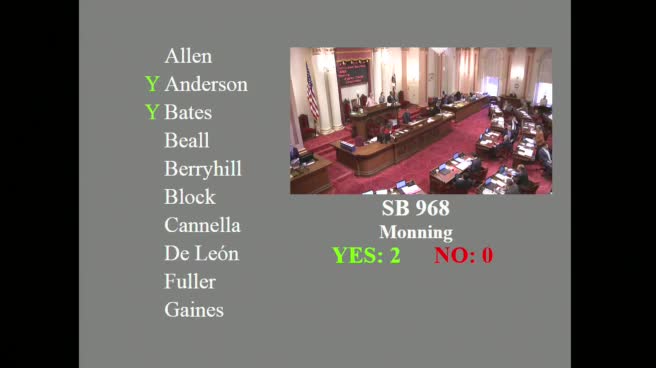 1MIN
Senate Floor
 1MIN
Assembly Floor
 2MIN
Senate Floor
 15MIN
Senate Standing Committee on Health
Bill Author

Bill Co-Author(s):