SB 1328: Water delivery projects: reduction of greenhouse gas emissions: funding.
- Session Year: 2015-2016
- House: Senate
- Latest Version Date: 2016-09-02
The Stormwater Resource Planning Act authorizes one or more public agencies to develop a stormwater resource plan that meets specified standards to address the capture, treatment, and storage of stormwater, as defined, and dry weather runoff, as defined. The act requires the State Water Resources Control Board, by July 1, 2016, to establish guidance for these purposes.
The California Global Warming Solutions Act of 2006 designates the State Air Resources Board as the state agency charged with monitoring and regulating sources of emissions of greenhouse gases. The act requires the state board to adopt a statewide greenhouse gas emissions limit and to adopt rules and regulations to achieve the maximum technologically feasible and cost-effective greenhouse gas emissions reductions, and authorizes the state board to implement a system of market-based compliance mechanisms to reduce greenhouse gas emissions in the state. Existing law requires that all moneys, except for fines and penalties, collected by the state board from the auction or sale of allowances as part of a market-based compliance mechanism be deposited in the Greenhouse Gas Reduction Fund and be available, upon appropriation by the Legislature, for purposes relating to the reduction of greenhouse gas emissions.
This bill would authorize the State Water Resources Control Board to expend moneys from the fund, upon appropriation by the Legislature, to provide grants to public agencies, nonprofit organizations, public utilities, and mutual water companies to implement stormwater and dry weather runoff collection and treatment, wastewater, water recycling, and drinking water projects that are intended to reduce greenhouse gas emissions by decreasing the demand for fossil fuels needed to pump, transport, and deliver water to serve water consumers, as prescribed.
The Stormwater Resource Planning Act authorizes one or more public agencies to develop a stormwater resource plan that meets specified standards to address the capture, treatment, and storage of stormwater, as defined, and dry weather runoff, as defined. The act requires the State Water Resources Control Board, by July 1, 2016, to establish guidance for these purposes.
The California Global Warming Solutions Act of 2006 designates the State Air Resources Board as the state agency charged with monitoring and regulating sources of emissions of greenhouse gases. The act requires the state board to adopt a statewide greenhouse gas emissions limit and to adopt rules and regulations to achieve the maximum technologically feasible and cost-effective greenhouse gas emissions reductions, and authorizes the state board to implement a system of market-based compliance mechanisms to reduce greenhouse gas emissions in the state. Existing law requires that all moneys, except for fines and penalties, collected by the state board from the auction or sale of allowances as part of a market-based compliance mechanism be deposited in the Greenhouse Gas Reduction Fund and be available, upon appropriation by the Legislature, for purposes relating to the reduction of greenhouse gas emissions.
This bill would authorize the State Water Resources Control Board to expend moneys from the fund, upon appropriation by the Legislature, to provide grants to public entities agencies, nonprofit organizations, public utilities, and mutual water companies to implement stormwater and dry weather runoff collection and treatment treatment, wastewater, water recycling, and drinking water projects that are intended to reduce greenhouse gas emissions by decreasing the demand for electricity fossil fuels needed to pump, transport, and deliver water from natural sources to serve water consumers, as prescribed.
The Stormwater Resource Planning Act authorizes one or more public agencies to develop a stormwater resource plan that meets specified standards to address the capture, treatment, and storage of stormwater, as defined, and dry weather runoff, as defined. The act requires the State Water Resources Control Board, by July 1, 2016, to establish guidance for these purposes.
The California Global Warming Solutions Act of 2006 designates the State Air Resources Board as the state agency charged with monitoring and regulating sources of emissions of greenhouse gases. The act requires the state board to adopt a statewide greenhouse gas emissions limit and to adopt rules and regulations to achieve the maximum technologically feasible and cost-effective greenhouse gas emissions reductions, and authorizes the state board to implement a system of market-based compliance mechanisms to reduce greenhouse gas emissions in the state. Existing law requires that all moneys, except for fines and penalties, collected by the state board from the auction or sale of allowances as part of a market-based compliance mechanism be deposited in the Greenhouse Gas Reduction Fund and be available, upon appropriation by the Legislature, for purposes relating to the reduction of greenhouse gas emissions.
This bill would authorize the State Water Resources Control Board to expend moneys from the fund, upon appropriation by the Legislature, to provide grants to public entities to implement stormwater and dry weather runoff collection and treatment projects that are intended to reduce greenhouse gas emissions by decreasing the demand for electricity needed to pump, transport, and deliver water from natural sources to serve water consumers, as prescribed.
Existing law, the Water Quality, Supply, and Infrastructure Improvement Act of 2014, approved by the voters as Proposition 1 at the November 4, 2014, statewide general election, authorizes the issuance of general obligation bonds in the amount of $7,545,000,000 to finance a water quality, supply, and infrastructure improvement program. The act makes specified amounts available for projects relating to, among other things, stormwater management.
This bill would make a nonsubstantive change in those provisions providing funding for stormwater management projects.
(a)Moneys in the Greenhouse Gas Reduction Fund, created pursuant to Section 16428.8 of the Government Code, may be used by the board, upon appropriation by the Legislature, to provide grants to public agencies, nonprofit organizations organized under paragraph (3) of subsection (c) of Section 501 of Title 26 of the United States Code, public utilities, and mutual water companies to implement stormwater and dry weather runoff collection and treatment, wastewater, water recycling, and drinking water projects that are intended to reduce greenhouse gas emissions by decreasing the demand for fossil fuels needed to pump, transport, and deliver water, including, but not limited to, through water conveyance projects, to serve water consumers.
(b)Eligible projects may include, but are not limited to, green infrastructure, rainwater, stormwater, and dry weather runoff capture projects, and stormwater treatment facilities identified as part of a stormwater resource plan. Grant funds may be used for all phases of planning, design, and project construction and implementation, including feasibility studies, design development and consultations, updating a stormwater resource plan, and related administrative costs. To be eligible, a project shall be expected to result in a new decrease of greenhouse gas emissions.
(c)Except as specified in subdivision (f), a grant recipient shall provide or obtain a 50-percent match for funds received pursuant to this section. The board may waive this requirement for a project proposed to be located in, and that will provide benefits to, a disadvantaged community.
(d)In accordance with subdivision (e), the board shall establish criteria for funding projects and determining which entities shall receive a grant, based on both of the following:
(1)Demonstration that the project will reduce greenhouse gas emissions and the extent to which the project will yield a reduction in greenhouse gas emissions by reducing the need for electric pumps and other equipment used to pump, transport, and deliver water to consumers.
(2)Geographic conditions that facilitate stormwater and dry weather runoff collection for those projects.
(e)In awarding grants, the board shall give preference to a project proposed to be located in, and that will provide benefits to, a disadvantaged community or a community within one-half mile of a channelized river.
(f)(1)The board shall provide technical assistance to grant applicants, including, but not limited to, calculations of the projected reductions of greenhouse gas emissions.
(2)The board may use up to 10 percent of the funds appropriated for the purposes of this section to provide technical assistance pursuant to this subdivision, including, but not limited to, awarding technical assistance grants to grant recipients. A technical assistance grant recipient is exempted from the match requirement described in subdivision (c) for the technical assistance grant.
(g)In implementing this section, the board may use or adapt the guidelines the board developed to implement the Storm Water Grant Program, which is funded in accordance with the Water Quality, Supply, and Infrastructure Improvement Act of 2014 (Division 26.7 (commencing with Section 79700)) or other previously developed and adopted project solicitation and evaluation guidelines that comply with the requirements of this section.
(h)The board may use up to 5 percent of the funds appropriated for the purposes of this section for administrative costs of the program.
(i)Chapter 3.5 (commencing with Section 11340) of Part 1 of Division 3 of Title 2 of the Government Code does not apply to the development or implementation of programs or projects authorized or funded pursuant to this section.
(j)To be eligible for funding under this section, a project proposed by a public utility that is regulated by the Public Utilities Commission or a mutual water company shall have a clear and definite public purpose and shall benefit the customers of the water system and, in the case of a public utility, not the investors.
(k)For purposes of this section, the following terms have the following meanings:
(1)Disadvantaged community means a community identified pursuant to Section 39711 of the Health and Safety Code.
(2)Public agency means a state agency or department, special district, joint powers authority, city, county, city and county, or other political subdivision of the state.
(a)Moneys in the Greenhouse Gas Reduction Fund, created pursuant to Section 16428.8 of the Government Code, may be used by the board, upon appropriation by the Legislature, to provide grants to public entities agencies, nonprofit organizations organized under paragraph (3) of subsection (c) of Section 501 of Title 26 of the United States Code, public utilities, and mutual water companies to implement stormwater and dry weather runoff collection and treatment treatment, wastewater, water recycling, and drinking water projects that are intended to reduce greenhouse gas emissions by decreasing the demand for electricity fossil fuels needed to pump, transport, and deliver water from natural sources, water, including, but not limited to, through water conveyance projects, to serve water consumers.
(b)Eligible projects may include, but are not limited to, green infrastructure, rainwater, stormwater, and dry weather runoff capture projects, and stormwater treatment facilities. facilities identified as part of a stormwater resource plan. Grant funds may be used for all phases of planning, design, and project construction and implementation, including feasibility studies, design development and consultations, updating a stormwater resource plan, and related administrative costs. To be eligible, a project shall be expected to result in a new decrease of greenhouse gas emissions.
(c)Except as specified in subdivision (f), a grant recipient shall provide or obtain a 50-percent match for funds received pursuant to this section. The board may waive this requirement for a project proposed to be located in, and that will provide benefits to, a disadvantaged community.
(c)
(d)In accordance with subdivision (d), (e), the board shall establish criteria for funding projects and determining which public entities shall receive a grant, based on both of the following:
(1)Demonstration that the project will reduce greenhouse gas emissions and the extent to which the project will yield a reduction in greenhouse gas emissions by reducing the need for electric pumps and other equipment used to pump, transport, and deliver water to consumers from natural sources. consumers.
(2)Geographic conditions that facilitate stormwater and dry weather runoff collection. collection for those projects.
(d)
(e)In awarding grants, the board shall give preference to a project proposed to be located in, and that will provide benefits to, a disadvantaged community or a community within one-half mile of a channelized river.
(e)
(f)(1)The board shall provide technical assistance to grant applicants, including, but not limited to, calculations of the projected reductions of greenhouse gas emissions.
(2)The board may use up to 10 percent of the funds appropriated for the purposes of this section to provide technical assistance pursuant to this subdivision, including, but not limited to, awarding technical assistance grants to grant recipients. A technical assistance grant recipient is exempted from the match requirement described in subdivision (c) for the technical assistance grant.
(f)
(g)In implementing this section, the board may use or adapt the guidelines the board developed to implement the Storm Water Grant Program, which is funded in accordance with the Water Quality, Supply, and Infrastructure Improvement Act of 2014 (Division 26.7 (commencing with Section 79700)). 79700)) or other previously developed and adopted project solicitation and evaluation guidelines that comply with the requirements of this section.
(h)The board may use up to 5 percent of the funds appropriated for the purposes of this section for administrative costs of the program.
(i)Chapter 3.5 (commencing with Section 11340) of Part 1 of Division 3 of Title 2 of the Government Code does not apply to the development or implementation of programs or projects authorized or funded pursuant to this section.
(j)To be eligible for funding under this section, a project proposed by a public utility that is regulated by the Public Utilities Commission or a mutual water company shall have a clear and definite public purpose and shall benefit the customers of the water system and, in the case of a public utility, not the investors.
(g)
(k)For purposes of this section, a disadvantaged the following terms have the following meanings:
(1)Disadvantaged community means a community identified pursuant to Section 39711 of the Health and Safety Code.
(2)Public agency means a state agency or department, special district, joint powers authority, city, county, city and county, or other political subdivision of the state.
(a)Moneys in the Greenhouse Gas Reduction Fund, created pursuant to Section 16428.8 of the Government Code, may be used by the board, upon appropriation by the Legislature, to provide grants to public entities to implement stormwater and dry weather runoff collection and treatment projects that are intended to reduce greenhouse gas emissions by decreasing the demand for electricity needed to pump, transport, and deliver water from natural sources, including, but not limited to, through water conveyance projects, to serve water consumers.
(b)Eligible projects may include, but are not limited to, green infrastructure, rainwater, stormwater, and dry weather runoff capture projects, and stormwater treatment facilities. Grant funds may be used for all phases of planning, design, and project construction and implementation, including feasibility studies, design development and consultations, and related administrative costs.
(c)In accordance with subdivision (d), the board shall establish criteria for funding projects and determining which public entities shall receive a grant, based on both of the following:
(1)Demonstration that the project will reduce greenhouse gas emissions and the extent to which the project will yield a reduction in greenhouse gas emissions by reducing the need for electric pumps and other equipment used to pump, transport, and deliver water to consumers from natural sources.
(2)Geographic conditions that facilitate stormwater and dry weather runoff collection.
(d)In awarding grants, the board shall give preference to projects a project proposed to be located in, and that will provide benefits to, a disadvantaged communities. community or a community within one-half mile of a channelized river.
(e)The board shall provide technical assistance to grant applicants, including, but not limited to, calculations of the projected reductions of greenhouse gas emissions.
(f)In implementing this section, the board may use or adapt the guidelines the board developed to implement the Storm Water Grant Program, which is funded in accordance with the Water Quality, Supply, and Infrastructure Improvement Act of 2014 (Division 26.7 (commencing with Section 79700)).
(g)For purposes of this section, a disadvantaged community means a community identified pursuant to Section 39711 of the Health and Safety Code.
(a)Moneys in the Greenhouse Gas Reduction Fund, created pursuant to Section 16428.8 of the Government Code, may be used by the board, upon appropriation by the Legislature, to provide grants to public entities to implement stormwater and dry weather runoff collection and treatment projects that are intended to reduce greenhouse gas emissions by decreasing the demand for electricity needed to pump, transport, and deliver water from natural sources, including, but not limited to, through water conveyance projects, to serve water consumers.
(b)Eligible projects may include, but are not limited to, green infrastructure, rainwater, stormwater, and dry weather runoff capture projects, and stormwater treatment facilities. Grant funds may be used for all phases of planning, design, and project construction and implementation, including feasibility studies, design development and consultations, and related administrative costs.
(c)In accordance with subdivision (d), the board shall establish criteria for funding projects and determining which public entities shall receive a grant, based on both of the following:
(1)Demonstration that the project will reduce greenhouse gas emissions and the extent to which the project will yield a reduction in greenhouse gas emissions by reducing the need for electric pumps and other equipment used to pump, transport, and deliver water to consumers from natural sources.
(2)Geographic conditions that facilitate stormwater and dry weather runoff collection.
(d)In awarding grants, the board shall give preference to projects proposed to be located in, and that will provide benefits to, disadvantaged communities.
(e)The board shall provide technical assistance to grant applicants, including, but not limited to, calculations of the projected reductions of greenhouse gas emissions.
(f)In implementing this section, the board may use or adapt the guidelines the board developed to implement the Storm Water Grant Program, which is funded in accordance with the Water Quality, Supply, and Infrastructure Improvement Act of 2014 (Division 26.7 (commencing with Section 79700)).
(f)
(g)For purposes of this section, a disadvantaged community means a community identified pursuant to Section 39711 of the Health and Safety Code.
(a)Moneys in the Greenhouse Gas Reduction Fund, created pursuant to Section 16428.8 of the Government Code, may be used by the board, upon appropriation by the Legislature, to provide grants to public entities to implement stormwater and dry weather runoff collection and treatment projects that are intended to reduce greenhouse gas emissions by decreasing the demand for electricity needed to pump, transport, and deliver water from natural sources, including, but not limited to, through water conveyance projects, to serve water consumers.
(b)Eligible projects may include, but are not limited to, green infrastructure, rainwater, stormwater, and dry weather runoff capture projects, and stormwater treatment facilities. Grant funds may be used for all phases of planning, design, and project construction and implementation, including feasibility studies, design development and consultations, and related administrative costs.
(c)In accordance with subdivision (d), the board shall establish criteria for funding projects and determining which public entities shall receive a grant, based on both of the following:
(1)Demonstration that the project will reduce greenhouse gas emissions and the extent to which the project will yield a reduction in greenhouse gas emissions by reducing the need for electric pumps and other equipment used to pump, transport, and deliver water to consumers from natural sources.
(2)Geographic conditions that facilitate stormwater and dry weather runoff collection.
(d)In awarding grants, the board shall give preference to projects proposed to be located in, and that will provide benefits to, disadvantaged communities.
(e)The board shall provide technical assistance to grant applicants, including, but not limited to, calculations of the projected reductions of greenhouse gas emissions.
(f)For purposes of this section, a disadvantaged community means a community identified pursuant to Section 39711 of the Health and Safety Code.
SECTION 1.Section 79747 of the Water Code is amended to read:79747.(a)Of the funds authorized by Section 79740, two hundred million dollars ($200,000,000) shall be available for grants for multibenefit stormwater management projects.
(b)Eligible projects may include, but shall not be limited to, green infrastructure, rainwater and stormwater capture projects, and stormwater treatment facilities.
(c)The development of plans for stormwater projects shall address the entire watershed and incorporate the perspectives of communities adjacent to the affected waterways, especially disadvantaged communities.
(a)Of the funds authorized by Section 79740, two hundred million dollars ($200,000,000) shall be available for grants for multibenefit stormwater management projects.
(b)Eligible projects may include, but shall not be limited to, green infrastructure, rainwater and stormwater capture projects, and stormwater treatment facilities.
(c)Development The development of plans for stormwater projects shall address the entire watershed and incorporate the perspectives of communities adjacent to the affected waterways, especially disadvantaged communities.
|
Date
|
Status
|
|---|---|
| Sep 8, 2016 | Enrolled and presented to the Governor at 5 p.m. |
| Aug 30, 2016 | Assembly amendments concurred in. (Ayes 26. Noes 12. Page 5514.) Ordered to engrossing and enrolling. |
| Aug 30, 2016 | Assembly amendments concurred in. (Ayes 26. Noes 12.) Ordered to engrossing and enrolling. |
| Aug 29, 2016 | In Senate. Concurrence in Assembly amendments pending. |
| Aug 23, 2016 | Read third time. Passed. (Ayes 77. Noes 2. Page 6087.) Ordered to the Senate. |
| Aug 23, 2016 | Read third time. Passed. Ordered to the Senate. |
| Aug 18, 2016 | Ordered to third reading. |
| Aug 18, 2016 | Read third time and amended. |
| Aug 15, 2016 | Read second time. Ordered to third reading. |
| Aug 12, 2016 | From committee: Do pass. (Ayes 11. Noes 3.) (August 11). |
| Aug 3, 2016 | August 3 set for first hearing. Placed on APPR. suspense file. |
| Jun 28, 2016 | From committee: Do pass and re-refer to Com. on APPR. (Ayes 12. Noes 3.) (June 28). Re-referred to Com. on APPR. |
| Jun 21, 2016 | From committee with author's amendments. Read second time and amended. Re-referred to Com. on W., P., & W. |
| Jun 6, 2016 | Referred to Com. on W., P., & W. |
| Jun 1, 2016 | In Assembly. Read first time. Held at Desk. |
| May 31, 2016 | Read third time. Passed. (Ayes 25. Noes 8. Page 4064.) Ordered to the Assembly. |
| May 31, 2016 | Read third time. Passed. (Ayes 25. Noes 8.) Ordered to the Assembly. |
| May 27, 2016 | From committee: Do pass. (Ayes 6. Noes 1. Page 4008.) (May 27). |
| May 27, 2016 | Read second time. Ordered to third reading. |
| May 27, 2016 | From committee: Do pass. (Ayes 6. Noes 1.) (May 27). |
| May 20, 2016 | Set for hearing May 27. |
| May 9, 2016 | May 9 hearing: Placed on APPR. suspense file. |
| Apr 29, 2016 | Set for hearing May 9. |
| Apr 25, 2016 | Read second time and amended. Re-referred to Com. on APPR. |
| Apr 21, 2016 | From committee: Do pass as amended and re-refer to Com. on APPR. (Ayes 7. Noes 0.) (April 20). |
| Mar 31, 2016 | Re-referred to Com. on E.Q. |
| Mar 28, 2016 | From committee with author's amendments. Read second time and amended. Re-referred to Com. on RLS. |
| Mar 3, 2016 | Referred to Com. on RLS. |
| Feb 22, 2016 | Read first time. |
| Feb 22, 2016 | From printer. May be acted upon on or after March 23. |
| Feb 19, 2016 | Introduced. To Com. on RLS. for assignment. To print. |
|
Date
|
Description
|
Location
|
Votes
|
|
|---|---|---|---|---|
| Aug 30, 2016 | Unfinished Business SB1328 Lara Concurrence | Senate Floor |
Passed |
|
| Aug 23, 2016 | SB 1328 Lara Senate Third Reading | Assembly Floor |
Passed |
|
| Aug 11, 2016 | Do pass. | Assembly Standing Committee on Appropriations |
Passed |
|
| Jun 28, 2016 | Do pass and be re-referred to the Committee on [Appropriations] | Assembly Standing Committee on Water, Parks, and Wildlife |
Passed |
|
| May 31, 2016 | Senate 3rd Reading SB1328 Lara | Senate Floor |
Passed |
|
| May 27, 2016 | Do pass | Senate Standing Committee on Appropriations |
Passed |
|
| May 9, 2016 | Placed on suspense file | Senate Standing Committee on Appropriations |
Passed |
|
| Apr 20, 2016 | Do pass as amended, but first amend, and re-refer to the Committee on [Appropriations] | Senate Standing Committee on Environmental Quality |
Passed |
This list shows positions taken on this bill by organizations on the date displayed, which is linked to the original source.
Positions by individuals are not included.
Office of Senate Floor Analyses (916) 651-1520 Fax: (916) 327-4478 | SB |
VETO
Bill No: SB 1328
:
SENATE ENVIRONMENTAL QUALITY COMMITTEE: 7-0, 4/20/16
AYES: Wieckowski, Gaines, Bates, Hill, Jackson, Leno, Pavley
SENATE APPROPRIATIONS COMMITTEE: 6-1, 5/27/16
AYES: Lara, Bates, Beall, Hill, McGuire, Mendoza
NOES: Nielsen
SENATE FLOOR: 25-8, 5/31/16
AYES: Allen, Beall, Block, De León, Galgiani, Glazer, Hall, Hancock, Hernandez, Hertzberg, Hill, Hueso, Jackson, Lara, Leno, Leyva, Liu, McGuire, Mendoza, Monning, Pan, Pavley, Roth, Wieckowski, Wolk
NOES: Anderson, Berryhill, Fuller, Moorlach, Morrell, Nielsen, Stone, Vidak
NO VOTE RECORDED: Bates, Cannella, Gaines, Huff, Mitchell, Nguyen, Runner
SENATE FLOOR: 26-12, 8/30/16
AYES: Allen, Beall, Block, De León, Galgiani, Glazer, Hall, Hancock, Hernandez, Hertzberg, Hill, Hueso, Jackson, Lara, Leno, Leyva, Liu, McGuire, Mendoza, Mitchell, Monning, Pan, Pavley, Roth, Wieckowski, Wolk
NOES: Anderson, Bates, Berryhill, Fuller, Gaines, Huff, Moorlach, Morrell, Nguyen, Nielsen, Stone, Vidak
NO VOTE RECORDED: Cannella
ASSEMBLY FLOOR: 77-2, 8/23/16 - See last page for vote
DIGEST: This bill authorizes the State Water Resources Control Board (SWRCB) to expend moneys from the Greenhouse Gas Reduction Fund (GGRF), upon appropriation by the Legislature, to provide grants to public entities to implement stormwater and dry weather runoff collection and treatment projects that are intended to reduce greenhouse gas (GHG) emissions by decreasing the demand for electricity needed to pump, transport, and deliver water from natural sources to serve water consumers, as prescribed.
- Establishes GGRF in the State Treasury, requires all moneys, except for fines and penalties, collected pursuant to a market-based mechanism be deposited in the fund and requires the Department of Finance, in consultation with California Air Resources Board (ARB) and any other relevant state agency, to develop, as specified, a three-year investment plan for the moneys deposited in the GGRF. (Government Code §16428.8).
- Prohibits the state from approving allocations for a measure or program using GGRF moneys except after determining that the use of those moneys furthers the regulatory purposes of AB 32, and requires moneys from the GGRF be used to facilitate the achievement of reductions of GHG emissions in California. (Health and Safety Code §39712).
- Establishes the Stormwater Resource Planning Act, which authorizes one or more public agencies to develop a stormwater resource plan that meets specified standards to address the capture, treatment, and storage of stormwater and dry weather runoff. (Water Code §10560 et seq.).
This bill:
- Authorizes SWRCB to provide grants to public agencies to implement stormwater and dry runoff collection and treatment projects that are intended to reduce GHG emissions by decreasing demand for electricity needs to pump, transport, and deliver water to consumers.
- Authorizes SWRCB to expend moneys from GGRF, upon appropriation of the Legislature for these grants.
- Provides that eligible projects for funding include, but not be limited to, green infrastructure, rainwater, stormwater, and dry weather runoff capture projects, and stormwater treatment facilities.
- Specifies that grant funds may be used for all phases of planning, design, and project construction and implementation.
- Requires SWRCB to establish criteria for funding projects based on demonstration of GHG emissions reductions and geographic conditions that facilitate stormwater and dry weather runoff collection.
- Requires SWRCB to give preference to projects located in, and provide benefits to, disadvantaged communities.
Background
- Water and energy use. According to the California Energy Resources Conservation and Development Commission (CEC), water-related energy use in the state consumes approximately 20% of the state’s electricity and 30% of the state’s non-power plant natural gas (natural gas not used to produce electricity). The water sector uses electricity to pump, treat, transport, deliver, and heat water. CEC also found that the most energy-intensive uses of water in California are associated with end uses by the customer (e.g. heating, processing, and pressurizing water), and 75% of the electricity and nearly all of the natural gas use related to water in California is associated with water heating. Additionally, expected increases in groundwater pumping, water treatment, and water recycling, due to drought conditions in the state, mean the energy intensity of water will likely increase.
According to the U.S. Environmental Protection Agency (US EPA), energy is used in five stages in the water cycle:- Extracting and conveying: Extracting water from rivers and streams or pumping it from aquifers, and then conveying it over hills and into storage facilities is a highly energy intensive process. In California, the State Water Project (SWP) pumps water almost 2,000 feet over the Tehachapi Mountains. The SWP is the largest single user of energy in the state and consumes an average of 5 billion kWh/yr, accounting for about 2-3% of all electricity consumed in California.
- Treating water: Water treatment facilities use energy to pump and process water.
- Distributing water: Energy is needed to transport water.
- Using water: End users consume energy to treat water with softeners or filters, to circulate and pressurize water with circulation pumps and irrigation systems, and to heat and cool water.
- Collecting and treating wastewater: Energy is used to pump wastewater to the treatment plant, and to aerate and filter it at the plant. On average, wastewater treatment in California uses 500 to 1,500 kilowatt-hours per acre-foot.
- Extracting and conveying: Extracting water from rivers and streams or pumping it from aquifers, and then conveying it over hills and into storage facilities is a highly energy intensive process. In California, the State Water Project (SWP) pumps water almost 2,000 feet over the Tehachapi Mountains. The SWP is the largest single user of energy in the state and consumes an average of 5 billion kWh/yr, accounting for about 2-3% of all electricity consumed in California.
By reducing the amount of water we use, we lessen our demand on the energy-intensive systems that deliver and treat water.
- Stormwater. According to the US EPA, stormwater runoff is a major cause of water pollution in urban areas. When rain falls on roofs, streets, and parking lots in cities and their suburbs, the water cannot soak into the ground as it should. Stormwater drains through gutters, storm sewers, and other engineered collection systems and is discharged into nearby water bodies. The stormwater runoff carries trash, bacteria, heavy metals, and other pollutants from the urban landscape. Higher flows resulting from heavy rains also can cause erosion and flooding in urban streams, damaging habitat property and infrastructure. When rain falls in natural, undeveloped areas, the water is absorbed and filtered by soil and plants – Stormwater runoff is cleaner and less of a problem.
According to SWRCB, past approaches to stormwater management have focused on limited treatment prior to conveyance off-site and ultimately into receiving waters. The municipal separate storm sewer systems and flood control infrastructure used for this purpose may have been successful in terms of flood control and some degree of treatment; however many past approaches have not been adequate to fully address the water quality impacts of stormwater discharges while providing multiple benefits such as water supply augmentation and ecological enhancement of the local watershed. In general, the transport of stormwater from the location of rainfall via constructed municipal storm drain systems (pipelines, reinforced channels, outfalls, etc.) has caused downstream hydromodification (unnatural alteration of natural drainage features) and destabilization of water bodies, and impacted beneficial uses of those receiving surface water bodies.
More recent approaches to stormwater management seek to replicate natural hydrology and watershed processes by managing stormwater and dry weather runoff onsite or within the watershed where rainfall occurs – and the pollutants it contains – delivered to receiving waters. - Storm Water Grant Program (SWGP). According to SWRCB, the purpose of SWGP is to fund stormwater and dry weather runoff projects that best advance SWRCB’s policy goals of improving water quality and realizing multiple benefits from the use of stormwater and dry weather runoff as resources. The SWGP Unit was established after the passage of Proposition 84, the Safe Drinking Water, Water Quality and Supply, Flood Control, River and Coastal Protection Bond Act of 2006. In November 2014, California voters approved Proposition 1 (Prop. 1), Water Quality, Supply and Infrastructure Improvement Act of 2014 (AB 1471, Rendon). Of the $7.545 billion in general obligation bonds for water projects, Prop. 1 provides $200 million in grants for multi-benefit stormwater management projects.
- Executive Order B-29-15. Executive Order B-29-15 (Brown), issued April 1, 2015, directed state agencies to perform various actions regarding saving water to respond to severe drought conditions in the state, including directing CEC, jointly with the Department of Water Resources (DWR), to implement a Water Energy Technology (WET) program to deploy innovative water management technologies that achieve water and energy savings and GHG emissions reductions – projects must have direct water savings, direct energy savings, and reduce GHG emissions. In addition, projects must reduce water use or improve water production. The Executive Order also directed CEC, jointly with DWR, to implement a limited statewide appliance rebate program for inefficient appliances.
- Water-Energy Grant Program. The Water-Energy Grant Program provides funds to implement water efficiency programs or projects that reduce GHG emissions, and reduce water and energy use. The funding for this program is appropriated from GGRF to DWR to establish a grant program; available funding is $19 million (with an additional $10 million that may be available). Eligible applicants include local agencies, joint power authorities, and nonprofit organizations. DWR is proposing to focus the 2016 solicitation on the following eligible programs/projects:
- Commercial Water Efficiency or Institutional Water Efficiency Programs.
- Projects that reduce GHG, reduce water and energy use.
- Only projects with water conservation measures that also save energy.
- Cap-and-trade auction revenue. Since November 2012, ARB has conducted 14 cap-and-trade auctions, generating over $4 billion in proceeds to the state. (For more background information regarding cap-and-trade revenue, please refer to the Senate Environmental Quality Committee analysis on this bill.)
Comments
- Purpose of bill. According to the author:
SB 1328 provides much needed assistance for the increased deployment of stormwater capture and groundwater recharge facilities. Groundwater, which is located in geologic formations called aquifers, is an important piece of California’s water supply, and is utilized for urban and rural cities’ water systems, agricultural irrigation, and industry uses.
Aquifers recharged naturally over time via the percolation of stormwater through the soil, in addition to seepage from rivers and creeks. Disruption of the natural recharge cycle of aquifers has been caused by overdrafting, which occurs when water is extracted beyond the safe yield of an aquifer.
Reduced groundwater levels impact communities in urban and rural areas in regards to water access, quality, and affordability, as the reliance on water imports, either by conveyance system or transported by trucks, is increased.
Despite the availability of Water Bond funds for stormwater infrastructure there are still significant barriers to increased implementation of stormwater projects. Access to funding is a key component to increased deployment, as projects at various stages of development may require assistance with startup and/or backfill expenses. In addition, some projects may have limited access to technical assistance to prove project feasibility, which in turn if proven successful would prompt further assistance to prove project feasibility, which in turn if proven successful would prompt further community investment. Current funds, available for stormwater infrastructure require a 50% match, which can be difficult to reach for some projects, depending on the level of access to capital or stage of development. All of these barriers are compounded when applied to disadvantaged communities, along with the negative impacts of aquifer overdrafting.
SB 1328 would create an appropriation from [GGRF] to facilitate the increased deployment of stormwater capture projects and groundwater recharge facilities, while also prioritizing projects located in disadvantaged communities as defined by Section 39711 of the Health and Safety Code. By increasing incentives for stormwater capture infrastructure all communities can benefit from increased resiliency in local water supplies, providing better access and water quality.
- Piece by piece. GGRF investments must facilitate the achievement of GHG emissions reductions. However, after that requirement is fulfilled, there are a number of other policy goals that should be considered, including benefits to environmental quality, resource protection, public health and the economy, as well as benefits to disadvantaged communities. Various policy committees have been referred proposals for investing GGRF moneys, and these committees will likely consider whether proposals meet basic statutory requirements and align with legislative priorities. However, in order to create an optimized investment strategy from GGRF moneys, proposals should not be considered in isolation, but be assessed in aggregate to evaluate which set of proposals best meets the requirements of the fund, uses resources most efficiently, and maximizes policy objectives. As the budget committees are considering the Governor’s proposal of GGRF expenditures, the budget process may be an ideal way to comprehensively consider the numerous policy bills that propose new programs funded through the GGRF.
FISCAL EFFECT: Appropriation: Fiscal Com.: Local:
According to the Assembly Appropriations Committee, cost pressures, likely in the millions of dollars, to fund the program (GGRF). Increased unknown administrative costs, likely 5% of the total program funds, for SWRCB to implement the program. According to SWRCB, an amendment is necessary to allow the use of GGRF for administrative costs rather than GF. Up to approximately $565,000 (GGRF) annually for ARB to coordinate with SWRCB in developing and updating guidelines, developing quantification methodologies, and providing legal review.
Association of California Water Agencies
Audubon California
California League of Conservation Voters
City of Long Beach
Tree People
Water Replenishment District of Southern California
OPPOSITION: (Verified 8/23/16)
CalTax
GOVERNOR'S VETO MESSAGE:
I am returning Senate Bill 1328 without my signature.
This bill creates a new Greenhouse Gas Reduction Fund program for stormwater projects.
Rather than creating a potentially duplicative program, I am directing the Resources Agency to work with the State Water Resources Control Board to ensure that stormwater projects are included in the Urban Greening Program.
ASSEMBLY FLOOR: 77-2, 8/23/16
AYES: Achadjian, Alejo, Travis Allen, Arambula, Atkins, Baker, Bigelow, Bloom, Bonilla, Bonta, Brough, Brown, Burke, Calderon, Campos, Chang, Chau, Chávez, Chiu, Chu, Cooley, Cooper, Dababneh, Dahle, Daly, Dodd, Eggman, Gallagher, Cristina Garcia, Eduardo Garcia, Gatto, Gipson, Gomez, Gonzalez, Gordon, Gray, Grove, Hadley, Roger Hernández, Holden, Irwin, Jones, Jones-Sawyer, Kim, Lackey, Levine, Linder, Lopez, Low, Maienschein, Mathis, Mayes, McCarty, Medina, Melendez, Mullin, Nazarian, Obernolte, O'Donnell, Olsen, Patterson, Quirk, Ridley-Thomas, Rodriguez, Salas, Santiago, Steinorth, Mark Stone, Thurmond, Ting, Wagner, Waldron, Weber, Wilk, Williams, Wood, Rendon
NOES: Beth Gaines, Harper
NO VOTE RECORDED: Frazier
10/19/16 9:47:49
Office of Senate Floor Analyses (916) 651-1520 Fax: (916) 327-4478 | SB |
UNFINISHED BUSINESS
Bill No: SB 1328
:
SENATE ENVIRONMENTAL QUALITY COMMITTEE: 7-0, 4/20/16
AYES: Wieckowski, Gaines, Bates, Hill, Jackson, Leno, Pavley
SENATE APPROPRIATIONS COMMITTEE: 6-1, 5/27/16
AYES: Lara, Bates, Beall, Hill, McGuire, Mendoza
NOES: Nielsen
SENATE FLOOR: 25-8, 5/31/16
AYES: Allen, Beall, Block, De León, Galgiani, Glazer, Hall, Hancock, Hernandez, Hertzberg, Hill, Hueso, Jackson, Lara, Leno, Leyva, Liu, McGuire, Mendoza, Monning, Pan, Pavley, Roth, Wieckowski, Wolk
NOES: Anderson, Berryhill, Fuller, Moorlach, Morrell, Nielsen, Stone, Vidak
NO VOTE RECORDED: Bates, Cannella, Gaines, Huff, Mitchell, Nguyen, Runner
ASSEMBLY FLOOR: 77-2, 8/23/16 - See last page for vote
DIGEST: This bill authorizes the State Water Resources Control Board (SWRCB) to expend moneys from the Greenhouse Gas Reduction Fund (GGRF), upon appropriation by the Legislature, to provide grants to public entities to implement stormwater and dry weather runoff collection and treatment projects that are intended to reduce greenhouse gas (GHG) emissions by decreasing the demand for electricity needed to pump, transport, and deliver water from natural sources to serve water consumers, as prescribed.
Assembly Amendments add a community within one-half mile of a channelized river for which a project may be located in in order to be given preference in grants awarded and clarify the parameters for receiving grants.
Existing law:
- Establishes GGRF in the State Treasury, requires all moneys, except for fines and penalties, collected pursuant to a market-based mechanism be deposited in the fund and requires the Department of Finance, in consultation with California Air Resources Board (ARB) and any other relevant state agency, to develop, as specified, a three-year investment plan for the moneys deposited in the GGRF. (Government Code §16428.8).
- Prohibits the state from approving allocations for a measure or program using GGRF moneys except after determining that the use of those moneys furthers the regulatory purposes of AB 32 (Nunez, Chapter 488, Statutes of 2006), and requires moneys from the GGRF be used to facilitate the achievement of reductions of GHG emissions in California. (Health and Safety Code §39712).
- Establishes the Stormwater Resource Planning Act, which authorizes one or more public agencies to develop a stormwater resource plan that meets specified standards to address the capture, treatment, and storage of stormwater and dry weather runoff. (Water Code §10560 et seq.).
This bill:
- Authorizes SWRCB to provide grants to public agencies to implement stormwater and dry runoff collection and treatment projects that are intended to reduce GHG emissions by decreasing demand for electricity needs to pump, transport, and deliver water to consumers.
- Authorizes SWRCB to expend moneys from GGRF, upon appropriation of the Legislature for these grants.
- Provides that eligible projects for funding include, but not be limited to, green infrastructure, rainwater, stormwater, and dry weather runoff capture projects, and stormwater treatment facilities.
- Specifies that grant funds may be used for all phases of planning, design, and project construction and implementation.
- Requires SWRCB to establish criteria for funding projects based on demonstration of GHG emissions reductions and geographic conditions that facilitate stormwater and dry weather runoff collection.
- Requires SWRCB to give preference to projects located in, and provide benefits to, disadvantaged communities.
Background
- Water and energy use. According to the California Energy Resources Conservation and Development Commission (CEC), water-related energy use in the state consumes approximately 20% of the state’s electricity and 30% of the state’s non-power plant natural gas (natural gas not used to produce electricity). The water sector uses electricity to pump, treat, transport, deliver, and heat water. CEC also found that the most energy-intensive uses of water in California are associated with end uses by the customer (e.g. heating, processing, and pressurizing water), and 75% of the electricity and nearly all of the natural gas use related to water in California is associated with water heating. Additionally, expected increases in groundwater pumping, water treatment, and water recycling, due to drought conditions in the state, mean the energy intensity of water will likely increase.
According to the U.S. Environmental Protection Agency, energy is used in five stages in the water cycle:- Extracting and conveying: Extracting water from rivers and streams or pumping it from aquifers, and then conveying it over hills and into storage facilities is a highly energy intensive process. In California, the State Water Project (SWP) pumps water almost 2,000 feet over the Tehachapi Mountains. The SWP is the largest single user of energy in the state and consumes an average of five billion kWh/yr, accounting for about 2-3% of all electricity consumed in California.
- Treating water: Water treatment facilities use energy to pump and process water.
- Distributing water: Energy is needed to transport water.
- Using water: End users consume energy to treat water with softeners or filters, to circulate and pressurize water with circulation pumps and irrigation systems, and to heat and cool water.
- Collecting and treating wastewater: Energy is used to pump wastewater to the treatment plant, and to aerate and filter it at the plant. On average, wastewater treatment in California uses 500 to 1,500 kilowatt-hours per acre-foot.
- Extracting and conveying: Extracting water from rivers and streams or pumping it from aquifers, and then conveying it over hills and into storage facilities is a highly energy intensive process. In California, the State Water Project (SWP) pumps water almost 2,000 feet over the Tehachapi Mountains. The SWP is the largest single user of energy in the state and consumes an average of five billion kWh/yr, accounting for about 2-3% of all electricity consumed in California.
By reducing the amount of water we use, we lessen our demand on the energy-intensive systems that deliver and treat water.
- Stormwater. According to the U.S. Environmental Protection Agency, stormwater runoff is a major cause of water pollution in urban areas. When rain falls on roofs, streets, and parking lots in cities and their suburbs, the water cannot soak into the ground as it should. Stormwater drains through gutters, storm sewers, and other engineered collection systems and is discharged into nearby water bodies. The stormwater runoff carries trash, bacteria, heavy metals, and other pollutants from the urban landscape. Higher flows resulting from heavy rains also can cause erosion and flooding in urban streams, damaging habitat property and infrastructure. When rain falls in natural, undeveloped areas, the water is absorbed and filtered by soil and plants – Stormwater runoff is cleaner and less of a problem.
According to SWRCB, past approaches to stormwater management have focused on limited treatment prior to conveyance off-site and ultimately into receiving waters. The municipal separate storm sewer systems and flood control infrastructure used for this purpose may have been successful in terms of flood control and some degree of treatment; however many past approaches have not been adequate to fully address the water quality impacts of stormwater discharges while providing multiple benefits such as water supply augmentation and ecological enhancement of the local watershed. In general, the transport of stormwater from the location of rainfall via constructed municipal storm drain systems (pipelines, reinforced channels, outfalls, etc.) has caused downstream hydromodification (unnatural alteration of natural drainage features) and destabilization of water bodies, and impacted beneficial uses of those receiving surface water bodies.
More recent approaches to stormwater management seek to replicate natural hydrology and watershed processes by managing stormwater and dry weather runoff onsite or within the watershed where rainfall occurs – and the pollutants it contains – delivered to receiving waters. - Storm Water Grant Program (SWGP). According to SWRCB, the purpose of SWGP is to fund stormwater and dry weather runoff projects that best advance SWRCB’s policy goals of improving water quality and realizing multiple benefits from the use of stormwater and dry weather runoff as resources. The SWGP Unit was established after the passage of Proposition 84, the Safe Drinking Water, Water Quality and Supply, Flood Control, River and Coastal Protection Bond Act of 2006. In November 2014, California voters approved Proposition 1 (Prop. 1), Water Quality, Supply and Infrastructure Improvement Act of 2014 (AB 1471, Rendon, Chapter 188). Of the $7.545 billion in general obligation bonds for water projects, Prop. 1 provides $200 million in grants for multi-benefit stormwater management projects.
- Executive Order B-29-15. Executive Order B-29-15 (Brown), issued April 1, 2015, directed state agencies to perform various actions regarding saving water to respond to severe drought conditions in the state, including directing CEC, jointly with the Department of Water Resources (DWR), to implement a Water Energy Technology program to deploy innovative water management technologies that achieve water and energy savings and GHG emissions reductions – projects must have direct water savings, direct energy savings, and reduce GHG emissions. In addition, projects must reduce water use or improve water production. The Executive Order also directed CEC, jointly with DWR, to implement a limited statewide appliance rebate program for inefficient appliances.
- Water-Energy Grant Program. The Water-Energy Grant Program provides funds to implement water efficiency programs or projects that reduce GHG emissions, and reduce water and energy use. The funding for this program is appropriated from GGRF to DWR to establish a grant program; available funding is $19 million (with an additional $10 million that may be available). Eligible applicants include local agencies, joint power authorities, and nonprofit organizations. DWR is proposing to focus the 2016 solicitation on the following eligible programs/projects:
- Commercial Water Efficiency or Institutional Water Efficiency Programs.
- Projects that reduce GHG, reduce water and energy use.
- Only projects with water conservation measures that also save energy.
- Cap-and-trade auction revenue. Since November 2012, ARB has conducted 14 cap-and-trade auctions, generating over $4 billion in proceeds to the state.
State law specifies that the auction revenues must be used to facilitate the achievement of GHG emissions reductions and outlines various categories of allowable expenditures. Statute further requires the Department of Finance, in consultation with ARB and any other relevant state agency, to develop a three-year investment plan for the auction proceeds, which are deposited in the GGRF. (NOTE: For more background information regarding cap-and-trade revenue, please refer to the Senate Environmental Quality Committee analysis on this bill.)
Comments
- Purpose of Bill. According to the author:
SB 1328 provides much needed assistance for the increased deployment of stormwater capture and groundwater recharge facilities. Groundwater, which is located in geologic formations called aquifers, is an important piece of California’s water supply, and is utilized for urban and rural cities’ water systems, agricultural irrigation, and industry uses.
Aquifers recharged naturally over time via the percolation of stormwater through the soil, in addition to seepage from rivers and creeks. Disruption of the natural recharge cycle of aquifers has been caused by overdrafting, which occurs when water is extracted beyond the safe yield of an aquifer.
Reduced groundwater levels impact communities in urban and rural areas in regards to water access, quality, and affordability, as the reliance on water imports, either by conveyance system or transported by trucks, is increased.
Despite the availability of Water Bond funds for stormwater infrastructure there are still significant barriers to increased implementation of stormwater projects. Access to funding is a key component to increased deployment, as projects at various stages of development may require assistance with startup and/or backfill expenses. In addition, some projects may have limited access to technical assistance to prove project feasibility, which in turn if proven successful would prompt further assistance to prove project feasibility, which in turn if proven successful would prompt further community investment. Current funds, available for stormwater infrastructure require a 50% match, which can be difficult to reach for some projects, depending on the level of access to capital or stage of development. All of these barriers are compounded when applied to disadvantaged communities, along with the negative impacts of aquifer overdrafting.
SB 1328 would create an appropriation from [GGRF] to facilitate the increased deployment of stormwater capture projects and groundwater recharge facilities, while also prioritizing projects located in disadvantaged communities as defined by Section 39711 of the Health and Safety Code. By increasing incentives for stormwater capture infrastructure all communities can benefit from increased resiliency in local water supplies, providing better access and water quality.
- Stormwater capture and reuse. Improving and increasing stormwater capture and reuse may be especially beneficial in southern California, which imports a significant amount of its water supply from northern California. As noted above, SWP is the largest single user of energy in the state and consumes an average of five billion kWh/yr, accounting for about 2-3% of all electricity consumed in California. Stormwater capture and reuse may create net benefits in reductions of GHG emissions and energy use by supplying and delivering water more locally.
- Piece by piece. GGRF investments must facilitate the achievement of GHG emissions reductions. However, after that requirement is fulfilled, there are a number of other policy goals that should be considered, including benefits to environmental quality, resource protection, public health and the economy, as well as benefits to disadvantaged communities. Various policy committees have been referred proposals for investing GGRF moneys, and these committees will likely consider whether proposals meet basic statutory requirements and align with legislative priorities. However, in order to create an optimized investment strategy from GGRF moneys, proposals should not be considered in isolation, but be assessed in aggregate to evaluate which set of proposals best meets the requirements of the fund, uses resources most efficiently, and maximizes policy objectives. As the budget committees are considering the Governor’s proposal of GGRF expenditures, the budget process may be an ideal way to comprehensively consider the numerous policy bills that propose new programs funded through the GGRF.
FISCAL EFFECT: Appropriation: Fiscal Com.: Local:
According to the Assembly Appropriations Committee:
- Cost pressures, likely in the millions of dollars, to fund the program (GGRF).
- Increased unknown administrative costs, likely 5% of the total program funds, for SWRCB to implement the program. According to SWRCB, an amendment is necessary to allow the use of GGRF for administrative costs rather than GF.
- Up to approximately $565,000 (GGRF) annually for the ARB to coordinate with SWRCB in developing and updating guidelines, developing quantification methodologies, and providing legal review.
Association of California Water Agencies
Audubon California
California League of Conservation Voters
City of Long Beach
Tree People
Water Replenishment District of Southern California
OPPOSITION: (Verified 8/23/16)
CalTax
ASSEMBLY FLOOR: 77-2, 8/23/16
AYES: Achadjian, Alejo, Travis Allen, Arambula, Atkins, Baker, Bigelow, Bloom, Bonilla, Bonta, Brough, Brown, Burke, Calderon, Campos, Chang, Chau, Chávez, Chiu, Chu, Cooley, Cooper, Dababneh, Dahle, Daly, Dodd, Eggman, Gallagher, Cristina Garcia, Eduardo Garcia, Gatto, Gipson, Gomez, Gonzalez, Gordon, Gray, Grove, Hadley, Roger Hernández, Holden, Irwin, Jones, Jones-Sawyer, Kim, Lackey, Levine, Linder, Lopez, Low, Maienschein, Mathis, Mayes, McCarty, Medina, Melendez, Mullin, Nazarian, Obernolte, O'Donnell, Olsen, Patterson, Quirk, Ridley-Thomas, Rodriguez, Salas, Santiago, Steinorth, Mark Stone, Thurmond, Ting, Wagner, Waldron, Weber, Wilk, Williams, Wood, Rendon
NOES: Beth Gaines, Harper
NO VOTE RECORDED: Frazier
8/29/16 10:34:34
**** END ****
SENATE THIRD READING
STR Bill Id:SB 1328
Author:(Lara)
As Amended Ver:June 21, 2016
Majority vote
SENATE VOTE: 25-8
Committee | Votes | Ayes | Noes |
Water | 12-3 | Levine, Dodd, Eggman, Cristina Garcia, Eduardo Garcia, Gomez, Lopez, Mathis, Nazarian, Olsen, Salas, Williams | Gallagher, Bigelow, Harper |
Appropriations | 11-3 | Gonzalez, Bloom, Bonilla, Bonta, Eggman, Eduardo Garcia, Quirk, Santiago, Weber, Wood, McCarty | Bigelow, Jones, Obernolte |
SUMMARY: Authorizes the State Water Resources Control Board (SWRCB) to use money from the Greenhouse Gas Reduction Fund (GGRF) upon appropriation by the Legislature, to provide grants to public entities to implement stormwater and dry weather runoff collection and treatment projects that are intended to reduce greenhouse gas emissions (GHG) by decreasing the demand for electricity needed to pump, transport, and deliver water from natural sources to serve water consumers, as specified. Specifically, this bill:
- Authorizes the SWRCB to provide grants to public agencies to implement stormwater and dry runoff collection and treatment projects that are intended to reduce GHG emissions by decreasing demand for electricity needs to pump, transport, and deliver water from natural resources to consumers.
- Authorizes the SWRCB to expend moneys from the GGRF, upon appropriation by the Legislature for these grants. Specifies grant funds may be used for all phases of planning, design, and project construction and implementation.
- Requires the SWRCB to establish criteria for funding projects based on demonstration of GHG emissions reductions.
- Requires the SWRCB to give preference to projects located in, and providing benefits to, disadvantaged community or located within one-half mile of a channelized river.
EXISTING LAW:
- Establishes the GGRF in the State Treasury, requires all moneys, except for fines and penalties collected pursuant to a market-based mechanism, be deposited in the fund.
- Requires moneys from the GGRF be used to facilitate the achievement of reductions of GHG emissions in California.
- Establishes the Stormwater Resource Planning Act, which authorizes one or more public agencies to develop a stormwater resource plan that meets specified standards to address the capture, treatment, and storage of stormwater and dry weather runoff.
FISCAL EFFECT: According to the Assembly Appropriations Committee:
- Cost pressures, likely in the millions of dollars, to fund the program (GGRF).
- Increased unknown administrative costs, likely 5% of the total program funds, for SWRCB to implement the program. According to SWRCB, an amendment is necessary to allow the use of GGRF for administrative costs rather than General Fund.
- Up to approximately $565,000 (GGRF) annually for the Air Resources Board (ARB) to coordinate with SWRCB in developing and updating guidelines, developing quantification methodologies, and providing legal review.
COMMENTS:
GHG emissions associated with water are significant. There is potential to capture a substantial amount of water through stormwater. The capture and reuse of stormwater may create net benefits in the reduction of GHG emissions by supplying and delivering more water locally. While there are funding sources available for stormwater capture projects they fall short of the funding needs.
The State Water Project is the single largest user of energy in the state and consumes an average of 5 billion kWh/yr, accounting for about 2-3% of all electricity consumed in California. According to the State Energy Resources and Conservation and Development Commission, water-related energy use in California consumes approximately 20% of the state's electricity and 30% of the state's non-power plant natural gas (natural gas not used to produce electricity). The water sector uses electricity to pump, treat, transport, deliver, and heat water. Additionally, expected increases in groundwater pumping, water treatment, and water recycling due to drought conditions in the state, mean the energy intensity of water will likely increase.
In 2014, the Public Policy Institute of California estimated that there was an annual funding gap of $500 million to $800 million for stormwater infrastructure. The SWRCB manages the Storm Water Grant Program to fund stormwater and dry weather runoff projects that best advance SWRCB's policy goals of improving water quality and realizing multiple benefits from the use of stormwater and dry weather runoff as resources. In November 2014, California voters approved Proposition 1 (Prop. 1), Water Quality, Supply and Infrastructure Improvement Act of 2014 (AB 1471 (Rendon), Chapter 188). Of the $7.545 billion in general obligation bonds for water projects, Prop 1 provides $200 million in grants for multi-benefit stormwater management projects.
Analysis Prepared by: Ryan Ojakian / W., P., & W. / (916) 319-2096 FN: 0004041
SENATE THIRD READING
STR Bill Id:SB 1328
Author:(Lara)
As Amended Ver:August 18, 2016
Majority vote
SENATE VOTE: 25-8
Committee | Votes | Ayes | Noes |
Water | 12-3 | Levine, Dodd, Eggman, Cristina Garcia, Eduardo Garcia, Gomez, Lopez, Mathis, Nazarian, Olsen, Salas, Williams | Gallagher, Bigelow, Harper |
Appropriations | 11-3 | Gonzalez, Bloom, Bonilla, Bonta, Eggman, Eduardo Garcia, Quirk, Santiago, Weber, Wood, McCarty | Bigelow, Jones, Obernolte |
SUMMARY: Authorizes the State Water Resources Control Board (SWRCB) to use money from the Greenhouse Gas Reduction Fund (GGRF) upon appropriation by the Legislature, to provide grants to public agencies, as defined, non-profits, public utilities, and mutual water companies to implement stormwater and dry weather runoff collection and treatment projects that are intended to reduce greenhouse gas emissions (GHG) by decreasing the demand for fossil fuels needed to pump, transport, and deliver water to serve water consumers, as specified. Specifically, this bill:
- Authorizes the SWRCB to provide grants to public agencies, as defined, non-profits, public utilities, and mutual water companies to implement stormwater and dry runoff collection and treatment projects that are intended to reduce GHG emissions by decreasing demand for fossil fuel needs to pump, transport, and deliver water to consumers.
- Authorizes the SWRCB to expend moneys from the GGRF, upon appropriation by the Legislature for these grants. Specifies grant funds may be used for all phases of planning, design, and project construction and implementation. Requires grant recipients to provide a 50% match with some exceptions.
- Requires the SWRCB to establish criteria for funding projects based on demonstration of GHG emissions reductions. To be eligible, a project is expected to result in a new decrease in GHG emissions. Projects proposed by a public utility or a mutual water company shall have a clear and definite public purpose and shall benefit the customers and not the investors.
- Requires the SWRCB to give preference to projects located in, and providing benefits to, disadvantaged community or located within one-half mile of a channelized river.
- Authorizes the SWRCB to use or adapt the guidelines developed to implement the Storm Water Grant Program, which is funded in accordance with the Water Quality, Supply, and Infrastructure Improvement Act of 2014 (Proposition 1, Water Bond), or other previously developed and adopted project solicitation and evaluation guidelines. Exempts programs or project authorized or funded pursuant to this section from the Administrative Procedures Act.
EXISTING LAW:
- Establishes the GGRF in the State Treasury, requires all moneys, except for fines and penalties collected pursuant to a market-based mechanism, be deposited in the fund.
- Requires moneys from the GGRF be used to facilitate the achievement of reductions of GHG emissions in California.
- Establishes the Stormwater Resource Planning Act, which authorizes one or more public agencies to develop a stormwater resource plan that meets specified standards to address the capture, treatment, and storage of stormwater and dry weather runoff.
FISCAL EFFECT: According to the Assembly Appropriations Committee:
- Cost pressures, likely in the millions of dollars, to fund the program (GGRF).
- Increased unknown administrative costs, likely 5% of the total program funds, for SWRCB to implement the program. According to SWRCB, an amendment is necessary to allow the use of GGRF for administrative costs rather than General Fund.
- Up to approximately $565,000 (GGRF) annually for the Air Resources Board (ARB) to coordinate with SWRCB in developing and updating guidelines, developing quantification methodologies, and providing legal review.
COMMENTS:
GHG emissions associated with water are significant. There is potential to capture a substantial amount of water through stormwater. The capture and reuse of stormwater may create net benefits in the reduction of GHG emissions by supplying and delivering more water locally. While there are funding sources available for stormwater capture projects they fall short of the funding needs.
The State Water Project is the single largest user of energy in the state and consumes an average of 5 billion kWh/yr, accounting for about 2-3% of all electricity consumed in California. According to the State Energy Resources and Conservation and Development Commission, water-related energy use in California consumes approximately 20% of the state's electricity and 30% of the state's non-power plant natural gas (natural gas not used to produce electricity). The water sector uses electricity to pump, treat, transport, deliver, and heat water. Additionally, expected increases in groundwater pumping, water treatment, and water recycling due to drought conditions in the state, mean the energy intensity of water will likely increase.
In 2014, the Public Policy Institute of California estimated that there was an annual funding gap of $500 million to $800 million for stormwater infrastructure. The SWRCB manages the Storm Water Grant Program to fund stormwater and dry weather runoff projects that best advance SWRCB's policy goals of improving water quality and realizing multiple benefits from the use of stormwater and dry weather runoff as resources. In November 2014, California voters approved Proposition 1 (Prop. 1), Water Quality, Supply and Infrastructure Improvement Act of 2014 (AB 1471 (Rendon), Chapter 188). Of the $7.545 billion in general obligation bonds for water projects, Prop 1 provides $200 million in grants for multi-benefit stormwater management projects.
Analysis Prepared by: Ryan Ojakian / W., P., & W. / (916) 319-2096 FN: 0004301
Date of Hearing: August 3, 2016
ASSEMBLY COMMITTEE ON APPROPRIATIONS
Lorena Gonzalez, Chair
SBPCA Bill Id:SB 1328
Author:(Lara) – As Amended Ver:June 21, 2016
Policy Committee: | Water, Parks and Wildlife | Vote: | 12 - 3 |
|
| ||
|
|
Urgency: No State Mandated Local Program: No Reimbursable: No
SUMMARY:
This bill authorizes the State Water Resources Control Board (SWRCB) to expend funds from the Greenhouse Gas Reduction Fund (GGRF), upon appropriation by the Legislature, to provide grants to public entities to implement stormwater and dry weather runoff collection and treatment projects that are intended to reduce greenhouse gas (GHG) emissions by decreasing the demand for electricity needed to pump, transport, and deliver water from natural sources to serve water consumers, as specified. Specifically, this bill:
- Provides eligible projects for funding include, but are not limited to, green infrastructure, rainwater, stormwater, dry weather runoff capture projects, and stormwater treatment facilities.
- Specifies grant funds may be used for all phases of planning, design, and project construction and implementation.
- Requires SWRCB to establish criteria for funding projects based on the demonstration of GHG emissions reductions and geographic conditions that facilitate stormwater and dry weather runoff collection.
- Requires SWRCB to give preference to projects located in, and providing benefits to, a disadvantaged community or located within one-half mile of a channelized river.
- Authorizes SWRCB to use or adapt the guidelines developed to implement the Storm Water Grant Program, which is funded in accordance with the Water Quality, Supply, and Infrastructure Improvement Act of 2014 (Proposition 1, Water Bond).
FISCAL EFFECT:
- Cost pressures, likely in the millions of dollars, to fund the program (GGRF).
- Increased unknown administrative costs, likely 5% of the total program funds, for SWRCB to implement the program. According to SWRCB, an amendment is necessary to allow the use of GGRF for administrative costs rather than GF.
- Up to approximately $565,000 (GGRF) annually for the Air Resources Board (ARB) to coordinate with SWRCB in developing and updating guidelines, developing quantification methodologies, and providing legal review.
COMMENTS:
- Purpose. According to the author, despite the availability of Water Bond funds for stormwater infrastructure, there are still significant barriers to increased implementation of stormwater projects. This bill provides assistance for the increased deployment of stormwater capture while also prioritizing projects located in disadvantaged communities and within a half mile of channelized rivers.
- Background. The SWRCB, manages the Storm Water Grant Program to fund stormwater and dry weather runoff projects that best advance SWRCB’s policy goals of improving water quality and realizing multiple benefits from the use of stormwater and dry weather runoff as resources. In November 2014, California voters approved Proposition 1 (Prop. 1), Water Quality, Supply and Infrastructure Improvement Act of 2014 (AB 1471, Rendon, Chapter 188). Of the $7.545 billion in general obligation bonds for water projects, Prop. 1 provides $200 million in grants for multi-benefit stormwater management projects
The State Water Project is the single largest user of energy in the state and consumes an average of 5 billion kWh/yr, accounting for about 2-3% of all electricity consumed in California. According to the California Energy Commission, water-related energy use in California consumes approximately 20% of the state’s electricity and 30% of the state’s non-power plant natural gas.
The water sector uses electricity to pump, treat, transport, deliver, and heat water. Additionally, expected increases in groundwater pumping, water treatment, and water recycling due to drought conditions in the state, mean the energy intensity of water will likely increase.
- GGRF. The California Global Warming Solutions Act of 2006 (AB 32, Chapter 488, Statutes of 2006) required ARB to adopt a statewide greenhouse gas (GHG) emissions limit equivalent to 1990 levels by 2020 and adopt regulations to achieve maximum technologically feasible and cost-effective GHG emission reductions. As part of its AB 32 implementation, ARB adopted a cap-and-trade program for which the proceeds from the auction or sale of GHG allowances are deposited in the GGRF available for appropriation by the Legislature.
To date, cap-and-trade auction revenues have generated over $4 billion. However, the most recent auction, held last month, generated just over $10 million, much less than expected. The previous auction (February, 2016) generated over $500 million.
The Governor proposed spending over $3 billion for a variety of programs and projects in the transportation, energy, natural resources, and waste diversion sectors in the 2016-17 budget, however, the Legislature did not act upon these items. According to the Assembly Budget Committee, due to lower-than-expected auction revenues, decisions on cap-and-trade funding were deferred until after June 15, 2016.
Analysis Prepared by: Jennifer Galehouse / APPR. / (916) 319-2081
Date of Hearing: June 28, 2016
ASSEMBLY COMMITTEE ON WATER, PARKS, AND WILDLIFE
Marc Levine, Chair
SBPCA Bill Id:SB 1328
Author:(Lara) – As Amended Ver:June 21, 2016
SENATE VOTE: 25-8
SUBJECT: Stormwater capture and treatment projects: funding
SUMMARY: Authorizes the State Water Resources Control Board (SWRCB) to use money from the Greenhouse Gas Reduction Fund (GGRF) upon appropriation by the Legislature, to provide grants to public entities to implement stormwater and dry weather runoff collection and treatment projects that are intended to reduce greenhouse gas emissions (GHG). Specifically, this bill:
- Authorizes the SWRCB to provide grants to public agencies to implement stormwater and dry runoff collection and treatment projects that are intended to reduce GHG emissions by decreasing demand for electricity needs to pump, transport, and deliver water from natural resources to consumers.
- Authorizes the SWRCB to expend moneys from the GGRF, upon appropriation by the Legislature for these grants.
- Specifies, but does not limit to, listed eligible projects and makes clear that all stages of an eligible project may be awarded funds.
- Requires the SWRCB to establish criteria for funding projects based on demonstration of GHG emissions reductions.
- Requires the SWRCB to give preference to projects located in, and provide benefits to, disadvantaged community or within one-half mile of a channelized river.
- Permits the SWRCB to use or adapt the guidelines developed to implement the Storm Water Grant Program funded through Proposition 1 of 2014.
EXISTING LAW:
- Establishes the GGRF in the State Treasury, requires all moneys, except for fines and penalties, collected pursuant to a market-based mechanism be deposited in the fund.
- Requires moneys from the GGRF be used to facilitate the achievement of reductions of GHG emissions in California.
- Establishes the Stormwater Resource Planning Act, which authorizes one or more public agencies to develop a stormwater resource plan that meets specified standards to address the capture, treatment, and storage of stormwater and dry weather runoff.
FISCAL EFFECT: According to the Senate Appropriations Committee, cost pressures potentially in the millions from the GGRF. SWRCB administration costs equal to 5% of the funds appropriated. Up to $406,000 in GGRF funds annually to the Air Resources Board to coordinate with the SWRCB.
COMMENTS: Authorizes the SWRCB to use money from the GGRF upon appropriation by the Legislature, to provide grants to public entities to implement stormwater and dry weather runoff collection and treatment projects that are intended to reduce GHG emissions.
- Author’s Statement: This bill provides much needed assistance for the increased deployment of stormwater capture and ground water recharge facilities. Despite the availability of Water Bond funds for stormwater infrastructure there are still significant barriers to increased implementation of stormwater projects. Access to funding is a key component to increased deployment, these barriers are compounded when applied to disadvantaged communities.
This bill permits the SWRCB to use appropriated funds from the GGRF to facilitate the increased deployment of stormwater capture projects and groundwater recharge facilities, while also prioritizing projects located in disadvantaged communities. By increasing incentives for stormwater capture infrastructure all communities can benefit from increased resiliency in local water supplies, providing better access and water quality, and decrease dependence on imported water.
- Background: GHG emissions associated with water are significant. There is potential to capture a substantial amount of water through stormwater. The capture and reuse of stormwater may create net benefits in reductions of GHG emissions by supplying and delivering water more locally.
Water and energy use: The State Water Project is the single largest user of energy in the state and consumes an average of 5 billion kWh/yr, accounting for about 2-3% of all electricity consumed in California. According to the State Energy Resources and Conservation and Development Commission, water-related energy use in California consumes approximately 20% of the state’s electricity and 30% of the state’s non-power plant natural gas (natural gas not used to produce electricity). The water sector uses electricity to pump, treat, transport, deliver, and heat water. Additionally, expected increases in groundwater pumping, water treatment, and water recycling due to drought conditions in the state, mean the energy intensity of water will likely increase.
Stormwater funding: In 2014 the Public Policy Institute of California estimated that there was an annual funding gap of $500 million to $800 million for stormwater infrastructure. The SWRCB, manages the Storm Water Grant Program to fund stormwater and dry weather runoff projects that best advance SWRCB’s policy goals of improving water quality and realizing multiple benefits from the use of stormwater and dry weather runoff as resources. In November 2014, California voters approved Proposition 1 (Prop. 1), Water Quality, Supply and Infrastructure Improvement Act of 2014 (AB 1471, Rendon, Chapter 188). Of the $7.545 billion in general obligation bonds for water projects, Prop. 1 provides $200 million in grants for multi-benefit stormwater management projects.
GGRF: Since November of 2012, the Air Resources Board has held quarterly cap-and-trade auctions, generating over $4 billion in funds. State law requires that auction proceeds must be used to facilitate GHG reductions. This bill makes stormwater and dry weather runoff collection and treatment projects that have demonstrated GHG emission reductions eligible for grants supported through the GGRF, upon appropriation by the Legislature.
- Prior and Related Legislation:
- AB 2594 (Gordon), passed this committee 10-3, passed Senate Environmental Quality 5-2 and is currently in Senate Natural Resources and Water. Would permit a public entity that captures stormwater before the water reaches a natural channel to use the water.
- AB 1989 (Jones), passed this committee 14-0, and is held under submission in Assembly Appropriations. Would have required several state agencies to develop and implement a grant and low interest loan program to reduce water-related GHG emissions.
- SB 471 (Pavely), 2015, held in Assembly Appropriations was very similar to AB 1989.
- SB 551 (Wolk), 2015, passed this committee 9-4, held in Assembly Appropriations. Would have established a state policy recognizing and addressing the nexus between water and energy.
- AB 1471 (Rendon), Chapter 188, Statutes of 2014, placed Proposition 1, a $7.545 billion general obligation bond for water-related projects and programs
- AB 32 (Núñez, Pavely), Chapter 488, Statues of 2006, establishes the requirement to reduce GHG emissions and put in place the mechanism to achieve that requirement.
- SB 790 (Pavley), Chapter 620, Statues of 2009, authorized stormwater resource plans.
- AB 1750 (Solorio), Chapter 537, Statues of 2012, recognized property owners did not need a water right to capture rainwater.
- SB 985 (Pavley), Chapter 555, Statues of 2014, required the State Water Board to provide guidance for stormwater resource planning.
- Supporting Arguments: Stormwater capture is critical for local water reliability. This bill would allow for GGRF money to be leveraged as grants for stormwater capture projects and groundwater recharge facilities, prioritizing disadvantaged communities in consideration for grant awards. Doing this incentivizes development in rural communities that would not only improve communities’ water quality and supply, but would also increase those communities’ resilience to drought, and decrease dependence on external sources of water.
- Opposing Arguments: This bill distorts the nature of a regulatory fee. Cap-and-trade auction revenue cannot legally be earmarked for expenditures such as those identified in this bill, absent a two-thirds vote. By directing funding beyond the clear regulatory purposes, this bill opens up the cap-and-trade auction to ongoing challenges.
REGISTERED SUPPORT / OPPOSITION:
Support
Association of California Water Agencies
Audubon California
California League of Conservation Voters
City of Long Beach
Tree People
Water Replenishment District of Southern California
Opposition
CalTax
Analysis Prepared by: Ryan Ojakian / W., P., & W. / (916) 319-2096
Office of Senate Floor Analyses (916) 651-1520 Fax: (916) 327-4478 | SB |
THIRD READING
Bill No: SB 1328
:
SENATE ENVIRONMENTAL QUALITY COMMITTEE: 7-0, 4/20/16
AYES: Wieckowski, Gaines, Bates, Hill, Jackson, Leno, Pavley
SENATE APPROPRIATIONS COMMITTEE: 6-1, 5/27/16
AYES: Lara, Bates, Beall, Hill, McGuire, Mendoza
NOES: Nielsen
DIGEST: This bill authorizes the State Water Resources Control Board (SWRCB) to expend moneys from the Greenhouse Gas Reduction Fund (GGRF), upon appropriation by the Legislature, to provide grants to public entities to implement stormwater and dry weather runoff collection and treatment projects that are intended to reduce greenhouse gas (GHG) emissions by decreasing the demand for electricity needed to pump, transport, and deliver water from natural sources to serve water consumers, as prescribed.
- Establishes GGRF in the State Treasury, requires all moneys, except for fines and penalties, collected pursuant to a market-based mechanism be deposited in the fund and requires the Department of Finance, in consultation with the California Air Resources Board (ARB) and any other relevant state agency, to develop, as specified, a three-year investment plan for the moneys deposited in the GGRF. (Government Code §16428.8).
- Prohibits the state from approving allocations for a measure or program using GGRF moneys except after determining that the use of those moneys furthers the regulatory purposes of AB 32 (Nunez, Chapter 488, Statutes of 2006), and requires moneys from the GGRF be used to facilitate the achievement of reductions of GHG emissions in California. (Health and Safety Code §39712).
- Establishes the Stormwater Resource Planning Act, which authorizes one or more public agencies to develop a stormwater resource plan that meets specified standards to address the capture, treatment, and storage of stormwater and dry weather runoff. (Water Code §10560 et seq.).
This bill:
- Authorizes SWRCB to provide grants to public agencies to implement stormwater and dry runoff collection and treatment projects that are intended to reduce GHG emissions by decreasing demand for electricity needs to pump, transport, and deliver water from natural resources to consumers.
- Authorizes SWRCB to expend moneys from GGRF, upon appropriation of the Legislature for these grants.
- Provides that eligible projects for funding include, but not be limited to, green infrastructure, rainwater, stormwater, and dry weather runoff capture projects, and stormwater treatment facilities.
- Specifies that grant funds may be used for all phases of planning, design, and project construction and implementation.
- Requires SWRCB to establish criteria for funding projects based on demonstration of GHG emissions reductions and geographic conditions that facilitate stormwater and dry weather runoff collection.
- Requires SWRCB to give preference to projects located in, and provide benefits to, disadvantaged communities.
Background
- Water and energy use. According to the California Energy Resources Conservation and Development Commission (CEC), water-related energy use in the state consumes approximately 20% of the state’s electricity and 30% of the state’s non-power plant natural gas (natural gas not used to produce electricity). The water sector uses electricity to pump, treat, transport, deliver, and heat water. CEC also found that the most energy-intensive uses of water in California are associated with end uses by the customer (e.g. heating, processing, and pressurizing water), and 75% of the electricity and nearly all of the natural gas use related to water in California is associated with water heating. Additionally, expected increases in groundwater pumping, water treatment, and water recycling, due to drought conditions in the state, mean the energy intensity of water will likely increase.
According to the U.S. Environmental Protection Agency, energy is used in five stages in the water cycle:- Extracting and conveying: Extracting water from rivers and streams or pumping it from aquifers, and then conveying it over hills and into storage facilities is a highly energy intensive process. In California, the State Water Project (SWP) pumps water almost 2,000 feet over the Tehachapi Mountains. The SWP is the largest single user of energy in the state and consumes an average of 5 billion kWh/yr, accounting for about 2-3% of all electricity consumed in California.
- Treating water: Water treatment facilities use energy to pump and process water.
- Distributing water: Energy is needed to transport water.
- Using water: End users consume energy to treat water with softeners or filters, to circulate and pressurize water with circulation pumps and irrigation systems, and to heat and cool water.
- Collecting and treating wastewater: Energy is used to pump wastewater to the treatment plant, and to aerate and filter it at the plant. On average, wastewater treatment in California uses 500 to 1,500 kilowatt-hours per acre-foot.
- Extracting and conveying: Extracting water from rivers and streams or pumping it from aquifers, and then conveying it over hills and into storage facilities is a highly energy intensive process. In California, the State Water Project (SWP) pumps water almost 2,000 feet over the Tehachapi Mountains. The SWP is the largest single user of energy in the state and consumes an average of 5 billion kWh/yr, accounting for about 2-3% of all electricity consumed in California.
By reducing the amount of water we use, we lessen our demand on the energy-intensive systems that deliver and treat water.
- Stormwater. According to the U.S. Environmental Protection Agency, stormwater runoff is a major cause of water pollution in urban areas. When rain falls on roofs, streets, and parking lots in cities and their suburbs, the water cannot soak into the ground as it should. Stormwater drains through gutters, storm sewers, and other engineered collection systems and is discharged into nearby water bodies. The stormwater runoff carries trash, bacteria, heavy metals, and other pollutants from the urban landscape. Higher flows resulting from heavy rains also can cause erosion and flooding in urban streams, damaging habitat property and infrastructure. When rain falls in natural, undeveloped areas, the water is absorbed and filtered by soil and plants – Stormwater runoff is cleaner and less of a problem.
According to SWRCB, past approaches to stormwater management have focused on limited treatment prior to conveyance off-site and ultimately into receiving waters. The municipal separate storm sewer systems and flood control infrastructure used for this purpose may have been successful in terms of flood control and some degree of treatment; however many past approaches have not been adequate to fully address the water quality impacts of stormwater discharges while providing multiple benefits such as water supply augmentation and ecological enhancement of the local watershed. In general, the transport of stormwater from the location of rainfall via constructed municipal storm drain systems (pipelines, reinforced channels, outfalls, etc.) has caused downstream hydromodification (unnatural alteration of natural drainage features) and destabilization of water bodies, and impacted beneficial uses of those receiving surface water bodies.
More recent approaches to stormwater management seek to replicate natural hydrology and watershed processes by managing stormwater and dry weather runoff onsite or within the watershed where rainfall occurs – and the pollutants it contains – delivered to receiving waters. - Storm Water Grant Program (SWGP). According to SWRCB, the purpose of SWGP is to fund stormwater and dry weather runoff projects that best advance SWRCB’s policy goals of improving water quality and realizing multiple benefits from the use of stormwater and dry weather runoff as resources. The SWGP Unit was established after the passage of Proposition 84, the Safe Drinking Water, Water Quality and Supply, Flood Control, River and Coastal Protection Bond Act of 2006. In November 2014, California voters approved Proposition 1 (Prop. 1), Water Quality, Supply and Infrastructure Improvement Act of 2014 (AB 1471, Rendon, Chapter 188). Of the $7.545 billion in general obligation bonds for water projects, Prop. 1 provides $200 million in grants for multi-benefit stormwater management projects.
- Executive Order B-29-15. Executive Order B-29-15 (Brown), issued April 1, 2015, directed state agencies to perform various actions regarding saving water to respond to severe drought conditions in the state, including directing CEC, jointly with the Department of Water Resources (DWR), to implement a Water Energy Technology program to deploy innovative water management technologies that achieve water and energy savings and GHG emissions reductions – projects must have direct water savings, direct energy savings, and reduce GHG emissions. In addition, projects must reduce water use or improve water production. The Executive Order also directed CEC, jointly with DWR, to implement a limited statewide appliance rebate program for inefficient appliances.
- Water-Energy Grant Program. The Water-Energy Grant Program provides funds to implement water efficiency programs or projects that reduce GHG emissions, and reduce water and energy use. The funding for this program is appropriated from GGRF to DWR to establish a grant program; available funding is $19 million (with an additional $10 million that may be available). Eligible applicants include local agencies, joint power authorities, and nonprofit organizations. DWR is proposing to focus the 2016 solicitation on the following eligible programs/projects:
- Commercial Water Efficiency or Institutional Water Efficiency Programs.
- Projects that reduce GHG, reduce water and energy use.
- Only projects with water conservation measures that also save energy.
- Cap-and-trade auction revenue. Since November 2012, ARB has conducted 14 cap-and-trade auctions, generating over $4 billion in proceeds to the state.
State law specifies that the auction revenues must be used to facilitate the achievement of GHG emissions reductions and outlines various categories of allowable expenditures. Statute further requires the Department of Finance, in consultation with ARB and any other relevant state agency, to develop a three-year investment plan for the auction proceeds, which are deposited in the GGRF. [NOTE: For more background information regarding cap-and-trade revenue, please refer to the Senate Environmental Quality Committee analysis on this bill.]
Comments
- Purpose of Bill. According to the author:
SB 1328 provides much needed assistance for the increased deployment of stormwater capture and groundwater recharge facilities. Groundwater, which is located in geologic formations called aquifers, is an important piece of California’s water supply, and is utilized for urban and rural cities’ water systems, agricultural irrigation, and industry uses.
Aquifers recharged naturally over time via the percolation of stormwater through the soil, in addition to seepage from rivers and creeks. Disruption of the natural recharge cycle of aquifers has been caused by overdrafting, which occurs when water is extracted beyond the safe yield of an aquifer.
Reduced groundwater levels impact communities in urban and rural areas in regards to water access, quality, and affordability, as the reliance on water imports, either by conveyance system or transported by trucks, is increased.
Despite the availability of Water Bond funds for stormwater infrastructure there are still significant barriers to increased implementation of stormwater projects. Access to funding is a key component to increased deployment, as projects at various stages of development may require assistance with startup and/or backfill expenses. In addition, some projects may have limited access to technical assistance to prove project feasibility, which in turn if proven successful would prompt further assistance to prove project feasibility, which in turn if proven successful would prompt further community investment. Current funds, available for stormwater infrastructure require a 50% match, which can be difficult to reach for some projects, depending on the level of access to capital or stage of development. All of these barriers are compounded when applied to disadvantaged communities, along with the negative impacts of aquifer overdrafting.
SB 1328 would create an appropriation from [GGRF] to facilitate the increased deployment of stormwater capture projects and groundwater recharge facilities, while also prioritizing projects located in disadvantaged communities as defined by Section 39711 of the Health and Safety Code. By increasing incentives for stormwater capture infrastructure all communities can benefit from increased resiliency in local water supplies, providing better access and water quality.
- Stormwater capture and reuse. Improving and increasing stormwater capture and reuse may be especially beneficial in southern California, which imports a significant amount of its water supply from northern California. As noted above, SWP is the largest single user of energy in the state and consumes an average of 5 billion kWh/yr, accounting for about 2-3% of all electricity consumed in California. Stormwater capture and reuse may create net benefits in reductions of GHG emissions and energy use by supplying and delivering water more locally.
- Piece by piece. GGRF investments must facilitate the achievement of GHG emissions reductions. However, after that requirement is fulfilled, there are a number of other policy goals that should be considered, including benefits to environmental quality, resource protection, public health and the economy, as well as benefits to disadvantaged communities. Various policy committees have been referred proposals for investing GGRF moneys, and these committees will likely consider whether proposals meet basic statutory requirements and align with legislative priorities. However, in order to create an optimized investment strategy from GGRF moneys, proposals should not be considered in isolation, but be assessed in aggregate to evaluate which set of proposals best meets the requirements of the fund, uses resources most efficiently, and maximizes policy objectives. As the budget committees are considering the Governor’s proposal of GGRF expenditures, the budget process may be an ideal way to comprehensively consider the numerous policy bills that propose new programs funded through the GGRF.
FISCAL EFFECT: Appropriation: Fiscal Com.: Local:
According to the Senate Appropriations Committee:
- According to SWRCB, the administration cots would equal 5% of the funds appropriated for this program (currently unspecified in the bill). (GGRF)
- Up to $406,000 (GGRF) annually to ARB to coordinate with SWRCB in developing and periodically updating guidelines, developing quantification methodologies, and other tasks.
- Cost pressures, potentially in the millions (GGRF), to fund the program.
Audubon California
California League of Conservation Voters
City of Long Beach
Tree People
OPPOSITION: (Verified 5/27/16)
California Taxpayers Association
5/28/16 16:46:07
**** END ****
SENATE COMMITTEE ON APPROPRIATIONS
Senator Ricardo Lara, Chair
2015 - 2016 Regular Session
SB 1328 (Lara) - Stormwater capture and treatment projects: funding
Version: April 25, 2016 | Policy Vote: E.Q. 7 - 0 |
Urgency: No | Mandate: No |
Hearing Date: May 9, 2016 | Consultant: Narisha Bonakdar |
This bill meets the criteria for referral to the Suspense File.
Bill Summary:
SB 1328 authorizes the State Water Resources Control Board (SWRCB) to expend moneys from the Greenhouse Gas Reduction Fund (GGRF), upon appropriation by the Legislature, to provide grants to public entities to implement stormwater and dry weather runoff collection and treatment projects that are intended to reduce greenhouse gas emissions by decreasing the demand for electricity needed to pump, transport, and deliver water from natural sources to serve water consumers, as prescribed.
Fiscal Impact:
- According to the SWRCB, the administration costs would equal 5 percent of the funds appropriated for this program (currently unspecified in the bill). (GGRF)
- Up to $406,000 (GGRF) annually for the Air Resources Board to coordinate with SWRCB in developing and periodically updating guidelines, developing quantification methodologies, and other tasks. (See staff comments)
- Cost pressures, potentially in the millions (GGRF), to fund the program.
Background:
The California Global Warming Solutions Act of 2006 (referred to as AB 32, HSC §38500 et seq.) requires the California Air Resources Board (ARB) to determine the 1990 statewide greenhouse gas (GHG) emissions level, to approve a statewide GHG emissions limit equivalent to that level that will be achieved by 2020, and to adopt GHG emissions reductions measures by regulation. ARB is authorized to include the use of market-based mechanisms to comply with the regulations. Under this authority, the ARB initiated the cap-and-trade program. All monies, except for fines and penalties, collected pursuant to the cap-and-trade program deposited in the Greenhouse Gas Reduction Fund (GGRF) (Government Code §16428.8).
Existing law requires that the GGRF only be used to facilitate the achievement of reductions of GHG emissions consistent with AB 32 (HSC §39710 et seq.). To this end, the Department of Finance, in consultation with the ARB and any other relevant state agencies, is required to develop, as specified, a three-year investment plan for the moneys deposited in the GGRF. The investment plan must allocate a minimum of 25% of the funds to projects that benefit disadvantaged communities and to allocate 10% of the funds to projects located within disadvantaged communities. Additionally, the ARB, in consultation with CalEPA, is required to develop funding guidelines for administering agencies receiving allocations of GGRF funds that include a component for how agencies should maximize benefits to disadvantaged communities.
Improving and increasing stormwater capture and reuse may be especially beneficial in southern California, which imports a significant amount of its water supply from northern California. The State Water Project is the largest single user of energy in the state and consumes an average of 5 billion kWh/yr, accounting for about 2-3% of all electricity consumed in California. Stormwater capture and reuse may create net benefits in reductions of GHG emissions and energy use by supplying and delivering water more locally.
Proposed Law:
This bill:
- Authorizes the SWRCB to provide grants to public agencies to implement stormwater and dry runoff collection and treatment projects that are intended to reduce GHG emissions by decreasing demand for electricity needs to pump, transport, and deliver water from natural resources to consumers.
- Authorizes SWRCB to expend moneys from GGRF, upon appropriation of the Legislature for these grants.
- Provides that eligible projects for funding include, but not be limited to, green infrastructure, rainwater, stormwater, dry weather runoff capture projects, and stormwater treatment facilities.
- Specifies that grant funds may be used for all phases of planning, design, and project construction and implementation.
- Requires SWRCB to establish criteria for funding projects based on demonstration of GHG emissions reductions and geographic conditions that facilitate stormwater and dry weather runoff collection.
- Requires SWRCB to give preference to projects located in, and provide benefits to, disadvantaged communities.
- Authorizes the SWRCB to use or adapt the guidelines developed to implement the Storm Water Grant Program, which is funded in accordance with the Water Quality, Supply, and Infrastructure Improvement Act of 2014.
Related Legislation:
SB 1425 (Pavley, 2016) which requires ARB, in consultation with other relevant state agencies, and the Climate Registry, to develop and administer a registry of GHG emissions resulting from the water-energy nexus using the best available data. SB 1425 is currently in Senate Appropriations Committee.
SB 471 (Pavley, 2015) specifies that reductions in GHG emissions associated with the water sector are eligible investments for GGRF, requires CEC to study water-related energy use in California, and requires SWRCB to develop a grant and loan program to fund projects that result in water-related GHG reductions. Held in Assembly Appropriations Committee.
AB 1471 (Rendon, Chapter 188, Statutes of 2014) established the Water Quality, Supply and Infrastructure Improvement Act of 2014 and authorized $7.545 billion in new general obligation bonds (Proposition 1).
Staff Comments:
This is one of many bills before the committee that will potentially impact Greenhouse Gas Reduction Fund (GGRF) monies. The Committee may wish to consider a holistic approach to GGRF expenditures.
-- END --
SENATE COMMITTEE ON ENVIRONMENTAL QUALITY
Senator Wieckowski, Chair
2015 - 2016 Regular
Bill No: SB 1328
Author: | Lara | ||
Version: | 3/28/2016 | Hearing Date: | 4/20/2016 |
Urgency: | No | Fiscal: | Yes |
Consultant: | Joanne Roy | ||
SUBJECT: Stormwater capture and treatment projects: funding
ANALYSIS:
Existing law:
- Establishes the Greenhouse Gas Reduction Fund (GGRF) in the State Treasury, requires all moneys, except for fines and penalties, collected pursuant to a market-based mechanism be deposited in the fund and requires the Department of Finance, in consultation with California Air Resources Board (ARB) and any other relevant state agency, to develop, as specified, a three-year investment plan for the moneys deposited in the GGRF. (Government Code §16428.8).
- Prohibits the state from approving allocations for a measure or program using GGRF moneys except after determining that the use of those moneys furthers the regulatory purposes of AB 32, and requires moneys from the GGRF be used to facilitate the achievement of reductions of GHG emissions in California. (Health and Safety Code §39712).
- Establishes the Stormwater Resource Planning Act, which authorizes one or more public agencies to develop a stormwater resource plan that meets specified standards to address the capture, treatment, and storage of stormwater and dry weather runoff. (Water Code §10560 et seq.).
This bill:
- Authorizes the State Water Resources Control Board (SWRCB) to provide grants to public agencies to implement stormwater and dry runoff collection and treatment projects that are intended to reduce GHG emissions by decreasing demand for electricity needs to pump, transport, and deliver water from natural resources to consumers.
- Authorizes SWRCB to expend moneys from GGRF, upon appropriation of the Legislature for these grants.
- Provides that eligible projects for funding include, but not be limited to, green infrastructure, rainwater, stormwater, and dry weather runoff capture projects, and stormwater treatment facilities.
- Specifies that grant funds may be used for all phases of planning, design, and project construction and implementation.
- Requires SWRCB to establish criteria for funding projects based on demonstration of GHG emissions reductions and geographic conditions that facilitate stormwater and dry weather runoff collection.
- Requires SWRCB to give preference to projects located in, and provide benefits to, disadvantaged communities.
Background
- Water and energy use.
According to the California Energy Resources Conservation and Development Commission (CEC), water-related energy use in the state consumes approximately 20% of the state’s electricity and 30% of the state’s non-power plant natural gas (natural gas not used to produce electricity). The water sector uses electricity to pump, treat, transport, deliver, and heat water. CEC also found that the most energy-intensive uses of water in California are associated with end uses by the customer (e.g. heating, processing, and pressurizing water), and 75% of the electricity and nearly all of the natural gas use related to water in California is associated with water heating. Additionally, expected increases in groundwater pumping, water treatment, and water recycling, due to drought conditions in the state, mean the energy intensity of water will likely increase.
According to the U.S. Environmental Protection Agency, energy is used in five stages in the water cycle:- Extracting and conveying: Extracting water from rivers and streams or pumping it from aquifers, and then conveying it over hills and into storage facilities is a highly energy intensive process. In California, the State Water Project (SWP) pumps water almost 2,000 feet over the Tehachapi Mountains. The SWP is the largest single user of energy in the state and consumes an average of 5 billion kWh/yr, accounting for about 2-3% of all electricity consumed in California.
- Treating water: Water treatment facilities use energy to pump and process water.
- Distributing water: Energy is needed to transport water.
- Using water: End users consume energy to treat water with softeners or filters, to circulate and pressurize water with circulation pumps and irrigation systems, and to heat and cool water.
- Collecting and treating wastewater: Energy is used to pump wastewater to the treatment plant, and to aerate and filter it at the plant. On average, wastewater treatment in California uses 500 to 1,500 kilowatt-hours per acre-foot.
- Extracting and conveying: Extracting water from rivers and streams or pumping it from aquifers, and then conveying it over hills and into storage facilities is a highly energy intensive process. In California, the State Water Project (SWP) pumps water almost 2,000 feet over the Tehachapi Mountains. The SWP is the largest single user of energy in the state and consumes an average of 5 billion kWh/yr, accounting for about 2-3% of all electricity consumed in California.
By reducing the amount of water we use, we lessen our demand on the energy-intensive systems that deliver and treat water.
- Stormwater.
According to the U.S. Environmental Protection Agency, stormwater runoff is a major cause of water pollution in urban areas. When rain falls on roofs, streets, and parking lots in cities and their suburbs, the water cannot soak into the ground as it should. Stormwater drains through gutters, storm sewers, and other engineered collection systems and is discharged into nearby water bodies. The stormwater runoff carries trash, bacteria, heavy metals, and other pollutants from the urban landscape. Higher flows resulting from heavy rains also can cause erosion and flooding in urban streams, damaging habitat property and infrastructure. When rain falls in natural, undeveloped areas, the water is absorbed and filtered by soil and plants – Stormwater runoff is cleaner and less of a problem.
According to SWRCB, past approaches to stormwater management have focused on limited treatment prior to conveyance off-site and ultimately into receiving waters. The municipal separate storm sewer systems and flood control infrastructure used for this purpose may have been successful in terms of flood control and some degree of treatment; however many past approaches have not been adequate to fully address the water quality impacts of stormwater discharges while providing multiple benefits such as water supply augmentation and ecological enhancement of the local watershed. In general, the transport of stormwater from the location of rainfall via constructed municipal storm drain systems (pipelines, reinforced channels, outfalls, etc.) has caused downstream hydromodification (unnatural alteration of natural drainage features) and destabilization of water bodies, and impacted beneficial uses of those receiving surface water bodies.
More recent approaches to stormwater management seek to replicate natural hydrology and watershed processes by managing stormwater and dry weather runoff onsite or within the watershed where rainfall occurs – and the pollutants it contains – delivered to receiving waters. - Storm Water Grant Program (SWGP).
According to SWRCB, the purpose of SWGP is to fund stormwater and dry weather runoff projects that best advance SWRCB’s policy goals of improving water quality and realizing multiple benefits from the use of stormwater and dry weather runoff as a resources. The SWGP Unit was established after the passage of Proposition 84, the Safe Drinking Water, Water Quality and Supply, Flood Control, River and Coastal Protection Bond Act of 2006. In November 2014, California voters approved Proposition 1 (Prop. 1), Water Quality, Supply and Infrastructure Improvement Act of 2014 (AB 1471, Rendon). Of the $7.545 billion in general obligation bonds for water projects, Prop. 1 provides $200 million in grants for multi-benefit stormwater management projects. - Executive Order B-29-15.
Executive Order B-29-15 (Brown), issued April 1, 2015, directed state agencies to perform various actions regarding saving water to respond to severe drought conditions in the state, including directing CEC, jointly with DWR, to implement a Water Energy Technology (WET) program to deploy innovative water management technologies that achieve water and energy savings and GHG emissions reductions – projects must have direct water savings, direct energy savings, and reduce GHG emissions. In addition, projects must reduce water use or improve water production. The Executive Order also directed CEC, jointly with DWR, to implement a limited statewide appliance rebate program for inefficient appliances. - Water-Energy Grant Program.
The Water-Energy Grant Program provides funds to implement water efficiency programs or projects that reduce GHG emissions, and reduce water and energy use. The funding for this program is appropriated from GGRF to DWR to establish a grant program; available funding is $19 million (with an additional $10 million that may be available). Eligible applicants include local agencies, joint power authorities, and nonprofit organizations. DWR is proposing to focus the 2016 solicitation on the following eligible programs/projects:
- Commercial Water Efficiency or Institutional Water Efficiency Programs.
- Projects that reduce GHG, reduce water and energy use.
- Only projects with water conservation measures that also save energy.
- Cap-and-trade auction revenue.
Since November 2012, ARB has conducted 14 cap-and-trade auctions, generating over $4 billion in proceeds to the state.
State law specifies that the auction revenues must be used to facilitate the achievement of GHG emissions reductions and outlines various categories of allowable expenditures. Statute further requires the Department of Finance, in consultation with ARB and any other relevant state agency, to develop a three-year investment plan for the auction proceeds, which are deposited in the GGRF.
Disadvantaged communities.
SB 535 (de León, Chapter 830, Statutes of 2012) requires the Department of Finance, in the investment plan, to allocate at least 25% of available moneys in the GGRF to projects that provide benefits to disadvantaged communities, and at least 10% to projects located within disadvantaged communities.
To meet the SB 535 mandate, the Office of Environmental Health Hazard Assessment, under CalEPA’s guidance, developed a tool (termed CalEnviroScreen) to assess and rank census tracts across the state that are disproportionately affected by multiple types of pollution and areas with vulnerable populations. CalEPA has designated 25% of census tracts in California as disadvantaged communities for the purpose of investing cap-and-trade proceeds.
Additionally, SB 862 (Committee on Budget and Fiscal Review, Chapter 36, Statutes of 2014) requires ARB to develop guidelines on maximizing benefits for disadvantaged communities by agencies administering GGRF funds.
Legal consideration of cap-and-trade auction revenues.
The 2012-13 Budget analysis of cap-and-trade auction revenue by the Legislative Analyst’s Office noted that, based on an opinion from the Office of Legislative Counsel, the auction revenues should be considered mitigation fee revenues, and their use requires that a clear nexus exist between an activity for which a mitigation fee is used and the adverse effects related to the activity on which that fee is levied. Therefore, in order for their use to be valid as mitigation fees, revenues from the cap-and-trade auction must be used to mitigate GHG emissions or the harms caused by GHG emissions.
In 2012, the California Chamber of Commerce filed a lawsuit against the ARB claiming that cap-and-trade auction revenues constitute illegal tax revenue. In November 2013, the superior court ruling declined to hold the auction a tax, concluding that it is more akin to a regulatory fee. In February of 2014, the plaintiffs filed an appeal with the 3rd District Court of Appeal in Sacramento. That case is currently pending.
Budget allocations.
SB 862 (Committee on Budget and Fiscal Review, Chapter 36, Statutes of 2014) established a long-term cap-and-trade expenditure plan by continuously appropriating portions of the funds for designated programs or purposes. The legislation appropriates 25% for the state’s high-speed rail project, 20% for affordable housing and sustainable communities grants, 10% to the Transit and Intercity Rail Capital Program, and 5% for low-carbon transit operations. The remaining 40% is available for annual appropriation by the Legislature.
The Governor’s proposed 2016-17 budget allocates $3.1 billion GGRF revenues to a variety of transportation, energy, and resources programs aimed at reducing GHG emissions.
Comments
- Purpose of Bill.
According to the author:
SB 1328 provides much needed assistance for the increased deployment of stormwater capture and groundwater recharge facilities. Groundwater, which is located in geologic formations called aquifers, is an important piece of California’s water supply, and is utilized for urban and rural cities’ water systems, agricultural irrigation, and industry uses.
Aquifers recharged naturally over time via the percolation of stormwater through the soil, in addition to seepage from rivers and creeks. Disruption of the natural recharge cycle of aquifers has been caused by overdrafting, which occurs when water is extracted beyond the safe yield of an aquifer.
Reduced groundwater levels impact communities in urban and rural areas in regards to water access, quality, and affordability, as the reliance on water imports, either by conveyance system or transported by trucks, is increased.
Despite the availability of Water Bond funds for stormwater infrastructure there are still significant barriers to increased implementation of stormwater projects. Access to funding is a key component to increased deployment, as projects at various stages of development may require assistance with startup and/or backfill expenses. In addition, some projects may have limited access to technical assistance to prove project feasibility, which in turn if proven successful would prompt further assistance to prove project feasibility, which in turn if proven successful would prompt further community investment. Current funds, available for stormwater infrastructure require a 50% match, which can be difficult to reach for some projects, depending on the level of access to capital or stage of development. All of these barriers are compounded when applied to disadvantaged communities, along with the negative impacts of aquifer overdrafting.
SB 1328 would create an appropriation from [GGRF] to facilitate the increased deployment of stormwater capture projects and groundwater recharge facilities, while also prioritizing projects located in disadvantaged communities as defined by Section 39711 of the Health and Safety Code. By increasing incentives for stormwater capture infrastructure all communities can benefit from increased resiliency in local water supplies, providing better access and water quality.
- Stormwater capture and reuse.
Improving and increasing stormwater capture and reuse may be especially beneficial in southern California, which imports a significant amount of its water supply from northern California. As noted above, SWP is the largest single user of energy in the state and consumes an average of 5 billion kWh/yr, accounting for about 2-3% of all electricity consumed in California. Stormwater capture and reuse may create net benefits in reductions of GHG emissions and energy use by supplying and delivering water more locally. - Green infrastructure.
According to the U.S. Environmental Protection Agency, green infrastructure uses vegetation, soils, and other elements and practices to restore some of the natural processes required to manage water and create healthier urban environments. At the city or county scale, green infrastructure is a patchwork of natural areas that provide habitat, flood protection, cleaner air, and cleaner water. At the neighborhood or site scale, stormwater management systems that mimic nature soak up and store water. Green infrastructure is a cost-effective, resilient approach to managing wet weather impacts that provides community benefits. While single-purpose gray stormwater infrastructure – conventional piped drainage and water treatment systems – is designed to move urban stormwater away from the built environment, green infrastructure reduces and treats stormwater at its source while delivering environmental, social, and economic benefits.
This bill provides that eligible projects include green infrastructure. “Green infrastructure” can encompass a wide array of specific practices, and a number of definitions exist. However, the term, “green infrastructure” is not defined in statute. In order to ensure that the intent of the author is met when considering “green infrastructure” projects for funding, a question arises as to whether it would be prudent to define “green infrastructure” in this bill. - Creating another funding program?
Establishing a new program takes effort and money to administer. For example, public engagement/outreach and workshops are necessary to create the program; staff time is required to review proposals and process funds. Also, anytime a new program is created, and funded through GGRF, there are various requirements that need to be met by the agency administering the program as well as ARB. ARB must provide new program guidance on how to report and quantify GHG reductions and on how to maximize benefits to disadvantaged communities. Each administering agency has to do an expenditure report to document how the program will reduce GHG emissions. Creating new programs that may share the same purpose with existing programs could result in governmental inefficiencies and avoidable expenses. - Piece by piece.
GGRF investments must facilitate the achievement of GHG emissions reductions. However, after that requirement is fulfilled, there are a number of other policy goals that should be considered, including benefits to environmental quality, resource protection, public health and the economy, as well as benefits to disadvantaged communities. Various policy committees have been referred proposals for investing GGRF moneys, and these committees will likely consider whether proposals meet basic statutory requirements and align with legislative priorities. However, in order to create an optimized investment strategy from GGRF moneys, proposals should not be considered in isolation, but be assessed in aggregate to evaluate which set of proposals best meets the requirements of the fund, uses resources most efficiently, and maximizes policy objectives. As the budget committees are considering the Governor’s proposal of GGRF expenditures, the budget process may be an ideal way to comprehensively consider the numerous policy bills that propose new programs funded through the GGRF.
Storm Water Grant Program (SWGP).
As noted above, the purpose of SWGP is to fund stormwater and dry weather runoff projects that best advance SWRCB’s policy goals of improving water quality and realizing multiple benefits from the use of stormwater and dry weather runoff as a resources. The vision of the program is to change the perception of stormwater and dry weather runoff as a contaminant source to a valuable resource, to recharge groundwater aquifers, reuse for domestic purposes, support watershed processes, and beautify communities creating habitat and open spaces.
In November 2014, California voters approved Prop. 1, which provides $200 million in grants for multi-benefit stormwater management projects. Water Code §79747 identifies funds available for multibenefit stormwater management projects, which may include, but are not limited to: green infrastructure, rainwater and stormwater capture projects, and stormwater treatment facilities.
SB 1328 authorizes SWRCB to provide grants to public agencies to implement stormwater and dry weather runoff collection and treatment projects that are intended to reduce GHG emissions by decreasing demand for electricity needs to pump, transport, and deliver water. SB 1328 specifies that eligible projects include, but are not limited to, green infrastructure, rainwater, stormwater, and dry weather runoff capture projects, and stormwater treatment facilities.
It seems that the goals and eligible projects of SB 1328 are very similar to the SWGP. Rather than creating a new program that seems to overlap with an existing program, and in order to reduce governmental inefficiencies and avoid unnecessary expenses, the Committee may wish to consider adding a subdivision to state that in implementing this section, the board may use its existing guidelines developed to implement the Storm Water Grant Program.
Related/Prior Legislation
SB 1425 (Pavley, 2016), which requires ARB, in consultation with other relevant state agencies, and the Climate Registry, to develop and administer a registry of GHG emissions resulting from the water-energy nexus using the best available data. SB 1425 is currently in Senate Appropriations Committee.
SB 471 (Pavley, 2015), which specifies that reductions in GHG emissions associated with the water sector are eligible investments for GGRF, requires CEC to study water-related energy use in California, and requires SWRCB to develop a grant and loan program to fund projects that result in water-related GHG reductions. (Held in Assembly Appropriations Committee).
AB 1471 (Rendon, Chapter 188, Statutes of 2014) which establishes Water Quality, Supply and Infrastructure Improvement Act of 2014 and authorizes $7.545 billion in new general obligation bonds (Proposition 1).
SOURCE:
Author
SUPPORT:
California League of Conservation Voters
OPPOSITION:
CalTax
-- END --
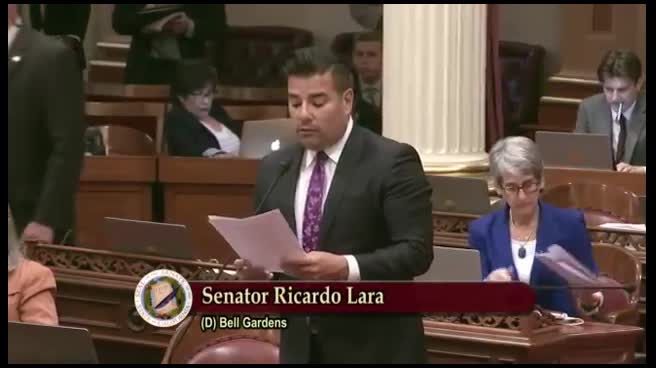
Bill Author

Bill Co-Author(s):