SB 1331: State Board of Guide Dogs for the Blind: membership: out-of-state schools: followup services.
- Session Year: 2015-2016
- House: Senate
- Latest Version Date: 2016-09-24
Existing law establishes within the Department of Consumer Affairs a State Board of Guide Dogs for the Blind, which is comprised of 7 members appointed by the Governor.
Existing law requires 2 of the board members to be persons who are blind or visually impaired who use guide dogs.
This bill would instead require at least 3 board members to be persons who are blind or visually impaired who use guide dogs.
Under existing law, the board has exclusive authority in this state to issue licenses for the instruction of persons who are blind or visually impaired in the use of guide dogs and for the training of guide dogs for use by persons who are blind or visually impaired. Under existing law, the board also has exclusive authority in this state to issue licenses to operate schools for the training of guide dogs and the instruction of persons who are blind or visually impaired in the use of guide dogs. Existing law makes it unlawful for any person to sell, offer for sale, give, hire, or furnish under any other arrangement, any guide dog or to engage in the business or occupation of training a guide dog unless he or she holds a valid and unimpaired license issued pursuant to the provisions governing guide dogs. A violation of those provisions is a crime.
This bill, whenever an individual has received training or instruction from a specified certified school outside of this state, would authorize personnel from that school to provide that individual with any followup services within this state with respect to the specific guide dog for whom training or instruction was originally provided outside of this state, as specified. The bill would require the personnel, not less than 3 days prior to arriving in this state, to notify the board of their intent to provide those services.
This bill would, if specified conditions are met, authorize followup emergency services. If those services are to be provided due to emergency circumstances, as determined by the school based on specified examples, the bill would authorize that notice to be provided within 24 hours after the personnel arrive in this state. The bill would prohibit the board from requiring the school to provide the name of the individual who will be receiving followup services, however, it would permit the board to require a school to provide the name of the individual to whom services have been provided to investigate personnel providing those services, so long as the investigation is based on reasonable grounds for determining that personnel may have provided substandard care. The bill would also authorize the board to refuse to allow personnel who have committed certain acts for which the board could suspend or revoke a license to provide those services, and would place those personnel under the disciplinary jurisdiction of the board while they provide those services. The bill, until January 1, 2018, would require the board to prepare a factsheet regarding various functions of the board, to post that factsheet on its Internet Web site, and to provide copies to each of the licensed guide dog schools. The bill, until January 1, 2018, would also require a licensed guide dog school to provide copies of the factsheet to every student receiving training from that school. Because the failure of a licensed guide dog school to provide those copies and the failure of personnel to provide that notification would be a crime, the bill would impose a state-mandated local program.
The California Constitution requires the state to reimburse local agencies and school districts for certain costs mandated by the state. Statutory provisions establish procedures for making that reimbursement.
This bill would provide that no reimbursement is required by this act for a specified reason.
Existing law establishes within the Department of Consumer Affairs a State Board of Guide Dogs for the Blind, which is comprised of 7 members appointed by the Governor.
Existing law requires 2 of the board members to be persons who are blind or visually impaired who use guide dogs.
This bill would instead require at least 3 board members to be persons who are blind or visually impaired who use guide dogs. Of these 3 board members, the bill would require one representative from each of the 2 major consumer organizations representing Californians who are blind or visually impaired. The bill would also require the Governor, in making these appointments, to consider recommendations from those organizations.
Under existing law, the board has exclusive authority in this state to issue licenses for the instruction of persons who are blind or visually impaired in the use of guide dogs and for the training of guide dogs for use by persons who are blind or visually impaired. Under existing law, the board also has exclusive authority in this state to issue licenses to operate schools for the training of guide dogs and the instruction of persons who are blind or visually impaired in the use of guide dogs. Existing law makes it unlawful for any person to sell, offer for sale, give, hire, or furnish under any other arrangement, any guide dog or to engage in the business or occupation of training a guide dog unless he or she holds a valid and unimpaired license issued pursuant to the provisions governing guide dogs. A violation of those provisions is a crime.
This bill, whenever an individual has received training or instruction from a specified certified school outside of this state, would authorize personnel from that school to provide that individual with any followup services within this state with respect to the specific guide dog for whom training or instruction was originally provided outside of this state, as specified. The bill would require the personnel, not less than 3 days prior to arriving in this state, to notify the board of their intent to provide those services.
This bill would, if specified conditions are met, authorize followup emergency services. If those services are to be provided due to emergency circumstances, as determined by the school based on specified examples, the bill would authorize that notice to be provided within 24 hours after the personnel arrive in this state. The bill would prohibit the board from requiring the school to provide the name of the individual who will be receiving followup services, however, it would permit the board to require a school to provide the name of the individual to whom services have been provided to investigate personnel providing those services, so long as the investigation is based on reasonable grounds for determining that personnel may have provided substandard care. The bill would also authorize the board to refuse to allow personnel who have committed certain acts for which the board could suspend or revoke a license to provide those services, and would place those personnel under the disciplinary jurisdiction of the board while they provide those services. The bill, until January 1, 2018, would require the board to prepare a factsheet regarding various functions of the board, to post that factsheet on its Internet Web site, and to provide copies to each of the licensed guide dog schools. The bill, until January 1, 2018, would also require a licensed guide dog school to provide copies of the factsheet to every student receiving training from that school. Because the failure of a licensed guide dog school to provide those copies and the failure of personnel to provide that notification would be a crime, the bill would impose a state-mandated local program.
The California Constitution requires the state to reimburse local agencies and school districts for certain costs mandated by the state. Statutory provisions establish procedures for making that reimbursement.
This bill would provide that no reimbursement is required by this act for a specified reason.
Existing law establishes within the Department of Consumer Affairs a State Board of Guide Dogs for the Blind, which is comprised of 7 members appointed by the Governor.
Existing law requires 2 of the board members to be persons who are blind or visually impaired who use guide dogs.
This bill would instead require the board to be composed of at least 3 board members to be persons who are blind or visually impaired who use guide dogs. Of these 3 board members, the bill would require one representative from each of the 2 major consumer organizations representing Californians who are blind or visually impaired. The bill would also require the Governor, in making these appointments, to consider recommendations from those organizations.
Under existing law, the board has exclusive authority in this state to issue licenses for the instruction of persons who are blind or visually impaired in the use of guide dogs and for the training of guide dogs for use by persons who are blind or visually impaired. Under existing law, the board also has exclusive authority in this state to issue licenses to operate schools for the training of guide dogs and the instruction of persons who are blind or visually impaired in the use of guide dogs. Existing law makes it unlawful for any person to sell, offer for sale, give, hire, or furnish under any other arrangement, any guide dog or to engage in the business or occupation of training a guide dog unless he or she holds a valid and unimpaired license issued pursuant to this chapter. the provisions governing guide dogs. A violation of the those provisions governing guide dogs is a crime.
This bill, whenever an individual has received training or instruction from a specified certified school outside of this state, would authorize personnel from that school to provide that individual with any followup services within this state with respect to the specific guide dog for whom training or instruction was originally provided outside of this state, as specified. The bill would require the personnel, not less than 3 days prior to arriving in this state, to notify the board of their intent to provide those services. If
This bill would, if specified conditions are met, authorize followup emergency services. If those services are to be provided due to emergency circumstances, as determined by the school based on specified examples, the bill would authorize that notice to be provided within 24 hours after the personnel arrive in this state. The bill would prohibit the board from requiring the school to provide the name of the individual who will be receiving followup services, however, it would permit the board to require a school to provide the name of the individual to whom services have been provided to investigate personnel providing those services, so long as the investigation is based on reasonable grounds for determining that personnel may have provided substandard care. The bill would also authorize the board to refuse to allow personnel who have committed certain acts for which the board could suspend or revoke a license to provide those services, and would place those personnel under the disciplinary jurisdiction of the board while they provide those services. The bill, until January 1, 2018, would require the board to prepare a factsheet regarding various functions of the board, to post that factsheet on its Internet Web site, and to provide copies to each of the licensed guide dog schools. The bill, until January 1, 2018, would also require a licensed guide dog school to provide copies of the factsheet to every student receiving training from that school. Because the failure of a licensed guide dog school to provide those copies and the failure of personnel to provide that notification would be a crime, the bill would impose a state-mandated local program.
The California Constitution requires the state to reimburse local agencies and school districts for certain costs mandated by the state. Statutory provisions establish procedures for making that reimbursement.
This bill would provide that no reimbursement is required by this act for a specified reason.
Existing law establishes within the Department of Consumer Affairs a State Board of Guide Dogs for the Blind, which is comprised of 7 members appointed by the Governor.
Existing law requires 2 of the board members to be persons who are blind or visually impaired who use guide dogs.
This bill would instead require the board to be composed of at least 3 members who are blind or visually impaired who use guide dogs. Of these 3 board members, the bill would require one representative from each of the 2 major consumer organizations representing Californians who are blind or visually impaired. The bill would also require the Governor, in making these appointments, to consider recommendations from those organizations.
Under existing law, the board has exclusive authority in this state to issue licenses for the instruction of persons who are blind or visually impaired in the use of guide dogs and for the training of guide dogs for use by persons who are blind or visually impaired. Under existing law, the board also has exclusive authority in this state to issue licenses to operate schools for the training of guide dogs and the instruction of persons who are blind or visually impaired in the use of guide dogs. Existing law makes it unlawful for any person to sell, offer for sale, give, hire, or furnish under any other arrangement, any guide dog or to engage in the business or occupation of training a guide dog unless he or she holds a valid and unimpaired license issued pursuant to this chapter. A violation of the provisions governing guide dogs is a crime.
This bill, whenever an individual has received training or instruction from a specified certified school outside of this state, would authorize personnel from that school to provide that individual with any followup services within this state with respect to the specific guide dog for whom training or instruction was originally provided outside of this state, as specified. The bill would require the personnel, within 5 days of not less than 3 days prior to arriving in this state, to notify the board of their intent to provide those services, would services. If those services are to be provided due to emergency circumstances, as determined by the school based on specified examples, the bill would authorize that notice to be provided within 24 hours after the personnel arrive in this state. The bill would authorize the board to refuse to allow personnel who have committed certain acts for which the board could suspend or revoke a license to provide those services, and would place those personnel under the disciplinary jurisdiction of the board while they provide those services. The bill, until January 1, 2018, would require the board to prepare a factsheet regarding various functions of the board, to post that factsheet on its Internet Web site, and to provide copies to each of the licensed guide dog schools. The bill, until January 1, 2018, would also require a licensed guide dog school to provide copies of the factsheet to every student receiving training from that school. Because the failure of a licensed guide dog school to provide those copies and the failure of personnel to provide that notification would be a crime, the bill would impose a state-mandated local program.
The California Constitution requires the state to reimburse local agencies and school districts for certain costs mandated by the state. Statutory provisions establish procedures for making that reimbursement.
This bill would provide that no reimbursement is required by this act for a specified reason.
Existing law establishes within the Department of Consumer Affairs a State Board of Guide Dogs for the Blind, which consists is comprised of 7 members appointed by the Governor.
Existing law requires 2 of the board members to be persons who are blind or visually impaired who use guide dogs.
This bill would instead require the board to be composed of at least 3 members who are blind or visually impaired who use guide dogs. Of these 3 board members, the bill would require one representative from each of the 2 major consumer organizations representing Californians who are blind or visually impaired. The bill would also require the Governor, in making these appointments, to consider recommendations from those organizations.
Under existing law, the board has exclusive authority in this state to issue licenses for the instruction of persons who are blind or visually impaired in the use of guide dogs and for the training of guide dogs for use by persons who are blind or visually impaired. Under existing law, the board also has exclusive authority in this state to issue licenses to operate schools for the training of guide dogs and the instruction of persons who are blind or visually impaired in the use of guide dogs. Existing law makes it unlawful for any person to sell, offer for sale, give, hire, or furnish under any other arrangement, any guide dog or to engage in the business or occupation of training a guide dog unless he or she holds a valid and unimpaired license issued pursuant to this chapter. A violation of the provisions governing guide dogs is a crime.
This bill, whenever an individual has received training or instruction from a specified certified school outside of this state, would authorize personnel from that school to provide that individual with any followup services within this state with respect to the specific guide dog for whom training or instruction was originally provided outside of this state, as specified, and would place those services beyond the jurisdiction of the board. specified. The bill would require the personnel, within 5 days of arriving in this state, to notify the board of their intent to provide those services, would authorize the board to refuse to allow personnel who have committed certain acts for which the board could suspend or revoke a license to provide those services, and would place those personnel under the disciplinary jurisdiction of the board while they provide those services. The bill, until January 1, 2018, would require the board to prepare a factsheet regarding various functions of the board, to post that fact sheet factsheet on its Internet Web site, and to provide copies to each of the licensed guide dog schools. The bill, until January 1, 2018, would also require a licensed guide dog school to provide copies of the fact sheet factsheet to every student receiving training from that school. Because the failure of a licensed guide dog school to provide those copies and the failure of personnel to provide that notification would be a crime, the bill would impose a state-mandated local program.
The California Constitution requires the state to reimburse local agencies and school districts for certain costs mandated by the state. Statutory provisions establish procedures for making that reimbursement.
This bill would provide that no reimbursement is required by this act for a specified reason.
Existing law establishes within the Department of Consumer Affairs a State Board of Guide Dogs for the Blind, which consists of 7 members appointed by the Governor.
Existing law requires 2 of the board members to be persons who are blind or visually impaired who use guide dogs.
This bill would instead require the board to be composed of at least 3 members who are blind or visually impaired who use guide dogs. Of these 3 board members, the bill would require one representative from each of the 2 major consumer organizations representing Californians who are blind or visually impaired. The bill would also require the Governor, in making these appointments, to consider recommendations from those organizations.
Under existing law, the board has exclusive authority in this state to issue licenses for the instruction of persons who are blind or visually impaired in the use of guide dogs and for the training of guide dogs for use by persons who are blind or visually impaired. Under existing law, the board also has exclusive authority in this state to issue licenses to operate schools for the training of guide dogs and the instruction of persons who are blind or visually impaired in the use of guide dogs. Existing law makes it unlawful for any person to sell, offer for sale, give, hire, or furnish under any other arrangement, any guide dog or to engage in the business or occupation of training a guide dog unless he or she holds a valid and unimpaired license issued pursuant to this chapter. A violation of the provisions governing guide dogs is a crime.
This bill, whenever an individual has received training or instruction from a specified certified school outside of this state, would authorize personnel from that school to provide that individual with any followup services within this state with respect to the specific guide dog for whom training or instruction was originally provided outside of this state, as specified, and would place those services beyond the jurisdiction of the board. The bill, until January 1, 2018, would require the board to prepare a factsheet regarding various functions of the board, to post that fact sheet on its Internet Web site, and to provide copies to each of the licensed guide dog schools. The bill, until January 1, 2018, would also require a licensed guide dog school to provide copies of the fact sheet to every student receiving training from that school. Because the failure of a licensed guide dog school to provide those copies would be a crime, the bill would impose a state-mandated local program.
The California Constitution requires the state to reimburse local agencies and school districts for certain costs mandated by the state. Statutory provisions establish procedures for making that reimbursement.
This bill would provide that no reimbursement is required by this act for a specified reason.
(a)There is in the Department of Consumer Affairs a State Board of Guide Dogs for the Blind in whom enforcement of this chapter is vested. The board shall consist of seven members appointed by the Governor. One member shall be the Director of Rehabilitation or his or her designated representative. The remaining members shall be persons who have shown a particular interest in dealing with the problems of persons who are blind or visually impaired and at least three of them shall be persons who are blind or visually impaired who use guide dogs.
(b)This section shall remain in effect only until January 1, 2018, and as of that date is repealed, unless a later enacted statute, that is enacted before January 1, 2018, deletes or extends that date. Notwithstanding any other law, the repeal of this section renders the board subject to review by the appropriate policy committees of the Legislature.
SEC. 2.Section 7200.5 of the Business and Professions Code is amended to read:7200.5.(a)The board shall have exclusive authority in this state to issue licenses for the instruction of persons who are blind or visually impaired in the use of guide dogs and for the training of guide dogs for use by persons who are blind or visually impaired. It shall also have exclusive authority in this state to issue licenses to operate schools for the training of guide dogs and the instruction of persons who are blind or visually impaired in the use of guide dogs.
(b)(1)Notwithstanding any other law, whenever an individual has received training or instruction from a school outside of this state that is certified by the International Guide Dog Federation or a successor entity, as determined by the board, personnel from that school may provide, in this state, any followup services to that individual with respect to the specific guide dog for whom training or instruction was originally provided outside of this state. The personnel from that school shall notify the board on a form prescribed by the board not less than three business days prior to the time the personnel arrive in this state of their intent to provide followup services. If those services are to be provided due to emergency circumstances, as determined by the school, notification may be provided within 24 hours after the personnel arrive in this state. For purposes of making that determination, emergency circumstances include, but are not limited to, injury to a dog that requires determination as to whether it remains safe for the dog to continue working, an accident involving the dog, or certain sudden changes in behavior that imperil the safety of the handler. The board shall permit the personnel to provide the notification electronically and shall not require the personnel to notify the board of the name of the individual who will be receiving the followup services. However, the board may require a school to provide the name of the individual to whom services have been provided if needed for purposes of investigating the personnel from that school who provided these services, so long as the investigation is conducted based upon reasonable grounds for determining that personnel may have provided substandard care.
(2)(A)Except as provided in subparagraph (B), prior to providing followup services pursuant to paragraph (1), personnel shall have fingerprints on file with the board.
(B)Notwithstanding subparagraph (A), if the followup services are provided under emergency circumstances personnel shall have one business day after coming in to the state to meet the requirements of that subparagraph.
(3)Whenever followup services are provided pursuant to paragraph (1), the out-of-state school shall provide written information to the guide dog handler concerning the provisions of this subdivision.
(4)The board may refuse to allow personnel to provide followup services if the personnel have committed any act described in Section 7211.9. During the time the personnel provide followup services to the individual, the personnel shall be subject to the disciplinary jurisdiction of the board, which may include a citation and fine pursuant to the boards rules and regulations or any other disciplinary action which could be brought against a licensed instructor.
SEC. 3.Section 7215.7 is added to the Business and Professions Code, to read:7215.7.(a)The board shall prepare a factsheet that shall contain all of the following:
(1)A description of the purposes served by the board.
(2)A description of the boards role in assisting guide dog users who are victims of alleged guide dog discrimination.
(3)A description of the boards arbitration procedure under Section 7215.6.
(b)The board shall post the factsheet on its Internet Web site and provide copies to each guide dog school licensed pursuant to this chapter. A school licensed under this chapter shall provide a copy of the factsheet to every student receiving training from that school.
(c)This section shall remain in effect only until January 1, 2018, and as of that date is repealed, unless a later enacted statute, that is enacted before January 1, 2018, deletes or extends that date.
SEC. 4.No reimbursement is required by this act pursuant to Section 6 of Article XIIIB of the California Constitution because the only costs that may be incurred by a local agency or school district will be incurred because this act creates a new crime or infraction, eliminates a crime or infraction, or changes the penalty for a crime or infraction, within the meaning of Section 17556 of the Government Code, or changes the definition of a crime within the meaning of Section 6 of Article XIIIB of the California Constitution.
(a)There is in the Department of Consumer Affairs a State Board of Guide Dogs for the Blind in whom enforcement of this chapter is vested. The board shall consist of seven members appointed by the Governor. One member shall be the Director of Rehabilitation or his or her designated representative. The remaining members shall be persons who have shown a particular interest in dealing with the problems of persons who are blind or visually impaired and at least three of them shall be persons who are blind or visually impaired who use guide dogs. Of the three members who are blind or visually impaired who use guide dogs, there shall be one representative from each of the two major consumer organizations representing Californians who are blind or visually impaired, and the Governor shall, in making these appointments, consider recommendations from those organizations.
(b)This section shall remain in effect only until January 1, 2018, and as of that date is repealed, unless a later enacted statute, that is enacted before January 1, 2018, deletes or extends that date. Notwithstanding any other law, the repeal of this section renders the board subject to review by the appropriate policy committees of the Legislature.
SEC. 2.Section 7200.5 of the Business and Professions Code is amended to read:7200.5.(a)The board shall have exclusive authority in this state to issue licenses for the instruction of persons who are blind or visually impaired in the use of guide dogs and for the training of guide dogs for use by persons who are blind or visually impaired. It shall also have exclusive authority in this state to issue licenses to operate schools for the training of guide dogs and the instruction of persons who are blind or visually impaired in the use of guide dogs.
(b)(1)Notwithstanding any other law, whenever an individual has received training or instruction from a school outside of this state that is certified by the International Guide Dog Federation or a successor entity, as determined by the board, personnel from that school may provide, in this state, any followup services to that individual with respect to the specific guide dog for whom training or instruction was originally provided outside of this state. The personnel from that school shall notify the board on a form prescribed by the board not less than three business days prior to the time the personnel arrive in this state of their intent to provide followup services. If those services are to be provided due to emergency circumstances, as determined by the school, notification may be provided within 24 hours after the personnel arrive in this state. For purposes of making that determination, emergency circumstances include, but are not limited to, injury to a dog that requires determination as to whether it remains safe for the dog to continue working, an accident involving the dog, or certain sudden changes in behavior that imperil the safety of the handler. The board shall permit the personnel to provide the notification electronically and shall not require the personnel to notify the board of the name of the individual who will be receiving the followup services. However, the board may require a school to provide the name of the individual to whom services have been provided if needed for purposes of investigating the personnel from that school who provided these services. The services, so long as the investigation is conducted based upon reasonable grounds for determining that personnel may have provided substandard care.
(2)(A)Except as provided in subparagraph (B), prior to providing followup services pursuant to paragraph (1), personnel shall have fingerprints on file with the board.
(B)Notwithstanding subparagraph (A), if the followup services are provided under emergency circumstances personnel shall have one business day after coming in to the state to meet the requirements of that subparagraph.
(3)Whenever followup services are provided pursuant to paragraph (1), the out-of-state school shall provide written information to the guide dog handler concerning the provisions of this subdivision.
(4)The board may refuse to allow personnel to provide followup services if the personnel have committed any act described in Section 7211.9. During the time the personnel provide followup services to the individual, the personnel shall be subject to the disciplinary jurisdiction of the board, which may include a citation and fine pursuant to the boards rules and regulations or any other disciplinary action which could be brought against a licensed instructor.
SEC. 3.Section 7215.7 is added to the Business and Professions Code, to read:7215.7.(a)The board shall prepare a factsheet that shall contain all of the following:
(1)A description of the purposes served by the board.
(2)A description of the boards role in assisting guide dog users who are victims of alleged guide dog discrimination.
(3)A description of the boards arbitration procedure under Section 7215.6.
(b)The board shall post the factsheet on its Internet Web site and provide copies to each guide dog school licensed pursuant to this chapter. A school licensed under this chapter shall provide a copy of the factsheet to every student receiving training from that school.
(c)This section shall remain in effect only until January 1, 2018, and as of that date is repealed, unless a later enacted statute, that is enacted before January 1, 2018, deletes or extends that date.
SEC. 4.No reimbursement is required by this act pursuant to Section 6 of Article XIIIB of the California Constitution because the only costs that may be incurred by a local agency or school district will be incurred because this act creates a new crime or infraction, eliminates a crime or infraction, or changes the penalty for a crime or infraction, within the meaning of Section 17556 of the Government Code, or changes the definition of a crime within the meaning of Section 6 of Article XIIIB of the California Constitution.
(a)There is in the Department of Consumer Affairs a State Board of Guide Dogs for the Blind in whom enforcement of this chapter is vested. The board shall consist of seven members appointed by the Governor. One member shall be the Director of Rehabilitation or his or her designated representative. The remaining members shall be persons who have shown a particular interest in dealing with the problems of persons who are blind or visually impaired and at least three of them shall be persons who are blind or visually impaired who use guide dogs. Of the three members who are blind or visually impaired who use guide dogs, there shall be one representative from each of the two major consumer organizations representing Californians who are blind or visually impaired, and the Governor shall, in making these appointments, consider recommendations from those organizations.
(b)This section shall remain in effect only until January 1, 2018, and as of that date is repealed, unless a later enacted statute, that is enacted before January 1, 2018, deletes or extends that date. Notwithstanding any other law, the repeal of this section renders the board subject to review by the appropriate policy committees of the Legislature.
SEC. 2.Section 7200.5 of the Business and Professions Code is amended to read:7200.5.(a)The board shall have exclusive authority in this state to issue licenses for the instruction of persons who are blind or visually impaired in the use of guide dogs and for the training of guide dogs for use by persons who are blind or visually impaired. It shall also have exclusive authority in this state to issue licenses to operate schools for the training of guide dogs and the instruction of persons who are blind or visually impaired in the use of guide dogs.
(b)Notwithstanding any other law, whenever an individual has received training or instruction from a school outside of this state that is certified by the International Guide Dog Federation or a successor entity, as determined by the board, personnel from that school may provide, in this state, any followup services to that individual with respect to the specific guide dog for whom training or instruction was originally provided outside of this state. The personnel from that school shall notify the board on a form prescribed by the board within five business days from not less than three business days prior to the time the personnel arrive in this state of their intent to provide followup services. If those services are to be provided due to emergency circumstances, as determined by the school, notification may be provided within 24 hours after the personnel arrive in this state. For purposes of making that determination, emergency circumstances include, but are not limited to, injury to a dog that requires determination as to whether it remains safe for the dog to continue working, an accident involving the dog, or certain sudden changes in behavior that imperil the safety of the handler. The board shall permit the personnel to provide the notification electronically and shall not require the personnel to notify the board of the name of the individual who will be receiving the followup services. However, the board may require a school to provide the name of the individual to whom services have been provided if needed for purposes of investigating the personnel from that school who provided these services. The board may refuse to allow personnel to provide followup services if the personnel have committed any act described in Section 7211.9. During the time the personnel provide followup services to the individual, the personnel shall be subject to the disciplinary jurisdiction of the board, which may include a citation and fine pursuant to the boards rules and regulations or any other disciplinary action which could be brought against a licensed instructor.
SEC. 3.Section 7215.7 is added to the Business and Professions Code, to read:7215.7.(a)The board shall prepare a factsheet that shall contain all of the following:
(1)A description of the purposes served by the board.
(2)A description of the boards role in assisting guide dog users who are victims of alleged guide dog discrimination.
(3)A description of the boards arbitration procedure under Section 7215.6.
(b)The board shall post the factsheet on its Internet Web site and provide copies to each guide dog school licensed pursuant to this chapter. A school licensed under this chapter shall provide a copy of the factsheet to every student receiving training from that school.
(c)This section shall remain in effect only until January 1, 2018, and as of that date is repealed, unless a later enacted statute, that is enacted before January 1, 2018, deletes or extends that date.
SEC. 4.No reimbursement is required by this act pursuant to Section 6 of Article XIIIB of the California Constitution because the only costs that may be incurred by a local agency or school district will be incurred because this act creates a new crime or infraction, eliminates a crime or infraction, or changes the penalty for a crime or infraction, within the meaning of Section 17556 of the Government Code, or changes the definition of a crime within the meaning of Section 6 of Article XIIIB of the California Constitution.
(a)There is in the Department of Consumer Affairs a State Board of Guide Dogs for the Blind in whom enforcement of this chapter is vested. The board shall consist of seven members appointed by the Governor. One member shall be the Director of Rehabilitation or his or her designated representative. The remaining members shall be persons who have shown a particular interest in dealing with the problems of persons who are blind or visually impaired and at least three of them shall be persons who are blind or visually impaired who use guide dogs. Of the three members who are blind or visually impaired who use guide dogs, there shall be one representative from each of the two major consumer organizations representing Californians who are blind or visually impaired, and the Governor shall, in making these appointments, consider recommendations from those organizations.
(b)This section shall remain in effect only until January 1, 2018, and as of that date is repealed, unless a later enacted statute, that is enacted before January 1, 2018, deletes or extends that date. Notwithstanding any other law, the repeal of this section renders the board subject to review by the appropriate policy committees of the Legislature.
SEC. 2.Section 7200.5 of the Business and Professions Code is amended to read:7200.5.(a)The board shall have exclusive authority in this state to issue licenses for the instruction of persons who are blind or visually impaired in the use of guide dogs and for the training of guide dogs for use by persons who are blind or visually impaired. It shall also have exclusive authority in this state to issue licenses to operate schools for the training of guide dogs and the instruction of persons who are blind or visually impaired in the use of guide dogs.
(b)Notwithstanding any other law, whenever an individual has received training or instruction from a school outside of this state that is certified by the International Guide Dog Federation or a successor entity, as determined by the board, personnel from that school may provide, in this state, any followup services to that individual with respect to the specific guide dog for whom training or instruction was originally provided outside of this state, and the board shall have no jurisdiction over any followup services authorized pursuant to this subdivision. state. The personnel from that school shall notify the board on a form prescribed by the board within five business days from the time the personnel arrive in this state of their intent to provide followup services. The board shall permit the personnel to provide the notification electronically and shall not require the personnel to notify the board of the name of the individual who will be receiving the followup services. The board may refuse to allow personnel to provide followup services if the personnel have committed any act described in Section 7211.9. During the time the personnel provide followup services to the individual, the personnel shall be subject to the disciplinary jurisdiction of the board, which may include a citation and fine pursuant to the boards rules and regulations or any other disciplinary action which could be brought against a licensed instructor.
SEC. 3.Section 7215.7 is added to the Business and Professions Code, to read:7215.7.(a)The board shall prepare a factsheet that shall contain all of the following:
(1)A description of the purposes served by the board.
(2)A description of the boards role in assisting guide dog users who are victims of alleged guide dog discrimination.
(3)A description of the boards arbitration procedure under Section 7215.6.
(b)The board shall post the factsheet on its Internet Web site and provide copies to each guide dog school licensed pursuant to this chapter. A school licensed under this chapter shall provide a copy of the factsheet to every student receiving training from that school.
(c)This section shall remain in effect only until January 1, 2018, and as of that date is repealed, unless a later enacted statute, that is enacted before January 1, 2018, deletes or extends that date.
SEC. 4.No reimbursement is required by this act pursuant to Section 6 of Article XIIIB of the California Constitution because the only costs that may be incurred by a local agency or school district will be incurred because this act creates a new crime or infraction, eliminates a crime or infraction, or changes the penalty for a crime or infraction, within the meaning of Section 17556 of the Government Code, or changes the definition of a crime within the meaning of Section 6 of Article XIIIB of the California Constitution.
(a)There is in the Department of Consumer Affairs a State Board of Guide Dogs for the Blind in whom enforcement of this chapter is vested. The board shall consist of seven members appointed by the Governor. One member shall be the Director of Rehabilitation or his or her designated representative. The remaining members shall be persons who have shown a particular interest in dealing with the problems of persons who are blind or visually impaired and at least two three of them shall be persons who are blind or visually impaired who use guide dogs. Of the three members who are blind or visually impaired who use guide dogs, there shall be one representative from each of the two major consumer organizations representing Californians who are blind or visually impaired, and the Governor shall, in making these appointments, consider recommendations from those organizations.
(b)This section shall remain in effect only until January 1, 2018, and as of that date is repealed, unless a later enacted statute, that is enacted before January 1, 2018, deletes or extends that date. Notwithstanding any other law, the repeal of this section renders the board subject to review by the appropriate policy committees of the Legislature.
SEC. 2.Section 7200.5 of the Business and Professions Code is amended to read:7200.5.(a)The board shall have exclusive authority in this state to issue licenses for the instruction of persons who are blind or visually impaired in the use of guide dogs and for the training of guide dogs for use by persons who are blind or visually impaired. It shall also have exclusive authority in this state to issue licenses to operate schools for the training of guide dogs and the instruction of persons who are blind or visually impaired in the use of guide dogs.
(b)Notwithstanding any other law, whenever an individual has received training or instruction from a school outside of this state that is certified by the International Guide Dog Federation or a successor entity, as determined by the board, personnel from that school may provide, in this state, any followup services to that individual with respect to the specific guide dog for whom training or instruction was originally provided outside of this state, and the board shall have no jurisdiction over any followup services authorized pursuant to this subdivision.
SEC. 3.Section 7215.7 is added to the Business and Professions Code, to read:7215.7.(a)The board shall prepare a factsheet that shall contain all of the following:
(1)A description of the purposes served by the board.
(2)A description of the boards role in assisting guide dog users who are victims of alleged guide dog discrimination.
(3)A description of the boards arbitration procedure under Section 7215.6.
(b)The board shall post the factsheet on its Internet Web site and provide copies to each guide dog school licensed pursuant to this chapter. A school licensed under this chapter shall provide a copy of the factsheet to every student receiving training from that school.
(c)This section shall remain in effect only until January 1, 2018, and as of that date is repealed, unless a later enacted statute, that is enacted before January 1, 2018, deletes or extends that date.
SEC. 4.No reimbursement is required by this act pursuant to Section 6 of Article XIIIB of the California Constitution because the only costs that may be incurred by a local agency or school district will be incurred because this act creates a new crime or infraction, eliminates a crime or infraction, or changes the penalty for a crime or infraction, within the meaning of Section 17556 of the Government Code, or changes the definition of a crime within the meaning of Section 6 of Article XIIIB of the California Constitution.
|
Date
|
Status
|
|---|---|
| Aug 31, 2016 | Enrolled and presented to the Governor at 6 p.m. |
| Aug 25, 2016 | Assembly amendments concurred in. (Ayes 39. Noes 0. Page 5409.) Ordered to engrossing and enrolling. |
| Aug 25, 2016 | Assembly amendments concurred in. (Ayes 39. Noes 0.) Ordered to engrossing and enrolling. |
| Aug 23, 2016 | Read third time. Passed. (Ayes 80. Noes 0. Page 6079.) Ordered to the Senate. |
| Aug 23, 2016 | In Senate. Concurrence in Assembly amendments pending. |
| Aug 23, 2016 | Read third time. Passed. Ordered to the Senate. |
| Aug 18, 2016 | Ordered to third reading. |
| Aug 18, 2016 | Read third time and amended. |
| Aug 11, 2016 | From consent calendar on motion of Assembly Member Waldron. |
| Aug 11, 2016 | Ordered to third reading. |
| Aug 11, 2016 | From consent calendar on motion of Assembly Member Cooper. |
| Aug 4, 2016 | Read second time. Ordered to consent calendar. |
| Aug 3, 2016 | From committee: Do pass. Ordered to consent calendar. (Ayes 20. Noes 0.) (August 3). |
| Jun 29, 2016 | Read second time and amended. Re-referred to Com. on APPR. |
| Jun 28, 2016 | From committee: Do pass as amended and re-refer to Com. on APPR. (Ayes 16. Noes 0.) (June 28). |
| Jun 20, 2016 | From committee with author's amendments. Read second time and amended. Re-referred to Com. on B. & P. |
| Jun 6, 2016 | Referred to Com. on B. & P. |
| May 26, 2016 | Read third time. Passed. (Ayes 39. Noes 0. Page 3956.) Ordered to the Assembly. |
| May 26, 2016 | In Assembly. Read first time. Held at Desk. |
| May 26, 2016 | Read third time. Passed. (Ayes 39. Noes 0.) Ordered to the Assembly. |
| May 17, 2016 | Read second time. Ordered to third reading. |
| May 16, 2016 | From committee: Be ordered to second reading pursuant to Senate Rule 28.8. |
| May 6, 2016 | Set for hearing May 16. |
| Apr 19, 2016 | From committee: Do pass and re-refer to Com. on APPR. (Ayes 8. Noes 0. Page 3592.) (April 18). Re-referred to Com. on APPR. |
| Apr 19, 2016 | From committee: Do pass and re-refer to Com. on APPR. (Ayes 8. Noes 0.) (April 18). Re-referred to Com. on APPR. |
| Apr 11, 2016 | From committee with author's amendments. Read second time and amended. Re-referred to Com. on B., P. & E.D. |
| Apr 7, 2016 | Set for hearing April 18. |
| Apr 6, 2016 | April 11 hearing postponed by committee. |
| Mar 11, 2016 | Set for hearing April 11. |
| Mar 3, 2016 | Referred to Com. on B., P. & E.D. |
| Feb 22, 2016 | Read first time. |
| Feb 22, 2016 | From printer. May be acted upon on or after March 23. |
| Feb 19, 2016 | Introduced. To Com. on RLS. for assignment. To print. |
|
Date
|
Description
|
Location
|
Votes
|
|
|---|---|---|---|---|
| Aug 25, 2016 | Unfinished Business SB1331 Pavley Concurrence | Senate Floor |
Passed |
|
| Aug 23, 2016 | SB 1331 Pavley Senate Third Reading By LEVINE | Assembly Floor |
Passed |
|
| Aug 3, 2016 | Do pass. To Consent Calendar. | Assembly Standing Committee on Appropriations |
Passed |
|
| Jun 28, 2016 | Do pass as amended and be re-referred to the Committee on [Appropriations] | Assembly Standing Committee on Business and Professions |
Passed |
|
| May 26, 2016 | Senate 3rd Reading SB1331 Pavley | Senate Floor |
Passed |
|
| Apr 18, 2016 | Do pass, but first be re-referred to the Committee on [Appropriations] | Senate Standing Committee on Business, Professions and Economic Development |
Passed |
This list shows positions taken on this bill by organizations on the date displayed, which is linked to the original source.
Positions by individuals are not included.
Office of Senate Floor Analyses (916) 651-1520 Fax: (916) 327-4478 | SB |
UNFINISHED BUSINESS
Bill No: SB 1331
:
SENATE BUS., PROF. & ECON. DEV. COMMITTEE: 8-0, 4/18/16
AYES: Hill, Bates, Berryhill, Block, Galgiani, Hernandez, Jackson, Mendoza
NO VOTE RECORDED: Wieckowski
SENATE APPROPRIATIONS COMMITTEE: Senate Rule 28.8
SENATE FLOOR: 39-0, 5/26/16
AYES: Allen, Anderson, Bates, Beall, Berryhill, Block, Cannella, De León, Fuller, Gaines, Galgiani, Glazer, Hall, Hancock, Hernandez, Hertzberg, Hill, Hueso, Huff, Jackson, Lara, Leno, Leyva, Liu, McGuire, Mendoza, Mitchell, Monning, Moorlach, Morrell, Nguyen, Nielsen, Pan, Pavley, Roth, Stone, Vidak, Wieckowski, Wolk
NO VOTE RECORDED: Runner
ASSEMBLY FLOOR: 80-0, 8/23/16 - See last page for vote
DIGEST: This bill allows out-of-state personnel to provide follow-up services in California without a license, under specified conditions; revises the composition of the California State Board of the Guide Dogs for the Blind (Board) to include three, instead of two, representatives of the legally blind or visually impaired community; and, requires the Board to create a factsheet that provides specified information about the Board which must be made available to each licensed school to provide to every student receiving training from that school.
Assembly Amendments (1) require that personnel from a school from another state that is certified by the International Guide Dog Federation (IGDF) shall notify the Board not less than three days prior to the time the personnel arrive in this state of their intent to provide follow-up services; (2) provide that if those services are to be provided due to emergency circumstances as specified, and as determined by the school, notification may be provided to the Board within 24 hours after the personnel arrive in this state; (3) provide that the Board may require a school to provide the name of the individual to whom services have been provided if needed for purposes of investigating the personnel from that school who provided these services and that the investigation shall be conducted upon reasonable ground for determining that personnel may have provided substandard care; (4) require that prior to providing follow-up services, personnel shall have fingerprints on file with the Board and that if follow-up services are provided under emergency circumstances personnel shall have one business day after coming into the state to meet the requirements as specified; and (5) remove the requirement there be a representative from each of the two major consumer organizations representing Californians who are blind or visually impaired.
Existing law:
- Establishes the Board within in the Department of Consumer Affairs for the licensing and enforcement of licensees who operate schools for the training of guide dogs and the instruction of persons who are blind and visually impaired in the use of guide dogs. (Business and Professions Code (BPC) Section 7200, et seq.)
- Requires the Board to consist of seven members appointed by the Governor, of which one member is the Director of Rehabilitation or his or her designated representative; the remaining members are persons who have shown a particular interest in dealing with the problems of persons who are blind or visually impaired and at least two of them are persons who are blind or visually impaired who use guide dogs. (BPC Section 7200(a))
- Requires a person to be eligible for examination as an instructor to have knowledge of the special problems of persons who are blind or visually impaired and how to teach them; be able to demonstrate by actual blindfold test under traffic conditions, his or her ability to train guide dogs; be suited temperamentally and otherwise to instruct persons who are blind or visually impaired in the usage of guide dogs; and, have had at least three years of actual experience comprising such number of hours as the Board may require, as an instructor, and have handled 22 person-dog units or its equivalent, as specified. (BPC Section 7209)
- Defines an "instructor" to mean a person who instructs persons who are blind or visually impaired in the use of guide dogs or who engage in the business of training, selling, hiring, or supplying guide dogs for persons who are blind or visually impaired. (BPC Section 7209.5)
- States that it is unlawful for any person to sell, offer for sale, give, hire, or furnish under any arrangement, any guide dog or to engage in the business or occupation of training a guide dog without a valid and unimpaired license, as specified. (BPC Section 7210)
This bill:
- Revises the composition of the Board to include at least three members, instead of two, who are blind or visually impaired and who use guide dogs.
- States that notwithstanding any other law, whenever an individual has received training or instruction from a school outside of this state that is certified by the IGDF or a successor entity, as determined by the Board, personnel from that school may provide, in this state, any follow-up services to that individual with respect to the specific guide dog for whom training or instruction was originally provided outside of this state.
- Requires personnel from the school to notify the Board on a specified form within not less than three business days, prior to the time the personnel arrives in this state, of their intent to provide follow-up services, the Board must accept the form in an electronic format, and the name of the individual receiving services is not required to be provided.
- States that if follow-up services are to be provided due to emergency circumstances, as determined by the school, notification may be provided within 24 hours after the personnel arrive in this state; and, specifies that emergency services include, but are not limited to, injury to a dog that requires determination as to whether it remains safe for the dog to continue working, an accident involving the dog, or certain sudden changes in behavior that imperil the safety of the handler.
- Prohibits the Board from requiring the disclosure of the individual who will be receiving the follow-up services; however, the Board may require a school to provide the name of the individual to whom services have been provided if needed for the purposes of investigating the personnel from that school who provided the services, so long as the investigation is conducted based on reasonable grounds for determining that personnel may have provided substandard care.
- Requires personnel to have fingerprints on file with the Board prior to providing follow-up services, and provides, under emergency circumstances, that personnel have one business day after coming in to the state to meet the fingerprint requirements.
- Requires the out-of-state school to provide specified written information to the guide dog handler.
- Permits the Board to refuse to allow personnel to provide follow-up services if the personnel have committed any specified acts.
- Subjects the personnel to the disciplinary jurisdiction of the Board including a citation or fine, during the time follow-up services are provided, as specified.
- Requires the Board to prepare a fact sheet that contains the following:
- A description of the purposes served by the Board;
- A description of the Board's role in assisting guide dog users who are victims of alleged guide dog discrimination; and,
- A description of the Board's arbitration procedures, as specified.
- Requires the Board to post the factsheet on its Web site and provide copies to each licensed guide dog school, and requires each school to provide a copy of the factsheet to every student receiving training from that school.
Background
According to the author, "Highly trained guide dogs are vital companions for people who are blind or visually impaired. They partner with a guide dog to help them move about safely and independently. This bill seeks to improve services for those who partner with guide dogs by making a number of reforms to the Board that oversees licensing of the service dogs, which is called the state Board of Guide Dogs for the Blind. The proposed reforms include a requirement to increase representation in board membership of persons who use guide dogs, as well as provisions to improve outreach and educational efforts to make the public more aware of the board's functions and services. The bill also allows an out-of-state school to provide limited follow-up services in California, if the school provided the original training to the California resident and dog, is certified by the International Guide Dog Federation and notifies the state Guide Dog Board that they are providing follow-up services in California. The bill authorizes the Board to refuse any personnel who have committed certain violations of law and gives the board full disciplinary authority to act if a consumer is negatively impacted by an out-of-state school providing such services. To date, there has never been an adverse incident of follow-up care by an out of state school. California is the only state in the nation that requires mandatory licensing of guide dog schools and instructors. Out-of-state guide dogs schools throughout the nation receive certification by the International Guide Dog Federation."
The Board. The Board was established in January 1, 1948, for the specific purpose of providing well-trained guide dogs to blind persons and training blind persons as guide dog consumers. The Board licenses: 1) guide dog schools; 2) guide dog instructors; and, 3) fundraising programs to open new guide dog schools. The Board inspects all schools, requires new active guide dog instructors to take a legally defensible written and practical examination, and requires instructors to submit proof of eight hours of continuing education each year to remain licensed.
Business and Professions Code Section (BPC) Section 7200(a) specifies that the composition of the Board is to include seven members, all of whom are appointed by the Governor. One appointee must be the Director of Rehabilitation or his designated representative and the remaining members must include persons who have shown an interest in dealing with persons who are blind or visually impaired; two of which must be blind or visually impaired persons who use guide dogs. The author notes that the Board's current composition does not include an adequate representation of the two consumer advocacy groups whose missions are to help blind individuals gain full independence and equality. In order to address this issue, this bill will change the composition of the Board to require at least three members, instead of two, who represent the legally blind or visually impaired community.
Out-of-state follow-up services. California is the only state to license and regulate guide dog instructors and guide dog schools. As such, there may be instances when a California resident will seek guide dog training services from an unlicensed school outside of California. There are a limited number of guide dog schools across the country, and while three are licensed in California, there are a few schools outside of the state that have chosen not to obtain California licensure. The issue arises when a California resident who obtained training from one of those out-of-state schools seeks to obtain follow-up instruction from the unlicensed school or instructor who provided the original services outside of California. Current law does not prohibit California-based residents from obtaining services from unlicensed schools or instructors outside of California. Currently, as noted on the Board's Web site, follow-up services or formal instruction with a client is prohibited in California without a license.
During the Board's 2013 sunset review, the 2013 Committee Staff Background Paper raised the issue of unlicensed instructors from outside of California providing follow-up services in California and noted, "Because California is the only state that regulates guide dog schools, instructors, and fundraisers, some out-of-state guide dog schools and instructors who do not have the ability to get licenses in their home states have expressed concern that they are unable to provide guide dog training services in California without applying for a California license. The Board has clarified through regulations that ‘instruction,’ which can only be conducted by a licensed provider, includes follow-up instruction."
This bill seeks to create a pathway for those out-of-state schools and their personnel to provide follow-up services in California to individuals with respect to the specific guide dog for whom the training or instruction was initially provided outside of California. In order to provide those follow-up services, the unlicensed personnel must abide by the protocols established by this bill. In order for an unlicensed individual to provide the follow-up services, this bill will require the school to notify the Board no less than three days from the time the personnel arrive in California, and will allow the Board to refuse to allow the follow-up services if the personnel has violated BPC Section 7211.9 which includes, but is not limited to, making false statements or giving false information for a license or renewal, violating any rule or the Board, committing any acts which are grounds for denial, or being convicted of a felony or any other crime, as specified.
This bill will only permit those unlicensed school personnel to provide follow-up services if the school is certified by the IGDF or a successor agency. This bill also provides a mechanism for follow-up services to be provided on an emergency basis. This bill does not permit unlicensed guide dog training services to be provided in California in any other situation. In addition, this bill will require that the unlicensed personnel who are providing the follow-up services submit their fingerprints to the Board and be subject to the disciplinary jurisdiction of the Board, which may include a citation or fine.
Currently, the Board's Web site provides information for consumers including reference material about licensees, consumer notifications, laws, link to a complaint form, Board member information, Board meeting schedule, and press releases, among others. The author notes that guide dog handlers are often unaware of the Board, and those who do, are unclear about its purpose. In order to address the concern raised by the author, this bill will also require the Board to create a fact sheet and make it available on its Web site containing information about the purposes of the Board, its role in assisting guide dog users who are victims of alleged guide dog discrimination, and arbitration procedures relating to the resolution of disputes between guide dog users and guide dog schools relating to the continued physical custody and use of a guide dog. The Board is supposed to provide a copy of this fact sheet to each licensed school, and the schools will be required to provide the fact sheet to each student.
Comments
The California Council of the Blind (CCB) is in support of this bill. In regards to the change in composition of the Board, CCB believes that adding an additional dog care handler to the Board will help ensure that the Board contains sufficient number of members who have the requisite knowledge about guide dog issues to make the best possibly policy determinations in matters that come before the Board. Providing a factsheet and including it on its Board Web site along with providing to guide dog schools and to their students will ensure that guide dog handlers and others interested in the use of guide dogs will continue to have access to information about the Board.
The IGDF is also in support of this bill and believes that by requiring that the out-of-state school, that is providing one of its staff persons for follow-up services, be from a school that is accredited by the IGDF will assure they will be meeting the stringent standards of accreditation by IGDF and will provide for the safe, unrestricted, independent mobility of guide dogs for all people who are blind or partially sighted for one of their accredited member organizations. (The IGDF currently has 90 member organizations across 28 different countries. Some of these countries have just one IGDF members, while others have up to 12. Recent information provided by IGDF shows that there are 20,519 guide dogs working in 2014 that came from IGDF member organizations. Of this number 3,215 were new partnerships starting out for the first time.)
FISCAL EFFECT: Appropriation: Fiscal Com.: Local:
According to the Assembly Appropriations Committee, this bill will result in minor and absorbable costs to the Board.
California Council for the Blind
Guide Dogs for the Blind
International Guide Dog Federation
OPPOSITION: (Verified 8/23/16)
California State Board on Guide Dogs for the Blind
ARGUMENTS IN SUPPORT: The California Council of the Blind (CCB) is in support of this measure. In regards to the change in composition of the Board, CCB believes that adding an additional dog care handler to the Board will help ensure that the board contains sufficient number of members who have the requisite knowledge about guide dog issues to make the best possibly policy determinations in matters that come before the Board. Providing a factsheet and including it on its Board website along with providing to guide dog schools and to their students will ensure that guide dog handlers and others interested in the use of guide dogs will continue to have access to information about the Board.
The International Guide Dog Federation (IGDF) is also in support of this measure and believes that by requiring that the out-of-state school, that is providing one of its staff persons for follow-up services, be from a school that is accredited by the IGDF will assure they will be meeting the stringent standards of accreditation by IGDF and will provide for the safe, unrestricted, independent mobility of guide dogs for all people who are blind or partially sighted for one of their accredited member organizations. (The IGDF currently has 90 member organizations across 28 different countries. Some of these countries have just one IGDF members, while others have up to 12. Recent information provided by IGDF shows that there are 20,519 guide dogs working in 2014 that came from IGDF member organizations. Of this number 3,215 were new partnerships starting out for the first time.)
ARGUMENTS IN OPPOSITION: The California State Board of Guide Dogs for the Blind is opposed to this measure and indicates that although recent amendments were an attempt to address the concerns of the Board it still feels strongly that the examination and licensure of instructors is the best way to ensure that consumers are protected. This bill allows unlicensed guide dog instruction in California and sets a precedent to allow unlicensed services by out-of-state providers in other professions based solely on the fact that the market is unregulated in another state or jurisdiction. The Board also continues to be very concerned with the use of the IGDF as a benchmark when its certification of a school is not a requirement to conduct business in any state and is fundamentally dissimilar from the Board’s licensure process or its regulatory authority. The Board concludes that the bill in its current form encourages unlicensed activity, constitutes a de facto deregulation, and ultimately would place at risk the safety of guide dog teams.
ASSEMBLY FLOOR: 80-0, 8/23/16
AYES: Achadjian, Alejo, Travis Allen, Arambula, Atkins, Baker, Bigelow, Bloom, Bonilla, Bonta, Brough, Brown, Burke, Calderon, Campos, Chang, Chau, Chávez, Chiu, Chu, Cooley, Cooper, Dababneh, Dahle, Daly, Dodd, Eggman, Frazier, Beth Gaines, Gallagher, Cristina Garcia, Eduardo Garcia, Gatto, Gipson, Gomez, Gonzalez, Gordon, Gray, Grove, Hadley, Harper, Roger Hernández, Holden, Irwin, Jones, Jones-Sawyer, Kim, Lackey, Levine, Linder, Lopez, Low, Maienschein, Mathis, Mayes, McCarty, Medina, Melendez, Mullin, Nazarian, Obernolte, O'Donnell, Olsen, Patterson, Quirk, Ridley-Thomas, Rodriguez, Salas, Santiago, Steinorth, Mark Stone, Thurmond, Ting, Wagner, Waldron, Weber, Wilk, Williams, Wood, Rendon
8/24/16 18:54:26
**** END ****
SENATE THIRD READING
STR Bill Id:SB 1331
Author:(Pavley)
As Amended Ver:August 18, 2016
Majority vote
SENATE VOTE: 39-0
Committee | Votes | Ayes | Noes |
Business & Professions | 16-0 | Salas, Brough, Baker, Bloom, Campos, Chávez, Dahle, Dodd, Eggman, Gatto, Gomez, Holden, Jones, Mullin, Ting, Wood | |
Appropriations | 20-0 | Gonzalez, Bigelow, Bloom, Bonilla, Bonta, Calderon, Chang, Daly, Eggman, Gallagher, Eduardo Garcia, Holden, Jones, Obernolte, Quirk, Santiago, Wagner, Weber, Wood, Chau |
SUMMARY: Allows out-of-state personnel to provide follow-up services in California without a license, under specified conditions; revises the composition of the State Board of the Guide Dogs for the Blind (Board) to include three, instead of two, representatives of the legally blind or visually impaired community; and, requires the Board to create a factsheet that provides specified information about the Board which must be made available to each licensed school to provide to every student receiving training from that school. Specifically, this bill:
- Revises the composition of the Board to include at least three members, instead of two, who are blind or visually impaired and who use guide dogs.
- States that notwithstanding any other law, whenever an individual has received training or instruction from a school outside of this state that is certified by the International Guide Dog Federation or a successor entity, as determined by the Board, personnel from that school may provide, in this state, any follow-up services to that individual with respect to the specific guide dog for whom training or instruction was originally provided outside of this state.
- Requires personnel from the school to notify the Board on a specified form within not less than three business days, prior to the time the personnel arrives in this state, of their intent to provide follow-up services, the Board must accept the form in an electronic format, and the name of the individual receiving services is not required to be provided.
- States that if follow-up services are to be provided due to emergency circumstances, as determined by the school, notification may be provided within 24 hours after the personnel arrive in this state; and, specifies that emergency services include, but are not limited to, injury to a dog that requires determination as to whether it remains safe for the dog to continue working, an accident involving the dog, or certain sudden changes in behavior that imperil the safety of the handler.
- Prohibits the Board from requiring the disclosure of the individual who will be receiving the follow-up services; however, the Board may require a school to provide the name of the individual to whom services have been provided if needed for the purposes of investigating the personnel from that school who provided the services, so long as the investigation is conducted based on reasonable grounds for determining that personnel may have provided substandard care.
- Requires personnel to have fingerprints on file with the Board prior to providing follow-up services, and provides, under emergency circumstances, that personnel have one business day after coming in to the state to meet the fingerprint requirements.
- Requires the out-of-state school to provide specified written information to the guide dog handler.
- Permits the Board to refuse to allow personnel to provide follow-up services if the personnel have committed any specified acts.
- Subjects the personnel to the disciplinary jurisdiction of the Board including a citation or fine, during the time follow-up services are provided, as specified.
- Requires the Board to prepare a fact sheet that contains the following:
- A description of the purposes served by the Board;
- A description of the Board's role in assisting guide dog users who are victims of alleged guide dog discrimination; and,
- A description of the Board's arbitration procedures, as specified.
- Requires the Board to post the factsheet on its Web site and provide copies to each licensed guide dog school, and requires each school to provide a copy of the factsheet to every student receiving training from that school.
FISCAL EFFECT: According to the Assembly Appropriations Committee, this bill will result in minor and absorbable costs to the Board.
COMMENTS:
Purpose. This bill is sponsored by the California Council of the Blind. According to the author, "Highly trained guide dogs are vital companions for people who are blind or visually impaired. They partner with a guide dog to help them move about safely and independently. This bill seeks to improve services for those who partner with guide dogs by making a number of reforms to the Board that oversees licensing of the service dogs, which is called the state Board of Guide Dogs for the Blind. The proposed reforms include a requirement to increase representation in board membership of persons who use guide dogs, as well as provisions to improve outreach and educational efforts to make the public more aware of the board's functions and services. The bill also allows an out-of-state school to provide limited follow-up services in California, if the school provided the original training to the California resident and dog, is certified by the International Guide Dog Federation and notifies the state Guide Dog Board that they are providing follow-up services in California. The bill authorizes the Board to refuse any personnel who have committed certain violations of law and gives the board full disciplinary authority to act if a consumer is negatively impacted by an out-of-state school providing such services. To date, there has never been an adverse incident of follow-up care by an out of state school. California is the only state in the nation that requires mandatory licensing of guide dog schools and instructors. Out-of-state guide dogs schools throughout the nation receive certification by the International Guide Dog Federation."
Background. The Board. The Board was established in January 1, 1948 for the specific purpose of providing well-trained guide dogs to blind persons and training blind persons as guide dog consumers. The Board licenses: 1) guide dog schools; 2) guide dog instructors; and, 3) fundraising programs to open new guide dog schools. The Board inspects all schools, requires new active guide dog instructors to take a legally defensible written and practical examination, and requires instructors to submit proof of eight hours of continuing education each year to remain licensed.
Business and Professions Code Section (BPC) 7200(a) specifies that the composition of the Board is to include seven members, all of whom are appointed by the Governor. One appointee must be the Director of Rehabilitation or his designated representative and the remaining members must include persons who have shown an interest in dealing with persons who are blind or visually impaired; two of which must be blind or visually impaired persons who use guide dogs. The author notes that the Board's current composition does not include an adequate representation of the two consumer advocacy groups whose missions are to help blind individuals gain full independence and equality. In order to address this issue, this bill will change the composition of the Board to require at least three members, instead of two, who represent the legally blind or visually impaired community.
Out of State Follow-up Services. California is the only state to license and regulate guide dog instructors and guide dog schools. As such, there may be instances when a California resident will seek guide dog training services from an unlicensed school outside of California. There are a limited number of guide dog schools across the country, and while three are licensed in California, there are a few schools outside of the state that have chosen not to obtain California licensure. The issue arises when a California resident who obtained training from one of those out-of-state schools seeks to obtain follow-up instruction from the unlicensed school or instructor who provided the original services outside of California. Current law does not prohibit California-based residents from obtaining services from unlicensed schools or instructors outside of California. Currently, as noted on the Board's Web site, follow-up services or formal instruction with a client is prohibited in California without a license.
During the Board's 2013 sunset review, the 2013 Committee Staff Background Paper raised the issue of unlicensed instructors from outside of California providing follow-up services in California and noted, "Because California is the only state that regulates guide dog schools, instructors, and fundraisers, some out-of-state guide dog schools and instructors who do not have the ability to get licenses in their home states have expressed concern that they are unable to provide guide dog training services in California without applying for a California license. The Board has clarified through regulations that "instruction," which can only be conducted by a licensed provider, includes follow-up instruction."
This bill seeks to create a pathway for those out-of-state schools and their personnel to provide follow-up services in California to individuals with respect to the specific guide dog for whom the training or instruction was initially provided outside of California. In order to provide those follow-up services, the unlicensed personnel must abide by the protocols established by this bill. In order for an unlicensed individual to provide the follow-up services, this bill will require the school to notify the Board no less than three days from the time the personnel arrive in California, and will allow the Board to refuse to allow the follow-up services if the personnel has violated BPC 7211.9 which includes, but is not limited to, making false statements or giving false information for a license or renewal, violating any rule or the Board, committing any acts which are grounds for denial, or being convicted of a felony or any other crime, as specified.
This bill will only permit those unlicensed school personnel to provide follow-up services if the school is certified by the International Guide Dog Federation or a successor agency. This bill also provides a mechanism for follow-up services to be provided on an emergency basis. This bill does not permit unlicensed guide dog training services to be provided in California in any other situation. In addition, this bill will require that the unlicensed personnel who are providing the follow-up services submit their fingerprints to the Board and be subject to the disciplinary jurisdiction of the Board, which may include a citation or fine.
Currently, the Board's Web site provides information for consumers including reference material about licensees, consumer notifications, laws, link to a complaint form, Board member information, Board meeting schedule, and press releases, among others. The author notes that guide dog handlers are often unaware of the Board, and those who do, are unclear about its purpose. In order to address the concern raised by the author, this bill will also require the Board to create a fact sheet and make it available on its Web site containing information about the purposes of the Board, its role in assisting guide dog users who are victims of alleged guide dog discrimination, and arbitration procedures relating to the resolution of disputes between guide dog users and guide dog schools relating to the continued physical custody and use of a guide dog. The Board is supposed to provide a copy of this fact sheet to each licensed school, and the schools will be required to provide the fact sheet to each student.
Analysis Prepared by: Elissa Silva / B. & P. / (916) 319-3301 FN: 0004526
SENATE THIRD READING
STR Bill Id:SB 1331
Author:(Pavley)
As Amended Ver:June 29, 2016
Majority vote
SENATE VOTE: 39-0
Committee | Votes | Ayes | Noes |
Business & Professions | 16-0 | Salas, Brough, Baker, Bloom, Campos, Chávez, Dahle, Dodd, Eggman, Gatto, Gomez, Holden, Jones, Mullin, Ting, Wood | |
Appropriations | 20-0 | Gonzalez, Bigelow, Bloom, Bonilla, Bonta, Calderon, Chang, Daly, Eggman, Gallagher, Eduardo Garcia, Holden, Jones, Obernolte, Quirk, Santiago, Wagner, Weber, Wood, Chau |
SUMMARY: Allows out-of-state personnel to provide follow-up services in California without a license, under specified conditions; revises the composition of the State Board of the Guide Dogs for the Blind (Board) to include three, instead of two, representatives of the legally blind or visually impaired community and requires one representative each from a designated consumer organization representing Californians who are blind or visually impaired, as specified; and, requires the Board to create a factsheet that provides specified information about the Board which must be made available to each licensed school to provide to every student receiving training from that school. Specifically, this bill:
- Revises the composition of the Board to include at least three members, instead of two, who are blind or visually impaired and who use guide dogs, and further requires that one representative from each of the two major consumer organizations representing Californians who are blind or visually impaired and the Governor must consider the recommendations from those organizations in making those appointments.
- States that notwithstanding any other law, whenever an individual has received training or instruction from a school outside of this state that is certified by the International Guide Dog Federation or a successor entity, as determined by the Board, personnel from that school may provide, in this state, any follow-up services to that individual with respect to the specific guide dog for whom training or instruction was originally provided outside of this state.
- Requires personnel from the school to notify the Board on a specified form within not less than three business days, prior to the time the personnel arrives in this state, of their intent to provide follow-up services, the Board must accept the form in an electronic format, and the name of the individual receiving services is not required to be provided.
- States that if follow-up services are to be provided due to emergency circumstances, as determined by the school, notification may be provided within 24 hours after the personnel arrive in this state; and, specifies that emergency services include, but are not limited to, injury to a dog that requires determination as to whether it remains safe for the dog to continue working, an accident involving the dog, or certain sudden changes in behavior that imperil the safety of the handler.
- Prohibits the Board from requiring the disclosure of the individual who will be receiving the follow-up services; however, the Board may require a school to provide the name of the individual to whom services have been provided if needed for the purposes of investigating the personnel from that school who provided the services, so long as the investigation is conducted based on reasonable grounds for determining that personnel may have provided substandard care.
- Requires personnel to have fingerprints on file with the Board prior to providing follow-up services, and provides, under emergency circumstances, that personnel have one business day after coming in to the state to meet the fingerprint requirements.
- Requires the out-of-state school to provide specified written information to the guide dog handler.
- Permits the Board to refuse to allow personnel to provide follow-up services if the personnel have committed any specified acts.
- Subjects the personnel to the disciplinary jurisdiction of the Board including a citation or fine, during the time follow-up services are provided, as specified.
- Requires the Board to prepare a fact sheet that contains the following:
- A description of the purposes served by the Board;
- A description of the Board's role in assisting guide dog users who are victims of alleged guide dog discrimination; and,
- A description of the Board's arbitration procedures, as specified.
- Requires the Board to post the factsheet on its Web site and provide copies to each licensed guide dog school, and requires each school to provide a copy of the factsheet to every student receiving training from that school.
FISCAL EFFECT: According to the Assembly Appropriations Committee, this bill will result in minor and absorbable costs to the Board.
COMMENTS:
Purpose. This bill is sponsored by the California Council of the Blind. According to the author, "Highly trained guide dogs are vital companions for people who are blind or visually impaired. They partner with a guide dog to help them move about safely and independently. This bill seeks to improve services for those who partner with guide dogs by making a number of reforms to the Board that oversees licensing of the service dogs, which is called the state Board of Guide Dogs for the Blind. The proposed reforms include a requirement to increase representation in board membership of persons who use guide dogs, as well as provisions to improve outreach and educational efforts to make the public more aware of the board's functions and services. The bill also allows an out-of-state school to provide limited follow-up services in California, if the school provided the original training to the California resident and dog, is certified by the International Guide Dog Federation and notifies the state Guide Dog Board that they are providing follow-up services in California. The bill authorizes the Board to refuse any personnel who have committed certain violations of law and gives the board full disciplinary authority to act if a consumer is negatively impacted by an out-of-state school providing such services. To date, there has never been an adverse incident of follow-up care by an out of state school. California is the only state in the nation that requires mandatory licensing of guide dog schools and instructors. Out-of-state guide dogs schools throughout the nation receive certification by the International Guide Dog Federation."
Background. The Board. The Board was established in January 1, 1948 for the specific purpose of providing well-trained guide dogs to blind persons and training blind persons as guide dog consumers. The Board licenses: 1) guide dog schools; 2) guide dog instructors; and, 3) fundraising programs to open new guide dog schools. The Board inspects all schools, requires new active guide dog instructors to take a legally defensible written and practical examination, and requires instructors to submit proof of eight hours of continuing education each year to remain licensed.
Business and Professions Code Section (BPC) 7200(a) specifies that the composition of the Board is to include seven members, all of whom are appointed by the Governor. One appointee must be the Director of Rehabilitation or his designated representative and the remaining members must include persons who have shown an interest in dealing with persons who are blind or visually impaired; two of which must be blind or visually impaired persons who use guide dogs. The author notes that the Board's current composition does not include an adequate representation of the two consumer advocacy groups whose missions are to help blind individuals gain full independence and equality. In order to address this issue, this bill will change the composition of the Board to require at least three members, instead of two, who represent the legally blind or visually impaired community. Two of those appointees must be a representative from each of the two major consumer organizations representing Californians who are legally blind.
Out of State Follow-up Services. California is the only state to license and regulate guide dog instructors and guide dog schools. As such, there may be instances when a California resident will seek guide dog training services from an unlicensed school outside of California. There are a limited number of guide dog schools across the country, and while three are licensed in California, there are a few schools outside of the state that have chosen not to obtain California licensure. The issue arises when a California resident who obtained training from one of those out-of-state schools seeks to obtain follow-up instruction from the unlicensed school or instructor who provided the original services outside of California. Current law does not prohibit California-based residents from obtaining services from unlicensed schools or instructors outside of California. Currently, as noted on the Board's Web site, follow-up services or formal instruction with a client is prohibited in California without a license.
During the Board's 2013 sunset review, the 2013 Committee Staff Background Paper raised the issue of unlicensed instructors from outside of California providing follow-up services in California and noted, "Because California is the only state that regulates guide dog schools, instructors, and fundraisers, some out-of-state guide dog schools and instructors who do not have the ability to get licenses in their home states have expressed concern that they are unable to provide guide dog training services in California without applying for a California license. The Board has clarified through regulations that "instruction," which can only be conducted by a licensed provider, includes follow-up instruction."
This bill seeks to create a pathway for those out-of-state schools and their personnel to provide follow-up services in California to individuals with respect to the specific guide dog for whom the training or instruction was initially provided outside of California. In order to provide those follow-up services, the unlicensed personnel must abide by the protocols established by this bill. In order for an unlicensed individual to provide the follow-up services, this bill will require the school to notify the Board no less than three days from the time the personnel arrive in California, and will allow the Board to refuse to allow the follow-up services if the personnel has violated BPC 7211.9 which includes, but is not limited to, making false statements or giving false information for a license or renewal, violating any rule or the Board, committing any acts which are grounds for denial, or being convicted of a felony or any other crime, as specified.
This bill will only permit those unlicensed school personnel to provide follow-up services if the school is certified by the International Guide Dog Federation or a successor agency. This bill also provides a mechanism for follow-up services to be provided on an emergency basis. This bill does not permit unlicensed guide dog training services to be provided in California in any other situation. In addition, this bill will require that the unlicensed personnel who are providing the follow-up services submit their fingerprints to the Board and be subject to the disciplinary jurisdiction of the Board, which may include a citation or fine.
Currently, the Board's Web site provides information for consumers including reference material about licensees, consumer notifications, laws, link to a complaint form, Board member information, Board meeting schedule, and press releases, among others. The author notes that guide dog handlers are often unaware of the Board, and those who do, are unclear about its purpose. In order to address the concern raised by the author, this bill will also require the Board to create a fact sheet and make it available on its Web site containing information about the purposes of the Board, its role in assisting guide dog users who are victims of alleged guide dog discrimination, and arbitration procedures relating to the resolution of disputes between guide dog users and guide dog schools relating to the continued physical custody and use of a guide dog. The Board is supposed to provide a copy of this fact sheet to each licensed school, and the schools will be required to provide the fact sheet to each student.
Analysis Prepared by: Elissa Silva / B. & P. / (916) 319-3301 FN: 0003993
Date of Hearing: August 3, 2016
ASSEMBLY COMMITTEE ON APPROPRIATIONS
Lorena Gonzalez, Chair
SBPCA Bill Id:SB 1331
Author:(Pavley) – As Amended Ver:June 29, 2016
Policy Committee: | Business and Professions | Vote: | 16 - 0 |
Urgency: No State Mandated Local Program: Yes Reimbursable: No
SUMMARY: This bill makes several changes pertaining to the Board of Guide Dogs for the Blind (Board). Specifically, this bill:
- Allows out-of-state personnel to provide follow-up services in California without a license under specified conditions, if the out-of-state school is certified by the International Guide Dog Federation.
- Revises the composition of the Board to include three, instead of two, representatives of the legally blind or visually impaired community and requires one representative each from a designated consumer organization representing Californians who are blind or visually impaired, as specified.
- Requires the Board to create a factsheet that provides specified information about the Board which must be made available to each licensed school, which then must provide the fact sheet to every student receiving training from that school.
FISCAL EFFECT:
Minor and absorbable costs to the Board of Guide Dogs for the Blind.
COMMENTS:
- Purpose. This bill is sponsored by the California Council of the Blind. According to the author, "Highly trained guide dogs are vital companions for people who are blind or visually impaired. They partner with a guide dog to help them move about safely and independently. This bill seeks to improve services for those who partner with guide dogs by making a number of reforms to the Board that oversees licensing of the services dogs."
- Background. The Board was established in 1948 for the purpose of providing well-trained guide dogs to blind persons and training blind persons as guide dog consumers. The Board licenses: a) guide dog schools, b) guide dog instructors, and c) fundraising programs to open new guide dog schools. The Board inspects all schools, requires new active guide dog instructors to take written and practical examinations, and requires instructors to submit proof of eight hours of continuing education each year to remain licensed. The Board's licensing population includes approximately 100 licensees and three California schools.
California is the only state to license and regulate guide dog instructors and guide dog schools. As such, some California residents seek guide dog training services from unlicensed schools outside of California. There are about sixteen guide dog schools across the country. Schools outside of California can obtain California licensure, but there are a few schools outside of the state that have chosen not to. Current law does not prohibit California-based residents from obtaining services from unlicensed schools or instructors outside of California, but an issue arises when a California resident who obtained training from an out-of-state school seeks to obtain follow-up instruction from the unlicensed school or instructor who provided the original services outside of California. Currently, follow-up services or formal instruction with a client is prohibited in California without a license.
This bill would provide that, with respect to an out-of-state school certified by the International Guide Dog Federation, a staff member of that school could come into California without a license from the Board solely to provide follow-up instruction for the guide dog handler who obtained his or her dog at the out-of-state school. This will enable Californians who have chosen an out-of-state school and who need follow-up instruction often in emergency situations such as the dog having been attacked or been in an accident, to obtain that service.
Analysis Prepared by: Jennifer Swenson / APPR. / (916) 319-2081
Date of Hearing: June 28, 2016
ASSEMBLY COMMITTEE ON BUSINESS AND PROFESSIONS
Rudy Salas, Chair
SBPCA Bill Id:SB 1331
Author:(Pavley) – As Amended Ver:June 20, 2016
SENATE VOTE: 39-0
SUBJECT: State Board of Guide Dogs for the Blind: membership: out-of-state schools: followup services
SUMMARY: Allows out-of-state personnel to provide follow-up services in California without a license, under specified conditions; revises the composition of the State Board of the Guide Dogs for the Blind (Board) to include three, instead of two, representatives of the legally blind or visually impaired community and requires one representative each from a designated consumer organization representing Californians who are blind or visually impaired, as specified; and, requires the Board to create a factsheet that provides specified information about the Board which must be made available to each licensed school which then must provide the fact sheet to every student receiving training from that school.
EXISTING LAW:
- Establishes the Board within in the Department of Consumer Affairs for the licensing and enforcement of licensees who operate schools for the training of guide dogs and the instruction of persons who are blind and visually impaired in the use of guide dogs. (Business and Professions Code (BPC) Section 7200, et seq.)
- Requires the Board to consist of seven members appointed by the Governor, of which one member is the Director of Rehabilitation or his or her designated representative; the remaining members are persons who have shown a particular interest in dealing with the problems of persons who are blind or visually impaired and at least two of them are persons who are blind or visually impaired who use guide dogs. (BPC Section 7200(a))
- Requires a person to be eligible for examination as an instructor to have knowledge of the special problems of persons who are blind or visually impaired and how to teach them; be able to demonstrate by actual blindfold test under traffic conditions, his or her ability to train guide dogs; be suited temperamentally and otherwise to instruct persons who are blind or visually impaired in the usage of guide dogs; and, have had at least three years of actual experience comprising such number of hours as the Board may require, as an instructor, and have handled 22 person-dog units or its equivalent, as specified. (BPC Section 7209)
- Defines an "instructor" to mean a person who instructs persons who are blind or visually impaired in the use of guide dogs or who engage in the business of training, selling, hiring, or supplying guide dogs for persons who are blind or visually impaired. (BPC Section 7209.5)
- States that it is unlawful for any person to sell, offer for sale, give, hire, or furnish under any arrangement, any guide dog or to engage in the business or occupation of training a guide dog without a valid and unimpaired license, as specified. (BPC Section 7210)
THIS BILL:
- Revises the composition of the Board to include at least three members, instead of two, who are blind or visually impaired and who use guide dogs, and further requires that one representative from each of the two major consumer organizations representing Californians who are blind or visually impaired and the Governor must consider the recommendations from those organizations in making those appointments.
- States that notwithstanding any other law, whenever an individual has received training or instruction from a school outside of this state that is certified by the International Guide Dog Federation or a successor entity, as determined by the Board, personnel from that school may provide, in this state, any follow-up services to that individual with respect to the specific guide dog for whom training or instruction was originally provided outside of this state.
- Requires personnel from the school to notify the Board on a specified form within not less than three business days, prior to the time the personnel arrives in this state of their intent to provide follow-up services, the Board must accept the form in an electronic format, and the name of the individual receiving services is not required to be provided.
- States that if follow-up services are to be provided due to emergency circumstances, as determined by the school, notification may be provided within 24 hours after the personnel arrive in this state; and, specifies that emergency services include, but are not limited to, injury to a dog that requires determination as to whether it remains safe for the dog to continue working, an accident involving the dog, or certain sudden changes in behavior that imperil the safety of the handler.
- Permits the Board to refuse to allow personnel to provide follow-up services if the personnel have committed any specified acts.
- Subjects the personnel to the disciplinary jurisdiction of the Board including a citation or fine, during the time follow-up services are provided, as specified.
- Requires the Board to prepare a fact sheet that contains the following:
- A description of the purposes served by the Board;
- A description of the Board's role in assisting guide dog users who are victims of alleged guide dog discrimination; and,
- A description of the Board's arbitration procedures, as specified.
- Requires the Board to post the factsheet on its website and provide copies to each licensed guide dog school, and requires each school to provide a copy of the factsheet to every student receiving training from that school.
FISCAL EFFECT: According to the Senate Committee on Appropriations, pursuant to Senate Rule 28.8, this bill will result in negligible state costs.
COMMENTS:
Purpose. This bill is sponsored by the California Council of the Blind. According to the author, "Highly trained guide dogs are vital companions for people who are blind or visually impaired. They partner with a guide dog to help them move about safely and independently. This bill seeks to improve services for those who partner with guide dogs by making a number of reforms to the Board that oversees licensing of the services dogs, which is called the state Board of Guide Dogs for the Blind. The proposed reforms include a requirement to increase representation in board membership of persons who use guide dogs, as well as provisions to improve outreach and educational efforts to make the public more aware of the board’s functions and services. The bill also allows an out-of-state school to provide limited follow-up services in California, if the school provided the original training to the California resident and dog, is certified by the International Guide Dog Federation and notifies the state Guide Dog Board that they are providing follow-up services in California. The bill authorizes the Board to refuse any personnel who have committed certain violations of law and gives the board full disciplinary authority to act if a consumer is negatively impacted by an out-of-state school providing such services. To date, there had never been an adverse incident of follow-up care by an out of state school. California is the only state in the nation that requires mandatory licensing of guide dog schools and instructors. Out-of-state guide dogs schools throughout the nation receive certification by the International Guide Dog Federation."
Background. The Board. The Board was established in January 1, 1948 for the specific purpose of providing well-trained guide dogs to blind persons and training blind persons as guide dog consumers. The Board licenses: 1) guide dog schools 2) guide dog instructors, and 3) fundraising programs to open new guide dog schools. (BPC Sections 7200.5, 7210.6). The Board inspects all schools, requires new active guide dog instructors to take a legally defensible written and practical examination, and requires instructors to submit proof of eight hours of continuing education each year to remain licensed. California is the only State that has such a regulatory program. The Board's licensing population includes approximately 100 licensees and three California schools.
BPC Section 7200(a) specifies that the composition of the Board is to include seven members, all of whom are appointed by the Governor. One appointee must be the Director of Rehabilitation or his designated representative and the remaining members must include persons who have shown an interest in dealing with persons who are blind or visually impaired; two of which must be blind or visually impaired persons who use guide dogs. The author notes that the Board's current composition does not include an adequate representation of the two consumer advocacy groups whose missions are to help blind individuals gain full independence and equality. In order to address this issue, this bill will change the composition of the Board to require at least three members, instead of two, who represent the legally blind or visually impaired community. Two of those appointees must be a representative from each of the two major consumer organizations representing Californians who are legally blind. Although this bill does not specify the organization, the author notes that the California Council of the Blind and the National Federation of the Blind would presumably be the entities whose representation would be included.
Out of State Follow-up Services. California is the only state to license and regulate guide dog instructors and guide dog schools. As such, there may be instances when a California resident will seek guide dog training services from an unlicensed school outside of California. There are a limited number of guide dog schools across the country, and while three are licensed in California, there are a few schools outside of the state that have chosen not to obtain California licensure. The issue arises when a California resident who obtained training from one of those out-of-state schools seeks to obtain follow-up instruction from the unlicensed school or instructor who provided the original services outside of California. Current law does not prohibit California-based residents from obtaining services from unlicensed schools or instructors outside of California. Currently, as noted on the Board's website, follow-up services or formal instruction with a client is prohibited in California without a license.
During the Board's 2013 sunset review, the committee staff background paper raised the issue of unlicensed instructors from outside of California providing follow-up services in California. In the 2013 Committee Staff Background Paper, it was noted, "Because California is the only state that regulates guide dog schools, instructors, and fundraisers, some out-of-state guide dog schools and instructors who do not have the ability to get licenses in their home states have expressed concern that they are unable to provide guide dog training services in California without applying for a California license. The Board has clarified through regulations that “instruction,” which can only be conducted by a licensed provider, includes follow-up instruction. Some guide dog users have questioned the validity of a law that prohibits unlicensed follow-up instruction in this state. As no other state licenses guide dog instructors, there is no reciprocity to establish mechanisms like practice privilege. However, individuals who meet the criteria laid out in BPC Section 7209, Qualifications for Examination as Instructor, may become licensed instructors in California even if their own training and experience occurred outside this state. The Board stated that it had not received any formal complaints from instructors or consumers, and that all feedback on this issue had been informal."
At that time, it was recommended in the 2013 Committee Staff Background Paper that "the Committee is concerned that the Board should protect California consumers without unnecessarily restricting consumers’ access to quality training services."
This bill seeks to create a pathway for those out-of-state schools and their personnel to provide follow-up services in California to individuals with respect to the specific guide dog for whom the training or instruction was initially provided outside of California. In order to provide those follow-up services, the unlicensed personnel must abide by the protocols established by this bill. In order for an unlicensed individual to provide the follow-up services, this bill will require the school to notify the Board no less than three days from the time the personnel arrive in California, and will allow the Board to refuse to allow the follow-up services if the personnel has violated BPC Section 7211.9 which includes, but is not limited to, making false statements or giving false information for a license or renewal, violating any rule or the Board, committing any acts which are grounds for denial, or being convicted of a felony or any other crime, as specified.
This bill will only permit those unlicensed school personnel to provide follow-up services if the school is certified by the International Guide Dog Federation or a successor agency. This bill also provides a mechanism for follow-up services to be provided on an emergency basis. This bill does not permit unlicensed guide dog training services to be provided in California in any other situation. In addition, this bill will require that the unlicensed personnel who are providing the follow-up services be subject to the disciplinary jurisdiction of the Board, which may include a citation or fine.
Currently, the Board's website provides information for consumers including reference material about licensees, consumer notifications, laws, link to a complaint form, Board member information, Board meeting schedule, and press releases, among others. The author notes that guide dog handlers are often unaware of the Board, and those who do, are unclear about its purpose. In order to address the concern raised by the author, this bill will also require the Board to create a fact sheet and make it available on its website containing information about the purposes of the Board, its role in assisting guide dog users who are victims of alleged guide dog discrimination, and arbitration procedures relating to the resolution of disputes between guide dog users and guide dog schools relating to the continued physical custody and use of a guide dog. The Board is supposed to provide a copy of this fact sheet to each licensed school, and the schools will be required to provide the fact sheet to each student.
ARGUMENTS IN SUPPORT:
The California Council of the Blind writes in support, "This bill would provide that, with respect to an out-of-state school certified by the International Guide Dog Federation, a staff member of that school could come into California without a license from the Board solely to provide follow-up instruction for the guide dog handler who obtained his or her dog at the out-of-state school. It is not the intent of this bill to undermine the state licensing requirements, but merely to enable Californians who have chosen an out-of-state school and who need follow-up instruction often in emergency situations such as the dog having been attacked or been in an accident, to obtain that service."
ARGUMENTS IN OPPOSITION:
The Board of Guide Dogs for the Blind writes in opposition, "The Board feels strongly that the examination and licensure of instructors is the best way to ensure that consumers are protected. This bill allows unlicensed guide dog instruction in California and sets a precedent to allow unlicensed services by out-of-state providers in other markets. The Board continues to be very concerned with the use of the International Guide Dog Federation as a benchmark when its certification of a school is not a requirement to conduct business in any state and is fundamentally dissimilar from the Board’s licensure process or its regulatory authority."
POLICY ISSUES:
In order to ensure that there is no consumer harm by permitting unlicensed personnel to provide follow-up services in California, the author should consider requiring the Board to report back to the appropriate policy committees of the Legislature, in four years, the number of consumer complaints and enforcement actions against unlicensed follow-up service providers.
IMPLEMENTATION ISSUES:
The author should consider amendments that 1) will require that personnel have fingerprints on file with the Board prior to providing follow-up services; 2) the Board has reasonable grounds for an investigation; and, 3) the out-of-state school provides information to the handler.
AMENDMENTS:
In response to the implementation issues noted above, the author should amend the bill as follows:
Page 4, Line 20, Strike out “services. The” and insert:
Services, so long as the investigation is conducted based upon reasonable grounds for determining that personnel may have provided substandard care.
(2) A. Except as provided in subparagraph B., prior to providing follow up services pursuant to paragraph (1), personnel shall have finger prints on file with the board.
B. Notwithstanding subparagraph A, if the follow up services are provided under emergency circumstances personnel shall have one business day after coming in to the state to meet the requirements of that subparagraph.
(3) Whenever follow up services are provided pursuant to paragraph (1) the out-of-state school shall provide written information to the guide dog handler concerning the provisions of this subdivision
REGISTERED SUPPORT:
California Council of the Blind (sponsor)
REGISTERED OPPOSITION:
California State Board of Guide Dogs for the Blind
Analysis Prepared by: Elissa Silva / B. & P. / (916) 319-3301
Office of Senate Floor Analyses (916) 651-1520 Fax: (916) 327-4478 | SB |
THIRD READING
Bill No: SB 1331
:
SENATE BUS., PROF. & ECON. DEV. COMMITTEE: 8-0, 4/18/16
AYES: Hill, Bates, Berryhill, Block, Galgiani, Hernandez, Jackson, Mendoza
NO VOTE RECORDED: Wieckowski
SENATE APPROPRIATIONS COMMITTEE: Senate Rule 28.8
SOURCE: California Council of the Blind
DIGEST: This bill changes the composition of the State Board of Guide Dogs for the Blind (Board); allows for out-of-state guide dog instructors to come into California to provide follow-up services without having to obtain a license from the Board, but only when they notify the Board that they will be providing the follow-up services and submit themselves to the jurisdiction of the Board; and requires the Board to provide a factsheet as specified on its website and to schools who provide guide dog training and to those receiving the training.
Existing law:
- Establishes the Board within the Department of Consumer Affairs (DCA) which consists of seven members appointed by the Governor and requires that two of the Board members be persons who are blind or visually impaired who use guide dogs. (Business and Professions Code (BPC) § 7200)
- Provides that the Board shall have exclusive authority in this state to issue licenses for the instruction of persons who are blind or visually impaired in the use of guide dogs and for the training of guide dogs for use by persons who are blind or visually impaired, and provides that the Board shall also have exclusive authority in this state to issue licenses to operate schools for the training of guide dogs and the instruction of persons who are blind or visually impaired in the use of guide dogs. (BPC § 7200.5)
This bill:
- Changes the composition of the Board to require at least three members to be either blind or visually impaired instead of just two members. Of the three, requires one from each of the two major consumer organizations representing Californians who are blind or visually impaired and requires the Governor to consider recommendations from these organizations in making the appointments.
- Provides that notwithstanding any other law, whenever an individual has received training or instruction from a school outside of this state that is certified by the International Guide Dog Federation or a successor entity, as determined by the Board, personnel from that school may provide, in this state, any follow-up service to that individual with respect to the specific guide dog for whom the training or instruction was originally provided outside of this state.
- Requires the Board, until January 1, 2018, to prepare a factsheet that provides a description of the purposes served by the Board, a description of the Board’s role in assisting guide dog users who are victims of alleged guide dog discrimination, and a description of the Board’s arbitration procedure. Requires the Board to post the factsheet on its Internet Web site and provide copies to each licensed guide dog school by the Board and that each school shall provide a copy of the factsheet to every student receiving training from the school.
Background
The Board was established in 1948 to ensure that blind persons receive well-trained guide dogs, to confirm that blind persons are thoroughly trained to be effective and safe guide dog users, and to assure donors to guide dog charities that their donations will be used for the intended charitable purpose. The Board licenses guide dog schools, guide dog instructors, and fundraising programs to open new guide dog schools. The Board inspects all schools, requires new active guide dog instructors to take a legally defensible written and practical examination, and requires instructors to submit proof of eight hours of continuing education each year to remain licensed. California is the only state that has such a regulatory program.
According to the author, existing law pertaining to the Board is not adequate to protect the needs of persons who are blind and visually impaired. This bill seeks to improve services by focusing on three areas in need of reform
- Board composition. As stated by the author, “Currently, the composition of the Board of Guide Dogs for the Blind does not adequately understand the needs and challenges of the blind and visually impaired. Of the seven members on the Board, only two are required to be guide dog handlers. Also, there is not adequate representation from the two consumer advocacy organizations whose central mission is to help the blind gain full independence and equality of opportunity in all walks of life. This can create a situation where a majority of board members lack the knowledge to make the best decisions concerning the administration of the board’s authority.”
- Follow-up services from out-of-state schools. The author explains that in recent years, the Board has interpreted its authority as requiring an out-of-state school that has provided training to a California resident at the school to obtain a license from the Board for any staff to come into California for the sole purpose of providing follow-up services to the student, with respect to the dog for which the original training was received out-of-state. This has taken guide dog owners by surprise throughout the state. For decades, out-of-state schools have been allowed to provide follow-up care and there have been no adverse incidents on record in terms of this assistance.
Given that the Board is now requiring out-of-state schools to obtain licensure in California for this limited time period, there is a growing backlash from out-of-state schools, as stated by the author. One school in New Jersey has already been fined and sent a cease and desist letter. They are no longer providing services in California leaving guide dog owners who received original training from this school with no follow-up assistance whatsoever. While the Board has been unable to identify any instance of objectionable care rendered by a non-state school relating to follow-up care, they believe follow-up care is “instruction” and any instruction in this state must be licensed. The California Council for the Blind states that follow-up service is not “basic instruction,” which was provided originally at the school. This is simply follow-up assistance to help the dog after he has graduated from the school and there should not burdensome licensing requirements to assist in these limited circumstances. No other state in the nation requires the licensure of guide dogs schools or instructors.
This bill, as pointed out by the author, is intended to allow follow-up assistance in very limited circumstances. “This issue is very important to the blind and visually impaired for many reasons. Schools have very different philosophies in terms of training. It is important to have a continuum of care with the original school because they know and understand the guide dog owner and guide dog which received comprehensive training at their school and can appropriately intervene in a timely fashion.” - Guide dog Board fact sheet. As further explained by the author, guide dog handlers are often unaware of the authority of the Board, and even those who have some knowledge about the Board are unclear as to its powers and duties. While there is some information available on the Board’s Web site, it remains challenging for the blind and visually impaired to access the information. Many of the visually impaired have no computer access. Others that do have computer access do not have good web searching skills and the Web site is very difficult to navigate. It would be beneficial, the author believes, to have all the required information in one document – a fact sheet – similar to what is offered by other boards and departments. The fact sheet should be required to be handed out to all graduates at guide dog training schools so the visually impaired do not have to worry about computer access. The guide dogs schools are supportive of making this information available. A fact sheet will also be helpful to the Board because it will clarify what the Board can and cannot do, so that consumers do not have unrealistic expectations. Many questions involving services for the blind, as indicated by the author, have to be referred to the Americans With Disabilities Information Assistance Call Line because their questions are outside of the jurisdiction of the Board.
FISCAL EFFECT: Appropriation: Fiscal Com.: Local:
California Council of the Blind (source)
Guide Dogs for the Blind
International Guide Dog Federation
OPPOSITION: (Verified 5/17/16)
California State Board of Guide Dogs for the Blind
ARGUMENTS IN SUPPORT: Supporters believe that adding an additional dog care handler to the Board will help ensure that the board contains sufficient number of members who have the requisite knowledge about guide dog issues to make the best possibly policy determinations in matters that come before the Board. Providing a factsheet and including it on its Board Web site along with providing to guide dog schools and to their students will ensure that guide dog handlers and others interested in the use of guide dogs will continue to have access to information about the Board.
Supporters also believe that the provisions related to out-of-state schools will not undermine state licensing requirements but merely enable Californians who have chosen an out-of-state school and who need follow-up instruction, often in emergency situations such as the dog having been attacked or been in an accident, to obtain that service. Supporters note that by requiring that the out-of-state school that is providing one of its staff persons for follow-up services to be from a school that is accredited by the International Guide Dog Federation, there will be safe, unrestricted, independent mobility of guide dogs for all people who are blind or partially sighted for one of their accredited member organizations.
Guide Dogs for the Blind (GDB) expresses overall support for this bill but has concerns regarding follow-up services provided by instructors from out-of-state who are not licensed by the Board. The GCB believes that this bill will create inconsistency in the provision of services for California guide dog users by allowing those guide dog users who received their guide dog training from an out-of-state guide dog school to receive follow-up services from an individual who may or may not meet California’s standards for instruction and follow-up.
ARGUMENTS IN OPPOSITION: The Board is opposed to this bill and argues that the change in the composition of the Board is not necessary and would further restrict the candidate pool with which the Governor may choose from when making appointments and that representation of those who utilize the service of guide dogs is adequate. The Board also argues that no other state requires licensure for those who train guide dogs nor provides a standardized examination process for these instructors. The Board feels strongly that the examination and licensure of instructors is the only way to ensure that consumers are protected from standardized instruction. Those who provide follow-up services are providing what the Board considers as instruction and therefore should be subject to the jurisdiction and requirements of the Board. Lastly, the requirement that the Board provide a fact sheet should be handled as a regulatory matter and should be addressed as such.
5/18/16 16:28:06
**** END ****
SENATE COMMITTEE ON
BUSINESS, PROFESSIONS AND ECONOMIC DEVELOPMENT
Senator Jerry Hill, Chair
2015 - 2016 Regular
Bill No: Hearing Date: April 18, 2016
Author: | |||
Version: | April 11, 2016 | ||
Urgency: | No | Fiscal: | Yes |
Consultant: | Bill Gage | ||
Subject:
SUMMARY:
Changes the composition of the State Board of Guide Dogs for the Blind (Board); allows for out-of-state guide dog instructors to come into California to provide follow-up services without having to obtain a license from the Board but only when they notify the Board that they will be providing the follow-up services and submit themselves to the jurisdiction of the Board; and requires the Board to provide a factsheet as specified on its website and to schools who provide guide dog training and to those receiving the training.
Existing law:
- Establishes within the Department of Consumer Affairs (DCA) a State Board of Guide Dogs for the Blind (Board) which consists of 7 members appointed by the Governor and requires that 2 of the Board members be persons who are blind or visually impaired who use guide dogs. (Business and Professions Code (BPC) § 7200)
- Provides that the Board shall have exclusive authority in this state to issue licenses for the instruction of persons who are blind or visually impaired in the use of guide dogs and for the training of guide dogs for use by persons who are blind or visually impaired, and provides that the Board shall also have exclusive authority in this state to issue licenses to operate schools for the training of guide dogs and the instruction of persons who are blind or visually impaired in the use of guide dogs.
(BPC § 7200.5)
This bill:
- Requires that at least 3 members of the Board be either blind or visually impaired instead of just 2 members and would require that of these 3 Board members, that one representative be from each of the two major consumer organizations representing Californians who are blind or visually impaired, and that the Governor in making these appointments shall consider recommendations from these organizations.
- Provides that notwithstanding any other law, whenever an individual has received training or instruction from a school outside of this sate that is certified by the International Guide Dog Federation or a successor entity, as determined by the Board, personnel from that school may provide, in this state, any follow-up service to that individual with respect to the specific guide dog for whom the training or instruction was originally provided outside of this state
- Requires the personnel providing the followup services, within 5 days of arriving in this state, to notify the Board of their intent to provide these services and would authorize the Board to refuse to allow personnel who have committed certain acts for which the Board could suspend or revoke a license to provide those services, and would place those personnel under the disciplinary jurisdiction of the Board while they provide those services
- Requires the Board, until January 1, 2018, to prepare a factsheet that shall provide a description of the purposes served by the Board, a description of the Board’s role in assisting guide dog users who are victims of alleged guide dog discrimination, and a description of the Board’s arbitration procedure as described in Section 7215.6 of the BPC. Provides that the Board shall post the factsheet on its Internet Web site and provide copies to each licensed guide dog school by the Board and that each school shall provide a copy of the factsheet to every student receiving training from the school.
FISCAL EFFECT:
Unknown. This bill has been keyed “fiscal” by Legislative Counsel.
COMMENTS:
- Purpose. This measure is sponsored by the California Council of the Blind. According to the Author, existing law pertaining to the Board is not adequate to protect the needs of persons who are blind and visually impaired. This bill seeks to improve services by focusing on three areas in need of reform:
- Board Composition. As stated by the Author, “Currently, the composition of the Board of Guide Dogs for the Blind does not adequately understand the needs and challenges of the blind and visually impaired. Of the seven members on the Board, only two are required to be guide dog handlers. Also, there is not adequate representation from the two consumer advocacy organizations whose central mission is to help the blind gain full independence and equality of opportunity in all walks of life. This can create a situation where a majority of board members lack the knowledge to make the best decisions concerning the administration of the board’s authority.”
- Follow-up Services from Out-of-State Schools. The Author further explains that in recent years, the Board has interpreted its authority as requiring an out-of state school that has provided training to a California resident at the school, to obtain a license from the Board for any staff to come into California for the sole purpose of providing follow-up services to the student with respect to the dog for which the original training was received out-of state. This has taken guide dog owners by surprise throughout the state. For decades, out-of-state schools have been allowed to provide follow-up care and there have been no adverse incidents on record in terms of this assistance.
Given that the Board is now requiring out- of- state schools to obtain licensure in California for this limited time period, there is a growing backlash from out-of- state schools, as stated by the Author. One school in New Jersey has already been fined and sent a cease and desist letter. They are no longer providing services in California leaving guide dog owners who received original training from this school with no follow-up assistance whatsoever. While the Board has been unable to identify any instance of objectionable care rendered by a non-state school relating to follow-up care, they believe follow-up care is “instruction” and any instruction in this state must be licensed. The California Council for the Blind states that follow-up service is not “basic instruction,” which was provided originally at the school. This is simply follow-up assistance to help the dog after he has graduated from the school and there should not burdensome licensing requirements to assist in these limited circumstances. No other state in the nation requires the licensure of guide dogs schools or instructors.
This measure, as pointed out by the Author, is intended to allow follow-up assistance in very limited circumstances. “This issue is very important to the blind and visually impaired for many reasons. Schools have very different philosophies in terms of training. It is important to have a continuum of care with the original school because they know and understand the guide dog owner and guide dog which received comprehensive training at their school and can appropriately intervene in a timely fashion.” - Guide Dog Board Fact Sheet. As further explained by the Author, guide dog handlers are often unaware of the authority of the Board, and even those who have some knowledge about the Board are unclear as to its powers and duties. While there is some information available on the Board’s website, it remains challenging for the blind and visually impaired to access the information. Many of the visually impaired have no computer access. Others that do have computer access do not have good web searching skills and the website is very difficult to navigate. It would be beneficial, the Author believes, to have all the required information in one document – a fact sheet – similar to what is offered by other boards and departments. The fact sheet should be required to be handed out to all graduates at guide dog training schools so the visually impaired do not have to worry about computer access. The guide dogs schools are supportive of making this information available. A fact sheet will also be helpful to the Board because it will clarify what the Board can and cannot do, so that consumers do not have unrealistic expectations. Many questions involving services for the blind, as indicated by the Author, have to be referred to the Americans With Disabilities Information Assistance Call Line because their questions are outside of the jurisdiction of the Board.
- Background. The Board was established in January 1, 1948 to ensure that blind persons receive well-trained guide dogs, to confirm that blind persons are thoroughly trained to be effective and safe guide dog users, and to assure donors to guide dog charities that their donations will be used for the intended charitable purpose. The Board’s mission, as stated in the Board’s 2010-2014 Strategic Plan is as follows:
“To ensure the quality of the guide dog industry by protecting, promoting, and educating guide dog users, instructors, schools, and the public in order to enhance the lives of blind or visually impaired individuals.”
The Board licenses guide dog schools, guide dog instructors, and fundraising programs to open new guide dog schools. The Board inspects all schools, requires new active guide dog instructors to take a legally defensible written and practical examination, and requires instructors to submit proof of eight hours of continuing education each year to remain licensed. California is the only state that has such a regulatory program.
In fiscal year 2011/12 the Board had a license base of 109 active guide dog instructors and 3 inactive guide dog instructors. The Board also oversees 3 guide dog schools located throughout California. The Board has seven members, one of whom represents the Director of the Department of Rehabilitation. The other six are Governor’s appointees, two of whom must be blind persons who use guide dogs. - Arguments in Support. The California Council of the Blind (CCB) is in support of this measure. In regards to the change in composition of the Board, CCB believes that adding an additional dog care handler to the Board will help ensure that the board contains sufficient number of members who have the requisite knowledge about guide dog issues to make the best possibly policy determinations in matters that come before the Board. Providing a factsheet and including it on its Board website along with providing to guide dog schools and to their students will ensure that guide dog handlers and others interested in the use of guide dogs will continue to have access to information about the Board.
Finally, the bill addresses a change in the Board’s interpretation of its own authority. “After decades of not applying the law in this manner, the Board has recently decided that it is a violation of law for an out-of-state school to send in a staff member to provide follow-up instruction to a resident of California who received training with the guide dog at the out-of-state school site, unless the staff member receives a California license. This bill would provide that, with respect to an out-of-state school certified by the International Guide Dog Federation, a staff member of that school could come into California without a license from the Board solely to provide follow-up instruction for the guide dog handler who obtained his or her dog at the out-of-state school. CCB argues that it is not the intent of this bill to undermine the state licensing requirements, but merely to enable Californians who have chosen an out-of-state school and who need follow-up instruction, often in emergency situations such as the dog having been attacked or been in an accident, to obtain that service.” Providing the Board with notice by the out-of-state staff person who will be providing the follow-up service and submitting themselves to the Board’s oversight and jurisdiction will assure that the Board has the authority to act if a consumer is adversely impacted by an out-of-state school providing such services.
The International Guide Dog Federation (IGDF) is also in support of this measure and believes that by requiring that the out-of-state school, that is providing one of its staff persons for follow-up services, be from a school that is accredited by the IGDF will assure they will be meeting the stringent standards of accreditation by IGDF and will provide for the safe, unrestricted, independent mobility of guide dogs for all people who are blind or partially sighted for one of their accredited member organizations. (The IGDF currently has 90 member organizations across 28 different countries. Some of these countries have just one IGDF members, while others have up to 12. Recent information provided by IGDF shows that there are 20,519 guide dogs working in 2014 that came from IGDF member organizations. Of this number 3,215 were new partnerships starting out for the first time.)
SUPPORT AND OPPOSITION:
Support:
California Council of the Blind (Sponsor)
International Guide Dog Federation
Guide Dogs for the Blind
Opposition:
State Board of Guide Dogs for the Blind
-- END --
Discussed in Hearing
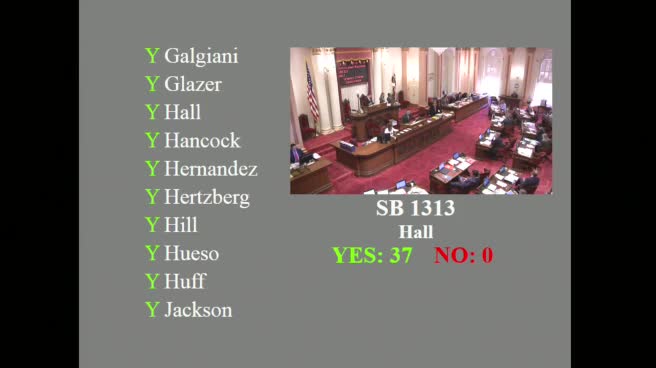 1MIN
Senate Floor
 1MIN
Assembly Floor
 55SEC
Assembly Floor
 28MIN
Assembly Standing Committee on Business and Professions
 36MIN
Senate Standing Committee on Business, Professions and Economic Development
Bill Author

Bill Co-Author(s):