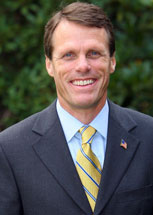
SB 1345: Vehicles: off-highway vehicle recreation: County of Inyo.
- Session Year: 2015-2016
- House: Senate
- Latest Version Date: 2016-08-26
Existing law authorizes an off-highway motor vehicle that has been issued a plate or device to be operated or driven upon a highway under certain circumstances. Existing law authorizes various public entities, and the Director of Parks and Recreation, to designate a highway, or portion thereof, for the combined use of regular vehicular traffic and off-highway motor vehicles if certain requirements are met. Existing law prohibits a highway from being designated for this combined use for a distance of more than 3 miles.
Existing law, until January 1, 2017, authorizes the County of Inyo to establish a pilot project that would exempt specified combined-use highways in the unincorporated area in the County of Inyo from this prohibition to link together existing roads in the unincorporated portion of the county to existing trails and trailheads on federal Bureau of Land Management or United States Forest Service lands in order to provide a unified linkage of trail systems for off-highway motor vehicles, as prescribed. Existing law requires the County of Inyo, in consultation with the Department of the California Highway Patrol, the Department of Transportation, and the Department of Parks and Recreation, to prepare and submit to the Legislature a report evaluating the effectiveness of the pilot project by January 1, 2016, as specified.
This bill would extend the operation of these provisions until January 1, 2020, and would extend the reporting deadline until January 1, 2019. For purposes of the pilot project described above, the bill would prohibit a combined-use highway road segment from exceeding 10 miles, except as specified.
Existing law authorizes an off-highway motor vehicle that has been issued a plate or device to be operated or driven upon a highway under certain circumstances. Existing law authorizes various public entities, and the Director of the Department of Parks and Recreation, to designate a highway, or portion thereof, for the combined use of regular vehicular traffic and off-highway motor vehicles if certain requirements are met. Existing law prohibits a highway from being designated for this combined use for a distance of more than 3 miles.
Existing law, until January 1, 2017, authorizes the County of Inyo to establish a pilot project that would exempt specified combined-use highways in the unincorporated area in the County of Inyo from this prohibition to link together existing roads in the unincorporated portion of the county to existing trails and trailheads on federal Bureau of Land Management or United States Forest Service lands in order to provide a unified linkage of trail systems for off-highway motor vehicles, as prescribed. Existing law requires the County of Inyo, in consultation with the Department of the California Highway Patrol, the Department of Transportation, and the Department of Parks and Recreation, to prepare and submit to the Legislature a report evaluating the effectiveness of the pilot project by January 1, 2016, as specified.
This bill would extend the operation of these provisions until January 1, 2020, and would extend the reporting deadline until January 1, 2019. For purposes of the pilot project described above, the bill would prohibit a combined-use highway road segment or combination of adjacent combined-use highway road segments from exceeding 10 miles. from exceeding 10 miles, except as specified.
Existing law authorizes an off-highway motor vehicle that has been issued a plate or device to be operated or driven upon a highway under certain circumstances. Existing law authorizes various public entities, and the Director of the Department of Parks and Recreation, to designate a highway, or portion thereof, for the combined use of regular vehicular traffic and off-highway motor vehicles if certain requirements are met. Existing law prohibits a highway from being designated for this combined use for a distance of more than 3 miles.
Existing law, until January 1, 2017, authorizes the County of Inyo to establish a pilot project that would exempt specified combined-use highways in the unincorporated area in the County of Inyo from this prohibition to link together existing roads in the unincorporated portion of the county to existing trails and trailheads on federal Bureau of Land Management or United States Forest Service lands in order to provide a unified linkage of trail systems for off-highway motor vehicles, as prescribed. Existing law requires the County of Inyo, in consultation with the Department of the California Highway Patrol, the Department of Transportation, and the Department of Parks and Recreation, to prepare and submit to the Legislature a report evaluating the effectiveness of the pilot project by January 1, 2016, as specified.
This bill would expand these provisions to additionally authorize the County of Sierra to establish a pilot project as described above. The bill would require the county to prepare and submit to the Legislature a report evaluating the effectiveness of the pilot project by January 1, 2019. The bill would also extend the operation of these provisions until January 1, 2020. extend the operation of these provisions until January 1, 2020, and would extend the reporting deadline until January 1, 2019. For purposes of the pilot project described above, the bill would prohibit a combined-use highway road segment or combination of adjacent combined-use highway road segments from exceeding 10 miles.
Existing law authorizes an off-highway motor vehicle that has been issued a plate or device to be operated or driven upon a highway under certain circumstances. Existing law authorizes various public entities, and the Director of the Department of Parks and Recreation, to designate a highway, or portion thereof, for the combined use of regular vehicular traffic and off-highway motor vehicles if certain requirements are met. Existing law prohibits a highway from being designated for this combined use for a distance of more than 3 miles.
Existing law, until January 1, 2017, authorizes the County of Inyo to establish a pilot project that would exempt specified combined-use highways in the unincorporated area in the County of Inyo from this prohibition to link together existing roads in the unincorporated portion of the county to existing trails and trailheads on federal Bureau of Land Management or United States Forest Service lands in order to provide a unified linkage of trail systems for off-highway motor vehicles, as prescribed. Existing law requires the County of Inyo, in consultation with the Department of the California Highway Patrol, the Department of Transportation, and the Department of Parks and Recreation, to prepare and submit to the Legislature a report evaluating the effectiveness of the pilot project by January 1, 2016, as specified.
This bill would expand these provisions to additionally authorize the County of Sierra to establish a pilot project as described above. The bill would require the county to prepare and submit to the Legislature a report evaluating the effectiveness of the pilot project by January 1, 2019. The bill would also extend the operation of these provisions until January 1, 2020.
The Pedestrian Mall Law of 1960 requires a legislative body, after determining that a pedestrian mall shall be established and that there remain any written claims for legal damages because of the establishment of the proposed mall to direct an action or actions be brought in superior court, as specified, to resolve those claims.
This bill would make nonsubstantive changes to this provision.
It is the intent of the Legislature in enacting this act to develop additional data to better evaluate whether a combined-use highways system is workable in the County of Inyo. It is further the intent of the Legislature that no General Fund moneys be expended for the pilot project established by this act, and the project will be revenue neutral to the state.
SEC. 2.Section 38026.1 of the Vehicle Code is amended to read:38026.1.(a)Except as provided in subdivision (e), the County of Inyo may establish a pilot project to designate combined-use highways on unincorporated county roads in the county for no more than 10 miles so that the combined-use highways can be used to link existing off-highway motor vehicle trails and trailheads on federal Bureau of Land Management or United States Forest Service lands, and to link off-highway motor vehicle recreational-use areas with necessary service and lodging facilities, in order to provide a unified system of trails for off-highway motor vehicles, preserve traffic safety, improve natural resource protection, reduce off-highway vehicle trespass on private land, and minimize impacts on county residents.
(b)A pilot project established pursuant to this section shall do all of the following:
(1)Prescribe a procedure for highway, road, or route selection and designation. The procedure shall be approved by a vote of a majority of the countys board of supervisors.
(2)Prescribe a procedure for the county to remove a combined-use designation, including a designation that is removed as a result of the conclusion of the pilot program.
(3)In cooperation with the Department of Transportation, establish uniform specifications and symbols for signs, markers, and traffic control devices to control off-highway motor vehicles, including, but not limited to, the following:
(A)Devices to warn of dangerous conditions, obstacles, or hazards.
(B)Designations of the right-of-way for regular vehicular traffic and off-highway motor vehicles.
(C)A description of the nature and destination of the off-highway motor vehicle trail.
(D)Warning signs for pedestrians and motorists of the presence of off-highway motor vehicle traffic.
(4)Require that off-highway motor vehicles subject to the pilot project meet the safety requirements of federal and state law regarding proper drivers licensing, helmet usage, and the requirements pursuant to Section 38026.5.
(5)Prohibit off-highway motor vehicles from traveling faster than 35 miles per hour on highways designated under this section.
(6)(A)Prohibit a combined-use highway road segment designated under this section from exceeding 10 miles.
(B)Notwithstanding subparagraph (A), two or more combined-use highway road segments may share a common starting point or ending point and may partially overlap as long as the resulting network of the highway road segments does not include more than three distinct locations of shared starting or ending points, or both.
(7)Include an opportunity for public comment at a public hearing held by the county in order to evaluate the pilot project.
(c)A pilot project established pursuant to this section may include use of a state highway, subject to the approval of the Department of Transportation, or any crossing of a highway designated pursuant to Section 38025.
(d)(1)By selecting and designating a highway for combined use pursuant to this section, the county agrees to defend and indemnify the state against any and all claims, including legal defense and liability arising from a claim, for any safety-related losses or injuries arising or resulting from use by off-highway motor vehicles of a highway designated as a combined-use highway by the countys board of supervisors pursuant to this section.
(2)This subdivision does not alter the requirements of subdivision (e).
(e)The county shall not designate a highway for combined use pursuant to this section unless the Commissioner of the Department of the California Highway Patrol finds that designating the highway for combined use would not create a potential traffic safety hazard.
(f)Not later than January 1, 2019, the County of Inyo, in consultation with the Department of the California Highway Patrol, the Department of Transportation, and the Department of Parks and Recreation, shall prepare and submit to the Legislature a report evaluating the pilot project, and containing all of the following:
(1)A description of the road segments designated to allow combined use for over three miles, as approved or adopted by a majority vote of the members of the Inyo County Board of Supervisors.
(2)An evaluation of the overall safety and effectiveness of the pilot project, including its impact on traffic flows, safety, off-highway vehicle usage on existing trails, incursions into areas not designated for off-highway vehicle usage, and nonmotorized recreation.
(3)A description of the public comments received at a public hearing held by the county in regards to an evaluation of the pilot project.
(g)(1)A report submitted pursuant to subdivision (f) shall be submitted in compliance with Section 9795 of the Government Code.
(2)This section shall remain in effect only until January 1, 2020, and as of that date is repealed, unless a later enacted statute, that is enacted before January 1, 2020, deletes or extends that date.
It is the intent of the Legislature in enacting this act to develop additional data to better evaluate whether a combined-use highways system is workable in other counties beyond the County of Inyo. It is further the intent of the Legislature that no General Fund moneys be expended for the pilot project established by this act, and the project will be revenue neutral to the state.
SEC. 2.Section 38026.1 of the Vehicle Code is amended to read:38026.1.(a)Except as provided in subdivision (e), the County of Inyo may establish a pilot project to designate combined-use highways on unincorporated county roads in the county for no more than 10 miles so that the combined-use highways can be used to link existing off-highway motor vehicle trails and trailheads on federal Bureau of Land Management or United States Forest Service lands, and to link off-highway motor vehicle recreational-use areas with necessary service and lodging facilities, in order to provide a unified system of trails for off-highway motor vehicles, preserve traffic safety, improve natural resource protection, reduce off-highway vehicle trespass on private land, and minimize impacts on county residents.
(b)A pilot project established pursuant to this section shall do all of the following:
(1)Prescribe a procedure for highway, road, or route selection and designation. The procedure shall be approved by a vote of a majority of the countys board of supervisors.
(2)Prescribe a procedure for the county to remove a combined-use designation, including a designation that is removed as a result of the conclusion of the pilot program.
(3)In cooperation with the Department of Transportation, establish uniform specifications and symbols for signs, markers, and traffic control devices to control off-highway motor vehicles, including, but not limited to, the following:
(A)Devices to warn of dangerous conditions, obstacles, or hazards.
(B)Designations of the right-of-way for regular vehicular traffic and off-highway motor vehicles.
(C)A description of the nature and destination of the off-highway motor vehicle trail.
(D)Warning signs for pedestrians and motorists of the presence of off-highway motor vehicle traffic.
(4)Require that off-highway motor vehicles subject to the pilot project meet the safety requirements of federal and state law regarding proper drivers licensing, helmet usage, and the requirements pursuant to Section 38026.5.
(5)Prohibit off-highway motor vehicles from traveling faster than 35 miles per hour on highways designated under this section.
(6)(A)Prohibit a combined-use highway road segment or combination of adjacent combined-use highway road segments designated under this section from exceeding 10 miles.
(B)Notwithstanding subparagraph (A), two or more combined-use highway road segments may share a common starting point or ending point and may partially overlap as long as the resulting network of the highway road segments does not include more than three distinct locations of shared starting or ending points, or both.
(7)Include an opportunity for public comment at a public hearing held by the county in order to evaluate the pilot project.
(c)A pilot project established pursuant to this section may include use of a state highway, subject to the approval of the Department of Transportation, or any crossing of a highway designated pursuant to Section 38025.
(d)(1)By selecting and designating a highway for combined use pursuant to this section, the county agrees to defend and indemnify the state against any and all claims, including legal defense and liability arising from a claim, for any safety-related losses or injuries arising or resulting from use by off-highway motor vehicles of a highway designated as a combined-use highway by the countys board of supervisors pursuant to this section.
(2)This subdivision does not alter the requirements of subdivision (e).
(e)The county shall not designate a highway for combined use pursuant to this section unless the Commissioner of the Department of the California Highway Patrol finds that designating the highway for combined use would not create a potential traffic safety hazard.
(f)Not later than January 1, 2019, the County of Inyo, in consultation with the Department of the California Highway Patrol, the Department of Transportation, and the Department of Parks and Recreation, shall prepare and submit to the Legislature a report evaluating the pilot project, and containing all of the following:
(1)A description of the road segments designated to allow combined use for over three miles, as approved or adopted by a majority vote of the members of the Inyo County Board of Supervisors.
(2)An evaluation of the overall safety and effectiveness of the pilot project, including its impact on traffic flows, safety, off-highway vehicle usage on existing trails, incursions into areas not designated for off-highway vehicle usage, and nonmotorized recreation.
(3)A description of the public comments received at a public hearing held by the county in regards to an evaluation of the pilot project.
(g)(1)A report submitted pursuant to subdivision (f) shall be submitted in compliance with Section 9795 of the Government Code.
(2)This section shall remain in effect only until January 1, 2020, and as of that date is repealed, unless a later enacted statute, that is enacted before January 1, 2020, deletes or extends that date.
It is the intent of the Legislature in enacting this act and designating combined-use highways on unincorporated county roads in the County of Sierra for more than three miles to link existing roads in the unincorporated portion of the county to existing trails and trailheads on federal Bureau of Land Management or United States Forest Service lands in order to provide a unified system of trails for off-highway motor vehicles. It is the intent of the Legislature to develop additional data to better evaluate whether a combined-use highways system is workable in other counties beyond the County of Inyo. It is further the intent of the Legislature that no General Fund moneys be expended for the pilot project established by this act, and the project will be revenue neutral to the state.
SEC. 2.Section 38026.1 of the Vehicle Code is amended to read:38026.1.(a)Except as provided in subdivision (e), the Counties County of Inyo and Sierra may each establish a pilot project to designate combined-use highways on unincorporated county roads in the county for no more than 10 miles so that the combined-use highways can be used to link existing off-highway motor vehicle trails and trailheads on federal Bureau of Land Management or United States Forest Service lands, and to link off-highway motor vehicle recreational-use areas with necessary service and lodging facilities, in order to provide a unified system of trails for off-highway motor vehicles, preserve traffic safety, improve natural resource protection, reduce off-highway vehicle trespass on private land, and minimize impacts on county residents.
(b)A pilot project established pursuant to this section shall do all of the following:
(1)Prescribe a procedure for highway, road, or route selection and designation. The procedure shall be approved by a vote of a majority of each the countys respective board of supervisors.
(2)Prescribe a procedure for the county to remove a combined-use designation, including a designation that is removed as a result of the conclusion of the pilot program.
(3)In cooperation with the Department of Transportation, establish uniform specifications and symbols for signs, markers, and traffic control devices to control off-highway motor vehicles, including, but not limited to, the following:
(A)Devices to warn of dangerous conditions, obstacles, or hazards.
(B)Designations of the right-of-way for regular vehicular traffic and off-highway motor vehicles.
(C)A description of the nature and destination of the off-highway motor vehicle trail.
(D)Warning signs for pedestrians and motorists of the presence of off-highway motor vehicle traffic.
(4)Require that off-highway motor vehicles subject to the pilot project meet the safety requirements of federal and state law regarding proper drivers licensing, helmet usage, and the requirements pursuant to Section 38026.5.
(5)Prohibit off-highway motor vehicles from traveling faster than 35 miles per hour on highways designated under this section.
(6)Prohibit a combined-use highway road segment or combination of adjacent combined-use highway road segments designated under this section from exceeding 10 miles.
(6)
(7)Include an opportunity for public comment at a public hearing held by each the county in order to evaluate the pilot project.
(c)A pilot project established pursuant to this section may include use of a state highway, subject to the approval of the Department of Transportation, or any crossing of a highway designated pursuant to Section 38025.
(d)(1)By selecting and designating a highway for combined use pursuant to this section, each the county agrees to defend and indemnify the state against any and all claims, including legal defense and liability arising from a claim, for any safety-related losses or injuries arising or resulting from use by off-highway motor vehicles of a highway designated as a combined-use highway by each the countys respective board of supervisors pursuant to this section.
(2)This subdivision does not alter the requirements of subdivision (e).
(e)A The county shall not designate a highway for combined use pursuant to this section unless the Commissioner of the Department of the California Highway Patrol finds that designating the highway for combined use would not create a potential traffic safety hazard.
(f)Not later than January 1, 2016, 2019, the County of Inyo, in consultation with the Department of the California Highway Patrol, the Department of Transportation, and the Department of Parks and Recreation, shall prepare and submit to the Legislature a report evaluating the pilot project, and containing all of the following:
(1)A description of the road segments designated to allow combined use for over three miles, as approved or adopted by a majority vote of the members of the Inyo County Board of Supervisors.
(2)An evaluation of the overall safety and effectiveness of the pilot project, including its impact on traffic flows, safety, off-highway vehicle usage on existing trails, incursions into areas not designated for off-highway vehicle usage, and nonmotorized recreation.
(3)A description of the public comments received at a public hearing held by the county in regards to an evaluation of the pilot project.
(g)Not later than January 1, 2019, the County of Sierra, in consultation with the Department of the California Highway Patrol, the Department of Transportation, and the Department of Parks and Recreation, shall prepare and submit to the Legislature a report evaluating the pilot project, and containing all of the following:
(1)A description of the road segments designated to allow combined use for over three miles, as approved or adopted by a majority vote of the members of the Sierra County Board of Supervisors.
(2)An evaluation of the overall safety and effectiveness of the pilot project, including its impact on traffic flows, safety, off-highway vehicle usage on existing trails, incursions into areas not designated for off-highway vehicle usage, and nonmotorized recreation.
(3)A description of the public comments received at a public hearing held by the county in regards to an evaluation of the pilot project.
(h)
(g)(1)A report submitted pursuant to subdivision (f) or (g) shall be submitted in compliance with Section 9795 of the Government Code.
(2)This section shall remain in effect only until January 1, 2020, and as of that date is repealed, unless a later enacted statute, that is enacted before January 1, 2020, deletes or extends that date.
It is the intent of the Legislature in enacting this act and designating combined-use highways on unincorporated county roads in the County of Sierra for more than three miles to link existing roads in the unincorporated portion of the county to existing trails and trailheads on federal Bureau of Land Management or United States Forest Service lands in order to provide a unified system of trails for off-highway motor vehicles. It is the intent of the Legislature to develop additional data to better evaluate whether a combined-use highways system is workable in other counties beyond the County of Inyo. It is further the intent of the Legislature that no General Fund moneys be expended for the pilot project established by this act, and the project will be revenue neutral to the state.
SEC. 2.Section 38026.1 of the Vehicle Code is amended to read:38026.1.(a)Except as provided in subdivision (e), the County of Inyo Counties of Inyo and Sierra may each establish a pilot project to designate combined-use highways on unincorporated county roads in the county for no more than 10 miles so that the combined-use highways can be used to link existing off-highway motor vehicle trails and trailheads on federal Bureau of Land Management or United States Forest Service lands, and to link off-highway motor vehicle recreational-use areas with necessary service and lodging facilities, in order to provide a unified system of trails for off-highway motor vehicles, preserve traffic safety, improve natural resource protection, reduce off-highway vehicle trespass on private land, and minimize impacts on county residents.
(b)The A pilot project established pursuant to this section shall do all of the following:
(1)Prescribe a procedure for highway, road, or route selection and designation. The procedure shall be approved by a vote of a majority of the Inyo County Board of Supervisors. each countys respective board of supervisors.
(2)Prescribe a procedure for the county to remove a combined-use designation, including a designation that is removed as a result of the conclusion of the pilot program.
(3)In cooperation with the Department of Transportation, establish uniform specifications and symbols for signs, markers, and traffic control devices to control off-highway motor vehicles, including, but not limited to, the following:
(A)Devices to warn of dangerous conditions, obstacles, or hazards.
(B)Designations of the right-of-way for regular vehicular traffic and off-highway motor vehicles.
(C)A description of the nature and destination of the off-highway motor vehicle trail.
(D)Warning signs for pedestrians and motorists of the presence of off-highway motor vehicle traffic.
(4)Require that off-highway motor vehicles subject to the pilot project meet the safety requirements of federal and state law regarding proper drivers licensing, helmet usage, and the requirements pursuant to Section 38026.5.
(5)Prohibit off-highway motor vehicles from traveling faster than 35 miles per hour on highways designated under this section.
(6)Include an opportunity for public comment at a public hearing held by the each county in order to evaluate the pilot project.
(c)The A pilot project established pursuant to this section may include use of a state highway, subject to the approval of the Department of Transportation, or any crossing of a highway designated pursuant to Section 38025.
(d)(1)By selecting and designating a highway for combined use pursuant to this section, the County of Inyo each county agrees to defend and indemnify the state against any and all claims, including legal defense and liability arising from a claim, for any safety-related losses or injuries arising or resulting from use by off-highway motor vehicles of a highway designated as a combined-use highway by the Inyo County Board of Supervisors each countys respective board of supervisors pursuant to this section.
(2)This subdivision does not alter the requirements of subdivision (e).
(e)The County of Inyo A county shall not designate a highway for combined use pursuant to this section unless the Commissioner of the Department of the California Highway Patrol finds that designating the highway for combined use would not create a potential traffic safety hazard.
(f)Not later than January 1, 2016, the County of Inyo, in consultation with the Department of the California Highway Patrol, the Department of Transportation, and the Department of Parks and Recreation, shall prepare and submit to the Legislature a report evaluating the pilot project, and containing both all of the following:
(1)A description of the road segments designated to allow combined use for over three miles, as approved or adopted by a majority vote of the members of the Inyo County Board of Supervisors.
(2)An evaluation of the overall safety and effectiveness of the pilot project, including its impact on traffic flows, safety, off-highway vehicle usage on existing trails, incursions into areas not designated for off-highway vehicle usage, and nonmotorized recreation.
(3)A description of the public comments received at a public hearing held by the county in regards to an evaluation of the pilot project.
(g)Not later than January 1, 2019, the County of Sierra, in consultation with the Department of the California Highway Patrol, the Department of Transportation, and the Department of Parks and Recreation, shall prepare and submit to the Legislature a report evaluating the pilot project, and containing all of the following:
(1)A description of the road segments designated to allow combined use for over three miles, as approved or adopted by a majority vote of the members of the Sierra County Board of Supervisors.
(2)An evaluation of the overall safety and effectiveness of the pilot project, including its impact on traffic flows, safety, off-highway vehicle usage on existing trails, incursions into areas not designated for off-highway vehicle usage, and nonmotorized recreation.
(3)A description of the public comments received at a public hearing held by the county in regards to an evaluation of the pilot project.
(g)
(h)(1)A report submitted pursuant to subdivision (f) or (g) shall be submitted in compliance with Section 9795 of the Government Code.
(2)This section shall remain in effect only until January 1, 2017, 2020, and as of that date is repealed, unless a later enacted statute, that is enacted before January 1, 2017, 2020, deletes or extends that date.
SECTION 1.Section 11400 of the Streets and Highways Code is amended to read:11400.If following the hearing the legislative body determines that the pedestrian mall shall be established, and if at that time there remain any written claims for damages that have not been allowed pursuant to Section 11310 or that have not been withdrawn, the legislative body shall direct that an action or actions be brought in the superior court in the name of the city by the county counsel, district attorney, or city attorney, as the case may be, or other attorney designated by the legislative body for a determination of the damages, if any, to which the claimant may legally be entitled because of the establishment of the pedestrian mall. The action shall be in the nature of a proceeding in eminent domain for the condemnation of the right or rights in real property, the taking of which by the establishment of the pedestrian mall results in the damages claimed. Except as may otherwise be provided in this part, the action and proceeding shall be governed so far as the same may be made applicable by the provisions relating to proceedings in eminent domain. Except as provided in Article 2 (commencing with Section 1245.210) of Chapter 4 of Title 7 of Part 3 of the Code of Civil Procedure, in any action the resolution of intention adopted pursuant to this part and the resolution adopted under Section 11311 conclusively establish the matters referred to in Section 1240.030 of the Code of Civil Procedure.
If following the hearing the legislative body shall determine determines that the pedestrian mall shall be established, and if at that time there remain any written claims for damages which that have not been allowed pursuant to Section 11310 or which that have not been withdrawn, the legislative body shall direct that an action or actions be brought in the superior court in the name of the city by the county counsel, district attorney, or city attorney, as the case may be, or other attorney designated by the legislative body for a determination of the damages, if any, to which the claimant may legally be entitled because of the establishment of the pedestrian mall. Such The action shall be in the nature of a proceeding in eminent domain for the condemnation of the right or rights in real property, the taking of which by the establishment of the pedestrian mall results in the damages claimed. Except as may otherwise be provided in this part, such the action and proceeding shall be governed so far as the same may be made applicable by the provisions relating to proceedings in eminent domain. Except as provided in Article 2 (commencing with Section 1245.210) of Chapter 4 of Title 7 of Part 3 of the Code of Civil Procedure, in any such action the resolution of intention adopted pursuant to this part and the resolution adopted under Section 11311 conclusively establish the matters referred to in Section 1240.030 of the Code of Civil Procedure.
|
Date
|
Status
|
|---|---|
| Aug 26, 2016 | Approved by the Governor. |
| Aug 26, 2016 | Chaptered by Secretary of State. Chapter 217, Statutes of 2016. |
| Aug 19, 2016 | Enrolled and presented to the Governor at 10 a.m. |
| Aug 16, 2016 | Assembly amendments concurred in. (Ayes 30. Noes 6. Page 5028.) Ordered to engrossing and enrolling. |
| Aug 16, 2016 | Assembly amendments concurred in. (Ayes 30. Noes 6.) Ordered to engrossing and enrolling. |
| Aug 11, 2016 | Read third time. Passed. (Ayes 78. Noes 0. Page 5780.) Ordered to the Senate. |
| Aug 11, 2016 | Read third time. Passed. Ordered to the Senate. |
| Aug 11, 2016 | In Senate. Concurrence in Assembly amendments pending. |
| Aug 4, 2016 | Read second time. Ordered to consent calendar. |
| Aug 3, 2016 | From committee: Do pass. Ordered to consent calendar. (Ayes 20. Noes 0.) (August 3). |
| Jun 28, 2016 | From committee: Do pass and re-refer to Com. on APPR. (Ayes 14. Noes 0.) (June 27). Re-referred to Com. on APPR. |
| Jun 20, 2016 | From committee with author's amendments. Read second time and amended. Re-referred to Com. on TRANS. |
| May 27, 2016 | Referred to Com. on TRANS. |
| May 23, 2016 | Read third time. Passed. (Ayes 25. Noes 7. Page 3925.) Ordered to the Assembly. |
| May 23, 2016 | In Assembly. Read first time. Held at Desk. |
| May 23, 2016 | Read third time. Passed. (Ayes 25. Noes 7.) Ordered to the Assembly. |
| May 10, 2016 | Read second time. Ordered to third reading. |
| May 9, 2016 | From committee: Be ordered to second reading pursuant to Senate Rule 28.8. |
| Apr 29, 2016 | Set for hearing May 9. |
| Apr 25, 2016 | Read second time and amended. Re-referred to Com. on APPR. |
| Apr 21, 2016 | From committee: Do pass as amended and re-refer to Com. on APPR. (Ayes 9. Noes 2. Page 3617.) (April 19). |
| Apr 21, 2016 | From committee: Do pass as amended and re-refer to Com. on APPR. (Ayes 9. Noes 2.) (April 19). |
| Apr 5, 2016 | Set for hearing April 19. |
| Mar 31, 2016 | Re-referred to Com. on T. & H. |
| Mar 28, 2016 | From committee with author's amendments. Read second time and amended. Re-referred to Com. on RLS. |
| Mar 3, 2016 | Referred to Com. on RLS. |
| Feb 22, 2016 | Read first time. |
| Feb 22, 2016 | From printer. May be acted upon on or after March 23. |
| Feb 19, 2016 | Introduced. To Com. on RLS. for assignment. To print. |
|
Date
|
Description
|
Location
|
Votes
|
|
|---|---|---|---|---|
| Aug 16, 2016 | Unfinished Business SB1345 Berryhill Concurrence | Senate Floor |
Passed |
|
| Aug 11, 2016 | SB 1345 Berryhill, T. Consent Calendar Second Day Regular Session | Assembly Floor |
Passed |
|
| Aug 3, 2016 | Do pass. To Consent Calendar. | Assembly Standing Committee on Appropriations |
Passed |
|
| Jun 27, 2016 | Do pass and be re-referred to the Committee on [Appropriations] | Assembly Standing Committee on Transportation |
Passed |
|
| May 23, 2016 | Senate 3rd Reading SB1345 Berryhill | Senate Floor |
Passed |
|
| Apr 19, 2016 | Do pass as amended, but first amend, and re-refer to the Committee on [Appropriations] | Senate Standing Committee on Transportation and Housing |
Passed |
This list shows positions taken on this bill by organizations on the date displayed, which is linked to the original source.
Positions by individuals are not included.
Office of Senate Floor Analyses (916) 651-1520 Fax: (916) 327-4478 | SB |
UNFINISHED BUSINESS
Bill No: SB 1345
:
SENATE TRANS. & HOUSING COMMITTEE: 9-2, 4/19/16
AYES: Beall, Cannella, Bates, Gaines, Galgiani, McGuire, Mendoza, Roth, Wieckowski
NOES: Allen, Leyva
SENATE APPROPRIATIONS COMMITTEE: Senate Rule 28.8
SENATE FLOOR: 25-7, 5/23/16
AYES: Anderson, Bates, Beall, Berryhill, Block, Cannella, Fuller, Gaines, Galgiani, Glazer, Hall, Hernandez, Hertzberg, Hill, Huff, McGuire, Mendoza, Moorlach, Morrell, Nguyen, Nielsen, Pan, Roth, Stone, Vidak
NOES: Allen, Hancock, Jackson, Leno, Leyva, Liu, Pavley
NO VOTE RECORDED: De León, Hueso, Lara, Mitchell, Monning, Runner, Wieckowski, Wolk
ASSEMBLY FLOOR: 78-0, 8/11/16 (Consent) - See last page for vote
DIGEST: This bill extends the sunset on Inyo County’s authority to designate road segments greater than three miles in length for combined use by cars and off-highway motor vehicles.
Assembly Amendments clarify the limit on adjacent combined-use segments so that contiguous segments are allowable under specific circumstances.
Existing law:
- Prohibits, generally, an off-highway motor vehicle (OHV) from being driven upon any public highway or street, except to cross a highway under certain circumstances, or when a highway is closed due to snow.
- Allows a local authority, the federal government, or the Department of Parks and Recreation (DPR) to permit “combined use” by OHVs and motor vehicles on road segments under its jurisdiction of up to three miles in length for the purpose of connecting OHV trails or connecting OHV trails with services, provided that:
- The California Highway Patrol (CHP) reviews the proposed segment and does not find that the designation would create a potential traffic safety hazard.
- The entity with jurisdiction over the road segment erects signs approved by the California Department of Transportation indicating that combined use is permitted.
- Requires drivers of OHVs that are operated on combined-use road segments to comply with all provisions of the California Vehicle Code, including possessing a valid driver’s license, obeying speed laws, possessing evidence of insurance, and wearing a helmet while on a motorcycle.
- Prohibits the operation of OHVs on roads after dark.
- Authorizes Inyo County to permit combined use on road segments within its jurisdiction of up to 10 miles in length. This authority is granted on a pilot basis with a sunset date of January 1, 2017. In designing the program, the County must:
- Develop procedures for selecting and removing combined-use designations from road segments
- Establish uniform signage for combined-use road segments to control OHV traffic and advise pedestrians and regular traffic that OHVs may be present
- Require OHVs to comply with the same state and federal safety laws that apply to OHV drivers on traditional combined-use road segments under three miles in length
- Prohibit OHVs from exceeding 35 miles per hour on combined-use segments
- Provide an opportunity for public comment at a hearing to evaluate the pilot project
- Agree to defend and indemnify the state against claims for any safety-related losses or injuries arising from combined use
- Not approve a road segment for combined use if the CHP finds that doing so would create a potential traffic safety hazard
- Requires Inyo County, by January 1, 2016, to submit a report to the Legislature that:
- Describes the road segments designated for combined use under the program
- Evaluates the effect of the pilot program on safety, traffic flow, off-highway vehicle usage on existing trails, incursions into areas not designated for off-highway vehicle usage, and non-motorized recreation
- Describes the public comments received in the public hearing
This bill:
- Extends Inyo County’s authority to implement the pilot program until January 1, 2020
- Requires Inyo County to submit an additional report to the Legislature, subject to the same requirements of the original report, by January 1, 2019
- Specifies that each combined-use segment that connects a service to a park or trail cannot exceed 10 miles
- Limits contiguous combined-use segments by capping the number of shared start points and shared end points in a chain of combined-use segments
Comments
- Purpose. According to the author, this bill supports Inyo County in better regulating, managing, and analyzing its OHV trail system by extending the existing combined-use pilot program. The author states that Inyo County has unique circumstances that warrant the pilot project, as less than 2% of its 10,000 square miles is privately owned and many of its nearly 18,000 residents use OHVs as a common mode of transportation. In addition, the author notes that tourism is the largest contributor to the county’s economy, and expects that this project will help visitors use OHVs responsibly. The author explains that the bill will affect roughly graded gravel roads in an unincorporated area of the county, and notes that these roads also play an important role in staging OHVs. By allowing staging to occur in parking lots closer to town, the author argues that this bill could spare narrow forest trails from being disturbed by trucks and trailers unloading OHVs. The author also notes that the report on the Inyo County pilot program indicated that additional time and designated routes are needed to fully evaluate this change in public policy, and that preliminary evaluation did not suggest any detrimental results (e.g., deaths, injuries, public safety complaints, etc.) of the pilot program to date.
- What’s covered. OHVs encompass a variety of vehicle types, including motorcycles, snowmobiles, sand buggies, dune buggies, all-terrain vehicles (ATVs), Jeeps, and recreational utility vehicles (also known as utility terrain vehicles or side-by-sides) that are intended to be operated or used exclusively off the highways. They are therefore not subject to the same registration and safety equipment requirements as vehicles that are routinely used on public streets.
- No new trails. This bill concerns the operation of OHVs on roads used by regular traffic. It does not establish any new trails or OHV recreation areas.
- Legislative history. In 2010, the Governor vetoed a bill (AB 2338, Conway) that would have allowed Inyo County to permit combined use on road segments longer than three miles, citing concerns about state liability in the event of an accident. The following year, the Legislature passed and the Governor signed AB 628 (Conway, Chapter 532, Statutes of 2011), which allowed Inyo County to designate road segments up to 10 miles in length for combined use on a pilot basis, and subject to several conditions. The bill addressed the liability issue by (a) prohibiting Inyo County from designating a road for combined use if the CHP finds that the designation would create a potential safety hazard, and (b) requiring the County to indemnify the state against claims in the event of an accident on a combined-use segment.
- Implementation delays. The pilot program was initially controversial in Inyo County, and the Board of Supervisors did not approve any routes until January 2015. At that point, it authorized seven combined-use segments totaling 44 miles in length. Shortly thereafter, the Center for Biological Diversity and Public Employees for Environmental Responsibility sued the County, arguing that the environmental impact report for the project was inadequate. The suit was settled in May 2015. Four of the seven approved routes have still not been opened due to ambiguity regarding the County’s authority to maintain roads when the underlying land is owned by another party. The County is currently working with the U.S. Forest Service to resolve this issue, and the remaining three routes were opened between July 14 and August 5, 2015.
- Safety concerns. While many states allow OHVs to be operated on public roads under some circumstances, opponents of this bill argue that these vehicles cannot safely share the road with regular traffic because they are not equipped with the safety features required in traditional cars (e.g., airbags). As such, OHVs may leave occupants extremely vulnerable in on-road accidents. Additionally, the U.S. Consumer Products Safety Commission, ATV manufacturers, and ATV safety organizations agree that ATVs in particular are not designed to operate on paved roads and can only be operated safely in an off-road setting. This is due in part to specific features of vehicle design that make some maneuvers, such as turning, difficult on pavement. These concerns do not apply equally to all OHVs: Some are inherently more stable and protective of occupants than others, and may even have been designed for on-road use. However, this bill does not make any distinctions between types of OHVs that are allowed on combined-use roads.
- Regulated use versus increasing use. Supporters of this bill argue that making it easier for OHV users to legally access trails and services makes it less likely that these individuals will access trails and services illegally, in ways that are more likely to damage the environment or threaten public safety. Opponents point out that increasing the convenience of OHV recreation may attract additional OHV users to the existing trail system, resulting in greater damage to the environment and potential for injury.
- What do the data show? With respect to safety, OHV use of existing trails, OHV incursions into areas not designated for their use, and impact of OHVs on non-motorized recreation, neither Inyo County staff nor the Bureau of Land Management (BLM), which manages the affected OHV trails, has observed any changes since the combined-use segments were opened. However, Inyo County submitted its report on the pilot program on December 15, 2015, less than six months after the opening of the three combined-use routes currently authorized under the program. Supporters of this legislation argue that extending the sunset is necessary to obtain a more complete picture of the effect of longer combined-use segments on traffic safety, the behavior of OHV drivers, and the experiences of other recreationalists.
- Gauging change. The December 2015 report on the Inyo County pilot program notes that the BLM, which manages the OHV trails at the end of all three currently open combined-use roads, is tracking use of these areas with grant funds that did not become available until this year. Because there is no data on OHV use of these areas prior to the implementation of the pilot program, it will not be possible to determine whether OHV use increased once the program was initiated. This example illustrates the difficulty of drawing meaningful conclusions about how this type of policy affects OHV user behavior, since the OHV trails that are linked via combined-use roads are likely not to be the subject of robust monitoring, and in many cases are not under the jurisdiction of the state.
- Contiguous segments. Existing law defines a combined-use segment as a stretch of road connecting an OHV park or trail to an OHV service (e.g., motels, campgrounds) and limits each segment to 10 miles in length. It does not explicitly limit contiguous 10-mile segments, however, and Inyo County has approved several adjacent segments under existing law. Supporters of this bill argue that contiguous segments are within the scope of existing law, since a single OHV trailhead may be within 10 miles of services that are located in two different locations. Opponents of the bill argue that such “daisy-chaining” of segments is not consistent with the intent of existing law because it results in stretches of combined-use road greater than 10 miles in length. Amendments taken in the Assembly Transportation Committee allow two combined-use road segments to share a common starting point or ending point as long as the resulting network does not include more than three distinct locations of shared starting or ending points. These amendments are intended to impose some limits on adjacent combined-use segments while still supporting the public purpose of connecting OHV trails and parks with services. They also preserve the legality of the existing network of approved segments.
FISCAL EFFECT: Appropriation: No Fiscal Com.: Yes Local: No
According to the Assembly Appropriations Committee, this bill will result in minor absorbable costs in 2018-19 for the CHP, Caltrans, and DPR to assist the County with its evaluation of the pilot project.
Inyo County Board of Supervisors
Lassen County
Rural County Representatives of California
Sierra County Board of Supervisors
2 individuals
OPPOSITION: (Verified 8/11/16)
Center for Biological Diversity
Center for Sierra Nevada Conservation
Sierra Club California
9 individuals
ASSEMBLY FLOOR: 78-0, 8/11/16
AYES: Achadjian, Alejo, Travis Allen, Arambula, Atkins, Baker, Bigelow, Bloom, Bonilla, Bonta, Brough, Brown, Burke, Calderon, Campos, Chang, Chau, Chávez, Chiu, Chu, Cooley, Cooper, Dababneh, Dahle, Daly, Dodd, Eggman, Frazier, Beth Gaines, Gallagher, Cristina Garcia, Eduardo Garcia, Gatto, Gipson, Gomez, Gonzalez, Gordon, Gray, Grove, Hadley, Harper, Holden, Irwin, Jones, Jones-Sawyer, Kim, Lackey, Levine, Linder, Lopez, Maienschein, Mathis, Mayes, McCarty, Medina, Melendez, Mullin, Nazarian, Obernolte, O'Donnell, Olsen, Patterson, Quirk, Ridley-Thomas, Rodriguez, Salas, Santiago, Steinorth, Mark Stone, Thurmond, Ting, Wagner, Waldron, Weber, Wilk, Williams, Wood, Rendon
NO VOTE RECORDED: Roger Hernández, Low
8/12/16 13:24:02
**** END ****
Date of Hearing: August 3, 2016
ASSEMBLY COMMITTEE ON APPROPRIATIONS
Lorena Gonzalez, Chair
SBPCA Bill Id:SB 1345
Author:(Berryhill) – As Amended Ver:June 20, 2016
Policy Committee: | Transportation | Vote: | 14 - 0 |
|
| ||
|
|
Urgency: No State Mandated Local Program: No Reimbursable: No
SUMMARY:
This bill:
- Extends, from January 1, 2017, to January 1, 2020, the sunset on authorization for an Inyo County pilot program to designate the combined use highway segments to connect off-highway vehicle (OHV) trails and facilities within the county.
- Extends, until January 1, 2019, the deadline for the County, in consultation with the CHP, Caltrans, and the Department of Parks and Recreation (DPR), to provide an evaluation of the pilot to the Legislature.
FISCAL EFFECT:
Minor absorbable costs in 2018-19 for the CHP, Caltrans and DPR to assist the County with its evaluation of the pilot project.
COMMENTS:
- Background. AB 628 (Conway), Chapter 532, Statutes of 2011, authorized Inyo County to conduct a pilot program, through January 1, 2017, to designate road segments up to 10 miles in length on county roads for combined use with OHVs and motor vehicle traffic. The intent of the pilot is to link existing OHV trails and trailheads, mostly on federal land, to OHV recreational use areas with service and lodging facilities in order to create a unified linkage of trail systems for OHV users. Less than 2% of the county's 10,000 square miles is privately-owned, and many of its nearly 18,000 residents use OHVs as a common mode of transportation. Further, the county's economy is reliant on tourism, its largest financial contributor.
- Purpose. Due to delays in implementing the program, in part due to litigation, only three combined use routes have been opened and the remaining four additional approved routes are slated to open this summer. The extension in this bill is intended to provide the county with more time to implement and evaluate the pilot program.
- Opposition. The Sierra Club states that the bill fails to address issues with the initial pilot including health and safety concerns; noise and traffic increases in local communities; air quality impacts from dust and emissions; and impacts to natural resources.
Analysis Prepared by: Chuck Nicol / APPR. / (916) 319-2081
Date of Hearing: June 27, 2016
ASSEMBLY COMMITTEE ON TRANSPORTATION
Jim Frazier, Chair
SBPCA Bill Id:SB 1345
Author:(Berryhill) – As Amended Ver:June 20, 2016
SENATE VOTE: 25-7
SUBJECT: Vehicles: off-highway vehicle (OHV) recreation: County of Inyo
SUMMARY: Extends the sunset date to January 1, 2020, for the Inyo County pilot program to designate combined-use roadways segments to connect OHV facilities. Specifically, this bill:
- Declares the legislative intent to develop additional and better data to evaluate whether a combined-use highway is workable and to ensure no General Fund moneys are expended on the pilot program.
- Extends the sunset for the authorized Inyo County pilot program for the designation of combined use highway segments to connect OHV trails and facilities from January 1, 2017, to January 1, 2020.
- Requires that an evaluation of the pilot program by Inyo County, in consultation with the Department of California Highway Patrol (CHP), the California Department of Transportation (Caltrans), and the California Department of Parks and Recreation (Parks), be submitted to the Legislature by January 1, 2019.
- Prohibits a combined-use highway road segment designated under the pilot program from exceeding 10 miles in length.
- Allows two or more combined-use highway road segments to share a common starting point or ending point and partially overlap as long as the resulting network does not include more than three distinct locations of shared starting or ending points.
EXISTING LAW:
- Generally prohibits a vehicle registered as an OHV from being operated on public streets, except if the use is to cross a highway, under specific circumstances; when the highway is closed for snow; or when the highway is designated for combined use.
- Allows a local authority, a federal government agency, or the Parks Director, for highways under their respective jurisdiction, to designate a highway segment for combined use of OHVs and regular traffic. The combined-use highway segment cannot be longer than three miles long and must meet one the following criteria:
- Provide a connecting link between OHV trails segments;
- Link an OHV recreational use area and necessary service facilities; or
- Connect lodging facilities with an OHV recreational facility.
- Prohibits a freeway from being designated for the combined use of regular traffic and OHVs.
- Provides that, prior to designating a highway for combined use, a local agency, federal agency, or the Parks Director must notify the CHP Commissioner and may not designate a road for combined use if the CHP believes doing so would create a potential traffic safety hazard.
- Requires signs approved by Caltrans on designated combined-use highways before the designation can become effective.
- Prohibits operation of an OHV on a designated combined use highway without the following: a valid license appropriate for the class of vehicle being operated, proof of insurance, a working spotlight, rubber tires, or after dark.
- Authorizes Inyo County, until January 1, 2017, to establish a pilot project to provide a unified system of trails for OHVs by designating combined use highways on unincorporated county roads for segments for no more than 10 miles.
- Requires that the pilot project do the following:
- Prescribe a procedure for the County Board of Supervisors to select roads, by a majority vote, to be included in the pilot project;
- Establish, in cooperation with the Caltrans, uniform signs, markers, and traffic control devices to control OHVs;
- Require OHVs subject to the pilot program to meet safety requirements related to, for instance, driver licensing, helmet usage, and other conditions of lawful OHV operation;
- Limit speeds to no more than 35 miles per hour; and,
- Provide an opportunity for public comment at a public hearing by the county to evaluate the pilot.
- Requires, by January 1, 2016, Inyo County, in consultation with CHP, Caltrans, and Parks, to evaluate the pilot program and report its findings to the Legislature.
FISCAL EFFECT: Unknown
COMMENTS: AB 628 (Conway), Chapter 532, Statutes of 2011, authorized Inyo County to conduct a pilot program, through January 1, 2017, to designate road segments up to 10 miles in length on county roads for combined use with OHVs and motor vehicle traffic. The intent of the pilot is to link existing OHV trails and trailheads, mostly on federal land, to OHV recreational use areas with service and lodging facilities. This would create a unified linkage of trail systems for OHV users. According the Rural County Representatives of California, Inyo County has unique circumstances that warrant this pilot project. Less than 2% of its 10,000 square miles is privately-owned and many of its nearly 18,000 residents use OHVs as a common mode of transportation. Further, Inyo County’s economy relies on tourism, the county’s largest financial contributor.
In October 2012, the Adventure Trails System of the Eastern Sierra applied to Inyo County to designate 38 separate combined-use roadways to permit OHV traffic. After environmental review and public input, the Inyo County Board of Supervisors approved a revised application and designated 7 combined-use routes in January 2015. After the county took action to approve the routes, the Center for Biological Diversity and the Public Employees for Environmental Responsibility filed a lawsuit, concerned that the county could proceed with the remaining 31 routes in the future. The lawsuit was settled in May 2015, with the county agreeing to limit the number of routes to the 7 approved and requiring that any expansion of the program to the remaining routes would have to undergo a new environmental review with public notice and comment. According to the county, to date, only 3 combined-use routes have been opened. The remaining 4 routes have been delayed due to needed agreements with the Los Angeles Department of Water and Power, which owns some affected lands. They are slated to be opened this summer.
According to the author, Inyo County needs additional time to fully implement and evaluate the OHV trail program so that they might more thoroughly determine its merits. The author contends that there is not enough on-the-ground data to evaluate the pros and cons of the current Adventure Trails program and that without the extension provided in SB 1345, there never will be.
Despite the lack of adequate data, the county submitted a report to the Legislature in December 2015 with preliminary findings from the three routes that have been opened for roughly six months. The findings include:
Safety: The CHP and the Inyo County Sherriff’s Department have no reports of accidents or citations on the combined-use routes.
OHV Usage on Existing Trails: The Bureau of Land Management (BLM), which manages the affected OHV trails, has not observed any changes since the combined-use routes were opened. Additionally, BLM recently received grant funds to count the number of OHVs on BLM- maintained roads adjacent to the combined-use routes. BLM will likely not have usable data until later this year.
Additionally, the county found that there has been no significant change to OHV incursions into areas not designated for OHV use or impacts of non-motorized recreation.
Writing in opposition to SB 1345, the Sierra Club California states that this bill fails to address issues with the initial pilot including health and safety concerns; licensing, insurance and liability; noise and traffic increases in local communities; air quality impacts from dust and emissions; and significant impacts to natural resources.
Previous legislation: AB 628 (Conway), Chapter 532, Statutes of 2011, authorized Inyo County to designate road segments up to 10 miles in length for combined use on a pilot basis.
AB 2338 (Conway), of 2010, would have allowed Inyo County to designate road segments over three miles in length for combined use. AB 2338 was vetoed by the Governor.
REGISTERED SUPPORT / OPPOSITION:
Support
County of Inyo (Sponsor)
Rural County Representatives of California
Opposition
Sierra Club California
3 private citizens
Analysis Prepared by: Melissa White / TRANS. / (916) 319-2093
Office of Senate Floor Analyses (916) 651-1520 Fax: (916) 327-4478 | SB |
THIRD READING
Bill No: SB 1345
:
SENATE TRANS. & HOUSING COMMITTEE: 9-2, 4/19/16
AYES: Beall, Cannella, Bates, Gaines, Galgiani, McGuire, Mendoza, Roth, Wieckowski
NOES: Allen, Leyva
SENATE APPROPRIATIONS COMMITTEE: Senate Rule 28.8
DIGEST: This bill extends the sunset on Inyo County’s authority to designate road segments greater than three miles in length for combined use by cars and off-highway motor vehicles.
Existing law:
- Prohibits, generally, an off-highway motor vehicle (OHV) from being driven upon any public highway or street, except to cross a highway under certain circumstances, or when a highway is closed due to snow.
- Allows a local authority, the federal government, or the Department of Parks and Recreation to permit “combined use” by OHVs and motor vehicles on road segments under its jurisdiction of up to three miles in length for the purpose of connecting OHV trails or connecting OHV trails with services, provided that:
- The California Highway Patrol (CHP) reviews the proposed segment and does not find that the designation would create a potential traffic safety hazard.
- The entity with jurisdiction over the road segment erects signs approved by the California Department of Transportation indicating that combined use is permitted.
- Requires drivers of OHVs that are operated on combined-use road segments to comply with all provisions of the California Vehicle Code, including possessing a valid driver’s license, obeying speed laws, possessing evidence of insurance, and wearing a helmet while on a motorcycle.
- Prohibits the operation of OHVs on roads after dark.
- Authorizes Inyo County to permit combined use on road segments within its jurisdiction of up to 10 miles in length. This authority is granted on a pilot basis with a sunset date of January 1, 2017. In designing the program, the County must:
- Develop procedures for selecting and removing combined-use designations from road segments
- Establish uniform signage for combined-use road segments to control OHV traffic and advise pedestrians and regular traffic that OHVs may be present
- Require OHVs to comply with the same state and federal safety laws that apply to OHV drivers on traditional combined-use road segments under three miles in length
- Prohibit OHVs from exceeding 35 miles per hour on combined-use segments
- Provide an opportunity for public comment at a hearing to evaluate the pilot project
- Agree to defend and indemnify the state against claims for any safety-related losses or injuries arising from combined use
- Not approve a road segment for combined use if the CHP finds that doing so would create a potential traffic safety hazard
- Requires Inyo County, by January 1, 2016, to submit a report to the Legislature that:
- Describes the road segments designated for combined use under the program
- Evaluates the effect of the pilot program on safety, traffic flow, off-highway vehicle usage on existing trails, incursions into areas not designated for off-highway vehicle usage, and non-motorized recreation
- Describes the public comments received in the public hearing
This bill:
- Extends Inyo County’s authority to implement the pilot program until January 1, 2020.
- Requires Inyo County to submit an additional report to the Legislature, subject to the same requirements of the original report, by January 1, 2019.
- Specifies that combinations of adjacent combined-use segments cannot exceed 10 miles.
Comments:
- Purpose. According to the author, this bill supports Inyo County in better regulating, managing, and analyzing its OHV trail system by extending the existing combined-use pilot program. The author states that Inyo County has unique circumstances that warrant the pilot project, as less than 2% of its 10,000 square miles is privately owned and many of its nearly 18,000 residents use OHVs as a common mode of transportation. In addition, the author notes that tourism is the largest contributor to the county’s economy, and expects that this project will help visitors use ATVs responsibly. The author explains that the bill will affect roughly graded gravel roads in an unincorporated area of the county, and notes that these roads also play an important role in staging OHV vehicles. By allowing staging to occur in parking lots closer to town, the author argues that this bill could spare narrow forest trails from being disturbed by trucks and trailers unloading. The author also notes that the report on the Inyo County pilot program indicated that additional time and designated routes are needed to fully evaluate this change in public policy, and that preliminary evaluation did not suggest any detrimental results (e.g., deaths, injuries, public safety complaints, etc.) of the pilot program to date.
- What’s covered. The category of OHVs encompasses a variety of vehicle types, including motorcycles, snowmobiles, sand buggies, dune buggies, all-terrain vehicles, Jeeps, and recreational utility vehicles (also known as utility terrain vehicles or side-by-sides) that are intended to be operated or used exclusively off the highways. They are therefore not subject to the same registration and safety equipment requirements as vehicles that are routinely used on public streets.
- No new trails. This bill concerns the operation of OHVs on roads used by regular traffic. It does not establish any new trails or OHV recreation areas.
- Legislative history. In 2010, the Governor vetoed a bill (AB 2338, Conway) that would have allowed Inyo County to permit combined use on road segments longer than three miles, citing concerns about state liability in the event of an accident. The following year, the Legislature passed and the Governor signed AB 628 (Conway, Chapter 532, Statutes of 2011), which allowed Inyo County to designate road segments up to 10 miles in length for combined use on a pilot basis, and subject to several conditions. The bill addressed the liability issue by (a) prohibiting Inyo County from designating a road for combined use if the CHP finds that the designation would create a potential safety hazard, and (b) requiring the County to indemnify the state against claims in the event of an accident on a combined-use segment.
- Implementation delays. The pilot program was initially controversial in Inyo County, and the Board of Supervisors did not approve any routes until January 2015. At that point, it authorized seven combined-use segments totaling 44 miles in length. Shortly thereafter, the Center for Biological Diversity (CBD) and Public Employees for Environmental Responsibility (PEER) sued the County, arguing that the environmental impact report (EIR) for the project was inadequate. The suit was settled in May 2015. Four of the seven approved routes have still not been opened due to ambiguity regarding the County’s authority to maintain roads when the underlying land is owned by another party. The County is currently working with Inyo National Forest to resolve this issue, and the remaining three routes were opened between July 14 and August 5, 2015.
- Safety concerns. While many states allow OHVs to be operated on public roads under some circumstances, opponents of this bill argue that these vehicles cannot safely share the road with regular traffic because they are not equipped with the safety features required in traditional cars (e.g., airbags). As such, OHVs may leave occupants extremely vulnerable in on-road accidents. Additionally, the U.S. Consumer Products Safety Commission, ATV manufacturers, and ATV safety organizations agree that ATVs in particular are not designed to operate on paved roads and can only be operated safely in an off-road setting. This is due in part to specific features of vehicle design that make some maneuvers, such as turning, difficult on pavement. These concerns do not apply equally to all OHVs: Some are inherently more stable and protective of occupants than others, and may even have been designed for on-road use. However, this bill does not make any distinctions between types of OHVs that are allowed on combined-use roads.
- Regulated use versus increasing use. Supporters of this bill argue that making it easier for OHV users to legally access trails and services makes it less likely that these individuals will access trails and services illegally, in ways that are more likely to damage the environment or threaten public safety. Opponents point out that increasing the convenience of OHV recreation may attract additional OHV users to the existing trail system, resulting in greater damage to the environment and potential for injury.
- What do the data show? With respect to safety, OHV use of existing trails, OHV incursions into areas not designated for their use, and impact of OHVs on non-motorized recreation, neither Inyo County staff nor the Bureau of Land Management (BLM), which manages the affected OHV trails, has observed any changes since the combined-use segments were opened. However, Inyo County submitted its report on the pilot program on December 15, 2015, less than six months after the opening of the three combined-use routes currently authorized under the program. Supporters of this legislation argue that extending the sunset is necessary to obtain a more complete picture of the effect of longer combined-use segments on traffic safety, the behavior of OHV drivers, and the experiences of other recreationalists.
- Gauging change. The December 2015 report on the Inyo County pilot program notes that the BLM, which manages the OHV trails at the end of all three currently open combined-use roads, is tracking use of these areas with grant funds that did not become available until this year. Because there is no data on OHV use of these areas prior to the implementation of the pilot program, it will not be possible to determine whether OHV use increased once the program was initiated. This example illustrates the difficulty of drawing meaningful conclusions about how this type of policy affects OHV user behavior, since the OHV trails that are linked via combined-use roads are likely not to be the subject of robust monitoring, and in many cases are not under the jurisdiction of the state.
FISCAL EFFECT: Appropriation: Fiscal Com.: Local:
Inyo County Board of Supervisors
Lassen County
Rural County Representatives of California
Sierra County Board of Supervisors
2 individuals
Center for Biological Diversity
Center for Sierra Nevada Conservation
Sierra Club California
7 individuals
5/11/16 15:12:50
**** END ****
SENATE COMMITTEE ON TRANSPORTATION AND HOUSING
Senator Jim Beall, Chair
2015 - 2016 Regular
Bill No: SB 1345 Hearing Date: 4/19/2016
Author: | Berryhill | ||
Version: | 3/28/2016 | ||
Urgency: | No | Fiscal: | Yes |
Consultant: | Sarah Carvill | ||
SUBJECT: Vehicles: off-highway vehicle recreation: County of Sierra
DIGEST: This bill authorizes Sierra County to establish a pilot program for designating road segments greater than three miles in length for combined use by cars and off-highway motor vehicles, and extends the sunset on Inyo County’s existing pilot program for the same purpose.
ANALYSIS:
Existing law generally prohibits an off-highway motor vehicle (OHV) from being driven upon any public highway or street, except to cross a highway under certain circumstances, or when a highway is closed due to snow. However, existing law allows a local authority, the federal government, or the Department of Parks and Recreation to permit “combined use” by OHVs and motor vehicles on road segments under its jurisdiction of up to three miles in length for the purpose of connecting OHV trails or connecting OHV trails with services. A road segment cannot be designated for combined use if the California Highway Patrol (CHP) finds that doing so would create a potential traffic safety hazard. The entity with jurisdiction over the road segment must also erect signs approved by the California Department of Transportation indicating that combined use is permitted.
Drivers of OHVs that are operated on a combined-use road segment must comply with all provisions of the California Vehicle Code, including possessing a valid driver’s license, obeying speed laws, possessing evidence of insurance, and wearing a helmet while on a motorcycle. In no case may an OHV be operated on a road after dark.
Existing law also authorizes Inyo County to permit combined use on road segments within its jurisdiction of up to 10 miles in length. This authority is granted on a pilot basis with a sunset date of January 1, 2017. In designing the program, the County must:
- Develop procedures for selecting and removing combined use designations from road segments;
- Establish uniform signage for combined use road segments to control OHV traffic and advise pedestrians and regular traffic that OHVs may be present;
- Require OHVs to comply with the same state and federal safety laws that apply to OHV drivers on traditional combined-use road segments under three miles in length;
- Prohibit OHVs from exceeding 35 miles per hour on combined-use segments;
- Provide an opportunity for public comment at a hearing to evaluate the pilot project;
- Agree to defend and indemnify the state against claims for any safety-related losses or injuries arising from combined use; and
- Not approve a road segment for combined use if the CHP finds that doing so would create a potential traffic safety hazard.
Inyo County is also required, by January 1, 2016, to submit a report to the legislature that:
- Describes the road segments designated for combined use under the program;
- Evaluates the effect of the pilot program on safety, traffic flow, off-highway vehicle usage on existing trails, incursions into areas not designated for off-highway vehicle usage, and nonmotorized recreation; and
- Describes the public comments received in the public hearing.
This bill:
- Expands the authority to establish a pilot program for combined use of road segments up to 10 miles in length, as described in existing law, to Sierra County.
- Requires Sierra County to submit a report to the legislature, subject to the same requirements Inyo County must meet under existing law, by January 1, 2019.
- Authorizes both Sierra and Inyo Counties to operate their respective pilot programs until January 1, 2020.
COMMENTS:
- Purpose. According to the author, this bill supports Inyo County in better regulating, managing, and analyzing its OHV trail system by extending the existing combined-use pilot program. The author states that Inyo County has unique circumstances that warrant the pilot project, as less than 2% of its 10,000 square miles is privately owned and many of its nearly 18,000 residents use OHVs as a common mode of transportation. In addition, the author notes that tourism is the largest contributor to the county’s economy, and expects that this project will help visitors use ATVs responsibly. The author explains that the bill will affect roughly graded gravel roads in an unincorporated area of the county, and notes that these roads also play an important role in staging OHV vehicles. By allowing staging to occur in parking lots closer to town, the author argues that the bill could spare narrow forest trails from being disturbed by trucks and trailers unloading. The author also notes that the report on the Inyo County pilot program indicated that additional time and designated routes are needed to fully evaluate this change in public policy, and that preliminary evaluation did not suggest any detrimental results (e.g., deaths, injuries, public safety complaints, etc.) of the pilot program to date.
- What’s covered. The category of OHVs encompasses a variety of vehicle types, including motorcycles, snowmobiles, sand buggies, dune buggies, all-terrain vehicles, Jeeps, and recreational utility vehicles (also known as utility terrain vehicles or side-by-sides) that are intended to be operated or used exclusively off the highways. They are therefore not subject to the same registration and safety equipment requirements as vehicles that are routinely used on public streets.
- No new trails. This bill authorizes two counties to allow OHVs on roads used by regular traffic. It does not establish any new trails or OHV recreation areas.
- Legislative history. In 2010, the Governor vetoed a bill (AB 2338, Conway) that would have allowed Inyo County to permit combined use on road segments longer than three miles, citing concerns about state liability in the event of an accident. The following year, the Legislature passed and the Governor signed AB 628 (Conway, Chapter 532, Statutes of 2011), which allowed Inyo County to designate road segments up to 10 miles in length for combined use on a pilot basis, and subject to several conditions. The bill addressed the liability issue by (a) prohibiting Inyo County from designating a road for combined use if the CHP finds that the designation would create a potential safety hazard, and (b) requiring the County to indemnify the state against claims in the event of an accident on a combined use segment.
- Implementation delays. The pilot program was initially controversial in Inyo County, and the Board of Supervisors did not approve any routes until January 2015. At that point, it authorized seven combined-use segments totaling 44 miles in length. Shortly thereafter, the Center for Biological Diversity (CBD) and Public Employees for Environmental Responsibility (PEER) sued the county, arguing that the environmental impact report (EIR) for the project was inadequate. The suit was settled in May 2015. Four of the seven approved routes have still not been opened due to ambiguity regarding the County’s authority to maintain roads when the underlying land is owned by another party. The County is currently working with Inyo National Forest to resolve this issue, and the remaining three routes were opened between July 14 and August 5, 2015.
- Safety concerns. While many states allow OHVs to be operated on public roads under some circumstances, opponents of the bill argue that these vehicles cannot safely share the road with regular traffic because they are not equipped with the safety features required in traditional cars (e.g., airbags). As such, OHVs may leave occupants extremely vulnerable in on-road accidents. Additionally, the U.S. Consumer Products Safety Commission, ATV manufacturers, and ATV safety organizations agree that ATVs in particular are not designed to operate on paved roads and can only be operated safely in an off-road setting. This is due in part to specific features of vehicle design that make some maneuvers, such as turning, difficult on pavement. These concerns do not apply equally to all OHVs: Some are inherently more stable and protective of occupants than others, and may even have been designed for road use. However, the bill does not make any distinctions between types of OHVs that are allowed on combined-use roads.
- Regulated use versus increasing use. Supporters of this bill argue that making it easier for OHV users to legally access trails and services makes it less likely that these individuals will access trails and services illegally, in ways that are more likely to damage the environment or threaten public safety. Opponents point out that increasing the convenience of OHV recreation may attract additional OHV users to the existing trail system, resulting in greater damage to the environment and potential for injury.
- What do the data show? With respect to safety, OHV use of existing trails, OHV incursions into areas not designated for their use, and impact of OHVs on non-motorized recreation, neither Inyo County staff nor the Bureau of Land Management (BLM), which manages the affected OHV trails, have observed any changes since the combined-use segments were opened. However, Inyo County submitted its report on the pilot program on December 15, 2015, less than six months after the opening of the three combined-use routes currently authorized under the program. Supporters of this legislation argue that extending the sunset and authorizing an additional county to conduct a pilot program is necessary to obtain a more complete picture of the effect of longer combined-use segments on traffic safety, the behavior of OHV drivers, and the experiences of other recreationalists.
- Why add a second county? Most of Inyo County’s population is concentrated in arid valleys east of the Sierra Nevada, and all of the combined use routes approved as part of the existing pilot program follow relatively straight, flat roads. Supporters of the bill argue that including Sierra County, where existing OHV trails are located in mountainous terrain, will provide topographic and geographic balance to any evaluation of the effects of longer combined use road segments. However, this also means that the program could be expanded to areas with windy roads that provide drivers less opportunity to notice and avoid OHVs, and present riskier operating conditions for ATVs.
- Ten miles how many times? Neither this legislation nor the bill that established the pilot program limits the number of combined-use segments a county may designate under the program. In Inyo County, the CBD/PEER lawsuit settlement capped the number of road segments that could be designated in the absence of additional environmental review at the seven routes currently approved. It is possible that future controversy might be avoided or limited by amendments that restrict the number of combined-use segments that can be instituted under the pilot program. At 962 square miles, Sierra County is much smaller than Inyo County (10,227 square miles), suggesting that the number of OHV trails and services — and, by extension, the number of combined-use segments truly needed to connect them — may be smaller to begin with.
- More time, more routes, more reporting? This bill does not require Inyo County to undertake any evaluation or reporting beyond what was already completed in 2015 under existing law. The bill therefore misses an opportunity to capture data from the Inyo County program as it matures — in spite of the fact that the need for additional data is one justification for extending the pilot in Inyo County. The author and committee may wish to consider amendments that require Inyo County to issue a second report to the Legislature by January 1, 2019, when the bill requires Sierra County to issue its first report to the Legislature.
- Gauging change. The December 2015 report on the Inyo County pilot program notes that the BLM, which manages the OHV trails at the end of all three currently open combined-use roads, is tracking use of these areas with grant funds that did not become available until this year. Because there is no data on OHV use of these areas prior to the implementation of the pilot program, it will not be possible to determine whether OHV use increased once the program was initiated. This example illustrates the difficulty of drawing meaningful conclusions about how this type of policy affects OHV user behavior, since the OHV trails that are linked via combined-use roads are likely not to be the subject of robust monitoring, and in many cases are not under the jurisdiction of the state.
Related Legislation:
AB 2338 (Conway, 2010) — would have allowed Inyo County to designate road segments over three miles in length for combined use. This bill was vetoed by the Governor.
AB 628 (Conway, Chapter 532, Statutes of 2011) — allowed Inyo County to designate road segments up to 10 miles in length for combined use on a pilot basis.
FISCAL EFFECT: Appropriation: Fiscal Com.: Local:
POSITIONS: (Communicated to the committee before noon on Wednesday,
April 13, 2016.)
SUPPORT:
Inyo County Board of Supervisors
Rural County Representatives of California
Sierra County Board of Supervisors
OPPOSITION:
Center for Biological Diversity
Center for Sierra Nevada Conservation
Sierra Club California
1 individual
-- END --
Discussed in Hearing
 3MIN
Senate Floor
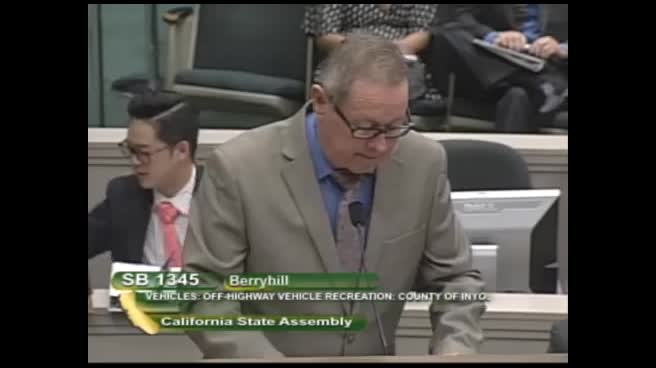 10MIN
Assembly Standing Committee on Transportation
 4MIN
Senate Floor
 17MIN
Senate Standing Committee on Transportation and Housing
Bill Author