SB 1347: Soil Conservation Fund.
- Session Year: 2015-2016
- House: Senate
- Latest Version Date: 2016-06-21
Existing law establishes the California Land Conservation Act of 1965, otherwise known as the Williamson Act, and authorizes a city or county to enter into 10-year contracts with owners of land devoted to agricultural use, whereby the owners agree to continue using the property for that purpose, and the city or county agrees to value the land accordingly for purposes of property taxation, as specified. Existing law provides a procedure to cancel a contract entered into under these provisions, and provides that the landowner and the Department of Conservation may agree on the cancellation value of the land.
Existing law requires cancellation fees, when they are required to be collected, to be transmitted by the county treasurer to the Controller and deposited in the General Fund, except the first $2,536,000 of revenue paid to the Controller in the 200405 fiscal year, and any amount approved in the final Budget Act for each fiscal year thereafter, is required to be deposited in the Soil Conservation Fund, and as otherwise specified. Existing law provides that the money in the Soil Conservation Fund is available, when appropriated by the Legislature, for specified programs and administrative costs.
This bill would provide that the money in the Soil Conservation Fund is available, upon appropriation by the Legislature, additionally for competitive grants and financial assistance to resource conservation districts to aid in the implementation of state programs or projects that improve soil conservation, carbon sequestration in soil, or moisture retention in soil, or other types of projects that improve the quality of agricultural and related land resources, subject to a specified condition. The bill would require the Department of Conservation to establish this competitive grant program.
Existing law requires the State Board of Forestry and Fire Protection to establish a fire prevention fee in an amount not to exceed $150 to be charged on each habitable structure on a parcel that is within a state responsibility area. Existing law requires the fee moneys to be expended, upon appropriation, in specified ways, including to reimburse the State Board of Equalizations expenses incurred in the collection of the fee and to the State Board of Forestry and Fire Protection and to the Department of Forestry and Fire Protection for administration purposes, with excess money being expended only for specified fire prevention activities, as provided.
Existing law, until January 31, 2017, requires the board to submit an annual written report to the Legislature on the status of the uses of the fee moneys.
This bill would continue that requirement until January 31, 2022.
Existing law requires the State Board of Forestry and Fire Protection to establish a fire prevention fee in an amount not to exceed $150 to be charged on each habitable structure on a parcel that is within a state responsibility area. Existing law requires the fee moneys to be expended, upon appropriation, in specified ways, including to reimburse the State Board of Equalizations expenses incurred in the collection of the fee and to the State Board of Forestry and Fire Protection and to the Department of Forestry and Fire Protection for administration purposes, with excess money being expended only for specified fire prevention activities, as provided.
This bill would provide that no more than 5% of the fees moneys may be used for administrative purposes.
Existing law, until January 31, 2017, requires the board to submit an annual written report to the Legislature on the status of the uses of the fee moneys.
This bill would continue that requirement until January 31, 2022.
(a)Prior to any action by the board or council giving tentative approval to the cancellation of any contract, the county assessor of the county in which the land is located shall determine the current fair market value of the land as though it were free of the contractual restriction. The assessor shall certify to the board or council the cancellation valuation of the land for the purpose of determining the cancellation fee. At the same time, the assessor shall send a notice to the landowner and the Department of Conservation indicating the current fair market value of the land as though it were free of the contractual restriction and advise the parties, that parties that, upon their request, the assessor shall provide all information relevant to the valuation, excluding third-party information. If any information is confidential or otherwise protected from release, the department and the landowner shall hold it that information as confidential and return or destroy any protected information upon termination of all actions relating to valuation or cancellation of the contract on the property. The notice shall also advise the landowner and the department of the opportunity to request formal review from the assessor.
(b)Prior to giving tentative approval to the cancellation of any contract, the board or council shall determine and certify to the county auditor the amount of the cancellation fee that the landowner shall pay the county treasurer upon cancellation. That fee shall be an amount equal to 121/2 percent of the cancellation valuation of the property.
(c)If it finds that it is in the public interest to do so, the board or council may waive any payment or any portion of a payment by the landowner, or may extend the time for making the payment or a portion of the payment contingent upon the future use made of the land and its economic return to the landowner for a period of time not to exceed the unexpired period of the contract, had it not been canceled, if all of the following occur:
(1)The cancellation is caused by an involuntary transfer or change in the use which that may be made of the land and the land is not immediately suitable, nor will be immediately used, for a purpose which that produces a greater economic return to the owner.
(2)The board or council has determined that it is in the best interests of the program to conserve agricultural land use that the payment be either deferred or is not required.
(3)The waiver or extension of time is approved by the Secretary of the Natural Resources Agency. The secretary shall approve a waiver or extension of time if the secretary finds that the granting of the waiver or extension of time by the board or council is consistent with the policies of this chapter and that the board or council complied with this article. In evaluating a request for a waiver or extension of time, the secretary shall review the findings of the board or council, the evidence in the record of the board or council, and any other evidence the secretary may receive concerning the cancellation, waiver, or extension of time.
(d)The first two million five hundred thirty-six thousand dollars ($2,536,000) of revenue paid to the Controller pursuant to subdivision (e) in the 200405 fiscal year, and any other amount as approved in the final Budget Act for each fiscal year thereafter, shall be deposited in the Soil Conservation Fund, which is continued in existence. The money in the fund is available, when appropriated upon appropriation by the Legislature, for the support of all of the following:
(1)The cost of the farmlands mapping and monitoring program of the Department of Conservation pursuant to Section 65570.
(2)The soil conservation program identified in Section 614 of the Public Resources Code.
(3)Program support costs of this chapter as administered by the Department of Conservation.
(4)Program support costs incurred by the Department of Conservation in administering the open-space subvention program (Chapter 3 (commencing with Section 16140) of Part 1 of Division 4 of Title 2).
(5)The costs to the Department of Conservation for administering Section 51250.
(6)Competitive grants and financial assistance to resource conservation districts pursuant to Section 10247 of the Public Resources Code, subject to the condition specified in subdivision (b) of Section 10247 of the Public Resources Code.
(e) When cancellation fees required by this section are collected, they shall be transmitted by the county treasurer to the Controller and deposited in the General Fund, except as provided in subdivision (d) of this section and subdivision (b) of Section 51203. The funds collected by the county treasurer with respect to each cancellation of a contract shall be transmitted to the Controller within 30 days of the execution of a certificate of cancellation of contract by the board or council, as specified in subdivision (b) of Section 51283.4.
(f) It is the intent of the Legislature that fees paid to cancel a contract do not constitute taxes but are payments that, when made, provide a private benefit that tends to increase the value of the property.
SEC. 2.Section 10247 is added to the Public Resources Code, to read:10247.(a)The department shall establish a competitive grant program to provide grants and financial assistance to resource conservation districts to aid in the implementation of state programs or projects that improve soil conservation, carbon sequestration in soil, or moisture retention in soil, or other types of projects that improve the quality of agricultural and related land resources.
(b)Funding pursuant to paragraph (6) of subdivision (d) of Section 51283 of the Government Code shall not be available for purposes of subdivision (a) unless the programs and costs specified in paragraphs (1) to (5), inclusive, of subdivision (d) of Section 51283 of the Government Code first receive all necessary funding.
SECTION 1.Section 4214 of the Public Resources Code is amended to read:4214.(a)Fire prevention fees collected pursuant to this chapter shall be expended, upon appropriation by the Legislature, as follows:
(1)The State Board of Equalization shall retain moneys necessary for the payment of refunds pursuant to Section 4228 and reimbursement of the State Board of Equalization for expenses incurred in the collection of the fee.
(2)The moneys collected, other than those retained by the State Board of Equalization pursuant to paragraph (1), shall be deposited into the State Responsibility Area Fire Prevention Fund, which is hereby created in the State Treasury, and shall be available to the board and the department to expend for fire prevention activities specified in subdivision (d) that benefit the owners of habitable structures within a state responsibility area who are required to pay the fire prevention fee. The amount expended to benefit the owners of habitable structures within a state responsibility area shall be commensurate with the amount collected from the owners within that state responsibility area. All moneys in excess of the costs of administration of the board and the department shall be expended only for fire prevention activities in counties with state responsibility areas.
(b)The fund may also be used to cover the costs of administering this chapter.
(c)It is the intent of the Legislature that the moneys in this fund be fully appropriated to the board and the department each year in order to effectuate the purposes of this chapter.
(d)Moneys in the fund shall be used only for the following fire prevention activities, which shall benefit owners of habitable structures within the state responsibility areas who are required to pay the annual fire prevention fee pursuant to this chapter:
(1)Local assistance grants pursuant to subdivision (e).
(2)Grants to Fire Safe Councils, the California Conservation Corps, or certified local conservation corps for fire prevention projects and activities in the state responsibility areas.
(3)Grants to a qualified nonprofit organization with a demonstrated ability to satisfactorily plan, implement, and complete a fire prevention project applicable to the state responsibility areas. The department may establish other qualifying criteria.
(4)Inspections by the department for compliance with defensible space requirements around habitable structures in state responsibility areas as required by Section 4291.
(5)Public education to reduce fire risk in the state responsibility areas.
(6)Fire severity and fire hazard mapping by the department in the state responsibility areas.
(7)Other fire prevention projects in the state responsibility areas, authorized by the board.
(e)(1)The board shall establish a local assistance grant program for fire prevention activities designed to benefit habitable structures within state responsibility areas, including public education, that are provided by counties and other local agencies, including special districts, with state responsibility areas within their jurisdictions.
(2)In order to ensure an equitable distribution of funds, the amount of each grant shall be based on the number of habitable structures in state responsibility areas for which the applicant is legally responsible and the amount of moneys made available in the annual Budget Act for this local assistance grant program.
(f)By January 31, 2015, and annually thereafter, the board shall submit to the Legislature a written report on the status and uses of the fund pursuant to this chapter. The written report shall also include an evaluation of the benefits received by counties based on the number of habitable structures in state responsibility areas within their jurisdictions, the effectiveness of the boards grant programs, the number of defensible space inspections in the reporting period, the degree of compliance with defensible space requirements, measures to increase compliance, if any, and any recommendations to the Legislature.
(g)(1)The requirement for submitting a report imposed under subdivision (f) is inoperative on January 31, 2022.
(2)A report to be submitted pursuant to subdivision (f) shall be submitted in compliance with Section 9795 of the Government Code.
(h)It is essential that this article be implemented without delay. To permit timely implementation, the department may contract for services related to the establishment of the fire prevention fee collection process. For this purpose only, and for a period not to exceed 24 months, the provisions of the Public Contract Code or any other provision of law related to public contracting shall not apply.
(a)Fire prevention fees collected pursuant to this chapter shall be expended, upon appropriation by the Legislature, as follows:
(1)The State Board of Equalization shall retain moneys necessary for the payment of refunds pursuant to Section 4228 and reimbursement of the State Board of Equalization for expenses incurred in the collection of the fee, subject to the limit in subdivision (b). fee.
(2)The moneys collected, other than those retained by the State Board of Equalization pursuant to paragraph (1), shall be deposited into the State Responsibility Area Fire Prevention Fund, which is hereby created in the State Treasury, and shall be available to the board and the department to expend for fire prevention activities specified in subdivision (d) that benefit the owners of habitable structures within a state responsibility area who are required to pay the fire prevention fee. The amount expended to benefit the owners of habitable structures within a state responsibility area shall be commensurate with the amount collected from the owners within that state responsibility area. All moneys in excess of the costs of administration of the board and the department, as limited pursuant to subdivision (b), department shall be expended only for fire prevention activities in counties with state responsibility areas.
(b)Not more than 5 percent of the fees collected pursuant to this chapter may The fund may also be used to cover the costs of administering this chapter.
(c)It is the intent of the Legislature that the moneys in this fund be fully appropriated to the board and the department each year in order to effectuate the purposes of this chapter.
(d)Moneys in the fund shall be used only for the following fire prevention activities, which shall benefit owners of habitable structures within the state responsibility areas who are required to pay the annual fire prevention fee pursuant to this chapter:
(1)Local assistance grants pursuant to subdivision (e).
(2)Grants to Fire Safe Councils, the California Conservation Corps, or certified local conservation corps for fire prevention projects and activities in the state responsibility areas.
(3)Grants to a qualified nonprofit organization with a demonstrated ability to satisfactorily plan, implement, and complete a fire prevention project applicable to the state responsibility areas. The department may establish other qualifying criteria.
(4)Inspections by the department for compliance with defensible space requirements around habitable structures in state responsibility areas as required by Section 4291.
(5)Public education to reduce fire risk in the state responsibility areas.
(6)Fire severity and fire hazard mapping by the department in the state responsibility areas.
(7)Other fire prevention projects in the state responsibility areas, authorized by the board.
(e)(1)The board shall establish a local assistance grant program for fire prevention activities designed to benefit habitable structures within state responsibility areas, including public education, that are provided by counties and other local agencies, including special districts, with state responsibility areas within their jurisdictions.
(2)In order to ensure an equitable distribution of funds, the amount of each grant shall be based on the number of habitable structures in state responsibility areas for which the applicant is legally responsible and the amount of moneys made available in the annual Budget Act for this local assistance grant program.
(f)By January 31, 2015, and annually thereafter, the board shall submit to the Legislature a written report on the status and uses of the fund pursuant to this chapter. The written report shall also include an evaluation of the benefits received by counties based on the number of habitable structures in state responsibility areas within their jurisdictions, the effectiveness of the boards grant programs, the number of defensible space inspections in the reporting period, the degree of compliance with defensible space requirements, measures to increase compliance, if any, and any recommendations to the Legislature.
(g)(1)The requirement for submitting a report imposed under subdivision (f) is inoperative on January 31, 2022.
(2)A report to be submitted pursuant to subdivision (f) shall be submitted in compliance with Section 9795 of the Government Code.
(h)It is essential that this article be implemented without delay. To permit timely implementation, the department may contract for services related to the establishment of the fire prevention fee collection process. For this purpose only, and for a period not to exceed 24 months, the provisions of the Public Contract Code or any other provision of law related to public contracting shall not apply.
(a)Fire prevention fees collected pursuant to this chapter shall be expended, upon appropriation by the Legislature, as follows:
(1)The State Board of Equalization shall retain moneys necessary for the payment of refunds pursuant to Section 4228 and reimbursement of the State Board of Equalization for expenses incurred in the collection of the fee. fee, subject to the limit in subdivision (b).
(2)The moneys collected, other than those retained by the State Board of Equalization pursuant to paragraph (1), shall be deposited into the State Responsibility Area Fire Prevention Fund, which is hereby created in the State Treasury, and shall be available to the board and the department to expend for fire prevention activities specified in subdivision (d) that benefit the owners of habitable structures within a state responsibility area who are required to pay the fire prevention fee. The amount expended to benefit the owners of habitable structures within a state responsibility area shall be commensurate with the amount collected from the owners within that state responsibility area. All moneys in excess of the costs of administration of the board and the department department, as limited pursuant to subdivision (b), shall be expended only for fire prevention activities in counties with state responsibility areas.
(b)(1)The fund Not more than 5 percent of the fees collected pursuant to this chapter may also be used to cover the costs of administering this chapter.
(2)The fund shall cover all startup costs incurred over a period not to exceed two years.
(c)It is the intent of the Legislature that the moneys in this fund be fully appropriated to the board and the department each year in order to effectuate the purposes of this chapter.
(d)Moneys in the fund shall be used only for the following fire prevention activities, which shall benefit owners of habitable structures within the state responsibility areas who are required to pay the annual fire prevention fee pursuant to this chapter:
(1)Local assistance grants pursuant to subdivision (e).
(2)Grants to Fire Safe Councils, the California Conservation Corps, or certified local conservation corps for fire prevention projects and activities in the state responsibility areas.
(3)Grants to a qualified nonprofit organization with a demonstrated ability to satisfactorily plan, implement, and complete a fire prevention project applicable to the state responsibility areas. The department may establish other qualifying criteria.
(4)Inspections by the department for compliance with defensible space requirements around habitable structures in state responsibility areas as required by Section 4291.
(5)Public education to reduce fire risk in the state responsibility areas.
(6)Fire severity and fire hazard mapping by the department in the state responsibility areas.
(7)Other fire prevention projects in the state responsibility areas, authorized by the board.
(e)(1)The board shall establish a local assistance grant program for fire prevention activities designed to benefit habitable structures within state responsibility areas, including public education, that are provided by counties and other local agencies, including special districts, with state responsibility areas within their jurisdictions.
(2)In order to ensure an equitable distribution of funds, the amount of each grant shall be based on the number of habitable structures in state responsibility areas for which the applicant is legally responsible and the amount of moneys made available in the annual Budget Act for this local assistance grant program.
(f)By January 31, 2015, and annually thereafter, the board shall submit to the Legislature a written report on the status and uses of the fund pursuant to this chapter. The written report shall also include an evaluation of the benefits received by counties based on the number of habitable structures in state responsibility areas within their jurisdictions, the effectiveness of the boards grant programs, the number of defensible space inspections in the reporting period, the degree of compliance with defensible space requirements, measures to increase compliance, if any, and any recommendations to the Legislature.
(g)(1)The requirement for submitting a report imposed under subdivision (f) is inoperative on January 31, 2017, pursuant to Section 10231.5 of the Government Code. 2022.
(2)A report to be submitted pursuant to subdivision (f) shall be submitted in compliance with Section 9795 of the Government Code.
(h)It is essential that this article be implemented without delay. To permit timely implementation, the department may contract for services related to the establishment of the fire prevention fee collection process. For this purpose only, and for a period not to exceed 24 months, the provisions of the Public Contract Code or any other provision of law related to public contracting shall not apply.
|
Date
|
Status
|
|---|---|
| Jun 23, 2016 | Re-referred to Com. on RLS. pursuant to Assembly Rule 96. |
| Jun 21, 2016 | From committee with author's amendments. Read second time and amended. Re-referred to Com. on NAT. RES. |
| Jun 6, 2016 | Referred to Com. on NAT. RES. |
| May 26, 2016 | Read third time. Passed. (Ayes 39. Noes 0. Page 3956.) Ordered to the Assembly. |
| May 26, 2016 | In Assembly. Read first time. Held at Desk. |
| May 26, 2016 | Read third time. Passed. (Ayes 39. Noes 0.) Ordered to the Assembly. |
| May 17, 2016 | Read second time. Ordered to third reading. |
| May 16, 2016 | From committee: Be ordered to second reading pursuant to Senate Rule 28.8. |
| May 6, 2016 | Set for hearing May 16. |
| Apr 19, 2016 | Read second time and amended. Re-referred to Com. on APPR. |
| Apr 18, 2016 | From committee: Do pass as amended and re-refer to Com. on APPR. (Ayes 9. Noes 0. Page 3496.) (April 12). |
| Apr 18, 2016 | From committee: Do pass as amended and re-refer to Com. on APPR. (Ayes 9. Noes 0.) (April 12). |
| Mar 24, 2016 | Set for hearing April 12. |
| Mar 3, 2016 | Referred to Com. on N.R. & W. |
| Feb 22, 2016 | Read first time. |
| Feb 22, 2016 | From printer. May be acted upon on or after March 23. |
| Feb 19, 2016 | Introduced. To Com. on RLS. for assignment. To print. |
|
Date
|
Description
|
Location
|
Votes
|
|
|---|---|---|---|---|
| May 26, 2016 | Senate 3rd Reading SB1347 Nielsen | Senate Floor |
Passed |
|
| Apr 12, 2016 | Do pass as amended, but first amend, and re-refer to the Committee on [Appropriations] | Senate Standing Committee on Natural Resources and Water |
Passed |
This list shows positions taken on this bill by organizations on the date displayed, which is linked to the original source.
Positions by individuals are not included.
Office of Senate Floor Analyses (916) 651-1520 Fax: (916) 327-4478 | SB |
THIRD READING
Bill No: SB 1347
:
SENATE NATURAL RES. & WATER COMMITTEE: 9-0, 4/12/16
AYES: Pavley, Stone, Allen, Hertzberg, Hueso, Jackson, Monning, Vidak, Wolk
SENATE APPROPRIATIONS COMMITTEE: Senate Rule 28.8
DIGEST: This bill extends the sunset date on the annual report that the Department of Forestry and Fire Protection is required to submit to the Legislature detailing the expenditure of fee money collected to administer fire prevention activities in State Responsibility Areas. The sunset date is extended from January 31, 2017 to January 31, 2022.
Existing law:
- Establishes the State Responsibility Area (SRA) in which the primary financial responsibility of preventing and suppressing fires primarily rests with the state.
- Allows a fire prevention fee to be collected to fund fire prevention activities administered by the Department of Forestry and Fire Protection (CDF) within a SRA.
- Requires CDF to submit an annual report to the Legislature until January 31, 2017 that describes SRA fire prevention fee expenditures.
This bill extends the sunset on the annual report from January 31, 2017 to January 31, 2022.
Background
In July 2011, the Legislature passed and the Governor signed Assembly Bill X1 29 (Blumenfield, Chapter 8, Statutes of 2011, First Extraordinary Session) that established the SRA fire prevention fee. A SRA is defined as an area of the state in which the financial responsibility of preventing and suppressing fires primarily rests with the state. The fee is used to pay for fire prevention services within the SRA. The fee is applied to all habitable structures within the SRA and generates on average $74 million per year.
Effective July 1, 2014, the fee is levied at the rate of $152.33 per habitable structure, which is defined as a building that can be occupied for residential use. Owners of habitable structure who are also within the boundaries of a local fire protection agency will receive a reduction of $35 per habitable structure. Just over 98% of all fee payers throughout the state receive this fee reduction.
According to CDF, the fire prevention fee funds a variety of important fire prevention services in the SRA. Such activities include fuel reduction projects that lessen the risk of wildfire to communities, evacuation routes, and infrastructure. Other activities include defensible space inspections, fire prevention engineering, emergency evacuation planning, fire prevention education, fire hazard severity mapping, implementation of the state and local Fire Plans, and fire-related law enforcement activities such as arson investigation.
An annual report on SRA fire fee expenditures is required by law. The sunset date on these reports is January 31, 2017. In a recent informational report from last year, CDF summarized expenditures for the three fiscal years 2012-15. That report is available on the CDF Web site. For the most recent year, total expenditures for fire prevention activities were $76.9 million and total administrative costs were $16.0 million. Approximately 20% of total expenditures went toward paying administrative costs.
This bill was amended in the Senate Natural Resources and Water Committee to remove a provision that restricted administrative costs to only five percent of total SRA fire prevention fee expenditures.
FISCAL EFFECT: Appropriation: Fiscal Com.: Local:
California Fire Chiefs Association
Central Coast Forest Association
Fire Districts Association of California
Howard Jarvis Taxpayers Association
Rural County Representatives of California
OPPOSITION: (Verified 5/18/16)
None received
ARGUMENTS IN SUPPORT: According to the author, the reporting sunset should be extended “so that the Legislature may continue receiving this valuable information for a least five additional years.”
Concerns with how the SRA fee money is spent prompted this bill. According to the Howard Jarvis Taxpayers Association, “this Legislature owes it to taxpayers to ensure that the revenue raised is spent in the most prudent way possible.”
5/18/16 16:28:07
**** END ****
SENATE COMMITTEE ON NATURAL RESOURCES AND WATER
Senator Fran Pavley, Chair
2015 - 2016 Regular
Bill No: SB Hearing Date: April 12, 2016
Author: | Nielsen | ||
Version: | February 19, 2016 Introduced | ||
Urgency: | No | Fiscal: | Yes |
Consultant: | Matthew Dumlao | ||
Subject: Fire prevention fee: administration
BACKGROUND AND EXISTING LAW
In July 2011, the Legislature passed and the Governor signed Assembly Bill X1 29 that established the State Responsibility Area (SRA) fire prevention fee. A SRA is defined as an area of the state in which the financial responsibility of preventing and suppressing fires primarily rests with the state. The fee is used to pay for fire prevention services within the SRA. The fee is applied to all habitable structures within the SRA and generates on average $74 million per year.
Effective July 1, 2014, the fee is levied at the rate of $152.33 per habitable structure, which is defined as a building that can be occupied for residential use. Owners of habitable structure who are also within the boundaries of a local fire protection agency will receive a reduction of $35 per habitable structure. Just over 98% of all fee payers throughout the state receive this fee reduction.
According to the Department of Forestry and Fire Protection (CDF), the fire prevention fee funds a variety of important fire prevention services in the SRA. Such activities include fuel reduction projects that lessen the risk of wildfire to communities, evacuation routes, and infrastructure. Other activities include defensible space inspections, fire prevention engineering, emergency evacuation planning, fire prevention education, fire hazard severity mapping, implementation of the State and local Fire Plans, and fire-related law enforcement activities such as arson investigation.
An annual report on SRA fire fee expenditures is required by law. The sunset date on these reports is January 31, 2017. In a recent informational report from last year, CDF summarized expenditures for the three fiscal years 2012-15. That report is available on the CDF website. For the most recent year, total expenditures for fire prevention activities were $76.9 million and total administrative costs were $16.0 million. Approximately 20% of total expenditures went toward paying administrative costs.
Administrative costs fall under two categories: (1) costs associated with collecting the fee and (2) costs associated with administering the fire prevention programs. The State Board of Equalization is tasked with collecting the fee and dispersing refunds to property owners who successfully dispute a claim that he/she must pay the fee. CDF is responsible for carrying out the fire prevention services in the SRA.
The legality of the fee is being challenged in court, and it is not clear when the trial will occur. The argument is that the fee should have been enacted as a tax and, therefore, subject to a 2/3 vote.
Since its adoption, the Legislature has considered many bills to repeal the fee, none of which were passed. It also passed bills allowing a landowner to apportion the fee with a prospective buyer, to index the fee for inflation, and to exempt structures destroyed by natural disasters from the fee.
Some legislators were concerned that they (and the public) were not getting adequate information about SRA fire fee expenditures despite this report and other information provided to them by CDF.
PROPOSED LAW
This bill would limit the total costs of administering the SRA fire prevention fee to no more than 5% of the total money collected by the SRA fee. The administrative costs consist of the costs incurred by the State Board of Equalization in collecting the fee as well as the costs to CDF for implementing the fire prevention activities.
This bill extends the sunset on the requirement to submit an annual report until January 31, 2022.
ARGUMENTS IN SUPPORT
The author of the bill argues that the current administrative costs are too high, and the money spent on administrative costs would be better served directly providing fire prevention benefits to the payers of the fee. Also, the author states the sunset should be extended “so that the Legislature may continue receiving this valuable information for a least five additional years.”
According to the Howard Jarvis Taxpayers Association (HJTA), “SB 1347 would cap the annual administrative costs of the fire prevention fee at five percent. Today administrative costs are roughly 20 percent. This issue is currently the subject of litigation advanced by the HJTA that attempts to show that this fee is in fact a tax that should have required a two-thirds vote of the Legislature. While this lawsuit continues to work its way through the court, and the fee continues to be collected, this Legislature owes it to taxpayers to ensure that the revenue raised is spent in the most prudent way possible.”
ARGUMENTS IN OPPOSITION
None received.
COMMENTS
SB 1347 calls for a seventy five percent reduction in administrative costs. This bill makes an implicit assumption that reducing administrative costs will free up more money to be spent directly on fire prevention projects. However, the magnitude of the reduction in administrative costs might actually result in less fee money collected and fewer fire prevention projects. If extra money from the General Fund is not available to CDF to conduct fire prevention projects, the risk of fires will increase.
Related legislation.
AB 2035 (Bigelow): This bill would add local government entities to the list of potential recipients of SRA fire prevention fund money, as long as they reach an agreement with the board and they conduct fire prevention activities in a state responsibility area.
SB 1136 (Morrell): This bill extends the sunset for submitting an annual report until January 31, 2021. It also increases the level of detail required in the report, including reporting on equipment expenditures and personnel positions for each program and subprogram paid for by fire prevention fees.
SB 1293 (Tom Berryhill): This bill makes a minor, nonsubstantive change.
SUGGESTED AMENDMENTS
None.
SUPPORT
California Fire Chiefs Association
Fire Districts Association of California
Howard Jarvis Taxpayers Association
OPPOSITION
None received.
-- END --
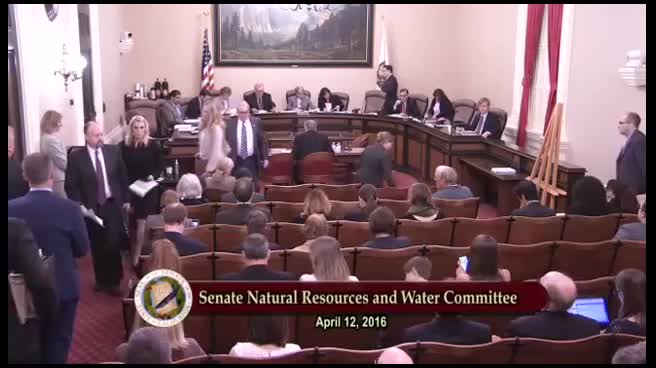
Discussed in Hearing
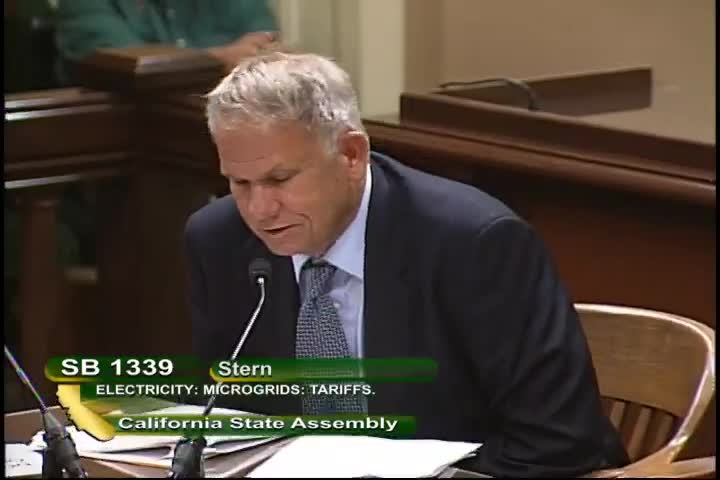 17MIN
Assembly Standing Committee on Utilities and Energy
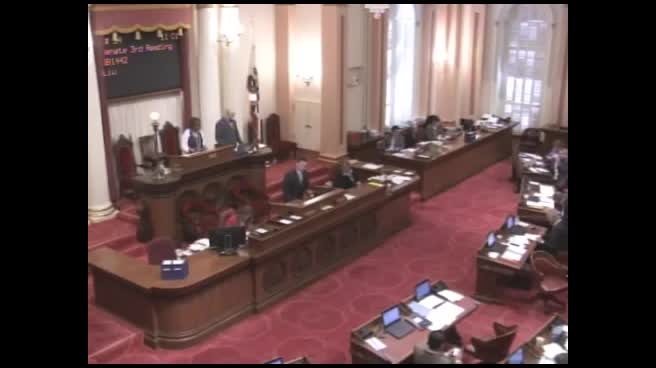 2MIN
Senate Floor
 12MIN
Senate Standing Committee on Natural Resources and Water
Bill Author