SB 1349: Political Reform Act of 1974: Secretary of State: online filing and disclosure system.
- Session Year: 2015-2016
- House: Senate
- Latest Version Date: 2016-09-29
The Political Reform Act of 1974 generally requires elected officials, candidates for elective office, and committees formed primarily to support or oppose a candidate for public office or a ballot measure, along with other entities, to file periodic campaign statements. The act requires that these campaign statements contain prescribed information related to campaign contributions and expenditures of the filing entities. Existing law, the Online Disclosure Act, requires the Secretary of State, in consultation with the Fair Political Practices Commission, to develop online and electronic filing processes for use by these persons and entities.
This bill, in addition, would require the Secretary of State, in consultation with the Commission, to develop and certify for public use an online filing and disclosure system for campaign statements and reports that provides public disclosure of campaign finance and lobbying information in a user-friendly, easily understandable format.
The Political Reform Act of 1974, an initiative measure, provides that the Legislature may amend the act to further the acts purposes upon a 2/3 vote of each house and compliance with specified procedural requirements.
This bill would declare that it furthers the purposes of the act.
The Political Reform Act of 1974 generally requires elected officials, candidates for elective office, and committees formed primarily to support or oppose a candidate for public office or a ballot measure, along with other entities, to file periodic campaign statements. The act requires that these campaign statements contain prescribed information related to campaign contributions and expenditures of the filing entities. Existing law, the Online Disclosure Act, requires the Secretary of State, in consultation with the Fair Political Practices Commission, to develop online and electronic filing processes for use by these persons and entities.
This bill bill, in addition, would require the Secretary of State to develop a system to identify filers of independent expenditure committee campaign statements and major donor committee campaign statements that would allow members of the public to search the Secretary of States database by filer to identify all expenditures or contributions made by that filer. State, in consultation with the Commission, to develop and certify for public use an online filing system for campaign statements and reports that provides public disclosure of campaign finance and lobbying information in a user-friendly, easily understandable format.
The Political Reform Act of 1974, an initiative measure, provides that the Legislature may amend the act to further the acts purposes upon a 2/3 vote of each house and compliance with specified procedural requirements.
This bill would declare that it furthers the purposes of the act.
The Political Reform Act of 1974 generally requires elected officials, candidates for elective office, and committees formed primarily to support or oppose a candidate for public office or a ballot measure, along with other entities, to file periodic campaign statements. The act requires that these campaign statements contain prescribed information related to campaign contributions and expenditures of the filing entities.
This bill would require the Secretary of State to develop a system to identify filers of independent expenditure committee campaign statements and major donor committee campaign statements that would allow members of the public to search the Secretary of States database by filer to identify all expenditures or contributions made by that filer.
The Political Reform Act of 1974, an initiative measure, provides that the Legislature may amend the act to further the acts purposes upon a 2/3 vote of each house and compliance with specified procedural requirements.
This bill would declare that it furthers the purposes of the act.
The Legislature finds and declares as follows:
(a)The people of California enacted one of the nations most comprehensive campaign and lobbying financial disclosure laws when they voted for Proposition 9, the Political Reform Act of 1974, an initiative statute.
(b)Public access to campaign and lobbying disclosure information is a vital and integral component of a fully informed electorate.
(c)Advances in technology have made it necessary for the State of California to develop a new, data-driven online filing and disclosure system that provides public disclosure of campaign finance and lobbying information in a user-friendly, easily understandable format.
(d)Members of the public, including voters, journalists, and researchers, should be able to access campaign finance and lobbying information in a robust and flexible manner, including through searches and visual displays such as graphs and maps.
SEC. 2.Section 84602 of the Government Code is amended to read:84602.(a)To implement the Legislatures intent, the Secretary of State, in consultation with the Commission, notwithstanding any other provision of this code, shall do all of the following:
(1)Develop online and electronic filing processes for use by persons and entities specified in Section 84605 that are required to file statements and reports with the Secretary of States office pursuant to Chapter 4 (commencing with Section 84100) and Chapter 6 (commencing with Section 86100). Those processes shall each enable a user to comply with all of the disclosure requirements of this title and shall include, at a minimum, both of the following:
(A)A means or method whereby filers subject to this chapter may submit required filings free of charge. Any means or method developed pursuant to this subparagraph shall not provide any additional or enhanced functions or services that exceed the minimum requirements necessary to fulfill the disclosure provisions of this title. At least one means or method shall be made available no later than December 31, 2002.
(B)The definition of a nonproprietary standardized record format or formats using industry standards for the transmission of the data that is required of those persons and entities specified in Section 84605 and that conforms with the disclosure requirements of this title. The Secretary of State shall hold public hearings before development of the record format or formats as a means to ensure that affected entities have an opportunity to provide input into the development process. The format or formats shall be made public no later than July 1, 1999, to ensure sufficient time to comply with this chapter.
(2)Accept test files from software vendors and others wishing to file reports electronically, for the purpose of determining whether the file format is in compliance with the standardized record format developed pursuant to paragraph (1) and is compatible with the Secretary of States system for receiving the data. A list of the software and service providers who have submitted acceptable test files shall be published by the Secretary of State and made available to the public. Acceptably formatted files shall be submitted by a filer in order to meet the requirements of this chapter.
(3)Develop a system that provides for the online or electronic transfer of the data specified in this section using telecommunications technology that ensures the integrity of the data transmitted and that creates safeguards against efforts to tamper with or subvert the data.
(4)Make all the data filed available on the Internet in an easily understood format that provides the greatest public access. The data shall be made available free of charge and as soon as possible after receipt. All late contribution and late independent expenditure reports, as defined by Sections 84203 and 84204, respectively, shall be made available on the Internet within 24 hours of receipt. The data made available on the Internet shall not contain the street name and building number of the persons or entity representatives listed on the electronically filed forms or any bank account number required to be disclosed pursuant to this title.
(5)Develop a procedure for filers to comply with the requirement that they sign under penalty of perjury pursuant to Section 81004.
(6)Maintain all filed data online for 10 years after the date it is filed, and then archive the information in a secure format.
(7)Provide assistance to those seeking public access to the information.
(8)Implement sufficient technology to seek to prevent unauthorized alteration or manipulation of the data.
(9)Provide the Commission with necessary information to enable it to assist agencies, public officials, and others with the compliance with, and administration of, this title.
(10)Report to the Legislature on the implementation and development of the online and electronic filing and disclosure requirements of this chapter. The report shall include an examination of system security, private security issues, software availability, compliance costs to filers, use of the filing system and software provided by the Secretary of State, and other issues relating to this chapter, and shall recommend appropriate changes if necessary. In preparing the report, the Commission may present to the Secretary of State and the Legislature its comments regarding this chapter as it relates to the duties of the Commission and suggest appropriate changes if necessary. There shall be one report due before the system is operational as set forth in Section 84603, one report due no later than June 1, 2002, and one report due no later than January 31, 2003.
(11)Review the current filing and disclosure requirements of this chapter and report to the Legislature, no later than June 1, 2005, recommendations on revising these requirements so as to promote greater reliance on electronic and online submissions.
(b)(1)To implement the Legislatures intent, as described in Section 84601, the Secretary of State, in consultation with the Commission, shall develop an online filing and disclosure system for use by persons and entities specified in Section 84605 that are required to file statements and reports with the Secretary of States office pursuant to Chapter 4 (commencing with Section 84100) and Chapter 6 (commencing with Section 86100). The system shall enable a user to comply with all of the disclosure requirements of this title and shall include, at minimum, all of the following:
(A)A data-driven means or method that allows filers subject to this chapter to submit required filings free of charge in a manner that facilitates public searches of the data and does all of the following:
(i)Enables a filer to comply with all of the disclosure requirements of this title, including by entering or uploading requisite data or by indicating that the filer had no reportable activity during a particular reporting period.
(ii)Retains previously submitted data so that a filer can access that data to amend disclosures or prepare future disclosures.
(iii)Ensures the security of data entered and stored in the system.
(iv)To the extent feasible, is compatible with potential future capability to accept statements from filers specified in subdivisions (b) to (e), inclusive, of Section 84215.
(B)The definition of a nonproprietary standardized record format or formats using industry standards for the transmission of the data that is required of those persons and entities specified in Section 84605 and that conforms with the disclosure requirements of this title.
(2)The Secretary of State shall do all of the following with respect to the online filing and disclosure system developed pursuant to this subdivision:
(A)Accept test files from software vendors and others wishing to file reports electronically for the purpose of determining whether the file format is in compliance with the standardized record format developed pursuant to this subdivision and is compatible with the Secretary of States system for receiving the data. The Secretary of State shall publish and make available to the public a list of the software and service providers who have submitted acceptable test files. A filer shall submit acceptably formatted files in order to meet the requirements of this chapter.
(B)Make the data filed available on the Internet as follows:
(i)In a user-friendly, easily understandable format that provides the greatest public access, including online searches and machine-readable downloads of all data contained in the system, except as specified in clause (iii).
(ii)Free of charge and as soon as possible after receipt, or, in the case of late contribution, late in-kind contribution, and late independent expenditure reports, as defined by Sections 84203, 84203.3, and 84204, respectively, within 24 hours of receipt.
(iii)Not containing the street name or building number of the persons or entity representatives listed on the electronically filed forms or any bank account number required to be disclosed pursuant to this title.
(iv)In a manner that allows the public to track and aggregate contributions from the same contributor across filers using a permanent unique identifier assigned by the Secretary of State for this purpose. The Secretary of State shall assign this identifier to, at minimum, each contributor who makes contributions totaling ten thousand dollars ($10,000) or more in a calendar year to, or at the behest of, candidates or committees that file electronically with the Secretary of State pursuant to subdivision (a) of Section 84215 or who files with the Secretary of State as a major donor committee under subdivision (c) of Section 82013.
(C)Develop a procedure for filers to comply electronically with the requirement to sign under penalty of perjury pursuant to Section 81004. The electronic signature procedure shall allow the filer to file with the Secretary of State and shall not require an original signature to be filed.
(D)Maintain all filed data online for at least 20 years after the date it is filed, and then archive the information in a secure format.
(E)Provide assistance to those seeking public access to the information.
(F)Implement sufficient technology to seek to prevent unauthorized alteration or manipulation of the data.
(G)Provide the Commission with necessary information to enable it to assist agencies, public officials, and others in complying with and administering this title.
(3)The Secretary of State shall do all of the following with respect to developing the online filing and disclosure system and record format pursuant to this subdivision:
(A)Consult with the Assembly Committee on Elections and Redistricting, the Senate Committee on Elections and Constitutional Amendments, the Commission, users, filers, and other stakeholders, as appropriate, about functions of the online filing and disclosure system.
(B)In consultation with the Commission, and no later than July 31, 2017, hold at least one public hearing to receive input about developing the online filing and disclosure system and record format.
(C)No later than December 31, 2017, submit a report to the Assembly Committee on Elections and Redistricting and the Senate Committee on Elections and Constitutional Amendments that includes a plan for the online filing and disclosure system, describes how members of the public will be able to query and retrieve data from the system, and includes a plan for integrating statements as specified in clause (iv) of subparagraph (A) of paragraph (1).
(4)The Secretary of State shall make the online filing and disclosure system developed pursuant to this subdivision available for use no later than February 1, 2019. The Secretary of State may extend this date to a date no later than December 31, 2019, after consulting with the Assembly Committee on Elections and Redistricting and the Senate Committee on Elections and Constitutional Amendments and providing to those committees a report that explains the need for the extension and includes a plan for completion.
(5)The Secretary of State may accept any funds, services, equipment, or grants to further this subdivision, provided that the Secretary of State shall notify the Assembly Committee on Elections and Redistricting and the Senate Committee on Elections and Constitutional Amendments upon accepting any amount valued at one hundred thousand dollars ($100,000) or more.
(6)Because the provisions of this chapter need to be implemented as expeditiously as possible, the information technology procurement requirements described in Chapter 5.6 (commencing with Section 11545) of Part 1 of Division 3 of Title 2 of this code, and in Section 12100 of the Public Contract Code, do not apply to development of the online filing and disclosure system pursuant to this subdivision. The Secretary of State shall consult with the Department of Technology, as appropriate, in developing the online filing and disclosure system, in order to maximize project success, minimize lifecycle costs, and ensure the security of the system and its data.
(7)(A)Before making the system developed pursuant to this subdivision available for public use, the Secretary of State, in consultation with the Commission, shall test the system to ensure its functionality and then certify that the system meets all the requirements of this subdivision. The Secretary of State may consult with the Department of Technology as needed to fulfill his or her duties under this paragraph.
(B)After the system developed pursuant to this subdivision is certified, the system described in subdivision (a) shall no longer accept reports and filings, unless otherwise directed by the Secretary of State and the Commission. The system described in subdivision (a) shall continue to allow public access to past disclosures unless the Secretary of State migrates that data into the system described in this subdivision.
(c) On or before December 31, 2017, and on or before every April 15, July 15, October 15, and January 15 thereafter, the Secretary of State shall submit to the chairs of the Joint Legislative Budget Committee and the fiscal committees of the Legislature a quarterly report on the progress of the Cal-Access Project. Specifically, the Secretary of State shall certify whether he or she (1) anticipates making or has made any changes to the projects scope, schedule, or budget and (2) considers any problems to be a risk to the projects completion according to the approved project schedule and budget. This reporting requirement shall end upon the completion or termination of the Cal-Access Project.
SEC. 3.The Legislature finds and declares that this bill furthers the purposes of the Political Reform Act of 1974 within the meaning of subdivision (a) of Section 81012 of the Government Code.
The Legislature finds and declares as follows:
(a)The people of California enacted one of the nations most comprehensive campaign and lobbying financial disclosure laws when they voted for Proposition 9, the Political Reform Act of 1974, an initiative statute.
(b)Public access to campaign and lobbying disclosure information is a vital and integral component of a fully informed electorate.
(c)Advances in technology have made it necessary for the State of California to develop a new, data-driven online filing and disclosure system that provides public disclosure of campaign finance and lobbying information in a user-friendly, easily understandable format.
(d)Members of the public, including voters, journalists, and researchers, should be able to access campaign finance and lobbying information in a robust and flexible manner, including through searches and visual displays such as graphs and maps.
SEC. 2.Section 84602 of the Government Code is amended to read:84602.(a)To implement the Legislatures intent, the Secretary of State, in consultation with the Commission, notwithstanding any other provision of this code, shall do all of the following:
(1)Develop online and electronic filing processes for use by persons and entities specified in Section 84605 that are required to file statements and reports with the Secretary of States office pursuant to Chapter 4 (commencing with Section 84100) and Chapter 6 (commencing with Section 86100). Those processes shall each enable a user to comply with all the disclosure requirements of this title and shall include, at a minimum, both of the following:
(A)A means or method whereby filers subject to this chapter may submit required filings free of charge. Any means or method developed pursuant to this subparagraph shall not provide any additional or enhanced functions or services that exceed the minimum requirements necessary to fulfill the disclosure provisions of this title. At least one means or method shall be made available no later than December 31, 2002.
(B)The definition of a nonproprietary standardized record format or formats using industry standards for the transmission of the data that is required of those persons and entities specified in Section 84605 and that conforms with the disclosure requirements of this title. The Secretary of State shall hold public hearings before development of the record format or formats as a means to ensure that affected entities have an opportunity to provide input into the development process. The format or formats shall be made public no later than July 1, 1999, to ensure sufficient time to comply with this chapter.
(2)Accept test files from software vendors and others wishing to file reports electronically, for the purpose of determining whether the file format is in compliance with the standardized record format developed pursuant to paragraph (1) and is compatible with the Secretary of States system for receiving the data. A list of the software and service providers who have submitted acceptable test files shall be published by the Secretary of State and made available to the public. Acceptably formatted files shall be submitted by a filer in order to meet the requirements of this chapter.
(3)Develop a system that provides for the online or electronic transfer of the data specified in this section using telecommunications technology that assures ensures the integrity of the data transmitted and that creates safeguards against efforts to tamper with or subvert the data.
(4)Make all the data filed available on the Internet in an easily understood format that provides the greatest public access. The data shall be made available free of charge and as soon as possible after receipt. All late contribution and late independent expenditure reports, as defined by Sections 84203 and 84204, respectively, shall be made available on the Internet within 24 hours of receipt. The data made available on the Internet shall not contain the street name and building number of the persons or entity representatives listed on the electronically filed forms or any bank account number required to be disclosed pursuant to this title.
(5)Develop a procedure for filers to comply with the requirement that they sign under penalty of perjury pursuant to Section 81004.
(6)Maintain all filed data online for 10 years after the date it is filed, and then archive the information in a secure format.
(7)Provide assistance to those seeking public access to the information.
(8)Implement sufficient technology to seek to prevent unauthorized alteration or manipulation of the data.
(9)Provide the Commission with necessary information to enable it to assist agencies, public officials, and others with the compliance with, and administration of, this title.
(10)Report to the Legislature on the implementation and development of the online and electronic filing and disclosure requirements of this chapter. The report shall include an examination of system security, private security issues, software availability, compliance costs to filers, use of the filing system and software provided by the Secretary of State, and other issues relating to this chapter, and shall recommend appropriate changes if necessary. In preparing the report, the Commission may present to the Secretary of State and the Legislature its comments regarding this chapter as it relates to the duties of the Commission and suggest appropriate changes if necessary. There shall be one report due before the system is operational as set forth in Section 84603, one report due no later than June 1, 2002, and one report due no later than January 31, 2003.
(11)Review the current filing and disclosure requirements of this chapter and report to the Legislature, no later than June 1, 2005, recommendations on revising these requirements so as to promote greater reliance on electronic and online submissions.
(b)(1)To implement the Legislatures intent, as described in Section 84601, the Secretary of State, in consultation with the Commission, shall develop an online filing and disclosure system for use by persons and entities specified in Section 84605 that are required to file statements and reports with the Secretary of States office pursuant to Chapter 4 (commencing with Section 84100) and Chapter 6 (commencing with Section 86100). The system shall enable a user to comply with all of the disclosure requirements of this title and shall include, at minimum, all of the following:
(A)A data-driven means or method that allows filers subject to this chapter to submit required filings free of charge in a manner that facilitates public searches of the data and does all of the following:
(i)Enables a filer to comply with all of the disclosure requirements of this title, including by entering or uploading requisite data or by indicating that the filer had no reportable activity during a particular reporting period.
(ii)Retains previously submitted data so that a filer can access that data to amend disclosures or prepare future disclosures.
(iii)Ensures the security of data entered and stored in the system.
(iv)To the extent feasible, is compatible with potential future capability to accept statements from filers specified in subdivisions (b) to (e), inclusive, of Section 84215.
(B)The definition of a nonproprietary standardized record format or formats using industry standards for the transmission of the data that is required of those persons and entities specified in Section 84605 and that conforms with the disclosure requirements of this title.
(2)The Secretary of State shall do all of the following with respect to the online filing and disclosure system developed pursuant to this subdivision:
(A)Accept test files from software vendors and others wishing to file reports electronically for the purpose of determining whether the file format is in compliance with the standardized record format developed pursuant to this subdivision and is compatible with the Secretary of States system for receiving the data. The Secretary of State shall publish and make available to the public a list of the software and service providers who have submitted acceptable test files. A filer shall submit acceptably formatted files in order to meet the requirements of this chapter.
(B)Make the data filed available on the Internet as follows:
(i)In a user-friendly, easily understandable format that provides the greatest public access, including online searches and machine-readable downloads of all data contained in the system, except as specified in clause (iii).
(ii)Free of charge and as soon as possible after receipt, or, in the case of late contribution, late in-kind contribution, and late independent expenditure reports, as defined by Sections 84203, 84203.3, and 84204, respectively, within 24 hours of receipt.
(iii)Not containing the street name or building number of the persons or entity representatives listed on the electronically filed forms or any bank account number required to be disclosed pursuant to this title.
(iv)In a manner that allows the public to track and aggregate contributions from the same contributor across filers using a permanent unique identifier assigned by the Secretary of State for this purpose. The Secretary of State shall assign this identifier to, at minimum, each contributor who makes contributions totaling ten thousand dollars ($10,000) or more in a calendar year to, or at the behest of, candidates or committees that file electronically with the Secretary of State pursuant to subdivision (a) of Section 84215 or who is registered files with the Secretary of State as a major donor committee under subdivision (c) of Section 82013.
(C)Develop a procedure for filers to comply electronically with the requirement to sign under penalty of perjury pursuant to Section 81004. The electronic signature procedure shall allow the filer to file with the Secretary of State and shall not require an original signature to be filed.
(D)Maintain all filed data online for at least 10 20 years after the date it is filed, and then archive the information in a secure format.
(E)Provide assistance to those seeking public access to the information.
(F)Implement sufficient technology to seek to prevent unauthorized alteration or manipulation of the data.
(G)Provide the Commission with necessary information to enable it to assist agencies, public officials, and others in complying with and administering this title.
(3)The Secretary of State shall do all of the following with respect to developing the online filing and disclosure system and record format pursuant to this subdivision:
(A)Consult with the Assembly Committee on Elections and Redistricting, the Senate Committee on Elections and Constitutional Amendments, the Commission, users, filers, and other stakeholders, as appropriate, about functions of the online filing and disclosure system.
(B)In consultation with the Commission, and no later than July 31, 2017, hold at least one public hearing to receive input about developing the online filing and disclosure system and record format.
(C)No later than December 31, 2017, submit a report to the Assembly Committee on Elections and Redistricting and the Senate Committee on Elections and Constitutional Amendments that includes a plan for the online filing and disclosure system, describes how members of the public will be able to query and retrieve data from the system, and includes a plan for integrating statements as specified in clause (iv) of subparagraph (A) of paragraph (1).
(4)The Secretary of State shall make the online filing and disclosure system developed pursuant to this subdivision available for use no later than February 1, 2019. The Secretary of State may extend this date to a date no later than December 31, 2019, after consulting with the Assembly Committee on Elections and Redistricting and the Senate Committee on Elections and Constitutional Amendments and providing to those committees a report that explains the need for the extension and includes a plan for completion.
(5)The Secretary of State may accept any funds, services, equipment equipment, or grants to further this subdivision, provided that the Secretary of State shall notify the Assembly Committee on Elections and Redistricting and the Senate Committee on Elections and Constitutional Amendments upon accepting any amount valued at one hundred thousand dollars ($100,000) or more.
(6)Because the provisions of this chapter need to be implemented as expeditiously as possible, the information technology procurement requirements described in Chapter 5.6 (commencing with Section 11545) of Part 1 of Division 3 of Title 2, 2 of this Code, and in Section 12100 of the Public Contract Code, do not apply to development of the online filing and disclosure system pursuant to this subdivision. The Secretary of State shall consult with the Department of Technology, as appropriate, in developing the online filing and disclosure system. system, in order to maximize project success, minimize lifecycle costs, and ensure the security of the system and its data.
(7)(A)Before making the system developed pursuant to this subdivision available for public use, the Secretary of State, in consultation with the Commission, shall test the system to ensure its functionality and then certify that the system meets all the requirements of this subdivision. The Secretary of State may consult with the Department of Technology as needed to fulfill his or her duties under this paragraph.
(B)After the system developed pursuant to this subdivision is certified, the system described in subdivision (a) shall no longer accept reports and filings, unless otherwise directed by the Secretary of State and the Commission. The system described in subdivision (a) shall continue to allow public access to past disclosures unless the Secretary of State migrates that data into the system described in this subdivision.
(c) On or before December 31, 2017, and on or before every April 15, July 15, October 15, and January 15 thereafter, the Secretary of State shall submit to the chairs of the Joint Legislative Budget Committee and the fiscal committees of the Legislature a quarterly report on the progress of the Cal-Access Project. Specifically, the Secretary of State shall certify whether he or she (1) anticipates making or has made any changes to the projects scope, schedule, or budget and (2) considers any problems to be a risk to the projects completion according to the approved project schedule and budget. This reporting requirement shall end upon the completion or termination of the Cal-Access Project.
SEC. 3.The Legislature finds and declares that this bill furthers the purposes of the Political Reform Act of 1974 within the meaning of subdivision (a) of Section 81012 of the Government Code.
The Legislature finds and declares as follows:
(a)The people of California enacted one of the nations most comprehensive campaign and lobbying financial disclosure laws when they voted for Proposition 9, the Political Reform Act of 1974, an initiative statute.
(b)Public access to campaign and lobbying disclosure information is a vital and integral component of a fully informed electorate.
(c)Advances in technology have made it necessary for the State of California to develop a new, data-driven online filing and disclosure system that provides public disclosure of campaign finance and lobbying information in a user-friendly, easily understandable format.
(d)Members of the public, including voters, journalists, and researchers, should be able to access campaign finance and lobbying information in a robust and flexible manner, including through searches and visual displays such as graphs and maps.
SEC. 2.Section 84602 of the Government Code is amended to read:84602.(a)To implement the Legislatures intent, the Secretary of State, in consultation with the Commission, notwithstanding any other provision of this code, shall do all of the following:
(1)Develop online and electronic filing processes for use by persons and entities specified in Section 84605 that are required to file statements and reports with the Secretary of States office pursuant to Chapter 4 (commencing with Section 84100) and Chapter 6 (commencing with Section 86100). Those processes shall each enable a user to comply with all the disclosure requirements of this title and shall include, at a minimum, both of the following:
(A)A means or method whereby filers subject to this chapter may submit required filings free of charge. Any means or method developed pursuant to this provision subparagraph shall not provide any additional or enhanced functions or services that exceed the minimum requirements necessary to fulfill the disclosure provisions of this title. At least one means or method shall be made available no later than December 31, 2002.
(B)The definition of a nonproprietary standardized record format or formats using industry standards for the transmission of the data that is required of those persons and entities specified Section 84605 and that conforms with the disclosure requirements of this title. The Secretary of State shall hold public hearings before development of the record format or formats as a means to ensure that affected entities have an opportunity to provide input into the development process. The format or formats shall be made public no later than July 1, 1999, to ensure sufficient time to comply with this chapter.
(2)Accept test files from software vendors and others wishing to file reports electronically, for the purpose of determining whether the file format is in compliance with the standardized record format developed pursuant to subdivision (a) paragraph (1) and is compatible with the Secretary of States system for receiving the data. A list of the software and service providers who have submitted acceptable test files shall be published by the Secretary of State and made available to the public. Acceptably formatted files shall be submitted by a filer in order to meet the requirements of this chapter.
(3)Develop a system that provides for the online or electronic transfer of the data specified in this section using telecommunications technology that assures the integrity of the data transmitted and that creates safeguards against efforts to tamper with or subvert the data.
(4)Make all the data filed available on the Internet in an easily understood format that provides the greatest public access. The data shall be made available free of charge and as soon as possible after receipt. All late contribution and late independent expenditure reports, as defined by Sections 84203 and 84204, respectively, shall be made available on the Internet within 24 hours of receipt. The data made available on the Internet shall not contain the street name and building number of the persons or entity representatives listed on the electronically filed forms or any bank account number required to be disclosed pursuant to this title.
(5)Develop a procedure for filers to comply with the requirement that they sign under penalty of perjury pursuant to Section 81004.
(6)Maintain all filed data online for 10 years after the date it is filed, and then archive the information in a secure format.
(7)Provide assistance to those seeking public access to the information.
(8)Implement sufficient technology to seek to prevent unauthorized alteration or manipulation of the data.
(9)Provide the Commission with necessary information to enable it to assist agencies, public officials, and others with the compliance with with, and administration of of, this title.
(10)Report to the Legislature on the implementation and development of the online and electronic filing and disclosure requirements of this chapter. The report shall include an examination of system security, private security issues, software availability, compliance costs to filers, use of the filing system and software provided by the Secretary of State, and other issues relating to this chapter, and shall recommend appropriate changes if necessary. In preparing the report, the Commission may present to the Secretary of State and the Legislature its comments regarding this chapter as it relates to the duties of the Commission and suggest appropriate changes if necessary. There shall be one report due before the system is operational as set forth in Section 84603, one report due no later than June 1, 2002, and one report due no later than January 31, 2003.
(11)Review the current filing and disclosure requirements of this chapter and report to the Legislature, no later than June 1, 2005, recommendations on revising these requirements so as to promote greater reliance on electronic and online submissions.
(b)(1)To implement the Legislatures intent, as described in Section 84601, the Secretary of State, in consultation with the Commission, shall develop an online filing and disclosure system for use by persons and entities specified in Section 84605 that are required to file statements and reports with the Secretary of States office pursuant to Chapter 4 (commencing with Section 84100) and Chapter 6 (commencing with Section 86100). The system shall enable a user to comply with all of the disclosure requirements of this title and shall include, at minimum, all of the following:
(A)A data-driven means or method that allows filers subject to this chapter to submit required filings free of charge in a manner that facilitates public searches of the data and does all of the following:
(i)Enables a filer to comply with all of the disclosure requirements of this title, including by entering or uploading requisite data or by indicating that the filer had no reportable activity during a particular reporting period.
(ii)Retains previously submitted data so that a filer can access that data to amend disclosures or prepare future disclosures.
(iii)Ensures the security of data entered and stored in the system.
(iv)To the extent feasible, is compatible with potential future capability to accept statements from filers specified in subdivisions (b) to (e), inclusive, of Section 84215. No later than December 31, 2017, the Secretary of State shall provide a report to the Assembly Committee on Elections and Redistricting and the Senate Committee on Elections and Constitutional Amendments that includes a plan for accepting these filings.
(B)The definition of a nonproprietary standardized record format or formats using industry standards for the transmission of the data that is required of those persons and entities specified in Section 84605 and that conforms with the disclosure requirements of this title.
(2)The Secretary of State shall do all of the following with respect to the online filing and disclosure system developed pursuant to this subdivision:
(A)Accept test files from software vendors and others wishing to file reports electronically for the purpose of determining whether the file format is in compliance with the standardized record format developed pursuant to this subdivision and is compatible with the Secretary of States system for receiving the data. The Secretary of State shall publish and make available to the public a list of the software and service providers who have submitted acceptable test files. A filer shall submit acceptably formatted files in order to meet the requirements of this chapter.
(B)Make the data filed available on the Internet as follows:
(i)In a user-friendly, easily understandable format that provides the greatest public access, including online searches and machine-readable downloads. downloads of all data contained in the system, except as specified in clause (iii).
(ii)Free of charge and as soon as possible after receipt, or, in the case of late contribution contribution, late in-kind contribution, and late independent expenditure reports, as defined by Sections 84203 84203, 84203.3, and 84204, respectively, within 24 hours of receipt.
(iii)Not containing the street name or building number of the persons or entity representatives listed on the electronically filed forms or any bank account number required to be disclosed pursuant to this title.
(iv)In a manner that allows the public to track and aggregate contributions from the same contributor across filers using a permanent unique identifier assigned by the Secretary of State for this purpose purpose. The Secretary of State shall assign this identifier to, at minimum, each contributor who makes contributions totaling ten thousand dollars ($10,000) or more in a calendar year to, or at the behest of, candidates or committees that file electronically with the Secretary of State pursuant to subdivision (a) of Section 84215. 84215 or who is registered with the Secretary of State as a major donor committee under subdivision (c) of Section 82013.
(C)Develop a procedure for filers to comply electronically with the requirement to sign under penalty of perjury pursuant to Section 81004. The electronic signature procedure shall allow the filer to file with the Secretary of State and shall not require an original signature to be filed.
(D)Maintain all filed data online for at least 10 years after the date it is filed, and then archive the information in a secure format.
(E)Provide assistance to those seeking public access to the information.
(F)Implement sufficient technology to seek to prevent unauthorized alteration or manipulation of the data.
(G)Provide the Commission with necessary information to enable it to assist agencies, public officials, and others in complying with and administering this title.
(3)The Secretary of State shall do all of the following with respect to developing the online filing and disclosure system and record format pursuant to this subdivision:
(A)Consult with the Assembly Committee on Elections and Redistricting, the Senate Committee on Elections and Constitutional Amendments, the Commission, users, filers, and other stakeholders, as appropriate, about functions of the online filing and disclosure system.
(3)
(B)In consultation with the Commission, the Secretary of State shall, and no later than July 31, 2017, hold at least one public hearing to receive input on development of about developing the online filing and disclosure system and record format pursuant to paragraph (1). format.
(C)No later than December 31, 2017, submit a report to the Assembly Committee on Elections and Redistricting and the Senate Committee on Elections and Constitutional Amendments that includes a plan for the online filing and disclosure system, describes how members of the public will be able to query and retrieve data from the system, and includes a plan for integrating statements as specified in clause (iv) of subparagraph (A) of paragraph (1).
(4)The Secretary of State shall make the online filing and disclosure system developed pursuant to this subdivision available for use no later than February 1, 2019. The Secretary of State may extend this date to a date no later than December 31, 2019 2019, after consulting with the Assembly Committee on Elections and Redistricting and the Senate Committee on Elections and Constitutional Amendments and providing to those committees a report that explains the need for the extension and includes a plan for completion.
(5)The Secretary of State may accept any funds, services, equipment or grants to further this subdivision. subdivision, provided that the Secretary of State shall notify the Assembly Committee on Elections and Redistricting and the Senate Committee on Elections and Constitutional Amendments upon accepting any amount valued at one hundred thousand dollars ($100,000) or more.
(6)Because the provisions of this chapter need to be implemented as expeditiously as possible, the information technology procurement requirements described in Chapter 5.6 (commencing with Section 11545) of Part 1 of Division 3 of Title 2, and in Section 12100 of the Public Contract Code, do not apply to development of the online filing and disclosure system pursuant to this subdivision. The Secretary of State shall consult with the Department of Technology, as appropriate, in developing the online filing and disclosure system.
(7)(A)Before making the system developed pursuant to this subdivision available for public use, the Secretary of State State, in consultation with the Commission, shall test the system to ensure its functionality and then certify that the system accurately tracks and aggregates contributions from the same contributor across filers. meets all the requirements of this subdivision. The Secretary of State may consult with the Department of Technology as needed to fulfill his or her duties under this paragraph.
(B)After the system developed pursuant to this subdivision is certified, the system described in subdivision (a) shall no longer be used. accept reports and filings, unless otherwise directed by the Secretary of State and the Commission. The system described in subdivision (a) shall continue to allow public access to past disclosures unless the Secretary of State migrates that data into the system described in this subdivision.
SEC. 3.The Legislature finds and declares that this bill furthers the purposes of the Political Reform Act of 1974 within the meaning of subdivision (a) of Section 81012 of the Government Code.
The Legislature finds and declares as follows:
(a)The people of California enacted one of the nations most comprehensive campaign and lobbying financial disclosure laws when they voted for Proposition 9, the Political Reform Act of 1974, an initiative statute.
(b)Public access to campaign and lobbying disclosure information is a vital and integral component of a fully informed electorate.
(c)Advances in technology have made it viable for disclosure statements and reports required by the Political Reform Act to be filed online and placed on the Internet, thereby maximizing availability to the public. necessary for the State of California to develop a new, data-driven online filing system that provides public disclosure of campaign finance and lobbying information in a user-friendly, easily understandable format.
SEC. 2.Section 84602 of the Government Code is amended to read:84602.(a)To implement the Legislatures intent, the Secretary of State, in consultation with the Commission, notwithstanding any other provision of this code, shall do all of the following:
(a)
(1)Develop online and electronic filing processes for use by persons and entities specified in Section 84605 that are required to file statements and reports with the Secretary of States office pursuant to Chapter 4 (commencing with Section 84100) and Chapter 6 (commencing with Section 86100). Those processes shall each enable a user to comply with all the disclosure requirements of this title and shall include, at a minimum, the following:
(1)
(A)A means or method whereby filers subject to this chapter may submit required filings free of charge. Any means or method developed pursuant to this provision shall not provide any additional or enhanced functions or services that exceed the minimum requirements necessary to fulfill the disclosure provisions of this title. At least one means or method shall be made available no later than December 31, 2002.
(2)
(B)The definition of a nonproprietary standardized record format or formats using industry standards for the transmission of the data that is required of those persons and entities specified Section 84605 and that conforms with the disclosure requirements of this title. The Secretary of State shall hold public hearings prior to before development of the record format or formats as a means to ensure that affected entities have an opportunity to provide input into the development process. The format or formats shall be made public no later than July 1, 1999, to ensure sufficient time to comply with this chapter.
(b)
(2)Accept test files from software vendors and others wishing to file reports electronically, for the purpose of determining whether the file format is in compliance with the standardized record format developed pursuant to subdivision (a) and is compatible with the Secretary of States system for receiving the data. A list of the software and service providers who have submitted acceptable test files shall be published by the Secretary of State and made available to the public. Acceptably formatted files shall be submitted by a filer in order to meet the requirements of this chapter.
(c)
(3)Develop a system that provides for the online or electronic transfer of the data specified in this section utilizing using telecommunications technology that assures the integrity of the data transmitted and that creates safeguards against efforts to tamper with or subvert the data.
(d)
(4)Make all the data filed available on the Internet in an easily understood format that provides the greatest public access. The data shall be made available free of charge and as soon as possible after receipt. All late contribution and late independent expenditure reports, as defined by Sections 84203 and 84204, respectively, shall be made available on the Internet within 24 hours of receipt. The data made available on the Internet shall not contain the street name and building number of the persons or entity representatives listed on the electronically filed forms or any bank account number required to be disclosed pursuant to this title.
(e)
(5)Develop a procedure for filers to comply with the requirement that they sign under penalty of perjury pursuant to Section 81004.
(f)
(6)Maintain all filed data online for 10 years after the date it is filed, and then archive the information in a secure format.
(g)
(7)Provide assistance to those seeking public access to the information.
(h)
(8)Implement sufficient technology to seek to prevent unauthorized alteration or manipulation of the data.
(i)
(9)Provide the Commission with necessary information to enable it to assist agencies, public officials, and others with the compliance with and administration of this title.
(j)
(10)Report to the Legislature on the implementation and development of the online and electronic filing and disclosure requirements of this chapter. The report shall include an examination of system security, private security issues, software availability, compliance costs to filers, use of the filing system and software provided by the Secretary of State, and other issues relating to this chapter, and shall recommend appropriate changes if necessary. In preparing the report, the Commission may present to the Secretary of State and the Legislature its comments regarding this chapter as it relates to the duties of the Commission and suggest appropriate changes if necessary. There shall be one report due before the system is operational as set forth in Section 84603, one report due no later than June 1, 2002, and one report due no later than January 31, 2003.
(k)
(11)Review the current filing and disclosure requirements of this chapter and report to the Legislature, no later than June 1, 2005, recommendations on revising these requirements so as to promote greater reliance on electronic and online submissions.
(b)(1)To implement the Legislatures intent, as described in Section 84601, the Secretary of State, in consultation with the Commission, shall develop an online filing system for use by persons and entities specified in Section 84605 that are required to file statements and reports with the Secretary of States office pursuant to Chapter 4 (commencing with Section 84100) and Chapter 6 (commencing with Section 86100). The system shall enable a user to comply with all of the disclosure requirements of this title and shall include, at minimum, all of the following:
(A)A data-driven means or method that allows filers subject to this chapter to submit required filings free of charge and does all of the following:
(i)Enables a filer to comply with all of the disclosure requirements of this title, including by entering or uploading requisite data or by indicating that the filer had no reportable activity during a particular reporting period.
(ii)Retains previously-submitted data so that a filer can access that data to amend disclosures or prepare future disclosures.
(iii)Ensures the security of data entered and stored in the system.
(iv)To the extent feasible, is compatible with potential future capability to accept statements from filers specified in subdivisions (b) to (e), inclusive, of Section 84215. No later than December 31, 2017, the Secretary of State shall provide a report to the Assembly Committee on Elections and Redistricting and the Senate Committee on Elections and Constitutional Amendments that includes a plan for accepting these filings.
(B)The definition of a nonproprietary standardized record format or formats using industry standards for the transmission of the data that is required of those persons and entities specified in Section 84605 and that conforms with the disclosure requirements of this title.
(2)The Secretary of State shall do all of the following with respect to the online filing system developed pursuant to this subdivision:
(A)Accept test files from software vendors and others wishing to file reports electronically for the purpose of determining whether the file format is in compliance with the standardized record format developed pursuant to this subdivision and is compatible with the Secretary of States system for receiving the data. The Secretary of State shall publish and make available to the public a list of the software and service providers who have submitted acceptable test files. A filer shall submit acceptably formatted files in order to meet the requirements of this chapter.
(B)Make the data filed available on the Internet as follows:
(i)In a user-friendly, easily understandable format that provides the greatest public access, including online searches and machine-readable downloads.
(ii)Free of charge and as soon as possible after receipt, or, in the case of late contribution and late independent expenditure reports, as defined by Sections 84203 and 84204, respectively, within 24 hours of receipt.
(iii)Not containing the street name or building number of the persons or entity representatives listed on the electronically filed forms or any bank account number required to be disclosed pursuant to this title.
(iv)In a manner that allows the public to track and aggregate contributions from the same contributor across filers using a permanent unique identifier assigned by the Secretary of State for this purpose to, at minimum, each contributor who makes contributions totaling ten thousand dollars ($10,000) or more in a calendar year to, or at the behest of, candidates or committees that file electronically with the Secretary of State pursuant to subdivision (a) of Section 84215.
(C)Develop a procedure for filers to comply electronically with the requirement to sign under penalty of perjury pursuant to Section 81004. The electronic signature procedure shall allow the filer to file with the Secretary of State and shall not require an original signature to be filed.
(D)Maintain all filed data online for at least 10 years after the date it is filed, and then archive the information in a secure format.
(E)Provide assistance to those seeking public access to the information.
(F)Implement sufficient technology to seek to prevent unauthorized alteration or manipulation of the data.
(G)Provide the Commission with necessary information to enable it to assist agencies, public officials, and others in complying with and administering this title.
(3)In consultation with the Commission, the Secretary of State shall, no later than July 31, 2017, hold at least one public hearing to receive input on development of the online filing system and record format pursuant to paragraph (1).
(4)The Secretary of State shall make the online filing system developed pursuant to this subdivision available for use no later than February 1, 2019. The Secretary of State may extend this date to a date no later than December 31, 2019 after consulting with the Assembly Committee on Elections and Redistricting and the Senate Committee on Elections and Constitutional Amendments and providing to those committees a report that explains the need for the extension and includes a plan for completion.
(5)The Secretary of State may accept any funds, services, equipment or grants to further this subdivision.
(6)Because the provisions of this chapter need to be implemented as expeditiously as possible, the information technology procurement requirements described in Chapter 5.6 (commencing with Section 11545) of Part 1 of Division 3 of Title 2, and in Section 12100 of the Public Contract Code, do not apply to development of the online filing system pursuant to this subdivision.
(7)(A)Before making the system developed pursuant to this subdivision available for public use, the Secretary of State shall test the system to ensure its functionality and then certify that the system accurately tracks and aggregates contributions from the same contributor across filers. The Secretary of State may consult with the Department of Technology as needed to fulfill his or her duties under this paragraph.
(B)After the system developed pursuant to this subdivision is certified, the system described in subdivision (a) shall no longer be used.
SECTION 1.Section 84211.5 is added to the Government Code, to read:84211.5.The Secretary of State shall develop a system to identify each filer of an independent expenditure committee campaign statement or major donor committee campaign statement that allows the public to search the Secretary of States database by filer to identify all expenditures or contributions made by that filer.
SEC. 2.SEC. 3.The Legislature finds and declares that this bill furthers the purposes of the Political Reform Act of 1974 within the meaning of subdivision (a) of Section 81012 of the Government Code.
The Secretary of State shall develop a system to identify each filer of an independent expenditure committee campaign statement or major donor committee campaign statement that allows the public to search the Secretary of States database by filer to identify all expenditures or contributions made by that filer.
SEC. 2.The Legislature finds and declares that this bill furthers the purposes of the Political Reform Act of 1974 within the meaning of subdivision (a) of Section 81012 of the Government Code.
|
Date
|
Status
|
|---|---|
| Sep 8, 2016 | Enrolled and presented to the Governor at 5 p.m. |
| Aug 30, 2016 | Assembly amendments concurred in. (Ayes 38. Noes 0. Page 5535.) Ordered to engrossing and enrolling. |
| Aug 30, 2016 | Assembly amendments concurred in. (Ayes 38. Noes 0.) Ordered to engrossing and enrolling. |
| Aug 30, 2016 | In Senate. Concurrence in Assembly amendments pending. |
| Aug 29, 2016 | Read third time. Passed. (Ayes 80. Noes 0. Page 6374.) Ordered to the Senate. |
| Aug 29, 2016 | Read third time. Passed. Ordered to the Senate. |
| Aug 16, 2016 | Read second time. Ordered to third reading. |
| Aug 15, 2016 | Read second time and amended. Ordered to second reading. |
| Aug 12, 2016 | From committee: Do pass as amended. (Ayes 20. Noes 0.) (August 11). |
| Jun 29, 2016 | June 29 set for first hearing. Placed on APPR. suspense file. |
| Jun 21, 2016 | From committee with author's amendments. Read second time and amended. Re-referred to Com. on APPR. |
| Jun 15, 2016 | From committee: Do pass and re-refer to Com. on APPR. (Ayes 7. Noes 0.) (June 15). Re-referred to Com. on APPR. |
| Jun 6, 2016 | Referred to Com. on E. & R. |
| Jun 1, 2016 | In Assembly. Read first time. Held at Desk. |
| May 31, 2016 | Read third time. Passed. (Ayes 38. Noes 0. Page 4054.) Ordered to the Assembly. |
| May 31, 2016 | Read third time. Passed. (Ayes 38. Noes 0.) Ordered to the Assembly. |
| May 27, 2016 | From committee: Do pass. (Ayes 7. Noes 0. Page 4008.) (May 27). |
| May 27, 2016 | Read second time. Ordered to third reading. |
| May 27, 2016 | From committee: Do pass. (Ayes 7. Noes 0.) (May 27). |
| May 20, 2016 | Set for hearing May 27. |
| Apr 25, 2016 | April 25 hearing: Placed on APPR. suspense file. |
| Apr 18, 2016 | From committee with author's amendments. Read second time and amended. Re-referred to Com. on APPR. |
| Apr 15, 2016 | Set for hearing April 25. |
| Apr 12, 2016 | April 18 set for first hearing canceled at the request of author. |
| Apr 8, 2016 | Set for hearing April 18. |
| Apr 5, 2016 | From committee: Do pass and re-refer to Com. on APPR. (Ayes 4. Noes 0. Page 3392.) (April 5). Re-referred to Com. on APPR. |
| Apr 5, 2016 | From committee: Do pass and re-refer to Com. on APPR. (Ayes 4. Noes 0.) (April 5). Re-referred to Com. on APPR. |
| Mar 28, 2016 | From committee with author's amendments. Read second time and amended. Re-referred to Com. on E. & C.A. |
| Mar 17, 2016 | Set for hearing April 5. |
| Mar 3, 2016 | Referred to Com. on E. & C.A. |
| Feb 22, 2016 | Read first time. |
| Feb 22, 2016 | From printer. May be acted upon on or after March 23. |
| Feb 19, 2016 | Introduced. To Com. on RLS. for assignment. To print. |
|
Date
|
Description
|
Location
|
Votes
|
|
|---|---|---|---|---|
| Aug 30, 2016 | Unfinished Business (Supplemental File 1) SB1349 Hertzberg Concurrence | Senate Floor |
Passed |
|
| Aug 29, 2016 | SB 1349 Hertzberg Senate Third Reading By MULLIN | Assembly Floor |
Passed |
|
| Aug 11, 2016 | Do pass as amended. | Assembly Standing Committee on Appropriations |
Passed |
|
| Jun 15, 2016 | Do pass and be re-referred to the Committee on [Appropriations] | Assembly Standing Committee on Elections and Redistricting |
Passed |
|
| May 31, 2016 | Senate 3rd Reading SB1349 Hertzberg | Senate Floor |
Passed |
|
| May 27, 2016 | Do pass | Senate Standing Committee on Appropriations |
Passed |
|
| Apr 25, 2016 | Placed on suspense file | Senate Standing Committee on Appropriations |
Passed |
|
| Apr 5, 2016 | Do pass, but first be re-referred to the Committee on [Appropriations] | Senate Standing Committee on Elections and Constitutional Amendments |
Passed |
This list shows positions taken on this bill by organizations on the date displayed, which is linked to the original source.
Positions by individuals are not included.
Office of Senate Floor Analyses (916) 651-1520 Fax: (916) 327-4478 | SB |
UNFINISHED BUSINESS
Bill No: SB 1349
:
SENATE ELECTIONS & C.A. COMMITTEE: 4-0, 4/5/16
AYES: Allen, Anderson, Hertzberg, Liu
NO VOTE RECORDED: Hancock
SENATE APPROPRIATIONS COMMITTEE: 7-0, 5/27/16
AYES: Lara, Bates, Beall, Hill, McGuire, Mendoza, Nielsen
SENATE FLOOR: 38-0, 5/31/16
AYES: Allen, Anderson, Bates, Beall, Berryhill, Block, Cannella, De León, Fuller, Gaines, Galgiani, Glazer, Hall, Hancock, Hernandez, Hertzberg, Hill, Huff, Jackson, Lara, Leno, Leyva, Liu, McGuire, Mendoza, Mitchell, Monning, Moorlach, Morrell, Nguyen, Nielsen, Pan, Pavley, Roth, Stone, Vidak, Wieckowski, Wolk
NO VOTE RECORDED: Hueso, Runner
ASSEMBLY FLOOR: 80-0, 8/29/16 - See last page for vote
SOURCE: California Business Roundtable
California Common Cause
DIGEST: This bill requires the Secretary of State (SOS), in consultation with the Fair Political Practices Commission (FPPC), to develop and certify for public use a new online filing and disclosure system for statements and reports that provides public disclosure of campaign finance and lobbying information in a user-friendly, easily understandable format, as specified.
Assembly Amendments (1) add coauthors; (2) require that all filed data is maintained online for at least 20 years after the date it is filed; and (3) require the SOS to submit to the chairs of the Joint Legislative Budget Committee and the fiscal committees of the Legislature a quarterly report on the progress of the Cal-Access Project.
Existing law:
- Requires the SOS, in consultation with the FPPC, to provide online and electronic filing processes for use by specified political committees, lobbyists, lobbying firms, and lobbyist employers pursuant to the Political Reform Act (PRA). This online reporting and disclosure system is commonly referred to as the Cal-Access system.
- Requires the SOS to make all the data filed using the online and electronic filing process available on the Internet for public viewing in an easily understood format.
- Requires the SOS to provide a means or method whereby entities that are required to file statements or reports online or electronically with the SOS can submit those required filings free of charge.
- Requires all state candidates and state political committees that are required to file campaign reports to file those reports online or electronically if the cumulative amount of contributions received, expenditures made, loans made, or loans received is $25,000 or more.
- Provides that the Department of Technology and the Department of General Services maintain specified oversight responsibilities regarding state informational technology procurements.
This bill:
- Requires the SOS, in consultation with the FPPC, to develop an online filing and disclosure system for use by persons and entities that are required to file statements and reports with the SOS in accordance with PRA.
- Requires the system to enable a user to comply with all the disclosure requirements of the PRA and a data-driven means or method that allows filers to submit required filings free of charge in a manner that facilitates public searches of the data, as specified.
- Requires the SOS to do all of the following with respect to developing the online filing and disclosure system and record format pursuant to this bill:
- Consult with the Assembly Committee on Elections and Redistricting, the Senate Committee on Elections and Constitutional Amendments, the FPPC, users, filers, and other stakeholders, as appropriate, about functions of the online filing and disclosure system;
- Hold at least one public hearing, in consultation with the FPPC, no later than July 31, 2017, to receive input about developing the online filing and disclosure system and record format; and,
- Submit a report, no later than December 31, 2017, to the Assembly Committee on Elections and Redistricting and the Senate Committee on Elections and Constitutional Amendments, as specified.
- Requires the SOS to make the online filing and disclosure system available for use no later than February 1, 2019. Permits the SOS to extend this date to a date no later than December 31, 2019, as specified.
- Exempts the SOS from various information technology requirements, and from project and funding approvals, for the purposes of implementing this bill as expeditiously as possible.
- Requires the SOS, in consultation with the FPPC, before making the system available for public use, to test the system to ensure its functionality and then certify that the system meets all the requirements of this bill.
- Provides that after the system developed pursuant to this bill is certified, the previous system developed pursuant to existing law shall no longer accept reports and filings, unless otherwise directed by the SOS and the FPPC. Requires the previous system to continue to allow public access to past disclosures unless the SOS migrates that data into the new system.
- Requires the SOS to submit to the chairs of the Joint Legislative Budget Committee and the fiscal committees of the Legislature a quarterly report on the progress of the Cal-Access Project on or before December 31, 2017, and on or before every April 15, July 15, October 15, and January 15 thereafter, as specified.
Background
Cal-Access Issues and MapLight Partnership. Created in 1999, Cal-Access is the database and filing system the SOS has used to make much of the lobbying and campaign finance information available online at no cost to users. On November 30, 2011, the Cal-Access system went down, and the system was unavailable for most of the month of December. Although the system has remained online since the cause of the failure was addressed, frequent concerns have been expressed by users and other observers regarding the current state and usefulness of Cal-Access.
The Legislature later enacted SB 1001 (Yee, Chapter 506, Statutes of 2012), which imposed a $50 annual fee on political committees that are required to file disclosure reports pursuant to the PRA and increased the fee on lobbying firms and lobbyist employers from $25 to $50 per year per lobbyist. The revenue generated by the bill is deposited into the Political Disclosure, Accountability, Transparency, and Access Fund (PDATA Fund), and is available to be used to update or replace Cal-Access. It is estimated that these fees result in approximately $450,000 of new revenue yearly for the PDATA Fund. Subsequent legislative efforts to upgrade or replace the system since passage of SB 1001 have so far proved unsuccessful.
On September 3, 2015, the SOS announced the launching of Power Search, a new open source campaign finance search engine available on the SOS’s website described as “the first step in modernizing and upgrading Cal-Access.” Power Search was developed in conjunction with MapLight, a nonprofit, nonpartisan research organization that tracks money's influence on politics and funded with a grant from the James Irvine Foundation.
According to the SOS, “The new Power Search tool provides an easy-to-use interface to search campaign finance data that is refreshed daily from the state’s existing Cal-Access system.”
Comments
- According to the author, SB 1349 modernizes California’s online database of campaign and lobbying information to make it user friendly and easy for the public to access in a timely fashion. The present Cal-Access system is outdated, disorganized and difficult to use. Secretary of State Alex Padilla has called it “a Frankenstein’s monster of code” that is in need of “a complete rebuild.” It undermines democracy when the public cannot easily access information about campaign and lobbying disclosures – or easily search for it.
SB 1349 directs the state to overhaul the SOS’s antiquated Cal-Access system. It establishes important guidelines for the project, including creating a system that is data driven, rather than form-based, and adhering to prevailing standards for search and open data. The bill prescribes using cost-effective, streamlined and innovative information technology development processes to deliver an improved system faster. It calls for a system that permits future compatibility with local campaign finance data.
Governor Brown has written “There is no doubt the current system – widely viewed as outdated and cumbersome – needs upgrading.” SB 1349 is supported by Secretary of State Padilla, Common Cause, the League of Women Voters, the California Business Roundtable, and numerous other labor, business and reform groups.
- Funding. SB 1001 (Yee, Chapter 506, Statutes of 2012) imposed a $50 annual fee on specified committees that are required to file disclosure reports pursuant to the PRA and increased the fee on lobbying firms and lobbyist employers from $25 to $50 per year per lobbyist. SB 1001 also stipulated that revenues from these fees would be deposited into a newly-created PDATA Fund to update or replace Cal-Access. PDATA Fund revenues are projected to total about $500,000 in 2016-17, and the fund will have a balance of $2.2 million as of June 30, 2017.
The Governor's May revision to the 2016-17 budget proposed $757,000 from the PDATA Fund for Cal-Access. Additionally, the Budget Conference Committee and the Legislature adopted a proposal to provide for an additional $1 million for Cal-Access system replacement. According to the SOS, these augmentations will allow the office to complete a request-for-proposal for a new system.
- Technology Oversight Exemption Déjà Vu. The provision of this bill that exempts the SOS from various information technology requirements and from project is similar to a provision of SB 397 (Yee, Chapter 561, Statutes of 2011), which permitted online voter registration to begin prior to the completion of a new statewide voter registration database.
Related/Prior Legislation
SB 3 (Yee and Lieu, 2013) would have required, among other things, the SOS to develop a feasibility study report to outline the technology requirements and the costs of a new statewide electronic campaign filing and disclosure system. SB 3 was vetoed by Governor Brown. In his veto message, the Governor stated that other provisions of the bill were "costly and unnecessary," but also acknowledged that the current campaign filing and disclosure system needed to be upgraded and he directed the Government Operations Agency (GOA) to consult the FPPC and the SOS and make recommendations on the best way to improve campaign disclosure. One of the options presented in the GOA report was to replace Cal-Access.
SB 1442 (Lara, 2013) would have required, among other things, the SOS, in consultation with the FPPC, to develop a new statewide Internet-based system for the electronic filing and public display of all records filed pursuant to the PRA with search capabilities that are data-driven and user-friendly for members of the public. SB 1442 was also vetoed by Governor Brown. In his veto message, the Governor stated that before an additional information technology project is authorized, the SOS should complete the two other projects that were underway at the time.
FISCAL EFFECT: Appropriation: Fiscal Com.: Local:
According to the Assembly Appropriations Committee:
- The SOS will incur one-time costs of $11.6 million to develop, test, and implement the new system and ongoing costs of $2.8 million related to operate and maintain the system, which will be offset to some extent by savings from discontinued use of the existing system and of paper filings.
- The FPPC will incur ongoing General Fund costs of $130,000 to interface with the new system, and likely minor costs to update forms, and modify regulations to reflect the new system.
California Business Roundtable (co-source)
California Common Cause (co-source)
Insurance Commissioner Dave Jones
Secretary of State Alex Padilla
American Association of Retired Persons
American Sustainable Business Council
California Chamber of Commerce
California Church IMPACT
California Clean Money Campaign
California Forward
California Labor Federation
California League of Conservation Voters
California Newspaper Publishers Association
California Political Treasurers Association
California Professional Firefighters
California School Employees Association
California State Council of the Service Employees International Union
California Teachers Association
California Voices for Progress
CALPIRG
Campaign Legal Center
Courage Campaign
Fair Political Practices Commission
First Amendment Coalition
Howard Jarvis Taxpayers Association
Innovate Your State
League of Women Voters of California
MapLight
National Federation of Independent Business
National Institute on Money in State Politics
Public Citizen
Small Business Majority
UFCW Western States Council
Voices For Progress
OPPOSITION: (Verified 8/30/16)
None received
ASSEMBLY FLOOR: 80-0, 8/29/16
AYES: Achadjian, Alejo, Travis Allen, Arambula, Atkins, Baker, Bigelow, Bloom, Bonilla, Bonta, Brough, Brown, Burke, Calderon, Campos, Chang, Chau, Chávez, Chiu, Chu, Cooley, Cooper, Dababneh, Dahle, Daly, Dodd, Eggman, Frazier, Beth Gaines, Gallagher, Cristina Garcia, Eduardo Garcia, Gatto, Gipson, Gomez, Gonzalez, Gordon, Gray, Grove, Hadley, Harper, Roger Hernández, Holden, Irwin, Jones, Jones-Sawyer, Kim, Lackey, Levine, Linder, Lopez, Low, Maienschein, Mathis, Mayes, McCarty, Medina, Melendez, Mullin, Nazarian, Obernolte, O'Donnell, Olsen, Patterson, Quirk, Ridley-Thomas, Rodriguez, Salas, Santiago, Steinorth, Mark Stone, Thurmond, Ting, Wagner, Waldron, Weber, Wilk, Williams, Wood, Rendon
8/30/16 14:09:17
SENATE THIRD READING
STR Bill Id:SB 1349
Author:(Hertzberg)
As Amended Ver:August 15, 2016
2/3 vote
SENATE VOTE: 38-0
Committee | Votes | Ayes | Noes |
Elections | 7-0 | Weber, Harper, Travis Allen, Gordon, Low, Mullin, Nazarian | |
Appropriations | 20-0 | Gonzalez, Bigelow, Bloom, Bonilla, Bonta, Calderon, Chang, Daly, Eggman, Gallagher, Eduardo Garcia, Holden, Jones, Obernolte, Quirk, Santiago, Wagner, Weber, Wood, McCarty |
|
SUMMARY: Requires the Secretary of State (SOS), in consultation with the Fair Political Practices Commission (FPPC), to develop and certify for public use a new online filing and disclosure system for statements and reports that provides public disclosure of campaign finance and lobbying information in a user-friendly, easily understandable format, as specified. Specifically, this bill:
- Requires the SOS, in consultation with the FPPC, to develop an online filing and disclosure system for use by persons and entities that are required to file statements and reports with the SOS in accordance with Political Reform Act (PRA).
- Requires the system to enable a user to comply with all the disclosure requirements of the PRA and a data-driven means or method that allows filers to submit required filings free of charge in a manner that facilitates public searches of the data, as specified.
- Requires the SOS to do all of the following with respect to developing the online filing and disclosure system and record format pursuant to this bill:
- Consult with the Assembly Committee on Elections and Redistricting, the Senate Committee on Elections and Constitutional Amendments, the FPPC, users, filers, and other stakeholders, as appropriate, about functions of the online filing and disclosure system;
- Hold at least one public hearing, in consultation with the FPPC, no later than July 31, 2017, to receive input about developing the online filing and disclosure system and record format; and,
- Submit a report, no later than December 31, 2017, to the Assembly Committee on Elections and Redistricting and the Senate Committee on Elections and Constitutional Amendments, as specified.
- Requires the SOS to make the online filing and disclosure system available for use no later than February 1, 2019. Permits the SOS to extend this date to a date no later than December 31, 2019, as specified.
- Exempts the SOS from various information technology requirements, and from project and funding approvals, for the purposes of implementing this bill as expeditiously as possible.
- Requires the SOS, in consultation with the FPPC, before making the system available for public use, to test the system to ensure its functionality and then certify that the system meets all the requirements of this bill.
- Provides that after the system developed pursuant to this bill is certified, the previous system developed pursuant to existing law shall no longer accept reports and filings, unless otherwise directed by the SOS and the FPPC. Requires the previous system to continue to allow public access to past disclosures unless the SOS migrates that data into the new system.
- Requires the SOS to submit to the chairs of the Joint Legislative Budget Committee and the fiscal committees of the Legislature a quarterly report on the progress of the Cal-Access Project on or before December 31, 2017, and on or before every April 15, July 15, October 15, and January 15 thereafter, as specified.
FISCAL EFFECT: According to the Assembly Appropriations Committee:
- The SOS will incur one-time costs of $11.6 million to develop, test, and implement the new system and ongoing costs of $2.8 million related to operate and maintain the system, which will be offset to some extent by savings from discontinued use of the existing system and of paper filings. [General Fund and Political Disclosure, Accountability, Transparency, and Access Fund (PDATA Fund)]
- The FPPC will incur ongoing General Fund costs of $130,000 to interface with the new system, and likely minor costs to update forms, and modify regulations to reflect the new system.
COMMENTS: According to the author, "In the 2014 election cycle, major donor and independent expenditure committees spent over $80 million in California, an amount that increases each cycle. The [PRA] requires campaign contributors who reach specified contribution thresholds to file regular reports with the [SOS] of their contributions and expenditures. In addition to candidates for office, 'major donors' and 'independent expenditure committees' are required to file reports. Converting filed reports into a user-friendly database has proved to be an ongoing challenge. The [SOS's] current campaign finance database, Cal-Access, does not allow the public to easily access records for contributions made by major donors and independent expenditure committees. For example, one committee may use variations in the spelling of its name each year, making it almost impossible to track contributions over time. Secretary of State Alex Padilla has called Cal-Access 'a Frankenstein's monster of code' that is in need of 'a complete rebuild.' It undermines democracy when the public cannot easily access information about campaign and lobbying disclosures."
In 2012, the Legislature passed and the Governor signed SB 1001 (Yee), Chapter 506, Statutes of 2012, which imposed a $50 annual fee on specified committees that are required to file disclosure reports pursuant to the PRA and increased the fee on lobbying firms and lobbyist employers from $25 to $50 per year per lobbyist. Additionally, SB 1001 required the revenue generated to be deposited into a newly-created PDATA Fund in the State Treasury and be used to update or replace Cal-Access. It is estimated that these fees will result in approximately $490,000 of new revenue yearly for the PDATA Fund.
The Governor's May revision to the 2016-2017 budget proposed $757,000 for the procurement of contracted services for the improvement of Cal-Access. Additionally, the Assembly proposed an augmentation to the Governor's Cal-Access proposal with an additional $1 million. The budget conference committee adopted the Assembly's proposal to provide additional funding for the replacement of the Cal-Access system.
California voters passed an initiative, Proposition 9, in 1974 that created the FPPC and codified significant restrictions and prohibitions on candidates, officeholders and lobbyists. That initiative is commonly known as the PRA. Amendments to the PRA that are not submitted to the voters, such as those contained in this bill, must further the purposes of the initiative and require a two-thirds vote of both houses of the Legislature.
Please see the policy committee analysis for a full discussion of this bill.
Analysis Prepared by: Nichole Becker / E. & R. / (916) 319-2094 FN: 0004028
Date of Hearing: June 29, 2016
ASSEMBLY COMMITTEE ON APPROPRIATIONS
Lorena Gonzalez, Chair
SBPCA Bill Id:SB 1349
Author:(Hertzberg) – As Amended Ver:June 21, 2016
Policy Committee: | Elections and Redistricting | Vote: | 7 - 0 |
Urgency: No State Mandated Local Program: No Reimbursable: No
SUMMARY:
This bill requires Secretary of State (SOS) to develop a new online campaign filing and disclosure system. Specifically, this bill:
- Requires the SOS, in consultation with the Fair Political Practices Commission (FPPC), to develop an online filing and disclosure system, as specified, for use by persons and entities required to file statements and reports with the SOS in accordance with Political Reform Act (PRA).
- Exempts this system development from various information technology procurement requirements, and from project and funding approvals, in order to implement this bill as expeditiously as possible, but requires the SOS to consult with the Department of Technology, as appropriate.
- Permits the SOS to accept any funds, services, equipment or grants to further the provisions of this bill provided that the SOS notifies the Assembly Committee on Elections and Redistricting and the Senate Committee on Elections and Constitutional Amendments upon accepting any amount valued at $100,000 or more.
- Requires the SOS to:
- Report to the Assembly Committee on Elections and Redistricting and the Senate Committee on Elections and Constitutional Amendments by December 31, 2017, with a plan for the online filing and disclosure system.
- Make the online filing and disclosure system available for use no later than February 1, 2019, and allows this deadline to be extended to no later than December 31, 2019, after consultation with the Assembly Committee on Elections and Redistricting and the Senate Committee on Elections and Constitutional Amendments and after providing those committees with a report explaining the need for the extension and including a plan for completion.
- Provide quarterly progress reports, as specified, on the system development to the Joint Legislative Budget Committee and the fiscal committees in each house.
FISCAL EFFECT:
- The SOS will incur one-time costs of $11.6 million to develop, test, and implement the new system and ongoing costs of $2.8 million related to operate and maintain the system, which will be offset to some extent by savings from discontinued use of the existing system and of paper filings. [General Fund and PDATA Fund—see below]
- The FPPC will incur ongoing General Fund costs of $130,000 to interface with the new system, and likely minor costs to update forms, and modify regulations to reflect the new system.
COMMENTS:
- Background and Purpose. Cal-Access is a database and filing system the SOS has used to make much of the lobbying and campaign finance information available online at no cost to users. According to the SOS, the Cal-Access system is fueled by a complex array of computer applications written in 14 different programming languages including hardware, firmware, and software – some no longer supported by their vendor – that are beyond their useful age. As a result, the Cal-Access system has denied public access, gone offline, and put strain on SOS staff resources. In November 2011, the Cal-Access system went down, and the system was unavailable for most of the month of December.
Although the system has remained online since the cause of the failure was addressed, frequent concerns have been expressed by users and other observers regarding the current state and usefulness of Cal-Access. In an effort to modernize the Cal-Access system, this bill requires the SOS, in consultation with the FPPC, to develop and certify for public use a new online filing and disclosure system for statements and reports that provide public disclosure of campaign finance and lobbying information in a user-friendly, easily understandable format.
- Funding. SB 1001 (Yee), Chapter 506, Statutes of 2012, imposed a $50 annual fee on specified committees that are required to file disclosure reports pursuant to the PRA and increased the fee on lobbying firms and lobbyist employers from $25 to $50 per year per lobbyist. SB 1001 also stipulated that revenues from these fees would be deposited into a newly-created Political Disclosure, Accountability, Transparency, and Access Fund (PDATA Fund) to update or replace Cal-Access. PDATA Fund revenues are projected to total about $500,000 in 2016-17, and the fund will have a balance of $2.2 million as of June 30, 2017.
The Governor's May revision to the 2016-17 budget proposed $757,000 from the PDATA Fund for Cal-Access. Additionally, Budget Conference Committee and the Legislature adopted an Assembly proposal to provide additional $1 million for Cal-Access system replacement. According to the Secretary of State these augmentations will allow the office to complete a request-for-proposal for a new system.
- Prior Legislation. SB 1442 (Lara) of 2014, which in part required the SOS to develop a new statewide Internet-based system for the electronic filing and public display of all records filed pursuant to the PRA, was vetoed. In his veto message, the Governor stated that before an additional information technology project is authorized, the SOS should complete the two other information technology projects that were underway at the time.
Analysis Prepared by: Chuck Nicol / APPR. / (916) 319-2081
Date of Hearing: June 15, 2016
ASSEMBLY COMMITTEE ON
, Chair
SBPCA Bill Id:
Author:() – As Ver:
SENATE VOTE:
SUBJECT: .
SUMMARY: Requires the Secretary of State (SOS), in consultation with the Fair Political Practices Commission (FPPC), to develop and certify for public use a new online filing and disclosure system for statements and reports that provides public disclosure of campaign finance and lobbying information in a user-friendly, easily understandable format, as specified. Specifically, this bill:
- Makes the following Legislative findings and declarations:
- Advances in technology have made it necessary for the State of California to develop a new, data-driven online filing and disclosure system that provides public disclosure of campaign finance and lobbying information in a user-friendly, easily understandable format.
- Members of the public, including voters, journalists, and researchers, should be able to access campaign finance and lobbying information in a robust and flexible manner, including through searches and visual displays such as graphs and maps.
- Advances in technology have made it necessary for the State of California to develop a new, data-driven online filing and disclosure system that provides public disclosure of campaign finance and lobbying information in a user-friendly, easily understandable format.
- Requires the SOS, in consultation with the FPPC, to develop an online filing and disclosure system for use by persons and entities that are required to file statements and reports with the SOS in accordance with Political Reform Act (PRA).
- Requires the system to enable a user to comply with all the disclosure requirements of the PRA and, at a minimum, include all of the following:
- A data-driven means or method that allows filers to submit required filings free of charge in a manner that facilitates public searches of the data and does all of the following:
- Enables a filer to comply with all of the disclosure requirements of the PRA, including by entering or uploading requisite data or by indicating that the filer had no reportable activity during a particular reporting period;
- Retains previously submitted data so that a filer can access that data to amend disclosures or prepare future disclosures;
- Ensures the security of data entered and stored in the system; and,
- Is compatible, to the extent feasible, with potential future capability to accept statements from filers who are candidates for and holders of specified local offices, elected members of the Board of Administration of the Public Employees’ Retirement System, elected members of the Teachers’ Retirement Board, and their controlled committees, and committees formed or existing primarily to support or oppose these candidates or elected officials.
- Enables a filer to comply with all of the disclosure requirements of the PRA, including by entering or uploading requisite data or by indicating that the filer had no reportable activity during a particular reporting period;
- The definition of a nonproprietary standardized record format or formats using industry standards for the transmission of the data that is required of those persons and entities that are required to file online and that conforms with the disclosure requirements of the PRA.
- A data-driven means or method that allows filers to submit required filings free of charge in a manner that facilitates public searches of the data and does all of the following:
- Requires the SOS to do all the following with respect to the online filing and disclosure system developed pursuant to this bill:
- Accept test files from software vendors and others wishing to file reports electronically for the purpose of determining whether the file format is in compliance with the standardized record format developed pursuant to this bill and is compatible with the SOS’s system for receiving the data. Requires the SOS to publish and make available to the public a list of the software and service providers who have submitted acceptable test files. Requires a filer to submit acceptably formatted files in order to meet the requirements of this bill.
- Make the data filed available on the Internet as follows:
- In a user-friendly, easily understandable format that provides the greatest public access, including online searches and machine-readable downloads of all data contained in the system, as specified;
- Free of charge and as soon as possible after receipt, or, in the case of late contribution, late in-kind, and late independent expenditure reports, as defined in current law, within 24 hours of receipt;
- In a form that does not contain the street name or building number of the persons or entity representatives listed on the electronically filed forms or any bank account number required to be disclosed pursuant to the PRA; and,
- In a manner that allows the public to track and aggregate contributions from the same contributor across filers using a permanent unique identifier assigned by the SOS for this purpose. Requires the SOS to assign this identifier to, at minimum, to each contributor who makes contributions totaling ten thousand dollars ($10,000) or more in a calendar year to, or at the behest of, candidates or committees that file electronically with the SOS, pursuant to existing law, or who is registered with the SOS as a major donor committee pursuant to current law.
- In a user-friendly, easily understandable format that provides the greatest public access, including online searches and machine-readable downloads of all data contained in the system, as specified;
- Develop a procedure for filers to comply electronically with the requirement to sign their submissions under penalty of perjury pursuant to current law. Requires the electronic signature procedure to allow the filer to file with the SOS and shall not require an original signature to be filed.
- Maintain all filed data online for at least 10 years after the date it is filed, and then archive the information in a secure format.
- Provide assistance to those seeking public access to the information.
- Implement sufficient technology to seek to prevent unauthorized alteration or manipulation of the data.
- Provide the FPPC with the necessary information to enable it to assist agencies, public officials, and others in complying with and administering the PRA.
- Accept test files from software vendors and others wishing to file reports electronically for the purpose of determining whether the file format is in compliance with the standardized record format developed pursuant to this bill and is compatible with the SOS’s system for receiving the data. Requires the SOS to publish and make available to the public a list of the software and service providers who have submitted acceptable test files. Requires a filer to submit acceptably formatted files in order to meet the requirements of this bill.
- Requires the SOS to do all of the following with respect to developing the online filing and disclosure system and record format pursuant to this bill:
- Consult with the Assembly Committee on Elections and Redistricting, the Senate Committee on Elections and Constitutional Amendments, the FPPC, users, filers, and other stakeholders, as appropriate, about functions of the online filing and disclosure system;
- Hold at least one public hearing, in consultation with the FPPC, no later than July 31, 2017, to receive input about developing the online filing and disclosure system and record format; and,
- Submit a report, no later than December 31, 2017, to the Assembly Committee on Elections and Redistricting and the Senate Committee on Elections and Constitutional Amendments that includes a plan for the online filing and disclosure system, describes how members of the public will be able to query and retrieve data from the system, and includes a plan for integrating statements from other specified fliers.
- Requires the SOS to make the online filing and disclosure system available for use no later than February 1, 2019. Permits the SOS to extend this date to a date no later than December 31, 2019 after consulting with the Assembly Committee on Elections and Redistricting and the Senate Committee on Elections and Constitutional Amendments and providing to those committees a report that explains the need for the extension and includes a plan for completion.
- Permits the SOS to accept any funds, services, equipment or grants to further the provisions of this bill provided that the SOS notifies the Assembly Committee on Elections and Redistricting and the Senate Committee on Elections and Constitutional Amendments upon accepting any amount valued at one hundred thousand dollars ($100,000) or more.
- Exempts the SOS from various information technology requirements, and from project and funding approvals, for the purposes of implementing this bill as expeditiously as possible. Requires the SOS to consult with the Department of Technology, as appropriate, in developing the online filing and disclosure system.
- Requires the SOS, in consultation with the FPPC, before making the system available for public use, to test the system to ensure its functionality and then certify that the system meets all the requirements of this bill. Permits the SOS to consult with the Department of Technology as needed to fulfill these testing requirements.
- Provides that after the system developed pursuant to this bill is certified, the previous system developed pursuant to existing law shall no longer accept reports and filings, unless otherwise directed by the SOS and the FPPC. Requires the previous system to continue to allow public access to past disclosures unless the SOS migrates that data into the new system.
EXISTING LAW:
- Requires the SOS, in consultation with the FPPC, to provide online and electronic filing processes for use by specified political committees, lobbyists, lobbying firms, and lobbyist employers pursuant to the PRA. This online reporting and disclosure system is commonly referred to as the Cal-Access system.
- Requires the SOS to make all the data filed using the online and electronic filing process available on the Internet for public viewing in an easily understood format.
- Requires the SOS to provide a means or method whereby entities that are required to file statements or reports online or electronically with the SOS can submit those required filings free of charge.
- Requires all state candidates and state political committees that are required to file campaign reports to file those reports online or electronically if the cumulative amount of contributions received, expenditures made, loans made, or loans received is $25,000 or more.
- Provides that the Department of Technology and the Department of General Services maintain specified oversight responsibilities regarding state informational technology procurements.
FISCAL EFFECT: According to the Senate Appropriations Committee, the Secretary of State’s Office indicates that it would incur one-time costs of $11.6 million and ongoing annual costs of $2.8 million related to information technology (General Fund).
Costs to FPPC would increase by $131,000 in the first year, and $124,000 ongoing (General Fund) to allow it to interface with the new system developed by SOS. Additionally, FPPC would experience unknown, but probably minor, costs to update forms, and modify regulations to reflect the new information technology system.
COMMENTS:
- Purpose of the Bill: According to the author:
In the 2014 election cycle, major donor and independent expenditure committees spent over $80 million in California, an amount that increases each cycle. The [PRA] requires campaign contributors who reach specified contribution thresholds to file regular reports with the [SOS] of their contributions and expenditures. In addition to candidates for office, “major donors” and “independent expenditure committees” are required to file reports.
Converting filed reports into a user-friendly database has proved to be an ongoing challenge. The [SOS's] current campaign finance database, Cal-Access, does not allow the public to easily access records for contributions made by major donors and independent expenditure committees. For example, one committee may use variations in the spelling of its name each year, making it almost impossible to track contributions over time. Secretary of State Alex Padilla has called Cal-Access “a Frankenstein’s monster of code” that is in need of “a complete rebuild.” It undermines democracy when the public cannot easily access information about campaign and lobbying disclosures.
- Political Reform Act and Cal-Access: In 1974, California voters approved Proposition 9, also known as the Political Reform Act of 1974, which among other things, requires the disclosure of campaign contributions and expenditures and state lobbying activities. The requirements are intended to ensure, among others, that "Receipts and expenditures in election campaigns [are] fully and truthfully disclosed in order that the voters may be fully informed and improper practices may be inhibited," and that "The activities of lobbyists [are] regulated and their finances disclosed in order that improper influences will not be directed at public officials."
In 1997, the Legislature passed and Governor Pete Wilson signed SB 49 (Karnette), Chapter 866, Statutes of 1997, which amended the PRA and established the Online Disclosure Act of 1997. SB 49 required the SOS, in consultation with the FPPC, to develop and implement, by the year 2000, an online filing and disclosure system for reports and statements required to be filed under the PRA, as specified. As a result, the SOS created and deployed a system called the California Automated Lobby Activity and Campaign Contribution and Expenditure Search System, commonly referred to as Cal-Access. - Cal-Access Status: As mentioned above, Cal-Access is a database and filing system the SOS has used to make much of the lobbying and campaign finance information available online at no cost to users. According to the SOS, the Cal-Access system is fueled by a complex array of computer applications written in 14 different programming languages including hardware, firmware, and software – some no longer supported by their vendor – that are beyond their useful age. As a result, the Cal-Access system has denied public access, gone offline, and put strain on SOS staff resources. In November 2011, the Cal-Access system went down, and the system was unavailable for most of the month of December.
Although the system has remained online since the cause of the failure was addressed, frequent concerns have been expressed by users and other observers regarding the current state and usefulness of Cal-Access. In an effort to modernize the Cal-Access system, this bill requires the SOS, in consultation with the FPPC, to develop and certify for public use a new online filing and disclosure system for statements and reports that provide public disclosure of campaign finance and lobbying information in a user-friendly, easily understandable format, as specified.
- MapLight Partnership: Last year, the SOS announced the launch of Power Search, a privately developed, open source campaign finance search engine available on the SOS’s website. Power Search allows anyone to access electronically-reported, state-level campaign contribution raw data from 2001 to the present reported to the SOS’s Cal-Access campaign finance filing and disclosure system.
Power Search can be used to quickly search for contributions to candidates and ballot measures and contributions from individuals, businesses and other campaign committees. It can also be used to search for independent expenditures made to support or oppose candidates or ballot measures. However, only electronically-reported, state-level, campaign contribution and independent expenditure data is provided through Power Search at this time. - Technology Oversight Exemption: This bill exempts the development of the new online filing and disclosure system from existing information technology procurement requirements and project and funding approvals, for the purposes of implementing this bill as expeditiously as possible. Additionally, this bill requires the SOS to consult with the Department of Technology, as appropriate, in developing the online filing and disclosure system. The provisions that exempt the SOS from various information technology procurement requirements are similar to provisions of SB 397 (Yee), Chapter 561, Statutes of 2011, which permitted online voter registration to begin prior to the completion of a new statewide voter registration database.
- Funding for Replacing Cal-Access: In 2012, the Legislature passed and the Governor signed SB 1001 (Yee), Chapter 506, Statutes of 2012, which imposed a $50 annual fee on specified committees that are required to file disclosure reports pursuant to the PRA and increased the fee on lobbying firms and lobbyist employers from $25 to $50 per year per lobbyist. Additionally, SB 1001 required the revenue generated to be deposited into a newly-created Political Disclosure, Accountability, Transparency, and Access Fund (PDATA Fund) in the State Treasury and be used to update or replace Cal-Access. It is estimated that these fees will result in approximately $490,000 of new revenue yearly for the PDATA Fund.
In a letter dated March 11, 2016, Senator Hertzberg, the author of this bill, requested a budget augmentation to allow the SOS to modernize the Cal-Access system. In that letter, Senator Hertzberg stated that the SOS estimated the cost of replacing the system at $13.5 million. The letter, however, does not address existing and anticipated moneys from the PDATA Fund.
The Governor's May revision to the 2016-2017 budget proposed $757,000 for the procurement of contracted services for the improvement of Cal-Access. Additionally, the Assembly proposed an augmentation to the Governor's Cal-Access proposal with an additional $1 million. The budget conference committee adopted the Assembly's proposal to provide additional funding for the replacement of the Cal-Access system. - Previous Legislation: SB 3 (Yee & Lieu) of 2013, would have required, among other things, the SOS to develop a feasibility study report to outline the technology requirements and the costs of a new statewide electronic campaign filing and disclosure system. SB 3 was vetoed by Governor Brown. In his veto message, the Governor stated that other provisions of the bill were "costly and unnecessary," but also acknowledged that the current campaign filing and disclosure system needed to be upgraded and he directed the Government Operations Agency (GOA) to consult the FPPC and the SOS and make recommendations on the best way to improve campaign disclosure. One of the options presented in the GOA report was to replace Cal-Access.
SB 1442 (Lara) of 2014, would have required, among other things, the SOS, in consultation with the FPPC, to develop a new statewide Internet-based system for the electronic filing and public display of all records filed pursuant to the PRA with search capabilities that are data-driven and user-friendly for members of the public. SB 1442 was vetoed by Governor Brown. In his veto message, the Governor stated that before an additional information technology project is authorized, the SOS should complete the two other projects that were underway at the time.
- Arguments in Support: In support of this bill, the FPPC writes:
The bi-partisan Commission unanimously voted to support [SB 1349] because the current campaign and lobbying reporting system, also known as Cal-Access, no longer meets the needs of the [PRA] and greatly limits the Commission's ability to fulfill its mission.
The current Cal-Access was built in 2000 and has remained substantially unchanged to date. The system’s limitations have forced the Commission to update regulations and propose legislation according to the system’s capacity rather than the best public policy. This agency is greatly dependent on a reliable, flexible, and streamlined database that will assist in the administration and enforcement of the [PRA].
- Political Reform Act of 1974: California voters passed an initiative, Proposition 9, in 1974 that created the FPPC and codified significant restrictions and prohibitions on candidates, officeholders and lobbyists. That initiative is commonly known as the PRA. Amendments to the PRA that are not submitted to the voters, such as those contained in this bill, must further the purposes of the initiative and require a two-thirds vote of both houses of the Legislature.
REGISTERED SUPPORT / OPPOSITION:
Support
Political Reform Act Modernization Coalition (co-sponsor)
Secretary of State Alex Padilla (co-sponsor)
AARP
American Sustainable Business Council
Business Council of San Joaquin County
CA Voices for Progress
CalChamber
California Alliance for Retired Americans
California Business Roundtable
California Church IMPACT
California Clean Money Campaign
California Common Cause
California Forward
California Labor Federation
California League of Conservation Voters
California LULAC
California Newspaper Publishers Association
California OneCare
California Political Treasurers Association
California Professional Firefighters
California School Employees Association
California State Council of the Service Employees International Union
California Teachers Association
Cal Innovates
CALPIRG
Campaign Legal Center
Courage Campaign
Equality California
Fair Political Practices Commission
First Amendment Coalition
Fresno Business Council
Fresno Chamber of Commerce
Howard Jarvis Taxpayers Association
Innovate Your State
Insurance Commissioner Dave Jones
League of Women Voters of California
Los Angeles County Federation of Labor
MapLight
National Institute on Money in State Politics
NFIB
Public Citizen
Sierra Club California
Small Business Majority
Sunlight Foundation
UFCW Western States Council
Opposition
None on file.
Analysis Prepared by:
Office of Senate Floor Analyses (916) 651-1520 Fax: (916) 327-4478 | SB |
THIRD READING
Bill No: SB 1349
:
SENATE ELECTIONS & C.A. COMMITTEE: 4-0, 4/5/16
AYES: Allen, Anderson, Hertzberg, Liu
NO VOTE RECORDED: Hancock
SENATE APPROPRIATIONS COMMITTEE: 7-0, 5/27/16
AYES: Lara, Bates, Beall, Hill, McGuire, Mendoza, Nielsen
SOURCE: California Secretary of State Alex Padilla
Political Reform Act Modernization Coalition
DIGEST: This bill requires the Secretary of State (SOS), in consultation with the Fair Political Practices Commission (FPPC), to develop and certify for public use a new online filing and disclosure system for statements and reports that provide public disclosure of campaign finance and lobbying information in a user-friendly, easily understandable format.
Existing law:
- Requires the SOS, in consultation with the FPPC, to provide online and electronic filing processes for use by specified political committees, lobbyists, lobbying firms, and lobbyist employers pursuant to the Political Reform Act (PRA). This online reporting and disclosure system is commonly referred to as the Cal-Access system.
- Requires the SOS to make all the data filed using the online and electronic filing process available on the Internet for public viewing in an easily understood format.
- Requires the SOS to provide a means or method whereby entities that are required to file statements or reports online or electronically with the SOS can submit those required filings free of charge.
- Requires all state candidates and state political committees that are required to file campaign reports to file those reports online or electronically if the cumulative amount of contributions received, expenditures made, loans made, or loans received is $25,000 or more.
- Provides that the Department of Technology and the Department of General Services maintain specified oversight responsibilities regarding state informational technology procurements.
This bill:
- Requires the SOS, in consultation with the FPPC, to develop and certify for public use a new online filing and disclosure system for statements and reports that provide public disclosure of campaign finance and lobbying information in a user-friendly, easily understandable format.
- Provides that the new system shall enable a user to comply with all of the disclosure requirements within the PRA.
- Requires the new system to include a data-driven means or method that allows filers to submit required filings free of charge in a manner that facilitates public searches of the data and does all of the following:
- Enables a filer to comply with all of the disclosure requirements of this title, including by entering or uploading requisite data or by indicating that the filer had no reportable activity during a particular reporting period.
- Retains previously-submitted data so that a filer can access that data to amend disclosures or prepare future disclosures.
- Ensures the security of data entered and stored in the system.
- To the extent feasible, is compatible with potential future capability to accept statements from filers who are candidates for and holders of specified local offices, elected members of the Board of Administration of the Public Employees’ Retirement System, elected members of the Teachers’ Retirement Board, as well as their controlled committees, and committees formed or existing primarily to support or oppose these candidates or elected officials.
- Requires the new system to include the definition of a nonproprietary standardized record format or formats using industry standards for the transmission of the data that is required of those persons and entities required to file online and that conforms with the disclosure requirements of the PRA.
- Provides that the SOS shall accept test files from software vendors and others wishing to file reports electronically for the purpose of determining whether the file format is in compliance with the standardized record format developed pursuant to this bill and is compatible with the SOS’s new system for receiving the data. The SOS shall publish and make available to the public a list of the software and service providers who have submitted acceptable test files. A filer shall submit acceptably formatted files in order to meet the requirements of this chapter.
- Requires the SOS to make the data filed available on the Internet as follows:
- In a user-friendly, easily understandable format that provides the greatest public access, including online searches and machine-readable downloads.
- Free of charge and as soon as possible after receipt, or, in the case of late contribution, late in-kind contribution, and late independent expenditure reports, as defined, within 24 hours of receipt.
- Not contain the street name or building number of the persons or entity representatives listed on the electronically filed forms or any bank account number required to be disclosed pursuant to the PRA.
- In a manner that allows the public to track and aggregate contributions from the same contributor across filers using a permanent unique identifier assigned by the SOS for this purpose. The SOS shall assign this identifier to, at minimum, each contributor who makes contributions totaling $10,000 or more in a calendar year to, or at the behest of, candidates or committees that file electronically with the SOS or who is registered with the SOS as a major donor committee.
- Requires the SOS to do all of the following:
- Develop a procedure for filers to comply electronically with the requirement to sign their submissions under penalty of perjury. The electronic signature procedure shall allow the filer to file with the SOS and shall not require an original signature to be filed.
- Maintain all filed data online for at least 10 years after the date it is filed, and then archive the information in a secure format.
- Provide assistance to those seeking public access to the information.
- Implement sufficient technology to seek to prevent unauthorized alteration or manipulation of the data.
- Provide the FPPC with necessary information to enable it to assist agencies, public officials, and others in complying with and administering this title.
- Consult with the Assembly Committee on Elections and Redistricting, the Senate Committee on Elections and Constitutional Amendments, the FPPC, users, filers, and other stakeholders, as appropriate, about functions of the online filing and disclosure system and record format.
- No later than December 31, 2017, submit a report to the Assembly Committee on Elections and Redistricting and the Senate Committee on Elections and Constitutional Amendments that includes a plan for the online filing and disclosure system, describes how members of the public will be able to query and retrieve data from the system, and includes a plan for integrating statements.
- Provides that, in consultation with the FPPC, the SOS shall, no later than July 31, 2017, hold at least one public hearing to receive input on development of the online filing and disclosure system and record format.
- Requires that the SOS shall make the new online filing and disclosure system available for use no later than February 1, 2019. The SOS may extend this date to a date no later than December 31, 2019, after consulting with the Assembly Committee on Elections and Redistricting and the Senate Committee on Elections and Constitutional Amendments and providing to those committees a report that explains the need for the extension and includes a plan for completion.
- Provides that the SOS may accept any funds, services, equipment or grants to further the goals of this bill, as specified.
- Provides that because the provisions of this chapter need to be implemented as expeditiously as possible, existing information technology procurement requirements do not apply to development of the new online filing system but does require the SOS to consult with the Department of Technology, as appropriate, in developing the online filing and disclosure system.
- Provides that before making the new system available for public use, the SOS shall test it to ensure its functionality and then certify that the system meets all specified requirements. The SOS may consult with the Department of Technology as needed to fulfill these testing requirements.
Background
Cal-Access Issues and MapLight Partnership. Created in 1999, Cal-Access is the database and filing system the SOS has used to make much of the lobbying and campaign finance information available online at no cost to users. On November 30, 2011, the Cal-Access system went down, and the system was unavailable for most of the month of December. Although the system has remained online since the cause of the failure was addressed, frequent concerns have been expressed by users and other observers regarding the current state and usefulness of Cal-Access.
The Legislature later enacted SB 1001 (Yee, Chapter 506, Statutes of 2012), which imposed a $50 annual fee on political committees that are required to file disclosure reports pursuant to the PRA and increased the fee on lobbying firms and lobbyist employers from $25 to $50 per year per lobbyist. The revenue generated by the bill is deposited into the Political Disclosure, Accountability, Transparency, and Access Fund (PDATA Fund), and is available to be used to update or replace Cal-Access. It is estimated that these fees result in approximately $450,000 of new revenue yearly for the PDATA Fund. Subsequent legislative efforts to upgrade or replace the system since passage of SB 1001 have so far proved unsuccessful.
On September 3, 2015, the SOS announced the launching of Power Search, a new open source campaign finance search engine available on the SOS’s Web site described as “the first step in modernizing and upgrading Cal-Access.” Power Search was developed in conjunction with MapLight, a nonprofit, nonpartisan research organization that tracks money's influence on politics and funded with a grant from the James Irvine Foundation.
According to the SOS, “The new Power Search tool provides an easy-to-use interface to search campaign finance data that is refreshed daily from the state’s existing Cal-Access system.”
Comments
- According to the author, SB 1349 modernizes California’s online database of campaign and lobbying information to make it user friendly and easy for the public to access in a timely fashion. The present Cal-Access system is outdated, disorganized and difficult to use. Secretary of State Alex Padilla has called it “a Frankenstein’s monster of code” that is in need of “a complete rebuild.” It undermines democracy when the public cannot easily access information about campaign and lobbying disclosures – or easily search for it.
SB 1349 directs the state to overhaul the Secretary of State’s antiquated Cal-Access system. It establishes important guidelines for the project, including creating a system that is data driven, rather than form-based, and adhering to prevailing standards for search and open data. The bill prescribes using cost-effective, streamlined and innovative information technology development processes to deliver an improved system faster. It calls for a system that permits future compatibility with local campaign finance data.
Governor Brown has written “There is no doubt the current system – widely viewed as outdated and cumbersome – needs upgrading.” SB 1349 is supported by Secretary of State Alex Padilla, California Common Cause, the League of Women Voters, the California Business Roundtable, and numerous other labor, business and reform groups. - Show Me the Money. In a letter dated March 11, 2016, Senator Hertzberg, the author of this bill, requested a budget augmentation to allow the SOS to modernize the Cal-Access system. In that letter, Senator Hertzberg stated that the SOS estimated the cost of replacing the system at $13.5 million. While the letter does not address existing and anticipated moneys from the PDATA Fund, it is safe to assume that the PDATA Fund will take too long to provide enough money to replace Cal-Access within a reasonable time frame.
- Technology Oversight Exemption Déjà Vu. The provision of this bill that exempts the SOS from various information technology requirements and from project is similar to a provision of SB 397 (Yee, Chapter 561, Statutes of 2011), which permitted online voter registration to begin prior to the completion of a new statewide voter registration database.
Related/Prior Legislation
SB 3 (Yee and Lieu, 2013) would have required, among other things, the SOS to develop a feasibility study report to outline the technology requirements and the costs of a new statewide electronic campaign filing and disclosure system. SB 3 was vetoed by Governor Brown. In his veto message, the Governor stated that other provisions of the bill were "costly and unnecessary," but also acknowledged that the current campaign filing and disclosure system needed to be upgraded and he directed the Government Operations Agency (GOA) to consult the FPPC and the SOS and make recommendations on the best way to improve campaign disclosure. One of the options presented in the GOA report was to replace Cal-Access.
SB 1442 (Lara, 2013) would have required, among other things, the SOS, in consultation with the FPPC, to develop a new statewide Internet-based system for the electronic filing and public display of all records filed pursuant to the PRA with search capabilities that are data-driven and user-friendly for members of the public. SB 1442 was also vetoed by Governor Brown. In his veto message, the Governor stated that before an additional information technology project is authorized, the SOS should complete the two other projects that were underway at the time.
FISCAL EFFECT: Appropriation: Fiscal Com.: Local:
According to the Senate Appropriations Committee:
- The Office of the SOS indicates that it would incur one-time costs of $11.6 million and ongoing annual costs of $2.8 million related to information technology (General Fund).
- Costs to FPPC would increase by $131,000 in the first year, and $124,000 ongoing (General Fund) to allow it to interface with the new system developed by SOS. Additionally, FPPC would experience unknown, but probably minor, costs to update forms, and modify regulations to reflect the new information technology system.
California Secretary of State Alex Padilla (co-source)
Political Reform Act Modernization Coalition (co-source)
California Insurance Commissioner Dave Jones
American Sustainable Business Council
American Association of Retired Persons
California Business Roundtable
California Chamber of Commerce
California Church IMPACT
California Clean Money Campaign
California Common Cause
California Forward
California Labor Federation
California League of Conservation Voters
California Newspaper Publishers Association
California Political Treasurers Association
California Professional Firefighters
California School Employees Association
California State Council of the Service Employees International Union
California Voices for Progress
CALPIRG
Campaign Legal Center
Courage Campaign
Fair Political Practices Commission
First Amendment Coalition
Howard Jarvis Taxpayers Association
Innovate Your State
League of Women Voters of California
MapLight
National Federation of Independent Business
National Institute on Money in State Politics
Public Citizen
Small Business Majority
UFCW Western States Council
OPPOSITION: (Verified 5/27/16)
None received
5/28/16 17:09:50
SENATE COMMITTEE ON
Senator , Chair
Session
() -
Version: | Policy Vote: |
Urgency: | Mandate: |
Hearing Date: | Consultant: |
This bill meets the criteria for referral to the Suspense File.
Bill Summary:
SB 1349 would require the Secretary of State, in consultation with the Fair Political Practices Commission (FPPC), to develop and certify for public use a new online filing and disclosure system for statements and reports that provide public disclosure of campaign finance and lobbying information in a user-friendly, easily understandable format.
Fiscal Impact:
- Secretary of State’s Office (SOS) indicates that it would incur one-time costs of $11.6 million and ongoing annual costs of $2.8 million related to information technology (General Fund).
- Costs to FPPC would increase by $131,000 in the first year, and $124,000 ongoing (General Fund) to allow it to interface with the new system developed by SOS. Additionally, FPPC would experience unknown, but probably minor, costs to update forms, and modify regulations to reflect the new IT system.
Background:
Cal-Access was created in 1999 and is the database and filing system currently used by SOS to make much of the lobbying and campaign finance information available online at no cost to users. On November 30, 2011, Cal-Access went down, and the system was unavailable for most of the following month. Subsequently, concerns have been expressed regarding Cal Access’ current state and usefulness.
In 2012, the Legislature later enacted SB 1001 (Yee, Ch. 506 of 2012), which imposed a $50 annual fee on political committees that are required to file disclosure reports pursuant to the PRA and increased the fee on lobbying firms and lobbyist employers from $25 to $50 per year per lobbyist. The revenue generated is deposited into the Political Disclosure, Accountability, Transparency, and Access Fund (Fund), and is available to be used to update or replace Cal-Access. It is estimated that these fees result in approximately $450,000 of new revenue yearly for the Fund.
Proposed Law:
This bill would do, among other things, the following:
- Require SOS, in consultation with the FPPC, to develop and certify for public use a new online filing system for statements and reports that provide public disclosure of campaign finance and lobbying information in a user-friendly, easily understandable format.
- Provide that the new system shall enable a user to comply with all of the disclosure requirements within the PRA.
- Require the new system to include a data-driven means or method that allows filers to submit required filings free of charge and does all of the following:
- Enable a filer to comply with current-law disclosure requirements, including by entering or uploading requisite data or by indicating that the filer had no reportable activity during a particular reporting period.
- Retain previously-submitted data so that a filer can access that data to amend disclosures or prepare future disclosures.
- Ensure the security of data entered and stored in the system.
- Require the new system to include the definition of a nonproprietary standardized record format or formats using industry standards for the transmission of the data that is required of those persons and entities required to file online and that conforms with the disclosure requirements of the PRA.
- Provide that SOS accept test files from software vendors and others wishing to file reports electronically for the purpose of determining whether the file format is in compliance with the standardized record format developed pursuant to this bill and is compatible with the SOS’s new system for receiving the data. SOS shall publish and make available to the public a list of the software and service providers who have submitted acceptable test files. A filer shall submit acceptably formatted files in order to meet the requirements of this chapter.
- Require the SOS to do all of the following:
- Make the data filed available on the Internet, as specified.
- Develop a procedure for filers to comply electronically with the requirement to sign their submissions under penalty of perjury. The electronic signature procedure shall allow the filer to file with the SOS and shall not require an original signature to be filed.
- Maintain all filed data online for at least 10 years after the date it is filed, and then archive the information in a secure format.
- Provide assistance to those seeking public access to the information.
- Implement sufficient technology to seek to prevent unauthorized alteration or manipulation of the data.
- Provide the FPPC with necessary information to enable it to assist agencies, public officials, and others in complying with and administering this title.
- Provide that, in consultation with the FPPC, the SOS shall, no later than July 31, 2017, hold at least one public hearing to receive input on development of the online filing system and record format.
- Require that SOS make the new online filing system available for use no later than February 1, 2019. SOS may extend this date to a date no later than December 31, 2019, as specified.
- Provide that the SOS may accept any funds, services, equipment or grants to further the goals of this bill.
Related Legislation:
SB 3 (Yee & Lieu of 2013), would have required, among other things, the SOS to develop a feasibility study report to outline the technology requirements and the costs of a new statewide electronic campaign filing and disclosure system. SB 3 was vetoed by Governor Brown. In his veto message, the Governor stated that other provisions of the bill were "costly and unnecessary," but also acknowledged that the current campaign filing and disclosure system needed to be upgraded and he directed the Government Operations Agency (GOA) to consult the FPPC and the SOS and make recommendations on the best way to improve campaign disclosure. One of the options presented in the GOA report was to replace Cal-Access.
SB 1442 (Lara of 2013), would have required, among other things, the SOS, in consultation with the FPPC, to develop a new statewide Internet-based system for the electronic filing and public display of all records filed pursuant to the PRA with search capabilities that are data-driven and user-friendly for members of the public. SB 1442 was also vetoed by Governor Brown. In his veto message, the Governor stated that before an additional information technology project is authorized, the SOS should complete the two other projects that were underway at the time.
Staff Comments:
SOS would incur one-time costs of $11.6 million and ongoing annual costs of $2.8 million to create the online filing and disclosure system. Increased staff ($2.2 million) and software customization ($6 million) comprise the majority of the one-time costs. Ongoing costs related to increased staff would total $1.3 million annually.
FPPC would incur first-year costs of $131,000, and ongoing costs of $124,000 annually to assist SOS in documenting its business requirements and implementation of the system as it relates to its duties and mission. Additionally, FPPC would experience unknown, but probably minor costs to update forms, and modify regulations to reflect the new IT system.
-- END --
SENATE COMMITTEE ON
ELECTIONS AND CONSTITUTIONAL AMENDMENTS
Senator Ben Allen, Chair
2015 - 2016 Regular
Bill No: 1349 Hearing Date: 4/5/16
Author: | Hertzberg | ||
Version: |
| ||
Urgency: | Fiscal: | ||
Consultant: | |||
Subject:
DIGEST
This bill requires the Secretary of State (SOS), in consultation with the Fair Political Practices Commission (FPPC), to develop and certify for public use a new online filing system for statements and reports that provide public disclosure of campaign finance and lobbying information in a user-friendly, easily understandable format.
ANALYSIS
Existing law:
- Requires the SOS, in consultation with the FPPC, to provide online and electronic filing processes for use by specified political committees, lobbyists, lobbying firms, and lobbyist employers pursuant to the Political Reform Act (PRA). This online reporting and disclosure system is commonly referred to as the Cal-Access system.
- Requires the SOS to make all the data filed using the online and electronic filing process available on the Internet for public viewing in an easily understood format.
- Requires the SOS to provide a means or method whereby entities that are required to file statements or reports online or electronically with the SOS can submit those required filings free of charge.
- Requires all state candidates and state political committees that are required to file campaign reports to file those reports online or electronically if the cumulative amount of contributions received, expenditures made, loans made, or loans received is $25,000 or more.
- Provides that the Department of Technology and the Department of General Services maintain specified oversight responsibilities regarding state informational technology procurements.
This bill:
- Requires the SOS, in consultation with the FPPC, to develop and certify for public use a new online filing system for statements and reports that provide public disclosure of campaign finance and lobbying information in a user-friendly, easily understandable format.
- Provides that the new system shall enable a user to comply with all of the disclosure requirements within the PRA.
- Requires the new system to include a data-driven means or method that allows filers to submit required filings free of charge and does all of the following:
- Enables a filer to comply with all of the disclosure requirements of this title, including by entering or uploading requisite data or by indicating that the filer had no reportable activity during a particular reporting period.
- Retains previously-submitted data so that a filer can access that data to amend disclosures or prepare future disclosures.
- Ensures the security of data entered and stored in the system.
- To the extent feasible, is compatible with potential future capability to accept statements from filers who are candidates for and holders of specified local offices, elected members of the Board of Administration of the Public Employees’ Retirement System, elected members of the Teachers’ Retirement Board, as well as their controlled committees, and committees formed or existing primarily to support or oppose these candidates or elected officials. No later than December 31, 2017, the SOS must provide a report to the Assembly Committee on Elections and Redistricting and the Senate Committee on Elections and Constitutional Amendments that includes a plan for accepting these filings.
- Requires the new system to include the definition of a nonproprietary standardized record format or formats using industry standards for the transmission of the data that is required of those persons and entities required to file online and that conforms with the disclosure requirements of the PRA.
- Provides that the SOS accept test files from software vendors and others wishing to file reports electronically for the purpose of determining whether the file format is in compliance with the standardized record format developed pursuant to this bill and is compatible with the SOS’s new system for receiving the data. The SOS shall publish and make available to the public a list of the software and service providers who have submitted acceptable test files. A filer shall submit acceptably formatted files in order to meet the requirements of this chapter.
- Requires the SOS to make the data filed available on the Internet as follows:
- In a user-friendly, easily understandable format that provides the greatest public access, including online searches and machine-readable downloads.
- Free of charge and as soon as possible after receipt, or, in the case of late contribution and late independent expenditure reports, as defined, within 24 hours of receipt.
- Not contain the street name or building number of the persons or entity representatives listed on the electronically filed forms or any bank account number required to be disclosed pursuant to the PRA.
- In a manner that allows the public to track and aggregate contributions from the same contributor across filers using a permanent unique identifier assigned by the SOS for this purpose to, at minimum, each contributor who makes contributions totaling $10,000 or more in a calendar year to, or at the behest of, candidates or committees that file electronically with the SOS.
- Requires the SOS to do all of the following:
- Develop a procedure for filers to comply electronically with the requirement to sign their submissions under penalty of perjury. The electronic signature procedure shall allow the filer to file with the SOS and shall not require an original signature to be filed.
- Maintain all filed data online for at least 10 years after the date it is filed, and then archive the information in a secure format.
- Provide assistance to those seeking public access to the information.
- Implement sufficient technology to seek to prevent unauthorized alteration or manipulation of the data.
- Provide the FPPC with necessary information to enable it to assist agencies, public officials, and others in complying with and administering this title.
- Provides that, in consultation with the FPPC, the SOS shall, no later than July 31, 2017, hold at least one public hearing to receive input on development of the online filing system and record format.
- Requires that the SOS shall make the new online filing system available for use no later than February 1, 2019. The SOS may extend this date to a date no later than December 31, 2019 after consulting with the Assembly Committee on Elections and Redistricting and the Senate Committee on Elections and Constitutional Amendments and providing to those committees a report that explains the need for the extension and includes a plan for completion.
- Provides that the SOS may accept any funds, services, equipment or grants to further the goals of this bill.
- Provides that because the provisions of this chapter need to be implemented as expeditiously as possible, existing information technology procurement requirements do not apply to development of the new online filing system.
Provides that before making the new system available for public use, the SOS shall test it to ensure its functionality and then certify that the system accurately tracks and aggregates contributions from the same contributor across filers. The SOS may consult with the Department of Technology as needed to fulfill these testing requirements.
BACKGROUND
Cal-Access Issues and MapLight Partnership. Created in 1999, Cal-Access is the database and filing system the SOS has used to make much of the lobbying and campaign finance information available online at no cost to users. On November 30, 2011, the Cal-Access system went down, and the system was unavailable for most of the month of December. Although the system has remained online since the cause of the failure was addressed, frequent concerns have been expressed by users and other observers regarding the current state and usefulness of Cal-Access.
The Legislature later enacted SB 1001 (Yee, Ch. 506 of 2012), which imposed a $50 annual fee on political committees that are required to file disclosure reports pursuant to the PRA and increased the fee on lobbying firms and lobbyist employers from $25 to $50 per year per lobbyist. The revenue generated by the bill is deposited into the Political Disclosure, Accountability, Transparency, and Access Fund (PDATA Fund), and is available to be used to update or replace Cal-Access. It is estimated that these fees result in approximately $450,000 of new revenue yearly for the PDATA Fund. Subsequent legislative efforts to upgrade or replace the system since passage of SB 1001 have so far proved unsuccessful.
On September 3, 2015, the SOS announced the launching of Power Search, a new open source campaign finance search engine available on the SOS’s website described as “the first step in modernizing and upgrading Cal-Access.” Power Search was developed in conjunction with MapLight, a nonprofit, nonpartisan research organization that tracks money's influence on politics and funded with a grant from the James Irvine Foundation.
According to the SOS, “The new Power Search tool provides an easy-to-use interface to search campaign finance data that is refreshed daily from the state’s existing Cal-Access system.”
COMMENTS
- According to the author: Senate Bill 1349 modernizes California’s online database of campaign and lobbying information to make it user friendly and easy for the public to access in a timely fashion. The present Cal-Access system is outdated, disorganized and difficult to use. Secretary of State Alex Padilla has called it “a Frankenstein’s monster of code” that is in need of “a complete rebuild.” It undermines democracy when the public cannot easily access information about campaign and lobbying disclosures – or easily search for it.
SB 1349 directs the state to overhaul the Secretary of State’s antiquated Cal-Access system. It establishes important guidelines for the project, including creating a system that is data driven, rather than form-based, and adhering to prevailing standards for search and open data. The bill prescribes using cost-effective, streamlined and innovative information technology development processes to deliver an improved system faster. It calls for a system that permits future compatibility with local campaign finance data.
Governor Brown has written “There is no doubt the current system – widely viewed as outdated and cumbersome – needs upgrading.” SB 1349 is supported by Secretary of State Padilla, Common Cause, the League of Women Voters, the California Business Roundtable, and numerous other labor, business and reform groups. - Show Me the Money. In a letter dated March 11, 2016, Senator Hertzberg, the author of this bill, requested a budget augmentation to allow the SOS to modernize the Cal-Access system. In that letter, Senator Hertzberg stated that the SOS estimated the cost of replacing the system at $13.5 million. While the letter does not address existing and anticipated moneys from the PDATA Fund, it is safe to assume that the PDATA Fund will take too long to provide enough money to replace Cal-Access within a reasonable time frame.
- Technology Oversight Exemption Déjà Vu. The provision of this bill that exempts the SOS from various information technology requirements and from project is similar to a provision of SB 397 (Yee, Ch. 561 of 2011), which permitted online voter registration to begin prior to the completion of a new statewide voter registration database.
RELATED/PRIOR LEGISLATION
SB 3 (Yee & Lieu of 2013), would have required, among other things, the SOS to develop a feasibility study report to outline the technology requirements and the costs of a new statewide electronic campaign filing and disclosure system. SB 3 was vetoed by Governor Brown. In his veto message, the Governor stated that other provisions of the bill were "costly and unnecessary," but also acknowledged that the current campaign filing and disclosure system needed to be upgraded and he directed the Government Operations Agency (GOA) to consult the FPPC and the SOS and make recommendations on the best way to improve campaign disclosure. One of the options presented in the GOA report was to replace Cal-Access.
SB 1442 (Lara of 2013), would have required, among other things, the SOS, in consultation with the FPPC, to develop a new statewide Internet-based system for the electronic filing and public display of all records filed pursuant to the PRA with search capabilities that are data-driven and user-friendly for members of the public. SB 1442 was also vetoed by Governor Brown. In his veto message, the Governor stated that before an additional information technology project is authorized, the SOS should complete the two other projects that were underway at the time.
POSITIONS
Sponsor: Political Reform Act Modernization (PRAM) Coalition
Support: Dave Jones, Insurance Commissioner
American Sustainable Business Council
CalChamber
California Business Roundtable
California Church IMPACT
California Clean Money Campaign
California Common Cause
California Forward
California Labor Federation
California League of Conservation Voters
California Newspaper Publishers Association
California Political Treasurers Association
California Professional Firefighters
California School Employees Association
California State Council of the Service Employees International Union
California Voices for Progress
CALPIRG
Campaign Legal Center
Courage Campaign
First Amendment Coalition
Howard Jarvis Taxpayers Association
League of Women Voters of California
MapLight
National Federation of Independent Business
National Institute on Money in State Politics
Public Citizen
Small Business Majority
UFCW Western States Council
Voices For Progress
Oppose: None received
-- END --
Discussed in Hearing
 3MIN
Senate Floor
 2MIN
Assembly Floor
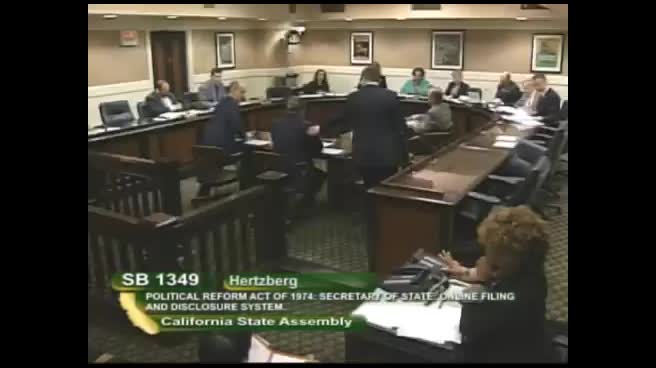 12MIN
Assembly Standing Committee on Elections and Redistricting
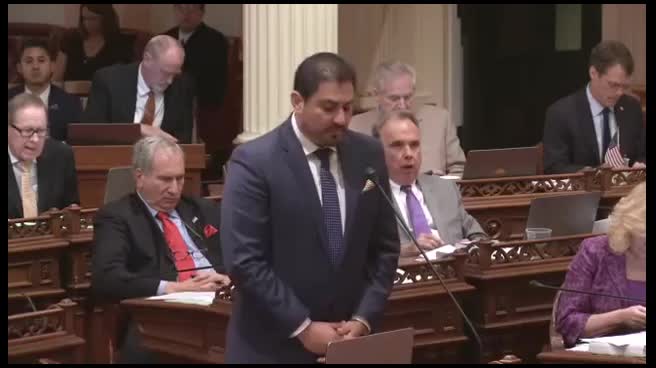 5MIN