SB 1379: Community colleges: part-time, temporary employees.
- Session Year: 2015-2016
- House: Senate
- Latest Version Date: 2016-09-30
Existing law establishes the California Community Colleges under the administration of the Board of Governors of the California Community Colleges. Existing law authorizes the establishment of community college districts under the administration of community college governing boards, and authorizes these districts to provide instruction at community college campuses throughout the state. Existing law requires that a person employed to teach adult or community college classes for not more than 67% of the hours per week of a full-time employee having comparable duties, excluding substitute service, be classified as a temporary employee and not a contract employee.
A.B. 1690 of the 201516 Regular Session would require community college districts without a collective bargaining agreement with part-time, temporary faculty in effect as of January 1, 2017, to, on or after January 1, 2017, commence negotiations with the exclusive representatives for part-time, temporary faculty regarding certain terms and conditions.
This bill would instead, among other things, require that minimum standards be established for the terms of reemployment preference for part-time, temporary faculty assignments, extend the time frame for compliance to July 1, 2017, and make compliance with the provisions a condition of receiving funds allocated for the Student Success and Support Program in the annual Budget Act.
To the extent that this bill would impose new duties on community college districts, it would constitute a state-mandated local program.
The California Constitution requires the state to reimburse local agencies and school districts for certain costs mandated by the state. Statutory provisions establish procedures for making that reimbursement.
This bill would provide that, if the Commission on State Mandates determines that the bill contains costs mandated by the state, reimbursement for those costs shall be made pursuant to these statutory provisions.
Existing law creates the Los Angeles County Metropolitan Transportation Authority with specified powers and duties relative to transportation planning, programming, and operations in the County of Los Angeles. The authority is governed by a 14-member board of directors, including the Mayor of the City of Los Angeles, 2 public members and one Los Angeles City Council member appointed by the mayor, 4 members appointed from the other cities in the county, the 5 members of the board of supervisors, and one nonvoting member appointed by the Governor.
This bill would restructure the board of directors to include the Mayor of the City of Los Angeles, 2 Los Angeles City Council Members, 2 public members who are residents of the City of Los Angeles, the Mayor of the City of Long Beach, 5 mayors or city council members from the other cities in the county, 2 members of the board of supervisors appointed by that board, and one nonvoting member appointed by the Governor. The bill would require the Mayor of the City of Los Angeles to appoint the 2 members of the Los Angeles City Council and one public member, and would require the President Pro Tempore of the Senate to appoint the other public member from a list submitted by the mayor. The bill would require the Los Angeles County City Selection Committee to appoint 4 of the members from each of 4 specified sectors representing the other cities within the county, and would require the Speaker of the Assembly to appoint the 5th representative of the other cities within the county, who may not reside in the same city as another member of the authority board at the time of appointment, from a list submitted by the Los Angeles County City Selection Committee.
By requiring the board membership to be restructured, the bill would thereby impose a state-mandated local program.
The California Constitution requires the state to reimburse local agencies and school districts for certain costs mandated by the state. Statutory provisions establish procedures for making that reimbursement.
This bill would provide that, if the Commission on State Mandates determines that the bill contains costs mandated by the state, reimbursement for those costs shall be made pursuant to these statutory provisions.
Existing law requires the State Personnel Board to establish, maintain, administer, and publish annually an updated list of certified administrative hearing interpreters it has determined meet the minimum standards in interpreting skills and linguistic abilities in designated languages. Under existing law, certified court interpreters, among others, are deemed certified for the purposes of administrative hearings. Existing law additionally authorizes the Administrative Director of the Division of Workers Compensation (administrative director) to establish, maintain, administer, and publish annually an updated list of certified administrative hearing interpreters who, based on testing by an independent organization designated by the administrative director, have been determined to meet the minimum standards in interpreting skills and linguistic abilities in designated languages, for purposes of administrative hearings conducted pursuant to proceedings of the Workers Compensation Appeals Board (appeals board). Existing law authorizes depositions to be taken in conjunction with any investigation or hearing before the appeals board.
This bill would require that, for those depositions requiring an interpreter, specified information regarding the interpreter and his or her certification be stated on the record and that there be a statement on the record that the certified interpreters identification has been verified by the appeals board or judge ordering the deposition, or by the party giving the deposition testimony, or his or her representative, as specified.
Existing law requires the State Personnel Board to, and authorizes the Director of the Division of Workers Compensation (administrative director) or an independent organization designated by the administrative director to, establish, maintain, administer, and publish annually an updated list of certified administrative hearing interpreters who, based on testing by an independent organization designated by the administrative director, have been determined to meet certain minimum standards, for purposes of certain workers compensation proceedings and medical examinations. Existing law authorizes depositions to be taken in conjunction with any investigation or hearing before the Workers Compensation Appeals Board.
This bill would require that specified information regarding the certification of an interpreter, for a deposition under these provisions, be stated on the record and verified by the board or judge ordering the deposition, or by the party giving the deposition testimony, or his or her representative.
Under existing law, the Department of Industrial Relations collects, compiles, and presents facts and statistics relating to the condition of labor in the state. Existing law provides that, except as specified, no use shall be made in the departments reports of the names of persons supplying information, and makes any agent or employee of the department who violates this provision guilty of a misdemeanor.
This bill would also prohibit the use of the identities of persons supplying information to the department.
Because the bill would expand the definition of a crime, it would impose a state-mandated local program.
The California Constitution requires the state to reimburse local agencies and school districts for certain costs mandated by the state. Statutory provisions establish procedures for making that reimbursement.
This bill would provide that no reimbursement is required by this act for a specified reason.
(a)(1)As a condition of receiving funds allocated for the Student Success and Support Program in the annual Budget Act, on or after July 1, 2017, community college districts that do not have a collective bargaining agreement with part-time, temporary faculty in effect as of January 1, 2017, shall commence negotiations with the exclusive representatives for part-time, temporary faculty regarding the terms and conditions required by subdivision (b). The parties shall negotiate these rights for part-time, temporary faculty.
(2)It is the intent of the Legislature that both of the following shall occur:
(A)The adoption of provisions in compliance with subdivision (b) shall be included as part of the usual and customary negotiations between the community college district and the exclusive representative for part-time, temporary faculty.
(B)(i)A community college district shall establish minimum standards for the terms of reemployment preference for part-time, temporary faculty assignments through the negotiation process between the community college district and the exclusive representative for part-time, temporary faculty. These standards shall include all of the following:
(I)The length of time part-time, temporary faculty have served at the community college or district.
(II)The number of courses part-time, temporary faculty have taught at the community college or district.
(III)The evaluations of temporary faculty conducted pursuant to Section 87663 and other related methods of evaluation that can reliably be used to assess educational impact of temporary faculty as it relates to student success.
(IV)The availability, willingness, and expertise of part-time, temporary faculty to teach specific classes or take on specific assignments that are necessary for student instruction or services.
(ii)Additional standards may be considered and established through the negotiation process, as necessary.
(iii)Standards established pursuant to clause (ii) shall reflect the processes and procedures for both of the following:
(I)Assigning part-time, temporary faculty to teach courses or staff nonclassroom assignments.
(II)Evaluating part-time, temporary faculty.
(b)As a condition of receiving funds allocated for the Student Success and Support Program in the annual Budget Act and except as provided in subdivision (d), a community college district described in paragraph (1) of subdivision (a) and the exclusive representative of the part-time, temporary faculty shall negotiate in good faith all of the following:
(1)The terms of reemployment preference for part-time, temporary faculty assignments based on the minimum standards up to the range of 60 to 67 percent of a full-time equivalent load. These terms shall also contain policies for termination, including, but not limited to, the evaluation process negotiated pursuant to paragraph (2).
(2)A regular evaluation process for part-time, temporary faculty pursuant to the requirements of Section 87663.
(c)A community college district that has a collective bargaining agreement in effect as of July 1, 2017, that has satisfied the requirements of subdivision (b), and that executes a signed written agreement with the exclusive representative of the part-time, temporary faculty acknowledging implementation of subdivision (b), shall be deemed to be in compliance with this section while the bargaining agreement is in effect.
(d)In all cases, part-time faculty assignments shall be temporary in nature, contingent on enrollment and funding, and subject to program changes, and no part-time faculty member shall have reasonable assurance of continued employment at any point, irrespective of the status, length of service, or reemployment preference of that part-time, temporary faculty member.
SEC. 2.If the Commission on State Mandates determines that this act contains costs mandated by the state, reimbursement to local agencies and school districts for those costs shall be made pursuant to Part 7 (commencing with Section 17500) of Division 4 of Title 2 of the Government Code.
(a)(1)On As a condition of receiving funds allocated for the Student Success and Support Program in the annual Budget Act, on or after January July 1, 2017, community college districts that do not have a collective bargaining agreement with part-time, temporary faculty in effect as of January 1, 2017, shall commence negotiations with the exclusive representatives for part-time, temporary faculty regarding the terms and conditions required by subdivision (b). The parties shall negotiate these rights for part-time, temporary faculty.
(2)It is the intent of the Legislature that both of the following shall occur:
(A)The adoption of provisions in compliance with subdivision (b) shall be included as part of the usual and customary negotiations between the community college district and the exclusive representative for part-time, temporary faculty.
(B)(i)A community college district shall meet the minimum standards established by this section establish minimum standards for the terms of reemployment preference for part-time, temporary faculty assignments through the negotiation process between the community college district and the exclusive representative for part-time, temporary faculty. These standards shall include all of the following:
(b)(1)A community college district that enters into a collective bargaining agreement on or after January 1, 2017, shall comply with all of the following:
(A)Upon initial hire, and subsequently thereafter, a part-time, temporary faculty member shall be evaluated pursuant to the requirements of Section 87663.
(B)After six semesters or nine quarters of service, exclusive of summer and intersession terms, each part-time, temporary faculty member who has not received a less-than-satisfactory evaluation during the preceding six semesters or nine quarters of service shall be placed on a seniority list for each assignment at each college where he or she holds a current assignment during the seventh semester or 10th quarter of service, irrespective of how many times he or she has completed each unique assignment. The seniority for all assignments shall be determined based on the first date of hire at the applicable college. Seniority lists shall be by campus unless otherwise locally negotiated between the community college district and the exclusive representative for part-time, temporary faculty.
(C)For semester seven or quarter 10 and beyond, each community college district shall endeavor to maintain the workload equivalent that the part-time, temporary faculty member was assigned during semester six or quarter nine, subject to all of the following:
(i)As new assignments become available due to growth or attrition, these assignments shall be offered in seniority order to those part-time, temporary faculty members who have qualified to be placed on the seniority list pursuant to subparagraph (B), and previously successfully completed that same assignment. These assignments may be made up to a maximum annualized load, exclusive of summer and intersession terms, in the range of 60 to 67 percent of a full-time equivalent load.
(ii)In cases where a reduction in assignment needs to occur due to program needs, budget constraints, or more contract faculty hires, the reduction shall occur first from among those part-time, temporary faculty members who have not yet qualified to be placed on the seniority list, and thereafter in reverse seniority order, with the least senior part-time, temporary faculty member reduced first. Any rights to a certain workload equivalent shall be maintained for a period of 18 months. In cases of class cancellation due to low enrollment, faculty members shall displace faculty members who are lower than they are on the seniority list, if the class cancellation occurs prior to the first class meeting day.
(iii)Each new assignment successfully completed shall be added to the part-time, temporary faculty member seniority list.
(D)Procedures governing refusal or rejection of offered assignments, diminution or loss of seniority rights, and additional leave or break-in-service provisions shall be locally negotiated between the community college district and the exclusive representative for part-time, temporary faculty.
(E)In cases where a part-time, temporary faculty member, subsequent to qualifying to be placed on the seniority list, receives a less-than-satisfactory evaluation, as that term is defined in the collective bargaining agreement between the community college district and the exclusive representative for part-time, temporary faculty, the faculty member shall be provided a written plan of remediation with concrete suggestions for improvement. The faculty member shall be evaluated again the following semester. If the outcome of this subsequent evaluation is also less than satisfactory, the faculty member shall lose all seniority rights, and may be dismissed at the discretion of the district. Appeal and grievance rights and procedures, if any, shall be subject to local collective bargaining.
(F)In all cases, part-time faculty assignments are temporary in nature, contingent on enrollment and funding, and subject to program changes, and no part-time faculty member has a reasonable assurance of continued employment at any point, irrespective of the status, length of service, or reemployment preference seniority of that part-time, temporary faculty member.
(2)(A)A community college district that has a collective bargaining agreement in effect as of January 1, 2017, that has provisions in place that require implementation of all of the following, and executes a signed written agreement pursuant to subparagraph (B), shall be exempt from this subdivision upon the expiration of that agreement:
(i)Part-time, temporary faculty assignment based on seniority up to the range of 60 to 67 percent of a full-time equivalent load.
(ii)A regular evaluation process for part-time, temporary faculty.
(iii)Due process for termination once a part-time, temporary faculty member has qualified for the negotiated provisions.
(B)A written agreement, confirming that provisions requiring the implementation of clauses (i) to (iii), inclusive, have been included in a collective bargaining agreement in effect as of January 1, 2017, shall be signed by the exclusive representative for part-time, temporary faculty and the community college district, who are subject to that agreement, in order for the district to be exempt from this subdivision pursuant to subparagraph (A).
(I)The length of time part-time, temporary faculty have served at the community college or district.
(II)The number of courses part-time, temporary faculty have taught at the community college or district.
(III)The evaluations of temporary faculty conducted pursuant to Section 87663 and other related methods of evaluation that can reliably be used to assess educational impact of temporary faculty as it relates to student success.
(IV)The availability, willingness, and expertise of part-time, temporary faculty to teach specific classes or take on specific assignments that are necessary for student instruction or services.
(ii)Additional standards may be considered and established through the negotiation process, as necessary.
(iii)Standards established pursuant to clause (ii) shall reflect the processes and procedures for both of the following:
(I)Assigning part-time, temporary faculty to teach courses or staff nonclassroom assignments.
(II)Evaluating part-time, temporary faculty.
(b)As a condition of receiving funds allocated for the Student Success and Support Program in the annual Budget Act and except as provided in subdivision (d), a community college district described in paragraph (1) of subdivision (a) and the exclusive representative of the part-time, temporary faculty shall negotiate in good faith all of the following:
(1)The terms of reemployment preference for part-time, temporary faculty assignments based on the minimum standards up to the range of 60 to 67 percent of a full-time equivalent load. These terms shall also contain policies for termination, including, but not limited to, the evaluation process negotiated pursuant to paragraph (2).
(2)A regular evaluation process for part-time, temporary faculty pursuant to the requirements of Section 87663.
(c)A community college district that has a collective bargaining agreement in effect as of July 1, 2017, that has satisfied the requirements of subdivision (b), and that executes a signed written agreement with the exclusive representative of the part-time, temporary faculty acknowledging implementation of subdivision (b), shall be deemed to be in compliance with this section while the bargaining agreement is in effect.
(d)In all cases, part-time faculty assignments shall be temporary in nature, contingent on enrollment and funding, and subject to program changes, and no part-time faculty member shall have reasonable assurance of continued employment at any point, irrespective of the status, length of service, or reemployment preference of that part-time, temporary faculty member.
SECTION 1.It is the intent of the Legislature that the members of the Board of Directors of the Los Angeles County Metropolitan Transportation Authority representing the County of Los Angeles, the City of Los Angeles, and the 87 other cities in the County of Los Angeles be appointed in a manner that ensures a close approximation to the ratio of populations of the respective jurisdictions to the countys total population.
SEC. 2.Section 130051 of the Public Utilities Code is amended to read:130051.The Los Angeles County Metropolitan Transportation Authority consists of 14 members, as follows:
(a)Two members of the Los Angeles County Board of Supervisors, appointed by that board of supervisors.
(b)The Mayor of the City of Los Angeles.
(c)Two members of the City Council of the City of Los Angeles appointed by the Mayor of the City of Los Angeles.
(d)One public member, who shall be a resident of the City of Los Angeles, appointed by the Mayor of the City of Los Angeles.
(e)One public member, who shall be a resident of the City of Los Angeles, appointed by the President Pro Tempore of the Senate from a list of candidates submitted by the Mayor of the City of Los Angeles.
(f)The Mayor of the City of Long Beach.
(g)Four members, one from each sector, each of whom shall be a mayor or a member of a city council, appointed by the Los Angeles County City Selection Committee. For purposes of the selection of these four members, the County of Los Angeles, excluding the City of Los Angeles and the City of Long Beach, shall be divided into the following four sectors:
(1)The North County/San Fernando Valley sector.
(2)The Southwest Corridor sector.
(3)The San Gabriel Valley sector.
(4)The Southeast sector.
The League of California Cities, Los Angeles County Division, shall define the sectors. Every city within a sector shall be entitled to vote to nominate one or more candidates from that sector for consideration for appointment by the Los Angeles County City Selection Committee. A citys vote shall be weighted in the same proportion that its population bears to the total population of all cities within the sector.
The members appointed pursuant to this subdivision shall be appointed by the Los Angeles County City Selection Committee upon an affirmative vote of its members which represent a majority of the population of all cities within the county, excluding the City of Los Angeles and the City of Long Beach.
The members selected by the city selection committee shall serve four-year terms with no limitation on the number of terms that may be served by any individual. The city selection committee may shorten the initial four-year term for one or more of the members for the purpose of ensuring that the members will serve staggered terms.
(h)If the population of the City of Los Angeles, at any time, becomes less than 35 percent of the combined population of all cities in the county, the position of one of the members appointed pursuant to subdivision (c) or (d), as determined by the Mayor of the City of Los Angeles, shall be vacated, and the vacant position shall be filled by appointment by the city selection committee pursuant to subdivision(g) from a city not represented by any other member appointed pursuant to subdivision (g).
(i)One mayor or city council member appointed by the Speaker of the Assembly from a list submitted by the Los Angeles County City Selection Committee that contains two or more candidates from each sector in subdivision (g). The Los Angeles County City Selection Committee shall submit a list of candidates to the Speaker of the Assembly until the appointment is made. At the time a member is appointed pursuant to this subdivision, the member shall not reside in the same city as another member of the authority.
(j)One nonvoting member appointed by the Governor.
SEC. 3.SEC. 2.If the Commission on State Mandates determines that this act contains costs mandated by the state, reimbursement to local agencies and school districts for those costs shall be made pursuant to Part 7 (commencing with Section 17500) of Division 4 of Title 2 of the Government Code.
It is the intent of the Legislature that the members of the Board of Directors of the Los Angeles County Metropolitan Transportation Authority representing the County of Los Angeles, the City of Los Angeles, and the 87 other cities in the County of Los Angeles be appointed in a manner that ensures a close approximation to the ratio of populations of the respective jurisdictions to the countys total population.
SEC. 2.Section 130051 of the Public Utilities Code is amended to read:130051.The Los Angeles County Metropolitan Transportation Authority consists of 14 members, as follows:
(a)Five Two members of the Los Angeles County Board of Supervisors. Supervisors, appointed by that board of supervisors.
If the number of members of the Los Angeles County Board of Supervisors is increased, the authority shall, within 60 days of the increase, submit a plan to the Legislature for revising the composition of the authority.
(b)The Mayor of the City of Los Angeles.
(c)Two public members and one member of the City Council of the City of Los Angeles appointed by the Mayor of the City of Los Angeles.
(d)One public member, who shall be a resident of the City of Los Angeles, appointed by the Mayor of the City of Los Angeles.
(e)One public member, who shall be a resident of the City of Los Angeles, appointed by the President Pro Tempore of the Senate from a list of candidates submitted by the Mayor of the City of Los Angeles.
(f)The Mayor of the City of Long Beach.
(d)
(g)Four members, one from each sector, each of whom shall be a mayor or a member of a city council, appointed by the Los Angeles County City Selection Committee. For purposes of the selection of these four members, the County of Los Angeles, excluding the City of Los Angeles, Angeles and the City of Long Beach, shall be divided into the following four sectors:
(1)The North County/San Fernando Valley sector.
(2)The Southwest Corridor sector.
(3)The San Gabriel Valley sector.
(4)The Southeast Long Beach sector.
The League of California Cities, Los Angeles County Division, shall define the sectors. Every city within a sector shall be entitled to vote to nominate one or more candidates from that sector for consideration for appointment by the Los Angeles County City Selection Committee. A citys vote shall be weighted in the same proportion that its population bears to the total population of all cities within the sector.
The members appointed pursuant to this subdivision shall be appointed by the Los Angeles County City Selection Committee upon an affirmative vote of its members which represent a majority of the population of all cities within the county, excluding the City of Los Angeles. Angeles and the City of Long Beach.
The members selected by the city selection committee shall serve four-year terms with no limitation on the number of terms that may be served by any individual. The city selection committee may shorten the initial four-year term for one or more of the members for the purpose of ensuring that the members will serve staggered terms.
(e)
(h)If the population of the City of Los Angeles, at any time, becomes less than 35 percent of the combined population of all cities in the county, the position of one of the two public members appointed pursuant to subdivision (c), (c) or (d), as determined by the Mayor of the City of Los Angeles by lot, Angeles, shall be vacated, and the vacant position shall be filled by appointment by the city selection committee pursuant to subdivision (d)(g) from a city not represented by any other member appointed pursuant to subdivision (d). (g).
(i)One mayor or city council member appointed by the Speaker of the Assembly from a list submitted by the Los Angeles County City Selection Committee that contains two or more candidates from each sector in subdivision (g). The Los Angeles County City Selection Committee shall submit a list of candidates to the Speaker of the Assembly until the appointment is made. At the time a member is appointed pursuant to this subdivision, the member shall not reside in the same city as another member of the authority.
(f)
(j)One nonvoting member appointed by the Governor.
SEC. 3.If the Commission on State Mandates determines that this act contains costs mandated by the state, reimbursement to local agencies and school districts for those costs shall be made pursuant to Part 7 (commencing with Section 17500) of Division 4 of Title 2 of the Government Code.
SECTION 1.Section 5710 of the Labor Code is amended to read:5710.(a)The appeals board, a workers compensation judge, or any party to the action or proceeding, may, in any investigation or hearing before the appeals board, cause the deposition of witnesses residing within or without the state to be taken in the manner prescribed by law for like depositions in civil actions in the superior courts of this state under Title 4 (commencing with Section 2016.010) of Part 4 of the Code of Civil Procedure. To that end the attendance of witnesses and the production of records may be required. Depositions may be taken outside the state before any officer authorized to administer oaths. The appeals board or a workers compensation judge in any proceeding before the appeals board may cause evidence to be taken in other jurisdictions before the agency authorized to hear workers compensation matters in those other jurisdictions.
(b)If the employer or insurance carrier requests a deposition to be taken of an injured employee, or any person claiming benefits as a dependent of an injured employee, the deponent is entitled to receive in addition to all other benefits:
(1)All reasonable expenses of transportation, meals, and lodging incident to the deposition.
(2)Reimbursement for any loss of wages incurred during attendance at the deposition.
(3)One copy of the transcript of the deposition, without cost.
(4)A reasonable allowance for attorneys fees for the deponent, if represented by an attorney licensed by the State Bar of this state. The fee shall be discretionary with, and, if allowed, shall be set by, the appeals board, but shall be paid by the employer or his or her insurer.
(5)If interpretation services are required because the injured employee or deponent does not proficiently speak or understand the English language, upon a request from either, the employer shall pay for the services of a language interpreter certified or deemed certified pursuant to Article 8 (commencing with Section 11435.05) of Chapter 4.5 of Part 1 of Division 3 of Title 2 of, or Section 68566 of, the Government Code. The fee to be paid by the employer shall be in accordance with the fee schedule adopted by the administrative director and shall include any other deposition-related events as permitted by the administrative director.
(c)If interpretation services are required pursuant to subdivision (a) or (b), the following shall be stated on the record:
(1)The name of the certified court interpreter or certified administrative hearing interpreter, as listed on his or her court or administrative hearing interpreter certification.
(2)His or her current certification number.
(3)A statement that the certified court interpreters or certified administrative hearing interpreters identification has been verified by the board or judge ordering the deposition, or by the party giving testimony, or his or her representative, using a certified interpreter identification badge issued by the Judicial Council, an administrative hearing interpreter badge issued by the Department of Human Resources, or other documentation that verifies the interpreters certification accompanied by photo identification.
(4)The language to be interpreted.
(5)If the interpreter is a certified court interpreter, a statement that the interpreters oath was administered to the certified court interpreter or that he or she has an oath on file with the court.
(a)The appeals board, a workers compensation judge, or any party to the action or proceeding, may, in any investigation or hearing before the appeals board, cause the deposition of witnesses residing within or without the state to be taken in the manner prescribed by law for like depositions in civil actions in the superior courts of this state under Title 4 (commencing with Section 2016.010) of Part 4 of the Code of Civil Procedure. To that end the attendance of witnesses and the production of records may be required. Depositions may be taken outside the state before any officer authorized to administer oaths. The appeals board or a workers compensation judge in any proceeding before the appeals board may cause evidence to be taken in other jurisdictions before the agency authorized to hear workers compensation matters in those other jurisdictions.
(b)If the employer or insurance carrier requests a deposition to be taken of an injured employee, or any person claiming benefits as a dependent of an injured employee, the deponent is entitled to receive in addition to all other benefits:
(1)All reasonable expenses of transportation, meals, and lodging incident to the deposition.
(2)Reimbursement for any loss of wages incurred during attendance at the deposition.
(3)One copy of the transcript of the deposition, without cost.
(4)A reasonable allowance for attorneys fees for the deponent, if represented by an attorney licensed by the State Bar of this state. The fee shall be discretionary with, and, if allowed, shall be set by, the appeals board, but shall be paid by the employer or his or her insurer.
(5)If interpretation services are required because the injured employee or deponent does not proficiently speak or understand the English language, upon a request from either, the employer shall pay for the services of a language interpreter certified or deemed certified pursuant to Article 8 (commencing with Section 11435.05) of Chapter 4.5 of Part 1 of Division 3 of Title 2 of, or Section 68566 of, the Government Code. The fee to be paid by the employer shall be in accordance with the fee schedule adopted by the administrative director and shall include any other deposition-related events as permitted by the administrative director.
(c)If interpretation services are required pursuant to subdivision (a) or (b), the following shall be stated on the record:
(1)The name of the certified or registered court interpreter, court interpreter or certified administrative hearing interpreter, as listed on his or her court interpreter certification or registration. or administrative hearing interpreter certification.
(2)His or her current certification or registration number.
(3)A statement that the certified or registered court interpreters or certified administrative hearing interpreters identification has been verified, verified by the board or judge ordering the deposition, or by the party giving testimony, or his or her representative, using a certified or registered interpreter identification badge issued by the Judicial Council, an administrative hearing interpreter badge issued by the Department of Human Resources, or other documentation that verifies the interpreters certification or registration accompanied by photo identification.
(4)The language to be interpreted.
(5)A If the interpreter is a certified court interpreter, a statement that the interpreters oath was administered to the certified or registered court interpreter or that he or she has an oath on file with the court.
(a)The appeals board, a workers compensation judge, or any party to the action or proceeding, may, in any investigation or hearing before the appeals board, cause the deposition of witnesses residing within or without the state to be taken in the manner prescribed by law for like depositions in civil actions in the superior courts of this state under Title 4 (commencing with Section 2016.010) of Part 4 of the Code of Civil Procedure. To that end the attendance of witnesses and the production of records may be required. Depositions may be taken outside the state before any officer authorized to administer oaths. The appeals board or a workers compensation judge in any proceeding before the appeals board may cause evidence to be taken in other jurisdictions before the agency authorized to hear workers compensation matters in those other jurisdictions.
(b)If the employer or insurance carrier requests a deposition to be taken of an injured employee, or any person claiming benefits as a dependent of an injured employee, the deponent is entitled to receive in addition to all other benefits:
(1)All reasonable expenses of transportation, meals, and lodging incident to the deposition.
(2)Reimbursement for any loss of wages incurred during attendance at the deposition.
(3)One copy of the transcript of the deposition, without cost.
(4)A reasonable allowance for attorneys fees for the deponent, if represented by an attorney licensed by the State Bar of this state. The fee shall be discretionary with, and, if allowed, shall be set by, the appeals board, but shall be paid by the employer or his or her insurer.
(5)If interpretation services are required because the injured employee or deponent does not proficiently speak or understand the English language, upon a request from either, the employer shall pay for the services of a language interpreter certified or deemed certified pursuant to Article 8 (commencing with Section 11435.05) of Chapter 4.5 of Part 1 of Division 3 of Title 2 of, or Section 68566 of, the Government Code. The fee to be paid by the employer shall be in accordance with the fee schedule adopted by the administrative director and shall include any other deposition-related events as permitted by the administrative director.
(c)If interpretation services are required pursuant to subdivision (a) or (b), the following shall be stated on the record:
(1)The name of the certified or registered court interpreter, as listed on his or her court interpreter certification or registration.
(2)His or her current certification or registration number.
(3)A statement that the certified or registered court interpreters identification has been verified, by the board or judge ordering the deposition, or by the party giving testimony, or his or her representative, using a certified or registered interpreter identification badge issued by the Judicial Council or other documentation that verifies the interpreters certification or registration accompanied by photo identification.
(4)The language to be interpreted.
(5)A statement that the interpreters oath was administered to the certified or registered court interpreter or that he or she has an oath on file with the court.
SECTION 1.Section 153 of the Labor Code is amended to read:153.Except as provided in Section 151 no use shall be made in the statistical or other reports prepared pursuant to this chapter of the names or identities of persons supplying the information required under this code. Any agent or employee of the department who violates this section is guilty of a misdemeanor.
SEC. 2.No reimbursement is required by this act pursuant to Section 6 of Article XIIIB of the California Constitution because the only costs that may be incurred by a local agency or school district will be incurred because this act creates a new crime or infraction, eliminates a crime or infraction, or changes the penalty for a crime or infraction, within the meaning of Section 17556 of the Government Code, or changes the definition of a crime within the meaning of Section 6 of Article XIIIB of the California Constitution.
Except as provided in Section 151 no use shall be made in the statistical or other reports prepared pursuant to this chapter of the names or identities of persons supplying the information required under this code. Any agent or employee of the department who violates this section is guilty of a misdemeanor.
SEC. 2.No reimbursement is required by this act pursuant to Section 6 of Article XIIIB of the California Constitution because the only costs that may be incurred by a local agency or school district will be incurred because this act creates a new crime or infraction, eliminates a crime or infraction, or changes the penalty for a crime or infraction, within the meaning of Section 17556 of the Government Code, or changes the definition of a crime within the meaning of Section 6 of Article XIIIB of the California Constitution.
|
Date
|
Status
|
|---|---|
| Sep 9, 2016 | Enrolled and presented to the Governor at 3:30 p.m. |
| Aug 31, 2016 | Assembly amendments concurred in. (Ayes 21. Noes 16. Page 5598.) Ordered to engrossing and enrolling. |
| Aug 31, 2016 | Read third time. Passed. (Ayes 50. Noes 27. Page 6525.) Ordered to the Senate. |
| Aug 31, 2016 | Assembly amendments concurred in. (Ayes 21. Noes 16.) Ordered to engrossing and enrolling. |
| Aug 31, 2016 | In Senate. Concurrence in Assembly amendments pending. |
| Aug 31, 2016 | Read third time. Passed. Ordered to the Senate. |
| Aug 30, 2016 | Read second time. Ordered to third reading. |
| Aug 30, 2016 | From committee: Do pass. (Ayes 9. Noes 3.) (August 30). |
| Aug 29, 2016 | From committee with author's amendments. Read second time and amended. Re-referred to Com. on HIGHER ED. |
| Aug 29, 2016 | Joint Rule 62(a) suspended. |
| Aug 29, 2016 | Re-referred to Com. on HIGHER ED. pursuant to Assembly Rule 77.2. |
| Aug 25, 2016 | August 25 set for first hearing canceled at the request of author. |
| Aug 24, 2016 | Joint Rule 62(a) suspended. |
| Aug 24, 2016 | Assembly Rule 56 suspended. |
| Aug 19, 2016 | Read third time and amended. (Ayes 48. Noes 11. Page 5977.) |
| Aug 19, 2016 | Re-referred to Coms. on L. GOV. and APPR. pursuant to Assembly Rule 77.2. |
| Aug 19, 2016 | Read third time and amended. |
| Aug 19, 2016 | Ordered to third reading. |
| Aug 19, 2016 | From inactive file. |
| Aug 19, 2016 | Assembly Rule 78 and 63 suspended. |
| Aug 8, 2016 | Ordered to inactive file on request of Assembly Member Calderon. |
| Aug 8, 2016 | From consent calendar on motion of Assembly Member Calderon. |
| Aug 4, 2016 | Read second time. Ordered to consent calendar. |
| Aug 3, 2016 | From committee: Do pass. Ordered to consent calendar. (Ayes 20. Noes 0.) (August 3). |
| Jun 22, 2016 | From committee: Do pass and re-refer to Com. on APPR. with recommendation: To consent calendar. (Ayes 13. Noes 0.) (June 22). Re-referred to Com. on APPR. |
| Jun 13, 2016 | Referred to Com. on INS. |
| Jun 2, 2016 | Read third time. Passed. (Ayes 39. Noes 0. Page 4149.) Ordered to the Assembly. |
| Jun 2, 2016 | In Assembly. Read first time. Held at Desk. |
| Jun 2, 2016 | Read third time. Passed. (Ayes 39. Noes 0.) Ordered to the Assembly. |
| May 31, 2016 | Ordered to special consent calendar. |
| May 31, 2016 | Read second time and amended. Ordered to third reading. |
| May 27, 2016 | From committee: Do pass as amended. (Ayes 7. Noes 0. Page 4009.) (May 27). |
| May 27, 2016 | From committee: Do pass as amended. (Ayes 7. Noes 0.) (May 27). |
| May 20, 2016 | Set for hearing May 27. |
| Apr 25, 2016 | April 25 hearing: Placed on APPR. suspense file. |
| Apr 15, 2016 | Set for hearing April 25. |
| Apr 13, 2016 | From committee: Do pass and re-refer to Com. on APPR. (Ayes 5. Noes 0. Page 3521.) (April 13). Re-referred to Com. on APPR. |
| Apr 13, 2016 | From committee: Do pass and re-refer to Com. on APPR. (Ayes 5. Noes 0.) (April 13). Re-referred to Com. on APPR. |
| Apr 5, 2016 | Set for hearing April 13. |
| Mar 29, 2016 | From committee with author's amendments. Read second time and amended. Re-referred to Com. on L. & I.R. |
| Mar 10, 2016 | Referred to Com. on L. & I.R. |
| Feb 22, 2016 | Read first time. |
| Feb 22, 2016 | From printer. May be acted upon on or after March 23. |
| Feb 19, 2016 | Introduced. To Com. on RLS. for assignment. To print. |
|
Date
|
Description
|
Location
|
Votes
|
|
|---|---|---|---|---|
| Aug 31, 2016 | W/O REF. TO FILE SB1379 Mendoza | Senate Floor |
Passed |
|
| Aug 31, 2016 | SB 1379 Mendoza Senate Third Reading By MEDINA | Assembly Floor |
Passed |
|
| Aug 30, 2016 | Do pass. | Assembly Standing Committee on Higher Education |
Passed |
|
| Aug 19, 2016 | SB 1379 Mendoza Senate Third Reading By CALDERON Amend By CALDERON Set #1 | Assembly Floor |
Passed |
|
| Aug 3, 2016 | Do pass. To Consent Calendar. | Assembly Standing Committee on Appropriations |
Passed |
|
| Jun 22, 2016 | Do pass and be re-referred to the Committee on [Appropriations] with recommendation: To Consent Calendar | Assembly Standing Committee on Insurance |
Passed |
|
| Jun 2, 2016 | Special Consent # SB1379 Mendoza | Senate Floor |
Passed |
|
| May 27, 2016 | Do pass as amended | Senate Standing Committee on Appropriations |
Passed |
|
| Apr 25, 2016 | Placed on suspense file | Senate Standing Committee on Appropriations |
Passed |
|
| Apr 13, 2016 | Do pass, but first be re-referred to the Committee on [Appropriations] | Senate Standing Committee on Labor and Industrial Relations |
Passed |
This list shows positions taken on this bill by organizations on the date displayed, which is linked to the original source.
Positions by individuals are not included.
Office of Senate Floor Analyses (916) 651-1520 Fax: (916) 327-4478 | SB |
UNFINISHED BUSINESS
Bill No: SB 1379
:
PRIOR VOTES NOT RELEVANT
ASSEMBLY FLOOR: Not available
SOURCE: California Federation of Teachers
California Teachers Association
DIGEST: This bill requires California community college (CCC) districts to negotiate collective bargaining agreements with part-time faculty that include terms of reemployment preference and a regular evaluation process, as specified, as a condition of receiving funds allocated for the Student Success and Support Program (SSSP).
Assembly Amendments gut and amend this bill, which previously proposed to restructure the composition of the Los Angeles County Metropolitan Transportation Authority, to instead require, as a condition of receiving funds allocated for the Student Success and Support Program (SSSP), good faith negotiation on the establishment of terms of reemployment preference, including termination policies, and a regular evaluation process, as specified. The amendments also add additional intent language regarding minimum standards for the terms of reemployment preference.
Existing law:
- Defines “faculty” as those employees of community college districts who are employed in academic positions that are not designated as supervisory or management, as specified. Faculty include, but are not limited to, instructors, librarians, counselors, community college health services professionals, handicapped student programs and services professionals, and extended opportunity programs and services professionals. (Education Code § 87003)
- Defines any person who is employed to teach for not more than 67% of the hours per week considered a full-time assignment to be a part-time, temporary employee. (EC § 87482.5 and § 87882)
- Requires the Board of Governors (BOG) to adopt regulations regarding the percent of credit instruction taught by full-time faculty and authorizes community college districts with less than 75% full-time instructors to apply a portion of their “program improvement” funds toward reaching a 75% goal. However, the state has stopped providing program improvement funds and the BOG has since required CCC districts to provide a portion of their growth funds to hiring more full-time faculty. (EC § 87482.6)
This bill:
- Requires, as a condition of receiving funds allocated for the SSSP, community college districts that do not have a collective bargaining agreement with part-time faculty in effect as of January 1, 2017, to negotiate in good faith with exclusive representatives for part-time, temporary faculty all of the following:
- The terms of reemployment preference for part-time faculty assignment based on minimum standards up to the range of 60 to 67 percent of a full-time equivalent load, as specified. The terms of reemployment preference should also contain policies for termination, including but not limited to the evaluation process negotiated, as specified.
- A regular evaluation process for part-time faculty, as specified.
- Provides that a community college district with a collective bargaining agreement with part-time faculty in effect as of July 1, 2017, that has satisfied the requirements specified above, and executes a signed written agreement, shall be deemed to be in compliance while the bargaining agreement is in force.
- Provides that in all cases, part-time faculty assignments are temporary in nature, contingent on enrollment and funding, and subject to program changes, and no part-time faculty member has a reasonable assurance of continued employment at any point, irrespective of the status, length of service, or reemployment preference of that part-time faculty member.
- Provides legislative intent language, as specified, regarding the establishment of minimum standards for the terms of reemployment preference for part-time faculty, including that the minimum standards should consider the length of time part-time faculty have served at the community college or district, the evaluations conducted and other methods of evaluation that can be used to assess educational impact as it relates to student success.
Comments
Need for the bill. According to the author’s office, “job instability continues to be one of the greatest concerns for part-time/temporary faculty. The inability to negotiate reemployment policies at most community college districts has resulted in unreliable reemployment practices. This leaves many part-time faculty wondering if they will have a job the following semester. Additionally, many part-time/temporary faculty are left with no option but to piece together full-time teaching schedules through employment in two or more community college districts. The varying reemployment policies in these community college districts make it difficult for part-time/temporary faculty to plan their upcoming teaching schedules.” The author’s office contends that in most cases, part-time instructors are paid significantly less than full-time faculty for the same duties of preparation, teaching and grading, and assessment. In addition to receiving significantly less in compensation than their full-time counterparts, in most cases part-time faculty receive no health coverage and are not compensated for office hours outside of class to meet with students. The author argues that, "this lack of dignity, fairness, and equity translates to poor prospects for career advancement, resulting in many qualified part-time faculty leaving the profession annually.”
Existing reemployment policies. Current law requires that reappointment rights for temporary faculty are a subject of negotiation during collective bargaining and provides that reappointment rights may be based on whatever factors are agreed to by both parties. Accordingly, many community college districts have established policies and practices regarding reappointment rights through the bargaining process. Additionally, several community college districts have successfully negotiated bargaining agreements, including the Grossmont-Cuyamaca, Los Angeles, San Diego, San Francisco, and Ventura community college districts. While this bill is intended to provide job security for part-time faculty and minimum standards for how they are treated, community college districts and local bargaining units already have the ability to negotiate reemployment policies.
Part-time faculty. For some time, the Legislature has considered various efforts to address the issue of community college districts hiring part-time faculty members in lieu of full-time faculty. Much of the reason to utilize temporary faculty is the lower costs associated with such faculty. Several studies on temporary faculty found that community college districts pay temporary faculty significantly less than full-time faculty performing the same duties, and nearly half of temporary faculty reported not receiving any type of benefits from their district.
According to the Center for Community College Student Engagement's (CCCSE) April 2014 report, entitled, "Contingent Commitments: Bringing Part-Time Faculty Into Focus," 70% of the 400,000 faculty members of public, two-year colleges hired in 2009 were part-time instructors. The CCCSE report also found that part-time faculty teach 58% of community college classes and 53% of community college students. Additionally, the CCCSE report found that differences in the actions of part-time and full-time faculty cannot necessarily be attributed to differences in the will or abilities of part-time faculty. The report contends that, "Most likely, they exist at least in part because colleges too often are not fully supporting part-time faculty or engaging them in critical elements of the faculty experience."
According to the California Federation of Teachers, nearly 50% of the CCC course selections are taught by part-time faculty and part-time faculty out number full-time faculty by two to one.
Student Success at the Community Colleges. Pursuant to SB 1143 (Liu, Chapter 409, Statutes of 2010), the CCC BOG created the Student Success Task Force (SSTF); 20 individuals (community college chief executive officers, faculty, students, researchers, staff and external stake holders) who spent a year researching, studying and debating the best methods to improve student outcomes at the community colleges.
According to the SSTF report, which was unanimously adopted by the BOG in January 2012, it was their goal to identify best practices for promoting student success and to develop statewide strategies to take these approaches to scale while ensuring that educational opportunity for historically underrepresented students would not just be maintained, but bolstered.
The SSTF efforts resulted in 22 specific recommendations focused on eight separate areas, increasing college and career readiness, strengthening support for entering students, and incentivizing successful student behaviors. Implementation of these recommendations is being accomplished by the Chancellor’s Office of the CCC via the “Student Success Initiative” through regulatory changes, system-wide administrative policies, local best practices and legislation. These implementation efforts include the following:
- SB 1456 (Lowenthal, Chapter 624, Statutes of 2012) recast the Seymour-Campbell Matriculation Act of 1986 in order to target funding to services such as orientation, assessment, and counseling and advising to assist students with the development of education plans.
- At a regulatory level, the BOG approved regulations that provide enrollment priority to students who have participated in assessment, orientation, and who have developed an education plan. In addition, statutory priority enrollment extended to veterans, foster youth, Extended Opportunity Program & Services students, and disabled students requires participation in these Student Success Services and programs. Students are now required to complete core services as well as to declare a course of study. In addition, districts are now required to notify students that accumulating 100 degree applicable units or being on academic or progress probation for two consecutive terms will result in the loss of enrollment priority.
Since 2012, the State has increased ongoing funding for community college student success and support by nearly $600 million. These funds have been designated to support the SSSP to provide targeted services such as orientation, assessment, and counseling and advising to assist students with the development of education plans. In addition these funds support the creation of Student Equity Plans to improve access and outcomes for disadvantaged groups, as well as a number of Chancellor’s Office Initiatives to provide related support to districts.
Dilution of SSSP efforts? By conditioning the receipt of SSSP funds to the requirement for community college districts to negotiate collective bargaining agreements with part-time faculty, this bill could potentially dilute the existing SSSP efforts to the extent that local districts elect not to comply with this measure. However, it is unclear how likely it would be for a local community college district to do so. SSSP funds can range anywhere from the mid-hundreds of thousands of dollars for a smaller district to as much as $10 million for a larger district. Regardless, if a district chooses not to negotiate a collective bargaining agreement with part-time faculty, the loss of SSSP funds could be costly, especially given the significant investments the State has made with these funds to implement strategies to incentivize successful student behaviors and improve completion at the community colleges. This bill could also set a precedent for future legislation seeking to leverage other requirements while placing similar conditions on the receipt of SSSP funds. This could then further dilute these funds which are intended for critical academic support services for students.
FISCAL EFFECT: Appropriation: Fiscal Com.: Local:
According to the Senate Appropriations Committee, based on the previous version of this bill, there would be the following:
- New seniority lists: According to the Community College League of California, out of 72 community college districts 40 districts do not include seniority provisions in collective bargaining agreements with part-time faculty. Assuming a cost of $5,000 to $10,000 per district to establish a list, statewide reimbursable costs would be between $200,000 and $400,000. This estimate assumes that the estimated 32 remaining districts have an agreement in place that is based on seniority up to the 60 to 67 percent of a full-time equivalent load; has a regular evaluation process; and includes due process for termination. Once these existing agreements expire, new agreements would have to be established containing the specified requirements in this bill. (Proposition 98)
- Maintenance of all lists: Initially only those districts that are not exempt of this bill’s requirements will be eligible to claim for reimbursement for maintaining seniority lists. Once existing agreements that are eligible for exemption expire all districts will be required to maintain seniority lists in accordance with this bill. If each college campus used a partial position to track the data necessary to maintain the seniority list, reimbursable state mandate costs could exceed $2 million. (Proposition 98)
California Federation of Teachers (co-source)
California Teachers Association (co-source)
OPPOSITION: (Verified 8/31/16)
None received
8/31/16 19:49:32
Office of Senate Floor Analyses (916) 651-1520 Fax: (916) 327-4478 | SB 1379 |
UNFINISHED BUSINESS
Bill No: SB 1379
Amended: 8/29/16
PRIOR VOTES NOT RELEVANT
ASSEMBLY FLOOR: Not available
SUBJECT: Community colleges: part-time, temporary employees
SOURCE: California Federation of Teachers
California Teachers Association
DIGEST: This bill requires California community college (CCC) districts to negotiate collective bargaining agreements with part-time faculty that include terms of reemployment preference and a regular evaluation process, as specified, as a condition of receiving funds allocated for the Student Success and Support Program (SSSP).
Assembly Amendments gut and amend this bill, which previously proposed to restructure the composition of the Los Angeles County Metropolitan Transportation Authority, to instead require, as a condition of receiving funds allocated for the Student Success and Support Program (SSSP), good faith negotiation on the establishment of terms of reemployment preference, including termination policies, and a regular evaluation process, as specified. The amendments also add additional intent language regarding minimum standards for the terms of reemployment preference.
Existing law:
- Defines “faculty” as those employees of community college districts who are employed in academic positions that are not designated as supervisory or management, as specified. Faculty include, but are not limited to, instructors, librarians, counselors, community college health services professionals, handicapped student programs and services professionals, and extended opportunity programs and services professionals. (Education Code § 87003)
- Defines any person who is employed to teach for not more than 67% of the hours per week considered a full-time assignment to be a part-time, temporary employee. (EC § 87482.5 and § 87882)
- Requires the Board of Governors (BOG) to adopt regulations regarding the percent of credit instruction taught by full-time faculty and authorizes community college districts with less than 75% full-time instructors to apply a portion of their “program improvement” funds toward reaching a 75% goal. However, the state has stopped providing program improvement funds and the BOG has since required CCC districts to provide a portion of their growth funds to hiring more full-time faculty. (EC § 87482.6)
This bill:
- Requires, as a condition of receiving funds allocated for the SSSP, community college districts that do not have a collective bargaining agreement with part-time faculty in effect as of January 1, 2017, to negotiate in good faith with exclusive representatives for part-time, temporary faculty all of the following:
- The terms of reemployment preference for part-time faculty assignment based on minimum standards up to the range of 60 to 67 percent of a full-time equivalent load, as specified. The terms of reemployment preference should also contain policies for termination, including but not limited to the evaluation process negotiated, as specified.
- A regular evaluation process for part-time faculty, as specified.
- Provides that a community college district with a collective bargaining agreement with part-time faculty in effect as of July 1, 2017, that has satisfied the requirements specified above, and executes a signed written agreement, shall be deemed to be in compliance while the bargaining agreement is in force.
- Provides that in all cases, part-time faculty assignments are temporary in nature, contingent on enrollment and funding, and subject to program changes, and no part-time faculty member has a reasonable assurance of continued employment at any point, irrespective of the status, length of service, or reemployment preference of that part-time faculty member.
- Provides legislative intent language, as specified, regarding the establishment of minimum standards for the terms of reemployment preference for part-time faculty, including that the minimum standards should consider the length of time part-time faculty have served at the community college or district, the evaluations conducted and other methods of evaluation that can be used to assess educational impact as it relates to student success.
Comments
Need for the bill. According to the author’s office, “job instability continues to be one of the greatest concerns for part-time/temporary faculty. The inability to negotiate reemployment policies at most community college districts has resulted in unreliable reemployment practices. This leaves many part-time faculty wondering if they will have a job the following semester. Additionally, many part-time/temporary faculty are left with no option but to piece together full-time teaching schedules through employment in two or more community college districts. The varying reemployment policies in these community college districts make it difficult for part-time/temporary faculty to plan their upcoming teaching schedules.” The author’s office contends that in most cases, part-time instructors are paid significantly less than full-time faculty for the same duties of preparation, teaching and grading, and assessment. In addition to receiving significantly less in compensation than their full-time counterparts, in most cases part-time faculty receive no health coverage and are not compensated for office hours outside of class to meet with students. The author argues that, "this lack of dignity, fairness, and equity translates to poor prospects for career advancement, resulting in many qualified part-time faculty leaving the profession annually.”
Existing reemployment policies. Current law requires that reappointment rights for temporary faculty are a subject of negotiation during collective bargaining and provides that reappointment rights may be based on whatever factors are agreed to by both parties. Accordingly, many community college districts have established policies and practices regarding reappointment rights through the bargaining process. Additionally, several community college districts have successfully negotiated bargaining agreements, including the Grossmont-Cuyamaca, Los Angeles, San Diego, San Francisco, and Ventura community college districts. While this bill is intended to provide job security for part-time faculty and minimum standards for how they are treated, community college districts and local bargaining units already have the ability to negotiate reemployment policies.
Part-time faculty. For some time, the Legislature has considered various efforts to address the issue of community college districts hiring part-time faculty members in lieu of full-time faculty. Much of the reason to utilize temporary faculty is the lower costs associated with such faculty. Several studies on temporary faculty found that community college districts pay temporary faculty significantly less than full-time faculty performing the same duties, and nearly half of temporary faculty reported not receiving any type of benefits from their district.
According to the Center for Community College Student Engagement's (CCCSE) April 2014 report, entitled, "Contingent Commitments: Bringing Part-Time Faculty Into Focus," 70% of the 400,000 faculty members of public, two-year colleges hired in 2009 were part-time instructors. The CCCSE report also found that part-time faculty teach 58% of community college classes and 53% of community college students. Additionally, the CCCSE report found that differences in the actions of part-time and full-time faculty cannot necessarily be attributed to differences in the will or abilities of part-time faculty. The report contends that, "Most likely, they exist at least in part because colleges too often are not fully supporting part-time faculty or engaging them in critical elements of the faculty experience."
According to the California Federation of Teachers, nearly 50% of the CCC course selections are taught by part-time faculty and part-time faculty out number full-time faculty by two to one.
Student Success at the Community Colleges. Pursuant to SB 1143 (Liu, Chapter 409, Statutes of 2010), the CCC BOG created the Student Success Task Force (SSTF); 20 individuals (community college chief executive officers, faculty, students, researchers, staff and external stake holders) who spent a year researching, studying and debating the best methods to improve student outcomes at the community colleges.
According to the SSTF report, which was unanimously adopted by the BOG in January 2012, it was their goal to identify best practices for promoting student success and to develop statewide strategies to take these approaches to scale while ensuring that educational opportunity for historically underrepresented students would not just be maintained, but bolstered.
The SSTF efforts resulted in 22 specific recommendations focused on eight separate areas, increasing college and career readiness, strengthening support for entering students, and incentivizing successful student behaviors. Implementation of these recommendations is being accomplished by the Chancellor’s Office of the CCC via the “Student Success Initiative” through regulatory changes, system-wide administrative policies, local best practices and legislation. These implementation efforts include the following:
- SB 1456 (Lowenthal, Chapter 624, Statutes of 2012) recast the Seymour-Campbell Matriculation Act of 1986 in order to target funding to services such as orientation, assessment, and counseling and advising to assist students with the development of education plans.
- At a regulatory level, the BOG approved regulations that provide enrollment priority to students who have participated in assessment, orientation, and who have developed an education plan. In addition, statutory priority enrollment extended to veterans, foster youth, Extended Opportunity Program & Services students, and disabled students requires participation in these Student Success Services and programs. Students are now required to complete core services as well as to declare a course of study. In addition, districts are now required to notify students that accumulating 100 degree applicable units or being on academic or progress probation for two consecutive terms will result in the loss of enrollment priority.
Since 2012, the State has increased ongoing funding for community college student success and support by nearly $600 million. These funds have been designated to support the SSSP to provide targeted services such as orientation, assessment, and counseling and advising to assist students with the development of education plans. In addition these funds support the creation of Student Equity Plans to improve access and outcomes for disadvantaged groups, as well as a number of Chancellor’s Office Initiatives to provide related support to districts.
Dilution of SSSP efforts? By conditioning the receipt of SSSP funds to the requirement for community college districts to negotiate collective bargaining agreements with part-time faculty, this bill could potentially dilute the existing SSSP efforts to the extent that local districts elect not to comply with this measure. However, it is unclear how likely it would be for a local community college district to do so. SSSP funds can range anywhere from the mid-hundreds of thousands of dollars for a smaller district to as much as $10 million for a larger district. Regardless, if a district chooses not to negotiate a collective bargaining agreement with part-time faculty, the loss of SSSP funds could be costly, especially given the significant investments the State has made with these funds to implement strategies to incentivize successful student behaviors and improve completion at the community colleges. This bill could also set a precedent for future legislation seeking to leverage other requirements while placing similar conditions on the receipt of SSSP funds. This could then further dilute these funds which are intended for critical academic support services for students.
FISCAL EFFECT: Appropriation: No Fiscal Com.: Yes Local: Yes
According to the Senate Appropriations Committee, based on the previous version of this bill, there would be the following:
- New seniority lists: According to the Community College League of California, out of 72 community college districts 40 districts do not include seniority provisions in collective bargaining agreements with part-time faculty. Assuming a cost of $5,000 to $10,000 per district to establish a list, statewide reimbursable costs would be between $200,000 and $400,000. This estimate assumes that the estimated 32 remaining districts have an agreement in place that is based on seniority up to the 60 to 67 percent of a full-time equivalent load; has a regular evaluation process; and includes due process for termination. Once these existing agreements expire, new agreements would have to be established containing the specified requirements in this bill. (Proposition 98)
- Maintenance of all lists: Initially only those districts that are not exempt of this bill’s requirements will be eligible to claim for reimbursement for maintaining seniority lists. Once existing agreements that are eligible for exemption expire all districts will be required to maintain seniority lists in accordance with this bill. If each college campus used a partial position to track the data necessary to maintain the seniority list, reimbursable state mandate costs could exceed $2 million. (Proposition 98)
California Federation of Teachers (co-source)
California Teachers Association (co-source)
OPPOSITION: (Verified 8/31/16)
None received
Prepared by: Lenin DelCastillo / ED. / (916) 651-4105
8/31/16 20:33:38
Office of Senate Floor Analyses (916) 651-1520 Fax: (916) 327-4478 | SB |
UNFINISHED BUSINESS
Bill No: SB 1379
:
PRIOR VOTES NOT RELEVANT
ASSEMBLY FLOOR: Not available
SOURCE: California Federation of Teachers
California Teachers Association
DIGEST: This bill requires California community college (CCC) districts to negotiate collective bargaining agreements with part-time faculty that include terms of reemployment preference and a regular evaluation process, as specified, as a condition of receiving funds allocated for the Student Success and Support Program (SSSP).
Assembly Amendments gut and amend this bill, which previously proposed to restructure the composition of the Los Angeles County Metropolitan Transportation Authority, to instead require, as a condition of receiving funds allocated for the Student Success and Support Program (SSSP), good faith negotiation on the establishment of terms of reemployment preference, including termination policies, and a regular evaluation process, as specified. The amendments also add additional intent language regarding minimum standards for the terms of reemployment preference.
Existing law:
- Defines “faculty” as those employees of community college districts who are employed in academic positions that are not designated as supervisory or management, as specified. Faculty include, but are not limited to, instructors, librarians, counselors, community college health services professionals, handicapped student programs and services professionals, and extended opportunity programs and services professionals. (Education Code § 87003)
- Defines any person who is employed to teach for not more than 67% of the hours per week considered a full-time assignment to be a part-time, temporary employee. (EC § 87482.5 and § 87882)
- Requires the Board of Governors (BOG) to adopt regulations regarding the percent of credit instruction taught by full-time faculty and authorizes community college districts with less than 75% full-time instructors to apply a portion of their “program improvement” funds toward reaching a 75% goal. However, the state has stopped providing program improvement funds and the BOG has since required CCC districts to provide a portion of their growth funds to hiring more full-time faculty. (EC § 87482.6)
This bill:
- Requires, as a condition of receiving funds allocated for the SSSP, community college districts that do not have a collective bargaining agreement with part-time faculty in effect as of January 1, 2017, to negotiate in good faith with exclusive representatives for part-time, temporary faculty all of the following:
- The terms of reemployment preference for part-time faculty assignment based on minimum standards up to the range of 60 to 67 percent of a full-time equivalent load, as specified. The terms of reemployment preference should also contain policies for termination, including but not limited to the evaluation process negotiated, as specified.
- A regular evaluation process for part-time faculty, as specified.
- Provides that a community college district with a collective bargaining agreement with part-time faculty in effect as of July 1, 2017, that has satisfied the requirements specified above, and executes a signed written agreement, shall be deemed to be in compliance while the bargaining agreement is in force.
- Provides that in all cases, part-time faculty assignments are temporary in nature, contingent on enrollment and funding, and subject to program changes, and no part-time faculty member has a reasonable assurance of continued employment at any point, irrespective of the status, length of service, or reemployment preference of that part-time faculty member.
- Provides legislative intent language, as specified, regarding the establishment of minimum standards for the terms of reemployment preference for part-time faculty, including that the minimum standards should consider the length of time part-time faculty have served at the community college or district, the evaluations conducted and other methods of evaluation that can be used to assess educational impact as it relates to student success.
Comments
Need for the bill. According to the author’s office, “job instability continues to be one of the greatest concerns for part-time/temporary faculty. The inability to negotiate reemployment policies at most community college districts has resulted in unreliable reemployment practices. This leaves many part-time faculty wondering if they will have a job the following semester. Additionally, many part-time/temporary faculty are left with no option but to piece together full-time teaching schedules through employment in two or more community college districts. The varying reemployment policies in these community college districts make it difficult for part-time/temporary faculty to plan their upcoming teaching schedules.” The author’s office contends that in most cases, part-time instructors are paid significantly less than full-time faculty for the same duties of preparation, teaching and grading, and assessment. In addition to receiving significantly less in compensation than their full-time counterparts, in most cases part-time faculty receive no health coverage and are not compensated for office hours outside of class to meet with students. The author argues that, "this lack of dignity, fairness, and equity translates to poor prospects for career advancement, resulting in many qualified part-time faculty leaving the profession annually.”
Existing reemployment policies. Current law requires that reappointment rights for temporary faculty are a subject of negotiation during collective bargaining and provides that reappointment rights may be based on whatever factors are agreed to by both parties. Accordingly, many community college districts have established policies and practices regarding reappointment rights through the bargaining process. Additionally, several community college districts have successfully negotiated bargaining agreements, including the Grossmont-Cuyamaca, Los Angeles, San Diego, San Francisco, and Ventura community college districts. While this bill is intended to provide job security for part-time faculty and minimum standards for how they are treated, community college districts and local bargaining units already have the ability to negotiate reemployment policies.
Part-time faculty. For some time, the Legislature has considered various efforts to address the issue of community college districts hiring part-time faculty members in lieu of full-time faculty. Much of the reason to utilize temporary faculty is the lower costs associated with such faculty. Several studies on temporary faculty found that community college districts pay temporary faculty significantly less than full-time faculty performing the same duties, and nearly half of temporary faculty reported not receiving any type of benefits from their district.
According to the Center for Community College Student Engagement's (CCCSE) April 2014 report, entitled, "Contingent Commitments: Bringing Part-Time Faculty Into Focus," 70% of the 400,000 faculty members of public, two-year colleges hired in 2009 were part-time instructors. The CCCSE report also found that part-time faculty teach 58% of community college classes and 53% of community college students. Additionally, the CCCSE report found that differences in the actions of part-time and full-time faculty cannot necessarily be attributed to differences in the will or abilities of part-time faculty. The report contends that, "Most likely, they exist at least in part because colleges too often are not fully supporting part-time faculty or engaging them in critical elements of the faculty experience."
According to the California Federation of Teachers, nearly 50% of the CCC course selections are taught by part-time faculty and part-time faculty out number full-time faculty by two to one.
Student Success at the Community Colleges. Pursuant to SB 1143 (Liu, Chapter 409, Statutes of 2010), the CCC BOG created the Student Success Task Force (SSTF); 20 individuals (community college chief executive officers, faculty, students, researchers, staff and external stake holders) who spent a year researching, studying and debating the best methods to improve student outcomes at the community colleges.
According to the SSTF report, which was unanimously adopted by the BOG in January 2012, it was their goal to identify best practices for promoting student success and to develop statewide strategies to take these approaches to scale while ensuring that educational opportunity for historically underrepresented students would not just be maintained, but bolstered.
The SSTF efforts resulted in 22 specific recommendations focused on eight separate areas, increasing college and career readiness, strengthening support for entering students, and incentivizing successful student behaviors. Implementation of these recommendations is being accomplished by the Chancellor’s Office of the CCC via the “Student Success Initiative” through regulatory changes, system-wide administrative policies, local best practices and legislation. These implementation efforts include the following:
- SB 1456 (Lowenthal, Chapter 624, Statutes of 2012) recast the Seymour-Campbell Matriculation Act of 1986 in order to target funding to services such as orientation, assessment, and counseling and advising to assist students with the development of education plans.
- At a regulatory level, the BOG approved regulations that provide enrollment priority to students who have participated in assessment, orientation, and who have developed an education plan. In addition, statutory priority enrollment extended to veterans, foster youth, Extended Opportunity Program & Services students, and disabled students requires participation in these Student Success Services and programs. Students are now required to complete core services as well as to declare a course of study. In addition, districts are now required to notify students that accumulating 100 degree applicable units or being on academic or progress probation for two consecutive terms will result in the loss of enrollment priority.
Since 2012, the State has increased ongoing funding for community college student success and support by nearly $600 million. These funds have been designated to support the SSSP to provide targeted services such as orientation, assessment, and counseling and advising to assist students with the development of education plans. In addition these funds support the creation of Student Equity Plans to improve access and outcomes for disadvantaged groups, as well as a number of Chancellor’s Office Initiatives to provide related support to districts.
Dilution of SSSP efforts? By conditioning the receipt of SSSP funds to the requirement for community college districts to negotiate collective bargaining agreements with part-time faculty, this bill could potentially dilute the existing SSSP efforts to the extent that local districts elect not to comply with this measure. However, it is unclear how likely it would be for a local community college district to do so. SSSP funds can range anywhere from the mid-hundreds of thousands of dollars for a smaller district to as much as $10 million for a larger district. Regardless, if a district chooses not to negotiate a collective bargaining agreement with part-time faculty, the loss of SSSP funds could be costly, especially given the significant investments the State has made with these funds to implement strategies to incentivize successful student behaviors and improve completion at the community colleges. This bill could also set a precedent for future legislation seeking to leverage other requirements while placing similar conditions on the receipt of SSSP funds. This could then further dilute these funds which are intended for critical academic support services for students.
FISCAL EFFECT: Appropriation: Fiscal Com.: Local:
According to the Senate Appropriations Committee, based on the previous version of this bill, there would be the following:
- New seniority lists: According to the Community College League of California, out of 72 community college districts 40 districts do not include seniority provisions in collective bargaining agreements with part-time faculty. Assuming a cost of $5,000 to $10,000 per district to establish a list, statewide reimbursable costs would be between $200,000 and $400,000. This estimate assumes that the estimated 32 remaining districts have an agreement in place that is based on seniority up to the 60 to 67 percent of a full-time equivalent load; has a regular evaluation process; and includes due process for termination. Once these existing agreements expire, new agreements would have to be established containing the specified requirements in this bill. (Proposition 98)
- Maintenance of all lists: Initially only those districts that are not exempt of this bill’s requirements will be eligible to claim for reimbursement for maintaining seniority lists. Once existing agreements that are eligible for exemption expire all districts will be required to maintain seniority lists in accordance with this bill. If each college campus used a partial position to track the data necessary to maintain the seniority list, reimbursable state mandate costs could exceed $2 million. (Proposition 98)
California Federation of Teachers (co-source)
California Teachers Association (co-source)
OPPOSITION: (Verified 8/31/16)
None received
8/31/16 21:01:04
Date of Hearing: August 30, 2016
ASSEMBLY COMMITTEE ON HIGHER EDUCATION
Jose Medina, Chair
SBPCA Bill Id:SB 1379
Author:(Mendoza) – As Amended Ver: August 29, 2016
SENATE VOTE: Vote Not Relevant
SUBJECT: Community colleges: part-time, temporary employees
SUMMARY: Provides for amendments to AB 1690 (Medina), currently pending on the Governor's desk, which requires California Community College districts (CCDs) to have collective bargaining agreements with part-time faculty that include specified conditions of employment. Specifically, this bill:
- Requires, as a condition of receiving funds allocated for the Student Success and Support Program (SSSP) in the annual budget act, on or after July 1, 2017, any CCDs that do not have a collective bargaining agreement with part-time, temporary faculty in effect as of January 1, 2017, to commence negotiations regarding the rights of those faculty, as specified.
- Establishes Legislative intent that the rights of part-time, temporary faculty, as specified in this bill, shall be included as part of the usual and customary negotiations between the CCD and the exclusive representative for part-time, temporary faculty.
- Establishes Legislative intent that the CCD establish minimum standards for the terms of reemployment preference for part-time, temporary faculty through the negotiation process that complies with all of the following:
- The standards include all of the following:
- The length of time the faculty have served at the college or CCD;
- The number of courses faculty have taught at the college or CCD;
- The evaluations of faculty required pursuant to existing law, and any other related methods of evaluation that can be reliably used to assess educational impact of faculty as it relates to student success; and,
- The availability, willingness, and expertise of faculty to teach specific classes or take on specific assignments that is necessary for student instruction or services.
- Additional standards may be considered and established through the negotiation process, as necessary. These standards shall reflect the process and procedures for assigning part-time, temporary faculty to teach courses or staff non-classroom assignments, and for evaluating part-time, temporary faculty.
- The standards include all of the following:
- Requires, as a condition of receiving SSSP funding, a CCD and the exclusive representative of the part-time, temporary faculty to negotiate in good faith all of the following:
- The terms of reemployment preference for part-time, temporary faculty assignments based on the minimum standards established, up to the range of 60 to 67 percent of a full-time equivalent load. These terms shall also contain policies for termination, including, but not limited to, the evaluation process, as negotiated; and,
- A regular evaluation process for part-time, temporary faculty.
- Requires a CCD that has a collective bargaining agreement in effect as of July 1, 2017, that has satisfied the aforementioned requirements, and that executes a signed written agreement with the exclusive representative of the part-time, temporary faculty acknowledging implementation shall be deemed to be in compliance with this section while the bargaining agreement is in effect.
- Provides, in all cases, part-time faculty assignments shall be temporary in nature, contingent on enrollment and funding, and subject to program changes, and no part-time faculty member shall have reasonable assurance of continued employment at any point, irrespective of the status, length of service, or reemployment preference of that part-time temporary faculty member.
EXISTING LAW establishes extensive, complex statutes which apply to "full-time", "part-time", "temporary", "contract" and other academic employees, in a wide array of situations related to multiple aspects of district employment. The following is a non-comprehensive list of relevant existing laws:
- Defines "faculty" as those employees of a CCD who are employed in academic positions that are not designated as supervisory or management, as specified. Faculty include, but are not limited to, instructors, librarians, counselors, community college health services professionals, handicapped student programs and services professionals, and extended opportunity programs and services professionals (EC Section 87003).
- Defines any person who is employed to teach for not more than 67 percent of the hours per week considered a full-time assignment to be a temporary (part-time) employee (EC Sections 87482.5 and 87882).
- Requires the California Community Colleges (CCC) Board of Governors (BOG) to adopt regulations regarding the percent of credit instruction taught by full-time faculty and authorizes CCDs with less than 75 percent full-time instructors to apply a portion of their "program improvement" funds toward reaching the 75 percent goal (commonly referred as "75/25") (EC Section 87482.6). To note, the state has stopped providing program improvement funds and the BOG has since required CCDs to provide a portion of their growth funds to hiring more full-time faculty.
- Requires that contract employees shall be evaluated at least once in each academic year, that regular employees shall be evaluated at least once in every three academic years, and that temporary employees shall be evaluated within the first year of employment. Specifies that thereafter, evaluation shall be at least once every six regular semesters, or once every nine regular quarters, as applicable. Stipulates that whenever an evaluation is required of a faculty member by a CCD, the evaluation shall be conducted in accordance with the standards and procedures established by the rules and regulations of the governing board of the employing CCD (EC Section 87663).
FISCAL EFFECT: Unknown. However, according to the Senate Appropriations Committee analysis of AB 1690 (Medina), according to the Community College League of California, out of 72 community college districts 40 districts do not include seniority provisions in collective bargaining agreements with part-time faculty. Assuming a cost of $5,000 to $10,000 per district to establish a list, statewide reimbursable costs would be between $200,000 and $400,000.
COMMENTS: Purpose of this bill. Current law requires that reemployment rights for part-time, temporary faculty are a subject of negotiation during collective bargaining and provides that reemployment rights may be based on whatever factors are agreed to by both parties. Many CCDs have established reemployment rights through the bargaining process; however, many CCDs have not established these rights, and job instability continues to be one of the greatest concerns for part-time, temporary faculty.
AB 1690 (Medina), which was approved by the Legislature and is currently pending on the Governor's Desk, would require all CCDs to negotiate reemployment agreements and would specify the minimum standards and requirements for those local bargaining agreements.
This bill proposes to amend the Education Code as it would be added by AB 1690. This bill would remove the specific minimum standards of the reemployment preference policies contained in AB 1690 and would instead require those standards to be locally negotiated. This bill would establish Legislative intent regarding those minimum standards. Additionally, this bill would delay the implementation date of AB 1690 from January 1, 2017 to July 1, 2017. Finally, this bill would make CCD compliance with the requirement to negotiate reemployment rights of part-time, temporary faculty a condition for receiving funding allocated for the SSSP program in the annual budget act. Committee staff understands that this bill is intended to respond to concerns that have been raised by the Governor's Office regarding provisions of AB 1690.
Related legislation. As previously noted, this bill provides for amendments to AB 1690 (Medina), which is currently pending on the Governor's desk. AB 1690 requires CCDs that do not have a collective bargaining agreement with part-time faculty in effect as of January 1, 2017, to commence negotiations with exclusive representatives for part-time, temporary faculty regarding specified terms and conditions; provides that a CCD with a collective bargaining agreement with part-time faculty in effect as of January 1, 2017 and executes a signed written agreement, shall be exempt from the requirements if the agreement takes into account specific provisions; and, provides that a written agreement, confirming that these provisions have been included in a collective bargaining agreement, shall be signed by the exclusive representative for part-time faculty and the CCD in order for the district to be exempt.
REGISTERED SUPPORT / OPPOSITION:
Support
None on File
Opposition
None on File
Analysis Prepared by: Laura Metune / HIGHER ED. / (916) 319-3960
SENATE THIRD READING
STR Bill Id:SB 1379
Author:(Mendoza)
As Amended Ver:August 29, 2016
Majority vote
SENATE VOTE: 39-0
Committee | Votes | Ayes | Noes |
Insurance | 13-0 | Daly, Melendez, Travis Allen, Bigelow, Calderon, Chu, Cooley, Cooper, Dababneh, Dahle, Frazier, Gatto, Rodriguez | |
Appropriations | 20-0 | Gonzalez, Bigelow, Bloom, Bonilla, Bonta, Calderon, Chang, Daly, Eggman, Gallagher, Eduardo Garcia, Holden, Jones, Obernolte, Quirk, Santiago, Wagner, Weber, Wood, Chau | |
Higher Education | 9-3 | Medina, Bloom, Irwin, Jones-Sawyer, Levine, Low, Santiago, Weber, Williams | Baker, Chávez, Linder |
SUMMARY: Provides for amendments to AB 1690 (Medina) of the current legislative session, currently pending on the Governor's desk, which requires California Community College districts (CCDs) to have collective bargaining agreements with part-time faculty that include specified conditions of employment. Specifically, this bill:
- Requires, as a condition of receiving funds allocated for the Student Success and Support Program (SSSP) in the annual budget act, on or after July 1, 2017, any CCDs that do not have a collective bargaining agreement with part-time, temporary faculty in effect as of January 1, 2017, to commence negotiations regarding the rights of those faculty, as specified.
- Establishes Legislative intent that the rights of part-time, temporary faculty, as specified in this bill, shall be included as part of the usual and customary negotiations between the CCD and the exclusive representative for part-time, temporary faculty.
- Establishes Legislative intent that the CCD establish minimum standards for the terms of reemployment preference for part-time, temporary faculty through the negotiation process that complies with all of the following:
- The standards include all of the following:
- The length of time the faculty have served at the college or CCD;
- The number of courses faculty have taught at the college or CCD;
- The evaluations of faculty required pursuant to existing law, and any other related methods of evaluation that can be reliably used to assess educational impact of faculty as it relates to student success; and,
- The availability, willingness, and expertise of faculty to teach specific classes or take on specific assignments that is necessary for student instruction or services.
- Additional standards may be considered and established through the negotiation process, as necessary. These standards shall reflect the process and procedures for assigning part-time, temporary faculty to teach courses or staff non-classroom assignments, and for evaluating part-time, temporary faculty.
- The standards include all of the following:
- Requires, as a condition of receiving SSSP funding, a CCD and the exclusive representative of the part-time, temporary faculty to negotiate in good faith all of the following:
- The terms of reemployment preference for part-time, temporary faculty assignments based on the minimum standards established, up to the range of 60 to 67% of a full-time equivalent load. These terms shall also contain policies for termination, including, but not limited to, the evaluation process, as negotiated; and,
- A regular evaluation process for part-time, temporary faculty.
- Requires a CCD that has a collective bargaining agreement in effect as of July 1, 2017, that has satisfied the aforementioned requirements, and that executes a signed written agreement with the exclusive representative of the part-time, temporary faculty acknowledging implementation shall be deemed to be in compliance with this section while the bargaining agreement is in effect.
- Provides, in all cases, part-time faculty assignments shall be temporary in nature, contingent on enrollment and funding, and subject to program changes, and no part-time faculty member shall have reasonable assurance of continued employment at any point, irrespective of the status, length of service, or reemployment preference of that part-time temporary faculty member.
EXISTING LAW establishes extensive, complex statutes which apply to "full-time", "part-time", "temporary", "contract" and other academic employees, in a wide array of situations related to multiple aspects of district employment. The following is a non-comprehensive list of relevant existing laws:
- Defines "faculty" as those employees of a CCD who are employed in academic positions that are not designated as supervisory or management, as specified. Faculty include, but are not limited to, instructors, librarians, counselors, community college health services professionals, handicapped student programs and services professionals, and extended opportunity programs and services professionals (Education Code (EC) Section 87003).
- Defines any person who is employed to teach for not more than 67% of the hours per week considered a full-time assignment to be a temporary (part-time) employee (EC Sections 87482.5 and 87882).
- Requires the California Community Colleges (CCC) Board of Governors (BOG) to adopt regulations regarding the percent of credit instruction taught by full-time faculty and authorizes CCDs with less than 75% full-time instructors to apply a portion of their "program improvement" funds toward reaching the 75% goal (commonly referred as "75/25") (EC Section 87482.6). To note, the state has stopped providing program improvement funds and the BOG has since required CCDs to provide a portion of their growth funds to hiring more full-time faculty.
- Requires that contract employees shall be evaluated at least once in each academic year, that regular employees shall be evaluated at least once in every three academic years, and that temporary employees shall be evaluated within the first year of employment. Specifies that thereafter, evaluation shall be at least once every six regular semesters, or once every nine regular quarters, as applicable. Stipulates that whenever an evaluation is required of a faculty member by a CCD, the evaluation shall be conducted in accordance with the standards and procedures established by the rules and regulations of the governing board of the employing CCD (EC Section 87663).
FISCAL EFFECT: According to the Senate Appropriations Committee analysis of AB 1690 (Medina), according to the Community College League of California, out of 72 community college districts 40 districts do not include seniority provisions in collective bargaining agreements with part-time faculty. Assuming a cost of $5,000 to $10,000 per district to establish a list, statewide reimbursable costs would be between $200,000 and $400,000.
COMMENTS: Purpose of this bill. Current law requires that reemployment rights for part-time, temporary faculty are a subject of negotiation during collective bargaining and provides that reemployment rights may be based on whatever factors are agreed to by both parties. Many CCDs have established reemployment rights through the bargaining process; however, many CCDs have not established these rights, and job instability continues to be one of the greatest concerns for part-time, temporary faculty.
AB 1690 (Medina), which was approved by the Legislature and is currently pending on the Governor's Desk, would require all CCDs to negotiate reemployment agreements and would specify the minimum standards and requirements for those local bargaining agreements.
This bill proposes to amend the Education Code as it would be added by AB 1690. This bill would remove the specific minimum standards of the reemployment preference policies contained in AB 1690 and would instead require those standards to be locally negotiated. This bill would establish Legislative intent regarding those minimum standards. Additionally, this bill would delay the implementation date of AB 1690 from January 1, 2017 to July 1, 2017. Finally, this bill would make CCD compliance with the requirement to negotiate reemployment rights of part-time, temporary faculty a condition for receiving funding allocated for the SSSP program in the annual budget act. This bill is intended to respond to concerns that have been raised by the Governor's Office regarding provisions of AB 1690.
Related legislation. As previously noted, this bill provides for amendments to AB 1690 (Medina), which is currently pending on the Governor's desk. AB 1690 requires CCDs that do not have a collective bargaining agreement with part-time faculty in effect as of January 1, 2017, to commence negotiations with exclusive representatives for part-time, temporary faculty regarding specified terms and conditions; provides that a CCD with a collective bargaining agreement with part-time faculty in effect as of January 1, 2017 and executes a signed written agreement, shall be exempt from the requirements if the agreement takes into account specific provisions; and, provides that a written agreement, confirming that these provisions have been included in a collective bargaining agreement, shall be signed by the exclusive representative for part-time faculty and the CCD in order for the district to be exempt.
Analysis Prepared by: Laura Metune / HIGHER ED. / (916) 319-3960 FN: 0004991
Date of Hearing: August 25, 2016
ASSEMBLY COMMITTEE ON LOCAL GOVERNMENT
Susan Talamantes Eggman, Chair
SBPCA Bill Id:SB 1379
Author:(Mendoza) – As Amended Ver:August 19, 2016
SENATE VOTE: Vote not relevant
SUBJECT: Los Angeles County Metropolitan Transportation Authority.
SUMMARY: Restructures the composition of the Los Angeles County Metropolitan Transportation Authority (MTA). Specifically, this bill:
- Reconfigures the composition of the existing 14-member MTA Board of Directors (Board), as follows:
- Reduces, from five to two members, the appointments made by the Los Angeles County Board of Supervisors (Board of Supervisors). Deletes a provision which would have authorized more appointments by the Board of Supervisors if the number of Board of Supervisors increased;
- Adds one member of the Los Angeles City Council appointed by the Mayor of the City of Los Angeles;
- Reduces, from two to one public member, the appointments made by the Mayor of the City of Los Angeles. Requires that the public member must be a resident of the City of Los Angeles;
- Adds one public member who must be a resident of the City of Los Angeles appointed by the President Pro Tempore of the Senate from a list of candidates submitted by the Mayor of the City of Los Angeles;
- Adds the Mayor of the City of Long Beach;
- Specifies the four members who shall be a mayor or member of a city council appointed by the Los Angeles County City Selection Committee (City Selection Committee) must be from each one of the sectors specified in existing law, the North County/San Fernando Valley, the Southwest Corridor, the San Gabriel Valley, and the Southeast sector. Require for the purposes of selection of the four members that the City of Los Angeles and the City of Long Beach be excluded; and,
- Adds one mayor or city council member to be appointed by the Speaker of the Assembly from a list submitted by the City Selection Committee that contains two or more candidates from each sector of the County specified in f), above. Requires the City Selection Committee to submit a list of candidates to the Speaker of the Assembly until the appointment is made. Prohibits, at the time a member is appointed, the member from residing in the same city as another member of MTA.
- Adds the City of Long Beach to the exclusion in existing law which requires the members appointed by the City Selection Committee to be appointed by an affirmative vote that its members which represent a majority of the population of all cities within the County, excluding the City of Los Angeles.
- States that it is the intent of the Legislature that the members of the Board representing the County, the City of Los Angeles, and the 87 other cities in the County be appointed in a manner that ensures a close approximation to the ratio of populations of the respective jurisdictions to the County's total population.
- Provides that if the Commission on State Mandates determines that this bill contains costs mandated by the state that reimbursements shall be made to local agencies and school districts for those costs pursuant to existing law.
EXISTING LAW:
- Establishes the composition of MTA's 14-member Board, as follows:
- Five members of the Board of Supervisors appointed by the Board of Supervisors;
- The Mayor of the City of Los Angeles;
- Two public members and one member of the City Council of the City of Los Angeles appointed by the Mayor of the City of Los Angeles;
- Four members, each of whom shall be a mayor or a member of a city council, appointed by the City Selection Committee from the following sectors:
- North County/San Fernando Valley sector;
- The Southwest Corridor sector;
- The San Gabriel Valley sector;
- The Southeast Long Beach sector; and,
- One non-voting member appointed by the Governor.
- Specifies that if, the population of the City of Los Angeles, at any time, becomes less than 35% of the combined population of all cities in the County, the position of one of the two public members appointed by the Mayor of the City of Los Angeles, shall be vacated, and the vacant position shall be filled by appointment by the City Selection Committee from a city not represented by any other member currently appointed.
FISCAL EFFECT: This bill is keyed fiscal.
COMMENTS:
- Existing Law and Bill Summary. Current law specifies the composition of MTA's14 member Board to include five County Supervisors, the Mayor of the City of Los Angeles, two public members and one member of the Los Angeles City Council appointed by the Mayor of the City of Los Angeles, four mayors or city council members from four specified sectors in the County, and one non-voting gubernatorial appointment.
This bill restructures the composition of the Board. Under this bill, the Board would still have 14-members which would include: two County Supervisors, the Mayor of the city of Los Angeles, two Los Angeles City Council members appointed by the Mayor of the City of Los Angeles, one public member who is a resident of the City of Los Angles appointed by the Mayor of the City of Los Angeles, one public member who is a resident of the City of Los Angeles appointed by Senate Pro Tempore, the Mayor of the City of Long Beach, four mayors or city council members from each of the four sectors specified in existing law, one mayor of city council member appointed by the Assembly Speaker, and one non-voting gubernatorial appointment.
- Author's Statement. According to the author, "Currently, the MTA Board consists of 13 voting members, five representing the members of the Board of Supervisors, four representing the City of Los Angeles and four representing sectors, outside of the City of Los Angeles. However, this has created a problem of unequal representation: the 87 cities, other than the City of Los Angeles, have 52% of the county’s population, but only 31% of MTA Board members. This is unjust, and my constituents have observed that this unfairness results in uneven allocation of MTA priorities, resources, and services. The MTA Board is the smallest Board amongst the six southern California Counties, even though it has the largest population, largest number of cities (88) and the largest annual budget. There is no policy basis for its small size or its unbalanced membership.
"The current MTA Board does not fairly reflect the population of [the] County: a) The Board of Supervisors hold 38% of the voting power (38%) on the MTA Board even though they directly represent only 10% of the County’s population b) City of [Los Angeles] and the 87 cities in the County each hold 31% of the voting power and are substantially under-represented on the MTA Board given that City of [Los Angeles] has 39% and the other 87 cities have 52% of the population c) The unbalanced voting power on the MTA Board disenfranchises both large (e.g. Long Beach, Pasadena) and small cities (e.g. Vernon, Malibu) in the County."
- Prior Legislation. AB 251 (Knight) of 2009 would have reconfigured the composition of MTA’s Board by removing one of the public members appointed by the Mayor of the City of Los Angeles and adding the appointment of one member by the city councils of the Cities of Palmdale, Lancaster, and Santa Clarita. AB 251 (Knight) failed passage in this Committee.
AB 1941 (Holden) of 2014 would have made changes to the number of MTA Board members, but was never heard in this Committee.
Most recently, SB 522 (Mendoza) of the current legislative session was referred to the Assembly Rules Committee and never heard by a policy committee. SB 522 (Mendoza) would have increased MTA's Board to 24 members. SB 1472 (Mendoza) of the current legislative session is on the Senate Inactive File. SB 1472 (Mendoza) would have increased MTA's Board to 22 members. Both SB 522 and SB 1472 (Mendoza) sought to increase the number of members on the Board by increasing the appointments made by the City of Los Angeles Mayor, adding the Mayor of the City of Long Beach, increasing the number of members from each sector of the County, and adding members to be appointed by the Speaker of the Assembly and the Senate Committee on Rules.
- Policy Consideration. The Committee has heard other bills that revise Board membership, and has generally supported those bills that have brought forward a membership change that is met with consensus at the local or regional level. Without consensus, the Committee may wish to consider if this bill creates winners and losers on what is essentially a district-specific issue. City of Los Angeles Mayor, Eric Garcetti, argues that this bill "runs counter to the spirit of local control by altering membership to the Metro Board without local consensus."
- Arguments in Support. City of Huntington Park Mayor, Graciela Ortiz, argues "Your measure keeps the current number of Board members and the change cost-neutral, but gives the cities 3 seats to bring balance to the Board, improve channels of communications and more effectively reflect the transportation and transit needs of the County."
- Arguments in Opposition. The Los Angeles and Orange Counties Building and Construction Trades Council argues, "The Composition of the [Board] was the result of a lengthy, local process in which all local stakeholders were brought together to develop a consensus. Cities within [the County] are represented through their local Councils of Governments and each has a voice in Metro's priority setting, planning and decision making for the over 10 million constituents of the [County]."
REGISTERED SUPPORT / OPPOSITION:
Support
Graciela Ortiz, Mayor, City of Huntington Park
Opposition
Ara Najarian, Director, MTA, Councilmember, City of Glendale
California State Association of Counties
Central City Association
Century City Chamber of Commerce
County of Los Angeles
Eric Garcetti, Mayor, City of Los Angeles
Fixing Angelenos Stuck in Traffic (FAST)
John Fasana, Chair, MTA, Councilmember, City of Duarte
Los Angeles and Orange Counties Building and Construction Trades Council
Los Angeles County Metropolitan Transportation Authority Board of Directors
State Building and Construction Trades Council
Urban Counties of California
Analysis Prepared by: Misa Lennox / L. GOV. / (916) 319-3958
Date of Hearing: August 3, 2016
ASSEMBLY COMMITTEE ON APPROPRIATIONS
Lorena Gonzalez, Chair
SBPCA Bill Id:SB 1379
Author:(Mendoza) – As Amended Ver:May 31, 2016
Policy Committee: | Insurance | Vote: | 13 - 0 |
|
|
Urgency: No State Mandated Local Program: No Reimbursable: No
SUMMARY:
This bill requires interpreters to identify themselves on the record at workers’ compensation hearings and depositions.
FISCAL EFFECT:
Costs to the Department of Industrial Relations are expected to be minor and absorbable (Workers' Compensation Administration Revolving Fund.)
COMMENTS:
Background and Purpose. If an employer or insurer requests a deposition, as a party to a workers' compensation case, and the injured employee does not proficiently speak or understand English, a certified interpreter must be paid for by the employer. According to the author, interpreters and interpretive services in the workers' compensation system have been a topic of legislative attention in recent years due to stakeholders reporting significant fraudulent activity among interpreters. SB 863 (DeLeon), Chapter 363, Statutes of 2012, required that interpreters in the California workers’ compensation system must be certified. However, the Interpreters Guild of America (IGA), the sponsor of this bill, has reported persistent interpretive services fraud at both Workers' Compensation Appeals Board hearings and depositions, including persons using names or certification numbers that belong to other interpreters. This bill seeks to address the potential for fraud by requiring certified interpreters in the workers’ compensation system to state the same information on the record as certified interpreters at court proceedings.
Analysis Prepared by: Lisa Murawski / APPR. / (916) 319-2081
Date of Hearing: June 22, 2016
ASSEMBLY COMMITTEE ON INSURANCE
Tom Daly, Chair
SBPCA Bill Id:SB 1379
Author:(Mendoza) – As Amended Ver:May 31, 2016
SENATE VOTE: 39-0
SUBJECT: Workers’ compensation: depositions: interpreters
SUMMARY: Requires interpreters to identify themselves on the record at workers’ compensation hearings and depositions. Specifically, this bill:
- Requires an interpreter to provide the following information, on the record, in any situations where interpreter services are being provided for a hearing under the Workers’ Compensation Appeals Board (WCAB) or at a deposition:
- The name of the certified interpreter;
- The certification number;
- A statement that the interpreter’s identification has been verified by the workers’ compensation judge or the party who called the deposition;
- The language to be interpreted; and
- If the interpreter is a certified court interpreter, a statement that the interpreter’s oath was administered to the certified court interpreter or that he or she has an oath on file with the court.
EXISTING LAW:
- Establishes a comprehensive system to provide benefits to employees who are injured or suffer conditions that arise out of or in the course of employment, including a formal administrative adjudication program to resolve disputes over the right to, or extent of, benefits owed to the injured employee.
- Requires that, if the injured employee cannot effectively communicate with his or her treating physician because he or she cannot proficiently speak or understand the English language, the injured employee is entitled to the services of a qualified interpreter during medical treatment appointments. Interpreter services must be paid for by the employer or insurer.
- Provides that the WCAB or any party to the action or proceeding may, in any investigation or hearing before the appeals board, cause the deposition of witnesses residing within or without the state.
- Provides that, if the employer or insurer requests a deposition and interpretation services are required because the injured employee or deponent does not proficiently speak or understand the English language, upon a request from either, the employer shall pay for the services of a language interpreter certified or deemed certified by law.
FISCAL EFFECT: According to the Senate Appropriations Committee, the Department of Industrial Relations (DIR) indicates that it would incur first-year costs of $876,000 and ongoing costs of $815,000 (special fund) annually thereafter to implement the provisions of the bill. The DIR could also incur increased costs associated with interpreter liens.
COMMENTS:
- Purpose. According to the author, interpreters and interpretive services have been a topic of significant legislation in recent years. Most significantly, SB 863 (DeLeon), Chapter 363, Statutes of 2012, required that interpreters in the California workers’ compensation system must be certified. Prior to the passage of SB 863, nearly all stakeholders reported significant fraudulent activity among non-certified interpreters. For the purposes of hearings or depositions, the certification must be done by either the State Personnel Board (SPB) or the court system.
Recently, the Interpreters Guild of America (IGA), which is the sponsor of SB 1379, has reported persistent interpretive services fraud at both WCAB hearings and depositions. Specifically, IGA reports that non-certified interpreters are interpreting at hearings and depositions and signing in using the name and certification number of someone else, or using their own name but using someone else’s certification number. This raises the spectre of injured workers receiving interpreting services from individuals who are fraudulently providing interpretive services they are not qualified to provide, undermining the workers’ compensation system and victimizing an injured worker.
The bill seeks to address this by requiring that certified interpreters in the workers’ compensation system state the same information on the record as certified interpreters at court proceedings. The author and sponsor believe that requiring a certified interpreter to state their name and certification number on the record, as well as requiring that the information is verified by a workers’ compensation administrative law judge or deposed party, will ensure that injured workers or witnesses that require language assistance are receiving appropriate language services.
REGISTERED SUPPORT / OPPOSITION:
Support
Interpreters Guild of America
Opposition
None received
Analysis Prepared by: Mark Rakich / INS. / (916) 319-2086
Office of Senate Floor Analyses (916) 651-1520 Fax: (916) 327-4478 | SB |
THIRD READING
Bill No: SB 1379
:
SENATE LABOR & IND. REL. COMMITTEE: 5-0, 4/13/16
AYES: Mendoza, Stone, Jackson, Leno, Mitchell
SENATE APPROPRIATIONS COMMITTEE: 7-0, 5/27/16
AYES: Lara, Bates, Beall, Hill, McGuire, Mendoza, Nielsen
SOURCE: Interpreters Guild of America
DIGEST: This bill requires that certified interpreters at a workers’ compensation hearing or deposition state the same specific information on the record as certified interpreters at a court proceeding.
Existing law:
- Establishes a workers’ compensation system that provides benefits to an employee who suffers from an injury or illness that arises out of and in the course of employment, irrespective of fault. This system requires all employers to secure payment of benefits by either securing the consent of the Department of Industrial Relations to self-insure or by securing insurance against liability from an insurance company duly authorized by the state.
- Requires that, if the injured employee cannot effectively communicate with his or her treating physician because he or she cannot proficiently speak or understand the English language, the injured employee is entitled to the services of a qualified interpreter during medical treatment appointments. Interpreter services must be paid for by the employer or insurer.
(Labor Code §§4600(f) & 4600(g)) - Provides that, if the employer or insurer requests a deposition and interpretation services are required because the injured employee or deponent does not proficiently speak or understand the English language, upon a request from either, the employer shall pay for the services of a language interpreter certified or deemed certified by law.
(Labor Code §5710(b)) - Requires that a certified interpreter providing interpretive services at a court proceeding must state the following on the record:
- The name of the certified or registered court interpreter, as listed on his or her court interpreter certification or registration.
- His or her current certification or registration number.
- A statement that the certified or registered court interpreter’s identification has been verified by the court using a certified or registered interpreter identification badge issued by the Judicial Council or other documentation that verifies the interpreter’s certification or registration accompanied by photo identification.
- The language to be interpreted.
- A statement that the interpreter’s oath was administered to the certified or registered court interpreter or that he or she has an oath on file with the court.
(Government Code §68561(f))
This bill requires that, if interpreter services are required at a workers’ compensation deposition or hearing, the following information must be stated on the record:
- The name of the certified court interpreter or certified administration hearing interpreter, as listed on his or her court interpreter certification or administration hearing interpreter certification.
- His or her current certification number.
- A statement that the certified court interpreter’s or certified administrative hearing interpreter’s identification has been verified, by the board or judge ordering the deposition, or by the party giving testimony, or his or her representative, using a certified interpreter identification badge issued by the Judicial Council, an administrative hearing interpreter badge issued by Department of Human Resources, or other documentation that verifies the interpreter’s certification or registration accompanied by photo identification.
- The language to be interpreted.
- If the interpreter is a certified court interpreter, a statement that the interpreter’s oath was administered to the certified court interpreter or that he or she has an oath on file with the court.
FISCAL EFFECT: Appropriation: Fiscal Com.: Local:
According to the Senate Appropriations Committee:
- The Department of Industrial Relations (DIR) indicates that it would incur firstyear costs of $876,000 and ongoing costs of $815,000 (special fund) annually thereafter to implement the provisions of the bill.
- Assuming that this bill affects five percent of the liens filed annually in the workers’ compensation system related to interpreter services, DIR indicated that the bill could increase annual costs by $1.4 million.
Interpreters Guild of America (source)
California Workers' Compensation Interpreters Association
OPPOSITION: (Verified 5/31/16)
None received
ARGUMENTS IN SUPPORT: The sponsor of SB 1379, the Interpreters Guild of America (IGA), reports that their members encounter significant fraudulent activity among interpretive services providers at several Southern California workers’ compensation appeals board (WCAB) regional boards. Specifically, IGA reports that non-certified interpreters are fraudulently providing interpretive services at workers’ compensation hearings and depositions by either claiming to be someone else who is a certified interpreter or by using a certified interpreter’s certification number as if it was their own certification number. Both activities are illegal, and the IGA argues that this fraudulent activity denies injured workers access to lawful language services, as well as undermines legally certified interpreters. IGA believes that SB 1379 will help prevent this by bringing the WCAB into line with the California court system in verifying an interpreter is actually who they are and appropriately certified on the record.
5/31/16 22:24:22
**** END ****
SENATE COMMITTEE ON APPROPRIATIONS
Senator Ricardo Lara, Chair
2015 - 2016 Regular Session
SB 1379 (Mendoza) - Workers’ Compensation: depositions: interpreters
Version: March 29, 2016 | Policy Vote: L. & I.R. 5 - 0 |
Urgency: No | Mandate: No |
Hearing Date: May 27, 2016 | Consultant: Robert Ingenito |
Bill Summary:
SB 1379 would require that certified interpreters at a workers’ compensation hearing or deposition state the same specific information on the record as certified interpreters at a court proceeding.
*********** ANALYSIS ADDENDUM – SUSPENSE FILE ***********
The following information is revised to reflect amendments
adopted by the committee on May 27, 2016
Fiscal Impact:
:
- The Department of Industrial Relations (DIR) indicates that it would incur first-year costs of $876,000 and ongoing costs of $815,000 (special fund) annually thereafter to implement the provisions of the bill.
- Assuming that this bill affects five percent of the liens filed annually in the workers’ compensation system related to interpreter services, the bill could increase annual costs by $1.4 million.
Author Amendments:
Clarify the definition of “interpreter.”
-- END --
SENATE COMMITTEE ON APPROPRIATIONS
Senator Ricardo Lara, Chair
2015 - 2016 Regular Session
SB 1379 (Mendoza) - Workers’ Compensation: depositions: interpreters
Version: March 29, 2016 | Policy Vote: L. & I.R. 5 - 0 |
Urgency: No | Mandate: No |
Hearing Date: April 25, 2016 | Consultant: Robert Ingenito |
This bill meets the criteria for referral to the Suspense File.
Bill Summary:
SB 1379 would require that certified interpreters at a workers’ compensation hearing or deposition state the same specific information on the record as certified interpreters at a court proceeding.
Fiscal Impact:
- The Department of Industrial Relations (DIR) indicates that it would incur first-year costs of $876,000 and ongoing costs of $815,000 (special fund) annually thereafter to implement the provisions of the bill.
- Assuming that this bill affects five percent of the liens filed annually in the workers’ compensation system related to interpreter services, the bill could increase annual costs by $1.4 million.
Background:
Current law establishes a workers’ compensation system that provides benefits to an employee who suffers from an injury or illness that arises out of and in the course of employment, irrespective of fault. This system requires all employers to secure payment of benefits by either (1) securing the consent of DIR to self-insure, or (2) by securing insurance against liability from an insurance company duly authorized by the State. If the injured employee cannot effectively communicate with his or her treating physician because he or she cannot proficiently speak or understand English, the injured employee is entitled to the services of a qualified interpreter during medical treatment appointments. Interpreter services must be paid for by the employer or insurer.
Under current law, the Workers Compensation Appeals Board (WCAB) or any party to the action or proceeding, may, in any investigation or hearing before the appeals board, cause the deposition of witnesses residing within or without the State. To that end the attendance of witnesses and the production of records may be required. Additionally, if the employer or insurer requests a deposition and interpretation services are required because the injured employee or deponent does not proficiently speak or understand English, upon a request from either, the employer shall pay for the services of a language interpreter certified or deemed certified by law.
Existing regulations (California Code of Regulations, Title 8, §9795.1.5) require that, in order for an interpreter to be paid to interpret at a hearing, deposition, or arbitration, the interpreter must be certified by the State Personnel Board or California court system and listed on their respective internet sites. An interpreter can be provisional certification if a certified interpreter cannot be found and if specified conditions are met.
Proposed Law:
Current law requires that a certified interpreter providing interpretive services at a court proceeding must state specified information on the record. This bill would require that if interpreter services are required at a workers’ compensation deposition or hearing, the identical information must be stated on the record, specifically all of the following:
- The name of the certified or registered court interpreter, as listed on his or her court interpreter certification or registration.
- His or her current certification or registration number.
- A statement that the certified or registered court interpreter’s identification has been verified, by the board or judge ordering the deposition, or by the party giving testimony, or his or her representative, using a certified or registered interpreter identification badge issued by the Judicial Council or other documentation that verifies the interpreter’s certification or registration accompanied by photo identification.
- The language to be interpreted.
- A statement that the interpreter’s oath was administered to the certified or registered court interpreter or that he or she has an oath on file with the court.
Staff Comments: SB 863 (DeLeon), Chapter 363, Statutes of 2012, required that interpreters in the California workers’ compensation system must be certified. Previously, nearly all stakeholders reported significant fraudulent activity among non-certified interpreters. Also as noted previously, for the purposes of hearings or depositions, the certification must be done by either the State Personnel Board (SPB) or the court system.
Recently, the Interpreters Guild of America (IGA) has reported persistent interpretive services fraud at both WCAB hearings and depositions. Specifically, IGA reports that non-certified interpreters are interpreting at hearings and depositions and signing in using the name and certification number of someone else, or using their own name but using someone else’s certification number.
DIR’s fiscal analysis drives off the assumption that this bill would increase interpreter liens, consequently increasing the department’s workload and administrative costs. A workers’ compensation lien is a legal way to essentially place a claim on a workers’ compensation case. In general, liens are filed on disputed claims, where an employer denies that an injury is occupational. In these cases, a medical provider or service provider (like an interpreter) files a lien after providing services, with the liens being settled at a lien settlement conference after the workers’ compensation claim is addressed. Many stakeholders have argued that the liens process is troubled and is a center of significant workers’ compensation fraud generally, but have also focused specifically on liens filed by language interpreters.
DIR interprets the bill in its current form as introducing a new and conflicting category of interpreter that could interpret at depositions – the registered court interpreter, thus conflicting with current law Labor and Government Code sections requiring the exclusive use of certified and provisionally certified interpreters in workers’ compensation settings. DIR notes that registered court interpreters are not a category of interpreter authorized for payment at workers’ compensation proceedings under the Labor and Government Codes.
Consequently, DIR is unclear whether services by registered court interpreters in depositions are permitted or compensable. Additionally, while DIR has the authority to create a fee schedule as it applies to certified and provisionally certified interpreters, the fee schedule would not cover charges for registered court interpreters’ services. Consequently, the fees they could charge would technically not be limited by the adopted interpreter fee schedule. As a result of these issues, it is likely that employers will object to pay for these services, forcing registered court interpreters to file liens for payment and increasing lien litigation to determine whether employers’ are obligated to pay for their services and to determine the reasonableness of their charges.
DIR data indicate that that in 2015, roughly 28,000 liens were filed in the system relating to interpreter services. Assuming that this bill were to impact five percent of the interpreter service liens filed annually, DIR concludes that liens could increase by 1,400 additional liens per year. DIR data indicate that, excluding the cost to the Division itself, liens cost roughly $1,000 each to the system. Consequently, costs to the workers compensation system could increase by $1.4 million.
The Division would also incur additional costs as a result of the liens resulting in $876,000 initially and $815,000 ongoing as a result of adding additional judge teams to handle the additional lien litigation workload resulting from the bill.
However, under current law, registered court interpreters are defined and likely already providing services in the California workers’ compensation system. Under Government Code Section 68561(d), registered court interpreters are interpreters who have been qualified by the Judicial Council to interpret for a language where no certification is available. Certification is only currently available for 14 spoken languages: Arabic, Eastern Armenian, Western Armenian, Cantonese, Japanese, Khmer, Korean, Mandarin, Portuguese, Punjabi, Russian, Spanish, Tagalog, and Vietnamese. Under current law, if an injured worker requires interpretive language services for a language that is not certified, such as Urdu or Farsi, a provisionally certified interpreter would interpret that language.
In other words, the bill does not appear to create a new category of interpreter. Registered court interpreters are already defined, and thus are likely seeking payment in the workers compensation system (as provisionally certified interpreters). The bill does not increase the need for language interpretation for languages where a certification is available or where a certification is not available. Therefore, the extent to which this bill would result in additional liens (and thus additional costs to the department) is unclear. Moreover, it is possible that the impact of this bill would be a reduction of liens. If even a small number of liens are currently filed on a fraudulent basis by non-certified interpreters (or by certified interpreters using non-certified interpreters), requiring identification would hinder the ability of non-certified interpreters to provide and bill for services illicitly as certified interpreters. This, in turn, would inhibit the ability of fraudsters to file liens.
-- END --
SENATE COMMITTEE ON LABOR AND INDUSTRIAL RELATIONS
Senator Tony Mendoza, Chair
2015 - 2016 Regular
Bill No: SB 1379 Hearing Date: April 13, 2016
Author: | Mendoza | ||
Version: | March 29, 2016 | ||
Urgency: | No | Fiscal: | Yes |
Consultant: | Gideon Baum | ||
Subject: Workers’ Compensation: depositions: interpreters
KEY ISSUE
Should the Legislature require that certified interpreters at a workers’ compensation hearing or deposition state the same specific information on the record as certified interpreters at a court proceeding?
ANALYSIS
Existing law establishes a workers’ compensation system that provides benefits to an employee who suffers from an injury or illness that arises out of and in the course of employment, irrespective of fault. This system requires all employers to secure payment of benefits by either securing the consent of the Department of Industrial Relations to self-insure or by securing insurance against liability from an insurance company duly authorized by the state.
Existing law provides that medical, surgical, chiropractic, acupuncture, and hospital treatment, including nursing, medicines, medical and surgical supplies, crutches, and apparatuses, including orthotic and prosthetic devices and services, that is reasonably required to cure or relieve the injured worker from the effects of his or her injury shall be provided by the employer.
(Labor Code §4600)
Existing law requires that, if the injured employee cannot effectively communicate with his or her treating physician because he or she cannot proficiently speak or understand the English language, the injured employee is entitled to the services of a qualified interpreter during medical treatment appointments. Interpreter services must be paid for by the employer or insurer.
(Labor Code §§4600(f) & 4600(g))
Existing law provides that WCAB or any party to the action or proceeding, may, in any investigation or hearing before the appeals board, cause the deposition of witnesses residing within or without the state. To that end the attendance of witnesses and the production of records may be required. (Labor Code §5710)
Existing law also provides that, if the employer or insurer requests a deposition and interpretation services are required because the injured employee or deponent does not proficiently speak or understand the English language, upon a request from either, the employer shall pay for the services of a language interpreter certified or deemed certified by law.
(Labor Code §5710(b))
Existing regulations require that, in order for an interpreter to be paid to interpret at a hearing, deposition, or arbitration, the interpreter must be certified by the State Personnel Board or California court system and listed on their respective websites. An interpreter can be provisional certification if a certified interpreter cannot be found and one of the following is applicable:
- Both parties agree to a provisionally certified interpreter; or
- A workers' compensation administrative law judge or arbitrator conducting a hearing or arbitrator finds that the interpreter is qualified to interpret at the hearing or arbitration The finding of the judge or arbitrator and the basis for the finding shall be set forth in the record of proceedings.
(California Code of Regulations, Title 8, §9795.1.5)
Existing law requires that a certified interpreter providing interpretive services at a court proceeding must state the following on the record:
- The name of the certified or registered court interpreter, as listed on his or her court interpreter certification or registration.
- His or her current certification or registration number.
- A statement that the certified or registered court interpreter’s identification has been verified by the court using a certified or registered interpreter identification badge issued by the Judicial Council or other documentation that verifies the interpreter’s certification or registration accompanied by photo identification.
- The language to be interpreted.
- A statement that the interpreter’s oath was administered to the certified or registered court interpreter or that he or she has an oath on file with the court.
(Government Code §68561(f))
This bill would require that, if interpreter services are required at a workers’ compensation deposition or hearing, the following information must be stated on the record:
- The name of the certified or registered court interpreter, as listed on his or her court interpreter certification or registration.
- His or her current certification or registration number.
- A statement that the certified or registered court interpreter’s identification has been verified, by the board or judge ordering the deposition, or by the party giving testimony, or his or her representative, using a certified or registered interpreter identification badge issued by the Judicial Council or other documentation that verifies the interpreter’s certification or registration accompanied by photo identification.
- The language to be interpreted.
- A statement that the interpreter’s oath was administered to the certified or registered court interpreter or that he or she has an oath on file with the court.
COMMENTS
1. Need for this bill?
Interpreters and interpretive services have been a topic of significant legislation in recent years. Most significantly, SB 863 (DeLeon), Chapter 363, Statutes of 2012, required that interpreters in the California workers’ compensation system must be certified. Prior to the passage of SB 863, nearly all stakeholders reported significant fraudulent activity among non-certified interpreters. For the purposes of hearings or depositions, the certification must be done by either the State Personnel Board (SPB) or the court system.
Recently, the Interpreters Guild of America (IGA), which is the sponsor of SB 1379, has reported persistent interpretive services fraud at both Workers Compensation Appeals Board (WCAB) hearings and depositions. Specifically, IGA reports that non-certified interpreters are interpreting at hearings and depositions and signing in using the name and certification number of someone else, or using their own name but using someone else’s certification number. This raises the spectre of injured workers receiving interpreting services from individuals who are fraudulently providing interpretive services they are not qualified to provide, undermining the workers’ compensation system and victimizing an injured worker.
SB 1379 seeks to address this by requiring that certified interpreters in the workers’ compensation system state the same information on the record as certified interpreters at court proceedings. The author and sponsor believe that requiring that a certified interpreter state their name and certification number on the record, as well as requiring that the information is verified by a workers’ compensation administrative law judge or deposed party, and will ensure that injured workers or witnesses that require language assistance are receiving appropriate language services.
2. Proponent Arguments:
The sponsor of SB 1379, the Interpreters Guild of America (IGA), reports that their members encounter significant fraudulent activity among interpretive services providers at several Southern California WCAB regional boards. Specifically, IGA reports that non-certified interpreters are fraudulently providing interpretive services at workers’ compensation hearings and depositions by either claiming to be someone else who is a certified interpreter or by using a certified interpreter’s certification number as if it was their own certification number. Both activities are illegal, and the IGA argues that this fraudulent activity denies injured workers access to lawful language services, as well as undermines legally certified interpreters. IGA believes that SB 1379 will help prevent this by bringing the WCAB into line with the California court system in verifying an interpreter is actually who they are and appropriately certified on the record.
3. Prior Legislation:
SB 863 (DeLeon), Chapter 363, Statutes of 2012, was discussed earlier.
SUPPORT
Interpreters Guild of America (Sponsor)
OPPOSITION
None on file.
-- END --
Discussed in Hearing
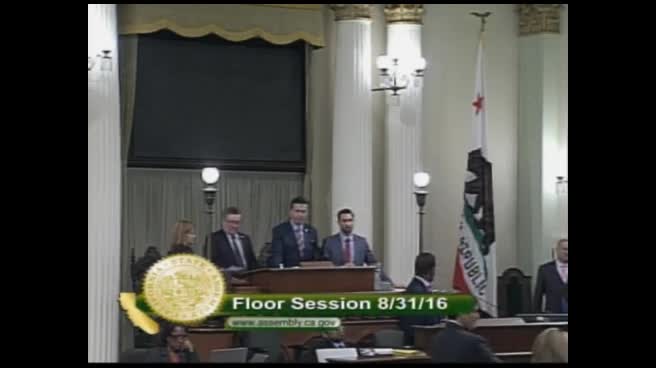 2MIN
Assembly Floor
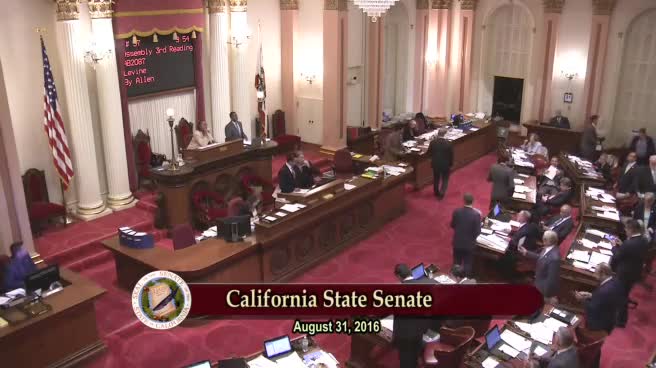 10MIN
Senate Floor
 3MIN
Assembly Floor
 4MIN
Senate Standing Committee on Labor and Industrial Relations
Bill Author
Bill Co-Author(s):