SB 1381: Teachers: grants.
- Session Year: 2015-2016
- House: Senate
- Latest Version Date: 2016-04-04
Existing law establishes the State Department of Education, under the administration of the Superintendent of Public Instruction, and assigns to the department numerous duties relating to the financing, governance, and guidance of the public elementary and secondary schools in this state.
This bill would establish a grant program under the administration of the department for full-time, credentialed teachers, as defined.
The bill would provide that, commencing with the 201718 school year, and each school year thereafter, a full-time, credentialed teacher who has completed his or her first school year of full-time teaching as of the end of that school year would receive a grant of $1,000 during the next school year. The bill would provide that, commencing with the 201819 school year, and each school year thereafter, a full-time, credentialed teacher who has completed 2 school years of full-time teaching as of the end of that school year would receive a grant of $1,000 during the next school year. The bill would further provide that, commencing with the 201920 school year, and each school year thereafter, a full-time, credentialed teacher who has completed 3 school years of full-time teaching as of the end of that school year would receive a grant of $2,500 during the next school year. The bill would also provide that, commencing with the 202021 school year, and each school year thereafter, a full-time, credentialed teacher who has completed 4 school years of full-time teaching as of the end of that school year would receive a grant of $2,500 during the next school year. The bill would also provide that, commencing with the 202122 school year, and each school year thereafter, a full-time, credentialed teacher who has completed 5 school years of full-time teaching as of the end of that school year would receive a grant of $5,000 during the next school year. The bill would further provide that, commencing with the 202223 school year, and each school year thereafter, a full-time credentialed teacher who has completed 6 or more school years of full-time teaching would receive a grant of $5,000 during the next school year.
The bill would specify that a qualifying teacher may receive grants under these provisions in multiple school years, but would prohibit a teacher from receiving more than one grant in a school year under these provisions.
The bill would require the department to submit a report to the Legislature on or before July 1, 2022, on the effectiveness of the grant program.
The Personal Income Tax Law allows various credits against the taxes imposed by that law.
This bill would, for taxable years beginning on or after January 1, 2017, allow a credit under the Personal Income Tax Law in an amount equal to $5,000 to a qualified taxpayer, as defined to include specified full-time teachers. This bill would state the intent of the Legislature to enact legislation to provide that the credit amount in excess of tax liability would be refundable in those years in which an appropriation for that purpose is made by the Legislature and includes findings relating to that appropriation.
This bill would take effect immediately as a tax levy.
The Legislature finds and declares all of the following:
(a)In the last decade, there has been a 70-percent drop in the number of people preparing to become California teachers. Last year, 22,000 new credentialed teachers were needed, but only 15,000 were acquired.
(b)California has the highest pupil-teacher ratio in the nation, and the gap widened during the budget cuts. By 2013, the state's pupil-teacher ratio reached 24 to 1, compared to the national average of 16 to 1.
(c)According to the California Teachers Association, nearly one in three teachers leave the profession within seven years, 13 percent of teachers leave the profession by the end of their second year, and, every year, 10 percent of teachers in high-poverty schools transfer to other schools.
(d)Californias registered voters consider the shortage of K12 teachers a very serious problem, according to a poll commissioned by EdSource and the Learning Policy Institute. The survey of 1,002 registered voters statewide found there is strong support (85 percent) for having the state offer additional scholarships or partially forgive a teachers college loans as a way to increase the number of those entering the teaching profession.
(e)A 1997 study by S. Paul Wright, Sandra P. Horn, and William L. Sanders studied teachers and their classroom effects on pupil achievement. Through their results, they found that the most important factor affecting pupil achievement is the teacher, and that improving the effectiveness of teachers can improve education for children (Wright, Horn, and Sanders, 1997). A 2011 study conducted by Raj Chetty, John N. Friedman, and Jonah E. Rockoff suggested that pupils with effective teachers are more likely to attend college, attend higher-ranked colleges, earn higher salaries, live in higher socioeconomic status neighborhoods, and save more for retirement.
(f)A study published by the Learning Policy Institute, Addressing Californias Emerging Teacher Shortage: An Analysis of Sources and Solutions, reported that in mathematics and science, the number of credentials awarded to new, fully prepared teachers plunged by 32 percent and 14 percent, respectively, over the last four years (Linda Darling-Hammond, Roberta Furger, Patrick M. Shields, and Leib Sutcher, 2016). Consequently, the amount of underprepared mathematics and science teachers, such as those with temporary permits and waivers and intern credentials, increased by 23 percent and 51 percent, respectively (Darling-Hammond, Furger, Shields, and Sutcher, 2016). In special education, the number of credentials issued decreased by 21 percent between school years 201112 and school year 201314, while substandard permits and credentials decreased by 10 percent. Nearly one-half of the special education teachers licensed in California in school year 201314 lacked full preparation for teaching (Darling-Hammond, Furger, Shields, and Sutcher, 2016).
SEC. 2.Section 33333.5 is added to the Education Code, to read:33333.5.(a)The department shall administer a program providing grants to full-time, credentialed teachers in accordance with all of the following:
(1)Commencing with the 201718 school year, and each school year thereafter, a full-time, credentialed teacher who has completed his or her first school year of teaching as of the end of that school year shall receive a grant of one thousand dollars ($1,000) during the next school year.
(2)Commencing with the 201819 school year, and each school year thereafter, a full-time, credentialed teacher who has completed two school years of full-time teaching as of the end of that school year shall receive a grant of one thousand dollars ($1,000) during the next school year.
(3)Commencing with the 201920 school year, and each school year thereafter, a full-time, credentialed teacher who has completed three school years of full-time teaching as of the end of that school year shall receive a grant of two thousand five hundred dollars ($2,500) during the next school year.
(4)Commencing with the 202021 school year, and each school year thereafter, a full-time, credentialed teacher who has completed four school years of full-time teaching as of the end of that school year shall receive a grant of two thousand five hundred dollars ($2,500) during the next school year.
(5)Commencing with the 202122 school year, and each school year thereafter, a full-time, credentialed teacher who has completed five school years of full-time teaching as of the end of that school year shall receive a grant of five thousand dollars ($5,000) during the next school year.
(6)Commencing with the 202223 school year, and each school year thereafter, a full-time, credentialed teacher who has completed six or more school years of full-time teaching as of the end of that school year shall receive a grant of five thousand dollars ($5,000) during the next school year.
(7)A qualifying teacher may receive grants under this section in multiple school years, but no teacher shall receive more than one grant in a school year under this section.
(b)As used in this section, the following terms shall have the following meanings:
(1)Credentialed teacher means a full-time teacher credentialed pursuant to Sections 80021 to 80025, inclusive, of Chapter 1 of Division 8 of Title 5 of the California Code of Regulations, if he or she serves as the teacher of record in a California public elementary or secondary school for a classroom for at least one schoolday during the taxable year in which the credit is claimed. Credentialed teacher shall not include a teacher who solely possesses a 30-day substitute teaching permit, as defined in Section 80025 of Chapter 1 of Division 8 of Title 5 of the California Code of Regulations. Credentialed teacher shall not include a teacher whose sole public school employment as a teacher of record during the school year occurred at a charter school established under the Charter Schools Act of 1992 (Part 26.8 (commencing with Section 47600) of Division 4).
(2)Full time means a minimum of 35 hours per week worked.
SEC. 3.The State Department of Education shall submit a report to the Legislature on or before July 1, 2022, on the effectiveness of the grant program established pursuant to Section 33333.5 of the Education Code as added by Section 2 of this act. This report shall be submitted in compliance with Section 9795 of the Government Code.
SECTION 1.Section 17053 is added to the Revenue and Taxation Code, to read:17053.(a)For each taxable year beginning on or after January 1, 2017, there shall be allowed to a qualified taxpayer a credit against the net tax, as defined in Section 17039, in an amount equal to five thousand dollars ($5,000).
(b)For the purposes of this section:
(1)Full time means a minimum of 35 hours per week worked.
(2)Qualified taxpayer means a full-time teacher credentialed pursuant to Sections 80021 to 80025, inclusive, of Chapter 1 of Division 8 of Title 5 of the California Code of Regulations, if he or she serves as the teacher of record for a classroom for at least one schoolday during the taxable year in which the credit is claimed. Qualified taxpayer shall not include a teacher who solely possesses a 30-day substitute teaching permit, as defined in Section 80025 of Chapter 1 of Division 8 of Title 5 of the California Code of Regulations.
(c)(1)Subject to paragraph (2), in the case where the credit allowed by this section exceeds the net tax the excess may be carried over to reduce the net tax, in the following year, and succeeding years if necessary, until the credit is exhausted.
(2)It is the intent of the Legislature to enact legislation to provide that in the case where the credit allowed by this section exceeds the net tax, the excess, in lieu of the carryforward pursuant to paragraph (1), may be refunded to taxpayers, upon appropriation by the Legislature.
(d)Section 41 does not apply to the tax credit allowed by this section.
SEC. 2.The Legislature finds and declares that it is the intent of the Legislature that, pursuant to legislation to be enacted by the Legislature, the state would treat an appropriation that would be made as described in paragraph (2) of subdivision (c) of Section 17053 of the Revenue and Taxation Code as a tax expenditure program that would have no impact on school funding, state reserves, or debt-related payments. To this end, any appropriation for the refundable portion of the tax credit that would be allowed pursuant to legislation by the Legislature would not reduce state obligations set forth in Sections 8, 20, and 21 of Article XVI of the California Constitution.
SEC. 3.This act provides for a tax levy within the meaning of Article IV of the Constitution and shall go into immediate effect.
(a)For each taxable year beginning on or after January 1, 2017, there shall be allowed to a qualified taxpayer a credit against the net tax, as defined in Section 17039, in an amount equal to five thousand dollars ($5,000).
(b)For the purposes of this section:
(1)Full time means a minimum of 35 hours per week worked.
(2)Qualified taxpayer means a full-time teacher credentialed pursuant to Sections 80021 to 80025, inclusive, of Chapter 1 of Division 8 of Title 5 of the California Code of Regulations, if he or she serves as the teacher of record for a classroom for at least one school day during the taxable year in which the credit is claimed. Qualified taxpayer shall not include a teacher who solely possesses a 30-day substitute teaching permit, as defined in Section 80025 of Chapter 1 of Division 8 of Title 5 of the California Code of Regulations.
(c)(1)Subject to paragraph (2), in the case where the credit allowed by this section exceeds the net tax the excess may be carried over to reduce the net tax, in the following year, and succeeding years if necessary, until the credit is exhausted.
(2)It is the intent of the Legislature to enact legislation to provide that in the case where the credit allowed by this section exceeds the net tax, the excess, in lieu of the carry forward pursuant to paragraph (1), may be refunded to taxpayers, upon appropriation by the Legislature.
(d)Section 41 does not apply to the tax credit allowed by this section.
SEC. 2.The Legislature finds and declares that it is the intent of the Legislature that, pursuant to legislation to be enacted by the Legislature, the state would treat an appropriation that would be made as described in paragraph (2) of subdivision (c) of Section 17053 of the Revenue and Taxation Code as a tax expenditure program that would have no impact on school funding, state reserves, or debt-related payments. To this end, any appropriation for the refundable portion of the tax credit that would be allowed pursuant to legislation by the Legislature would not reduce state obligations set forth in Sections 8, 20, and 21 of Article XVI of the California Constitution.
SEC. 3.This act provides for a tax levy within the meaning of Article IV of the Constitution and shall go into immediate effect.
|
Date
|
Status
|
|---|---|
| Apr 13, 2016 | April 13 set for first hearing. Failed passage in committee. (Ayes 3. Noes 4. Page 3517.) Reconsideration granted. |
| Apr 13, 2016 | April 13 set for first hearing. Failed passage in committee. (Ayes 3. Noes 4.) Reconsideration granted. |
| Apr 8, 2016 | Set for hearing April 13. |
| Apr 7, 2016 | Re-referred to Com. on ED. |
| Apr 5, 2016 | Re-referred to Com. on RLS. |
| Apr 5, 2016 | Withdrawn from committee. |
| Apr 4, 2016 | From committee with author's amendments. Read second time and amended. Re-referred to Com. on GOV. & F. |
| Mar 10, 2016 | Referred to Com. on GOV. & F. |
| Feb 22, 2016 | Read first time. |
| Feb 22, 2016 | From printer. May be acted upon on or after March 23. |
| Feb 19, 2016 | Introduced. To Com. on RLS. for assignment. To print. |
|
Date
|
Description
|
Location
|
Votes
|
|
|---|---|---|---|---|
| Apr 13, 2016 | [First] hearing set for [04-13-2016]: Failed passage in Committee. Reconsideration granted | Senate Standing Committee on Education |
Passed |
|
| Apr 13, 2016 | Do pass as amended, but first amend, and re-refer to the Committee on [Appropriations] | Senate Standing Committee on Education |
Failed |
This list shows positions taken on this bill by organizations on the date displayed, which is linked to the original source.
Positions by individuals are not included.
SENATE COMMITTEE ON EDUCATION
Senator Carol Liu, Chair
2015 - 2016 Regular
Bill No:
Author: | Mendoza | ||
Version: | Hearing Date: April 13, 2016 | ||
Urgency: | Fiscal: | ||
Consultant: | |||
Subject:
SUMMARY
This bill requires the State Department of Education (SDE) to administer a grant program in which full-time, credentialed teachers would receive varying grants amounts based on their years of service.
BACKGROUND
Existing law continues implementation of the local control funding formula (LCFF), which was enacted as part of the 2013-14 Budget Act. The LCFF was a significant reform to the state’s system of financing K-12 public schools. It replaces the prior system of revenue limits and restricted funding for a multitude of categorical programs with a new funding formula that provides targeted base funding levels tied to four grade spans for the core educational needs of all students and supplemental funding for the additional educational needs of low-income students, English learners, and foster youth. The categorical programs that were consolidated include the Professional Development Block Grant which supported professional development activities such as teacher recruitment and retention incentives. Because the LCFF funds have limited spending restrictions, local education agencies have considerable flexibility to direct LCFF resources to best meet their students’ needs. (Education Code § 42238.03)
ANALYSIS
This bill:
- Specifies various findings and declarations of the Legislature, including the following:
- In the last decade, there has been a 70 percent drop in the number of people preparing to become California teachers. Last year, 22,000 new credentialed teachers were needed, but only 15,000 were acquired.
- According to the California Teachers Association, nearly one in three teachers leave the profession within seven years, 13 percent of teachers leave the profession by the end of their second year, and, every year, 10 percent of teachers in high-poverty schools transfer to other schools.
- Requires the State Department of Education (SDE) to administer a program providing grants to full-time, credentialed teachers in accordance with all of the following:
- Commencing with the 2017-18 school year, and each school year thereafter, a full-time, credentialed teacher who has completed his or her first school year of teaching as of the end of that school year shall receive a grant of one thousand dollars ($1,000) during the next school year.
- Commencing with the 2018-19 school year, and each school year thereafter, a full-time, credentialed teacher who has completed two school years of full-time teaching as of the end of that school year shall receive a grant of one thousand dollars ($1,000) during the next school year.
- Commencing with the 2019-20 school year, and each school year thereafter, a full-time, credentialed teacher who has completed three school years of full-time teaching as of the end of that school year shall receive a grant of two thousand five hundred dollars ($2,500) during the next school year.
- Commencing with the 2020-21 school year, and each school year thereafter, a full-time, credentialed teacher who has completed four school years of full-time teaching as of the end of that school year shall receive a grant of two thousand five hundred ($2,500) during the next school year.
- Commencing with the 2021-22 school year, and each school year thereafter, a full-time, credentialed teacher who has completed five school years of full-time teaching as of the end of that school year shall receive a grant of five thousand dollars ($5,000) during the next school year.
- Commencing with the 2022-23 school year, and each school year thereafter, a full-time, credentialed teacher who has completed six or more school years of full-time teaching as of the end of that school year shall receive a grant of five thousand dollars ($5,000) during the next school year.
- Provides that a qualifying teacher may receive multiple grants in multiple years, but no teacher shall receive more than one grant in a school year.
- Defines a credentialed teacher as a full-time teacher credentialed pursuant to Sections 80021 to 80025, inclusive, of Chapter 1 of Division 8 of Title 5 of the California Code of Regulations, if he or she serves as the teacher of record in a California public elementary or secondary school for a classroom for at least one school day during the taxable year in which the credit is claimed. Credentialed teacher shall not include a teacher who solely possess a 30-day substitute teaching permit, as specified, or a teacher whose sole public school employment as a teacher of record during the school year occurred at a charter school.
- Defines full-time as a minimum of 35 hours worked per week.
STAFF COMMENTS
- Need for the bill. According to the author’s office, “the state’s teacher shortage has become so severe that in Sacramento County, two school districts are offering bonuses for new instructors. In Merced County, three school districts are offering $5,000 bonuses to new teachers. Similar bonuses are being offered by school districts in Kern County and Monterey County. However, most school districts do not have the resources to provide these types of bonuses to attract full-time, credentialed teachers to their respective schools.”
- Learning Policy Institute Report. The Learning Policy Institute (LPI) recently released a report, “Addressing California’s Emerging Teacher Shortage: An Analysis of Sources and Solutions.” In this report, the LPI included the following summary: “After many years of teacher layoffs in California, school districts around the state are hiring again. With the influx of new K-12 funding, districts are looking to lower student-teacher ratios and reinstate classes and programs that were reduced or eliminated during the Great Recession. However, mounting evidence indicates that teacher supply has not kept pace with the increased demand.” The report included the following findings:
- Enrollment in educator preparation programs has dropped by more than 70 percent over the last decade.
- In 2014-15, provisional and short-term permits nearly tripled from the number issued two years earlier, growing from about 850 to more than 2,400.
- The number of teachers hired on substandard permits and credentials nearly doubled in the last two years, to more than 7,700 comprising a third of all the new credentials issued in 2014-15.
- Estimated teacher hires for the 2015-16 school year increased by 25 percent from the previous year while enrollment in the University of California and the California State University teacher education programs increased by only about 3.8 percent.
- Learning Policy Institute recommendations. The LPI report offered several policy recommendations for consideration. These recommendations include the reinstatement of the California Center on Teaching Careers Cal Teach and the establishment of incentives to attract diverse, talented individuals to teach in high-need locations and fields. This can be accomplished through programs that provide funding for candidates who prepare and teach in such schools and subject areas, e.g. the Assumption Program of Loans for Education. The report also recommends the creation of more innovative pipelines into teaching, such as high school career pathways or teacher preparation models that encourage and support young people and others to go into teaching in their own communities.
- Legislative Analyst Office (LAO) assessment. As part of its Proposition 98 Education Analysis for the 2016-17 Governor’s Budget released in February 2016, the LAO includes a section on teacher workforce trends in which it examines evidence for teacher shortages in specific areas, identifies and assesses past policy responses to these shortages, and raises issues for the Legislature to consider going forward in terms of new policy responses. In the report, the LAO indicates that the statewide teacher market will help alleviate existing shortages over time and that the shortages may decrease without direct state action. However, the LAO notes there are perennial staffing difficulties in specific areas, such as special education, math, and science, for which they encourage the Legislature to address with narrowly tailored policies rather than with broad statewide policies. Specifically, they recommend the Legislature “consider outreach to re-engage former teachers or recruit out-of-state teachers. Both of these strategies are among the most cost-effective for increasing the supply of teachers within California in the short-term. If the state were to spend one-time funds on outreach, we encourage it to focus specifically on recruiting individuals who are trained to teach in perennial shortage areas. Outreach can attract viable teachers much faster and at a lower cost than many other shortage policies.”
The Legislative Analyst Office’s report also indicates that targeted, ongoing salary increases are the most effective type of financial incentive for attracting highly qualified teachers and keeping them in their jobs. “For example, research finds that providing ongoing salary increases targeted to shortage subjects in hard-to-staff schools have helped districts retain higher qualified teachers. Targeted, ongoing salary increases tend to be more effective than targeted, one-time salary increases, as bonuses provide no incentive to remain teaching in a shortage area after the bonus has been paid.”
- Will it work? While this bill provides ongoing grants as fiscal incentives to help attract and retain teachers in the profession, it does not target any particular type of school or shortage area. Rather, the grant program would be based on the number of school years of completion for a credentialed teacher with the amount of each grant increasing to up to $5,000 per year (if the teacher has completed five or more years of service). The grants are technically not salary increases, but they can be viewed as ongoing stipends and as a result, could provide some financial incentive for prospective candidates and existing teachers. However, the Committee may wish to consider whether the grants should be targeted at perennial shortage areas such as special education, math, and science.
- Funding? This bill requires the State Department of Education to administer the grant program but makes no clear provision as to the source of funds for this purpose. Is there an expectation that the Legislature and Governor would appropriate funding for this purpose in the budget? The cost to implement the program would be significant. Assuming there are 295,000 public school teachers statewide that meet the number of years of service necessary to receive the minimum grant of $1,000 each, the bill’s annual cost would be a minimum of two hundred ninety-five million dollars ($295,000,000).
- Additional intent language. The grants proposed by this bill would be paid to eligible teachers directly from the state, and not transferred to school districts. As a result, if a state General Fund appropriation is made for this purpose, it would likely be outside of the Proposition 98 minimum guarantee. As such, at the request of the author, staff recommends that the bill be amended to add additional intent language specifying that the grants described in the bill shall not be considered Proposition 98 General Fund revenues appropriated to school districts.
- Technical amendments. The bill’s definition of credentialed teacher references “the taxable year in which the credit is claimed.” As this provision deals with a prior version of the bill, staff recommends a conforming amendment to delete it.
SUPPORT
None received.
OPPOSITION
None received.
-- END --
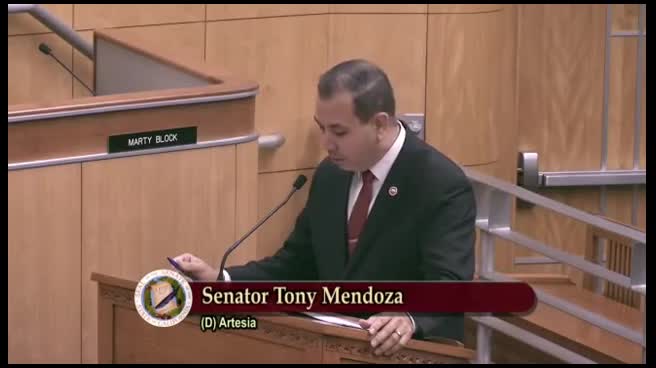
Bill Author
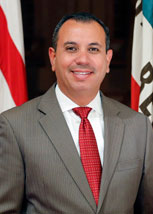
Bill Co-Author(s):