SB 1387: South Coast Air Quality Management District board.
- Session Year: 2015-2016
- House: Senate
- Latest Version Date: 2016-08-19
(1)Existing law authorizes the board of an air pollution control or air quality management district to adopt a market-based incentive program as an element of a districts plan for the attainment of the state or federal ambient air quality standards. Existing law requires a district board, within 5 years from the date of the adoption of a market-based incentive program, to commence public hearings to reassess the program and, within 7 years from the date of the air districts initial adoption of the program, to ratify specified findings with the concurrence of the State Air Resources Board.
This bill instead would require a district board to submit to the State Air Resources Board for review and approval the districts plan for attainment or a revision to that plan, as specified. The bill also would require a district board to submit to the state board for review and approval the districts market-based incentive program and any revisions to that program, as specified. The bill would prescribe specified actions for the state board to take if the state board determines that a plan for attainment, a revision of a plan for attainment, a market-based incentive program, or a revision to a market-based incentive program do not comply with law. By adding to the duties of air districts, this bill would impose a state-mandated local program.
(2)Existing
Existing law establishes the South Coast Air Quality Management District vested with the authority to regulate air emissions from stationary sources located in the South Coast Air Basin and establishes a district board, consisting of 13 members.
This bill bill, until January 1, 2025, would add 3 members to the district board, as specified. The bill would make various conforming changes.
This bill also would prohibit a member of the south coast district board from being issued a vehicle from the south coast district for greater than 7 days in a 30-day period if the board member is eligible for a vehicle or vehicle allowance from the local government from which he or she is appointed.
The California Constitution requires the state to reimburse local agencies and school districts for certain costs mandated by the state. Statutory provisions establish procedures for making that reimbursement.
This bill would provide that no reimbursement is required by this act for a specified reason.
(1)Existing law authorizes the board of an air pollution control or air quality management district to adopt a market-based incentive program as an element of a districts plan for the attainment of the state or federal ambient air quality standards. Existing law requires a district board, within 5 years from the date of the adoption of a market-based incentive program, to commence public hearings to reassess the program and, within 7 years from the date of the air districts initial adoption of the program, to ratify specified findings with the concurrence of the State Air Resources Board.
This bill instead would require a district board to submit to the State Air Resources Board for review and approval the districts plan for attainment or a revision to that plan, as specified. The bill also would require a district board to submit to the state board for review and approval the districts market-based incentive program and any revisions to that program, as specified. The bill would prescribe specified actions for the state board to take if the state board determines that a plan for attainment, a revision of a plan for attainment, a market-based incentive program, or a revision to a market-based incentive program do not comply with law. By adding to the duties of air districts, this bill would impose a state-mandated local program.
(2)Existing law establishes the South Coast Air Quality Management District vested with the authority to regulate air emissions from stationary sources located in the South Coast Air Basin and establishes a district board, consisting of 13 members.
This bill would add 3 members to the district board, as specified. The bill would make various conforming changes.
The California Constitution requires the state to reimburse local agencies and school districts for certain costs mandated by the state. Statutory provisions establish procedures for making that reimbursement.
This bill would provide that no reimbursement is required by this act for a specified reason.
Existing law requires, in order to collect money, receive tangible personal property, or have evidences of a debt, obligation, interest, right, security, or chose in action transferred under specified provisions, an affidavit or a declaration under penalty of perjury to be furnished to the holder of the decedents property stating certain information. Existing law requires reasonable proof of the identity of each person executing the affidavit or declaration to be provided to the holder of the decedents property, and authorizes the holder to, if the affidavit or declaration is executed in the presence of the holder, reasonably rely on specified information as reasonable proof of identity, including a passport issued by a foreign government that has been stamped by the United States Immigration and Naturalization Service, as specified.
This bill would make nonsubstantive, technical changes to those provisions.
(a) The Legislature hereby finds and declares all of the following:
(1) Several regions in California suffer from some of the worst air quality in the United States.
(2) While traditional command and control air quality regulatory programs are effective in cleaning up the air, other options for improvement in air quality, such as market-based incentive programs, may be explored, provided that those programs result in greater emission reductions while ensuring disadvantaged communities, as identified pursuant to Section 39711, are not disproportionately impacted by pollution.
(3) The purpose of this section is to establish requirements under which a district board may adopt market-based incentive programs in a manner that achieves the greatest air quality improvement while strengthening the states economy and preserving jobs.
(b) (1) A district board may adopt a market-based incentive program as an element of the districts plan for the attainment of the state or federal ambient air quality standards.
(2) A market-based incentive program that satisfies the conditions in this section may substitute for current command and control regulations and future air quality measures that would otherwise have been adopted as part of the districts plan for attainment, and may be implemented in lieu of some or all of the control measures adopted by the district pursuant to Chapter 10 (commencing with Section 40910) of Part 3.
(c) In adopting rules to implement a market-based incentive program, a district board shall, at the time that the rules are adopted, make express findings, and shall, at the time that the rules are submitted to the state board, submit appropriate information to substantiate the basis for making the findings that each of the following conditions is met on an overall districtwide basis:
(1) The program will result in an equivalent or greater reduction in emissions at equivalent or less cost compared with current command and control regulations and future air quality measures that would otherwise have been adopted as part of the districts plan for attainment.
(2) The program will provide a level of enforcement and monitoring, to ensure compliance with emission reduction requirements, comparable with command and control air quality measures that would otherwise have been adopted by the district for inclusion in the districts plan for attainment.
(3) The program will establish a baseline methodology that provides appropriate credit so that stationary sources of air pollution that have been modified prior to implementation of the program to reduce stationary source emissions are treated equitably.
(4) The program will not result in a greater loss of jobs or more significant shifts from higher to lower skilled jobs, on an overall districtwide basis, than that which would exist under command and control air quality measures that would otherwise have been adopted as part of the districts plan for attainment. A finding of compliance with this requirement may be made in the same manner as the analyses made by the district to meet the requirements of Section 40728.5.
(5) The program will promote the privatization of compliance and the availability of data in computer format. The district shall endeavor to provide sources with the option to keep records by way of electronic or computer data storage systems, rather than mechanical devices, such as strip chart recorders.
(6) The program will not in any manner delay, postpone, or otherwise hinder district compliance with Chapter 10 (commencing with Section 40910) of Part 3.
(7) The program will not result in disproportionate impacts, measured on an aggregate basis, on those stationary sources included in the program compared to other permitted stationary sources in the districts plan for attainment.
(d) (1) A districts plan for attainment or plan revision submitted to the state board shall achieve equivalent emission reductions and reduced cost and job impacts compared to current command and control regulations and future air quality measures that would otherwise have been adopted as part of the districts plan for attainment. A district shall not implement a market-based incentive program or any revisions to an adopted market-based incentive program unless the state board has determined that the plan or plan revision complies with this paragraph.
(2) (A)A plan or plan revision shall meet the provisions of subdivision (c) and Section 40440.1 if applicable. The state board shall review, approve, disapprove, or amend and approve the plan or plan revision prior to program implementation, and shall make its determination not later than 60 days from the date of submission of the plan or plan revision.
(B)(i)If the state board determines that a plan or plan revision submitted pursuant to this paragraph does not comply with this section, the state board within 60 days of the date of the submission of the plan or plan revision, shall do all of the following:
(I)Notify the district.
(II)Revise the plan or plan revision so that the plan or plan revision complies with this section.
(III)Approve the plan or plan revision.
(ii)If the state board approves a plan or plan revision pursuant to this subparagraph, the plan or plan revision shall take effect immediately and be binding on the district.
(3) (A)Upon the adoption of rules to implement the program in accordance with subdivision (c), the district shall submit the rules to the state board. The state board shall, within 90 days from the date of submission, determine whether the rules meet the requirements of this section and Section 40440.1, if applicable. This paragraph does not prohibit the district from implementing the program upon the approval of the plan or plan revision and prior to submission of the rules.
(B)(i)If the state board determines that a district rule does not comply with this section, the state board, within 60 days of the date of the submission of the rule, shall do all of the following:
(I)Notify the district.
(II)Revise the rule so that the rule complies with this section.
(III)Adopt the rule.
(ii)If the state board approves a rule pursuant to this subparagraph, the rule shall take effect immediately and have the same legal force and effect as a district rule.
(e) Within five years from the date of the adoption of a market-based incentive program, the district board shall commence public hearings to reassess the program and shall, not later than seven years from the date of the districts initial adoption of the program, ratify the findings required pursuant to paragraphs (1), (2), (5), and (6) of subdivision (c) and the districts compliance with Section 40440.1, if applicable, with the concurrence of the state board. If the district board fails to ratify the findings within the seven-year period, the district board shall make appropriate revisions to the districts plan for attainment.
(f) The district board shall reassess a market-based incentive program if the market price of emission trading units exceeds a predetermined level set by the district board. The district board may take action to revise the program. A predetermined market price review level shall be set in a public hearing in consideration of the costs of command and control air quality measures that would otherwise have been adopted as part of the districts plan for attainment, costs and factors submitted by interested parties, and any other factors considered appropriate by the district board. The district board may revise the market price review level for emission trading units every three years during attainment plan updates required under Section 40925. In revising the market price review level, the district board shall consider the factors used in setting the initial market price review level as well as other economic impacts, including the overall impact of the program on job loss, rate of business formation, and rate of business closure.
(g) For sources not included in market-based incentive programs, this section does not apply to, and shall in no way limit, existing district authority to facilitate compliance with particular emission control measures by imposing or authorizing sourcewide emission caps, alternative emission control plans, stationary for mobile source emission trades, mobile for mobile source emission trades, and similar measures, whether imposed or authorized by rule or permit condition.
(h) This section does not apply to the implementation of market-based transportation control measures that do not involve emissions trading.
SEC. 2.SECTION 1.Section 40420 of the Health and Safety Code is amended to read:40420.(a)The south coast district shall be governed by a district board consisting of 16 members appointed as follows:
(1)(A)Two members appointed by the Governor, with the advice and consent of the Senate.
(B)One member appointed pursuant to this paragraph shall be a representative of a bona fide nonprofit environmental justice organization that advocates for clean air and pollution reductions in one or more communities within the South Coast Air Basin. reside in and work directly with communities in the South Coast Air Basin that are disproportionately burdened by and vulnerable to high levels of pollution and issues of environmental justice, including, but not limited to, communities with diverse racial and ethnic populations and communities with low-income populations. In addition to any other applicant who may be considered, the Governor shall accept an application from a member of a city council or county board of supervisors who meets the criteria in this subparagraph and shall give appropriate consideration to appointing that applicant.
(2)(A)Two members appointed by the Senate Committee on Rules.
(B)One member appointed pursuant to this paragraph shall be a representative of a bona fide nonprofit environmental justice organization that advocates for clean air and pollution reductions in one or more communities within the South Coast Air Basin. reside in and work directly with communities in the South Coast Air Basin that are disproportionately burdened by and vulnerable to high levels of pollution and issues of environmental justice, including, but not limited to, communities with diverse racial and ethnic populations and communities with low-income populations. In addition to any other applicant who may be considered, the Senate Committee on Rules shall accept an application from a member of a city council or county board of supervisors who meets the criteria in this subparagraph and shall give appropriate consideration to appointing that applicant.
(3) (A)Two members appointed by the Speaker of the Assembly.
(B)One member appointed pursuant to this paragraph shall be a representative of a bona fide nonprofit environmental justice organization that advocates for clean air and pollution reductions in one or more communities within the South Coast Air Basin. reside in and work directly with communities in the South Coast Air Basin that are disproportionately burdened by and vulnerable to high levels of pollution and issues of environmental justice, including, but not limited to, communities with diverse racial and ethnic populations and communities with low-income populations. In addition to any other applicant who may be considered, the Speaker of the Assembly shall accept an application from a member of a city council or county board of supervisors who meets the criteria in this subparagraph and shall give appropriate consideration to appointing that applicant.
(4)Four members appointed by the boards of supervisors of the counties in the south coast district. Each board of supervisors shall appoint one of these members, who shall be one of the following:
(A)A member of the board of supervisors of the county making the appointment.
(B)A mayor or member of a city council from a city in the portion of the county making the appointment that is included in the south coast district.
(5)Three members appointed by cities in the south coast district. The city selection committee of Orange, Riverside, and San Bernardino Counties shall each appoint one of these members, who shall be either a mayor or a member of the city council of a city in the portion of the county included in the south coast district.
(6)A member appointed by the cities of the western region of Los Angeles County, consisting of the Cities of Agoura Hills, Artesia, Avalon, Bell, Bellflower, Bell Gardens, Beverly Hills, Calabasas, Carson, Cerritos, Commerce, Compton, Cudahy, Culver City, Downey, El Segundo, Gardena, Hawaiian Gardens, Hawthorne, Hermosa Beach, Hidden Hills, Huntington Park, Inglewood, La Habra Heights, La Mirada, Lakewood, Lawndale, Lomita, Long Beach, Lynwood, Malibu, Manhattan Beach, Maywood, Montebello, Norwalk, Palos Verdes Estates, Paramount, Pico Rivera, Rancho Palos Verdes, Redondo Beach, Rolling Hills, Rolling Hills Estates, Santa Fe Springs, Santa Monica, Signal Hill, South Gate, Torrance, Vernon, West Hollywood, Westlake Village, and Whittier. These cities shall organize as a city selection committee for the purposes of subdivision (f), and shall be known as the city selection committee of the western region of Los Angeles County. The member appointed shall be either a mayor or a member of the city council of a city in the western region.
(7)A member appointed by the cities of the eastern region of Los Angeles County, consisting of the cities in Los Angeles County that are not listed in paragraph (6) or (8), and excluding the Cities of Lancaster, Los Angeles, and Palmdale. These cities shall organize as a city selection committee for the purposes of subdivision (f), and shall be known as the city selection committee of the eastern region of Los Angeles County. The member appointed shall be either a mayor or a member of the city council of a city in the eastern region.
(8)A member appointed by the Mayor of the City of Los Angeles from among the members of the Los Angeles City Council.
(b) All members shall be appointed on the basis of their demonstrated interest and proven ability in the field of air pollution control and their understanding of the needs of the general public in connection with air pollution problems of the South Coast Air Basin.
(c)The member appointed by the Governor who is not the member appointed pursuant to subparagraph (B) of paragraph (1) of subdivision (a) shall be either a physician who has training and experience in the health effects of air pollution, an environmental engineer, a chemist, a meteorologist, or a specialist in air pollution control.
(d)Each member shall be appointed on the basis of his or her ability to attend substantially all meetings of the south coast district board, to discharge all duties and responsibilities of a member of the south coast district board on a regular basis, and to participate actively in the affairs of the south coast district. A member shall not designate an alternate for any purpose or otherwise be represented by another in his or her capacity as a member of the south coast district board.
(e)Each appointment by a board of supervisors shall be considered and acted on at a duly noticed, regularly scheduled hearing of the board of supervisors, which shall provide an opportunity for testimony on the qualifications of the candidates for appointment.
(f)The appointments by cities in the south coast district shall be considered and acted on at a duly noticed meeting of the city selection committee, which shall meet in a government building and provide an opportunity for testimony on the qualifications of the candidates for appointment. Each appointment shall be made by not less than a majority of all the cities in the portion of the county included in the south coast district having not less than a majority of the population of all the cities in the portion of the county included in the south coast district. Population shall be determined on the basis of the most recent verifiable census data developed by the Department of Finance. Persons residing in unincorporated areas or areas of a county outside the south coast district shall not be considered for the purposes of this subdivision.
(g)The members appointed by the Senate Committee on Rules and the Speaker of the Assembly who are not the members appointed pursuant to subparagraph (B) of paragraph (2) or subparagraph (B) of paragraph (3) of subdivision (a) shall have one or more of the qualifications specified in subdivision (c) or shall be a public member. None of those Those appointed members may not be a locally elected official.
(h)All members shall be residents of the district.
(i)(1)The member who was serving on the district board as of June 1, 2007, who had been appointed to represent the eastern region of Los Angeles County shall be deemed on January 1, 2008, to be the member appointed to represent the western region of Los Angeles County pursuant to paragraph (6) of subdivision (a) and shall serve from January 1, 2008, until the end of the term of office for the member who had been appointed to represent the western region of Los Angeles County. At the end of that term, the city selection committee of the western region of Los Angeles County shall make an appointment pursuant to paragraph (6) of subdivision (a).
(2)The member who was serving on the district board as of June 1, 2007, who had been appointed to represent the western region of Los Angeles County shall be deemed on January 1, 2008, to be the member appointed pursuant to paragraph (8) of subdivision (a) until the end of that members term. At the end of that term, the Mayor of the City of Los Angeles shall make an appointment pursuant to paragraph (8) of subdivision (a).
(3)On or after January 1, 2008, the city selection committee of the eastern region of Los Angeles County shall convene promptly to make an appointment pursuant to paragraph (7) of subdivision (a).
(j)This section shall remain in effect only until January 1, 2025, and as of that date is repealed, unless a later enacted statute, that is enacted before January 1, 2025, deletes or extends that date.
SEC. 2.Section 40420 is added to the Health and Safety Code, to read:40420.(a)The south coast district shall be governed by a district board consisting of 13 members appointed as follows:
(1)One member appointed by the Governor, with the advice and consent of the Senate.
(2)One member appointed by the Senate Committee on Rules.
(3)One member appointed by the Speaker of the Assembly.
(4)Four members appointed by the boards of supervisors of the counties in the south coast district. Each board of supervisors shall appoint one of these members, who shall be one of the following:
(A)A member of the board of supervisors of the county making the appointment.
(B)A mayor or member of a city council from a city in the portion of the county making the appointment that is included in the south coast district.
(5)Three members appointed by cities in the south coast district. The city selection committee of Orange, Riverside, and San Bernardino Counties shall each appoint one of these members, who shall be either a mayor or a member of the city council of a city in the portion of the county included in the south coast district.
(6)A member appointed by the cities of the western region of Los Angeles County, consisting of the Cities of Agoura Hills, Artesia, Avalon, Bell, Bellflower, Bell Gardens, Beverly Hills, Calabasas, Carson, Cerritos, Commerce, Compton, Cudahy, Culver City, Downey, El Segundo, Gardena, Hawaiian Gardens, Hawthorne, Hermosa Beach, Hidden Hills, Huntington Park, Inglewood, La Habra Heights, La Mirada, Lakewood, Lawndale, Lomita, Long Beach, Lynwood, Malibu, Manhattan Beach, Maywood, Montebello, Norwalk, Palos Verdes Estates, Paramount, Pico Rivera, Rancho Palos Verdes, Redondo Beach, Rolling Hills, Rolling Hills Estates, Santa Fe Springs, Santa Monica, Signal Hill, South Gate, Torrance, Vernon, West Hollywood, Westlake Village, and Whittier. These cities shall organize as a city selection committee for the purposes of subdivision (f), and shall be known as the city selection committee of the western region of Los Angeles County. The member appointed shall be either a mayor or a member of the city council of a city in the western region.
(7)A member appointed by the cities of the eastern region of Los Angeles County, consisting of the cities in Los Angeles County that are not listed in paragraph (6) or (8), and excluding the Cities of Lancaster, Los Angeles, and Palmdale. These cities shall organize as a city selection committee for the purposes of subdivision (f), and shall be known as the city selection committee of the eastern region of Los Angeles County. The member appointed shall be either a mayor or a member of the city council of a city in the eastern region.
(8)A member appointed by the Mayor of the City of Los Angeles from among the members of the Los Angeles City Council.
(b) All members shall be appointed on the basis of their demonstrated interest and proven ability in the field of air pollution control and their understanding of the needs of the general public in connection with air pollution problems of the South Coast Air Basin.
(c)The member appointed by the Governor shall be either a physician who has training and experience in the health effects of air pollution, an environmental engineer, a chemist, a meteorologist, or a specialist in air pollution control.
(d)Each member shall be appointed on the basis of his or her ability to attend substantially all meetings of the south coast district board, to discharge all duties and responsibilities of a member of the south coast district board on a regular basis, and to participate actively in the affairs of the south coast district. A member shall not designate an alternate for any purpose or otherwise be represented by another in his or her capacity as a member of the south coast district board.
(e)Each appointment by a board of supervisors shall be considered and acted on at a duly noticed, regularly scheduled hearing of the board of supervisors, which shall provide an opportunity for testimony on the qualifications of the candidates for appointment.
(f)The appointments by cities in the south coast district shall be considered and acted on at a duly noticed meeting of the city selection committee, which shall meet in a government building and provide an opportunity for testimony on the qualifications of the candidates for appointment. Each appointment shall be made by not less than a majority of all the cities in the portion of the county included in the south coast district having not less than a majority of the population of all the cities in the portion of the county included in the south coast district. Population shall be determined on the basis of the most recent verifiable census data developed by the Department of Finance. Persons residing in unincorporated areas or areas of a county outside the south coast district shall not be considered for the purposes of this subdivision.
(g)The members appointed by the Senate Committee on Rules and the Speaker of the Assembly shall have one or more of the qualifications specified in subdivision (c) or shall be a public member. None of those appointed members may be a locally elected official.
(h)All members shall be residents of the district.
(i)This section shall become operative on January 1, 2025.
SEC. 3.Section 40424 of the Health and Safety Code is amended to read:40424.(a)Except as provided in subdivision (b), nine members of the south coast district board shall constitute a quorum, and no official action shall be taken by the south coast district board except in the presence of a quorum and upon the affirmative votes of a majority of the members of the south coast district board.
(b) Notwithstanding subdivision (a), whenever there are two or more vacancies on the south coast district board, eight members shall constitute a quorum, and the two vacant positions shall not be counted toward the majority required for official action by the south coast district board. Thereafter, whenever at least one of those vacancies is filled, the quorum and voting requirements of subdivision (a) shall apply.
(c)This section shall remain in effect only until January 1, 2025, and as of that date is repealed, unless a later enacted statute, that is enacted before January 1, 2025, deletes or extends that date.
SEC. 4.Section 40424 is added to the Health and Safety Code, to read:40424.(a)Except as provided in subdivision (b), seven members of the south coast district board shall constitute a quorum, and no official action shall be taken by the south coast district board except in the presence of a quorum and upon the affirmative votes of a majority of the members of the south coast district board.
(b)Notwithstanding subdivision (a), whenever there are two or more vacancies on the south coast district board, six members shall constitute a quorum, and the two vacant positions shall not be counted toward the majority required for official action by the south coast district board. Thereafter, whenever at least one of those vacancies is filled, the quorum and voting requirements of subdivision (a) shall apply.
(c)This section shall become operative on January 1, 2025.
SEC. 5.Section 40426.1 is added to the Health and Safety Code, to read:40426.1.A member of the south coast district board who is eligible for a vehicle or vehicle allowance from the local government from which he or she is appointed shall not be issued a vehicle from the south coast district for greater than seven days in a 30-day period.
SEC. 4.No reimbursement is required by this act pursuant to Section 6 of Article XIIIB of the California Constitution because a local agency or school district has the authority to levy service charges, fees, or assessments sufficient to pay for the program or level of service mandated by this act, within the meaning of Section 17556 of the Government Code.
(a) The Legislature hereby finds and declares all of the following:
(1) Several regions in California suffer from some of the worst air quality in the United States.
(2) While traditional command and control air quality regulatory programs are effective in cleaning up the air, other options for improvement in air quality, such as market-based incentive programs, should may be explored, provided that those programs result in equivalent greater emission reductions while expending fewer resources and while maintaining or enhancing the states economy. ensuring disadvantaged communities, as identified pursuant to Section 39711, are not disproportionately impacted by pollution.
(3) The purpose of this section is to establish requirements under which a district board may adopt market-based incentive programs in a manner which that achieves the greatest air quality improvement while strengthening the states economy and preserving jobs.
(b) (1) A district board may adopt a market-based incentive program as an element of the districts plan for the attainment of the state or federal ambient air quality standards.
(2) A market-based incentive program that satisfies the conditions in this section may substitute for current command and control regulations and future air quality measures that would otherwise have been adopted as part of the districts plan for attainment, and may be implemented in lieu of some or all of the control measures adopted by the district pursuant to Chapter 10 (commencing with Section 40910) of Part 3.
(c) In adopting rules and regulations to implement a market-based incentive program, a district board shall, at the time that the rules and regulations are adopted, make express findings, and shall, at the time that the rules and regulations are submitted to the state board, submit appropriate information, information to substantiate the basis for making the findings that each of the following conditions is met on an overall districtwide basis:
(1) The program will result in an equivalent or greater reduction in emissions at equivalent or less cost compared with current command and control regulations and future air quality measures that would otherwise have been adopted as part of the districts plan for attainment.
(2) The program will provide a level of enforcement and monitoring, to ensure compliance with emission reduction requirements, comparable with command and control air quality measures that would otherwise have been adopted by the district for inclusion in the districts plan for attainment.
(3) The program will establish a baseline methodology that provides appropriate credit so that stationary sources of air pollution which that have been modified prior to implementation of the program to reduce stationary source emissions are treated equitably.
(4) The program will not result in a greater loss of jobs or more significant shifts from higher to lower skilled jobs, on an overall districtwide basis, than that which would exist under command and control air quality measures that would otherwise have been adopted as part of the districts plan for attainment. A finding of compliance with this requirement may be made in the same manner as the analyses made by the district to meet the requirements of Section 40728.5.
(5) The program will promote the privatization of compliance and the availability of data in computer format. The district shall endeavor to provide sources with the option to keep records by way of electronic or computer data storage systems, rather than mechanical devices devices, such as strip chart recorders.
(6) The program will not in any manner delay, postpone, or otherwise hinder district compliance with Chapter 10 (commencing with Section 40910) of Part 3.
(7) The program will not result in disproportionate impacts, measured on an aggregate basis, on those stationary sources included in the program compared to other permitted stationary sources in the districts plan for attainment.
(d) (1) A districts plan for attainment or plan revision submitted to the state board prior to January 1, 1993, shall be designed to achieve equivalent emission reductions and reduced cost and job impacts compared to current command and control regulations and future air quality measures that would otherwise have been adopted as part of the districts plan for attainment. A district shall not implement a market-based incentive program or any revisions to an adopted market-based incentive program unless the state board has determined that the plan or plan revision complies with this paragraph.
(2) (A)A plan or plan revision submitted on or after January 1, 1993, shall be designed to meet the provisions of subdivision (c) and Section 40440.1 if applicable. The state board shall approve review, approve, disapprove, or amend and approve the plan or plan revision prior to program implementation, and shall make its determination not later than 90 60 days from the date of submittal submission of the plan or plan revision.
(B)(i)If the state board determines that a plan or plan revision submitted pursuant to this paragraph does not comply with this section, the state board within 60 days of the date of the submission of the plan or plan revision, shall do all of the following:
(I)Notify the district.
(II)Revise the plan or plan revision so that the plan or plan revision complies with this section.
(III)Approve the plan or plan revision.
(ii)If the state board approves a plan or plan revision pursuant to this subparagraph, the plan or plan revision shall take effect immediately and be binding on the district.
(3) (A)Upon the adoption of rules and regulations to implement the program in accordance with subdivision (c), the district shall submit the rules and regulations to the state board. The state board shall, within 90 days from the date of submittal, submission, determine whether the rules and regulations meet the requirements of this section and Section 40440.1, if applicable. This paragraph does not prohibit the district from implementing the program upon the approval of the plan or plan revision and prior to submittal submission of the rules and regulations. rules.
(B)(i)If the state board determines that a district rule does not comply with this section, the state board, within 60 days of the date of the submission of the rule, shall do all of the following:
(I)Notify the district.
(II)Revise the rule so that the rule complies with this section.
(III)Adopt the rule.
(ii)If the state board approves a rule pursuant to this subparagraph, the rule shall take effect immediately and have the same legal force and effect as a district rule.
(e) Within five years from the date of the adoption of a market-based incentive program, the district board shall commence public hearings to reassess the program and shall, not later than seven years from the date of the districts initial adoption of the program, ratify the findings required pursuant to paragraphs (1), (2), (5), and (6) of subdivision (c) and the districts compliance with Section 40440.1, if applicable, with the concurrence of the state board. If the district board fails to ratify the findings within the seven-year period, the district board shall make appropriate revisions to the districts plan for attainment.
(f) The district board shall reassess a market-based incentive program if the market price of emission trading units exceeds a predetermined level set by the district board. The district board may take action to revise the program. A predetermined market price review level shall be set in a public hearing in consideration of the costs of command and control air quality measures that would otherwise have been adopted as part of the districts plan for attainment, costs and factors submitted by interested parties, and any other factors considered appropriate by the district board. The district board may revise the market price review level for emission trading units every three years during attainment plan updates required under Section 40925. In revising the market price review level, the district board shall consider the factors used in setting the initial market price review level as well as other economic impacts, including the overall impact of the program on job loss, rate of business formation, and rate of business closure.
(g) For sources not included in market-based incentive programs, this section does not apply to, and shall in no way limit, existing district authority to facilitate compliance with particular emission control measures by imposing or authorizing sourcewide emission caps, alternative emission control plans, stationary for mobile source emission trades, mobile for mobile source emission trades, and similar measures, whether imposed or authorized by rule or permit condition.
(h) This section does not apply to the implementation of market-based transportation control measures which that do not involve emissions trading.
SEC. 2.Section 40420 of the Health and Safety Code is amended to read:40420.(a)The south coast district shall be governed by a district board consisting of 13 16 members appointed as follows:
(1)One member (A)Two members appointed by the Governor, with the advice and consent of the Senate.
(B)One member appointed pursuant to this paragraph shall be a representative of a bona fide nonprofit environmental justice organization that advocates for clean air and pollution reductions in one or more communities within the South Coast Air Basin.
(2)One member (A)Two members appointed by the Senate Committee on Rules.
(B)One member appointed pursuant to this paragraph shall be a representative of a bona fide nonprofit environmental justice organization that advocates for clean air and pollution reductions in one or more communities within the South Coast Air Basin.
(3)One member (A)Two members appointed by the Speaker of the Assembly.
(B)One member appointed pursuant to this paragraph shall be a representative of a bona fide nonprofit environmental justice organization that advocates for clean air and pollution reductions in one or more communities within the South Coast Air Basin.
(4)Four members appointed by the boards of supervisors of the counties in the south coast district. Each board of supervisors shall appoint one of these members, who shall be one of the following:
(A)A member of the board of supervisors of the county making the appointment.
(B)A mayor or member of a city council from a city in the portion of the county making the appointment that is included in the south coast district.
(5)Three members appointed by cities in the south coast district. The city selection committee of Orange, Riverside, and San Bernardino Counties shall each appoint one of these members, who shall be either a mayor or a member of the city council of a city in the portion of the county included in the south coast district.
(6)A member appointed by the cities of the western region of Los Angeles County, consisting of the Cities of Agoura Hills, Artesia, Avalon, Bell, Bellflower, Bell Gardens, Beverly Hills, Calabasas, Carson, Cerritos, Commerce, Compton, Cudahy, Culver City, Downey, El Segundo, Gardena, Hawaiian Gardens, Hawthorne, Hermosa Beach, Hidden Hills, Huntington Park, Inglewood, La Habra Heights, La Mirada, Lakewood, Lawndale, Lomita, Long Beach, Lynwood, Malibu, Manhattan Beach, Maywood, Montebello, Norwalk, Palos Verdes Estates, Paramount, Pico Rivera, Rancho Palos Verdes, Redondo Beach, Rolling Hills, Rolling Hills Estates, Santa Fe Springs, Santa Monica, Signal Hill, South Gate, Torrance, Vernon, West Hollywood, Westlake Village, and Whittier. These cities shall organize as a city selection committee for the purposes of subdivision (f), and shall be known as the city selection committee of the western region of Los Angeles County. The member appointed shall be either a mayor or a member of the city council of a city in the western region.
(7)A member appointed by the cities of the eastern region of Los Angeles County, consisting of the cities in Los Angeles County that are not listed in paragraph (6) or (8), and excluding the Cities of Lancaster, Los Angeles, and Palmdale. These cities shall organize as a city selection committee for the purposes of subdivision (f), and shall be known as the city selection committee of the eastern region of Los Angeles County. The member appointed shall be either a mayor or a member of the city council of a city in the eastern region.
(8)A member appointed by the Mayor of the City of Los Angeles from among the members of the Los Angeles City Council.
(b) All members shall be appointed on the basis of their demonstrated interest and proven ability in the field of air pollution control and their understanding of the needs of the general public in connection with air pollution problems of the South Coast Air Basin.
(c)The member appointed by the Governor who is not the member appointed pursuant to subparagraph (B) of paragraph (1) of subdivision (a) shall be either a physician who has training and experience in the health effects of air pollution, an environmental engineer, a chemist, a meteorologist, or a specialist in air pollution control.
(d)Each member shall be appointed on the basis of his or her ability to attend substantially all meetings of the south coast district board, to discharge all duties and responsibilities of a member of the south coast district board on a regular basis, and to participate actively in the affairs of the south coast district. No A member may shall not designate an alternate for any purpose or otherwise be represented by another in his or her capacity as a member of the south coast district board.
(e)Each appointment by a board of supervisors shall be considered and acted on at a duly noticed, regularly scheduled hearing of the board of supervisors, which shall provide an opportunity for testimony on the qualifications of the candidates for appointment.
(f)The appointments by cities in the south coast district shall be considered and acted on at a duly noticed meeting of the city selection committee, which shall meet in a government building and provide an opportunity for testimony on the qualifications of the candidates for appointment. Each appointment shall be made by not less than a majority of all the cities in the portion of the county included in the south coast district having not less than a majority of the population of all the cities in the portion of the county included in the south coast district. Population shall be determined on the basis of the most recent verifiable census data developed by the Department of Finance. Persons residing in unincorporated areas or areas of a county outside the south coast district shall not be considered for the purposes of this subdivision.
(g)The members appointed by the Senate Committee on Rules and the Speaker of the Assembly who are not the members appointed pursuant to subparagraph (B) of paragraph (2) or subparagraph (B) of paragraph (3) of subdivision (a) shall have one or more of the qualifications specified in subdivision (c) or shall be a public member. None of those appointed members may be a locally elected official.
(h)All members shall be residents of the district.
(i)(1)The member who was serving on the district board as of June 1, 2007, who had been appointed to represent the eastern region of Los Angeles County shall be deemed on January 1, 2008, to be the member appointed to represent the western region of Los Angeles County pursuant to paragraph (6) of subdivision (a) and shall serve from January 1, 2008, until the end of the term of office for the member who had been appointed to represent the western region of Los Angeles County. At the end of that term, the city selection committee of the western region of Los Angeles County shall make an appointment pursuant to paragraph (6) of subdivision (a).
(2)The member who was serving on the district board as of June 1, 2007, who had been appointed to represent the western region of Los Angeles County shall be deemed on January 1, 2008, to be the member appointed pursuant to paragraph (8) of subdivision (a) until the end of that members term. At the end of that term, the Mayor of the City of Los Angeles shall make an appointment pursuant to paragraph (8) of subdivision (a).
(3)On or after January 1, 2008, the city selection committee of the eastern region of Los Angeles County shall convene promptly to make an appointment pursuant to paragraph (7) of subdivision (a).
SEC. 3.Section 40424 of the Health and Safety Code is amended to read:40424.(a) Except as provided in subdivision (b), seven nine members of the south coast district board shall constitute a quorum, and no official action shall be taken by the south coast district board except in the presence of a quorum and upon the affirmative votes of a majority of the members of the south coast district board.
(b) Notwithstanding subdivision (a), whenever there are two or more vacancies on the south coast district board, six eight members shall constitute a quorum, and the two vacant positions shall not be counted toward the majority required for official action by the south coast district board. Thereafter, whenever at least one of those vacancies is filled, the quorum and voting requirements of subdivision (a) shall apply.
SEC. 4.No reimbursement is required by this act pursuant to Section 6 of Article XIIIB of the California Constitution because a local agency or school district has the authority to levy service charges, fees, or assessments sufficient to pay for the program or level of service mandated by this act, within the meaning of Section 17556 of the Government Code.
SECTION 1.Section 13104 of the Probate Code is amended to read:13104.(a)Reasonable proof of the identity of each person executing the affidavit or declaration shall be provided to the holder of the decedents property.
(b)Reasonable proof of identity is provided for the purposes of this section if both of the following requirements are satisfied:
(1)The person executing the affidavit or declaration is personally known to the holder.
(2)The person executes the affidavit or declaration in the presence of the holder.
(c)If the affidavit or declaration is executed in the presence of the holder, a written statement under penalty of perjury by a person personally known to the holder affirming the identity of the person executing the affidavit or declaration is reasonable proof of identity for the purposes of this section.
(d)If the affidavit or declaration is executed in the presence of the holder, the holder may reasonably rely on any of the following as reasonable proof of identity for the purposes of this section:
(1)An identification card or drivers license issued by the Department of Motor Vehicles that is current or was issued during the preceding five years.
(2)A passport issued by the United States Department of State that is current or was issued during the preceding five years.
(3)Any of the following documents if the document is current or was issued during the preceding five years and contains a photograph and description of the person named on it, is signed by the person, and bears a serial or other identifying number:
(A)A passport issued by a foreign government that has been stamped by the United States Customs and Border Protection.
(B)A drivers license issued by a state other than California.
(C)An identification card issued by a state other than California.
(D)An identification card issued by any branch of the armed forces of the United States.
(e)For the purposes of this section, a notary publics certificate of acknowledgment identifying the person executing the affidavit or declaration is reasonable proof of identity of the person executing the affidavit or declaration.
(f)Unless the affidavit or declaration contains a notary publics certificate of acknowledgment of the identity of the person, the holder shall note on the affidavit or declaration either that the person executing the affidavit or declaration is personally known or a description of the identification provided by the person executing the affidavit or declaration.
(a)Reasonable proof of the identity of each person executing the affidavit or declaration shall be provided to the holder of the decedents property.
(b)Reasonable proof of identity is provided for the purposes of this section if both of the following requirements are satisfied:
(1)The person executing the affidavit or declaration is personally known to the holder.
(2)The person executes the affidavit or declaration in the presence of the holder.
(c)If the affidavit or declaration is executed in the presence of the holder, a written statement under penalty of perjury by a person personally known to the holder affirming the identity of the person executing the affidavit or declaration is reasonable proof of identity for the purposes of this section.
(d)If the affidavit or declaration is executed in the presence of the holder, the holder may reasonably rely on any of the following as reasonable proof of identity for the purposes of this section:
(1)An identification card or drivers license issued by the Department of Motor Vehicles of this state that is current or was issued during the preceding five years.
(2)A passport issued by the United States Department of State of the United States that is current or was issued during the preceding five years.
(3)Any of the following documents if the document is current or was issued during the preceding five years and contains a photograph and description of the person named on it, is signed by the person, and bears a serial or other identifying number:
(A)A passport issued by a foreign government that has been stamped by the United States Immigration and Naturalization Service. Customs and Border Protection.
(B)A drivers license issued by a state other than California.
(C)An identification card issued by a state other than California.
(D)An identification card issued by any branch of the armed forces of the United States.
(e)For the purposes of this section, a notary publics certificate of acknowledgment identifying the person executing the affidavit or declaration is reasonable proof of identity of the person executing the affidavit or declaration.
(f)Unless the affidavit or declaration contains a notary publics certificate of acknowledgment of the identity of the person, the holder shall note on the affidavit or declaration either that the person executing the affidavit or declaration is personally known or a description of the identification provided by the person executing the affidavit or declaration.
|
Date
|
Status
|
|---|---|
| Sep 1, 2016 | From Assembly without further action. |
| Aug 31, 2016 | Read third time. Refused passage. (Ayes 30. Noes 36. Page 6599.) |
| Aug 31, 2016 | Read third time. Refused passage. |
| Aug 19, 2016 | Read third time and amended. (Ayes 73. Noes 0. Page 5960.) |
| Aug 19, 2016 | Ordered to third reading. |
| Aug 19, 2016 | Read third time and amended. |
| Aug 15, 2016 | Read second time. Ordered to third reading. |
| Aug 12, 2016 | From committee: Do pass. (Ayes 11. Noes 4.) (August 11). |
| Aug 3, 2016 | August 3 set for first hearing. Placed on APPR. suspense file. |
| Jun 28, 2016 | From committee: Do pass and re-refer to Com. on APPR. (Ayes 6. Noes 2.) (June 27). Re-referred to Com. on APPR. |
| Jun 21, 2016 | From committee with author's amendments. Read second time and amended. Re-referred to Com. on NAT. RES. |
| Jun 13, 2016 | Referred to Com. on NAT. RES. |
| Jun 1, 2016 | In Assembly. Read first time. Held at Desk. |
| May 31, 2016 | Read third time. Passed. (Ayes 22. Noes 13. Page 4065.) Ordered to the Assembly. |
| May 31, 2016 | Read third time. Passed. (Ayes 22. Noes 13.) Ordered to the Assembly. |
| May 27, 2016 | From committee: Do pass. (Ayes 5. Noes 2. Page 4009.) (May 27). |
| May 27, 2016 | Read second time. Ordered to third reading. |
| May 27, 2016 | From committee: Do pass. (Ayes 5. Noes 2.) (May 27). |
| May 20, 2016 | Set for hearing May 27. |
| May 9, 2016 | May 9 hearing: Placed on APPR. suspense file. |
| Apr 29, 2016 | Set for hearing May 9. |
| Apr 21, 2016 | From committee: Do pass and re-refer to Com. on APPR. (Ayes 5. Noes 2. Page 3644.) (April 20). Re-referred to Com. on APPR. |
| Apr 21, 2016 | From committee: Do pass and re-refer to Com. on APPR. (Ayes 5. Noes 2.) (April 20). Re-referred to Com. on APPR. |
| Apr 13, 2016 | Set for hearing April 20. |
| Apr 11, 2016 | Re-referred to Com. on E.Q. |
| Apr 7, 2016 | From committee with author's amendments. Read second time and amended. Re-referred to Com. on RLS. |
| Apr 7, 2016 | Referred to Com. on RLS. |
| Feb 22, 2016 | Read first time. |
| Feb 22, 2016 | From printer. May be acted upon on or after March 23. |
| Feb 19, 2016 | Introduced. To Com. on RLS. for assignment. To print. |
|
Date
|
Description
|
Location
|
Votes
|
|
|---|---|---|---|---|
| Aug 31, 2016 | SB 1387 De León Senate Third Reading By GARCIA, C. | Assembly Floor |
Failed |
|
| Aug 19, 2016 | SB 1387 De León Senate Third Reading Amendment Set #1 | Assembly Floor |
Passed |
|
| Aug 11, 2016 | Do pass. | Assembly Standing Committee on Appropriations |
Passed |
|
| Jun 27, 2016 | Do pass and be re-referred to the Committee on [Appropriations] | Assembly Standing Committee on Natural Resources |
Passed |
|
| May 31, 2016 | Senate 3rd Reading SB1387 De León | Senate Floor |
Passed |
|
| May 27, 2016 | Do pass | Senate Standing Committee on Appropriations |
Passed |
|
| May 9, 2016 | Placed on suspense file | Senate Standing Committee on Appropriations |
Passed |
|
| Apr 20, 2016 | Do pass, but first be re-referred to the Committee on [Appropriations] | Senate Standing Committee on Environmental Quality |
Passed |
This list shows positions taken on this bill by organizations on the date displayed, which is linked to the original source.
Positions by individuals are not included.
SENATE THIRD READING
STR Bill Id:SB 1387
Author:(De León, et al.)
As Amended Ver:August 19, 2016
Majority vote
SENATE VOTE: 22-13
Committee | Votes | Ayes | Noes |
Natural Resources | 6-2 | Williams, Cristina Garcia, Gomez, McCarty, Mark Stone, Wood | Hadley, Harper |
Appropriations | 11-4 | Gonzalez, Bloom, Bonilla, Bonta, Eggman, Eduardo Garcia, Quirk, Santiago, Weber, Wood, McCarty | Bigelow, Chang, Jones, Obernolte |
SUMMARY: Adds three members to the South Coast Air Quality Management District (SCAQMD) Governing Board, as specified, until 2025. Specifically, this bill:
- Expands the SCAQMD Governing board by three to increase the membership to 16, with the additional members appointed by the Governor, the Senate Committee on Rules, and the Speaker of the Assembly.
- Requires the above appointees to reside in and work directly with communities in the South Coast Air Basin that are disproportionately burdened by and vulnerable to high levels of pollution and issues of environmental justice, including, but not limited to, communities with diverse racial and ethnic populations and communities with low-income populations. Require the appointing authority to accept an application from, and give appropriate consideration to appointing, a member of a city council or county board of supervisors who meets the above criteria.
- Sunsets the provision adding three board members January 1, 2025.
- Prohibits a member of the SCAQMD board who is eligible for a vehicle or vehicle allowance from the local government from which he or she is appointed from being issued a vehicle from the SCAQMD for greater than seven days in a 30-day period.
EXISTING LAW:
- Provides ARB with primary responsibility for control of mobile source air pollution and provides that air pollution control districts (APCDs) and air quality management districts (AQMDs) have primary responsibility for controlling air pollution from all sources, other than emissions from mobile sources, and establishes certain powers, duties, and requirements for those districts.
- Creates certain AQMDs, with related authority, including the SCAQMD under the Lewis-Presley Air Quality Management Act. SCAQMD covers portions of Los Angeles, Orange, Riverside, and San Bernardino counties within the South Coast Air Basin.
- Establishes the SCAQMD Governing Board, and specifies the Board consist of 13 members, where one member each is appointed by the Governor, Senate Rules Committee, and the Speaker of the Assembly, and the other 10 members are appointed by regional government entities in the South Coast Air Basin, as specified.
FISCAL EFFECT: Unknown
COMMENTS: The SCAQMD board is made up of 13 members, where three are appointed by the state (one each by the Senate Rules Committee, the Speaker of the Assembly, and the Governor) and 10 are appointed by local governments. The members of the board serve four-year terms. Currently, Dr. William Burke, appointed by the Speaker of the Assembly, serves as the Chairman of the SCAQMD Board.
Under the federal Clean Air Act, the United States Environmental Protection Agency (US EPA) establishes National Ambient Air Quality Standards that apply for outdoor air throughout the country. These federal standards exist for several air pollutants due to their negative impact on public health above specified concentrations, including ozone and particulate matter, among others. Nonattainment areas are regions that do not meet the national ambient air quality standard for one of those pollutants.
The South Coast Air Basin has some of the worst air quality in the nation, and is in serious nonattainment for particulate matter (<2.5 microns, or PM 2.5) and extreme nonattainment for ozone. As a result of its nonattainment status, state law requires the district to adopt an Air Quality Management Plan (AQMP) to achieve and maintain the state and federal ambient air quality standards and submit this plan to the ARB for inclusion into the state implementation plan (SIP). The AQMP was originally adopted in 1982, and is formally reviewed every two years.
According to the author, SCAQMD is one of the leading voices for clean air and climate pollution reductions in the southern California region. In the past six months, with its recent changes in governance, it has voted to dismiss its longstanding executive officer and weaken clean air regulations over its expert staff's recommendations. Outside parties have worked to reduce diversity on the board and to install a majority that is more concerned with polluters than with public health. This bill seeks to modernize the membership of the governing board.
Analysis Prepared by: Lawrence Lingbloom / NAT. RES. / (916) 319-2092 FN: 0004579
SENATE THIRD READING
STR Bill Id:SB 1387
Author:(De León, et al.)
As Amended Ver:April 7, 2016
Majority vote
SENATE VOTE: 22-13
Committee | Votes | Ayes | Noes |
Natural Resources | 6-2 | Williams, Cristina Garcia, Gomez, McCarty, Mark Stone, Wood | Hadley, Harper |
Appropriations | 11-4 | Gonzalez, Bloom, Bonilla, Bonta, Eggman, Eduardo Garcia, Quirk, Santiago, Weber, Wood, McCarty | Bigelow, Chang, Jones, Obernolte |
SUMMARY: Adds three members to the South Coast Air Quality Management District (SCAQMD) Governing Board, as specified, and creates a process by which the Air Resources Board (ARB) is required to review and approve, disapprove, or amend and approve, any plan for, changes to, or rules implementing, a local air district's market-based incentive program (e.g., the SCAQMD's Regional Clean Air Incentives Market, or RECLAIM). Specifically, this bill:
- Makes findings and declarations that other options for air quality improvement, including market-based incentive programs, may be explored, provided those programs provide greater emission reductions and ensure disadvantaged populations are not disproportionately impacted.
- Strikes the January 1, 1993, date for plan or plan revision submission, and requires any district plan or plan revision achieve equivalent emission reductions and reduced cost and job impacts compared to current command and control regulations and future air quality measures that would otherwise have been adopted as part of the district's plan for attainment.
- Prohibits a district from implementing any revisions to an adopted market-based incentive program, unless ARB determines the plan or plan revision complies with the above requirements.
- Requires, if ARB determines a plan or plan revision does not meet the specified requirements for a market-based incentive program, that ARB notify the district, revise the plan or plan revision so that it complies with specified requirements, and approve the plan or plan revision.
- Specifies that the above plan or plan revision approved by ARB shall take effect immediately and is binding on the district.
- Requires, if ARB determines a district rule does not meet the specified requirements for a market-based incentive program, ARB notify the district, revise the rule so that it complies with specified requirements, and adopt the rule.
- Specifies that the above rule approved by ARB shall take effect immediately and have the same legal force and effect as a district rule.
- Expands the SCAQMD Governing board by three to increase the membership to 16, with the additional members appointed by the Governor, the Senate Committee on Rules, and the Speaker of the Assembly.
- Requires the above appointees be representatives of a bona fide nonprofit environmental justice organization that advocates for clean air and pollution reductions in one or more communities within the South Coast Air Basin.
EXISTING LAW:
- Provides ARB with primary responsibility for control of mobile source air pollution and provides that air pollution control districts (APCDs) and air quality management districts (AQMDs) have primary responsibility for controlling air pollution from all sources, other than emissions from mobile sources, and establishes certain powers, duties, and requirements for those districts.
- Creates certain AQMDs, with related authority, including the SCAQMD under the Lewis-Presley Air Quality Management Act. SCAQMD covers portions of Los Angeles, Orange, Riverside, and San Bernardino counties within the South Coast Air Basin.
- Establishes the SCAQMD Governing Board, and specifies the Board consist of 13 members, where one member each is appointed by the Governor, Senate Rules Committee, and the Speaker of the Assembly, and the other 10 members are appointed by regional government entities in the South Coast Air Basin, as specified.
- Requires SCAQMD adopt a plan to achieve and maintain the state and federal ambient air quality standards for the South Coast Air Basin, and requires that plan and subsequent revisions contain deadlines for compliance with federal air quality standards, as well as schedules and deadlines to achieve the state ambient air quality standards by the earliest date achievable, including by use of best available retrofit control technology (BARCT).
- Makes findings and declarations that other options for air quality improvement, including market-based incentive programs, should be explored, provided those programs provide equivalent emission reductions.
- Authorizes a district to adopt a market-based incentive program as an element of the district's plan for attainment of state or federal ambient air quality standards, if that plan meets specified requirements.
- Requires a district's plan for attainment or plan revision submitted to the state prior to January 1, 1993, be designed to achieve equivalent emission reductions and reduced cost and job impacts compared to current command and control regulations and future air quality measures that would otherwise have been adopted as part of the district's plan for attainment.
- Prohibits a district from implementing a market-based incentive program unless the state board determines the above requirements are met.
- Requires a district's plan or plan revision submitted on or after January 1, 1993, be designed to allow the trading of reductions among a variety of sources and requires ARB to approve the above plan or plan revision prior to program implementation and make their determination no later than 90 days from submission of the plan or plan revision.
- Requires the district, upon adoption of rules and regulations to implement the market-based program, to submit the rules and regulations to ARB, and requires ARB, within 90 days, to determine whether the rules and regulations meet specified requirements.
FISCAL EFFECT: According to the Assembly Appropriations Committee:
- Increased ongoing annual costs of between $400,000 (2.5 Personnel Year (PY)) and $900,000 (5.5 PY) for ARB to review, revise, and approve plans, plan revisions, and rules for compliance with applicable requirements (Air Pollution Control Fund).
This estimate is specific to the SCAQMD, the only local air district with a market-based incentive program. For the ongoing, plans and plan revisions (every three years) ARB estimates requiring one new position. The other one to four estimated positions depend on the estimated the deficiency rule, as well as frequency of the revisions.
- Unknown, potentially significant ongoing increased costs if other local air districts adopt market-based incentive programs (Air Pollution Control Fund.)
COMMENTS: The SCAQMD board is made up of 13 members, where three are appointed by the state (one each by the Senate Rules Committee, the Speaker of the Assembly, and the Governor) and 10 are appointed by local governments. The members of the board serve four-year terms. Currently, Dr. William Burke, appointed by the Speaker of the Assembly, serves as the Chairman of the SCAQMD Board.
Under the federal Clean Air Act, the United States Environmental Protection Agency (US EPA) establishes National Ambient Air Quality Standards that apply for outdoor air throughout the country. These federal standards exist for several air pollutants due to their negative impact on public health above specified concentrations, including ozone and particulate matter, among others. Nonattainment areas are regions that do not meet the national ambient air quality standard for one of those pollutants.
The South Coast Air Basin has some of the worst air quality in the nation, and is in serious nonattainment for particulate matter (<2.5 microns, or PM 2.5) and extreme nonattainment for ozone. As a result of its nonattainment status, state law requires the district to adopt an Air Quality Management Plan (AQMP) to achieve and maintain the state and federal ambient air quality standards and submit this plan to the ARB for inclusion into the state implementation plan (SIP). The AQMP was originally adopted in 1982, and is formally reviewed every two years.
AB 1054 (Sher), Chapter 1160, Statutes of 1992, authorizes local air districts to adopt a market-based incentive program as a substitute for command and control regulations and future air quality measures that would otherwise have been adopted as part of the district's plan for attainment.
Pursuant to AB 1054, the SCAQMD adopted the Regional Clean Air Incentives Market, or RECLAIM in 1993. RECLAIM was designed and adopted amidst an economic recession in the region with widespread industry and electrical utility support. The program replaced a series of existing command and control rules and was intended to allow for the most efficient emission reduction projects within the sector to achieve the desired emissions reductions with the lowest economic cost to industry.
Instead of permitting individual equipment and devices, the program sets individual emissions limits on nitrogen oxide (NOx) and sulfur oxide (SOx) for facilities as a whole. Credits, (called RECLAIM Trading Credits, or RTCs) are provided to the facility in an amount equivalent to their emissions limit assigned under the program. RECLAIM sources may choose to install emission control equipment that enables them to operate within their allocation, or they may exceed emissions allocations as long as they acquire sufficient RTCs from other sources. In 2013, there were 275 facilities in the program, including refineries, power plants, and other industrial sources.
RECLAIM has been criticized over the years for an oversupply of credits, starting from the original allocation of credits where the initial distribution of RTCs in 1994 exceeded actual NOx emissions by 60%. This significant over-allocation was due in part to incorrect economic growth assumptions for the region. Other than a few notable exceptions, the oversupply of credits has kept credit prices relatively low compared to costs associated with installing pollution control equipment. As a result, the largest polluters in the region have primarily chosen to comply by purchasing RTCs to exceed their NOx emissions cap under the program, instead of by reducing NOx through installation of readily available pollution control equipment.
In March 2016, the US EPA disapproved portions of the 2012 AQMP related to the achievement of the 2006 PM 2.5 standard, citing deficiencies in the 2010 version of the RECLAIM program that allowed for excess of credits and delay of pollution controls for some facilities. According to the SCAQMD Web site, district staff expects that recent RECLAIM amendments last December will address the disapproval and ensure compliance with federal Clean Air Act requirements.
Despite the initial excess allocation of credits, RECLAIM has only been amended twice to reduce excess RTCs for NOx (called a credit "shave"), once in 2004, and again in December 2015.
According the SCAQMD staff report, amendments to the program were needed to address BARCT requirements in state law. BARCT evaluation is required by California law to assess the advancement in control technology to ensure that RECLAIM facilities achieve the same emission reductions that would have occurred under a command-and-control approach and that emissions reduction from the program fully contribute to the efforts in the Basin to achieve federal ambient air quality standards.
Specifically, the SCAQMD staff proposal recommended amendments to shave NOx RTC credits from 26.5 tons/day (tpd) to 14 tpd with a front-loaded implementation schedule. The proposal notes that the 14 tpd day value represents the emissions reductions necessary to comply with state law BARCT requirements, with a 10% compliance margin, adjustments for projected growth, and uncertainties in the BARCT analysis. The staff proposal also recommended amendments to retire RTCs from larger NOx emitting facilities that have shut down to help address oversupply of credits.
During the public comment portion of the hearing, support was expressed among industry representatives for a reduced shave of 12 tpd, a back-loaded implementation schedule, and a removal of the proposal to retire credits from facility shut downs from consideration at the hearing. A motion to approve these amendments, in lieu of the staff-proposed amendments, passed by a vote of 7-5 at the December 4, 2015 SCAQMD Governing Board meeting.
In January, Richard Corey, Executive Officer of ARB, wrote a letter to Dr. Barry Wallerstein, the former executive officer of the SCAQMD, expressing significant concerns over the December SCAQMD Board vote, including whether the RECLAIM amendments meet requirements in state law.
On February 6, 2016, Dr. Wallerstein replied to Mr. Corey's letter, stating, "We believe that several of CARB staff's conclusions are incorrect and do not accurately reflect the public process for the referenced rulemaking." The letter also noted that SCAQMD would be submitting the December 4th RECLAIM amendments to ARB for inclusion into the SIP in late February of this year. ARB is currently reviewing the amendments, which is expected to be complete later this summer.
According to the author, SCAQMD is one of the leading voices for clean air and climate pollution reductions in the southern California region. In the past six months, with its recent changes in governance, it has voted to dismiss its longstanding executive officer and weaken clean air regulations over its expert staff's recommendations. Outside parties have worked to reduce diversity on the board and to install a majority that is more concerned with polluters than with public health. This bill seeks to modernize the membership of the governing board and to ensure the ARB can conduct speedy oversight of any amendments to smoke stack regulations made by the new board.
Analysis Prepared by: Lawrence Lingbloom / NAT. RES. / (916) 319-2092 FN: 0004080
Date of Hearing: August 3, 2016
ASSEMBLY COMMITTEE ON APPROPRIATIONS
Lorena Gonzalez, Chair
SBPCA Bill Id:SB 1387
Author:(De León) – As Amended Ver:April 7, 2016
Policy Committee: | Natural Resources | Vote: | 6 - 2 |
Urgency: No State Mandated Local Program: Yes Reimbursable: No
SUMMARY:
This bill requires local air districts to submit Air Quality Management Plans (also referred to as attainment plans), plan revisions, and market-based incentive programs to the California Air Resources Board (ARB) for review and approval, and prescribes actions for ARB to take if it determines the plan, revision or program does not comply with the law. This bill also adds three members to the South Coast Air Quality Management District (SCQMD). Specifically, this bill:
- Requires any local air district's attainment plan or revision to achieve equivalent emission reductions and reduced cost and job impacts compared to current command and control regulations and future air quality measures that would otherwise have been adopted.
- Prohibits a local air district from implementing any revisions to an adopted market-based incentive program, unless ARB determines the plan or revision complies with the above equivalency requirements.
- Requires, if ARB determines a plan, revision, or district rule, does not meet the specified requirements for a market-based incentive program, that ARB:
- Notify the local air district;
- Revise the plan, revision, or district rule to make it compliant; and
- Approve the plan, revision, or district rule within 60 days.
- Specifies that a plan, revision or district rule approved by ARB shall take effect immediately and is binding on the local air district.
- Expands the SCAQMD governing board by three members to increase the total to 16, with the Governor, the Senate Committee on Rules, and the Speaker of the Assembly each appointing one of the additional members.
- Requires the above appointees to be representatives of bona fide nonprofit environmental justice organizations who advocate for clean air and pollution reduction in one or more communities within the South Coast Air Basin.
FISCAL EFFECT:
- Increased ongoing annual costs of between $400,000 (2.5 PY) and $900,000 (5.5 PY) for ARB to review, revise, and approve plans, plan revisions, and rules for compliance with applicable requirements (Air Pollution Control Fund).
This estimate is specific to the SCAQMD, the only local air district with a market-based incentive program. For the ongoing, plans and plan revisions (every 3 years) ARB estimates requiring one new position. The other 1 to 4 estimated positions depend on the estimated the deficiency rule, as well as frequency of the revisions.
- Unknown, potentially significant ongoing increased costs if other local air districts adopt market-based incentive programs (Air Pollution Control Fund.)
COMMENTS:
- Purpose. According to the author, in the past six months, with its recent changes in governance, SCAQMD has voted to dismiss its longstanding executive officer and weaken clean air regulations over the recommendations of its expert staff. This bill seeks to modernize the membership of the SCAQMD governing board and ensure the ARB can conduct speedy oversight of any amendments to the smoke stack regulations made by the new board.
- SCAQMD. Local air districts and their governing boards have primary jurisdiction over air pollution from all sources in their air basin, other than emissions from mobile sources. As prescribed by state law, the SCAQMD board is made up of 13 members: three appointed by the state (one each by the Senate Rules Committee, the Speaker of the Assembly, and the Governor) and 10 appointed by local governments, as prescribed in statute.
Under the federal Clean Air Act, the United States Environmental Protection Agency (US EPA) establishes National Ambient Air Quality Standards for outdoor air throughout the country. These federal standards exist for several air pollutants due to their negative impact on public health when the pollutants exceed specified concentrations. Pollutants include ozone and particulate matter, among others. Nonattainment areas are regions that do not meet the national ambient air quality standard for at least one of those pollutants.
The South Coast Air Basin has some of the worst air quality in the nation, and is in serious nonattainment for particulate matter and extreme nonattainment for ozone. As a result of its nonattainment status, state law requires the district to adopt an Air Quality Management Plan (AQMP) to achieve and maintain the state and federal ambient air quality standards and submit this plan to the ARB for inclusion into the state implementation plan (SIP). The AQMP was originally adopted in 1982, and is formally reviewed every two years. The SCAQMD is currently working on its 2016 AQMP.
- RECLAIM. AB 1054 (Sher, Chapter 1160, Statutes of 1992) authorizes local air districts to adopt a market-based incentive program as a substitute for command and control regulations and future air quality measures that would otherwise have been adopted as part of the district’s plan for attainment. To date, only SCAQMD has adopted a market-based incentive program, the Regional Clean Air Incentives Market (RECLAIM) in 1993.
RECLAIM was designed and adopted during an economic recession in the region with widespread industry and electrical utility support. The program replaced a series of existing command and control rules and was intended to allow for the most efficient emission reduction projects within the sector to achieve the desired emissions reductions with the lowest economic cost to industry.
Instead of permitting individual equipment and devices, the program sets individual emissions limits on nitrogen oxide (NOx) and sulfur oxide (SOx) for facilities as a whole. Credits, (called RECLAIM Trading Credits, or RTCs) are provided to a facility in an amount equivalent to their emissions limit assigned under the program. RECLAIM source facilities may choose to install emission control equipment to enable them to operate within their allocation, or they may exceed emissions allocations as long as they acquire sufficient RTCs. In 2013, there were 275 facilities in the program, including refineries, power plants, and other industrial sources. RECLAIM has been criticized over the years for an oversupply of credits, starting from the original allocation of credits where the initial distribution of RTCs in 1994 exceeded actual NOx emissions by 60%.
SCAQMD staff reports suggested specific changes necessary to ensure RECLAIM was achieving the same emission reductions that would have occurred under a command and control approach pursuant to existing law. The SCAQMD governing board instead adopted different standards suggested by industry representatives at its December 2015 meeting.
This bill ensures the ARB may act swiftly if the governing board of any local air district approves market-based incentive programs that do not meet the equivalency standards in existing law.
Analysis Prepared by: Jennifer Galehouse / APPR. / (916) 319-2081
Date of Hearing: June 27, 2016
ASSEMBLY COMMITTEE ON NATURAL RESOURCES
Das Williams, Chair
SBPCA Bill Id:SB 1387
Author:(De León) – As Amended Ver:April 7, 2016
SENATE VOTE: 22-13
SUBJECT: Nonvehicular air pollution: market-based incentive programs: South Coast Air Quality Management District board
SUMMARY: Adds three members to the South Coast Air Quality Management District (SCAQMD) Governing Board, as specified, and creates a process by which the Air Resources Board (ARB) is required to review and approve, disapprove, or amend and approve, any plan for, changes to, or rules implementing, a local air district’s market-based incentive program (e.g., the SCAQMD's Regional Clean Air Incentives Market, or RECLAIM)
EXISTING LAW:
- Provides ARB with primary responsibility for control of mobile source air pollution and provides that air pollution control districts (APCDs) and air quality management districts (AQMDs) have primary responsibility for controlling air pollution from all sources, other than emissions from mobile sources, and establishes certain powers, duties, and requirements for those districts.
- Creates certain AQMDs, with related authority, including the SCAQMD under the Lewis-Presley Air Quality Management Act. SCAQMD covers portions of Los Angeles, Orange, Riverside, and San Bernardino counties within the South Coast Air Basin.
- Establishes the SCAQMD Governing Board, and specifies the Board consist of 13 members, where one member each is appointed by the Governor, Senate Rules Committee, and the Speaker of the Assembly, and the other 10 members are appointed by regional government entities in the South Coast Air Basin, as specified.
- Requires SCAQMD adopt a plan to achieve and maintain the state and federal ambient air quality standards for the South Coast Air Basin, and requires that plan and subsequent revisions contain deadlines for compliance with federal air quality standards, as well as schedules and deadlines to achieve the state ambient air quality standards by the earliest date achievable, including by use of best available retrofit control technology (BARCT).
- Makes findings and declarations that other options for air quality improvement, including market-based incentive programs, should be explored, provided those programs provide equivalent emission reductions.
- Authorizes a district to adopt a market-based incentive program as an element of the district’s plan for attainment of state or federal ambient air quality standards, if that plan meets specified requirements.
- Requires a district’s plan for attainment or plan revision submitted to the state prior to January 1, 1993, be designed to achieve equivalent emission reductions and reduced cost and job impacts compared to current command and control regulations and future air quality measures that would otherwise have been adopted as part of the district’s plan for attainment.
- Prohibits a district from implementing a market-based incentive program unless the state board determines the above requirements are met.
- Requires a district’s plan or plan revision submitted on or after January 1, 1993, be designed to allow the trading of reductions among a variety of sources and requires ARB to approve the above plan or plan revision prior to program implementation and make their determination no later than 90 days from submission of the plan or plan revision.
- Requires the district, upon adoption of rules and regulations to implement the market-based program, to submit the rules and regulations to ARB, and requires ARB, within 90 days, to determine whether the rules and regulations meet specified requirements.
THIS BILL:
- Makes findings and declarations that other options for air quality improvement, including market-based incentive programs, may be explored, provided those programs provide greater emission reductions and ensure disadvantaged populations are not disproportionately impacted.
- Strikes the January 1, 1993 date for plan or plan revision submission, and requires any district plan or plan revision achieve equivalent emission reductions and reduced cost and job impacts compared to current command and control regulations and future air quality measures that would otherwise have been adopted as part of the district’s plan for attainment.
- Prohibits a district from implementing any revisions to an adopted market-based incentive program, unless ARB determines the plan or plan revision complies with the above requirements.
- Requires, if ARB determines a plan or plan revision does not meet the specified requirements for a market-based incentive program, that ARB notify the district, revise the plan or plan revision so that it complies with specified requirements, and approve the plan or plan revision.
- Specifies that the above plan or plan revision approved by ARB shall take effect immediately and is binding on the district.
- Requires, if ARB determines a district rule does not meet the specified requirements for a market-based incentive program, ARB notify the district, revise the rule so that it complies with specified requirements, and adopt the rule.
- Specifies that the above rule approved by ARB shall take effect immediately and have the same legal force and effect as a district rule.
- Expands the SCAQMD Governing board by three to increase the membership to 16, with the additional members appointed by the Governor, the Senate Committee on Rules, and the Speaker of the Assembly.
- Requires the above appointees be representatives of a bona fide nonprofit environmental justice organization that advocates for clean air and pollution reductions in one or more communities within the South Coast Air Basin.
FISCAL EFFECT: According to the Senate Appropriations Committee, unknown, likely significant, costs to the ARB (Air Pollution Control Fund).
COMMENTS:
Background. The SCAQMD board is made up of 13 members, where three are appointed by the state (one each by the Senate Rules Committee, the Speaker of the Assembly, and the Governor) and 10 are appointed by local governments. The members of the board serve four-year terms. Currently, Dr. William Burke, appointed by the Speaker of the Assembly, serves as the Chairman of the SCAQMD Board.
Under the federal Clean Air Act, the United States Environmental Protection Agency (US EPA) establishes National Ambient Air Quality Standards that apply for outdoor air throughout the country. These federal standards exist for several air pollutants due to their negative impact on public health above specified concentrations, including ozone and particulate matter, among others. Nonattainment areas are regions that do not meet the national ambient air quality standard for one of those pollutants.
The South Coast Air Basin has some of the worst air quality in the nation, and is in serious nonattainment for particulate matter (<2.5 microns, or PM 2.5) and extreme nonattainment for ozone. As a result of its nonattainment status, state law requires the district to adopt an Air Quality Management Plan (AQMP) to achieve and maintain the state and federal ambient air quality standards and submit this plan to the ARB for inclusion into the state implementation plan (SIP). The AQMP was originally adopted in 1982, and is formally reviewed every two years. The SCAQMD is currently working on the 2016 AQMP.
AB 1054 (Sher, Chapter 1160, Statutes of 1992) authorizes local air districts to adopt a market-based incentive program as a substitute for command and control regulations and future air quality measures that would otherwise have been adopted as part of the district’s plan for attainment.
Pursuant to AB 1054, the SCAQMD adopted the Regional Clean Air Incentives Market, or RECLAIM in 1993. RECLAIM was designed and adopted amidst an economic recession in the region with widespread industry and electrical utility support. The program replaced a series of existing command and control rules and was intended to allow for the most efficient emission reduction projects within the sector to achieve the desired emissions reductions with the lowest economic cost to industry.
Instead of permitting individual equipment and devices, the program sets individual emissions limits on nitrogen oxide (NOx) and sulfur oxide (SOx) for facilities as a whole. Credits, (called RECLAIM Trading Credits, or RTCs) are provided to the facility in an amount equivalent to their emissions limit assigned under the program. RECLAIM sources may choose to install emission control equipment that enables them to operate within their allocation, or they may exceed emissions allocations as long as they acquire sufficient RTCs from other sources. In 2013, there were 275 facilities in the program, including refineries, power plants, and other industrial sources.
RECLAIM has been criticized over the years for an oversupply of credits, starting from the original allocation of credits where the initial distribution of RTCs in 1994 exceeded actual NOx emissions by 60%. This significant over-allocation was due in part to incorrect economic growth assumptions for the region. Other than a few notable exceptions, the oversupply of credits has kept credit prices relatively low compared to costs associated with installing pollution control equipment. As a result, the largest polluters in the region have primarily chosen to comply by purchasing RTCs to exceed their NOx emissions cap under the program, instead of by reducing NOx through installation of readily available pollution control equipment.
In March of this year, the US EPA disapproved portions of the 2012 AQMP related to the achievement of the 2006 PM 2.5 standard, citing deficiencies in the 2010 version of the RECLAIM program that allowed for excess of credits and delay of pollution controls for some facilities. According to the SCAQMD Web site, district staff expects that recent RECLAIM amendments last December will address the disapproval and ensure compliance with federal Clean Air Act requirements.
Despite the initial excess allocation of credits, RECLAIM has only been amended twice to reduce excess RTCs for NOx (called a credit “shave”), once in 2004, and again in December 2015.
According the SCAQMD staff report, amendments to the program were needed to address BARCT requirements in state law. BARCT evaluation is required by California law to assess the advancement in control technology to ensure that RECLAIM facilities achieve the same emission reductions that would have occurred under a command-and-control approach and that emissions reduction from the program fully contribute to the efforts in the Basin to achieve federal ambient air quality standards.
Specifically, the SCAQMD staff proposal recommended amendments to shave NOx RTC credits from 26.5 tons/day (tpd) to 14 tpd with a front-loaded implementation schedule. The proposal notes that the 14 tpd day value represents the emissions reductions necessary to comply with state law BARCT requirements, with a 10% compliance margin, adjustments for projected growth, and uncertainties in the BARCT analysis. The staff proposal also recommended amendments to retire RTCs from larger NOx emitting facilities that have shut down to help address oversupply of credits.
During the public comment portion of the hearing, support was expressed among industry representatives for a reduced shave of 12 tpd, a back-loaded implementation schedule, and a removal of the proposal to retire credits from facility shut downs from consideration at the hearing. A motion to approve these amendments, in lieu of the staff-proposed amendments, passed by a vote of 7-5 at the December 4, 2015 SCAQMD Governing Board meeting.
In January, Richard Corey, Executive Officer of ARB, wrote a letter to Dr. Barry Wallerstein, the former executive officer of the SCAQMD, expressing significant concerns over the December SCAQMD Board vote, including whether the RECLAIM amendments meet requirements in state law.
On February 6, 2016, Dr. Wallerstein replied to Mr. Corey’s letter, stating, “We believe that several of CARB staff’s conclusions are incorrect and do not accurately reflect the public process for the referenced rulemaking.” The letter also noted that SCAQMD would be submitting the December 4th RECLAIM amendments to ARB for inclusion into the SIP in late February of this year. ARB is currently reviewing the amendments, which is expected to be complete later this summer.
- Author's statement:
The SCAQMD is one of the leading voices for clean air and climate pollution reductions in the southern California region. In the past six months, with its recent changes in governance, it has voted to dismiss its longstanding executive officer and weaken clean air regulations over its expert staff’s recommendations. Outside parties have worked to reduce diversity on the board and to install a majority that is more concerned with polluters than with public health. SB 1387 seeks to modernize the membership of the governing board and to ensure the ARB can conduct speedy oversight of any amendments to smoke stack regulations made by the new board.
- Related/prior legislation:
AB 2616 (Burke) adds three members to the Coastal Commission, appointed by the Governor, the Senate Rules Committee, and the Speaker of the Assembly, who are required to work directly with communities in the state that are most burdened by, and vulnerable to, high levels of pollution and issues of environmental justice, including, but not limited to, communities with diverse racial and ethnic populations and communities with low-income populations. AB 2616 is pending in the Senate Natural Resources and Wildlife Committee.
AB 1288 (Atkins, Chapter 586, Statutes of 2015) adds two members to ARB, appointed by the Senate Rules Committee and the Speaker of the Assembly, who are required to work directly with communities in the state that are most significantly burdened by, and vulnerable to, high levels of pollution, including communities with diverse racial and ethnic populations and low-income populations.
SB 886 (Negrete McLeod, Chapter 664, Statutes of 2007) increased the board membership of SCAQMD from 12 to 13 members by adding a seat for the City of Los Angeles and deleted prohibitions on a member serving more than two consecutive terms as chair of the SCAQMD and other specified air districts.
REGISTERED SUPPORT / OPPOSITION:
Support
American Lung Association in California
California Environmental Justice Alliance
Clean Power Campaign
Coalition for Clean Air
Communities for a Better Environment
Community Action and Environmental Justice
East Yard Communities for Environmental Justice
Liberty Hill Foundation
Physicians for Social Responsibility-Los Angeles
Sierra Club California
Transform
Union de Vecinos
Opposition
American Coatings Association
American Forest & Paper Association
Associated Builders and Contractors of California
Automotive Specialty Products Alliance
Building Industry Association of Southern California
Building Owners & Managers Association of California
California Asphalt Pavement Association
California Association of Realtors
California Auto Body Association
California Building Industry Association
California Business Properties Association
California Chamber of Commerce
California Chapter of the International Warehouse Logistics Association
California Construction and Industrial Materials Association
California Cotton Ginners and Growers Association
California Independent Oil Marketers Association
California Independent Petroleum Association
California League of Food Processors
California Manufacturers & Technology Association
California Metals Coalition
California Paint Council
California Railroad Industry
California Small Business Alliance
California Small Business Association
California Taxpayers’ Association
California Trucking Association
Chemical Industry Council of California
City of Glendora
City of Lake Forest
City of Laguna Hills
Coalition of Energy Users
Commercial Real Estate Development Association
Construction Industry Air Quality Coalition
Consumer Specialty Products Association
El Monte/South El Monte Chamber of Commerce
Engineering Contractor’s Association
Fullerton Association of Concerned Taxpayers
FuturePorts
Glass, Molders, Pottery, Plastics and Allied Workers International Union
Grocery Manufacturers Association
Haddick’s Towing
Harbor Trucking Association
Howard Jarvis Taxpayers Association
Independent Oil Producers Agency
Industrial Association of Contra Costa County
Industrial Environmental Association
Inland Empire Economic Partnership
International Council of Shopping Centers
International Warehouse Logistics Association
Kern Country Taxpayers Association
Long Beach Chamber of Commerce
Los Angeles Area Chamber of Commerce
Los Angeles County Business Federation
Los Angeles County Division of the League of California Cities
Metal Finishing Association of Northern California
Metal Finishing Association of Southern California
National Federation of Independent Business/California
Printing Industries Association of Southern California
Redondo Beach Chamber of Commerce
Regional Hispanic Chamber of Commerce
San Bernardino Associated Governments
Santa Barbara Taxpayers Association
Santa Barbara Technology and Industry Association
Small Business Action Committee
South Bay Association of Chambers of Commerce
South Coast Air Quality Management District
Torrance Area Chamber of Commerce
Valley Industry & Commerce Association
West Coast Protective League
Western Agricultural Processors Association
Western States Petroleum Association
Western States Trucking Association
One Individual
Analysis Prepared by: Lawrence Lingbloom / NAT. RES. / (916) 319-2092
Office of Senate Floor Analyses (916) 651-1520 Fax: (916) 327-4478 | SB |
THIRD READING
Bill No: SB 1387
:
SENATE ENVIRONMENTAL QUALITY COMMITTEE: 5-2, 4/20/16
AYES: Wieckowski, Hill, Jackson, Leno, Pavley
NOES: Gaines, Bates
SENATE APPROPRIATIONS COMMITTEE: 5-2, 5/27/16
AYES: Lara, Beall, Hill, McGuire, Mendoza
NOES: Bates, Nielsen
DIGEST: This bill adds three members to the South Coast Air Quality Management District (SCAQMD) Governing Board, as specified, and creates a process by which the California Air Resources Board (ARB) is required to either 1) approve, or 2) disapprove, revise, and then approve, any plan for, changes to, or rules implementing, a local air district’s market-based incentive program.
ANALYSIS:
Existing law:
- Provides ARB with primary responsibility for control of mobile source air pollution and provides that air pollution control districts (APCDs) and air quality management districts (AQMDs) have primary responsibility for controlling air pollution from all sources, other than emissions from mobile sources, and establishes certain powers, duties, and requirements for those districts.
- Creates certain AQMDs, with related authority, including the SCAQMD under the Lewis-Presley Air Quality Management Act. SCAQMD covers portions of Los Angeles, Orange, Riverside, and San Bernardino counties within the South Coast Air Basin.
- Establishes the SCAQMD Governing Board, and specifies the Board consist of 13 members, where one member each is appointed by the Governor, Senate Rules Committee, and the Speaker of the Assembly, and the other 10 members are appointed by regional government entities in the South Coast Air Basin, as specified.
- Requires SCAQMD adopt a plan to achieve and maintain the state and federal ambient air quality standards for the South Coast Air Basin, and requires that plan and subsequent revisions contain deadlines for compliance with federal air quality standards and schedules and deadlines to achieve the state ambient air quality standards by the earliest date achievable, including by use of best available retrofit control technology (BARCT).
- Makes findings and declarations that other options for air quality improvement, including market-based incentive programs, should be explored, provided those programs provide equivalent emission reductions.
- Authorizes a district to adopt a market-based incentive program as an element of the district’s plan for attainment of state or federal ambient air quality standards, if that plan meets specified requirements.
- Requires a district’s plan for attainment or plan revision submitted to the state prior to January 1, 1993, be designed to achieve equivalent emission reductions and reduced cost and job impacts compared to current command and control regulations and future air quality measures that would otherwise have been adopted as part of the district’s plan for attainment.
- Prohibits a district from implementing a market-based incentive program unless the state board determines the above requirements are met.
- Requires a district’s plan or plan revision submitted on or after January 1, 1993, be designed to allow the trading of reductions among a variety of sources and requires ARB to approve the above plan or plan revision prior to program implementation and make their determination no later than 90 days from the date of plan or plan revision submission.
- Requires the district, upon adoption of rules and regulations to implement the market-based program, to submit the rules and regulations to ARB, and requires ARB, within 90 days, to determine whether the rules and regulations meet specified requirements.
This bill:
- Makes findings and declarations that other options for air quality improvement, including market-based incentive programs, may be explored, provided those programs provide greater emission reductions and ensure disadvantaged populations are not disproportionately impacted.
- Strikes the January 1, 1993 date for plan or plan revision submission, and requires any district plan or plan revision achieve equivalent emission reductions and reduced cost and job impacts compared to current command and control regulations and future air quality measures that would otherwise have been adopted as part of the district’s plan for attainment.
- Prohibits a district from implementing any revisions to an adopted market-based incentive program, unless ARB determines the plan or plan revision complies with the above requirements.
- Requires, if ARB determines a plan or plan revision does not meet the specified requirements for a market-based incentive program, that ARB notify the district, revise the plan or plan revision so that it complies with specified requirements, and approve the plan or plan revision.
- Specifies that the above plan or plan revision approved by ARB shall take effect immediately and is binding on the district.
- Requires, if ARB determines a district rule does not meet the specified requirements for a market-based incentive program, ARB notify the district, revise the rule so that it complies with specified requirements, and adopt the rule.
- Specifies that the above rule approved by ARB shall take effect immediately and have the same legal force and effect as a district rule.
- Expands the SCAQMD Governing board by three to increase the membership to 16, with the additional members appointed by the Governor, the Senate Committee on Rules, and the Speaker of the Assembly.
- Requires the above appointees be representatives of a bona fide nonprofit environmental justice organization that advocates for clean air and pollution reductions in one or more communities within the South Coast Air Basin.
Background
- SCAQMD Governing Board. Local air districts and their governing boards have primary jurisdiction over air pollution from all sources in their air basin, other than emissions from mobile sources.
As prescribed by state law, the SCAQMD board is made up of 13 members, where three are appointed by the state (one each by the Senate Rules Committee, the Speaker of the Assembly, and the Governor) and 10 are appointed by local governments. The members of the board serve four-year terms. Currently, Dr. William Burke, appointed by the Speaker of the Assembly, serves as the Chairman of the SCAQMD Board.
- Air quality in the South Coast Air Basin and public health effects. Under the federal Clean Air Act, the United States Environmental Protection Agency (US EPA) establishes National Ambient Air Quality Standards that apply for outdoor air throughout the country. These federal standards exist for several air pollutants due to their negative impact on public health above specified concentrations, including ozone and particulate matter, among others. Nonattainment areas are regions that do not meet the national ambient air quality standard for one of those pollutants.
South Coast has some of the worst air quality in the nation, and is in serious nonattainment for particulate matter (<2.5 microns, or PM 2.5) and extreme nonattainment for ozone.
Air Quality Management Plan. As SCAQMD is a nonattainment region for particulate matter and ozone, state law requires the district to adopt a plan, termed the Air Quality Management Plan (AQMP), to achieve and maintain the state and federal ambient air quality standards for the South Coast Air Basin and submit this plan, subject to approval, to the ARB for inclusion into the state implementation plan (SIP--comprehensive state plans required by the federal law, detailing how regions of the state will achieve and maintain attainment). The AQMP was originally adopted in 1982, and is formally reviewed every two years. The SCAQMD is currently working on the 2016 AQMP.
- RECLAIM. AB 1054 (Sher, Chapter 1160, Statutes of 1992) authorizes local air districts to adopt a market-based incentive program as an element of a local air district’s air quality management plan for attainment of the state or federal ambient air quality standards and is authorized as a substitute for command and control regulations and future air quality measures that would otherwise have been adopted as part of the district’s plan for attainment.
Pursuant to AB 1054, the SCAQMD adopted the Regional Clean Air Incentives Market, or RECLAIM in 1993, which went into effect January 1994. RECLAIM was designed and adopted amidst an economic recession in the region with widespread industry and electrical utility support. The program replaced a series of existing command and control rules and was intended to allow for the most efficient emission reduction projects within the sector to achieve the desired emissions reductions with the lowest economic cost to industry.
Instead of permitting individual equipment and devices, the program sets individual emissions limits on nitrogen oxide (NOx) and sulfur oxide (SOx) for facilities as a whole. Credits, (called RECLAIM Trading Credits, or RTCs) are provided to the facility in an amount equivalent to their emissions limit assigned under the program. RTCs may be traded or sold. RECLAIM sources may choose to install emission control equipment that enables them to operate within their allocation, or they may exceed emissions allocations as long as they acquire sufficient RTCs from other sources. In 2013, there were 275 facilities in the program, including refineries, power plants, and other industrial sources.
Overallocation of credits. RECLAIM has been criticized over the years for an oversupply of credits, starting from the original allocation of credits where the initial distribution of RTCs in 1994 exceeded actual NOx emissions by 60%. This significant overallocation was due in part to incorrect economic growth assumptions for the region. Other than a few notable exceptions, the oversupply of credits have kept credit prices relatively low compared to costs associated with installing pollution control equipment. As a result, the largest polluters in the region have primarily chosen to comply by purchasing RTCs to exceed their NOx emissions cap under the program, instead of by reducing NOx through installation of readily available pollution control equipment.
In March of this year, the US EPA disapproved portions of the 2012 AQMP related to the achievement of the 2006 PM 2.5 standard, citing deficiencies in the 2010 version of the RECLAIM program that allowed for excess of pollution trading credits and delay of pollution controls for some facilities. According to the SCAQMD Web site, district staff expect that recent RECLAIM amendments last December will address the disapproval and ensure compliance with federal Clean Air Act requirements.
RECLAIM amendments. Despite the initial excess allocation of credits, RECLAIM has only been amended twice to reduce excess RTCs for NOx (called a credit “shave”) — once in 2004, and recently in December of 2015.
According the December 4, 2012 staff report, amendments to the program were needed to address BARCT requirements in state law. BARCT evaluation is required by California law to assess the advancement in control technology to ensure that RECLAIM facilities achieve the same emission reductions that would have occurred under a command-and-control approach and that emissions reduction from the program fully contribute to the efforts in the Basin to achieve federal ambient air quality standards.
Specifically, SCAQMD staff proposal recommended amendments to shave NOx RTC credits from 26.5 tons/day (tpd) to 14 tpd with a front loaded implementation schedule. The proposal notes that the 14 tpd day value represents the emissions reductions necessary to comply with state law BARCT requirements, with a 10% compliance margin, adjustments for projected growth, and uncertainties in the BARCT analysis. The staff proposal also recommended amendments to retire RTCs from larger NOx emitting facilities that have shut down to help address oversupply of credits.
During the public comment portion of the hearing, support was expressed among industry representatives for a reduced shave of 12 tpd, a back loaded implementation schedule, and a removal of the proposal to retire credits from facility shut downs from consideration at the hearing. A motion to approve these amendments, in lieu of the staff-proposed amendments, passed by a vote of 7-5 at the December 4, 2015 SCAQMD Governing Board meeting.
ARB letter. In January, Richard Corey, Executive Officer of ARB, wrote a letter to Dr. Barry Wallerstein, the former executive officer of the SCAQMD, expressing significant concerns over the December SCAQMD Board vote, including whether the RECLAIM amendments meet requirements in state law.
On February 6, 2016, Dr. Wallerstein replied to Mr. Corey’s letter, stating, “We believe that several of CARB staff’s conclusions are incorrect and do not accurately reflect the public process for the referenced rulemaking.” The letter also noted that SCAQMD would be submitting the December 4th RECLAIM amendments to ARB for inclusion into the SIP in late February of this year.
Comments
Purpose of this bill. According to the author, “The SCAQMD is one of the leading voices for clean air and climate pollution reductions in the southern California region. In the past six months, with its recent changes in governance, it has voted to dismiss its longstanding executive officer and weaken clean air regulations over its expert staff’s recommendations. Outside parties have worked to reduce diversity on the board and to install a majority that is more concerned with polluters than with public health. SB 1387 seeks to modernize the membership of the governing board and to ensure the ARB can conduct speedy oversight of any amendments to smoke stack regulations made by the new board.”
FISCAL EFFECT: Appropriation: Fiscal Com.: Local:
According to the Senate Appropriations Committee, unknown, likely significant, costs to ARB (Air Pollution Control Fund).
American Lung Association in California
Clean Power Campaign
Coalition for Clean Air
Physicians for Social Responsibility- Los Angeles
OPPOSITION: (Verified 5/27/16)
California Building Industry Association
California Council for Environmental and Economic Balance
American Coatings Association
American Forest & Paper Association
Associated Builders and Contractors of California
Automotive Specialty Products Alliance
Building Industry Association of Southern California
Building Owners & Managers Association of California
California Asphalt Pavement Association
California Association of Realtors
California Auto Body Association
California Business Properties Association
California Chamber of Commerce
California Construction and Industrial Materials Association
California Cotton Ginners and Growers Association
California Independent Oil Marketers Association
California Independent Petroleum Association
California League of Food Processors
California Manufacturers & Technology Association
California Metals Coalition
California Paint Council
California Railroad Industry
California Small Business Alliance
California Small Business Association
California Taxpayers’ Association
California Trucking Association
Chemical Industry Council of California
Coalition of Energy Users
Commercial Real Estate Development Association
Construction Industry Air Quality Coalition
Consumer Specialty Products Association
El Monte/South El Monte Chamber of Commerce
Engineering Contractor’s Association
Fullerton Association of Concerned Taxpayers
Future Port
Grocery Manufacturers Association
Harbor Trucking Association
Heraeus
Howard Jarvis Taxpayers Association
Hyatt Die Cast & Engineering Corporation
Independent Oil Producers Agency
Industrial Association of Contra Costa County
Industrial Environmental Association
Inland Empire Economic Partnership
International Council of Shopping Centers
International Warehouse Logistics Association
Kern Country Taxpayers Association
Long Beach Chamber of Commerce
Los Angeles Area Chamber of Commerce
Metal Finishing Association of Northern California
Metal Finishing Association of Southern California
National Federation of Independent Business, California
Printing Industries Association of Southern California
Redondo Beach Chamber of Commerce
Regional Hispanic Chamber of Commerce
Santa Barbara Taxpayers Association
Santa Barbara Technology and Industry Association
Small Business Action Committee
South Bay Association of Chambers of Commerce
Torrance Area Chamber of Commerce
Valley Industry & Commerce Association
Western Agricultural Processors Association
Western States Petroleum Association
Western States Trucking Association
ARGUMENTS IN SUPPORT: Supporters state that SB 1387, by adding three additional environmental justice representatives to the SCAQMD Board, will ensure a Board that better represents its constituency. Coalition for Clean Air also notes that creating an expedited review process for market-based programs would bring more certainty and urgency for determining whether RECLAIM and similar programs meet state and federal air quality requirements.
ARGUMENTS IN OPPOSITION: Opponents state that this bill substantially and adversely modifies the use of market-based incentive programs, including limiting their ability to achieve cost-effective emissions reductions in Southern California, and adds state-level appointed positions to the SCAQMD, effectively shifting local control over critical regional air quality planning to state lawmakers.
5/31/16 9:39:29
**** END ****
SENATE COMMITTEE ON
Senator Ricardo Lara, Chair
2015 - 2016 Regular Session
SB 1387 (De León) - Nonvehicular air pollution: market-based incentive programs: South Coast Air Quality Management District board
Version: | Policy Vote: |
Urgency: | Mandate: |
Hearing Date: | Consultant: |
This bill meets the criteria for referral to the Suspense File.
Bill Summary:
SB 1387 requires an air pollution control or air quality management district board (AQMD) to submit the following to the State Air Resources Board (ARB) for review and approval: (1) the district’s plan for attainment of state and federal ambient air quality standards or a revision to that plan and (2) the district’s market-based incentive program and any revisions to that program. The bill also prescribes specified actions for the ARB to take if it determines that either plan does not comply with law. The bill also adds members to the district board, as specified.
Fiscal Impact:
Unknown, likely significant, costs to the ARB (Air Pollution Control Fund).
Background:
- Local air districts and their governing boards have primary jurisdiction over air pollution from all sources in their air basin, other than emissions from mobile sources. As prescribed by state law, the SCAQMD board is made up of 13 members: three appointed by the state (one each by the Senate Rules Committee, the Speaker of the Assembly, and the Governor) and 10 appointed by local governments, as prescribed in statute. The members of the board serve four-year terms. Currently Dr. William Burke, appointed by the Speaker of the Assembly, serves as the Chairman of the SCAQMD Board.
Since the SCAQMD is a nonattainment region for particulate matter (an area considered to have air quality worse than the National Ambient Air Quality Standards) and in extreme nonattainment for ozone, statute requires the district to adopt a plan, the Air Quality Management Plan (AQMP), to achieve and maintain the state and federal ambient air quality standards for the South Coast air basin and submit this plan, subject to approval, to the ARB for inclusion into the state implementation plan (SIP). SIPs are comprehensive state plans required by the federal Clean Air Act for states that have nonattainment regions, detailing how regions will attain and maintain attainment. The AQMP was originally adopted in 1982, and is formally reviewed every two years. The SCAQMD is currently working on the 2016 AQMP.
Proposed Law:
This bill:
- Strikes the January 1, 1993 date for plan or plan revision submission, and requires any district plan or plan revision achieve equivalent emission reductions and reduced cost and job impacts compared to current command and control regulations and future air quality measures that would otherwise have been adopted as part of the district’s plan for attainment.
- Prohibits a district from implementing any revisions to an adopted market-based incentive program, unless ARB determines the plan or plan revision complies with the above requirements.
- Requires, if ARB determines a plan or plan revision does not meet the specified requirements for a market-based incentive program, that ARB do all the following:
- Notify the district;
- Revise the plan or plan revision so that it complies with specified requirements; and
- Approve the plan or plan revision.
- Specifies that the above plan or plan revision approved by ARB must take effect immediately and is binding on the district.
- Requires, if ARB determines a district rule does not meet the specified requirements for a market-based incentive program, ARB do all the following:
- Notify the district;
- Revise the rule so that it complies with specified requirements; and
- Adopt the rule.
- Specifies that the above rule approved by ARB must take effect immediately and have the same legal force and effect as a district rule.
- Expands the SCAQMD Governing Board, from 13 to 16 members, with the additional members appointed by the Governor, the Senate Committee on Rules, and the Speaker of the Assembly.
- Requires the above appointees be representatives of a bona fide nonprofit environmental justice organization that advocates for clean air and pollution reductions in one or more communities within the South Coast air basin.
Related Legislation:
AB 1288 (Atkins, Chapter 586, Statutes of 2015) expanded the Board membership of ARB from 12 to 14 members, and required that those members be persons who work directly with pollution-burdened and vulnerable communities.
Staff Comments:
According to the author, “The SCAQMD is one of the leading voices for clean air and climate pollution reductions in the southern California region. In the past six months, with its recent changes in governance, it has voted to dismiss its longstanding executive officer and weaken clean air regulations over its expert staff’s recommendations. Outside parties have worked to reduce diversity on the board and to install a majority that is more concerned with polluters than with public health. SB 1387 seeks to modernize the membership of the governing board and to ensure the ARB can conduct speedy oversight of any amendments to smoke stack regulations made by the new board.”
-- END --
SENATE COMMITTEE ON ENVIRONMENTAL QUALITY
Senator Wieckowski, Chair
2015 - 2016 Regular
Bill No: SB 1387
Author: | De León, et al. | ||
Version: | 4/7/2016 | Hearing Date: | 4/20/16 |
Urgency: | No | Fiscal: | Yes |
Consultant: | Rebecca Newhouse | ||
SUBJECT: Nonvehicular air pollution: market-based incentive programs: South Coast Air Quality Management District board
ANALYSIS:
Existing federal law, under the Clean Air Act (CAA) requires the United States Environmental Protection Agency (US EPA) to set national ambient air quality standards (NAAQS); authorizes states to adopt more stringent standards; and requires states to develop a general plan, known as a state implementation plan (SIP), to attain and maintain the standards for each area designated nonattainment for an NAAQS. The plan is subject to US EPA approval.
Existing California law:
- Provides the California Air Resources Board (ARB) with primary responsibility for control of mobile source air pollution, including adoption of rules for reducing vehicle emissions and the specification of vehicular fuel composition. (Health and Safety Code §39000 et seq. and §39500 et seq.). ARB is required to coordinate efforts to attain and maintain ambient air quality standards (HSC §39003).
- Provides that air pollution control districts (APCDs) and air quality management districts (AQMDs) have primary responsibility for controlling air pollution from all sources, other than emissions from mobile sources, and establishes certain powers, duties, and requirements for those districts (HSC §40000 et seq.).
- Creates certain AQMDs, with related authority, including the South Coast Air Quality Management District (SCAQMD) under the Lewis-Presley Air Quality Management Act. SCAQMD covers portions of Los Angeles, Orange, Riverside, and San Bernardino counties within the South Coast Air Basin (HSC §40400 et seq.).
- Establishes the SCAQMD Governing Board, and specifies the Board consist of 13 members, where one member each is appointed by the Governor, Senate Committee on Rules, and the Speaker of the Assembly, and the other 10 members are appointed by regional government entities in the South Coast air basin, as specified.
- Requires SCAQMD adopt a plan to achieve and maintain the state and federal ambient air quality standards for the South Coast Air Basin, and requires that plan and subsequent revisions contain deadlines for compliance with federal air quality standards and schedules and deadlines to achieve the state ambient air quality standards by the earliest date achievable, including by use of best available retrofit control technology (BARCT).
- Authorizes a district to adopt a market-based incentive program as an element of the districts plan for attainment of state or federal ambient air quality standards, if that plan meets specified requirements.
- Requires a district’s plan for attainment or plan revision submitted to the state prior to January 1, 1993 be designed to achieve equivalent emission reductions and reduced cost and job impacts compared to current command and control regulations and future air quality measures that would otherwise have been adopted as part of the district’s plan for attainment.
- Prohibits a district from implementing a market-based incentive program unless the state board determines the above requirements are met.
- Requires a district’s plan or plan revision submitted on or after January 1, 1993, be designed to allow the trading of reductions among a variety of sources and requires ARB to approve the above plan or plan revision prior to program implementation and make their determination no later than 90 days from the date of plan or plan revision submission.
- Requires the district, upon adoption of rules and regulations to implement the market-based program, to submit the rules and regulations to ARB, and requires ARB, within 90 days, to determine whether the rules and regulations meet specified requirements.
This bill:
- Strikes the January 1, 1993 date for plan or plan revision submission, and requires any district plan or plan revision achieve equivalent emission reductions and reduced cost and job impacts compared to current command and control regulations and future air quality measures that would otherwise have been adopted as part of the district’s plan for attainment.
- Prohibits a district from implementing any revisions to an adopted market-based incentive program, unless ARB determines the plan or plan revision complies with the above requirements.
- Requires, if ARB determines a plan or plan revision does not meet the specified requirements for a market-based incentive program, that ARB do all the following:
- Notify the district;
- Revise the plan or plan revision so that it complies with specified requirements; and
- Approve the plan or plan revision;
- Specifies that the above plan or plan revision approved by ARB shall take effect immediately and is binding on the district.
- Requires, if ARB determines a district rule does not meet the specified requirements for a market-based incentive program, ARB do all the following:
- Notify the district;
- Revise the rule so that it complies with specified requirements; and
- Adopt the rule.
- Specifies that the above rule approved by ARB shall take effect immediately and have the same legal force and effect as a district rule.
- Expands the SCAQMD Governing board by three to increase the membership to 16, with the additional members appointed by the Governor, the Senate Committee on Rules, and the Speaker of the Assembly.
- Requires the above appointees be representatives of a bona fide nonprofit environmental justice organization that advocates for clean air and pollution reductions in one or more communities within the South Coast air basin.
Background
- SCAQMD Governing Board. Local air districts and their governing boards have primary jurisdiction over air pollution from all sources in their air basin, other than emissions from mobile sources.
As prescribed by state law, the SCAQMD board is made up of 13 members, where three are appointed by the state (one each by the Senate Rules Committee, the Speaker of the Assembly, and the Governor) and 10 are appointed by local governments, as prescribed in statute. The members of the board serve four-year terms. Currently Dr. William Burke, appointed by the Speaker of the Assembly, serves as the Chairman of the SCAQMD Board.
- Air quality in the South Coast Air Basin and public health effects. Under the federal Clean Air Act, the US EPA establishes National Ambient Air Quality Standards (NAAQS) that apply for outdoor air throughout the country. These federal standards exist for several air pollutants due to their negative impact on public health above specified concentrations, including ozone, particulate matter, oxides of nitrogen, and oxides of sulfur, carbon monoxide, and lead. Nonattainment areas are regions that do not meet the national ambient air quality standard for one of those pollutants. There are several nonattainment designations ranging from concentrations slightly above the standard, termed marginal nonattainment, to extreme nonattainment, where pollution levels far exceed the national standard.
South Coast has some of the worst air quality in the nation, and is in moderate nonattainment for particulate matter (<2.5 microns, or PM 2.5) and extreme nonattainment for ozone.
Particulate matter can be directly emitted or can be formed in the atmosphere when gaseous pollutants such as SO2 and NOx react to form fine particles. Very fine particulate pollution is particularly dangerous since it burrows deep into the lungs where it can enter the bloodstream and harm the heart and other organs. Fine particulate pollution poses an especially critical health danger for children, the elderly, and people with existing health problems. Exposure to PM 2.5 is also linked to cardiovascular disease. In a 2010 ARB report based on scientific assessments by the US EPA, approximately 9,000 people in California are estimated to die prematurely each year as a result of exposure to fine particle pollution.
Oxides of nitrogen with volatile organic compounds in sunlight produce ground-level (tropospheric) ozone. Ozone has a number of negative health effects including irritated respiratory system, reduced lung function, aggravated asthma and inflammation and damage of the lining of the lung. Active children are the group at highest risk from ozone exposure.
The federal standards for ozone have been ratcheted down over the last several decades, as the science continues to show even low levels of ozone pollution, formerly thought of as safe, pose a public health risk. The South Coast air basin, despite significant air quality improvements over the last several decades, has never met a federal ozone standard. The district, due to its unique and extreme air quality issues, has until 2023 and 2031 to meet the federal 1997 and 2008 ozone standards.
On November 25, 2014, the US EPA proposed to strengthen the current 2008 NAAQS for ground-level ozone, based on extensive scientific evidence about ozone’s effects on public health and welfare. US EPA’s proposal found that the current standard, 75 parts per billion, is not adequate to protect public health. US EPA released the final rule for a revised ozone standard of 70 ppm on October 1, 2015. The SCAQMD has several years in which to develop a strategy for attainment of the 70 ppm standard.
Air Quality Management Plan. Since the SCAQMD is a nonattainment region for particulate matter and in extreme nonattainment for ozone, statute requires the district to adopt a plan, termed the Air Quality Management Plan (AQMP), to achieve and maintain the state and federal ambient air quality standards for the South Coast air basin and submit this plan, subject to approval, to the ARB for inclusion into the state implementation plan (SIP). SIPs are comprehensive state plans required by the federal Clean Air Act for states that have nonattainment regions, detailing how regions of the state will attain and maintain attainment. The AQMP was originally adopted in 1982, and is formally reviewed every two years. The SCAQMD is currently working on the 2016 AQMP.
- RECLAIM. AB 1054 (Sher, Chapter 1160, Statutes of 1992) authorizes local air districts to adopt a market-based incentive program as an element of a local air district’s air quality management plan for attainment of the state or federal ambient air quality standards and is authorized as a substitute for command and control regulations and future air quality measures that would otherwise have been adopted as part of the district’s plan for attainment.
The authorization to implement a market-based program in lieu of other regulations and programs is contingent on specified findings made by the district board, including, among other things, that the program 1) will result in an equivalent or greater reduction in emissions at equivalent or less cost compared with regulations that would otherwise have been adopted as part of the district’s plan for attainment, and 2) will not delay or hinder district compliance with expeditiously achieving and maintaining state air quality standards.
Pursuant to AB 1054, the South Coast Air Quality Management District adopted the Regional Clean Air Incentives Market, or RECLAIM in 1993, which went into effect January 1994. The program is unique in California, as no other air districts to date have implemented a market-based program pursuant to authority granted them under AB 1054.
RECLAIM was designed and adopted amidst an economic recession in the region with widespread industry and electrical utility support. The program replaced a series of existing command and control rules and was designed to allow for the most efficient emission reduction projects within the sector to achieve the desired emissions reductions with the lowest economic cost to industry.
Instead of permitting individual equipment and devices, the program sets individual emissions limits on NOx and SOx for facilities as a whole. Facilities that emit more than four tons of NOx or SOx are covered under the program. Credits, also called RECLAIM Trading Credits, or RTCs, are provided to the facility in an amount equivalent to their emissions limit assigned under the program. Each RTC, representing pounds of NOx allowed to be emitted, is valid for one year and may be traded or sold. RECLAIM sources may choose to install emission control equipment that enables them to operate within their allocation, or they may exceed emissions allocations as long as they acquire sufficient RTCs from other sources.
By the end of 2013, there were 275 facilities in the program, including refineries, power plants, and other industrial sources.
Over allocation of credits. RECLAIM has been criticized over the years for an oversupply of credits, starting from the original allocation of credits where the initial distribution of RTCs in 1994 exceeded actual NOx emissions by 60%. This significant over allocation was due in part to incorrect economic growth assumptions for the region. Other than a few notable exceptions, including during the energy crisis, the oversupply of credits have kept credit prices relatively low compared to costs associated with installing pollution control equipment. As a result, the largest polluters in the region have primarily chosen to comply by purchasing RTCs to exceed their NOx emissions cap under the program, instead of by reducing NOx through installation of readily available pollution control equipment.
RECLAIM amendments. Despite the initial excess allocation of credits, RECLAIM has only been amended twice to reduce excess RTCs for NOx (also called a credit “shave”)—once in 2004, and more recently in December of 2015.
According the December 4, 2012 staff report, amendments to the program were needed to address best available retrofit control technology (BARCT) requirements in state law. BARCT reassessment is required by California law to assess the advancement in control technology to ensure that RECLAIM facilities achieve the same emission reductions that would have occurred under a command-and-control approach and that emissions reduction from the program fully contribute to the efforts in the Basin to achieve the federal national ambient air quality standards.
Specifically, the staff proposal recommended amendments to shave NOx RTC credits from 26.5 tons/day (tpd) to 14 tpd with a front loaded implementation schedule, to achieve 4 tpd of the shave in 2016, and subsequent 2 tpd shaves until 2022. The proposal notes that the 14 tpd day value represents the emissions reductions necessary to comply with state law BARCT requirements, with a 10% compliance margin, adjustments for projected growth, and uncertainties in the BARCT analysis.
The staff proposal also recommended amendments to retire RTCs from larger NOx emitting facilities that have shut down. According to the staff proposal, the program currently allows RTCs from permanently shut down facilities to be reintroduced into the RECLAIM program, and “this source of RTCs does not provide adequate incentive for the remaining facilities to reduce their NOx emissions.”
During the public comment portion of the hearing, support was expressed among industry representatives for a reduced shave of 12 tpd, a back loaded implementation schedule and a removal of the proposal to retire credits from facility shut downs from consideration at the hearing.
At the December 4th hearing of the SCAQMD Governing Board, a motion was made by Supervisor Nelson to approve the industry-supported amendments of a 12 tpd shave, a back loaded implementation schedule, and the removal of the provision to retire RTCs from facility shutdowns from consideration, and move the matter back as an item for further discussion to the NOx RECLAIM Working Group.
After two substitute motions failed that would approve an alternate implementation schedule, and a shave of 13 tpd and 14 tpd, respectively, the original motion was seconded and passed by a vote of 7 to 5.
- Air Resources Board letter. On January 7, 2016, Richard Corey, executive officer of the ARB, wrote a letter to Dr. Barry Wallerstein, the former executive officer of the SCAQMD, expressing significant concerns over the recent SCAQMD Board vote on December 4, 2015.
Specifically, the letter noted that ARB staff “have two serious concerns about the adequacy of the RECLAIM amendments. The first is that the 12 ton/day NOx reduction falls short of what is needed given the overall emission reduction needs in the region to meet State and federal air quality standards. The second is that based on District staff’s documentation in its staff report, the amendments do not meet State law for air pollution sources in RECLAIM.”
- Recent SCAQMD Board actions. On February 12, 2016, a majority of the members of the Senate Environmental Quality, as well as several Senators representing regions of the South Coast air district, sent a letter to Dr. Bill Burke, Chairman of the SCAQMD Board, asking him to reconsider the recent RECLAIM amendments and take action to ensure the RECLAIM program complies with state and federal air quality laws. On March 4, 2016, the Board took up the item, but the motion to reconsider the December 2015 RECLAIM amendments failed.
At that same March 4, 2014 hearing, the SCAQMD Board voted 7-6 during the Board’s closed session to remove their executive officer, Dr. Barry Wallerstein. Dr. Wallerstein was appointed executive officer in 1997.
Torrance refinery. On April 2, 2016, the Board voted after 12 hours of a public hearing to allow Exxon Mobil to fully restore its refinery in Torrance, CA. The restart is necessary for Exxon Mobil to complete the $537 million sale of the refinery to PBF Energy, an independent refiner.
The refinery has been shut down since a February 18, 2015 explosion at the facility, and is currently the subject of an ongoing investigation by the US Chemical Safety Bureau (CSB). CSB’s preliminary findings report multiple safety violations that led to the explosion. They also found that debris narrowly missed the hydrofluoric acid (HF) tank and that had debris struck the tank, “a rupture could have been possible, resulting in a potentially catastrophic release of extremely toxic modified HF in to the neighboring community.” CSB also reports a lack of cooperation from Exxon Mobil for request for information, and that as early as this year, CSB had no responses or incomplete responses to almost 50% of their subpoena requests.
Comments
Purpose of Bill. According to the author, “The SCAQMD is one of the leading voices for clean air and climate pollution reductions in the southern California region. In the past six months, with its recent changes in governance, it has voted to dismiss its longstanding executive officer and weaken clean air regulations over its expert staff’s recommendations. Outside parties have worked to reduce diversity on the board and to install a majority that is more concerned with polluters than with public health. SB 1387 seeks to modernize the membership of the governing board and to ensure the ARB can conduct speedy oversight of any amendments to smoke stack regulations made by the new board.”
Related/Prior Legislation
AB 1288 (Atkins, Chapter 586, Statutes of 2015) expands the Board membership of ARB from 12 to 14 members, and requires that those members be persons who work directly with pollution-burdened and vulnerable communities.
SOURCE:
Author
SUPPORT:
None received
OPPOSITION:
None received
-- END --
Discussed in Hearing
 2MIN
Assembly Standing Committee on Transportation
 15MIN
Assembly Floor
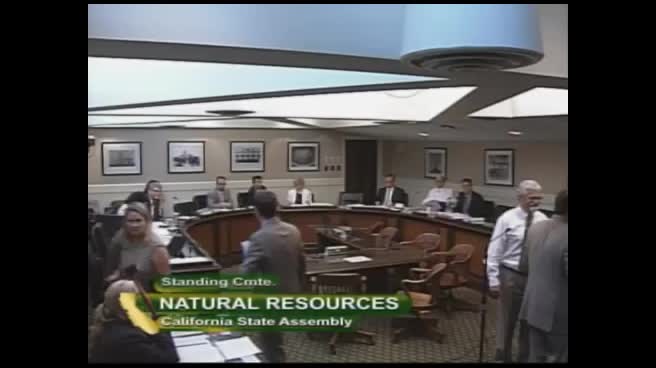 17MIN
Assembly Standing Committee on Natural Resources
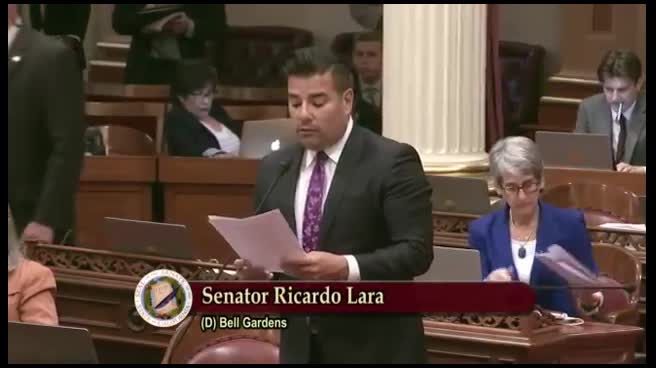 4MIN
Senate Floor


Bill Co-Author(s):