AB 1329: Personal Income Tax Law: credit: fuel management activities.
- Session Year: 2015-2016
- House: Assembly
- Latest Version Date: 2015-05-05
The Personal Income Tax Law allows various credits against the taxes imposed by that law.
This bill, for taxable years beginning on or after January 1, 2016, would allow a credit under that law in an amount equal to 25% of the amounts the qualified costs, as defined, paid or incurred by a qualified taxpayer, not to exceed a specified amount, during the taxable year for fuel management activities, as defined, performed on qualified real property owned by the qualified taxpayer.
This bill would take effect immediately as a tax levy.
The Personal Income Tax Law allows various credits against the taxes imposed by that law.
This bill, for taxable years beginning on or after January 1, 2016, would allow a credit under that law in an amount equal to 25% of the amounts paid or incurred by a qualified taxpayer, not to exceed a specified amount, during the taxable year for fuel management activities, as defined, performed on qualified real property owned by the qualified taxpayer.
This bill would take effect immediately as a tax levy.
(a)For taxable years beginning on or after January 1, 2016, there shall be allowed a credit against the net tax, as defined by Section 17039, in an amount equal to 25 percent of the amounts the qualified costs paid or incurred by a qualified taxpayer during the taxable year for fuel management activities performed on qualified real property, subject to subdivision (c).
(b)For the purposes of this section, the following definitions shall apply:
(1)Defensible space means the area adjacent to a structure or dwelling where wildfire prevention or protection practices are implemented to provide defense from an approaching wildfire or to minimize the spread of a structure fire to wildlands or surrounding areas.
(2)Fuel management activities means the creation of a defensible space around structures, the establishment of fuel breaks, the thinning of woody vegetation for the primary purpose of reducing risk to structures from wildfire, or the secondary treatment of woody fuel by looping, scattering, piling, chipping, removing from the site, or prescribed burning, provided these activities meet or exceed the requirements of the 2015 California Forest Practice Rules.
(3)Hazardous fire area has the same meaning as that term is defined in Section 4251 of the Public Resources Code.
(4)Licensed contractor means a contractor licensed under the Contractors State License Law (Chapter 9 (commencing with Section 7000) of Division 3 of the Business and Professions Code) with a license that relates to the duties necessary to provide fuel management activities.
(5)Professional forester means a person licensed under the Professional Foresters Law (Article 3 (commencing with Section 750) of Chapter 2.5 of Division 1 of the Public Resources Code).
(6)Qualified costs means 25 percent of the costs paid or incurred by a qualified taxpayer for labor or services performed for fuel management activities by a licensed contractor or professional forester, which costs are evidenced by records and documents, including, but not limited to, a written certification.
(4)
(7)Qualified real property means real property that is located within a hazardous fire area or a very high fire hazard severity zone in this state.
(5)
(8)Qualified taxpayer means a taxpayer who owns qualified real property. A taxpayer who owns a share of qualified real property may be allowed a share of the credit based on the taxpayers share of the qualified costs.
(6)
(9)Wildfire means an unplanned, unwanted wildland fire, including unauthorized human-caused fires, escaped wildland fire use events, escaped prescribed fire projects, and all other wildland fires where the objective is to extinguish the fire.
(7)
(10)Very high fire hazard severity zone has the same meaning as that term is defined in subdivision (i) of Section 51177 of the Government Code.
(11)Written certification means a written evaluation by the State Board of Forestry and Fire Protection or local fire department that certifies the establishment of defensible space, provided that the certification shall be obtained within 30 days after completion of the work establishing the defensible space. The qualified taxpayer shall retain a copy of the certification and provide it to the Franchise Tax Board upon request.
(c)The amount of the credit allowed by this section shall not exceed the lesser of two thousand five hundred dollars ($2,500) per qualified taxpayer per taxable year or 50 percent of a qualified taxpayers total tax liability for that year the previous taxable year.
(d)A deduction shall not be allowed under this part for any amount paid or incurred for which a credit is allowed by this section.
(e)The Franchise Tax Board shall establish a procedure to verify that the amount was paid or incurred by the qualified taxpayer for fuel management activities on qualified property.
(f)It is the intent of the Legislature to enact legislation to comply with the requirements of Section 41.
(g)If the credit allowed by this section exceeds the net tax, the excess may be carried over to reduce the net tax in the following year, and the succeeding six years, if necessary, until the credit is exhausted.
SEC. 2.This act provides for a tax levy within the meaning of Article IV of the Constitution and shall go into immediate effect.
(a)For taxable years beginning on or after January 1, 2016, there shall be allowed a credit against the net tax, as defined by Section 17039, in an amount equal to 25 percent of the amounts paid or incurred by a qualified taxpayer during the taxable year for fuel management activities performed on qualified real property, subject to subdivision (c).
(b)For the purposes of this section, the following definitions shall apply:
(1)Defensible space means the area adjacent to a structure or dwelling where wildfire prevention or protection practices are implemented to provide defense from an approaching wildfire or to minimize the spread of a structure fire to wildlands or surrounding areas.
(2)Fuel management activities means the creation of a defensible space around structures, the establishment of fuel breaks, the thinning of woody vegetation for the primary purpose of reducing risk to structures from wildfire, or the secondary treatment of woody fuel by looping, scattering, piling, chipping, removing from the site, or prescribed burning, provided these activities meet or exceed the requirements of the 2015 California Forest Practice Rules.
(3)Hazardous fire area has the same meaning as that term is defined in Section 4251 of the Public Resources Code.
(4)Qualified real property means real property that is located within a hazardous fire area or a very high fire hazard severity zone in this state.
(5)Qualified taxpayer means a taxpayer who owns qualified real property. A taxpayer who owns a share of qualified real property may be allowed a share of the credit based on the taxpayers share of the qualified costs.
(6)Wildfire means an unplanned, unwanted wildland fire, including unauthorized human-caused fires, escaped wildland fire use events, escaped prescribed fire projects, and all other wildland fires where the objective is to extinguish the fire. .
(7)Very high fire hazard severity zone has the same meaning as that term is defined in subdivision (i) of Section 51177 of the Government Code.
(c)The amount of the credit allowed by this section shall not exceed the lesser of two thousand five hundred dollars ($2,500) per qualified taxpayer per taxable year or 50 percent of a qualified taxpayers total tax for that year.
(d)A deduction shall not be allowed under this part for any amount paid or incurred for which a credit is allowed by this section.
(e)The Franchise Tax Board shall establish a procedure to verify that the amount was paid or incurred by the qualified taxpayer for fuel management activities on qualified property.
(f)It is the intent of the Legislature to enact legislation to comply with the requirements of Section 41.
SEC. 2.This act provides for a tax levy within the meaning of Article IV of the Constitution and shall go into immediate effect.
|
Date
|
Status
|
|---|---|
| Feb 1, 2016 | From committee: Filed with the Chief Clerk pursuant to Joint Rule 56. |
| Jan 31, 2016 | Died pursuant to Article IV, Sec. 10(c) of the Constitution. |
| May 18, 2015 | Retained in suspense file. |
| May 18, 2015 | In committee: Set, first hearing. Referred to REV. & TAX. suspense file. |
| May 6, 2015 | Re-referred to Com. on REV. & TAX. |
| May 5, 2015 | From committee chair, with author's amendments: Amend, and re-refer to Com. on REV. & TAX. Read second time and amended. |
| Mar 23, 2015 | Referred to Com. on REV. & TAX. |
| Mar 2, 2015 | Read first time. |
| Mar 1, 2015 | From printer. May be heard in committee March 31. |
| Feb 27, 2015 | Introduced. To print. |
This list shows positions taken on this bill by organizations on the date displayed, which is linked to the original source.
Positions by individuals are not included.
AB 1329
Page 7
Date of Hearing: May 18, 2015
ASSEMBLY COMMITTEE ON REVENUE AND TAXATION
Philip Ting, Chair
AB 1329 (
Patterson) – As Amended May 5, 2015
Majority vote. Tax levy. Fiscal committee.
SUBJECT: Personal Income Tax Law: credit: fuel management activities
SUMMARY: Allows, for taxable years beginning on or after January 1, 2016, a credit under the Personal Income Tax (PIT) Law equal to the "qualified costs" paid by a "qualified taxpayer" for "fuel management activities" performed on "qualified real property", as specified. Specifically, this bill:
Defines "qualified costs" as 25% of the costs paid or incurred by a "qualified taxpayer" for labor or services performed for "fuel management activities" by a "licensed contractor" or "professional forester", which costs are evidenced by records and documents, including a "written certification".
Defines a "qualified taxpayer" as a taxpayer who owns "qualified real property." A taxpayer who owns a share of "qualified real property" may be allowed a share of the credit based on the taxpayer's share of the qualified costs.
Defines "fuel management activities" as the creation of a "defensible space" around structures, the establishment of fuel breaks, the thinning of woody vegetation for the primary purpose of reducing risk to structures from "wildfire", or the secondary treatment of woody fuel by looping, scattering, piling, chipping, removing from the site, or prescribed burning, provided these activities meet or exceed the requirements of the 2015 California Forest Practice Rules.
Defines "qualified real property" as real property located within a "hazardous fire area" or a "very high fire hazard severity zone" in California.
Defines a "licensed contractor" as a contractor licensed under the Contractors' State License Law with a license that relates to the duties necessary to provide fuel management activities.
Defines a "professional forester" as a person licensed under the Professional Foresters Law.
Defines a "written certification" as a written evaluation by the State Board of Forestry and Fire Protection or local fire department that certifies the establishment of "defensible space", provided that the certification shall be obtained within 30 days after completion of the work establishing the "defensible space". The qualified taxpayer must retain a copy of the certification and provide it to the Franchise Tax Board (FTB) upon request.
Defines "defensible space" as the area adjacent to a structure or dwelling where wildfire prevention or protection practices are implemented to provide defense from an approaching wildfire or to minimize the spread of a structure fire to wildlands or surrounding areas.
Defines a "wildfire" as an unplanned, unwanted wildland fire, including unauthorized human-caused fires, escaped wildland fire use events, escaped prescribed fire projects, and all other wildland fires where the objective is to extinguish the fire.
Defines a "hazardous fire area" by reference to the definition contained in Public Resources Code (PRC) Section 4251.
Defines a "very high fire hazard severity zone" by reference to the definition contained in Government Code (GC) Section 51177(i).
Limits the credit amount to the lesser of:
$2,500 per qualified taxpayer per taxable year; or,
50% of a qualified taxpayer's total tax liability for the previous taxable year.
Disallows a deduction for any amount paid or incurred for which a credit is allowed.
Requires the FTB to establish a procedure "to verify that the amount was paid or incurred by the qualified taxpayer for fuel management activities on qualified property."
Provides that it is the Legislature's intent to enact legislation to comply with the requirements of Revenue and Taxation Code (R&TC) Section 41.
Provides that, in cases where the credit exceeds the taxpayer's tax liability, the excess may be carried over to reduce the net tax in the following year, and the succeeding six years, if necessary, until the credit is exhausted.
Takes immediate effect as a tax levy.
EXISTING LAW:
Allows various tax credits under the PIT Law. These credits are generally designed to encourage socially beneficial behavior or to provide relief to taxpayers who incur specified expenses.
Requires any bill authorizing a new credit to contain all of the following:
Specific goals, purposes, and objectives that the tax credit will achieve;
Detailed performance indicators for the Legislature to use when measuring whether the tax credit meets the goals, purposes, and objectives stated in the bill; and,
Data collection requirements to enable the Legislature to determine whether the tax credit is meeting, failing to meet, or exceeding those specific goals, purposes, and objectives. The requirements shall include the specific data and baseline measurements to be collected and remitted in each year the credit is in effect, for the Legislature to measure the change in performance indicators, and the specific taxpayers, state agencies, or other entities required to collect and remit data. (R&TC Section 41.)
Defines a "hazardous fire area" as any area so designated by the State Board of Forestry and Fire Protection or the Director of Forestry and Fire Protection pursuant to PRC Section 4252 or 4253. (PRC Section 4251.) PRC Section 4252 provides that, upon the written petition of the owners or authorized agents of more than 50% of the land, including public land, within the exterior boundaries of any area of not less than 10,000 acres, upon which a fire hazard exists due to the presence of flammable material or cover, the board may designate such area as a hazardous fire area, and shall declare the period of time during which the area shall be so designated. PRC Section 4253, in turn, provides that whenever the director determines that a fire hazard exists in any other area due to the presence of flammable material or cover, he may by regulation designate such area to be a hazardous fire area.
Defines a "very high fire hazard severity zone" as an area designated by the director pursuant to GC Section 51178 that is not a state responsibility area. (GC Section 51177(i).) GC Section 51178, in turn, requires the director to identify areas in the state as very high fire hazard severity zones based on consistent statewide criteria and based on the severity of fire hazard that is expected to prevail in those areas. Very high fire hazard severity zones shall be based on fuel loading, slope, fire weather, and other relevant factors including areas where Santa Ana, Mono, and Diablo winds have been identified as a major cause of wildfire spread.
Requires any person who owns, leases, controls, operates, or maintains an occupied dwelling or occupied structure in or adjoining a mountainous area, forest-covered land, brush-covered land, grass-covered land, or land that is covered with flammable material, which area or land is within a very high fire hazard severity zone to maintain defensible space of 100 feet from each side of the structure. (GC Section 51182.)
FISCAL EFFECT: The FTB estimates that this bill would reduce General Fund revenues by $170 million in fiscal year (FY) 2016-17, and by $180 million in FY 2017-18.
COMMENTS:
The author has provided the following statement in support of this bill:
In California, fire season is year round. One of the most integral components in protecting the state's lands, its residents, and their structures from wildfire damage is proper defensible space management, which includes the thinning of woody vegetation, establishment of fuel breaks, and creation of fire-resilient landscaping in the first 100 feet surrounding a home. The state requires certain residents to conduct this maintenance, and strongly encourages it for others, depending on the resident's location. However, the high cost of this vegetation management can discourage landowners from taking important steps to defend their homes and ensure their property is fire-resistant.
Instituting a state tax credit to help offset the costs of fuel management activities in hazardous fire areas and very high fire hazard severity zones will encourage the creation of fire-safe homes and landscapes and incentivize these landowners to do the right thing and make sure their land is fire-resistant. This will protect our lands from catastrophic wildfires, saving taxpayer money by freeing up public funds that might otherwise be used to contain and fight these destructive fires.
Proponents of this bill note the following:
AB 1329 would help offset high costs [of] fuel management activities to help reduce the severity of wildfires by incentivizing landowners to make sure their land is more fire resistant, thus reducing the cost of fire suppression in the case of a fire. Such activities would include creation of defensible space, establishment of fuel breaks, thinning woody vegetation, and other fire safe practices.
Opponents of this bill note the following:
The incentive for maintaining a defensible space around one's property is enormous. Every property owner already has a huge incentive to maintain the property's safety, not to mention the strong incentive insurance companies have to make sure this work is done. CalFire also does substantial management of combustible forests and fuels. The state's taxpayers should not be held responsible for this cost.
The FTB has identified the following implementation concerns in its staff analysis of this bill:
"Because the bill fails to specify otherwise, the FTB would be subject to the rulemaking procedures required under the Administrative Procedures Act (APA). Following these procedures may delay the immediate implementation of this bill. To prevent any delay, it is recommended that the author add a provision exempting the FTB from the APA when the FTB is prescribing rules, guidelines, or procedures necessary or appropriate to carry out the purpose of this bill.
"It is unclear how the credit limitation would be determined when a property is owned by more than one qualified taxpayer. Would the limit be determined individually by each qualified taxpayer or would the limit be based on the total of all the qualified taxpayers' previous year's tax liability?
"The amount of the credit allowed by this bill could not exceed the lesser of two thousand five hundred dollars ($2,500) per qualified taxpayer per taxable year or 50 percent of a qualified taxpayer's total tax liability for the previous taxable year.
"It is unclear how the credit limit would be determined for a qualified taxpayer that filed jointly in the prior year and not jointly in the current year. Would 100 percent of the prior year's joint liability be subject to the 50 percent limit? One half of the prior year's joint liability?
"The credit available to a qualified taxpayer with zero or negative taxable income, or no filing requirement in the prior year would be zero because this bill limited the credit to the lesser of 50 percent of the qualified taxpayer's prior year tax liability or $2,500.
"Because the bill specifies that prescribed burning would be allowed 'provided these activities meet or exceed the requirements of the 2015 California Forest Practice Rules,' the rules as they exist for 2015 would be the only rules considered in future years. If this is contrary to the author's intent, the bill should be amended."
Committee Staff Comments
What is a "tax expenditure"? Existing law provides various credits, deductions, exclusions, and exemptions for particular taxpayer groups. In the late 1960s, U.S. Treasury officials began arguing that these features of the tax law should be referred to as "expenditures" since they are generally enacted to accomplish some governmental purpose and there is a determinable cost associated with each (in the form of foregone revenues).
How is a tax expenditure different from a direct expenditure? As the Department of Finance notes in its annual Tax Expenditure Report, there are several key differences between tax expenditures and direct expenditures. First, tax expenditures are reviewed less frequently than direct expenditures once they are put in place. While this affords taxpayers greater financial predictability, it can also result in tax expenditures remaining a part of the tax code without demonstrating any public benefit. Second, there is generally no control over the amount of revenue losses associated with any given tax expenditure. Finally, it should also be noted that, once enacted, it takes a two-thirds vote to rescind an existing tax expenditure absent a sunset date, effectively resulting in a "one-way ratchet" whereby tax expenditures can be conferred by majority vote, but cannot be rescinded, irrespective of their efficacy or cost, without a supermajority vote.
The fire prevention fee: On July 7, 2011, Governor Brown signed legislation enacting a new fire prevention fee. Specifically, ABx1 29 (Blumenfield), Chapter 8, Statutes of 2011, declared that "[t]he costs of fire prevention activities aimed at reducing the effects of structures in state responsibility areas should be borne by the owners of these structures." Thus, under the new law, the Board of Forestry was directed to establish a fire prevention fee of no more than $150 to be applied to each habitable structure on a parcel within a state responsibility area. ABx1 29 also directed the Board of Forestry, beginning on July 1, 2013, to adjust annually the fire prevention fee amount pursuant to a specified formula.
What exactly are we incentivizing? Generally, tax credits are provided as a matter of
legislative grace to encourage socially beneficial behavior that likely would not occur
absent a financial incentive. Current law, however, already requires specified landowners to maintain a defensible space around their structures. If the desire to comply with existing law and prevent one's home from being destroyed in a wildfire is an insufficient incentive to maintain adequate defensible space, it is questionable whether a $2,500 tax credit would prove adequate. It could be argued that such an incentive would be akin to providing a tax credit for purchasing automobile insurance, which is both mandated by law and designed primarily to protect the policyholder.
R&TC Section 41: On September 29, 2014, Governor Brown signed SB 1335 (Leno), Chapter 845, Statutes of 2014, which added R&TC Section 41. SB 1335 recognized that the Legislature should apply the same level of review used for government spending programs to tax preference programs, including tax credits. Thus, R&TC Section 41 requires any bill introduced on or after January 1, 2015 that allows a new income tax credit to contain specific goals, purposes, and objectives that the tax credit will achieve. In addition, Section 41 requires detailed performance indicators for the Legislature to use when measuring whether the tax credit meets the goals, purposes, and objectives so-identified. This bill, in turn, provides that it is the Legislature's intent "to enact legislation to comply with the requirements of Section 41."
Absence of a sunset date: In its current form, this bill's proposed tax expenditure lacks an automatic sunset provision. This Committee has a longstanding policy favoring the inclusion of sunset dates to allow the Legislature periodically to review the efficacy and cost of such programs. The author may wish to consider the addition of appropriate sunset provisions.
Related legislation:
AB 294 (Anderson), of the 2009-10 Legislative Session, would have allowed a deduction for qualified costs paid to create a defensible space around a qualified property. AB 294 was never heard by this Committee.
AB 363 (Miller), of the 2009-10 Legislative Session, would have allowed a credit for 50% of the "qualified costs" paid or incurred by a taxpayer for bringing a qualified home into compliance with specified fire safety requirements. AB 363 (Miller) was held on this Committee's Suspense File.
AB 424 (Gaines), of the 2007-08 Legislative Session, would have allowed a tax credit, under both the PIT Law and the Corporation Tax Law, for costs paid for the creation of a defensible space. AB 424 defined the term "defensible space" as that area created by removing all brush, flammable vegetation, and combustible growth located within 100 feet from the structural components of a dwelling, as specified. AB 424 was heard by the Senate Committee on Revenue and Taxation, but no further action was taken.
AB 1853 (Anderson), of the 2007-08 Legislative Session, would have allowed a deduction for qualified costs paid to create a defensible space around a qualified property. AB 1853 was held on this Committee's Suspense File.
AB 1912 (Plescia), of the 2007-08 Legislative Session, would have allowed a credit equal to 15% of the cost paid, as specified, for the purchase and installation of any wildfire risk reduction improvement installed on existing property in California. AB 1912 was held on this Committee's Suspense File.
REGISTERED SUPPORT / OPPOSITION:
Support
Associated California Loggers
California Farm Bureau Federation
Opposition
California Tax Reform Association
Analysis Prepared by: M. David Ruff / REV. & TAX. / (916) 319-2098
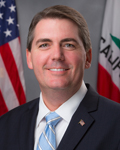
Bill Author