SB 1419: Uniform Anatomical Gift Act: prison inmates.
- Session Year: 2015-2016
- House: Senate
- Latest Version Date: 2016-04-13
Existing law establishes a system of state prisons. Existing law, the Uniform Anatomical Gift Act, sets forth the methods and procedures for a person to become a donor of an anatomical gift.
This bill would authorize a prisoner in the custody of the Department of Corrections and Rehabilitation to elect to make an anatomical gift on a form developed by the department, as specified. The bill would authorize the prisoner to make that election at the time of admittance into the state prison system, or at a later time at the prisoners request. The bill would establish a procedure by which a prisoner may revoke that election.
(a)The Department of Corrections and Rehabilitation shall develop and adopt a form that will allow a prisoner in the custody of the department to elect to make an anatomical gift in the event of his or her death. The form shall be included in the prisoners central file maintained by the department. The form shall be titled Document of GiftDonate Life California Organ and Tissue Donor Registry, shall be a document of gift as defined in paragraph (6) of subdivision (a) of Section 7150.10, and shall at a minimum have shall include, at a minimum, all of the following characteristics:
(1)Clearly indicates the prisoners election to be added to the donor registry.
(2)Allows the prisoner to designate whether the prisoner would like to donate his or her organs or tissues for transplantation or research, or both.
(3)Allows the prisoner to state any donation limitation specifying the organs and tissues that the prisoner does not provide legal consent to be recovered.
(4)Contains an advisement that states all of the following:
(A)Electing to make an anatomical gift is completely voluntary.
(B)There are no repercussions for declining to, or benefits for agreeing to, elect to make an anatomical gift.
(C)The prisoner may consult with a medical professional or counselor about his or her decision.
(D)The prisoner may revoke his or her election to make an anatomical gift at any time, as described in subdivision (d).
(2)
(5)Contains a statement notifying the prisoner that by signing or placing his or her mark on the form form, the prisoner is legally authorizing the recovery of his or her organs or tissues for the uses described in this chapter in the event of his or her death.
(3)
(6)Contains the prisoners signature, or mark if the prisoner cannot write.
(b)The form described in subdivision (a) shall be presented to the prisoner upon his or her first admittance into the state prison system, and the prisoner may elect to sign it or refuse to sign it at that time.
(c)The form described in subdivision (a) shall be made available for completion and signature at the prisoners request, consistent with the policies and procedures of the Department of Corrections and Rehabilitation.
(d)A prisoner may revoke his or her election to make an anatomical gift at any time by delivery of a written statement to the official in charge of the facility where the prisoner is confined. Upon receipt of that statement, the Department of Corrections and Rehabilitation shall mark the document of gift described in subdivision (a) as revoked and shall retain the revoked document of gift and the statement received pursuant to this subdivision in the prisoners central file.
(a)The Department of Corrections and Rehabilitation shall develop and adopt a form that will allow a prisoner in the custody of the department to elect to make an anatomical gift in the event of his or her death. The form shall be included in the prisoners central file maintained by the department. The form shall be titled Document of GiftDonate Life California Organ and Tissue Donor Registry, shall be a document of gift as defined in paragraph (6) of subdivision (a) of Section 7150.10, and shall at a minimum have the following characteristics:
(1)Clearly indicates the prisoners election to be added to the donor registry.
(2)Contains a statement notifying the prisoner that by signing or placing his or her mark on the form the prisoner is legally authorizing the recovery of his or her organs or tissues for the uses described in this chapter in the event of his or her death.
(3)Contains the prisoners signature, or mark if the prisoner cannot write.
(b)The form described in subdivision (a) shall be presented to the prisoner upon his or her first admittance into the state prison system, and the prisoner may elect to sign it or refuse to sign it at that time.
(c)The form described in subdivision (a) shall be made available for completion and signature at the prisoners request, consistent with the policies and procedures of the Department of Corrections and Rehabilitation.
(d)A prisoner may revoke his or her election to make an anatomical gift at any time by delivery of a written statement to the official in charge of the facility where the prisoner is confined. Upon receipt of that statement, the Department of Corrections and Rehabilitation shall mark the document of gift described in subdivision (a) as revoked and shall retain the revoked document of gift and the statement received pursuant to this subdivision in the prisoners central file.
|
Date
|
Status
|
|---|---|
| May 27, 2016 | May 27 hearing: Held in committee and under submission. |
| May 24, 2016 | Set for hearing May 27. |
| May 23, 2016 | May 23 hearing: Placed on APPR. suspense file. (Ayes 7. Noes 0.) |
| May 13, 2016 | Set for hearing May 23. |
| May 10, 2016 | May 16 hearing postponed by committee. |
| May 6, 2016 | Set for hearing May 16. |
| Apr 20, 2016 | From committee: Do pass and re-refer to Com. on APPR. (Ayes 5. Noes 1. Page 3615.) (April 19). Re-referred to Com. on APPR. |
| Apr 20, 2016 | From committee: Do pass and re-refer to Com. on APPR. (Ayes 5. Noes 1.) (April 19). Re-referred to Com. on APPR. |
| Apr 13, 2016 | From committee with author's amendments. Read second time and amended. Re-referred to Com. on PUB. S. |
| Apr 8, 2016 | Set for hearing April 19. |
| Apr 7, 2016 | From committee: Do pass and re-refer to Com. on PUB. S. (Ayes 7. Noes 0. Page 3446.) (April 6). Re-referred to Com. on PUB. S. |
| Apr 7, 2016 | From committee: Do pass and re-refer to Com. on PUB. S. (Ayes 7. Noes 0.) (April 6). Re-referred to Com. on PUB. S. |
| Mar 30, 2016 | Set for hearing April 6. |
| Mar 10, 2016 | Referred to Coms. on HEALTH and PUB. S. |
| Feb 22, 2016 | Read first time. |
| Feb 22, 2016 | From printer. May be acted upon on or after March 23. |
| Feb 19, 2016 | Introduced. To Com. on RLS. for assignment. To print. |
|
Date
|
Description
|
Location
|
Votes
|
|
|---|---|---|---|---|
| May 23, 2016 | Placed on suspense file | Senate Standing Committee on Appropriations |
Passed |
|
| Apr 19, 2016 | Do pass, but first be re-referred to the Committee on [Appropriations] | Senate Standing Committee on Public Safety |
Passed |
|
| Apr 6, 2016 | Do pass, but first be re-referred to the Committee on [Public Safety] | Senate Standing Committee on Health |
Passed |
This list shows positions taken on this bill by organizations on the date displayed, which is linked to the original source.
Positions by individuals are not included.
SENATE COMMITTEE ON
Senator Ricardo Lara, Chair
2015 - 2016 Regular Session
SB 1419 (Galgiani) - Uniform Anatomical Gift Act: prison inmates
Version: | Policy Vote: |
Urgency: | Mandate: |
Hearing Date: | Consultant: |
This bill meets the criteria for referral to the Suspense File.
Bill Summary:
SB 1419 would require the Department of Corrections and Rehabilitation to allow an inmate to make an anatomical gift in the event of his or her death.
Fiscal Impact:
Ongoing costs of about $200,000 per year for the Department of Corrections and Rehabilitation to provide training to medical staff (General Fund). The Department would need to provide training to licensed vocational nurses, so that they could provide the forms to inmates during initial medical screening and answer questions that inmates may have about the form and their rights under the law.
Background:
Under current practice, newly admitted inmates to state prisons are given an initial health screening and then a comprehensive medical evaluation.
The Department of Corrections and Rehabilitation currently has a policy in place regarding advanced health care directives. Advanced health care directives allow patients (including inmates) to make decisions about future health care services that they wish to receive. Under the advanced health care directive used by the Department, inmates can give someone the power of attorney (in order to make health care decisions on the inmates behalf) and to specify the types of medical treatment that the inmate does and does not want. The advanced health care directive form used by the Department also includes the option for an inmate to indicate whether he or she wishes to donate organs or tissues upon death and to specify which organs may be donated. The Department provides advanced health care directive forms to any inmate who requests one and to any inmate who is facing a life threatening condition or medical treatment.
Proposed Law:
SB 1419 would require the Department of Corrections and Rehabilitation to allow an inmate to make an anatomical gift in the event of his or her death.
Specific provisions of the bill would:
- Require the Department to develop a form to allow an inmate to make an anatomical gift in the event of the inmates death;
- Require the form to be held in the inmate’s central file;
- Specify the information to be contained on the form;
- Require the form to be presented to inmates upon first admittance to the state prison system;
- Require the form to be made available to inmates upon request;
- Authorize an inmate to revoke his or her election to make an anatomical gift.
Staff Comments:
In any given year, a very small proportion of state prison inmates die in prison. For example, in 2010 about 250 inmates died out of an institutional population of about 150,000.
Under current Department policy, any inmate can request an advanced health care directive which allows the inmate to elect to make an anatomical gift (i.e. organ donation). In addition, the Department provides advanced health care directive forms to inmates facing a life threatening illness or medical treatment (e.g. a surgery).
Given that those inmates most likely to die in prison are given access to an advanced health care directory, it does not seem likely that providing an organ donation form to every inmate in the state prison system will substantially increase organ donation in the state.
-- END --
SENATE COMMITTEE ON PUBLIC SAFETY
Senator Loni Hancock, Chair
2015 - 2016 Regular
Bill No: SB 1419 Hearing Date: April 19, 2016
Author: | Galgiani | ||
Version: | April 13, 2016 | ||
Urgency: | No | Fiscal: | Yes |
Consultant: | JRD | ||
Subject: Uniform Anatomical Gift Act: Prison Inmates
HISTORY
Source: Author
Prior Legislation: SB 1395 (Alquist)—Chapter 217, Statutes of 2010
AB 2440 (Berryhill, of 2010)—died in the Assembly Health Committee
AB 289 (Plescia, of 2003)—died in the Assembly Health Committee
Support: Unknown
Opposition: None known
PURPOSE
The purpose of this bill is to require the Department of Corrections and Rehabilitation (CDCR) to develop a form, as specified, allowing a prisoner to elect to make an anatomical gift in the event of his or her death, as specified.
Existing law establishes the Uniform Anatomical Gift Act, which regulates the making and distribution of organ donations. (Health and Safety Code § 7150, et seq.)
This bill requires CDCR to develop and adopt a form that allows a prisoner to elect to make an anatomical gift in the event of his or her death, as specified.
This bill requires the form to be titled “Document of Gift—Donate Life California Organ and Tissue Donor Registry” and to have at a minimum the following characteristics:
- Clearly indicates the prisoner’s election to be added to the donor registry.
- Allows the prisoner to designate whether the prisoner would like to donate his or her organs or tissues for transplantation or research, or both.
- Allows the prisoner to state any donation limitations specifying the organs and tissues that the prisoner does not provide legal consent to be recovered.
- Contains an advisement that states all of the following:
- Electing to make an anatomical gift is completely voluntary.
- There are no repercussions for declining to, or benefits for agreeing to, elect to make an anatomical gift.
- The prisoner may consult with a medical professional or counselor about his or her decision.
- The prisoner may revoke his or her election to make an anatomical gift at any time, as specified.
- Contains a statement notifying the prisoner that by signing or placing his or her mark on the form that the prisoner is legally authorizing the recovery of organs or tissues in the event of his or her death; and,
- Contains the prisoner’s signature or mark if the prisoner cannot write.
This bill requires the form to be presented to the prisoner upon his or her first admittance into the state prison system and allows the prisoner to elect to sign the form or refuse to sign at that time.
This bill requires the form to be made available for completion and signature at the prisoner’s request, consistent with the policies and procedures of CDCR.
This bill allows the prisoner to revoke his or her election to make an anatomical gift at any time by delivery of a written statement to the official in charge of the facility where the prisoner is confined. Also, requires CDCR, upon receipt of this statement to mark the form above as revoked and to retain the revoked document of gift and the statement revoking the gift in the prisoner’s central file.
RECEIVERSHIP/OVERCROWDING CRISIS AGGRAVATION
For the past several years this Committee has scrutinized legislation referred to its jurisdiction for any potential impact on prison overcrowding. Mindful of the United States Supreme Court ruling and federal court orders relating to the state’s ability to provide a constitutional level of health care to its inmate population and the related issue of prison overcrowding, this Committee has applied its “ROCA” policy as a content-neutral, provisional measure necessary to ensure that the Legislature does not erode progress in reducing prison overcrowding.
On February 10, 2014, the federal court ordered California to reduce its in-state adult institution population to 137.5% of design capacity by February 28, 2016, as follows:
- 143% of design bed capacity by June 30, 2014;
- 141.5% of design bed capacity by February 28, 2015; and,
- 137.5% of design bed capacity by February 28, 2016.
In December of 2015 the administration reported that as “of December 9, 2015, 112,510 inmates were housed in the State’s 34 adult institutions, which amounts to 136.0% of design bed capacity, and 5,264 inmates were housed in out-of-state facilities. The current population is 1,212 inmates below the final court-ordered population benchmark of 137.5% of design bed capacity, and has been under that benchmark since February 2015.” (Defendants’ December 2015 Status Report in Response to February 10, 2014 Order, 2:90-cv-00520 KJM DAD PC, 3-Judge Court, Coleman v. Brown, Plata v. Brown (fn. omitted).) One year ago, 115,826 inmates were housed in the State’s 34 adult institutions, which amounted to 140.0% of design bed capacity, and 8,864 inmates were housed in out-of-state facilities. (Defendants’ December 2014 Status Report in Response to February 10, 2014 Order, 2:90-cv-00520 KJM DAD PC, 3-Judge Court, Coleman v. Brown, Plata v. Brown (fn. omitted).)
While significant gains have been made in reducing the prison population, the state must stabilize these advances and demonstrate to the federal court that California has in place the “durable solution” to prison overcrowding “consistently demanded” by the court. (Opinion Re: Order Granting in Part and Denying in Part Defendants’ Request For Extension of December 31, 2013 Deadline, NO. 2:90-cv-0520 LKK DAD (PC), 3-Judge Court, Coleman v. Brown, Plata v. Brown (2-10-14). The Committee’s consideration of bills that may impact the prison population therefore will be informed by the following questions:
- Whether a proposal erodes a measure which has contributed to reducing the prison population;
- Whether a proposal addresses a major area of public safety or criminal activity for which there is no other reasonable, appropriate remedy;
- Whether a proposal addresses a crime which is directly dangerous to the physical safety of others for which there is no other reasonably appropriate sanction;
- Whether a proposal corrects a constitutional problem or legislative drafting error; and
- Whether a proposal proposes penalties which are proportionate, and cannot be achieved through any other reasonably appropriate remedy.
COMMENTS
1. Need for this Legislation
According to the author:
California’s Health and Safety Code does not provide a process for prison inmate organ donation. Currently, inmates who would like to sign up to be an organ donor are not provided a chance to register, as there is no official procedure in place. Federally, the Federal Bureau of Prisons allows organ and tissue donation by inmates only when the recipient is a member of the inmate donor’s immediate family, defined as parents, siblings, and biological children.
The United States is currently facing a shortage of anatomical gift donors, with California making up 20% of the national donor waiting list. Additionally, less than one percent of hospital deaths meet the criteria for organ donation. It is estimated that one individual organ donor can save the lives of up to eight people, and tissue donors can help more than 50 people. Due to the fact that there is no process in place to provide inmates with the chance to donate, potential donors are prevented from registering. This bill will create a voluntary process for an inmate to register as an organ donor, which could increase the donor pool. It is important to note that this bill also requires a process to be in place for the inmate to remove him- or herself from registration at any time. In Utah, where similar legislation allowing for voluntary sign up has been enacted into law, over 250 inmates have signed up.
2. The Organ Procurement and Transplantation Network
The Organ Procurement and Transplantation Network (OPTN) is a public-private partnership that links all professionals involved in the United States donation and transplantation system. The United Network for Organ Sharing (UNOS) serves as the OPTN under contract with the Health Resources and Services Administration of the U.S. Department of Health and Human Services. Currently, every transplant hospital program and organ procurement organization in the U.S. is an OPTN member. Membership means that their transplant programs are certified by UNOS and that they play an active role in forming the policies that govern the transplant community. In California, there are 21 transplant centers (hospitals) and four organ procurement organizations (OPOs), which are authorized by the Centers for Medicare and Medicaid Services to procure organs for transplantation. Each individual hospital comes up with their own policies to evaluate patients and determine eligibility to receive an organ transplant. UNOS develops the policies to determine how available organs are distributed among eligible patients waiting for a transplant. According to Donate Life California’s Web site, there are currently more than 123,000 people in the U.S. waiting for a life-saving organ transplant, and nearly 22,000 live in California. Every 10 minutes another person is added to the waiting list.
3. Effect of this Legislation
According to CDCR, inmates are screened at intake by a nurse to identify any physical and mental health care needs. The inmate is tested for tuberculosis and hepatitis C, and, if requested, for HIV. Within 14 days of entering CDCR’s custody, all inmates undergo a comprehensive medical evaluation in which a physician obtains a medical history from the inmate. Any information obtained during the medical evaluation is self-disclosed by the inmate, as CDCR does not have access to any prior medical records. Any process involving informed consent is required to be done by a physician during the comprehensive medical evaluation. CDCR does not solicit an inmate’s interest in being an organ and tissue donor. Inmates are responsible for disclosing whether they are already registered as organ and tissue donors during the medical evaluation, and that information is noted in the medical record.
CDCR provides an Advance Directive for Health Care to an inmate if it is requested specifically by the inmate or the inmate’s medical condition warrants it because the inmate is facing a life-threatening condition or treatment. This document consists of a durable power of attorney, which allows inmates to designate someone to make decisions on their behalf if they are unable to do it on their own, and a living will, which allows inmates to state their goals or desires for the types of health care they do or do not want. The advance directive form includes an optional section for an inmate to choose whether or not he or she is willing to donate organs or other tissues upon death. If an inmate chooses to complete this part of the form, the inmate is instructed to check the box that applies to the inmate’s wish. The inmate may give any needed organs or tissues, may specify which organs and tissues he or she wants to donate, or may select the box choosing not to donate. The inmate may also designate whether his or her gift is for purposes of transplantation, therapy, research, or education. Before an inmate signs the advance directive, a medical staff person is required to document that the inmate has been fully informed and understands the form, and two additional witnesses are required to verify that the inmate has willingly signed the form and completed it according to the inmate’s wishes.
This bill would require that, in addition to the form currently provided, CDCR provide an inmate with an organ donation form upon first admittance.
-- END –
SENATE COMMITTEE ON HEALTH
Senator Ed Hernandez, O.D., Chair
BILL NO: SB 1419
AUTHOR: | Galgiani | ||
VERSION: | February 19, 2016 | ||
HEARING DATE: | April 6, 2016 | ||
CONSULTANT: | Reyes Diaz | ||
SUBJECT: Uniform Anatomical Gift Act: prison inmates
SUMMARY:
Requires the Department of Corrections and Rehabilitation (CDCR) to develop a form, as specified, allowing a prisoner to elect to make an anatomical gift in the event of his or her death. Requires CDCR to present the form to the prisoner, as specified, as well as to allow the prisoner to revoke his or her election to make an anatomical gift, as specified.
Existing law: Establishes the Uniform Anatomical Gift Act, which regulates the making and distribution of organ donations.
This bill:
- Requires CDCR to develop and adopt a form that allows a prisoner to elect to make an anatomical gift in the event of his or her death. Requires the form to be included in the prisoner’s central file.
- Requires the form to be titled “Document of Gift—Donate Life California Organ and Tissue Donor Registry” and to have at a minimum the following characteristics:
- Clearly indicate the prisoner’s election to be added to the donor registry;
- Contain a statement notifying the prisoner that by signing or placing his or her mark on the form that the prisoner is legally authorizing the recovery of organs or tissues in the event of his or her death; and,
- Contains the prisoner’s signature or mark if the prisoner cannot write.
- Requires the form to be presented to the prisoner upon his or her first admittance into the state prison system. Allows the prisoner to elect to sign the form or refuse to sign at that time.
- Requires the form to be made available for completion and signature at the prisoner’s request, consistent with the policies and procedures of CDCR.
- Allows the prisoner to revoke his or her election to make an anatomical gift at any time by delivery of a written statement to the official in charge of the facility where the prisoner is confined. Requires CDCR, upon receipt of this statement, to mark the form described in 2) above as revoked. Requires CDCR to retain the revoked document of gift and the statement revoking the gift in the prisoner’s central file.
FISCAL EFFECT:
This bill has not been analyzed by a fiscal committee.
COMMENTS:
- Author’s statement. According to the author, the United States is currently facing a shortage of anatomical gift donors, with California making up 20% of the national donor waiting list. Additionally, less than one percent of hospital deaths meet the criteria for organ donation. It is estimated that one individual organ donor can save the lives of up to eight people, and tissue donors can help more than 50 people. Due to the fact that there is no process in place to provide inmates with the chance to donate, potential donors are prevented from registering. This bill will create a voluntary process for an inmate to register as an organ donor, which could increase the donor pool. It is important to note that this bill also requires a process to be in place for the inmate to remove him- or herself from registration at any time. In Utah, where similar legislation allowing for voluntary sign up has been enacted, more than 250 inmates have already signed up to be donors.
- Background. The Organ Procurement and Transplantation Network (OPTN) is a public-private partnership that links all professionals involved in the United States donation and transplantation system. The United Network for Organ Sharing (UNOS) serves as the OPTN under contract with the Health Resources and Services Administration of the U.S. Department of Health and Human Services. Currently, every transplant hospital program and organ procurement organization in the U.S. is an OPTN member. Membership means that their transplant programs are certified by UNOS and that they play an active role in forming the policies that govern the transplant community. In California, there are 21 transplant centers (hospitals) and four organ procurement organizations (OPOs), which are authorized by the Centers for Medicare and Medicaid Services to procure organs for transplantation. Each individual hospital comes up with their own policies to evaluate patients and determine eligibility to receive an organ transplant. UNOS develops the policies to determine how available organs are distributed among eligible patients waiting for a transplant. According to Donate Life California’s Web site, there are currently more than 123,000 people in the U.S. waiting for a life-saving organ transplant, and nearly 22,000 live in California. Every 10 minutes another person is added to the waiting list.
- CDCR inmate screening. According to CDCR, inmates are screened at intake by a nurse to identify any physical and mental health care needs. The inmate is tested for tuberculosis and hepatitis C, and, if requested, for HIV. Within 14 days of entering CDCR's custody, all inmates undergo a comprehensive medical evaluation in which a physician obtains a medical history from the inmate. Any information obtained during the medical evaluation is self-disclosed by the inmate, as CDCR does not have access to any prior medical records. Any process involving informed consent is required to be done by a physician during the comprehensive medical evaluation. CDCR does not solicit an inmate’s interest in being an organ and tissue donor. Inmates are responsible for disclosing whether they are already registered as organ and tissue donors during the medical evaluation, and that information is noted in the medical record.
CDCR provides an Advance Directive for Health Care to an inmate if it is requested specifically by the inmate or the inmate's medical condition warrants it because the inmate is facing a life-threatening condition or treatment. This document consists of a durable power of attorney, which allows inmates to designate someone to make decisions on their behalf if they are unable to do it on their own, and a living will, which allows inmates to state their goals or desires for the types of health care they do or do not want. The advance directive form includes an optional section for an inmate to choose whether or not he or she is willing to donate organs or other tissues upon death. If an inmate chooses to complete this part of the form, the inmate is instructed to check the box that applies to the inmate's wish. The inmate may give any needed organs or tissues, may specify which organs and tissues he or she wants to donate, or may select the box choosing not to donate. The inmate may also designate whether his or her gift is for purposes of transplantation, therapy, research, or education. Before an inmate signs the advance directive, a medical staff person is required to document that the inmate has been fully informed and understands the form, and two additional witnesses are required to verify that the inmate has willingly signed the form and completed it according to the inmate's wishes. - Double referral. Should this bill pass out of this Committee, it will be referred to the Senate Committee on Public Safety.
- Prior legislation. SB 1395 (Alquist, Chapter 217, Statutes of 2010), authorized the establishment of a living donor registry to sign up kidney donors and required the Department of Motor Vehicles to include on an application for an original or renewal driver’s license or identification card specified language asking the applicant if he or she wants to enroll with the Donate Life California Organ and Tissue Donor Registry and giving the applicant information about the registry, including disenrollment information.
AB 2440 (Berryhill, of 2010), would have required prison inmates to complete an organ and tissue donor consent form upon admittance to a state prison. AB 2440 failed passage in the Assembly Health Committee.
AB 289 (Plescia, of 2003), would have, among other things, allowed an organ donor to prohibit his or her organs from being donated to prison inmates. AB 289 was never heard in the Assembly Health Committee.
- Policy comment. This bill requires the organ donation form to be presented to a prisoner upon first admittance. While CDCR states that at intake prisoners are screened for physical and mental health care needs, it is unclear whether the screening would occur before or after the organ donation form is presented to the inmate. This raises the question of whether a prisoner who is determined to need mental health care needs is capable of consenting to organ donation.
SUPPORT AND OPPOSITION:
Support: None received
Oppose: None received
-- END --
Discussed in Hearing
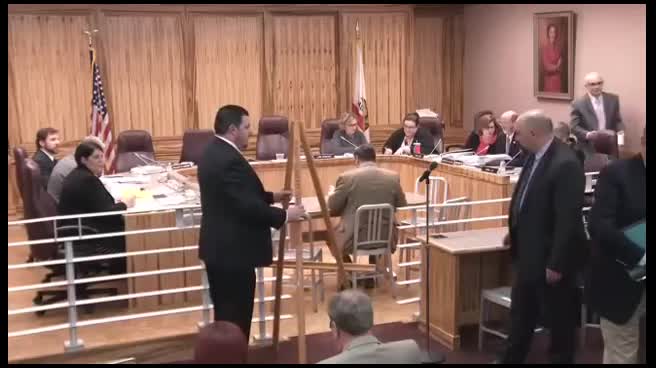 3MIN
Senate Standing Committee on Public Safety
 2MIN
Senate Standing Committee on Health
Bill Author

Bill Co-Author(s):