SB 1439: Postsecondary education: academic and administrative employees: disclosure of sexual harassment.
- Session Year: 2015-2016
- House: Senate
- Latest Version Date: 2016-08-26
(1)Under existing law, the segments of postsecondary education in this state include the University of California, the California State University, and the California Community Colleges. Existing law authorizes the governing board of each community college district and the Trustees of the California State University to employ persons in academic and administrative positions in order to carry out the functions of their respective institutions. The California Constitution provides that the University of California constitutes a public trust administered by the Regents of the University of California, a corporation in the form of a board, with full powers of organization and government, subject to legislative control only for specified purposes.
This bill would require the Regents of the University of California, the Trustees of the California State University, and the community college district governing boards to require as part of the hiring process for an appointment to an academic or administrative position that the applicant disclose any final administrative decision, as defined, or final judicial decision, as defined, determining that the applicant committed sexual harassment. The bill would prohibit the University of California, the California State University, or a community college district from asking an applicant to disclose, orally or in writing, information concerning any final administrative decision or final judicial decision described above, including any inquiry about an applicable decision on any employment application, until it has determined that the applicant meets the minimum employment qualifications stated in the notice issued for the position.
To the extent that these provisions would impose new requirements on community college district governing boards, this bill would constitute a state-mandated local program.
(2) The California Constitution requires the state to reimburse local agencies and school districts for certain costs mandated by the state. Statutory provisions establish procedures for making that reimbursement.
This bill would provide that, if the Commission on State Mandates determines that the bill contains costs mandated by the state, reimbursement for those costs shall be made pursuant to these statutory provisions.
(1)Under existing law, the segments of postsecondary education in this state include the California State University of California, the California State University, and the California Community Colleges. Existing law authorizes the governing board of each community college district and the Trustees of the California State University to employ persons in academic and administrative positions in order to carry out the functions of their respective institutions. The California Constitution provides that the University of California constitutes a public trust administered by the Regents of the University of California, a corporation in the form of a board, with full powers of organization and government, subject to legislative control only for specified purposes.
This bill would require community college district governing boards and the Regents of the University of California, the Trustees of the California State University University, and the community college district governing boards to require that an application as part of the hiring process for an appointment to an academic or administrative position with that district or with the California State University, as appropriate, include a requirement that the applicant disclose any final administrative decision, as defined, or final judicial decision, as defined, determining that the applicant committed sexual harassment. The bill would prohibit the University of California, the California State University, or a community college district from asking an applicant to disclose, orally or in writing, information concerning any final administrative decision or final judicial decision described above, including any inquiry about an applicable decision on any employment application, until it has determined that the applicant meets the minimum employment qualifications stated in the notice issued for the position.
To the extent that these provisions would impose new requirements on community college district governing boards, this bill would constitute a state-mandated local program.
(2) The California Constitution requires the state to reimburse local agencies and school districts for certain costs mandated by the state. Statutory provisions establish procedures for making that reimbursement.
This bill would provide that, if the Commission on State Mandates determines that the bill contains costs mandated by the state, reimbursement for those costs shall be made pursuant to these statutory provisions.
(1)Under existing law, the segments of postsecondary education in this state include the California State University and the California Community Colleges. Existing law authorizes the governing board of each community college district and the Trustees of the California State University to employ persons in academic and administrative positions in order to carry out the functions of their respective institutions. Existing law specifically requires community college district governing boards, among other things, to consider the evaluations of district contract employees before making a decision relating to the continued employment of those contract employees, as specified.
This bill would additionally require community college district governing boards, before making decisions relating to the continued employment of contract employees, to have knowledge of any allegations of workplace sexual harassment against those contract employees that resulted in final judicial or administrative decisions determining that the employee committed sexual harassment.
The
This bill would require community college district governing boards and the Trustees of the California State University to require that an application for appointment to an academic or administrative position with that district or with the California State University, as appropriate, include a requirement that the applicant disclose any allegations of workplace sexual harassment against him or her that resulted in a final judicial or administrative decision decision, as defined, or final judicial decision, as defined, determining that the applicant committed sexual harassment.
To the extent that these provisions would impose new requirements on community college district governing boards, this bill would constitute a state-mandated local program.
(2) The California Constitution requires the state to reimburse local agencies and school districts for certain costs mandated by the state. Statutory provisions establish procedures for making that reimbursement.
This bill would provide that, if the Commission on State Mandates determines that the bill contains costs mandated by the state, reimbursement for those costs shall be made pursuant to these statutory provisions.
Under
(1)Under existing law, the segments of postsecondary education in this state are the University of California, include the California State University, University and the California Community Colleges, independent institutions of higher education, and private postsecondary educational institutions. Colleges. Existing law requires authorizes the governing board of each community college district, district and the Trustees of the California State University, and the Regents of the University of California to adopt and implement a rape and sexual assault education program at each of their respective campuses or other facilities. University to employ persons in academic and administrative positions in order to carry out the functions of their respective institutions. Existing law specifically requires community college district governing boards, among other things, to consider the evaluations of district contract employees before making a decision relating to the continued employment of those contract employees, as specified.
This bill would express the intent of the Legislature to enact legislation that would provide students attending postsecondary educational institutions in California with a learning environment free from sexual harassment. additionally require community college district governing boards, before making decisions relating to the continued employment of contract employees, to have knowledge of any allegations of workplace sexual harassment against those contract employees that resulted in final judicial or administrative decisions determining that the employee committed sexual harassment.
The bill would require community college district governing boards and the Trustees of the California State University to require that an application for appointment to an academic or administrative position with that district or with the California State University, as appropriate, include a requirement that the applicant disclose any allegations of workplace sexual harassment against him or her that resulted in a final judicial or administrative decision determining that the applicant committed sexual harassment.
To the extent that these provisions would impose new requirements on community college district governing boards, this bill would constitute a state-mandated local program.
(2) The California Constitution requires the state to reimburse local agencies and school districts for certain costs mandated by the state. Statutory provisions establish procedures for making that reimbursement.
This bill would provide that, if the Commission on State Mandates determines that the bill contains costs mandated by the state, reimbursement for those costs shall be made pursuant to these statutory provisions.
Under existing law, the segments of postsecondary education in this state are the University of California, the California State University, the California Community Colleges, independent institutions of higher education, and private postsecondary educational institutions. Existing law requires the governing board of each community college district, the Trustees of the California State University, and the Regents of the University of California to adopt and implement a rape and sexual assault education program at each of their respective campuses or other facilities.
This bill would express the intent of the Legislature to enact legislation that would provide students attending postsecondary educational institutions in California with a learning environment free from sexual harassment.
(a)The governing board of a community college district shall require as part of the hiring process for an appointment to an academic or administrative position with that district that the applicant disclose any final administrative decision or final judicial decision determining that the applicant committed sexual harassment.
(b)A community college district shall not ask an applicant to disclose, orally or in writing, information concerning any final administrative decision or final judicial decision described in subdivision (a), including any inquiry about an applicable decision on any employment application, until the community college district has determined that the applicant meets the minimum employment qualifications stated in the notice issued for the position.
(c)For purposes of this section, the following definitions shall apply:
(1)Final administrative decision means a final determination based on the investigative findings of a Title IX compliance coordinator, or other designated investigator, at a college or university on a complaint of sexual harassment.
(2)Final judicial decision means a final determination of a matter submitted to a court that is recorded in a judgment or order of that court.
SEC. 2.Section 89521 is added to the Education Code, to read:89521.(a)The trustees shall require as part of the hiring process for an appointment to an academic or administrative position with the California State University that the applicant disclose any final administrative decision or final judicial decision determining that the applicant committed sexual harassment.
(b)The California State University shall not ask an applicant to disclose, orally or in writing, information concerning any final administrative decision or final judicial decision described in subdivision (a), including any inquiry about an applicable decision on any employment application, until the California State University has determined that the applicant meets the minimum employment qualifications stated in the notice issued for the position.
(c)For purposes of this section, the following definitions shall apply:
(1)Final administrative decision means a final determination based on the investigative findings of a Title IX compliance coordinator, or other designated investigator, at a college or university on a complaint of sexual harassment.
(2)Final judicial decision means a final determination of a matter submitted to a court that is recorded in a judgment or order of that court.
SEC. 3.Section 92612.1 is added to the Education Code, to read:92612.1.(a)The regents shall require as part of the hiring process for an appointment to an academic or administrative position with the University of California that the applicant disclose any final administrative decision or final judicial decision determining that the applicant committed sexual harassment.
(b)The University of California shall not ask an applicant to disclose, orally or in writing, information concerning any final administrative decision or final judicial decision described in subdivision (a), including any inquiry about an applicable decision on any employment application, until the University of California has determined that the applicant meets the minimum employment qualifications stated in the notice issued for the position.
(c)For purposes of this section, the following definitions shall apply:
(1)Final administrative decision means a final determination based on the investigative findings of a Title IX compliance coordinator, or other designated investigator, at a college or university on a complaint of sexual harassment.
(2)Final judicial decision means a final determination of a matter submitted to a court that is recorded in a judgment or order of that court.
SEC. 4.If the Commission on State Mandates determines that this act contains costs mandated by the state, reimbursement to local agencies and school districts for those costs shall be made pursuant to Part 7 (commencing with Section 17500) of Division 4 of Title 2 of the Government Code.
(a)The governing board of a community college district shall require as part of the hiring process for an appointment to an academic or administrative position with that district that the applicant disclose any final administrative decision or final judicial decision determining that the applicant committed sexual harassment.
(b)A community college district shall not ask an applicant to disclose, orally or in writing, information concerning any final administrative decision or final judicial decision described in subdivision (a), including any inquiry about an applicable decision on any employment application, until the community college district has determined that the applicant meets the minimum employment qualifications stated in the notice issued for the position.
(c)This section shall not be construed to prevent a community college district from conducting a background check after complying with subdivision (b).
(d)
(c)For purposes of this section, the following definitions shall apply:
(1)Final administrative decision means a final determination based on the investigative findings of a Title IX compliance coordinator, or other designated investigator, at a college or university on a complaint of sexual harassment.
(2)Final judicial decision means a final determination of a matter submitted to a court that is recorded in a judgment or order of that court.
SEC. 2.Section 89521 is added to the Education Code, to read:89521.(a)The trustees shall require as part of the hiring process for an appointment to an academic or administrative position with the California State University that the applicant disclose any final administrative decision or final judicial decision determining that the applicant committed sexual harassment.
(b)The California State University shall not ask an applicant to disclose, orally or in writing, information concerning any final administrative decision or final judicial decision described in subdivision (a), including any inquiry about an applicable decision on any employment application, until the California State University has determined that the applicant meets the minimum employment qualifications stated in the notice issued for the position.
(c)This section shall not be construed to prevent the California State University from conducting a background check after complying with subdivision (b).
(d)
(c)For purposes of this section, the following definitions shall apply:
(1)Final administrative decision means a final determination based on the investigative findings of a Title IX compliance coordinator, or other designated investigator, at a college or university on a complaint of sexual harassment.
(2)Final judicial decision means a final determination of a matter submitted to a court that is recorded in a judgment or order of that court.
SEC. 3.Section 92612.1 is added to the Education Code, to read:92612.1.(a)The regents shall require as part of the hiring process for an appointment to an academic or administrative position with the University of California that the applicant disclose any final administrative decision or final judicial decision determining that the applicant committed sexual harassment.
(b)The University of California shall not ask an applicant to disclose, orally or in writing, information concerning any final administrative decision or final judicial decision described in subdivision (a), including any inquiry about an applicable decision on any employment application, until the University of California has determined that the applicant meets the minimum employment qualifications stated in the notice issued for the position.
(c)This section shall not be construed to prevent the University of California from conducting a background check after complying with subdivision (b).
(d)
(c)For purposes of this section, the following definitions shall apply:
(1)Final administrative decision means a final determination based on the investigative findings of a Title IX compliance coordinator, or other designated investigator, at a college or university on a complaint of sexual harassment.
(2)Final judicial decision means a final determination of a matter submitted to a court that is recorded in a judgment or order of that court.
SEC. 4.If the Commission on State Mandates determines that this act contains costs mandated by the state, reimbursement to local agencies and school districts for those costs shall be made pursuant to Part 7 (commencing with Section 17500) of Division 4 of Title 2 of the Government Code.
(a)The governing board of a community college district shall require that an application as part of the hiring process for an appointment to an academic or administrative position with that district include a requirement that the applicant disclose any final administrative decision or final judicial decision determining that the applicant committed sexual harassment.
(b)A community college district shall not ask an applicant to disclose, orally or in writing, information concerning any final administrative decision or final judicial decision described in subdivision (a), including any inquiry about an applicable decision on any employment application, until the community college district has determined that the applicant meets the minimum employment qualifications stated in the notice issued for the position.
(c)This section shall not be construed to prevent a community college district from conducting a background check after complying with subdivision (b).
(b)
(d)For purposes of this section, the following definitions shall apply:
(1)Final administrative decision means a final determination based on the investigative findings of a Title IX compliance coordinator, or other designated investigator, at a college or university on a complaint of sexual harassment.
(2)Final judicial decision means a final determination of a matter submitted to a court that is recorded in a judgment or order of that court.
SEC. 2.Section 89521 is added to the Education Code, to read:89521.(a)The trustees shall require that an application as part of the hiring process for an appointment to an academic or administrative position with the California State University include a requirement that the applicant disclose any final administrative decision or final judicial decision determining that the applicant committed sexual harassment.
(b)The California State University shall not ask an applicant to disclose, orally or in writing, information concerning any final administrative decision or final judicial decision described in subdivision (a), including any inquiry about an applicable decision on any employment application, until the California State University has determined that the applicant meets the minimum employment qualifications stated in the notice issued for the position.
(c)This section shall not be construed to prevent the California State University from conducting a background check after complying with subdivision (b).
(b)
(d)For purposes of this section, the following definitions shall apply:
(1)Final administrative decision means a final determination based on the investigative findings of a Title IX compliance coordinator, or other designated investigator, at a college or university on a complaint of sexual harassment.
(2)Final judicial decision means a final determination of a matter submitted to a court that is recorded in a judgment or order of that court.
SEC. 3.Section 92612.1 is added to the Education Code, to read:92612.1.(a)The regents shall require as part of the hiring process for an appointment to an academic or administrative position with the University of California that the applicant disclose any final administrative decision or final judicial decision determining that the applicant committed sexual harassment.
(b)The University of California shall not ask an applicant to disclose, orally or in writing, information concerning any final administrative decision or final judicial decision described in subdivision (a), including any inquiry about an applicable decision on any employment application, until the University of California has determined that the applicant meets the minimum employment qualifications stated in the notice issued for the position.
(c)This section shall not be construed to prevent the University of California from conducting a background check after complying with subdivision (b).
(d)For purposes of this section, the following definitions shall apply:
(1)Final administrative decision means a final determination based on the investigative findings of a Title IX compliance coordinator, or other designated investigator, at a college or university on a complaint of sexual harassment.
(2)Final judicial decision means a final determination of a matter submitted to a court that is recorded in a judgment or order of that court.
SEC. 3.SEC. 4.If the Commission on State Mandates determines that this act contains costs mandated by the state, reimbursement to local agencies and school districts for those costs shall be made pursuant to Part 7 (commencing with Section 17500) of Division 4 of Title 2 of the Government Code.
(a)The governing board of a community college district shall require that an application for appointment to an academic or administrative position with that district include a requirement that the applicant disclose any allegations of workplace sexual harassment against him or her that resulted in a final administrative decision or final judicial or administrative decision determining that the applicant committed sexual harassment.
(b)For purposes of this section, the following definitions shall apply:
(1)Final administrative decision means a final determination based on the investigative findings of a Title IX compliance coordinator, or other designated investigator, at a college or university on a complaint of sexual harassment.
(2)Final judicial decision means a final determination of a matter submitted to a court that is recorded in a judgment or order of that court.
SEC. 2.Section 87607 of the Education Code is amended to read:87607.Before making a decision relating to the continued employment of a contract employee, the following requirements shall be satisfied:
(a)The employee has been evaluated in accordance with the evaluation standards and procedures established in accordance with Article 4 (commencing with Section 87660), a fact determined solely by the governing board.
(b)The governing board has received statements of the most recent evaluations.
(c)The governing board has received recommendations of the superintendent of the district and, if the employee is employed at a community college, the recommendations of the president of that community college.
(d)The governing board has knowledge of any allegations of workplace sexual harassment against the employee that resulted in a final judicial or administrative decision determining that the employee committed sexual harassment.
(e)The governing board has considered the statement of evaluation and the recommendations in a lawful meeting of the board.
SEC. 3.SEC. 2.Section 89521 is added to the Education Code, to read:89521.(a)The trustees shall require that an application for appointment to an academic or administrative position with the California State University include a requirement that the applicant disclose any allegations of workplace sexual harassment against him or her that resulted in a final administrative decision or final judicial or administrative decision determining that the applicant committed sexual harassment.
(b)For purposes of this section, the following definitions shall apply:
(1)Final administrative decision means a final determination based on the investigative findings of a Title IX compliance coordinator, or other designated investigator, at a college or university on a complaint of sexual harassment.
(2)Final judicial decision means a final determination of a matter submitted to a court that is recorded in a judgment or order of that court.
SEC. 4.SEC. 3.If the Commission on State Mandates determines that this act contains costs mandated by the state, reimbursement to local agencies and school districts for those costs shall be made pursuant to Part 7 (commencing with Section 17500) of Division 4 of Title 2 of the Government Code.
The governing board of a community college district shall require that an application for appointment to an academic or administrative position with that district include a requirement that the applicant disclose any allegations of workplace sexual harassment against him or her that resulted in a final judicial or administrative decision determining that the applicant committed sexual harassment.
SEC. 2.Section 87607 of the Education Code is amended to read:87607.Before making a decision relating to the continued employment of a contract employee, the following requirements shall be satisfied:
(a)The employee has been evaluated in accordance with the evaluation standards and procedures established in accordance with the provisions of Article 4 (commencing with Section 87660) of this chapter, 87660), a fact determined solely by the governing board.
(b)The governing board has received statements of the most recent evaluations.
(c)The governing board has received recommendations of the superintendent of the district and, if the employee is employed at a community college, the recommendations of the president of that community college.
(d)The governing board has knowledge of any allegations of workplace sexual harassment against the employee that resulted in a final judicial or administrative decision determining that the employee committed sexual harassment.
(d)
(e)The governing board has considered the statement of evaluation and the recommendations in a lawful meeting of the board.
SEC. 3.Section 89521 is added to the Education Code, to read:89521.The trustees shall require that an application for appointment to an academic or administrative position with the California State University include a requirement that the applicant disclose any allegations of workplace sexual harassment against him or her that resulted in a final judicial or administrative decision determining that the applicant committed sexual harassment.
SEC. 4.If the Commission on State Mandates determines that this act contains costs mandated by the state, reimbursement to local agencies and school districts for those costs shall be made pursuant to Part 7 (commencing with Section 17500) of Division 4 of Title 2 of the Government Code.
SECTION 1.It is the intent of the Legislature to enact legislation that would provide students attending postsecondary educational institutions in California with a learning environment free from sexual harassment.
It is the intent of the Legislature to enact legislation that would provide students attending postsecondary educational institutions in California with a learning environment free from sexual harassment.
|
Date
|
Status
|
|---|---|
| Aug 30, 2016 | Enrolled and presented to the Governor at 1:30 p.m. |
| Aug 24, 2016 | Assembly amendments concurred in. (Ayes 38. Noes 1.) Ordered to engrossing and enrolling. |
| Aug 19, 2016 | In Senate. Concurrence in Assembly amendments pending. |
| Aug 18, 2016 | Read third time. Passed. (Ayes 78. Noes 0. Page 5897.) Ordered to the Senate. |
| Aug 18, 2016 | Read third time. Passed. Ordered to the Senate. |
| Aug 15, 2016 | Ordered to third reading. |
| Aug 15, 2016 | Read third time and amended. |
| Aug 8, 2016 | Ordered to third reading. |
| Aug 8, 2016 | From consent calendar on motion of Assembly Member Calderon. |
| Aug 4, 2016 | Read second time. Ordered to consent calendar. |
| Aug 3, 2016 | From committee: Do pass. Ordered to consent calendar. (Ayes 20. Noes 0.) (August 3). |
| Aug 1, 2016 | From committee with author's amendments. Read second time and amended. Re-referred to Com. on APPR. |
| Jun 22, 2016 | From committee: Do pass and re-refer to Com. on APPR. (Ayes 12. Noes 0.) (June 21). Re-referred to Com. on APPR. |
| Jun 13, 2016 | Referred to Com. on HIGHER ED. |
| Jun 2, 2016 | Read third time. Passed. (Ayes 36. Noes 1. Page 4143.) Ordered to the Assembly. |
| Jun 2, 2016 | In Assembly. Read first time. Held at Desk. |
| Jun 2, 2016 | Read third time. Passed. (Ayes 36. Noes 1.) Ordered to the Assembly. |
| Jun 1, 2016 | Read second time and amended. Ordered to third reading. |
| May 31, 2016 | From committee: Do pass as amended. (Ayes 6. Noes 0. Page 4011.) (May 27). |
| May 31, 2016 | From committee: Do pass as amended. (Ayes 6. Noes 0.) (May 27). |
| May 20, 2016 | Set for hearing May 27. |
| Apr 18, 2016 | April 18 hearing: Placed on APPR. suspense file. |
| Apr 8, 2016 | Set for hearing April 18. |
| Apr 6, 2016 | From committee: Do pass and re-refer to Com. on JUD. (Ayes 9. Noes 0. Page 3418.) (April 6). Re-referred to Com. on JUD. |
| Apr 6, 2016 | Re-referred to Com. on APPR. |
| Apr 6, 2016 | Withdrawn from committee. |
| Apr 6, 2016 | From committee: Do pass and re-refer to Com. on JUD. (Ayes 9. Noes 0.) (April 6). Re-referred to Com. on JUD. |
| Apr 1, 2016 | Set for hearing April 6. |
| Mar 31, 2016 | Re-referred to Com. on ED. |
| Mar 28, 2016 | From committee with author's amendments. Read second time and amended. Re-referred to Com. on RLS. |
| Mar 10, 2016 | Referred to Com. on RLS. |
| Feb 22, 2016 | Read first time. |
| Feb 22, 2016 | From printer. May be acted upon on or after March 23. |
| Feb 19, 2016 | Introduced. To Com. on RLS. for assignment. To print. |
|
Date
|
Description
|
Location
|
Votes
|
|
|---|---|---|---|---|
| Aug 24, 2016 | Unfinished Business SB1439 Block Concurrence | Senate Floor |
Passed |
|
| Aug 18, 2016 | SB 1439 Block Senate Third Reading By BONILLA | Assembly Floor |
Passed |
|
| Aug 3, 2016 | Do pass. To Consent Calendar. | Assembly Standing Committee on Appropriations |
Passed |
|
| Jun 21, 2016 | Do pass and be re-referred to the Committee on [Appropriations] | Assembly Standing Committee on Higher Education |
Passed |
|
| Jun 2, 2016 | Senate 3rd Reading SB1439 Block | Senate Floor |
Passed |
|
| May 27, 2016 | Do pass as amended | Senate Standing Committee on Appropriations |
Passed |
|
| Apr 18, 2016 | Placed on suspense file | Senate Standing Committee on Appropriations |
Passed |
|
| Apr 6, 2016 | Do pass, but first be re-referred to the Committee on [Judiciary] | Senate Standing Committee on Education |
Passed |
This list shows positions taken on this bill by organizations on the date displayed, which is linked to the original source.
Positions by individuals are not included.
Office of Senate Floor Analyses (916) 651-1520 Fax: (916) 327-4478 | SB 1439 |
VETO
Bill No: SB 1439
Amended: 8/15/16
SENATE EDUCATION COMMITTEE: 9-0, 4/6/16
AYES: Liu, Block, Hancock, Huff, Leyva, Mendoza, Monning, Pan, Vidak
SENATE APPROPRIATIONS COMMITTEE: 6-0, 5/27/16
AYES: Lara, Bates, Beall, Hill, McGuire, Mendoza
NO VOTE RECORDED: Nielsen
SENATE FLOOR: 36-1, 6/2/16
AYES: Allen, Anderson, Bates, Beall, Berryhill, Block, Cannella, De León, Fuller, Galgiani, Glazer, Hall, Hancock, Hernandez, Hertzberg, Hill, Hueso, Huff, Jackson, Lara, Leno, Leyva, Liu, McGuire, Mendoza, Mitchell, Monning, Moorlach, Nguyen, Pan, Pavley, Roth, Stone, Vidak, Wieckowski, Wolk
NOES: Gaines
NO VOTE RECORDED: Morrell, Nielsen, Runner
SENATE FLOOR: 38-1, 8/24/16
AYES: Allen, Anderson, Bates, Beall, Berryhill, Block, Cannella, De León, Fuller, Galgiani, Glazer, Hall, Hancock, Hernandez, Hertzberg, Hill, Hueso, Huff, Jackson, Lara, Leno, Leyva, Liu, McGuire, Mendoza, Mitchell, Monning, Moorlach, Morrell, Nguyen, Nielsen, Pan, Pavley, Roth, Stone, Vidak, Wieckowski, Wolk
NOES: Gaines
ASSEMBLY FLOOR: 78-0, 8/18/16 - See last page for vote
SUBJECT: Postsecondary education: academic and administrative employees: disclosure of sexual harassment
DIGEST: This bill provides that the University of California (UC), the California State University (CSU) and the California Community Colleges (CCC) shall require applicants for employment, as specified, to disclose information regarding final administrative findings of sexual harassment.
Existing law:
- Requires the governing board of each community college district, the Trustees of the CSU, the Board of Directors of the Hastings College of the Law, and the Regents of the UC to each adopt, and implement at each campus or other facilities, a written procedure or protocols to ensure, to the fullest extent possible, that students, faculty and staff who are victims of sexual assault committed on grounds maintained by the institution or affiliated student organizations, receive treatment and information. The written procedures or protocols must contain at least the following information:
- The college policy regarding sexual assault on campus.
- Personnel on campus who should be notified, and procedures for notification, with the consent of the victim.
- Legal reporting requirements and procedures for fulfilling them.
- Services available to victims and personnel responsible for providing these services.
- A description of campus resources available to victims, as well as appropriate off-campus services.
- Procedures for ongoing case management, including keeping the victim informed of the status of any student disciplinary proceedings and helping the victim deal with academic difficulties that may arise because of the victimization and its impact.
- Procedures for guaranteeing confidentiality and appropriately handling requests for information from the press, concerned students and parents.
- Each victim of sexual assault should receive information about the existence of at least the following options: criminal prosecutions, civil prosecutions, disciplinary process through the college, availability of mediation, alternative housing assignments, and academic assistance alternatives. (Education Code § 67385)
- The college policy regarding sexual assault on campus.
- Requires the governing board of each community college district and the Trustees of the CSU, and requests the Regents of the UC, in collaboration with campus- and community-based victim advocacy organizations, to provide as part of campus orientations, educational and preventive information about sexual violence.
- Provides that each campus of the CCC and the CSU, and requests each campus of the UC, to post sexual violence prevention and education information on its campus Web site. The information must include specific components including how to file a complaint, and the availability and contact information for resources for victims.
- Provides that each campus of the CCC and the CSU, and requests each campus of the UC, to develop policies to encourage students to report any campus crimes involving sexual violence.
- Provides that each campus of the CCC and the CSU, and requests each campus of the UC, to eliminate barriers for victims who come forward to report sexual assaults, and to advise students regarding these policies. (EC § 67385.7)
- Provides that prior to making a decision relating to the continued employment of a contract employee at a community college district, certain requirements shall be satisfied, including an evaluation of the employee and the governing board’s receipt of recommendations of the superintendent or president of the district or community college. (EC § 87607)
This bill:
- Provides that the governing board of a community college district require that an application for appointment to an academic or administrative position with that district include a requirement that the applicant disclose any final administrative decisions or final judicial decision determining that the applicant committed sexual harassment.
- Provides that the Trustees of the CSU require that an application for appointment to an academic or administrative position with the CSU include a requirement that the applicant disclose any final administrative decisions or final judicial decision determining that the applicant committed sexual harassment.
- Provides that an applicant shall not be asked to disclose the aforementioned information, as specified, until it has been determined that the applicant meets the minimum employment qualifications stated in the notice issued for the position.
- Defines “final administrative decision” as a determination based on the investigative findings of a Title IX compliance coordinator, or other designated investigator, at a college or university on a complaint of sexual harassment.
- Defines “final judicial decision” as a determination of a matter submitted to a court that is recorded in judgment or order of that court.
Background
Federal statutes addressing sexual assault on or around institutions of higher education include Title IX and the Jeanne Clery Disclosure of Campus Security Policy and Campus Crime Statistics Act (Clery Act).
The Clery Act requires public and private postsecondary educational institutions that receive federal financial aid to disclose information about crimes on and around campuses as well as establish certain rights for victims of sexual assault. Those rights include notification to victims of the right to file criminal charges, available counseling services, the results of disciplinary proceedings, and the option for victims to change their academic schedule or living arrangements.
The Clery Act also requires postsecondary institutions to offer prevention and awareness programs to new students and employees regarding rape, domestic and dating violence, sexual assault, and stalking. Programs must include a definition of those offenses and consent with reference to sexual offenses. Institutions are also required to compile statistics of incidents of sexual assault, domestic violence, dating violence and stalking.
The United States Department of Education’s Office for Civil Rights has also issued guidance regarding compliance with Title IX specific to sexual harassment and sexual violence. This guidance stated, among other things, that:
- Institutions must use a preponderance of the evidence standard (it is more likely than not that sexual harassment or violence occurred) in order for the grievance procedures to be consistent with Title IX standards.
- Institutions are not relieved of their duty under Title IX to resolve complaints promptly and equitably whether or not a criminal investigation is underway.
- Institutions need to ensure their employees are trained to know how to report harassment and how to respond properly.
Comments
Need for the bill. According to the author’s office, “recent news reports have exposed serious incidents of professors who engaged in the sexual harassment of their students. A prominent professor of astronomy at UC Berkeley was alleged and later found by the university to have behaved inappropriately with students. More recently, the Dean of Boalt Law School at UC Berkeley admitted to “hugging, kissing, and making other inappropriate and unwanted contact with multiple women on staff”. He was punished by the university but later resigned once the matter became public. These egregious cases show a problem of faculty sexual misconduct and the inability of colleges and universities to prevent these incidents. This conduct also has a chilling effect on students that but for their experience, would have pursued a career in the subject area.
In particular, current law does not require colleges and universities to take into account the record of sexual harassment misconduct of a candidate for professorship. The Education Code on state universities’ and community colleges’ hiring policies do not have any provisions that prevent the hiring of professors with a troubling history of sexual misconduct or a requirement that they disclose these histories during the hiring process. A clear example of the problems from this lack of disclosure can be seen at the University of Chicago, where a professor was found to have made multiple unwelcome sexual advances and engaged in sexual activity with a student who was incapacitated from alcohol. The university found that the professor was investigated for sexual harassment at previous universities where he was employed. The full scope of these complaints was not disclosed to the hiring committee at the time.”
The author’s office indicates that professors and instructors can avoid the consequences of their actions by moving from one university to the next since their history does not follow them, and that the information as to their misconduct should be considered when hiring decisions are being made.
Policy of California’s public universities. The University of California updated policies relative to sexual harassment and violence effective February 25, 2014. These policies include procedures for training and education, a process for reporting incidents, identification of on- and off-campus resources for victims, and providing prompt and effective response to reports of incidents.
The CSU recently updated its policies as well, effective June 3, 2014, to reflect the changes to the federal Campus Sexual Violence Elimination Act and related guidance from the U.S. Department of Education, Office for Civil Rights.
State Auditor’s Report on Sexual Harassment and Sexual Violence. The State Auditor released a report in June 2014 regarding the handling of sexual harassment and sexual violence incidents at the state’s public postsecondary institutions. As part of this audit, the State Auditor reviewed the sexual assault policies and procedures of the University of California at Berkeley and Los Angeles, the California State University, Chico, and San Diego State University. The report noted that “staff in key roles of the incident-reporting process receive adequate training on responding to and reporting student incidents of sexual harassment and sexual violence, but other employees including resident advisors and athletic coaches, who may be the first point of contact, do not.” The report also noted that “none of the universities provides its sexual harassment policy to all employees at the start of each academic year, nor do they post the policies in certain places where a large number of students can see them such as in residence halls or athletic facilities.”
As part of the report, the State Auditor included several recommendations, including the recommendation for the universities to review and modify educational programs and provide more training and education to both university employees and incoming students, and the recommendation for the universities to properly distribute and post their policy on sexual harassment.
FISCAL EFFECT: Appropriation: Fiscal Com.: Local:
According to the Assembly Appropriations Committee, Any costs for districts, CSU, and UC to modify their hiring processes to implement the bill's disclosure requirement should be minor and absorbable.
United Auto Workers Local 4123
OPPOSITION: (Verified 10/12/16)
None received
GOVERNOR'S VETO MESSAGE:
I am returning Senate Bill 1439 without my signature.
Under the bill, public postsecondary governing boards must require qualified applicants seeking an academic or administrative appointment to disclose prior adverse judgements of sexual harassment during the hiring process.
While I understand the desire to mitigate risk, governing boards-who are the fiduciaries of these institutions-should be responsible for setting hiring standards, including the disclosure of prior bad conduct.
ASSEMBLY FLOOR: 78-0, 8/18/16
AYES: Achadjian, Alejo, Travis Allen, Arambula, Atkins, Baker, Bigelow, Bloom, Bonilla, Bonta, Brough, Brown, Burke, Calderon, Campos, Chang, Chau, Chávez, Chiu, Chu, Cooley, Cooper, Dababneh, Dahle, Daly, Dodd, Eggman, Frazier, Gallagher, Cristina Garcia, Eduardo Garcia, Gatto, Gipson, Gomez, Gonzalez, Gordon, Gray, Grove, Hadley, Harper, Holden, Irwin, Jones, Jones-Sawyer, Kim, Lackey, Levine, Linder, Lopez, Low, Maienschein, Mathis, Mayes, McCarty, Medina, Melendez, Mullin, Nazarian, Obernolte, O'Donnell, Olsen, Patterson, Quirk, Ridley-Thomas, Rodriguez, Salas, Santiago, Steinorth, Mark Stone, Thurmond, Ting, Wagner, Waldron, Weber, Wilk, Williams, Wood, Rendon
NO VOTE RECORDED: Beth Gaines, Roger Hernández
Prepared by: Lenin DelCastillo / ED. / (916) 651-4105
10/17/16 13:57:00
**** END ****
Office of Senate Floor Analyses (916) 651-1520 Fax: (916) 327-4478 | SB |
UNFINISHED BUSINESS
Bill No: SB 1439
:
SENATE EDUCATION COMMITTEE: 9-0, 4/6/16
AYES: Liu, Block, Hancock, Huff, Leyva, Mendoza, Monning, Pan, Vidak
SENATE APPROPRIATIONS COMMITTEE: 6-0, 5/27/16
AYES: Lara, Bates, Beall, Hill, McGuire, Mendoza
NO VOTE RECORDED: Nielsen
SENATE FLOOR: 36-1, 6/2/16
AYES: Allen, Anderson, Bates, Beall, Berryhill, Block, Cannella, De León, Fuller, Galgiani, Glazer, Hall, Hancock, Hernandez, Hertzberg, Hill, Hueso, Huff, Jackson, Lara, Leno, Leyva, Liu, McGuire, Mendoza, Mitchell, Monning, Moorlach, Nguyen, Pan, Pavley, Roth, Stone, Vidak, Wieckowski, Wolk
NOES: Gaines
NO VOTE RECORDED: Morrell, Nielsen, Runner
ASSEMBLY FLOOR: 78-0, 8/18/16 - See last page for vote
DIGEST: This bill provides that the University of California (UC), the California State University (CSU) and the California Community Colleges (CCC) shall require applicants for employment, as specified, to disclose information regarding final administrative findings of sexual harassment.
Assembly Amendments provide that an applicant shall not be asked to disclose the any findings of sexual harassment until it has been determined that the applicant meets the minimum employment qualifications stated in the notice issued for the position.
Existing law:
- Requires the governing board of each community college district, the Trustees of the CSU, the Board of Directors of the Hastings College of the Law, and the Regents of the UC to each adopt, and implement at each campus or other facilities, a written procedure or protocols to ensure, to the fullest extent possible, that students, faculty and staff who are victims of sexual assault committed on grounds maintained by the institution or affiliated student organizations, receive treatment and information. The written procedures or protocols must contain at least the following information:
- The college policy regarding sexual assault on campus.
- Personnel on campus who should be notified, and procedures for notification, with the consent of the victim.
- Legal reporting requirements and procedures for fulfilling them.
- Services available to victims and personnel responsible for providing these services.
- A description of campus resources available to victims, as well as appropriate off-campus services.
- Procedures for ongoing case management, including keeping the victim informed of the status of any student disciplinary proceedings and helping the victim deal with academic difficulties that may arise because of the victimization and its impact.
- Procedures for guaranteeing confidentiality and appropriately handling requests for information from the press, concerned students and parents.
- Each victim of sexual assault should receive information about the existence of at least the following options: criminal prosecutions, civil prosecutions, disciplinary process through the college, availability of mediation, alternative housing assignments, and academic assistance alternatives. (Education Code § 67385)
- The college policy regarding sexual assault on campus.
- Requires the governing board of each community college district and the Trustees of the CSU, and requests the Regents of the UC, in collaboration with campus- and community-based victim advocacy organizations, to provide as part of campus orientations, educational and preventive information about sexual violence.
- Provides that each campus of the CCC and the CSU, and requests each campus of the UC, to post sexual violence prevention and education information on its campus Web site. The information must include specific components including how to file a complaint, and the availability and contact information for resources for victims.
- Provides that each campus of the CCC and the CSU, and requests each campus of the UC, to develop policies to encourage students to report any campus crimes involving sexual violence.
- Provides that each campus of the CCC and the CSU, and requests each campus of the UC, to eliminate barriers for victims who come forward to report sexual assaults, and to advise students regarding these policies. (EC § 67385.7)
- Provides that prior to making a decision relating to the continued employment of a contract employee at a community college district, certain requirements shall be satisfied, including an evaluation of the employee and the governing board’s receipt of recommendations of the superintendent or president of the district or community college. (EC § 87607)
This bill:
- Provides that the governing board of a community college district require that an application for appointment to an academic or administrative position with that district include a requirement that the applicant disclose any final administrative decisions or final judicial decision determining that the applicant committed sexual harassment.
- Provides that the Trustees of the CSU require that an application for appointment to an academic or administrative position with the CSU include a requirement that the applicant disclose any final administrative decisions or final judicial decision determining that the applicant committed sexual harassment.
- Provides that an applicant shall not be asked to disclose the aforementioned information, as specified, until it has been determined that the applicant meets the minimum employment qualifications stated in the notice issued for the position.
- Defines “final administrative decision” as a determination based on the investigative findings of a Title IX compliance coordinator, or other designated investigator, at a college or university on a complaint of sexual harassment.
- Defines “final judicial decision” as a determination of a matter submitted to a court that is recorded in judgment or order of that court.
Background
Federal statutes addressing sexual assault on or around institutions of higher education include Title IX and the Jeanne Clery Disclosure of Campus Security Policy and Campus Crime Statistics Act (Clery Act).
The Clery Act requires public and private postsecondary educational institutions that receive federal financial aid to disclose information about crimes on and around campuses as well as establish certain rights for victims of sexual assault. Those rights include notification to victims of the right to file criminal charges, available counseling services, the results of disciplinary proceedings, and the option for victims to change their academic schedule or living arrangements.
The Clery Act also requires postsecondary institutions to offer prevention and awareness programs to new students and employees regarding rape, domestic and dating violence, sexual assault, and stalking. Programs must include a definition of those offenses and consent with reference to sexual offenses. Institutions are also required to compile statistics of incidents of sexual assault, domestic violence, dating violence and stalking.
The United States Department of Education’s Office for Civil Rights has also issued guidance regarding compliance with Title IX specific to sexual harassment and sexual violence. This guidance stated, among other things, that:
- Institutions must use a preponderance of the evidence standard (it is more likely than not that sexual harassment or violence occurred) in order for the grievance procedures to be consistent with Title IX standards.
- Institutions are not relieved of their duty under Title IX to resolve complaints promptly and equitably whether or not a criminal investigation is underway.
- Institutions need to ensure their employees are trained to know how to report harassment and how to respond properly.
Comments
Need for the bill. According to the author’s office, “recent news reports have exposed serious incidents of professors who engaged in the sexual harassment of their students. A prominent professor of astronomy at UC Berkeley was alleged and later found by the university to have behaved inappropriately with students. More recently, the Dean of Boalt Law School at UC Berkeley admitted to “hugging, kissing, and making other inappropriate and unwanted contact with multiple women on staff”. He was punished by the university but later resigned once the matter became public. These egregious cases show a problem of faculty sexual misconduct and the inability of colleges and universities to prevent these incidents. This conduct also has a chilling effect on students that but for their experience, would have pursued a career in the subject area.
In particular, current law does not require colleges and universities to take into account the record of sexual harassment misconduct of a candidate for professorship. The Education Code on state universities’ and community colleges’ hiring policies do not have any provisions that prevent the hiring of professors with a troubling history of sexual misconduct or a requirement that they disclose these histories during the hiring process. A clear example of the problems from this lack of disclosure can be seen at the University of Chicago, where a professor was found to have made multiple unwelcome sexual advances and engaged in sexual activity with a student who was incapacitated from alcohol. The university found that the professor was investigated for sexual harassment at previous universities where he was employed. The full scope of these complaints was not disclosed to the hiring committee at the time.”
The author’s office indicates that professors and instructors can avoid the consequences of their actions by moving from one university to the next since their history does not follow them, and that the information as to their misconduct should be considered when hiring decisions are being made.
Policy of California’s public universities. The University of California updated policies relative to sexual harassment and violence effective February 25, 2014. These policies include procedures for training and education, a process for reporting incidents, identification of on- and off-campus resources for victims, and providing prompt and effective response to reports of incidents.
The CSU recently updated its policies as well, effective June 3, 2014, to reflect the changes to the federal Campus Sexual Violence Elimination Act and related guidance from the U.S. Department of Education, Office for Civil Rights.
State Auditor’s Report on Sexual Harassment and Sexual Violence. The State Auditor released a report in June 2014 regarding the handling of sexual harassment and sexual violence incidents at the state’s public postsecondary institutions. As part of this audit, the State Auditor reviewed the sexual assault policies and procedures of the University of California at Berkeley and Los Angeles, the California State University, Chico, and San Diego State University. The report noted that “staff in key roles of the incident-reporting process receive adequate training on responding to and reporting student incidents of sexual harassment and sexual violence, but other employees including resident advisors and athletic coaches, who may be the first point of contact, do not.” The report also noted that “none of the universities provides its sexual harassment policy to all employees at the start of each academic year, nor do they post the policies in certain places where a large number of students can see them such as in residence halls or athletic facilities.”
As part of the report, the State Auditor included several recommendations, including the recommendation for the universities to review and modify educational programs and provide more training and education to both university employees and incoming students, and the recommendation for the universities to properly distribute and post their policy on sexual harassment.
FISCAL EFFECT: Appropriation: Fiscal Com.: Local:
According to the Assembly Appropriations Committee, Any costs for districts, CSU, and UC to modify their hiring processes to implement the bill's disclosure requirement should be minor and absorbable.
United Auto Workers Local 4123
OPPOSITION: (Verified 8/18/16)
None received
ASSEMBLY FLOOR: 78-0, 8/18/16
AYES: Achadjian, Alejo, Travis Allen, Arambula, Atkins, Baker, Bigelow, Bloom, Bonilla, Bonta, Brough, Brown, Burke, Calderon, Campos, Chang, Chau, Chávez, Chiu, Chu, Cooley, Cooper, Dababneh, Dahle, Daly, Dodd, Eggman, Frazier, Gallagher, Cristina Garcia, Eduardo Garcia, Gatto, Gipson, Gomez, Gonzalez, Gordon, Gray, Grove, Hadley, Harper, Holden, Irwin, Jones, Jones-Sawyer, Kim, Lackey, Levine, Linder, Lopez, Low, Maienschein, Mathis, Mayes, McCarty, Medina, Melendez, Mullin, Nazarian, Obernolte, O'Donnell, Olsen, Patterson, Quirk, Ridley-Thomas, Rodriguez, Salas, Santiago, Steinorth, Mark Stone, Thurmond, Ting, Wagner, Waldron, Weber, Wilk, Williams, Wood, Rendon
NO VOTE RECORDED: Beth Gaines, Roger Hernández
8/19/16 19:21:46
**** END ****
SENATE THIRD READING
STR Bill Id:SB 1439
Author:(Block)
As Amended Ver:August 15, 2016
Majority vote
SENATE VOTE: 36-1
Committee | Votes | Ayes | Noes |
Higher Education | 12-0 | Medina, Baker, Bloom, Chávez, Irwin, Jones-Sawyer, Levine, Linder, Low, Santiago, Weber, Williams | |
Appropriations | 20-0 | Gonzalez, Bigelow, Bloom, Bonilla, Bonta, Calderon, Chang, Daly, Eggman, Gallagher, Eduardo Garcia, Holden, Jones, Obernolte, Quirk, Santiago, Wagner, Weber, Wood, Chau |
SUMMARY: Requires the University of California (UC), the California State University (CSU) and the California Community Colleges (CCC) require applicants for employment, as specified, to disclose information regarding final administrative findings of sexual harassment. Specifically, this bill:
- Requires the governing board of a CCC district, the Trustees of a CSU, and the regents of the UC to require that an application for appointment to an academic or administrative position include a requirement that the applicant disclose any final administrative decision or final judicial decision determining that the applicant committed sexual harassment.
- Provides that an applicant shall not be asked to disclosed the aforementioned information until it has been determined that the applicant meets the minimum employment qualifications stated in the notice issued for the position.
- Defines the following terms:
- "Final administrative decision" means a final determination based on the investigative findings of a Title IX compliance coordinator, or other designated investigator, at a college or university on a complaint of sexual harassment.
- "Final judicial decision" means a final determination of a matter submitted to a court that is recorded in a judgment or order of that court.
EXISTING LAW:
- Requires the governing board of public, private, and independent postsecondary educational institution that receives public funds for student financial assistance to compile records of crimes on campus, make crime records available upon request, and to disclose a reported Part 1 violent crime, sexual assault, or hate crime, to the local law enforcement agency where the campus is located. (Education Code (EDC) Section 67380, 67383)
- Requires, under the Kristen Smart Campus Safety Act, UC Regents, CSU Trustees, CCC governing boards, and independent colleges that meet specified conditions to enter into specific written agreements with local law enforcement agencies regarding the coordination and responsibilities for investigating Part 1 violent crimes which occur on campus. (EDC Section 67381)
- Requires public postsecondary educational institutions to each adopt, and implement at each campus or other facilities, a written procedure or protocols to ensure, to the fullest extent possible, that students, faculty and staff who are victims of sexual assault committed on grounds maintained by the institution or affiliated student organizations, receive treatment and information. The written procedures or protocols must contain specified information. (EDC Section 67385.)
- Requires public postsecondary educational institutions, and requests UC, in collaboration with campus- and community-based victim advocacy organizations, to provide as part of campus orientations, educational and preventive information about sexual violence and to develop policies to encourage students to report any campus crimes involving sexual violence. (EDC Section 67385.7.)
- Requires public and independent postsecondary institutions, as a condition of receipt of student aid funds, to adopt a policy concerning campus sexual violence, domestic violence, dating violence, and stalking that includes specified components and standards, including an "affirmative consent" standard for determining whether consent was given by both parties to sexual activity. Establishes a preponderance of evidence as the evidentiary standard for determining if sexual violence/harassment occurred. (EDC Section 67386)
- Requires, under the federal Jeanne Clery Disclosure of Campus Security Policy and Campus Crime Statistics Act (Clery Act), public and private postsecondary educational institutions that participate in the federal financial aid program to disclose information about crimes on and around campuses. (20 United States Code (U.S.C.) Section 1092(f))
- Requires, under federal Title IX (20 U.S.C. sections 1681-1688), public and private postsecondary educational institutions that participate in the federal financial aid program to establish certain rights for victims of sexual assault, including:
- Institutions are responsible for immediately and effectively responding to any sexual harassment or violence that creates a hostile environment. The institution must eliminate the harassment or violence, prevent its recurrence, and address its effects. Regardless of whether a student chooses to file a complaint with the institution, the institution is responsible for investigating and taking appropriate steps to resolve the situation. A criminal investigation does not relieve the school of its duty under Title IX.
- Institutions must have and distribute policies against sex discrimination; the policy must state that inquiries concerning Title IX may be referred to the institution's Title IX coordinator or to the Office of Civil Rights (OCR).
- Institutions must have a designated Title IX coordinator and notify students and employees of the name and contact information for the Title IX coordinator. The coordinator is responsible for overseeing all complaints of sex discrimination, which include harassment and assault, and identifying and addressing patterns or systemic problems.
- Institutions are required to have and make known the procedures for students to file complaints of sex discrimination, and procedures must provide for prompt and equitable resolution of sex discrimination complaints. All complainants must have the right to present his or her case, including the right to a full investigation, to present witnesses and evidence, and to an appeal process (available to both parties).
- Establishes a preponderance of the evidence standard (more likely than not) when determining if sexual harassment or violence occurred.
- Provides complainants the right to be notified of the outcome of the complaint, including the sanction. Complainants cannot be required to abide by a nondisclosure agreement.
- Authorizes grievance procedures to include voluntary informal methods (such as mediation) for resolving some types of sexual harassment complaints. However, mediation is not appropriate in cases involving allegations of sexual assault.
FISCAL EFFECT: According to the Assembly Appropriations Committee, any costs for districts, CSU, and UC to modify their hiring processes to implement the bill's disclosure requirement should be minor and absorbable.
COMMENTS: Purpose of this bill. According to the author, "the current practice of hiring professors at California colleges and universities does not take into account the potential candidate's history of sexual harassment or misconduct when a negative decision has been rendered. Professors who have been investigated for workplace sexual harassment at a university and found to have violated sexual harassment rules do not have to disclose that they were previously investigated and disciplined when they apply for a position at another university. In addition, hiring universities do not have access to these applicants' disciplinary history. Consequently, universities may inadvertently hire professors who have a history of misconduct and pose a serious threat to the well-being of their students. Professors and instructors can avoid the consequences of their actions by moving from one university to the next since their history does not follow them. The information as to their misconduct should be considered when hiring decisions are being made."
Analysis Prepared by: Laura Metune / HIGHER ED. / (916) 319-3960 FN: 0004141
SENATE THIRD READING
STR Bill Id:SB 1439
Author:(Block)
As Amended Ver:August 1, 2016
Majority vote
SENATE VOTE: 36-1
Committee | Votes | Ayes | Noes |
Higher Education | 12-0 | Medina, Baker, Bloom, Chávez, Irwin, Jones-Sawyer, Levine, Linder, Low, Santiago, Weber, Williams | |
Appropriations | 20-0 | Gonzalez, Bigelow, Bloom, Bonilla, Bonta, Calderon, Chang, Daly, Eggman, Gallagher, Eduardo Garcia, Holden, Jones, Obernolte, Quirk, Santiago, Wagner, Weber, Wood, Chau |
SUMMARY: Requires the University of California (UC), the California State University (CSU) and the California Community Colleges (CCC) to require applicants for employment, as specified, to disclose information regarding final administrative findings of sexual harassment. Specifically, this bill:
- Requires the governing board of a CCC district, the Trustees of a CSU, and the regents of the UC to require that an application for appointment to an academic or administrative position include a requirement that the applicant disclose any final administrative decision or final judicial decision determining that the applicant committed sexual harassment.
- Provides that an applicant shall not be asked to disclose the aforementioned information until it has been determined that the applicant meets the minimum employment qualifications stated in the notice issued for the position.
- Defines the following terms:
- "Final administrative decision" means a final determination based on the investigative findings of a Title IX compliance coordinator, or other designated investigator, at a college or university on a complaint of sexual harassment.
- "Final judicial decision" means a final determination of a matter submitted to a court that is recorded in a judgment or order of that court.
EXISTING LAW:
- Requires the governing board of public, private, and independent postsecondary educational institutions that receive public funds for student financial assistance to compile records of crimes on campus, make crime records available upon request, and to disclose a reported Part 1 violent crime, sexual assault, or hate crime, to the local law enforcement agency where the campus is located. (Education Code Section (EDC) 67380, 67383)
- Requires, under the Kristen Smart Campus Safety Act, UC Regents, CSU Trustees, CCC governing boards, and independent colleges that meet specified conditions to enter into specific written agreements with local law enforcement agencies regarding the coordination and responsibilities for investigating Part 1 violent crimes which occur on campus. (EDC Section 67381)
- Requires public postsecondary educational institutions to each adopt, and implement at each campus or other facilities, a written procedure or protocols to ensure, to the fullest extent possible, that students, faculty and staff who are victims of sexual assault committed on grounds maintained by the institution or affiliated student organizations, receive treatment and information. The written procedures or protocols must contain specified information. (EDC Section 67385.)
- Requires public postsecondary educational institutions, and requests UC, in collaboration with campus- and community-based victim advocacy organizations, to provide as part of campus orientations, educational and preventive information about sexual violence and to develop policies to encourage students to report any campus crimes involving sexual violence. (EDC Section 67385.7.)
- Requires public and independent postsecondary institutions, as a condition of receipt of student aid funds, to adopt a policy concerning campus sexual violence, domestic violence, dating violence, and stalking that includes specified components and standards, including an "affirmative consent" standard for determining whether consent was given by both parties to sexual activity. Establishes a preponderance of evidence as the evidentiary standard for determining if sexual violence/harassment occurred. (EDC Section 67386)
- Requires, under the federal Jeanne Clery Disclosure of Campus Security Policy and Campus Crime Statistics Act (Clery Act), public and private postsecondary educational institutions that participate in the federal financial aid program to disclose information about crimes on and around campuses. (20 United States Code (U.S.C.) Section 1092(f))
- Requires, under federal Title IX (20 U.S.C. sections 1681-1688), public and private postsecondary educational institutions that participate in the federal financial aid program to establish certain rights for victims of sexual assault, including:
- Institutions are responsible for immediately and effectively responding to any sexual harassment or violence that creates a hostile environment. The institution must eliminate the harassment or violence, prevent its recurrence, and address its effects. Regardless of whether a student chooses to file a complaint with the institution, the institution is responsible for investigating and taking appropriate steps to resolve the situation. A criminal investigation does not relieve the school of its duty under Title IX.
- Institutions must have and distribute policies against sex discrimination; the policy must state that inquiries concerning Title IX may be referred to the institution's Title IX coordinator or to the Office of Civil Rights (OCR).
- Institutions must have a designated Title IX coordinator and notify students and employees of the name and contact information for the Title IX coordinator. The coordinator is responsible for overseeing all complaints of sex discrimination, which include harassment and assault, and identifying and addressing patterns or systemic problems.
- Institutions are required to have and make known the procedures for students to file complaints of sex discrimination, and procedures must provide for prompt and equitable resolution of sex discrimination complaints. All complainants must have the right to present his or her case, including the right to a full investigation, to present witnesses and evidence, and to an appeal process (available to both parties).
- Establishes a preponderance of the evidence standard (more likely than not) when determining if sexual harassment or violence occurred.
- Provides complainants the right to be notified of the outcome of the complaint, including the sanction. Complainants cannot be required to abide by a nondisclosure agreement.
- Authorizes grievance procedures to include voluntary informal methods (such as mediation) for resolving some types of sexual harassment complaints. However, mediation is not appropriate in cases involving allegations of sexual assault.
FISCAL EFFECT: According to the Assembly Appropriations Committee, any costs for districts, CSU, and UC to modify their hiring processes to implement the bill's disclosure requirement should be minor and absorbable.
COMMENTS: Purpose of this bill. According to the author, "the current practice of hiring professors at California colleges and universities does not take into account the potential candidate's history of sexual harassment or misconduct when a negative decision has been rendered. Professors who have been investigated for workplace sexual harassment at a university and found to have violated sexual harassment rules do not have to disclose that they were previously investigated and disciplined when they apply for a position at another university. In addition, hiring universities do not have access to these applicants' disciplinary history. Consequently, universities may inadvertently hire professors who have a history of misconduct and pose a serious threat to the well-being of their students. Professors and instructors can avoid the consequences of their actions by moving from one university to the next since their history does not follow them. The information as to their misconduct should be considered when hiring decisions are being made."
Analysis Prepared by: Laura Metune / HIGHER ED. / (916) 319-3960 FN: 0003886
Date of Hearing: August 3, 2016
ASSEMBLY COMMITTEE ON APPROPRIATIONS
Lorena Gonzalez, Chair
SBPCA Bill Id:SB 1439
Author:(Block) – As Amended Ver:August 1, 2016
Policy Committee: | Higher Education | Vote: | 12 - 0 |
Urgency: No State Mandated Local Program: Yes Reimbursable: Yes
SUMMARY:
This bill requires the governing board of each California Community College (CCC) district, the Trustees of the California State University (CSU), and the Regents of the University of California (UC) to require—as part of the hiring process for appointment to an academic or administrative position with the district or with the CSU or UC, respectively—that an applicant disclose any final administrative decision or final judicial decision which determined that the applicant committed sexual harassment.
The bill further stipulates that a CCC district, CSU, or UC shall not require the above disclosure until first determining that the applicant meets the minimum employment qualifications for the position.
FISCAL EFFECT:
Any costs for districts, CSU, and UC to modify their hiring processes to implement the bill's disclosure requirement should be minor and absorbable.
COMMENTS:
Purpose. According to the author, "the current practice of hiring professors at California colleges and universities does not take into account the potential candidate’s history of sexual harassment or misconduct when a negative decision has been rendered. Professors who have been investigated for workplace sexual harassment at a university and found to have violated sexual harassment rules do not have to disclose that they were previously investigated and disciplined when they apply for a position at another university. In addition, hiring universities do not have access to these applicants’ disciplinary history. Consequently, universities may inadvertently hire professors who have a history of misconduct and pose a serious threat to the well-being of their students. Professors and instructors can avoid the consequences of their actions by moving from one university to the next since their history does not follow them. The information as to their misconduct should be considered when hiring decisions are being made."
Analysis Prepared by: Chuck Nicol / APPR. / (916) 319-2081
Date of Hearing: June 21, 2016
ASSEMBLY COMMITTEE ON HIGHER EDUCATION
Jose Medina, Chair
SBPCA Bill Id:SB 1439
Author:(Block) – As Amended Ver:June 1, 2016
SENATE VOTE: 36-1
SUBJECT: Postsecondary education: academic and administrative employees: disclosure of sexual harassment
SUMMARY: Requires that the California State University (CSU) and the California Community Colleges (CCC) require applicants for employment, as specified, to disclose information regarding final administrative findings of sexual harassment. Specifically, this bill:
- Requires the governing board of a CCC district to require that an application for appointment to an academic or administrative position with that district include a requirement that the applicant disclose any final administrative decision or final judicial decision determining that the applicant committed sexual harassment.
- Requires the trustees of the CSU to require that an application for appointment to an academic or administrative position with the CSU include a requirement that the applicant disclose any final administrative decision or final judicial decision determining that the applicant committed sexual harassment.
- Defines the following terms:
- “Final administrative decision” means a final determination based on the investigative findings of a Title IX compliance coordinator, or other designated investigator, at a college or university on a complaint of sexual harassment.
- “Final judicial decision” means a final determination of a matter submitted to a court that is recorded in a judgment or order of that court.
EXISTING LAW:
- Requires the governing board of public, private, and independent postsecondary educational institution that receives public funds for student financial assistance to compile records of crimes on campus, make crime records available upon request, and to disclose a reported Part 1 violent crime, sexual assault, or hate crime, to the local law enforcement agency where the campus is located. (Education Code Section 67380, 67383)
- Requires, under the Kristen Smart Campus Safety Act, UC Regents, CSU Trustees, CCD governing boards, and independent colleges that meet specified conditions to enter into specific written agreements with local law enforcement agencies regarding the coordination and responsibilities for investigating Part 1 violent crimes which occur on campus. (EDC Section 67381)
- Requires public postsecondary educational institutions to each adopt, and implement at each campus or other facilities, a written procedure or protocols to ensure, to the fullest extent possible, that students, faculty and staff who are victims of sexual assault committed on grounds maintained by the institution or affiliated student organizations, receive treatment and information. The written procedures or protocols must contain specified information. (EDC Section 67385.)
- Requires public postsecondary educational institutions, and requests UC, in collaboration with campus- and community-based victim advocacy organizations, to provide as part of campus orientations, educational and preventive information about sexual violence and to develop policies to encourage students to report any campus crimes involving sexual violence. (EDC Section 67385.7.)
- Requires public and independent postsecondary institutions, as a condition of receipt of student aid funds, to adopt a policy concerning campus sexual violence, domestic violence, dating violence, and stalking that includes specified components and standards, including an "affirmative consent" standard for determining whether consent was given by both parties to sexual activity. Establishes a preponderance of evidence as the evidentiary standard for determining if sexual violence/harassment occurred. (EDC Section 67386)
- Requires, under the federal Jeanne Clery Disclosure of Campus Security Policy and Campus Crime Statistics Act (Clery Act), public and private postsecondary educational institutions that participate in the federal financial aid program to disclose information about crimes on and around campuses. (20 U.S.C. section 1092(f))
- Requires, under federal Title IX (20 U.S.C. sections 1681-1688), public and private postsecondary educational institutions that participate in the federal financial aid program to establish certain rights for victims of sexual assault, including:
- Institutions are responsible for immediately and effectively responding to any sexual harassment or violence that creates a hostile environment. The institution must eliminate the harassment or violence, prevent its recurrence, and address its effects. Regardless of whether a student chooses to file a complaint with the institution, the institution is responsible for investigating and taking appropriate steps to resolve the situation. A criminal investigation does not relieve the school of its duty under Title IX.
- Institutions must have and distribute policies against sex discrimination; the policy must state that inquiries concerning Title IX may be referred to the institution's Title IX coordinator or to the Office of Civil Rights (OCR).
- Institutions must have a designated Title IX coordinator and notify students and employees of the name and contact information for the Title IX coordinator. The coordinator is responsible for overseeing all complaints of sex discrimination, which include harassment and assault, and identifying and addressing patterns or systemic problems.
- Institutions are required to have and make known the procedures for students to file complaints of sex discrimination, and procedures must provide for prompt and equitable resolution of sex discrimination complaints. All complainants must have the right to present his or her case, including the right to a full investigation, to present witnesses and evidence, and to an appeal process (available to both parties).
- Establishes a preponderance of the evidence standard (more likely than not) when determining if sexual harassment or violence occurred.
- Provides complainants the right to be notified of the outcome of the complaint, including the sanction. Complainants cannot be required to abide by a nondisclosure agreement.
- Authorizes grievance procedures to include voluntary informal methods (such as mediation) for resolving some types of sexual harassment complaints. However, mediation is not appropriate in cases involving allegations of sexual assault.
FISCAL EFFECT: According to the Senate Appropriations Committee:
- Mandate costs: The CCC Chancellor’s Office estimates costs of up to $3,000 per district to make the necessary changes to its application forms, resulting in statewide costs of up to $216,000. To the extent the Commission on State Mandates determined this requirement to be a reimbursable state-mandated activity, there would be pressure to increase the mandate block grant for community colleges. (Proposition 98)
- Other potential cost pressures: Both segments cite unknown, potentially significant, costs related to liability resulting from potential lawsuits pursued by applicants who disclose the required information. The CSU estimates costs of $50,000 per case related to hiring outside counsel. Both segments also indicate the need to investigate the disclosures on applications. However, this is not a requirement of the bill. It is unclear how many applicants will actually self-report this information.
COMMENTS: Purpose of this bill. According to the author, "the current practice of hiring professors at California colleges and universities does not take into account the potential candidate’s history of sexual harassment or misconduct when a negative decision has been rendered. Professors who have been investigated for workplace sexual harassment at a university and found to have violated sexual harassment rules do not have to disclose that they were previously investigated and disciplined when they apply for a position at another university. In addition, hiring universities do not have access to these applicants’ disciplinary history. Consequently, universities may inadvertently hire professors who have a history of misconduct and pose a serious threat to the well-being of their students. Professors and instructors can avoid the consequences of their actions by moving from one university to the next since their history does not follow them. The information as to their misconduct should be considered when hiring decisions are being made."
This bill directs the CCC and CSU to require applicants for an academic or administrative position to disclose any final administrative decisions or final judicial decisions that determined that the applicant committed sexual harassment.
CSU requested amendments. CSU has indicated support for the goal of this proposal, to prevent sexual harassers from violating the rights of students and employees, but is concerned about the following provisions:
- Final judicial or administrative decisions. According to CSU, a final judicial decision is relatively easy to apply, and can be applied across all sectors of employment. However, the overwhelming majority of civil suits are settled with no final judgment.
CSU notes that the definition of "final administrative decision", which relies on the investigative findings of a Title IX officer, would be difficult to implement for a number of reasons. Title IX compliance officer investigations are not final. Like civil litigation, they often are settled without a final decision. Because many CSU employees come from outside of higher education, where there is no Title IX, these applicants would not be required to disclose administrative sexual harassment allegations.
CSU has requested an amendment to remove administrative decisions from this bill.
- Timeline of disclosure requirement. According to CSU, by requiring sexual harassment disclosure irrespective of the severity or timing of the misconduct, this bill places higher significant on sexual harassment than other forms of misconduct, including criminal actions. Pursuant to Civil Code Section 1786.18, employers in California are limited to obtaining background check records of certain convictions or other "adverse information" less than seven years old.
CSU has requested an amendment to limit disclosure to less than seven years.
- Minimum employment criteria. CSU notes that, pursuant to Labor Code Section 432.9, employers are prohibited from asking about criminal convictions in a job application, and can only make such an inquiry after a determination has been made that the candidate meets the minimum employment criteria.
CSU has requested an amendment to require disclosure from the applicant only after it has been determined that the applicant meets minimum criteria.
- Immunity from litigation. CSU has expressed concern regarding potential exposure for liability if CSU makes a decision to hire or reject candidates based on a minor, many-years-old allegation.
CSU has requested an amendment to remove CSU liability for suits arising out of the requirements of this bill. However, CSU notes that this exposure is reduced by the aforementioned suggested amendments.
REGISTERED SUPPORT / OPPOSITION:
Support
United Auto Workers
Opposition
None on File
Analysis Prepared by: Laura Metune / HIGHER ED. / (916) 319-3960
Office of Senate Floor Analyses (916) 651-1520 Fax: (916) 327-4478 | SB |
THIRD READING
Bill No: SB 1439
: 6/1/16
SENATE EDUCATION COMMITTEE: 9-0, 4/6/16
AYES: Liu, Block, Hancock, Huff, Leyva, Mendoza, Monning, Pan, Vidak
SENATE APPROPRIATIONS COMMITTEE: 6-0, 5/27/16
AYES: Lara, Bates, Beall, Hill, McGuire, Mendoza
NO VOTE RECORDED: Nielsen
DIGEST: This bill provides that the governing board of a community college district and the Trustees of the California State University shall require an application for appointment to an academic or administrative position disclose any final administrative decisions or a final judicial decision determining that the applicant committed sexual harassment.
Existing law:
- Requires the governing board of each community college district, the Trustees of the California State University (CSU), the Board of Directors of the Hastings College of the Law, and the Regents of the University of California to each adopt, and implement at each campus or other facilities, a written procedure or protocols to ensure, to the fullest extent possible, that students, faculty and staff who are victims of sexual assault committed on grounds maintained by the institution or affiliated student organizations, receive treatment and information. The written procedures or protocols must contain at least the following information:
- The college policy regarding sexual assault on campus.
- Personnel on campus who should be notified, and procedures for notification, with the consent of the victim.
- Legal reporting requirements and procedures for fulfilling them.
- Services available to victims and personnel responsible for providing these services.
- A description of campus resources available to victims, as well as appropriate off-campus services.
- Procedures for ongoing case management, including keeping the victim informed of the status of any student disciplinary proceedings and helping the victim deal with academic difficulties that may arise because of the victimization and its impact.
- Procedures for guaranteeing confidentiality and appropriately handling requests for information from the press, concerned students and parents.
- Each victim of sexual assault should receive information about the existence of at least the following options: criminal prosecutions, civil prosecutions, disciplinary process through the college, availability of mediation, alternative housing assignments, and academic assistance alternatives. (Education Code § 67385)
- The college policy regarding sexual assault on campus.
- Requires the governing board of each community college district and the Trustees of the CSU, and requests the Regents of the University of California, in collaboration with campus- and community-based victim advocacy organizations, to provide as part of campus orientations, educational and preventive information about sexual violence.
- Provides that each campus of the California Community Colleges and the CSU, and requests each campus of the University of California, to post sexual violence prevention and education information on its campus Web site. The information must include specific components including how to file a complaint, and the availability and contact information for resources for victims.
- Provides that each campus of the California Community Colleges and the CSU, and requests each campus of the University of California, to develop policies to encourage students to report any campus crimes involving sexual violence.
- Provides that each campus of the California Community Colleges and the CSU, and requests each campus of the University of California, to eliminate barriers for victims who come forward to report sexual assaults, and to advise students regarding these policies. (EC § 67385.7)
- Provides that prior to making a decision relating to the continued employment of a contract employee at a community college district, certain requirements shall be satisfied, including an evaluation of the employee and the governing board’s receipt of recommendations of the superintendent or president of the district or community college. (EC § 87607)
This bill:
- Provides that the governing board of a community college district require that an application for appointment to an academic or administrative position with that district include a requirement that the applicant disclose any final administrative decisions or final judicial decision determining that the applicant committed sexual harassment.
- Provides that the Trustees of the CSU require that an application for appointment to an academic or administrative position with the CSU include a requirement that the applicant disclose any final administrative decisions or final judicial decision determining that the applicant committed sexual harassment.
- Defines “final administrative decision” as a determination based on the investigative findings of a Title IX compliance coordinator, or other designated investigator, at a college or university on a complaint of sexual harassment.
- Defines “final judicial decision” as a determination of a matter submitted to a court that is recorded in judgment or order of that court.
Background
Federal statutes addressing sexual assault on or around institutions of higher education include Title IX and the Jeanne Clery Disclosure of Campus Security Policy and Campus Crime Statistics Act (Clery Act).
The Clery Act requires public and private postsecondary educational institutions that receive federal financial aid to disclose information about crimes on and around campuses as well as establish certain rights for victims of sexual assault. Those rights include notification to victims of the right to file criminal charges, available counseling services, the results of disciplinary proceedings, and the option for victims to change their academic schedule or living arrangements.
The Clery Act also requires postsecondary institutions to offer prevention and awareness programs to new students and employees regarding rape, domestic and dating violence, sexual assault, and stalking. Programs must include a definition of those offenses and consent with reference to sexual offenses. Institutions are also required to compile statistics of incidents of sexual assault, domestic violence, dating violence and stalking.
The United States Department of Education’s Office for Civil Rights has also issued guidance regarding compliance with Title IX specific to sexual harassment and sexual violence. This guidance stated, among other things, that:
- Institutions must use a preponderance of the evidence standard (it is more likely than not that sexual harassment or violence occurred) in order for the grievance procedures to be consistent with Title IX standards.
- Institutions are not relieved of their duty under Title IX to resolve complaints promptly and equitably whether or not a criminal investigation is underway.
- Institutions need to ensure their employees are trained to know how to report harassment and how to respond properly.
Comments
Need for the bill. According to the author’s office, “recent news reports have exposed serious incidents of professors who engaged in the sexual harassment of their students. A prominent professor of astronomy at UC Berkeley was alleged and later found by the university to have behaved inappropriately with students. More recently, the Dean of Boalt Law School at UC Berkeley admitted to “hugging, kissing, and making other inappropriate and unwanted contact with multiple women on staff”. He was punished by the university but later resigned once the matter became public. These egregious cases show a problem of faculty sexual misconduct and the inability of colleges and universities to prevent these incidents. This conduct also has a chilling effect on students that but for their experience, would have pursued a career in the subject area.
In particular, current law does not require colleges and universities to take into account the record of sexual harassment misconduct of a candidate for professorship. The Education Code on state universities’ and community colleges’ hiring policies do not have any provisions that prevent the hiring of professors with a troubling history of sexual misconduct or a requirement that they disclose these histories during the hiring process. A clear example of the problems from this lack of disclosure can be seen at the University of Chicago, where a professor was found to have made multiple unwelcome sexual advances and engaged in sexual activity with a student who was incapacitated from alcohol. The university found that the professor was investigated for sexual harassment at previous universities where he was employed. The full scope of these complaints was not disclosed to the hiring committee at the time.”
The author’s office indicates that professors and instructors can avoid the consequences of their actions by moving from one university to the next since their history does not follow them, and that the information as to their misconduct should be considered when hiring decisions are being made.
How will it work? While this bill requires an applicant to disclose any final administrative decisions or final judicial decision of sexual harassment, it does not specify how this would be accomplished. Would a standardized form be created by the community college districts and the CSU or could the existing applications for employment be amended to include a disclosure section? Would this be left to the local district or campus discretion?
Policy of California’s public universities. The University of California updated policies relative to sexual harassment and violence effective February 25, 2014. These policies include procedures for training and education, a process for reporting incidents, identification of on- and off-campus resources for victims, and providing prompt and effective response to reports of incidents.
The CSU recently updated its policies as well, effective June 3, 2014, to reflect the changes to the federal Campus Sexual Violence Elimination Act and related guidance from the U.S. Department of Education, Office for Civil Rights.
State Auditor’s Report on Sexual Harassment and Sexual Violence. The State Auditor released a report in June 2014 regarding the handling of sexual harassment and sexual violence incidents at the state’s public postsecondary institutions. As part of this audit, the State Auditor reviewed the sexual assault policies and procedures of the University of California at Berkeley and Los Angeles, the California State University, Chico, and San Diego State University. The report noted that “staff in key roles of the incident-reporting process receive adequate training on responding to and reporting student incidents of sexual harassment and sexual violence, but other employees including resident advisors and athletic coaches, who may be the first point of contact, do not.” The report also noted that “none of the universities provides its sexual harassment policy to all employees at the start of each academic year, nor do they post the policies in certain places where a large number of students can see them such as in residence halls or athletic facilities.”
As part of the report, the State Auditor included several recommendations, including the recommendation for the universities to review and modify educational programs and provide more training and education to both university employees and incoming students, and the recommendation for the universities to properly distribute and post their policy on sexual harassment.
FISCAL EFFECT: Appropriation: Fiscal Com.: Local:
According to the Senate Appropriations Committee, this bill would result in the following:
- Mandate costs: The California Community Colleges Chancellor’s Office estimates costs of up to $3,000 per district to make the necessary changes to its application forms, resulting in statewide costs of up to $216,000. To the extent the Commission on State Mandates determined this requirement to be a reimbursable state-mandated activity, there would be pressure to increase the mandate block grant for community colleges. (Proposition 98)
- Other potential cost pressures: Both segments cite unknown, potentially significant, costs related to liability resulting from potential lawsuits pursued by applicants who disclose the required information. The CSU estimates costs of $50,000 per case related to hiring outside counsel. Both segments also indicate the need to investigate the disclosures on applications. However, this is not a requirement of the bill. It is unclear how many applicants will actually self-report this information.
UAW Local 4123
OPPOSITION: (Verified 5/27/16)
None received
6/1/16 18:41:39
**** END ****
SENATE COMMITTEE ON
Senator Ricardo Lara, Chair
2015 - 2016 Regular Session
SB 1439 (Block) - Postsecondary education: academic and administrative employees: disclosure of allegations of sexual harassment
Version: | Policy Vote: |
Urgency: | Mandate: |
Hearing Date: | Consultant: |
Bill Summary:
This bill provides that the governing board of a community college district and the Trustees of the California State University (CSU) shall require an application for appointment to an academic or administrative position to disclose any substantiated allegation of sexual harassment.
*********** ANALYSIS ADDENDUM – SUSPENSE FILE ***********
The following information is revised to reflect amendments
adopted by the committee on May 27, 2016
Fiscal Impact:
- Mandate costs: The California Community Colleges Chancellor’s Office estimates costs of up to $3,000 per district to make the necessary changes to its application forms, resulting in statewide costs of up to $216,000. To the extent the Commission on State Mandates determined this requirement to be a reimbursable state-mandated activity, there would be pressure to increase the mandate block grant for community colleges. (Proposition 98)
- Other potential cost pressures: Both segments cite unknown, potentially significant, costs related to liability resulting from potential lawsuits pursued by applicants who disclose the required information. The CSU estimates costs of $50,000 per case related to hiring outside counsel. Both segments also indicate the need to investigate the disclosures on applications. However, this is not a requirement of the bill. It is unclear how many applicants will actually self-report this information.
Author Amendments:
Define “final administrative decision” and “final judicial decision” and make other technical changes. Delete requirements related to contracted employees.
Committee Amendments:
Delete references to allegations and make other clarifying changes.
-- END --
SENATE COMMITTEE ON APPROPRIATIONS
Senator Ricardo Lara, Chair
2015 - 2016 Regular Session
SB 1439 (Block) - Postsecondary education: academic and administrative employees: disclosure of allegations of sexual harassment
Version: March 28, 2016 | Policy Vote: ED. 9 - 0 |
Urgency: No | Mandate: Yes |
Hearing Date: April 18, 2016 | Consultant: Jillian Kissee |
This bill meets the criteria for referral to the Suspense File.
Bill Summary:
This bill provides that the governing board of a community college district and the Trustees of the California State University (CSU) shall require an application for appointment to an academic or administrative position to disclose any substantiated allegation of sexual harassment.
Fiscal Impact:
Direct costs to the state in the low hundreds of thousands related to reimbursable mandate costs. Additional unknown cost pressures related to potential investigations and liability resulting from an applicant’s disclosure of substantiated allegations of sexual harassment.
- Mandate costs: The California Community Colleges Chancellor’s Office (CCCCO) estimates costs of up to $3,000 per district to make the necessary changes to its application forms, resulting in statewide costs of up to $216,000. To the extent the Commission on State Mandates determined this requirement to be a reimbursable state-mandated activity, there would be pressure to increase the mandate block grant for community colleges. (Proposition 98)
- Investigations: Though not explicitly required, this bill creates a cost pressure to investigate the disclosures on applications. The CCCCO and the CSU estimate costs related to investigations of new employees of up to $30,000 per investigation. It is unknown how many investigations would occur as a result of these disclosures and how many applicants will actually self-report this information.
- Liability costs: Both segments cite unknown, potentially significant, costs related to liability resulting from potential lawsuits pursued by applicants who disclosed the required information. The CSU estimates costs of $50,000 per case related to hiring outside counsel.
Background:
Federal statutes addressing sexual assault on or around institutions of higher education include Title IX and the Jeanne Clery Disclosure of Campus Security Policy and Campus Crime Statistics Act (Clery Act).
The Clery Act requires public and private postsecondary educational institutions that receive federal financial aid to disclose information about crimes on and around campuses as well as establish certain rights for victims of sexual assault. Those rights include notification to victims of the right to file criminal charges, available counseling services, the results of disciplinary proceedings, and the option for victims to change their academic schedule or living arrangements. The Clery Act also requires postsecondary institutions to compile statistics of incidences of rape, domestic and dating violence, sexual assault, and stalking and offer prevention and awareness programs to new students and employees on these subjects.
Current law requires the state’s public postsecondary institutions to each adopt, and implement a written procedure or protocols to ensure, to the fullest extent possible, that students, faculty, and staff who are victims of sexual assault receive treatment and information.
Current law also requires the governing board of each community college district and the Trustees of the CSU, and requests the Regents of the University of California, to: (1) provide as part of campus orientations, educational and preventive information about sexual violence; (2) to post sexual violence prevention and education information on its campus website; (3) to develop policies to encourage students to report any campus crimes involving sexual violence; and (4) to eliminate barriers for victims who come forward to report sexual assaults. (Education Code § 67385.7)
The author’s office indicates that professors and instructors currently can avoid the consequences of their actions by moving from one university to the next since their history does not follow them, and that the information as to their misconduct should be considered when hiring decisions are being made.
Proposed Law:
This bill requires the governing board of a community college district and the Trustees of the CSU to require that an application for appointment to an academic or administrative position include a requirement that the applicant disclose any allegations of workplace sexual harassment against him or her that resulted in a final judicial or administrative decision substantiating the allegation.
This bill also requires that before a decision related to the continued employment of a contract employee, the governing board of a community college must have knowledge of any allegations of workplace sexual harassment against the employee that resulted in a final judicial or administrative decision determining that the employee committed sexual harassment.
Related Legislation:
AB 1433 (Gatto, Chapter 798, Statutes of 2014) requires postsecondary educational institutions to establish policies regarding the reporting of specified crimes to local law enforcement.
SB 967 (De Leon, Chapter 748, Statutes of 2014) requires the governing board of each community college district, the Trustees of the CSU, the Regents of the University of California, and the governing board of independent postsecondary institutions to adopt a policy concerning campus sexual violence, domestic violence, dating violence, and stalking that includes specified components.
-- END --
SENATE COMMITTEE ON EDUCATION
Senator Carol Liu, Chair
2015 - 2016 Regular
Bill No:
Author: | Block | ||
Version: | Hearing Date: April 6, 2016 | ||
Urgency: | Fiscal: | ||
Consultant: | |||
NOTE: This bill has been referred to the Committees on Education and Judiciary. A “do pass” motion should include referral to the Committee on Judiciary.
Subject:
SUMMARY
This bill provides that the governing board of a community college district and the Trustees of the California State University shall require an application for appointment to an academic or administrative position disclose any substantiated allegation of sexual harassment.
BACKGROUND
Federal statutes addressing sexual assault on or around institutions of higher education include Title IX and the Jeanne Clery Disclosure of Campus Security Policy and Campus Crime Statistics Act (Clery Act).
The Clery Act requires public and private postsecondary educational institutions that receive federal financial aid to disclose information about crimes on and around campuses as well as establish certain rights for victims of sexual assault. Those rights include notification to victims of the right to file criminal charges, available counseling services, the results of disciplinary proceedings, and the option for victims to change their academic schedule or living arrangements.
The Clery Act also requires postsecondary institutions to offer prevention and awareness programs to new students and employees regarding rape, domestic and dating violence, sexual assault, and stalking. Programs must include a definition of those offenses and consent with reference to sexual offenses. Institutions are also required to compile statistics of incidents of sexual assault, domestic violence, dating violence and stalking.
The United States Department of Education’s Office for Civil Rights has also issued guidance regarding compliance with Title IX specific to sexual harassment and sexual violence. This guidance stated, among other things, that:
- Institutions must use a preponderance of the evidence standard (it is more likely than not that sexual harassment or violence occurred) in order for the grievance procedures to be consistent with Title IX standards.
- Institutions are not relieved of their duty under Title IX to resolve complaints promptly and equitably whether or not a criminal investigation is underway.
- Institutions need to ensure their employees are trained to know how to report harassment and how to respond properly.
Current law requires the governing board of each community college district, the Trustees of the California State University (CSU), the Board of Directors of the Hastings College of the Law, and the Regents of the University of California to each adopt, and implement at each campus or other facilities, a written procedure or protocols to ensure, to the fullest extent possible, that students, faculty and staff who are victims of sexual assault committed on grounds maintained by the institution or affiliated student organizations, receive treatment and information. The written procedures or protocols must contain at least the following information:
- The college policy regarding sexual assault on campus.
- Personnel on campus who should be notified, and procedures for notification, with the consent of the victim.
- Legal reporting requirements and procedures for fulfilling them.
- Services available to victims and personnel responsible for providing these services.
- A description of campus resources available to victims, as well as appropriate off-campus services.
- Procedures for ongoing case management, including keeping the victim informed of the status of any student disciplinary proceedings and helping the victim deal with academic difficulties that may arise because of the victimization and its impact.
- Procedures for guaranteeing confidentiality and appropriately handling requests for information from the press, concerned students and parents.
- Each victim of sexual assault should receive information about the existence of at least the following options: criminal prosecutions, civil prosecutions, disciplinary process through the college, availability of mediation, alternative housing assignments, and academic assistance alternatives. (Education Code § 67385)
Current law also requires:
- The governing board of each community college district and the Trustees of the CSU, and requests the Regents of the University of California, in collaboration
with campus- and community-based victim advocacy organizations, to provide as part of campus orientations, educational and preventive information about sexual violence.
- Each campus of the California Community Colleges and the California State University (CSU), and requests each campus of the University of California, to post sexual violence prevention and education information on its campus website. The information must include specific components including how to file a complaint, and the availability and contact information for resources for victims.
- Each campus of the California Community Colleges and the CSU, and requests each campus of the University of California, to develop policies to encourage students to report any campus crimes involving sexual violence.
- Each campus of the California Community Colleges and the CSU, and requests each campus of the University of California, to eliminate barriers for victims who come forward to report sexual assaults, and to advise students regarding these policies. (EC § 67385.7)
Current law provides that prior to making a decision relating to the continued employment of a contract employee at a community college district, certain requirements shall be satisfied, including an evaluation of the employee and the governing board’s receipt of recommendations of the superintendent or president of the district or community college. (EC § 87607)
ANALYSIS
This bill:
- Provides that the governing board of a community college district require that an application for appointment to an academic or administrative position with that district include a requirement that the applicant disclose any allegations of workplace sexual harassment against him or her that resulted in a final judicial or administrative decision determining that the applicant committed sexual harassment.
- Requires the governing board of a community college district, prior to making a decision relating to the continued employment of a contract employee, to have knowledge of any allegations of workplace sexual harassment against the employee that resulted in a final judicial or administrative decision determining that the employee committed sexual harassment.
- Provides that the Trustees of the CSU require that an application for appointment to an academic or administrative position with the CSU include a requirement that the applicant disclose any allegations of workplace sexual harassment against him or her that resulted in a final judicial or administrative decision determining that the applicant committed sexual harassment.
STAFF COMMENTS
- Need for the bill. According to the author’s office, “recent news reports have exposed serious incidents of professors who engaged in the sexual harassment of their students. A prominent professor of astronomy at UC Berkeley was alleged and later found by the university to have behaved inappropriately with students. More recently, the Dean of Boalt Law School at UC Berkeley admitted to “hugging, kissing, and making other inappropriate and unwanted contact with multiple women on staff”. He was punished by the university but later resigned once the matter became public. These egregious cases show a problem of faculty sexual misconduct and the inability of colleges and universities to prevent these incidents. This conduct also has a chilling effect on students that but for their experience, would have pursued a career in the subject area.
In particular, current law does not require colleges and universities to take into account the record of sexual harassment misconduct of a candidate for professorship. The Education Code on state universities’ and community colleges’ hiring policies do not have any provisions that prevent the hiring of professors with a troubling history of sexual misconduct or a requirement that they disclose these histories during the hiring process. A clear example of the problems from this lack of disclosure can be seen at the University of Chicago, where a professor was found to have made multiple unwelcome sexual advances and engaged in sexual activity with a student who was incapacitated from alcohol. The university found that the professor was investigated for sexual harassment at previous universities where he was employed. The full scope of these complaints was not disclosed to the hiring committee at the time.”
The author’s office indicates that professors and instructors can avoid the consequences of their actions by moving from one university to the next since their history does not follow them, and that the information as to their misconduct should be considered when hiring decisions are being made.
- How will it work? While the bill requires an applicant to disclose any previous allegations of sexual harassment that have been substantiated, it does not specify how this would be accomplished. Would a standardized form be created by the community college districts and the California State University (CSU) or could the existing applications for employment be amended to include a disclosure section? Would this be left to the local district or campus discretion?
- Double-referral. The extent or level of detail of the allegations that would have to be disclosed on an application is unclear. It is also unclear if this information would be used solely as a background check for hiring purposes or if it could somehow result in the public release of the information. The bill has been double-referred to the Senate Judiciary Committee, which typically covers, among other policy issues, privacy, confidentiality and consumer protection. The author may wish to consider addressing these issues as the bill moves forward.
- Policy of California’s public universities. The University of California updated policies relative to sexual harassment and violence effective February 25, 2014. These policies include procedures for training and education, a process for reporting incidents, identification of on- and off-campus resources for victims, and providing prompt and effective response to reports of incidents.
The California State University recently updated its policies as well, effective June 3, 2014, to reflect the changes to the federal Campus Sexual Violence Elimination Act and related guidance from the U.S. Department of Education, Office for Civil Rights.
- State Auditor’s Report on Sexual Harassment and Sexual Violence. The State Auditor released a report in June 2014 regarding the handling of sexual harassment and sexual violence incidents at the state’s public postsecondary institutions. As part of this audit, the State Auditor reviewed the sexual assault policies and procedures of the University of California at Berkeley and Los Angeles, the California State University, Chico, and San Diego State University. The report noted that “staff in key roles of the incident-reporting process receive adequate training on responding to and reporting student incidents of sexual harassment and sexual violence, but other employees including resident advisors and athletic coaches, who may be the first point of contact, do not.” The report also noted that “none of the universities provides its sexual harassment policy to all employees at the start of each academic year, nor do they post the policies in certain places where a large number of students can see them such as in residence halls or athletic facilities.”
As part of the report, the State Auditor included several recommendations, including the recommendation for the universities to review and modify educational programs and provide more training and education to both university employees and incoming students, and the recommendation for the universities to properly distribute and post their policy on sexual harassment.
- Previous legislation.
AB 1433 (Gatto, Chapter 798, Statutes of 2014) requires postsecondary educational institutions to establish policies regarding the reporting of specified crimes to local law enforcement.
SB 967 (De Leon, Chapter 748, Statutes of 2014) requires the governing board of each community college district, the Trustees of the California State University, the Regents of the University of California, and the governing board of independent postsecondary institutions to adopt a policy concerning campus sexual violence, domestic violence, dating violence and stalking that includes specified components.
SUPPORT
None received.
OPPOSITION
None received.
-- END --
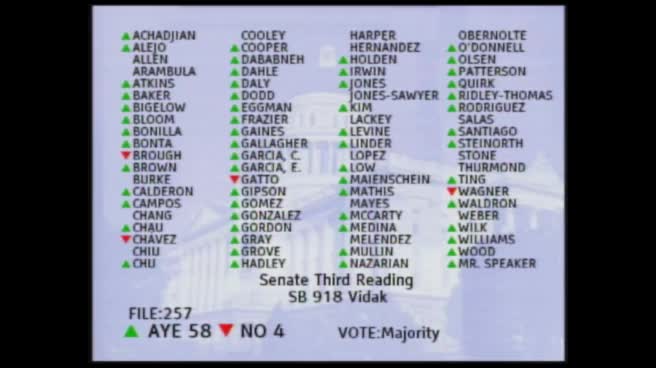


Bill Author



