SB 1455: Pupil enrollment: military dependents.
- Session Year: 2015-2016
- House: Senate
- Latest Version Date: 2016-09-12
Existing law requires persons between 6 and 18 years of age to attend a public school within the school district in which the pupils parent or legal guardian resides, unless otherwise exempted. Existing law provides that a pupil complies with a school districts residency requirements for school attendance in that school district if the pupil meets one of the specified requirements.
This bill would additionally provide that a pupil complies with a school districts residency requirements for school attendance in that school district if he or she is a pupil whose parent is transferred or is pending transfer to a military installation within the boundaries of the school district while on active military duty pursuant to an official military order. The bill would require a school district to accept applications by electronic means for enrollment and course registration for those pupils. The bill would require the parent to provide proof of residence within 10 days after the published arrival date provided on official documentation. By imposing new duties on school districts with regard to the review and acceptance of requests for school attendance by children of military personnel, the bill would impose a state-mandated local program.
The California Constitution requires the state to reimburse local agencies and school districts for certain costs mandated by the state. Statutory provisions establish procedures for making that reimbursement.
This bill would provide that, if the Commission on State Mandates determines that the bill contains costs mandated by the state, reimbursement for those costs shall be made pursuant to these statutory provisions.
Existing law requires persons between 6 and 18 years of age, inclusive, age to attend a public school within the school district in which the pupils parent or legal guardian resides, unless otherwise exempted. Existing law provides that a pupil complies with a school districts residency requirements for school attendance in that school district if the pupil meets one of the specified requirements.
This bill would additionally provide that a pupil complies with a school districts residency requirements for school attendance in that school district if he or she is a pupil whose parent is transferred or is pending transfer to a military installation within the boundaries of the school district while on active military duty pursuant to an official military order. The bill would require a school district to accept applications by electronic means for enrollment and course registration for those pupils. The bill would require the parent to provide proof of residence within 10 days after the published arrival date provided on official documentation. By imposing new duties on school districts with regard to the review and acceptance of requests for school attendance by children of military personnel, the bill would impose a state-mandated local program.
The California Constitution requires the state to reimburse local agencies and school districts for certain costs mandated by the state. Statutory provisions establish procedures for making that reimbursement.
This bill would provide that, if the Commission on State Mandates determines that the bill contains costs mandated by the state, reimbursement for those costs shall be made pursuant to these statutory provisions.
Existing law requires persons between 6 and 18 years of age, inclusive, to attend a public school within the school district in which the pupils parent or legal guardian resides, unless otherwise exempted. Existing law provides that a pupil complies with a school districts residency requirements for school attendance in that school district if the pupil meets one of the specified requirements.
This bill would additionally provide that a pupil complies with a school districts residency requirements for school attendance in that school district if he or she is a pupil whose parent is transferred or is pending transfer to a military installation within the boundaries of the school district while on active military duty pursuant to an official military order. The bill would require a school district to accept applications by electronic means for enrollment and course registration for those pupils. The bill would require the parent to provide proof of residence within 10 days after the published arrival date provided on the military order. official documentation. By imposing new duties on school districts with regard to the review and acceptance of requests for school attendance by children of military personnel, the bill would impose a state-mandated local program.
The California Constitution requires the state to reimburse local agencies and school districts for certain costs mandated by the state. Statutory provisions establish procedures for making that reimbursement.
This bill would provide that, if the Commission on State Mandates determines that the bill contains costs mandated by the state, reimbursement for those costs shall be made pursuant to these statutory provisions.
Existing law requires persons between 6 and 18 years of age, inclusive, to attend a public school within the school district in which the pupils parent or legal guardian resides, unless otherwise exempted. Existing law provides that a pupil complies with a school districts residency requirements for school attendance in that school district if the pupil meets one of the specified requirements.
This bill would additionally provide that a pupil complies with a school districts residency requirements for school attendance in that school district if he or she is a pupil whose parent is transferred or is pending transfer to a military installation within the boundaries of the school district while on active military duty pursuant to an official military order. The bill would require a school district to accept applications by electronic means for enrollment and course registration for those pupils. The bill would require the parent to provide proof of residence within 10 days after the published arrival date provided on the military order. By imposing new duties on school districts with regard to the review and acceptance of requests for school attendance by children of military personnel, the bill would impose a state-mandated local program.
The California Constitution requires the state to reimburse local agencies and school districts for certain costs mandated by the state. Statutory provisions establish procedures for making that reimbursement.
This bill would provide that, if the Commission on State Mandates determines that the bill contains costs mandated by the state, reimbursement for those costs shall be made pursuant to these statutory provisions.
Existing law establishes the California Community Colleges, under the administration of the Board of Governors of the California Community Colleges, as one of the systems of public postsecondary education in this state.
This bill would make nonsubstantive changes to these provisions.
Existing law establishes the California Community Colleges, under the administration of the Board of Governors of the California Community Colleges, as one of the systems of public postsecondary education in this state.
This bill would make nonsubstantive changes to these provisions.
(a)For purposes of this section, the following definitions apply:
(1)Active military duty means full-time military duty status in the active uniformed service of the United States, including members of the California National Guard and the State Military Reserve on active duty orders pursuant to Title 10 or 32 of the United States Code or Part 1 (commencing with Section 100) of Division 2 of the Military and Veterans Code.
(2)Military installation means a base, camp, post, station, yard, center, homeport facility for any ship, or other activity under the jurisdiction of the Department of Defense or the United States Coast Guard.
(3)Parent means the natural or adoptive parent or guardian of a dependent child.
(b)Notwithstanding Section 48200, a pupil complies with the residency requirements for school attendance in a school district, if he or she is a pupil whose parent is transferred or is pending transfer to a military installation within the boundaries of the school district while on active military duty pursuant to an official military order.
(c)A school district shall accept applications by electronic means for enrollment, including enrollment in a specific school or program within the school district, and course registration for pupils described in subdivision (b).
(d)(1)The parent shall provide proof of residence within 10 days after the published arrival date provided on official documentation.
(2)For purposes of paragraph (1), a parent may use any of the following addresses as related to his or her military move:
(A)A temporary on-base billeting facility.
(B)A purchased or leased home or apartment.
(C)Federal government or public-private venture off-base military housing.
SEC. 2.If the Commission on State Mandates determines that this act contains costs mandated by the state, reimbursement to local agencies and school districts for those costs shall be made pursuant to Part 7 (commencing with Section 17500) of Division 4 of Title 2 of the Government Code.
(a)For purposes of this section, the following definitions apply:
(1)Active military duty means full-time military duty status in the active uniformed service of the United States, including members of the California National Guard and the State Military Reserve on active duty orders pursuant to Title 10 or 32 of the United States Code or Part 1 (commencing with Section 100) of Division 2 of the Military and Veterans Code.
(2)Military installation means a base, camp, post, station, yard, center, homeport facility for any ship, or other activity under the jurisdiction of the Department of Defense. Defense or the United States Coast Guard.
(3)Parent means the natural or adoptive parent or guardian of a dependent child.
(b)Notwithstanding Section 48200, a pupil complies with the residency requirements for school attendance in a school district, if he or she is a pupil whose parent is transferred or is pending transfer to a military installation within the boundaries of the school district while on active military duty pursuant to an official military order.
(c)A school district shall accept applications by electronic means for enrollment, including enrollment in a specific school or program within the school district, and course registration for pupils described in subdivision (b).
(d)(1)The parent shall provide proof of residence within 10 days after the published arrival date provided on official documentation.
(2)For purposes of paragraph (1), a parent may use any of the following addresses as related to his or her military move:
(A)A temporary on-base billeting facility.
(B)A purchased or leased home or apartment.
(C)Federal government or public-private venture off-base military housing.
SEC. 2.If the Commission on State Mandates determines that this act contains costs mandated by the state, reimbursement to local agencies and school districts for those costs shall be made pursuant to Part 7 (commencing with Section 17500) of Division 4 of Title 2 of the Government Code.
(a)For purposes of this section, the following definitions apply:
(1)Active military duty means full-time military duty status in the active uniformed service of the United States, including members of the California National Guard and the State Military Reserve on active duty orders pursuant to Chapters 1209 and 1211 of Title 10 or 32 of the United States Code. Code or Part 1 (commencing with Section 100) of Division 2 of the Military and Veterans Code.
(2)Military installation means a base, camp, post, station, yard, center, homeport facility for any ship, or other activity under the jurisdiction of the Department of Defense.
(3)Parent means the natural or adoptive parent or guardian of a dependent child.
(b)(1)Notwithstanding Section 48200, a pupil complies with the residency requirements for school attendance in a school district, if he or she is a pupil whose parent is transferred or is pending transfer to a military installation within the boundaries of the school district while on active military duty pursuant to an official military order.
(2)For purposes of this paragraph, a parent may use the military installations main billeting office address instead of a residential address.
(c)A school district shall accept applications by electronic means for enrollment, including enrollment in a specific school or program within the school district, and course registration for pupils described in subdivision (b).
(d)(1)The parent shall provide proof of residence within 10 days after the published arrival date provided on the military order. official documentation.
(2)For purposes of paragraph (1), a parent may use any of the following addresses as related to his or her military move:
(A)A temporary on-base billeting facility.
(B)A purchased or leased home or apartment.
(C)Federal government or public-private venture off-base military housing.
SEC. 2.If the Commission on State Mandates determines that this act contains costs mandated by the state, reimbursement to local agencies and school districts for those costs shall be made pursuant to Part 7 (commencing with Section 17500) of Division 4 of Title 2 of the Government Code.
(a)For purposes of this section, the following definitions apply:
(1)Active military duty means full-time military duty status in the active uniformed service of the United States, including members of the National Guard and the State Reserve on active duty orders pursuant to Chapters 1209 and 1211 of Title 10 of the United States Code.
(2)Military installation means a base, camp, post, station, yard, center, homeport facility for any ship, or other activity under the jurisdiction of the Department of Defense.
(3)Parent means the natural or adoptive parent or guardian of a dependent child.
(b)(1)Notwithstanding Section 48200, a pupil complies with the residency requirements for school attendance in a school district, if he or she is a pupil whose parent is transferred or is pending transfer to a military installation within the boundaries of the school district while on active military duty pursuant to an official military order.
(2)For purposes of this paragraph, a parent may use the military installations main billeting office address instead of a residential address.
(c)A school district shall accept applications by electronic means for enrollment, including enrollment in a specific school or program within the school district, and course registration for pupils described in subdivision (b).
(d)The parent shall provide proof of residence within 10 days after the published arrival date provided on the military order.
SEC. 2.If the Commission on State Mandates determines that this act contains costs mandated by the state, reimbursement to local agencies and school districts for those costs shall be made pursuant to Part 7 (commencing with Section 17500) of Division 4 of Title 2 of the Government Code.
SECTION 1.Section 70900 of the Education Code is amended to read:70900.There is hereby established the California Community Colleges, a postsecondary education system consisting of community college districts established pursuant to law and the Board of Governors of the California Community Colleges. The board of governors shall carry out the functions specified in Section 70901, and local districts shall carry out the functions specified in Section 70902.
There is hereby created established the California Community Colleges, a postsecondary education system consisting of community college districts heretofore and hereafter established pursuant to law and the Board of Governors of the California Community Colleges. The board of governors shall carry out the functions specified in Section 70901 70901, and local districts shall carry out the functions specified in Section 70902.
|
Date
|
Status
|
|---|---|
| Sep 12, 2016 | Chaptered by Secretary of State. Chapter 312, Statutes of 2016. |
| Sep 12, 2016 | Approved by the Governor. |
| Aug 24, 2016 | Enrolled and presented to the Governor at 5 p.m. |
| Aug 18, 2016 | Assembly amendments concurred in. (Ayes 36. Noes 0. Page 5141.) Ordered to engrossing and enrolling. |
| Aug 18, 2016 | Assembly amendments concurred in. (Ayes 36. Noes 0.) Ordered to engrossing and enrolling. |
| Aug 16, 2016 | Ordered to special consent calendar. |
| Aug 11, 2016 | Read third time. Passed. (Ayes 78. Noes 0. Page 5780.) Ordered to the Senate. |
| Aug 11, 2016 | In Senate. Concurrence in Assembly amendments pending. |
| Aug 11, 2016 | Read third time. Passed. Ordered to the Senate. |
| Aug 4, 2016 | Read second time. Ordered to consent calendar. |
| Aug 3, 2016 | From committee: Do pass. Ordered to consent calendar. (Ayes 20. Noes 0.) (August 3). |
| Jun 29, 2016 | From committee: Do pass and re-refer to Com. on APPR. (Ayes 7. Noes 0.) (June 28). Re-referred to Com. on APPR. |
| Jun 16, 2016 | From committee: Do pass and re-refer to Com. on V.A. with recommendation: To consent calendar. (Ayes 7. Noes 0.) (June 15). Re-referred to Com. on V.A. |
| Jun 8, 2016 | From committee with author's amendments. Read second time and amended. Re-referred to Com. on ED. |
| May 31, 2016 | From committee with author's amendments. Read second time and amended. Re-referred to Com. on ED. |
| May 12, 2016 | Referred to Coms. on ED. and V.A. |
| May 3, 2016 | In Assembly. Read first time. Held at Desk. |
| May 2, 2016 | Read third time. Passed. (Ayes 38. Noes 0. Page 3737.) Ordered to the Assembly. |
| May 2, 2016 | Read third time. Passed. (Ayes 38. Noes 0.) Ordered to the Assembly. |
| Apr 26, 2016 | Read second time. Ordered to third reading. |
| Apr 25, 2016 | From committee: Do pass. (Ayes 6. Noes 0. Page 3670.) (April 25). |
| Apr 25, 2016 | From committee: Do pass. (Ayes 6. Noes 0.) (April 25). |
| Apr 15, 2016 | Set for hearing April 25. |
| Apr 13, 2016 | From committee: Do pass and re-refer to Com. on APPR. with recommendation: To consent calendar. (Ayes 9. Noes 0. Page 3517.) (April 13). Re-referred to Com. on APPR. |
| Apr 13, 2016 | From committee: Do pass and re-refer to Com. on APPR. with recommendation: To consent calendar. (Ayes 9. Noes 0.) (April 13). Re-referred to Com. on APPR. |
| Apr 6, 2016 | Set for hearing April 13. |
| Apr 4, 2016 | Re-referred to Com. on ED. |
| Mar 29, 2016 | From committee with author's amendments. Read second time and amended. Re-referred to Com. on RLS. |
| Mar 10, 2016 | Referred to Com. on RLS. |
| Feb 22, 2016 | Read first time. |
| Feb 22, 2016 | From printer. May be acted upon on or after March 23. |
| Feb 19, 2016 | Introduced. To Com. on RLS. for assignment. To print. |
|
Date
|
Description
|
Location
|
Votes
|
|
|---|---|---|---|---|
| Aug 18, 2016 | Special Consent SB1455 Block | Senate Floor |
Passed |
|
| Aug 11, 2016 | SB 1455 Block Consent Calendar Second Day Regular Session | Assembly Floor |
Passed |
|
| Aug 3, 2016 | Do pass. To Consent Calendar. | Assembly Standing Committee on Appropriations |
Passed |
|
| Jun 28, 2016 | Do pass and be re-referred to the Committee on [Appropriations] | Assembly Standing Committee on Veterans Affairs |
Passed |
|
| Jun 15, 2016 | Do pass and be re-referred to the Committee on [Veterans Affairs] with recommendation: To Consent Calendar | Assembly Standing Committee on Education |
Passed |
|
| May 2, 2016 | Senate 3rd Reading SB1455 Block | Senate Floor |
Passed |
|
| Apr 25, 2016 | Do pass | Senate Standing Committee on Appropriations |
Passed |
|
| Apr 13, 2016 | Do pass, but first be re-referred to the Committee on [Appropriations] with the recommendation: To Consent Calendar | Senate Standing Committee on Education |
Passed |
This list shows positions taken on this bill by organizations on the date displayed, which is linked to the original source.
Positions by individuals are not included.
Office of Senate Floor Analyses (916) 651-1520 Fax: (916) 327-4478 | SB |
UNFINISHED BUSINESS
Bill No: SB 1455
:
SENATE EDUCATION COMMITTEE: 9-0, 4/13/16
AYES: Liu, Block, Hancock, Huff, Leyva, Mendoza, Monning, Pan, Vidak
SENATE APPROPRIATIONS COMMITTEE: 6-0, 4/25/16
AYES: Lara, Bates, Hill, McGuire, Mendoza, Nielsen
NO VOTE RECORDED: Beall
SENATE FLOOR: 38-0, 5/2/16
AYES: Allen, Anderson, Bates, Beall, Berryhill, Block, Cannella, De León, Fuller, Gaines, Galgiani, Glazer, Hall, Hancock, Hernandez, Hill, Hueso, Huff, Jackson, Lara, Leno, Leyva, Liu, McGuire, Mendoza, Mitchell, Monning, Moorlach, Morrell, Nguyen, Nielsen, Pan, Pavley, Roth, Stone, Vidak, Wieckowski, Wolk
NO VOTE RECORDED: Hertzberg, Runner
ASSEMBLY FLOOR: 78-0, 8/11/16 (Consent) - See last page for vote
DIGEST: This bill provides that a student meets residency requirements for school attendance if the student’s parent is transferred or is pending transfer to a military installation that is within the boundaries of the school district.
Assembly Amendments modify the definition of military installations to include facilitates under the jurisdiction of the United States Coast Guard and specify the types of addresses a parent may provide as proof of residence for the purposes of meeting residency requirements for school attendance to include; a temporary on-base billeting facility; a purchased or leased home or apartment; or federal government or public-private venture off-base military housing.
Existing law:
- Requires students to attend the public full-time day school or continuation school or classes in which the residency of either the parent or legal guardian is located. (Education Code § 48200)
- Provides, until July 1, 2017, that a student complies with the residency requirements for school attendance in a school district if the student:
- Is placed within the boundaries of the school district in a licensed children’s institution, licensed foster home, or a foster family home.
- Is a foster child who remains in his or her school of origin.
- Has been approved for interdistrict attendance.
- Resides within the boundaries of the school districts and whose parent or legal guardian is relieved of responsibility, control, and authority through emancipation.
- Lives in the home of a caregiving adult that is located within the boundaries of that school district.
- Resides in a state hospital located within the boundaries of the school district.
- Is a child of a parent who is employed and lives at the place of employment within the boundaries of the school district for a minimum of three days during the school week. (EC § 48204)
- Authorizes, until July 1, 2017, school districts to deem a student to have complied with the residency requirements for school attendance in a school district if at least one parent or the legal guardian is physically employed within the boundaries of that district for a minimum of 10 hours during the school week. (EC § 48204)
- Requires reasonable evidence of residency to be established by documentation showing the name and address of the parent or legal guardian within the school district, including but not limited to the following:
- Property tax payment receipts.
- Rental property contract, lease, or payment receipts.
- Utility service contract, statement, or payment receipts.
- Pay stubs.
- Voter registration.
- Correspondence from a government agency.
- Declaration of residency executed by the parent or legal guardian.
(EC § 48204.1)
- Enacts the Interstate Compact on Educational Opportunity for Military Children. The Compact provides for the uniform treatment of military children transferring between school districts and states. Among other things, the Compact is meant to address issues related to:
- Records, enrollment, placement and attendance, including the transfer of unofficial and official records, and placement in comparable courses, programs, and the same grade level regardless of age.
- Granting of additional excused absences to a pupil whose parent has been called to or returned from active duty.
- Eligibility for enrollment and participation in extracurricular activities, including allowing military dependents to attend the same school and participation in programs and extracurricular activities with the consent of a non-custodial parent or other person who is caring for that child (standing in loco parentis).
- Graduation, including the use of best efforts to waive required courses for pupils who successfully completed similar coursework, and consider granting a diploma from the sending school for pupils who transfer in their senior year of high school.
- Binding effect of the Compact, whereby all member states’ laws conflicting with the Compact are superseded by the Compact and all rules and bylaws developed by the commission are binding upon member states. (EC § 49700, et seq.)
This bill:
- Provides that a student meets residency requirements for school attendance if the student’s parent is transferred or is pending transfer to a military installation that is within the boundaries of the district.
- Requires parents to provide proof of residence within 10 days after the published arrival date provided on official documentation.
- Allows a parent to use any of the following addresses as related to his or her military move:
- A temporary on-base billeting facility;
- A purchased or leased home or apartment; or
- Federal government or public-private venture off-base military housing.
- Requires a school district to accept applications by electronic means for enrollment, including into a specific school, program, and/or course.
- Makes the following definitions for the purpose of this bill:
- “Active military duty,” means full-time military duty status in the active uniformed service of the United States, including the California National Guard and the State Military Reserve.
- “Military installation” means a base, camp, post, station, yard, center, homeport facility for any ship, or other activity under the jurisdiction of the Department of Defense or the United States Coast Guard.
- “Parent” means the natural or adoptive parent or guardian of a dependent child.
- Establishes if the Commission on State Mandates determines that this bill contains costs mandated by the state, the state will reimburse applicable entities.
Comments
- Need for the bill. According to the author, children of military service members transferring on official military orders to California are not eligible to register in high school courses, enroll in specialized academic programs or enter random lotteries for consideration into a charter or magnet school until they are physically located within the district boundaries. As a result, these students often miss course and program registration deadlines. This bill allows, by electronic means, transferring military families to enroll their children in a school, program or course prior to being physically located within the boundaries of the school district.
- The Interstate Compact on Educational Opportunity for Military Children. The Compact is an interstate agreement that provides guidance as to how local school districts address the transition needs of military children. With the passage of AB 343 (Saldana, Chapter 237, Statutes of 2009), California ratified its participation in the Compact. Under the Compact, districts are required to be flexible in applying their local rules to students in order to facilitate enrollment, placement, advancement, eligibility for extracurricular activities, and on-time graduation. These provisions, however, do not guarantee placement. It’s not clear how districts apply rules to application or program deadlines.
Separate from the Compact, this bill aims to provide military families transferring to a California the ability to start the school enrollment process as soon as a written military transfer order is given. School districts are required to accept applications by electronic means for enrollment in a specific school or program within the school district and course registration for these students. Parents must provide proof of residence within 10 days after the published arrival date provided on official documentation.
- Affected school districts? The provisions in this bill apply to students of active-duty members of the United States uniformed services, National Guard and Reserve on active-duty orders. California hosts more than 30 military installations and 168 active-duty service members. Presumably, the surrounding districts of those military installations may be the most affected by the requirements outlined in this bill.
FISCAL EFFECT: Appropriation: Fiscal Com.: Local:
According to the Assembly Appropriations Committee, the fiscal impact of this bill is unknown, likely minor state mandated costs for school districts to accept applications electronically for attendance and process course registration for students of military families.
Marine Corps Installations West-Marine Corps Base
OPPOSITION: (Verified 8/11/16)
None received
ASSEMBLY FLOOR: 78-0, 8/11/16
AYES: Achadjian, Alejo, Travis Allen, Arambula, Atkins, Baker, Bigelow, Bloom, Bonilla, Bonta, Brough, Brown, Burke, Calderon, Campos, Chang, Chau, Chávez, Chiu, Chu, Cooley, Cooper, Dababneh, Dahle, Daly, Dodd, Eggman, Frazier, Beth Gaines, Gallagher, Cristina Garcia, Eduardo Garcia, Gatto, Gipson, Gomez, Gonzalez, Gordon, Gray, Grove, Hadley, Harper, Holden, Irwin, Jones, Jones-Sawyer, Kim, Lackey, Levine, Linder, Lopez, Maienschein, Mathis, Mayes, McCarty, Medina, Melendez, Mullin, Nazarian, Obernolte, O'Donnell, Olsen, Patterson, Quirk, Ridley-Thomas, Rodriguez, Salas, Santiago, Steinorth, Mark Stone, Thurmond, Ting, Wagner, Waldron, Weber, Wilk, Williams, Wood, Rendon
NO VOTE RECORDED: Roger Hernández, Low
8/12/16 13:23:59
**** END ****
Date of Hearing: August 3, 2016
ASSEMBLY COMMITTEE ON APPROPRIATIONS
Lorena Gonzalez, Chair
SBPCA Bill Id:SB 1455
Author:(Block) – As Amended Ver:June 8, 2016
Policy Committee: | Education | Vote: | 7 - 0 |
Veterans Affairs | 7 - 0 | ||
|
|
Urgency: No State Mandated Local Program: Yes Reimbursable: Yes
SUMMARY:
This bill requires a school district to accept applications by electronic means for enrollment, including enrollment in a specific school or program within the school district, and course registration, for students transferring to the district as a result of their parent's military transfer. Specifically, this bill:
- Specifies a student meets residency requirements for school attendance if the student's parent is transferred, or is pending transfer, to a military installation that is within the boundaries of the school district while on full-time active military duty.
- Requires the parent to provide proof of residence within 10 days after the published arrival date provided on official documentation.
- Allows a parent to use any of the following addresses related to his or her military move:
- A temporary on-base billeting facility;
- A purchased or leased home or apartment; or
- Federal government or public-private venture off-base military housing.
FISCAL EFFECT:
Unknown, likely minor state mandated costs for school districts to accept applications electronically for attendance and process course registration for students of military families.
COMMENTS:
- Purpose. According to the author, children of military service members transferring on official military orders to California are not eligible to register in high school courses, enroll in specialized academic programs or enter random lotteries for consideration into a charter or magnet school until they are physically located within the district boundaries. As a result, these students often miss course and program registration deadlines.
This bill would allow transferring military families to remotely enroll their children in a school, program or course prior to being physically located within the boundaries of the school district. Requiring districts to accept remote enrollment and registration will provide military students the opportunity to register for courses or apply for specialized programs at the same time as their peers, provided that they are able to submit proof of residency in the form of official military orders assigning them to a given installation within school district boundaries. When military students know which school they will be attending and their class schedules in advance of arriving to school, they and their families are provided with a sense of comfort, relieving unneeded stress during their transition.
- Background. California hosts more than 30 military installations and 168,000 active-duty service members. The state student data system, CALPADS, does not track the number of pupils associated with these active duty members but supporters of the bill estimate there are about 60,000 children of active military families in California. According to CDE, a small number of heavily military-impacted districts currently allow for online “pre-registration” for all incoming students; however this does not allow for course registration or application to specialized programs.
This bill builds upon the Interstate Compact on Educational Opportunity for Military Child (Compact). The Compact is an interstate agreement that provides guidance as to how local school districts address the transition needs of military children. Under the Compact, districts are required to be flexible in applying their local rules to students in order to facilitate enrollment, placement, advancement, eligibility for extracurricular activities, and on-time graduation. Under the Compact, school districts are not required to reserve spaces for military children or create a new course section if the military student arrives after general application or registration timeframes.
Analysis Prepared by: Misty Feusahrens / APPR. / (916) 319-2081
Date of Hearing: June 28, 2016
ASSEMBLY COMMITTEE ON VETERANS AFFAIRS
Jacqui Irwin, Chair
SBPCA Bill Id:SB 1455
Author:(Block) – As Amended Ver:June 8, 2016
SENATE VOTE: 38-0
SUBJECT: Pupil enrollment: military dependents
SUMMARY: Provides that a student meets residency requirements for school attendance if the student's parent is transferred or is pending transfer to a military installation that is within the boundaries of the school district. Specifically, this bill:
- Provides that a pupil complies with the residency requirements for school attendance in a school district, if he or she is a pupil whose parent is transferred or is pending transfer to a military installation within the boundaries of the school district while on active military duty pursuant to an official military order.
- Defines "active military duty” to mean full-time military duty status in the active uniformed service of the United States, including members of the California National Guard and the State Military Reserve on active duty orders pursuant to Title 10 or 32 of the United States Code or Part 1 (commencing with Section 100) of Division 2 of the Military and Veterans Code.
- Defines "military installation” to mean a base, camp, post, station, yard, center, homeport facility for any ship, or other activity under the jurisdiction of the Department of Defense or the United States Coast Guard.
- Defines "parent" to mean the natural or adoptive parent or guardian of a dependent child.
- Requires a school district to accept applications by electronic means for enrollment, including enrollment in a specific school or program within the school district, and course registration for pupils.
- Requires the parent to provide proof of residence within 10 days after the published arrival date provided on official documentation.
- Allows a parent to use any of the following addresses as related to his or her military move:
- A temporary on-base billeting facility;
- A purchased or leased home or apartment; or
- Federal government or public-private venture off-base military housing.
EXISTING LAW: The Interstate Compact on Education of Military Children, Education Code 49700, et seq., is the foundational code here.
FISCAL EFFECT: According to the Senate Appropriations Committee, "No anticipated significant costs to the state. This bill may result in a reimbursable state mandate but costs associated with the requirement for a school district to accept electronic applications for enrollment and course registration are expected to be minor. In addition, because state funding is provided to school districts for student attendance, this funding would likely offset any additional costs related to this requirement.
COMMENTS: According to the author:
Need for the bill. It is common for military service members to be reassigned to new duty stations every three to four years, oftentimes requiring them and their families to relocate. Depending on mission and training requirements for parents in the military, school-aged children many times must move during the school year which can significantly disadvantage them due to missed deadlines for course and program enrollment and/or registration. Currently, children of military service members transferring on official military Permanent Change of Station (PCS) orders to California are not eligible to register in high school courses, enroll in specialized academic programs, or submit their children’s names for consideration in random lotteries for charter or magnet school entry until they are physically located within district boundaries. This bill allows the child to meet residency requirements for school attendance if the child’s parent is transferred or is pending transfer to a military installation that is within the boundaries of the district and allows military families to register for courses and specialized programs remotely by electronic means. This will provide military children with equal opportunities to access educational experiences as their civilian peers.
The Interstate Compact on Educational Opportunity for Military Children. The Compact is a voluntary agreement that provides for the uniform treatment of military children who transfer between school districts and states. It allows for a consistent policy structure in every state and district that chooses to join to address student needs for military families when relocating. California officially joined the Compact upon the passage of AB 343 (Saldana, Chapter 237, Statutes of 2009) and has a state council that informs school districts of the terms of the Compact.
While the Compact addresses enrollment, eligibility, placement and graduation for students of military families, it does not include application and course registration timelines. Since districts currently are not required to reserve spaces for military children and parents might miss deadlines for registration, this may cause students to have to shift their course of study, possibly forcing them to take classes during the summer or graduate later than their peers. This bill seeks to enhance protections for these students by allowing parents to enroll their children remotely once the parents are transferred or pending transfer.
Specific Issues Facing Children of Military Families. Due to the transient nature of military assignments, children of military families can be uniquely disadvantaged due to missed deadlines. In August 2015, according to Secretary of Defense data, there were 58,287 school-aged children of military families in California. With military service members reassigned to new duty stations every three or four years, roughly one third of these students will need to transfer schools in any given year.
Although these families typically receive their military orders in early to mid-spring detailing their next destination, they are not able to begin preliminary enrollment and registration for their school-aged children until they are physically in the new school district. Some heavily military-impacted districts currently allow for online pre-registration for all incoming students, but this does not allow for course registration or application to specialized programs.
Governor’s Military Council Report. In June 2015 Governor Brown published his military council report which updated the public on the status of military operations in California and outlined recommendations on how they can be strengthened. It was noted that California has more than 30 major military installations, by far the most of any U.S. state, and consequently is home to a vast number of service members and their children.
To help support these families, the report specifically mentioned that “state agencies should identify ways to strengthen educational opportunities for children of military families” as one of its main recommendations. This bill is aligned with the Military Council’s recommendation by facilitating the relocation process for military families to help ease their children’s transition to a new school.
REGISTERED SUPPORT / OPPOSITION:
Support
Association of California School Administrators
Superintendent of Public Instruction, Tom Torlakson
United States Marine Corps, Brigadier General, Edward D. Banta
Opposition
None on file
Analysis Prepared by: John Spangler / V.A. / (916) 319-3550
Date of Hearing: June 15, 2016
ASSEMBLY COMMITTEE ON EDUCATION
Patrick O'Donnell, Chair
SBPCA Bill Id:SB 1455
Author:(Block) – As Amended Ver:June 8, 2016
SENATE VOTE: 38-0
SUBJECT: Pupil enrollment: military dependents
SUMMARY: Provides that a student meets residency requirements for school attendance if the student's parent is transferred or is pending transfer to a military installation that is within the boundaries of the school district. Specifically, this bill:
- Provides that a pupil complies with the residency requirements for school attendance in a school district, if he or she is a pupil whose parent is transferred or is pending transfer to a military installation within the boundaries of the school district while on active military duty pursuant to an official military order.
- Defines "active military duty” to mean full-time military duty status in the active uniformed service of the United States, including members of the California National Guard and the State Military Reserve on active duty orders pursuant to Title 10 or 32 of the United States Code or Part 1 (commencing with Section 100) of Division 2 of the Military and Veterans Code.
- Defines "military installation” to mean a base, camp, post, station, yard, center, homeport facility for any ship, or other activity under the jurisdiction of the Department of Defense or the United States Coast Guard.
- Defines "parent" to mean the natural or adoptive parent or guardian of a dependent child.
- Requires a school district to accept applications by electronic means for enrollment, including enrollment in a specific school or program within the school district, and course registration for pupils.
- Requires the parent to provide proof of residence within 10 days after the published arrival date provided on official documentation.
- Allows a parent to use any of the following addresses as related to his or her military move:
- A temporary on-base billeting facility;
- A purchased or leased home or apartment; or
- Federal government or public-private venture off-base military housing.
EXISTING LAW:
- FISCAL EFFECT: According to the Senate Appropriations Committee, "No anticipated significant costs to the state. This bill may result in a reimbursable state mandate but costs associated with the requirement for a school district to accept electronic applications for enrollment and course registration are expected to be minor. In addition, because state funding is provided to school districts for student attendance, this funding would likely offset any additional costs related to this requirement.
COMMENTS:
Need for the bill. According to the author, children of military service members transferring on official military orders to California are not eligible to register in high school courses, enroll in specialized academic programs or enter random lotteries for consideration into a charter or magnet school until they are physically located within the district boundaries. As a result, these students often miss course and program registration deadlines. This bill would allow, by electronic means, transferring military families to enroll their children in a school, program or course prior to being physically located within the boundaries of the school district.
The Interstate Compact on Educational Opportunity for Military Child. The Compact is an interstate agreement that provides guidance as to how local school districts address the transition needs of military children. With the passage of AB 343 (Saldana, Chapter 237, Statutes of 2009), California ratified its participation in the Compact. Existing law prohibits changes in the Compact agreement unless the proposed changes are enacted into law by unanimous consent of the member states. Under the Compact, districts are required to be flexible in applying their local rules to students in order to facilitate enrollment, placement, advancement, eligibility for extracurricular activities, and on-time graduation. These provisions, however, do not guarantee placement. It’s not clear how districts apply rules to application or program deadlines.
Separate from the Compact, this bill aims to provide military families the ability to start the enrollment process as soon as a written military transfer order is given. Parents must provide proof of residence within 10 days after the published arrival date provided on the military order.
Affected school districts. The provisions in this bill apply to students of active-duty
members of the United States uniformed services, National Guard and Reserve on
active-duty orders. California hosts more than 30 military installations and 168 active-
duty service members. Presumably, the surrounding districts of those military
installations may be the most affected by the requirements outlined in the bill.
REGISTERED SUPPORT / OPPOSITION:
Support
Association of California School Administrators
Superintendent of Public Instruction, Tom Torlakson
United States Marine Corps, Brigadier General, Edward D. Banta
Opposition
None on file
Analysis Prepared by: Rick Pratt / ED. / (916) 319-2087
Office of Senate Floor Analyses (916) 651-1520 Fax: (916) 327-4478 | SB |
THIRD READING
Bill No: SB 1455
:
SENATE EDUCATION COMMITTEE: 9-0, 4/13/16
AYES: Liu, Block, Hancock, Huff, Leyva, Mendoza, Monning, Pan, Vidak
SENATE APPROPRIATIONS COMMITTEE: 6-0, 4/25/16
AYES: Lara, Bates, Hill, McGuire, Mendoza, Nielsen
NO VOTE RECORDED: Beall
DIGEST: This bill provides that a student meets residency requirements for school attendance if the student’s parent is transferred or is pending transfer to a military installation that is within the boundaries of the school district.
Existing law:
- Requires students to attend the public full-time day school or continuation school or classes in which the residency of either the parent or legal guardian is located. (Education Code § 48200)
- Provides, until July 1, 2017, that a student complies with the residency requirements for school attendance in a school district if the student:
- Is placed within the boundaries of the school district in a licensed children’s institution, licensed foster home, or a foster family home.
- Is a foster child who remains in his or her school of origin.
- Has been approved for interdistrict attendance.
- Resides within the boundaries of the school districts and whose parent or legal guardian is relieved of responsibility, control, and authority through emancipation.
- Lives in the home of a caregiving adult that is located within the boundaries of that school district.
- Resides in a state hospital located within the boundaries of the school district.
- Is a child of a parent who is employed and lives at the place of employment within the boundaries of the school district for a minimum of three days during the school week. (EC § 48204)
- Authorizes, until July 1, 2017, school districts to deem a student to have complied with the residency requirements for school attendance in a school district if at least one parent or the legal guardian is physically employed within the boundaries of that district for a minimum of 10 hours during the school week. (EC § 48204)
- Requires reasonable evidence of residency to be established by documentation showing the name and address of the parent or legal guardian within the school district, including but not limited to the following:
- Property tax payment receipts.
- Rental property contract, lease, or payment receipts.
- Utility service contract, statement, or payment receipts.
- Pay stubs.
- Voter registration.
- Correspondence from a government agency.
- Declaration of residency executed by the parent or legal guardian.
(EC § 48204.1)
- Property tax payment receipts.
- Enacts the Interstate Compact on Educational Opportunity for Military Children. The Compact provides for the uniform treatment of military children transferring between school districts and states. Among other things, the Compact is meant to address issues related to:
- Records, enrollment, placement and attendance, including the transfer of unofficial and official records, and placement in comparable courses, programs, and the same grade level regardless of age.
- Granting of additional excused absences to a pupil whose parent has been called to or returned from active duty.
- Eligibility for enrollment and participation in extracurricular activities, including allowing military dependents to attend the same school and participation in programs and extracurricular activities with the consent of a non-custodial parent or other person who is caring for that child (standing in loco parentis).
- Graduation, including the use of best efforts to waive required courses for pupils who successfully completed similar coursework, and consider granting a diploma from the sending school for pupils who transfer in their senior year of high school.
- Binding effect of the Compact, whereby all member states’ laws conflicting with the Compact are superseded by the Compact and all rules and bylaws developed by the commission are binding upon member states. (EC § 49700, et seq.)
This bill:
- Provides that a student meets residency requirements for school attendance if the student’s parent is transferred or is pending transfer to a military installation that is within the boundaries of the district.
- Authorizes the use of a military installation’s billeting office address instead of a residential address.
- Requires a school district to accept applications by electronic means for enrollment, including into a specific school, program, and/or course.
- Requires parents to provide proof of residence within 10 days after the published arrival date provided on the military order.
- Makes the following definitions for the purpose of this section:
- “Active military duty,” means full-time military duty status in the active uniformed service of the United States, including the National Guard and the State Reserve.
- “Military installation” means a base, camp, post, station, yard, center, homeport facility for any ship, or other activity under the jurisdiction of the Department of Defense.
- “Parent” means the natural or adoptive parent or guardian of a dependent child.
- Establishes if the Commission on State Mandates determines that this bill contains costs mandated by the state, the state will reimburse applicable entities.
Comments
- Need for the bill. According to the author, children of military service members transferring on official military orders to California are not eligible to register in high school courses, enroll in specialized academic programs or enter random lotteries for consideration into a charter or magnet school until they are physically located within the district boundaries. As a result, these students often miss course and program registration deadlines. This bill allows, by electronic means, transferring military families to enroll their children in a school, program or course prior to being physically located within the boundaries of the school district.
- The Interstate Compact on Educational Opportunity for Military Children. The Compact is an interstate agreement that provides guidance as to how local school districts address the transition needs of military children. With the passage of AB 343 (Saldana, Chapter 237, Statutes of 2009), California ratified its participation in the Compact. Under the Compact, districts are required to be flexible in applying their local rules to students in order to facilitate enrollment, placement, advancement, eligibility for extracurricular activities, and on-time graduation. These provisions, however, do not guarantee placement. It’s not clear how districts apply rules to application or program deadlines.
Separate from the Compact, this bill aims to provide military families transferring to a California military installation the ability to start the school enrollment process as soon as a written military transfer order is given. School districts are required to accept applications by electronic means for enrollment in a specific school or program within the school district and course registration for these students. Parents must provide proof of residence within 10 days after the published arrival date provided on the military order.
- Affected school districts? The provisions in this bill apply to students of active-duty members of the United States uniformed services, National Guard and Reserve on active-duty orders. California hosts more than 30 military installations and 168 active-duty service members. Presumably, the surrounding districts of those military installations may be the most affected by the requirements outlined in this bill.
FISCAL EFFECT: Appropriation: Fiscal Com.: Local:
According to the Senate Appropriations Committee, there would be no anticipated significant costs to the state. This bill may result in a reimbursable state mandate but costs associated with the requirement for a school district to accept electronic applications for enrollment and course registration are expected to be minor. In addition, because state funding is provided to school districts for student attendance, this funding would likely offset any additional costs related to this requirement.
Marine Corps Installations West-Marine Corps Base
OPPOSITION: (Verified 4/26/16)
None received
4/28/16 8:37:19
SENATE COMMITTEE ON
Senator Ricardo Lara, Chair
2015 - 2016 Regular Session
SB 1455 (Block) - Pupil enrollment: military dependents
Version: | Policy Vote: |
Urgency: | Mandate: |
Hearing Date: | Consultant: |
This bill does not meet the criteria for referral to the Suspense File.
Bill Summary:
This bill provides that a student meets residency requirements for school attendance if the student’s parent is transferred or is pending transfer to a military installation within the boundaries of the school district.
Fiscal Impact:
- No anticipated significant costs to the state. This bill may result in a reimbursable state mandate but costs associated with the requirement for a school district to accept electronic applications for enrollment and course registration are expected to be minor. In addition, because state funding is provided to school districts for student attendance, this funding would likely offset any additional costs related to this requirement.
Background:
Existing law requires students to attend the public full-time day school or continuation school or classes in which the residency of either the parent or legal guardian is located, unless otherwise exempted.
Existing law enacts the Interstate Compact on Educational Opportunity for Military Children. The Compact provides for the uniform treatment of military children transferring between school districts and states. It provides guidance as to how local school districts address the transition needs of military children. With the passage of AB 343 (Saldana, Chapter 237, Statutes of 2009), California ratified its participation in the Compact. Under the Compact, districts are required to be flexible in applying their local rules to students in order to facilitate enrollment, placement, advancement, eligibility for extracurricular activities, and on-time graduation. According to the California Department of Education, the Compact is not affected by this bill as it does not impose any changes to enrollment requirements.
According to the author, children of military service members transferring on official military orders to California are not eligible to register in high school courses, enroll in specialized academic programs or enter random lotteries for consideration into a charter or magnet school until they are physically located within the district boundaries. As a result, these students often miss course and program registration deadlines. This bill would allow, by electronic means, transferring military families to enroll their children in a school, program or course prior to being physically located within the boundaries of the school district.
Proposed Law:
This bill deems a student compliant with residency requirements for school attendance in a school district, if he or she is a student whose parent is transferred or is pending transfer to a military installation within the boundaries of the school district while on active military duty pursuant to an official military order.
This bill also requires a school district to accept applications by electronic means for enrollment, including enrollment in a specific school or program within the school district, and course registration for these students.
Staff Comments:
The provisions in this bill apply to students of active-duty members of the United States uniformed services, National Guard, and Reserve on active-duty orders. California hosts more than 30 military installations and 168,000 active-duty service members. The state does not track data on the number of students associated with active duty members; therefore it is unknown how many students will be affected by this bill. Presumably, school districts located near military installations will be most affected. This bill allows a student to apply for enrollment and course registration to a school remotely and within the school district that the student will eventually reside, pursuant to his or her parent’s official military order. Therefore, the respective school districts will likely be serving the same students they otherwise would serve without this bill.
-- END --
SENATE COMMITTEE ON EDUCATION
Senator Carol Liu, Chair
2015 - 2016 Regular
Bill No:
Author: | Block | ||
Version: | Hearing Date: April 13, 2016 | ||
Urgency: | Fiscal: | ||
Consultant: | |||
Subject:
SUMMARY
This bill provides that a student meets residency requirements for school attendance if the student’s parent is transferred or is pending transfer to a military installation that is within the boundaries of the school district.
BACKGROUND
Existing law:
- Requires students to attend the public full-time day school or continuation school or classes in which the residency of either the parent or legal guardian is located. (Education Code § 48200)
- Until July 1, 2017, provides that a student complies with the residency requirements for school attendance in a school district if the student:
- Is placed within the boundaries of the school district in a licensed children’s institution, licensed foster home, or a foster family home.
- Is a foster child who remains in his or her school of origin.
- Has been approved for interdistrict attendance.
- Resides within the boundaries of the school districts and whose parent or legal guardian is relieved of responsibility, control, and authority through emancipation.
- Lives in the home of a caregiving adult that is located within the boundaries of that school district.
- Resides in a state hospital located within the boundaries of the school district.
- Is a child of a parent who is employed and lives at the place of employment within the boundaries of the school district for a minimum of three days during the school week. (EC § 48204)
- Until July 1, 2017, authorizes school districts to deem a student to have complied with the residency requirements for school attendance in a school district if at least one parent or the legal guardian is physically employed within the boundaries of that district for a minimum of 10 hours during the school week. (EC § 48204)
- Requires reasonable evidence of residency to be established by documentation showing the name and address of the parent or legal guardian within the school district, including but not limited to the following:
- Property tax payment receipts.
- Rental property contract, lease, or payment receipts.
- Utility service contract, statement, or payment receipts.
- Pay stubs.
- Voter registration.
- Correspondence from a government agency.
- Declaration of residency executed by the parent or legal guardian.
(EC § 48204.1) - Enacts the Interstate Compact on Educational Opportunity for Military Children. The Compact provides for the uniform treatment of military children transferring between school districts and states. Among other things, the Compact is meant to address issues related to:
- Records, enrollment, placement and attendance, including the transfer of unofficial and official records, and placement in comparable courses, programs, and the same grade level regardless of age.
- Granting of additional excused absences to a pupil whose parent has
been called to or returned from active duty.
- Eligibility for enrollment and participation in extracurricular activities, including allowing military dependents to attend the same school and participation in programs and extracurricular activities with the consent of a non-custodial parent or other person who is caring for that child (standing in loco parentis).
- Graduation, including the use of best efforts to waive required courses for pupils who successfully completed similar coursework, and consider granting a diploma from the sending school for pupils who transfer in their senior year of high school.
- Binding effect of the Compact, whereby all member states’ laws conflicting with the Compact are superseded by the Compact and all rules and bylaws developed by the commission are binding upon member states. (Education Code § 49700, et seq.)
ANALYSIS
This bill provides that a student meets residency requirements for school attendance if the student’s parent is transferred or is pending transfer to a military installation that is within the boundaries of the district. Specifically it,
- Authorizes the use of a military installation’s billeting office address instead of a residential address.
- Requires a school district to accept applications by electronic means for enrollment, including into a specific school, program, and/or course.
- Requires parents to provide proof of residence within 10 days after the published arrival date provided on the military order.
- Makes the following definitions for the purpose of this section:
- “Active military duty,” means full-time military duty status in the active uniformed service of the United States, including the National Guard and the State Reserve.
- “Military installation” means a base, camp, post, station, yard, center, homeport facility for any ship, or other activity under the jurisdiction of the Department of Defense.
- “Parent” means the natural or adoptive parent or guardian of a dependent child.
- Establishes if the Commission on State Mandates determines that this act contains costs mandated by the state, the state will reimburse applicable entities.
STAFF COMMENTS
- Need for the bill? According to the author, children of military service members transferring on official military orders to California are not eligible to register in high school courses, enroll in specialized academic programs or enter random lotteries for consideration into a charter or magnet school until they are physically located within the district boundaries. As a result, these students often miss course and program registration deadlines. This bill would allow, by electronic means, transferring military families to enroll their children in a school, program or course prior to being physically located within the boundaries of the school district.
- The Interstate Compact on Educational Opportunity for Military Child. The Compact is an interstate agreement that provides guidance as to how local school districts address the transition needs of military children. With the passage of AB 343 (Saldana, Chapter 237, Statutes of 2009), California ratified its participation in the Compact. Existing law prohibits changes in the Compact agreement unless the proposed changes are enacted into law by unanimous consent of the member states. Under the Compact, districts are required to be flexible in applying their local rules to students in order to facilitate enrollment, placement, advancement, eligibility for extracurricular activities, and on-time graduation. These provisions, however, do not guarantee placement. It’s not clear how districts apply rules to application or program deadlines.
Separate from the Compact, this bill aims to provide military families the ability to start the enrollment process as soon as a written military transfer order is given. Parents must provide proof of residence within 10 days after the published arrival date provided on the military order.
3) Affected school districts? The provisions in this bill apply to students of active-duty members of the United States uniformed services, National Guard and Reserve on active-duty orders. California hosts more than 30 military installations and 168 active-duty service members. Presumably, the surrounding districts of those military installations may be the most affected by the requirements outlined in the bill.
SUPPORT
Marine Corps Installations West-Marine Corps Base
OPPOSITION
None received.
-- END --
Discussed in Hearing
View Older Hearings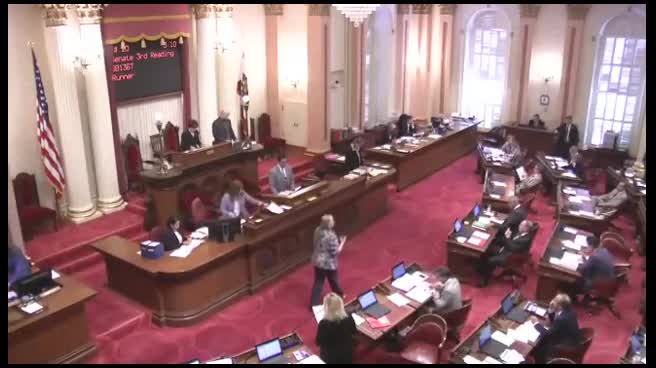
Bill Author
Bill Co-Author(s):