SB 1467: Political Reform Act of 1974: campaign prohibitions.
- Session Year: 2015-2016
- House: Senate
- Latest Version Date: 2016-04-13
Existing law, the Political Reform Act of 1974, provides for the comprehensive regulation of campaign financing, including requiring the reporting of campaign contributions. The act imposes a contribution limit of $3,000 on contributions made to, and received by, candidates for elective state offices that are not statewide elective offices. various prohibitions relating to the expenditure of campaign funds. The act does not limit the amount of contributions that a person may make to prohibits a committee that is primarily formed to support or oppose one or more ballot measures. The act prohibits a candidate for elective state office or a committee controlled by that candidate from making a contribution to another candidate for elective state office in excess of the contribution limit for elective state offices. measures from sending a slate mailer unless it complies with specified requirements.
This bill would prohibit a person from making to a committee controlled by a candidate for elective office that is primarily formed to support or oppose one or more ballot measures, and prohibit such a committee from receiving, a contribution in excess of the contribution limit for elective state offices, as specified. The bill would prohibit a candidate for any elective office, or the candidates controlled committees, from making a contribution to another candidate for elective office or a committee controlled by a candidate that is primarily formed to support or oppose one or more ballot measures in excess of the contribution limit established for candidates for elective state office. measures from expending campaign funds on an advertisement featuring the controlling candidate or another officeholder or candidate, as specified.
This bill would prohibit a committee controlled by a candidate for elective office that is primarily formed to support or oppose one or more ballot measures from expending campaign funds to make a contribution or other transfer of campaign funds to a committee for a purpose other than supporting or opposing a ballot measure that the controlled committee was primarily formed to support or oppose.
A violation of the acts provisions is punishable as a misdemeanor. By expanding the scope of an existing crime, this bill would impose a state-mandated local program.
The California Constitution requires the state to reimburse local agencies and school districts for certain costs mandated by the state. Statutory provisions establish procedures for making that reimbursement.
This bill would provide that no reimbursement is required by this act for a specified reason.
The Political Reform Act of 1974, an initiative measure, provides that the Legislature may amend the act to further the acts purposes upon a 2/3 vote of each house and compliance with specified procedural requirements.
This bill would declare that it furthers the purposes of the act.
Existing law, the Political Reform Act of 1974, provides for the comprehensive regulation of campaign financing, including requiring the reporting of campaign contributions. The act imposes a contribution limit of $3,000 on contributions made to, and received by, candidates for elective state offices that are not statewide elective offices. The act does not limit the amount of contributions that a person may make to a committee that is primarily formed to support or oppose one or more ballot measures. The act prohibits a candidate for elective state office or a committee controlled by that candidate from making a contribution to another candidate for elective state office in excess of the contribution limit for elective state offices.
This bill would prohibit a person from making to a committee controlled by a candidate for elective office that is primarily formed to support or oppose one or more ballot measures, and prohibit such a committee from receiving, a contribution in excess of the contribution limit for elective state offices, as specified. The bill would prohibit a candidate for any elective office, or the candidates controlled committees, from making a contribution to another candidate for elective office or a committee controlled by a candidate that is primarily formed to support or oppose one or more ballot measures in excess of the contribution limit established for candidates for elective state office.
This bill would prohibit a committee controlled by a candidate for elective office that is primarily formed to support or oppose one or more ballot measures from expending campaign funds to make a contribution or other transfer of campaign funds to a committee for a purpose other than supporting or opposing a ballot measure that the controlled committee was primarily formed to support or oppose.
A violation of the acts provisions is punishable as a misdemeanor. By expanding the scope of an existing crime, this bill would impose a state-mandated local program.
The California Constitution requires the state to reimburse local agencies and school districts for certain costs mandated by the state. Statutory provisions establish procedures for making that reimbursement.
This bill would provide that no reimbursement is required by this act for a specified reason.
The Political Reform Act of 1974, an initiative measure, provides that the Legislature may amend the act to further the acts purposes upon a 2/3 vote of each house and compliance with specified procedural requirements.
This bill would declare that it furthers the purposes of the act.
(a)For purposes of this section:
(1)Advertisement has the same meaning as provided in Section 84501.
(2)Featuring a candidate or officeholder means using any of the following belonging to the candidate or otherwise singling out the candidate or officeholder:
(A)Name.
(B)Signature.
(C)Title.
(D)Voice.
(E)Image.
(b)A committee controlled by a candidate for elective office that is primarily formed to support or oppose one or more ballot measures shall not expend campaign funds on an advertisement featuring either of the following:
(1)The controlling candidate.
(2)Another officeholder or candidate.
SECTION 1.Section 85301.7 is added to the Government Code, to read:85301.7.For each period between statewide general elections, as defined in Section 1200 of the Elections Code, a person shall not make to a committee controlled by a candidate for elective office that is primarily formed to support or oppose one or more ballot measures, and such a committee shall not accept from a person, a contribution in excess of the contribution limit established pursuant to subdivision (a) of Section 85301, as adjusted by the Commission pursuant to Section 83124. The contribution limit described in this section shall be the aggregate amount of contributions that a candidate may accept per contributor for his or her controlled committees that are primarily formed to support or oppose one or more ballot measures, regardless of the number of such committees controlled by that candidate.
SEC. 2.Section 85305 of the Government Code is amended to read:85305.A candidate for elective state office or committee controlled by that candidate shall not make a contribution to another candidate for elective state officeor to a committee controlled by another candidate for elective office that is primarily formed to support or oppose one or more ballot measures in excess of the limits set forth in subdivision (a) of Section 85301, as adjusted pursuant to Section 83124.
SEC. 3.Section 85305.1 is added to the Government Code, to read:85305.1.Notwithstanding any other provision of this title or Section 18680 of the Elections Code, a committee controlled by a candidate for elective office that is primarily formed to support or oppose one or more ballot measures shall not expend campaign funds to make a contribution or other transfer of campaign funds to a committee for a purpose other than supporting or opposing a ballot measure that the controlled committee was primarily formed to support or oppose.
SEC. 2.The provisions of this section are severable. If any provision of this section or its application is held invalid, that invalidity shall not affect other provisions or applications that can be given effect without the invalid provision or application.
SEC. 4.SEC. 3.No reimbursement is required by this act pursuant to Section 6 of Article XIIIB of the California Constitution because the only costs that may be incurred by a local agency or school district will be incurred because this act creates a new crime or infraction, eliminates a crime or infraction, or changes the penalty for a crime or infraction, within the meaning of Section 17556 of the Government Code, or changes the definition of a crime within the meaning of Section 6 of Article XIIIB of the California Constitution.
SEC. 5.SEC. 4.The Legislature finds and declares that this bill furthers the purposes of the Political Reform Act of 1974 within the meaning of subdivision (a) of Section 81012 of the Government Code.
For each period between statewide general elections, as defined in Section 1200 of the Elections Code, a person shall not make to a committee controlled by a candidate for elective office that is primarily formed to support or oppose one or more ballot measures, and such a committee shall not accept from a person, a contribution in excess of the contribution limit established pursuant to subdivision (a) of Section 85301, as adjusted by the Commission pursuant to Section 83124. The contribution limit described in this section shall be the aggregate amount of contributions that a candidate may accept per contributor for his or her controlled committees that are primarily formed to support or oppose one or more ballot measures, regardless of the number of such committees controlled by that candidate.
SEC. 2.Section 85305 of the Government Code is amended to read:85305.A candidate for elective state office or committee controlled by that candidate may shall not make any a contribution to any other another candidate for elective state officeor to a committee controlled by another candidate for elective office that is primarily formed to support or oppose one or more ballot measures in excess of the limits set forth in subdivision (a) of Section 85301, as adjusted pursuant to Section 83124.
SEC. 3.Section 85305.1 is added to the Government Code, to read:85305.1.Notwithstanding any other provision of this title or Section 18680 of the Elections Code, a committee controlled by a candidate for elective office that is primarily formed to support or oppose one or more ballot measures shall not expend campaign funds to make a contribution or other transfer of campaign funds to a committee for a purpose other than supporting or opposing a ballot measure that the controlled committee was primarily formed to support or oppose.
SEC. 4.No reimbursement is required by this act pursuant to Section 6 of Article XIIIB of the California Constitution because the only costs that may be incurred by a local agency or school district will be incurred because this act creates a new crime or infraction, eliminates a crime or infraction, or changes the penalty for a crime or infraction, within the meaning of Section 17556 of the Government Code, or changes the definition of a crime within the meaning of Section 6 of Article XIIIB of the California Constitution.
SEC. 5.The Legislature finds and declares that this bill furthers the purposes of the Political Reform Act of 1974 within the meaning of subdivision (a) of Section 81012 of the Government Code.
|
Date
|
Status
|
|---|---|
| May 27, 2016 | May 27 hearing: Held in committee and under submission. |
| May 20, 2016 | Set for hearing May 27. |
| May 2, 2016 | May 2 hearing: Placed on APPR. suspense file. |
| Apr 22, 2016 | Set for hearing May 2. |
| Apr 20, 2016 | From committee: Do pass and re-refer to Com. on APPR. (Ayes 4. Noes 1. Page 3609.) (April 19). Re-referred to Com. on APPR. |
| Apr 20, 2016 | From committee: Do pass and re-refer to Com. on APPR. (Ayes 4. Noes 1.) (April 19). Re-referred to Com. on APPR. |
| Apr 13, 2016 | From committee with author's amendments. Read second time and amended. Re-referred to Com. on E. & C.A. |
| Apr 5, 2016 | Set for hearing April 19. |
| Mar 31, 2016 | April 5 hearing postponed by committee. |
| Mar 18, 2016 | Set for hearing April 5. |
| Mar 16, 2016 | April 5 set for first hearing canceled at the request of author. |
| Mar 10, 2016 | Referred to Com. on E. & C.A. |
| Feb 22, 2016 | Read first time. |
| Feb 22, 2016 | From printer. May be acted upon on or after March 23. |
| Feb 19, 2016 | Introduced. To Com. on RLS. for assignment. To print. |
|
Date
|
Description
|
Location
|
Votes
|
|
|---|---|---|---|---|
| May 2, 2016 | Placed on suspense file | Senate Standing Committee on Appropriations |
Passed |
|
| Apr 19, 2016 | Do pass, but first be re-referred to the Committee on [Appropriations] | Senate Standing Committee on Elections and Constitutional Amendments |
Passed |
This list shows positions taken on this bill by organizations on the date displayed, which is linked to the original source.
Positions by individuals are not included.
SENATE COMMITTEE ON APPROPRIATIONS
Senator Ricardo Lara, Chair
2015 - 2016 Regular Session
SB 1467 (Bates) - Political Reform Act of 1974: campaign prohibitions
Version: April 13, 2016 | Policy Vote: E. & C.A. 4 - 1 |
Urgency: No | Mandate: Yes |
Hearing Date: May 2, 2016 | Consultant: Robert Ingenito |
This bill meets the criteria for referral to the Suspense File.
Bill Summary:
SB 1467 would prohibit a candidate-controlled ballot measure committee from expending campaign funds on an advertisement featuring the controlling candidate or another officeholder or candidate.
Fiscal Impact:
The Fair Political Practices Committee (FPPC) indicates that it would incur first-year costs of $266,000 and ongoing costs of $252,000 to implement the provisions of the bill (General Fund).
Background:
Under current law, a "controlled committee" is one that is (1) controlled directly or indirectly by a candidate or state measure proponent, or (2) acts jointly with a candidate, controlled committee, or state measure proponent in connection with the making of expenditures. A candidate or state measure proponent controls a committee if he or she, his or her agent, or any other committee he or she controls has a significant influence on the committee’s actions or decisions.
Pursuant to regulations promulgated by FPPC, current law provides that candidate-controlled ballot measure committee funds shall be used only to make expenditures related to a state or local measure or potential measure anticipated by the committee, or to qualification or pre-qualification activities relating to such measures.
Current law defines the term “advertisement,” for purposes of the Political Reform Act (PRA), as any general or public advertisement which is authorized and paid for by a person or committee for the purpose of supporting or opposing a candidate for elective office or a ballot measure or ballot measures. The term does not include a communication from an organization other than a political party to its members, a campaign button smaller than 10 inches in diameter, a bumper sticker smaller than 60 square inches, or other advertisement as determined by FPPC regulations.
Proposed Law:
This bill would (1) prohibit a committee controlled by a candidate for elective office that is primarily formed to support or oppose one or more ballot measures from expending campaign funds on an advertisement featuring the controlling candidate or another officeholder or candidate, as specified, and (2) provide, for purposes of this bill, that “featuring a candidate or officeholder” means using any of the following belonging to the candidate or otherwise singling out the candidate or officeholder: name, signature, title, voice, or image.
Related Legislation:
AB 709 (Wolk, of 2006) and AB 1980 (Wolk, of 2004) would have applied existing contribution limits to candidate-controlled ballot measure committees. AB 709 failed passage in this committee while the Conference Committee Report for AB 1980 was adopted in the Senate but failed in the Assembly. The version of AB 1980 that was heard in this committee was substantially different than the version contained in the Conference Committee report.
Staff Comments:
FPPC would require two positions and incur first-year costs of $266,000 and ongoing costs of $252,000 to implement the provisions of the bill (General Fund). Additional anticipated workload duties include amending regulations, responding to requests for advice, amending instruction materials, and potential litigation. Legislative Counsel and the bill analysis from the Senate Elections and Constitutional Amendments Committee note that the bill‘s prohibitions may be challenged in court.
-- END --
SENATE COMMITTEE ON
ELECTIONS AND CONSTITUTIONAL AMENDMENTS
Senator Ben Allen, Chair
2015 - 2016 Regular
Bill No: SB Hearing Date: 4/19/16
Author: | |||
Version: | 4/13/16 | ||
Urgency: | No | Fiscal: | Yes |
Consultant: | Darren Chesin | ||
Subject: Political Reform Act of 1974: campaign prohibitions
DIGEST
Prohibits a candidate-controlled ballot measure committee from expending campaign funds on an advertisement featuring the controlling candidate or another officeholder or candidate.
ANALYSIS
Existing law:
- Defines "controlled committee" as a committee that’s controlled directly or indirectly by a candidate or state measure proponent or that acts jointly with a candidate, controlled committee, or state measure proponent in connection with the making of expenditures. A candidate or state measure proponent controls a committee if he or she, his or her agent, or any other committee he or she controls has a significant influence on the actions or decisions of the committee.
- Provides, pursuant to regulations promulgated by the Fair Political Practices Commission (FPPC), that candidate-controlled ballot measure committee funds shall be used only to make expenditures related to a state or local measure or potential measure anticipated by the committee, or to qualification or pre-qualification activities relating to such measures.
- Defines “advertisement,” for purposes of the Political Reform Act (PRA), as any general or public advertisement which is authorized and paid for by a person or committee for the purpose of supporting or opposing a candidate for elective office or a ballot measure or ballot measures. “Advertisement” does not include a communication from an organization other than a political party to its members, a campaign button smaller than 10 inches in diameter, a bumper sticker smaller than 60 square inches, or other advertisement as determined by regulations of the FPPC.
This bill:
- Prohibits a committee controlled by a candidate for elective office that is primarily formed to support or oppose one or more ballot measures from expending campaign funds on an advertisement featuring the controlling candidate or another officeholder or candidate, as specified.
Provides, for purposes of this bill, that “featuring a candidate or officeholder” means using any of the following belonging to the candidate or otherwise singling out the candidate or officeholder: name, signature, title, voice, or image.
BACKGROUND
Was the Prior Version of this Bill Constitutional? The prior amended version of this bill sought to extend existing campaign contribution limits that are applicable to state officeholders and candidates for state office to ballot measure committees controlled by state officeholders and candidates for state office. However, given questions related to the constitutionality of that approach, the author amended the bill to instead prohibit a candidate-controlled ballot measure committee from expending campaign funds on an advertisement featuring the controlling candidate or another officeholder or candidate.
The U.S. Supreme Court has made a distinction between limits on campaign contributions made to candidates and limits on campaign contributions made to ballot measure committees. In Buckley v. Valeo (1976), the Supreme Court upheld contribution limits placed upon candidates, acknowledging the state interest of preventing corruption or its appearance. However, in Citizens Against Rent Control v. City of Berkeley (1981), the Court found no such risk of corruption exists when contributions are given to ballot measure committees. Accordingly, the Court struck down a City of Berkeley ordinance that placed a $250 contribution limit on ballot measures committees.
The ballot measure committee at issue in Citizens Against Rent Control wasn’t candidate-controlled, however. The prior version of this bill sought to regulate contributions made to candidate-controlled ballot measure committees, and didn’t restrict contributions made to non-candidate controlled committees similar to the one in Citizens Against Rent Control.
On June 25, 2004, the FPPC adopted regulations governing contributions to ballot measure committees controlled by elected state officers and candidates for state elective office. Under those regulations, contributions to a ballot measure committee that is controlled by a candidate for elective state office were to be limited to the contribution limits that applied to the individual's candidate committee at the time the candidate took control of the ballot measure committee.
On February 8, 2005, a suit was filed against the FPPC challenging those regulations. The plaintiffs claimed the regulation adopted by the FPPC was illegal for several reasons, including that the FPPC lacked the statutory authority to adopt the regulation and that the regulation violated the First Amendment to the United States Constitution per Citizens Against Rent Control.
In Citizens to Save California v. California Fair Political Practices Commission (2006) the regulation was invalidated by the Court of Appeal, Third Appellate District, which, without reaching the constitutional issue, held that the Commission lacked the statutory authority to impose contribution limits on candidate-controlled ballot measure committees.
It is unclear whether a court would have upheld the prior provisions of this bill given that a similar regulation was struck down in court. In the Citizens to Save California decision, the court indicated its ruling was based on the determination that the FPPC didn’t have the statutory authority to adopt a regulation limiting contributions to ballot measure committees that are controlled by candidates for elective state office. However, the trial court judge also expressed concerns about the constitutionality of the regulation, concerns that presumably would be equally applicable to a statutory limit on contributions to ballot measure committees that are controlled by candidates for elective state office.
Is the Current Version of this Bill Constitutional? According to an April 12, 2016 letter to Senator Bates from the Legislative Counsel, “The proposed measure, if enacted, would prohibit a committee controlled by a candidate for elective office that is primarily formed to support or oppose one or more ballot measures from expending campaign funds on an advertisement featuring the controlling candidate or another officeholder or candidate. By restricting the manner in which a committee may engage in political discourse regarding support for or opposition to a ballot measure, this prohibition may be subject to constitutional challenge as an unconstitutional restraint on political speech protected by the First Amendment to the United States Constitution (see Mclntyre v. Ohio Elections Commission (1995) 514 U,S. 334).”
While Mclntyre centered on the ability of certain political speech to remain anonymous, and other sender identification requirements have been upheld, it nevertheless served to confirm the Court’s decisions in prior cases that a limitation on political expression is subject to “exacting scrutiny.” In the majority opinion in Mclntyre, the Court stated: “Indeed, as we have explained on many prior occasions, the category of speech regulated by the Ohio statute occupies the core of the protection afforded by the First Amendment: When a law burdens core political speech, we apply "exacting scrutiny," and we uphold the restriction only if it is narrowly tailored to serve an overriding state interest.”
While it is difficult to predict whether or not the federal courts would deem this bill as narrowly tailored enough to serve an overriding state interest, it is probably safe to assume that if the bill only prohibited advertisements that “feature” the controlling candidate, rather than other candidates and officeholders as well, there is a higher likelihood that it would withstand a potential challenge on First Amendment grounds.
COMMENTS
- According to the author: SB 1467 would close the campaign finance loophole that allows candidates and elected officials to promote themselves and their campaigns with money from candidate-controlled ballot measure committees.
Unlike typical campaign contributions, current law allows unlimited contributions to candidate-controlled ballot measure committees. Money donated to candidate-controlled ballot measure committees can be used for advertisements featuring candidates in a positive light, with the intent to promote the candidate. This practice creates complex questions as to which funds should be allocated for which expenditures and whether it is acceptable for a candidate’s campaign to derive benefits from expenditures from the candidate’s controlled committee.
During the investigation that led to former-Senator Leland Yee’s federal indictment for corruption, arms trafficking, and racketeering, Yee told an undercover FBI agent he could avoid the restrictions of contribution limits by giving money to a ballot measure committee that would run ads featuring him in a positive light. This description shows just how easily candidates can dip into candidate-controlled ballot measure committees to promote themselves.
Today, it is much too easy for politicians to gain an unfair advantage by using ballot measure committee funds to advance their own campaigns. SB 1467 would put an end to the practice of candidates and elected officials using candidate-controlled ballot measure committees to advance their own candidacies.
In 2000, California voters overwhelmingly enacted Proposition 34, which created contribution limits for state legislature elections and statewide elections. Proponents of Proposition 34 recognized that elections must be held on an even playing field to ensure the integrity of our democratic system.
Unfortunately, candidates and elected officials with candidate-controlled ballot measure committees are now able to skirt the intentions of California’s voters. By opening up a candidate-controlled ballot measure committee, politicians can now spend vast sums of money promoting themselves, outside of the boundaries of campaign finance laws.
This law would apply to all California legislators and statewide office holders, as well as those seeking those offices.
Amendment to Consider. Given the constitutional issues raised in the “Background” section, above, the committee and the author may wish to consider amending this bill so that it only prohibits advertisements that “feature” the controlling candidate, rather than other candidates and officeholders as well.
RELATED/PRIOR LEGISLATION
AB 709 (Wolk, of 2006) and AB 1980 (Wolk, of 2004) would have applied existing contribution limits to candidate-controlled ballot measure committees. AB 709 failed passage in this committee while the Conference Committee Report for AB 1980 was adopted in the Senate but failed in the Assembly. The version of AB 1980 that was heard in this committee was substantially different than the version contained in the Conference Committee report.
POSITIONS
Sponsor: Author
Support: Daniel Schnur, Former Chairman, California Fair Political Practices Commission
California Voices for Progress
Oppose: None received
-- END --
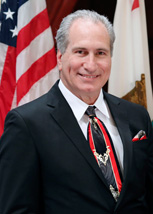
Bill Author