SB 148: School districts: reorganization: local control funding formula.
- Session Year: 2015-2016
- House: Senate
- Latest Version Date: 2015-10-02
Existing law establishes a system of public elementary and secondary education in this state. Under this system, school districts throughout the state operate and maintain schools at which they provide instruction. Existing law establishes procedures under which new school districts may be formed by dissolving 2 or more existing school districts of the same kind from the entire territory of the original school districts, by forming one or more new school districts of the same kind from all or parts of one or more existing school districts of the same kind, or by unifying or deunifying school districts as specified. Under existing law, new school districts may also be formed through an action to transfer territory, including an action to transfer all or part of an existing school district to another existing school district.
Existing law also establishes a system of funding public elementary and secondary education in this state. This funding system includes, among other elements, a local control funding formula through which funds are apportioned to school districts for educational purposes based on the total number of pupils attending the schools in those districts and the number of those pupils who fall into specified categories, including English learners, pupils eligible for free or reduced-price meals, and foster youth.
This bill would enact numerous provisions specifying computations to determine the funding, pursuant to the local control funding formula, of school districts that are, or proposed to be, affected by the various types of actions that may be undertaken to reorganize districts, as defined.
Existing law establishes the office of the Superintendent of Public Instruction, and specifies that the Superintendent is the ex officio Director of the State Department of Education. Under existing law, the State Department of Education administers numerous programs relating to elementary and secondary education.
Existing law authorizes, among other things, the governing board of any high school district to establish and maintain, in connection with any high school or regional occupational center or program under its jurisdiction, cooperative career technical education programs or community classrooms as part of a career technical education course, as specified.
This bill would establish the Career and Job Skills Education Act, which would authorize the governing board of one or more school districts, county offices of education, direct-funded charter schools, and regional occupational centers or programs operated by joint powers authorities with the written consent from each participating local educational agency, that operate any state-approved career technical education sequence of courses, to apply to the Superintendent for a grant for the development and enhancement of high-quality career technical education programs. The bill would require each grant recipient to, among other things, adopt certain policies and procedures and establish a career technical education program that satisfies specified criteria. The bill would establish the Career and Job Skills Education Fund in the State Treasury, and would also require the Superintendent to, among other things, administer the fund and distribute awards through an annual application process to applicants that meet certain requirements. The bill would further require the Superintendent and the State Board of Education to incorporate appropriate metrics into state-adopted accountability measures to determine career readiness of Californias high school pupils.
The bill would, to the extent that funds are appropriated in the annual Budget Act of 2015, allocate funds to the Superintendent, for deposit in the Career and Job Skills Education Fund, for purposes of the Career and Job Skills Education Act, and would express the intent of the Legislature that funds be appropriated from the General Fund, as necessary, for those purposes in the 201718 and 201819 fiscal years.
(1)Existing
Existing law establishes the office of the Superintendent of Public Instruction, and specifies that the Superintendent is the ex officio Director of the State Department of Education. Under existing law, the State Department of Education administers numerous programs relating to elementary and secondary education.
Existing law authorizes, among other things, the governing board of any high school district to establish and maintain, in connection with any high school or regional occupational center or program under its jurisdiction, cooperative career technical education programs or community classrooms as part of a career technical education course, as specified.
This bill would establish the Career and Job Skills Education Act, which would authorize the governing board of one or more school districts, county offices of education, direct-funded charter schools, and regional occupational centers or programs operated by joint powers authorities with the written consent from each participating local education educational agency, that operate any state-approved career technical education sequence of courses, to apply to the Superintendent for a grant for the development and enhancement of high-quality career technical education programs. The bill would require each grant recipient to, among other things, adopt certain policies and procedures and establish a career technical education program that satisfies specified criteria. The bill would establish the Career and Job Skills Education Fund in the State Treasury, and would also require the Superintendent to, among other things, administer the fund and distribute awards through an annual application process to applicants that meet certain requirements. The bill would further require the Superintendent and the State Board of Education to incorporate appropriate metrics into state-adopted accountability measures to determine career readiness of Californias high school pupils.
The bill would appropriate $600,000,000 from the General Fund would, to the extent that funds are appropriated in the annual Budget Act of 2015, allocate funds to the Superintendent, for deposit in the Career and Job Skills Education Fund, for purposes of the Career and Job Skills Education Act, and would express the intent of the Legislature that additional funds be appropriated from the General Fund, as necessary, for those purposes in the 201718 and 201819 fiscal years.
(2)Funds appropriated by the bill for purposes of funding this act would be applied toward the minimum funding requirements for school districts and community college districts imposed by Section 8 of Article XVI of the California Constitution.
(1)Existing law establishes the office of the Superintendent of Public Instruction, and specifies that the Superintendent is the ex officio Director of the State Department of Education. Under existing law, the State Department of Education administers numerous programs relating to elementary and secondary education.
Existing law authorizes, among other things, the governing board of any high school district to establish and maintain, in connection with any high school or regional occupational center or program under its jurisdiction, cooperative career technical education programs or community classrooms as part of a career technical education course, as specified.
This bill would establish the Career and Job Skills Education Act, which would authorize the governing board of a school district one or more school districts, county offices of education, direct-funded charter schools, and regional occupational centers or programs operated by joint powers authorities with the written consent from each participating local education agency, that operates operate any state-approved career technical education sequence of courses, to apply to the Superintendent for a grant for the development and enhancement of high-quality career technical education programs in the school district. The bill would require the governing board of a recipient school district each grant recipient to, among other things, adopt certain policies and procedures and establish a career technical education program that satisfies specified criteria. The bill would establish the Career and Job Skills Education Fund in the State Treasury, and would also require the Superintendent to, among other things, administer the fund and distribute awards through an annual application process to the governing boards of school districts applicants that meet certain requirements. The bill would further require the Superintendent and the State Board of Education to incorporate appropriate metrics into state-adopted accountability measures to determine career readiness of Californias high school pupils.
The bill would appropriate $600,000,000 from the General Fund to the Superintendent, for deposit in the Career and Job Skills Education Fund, for purposes of the Career and Job Skills Education Act, and would express the intent of the Legislature that additional funds be appropriated from the General Fund, as necessary, for those purposes in the 201718 and 201819 fiscal years.
(2)Funds appropriated by the bill for purposes of funding this act would be applied toward the minimum funding requirements for school districts and community college districts imposed by Section 8 of Article XVI of the California Constitution.
(1)Existing law establishes the office of the Superintendent of Public Instruction, and specifies that the Superintendent is the ex officio Director of the State Department of Education. Under existing law, the State Department of Education administers numerous programs relating to elementary and secondary education.
Existing law authorizes, among other things, the governing board of any high school district to establish and maintain, in connection with any high school or regional occupational center or program under its jurisdiction, cooperative career technical education programs or community classrooms as part of a career technical education course, as specified.
This bill would establish the Career and Job Skills Education Act, which would authorize the governing board of a school district that operates any state-approved career technical education sequence of courses to apply to the Superintendent for a grant for the development and enhancement of high-quality career technical education programs in the school district. The bill would require the governing board of a recipient school district to, among other things, adopt certain policies and procedures and establish a career technical education program that satisfies specified criteria. The bill would establish the Career and Job Skills Education Fund in the State Treasury, and would also require the Superintendent to, among other things, administer the fund and distribute awards through an annual application process to the governing boards of school districts that meet certain requirements. The bill would further require the Superintendent and the State Board of Education to incorporate appropriate metrics into state-adopted accountability measures to determine career readiness of Californias high school pupils.
The bill would appropriate $600,000,000 from the General Fund to the Superintendent, for deposit in the Career and Job Skills Education Fund, for purposes of the Career and Job Skills Education Act, and would express the intent of the Legislature that additional funds be appropriated from the General Fund, as necessary, for those purposes in the 201718 and 201819 fiscal years.
(2)Funds appropriated by the bill for purposes of funding this act would be applied toward the minimum funding requirements for school districts and community college districts imposed by Section 8 of Article XVI of the California Constitution.
Unless the context otherwise requires, the definitions set forth in this article govern the construction of this chapter and Chapter 4 (commencing with Section 35700).
SEC. 2.Section 35514 of the Education Code is amended to read:35514.As used in this chapter and in Chapter 4 (commencing with Section 35700):
(a)Affected district means a district that has been, or is proposed to be, affected by an action to reorganize pursuant to Section 35511 or by an action to lapse a district pursuant to Section 35780.1. Affected districts include all of the following district types:
(1)Original district means a district as it existed before an action to reorganize pursuant to Section 35511 or before an action to lapse a district pursuant to Section 35780.1. The boundaries of an original district are those of the district as it existed immediately before the action to reorganize or lapse.
(2)Former district means a district that has been wholly included in another district, or has had all of its territory made part of two or more other districts, through any action taken pursuant to Section 35511 or through a lapse pursuant to Section 35780.1. The boundaries of a former district are those of the district as it existed immediately before an action to reorganize or lapse.
(3)New district means a district that is formed from all or portions of one or more other districts by an action to reorganize taken pursuant to subdivision (a) of Section 35511. A new district does not exist before such an action.
(4)Acquiring district means a district that has all or portions of one or more other districts transferred into, or lapsed into, its boundaries pursuant to subdivision (b) of Section 35511 or Section 35780.1.
(5)Divided district means a district that has had a portion of its territory become part of a new district or transferred into one or more other districts by an action to reorganize taken pursuant to Section 35511.
(A)The reorganized portion of a divided district means the portion of the divided districts territory that becomes part of a new district or is transferred into one or more other districts.
(B)The remaining portion of a divided district means the portion of the divided districts territory that does not become part of a new district or that is not transferred into one or more other districts.
(6)Reorganized district means a district that is a new district, an acquiring district, or a divided district.
(b)Districts means school districts of every kind or class.
SEC. 3.Section 35515 of the Education Code is amended to read:35515.Component district means an elementary school district that is included within a high school district or an elementary school district that is excluded from an action to unify a high school district but that continues to feed into the high schools of the new unified school district pursuant to subdivision (b) of Section 35542.
SEC. 4.Section 35516 of the Education Code is repealed.SEC. 5.Section 35735 of the Education Code is amended to read:35735.(a)Each proposal for the reorganization of school districts shall include a computation of the local control funding formula entitlement determined pursuant to Section 42238.02, as implemented by Section 42238.03, for the districts. That computation shall be an integral part of the proposal, and shall not be considered separately from the proposal. The funding computations for the reorganized school districts shall be made consistent with the calculations established in this article, and shall be based on the current information available for each affected school district for the second principal apportionment period for the fiscal year immediately preceding the fiscal year in which the reorganization is to become effective.
(b)The county superintendent of schools shall compute the local control funding formula entitlement pursuant to this article for a school district involved in an action to reorganize.
(c)(1)For a former school district that has been wholly included in more than one new or acquiring district, the county superintendent of schools with jurisdiction over the reorganized school district shall compute the local control funding formula entitlement pursuant to this article. As part of this computation, and except as otherwise provided in this article, the county superintendent of schools may determine both of the following:
(2)(A)The prior year funded average daily attendance as of the second principal apportionment from each affected school district that will be served by each reorganized school district.
(B)Consistent with paragraph (1), the division of all of the following types of funding attributed to a former district when all of the territory of that former district is made part of two or more new or acquiring districts:
(i)Categorical program funding provided pursuant to subdivisions (g) and (h) of Section 42238.02, paragraph (2) of subdivision (a) of Section 42238.03, and subdivision (e) of Section 42238.03.
(ii)Economic recovery target payments computed pursuant to paragraph (2) of subdivision (d) of Section 42238.025.
(iii)Necessary small school allowances provided for minimum state aid pursuant to subparagraph (D) of paragraph (1) of subdivision (e) of Section 42238.03, except that in no case shall the allowance attributed to a single necessary small elementary or necessary small high school be divided among more than one new or acquiring district.
(3)The funding calculated pursuant to this subdivision shall be incorporated by the Superintendent into the new or acquiring districts calculations as if it were a former district that is wholly included in the new district, provided that the required information is submitted to the Superintendent within the timeframe established by the Superintendent. If the county superintendent of schools does not provide all of the information in paragraphs (1) and (2), the funding shall not be included in the new or acquiring districts calculations.
(d)For all actions to reorganize, except for those actions approved pursuant to subdivision (b) of Section 35710, or appealed pursuant to subdivision (c) of Section 35710, Section 35710.5, or Section 35711, the Superintendent shall compute the local control funding formula entitlement for a reorganized school district pursuant to Section 42238.02, as implemented by Section 42238.03.
(e)The Superintendent may make adjustments to the local control funding formula entitlements computed pursuant to subdivisions (b) and (c), if those adjustments are necessary to cause those entitlements to be consistent with this article.
(f)For purposes of this article, a lapse pursuant to Section 35780.1 shall be considered an action to reorganize pursuant to subdivision (b) of Section 35511.
(g)Any costs incurred by the county superintendent of schools in preparing reports pursuant to this section or Sections 35735.1 to 35735.9, inclusive, may be billed to the affected school districts on a proportionate basis.
SEC. 6.Section 35735.1 of the Education Code is repealed.SEC. 7.Section 35735.1 is added to the Education Code, to read:35735.1.For purposes of paragraph (5) of subdivision (b) of Section 42238.02, reorganized districts shall have their percentages of unduplicated pupils calculated as follows:
(a)(1)For a new district in the first fiscal year of operation, include only the current fiscal year unduplicated pupil and enrollment counts used to establish the current fiscal year percentage.
(2)For a new district in the second fiscal year of operation, include only the current fiscal year and prior fiscal year unduplicated pupil and enrollment counts to establish the current fiscal year percentage.
(3)For a new district in the third and subsequent fiscal years of operation, include the current fiscal year, prior fiscal year, and second prior fiscal year unduplicated pupil and enrollment counts to establish the current fiscal year percentage.
(b)For an acquiring district in the first fiscal year of operation after the reorganization, retain the prior fiscal year and second prior fiscal year unduplicated pupil and enrollment counts from the fiscal years before the reorganization. For the current fiscal year and each subsequent fiscal year after reorganization, include the unduplicated pupil and enrollment counts for all pupils who are being served by the acquiring district.
(c)For the remaining portion of a divided district, the percentage calculation shall include the prior and second prior fiscal year unduplicated pupil and enrollment counts from the fiscal years before the reorganization. For the current and each subsequent fiscal year after reorganization, include only the unduplicated pupil and enrollment counts for the pupils who are being served by the remaining portion of the divided district.
SEC. 8.Section 35735.2 is added to the Education Code, to read:35735.2.For purposes of subdivisions (g) and (h) of Section 42238.02, paragraph (2) of subdivision (a) of Section 42238.03, and subdivision (e) of Section 42238.03, reorganized districts shall have categorical program funding determined as follows:
(a)(1)A new district shall retain the same amount of categorical funding received by each former district before the reorganization. A new district shall not retain any categorical funding received by divided districts before the reorganization.
(2)If the new district is composed wholly of former districts, it shall receive a reduction pursuant to paragraph (2) of subdivision (a) of Section 42238.03 only to the extent that the new district would have received a reduction in the 201213 fiscal year.
(3)If the new district is comprised of former districts and one or more divided districts, it shall receive a reduction pursuant to paragraph (2) of subdivision (a) of Section 42238.03 only to the extent that the former districts received a reduction in the 201213 fiscal year.
(b)(1)An acquiring district shall retain the same amount of categorical funding it received before the reorganization, plus the amount of categorical funding received by each former district before the reorganization. An acquiring district shall not retain any categorical funding received by divided districts before the reorganization.
(2)If the acquiring district is composed wholly of former districts, it shall receive a reduction pursuant to paragraph (2) of subdivision (a) of Section 42238.03 only to the extent that the acquiring district would have received a reduction in the 201213 fiscal year.
(3)If the acquiring district comprises a former district and one or more divided districts, it shall receive a reduction pursuant to paragraph (2) of subdivision (a) of Section 42238.03 only to the extent that the former district received a reduction in the 201213 fiscal year.
(c)(1)The remaining portion of a divided district shall retain the same amount of categorical funding it received before the reorganization.
(2)If a divided district received a reduction pursuant to paragraph (2) of subdivision (a) of Section 42238.03, it shall continue to receive that reduction.
(d)If the reorganization includes a former district that has been wholly included in more than one new or acquiring districts, the categorical funding shall be determined pursuant to subdivision (c) of Section 35735.
SEC. 9.Section 35735.3 is added to the Education Code, to read:35735.3.(a)A new or acquiring district shall receive an economic recovery target payment pursuant to paragraph (2) of subdivision (d) of Section 42238.025 that is equal to the sum of the amounts determined for each former district that was eligible to receive an economic recovery target payment pursuant to paragraph (1) of subdivision (d) of Section 42238.025 before the reorganization.
(b)The remaining portion of a divided district shall retain the same amount of economic recovery target funding pursuant to paragraph (2) of subdivision (d) of Section 42238.025 that it was eligible to receive before the reorganization.
(c)If the reorganization includes a former district that has been wholly included in more than one new or acquiring district, the economic recovery target funding shall be determined pursuant to subdivision (c) of Section 35735.
SEC. 10.Section 35735.4 of the Education Code is repealed.SEC. 11.Section 35735.4 is added to the Education Code, to read:35735.4.For purposes of subdivision (d) of Section 42238.03, a reorganized district shall be deemed to have a zero difference in the prior fiscal year if one of the following conditions is met:
(a)For a new district resulting from an action to reorganize pursuant to paragraph (1), (2), or (3) of subdivision (a) of Section 35511, each former district had a zero difference in the prior fiscal year.
(b)For a new district resulting from an action to reorganize pursuant to paragraph (4) subdivision (a) of Section 35511, the original district had a zero difference in the prior fiscal year.
(c)For an acquiring district affected by an action to reorganize taken pursuant to subdivision (b) of Section 35511, the acquiring district has a zero difference in the prior fiscal year.
SEC. 12.Section 35735.5 is added to the Education Code, to read:35735.5.(a)For a new or acquiring district that has reorganized pursuant to paragraph (1), (2), or (3) of subdivision (a) of Section 35511 or subdivision (b) of Section 35511, the funding amount per unit of average daily attendance pursuant to subparagraph (A) of paragraph (1) of subdivision (a) of Section 42238.03 shall be calculated, as follows:
(1)If the reorganization took place before December 31, 2013, for each affected district:
(A)Blend the revenue limit pursuant to Section 35735.1, as that section read on January 1, 2013.
(B)Multiply the average daily attendance for the fiscal year two years before the fiscal year in which the reorganization is to become effective by the per unit of average daily attendance amount computed pursuant to subparagraph (A) of paragraph (1) of subdivision (a) of Section 42238.03.
(C)Add the products determined in subparagraph (B) and divide by the sum of units of average daily attendance for the fiscal year two years before the fiscal year in which the reorganization is to become effective for all affected districts.
(2)If the reorganization took place after December 31, 2013, for each affected district:
(A)Multiply the average daily attendance for the fiscal year immediately preceding the fiscal year in which the reorganization is to become effective by the per unit of average daily attendance amount computed pursuant to subparagraph (A) of paragraph (1) of subdivision (a) of Section 42238.03.
(B)Add the products determined in subparagraph (A) and divide by the sum of units of average daily attendance for the fiscal year immediately preceding the fiscal year in which the reorganization is to become effective for all affected districts.
(3)(A)For purposes of paragraphs (1) and (2), average daily attendance shall be the funded average daily attendance as of the second principal apportionment.
(B)If the reorganization includes a divided district, the following shall apply:
(i)For purposes of paragraph (1), the average daily attendance shall be estimated by the county office of education and reported to the department based on the units of average daily attendance to be served by the reorganized district.
(ii)For purposes of paragraph (2), the average daily attendance shall be estimated by the county office of education and reported to the department based on the units of average daily attendance to be served by the reorganized district in the first fiscal year the reorganization becomes effective. If no average daily attendance of the divided district is estimated to be served in the first fiscal year of the reorganization, the divided districts funding shall not be included in the blending calculation made pursuant to subparagraph (A) of paragraph (1) of subdivision (a) of Section 42238.03.
(C)For purposes of paragraph (1) or (2), if the reorganization includes a former district that has been wholly included in more than one new or acquiring district, the average daily attendance shall be the average daily attendance reported pursuant to subdivision (c) of Section 35735.
(b)For a new district formed as a result of deunification pursuant to paragraph (4) of subdivision (a) of Section 35511, the funding amount per unit of average daily attendance pursuant to subparagraph (A) of paragraph (1) of subdivision (a) of Section 42238.03 shall be equal to the amount calculated for the original district for the fiscal year before the fiscal year in which the reorganization is to become effective.
SEC. 13.Section 35735.6 is added to the Education Code, to read:35735.6.(a)For a new or acquiring district that has reorganized pursuant to paragraph (1), (2), or (3) of subdivision (a) of Section 35511 or subdivision (b) of Section 35511, the funding amount per unit of average daily attendance pursuant to subparagraph (A) of paragraph (1) of subdivision (e) of Section 42238.03, shall be calculated as follows:
(1)If the reorganization took place before December 31, 2013, for each affected district:
(A)Multiply the average daily attendance for the fiscal year two years before the fiscal year in which the reorganization is to become effective by the per unit of average daily attendance amount computed pursuant to subparagraph (A) of paragraph (1) of subdivision (e) of Section 42238.03.
(B)Add the products determined in subparagraph (A), and divide that sum by the sum of units of average daily attendance for the fiscal year two years immediately preceding the fiscal year in which the reorganization is to become effective for all affected districts.
(C)No adjustment shall be made for paragraphs (2) and (3) of subdivision (a) of Section 35735.1, as that section read on January 1, 2013.
(2)If the reorganization took place after December 31, 2013, for each affected district:
(A)Multiply the average daily attendance for the fiscal year immediately preceding the fiscal year in which the reorganization is to become effective by the per unit of average daily attendance amount computed pursuant to subparagraph (A) of paragraph (1) of subdivision (e) of Section 42238.03.
(B)Add the products determined in subparagraph (A), and divide by the sum of units of average daily attendance for the fiscal year immediately preceding the fiscal year in which the reorganization is to become effective for all affected school districts.
(3)(A)For purposes of paragraphs (1) and (2), average daily attendance shall be the funded average daily attendance as of the second principal apportionment.
(B)If the reorganization includes a divided district, the following shall apply:
(i)For purposes of paragraph (1), the average daily attendance shall be estimated by the county office of education and reported to the department based on the units of average daily attendance to be served by the reorganized district.
(ii)For purposes of paragraph (2), the average daily attendance shall be estimated by the county office of education and reported to the department based on the units of average daily attendance to be served by the reorganized district in the fiscal year the first reorganization becomes effective. If no average daily attendance of the divided district is estimated to be served in the first fiscal year of the reorganization, the divided districts funding shall not be included in the blending calculation made pursuant to subparagraph (A) of paragraph (1) of subdivision (e) of Section 42238.03.
(C)For purposes of paragraph (1) or (2), if the reorganization includes a former district that has been wholly included in more than one new or acquiring district, the average daily attendance shall be the average daily attendance reported pursuant to subdivision (c) of Section 35735.
(b)For a new district formed as a result of deunification pursuant to paragraph (4) of subdivision (a) of Section 35511, the funding amount per unit of average daily attendance pursuant to subparagraph (A) of paragraph (1) of subdivision (e) of Section 42238.03 shall be equal to the amount calculated for the original district for the fiscal year immediately preceding the fiscal year in which the reorganization is to become effective.
SEC. 14.Section 35735.7 is added to the Education Code, to read:35735.7.For a new or acquiring district that has reorganized pursuant to paragraph (1), (2), or (3) of subdivision (a) of Section 35511 or subdivision (b) of Section 35511, the funding amount per unit of average daily attendance pursuant to paragraph (4) of subdivision (a) of Section 42238.03 shall be calculated as follows:
(a)If the reorganization took place before December 31, 2013:
(1)For each affected district, divide the amount of funding received in the immediately preceding fiscal year pursuant to paragraph (4) of subdivision (a) of Section 42238.03 as of the second principal apportionment by the units of average daily attendance for the fiscal year immediately preceding the fiscal year in which the reorganization is to become effective.
(2)For each affected district, multiply the amount determined in paragraph (1) by the average daily attendance for the fiscal year two years before the fiscal year in which the reorganization is to become effective.
(3)Add the products determined in paragraph (2), and divide that sum by the sum of the average daily attendance determined in paragraph (2) for all affected districts.
(b)If the reorganization took place after December 31, 2013:
(1)For each affected district, divide the amount of funding received in the immediately preceding fiscal year pursuant to paragraph (4) of subdivision (a) of Section 42238.03 as of the second principal apportionment by the units of average daily attendance for the fiscal year prior to the fiscal year in which the reorganization is to become effective.
(2)For each affected district, multiply the amount determined in paragraph (1) by the average daily attendance for the fiscal year immediately preceding the fiscal year in which the reorganization is to become effective.
(3)Add the products determined in paragraph (2), and divide that sum by the sum of the average daily attendance determined in paragraph (2) for all affected districts.
(c)(1)For purposes of subdivisions (a) and (b), average daily attendance shall be the funded average daily attendance as of the second principal apportionment.
(2)If the reorganization includes a divided district, the following shall apply:
(A)For purposes of subdivision (a), the average daily attendance shall be estimated by the county office of education and reported to the department based on the units of average daily attendance to be served by the reorganized district.
(B)For purposes of subdivision (b), the average daily attendance shall be estimated by the county office of education and reported to the department based on the units of average daily attendance to be served by the reorganized district in the first fiscal year the reorganization becomes effective. If no average daily attendance of the divided district is estimated to be served in the first fiscal year of the reorganization, the divided districts funding shall not be included in the blending calculation pursuant to paragraph (4) of subdivision (a) of Section 42238.03.
(3)For purposes of subdivisions (a) and (b), if the reorganization includes a former district that has been wholly included in more than one new or acquiring district, the average daily attendance shall be the average daily attendance reported pursuant to subdivision (c) of Section 35735.
SEC. 15.Section 35735.8 is added to the Education Code, to read:35735.8.(a)For a new or acquiring district that has reorganized pursuant to paragraph (1), (2), or (3) of subdivision (a) of Section 35511 or subdivision (b) of Section 35511, the funding amount per unit of average daily attendance pursuant to Sections 42289 to 42289.5, inclusive, for purposes of determining funding pursuant to paragraph (2) of subdivision (i) of Section 42283.02, shall be calculated as follows:
(1)If the reorganization took place before December 31, 2013, for each affected district:
(A)Multiply the average daily attendance for the fiscal year two years before the fiscal year in which the reorganization is to become effective by the amount computed pursuant to subdivision (b) of Section 42287 for the fiscal year two years before the fiscal year in which the reorganization is to become effective.
(B)Add the products determined in subparagraph (A), and divide that sum by the sum of units of average daily attendance for the fiscal year two years before the fiscal year in which the reorganization is to become effective for all affected districts.
(C)Increase the amount determined in subparagraph (B) by the percentage calculated pursuant to paragraph (2) of subdivision (d) of Section 42238.02 for the fiscal year immediately preceding the fiscal year in which reorganization is to become effective.
(2)If the reorganization took place after December 31, 2013, for each affected district:
(A)Multiply the average daily attendance for the fiscal year immediately preceding the fiscal year in which the reorganization is to become effective by the amount computed pursuant to subdivision (b) of Section 42287 for the fiscal year immediately preceding the fiscal year in which the reorganization is to become effective.
(B)Add the products determined in subparagraph (A), and divide that sum by the sum of units of average daily attendance for the fiscal year immediately preceding the fiscal year in which the reorganization is to become effective for all affected districts.
(3)(A)For purposes of paragraphs (1) and (2), average daily attendance shall be the funded average daily attendance as of the second principal apportionment.
(B)If the reorganization includes a divided district, both of the following shall apply:
(i)For purposes of paragraph (1), the average daily attendance shall be estimated by the county office of education and reported to the department based on the units of average daily attendance to be served by the reorganized district.
(ii)For purposes of paragraph (2), the average daily attendance shall be estimated by the county office of education and reported to the department based on the units of average daily attendance to be served by the reorganized district in the first year the reorganization becomes effective. If no average daily attendance of the divided district is estimated to be served in the first year of the reorganization, the divided districts funding shall not be included in the blending calculation pursuant to paragraph (2) of subdivision (i) of Section 42238.02.
(C)For purposes of paragraph (1) or (2), if the reorganization includes a former district that has been wholly included in more than one new or acquiring district, the average daily attendance shall be the average daily attendance reported pursuant to subdivision (c) of Section 35735.
(b)For a new district formed as a result of deunification pursuant to paragraph (4) of subdivision (a) of Section 35511, the funding amount per unit of average daily attendance shall be equal to the amount calculated for the original district for the fiscal year immediately preceding the fiscal year in which the reorganization is to become effective.
SEC. 16.Section 35735.9 is added to the Education Code, to read:35735.9.(a)For a new district or acquiring district that has reorganized pursuant to paragraph (1), (2), or (3) of subdivision (a) of Section 35511 or subdivision (b) of Section 35511, the funding amount per unit of average daily attendance pursuant to Sections 42289 to 42289.5, inclusive, for purposes of determining funding pursuant to subparagraph (D) of paragraph (1) of subdivision (a) of Section 42283.03, shall be calculated as follows:
(1)If the reorganization took place before December 31, 2013, for each affected district:
(A)Multiply the average daily attendance for the fiscal year two years before the fiscal year in which the reorganization is to become effective by the amount per unit of average daily attendance that corresponds to the 201213 fiscal year funding amounts pursuant to Sections 42289 to 42289.5, inclusive, and Section 42238.146, as that section read on June 15, 2015.
(B)Add the products determined in subparagraph (A), and divide that sum by the sum of units of average daily attendance for the fiscal year two years before the fiscal year in which the reorganization is to become effective for all affected districts.
(2)If the reorganization took place after December 31, 2013, for each affected district:
(A)Multiply the average daily attendance for the fiscal year immediately preceding the fiscal year in which the reorganization is to become effective by the amount per unit of average daily attendance that corresponds to the 201213 fiscal year funding amounts pursuant to Sections 42289 to 42289.5, inclusive, and Section 42238.146, as that section read on June 15, 2015.
(B)Add the products determined in subparagraph (A), and divide that sum by the sum of units of average daily attendance for the fiscal year immediately preceding the fiscal year in which the reorganization is to become effective for all affected districts.
(3)(A)For purposes of paragraphs (1) and (2), average daily attendance shall be the funded average daily attendance as of the second principal apportionment.
(B)If the reorganization includes a divided district, the following shall apply:
(i)For purposes of paragraph (1), the average daily attendance shall be estimated by the county office of education and reported to the department based on the units of average daily attendance to be served by the reorganized district.
(ii)For purposes of paragraph (2), the average daily attendance shall be estimated by the county office of education and reported to the department based on the units of average daily attendance to be served by the reorganized district in the first fiscal year the reorganization becomes effective. If no average daily attendance of the divided district is estimated to be served in the first fiscal year of the reorganization, the divided districts funding shall not be included in the blending calculation pursuant to subparagraph (D) of paragraph (1) of subdivision (a) of Section 42238.03.
(C)For purposes of paragraph (1) or (2), if the reorganization includes a former district that has been wholly included in more than one new or acquiring district, the average daily attendance shall be the average daily attendance reported pursuant to subdivision (c) of Section 35735.
(b)For a new district formed as a result of deunification pursuant to paragraph (4) of subdivision (a) of Section 35511, the funding amount per unit of average daily attendance shall be equal to the amount calculated for the original district for the fiscal year immediately preceding the fiscal year in which the reorganization is to become effective.
SEC. 17.Section 35735.10 is added to the Education Code, to read:35735.10.For the purpose of determining funding pursuant to subparagraph (D) of paragraph (1) of subdivision (e) of Section 42238.03, the following shall apply to districts affected by reorganization pursuant to Section 35511 or a lapse pursuant to Section 35780.1:
(a)A new district shall receive the same amount of the 201213 fiscal year funding allowance provided for qualifying necessary small elementary schools and necessary small high schools received by each former district in the fiscal year immediately preceding the fiscal year in which the reorganization is to become effective if the former district has been wholly included in the new district.
(b)An acquiring district shall retain the same amount as the 201213 fiscal year funding allowance provided for its qualifying necessary small elementary schools and necessary small high schools in the fiscal year immediately preceding the fiscal year in which the reorganization is to become effective and any such allowance provided to a former district if the former district has been wholly included in the acquiring district.
(c)A divided district shall retain the same amount of the 201213 fiscal year funding allowance provided for its qualifying necessary small elementary schools and necessary small high schools in the fiscal year immediately preceding the fiscal year in which the reorganization is to become effective.
(d)If the reorganization includes a former district that has been wholly included in more than one new or acquiring district, the necessary small school allowance for minimum state aid shall be determined pursuant to subdivision (c) of Section 35735.
SEC. 18.Section 35736 of the Education Code is amended to read:35736.Plans and recommendations may include a proposal for dividing the property, other than real property, and obligations of any school district proposed to be divided between two or more school districts, or proposed to be partially included in one or more school districts. As used in this section, property includes funds, cash on hand, and moneys due but uncollected on the date reorganization becomes effective for all purposes, and state apportionments based on average daily attendance earned in the year immediately preceding the date reorganization becomes effective for all purposes. In providing for this division, the plans and recommendations may consider the assessed valuation of each portion of the school district, the local control funding formula allocation pursuant to Section 42238.02, as implemented by Section 42238.03, in each school district, the number of children of schoolage residing in each portion of the school district, the value and location of the school property, and such other matters as may be deemed pertinent and equitable. Any such proposal shall be an integral part of the proposal and not a separate proposition.
Unless the context otherwise requires, the definitions set forth in this article govern the construction of this chapter and Chapter 4 (commencing with Section 35700).
SEC. 2.Section 35514 of the Education Code is amended to read:35514.As used in this chapter and in Chapter 4 (commencing with Section 35700):
(a)Affected district means a district that has been, or is proposed to be, affected by an action to reorganize pursuant to Section 35511 or by an action to lapse a district pursuant to Section 35780.1. Affected districts include all of the following district types:
(1)Original district means a district as it existed before an action to reorganize pursuant to Section 35511 or before an action to lapse a district pursuant to Section 35780.1. The boundaries of an original district are those of the district as it existed immediately before the action to reorganize or lapse.
(2)Former district means a district that has been wholly included in another district, or has had all of its territory made part of two or more other districts, through any action taken pursuant to Section 35511 or through a lapsation lapse pursuant to Section 35780.1. The boundaries of a former district are those of the district as it existed immediately before an action to reorganize or lapse.
(3)New district means a district that is formed from all or portions of one or more other districts by an action to reorganize taken pursuant to subdivision (a) of Section 35511. A new district does not exist before such an action.
(4)Acquiring district means a district that has all or portions of one or more other districts transferred into, or lapsed into, its boundaries pursuant to subdivision (b) of Section 35511 or Section 35780.1.
(5)Divided district means a district that has had a portion of its territory become part of a new district or transferred into one or more other districts by an action to reorganize taken pursuant to Section 35511.
(A)The reorganized portion of a divided district means the portion of the divided districts territory that becomes part of a new district or is transferred into one or more other districts.
(B)The remaining portion of a divided district means the portion of the divided districts territory that does not become part of a new district or that is not transferred into one or more other districts.
(6)Reorganized district means a district that is a new district, an acquiring district, or a divided district.
(b)Districts means school districts of every kind or class.
SEC. 3.Section 35515 of the Education Code is amended to read:35515.Component district means an elementary school district that is included within a high school district or an elementary school district that is excluded from an action to unify a high school district but that continues to feed into the high schools of the new unified school district pursuant to subdivision (b) of Section 35542.
SEC. 4.Section 35516 of the Education Code is repealed.SEC. 5.Section 35735 of the Education Code is amended to read:35735.(a)Each proposal for the reorganization of school districts shall include a computation of the local control funding formula entitlement determined pursuant to Section 42238.02, as implemented by Section 42238.03, for the districts. That computation shall be an integral part of the proposal, and shall not be considered separately from the proposal. The funding computations for the reorganized school districts shall be made consistent with the calculations established in this article, and shall be based on the current information available for each affected school district for the second principal apportionment period for the fiscal year two years before immediately preceding the fiscal year in which the reorganization is to become effective.
(b)The county superintendent of schools shall compute the local control funding formula entitlement pursuant to this article for a school district involved in an action to reorganize.
(c)(1)For a former school district that has been wholly included in more than one new or acquiring district, the county superintendent of schools with jurisdiction over the reorganized school district shall compute the local control funding formula entitlement pursuant to this article. As part of this computation, and except as otherwise provided in this article, the county superintendent of schools may determine both of the following:
(2)(A)The prior year funded average daily attendance as of the second principal apportionment from each affected school district that will be served by each reorganized school district.
(B)Consistent with paragraph (1), the division of all of the following types of funding attributed to a former district when all of the territory of that former district is made part of two or more new or acquiring districts:
(i)Categorical program funding provided pursuant to subdivisions (g) and (h) of Section 42238.02, paragraph (2) of subdivision (a) of Section 42238.03, and subdivision (e) of Section 42238.03.
(ii)Economic recovery target payments computed pursuant to paragraph (2) of subdivision (d) of Section 42238.025.
(iii)Necessary small school allowances provided for minimum state aid pursuant to subparagraph (D) of paragraph (1) of subdivision (e) of Section 42238.03, except that in no case shall the allowance attributed to a single necessary small elementary or necessary small high school be divided among more than one new or acquiring district.
(3)The funding calculated pursuant to this subdivision shall be incorporated by the Superintendent into the new or acquiring districts calculations as if it were a former district that is wholly included in the new district, provided that the required information is submitted to the Superintendent within the timeframe established by the Superintendent. If the county superintendent of schools does not provide all of the information in paragraphs (1) and (2), the funding shall not be included in the new or acquiring districts calculations.
(d)For all actions to reorganize, except for those actions approved pursuant to subdivision (b) of Section 35710, or appealed pursuant to subdivision (c) of Section 35710, Section 35710.5, or Section 35711, the Superintendent shall compute the local control funding formula entitlement for a reorganized school district pursuant to Section 42238.02, as implemented by Section 42238.03.
(e)The Superintendent may make adjustments to the local control funding formula entitlements computed pursuant to subdivisions (b) and (c), if those adjustments are necessary to cause those entitlements to be consistent with this article.
(f)For purposes of this article, a lapsation lapse pursuant to Section 35780.1 shall be considered an action to reorganize pursuant to subdivision (b) of Section 35511.
(g)Any costs incurred by the county superintendent of schools in preparing reports pursuant to this section or Sections 35735.1 to 35735.9, inclusive, may be billed to the affected school districts on a proportionate basis.
SEC. 6.Section 35735.1 of the Education Code is repealed.SEC. 7.Section 35735.1 is added to the Education Code, to read:35735.1.For purposes of paragraph (5) of subdivision (b) of Section 42238.02, reorganized districts shall have their percentages of unduplicated pupils calculated as follows:
(a)(1)For a new district in the first fiscal year of operation, include only the current fiscal year unduplicated pupil and enrollment counts used to establish the current fiscal year percentage.
(2)For a new district in the second fiscal year of operation, include only the current fiscal year and prior fiscal year unduplicated pupil and enrollment counts to establish the current fiscal year percentage.
(3)For a new district in the third and subsequent fiscal years of operation, include the current fiscal year, prior fiscal year, and second prior fiscal year unduplicated pupil and enrollment counts to establish the current fiscal year percentage.
(b)For an acquiring district in the first fiscal year of operation after the reorganization, retain the prior fiscal year and second prior fiscal year unduplicated pupil and enrollment counts from the fiscal years before the reorganization. For the current fiscal year and each subsequent fiscal year after reorganization, include the unduplicated pupil and enrollment counts for all pupils who are being served by the acquiring district.
(c)For the remaining portion of a divided district, the percentage calculation shall include the prior and second prior fiscal year unduplicated pupil and enrollment counts from the fiscal years before the reorganization. For the current and each subsequent fiscal year after reorganization, include only the unduplicated pupil and enrollment counts for the pupils who are being served by the remaining portion of the divided district.
SEC. 8.Section 35735.2 is added to the Education Code, to read:35735.2.For purposes of subdivisions (g) and (h) of Section 42238.02, paragraph (2) of subdivision (a) of Section 42238.03, and subdivision (e) of Section 42238.03, reorganized districts shall have categorical program funding determined as follows:
(a)(1)A new district shall retain the same amount of categorical funding received by each former district before the reorganization. A new district shall not retain any categorical funding received by divided districts before the reorganization.
(2)If the new district is composed wholly of former districts, it shall receive a reduction pursuant to paragraph (2) of subdivision (a) of Section 42238.03 only to the extent that the new district would have received a reduction in the 201213 fiscal year.
(3)If the new district is comprised of former districts and one or more divided districts, it shall receive a reduction pursuant to paragraph (2) of subdivision (a) of Section 42238.03 only to the extent that the former districts received a reduction in the 201213 fiscal year.
(b)(1)An acquiring district shall retain the same amount of categorical funding it received before the reorganization, plus the amount of categorical funding received by each former district before the reorganization. An acquiring district shall not retain any categorical funding received by divided districts before the reorganization.
(2)If the acquiring district is composed wholly of former districts, it shall receive a reduction pursuant to paragraph (2) of subdivision (a) of Section 42238.03 only to the extent that the acquiring district would have received a reduction in the 201213 fiscal year.
(3)If the acquiring district comprises a former district and one or more divided districts, it shall receive a reduction pursuant to paragraph (2) of subdivision (a) of Section 42238.03 only to the extent that the former district received a reduction in the 201213 fiscal year.
(c)(1)The remaining portion of a divided district shall retain the same amount of categorical funding it received before the reorganization.
(2)If a divided district received a reduction pursuant to paragraph (2) of subdivision (a) of Section 42238.03, it shall continue to receive that reduction.
(d)If the reorganization includes a former district that has been wholly included in more than one new or acquiring districts, the categorical funding shall be determined pursuant to subdivision (c) of Section 35735.
SEC. 9.Section 35735.3 is added to the Education Code, to read:35735.3.(a)A new or acquiring district shall receive an economic recovery target payment pursuant to paragraph (2) of subdivision (d) of Section 42238.025 that is equal to the sum of the amounts determined for each former district that was eligible to receive an economic recovery target payment pursuant to paragraph (1) of subdivision (d) of Section 42238.025 before the reorganization.
(b)The remaining portion of a divided district shall retain the same amount of economic recovery target funding pursuant to paragraph (2) of subdivision (d) of Section 42238.025 that it was eligible to receive before the reorganization.
(c)If the reorganization includes a former district that has been wholly included in more than one new or acquiring district, the economic recovery target funding shall be determined pursuant to subdivision (c) of Section 35735.
SEC. 10.Section 35735.4 of the Education Code is repealed.SEC. 11.Section 35735.4 is added to the Education Code, to read:35735.4.For purposes of subdivision (d) of Section 42238.03, a reorganized district shall be deemed to have a zero difference in the prior fiscal year if one of the following conditions is met:
(a)For a new district resulting from an action to reorganize pursuant to paragraph (1), (2), or (3) of subdivision (a) of Section 35511, each former district had a zero difference in the prior fiscal year.
(b)For a new district resulting from an action to reorganize pursuant to paragraph (4) subdivision (a) of Section 35511, the original district had a zero difference in the prior fiscal year.
(c)For an acquiring district affected by an action to reorganize taken pursuant to subdivision (b) of Section 35511, the acquiring district has a zero difference in the prior fiscal year.
SEC. 12.Section 35735.5 is added to the Education Code, to read:35735.5.(a)For a new or acquiring district that has reorganized pursuant to paragraph (1), (2), or (3) of subdivision (a) of Section 35511 or subdivision (b) of Section 35511, the funding amount per unit of average daily attendance pursuant to subparagraph (A) of paragraph (1) of subdivision (a) of Section 42238.03 shall be calculated, as follows:
(1)If the reorganization took place before December 31, 2013, for each affected district:
(A)Blend the revenue limit pursuant to Section 35735.1, as that section read on January 1, 2013.
(B)Multiply the average daily attendance for the fiscal year two years before the fiscal year in which the reorganization is to become effective by the per unit of average daily attendance amount computed pursuant to subparagraph (A) of paragraph (1) of subdivision (a) of Section 42238.03.
(C)Add the products determined in subparagraph (B) and divide by the sum of units of average daily attendance for the fiscal year two years before the fiscal year in which the reorganization is to become effective for all affected districts.
(2)If the reorganization took place after December 31, 2013, for each affected district:
(A)Multiply the average daily attendance for the fiscal year immediately preceding the fiscal year in which the reorganization is to become effective by the per unit of average daily attendance amount computed pursuant to subparagraph (A) of paragraph (1) of subdivision (a) of Section 42238.03.
(B)Add the products determined in subparagraph (A) and divide by the sum of units of average daily attendance for the fiscal year immediately preceding the fiscal year in which the reorganization is to become effective for all affected districts.
(3)(A)For purposes of paragraphs (1) and (2), average daily attendance shall be the funded average daily attendance as of the second principal apportionment.
(B)If the reorganization includes a divided district, the following shall apply:
(i)For purposes of paragraph (1), the average daily attendance shall be estimated by the county office of education and reported to the department based on the units of average daily attendance to be served by the reorganized district.
(ii)For purposes of paragraph (2), the average daily attendance shall be estimated by the county office of education and reported to the department based on the units of average daily attendance to be served by the reorganized district in the first fiscal year the reorganization becomes effective. If no average daily attendance of the divided district is estimated to be served in the first fiscal year of the reorganization, the divided districts funding shall not be included in the blending calculation made pursuant to subparagraph (A) of paragraph (1) of subdivision (a) of Section 42238.03.
(C)For purposes of paragraph (1) or (2), if the reorganization includes a former district that has been wholly included in more than one new or acquiring district, the average daily attendance shall be the average daily attendance reported pursuant to subdivision (c) of Section 35735.
(b)For a new district formed as a result of deunification pursuant to paragraph (4) of subdivision (a) of Section 35511, the funding amount per unit of average daily attendance pursuant to subparagraph (A) of paragraph (1) of subdivision (a) of Section 42238.03 shall be equal to the amount calculated for the original district for the fiscal year before the fiscal year in which the reorganization is to become effective.
SEC. 13.Section 35735.6 is added to the Education Code, to read:35735.6.(a)For a new or acquiring district that has reorganized pursuant to paragraph (1), (2), or (3) of subdivision (a) of Section 35511 or subdivision (b) of Section 35511, the funding amount per unit of average daily attendance pursuant to subparagraph (A) of paragraph (1) of subdivision (e) of Section 42238.03, shall be calculated as follows:
(1)If the reorganization took place before December 31, 2013, for each affected district:
(A)Multiply the average daily attendance for the fiscal year two years before the fiscal year in which the reorganization is to become effective by the per unit of average daily attendance amount computed pursuant to subparagraph (A) of paragraph (1) of subdivision (e) of Section 42238.03.
(B)Add the products determined in subparagraph (A), and divide that sum by the sum of units of average daily attendance for the fiscal year two years immediately preceding the fiscal year in which the reorganization is to become effective for all affected districts.
(C)No adjustment shall be made for paragraphs (2) and (3) of subdivision (a) of Section 35735.1, as that section read on January 1, 2013.
(2)If the reorganization took place after December 31, 2013, for each affected district:
(A)Multiply the average daily attendance for the fiscal year immediately preceding the fiscal year in which the reorganization is to become effective by the per unit of average daily attendance amount computed pursuant to subparagraph (A) of paragraph (1) of subdivision (e) of Section 42238.03.
(B)Add the products determined in subparagraph (A), and divide by the sum of units of average daily attendance for the fiscal year immediately preceding the fiscal year in which the reorganization is to become effective for all affected school districts.
(3)(A)For purposes of paragraphs (1) and (2), average daily attendance shall be the funded average daily attendance as of the second principal apportionment.
(B)If the reorganization includes a divided district, the following shall apply:
(i)For purposes of paragraph (1), the average daily attendance shall be estimated by the county office of education and reported to the department based on the units of average daily attendance to be served by the reorganized district.
(ii)For purposes of paragraph (2), the average daily attendance shall be estimated by the county office of education and reported to the department based on the units of average daily attendance to be served by the reorganized district in the fiscal year the first reorganization becomes effective. If no average daily attendance of the divided district is estimated to be served in the first fiscal year of the reorganization, the divided districts funding shall not be included in the blending calculation made pursuant to subparagraph (A) of paragraph (1) of subdivision (e) of Section 42238.03.
(C)For purposes of paragraph (1) or (2), if the reorganization includes a former district that has been wholly included in more than one new or acquiring district, the average daily attendance shall be the average daily attendance reported pursuant to subdivision (c) of Section 35735.
(b)For a new district formed as a result of deunification pursuant to paragraph (4) of subdivision (a) of Section 35511, the funding amount per unit of average daily attendance pursuant to subparagraph (A) of paragraph (1) of subdivision (e) of Section 42238.03 shall be equal to the amount calculated for the original district for the fiscal year immediately preceding the fiscal year in which the reorganization is to become effective.
SEC. 14.Section 35735.7 is added to the Education Code, to read:35735.7.For a new or acquiring district that has reorganized pursuant to paragraph (1), (2), or (3) of subdivision (a) of Section 35511 or subdivision (b) of Section 35511, the funding amount per unit of average daily attendance pursuant to paragraph (4) of subdivision (a) of Section 42238.03 shall be calculated as follows:
(a)If the reorganization took place before December 31, 2013:
(1)For each affected district, divide the amount of funding received in the immediately preceding fiscal year pursuant to paragraph (4) of subdivision (a) of Section 42238.03 as of the second principal apportionment by the units of average daily attendance for the fiscal year immediately preceding the fiscal year in which the reorganization is to become effective.
(2)For each affected district, multiply the amount determined in paragraph (1) by the average daily attendance for the fiscal year two years before the fiscal year in which the reorganization is to become effective.
(3)Add the products determined in paragraph (2), and divide that sum by the sum of the average daily attendance determined in paragraph (2) for all affected districts.
(b)If the reorganization took place after December 31, 2013:
(1)For each affected district, divide the amount of funding received in the immediately preceding fiscal year pursuant to paragraph (4) of subdivision (a) of Section 42238.03 as of the second principal apportionment by the units of average daily attendance for the fiscal year prior to the fiscal year in which the reorganization is to become effective.
(2)For each affected district, multiply the amount determined in paragraph (1) by the average daily attendance for the fiscal year immediately preceding the fiscal year in which the reorganization is to become effective.
(3)Add the products determined in paragraph (2), and divide that sum by the sum of the average daily attendance determined in paragraph (2) for all affected districts.
(c)(1)For purposes of subdivisions (a) and (b), average daily attendance shall be the funded average daily attendance as of the second principal apportionment.
(2)If the reorganization includes a divided district, the following shall apply:
(A)For purposes of subdivision (a), the average daily attendance shall be estimated by the county office of education and reported to the department based on the units of average daily attendance to be served by the reorganized district.
(B)For purposes of subdivision (b), the average daily attendance shall be estimated by the county office of education and reported to the department based on the units of average daily attendance to be served by the reorganized district in the first fiscal year the reorganization becomes effective. If no average daily attendance of the divided district is estimated to be served in the first fiscal year of the reorganization, the divided districts funding shall not be included in the blending calculation pursuant to paragraph (4) of subdivision (a) of Section 42238.03.
(3)For purposes of subdivisions (a) and (b), if the reorganization includes a former district that has been wholly included in more than one new or acquiring district, the average daily attendance shall be the average daily attendance reported pursuant to subdivision (c) of Section 35735.
SEC. 15.Section 35735.8 is added to the Education Code, to read:35735.8.(a)For a new or acquiring district that has reorganized pursuant to paragraph (1), (2), or (3) of subdivision (a) of Section 35511 or subdivision (b) of Section 35511, the funding amount per unit of average daily attendance pursuant to Sections 42289 to 42289.5, inclusive, for purposes of determining funding pursuant to paragraph (2) of subdivision (i) of Section 42283.02, shall be calculated as follows:
(1)If the reorganization took place before December 31, 2013, for each affected district:
(A)Multiply the average daily attendance for the fiscal year two years before the fiscal year in which the reorganization is to become effective by the amount computed pursuant to subdivision (b) of Section 42287 for the fiscal year two years before the fiscal year in which the reorganization is to become effective.
(B)Add the products determined in subparagraph (A), and divide that sum by the sum of units of average daily attendance for the fiscal year two years before the fiscal year in which the reorganization is to become effective for all affected districts.
(C)Increase the amount determined in subparagraph (B) by the percentage calculated pursuant to paragraph (2) of subdivision (d) of Section 42238.02 for the fiscal year immediately preceding the fiscal year in which reorganization is to become effective.
(2)If the reorganization took place after December 31, 2013, for each affected district:
(A)Multiply the average daily attendance for the fiscal year immediately preceding the fiscal year in which the reorganization is to become effective by the amount computed pursuant to subdivision (b) of Section 42287 for the fiscal year immediately preceding the fiscal year in which the reorganization is to become effective.
(B)Add the products determined in subparagraph (A), and divide that sum by the sum of units of average daily attendance for the fiscal year immediately preceding the fiscal year in which the reorganization is to become effective for all affected districts.
(3)(A)For purposes of paragraphs (1) and (2), average daily attendance shall be the funded average daily attendance as of the second principal apportionment.
(B)If the reorganization includes a divided district, both of the following shall apply:
(i)For purposes of paragraph (1), the average daily attendance shall be estimated by the county office of education and reported to the department based on the units of average daily attendance to be served by the reorganized district.
(ii)For purposes of paragraph (2), the average daily attendance shall be estimated by the county office of education and reported to the department based on the units of average daily attendance to be served by the reorganized district in the first year the reorganization becomes effective. If no average daily attendance of the divided district is estimated to be served in the first year of the reorganization, the divided districts funding shall not be included in the blending calculation pursuant to paragraph (2) of subdivision (i) of Section 42238.02.
(C)For purposes of paragraph (1) or (2), if the reorganization includes a former district that has been wholly included in more than one new or acquiring district, the average daily attendance shall be the average daily attendance reported pursuant to subdivision (c) of Section 35735.
(b)For a new district formed as a result of deunification pursuant to paragraph (4) of subdivision (a) of Section 35511, the funding amount per unit of average daily attendance shall be equal to the amount calculated for the original district for the fiscal year immediately preceding the fiscal year in which the reorganization is to become effective.
SEC. 16.Section 35735.9 is added to the Education Code, to read:35735.9.(a)For a new district or acquiring district that has reorganized pursuant to paragraph (1), (2), or (3) of subdivision (a) of Section 35511 or subdivision (b) of Section 35511, the funding amount per unit of average daily attendance pursuant to Sections 42289 to 42289.5, inclusive, for purposes of determining funding pursuant to subparagraph (D) of paragraph (1) of subdivision (a) of Section 42283.03, shall be calculated as follows:
(1)If the reorganization took place before December 31, 2013, for each affected district:
(A)Multiply the average daily attendance for the fiscal year two years before the fiscal year in which the reorganization is to become effective by the amount per unit of average daily attendance that corresponds to the 201213 fiscal year funding amounts pursuant to Sections 42289 to 42289.5, inclusive, and Section 42238.146, as that section read on June 15, 2015.
(B)Add the products determined in subparagraph (A), and divide that sum by the sum of units of average daily attendance for the fiscal year two years before the fiscal year in which the reorganization is to become effective for all affected districts.
(2)If the reorganization took place after December 31, 2013, for each affected district:
(A)Multiply the average daily attendance for the fiscal year immediately preceding the fiscal year in which the reorganization is to become effective by the amount per unit of average daily attendance that corresponds to the 201213 fiscal year funding amounts pursuant to Sections 42289 to 42289.5, inclusive, and Section 42238.146, as that section read on June 15, 2015.
(B)Add the products determined in subparagraph (A), and divide that sum by the sum of units of average daily attendance for the fiscal year immediately preceding the fiscal year in which the reorganization is to become effective for all affected districts.
(3)(A)For purposes of paragraphs (1) and (2), average daily attendance shall be the funded average daily attendance as of the second principal apportionment.
(B)If the reorganization includes a divided district, the following shall apply:
(i)For purposes of paragraph (1), the average daily attendance shall be estimated by the county office of education and reported to the department based on the units of average daily attendance to be served by the reorganized district.
(ii)For purposes of paragraph (2), the average daily attendance shall be estimated by the county office of education and reported to the department based on the units of average daily attendance to be served by the reorganized district in the first fiscal year the reorganization becomes effective. If no average daily attendance of the divided district is estimated to be served in the first fiscal year of the reorganization, the divided districts funding shall not be included in the blending calculation pursuant to subparagraph (D) of paragraph (1) of subdivision (a) of Section 42238.03.
(C)For purposes of paragraph (1) or (2), if the reorganization includes a former district that has been wholly included in more than one new or acquiring district, the average daily attendance shall be the average daily attendance reported pursuant to subdivision (c) of Section 35735.
(b)For a new district formed as a result of deunification pursuant to paragraph (4) of subdivision (a) of Section 35511, the funding amount per unit of average daily attendance shall be equal to the amount calculated for the original district for the fiscal year immediately preceding the fiscal year in which the reorganization is to become effective.
SEC. 17.Section 35735.10 is added to the Education Code, to read:35735.10.For the purpose of determining funding pursuant to subparagraph (D) of paragraph (1) of subdivision (e) of Section 42238.03, the following shall apply to districts affected by reorganization pursuant to Section 35511 or lapsation a lapse pursuant to Section 35780.1:
(a)A new district shall receive the same amount of the 201213 fiscal year funding allowance provided for qualifying necessary small elementary schools and necessary small high schools received by each former district in the fiscal year immediately preceding the fiscal year in which the reorganization is to become effective if the former district has been wholly included in the new district.
(b)An acquiring district shall retain the same amount as the 201213 fiscal year funding allowance provided for its qualifying necessary small elementary schools and necessary small high schools in the fiscal year immediately preceding the fiscal year in which the reorganization is to become effective and any such allowance provided to a former district if the former district has been wholly included in the acquiring district.
(c)A divided district shall retain the same amount of the 201213 fiscal year funding allowance provided for its qualifying necessary small elementary schools and necessary small high schools in the fiscal year immediately preceding the fiscal year in which the reorganization is to become effective.
(d)If the reorganization includes a former district that has been wholly included in more than one new or acquiring district, the necessary small school allowance for minimum state aid shall be determined pursuant to subdivision (c) of Section 35735.
SEC. 18.Section 35736 of the Education Code is amended to read:35736.Plans and recommendations may include a proposal for dividing the property, other than real property, and obligations of any school district proposed to be divided between two or more school districts, or proposed to be partially included in one or more school districts. As used in this section, property includes funds, cash on hand, and moneys due but uncollected on the date reorganization becomes effective for all purposes, and state apportionments based on average daily attendance earned in the year immediately preceding the date reorganization becomes effective for all purposes. In providing for this division, the plans and recommendations may consider the assessed valuation of each portion of the school district, the local control funding formula allocation pursuant to Section 42238.02, as implemented by Section 42238.03, per pupil in each school district, the number of children of school age residing in each portion of the school district, the value and location of the school property, and such other matters as may be deemed pertinent and equitable. Any such proposal shall be an integral part of the proposal and not a separate proposition.
Unless the context otherwise requires, the definitions set forth in this article govern the construction of this chapter. chapter and Chapter 4 (commencing with Section 35700).
SEC. 2.Section 35514 of the Education Code is amended to read:35514.Districts As used in this chapter and in Chapter 4 (commencing with Section 35700):
(a)Affected district means a district that has been, or is proposed to be, affected by an action to reorganize pursuant to Section 35511 or by an action to lapse a district pursuant to Section 35780.1. Affected districts include all of the following district types:
(1)Original district means a district as it existed before an action to reorganize pursuant to Section 35511 or before an action to lapse a district pursuant to Section 35780.1. The boundaries of an original district are those of the district as it existed immediately before the action to reorganize or lapse.
(2)Former district means a district that has been wholly included in another district, or has had all of its territory made part of two or more other districts, through any action taken pursuant to Section 35511 or through a lapsation pursuant to Section 35780.1. The boundaries of a former district are those of the district as it existed immediately before an action to reorganize or lapse.
(3)New district means a district that is formed from all or portions of one or more other districts by an action to reorganize taken pursuant to subdivision (a) of Section 35511. A new district does not exist before such an action.
(4)Acquiring district means a district that has all or portions of one or more other districts transferred into, or lapsed into, its boundaries pursuant to subdivision (b) of Section 35511 or Section 35780.1.
(5)Divided district means a district that has had a portion of its territory become part of a new district or transferred into one or more other districts by an action to reorganize taken pursuant to Section 35511.
(A)The reorganized portion of a divided district means the portion of the divided districts territory that becomes part of a new district or is transferred into one or more other districts.
(B)The remaining portion of a divided district means the portion of the divided districts territory that does not become part of a new district or that is not transferred into one or more other districts.
(6)Reorganized district means a district that is a new district, an acquiring district, or a divided district.
(b)Districts means school districts of every kind or class.
SEC. 3.Section 35515 of the Education Code is amended to read:35515.Component district means an elementary school district which that is included within a high school district. district or an elementary school district that is excluded from an action to unify a high school district but that continues to feed into the high schools of the new unified school district pursuant to subdivision (b) of Section 35542.
SEC. 4.Section 35516 of the Education Code is repealed.35516.Former district means a district which has been wholly included in another district. The boundaries of a former district are those of the district as it existed immediately prior to being wholly included in another district.
SEC. 5.Section 35735 of the Education Code is amended to read:35735.(a)Each proposal for the reorganization of school districts shall include a computation of the base revenue limit per unit of average daily attendance local control funding formula entitlement determined pursuant to Section 42238.02, as implemented by Section 42238.03, for the districts. That computation shall be an integral part of the proposal proposal, and shall not be considered separately from the proposal. The computation of the base revenue limit for the newly organized funding computations for the reorganized school districts shall be made consistent with the calculations established in this article, and shall be based on the current information available for each affected school district for the second principal apportionment period for the fiscal year two years prior to before the fiscal year in which the reorganization is to become effective. The computation of any adjustments for employee salaries and benefits shall be based on information from the fiscal year two years prior to the fiscal year in which the reorganization is to become effective. For the purposes of this article affected school district means a school district affected by a reorganization because all or a portion of its average daily attendance is to be included in the newly organized school districts.
(b)The county superintendent of schools shall compute the base revenue limit per unit of average daily attendance pursuant to Section 35735.1 for a school district involved in an action to reorganize and in an action to transfer territory.
(c)The State Department of Education shall use information provided pursuant to subdivision (a) by the county superintendent of schools in each county that has a school district affected by an action to unify or by an appeal of a transfer of territory to compute the base revenue limit per unit of average daily attendance for a newly organized school district pursuant to Section 35735.1.
(d)This section shall not apply to any reorganization proposal approved by the State Board of Education prior to January 1, 1995.
(b)The county superintendent of schools shall compute the local control funding formula entitlement pursuant to this article for a school district involved in an action to reorganize.
(c)(1)For a former school district that has been wholly included in more than one new or acquiring district, the county superintendent of schools with jurisdiction over the reorganized school district shall compute the local control funding formula entitlement pursuant to this article. As part of this computation, and except as otherwise provided in this article, the county superintendent of schools may determine both of the following:
(2)(A)The prior year funded average daily attendance as of the second principal apportionment from each affected school district that will be served by each reorganized school district.
(B)Consistent with paragraph (1), the division of all of the following types of funding attributed to a former district when all of the territory of that former district is made part of two or more new or acquiring districts:
(i)Categorical program funding provided pursuant to subdivisions (g) and (h) of Section 42238.02, paragraph (2) of subdivision (a) of Section 42238.03, and subdivision (e) of Section 42238.03.
(ii)Economic recovery target payments computed pursuant to paragraph (2) of subdivision (d) of Section 42238.025.
(iii)Necessary small school allowances provided for minimum state aid pursuant to subparagraph (D) of paragraph (1) of subdivision (e) of Section 42238.03, except that in no case shall the allowance attributed to a single necessary small elementary or necessary small high school be divided among more than one new or acquiring district.
(3)The funding calculated pursuant to this subdivision shall be incorporated by the Superintendent into the new or acquiring districts calculations as if it were a former district that is wholly included in the new district, provided that the required information is submitted to the Superintendent within the timeframe established by the Superintendent. If the county superintendent of schools does not provide all of the information in paragraphs (1) and (2), the funding shall not be included in the new or acquiring districts calculations.
(d)For all actions to reorganize, except for those actions approved pursuant to subdivision (b) of Section 35710, or appealed pursuant to subdivision (c) of Section 35710, Section 35710.5, or Section 35711, the Superintendent shall compute the local control funding formula entitlement for a reorganized school district pursuant to Section 42238.02, as implemented by Section 42238.03.
(e)The Superintendent may make adjustments to the local control funding formula entitlements computed pursuant to subdivisions (b) and (c), if those adjustments are necessary to cause those entitlements to be consistent with this article.
(f)For purposes of this article, a lapsation pursuant to Section 35780.1 shall be considered an action to reorganize pursuant to subdivision (b) of Section 35511.
(e)
(g)Any costs incurred by the county superintendent of schools in preparing reports pursuant to this section or Section 35735.1 or 35735.2 Sections 35735.1 to 35735.9, inclusive, may be billed to the affected school districts on a proportionate basis.
SEC. 6.Section 35735.1 of the Education Code is repealed.35735.1.(a)The local control funding formula allocation per unit of average daily attendance for newly organized school districts shall be equal to the total of the amount of the local control funding formula allocation pursuant to Section 42238.02, as implemented by Section 42238.03, per unit of average daily attendance of the affected school districts computed pursuant to the computations set forth below. The following computations shall be made to determine the local control funding formula allocation pursuant to Section 42238.02, as implemented by Section 42238.03, per unit of average daily attendance for the newly organized school districts:
(1)Based on the current information available for each affected school district for the second principal apportionment period for the fiscal year before the fiscal year in which the reorganization is to become effective, multiply the local control funding formula allocation pursuant to Section 42238.02, as implemented by Section 42238.03, per unit of average daily attendance for that school district by the number of units of average daily attendance for that school district that the county superintendent of schools determines will be included in the proposed school district.
(2)Add the amounts calculated pursuant to paragraph (1) and divide that sum by the number of units of average daily attendance in the newly organized school districts.
(b)The amount determined pursuant to subdivision (a) shall be the local control funding formula allocation pursuant to Section 42238.02, as implemented by Section 42238.03, per unit of average daily attendance for the newly organized school districts.
(c)The average daily attendance of a newly organized school district, for purposes of Sections 42238.02 and 42238.03, shall be the average daily attendance that is attributable to the area reorganized for the fiscal year before the fiscal year in which the new school district becomes effective for all purposes.
(d)Notwithstanding this section, commencing with the 201314 fiscal year, a newly reorganized school district shall receive state-aid funding pursuant to paragraph (3) of subdivision (b) of Section 42238.03 or the total combined per pupil funding amount received by each school district pursuant to paragraphs (1) and (2) of subdivision (a) of Section 42238.03 for the fiscal year before the fiscal year in which the new school district becomes effective for all purposes, whichever is greater.
(e)Notwithstanding any other law, this section shall not be subject to waiver by the state board pursuant to Section 33050 or by the Superintendent.
(f)Upon a determination that all school districts or charter schools equal or exceed the local control funding formula target computed pursuant to Section 42238.02 as determined by the calculation of a zero difference pursuant to paragraph (1) of subdivision (b) of Section 42238.03, for all school districts and charter schools, this section shall not apply and the newly reorganized school district shall receive an allocation equal to the amount calculated under Section 42238.02 in that fiscal year and future fiscal years.
SEC. 7.Section 35735.1 is added to the Education Code, to read:35735.1.For purposes of paragraph (5) of subdivision (b) of Section 42238.02, reorganized districts shall have their percentages of unduplicated pupils calculated as follows:
(a)(1) For a new district in the first fiscal year of operation, include only the current fiscal year unduplicated pupil and enrollment counts used to establish the current fiscal year percentage.
(2)For a new district in the second fiscal year of operation, include only the current fiscal year and prior fiscal year unduplicated pupil and enrollment counts to establish the current fiscal year percentage.
(3)For a new district in the third and subsequent fiscal years of operation, include the current fiscal year, prior fiscal year, and second prior fiscal year unduplicated pupil and enrollment counts to establish the current fiscal year percentage.
(b)For an acquiring district in the first fiscal year of operation after the reorganization, retain the prior fiscal year and second prior fiscal year unduplicated pupil and enrollment counts from the fiscal years before the reorganization. For the current fiscal year and each subsequent fiscal year after reorganization, include the unduplicated pupil and enrollment counts for all pupils who are being served by the acquiring district.
(c)For the remaining portion of a divided district, the percentage calculation shall include the prior and second prior fiscal year unduplicated pupil and enrollment counts from the fiscal years before the reorganization. For the current and each subsequent fiscal year after reorganization, include only the unduplicated pupil and enrollment counts for the pupils who are being served by the remaining portion of the divided district.
SEC. 8.Section 35735.2 is added to the Education Code, to read:35735.2.For purposes of subdivisions (g) and (h) of Section 42238.02, paragraph (2) of subdivision (a) of Section 42238.03, and subdivision (e) of Section 42238.03, reorganized districts shall have categorical program funding determined as follows:
(a)(1)A new district shall retain the same amount of categorical funding received by each former district before the reorganization. A new district shall not retain any categorical funding received by divided districts before the reorganization.
(2)If the new district is composed wholly of former districts, it shall receive a reduction pursuant to paragraph (2) of subdivision (a) of Section 42238.03 only to the extent that the new district would have received a reduction in the 201213 fiscal year.
(3)If the new district is comprised of former districts and one or more divided districts, it shall receive a reduction pursuant to paragraph (2) of subdivision (a) of Section 42238.03 only to the extent that the former districts received a reduction in the 201213 fiscal year.
(b)(1)An acquiring district shall retain the same amount of categorical funding it received before the reorganization, plus the amount of categorical funding received by each former district before the reorganization. An acquiring district shall not retain any categorical funding received by divided districts before the reorganization.
(2)If the acquiring district is composed wholly of former districts, it shall receive a reduction pursuant to paragraph (2) of subdivision (a) of Section 42238.03 only to the extent that the acquiring district would have received a reduction in the 201213 fiscal year.
(3)If the acquiring district comprises a former district and one or more divided districts, it shall receive a reduction pursuant to paragraph (2) of subdivision (a) of Section 42238.03 only to the extent that the former district received a reduction in the 201213 fiscal year.
(c)(1)The remaining portion of a divided district shall retain the same amount of categorical funding it received before the reorganization.
(2)If a divided district received a reduction pursuant to paragraph (2) of subdivision (a) of Section 42238.03, it shall continue to receive that reduction.
(d)If the reorganization includes a former district that has been wholly included in more than one new or acquiring districts, the categorical funding shall be determined pursuant to subdivision (c) of Section 35735.
SEC. 9.Section 35735.3 is added to the Education Code, to read:35735.3.(a)A new or acquiring district shall receive an economic recovery target payment pursuant to paragraph (2) of subdivision (d) of Section 42238.025 that is equal to the sum of the amounts determined for each former district that was eligible to receive an economic recovery target payment pursuant to paragraph (1) of subdivision (d) of Section 42238.025 before the reorganization.
(b)The remaining portion of a divided district shall retain the same amount of economic recovery target funding pursuant to paragraph (2) of subdivision (d) of Section 42238.025 that it was eligible to receive before the reorganization.
(c)If the reorganization includes a former district that has been wholly included in more than one new or acquiring district, the economic recovery target funding shall be determined pursuant to subdivision (c) of Section 35735.
SEC. 10.Section 35735.4 of the Education Code is repealed.35735.4.Notwithstanding paragraphs (2) and (3) of subdivision (a) of Section 35735.1, as it read on June 30, 1998, a school district that was reorganized in the 199899 fiscal year, had an enrollment of fewer than 2,000 pupils in the second fiscal year prior to the fiscal year of reorganization, was wholly located within a county of the 20th class, as defined pursuant to Section 28041 of the Government Code, and for which the criteria specified in paragraph (2) or (3), or both, of subdivision (a) of Section 35735.1, as it read on June 30, 1998, would have been met had pupils on interdistrict transfers in the second fiscal year prior to the fiscal year of reorganization attended their district of residence, may include the calculations set forth in paragraphs (2) and (3) of subdivision (a) of Section 35735.1, as it read on June 30, 1998, in the calculation of its base revenue limit per unit of average daily attendance.
SEC. 11.Section 35735.4 is added to the Education Code, to read:35735.4.For purposes of subdivision (d) of Section 42238.03, a reorganized district shall be deemed to have a zero difference in the prior fiscal year if one of the following conditions is met:
(a)For a new district resulting from an action to reorganize pursuant to paragraph (1), (2), or (3) of subdivision (a) of Section 35511, each former district had a zero difference in the prior fiscal year.
(b)For a new district resulting from an action to reorganize pursuant to paragraph (4) subdivision (a) of Section 35511, the original district had a zero difference in the prior fiscal year.
(c)For an acquiring district affected by an action to reorganize taken pursuant to subdivision (b) of Section 35511, the acquiring district has a zero difference in the prior fiscal year.
SEC. 12.Section 35735.5 is added to the Education Code, to read:35735.5.(a)For a new or acquiring district that has reorganized pursuant to paragraph (1), (2), or (3) of subdivision (a) of Section 35511 or subdivision (b) of Section 35511, the funding amount per unit of average daily attendance pursuant to subparagraph (A) of paragraph (1) of subdivision (a) of Section 42238.03 shall be calculated, as follows:
(1)If the reorganization took place before December 31, 2013, for each affected district:
(A)Blend the revenue limit pursuant to Section 35735.1, as that section read on January 1, 2013.
(B)Multiply the average daily attendance for the fiscal year two years before the fiscal year in which the reorganization is to become effective by the per unit of average daily attendance amount computed pursuant to subparagraph (A) of paragraph (1) of subdivision (a) of Section 42238.03.
(C)Add the products determined in subparagraph (B) and divide by the sum of units of average daily attendance for the fiscal year two years before the fiscal year in which the reorganization is to become effective for all affected districts.
(2)If the reorganization took place after December 31, 2013, for each affected district:
(A)Multiply the average daily attendance for the fiscal year immediately preceding the fiscal year in which the reorganization is to become effective by the per unit of average daily attendance amount computed pursuant to subparagraph (A) of paragraph (1) of subdivision (a) of Section 42238.03.
(B)Add the products determined in subparagraph (A) and divide by the sum of units of average daily attendance for the fiscal year immediately preceding the fiscal year in which the reorganization is to become effective for all affected districts.
(3)(A)For purposes of paragraphs (1) and (2), average daily attendance shall be the funded average daily attendance as of the second principal apportionment.
(B)If the reorganization includes a divided district, the following shall apply:
(i)For purposes of paragraph (1), the average daily attendance shall be estimated by the county office of education and reported to the department based on the units of average daily attendance to be served by the reorganized district.
(ii)For purposes of paragraph (2), the average daily attendance shall be estimated by the county office of education and reported to the department based on the units of average daily attendance to be served by the reorganized district in the first fiscal year the reorganization becomes effective. If no average daily attendance of the divided district is estimated to be served in the first fiscal year of the reorganization, the divided districts funding shall not be included in the blending calculation made pursuant to subparagraph (A) of paragraph (1) of subdivision (a) of Section 42238.03.
(C)For purposes of paragraph (1) or (2), if the reorganization includes a former district that has been wholly included in more than one new or acquiring district, the average daily attendance shall be the average daily attendance reported pursuant to subdivision (c) of Section 35735.
(b)For a new district formed as a result of deunification pursuant to paragraph (4) of subdivision (a) of Section 35511, the funding amount per unit of average daily attendance pursuant to subparagraph (A) of paragraph (1) of subdivision (a) of Section 42238.03 shall be equal to the amount calculated for the original district for the fiscal year before the fiscal year in which the reorganization is to become effective.
SEC. 13.Section 35735.6 is added to the Education Code, to read:35735.6.(a)For a new or acquiring district that has reorganized pursuant to paragraph (1), (2), or (3) of subdivision (a) of Section 35511 or subdivision (b) of Section 35511, the funding amount per unit of average daily attendance pursuant to subparagraph (A) of paragraph (1) of subdivision (e) of Section 42238.03, shall be calculated as follows:
(1)If the reorganization took place before December 31, 2013, for each affected district:
(A)Multiply the average daily attendance for the fiscal year two years before the fiscal year in which the reorganization is to become effective by the per unit of average daily attendance amount computed pursuant to subparagraph (A) of paragraph (1) of subdivision (e) of Section 42238.03.
(B)Add the products determined in subparagraph (A), and divide that sum by the sum of units of average daily attendance for the fiscal year two years immediately preceding the fiscal year in which the reorganization is to become effective for all affected districts.
(C)No adjustment shall be made for paragraphs (2) and (3) of subdivision (a) of Section 35735.1, as that section read on January 1, 2013.
(2)If the reorganization took place after December 31, 2013, for each affected district:
(A)Multiply the average daily attendance for the fiscal year immediately preceding the fiscal year in which the reorganization is to become effective by the per unit of average daily attendance amount computed pursuant to subparagraph (A) of paragraph (1) of subdivision (e) of Section 42238.03.
(B)Add the products determined in subparagraph (A), and divide by the sum of units of average daily attendance for the fiscal year immediately preceding the fiscal year in which the reorganization is to become effective for all affected school districts.
(3)(A)For purposes of paragraphs (1) and (2), average daily attendance shall be the funded average daily attendance as of the second principal apportionment.
(B)If the reorganization includes a divided district, the following shall apply:
(i)For purposes of paragraph (1), the average daily attendance shall be estimated by the county office of education and reported to the department based on the units of average daily attendance to be served by the reorganized district.
(ii)For purposes of paragraph (2), the average daily attendance shall be estimated by the county office of education and reported to the department based on the units of average daily attendance to be served by the reorganized district in the fiscal year the first reorganization becomes effective. If no average daily attendance of the divided district is estimated to be served in the first fiscal year of the reorganization, the divided districts funding shall not be included in the blending calculation made pursuant to subparagraph (A) of paragraph (1) of subdivision (e) of Section 42238.03.
(C)For purposes of paragraph (1) or (2), if the reorganization includes a former district that has been wholly included in more than one new or acquiring district, the average daily attendance shall be the average daily attendance reported pursuant to subdivision (c) of Section 35735.
(b)For a new district formed as a result of deunification pursuant to paragraph (4) of subdivision (a) of Section 35511, the funding amount per unit of average daily attendance pursuant to subparagraph (A) of paragraph (1) of subdivision (e) of Section 42238.03 shall be equal to the amount calculated for the original district for the fiscal year immediately preceding the fiscal year in which the reorganization is to become effective.
SEC. 14.Section 35735.7 is added to the Education Code, to read:35735.7.For a new or acquiring district that has reorganized pursuant to paragraph (1), (2), or (3) of subdivision (a) of Section 35511 or subdivision (b) of Section 35511, the funding amount per unit of average daily attendance pursuant to paragraph (4) of subdivision (a) of Section 42238.03 shall be calculated as follows:
(a)If the reorganization took place before December 31, 2013:
(1)For each affected district, divide the amount of funding received in the immediately preceding fiscal year pursuant to paragraph (4) of subdivision (a) of Section 42238.03 as of the second principal apportionment by the units of average daily attendance for the fiscal year immediately preceding the fiscal year in which the reorganization is to become effective.
(2)For each affected district, multiply the amount determined in paragraph (1) by the average daily attendance for the fiscal year two years before the fiscal year in which the reorganization is to become effective.
(3)Add the products determined in paragraph (2), and divide that sum by the sum of the average daily attendance determined in paragraph (2) for all affected districts.
(b)If the reorganization took place after December 31, 2013:
(1)For each affected district, divide the amount of funding received in the immediately preceding fiscal year pursuant to paragraph (4) of subdivision (a) of Section 42238.03 as of the second principal apportionment by the units of average daily attendance for the fiscal year prior to the fiscal year in which the reorganization is to become effective.
(2)For each affected district, multiply the amount determined in paragraph (1) by the average daily attendance for the fiscal year immediately preceding the fiscal year in which the reorganization is to become effective.
(3)Add the products determined in paragraph (2), and divide that sum by the sum of the average daily attendance determined in paragraph (2) for all affected districts.
(c)(1)For purposes of subdivisions (a) and (b), average daily attendance shall be the funded average daily attendance as of the second principal apportionment.
(2)If the reorganization includes a divided district, the following shall apply:
(A)For purposes of subdivision (a), the average daily attendance shall be estimated by the county office of education and reported to the department based on the units of average daily attendance to be served by the reorganized district.
(B)For purposes of subdivision (b), the average daily attendance shall be estimated by the county office of education and reported to the department based on the units of average daily attendance to be served by the reorganized district in the first fiscal year the reorganization becomes effective. If no average daily attendance of the divided district is estimated to be served in the first fiscal year of the reorganization, the divided districts funding shall not be included in the blending calculation pursuant to paragraph (4) of subdivision (a) of Section 42238.03.
(3)For purposes of subdivisions (a) and (b), if the reorganization includes a former district that has been wholly included in more than one new or acquiring district, the average daily attendance shall be the average daily attendance reported pursuant to subdivision (c) of Section 35735.
SEC. 15.Section 35735.8 is added to the Education Code, to read:35735.8.(a)For a new or acquiring district that has reorganized pursuant to paragraph (1), (2), or (3) of subdivision (a) of Section 35511 or subdivision (b) of Section 35511, the funding amount per unit of average daily attendance pursuant to Sections 42289 to 42289.5, inclusive, for purposes of determining funding pursuant to paragraph (2) of subdivision (i) of Section 42283.02, shall be calculated as follows:
(1)If the reorganization took place before December 31, 2013, for each affected district:
(A)Multiply the average daily attendance for the fiscal year two years before the fiscal year in which the reorganization is to become effective by the amount computed pursuant to subdivision (b) of Section 42287 for the fiscal year two years before the fiscal year in which the reorganization is to become effective.
(B)Add the products determined in subparagraph (A), and divide that sum by the sum of units of average daily attendance for the fiscal year two years before the fiscal year in which the reorganization is to become effective for all affected districts.
(C)Increase the amount determined in subparagraph (B) by the percentage calculated pursuant to paragraph (2) of subdivision (d) of Section 42238.02 for the fiscal year immediately preceding the fiscal year in which reorganization is to become effective.
(2)If the reorganization took place after December 31, 2013, for each affected district:
(A)Multiply the average daily attendance for the fiscal year immediately preceding the fiscal year in which the reorganization is to become effective by the amount computed pursuant to subdivision (b) of Section 42287 for the fiscal year immediately preceding the fiscal year in which the reorganization is to become effective.
(B)Add the products determined in subparagraph (A), and divide that sum by the sum of units of average daily attendance for the fiscal year immediately preceding the fiscal year in which the reorganization is to become effective for all affected districts.
(3)(A)For purposes of paragraphs (1) and (2), average daily attendance shall be the funded average daily attendance as of the second principal apportionment.
(B)If the reorganization includes a divided district, both of the following shall apply:
(i)For purposes of paragraph (1), the average daily attendance shall be estimated by the county office of education and reported to the department based on the units of average daily attendance to be served by the reorganized district.
(ii)For purposes of paragraph (2), the average daily attendance shall be estimated by the county office of education and reported to the department based on the units of average daily attendance to be served by the reorganized district in the first year the reorganization becomes effective. If no average daily attendance of the divided district is estimated to be served in the first year of the reorganization, the divided districts funding shall not be included in the blending calculation pursuant to paragraph (2) of subdivision (i) of Section 42238.02.
(C)For purposes of paragraph (1) or (2), if the reorganization includes a former district that has been wholly included in more than one new or acquiring district, the average daily attendance shall be the average daily attendance reported pursuant to subdivision (c) of Section 35735.
(b)For a new district formed as a result of deunification pursuant to paragraph (4) of subdivision (a) of Section 35511, the funding amount per unit of average daily attendance shall be equal to the amount calculated for the original district for the fiscal year immediately preceding the fiscal year in which the reorganization is to become effective.
SEC. 16.Section 35735.9 is added to the Education Code, to read:35735.9.(a)For a new district or acquiring district that has reorganized pursuant to paragraph (1), (2), or (3) of subdivision (a) of Section 35511 or subdivision (b) of Section 35511, the funding amount per unit of average daily attendance pursuant to Sections 42289 to 42289.5, inclusive, for purposes of determining funding pursuant to subparagraph (D) of paragraph (1) of subdivision (a) of Section 42283.03, shall be calculated as follows:
(1)If the reorganization took place before December 31, 2013, for each affected district:
(A)Multiply the average daily attendance for the fiscal year two years before the fiscal year in which the reorganization is to become effective by the amount per unit of average daily attendance that corresponds to the 201213 fiscal year funding amounts pursuant to Sections 42289 to 42289.5, inclusive, and Section 42238.146, as that section read on June 15, 2015.
(B)Add the products determined in subparagraph (A), and divide that sum by the sum of units of average daily attendance for the fiscal year two years before the fiscal year in which the reorganization is to become effective for all affected districts.
(2)If the reorganization took place after December 31, 2013, for each affected district:
(A)Multiply the average daily attendance for the fiscal year immediately preceding the fiscal year in which the reorganization is to become effective by the amount per unit of average daily attendance that corresponds to the 201213 fiscal year funding amounts pursuant to Sections 42289 to 42289.5, inclusive, and Section 42238.146, as that section read on June 15, 2015.
(B)Add the products determined in subparagraph (A), and divide that sum by the sum of units of average daily attendance for the fiscal year immediately preceding the fiscal year in which the reorganization is to become effective for all affected districts.
(3)(A)For purposes of paragraphs (1) and (2), average daily attendance shall be the funded average daily attendance as of the second principal apportionment.
(B)If the reorganization includes a divided district, the following shall apply:
(i)For purposes of paragraph (1), the average daily attendance shall be estimated by the county office of education and reported to the department based on the units of average daily attendance to be served by the reorganized district.
(ii)For purposes of paragraph (2), the average daily attendance shall be estimated by the county office of education and reported to the department based on the units of average daily attendance to be served by the reorganized district in the first fiscal year the reorganization becomes effective. If no average daily attendance of the divided district is estimated to be served in the first fiscal year of the reorganization, the divided districts funding shall not be included in the blending calculation pursuant to subparagraph (D) of paragraph (1) of subdivision (a) of Section 42238.03.
(C)For purposes of paragraph (1) or (2), if the reorganization includes a former district that has been wholly included in more than one new or acquiring district, the average daily attendance shall be the average daily attendance reported pursuant to subdivision (c) of Section 35735.
(b)For a new district formed as a result of deunification pursuant to paragraph (4) of subdivision (a) of Section 35511, the funding amount per unit of average daily attendance shall be equal to the amount calculated for the original district for the fiscal year immediately preceding the fiscal year in which the reorganization is to become effective.
SEC. 17.Section 35735.10 is added to the Education Code, to read:35735.10.For the purpose of determining funding pursuant to subparagraph (D) of paragraph (1) of subdivision (e) of Section 42238.03, the following shall apply to districts affected by reorganization pursuant to Section 35511 or lapsation pursuant to Section 35780.1:
(a)A new district shall receive the same amount of the 201213 fiscal year funding allowance provided for qualifying necessary small elementary schools and necessary small high schools received by each former district in the fiscal year immediately preceding the fiscal year in which the reorganization is to become effective if the former district has been wholly included in the new district.
(b)An acquiring district shall retain the same amount as the 201213 fiscal year funding allowance provided for its qualifying necessary small elementary schools and necessary small high schools in the fiscal year immediately preceding the fiscal year in which the reorganization is to become effective and any such allowance provided to a former district if the former district has been wholly included in the acquiring district.
(c)A divided district shall retain the same amount of the 201213 fiscal year funding allowance provided for its qualifying necessary small elementary schools and necessary small high schools in the fiscal year immediately preceding the fiscal year in which the reorganization is to become effective.
(d)If the reorganization includes a former district that has been wholly included in more than one new or acquiring district, the necessary small school allowance for minimum state aid shall be determined pursuant to subdivision (c) of Section 35735.
SECTION 1.The Legislature finds and declares all of the following:
(a)Section 51220 of the Education Code states that the adopted course of study for grades 7 to 12, inclusive, shall offer courses in the following areas of study:
(1)Applied arts, including instruction in the areas of consumer and homemaking education, industrial arts, general business education, or general agriculture.
(2)Career technical education designed and conducted for the purpose of preparing youth for gainful employment in the occupations and in the numbers that are appropriate to the personnel needs of the state and the community served and relevant to the career desires and needs of the pupils.
(b)Section 51224 of the Education Code states, The governing board of any school district maintaining a high school shall prescribe courses of study designed to provide the skills and knowledge required for adult life for pupils attending the schools within its school district. The governing board shall prescribe separate courses of study, including, but not limited to, a course of study designed to prepare prospective pupils for admission to state colleges and universities and a course of study for career technical training.
(c)California has invested $500 million in Proposition 1D funding for purposes of modernizing and building new career technical education facilities for high school pupils.
(d)California has invested $90 million in the purchase of new career technical education equipment for high school pupils.
(e)California has invested $500 million in the California Career Pathways Trust for the development of robust career pathways aligned with regional economies.
(f)California needs to satisfy maintenance of effort requirements to continue to receive funds pursuant to the federal Carl D. Perkins Career and Technical Education Improvement Act of 2006 (20 U.S.C. Sec. 2301 et seq.), for the improvement of career technical education programs.
(g)To help the state remain a competitive economy, California high schools need to provide resources that promote career readiness and 21st century career technical skills for pupils.
(h)California needs to use limited resources more efficiently to do a better job of preparing pupils for an economy that demands workers to have strong academic and career knowledge and skills, to be adaptable to change, and prepared for college and careers.
(i)The rapid growth of Californias population and the labor force depends on attracting, supporting, and retaining businesses that pay sustainable wages to highly skilled and qualified workers. Therefore, improvement in the overall quality of Californias workforce is a vital component to the states continued economic development.
(j)California needs to develop and sustain educational programs that can provide youth with career readiness, organizational help in their pursuit of career opportunities, leadership skills, networks of support, and the academic and technical skills necessary to serve as a foundation for successful careers.
(k)The average high school graduation rate in the United States for pupils concentrating in career technical education programs is 90.18 percent, compared to an average national freshman graduation rate of 74.9 percent.
(l)Eighty-one percent of high school dropouts in the United States say relevant, real-world learning opportunities would have kept them from dropping out of high school.
(m)In the United States, more than 70 percent of secondary career technical education concentrators pursued postsecondary education shortly after graduating from high school.
(n)According to the United States Census Bureau for the year 2010, 70 percent of pupils will not go on to receive a four-year postsecondary education degree.
(o)Californias future of providing high-quality education and training programs requires greater public-private collaboration and cooperation.
(p)Californias policies and methods that provide elementary and secondary education to prepare young people for lifelong learning, higher educational opportunities, and high-skilled careers leading to sustainable wages are major components to Californias continued economic growth.
(q)Californias continued economic development and growth is critically linked to providing pupils with educational opportunities that prepare those pupils for lifelong learning, higher education, and high-skilled, high-wage careers.
(r)Sustaining and developing a strong system for the delivery of career technical education should be a top priority of Californias educational systems and must be addressed at the local, regional, and state levels to establish a seamless system from career technical education to employment.
(s)Californias career pathways system is a long-term investment in developing human capital by supplying the demand for a highly skilled and adaptable workforce. By successfully matching the skills of the emerging workforce with the needs of Californias growth economies, high-quality career pathways will provide essential components to ensure the states competitive edge in the growing global economy.
(t)Career pathway programs are an educational approach that is designed to improve academic rigor through relevant, real-world experiences by integrating appropriate academic and essential career technical education knowledge and skills focused around a career pathway.
(u)High-quality and coordinated career pathways provide a much needed nexus between those preparing the future workforce and those employing the future workforce. The collaboration of educators, business, and labor fosters the use of contextual and applied teaching strategies that provide opportunities for all pupils to gain exposure to career-related coursework, workplace experiences, internships, and jobsite mentoring.
(v)A rigorous high-quality education curriculum encompasses a range of subjects and grade levels. Incorporating career technical education into that curriculum can strengthen pupils understanding of career opportunities, provide pupils with direction for education beyond high school, and produce better informed citizens in the state.
SEC. 2.Article 8 (commencing with Section 52465) is added to Chapter 9 of Part 28 of Division 4 of Title 2 of the Education Code, to read:8.Career and Job Skills Education Act52465.This article shall be known, and may be cited, as the Career and Job Skills Education Act.
52466.The Career and Job Skills Education Fund is hereby established in the State Treasury. The moneys in the fund shall be available to the Superintendent, upon appropriation by the Legislature pursuant to Section 52471, for the implementation and administration of this article.
52467.(a)The governing board of one or more school districts, county offices of education, direct-funded charter schools, including pursuant to subdivision (g) of Section 47605.1, or regional occupational centers or programs operated by joint powers authorities with the written consent from each participating local educational agency, that operate any state-approved career technical education sequence of courses may apply to the Superintendent for a grant for the development and enhancement of high-quality career technical education courses.
(b)The Superintendent shall award grants to applicants that contribute an amount of funds equal to the amount of the grant for use in career technical education programs as defined by the California State Plan for Career Technical Education and that satisfy the requirements outlined in Section 52469.
52469.Each governing board of an applicant that receives a grant or accepts other funds made available for purposes of this article shall, in consultation with the county office of education, as applicable, local workforce investment boards, and community colleges serving the geographic area of the grant recipient, adopt a career technical education program that includes all of the following criteria:
(a)The program shall provide a series of career technical education courses aligned with the California Career Technical Education Model Curriculum Standards adopted by the state board, and offer a coherent sequence of career technical education courses leading to specific competencies that will enable pupils to transition to postsecondary education on a career pathway or attain entry level employment in business or industry upon their graduation from high school.
(b)The program shall include plans, developed and implemented by the grant recipient for articulation of career technical education courses with community colleges or apprenticeship programs in the geographic area of the grant recipient to continue the sequence of career technical education courses through grades 13 and 14 and for the acquisition of high-quality industry certifications, credentials, and licenses.
(c)The program shall include assessments of local business and industry needs to ensure that the program provides pupils with the competency, knowledge, and skills necessary to pursue employment opportunities.
(d)The program shall provide counseling and guidance services to pupils to help them satisfy all of the requirements for high school graduation and make informed career preparation choices. Counseling and guidance services provided for purposes of this subdivision may include counseling for pupils in grades 6 to 12, inclusive.
(e)The program shall involve business and industry in cooperative projects with schools in the geographic area of the grant recipient to provide internships for pupils, externships for teachers, paid or nonpaid work experience, job shadowing or mentoring opportunities, instructors from business and industry, assistance with needs assessments and program evaluations, and access to business and industry employment placement services to help graduating pupils obtain employment.
(f)The program shall include a system for data collection to be reported annually that shall comply with the requirements established by the Superintendent in terms of all of the following:
(1)Number of pupils enrolled in career technical education courses.
(2)Number of pupils completing high school.
(3)Pupils earning industry recognized certifications, credentials, or licenses as determined by a list approved by the Superintendent, or who passed third-party career technical education pathway specific assessments.
(4)Pupils securing employment, particularly in jobs related to the area of their career technical preparation in high school.
(5)Pupils proceeding to advanced education or training at the postsecondary educational level.
(6)Pupils proceeding to advanced education or training at the postsecondary educational level in the same career pathway as their career technical preparation in high school.
(7)Number and types of career technical courses offered and the number of those courses that qualify as alternative means to complete the prescribed course of study requirements as described in subdivision (b) of Section 51225.3.
52470.The Superintendent shall do all of the following:
(a)Develop a system of accountability, data collecting, and reporting to ensure the goals of career technical education programs are satisfied.
(b)Develop data metrics that are aligned with the core metrics required by the federal Workforce Innovation and Opportunity Act, common metrics adopted by the Office of the Chancellor of the California Community Colleges, any career-ready standards adopted pursuant to the federal Elementary and Secondary Education Act (20 U.S.C. Sec. 6301 et seq.), and the 11 quality indicators described in the California State Plan for Career Technical Education.
(c)Adopt and provide grant recipients with a list of approved high-quality industry certifications and licenses and approved third-party career technical education pathway assessments in each career technical education pathway for use in program development.
(d)Provide technical and professional assistance to all grant award recipients.
52471.(a)To the extent that funds are appropriated in the Budget Act of 2015, those funds shall be allocated to the Superintendent, for deposit in the Career and Job Skills Education Fund, for purposes of this article.
(b)The department shall retain up to 2 percent of the total funds apportioned to the grant recipient pursuant to this article, to provide all of the following to that grant recipient for the purposes of this article:
(1)Technical assistance.
(2)Professional development.
(3)Accountability services and local monitoring.
(c)An amount equal to 2 percent of the total funds appropriated pursuant to this article shall be set aside and distributed separately to applicants of rural school districts, as defined by the state board, and regions with higher than average rates of high school dropouts, as defined by the California Longitudinal Pupil Achievement Data System.
(d)Funds may be used by each grant recipient for purposes of this article for any or all of the following purposes:
(1)Matching pupils with work-based learning opportunities.
(2)Using intermediaries as liaisons between educators, businesses, parents, and community partners.
(3)Providing technical assistance to help employers and educators design comprehensive career technical education course sequences and programs.
(4)Providing technical assistance to help teachers integrate academic, career technical education, and work-based learning activities.
(5)Encouraging active business involvement in a grant recipients work-based learning activities and providing teacher externships.
(6)Assisting pupils in finding appropriate work, continuing education or training, and linking pupils to other community services.
(7)Evaluating postcareer technical education program outcomes for pupils to assess the success of those programs, particularly with reference to special populations, as that term is defined in the federal Carl D. Perkins Career and Technical Education Improvement Act of 2006 (20 U.S.C. Sec. 2301 et seq.).
(8)Linking youth development activities with employer and industry strategies to upgrade worker skills.
(9)Funding career technical education pupil organizations and activities.
(10)Funding costs incurred through career technical education program-related planning, development, validation, and accountability.
(11)Funding career technical education curriculum development and alignment with postsecondary educational institutions.
(12)Funding career technical education professional development, including industry externships for teachers.
(13)Funding career technical education instructional equipment and material purchases.
(14)Providing support in career technical education programs to pupils of special populations, as that term is defined in the federal Carl D. Perkins Career and Technical Education Improvement Act of 2006 (20 U.S.C. Sec. 2301 et seq.).
(15)Funding costs incurred through the expansion of career technical education programs in effect as of January 1, 2016, or the establishment of new career technical education programs or pathways, including the cost of salaries for additional career technical education staff. Salary expenditures for career technical education staff shall be capped at 50 percent of the annual amount apportioned to the grant recipient.
52472.(a)Notwithstanding any other law, funds allocated pursuant to this article may be expended only to ensure the development, enhancement, and improvement of high-quality career technical education courses and programs pursuant to the quality indicators described in the California State Plan for Career Technical Education.
(b)As a condition of receiving funds pursuant to this article, each grant recipient shall do all of the following:
(1)Develop a plan for establishing aligned course sequences for its career technical education programs.
(2)Certify to the department that each career technical education pathway has been developed with input from an industry-based career pathway advisory committee and includes a logical sequence of career technical education courses pursuant to the California State Plan for Career Technical Education.
(3)Submit new or revised career technical education programs or pathways to the department for approval no later than September 1 of the fiscal year in which those changes are implemented pursuant to requirements developed by the department, for purposes of determining the annual funding award to the grant recipient.
(4)Certify to the department that each course within a sequence of career technical education courses is aligned with the California Career Technical Education Model Curriculum Standards, adopted by the state board, for grades 7 to 12, inclusive.
(5)Certify to the department that each course, where appropriate, is aligned with the Common Core State Standards.
(6)Certify to the department that each of its career technical education teachers has the appropriate credential authorizing him or her to teach his or her assigned career technical education course.
(7)Except as provided in paragraph (15) of subdivision (f) of Section 52471, certify to the department that no grant funds awarded to the grant recipient pursuant to this article are used for staff salaries, benefits, or both.
(8)Collect and report data as required by the department and the applicable local control and accountability plan.
52473.The Superintendent and the state board shall incorporate appropriate metrics into state-adopted accountability measures to determine career readiness of Californias high school pupils. These metrics shall be aligned with the federal Carl D. Perkins Career and Technical Education Improvement Act of 2006 (20 U.S.C. Sec. 2301 et seq.), Californias Standards for Career Ready Practice, and the quality indicators described in the California State Plan for Career Technical Education.
SEC. 3.It is the intent of the Legislature that funds be appropriated from the General Fund, as necessary, to the Superintendent, for deposit in the Career and Job Skills Education Fund, for purposes of Article 8 (commencing with Section 52465) of Chapter 9 of Part 28 of Division 4 of Title 2 of the Education Code, in the 201718 and 201819 fiscal years.
The Legislature finds and declares all of the following:
(a)Section 51220 of the Education Code states that the adopted course of study for grades 7 to 12, inclusive, shall offer courses in the following areas of study:
(1)Applied arts, including instruction in the areas of consumer and homemaking education, industrial arts, general business education, or general agriculture.
(2)Career technical education designed and conducted for the purpose of preparing youth for gainful employment in the occupations and in the numbers that are appropriate to the personnel needs of the state and the community served and relevant to the career desires and needs of the pupils.
(b)Section 51224 of the Education Code states, The governing board of any school district maintaining a high school shall prescribe courses of study designed to provide the skills and knowledge required for adult life for pupils attending the schools within its school district. The governing board shall prescribe separate courses of study, including, but not limited to, a course of study designed to prepare prospective pupils for admission to state colleges and universities and a course of study for career technical training.
(c)California has invested $500 million in Proposition 1D funding for purposes of modernizing and building new career technical education facilities for high school pupils.
(d)California has invested $90 million in the purchase of new career technical education equipment for high school pupils.
(e)California has invested $500 million in the California Career Pathways Trust for the development of robust career pathways aligned with regional economies.
(f)California needs to satisfy maintenance of effort requirements to continue to receive funds pursuant to the federal Carl D. Perkins Career and Technical Education Improvement Act of 2006 (20 U.S.C. Sec. 2301 et seq.), for the improvement of career technical education programs.
(g)To help the state remain a competitive economy, California high schools need to provide resources that promote career readiness and 21st century career technical skills for pupils.
(h)California needs to use limited resources more efficiently to do a better job of preparing pupils for an economy that demands workers to have strong academic and career knowledge and skills, to be adaptable to change, and prepared for college and careers.
(i)The rapid growth of Californias population and the labor force depends on attracting, supporting, and retaining businesses that pay sustainable wages to highly skilled and qualified workers. Therefore, improvement in the overall quality of Californias workforce is a vital component to the states continued economic development.
(j)California needs to develop and sustain educational programs that can provide youth with career readiness, organizational help in their pursuit of career opportunities, leadership skills, networks of support, and the academic and technical skills necessary to serve as a foundation for successful careers.
(k)The average high school graduation rate in the United States for pupils concentrating in career technical education programs is 90.18 percent, compared to an average national freshman graduation rate of 74.9 percent.
(l)Eighty-one percent of high school dropouts in the United States say relevant, real-world learning opportunities would have kept them from dropping out of high school.
(m)In the United States, more than 70 percent of secondary career technical education concentrators pursued postsecondary education shortly after graduating from high school.
(n)According to the United States Census Bureau for the year 2010, 70 percent of pupils will not go on to receive a four-year postsecondary education degree.
(o)Californias future of providing high-quality education and training programs requires greater public-private collaboration and cooperation.
(p)Californias policies and methods that provide elementary and secondary education to prepare young people for lifelong learning, higher educational opportunities, and high-skilled careers leading to sustainable wages are major components to Californias continued economic growth.
(q)Californias continued economic development and growth is critically linked to providing pupils with educational opportunities that prepare those pupils for lifelong learning, higher education, and high-skilled, high-wage careers.
(r)Sustaining and developing a strong system for the delivery of career technical education should be a top priority of Californias educational systems and must be addressed at the local, regional, and state levels to establish a seamless system from career technical education to employment.
(s)Californias career pathways system is a long-term investment in developing human capital by supplying the demand for a highly skilled and adaptable workforce. By successfully matching the skills of the emerging workforce with the needs of Californias growth economies, high-quality career pathways will provide essential components to ensure the states competitive edge in the growing global economy.
(t)Career pathway programs are an educational approach that is designed to improve academic rigor through relevant, real-world experiences by integrating appropriate academic and essential career technical education knowledge and skills focused around a career pathway.
(u)High-quality and coordinated career pathways provide a much needed nexus between those preparing the future workforce and those employing the future workforce. The collaboration of educators, business, and labor fosters the use of contextual and applied teaching strategies that provide opportunities for all pupils to gain exposure to career-related coursework, workplace experiences, internships, and jobsite mentoring.
(v)A rigorous high-quality education curriculum encompasses a range of subjects and grade levels. Incorporating career technical education into that curriculum can strengthen pupils understanding of career opportunities, provide pupils with direction for education beyond high school, and produce better informed citizens in the state.
SEC. 2.Article 8 (commencing with Section 52465) is added to Chapter 9 of Part 28 of Division 4 of Title 2 of the Education Code, to read:8.Career and Job Skills Education Act52465.This article shall be known, and may be cited, as the Career and Job Skills Education Act.
52466.The Career and Job Skills Education Fund is hereby established in the State Treasury. The moneys in the fund shall be available to the Superintendent, upon appropriation by the Legislature pursuant to Section 52471, for the implementation and administration of this article.
52467.(a)The governing board of one or more school districts, county offices of education, direct-funded charter schools, including pursuant to subdivision (g) of Section 47605.1, or regional occupational centers or programs operated by joint powers authorities with the written consent from each participating local education educational agency, that operate any state-approved career technical education sequence of courses may apply to the Superintendent for a grant for the development and enhancement of high-quality career technical education courses.
(b)The Superintendent shall award grants to applicants that contribute an amount of funds equal to the amount of the grant for use in career technical education programs as defined by the California State Plan for Career Technical Education and that satisfy the requirements outlined in Section 52469.
52469.Each governing board of an applicant that receives a grant or accepts other funds made available for purposes of this article shall, in consultation with the county office of education, as applicable, local workforce investment boards, and community colleges serving the geographic area of the grant recipient recipient, adopt a career technical education program that includes all of the following criteria:
(a)The program shall provide a series of career technical education courses aligned with the California Career Technical Education Model Curriculum Standards adopted by the state board, and offer a coherent sequence of career technical education courses leading to specific competencies that will enable pupils to transition to postsecondary education on a career pathway or attain entry level employment in business or industry upon their graduation from high school.
(b)The program shall include plans, developed and implemented by the grant recipient for articulation of career technical education courses with community colleges or apprenticeship programs in the geographic area of the grant recipient to continue the sequence of career technical education courses through grades 13 and 14 and for the acquisition of high-quality industry certifications, credentials, and licenses.
(c)The program shall include assessments of local business and industry needs to ensure that the program provides pupils with the competency, knowledge, and skills necessary to pursue employment opportunities.
(d)The program shall provide counseling and guidance services to pupils to help them satisfy all of the requirements for high school graduation and make informed career preparation choices. Counseling and guidance services provided for purposes of this subdivision may include counseling for pupils in grades 6 to 12, inclusive.
(e)The program shall involve business and industry in cooperative projects with schools in the geographic area of the grant recipient to provide internships for pupils, externships for teachers, paid or nonpaid work experience, job shadowing or mentoring opportunities, instructors from business and industry, assistance with needs assessments and program evaluations, and access to business and industry employment placement services to help graduating pupils obtain employment.
(f)The program shall include a system for data collection to be reported annually that shall comply with the requirements established by the Superintendent in terms of all of the following:
(1)Number of pupils enrolled in career technical education courses.
(2)Number of pupils completing high school.
(3)Pupils earning industry recognized certifications, credentials, or licenses as determined by a list approved by the Superintendent, or who passed third-party career technical education pathway specific assessments.
(4)Pupils securing employment, particularly in jobs related to the area of their career technical preparation in high school.
(5)Pupils proceeding to advanced education or training at the postsecondary educational level.
(6)Pupils proceeding to advanced education or training at the postsecondary educational level in the same career pathway as their career technical preparation in high school.
(7)Number and types of career technical courses offered and the number of those courses that qualify as alternative means to complete the prescribed course of study requirements as described in subdivision (b) of Section 51225.3.
52470.The Superintendent shall do all of the following:
(a)Develop a system of accountability, data collecting, and reporting to ensure the goals of career technical education programs are satisfied.
(b)Develop data metrics that are aligned with the core metrics required by the federal Workforce Innovation and Opportunity Act, common metrics adopted by the Office of the Chancellor of the California Community Colleges, any career-ready standards adopted pursuant to the federal Elementary and Secondary Education Act (20 U.S.C. Sec. 6301 et seq.) seq.), and the 11 quality indicators described in the California State Plan for Career Technical Education.
(c)Adopt and provide grant recipients with a list of approved high-quality industry certifications and licenses and approved third-party career technical education pathway assessments in each career technical education pathway for use in program development.
(d)Provide technical and professional assistance to all grant award recipients.
52471.(a)The amount of six hundred million dollars ($600,000,000) is hereby appropriated from the General FundTo the extent that funds are appropriated in the Budget Act of 2015, those funds shall be allocated to the Superintendent, for deposit in the Career and Job Skills Education Fund, for purposes of this article.
(b)The department shall retain up to 2 percent of the total funds apportioned to the grant recipient pursuant to this article, to provide all of the following to that grant recipient for the purposes of this article:
(1)Technical assistance.
(2)Professional development.
(3)Accountability services and local monitoring.
(c)An amount equal to 2 percent of the total funds appropriated pursuant to this article shall be set aside and distributed separately to applicants of rural school districts, as defined by the state board, and regions with higher than average rates of high school dropouts, as defined by the California Longitudinal Pupil Achievement Data System.
(d)Funds may be used by each grant recipient for purposes of this article for any or all of the following purposes:
(1)Matching pupils with work-based learning opportunities.
(2)Using intermediaries as liaisons between educators, businesses, parents, and community partners.
(3)Providing technical assistance to help employers and educators design comprehensive career technical education course sequences and programs.
(4)Providing technical assistance to help teachers integrate academic, career technical education, and work-based learning activities.
(5)Encouraging active business involvement in a grant recipients work-based learning activities and providing teacher externships.
(6)Assisting pupils in finding appropriate work, continuing education or training, and linking pupils to other community services.
(7)Evaluating postcareer technical education program outcomes for pupils to assess the success of those programs, particularly with reference to special populations, as that term is defined in the federal Carl D. Perkins Career and Technical Education Improvement Act of 2006 (20 U.S.C. Sec. 2301 et seq.).
(8)Linking youth development activities with employer and industry strategies to upgrade worker skills.
(9)Funding career technical education pupil organizations and activities.
(10)Funding costs incurred through career technical education program-related planning, development, validation, and accountability.
(11)Funding career technical education curriculum development and alignment with postsecondary educational institutions.
(12)Funding career technical education professional development, including industry externships for teachers.
(13)Funding career technical education instructional equipment and material purchases.
(14)Providing support in career technical education programs to pupils of special populations, as that term is defined in the federal Carl D. Perkins Career and Technical Education Improvement Act of 2006 (20 U.S.C. Sec. 2301 et seq.).
(15)Funding costs incurred through the expansion of career technical education programs in effect as of January 1, 2016, or the establishment of new career technical education programs or pathways, including the cost of salaries for additional career technical education staff. Salary expenditures for career technical education staff shall be capped at 50 percent of the annual amount apportioned to the grant recipient.
52472.(a)Notwithstanding any other law, funds allocated pursuant to this article may be expended only to ensure the development, enhancement, and improvement of high-quality career technical education courses and programs pursuant to the quality indicators described in the California State Plan for Career Technical Education.
(b)As a condition of receiving funds pursuant to this article, each grant recipient shall do all of the following:
(1)Develop a plan for establishing aligned course sequences for its career technical education programs.
(2)Certify to the department that each career technical education pathway has been developed with input from an industry-based career pathway advisory committee and includes a logical sequence of career technical education courses pursuant to the California State Plan for Career Technical Education.
(3)Submit new or revised career technical education programs or pathways to the department for approval no later than September 1 of the fiscal year in which those changes are implemented pursuant to requirements developed by the department, for purposes of determining the annual funding award to the grant recipient.
(4)Certify to the department that each course within a sequence of career technical education courses is aligned with the California Career Technical Education Model Curriculum Standards, adopted by the state board, for grades 7 to 12, inclusive.
(5)Certify to the department that each course, where appropriate, is aligned with the Common Core State Standards.
(6)Certify to the department that each of its career technical education teachers has the appropriate credential authorizing him or her to teach his or her assigned career technical education course.
(7)Except as provided in paragraph (15) of subdivision (f) of Section 52471, certify to the department that no grant funds awarded to the grant recipient pursuant to this article are used for staff salaries, benefits, or both.
(8)Collect and report data as required by the department and the applicable local control and accountability plan.
52473.The Superintendent and the state board shall incorporate appropriate metrics into state-adopted accountability measures to determine career readiness of Californias high school pupils. These metrics shall be aligned with the federal Carl D. Perkins Career and Technical Education Improvement Act of 2006 (20 U.S.C. Sec. 2301 et seq.), Californias Standards for Career Ready Practice, and the quality indicators described in the California State Plan for Career Technical Education.
SEC. 3.It is the intent of the Legislature that additional funds be appropriated from the General Fund, as necessary, to the Superintendent, for deposit in the Career and Job Skills Education Fund, for purposes of Article 8 (commencing with Section 52465) of Chapter 9 of Part 28 of Division 4 of Title 2 of the Education Code, in the 201718 and 201819 fiscal years.
SEC. 4.For purposes of making the computations required by Section 8 of Article XVI of the California Constitution, the funds appropriated pursuant to this act shall be deemed to be General Fund revenues appropriated for school districts, as defined in subdivision (c) of Section 41202 of the Education Code, for the fiscal year for which the funds are appropriated, and included within the total allocations to school districts and community college districts from General Fund proceeds of taxes appropriated pursuant to Article XIIIB, as defined in subdivision (e) of Section 41202 of the Education Code, for the fiscal year for which the funds are appropriated.
The Legislature finds and declares all of the following:
(a)Section 51220 of the Education Code states, in part, The states that the adopted course of study for grades 7 to 12, inclusive, shall offer courses in the following areas of study:
(h)
(1)Applied arts, including instruction in the areas of consumer and homemaking education, industrial arts, general business education, or general agriculture.
(i)
(2)Career technical education designed and conducted for the purpose of preparing youth for gainful employment in the occupations and in the numbers that are appropriate to the personnel needs of the state and the community served and relevant to the career desires and needs of the pupils. pupils.
(b)Section 51224 of the Education Code states, The governing board of any school district maintaining a high school shall prescribe courses of study designed to provide the skills and knowledge required for adult life for pupils attending the schools within its school district. The governing board shall prescribe separate courses of study, including, but not limited to, a course of study designed to prepare prospective pupils for admission to state colleges and universities and a course of study for career technical training.
(c)California has invested $500 million in Proposition 1D funding for purposes of modernizing and building new career technical education facilities for high school pupils.
(d)California has invested $90 million in the purchase of new career technical education equipment for high school pupils.
(e)California has invested $500 million in the California Career Pathways Trust for the development of robust career pathways aligned with regional economies.
(f)California needs to satisfy maintenance of effort requirements to continue to receive funds pursuant to the federal Carl D. Perkins Career and Technical Education Improvement Act of 2006 (20 U.S.C. Sec. 2301 et seq.), for the improvement of career technical education programs.
(g)To help the state remain a competitive economy, California high schools need to provide resources that promote career readiness and 21st century career technical skills for its pupils.
(h)California needs to use limited resources more efficiently to do a better job of preparing pupils for an economy that demands workers to have strong academic and career knowledge, knowledge and skills, to be adaptable to change, and prepared for college and careers.
(i)The rapid growth of Californias population and the labor force depends on attracting, supporting, and retaining businesses that pay sustainable wages to highly skilled and qualified workers. Therefore, improvement in the overall quality of Californias workforce is a vital component to the states continued economic development.
(j)California needs to develop and sustain educational programs that can provide youth with career readiness, organizational help in their pursuit of career opportunities, leadership skills, networks of support, and the academic and technical skills necessary to serve as a foundation for successful careers.
(k)The average high school graduation rate in the United States for pupils concentrating in career technical education programs is 90.18 percent, compared to an average national freshman graduation rate of 74.9 percent.
(l)Eighty-one percent of high school dropouts in the United States say relevant, real-world learning opportunities would have kept them from dropping out of high school.
(m)In the United States, more than 70 percent of secondary career technical education concentrators pursued postsecondary education shortly after graduating from high school.
(n)According to the United States Census Bureau for the year 2010, 70 percent of pupils will not go on to receive a four-year postsecondary education degree.
(o)Californias future of providing high-quality education and training programs requires greater public-private collaboration and cooperation.
(p)Californias policies and methods that provide elementary and secondary education to prepare young people for lifelong learning, higher educational opportunities, and high-skilled careers leading to sustainable wages are major components to Californias continued economic growth.
(q)Californias continued economic development and growth is critically linked to providing pupils with educational opportunities that prepare those pupils for lifelong learning, higher education, and high-skilled, high-wage careers.
(r)Sustaining and developing a strong system for the delivery of career technical education should be a top priority of Californias educational systems and must be addressed at the local, regional, and state levels to establish a seamless system from career technical education to employment.
(s)Californias career pathways system is a long-term investment in developing human capital by supplying the demand for a highly skilled and adaptable workforce. By successfully matching the skills of the emerging workforce with the needs of Californias growth economies, high-quality career pathways will provide essential components to ensure the states competitive edge in the growing global economy.
(t)Career pathway programs are an educational approach that is designed to improve academic rigor through relevant, real-world experiences by integrating appropriate academic and essential career technical education knowledge and skills focused around a career pathway.
(u)High-quality and coordinated career pathways provide a much needed nexus between those preparing the future workforce and those employing the future workforce. The collaboration of educators, business, and labor fosters the use of contextual and applied teaching strategies that provide opportunities for all pupils to gain exposure to career-related coursework, workplace experiences, internships, and jobsite mentoring.
(v)A rigorous high-quality education curriculum encompasses a range of subjects and grade levels. Incorporating career technical education into that curriculum can strengthen pupils understanding of career opportunities, provide pupils with direction for education beyond high school, and produce better informed citizens in the state.
SEC. 2.Article 8 (commencing with Section 52465) is added to Chapter 9 of Part 28 of Division 4 of Title 2 of the Education Code, to read:8.Career and Job Skills Education Act52465.This article shall be known, and may be cited, as the Career and Job Skills Education Act.
52466.The Career and Job Skills Education Fund is hereby established in the State Treasury. The moneys in the fund shall be available to the Superintendent, upon appropriation by the Legislature pursuant to Section 52471, for the implementation and administration of this article.
52467.(a)(1)The governing board of a school district one or more school districts, county offices of education, direct-funded charter schools, including pursuant to subdivision (g) of Section 47605.1, or regional occupational centers or programs operated by joint powers authorities with the written consent from each participating local education agency, that operates operate any state approved state-approved career technical education sequence of courses may apply to the Superintendent for a grant for the development and enhancement of high-quality career technical education courses in the school district. courses.
(2)The department shall retain up to 2 percent of the total funds apportioned to the governing board of a school district pursuant to this article, to provide all of the following to that school district for the purposes of this article:
(A)Technical assistance.
(B)Professional development.
(C)Accountability services and local monitoring.
(b)The Superintendent shall award grants to applicant school districts that satisfy the following requirements: applicants that
(1)The school district shall contribute an amount of funds equal to the amount of the grant for use in career technical education programs as defined by the California State Plan for Career Technical Education and that satisfy the requirements outlined in Section 52469.
(2)The school district shall identify to the Superintendent the school districts career technical education expenses for that application year using Goal Code 3800 of the California School Accounting Manual.
52468.(a)Each governing board of a school district that receives a grant or accepts other funds made available for purposes of this article shall adopt policies and procedures for the school district to accomplish both of the following objectives:
(1)Systematically review career technical education courses offered by the school district to determine the degree to which each course may offer an alternative means for completing and receiving credit for specific portions of the school district's prescribed course of study to graduate from high school pursuant to subdivision (b) of Section 51225.3. The governing board of the school district shall ensure that those classes are equivalent, in terms of content and rigor, to course requirements prescribed in subdivision (a) of Section 51225.3.
(2)Compare, not less than every five years, the local curriculum, course contents, and course sequences of career technical education programs in the school district with the California Career Technical Education Model Curriculum Standards adopted by the state board.
(b)Commencing after the governing board of a school district adopts policies and procedures pursuant to subdivision (a), and every academic year thereafter, the school district shall undergo annual performance reviews conducted by any or all of the following for purposes of evaluating career technical education programs in the school district:
(1)The department.
(2)Local industry advisory committees.
(3)An entity or entities identified and approved by the Superintendent for purposes of conducting the annual performance reviews.
52469.Each governing board of a school district an applicant that receives a grant or accepts other funds made available for purposes of this article shall, in consultation with the county office of education, as applicable, area workforce development offices, or local workforce investment boards, and community colleges serving the geographic area of the school district, or with any combination of the entities, offices, or community colleges thereof, grant recipient adopt a career technical education program that includes all of the following criteria:
(a)The program shall provide a series of career technical education courses aligned with the California Career Technical Education Model Curriculum Standards adopted by the state board, and offer a coherent sequence of career technical education courses leading to specific competencies that will enable pupils to manage personal and work life and transition to postsecondary education on a career pathway or attain entry level employment in business or industry upon their graduation from high school. That plan to provide a series of career technical education courses shall be aligned with local agreements between the school district and the county office of education, area workforce development offices, or community colleges serving the geographic area of the school district regarding the responsibilities for the provision and articulation of services provided by those local entities to the school district.
(b)The program shall include plans, developed and implemented by the governing board of the school district, grant recipient for articulation of career technical education courses with community colleges or apprenticeship programs in the geographic area of the school district grant recipient to continue the sequence of career technical education courses through grades 13 and 14 and for the acquisition of high-quality industry certifications, credentials, and licenses.
(c)The program shall include assessments of local business and industry needs to ensure that the program provides pupils with the competency, knowledge, and skills necessary to pursue employment opportunities.
(d)The program shall provide counseling and guidance services to pupils to help them satisfy all of the requirements for high school graduation and make informed career preparation choices. Counseling and guidance services provided for purposes of this subdivision may include counseling for pupils in grades 6 to 12, inclusive.
(e)The program shall involve business and industry in cooperative projects with schools in the school district geographic area of the grant recipient to provide internships for pupils, externships for teachers, paid or nonpaid work experience, job-shadowing or mentoring opportunities, instructors from business and industry, assistance with needs assessments and program evaluations, and access to business and industry employment placement services to help graduating pupils obtain employment.
(f)The program shall include a system for data collection to be reported annually to the governing board of the school district on the success or failure of career technical education courses in the school district that shall comply with the requirements established by the Superintendent in terms of all of the following:
(1)Number of pupils enrolled in career technical education courses.
(2)Number of pupils completing high school.
(3)Pupils earning industry recognized certifications, credentials, or licenses as determined by a list approved by the Superintendent, or who passed third-party career technical education pathway specific assessments.
(3)
(4)Pupils securing employment, particularly in jobs related to the area of their career technical preparation in high school.
(4)
(5)Pupils proceeding to advanced education or training at the postsecondary educational level.
(5)
(6)Pupils proceeding to advance advanced education or training at the postsecondary educational level in the same career pathway as his or her their career technical preparation in high school.
(6)
(7)Number and types of career technical courses offered and the number of those courses that qualify as alternative means to complete the prescribed course of study requirements as described in subdivision (b) of Section 51225.3.
52470.The Superintendent shall do all of the following:
(a)Form and convene a Career Technical Education Council made up of representatives from industry representing each of the 15 industry sectors described in the California Career Technical Education Model Curriculum Standards, to advise the Superintendent on the operational and policy issues important to the continual improvement of career technical education in public schools.
(b)Administer the Career and Job Skills Education Fund and issue grant awards to recipient school districts.
(c)Provide for a state-wide system to ensure that career technical education pathways are aligned with the 15 industry sectors described in the California Career Technical Education Model Curriculum Standards. That system shall include subject matter expertise, curricular materials, professional development, career technical education pupil organization expertise, a networking system for sharing best practices and innovative approaches, and other resources.
(d)
(a)Develop a system of accountability, data collecting, and monitoring, including periodic schoolsite visits to assess the effectiveness and quality of career technical education course sequences, reporting to ensure the goals of career technical education programs are satisfied.
(e)Align accountability measures developed pursuant to subdivision (d) into a uniform accountability metric based on
(b)Develop data metrics that are aligned with the core metrics required by the federal Workforce Innovation and Opportunity Act, common metrics adopted by the Office of the Chancellor of the California Community Colleges, any career-ready standards adopted pursuant to the federal Elementary and Secondary Education Act (20 U.S.C. Sec. 6301 et seq.) and the 11 quality indicators described in the California State Plan for Career Technical Education.
(f)Award grant funds only to eligible applicants who meet or exceed quality criteria developed and required by the department. The Superintendent may grant a one-year exemption or impose a probationary period from this requirement for school districts that experience extenuating circumstances, including natural disasters or dramatic changes in industry opportunities within the geographic region of the school district.
(g)
(c)Adopt and provide grant recipients with a list of approved high-quality industry certifications and licenses that the department will recognize for purposes of awarding grant funds pursuant to this article, make that list available to school districts, and report the list to the department pursuant to the reporting requirements of the federal Carl D. Perkins Career and Technical Education Improvement Act of 2006 (20 U.S.C. Sec. 2301 et seq.) and approved third-party career technical education pathway assessments in each career technical education pathway for use in program development.
(h)Adopt a list of approved third-party career technical education pathway assessments in each career technical education pathway for purposes of awarding grant funds pursuant to this article, make that list available to school districts, and report the list to the department pursuant to the reporting requirements of the federal Carl D. Perkins Career and Technical Education Improvement Act of 2006 (20 U.S.C. Sec. 2301 et seq.).
(i)Ensure continued funding pursuant to this article is based on a strong accountability system and include data measures established by the Superintendent.
(j)
(d)Provide technical and professional assistance to all grant award recipient school districts recipients.
52471.(a)The amount of six hundred million dollars ($600,000,000) is hereby appropriated from the General Fund to the Superintendent, for deposit in the Career and Job Skills Education Fund, for purposes of this article.
(b)Moneys in the fund shall be awarded pursuant to this article to a school district through an annual application process. The amount of that award shall be determined as follows:
(1)Thirty percent shall be determined based on the school districts proportional share of career technical education participants who were enrolled in state approved career technical education courses the prior academic year.
(2)Thirty percent shall be determined based on the school districts proportional share of career technical education concentrators from the prior academic year. For purposes of this article, concentrator is a pupil who has completed one career technical education course and has enrolled in a second course within a particular sequence of career technical education courses.
(3)Thirty-eight percent shall be based on the number of pupils who complete a sequence of career technical education courses and earn an industry recognized certification, credential, or license, or pass a third-party pathway assessment during the prior academic year.
(b)The department shall retain up to 2 percent of the total funds apportioned to the grant recipient pursuant to this article, to provide all of the following to that grant recipient for the purposes of this article:
(1)Technical assistance.
(2)Professional development.
(3)Accountability services and local monitoring.
(4)
(c)An amount equal to 2 percent of the total funds appropriated pursuant to this article shall be set aside and distributed separately to applicants of rural school districts, as defined by the State Board of Equalization, state board, and regions with higher than average rates of high school dropouts, as defined by the California Longitudinal Public Pupil Achievement Data System.
(c)Funds shall be awarded only to school districts that demonstrate attainment of the accountability measurements developed pursuant to subdivision (d) of Section 52470.
(d)Funds shall be awarded only to school districts that demonstrate alignment of career technical education programs with the quality indicators described in the California State Plan for Career Technical Education.
(e)The department may, with the advice of the Superintendent, adopt rules and regulations governing the distribution of funds provided for purposes of this article and shall adopt criteria for assessing whether school districts have met the requirements of this article. The Superintendent shall not be required to fund any school district if the department concludes that the school districts application for that year does not satisfy application requirements developed by the department for the receipt of grant funds pursuant this article.
(f)
(d)Funds may be used by each grant recipient school district for purposes of this article for any or all of the following purposes:
(1)Matching pupils with work-based learning opportunities.
(2)Using intermediaries as liaisons between educators, businesses, parents, and community partners.
(3)Providing technical assistance to help employers and educators design comprehensive career technical education course sequences and programs.
(4)Providing technical assistance to help teachers integrate academic, career technical education, and work-based learning activities.
(5)Encouraging active business involvement in school district a grant recipients workbased work-based learning activities and providing teacher externships.
(6)Assisting pupils in finding appropriate work, continuing education or training, and linking pupils to other community services.
(7)Evaluating postcareer technical education program outcomes for pupils to assess the success of those programs, particularly with reference to special populations, as that term is defined in the federal Carl D. Perkins Career and Technical Education Improvement Act of 2006 (20 U.S.C. Sec. 2301 et seq.).
(8)Linking youth development activities with employer and industry strategies to upgrade worker skills.
(9)Funding career technical education pupil organizations and activities.
(10)Funding costs incurred through career technical education program-related planning, development, validation, and accountability.
(11)Funding career technical education curriculum development and alignment with postsecondary educational institutions.
(12)Funding career technical education professional development, including industry externships for teachers.
(13)Funding career technical education instructional equipment and material purchases.
(14)Providing support in career technical education programs to pupils of special populations, as that term is defined in the federal Carl D. Perkins Career and Technical Education Improvement Act of 2006 (20 U.S.C. Sec. 2301 et seq.).
(15)Funding costs incurred through the expansion of career technical education programs in effect as of January 1, 2016, or the establishment of new career technical education programs or pathways, including the cost of salaries for additional career technical education staff. Salary expenditures for career technical education staff shall be limited to the first three years of the expansion or establishment of those career technical education programs or pathways and capped at 50 percent of the annual amount apportioned to the grant recipient school district.
52472.(a)Notwithstanding any other law, funds allocated pursuant to this article may be expended only to ensure the development, enhancement, and improvement of a high-quality career technical education courses and programs pursuant to the quality indicators described in the California State Plan for Career Technical Education.
(b)As a condition of receiving funds pursuant to this article, the governing board of each recipient school district each grant recipient shall do all of the following:
(1)Develop a plan for establishing aligned course sequences for its career technical education programs in the school district.
(2)Certify to the department that each career technical education pathway has been developed with input from an industry based industry-based career pathway advisory committee and includes a logical sequence of career technical education courses pursuant to the California State Plan for Career Technical Education.
(3)Submit new or revised career technical education programs or pathways to the department for approval no later than September 1 of the fiscal year in which those changes are implemented pursuant to requirements developed by the department, for purposes of determining the annual funding award to the school district grant recipient.
(4)Certify to the department that each course within a sequence of career technical education courses is aligned with the California Career Technical Education Model Curriculum Standards, adopted by the state board, for grades 7 to 12, inclusive.
(5)Certify to the department that each course, where appropriate, is aligned with the Common Core State Standards.
(6)Certify to the department that each of its career technical education teacher in the school district teachers has the appropriate credential authorizing him or her to teach his or her assigned career technical education course.
(7)Except as provided in paragraph (15) of subdivision (f) of Section 52471, certify to the department that no grant funds awarded to the school district grant recipient pursuant to this article are used for staff salaries, benefits, or both.
(8)Collect and report data as required by the department and the school districts applicable local control and accountability plan.
52473.The Superintendent and the state board shall incorporate appropriate metrics into state-adopted accountability measures to determine career readiness of Californias high school pupils. These metrics shall be aligned with the federal Carl D. Perkins Career and Technical Education Improvement Act of 2006 (20 U.S.C. Sec. 2301 et seq.), Californias Standards for Career Ready Practice, and the quality indicators described in the California State Plan for Career Technical Education.
SEC. 3.It is the intent of the Legislature that additional funds be appropriated from the General Fund, as necessary, to the Superintendent, for deposit in the Career and Job Skills Education Fund, for purposes of Article 8 (commencing with Section 52465) of Chapter 9 of Part 28 of Division 4 of Title 2 of the Education Code, in the 201718 and 201819 fiscal years.
SEC. 4.For purposes of making the computations required by Section 8 of Article XVI of the California Constitution, the funds appropriated pursuant to this act shall be deemed to be General Fund revenues appropriated for school districts, as defined in subdivision (c) of Section 41202 of the Education Code, for the fiscal year for which the funds are appropriated, and included within the total allocations to school districts and community college districts from General Fund proceeds of taxes appropriated pursuant to Article XIIIB, as defined in subdivision (e) of Section 41202 of the Education Code, for the fiscal year for which the funds are appropriated.
The Legislature finds and declares the following:
(a)Section 51220 of the Education Code states, in part, The adopted course of study for grades 7 to 12, inclusive, shall offer courses in the following areas of study:
(h)Applied arts, including instruction in the areas of consumer and homemaking education, industrial arts, general business education, or general agriculture.
(i)Career technical education designed and conducted for the purpose of preparing youth for gainful employment in the occupations and in the numbers that are appropriate to the personnel needs of the state and the community served and relevant to the career desires and needs of the pupils.
(b)Section 51224 of the Education Code states, The governing board of any school district maintaining a high school shall prescribe courses of study designed to provide the skills and knowledge required for adult life for pupils attending the schools within its school district. The governing board shall prescribe separate courses of study, including, but not limited to, a course of study designed to prepare prospective pupils for admission to state colleges and universities and a course of study for career technical training.
(c)California has invested $500 million in Proposition 1D funding for purposes of modernizing and building new career technical education facilities for high school pupils.
(d)California has invested $90 million in the purchase of new career technical education equipment for high school pupils.
(e)California has invested $500 million in the California Career Pathways Trust for the development of robust career pathways aligned with regional economies.
(f)California needs to satisfy maintenance of effort requirements to continue to receive funds pursuant to the federal Carl D. Perkins Career and Technical Education Improvement Act of 2006, for the improvement of career technical education programs.
(g)To remain a competitive economy, California high schools need to provide resources that promote career readiness and 21st century career technical skills for its pupils.
(h)California needs to use limited resources more efficiently to do a better job of preparing pupils for an economy that demands workers to have strong academic and career knowledge, and skills, to be adaptable to change, and prepared for college and careers.
(i)The rapid growth of Californias population and the labor force depends on attracting, supporting, and retaining businesses that pay sustainable wages to highly skilled and qualified workers. Therefore, improvement in the overall quality of Californias workforce is a vital component to the states continued economic development.
(j)California needs to develop and sustain educational programs that can provide youth with career readiness, organizational help in their pursuit of career opportunities, leadership skills, networks of support, and the academic and technical skills necessary to serve as a foundation for successful careers.
(k)The average high school graduation rate in the United States for pupils concentrating in career technical education programs is 90.18 percent, compared to an average national freshman graduation rate of 74.9 percent.
(l)81 percent of high school dropouts in the United States say relevant, real-world learning opportunities would have kept them from dropping out of high school.
(m)In the United States, more than 70 percent of secondary career technical education concentrators pursued postsecondary education shortly after graduating from high school.
(n)According to the United States Census for the year 2010, 70 percent of pupils will not go on to receive a four-year postsecondary education degree.
(o)Californias future of providing high-quality education and training programs requires greater public-private collaboration and cooperation.
(p)Californias policies and methods that provide elementary and secondary education to prepare young people for lifelong learning, higher educational opportunities, and high-skilled careers leading to sustainable wages are major components to Californias continued economic growth.
(q)Californias continued economic development and growth is critically linked to providing pupils with educational opportunities that prepare those pupils for lifelong learning, higher education, and high-skilled, high-wage careers.
(r)Sustaining and developing a strong system for the delivery of career technical education should be a top priority of Californias educational systems and must be addressed at the local, regional, and state levels to establish a seamless system from career technical education to employment.
(s)Californias career pathways system is a long-term investment in developing human capital by supplying the demand for a highly skilled and adaptable workforce. By successfully matching the skills of the emerging workforce with the needs of Californias growth economies, high-quality career pathways will provide essential components to ensure the states competitive edge in the growing global economy.
(t)Career pathway programs are an educational approach that is designed to improve academic rigor through relevant, real-world experiences by integrating appropriate academic and essential career technical education knowledge and skills focused around a career pathway.
(u)High-quality and coordinated career pathways provide a much needed nexus between those preparing the future workforce and those employing the future workforce. The collaboration of educators, business, and labor fosters the use of contextual and applied teaching strategies that provide opportunities for all pupils to gain exposure to career-related coursework, workplace experiences, internships, and job-site mentoring.
(v)A rigorous high-quality education curriculum encompasses a range of subjects and grade levels. Incorporating career technical education into that curriculum can strengthen pupils understanding of career opportunities, provide pupils with direction for education beyond high school, and produce better informed citizens in the state.
SEC. 2.Article 8 (commencing with Section 52465) is added to Chapter 9 of Part 28 of Division 4 of Title 2 of the Education Code, to read:8.Career and Job Skills Education Act52465.This article shall be known, and may be cited, as the Career and Job Skills Education Act.
52466.The Career and Job Skills Education Fund is hereby established in the State Treasury. The moneys in the fund shall be available to the Superintendent, upon appropriation by the Legislature pursuant to Section 52471, for the implementation and administration of this article.
52467.(a)(1)The governing board of a school district that operates any state approved career technical education sequence of courses may apply to the Superintendent for a grant for the development and enhancement of high-quality career technical education courses in the school district.
(2)The department shall retain up to 2 percent of the total funds apportioned to the governing board of a school district pursuant to this article, to provide all of the following to that school district for the purposes of this article:
(A)Technical assistance.
(B)Professional development.
(C)Accountability services and local monitoring.
(b)The Superintendent shall award grants to applicant school districts that satisfy the following requirements:
(1)The school district shall contribute an amount of funds equal to the amount of the grant for use in career technical education programs as defined by the California State Plan for Career Technical Education.
(2)The school district shall identify to the Superintendent the school districts career technical education expenses for that application year using Goal Code 3800 of the California School Accounting Manual.
52468.(a)Each governing board of a school district that receives a grant or accepts other funds made available for purposes of this article shall adopt policies and procedures for the school district to accomplish both of the following objectives:
(1)Systematically review career technical education courses offered by the school district to determine the degree to which each course may offer an alternative means for completing and receiving credit for specific portions of the school district's prescribed course of study to graduate from high school pursuant to subdivision (b) of Section 51225.3. The governing board of the school district shall ensure that those classes are equivalent, in terms of content and rigor, to course requirements prescribed in subdivision (a) of Section 51225.3.
(2)Compare, not less than every five years, the local curriculum, course contents, and course sequences of career technical education programs in the school district with the California Career Technical Education Model Curriculum Standards adopted by the state board.
(b)Commencing after the governing board of a school district adopts policies and procedures pursuant to subdivision (a), and every academic year thereafter, the school district shall undergo annual performance reviews conducted by any or all of the following for purposes of evaluating career technical education programs in the school district:
(1)The department.
(2)Local industry advisory committees.
(3)An entity or entities identified and approved by the Superintendent for purposes of conducting the annual performance reviews.
52469.Each governing board of a school district that receives a grant or accepts other funds made available for purposes of this article shall, in consultation with the county office of education, area workforce development offices, or community colleges serving the geographic area of the school district, or with any combination of the entities, offices, or community colleges thereof, adopt a career technical education program that includes all of the following criteria:
(a)The program shall provide a series of career technical education courses aligned with the Career Technical Education Model Curriculum Standards adopted by the state board, and offer a coherent sequence of career technical education courses leading to specific competencies that will enable pupils to manage personal and work life and attain entry level employment in business or industry upon their graduation from high school. That plan to provide a series of career technical education courses shall be aligned with local agreements between the school district and the county office of education, area workforce development offices, or community colleges serving the geographic area of the school district regarding the responsibilities for the provision and articulation of services provided by those local entities to the school district.
(b)The program shall include plans, developed and implemented by the governing board of the school district, for articulation of career technical education courses with community colleges or apprenticeship programs in the geographic area of the school district to continue the sequence of career technical education courses through grades 13 and 14.
(c)The program shall include assessments of local business and industry needs to ensure that the program provides pupils with the competency, knowledge, and skills necessary to pursue employment opportunities.
(d)The program shall provide counseling and guidance services to pupils to help them satisfy all of the requirements for high school graduation and make informed career preparation choices. Counseling and guidance services provided for purposes of this subdivision may include counseling for pupils in grades 6 to 12, inclusive.
(e)The program shall involve business and industry in cooperative projects with schools in the school district to provide internships for pupils, externships for teachers, paid or nonpaid work experience, job-shadowing or mentoring opportunities, instructors from business and industry, assistance with needs assessments and program evaluations, and access to business and industry employment placement services to help graduating pupils obtain employment.
(f)The program shall include a system for data collection to be reported annually to the governing board of the school district on the success or failure of career technical education courses in the school district in terms of all of the following:
(1)Number of pupils enrolled in career technical education courses.
(2)Pupils earning industry recognized certifications, credentials, or licenses as determined by a list approved by the Superintendent, or who passed third-party career technical education pathway specific assessments.
(3)Pupils securing employment, particularly in jobs related to the area of their career technical preparation in high school.
(4)Pupils proceeding to advanced education or training at the postsecondary educational level.
(5)Pupils proceeding to advance education or training at the postsecondary educational level in the same career pathway as his or her career technical preparation in high school.
(6)Number and types of career technical courses offered and the number of those courses that qualify as alternative means to complete the prescribed course of study requirements as described in subdivision (b) of Section 51225.3.
52470.The Superintendent shall do all of the following:
(a)Form and convene a Career Technical Education Council made up of representatives from industry representing each of the 15 industry sectors described in the California Career Technical Education Model Curriculum Standards, to advise the Superintendent on the operational and policy issues important to the continual improvement of career technical education in public schools.
(b)Administer the Career and Job Skills Education Fund and issue grant awards to recipient school districts.
(c)Provide for a state-wide system to ensure that career technical education pathways are aligned with the 15 industry sectors described in the California Career Technical Education Model Curriculum Standards. That system shall include subject matter expertise, curricular materials, professional development, career technical education pupil organization expertise, a networking system for sharing best practices and innovative approaches, and other resources.
(d)Develop a system of accountability, data collecting, and monitoring, including periodic schoolsite visits to assess the effectiveness and quality of career technical education course sequences, to ensure the goals of career technical education programs are satisfied.
(e)Align accountability measures developed pursuant to subdivision (d) into a uniform accountability metric based on any career-ready standards adopted pursuant to the federal Elementary and Secondary Education Act (20 U.S.C. Sec. 6301 et seq.) and the 11 quality indicators described in the California State Plan for Career Technical Education.
(f)Award grant funds only to eligible applicants who meet or exceed quality criteria developed and required by the department. The Superintendent may grant a one-year exemption or impose a probationary period from this requirement for school districts that experience extenuating circumstances, including natural disasters or dramatic changes in industry opportunities within the geographic region of the school district.
(g)Adopt a list of approved high-quality industry certifications and licenses that the department will recognize for purposes of awarding grant funds pursuant to this article, make that list available to school districts, and report the list to the department pursuant to the reporting requirements of the federal Carl D. Perkins Career and Technical Education Improvement Act of 2006 (20 U.S.C. Sec. 2301 et seq.).
(h)Adopt a list of approved third-party career technical education pathway assessments in each career technical education pathway for purposes of awarding grant funds pursuant to this article, make that list available to school districts, and report the list to the department pursuant to the reporting requirements of the federal Carl D. Perkins Career and Technical Education Improvement Act of 2006 (20 U.S.C. Sec. 2301 et seq.).
(i)Ensure continued funding pursuant to this article is based on a strong accountability system and include data measures established by the Superintendent.
(j)Provide technical and professional assistance to all grant award recipient school districts.
52471.(a)The amount of six hundred million dollars ($600,000,000) is hereby appropriated from the General Fund to the Superintendent, for deposit in the Career and Job Skills Education Fund, for purposes of this article.
(b)Moneys in the fund shall be awarded pursuant to this article to a school district through an annual application process. The amount of that award shall be determined as follows:
(1)Thirty percent shall be determined based on the school districts proportional share of career technical education participants who were enrolled in state approved career technical education courses the prior academic year.
(2)Thirty percent shall be determined based on the school districts proportional share of career technical education concentrators from the prior academic year. For purposes of this article, concentrator is a pupil who has completed one career technical education course and has enrolled in a second course within a particular sequence of career technical education courses.
(3)Thirty-eight percent shall be based on the number of pupils who complete a sequence of career technical education courses and earn an industry recognized certification, credential, or license, or pass a third-party pathway assessment during the prior academic year.
(4)An amount equal to 2 percent of the total funds appropriated pursuant to this article shall be set aside and distributed separately to applicants of rural school districts, as defined by the State Board of Equalization, and regions with higher than average rates of high school dropouts, as defined by the California Longitudinal Public Achievement Data System.
(c)Funds shall be awarded only to school districts that demonstrate attainment of the accountability measurements developed pursuant to subdivision (d) of Section 52470.
(d)Funds shall be awarded only to school districts that demonstrate alignment of career technical education programs with the quality indicators described in the California State Plan for Career Technical Education.
(e)The department may, with the advice of the Superintendent, adopt rules and regulations governing the distribution of funds provided for purposes of this article and shall adopt criteria for assessing whether school districts have met the requirements of this article. The Superintendent shall not be required to fund any school district if the department concludes that the school districts application for that year does not satisfy application requirements developed by the department for the receipt of grant funds pursuant this article.
(f)Funds may be used by each recipient school district for purposes of this article for any or all of the following purposes:
(1)Matching pupils with work-based learning opportunities.
(2)Using intermediaries as liaisons between educators, businesses, parents, and community partners.
(3)Providing technical assistance to help employers and educators design comprehensive career technical education course sequences and programs.
(4)Providing technical assistance to help teachers integrate academic, career technical education, and work-based learning activities.
(5)Encouraging active business involvement in school district workbased learning activities and providing teacher externships.
(6)Assisting pupils in finding appropriate work, continuing education or training, and linking pupils to other community services.
(7)Evaluating post-career technical education program outcomes for pupils to assess the success of those programs, particularly with reference to special populations, as that term is defined in the federal Carl D. Perkins Career and Technical Education Improvement Act of 2006 (20 U.S.C. Sec. 2301 et seq.).
(8)Linking youth development activities with employer and industry strategies to upgrade worker skills.
(9)Funding career technical education pupil organizations and activities.
(10)Funding costs incurred through career technical education program-related planning, development, validation, and accountability.
(11)Funding career technical education curriculum development.
(12)Funding career technical education professional development, including industry externships for teachers.
(13)Funding career technical education instructional equipment and material purchases.
(14)Providing support in career technical education programs to pupils of special populations, as that term is defined in the federal Carl D. Perkins Career and Technical Education Improvement Act of 2006 (20 U.S.C. Sec. 2301 et seq.).
(15)Funding costs incurred through the expansion of career technical education programs in effect as of January 1, 2016, or the establishment of new career technical education programs or pathways, including the cost of salaries for additional career technical education staff. Salary expenditures for career technical education staff shall be limited to the first three years of the expansion or establishment of those career technical education programs or pathways and capped at 50 percent of the annual amount apportioned to the recipient school district.
52472.(a)Notwithstanding any other law, funds allocated pursuant to this article may be expended only to ensure the development, enhancement, and improvement of a high-quality career technical education courses and programs pursuant to the quality indicators described in the California State Plan for Career Technical Education.
(b)As a condition of receiving funds pursuant to this article, the governing board of each recipient school district shall do all of the following:
(1)Develop a plan for establishing aligned course sequences for career technical education programs in the school district.
(2)Certify to the department that each career technical education pathway has been developed with input from an industry based career pathway advisory committee and includes a logical sequence of career technical education courses pursuant to the California State Plan for Career Technical Education.
(3)Submit new or revised career technical education programs or pathways to the department for approval no later than September 1 of the fiscal year in which those changes are implemented pursuant to requirements developed by the department, for purposes of determining the annual funding award to the school district.
(4)Certify to the department that each course within a sequence of career technical education courses is aligned with the California Career Technical Education Model Curriculum Standards, adopted by the state board, for grades 7 to 12, inclusive.
(5)Certify to the department that each course, where appropriate, is aligned with the Common Core State Standards.
(6)Certify to the department that each career technical education teacher in the school district has the appropriate credential authorizing him or her to teach his or her assigned career technical education course.
(7)Except as provided in paragraph (15) of subdivision (f) of Section 52471, certify to the department that no grant funds awarded to the school district pursuant to this article are used for staff salaries, benefits, or both.
(8)Collect and report data as required by the department and the school districts local control and accountability plan.
52473.The Superintendent and the state board shall incorporate appropriate metrics into state-adopted accountability measures to determine career readiness of Californias high school pupils. These metrics shall be aligned with the federal Carl D. Perkins Career and Technical Education Improvement Act of 2006 (20 U.S.C. Sec. 2301 et seq.), Californias Standards for Career Ready Practice, and the quality indicators described in the California State Plan for Career Technical Education.
SEC. 3.It is the intent of the Legislature that additional funds be appropriated from the General Fund, as necessary, to the Superintendent, for deposit in the Career and Job Skills Education Fund, for purposes of Article 8 (commencing with Section 52465) of Chapter 9 of Part 28 of Division 4 of Title 2 of the Education Code, in the 201718 and 201819 fiscal years.
SEC. 4.For purposes of making the computations required by Section 8 of Article XVI of the California Constitution, the funds appropriated pursuant to this act shall be deemed to be General Fund revenues appropriated for school districts, as defined in subdivision (c) of Section 41202 of the Education Code, for the fiscal year for which the funds are appropriated, and included within the total allocations to school districts and community college districts from General Fund proceeds of taxes appropriated pursuant to Article XIIIB, as defined in subdivision (e) of Section 41202 of the Education Code, for the fiscal year for which the funds are appropriated.
|
Date
|
Status
|
|---|---|
| Oct 2, 2015 | Chaptered by Secretary of State. Chapter 448, Statutes of 2015. |
| Oct 2, 2015 | Approved by the Governor. |
| Sep 10, 2015 | Enrolled and presented to the Governor at 3:30 p.m. |
| Sep 4, 2015 | Assembly amendments concurred in. (Ayes 40. Noes 0. Page 2503.) Ordered to engrossing and enrolling. |
| Sep 4, 2015 | Assembly amendments concurred in. (Ayes 40. Noes 0.) Ordered to engrossing and enrolling. |
| Sep 3, 2015 | From committee: That the Assembly amendments be concurred in. (Ayes 9. Noes 0. Page 2487.) |
| Sep 3, 2015 | From committee: Be re-referred to Com. on ED. pursuant to Senate Rule 29.10(d). (Ayes 5. Noes 0. Page 2442.) Re-referred to Com. on ED. |
| Sep 3, 2015 | From committee: That the Assembly amendments be concurred in. (Ayes 9. Noes 0.) |
| Sep 3, 2015 | Re-referred to Com. on ED. pursuant to Senate Rule 29.10(d). |
| Sep 3, 2015 | Re-referred to Com. on RLS. pursuant to Senate Rule 29.10(d). |
| Sep 2, 2015 | Read third time. Passed. (Ayes 79. Noes 0. Page 2813.) Ordered to the Senate. |
| Sep 2, 2015 | In Senate. Concurrence in Assembly amendments pending. |
| Sep 2, 2015 | Read third time. Passed. Ordered to the Senate. |
| Aug 31, 2015 | Read second time. Ordered to consent calendar. |
| Aug 27, 2015 | Read second time and amended. Ordered to second reading. |
| Aug 26, 2015 | From committee: Do pass as amended. Ordered to consent calendar. (Ayes 17. Noes 0.) (August 26). |
| Aug 17, 2015 | Read second time and amended. Re-referred to Com. on APPR. |
| Jul 16, 2015 | From committee: Do pass as amended and re-refer to Com. on APPR. with recommendation: To consent calendar. (Ayes 7. Noes 0.) (July 15). |
| Jun 11, 2015 | Referred to Com. on ED. |
| Jun 4, 2015 | In Assembly. Read first time. Held at Desk. |
| Jun 4, 2015 | Read third time. Passed. (Ayes 40. Noes 0. Page 1330.) Ordered to the Assembly. |
| Jun 4, 2015 | Read third time. Passed. (Ayes 40. Noes 0.) Ordered to the Assembly. |
| Jun 2, 2015 | Read second time and amended. Ordered to third reading. |
| Jun 1, 2015 | From committee: Do pass as amended. (Ayes 7. Noes 0. Page 1148.) (May 28). |
| Jun 1, 2015 | From committee: Do pass as amended. (Ayes 7. Noes 0.) (May 28). |
| May 23, 2015 | Set for hearing May 28. |
| Apr 27, 2015 | April 27 hearing: Placed on APPR. suspense file. |
| Apr 17, 2015 | Set for hearing April 27. |
| Apr 16, 2015 | April 20 hearing postponed by committee. |
| Apr 14, 2015 | Set for hearing April 20. |
| Apr 7, 2015 | Read second time and amended. Re-referred to Com. on APPR. |
| Apr 6, 2015 | From committee: Do pass as amended and re-refer to Com. on APPR. (Ayes 8. Noes 0. Page 417.) (March 25). |
| Mar 13, 2015 | Set for hearing March 25. |
| Feb 19, 2015 | Referred to Com. on ED. |
| Jan 30, 2015 | From printer. May be acted upon on or after March 1. |
| Jan 29, 2015 | Introduced. Read first time. To Com. on RLS. for assignment. To print. |
|
Date
|
Description
|
Location
|
Votes
|
|
|---|---|---|---|---|
| Sep 4, 2015 | Unfinished Business SB148 McGuire Concurrence | Senate Floor |
Passed |
|
| Sep 3, 2015 | That the Assembly amendments be concurred in | Senate Standing Committee on Education |
Passed |
|
| Sep 2, 2015 | SB 148 McGuire Consent Calendar Second Day | Assembly Floor |
Passed |
|
| Aug 26, 2015 | Do pass as amended. To Consent Calendar. | Assembly Standing Committee on Appropriations |
Passed |
|
| Jul 15, 2015 | Do pass as amended, and be re-referred to the Committee on [Appropriations] with recommendation: To Consent Calendar | Assembly Standing Committee on Education |
Passed |
|
| Jun 4, 2015 | Senate 3rd Reading SB148 McGuire | Senate Floor |
Passed |
|
| May 28, 2015 | Do pass as amended | Senate Standing Committee on Appropriations |
Passed |
|
| Apr 27, 2015 | Placed on suspense file | Senate Standing Committee on Appropriations |
Passed |
|
| Mar 25, 2015 | Do pass as amended, but first amend, and re-refer to the Committee on [Appropriations] | Senate Standing Committee on Education |
Passed |
This list shows positions taken on this bill by organizations on the date displayed, which is linked to the original source.
Positions by individuals are not included.
SB 148
Page 5
|
Office of Senate Floor Analyses (916) 651-1520 Fax: (916) 327-4478 |
UNFINISHED BUSINESS
Bill No: SB 148
Amended: 8/27/15
SENATE EDUCATION COMMITTEE: 9-0, 9/3/15 (pursuant to Senate Rule 29.10)
AYES: Liu, Runner, Block, Hancock, Leyva, Mendoza, Monning, Pan, Vidak
ASSEMBLY FLOOR: 79-0, 9/2/15 (Consent) - See last page for vote
SUBJECT: School districts: reorganization: local control funding formula
SOURCE: Superintendent of Public Instruction
DIGEST: This bill updates statutory provisions and financial calculations regarding school district reorganization to reflect the state funding transition from revenue limit funding to the local control funding formula (LCFF).
Assembly Amendments are substantive and replace the previous contents of this bill regarding the establishment of a career technical education program with provisions dealing with school district reorganizations.
Existing law:
Allows for school district reorganizations, which is the process of forming one or more districts from one or more existing districts and can take many forms. For example, two or more districts can combine to form a single district, a single district can annex a portion of a neighboring district (in which case the neighboring district also loses territory), or a single district is broken into two or more smaller districts.
Provides that the amount of funding that the reorganized districts are entitled to be computed by taking into account existing funding formulas and the historical funding levels of the former districts.
This bill updates the various statutory provisions governing school district reorganization to reflect the change from revenue limit funding to the LCFF. Specifically, this bill:
Defines “affected district” to mean a district that has been, or is proposed to be, affected by an action to reorganize or before an action to lapse a district.
Defines “original district” to mean a district as it existed prior to an action to reorganize or before an action to lapse a district.
Defines “former district” to mean a district that has been wholly included in another district or has had all of its territory made part of two or more other districts through any action to reorganize or through a lapsation.
Defines “new district” to mean a district that is formed from all or portions of one or more other districts by an action to reorganize.
Defines “acquiring district” to mean a district that has all or portions of one or more other districts transferred into, or lapsed into, its boundaries.
Defines “divided district” to mean a district that has had a portion of its territory become part of a new district or transferred into one or more other districts by an action to reorganize.
Defines the “reorganized portion of a divided district” to mean the portion of the divided district’s territory that becomes part of a new district or is transferred into one or more other districts.
Defines the “remaining portion of a divided district” to mean the portion of the divided district’s territory that does not become part of a new district or that is not transferred into one or more other districts.
Defines “reorganized district” to mean a district that is a “new district,” an “acquiring district,” or a “divided district."
Defines “component district” to mean an elementary school district which is included within a high school district or an elementary school district excluded from an action to unify a high school district but which continues to feed into the high schools of the new unified school district.
Replaces references to "base revenue limit" with references to "local control funding formula (LCFF) entitlement."
Repeals the procedures for the computation of adjustments for employee salaries and benefits for a newly reorganized district based on revenue limit differences between the former districts.
Specifies procedures for making the following calculations for reorganized districts:
The LCFF entitlement;
The percentage of unduplicated pupils;
Categorical program funding;
Economic recovery target;
Transition funding (from revenue limits to the LCFF), including the calculation of revenue limit funding rates used to determine base funding during transition;
Prior year funding gap; and
Necessary small school add-on.
Comments
Need for the bill. According to the author’s office, “the passage of the Local Control Funding Formula (LCFF) in 2013-14 replaced the former school finance system under revenue limits that had been in existence for nearly 40 years. The statutes associated with the former revenue limit funding system were voluminous and complex, in part because revenue limits were used for a variety of ancillary purposes, not just for funding (e.g. class size penalties).
“In the adoption of LCFF, an attempt was made to provide a methodology to blend LCFF funding for newly organized school districts. Unfortunately, that language as written does not address the specific categories of LCFF funding and how they should be calculated for each affected school district. Therefore, the current LCFF statutes relating to district reorganization is not necessarily revenue neutral for either the school districts or the state.”
Local Control Funding Formula. Chapter 47, Statutes of 2013 (AB 97, Committee on Budget), and subsequent legislation created the LCFF, which consolidated most of the state’s categorical programs with general purpose revenue limit funding and would be phased in over the coming years. One of the main principles behind the LCFF is that English learners and low-income students require more attention and resources in the classroom than students who do not have these same challenges. By providing more services (and in turn, additional funding) to these student populations, it is widely believed that this will help close the achievement gap and help all students perform better.
District reorganizations under LCFF. According to the California Department of Education (CDE), about a dozen districts are currently in the process of reorganization and that in the upcoming 2015-16 school year, there will be a lapsation of the Citrus South Tule Elementary School District into the Porterville Unified School District in Tulare County. The current LCFF statutes relating to district reorganization are not revenue neutral for some school districts or the state. This bill specifies how LCFF funding components will be calculated for various types of district reorganizations in a manner that is revenue neutral to the state and is equitable for all of the affected school districts.
FISCAL EFFECT: Appropriation: No Fiscal Com.: Yes Local: No
According to the Assembly Appropriations Committee, the CDE indicates no additional administrative costs as a result of this bill. School district reorganization is a voluntary activity; therefore, any costs associated with this bill will not constitute a state mandate. The impact to individual school districts is unknown. The intent of this bill is to ensure funding for reorganizing school districts is calculated in a manner that is revenue neutral to the state and equitable to all affected school districts.
Superintendent of Public Instruction (source)
None received
ASSEMBLY FLOOR: 79-0, 9/02/15
AYES: Achadjian, Alejo, Travis Allen, Baker, Bigelow, Bloom, Bonilla, Bonta, Brough, Brown, Burke, Calderon, Campos, Chang, Chau, Chávez, Chiu, Chu, Cooley, Cooper, Dababneh, Dahle, Daly, Dodd, Eggman, Frazier, Beth Gaines, Gallagher, Cristina Garcia, Eduardo Garcia, Gatto, Gipson, Gomez, Gonzalez, Gordon, Gray, Grove, Hadley, Harper, Roger Hernández, Holden, Irwin, Jones, Kim, Lackey, Levine, Linder, Lopez, Low, Maienschein, Mathis, Mayes, McCarty, Medina, Melendez, Mullin, Nazarian, Obernolte, O'Donnell, Olsen, Patterson, Perea, Quirk, Rendon, Ridley-Thomas, Rodriguez, Salas, Santiago, Steinorth, Mark Stone, Thurmond, Ting, Wagner, Waldron, Weber, Wilk, Williams, Wood, Atkins
NO VOTE RECORDED: Jones-Sawyer
Prepared by: Lenin Del Castillo / ED. / (916) 651-4105
9/3/15 18:27:07
**** END ****
Date of Hearing: August 26, 2015
ASSEMBLY COMMITTEE ON APPROPRIATIONS
Jimmy Gomez, Chair
SB 148
(McGuire) – As Amended August 17, 2015
Policy Committee: |
Education |
Vote: |
7 - 0 |
|
|
|
|
|
|
|
|
Urgency: No State Mandated Local Program: No Reimbursable: No
SUMMARY:
This bill updates statutory provisions and financial calculations relative to school district reorganization to reflect the state funding transition from revenue limit funding to the local control funding formula (LCFF). Specifically, this bill:
Provides definitions for the districts affected by a reorganization.
Repeals procedures for the computation of adjustments for employee salaries and benefits for a newly reorganized district based on revenue limit differences between the former districts.
Specifies procedures for making the following calculations for reorganized districts: The LCFF entitlement; The percentage of unduplicated pupils; Categorical program funding; Economic recovery target; Transition funding (from revenue limits to the LCFF), including the calculation of revenue limit funding rates used to determine base funding during transition; Calculation of the prior year funding gap; and Calculation of the necessary small school add-on.
FISCAL EFFECT:
The California Department of Education indicates no additional administrative costs as a result of this bill. School district reorganization is a voluntary activity; therefore, any costs associated with this bill would not constitute a state mandate. The impact to individual school districts is unknown. The intent of this bill is to ensure funding for reorganizing school districts is calculated in a manner that is revenue neutral to the state and equitable to all affected school districts.
COMMENTS:
Purpose. School district reorganization is the process of forming one or more districts from one or more existing districts. It can take many forms. For example, two or more districts can combine to form a single district, a single district can annex a portion of a neighboring district, or a single district is broken into two or more smaller districts. In each case, the amount of funding that the reorganized districts are entitled to must be computed by taking into account existing funding formulas and the historical funding levels of the former districts. According to the CDE, about a dozen districts are currently in the process of reorganization.
The Local Control Funding Formula adopted in 2013 replaced the former school finance system under revenue limits. The statutes associated with the former revenue limit funding system were voluminous and complex, in part because revenue limits were used for a variety of ancillary purposes, not just for funding (e.g. class size penalties).
The current LCFF statutes relating to district reorganization are not revenue neutral for some school districts or the state. This bill specifies how LCFF funding components will be calculated for various types of district reorganizations in a manner that is revenue neutral to the state and is equitable for all affected school districts.
Analysis Prepared by: Misty Feusahrens / APPR. / (916) 319-2081
SB 148
Page 4
Date of Hearing: July 15, 2015
ASSEMBLY COMMITTEE ON EDUCATION
Patrick O'Donnell, Chair
SB 148
(McGuire) – As Amended June 2, 2015
[Note: This analysis is on the bill as proposed to be amended.]
SENATE VOTE: Not relevant
SUBJECT: Career technical education: Career and Job Skills Education Act.
SUMMARY: Updates statutory provisions governing school district reorganization to reflect the change from revenue limit funding to the local control funding formula (LCFF). Specifically, this bill:
Defines “affected district” to mean a district that has been, or is proposed to be, affected by an action to reorganize.
Defines “original district” to mean a district as it existed prior to an action to reorganize.
Defines “former district” to mean a district that has been wholly included in another district or has had all of its territory made part of two or more other districts through any action to reorganize.
Defines “new district” to mean a district that is formed from all or portions of one or more other districts by an action to reorganize.
Defines “acquiring district” to mean a district that has all or portions of one or more other districts transferred into, or lapsed into, its boundaries.
Defines “divided district” to mean a district that has had a portion of its territory become part of a new district or transferred into one or more other districts by an action to reorganize.
Defines the “reorganized portion of a divided district” to mean the portion of the divided district’s territory that becomes part of a new district or is transferred into one or more other districts.
Defines the “remaining portion of a divided district” to mean the portion of the divided district’s territory that does not become part of a new district or that is not transferred into one or more other districts.
Defines “reorganized district” to mean a district that is a “new district,” an “acquiring district,” or a “divided district."
Defines “component district” to mean an elementary school district which is included within a high school district or an elementary school district excluded from an action to unify a high school district but which continues to feed into the high schools of the new unified school district.
Replaces references to "base revenue limit" with references to "local control funding formula (LCFF) entitlement."
Repeals procedures for the computation of adjustments for employee salaries and benefits for a newly reorganized district based on revenue limit differences between the former districts.
Specifies procedures for making the following calculations for reorganized districts:
The LCFF entitlement;
The percentage of unduplicated pupils;
Categorical program funding;
Economic recovery target;
Transition funding (from revenue limits to the LCFF), including the calculation of revenue limit funding rates used to determine base funding during transition;
Calculation of the prior year funding gap; and
Calculation of the necessary small school add-on;
EXISTING LAW: Establishes provisions for determing the funding for reorganized districts based on revenue limits and categorical program funding.
FISCAL EFFECT: Unknown
COMMENTS: School district reorganization is the process of forming one or more districts from one or more existing districts. It can take many forms. For example, two or more districts can combine to form a single district, a single district can annex a portion of a neighboring district (in which case the neighboring district also loses territory), or a single district is broken into two or more smaller districts. In each case, the amount of funding that the reorganized districts are entitled to must be computed by taking into account existing funding formulas and the historical funding levels of the former districts.
Historically, this involved adjusting revenue limit and categorical program funding. However, the revenue limit financing system was replaced by the LCFF in 2013-14. In the adoption of LCFF, an attempt was made to provide a methodology to blend LCFF funding for newly organized school districts. Unfortunately, those provisions do not address all of the specific categories of LCFF funding and how they should be calculated for each affected school district. Therefore, the current LCFF statutes relating to district reorganization are not necessarily revenue neutral for either the school districts or the state.
This bill establishes how specific LCFF funding components will be calculated for various types of district reorganizations. According to the California Department of Education (CDE), the calculations will be revenue neutral to the state and equitable for all affected school districts.
Specifically, this bill establishes how specific LCFF funding components will be calculated for several types of district reorganizations, as follows:
Provides definitions for the districts affected by the reorganization, including but not limited to:
a new district (i.e. a new district that is formed from all or portions of one or more other districts),
an acquiring district (i.e. an existing district that acquires territory from one or more districts),
the reorganized portion of a divided district (i.e. the portion of an existing district that moves into a new or acquiring district),
the remaining portion of a divided district (i.e. an existing district that loses part of its territory to a new or acquiring district)
Specifies how funding will be calculated (e.g. summed, divided, etc.), based on the type of affected district (see number 1 above), for the following LCFF funding components during LCFF transition, including but not limited to:
Treatment of categorical funding subsumed into LCFF
Calculation of necessary small school add-on amount
Allowance for Minimum state aid
Calculation of revenue limit rates used to determine base funding during LCFF transition
Percentage of unduplicated pupils for LCFF funding
Calculation of prior year cumulative gap funding
Calculation of economic recovery target funding
Makes other technical or conforming changes to comport with the LCFF model
According to the CDE, about a dozen districts are currently in the process of reorganization.
Definition of terms
Unduplicated pupil are pupils who are either low income, an English learner, or in foster care. For purposes of the LCFF, a pupil who falls into more than category is counted only once (i.e., is "unduplicated").
The economic recovery target ensures that, upon full funding of the LCFF targets, all districts will have at least the same purchasing power as they had in 2007-08.
The funding gap is the difference between the LCFF funding target (i.e., the level of funding at full funding) for each district and the actual amount of LCFF funding it receives, based on the Budget Act.
REGISTERED SUPPORT / OPPOSITION:
Support
None received on this version
Opposition
None received on this version
Analysis Prepared by: Rick Pratt / ED. / (916) 319-2087
SB 148
Page 7
|
Office of Senate Floor Analyses (916) 651-1520 Fax: (916) 327-4478 |
THIRD READING
Bill No: SB 148
Author: McGuire (D) and Leyva (D), et al.
Amended: 6/2/15
SENATE EDUCATION COMMITTEE: 8-0, 3/25/15
AYES: Liu, Huff, Block, Hancock, Leyva, Mendoza, Pan, Vidak
SENATE APPROPRIATIONS COMMITTEE: 7-0, 5/28/15
AYES: Lara, Bates, Beall, Hill, Leyva, Mendoza, Nielsen
SUBJECT: Career technical education: Career and Job Skills Education Act
DIGEST: This bill establishes the Career and Job Skills Education Act, a grant program administered by the Superintendent of Public Instruction (SPI), for the purpose of developing and enhancing career technical education (CTE) and allocates funds contingent upon an appropriation in Budget Act of 2015.
Existing law establishes the following CTE programs for public schools:
Regional Occupational Centers and Programs. Existing law establishes various CTE programs for public schools including Regional Occupational Centers and Programs (ROCPs) that allow students from multiple schools or districts to participate in career technical training programs regardless of the geographical location of their residence in a county or region. Existing law authorizes the following types of ROCPs operational models: (Education Code § 52300 et. seq.)
County ROCP: Existing law authorizes county superintendent of schools, with the consent of the State Board of Education (SBE) to establish and maintain a ROCP to provide education and training in career technical courses. (Education Code § 52301(a))
Joint Powers Agency ROCP: Existing law authorizes two or more school districts to form a joint powers agency (JPA) for the purpose of establishing and maintaining a ROCP for students who are enrolled in those districts. (Education Code § 52301(a)(2))
Single District ROCP: Existing law authorizes certain very large districts, who do not wish to be part of a county ROCP, to apply to the SBE through their county superintendent of schools for permission to establish and maintain a ROCP for students enrolled in the district. The county superintendent of schools may supervise the establishment of the ROCP. (Education Code § 52301(b))
Partnership Academies. The Partnership Academy model is a three-year program, for grades 10 through 12, structured as a school-within-a-school and incorporates (a) rigorous integrated academics with a career focus; (b) business partnerships that provide support through curriculum resources, classroom speakers, field trips, mentors, and internships; and (c) teachers who work as a team in preparing students for careers and postsecondary education. (Education Code § 54690 et. seq.)
Specialized Secondary Programs. A specialized secondary program is a four-year grant program that provides opportunities for students to obtain advanced instruction, in addition to core course work, and skills in technology appropriate to the curriculum. Comprehensive high schools may use the grant funds for programs that provide students with advanced learning opportunities in a variety of subjects, including but not limited to English-language arts, mathematics, science, history and social science, foreign language, and the visual performing arts. The acquisition of technology skills and the use of technology as a tool for instruction and learning are also emphasized in these programs. Frequently, specialized secondary programs are established as a smaller learning community or a school-within-a-school. (Education Code § 58800 et. seq.)
Agricultural Career Technical Education Incentive Program. The Agricultural Career Technical Education Incentive Program provides local educational agencies (LEAs) with funds to improve the quality of their agricultural vocational education programs. The goal is to maintain a high-quality, comprehensive agricultural vocational program in California's public school system to ensure a constant source of employable, trained, and skilled individuals. (Education Code § 52460)
Career Technical Education Pathways Program. Provided one-time funding for competitive grants to improve the linkages between CTE programs at schools, community colleges, and local businesses. This program, which sunsets June 30, 2015, also provides support for linked learning, which support small learning cohorts that integrate a career theme with academic education. (Education Code § 88530)
Career Pathways Trust. Provided one-time funding in 2014-15 for competitive grants similar to the CTE pathways program. These funds are available for expenditure through 2015-16. Grants are available for K-14 career pathways programs. (Education Code § 53010)
This bill:
Establishes the Career and Job Skills Education Act, a grant program to be administered by the SPI, for the purposes of developing and enhancing CTE courses.
Authorizes, the governing board of one or more school districts, county offices of education, direct-funded charter schools, or regional occupational centers or programs operated by joint powers authorities with the written consent from each participating LEA that operates any state approved CTE sequence of courses to apply to the SPI for a grant.
Outlines the following program requirements:
Adoption of CTE programs in consultation with the governing board of an applicant and the county office of education, local workforce investment boards, and community colleges, as specified.
Requires the provision of:
i) CTE courses aligned with Career Model Curriculum Standards.
ii) A coherent sequence of courses that enable transition to postsecondary education on a career pathway or attain entry level employment, as specified.
Inclusion of plans by grant recipients for articulation of CTE courses with community colleges or apprenticeships programs to continue the sequence through grades 13 and 14 and for the acquisition of high-quality industry certifications, credentials, and licenses.
Inclusion of local business and industry needs assessments to ensure pupil competency needed for employment.
Provision of student support services to assist with meeting high school graduation requirements and career preparation.
Inclusion of industry partnerships including student internships and externships for teachers.
Development of a system of annual data collection and reporting of student outcomes that includes enrollment, high school completion, employment, postsecondary advancement, course offerings and certification, licensing and pathway assessment outcomes.
Allocates funds contingent upon an appropriation in Budget Act of 2015 for the purposes outlined in this bill and;
Requires applicants to provide a dollar for dollar match and identify CTE expenses for that application year, as specified.
Allocates 2% for administrative costs to the California Department of Education (CDE) for technical assistance, professional development, accountability and local monitoring.
Sets aside 2% for rural districts and regions with high rates of high school dropouts, as specified.
Declares legislative intent to appropriate funding as necessary, for these purposes in the 2017-18 and 2018-19 fiscal years.
Restricts the use of funds for staff salaries, benefits, or both, except as specified.
Authorizes the use of these funds for matching pupils with work-based learning opportunities, technical assistance, industry partnerships, student support services, evaluating outcomes, planning, development, accountability, curriculum development, instructional equipment, materials, teacher externships, or pupils of special populations, as specified.
Directs the SPI to:
Adopt rules and regulations governing the distribution of funds and establish criteria for assessing whether grant requirements are met, as specified.
Develop a system of accountability, data collecting and reporting, as specified, and ensure program goals are satisfied.
Develop data metrics that are aligned with core metrics required by the federal Workforce Innovation and Opportunity Act, common metrics adopted by the office of the Chancellor of California Community Colleges, any career ready standards adopted pursuant to the federal Elementary and Secondary Education Act and 11 program quality indicators in the California State Plan for Career Technical Education.
Provide technical and professional assistance to grant award recipients.
Adopt and provide a list of CTE pathway assessments and a list of approved high quality industry certifications and licenses and approved third party CTE pathway assessments in each CTE pathway for use in program development.
Requires, as a condition of receiving funds, each grant recipient to:
Develop a plan for establishing a sequence of courses and certify to CDE that the courses were developed and are aligned to state standards, that CTE teachers are appropriately credentialed, and that funds are not used for staff salaries and benefits, except as otherwise specified.
Submit new or revised CTE programs or pathways to the Department for approval by September 1 of the fiscal year in which those changes occur.
Collect and report data as required by CDE and the applicable local control and accountability plan.
Requires the SPI and the SBE to incorporate appropriate metrics into the state adopted accountability measures, aligned with the federal Carl D. Perkins Career and Technical Education Improvement Act of 2006, California’s Standards for Career Ready Practice, and the quality indicators described in the California State Plan for Career Technical Education, to determine career readiness.
Makes a number of related declarations and findings.
Comments
Need for the bill. According to the author, CTE investment is at a historic low and changes to the state’s financing structure have resulted in less funds being available for high-quality CTE programs. At the same time, the author opines that today’s students require career, technical and job skills to ensure they have the tools necessary to thrive in the state’s rebounding economy. According to the author, this bill resembles the CTE Incentive Grant program outlined in the Governor’s 2015-16 Budget proposal, but mandates more rigorous performance and accountability standards, aligns reporting requirements with the federal Perkins grant, and accelerates the development of new and expanded high-quality CTE programs for the next three years.
NOTE: See the Senate Education Committee analysis for a full discussion of this bill.
FISCAL EFFECT: Appropriation: Yes Fiscal Com.: Yes Local: No
According to the Senate Appropriations Committee:
Cost pressure of unknown, but likely significant costs to fund grants to LEAs. A related program included in the Governor’s Budget provides funding in the hundreds of millions.
To the extent funding is provided, costs to CDE cost would be approximately $500,000 annually (General Fund), which includes costs for 3 PY of staff to administer the program and approximately $150,000 in operating expenses, workshops, and awardee training.
Boehringer-Ingelheim Pharmaceutical Company
California Alliance of Boys & Girls Clubs
California Association of Regional Occupational Centers and Programs
California Association of Sheet Metal and Air Conditioning Contractor’s National Association
California Business Education Association
California Chamber of Commerce
California Farm Bureau Federation
California Labor Federation
California Manufacturers & Technology Association
California School Boards Association
California School Employees Association
California State PTA
California Teachers Association
Disability Rights California
Kelseyville Unified School District
Los Angeles County of Education
Professional Beauty Federation of California
San Bernardino County District Advocates for Better Schools
Santa Clara County Office of Education
School Employers Association of California
State Building and Construction Trades Council
The School for Integrated Academics and Technologies
OPPOSITION: (Verified 5/29/15)
None received
Prepared by: Olgalilia Ramirez / ED. / (916) 651-4105
6/2/15 11:50:37
**** END ****
SB 148 (McGuire) Page 5 of 5
SENATE COMMITTEE ON APPROPRIATIONS
Senator Ricardo Lara, Chair
2015 - 2016 Regular Session
SB 148 (McGuire) - Career technical education: Career and Job Skills Education Act
|
|
Version: April 7, 2015 |
Policy Vote: ED. 8 - 0 |
Urgency: No |
Mandate: No |
Hearing Date: May 28, 2015 |
Consultant: Mark McKenzie/Jillian Kissee |
SUSPENSE FILE. AS AMENDED.
Bill Summary:
AB 148 would establish the Career and Job Skills Education Act and appropriate $600 million from the General Fund to the Superintendent of Public Instruction (SPI) for grants to local education agencies (LEAs) for the development and enhancement of career technical education (CTE) courses. The bill would also state legislative intent that “additional necessary funding” be appropriated from the General Fund for these purposes in 2017-18 and 2018-19.
Fiscal Impact (as approved on May 28, 2015):
Cost pressure of unknown, but likely significant costs to fund grants to LEAs. A related program included in the Governor’s Budget provides funding in the hundreds of millions.
To the extent funding is provided, costs to California Department of Education (CDE) cost would be approximately $500,000 annually (General Fund), which includes costs for 3 PY of staff to administer the program and approximately $150,000 in operating expenses, workshops, and awardee training.
Background:
Existing law establishes the following CTE programs for public schools:
Regional Occupational Centers and Programs. Existing law establishes various CTE programs for public schools including Regional Occupational Centers and Programs (ROCPs) that allow students from multiple schools or districts to participate in career technical training programs regardless of the geographical location of their residence in a county or region. Existing law authorizes the following types of ROCPs operational models:
County ROCP: Existing law authorizes county SPIs, with the consent of the State Board of Education (SBE) to establish and maintain a ROCP to provide education and training in career technical courses.
Joint Powers Agency ROCP: Existing law authorizes two or more school districts to form a joint powers agency (JPA) for the purpose of establishing and maintaining a ROCP for students who are enrolled in those districts.
Single District ROCP: Existing law authorizes certain very large districts, who do not wish to be part of a county ROCP, to apply to the SBE through their county SPI for permission to establish and maintain a ROCP for students enrolled in the district. The county SPI may supervise the establishment of the ROCP.
Partnership Academies. The Partnership Academy model is a three-year program, for grades ten through twelve, structured as a school-within-a-school and incorporates (1) rigorous integrated academics with a career focus; (2) business partnerships that provide support through curriculum resources, classroom speakers, field trips, mentors, and internships; and (3) teachers who work as a team in preparing students for careers and postsecondary education.
Specialized Secondary Programs. A specialized secondary program is a four-year grant program that provides opportunities for students to obtain advanced instruction, in addition to core course work, and skills in technology appropriate to the curriculum. Comprehensive high schools may use the grant funds for programs that provide students with advanced learning opportunities in a variety of subjects, including but not limited to English-language arts, mathematics, science, history and social science, foreign language, and the visual performing arts. The acquisition of technology skills and the use of technology as a tool for instruction and learning are also emphasized in these programs. Frequently, specialized secondary programs are established as a smaller learning community or a school-within-a-school.
Agricultural Career Technical Education Incentive Program. The Agricultural Career Technical Education Incentive program provides local educational agencies (LEAs) with funds to improve the quality of their agricultural vocational education programs. The goal is to maintain a high-quality, comprehensive agricultural vocational program in California's public school system to ensure a constant source of employable, trained, and skilled individuals.
Career Technical Education Pathways Program. Under this program, the state provides one-time funding for competitive grants to improve the linkages between CTE programs at schools, community colleges, and local businesses. This program, which sunsets June 30, 2015, also provides support for linked learning, which support small learning cohorts that integrate a career theme with academic education.
Career Pathways Trust. The state provided one-time funding in 2014-15 for competitive grants, similar to the CTE pathways program. These funds are available for expenditure through 2015-16. Grants are available for K-14 career pathways programs.
Proposed Law:
SB 148 would establish the Career and Job Skills Education Act, a grant program administered by the SPI for the development and enhancement of CTE courses. Specifically, this bill would:
Establish the Career and Job Skills Education Fund in the State Treasury, and make moneys in the Fund available to the SPI, upon appropriation by the Legislature.
Authorize the following LEAs that operate any state-approved CTE sequence of courses to apply to the SPI for a grant for the development and enhancement of high-quality CTE courses: the governing board of one or more school districts, county offices of education, direct-funded charter schools, or regional occupational centers or programs operated by joint powers authorities, as specified.
Require the SPI to do all of the following:
Develop a system of accountability, data collecting, and reporting to ensure the goals of the CTE programs are satisfied.
Develop data metrics that are aligned with the core metrics required by the federal Workforce Innovation and Opportunity Act, common metrics adopted by the Office of the Chancellor of the Community Colleges, and career-ready standards developed pursuant to the federal Elementary and Secondary Education Act, and the 11 program quality indicators in the California State Plan for CTE.
Adopt and provide grant recipients with a list of approved high-quality industry certifications and licenses and approved third-party CTE pathway assessments in each CTE pathway for use in program development.
Provide technical assistance to all grant recipients.
Require the SPI to award grants to applicants that contribute an amount equal to the amount of the grant for use in CTE programs, and meet specified requirements.
Require each governing board of a grant recipient to adopt a CTE program, in consultation with the county office of education, local workforce investment boards, and area community colleges that includes all of the following criteria:
CTE courses aligned with the Career CTE Model Curriculum Standards and offer a coherent sequence of courses that enable transition to postsecondary education on a career pathway or entry level employment, as specified.
Grant recipient plans for articulation of CTE courses with community colleges or apprenticeships programs to continue the sequence through grades 13 and 14, and for acquisition of high-quality standards, credentials, and licenses.
Needs assessments of local business and industry to ensure pupil competency needed for employment.
Provision of student support services to assist with meeting high school graduation requirements and career preparation.
Industry partnerships including student internships and externships for teachers.
A system of annual data collection and reporting of student outcomes that includes enrollment, employment, postsecondary advancement, course offerings and certification, licensing and pathway assessment outcomes.
Prescribe authorized uses of grant funds, including: matching pupils with work-based learning opportunities, technical assistance, industry partnerships, student support services, evaluating outcomes, planning, development, accountability, curriculum development, instructional equipment, materials, teacher externships, or pupils of special populations, as specified.
Require grant recipients, as a condition of receiving funds, to:
Develop a plan for establishing a sequence of courses and certify to CDE that the courses were developed and are aligned to state standards, that CTE teachers are appropriately credentialed, and that funds are not used for staff salaries and benefits, except as otherwise specified.
Submit new or revised CTE programs or pathways to CDE for approval by September 1 of the fiscal year in which those changes occur.
Collect and report data as required by CDE and the applicable local control and accountability plan.
Require the SPI and the state board to incorporate appropriate metrics into the state adopted accountability measures, aligned with the federal Carl D. Perkins Career and Technical Education Improvement Act of 2006, California’s Standards for Career Ready Practice, and the quality indicators described in the California State Plan for Career Technical Education, to determine career readiness.
Appropriate $600 million from the General Fund to the SPI, and state legislative intent to appropriate funds in 2017-18 and 2018-19 for purposes of this program.
Require CDE to retain up to two percent of total funds apportioned to each grant recipient to provide technical assistance, professional development, and accountability services and local monitoring to each grant recipient.
Require that two percent of all funding be set aside and distributed to applicants of rural school districts and regions with higher than average dropout rates.
Staff Comments:
The Governor’s 2015-16 budget proposal includes funding for the Career Pathways Program ($48 million), an Adult Education Block Grant ($500 million), and the Apprenticeship Program ($29 million). In addition, the Governor proposes establishing the Career Technical Education Incentive Grant program, a competitive grant program administered by the SPI for the next three fiscal years. The proposal includes $250 million for funding in the 2015-16 fiscal year. The SPI, with the approval of the State Board of Education, would determine allocation amounts and the distribution of awards. The proposal requires a dollar-for-dollar match, a plan for continued support of CTE programs after funding expires, and gives priority to applicants that demonstrate regional collaboration, significant investment in CTE infrastructure, and the ability to leverage outside funding. Recipients would be eligible to renew grants based upon outcome data.
The Administration indicates that the proposed CTE Incentive Grant Program is intended to be a transitional categorical program to help school districts maintain high-quality CTE programs until full funding through the Local Control Funding Formula (LCFF) is realized.
SB 148 would establish a CTE grant program that is similar to the Governor’s CTE Incentive Grant Program Proposal with two distinct differences: 1) the Governor’s proposal is intended to be a transitional categorical until the LCFF is fully funded, while this bill appears to be a permanent ongoing categorical; and 2) the Governor proposes to appropriate $250 million for the CTE Incentive Grant Program, and this bill appropriates $600 million for the Career and Job Skills Education Act. Rather than direct $600 million in Proposition 98 funding, the Committee may wish to consider deleting the appropriation and deferring to the Legislature’s Budget Committees to determine the appropriate level of funding in the context of the larger Proposition 98 budget.
This bill requires that two percent of the total funds apportioned to each grant recipient be retained by CDE to provide technical assistance, professional development, and accountability services and local monitoring to each grant recipient. Staff notes that the state policy since the passage of Proposition 98 has been to exclude state operations expenditures from the minimum guarantee. For example, the appropriation that CDE receives from the General Fund to administer various categorical programs has never been counted towards Proposition 98. CDE intends to award $12 million in grants (2 percent of the $600 million appropriation) to county offices of education to provide assistance in the three targeted areas.
Committee amendments (as adopted on May 28, 2015): Amendment deletes the appropriation and makes implementation of the bill contingent upon funding provided in the budget.
-- END --
SB 148 (McGuire) Page 5 of 5
SENATE COMMITTEE ON APPROPRIATIONS
Senator Ricardo Lara, Chair
2015 - 2016 Regular Session
SB 148 (McGuire) - Career technical education: Career and Job Skills Education Act
|
|
Version: April 7, 2015 |
Policy Vote: ED. 8 - 0 |
Urgency: No |
Mandate: No |
Hearing Date: April 27, 2015 |
Consultant: Mark McKenzie |
This bill meets the criteria for referral to the Suspense File.
Bill Summary:
AB 148 would establish the Career and Job Skills Education Act and appropriate $600 million from the General Fund to the Superintendent of Public Instruction (SPI) for grants to local education agencies (LEAs) for the development and enhancement of career technical education (CTE) courses. The bill would also state legislative intent that “additional necessary funding” be appropriated from the General Fund for these purposes in 2017-18 and 2018-19.
Fiscal Impact:
One-time General Fund appropriation of $600 million in 2015-16 for purposes of funding grants to K-12 school districts. Future General Fund cost pressures in the hundreds of millions to continue funding for the grant program.
California Department of Education (CDE) cost of approximately $500,000 annually (General Fund), which includes costs for 3 PY of staff to administer the program and approximately $150,000 in operating expenses, workshops, and awardee training.
Background:
Existing law establishes the following CTE programs for public schools:
Regional Occupational Centers and Programs. Existing law establishes various CTE programs for public schools including Regional Occupational Centers and Programs (ROCPs) that allow students from multiple schools or districts to participate in career technical training programs regardless of the geographical location of their residence in a county or region. Existing law authorizes the following types of ROCPs operational models:
County ROCP: Existing law authorizes county SPIs, with the consent of the State Board of Education (SBE) to establish and maintain a ROCP to provide education and training in career technical courses.
Joint Powers Agency ROCP: Existing law authorizes two or more school districts to form a joint powers agency (JPA) for the purpose of establishing and maintaining a ROCP for students who are enrolled in those districts.
Single District ROCP: Existing law authorizes certain very large districts, who do not wish to be part of a county ROCP, to apply to the SBE through their county SPI for permission to establish and maintain a ROCP for students enrolled in the district. The county SPI may supervise the establishment of the ROCP.
Partnership Academies. The Partnership Academy model is a three-year program, for grades ten through twelve, structured as a school-within-a-school and incorporates (1) rigorous integrated academics with a career focus; (2) business partnerships that provide support through curriculum resources, classroom speakers, field trips, mentors, and internships; and (3) teachers who work as a team in preparing students for careers and postsecondary education.
Specialized Secondary Programs. A specialized secondary program is a four-year grant program that provides opportunities for students to obtain advanced instruction, in addition to core course work, and skills in technology appropriate to the curriculum. Comprehensive high schools may use the grant funds for programs that provide students with advanced learning opportunities in a variety of subjects, including but not limited to English-language arts, mathematics, science, history and social science, foreign language, and the visual performing arts. The acquisition of technology skills and the use of technology as a tool for instruction and learning are also emphasized in these programs. Frequently, specialized secondary programs are established as a smaller learning community or a school-within-a-school.
Agricultural Career Technical Education Incentive Program. The Agricultural Career Technical Education Incentive program provides local educational agencies (LEAs) with funds to improve the quality of their agricultural vocational education programs. The goal is to maintain a high-quality, comprehensive agricultural vocational program in California's public school system to ensure a constant source of employable, trained, and skilled individuals.
Career Technical Education Pathways Program. Under this program, the state provides one-time funding for competitive grants to improve the linkages between CTE programs at schools, community colleges, and local businesses. This program, which sunsets June 30, 2015, also provides support for linked learning, which support small learning cohorts that integrate a career theme with academic education.
Career Pathways Trust. The state provided one-time funding in 2014-15 for competitive grants, similar to the CTE pathways program. These funds are available for expenditure through 2015-16. Grants are available for K-14 career pathways programs.
Proposed Law:
SB 148 would establish the Career and Job Skills Education Act, a grant program administered by the SPI for the development and enhancement of CTE courses. Specifically, this bill would:
Establish the Career and Job Skills Education Fund in the State Treasury, and make moneys in the Fund available to the SPI, upon appropriation by the Legislature.
Authorize the following LEAs that operate any state-approved CTE sequence of courses to apply to the SPI for a grant for the development and enhancement of high-quality CTE courses: the governing board of one or more school districts, county offices of education, direct-funded charter schools, or regional occupational centers or programs operated by joint powers authorities, as specified.
Require the SPI to do all of the following:
Develop a system of accountability, data collecting, and reporting to ensure the goals of the CTE programs are satisfied.
Develop data metrics that are aligned with the core metrics required by the federal Workforce Innovation and Opportunity Act, common metrics adopted by the Office of the Chancellor of the Community Colleges, and career-ready standards developed pursuant to the federal Elementary and Secondary Education Act, and the 11 program quality indicators in the California State Plan for CTE.
Adopt and provide grant recipients with a list of approved high-quality industry certifications and licenses and approved third-party CTE pathway assessments in each CTE pathway for use in program development.
Provide technical assistance to all grant recipients.
Require the SPI to award grants to applicants that contribute an amount equal to the amount of the grant for use in CTE programs, and meet specified requirements.
Require each governing board of a grant recipient to adopt a CTE program, in consultation with the county office of education, local workforce investment boards, and area community colleges that includes all of the following criteria:
CTE courses aligned with the Career CTE Model Curriculum Standards and offer a coherent sequence of courses that enable transition to postsecondary education on a career pathway or entry level employment, as specified.
Grant recipient plans for articulation of CTE courses with community colleges or apprenticeships programs to continue the sequence through grades 13 and 14, and for acquisition of high-quality standards, credentials, and licenses.
Needs assessments of local business and industry to ensure pupil competency needed for employment.
Provision of student support services to assist with meeting high school graduation requirements and career preparation.
Industry partnerships including student internships and externships for teachers.
A system of annual data collection and reporting of student outcomes that includes enrollment, employment, postsecondary advancement, course offerings and certification, licensing and pathway assessment outcomes.
Prescribe authorized uses of grant funds, including: matching pupils with work-based learning opportunities, technical assistance, industry partnerships, student support services, evaluating outcomes, planning, development, accountability, curriculum development, instructional equipment, materials, teacher externships, or pupils of special populations, as specified.
Require grant recipients, as a condition of receiving funds, to:
Develop a plan for establishing a sequence of courses and certify to CDE that the courses were developed and are aligned to state standards, that CTE teachers are appropriately credentialed, and that funds are not used for staff salaries and benefits, except as otherwise specified.
Submit new or revised CTE programs or pathways to CDE for approval by September 1 of the fiscal year in which those changes occur.
Collect and report data as required by CDE and the applicable local control and accountability plan.
Require the SPI and the state board to incorporate appropriate metrics into the state adopted accountability measures, aligned with the federal Carl D. Perkins Career and Technical Education Improvement Act of 2006, California’s Standards for Career Ready Practice, and the quality indicators described in the California State Plan for Career Technical Education, to determine career readiness.
Appropriate $600 million from the General Fund to the SPI, and state legislative intent to appropriate funds in 2017-18 and 2018-19 for purposes of this program.
Require CDE to retain up to two percent of total funds apportioned to each grant recipient to provide technical assistance, professional development, and accountability services and local monitoring to each grant recipient.
Require that two percent of all funding be set aside and distributed to applicants of rural school districts and regions with higher than average dropout rates.
Staff Comments:
The Governor’s 2015-16 budget proposal includes funding for the Career Pathways Program ($48 million), an Adult Education Block Grant ($500 million), and the Apprenticeship Program ($29 million). In addition, the Governor proposes establishing the Career Technical Education Incentive Grant program, a competitive grant program administered by the SPI for the next three fiscal years. The proposal includes $250 million for funding in the 2015-16 fiscal year. The SPI, with the approval of the State Board of Education, would determine allocation amounts and the distribution of awards. The proposal requires a dollar-for-dollar match, a plan for continued support of CTE programs after funding expires, and gives priority to applicants that demonstrate regional collaboration, significant investment in CTE infrastructure, and the ability to leverage outside funding. Recipients would be eligible to renew grants based upon outcome data.
The Administration indicates that the proposed CTE Incentive Grant Program is intended to be a transitional categorical program to help school districts maintain high-quality CTE programs until full funding through the Local Control Funding Formula (LCFF) is realized.
SB 148 would establish a CTE grant program that is similar to the Governor’s CTE Incentive Grant Program Proposal with two distinct differences: 1) the Governor’s proposal is intended to be a transitional categorical until the LCFF is fully funded, while this bill appears to be a permanent ongoing categorical; and 2) the Governor proposes to appropriate $250 million for the CTE Incentive Grant Program, and this bill appropriates $600 million for the Career and Job Skills Education Act. Rather than direct $600 million in Proposition 98 funding, the Committee may wish to consider deleting the appropriation and deferring to the Legislature’s Budget Committees to determine the appropriate level of funding in the context of the larger Proposition 98 budget.
This bill requires that two percent of the total funds apportioned to each grant recipient be retained by CDE to provide technical assistance, professional development, and accountability services and local monitoring to each grant recipient. Staff notes that the state policy since the passage of Proposition 98 has been to exclude state operations expenditures from the minimum guarantee. For example, the appropriation that CDE receives from the General Fund to administer various categorical programs has never been counted towards Proposition 98. CDE intends to award $12 million in grants (2 percent of the $600 million appropriation) to county offices of education to provide assistance in the three targeted areas.
-- END --
SB 148 (McGuire) Page 11 of 11
SENATE COMMITTEE ON EDUCATION
Senator Carol Liu, Chair
2015 - 2016 Regular
Bill No: SB 148
Author: |
McGuire and Leyva |
||
Version: |
January 29, 2015 Hearing Date: March 25, 2015 |
||
Urgency: |
No |
Fiscal: |
Yes |
Consultant: |
Olgalilia Ramirez |
||
Subject: Career technical education: Career and Job Skills Education Act
SUMMARY
This bill establishes the Career and Job Skills Education Act, a grant program administered by the Superintendent of Public Instruction (SPI), for the purpose of developing and enhancing career technical education (CTE) courses within K-12 school districts and appropriates $600 million for this purpose.
BACKGROUND
Existing law establishes the following CTE programs for public schools:
Regional Occupational Centers and Programs. Existing law establishes various CTE programs for public schools including Regional Occupational Centers and Programs (ROCPs) that allow students from multiple schools or districts to participate in career technical training programs regardless of the geographical location of their residence in a county or region. Existing law authorizes the following types of ROCPs operational models:
(Education Code § 52300 et. seq.)
County ROCP: Existing law authorizes county SPIs, with the consent of the State Board of Education (SBE) to establish and maintain a ROCP to provide education and training in career technical courses.
(Education Code § 52301(a))
Joint Powers Agency ROCP: Existing law authorizes two or more school districts to form a joint powers agency (JPA) for the purpose of establishing and maintaining a ROCP for students who are enrolled in those districts. (Education Code § 52301(a)(2))
Single District ROCP: Existing law authorizes certain very large districts, who do not wish to be part of a county ROCP, to apply to the SBE through their county SPI for permission to establish and maintain a ROCP for students enrolled in the district. The county SPI may supervise the establishment of the ROCP. (Education Code § 52301(b))
Partnership Academies. The Partnership Academy model is a three-year program, for grades ten through twelve, structured as a school-within-a-school and incorporates (1) rigorous integrated academics with a career focus; (2) business partnerships that provide support through curriculum resources, classroom speakers, field trips, mentors, and internships; and (3) teachers who work as a team in preparing students for careers and postsecondary education. (Education Code § 54690 et. seq.)
Specialized Secondary Programs. A specialized secondary program is a four-year grant program that provides opportunities for students to obtain advanced instruction, in addition to core course work, and skills in technology appropriate to the curriculum. Comprehensive high schools may use the grant funds for programs that provide students with advanced learning opportunities in a variety of subjects, including but not limited to English-language arts, mathematics, science, history and social science, foreign language, and the visual performing arts. The acquisition of technology skills and the use of technology as a tool for instruction and learning are also emphasized in these programs. Frequently, specialized secondary programs are established as a smaller learning community or a school-within-a-school. (Education Code § 58800 et. seq.)
Agricultural Career Technical Education Incentive Program. The Agricultural Career Technical Education Incentive program provides local educational agencies (LEAs) with funds to improve the quality of their agricultural vocational education programs. The goal is to maintain a high-quality, comprehensive agricultural vocational program in California's public school system to ensure a constant source of employable, trained, and skilled individuals.
(Education Code § 52460)
Career Technical Education Pathways Program. Provided one-time funding for competitive grants to improve the linkages between career technical education (CTE) programs at schools, community colleges, and local businesses. This program, which sunsets June 30, 2015, also provides support for linked learning, which support small learning cohorts that integrate a career theme with academic education. (Education Code § 88530)
Career Pathways Trust. Provided one-time funding in 2014-15 for competitive grants similar to the CTE pathways program. These funds are available for expenditure through 2015-16. Grants are available for K-14 career pathways programs. (Education Code § 53010)
ANALYSIS
This bill:
Establishes the Career and Job Skills Education Act, a grant program to be administered by the Superintendent of Public Instruction (SPI), for the purposes of developing and enhancing CTE courses within K-12 school districts.
Authorizes, that the governing board of a school district that operates any state approved CTE sequence of courses to apply to the SPI for a grant.
Outlines the following program requirements:
Adoption of Career Technical Education (CTE) programs in consultation with the governing board of a participating school district and the county office of education, area workforce development offices, or community colleges, as specified.
Requires the provision of:
CTE courses aligned with Career Model Curriculum Standards.
A coherent sequence of courses that enable work-life balance and leads to entry level employment, as specified.
A series for CTE courses aligned with local agreements between the school districts and the county office of education, area workforce development offices, or community colleges serving the geographic area of the school for articulation of services, as specified.
Inclusion of plans by the governing board of the participating school district for articulation of CTE courses with community colleges or apprenticeships programs to continue the sequence through grades 13 and 14.
Inclusion of local business and industry needs assessments to ensure pupil competency needed for employment.
Provision of student support services to assist with meeting high school graduation requirements and career preparation. High quality curriculum and instruction aligned with state standards.
Conduct an annual performance review of the participating school district by specified entities, including the California Department of Education (CDE).
Inclusion of industry partnerships including student internships and externships for teachers.
Development of a system of annual data collection and reporting of student outcomes that includes enrollment, employment, postsecondary advancement, course offerings and certification, licensing and pathway assessment outcomes.
Appropriates $600 million from the General Fund for the purposes outlined in the bill and;
Requires school districts to provide a dollar for dollar match and identify CTE expenses for that application year, as specified.
Requires the governing board of a participating school district to adopt policy and producers to:
Systematically review Career Technical Education (CTE) courses offered by a participating school district in order to determine whether a course may serve as an alternative for completing the prescribed course of study to graduate from high school, as specified.
Compare the local curriculum, course contents and course sequence of CTE programs with the California Career Technical Education Model Curriculum Standards adopted by the state board.
Requires an annual performance review of CTE programs within a participating school district conducted by the California Department of Education (CDE) or local industry advisory committees and or an entity identified by the Superintendent of Public Instruction (SPI).
Allocates 2% for administrative costs to CDE for technical assistance, professional development, accountability and local monitoring.
Allocates awards based on the school district’s prior academic year proportional share of CTE participants (30%), CTE concentrators–a pupil who completes one CTE course and enrolls in a second course within a particular sequence (30%) and the number of students who complete CTE courses and earn measures of technical skill attainment (38%).
Sets aside 2% for rural districts and regions with high rates of high school dropouts, as specified.
Declares legislative intent to appropriate additional funding as necessary, for these purposes in the 2017-18 and 2018-19 fiscal years.
Restricts the use of funds for staff salaries, benefits, or both, except as specified.
Authorizes the use of these funds for matching pupils with work-based learning opportunities, technical assistance, industry partnerships, student support services, evaluating outcomes, planning, development, accountability, curriculum development, instructional equipment, materials, teacher externships, or pupils of special populations, as specified.
Directs the SPI to:
Adopt rules and regulations governing the distribution of funds and establish criteria for assessing whether grant requirements are met, as specified.
Assemble a CTE council composed of representatives from each of the 15 industry sectors, consistent with the California Career Technical Education Model Curriculum Standards, to advise on the continued improvement of Career Technical Education (CTE) in schools.
Provide for a state-wide system to ensure CTE pathways are aligned with the 15 industry sectors, consistent with state standards.
Develop a system of accountability, data collecting and monitoring, as specified, and ensure program goals are satisfied and continued funding based on that system.
Align accountability measures, as specified, into a uniform accountability metric based on any career ready standards adopted pursuant to the federal Elementary and Secondary Education Act and 11 program quality indicators in the California State Plan for Career Technical Education.
Provide technical and professional assistance to grant award recipients.
Adopt a list of CTE pathway assessments and a list of approved high quality industry certifications and licenses recognized by California Department of Education (CDE), as described, for use by school districts and CDE.
Requires, as a condition of receiving funds, the governing board of a participating school district to:
Develop a plan for establishing a sequence of courses and certify to the Department that the courses were developed and are aligned to state standards, that CTE teachers are appropriately credentialed, and that funds are not used for staff salaries and benefits, except as otherwise specified.
Submit new or revised CTE programs or pathways to the Department for approval by September 1 of the fiscal year in which those changes occur.
Collect and report data as required by the Department and the school’s local control and accountability plan.
Requires the Superintendent of Public Instruction (SPI) and the state board to incorporate appropriate metrics into the state adopted accountability measures, aligned with the federal Carl D. Perkins Career and Technical Education Improvement Act of 2006, California’s Standards for Career Ready Practice, and the quality indicators described in the California State Plan for Career Technical Education, to determine career readiness.
Makes a number of related declarations and findings.
STAFF
COMMENTS
Need for the bill. According to the author, CTE investment is at a historic low and changes to the State’s financing structure have resulted in less funds being available for high-quality Career Technical Education (CTE) programs. At the same time, the author opines that today’s students require career, technical and job skills to ensure they have the tools necessary to thrive in the state’s rebounding economy. According to the author, this bill resembles the CTE Incentive Grant program outlined in the Governor’s 2015-16 budget proposal, but mandates more rigorous performance and accountability standards, aligns reporting requirements with the federal Perkins grant, and accelerates the development of new and expanded high-quality CTE programs for the next three years.
Existing CTE standards and metrics. This bill attempts to align standards and outcome reporting with similar requirements of existing state and federal programs. In addition to the programs outlined in the bill, the Workforce Innovation and Opportunity Act (WIOA) calls for the establishment of common performance measures and reporting by various programs it authorizes. Below is a brief explanation of these state and federal programs.
The California State Plan for Career Technical Education adopted by the State Board of Education and the Board of Governors of the California Community Colleges establishes guiding principles and goals for an ideal statewide CTE system.
The California Career Technical Education Model Curriculum Standards are model curriculum standards, written for grades 7-12, mandated for CTE courses that incorporate career technical and academic education. The standards are organized in 15 industry sectors of interrelated occupations and industries. The standards were developed in consultation with representatives from secondary and post-secondary education and business.
The Carl D. Perkins Career and Technical Education Improvement Act is a federal grant program established to improve career-technical education programs, integrate academic and career-technical instruction, serve special populations, and meet gender equity needs.
The Workforce Innovation and Opportunity Act (WIOA) is a federal program that reauthorizes the nation’s employment, training, adult education, and vocational rehabilitation programs created under Workforce Investment Act of 1998. WIOA, among other things, requires states to strategically align workforce development programs and foster regional collaboration.
Related Governor’s proposal. The Governor’s 2015-16 workforce budget proposal includes funding for the Career Pathways Program, an Adult Education Block Grant, and the Apprenticeship Program. In addition, the Governor proposes creation of the Career Technical Education (CTE) Incentive Grant program, to be administered by the SPI and includes $250 million in one-time funding for the competitive program for the next three fiscal years. The Superintendent of Public Instruction (SPI), with the approval of the State Board of Education, would determine allocation amounts and the distribution of awards.
The CTE Incentive grant proposal requires a dollar for dollar match, a plan for continued support of CTE programs after grant funding expires, and would give priority to applicants that demonstrate regional collaboration, display significant investment in CTE infrastructure, build on existing structures and show their ability to leverage additional contributions from outside sources. Recipients would be eligible to renew their grants, based upon outcome data.
The Career Technical Education (CTE) Incentive grant proposal requires that the applicant program meet minimum standards. It specifically requires that the program:
Offer high quality curriculum and instruction aligned with the California Career Technical Education Model Curriculum Standards.
Provide students with quality career guidance, support and leadership development.
Provide for system alignment and coherence (including local or regional partnerships with postsecondary institutions solidified through written agreements).
Form ongoing and structural industry and labor partnerships solidified through written agreements.
Provide opportunities for students to participate in after-school, extended day, internships, competitions and other work based learning opportunities.
Reflect regional or local labor market demands and focus on current or emerging high skill, high wage, or high demand occupations.
Lead to an industry recognized credential or certificate, or appropriate post-secondary training or employment.
Be staffed by skilled teachers or faculty.
Provide professional development opportunities.
Report data for purposes of program evaluation.
How does SB 148 compare to the budget proposal? The Local Control Funding Formula (LCFF) reflects a significant reform to the state’s system of financing K-12 public schools. Under the old system, revenue limits provided local education agencies with discretionary (unrestricted) funding for general education purposes, and categorical program (restricted) funding was provided for specialized purposes, with each program having unique allocation and spending requirements. The LCFF replaced this system with a new funding formula that provides base funding for the core educational needs of all students and supplemental funding for the additional educational needs of low-income students, English learners, and foster youth.
According to the Administration, the Career Technical Education (CTE) Incentive grant proposal is a transitional categorical program intended to help school districts maintain high-quality CTE programs until full funding through the Local Control Funding Formula (LCFF) is realized. It does not appear that the Administration intends to provide an ongoing source of categorical program funding for CTE when the LCFF is fully funded.
Unlike the Governor’s proposal, it appears that SB 148 does propose an ongoing categorical program, for at least the next three fiscal years. While many of the required CTE programs, accountability, and reporting features of SB 148 are similar to the Governor’s proposal, SB 148 outlines much more prescriptive and detailed requirements and duties for applicant districts and the Superintendent of Public Instruction (SPI).
Should CTE be an ongoing categorical program? This year the Governor’s budget includes an ongoing categorical, the Adult Education Block Grant, as a means of funding an interagency model for the delivery of basic skills and workforce programs for adults. CTE, like Adult Education, has multiple providers of programs including the California Community Colleges, school districts, county offices of education, correctional facilities, libraries and other state agencies. Arguably, CTE could also benefit from a better aligned interagency model for program development and delivery. Should a similar categorical block grant that incentivizes K-12 collaboration with postsecondary and private providers exist for CTE?
Complex and duplicative provisions. SB 148 proposes more clearly articulated CTE program requirements, consistent statewide outcome reporting requirements, and clearer requirements for alignment with postsecondary education institutions and the private sector, than the CTE Incentive Grant Program proposed in the Governor’s budget. However, as currently drafted, the bill is unnecessarily complex, duplicative, and prescriptive, making its implementation overly burdensome. For these reasons, staff notes that the bill would benefit from refinement of its current language.
For the purposes of streamlining the current contents, minimizing its prescriptive nature, and simplifying the administration of the program, staff recommends the following amendments:
On page 5, strike out lines 34 to 40, inclusive
On page 6, in line 1, strike “applicant school” strike line 2, and in line 3 strike “the school district shall” and insert “applicants”
On page 6, in line 6 before the period insert “and that satisfy the requirements outlined in 52469.
On page 6, strike out lines 7 to 38, inclusive
On page 7, in line 13 after “school.” Strike out “that plan to” and strike out lines 14 to 20 inclusive.
On page 8, in line 6, strike out “to the governing board of the school
district on”, strike out lines 7 and 8,
On page 8, line 6 after “annually,” insert “and shall comply with the requirements established by the Superintendent in terms of all of the following:”
On page 8, strike out lines 27 to 40, inclusive
On page 9, strike out lines 1 to 3, inclusive
On page 9, strike out lines 5 and 6, in line 7 strike out “sequences,” and insert “reporting”
On page 9, strike out lines 15 to 21, inclusive
On page 9, strike out lines 36 to 38, inclusive
On page 10, between lines 4 and 5 insert “b) The department shall retain up to 2 percent of the total funds apportioned pursuant to this article, to provide all of the following to applicant and recipients: 1) Technical Assistance 2) Professional Development 3) Accountability Services and local monitoring.”
On page 10, strike out lines 5 to 22, inclusive
On page 11, strike line 1 to 4, inclusive
For purposes of strengthening its linkages to postsecondary education and existing state and industry standards and metrics staff recommends the following amendments:
On page 7, in line 2 strike out “area workforce development offices, or” and insert “local workforce investment boards and”
On page 7, in line 3 strike out “or with any combination of the entities, offices, or community college thereof,”
On page 7, in line 11 strike out “manage personal and work life and,” and insert “transition to postsecondary education on a career pathway or”
On page 7, in line 26 after “14” insert “and for the acquisition of high-quality industry certifications, credentials, and licenses.”
On page 8, between lines 10 and 11 insert “(2) The number of pupils completing high school”
On page 9, strike out line 9, in line 10 strike out “subdivision (d) into a uniform accountably metric based on” and insert “Data metrics that are aligned with the core metrics required by the federal Workforce Innovation and Opportunities Act, common metrics adopted by the California Community College Chancellor’s Office and”
On page 9, in line 22, after “adopt” insert “and provide grant recipients with”
On page 9, in line 23, strike out “that the department will recognize for purpose of,” and strike lines 24 to 28, inclusive.
On page 9, in line 23 after “licenses” insert “and approved third party career technical education pathway assessments in each career technical education pathway for use in program development"
On page 9, strike out lines 29 to 35, inclusive
For purposes of technical clarifications, staff recommends the following amendments:
On page 2, in line 1, after “declares” insert “all of”
On page 3, in line 20, after “2006” insert “(20 U.S.C Sec. 2301 et seq.)”
On page 4, in line 11, after “Census” insert “Bureau”
On page 7, in line 8, after “the” insert “California”
On page 8, in line 19 strike out “advance” and insert “advanced”
On page 8, in lines 20 and 21, strike out “his or her” and insert “their”
On page 10, in lines 25 and 26, strike out “State Board of Equalization,” and insert “state board,”
On page 10, in line 27, strike out “Public” and insert “Pupil”
On page 12, in line 8, strike out “limited to the first three years of the”, strike out line 9 and in line 10, strike out “programs or pathways and”
On page 12, in line 14, strike out “a”
On page 12, in line 24, strike out “industry based” and insert “industry-based”
Limited eligibility. As currently drafted the bill establishes eligibility for grant funds exclusively for K-12 school districts. In light of the numerous local educational entities involved in CTE, and in the interest of preserving the many providers of quality K-12 CTE programs staff recommends the bill be amended to extend eligibility for the grant program to county offices of education, direct-funded charter schools, including those established pursuant to subdivision (g) of section 47605.1, and with the written consent from each participating local educational agency, regional occupational centers or programs operated by joint powers authorities.
SUPPORT
California Association of Sheet Metal and Air Conditioning Contractors’ National Association
California EDGE Coalition
California Farm Bureau Federation
California Hospital Association (CHA)
California Manufacturers & Technology Association (CMTA)
Kelseyville Unified School District
Southern California Regional Occupational Center (SCROC)
State Building and Construction Trades Council, AFL-CIO
The California School Employees Association (CSEA), AFL-CIO
OPPOSITION
None received.
-- END --
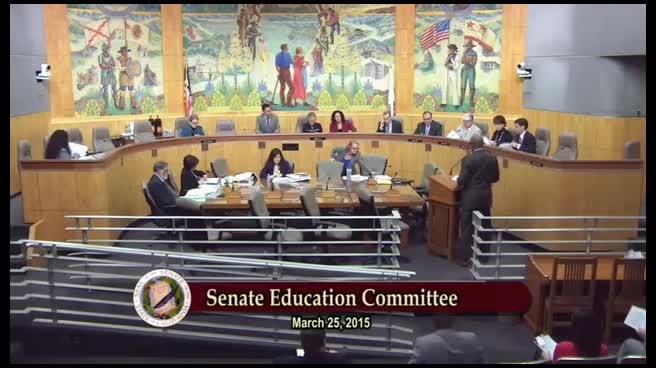


Bill Co-Author(s):