SB 159: California Disabled Veteran Business Enterprise Program: goal achievement.
- Session Year: 2015-2016
- House: Senate
- Latest Version Date: 2016-08-19
Existing law establishes statewide participation goals that apply to the overall dollar amount expended each year by an awarding department, as defined, to facilitate the participation of disabled veteran business enterprises in state contracts, and establishes the California Disabled Veteran Business Enterprise Program for this purpose. Existing law requires the Department of General Services to make available a report on contracting activity containing specified information, including a statistical summary detailing each awarding departments goal achievement under the California Disabled Veteran Business Enterprise Program and a statewide total of those goals.
This bill would specify that an awarding departments goal achievement under the California Disabled Veteran Business Enterprise Program, and statewide total of those goals, be measured as specified. The bill would also make a legislative finding that this bill is clarifying and declaratory of existing law.
This bill would incorporate additional changes to Section 10111 of the Public Contract Code proposed by SB 1219 that would become operative if this bill and SB 1219 are enacted and this bill is enacted last.
This bill would declare that it is to take effect immediately as an urgency statute.
Existing law establishes statewide participation goals that apply to the overall dollar amount expended each year by an awarding department, as defined, to facilitate the participation of disabled veteran business enterprises in state contracts, and establishes the California Disabled Veteran Business Enterprise Program for this purpose. Existing law requires the Department of General Services to make available a report on contracting activity containing specified information, including a statistical summary detailing each awarding departments goal achievement under the California Disabled Veteran Business Enterprise Program and a statewide total of those goals.
This bill would specify that an awarding departments goal achievement under the California Disabled Veteran Business Enterprise Program, and statewide total of those goals, be measured as specified. The bill would also make a legislative finding that this bill is clarifying and declaratory of existing law.
Existing law provides for various programs to encourage the participation of small businesses, as certified by the Department of General Services, in state agency contracts, and sets forth the duties of the Office of Small Business and Disabled Veteran Business Enterprise Services in this regard.
This bill would make nonsubstantive changes to that provision.
Commencing January 1, 2007, the department shall make available a report on contracting activity containing the following information:
(a)A listing of consulting services contracts that the state has entered into during the previous fiscal year. The listing shall include the following:
(1)The name and identification number of each contractor.
(2)The type of bidding entered into, the number of bidders, whether the low bidder was accepted, and if the low bidder was not accepted, an explanation of why another contractor was selected.
(3)The amount of the contract price.
(4)Whether the contract was a noncompetitive bid contract, and why the contract was a noncompetitive bid contract.
(5)Justification for entering into each consulting services contract.
(6)The purpose of the contract and the potential beneficiaries.
(7)The date when the initial contract was signed, and the date when the work began and was completed.
(b)The report shall also include a separate listing of consultant contracts completed during that fiscal year, with the same information specified in subdivision (a).
(c)The information specified in subdivisions (a) and (b) shall also include a list of any contracts underway during that fiscal year on which a change was made regarding the following:
(1)The completion date of the contract.
(2)The amount of money to be received by the contractor, if it exceeds 3 percent of the original contract price.
(3)The purpose of the contract or duties of the contractor. A brief explanation shall be given if the change in purpose is significant.
(d)The level of participation, by agency, of disabled veteran business enterprises in statewide contracting and shall include dollar values of contract award for the following categories:
(1)Construction.
(2)Architectural, engineering, and other professional services.
(3)Procurement of materials, supplies, and equipment.
(4)Information technology procurements.
Additionally, the report shall include a statistical summary detailing each awarding departments goal achievement and a statewide total of those goals. An awarding departments goal achievement is to be measured pursuant to subdivision (a) of Section 999.2 of the Military and Veterans Code and subdivision (c) of Section 10115 of this code.
(e)The level of participation by small business in state contracting including:
(1)Upon request, an up-to-date list of eligible small business bidders by general procurement and construction contract categories, noting company names and addresses and also noting which small businesses also qualify as microbusinesses.
(2)By general procurement and construction contract categories, statistics comparing the small business and microbusiness contract participation dollars to the total state contract participation dollars.
(3)By awarding department and general procurement and construction categories, statistics comparing the small business and microbusiness contract participation dollars to the total state contract participation dollars.
(4)Any recommendations for changes in statutes or state policies to improve opportunities for small businesses and microbusinesses.
(5)A statistical summary of small businesses and microbusinesses certified for state contracting by the number of employees at the business for each of the following categories: 05, 2650, 5175, and 76100.
(6)To the extent feasible, beginning in the year 2008, the number of contracts awarded by the department in the categories specified in paragraph (5).
(7)The number of contracts and dollar amounts awarded annually pursuant to Section 14838.5 of the Government Code to small businesses, microbusinesses, and disabled veteran business enterprises.
(f)The level of participation of business enterprises, by race, ethnicity, and gender of the owner, in contracts to the extent that the information has been voluntarily reported to the department. In addition, the report shall contain the levels of participation of business enterprises, by race, ethnicity, and gender of the owner, and whether the business is a lesbian, gay, bisexual, or transgender owned business for the following categories of contracts, to the extent that the information has been voluntarily reported to the department:
(1)Construction.
(2)Purchases of materials, supplies, or equipment.
(3)Professional services.
(g)In the years 2011 and 2012, any errors reported to the department by an awarding agency as required by Sections 10302, 10344, and 12104.5, in the previous fiscal year.
(h)The amendments made to this section by Chapter 861 of the Statutes of 2012 shall apply on and after January 1, 2013.
SEC. 1.5.Section 10111 of the Public Contract Code is amended to read:10111.Commencing January 1, 2007, the department shall make available a report on contracting activity containing the following information:
(a)A listing of consulting services contracts that the state has entered into during the previous fiscal year. The listing shall include the following:
(1)The name and identification number of each contractor.
(2)The type of bidding entered into, the number of bidders, whether the low bidder was accepted, and if the low bidder was not accepted, an explanation of why another contractor was selected.
(3)The amount of the contract price.
(4)Whether the contract was a noncompetitive bid contract, and why the contract was a noncompetitive bid contract.
(5)Justification for entering into each consulting services contract.
(6)The purpose of the contract and the potential beneficiaries.
(7)The date when the initial contract was signed, and the date when the work began and was completed.
(b)The report shall also include a separate listing of consultant contracts completed during that fiscal year, with the same information specified in subdivision (a).
(c)The information specified in subdivisions (a) and (b) shall also include a list of any contracts underway during that fiscal year on which a change was made regarding the following:
(1)The completion date of the contract.
(2)The amount of money to be received by the contractor, if it exceeds 3 percent of the original contract price.
(3)The purpose of the contract or duties of the contractor. A brief explanation shall be given if the change in purpose is significant.
(d)The level of participation, by agency, of disabled veteran business enterprises in statewide contracting and shall include dollar values of contract award for the following categories:
(1)Construction.
(2)Architectural, engineering, and other professional services.
(3)Procurement of materials, supplies, and equipment.
(4)Information technology procurements.
Additionally, the report shall include a statistical summary detailing each awarding departments goal achievement and a statewide total of those goals. An awarding departments goal achievement is to be measured pursuant to subdivision (a) of Section 999.2 of the Military and Veterans Code and subdivision (c) of Section 10115 of this code.
(e)The level of participation by small business in state contracting including:
(1)Upon request, an up-to-date list of eligible small business bidders by general procurement and construction contract categories, noting company names and addresses and also noting which small businesses also qualify as microbusinesses.
(2)By general procurement and construction contract categories, statistics comparing the small business and microbusiness contract participation dollars to the total state contract participation dollars.
(3)By awarding department and general procurement and construction categories, statistics comparing the small business and microbusiness contract participation dollars to the total state contract participation dollars.
(4)Any recommendations for changes in statutes or state policies to improve opportunities for small businesses and microbusinesses.
(5)A statistical summary of small businesses and microbusinesses certified for state contracting by the number of employees at the business for each of the following categories: 05, 2650, 5175, and 76100.
(6)To the extent feasible, beginning in the year 2008, the number of contracts awarded by the department in the categories specified in paragraph (5).
(7)The number of contracts and dollar amounts awarded annually pursuant to Section 14838.5 of the Government Code to small businesses, microbusinesses, and disabled veteran business enterprises.
(f)The level of participation of business enterprises, by race, ethnicity, and gender of the owner, in contracts to the extent that the information has been voluntarily reported to the department. In addition, the report shall contain the levels of participation of business enterprises, by race, ethnicity, and gender of the owner, and whether the business is a lesbian, gay, bisexual, or transgender owned business for the following categories of contracts, to the extent that the information has been voluntarily reported to the department:
(1)Construction.
(2)Purchases of materials, supplies, or equipment.
(3)Professional services.
(g)In the years 2011 and 2012, any errors reported to the department by an awarding agency as required by Sections 10302, 10344, and 12104.5, in the previous fiscal year.
(h)The level of participation by employment social enterprises in state contracting, including the following:
(1)Upon request, an up-to-date list of eligible employment social enterprises bidders by general procurement and construction contract categories.
(2)By general procurement and construction contract categories, statistics comparing the employment social enterprises contract participation dollars to the total state contract participation dollars.
(3)By awarding department and general procurement and construction categories, statistics comparing the employment social enterprises contract participation dollars to the total state contract participation dollars.
(4)Any recommendations for changes in statutes or state policies to improve opportunities for employment social enterprises.
(5)The aggregate number of employees participating in employment social enterprises and verification of on-the-job and life skills training identified in subparagraph (D) of paragraph (3) of subdivision (d) of Section 14837 of the Government Code. This information shall be reported by categories, as established by the department.
(h)
(i)The amendments made to this section by the act adding this subdivision Chapter 861 of the Statutes of 2012 shall apply on and after January 1, 2013.
SEC. 2.The Legislature finds and declares that the amendments made by this act to paragraph (4) of subdivision (d) of Section 10111 of the Public Contract Code are clarifying and declaratory of existing law.
SEC. 3.This act is an urgency statute necessary for the immediate preservation of the public peace, health, or safety within the meaning of Article IV of the Constitution and shall go into immediate effect. The facts constituting the necessity are:
(1)California State Auditor Report 2013-115 on the Disabled Veteran Business Enterprise (DVBE) Program found that during the 201213 fiscal year, 83 percent of the DVBE contract award amounts went to only 30 DVBE firms and that a lack of standardized reporting by awarding agencies may distort an assessment of whether the program is meeting the legislative intent.
(2)The California State Auditors Office recommended that in order to ensure accuracy and consistency in reporting requirements for the DVBE Program, it is necessary for the Legislature to clarify that an awarding departments goal achievement under the DVBE Program is to be measured by the overall dollar amount expended each fiscal year.
(3)Since the DVBE Program comprises of a minimum of 3 percent of all state contracts awarded each fiscal year, which, according to the Department of General Services, was over $299 million for the 201314 fiscal year, the sheer magnitude of the program necessitates urgency in establishing accurate and consistent reporting across all awarding departments.
(4)For the above-mentioned reasons, it is necessary that this bill take effect immediately.
SEC. 3.Section 1.5 of this bill incorporates amendments to Section 10111 of the Public Contract Code proposed by both this bill and Senate Bill 1219. It shall only become operative if (1) both bills are enacted and become effective on or before January 1, 2017, (2) each bill amends Section 10111 of the Public Contract Code, and (3) this bill is enacted after Senate Bill 1219, in which case Section 1 of this bill shall not become operative.
Commencing January 1, 2007, the department shall make available a report on contracting activity containing the following information:
(a)A listing of consulting services contracts that the state has entered into during the previous fiscal year. The listing shall include the following:
(1)The name and identification number of each contractor.
(2)The type of bidding entered into, the number of bidders, whether the low bidder was accepted, and if the low bidder was not accepted, an explanation of why another contractor was selected.
(3)The amount of the contract price.
(4)Whether the contract was a noncompetitive bid contract, and why the contract was a noncompetitive bid contract.
(5)Justification for entering into each consulting services contract.
(6)The purpose of the contract and the potential beneficiaries.
(7)The date when the initial contract was signed, and the date when the work began and was completed.
(b)The report shall also include a separate listing of consultant contracts completed during that fiscal year, with the same information specified in subdivision (a).
(c)The information specified in subdivisions (a) and (b) shall also include a list of any contracts underway during that fiscal year on which a change was made regarding the following:
(1)The completion date of the contract.
(2)The amount of money to be received by the contractor, if it exceeds 3 percent of the original contract price.
(3)The purpose of the contract or duties of the contractor. A brief explanation shall be given if the change in purpose is significant.
(d)The level of participation, by agency, of disabled veteran business enterprises in statewide contracting and shall include dollar values of contract award for the following categories:
(1)Construction.
(2)Architectural, engineering, and other professional services.
(3)Procurement of materials, supplies, and equipment.
(4)Information technology procurements.
Additionally, the report shall include a statistical summary detailing each awarding departments goal achievement and a statewide total of those goals. An awarding departments goal achievement is to be measured pursuant to subdivision (a) of Section 999.2 of the Military and Veterans Code and subdivision (c) of Section 10115 of this code.
(e)The level of participation by small business in state contracting including:
(1)Upon request, an up-to-date list of eligible small business bidders by general procurement and construction contract categories, noting company names and addresses and also noting which small businesses also qualify as microbusinesses.
(2)By general procurement and construction contract categories, statistics comparing the small business and microbusiness contract participation dollars to the total state contract participation dollars.
(3)By awarding department and general procurement and construction categories, statistics comparing the small business and microbusiness contract participation dollars to the total state contract participation dollars.
(4)Any recommendations for changes in statutes or state policies to improve opportunities for small businesses and microbusinesses.
(5)A statistical summary of small businesses and microbusinesses certified for state contracting by the number of employees at the business for each of the following categories: 05, 2650, 5175, and 76100.
(6)To the extent feasible, beginning in the year 2008, the number of contracts awarded by the department in the categories specified in paragraph (5).
(7)The number of contracts and dollar amounts awarded annually pursuant to Section 14838.5 of the Government Code to small businesses, microbusinesses, and disabled veteran business enterprises.
(f)The level of participation of business enterprises, by race, ethnicity, and gender of the owner, in contracts to the extent that the information has been voluntarily reported to the department. In addition, the report shall contain the levels of participation of business enterprises, by race, ethnicity, and gender of the owner, and whether the business is a lesbian, gay, bisexual, or transgender owned business for the following categories of contracts, to the extent that the information has been voluntarily reported to the department:
(1)Construction.
(2)Purchases of materials, supplies, or equipment.
(3)Professional services.
(g)In the years 2011 and 2012, any errors reported to the department by an awarding agency as required by Sections 10302, 10344, and 12104.5, in the previous fiscal year.
(h)The amendments made to this section by Chapter 861 of the Statutes of 2012 shall apply on and after January 1, 2013.
SEC. 2.The Legislature finds and declares that the amendments made by this act to Section 10111 of the Public Contract Code are clarifying and declaratory of existing law.
SEC. 3.This act is an urgency statute necessary for the immediate preservation of the public peace, health, or safety within the meaning of Article IV of the Constitution and shall go into immediate effect. The facts constituting the necessity are:
(1)California State Auditor Report 2013-115 on the Disabled Veteran Business Enterprise (DVBE) Program found that during the 201213 fiscal year, 83 percent of the DVBE contract award amounts went to only 30 DVBE firms and that a lack of standardized reporting by awarding agencies may distort an assessment of whether the program is meeting the legislative intent.
(2)The California State Auditors Office recommended that in order to ensure accuracy and consistency in reporting requirements for the DVBE Program, it is necessary for the Legislature to clarify that an awarding departments goal achievement under the DVBE Program is to be measured by the overall dollar amount expended each fiscal year.
(3)Since the DVBE Program comprises of a minimum of 3 percent of all state contracts awarded each fiscal year, which, according to the Department of General Services, was over $299 million for the 201314 fiscal year, the sheer magnitude of the program necessitates urgency in establishing accurate and consistent reporting across all awarding departments.
(4)For the above-mentioned reasons, it is necessary that this bill take effect immediately.
Commencing January 1, 2007, the department shall make available a report on contracting activity containing the following information:
(a)A listing of consulting services contracts that the state has entered into during the previous fiscal year. The listing shall include the following:
(1)The name and identification number of each contractor.
(2)The type of bidding entered into, the number of bidders, whether the low bidder was accepted, and if the low bidder was not accepted, an explanation of why another contractor was selected.
(3)The amount of the contract price.
(4)Whether the contract was a noncompetitive bid contract, and why the contract was a noncompetitive bid contract.
(5)Justification for entering into each consulting services contract.
(6)The purpose of the contract and the potential beneficiaries.
(7)The date when the initial contract was signed, and the date when the work began and was completed.
(b)The report shall also include a separate listing of consultant contracts completed during that fiscal year, with the same information specified in subdivision (a).
(c)The information specified in subdivisions (a) and (b) shall also include a list of any contracts underway during that fiscal year on which a change was made regarding the following:
(1)The completion date of the contract.
(2)The amount of money to be received by the contractor, if it exceeds 3 percent of the original contract price.
(3)The purpose of the contract or duties of the contractor. A brief explanation shall be given if the change in purpose is significant.
(d)The level of participation, by agency, of disabled veteran business enterprises in statewide contracting and shall include dollar values of contract award for the following categories:
(1)Construction.
(2)Architectural, engineering, and other professional services.
(3)Procurement of materials, supplies, and equipment.
(4)Information technology procurements.
Additionally, the report shall include a statistical summary detailing each awarding departments goal achievement and a statewide total of those goals. An awarding departments goal achievement is to be measured pursuant to subdivision (a) of Section 999.2 of the Military and Veterans Code and subdivision (c) of Section 10115 of this code.
(e)The level of participation by small business in state contracting including:
(1)Upon request, an up-to-date list of eligible small business bidders by general procurement and construction contract categories, noting company names and addresses and also noting which small businesses also qualify as microbusinesses.
(2)By general procurement and construction contract categories, statistics comparing the small business and microbusiness contract participation dollars to the total state contract participation dollars.
(3)By awarding department and general procurement and construction categories, statistics comparing the small business and microbusiness contract participation dollars to the total state contract participation dollars.
(4)Any recommendations for changes in statutes or state policies to improve opportunities for small businesses and microbusinesses.
(5)A statistical summary of small businesses and microbusinesses certified for state contracting by the number of employees at the business for each of the following categories: 05, 2650, 5175, and 76100.
(6)To the extent feasible, beginning in the year 2008, the number of contracts awarded by the department in the categories specified in paragraph (5).
(7)The number of contracts and dollar amounts awarded annually pursuant to Section 14838.5 of the Government Code to small businesses, microbusinesses, and disabled veteran business enterprises.
(f)The level of participation of business enterprises, by race, ethnicity, and gender of the owner, in contracts to the extent that the information has been voluntarily reported to the department. In addition, the report shall contain the levels of participation of business enterprises, by race, ethnicity, and gender of the owner, and whether the business is a lesbian, gay, bisexual, or transgender owned business for the following categories of contracts, to the extent that the information has been voluntarily reported to the department:
(1)Construction.
(2)Purchases of materials, supplies, or equipment.
(3)Professional services.
(g)In the years 2011 and 2012, any errors reported to the department by an awarding agency as required by Sections 10302, 10344, and 12104.5, in the previous fiscal year.
(h)The amendments made to this section by the act adding this subdivision Chapter 861 of the Statutes of 2012 shall apply on and after January 1, 2013.
SEC. 2.The Legislature finds and declares that the amendments made by this act to Section 10111 of the Public Contract Code are clarifying and declaratory of existing law.
SECTION 1.Section 14839 of the Government Code is amended to read:14839.There is hereby established within the department the Office of Small Business and Disabled Veteran Business Enterprise Services. The duties of the office shall include:
(a)Compiling and maintaining a comprehensive bidders list of qualified small businesses and disabled veteran business enterprises, and noting which small businesses also qualify as microbusinesses.
(b)Coordinating with the Federal Small Business Administration, the Minority Business Development Agency, and the Office of Small Business Development of the Department of Economic and Business Development.
(c)Providing technical and managerial aids to small businesses, microbusinesses, and disabled veteran business enterprises by conducting workshops on matters in connection with government procurement and contracting.
(d)Assisting small businesses, microbusinesses, and disabled veteran business enterprises in complying with the procedures for bidding on state contracts.
(e)Working with appropriate state, federal, local, and private organizations and business enterprises in disseminating information on bidding procedures and opportunities available to small businesses, microbusinesses, and disabled veteran business enterprises.
(f)Making recommendations to the department and other state agencies for simplification of specifications and terms in order to increase the opportunities for small business, microbusiness, and disabled veteran business enterprise participation.
(g)Developing, by regulation, other programs and practices that are reasonably necessary to aid and protect the interest of small businesses, microbusinesses, and disabled veteran business enterprises in contracting with the state.
(h)Making efforts to develop, in cooperation with associations representing counties, cities, and special districts, a core statewide small business certification application that may be adopted by all participating entities, with any supplemental provisions to be added as necessary by the respective entities.
(i)The information furnished by each contractor requesting a small business or microbusiness preference shall be under penalty of perjury.
There is hereby established within the department the Office of Small Business and Disabled Veteran Business Enterprise Services. The duties of the office shall include:
(a)Compiling and maintaining a comprehensive bidders list of qualified small businesses and disabled veteran business enterprises, and noting which small businesses also qualify as microbusinesses.
(b)Coordinating with the Federal Small Business Administration, the Minority Business Development Agency, and the Office of Small Business Development of the Department of Economic and Business Development.
(c)Providing technical and managerial aids to small businesses, microbusinesses, and disabled veteran business enterprises, enterprises by conducting workshops on matters in connection with government procurement and contracting.
(d)Assisting small businesses, microbusinesses, and disabled veteran business enterprises, enterprises in complying with the procedures for bidding on state contracts.
(e)Working with appropriate state, federal, local, and private organizations and business enterprises in disseminating information on bidding procedures and opportunities available to small businesses, microbusinesses, and disabled veteran business enterprises.
(f)Making recommendations to the department and other state agencies for simplification of specifications and terms in order to increase the opportunities for small business, microbusiness, and disabled veteran business enterprise participation.
(g)Developing, by regulation, other programs and practices that are reasonably necessary to aid and protect the interest of small businesses, microbusinesses, and disabled veteran business enterprises in contracting with the state.
(h)Making efforts to develop, in cooperation with associations representing counties, cities, and special districts, a core statewide small business certification application that may be adopted by all participating entities, with any supplemental provisions to be added as necessary by the respective entities.
(i)The information furnished by each contractor requesting a small business or microbusiness preference shall be under penalty of perjury.
|
Date
|
Status
|
|---|---|
| Aug 30, 2016 | Ordered to third reading. |
| Aug 30, 2016 | From inactive file. |
| Aug 29, 2016 | Notice of intention to remove from inactive file given by Assembly Member Calderon. |
| Aug 22, 2016 | Ordered to inactive file on request of Assembly Member Calderon. |
| Aug 19, 2016 | Read third time and amended. (Ayes 73. Noes 0. Page 5947.) |
| Aug 19, 2016 | Ordered to third reading. |
| Aug 19, 2016 | Read third time and amended. |
| Jun 16, 2016 | Read second time. Ordered to third reading. |
| Jun 15, 2016 | From committee: Do pass. (Ayes 8. Noes 0.) (June 14). |
| Jun 24, 2015 | Read second time and amended. Re-referred to Com. on V.A. |
| Jun 23, 2015 | From committee: Do pass as amended and re-refer to Com. on V.A. (Ayes 9. Noes 0.) (June 23). |
| Jun 10, 2015 | June 23 set for first hearing canceled at the request of author. |
| Jun 4, 2015 | Referred to Coms. on J., E.D., & E. and V.A. |
| May 22, 2015 | Read third time. Passed. (Ayes 38. Noes 0. Page 1071.) Ordered to the Assembly. |
| May 22, 2015 | In Assembly. Read first time. Held at Desk. |
| May 22, 2015 | Read third time. Passed. (Ayes 38. Noes 0.) Ordered to the Assembly. |
| May 14, 2015 | Read second time. Ordered to consent calendar. |
| May 13, 2015 | From committee: Do pass. Ordered to consent calendar. (Ayes 5. Noes 0. Page 985.) (May 12). |
| May 13, 2015 | From committee: Do pass. Ordered to consent calendar. (Ayes 5. Noes 0.) (May 12). |
| Apr 30, 2015 | Set for hearing May 12. |
| Apr 28, 2015 | From committee: Do pass and re-refer to Com. on V.A. with recommendation: To consent calendar. (Ayes 7. Noes 0. Page 795.) (April 28). Re-referred to Com. on V.A. |
| Apr 2, 2015 | Set for hearing April 28. |
| Mar 25, 2015 | Re-referred to Coms. on G.O. and V.A. |
| Mar 23, 2015 | From committee with author's amendments. Read second time and amended. Re-referred to Com. on RLS. |
| Feb 19, 2015 | Referred to Com. on RLS. |
| Feb 4, 2015 | From printer. May be acted upon on or after March 6. |
| Feb 3, 2015 | Introduced. Read first time. To Com. on RLS. for assignment. To print. |
|
Date
|
Description
|
Location
|
Votes
|
|
|---|---|---|---|---|
| Aug 19, 2016 | SB 159 Nielsen Third Reading Urgency Amendment Set #1 | Assembly Floor |
Passed |
|
| Jun 14, 2016 | Do pass. | Assembly Standing Committee on Veterans Affairs |
Passed |
|
| Jun 23, 2015 | Do pass as amended and be re-referred to the Committee on [Veterans Affairs] | Assembly Standing Committee on Jobs, Economic Development, and the Economy |
Passed |
|
| May 22, 2015 | Consent Calendar 2nd SB159 Nielsen | Senate Floor |
Passed |
|
| May 12, 2015 | Do pass and be ordered to the Consent Calendar | Senate Standing Committee on Veterans Affairs |
Passed |
|
| Apr 28, 2015 | Do pass, but first be re-referred to the Committee on [Veterans Affairs] with the recommendation: To Consent Calendar | Senate Standing Committee on Governmental Organization |
Passed |
This list shows positions taken on this bill by organizations on the date displayed, which is linked to the original source.
Positions by individuals are not included.
SENATE THIRD READING
STR Bill Id:SB 159
Author:(Nielsen)
As Amended Ver:August 19, 2016
Majority vote
SENATE VOTE: 38-0
Committee | Votes | Ayes | Noes |
Jobs | 9-0 | Eduardo Garcia, Kim, Brough, Brown, Chau, Chu, Gipson, Irwin, Mathis | |
Veterans Affairs | 8-0 | Irwin, Chávez, Achadjian, Alejo, Brown, Daly, Frazier, Salas |
SUMMARY: Clarifies the metrics to be used when calculating the 3% procurement participation goal for disabled veteran business enterprises (DVBEs). The bill includes legislative findings that these changes are declaratory of existing law. The bill also includes chaptering provisions in the case that this measure and SB 1219 are both enacted.
EXISTING LAW:
- Establishes the California Disabled Veteran Business Enterprise Program (DVBE Program), administered by Department of General Services (DGS), for the purpose of addressing the special needs of disabled veterans seeking rehabilitation and training through entrepreneurship, and to recognize the sacrifices California's disabled veterans made during their military service. Contracts for professional bond services are administered through the State Treasurer's Office.
- Applies the 3% DVBE participation goal on each awarding state agency, department, officer, and any other state entity that enters into a contract using state funds for construction, professional services, materials, supplies, equipment, alteration, repair, or improvement. Contracts with a DVBE for equipment rentals do not count toward the goal.
- Defines the following terms:
- A DVBE contractor, subcontractor, or supplier is any person or entity that has been certified by the administering agency and that performs a commercially useful function, as defined.
- A disabled veteran is a veteran of the military, naval, or air service of the United States who has a service-connected disability of at least 10% and who is domiciled in the state.
- A DVBE is a business certified by the administering agency as meeting all of the following requirements:
- The legal structure of the business is a:
- Sole proprietorship with at least 51% owned by one or more disabled veterans;
- Publicly owned business with at least 51% of its stock unconditionally owned by one or more disabled veterans;
- Subsidiary that is wholly owned by a parent corporation, but only if at least 51% of the voting stock of the parent corporation is unconditionally owned by one or more disabled veterans; or
- Joint venture in which at least 51% of the joint venture's management, control, and earnings are held by one or more disabled veterans.
- The management and control of the daily business operations are by one or more disabled veterans. The disabled veterans who exercise management and control are not required to be the same disabled veterans as the owners of the business.
- It has a home office located in the United States, which is not a branch or subsidiary of a foreign corporation, foreign firm, or other foreign-based business.
- The legal structure of the business is a:
- Requires DGS to collect information from awarding state departments on the level of DVBE procurement participation by contract value awarded and a statistical summary detailing each awarding department and the state's progress in achieving the 3% procurement participation goal for DVBEs.
FISCAL EFFECT: None
COMMENTS: The DVBE Program was established in 1989 for the purpose of facilitating state contracting opportunities among businesses owned by disabled veterans. Since 2000, the 3% procurement participation goal has been met only five times. All five of those years have been during the most recent report periods. While this should be an indication of more effective program implementation, there have also been growing concerns over the accuracy of state agency reporting. Most recently, the California State Auditor issued a report which found significant reporting and management deficiencies in the manner state agencies were implementing the DVBE Program. Among other issues, was the inconsistent manner in which state agencies calculated and reported DVBE participation data to DGS for inclusion in the state consolidated report on procurement.
This bill clarifies that the 3% goal is to be based on the total amount of dollars actually expended by each agency and received by the DVBE during the fiscal year.
The policy committee analysis includes additional background on the Small Business Procurement and Contract Act, current DVBE Program activity, previous legislative efforts to improve program accountability, recommendations from the 2014 State Audit, and related legislation.
The DVBE Program: The 3% DVBE procurement participation goal is applied to the state agency or department's overall contracting activities in the given fiscal year and may be achieved by awarding state contracts to DVBEs as prime contractors or when DVBEs are used as a subcontractor.
Awarding departments have an option of including DVBE participation in every contract or making alternative arrangements, as long as the 3% objective is met at the end of the fiscal year. Each agency and department is required to designate a small business and DVBE contracting liaison to facilitate it in meeting the 3% DVBE goal and the 25% small business and microbusiness goal. Approximately 90% of DVBEs also hold a small business or microbusiness certification.
Departments also have the option of offering a 1% to 5% DVBE contracting incentive to assist bidders in helping to meet the state DVBE goal. Although not currently being utilized, bidders that are unable or unwilling to include a DVBE in a contract also have the option of submitting a DGS approved utilization plan that commits the businesses to using DVBEs in the future. DGS is authorized to audit businesses that submit utilization plans to ensure compliance.
State departments that fail to meet the annual 3% goal can have their delegated contracting authority removed, although DGS has never removed program authority solely based on an agency or department's failure to meet its DVBE contracting goal.
DGS has a range of responsibilities relating to the implementation of the DVBE Program including:
- Certification of DVBEs (1,537 DVBEs certified in 2013-14).
- Certification of small businesses and microbusinesses (1,289 small businesses and microbusinesses certified in 2013-14).
- Outreach to the potential bidders and the veteran community (150 events in Fiscal Year (FY) 2013-14).
- Marketing of the DVBE program to state agencies.
- Consulting with the California Procurement Contracting Academy on the DVBE training of state contracting staff.
- Preparation of an annual consolidated report on DVBE, small business, and microbusiness participation within state contracting activities.
- Program oversight to identify abuses by bidders and failures to preform by state agencies.
Below are charts displaying three years of DVBE participation rates. The charts include information on mandatory reporting entities and all reporting entities. Under both reporting metrics, it appears that the state consistently met its DVBE procurement participation goals for the report years.
DVBE Three-Year Contracting Activity – Mandated Agencies | ||||
Fiscal Year | Total Contract Dollars | Total DVBE Dollars | Total DVBE Percent | Total DVBE Contracts |
2013-14 | $6,566,406,979 | $241,002,566 | 3.67% | 12,777 |
2012-13 | $7,151,257,013 | $216,903,765 | 3.03% | 14,907 |
2011-12 | $7,173,594,329 | $340,156,464 | 4.74% | 16,246 |
Average | $6,963,752,774 | $266,020,932 | 3.82% | 14,643 |
2013-14 DGS Consolidated Report | ||||
DVBE Three-Year Contracting Activity – All Reporting Agencies | ||||
Fiscal Year | Total Contract Dollars | Total DVBE Dollars | Total DVBE Percent | Total DVBE Contracts |
2013-14 | $8,233,113,660 | $299,683,794 | 3.64% | 14,305 |
2012-13 | $8,573,498,623 | $267,285,324 | 3.12% | 16,776 |
2011-12 | $8,508,477,596 | $373,936,941 | 4.39% | 17,835 |
Average | $8,438,363,293 | $313,635,353 | 3.7% | 16,305 |
2013-14 DGS Consolidated Report | ||||
While the year-to-year percentages are useful to review, it is also important to note that consistency among which agencies report varies. As an example, in 2011-12, 86% of the mandatory reporting entities reported their contracting activity to DGS. In 2012-13, 79% reported their contracting activity and in 2013-14, 80% reported.
Further challenges were identified in a 2014 State Audit [2013-115], which reported significant inconsistencies in the reporting protocols among different state agencies. Some agencies reported only contracts where the DVBE served as the prime contractor and other departments reported both DVBE prime and subcontracts. Some awarding departments only reported DVBE participation based on the initial contract bid, while others more accurately reported the actual amount paid to the DVBE.
This bill clarifies one of the central issues of the 2014 State Audit by cross-referencing the 3% goal provisions with the reporting requirements.
Analysis Prepared by: Toni Symonds / J., E.D., & E. / (916) 319-2090 FN: 0004546
SENATE THIRD READING
STR Bill Id:SB 159
Author:(Nielsen)
As Amended Ver:June 24, 2015
2/3 vote. Urgency
SENATE VOTE: 38-0
Committee | Votes | Ayes | Noes |
Veterans Affairs | 8-0 | Irwin, Chávez, Achadjian, Alejo, Brown, Daly, Frazier, Salas | |
Jobs | 9-0 | Eduardo Garcia, Kim, Brough, Brown, Chau, Chu, Gipson, Irwin, Mathis |
|
SUMMARY: Clarifies the metrics to be used when calculating the 3% procurement participation goal for disabled veteran business enterprises (DVBEs). The bill includes legislative findings that these changes are declaratory of existing law. The bill is also an urgency measure.
EXISTING LAW:
- Establishes the California Disabled Veteran Business Enterprise Program (DVBE Program), administered by Department of General Services (DGS), for the purpose of addressing the special needs of disabled veterans seeking rehabilitation and training through entrepreneurship, and to recognize the sacrifices California's disabled veterans made during their military service. Contracts for professional bond services are administered through the State Treasurer's Office.
- Applies the 3% DVBE participation goal on each awarding state agency, department, officer, and any other state entity that enters into a contract using state funds for construction, professional services, materials, supplies, equipment, alteration, repair, or improvement. Contracts with a DVBE for equipment rentals do not count toward the goal.
- Defines the following terms:
- A DVBE contractor, subcontractor, or supplier is any person or entity that has been certified by the administering agency and that performs a commercially useful function, as defined.
- A disabled veteran is a veteran of the military, naval, or air service of the United States who has a service-connected disability of at least 10% and who is domiciled in the state.
- A DVBE is a business certified by the administering agency as meeting all of the following requirements:
- The legal structure of the business is a:
- Sole proprietorship with at least 51% owned by one or more disabled veterans;
- Publicly owned business with at least 51% of its stock unconditionally owned by one or more disabled veterans;
- Subsidiary that is wholly owned by a parent corporation, but only if at least 51% of the voting stock of the parent corporation is unconditionally owned by one or more disabled veterans; or
- Joint venture in which at least 51% of the joint venture's management, control, and earnings are held by one or more disabled veterans.
- The management and control of the daily business operations are by one or more disabled veterans. The disabled veterans who exercise management and control are not required to be the same disabled veterans as the owners of the business.
- It has a home office located in the United States, which is not a branch or subsidiary of a foreign corporation, foreign firm, or other foreign-based business.
- The legal structure of the business is a:
- Requires DGS to collect information from awarding state departments on the level of DVBE procurement participation by contract value awarded and a statistical summary detailing each awarding department and the state's progress in achieving the 3% procurement participation goal for DVBEs.
FISCAL EFFECT: None
COMMENTS: The DVBE Program was established in 1989 for the purpose of facilitating state contracting opportunities among businesses owned by disabled veterans. Since 2000, the 3% procurement participation goal has been met only five times. All five of those years have been during the most recent report periods. While this should be an indication of more effective program implementation, there have also been growing concerns over the accuracy of state agency reporting. Most recently, the California State Auditor issued a report which found significant reporting and management deficiencies in the manner state agencies were implementing the DVBE Program. Among other issues, was the inconsistent manner in which state agencies calculated and reported DVBE participation data to DGS for inclusion in the state consolidated report on procurement.
This bill clarifies that the 3% goal is to be based on the total amount of dollars actually expended by each agency and received by the DVBE during the fiscal year.
The policy committee analysis includes additional background on the Small Business Procurement and Contract Act, current DVBE Program activity, previous legislative efforts to improve program accountability, recommendations from the 2014 State Audit, and related legislation.
The DVBE Program: The 3% DVBE procurement participation goal is applied to the state agency or department's overall contracting activities in the given fiscal year and may be achieved by awarding state contracts to DVBEs as prime contractors or when DVBEs are used as a subcontractor.
Awarding departments have an option of including DVBE participation in every contract or making alternative arrangements, as long as the 3% objective is met at the end of the fiscal year. Each agency and department is required to designate a small business and DVBE contracting liaison to facilitate it in meeting the 3% DVBE goal and the 25% small business and microbusiness goal. Approximately 90% of DVBEs also hold a small business or microbusiness certification.
Departments also have the option of offering a 1% to 5% DVBE contracting incentive to assist bidders in helping to meet the state DVBE goal. Although not currently being utilized, bidders that are unable or unwilling to include a DVBE in a contract also have the option of submitting a DGS approved utilization plan that commits the businesses to using DVBEs in the future. DGS is authorized to audit businesses that submit utilization plans to ensure compliance.
State departments that fail to meet the annual 3% goal can have their delegated contracting authority removed, although DGS has never removed program authority solely based on an agency or department's failure to meet its DVBE contracting goal.
DGS has a range of responsibilities relating to the implementation of the DVBE Program including:
- Certification of DVBEs (1,537 DVBEs certified in 2013-14).
- Certification of small businesses and microbusinesses (1,289 small businesses and microbusinesses certified in 2013-14).
- Outreach to the potential bidders and the veteran community (150 events in Fiscal Year (FY) 2013-14).
- Marketing of the DVBE program to state agencies.
- Consulting with the California Procurement Contracting Academy on the DVBE training of state contracting staff.
- Preparation of an annual consolidated report on DVBE, small business, and microbusiness participation within state contracting activities.
- Program oversight to identify abuses by bidders and failures to preform by state agencies.
Below are charts displaying three years of DVBE participation rates. The charts include information on mandatory reporting entities and all reporting entities. Under both reporting metrics, it appears that the state consistently met its DVBE procurement participation goals for the report years.
DVBE Three-Year Contracting Activity – Mandated Agencies | ||||
Fiscal Year | Total Contract Dollars | Total DVBE Dollars | Total DVBE Percent | Total DVBE Contracts |
2013-14 | $6,566,406,979 | $241,002,566 | 3.67% | 12,777 |
2012-13 | $7,151,257,013 | $216,903,765 | 3.03% | 14,907 |
2011-12 | $7,173,594,329 | $340,156,464 | 4.74% | 16,246 |
Average | $6,963,752,774 | $266,020,932 | 3.82% | 14,643 |
2013-14 DGS Consolidated Report | ||||
DVBE Three-Year Contracting Activity – All Reporting Agencies | ||||
Fiscal Year | Total Contract Dollars | Total DVBE Dollars | Total DVBE Percent | Total DVBE Contracts |
2013-14 | $8,233,113,660 | $299,683,794 | 3.64% | 14,305 |
2012-13 | $8,573,498,623 | $267,285,324 | 3.12% | 16,776 |
2011-12 | $8,508,477,596 | $373,936,941 | 4.39% | 17,835 |
Average | $8,438,363,293 | $313,635,353 | 3.7% | 16,305 |
2013-14 DGS Consolidated Report | ||||
While the year-to-year percentages are useful to review, it is also important to note that consistency among which agencies report varies. As an example, in 2011-12, 86% of the mandatory reporting entities reported their contracting activity to DGS. In 2012-13, 79% reported their contracting activity and in 2013-14, 80% reported.
Further challenges were identified in a 2014 State Audit [2013-115], which reported significant inconsistencies in the reporting protocols among different state agencies. Some agencies reported only contracts where the DVBE served as the prime contractor and other departments reported both DVBE prime and subcontracts. Some awarding departments only reported DVBE participation based on the initial contract bid, while others more accurately reported the actual amount paid to the DVBE.
This bill clarifies one of the central issues of the 2014 State Audit by cross-referencing the 3% goal provisions with the reporting requirements.
Analysis Prepared by: Toni Symonds / J., E.D., & E. / (916) 319-2090 FN: 0003463
Date of Hearing: June 14, 2016
ASSEMBLY COMMITTEE ON VETERANS AFFAIRS
Jacqui Irwin, Chair
SBPCA Bill Id:SB 159
Author:(Nielsen) – As Amended Ver:June 24, 2015
SENATE VOTE: 38-0
SUBJECT: California Disabled Veteran Business Enterprise Program: goal achievement
SUMMARY: Specifies that an awarding department’s goal achievement under the California Disabled Veteran Business Enterprise Program (DVBE Program), and statewide total of those goals, be measured as specified, and makes a legislative finding that this bill is clarifying and declaratory of existing law.
EXISTING LAW:
- Establishes the California DVBE Program, administered by DGS, for the purpose of addressing the special needs of disabled veterans seeking rehabilitation and training through entrepreneurship, and to recognize the sacrifices California's disabled veterans made during their military service. Contracts for professional bond services are administered through the State Treasurer's Office.
- Applies the 3% DVBE participation goal on each awarding state agency, department, officer, and any other state entity that enters into a contract using state funds for construction, professional services, materials, supplies, equipment, alteration, repair, or improvement. Contracts with a DVBE for equipment rentals do not count toward the goal.
- Defines the following terms:
- A DVBE contractor, subcontractor, or supplier is any person or entity that has been certified by the administering agency and that performs a commercially useful function, as defined.
- A disabled veteran is a veteran of the military, naval, or air service of the U.S. who has a service-connected disability of at least 10% and who is domiciled in the state.
- A DVBE is a business certified by the administering agency as meeting all of the following requirements:
- The legal structure of the business is a:
- Sole proprietorship with at least 51% owned by one or more disabled veterans;
- Publicly owned business with at least 51% of its stock unconditionally owned by one or more disabled veterans;
- Subsidiary that is wholly owned by a parent corporation, but only if at least 51% of the voting stock of the parent corporation is unconditionally owned by one or more disabled veterans; or
- Joint venture in which at least 51% of the joint venture’s management, control, and earnings are held by one or more disabled veterans.
- The management and control of the daily business operations are by one or more disabled veterans. The disabled veterans who exercise management and control are not required to be the same disabled veterans as the owners of the business.
- It has a home office located in the United States, which is not a branch or subsidiary of a foreign corporation, foreign firm, or other foreign-based business.
- The legal structure of the business is a:
- Requires DGS to collect information from awarding state departments on the level of DVBE procurement participation by contract value awarded and a statistical summary detailing each awarding department and the state's progress in achieving the 3% procurement participation goal for DVBEs.
- Requires an awarding state department to require a prime contractor who has committed to using a DVBE subcontractor to certify upon completion of the contract:
- The total amount the prime contractor received under the contract.
- The name and address of the DVBE that participated in the performance of the contract.
- The amount each DVBE subcontractor received from the prime contractor.
- That all required payments under the state contract have been made to the DVBE subcontractor.
- Provides that a person or entity that knowingly provides false information on the DVBE subcontractor certification shall be subject to a civil penalty for each violation in the minimum amount of $2,500 and the maximum amount of $25,000.
FISCAL EFFECT: This bill is not keyed fiscal.
COMMENTS:
While it is mostly clear what the DVBE program does, it remains persistently opaque as to what the purpose and goal of the program is and why it was established.
Is the DVBE program intended to:
- Help disabled veterans who want to start a business?
- Support disabled veteran business owners who have an existing business?
- Employ veterans?
Was the program enacted to:
- Recognize the service and sacrifice of disabled veterans, in other words, a status based program?
- Help disabled veterans whose degree of disability might hinder them from employment?
Without a clear understanding of what the DVBE program is for and why it was created the program will endure challenges. The purpose and goal of the program should drive the structure of the program. For example, if the DVBE program is to help disabled veterans start a business, should there be a point at which the veteran’s business is successful enough that it no longer needs support (such as the small business enterprise program) allowing smaller DVBEs to receive more contracts? There is tension in the structure of the program in that, as noted by the State Auditor, there may be a small number of firms which receive most of the DVBE contracts, there may be very little incentive for state agencies to go with a smaller firm not previously tried, and it may be very challenging for new DVBEs to compete against established ones.
According to the analysis of this bill (paraphrased here) by the Assembly Committee on Jobs, Employment Development, and the Economy, the DVBE Program was established in 1989 for the purpose of facilitating state contracting opportunities among businesses owned by disabled veterans. A 3% DVBE procurement participation goal is applied to the state agency or department's overall contracting activities in the given fiscal year and may be achieved by awarding state contracts to DVBEs as prime contractors or when DVBEs are used as a subcontractor. DGS has a range of responsibilities relating to the implementation of the DVBE Program.
Since 2000, the overall 3% procurement participation goal has been met only five times. State departments that fail to meet their annual 3% goal can have their delegated contracting authority removed, although DGS has never removed program authority solely based on an agency or department's failure to meet its DVBE contracting goal.
2014 Audit of the DVBE Program: Senators Hueso, and former Senator Ron Calderon, requested a comprehensive review of the DVBE program by the California State Auditor. The completed audit was critical of the program in several respects, noting in particular that,
…the data in the State Contract and Procurement Registration System (SCPRS) maintained by General Services provide a strong indicator that only a relatively small subset of DVBE firms enjoy the major part of the State’s business. Specifically, we noted that during fiscal year 2012–13, 83 percent of the DVBE contract award amounts went to only 30 DVBE firms…
…reporting methodologies differ by state agencies on DVBE participation.
The Audit recommended that:
For the DVBE program to financially benefit a broad base of disabled veteran‑owned businesses, the Legislature should enact legislation aimed at increasing the number of those DVBEs that contract with the State, including increasing the amount of the DVBE incentive that awarding departments can apply when considering bids on state contracts…
To provide a more meaningful measure of how well disabled veteran‑owned businesses benefit financially from the DVBE program, the Legislature should amend the DVBE reporting requirements in the Public Contract Code to require that all awarding departments report DVBE participation annually based on amounts paid, and maintain accounting records and certifications from DVBE subcontractors, as applicable, that support the DVBE participation data reported.
Double Referral: This bill was heard in a previous version by the Assembly Committee on Jobs, Economic Development and the Economy where it passed 9-0.
REGISTERED SUPPORT / OPPOSITION:
Support
The American Legion
AMVETS, Department of California
California Association of County Veterans Service Offices
California State Commanders Veterans Council
Disabled Veteran Business Alliance
Military Officers Association of America-California Council
Veterans of Foreign Wars - Department of California
Vietnam Veterans of America - California State Council
Opposition
None on File.
Analysis Prepared by: John Spangler / V.A. / (916) 319-3550
Date of Hearing: June 14, 2016
ASSEMBLY COMMITTEE ON VETERANS AFFAIRS
Jacqui Irwin, Chair
SBPCA Bill Id:SB 159
Author:(Nielsen) – As Amended Ver:June 24, 2015
SENATE VOTE: 38-0
SUBJECT: California Disabled Veteran Business Enterprise Program: goal achievement
SUMMARY: Specifies that an awarding department’s goal achievement under the California Disabled Veteran Business Enterprise Program (DVBE Program), and statewide total of those goals, be measured as specified, and makes a legislative finding that this bill is clarifying and declaratory of existing law.
EXISTING LAW:
- Establishes the California DVBE Program, administered by DGS, for the purpose of addressing the special needs of disabled veterans seeking rehabilitation and training through entrepreneurship, and to recognize the sacrifices California's disabled veterans made during their military service. Contracts for professional bond services are administered through the State Treasurer's Office.
- Applies the 3% DVBE participation goal on each awarding state agency, department, officer, and any other state entity that enters into a contract using state funds for construction, professional services, materials, supplies, equipment, alteration, repair, or improvement. Contracts with a DVBE for equipment rentals do not count toward the goal.
- Defines the following terms:
- A DVBE contractor, subcontractor, or supplier is any person or entity that has been certified by the administering agency and that performs a commercially useful function, as defined.
- A disabled veteran is a veteran of the military, naval, or air service of the U.S. who has a service-connected disability of at least 10% and who is domiciled in the state.
- A DVBE is a business certified by the administering agency as meeting all of the following requirements:
- The legal structure of the business is a:
- Sole proprietorship with at least 51% owned by one or more disabled veterans;
- Publicly owned business with at least 51% of its stock unconditionally owned by one or more disabled veterans;
- Subsidiary that is wholly owned by a parent corporation, but only if at least 51% of the voting stock of the parent corporation is unconditionally owned by one or more disabled veterans; or
- Joint venture in which at least 51% of the joint venture’s management, control, and earnings are held by one or more disabled veterans.
- The management and control of the daily business operations are by one or more disabled veterans. The disabled veterans who exercise management and control are not required to be the same disabled veterans as the owners of the business.
- It has a home office located in the United States, which is not a branch or subsidiary of a foreign corporation, foreign firm, or other foreign-based business.
- The legal structure of the business is a:
- Requires DGS to collect information from awarding state departments on the level of DVBE procurement participation by contract value awarded and a statistical summary detailing each awarding department and the state's progress in achieving the 3% procurement participation goal for DVBEs.
- Requires an awarding state department to require a prime contractor who has committed to using a DVBE subcontractor to certify upon completion of the contract:
- The total amount the prime contractor received under the contract.
- The name and address of the DVBE that participated in the performance of the contract.
- The amount each DVBE subcontractor received from the prime contractor.
- That all required payments under the state contract have been made to the DVBE subcontractor.
- Provides that a person or entity that knowingly provides false information on the DVBE subcontractor certification shall be subject to a civil penalty for each violation in the minimum amount of $2,500 and the maximum amount of $25,000.
FISCAL EFFECT: This bill is not keyed fiscal.
COMMENTS:
While it is mostly clear what the DVBE program does, it remains persistently opaque as to what the purpose and goal of the program is and why it was established.
Is the DVBE program intended to:
- Help disabled veterans who want to start a business?
- Support disabled veteran business owners who have an existing business?
- Employ veterans?
Was the program enacted to:
- Recognize the service and sacrifice of disabled veterans, in other words, a status based program?
- Help disabled veterans whose degree of disability might hinder them from employment?
Without a clear understanding of what the DVBE program is for and why it was created the program will endure challenges. The purpose and goal of the program should drive the structure of the program. For example, if the DVBE program is to help disabled veterans start a business, should there be a point at which the veteran’s business is successful enough that it no longer needs support (such as the small business enterprise program) allowing smaller DVBEs to receive more contracts? There is tension in the structure of the program in that, as noted by the State Auditor, there may be a small number of firms which receive most of the DVBE contracts, there may be very little incentive for state agencies to go with a smaller firm not previously tried, and it may be very challenging for new DVBEs to compete against established ones.
According to the analysis of this bill (paraphrased here) by the Assembly Committee on Jobs, Employment Development, and the Economy, the DVBE Program was established in 1989 for the purpose of facilitating state contracting opportunities among businesses owned by disabled veterans. A 3% DVBE procurement participation goal is applied to the state agency or department's overall contracting activities in the given fiscal year and may be achieved by awarding state contracts to DVBEs as prime contractors or when DVBEs are used as a subcontractor. DGS has a range of responsibilities relating to the implementation of the DVBE Program.
Since 2000, the overall 3% procurement participation goal has been met only five times. State departments that fail to meet their annual 3% goal can have their delegated contracting authority removed, although DGS has never removed program authority solely based on an agency or department's failure to meet its DVBE contracting goal.
2014 Audit of the DVBE Program: Senators Hueso, and former Senator Correa, requested a comprehensive review of the DVBE program by the California State Auditor. The completed audit was critical of the program in several respects, noting in particular that,
…the data in the State Contract and Procurement Registration System (SCPRS) maintained by General Services provide a strong indicator that only a relatively small subset of DVBE firms enjoy the major part of the State’s business. Specifically, we noted that during fiscal year 2012–13, 83 percent of the DVBE contract award amounts went to only 30 DVBE firms…
…reporting methodologies differ by state agencies on DVBE participation.
The Audit recommended that:
For the DVBE program to financially benefit a broad base of disabled veteran‑owned businesses, the Legislature should enact legislation aimed at increasing the number of those DVBEs that contract with the State, including increasing the amount of the DVBE incentive that awarding departments can apply when considering bids on state contracts…
To provide a more meaningful measure of how well disabled veteran‑owned businesses benefit financially from the DVBE program, the Legislature should amend the DVBE reporting requirements in the Public Contract Code to require that all awarding departments report DVBE participation annually based on amounts paid, and maintain accounting records and certifications from DVBE subcontractors, as applicable, that support the DVBE participation data reported.
Double Referral: This bill was heard in a previous version by the Assembly Committee on Jobs, Economic Development and the Economy where it passed 9-0.
REGISTERED SUPPORT / OPPOSITION:
Support
The American Legion
AMVETS, Department of California
California Association of County Veterans Service Offices
California State Commanders Veterans Council
Disabled Veteran Business Alliance
Military Officers Association of America-California Council
Veterans of Foreign Wars - Department of California
Vietnam Veterans of America - California State Council
Opposition
None on File.
Analysis Prepared by: John Spangler / V.A. / (916) 319-3550
SB 159
Page 8
Date of Hearing: June 23, 2015
ASSEMBLY COMMITTEE ON JOBS, ECONOMIC DEVELOPMENT, AND THE ECONOMY
Eduardo Garcia, Chair
SB 159
(Nielsen) – As Amended March 23, 2015
SENATE VOTE: 38-0
SUBJECT: California Disabled Veteran Business Enterprise Program: goal achievement.
SUMMARY: Clarifies the metrics to be used when calculating the 3% procurement participation goal for disabled veteran business enterprises (DVBEs). The bill includes legislative findings that these changes are declaratory of existing law.
EXISTING LAW:
Establishes the California Disabled Veteran Business Enterprise Program (DVBE Program), administered by DGS, for the purpose of addressing the special needs of disabled veterans seeking rehabilitation and training through entrepreneurship, and to recognize the sacrifices California's disabled veterans made during their military service. Contracts for professional bond services are administered through the State Treasurer's Office.
Applies the 3% DVBE participation goal on each awarding state agency, department, officer, and any other state entity that enters into a contract using state funds for construction, professional services, materials, supplies, equipment, alteration, repair, or improvement. Contracts with a DVBE for equipment rentals do not count toward the goal.
Defines the following terms:
A DVBE contractor, subcontractor, or supplier is any person or entity that has been certified by the administering agency and that performs a commercially useful function, as defined.
A disabled veteran is a veteran of the military, naval, or air service of the U.S. who has a service-connected disability of at least 10% and who is domiciled in the state.
A DVBE is a business certified by the administering agency as meeting all of the following requirements:
The legal structure of the business is a:
Sole proprietorship with at least 51% owned by one or more disabled veterans;
Publicly owned business with at least 51% of its stock unconditionally owned by one or more disabled veterans;
Subsidiary that is wholly owned by a parent corporation, but only if at least 51% of the voting stock of the parent corporation is unconditionally owned by one or more disabled veterans; or
Joint venture in which at least 51% of the joint venture’s management, control, and earnings are held by one or more disabled veterans.
The management and control of the daily business operations are by one or more disabled veterans. The disabled veterans who exercise management and control are not required to be the same disabled veterans as the owners of the business.
It has a home office located in the United States, which is not a branch or subsidiary of a foreign corporation, foreign firm, or other foreign-based business.
Requires DGS to collect information from awarding state departments on the level of DVBE procurement participation by contract value awarded and a statistical summary detailing each awarding department and the state's progress in achieving the 3% procurement participation goal for DVBEs.
Requires an awarding state department to require a prime contractor who has committed to using a DVBE subcontractor to certify upon completion of the contract:
The total amount the prime contractor received under the contract.
The name and address of the DVBE that participated in the performance of the contract.
The amount each DVBE subcontractor received from the prime contractor.
That all required payments under the state contract have been made to the DVBE subcontractor.
Provides that a person or entity that knowingly provides false information on the DVBE subcontractor certification shall be subject to a civil penalty for each violation in the minimum amount of $2,500 and the maximum amount of $25,000.
FISCAL EFFECT: None
POLICY ISSUE FRAME:
The DVBE Program was established in 1989 for the purpose of facilitating state contracting opportunities among businesses owned by disabled veterans. Since 2000, the 3% procurement participation goal has been met only five times. All five of those years have been during the most recent report periods. While this should be an indication of more effective program implementation, there have also been growing concerns over the accuracy of state agency reporting. Most recently, the California State Auditor issued a report which found significant reporting and management deficiencies in the manner state agencies were implementing the DVBE Program. Among other issues, was the inconsistent manner in which state agencies calculated and reported DVBE participation data to DGS for inclusion in the state consolidated report on procurement.
This bill clarifies that the 3% goal is to be based on the total amount of dollars actually expended by each agency and received by the DVBE during the fiscal year.
The Comment section of the analysis includes additional background on the Small Business Procurement and Contract Act, current DVBE Program activity, previous legislative efforts to improve program accountability, recommendations from the 2014 State Audit, and related legislation.
COMMENTS:
Author's Purpose: According to the author's statement, "In 1989, the Senate enacted Senate Bill 1517, which established the Disabled Veteran Business Enterprise program and installed the Department of General Services (DGS) as the central administering agency.
From its inception, the program contained a statutory requirement for DGS to report on how well awarding departments, individually and in statewide aggregate, were doing in achieving the program’s 3% participation goals. And those goals are clearly defined in terms of being measured in dollars actually expended under contracts.
But DGS serves as administering agency for several other contracting programs in addition to the DVBE program. Each program is located in different parts of the state codes, and each had its own reporting requirement.
In 2005, the Legislature enacted a bill that pulled the reporting sections away from their statutory locations and co-located them in a new section. This created a consolidated contracting report in which DGS could report on all the programs in one document at one time.
But when the Legislature consolidated the report requirements, it forgot to include statutory references to that pointed back to the original code areas from where the reporting sections originated and draw their meaning and legislative intent.
This has contributed to considerable confusion with DGS’ annual report on DVBE goal achievement. DGS has stated the reporting statute is vague and ambiguous and, therefore, has regularly reported DVBE participation using dollars awarded, which is a much broader and less accurate metric.
SB 159 merely adds the proper references to existing law to clarify that the program reporting metric has always been intended to be the same metric used for measuring actual program participation.
The bill does not change the law. It merely clarifies it ."
Small Business Procurement and Contract Act: The Small Business Procurement and Contract Act, administered through DGS, was implemented more than 30 years ago to establish a small business preference within the state's procurement process that would increase the number of contracts between the state and small businesses. A DBVE component was added in 1989.
The Small Business Procurement and Contract Act states that it is the policy of the State of California to aid the interests of small businesses in order to preserve free competitive enterprise and to ensure that a fair portion of the total purchases and contracts of the state be placed with these enterprises. The statute further states that DVBE participation is strongly encouraged to address the special needs of disabled veterans seeking rehabilitation and training through entrepreneurship, and to recognize the sacrifices of California's disabled military veterans. Statute sets an annual 3% DVBE participation goal and a 25% participation goal for small businesses and microbusinesses was set in 2006 through executive order.
The DVBE Program: The 3% DVBE procurement participation goal is applied to the state agency or department's overall contracting activities in the given fiscal year and may be achieved by awarding state contracts to DVBEs as prime contractors or when DVBEs are used as a subcontractor.
Awarding departments have an option of including DVBE participation in every contract or making alternative arrangements, as long as the 3% objective is met at the end of the fiscal year. Each agency and department is required to designate a small business and DVBE contracting liaison to facilitate it in meeting the 3% DVBE goal and the 25% small business and microbusiness goal. Approximately 90% of DVBEs also hold a small business or microbusiness certification.
Departments also have the option of offering a 1% to 5% DVBE contracting incentive to assist bidders in helping to meet the state DVBE goal. Although not currently being utilized, bidders that are unable or unwilling to include a DVBE in a contract also have the option of submitting a DGS approved utilization plan that commits the businesses to using DVBEs in the future. DGS is authorized to audit businesses that submit utilization plans to ensure compliance.
State departments that fail to meet the annual 3% goal can have their delegated contracting authority removed, although DGS has never removed program authority solely based on an agency or department's failure to meet its DVBE contracting goal.
DGS has a range of responsibilities relating to the implementation of the DVBE Program including:
Certification of DVBEs (1,537 DVBEs certified in 2013-14).
Certification of small businesses and microbusinesses (1,289 small businesses and microbusinesses certified in 2013-14).
Outreach to the potential bidders and the veteran community (150 events in FY 2013-14).
Marketing of the DVBE program to state agencies.
Consulting with the California Procurement Contracting Academy on the DVBE training of state contracting staff.
Preparation of an annual consolidated report on DVBE, small business, and microbusiness participation within state contracting activities.
Program oversight to identify abuses by bidders and failures to preform by state agencies.
Below are charts displaying three years of DVBE participation rates. The charts include information on mandatory reporting entities and all reporting entities. Under both reporting metrics, it appears that the state consistently me its DVBE procurement participation goals for the report years.
DVBE Three-Year Contracting Activity – Mandated Agencies |
||||
Fiscal Year |
Total Contract Dollars |
Total DVBE Dollars |
Total DVBE Percent |
Total DVBE Contracts |
2013-14 |
$6,566,406,979 |
$241,002,566 |
3.67% |
12,777 |
2012-13 |
$7,151,257,013 |
$216,903,765 |
3.03% |
14,907 |
2011-12 |
$7,173,594,329 |
$340,156,464 |
4.74% |
16,246 |
Average |
$6,963,752,774 |
$266,020,932 |
3.82% |
14,643 |
2013-14 DGS Consolidated Report |
||||
DVBE Three-Year Contracting Activity – All Reporting Agencies |
||||
Fiscal Year |
Total Contract Dollars |
Total DVBE Dollars |
Total DVBE Percent |
Total DVBE Contracts |
2013-14 |
$8,233,113,660 |
$299,683,794 |
3.64% |
14,305 |
2012-13 |
$8,573,498,623 |
$267,285,324 |
3.12% |
16,776 |
2011-12 |
$8,508,477,596 |
$373,936,941 |
4.39% |
17,835 |
Average |
$8,438,363,293 |
$313,635,353 |
3.7% |
16,305 |
2013-14 DGS Consolidated Report |
||||
While the year-to-year percentages are useful to review, it is also important to note that consistency among which agencies report varies. As an example, in 2011-12, 86% of the mandatory reporting entities reported their contracting activity to DGS. In 2012-13, 79% reported their contracting activity and in 2013-14, 80% reported.
Further challenges were identified in a 2014 State Audit [2013-115], which reported significant inconsistencies in the reporting protocols among different state agencies. Some agencies reported only contracts where the DVBE served as the prime contractor and other departments reported both DVBE prime and subcontracts. Some awarding departments only reported DVBE participation based on the initial contract bid, while others more accurately reported the actual amount paid to the DVBE.
SB 159 clarifies one of the central issues of the 2014 State Audit by cross-referencing the 3% goal provisions with the reporting requirements.
2014 Audit of the DVBE Program: The DVBE Program is unique in that it is intended as both a reward for their significant sacrifices on behalf of the nation, and as a means to assist disabled veterans establish and grow their own businesses. Over the last decade, the DVBE community has often been critical of the state's oversight of the various contracting departments implementation of the program. Concerns have been raised about poor and inconsistent reporting of data, a lack of effective enforcement tools, and the seemingly limited number of DVBEs that have successfully obtained prime or major subcontracts.
Responding to these and other issues, Senator Hueso, then Chair of the Senate Committee on Veterans Affairs, and former Senator Ron Calderon, requested a comprehensive review of the DVBE program by the California State Auditor. The completed audit was released in February 2014 and it reported the following findings:
The objective of the program "to increase DVBE participation in state procurement," is not appropriately being measured through the current reporting system. The system measurers the award value and not the actual amount DVBEs' receive.
Only a small percentage of certified DVBEs serve as prime contractors. As an example, only 19% of certified DVBEs served as primes and, of those, 30 firms received 83% funding.
There is inadequate documentation by state contracting agencies on DVBE participation.
Reporting methodologies differ by state agencies on DVBE participation.
DGS has inadequate control over the state's procurement vendor, Bidsync.
CalVet needs to take a more active role in working with state agencies and tracking outreach activities.
Based on these findings, the Auditor recommended key actions for the Legislature, DGS, and CalVet. These recommendations focused on better and more consistent reporting including: verification of DVBE status before finalizing the contract, increasing the number of DVBEs that participate in state contracting, better management by the state vendor, and a heightened role and accountability for CalVet. Implementing legislation, SB 839 (Correa) and AB 1735 (Jones-Sawyer), failed to pass fiscal committees in 2014. In January 2015, the State Auditor again highlighted the deficiencies in the DVBE Program and encouraged the Legislature to take action.
SB 159 clarifies that the state must report on the actual amount of proceeds received by DVBEs through state contracts. AB 1218 (Weber), which passed this committee in April 2015, also addresses the 3% calculation discrepancy, as well as:
Improving documentation and administrative review requirements;
Incentivizing the selection of DVBE that haven't previously participated in state contracts and DVBEs with 51% or more veteran workers;
Setting an accountability standard for DVBE outreach efforts;
Requiring reporting of both DVBEs that serve as prime contractors and subcontractors; and
Requiring DGS to establish reporting requirements for multi-year contracts.
AB 1218 is scheduled to be heard in the Senate Committee on Veteran Affairs on June 23, 2015.
DGS Response to the Audit: Effective July 2014, DGS updated its forms to specifically require state awarding agencies to report on the total amount of DVBE participation proposed in the bid package and ultimately paid to the DVBE. In addition, DGS developed a PowerPoint and other educational materials to inform state agency contracting staff of the revised forms.
While it may appear that the data discrepancy issue has been addressed, without clarifying statutory changes and greater specificity in administrative areas that have consistently been found lacking, similar program challenges will likely arise in the future. Without the proper data, the Legislature may be unable to successfully carryout its oversight responsibilities.
Amendments: The author has submitted language to the Committee and received approval from the Assembly Committee on Rules to add an urgency clause to the bill.
Related Legislation: Below is a list of related measures including those from the current session and prior sessions.
Bills introduced in the 2015-16 Legislative Session:
AB 413 (Chavez) Transfer of DVBE Status: This bill authorizes a spouse or child to enter into additional state contracts during the three years currently permitted for the continued operation of a disabled veteran-owned business enterprise (DVBE) following the death or permanent disability of an owner of a certified DVBE. Existing law limits the business' activities to the completion of existing contracts. Status: Scheduled to be heard in the Senate Committee on Veterans Affairs on June 23, 2015.
AB 1218 (Weber) DVBE Program Reform: This bill increases the maximum financial value of an individual small business bid preference and the aggregate value that may be applied to a bid package that includes more than one preference. The bill also modifies the base of that calculation from being the lowest responsible bidder to the lowest responsible non-small business bidder. Status: Scheduled to be heard in the Senate Committee on Veterans Affairs on June 23, 2015.
Bills introduced in a prior legislative sessions:
AB 31 (Price) Public Contracts: Small Business Procurement and Contract Act: This bill increased the maximum contract threshold amount for awards to small business (SME), including microbusiness, and DVBEs under the state's streamlined procurement process, from $100,000 to $250,000, as specified. The bill also requires contractors to report to the awarding department the actual contract amount paid to the SME and/or DVBE. Status: The bill was signed by the Governor, Chapter 212, Statutes of 2009.
AB 177 (Ruskin and V. Manuel Pérez) Enforcement of Small Business Act: This bill increases and conforms penalties for persons who falsely engage in activities relating to the Small Business Procurement and Contract Act, including small businesses, microbusinesses, and disabled veteran-owned business enterprises. Status: The bill was signed by the Governor, Chapter 342, Statutes of 2010.
AB 669 (Cohn) Commercially Useful Function: This bill requires DVBE's and small businesses to perform a commercially useful function, as defined, in relation to any contract those businesses are awarded a specified preference or incentive. Status: Signed by the Governor, Chapter 623, Statutes of 2003.
AB 1734 (Jones-Sawyer) Public contracts: Small Business Participation: Disabled Veterans: This bill would have required each state agency to establish and achieve a 25% small business participation goal and increased the annual procurement participation goal for disabled veteran business enterprise from 3% to 5% of the value of state contracts. In addition the bill required greater reporting and accountability of DVBE program information. Status: Held on the Suspense File in the Assembly Committee on Appropriations, 2014.
AB 2249 (Ruskin) DVBE Documentation: This bill requires applicants for small business or DVBE certification to submit a written declaration, under penalty of perjury, that the information submitted to DGS is true and correct. The bill also authorizes DGS, if it determines that just cause exists, to require the owner of a DVBE or small business to submit the Internal Revenue Service Form 4506-T which would allow DGS to obtain a copy of their tax return. Finally, the bill requires that at least 51% of the stock or voting stock of a disabled veteran business enterprise be unconditionally owned by disabled veterans. Status: Signed by the Governor, Chapter 383, Statutes of 2010.
AB 2682 (Wagner) Responsible Small Business and DVBE Contractors: This bill would have required a state agency that solicits offers, awards a contract, or consents to subcontracts, under the Small Business Procurement and Contract Act, to do so only with responsible and reliable parties. Prohibits a state agency from allowing a party to participate in any procurement activity if the party has been suspended, debarred, or otherwise excluded from participation in a state contract. Status: Died in the Assembly Committee on Accountability and Administrative Review, 2014.
SB 733 (Block) Disabled Veteran Business Enterprise Participation Goals: This bill deletes provisions of law allowing an awarding department to accept submission of a disabled veteran business enterprise utilization plan to meet the 3% statewide participation goal for awarded contracts. The bill authorizes, instead, a new review process for demonstrating a business's long-term commitment to using veteran-owned businesses. Status: Died in the Assembly Committee on Jobs, Economic Development, and the Economy, 2014.
SB 719 (Correa) FI$CAL Reporting of DVBE Contracting Activity: This bill would have required awarding departments that sued the Financial Information System for California (FI$CAL) to report statewide participation goals for the DVBE Program in the amount expended to the DVBE. Status: Held on Suspense in the Assembly Appropriations Committee, 2013.
SB 839 (Correa) Contracting with Veterans: This bill would have would have modified reporting requirements for state departments with respect to DVBEs including contracts where the DVBE acted as the prime and as a subcontractor. Status: Held on the Suspense File in the Senate Committee on Appropriations, 2014.
SB 941 (Florez) DVBE Advocates: This bill requires the Department of Veteran’s Affairs and awarding departments to appoint DVBE advocates to assist in meeting DVBE procurement participation goals. Status: Signed by the Governor, Chapter 666, Statutes of 2002.
AB 1008 (Machado) DVBE Certification Sanctions: This bill strengthened sanctions that could be levied against businesses that fraudulently misrepresent their eligibility for DVBE certification. Status: Signed by the Governor. Chapter 632, Statutes of 2003.
SB 1510 (Wright) Commercial Useful Purpose: This bill tightens the bidder requirements for demonstrating that a small business, microbusiness, or DVBE will serve a commercially useful function (CUF) in carrying out a state contract. The purpose of the CUF requirement is to prevent a bidder from using a business as a "pass through" or "front" for another business that would otherwise not qualify for the small business, microbusiness or DVBE bid preference. By meeting the CUF requirements, a bidder may claim a bid preference on competitive state contracts for goods, services, informational technology, and public works. Status: The bill was signed by the Governor, Chapter 421, Statutes of 2012.
Double Referral: The Assembly Rules Committee has referred this measure the Assembly Committee on Jobs, Economic Development and the Economy and to the Assembly Committee on Veterans Affairs (VA). Should this measure pass the committee, it will be referred to VA for further policy consideration.
REGISTERED SUPPORT / OPPOSITION:
Support
The American Legion
AMVETS, Department of California
California Association of County Veterans Service Offices
California State Commanders Veterans Council
Disabled Veteran Business Alliance
Military Officers Association of America-California Council
Veterans of Foreign Wars - Department of California
Vietnam Veterans of America - California State Council
Opposition
None received
Analysis Prepared by: Toni Symonds / J., E.D., & E. / (916) 319-2090
SB 159
Page 5
|
Office of Senate Floor Analyses (916) 651-1520 Fax: (916) 327-4478 |
CONSENT
Bill No: SB 159
Amended: 3/23/15
SENATE GOVERNMENTAL ORG. COMMITTEE: 7-0, 4/28/15
AYES: Hall, Block, Hernandez, Hill, Hueso, Lara, McGuire
NO VOTE RECORDED: Berryhill, Gaines, Galgiani, Vidak
SENATE VETERANS AFFAIRS COMMITTEE: 5-0, 5/12/15
AYES: Nielsen, Hueso, Allen, Nguyen, Roth
SUBJECT: California Disabled Veteran Business Enterprise Program: goal achievement
DIGEST: This bill clarifies that an awarding department’s Disabled Veteran Business Enterprise (DVBE) program participation goal achievement is to be measured by the overall dollar amount expended each year by the awarding department.
ANALYSIS:
Existing law:
Grants the Department of General Services (DGS) the authority to govern state procurement activities, including acquisition of materials, supplies, and services.
Stipulates that contracts awarded by state entities for professional bond services, construction, and acquisition of materials, supplies, and services are required to have annual statewide participation goals of not less than 3% for DVBEs. (Public Contract Code Section 10115)
Provides that the participation goal referenced in item #2 above applies to the overall dollar amount expended each year by the awarding department, as defined. (Public Contract Code Section 10115(c))
Defines a DVBE as a business entity that is at least 51% owned or controlled by one or more disabled veterans, as specified.
Requires DGS to make available a report on contracting activity containing specified information, including a statistical summary detailing each awarding department’s goal achievement under the DVBE program and a statewide total of those goals.
This bill:
Clarifies that a department’s DVBE program participation goal achievement is to be reported by dollars actually expended as specified in existing sections of the Military and Veterans Code and the Public Contract Code.
Contains a legislative finding and declaration that this bill is clarifying and declaratory of existing law.
Background
The problem. In February 2014, the State Auditor released a report on the DVBE program entitled, “Disabled Veteran Business Enterprise Program: Meaningful Performance Standards and Better Guidance by the California Departments of General Services and Veterans Affairs Would Strengthen the Program.” The Auditor found that the state’s current method of measuring the success of the DVBE program may distort an assessment of whether the program is meeting the legislative intent. For instance, the program goals are required to be measured in “dollars expended,” but DGS guidelines allow awarding departments to report using either “dollars awarded” or “dollars expended.” The Auditor concluded that, until the program is standardized at one metric and that metric being “dollars expended,” then there is no way to know how the program is actually working.
Purpose of SB 159. According to the author’s office, in devising program guidelines for reporting DVBE participation, DGS determined that statutory guidance is ambiguous as to whether awarding departments should report their DVBE participation based on “dollars awarded” or “dollars expended.” Thus, DGS decided to grant awarding departments the discretion to choose which reporting metric to use. The result is that a large proportion of state departments report to DGS based on dollars awarded, while another major proportion reports based on dollars expended. Because the state measures the success of the DVBE program on the value of the contracts that departments award – not necessarily the amounts actually paid – this may distort how well the program is financially benefitting DVBE firms because awarding departments may pay less than the value stated on a particular contract. The author’s office states that this bill is intended to add clarity to existing law and remedy this matter.
Additionally, the author’s office emphasizes that this bill is declaratory of existing law and will not impose any new responsibilities onto DGS or awarding departments. The author’s office believes SB 159 will, however, eliminate DGS’ concern over ambiguity and allow consistent DVBE reporting that meets existing statutory requirements.
Comments
Both the Public Contract Code and the Military and Veterans Code contain provisions regarding DVBE program contracting goals that are identical. Specifically, both establish statewide participation contracting goals of not less than 3% for DVBE firms based on the overall dollar amount expended each year by each awarding department.
Under Public Contract Code Section 10115, contracts awarded by state entities for professional bond services, construction, and acquisition of materials, supplies, and services are required to have annual statewide participation goals of not less than 15% for minority-owned firms, not less than 5% for women-owned firms, and not less than 3% for DVBEs. Public Contract Code Section 10115(c) stipulates that these goals apply to the overall dollar amount “expended” each year by the awarding department, as defined. [These statutes have essentially been rendered inoperative as a result of the U.S. 9th Circuit Court of Appeals decision – Monterey Mechanical v. State of California. Unaffected by that court order are contracting preferences for DVBEs.]
Under Military and Veterans Code Section 999.2(a), contracts awarded by any state agency, department, officer, or other state governmental entity, including school districts when they are expending state funds for construction, professional services, materials, supplies, equipment, alteration, repair, or improvement are required to have statewide participation goals of not less than 3% for DVBEs. These goals apply to the overall dollar amount “expended” each year by the awarding department.
Prior/Related Legislation
SB 839 (Correa, 2014), among other things, would have established new requirements for the methodology state departments use to track DVBE participation in their contracts and to report the data to DGS. Also, with respect to contracts with DVBE prime contractors, would have required that the contracting activity report concerning participation by DVBEs in state contracts include actual dollar amounts expended annually on contracts pursuant to the DVBE program. (Held in the Senate Appropriations Committee)
SB 719 (Correa, 2013) would have required awarding departments that used the Financial Information System for California to report statewide participation goals for the DVBE program in the amount expended to DVBEs. (Held in the Assembly Appropriations Committee)
FISCAL EFFECT: Appropriation: No Fiscal Com.: No Local: No
SUPPORT:
(Verified 5/12/15)
AMVETS, Department of California
American Legion, Department of California
California Association of County Veterans Service Officers
California State Commanders Veterans Council
Disabled Veteran Business Alliance
Military Officers Association of America, California-Council
Service Disabled Veteran-Owned Small Business Network
Veterans of Foreign Wars, Department of California
Vietnam Veterans of America, California State Council
Numerous small DVBE firms
OPPOSITION: (Verified 5/12/15)
None received
ARGUMENTS IN SUPPORT: Proponents claim that “over the years far too many state agencies have been reporting their compliance with the DVBE contract participation goal in the form of total dollars awarded, instead of total dollars expended, as required by the Military & Veterans Code. Such practice is unacceptable and has allowed the Department of General Services to inflate the actual DVBE goal attainment.” Proponents believe that “SB 159 will clarify existing law so that only dollars that are actually spent with DVBE firms are reported for DVBE contracting goal compliance purposes.”
Prepared by: Arthur Terzakis / G.O. / (916) 651-1530
5/15/15 15:24:26
**** END ****
SB 159 (Nielsen) Page 3 of 3
SENATE COMMITTEE ON VETERANS AFFAIRS
Senator Jim Nielsen, Chair
2015 - 2016 Regular
Bill No: SB 159 Hearing Date: 5/12/15
Author: |
Nielsen |
||
Version: |
3/23/15 Amended |
||
Urgency: |
No |
Fiscal: |
No |
Consultant: |
Wade Cooper Teasdale |
||
Subject: California Disabled Veteran Business Enterprise Program: goal achievement.
DESCRIPTION
Summary:
Clarifies existing law, which requires an awarding department’s goal achievement under the Disabled Veteran Business Enterprise (DVBE) program to be reported by overall dollar amount expended each year by the awarding department.
Existing law:
Grants the Department of General Services (DGS) the authority to govern state procurement activities, including administration of the DVBE program.
Stipulates that contracts awarded by state entities for professional bond services, construction, and acquisition of materials, supplies, and services are required to have annual statewide participation goals of not less than 3% for certified DVBEs.
Provides that the 3% participation goal applies to the overall dollar amount expended each year by the awarding department, as defined.
Requires DGS to make available an annual report on contracting activity containing specified information, including a statistical summary detailing each awarding department’s goal achievement under the DVBE program and a statewide total of those goals.
This bill:
Inserts references to two existing provisions of the Military and Veterans Code (MVC) and the Public Contract Code (PCC) that establish and define DVBE goals. (The references clarify that reporting on DVBE participation 3% goal achievement is to be in the same “dollars expended” metric that actually defines the 3% goal.)
Contains a legislative finding and declaration that this bill is clarifying and declaratory of existing law.
BACKGROUND
In 1989, the Legislature enacted the DVBE program to address the special needs of disabled military veterans seeking rehabilitation and training through entrepreneurship.
Existing law:
Requires each state agency, in awarding contracts throughout the year, to take all practical actions necessary to meet or exceed an annual 3% DVBE participation goal. [Military and Veterans (MVC) Code Sec. 999]
Explicitly defines the program goal as being measured as a percentage of the overall dollar amount expended in its contracting each year by the awarding department. [MVC Sec. 999.2(a); Public Contract Code (PCC) Sec. 10115(c)].
Assigns DGS to serve as administering agency for the DVBE program. [MVC Sec. 999.5(a)].
Directs DGS to adopt regulations to implement the program. [MVC Sec. 999.5(f)]
Requires DGS to report the goal achievement each fiscal year, for individual awarding departments and in aggregate, as one of the components of DGS’ “Statewide Consolidated Annual Report.” [PCC Sec. 10111(d)]
Specifically, in laying out the reporting requirements, subdivision (d) of Public Contract Code Section 10111 states:
(d) The level of participation, by agency, of disabled veteran business enterprises in statewide contracting and shall include dollar values of contract award for the following categories:
(1) Construction.
(2) Architectural, engineering, and other professional services.
(3) Procurement of materials, supplies, and equipment.
(4) Information technology procurements.
Additionally, the report shall include a statistical summary detailing each awarding department’s goal achievement and a statewide total of those goals.
DGS
claims that PCC Sec. 10111(d) is ambiguous as to the metric that DVBE
program reporting should use. In interpreting the statute and
promulgating its program guidelines, DGS opts for a “dollars
awarded” basis for reporting – rather than “dollars expended”
as DVBE program goals are defined in statute.
“Dollars awarded” is the amount for which a contract is authorized. It is a ceiling on how much prime contractors and their subcontractors potentially may be paid under the contract. But the actual utilization of services provided by the contractors and subcontractors often is less than initially anticipated, meaning that the actual payments (dollars expended) to the contractors and subcontractors is lower, sometimes substantially lower, than the authorized contract amount (dollars awarded). “Dollars awarded” is an inaccurate measure of actual program participation.
The explicit requirement for a statistical summary detailing goal achievement originated in MVC Sec. 999.7, closely proximate to the DVBE goal defining sections, where it existed from 1999-2006. MCV Sec. 999.7 was repealed when the Legislature moved the reporting requirement into the Public Contract Code as the second element in the current PCC Sec. 10111(d).
DGS claims that its reporting guideline (2 CCR § 1896.78) requires awarding departments to report on a “dollars awarded” basis; however, in practice, DGS allows awarding departments to choose whether to report based either on the “awarded” or “expended” standard. The administrative result is that a major proportion of California’s approximately 180 state departments report to DGS based on dollars expended, while the other major proportion reports based on dollars awarded. DGS leaves the decision to the awarding departments.
COMMENT
State Auditor’s Report 2013-115 (Feb 2014) determined that (1) the failure to report at the “dollars expended” metric and (2) the mixing of “dollars awarded” and “dollars expended” has created an informational morass that leaves analysts unable to determine if the DVBE program is actually meeting the program goals as intended by the Legislature. It also leaves analysts unable to determine the causes for two key audit findings that generate concern:
The data in the State Contract and Procurement Registration System indicates that only a relatively small subset of DVBE firms enjoy the major part of the State's business – during fiscal year 2012-13, 83 percent of the DVBE contract award amounts went to only 30 DVBE firms.
The largest deficiency in program reporting concerns DVBE that subcontract to non-DVBE firms. (According to General Services’ annual report for fiscal year 2011–12, DVBE subcontractors accounted for nearly 41 percent – or $151.5 million – of the State’s total reported DVBE participation of$373.9 million.)
POSITIONS
Sponsor: Author.
Support:
AMVETS, Department of California
American Legion, Department of California
California Association of County Veterans Service Officers
California State Commanders Veterans Council
Disabled Veteran Business Alliance
Military Officers Association of America, California-Council
Service Disabled Veteran-Owned Small Business Network
Veterans of Foreign Wars, Department of California
Vietnam Veterans of America, California State Council
Numerous small DVBE firms
Oppose: None on file.
-- END --
SB 159 (Nielsen) Page 6 of 6
SENATE COMMITTEE ON GOVERNMENTAL ORGANIZATION
Senator Isadore Hall, III
Chair
2015 - 2016 Regular
Bill No: SB 159 Hearing Date: 4/28/2015
Author: |
Nielsen |
||
Version: |
3/23/2015 |
||
Urgency: |
No |
Fiscal: |
No |
Consultant: |
Arthur Terzakis |
||
SUBJECT: California Disabled Veteran Business Enterprise Program: goal achievement
DIGEST: This bill clarifies that an awarding department’s Disabled Veteran Business Enterprise (DVBE) program participation goal achievement is to be measured by the overall dollar amount expended each year by the awarding department.
ANALYSIS:
Existing law:
Grants the Department of General Services (DGS) the authority to govern state procurement activities, including acquisition of materials, supplies, and services.
Stipulates that contracts awarded by state entities for professional bond services, construction, and acquisition of materials, supplies, and services are required to have annual statewide participation goals of not less than 3% for DVBEs. [Public Contract Code Section 10115]
Provides that the participation goal referenced in item #2 above applies to the overall dollar amount expended each year by the awarding department, as defined. [Public Contract Code Section 10115(c)]
Defines a DVBE as a business entity that is at least 51% owned or controlled by one or more disabled veterans, as specified.
Requires DGS to make available a report on contracting activity containing specified information, including a statistical summary detailing each awarding department’s goal achievement under the DVBE program and a statewide total of those goals.
This bill:
Clarifies that a department’s DVBE program participation goal achievement is to be reported by dollars actually expended as specified in existing sections of the Military and Veterans Code and the Public Contract Code.
Contains a legislative finding and declaration that this bill is clarifying and declaratory of existing law.
Background
Historical Note: In 1989, SB 1517 – Dills (Chapter 1207) established a 3% participation goal for disabled veteran business enterprises (DVBEs), applicable to all contracts including those for professional bond services, to assist and encourage DVBE participation in state contracting opportunities. In 1990, SB 2398 – Dills (Chapter 516) extended the DVBE participation program to contracts of the University of California, the Department of Corrections and specified public utilities. In 1993, SCR 18 – Dills, encouraged local entities to enact ordinances and implement policies promoting the participation of DVBEs in construction and procurement contracts. Also, SJR 13 – Dills of 1993, requested that Congress establish and maintain DVBE programs.
In 2001, Congress expressed support for service disabled and prisoner of war veterans by enacting a 3% participation goal for DVBEs that is modeled after California law.
To be eligible to become a certified DVBE, a business must be at least 51 percent owned by a disabled veteran, have its daily operations managed and controlled by a disabled veteran, and be located in the United States.
The Problem: In February 2014, the State Auditor released a report on the DVBE program entitled, “Disabled Veteran Business Enterprise Program: Meaningful Performance Standards and Better Guidance by the California Departments of General Services and Veterans Affairs Would Strengthen the Program.” The Auditor found that the state's current method of measuring the success of the DVBE program may distort an assessment of whether the program is meeting the legislative intent. For instance, the program goals are required to be measured in “dollars expended,” but DGS guidelines allow awarding departments to report using either "dollars awarded" or "dollars expended." The Auditor concluded that, until the program is standardized at one metric and that metric being "dollars expended," then there is no way to know how the program is actually working.
Purpose of SB 159: According to the author’s office, in devising program guidelines for reporting DVBE participation, DGS determined that statutory guidance is ambiguous as to whether awarding departments should report their DVBE participation based on “dollars awarded” or “dollars expended.” Thus, DGS decided to grant awarding departments the discretion to choose which reporting metric to use. The result is that a large proportion of state departments report to DGS based on dollars awarded, while another major proportion reports based on dollars expended. Because the state measures the success of the DVBE program on the value of the contracts that departments award – not necessarily the amounts actually paid – this may distort how well the program is financially benefitting DVBE firms because awarding departments may pay less than the value stated on a particular contract. The author’s office states that SB 159 is intended to add clarity to existing law and remedy this matter.
Additionally, the author’s office emphasizes that this bill is declaratory of existing law and will not impose any new responsibilities onto DGS or awarding departments. The author’s office believes SB 159 will, however, eliminate DGS’ concern over ambiguity and allow consistent DVBE reporting that meets existing statutory requirements.
Staff Comments: Both the Public Contract Code and the Military and Veterans Code contain provisions regarding DVBE program contracting goals that are identical. Specifically, both establish statewide participation contracting goals of not less than 3% for DVBE firms based on the overall dollar amount expended each year by each awarding department.
Under Public Contract Code Section 10115, contracts awarded by state entities for professional bond services, construction, and acquisition of materials, supplies, and services are required to have annual statewide participation goals of not less than 15% for minority-owned firms, not less than 5% for women-owned firms, and not less than 3% for DVBEs. Public Contract Code Section 10115(c) stipulates that these goals apply to the overall dollar amount “expended” each year by the awarding department, as defined. [These statutes have essentially been rendered inoperative as a result of the U.S. 9th Circuit Court of Appeals decision – Monterey Mechanical v. State of California. Unaffected by that court order are contracting preferences for DVBEs.]
Under Military and Veterans Code Section 999.2(a), contracts awarded by any state agency, department, officer, or other state governmental entity, including school districts when they are expending state funds for construction, professional services, materials, supplies, equipment, alteration, repair, or improvement are required to have statewide participation goals of not less than 3 percent for DVBEs. These goals apply to the overall dollar amount “expended” each year by the awarding department.
Prior/Related Legislation
SB 839 (Correa), 2013-14 Session. Among other things, would have established new requirements for the methodology state departments use to track DVBE participation in their contracts and to report the data to DGS. Also, with respect to contracts with DVBE prime contractors, would have required that the contracting activity report concerning participation by DVBEs in state contracts include actual dollar amounts expended annually on contracts pursuant to the DVBE program. (Held in Senate Appropriations Committee)
SB 719 (Correa), 2013-2014 Session. Would have required awarding departments that used the Financial Information System for California (FI$Cal) to report statewide participation goals for the DVBE program in the amount expended to DVBEs. (Held in Assembly Appropriations Committee)
SB 382 (Roth), 2013-14 Session. Would have required the Department of Veterans Affairs to create a California Veterans Leadership Program to connect returning veterans of military operations in Iraq and Afghanistan with employment, housing, and mental health resources. (Held in Senate Veterans Affairs Committee)
SB 297 (Roth), 2013-14 Session. Would have increased the annual statewide participation goal for DVBEs, applicable to certain state contracts, from 3% to 5%. (Held in Assembly policy committee at author’s request)
SB 276 (Roth), 2013-14 Session. Would have modified the Small Business Procurement and Contract Act by increasing the upper limit (from $250,000 to $500,000) of the value of certain contracts that a state agency may award to a certified small business, including a microbusiness, or to a DVBE without complying with specified competitive bidding requirements. (Died in Senate Appropriations Committee)
SB 817 (Veterans Affairs Committee), 2011-2012 Session. Would have allowed a vendor with state contracts to meet DVBE goals with dollars from other than state contracts. Also, would have modified the requirement for a DVBE business utilization plan so that the plan’s required listing of products and services includes both direct and indirect costs. (Held in Senate Appropriations Committee)
SB 115 (Florez), Chapter 451, Statutes of 2005. Created a DVBE incentive program for state contracts.
SB 1008 (Machado), Chapter 632, Statutes of 2003. Among other things, strengthened the sanctions that can be levied against businesses that fraudulently misrepresent their eligibility for DVBE certification.
AB 669 (Cohn), Chapter 623, Statutes of 2003. Among other things, required DVBEs and small businesses, as defined, to perform commercially useful functions, as defined, in relation to any contract those businesses are awarded under certain provisions of law. Also, imposed certain civil penalties for fraudulent misrepresentations regarding DVBE and small business state contracts.
SB 1033 (Knight), 2001-02 Session. Would have established an additional 3% bid preference for a small business that is also certified as a DVBE. (Held in Assembly Appropriations Committee)
FISCAL EFFECT: Appropriation: No Fiscal Com.: No Local: No
SUPPORT:
AMVETS, Department of California
American Legion, Department of California
California Association of County Veterans Service Officers
California State Commanders Veterans Council
Military Officers Association of America, California-Council
Service Disabled Veteran-Owned Small Business Network
Veterans of Foreign Wars, Department of California
Vietnam Veterans of America, California State Council
OPPOSITION:
None received
ARGUMENTS IN SUPPORT: Proponents claim that “over the years far too many state agencies have been reporting their compliance with the DVBE contract participation goal in the form of total dollars awarded, instead of total dollars expended, as required by the Military & Veterans Code. Such practice is unacceptable and has allowed the Department of General Services to inflate the actual DVBE goal attainment.” Proponents believe that “SB 159 will clarify existing law so that only dollars that are actually spent with DVBE firms are reported for DVBE contracting goal compliance purposes.”
DUAL REFERRAL: Senate Veterans Affairs Committee
Discussed in Hearing
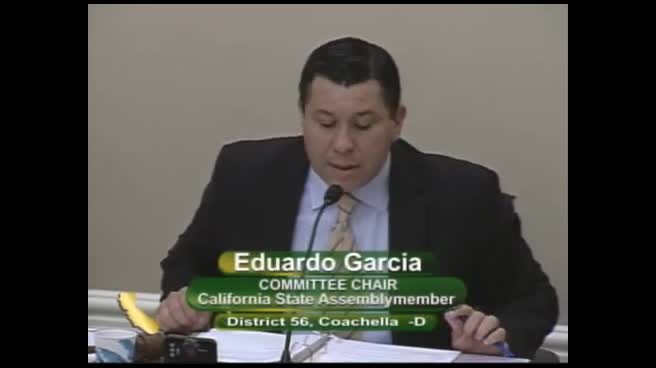 5MIN
Assembly Standing Committee on Jobs, Economic Development, and the Economy
Bill Author

Bill Co-Author(s):