SB 162: Treated wood waste.
- Session Year: 2015-2016
- House: Senate
- Latest Version Date: 2015-09-28
(1)Existing law requires the wood preserving industry to provide certain information relating to the potential danger of treated wood to wholesalers and retailers of treated wood and wood-like products. Existing law requires these wholesalers and retailers to conspicuously post the information at or near the point of display or customer selection of treated wood and wood-like products, as specified.
This bill would update the information required to be posted by wholesalers and retailers of treated wood and treated wood-like products.
(2)Existing law requires the Department of Toxic Substances Control to adopt, and revise as necessary, regulations establishing management standards for treated wood waste, subject to specified limitations. Existing law makes these, and other requirements regarding treated wood waste, inoperative on June 1, 2017, but provides that a regulation adopted pursuant to these provisions on or before June 1, 2012, continues in force and effect until repealed or revised. A violation of the states hazardous waste control laws is a crime.
This bill would remove those limitations for treated wood waste regulations adopted by the department, would extend the operation of these provisions regarding treated wood waste to December 31, 2020, and would repeal the language concerning the continued operation of treated wood waste regulations. By extending the operation of a crime, the bill would impose a state-mandated local program. The bill would require, on or before January 1, 2018, the department to prepare, post on its Internet Web site, and provide to the appropriate policy committees of the Legislature, a comprehensive report with specified content on the compliance with, and implementation of, these laws relating to treated wood waste.
(3)The California Constitution requires the state to reimburse local agencies and school districts for certain costs mandated by the state. Statutory provisions establish procedures for making that reimbursement.
This bill would provide that no reimbursement is required by this act for a specified reason.
(1)Existing law requires the wood preserving industry to provide certain information relating to the potential danger of treated wood to wholesalers and retailers of treated wood and wood-like products. Existing law requires these wholesalers and retailers to conspicuously post the information at or near the point of display or customer selection of treated wood and wood-like products, as specified.
This bill would update the information required to be posted by wholesalers and retailers of treated wood and treated wood-like products.
(1)
(2)Existing law requires, among other things, treated wood waste, as defined, to be disposed of in either a class I hazardous waste landfill, or in a composite-lined portion of a solid waste landfill unit that meets certain requirements. Existing law requires the Department of Toxic Substances Control to adopt, and revise as necessary, regulations establishing management standards for treated wood waste, as specified, subject to specified limitations. Existing law makes these, and other requirements regarding treated wood waste, inoperative on June 1, 2017, but provides that a regulation adopted pursuant to these provisions on or before June 1, 2012, continues in force and effect until repealed or revised. A violation of the states hazardous waste control laws is a crime.
This bill would remove those limitations for treated wood waste regulations adopted by the department, would extend the operation of these provisions regarding treated wood waste to June 1, December 31, 2020, and would repeal the language continuing in force and effect treated waste wood regulations adopted on or before June 1, 2012. concerning the continued operation of treated wood waste regulations. By extending the operation of a crime, the bill would impose a state-mandated local program. The bill would require, on or before January 1, 2018, the department to prepare, post on its Internet Web site, and provide to the appropriate policy committees of the Legislature, a comprehensive report with specified content on the compliance with, and implementation of, these laws relating to treated wood waste.
(2)
(3)The California Constitution requires the state to reimburse local agencies and school districts for certain costs mandated by the state. Statutory provisions establish procedures for making that reimbursement.
This bill would provide that no reimbursement is required by this act for a specified reason.
(1)Existing law requires, among other things, treated wood waste, as defined, to be disposed of in either a class I hazardous waste landfill, or in a composite-lined portion of a solid waste landfill unit that meets certain requirements. Existing law requires the Department of Toxic Substances Control to adopt, and revise as necessary, regulations establishing management standards for treated wood waste, as specified, subject to specified limitations. Existing law makes these, and other requirements regarding treated wood waste, inoperative on June 1, 2017, but provides that a regulation adopted pursuant to these provisions on or before June 1, 2012, continues in force and effect until repealed or revised. A violation of the states hazardous waste control laws is a crime.
This bill would remove those limitations for treated wood waste regulations adopted by the department, would extend the operation of these provisions regarding treated wood waste indefinitely to June 1, 2020, and would repeal the language continuing in force and effect treated waste wood regulations adopted on or before June 1, 2012. By extending the operation of a crime, the bill would impose a state-mandated local program. The bill would require, on or before January 1, 2018, the department to prepare, post on its Internet Web site, and provide to the appropriate policy committees of the Legislature, a comprehensive report with specified content on the compliance with, and implementation of, these laws relating to treated wood waste.
(2)The California Constitution requires the state to reimburse local agencies and school districts for certain costs mandated by the state. Statutory provisions establish procedures for making that reimbursement.
This bill would provide that no reimbursement is required by this act for a specified reason.
(1)Existing law requires, among other things, treated wood waste, as defined, to be disposed of in either a class I hazardous waste landfill, or in a composite-lined portion of a solid waste landfill unit that meets certain requirements. Existing law makes these, and other requirements regarding treated wood waste, inoperative on June 1, 2017. A violation of the states hazardous waste control laws is a crime.
This bill would extend the operation of these provisions regarding treated wood waste indefinitely. By extending the operation of a crime, the bill would impose a state-mandated local program.
(2)The California Constitution requires the state to reimburse local agencies and school districts for certain costs mandated by the state. Statutory provisions establish procedures for making that reimbursement.
This bill would provide that no reimbursement is required by this act for a specified reason.
(a)The Legislature finds and declares that this section is intended to address the unique circumstances associated with the generation and management of treated wood waste. The Legislature further declares that this section does not set a precedent applicable to the management, including disposal, of other hazardous wastes.
(b)For purposes of this section, the following definitions shall apply:
(1)Treated wood means wood that has been treated with a chemical preservative for purposes of protecting the wood against attacks from insects, microorganisms, fungi, and other environmental conditions that can lead to decay of the wood, and the chemical preservative is registered pursuant to the Federal Insecticide, Fungicide, and Rodenticide Act (7 U.S.C. Sec. 136 et seq.).
(2)Wood preserving industry means business concerns, other than retailers, that manufacture or sell treated wood products in the state.
(c)This section applies only to treated wood waste that, solely due to the presence of a preservative in the wood, is a hazardous waste and to which both of the following requirements apply:
(1)The treated wood waste is not subject to regulation as a hazardous waste under the federal act.
(2)Section 25143.1.5 does not apply to the treated wood waste.
(d)(1)Notwithstanding Sections 25189.5 and 25201, treated wood waste shall be disposed of in either a class I hazardous waste landfill, or in a composite-lined portion of a solid waste landfill unit that meets all requirements applicable to disposal of municipal solid waste in California after October 9, 1993, and that is regulated by waste discharge requirements issued pursuant to Division 7 (commencing with Section 13000) of the Water Code for discharges of designated waste, as defined in Section 13173 of the Water Code, or treated wood waste.
(2)A solid waste landfill that accepts treated wood waste shall comply with all of the following requirements:
(A)Manage the treated wood waste to prevent scavenging.
(B)Ensure that any management of the treated wood waste at the solid waste landfill before disposal, or in lieu of disposal, complies with the applicable requirements of this chapter, except as otherwise provided by regulations adopted pursuant to subdivision (f).
(C)If monitoring at the composite-lined portion of a landfill unit at which treated wood waste has been disposed of indicates a verified release, then treated wood waste shall not be discharged to that landfill unit until corrective action results in cessation of the release.
(e)(1)Each wholesaler and retailer of treated wood and treated wood-like products in this state shall conspicuously post information at or near the point of display or customer selection of treated wood and treated wood-like products used for fencing, decking, retaining walls, landscaping, outdoor structures, and similar uses. The information shall be provided to wholesalers and retailers by the wood preserving industry in 22-point type, or larger, and contain the following message:
WarningPotential Danger
These products are treated with wood preservatives registered with the United States Environmental Protection Agency and the California Department of Pesticide Regulation and should only be used in compliance with the product labels.
This wood may contain chemicals classified by the State of California as hazardous and should be handled and disposed of with care. Check product label for specific preservative information and Proposition 65 warnings concerning presence of chemicals known to the State of California to cause cancer or birth defects.
Anyone working with treated wood, and anyone removing old treated wood, needs to take precautions to minimize exposure to themselves, children, pets, or wildlife, including:
Avoid contact with skin. Wear gloves and long sleeved shirts when working with treated wood. Wash exposed areas thoroughly with mild soap and water after working with treated wood.
Wear a dust mask when machining any wood to reduce the inhalation of wood dusts. Avoid frequent or prolonged inhalation of
sawdust from treated wood. Machining operations should be performed outdoors whenever possible to avoid indoor accumulations of airborne sawdust.
Wear appropriate eye protection to reduce the potential for eye injury from wood particles and flying debris during machining.
If preservative or sawdust accumulates on clothes, launder before reuse. Wash work clothes separately from other household clothing.
Promptly clean up and remove all sawdust and scraps and dispose of appropriately.
Do not use treated wood under circumstances where the preservative may become a component of food or animal feed.
Only use treated wood thats visibly clean and free from surface residue for patios, decks, or walkways.
Do not use treated wood where it may come in direct or indirect contact with public drinking water, except for uses involving incidental contact such as docks and bridges.
Do not use treated wood for mulch.
Do not burn treated wood. Preserved wood should not be burned in open fires, stoves, or fireplaces.
For further information, go to the Internet Web site http://www.preservedwood.org and download the free Treated Wood Guide mobile application.
In addition to the above listed precautions, treated wood waste shall be managed in compliance with applicable hazardous waste control laws.
(2)On or before July 1, 2005, the wood preserving industry shall, jointly and in consultation with the department, make information available to generators of treated wood waste, including fencing, decking, and landscape contractors, solid waste landfills, and transporters, that describes how to best handle, dispose of, and otherwise manage treated wood waste, through the use either of a toll-free telephone number, Internet Web site, information labeled on the treated wood, information accompanying the sale of the treated wood, or by mailing if the department determines that mailing is feasible and other methods of communication would not be as effective. A treated wood manufacturer or supplier to a wholesaler or retailer shall also provide the information with each shipment of treated wood products to a wholesaler or retailer, and the wood preserving industry shall provide it to fencing, decking, and landscaping contractors, by mail, using the Contractors State License Boards available listings, and license application packages. The department may provide guidance to the wood preserving industry, to the extent resources permit.
(f)(1)On or before January 1, 2007, the department, in consultation with the Department of Resources Recycling and Recovery, the State Water Resources Control Board, and the Office of Environmental Health Hazard Assessment, and after consideration of any known health hazards associated with treated wood waste, shall adopt and may subsequently revise as necessary, regulations establishing management standards for treated wood waste as an alternative to the requirements specified in this chapter and the regulations adopted pursuant to this chapter.
(2)The regulations adopted pursuant to this subdivision shall, at a minimum, ensure all of the following:
(A)Treated wood waste is properly stored, treated, transported, tracked, disposed of, and otherwise managed to prevent, to the extent practical, releases of hazardous constituents to the environment, prevent scavenging, and prevent harmful exposure of people, including workers and children, aquatic life, and animals to hazardous chemical constituents of the treated wood waste.
(B)Treated wood waste is not reused, with or without treatment, except for a purpose that is consistent with the approved use of the preservative with which the wood has been treated. For purposes of this subparagraph, approved uses means a use approved at the time the treated wood waste is reused.
(C)Treated wood waste is managed in accordance with all applicable laws.
(D)Any size reduction of treated wood waste is conducted in a manner that prevents the uncontrolled release of hazardous constituents to the environment, and that conforms to applicable worker health and safety requirements.
(E)All sawdust and other particles generated during size reduction are captured and managed as treated wood waste.
(F)All employees involved in the acceptance, storage, transport, and other management of treated wood waste are trained in the safe and legal management of treated wood waste, including, but not limited to, procedures for identifying and segregating treated wood waste.
(g)(1)A person managing treated wood waste who is subject to a requirement of this chapter, including a regulation adopted pursuant to this chapter, shall comply with either the alternative standard specified in the regulations adopted pursuant to subdivision (f) or with the requirements of this chapter.
(2)A person who is in compliance with the alternative standard specified in the regulations adopted pursuant to subdivision (f) is deemed to be in compliance with the requirement of this chapter for which the regulation is identified as being an alternative, and the department and any other entity authorized to enforce this chapter shall consider that person to be in compliance with that requirement of this chapter.
(h)On January 1, 2005, all variances granted by the department before January 1, 2005, governing the management of treated wood waste are inoperative and have no further effect.
(i)This section does not limit the authority or responsibility of the department to adopt regulations under any other law.
(j)(1)On or before January 1, 2018, the department shall prepare, post on its Internet Web site, and provide to the appropriate policy committees of the Legislature, a comprehensive report on the compliance with, and implementation of, this section. The report shall include, but not be limited to, all of the following:
(A)Data, and evaluation of that data, on the rates of compliance with this section and injuries associated with handling treated wood waste based on department inspections of treated wood waste generator sites and treated wood waste disposal facilities. To gather data to perform the required evaluation, the department shall do all of the following:
(i)The department shall inspect representative treated wood waste generator sites and treated wood waste disposal facilities, which shall not to be less than 25 percent of each.
(ii)The department shall survey and otherwise seek information on how households are currently handling, transporting, and disposing of treated wood waste, including available information from household hazardous waste collection facilities, solid waste transfer facilities, solid waste disposal facility load check programs, and CUPAs.
(iii)The department shall, by survey or otherwise, seek data to determine whether sufficient information and convenient collection and disposal options are available to household generators of treated wood waste.
(B)An evaluation of the adequacy of protective measures taken in tracking, handling, and disposing of treated wood waste.
(C)Data regarding the unauthorized disposal of treated wood waste at disposal facilities that have not been approved for that disposal.
(D)Conclusions regarding the handling of treated wood waste.
(E)Recommendations for changes to the handling of treated wood waste to ensure the protection of public health and the environment.
(2)The requirement for submitting a report imposed under this subdivision is inoperative on January 1, 2022, pursuant to Section 10231.5 of the Government Code.
(k)This section shall become inoperative on December 31, 2020, and, as of January 1, 2021, is repealed, unless a later enacted statute, that becomes operative on or before January 1, 2021, deletes or extends the dates on which it becomes inoperative and is repealed.
SEC. 2.No reimbursement is required by this act pursuant to Section 6 of Article XIIIB of the California Constitution because the only costs that may be incurred by a local agency or school district will be incurred because this act creates a new crime or infraction, eliminates a crime or infraction, or changes the penalty for a crime or infraction, within the meaning of Section 17556 of the Government Code, or changes the definition of a crime within the meaning of Section 6 of Article XIIIB of the California Constitution.
(a)The Legislature finds and declares that this section is intended to address the unique circumstances associated with the generation and management of treated wood waste. The Legislature further declares that this section does not set a precedent applicable to the management, including disposal, of other hazardous wastes.
(b)For purposes of this section, the following definitions shall apply:
(1)Treated wood means wood that has been treated with a chemical preservative for purposes of protecting the wood against attacks from insects, microorganisms, fungi, and other environmental conditions that can lead to decay of the wood, and the chemical preservative is registered pursuant to the Federal Insecticide, Fungicide, and Rodenticide Act (7 U.S.C. Sec. 136 et seq.).
(2)Wood preserving industry means business concerns, other than retailers, that manufacture or sell treated wood products in the state.
(c)This section applies only to treated wood waste that, solely due to the presence of a preservative in the wood, is a hazardous waste and to which both of the following requirements apply:
(1)The treated wood waste is not subject to regulation as a hazardous waste under the federal act.
(2)Section 25143.1.5 does not apply to the treated wood waste.
(d)(1)Notwithstanding Sections 25189.5 and 25201, treated wood waste shall be disposed of in either a class I hazardous waste landfill, or in a composite-lined portion of a solid waste landfill unit that meets all requirements applicable to disposal of municipal solid waste in California after October 9, 1993, and that is regulated by waste discharge requirements issued pursuant to Division 7 (commencing with Section 13000) of the Water Code for discharges of designated waste, as defined in Section 13173 of the Water Code, or treated wood waste.
(2)A solid waste landfill that accepts treated wood waste shall comply with all of the following requirements:
(A)Manage the treated wood waste to prevent scavenging.
(B)Ensure that any management of the treated wood waste at the solid waste landfill before disposal, or in lieu of disposal, complies with the applicable requirements of this chapter, except as otherwise provided by regulations adopted pursuant to subdivision (f).
(C)If monitoring at the composite-lined portion of a landfill unit at which treated wood waste has been disposed of indicates a verified release, then treated wood waste shall not be discharged to that landfill unit until corrective action results in cessation of the release.
(e)(1)Each wholesaler and retailer of treated wood and treated wood-like products in this state shall conspicuously post information at or near the point of display or customer selection of treated wood and treated wood-like products used for fencing, decking, retaining walls, landscaping, outdoor structures, and similar uses. The information shall be provided to wholesalers and retailers by the wood preserving industry in 22-point font type, or larger, and contain the following message:
WarningPotential Danger
These products are treated with wood preservatives registered with the United States Environmental Protection Agency and the California Department of Pesticide Regulation and should only be used in compliance with the product labels.
This wood may contain chemicals classified by the State of California as hazardous and should be handled and disposed of with care. Check product label for specific preservative information and Proposition 65 warnings concerning presence of chemicals known to the State of California to cause cancer or birth defects.
Anyone working with treated wood, and anyone removing old treated wood, needs to take precautions to minimize exposure to themselves, children, pets, or wildlife, including:
Avoid contact with skin. Wear gloves and long sleeved shirts when working with treated wood. Wash exposed areas thoroughly with mild soap and water after working with treated wood.
Wear a dust mask when machining any wood to reduce the inhalation of wood dusts. Avoid frequent or prolonged inhalation of
sawdust from treated wood. Machining operations should be performed outdoors whenever possible to avoid indoor accumulations of airborne sawdust.
Wear appropriate eye protection to reduce the potential for eye injury from wood particles and flying debris during machining.
If preservative or sawdust accumulates on clothes, launder before reuse. Wash work clothes separately from other household clothing.
Promptly clean up and remove all sawdust and scraps and dispose of appropriately.
Do not use treated wood under circumstances where the preservative may become a component of food or animal feed.
Only use treated wood thats visibly clean and free from surface residue for patios, decks, or walkways.
Do not use treated wood where it may come in direct or indirect contact with public drinking water, except for uses involving incidental contact such as docks and bridges.
Do not use treated wood for mulch.
Do not burn treated wood. Preserved wood should not be burned in open fires, stoves, or fireplaces.
For further information, go to the Internet Web site for the Western Wood Preservers Institute (http://www.wwpinstitute.org) or call the toll-free telephone number of the California Treated Wood Information Hotline at 1-866-696-8315. http://www.preservedwood.org and download the free Treated Wood Guide mobile application.
In addition to the above listed precautions, treated wood waste shall be managed in compliance with applicable hazardous waste control laws.
(2)On or before July 1, 2005, the wood preserving industry shall, jointly and in consultation with the department, make information available to generators of treated wood waste, including fencing, decking, and landscape contractors, solid waste landfills, and transporters, that describes how to best handle, dispose of, and otherwise manage treated wood waste, through the use either of a toll-free telephone number, Internet Web site, information labeled on the treated wood, information accompanying the sale of the treated wood, or by mailing if the department determines that mailing is feasible and other methods of communication would not be as effective. A treated wood manufacturer or supplier to a wholesaler or retailer shall also provide the information with each shipment of treated wood products to a wholesaler or retailer, and the wood preserving industry shall provide it to fencing, decking, and landscaping contractors, by mail, using the Contractors State License Boards available listings, and license application packages. The department may provide guidance to the wood preserving industry, to the extent resources permit.
(f)(1)On or before January 1, 2007, the department, in consultation with the Department of Resources Recycling and Recovery, the State Water Resources Control Board, and the Office of Environmental Health Hazard Assessment, and after consideration of any known health hazards associated with treated wood waste, shall adopt and may subsequently revise as necessary, regulations establishing management standards for treated wood waste as an alternative to the requirements specified in this chapter and the regulations adopted pursuant to this chapter.
(2)The regulations adopted pursuant to this subdivision shall, at a minimum, ensure all of the following:
(A)Treated wood waste is properly stored, treated, transported, tracked, disposed of, and otherwise managed to prevent, to the extent practical, releases of hazardous constituents to the environment, prevent scavenging, and prevent harmful exposure of people, including workers and children, aquatic life, and animals to hazardous chemical constituents of the treated wood waste.
(B)Treated wood waste is not reused, with or without treatment, except for a purpose that is consistent with the approved use of the preservative with which the wood has been treated. For purposes of this subparagraph, approved uses means a use approved at the time the treated wood waste is reused.
(C)Treated wood waste is managed in accordance with all applicable laws.
(D)Any size reduction of treated wood waste is conducted in a manner that prevents the uncontrolled release of hazardous constituents to the environment, and that conforms to applicable worker health and safety requirements.
(E)All sawdust and other particles generated during size reduction are captured and managed as treated wood waste.
(F)All employees involved in the acceptance, storage, transport, and other management of treated wood waste are trained in the safe and legal management of treated wood waste, including, but not limited to, procedures for identifying and segregating treated wood waste.
(g)(1)A person managing treated wood waste who is subject to a requirement of this chapter, including a regulation adopted pursuant to this chapter, shall comply with either the alternative standard specified in the regulations adopted pursuant to subdivision (f) or with the requirements of this chapter.
(2)A person who is in compliance with the alternative standard specified in the regulations adopted pursuant to subdivision (f) is deemed to be in compliance with the requirement of this chapter for which the regulation is identified as being an alternative, and the department and any other entity authorized to enforce this chapter shall consider that person to be in compliance with that requirement of this chapter.
(h)On January 1, 2005, all variances granted by the department before January 1, 2005, governing the management of treated wood waste are inoperative and have no further effect.
(i)This section does not limit the authority or responsibility of the department to adopt regulations under any other law.
(j)(1)On or before January 1, 2018, the department shall prepare, post on its Internet Web site, and provide to the appropriate policy committees of the Legislature, a comprehensive report on the compliance with, and implementation of, this section. The report shall include, but not be limited to, all of the following:
(A)Data, and evaluation of that data, on the rates of compliance with this section and injuries associated with handling treated wood waste based on department inspections of treated wood waste generator sites and treated wood waste disposal facilities. To gather data to perform the required evaluation, the department shall do all of the following: The
(i)The department shall inspect a representative number of treated wood waste generator sites and treated wood waste disposal facilities, which shall not to be less than 25 percent of each.
(ii)The department shall survey and otherwise seek information on how households are currently handling, transporting, and disposing of treated wood waste, including available information from household hazardous waste collection facilities, solid waste transfer facilities, solid waste disposal facility load check programs, and CUPAs.
(iii)The department shall, by survey or otherwise, seek data to determine whether sufficient information and convenient collection and disposal options are available to household generators of treated wood waste.
(B)An evaluation of the adequacy of protective measures taken in tracking, handling, and disposing of treated wood waste.
(C)Data regarding the unauthorized disposal of treated wood waste at disposal facilities that have not been approved for that disposal.
(D)Conclusions regarding the handling of treated wood waste.
(E)Recommendations for changes to the handling of treated wood waste to ensure the protection of public health and the environment.
(2)The requirement for submitting a report imposed under this subdivision is inoperative on January 1, 2022, pursuant to Section 10231.5 of the Government Code.
(k)This section shall become inoperative on June 1, December 31, 2020, and, as of January 1, 2021, is repealed, unless a later enacted statute, that becomes operative on or before January 1, 2021, deletes or extends the dates on which it becomes inoperative and is repealed.
SEC. 2.No reimbursement is required by this act pursuant to Section 6 of Article XIIIB of the California Constitution because the only costs that may be incurred by a local agency or school district will be incurred because this act creates a new crime or infraction, eliminates a crime or infraction, or changes the penalty for a crime or infraction, within the meaning of Section 17556 of the Government Code, or changes the definition of a crime within the meaning of Section 6 of Article XIIIB of the California Constitution.
(a)The Legislature finds and declares that this section is intended to address the unique circumstances associated with the generation and management of treated wood waste. The Legislature further declares that this section does not set a precedent applicable to the management, including disposal, of other hazardous wastes.
(b)For purposes of this section, the following definitions shall apply:
(1)Treated wood means wood that has been treated with a chemical preservative for purposes of protecting the wood against attacks from insects, microorganisms, fungi, and other environmental conditions that can lead to decay of the wood wood, and the chemical preservative is registered pursuant to the Federal Insecticide, Fungicide, and Rodenticide Act (7 U.S.C. Sec. 136 et seq.).
(2)Wood preserving industry means business concerns, other than retailers, that manufacture or sell treated wood products in the state.
(c)This section applies only to treated wood waste that that, solely due to the presence of a preservative in the wood, is a hazardous waste, solely due to the presence of a preservative in the wood, waste and to which both of the following requirements apply:
(1)The treated wood waste is not subject to regulation as a hazardous waste under the federal act.
(2)Section 25143.1.5 does not apply to the treated wood waste.
(d)(1)Notwithstanding Sections 25189.5 and 25201, treated wood waste shall be disposed of in either a class I hazardous waste landfill, or in a composite-lined portion of a solid waste landfill unit that meets all requirements applicable to disposal of municipal solid waste in California after October 9, 1993, and that is regulated by waste discharge requirements issued pursuant to Division 7 (commencing with Section 13000) of the Water Code for discharges of designated waste, as defined in Section 13173 of the Water Code, or treated wood waste.
(2)A solid waste landfill that accepts treated wood waste shall comply with all of the following requirements:
(A)Manage the treated wood waste so as to prevent scavenging.
(B)Ensure that any management of the treated wood waste at the solid waste landfill prior to before disposal, or in lieu of disposal, complies with the applicable requirements of this chapter, except as otherwise provided by regulations adopted pursuant to subdivision (f).
(C)If monitoring at the composite-lined portion of a landfill unit at which treated wood waste has been disposed of indicates a verified release, then treated wood waste shall no longer not be discharged to that landfill unit until corrective action results in cessation of the release.
(e)(1)Each wholesaler and retailer of treated wood and treated wood-like products in this state shall conspicuously post information at or near the point of display or customer selection of treated wood and treated wood-like products used for fencing, decking, retaining walls, landscaping, outdoor structures, and similar uses. The information shall be provided to wholesalers and retailers by the wood preserving industry in 22-point font, or larger, and contain the following message:
WarningPotential Danger
These products are treated with wood preservatives registered with the United States Environmental Protection Agency and the California Department of Pesticide Regulation and should only be used in compliance with the product labels.
This wood may contain chemicals classified by the State of California as hazardous and should be handled and disposed of with care. Check product label for specific preservative information and Proposition 65 warnings concerning presence of chemicals known to the State of California to cause cancer or birth defects.
Anyone working with treated wood, and anyone removing old treated wood, needs to take precautions to minimize exposure to themselves, children, pets, or wildlife, including:
Avoid contact with skin. Wear gloves and long sleeved shirts when working with treated wood. Wash exposed areas thoroughly with mild soap and water after working with treated wood.
Wear a dust mask when machining any wood to reduce the inhalation of wood dusts. Avoid frequent or prolonged inhalation of sawdust from treated wood. Machining operations should be performed outdoors whenever possible to avoid indoor accumulations of airborne sawdust.
Wear appropriate eye protection to reduce the potential for eye injury from
wood particles and flying debris during machining.
If preservative or sawdust accumulates on clothes, launder before reuse. Wash work clothes separately from other household clothing.
Promptly clean up and remove all sawdust and scraps and dispose of appropriately.
Do not use treated wood under circumstances where the preservative may become a component of food or animal feed.
Only use treated wood thats visibly clean and free from surface residue for patios, decks, or walkways.
Do not use treated wood where it may come in direct or indirect contact with public drinking water, except for uses involving incidental contact such as docks and bridges.
Do not use treated
wood for mulch.
Do not burn treated wood. Preserved wood should not be burned in open fires, stoves, or fireplaces.
For further information, go to the Internet Web site for the Western Wood Preservers Institute (http://www.wwpinstitute.org) or call the toll-free telephone number of the California Treated Wood Information Hotline at 1-866-696-8315.
In addition to the above listed precautions, treated wood waste shall be managed in compliance with applicable hazardous waste control laws.
(2)On or before July 1, 2005, the wood preserving industry shall, jointly and in consultation with the department, make information available to generators of treated wood waste, including fencing, decking decking, and landscape contractors, solid waste landfills, and transporters, that describes how to best handle, dispose of, and otherwise manage treated wood waste, through the use either of a toll-free telephone number, Internet Web site, information labeled on the treated wood, information accompanying the sale of the treated wood, or by mailing if the department determines that mailing is feasible and other methods of communication would not be as effective. A treated wood manufacturer or supplier to a wholesaler or retailer shall also provide the information with each shipment of treated wood products to a wholesaler or retailer, and the wood preserving industry shall provide it to fencing, decking, and landscaping contractors, by mail, using the Contractors State License Boards available listings, and license application packages. The department may provide guidance to the wood preserving industry, to the extent resources permit.
(f)(1)On or before January 1, 2007, the department, in consultation with the Department of Resources Recycling and Recovery, the State Water Resources Control Board, and the Office of Environmental Health Hazard Assessment, and after consideration of any known health hazards associated with treated wood waste, shall adopt and may subsequently revise as necessary, regulations establishing management standards for treated wood waste as an alternative to the requirements specified in this chapter and the regulations adopted pursuant to this chapter.
(2)The regulations adopted pursuant to this subdivision shall, at a minimum, ensure all of the following:
(A)Treated wood waste is properly stored, treated, transported, tracked, disposed of, and otherwise managed so as to prevent, to the extent practical, releases of hazardous constituents to the environment, prevent scavenging, and prevent harmful exposure of people, including workers and children, aquatic life, and animals to hazardous chemical constituents of the treated wood waste.
(B)Treated wood waste is not reused, with or without treatment, except for a purpose that is consistent with the approved use of the preservative with which the wood has been treated. For purposes of this subparagraph, approved uses means a use approved at the time the treated wood waste is reused.
(C)Treated wood waste is managed in accordance with all applicable laws.
(D)Any size reduction of treated wood waste is conducted in a manner that prevents the uncontrolled release of hazardous constituents to the environment, and that conforms to applicable worker health and safety requirements.
(E)All sawdust and other particles generated during size reduction are captured and managed as treated wood waste.
(F)All employees involved in the acceptance, storage, transport, and other management of treated wood waste are trained in the safe and legal management of treated wood waste, including, but not limited to, procedures for identifying and segregating treated wood waste.
(3)This subdivision does not authorize the department to adopt a regulation that does one or more of the following:
(A)Imposes a requirement as an addition to, rather than as an alternative to, one or more of the requirements of this chapter.
(B)Supersedes subdivision (d) concerning the disposal of treated wood waste.
(C)Supersedes any other provision of this chapter that provides a conditional or unconditional exclusion, exemption, or exception to a requirement of this chapter or the regulations adopted pursuant to this chapter, except the department may adopt a regulation pursuant to this subdivision that provides an alternative condition for a requirement specified in this chapter for an exclusion, exemption, or exception and that allows an affected person to choose between complying with the requirements specified in this chapter or complying with the alternative conditions set forth in the regulation.
(g)(1)A person managing treated wood waste who is subject to a requirement of this chapter, including a regulation adopted pursuant to this chapter, shall comply with either the alternative standard specified in the regulations adopted pursuant to subdivision (f) or with the requirements of this chapter.
(2)A person who is in compliance with the alternative standard specified in the regulations adopted pursuant to subdivision (f) is deemed to be in compliance with the requirement of this chapter for which the regulation is identified as being an alternative, and the department and any other entity authorized to enforce this chapter shall consider that person to be in compliance with that requirement of this chapter.
(h)On January 1, 2005, all variances granted by the department before January 1, 2005, governing the management of treated wood waste are inoperative and have no further effect.
(i)This section does not limit the authority or responsibility of the department to adopt regulations under any other law.
(j)(1)On or before January 1, 2018, the department shall prepare, post on its Internet Web site, and provide to the appropriate policy committees of the Legislature, a comprehensive report on the compliance with, and implementation of, this section. The report shall include, but not be limited to, all of the following:
(A)Data, and evaluation of that data, on the rates of compliance with this section and injuries associated with handling treated wood waste based on department inspections of treated wood waste generator sites and treated wood waste disposal facilities. The department shall inspect a representative number of treated wood waste generator sites and treated wood waste disposal facilities, which shall not to be less than 25 percent of each.
(B)An evaluation of the adequacy of protective measures taken in tracking, handling, and disposing of treated wood waste.
(C)Data regarding the unauthorized disposal of treated wood waste at disposal facilities that have not been approved for that disposal.
(D)Conclusions regarding the handling of treated wood waste.
(E)Recommendations for changes to the handling of treated wood waste to ensure the protection of public health and the environment.
(2)The requirement for submitting a report imposed under this subdivision is inoperative on January 1, 2022, pursuant to Section 10231.5 of the Government Code.
(k)This section shall become inoperative on June 1, 2020, and, as of January 1, 2021, is repealed, unless a later enacted statute, that becomes operative on or before January 1, 2021, deletes or extends the dates on which it becomes inoperative and is repealed.
SEC. 2.No reimbursement is required by this act pursuant to Section 6 of Article XIIIB of the California Constitution because the only costs that may be incurred by a local agency or school district will be incurred because this act creates a new crime or infraction, eliminates a crime or infraction, or changes the penalty for a crime or infraction, within the meaning of Section 17556 of the Government Code, or changes the definition of a crime within the meaning of Section 6 of Article XIIIB of the California Constitution.
(a)The Legislature finds and declares that this section is intended to address the unique circumstances associated with the generation and management of treated wood waste. The Legislature further declares that this section does not set a precedent applicable to the management, including disposal, of other hazardous wastes.
(b)For purposes of this section, the following definitions shall apply:
(1)Treated wood means wood that has been treated with a chemical preservative for purposes of protecting the wood against attacks from insects, microorganisms, fungi, and other environmental conditions that can lead to decay of the wood and the chemical preservative is registered pursuant to the Federal Insecticide, Fungicide, and Rodenticide Act (7 U.S.C. Sec. 136 et seq.).
(2)Wood preserving industry means business concerns, other than retailers, that manufacture or sell treated wood products in the state.
(c)This section applies only to treated wood waste that is a hazardous waste, solely due to the presence of a preservative in the wood, and to which both of the following requirements apply:
(1)The treated wood waste is not subject to regulation as a hazardous waste under the federal act.
(2)Section 25143.1.5 does not apply to the treated wood waste.
(d)(1)Notwithstanding Sections 25189.5 and 25201, treated wood waste shall be disposed of in either a class I hazardous waste landfill, or in a composite-lined portion of a solid waste landfill unit that meets all requirements applicable to disposal of municipal solid waste in California after October 9, 1993, and that is regulated by waste discharge requirements issued pursuant to Division 7 (commencing with Section 13000) of the Water Code for discharges of designated waste, as defined in Section 13173 of the Water Code, or treated wood waste.
(2)A solid waste landfill that accepts treated wood waste shall comply with all of the following requirements:
(A)Manage the treated wood waste so as to prevent scavenging.
(B)Ensure that any management of the treated wood waste at the solid waste landfill prior to disposal, or in lieu of disposal, complies with the applicable requirements of this chapter, except as otherwise provided by regulations adopted pursuant to subdivision (f).
(C)If monitoring at the composite-lined portion of a landfill unit at which treated wood waste has been disposed of indicates a verified release, then treated wood waste shall no longer be discharged to that landfill unit until corrective action results in cessation of the release.
(e)(1)Each wholesaler and retailer of treated wood and treated wood-like products in this state shall conspicuously post information at or near the point of display or customer selection of treated wood and treated wood-like products used for fencing, decking, retaining walls, landscaping, outdoor structures, and similar uses. The information shall be provided to wholesalers and retailers by the wood preserving industry in 22-point font, or larger, and contain the following message:
WarningPotential Danger
These products are treated with wood preservatives registered with the United States Environmental Protection Agency and the California Department of Pesticide Regulation and should only be used in compliance with the product labels.
This wood may contain chemicals classified by the State of California as hazardous and should be handled and disposed of with care. Check product label for specific preservative information and Proposition 65 warnings concerning presence of chemicals known to the State of California to cause cancer or birth defects.
Anyone working with treated wood, and anyone removing old treated wood, needs to take precautions to minimize exposure to themselves, children, pets, or wildlife, including:
Avoid contact with skin. Wear gloves and long sleeved shirts when working with treated wood. Wash exposed areas thoroughly with mild soap and water after working with treated wood.
Wear a dust mask when machining any wood to reduce the inhalation of wood dusts. Avoid frequent or prolonged inhalation of sawdust from treated wood. Machining operations should be performed outdoors whenever possible to avoid indoor accumulations of airborne sawdust.
Wear appropriate eye protection to reduce the potential for eye injury from wood particles and flying debris during machining.
If preservative or sawdust accumulates on clothes, launder before reuse. Wash work clothes separately from other household clothing.
Promptly clean up and remove all sawdust and scraps and dispose of appropriately.
Do not use treated wood under circumstances where
the preservative may become a component of food or animal feed.
Only use treated wood thats visibly clean and free from surface residue for patios, decks, or walkways.
Do not use treated wood where it may come in direct or indirect contact with public drinking water, except for uses involving incidental contact such as docks and bridges.
Do not use treated wood for mulch.
Do not burn treated wood. Preserved wood should not be burned in open fires, stoves, or fireplaces.
For further information, go to the Internet Web site for the Western Wood Preservers Institute (http://www.wwpinstitute.org) or call the toll-free telephone number of the California Treated Wood Information Hotline at 1-866-696-8315.
In addition to the above listed precautions, treated wood waste shall be managed in compliance with applicable hazardous waste control laws.
(2)On or before July 1, 2005, the wood preserving industry shall, jointly and in consultation with the department, make information available to generators of treated wood waste, including fencing, decking and landscape contractors, solid waste landfills, and transporters, that describes how to best handle, dispose of, and otherwise manage treated wood waste, through the use either of a toll-free telephone number, Internet Web site, information labeled on the treated wood, information accompanying the sale of the treated wood, or by mailing if the department determines that mailing is feasible and other methods of communication would not be as effective. A treated wood manufacturer or supplier to a wholesaler or retailer shall also provide the information with each shipment of treated wood products to a wholesaler or retailer, and the wood preserving industry shall provide it to fencing, decking, and landscaping contractors, by mail, using the Contractors State License Boards available listings, and license application packages. The department may provide guidance to the wood preserving industry, to the extent resources permit.
(f)(1)On or before January 1, 2007, the department, in consultation with the Department of Resources Recycling and Recovery, the State Water Resources Control Board, and the Office of Environmental Health Hazard Assessment, and after consideration of any known health hazards associated with treated wood waste, shall adopt and may subsequently revise as necessary, regulations establishing management standards for treated wood waste as an alternative to the requirements specified in this chapter and the regulations adopted pursuant to this chapter.
(2)The regulations adopted pursuant to this subdivision shall, at a minimum, ensure all of the following:
(A)Treated wood waste is properly stored, treated, transported, tracked, disposed of, and otherwise managed so as to prevent, to the extent practical, releases of hazardous constituents to the environment, prevent scavenging, and prevent harmful exposure of people, including workers and children, aquatic life, and animals to hazardous chemical constituents of the treated wood waste.
(B)Treated wood waste is not reused, with or without treatment, except for a purpose that is consistent with the approved use of the preservative with which the wood has been treated. For purposes of this subparagraph, approved uses means a use approved at the time the treated wood waste is reused.
(C)Treated wood waste is managed in accordance with all applicable laws.
(D)Any size reduction of treated wood waste is conducted in a manner that prevents the uncontrolled release of hazardous constituents to the environment, and that conforms to applicable worker health and safety requirements.
(E)All sawdust and other particles generated during size reduction are captured and managed as treated wood waste.
(F)All employees involved in the acceptance, storage, transport, and other management of treated wood waste are trained in the safe and legal management of treated wood waste, including, but not limited to, procedures for identifying and segregating treated wood waste.
(3)This subdivision does not authorize the department to adopt a regulation that does one or more of the following:
(A)Imposes a requirement as an addition to, rather than as an alternative to, one or more of the requirements of this chapter.
(B)Supersedes subdivision (d) concerning the disposal of treated wood waste.
(C)Supersedes any other provision of this chapter that provides a conditional or unconditional exclusion, exemption, or exception to a requirement of this chapter or the regulations adopted pursuant to this chapter, except the department may adopt a regulation pursuant to this subdivision that provides an alternative condition for a requirement specified in this chapter for an exclusion, exemption, or exception and that allows an affected person to choose between complying with the requirements specified in this chapter or complying with the alternative conditions set forth in the regulation.
(g)(1)A person managing treated wood waste who is subject to a requirement of this chapter, including a regulation adopted pursuant to this chapter, shall comply with either the alternative standard specified in the regulations adopted pursuant to subdivision (f) or with the requirements of this chapter.
(2)A person who is in compliance with the alternative standard specified in the regulations adopted pursuant to subdivision (f) is deemed to be in compliance with the requirement of this chapter for which the regulation is identified as being an alternative, and the department and any other entity authorized to enforce this chapter shall consider that person to be in compliance with that requirement of this chapter.
(h)On January 1, 2005, all variances granted by the department before January 1, 2005, governing the management of treated wood waste are inoperative and have no further effect.
(i)This section does not limit the authority or responsibility of the department to adopt regulations under any other law.
(j)This section shall become inoperative on June 1, 2017, and, as of January 1, 2018, is repealed, unless a later enacted statute, that becomes operative on or before January 1, 2018, deletes or extends the dates on which it becomes inoperative and is repealed.
(k)A regulation adopted pursuant to this section on or before June 1, 2012, shall continue in force and effect after that date, until repealed or revised by the department.
SEC. 2.No reimbursement is required by this act pursuant to Section 6 of Article XIIIB of the California Constitution because the only costs that may be incurred by a local agency or school district will be incurred because this act creates a new crime or infraction, eliminates a crime or infraction, or changes the penalty for a crime or infraction, within the meaning of Section 17556 of the Government Code, or changes the definition of a crime within the meaning of Section 6 of Article XIIIB of the California Constitution.
|
Date
|
Status
|
|---|---|
| Sep 28, 2015 | Chaptered by Secretary of State. Chapter 351, Statutes of 2015. |
| Sep 28, 2015 | Approved by the Governor. |
| Sep 8, 2015 | Enrolled and presented to the Governor at 4:30 p.m. |
| Sep 2, 2015 | Assembly amendments concurred in. (Ayes 40. Noes 0. Page 2422.) Ordered to engrossing and enrolling. |
| Sep 2, 2015 | Assembly amendments concurred in. (Ayes 40. Noes 0.) Ordered to engrossing and enrolling. |
| Sep 1, 2015 | Read third time. Passed. (Ayes 80. Noes 0. Page 2719.) Ordered to the Senate. |
| Sep 1, 2015 | In Senate. Concurrence in Assembly amendments pending. |
| Sep 1, 2015 | Read third time. Passed. Ordered to the Senate. |
| Aug 28, 2015 | Read second time. Ordered to third reading. |
| Aug 28, 2015 | From committee: Do pass. (Ayes 17. Noes 0.) (August 27). |
| Aug 19, 2015 | August 19 set for first hearing. Placed on APPR. suspense file. |
| Jul 1, 2015 | From committee: Do pass and re-refer to Com. on APPR. (Ayes 7. Noes 0.) (June 30). Re-referred to Com. on APPR. |
| Jun 22, 2015 | From committee with author's amendments. Read second time and amended. Re-referred to Com. on E.S. & T.M. |
| Jun 11, 2015 | Referred to Com. on E.S. & T.M. |
| Jun 2, 2015 | In Assembly. Read first time. Held at Desk. |
| Jun 1, 2015 | Read third time. Passed. (Ayes 38. Noes 0. Page 1197.) Ordered to the Assembly. |
| Jun 1, 2015 | Read third time. Passed. (Ayes 38. Noes 0.) Ordered to the Assembly. |
| May 28, 2015 | Read second time. Ordered to third reading. |
| May 28, 2015 | From committee: Do pass. (Ayes 7. Noes 0. Page 1148.) (May 28). |
| May 28, 2015 | From committee: Do pass. (Ayes 7. Noes 0.) (May 28). |
| May 23, 2015 | Set for hearing May 28. |
| May 18, 2015 | May 18 hearing: Placed on APPR. suspense file. |
| May 8, 2015 | Set for hearing May 18. |
| May 5, 2015 | Read second time and amended. Re-referred to Com. on APPR. |
| May 4, 2015 | From committee: Do pass as amended and re-refer to Com. on APPR. (Ayes 7. Noes 0. Page 857.) (April 29). |
| May 4, 2015 | From committee: Do pass as amended and re-refer to Com. on APPR. (Ayes 7. Noes 0.) (April 29). |
| Apr 24, 2015 | Set for hearing April 29. |
| Apr 16, 2015 | April 15 set for second hearing. Failed passage in committee. (Ayes 3. Noes 3. Page 649.) Reconsideration granted. |
| Mar 18, 2015 | Set for hearing April 15. |
| Mar 17, 2015 | March 18 set for first hearing canceled at the request of author. |
| Mar 3, 2015 | Set for hearing March 18. |
| Feb 19, 2015 | Referred to Com. on E.Q. |
| Feb 4, 2015 | From printer. May be acted upon on or after March 6. |
| Feb 3, 2015 | Introduced. Read first time. To Com. on RLS. for assignment. To print. |
|
Date
|
Description
|
Location
|
Votes
|
|
|---|---|---|---|---|
| Sep 2, 2015 | Unfinished Business SB162 Galgiani Concurrence | Senate Floor |
Passed |
|
| Sep 1, 2015 | SB 162 Galgiani Senate Third Reading By GRAY | Assembly Floor |
Passed |
|
| Aug 27, 2015 | Do pass. | Assembly Standing Committee on Appropriations |
Passed |
|
| Jun 30, 2015 | Do pass and be re-referred to the Committee on [Appropriations] | Assembly Standing Committee on Environmental Safety and Toxic Materials |
Passed |
|
| Jun 1, 2015 | Senate 3rd Reading SB162 Galgiani | Senate Floor |
Passed |
|
| May 28, 2015 | Do pass | Senate Standing Committee on Appropriations |
Passed |
|
| May 18, 2015 | Placed on suspense file | Senate Standing Committee on Appropriations |
Passed |
|
| Apr 29, 2015 | Do pass as amended, but first amend, and re-refer to the Committee on [Appropriations] | Senate Standing Committee on Environmental Quality |
Passed |
|
| Apr 15, 2015 | [Second] hearing set for [04-15-2015]: Failed passage in Committee. Reconsideration granted | Senate Standing Committee on Environmental Quality |
Passed |
|
| Apr 15, 2015 | Do pass, but first be re-referred to the Committee on [Appropriations] | Senate Standing Committee on Environmental Quality |
Failed |
This list shows positions taken on this bill by organizations on the date displayed, which is linked to the original source.
Positions by individuals are not included.
SB 162
Page 9
|
Office of Senate Floor Analyses (916) 651-1520 Fax: (916) 327-4478 |
UNFINISHED BUSINESS
Bill No: SB 162
Amended: 6/22/15
SENATE ENVIRONMENTAL QUALITY COMMITTEE: 3-3, 4/15/15 (FAIL)
AYES: Gaines, Bates, Pavley
NOES: Wieckowski, Hill, Leno
NO VOTE RECORDED: Jackson
SENATE ENVIRONMENTAL QUALITY COMMITTEE: 7-0, 4/29/15
AYES: Wieckowski, Gaines, Bates, Hill, Jackson, Leno, Pavley
SENATE APPROPRIATIONS COMMITTEE: 7-0, 5/28/15
AYES: Lara, Bates, Beall, Hill, Leyva, Mendoza, Nielsen
SENATE FLOOR: 38-0, 6/1/15
AYES: Allen, Anderson, Bates, Beall, Berryhill, Block, Cannella, De León, Fuller, Gaines, Galgiani, Glazer, Hall, Hancock, Hertzberg, Hill, Hueso, Huff, Jackson, Lara, Leno, Leyva, Liu, McGuire, Mendoza, Mitchell, Monning, Moorlach, Nguyen, Nielsen, Pan, Pavley, Roth, Runner, Stone, Vidak, Wieckowski, Wolk
NO VOTE RECORDED: Hernandez, Morrell
ASSEMBLY FLOOR: 80-0, 9/01/15 - See last page for vote
DIGEST: This bill extends the sunset date that allows treated wood waste (TWW) to be disposed of in a Class II or III landfill so long as alternative management standards, established by the Department of Toxic Substances Control (DTSC) are maintained to January 1, 2020.
Assembly Amendments update the information required to be posted by wholesalers and retailers of treated wood and treated wood-like products and require the DTSC to conduct a survey and otherwise seek information on how households are currently handling, transporting, and disposing of treated wood waste, including available information from household hazardous waste collection facilities, solid waste transfer facilities, solid waste disposal facility load check programs, and certified unified program agencies.
Existing law:
Under the Hazardous Waste Control Act (HWCA), provides for the registration, licensure and permitting of hazardous waste generators, transporters and storage, transfer and disposal facilities. HWCA requires DTSC to implement and enforce the HWCA.
Defines “treated wood” as wood that has been treated with a chemical preservative for purposes of protecting the wood against attacks from insects, microorganisms, fungi, and other environmental conditions that can lead to decay of the wood and the chemical preservative is registered pursuant to the Federal Insecticide, Fungicide, and Rodenticide Act.
Defines “wood preserving industry” as business concerns, other than retailers, that manufacture or sell treated wood products in the state.
Requires TWW to be disposed of in either a Class I hazardous waste landfill, or in a composite-lined portion of a solid waste landfill unit that meets specified requirements.
Requires each wholesaler and retailer of treated wood and treated wood-like products to conspicuously post specified warning information at or near the point of display or customer selection of treated wood and treated wood-like products used for fencing, decking, retaining walls, landscaping, outdoor structures, and similar uses.
Requires the DTSC to adopt regulations, as specified, establishing alternative management standards (AMS) for TWW. Authorizes DTSC to subsequently revise these regulations as necessary.
Requires DTSC, on or before June 1, 2011, to prepare and post on its Internet web site a report that makes a determination regarding the successful compliance with, and implementation of, TWW laws and regulations.
Sunsets the TWW requirements on June 1, 2017.
This bill extends the sunset date on TWW statute from June 1, 2017, to December 31, 2020, and requires DTSC to prepare a comprehensive report on the implementation of TWW law. Specifically, this bill:
Deletes existing statute that prohibits the DTSC from imposing additional requirements on, or from exceeding existing statutory requirements for, TWW disposal.
Requires the DTSC, on or before January 1, 2018, to prepare, post on its website, and provide to the appropriate policy committees of the Legislature, a comprehensive report on the compliance with, and implementation of, TWW law.
Requires the TWW report to include, but not be limited to, all of the following:
Data, and evaluation of that data, on the rates of compliance with TWW law and injuries associated with handling TWW based on the DTSC inspections of TWW generator sites and TWW disposal facilities;
An evaluation of the adequacy of protective measures taken in tracking, handling, and disposing of TWW;
Data regarding the unauthorized disposal of TWW at disposal facilities that have not been approved for that disposal;
Conclusions regarding the handling of TWW; and,
Recommendations for changes to the handling of TWW to ensure the protection of public health and the environment.
Requires the DTSC, in order to gather data to perform the required TWW study, to do all of the following:
Inspect representative TWW generator sites and TWW disposal facilities, which shall not to be less than 25 percent of each;
Survey and otherwise seek information on how households are currently handling, transporting, and disposing of TWW, including available information from household hazardous waste collection facilities, solid waste transfer facilities, solid waste disposal facility load check programs, and certified unified program agencies; and,
Seek data, by survey or otherwise, to determine whether sufficient information and convenient collection and disposal options are available to household generators of TWW.
Extends the sunset date on TWW statute from June 1, 2017, to December 31, 2020.
Makes other clarifying amendments.
Background
California’s TWW Program. During the 1980s, the DTSC issued a number of variances authorizing the disposal of wood waste treated with wood preservatives at lined municipal landfills rather than at Class I facilities if the water quality permits allow for such disposal.
In the late 1990s, the variances were scrutinized as not providing sufficient protection to public health and the environment and the DTSC opined that the variances were illegal and intended to rescind them in the early 2000s. The treated wood industry pursued legislation essentially codifying the variances previously granted and proposed to be rescinded by the DTSC. AB 1353 (Matthews, Chapter 597, Statutes of 2004), was enacted, creating disposal guidelines and regulatory authority for TWW, requiring the DTSC to adopt regulations establishing AMS for TWW and authorizing the disposal of TWW in either a Class I hazardous waste landfill, or in a composite-lined portion of a solid waste landfill unit that meets specified requirements.
What is Treated Wood, TWW and Why is It a Hazardous Waste? Treated wood contains hazardous chemicals that pose a risk to human health and the environment. Arsenic, chromium, copper, creosote, chromated copper arsenate (CCA) and pentachlorophenol are among the chemicals used to preserve wood and are known to be toxic or carcinogenic.
Treated wood is commonly used to build telephone poles, road signs and marine pilings as well as decks, play structures and raised garden beds. Insects and mold can damage wood over time. To prevent that damage, wood is often treated with these pesticides and preservatives.
Precautions have been taken by both the federal and state governments in concert with the treated wood industry to limit exposure to these harmful chemicals, especially in residential settings. As of January 1, 2004, United States Environmental Protection Agency does not allow CCA products to be used to treat wood intended for any of these residential uses such as: wood used in play-structures, decks, picnic tables, landscaping timbers, residential fencing, patios and walkways/boardwalks.
Wood preservatives help to extend the life of wood, however as the product degrades in the environment, preservatives can slowly leach into the surrounding soil or water. Additionally, touching the wood can leave residue on exposed skin. While the product is in use it is important to keep the wood sealed, providing a protective barrier, in order to prevent human exposure and leaching into surrounding soil and groundwater.
At end of life, the wood and its sealant are degraded providing opportunity for the pesticides and preservatives to more easily leach out, presenting health and environmental risks. Proper handling is essential to protecting human health and the environment.
Harmful exposure to these chemicals may result from exposure to both treated wood and TWW. The exposure pathways are touching, inhaling or ingesting the chemicals (e.g., handling of wood, especially wood with degraded sealant or degraded wood, inhaling sawdust and smoke or putting one’s hand to one’s mouth after touching degraded wood or wood with degraded sealant).
What is Hazardous Waste and What Are the Statutory Protections of the HWCA? A hazardous waste is a waste with a chemical composition or other properties that make it capable of causing illness, death, or some other harm to humans and other life forms when mismanaged or released into the environment.
Among the risks associated with hazardous waste are ground water contamination, air pollution, soil contamination and human health risks associated with direct exposure.
In California, the HWCA provides for registration, training and/or permitting of hazardous waste generators, transporters/haulers, collection, storage or transfer facilities and disposal facilities.
Additionally, HWCA provides for tracking of hazardous waste by all parties who handle the waste through a universal manifest system and ultimately requires that those manifests are provided to the DTSC in order to track, account for all hazardous waste in California, and enforce HWCA and the regulations implementing HWCA.
This system creates accountability and when followed protects the environment and public health from release of, or exposure to, the hazards of the waste.
DTSC AMS for TWW. TWW has its own statute directing the DTSC to develop regulations for AMS (separate from universal waste). The AMS for TWW provide much less stringent storage requirements, extend accumulation periods, allow shipments without a hazardous waste manifest or a hazardous waste hauler, and allow disposal at specific non-hazardous waste landfills.
The AMS for TWW provide for much less stringent requirements from HWCA but they are also considerably less stringent than universal requirements. For example, the AMS allow a shipping document, bill of lading, or invoice as documentation of the TWW and allows anyone to transport TWW. AMS require the waste to be labeled and a report to be sent by disposal facilities semi-annually to the DTSC. However, AMS do not require any sort of documentation to travel with this waste, like a manifest tracking the waste (unlike HWCA or universal waste regulation) that would allow for any accountability and enforcement. It appears that these regulations were written to be completed self-enforced by the generator with no way to actually track the waste, generators, or haulers that are not complying with the proper handling requirements.
The DTSC report. AB 1353 required the DTSC to conduct an evaluation of TWW statute and regulations and report back to the Legislature. In 2011, the DTSC issued a 12-page report that contained vague language and insufficient information to evaluate the program.
The intent of the Legislature in asking for this report from the DTSC was to gain insight and information to evaluate the efficacy of allowing AMS for this wastestream, assuming that a scientific regulatory agency, such as the DTSC, would have provided a report with specific data to allow that evaluation. These vague statements raise significant concerns about what type of risks are actually occurring in the mishandling of this wastestream.
Lack of Funding. The DTSC’s HWCA implementation and enforcement activities are funded through fees on the regulated community (i.e., the generators, transporters and /storage/transfer/disposal facilities). When a waste, like TWW, is provided an alternative management scheme for the waste, which does not include the registration, licensure or permitting of the parties noted above, no fee is collected. Therefore, the DTSC does not have the needed resources to enforce the AMS.
FISCAL EFFECT: Appropriation: No Fiscal Com.: Yes Local: Yes
According to the Assembly Appropriations Committee, this bill has increased annual special fund costs of $600,000 for two years from the HWCA for the required inspections and reporting requirements. According to DTSC, there are approximately 430 generators of TWW, 200 transfer stations, and 45 landfills. This bill requires DTSC to inspect 108, 50, and 45 of these facilities respectively.
Allweather Wood, LLC
American Forest & Paper Association
American Wood Council
Bay Planning Coalition
Brooks Manufacturing Company
California Cattlemen’s Association
California Chamber of Commerce
California Construction and Industrial Materials Association
California Farm Bureau Federation
California Forestry Association
California Manufacturers & Technology Association
Chemical Industry Council of California
Exterior Wood, Inc.
Fontana Wood Preserving, Inc.
Humboldt Waste Management Authority
JH Baxter
McFarland Cascade
Natural
Wood Solutions, LLC
Osmose
Railway Tie Association
Republic Services, Inc.
Rio Tinto Minerals
Rural County Representatives of California
Rutgers Canada, Inc.
Solid Waste Association of North America
Southeastern Lumber Manufacturers Assn.
Southern Pressure Treaters Association
Treated Wood Council
Waste Management
West Coast Lumber & Building Materials Association
Western Wood Preservers Institute
Wine Institute
None received
ASSEMBLY FLOOR: 80-0, 9/01/15
AYES: Achadjian, Alejo, Travis Allen, Baker, Bigelow, Bloom, Bonilla, Bonta, Brough, Brown, Burke, Calderon, Campos, Chang, Chau, Chávez, Chiu, Chu, Cooley, Cooper, Dababneh, Dahle, Daly, Dodd, Eggman, Frazier, Beth Gaines, Gallagher, Cristina Garcia, Eduardo Garcia, Gatto, Gipson, Gomez, Gonzalez, Gordon, Gray, Grove, Hadley, Harper, Roger Hernández, Holden, Irwin, Jones, Jones-Sawyer, Kim, Lackey, Levine, Linder, Lopez, Low, Maienschein, Mathis, Mayes, McCarty, Medina, Melendez, Mullin, Nazarian, Obernolte, O'Donnell, Olsen, Patterson, Perea, Quirk, Rendon, Ridley-Thomas, Rodriguez, Salas, Santiago, Steinorth, Mark Stone, Thurmond, Ting, Wagner, Waldron, Weber, Wilk, Williams, Wood, Atkins
Prepared by: Rachel Machi Wagoner / E.Q. / (916) 651-4108
9/1/15 21:35:19
**** END ****
SB 162
Page 3
SENATE THIRD READING
SB 162
(Galgiani)
As Amended June 22, 2015
Majority vote
SENATE VOTE: 38-0
Committee |
Votes |
Ayes |
Noes |
Environmental Safety |
7-0 |
Alejo, Dahle, Gallagher, Gonzalez, Gray, McCarty, Ting |
|
Appropriations |
17-0 |
Gomez, Bigelow, Bloom, Bonta, Calderon, Chang, Nazarian, Eggman, Gallagher, Eduardo Garcia, Holden, Jones, Quirk, Rendon, Wagner, Weber, Wood |
|
SUMMARY: Extends the sunset date on treated wood waste (TWW) statute from June 1, 2017, to December 31, 2020, and requires the Department of Toxic Substances Control (DTSC) to prepare a comprehensive report on the implementation of TWW law. Specifically, this bill:
Deletes existing statute that prohibits DTSC from imposing additional requirements on, or from exceeding existing statutory requirements for, TWW disposal.
Requires DTSC, on or before January 1, 2018, to prepare, post on its Web site, and provide to the appropriate policy committees of the Legislature, a comprehensive report on the compliance with, and implementation of, TWW law.
Requires the TWW report to include, but not be limited to, all of the following:
Data, and evaluation of that data, on the rates of compliance with TWW law and injuries associated with handling TWW based on DTSC inspections of TWW generator sites and TWW disposal facilities;
An evaluation of the adequacy of protective measures taken in tracking, handling, and disposing of TWW;
Data regarding the unauthorized disposal of TWW at disposal facilities that have not been approved for that disposal;
Conclusions regarding the handling of TWW; and,
Recommendations for changes to the handling of TWW to ensure the protection of public health and the environment.
Requires DTSC, in order to gather data to perform the required TWW study, to do all of the following:
Inspect representative TWW generator sites and TWW disposal facilities, which shall not be less than 25% of each;
Survey and otherwise seek information on how households are currently handling, transporting, and disposing of TWW, including available information from household hazardous waste collection facilities, solid waste transfer facilities, solid waste disposal facility load check programs, and certified unified program agencies; and,
Seek data, by survey or otherwise, to determine whether sufficient information and convenient collection and disposal options are available to household generators of TWW.
Extends the sunset date on TWW statute from June 1, 2017, to December 31, 2020.
EXISTING LAW:
Requires TWW to be disposed of in either a class I hazardous waste landfill, or in a composite-lined portion of a solid waste landfill unit that meets specified requirements. (Health and Safety Code (HSC) Section 25150.7 (d)(1))
Requires DTSC, in consultation with the Department of Resources Recycling and Recovery, the State Water Resources Control Board, and the Office of Environmental Health Hazard Assessment, and after consideration of any known health hazards associated with TWW, to adopt regulations, as specified, establishing alternative management standards (AMS) for TWW. Authorizes DTSC to subsequently revise these regulations as necessary. (HSC Section 25150.7 (f)(1))
Sunsets the TWW requirements on June 1, 2017. (HSC Section 25150.7 (j))
Specifies that DTSC is not authorized to adopt regulations that impose additional requirements on the disposal of TWW or exceed any of the statutory requirements for TWW disposal. (HSC Section 25150.7 (f)(3))
FISCAL EFFECT: According to the Assembly Appropriations Committee, enactment of this bill could result in increased annual special fund costs of $600,000 for two years from the Hazardous Waste Control Account (HWCA) for the required inspections and reporting requirements. According to DTSC, there are approximately 430 generators of TWW, 200 transfer stations, and 45 landfills. This bill requires DTSC to inspect 108, 50, and 45 of these facilities respectively.
COMMENTS:
Need for this bill: According to the author, "Existing law (SB 909, Chapter 601, Statutes of 2011) includes a sunset provision due to expire on June 1, 2017. Failure to extend this authorization would cause chaos and illegal dumping of treated wood waste and default to hazardous waste landfills that are not readily available to the majority of Californians. This bill removes the sunset date to continue the current disposal of treated wood waste."
TWW: According to DTSC, treated wood is wood that has been treated with a chemical preservative for protection against pests or environmental conditions. Examples of treated wood uses include fence posts, sill plates, landscape timbers, pilings, guardrails, and decking. When the treated wood has reached the end of its useful life, it becomes TWW.
DTSC reports that TWW contains hazardous chemicals, such as arsenic, chromium, copper, creosote, and pentachlorophenol, which pose a risk to human health and to the environment. These chemicals are known to be toxic or carcinogenic. Harmful exposure to these chemicals may result from dermal contact with TWW, or from inhalation or ingestion of TWW particulate (e.g., sawdust and smoke). If TWW is not properly disposed of, the chemicals the waste contains can contaminate surface water and groundwater.
California's TWW program: Disposal guidelines and regulatory authority for TWW were created pursuant to AB 1353 (Matthews), Chapter 597, Statutes of 2004). HSC Section 25150.7(f) requires DTSC to adopt regulations establishing AMS for TWW. In addition, HSC Section 25150(d)(l) authorizes the disposal of TWW in either a class I hazardous waste landfill, or in a composite-lined portion of a solid waste landfill unit approved to accept TWW by the appropriate Regional Water Quality Control Board.
Because TWW contains hazardous chemicals, it is subject to California's Hazardous Waste Control Law. However, California's hazardous waste facilities lack the capacity to accommodate the volume of TWW generated in the state every year. Therefore, AB 1353 provided DTSC with the statutory authority to develop, through regulations, AMS for TWW that are based upon hazardous waste requirements, but are adjusted for the unique circumstances associated with TWW. AMS lessen storage requirements, extend accumulation periods, allow shipments without a hazardous waste manifest and a hazardous waste hauler, and allow disposal at specific non-hazardous waste landfills. According to DTSC, the AMS simplify and facilitate the safe and economical disposal of TWW.
Analysis Prepared by: Shannon McKinney / E.S. & T.M. / (916) 319-3965 FN: 0001641
Date of Hearing: August 19, 2015
ASSEMBLY COMMITTEE ON APPROPRIATIONS
Jimmy Gomez, Chair
SB 162
(Galgiani) – As Amended June 22, 2015
Policy Committee: |
Environmental Safety and Toxic Materials |
Vote: |
7 - 0 |
|
|
|
|
|
|
|
|
Urgency: No State Mandated Local Program: Yes Reimbursable: No
SUMMARY:
This bill extends the sunset date from June 1, 2017 to December 31, 2020, on the statute allowing treated wood waste (TWW) to be disposed of in a class II or III landfill, if alternative management standards established by the Department of Toxic Substance Control (DTSC) are maintained. Additionally, this bill:
Deletes existing statute that prohibits DTSC from imposing additional requirements on, or from exceeding existing statutory requirements for, TWW disposal.
Requires DTSC, on or before January 1, 2018, to prepare, post on its website, and provide to the appropriate policy committees of the Legislature, a specified comprehensive report on the compliance with, and implementation of, TWW law.
Requires the study and report to include specific evaluations of compliance, injuries, the adequacy of protective measures and recommendations for changes to the handling of TWW.
Requires DTSC to gather data to perform the study by inspecting at least 25% of TWW generator sites and disposal facilities. Requires DTSC to survey specified information regarding how households are currently handling, transporting and disposing of TWW including information from waste facilities and agencies. Requires DTSC to determine if adequate information and convenient collection and disposal options are available for household generators of TWW.
FISCAL EFFECT:
Increased annual special fund costs of $600,000 for two years from the Hazardous Waste Control Account (HWCA) for the required inspections and reporting requirements. According to DTSC, there are approximately 430 generators of TWW, 200 transfer stations, and 45 landfills. This bill requires DTSC to inspect 108, 50, and 45 of these facilities respectively.
COMMENTS:
Purpose. According to the author, existing law (SB 909, Chapter 601, Statutes of 2011) includes a sunset provision due to expire on June 1, 2017. Failure to extend this authorization will create chaos and the illegal dumping of treated wood waste and the need for hazardous waste landfills that are not readily available to the majority
of Californians. This bill removes the sunset date to continue the current disposal options for treated wood waste.
Background. According to DTSC, treated wood is wood that has been treated with a chemical preservative for protection against pests or environmental conditions. Examples of treated wood uses include fence posts, sill plates, landscape timbers, pilings, guardrails, and decking. When the treated wood has reached the end of its useful life, it becomes TWW.
DTSC reports that TWW contains hazardous chemicals, such as arsenic, chromium, copper, creosote, and pentachlorophenol, which pose a risk to human health and to the environment. These chemicals are known to be toxic or carcinogenic. Harmful exposure to these chemicals may result from dermal contact with TWW, or from inhalation or ingestion of TWW particulate (e.g., sawdust and smoke). If TWW is not properly disposed of, the chemicals the waste contains can contaminate surface water and groundwater.
Because TWW contains hazardous chemicals, it is subject to California's Hazardous Waste Control Law. However, California's hazardous waste facilities lack the capacity to accommodate the volume of TWW generated in the state every year. Therefore, AB 1353 (Mathews, Chapter 597, Statutes of 2004) authorized DTSC to develop alternative management standards (AMS) for TWW based upon hazardous waste requirements. Current AMS lessen storage requirements, extend accumulation periods, allow shipments without a hazardous waste manifest and a hazardous waste hauler, and allow disposal at specific non-hazardous waste landfills. According to DTSC, the AMS simplify and facilitate the safe and economical disposal of TWW.
Analysis Prepared by: Jennifer Galehouse / APPR. / (916) 319-2081
SB 162
Page 5
Date of Hearing: June 30, 2015
ASSEMBLY COMMITTEE ON ENVIRONMENTAL SAFETY AND TOXIC MATERIALS
Luis Alejo, Chair
SB 162
(Galgiani) – As Amended June 22, 2015
SENATE VOTE: 38-0
SUBJECT: Treated wood waste.
SUMMARY: Extends the sunset date on treated wood waste (TWW) statute from June 1, 2017 to December 31, 2020, and requires the Department of Toxic Substances Control (DTSC) to prepare a comprehensive report on the implementation of TWW law. Specifically, this bill:
Deletes existing statute that prohibits DTSC from imposing additional requirements on, or from exceeding existing statutory requirements for, TWW disposal.
Requires DTSC, on or before January 1, 2018, to prepare, post on its website, and provide to the appropriate policy committees of the Legislature, a comprehensive report on the compliance with, and implementation of, TWW law.
Requires the TWW report to include, but not be limited to, all of the following:
Data, and evaluation of that data, on the rates of compliance with TWW law and injuries associated with handling TWW based on DTSC inspections of TWW generator sites and TWW disposal facilities;
An evaluation of the adequacy of protective measures taken in tracking, handling, and disposing of TWW;
Data regarding the unauthorized disposal of TWW at disposal facilities that have not been approved for that disposal;
Conclusions regarding the handling of TWW; and,
Recommendations for changes to the handling of TWW to ensure the protection of public health and the environment.
Requires DTSC, in order to gather data to perform the required TWW study, to do all of the following:
Inspect representative TWW generator sites and TWW disposal facilities, which shall not to be less than 25 percent of each;
Survey and otherwise seek information on how households are currently handling, transporting, and disposing of TWW, including available information from household hazardous waste collection facilities, solid waste transfer facilities, solid waste disposal facility load check programs, and certified unified program agencies; and,
Seek data, by survey or otherwise, to determine whether sufficient information and convenient collection and disposal options are available to household generators of TWW.
Extends the sunset date on TWW statute from June 1, 2017 to December 31, 2020.
Makes other clarifying amendments.
EXISTING LAW:
Prohibits the disposal of any hazardous waste when the disposal is at a facility that does not have a permit from DTSC. (Health & Safety Code (HSC) Chapter 6.5)
Prohibits the owner or operator of a storage facility, treatment facility, transfer facility, resource recovery facility, or disposal site from accepting, treating, storing, or disposing of hazardous waste at the facility, area, or site, unless the owner or operator holds a hazardous waste facility permit or other grant of authorization from DTSC. (HSC Chapter 6.5)
Defines “treated wood” as wood that has been treated with a chemical preservative for purposes of protecting the wood against attacks from insects, microorganisms, fungi, and other environmental conditions that can lead to decay of the wood and the chemical preservative is registered pursuant to the Federal Insecticide, Fungicide, and Rodenticide Act (FIFRA). (HSC § 25150.7 (b)(1))
Defines “wood preserving industry” as business concerns, other than retailers, that manufacture or sell treated wood products in the state. (HSC § 25150.7 (b)(2))
Requires TWW to be disposed of in either a class I hazardous waste landfill, or in a composite-lined portion of a solid waste landfill unit that meets specified requirements. (HSC § 25150.7 (d)(1))
Requires each wholesaler and retailer of treated wood and treated wood-like products to conspicuously post specified warning information at or near the point of display or customer selection of treated wood and treated wood-like products used for fencing, decking, retaining walls, landscaping, outdoor structures, and similar uses. (HSC § 25150.7 (e)(1))
Requires DTSC, in consultation with the Department of Resources Recycling and Recovery, the State Water Resources Control Board, and the Office of Environmental Health Hazard Assessment, and after consideration of any known health hazards associated with treated wood waste, to adopt regulations, as specified, establishing alternative management standards (AMS) for TWW. Authorizes DTSC to subsequently revise these regulations as necessary. (HSC § 25150.7 (f)(1))
Sunsets the TWW requirements on June 1, 2017. (HSC § 25150.7 (j))
Specifies that DTSC is not authorized to adopt regulations that impose additional requirements on the disposal of TWW or exceed any of the statutory requirements for TWW disposal. (HSC § 25150.7 (f)(3))
FISCAL EFFECT: Unknown.
COMMENTS:
Need for the bill: According to the author, "Existing law (SB 909, Chapter 601, Statutes of 2011) includes a sunset provision due to expire on June 1, 2017. Failure to extend this authorization would cause chaos and illegal dumping of treated wood waste and default to hazardous waste landfills that are not readily available to the majority of Californians. This bill removes the sunset date to continue the current disposal of treated wood waste. "
TWW: According to DTSC, treated wood is wood that has been treated with a chemical preservative for protection against pests or environmental conditions. Examples of treated wood uses include fence posts, sill plates, landscape timbers, pilings, guardrails, and decking. When the treated wood has reached the end of its useful life, it becomes TWW.
DTSC reports that TWW contains hazardous chemicals, such as arsenic, chromium, copper, creosote, and pentachlorophenol, which pose a risk to human health and to the environment. These chemicals are known to be toxic or carcinogenic. Harmful exposure to these chemicals may result from dermal contact with TWW, or from inhalation or ingestion of TWW particulate (e.g., sawdust and smoke). If TWW is not properly disposed of, the chemicals the waste contains can contaminate surface water and groundwater.
California's TWW program: Disposal guidelines and regulatory authority for TWW were created pursuant to AB 1353 (Matthews, Chapter 597, Statutes of 2004). HSC § 25150.7(f) requires DTSC to adopt regulations establishing AMS for TWW. In addition, HSC §25150 (d)(l) authorizes the disposal of TWW in either a class I hazardous waste landfill, or in a composite-lined portion of a solid waste landfill unit approved to accept TWW by the appropriate Regional Water Quality Control Board.
Because TWW contains hazardous chemicals, it is subject to California's Hazardous Waste Control Law. However, California's hazardous waste facilities lack the capacity to accommodate the volume of TWW generated in the state every year. Therefore, AB 1353 provided DTSC with the statutory authority to develop, through regulations, AMS for TWW that are based upon hazardous waste requirements, but are adjusted for the unique circumstances associated with TWW. AMS lessen storage requirements, extend accumulation periods, allow shipments without a hazardous waste manifest and a hazardous waste hauler, and allow disposal at specific non-hazardous waste landfills. According to DTSC, the AMS simplify and facilitate the safe and economical disposal of TWW.
Should this bill fail to become enacted, HSC § 25150.7, which directs DTSC to adopt the AMS regulations, will sunset on June 1, 2017. DTSC maintains, however, that, pursuant to the law, the AMS regulations will remain operative after that date. Since the regulations restate the statutory requirements for managing TWW, these requirements will remain in effect. DTSC argues, though, that absent legislative action, the requirement for wholesalers and retailers of treated wood products to post specified precautions for customers will sunset with the TWW statute.
SB 162 extends the sunset for TWW law from June 1, 2017 to December 31, 2020.
DTSC's TWW report: AB 1353 also required DTSC to “prepare and post on its Web
site a report that makes a determination regarding the successful compliance with, and implementation of ” TWW law. In June 2011, DTSC published "Treated Wood Waste Management in California; AB 1352 Implementation Report, June 2011." The report contained some alarming findings, including that, "Based on a very limited number of inspections, TWW generators inspected by DTSC were found to have
more—and more serious—violations, some of which posed potential threats to the environment and/or public health."
SB 162 requires a more comprehensive evaluation of the TWW program, including information on compliance and outreach efforts to household TWW generators. This evaluation should better inform a decision on whether the TWW program is sufficiently protective of public health and the environment and may be extended indefinitely.
Previous related legislation:
SB 909 (La Malfa, Chapter 601, Statutes of 2011). Modified code relating to TWW disposal, including: extended the sunset of statute related to TWW disposal requirements from 2012 to 2017; deleted obsolete sections of code, including a reference to a required TWW report; and, specified the website and phone number that wholesalers and retailers of treated wood and treated wood-like products are required to post on warning signs so that consumers can access information about treated wood.
AB 1353 (Matthews, Chapter 597, Statutes of 2004). Required TWW to be disposed of in a Class I hazardous waste landfill or a composite-lined portion of a solid waste landfill unit (Class II or Class III); required DTSC to establish management standards for TWW; and, required DTSC, by June 1, 2011, to prepare and post on its website a report that makes a determination regarding the implementation and compliance rate for the generation and management of TWW.
REGISTERED SUPPORT / OPPOSITION:
Support
Western Wood Preservers Institute (sponsor)
Allweather Wood, LLC
American Forest & Paper Association
American Wood Council
Bay Planning Coalition
Brooks Manufacturing Company
California Cattlemen’s Association
California Chamber of Commerce
California Construction and Industrial Materials Association
California Farm Bureau Federation
California Forestry Association
California Manufacturers & Technology Association
Chemical Industry Council of California
Exterior Wood, Inc.
JH Baxter
McFarland Cascade
Natural Wood Solutions, LLC
Osmose
Railway Tie Association
Republic Services, Inc.
Rio Tinto Minerals
Ruetgers Canada, Inc.
Rural County Representatives of California
Southeastern Lumber Manufacturers Association
Southern Pressure Treaters Association
Treated Wood Council
Waste Management
West Coast Lumber & Building Material Association
Western Wood Preservers Institute
Wine Institute
Opposition
None on file.
Analysis Prepared by: Shannon McKinney / E.S. & T.M. / (916) 319-3965
SB 162
Page 9
|
Office of Senate Floor Analyses (916) 651-1520 Fax: (916) 327-4478 |
THIRD READING
Bill No: SB 162
Amended: 5/5/15
SENATE ENVIRONMENTAL QUALITY COMMITTEE: 3-3, 4/15/15 (FAIL)
AYES: Gaines, Bates, Pavley
NOES: Wieckowski, Hill, Leno
NO VOTE RECORDED: Jackson
SENATE ENVIRONMENTAL QUALITY COMMITTEE: 7-0, 4/29/15
AYES: Wieckowski, Gaines, Bates, Hill, Jackson, Leno, Pavley
SENATE APPROPRIATIONS COMMITTEE: 7-0, 5/28/15
AYES: Lara, Bates, Beall, Hill, Leyva, Mendoza and Nielsen
SUBJECT: Treated wood waste: disposal
SOURCE: Western Wood Preservers Institute
DIGEST: This bill extends the sunset date for Alternative Management Standards (AMS) for treated wood waste (TWW) to June 1, 2020, and requires the Department of Toxic Substances Control (DTSC) to conduct a comprehensive evaluation of the AMS and make findings regarding the adequate protection of public health and the environment.
ANALYSIS:
Existing law:
Under the Hazardous Waste Control Act (HWCA), provides for the registration, licensure and permitting of hazardous waste generators, transporters and storage, transfer and disposal facilities. HWCA requires the DTSC to implement and enforce the HWCA.
Defines “treated wood” as wood that has been treated with a chemical preservative for purposes of protecting the wood against attacks from insects, microorganisms, fungi, and other environmental conditions that can lead to decay of the wood and the chemical preservative is registered pursuant to the Federal Insecticide, Fungicide, and Rodenticide Act.
Defines “wood preserving industry” as business concerns, other than retailers, that manufacture or sell treated wood products in the state.
Requires TWW to be disposed of in either a Class I hazardous waste landfill, or in a composite-lined portion of a solid waste landfill unit that meets specified requirements.
Requires each wholesaler and retailer of treated wood and treated wood-like products to conspicuously post specified warning information at or near the point of display or customer selection of treated wood and treated wood-like products used for fencing, decking, retaining walls, landscaping, outdoor structures, and similar uses.
Requires the DTSC, in consultation with the California Integrated Waste Management Board (now the Department of Resources, Recycling and Recovery), the State Water Resources Control Board, and the Office of Environmental Health Hazard Assessment, and after consideration of any known health hazards associated with treated wood waste, to adopt regulations, as specified, establishing AMS for TWW. Authorizes the DTSC to subsequently revise these regulations as necessary.
Provides that the AMS shall remain in effect June 1, 2017.
Requires the DTSC, on or before June 1, 2011, to prepare and post on its Internet Web site a report that makes a determination regarding the successful compliance with, and implementation of, TWW laws and regulations.
This bill extends the above-stated sunset date to June 1, 2020, and requires the DTSC to conduct a comprehensive evaluation of the AMS and make findings regarding the adequate protection of public health and the environment.
Background
Purpose of bill. The author states that this bill “would extend the operation of provisions in current law that require TWW to be disposed of in either a Class I hazardous waste landfill or in a composite-lined portion of a solid waste (Class II and III) landfill and maintains the existing management standards established in the original statute in 2004. This bill extends current law as it sunsets on June 1, 2017.”
The author states that “industrial customers of treated wood, such as railroads, utilities, ports, marinas, harbors and parks are among the users of treated wood who benefit from the continuation of the current disposal structure of treated wood waste in California. Additionally, contractors and consumers of housing and decking material would assume the benefit of making current law permanent.”
The author asserts that “this statute has been successful for business, the environment and regulators.”
California’s TWW Program. During the 1980s, the DTSC issued a number of variances authorizing the disposal of wood waste treated with wood preservatives at lined municipal landfills rather than at Class I facilities if the water quality permits allow for such disposal.
In the late 1990s, the variances were scrutinized as not providing sufficient protection to public health and the environment and the DTSC opined that the variances were illegal and intended to rescind them in the early 2000s. The treated wood industry pursued legislation essentially codifying the variances previously granted and proposed to be rescinded by the DTSC. AB 1353 (Matthews, Chapter 597, Statutes of 2004), was enacted, creating disposal guidelines and regulatory authority for TWW, requiring the DTSC to adopt regulations establishing AMS for TWW and authorizing the disposal of TWW in either a Class I hazardous waste landfill, or in a composite-lined portion of a solid waste landfill unit that meets specified requirements.
What is treated wood, TWW and why is it a hazardous waste? Treated wood contains hazardous chemicals that pose a risk to human health and the environment. Arsenic, chromium, copper, creosote, chromated copper arsenate (CCA) and pentachlorophenol are among the chemicals used to preserve wood and are known to be toxic or carcinogenic.
Treated wood is commonly used to build telephone poles, road signs and marine pilings as well as decks, play structures and raised garden beds. Insects and mold can damage wood over time. To prevent that damage, wood is often treated with these pesticides and preservatives.
Precautions have been taken by both the federal and state governments in concert with the treated wood industry to limit exposure to these harmful chemicals, especially in residential settings. As of January 1, 2004, United States Environmental Protection Agency does not allow CCA products to be used to treat wood intended for any of these residential uses such as: wood used in play-structures, decks, picnic tables, landscaping timbers, residential fencing, patios, and walkways/boardwalks.
Wood preservatives help to extend the life of wood, however as the product degrades in the environment, preservatives can slowly leach into the surrounding soil or water. Additionally, touching the wood can leave residue on exposed skin. While the product is in use it is important to keep the wood sealed, providing a protective barrier, in order to prevent human exposure and leaching into surrounding soil and groundwater.
At end of life, the wood and its sealant are degraded providing opportunity for the pesticides and preservatives to more easily leach out, presenting health and environmental risks. Proper handling is essential to protecting human health and the environment.
Harmful exposure to these chemicals may result from exposure to both treated wood and TWW. The exposure pathways are touching, inhaling or ingesting the chemicals (e.g., handling of wood, especially wood with degraded sealant or degraded wood, inhaling sawdust and smoke or putting one’s hand to one’s mouth after touching degraded wood or wood with degraded sealant).
What is hazardous waste and what are the statutory protections of the HWCA? A hazardous waste is a waste with a chemical composition or other property that make it capable of causing illness, death, or some other harm to humans and other life forms when mismanaged or released into the environment.
Among the risks associated with hazardous waste are ground water contamination, air pollution, soil contamination, and human health risks associated with direct exposure.
In California, HWCA provides for registration, training and/or permitting of hazardous waste generators, transporters/haulers, collection, storage or transfer facilities and disposal facilities.
Additionally, HWCA provides for tracking of hazardous waste by all parties who handle the waste through a universal manifest system and ultimately requires that those manifests are provided to the DTSC in order to track, account for all hazardous waste in California, and enforce HWCA and the regulations implementing HWCA.
This system creates accountability and when followed protects the environment and public health from release of, or exposure to, the hazards of the waste.
Comments
DTSC report. AB 1353 required the DTSC to conduct an evaluation of TWW statute and regulations and report back to the Legislature. In 2011, the DTSC issued a 12-page report that contained vague language and insufficient information to evaluate the program.
For instance:
“To obtain baseline information about compliance with AB 1353 and the AMS regulations, DTSC’s Enforcement and Emergency Response Program has inspected a number of TWW generators and facilities. This initial survey reveals that the rate of compliance by TWW facilities is generally high. Generators of TWW appear to have more compliance issues, however.”
“DTSC’s initial round of inspections found that TWW facilities are generally in compliance with most AMS regulatory requirements for storage and disposal of TWW, as well as with reporting requirements. Most commonly violated by TWW facilities was the requirement to provide specific occupational safety and health training to employees who handle TWW.”
“Based on a very limited number of inspections, TWW generators inspected by DTSC were found to have more – and more- serious – violations, some of which posed potential threats to the environment and /or public health.”
What do “a number,” “appears to,” “generally,” “most commonly,” “a very limited number,” and “more-and more-serious” mean?
The intent of the Legislature in asking for this report from the DTSC was to gain insight and information to evaluate the efficacy of allowing AMS for this wastestream, assuming that a scientific regulatory agency, such as the DTSC, would have provided a report with specific data to allow that evaluation.
These vague statements raise significant concerns about what type of risks are actually occurring in the mishandling of this wastestream.
It is clear that there are risks to worker safety, public health, and the environment. What is not clear is why and to what extent.
To address the inadequacy of this report, SB 162 requires a thorough and robust evaluation based on comprehensive data collected on inspections of a more representative number of facilities and generators.
Emerging issues – biomass conversion. In recent years, California has developed, explored and created incentives for alternative technologies for waste disposal that have the potential to harness our waste and use it for energy.
One of these technologies is biomass conversion. Biomass conversion is the controlled combustion of agricultural waste, yard and garden clippings, leaves and forestry residue, wood chips, wood waste, and non-recyclable pulp or non-recyclable paper materials (when these substances are separated from other solid waste) {for the production of electricity}.
According to the California Energy Commission (CEC), at present, biomass in California is converted to electric power though one of two processes based on the characteristics of the biomass. Two-thirds of California’s biomass power capacity is generated by the direct combustion of solid biomass in boiler-steam turbine plants. The remainder is generated by the combustion of landfill gas and biogas in a range of power generating equipment, including boiler-steam turbine systems, reciprocating engines, and gas turbines.
According to the California Biomass Collaborative, there are 27 wood waste and agricultural biomass conversion facilities in commercial operation in California. These plants are located throughout the state, often near timber harvest or agricultural operations.
Could
TWW be going into biomass conversion facilities? If
so, those facilities do not have the technology built into the
operation to extract the hazardous chemicals released during the
combustion process. This would present a public health and
environmental risk.
Without adequate tracking and enforcement, there is no way to know if TWW could be going to these facilities.
Additionally, the energy created by biomass conversion is eligible for diversion credit from the Department of Resources, Recycling and Recovery and renewable portfolio standard (RPS) credit from the CEC, which creates an incentive to send wood to these facilities.
Related/Prior Legislation
AB 1353 (Matthews, Chapter 597, Statutes of 2004) rescinded variances that had been previously issued by the DTSC allowing TWW to be disposed of in lined municipal landfills. At the same time AB 1353 provided for the disposal of TWW under similar restrictions as provided by the rescinded variance while DTSC adopted predisposal management and worker safety regulations. A final version of these regulations took effect July 1, 2007.
SB 909 (La Malfa, Chapter 601, Statutes of 2011) extended the sunset of above statute related to TWW disposal requirements from 2012 to 2017, deleted obsolete sections of code, and specified the Web site and phone number that wholesalers and retailers of treated wood and treated wood-like products are required to post on warning signs so that consumers can access information about treated wood. (NOTE: This bill, as introduced, would have removed the sunset date, extending the program indefinitely. However, because the DTSC’s report had not been released at the time the legislation was in the Legislature, the bill was amended to extend the sunset date.)
FISCAL EFFECT: Appropriation: No Fiscal Com.: Yes Local: Yes
According the Senate Appropriations Committee would have the following fiscal impact:
Annual costs of $600,000 for two years from the Hazardous Waste Control Account (special) for required inspections and reporting requirements.
Unknown annual costs for two years with the first year costs likely being a minimum of $150,000, to identify, then inspect, TWW generators that are not required to report to the DTSC under existing regulations.
SUPPORT: (Verified 5/28/15)
Western Wood Preservers Institute (source)
Allweather Wood, LLC
American Forest & Paper Association
American Wood Council
Brooks Manufacturing Company
California Cascade Industries
California Chamber of Commerce
California Construction and Industrial Materials Association
California Farm Bureau Federation
California Forestry Association
California Manufacturers & Technology Association
Chemical Industry Council of California
Exterior Wood, Inc.
JH Baxter
McFarland Cascade
Natural Wood Solutions, LLC
Osmose
Railway Tie Association
Republic Services, Inc.
Rio Tinto Minerals
Ruetgers Canada, Inc.
Rural County Representatives of California
Solid Waste Association of Northern America, California Chapters
Southeastern Lumber Manufacturers Association
Southern Pressure Treaters Association
Treated Wood Council
West Coast Lumber & Building Material Association
Western Wood Preservers Institute
Wine Institute
OPPOSITION: (Verified 5/28/15)
None received
ARGUMENTS IN SUPPORT: According to the sponsor, “this legislation will continue to provide clear statutory guidance for the disposal of treated wood waste in either a Class I hazardous waste landfill or in a composite-line portion of a solid waste (Class II and III) landfill. When treated wood waste is properly disposed of, it becomes non-hazardous waste.”
Prepared by: Rachel Machi Wagoner / E.Q. / (916) 651-4108
5/31/15 13:03:47
**** END ****
SB 162 (Galgiani) Page 2 of 2
SENATE COMMITTEE ON APPROPRIATIONS
Senator Ricardo Lara, Chair
2015 - 2016 Regular Session
SB 162 (Galgiani) - Treated wood waste: disposal.
|
|
Version: May 5, 2015 |
Policy Vote: E.Q. 7 - 0 |
Urgency: No |
Mandate: Yes |
Hearing Date: May 18, 2015 |
Consultant: Marie Liu |
This bill meets the criteria for referral to the Suspense File.
Bill Summary:
SB 162 would extend the sunset date that allows treated wood waste (TWW) to disposed of in a class II or III landfill so long as alternative management standards, established by the Department of Toxic Substance Control (DTSC) are maintained to January 1, 2020.
Fiscal Impact:
Annual costs of $600,000 for two years from the Hazardous Waste Control Account (special) for required inspections and reporting requirements.
Unknown annual costs for two years with the first year costs likely being a minimum of $150,000, to identify, then inspect, TWW generators that are not required to report to DTSC under existing regulations.
Background:
The Hazardous Waste Control Act, which is administered by DTSC, requires the registration, licensure, and permitting of hazardous waste generators, transporters and storage, and transfer and disposal facilities.
Existing law establishes special rules for the disposal of TWW that is considered hazardous waste solely due to the presence of a preservative in the wood (HSC§ 25150.7). Specifically, TWW must be disposed of either in a class I hazardous waste landfill or in a composite-lined portion of a class II or III landfill that meets specific requirements. The specific requirements include that the TWW is managed in a way to prevent scavenging, there has been no verified releases of TWW from the landfill, and the management of the TWW before disposal has followed alternative management standards established by DTSC.
The wood preserving industry, in consultation with DTSC, is required to make certain information available to construction contractors, solid waste landfills, and transporters through a toll-free telephone number, website, or label on the treated wood.
DTSC is required to consult with the Department of Resources, Recycling, and Recovery (CalRecycle), the State Water Resources Control Board, and the Office of Environmental Health Hazard Assessment when developing or updating alternative management standards for TWW. These standards must have, at a minimum, specified content. DTSC is prohibited from adopting regulations that impose additional requirements on the disposal of TWW and from exceeding any of the statutory requirements for TWW disposal.
Proposed Law:
This bill would allow TWW to continue to be disposed of in a class II or III landfill, so long as alternative management standards established by DTSC are maintained, until January 1, 2020.
This bill would delete the prohibition on DTSC from imposing additional requirements or exceeding the statutory requirements for TWW disposal.
DTSC would be required to report to the Legislature by January 1, 2018, regardling compliance with the TWW disposal requirements. Specifically the report would be required to include rates of compliance, information on injury associated with handling TWW, an evaluation of the adequacy of protective measures, data on the unauthorized disposal of TWW, and recommendations for changes to the handling of TWW that is protective of public health and the environment. For the purposes of this report, DTSC would be required to inspect a representative number of TWW generator sites and disposal facilities. That representative number must at least be 25% of each type of site or facility in the state.
Staff Comments:
This complete the report required by this bill, DTSC would be required to inspect at least 25% of TWW generator sites and disposal facilities. DTSC notes that there are 430 generators of TWW that report to them, 200 transfer stations, and 45 landfills. To conduct a minimum of 167 inspections, DTSC anticipates needing four PYs (three Environmental Scientists and one Senior Environmental Scientist) for two years at an annual cost of $580,000.
DTSC notes that under their regulators, generators are only required to report to the department if they generate more than 10,000 lbs or more of TWW per year. However the bill requires that 25% of all generators be inspected. To fully comply with the bill, DTSC would need additional funds to first identity these smaller TWW generators and then to inspect them. As it is unknown how many TWW generators are not required to report under current regulations, these costs are unknown. However, staff estimates that just to identify the TWW generators is likely to take 1 PY at an approximate cost of $150,000 for one year.
-- END --
SB 162 (Galgiani) Page 11 of 11
SENATE COMMITTEE ON ENVIRONMENTAL QUALITY
Senator Wieckowski, Chair
2015 - 2016 Regular
Bill No: SB 162
Author: |
Galgiani |
||
Version: |
2/3/2015 |
Hearing Date: |
4/29/2015 |
Urgency: |
No |
Fiscal: |
Yes |
Consultant: |
Rachel Machi Wagoner |
||
Subject: Treated wood waste: disposal
ANALYSIS:
Existing law:
Under the Hazardous Waste Control Act (HWCA), provides for the registration, licensure and permitting of hazardous waste generators, transporters and storage, transfer and disposal facilities. HWCA requires the Department of Toxic Substances Control (DTSC) to implement and enforce the Act.
Defines “treated wood” as wood that has been treated with a chemical preservative for purposes of protecting the wood against attacks from insects, microorganisms, fungi, and other environmental conditions that can lead to decay of the wood and the chemical preservative is registered pursuant to the Federal Insecticide, Fungicide, and Rodenticide Act (FIFRA).
Defines “wood preserving industry” as business concerns, other than retailers, that manufacture or sell treated wood products in the state.
Requires Treated Wood Waste (TWW) to be disposed of in either a Class I hazardous waste landfill, or in a composite-lined portion of a solid waste landfill unit that meets specified requirements.
Requires each wholesaler and retailer of treated wood and treated wood-like products to conspicuously post specified warning information at or near the point of display or customer selection of treated wood and treated wood-like products used for fencing, decking, retaining walls, landscaping, outdoor structures, and similar uses.
Requires the DTSC, in consultation with the California Integrated Waste Management Board (now the Department of Resources, Recycling and Recovery), the State Water Resources Control Board, and the Office of Environmental Health Hazard Assessment, and after consideration of any known health hazards associated with treated wood waste, to adopt regulations, as specified, establishing alternative management standards (AMS) for TWW. Authorizes DTSC to subsequently revise these regulations as necessary.
Requires DTSC, on or before June 1, 2011, to prepare and post on its Internet web site a report that makes a determination regarding the successful compliance with, and implementation of, TWW laws and regulations.
Sunsets the TWW requirements on June 1, 2017.
This bill:
Removes the above-stated sunset date, continuing this authority indefinitely.
Background
Comments
Purpose of Bill.
The author states that this bill “would extend the operation of provisions in current law that require TWW to be disposed of in either a Class I hazardous waste landfill or in a composite-lined portion of a solid waste (Class II and III) landfill and maintains the existing management standards established in the original statute in 2004. This bill extends current law as it sunsets on June 1, 2017.”
The author states that “industrial customers of treated wood, such as railroads, utilities, ports, marinas, harbors and parks are among the users of treated wood who benefit from the continuation of the current disposal structure of treated wood waste in California. Additionally, contractors and consumers of housing and decking material would assume the benefit of making current law permanent.”
The author asserts that “this statute has been successful for business, the environment and regulators.”
California’s TWW Program.
During the 1980s DTSC issued a number of variances authorizing the disposal of wood waste treated with wood preservatives at lined municipal landfills rather than at Class I facilities if the water quality permits allow for such disposal.
In the late 1990s, the variances were scrutinized as not providing sufficient protection to public health and the environment and DTSC opined that the variances were illegal and intended to rescind them in the early 2000’s. The treated wood industry pursued legislation essentially codifying the variances previously granted and proposed to be rescinded by DTSC. AB 1353 (Matthews) Chapter 597, Statutes of 2004, was enacted, creating disposal guidelines and regulatory authority for TWW, requiring DTSC to adopt regulations establishing AMS for TWW and authorizing the disposal of TWW in either a Class I hazardous waste landfill, or in a composite-lined portion of a solid waste landfill unit that meets specified requirements.
What is Treated Wood, TWW and Why is It a Hazardous Waste?
Treated wood contains hazardous chemicals that pose a risk to human health and the environment. Arsenic, chromium, copper, creosote, chromated copper arsenate (CCA) and pentachlorophenol are among the chemicals used to preserve wood and are known to be toxic or carcinogenic.
Treated wood is commonly used to build telephone poles, road signs and marine pilings as well as decks, play structures and raised garden beds. Insects and mold can damage wood over time. To prevent that damage, wood is often treated with these pesticides and preservatives.
Precautions have been taken by both the federal and state governments in concert with the treated wood industry to limit exposure to these harmful chemicals, especially in residential settings. As of January 1, 2004, United States Environmental Protection Agency (US EPA) does not allow CCA products to be used to treat wood intended for any of these residential uses such as: wood used in play-structures, decks, picnic tables, landscaping timbers, residential fencing, patios and walkways/boardwalks.
Wood preservatives help to extend the life of wood, however as the product degrades in the environment, preservatives can slowly leach into the surrounding soil or water. Additionally, touching the wood can leave residue on exposed skin. While the product is in use it is important to keep the wood sealed, providing a protective barrier, in order to prevent human exposure and leaching into surrounding soil and groundwater.
At end of life, the wood and its sealant are degraded providing opportunity for the pesticides and preservatives to more easily leach out, presenting health and environmental risks. Proper handling is essential to protecting human health and the environment.
Harmful exposure to these chemicals may result from exposure to both treated wood and TWW. The exposure pathways are touching, inhaling or ingesting the chemicals (e.g., handling of wood, especially wood with degraded sealant or degraded wood, inhaling sawdust and smoke or putting one’s hand to one’s mouth after touching degraded wood or wood with degraded sealant).
What is Hazardous Waste and What Are the Statutory Protections of the HWCA?
A hazardous waste is a waste with a chemical composition or other properties that make it capable of causing illness, death, or some other harm to humans and other life forms when mismanaged or released into the environment.
Among the risks associated with hazardous waste are ground water contamination, air pollution, soil contamination and human health risks associated with direct exposure.
In California, the HWCA provides for registration, training and/or permitting of hazardous waste generators, transporters/haulers, collection, storage or transfer facilities and disposal facilities.
Additionally, HWCA provides for tracking of hazardous waste by all parties who handle the waste through a universal manifest system and ultimately requires that those manifests are provided to DTSC in order to track, account for all hazardous waste in California, and enforce HWCA and the regulations implementing HWCA.
This system creates accountability and when followed protects the environment and public health from release of, or exposure to, the hazards of the waste.
Universal Waste.
Universal wastes are hazardous wastes that are widely generated by households and many different types of businesses. Universal wastestreams are somewhat ubiquitous or “universal” in a range of different settings (such as: households, governments, schools, businesses, industries and in many different types of facilities), which makes it difficult and somewhat impractical to comply with the requirements of HWCA. However, it is recognized these wastestreams are still hazardous and present a risk to human health and the environment.
Therefore, the wastestreams should still be treated as hazardous waste to mitigate that risk. The universal waste law allows for AMS of these wastestreams in order to ensure proper handling but alleviate the complexities of the full HWCA.
TWW Law.
DTSC AMS for TWW.
TWW has its own statute directing DTSC to develop regulations for AMS (separate from universal waste). The AMS for TWW provide much less stringent storage requirements, extend accumulation periods, allow shipments without a hazardous waste manifest or a hazardous waste hauler, and allow disposal at specific non-hazardous waste landfills.
The AMS for TWW provide for much less stringent requirements from HWCA but they are also considerably less stringent than universal requirements. For example, the AMS allow a shipping document, bill of lading, or invoice as documentation of the TWW and allows anyone to transport TWW. AMS require the waste to be labeled and a report to be sent by disposal facilities semi-annually to DTSC. However, AMS do not require any sort of documentation to travel with this waste, like a manifest tracking the waste (unlike HWCA or universal waste regulation) that would allow for any accountability and enforcement. It appears that these regulations were written to be completed self-enforced by the generator with no way to actually track the waste, generators, or haulers that are not complying with the proper handling requirements.
If DTSC feels that such weak regulations are appropriate, wouldn’t it make more sense for the department to recommend an exemption of this wastestream from HWCA requirements?
Definition of “Wood Preserving Industry.”
The definition of “wood preserving industry” pursuant to this section is “business concerns, other retailers, that manufacture or sell treated wood products.”
What are business concerns?
Should the committee wish to support this legislation, this definition should be amended to be clear as to who is meant as “wood preserving industry.”
Limits on the Regulation in the TWW Statute.
Health and Safety Code Section 25150.7 (f) (2) (F) (3) (A) through (C) {page 6, lines 10 through 25 of the bill} lists a series of limitations on DTSC’s regulations including:
Additional requirements that are not alternatives to HWCA,
Anything that supersedes specified acceptable disposal of this section, or
Anything that “supersedes any other provision of this chapter that provides a conditional or unconditional exclusion, exemption, or exception to a requirement of this chapter or the regulations adopted pursuant to this chapter… .”
These provisions of the statute prohibit DTSC from ever adopting added requirements or superseding provisions for TWW even if findings are made that additional requirements or different disposal facilities are necessary to be protective. DTSC is responsible for evaluating ever changing science, technology and data when enforcing and implementing HWCA.
Does it make sense to tie the regulatory agencies hands to regulate?
DTSC Report.
AB 1353 required DTSC to conduct an evaluation of TWW statute and regulations and report back to the Legislature. In 2011, DTSC issued a 12-page report that contained vague language and insufficient information to evaluate the program.
For instance:
“To obtain baseline information about compliance with AB 1353 and the AMS regulations, DTSC’s Enforcement and Emergency Response Program has inspected a number of TWW generators and facilities. This initial survey reveals that the rate of compliance by TWW facilities is generally high. Generators of TWW appear to have more compliance issues, however.”
“DTSC’s initial round of inspections found that TWW facilities are generally in compliance with most AMS regulatory requirements for storage and disposal of TWW, as well as with reporting requirements. Most commonly violated by TWW facilities was the requirement to provide specific occupational safety and health training to employees who handle TWW.”
“Based on a very limited number of inspections, TWW generators inspected by DTSC were found to have more – and more- serious – violations, some of which posed potential threats to the environment and /or public health.”
What do “a number,” “appears to,” “generally,” “most commonly,” “a very limited number” and “more-and more-serious” mean?
The intent of the Legislature in asking for this report from DTSC was to gain insight and information to evaluate the efficacy of allowing AMS for this wastestream, assuming that a scientific regulatory agency, such as DTSC, would have provided a report with specific data to allow that evaluation.
These vague statements raise significant concerns about what type of risks are actually occurring in the mishandling of this wastestream.
It is clear that there are risks to worker safety, public health, and the environment. What is not clear is why and to what extent.
Emerging Issues – Biomass Conversion.
In recent years, California has developed, explored and created incentives for alternative technologies for waste disposal that have the potential to harness our waste and use it for energy.
One of these technologies is biomass conversion. Biomass conversion is the controlled combustion of agricultural waste, yard and garden clippings, leaves and forestry residue, wood chips, wood waste, and non-recyclable pulp or non-recyclable paper materials (when these substances are separated from other solid waste) {for the production of electricity}.
According to the CEC, at present, biomass in California is converted to electric power though one of two processes based on the characteristics of the biomass. Two-thirds of California’s biomass power capacity is generated by the direct combustion of solid biomass in boiler-steam turbine plants. The remainder is generated by the combustion of landfill gas and biogas in a range of power generating equipment, including boiler-steam turbine systems, reciprocating engines, and gas turbines.
According to the California Biomass Collaborative, there are 27 wood waste and agricultural biomass conversion facilities in commercial operation in California. These plants are located throughout the state, often near timber harvest or agricultural operations.
Could
TWW be going into biomass conversion facilities?
If so, those facilities do not have the technology built into the operation to extract the hazardous chemicals released during the combustion process. This would present a public health and environmental risk.
Without adequate tracking and enforcement, there is no way to know if TWW could be going to these facilities.
Additionally, the energy created by biomass conversion is eligible for diversion credit from the Department of Resources, Recycling and Recovery (CalRecycle) and renewable portfolio standard (RPS) credit from the CEC, which creates an incentive to send wood to these facilities.
Lack of Funding.
DTSC’s HWCA implementation and enforcement activities are funded through fees on the regulated community (i.e., the generators, transporters and /storage/transfer/disposal facilities). When a waste, like TWW, is provided an alternative management scheme for the waste, which does not include the registration, licensure or permitting of the parties noted above, no fee is collected. Therefore, DTSC does not have the needed resources to enforce the AMS. What is the point of adopting AMS, if there are not assurances that they will be enforced? Is this a case where extended producer responsibility should be adopted and should some sort of fee be applied on the manufacturers of a product that results in a hazardous waste, to be used for the administration and enforcement of the AMS?
Conclusion.
When the Legislature passed AB 1353 in 2004, the intent was to allow for a temporary set of AMS to be tried, and for DTSC to do a comprehensive evaluation of the AMS, providing the Legislature an opportunity to thoroughly review the adequacy of AMS.
From the little information stated in the DTSC report, it appears that there is reason to believe that the AMS are not adequately protective.
“Based on a very limited number of inspections, TWW generators inspected by DTSC were found to have more – and more- serious – violations, some of which posed potential threats to the environment and /or public health.”
Recognizing that the volume of TWW and range and type of generator of TWW would make it difficult to put TWW back into the hazardous wastestream, the committee may wish to amend the bill to require that TWW be treated as universal waste with additional controls for tracking that ensure that this wastestream is not ending up in the biomass stream or other inappropriate disposal and require better enforcement. Additionally, a new sunset date should be added and a comprehensive report with specified inspections and data metrics should be required of DTSC, perhaps in consultation with CalRecycle because of CalRecycle’s oversight of landfill operations.
The committee may wish to amend the bill to extend the sunset date for this statute by 3 years, which is 2020 and require DTSC to do a specific and comprehensive report on the implementation of the AMS, collecting representative data from, including, but not limited to, generators, disposal facilities, CUPAs and local governments about the enforcement and compliance with the AMS. This report should be to the Legislature no later than June 30, 2018, in order for it to be reviewed prior to potential, future legislation extending the sunset date again. In addition, an amendment should be taken to give DTSC the statutory authority to amend the AMS regulations as deemed necessary. This will ensure the collection of the data necessary to provide the Legislature with such a comprehensive report.
Related/Prior Legislation
AB 1353 (Matthews) Chapter 597, Statutes of 2004, rescinded variances that had been previously issued by DTSC allowing TWW to be disposed of in lined municipal landfills. At the same time AB 1353 provided for the disposal of TWW under similar restrictions as provided by the rescinded variance while DTSC adopted predisposal management and worker safety regulations. A final version of these regulations took effect July 1, 2007.
SB 909 (La Malfa) Chapter 601, Statutes of 2011, extended the sunset of above statute related toTWW disposal requirements from 2012 to 2017, deleted obsolete sections of code, and specified the website and phone number that wholesalers and retailers of treated wood and treated wood-like products are required to post on warning signs so that consumers can access information about treated wood. (NOTE: This bill, as introduced, would have removed the sunset date, extending the program indefinitely. However, because DTSC’s report had not been released at the time the legislation was in the Legislature, the bill was amended to extend the sunset date.)
SOURCE:
Western Wood Preservers Institute
SUPPORT:
Allweather Wood, LLC
American Forest & Paper Association
American Wood Council
Brooks Manufacturing Company
California Cascade Industries
California Chamber of Commerce
California Construction and Industrial Materials Association
California Farm Bureau Federation
California Forestry Association
California Manufacturers & Technology Association
Chemical Industry Council of California
Exterior Wood, Inc.
JH Baxter
McFarland Cascade
Natural Wood Solutions, LLC
Osmose
Railway Tie Association
Republic Services, Inc.
Rio Tinto Minerals
Ruetgers Canada, Inc.
Rural County Representatives of California
Solid Waste Association of Northern America, California Chapters
Southeastern Lumber Manufacturers Association
Southern Pressure Treaters Association
Treated Wood Council
West Coast Lumber & Building Material Association
Western Wood Preservers Institute
Wine Institute
OPPOSITION:
None on file
ARGUMENTS IN SUPPORT: According to the sponsor, “this legislation will continue to provide clear statutory guidance for the disposal of treated wood waste in either a Class I hazardous waste landfill or in a composite-line portion of a solid waste (Class II and III) landfill. When treated wood waste is properly disposed of, it becomes non-hazardous waste.”
-- END --
SB 162 (Galgiani) Page 10 of 10
SENATE COMMITTEE ON ENVIRONMENTAL QUALITY
Senator Wieckowski, Chair
2015 - 2016 Regular
Bill No: SB 162
Author: |
Galgiani |
||
Version: |
2/3/2015 |
Hearing Date: |
4/15/2015 |
Urgency: |
No |
Fiscal: |
Yes |
Consultant: |
Rachel Machi Wagoner |
||
Subject: Treated wood waste: disposal
ANALYSIS:
Existing law:
Under the Hazardous Waste Control Act (HWCA), provides for the registration, licensure and permitting of hazardous waste generators, transporters and storage, transfer and disposal facilities. HWCA requires the Department of Toxic Substances Control (DTSC) to implement and enforce the Act.
Defines “treated wood” as wood that has been treated with a chemical preservative for purposes of protecting the wood against attacks from insects, microorganisms, fungi, and other environmental conditions that can lead to decay of the wood and the chemical preservative is registered pursuant to the Federal Insecticide, Fungicide, and Rodenticide Act (FIFRA).
Defines “wood preserving industry” as business concerns, other than retailers, that manufacture or sell treated wood products in the state.
Requires Treated Wood Waste (TWW) to be disposed of in either a Class I hazardous waste landfill, or in a composite-lined portion of a solid waste landfill unit that meets specified requirements.
Requires each wholesaler and retailer of treated wood and treated wood-like products to conspicuously post specified warning information at or near the point of display or customer selection of treated wood and treated wood-like products used for fencing, decking, retaining walls, landscaping, outdoor structures, and similar uses.
Requires the DTSC, in consultation with the California Integrated Waste Management Board (now the Department of Resources, Recycling and Recovery), the State Water Resources Control Board, and the Office of Environmental Health Hazard Assessment, and after consideration of any known health hazards associated with treated wood waste, to adopt regulations, as specified, establishing alternative management standards (AMS) for TWW. Authorizes DTSC to subsequently revise these regulations as necessary.
Requires DTSC, on or before June 1, 2011, to prepare and post on its Internet web site a report that makes a determination regarding the successful compliance with, and implementation of, TWW laws and regulations.
Sunsets the TWW requirements on June 1, 2017.
This bill:
Removes the above-stated sunset date, continuing this authority indefinitely.
Background
Comments
Purpose of Bill.
The author states that this bill “would extend the operation of provisions in current law that require TWW to be disposed of in either a Class I hazardous waste landfill or in a composite-lined portion of a solid waste (Class II and III) landfill and maintains the existing management standards established in the original statute in 2004. This bill extends current law as it sunsets on June 1, 2017.”
The author states that “industrial customers of treated wood, such as railroads, utilities, ports, marinas, harbors and parks are among the users of treated wood who benefit from the continuation of the current disposal structure of treated wood waste in California. Additionally, contractors and consumers of housing and decking material would assume the benefit of making current law permanent.”
The author asserts that “this statute has been successful for business, the environment and regulators.”
California’s TWW Program.
During the 1980s DTSC issued a number of variances authorizing the disposal of wood waste treated with wood preservatives at lined municipal landfills rather than at Class I facilities if the water quality permits allow for such disposal.
In the late 1990s, the variances were scrutinized as not providing sufficient protection to public health and the environment and DTSC opined that the variances were illegal and intended to rescind them in the early 2000’s. The treated wood industry pursued legislation essentially codifying the variances previously granted and proposed to be rescinded by DTSC. AB 1353 (Matthews) Chapter 597, Statutes of 2004, was enacted, creating disposal guidelines and regulatory authority for TWW, requiring DTSC to adopt regulations establishing AMS for TWW and authorizing the disposal of TWW in either a Class I hazardous waste landfill, or in a composite-lined portion of a solid waste landfill unit that meets specified requirements.
What is Treated Wood, TWW and Why is It a Hazardous Waste?
Treated wood contains hazardous chemicals that pose a risk to human health and the environment. Arsenic, chromium, copper, creosote, chromated copper arsenate (CCA) and pentachlorophenol are among the chemicals used to preserve wood and are known to be toxic or carcinogenic.
Treated wood is commonly used to build telephone poles, road signs and marine pilings as well as decks, play structures and raised garden beds. Insects and mold can damage wood over time. To prevent that damage, wood is often treated with these pesticides and preservatives.
Precautions have been taken by both the federal and state governments in concert with the treated wood industry to limit exposure to these harmful chemicals, especially in residential settings. As of January 1, 2004, United States Environmental Protection Agency (US EPA) does not allow CCA products to be used to treat wood intended for any of these residential uses such as: wood used in play-structures, decks, picnic tables, landscaping timbers, residential fencing, patios and walkways/boardwalks.
Wood preservatives help to extend the life of wood, however as the product degrades in the environment, preservatives can slowly leach into the surrounding soil or water. Additionally, touching the wood can leave residue on exposed skin. While the product is in use it is important to keep the wood sealed, providing a protective barrier, in order to prevent human exposure and leaching into surrounding soil and groundwater.
At end of life, the wood and its sealant are degraded providing opportunity for the pesticides and preservatives to more easily leach out, presenting health and environmental risks. Proper handling is essential to protecting human health and the environment.
Harmful exposure to these chemicals may result from exposure to both treated wood and TWW. The exposure pathways are touching, inhaling or ingesting the chemicals (e.g., handling of wood, especially wood with degraded sealant or degraded wood, inhaling sawdust and smoke or putting one’s hand to one’s mouth after touching degraded wood or wood with degraded sealant).
What is Hazardous Waste and What Are the Statutory Protections of the HWCA?
A hazardous waste is a waste with a chemical composition or other properties that make it capable of causing illness, death, or some other harm to humans and other life forms when mismanaged or released into the environment.
Among the risks associated with hazardous waste are ground water contamination, air pollution, soil contamination and human health risks associated with direct exposure.
In California, the HWCA provides for registration, training and/or permitting of hazardous waste generators, transporters/haulers, collection, storage or transfer facilities and disposal facilities.
Additionally, HWCA provides for tracking of hazardous waste by all parties who handle the waste through a universal manifest system and ultimately requires that those manifests are provided to DTSC in order to track, account for all hazardous waste in California, and enforce HWCA and the regulations implementing HWCA.
This system creates accountability and when followed protects the environment and public health from release of, or exposure to, the hazards of the waste.
Universal Waste.
Universal wastes are hazardous wastes that are widely generated by households and many different types of businesses. Universal wastestreams are somewhat ubiquitous or “universal” in a range of different settings (such as: households, governments, schools, businesses, industries and in many different types of facilities), which makes it difficult and somewhat impractical to comply with the requirements of HWCA. However, it is recognized these wastestreams are still hazardous and present a risk to human health and the environment.
Therefore, the wastestreams should still be treated as hazardous waste to mitigate that risk. The universal waste law allows for AMS of these wastestreams in order to ensure proper handling but alleviate the complexities of the full HWCA.
TWW Law.
DTSC AMS for TWW.
TWW has its own statute directing DTSC to develop regulations for AMS (separate from universal waste). The AMS for TWW provide much less stringent storage requirements, extend accumulation periods, allow shipments without a hazardous waste manifest or a hazardous waste hauler, and allow disposal at specific non-hazardous waste landfills.
The AMS for TWW provide for much less stringent requirements from HWCA but they are also considerably less stringent than universal requirements. For example, the AMS allow a shipping document, bill of lading, or invoice as documentation of the TWW and allows anyone to transport TWW. AMS require the waste to be labeled and a report to be sent by disposal facilities semi-annually to DTSC. However, AMS do not require any sort of documentation to travel with this waste, like a manifest tracking the waste (unlike HWCA or universal waste regulation) that would allow for any accountability and enforcement. It appears that these regulations were written to be completed self-enforced by the generator with no way to actually track the waste, generators, or haulers that are not complying with the proper handling requirements.
If DTSC feels that such weak regulations are appropriate, wouldn’t it make more sense for the department to recommend an exemption of this wastestream from HWCA requirements?
Definition of “Wood Preserving Industry.”
The definition of “wood preserving industry” pursuant to this section is “business concerns, other retailers, that manufacture or sell treated wood products.”
What are business concerns?
Should the committee wish to support this legislation, this definition should be amended to be clear as to who is meant as “wood preserving industry.”
Limits on the Regulation in the TWW Statute.
Health and Safety Code Section 25150.7 (f) (2) (F) (3) (A) through (C) {page 6, lines 10 through 25 of the bill} lists a series of limitations on DTSC’s regulations including:
Additional requirements that are not alternatives to HWCA,
Anything that supersedes specified acceptable disposal of this section, or
Anything that “supersedes any other provision of this chapter that provides a conditional or unconditional exclusion, exemption, or exception to a requirement of this chapter or the regulations adopted pursuant to this chapter… .”
These provisions of the statute prohibit DTSC from ever adopting added requirements or superseding provisions for TWW even if findings are made that additional requirements or different disposal facilities are necessary to be protective. DTSC is responsible for evaluating ever changing science, technology and data when enforcing and implementing HWCA.
Does it make sense to tie the regulatory agencies hands to regulate?
DTSC report.
AB 1353 required DTSC to conduct an evaluation of TWW statute and regulations and report back to the Legislature. In 2011, DTSC issued a 12-page report that contained vague language and insufficient information to evaluate the program.
For instance:
“To obtain baseline information about compliance with AB 1353 and the AMS regulations, DTSC’s Enforcement and Emergency Response Program has inspected a number of TWW generators and facilities. This initial survey reveals that the rate of compliance by TWW facilities is generally high. Generators of TWW appear to have more compliance issues, however.”
“DTSC’s initial round of inspections found that TWW facilities are generally in compliance with most AMS regulatory requirements for storage and disposal of TWW, as well as with reporting requirements. Most commonly violated by TWW facilities was the requirement to provide specific occupational safety and health training to employees who handle TWW.”
“Based on a very limited number of inspections, TWW generators inspected by DTSC were found to have more – and more- serious – violations, some of which posed potential threats to the environment and /or public health.”
What do “a number,” “appears to,” “generally,” “most commonly,” “a very limited number” and “more-and more-serious” mean?
The intent of the Legislature in asking for this report from DTSC was to gain insight and information to evaluate the efficacy of allowing AMS for this wastestream, assuming that a scientific regulatory agency, such as DTSC, would have provided a report with specific data to allow that evaluation.
These vague statements raise significant concerns about what type of risks are actually occurring in the mishandling of this wastestream.
It is clear that there are risks to worker safety, public health, and the environment. What is not clear is why and to what extent.
Emerging Issues – Biomass Conversion.
In recent years, California has developed, explored and created incentives for alternative technologies for waste disposal that have the potential to harness our waste and use it for energy.
One of these technologies is biomass conversion. Biomass conversion is the controlled combustion of agricultural waste, yard and garden clippings, leaves and forestry residue, wood chips, wood waste, and non-recyclable pulp or non-recyclable paper materials (when these substances are separated from other solid waste) {for the production of electricity}.
According to the CEC, at present, biomass in California is converted to electric power though one of two processes based on the characteristics of the biomass. Two-thirds of California’s biomass power capacity is generated by the direct combustion of solid biomass in boiler-steam turbine plants. The remainder is generated by the combustion of landfill gas and biogas in a range of power generating equipment, including boiler-steam turbine systems, reciprocating engines, and gas turbines.
According to the California Biomass Collaborative, there are 27 wood waste and agricultural biomass conversion facilities in commercial operation in California. These plants are located throughout the state, often near timber harvest or agricultural operations.
Could
TWW be going into biomass conversion facilities?
If so, those facilities do not have the technology built into the operation to extract the hazardous chemicals released during the combustion process. This would present a public health and environmental risk.
Without adequate tracking and enforcement, there is no way to know if TWW could be going to these facilities.
Additionally, the energy created by biomass conversion is eligible for diversion credit from the Department of Resources, Recycling and Recovery (CalRecycle) and renewable portfolio standard (RPS) credit from the CEC, which creates an incentive to send wood to these facilities.
Lack of Funding.
DTSC’s HWCA implementation and enforcement activities are funded through fees on the regulated community (i.e., the generators, transporters and /storage/transfer/disposal facilities). When a waste, like TWW, is provided an alternative management scheme for the waste, which does not include the registration, licensure or permitting of the parties noted above, no fee is collected. Therefore, DTSC does not have the needed resources to enforce the AMS. What is the point of adopting AMS, if there are not assurances that they will be enforced? Is this a case where extended producer responsibility should be adopted and should some sort of fee be applied on the manufacturers of a product that results in a hazardous waste, to be used for the administration and enforcement of the AMS?
Conclusion.
When the Legislature passed AB 1353 in 2004, the intent was to allow for a temporary set of AMS to be tried, and for DTSC to do a comprehensive evaluation of the AMS, providing the Legislature an opportunity to thoroughly review the adequacy of AMS.
From the little information stated in the DTSC report, it appears that there is reason to believe that the AMS are not adequately protective.
“Based on a very limited number of inspections, TWW generators inspected by DTSC were found to have more – and more- serious – violations, some of which posed potential threats to the environment and /or public health.”
Recognizing that the volume of TWW and range and type of generator of TWW would make it difficult to put TWW back into the hazardous wastestream, the committee may wish to amend the bill to require that TWW be treated as universal waste with additional controls for tracking that ensure that this wastestream is not ending up in the biomass stream or other inappropriate disposal and require better enforcement. Additionally, a new sunset date should be added and a comprehensive report with specified inspections and data metrics should be required of DTSC, perhaps in consultation with CalRecycle because of CalRecycle’s oversight of landfill operations.
Related/Prior Legislation
AB 1353 (Matthews) Chapter 597, Statutes of 2004, rescinded variances that had been previously issued by DTSC allowing TWW to be disposed of in lined municipal landfills. At the same time AB 1353 provided for the disposal of TWW under similar restrictions as provided by the rescinded variance while DTSC adopted predisposal management and worker safety regulations. A final version of these regulations took effect July 1, 2007.
SB 909 (La Malfa) Chapter 601, Statutes of 2011, extended the sunset of above statute related toTWW disposal requirements from 2012 to 2017, deleted obsolete sections of code, and specified the website and phone number that wholesalers and retailers of treated wood and treated wood-like products are required to post on warning signs so that consumers can access information about treated wood. (NOTE: This bill, as introduced, would have removed the sunset date, extending the program indefinitely. However, because DTSC’s report had not been released at the time the legislation was in the Legislature, the bill was amended to extend the sunset date.)
SOURCE:
Western Wood Preservers Institute
SUPPORT:
Allweather Wood, LLC
American Forest & Paper Association
American Wood Council
Brooks Manufacturing Company
California Cascade Industries
California Chamber of Commerce
California Construction and Industrial Materials Association
California Farm Bureau Federation
California Forestry Association
California Manufacturers & Technology Association
Chemical Industry Council of California
Exterior Wood, Inc.
JH Baxter
McFarland Cascade
Natural Wood Solutions, LLC
Osmose
Railway Tie Association
Republic Services, Inc.
Rio Tinto Minerals
Ruetgers Canada, Inc.
Rural County Representatives of California
Solid Waste Association of Northern America, California Chapters
Southeastern Lumber Manufacturers Association
Southern Pressure Treaters Association
Treated Wood Council
West Coast Lumber & Building Material Association
Western Wood Preservers Institute
Wine Institute
OPPOSITION:
None on file
ARGUMENTS IN SUPPORT: According to the sponsor, “this legislation will continue to provide clear statutory guidance for the disposal of treated wood waste in either a Class I hazardous waste landfill or in a composite-line portion of a solid waste (Class II and III) landfill. When treated wood waste is properly disposed of, it becomes non-hazardous waste.”
-- END --
SB 162 (Galgiani) Page 10 of 10
SENATE COMMITTEE ON ENVIRONMENTAL QUALITY
Senator Wieckowski, Chair
2015 - 2016 Regular
Bill No: SB 162
Author: |
Galgiani |
||
Version: |
2/3/2015 |
Hearing Date: |
3/18/2015 |
Urgency: |
No |
Fiscal: |
Yes |
Consultant: |
Rachel Machi Wagoner |
||
Subject: Treated wood waste: disposal
ANALYSIS:
Existing law:
Under the Hazardous Waste Control Act (HWCA), provides for the registration, licensure and permitting of hazardous waste generators, transporters and storage, transfer and disposal facilities. HWCA requires the Department of Toxic Substances Control (DTSC) to implement and enforce the Act.
Defines “treated wood” as wood that has been treated with a chemical preservative for purposes of protecting the wood against attacks from insects, microorganisms, fungi, and other environmental conditions that can lead to decay of the wood and the chemical preservative is registered pursuant to the Federal Insecticide, Fungicide, and Rodenticide Act (FIFRA).
Defines “wood preserving industry” as business concerns, other than retailers, that manufacture or sell treated wood products in the state.
Requires Treated Wood Waste (TWW) to be disposed of in either a Class I hazardous waste landfill, or in a composite-lined portion of a solid waste landfill unit that meets specified requirements.
Requires each wholesaler and retailer of treated wood and treated wood-like products to conspicuously post specified warning information at or near the point of display or customer selection of treated wood and treated wood-like products used for fencing, decking, retaining walls, landscaping, outdoor structures, and similar uses.
Requires the DTSC, in consultation with the California Integrated Waste Management Board (now the Department of Resources, Recycling and Recovery), the State Water Resources Control Board, and the Office of Environmental Health Hazard Assessment, and after consideration of any known health hazards associated with treated wood waste, to adopt regulations, as specified, establishing alternative management standards (AMS) for TWW. Authorizes DTSC to subsequently revise these regulations as necessary.
Requires DTSC, on or before June 1, 2011, to prepare and post on its Internet web site a report that makes a determination regarding the successful compliance with, and implementation of, TWW laws and regulations.
Sunsets the TWW requirements on June 1, 2017.
This bill:
Removes the above-stated sunset date, continuing this authority indefinitely.
Background
Comments
Purpose of Bill.
The author states that this bill “would extend the operation of provisions in current law that require TWW to be disposed of in either a Class I hazardous waste landfill or in a composite-lined portion of a solid waste (Class II and III) landfill and maintains the existing management standards established in the original statute in 2004. This bill extends current law as it sunsets on June 1, 2017.”
The author states that “industrial customers of treated wood, such as railroads, utilities, ports, marinas, harbors and parks are among the users of treated wood who benefit from the continuation of the current disposal structure of treated wood waste in California. Additionally, contractors and consumers of housing and decking material would assume the benefit of making current law permanent.”
The author asserts that “this statute has been successful for business, the environment and regulators.”
California’s TWW Program.
During the 1980s DTSC issued a number of variances authorizing the disposal of wood waste treated with wood preservatives at lined municipal landfills rather than at Class I facilities if the water quality permits allow for such disposal.
In the late 1990s, the variances were scrutinized as not providing sufficient protection to public health and the environment and DTSC opined that the variances were illegal and intended to rescind them in the early 2000’s. The treated wood industry pursued legislation essentially codifying the variances previously granted and proposed to be rescinded by DTSC. AB 1353 (Matthews) Chapter 597, Statutes of 2004, was enacted, creating disposal guidelines and regulatory authority for TWW, requiring DTSC to adopt regulations establishing AMS for TWW and authorizing the disposal of TWW in either a Class I hazardous waste landfill, or in a composite-lined portion of a solid waste landfill unit that meets specified requirements.
What is Treated Wood, TWW and Why is It a Hazardous Waste?
Treated wood contains hazardous chemicals that pose a risk to human health and the environment. Arsenic, chromium, copper, creosote, chromated copper arsenate (CCA) and pentachlorophenol are among the chemicals used to preserve wood and are known to be toxic or carcinogenic.
Treated wood is commonly used to build telephone poles, road signs and marine pilings as well as decks, play structures and raised garden beds. Insects and mold can damage wood over time. To prevent that damage, wood is often treated with these pesticides and preservatives.
Precautions have been taken by both the federal and state governments in concert with the treated wood industry to limit exposure to these harmful chemicals, especially in residential settings. As of January 1, 2004, United States Environmental Protection Agency (US EPA) does not allow CCA products to be used to treat wood intended for any of these residential uses such as: wood used in play-structures, decks, picnic tables, landscaping timbers, residential fencing, patios and walkways/boardwalks.
Wood preservatives help to extend the life of wood, however as the product degrades in the environment, preservatives can slowly leach into the surrounding soil or water. Additionally, touching the wood can leave residue on exposed skin. While the product is in use it is important to keep the wood sealed, providing a protective barrier, in order to prevent human exposure and leaching into surrounding soil and groundwater.
At end of life, the wood and its sealant are degraded providing opportunity for the pesticides and preservatives to more easily leach out, presenting health and environmental risks. Proper handling is essential to protecting human health and the environment.
Harmful exposure to these chemicals may result from exposure to both treated wood and TWW. The exposure pathways are touching, inhaling or ingesting the chemicals (e.g., handling of wood, especially wood with degraded sealant or degraded wood, inhaling sawdust and smoke or putting one’s hand to one’s mouth after touching degraded wood or wood with degraded sealant).
What is Hazardous Waste and What Are the Statutory Protections of the HWCA?
A hazardous waste is a waste with a chemical composition or other properties that make it capable of causing illness, death, or some other harm to humans and other life forms when mismanaged or released into the environment.
Among the risks associated with hazardous waste are ground water contamination, air pollution, soil contamination and human health risks associated with direct exposure.
In California, the HWCA provides for registration, training and/or permitting of hazardous waste generators, transporters/haulers, collection, storage or transfer facilities and disposal facilities.
Additionally, HWCA provides for tracking of hazardous waste by all parties who handle the waste through a universal manifest system and ultimately requires that those manifests are provided to DTSC in order to track, account for all hazardous waste in California, and enforce HWCA and the regulations implementing HWCA.
This system creates accountability and when followed protects the environment and public health from release of, or exposure to, the hazards of the waste.
Universal Waste.
Universal wastes are hazardous wastes that are widely generated by households and many different types of businesses. Universal wastestreams are somewhat ubiquitous or “universal” in a range of different settings (such as: households, governments, schools, businesses, industries and in many different types of facilities), which makes it difficult and somewhat impractical to comply with the requirements of HWCA. However, it is recognized these wastestreams are still hazardous and present a risk to human health and the environment.
Therefore, the wastestreams should still be treated as hazardous waste to mitigate that risk. The universal waste law allows for AMS of these wastestreams in order to ensure proper handling but alleviate the complexities of the full HWCA.
TWW Law.
DTSC AMS for TWW.
TWW has its own statute directing DTSC to develop regulations for AMS (separate from universal waste). The AMS for TWW provide much less stringent storage requirements, extend accumulation periods, allow shipments without a hazardous waste manifest or a hazardous waste hauler, and allow disposal at specific non-hazardous waste landfills.
The AMS for TWW provide for much less stringent requirements from HWCA but they are also considerably less stringent than universal requirements. For example, the AMS allow a shipping document, bill of lading, or invoice as documentation of the TWW and allows anyone to transport TWW. AMS require the waste to be labeled and a report to be sent by disposal facilities semi-annually to DTSC. However, AMS do not require any sort of documentation to travel with this waste, like a manifest tracking the waste (unlike HWCA or universal waste regulation) that would allow for any accountability and enforcement. It appears that these regulations were written to be completed self-enforced by the generator with no way to actually track the waste, generators, or haulers that are not complying with the proper handling requirements.
If DTSC feels that such weak regulations are appropriate, wouldn’t it make more sense for the department to recommend an exemption of this wastestream from HWCA requirements?
Definition of “Wood Preserving Industry”.
The definition of “wood preserving industry” pursuant to this section is “business concerns, other retailers, that manufacture or sell treated wood products.”
What are business concerns?
Should the committee wish to support this legislation, this definition should be amended to be clear as to who is meant as “wood preserving industry.”
Limits on the Regulation in the TWW Statute.
Health and Safety Code Section 25150.7 (f) (2) (F) (3) (A) through (C) {page 6, lines 10 through 25 of the bill} lists a series of limitations on DTSC’s regulations including:
Additional requirements that are not alternatives to HWCA,
Anything that supersedes specified acceptable disposal of this section, or
Anything that “supersedes any other provision of this chapter that provides a conditional or unconditional exclusion, exemption, or exception toa requirement of this chapter or the regulations adopted pursuant to this chapter… .”
These provisions of the statute prohibit DTSC from ever adopting added requirements or superseding provisions for TWW even if findings are made that additional requirements or different disposal facilities are necessary to be protective. DTSC is responsible for evaluating ever changing science, technology and data when enforcing and implementing HWCA.
Does it make sense to tie the regulatory agencies hands to regulate?
DTSC report.
AB 1353 required DTSC to conduct an evaluation of TWW statute and regulations and report back to the Legislature. In 2011, DTSC issued a 12-page report that contained vague language and insufficient information to evaluate the program.
For instance:
“To obtain baseline information about compliance with AB 1353 and the AMS regulations, DTSC’s Enforcement and Emergency Response Program has inspected a number of TWW generators and facilities. This initial survey reveals that the rate of compliance by TWW facilities is generally high. Generators of TWW appear to have more compliance issues, however.”
“DTSC’s initial round of inspections found that TWW facilities are generally in compliance with most AMS regulatory requirements for storage and disposal of TWW, as well as with reporting requirements. Most commonly violated by TWW facilities was the requirement to provide specific occupational safety and health training to employees who handle TWW.”
“Based on a very limited number of inspections, TWW generators inspected by DTSC were found to have more – and more- serious – violations, some of which posed potential threats to the environment and /or public health.”
What do “a number,” “appears to,” “generally,” “most commonly,” “a very limited number” and “more-and more-serious” mean?
The intent of the Legislature in asking for this report from DTSC was to gain insight and information to evaluate the efficacy of allowing AMS for this wastestream, assuming that a scientific regulatory agency, such as DTSC, would have provided a report with specific data to allow that evaluation.
These vague statements raise significant concerns about what type of risks are actually occurring in the mishandling of this wastestream.
It is clear that there are risks to worker safety, public health, and the environment. What is not clear is why and to what extent.
Emerging Issues – Biomass Conversion.
In recent years, California has developed, explored and created incentives for alternative technologies for waste disposal that have the potential to harness our waste and use it for energy.
One of these technologies is biomass conversion. Biomass conversion is the controlled combustion of agricultural waste, yard and garden clippings, leaves and forestry residue, wood chips, wood waste, and non-recyclable pulp or non-recyclable paper materials (when these substances are separated from other solid waste) {for the production of electricity}.
According to the CEC, at present, biomass in California is converted to electric power though one of two processes based on the characteristics of the biomass. Two-thirds of California’s biomass power capacity is generated by the direct combustion of solid biomass in boiler-steam turbine plants. The remainder is generated by the combustion of landfill gas and biogas in a range of power generating equipment, including boiler-steam turbine systems, reciprocating engines, and gas turbines.
According to the California Biomass Collaborative, there are 27 wood waste and agricultural biomass conversion facilities in commercial operation in California. These plants are located throughout the state, often near timber harvest or agricultural operations.
Could
TWW be going into biomass conversion facilities?
If so, those facilities do not have the technology built into the operation to extract the hazardous chemicals released during the combustion process. This would present a public health and environmental risk.
Without adequate tracking and enforcement, there is no way to know if TWW could be going to these facilities.
Additionally, the energy created by biomass conversion is eligible for diversion credit from the Department of Resources, Recycling and Recovery (CalRecycle) and renewable portfolio standard (RPS) credit from the CEC, which creates an incentive to send wood to these facilities.
Lack of Funding.
DTSC’s HWCA implementation and enforcement activities are funded through fees on the regulated community (i.e., the generators, transporters and /storage/transfer/disposal facilities). When a waste, like TWW, is provided an alternative management scheme for the waste, which does not include the registration, licensure or permitting of the parties noted above, no fee is collected. Therefore, DTSC does not have the needed resources to enforce the AMS. What is the point of adopting AMS, if there are not assurances that they will be enforced. Is this a case where extended producer responsibility should be adopted and should some sort of fee be applied on the manufacturers of a product that results in a hazardous waste, to be used for the administration and enforcement of the AMS?
Conclusion.
When the Legislature passed AB 1353 in 2004, the intent was to allow for a temporary set of AMS to be tried, and for DTSC to do a comprehensive evaluation of the AMS, providing the Legislature an opportunity to thoroughly review the adequacy of AMS.
From the little information stated in the DTSC report, it appears that there is reason to believe that the AMS are not adequately protective.
“Based on a very limited number of inspections, TWW generators inspected by DTSC were found to have more – and more- serious – violations, some of which posed potential threats to the environment and /or public health.”
Recognizing that the volume of TWW and range and type of generator of TWW would make it difficult to put TWW back into the hazardous wastestream, the committee may wish to amend the bill to require that TWW be treated as universal waste with added controls for tracking that ensure that this wastestream is not ending up in the biomass stream or other inappropriate disposal and require better enforcement. Additionally, a new sunset date should be added and a comprehensive report with specified inspections and data metrics should be required of DTSC, perhaps in consultation with CalRecycle because of CalRecycle’s oversight of landfill operations.
Related/Prior Legislation
AB 1353 (Matthews) Chapter 597, Statutes of 2004, rescinded variances that had been previously issued by DTSC allowing TWW to be disposed of in lined municipal landfills. At the same time AB 1353 provided for the disposal of TWW under similar restrictions as provided by the rescinded variance while DTSC adopted predisposal management and worker safety regulations. A final version of these regulations took effect July 1, 2007.
SB 909 (La Malfa) Chapter 601, Statutes of 2011, extended the sunset of above statute related toTWW disposal requirements from 2012 to 2017, deleted obsolete sections of code, and specified the website and phone number that wholesalers and retailers of treated wood and treated wood-like products are required to post on warning signs so that consumers can access information about treated wood. (NOTE: This bill, as introduced, would have removed the sunset date, extending the program indefinitely. However, because DTSC’s report had not been released at the time the legislation was in the Legislature, the bill was amended to extend the sunset date.)
SOURCE:
Western Wood Preservers Institute
SUPPORT:
American Forest & Paper Association
American Wood Council
California Forestry Association
Chemical Industry Council of California
Republic Services, Inc.
Rio Tinto Minerals
Treated Wood Council
West Coast Lumber & Building Material Association
OPPOSITION:
None on file
ARGUMENTS IN SUPPORT: According to the sponsor, “this legislation will continue to provide clear statutory guidance for the disposal of treated wood waste in either a Class I hazardous waste landfill or in a composite-line portion of a solid waste (Class II and III) landfill. When treated wood waste is properly disposed of, it becomes non-hazardous waste.”
-- END --
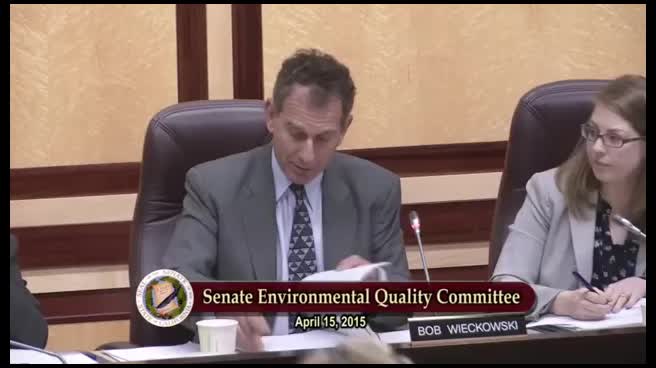
Bill Author

Bill Co-Author(s):