SB 185: Public retirement systems: public divestiture of thermal coal companies.
- Session Year: 2015-2016
- House: Senate
- Latest Version Date: 2015-10-08
The California Constitution provides that the Legislature may by statute prohibit retirement board investments if it is in the public interest to do so, and providing that the prohibition satisfies specified fiduciary standards.
Existing law prohibits the Public Employees Retirement System and the State Teachers Retirement System from investing public employee retirement funds in a company with active business operations in Sudan, as specified, and requires these retirement systems to liquidate any investments in a company with business operations in Sudan. Existing law also prohibits these retirement systems from investing in a company that has specified investments in the energy sector of Iran, as defined, including in a company that provides oil or liquefied natural gas tankers, or products used to construct or maintain pipelines used to transport oil or liquefied natural gas.
This bill would prohibit the boards of the Public Employees Retirement System and the State Teachers Retirement System from making new investments or renewing existing investments of public employee retirement funds in a thermal coal company, as defined. This bill would require the boards to liquidate investments in thermal coal companies on or before July 1, 2017, and would require the boards, in making a determination to liquidate investments, to constructively engage with thermal coal companies to establish whether the companies are transitioning their business models to adapt to clean energy generation. The bill would provide that it does not require a board to take any action unless the board determines in good faith that the action is consistent with the boards fiduciary responsibilities established in the constitution. The bill would make related legislative findings and declarations.
This bill would require, on or before January 1, 2018, these boards to file a report to the Legislature and the Governor, containing specified information, including a list of companies of which they have liquidated their investments. The bill would provide that board members and other officers and employees shall be held harmless and be eligible for indemnification in connection with actions taken pursuant to the bills requirements, as specified.
The California Constitution provides that the Legislature may by statute prohibit retirement board investments if it is in the public interest to do so, and providing that the prohibition satisfies specified fiduciary standards.
Existing law prohibits the Public Employees Retirement System and the State Teachers Retirement System from investing public employee retirement funds in a company with active business operations in Sudan, as specified, and requires these retirement systems to liquidate any investments in a company with business operations in Sudan. Existing law also prohibits these retirement systems from investing in a company that has specified investments in the energy sector of Iran, as defined, including in a company that provides oil or liquefied natural gas tankers, or products used to construct or maintain pipelines used to transport oil or liquefied natural gas.
This bill would prohibit the boards of the Public Employees Retirement System and the State Teachers Retirement System from making new investments or renewing existing investments of public employee retirement funds in a thermal coal company, as defined. This bill would require the boards to liquidate investments in thermal coal companies on or before July 1, 2017, and would require the boards, in making a determination to liquidate investments, to constructively engage with thermal coal companies to establish whether the companies are transitioning their business models to adapt to clean energy generation. The bill would require the boards, in consultation with the Secretary of the California Environmental Protection Agency, to make a comprehensive assessment of the feasibility and implications of divesting the retirement system funds of additional fossil fuel investments, such as natural gas and petroleum. The bill would provide that it does not require a board to take any action unless the board determines in good faith that the action is consistent with the boards fiduciary responsibilities established in the constitution. The bill would make related legislative findings and declarations.
This bill would require, on or before January 1, 2018, these boards to file a report to the Legislature and the Governor, containing specified information, including a list of companies of which they have liquidated their investments. The bill would provide that board members and other officers and employees shall be held harmless and be eligible for indemnification in connection with actions taken pursuant to the bills requirements, as specified.
The California Constitution provides that the Legislature may by statute prohibit retirement board investments if it is in the public interest to do so, and providing that the prohibition satisfies specified fiduciary standards.
Existing law prohibits the Public Employees Retirement System and the State Teachers Retirement System from investing public employee retirement funds in a company with active business operations in Sudan, as specified, and requires these retirement systems to liquidate any investments in a company with business operations in Sudan. Existing law also prohibits these retirement systems from investing in a company that has specified investments in the energy sector of Iran, as defined, including in a company that provides oil or liquefied natural gas tankers, or products used to construct or maintain pipelines used to transport oil or liquefied natural gas.
This bill would prohibit the boards of the Public Employees Retirement System and the State Teachers Retirement System from making new investments or renewing existing investments of public employee retirement funds in a thermal coal company, as defined. This bill would require the boards to liquidate investments in thermal coal companies on or before July 1, 2017, and would require the boards, in making a determination to liquidate investments, to constructively engage with thermal coal companies to establish whether the companies are transitioning their business models to adapt to clean energy generation. The bill would require the boards, in consultation with the Secretary of the California Environmental Protection Agency, to make a comprehensive assessment of the feasibility and implications of divesting the retirement system funds of additional fossil fuel investments, such as natural gas and petroleum. The bill would provide that it does not require a board to take any action if the board determines and adopts findings that the action would violate unless the board determines in good faith that the action is consistent with the boards fiduciary responsibilities established in the constitution. The bill would make related legislative findings and declarations.
This bill would require, on or before January 1, 2018, these boards to file a report to the Legislature and the Governor, containing specified information, including a list of companies of which they have liquidated their investments. The bill would provide that board members and other officers and employees shall be held harmless and be eligible for indemnification in connection with actions taken pursuant to the bills requirements, as specified.
The California Constitution provides that the Legislature may by statute prohibit retirement board investments if it is in the public interest to do so, and providing that the prohibition satisfies specified fiduciary standards.
Existing law prohibits the Public Employees Retirement System and the State Teachers Retirement System from investing public employee retirement funds in a company with active business operations in Sudan, as specified, and requires these retirement systems to liquidate any investments in a company with business operations in Sudan. Existing law also prohibits these retirement systems from investing in a company that has specified investments in the energy sector of Iran, as defined, including in a company that provides oil or liquefied natural gas tankers, or products used to construct or maintain pipelines used to transport oil or liquefied natural gas.
This bill would create the Public Divestiture of Thermal Coal Companies Act and require prohibit the boards of the Public Employees Retirement System and the State Teachers Retirement System to divest the from making new investments or renewing existing investments of public employee retirement funds of any investments in a thermal coal company, as defined, and prohibit additional or new investments or the renewal of existing investments in a thermal coal company defined. This bill would also require the boards to liquidate the investments of the board in a thermal coal company, as specified. This bill would require these actions to be undertaken consistently with the boards fiduciary responsibilities specified in the California Constitution. in thermal coal companies on or before July 1, 2017, and would require the boards, in making a determination to liquidate investments, to constructively engage with thermal coal companies to establish whether the companies are transitioning their business models to adapt to clean energy generation. The bill would require the boards, in consultation with the Secretary of the California Environmental Protection Agency, to make a comprehensive assessment of the feasibility and implications of divesting the retirement system funds of additional fossil fuel investments, such as natural gas and petroleum. The bill would provide that it does not require a board to take any action if the board determines and adopts findings that the action would violate the boards fiduciary responsibilities established in the constitution. The bill would make related legislative findings and declarations.
This bill would require, on or before January 1, 2017, 2018, these boards to file a report to the Legislature and the Governor, containing specified information, including a list of investments and companies of which it has divested they have liquidated their investments. The bill would provide that board members and other officers and employees shall be held harmless and be eligible for indemnification in connection with actions taken pursuant to the bills requirements, as specified.
The California Constitution provides that the Legislature may by statute prohibit retirement board investments if it is in the public interest to do so, and providing that the prohibition satisfies specified fiduciary standards.
Existing law prohibits the Public Employees Retirement System and the State Teachers Retirement System from investing public employee retirement funds in a company with active business operations in Sudan, as specified, and requires these retirement systems to liquidate any investments in a company with business operations in Sudan. Existing law also prohibits these retirement systems from investing in a company that has specified investments in the energy sector of Iran, as defined, including in a company that provides oil or liquefied natural gas tankers, or products used to construct or maintain pipelines used to transport oil or liquefied natural gas.
This bill would create the Public Divestiture of Thermal Coal Companies Act and require the boards of the Public Employees Retirement System and the State Teachers Retirement System to divest the public employee retirement funds of any investments in a thermal coal company, as defined, and prohibit additional or new investments or the renewal of existing investments in a thermal coal company. This bill would also require the boards to liquidate the investments of the board in a thermal coal company, as specified. This bill would require these actions to be undertaken consistently with the boards fiduciary responsibilities specified in the California Constitution. The bill would make related legislative findings and declarations.
This bill would require, on or before January 1, 2017, these boards to file a report to the Legislature and the Governor, containing specified information, including a list of investments and companies of which it has divested.
(a)The Legislature finds and declares all of the following:
(1)The combustion of coal resources is the single largest contributor to global climate change in the United States.
(2)Climate change affects all parts of the California economy and environment, and the Legislature has adopted numerous laws to mitigate greenhouse gas emissions and to adapt to a changing climate.
(3)The purpose of this section is to require the Public Employees Retirement System and the State Teachers Retirement System, consistent with, and not in violation of, their fiduciary responsibilities, to divest their holding of thermal coal power as one part of the states broader efforts to decarbonize the California economy and to transition to clean, pollution free energy resources.
(b)As used in this section, the following definitions apply:
(1)Board means the Board of Administration of the Public Employees Retirement System or the Teachers Retirement Board of the State Teachers Retirement System, as applicable.
(2)Company means a sole proprietorship, organization, association, corporation, partnership, venture, or other entity, or its subsidiary or affiliate, that exists for profit-making purposes or to otherwise secure economic advantage.
(3)Investment means the purchase, ownership, or control of publicly issued stock, corporate bonds, or other debt instruments issued by a company.
(4)Public employee retirement funds means the Public Employees Retirement Fund described in Section 20062 of this code, and the Teachers Retirement Fund described in Section 22167 of the Education Code.
(5)Thermal coal means coal used to generate electricity, such as that which is burned to create steam to run turbines. Thermal coal does not mean metallurgical coal or coking coal used to produce steel.
(6)Thermal coal company means a publicly traded company that generates 50 percent or more of its revenue from the mining of thermal coal, as determined by the board.
(c)The board shall not make additional or new investments or renew existing investments of public employee retirement funds in a thermal coal company.
(d)The board shall liquidate investments in a thermal coal company on or before July 1, 2017. In making a determination to liquidate investments, the board shall constructively engage with a thermal coal company to establish whether the company is transitioning its business model to adapt to clean energy generation, such as through a decrease in its reliance on thermal coal as a revenue source.
(e)On or before January 1, 2018, the board shall file a report with the Legislature, in compliance with Section 9795, and the Governor, which shall include the following:
(1)A list of thermal coal companies of which the board has liquidated its investments pursuant to subdivision (d).
(2)A list of companies with which the board engaged pursuant to subdivision (d) that the board established were transitioning to clean energy generation, with supporting documentation to substantiate the boards determination.
(3)A list of thermal coal companies of which the board has not liquidated its investments as a result of a determination made pursuant to subdivision (f) that a sale or transfer of investments is inconsistent with the fiduciary responsibilities of the board as described in Section 17 of Article XVI of the California Constitution and the boards findings adopted in support of that determination.
(f)Nothing in this section shall require a board to take action as described in this section unless the board determines in good faith that the action described in this section is consistent with the fiduciary responsibilities of the board described in Section 17 of Article XVI of the California Constitution.
SEC. 2.Section 16642 of the Government Code is amended to read:16642.Present, future, and former board members of the Public Employees Retirement System or the State Teachers Retirement System, jointly and individually, state officers and employees, research firms described in subdivision (d) of Section 7513.6, and investment managers under contract with the Public Employees Retirement System or the State Teachers Retirement System shall be indemnified from the General Fund and held harmless by the State of California from all claims, demands, suits, actions, damages, judgments, costs, charges and expenses, including court costs and attorneys fees, and against all liability, losses, and damages of any nature whatsoever that these present, future, or former board members, officers, employees, research firms as described in subdivision (d) of Section 7513.6, or contract investment managers shall or may at any time sustain by reason of any decision to restrict, reduce, or eliminate investments pursuant to Sections 7513.6, 7513.7, and 7513.75.
(a)The Legislature finds and declares all of the following:
(1)The combustion of coal resources is the single largest contributor to global climate change in the United States.
(2)Climate change affects all parts of the California economy and environment, and the Legislature has adopted numerous laws to mitigate greenhouse gas emissions and to adapt to a changing climate.
(3)The purpose of this article section is to require the Public Employees Retirement System and the State Teachers Retirement System, consistent with, and not in violation of, their fiduciary responsibilities, to divest their holding of thermal coal power as one part of the states broader efforts to decarbonize the California economy and to transition to clean, pollution free energy resources.
(b)As used in this section, the following definitions apply:
(1)Board means the Board of Administration of the Public Employees Retirement System or the Teachers Retirement Board of the State Teachers Retirement System, as applicable.
(2)Company means a sole proprietorship, organization, association, corporation, partnership, venture, or other entity, or its subsidiary or affiliate, that exists for profit-making purposes or to otherwise secure economic advantage.
(3)Investment means the purchase, ownership, or control of publicly issued stock, corporate bonds, or other debt instruments issued by a company.
(4)Public employee retirement funds means the Public Employees Retirement Fund described in Section 20062 of this code, and the Teachers Retirement Fund described in Section 22167 of the Education Code.
(5)Thermal coal means coal used to generate electricity, such as that which is burned to create steam to run turbines. Thermal coal does not mean metallurgical coal or coking coal used to produce steel.
(6)Thermal coal company means a publicly traded company that generates 50 percent or more of its revenue from the mining of thermal coal, as determined by the board.
(c)The board shall not make additional or new investments or renew existing investments of public employee retirement funds in a thermal coal company.
(d)The board shall liquidate investments in a thermal coal company on or before July 1, 2017. In making a determination to liquidate investments, the board shall constructively engage with a thermal coal company to establish whether the company is transitioning its business model to adapt to clean energy generation, such as through a decrease in its reliance on thermal coal as a revenue source.
(e)On or before January 1, 2018, the board shall file a report with the Legislature, in compliance with Section 9795, and the Governor, which shall include the following:
(1)A list of thermal coal companies of which the board has liquidated its investments pursuant to subdivision (d).
(2)A list of companies with which the board engaged pursuant to subdivision (d) that the board established were transitioning to clean energy generation, with supporting documentation to substantiate the boards determination.
(3)A list of thermal coal companies of which the board has not liquidated its investments as a result of a determination made pursuant to subdivision (g) (f) that a sale or transfer of investments is inconsistent with the fiduciary responsibilities of the board as described in Section 17 of Article XVI of the California Constitution and the boards findings adopted in support of that determination.
(f)In consultation with the Secretary of the California Environmental Protection Agency, the board shall make a comprehensive assessment of the feasibility of divesting the public employee retirement funds of additional fossil fuel investments, such as natural gas and petroleum, and its implications for the funds. A summary of this assessment shall be included in the report required by subdivision (e).
(g)
(f)Nothing in this section shall require a board to take action as described in this section unless the board determines in good faith that the action described in this section is consistent with the fiduciary responsibilities of the board described in Section 17 of Article XVI of the California Constitution.
SEC. 2.Section 16642 of the Government Code is amended to read:16642.Present, future, and former board members of the Public Employees Retirement System or the State Teachers Retirement System, jointly and individually, state officers and employees, research firms described in subdivision (d) of Section 7513.6, and investment managers under contract with the Public Employees Retirement System or the State Teachers Retirement System shall be indemnified from the General Fund and held harmless by the State of California from all claims, demands, suits, actions, damages, judgments, costs, charges and expenses, including court costs and attorneys fees, and against all liability, losses, and damages of any nature whatsoever that these present, future, or former board members, officers, employees, research firms as described in subdivision (d) of Section 7513.6, or contract investment managers shall or may at any time sustain by reason of any decision to restrict, reduce, or eliminate investments pursuant to Sections 7513.6, 7513.7, and 7513.75.
(a)The Legislature finds and declares all of the following:
(1)The combustion of coal resources is the single largest contributor to global climate change in the United States.
(2)Climate change affects all parts of the California economy and environment, and the Legislature has adopted numerous laws to mitigate greenhouse gas emissions and to adapt to a changing climate.
(3)The purpose of this article is to require the Public Employees Retirement System and the State Teachers Retirement System, consistent with, and not in violation of, their fiduciary responsibilities, to divest their holding of thermal coal power as one part of the states broader efforts to decarbonize the California economy and to transition to clean, pollution free energy resources.
(b)As used in this section, the following definitions apply:
(1)Board means the Board of Administration of the Public Employees Retirement System or the Teachers Retirement Board of the State Teachers Retirement System, as applicable.
(2)Company means a sole proprietorship, organization, association, corporation, partnership, venture, or other entity, or its subsidiary or affiliate, that exists for profit-making purposes or to otherwise secure economic advantage.
(3)Investment means the purchase, ownership, or control of publicly issued stock, corporate bonds, or other debt instruments issued by a company.
(4)Public employee retirement funds means the Public Employees Retirement Fund described in Section 20062 of this code, and the Teachers Retirement Fund described in Section 22167 of the Education Code.
(5)Thermal coal means coal used to generate electricity, such as that which is burned to create steam to run turbines. Thermal coal does not mean metallurgical coal or coking coal used to produce steel.
(6)Thermal coal company means a publicly traded company that generates 50 percent or more of its revenue from the mining of thermal coal, as determined by the board.
(c)The board shall not make additional or new investments or renew existing investments of public employee retirement funds in a thermal coal company.
(d)The board shall liquidate investments in a thermal coal company on or before July 1, 2017. In making a determination to liquidate investments, the board shall constructively engage with a thermal coal company to establish whether the company is transitioning its business model to adapt to clean energy generation, such as through a decrease in its reliance on thermal coal as a revenue source.
(e)On or before January 1, 2018, the board shall file a report with the Legislature, in compliance with Section 9795, and the Governor, which shall include the following:
(1)A list of thermal coal companies of which the board has liquidated its investments pursuant to subdivision (d).
(2)A list of companies with which the board engaged pursuant to subdivision (d) that the board established were transitioning to clean energy generation, with supporting documentation to substantiate the boards determination.
(3)A list of thermal coal companies of which the board has not liquidated its investments as a result of a determination made pursuant to subdivision (g) that a sale or transfer of investments is inconsistent with the fiduciary responsibilities of the board as described in Section 17 of Article XVI of the California Constitution and the boards findings adopted in support of that determination.
(f)In consultation with the Secretary of the California Environmental Protection Agency, the board shall make a comprehensive assessment of the feasibility of divesting the public employee retirement funds of additional fossil fuel investments, such as natural gas and petroleum, and its implications for the funds. A summary of this assessment shall be included in the report required by subdivision (e).
(g)This section does not require the board to take any action if the board determines and adopts findings, in good faith and based on publicly available information, that the action would violate the boards Nothing in this section shall require a board to take action as described in this section unless the board determines in good faith that the action described in this section is consistent with the fiduciary responsibilities of the board described in Section 17 of Article XVI of the California Constitution.
SEC. 2.Section 16642 of the Government Code is amended to read:16642.Present, future, and former board members of the Public Employees Retirement System or the State Teachers Retirement System, jointly and individually, state officers and employees, research firms described in subdivision (d) of Section 7513.6, and investment managers under contract with the Public Employees Retirement System or the State Teachers Retirement System shall be indemnified from the General Fund and held harmless by the State of California from all claims, demands, suits, actions, damages, judgments, costs, charges and expenses, including court costs and attorneys fees, and against all liability, losses, and damages of any nature whatsoever that these present, future, or former board members, officers, employees, research firms as described in subdivision (d) of Section 7513.6, or contract investment managers shall or may at any time sustain by reason of any decision to restrict, reduce, or eliminate investments pursuant to Sections 7513.6, 7513.7, and 7513.75.
(a)The Legislature finds and declares all of the following:
(1)The combustion of coal resources is the single largest contributor to global climate change in the United States.
(2)Climate change affects all parts of the California economy and environment, and the Legislature has adopted numerous laws to mitigate greenhouse gas emissions and to adapt to a changing climate.
(3)The purpose of this article is to require the Public Employees Retirement System and the State Teachers Retirement System, consistent with, and not in violation of, their fiduciary responsibilities, to divest their holding of thermal coal power as one part of the states broader efforts to decarbonize the California economy and to transition to clean, pollution free energy resources.
(b)As used in this section, the following definitions apply:
(1)Board means the Board of Administration of the Public Employees Retirement System or the Teachers Retirement Board of the State Teachers Retirement System, as applicable.
(2)Company means a sole proprietorship, organization, association, corporation, partnership, venture, or other entity, or its subsidiary or affiliate, that exists for profit-making purposes or to otherwise secure economic advantage.
(3)Investment means the purchase, ownership, or control of publicly issued stock, corporate bonds, or other debt instruments issued by a company.
(4)Public employee retirement funds means the Public Employees Retirement Fund described in Section 20062 of this code, and the Teachers Retirement Fund described in Section 22167 of the Education Code.
(5)Thermal coal means coal used to generate electricity, such as that which is burned to create steam to run turbines. Thermal coal does not mean metallurgical coal or coking coal used to produce steel.
(6)Thermal coal company means a publicly traded company that generates 50 percent or more of its revenue from the mining of thermal coal, as determined by the board.
(c)The board shall not make additional or new investments or renew existing investments of public employee retirement funds in a thermal coal company.
(d)The board shall liquidate investments in a thermal coal company on or before July 1, 2017. In making a determination to liquidate investments, the board shall constructively engage with a thermal coal company to establish whether the company is transitioning its business model to adapt to clean energy generation, such as through a decrease in its reliance on thermal coal as a revenue source.
(e)On or before January 1, 2018, the board shall file a report with the Legislature, in compliance with Section 9795, and the Governor, which shall include the following:
(1)A list of thermal coal companies of which the board has liquidated its investments pursuant to subdivision (d).
(2)A list of companies with which the board engaged pursuant to subdivision (d) that the board established were transitioning to clean energy generation, with supporting documentation to substantiate the boards determination.
(3)A list of thermal coal companies of which the board has not liquidated its investments as a result of a determination made pursuant to subdivision (g) that a sale or transfer of investments is inconsistent with the fiduciary responsibilities of the board as described in Section 17 of Article XVI of the California Constitution and the boards findings adopted in support of that determination.
(f)In consultation with the Secretary of the California Environmental Protection Agency, the board shall make a comprehensive assessment of the feasibility of divesting the public employee retirement funds of additional fossil fuel investments, such as natural gas and petroleum, and its implications for the funds. A summary of this assessment shall be included in the report required by subdivision (e).
(g)This section does not require the board to take any action if the board determines and adopts findings, in good faith and based on publicly available information, that the action would violate the boards fiduciary responsibilities described in Section 17 of Article XVI of the California Constitution.
SEC. 2.Section 16642 of the Government Code is amended to read:16642.Present, future, and former board members of the Public Employees Retirement System or the State Teachers Retirement System, jointly and individually, state officers and employees, research firms described in subdivision (d) of Section 7513.6, and investment managers under contract with the Public Employees Retirement System or the State Teachers Retirement System shall be indemnified from the General Fund and held harmless by the State of California from all claims, demands, suits, actions, damages, judgments, costs, charges and expenses, including court costs and attorneys fees, and against all liability, losses, and damages of any nature whatsoever that these present, future, or former board members, officers, employees, research firms as described in subdivision (d) of Section 7513.6, or contract investment managers shall or may at any time sustain by reason of any decision to restrict, reduce, or eliminate investments pursuant to Sections 7513.6 and 7513.7 7513.6, 7513.7, and 7513.75.
SECTION 1.Article 5 (commencing with Section 7524) is added to Chapter 21 of Division 7 of Title 1 of the Government Code, to read:5.Public Divestiture of Thermal Coal Companies Act 7524.This article may be known and cited as the Public Divestiture of Thermal Coal Companies Act.
7524.1.The Legislature finds and declares all of the following:
(a)The combustion of coal resources is the single largest contributor to global climate change in the United States.
(b)Climate change affects all parts of the California economy and environment, and the Legislature has adopted numerous laws to mitigate greenhouse gas emissions and to adapt to a changing climate.
(c)The purpose of this article is to require the Public Employees Retirement System and the State Teachers Retirement System, consistent with, and not in violation of, their fiduciary responsibilities, to divest their holding of thermal coal power as one part of the states broader efforts to decarbonize the California economy and to transition to clean, pollution free energy resources.
7524.2.For purposes of this article, the following definitions shall apply:
(a)Board means the Board of Administration of the Public Employees Retirement System or the Teachers Retirement Board of the State Teachers Retirement System, as applicable.
(b)Company means a sole proprietorship, organization, association, corporation, partnership, venture, or other entity, or its subsidiary or affiliate that exists for profit making purposes or to otherwise secure economic advantage.
(c)Investment means the purchase, ownership, or control of stock of a company, association, or corporation, corporate bonds or other debt instruments issued by a company, or the commitment of funds or other assets to a company, including a loan or extension of credit to that company.
(d)Public employee retirement funds means the Public Employees Retirement Fund described in Section 20062 of this code, and the Teachers Retirement Fund described in Section 22167 of the Education Code.
(e)Thermal coal company means a company engaged in the combustion of coal as determined by the board using Bloomberg Global Coal Index, Carbon Tracker, and Energy Transition Advisors Indices.
7524.3.Consistent with the boards fiduciary responsibilities as described in Section 17 of Article XVI of the California Constitution, and by the earliest feasible date after the enactment of this article, the board shall undertake all of the following:
(a)The board, shall divest the public employee retirement funds of any investments in a thermal coal company.
(b)The board shall not make additional or new investments or renew existing investments in a thermal coal company.
(c)The board shall liquidate the investments of the board in a thermal coal company no later than eighteen months after this article applies to that company.
7524.4.On or before January 1, 2017, the board shall file a report with the Legislature, in compliance with Section 9795, and the Governor on the following:
(a)Actions it has taken to implement this article, including a list of investments and companies of which it has divested.
(b)Recommendations to ensure the board is able to act consistent with its fiduciary responsibilities as described in Section 17 of Article XVI of the California Constitution.
(c)In consultation with the Secretary of the California Environmental Protection Agency, a comprehensive assessment of the feasibility of divesting the public employee retirement funds of additional fossil fuel investments such as natural gas and petroleum and its implications for the fund.
7524.5.Nothing in this article shall require a board to take action as described in this section unless the board determines, in good faith, that the action described in this section is consistent with the fiduciary responsibilities of the board as described in Section 17 of Article XVI of the California Constitution.
This article may be known and cited as the Public Divestiture of Thermal Coal Companies Act.
7524.1.The Legislature finds and declares all of the following:
(a)The combustion of coal resources is the single largest contributor to global climate change in the United States.
(b)Climate change affects all parts of the California economy and environment, and the Legislature has adopted numerous laws to mitigate greenhouse gas emissions and to adapt to a changing climate.
(c)The purpose of this article is to require the Public Employees Retirement System and the State Teachers Retirement System, consistent with, and not in violation of, their fiduciary responsibilities, to divest their holding of thermal coal power as one part of the states broader efforts to decarbonize the California economy and to transition to clean, pollution free energy resources.
7524.2.For purposes of this article, the following definitions shall apply:
(a)Board means the Board of Administration of the Public Employees Retirement System or the Teachers Retirement Board of the State Teachers Retirement System, as applicable.
(b)Company means a sole proprietorship, organization, association, corporation, partnership, venture, or other entity, or its subsidiary or affiliate that exists for profit making purposes or to otherwise secure economic advantage.
(c)Investment means the purchase, ownership, or control of stock of a company, association, or corporation, corporate bonds or other debt instruments issued by a company, or the commitment of funds or other assets to a company, including a loan or extension of credit to that company.
(d)Public employee retirement funds means the Public Employees Retirement Fund described in Section 20062 of this code, and the Teachers Retirement Fund described in Section 22167 of the Education Code.
(e)Thermal coal company means a company engaged in the combustion of coal as determined by the board using Bloomberg Global Coal Index, Carbon Tracker, and Energy Transition Advisors Indices.
7524.3.Consistent with the boards fiduciary responsibilities as described in Section 17 of Article XVI of the California Constitution, and by the earliest feasible date after the enactment of this article, the board shall undertake all of the following:
(a)The board, shall divest the public employee retirement funds of any investments in a thermal coal company.
(b)The board shall not make additional or new investments or renew existing investments in a thermal coal company.
(c)The board shall liquidate the investments of the board in a thermal coal company no later than eighteen months after this article applies to that company.
7524.4.On or before January 1, 2017, the board shall file a report with the Legislature, in compliance with Section 9795, and the Governor on the following:
(a)Actions it has taken to implement this article, including a list of investments and companies of which it has divested.
(b)Recommendations to ensure the board is able to act consistent with its fiduciary responsibilities as described in Section 17 of Article XVI of the California Constitution.
(c)In consultation with the Secretary of the California Environmental Protection Agency, a comprehensive assessment of the feasibility of divesting the public employee retirement funds of additional fossil fuel investments such as natural gas and petroleum and its implications for the fund.
7524.5.Nothing in this article shall require a board to take action as described in this section unless the board determines, in good faith, that the action described in this section is consistent with the fiduciary responsibilities of the board as described in Section 17 of Article XVI of the California Constitution.
|
Date
|
Status
|
|---|---|
| Oct 8, 2015 | Chaptered by Secretary of State. Chapter 605, Statutes of 2015. |
| Oct 8, 2015 | Approved by the Governor. |
| Sep 8, 2015 | Enrolled and presented to the Governor at 4:30 p.m. |
| Sep 2, 2015 | Read third time. Passed. (Ayes 47. Noes 30. Page 2794.) Ordered to the Senate. |
| Sep 2, 2015 | In Senate. Ordered to engrossing and enrolling. |
| Sep 2, 2015 | Read third time. Passed. Ordered to the Senate. |
| Aug 31, 2015 | Read second time. Ordered to third reading. |
| Aug 28, 2015 | From committee: Do pass. (Ayes 12. Noes 5.) (August 27). |
| Jul 15, 2015 | July 15 set for first hearing. Placed on APPR. suspense file. |
| Jun 24, 2015 | From committee: Do pass and re-refer to Com. on APPR. (Ayes 5. Noes 1.) (June 24). Re-referred to Com. on APPR. |
| Jun 11, 2015 | Referred to Com. on P.E., R., & S.S. |
| Jun 4, 2015 | In Assembly. Read first time. Held at Desk. |
| Jun 3, 2015 | Read third time. Passed. (Ayes 24. Noes 14. Page 1284.) Ordered to the Assembly. |
| Jun 3, 2015 | Read third time. Passed. (Ayes 24. Noes 14.) Ordered to the Assembly. |
| Jun 2, 2015 | Read second time and amended. Ordered to third reading. |
| Jun 1, 2015 | From committee: Do pass as amended. (Ayes 5. Noes 2. Page 1148.) (May 28). |
| Jun 1, 2015 | From committee: Do pass as amended. (Ayes 5. Noes 2.) (May 28). |
| May 23, 2015 | Set for hearing May 28. |
| Apr 27, 2015 | April 27 hearing: Placed on APPR. suspense file. |
| Apr 17, 2015 | Set for hearing April 27. |
| Apr 14, 2015 | From committee: Do pass and re-refer to Com. on APPR. (Ayes 3. Noes 2. Page 593.) (April 13). Re-referred to Com. on APPR. |
| Apr 8, 2015 | From committee with author's amendments. Read second time and amended. Re-referred to Com. on P.E. & R. |
| Mar 25, 2015 | Set for hearing April 13. |
| Mar 25, 2015 | From committee with author's amendments. Read second time and amended. Re-referred to Com. on P.E. & R. |
| Feb 19, 2015 | Referred to Com. on P.E. & R. |
| Feb 10, 2015 | From printer. May be acted upon on or after March 12. |
| Feb 9, 2015 | Introduced. Read first time. To Com. on RLS. for assignment. To print. |
|
Date
|
Description
|
Location
|
Votes
|
|
|---|---|---|---|---|
| Sep 2, 2015 | SB 185 De León Senate Third Reading By BONTA | Assembly Floor |
Passed |
|
| Aug 27, 2015 | Do pass. | Assembly Standing Committee on Appropriations |
Passed |
|
| Jun 24, 2015 | Do pass and be re-referred to the Committee on [Appropriations] | Assembly Standing Committee on Public Employees, Retirement, and Social Security |
Passed |
|
| Jun 3, 2015 | Senate 3rd Reading SB185 De León | Senate Floor |
Passed |
|
| May 28, 2015 | Do pass as amended | Senate Standing Committee on Appropriations |
Passed |
|
| Apr 27, 2015 | Placed on suspense file | Senate Standing Committee on Appropriations |
Passed |
|
| Apr 13, 2015 | Do pass, but first be re-referred to the Committee on [Appropriations] | Senate Standing Committee on Public Employment and Retirement |
Passed |
This list shows positions taken on this bill by organizations on the date displayed, which is linked to the original source.
Positions by individuals are not included.
SB 185
Page 3
SENATE THIRD READING
SB 185
(De León)
As Amended June 2, 2015
Majority vote
SENATE VOTE: 24-14
Committee |
Votes |
Ayes |
Noes |
Public Employees |
5-1 |
Bonta, Cooley, Jones-Sawyer, O'Donnell, Rendon |
Waldron |
Appropriations |
12-5 |
Gomez, Bloom, Bonta, Calderon, Nazarian, Eggman, Eduardo Garcia, Holden, Quirk, Rendon, Weber, Wood |
Bigelow, Chang, Gallagher, Jones, Wagner |
SUMMARY: Prohibits the California Public Employees' Retirement System (CalPERS) and California State Teachers' Retirement System (CalSTRS) from investing in thermal coal companies, as specified. Specifically, this bill:
Prohibits the CalPERS and CalSTRS from making new or additional investments of public employee retirement funds in thermal coal companies.
Requires CalPERS and CalSTRS to liquidate investments in thermal coal companies on or before July 1, 2017.
States that CalPERS and CalSTRS, in making a determination to liquidate investments in a thermal coal company, are to constructively engage with the thermal coal company to establish whether the company is transitioning its business model to adapt to clean energy generation, such as through a decrease in its reliance on thermal coal as a revenue source.
Defines thermal coal as coal used to generate electricity and excludes from the definition "metallurgical" or "coking" coal used to produce steel.
Defines a thermal coal company as a publicly traded company that generates 50% or more of its revenue from the mining of thermal coal.
Requires CalPERS and CalSTRS to file a report with the Legislature and the Governor on or before January 1, 2018, which must include:
A list of thermal coal companies of which the board has liquidated its investments.
A list of companies with which the board engaged and that the board established were transitioning to clean energy generation, with supporting documentation to substantiate the board's determination.
A list of thermal coal companies of which the board has not liquidated its investments as a result of a determination that a sale or transfer of investments is inconsistent with the board's fiduciary duty along with the board's findings adopted in support of that determination.
States that nothing in this bill requires CalPERS and CalSTRS to take action unless they determine, in good faith, that the action is consistent with their fiduciary responsibilities as described in California Constitution Article XVI Section 17.
Provides that CalPERS and CalSTRS board members and other covered persons, as described, are indemnified from the General Fund and held harmless by the State of California from all claims, demands, suits, etc., sustained by reason of any decision to restrict, reduce, or eliminate investments pursuant to this bill's provisions.
EXISTING LAW:
Pursuant to the California Constitution provides that:
The respective boards of California's public retirement systems have "plenary authority and fiduciary responsibility for investment of monies and administration of the system."
The Legislature retains its authority, by statute "to prohibit certain investments by a retirement board where it is in the public interest to do so, and provided that the prohibition satisfies the standards of fiduciary care and loyalty required of a retirement board pursuant to this section."
The members of the retirement board of a public pension or retirement system shall discharge their duties with respect to the system solely in the interest of, and for the exclusive purposes of providing benefits to, participants and their beneficiaries, minimizing employer contributions thereto, and defraying reasonable expenses of administering the system."
Prohibits CalPERS and CalSTRS from investing in companies with active business operations in Sudan and in Iran, as specified.
FISCAL EFFECT: According to the Assembly Appropriations Committee:
One-time Special Fund administrative and transaction costs of approximately $1.45 million and $700,000 to CalPERS and CalSTRS, respectively, and ongoing annual administrative costs of approximately $350,000 and $150,000 to CalPERS and CalSTRS, respectively, to comply with identification, liquidation, and reporting requirements.
Potentially substantial opportunity costs to each fund as a result of liquidation and limitations on future investments, leading to potential future General Fund pressure to augment contributions to defined benefit programs.
COMMENTS: According to the author, "Coal combustion for energy generation is the single leading cause of the pollution that causes global climate change." Also, burning coal is "a leading cause of smog, acid rain, and toxic air pollution. Some emissions can be significantly reduced with readily available pollution controls, but most U.S. coal plants have not installed these technologies."
According to CalPERS and CalSTRS, the two funds "are members of the Investor Network on Climate Risk – a leading network of 100 U.S. institutional investors, representing more than $10 trillion, addressing a policy agenda that calls on governments and regulators to introduce carbon pricing and disclosure, so that risks can be addressed effectively. This is part of a global effort among investors worth $24 trillion that have signed and supported the United Nations Statement on Climate Change."
Also, the two funds state "our pension funds prefer constructive engagement to divesting as a means of affecting the conduct of companies in which we invest." "When considering divestment, we firmly believe that active and direct engagement as a first line approach is the best way to resolve issues."
According to supporters, "Many reputable investment advisors and market data firms, like MSCI and FTSE, have produced research that shows the effects of fossil fuel divestment on a portfolio are de minimis. In fact, over the past five years, fossil free portfolios have outperformed the market while maintaining low risk metrics. The coal companies in question have been a drag on the retirement system for the last decade. Since 2008 the coal industry has plummeted in stock value by 66.9 percent. Divesting from coal is not only the right thing to do, it's the prudent and logical thing to do."
Opponents believe this bill "unfairly targets one type of business in which to divest from state retirement funds, starting down a slippery slope for divestiture from other businesses based on principles unrelated to fiduciary responsibility to the retirees."
Current and Prior Legislation:
AB 1410 (Nazarian), of the current legislative session, would have prohibited CalPERS and CalSTRS from investing public employee retirement funds in specified investments issued by, owned, controlled, or managed by the government of Turkey. AB 1410 bill was held in the Assembly Appropriations Committee.
AB 761 (Dickinson), of 2013, would have prohibited CalPERS and CalSTRS from investing in companies that manufacture firearms or ammunition for a recipient other than the United States military, subject to a process specified in the bill and consistent with previous divestment legislation, but subject to the board's fiduciary duties. AB 761 was held in the Assembly Appropriations Committee.
AB 221 (Anderson), Chapter 671, Statutes of 2007, prohibited CalPERS and CalSTRS from investing in companies that have specified energy or defense-related operations in Iran.
AB 2941 (Koretz), Chapter 442, Statutes of 2006, prohibited CalPERS and CalSTRS from investing public employee retirement funds in a company with business operations in the Sudan, as specified.
Analysis Prepared by: Karon Green / P.E.,R., & S.S. / (916) 319-3957 FN: 0001637
Date of Hearing: July 15, 2015
ASSEMBLY COMMITTEE ON APPROPRIATIONS
Jimmy Gomez, Chair
SB 185
(De León) – As Amended June 2, 2015
Policy Committee: |
Public Employees, Retirement/Soc Sec |
Vote: |
5 - 1 |
Urgency: No State Mandated Local Program: No Reimbursable: No
SUMMARY:
This bill prohibits the California Public Employees' Retirement System (CalPERS) and the California State Teachers' Retirement System (CalSTRS) from making any new or additional investments in thermal coal companies, and requires both pensions to liquidate existing investments in thermal coal companies on or before July 1, 2017. The bill does not require the board of either pension to take action it believes in good faith is inconsistent with its fiduciary duties.
The bill requires CalPERS and CalSTRS to report to the legislature by January 1, 2018, on thermal coal liquidation activities, engagement with any coal companies on transition to clean technologies, and any investments retained for fiduciary reasons.
FISCAL EFFECT:
1) One-time Special Fund administrative and transaction costs of approximately $1.45 million and $700,000 to CalPERS and CalSTRS, respectively, and ongoing annual administrative costs of approximately $350,000 and $150,000 to CalPERS and CalSTRS, respectively, to comply with identification, liquidation, and reporting requirements.
2) Potentially substantial opportunity costs to each fund as a result of liquidation and limitations on future investments, leading to potential future General Fund pressure to augment contributions to defined benefit programs.
COMMENTS:
1) Purpose. According to the author, burning coal to generate energy is the leading source of pollution that causes global climate change, and burning coal contributes to smog, acid rain, and toxic air pollution. Supporters contend market research demonstrates fossil fuel divestment would have a de minimis impact on pension funds, and fossil free portfolios have low risk profiles that have outperformed the broader market over the past five years. Supporters indicate coal industry stock values have declined by more than 60% since 2008.
2) Fiduciary Tension. In the past, CalPERS and CalSTRS have generally opposed legislation that restricts their ability to invest plan assets as those restrictions may interfere with their fiduciary obligations to members and beneficiaries. With increasing pressure on California's public pensions to deliver greater investment returns, accessing the best products, markets, and fund managers is increasingly important to CalPERS and CalSTRS. Both funds indicate they prefer constructive engagement to divesting as a means of affecting the conduct of companies in which they invest. Limiting investment options and forcing investment liquidations could lead to shortfalls in the defined benefit plans, leaving the state responsible for backfilling those losses.
SB 185 allows each fund to maintain thermal coal investments whenever the relevant board believes, in good faith, such investments are consistent with its constitutional fiduciary duties. Article 16 of the California Constitution gives public pensions "sole and exclusive" fiduciary responsibility over all plan assets, and, in theory at least, every investment decision by each board ought to be consistent with their fiduciary duties. As a result, an argument could be made that this bill does not actually require CalPERS or CalSTRS to take any specific action since they are already prohibited from acting in a manner inconsistent with their fiduciary obligations.
3) Pension Policymaking. Reducing greenhouse gas emissions and toxic air pollutants is certainly a worthy policy goal, and CalPERS and CalSTRS support that goal as members of the Investor Network on Climate Risk, a network of institutional investors that subscribe to the United Nations Statement on Climate Change and encourage governments and regulators to introduce carbon pricing and disclosure. There have been numerous bills proposed over recent years requiring pension funds to divest from businesses and investments deemed unsavory by the Legislature. Industries including fossil fuels, firearms and ammunition, and tobacco, have all been the subject of attempted sanctions.
With the sixth and thirteenth largest investment funds in the world, California's pensions have the capacity to significantly impact world capital markets and influence global affairs. Though this bill is not the first effort to legislate social policy through the state's pension systems, it raises important questions about the proper role of the Legislature in directing beneficiary funds to achieve broader social aims.
4) Playing With House Money. Though there are many investment funds that have adopted divestment strategies with respect to thermal coal and other fossil fuels similar to that proposed by this bill, it is important to distinguish CalPERS and CalSTRS from sovereign or private institutional funds. California's pensions exist to benefit state employees, not general taxpayers or their elected representatives. Members of CalPERS and CalSTRS are able to vote for board representation and petition the boards to make specific investment decisions. Members remain free to pursue the policy aims of this bill without the need for legislation.
While the policy goals of this bill are laudable, the cost of compliance can be substantial and disruptive to investment processes. Such restrictions can also significantly limit available investment opportunities, reducing fund performance. The administrative and opportunity costs of SB 185 will be borne, directly and indirectly, by plan members and beneficiaries even though the bill declares its policy goals to be of statewide importance.
The Legislature has often resisted imposing such restrictions on its state pension funds, and the Committee may wish to consider whether allowing this restriction is consistent with the fiduciary obligations of the boards, the democratic process by which members affect board policy, and the Committee's obligation to protect the public purse.
Analysis Prepared by: Joel Tashjian / APPR. / (916) 319-2081
SB 185
Page 5
Date of Hearing: June 24,2015
ASSEMBLY COMMITTEE ON PUBLIC EMPLOYEES, RETIREMENT, AND SOCIAL SECURITY
Rob Bonta, Chair
SB 185
(De León) – As Amended June 2, 2015
SENATE VOTE: 24-14
SUBJECT: Public retirement systems: public divestiture of thermal coal companies.
SUMMARY: Prohibits the California Public Employees' Retirement System (CalPERS) and California State Teachers' Retirement System (CalSTRS) from investing in thermal coal companies, as specified. Specifically, this bill:
Prohibits the CalPERS and CalSTRS from making new or additional investments of public employee retirement funds in thermal coal companies.
Requires CalPERS and CalSTRS to liquidate investments in thermal coal companies on or before July 1, 2017.
States that CalPERS and CalSTRS, in making a determination to liquidate investments in a thermal coal company, are to constructively engage with the thermal coal company to establish whether the company is transitioning its business model to adapt to clean energy generation, such as through a decrease in its reliance on thermal coal as a revenue source.
Defines thermal coal as coal used to generate electricity and excludes from the definition "metallurgical" or "coking" coal used to produce steel.
Defines a thermal coal company as a publicly traded company that generates 50% or more of its revenue from the mining of thermal coal.
Requires CalPERS and CalSTRS to file a report with the Legislature and the Governor on or before January 1, 2018, which must include:
A list of thermal coal companies of which the board has liquidated its investments.
A list of companies with which the board engaged and that the board established were transitioning to clean energy generation, with supporting documentation to substantiate the board's determination.
A list of thermal coal companies of which the board has not liquidated its investments as a result of a determination that a sale or transfer of investments is inconsistent with the board's fiduciary duty along with the board's findings adopted in support of that determination.
States that nothing in this bill requires CalPERS and CalSTRS to take action unless they determine, in good faith, that the action is consistent with their fiduciary responsibilities as described in Section 17 of Article XVI of the California Constitution.
Provides that CalPERS and CalSTRS board members and other covered persons, as described, are indemnified from the General Fund and held harmless by the State of California from all claims, demands, suits, etc., sustained by reason of any decision to restrict, reduce, or eliminate investments pursuant to this bill's provisions.
EXISTING LAW:
Pursuant to the California Constitution provides that:
The respective boards of California's public retirement systems have "plenary authority and fiduciary responsibility for investment of monies and administration of the system."
The Legislature retains its authority, by statute "to prohibit certain investments by a retirement board where it is in the public interest to do so, and provided that the prohibition satisfies the standards of fiduciary care and loyalty required of a retirement board pursuant to this section."
The members of the retirement board of a public pension or retirement system shall discharge their duties with respect to the system solely in the interest of, and for the exclusive purposes of providing benefits to, participants and their beneficiaries, minimizing employer contributions thereto, and defraying reasonable expenses of administering the system."
Prohibits CalPERS and CalSTRS from investing in companies with active business operations in Sudan and in Iran, as specified.
FISCAL EFFECT:
According to the Senate Appropriations Committee:
"One-time
administrative/transactional costs of approximately $683,500 and
$129,100 annual ongoing costs to CalSTRS (Special Fund). One-time
administrative/transactional costs of approximately $1.46 million and
$365,000 annual ongoing costs to CalPERS (Special Fund).
"CalSTRS
indicates that the pension system currently invests in 12 companies
with a combined market value of approximately $40 million that meet
the definition of thermal coal company. CalPERS invests in
approximately 20-30 thermal coal companies valued at approximately
$100-$200 million. The pension systems may additionally incur
opportunity costs if suitable alternative investments are
unavailable."
COMMENTS: According to the author, "Coal combustion for energy generation is the single leading cause of the pollution that causes global climate change." Also, burning coal is "a leading cause of smog, acid rain, and toxic air pollution. Some emissions can be significantly reduced with readily available pollution controls, but most U.S. coal plants have not installed these technologies."
According to CalPERS and CalSTRS, the two funds "are members of the Investor Network on Climate Risk - a leading network of 100 U.S. institutional investors, representing more than $10 trillion, addressing a policy agenda that calls on governments and regulators to introduce carbon pricing and disclosure, so that risks can be addressed effectively. This is part of a global effort among investors worth $24 trillion that have signed and supported the United Nations Statement on Climate Change."
Also, the two funds state "our pension funds prefer constructive engagement to divesting as a means of affecting the conduct of companies in which we invest." "When considering divestment, we firmly believe that active and direct engagement as a first line approach is the best way to resolve issues."
According to
supporters, "Many reputable investment advisors and market data
firms, like MSCI and FTSE, have produced research that shows the
effects of fossil fuel divestment on a portfolio are de minimis. In
fact, over the past five years, fossil free portfolios have
outperformed the market while maintaining low risk metrics. The coal
companies in question have been a drag on the retirement system for
the last decade. Since 2008 the coal industry has plummeted in stock
value by 66.9 percent. Divesting from coal is not only the right
thing to do, it's the prudent and logical thing to do."
Opponents believe this bill "unfairly targets one type of business in which to divest from state retirement funds, starting down a slippery slope for divestiture from other businesses based on principles unrelated to fiduciary responsibility to the retirees."
Current and Prior Legislation:
AB 1410 (Nazarian),
of this year, would have prohibited CalPERS and CalSTRS from
investing public employee retirement funds in specified investments
issued by, owned, controlled, or managed by the government of Turkey.
This bill was held in the Assembly Appropriations Committee.
AB 761 (Dickinson), of 2013, would have prohibited CalPERS and CalSTRS from investing in companies that manufacture firearms or ammunition for a recipient other than the U.S. military, subject to a process specified in the bill and consistent with previous divestment legislation, but subject to the board's fiduciary duties. This bill was held in the Assembly Appropriations Committee.
AB 221 (Anderson), Chapter 671, Statutes of 2007 prohibited CalPERS and CalSTRS from investing in companies that have specified energy or defense-related operations in Iran.
AB 2941 (Koretz,
Chapter 442, Statutes of 2006) prohibited CalPERS and CalSTRS from
investing public employee retirement funds in a company with business
operations in the Sudan, as specified.
REGISTERED SUPPORT / OPPOSITION:
Support
Alliance of Nurses for Healthy Environments
American Academy of Pediatrics-California
American Lung Association in California
Asian Environmental Pacific Network
Baz Allergy, Asthma and Sinus Center
California Black Health Network
California Democratic Party
California Environmental Justice Alliance
California Faculty Association
California Federation of Teachers
California League of Conservation Voters
California Nurses Association
California Public Health Association
Center for Climate Change & Health; Public Health Institute
Coalition for Clean Air
Cool Davis Foundation
Cool Planet Working Group
Doctors for Climate Health
Earthworks
Environment California
Environmental Health Coalition
Fossil Free CA
Friends Committee on Legislation of California
Health Care Without Harm
Human Impact Partners
Natural Resources Defense Council
Physicians for Social Responsibility
Physicians for Social Responsibility-Los Angeles
Public Health Institute
Regional Asthma Management and Prevention
SanDiego350
San Francisco Asthma Task Force
SEIU Local 1000
Sierra Club
Sonoma County Asthma Coalition
Yolo Moveon Council
Opposition
California Business Properties Association
California Chamber of Commerce
California
Independent Petroleum Association
California Manufacturers and
Technology Association
Construction
Trucking Association
National Federation of Independent Business
Analysis Prepared by: Karon Green / P.E.,R., & S.S. / (916) 319-3957
SB 185 (De León) Page 5 of 5
SENATE COMMITTEE ON
PUBLIC EMPLOYMENT AND RETIREMENT
Dr. Richard Pan, Chair
2015 - 2016 Regular
Bill No: SB 185 Hearing Date: 4/13/15
Author: |
De León |
||
Version: |
4/8/15 As amended |
||
Urgency: |
No |
Fiscal: |
Yes |
Consultant: |
Glenn Miles |
||
Subject: Public Retirement Systems: divestment of coal companies
SOURCE: Author
DIGEST: This bill prohibits the California Public Employees’ Retirement System (CalPERS) and the California State Teachers’ Retirement System (CalSTRS) from making new or additional investments of public employee retirement funds in thermal coal companies, as defined, and requires each system’s respective board to liquidate its existing investments in thermal coal companies on or before July 1, 2017.
ANALYSIS:
Existing law:
Pursuant to the California Constitution provides that:
The respective boards of California's public retirement systems have “…plenary authority and fiduciary responsibility for investment of monies and administration of the system.”
The Legislature retains its authority, by statute “…to prohibit certain investments by a retirement board where it is in the public interest to do so, and provided that the prohibition satisfies the standards of fiduciary care and loyalty required of a retirement board pursuant to this section.”
“The members of the retirement board of a public pension or retirement system shall discharge their duties with respect to the system solely in the interest of, and for the exclusive purposes of providing benefits to, participants and their beneficiaries, minimizing employer contributions thereto, and defraying reasonable expenses of administering the system.”
Prohibits the respective CalPERS and CalSTRS boards (board) from investing public employee retirement funds in companies:
With business operations in the defense and nuclear sectors of Iran, or that are involved in the development of Iranian petroleum or natural gas resources and are subject to specified federal sanctions, or have demonstrated complicity with an Iranian organization that has been labeled as a terrorist organization by the U.S. government.
That supply military equipment within the borders of Sudan. If a company provides equipment within the borders of Sudan that may be readily used for military purposes, including, but not limited to, radar systems and military-grade transport vehicles, there shall also be a strong presumption against investing in that company unless that company implements safeguards to prevent the use of that equipment for military purposes.
Requires the board to file annual reports with the Legislature detailing relevant investments in companies subject to the investment restrictions on investing in Iran and Sudan, and any actions that the board has taken related to those restrictions.
States that the board is not required to implement the divestment provisions related to Iran and Sudan or take other prescribed actions, as specified, unless it determines, in good faith, that the action is consistent with its fiduciary duties.
Requires the board, whenever feasible and consistent with its fiduciary responsibility, to support shareholder resolutions designed to encourage domestic and international corporations in which it has invested to pursue a policy of affirmative action in Northern Ireland in compliance with the law applicable in Northern Ireland and in accordance with the goals as defined in California statute, as specified.
Provides that board members and other covered persons, as described, shall be indemnified from the General Fund and held harmless by the State of California from all claims, demands, suits, etc., sustained by reason of any decision to restrict investments in Iran or Sudan pursuant to the relevant provisions of law.
This bill:
Prohibits the respective CalPERS and CalSTRS boards from making new or additional investments of public employee retirement funds in thermal coal companies.
Requires the board to liquidate investments in thermal coal companies on or before July 1, 2017.
States that the board, in making a determination to liquidate investments in a thermal coal company, shall constructively engage with the thermal coal company to establish whether the company is transitioning its business model to adapt to clean energy generation, such as through a decrease in its reliance on thermal coal as a revenue source.
Defines thermal coal as coal used to generate electricity and excludes from the definition “metallurgical” or “coking” coal used to produce steel.
Defines a thermal coal company as a publicly traded company that generate 50 percent or more of its revenue from the mining of thermal coal.
Requires the board to file a report with the Legislature and the Governor on or before January 1, 2018, which shall include:
A list of thermal coal companies of which the board has liquidated its investments.
A list of companies with which the board engaged and that the board established were transitioning to clean energy generation, with supporting documentation to substantiate the board’s determination.
A list of thermal coal companies of which the board has not liquidated its investments as a result of a determination that a sale or transfer of investments is inconsistent with the board’s fiduciary duty along with the board’s findings adopted in support of that determination.
Requires the board to make, in consultation with the California Environmental Protection Agency (“CalEPA”) Secretary, a comprehensive assessment of the feasibility of divesting public employee retirement funds of additional fossil fuel investments, such as natural gas and petroleum, and the implications of such divestment for the retirement system. A summary of this assessment shall be included in the report on thermal coal company divestment due to the Legislature and Governor on or before January 1, 2018.
States that nothing in this bill shall require a board to take action unless the board determines, in good faith, that the action is consistent with the board’s fiduciary responsibilities as described in Section 17 of Article XVI of the California Constitution.
Provides that board members and other covered persons, as described, shall be indemnified from the General Fund and held harmless by the State of California from all claims, demands, suits, etc., sustained by reason of any decision to restrict, reduce, or eliminate investments pursuant to this bill’s provisions.
Background
According to CalPERS and CalSTRS, the two funds “are members of the Investor Network on Climate Risk – a leading network of 100 U.S. institutional investors, representing more than $10 trillion, addressing a policy agenda that calls on governments and regulators to introduce carbon pricing and disclosure, so that risks can be addressed effectively. This is part of a global effort among investors worth $24 trillion that have signed and supported the United Nations Statement on Climate Change.”
Also, the two funds state “Our pension funds prefer constructive engagement to divesting as a means of affecting the conduct of companies in which we invest.” “When considering divestment, we firmly believe that active and direct engagement as a first line approach is the best way to resolve issues.”
Prior/Related Legislation
AB 1410 (Nazarian, 2015) prohibits CalPERS and CalSTRS from investing public employee retirement funds in specified investments issued by, owned, controlled, or managed by the government of Turkey. This bill is currently in the Assembly Public Employees, Retirement and Social Security Committee.
AB 1151 (Feuer, Chapter 441, Statutes of 2011) clarifies that CalPERS and CalSTRS must divest pension funds, as specified, unless to do so would fail to satisfy their fiduciary responsibility. The law also modifies the types of companies that fall within the Act’s scope and requires certain findings and determinations be made in noticed public hearings.
AB 221 (Anderson, Chapter 671, Statutes of 2007) prohibits CalPERS and CalSTRS from investing in companies that have specified energy or defense-related operations in Iran.
AB 2941 (Koretz, Chapter 442, Statutes of 2006) prohibits CalPERS and CalSTRS from investing public employee retirement funds in a company with business operations in the Sudan, as specified.
FISCAL EFFECT: Appropriation: No Fiscal Com.: Yes Local: No
SUPPORT:
Friends Committee on Legislation of California
OPPOSITION:
None received
ARGUMENTS IN SUPPORT: According to the author, “Coal combustion for energy generation is the single leading cause of the pollution that causes global climate change.” Also, burning coal is “a leading cause of smog, acid rain, and toxic air pollution. Some emissions can be significantly reduced with readily available pollution controls, but most U.S. coal plants have not installed these technologies.”
SB 185
Page 6
|
Office of Senate Floor Analyses (916) 651-1520 Fax: (916) 327-4478 |
THIRD READING
Bill No: SB 185
Amended: 6/2/15
SENATE PUBLIC EMP. & RET. COMMITTEE: 3-2, 4/13/15
AYES: Pan, Beall, Hall
NOES: Morrell, Fuller
SENATE APPROPRIATIONS COMMITTEE: 5-2, 5/28/15
AYES: Lara, Beall, Hill, Leyva, Mendoza
NOES: Bates, Nielsen
SUBJECT: Public retirement systems: Public Divestiture of Thermal Coal Companies Act
DIGEST: This bill prohibits the California Public Employees’ Retirement System (CalPERS) and the California State Teachers’ Retirement System (CalSTRS) boards from making new or additional investments of public employee retirement funds in thermal coal companies, as defined, and requires each board to liquidate its existing investments in thermal coal companies on or before July 1, 2017, provided that the boards make a good faith determination that thermal coal divestment is consistent with their fiduciary responsibility. The boards must first constructively engage with the affected companies to determine whether they are transitioning to clean energy generation and must report to the Legislature and Governor by January 1, 2018, on the boards’ engagement and divestment activities.
ANALYSIS:
Existing law:
Pursuant to the California Constitution provides that:
The respective boards of California's public retirement systems have “…plenary authority and fiduciary responsibility for investment of monies and administration of the system.”
The Legislature retains its authority, by statute “…to prohibit certain investments by a retirement board where it is in the public interest to do so, and provided that the prohibition satisfies the standards of fiduciary care and loyalty required of a retirement board pursuant to this section.”
“The members of the retirement board of a public pension or retirement system shall discharge their duties with respect to the system solely in the interest of, and for the exclusive purposes of providing benefits to, participants and their beneficiaries, minimizing employer contributions thereto, and defraying reasonable expenses of administering the system.”
Prohibits the respective CalPERS and CalSTRS boards (board) from investing public employee retirement funds in companies:
With business operations in the defense and nuclear sectors of Iran, or that are involved in the development of Iranian petroleum or natural gas resources and are subject to specified federal sanctions, or have demonstrated complicity with an Iranian organization that has been labeled as a terrorist organization by the U.S. government.
That supply military equipment within the borders of Sudan. If a company provides equipment within the borders of Sudan that may be readily used for military purposes, including, but not limited to, radar systems and military-grade transport vehicles, there shall also be a strong presumption against investing in that company unless that company implements safeguards to prevent the use of that equipment for military purposes.
Requires the board to file annual reports with the Legislature detailing relevant investments in companies subject to the investment restrictions on investing in Iran and Sudan, and any actions that the board has taken related to those restrictions.
States that the board is not required to implement the divestment provisions related to Iran and Sudan or take other prescribed actions, as specified, unless it determines, in good faith, that the action is consistent with its fiduciary duties.
Requires the board, whenever feasible and consistent with its fiduciary responsibility, to support shareholder resolutions designed to encourage domestic and international corporations in which it has invested to pursue a policy of affirmative action in Northern Ireland in compliance with the law applicable in Northern Ireland and in accordance with the goals as defined in California statute, as specified.
Provides that board members and other covered persons, as described, shall be indemnified from the General Fund and held harmless by the State of California from all claims, demands, suits, etc., sustained by reason of any decision to restrict investments in Iran or Sudan pursuant to the relevant provisions of law.
This bill:
Prohibits the respective CalPERS and CalSTRS boards from making new or additional investments of public employee retirement funds in thermal coal companies.
Requires the board to liquidate investments in thermal coal companies on or before July 1, 2017.
States that the board, in making a determination to liquidate investments in a thermal coal company, shall constructively engage with the thermal coal company to establish whether the company is transitioning its business model to adapt to clean energy generation, such as through a decrease in its reliance on thermal coal as a revenue source.
Defines thermal coal as coal used to generate electricity and excludes from the definition “metallurgical” or “coking” coal used to produce steel.
Defines a thermal coal company as a publicly traded company that generates 50 percent or more of its revenue from the mining of thermal coal.
Requires the board to file a report with the Legislature and the Governor on or before January 1, 2018, which shall include:
A list of thermal coal companies of which the board has liquidated its investments.
A list of companies with which the board engaged and that the board established were transitioning to clean energy generation, with supporting documentation to substantiate the board’s determination.
A list of thermal coal companies of which the board has not liquidated its investments as a result of a determination that a sale or transfer of investments is inconsistent with the board’s fiduciary duty along with the board’s findings adopted in support of that determination.
States that nothing in this bill shall require a board to take action unless the board determines, in good faith, that the action is consistent with the board’s fiduciary responsibilities as described in Section 17 of Article XVI of the California Constitution.
Provides that board members and other covered persons, as described, shall be indemnified from the General Fund and held harmless by the State of California from all claims, demands, suits, etc., sustained by reason of any decision to restrict, reduce, or eliminate investments pursuant to this bill’s provisions.
Background
According to CalPERS and CalSTRS, the two funds “are members of the Investor Network on Climate Risk – a leading network of 100 U.S. institutional investors, representing more than $10 trillion, addressing a policy agenda that calls on governments and regulators to introduce carbon pricing and disclosure, so that risks can be addressed effectively. This is part of a global effort among investors worth $24 trillion that have signed and supported the United Nations Statement on Climate Change.”
Also, the two funds state “our pension funds prefer constructive engagement to divesting as a means of affecting the conduct of companies in which we invest.” “When considering divestment, we firmly believe that active and direct engagement as a first line approach is the best way to resolve issues.”
Prior/Related Legislation
AB 1410 (Nazarian, 2015) prohibits CalPERS and CalSTRS from investing public employee retirement funds in specified investments issued by, owned, controlled, or managed by the government of Turkey.
AB 1151 (Feuer, Chapter 441, Statutes of 2011) clarified that CalPERS and CalSTRS must divest pension funds, as specified, unless to do so would fail to satisfy their fiduciary responsibility. The law also modifies the types of companies that fall within the Act’s scope and requires certain findings and determinations be made in noticed public hearings.
AB 221 (Anderson, Chapter 671, Statutes of 2007) prohibited CalPERS and CalSTRS from investing in companies that have specified energy or defense-related operations in Iran.
AB 2941 (Koretz, Chapter 442, Statutes of 2006) prohibited CalPERS and CalSTRS from investing public employee retirement funds in a company with business operations in the Sudan, as specified.
FISCAL EFFECT: Appropriation: No Fiscal Com.: Yes Local: No
According to the Senate Appropriations Committee:
One-time administrative/transactional costs of approximately $683,500 and $129,100 annual ongoing costs to CalSTRS (Special Fund)
One-time administrative/transactional costs of approximately $1.46 million and $365,000 annual ongoing costs to CalPERS (Special Fund)
CalSTRS indicates that the pension system currently invests in 12 companies with a combined market value of approximately $40 million that meet the definition of thermal coal company. CalPERS invests in approximately 20-30 thermal coal companies valued at approximately $100-$200 million. The pension systems may additionally incur opportunity costs if suitable alternative investments are unavailable.
350 Sacramento
American Lung Association in California
California Public Health Association – North
Center for Climate Change and Health; Public Health Institute
Cool Davis
Cool Planet
Doctors for Climate Health
Friends Committee on Legislation of California
Health Care Without Harm
Human Impact Partners
Physicians for Social Responsibility
Physicians for Social Responsibility – Los Angeles
Public Health Institute
Regional Asthma Management and Prevention
San Francisco Asthma Task Force
Yolo MoveOn Council
OPPOSITION: (Verified 5/29/15)
California Business Properties Association
California Chamber of Commerce
California Independent Petroleum Association
California Manufacturers and Technology Association
National Federation of Independent Business
ARGUMENTS IN SUPPORT: According to the author, “Coal combustion for energy generation is the single leading cause of the pollution that causes global climate change.” Also, burning coal is “a leading cause of smog, acid rain, and toxic air pollution. Some emissions can be significantly reduced with readily available pollution controls, but most U.S. coal plants have not installed these technologies.”
ARGUMENTS IN OPPOSITION: According to the California Chamber of Commerce, “divestment from coal and fossil fuels could threaten the financial strength of CalPERS and CalSTRS, and undermine their fiduciary responsibility by using these retirement funds to target unpopular companies for financial harm.”
Prepared by: Glenn Miles / P.E. & R. / (916) 651-1519
6/2/15 10:02:44
SB 185 (De León) Page 3 of 3
SENATE COMMITTEE ON APPROPRIATIONS
Senator Ricardo Lara, Chair
2015 - 2016 Regular Session
SB 185 (De León) - Public retirement systems: Public Divestiture of Thermal Coal Companies Act
|
|
Version: April 8, 2015 |
Policy Vote: P.E. & R. 3 - 2 |
Urgency: No |
Mandate: No |
Hearing Date: May 28, 2015 |
Consultant: Maureen Ortiz |
SUSPENSE FILE. AS AMENDED
Bill Summary:
SB 185 will prohibit the boards of the California Public Employees’ Retirement System (CalPERS) and the California State Teachers’ Retirement System (CalSTRS) from making new investments in a thermal coal company; requires each board to liquidate existing investments in a thermal coal company by July 1, 2017 as specified; report to the Legislature by January 1, 2018 on the divestment activities; and, in conjunction with the California Environmental Protection Agency to report on the feasibility of divesting from fossil fuels investments.
Fiscal Impact (as approved on May 28, 2015):
One-time administrative/transactional costs of approximately $683,500 and $129,100 annual ongoing costs to CalSTRS (Special Fund)
One-time administrative/transactional costs of approximately $1.46 million and $365,000 annual ongoing costs to CalPERS (Special Fund)
CalSTRS indicates that the pension system currently invests in 12 companies with a combined market value of approximately $40 million that meet the definition of thermal coal company. CalPERS invests in approximately 20-30 thermal coal companies valued at approximately $100-$200 million. The pension systems may additionally incur opportunity costs if suitable alternative investments are unavailable.
Background:
Under existing provisions of Section 17 of Article XVI of the California Constitution, as amended by Proposition 162 of 1992, the CalSTRS board and CalPERS board have plenary authority and fiduciary responsibility over the investment of retirement plan assets and are required to discharge their duties solely in the interests of the members and beneficiaries for the exclusive purpose of providing benefits. The boards must invest the assets of the plan with care, skill and diligence of a prudent person engaged in a similar enterprise so as to maximize the investments and minimize the risk of loss. The Constitution does allow the Legislature by statute to prohibit certain investments by a retirement board when it is in the public interest to do so and provided the prohibition satisfies the standards of fiduciary care and loyalty required of the retirement board.
Other measures have been enacted by the Legislature to prohibit certain investments by public pension funds. For instance, AB 221 (Anderson, Chapter 671, Statutes of 2007) prohibits CalPERS and CalSTRS from investing in companies that have specified energy or defense-related operations in Iran; and AB 2941 (Koretz, Chapter 442, Statutes of 2006) prohibits CalPERS and CalSTRS from investing public employee retirement funds in a company with business operations in the Sudan, as specified.
Proposed Law:
Specifically, SB 185 does the following:
a) Contains Legislative Findings and Declarations relating to the combustion of coal resources and its contribution to global climate change in the United States.
b) Defines “thermal coal” as coal used to generate electricity, such as that which is burned to create steam to run turbines, and provides that thermal coal does not mean metallurgical coal or coking coal used to produce steel.
c) Defines “thermal coal company” as a publicly traded company that generates 50 percent or more of its revenue from the mining of thermal coal, as determined by the retirement system board.
d) Prohibits the CalPERS and CalSTRS boards from making additional or new investments or renew existing investments of public employee retirement funds in a thermal coal company.
e) Requires the boards to liquidate investments in a thermal coal company on or before July 1, 2017 by engaging with a thermal coal company to establish whether the company is transitioning its business model to adapt to clean energy generation, such as through a decrease in its reliance on thermal coal as a revenue source.
f) Requires the boards to file a report with the Legislature by January 1, 2018. The report will include the following:
1) A list of thermal coal companies of which the board has liquidated its investments.
2) A list of companies with which the board has engaged that the board established were transitioning to clean energy generation, with supporting documentation to substantiate the board’s determination.
3) A list of thermal coal companies of which the board has not liquidated its investments after determining that doing so would be inconsistent with the fiduciary responsibilities as described in Section 17 of Article XVI of the California Constitution.
4) A summary of the feasibility study relating to divesting from fossil fuel investments.
g) Requires the boards, in consultation with the Secretary of the California Environmental Protection Agency (CalEPA), to make a comprehensive assessment of the feasibility of divesting the public employee retirement funds of additional fossil fuel investments, such as natural gas and petroleum, and its implications for the fund.
h) Provides that the board will not be required to take action to divest in thermal coal companies unless the board determines in good faith that the action is consistent with the fiduciary responsibilities of the board.
Staff Comments:
The purpose of SB 185 is to require the Public Employees’ Retirement System and the State Teachers’ Retirement System to divest their holding of thermal coal power, consistent with their fiduciary responsibilities. This is deemed as one part of the state’s broader efforts to decarbonize the California economy and to transition to clean, pollution free energy resources.
CalPERS has historically viewed climate change as an investment issue, adopted investment beliefs and principles in that regard, and consistently engages companies, other institutional investors, governments, and non-governmental organizations to formulate strategies to address the risks and opportunities posed by climate change and transition to low- and no-carbon energy sources. SB 185 requires the pension boards to first engage with thermal coal companies which is consistent with the boards’ practices of considering risk factors that emerge slowly over long time periods, but could have a material impact on company or portfolio returns.
CalSTRS has its own well-established and longstanding process for thoroughly vetting the environmental, social and governance risks of potential investments. The board adopted its Statement of Investment Responsibility in 1978 and more recently a list of 21 risk factors that help the board identify and evaluate investment risks relating to the existence of conditions such as recognition of the rule of law, shareholder rights, human rights, the environment, acts of terrorism and other unsustainable practices and governance crises with the potential to hurt long-term profits. CalSTRS also has a divestment policy to respond to external or internal initiatives to divest of specific companies or industries, but believes that active and direct engagement is the best way to resolve issues. Consequently, the CalSTRS board has initiated divestment efforts of its own such as the CalSTRS Benchmark Modification Policy in June 2002 to remove tobacco companies from the benchmarks of all CalSTRS managers and has effective divested of tobacco from passive managers; and, has begun the divestment process with two publicly traded U. S. companies that manufacture firearms, as specified.
Amendments (as adopted May 28, 2015): Delete the feasibility study on the divestment of fossil fuel investments.
-- END --
SB 185 (De León) Page 4 of 4
SENATE COMMITTEE ON APPROPRIATIONS
Senator Ricardo Lara, Chair
2015 - 2016 Regular Session
SB 185 (De León) - Public retirement systems: Public Divestiture of Thermal Coal Companies Act
|
|
Version: April 8, 2015 |
Policy Vote: P.E. & R. 3 - 2 |
Urgency: No |
Mandate: No |
Hearing Date: April 27, 2015 |
Consultant: Maureen Ortiz |
This bill meets the criteria for referral to the Suspense File.
Bill Summary:
SB 185 will prohibit the boards of the California Public Employees’ Retirement System (CalPERS) and the California State Teachers’ Retirement System (CalSTRS) from making new investments in a thermal coal company; requires each board to liquidate existing investments in a thermal coal company by July 1, 2017 as specified; report to the Legislature by January 1, 2018 on the divestment activities; and, in conjunction with the California Environmental Protection Agency to report on the feasibility of divesting from fossil fuels investments.
Fiscal Impact:
One-time administrative/transactional costs of approximately $683,500 and $129,100 annual ongoing costs to CalSTRS (Special Fund)
Unknown costs to CalSTRS/CalPERS for the feasibility study (Special Funds)
One-time administrative/transactional costs of approximately $1.46 million and $365,000 annual ongoing costs to CalPERS (Special Fund)
The costs to complete the assessment study of divesting in fossil fuels are unknown and will be dependent on the scope of the study. CalSTRS indicates that the pension system currently invests in 12 companies with a combined market value of approximately $40 million that meet the definition of thermal coal company. CalPERS invests in approximately 20-30 thermal coal companies valued at approximately $100-$200 million. The pension systems may additionally incur opportunity costs if suitable alternative investments are unavailable.
Background:
Under existing provisions of Section 17 of Article XVI of the California Constitution, as amended by Proposition 162 of 1992, the CalSTRS board and CalPERS board have plenary authority and fiduciary responsibility over the investment of retirement plan assets and are required to discharge their duties solely in the interests of the members and beneficiaries for the exclusive purpose of providing benefits. The boards must invest the assets of the plan with care, skill and diligence of a prudent person engaged in a similar enterprise so as to maximize the investments and minimize the risk of loss. The Constitution does allow the Legislature by statute to prohibit certain investments by a retirement board when it is in the public interest to do so and provided the prohibition satisfies the standards of fiduciary care and loyalty required of the retirement board.
Other measures have been enacted by the Legislature to prohibit certain investments by public pension funds. For instance, AB 221 (Anderson, Chapter 671, Statutes of 2007) prohibits CalPERS and CalSTRS from investing in companies that have specified energy or defense-related operations in Iran; and AB 2941 (Koretz, Chapter 442, Statutes of 2006) prohibits CalPERS and CalSTRS from investing public employee retirement funds in a company with business operations in the Sudan, as specified.
Proposed Law:
Specifically, SB 185 does the following:
a) Contains Legislative Findings and Declarations relating to the combustion of coal resources and its contribution to global climate change in the United States.
b) Defines “thermal coal” as coal used to generate electricity, such as that which is burned to create steam to run turbines, and provides that thermal coal does not mean metallurgical coal or coking coal used to produce steel.
c) Defines “thermal coal company” as a publicly traded company that generates 50 percent or more of its revenue from the mining of thermal coal, as determined by the retirement system board.
d) Prohibits the CalPERS and CalSTRS boards from making additional or new investments or renew existing investments of public employee retirement funds in a thermal coal company.
e) Requires the boards to liquidate investments in a thermal coal company on or before July 1, 2017 by engaging with a thermal coal company to establish whether the company is transitioning its business model to adapt to clean energy generation, such as through a decrease in its reliance on thermal coal as a revenue source.
f) Requires the boards to file a report with the Legislature by January 1, 2018. The report will include the following:
1) A list of thermal coal companies of which the board has liquidated its investments.
2) A list of companies with which the board has engaged that the board established were transitioning to clean energy generation, with supporting documentation to substantiate the board’s determination.
3) A list of thermal coal companies of which the board has not liquidated its investments after determining that doing so would be inconsistent with the fiduciary responsibilities as described in Section 17 of Article XVI of the California Constitution.
4) A summary of the feasibility study relating to divesting from fossil fuel investments.
g) Requires the boards, in consultation with the Secretary of the California Environmental Protection Agency (CalEPA), to make a comprehensive assessment of the feasibility of divesting the public employee retirement funds of additional fossil fuel investments, such as natural gas and petroleum, and its implications for the fund.
h) Provides that the board will not be required to take action to divest in thermal coal companies unless the board determines in good faith that the action is consistent with the fiduciary responsibilities of the board.
Staff Comments:
The purpose of SB 185 is to require the Public Employees’ Retirement System and the State Teachers’ Retirement System to divest their holding of thermal coal power, consistent with their fiduciary responsibilities. This is deemed as one part of the state’s broader efforts to decarbonize the California economy and to transition to clean, pollution free energy resources.
CalPERS has historically viewed climate change as an investment issue, adopted investment beliefs and principles in that regard, and consistently engages companies, other institutional investors, governments, and non-governmental organizations to formulate strategies to address the risks and opportunities posed by climate change and transition to low- and no-carbon energy sources. SB 185 requires the pension boards to first engage with thermal coal companies which is consistent with the boards’ practices of considering risk factors that emerge slowly over long time periods, but could have a material impact on company or portfolio returns.
CalSTRS has its own well-established and longstanding process for thoroughly vetting the environmental, social and governance risks of potential investments. The board adopted its Statement of Investment Responsibility in 1978 and more recently a list of 21 risk factors that help the board identify and evaluate investment risks relating to the existence of conditions such as recognition of the rule of law, shareholder rights, human rights, the environment, acts of terrorism and other unsustainable practices and governance crises with the potential to hurt long-term profits. CalSTRS also has a divestment policy to respond to external or internal initiatives to divest of specific companies or industries, but believes that active and direct engagement is the best way to resolve issues. Consequently, the CalSTRS board has initiated divestment efforts of its own such as the CalSTRS Benchmark Modification Policy in June 2002 to remove tobacco companies from the benchmarks of all CalSTRS managers and has effective divested of tobacco from passive managers; and, has begun the divestment process with two publicly traded U. S. companies that manufacture firearms, as specified.
Recommended Amendments:
This bill contains codified findings and declarations. In the interest of code clarity and efficiency, staff recommends this bill be amended to place the findings and declarations in an uncodified section of the bill.
-- END --
SB 185 (De León) Page 5 of 5
SENATE COMMITTEE ON
PUBLIC EMPLOYMENT AND RETIREMENT
Dr. Richard Pan, Chair
2015 - 2016 Regular
Bill No: SB 185 Hearing Date: 4/13/15
Author: |
De León |
||
Version: |
4/8/15 As amended |
||
Urgency: |
No |
Fiscal: |
Yes |
Consultant: |
Glenn Miles |
||
Subject: Public Retirement Systems: divestment of coal companies
SOURCE: Author
DIGEST: This bill prohibits the California Public Employees’ Retirement System (CalPERS) and the California State Teachers’ Retirement System (CalSTRS) from making new or additional investments of public employee retirement funds in thermal coal companies, as defined, and requires each system’s respective board to liquidate its existing investments in thermal coal companies on or before July 1, 2017.
ANALYSIS:
Existing law:
Pursuant to the California Constitution provides that:
The respective boards of California's public retirement systems have “…plenary authority and fiduciary responsibility for investment of monies and administration of the system.”
The Legislature retains its authority, by statute “…to prohibit certain investments by a retirement board where it is in the public interest to do so, and provided that the prohibition satisfies the standards of fiduciary care and loyalty required of a retirement board pursuant to this section.”
“The members of the retirement board of a public pension or retirement system shall discharge their duties with respect to the system solely in the interest of, and for the exclusive purposes of providing benefits to, participants and their beneficiaries, minimizing employer contributions thereto, and defraying reasonable expenses of administering the system.”
Prohibits the respective CalPERS and CalSTRS boards (board) from investing public employee retirement funds in companies:
With business operations in the defense and nuclear sectors of Iran, or that are involved in the development of Iranian petroleum or natural gas resources and are subject to specified federal sanctions, or have demonstrated complicity with an Iranian organization that has been labeled as a terrorist organization by the U.S. government.
That supply military equipment within the borders of Sudan. If a company provides equipment within the borders of Sudan that may be readily used for military purposes, including, but not limited to, radar systems and military-grade transport vehicles, there shall also be a strong presumption against investing in that company unless that company implements safeguards to prevent the use of that equipment for military purposes.
Requires the board to file annual reports with the Legislature detailing relevant investments in companies subject to the investment restrictions on investing in Iran and Sudan, and any actions that the board has taken related to those restrictions.
States that the board is not required to implement the divestment provisions related to Iran and Sudan or take other prescribed actions, as specified, unless it determines, in good faith, that the action is consistent with its fiduciary duties.
Requires the board, whenever feasible and consistent with its fiduciary responsibility, to support shareholder resolutions designed to encourage domestic and international corporations in which it has invested to pursue a policy of affirmative action in Northern Ireland in compliance with the law applicable in Northern Ireland and in accordance with the goals as defined in California statute, as specified.
Provides that board members and other covered persons, as described, shall be indemnified from the General Fund and held harmless by the State of California from all claims, demands, suits, etc., sustained by reason of any decision to restrict investments in Iran or Sudan pursuant to the relevant provisions of law.
This bill:
Prohibits the respective CalPERS and CalSTRS boards from making new or additional investments of public employee retirement funds in thermal coal companies.
Requires the board to liquidate investments in thermal coal companies on or before July 1, 2017.
States that the board, in making a determination to liquidate investments in a thermal coal company, shall constructively engage with the thermal coal company to establish whether the company is transitioning its business model to adapt to clean energy generation, such as through a decrease in its reliance on thermal coal as a revenue source.
Defines thermal coal as coal used to generate electricity and excludes from the definition “metallurgical” or “coking” coal used to produce steel.
Defines a thermal coal company as a publicly traded company that generate 50 percent or more of its revenue from the mining of thermal coal.
Requires the board to file a report with the Legislature and the Governor on or before January 1, 2018, which shall include:
A list of thermal coal companies of which the board has liquidated its investments.
A list of companies with which the board engaged and that the board established were transitioning to clean energy generation, with supporting documentation to substantiate the board’s determination.
A list of thermal coal companies of which the board has not liquidated its investments as a result of a determination that a sale or transfer of investments is inconsistent with the board’s fiduciary duty along with the board’s findings adopted in support of that determination.
Requires the board to make, in consultation with the California Environmental Protection Agency (“CalEPA”) Secretary, a comprehensive assessment of the feasibility of divesting public employee retirement funds of additional fossil fuel investments, such as natural gas and petroleum, and the implications of such divestment for the retirement system. A summary of this assessment shall be included in the report on thermal coal company divestment due to the Legislature and Governor on or before January 1, 2018.
States that nothing in this bill shall require a board to take action unless the board determines, in good faith, that the action is consistent with the board’s fiduciary responsibilities as described in Section 17 of Article XVI of the California Constitution.
Provides that board members and other covered persons, as described, shall be indemnified from the General Fund and held harmless by the State of California from all claims, demands, suits, etc., sustained by reason of any decision to restrict, reduce, or eliminate investments pursuant to this bill’s provisions.
Background
According to CalPERS and CalSTRS, the two funds “are members of the Investor Network on Climate Risk – a leading network of 100 U.S. institutional investors, representing more than $10 trillion, addressing a policy agenda that calls on governments and regulators to introduce carbon pricing and disclosure, so that risks can be addressed effectively. This is part of a global effort among investors worth $24 trillion that have signed and supported the United Nations Statement on Climate Change.”
Also, the two funds state “Our pension funds prefer constructive engagement to divesting as a means of affecting the conduct of companies in which we invest.” “When considering divestment, we firmly believe that active and direct engagement as a first line approach is the best way to resolve issues.”
Prior/Related Legislation
AB 1410 (Nazarian, 2015) prohibits CalPERS and CalSTRS from investing public employee retirement funds in specified investments issued by, owned, controlled, or managed by the government of Turkey. This bill is currently in the Assembly Public Employees, Retirement and Social Security Committee.
AB 1151 (Feuer, Chapter 441, Statutes of 2011) clarifies that CalPERS and CalSTRS must divest pension funds, as specified, unless to do so would fail to satisfy their fiduciary responsibility. The law also modifies the types of companies that fall within the Act’s scope and requires certain findings and determinations be made in noticed public hearings.
AB 221 (Anderson, Chapter 671, Statutes of 2007) prohibits CalPERS and CalSTRS from investing in companies that have specified energy or defense-related operations in Iran.
AB 2941 (Koretz, Chapter 442, Statutes of 2006) prohibits CalPERS and CalSTRS from investing public employee retirement funds in a company with business operations in the Sudan, as specified.
FISCAL EFFECT: Appropriation: No Fiscal Com.: Yes Local: No
SUPPORT:
Friends Committee on Legislation of California
OPPOSITION:
None received
ARGUMENTS IN SUPPORT: According to the author, “Coal combustion for energy generation is the single leading cause of the pollution that causes global climate change.” Also, burning coal is “a leading cause of smog, acid rain, and toxic air pollution. Some emissions can be significantly reduced with readily available pollution controls, but most U.S. coal plants have not installed these technologies.”
Discussed in Hearing
 5MIN
Assembly Floor
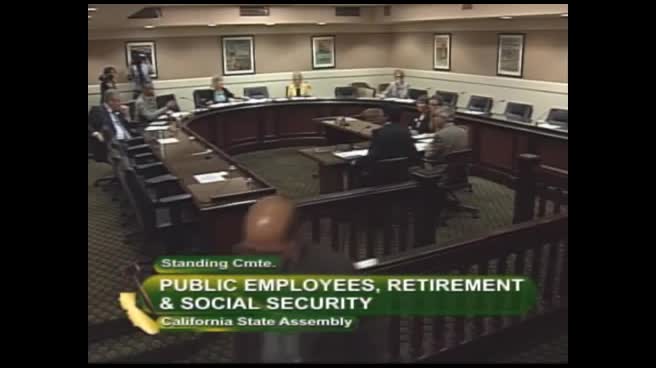 20MIN
Assembly Standing Committee on Public Employees, Retirement, and Social Security
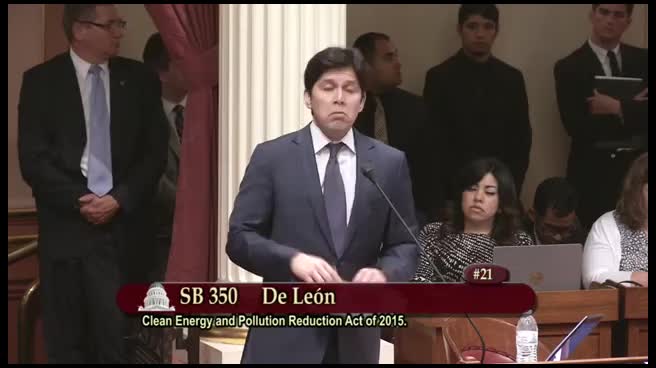 18MIN
Senate Floor
 19MIN
Senate Standing Committee on Public Employment and Retirement
Bill Author
Bill Co-Author(s):
