SB 188: Municipal utility district: utility charges: delinquencies.
- Session Year: 2015-2016
- House: Senate
- Latest Version Date: 2015-09-04
(1)The existing Municipal Utility District Act authorizes the formation of a municipal utility district. The act authorizes a district to acquire, construct, own, operate, control, or use works for supplying the inhabitants of the district and public agencies with light, water, power, heat, transportation, telephone service, or other means of communication, or means for the collection, treatment, or disposition of garbage, sewage, or refuse matter. The act authorizes a municipal utility district, by resolution or ordinance, to require the owner of record of privately owned real property within the district to pay the fees, tolls, rates, rentals, or other charges for certain utility services rendered to a lessee, tenant, or subtenant, and provides that those charges that have become delinquent, together with interest and penalties, are a lien on the property when a certificate is filed by the district in the office of the county recorder and that the lien has the force, effect, and priority of a judgment lien.
The act, in addition to the above-described methods, establishes procedures, until January 1, 2016, for a municipal utility district to collect delinquent fees, tolls, rates, rentals, or other charges, together with interest and penalties thereon, for services rendered to a lessee, tenant, or subtenant, through the tax roll, in the same manner as property taxes. The act, until January 1, 2016, authorizes a municipal utility district to collect delinquent fees, tolls, rates, rentals, or other charges, together with interest and penalties thereon, for services rendered to a lessee, tenant, or subtenant, by recording in the office of the county recorder of the county in which the affected parcel is located, a certificate declaring the amount of the delinquent charges, together with interest and penalties thereon, which would then constitute a lien against the affected real property of the delinquent property owner in that county and have the force, effect, and priority of a judgment lien. The act, until January 1, 2016, requires a municipal utility district that exercises these collection measures to reimburse the county for the reasonable expenses incurred by the county.
This bill would extend the operation of these provisions indefinitely. By requiring county auditors and recorders to undertake certain actions in response to the exercise of collection measures by a municipal utility district, the bill would impose a state-mandated local program.
(2)The act prohibits a municipal utility district from collecting delinquent fees or charges using the above-described collection measures for the furnishing of electrical services and, beginning January 1, 2016, for the furnishing of water or sewer service to residential property.
This bill would permanently authorize a municipal utility district to collect delinquent fees or charges using the above-described collection measures for the furnishing of water or sewer service to residential property.
(3)The act requires any district that places a lien on a property for water or sewer service on or before December 31, 2014, pursuant to the above-described collection measures, to submit a report containing certain information to the Assembly and Senate Committees on Judiciary and to the Assembly and Senate Committees on Local Government on or before January 1, 2015.
This bill would delete this provision.
(4)The California Constitution requires the state to reimburse local agencies and school districts for certain costs mandated by the state. Statutory provisions establish procedures for making that reimbursement.
This bill would provide that no reimbursement is required by this act for a specified reason.
This act is intended to remove the sunset date in Section 12811.1 of the Public Utilities Code on the authority of a municipal utility district to collect delinquent fees, tolls, rates, rentals, and other charges on the tax roll. This act is not intended to change existing law regarding the protection provided to a property owner pursuant to Section 12822.6 of the Public Utilities Code, which prohibits a municipal utility district from collecting delinquent charges or penalties from a property owner accrued by a residential tenant in a nonmaster-metered building.
SEC. 2.Section 12811.1 of the Public Utilities Code, as amended by Section 1 of Chapter 485 of the Statutes of 2010, is amended to read:12811.1.(a)Except when prohibited by Section 12822.6, a district may, by resolution or ordinance, require the owner of record of real property within the district to pay the fees, tolls, rates, rentals, or other charges for services rendered to a lessee, tenant, or subtenant, and those fees, tolls, rates, rentals, and other charges that have become delinquent, together with interest and penalties thereon, are a lien on the property when a certificate is filed in the office of the county recorder pursuant to subdivision (b) and the lien has the force, effect, and priority of a judgment lien. No lien may be created under this section on any publicly owned property.
(b)A lien under this section attaches when the district files for recordation in the office of the county recorder a certificate specifying the amount of the delinquent fees, tolls, rates, rentals, or other charges together with interest and penalties thereon; the name of the owner of record of the property to which services were rendered by the district; and the legal description of the property. Within 30 days of receipt of payment of all amounts due, including recordation fees paid by the district, the district shall file for recordation a release of the lien.
(c)A district may, by resolution or ordinance, provide that any delinquent fees, tolls, rates, rentals, or other charges, together with interest and penalties thereon, including any delinquent fees, tolls, rates, rentals, or other charges for services rendered to a lessee, tenant, or subtenant, may be collected on the tax roll in the same manner as property taxes. Before any entity may collect any delinquent fees, tolls, rates, rentals, or other charges, together with interest and penalties thereon, including any delinquent fees, tolls, rates, rentals, or other charges for services rendered to a lessee, tenant, or subtenant on the tax roll, the district shall prepare a report, provide notice, conduct a public hearing, and file a certificate in the office of the county recorder, as follows:
(1)The general manager shall prepare and file with the district board of directors a report that describes each affected parcel of real property and the amount of the delinquent fees, tolls, rates, rentals, or other charges, together with interest and penalties thereon, including any delinquent fees, tolls, rates, rentals, or other charges for services rendered to a lessee, tenant, or subtenant for each affected parcel for the year. The general manager shall give notice of the filing of the report and of the time, date, and place for a public hearing by publishing the notice pursuant to Section 6066 of the Government Code in a newspaper of general circulation, and by mailing the notice to the owner of each affected parcel at least 14 days prior to the date of the hearing.
(2)At the public hearing, the board of directors shall hear and consider any objections or protests to the report. At the conclusion of the public hearing, the board of directors may adopt or revise the delinquent fees, tolls, rates, rentals, or other charges, together with interest and penalties thereon, including any delinquent fees, tolls, rates, rentals, or other charges for services rendered to a lessee, tenant, or subtenant. The board of directors shall make its determination on each affected parcel and its determinations shall be final.
(3)On or before August 10 of each year following these determinations, the general manager shall file with the county auditor a copy of the final report adopted by the board of directors. The county auditor shall enter the amount of the delinquent fees, tolls, rates, rentals, or other charges, together with interest and penalties thereon, including any delinquent fees, tolls, rates, rentals, or other charges for services rendered to a lessee, tenant, or subtenant, against each of the affected parcels of real property as they appear on the current assessment roll. The county tax collector shall include the amount of the delinquent fees, tolls, rates, rentals, or charges, together with interest and penalties thereon, including any delinquent fees, tolls, rates, rentals, or other charges for services rendered to a lessee, tenant, or subtenant, on the tax bills for each affected parcel of real property and collect the delinquent fees, tolls, rates, rentals, or charges, together with interest and penalties thereon, including any delinquent fees, tolls, rates, rentals, or other charges for services rendered to a lessee, tenant, or subtenant, in the same manner as property taxes.
(4)The district may recover any delinquent fees, tolls, rates, rentals, or other charges, together with interest and penalties thereon, including any delinquent fees, tolls, rates, rentals, or other charges for services rendered to a lessee, tenant, or subtenant, by recording in the office of the county recorder of the county in which the affected parcel is located, a certificate declaring the amount of the delinquent fees, tolls, rates, rentals, or charges, together with interest and penalties thereon, including any delinquent fees, tolls, rates, rentals, or other charges for services rendered to a lessee, tenant, or subtenant, due, and the name and last known address of the person liable therefor. From the time of recordation of the certificate, the amount of the delinquent fees, tolls, rates, rentals, or charges, together with interest and penalties thereon, including any delinquent fees, tolls, rates, rentals, or other charges for services rendered to a lessee, tenant, or subtenant, constitutes a lien against the affected real property of the delinquent property owner in that county. This lien shall have the force, effect, and priority of a judgment lien. Within 30 days of receipt of payment of all amounts due, including recordation fees paid by the district, the district shall file for recordation a release of the lien.
(5)The district shall not recover on the tax roll any delinquent fees, tolls, rates, rentals, or other charges for services for commercial use to a commercial tenant under an account established by the commercial tenant, from any subsequent tenant or the property owner, due to nonpayment of charges by a previous commercial tenant. For this purpose, the term subsequent commercial tenant shall not include an entity or adult person that was located at the same address during the period the charges or penalties accrued. This paragraph does not apply to master-metered accounts.
(d)Notwithstanding Sections 6103 and 27383 of the Government Code, in filing any instrument, paper, or notice pursuant to this section, the district shall pay all applicable recording fees prescribed by law.
(e)A district shall reimburse the county for the reasonable expenses incurred by the county pursuant to this section.
(f)The remedies in this section are cumulative and in addition to any other remedy provided by law. The district may pursue remedies alternatively or consecutively.
(g)This section does not apply to delinquent fees or charges for the furnishing of electrical service.
SEC. 3.Section 12811.1 of the Public Utilities Code, as added by Section 2 of Chapter 485 of the Statutes of 2010, is repealed.SEC. 4.No reimbursement is required by this act pursuant to Section 6 of Article XIIIB of the California Constitution because a local agency or school district has the authority to levy service charges, fees, or assessments sufficient to pay for the program or level of service mandated by this act, within the meaning of Section 17556 of the Government Code.
This act is intended to remove the sunset date in Section 12811.1 of the Public Utilities Code on the authority of a municipal utility district to collect delinquent fees, tolls, rates, rentals, and other charges on the tax roll. This act is not intended to change existing law regarding the protection provided to a property owner pursuant to Section 12822.6 of the Public Utilities Code, which prohibits a municipal utility district from collecting delinquent charges or penalties from a property owner accrued by a residential tenant in a nonmaster-metered building.
SECTION 1.SEC. 2.Section 12811.1 of the Public Utilities Code, as amended by Section 1 of Chapter 485 of the Statutes of 2010, is amended to read:12811.1.(a)Except when prohibited by Section 12822.6, a district may, by resolution or ordinance, require the owner of record of real property within the district to pay the fees, tolls, rates, rentals, or other charges for services rendered to a lessee, tenant, or subtenant, and those fees, tolls, rates, rentals, and other charges that have become delinquent, together with interest and penalties thereon, are a lien on the property when a certificate is filed in the office of the county recorder pursuant to subdivision (b) and the lien has the force, effect, and priority of a judgment lien. No lien may be created under this section on any publicly owned property.
(b)A lien under this section attaches when the district files for recordation in the office of the county recorder a certificate specifying the amount of the delinquent fees, tolls, rates, rentals, or other charges together with interest and penalties thereon; the name of the owner of record of the property to which services were rendered by the district; and the legal description of the property. Within 30 days of receipt of payment of all amounts due, including recordation fees paid by the district, the district shall file for recordation a release of the lien.
(c)A district may, by resolution or ordinance, provide that any delinquent fees, tolls, rates, rentals, or other charges, together with interest and penalties thereon, including any delinquent fees, tolls, rates, rentals, or other charges for services rendered to a lessee, tenant, or subtenant, may be collected on the tax roll in the same manner as property taxes. Before any entity may collect any delinquent fees, tolls, rates, rentals, or other charges, together with interest and penalties thereon, including any delinquent fees, tolls, rates, rentals, or other charges for services rendered to a lessee, tenant, or subtenant on the tax roll, the district shall prepare a report, provide notice, conduct a public hearing, and file a certificate in the office of the county recorder, as follows:
(1)The general manager shall prepare and file with the district board of directors a report that describes each affected parcel of real property and the amount of the delinquent fees, tolls, rates, rentals, or other charges, together with interest and penalties thereon, including any delinquent fees, tolls, rates, rentals, or other charges for services rendered to a lessee, tenant, or subtenant for each affected parcel for the year. The general manager shall give notice of the filing of the report and of the time, date, and place for a public hearing by publishing the notice pursuant to Section 6066 of the Government Code in a newspaper of general circulation, and by mailing the notice to the owner of each affected parcel at least 14 days prior to the date of the hearing.
(2)At the public hearing, the board of directors shall hear and consider any objections or protests to the report. At the conclusion of the public hearing, the board of directors may adopt or revise the delinquent fees, tolls, rates, rentals, or other charges, together with interest and penalties thereon, including any delinquent fees, tolls, rates, rentals, or other charges for services rendered to a lessee, tenant, or subtenant. The board of directors shall make its determination on each affected parcel and its determinations shall be final.
(3)On or before August 10 of each year following these determinations, the general manager shall file with the county auditor a copy of the final report adopted by the board of directors. The county auditor shall enter the amount of the delinquent fees, tolls, rates, rentals, or other charges, together with interest and penalties thereon, including any delinquent fees, tolls, rates, rentals, or other charges for services rendered to a lessee, tenant, or subtenant, against each of the affected parcels of real property as they appear on the current assessment roll. The county tax collector shall include the amount of the delinquent fees, tolls, rates, rentals, or charges, together with interest and penalties thereon, including any delinquent fees, tolls, rates, rentals, or other charges for services rendered to a lessee, tenant, or subtenant, on the tax bills for each affected parcel of real property and collect the delinquent fees, tolls, rates, rentals, or charges, together with interest and penalties thereon, including any delinquent fees, tolls, rates, rentals, or other charges for services rendered to a lessee, tenant, or subtenant, in the same manner as property taxes.
(4)The district may recover any delinquent fees, tolls, rates, rentals, or other charges, together with interest and penalties thereon, including any delinquent fees, tolls, rates, rentals, or other charges for services rendered to a lessee, tenant, or subtenant, by recording in the office of the county recorder of the county in which the affected parcel is located, a certificate declaring the amount of the delinquent fees, tolls, rates, rentals, or charges, together with interest and penalties thereon, including any delinquent fees, tolls, rates, rentals, or other charges for services rendered to a lessee, tenant, or subtenant, due, and the name and last known address of the person liable therefore. therefor. From the time of recordation of the certificate, the amount of the delinquent fees, tolls, rates, rentals, or charges, together with interest and penalties thereon, including any delinquent fees, tolls, rates, rentals, or other charges for services rendered to a lessee, tenant, or subtenant, constitutes a lien against the affected real property of the delinquent property owner in that county. This lien shall have the force, effect, and priority of a judgment lien. Within 30 days of receipt of payment of all amounts due, including recordation fees paid by the district, the district shall file for recordation a release of the lien.
(5)The district shall not recover on the tax roll any delinquent fees, tolls, rates, rentals, or other charges for services for commercial use to a commercial tenant under an account established by the commercial tenant, from any subsequent tenant or the property owner, due to nonpayment of charges by a previous commercial tenant. For this purpose, the term subsequent commercial tenant shall not include an entity or adult person that was located at the same address during the period the charges or penalties accrued. This paragraph does not apply to master-metered accounts.
(d)Notwithstanding Sections 6103 and 27383 of the Government Code, in filing any instrument, paper, or notice pursuant to this section, the district shall pay all applicable recording fees prescribed by law.
(e)A district shall reimburse the county for the reasonable expenses incurred by the county pursuant to this section.
(f)The remedies in this section are cumulative and in addition to any other remedy provided by law. The district may pursue remedies alternatively or consecutively.
(g)This section does not apply to delinquent fees or charges for the furnishing of electrical service.
SEC. 2.SEC. 3.Section 12811.1 of the Public Utilities Code, as added by Section 2 of Chapter 485 of the Statutes of 2010, is repealed.SEC. 3.SEC. 4.No reimbursement is required by this act pursuant to Section 6 of Article XIIIB of the California Constitution because a local agency or school district has the authority to levy service charges, fees, or assessments sufficient to pay for the program or level of service mandated by this act, within the meaning of Section 17556 of the Government Code.
(a)Except when prohibited by Section 12822.6, a district may, by resolution or ordinance, require the owner of record of real property within the district to pay the fees, tolls, rates, rentals, or other charges for services rendered to a lessee, tenant, or subtenant, and those fees, tolls, rates, rentals, and other charges that have become delinquent, together with interest and penalties thereon, are a lien on the property when a certificate is filed in the office of the county recorder pursuant to subdivision (b) and the lien has the force, effect, and priority of a judgment lien. No lien may be created under this section on any publicly owned property.
(b)A lien under this section attaches when the district files for recordation in the office of the county recorder a certificate specifying the amount of the delinquent fees, tolls, rates, rentals, or other charges together with interest and penalties thereon; the name of the owner of record of the property to which services were rendered by the district; and the legal description of the property. Within 30 days of receipt of payment of all amounts due, including recordation fees paid by the district, the district shall file for recordation a release of the lien.
(c)A district may, by resolution or ordinance, provide that any delinquent fees, tolls, rates, rentals, or other charges, together with interest and penalties thereon, including any delinquent fees, tolls, rates, rentals, or other charges for services rendered to a lessee, tenant, or subtenant, may be collected on the tax roll in the same manner as property taxes. Before any entity may collect any delinquent fees, tolls, rates, rentals, or other charges, together with interest and penalties thereon, including any delinquent fees, tolls, rates, rentals, or other charges for services rendered to a lessee, tenant, or subtenant on the tax roll, the district shall prepare a report, provide notice, conduct a public hearing, and file a certificate in the office of the county recorder, as follows:
(1)The general manager shall prepare and file with the district board of directors a report that describes each affected parcel of real property and the amount of the delinquent fees, tolls, rates, rentals, or other charges, together with interest and penalties thereon, including any delinquent fees, tolls, rates, rentals, or other charges for services rendered to a lessee, tenant, or subtenant for each affected parcel for the year. The general manager shall give notice of the filing of the report and of the time, date, and place for a public hearing by publishing the notice pursuant to Section 6066 of the Government Code in a newspaper of general circulation, and by mailing the notice to the owner of each affected parcel at least 14 days prior to the date of the hearing.
(2)At the public hearing, the board of directors shall hear and consider any objections or protests to the report. At the conclusion of the public hearing, the board of directors may adopt or revise the delinquent fees, tolls, rates, rentals, or other charges, together with interest and penalties thereon, including any delinquent fees, tolls, rates, rentals, or other charges for services rendered to a lessee, tenant, or subtenant. The board of directors shall make its determination on each affected parcel and its determinations shall be final.
(3)On or before August 10 of each year following these determinations, the general manager shall file with the county auditor a copy of the final report adopted by the board of directors. The county auditor shall enter the amount of the delinquent fees, tolls, rates, rentals, or other charges, together with interest and penalties thereon, including any delinquent fees, tolls, rates, rentals, or other charges for services rendered to a lessee, tenant, or subtenant, against each of the affected parcels of real property as they appear on the current assessment roll. The county tax collector shall include the amount of the delinquent fees, tolls, rates, rentals, or charges, together with interest and penalties thereon, including any delinquent fees, tolls, rates, rentals, or other charges for services rendered to a lessee, tenant, or subtenant, on the tax bills for each affected parcel of real property and collect the delinquent fees, tolls, rates, rentals, or charges, together with interest and penalties thereon, including any delinquent fees, tolls, rates, rentals, or other charges for services rendered to a lessee, tenant, or subtenant, in the same manner as property taxes.
(4)The district may recover any delinquent fees, tolls, rates, rentals, or other charges, together with interest and penalties thereon, including any delinquent fees, tolls, rates, rentals, or other charges for services rendered to a lessee, tenant, or subtenant, by recording in the office of the county recorder of the county in which the affected parcel is located, a certificate declaring the amount of the delinquent fees, tolls, rates, rentals, or charges, together with interest and penalties thereon, including any delinquent fees, tolls, rates, rentals, or other charges for services rendered to a lessee, tenant, or subtenant, due, and the name and last known address of the person liable therefore. From the time of recordation of the certificate, the amount of the delinquent fees, tolls, rates, rentals, or charges, together with interest and penalties thereon, including any delinquent fees, tolls, rates, rentals, or other charges for services rendered to a lessee, tenant, or subtenant, constitutes a lien against the affected real property of the delinquent property owner in that county. This lien shall have the force, effect, and priority of a judgment lien. Within 30 days of receipt of payment of all amounts due, including recordation fees paid by the district, the district shall file for recordation a release of the lien.
(5)The district shall not recover on the tax roll any delinquent fees, tolls, rates, rentals, or other charges for services for commercial use to a commercial tenant under an account established by the commercial tenant, from any subsequent tenant or the property owner, due to nonpayment of charges by a previous commercial tenant. For this purpose, the term subsequent commercial tenant shall not include an entity or adult person that was located at the same address during the period the charges or penalties accrued. This paragraph does not apply to master-metered accounts.
(d)Notwithstanding Sections 6103 and 27383 of the Government Code, in filing any instrument, paper, or notice pursuant to this section, the district shall pay all applicable recording fees prescribed by law.
(e)A district shall reimburse the county for the reasonable expenses incurred by the county pursuant to this section.
(f)Any district that places a lien on a property for water or sewer service pursuant to this section on or before December 31, 2014, shall submit to the Assembly and Senate Committees on Judiciary and to the Assembly and Senate Committees on Local Government, on or before January 1, 2015, a report containing the following information:
(1)The total number of liens created under this section for water or sewer service and the total dollar amount of those liens.
(2)The overall effectiveness of the liens and any problems associated with the use of those liens.
(g)
(f)The remedies in this section are cumulative and in addition to any other remedy provided by law. The district may pursue remedies alternatively or consecutively.
(h)
(g)This section does not apply to delinquent fees or charges for the furnishing of electrical service.
(i)This section shall remain in effect only until January 1, 2016, and as of that date is repealed, unless a later enacted statute, that is enacted before January 1, 2016, deletes or extends that date.
SEC. 2.Section 12811.1 of the Public Utilities Code, as added by Section 2 of Chapter 485 of the Statutes of 2010, is repealed.12811.1.(a)A district, by resolution or ordinance, may require the owner of record of real property within the district to pay the fees, tolls, rates, rentals, or other charges for services rendered to a lessee, tenant, or subtenant, and those fees, tolls, rates, rentals, and other charges that have become delinquent, together with interest and penalties thereon, are a lien on the property when a certificate is filed in the office of the county recorder pursuant to subdivision (b) and the lien has the force, effect, and priority of a judgment lien. A lien shall not be created under this section on any publicly owned property.
(b)A lien under this section attaches when the district files for recordation in the office of the county recorder a certificate specifying the amount of the delinquent fees, tolls, rates, rentals, or other charges together with interest and penalties thereon; the name of the owner of record of the property to which services were rendered by the district; and the legal description of the property. Within 30 days of receipt of payment of all amounts due, including recordation fees paid by the district, the district shall file for recordation a release of the lien.
(c)Notwithstanding Sections 6103 and 27383 of the Government Code, in filing any instrument, paper, or notice pursuant to this section, the district shall pay all applicable recording fees prescribed by law.
(d)The remedies in this section are in addition to any other remedy provided by law.
(e)This section does not apply to delinquent fees or charges for the furnishing of water or sewer service to residential property or electrical service.
(f)This section shall become operative on January 1, 2016.
SEC. 3.No reimbursement is required by this act pursuant to Section 6 of Article XIIIB of the California Constitution because a local agency or school district has the authority to levy service charges, fees, or assessments sufficient to pay for the program or level of service mandated by this act, within the meaning of Section 17556 of the Government Code.
|
Date
|
Status
|
|---|---|
| Sep 4, 2015 | Chaptered by Secretary of State. Chapter 270, Statutes of 2015. |
| Sep 4, 2015 | Approved by the Governor. |
| Aug 26, 2015 | Enrolled and presented to the Governor at 4:30 p.m. |
| Aug 20, 2015 | Read third time. Passed. (Ayes 68. Noes 6. Page 2529.) Ordered to the Senate. |
| Aug 20, 2015 | In Senate. Ordered to engrossing and enrolling. |
| Aug 20, 2015 | Read third time. Passed. Ordered to the Senate. |
| Jul 16, 2015 | Read second time. Ordered to third reading. |
| Jul 15, 2015 | From committee: Do pass. (Ayes 12. Noes 4.) (July 15). |
| Jun 30, 2015 | From committee: Do pass and re-refer to Com. on APPR. (Ayes 9. Noes 1.) (June 30). Re-referred to Com. on APPR. |
| Jun 17, 2015 | From committee: Do pass and re-refer to Com. on JUD. (Ayes 9. Noes 0.) (June 17). Re-referred to Com. on JUD. |
| May 28, 2015 | Referred to Coms. on L. GOV. and JUD. |
| May 14, 2015 | In Assembly. Read first time. Held at Desk. |
| May 14, 2015 | Read third time. Passed. (Ayes 31. Noes 4. Page 995.) Ordered to the Assembly. |
| May 14, 2015 | Read third time. Passed. (Ayes 31. Noes 4.) Ordered to the Assembly. |
| May 5, 2015 | Read second time. Ordered to third reading. |
| May 4, 2015 | From committee: Do pass. (Ayes 7. Noes 0. Page 884.) (May 4). |
| May 4, 2015 | From committee: Do pass. (Ayes 7. Noes 0.) (May 4). |
| Apr 24, 2015 | Set for hearing May 4. |
| Apr 22, 2015 | From committee: Do pass and re-refer to Com. on APPR. (Ayes 6. Noes 1. Page 727.) (April 21). Re-referred to Com. on APPR. |
| Apr 16, 2015 | Set for hearing April 21. |
| Apr 14, 2015 | Read second time and amended. Re-referred to Com. on JUD. |
| Apr 13, 2015 | From committee: Do pass as amended and re-refer to Com. on JUD. (Ayes 7. Noes 0. Page 524.) (April 8). |
| Mar 19, 2015 | Set for hearing April 8. |
| Feb 19, 2015 | Referred to Coms. on GOV. & F. and JUD. |
| Feb 10, 2015 | From printer. May be acted upon on or after March 12. |
| Feb 9, 2015 | Introduced. Read first time. To Com. on RLS. for assignment. To print. |
|
Date
|
Description
|
Location
|
Votes
|
|
|---|---|---|---|---|
| Aug 20, 2015 | SB 188 Hancock Senate Third Reading By BONILLA | Assembly Floor |
Passed |
|
| Jul 15, 2015 | Do pass. | Assembly Standing Committee on Appropriations |
Passed |
|
| Jun 30, 2015 | Do pass and be re-referred to the Committee on [Appropriations] | Assembly Standing Committee on Judiciary |
Passed |
|
| Jun 17, 2015 | Do pass and be re-referred to the Committee on [Judiciary] | Assembly Standing Committee on Local Government |
Passed |
|
| May 14, 2015 | Senate 3rd Reading SB188 Hancock | Senate Floor |
Passed |
|
| May 4, 2015 | Do pass | Senate Standing Committee on Appropriations |
Passed |
|
| Apr 21, 2015 | Do pass, but first be re-referred to the Committee on [Appropriations] | Senate Standing Committee on Judiciary |
Passed |
|
| Apr 8, 2015 | Do pass as amended, but first amend, and re-refer to the Committee on [Judiciary] | Senate Standing Committee on Governance and Finance |
Passed |
This list shows positions taken on this bill by organizations on the date displayed, which is linked to the original source.
Positions by individuals are not included.
SB 188
Page 4
SENATE THIRD READING
SB 188
(Hancock)
As Amended April 14, 2015
Majority vote
SENATE VOTE: 31-4
Committee |
Votes |
Ayes |
Noes |
Local Government |
9-0 |
Maienschein, Gonzalez, Alejo, Chiu, Cooley, Gordon, Holden, Linder, Waldron |
|
Judiciary |
9-1 |
Mark Stone, Wagner, Alejo, Chau, Chiu, Cristina Garcia, Holden, Maienschein, O'Donnell |
Gallagher |
Appropriations |
12-4 |
Gomez, Bloom, Bonta, Calderon, Daly, Eggman, Eduardo Garcia, Quirk, Rendon, Wagner, Weber, Wood |
Bigelow, Chang, Gallagher, Jones |
SUMMARY: Makes permanent provisions of law that authorize a municipal utility district (MUD) to file a lien on real property for unpaid water and sewer utility charges rendered to a lessee, tenant, or subtenant, which may be collected on the tax roll in the same manner as property taxes. Specifically, this bill:
Deletes the January 1, 2016, sunset date that authorizes a MUD's lien authority to include delinquent fees or charges for the furnishing of water or sewer services to a residential property.
Repeals a code section that requires any MUD that places a lien on a property for water or sewer service on or before December 31, 2014, to submit to the Assembly and Senate Judiciary Committees and Assembly Local Government Committee and Senate Governance and Finance Committee on or before January 1, 2015, a report containing specified information detailing the number of liens, the total dollar amount of those liens, the overall effectiveness of the liens, and any problems associated with the liens.
States that the Legislature's intent to remove the sunset date in Public Utilities Code Section 12811.1 on the authority of a MUD to collect delinquent fees, tolls, rates, rentals, and other charges on the tax roll, and not to change existing law regarding the protection provided to a property owner pursuant to Public Utilities Code Section 12822.6, which prohibits a MUD from collecting delinquent charges or penalties from a property owner accrued by a residential tenant in a nonmaster-metered building.
Specifies that no reimbursement is required by this bill, pursuant to California Constitution Article XIII B, Section 6, because a local agency for school district has the authority to levy service charges, fees, or assessments sufficient to pay for the program or level of services mandated by this bill, within the meaning of current law.
EXISTING LAW:
Authorizes a MUD, until January 1, 2016, by resolution or ordinance, to collect on the tax roll, delinquent fees, tolls, rates, rentals, or other charges and any interest and penalties thereon, including any delinquencies for services rendered to a lessee, tenant, or subtenant, in the same manner as property taxes, except on properties where the account was established by the tenant.
Requires a MUD seeking to apply delinquent utility charges to the tax roll to:
Prepare and file an annual report of delinquent charges for each affected parcel;
Give published and mailed notice of the filing of the report and the time and place for a public hearing;
Hear and consider objections or protests of the report at the public hearing and potentially revise the report; and,
Provide, by August 10 of each year, a final report to the county recorder to be added to the current tax assessment roll.
Authorizes the MUD to recover any delinquent fees, tolls, rates, rentals, or other charges, together with interest and penalties thereon, including any delinquent fees, tolls, rates, rentals, or other charges for services rendered to a lessee, tenant, or subtenant.
Requires the MUD to file a release of the lien within 30 days of receipt of payment of the delinquent charges.
Prohibits a MUD from recovering on the tax roll any delinquent fees, tolls, rates, rentals, or other charges for services for commercial use to a commercial tenant under an account established by the commercial tenant, from any subsequent tenant or the property owner, due to nonpayment of charges by a previous commercial tenant.
States that the term "subsequent commercial tenant" shall not include an entity or adult person that was located at the same address during the period the charges or penalties accrued.
Specifies that the provisions of current law regarding commercial accounts do not apply to master-metered accounts.
Requires the MUD to reimburse the county for the reasonable expenses incurred by the county under this authority.
Requires any MUD that places a lien on a property for water or sewer service on or before December 31, 2014, to submit to the Assembly and Senate Judiciary Committee and to the Assembly Local Government Committee and Senate Governance and Finance Committee, on or before January 1, 2015, a report containing the following information:
The total number of liens created under this section for water or sewer service and the total dollar amount of those liens; and,
The overall effectiveness of the liens and any problems associated with the use of those liens.
Authorizes a MUD providing water or sewer to residential property to utilize the above lien methodology for delinquencies related to water or sewer services, but prohibits this use on electrical services.
FISCAL EFFECT: According to the Assembly Appropriations Committee, no state fiscal impact. Any costs incurred by county officials related to the recording of liens and collection of delinquent service charges through the tax roll must be paid by the utility district, and are not reimbursable by the state.
COMMENTS:
Background. There are five MUDs statewide: East Bay, Lassen, Sacramento, South Placer, and Southern San Joaquin. MUDs can provide various utility services, including electricity, water, sewer, garbage disposal, transportation, and communications. Currently, only East Bay MUD (EBMUD) and South Placer MUD provide sewer service, and only EBMUD provides water service.
Prior to 2010, when water bills were not paid, MUDs, such as EBMUD, were forced to either shut off water service or subsidize the cost of continued water service by charging more for water services to other ratepayers. Unlike a number of other types of special districts in California, MUDs did not have the authority to record a lien on residential property when water bills were unpaid. EBMUD argued that terminating service to the property unfairly punishes tenants who have paid for and are continuing to pay for utility services as part of their rent, and have no control over whether property owners are paying the utility bills.
To remedy this issue SB 1035 (Hancock), Chapter 485, Statutes of 2010, authorized a MUD to record a lien on residential real property for unpaid water and sewer utility charges rendered to a lessee, tenant, or subtenant. SB 1035 also required MUDS to prepare a report, provide notice, and conduct a public hearing to ensure property owners have notice of and an opportunity to contest proposed liens.
Bill Summary. This bill deletes the January 1, 2016, sunset date and extends indefinitely the authority for MUDs to impose a lien on residential property for the nonpayment of charges for services rendered to a lessee, tenant, or subtenant for water or sewer service.
This bill does not make changes to any of the notice or hearing requirements that provide a public process for property owners, nor does the bill affect the lien exemption in current law for delinquent fees or changes for electrical service or those accrued by residential tenants in nonmaster-metered buildings.
This bill is co-sponsored by EBMUD and the Alameda County Board of Supervisors.
Author's Statement. According to the author, "The [current] authority is scheduled to sunset January 1, 2016. However, none of the other local government authorities with similar authority, including cities, counties and county service areas, county water districts, and public utility districts have a statutory sunset date.
"The authority to collect delinquent residential charges via liens and the property tax rolls has provided EBMUD with a viable alternative to terminating service and burdening other ratepayers with subsidizing the cost of these delinquent accounts. As indicated in the report to the Legislature, since EBMUD has been exercising the SB 1035 authority, collections have increased from about 15% to over 90%. If this authority sunsets, EBMUD's options for addressing delinquent accounts would be narrowed to terminating service and unfairly burdening other ratepayers to make up the difference for delinquent accounts.
"[This bill] would also remove the outdated reporting requirement in current law. The required report was completed and submitted to the legislature prior to the December 31, 2014, statutory deadline."
EBMUD's Report to the Legislature. In order to comply with the reporting requirements contained in SB 1035, EBMUD submitted a report to the Legislature, on November 25, 2014, regarding its use of liens on properties for delinquent water and wastewater service charges.
The reports states, "Collection of delinquent [multi-family residential] charges through the lien program has been an effective alternative to terminating water service. Since the inception of the lien program, no [multi-family residential] accounts have had service terminated due to delinquent charges. In addition, collection rates have significantly increased.
"Prior to the initiation of the Lien Program, [multi-family residential] account delinquencies resulted in termination of service and collection rates were significantly lower. From 2006-2010, an average of 400 [multi-family residential] accounts had service terminated each year due to unpaid delinquent charges. Over $1.2 million in unpaid [multi-family residential] charges from 2006-2010 were referred to a third party collection agency for collections. Approximately $1 million of these delinquent charges remains unrecovered."
Arguments in Support. Supporters argue that this bill will allow EBMUD to continue to recover delinquent charges from the responsible property owners through the use of liens, rather than terminating water service to tenants. Additionally, this bill simply removes the sunset date on EBMUD's existing authority, allowing them to continue this important program.
Arguments in Opposition. None on file.
Analysis Prepared by: Misa Lennox / L. GOV. / (916) 319-3958 FN: 0001260
Date of Hearing: July 15, 2015
ASSEMBLY COMMITTEE ON APPROPRIATIONS
Jimmy Gomez, Chair
SB 188
(Hancock) – As Amended April 14, 2015
Policy Committee: |
Local Government |
Vote: |
9 - 0 |
|
Judiciary |
|
9 - 1 |
|
|
|
|
Urgency: No State Mandated Local Program: Yes Reimbursable: No
SUMMARY:
This bill would make permanent provisions of law that authorize a municipal utility district (MUD) to file a lien on real property for unpaid water and sewer utility charges rendered to a lessee, tenant, or subtenant, which may be collected on the tax roll in the same manner as property taxes. Specifically, this bill:
Deletes the January 1, 2016, sunset date that authorizes a MUD's lien authority to include delinquent fees or charges for the furnishing of water or sewer services to a residential property.
Deletes the requirement that any MUD that places a lien on a property for water or sewer service on or before December 31, 2014, to submit to the Legislature on or before January 1, 2015, a report containing specified information detailing the number of liens, the total dollar amount of those liens, the overall effectiveness of the liens, and any problems associated with the liens.
FISCAL EFFECT:
No state fiscal impact. Any costs incurred by county officials related to the recording of liens and collection of delinquent service charges through the tax roll must be paid by the utility district, and are not reimbursable by the state.
COMMENTS:
Purpose. According to the author, "The authority to collect delinquent residential charges via liens and the property tax rolls has provided East Bay MUD (EBMUD) with a viable alternative to terminating service and burdening other ratepayers with subsidizing the cost of these delinquent accounts. As indicated in the report to the Legislature, since EBMUD has been exercising the SB 1035 authority, collections have increased from about 15% to over 90%. If this authority sunsets, EBMUD’s options for addressing delinquent accounts would be narrowed to terminating service and unfairly burdening other ratepayers to make up the difference for delinquent accounts.
"[This bill] would also remove the reporting requirement in current law. The required report was completed and submitted to the legislature prior to the December 31, 2014, statutory deadline."
Background. The Municipal Utilities Act authorizes the creation of special districts that are authorized to acquire, construct, own, and operate works providing electrical, heat, water, sewer, garbage disposal, and various transportation and communication services. Currently, there are five MUDs in the state; only two of these provide basic services to residential users. The Sacramento Municipal Utility District (SMUD) provides electricity, while EBMUD provides water and sewer services. Because this bill only applies to residential water and sewer services, EBMUD, the sponsor, is the only district which is affected by its provisions.
The original Municipal Utilities Act authorized MUDs to impose liens against real property to recover delinquent charges, but MUDs lost that authority in 1996 when they were prohibited from imposing liens on property owners whose tenants were delinquent for water or electrical services. In 1998, the same limitation on lien authority was extended to sewer services. The rationale for these limitations was that property owners should not be liable for their tenants' failure to pay their bills. This approach, however, left the MUD with only two options when a customer neglected to pay water and sewer service bills: shut off water service to the delinquent customer, or recover its losses by charging more to other ratepayers. In 2010, SB 1035 (Hancock, Chapter 485, Statutes of 2010) provided a third, more attractive, option by authorizing a MUD to record a lien on residential real property in the amount of any unpaid charges.
To evaluate whether the lien authority should continue after a sunset date of January 1, 2016, SB 1035 also required any MUD that used the authority to submit to the Legislature, no later than January 1, 2015, a report on the number of liens recorded for water and sewer delinquencies, the dollar amount of those liens, the overall effectiveness of the liens, and any problems associated with the use of those liens. EBMUD submitted the required report on November 25, 2014.
The report showed that prior to 2010, EBMUD terminated service to about 400 master-metered multi-family residential accounts each year due to non-payment of bills. Since using the authority granted under SB 1035, EBMUD has not terminated service to any master-metered multi-family residential buildings. Further, there is no evidence that EBMUD has abused its authority, or that property owners failed to receive adequate notice and an opportunity to challenge.
This bill removes the sunset provision in existing law, thereby making permanent EBMUD's authority to record a lien on real property for delinquent charges for residential water and sewer services. All existing procedural requirements and protections remain unchanged.
Prior Legislation.
SB 1035 (Hancock), Chapter 485, Statutes of 2010, authorizes MUDs to collect delinquent water and sewer charges on the tax roll after recording a lien on a utility customer’s property for payment of those charges until January 1, 2016.
Analysis Prepared by: Jennifer Swenson / APPR. / (916) 319-2081
SB 188
Page 4
Date of Hearing: June 30, 2015
ASSEMBLY COMMITTEE ON JUDICIARY
Mark Stone, Chair
SB 188
(Hancock) – As Amended April 14, 2015
SENATE VOTE: 31-4
SUBJECT: Municipal utility district: utility charges: delinquencies
KEY ISSUE: Should a statute that permits a municipal utility district to file A lien on real property for unpaiD water and sewer charges be made permanent by removing the January 1, 2016, sunset date?
SYNOPSIS
Prior to 2010, a municipal utility district (MUD) had only two unattractive options for taking action when a customer neglected to pay water and sewer service bills. The MUD could shut off water service to the delinquent customer, or it could recover its losses by charging more to other ratepayers. In 2010, however, SB 1035 (Hancock) sensibly provided a third, more attractive, option by authorizing a MUD to record a lien on the customer’s residential real property in the amount of the unpaid charges, so long as the property owner has proper notice and a meaningful opportunity to challenge the lien. While there are five MUDs in the state, as a practical matter, SB 1035 only applied to the East Bay Municipal Utility District (EBMUD) because it is the only MUD which provides both water and sewer service to residential customers; the others provide other services as electric, garbage disposal, transportation, and telephone. Because SB 1035 created a new procedure for collecting delinquent charges – and indeed in some ways reversed existing policy – it wisely included a sunset date of January 1, 2016, so that the policy could be revisited. To help evaluate whether the authorization should continue or be abandoned after the sunset date, SB 1035 required any MUD that used the authority (i.e. EBMUD) to provide the Legislature with a report on the number of liens filed and the overall effectiveness of the policy. The report by EBMUD suggests that SB 1035 has been extremely successful, increasing collection rates from 15% to over 90%. Furthermore, it has eliminated the need for many disruptions of services. Prior to 2010, EBMUD terminated service to about 400 master-metered multi-family residential accounts each year due to non-payment of bills. Since having the authority granted under SB 1035, EBMUD has not terminated service to any master-metered multi-family residential buildings. There is no evidence that EBMUD has abused its authority, or that property owners have not received adequate notice or opportunity to challenge liens. This bill removes the sunset provision in existing law, thereby making permanent EBMUD's authority to record a lien on real property for delinquent water and sewer charges. This bill passed off the Senate Floor by a 31-4 vote and more recently passed out of the Assembly Local Government Committee on a 9-0 vote. The bill is sponsored by EBMUD and supported by Alameda County Board of Supervisors, the Association of California Water Agencies, and the California Special Districts Association. There is no known opposition.
SUMMARY: Makes permanent provisions of law that authorize a municipal utility district (MUD) to file a lien on real property for unpaid water and sewer utility charges rendered to a lessee, tenant, or subtenant. Specifically, this bill:
Deletes the January 1, 2016, sunset date that authorizes a MUD to record a lien against affected real property in the amount of any delinquent fees or charges for furnishing water or sewer services to a residential property.
Repeals a code section that requires any MUD that places a lien on a property for water or sewer service on or before December 31, 2014, to submit to the Assembly and Senate Committees on Judiciary and Local Government on or before January 1, 2015, a report containing specified information detailing the number of liens, the total dollar amount of those liens, the overall effectiveness of the liens, and any problems associated with the liens.
States that it is the intent of the Legislature to remove the sunset date in Section 12811.1 of the Public Utilities Code, relating to the authority of a MUD to collect delinquent water and sewer charges. Specifies that it is not the intent of the Legislature to change existing law regarding the protection provided to a property owner pursuant to Section 12822.6 of the Public Utilities Code, which prohibits a MUD from collecting delinquent charges or penalties from a property owner accrued by a residential tenant in a non-master-metered building.
EXISTING LAW:
Authorizes a MUD, until January 1, 2016, by resolution or ordinance, to require the owner of record of real property to pay the fees, tolls, rates, rentals, or other charges, including penalties or interest, for services rendered to a lessee, tenant, or subtenant that have become delinquent. Specifies that these unpaid charges are a lien on the property when filed in the office of the county recorder, as specified, and that the lien has the force, effect, and priority of a judgment lien. (Public Utilities Code Section 12811.1 (a). All subsequent citations refer to the Public Utilities Code, unless otherwise indicated.)
Provides that before a MUD may collect delinquent charges it must do the following:
Prepare and file an annual report of delinquent charges for each affected parcel;
Give published and mailed notice of the filing of the report and the time and place for a public hearing;
Hear and consider objections or protests of the report at the public hearing and potentially revise the report; and,
Provide, by August 10 of each year, a final report to the county recorder to be added to the current tax assessment roll. (Section 12811.1 (c).)
Requires the MUD to file a release of the lien within 30 days of receipt of payment of the delinquent charges. (Section 12811.1 (b).)
Prohibits a MUD from recovering on the tax roll any delinquent fees, tolls, rates, rentals, or other charges for services for commercial use to a commercial tenant, as specified. (Section 12811.1 (c) (5).)
Requires any MUD that places a lien on a property for water or sewer service on or before December 31, 2014, to submit to the Assembly and Senate Committees on Judiciary and to the Assembly and Senate Committees on Local Government, on or before January 1, 2015, a report containing the following information:
The total number of liens created under this section for water or sewer service and the total dollar amount of those liens; and,
The overall effectiveness of the liens and any problems associated with the use of those liens.
Specifies that the authorization and procedures for recording a lien for unpaid charges shall only apply to a MUD providing water or sewer to residential property and shall not apply to delinquent charges for the furnishing of electrical services. (Section 12811.1 (h).)
FISCAL EFFECT: As currently in print this bill is keyed fiscal.
COMMENTS: The Municipal Utilities Act authorizes the creation of special districts that are authorized to acquire, construct, own, and operate works providing electrical, heat, water, sewer, garbage disposal, and various transportation and communication services. These special districts, known as Municipal Utility Districts (MUDs), should not be confused with the much more common "municipally owned utilities" (MOUs), which are city-owned utilities rather than special districts. Currently there are only five MUDs in the state. Only two of these provide basic services to residential users. The Sacramento Municipal Utility District (SMUD) provides electricity, while the East Bay Municipal Utility District (EBMUD) provides water and sewer services. Because this bill only applies to residential water and sewer services, EBMUD, the sponsor, is the only district which is affected by its provisions.
Background on SB 1035 of 2010. Although the original Municipal Utilities Act authorized MUDs to impose liens against real property to recover delinquent charges, MUDs lost that authority in 1996 when they were prohibited from imposing liens on property owners whose tenants were delinquent for water or electrical services. In 1998, the same limitation on lien authority was extended to sewer services. The apparent rationale for these limitations was that property owners should not be liable for their tenants' failure to pay their bills. The problem with this approach, however, is that it left the MUD with two unattractive options when a customer neglected to pay water and sewer service bills: shut off water service to the delinquent customer, or recover its losses by charging more to other ratepayers. However, in 2010, SB 1035 (Hancock, Chapter 485, Statutes of 2010) provided a third, more attractive, option by authorizing a MUD to record a lien on residential real property in the amount of any unpaid charges.
SB 1035 did a number of things. First, it authorized a MUD to collect delinquent charges by charging the delinquent amount to the property owner's tax roll and placing a lien on the property for unpaid water and sewer charges. (It left in place a restriction against using liens for unpaid electrical service charges, which is why SB 1035 only affected EBMUD, and not SMUD.) Second, SB 1035 authorized a MUD to collect unpaid water and sewer charges, including any penalties or interest, in the same manner as property taxes were collected, unless the account had been established by the tenant. Third, where the delinquent account was in the name of a tenant, SB 1035 authorized the MUD to record a lien on the affected real property in the amount of the delinquent charges, plus interest and penalties, and specified that the lien would have the force, effect, and priority of a judgment lien.
EBMUD Report. In order to help evaluate whether the lien authority should continue after a sunset date of January 1, 2016, SB 1035 also required any MUD that used the authority (i.e. EBMUD) to submit to the relevant committees of Legislature, no later than January 1, 2015, a report on the number of liens recorded for water and sewer delinquencies, the dollar amount of those liens, the overall effectiveness of the liens, and any problems associated with the use of those liens. EBMUD submitted the required report on November 25, 2014.
EBMUD's report shows that between January 2011 and June 2013, EBMUD filed 1,195 liens representing $1,384,000 in delinquent charges. It collected $1,298,000, or roughly 94% of the delinquent amount, either directly from the property owners, or via property tax rolls. Between July 2013 and July 2014, EBMUD filed 1,784 liens representing $1,263,000 in delinquent charges. EBMUD has collected $306,000 of the latter amount directly from property owners, and it predicts, based on the prior three years, that it will collect about $899,000 of the remaining $957,000 from the tax rolls. These numbers reflect a high degree of success compared to past years. EBMUD estimates that, overall, it has increased its collection rates from a paltry 15% to over 90% since SB 1035 went into effect. This has also been beneficial to residents, in terms of disruptions to service. Prior to 2010, EBMUD terminated service to about 400 master-metered multi-family residential accounts each year due to non-payment of bills. Since using the authority granted under SB 1035, EBMUD has not terminated service to any master-metered multi-family residential buildings. There is no evidence that EBMUD has abused its authority, or that property owners failed to receive adequate notice and an opportunity to challenge.
In light of this clear success, this bill removes the sunset provision in existing law, thereby making permanent EBMUD's authority to record a lien on real property for delinquent charges for residential water and sewer services. All existing procedural requirements and protections remain unchanged in existing law.
REGISTERED SUPPORT / OPPOSITION:
Support
East Bay Municipal Utility District (sponsor)
Alameda County Board of Supervisors
Association of California Water Agencies
California Special Districts Association
Opposition
None on file
Analysis Prepared by: Thomas Clark / JUD. / (916) 319-2334
SB 188
Page 4
Date of Hearing: June 17, 2015
ASSEMBLY COMMITTEE ON LOCAL GOVERNMENT
Brian Maienschein, Chair
SB 188
(Hancock) – As Amended April 14, 2015
SENATE VOTE: 31-4
SUBJECT: Municipal utility district: utility charges: delinquencies.
SUMMARY: Makes permanent provisions of law that authorize a municipal utility district (MUD) to file a lien on real property for unpaid water and sewer utility charges rendered to a lessee, tenant, or subtenant, which may be collected on the tax roll in the same manner as property taxes. Specifically, this bill:
Deletes the January 1, 2016, sunset date that authorizes a MUD's lien authority to include delinquent fees or charges for the furnishing of water or sewer services to a residential property.
Repeals a code section that requires any MUD that places a lien on a property for water or sewer service on or before December 31, 2014, to submit to the Assembly and Senate Committees on Judiciary and Local Government on or before January 1, 2015, a report containing specified information detailing the number of liens, the total dollar amount of those liens, the overall effectiveness of the liens, and any problems associated with the liens.
States that the Legislature’s intent to remove the sunset date in Section 12811.1 of the Public Utilities Code on the authority of a MUD to collect delinquent fees, tolls, rates, rentals, and other charges on the tax roll, and not to change existing law regarding the protection provided to a property owner pursuant to Section 12822.6 of the Public Utilities Code, which prohibits a MUD from collecting delinquent charges or penalties from a property owner accrued by a residential tenant in a nonmaster-metered building.
Specifies that no reimbursement is required by this bill, pursuant to Section 6 of Article
XIII B of the California Constitution, because a local agency for school district has the authority to levy service charges, fees, or assessments sufficient to pay for the program or level of services mandated by this bill, within the meaning of current law.
EXISTING LAW:
Authorizes a MUD, until January 1, 2016, by resolution or ordinance, to collect on the tax roll, delinquent fees, tolls, rates, rentals, or other charges and any interest and penalties thereon, including any delinquencies for services rendered to a lessee, tenant, or subtenant, in the same manner as property taxes, except on properties where the account was established by the tenant.
Requires a MUD seeking to apply delinquent utility charges to the tax roll to:
Prepare and file an annual report of delinquent charges for each affected parcel;
Give published and mailed notice of the filing of the report and the time and place for a public hearing;
Hear and consider objections or protests of the report at the public hearing and potentially revise the report; and,
Provide, by August 10 of each year, a final report to the county recorder to be added to the current tax assessment roll.
Authorizes the MUD to recover any delinquent fees, tolls, rates, rentals, or other charges, together with interest and penalties thereon, including any delinquent fees, tolls, rates, rentals, or other charges for services rendered to a lessee, tenant, or subtenant.
Requires the MUD to file a release of the lien within 30 days of receipt of payment of the delinquent charges.
Prohibits a MUD from recovering on the tax roll any delinquent fees, tolls, rates, rentals, or other charges for services for commercial use to a commercial tenant under an account established by the commercial tenant, from any subsequent tenant or the property owner, due to nonpayment of charges by a previous commercial tenant.
States that the term “subsequent commercial tenant” shall not include an entity or adult person that was located at the same address during the period the charges or penalties accrued.
Specifies that the provisions of current law regarding commercial accounts do not apply to master-metered accounts.
Requires the MUD to reimburse the county for the reasonable expenses incurred by the county under this authority.
Requires any MUD that places a lien on a property for water or sewer service on or before December 31, 2014, to submit to the Assembly and Senate Committees on Judiciary and to the Assembly and Senate Committees on Local Government, on or before January 1, 2015, a report containing the following information:
The total number of liens created under this section for water or sewer service and the total dollar amount of those liens; and,
The overall effectiveness of the liens and any problems associated with the use of those liens.
Authorizes a MUD providing water or sewer to residential property to utilize the above lien methodology for delinquencies related to water or sewer services, but prohibits this use on electrical services.
FISCAL EFFECT: According to the Senate Appropriations Committee, no state fiscal impact. Any costs incurred by county officials related to the recording of liens and collection of delinquent service charges through the tax roll must be paid by the district, and are not reimbursable from the state.
COMMENTS:
Background. There are five MUDs statewide: East Bay, Lassen, Sacramento, South Placer, and Southern San Joaquin. MUDs can provide various utility services, including electricity, water, sewer, garbage disposal, transportation, and communications. Currently, only East Bay MUD (EBMUD) and South Placer MUD provide sewer service, and only EBMUD provides water service.
Prior to 2010, when water bills were not paid, MUDs, such as EBMUD, were forced to either shut off water service or subsidize the cost of continued water service by charging more for water services to other ratepayers. Unlike a number of other types of special districts in California, MUDs did not have the authority to record a lien on residential property when water bills were unpaid. EBMUD argued that terminating service to the property unfairly punishes tenants who have paid for and are continuing to pay for utility services as part of their rent, and have no control over whether property owners are paying the utility bills.
To remedy this issue SB 1035 (Hancock), Chapter 485, Statutes of 2010, authorized a MUD to record a lien on residential real property for unpaid water and sewer utility charges rendered to a lessee, tenant, or subtenant. SB 1035 also required MUDS to prepare a report, provide notice, and conduct a public hearing to ensure property owners have notice of and an opportunity to contest proposed liens.
Bill Summary. This bill deletes the January 1, 2016, sunset date and extends indefinitely the authority for MUDs to impose a lien on residential property for the nonpayment of charges for services rendered to a lessee, tenant, or subtenant for water or sewer service.
This bill does not make changes to any of the notice or hearing requirements that provide a public process for property owners, nor does the bill affect the lien exemption in current law for delinquent fees or changes for electrical service or those accrued by residential tenants in nonmaster-metered buildings.
This bill is sponsored by EBMUD.
Author's Statement. According to the author, "The [current] authority is scheduled to sunset January 1, 2016. However, none of the other local government authorities with similar authority, including cities, counties and county service areas, county water districts, and public utility districts have a statutory sunset date.
"The authority to collect delinquent residential charges via liens and the property tax rolls has provided EBMUD with a viable alternative to terminating service and burdening other ratepayers with subsidizing the cost of these delinquent accounts. As indicated in the report to the Legislature, since EBMUD has been exercising the SB 1035 authority, collections have increased from about 15% to over 90%. If this authority sunsets, EBMUD’s options for addressing delinquent accounts would be narrowed to terminating service and unfairly burdening other ratepayers to make up the difference for delinquent accounts.
"[This bill] would also remove the outdated reporting requirement in current law. The required report was completed and submitted to the legislature prior to the December 31, 2014 statutory deadline."
EBMUD's Report to the Legislature. In order to comply with the reporting requirements contained in SB 1035, EBMUD submitted a report to the Legislature, on November 25, 2014, regarding its use of liens on properties for delinquent water and wastewater service charges.
The reports states, "Collection of delinquent [multi-family residential] charges through the lien program has been an effective alternative to terminating water service. Since the inception of the lien program, no [multi-family residential] accounts have had service terminated due to delinquent charges. In addition, collection rates have significantly increased.
"Prior to the initiation of the Lien Program, [multi-family residential] account delinquencies resulted in termination of service and collection rates were significantly lower. From 2006-2010, an average of 400 [multi-family residential] accounts had service terminated each year due to unpaid delinquent charges. Over $1,200,000 in unpaid [multi-family residential] charges from 2006-2010 were referred to a third party collection agency for collections. Approximately $1,000,000 of these delinquent charges remains unrecovered."
Arguments in Support. Supporters argue that this bill will allow EBMUD to continue to recover delinquent charges from the responsible property owners through the use of liens, rather than terminating water service to tenants. Additionally, this bill simply removes the sunset date on EBMUD's existing authority, allowing them to continue this important program.
Arguments in Opposition. None on file.
Double-Referral. This bill is double-referred to the Judiciary Committee.
REGISTERED SUPPORT / OPPOSITION:
Support
Alameda County Board of Supervisors [CO-SPONSOR]
East Bay Municipal Utility District [CO-SPONSOR]
Association of California Water Agencies
California Special Districts Association
Opposition
None on file
Analysis Prepared by: Misa Lennox / L. GOV. / (916) 319-3958
SB 188
Page 3
|
Office of Senate Floor Analyses (916) 651-1520 Fax: (916) 327-4478 |
THIRD READING
Bill No: SB 188
Amended: 4/14/15
SENATE GOVERNANCE & FIN. COMMITTEE: 7-0, 4/8/15
AYES: Hertzberg, Nguyen, Bates, Beall, Hernandez, Lara, Pavley
SENATE JUDICIARY COMMITTEE: 6-1, 4/21/15
AYES: Jackson, Moorlach, Hertzberg, Leno, Monning, Wieckowski
NOES: Anderson
SENATE APPROPRIATIONS COMMITTEE: 7-0, 5/4/15
AYES: Lara, Bates, Beall, Hill, Leyva, Mendoza, Nielsen
SUBJECT: Municipal utility district: utility charges: delinquencies
DIGEST: This bill repeals the January 1, 2016 sunset date in the statute that allows Municipal Utility Districts to impose liens on properties for delinquent water and wastewater service charges, and to collect delinquent charges through county property tax rolls.
Existing law:
Authorizes Municipal Utility Districts (MUDs) to collect delinquent residential water and sewer service charges through a lien or the local property tax roll, in the case of master-metered multi-family residential buildings in which the utility account is in the landlord’s name.
Prohibits public utilities from recovering unpaid charges from a property owner if the charges are for residential utility service provided to a tenant under an account established by the tenant.
Prohibits MUDs from attaching a lien to publicly owned property.
Requires a MUD to do the following before collect delinquent charges through a lien or the property tax roll:
Adopt a relevant resolution or ordinance.
Prepare a report.
Provide notice.
Conduct a public hearing.
File a final report with the county auditor; and
Record a certificate in the office of the county recorder.
Provides that, as of January 1, 2016, a MUD’s lien authority shall not apply to delinquent fees or charges for the furnishing of water or sewer service to a residential property.
This bill:
Repeals the sunset date in the statute that allows MUDs to impose liens on properties for delinquent water and wastewater service charges, and to collect delinquent charges through county property tax rolls, extending MUDs’ authority to continue its lien program indefinitely, extending MUD’s lien authority indefinitely.
Makes an uncodified statement of the Legislature’s intent not to change existing law regarding the protection provided to a property owner pursuant to Section 12822.6 of the Public Utilities Code, which prohibits a MUD from collecting delinquent charges or penalties from a property owner accrued by a residential tenant in a nonmaster-metered building.
Comments
Purpose of the bill. The East Bay Municipal Utility District (EBMUD) provides drinking water for 1.3 million customers in Alameda and Contra Costa counties, and wastewater services for 650,000 customers in the East Bay. The lien authority granted by SB 1035 (Hancock, Chapter 485, Statutes of 2010) has given EBMUD an alternative to shutting off tenants’ water when their landlords fail to pay the bill. SB 188 allows EBMUD to continue its lien program, granting MUDs the same statutory lien authority that other special districts have under California law.
Property owners’ concerns. Since 1996, state law has prohibited MUDs from seeking to recover, from a property owner, unpaid charges or penalties for residential services provided to a tenant under an account established by the tenant (AB 1770, Brewer). Some property owners are concerned that, under a narrow reading of state law, MUDs could at some point use liens and property tax rolls to recover past due water and sewer charges from landlords when tenants fail to pay their utility bills.
FISCAL EFFECT: Appropriation: No Fiscal Com.: Yes Local: Yes
According to the Senate Appropriations Committee, there is no state fiscal impact. Any costs incurred by county officials related to the recording of liens and collection of delinquent service charges through the tax roll must be paid by the utility district, and are not reimbursable from the state.
Alameda County
Association of California Water Agencies
California Special Districts Association
East Bay Municipal Utility District
OPPOSITION: (Verified 5/13/15)
None received
Prepared by: Toren Lewis / GOV. & F. / (916) 651-4119
5/15/15 10:29:51
**** END ****
SB 188
Page 4
|
Office of Senate Floor Analyses (916) 651-1520 Fax: (916) 327-4478 |
THIRD READING
Bill No: SB 188
Amended: 4/14/15
SENATE GOVERNANCE & FIN. COMMITTEE: 7-0, 4/8/15
AYES: Hertzberg, Nguyen, Bates, Beall, Hernandez, Lara, Pavley
SENATE JUDICIARY COMMITTEE: 6-1, 4/21/15
AYES: Jackson, Moorlach, Hertzberg, Leno, Monning, Wieckowski
NOES: Anderson
SENATE APPROPRIATIONS COMMITTEE: 7-0, 5/4/15
AYES: Lara, Bates, Beall, Hill, Leyva, Mendoza, Nielsen
SUBJECT: Municipal utility district: utility charges: delinquencies
DIGEST: This bill repeals the January 1, 2016 sunset date in the statute that allows Municipal Utility Districts to impose liens on properties for delinquent water and wastewater service charges, and to collect delinquent charges through county property tax rolls.
Existing law:
Authorizes Municipal Utility Districts (MUDs) to collect delinquent residential water and sewer service charges through a lien or the local property tax roll, in the case of master-metered multi-family residential buildings, in which the utility account is in the landlord’s name.
Prohibits public utilities from recovering unpaid charges from a property owner if the charges are for residential utility service provided to a tenant under an account established by the tenant.
Prohibits MUDs from attaching a lien to publicly owned property.
Requires a MUD to do the following before collecting delinquent charges through a lien or the property tax roll:
Adopt a relevant resolution or ordinance.
Prepare a report.
Provide notice.
Conduct a public hearing.
File a final report with the county auditor; and
Record a certificate in the office of the county recorder.
This bill:
Repeals the sunset date in the statute that allows MUDs to impose liens on properties for delinquent water and wastewater service charges, and to collect delinquent charges through county property tax rolls, extending MUDs’ authority to continue its lien program indefinitely.
Makes an uncodified statement of the Legislature’s intent not to change existing law regarding the protection provided to a property owner pursuant to Section 12822.6 of the Public Utilities Code, which prohibits a MUD from collecting delinquent charges or penalties from a property owner accrued by a residential tenant in a nonmaster-metered building.
Background
There are at least two types of public utilities in California: “municipally owned utilities,” which are public utilities owned by cities, and MUDs, which are special districts organized for the purpose of providing utility service. There are hundreds of municipally-owned utilities in the state, but there are only two major MUDs: the East Bay Municipal Utility District (EBMUD), which provides water and sewer service, and the Sacramento Municipal Utility District (SMUD), which provides electrical service.
Prior to 1996, municipal utilities and MUDs had the authority to require that a new service account be established in a landlord's or property owner's name rather than a tenant's name when a previous tenant had been delinquent in payment for services under an account established in the tenant's name. The law also authorized MUDs to impose liens against property when a tenant’s account for certain services was delinquent. By 1996, the lien authority of MUDs had been limited so as not to apply to delinquencies for water service to residential property or electrical service. At the time, property owners had complained that it was unfair to require them to assume responsibility for utility services provided to a tenant for delinquent charges to a tenant’s account. In 1998, SB 2166 (Costa, Chapter 739, Statutues of 1998) further limited the MUDs lien authority to exclude liens based on delinquent charges for sewer service.
In a reversal of that longstanding exemption, SB 1035 (Hancock, Chapter 485, Statutes of 2010) authorized MUDs, until January 1, 2016, to file liens on residential real property for unpaid water and sewer utility charges rendered to a lessee, tenant, or subtenant. In order to impose such a lien, however, SB 1035 required MUDs to observe certain due process requirements to ensure property owners had notice of and an opportunity to contest proposed liens.
This bill eliminates the January 1, 2016, sunset date enacted in SB 1035, and extends indefinitely the authority for MUDs to lien residential property for the nonpayment of charges for services rendered to a lessee, tenant, or subtenant for water or sewer service. This bill would not affect the lien exemption in current law for delinquent fees or charges for the furnishing of electrical service, and would not apply to delinquent charges or penalties accrued by residential tenants in nonmaster-metered buildings.
FISCAL EFFECT: Appropriation: No Fiscal Com.: Yes Local: Yes
According to the Senate Appropriations Committee this bill has no state fiscal impact. Any costs incurred by county officials related to the recording of liens and collection of delinquent service charges through the tax roll must be paid by the utility district, and are not reimbursable from the state.
Alameda County
Association of California Water Agencies
California Special Districts Association
East Bay Municipal Utility District
Apartment Association
California Southern Cities
Apartment Association of Orange County
East Bay Rental Housing Association
Nor Cal Rental Property Association
North Valley Property Owners Association
ARGUMENTS IN SUPPORT: The author writes:
[East Bay Municipal Utility District]’s authority to collect delinquent residential charges via liens and the property tax rolls is set to expire January 1, 2016. This authority has provided EBMUD with a viable alternative to terminating service and burdening other ratepayers with subsidizing the cost of these delinquent accounts. As indicated in the report to the legislature, since EBMUD has been exercising the SB 1035 authority, collections have increased from about 15 [percent] to over 90 [percent] and EBMUD has not terminated water service to any master-metered multi-family residential buildings for nonpayment. Prior to the SB 1035, EBMUD terminated the service to about 400 master-metered multi-family residential accounts each year due to non-payment of bills. If this authority sunsets, EBMUD’s options for addressing delinquent accounts would be narrowed to terminating service and unfairly burdening other ratepayers to make up the difference for delinquent accounts.
ARGUMENTS IN OPPOSITION: Opponents argue tenants should be responsible for ensuring prompt payment of their utility bills. If they fall delinquent, they alone should be accountable for any repercussions. Property owners do not object to liens on property when the landlord or an owner-occupant fails to pay his or her own utility bill. Landlords, however, should not be held responsible for a tenant’s delinquent utility bill.
Prepared by: Toren Lewis / GOV. & F. / (916) 651-4119
5/6/15 16:16:14
SB 188 (Hancock) Page 2 of 2
SENATE COMMITTEE ON APPROPRIATIONS
Senator Ricardo Lara, Chair
2015 - 2016 Regular Session
SB 188 (Hancock) - Municipal utility district: utility charges: delinquencies
|
|
Version: April 14, 2015 |
Policy Vote: GOV. & F. 7 - 0, JUD. 6 - 1 |
Urgency: No |
Mandate: Yes |
Hearing Date: May 4, 2015 |
Consultant: Mark McKenzie |
This bill does not meet the criteria for referral to the Suspense File.
Bill Summary:
SB 188 would repeal the sunset date on provisions authorizing municipal utility districts (MUDs) to collect delinquent water and sewer service charges through the property tax rolls after recording a lien on the property, as specified.
Fiscal Impact:
No state fiscal impact. Any costs incurred by county officials related to the recording of liens and collection of delinquent service charges through the tax roll must be paid by the utility district, and are not reimbursable from the state.
Background:
Existing law provides for the formation of MUDs to supply utility services, such as electricity, water, sewer, telephone and other communications, garbage disposal, and transportation, to inhabitants and public agencies in the district. There are currently five MUDs in the state: East Bay, Lassen, Sacramento, South Placer, and Southern San Joaquin.
Existing law authorizes an MUD to record a lien on real property to require a property owner to pay fees, tolls, rates, rentals, or other charges for services rendered to a lessee, tenant, or subtenant, as specified. Prior to 2011, however, state law prohibited MUDs from recording a lien on real property to require the collection of delinquent fees or charges for water or sewer service to residential property, or for electrical service. Existing law prohibits public utilities from collecting unpaid charges from a property owner if the charges are for residential utility service provided to a tenant under an account established by the tenant. This prohibition does not apply to master-metered apartment buildings in which the utility account is in the landlord or property owner’s name.
SB 1035 (Hancock), Chap 485/2010, authorized MUDs to record a lien on real property for delinquent water and sewer charges and to collect delinquent charges through the property tax rolls until January 1, 2016. Prior to engaging in this collection activity, the district must adopt an ordinance or resolution authorizing the collection of charges in this manner, prepare a report identifying affected parcels, provide public notice, hold a public hearing to consider protests, file a final report with the county auditor, and record a certificate of delinquent charges in the office of the county recorder. The county tax collector would include any recorded delinquent water and sewer charges, including interest and penalties, on the tax bills of affected parcels and collect these charges in the same manner as property taxes. This statute requires the MUD to reimburse the county for its reasonable expenses related to this administrative process and to pay any applicable recording fees.
Proposed Law:
SB 188 would repeal the January 1, 2016 sunset date and indefinitely extend the authority for MUDs to record a lien on real property for payment of delinquent water and sewer service charges, and collect those delinquent charges through county property tax rolls. The bill also explicitly states legislative intent that the act is not intended to change existing law that prohibits an MUD from collecting delinquent charges or penalties from a property owner accrued by a residential tenant in a nonmaster-metered building.
Related Legislation:
SB 1035 (Hancock), Chap 485/2010, authorizes MUDs to collect delinquent water and sewer charges on the tax roll after recording a lien on a utility customer’s property for payment of those charges until January 1, 2016.
Staff Comments:
In most local jurisdictions, water and wastewater services are provided by special districts, the majority of which are authorized to attach liens on residential property for unpaid water and sewer payments. Of the five MUDs in California, only East Bay MUD and South Placer MUD provide sewer service, and only East Bay MUD provides both water and sewer service.
Pursuant to the authority provided by SB 1035, East Bay MUD adopted a lien program in 2011 to collect unpaid master-metered multi-family residential delinquent water and sewer charges through lien filings and property tax transfers. This program is intended as an alternative to terminating water service to tenants when a property owner does not pay delinquent charges. East Bay MUD reports that, prior to the initiation of the lien program, an average of 400 accounts were terminated per year from 2006 through 2010 for unpaid delinquent charges. Of the $1.2 million in delinquent unpaid charges that were referred to a third-party for collections, about $1 million remains unrecovered. In contrast, the district reports that a total of 3,779 liens representing $2.647 million in unpaid delinquent charges were filed from January 2011 to July 2014. East Bay MUD estimates that approximately 94 percent of these lien filings will ultimately be collected, based on the average collection rate since the inception of the program.
This bill would provide for the indefinite extension of the program established by SB 1035. Extending the delinquent charges collection program would not result in any state costs because all mandated local costs are recovered from participating MUDs.
-- END --
SB 188 (Hancock)
Page 8 of 8
Senator Hannah-Beth Jackson, Chair
2015 - 2016 Regular Session
SB 188 (Hancock)
Version: April 14, 2015
Hearing Date: April 21, 2015
Fiscal: Yes
Urgency: No
TH
SUBJECT
Municipal Utility District: Utility Charges: Delinquencies
DESCRIPTION
Existing law, until January 1, 2016, authorizes municipal utility districts to file a lien on real property for unpaid water and sewer utility charges rendered to a lessee, tenant, or subtenant, which may be collected on the tax roll in the same manner as property taxes. This bill would eliminate that sunset date, thus extending the lien authority indefinitely.
BACKGROUND
There are at least two types of public utilities in California: “municipally owned utilities,” which are public utilities owned by cities, and “municipal utility districts” (MUDs), which are special districts organized for the purpose of providing utility service. There are hundreds of municipally-owned utilities in the state, but there are only two major MUDs: the East Bay Municipal Utility District (EBMUD), which provides water and sewer service, and the Sacramento Municipal Utility District (SMUD), which provides electrical service.
Prior to 1996, municipal utilities and MUDs had the authority to require that a new service account be established in a landlord's or property owner's name rather than a tenant's name when a previous tenant had been delinquent in payment for services under an account established in the tenant's name. The law also authorized MUDs to impose liens against property when a tenant’s account for certain services was delinquent. By 1996, the lien authority of MUDs had been limited so as not to apply to delinquencies for water service to residential property or electrical service. At the time, property owners had complained that it was unfair to require them to assume responsibility for utility services provided to a tenant for delinquent charges to a tenant’s account. In 1998, SB 2166 (Costa, Ch. 739, Stats. 1998) further limited the MUDs lien authority to exclude liens based on delinquent charges for sewer service.
In a reversal of that longstanding exemption, SB 1035 (Hancock, Ch. 485, Stats. 2010) authorized MUDs, until January 1, 2016, to file liens on residential real property for unpaid water and sewer utility charges rendered to a lessee, tenant, or subtenant. In order to impose such a lien, however, SB 1035 required MUDs to observe certain due process requirements to ensure property owners had notice of and an opportunity to contest proposed liens.
This bill would eliminate the January 1, 2016, sunset date enacted in SB 1035, and would extend indefinitely the authority for MUDs to lien residential property for the nonpayment of charges for services rendered to a lessee, tenant, or subtenant for water or sewer service. This bill would not affect the lien exemption in current law for delinquent fees or charges for the furnishing of electrical service, and would not apply to delinquent charges or penalties accrued by residential tenants in nonmaster-metered buildings.
CHANGES TO EXISTING LAW
Existing law authorizes a municipal utility district to require the owner of record of real property within the district to pay the charges for services rendered to a lessee, tenant, or subtenant, and provides that those delinquent utility charges become a lien once a certificate is filed with the county recorder, as specified. The lien has the force, effect, and priority of a judgment lien. (Pub. Util. Code Sec. 12811.1(a).)
Existing law states that a municipal utility district may collect delinquent utility charges, including charges for services rendered to a lessee, tenant, or subtenant, on the tax roll in the same manner as property taxes, provided:
the general manager of the district files a report with the district board of directors describing each affected parcel of real property and the amount of the delinquent fees, tolls, rates, rentals, or other charges, together with interest and penalties thereon, including any delinquent fees, tolls, rates, rentals, or other charges for services rendered to a lessee, tenant, or subtenant for each affected parcel for the year;
the general manager of the district gives notice of the filing of the report and of the time, date, and place for a public hearing by publishing the notice in a newspaper of general circulation, and by mailing the notice to the owner of each affected parcel at least 14 days prior to the date of the hearing;
the district board of directors, at the hearing, considers objections or protests to the report, and makes a determination on each affected parcel;
on or before August 10 of each year following the board’s determinations, the general manager files with the county auditor a copy of the final report adopted by the board of directors. (Pub. Util. Code Sec. 12811.1(c).)
Existing law provides that a municipal utility district’s lien authority does not apply to delinquent fees or charges for the furnishing of electrical service. (Pub. Util. Code Sec. 12811.1(g).)
Existing law provides that, except for master-metered apartment buildings, no municipal utility district owning or operating a public utility furnishing services for residential use to a tenant under an account established by the tenant shall seek to recover any charges or penalties for the furnishing of services to, or for the tenant’s residential use from, any subsequent tenant or the property owner due to nonpayment of charges by a previous tenant. (Pub. Util. Code Sec. 12822.6.)
Existing law provides that, except for master-metered accounts, municipal utility districts shall not recover on the tax roll any delinquent fees, tolls, rates, rentals, or other charges for services for commercial use to a commercial tenant under an account established by the commercial tenant, from any subsequent tenant or the property owner, due to nonpayment of charges by a previous commercial tenant. (Pub. Util. Code Sec. 12811.1(c)(5).)
Existing law provides a municipal utility district’s lien authority is cumulative and in addition to any other remedy provided by law. (Pub. Util. Code Sec. 12811.1(g).)
Existing law provides that, as of January 1, 2016, a municipal utility district’s lien authority shall not apply to delinquent fees or charges for the furnishing of water or sewer service to a residential property. (Pub. Util. Code Sec. 12811.1(i).)
This bill would strike the above sunset provision, and would extend indefinitely a municipal utility district’s lien authority to include delinquent fees or charges for the furnishing of water or sewer service to a residential property.
This bill would make an uncodified statement of the Legislature’s intent to remove the sunset date in Section 12811.1 of the Public Utilities Code on the authority of a municipal utility district to collect delinquent fees, tolls, rates, rentals, and other charges on the tax roll, and not to change existing law regarding the protection provided to a property owner pursuant to Section 12822.6 of the Public Utilities Code, which prohibits a municipal utility district from collecting delinquent charges or penalties from a property owner accrued by a residential tenant in a nonmaster-metered building.
COMMENT
Stated need for the bill
The author writes:
[East Bay Municipal Utility District]’s authority to collect delinquent residential charges via liens and the property tax rolls is set to expire January 1, 2016. This authority has provided EBMUD with a viable alternative to terminating service and burdening other ratepayers with subsidizing the cost of these delinquent accounts. As indicated in the report to the legislature, since EBMUD has been exercising the SB 1035 authority, collections have increased from about 15 [percent] to over 90 [percent] and EBMUD has not terminated water service to any master-metered multi-family residential buildings for nonpayment. Prior to the SB 1035, EBMUD terminated the service to about 400 master-metered multi-family residential accounts each year due to non-payment of bills. If this authority sunsets, EBMUD’s options for addressing delinquent accounts would be narrowed to terminating service and unfairly burdening other ratepayers to make up the difference for delinquent accounts.
SB 188 would remove the January 1, 2016 sunset date on the authority for a municipal utility district to collect delinquent charges and fees using liens and the property tax rolls in a manner that does not change existing law regarding the scope of this authority pursuant to PUC 12811.1 or the protections provided for property owners pursuant to PUC 12822.6 and 12811.1, which prohibit a municipal utility district from collecting from the property owner delinquent charges and fees accrued by a commercial or residential tenant in a non-master-metered structure.
Termination of Utility Services
As a general matter, when water and sewer bills are not paid, municipal utility districts, such as the East Bay Municipal Utility District (EBMUD), are forced to either shut off water service or subsidize the cost of continued water service by charging more for water services to other ratepayers. When water is not available to maintain landscaped exteriors, neighborhoods begin to take on an unlived, blighted appearance, which in turn causes property values to decline. To respond to the problem of water shutoffs and resulting blighted areas, and to prevent other ratepayers from having to subsidize those utility users who fail to pay for water and sewer service, this bill would permanently authorize municipal utility districts to file a lien against specified property owners for services rendered to lessees, tenants, and subtenants when water and sewer utility bills go unpaid.
For almost twenty years, it has been the declared policy of the Legislature that “[e]very citizen of California has the right to pure and safe drinking water.” (Health & Saf. Code Sec. 116270(a).) Despite this declared policy, the Legislature has authorized water service providers, including municipal utility districts, to terminate service for nonpayment of utility charges. EBMUD, the sponsor of this bill, is authorized to disconnect water and sewer service when an account holder fails to pay his or her utility bill. (See e.g. Pub. Util. Code Sec. 12810.) By making permanent the authority for municipal utility districts to lien master-metered residential properties for the nonpayment of water and sewer utility charges, this bill helps ensure that residents of these buildings continue to receive services even though the account holder’s utility account has gone into arrears.
As noted above, EBMUD was provisionally authorized by SB 1035 (Hancock, Ch. 485, Stats. 2010) to lien specified properties for the nonpayment of water and sewer service charges. Since receiving this authority, EBMUD reports that:
the Lien Program has been an effective alternative to terminating water service. Since the inception of the Lien Program, no [multifamily residential] accounts have had service terminated due to delinquent charges. In addition, collection rates have significantly increased.
. . .
In contrast, prior to the initiation of the Lien Program, [multifamily residential] account delinquencies resulted in termination of service and collection rates were significantly lower. From 2006-2010, an average of 400 [such] accounts had service terminated each year due to unpaid delinquent charges.
All available data indicates that EBMUD’s lien authority has been an effective means of reducing utility terminations for nonpayment of service charges.
Ensuring Due Process
The statutory process for placing a municipal utility district lien on the tax roll includes certain procedures to ensure property owners are given adequate notice and an opportunity to challenge the lien. First, the general manager of the district must file a report with the district board of directors describing each affected parcel of real property as well as the amount of delinquent charges and fees that have accrued. The general manager must then give notice of the filing of the report with the board and of the time, date, and place for a public hearing on the report by publishing a notice in a newspaper of general circulation and by mailing a notice to the owner of each affected parcel at least 14 days prior to the public hearing. At the public hearing, the municipal utility district’s board of directors must consider objections or protests to the report and make determinations on the proposed lien amounts for each affected parcel. Then, on or before August 10th of each year following the board’s determinations, the general manager may file with the county auditor a copy of the final report adopted by the board of directors.
By providing notice and an opportunity to respond before the lien is placed on the tax roll, this process ensures that affected property owners are able to challenge findings made by the general manager of the district and present their case as to why a lien should not attach to the district’s board of directors. Following this process, EBMUD reports that from January 2011 to July 2014, it filed a total of 3,779 liens representing $2,647,000 in unpaid charges. Of these lien filings, approximately $708,000 was paid directly by property owners to EBMUD, and the remaining $1,939,000 was transferred to the property tax roll. Over the four years this authority has been exercised, EBMUD reports that only 10 property owners requested a pre-lien hearing with a hearing officer, and that only one property owner appealed the transfer of the utility lien to the tax roll.
Opposition Concerns
Five apartment associations, writing in opposition, argue that SB 188 would unfairly allow municipal utility districts to continue placing liens on a property owner’s property when a tenant fails to pay his or her water and sewer bill. They state:
tenants should be responsible for ensuring prompt payment of their utility bills. If they fall delinquent, they alone should be accountable for any repercussions. . . [we] do not object to liens on property when the landlord or an owner-occupant fails to pay his or her own utility bill. Landlords, however, should not be held responsible for a tenant’s delinquent utility bill.
Staff notes that it is unlikely a municipal utility district could use this lien authority to impose a lien on a property owner for a tenant’s non-payment of his or her utility bills. This lien authority is expressly limited by Public Utility Code Section 12822.6, which states that, except for master-metered apartment buildings, “[n]o municipal utility district . . . furnishing services for residential use to a tenant under an account established by the tenant shall seek to recover any charges or penalties for the furnishing of services to, or for the tenant’s residential use from, any subsequent tenant or the property owner due to nonpayment of charges by a previous tenant.” Consequently, this lien authority is limited by its terms to master-metered residential buildings, where all users share a common meter. For these buildings, there is only one utility account and it is typically held in the landlord’s or landlord’s agent’s name (such as a property manager). The only likely way a property owner could have their property liened under this authority for nonpayment of utility charges by a tenant would be situations where the tenant is also the landlord or the landlord’s agent.
Support: Alameda County; California Special Districts Association
Opposition: Apartment Association, California Southern Cities; Apartment Association of Orange County; East Bay Rental Housing Association; Nor Cal Rental Property Association; North Valley Property Owners Association
HISTORY
Source: East Bay Municipal Utility District
Related Pending Legislation: None Known
Prior Legislation:
SB 1035 (Hancock, Ch. 485, Stats. 2010) authorized, until January 1, 2016, municipal utility districts to file a lien on residential real property for unpaid water and sewer utility charges rendered to a lessee, tenant, or subtenant, and provided that such liens may be collected on the tax roll in the same manner as property taxes.
AB 1333 (Hancock, 2008) would have required a mortgagee, trustee, or beneficiary who acquires residential real property by foreclosure to pay for utility services following foreclosure if the foreclosed upon property has tenants who pay the landlord for utility services. This bill would have also allowed municipal utility districts to place liens on real property for the nonpayment of residential water or sewer utility charges. This bill was vetoed by Governor Schwarzenegger.
AB 2586 (Torrico, 2008), among other things, would have required that whenever a public utility, or a corporation that furnishes electrical, gas, heat, or water to residential units, as specified, and where the owner, manager, or operator of the residential units is listed by the corporation as the customer of record, the public utility or corporation would be required to provide written notification to the residential occupants at least 15 days prior to termination, prevent a successor in interest from terminating utility service with the intent to terminate the tenant’s tenancy, and extended the notice period required to evict a tenant after a foreclosure. This bill was vetoed by Governor Schwarzenegger.
SB 2166 (Costa, Ch. 739, Stats. 1998), among other things, exempted delinquent fees and charges for the furnishing of sewer service to residential real property from an existing authorization for municipal utility districts to attach liens to real property for the nonpayment of non-water service utility charges.
AB 1770 (Brewer, Ch. 24, Stats. 1996) prohibited municipally owned utilities and municipal utility districts from seeking any recovery of charges or penalties for the furnishing of services to or the nonpayment of charges by a previous tenant from any subsequent tenant or the property owner. This bill also prohibited public utilities from demanding or receiving security in an amount that exceeds specified amounts, and authorized public utilities, in the event of tenant nonpayment of all or a portion of the utility bill, to apply the deposit to the final bill issued when service is terminated. Additionally, this bill exempted residential property from a municipal utility district’s authority to file a lien on the property for the nonpayment of fees, tolls, rates, rentals, or other charges for services rendered to a lessee, tenant, or subtenant, as specified.
Prior Vote: Senate Committee on Governance and Finance (Ayes 7, Noes 0)
**************
SB 188 (Hancock) 2/9/15 Page 3 of 3
SENATE COMMITTEE ON GOVERNANCE AND FINANCE
Senator Robert M. Hertzberg, Chair
2015 - 2016 Regular
Bill No: |
SB 188 |
Hearing Date: |
4/8/15 |
Author: |
Hancock |
Tax Levy: |
No |
Version: |
2/9/15 |
Fiscal: |
Yes |
Consultant: |
Lewis |
||
Municipal utility districts' delinquent revenues
Repeals the sunset date in the statute giving municipal utility districts indefinite authority to impose liens on properties for delinquent water and wastewater services charges.
Background and Existing Law
Municipal Utility Districts (MUDs) are special districts that provide their customers with a variety of utility services, including electricity, water, sewer, garbage disposal, transportation, and communications. There are five MUDs in California: East Bay, Lassen, Sacramento, South Placer, and Southern San Joaquin.
Until 2010, state law prohibited MUDs from using liens to collect delinquent residential water or sewer charges. In 2010, the Legislature authorized MUDs to collect delinquent residential water and sewer service charges through a lien or the local property tax roll (SB 1035, Hancock). MUDs’ statutory authority to use liens expires on January 1, 2016. Until then, such liens have the force, effect, and priority of a judgment lien. However, MUDs may not attach a lien to publicly owned property. To collect delinquent charges through a lien or the property tax roll, state law requires a MUD to:
Enact a relevant resolution or ordinance.
Prepare a report.
Provide notice.
Conduct a public hearing.
File a final report with the county auditor; and
Record a certificate in the office of the county recorder.
State law prohibits public utilities from recovering unpaid charges from a property owner if the charges are for residential utility service provided to a tenant under an account established by the tenant (AB 1770, Brewer, 1996). However, MUDs may collect unpaid fees, charges, and interest from owners of master-metered multi-family residential buildings, in which the utility account is in the landlord’s name.
Several other local government entities have the power to collect unpaid residential utility charges, penalties, and interest through liens and/or property tax collection: cities, counties, California Water Districts, Community Services Districts, County Water Districts, Irrigation Districts, Municipal Water Districts, Public Utility Districts, and Sanitary Districts.
The East Bay Municipal Utility District (EBMUD)—which provides drinking water for 1.3 million customers in Alameda and Contra Costa counties, and wastewater services for 650,000 customers in the East Bay—adopted a lien program in January, 2011, to collect unpaid water and wastewater charges. EBMUD now wants legislators to repeal SB 1035’s sunset date to allow EBMUD to continue its lien program indefinitely.
Proposed Law
Senate Bill 188 repeals the January 1, 2016 sunset date in the statute that allows municipal utility districts to impose liens on properties for delinquent water and wastewater service charges, and to collect delinquent charges through county property tax rolls.
State Revenue Impact
No estimate.
Comments
Purpose of the bill. Before adopting its lien program, EBMUD had to collect unpaid water and wastewater charges from owners of multi-family residential property by issuing a formal notice, shutting off tenants’ water, and suing the landlord for past due balances. The lien authority granted by SB 1035 has given EBMUD an alternative to shutting off tenants’ water when their landlords fail to pay the bill. Since EBMUD initiated its lien program, there have been no multi-family residential service terminations for nonpayment, and the collection rate for delinquent accounts has increased significantly. SB 188 would allow EBMUD to continue its lien program, granting MUDs the same statutory lien authority that other special districts have under California law.
Property owners’ concerns. Since 1996, state law has prohibited MUDs from seeking to recover, from a property owner, unpaid charges or penalties for residential services provided to a tenant under an account established by the tenant (AB 1770, Brewer). Some property owners are concerned that, under a narrow reading of state law, MUDs could at some point use liens and property tax rolls to recover past due water and sewer charges from landlords when tenants fail to pay their utility bills. The Committee may wish to consider amending SB 188 to clarify that the bill is not intended to alter or circumvent the prohibition enacted by the 1996 Brewer bill.
Support and Opposition
(4/2/15)
Support: Alameda County; Association of California Water Agencies; California Special Districts Association; East Bay Municipal Utility District
Opposition: East Bay Rental Housing Association; Nor Cal Rental Property Association; Apartment Association of Orange County; Apartment Association, California Southern Cities; North Valley Property Owners Association
-- END --
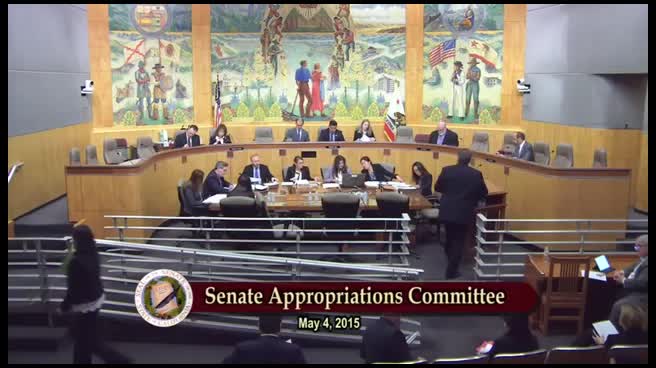
Bill Author