SB 199: In-home supportive services: reading services for blind and visually impaired recipients.
- Session Year: 2015-2016
- House: Senate
- Latest Version Date: 2015-09-03
Existing law provides for the Medi-Cal program, which is administered by the State Department of Health Care Services, and under which qualified low-income individuals receive health care services. The Medi-Cal program is, in part, governed and funded by federal Medicaid program provisions.
Existing law provides for the county-administered In-Home Supportive Services (IHSS) program, under which, either through employment by the recipient, or by or through contract by the county, qualified aged, blind, and disabled persons receive services enabling them to remain in their own homes. Existing law requires the provision of personal care services under the Medi-Cal program to eligible IHSS recipients. Under existing law, county welfare departments are required to provide visually impaired applicants and recipients with information on, and referral services to, entities that provide reading services to visually impaired persons. Existing law defines supportive services for purposes of the IHSS program.
This bill would, commencing January 1, 2017, include within the definition of supportive services up to 2 hours per month of assistance in reading and completing financial and other documents for a recipient of services under the IHSS program who is blind. By expanding the scope of available services under the IHSS program, this bill would impose a state-mandated local program. The bill would also require the Director of Health Care Services to seek any federal approvals necessary to ensure that Medicaid funds may be used in implementing this provision. The bill would authorize the department to implement the provision through all-county letters or similar instructions from the director until emergency regulations are filed, and would require the adoption of emergency regulations by January 1, 2018, and final regulations by January 1, 2019, to implement this provision, as specified.
The California Constitution requires the state to reimburse local agencies and school districts for certain costs mandated by the state. Statutory provisions establish procedures for making that reimbursement.
This bill would provide that, if the Commission on State Mandates determines that the bill contains costs mandated by the state, reimbursement for those costs shall be made pursuant to these statutory provisions.
Existing law provides for the Medi-Cal program, which is administered by the State Department of Health Care Services, and under which qualified low-income individuals receive health care services. The Medi-Cal program is, in part, governed and funded by federal Medicaid Program program provisions.
Existing law provides for the county-administered In-Home Supportive Services (IHSS) program, under which, either through employment by the recipient, or by or through contract by the county, qualified aged, blind, and disabled persons receive services enabling them to remain in their own homes. Existing law requires the provision of personal care services under the Medi-Cal program to eligible IHSS recipients. Under existing law, county welfare departments are required to provide visually impaired applicants and recipients with information on, and referral services to, entities that provide reading services to visually impaired persons. Existing law defines supportive services for purposes of the IHSS program.
This bill would, commencing January 1, 2017, include within the definition of supportive services assistance in reading and completing financial and other documents for a recipient of services under the IHSS program who is blind. By expanding the scope of available services under the IHSS program, this bill would impose a state-mandated local program. The bill would also require the Director of Health Care Services to seek any federal approvals necessary to ensure that Medicaid funds may be used in implementing this provision. The bill would authorize the department to implement the provision through all-county letters or similar instructions from the director until emergency regulations are filed, and would require the adoption of emergency regulations by January 1, 2018, and final regulations by January 1, 2019, to implement this provision, as specified.
The California Constitution requires the state to reimburse local agencies and school districts for certain costs mandated by the state. Statutory provisions establish procedures for making that reimbursement.
This bill would provide that, if the Commission on State Mandates determines that the bill contains costs mandated by the state, reimbursement for those costs shall be made pursuant to these statutory provisions.
Existing law provides for the Medi-Cal program, which is administered by the State Department of Health Care Services, and under which qualified low-income individuals receive health care services. The Medi-Cal program is, in part, governed and funded by federal Medicaid Program provisions.
Existing law provides for the county-administered In-Home Supportive Services (IHSS) program, under which, either through employment by the recipient, or by or through contract by the county, qualified aged, blind, and disabled persons receive services enabling them to remain in their own homes. Existing law requires the provision of personal care services under the Medi-Cal program to eligible IHSS recipients. Under existing law, county welfare departments are required to provide visually impaired applicants and recipients with information on, and referral services to, entities that provide reading services to visually impaired persons. Existing law defines supportive services for purposes of the IHSS program.
This bill would, commencing January 1, 2017, include within the definition of supportive services assistance in reading and completing financial and other documents for a recipient of services under the IHSS program who is blind. By expanding the scope of available services under the IHSS program, this bill would impose a state-mandated local program. The bill would also require the Director of Health Care Services to seek any federal approvals necessary to ensure that Medicaid funds may be used in implementing this provision. The bill would authorize the department to implement the provision through all-county letters or similar instructions from the director until emergency regulations are filed, and would require the adoption of emergency regulations by January 1, 2018, and final regulations by January 1, 2019, to implement this provision, as specified.
The California Constitution requires the state to reimburse local agencies and school districts for certain costs mandated by the state. Statutory provisions establish procedures for making that reimbursement.
This bill would provide that, if the Commission on State Mandates determines that the bill contains costs mandated by the state, reimbursement for those costs shall be made pursuant to these statutory provisions.
(a)The purpose of this article is to provide in every county in a manner consistent with this chapter and the annual Budget Act those supportive services identified in this section to aged, blind, or disabled persons, as defined under this chapter, who are unable to perform the services themselves and who cannot safely remain in their homes or abodes of their own choosing unless these services are provided.
(b)Supportive services shall include domestic services and services related to domestic services, heavy cleaning, personal care services, accompaniment by a provider when needed during necessary travel to health-related appointments or to alternative resource sites, yard hazard abatement, protective supervision, up to two hours per month of assistance in reading and completing financial and other documents for a recipient who is blind, teaching and demonstration directed at reducing the need for other supportive services, and paramedical services that make it possible for the recipient to establish and maintain an independent living arrangement.
(c)Personal care services shall mean all of the following:
(1)Assistance with ambulation.
(2)Bathing, oral hygiene, and grooming.
(3)Dressing.
(4)Care and assistance with prosthetic devices.
(5)Bowel, bladder, and menstrual care.
(6)Repositioning, skin care, range of motion exercises, and transfers.
(7)Feeding and assurance of adequate fluid intake.
(8)Respiration.
(9)Assistance with self-administration of medications.
(d)Personal care services are available if these services are provided in the beneficiarys home and other locations as may be authorized by the director. Among the locations that may be authorized by the director under this subdivision is the recipients place of employment if all of the following conditions are met:
(1)The personal care services are limited to those that are currently authorized for a recipient in the recipients home and those services are to be utilized by the recipient at the recipients place of employment to enable the recipient to obtain, retain, or return to work. Authorized services utilized by the recipient at the recipients place of employment shall be services that are relevant and necessary in supporting and maintaining employment. However, workplace services shall not be used to supplant any reasonable accommodations required of an employer by the federal Americans with Disabilities Act of 1990 (42 U.S.C. Sec. 12101 et seq.; ADA) or other legal entitlements or third-party obligations.
(2)The provision of personal care services at the recipients place of employment shall be authorized only to the extent that the total hours utilized at the workplace are within the total personal care services hours authorized for the recipient in the home. Additional personal care services hours may not be authorized in connection with a recipients employment.
(e)When supportive services are provided by a person who has the legal duty pursuant to the Family Code to provide for the care of his or her child who is the recipient, the provider of supportive services shall receive remuneration for the services only when the provider leaves full-time employment or is prevented from obtaining full-time employment because no other suitable provider is available and when the inability of the provider to provide supportive services may result in inappropriate placement or inadequate care.
These providers shall be paid only for the following:
(1)Services related to domestic services.
(2)Personal care services.
(3)Accompaniment by a provider when needed during necessary travel to health-related appointments or to alternative resource sites.
(4)Protective supervision only as needed because of the functional limitations of the child.
(5)Paramedical services.
(f)To encourage maximum voluntary services, so as to reduce governmental costs, respite care shall also be provided. Respite care is temporary or periodic service for eligible recipients to relieve persons who are providing care without compensation.
(g)A person who is eligible to receive a service or services under an approved federal waiver authorized pursuant to Section 14132.951, or a person who is eligible to receive a service or services authorized pursuant to Section 14132.95, shall not be eligible to receive the same service or services pursuant to this article. In the event that the waiver authorized pursuant to Section 14132.951, as approved by the federal government, does not extend eligibility to all persons otherwise eligible for services under this article, or does not cover a service or particular services, or does not cover the scope of a service that a person would otherwise be eligible to receive under this article, those persons who are not eligible for services, or for a particular service under the waiver or Section 14132.95 shall be eligible for services under this article.
(h)(1)All services provided pursuant to this article shall be equal in amount, scope, and duration to the same services provided pursuant to Section 14132.95, including any adjustments that may be made to those services pursuant to subdivision (e) of Section 14132.95.
(2)Notwithstanding any other provision of this article, the rate of reimbursement for in-home supportive services provided through any mode of service shall not exceed the rate of reimbursement established under subdivision (j) of Section 14132.95 for the same mode of service unless otherwise provided in the annual Budget Act.
(3)The maximum number of hours available under Section 14132.95, Section 14132.951, and this section, combined, shall be 283 hours per month. Any recipient of services under this article shall receive no more than the applicable maximum specified in Section 12303.4.
(i)The Director of Health Care Services shall, by January 1, 2017, seek all federal approvals necessary to ensure that Medicaid funds may be used in implementing the service to blind recipients specified in subdivision (b). The service includes assistance in reading and completing financial and other documents for a recipient who is blind. The authorization to provide the service to blind recipients specified in subdivision (b) shall become operative on January 1, 2017. Provision of the service shall be implemented only if, and to the extent that, federal financial participation is available, and any necessary federal approvals have been obtained.
(j)Notwithstanding the rulemaking provisions of the Administrative Procedure Act (Chapter 3.5 (commencing with Section 11340) of Part 1 of Division 3 of Title 2 of the Government Code), until emergency regulations are filed with the Secretary of State, the department may implement the service to blind recipients specified in subdivision (b) through all-county letters or similar instructions from the director. On or before January 1, 2018, the department shall adopt regulations to implement the service to blind recipients specified in subdivision (b). The initial adoption, amendment, or repeal of a regulation authorized by this subdivision is deemed to address an emergency, for purposes of Sections 11346.1 and 11349.6 of the Government Code, and the department is hereby exempted for that purpose from the requirements of subdivision (b) of Section 11346.1 of the Government Code. After the initial adoption, amendment, or repeal of an emergency regulation pursuant to this section, the department may twice request approval from the Office of Administrative Law to readopt the regulation as an emergency regulation pursuant to Section 11346.1 of the Government Code. The department shall adopt final regulations on or before January 1, 2019.
SEC. 2.If the Commission on State Mandates determines that this act contains costs mandated by the state, reimbursement to local agencies and school districts for those costs shall be made pursuant to Part 7 (commencing with Section 17500) of Division 4 of Title 2 of the Government Code.
(a)The purpose of this article is to provide in every county in a manner consistent with this chapter and the annual Budget Act those supportive services identified in this section to aged, blind, or disabled persons, as defined under this chapter, who are unable to perform the services themselves and who cannot safely remain in their homes or abodes of their own choosing unless these services are provided.
(b)Supportive services shall include domestic services and services related to domestic services, heavy cleaning, personal care services, accompaniment by a provider when needed during necessary travel to health-related appointments or to alternative resource sites, yard hazard abatement, protective supervision, up to two hours per month of assistance in reading and completing financial and other documents for a recipient who is blind, teaching and demonstration directed at reducing the need for other supportive services, and paramedical services that make it possible for the recipient to establish and maintain an independent living arrangement.
(c)Personal care services shall mean all of the following:
(1)Assistance with ambulation.
(2)Bathing, oral hygiene, and grooming.
(3)Dressing.
(4)Care and assistance with prosthetic devices.
(5)Bowel, bladder, and menstrual care.
(6)Repositioning, skin care, range of motion exercises, and transfers.
(7)Feeding and assurance of adequate fluid intake.
(8)Respiration.
(9)Assistance with self-administration of medications.
(d)Personal care services are available if these services are provided in the beneficiarys home and other locations as may be authorized by the director. Among the locations that may be authorized by the director under this subdivision is the recipients place of employment if all of the following conditions are met:
(1)The personal care services are limited to those that are currently authorized for a recipient in the recipients home and those services are to be utilized by the recipient at the recipients place of employment to enable the recipient to obtain, retain, or return to work. Authorized services utilized by the recipient at the recipients place of employment shall be services that are relevant and necessary in supporting and maintaining employment. However, workplace services shall not be used to supplant any reasonable accommodations required of an employer by the federal Americans with Disabilities Act of 1990 (42 U.S.C. Sec. 12101 et seq.; ADA) or other legal entitlements or third-party obligations.
(2)The provision of personal care services at the recipients place of employment shall be authorized only to the extent that the total hours utilized at the workplace are within the total personal care services hours authorized for the recipient in the home. Additional personal care services hours may not be authorized in connection with a recipients employment.
(e)When supportive services are provided by a person who has the legal duty pursuant to the Family Code to provide for the care of his or her child who is the recipient, the provider of supportive services shall receive remuneration for the services only when the provider leaves full-time employment or is prevented from obtaining full-time employment because no other suitable provider is available and when the inability of the provider to provide supportive services may result in inappropriate placement or inadequate care.
These providers shall be paid only for the following:
(1)Services related to domestic services.
(2)Personal care services.
(3)Accompaniment by a provider when needed during necessary travel to health-related appointments or to alternative resource sites.
(4)Protective supervision only as needed because of the functional limitations of the child.
(5)Paramedical services.
(f)To encourage maximum voluntary services, so as to reduce governmental costs, respite care shall also be provided. Respite care is temporary or periodic service for eligible recipients to relieve persons who are providing care without compensation.
(g)A person who is eligible to receive a service or services under an approved federal waiver authorized pursuant to Section 14132.951, or a person who is eligible to receive a service or services authorized pursuant to Section 14132.95, shall not be eligible to receive the same service or services pursuant to this article. In the event that the waiver authorized pursuant to Section 14132.951, as approved by the federal government, does not extend eligibility to all persons otherwise eligible for services under this article, or does not cover a service or particular services, or does not cover the scope of a service that a person would otherwise be eligible to receive under this article, those persons who are not eligible for services, or for a particular service under the waiver or Section 14132.95 shall be eligible for services under this article.
(h)(1)All services provided pursuant to this article shall be equal in amount, scope, and duration to the same services provided pursuant to Section 14132.95, including any adjustments that may be made to those services pursuant to subdivision (e) of Section 14132.95.
(2)Notwithstanding any other provision of this article, the rate of reimbursement for in-home supportive services provided through any mode of service shall not exceed the rate of reimbursement established under subdivision (j) of Section 14132.95 for the same mode of service unless otherwise provided in the annual Budget Act.
(3)The maximum number of hours available under Section 14132.95, Section 14132.951, and this section, combined, shall be 283 hours per month. Any recipient of services under this article shall receive no more than the applicable maximum specified in Section 12303.4.
(i)The Director of Health Care Services shall, by January 1, 2017, seek all federal approvals necessary to ensure that Medicaid funds may be used in implementing the amendments to this section made by the act that added this subdivision during the 201516 Regular Session of the Legislature. These amendments include service to blind recipients specified in subdivision (b). The service includes assistance in reading and completing financial and other documents for a recipient who is blind.
(j)The blind. The authorization to provide the service added by the amendments to this section made by the act that added this subdivision during the 201516 Regular Session of the Legislature to blind recipients specified in subdivision (b) shall become operative on January 1, 2017. Provision of the service shall be implemented only if, and to the extent that, federal financial participation is available, and any necessary federal approvals have been obtained.
(k)Pursuant to Sections 12300.5 and 12301.6, the state and counties shall be immune from any liability, including negligence or intentional torts of providers, associated with the delivery of the service specified in subdivision (b) that includes assistance in reading and completing financial documents for recipients who are blind.
(l)(1)
(j)Notwithstanding the rulemaking provisions of the Administrative Procedure Act (Chapter 3.5 (commencing with Section 11340) of Part 1 of Division 3 of Title 2 of the Government Code), until emergency regulations are filed with the Secretary of State, the department may implement the amendments made to this section by the act that added this subdivision during the 201516 Regular Session of the Legislature service to blind recipients specified in subdivision (b) through all-county letters or similar instructions from the director.
(2)On director. On or before January 1, 2018, the department shall adopt regulations to implement the amendments to this section made by the act that added this subdivision during the 201516 Regular Session of the Legislature. service to blind recipients specified in subdivision (b). The initial adoption, amendment, or repeal of a regulation authorized by this subdivision is deemed to address an emergency, for purposes of Sections 11346.1 and 11349.6 of the Government Code, and the department is hereby exempted for that purpose from the requirements of subdivision (b) of Section 11346.1 of the Government Code. After the initial adoption, amendment, or repeal of an emergency regulation pursuant to this section, the department may twice request approval from the Office of Administrative Law to readopt the regulation as an emergency regulation pursuant to Section 11346.1 of the Government Code. The department shall adopt final regulations on or before January 1, 2019.
SEC. 2.If the Commission on State Mandates determines that this act contains costs mandated by the state, reimbursement to local agencies and school districts for those costs shall be made pursuant to Part 7 (commencing with Section 17500) of Division 4 of Title 2 of the Government Code.
(a)The purpose of this article is to provide in every county in a manner consistent with this chapter and the annual Budget Act those supportive services identified in this section to aged, blind, or disabled persons, as defined under this chapter, who are unable to perform the services themselves and who cannot safely remain in their homes or abodes of their own choosing unless these services are provided.
(b)Supportive services shall include domestic services and services related to domestic services, heavy cleaning, personal care services, accompaniment by a provider when needed during necessary travel to health-related appointments or to alternative resource sites, yard hazard abatement, protective supervision, up to two hours per month of assistance in reading and completing financial and other documents for a recipient who is blind, teaching and demonstration directed at reducing the need for other supportive services, and paramedical services that make it possible for the recipient to establish and maintain an independent living arrangement, and assistance in reading and completing financial and other documents, for up to two hours per month, for a recipient who is blind, when that assistance is necessary for the recipient to remain in his or her home, or abode of his or her own choosing, as defined by the department. arrangement.
(c)Personal care services shall mean all of the following:
(1)Assistance with ambulation.
(2)Bathing, oral hygiene, and grooming.
(3)Dressing.
(4)Care and assistance with prosthetic devices.
(5)Bowel, bladder, and menstrual care.
(6)Repositioning, skin care, range of motion exercises, and transfers.
(7)Feeding and assurance of adequate fluid intake.
(8)Respiration.
(9)Assistance with self-administration of medications.
(d)Personal care services are available if these services are provided in the beneficiarys home and other locations as may be authorized by the director. Among the locations that may be authorized by the director under this subdivision is the recipients place of employment if all of the following conditions are met:
(1)The personal care services are limited to those that are currently authorized for a recipient in the recipients home and those services are to be utilized by the recipient at the recipients place of employment to enable the recipient to obtain, retain, or return to work. Authorized services utilized by the recipient at the recipients place of employment shall be services that are relevant and necessary in supporting and maintaining employment. However, workplace services shall not be used to supplant any reasonable accommodations required of an employer by the federal Americans with Disabilities Act of 1990 (42 U.S.C. Sec. 12101 et seq.; ADA) or other legal entitlements or third-party obligations.
(2)The provision of personal care services at the recipients place of employment shall be authorized only to the extent that the total hours utilized at the workplace are within the total personal care services hours authorized for the recipient in the home. Additional personal care services hours may not be authorized in connection with a recipients employment.
(e)When supportive services are provided by a person who has the legal duty pursuant to the Family Code to provide for the care of his or her child who is the recipient, the provider of supportive services shall receive remuneration for the services only when the provider leaves full-time employment or is prevented from obtaining full-time employment because no other suitable provider is available and when the inability of the provider to provide supportive services may result in inappropriate placement or inadequate care.
These providers shall be paid only for the following:
(1)Services related to domestic services.
(2)Personal care services.
(3)Accompaniment by a provider when needed during necessary travel to health-related appointments or to alternative resource sites.
(4)Protective supervision only as needed because of the functional limitations of the child.
(5)Paramedical services.
(f)To encourage maximum voluntary services, so as to reduce governmental costs, respite care shall also be provided. Respite care is temporary or periodic service for eligible recipients to relieve persons who are providing care without compensation.
(g)A person who is eligible to receive a service or services under an approved federal waiver authorized pursuant to Section 14132.951, or a person who is eligible to receive a service or services authorized pursuant to Section 14132.95, shall not be eligible to receive the same service or services pursuant to this article. In the event that the waiver authorized pursuant to Section 14132.951, as approved by the federal government, does not extend eligibility to all persons otherwise eligible for services under this article, or does not cover a service or particular services, or does not cover the scope of a service that a person would otherwise be eligible to receive under this article, those persons who are not eligible for services, or for a particular service under the waiver or Section 14132.95 shall be eligible for services under this article.
(h)(1)All services provided pursuant to this article shall be equal in amount, scope, and duration to the same services provided pursuant to Section 14132.95, including any adjustments that may be made to those services pursuant to subdivision (e) of Section 14132.95.
(2)Notwithstanding any other provision of this article, the rate of reimbursement for in-home supportive services provided through any mode of service shall not exceed the rate of reimbursement established under subdivision (j) of Section 14132.95 for the same mode of service unless otherwise provided in the annual Budget Act.
(3)The maximum number of hours available under Section 14132.95, Section 14132.951, and this section, combined, shall be 283 hours per month. Any recipient of services under this article shall receive no more than the applicable maximum specified in Section 12303.4.
(i)The Director of Health Care Services shall, by January 1, 2017, seek all federal approvals necessary to ensure that Medicaid funds may be used in implementing the amendments to this section made by the act that added this subdivision during the 201516 Regular Session of the Legislature. These amendments include assistance in reading and completing financial and other documents for a recipient who is blind.
(j)The authorization to provide the service added by the amendments to this section made by the act that added this subdivision during the 201516 Regular Session of the Legislature shall become operative on January 1, 2017. Provision of the service shall be implemented only if, and to the extent that, federal financial participation is available, and any necessary federal approvals have been obtained.
(k)Pursuant to Sections 12300.5 and 12301.6, the state and counties shall be immune from any liability, including negligence or intentional torts of providers, associated with the delivery of the service specified in subdivision (b) that includes assistance in reading and completing financial documents for recipients who are blind.
(l)(1)Notwithstanding the rulemaking provisions of the Administrative Procedure Act (Chapter 3.5 (commencing with Section 11340) of Part 1 of Division 3 of Title 2 of the Government Code), until emergency regulations are filed with the Secretary of State, the department may implement the amendments made to this section by the act that added this subdivision during the 201516 Regular Session of the Legislature through all-county letters or similar instructions from the director.
(2)On or before January 1, 2018, the department shall adopt regulations to implement the amendments to this section made by the act that added this subdivision during the 201516 Regular Session of the Legislature. The initial adoption, amendment, or repeal of a regulation authorized by this subdivision is deemed to address an emergency, for purposes of Sections 11346.1 and 11349.6 of the Government Code, and the department is hereby exempted for that purpose from the requirements of subdivision (b) of Section 11346.1 of the Government Code. After the initial adoption, amendment, or repeal of an emergency regulation pursuant to this section, the department may twice request approval from the Office of Administrative Law to readopt the regulation as an emergency regulation pursuant to Section 11346.1 of the Government Code. The department shall adopt final regulations on or before January 1, 2019.
SEC. 2.If the Commission on State Mandates determines that this act contains costs mandated by the state, reimbursement to local agencies and school districts for those costs shall be made pursuant to Part 7 (commencing with Section 17500) of Division 4 of Title 2 of the Government Code.
(a)The purpose of this article is to provide in every county in a manner consistent with this chapter and the annual Budget Act those supportive services identified in this section to aged, blind, or disabled persons, as defined under this chapter, who are unable to perform the services themselves and who cannot safely remain in their homes or abodes of their own choosing unless these services are provided.
(b)Supportive services shall include domestic services and services related to domestic services, heavy cleaning, personal care services, accompaniment by a provider when needed during necessary travel to health-related appointments or to alternative resource sites, yard hazard abatement, protective supervision, teaching and demonstration directed at reducing the need for other supportive services, paramedical services that make it possible for the recipient to establish and maintain an independent living arrangement, and assistance in reading and completing financial and other documents, for up to two hours per month, for a recipient who is blind, when that assistance is necessary for the recipient to remain in his or her home, or abode of his or her own choosing, as defined by the department.
(c)Personal care services shall mean all of the following:
(1)Assistance with ambulation.
(2)Bathing, oral hygiene, and grooming.
(3)Dressing.
(4)Care and assistance with prosthetic devices.
(5)Bowel, bladder, and menstrual care.
(6)Repositioning, skin care, range of motion exercises, and transfers.
(7)Feeding and assurance of adequate fluid intake.
(8)Respiration.
(9)Assistance with self-administration of medications.
(d)Personal care services are available if these services are provided in the beneficiarys home and other locations as may be authorized by the director. Among the locations that may be authorized by the director under this subdivision is the recipients place of employment if all of the following conditions are met:
(1)The personal care services are limited to those that are currently authorized for a recipient in the recipients home and those services are to be utilized by the recipient at the recipients place of employment to enable the recipient to obtain, retain, or return to work. Authorized services utilized by the recipient at the recipients place of employment shall be services that are relevant and necessary in supporting and maintaining employment. However, workplace services shall not be used to supplant any reasonable accommodations required of an employer by the federal Americans with Disabilities Act of 1990 (42 U.S.C. Sec. 12101 et seq.; ADA) or other legal entitlements or third-party obligations.
(2)The provision of personal care services at the recipients place of employment shall be authorized only to the extent that the total hours utilized at the workplace are within the total personal care services hours authorized for the recipient in the home. Additional personal care services hours may not be authorized in connection with a recipients employment.
(e)When supportive services are provided by a person who has the legal duty pursuant to the Family Code to provide for the care of his or her child who is the recipient, the provider of supportive services shall receive remuneration for the services only when the provider leaves full-time employment or is prevented from obtaining full-time employment because no other suitable provider is available and when the inability of the provider to provide supportive services may result in inappropriate placement or inadequate care.
These providers shall be paid only for the following:
(1)Services related to domestic services.
(2)Personal care services.
(3)Accompaniment by a provider when needed during necessary travel to health-related appointments or to alternative resource sites.
(4)Protective supervision only as needed because of the functional limitations of the child.
(5)Paramedical services.
(f)To encourage maximum voluntary services, so as to reduce governmental costs, respite care shall also be provided. Respite care is temporary or periodic service for eligible recipients to relieve persons who are providing care without compensation.
(g)A person who is eligible to receive a service or services under an approved federal waiver authorized pursuant to Section 14132.951, or a person who is eligible to receive a service or services authorized pursuant to Section 14132.95, shall not be eligible to receive the same service or services pursuant to this article. In the event that the waiver authorized pursuant to Section 14132.951, as approved by the federal government, does not extend eligibility to all persons otherwise eligible for services under this article, or does not cover a service or particular services, or does not cover the scope of a service that a person would otherwise be eligible to receive under this article, those persons who are not eligible for services, or for a particular service under the waiver or Section 14132.95 shall be eligible for services under this article.
(h)(1)All services provided pursuant to this article shall be equal in amount, scope, and duration to the same services provided pursuant to Section 14132.95, including any adjustments that may be made to those services pursuant to subdivision (e) of Section 14132.95.
(2)Notwithstanding any other provision of this article, the rate of reimbursement for in-home supportive services provided through any mode of service shall not exceed the rate of reimbursement established under subdivision (j) of Section 14132.95 for the same mode of service unless otherwise provided in the annual Budget Act.
(3)The maximum number of hours available under Section 14132.95, Section 14132.951, and this section, combined, shall be 283 hours per month. Any recipient of services under this article shall receive no more than the applicable maximum specified in Section 12303.4.
(i)The Director of Health Care Services shall, by January 1, 2017, seek all federal approvals necessary to ensure that Medicaid funds may be used in implementing the amendments to this section made by the act that added this subdivision during the 201516 Regular Session of the Legislature. These amendments include assistance in reading and completing financial and other documents for a recipient who is blind.
(j)The authorization to provide the service added by the amendments to this section made by the act that added this subdivision during the 201516 Regular Session of the Legislature shall become operative on January 1, 2017. Provision of the service shall be implemented only if, and to the extent that, federal financial participation is available, and any necessary federal approvals have been obtained.
(k)The Pursuant to Sections 12300.5 and 12301.6, the state and counties shall be immune from any liability, including negligence or intentional torts of providers, associated with the delivery of the service specified in subdivision (b) that includes assistance in reading and completing financial documents for recipients who are blind.
(l)(1)Notwithstanding the rulemaking provisions of the Administrative Procedure Act (Chapter 3.5 (commencing with Section 11340) of Part 1 of Division 3 of Title 2 of the Government Code), until emergency regulations are filed with the Secretary of State, the department may implement the amendments made to this section by the act that added this subdivision during the 201516 Regular Session of the Legislature through all-county letters or similar instructions from the director.
(2)On or before January 1, 2018, the department shall adopt regulations to implement the amendments to this section made by the act that added this subdivision during the 201516 Regular Session of the Legislature. The initial adoption, amendment, or repeal of a regulation authorized by this subdivision is deemed to address an emergency, for purposes of Sections 11346.1 and 11349.6 of the Government Code, and the department is hereby exempted for that purpose from the requirements of subdivision (b) of Section 11346.1 of the Government Code. After the initial adoption, amendment, or repeal of an emergency regulation pursuant to this section, the department may twice request approval from the Office of Administrative Law to readopt the regulation as an emergency regulation pursuant to Section 11346.1 of the Government Code. The department shall adopt final regulations on or before January 1, 2019.
SEC. 2.If the Commission on State Mandates determines that this act contains costs mandated by the state, reimbursement to local agencies and school districts for those costs shall be made pursuant to Part 7 (commencing with Section 17500) of Division 4 of Title 2 of the Government Code.
(a)The purpose of this article is to provide in every county in a manner consistent with this chapter and the annual Budget Act those supportive services identified in this section to aged, blind, or disabled persons, as defined under this chapter, who are unable to perform the services themselves and who cannot safely remain in their homes or abodes of their own choosing unless these services are provided.
(b)Supportive services shall include domestic services and services related to domestic services, heavy cleaning, personal care services, accompaniment by a provider when needed during necessary travel to health-related appointments or to alternative resource sites, yard hazard abatement, protective supervision, teaching and demonstration directed at reducing the need for other supportive services, and paramedical services which that make it possible for the recipient to establish and maintain an independent living arrangement, and assistance in reading and completing financial and other documents, for up to two hours per month, for a recipient who is blind, when that assistance is necessary for the recipient to remain in his or her home, or abode of his or her own choosing, as defined by the department.
(c)Personal care services shall mean all of the following:
(1)Assistance with ambulation.
(2)Bathing, oral hygiene, and grooming.
(3)Dressing.
(4)Care and assistance with prosthetic devices.
(5)Bowel, bladder, and menstrual care.
(6)Repositioning, skin care, range of motion exercises, and transfers.
(7)Feeding and assurance of adequate fluid intake.
(8)Respiration.
(9)Assistance with self-administration of medications.
(d)Personal care services are available if these services are provided in the beneficiarys home and other locations as may be authorized by the director. Among the locations that may be authorized by the director under this paragraph subdivision is the recipients place of employment if all of the following conditions are met:
(1)The personal care services are limited to those that are currently authorized for a recipient in the recipients home and those services are to be utilized by the recipient at the recipients place of employment to enable the recipient to obtain, retain, or return to work. Authorized services utilized by the recipient at the recipients place of employment shall be services that are relevant and necessary in supporting and maintaining employment. However, workplace services shall not be used to supplant any reasonable accommodations required of an employer by the Americans with Disabilities Act (42 U.S.C. Sec. 12101 et seq.; ADA) or other legal entitlements or third-party obligations.
(2)The provision of personal care services at the recipients place of employment shall be authorized only to the extent that the total hours utilized at the workplace are within the total personal care services hours authorized for the recipient in the home. Additional personal care services hours may not be authorized in connection with a recipients employment.
(e)Where When supportive services are provided by a person having who has the legal duty pursuant to the Family Code to provide for the care of his or her child who is the recipient, the provider of supportive services shall receive remuneration for the services only when the provider leaves full-time employment or is prevented from obtaining full-time employment because no other suitable provider is available and where when the inability of the provider to provide supportive services may result in inappropriate placement or inadequate care.
These providers shall be paid only for the following:
(1)Services related to domestic services.
(2)Personal care services.
(3)Accompaniment by a provider when needed during necessary travel to health-related appointments or to alternative resource sites.
(4)Protective supervision only as needed because of the functional limitations of the child.
(5)Paramedical services.
(f)To encourage maximum voluntary services, so as to reduce governmental costs, respite care shall also be provided. Respite care is temporary or periodic service for eligible recipients to relieve persons who are providing care without compensation.
(g)A person who is eligible to receive a service or services under an approved federal waiver authorized pursuant to Section 14132.951, or a person who is eligible to receive a service or services authorized pursuant to Section 14132.95, shall not be eligible to receive the same service or services pursuant to this article. In the event that the waiver authorized pursuant to Section 14132.951, as approved by the federal government, does not extend eligibility to all persons otherwise eligible for services under this article, or does not cover a service or particular services, or does not cover the scope of a service that a person would otherwise be eligible to receive under this article, those persons who are not eligible for services, or for a particular service under the waiver or Section 14132.95 shall be eligible for services under this article.
(h)(1)All services provided pursuant to this article shall be equal in amount, scope, and duration to the same services provided pursuant to Section 14132.95, including any adjustments that may be made to those services pursuant to subdivision (e) of Section 14132.95.
(2)Notwithstanding any other provision of this article, the rate of reimbursement for in-home supportive services provided through any mode of service shall not exceed the rate of reimbursement established under subdivision (j) of Section 14132.95 for the same mode of service unless otherwise provided in the annual Budget Act.
(3)The maximum number of hours available under Section 14132.95, Section 14132.951, and this section, combined, shall be 283 hours per month. Any recipient of services under this article shall receive no more than the applicable maximum specified in Section 12303.4.
(i)The Director of Health Care Services shall, by January 1, 2017, seek all federal approvals necessary to ensure that Medicaid funds may be used in implementing the amendments to this section made by the act that added this subdivision during the 201516 Regular Session of the Legislature. These amendments include assistance in reading and completing financial and other documents for a recipient who is blind.
(j)The authorization to provide the service added by the amendments to this section made by the act that added this subdivision during the 201516 Regular Session of the Legislature shall become operative on January 1, 2017. Provision of the service shall be implemented only if, and to the extent that, federal financial participation is available, and any necessary federal approvals have been obtained.
(k)The state and counties shall be immune from any liability, including negligence or intentional torts of providers, associated with the delivery of the service specified in subdivision (b) that includes assistance in reading and completing financial documents for recipients who are blind.
(l)(1)Notwithstanding the rulemaking provisions of the Administrative Procedure Act (Chapter 3.5 (commencing with Section 11340) of Part 1 of Division 3 of Title 2 of the Government Code), until emergency regulations are filed with the Secretary of State, the department may implement the amendments made to this section by the act that added this subdivision during the 201516 Regular Session of the Legislature through all-county letters or similar instructions from the director.
(2)On or before January 1, 2018, the department shall adopt regulations to implement the amendments to this section made by the act that added this subdivision during the 201516 Regular Session of the Legislature. The initial adoption, amendment, or repeal of a regulation authorized by this subdivision is deemed to address an emergency, for purposes of Sections 11346.1 and 11349.6 of the Government Code, and the department is hereby exempted for that purpose from the requirements of subdivision (b) of Section 11346.1 of the Government Code. After the initial adoption, amendment, or repeal of an emergency regulation pursuant to this section, the department may twice request approval from the Office of Administrative Law to readopt the regulation as an emergency regulation pursuant to Section 11346.1 of the Government Code. The department shall adopt final regulations on or before January 1, 2019.
SEC. 2.If the Commission on State Mandates determines that this act contains costs mandated by the state, reimbursement to local agencies and school districts for those costs shall be made pursuant to Part 7 (commencing with Section 17500) of Division 4 of Title 2 of the Government Code.
|
Date
|
Status
|
|---|---|
| Apr 25, 2016 | Last day to consider Governors veto pursuant to Joint Rule 58.5. |
| Apr 25, 2016 | Last day to consider Governor’s veto pursuant to Joint Rule 58.5. |
| Oct 9, 2015 | In Senate. Consideration of Governor's veto pending. |
| Oct 9, 2015 | Vetoed by the Governor. |
| Sep 8, 2015 | Enrolled and presented to the Governor at 4:30 p.m. |
| Sep 2, 2015 | Assembly amendments concurred in. (Ayes 40. Noes 0. Page 2422.) Ordered to engrossing and enrolling. |
| Sep 2, 2015 | Assembly amendments concurred in. (Ayes 40. Noes 0.) Ordered to engrossing and enrolling. |
| Sep 1, 2015 | Read third time. Passed. (Ayes 80. Noes 0. Page 2723.) Ordered to the Senate. |
| Sep 1, 2015 | In Senate. Concurrence in Assembly amendments pending. |
| Sep 1, 2015 | Read third time. Passed. Ordered to the Senate. |
| Aug 31, 2015 | Read second time. Ordered to third reading. |
| Aug 28, 2015 | Read second time and amended. Ordered to second reading. |
| Aug 28, 2015 | From committee: Do pass as amended. (Ayes 17. Noes 0.) (August 27). |
| Jul 8, 2015 | July 8 set for first hearing. Placed on APPR. suspense file. |
| Jul 8, 2015 | July 8 set for first hearing. Placed on suspense file. |
| Jul 1, 2015 | From committee: Do pass and re-refer to Com. on APPR. (Ayes 7. Noes 0.) (June 30). Re-referred to Com. on APPR. |
| Jun 11, 2015 | Referred to Com. on HUM. S. |
| Jun 4, 2015 | In Assembly. Read first time. Held at Desk. |
| Jun 3, 2015 | Read third time. Passed. (Ayes 40. Noes 0. Page 1294.) Ordered to the Assembly. |
| Jun 3, 2015 | Read third time. Passed. (Ayes 40. Noes 0.) Ordered to the Assembly. |
| Jun 2, 2015 | Read second time and amended. Ordered to third reading. |
| Jun 1, 2015 | From committee: Do pass as amended. (Ayes 7. Noes 0. Page 1149.) (May 28). |
| Jun 1, 2015 | From committee: Do pass as amended. (Ayes 7. Noes 0.) (May 28). |
| May 23, 2015 | Set for hearing May 28. |
| Apr 20, 2015 | April 20 hearing: Placed on APPR. suspense file. |
| Apr 10, 2015 | Set for hearing April 20. |
| Apr 7, 2015 | Read second time and amended. Re-referred to Com. on APPR. |
| Apr 6, 2015 | From committee: Do pass as amended and re-refer to Com. on APPR. (Ayes 5. Noes 0. Page 416.) (March 24). |
| Feb 24, 2015 | Set for hearing March 24. |
| Feb 19, 2015 | Referred to Com. on HUMAN S. |
| Feb 11, 2015 | From printer. May be acted upon on or after March 13. |
| Feb 10, 2015 | Introduced. Read first time. To Com. on RLS. for assignment. To print. |
|
Date
|
Description
|
Location
|
Votes
|
|
|---|---|---|---|---|
| Sep 2, 2015 | Unfinished Business SB199 Hall Concurrence | Senate Floor |
Passed |
|
| Sep 1, 2015 | SB 199 Hall Senate Third Reading By WALDRON | Assembly Floor |
Passed |
|
| Aug 27, 2015 | Do pass as amended. | Assembly Standing Committee on Appropriations |
Passed |
|
| Jun 30, 2015 | Do pass and be re-referred to the Committee on [Appropriations] | Assembly Standing Committee on Human Services |
Passed |
|
| Jun 3, 2015 | Senate 3rd Reading SB199 Hall | Senate Floor |
Passed |
|
| May 28, 2015 | Do pass as amended | Senate Standing Committee on Appropriations |
Passed |
|
| Apr 20, 2015 | Placed on suspense file | Senate Standing Committee on Appropriations |
Passed |
|
| Mar 24, 2015 | Do pass as amended, but first amend, and re-refer to the Committee on [Appropriations] | Senate Standing Committee on Human Services |
Passed |
This list shows positions taken on this bill by organizations on the date displayed, which is linked to the original source.
Positions by individuals are not included.
SB 199
Page 7
|
Office of Senate Floor Analyses (916) 651-1520 Fax: (916) 327-4478 |
SB 199 |
VETO
Bill No: SB 199
Enrolled: 8/28/15
SENATE HUMAN SERVICES COMMITTEE: 5-0, 3/24/15
AYES: McGuire, Berryhill, Hancock, Liu, Nguyen
SENATE APPROPRIATIONS COMMITTEE: 7-0, 5/28/15
AYES: Lara, Bates, Beall, Hill, Leyva, Mendoza, Nielsen
SENATE FLOOR: 40-0, 6/3/15
AYES: Allen, Anderson, Bates, Beall, Berryhill, Block, Cannella, De León, Fuller, Gaines, Galgiani, Glazer, Hall, Hancock, Hernandez, Hertzberg, Hill, Hueso, Huff, Jackson, Lara, Leno, Leyva, Liu, McGuire, Mendoza, Mitchell, Monning, Moorlach, Morrell, Nguyen, Nielsen, Pan, Pavley, Roth, Runner, Stone, Vidak, Wieckowski, Wolk
SENATE FLOOR: 40-0, 9/2/15
AYES: Allen, Anderson, Bates, Beall, Berryhill, Block, Cannella, De León, Fuller, Gaines, Galgiani, Glazer, Hall, Hancock, Hernandez, Hertzberg, Hill, Hueso, Huff, Jackson, Lara, Leno, Leyva, Liu, McGuire, Mendoza, Mitchell, Monning, Moorlach, Morrell, Nguyen, Nielsen, Pan, Pavley, Roth, Runner, Stone, Vidak, Wieckowski, Wolk
ASSEMBLY FLOOR: 80-0, 9/1/15 - See last page for vote
SUBJECT: In-home supportive services: reading services for blind and visually impaired recipients
SOURCE: California Association of Public Authorities for IHSS
California Council of the Blind
UWDA/AFSCME
DIGEST: This bill expands the scope of personal care services provided within the In-Home Supportive Services (IHSS) program to include up to two hours per month of assisting in reading and completing financial and other documents for a recipient who is blind. It requires those services to be implemented beginning on January 1, 2017, only if federal financial participation is available, and establishes that states and counties are immune from liability in delivering these services.
Existing law:
Establishes the IHSS program to provide in-home domestic supportive and personal care services for aged, blind or disabled individuals living at or below the poverty level for the purpose of enabling IHSS consumers to avoid institutionalization and remain safely in their homes with supportive services. (WIC 12300 et seq.)
Defines the scope of supportive services available under the IHSS program to include heavy cleaning, personal care services, accompaniment by a provider when needed during necessary travel to health-related appointments or to alternative resource sites, yard hazard abatement, protective supervision, teaching and demonstration directed at reducing the need for other supportive services, and paramedical services which make it possible for the recipient to establish and maintain an independent living arrangement. (WIC 12300 (b))
Defines the scope of personal care services available under the IHSS program to include:
Assistance with ambulation.
Bathing, oral hygiene, and grooming.
Dressing.
Care and assistance with prosthetic devices.
Bowel, bladder, and menstrual care.
Repositioning, skin care, range of motion exercises, and transfers.
Feeding and assurance of adequate fluid intake.
Respiration.
Assistance with self-administration of medications. (WIC 12300 (c))
Requires the California Department of Social Services (CDSS), in consultation with county welfare departments to establish and implement statewide hourly task guidelines and instructions to provide counties with a standard tool for consistently and accurately assessing service needs and authorizing service hours to meet those needs. (WIC 12301.2)
Permits certain IHSS recipients with high care needs, as specified, to receive up to 283 hours of IHSS services per month. (WIC 12303.4(b))
Requires county welfare agencies to provide eligible visually impaired or blind IHSS recipients information and referral to non-profit services that provide reading services. (WIC 12304.6)
Provides that counties and the state shall be immune from any liability resulting from the administration of the IHSS program due to the negligence or intentional torts of the individual provider. (WIC 12301.6 and 12300.5)
Pursuant to federal law, defines legal blindness as persons with central visual acuity of 20/200 or less in the stronger eye, while wearing a correcting lens or glasses; or a limitation in the field of vision in the better eye, so that:
There is contraction of peripheral visual fields to 10 degrees from the point of fixation, or
The widest diameter of the visual field subtends an angle no greater than 20 degrees, or
There is a contraction of peripheral visual fields to 20 percent or less visual field efficiency (Sec. 1614 (42 U.S.C. 1382c))
This bill:
Expands the scope of personal care services provided within the IHSS program to include up to two hours per month of assistance in reading and completing financial and other documents for a recipient who is blind.
Requires the Director of Health Care Services, by January 1, 2017, to seek all federal approvals necessary to ensure that Medicaid funds may be used in implementing service to blind recipients provided for under the bill.
Makes the provisions of this bill operative beginning in January 1, 2017, only if federal financial participation is available.
Permits CDSS to implement the bill through all-county letters or similar instructions from the director.
Requires CDSS to adopt emergency regulations by January 1, 2018, and to adopt final regulations on or before January 1, 2019.
Background
In Home Supportive Services Program (IHSS). The IHSS program was established in 1973 as an alternative to institutional care, and evolved in the context of a growing “independent living” civil rights movement led by persons with disabilities. The program has experienced continuous growth following the U.S. Supreme Court decision Olmstead v. L.C. in 1999 which established the rights of people with disabilities to receive services in the most integrated setting possible to “provide individuals with disabilities opportunities to live their lives like individuals without disabilities” under the Americans With Disabilities Act (ADA).
The IHSS program is operated as benefit under the Medi-Cal program, providing in-home services to more than 460,000 qualified low-income individuals who are aged, blind, or disabled. Currently, of approximately 464,402 IHSS recipients, an estimated two percent of consumers are visually impaired or blind (approximately 10,153 consumers). County welfare agencies administer the program under CDSS oversight and county social workers determine eligibility and assess eligible consumers to determine the allowable services and number of allotted hours following a standardized in-home assessment.
Legal Blindness and the Americans With Disabilities Act. Title 16 of the Social Security Act defines legal blindness a central visual acuity of 20/200 or less in the stronger eye, while wearing a correcting lens or glasses; or a limitation in the field of vision in the better eye, so that:
There is contraction of peripheral visual fields to 10 degrees from the point of fixation, or
The widest diameter of the visual field subtends an angle no greater than 20 degrees, or
There is a contraction of peripheral visual fields to 20 percent or less visual field efficiency.
Titles II and III of the ADA require that government and private sector organizations must provide print materials in an alternative format for people with visual impairment. Specifically, Section 36.303, Title III of the ADA provides, "A public accommodation shall furnish appropriate auxiliary aids and services where necessary to ensure effective communication with individuals with disabilities." These print materials can include billing statements, financial statements, personnel manuals and business cards.
According to the U.S. Department of Justice, Civil Rights Division, in practice this means that the ADA requires that effective communication not exclude people with disabilities – which in the case of visually impaired or blind persons may require businesses and government to provide information verbally or in braille. However, it states the law does not require any measure that would cause an undue financial or administrative burden.
Braille and Visual Aid Technologies. The National Braille Press states that braille literacy rates for school-age blind children have declined from greater than 50 percent in the 1960s to only 12 percent today. Academic research on braille literacy suggests that a significant reason for the decline has been the growing popularity of magnification equipment or use of large print in cases when a blind child has some residual vision. Children with some residual vision account for approximately 85 percent of blind children.
Certain degenerative conditions, such as glaucoma and degenerative myopia, have an onset early in childhood with vision worsening over time. Low-vision students, in particular those with degenerative visual impairments, are at risk for not receiving appropriate braille instruction while some level of sight remains.
An ADA handbook published by the University of California notes that not all blind people read braille and that “typically, people who have lost their vision later in life tend to rely on speech output as their access strategy.” The handbook notes alternative adaptive equipment, such as magnified display of a computer screen, screen reader software, braille input devices and other equipment may be useful, though costly and inaccessible for low-income individuals with visual impairments or blindness, particularly among those whose sole source of income is SSI/SSP.
FISCAL EFFECT: Appropriation: No Fiscal Com.: Yes Local: Yes
According to the Assembly Appropriations Committee, this bill will incur one-time costs to CDSS in 2015-16 of up to $1.7 million (GF/Federal Fund), and up to $3.0 million on-going to fund additional authorized IHSS provider hours for services to 9,710 IHSS recipients who are blind, assuming all potential recipients are authorized for an additional two hours per month. These costs will be lower to the extent that not all potential recipients are authorized for this service or are authorized for less than two hours. Additionally, the analysis states there are unknown but potentially significant one-time automation costs (GF/Federal Fund) and minor one-time costs to DHCS to submit the request for federal approval of this service.
California Association of Public Authorities for IHSS, (co-source)
California Council of the Blind (co-source)
UWDA/AFSCME (co-source)
AARP
American Federation of State, County and Municipal Employees
California Commission on Aging
California Communities United Institute
California Senior Legislature
Congress of California Seniors
Justice in Aging
Personal Assistance Services Council
SEIU California
None received
GOVERNOR'S VETO MESSAGE:
I am returning Senate Bill 199 without my signature.
This bill would authorize, for blind In-Home Supportive Services recipients, up to two hours per month of assistance in completing financial documents.
Before considering any expansion in this program, the state must find a permanent funding source to support the hours and activities that are authorized under current law.
ASSEMBLY FLOOR: 80-0, 9/1/15
AYES: Achadjian, Alejo, Travis Allen, Baker, Bigelow, Bloom, Bonilla, Bonta, Brough, Brown, Burke, Calderon, Campos, Chang, Chau, Chávez, Chiu, Chu, Cooley, Cooper, Dababneh, Dahle, Daly, Dodd, Eggman, Frazier, Beth Gaines, Gallagher, Cristina Garcia, Eduardo Garcia, Gatto, Gipson, Gomez, Gonzalez, Gordon, Gray, Grove, Hadley, Harper, Roger Hernández, Holden, Irwin, Jones, Jones-Sawyer, Kim, Lackey, Levine, Linder, Lopez, Low, Maienschein, Mathis, Mayes, McCarty, Medina, Melendez, Mullin, Nazarian, Obernolte, O'Donnell, Olsen, Patterson, Perea, Quirk, Rendon, Ridley-Thomas, Rodriguez, Salas, Santiago, Steinorth, Mark Stone, Thurmond, Ting, Wagner, Waldron, Weber, Wilk, Williams, Wood, Atkins
Prepared by: Mark Teemer / HUMAN S. / (916) 651-1524
11/4/15 14:05:58
**** END ****
SB 199
Page 6
|
Office of Senate Floor Analyses (916) 651-1520 Fax: (916) 327-4478 |
UNFINISHED BUSINESS
Bill No: SB 199
Amended: 8/28/15
SENATE HUMAN SERVICES COMMITTEE: 5-0, 3/24/15
AYES: McGuire, Berryhill, Hancock, Liu, Nguyen
SENATE APPROPRIATIONS COMMITTEE: 7-0, 5/28/15
AYES: Lara, Bates, Beall, Hill, Leyva, Mendoza, Nielsen
SENATE FLOOR: 40-0, 6/3/15
AYES: Allen, Anderson, Bates, Beall, Berryhill, Block, Cannella, De León, Fuller, Gaines, Galgiani, Glazer, Hall, Hancock, Hernandez, Hertzberg, Hill, Hueso, Huff, Jackson, Lara, Leno, Leyva, Liu, McGuire, Mendoza, Mitchell, Monning, Moorlach, Morrell, Nguyen, Nielsen, Pan, Pavley, Roth, Runner, Stone, Vidak, Wieckowski, Wolk
ASSEMBLY FLOOR: 80-0, 9/1/15 - See last page for vote
SUBJECT: In-home supportive services: reading services for blind and visually impaired recipients
SOURCE: California Association of Public Authorities for IHSS
California Council of the Blind
UWDA/AFSCME
DIGEST: This bill expands the scope of personal care services provided within the In-Home Supportive Services (IHSS) program to include up to two hours per month of assisting in reading and completing financial and other documents for a recipient who is blind. It requires those services to be implemented beginning on January 1, 2017, only if federal financial participation is available, and establishes that states and counties are immune from liability in delivering these services.
Assembly Amendments strike provisions stating that the state and counties shall be immune from any liability associated with the delivery of service provided for under the bill, as specified, and make other nonsubstantive technical changes.
Existing law:
Establishes the IHSS program to provide in-home domestic supportive and personal care services for aged, blind or disabled individuals living at or below the poverty level for the purpose of enabling IHSS consumers to avoid institutionalization and remain safely in their homes with supportive services. (WIC 12300 et seq.)
Defines the scope of supportive services available under the IHSS program to include heavy cleaning, personal care services, accompaniment by a provider when needed during necessary travel to health-related appointments or to alternative resource sites, yard hazard abatement, protective supervision, teaching and demonstration directed at reducing the need for other supportive services, and paramedical services which make it possible for the recipient to establish and maintain an independent living arrangement. (WIC 12300 (b))
Defines the scope of personal care services available under the IHSS program to include:
Assistance with ambulation.
Bathing, oral hygiene, and grooming.
Dressing.
Care and assistance with prosthetic devices.
Bowel, bladder, and menstrual care.
Repositioning, skin care, range of motion exercises, and transfers.
Feeding and assurance of adequate fluid intake.
Respiration.
Assistance with self-administration of medications. (WIC 12300 (c))
Requires the California Department of Social Services (CDSS), in consultation with county welfare departments to establish and implement statewide hourly task guidelines and instructions to provide counties with a standard tool for consistently and accurately assessing service needs and authorizing service hours to meet those needs. (WIC 12301.2)
Permits certain IHSS recipients with high care needs, as specified, to receive up to 283 hours of IHSS services per month. (WIC 12303.4(b))
Requires county welfare agencies to provide eligible visually impaired or blind IHSS recipients information and referral to non-profit services that provide reading services. (WIC 12304.6)
Provides that counties and the state shall be immune from any liability resulting from the administration of the IHSS program due to the negligence or intentional torts of the individual provider. (WIC 12301.6 and 12300.5)
Pursuant to federal law, defines legal blindness as persons with central visual acuity of 20/200 or less in the stronger eye, while wearing a correcting lens or glasses; or a limitation in the field of vision in the better eye, so that:
There is contraction of peripheral visual fields to 10 degrees from the point of fixation, or
The widest diameter of the visual field subtends an angle no greater than 20 degrees, or
There is a contraction of peripheral visual fields to 20 percent or less visual field efficiency (Sec. 1614 (42 U.S.C. 1382c))
This bill:
Expands the scope of personal care services provided within the IHSS program to include up to two hours per month of assistance in reading and completing financial and other documents for a recipient who is blind.
Requires the Director of Health Care Services, by January 1, 2017, to seek all federal approvals necessary to ensure that Medicaid funds may be used in implementing service to blind recipients provided for under the bill.
Makes the provisions of this bill operative beginning in January 1, 2017, only if federal financial participation is available.
Permits CDSS to implement the bill through all-county letters or similar instructions from the director.
Requires CDSS to adopt emergency regulations by January 1, 2018, and to adopt final regulations on or before January 1, 2019.
Background:
In Home Supportive Services Program (IHSS). The IHSS program was established in 1973 as an alternative to institutional care, and evolved in the context of a growing “independent living” civil rights movement led by persons with disabilities. The program has experienced continuous growth following the U.S. Supreme Court decision Olmstead v. L.C. in 1999 which established the rights of people with disabilities to receive services in the most integrated setting possible to “provide individuals with disabilities opportunities to live their lives like individuals without disabilities” under the Americans With Disabilities Act (ADA).
The IHSS program is operated as benefit under the Medi-Cal program, providing in-home services to more than 460,000 qualified low-income individuals who are aged, blind, or disabled. Currently, of approximately 464,402 IHSS recipients, an estimated two percent of consumers are visually impaired or blind (approximately 10,153 consumers). County welfare agencies administer the program under CDSS oversight and county social workers determine eligibility and assess eligible consumers to determine the allowable services and number of allotted hours following a standardized in-home assessment.
Legal Blindness and the Americans With Disabilities Act. Title 16 of the Social Security Act defines legal blindness a central visual acuity of 20/200 or less in the stronger eye, while wearing a correcting lens or glasses; or a limitation in the field of vision in the better eye, so that:
There is contraction of peripheral visual fields to 10 degrees from the point of fixation, or
The widest diameter of the visual field subtends an angle no greater than 20 degrees, or
There is a contraction of peripheral visual fields to 20 percent or less visual field efficiency.
Titles II and III of the ADA require that government and private sector organizations must provide print materials in an alternative format for people with visual impairment. Specifically, Section 36.303, Title III of the ADA provides, "A public accommodation shall furnish appropriate auxiliary aids and services where necessary to ensure effective communication with individuals with disabilities." These print materials can include billing statements, financial statements, personnel manuals and business cards.
According to the U.S. Department of Justice, Civil Rights Division, in practice this means that the ADA requires that effective communication not exclude people with disabilities – which in the case of visually impaired or blind persons may require businesses and government to provide information verbally or in braille. However, it states the law does not require any measure that would cause an undue financial or administrative burden.
Braille and Visual Aid Technologies. The National Braille Press states that braille literacy rates for school-age blind children have declined from greater than 50 percent in the 1960s to only 12 percent today. Academic research on braille literacy suggests that a significant reason for the decline has been the growing popularity of magnification equipment or use of large print in cases when a blind child has some residual vision. Children with some residual vision account for approximately 85 percent of blind children.
Certain degenerative conditions, such as glaucoma and degenerative myopia, have an onset early in childhood with vision worsening over time. Low-vision students, in particular those with degenerative visual impairments, are at risk for not receiving appropriate braille instruction while some level of sight remains.
An ADA handbook published by the University of California notes that not all blind people read braille and that “typically, people who have lost their vision later in life tend to rely on speech output as their access strategy.” The handbook notes alternative adaptive equipment, such as magnified display of a computer screen, screen reader software, braille input devices and other equipment may be useful, though costly and inaccessible for low-income individuals with visual impairments or blindness, particularly among those whose sole source of income is SSI/SSP.
FISCAL EFFECT: Appropriation: No Fiscal Com.: Yes Local: Yes
An Assembly Appropriations analysis states this bill will incur one-time costs to CDSS in 2015-16 of up to $1.7 million (GF/Federal Fund), and up to $3.0 million on-going to fund additional authorized IHSS provider hours for services to 9,710 IHSS recipients who are blind, assuming all potential recipients are authorized for an additional two hours per month. These costs will be lower to the extent that not all potential recipients are authorized for this service or are authorized for less than two hours. Additionally, the analysis states there are unknown but potentially significant one-time automation costs (GF/Federal Fund) and minor one-time costs to DHCS to submit the request for federal approval of this service.
California Association of Public Authorities for IHSS, (co-source)
California Council of the Blind (co-source)
UWDA/AFSCME (co-source)
AARP
American Federation of State, County and Municipal Employees
California Commission on Aging
California Communities United Institute
California Senior Legislature
Congress of California Seniors
Justice in Aging
Personal Assistance Services Council
SEIU California
None received
ASSEMBLY FLOOR: 80-0, 9/1/15
AYES: Achadjian, Alejo, Travis Allen, Baker, Bigelow, Bloom, Bonilla, Bonta, Brough, Brown, Burke, Calderon, Campos, Chang, Chau, Chávez, Chiu, Chu, Cooley, Cooper, Dababneh, Dahle, Daly, Dodd, Eggman, Frazier, Beth Gaines, Gallagher, Cristina Garcia, Eduardo Garcia, Gatto, Gipson, Gomez, Gonzalez, Gordon, Gray, Grove, Hadley, Harper, Roger Hernández, Holden, Irwin, Jones, Jones-Sawyer, Kim, Lackey, Levine, Linder, Lopez, Low, Maienschein, Mathis, Mayes, McCarty, Medina, Melendez, Mullin, Nazarian, Obernolte, O'Donnell, Olsen, Patterson, Perea, Quirk, Rendon, Ridley-Thomas, Rodriguez, Salas, Santiago, Steinorth, Mark Stone, Thurmond, Ting, Wagner, Waldron, Weber, Wilk, Williams, Wood, Atkins
Prepared by: Sara Rogers / HUMAN S. / (916) 651-1524
9/1/15 20:15:40
**** END ****
SB 199
Page 4
SENATE THIRD READING
SB 199
(Hall)
As Amended August 28, 2015
Majority vote
SENATE VOTE: 40-0
Committee |
Votes |
Ayes |
Noes |
Human Services |
7-0 |
Chu, Mayes, Calderon, Lopez, Maienschein, Mark Stone, Thurmond |
|
Appropriations |
17-0 |
Gomez, Bigelow, Bloom, Bonta, Calderon, Chang, Nazarian, Eggman, Gallagher, Eduardo Garcia, Holden, Jones, Quirk, Rendon, Wagner, Weber, Wood |
|
SUMMARY: Includes reading and document completion assistance among the services available to a blind recipient of In-Home Supportive Services (IHSS). Specifically, this bill:
Adds up to two hours per month of assistance in reading and completing financial and other documents to the services that can be provided to a blind IHSS recipient to the extent federal financial participation is available for this purpose.
Requires the director of the Department of Health Care Services (DHCS) to seek all federal approvals necessary to ensure that Medicaid funds can be used for reading and document completion services for blind IHSS recipients by January 1, 2017.
Permits the Department of Social Services (DSS) to implement this bill through all-county letters or similar instructions from the director.
Requires DSS to adopt regulations by January 1, 2018, and provides that the initial adoption, amendment, or repeal of a regulation pursuant to this bill is deemed to address an emergency for the purposes of enacting emergency regulations. Requires DSS to adopt final regulations on or before January 1, 2019.
EXISTING LAW:
Establishes the IHSS program, which provides in-home care and supportive services to low-income aged, blind, or disabled persons who are unable to provide or care for themselves and who cannot live safely in their homes without assistance. Defines supportive services within the program to include domestic services, personal care services, protective supervision, paramedical services, and other services, as specified. (Welfare and Institutions Code (WIC) Section 12300 et seq.)
Requires DSS, in consultation with county welfare departments to establish and implement statewide hourly task guidelines and instructions to provide counties with a standard tool for consistently and accurately assessing service needs and authorizing service hours to meet those needs. (WIC Section 12301.2)
Permits certain IHSS recipients with high care needs, as specified, to receive up to 283 hours of IHSS services per month. (WIC Section12303.4(b))
Provides that, as a condition of IHSS eligibility, an individual must need in-home supportive care of at least 20 hours per week to carry out any or all of the following:
Routine bodily functions, such as bowel and bladder care and respiration assistance;
Dressing, oral hygiene, and grooming;
Preparation and consumption of food and meal cleanup for individuals who require assistance with the preparation and consumption of food;
Moving into and out of bed, other assistance in transferring, turning in bed, and other repositioning;
Bathing, routine bed baths, and washing;
Ambulation and care and assistance with prostheses;
Rubbing of skin to promote circulation;
Paramedical services; or
Any other function of daily living as determined by the DSS director. (WIC Section 12304(d))
Requires county welfare agencies to provide eligible visually impaired or blind IHSS recipients information and referral to non-profit services that provide reading services. (WIC Section 12304.6)
Provides that counties and the state shall be immune from any liability resulting from the administration of the In-Home Supportive Services program due to the negligence or intentional torts of the individual provider. (WIC Sections 12301.6 and 12300.5)
Defines blind, pursuant to federal law, as visual acuity of 20/200 or less in an individual’s stronger eye, while wearing a correcting lens or glasses; or a limitation in the field of vision in the better eye, as specified. (42 United States Code Section 1382c)
FISCAL EFFECT: According to the Assembly Appropriations Committee, this bill will result in the following fiscal impact:
One-time costs in 2015-16 of up to $1.7 million (General Fund/Federal Fund), and up to $3 million on-going to fund additional authorized IHSS provider hours for services to 9,710 IHSS recipients who are blind, assuming all potential recipients are authorized for an additional two hours per month. These costs will be lower to the extent that not all potential recipients are authorized for this service or are authorized for fewer than two hours.
Unknown but potentially significant one-time automation costs (General Fund/Federal Fund).
Minor one-time costs to DHCS to submit the request for federal approval of this service.
COMMENTS:
In-Home Supportive Services (IHSS): The IHSS program provides personal care and domestic services to approximately 464,000 qualified, low-income individuals who are aged, blind, or disabled. Through the IHSS program, recipients are cared for and assisted with activities of daily living, allowing them to remain safely in their own homes and avoid institutionalization. IHSS services include: Paramedical services, such as giving medications and changing a colostomy bag; Non-Medical Personal Care services, such as toileting, dressing, and transportation; Domestic services, such as housework, shopping for groceries and meal preparation; and, Protective supervision for those who, due to cognitive decline or dementia, cannot be left alone for extended periods.
County social workers determine eligibility for IHSS and the authorized hours of care after conducting a standardized in-home assessment and periodic reassessments of an individual’s ability to perform specified activities of daily living. Once eligible, recipients are responsible for hiring, firing, directing and supervising their own IHSS provider or providers. Prior to receiving payment for services, providers must submit to a criminal background check and a provider orientation.
IHSS hourly task guidelines: SB 1104 (Budget and Fiscal Review Committee), Chapter 229, Statutes of 2004, required the Department of Social Services, in consultation with stakeholders, to establish and implement statewide hourly task guidelines for the IHSS program. The hourly task guidelines were intended to "provide counties with a standard tool for consistently and accurately assessing service needs and authorizing service hours to meet those needs." While statute requires county social workers to adjust the number of hours of authorized services based on recipient need, only those services that are included within the IHSS program are allowed. Because reading services are not included among the covered services, social workers are not able to allot hours for reading, document completion or other related services even when it is clear that blind recipients cannot complete those activities without assistance and other sources of support are not readily available.
According to the Department of Social Services, as of May 2015, there are 9,824 blind IHSS recipients (2% of the total IHSS caseload). Of those blind recipients, 114 have already been assessed for the statutory maximum number of IHSS hours (283 hours per month), meaning they will not be able to receive any additional hours of service for the purpose of reading assistance pursuant to this bill. (It is important to note that these numbers do not include individuals who are visually impaired but who do not meet the statutory definition for blind.)
Limited services for blind individuals: The Office of Services to the Blind (OSB), within the Department of Social Services, assists blind individuals and their family members with information and referrals pertaining to programs, entitlements and products that can be helpful to them. The OSB’s referral services are available to anyone, regardless of income, and their Handbook of Resources and Services for Persons Who are Blind or Visually Impaired is publicly available on the DSS Web site and through other means.
Although current law requires counties to provide IHSS recipients who are blind or visually impaired information and referrals to non-profit reading services in the community, those services don’t necessarily create a sustainable system for blind individuals to have their mail read and responded to, or to complete and return documents, in a timely manner. Even the OSB’s publication, which it describes as "a comprehensive directory of social, financial, medical, and technology related to services and products available throughout the State," only lists 42 community-based organizations throughout the state that might provide social services (including reading assistance) to blind and visually impaired individuals. In most cases, those organizations that can provide reading and document completion services do so on-site and often don’t travel to people’s homes to provide such assistance. Consequently, blind IHSS recipients who live far away from services in the community or who are unable to travel are left with unread mail and unaddressed notices and other documents until a friend or relative can help them, which isn’t always an option.
Need for this bill: Although they acknowledge the counties' current requirement to provide information and referrals to blind individuals, the supporters of this bill and community organizations, alike, state that the demand for reading assistance for IHSS recipients far exceeds the availability of volunteers at local blind/visually impaired service centers. According to the author, "Reading assistance is critical for consumers who need to know about notices that may affect their ability to live independently, including insurance coverage, prescription drug labels, housing notifications or other time sensitive information that may require action."
The California Public Authorities for IHSS (CAPA) further addresses the author’s concerns by stating, "These consumers may suffer severe negative consequences such as termination of financial and medical benefits if important deadlines to file documents and medical verifications are not met. In addition, consequences of not paying bills promptly can include not only additional financial hardships, but loss of essential utility services."
Also in support, the California Council of the Blind writes, "[Low-income individuals who are blind or visually impaired] cannot independently access their daily mail and other written materials that they receive. Further, since they are on fixed incomes, they do not have the excess income necessary to employ someone to perform the services of reading mail and completing documents for them…Although the General Fund cost to implement [this bill] would be extremely low, the impact on those relatively few IHSS recipients who would be affected by the bill would be immense."
There is no known opposition on file.
Analysis Prepared by: Myesha Jackson / HUM. S. / (916) 319-2089 FN: 0001695
Date of Hearing: July 8, 2015
ASSEMBLY COMMITTEE ON APPROPRIATIONS
Jimmy Gomez, Chair
SB 199
(Hall) – As Amended June 2, 2015
Policy Committee: |
Human Services |
Vote: |
7 - 0 |
|
|
|
|
|
|
|
|
Urgency: No State Mandated Local Program: Yes Reimbursable: Yes
SUMMARY: This bill would expand the scope of services available under the IHSS program for a recipient who is blind, to include assistance in reading and completing financial and other documents, limited to two hours per month.
FISCAL EFFECT:
One-time costs to the Department of Social Services (DSS) in 2015-16 of up to $1.7 million (GF/Federal Fund), and up to $3.0 million on-going to fund additional authorized IHSS provider hours for services to 9,710 IHSS recipients who are blind, assuming all potential recipients are authorized for an additional two hours per month. These costs will be lower to the extent that not all potential recipients are authorized for this service or are authorized for less than two hours.
Unknown but potentially significant one-time automation costs (GF/Federal Fund)
Minor one-time costs to DHCS to submit the request for federal approval of this service.
COMMENTS:
Purpose. According to the author, “Reading assistance is critical for consumers who need to know about notices that may affect their ability to live independently, including insurance coverage, prescription drug labels, housing notifications or other time sensitive information that may require action.”
Although counties are currently required to provide information and referrals to blind individuals, advocates agree that the demand for reading assistance for IHSS recipients far exceeds the availability of volunteers at local blind/visually impaired service centers. Further, in most cases, those organizations that can provide reading and document completion services do so only on-site and often don’t travel to people’s homes to provide such assistance. Consequently, blind IHSS recipients who live far away from services in the community or who are unable to travel are left with few, if any, options for reading services.
Background. Existing law provides for the IHSS program, administered by the Department of Social Services (DSS), through which qualified aged, blind, or disabled individuals receive supportive services enabling them to remain in their own homes. Existing law defines the scope of supportive services under the IHSS program to include heavy cleaning, personal care services, accompaniment by a provider when needed during necessary travel to health-related appointments or to alternative resource sites, yard hazard abatement, protective supervision, teaching and demonstration directed at reducing the need for other supportive services, and paramedical services which make it possible for the recipient to establish and maintain an independent living arrangement.
Because reading services are not included among the covered services, social workers are not able to allot hours for reading, document completion or other related services even when it is clear that blind recipients cannot complete those activities without assistance and other sources of support are not readily available. Instead, county welfare departments are required to provide visually impaired applicants and recipients with information on, and referral services to, entities that provide reading services to visually impaired persons.
According to DSS, as of May 2015, there were 9,824 blind IHSS recipients (approximately 2% of the total IHSS caseload). Of those blind recipients, 114 had already been assessed for the statutory maximum number of IHSS hours (283 hours per month), leaving approximately 9,710 blind IHSS recipients potentially eligible for the services in this bill. (These numbers do not include individuals who are visually impaired but who do not meet the statutory definition for blind.)
Prior Legislation.
AB 1703 (Hall), 2014, was similar to this bill, but broader in scope. It applied to individuals who are blind, and to those who are visually impaired, or who have another disability that significantly impairs an individual’s ability to read. It also did not contain any limit on the number of hours that could be provided. It was held on the Senate Appropriations Committee suspense file.
AB 238 (Beall), 2007, was nearly identical to AB 1703 (Hall). It was vetoed by the Governor.
Analysis Prepared by: Jennifer Swenson / APPR. / (916) 319-2081
SB 199
Page 5
Date of Hearing: June 30, 2015
ASSEMBLY COMMITTEE ON HUMAN SERVICES
Kansen Chu, Chair
SB 199
(Hall) – As Amended June 2, 2015
SENATE VOTE: 40-0
SUBJECT: In-home supportive services: reading services for blind and visually impaired recipients.
SUMMARY: Includes reading and document completion assistance among the services available to a blind recipient of In-Home Supportive Services (IHSS).
Specifically, this bill:
Adds up to two hours per month of assistance in reading and completing financial and other documents to the services that can be provided to a blind IHSS recipient to the extent federal financial participation is available for this purpose.
Requires the director of the Department of Health Care Services (DHCS) to seek all federal approvals necessary to ensure that Medicaid funds can be used for reading and document completion services for blind IHSS recipients by January 1, 2017.
Provides that states and counties shall be immune from any liability related to the implementation of reading and document completion services for blind IHSS recipients, as specified.
Permits the Department of Social Services (DSS) to implement the bill through all-county letters or similar instructions from the director.
Requires DSS to adopt regulations by January 1, 2018, and provides that the initial adoption, amendment, or repeal of a regulation pursuant to the bill is deemed to address an emergency for the purposes of enacting emergency regulations. Requires DSS to adopt final regulations on or before January 1, 2019.
EXISTING LAW:
Establishes the IHSS program, which provides in-home care and supportive services to low-income aged, blind, or disabled persons who are unable to provide or care for themselves and who cannot live safely in their homes without assistance. Defines supportive services within the program to include domestic services, personal care services, protective supervision, paramedical services, and other services, as specified. (WIC 12300 et seq.)
Requires DSS, in consultation with county welfare departments to establish and implement statewide hourly task guidelines and instructions to provide counties with a standard tool for consistently and accurately assessing service needs and authorizing service hours to meet those needs. (WIC 12301.2)
Permits certain IHSS recipients with high care needs, as specified, to receive up to 283 hours of IHSS services per month. (WIC 12303.4(b))
Provides that, as a condition of IHSS eligibility, an individual must need in-home supportive care of at least 20 hours per week to carry out any or all of the following:
Routine bodily functions, such as bowel and bladder care and respiration assistance;
Dressing, oral hygiene, and grooming;
Preparation and consumption of food and meal cleanup for individuals who require assistance with the preparation and consumption of food;
Moving into and out of bed, other assistance in transferring, turning in bed, and other repositioning;
Bathing, routine bed baths, and washing;
Ambulation and care and assistance with prostheses;
Rubbing of skin to promote circulation;
Paramedical services; or
Any other function of daily living as determined by the DSS director. (WIC 12304(d))
Requires county welfare agencies to provide eligible visually impaired or blind IHSS recipients information and referral to non-profit services that provide reading services. (WIC 12304.6)
Provides that counties and the state shall be immune from any liability resulting from the administration of the In-Home Supportive Services program due to the negligence or intentional torts of the individual provider. (WIC 12301.6 and 12300.5)
Defines blind, pursuant to federal law, as visual acuity of 20/200 or less in an individual’s stronger eye, while wearing a correcting lens or glasses; or a limitation in the field of vision in the better eye, as specified. (42 U.S.C. 1382c)
FISCAL EFFECT: According to the Senate Appropriations Committee, this bill will result in potential first-year costs (6 months) of up to $2.1 million (General Fund/Federal Fund), and $3.9 million annually to fund additional authorized IHSS provider hours for services to IHSS recipients who are blind, assuming two percent of the IHSS caseload will be authorized for an additional two hours per month. The analysis also included unknown but potentially significant one-time automation costs (General Fund/Federal Fund) and minor one-time costs for the state to submit the request for federal approval of this service.
COMMENTS:
In-Home Supportive Services (IHSS): The IHSS program provides personal care and domestic services to approximately 464,000 qualified, low-income individuals who are aged, blind, or disabled. Through the IHSS program, recipients are cared for and assisted with activities of daily living, allowing them to remain safely in their own homes and avoid institutionalization. IHSS services include: Paramedical services, such as giving medications and changing a colostomy bag; Non-Medical Personal Care services, such as toileting, dressing, and transportation; Domestic services, such as housework, shopping for groceries and meal preparation; and, Protective supervision for those who, due to cognitive decline or dementia, cannot be left alone for extended periods.
County social workers determine eligibility for IHSS and the authorized hours of care after conducting a standardized in-home assessment and periodic reassessments of an individual’s ability to perform specified activities of daily living. Once eligible, recipients are responsible for hiring, firing, directing and supervising their own IHSS provider or providers. Prior to receiving payment for services, providers must submit to a criminal background check and a provider orientation.
IHSS hourly task guidelines: SB 1104 (Committee Budget and Fiscal Review), Chapter 229, Statutes of 2004, required the Department of Social Services, in consultation with stakeholders, to establish and implement statewide hourly task guidelines for the IHSS program. The hourly task guidelines were intended to “provide counties with a standard tool for consistently and accurately assessing service needs and authorizing service hours to meet those needs.” While statute requires county social workers to adjust the number of hours of authorized services based on recipient need, only those services that are included within the IHSS program are allowed. Because reading services are not included among the covered services, social workers are not able to allot hours for reading, document completion or other related services even when it is clear that blind recipients cannot complete those activities without assistance and other sources of support are not readily available.
According to the Department of Social Services, as of May 2015, there are 9,824 blind IHSS recipients (2% of the total IHSS caseload). Of those blind recipients, 114 have already been assessed for the statutory maximum number of IHSS hours (283 hours per month), meaning they will not be able to receive any additional hours of service for the purpose of reading assistance pursuant to this bill. (It is important to note that these numbers do not include individuals who are visually impaired but who do not meet the statutory definition for blind.)
Limited services for blind individuals: The Office of Services to the Blind (OSB), within the Department of Social Services, assists blind individuals and their family members with information and referrals pertaining to programs, entitlements and products that can be helpful to them. The OSB’s referral services are available to anyone, regardless of income, and their Handbook of Resources and Services for Persons Who are Blind or Visually Impaired is publicly available on the DSS web site and through other means.
Although current law requires counties to provide IHSS recipients who are blind or visually impaired information and referrals to non-profit reading services in the community, those services don’t necessarily create a sustainable system for blind individuals to have their mail read and responded to, or to complete and return documents, in a timely manner. Even the OSB’s publication, which it describes as “a comprehensive directory of social, financial, medical, and technology related to services and products available throughout the State,” only lists 42 community-based organizations throughout the state that might provide social services (including reading assistance) to blind and visually impaired individuals. In most cases, those organizations that can provide reading and document completion services do so on-site and often don’t travel to people’s homes to provide such assistance. Consequently, blind IHSS recipients who live far away from services in the community or who are unable to travel are left with unread mail and unaddressed notices and other documents until a friend or relative can help them, which isn’t always an option.
Need for this bill: Although they acknowledge the counties’ current requirement to provide information and referrals to blind individuals, the supporters of this bill and community organizations, alike, state that the demand for reading assistance for IHSS recipients far exceeds the availability of volunteers at local blind/visually impaired service centers. According to the author, “Reading assistance is critical for consumers who need to know about notices that may affect their ability to live independently, including insurance coverage, prescription drug labels, housing notifications or other time sensitive information that may require action.”
The California Public Authorities for IHSS (CAPA) further addresses the author’s concerns by stating, “These consumers may suffer severe negative consequences such as termination of financial and medical benefits if important deadlines to file documents and medical verifications are not met. In addition, consequences of not paying bills promptly can include not only additional financial hardships, but loss of essential utility services.”
Also in support, the California Council of the Blind writes, “[Low-income individuals who are blind or visually impaired] cannot independently access their daily mail and other written materials that they receive. Further, since they are on fixed incomes, they do not have the excess income necessary to employ someone to perform the services of reading mail and completing documents for them…Although the General Fund cost to implement [this bill] would be extremely low, the impact on those relatively few IHSS recipients who would be affected by the bill would be immense.”
PRIOR LEGISLATION:
AB 1703 (Hall), 2014, was similar to this bill but more expansive, as it would have added assistance in reading and document completion to the list of services covered under IHSS without a specified number of hours for providing the service, and it would have impacted a greater number of IHSS recipients, as it included individuals who were blind or visually impaired, or who had another disability that significantly impaired an individual’s ability to read. It died on the Senate Appropriations Committee suspense file.
AB 238 (Beall), 2007, was nearly identical to AB 1703 (Hall). It was vetoed by the Governor.
REGISTERED SUPPORT / OPPOSITION:
Support
AARP
American Federation of State, County and Municipal Employees (AFSCME), AFL-CIO
California Association of Area Agencies on Aging (C4A)
California Association of Public Authorities for IHSS (CAPA), co-sponsor
California Council of the Blind
UDW/AFSCME Local 3930
Opposition
None on file.
Analysis Prepared by: Myesha Jackson / HUM. S. / (916) 319-2089
SB 199
Page 6
|
Office of Senate Floor Analyses (916) 651-1520 Fax: (916) 327-4478 |
THIRD READING
Bill No: SB 199
Amended: 6/2/15
SENATE HUMAN SERVICES COMMITTEE: 5-0, 3/24/15
AYES: McGuire, Berryhill, Hancock, Liu, Nguyen
SENATE APPROPRIATIONS COMMITTEE: 7-0, 5/28/15
AYES: Lara, Bates, Beall, Hill, Leyva, Mendoza, Nielsen
SUBJECT: In-home supportive services: reading services for blind and visually impaired recipients
SOURCES: California Council of the Blind
UDW/AFSCME Local 3930
California Association of Public Authorities for IHSS
DIGEST: This bill expands the scope of personal care services provided within the In-Home Supportive Services (IHSS) program to include up to two hours per month of assistance in reading and completing financial and other documents for a recipient who is blind. This bill requires those services to be implemented beginning on January 1, 2017, only if federal financial participation is available, and establishes that states and counties are immune from liability in delivering these services.
Existing federal law defines legal blindness as persons with central visual acuity of 20/200 or less in the stronger eye, while wearing a correcting lens or glasses; or a limitation in the field of vision in the better eye, so that:
There is contraction of peripheral visual fields to 10 degrees from the point of fixation, or
The widest diameter of the visual field subtends an angle no greater than 20 degrees, or
There is a contraction of peripheral visual fields to 20 percent or less visual field efficiency. (Sec. 1614 (42 U.S.C. 1382c))
Existing state law:
Establishes the IHSS program to provide in-home domestic supportive and personal care services for aged, blind or disabled individuals living at or below the poverty level for the purpose of enabling IHSS consumers to avoid institutionalization and remain safely in their homes with supportive services. (WIC 12300 et seq.)
Defines the scope of supportive services available under the IHSS program to include heavy cleaning, personal care services, accompaniment by a provider when needed during necessary travel to health-related appointments or to alternative resource sites, yard hazard abatement, protective supervision, teaching and demonstration directed at reducing the need for other supportive services, and paramedical services which make it possible for the recipient to establish and maintain an independent living arrangement. (WIC 12300 (b))
Defines the scope of personal care services available under the IHSS program to include:
Assistance with ambulation.
Bathing, oral hygiene, and grooming.
Dressing.
Care and assistance with prosthetic devices.
Bowel, bladder, and menstrual care.
Repositioning, skin care, range of motion exercises, and transfers.
Feeding and assurance of adequate fluid intake.
Respiration.
Assistance with self-administration of medications. (WIC 12300 (c))
Requires the California Department of Social Services (CDSS), in consultation with county welfare departments to establish and implement statewide hourly task guidelines and instructions to provide counties with a standard tool for consistently and accurately assessing service needs and authorizing service hours to meet those needs. (WIC 12301.2)
Permits certain IHSS recipients with high care needs, as specified, to receive up to 283 hours of IHSS services per month. (WIC 12303.4(b))
Requires county welfare agencies to provide eligible visually impaired or blind IHSS recipients information and referral to non-profit services that provide reading services. (WIC 12304.6)
Provides that counties and the state shall be immune from any liability resulting from the administration of the IHSS program due to the negligence or intentional torts of the individual provider. (WIC 12301.6 and 12300.5)
This bill:
Expands the scope of personal care services provided within the IHSS program to include up to two hours per month of assistance in reading and completing financial and other documents for a recipient who is blind.
Requires the Director of Health Care Services, by January 1, 2017, to seek any federal approvals necessary to ensure that Medicaid funds may be used in implementing this bill.
Implements provisions of this bill beginning in January 1, 2017, only if federal financial participation is available.
Establishes immunity, as defined, for the state and counties from any liability, including negligence or intentional torts of providers, associated with the delivery of the service that includes assistance in reading and completing financial documents for recipients who are blind.
Permits CDSS to implement the bill through all-county letters or similar instructions.
Requires CDSS to adopt emergency regulations by January 1, 2018, and to adopt final regulations on or before January 1, 2019.
Background:
In Home Supportive Services Program (IHSS). The IHSS program was established in 1973 as an innovative alternative to institutional care, and evolved in the context of a growing “independent living” civil rights movement led by persons with disabilities. The program has experienced continuous growth following the U.S. Supreme Court decision Olmstead v. L.C. in 1999 which established the rights of people with disabilities to receive services in the most integrated setting possible to “provide individuals with disabilities opportunities to live their lives like individuals without disabilities” under the Americans With Disabilities Act (ADA).
The IHSS program is operated as benefit under the Medi-Cal program, providing in-home services to more than 460,000 qualified low-income individuals who are aged, blind, or disabled. Currently, of approximately 464,402 IHSS recipients, an estimated two percent of consumers are visually impaired or blind (approximately 10,153 consumers). County welfare agencies administer the program under CDSS oversight and county social workers determine eligibility and assess eligible consumers to determine the allowable services and number of allotted hours following a standardized in-home assessment.
Legal Blindness and the Americans With Disabilities Act. Title 16 of the Social Security Act defines legal blindness a central visual acuity of 20/200 or less in the stronger eye, while wearing a correcting lens or glasses; or a limitation in the field of vision in the better eye, so that:
There is contraction of peripheral visual fields to 10 degrees from the point of fixation, or
The widest diameter of the visual field subtends an angle no greater than 20 degrees, or
There is a contraction of peripheral visual fields to 20 percent or less visual field efficiency.
Titles II and III of the ADA require that government and private sector organizations must provide print materials in an alternative format for people with visual impairment. Specifically, Section 36.303, Title III of the ADA provides, "A public accommodation shall furnish appropriate auxiliary aids and services where necessary to ensure effective communication with individuals with disabilities." These print materials can include billing statements, financial statements, personnel manuals and business cards.
According to the U.S. Department of Justice, Civil Rights Division, in practice this means that the ADA requires that effective communication not exclude people with disabilities – which in the case of visually impaired or blind persons may require businesses and government to provide information verbally or in braille. However, it states the law does not require any measure that would cause an undue financial or administrative burden.
Braille and Visual Aid Technologies. The National Braille Press states that braille literacy rates for school-age blind children have declined from greater than 50 percent in the 1960s to only 12 percent today. Academic research on braille literacy suggests that a significant reason for the decline has been the growing popularity of magnification equipment or use of large print in cases when a blind child has some residual vision. Children with some residual vision account for approximately 85 percent of blind children.
Certain degenerative conditions, such as glaucoma and degenerative myopia, have an onset early in childhood with vision worsening over time. Low-vision students, in particular those with degenerative visual impairments, are at risk for not receiving appropriate braille instruction while some level of sight remains.
An ADA handbook published by the University of California notes that not all blind people read braille and that “typically, people who have lost their vision later in life tend to rely on speech output as their access strategy.” The handbook notes alternative adaptive equipment, such as magnified display of a computer screen, screen reader software, braille input devices and other equipment may be useful, though costly and inaccessible for low-income individuals with visual impairments or blindness, particularly among those whose sole source of income is SSI/SSP.
FISCAL EFFECT: Appropriation: No Fiscal Com.: Yes Local: Yes
According to the Senate Appropriations Committee, this bill would result in potential first-year costs (6 months) of up to $2.1 million (General Fund/Federal Fund), and $3.9 million annually to fund additional authorized IHSS provider hours for services to IHSS recipients who are blind, assuming two percent of the IHSS caseload would be authorized for an additional two hours per month. Additionally, the analysis noted unknown but potentially significant one-time automation costs (General Fund/Federal Fund) and minor one-time costs for the state to submit the request for federal approval of this service.
California Council of the Blind (co-source)
UDW/AFSCME Local 3930 (co-source)
California Association of Public Authorities for IHSS (co-source)
AARP
American Federation of State, County and Municipal Employees
California Commission on Aging
California Communities United Institute
California Senior Legislature
Congress of California Seniors
Justice in Aging
Personal Assistance Services Council of Los Angeles County
SEIU California
OPPOSITION: (Verified 5/29/15)
None received
ARGUMENTS IN SUPPORT: The California Association of Public Authorities (CAPA) writes that the current requirement that county welfare departments provide visually impaired IHSS consumers with information and referrals to community public and nonprofit entities that provide reading services is inadequate to protect persons with visual impairments as services may not be provided in a timely manner. CAPA writes that consumers may suffer severe negative consequences such as termination of financial and medical benefits if important deadlines to file documents and medical verifications are not met. In addition, CAPA writes that consequences of not paying bills promptly can include not only additional financial hardships, but loss of essential utility services.
Prepared by: Mareva Brown / HUMAN S. / (916) 651-1524
6/2/15 14:05:59
**** END ****
SB 199 (Hall) Page 3 of 3
SENATE COMMITTEE ON APPROPRIATIONS
Senator Ricardo Lara, Chair
2015 - 2016 Regular
SB 199 (Hall) - IHSS: reading and document completion services
|
|
Version: April 7, 2015 |
Policy Vote: HUMAN S. 5 - 0 |
Urgency: No |
Mandate: Yes |
Hearing Date: May 28, 2015 |
Consultant: Jolie Onodera |
SUSPENSE FILE. AS AMENDED.
Bill Summary:
SB 199 would expand the scope of services available under the In-Home Supportive Services (IHSS) program to include assistance in reading and completing financial and other documents, for up to two hours per month, for a recipient who is blind, when that assistance is necessary for the recipient to remain in his or her home, as specified. This bill provides that provision of the service would be implemented on January 1, 2017, only to the extent that federal financial participation is available and any necessary federal approvals have been obtained.
Fiscal Impact (as approved May 28, 2015):
IHSS services to blind: Potential first-year costs (6 months) of up to $2.1 million (General Fund/Federal Fund), and $3.9 million annually to fund additional authorized IHSS provider hours for services to IHSS recipients who are blind. This estimate assumes approximately two percent of the IHSS caseload, or 12,000 individuals, are legally blind and would be authorized for an additional two hours per month. Estimated costs do not reflect the potential impact of the Fair Labor Standards Act (FLSA) overtime regulations recently vacated by the court.
Automation: Unknown but potentially significant one-time costs (General Fund/Federal Fund) for necessary automation changes to CMIPS II.
Federal approval: Minor one-time costs to DHCS to submit the request for federal approval of this service.
Background:
Existing law provides for the IHSS program, administered by the Department of Social Services (DSS), through which qualified aged, blind, or disabled individuals receive supportive services enabling them to remain in their own homes. Existing law defines the scope of supportive services under the IHSS program to include heavy cleaning, personal care services, accompaniment by a provider when needed during necessary travel to health-related appointments or to alternative resource sites, yard hazard abatement, protective supervision, teaching and demonstration directed at reducing the need for other supportive services, and paramedical services which make it possible for the recipient to establish and maintain an independent living arrangement.
Under existing law, county welfare departments are required to provide visually impaired applicants and recipients with information on, and referral services to, entities that provide reading services to visually impaired persons.
Proposed Law:
This bill would expand the scope of services available under the IHSS program to include assistance in reading and completing financial and other documents, limited to up to two hours per month for a recipient who is blind, when that assistance is necessary for the recipient to remain in his or her home, or abode of his or her own choosing, as defined by the DSS. Additionally, this bill:
By January 1, 2017, requires the DHCS to seek all federal approvals necessary to ensure that Medicaid funds may be used in implementing the provisions of this measure.
Provides that the authorization to provide the specified service becomes operative on January 1, 2017.
Specifies that provision of the service shall be implemented only if, and to the extent that, federal financial participation is available, and any necessary federal approvals have been obtained.
Provides that the state and counties shall be immune from any liability, including negligence or intentional torts of providers, associated with the delivery of the service, as specified.
Authorizes the DSS to implement the bill’s provisions through all-county letters until emergency regulations are filed, as specified.
Requires the DSS to adopt emergency regulations on or before January 1, 2018, and to adopt final regulations by January 1, 2019.
Related Legislation:
AB 1703 (Hall) 2014 was substantially similar to this measure. AB 1703 would have provided assistance in reading and completing financial and other documents to an IHSS recipient who is blind or visually impaired, or who has another disability that significantly impairs his or her ability to read. This bill was held on the Suspense File of this Committee.
AB 238 (Beall) 2007 was substantially similar to AB 1703 (Hall) and was vetoed by the Governor with the following message:
I strongly support the In-Home Supportive Services program which provides services to low-income aged, blind or disabled persons so they can remain safely in homes. My Administration has worked hard to secure more than 1.7 billion in federal funds to protect these important services. However, I cannot support expanding the program's scope to include reading services. This expansion would add more than one million dollars in new costs at a time of ongoing budget challenges. We must balance our need for important program services with our fiscal reality. For these reasons, I am returning AB 238 without my signature.
Staff Comments:
By expanding the scope of authorized IHSS program services to include assistance in reading and completing financial and other documents, this bill will result in an ongoing increase in authorized IHSS hours and costs for IHSS provider wages. SB 1036 (Chapter 45/2012) altered the historical county contribution of IHSS funding by enacting a county IHSS maintenance of effort (MOE), which replaced the county contribution of 17.5 percent with a requirement that counties generally maintain their FY 2011-12 expenditure level for IHSS program costs as of FY 2012-13, to be adjusted annually for inflation beginning in FY 2014-15. As a result, all increases in the non-federal share of IHSS costs above the county IHSS MOE are now borne by the General Fund.
The DSS has indicated two percent of the IHSS caseload is legally blind, or about 12,000 individuals. Assuming the necessary federal approvals have been obtained, costs to provide the new service to 12,000 recipients at two hours per month would result in annual costs of about $2.1 million (General Fund/Federal) in FY 2016-17 and $3.9 million annually ongoing.
As drafted, this bill could potentially be interpreted to extend eligibility for assistance in reading and completing financial and other documents to all IHSS recipients, with the two-hour limitation applicable only to IHSS recipients who are blind. As a result, IHSS recipients who are visually impaired or assessed to have another disability that significantly impairs their ability to read could potentially be eligible for the new service. It is estimated an additional 30,000 IHSS recipients could qualify for this service under an assessment meeting this standard. Assuming the 30,000 IHSS recipients are authorized for the new service at three hours per month would result in annual costs of nearly $14 million (General Fund/Federal).
Staff notes the estimates above do not include the potential impact of the changes to FLSA regulations recently vacated by the court and on appeal by the federal Department of Labor. To the extent the overtime provisions of the regulations are implemented in the future, estimated costs would potentially be greater.
To the extent a portion of the existing IHSS caseload would request reassessment for potential eligibility for this service upon enactment of this bill would result in a short-term increase in county eligibility worker costs to reassess IHSS recipients for this new service. The addition of this new supportive service will also likely require automation changes to existing systems which could result in potentially significant one-time costs.
Author amendments (as adopted May 28, 2015): To clarify that the new service may only be provided to blind IHSS recipients, the following amendments to WIC § 12300(b) were adopted:
(b) Supportive
services shall include domestic services and services related to
domestic services, heavy cleaning, personal care services,
accompaniment by a provider when needed during necessary travel to
health-related appointments or to alternative resource sites, yard
hazard abatement, protective supervision,
up to two hours
per month of assisting in reading and completing financial and other
documents for a recipient who is blind, teaching
and demonstration directed at reducing the need for other supportive
services, and
paramedical services that make it possible for the recipient to
establish and maintain an independent living
arrangement,
and assistance in reading and completing financial and other
documents, for up to two hours per month, for a recipient who is
blind, when that assistance is necessary for the recipient to remain
in his or her home, or abode of his or her own choosing, as defined
by the department.
-- END --
SB 199 (Hall) Page 4 of 4
SENATE COMMITTEE ON APPROPRIATIONS
Senator Ricardo Lara, Chair
2015 - 2016 Regular
SB 199 (Hall) - IHSS: reading and document completion services
|
|
Version: April 7, 2015 |
Policy Vote: HUMAN S. 5 - 0 |
Urgency: No |
Mandate: Yes |
Hearing Date: April 20, 2015 |
Consultant: Jolie Onodera |
This bill meets the criteria for referral to the Suspense File.
Bill Summary:
SB 199 would expand the scope of services available under the In-Home Supportive Services (IHSS) program to include assistance in reading and completing financial and other documents, for up to two hours per month, for a recipient who is blind, when that assistance is necessary for the recipient to remain in his or her home, as specified. This bill provides that provision of the service would be implemented on January 1, 2017, only to the extent that federal financial participation is available and any necessary federal approvals have been obtained.
Fiscal Impact:
IHSS services to blind: Potential first-year costs (6 months) of up to $2.1 million (General Fund/Federal Fund), and $3.9 million annually to fund additional authorized IHSS provider hours for services to IHSS recipients who are blind. This estimate assumes approximately two percent of the IHSS caseload, or 12,000 individuals, are legally blind and would be authorized for an additional two hours per month. Estimated costs do not reflect the potential impact of the Fair Labor Standards Act (FLSA) overtime regulations recently vacated by the court.
IHSS services to visually impaired or otherwise qualified: Potential ongoing costs of about $14 million (General Fund/Federal Fund) annually to fund additional authorized IHSS provider hours to visually impaired or other qualified individuals eligible for the service. This estimate assumes approximately 30,000 additional IHSS recipients may qualify for the service authorized for an additional three hours per month.
IHSS Administration: Near-term potentially significant county administrative costs (General Fund/Federal Fund) to assess current IHSS recipients who are visually impaired or otherwise eligible for this new service. Future ongoing costs are estimated to decline once the existing caseload is assessed.
Automation: Unknown but potentially significant one-time costs (General Fund/Federal Fund) for necessary automation changes to CMIPS II.
Minor one-time costs to DHCS to submit the request for federal approval of this service.
Background:
Existing law provides for the IHSS program, administered by the Department of Social Services (DSS), through which qualified aged, blind, or disabled individuals receive supportive services enabling them to remain in their own homes. Existing law defines the scope of supportive services under the IHSS program to include heavy cleaning, personal care services, accompaniment by a provider when needed during necessary travel to health-related appointments or to alternative resource sites, yard hazard abatement, protective supervision, teaching and demonstration directed at reducing the need for other supportive services, and paramedical services which make it possible for the recipient to establish and maintain an independent living arrangement.
Under existing law, county welfare departments are required to provide visually impaired applicants and recipients with information on, and referral services to, entities that provide reading services to visually impaired persons.
Proposed Law:
This bill would expand the scope of services available under the IHSS program to include assistance in reading and completing financial and other documents, limited to up to two hours per month for a recipient who is blind, when that assistance is necessary for the recipient to remain in his or her home, or abode of his or her own choosing, as defined by the DSS. Additionally, this bill:
By January 1, 2017, requires the DHCS to seek all federal approvals necessary to ensure that Medicaid funds may be used in implementing the provisions of this measure.
Provides that the authorization to provide the specified service becomes operative on January 1, 2017.
Specifies that provision of the service shall be implemented only if, and to the extent that, federal financial participation is available, and any necessary federal approvals have been obtained.
Provides that the state and counties shall be immune from any liability, including negligence or intentional torts of providers, associated with the delivery of the service, as specified.
Authorizes the DSS to implement the bill’s provisions through all-county letters until emergency regulations are filed, as specified.
Requires the DSS to adopt emergency regulations on or before January 1, 2018, and to adopt final regulations by January 1, 2019.
Related Legislation:
AB 1703 (Hall) 2014 was substantially similar to this measure. AB 1703 would have provided assistance in reading and completing financial and other documents to an IHSS recipient who is blind or visually impaired, or who has another disability that significantly impairs his or her ability to read. This bill was held on the Suspense File of this Committee.
AB 238 (Beall) 2007 was substantially similar to AB 1703 (Hall) and was vetoed by the Governor with the following message:
I strongly support the In-Home Supportive Services program which provides services to low-income aged, blind or disabled persons so they can remain safely in homes. My Administration has worked hard to secure more than 1.7 billion in federal funds to protect these important services. However, I cannot support expanding the program's scope to include reading services. This expansion would add more than one million dollars in new costs at a time of ongoing budget challenges. We must balance our need for important program services with our fiscal reality. For these reasons, I am returning AB 238 without my signature.
Staff Comments:
By expanding the scope of authorized IHSS program services to include assistance in reading and completing financial and other documents, this bill will result in an ongoing increase in authorized IHSS hours and costs for IHSS provider wages. SB 1036 (Chapter 45/2012) altered the historical county contribution of IHSS funding by enacting a county IHSS maintenance of effort (MOE), which replaced the county contribution of 17.5 percent with a requirement that counties generally maintain their FY 2011-12 expenditure level for IHSS program costs as of FY 2012-13, to be adjusted annually for inflation beginning in FY 2014-15. As a result, all increases in the non-federal share of IHSS costs above the county IHSS MOE are now borne by the General Fund.
The DSS has indicated two percent of the IHSS caseload is legally blind, or about 12,000 individuals. Assuming the necessary federal approvals have been obtained, costs to provide the new service to 12,000 recipients at two hours per month would result in annual costs of about $2.1 million (General Fund/Federal) in FY 2016-17 and $3.9 million annually ongoing.
As drafted, this bill could potentially be interpreted to extend eligibility for assistance in reading and completing financial and other documents to all IHSS recipients, with the two-hour limitation applicable only to IHSS recipients who are blind. As a result, IHSS recipients who are visually impaired or assessed to have another disability that significantly impairs their ability to read could potentially be eligible for the new service. It is estimated an additional 30,000 IHSS recipients could qualify for this service under an assessment meeting this standard. Assuming the 30,000 IHSS recipients are authorized for the new service at three hours per month would result in annual costs of nearly $14 million (General Fund/Federal).
Staff notes the estimates above do not include the potential impact of the changes to FLSA regulations recently vacated by the court and on appeal by the federal Department of Labor. To the extent the overtime provisions of the regulations are implemented in the future, estimated costs would potentially be greater.
To the extent a portion of the existing IHSS caseload would request reassessment for potential eligibility for this service upon enactment of this bill would result in a short-term increase in county eligibility worker costs to reassess IHSS recipients for this new service. The addition of this new supportive service will also likely require automation changes to existing systems which could result in potentially significant one-time costs.
Recommended Amendments: To clarify that the new service may only be provided to blind IHSS recipients, staff recommends the following amendments to WIC § 12300(b):
(b) (1)
Supportive
services shall include domestic services and services related to
domestic services, heavy cleaning, personal care services,
accompaniment by a provider when needed during necessary travel to
health-related appointments or to alternative resource sites, yard
hazard abatement, protective supervision, teaching and demonstration
directed at reducing the need for other supportive services, and
paramedical services that make it possible for the recipient to
establish and maintain an independent living arrangement.
arrangement,
and assistance in reading and completing financial and other
documents, for up to two hours per month, for a recipient who is
blind, when that assistance is necessary for the recipient to remain
in his or her home, or abode of his or her own choosing, as defined
by the department.
(2) Supportive services shall also include assistance to a recipient who is blind in reading and completing financial and other documents, for up to two hours per month, when that assistance is necessary for the recipient to remain in his or her home, or abode of his or her choosing, as defined by the department.
-- END --
SB 199 (Hall) Page 6 of 6
SENATE COMMITTEE ON HUMAN SERVICES
Senator McGuire, Chair
2015 - 2016 Regular
Bill No: SB 199
Author: |
Hall |
||
Version: |
February 10, 2015 |
Hearing Date: |
March 24, 2015 |
Urgency: |
No |
Fiscal: |
Yes |
Consultant: |
Sara Rogers |
||
Subject: In-home supportive services: reading services for blind and visually impaired recipients.
SUMMARY
This bill expands the scope of services available under the In Home Supportive Services (IHSS) program to include assistance in reading and completing financial and other documents for a recipient who is blind, when that assistance is necessary for the recipient to remain in his or her home, and limits the service to two hours per month. Additionally, this bill provides that those services shall be implemented beginning on January 1, 2017, only if federal financial participation is available, and that states and counties shall be immune from liability associated with the delivery of the above services.
Existing law:
Establishes the In-Home Supportive Services program to provide in-home domestic supportive and personal care services for aged, blind or disabled individuals living at or below the poverty level for the purpose of enabling IHSS consumers to avoid institutionalization and remain safely in their homes with supportive services. (WIC 12300 et seq.)
Defines the scope of supportive services available under the IHSS program to include heavy cleaning, personal care services, accompaniment by a provider when needed during necessary travel to health-related appointments or to alternative resource sites, yard hazard abatement, protective supervision, teaching and demonstration directed at reducing the need for other supportive services, and paramedical services which make it possible for the recipient to establish and maintain an independent living arrangement. (WIC 12300 (b))
Defines the scope of personal care services available under the IHSS program to include:
Assistance with ambulation.
Bathing, oral hygiene, and grooming.
Dressing.
Care and assistance with prosthetic devices.
Bowel, bladder, and menstrual care.
Repositioning, skin care, range of motion exercises, and transfers.
Feeding and assurance of adequate fluid intake.
Respiration.
Assistance with self-administration of medications. (WIC 12300 (c))
Requires the California Department of Social Services (CDSS), in consultation with county welfare departments to establish and implement statewide hourly task guidelines and instructions to provide counties with a standard tool for consistently and accurately assessing service needs and authorizing service hours to meet those needs. (WIC 12301.2)
Permits certain IHSS recipients with high care needs, as specified, to receive up to 283 hours of IHSS services per month. (WIC 12303.4(b))
Requires county welfare agencies to provide eligible visually impaired or blind IHSS recipients information and referral to non-profit services that provide reading services. (WIC 12304.6)
Provides that counties and the state shall be immune from any liability resulting from the administration of the In-Home Supportive Services program due to the negligence or intentional torts of the individual provider. (WIC 12301.6 and 12300.5)
Pursuant to federal law, defines legal blindness as persons with central visual acuity of 20/200 or less in the stronger eye, while wearing a correcting lens or glasses; or a limitation in the field of vision in the better eye, so that:
There is contraction of peripheral visual fields to 10 degrees from the point of fixation, or
The widest diameter of the visual field subtends an angle no greater than 20 degrees, or
There is a contraction of peripheral visual fields to 20 percent or less visual field efficiency (Title XVI of the Social Security Act Sec. 1614 (42 U.S.C. 1382c))
This bill:
Expands the scope of personal care services provided within the IHSS program to include two hours of assistance per month in reading and completing financial and other documents for a recipient who is blind, when that assistance is necessary for the recipient to remain in his or her home, or abode of his or her own choosing, as defined by CDSS.
Requires the Director of Health Care Services, by January 1, 2017, to seek any federal approvals necessary to ensure that Medicaid funds may be used in implementing the bill.
Implements provisions of this bill beginning in January 1, 2017, only if federal financial participation is available.
Provides that states and counties shall be immune from liability, including negligence or intentional torts of providers, associated with the delivery of the assistance services pursuant to this bill.
Permits CDSS to implement the bill through all-county letters or similar instructions from the director.
Requires CDSS to adopt regulations by January 1, 2018, and provides that the initial adoption, amendment, or repeal of a regulation pursuant to the bill is deemed to address an emergency for the purposes of enacting emergency regulations.
Requires CDSS to adopt final regulations on or before January 1, 2019.
FISCAL IMPACT
A prior fiscal analysis of AB 1703 in the Assembly Appropriations Committee projected that if 50 percent of the approximately 10,000 visually impaired or blind individuals receiving IHSS services were authorized for this service and required about 1.5 hours per month in reading assistance, the cost would be about $900,000 in additional wages annually.
BACKGROUND AND DISCUSSION
According to the author, about two percent of IHSS consumers are legally blind, however reading and document completion assistance is not a covered service under IHSS. The author states that reading assistance is critical for consumers who need to know about notices that may affect their ability to live independently, including insurance coverage, prescription drug labels, housing notifications or other time-sensitive information that may require action. Without assistance, the author states that those with visual impairments may be unaware of critical information and developments affecting their health and well-being for days or weeks until they find a friend, relative or alternative program to read the documents to them.
The California Association of Public Authorities (CAPA), writes that the current requirement that county welfare departments provide visually impaired IHSS consumers with information and referrals to community public and nonprofit entities that provide reading services is inadequate to protect persons with visual impairments as services may not be provided in a timely manner. CAPA writes that consumers may suffer severe negative consequences such as termination of financial and medical benefits if important deadlines to file documents and medical verifications are not met. In addition, CAPA writes that additional consequences of not paying bills promptly can include not only additional financial hardships, but loss of essential utility services.
In Home Supportive Services Program (IHSS)
The IHSS program was established in 1973 as an innovative alternative to institutional care, and evolved in the context of a growing “independent living” civil rights movement led by persons with disabilities.1 The program has experienced continuous growth following the U.S. Supreme Court decision Olmstead v. L.C. in 1999 which established the rights of people with disabilities to receive services in the most integrated setting possible to “provide individuals with disabilities opportunities to live their lives like individuals without disabilities”2 under the American with Disabilities Act.
The IHSS program is operated as benefit under the Medi-Cal program, providing in-home services to more than 460,000 qualified low-income individuals who are aged, blind, or disabled. Currently, of approximately 464,402 IHSS recipients, an estimated two percent of consumers are visually impaired or blind (approximately 10,153 consumers). County welfare agencies administer the program under CDSS oversight and county social workers determine eligibility and assess eligible consumers to determine the allowable services and number of allotted hours following a standardized in home assessment.
Legal Blindness and the Americans with Disabilities Act
Title 16 of the Social Security Act defines legal blindness a central visual acuity of 20/200 or less in the stronger eye, while wearing a correcting lens or glasses; or a limitation in the field of vision in the better eye, so that:
There is contraction of peripheral visual fields to 10 degrees from the point of fixation, or
The widest diameter of the visual field subtends an angle no greater than 20 degrees, or
There is a contraction of peripheral visual fields to 20 percent or less visual field efficiency (Title XVI of the Social Security Act Sec. 1614 (42 U.S.C. 1382c))3
Titles II and III of the Americans with Disabilities Act (ADA) mandate that government and private sector organizations must provide print materials in an alternative format for people with visual impairment. Specifically, Section 36.303, Title III of the ADA provides, "A public accommodation shall furnish appropriate auxiliary aids and services where necessary to ensure effective communication with individuals with disabilities." These print materials can include, but not limited to, billing statements, financial statements, personnel manuals and business cards. According to the United States Department of Justice, Civil Rights Division, in practice this means that the ADA requires that effective communication not exclude people with disabilities -- which in the case of visually impaired or blind persons may require businesses and government to provide information verbally or in braille.4 However, it states the law does not require any measure that would cause an undue financial or administrative burden.
Braille and Visual Aid Technologies
The National Braille Press states that braille literacy rates for school-age blind children have declined from greater than 50 percent (40 years ago) to only 12 percent today.5 This may be compared to a 50 percent literacy rate among blind individuals in the 1960s. Academic research on braille literacy suggests that:
“One of the greatest reasons for this decline in Braille literacy has been the controversy of whether or not to teach Braille when a blind child has some residual vision, in which case it has become more popular to rely on magnification equipment or large print. Children with some residual vision account for approximately 85% of blind children because they are blind by the legal definition (i.e., vision is worse than 20/200 and cannot be improved with corrective lenses) but have some vision remaining.
Certain degenerative conditions, such as glaucoma and degenerative myopia, have an onset early in childhood with vision worsening over time. Low-vision students, in particular those with degenerative visual impairments, are at risk for not receiving appropriate braille instruction while some level of sight remains.6
An ADA handbook published by the University of California notes that not all blind people read braille and that “typically, people who have lost their vision later in life tend to rely on speech output as their access strategy.” The handbook notes alternative adaptive equipment, such as magnified display of a computer screen, screen reader software, braille input devices and other equipment may be useful, though costly and inaccessible for low-income individuals with visual impairments or blindness, particularly among those whose sole source of income is SSI/SSP.
Prior Legislation:
AB 1703 (Hall, 2014) was broader in scope but substantially similar to this bill, and was held in the Senate Appropriations Committee.
AB 238 (Beall, 2007) was broader in scope but substantially similar to this bill, and was vetoed by Governor Schwarzenegger. The Governor is his veto message of AB 238 stated:
I strongly support the In-Home Supportive Services (IHSS) program which provides services to low-income aged, blind or disabled persons so they can remain safely in homes. My Administration has worked hard to secure more than 1.7 billion in federal funds to protect these important services. However, I cannot support expanding the program’s scope to include reading services. This expansion would add more than one million dollars in new costs at a time of ongoing budget challenges. We must balance our need for important program services with our fiscal reality. For these reasons, I am returning AB 238 without my signature.
COMMENTS
Existing law under Welfare and Institutions Code Sections 12301.6 and 12300.5 clearly provide that counties and the state shall be immune from any liability resulting from the administration of the In-Home Supportive Services program due to the negligence or intentional torts of the individual provider. This bill, in response to concerns raised by CDSS regarding prior legislation on this topic, adds a new immunity of liability provision that appears to be duplicative of existing law.
California Advocates for Nursing Home Reform (CANHR) writes in opposition that financial abuse of elders and individuals with disabilities is a prevelant and growing problem in California. CANHR writes that the immunity from liability provisions of this bill would deprive victims of such abuses from remedies and restitution. Additionally, the Consumer Attorneys of California, though not opposing the bill, express concerns that “current law seems to already address public entity liability” and that the duplicative provisions included in this bill may cause confusion and lead to litigation.
Staff recommends the author and sponsors engage in further discussions with CDSS regarding the need for this provision. In the meantime, staff recommends the bill be amended to clarify that immunity is pursuant to existing law:
(k) Pursuant to Section 12301.6 and Section 12300.5, the state and counties shall be immune from any liability, including negligence or intentional torts of providers, associated with the delivery of the service specified in subdivision (b) that includes assistance in reading and completing financial documents for recipients who are blind.
POSITIONS
Support:
California Council of the Blind (Sponsor)
UDW/AFSCME Local 3930 (Co - Sponsor)
The California Association of Public Authorities for IHSS (Co - Sponsor)
American Federation of State, County and Municipal Employees
California Communities United Institute
Oppose:
California Advocates for Nursing Home Reform
-- END --
1 http://www.cicaihss.org/ihss-public-authority-history
2 Statement of the Department of Justice on Enforcement of the Integration Mandate of Title II of the Americans with Disabilities Act and Olmstead v. L.C. June 22 2011. http://www.ada.gov/olmstead/q&a_olmstead
3 Title XVI of the Social Security Act Sec. 1614 (42 U.S.C. 1382c)) “Meaning of Terms”
4 United States Department of Justice, Civil Rights Division. “Myths and Facts about the Americans with Disabilities Act.” http://www.ada.gov/archive/mythfact.htm
5 National Braille Press. http://www.nbp.org/ic/nbp/braille/needforbraille.html
6 K.To`ussaint and J.Tiger. Teaching Early Braille Literacy Skills within a Stimulus Equivalence Paradigm to Children with Degenerative Visual Impairments J Appl Behav Anal. 2010 Summer; 43(2): 181–194.
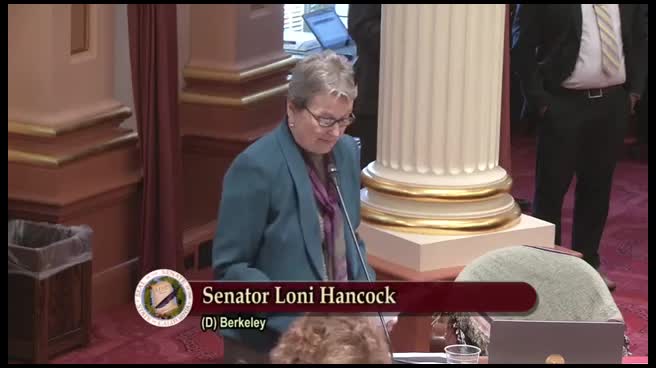
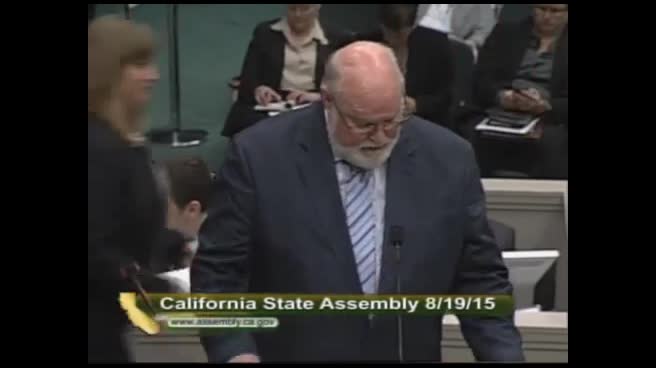
Bill Author