SB 20: Low Carbon Fuels Council.
- Session Year: 2015-2016
- House: Senate
- Latest Version Date: 2016-08-15
Existing law establishes the California Alternative and Renewable Fuel, Vehicle Technology, Clean Air, and Carbon Reduction Act of 2007, which includes the Alternative and Renewable Fuel and Vehicle Technology Program, administered by the State Energy Resources Conservation and Development Commission, and the Air Quality Improvement Program, administered by the State Air Resources Board. Existing law requires the emphasis of the Alternative and Renewable Fuel and Vehicle Technology Program to be to develop and deploy technology and alternative and renewable fuels in the marketplace, without adopting any one preferred fuel or technology. Existing law requires the primary purpose of the Air Quality Improvement Program to be the funding of projects to reduce criteria air pollutants, to improve air quality, and to fund research to determine and improve the air quality impacts of alternative transportation fuels and vehicles, vessels, and equipment technologies.
This bill would create the Low Carbon Fuels Council, as specified, which, among other things, would coordinate state agencies activities that are related to the acceleration and development of the instate production of low carbon fuels and very low carbon transportation fuels.
Existing law establishes the California Alternative and Renewable Fuel, Vehicle Technology, Clean Air, and Carbon Reduction Act of 2007, which includes the Alternative and Renewable Fuel and Vehicle Technology Program, administered by the State Energy Resources Conservation and Development Commission, and the Air Quality Improvement Program, administered by the State Air Resources Board. Existing law requires the emphasis of the Alternative and Renewable Fuel and Vehicle Technology Program to be to develop and deploy technology and alternative and renewable fuels in the marketplace, without adopting any one preferred fuel or technology. Existing law requires the primary purpose of the Air Quality Improvement Program to be the funding of projects to reduce criteria air pollutants, to improve air quality, and to fund research to determine and improve the air quality impacts of alternative transportation fuels and vehicles, vessels, and equipment technologies.
This bill would create the Low Carbon Fuels Council, as specified, which, among other things, would coordinate state agencies activities that are related to the acceleration and development of the instate production of low carbon fuels. fuels and very low carbon transportation fuels.
Existing law establishes the California Alternative and Renewable Fuel, Vehicle Technology, Clean Air, and Carbon Reduction Act of 2007, which includes the Alternative and Renewable Fuel and Vehicle Technology Program, administered by the State Energy Resources Conservation and Development Commission, and the Air Quality Improvement Program, administered by the State Air Resources Board. Existing law requires the emphasis of the Alternative and Renewable Fuel and Vehicle Technology Program to be to develop and deploy technology and alternative and renewable fuels in the marketplace, without adopting any one preferred fuel or technology. Existing law requires the primary purpose of the Air Quality Improvement Program to be the funding of projects to reduce criteria air pollutants, to improve air quality, and to fund research to determine and improve the air quality impacts of alternative transportation fuels and vehicles, vessels, and equipment technologies.
This bill would create the Low Carbon Fuels Council, as specified, which, among other things, would coordinate state agencies activities that are related to the acceleration and development of the instate production of low carbon fuels.
Under existing law, various measures provide funding for water resources projects, facilities, and programs.
This bill would create the California Water Resiliency Investment Fund in the State Treasury and provide that moneys in the fund are available, upon appropriation by the Legislature, for the purpose of providing a more dependable water supply for California. This bill would create various accounts within the fund for prescribed purposes.
Existing law requires a person who digs, bores, or drills a water well, cathodic protection well, or a monitoring well, or abandons or destroys a well, or deepens or reperforates a well, to file a report of completion with the Department of Water Resources. Existing law prohibits those reports from being made available to the public, except under certain circumstances.
This bill would instead require the department to, upon request, make the reports available to the public. The bill would require the department to provide specified disclaimers when providing the reports to the public. The bill would authorize the department to charge a fee for the provision of a report to recover the departments costs, that does not exceed the reasonable costs to the department of providing the report. The bill would require the release of a report to comply with the Information Practices Act of 1977 and would require the department to redact from the report specified information pertaining to the well owner. The bill would require a person who requests a report to provide his or her name, address, identification number from a government-issued source, as provided, and reason for making the request.
For purposes of this article:
(a)Council means the Low Carbon Fuels Council, established pursuant to Section 43892.
(b)Low carbon fuel means a transportation fuel that will contribute to the reduction in the carbon intensity of California Californias transportation fuels and to the achievement of the states greenhouse gas emissions reduction goals.
(c)Very low carbon transportation fuel has the same meaning as defined in Section 43870.
43892.(a)The Low Carbon Fuels Council is hereby established.
(b)(1)The council shall consist of six members as follows:
(A)Chair of the state board. board or his or her designee.
(B)Chair of the State Energy Resources Conservation and Development Commission. Commission or his or her designee.
(C)Director of the Governors Office of Business and Economic Development. Development or his or her designee.
(D)One member appointed by the Senate Committee on Rules.
(E)One member appointed by the Speaker of the Assembly.
(F)One member appointed by the Governor, with the advice and consent of the Senate.
(2)The members appointed pursuant to subparagraphs (D) and (E) of paragraph (1) shall have a scientific, economic, or industry professional background with expertise in the production production, financing, distribution, or market development of low carbon fuels and very low carbon transportation fuels.
(3)The member appointed pursuant to subparagraph (F) of paragraph (1) shall be a representative of a bona fide nonprofit environmental justice organization that advocates for clean air and pollution reductions.
(4)The members appointed pursuant to subparagraphs (D) to (F), inclusive, of paragraph (1) shall serve for a term of four years and may be reappointed.
(c)The Chair of the State Energy Resources Conservation and Development Commission or his or her designee shall serve as chair of the council and shall provide all staff support required by the council.
(c)
(d)Except as provided in this subdivision, members of the council shall serve without compensation. A member appointed pursuant to subparagraphs (D) to (F), inclusive, of paragraph (1) of subdivision (b) shall be reimbursed for actual and necessary expenses incurred in the performance of his or her duties and shall be compensated one hundred dollars ($100) for each day during which the member is engaged in the performance of his or her official duties related to the council.
43894.(a)The councils meetings shall be open to the public and comply with the Bagley-Keene Open Meeting Act (Article 9 (commencing with Section 11120) of Chapter 1 of Part 1 of Division 3 of Title 2 of the Government Code).
(b)The council shall meet as frequently as the chair of the council deems necessary, but not more than four times a year.
43896.(a)The council shall do all of the following:
(1)Coordinate state agencies activities that are related to the acceleration and development of the instate production of low carbon fuels and very low carbon transportation fuels.
(2)Identify and evaluate any gaps in existing programs, policies, or activities that may impede the instate construction of new, or the expansion of existing, low carbon fuel production facilities or very low carbon transportation fuel production facilities.
(3)Make recommendations to the Legislature for changes in the law needed to achieve the goals of this subdivision.
(b)The council may sponsor conferences, symposia, and other public forums to seek a broad range of public advice.
For purposes of this section, council article:
(a)Council means the Low Carbon Fuels Council, established pursuant to this article. Section 43892.
(b)Low carbon fuel means a transportation fuel that will contribute to the reduction in carbon intensity of California transportation fuels and to the achievement of the states greenhouse gas reduction goals.
(c)Very low carbon transportation fuel has the same meaning as defined in Section 43870.
43892.(a)The Low Carbon Fuels Council is hereby established.
(b)(1)The council shall consist of five six members as follows:
(A)Chair of the state board.
(B)Chair of the State Energy Resources Conservation and Development Commission.
(C)Director of the Governors Office of Business and Economic Development.
(C)
(D)One member appointed by the Senate Committee on Rules.
(D)
(E)One member appointed by the Speaker of the Assembly.
(E)
(F)One member appointed by the Governor. Governor, with the advice and consent of the Senate.
(2)The members appointed pursuant to subparagraphs (C) and (D) and (E) of paragraph (1) shall have a scientific, economic, or industry professional background in the production of low carbon fuels. fuels and very low carbon transportation fuels.
(3)The member appointed pursuant to subparagraph (E) (F) of paragraph (1) shall be appointed on the basis of his or her educational and professional qualifications and general knowledge of and interest in the production of low carbon fuels. a representative of a bona fide nonprofit environmental justice organization that advocates for clean air and pollution reductions.
(4)The members appointed pursuant to subparagraphs (C) to (E), (D) to (F), inclusive, of paragraph (1) shall serve for a term of four years, years and may be reappointed.
(c)Except as provided in this subdivision, members of the council shall serve without compensation. A member shall be reimbursed for actual and necessary expenses incurred in the performance of his or her duties and shall be compensated one hundred dollars ($100) for each day during which the member is engaged in the performance of his or her official duties related to the council.
43894.The councils meetings shall be open to the public and comply with the Bagley-Keene Open Meeting Act (Article 9 (commencing with Section 11120) of Chapter 1 of Part 1 of Division 3 of Title 2 of the Government Code).
43896.(a)The council shall do all of the following:
(1)Coordinate state agencies activities that are related to the acceleration and development of the instate production of low carbon fuels. fuels and very low carbon transportation fuels.
(2)Identify and address evaluate any gaps in existing programs, policies, or activities that may impede the instate construction of new, or the expansion of existing, low carbon fuel production facilities. facilities or very low carbon transportation fuel production facilities.
(3)Make recommendations to the Legislature for changes in the law needed to achieve the goals of this subdivision.
(b)The council may sponsor conferences, symposia, and other public forums to seek a broad range of public advice.
For purposes of this section, council means the Low Carbon Fuels Council, established pursuant to this article.
43892.(a)The Low Carbon Fuels Council is hereby established.
(b)(1)The council shall consist of five members as follows:
(A)Chair of the state board.
(B)Chair of the State Energy Resources Conservation and Development Commission.
(C)One member appointed by the Senate Committee on Rules.
(D)One member appointed by the Speaker of the Assembly.
(E)One member appointed by the Governor.
(2)The members appointed pursuant to subparagraphs (C) and (D) of paragraph (1) shall have a scientific, economic, or industry professional background in the production of low carbon fuels.
(3)The member appointed pursuant to subparagraph (E) of paragraph (1) shall be appointed on the basis of his or her educational and professional qualifications and general knowledge of and interest in the production of low carbon fuels.
(4)The members appointed pursuant to subparagraphs (C) to (E), inclusive, of paragraph (1) shall serve for a term of four years, and may be reappointed.
(c)Except as provided in this subdivision, members of the council shall serve without compensation. A member shall be reimbursed for actual and necessary expenses incurred in the performance of his or her duties and shall be compensated one hundred dollars ($100) for each day during which the member is engaged in the performance of his or her official duties related to the council.
43894.The councils meetings shall be open to the public and comply with the Bagley-Keene Open Meeting Act (Article 9 (commencing with Section 11120) of Chapter 1 of Part 1 of Division 3 of Title 2 of the Government Code).
43896.(a)The council shall do all of the following:
(1)Coordinate state agencies activities that are related to the acceleration and development of the instate production of low carbon fuels.
(2)Identify and address any gaps in existing programs, policies, or activities that may impede the instate construction of new, or the expansion of existing, low carbon fuel production facilities.
(3)Make recommendations to the Legislature for changes in the law needed to achieve the goals of this subdivision.
(b)The council may sponsor conferences, symposia, and other public forums to seek a broad range of public advice.
SECTION 1.Division 36 (commencing with Section 86000) is added to the Water Code, to read:36.California Water Resiliency Investment Act1.General Provisions86000.This division shall be known and may be cited as the California Water Resiliency Investment Act.
86010.The Legislature finds and declares all of the following:
(a)Californias extreme multiyear drought is raising significant concerns regarding the long-term dependability of water supplies that are critical to the states residents, economy, and environment.
(b)Nearly three-quarters of California is impacted by the severe drought underscoring the need for additional statewide action.
(c)The 2015 water year was the driest winter in Californias written record and water experts indicate that we could face multiyear droughts that extend years beyond any droughts previously experienced by the state.
(d)California could lose 25 percent of the Sierra snowpack by 2050 as a result of warmer weather, according to the department. Because the Sierra snowpack is our largest water reservoir, this loss will significantly reduce water supplies when Californians need them the most.
(e)By 2050, California is expected to add more than 10 million residents, placing even greater pressure on our water supplies.
(f)The current drought has had a disproportionate impact on disadvantaged communities. Falling groundwater levels in portions of the state from reduced rainfall and increased groundwater pumping have left more than 2,000 wells dry or critically near dry, impacting more than 10,000 residents and with a disproportionate impact on disadvantaged communities.
(g)Furthermore, thousands of residents of disadvantaged communities lack access to a secure long-term supply of clean drinking water due to polluted groundwater and falling groundwater levels.
(h)Reduced streamflows and water for wildlife areas have had a severe impact on fish and wildlife populations, threatening some species with extinction.
(i)Reports by the Public Policy Institute of California and others indicate that state and local agencies face a multibillion dollar annual funding deficit in addressing the states long-term water needs and that greater investments are needed to protect the states economy and natural resources and to ensure that disadvantaged communities have access to safe drinking water.
(j)Enactment of Proposition 1, the Water Quality, Supply, and Infrastructure Improvement Act of 2014, provided a critical down payment to address Californias near-term and long-term water needs. Additional actions are needed now to ensure state and local agencies continue to make the needed investments to provide a more dependable water system to meet Californias ongoing needs.
(k)To protect the public health and welfare and to protect residential, agricultural, commercial, and environmental uses of water, it is vital that state and local agencies have the resources they need to make responsible and reasonable investments in a more dependable water supply, including by making more efficient use of Californias current sources of water.
2.California Water Resiliency Investment Program86020.(a)The California Water Resiliency Investment Fund is hereby created in the State Treasury. Moneys in the fund are available, upon appropriation by the Legislature, for the purpose of, and in held in trust for, providing a more dependable water supply for California.
(b)The following accounts are hereby created within the California Water Resiliency Investment Fund:
(1)The Emergency Drought Response and Recovery Account to support emergency actions to protect vulnerable populations from the severe impacts of droughts, including providing emergency drinking water and other residential water supplies, food assistance, employment training and placement, and other economic relief.
(2)The Integrated Regional Water Resiliency and Management Account to provide matching grants to local and regional agencies to increase regional self-reliance and result in integrated, multibenefit solutions for ensuring sustainable water resources. Eligible projects may include groundwater storage, wastewater recycling, stormwater capture, water conservation, flood management, and other water supply and quality projects.
(3)The Safe Drinking Water for Disadvantaged Communities Account to support planning, construction, operation, and maintenance of drinking water systems for disadvantaged communities.
(4)The Environmental Resilience and Recovery Account to provide funding to restore and protect fish and wildlife habitats and populations to avoid or reduce conflicts with water management systems. Funding from the account shall only be used for projects that will provide fisheries, wildlife, or ecosystems with benefits or improvements that are greater than required applicable environmental mitigation measures or compliance obligations and shall not be used to pay for the mitigation or environmental review costs of any current or proposed water supply project.
(5)The Smart Water Data Program Account to support improved data and information systems that enable better management of water resources and to further facilitate expansion of water markets.
This division shall be known and may be cited as the California Water Resiliency Investment Act.
86010.The Legislature finds and declares all of the following:
(a)Californias extreme multiyear drought is raising significant concerns regarding the long-term dependability of water supplies that are critical to the states residents, economy, and environment.
(b)Nearly three-quarters of California is impacted by the severe drought underscoring the need for additional statewide action.
(c)The 2015 water year was the driest winter in Californias written record and water experts indicate that we could face multiyear droughts that extend years beyond any droughts previously experienced by the state.
(d)California could lose 25 percent of the Sierra snowpack by 2050 as a result of warmer weather, according to the department. Because the Sierra snowpack is our largest water reservoir, this loss will significantly reduce water supplies when Californians need them the most.
(e)By 2050, California is expected to add more than 10 million residents, placing even greater pressure on our water supplies.
(f)The current drought has had a disproportionate impact on disadvantaged communities. Falling groundwater levels in portions of the state from reduced rainfall and increased groundwater pumping have left more than 2,000 wells dry or critically near dry, impacting more than 10,000 residents and with a disproportionate impact on disadvantaged communities.
(g)Furthermore, thousands of residents of disadvantaged communities lack access to a secure long-term supply of clean drinking water due to polluted groundwater and falling groundwater levels.
(h)Reduced streamflows and water for wildlife areas have had a severe impact on fish and wildlife populations, threatening some species with extinction.
(i)Reports by the Public Policy Institute of California and others indicate that state and local agencies face a multibillion dollar annual funding deficit in addressing the states long-term water needs and that greater investments are needed to protect the states economy and natural resources and to ensure that disadvantaged communities have access to safe drinking water.
(j)Enactment of Proposition 1, the Water Quality, Supply, and Infrastructure Improvement Act of 2014, provided a critical down payment to address Californias near-term and long-term water needs. Additional actions are needed now to ensure state and local agencies continue to make the needed investments to provide a more dependable water system to meet Californias ongoing needs.
(k)To protect the public health and welfare and to protect residential, agricultural, commercial, and environmental uses of water, it is vital that state and local agencies have the resources they need to make responsible and reasonable investments in a more dependable water supply, including by making more efficient use of Californias current sources of water.
2.California Water Resiliency Investment Program86020.(a)The California Water Resiliency Investment Fund is hereby created in the State Treasury. Moneys in the fund are available, upon appropriation by the Legislature, for the purpose of, and in held in trust for, providing a more dependable water supply for California.
(b)The following accounts are hereby created within the California Water Resiliency Investment Fund:
(1)The Emergency Drought Response and Recovery Account to support emergency actions to protect vulnerable populations from the severe impacts of droughts, including providing emergency drinking water and other residential water supplies, food assistance, employment training and placement, and other economic relief.
(2)The Integrated Regional Water Resiliency and Management Account to provide matching grants to local and regional agencies to increase regional self-reliance and result in integrated, multibenefit solutions for ensuring sustainable water resources. Eligible projects may include groundwater storage, wastewater recycling, stormwater capture, water conservation, flood management, and other water supply and quality projects.
(3)The Safe Drinking Water for Disadvantaged Communities Account to support planning, construction, operation, and maintenance of drinking water systems for disadvantaged communities.
(4)The Environmental Resilience and Recovery Account to provide funding to restore and protect fish and wildlife habitats and populations to avoid or reduce conflicts with water management systems. Funding from the account shall only be used for projects that will provide fisheries, wildlife, or ecosystems with benefits or improvements that are greater than required applicable environmental mitigation measures or compliance obligations and shall not be used to pay for the mitigation or environmental review costs of any current or proposed water supply project.
(5)The Smart Water Data Program Account to support improved data and information systems that enable better management of water resources and to further facilitate expansion of water markets.
SECTION 1.Section 13752 of the Water Code is repealed.SEC. 2.Section 13752 is added to the Water Code, to read:13752.(a)Upon request, the department shall make available to the public a report made in accordance with paragraph (1) of subdivision (b) of Section 13751.
(b)When providing a report to the public pursuant to subdivision (a), the department shall also provide a statement that includes all of the following:
(1)The information provided in a report varies in accuracy, scale, origin, and completeness.
(2)The information is provided without warranty of the suitability of the information for any particular purpose.
(3)Use of the information in the report may require professional interpretation or judgment.
(4)Any use of the information provided in a report is at the users own risk.
(c)(1)The department may charge a fee for the provision of a report to recover the departments costs, that does not exceed the reasonable costs to the department of providing the report pursuant to this section. These costs may include the costs of promulgating regulations to implement this section.
(2)The release of a report in possession of the department shall comply with the Information Practices Act of 1977 (Chapter 1 (commencing with Section 1798) of Title 1.8 of Part 4 of Division 3 of the Civil Code).
(3)Prior to releasing a report pursuant to this section, the department shall redact from the report the name and address of the well owner.
(d)(1)A person making a request pursuant to subdivision (a) shall, on a form provided by the department, provide his or her name, address, identification number from an identification card issued pursuant to Section 13000 of the Vehicle Code, drivers license, or passport, and reason for making the request.
(2)The department shall maintain copies of the forms submitted pursuant to paragraph (1) for five years.
Reports made in accordance with paragraph (1) of subdivision (b) of Section 13751 shall not be made available for inspection by the public, but shall be made available to governmental agencies for use in making studies, or to any person who obtains a written authorization from the owner of the well. However, a report associated with a well located within two miles of an area affected or potentially affected by a known unauthorized release of a contaminant shall be made available to any person performing an environmental cleanup study associated with the unauthorized release, if the study is conducted under the order of a regulatory agency. A report released to a person conducting an environmental cleanup study shall not be used for any purpose other than for the purpose of conducting the study.
SEC. 2.Section 13752 is added to the Water Code, to read:13752.(a)Upon request, the department shall make available to the public a report made in accordance with paragraph (1) of subdivision (b) of Section 13751.
(b)When providing a report to the public pursuant to subdivision (a), the department shall also provide a statement that includes all of the following:
(1)The information provided in a report varies in accuracy, scale, origin, and completeness.
(2)The information is provided without warranty of the suitability of the information for any particular purpose.
(3)Use of the information in the report may require professional interpretation or judgment.
(4)Any use of the information provided in a report is at the users own risk.
(c)(1)The department may charge a fee for the provision of a report to recover the departments costs, that does not exceed the reasonable costs to the department of providing the report pursuant to this section. These costs may include the costs of promulgating regulations to implement this section.
(2)The release of a report in possession of the department shall comply with the Information Practices Act of 1977 (Chapter 1 (commencing with Section 1798) of Title 1.8 of Part 4 of Division 3 of the Civil Code).
(3)Prior to releasing a report pursuant to this section, the department shall redact from the report the name and address of the well owner.
(d)(1)A person making a request pursuant to subdivision (a) shall, on a form provided by the department, provide his or her name, address, identification number from an identification card issued pursuant to Section 13000 of the Vehicle Code, drivers license, or passport, and reason for making the request.
(2)The department shall maintain copies of the forms submitted pursuant to paragraph (1) for five years.
|
Date
|
Status
|
|---|---|
| Aug 31, 2016 | Ordered to inactive file on request of Assembly Member Calderon. |
| Aug 16, 2016 | Read second time. Ordered to third reading. |
| Aug 15, 2016 | Read second time and amended. Ordered to second reading. |
| Aug 12, 2016 | From committee: Do pass as amended. (Ayes 11. Noes 3.) (August 11). |
| Aug 11, 2016 | Joint Rule 62(a) suspended. |
| Aug 10, 2016 | August 10 set for first hearing. Placed on APPR. suspense file. |
| Aug 2, 2016 | Read second time and amended. Re-referred to Com. on APPR. |
| Aug 1, 2016 | From committee: Do pass as amended and re-refer to Com. on APPR. (Ayes 5. Noes 2.) (June 30). |
| Jun 27, 2016 | Joint Rule 62(a) suspended. (Page 5505.) |
| Jun 27, 2016 | Joint Rule 62(a) suspended. |
| Jun 23, 2016 | From committee: Be re-referred to Com. on NAT. RES. (Ayes 11. Noes 0.) (June 23). Re-referred to Com. on NAT. RES. |
| Jun 23, 2016 | Re-referred to Com. on RLS. pursuant to Assembly Rule 96. |
| Jun 20, 2016 | From committee with author's amendments. Read second time and amended. Re-referred to Com. on W., P., & W. |
| Aug 26, 2015 | From committee with author's amendments. Read second time and amended. Re-referred to Com. on W., P., & W. |
| Jun 15, 2015 | Referred to Com. on W., P., & W. |
| Jun 2, 2015 | In Assembly. Read first time. Held at Desk. |
| Jun 1, 2015 | Read third time. Passed. (Ayes 21. Noes 15. Page 1213.) Ordered to the Assembly. |
| Jun 1, 2015 | Read third time. Passed. (Ayes 21. Noes 15.) Ordered to the Assembly. |
| May 28, 2015 | Read second time. Ordered to third reading. |
| May 28, 2015 | From committee: Do pass. (Ayes 5. Noes 2. Page 1145.) (May 28). |
| May 28, 2015 | From committee: Do pass. (Ayes 5. Noes 2.) (May 28). |
| May 23, 2015 | Set for hearing May 28. |
| Apr 27, 2015 | April 27 hearing: Placed on APPR. suspense file. |
| Apr 21, 2015 | Set for hearing April 27. |
| Apr 16, 2015 | From committee: Do pass and re-refer to Com. on APPR. (Ayes 5. Noes 2. Page 648.) (April 15). Re-referred to Com. on APPR. |
| Mar 27, 2015 | Set for hearing April 15. |
| Mar 24, 2015 | From committee: Do pass and re-refer to Com. on E.Q. (Ayes 7. Noes 2. Page 405.) (March 24). Re-referred to Com. on E.Q. |
| Mar 17, 2015 | Set for hearing March 24. |
| Jan 15, 2015 | Referred to Coms. on N.R. & W. and E.Q. |
| Dec 2, 2014 | From printer. May be acted upon on or after January 1. |
| Dec 1, 2014 | Introduced. Read first time. To Com. on RLS. for assignment. To print. |
|
Date
|
Description
|
Location
|
Votes
|
|
|---|---|---|---|---|
| Aug 11, 2016 | Do pass as amended. | Assembly Standing Committee on Appropriations |
Passed |
|
| Jun 30, 2016 | Do pass as amended and be re-referred to the Committee on [Appropriations] | Assembly Standing Committee on Natural Resources |
Passed |
|
| Jun 23, 2016 | Be re-referred to the Committee on [Natural Resources] | Assembly Standing Committee on Rules |
Passed |
|
| Jun 1, 2015 | Senate 3rd Reading SB20 Pavley | Senate Floor |
Passed |
|
| May 28, 2015 | Do pass | Senate Standing Committee on Appropriations |
Passed |
|
| Apr 27, 2015 | Placed on suspense file | Senate Standing Committee on Appropriations |
Passed |
|
| Apr 15, 2015 | Do pass, but first be re-referred to the Committee on [Appropriations] | Senate Standing Committee on Environmental Quality |
Passed |
|
| Mar 24, 2015 | Do pass, but first be re-referred to the Committee on [Environmental Quality] | Senate Standing Committee on Natural Resources and Water |
Passed |
This list shows positions taken on this bill by organizations on the date displayed, which is linked to the original source.
Positions by individuals are not included.
SENATE THIRD READING
STR Bill Id:
Author:(Pavley)
As Amended Ver:
Majority vote
SENATE VOTE: (Not Relevant)
Committee | Votes | Ayes | Noes |
Natural Resources | 5-2 | Williams, Cristina Garcia, Hadley, Mark Stone, Wood | Jones, Harper |
Appropriations | 11-3 | Gonzalez, Bloom, Bonilla, Bonta, Eggman, Eduardo Garcia, Quirk, Santiago, Weber, Wood, McCarty | Bigelow, Chang, Obernolte |
SUMMARY: Establishes the Low Carbon Fuels Council (Council) and requires the Council to have six members with the Chair of the California Energy Commission (CEC), or his or her designee, serving as the chair of the Council. Specifically, this bill:
- Specifies the following membership of the Council:
- Chair of Air Resources Board (ARB) or designee;
- Chair of the CEC or designee;
- Director of the Governor's Office of Business and Economic Development (GO-BIZ) or designee;
- Two members with scientific, economic, or industry professional backgrounds with expertise in the production, financing, distribution, or marketing development of low carbon fuels and very low carbon fuels, one appointed by the Speaker of the Assembly and one by the Senate Committee on Rules; and,
- One member that is a representative of a bona fide nonprofit environmental justice organization that advocates for clean air and pollution reduction appointed by the Governor.
- Requires members appointed by Assembly, Senate, and Governor to be reimbursed for actual and necessary expenses and requires members to be compensated a $100 each day per diem. Prohibits the Council from meeting more than four times a year.
EXISTING LAW:
- Pursuant to the California Global Warming Solutions Act (AB 32 (Núñez), Chapter 488, Statutes of 2006), requires the ARB to adopt a statewide greenhouse gas (GHG) emissions limit equivalent to 1990 levels by 2020 and to adopt rules and regulations to achieve maximum technologically feasible and cost-effective GHG emission reductions.
- Establishes the California Alternative and Renewable Fuel, Vehicle Technology, Clean Air, and Carbon Reduction Act of 2007 [AB 118 (Núñez), Chapter 750, Statutes of 2007]. AB 118 is funded through temporary increases in vehicle registration fees ($3), smog abatement fees ($8), boat registration fees ($10/20), and special identification plate fees ($5). Collection of these fees is authorized until 2024 pursuant to AB 8 (Perea), Chapter 401, Statutes of 2013.
- Pursuant to Governor Schwarzenegger's Executive Order S-01-07, sets a statewide goal to reduce the carbon intensity (CI) of California's transportation fuels by at least 10% by 2020. The order required ARB to consider adopting a Low Carbon Fuel Standards (LCFS) to implement this goal. In 2009, ARB adopted the LCFS as a regulation. The LCFS attributes CI values to a variety of fuels based on direct and indirect GHG emissions, including land use changes caused by production of biofuels. The LCFS permits producers of certain low CI fuels to opt in to LCFS regulation for the purpose of generating credits, which can be banked and used for compliance, sold to regulated parties, and purchased and retired by regulated parties. In addition, LCFS credits can be exported to other GHG emission reduction programs.
- Defines "very low carbon transportation fuel" to mean a liquid or gaseous transportation fuel having no greater than 40% of the carbon intensity of the closest comparable petroleum fuel for that year, as measured by the methodology in the LCFS regulation. Requires the carbon intensity for the transportation fuel to include the indirect land use change emission if an agricultural commodity that is a food product is used as a feedstock for the production of the transportation fuel.
FISCAL EFFECT: According to the Assembly Appropriations Committee, this bill likely increases state costs, potentially in the $250,000 to $500,000 range. While some of the costs may be absorbed by the state agencies represented on the Council, it is unclear what entity will pay the additional costs of the public members, the coordination of state activities, the sponsorship of other public activities, and the information required to prepare the report to the Legislature.
COMMENTS: In 2011, the state began implementing the LCFS, which requires the oil industry to gradually reduce the CI of gasoline and diesel by 10% by 2020 by phasing in lower carbon fuels. The regulations were adopted pursuant to Executive Order S-01-07 and were readopted in September 2015. ARB rates the CI of transportation fuels and establishes the level of credits generated by production of the fuel. Fuel producers can reduce the carbon intensity of their fuels or purchase credits to comply with the LCFS. According to ARB, the carbon-intensity of California's transportation fuel pool has been reduced by just over 2%.
In 2007, AB 118 established three new programs intended to promote vehicle and fuel technology that reduces air pollution and GHG emissions statewide. These programs are the Alternative and Renewable Fuel and Vehicle Technology Program (ARFVTP), the Air Quality Improvement Program (AQIP) and Enhanced Fleet Modernization Program. ARFVTP funds projects by various public and private groups that "develop and deploy innovative technologies that transform California's fuel and vehicle types to help attain the state’s climate change policies." The CEC prepares an investment plan, in coordination with a stakeholder advisory committee, which outlines the ARFVTP's funding priorities. AB 118 requires the advisory committee to include representatives from state agencies; fuel and vehicle technology consortia; labor, environmental, and community-based justice and health organizations; academic groups; consumer advocates; workforce training groups; and private industry. Once an investment plan is completed, CEC receives and solicits bids for projects, awarding funds based on eligibility criteria. Monies appropriated to the ARFVTP come from temporary increases in smog abatement fees, vehicle registration fees, vessel registration fees and certain other vehicle fees. According to the CEC, as of December 31, 2015, it has awarded over $600 million to advance the goals of the program. Alternative fuel production and infrastructure has received over half of that funding.
In addition to the ARFVTP, AB 118 also created the AQIP, to be administered by the ARB. According to CEC, while the ARFVTP focuses primarily on achieving state GHG reduction goals within the transportation sector, the AQIP is primarily responsible for reducing air pollutants from the transportation sector. Also, according to CEC, the two programs have worked in concert to maximize the benefits to the state and avoid duplication of efforts. For instance, the ARFVTP has invested in light-duty electric vehicle charging infrastructure, regional planning, and manufacturing projects, while the AQIP has provided deployment incentives for light-duty electric vehicles through the Clean Vehicle Rebate Program (CVRP). ARFVTP has supported the demonstration of early hybrid and electric truck and bus models, while the AQIP has provided deployment incentives for such vehicles through the Hybrid and Zero-Emission Truck and Bus Voucher Incentive Project and other planned larger-scale pilot deployment projects. Finally, AQIP has also provided loans to assist fleets in modernizing their diesel trucks. Prior to the availability of Greenhouse Gas Reduction Fund (GGRF), the ARFVTP provided $49.1 million in funding to backfill CVRP needs, as well as an additional $4 million in Hybrid and Zero-Emission Truck and Bus Voucher Incentive Project (HVIP) incentives. Beginning with fiscal year 2014-2015, ARB combined the AQIP and the GGRF Low-Carbon Transportation Investments into one funding plan. In AQIP's fiscal year 2016-17 funding plan ARB proposed a new program to allocate $40 million to very low carbon fuel production. This funding will be limited to renewable fuels that are produced in California and would be further limited to those fuels which meet a designated carbon intensity threshold.
California GO-Biz has appointed a Zero Emission Vehicle (ZEV) infrastructure deputy to assist in the development of ZEV infrastructure including the development of hydrogen production and fueling stations. The ZEV infrastructure deputy has worked with local governments and various companies to remove barriers to developing ZEV infrastructure.
The Council established by this bill is designed to coordinate these different efforts, identify gaps in these efforts and make recommendations to the legislature to address those gaps.
Analysis Prepared by: Michael Jarred / NAT. RES. / (916) 319-2092 FN: 0004083
Date of Hearing: August 10, 2016
ASSEMBLY COMMITTEE ON APPROPRIATIONS
Lorena Gonzalez, Chair
SBPCA Bill Id:SB 20
Author:(Pavley) – As Amended Ver:August 2, 2016
Policy Committee: | Natural Resources | Vote: | 5-2 |
Urgency: No State Mandated Local Program: No Reimbursable: No
SUMMARY:
This bill establishes the Low Carbon Fuel Council (LCF Council) to coordinate state activities related to the acceleration and development of instate low carbon fuels. Specifically, this bill:
- Establishes the LCF Council with the following six members:
- The Chair of California Air Resources Board (ARB).
- The Chair of the California Energy Commission (CEC).
- The Director of the Governor's Office of Business and Economic Development (GO-Biz).
- Two members with scientific, economic, or industry professional backgrounds in the production of low carbon and very low carbon fuels, one appointed by the Speaker of the Assembly and one by the Senate Rules Committee.
- One member appointed by the Governor, with the advice and consent of the Senate, who is a representative of a bona fide nonprofit environmental justice organization that advocates for clean air and pollution reductions.
- Requires members appointed by the Legislature and Governor to serve four-year terms and allows reappointment.
- Requires members to be reimbursed for actual and necessary expenses and requires members to be compensated $100 each day.
- Requires LCF Council meetings to comply with Bagley-Keene Open Meeting Act.
- Requires the LCF Council to do the following:
- Coordinate state agencies’ activities that are related to acceleration and development of instate production of low carbon and very low carbon fuels.
- Identify and evaluate gaps in existing programs, polices, or activities that could impede the instate construction of new, or the expansion of existing, low carbon and very low carbon fuel production facilities.
- Provide recommendations to the Legislature for changes in the law needed to achieve the goals of the Council.
- Authorizes the Council to sponsor conferences, symposia, and other public forums to seek a broad range of public advice.
FISCAL EFFECT:
This bill likely increases state costs, potentially in the $250,000 to $500,000 range. While some of the costs may be absorbed by the state agencies represented on the LCF Council, it is unclear what entity will pay the additional costs of the public members, the coordination of state activities, the sponsorship of other public activities, and the information required to prepare the report to the Legislature. This bill does not specify where or how often the LCF Council will meet, which would also add per diem and facilities costs.
COMMENTS:
- Purpose. According to the author, currently, there are no discussions about how the CEC and ARB programs will coordinate, whether those facilities that receive a grant from the CEC would be eligible for an ARB production incentive, or whether there is a process to streamline the application process. Low carbon fuel facilities are a large capital investment, and in order to convince a facility to come to California, the state needs to do everything it can to maximize funding opportunities and ensure the two programs are coordinating.
The Council established by this bill is designed to coordinate these different efforts and identify gaps and make recommendations to the legislature to address those gaps.
- Background.
The California Alternative and Renewable Fuel, Vehicle Technology, Clean Air, and Carbon Reduction Act of 2007 [AB 118 (Núñez) Chapter 750/2007] increased vehicle registration fees (+$3), Smog Abatement Fee (+$8), boat registration fees ($10/$20), and special identification plates (+$5) until January 1, 2016 to fund three programs:
- The Alternative and Renewable Fuel and Vehicle Technology Program (ARFVTP), administered by the California Energy Commission (CEC), provides grants, revolving loans, loan guarantees, and other financial incentives to accelerate the development and deployment of clean, efficient, low carbon alternative fuels and technologies. ARFVTP is funded by $2 of the vehicle registration fee and receives approximately $100 million per year total.
- The Air Quality Improvement Program (AQIP), administered by the Air Resources Board (ARB) in consultation with local air districts, funds projects that reduce criteria air pollutants, improve air quality, and provide research for alternative fuels and vehicles, vessels, and equipment technologies. AQIP is funded by smog abatement fees, boat registration fees, and special identification plate fees and receives between $30-36 million per year.
- The Enhanced Fleet Modernization Program (EFMP), under which ARB, in consultation with Bureau of Automotive Repair (BAR), pays to permanently remove cars and small trucks from operation through voluntary retirement by their owners. EFMP is funded by $1 of the vehicle registration fee and receives approximately $30 million per year.
The Alternative Fuels Law required CEC and the ARB to develop and adopt a state plan to increase the use of alternative fuels by June 30, 2007. In response, the CEC and ARB published the State Alternative Fuels Plan in 2007 and set alternative fuel use goals of 9% in 2012, 11% in 2017, and 26% by the year 2022.
The Carl Moyer Memorial Air Quality Standards Attainment Program (Moyer Program), administered by ARB and local air districts, funds the incremental cost of cleaner-than-required vehicles, engines, and equipment. The primary objective of the program is to achieve air quality emission reductions that would not otherwise occur through regulations or other legal mandates. The Moyer Program is funded by vehicle registration surcharges adopted by local air districts in nonattainment areas, the authority to assess these fees sunset on January 1, 2015.
The Moyer Program was expanded until 2015, by AB 923 (Firebaugh), Chapter 707/Statutes of 2004, to cover additional pollutants and engines, imposed an additional $1 fee on tire sales to fund the Moyer Program and CalRecycle, and established air quality improvement programs through local air districts.
Both the AB 118 program and the Carl Moyer program were extended by AB 8 (Perea-Pavley) Chapter 401, Statutes of 2013.
California Governor's Office of Business and Economic Development (GO-Biz) has appointed a Zero Emission Vehicle (ZEV) infrastructure deputy to assist in the development of ZEV infrastructure including the development of hydrogen production and fueling stations. The ZEV infrastructure deputy has worked with local governments and various companies to remove barriers to developing ZEV infrastructure.
- Expenses and Per Diem. This bill requires LCF members to be reimbursed for actual and necessary expenses and requires members to be compensated $100 each day. This bill does not distinguish between public members and members representing state agencies. It is inappropriate for state agency members to receive per diem for serving on the LCF Council in their official capacity.
Analysis Prepared by: Jennifer Galehouse / APPR. / (916) 319-2081
Date of Hearing: June 30, 2016
ASSEMBLY COMMITTEE ON NATURAL RESOURCES
Das Williams, Chair
SBPCA Bill Id:SB 20
Author:(Pavley) – As Amended Ver:June 20, 2016
SENATE VOTE: (Not Relevant)
SUBJECT: Low Carbon Fuels Council
SUMMARY: Establishes the Low Carbon Fuels Council (Council) and requires the Council to have five members, including state agencies and appointees, with expertise and background on the production of low carbon fuels.
EXISTING LAW:
- Pursuant to the California Global Warming Solutions Act (AB 32), requires ARB to adopt a statewide greenhouse gas (GHG) emissions limit equivalent to 1990 levels by 2020 and to adopt rules and regulations to achieve maximum technologically feasible and cost-effective GHG emission reductions.
- Establishes the California Alternative and Renewable Fuel, Vehicle Technology, Clean Air, and Carbon Reduction Act of 2007 [AB 118 (Nunez), Chapter 750, Statutes of 2007]. AB 118 is funded through temporary increases in vehicle registration fees ($3), smog abatement fees ($8), boat registration fees ($10/20), and special identification plate fees ($5). Collection of these fees is authorized until 2024 pursuant to AB 8 (Perea), Chapter 401, Statutes of 2013. The fees support three major programs:
- The Air Quality Improvement Program (AQIP), administered by the Air Resources Board (ARB) in consultation with local air districts, funds projects that reduce criteria air pollutants, improve air quality, and provide research for alternative fuels and vehicles, vessels, and equipment technologies. The two primary programs adopted by ARB pursuant to AQIP are the Clean Vehicle Rebate Program (CVRP) and the Hybrid and Zero Emissions Truck and Bus Voucher Incentive Program (HVIP). AQIP is funded by smog abatement fees, boat registration fees, and special identification plate fees and receives between $30-36 million per year from these sources.
- The Enhanced Fleet Modernization Program (EFMP), under which ARB, in consultation with the Bureau of Automotive Repair (BAR), pays to permanently remove cars and small trucks from operation through voluntary retirement by their owners. EFMP is funded by $1 of the vehicle registration fee and receives approximately $30 million per year.
- The Alternative and Renewable Fuel and Vehicle Technology Program (ARFVTP), administered by California Energy Commission (CEC), provides grants and other financial incentives to accelerate the development and deployment of clean, efficient, low carbon alternative fuels and technologies. ARFVTP is funded by $2 of the vehicle registration fee and receives approximately $100 million per year.
- The Air Quality Improvement Program (AQIP), administered by the Air Resources Board (ARB) in consultation with local air districts, funds projects that reduce criteria air pollutants, improve air quality, and provide research for alternative fuels and vehicles, vessels, and equipment technologies. The two primary programs adopted by ARB pursuant to AQIP are the Clean Vehicle Rebate Program (CVRP) and the Hybrid and Zero Emissions Truck and Bus Voucher Incentive Program (HVIP). AQIP is funded by smog abatement fees, boat registration fees, and special identification plate fees and receives between $30-36 million per year from these sources.
- Pursuant to Governor Schwarzenegger's Executive Order S-01-07, sets a statewide goal to reduce the carbon intensity (CI) of California's transportation fuels by at least 10% by 2020. The order required ARB to consider adopting a Low Carbon Fuel Standards (LCFS) to implement this goal. In 2009, ARB adopted the LCFS as a regulation. The LCFS attributes CI values to a variety of fuels based on direct and indirect GHG emissions, including land use changes caused by production of biofuels. The LCFS permits producers of certain low CI fuels to opt in to LCFS regulation for the purpose of generating credits, which can be banked and used for compliance, sold to regulated parties, and purchased and retired by regulated parties. In addition, LCFS credits can be exported to other GHG emission reduction programs.
- Defines “very low carbon transportation fuel” to mean a liquid or gaseous transportation fuel having no greater than 40% of the carbon intensity of the closest comparable petroleum fuel for that year, as measured by the methodology in the LCFS regulation. Requires the carbon intensity for the transportation fuel to include the indirect land use change emission if an agricultural commodity that is a food product is used as a feedstock for the production of the transportation fuel.
THIS BILL:
- Establishes the Council and requires Council to have five members and specifies the following members:
- Chair of ARB;
- Chair of the CEC;
- Two members with scientific, economic, or industry professional backgrounds in the production of low carbon fuels, one appointed by the Speaker of the Assembly and one by the Senate Committee on Rules; and,
- One member with educational and professional qualifications and general knowledge and interest in the production of low carbon fuels appointed by the Governor.
- Requires members to serve a term of four years and allows reappointment.
- Requires members to be reimbursed for actual and necessary expenses and requires members to be compensated a $100 each day per diem.
- Requires Council meetings to comply with Bagley-Keene Open Meeting Act.
- Requires the Council to do the following:
- Coordinate state agencies’ activities that are related to acceleration and development of instate production of low carbon fuels;
- Identify and address gaps in existing programs, polices, or activities that could impede the instate construction of new or the expansion of existing, low carbon fuel production facilities; and,
- Provide recommendations to the Legislature for changes in the law needed to achieve the goals of the Council.
- Authorizes the Council to sponsor conferences, symposia, and other public forums to seek a broad range of public advice.
FISCAL EFFECT: Unknown
COMMENTS:
- Author’s statement:
CEC allocates approximately $40 million dollars every two years
for grants (ranging from $3-5 M) for capital expenditures related to the construction or retrofitting of a low carbon fuels facilities located in-state. ARB is proposing to allocate $40 million for a low carbon fuels production incentive program. At this time the ARB is proposing to do a per gallon incentive based on the carbon intensity and whether the fuel provides benefits to the disadvantaged communities. Currently, there are no discussions about how the CEC and ARB programs will coordinate, whether those facilities that receive a grant from the CEC would be eligible for an ARB production incentive, or whether there is a process to streamline the application process. Low carbon fuel facilities are a large capital investment, and in order to convince a facility to come to California, the state needs to do everything it can to maximize funding opportunities and ensure they two programs are coordinating.
- Low Carbon Fuels. In 2011, the state began implementing the LCFS, which requires the oil industry to gradually reduce the CI of gasoline and diesel by 10% by 2020 by phasing in lower carbon fuels. The regulations were adopted pursuant to Executive Order S-01-07 and were readopted in September 2015. ARB rates the CI of transportation fuels and establishes the level of credits generated by production of the fuel. Fuel producers can reduce the carbon intensity of their fuels or purchase credits to comply with the LCFS. According to ARB, the carbon-intensity of California’s transportation fuel pool has been reduced by just over 2%.
In 2007, AB 118 established three new programs intended to promote vehicle and fuel technology that reduces air pollution and GHG emissions statewide. These programs are the ARFVTP, the AQIP and EFMP. ARFVTP funds projects by various public and private groups that “develop and deploy innovative technologies that transform California’s fuel and vehicle types to help attain the state’s climate change policies.” The CEC prepares an investment plan, in coordination with a stakeholder advisory committee, which outlines the ARFVTP's funding priorities. AB 118 requires the advisory committee to include representatives from state agencies; fuel and vehicle technology consortia; labor, environmental, and community-based justice and health organizations; academic groups; consumer advocates; workforce training groups; and private industry. Once an investment plan is completed, CEC receives and solicits bids for projects, awarding funds based on eligibility criteria. Monies appropriated to the ARFVTP come from temporary increases in smog abatement fees, vehicle registration fees, vessel registration fees and certain other vehicle fees. According to the CEC, as of December 31, 2015, it has awarded over $600 million to advance the goals of the program. Alternative fuel production and infrastructure has received over half of that funding.
In addition to the ARFVTP, AB 118 also created the AQIP, to be administered by the ARB. According to CEC, while the ARFVTP focuses primarily on achieving state GHG reduction goals within the transportation sector, the AQIP is primarily responsible for reducing air pollutants from the transportation sector. Also, according to CEC, the two programs have worked in concert to maximize the benefits to the state and avoid duplication of efforts. For instance, the ARFVTP has invested in light-duty electric vehicle charging infrastructure, regional planning, and manufacturing projects, while the AQIP has provided deployment incentives for light-duty electric vehicles through the CVRP. ARFVTP has supported the demonstration of early hybrid and electric truck and bus models, while the AQIP has provided deployment incentives for such vehicles through the Hybrid and Zero-Emission Truck and Bus Voucher Incentive Project and other planned larger-scale pilot deployment projects. Finally, AQIP has also provided loans to assist fleets in modernizing their diesel trucks. Prior to the availability of GGRF, the ARFVTP provided $49.1 million in funding to backfill CVRP needs, as well as an additional $4 million in HVIP incentives. Beginning with fiscal year 2014-2015, ARB combined the AQIP and the Greenhouse Gas Reduction Fund (GGRF) Low-Carbon Transportation Investments into one funding plan. In AQIP’s fiscal year 2016-17 funding plan ARB proposed a new program to allocate $40 million to very low carbon fuel production. This funding will be limited to renewable fuels that are produced in California and would be further limited to those fuels which meet a designated carbon intensity threshold.
California Governor's Office of Business and Economic Development (GO-Biz) has appointed a Zero Emission Vehicle (ZEV) infrastructure deputy to assist in the development of ZEV infrastructure including the development of hydrogen production and fueling stations. The ZEV infrastructure deputy has worked with local governments and various companies to remove barriers to developing ZEV infrastructure.
The Council established by this bill is designed to coordinate these different efforts and identify gaps and make recommendations to the legislature to address those gaps. However, the council lacks any environmental justice (EJ) voices to provide the perspective of Californians most impacted by pollution from transportation fuels. In addition, the bill requires the Council to address gaps in existing programs, polices, or activities but does not provide the Council authority over those programs. Finally, the bill fails to define low carbon fuels. This may be problematic because there is no definition of that term in statue.
- Amendments. The author and Committee may wish to consider the following amendments:
- Ensure there is EJ representation on the Council;
- Add a representative from GO-Biz;
- Define low carbon fuels;
- Clarify the council’s authority; and,
- Put an additional focus on very low carbon fuels.
- Ensure there is EJ representation on the Council;
REGISTERED SUPPORT / OPPOSITION:
Support
Coalition for Renewable Natural Gas
Opposition
None on file
Analysis Prepared by: Michael Jarred / NAT. RES. / (916) 319-2092
SB 20
Page 6
|
Office of Senate Floor Analyses (916) 651-1520 Fax: (916) 327-4478 |
THIRD READING
Bill No: SB 20
Introduced: 12/1/14
SENATE NATURAL RES. & WATER COMMITTEE: 7-2, 3/24/15
AYES: Pavley, Allen, Hertzberg, Hueso, Jackson, Monning, Wolk
NOES: Stone, Fuller
SENATE ENVIRONMENTAL QUALITY COMMITTEE: 5-2, 4/15/15
AYES: Wieckowski, Hill, Jackson, Leno, Pavley
NOES: Gaines, Bates
SENATE APPROPRIATIONS COMMITTEE: 5-2, 5/28/15
AYES: Lara, Beall, Hill, Leyva, Mendoza
NOES: Bates, Nielsen
SUBJECT: Wells: reports: public availability
DIGEST: This bill requires the Department of Water Resources (DWR) to make well log reports for water wells available to the public.
ANALYSIS:
The Legislature first required well drillers to file a well completion report with the State for each well drilled. Two years later, in 1951, the Legislature enacted AB 1512 (Dickey) which restricted access to well completion reports to “to governmental agencies for use in making studies.” According to a May 21, 1951 letter from the Director of Public Works to Governor Warren, it was because the information in the reports “is regarded by some well drillers as part of their stock in trade.” That is, for competitive reasons.
While the statute has been amended a number of times in the intervening 60 plus years, the restriction to access has largely stayed the same.
This bill:
Makes well completion reports available to the public.
Requires persons requesting a report to do so on a form identifying the name and address of the requestor, and the reason for the request.
Requires the release of the well logs to comply with the privacy and other provisions of the Information Practices Act.
Requires a disclosure statement regarding the appropriate use of the data.
Authorizes the DWR to charge a fee for providing the well completion reports.
Comments
What Is A Well Completion Report? Also known as drillers’ logs or well logs, well completion reports are a record of the drilling and construction of the well. They include, among other things, the location of the well, the depth of the well, the type of soils encountered at each elevation as drilling, depth to water, etc.
Why Are They Required? It is important that wells be properly constructed, modified, or decommissioned. Well completion reports provide the record necessary to demonstrate that the well was properly constructed, modified, or decommissioned, and further provides the necessary construction detail should the well need to be modified at some later date.
What Other Uses Do They Have? Data in the reports can be used to construct detailed underground aquifer maps. These maps are critical to developing and implementing groundwater management plans. For example, such data can be used to find the best possible locations groundwater banking, identify key recharge areas, and to better avoid impaired groundwater quality.
What Do Other States Do? No other western state restricts access to well logs as in California. Indeed, 10 of 11 western states provide internet access to well logs.
How Does California Deal With Similar Issues? Every time an oil or gas well is drilled, the driller must provide a copy of the well log to the Department of Conservation. Those logs are deemed public records for purposes of the California Public Records Act. (There are exceptions, logs for exploratory wells, for example, are considered confidential for a specific period of time.) The Department of Conservation provides public access to those logs through a GIS map on the internet.
What Do Other Water Agencies Do? A review of urban water management plans and capital improvement plans shows that over 160 water agencies have published the location of their wells, usually on maps, but sometimes the actual addresses. This represents locations of over 2,200 water system wells, of which the author’s staff has located 96 percent through online maps.
Adjudicated groundwater basins have court appointed watermasters, a number of whom have published maps showing the location of production wells within their jurisdiction. For example, the Main San Gabriel Basin Watermaster published a fairly detailed 2008 map showing the location of 99 active production wells.
The drilling of a new water system well is usually a project subject to the California Environmental Quality Act (CEQA). CEQA, among other things, requires the disclosure of the location of the project. A review of CEQA Clearinghouse’s online database shows the location of over 70 wells.
What Would The Fee Cover? It is not clear how large the fee for a copy of a well log would be. However, the fee would likely include a share of the following:
Costs to create and maintain a copy of the log that redacts personal information pursuant to the Information Practices Act of 1977.
Costs of duplicating the redacted well log.
Cost to develop and disseminate the disclosure statement regarding the appropriate use of the data.
Costs to develop and maintain the form identifying the name and address of the requestor, and the reason for the request.
Any additional administrative costs associated with implementing this bill.
Prior Legislation
In 2011, Senator Pavley carried SB 263 to make well completion reports available to the public. To address the opposition’s concerns, the bill was amended on the Assembly floor to restrict access to persons with specific qualifications and added penalty provisions for disclosing information in the well log. The Governor vetoed that bill because of those provisions, and directed DWR to work with the author “to ensure responsible public access to well logs.”
The next year, Senator Pavley introduced SB 1146. That bill was the result of negotiations with DWR, the Department of Health Services, and CalEMA, “to ensure responsible public access to well logs.” That bill failed on the Senate Floor (19-16).
FISCAL EFFECT: Appropriation: No Fiscal Com.: Yes Local: No
According to the Senate Appropriations Committee, this bill would incur one-time costs of $625,000 from the General Fund to DWR to establish an electronic database.
American Society of Civil Engineers (ASCE-Region 9)
California Environmental Justice Alliance
California League of Conservation Voters
California Rural Legal Assistance Foundation
California Water Impact Network
Center on Race, Poverty & the Environment
Clean Water Action
Coastal Environmental Rights Foundation
Community Water Center
Defenders of Wildlife
East Bay Municipal Utility District
Environmental Action Committee of West Marin
Environmental Justice Coalition for Water
Environmental Water Caucus
Food & Water Watch
Friends of the River
Groundwater resources Association of California
Karuk Tribe
Leadership Counsel for Justice and Accountability
National Parks Conservation Association
Natural Resources Defense Council
North County Watch
Planning and Conservation League
PolicyLink
Public Trust Water
Sierra Club California
Southern California Watershed Alliance
The Nature Conservancy
Wholly H2O
OPPOSITION: (Verified 5/28/15)
California Chamber of Commerce
California Citrus Mutual
California Cotton Ginners Association
California Cotton Growers Association
California Dairies, Inc.
California Farm Bureau Federation
California Fresh Fruit Association
California League of Food Processors
Central Coast Forest Association
Desert Water Agency
Family Winemakers of California
Kings River Conservation District
Kings River Water Association
Nisei Farmers League
Tulare County Farm Bureau
Valley Ag Water Coalition
Western Agricultural Processors Association
Western Growers Association
Western Plant Health Association
ARGUMENTS IN SUPPORT: According to the author, “Every time a water well is drilled, the driller is required by law to provide DWR a well completion report, also known as a well log.”
“These reports contain critical information for groundwater managers, consulting hydrologists, academics, and others interested in the geologic and hydrologic characteristics of groundwater basins. Unfortunately, those who would benefit from this information cannot have access to it.
Farmers can’t know how deep they need to drill their wells.
Academics cannot develop sophisticated maps and models without the sponsorship of the government.
Local community activists cannot gain the information they need to better protect drinking water quality of disadvantaged communities.
The list goes on.”
“The Governor directed DWR to work with me ‘to ensure responsible public access to well logs.’ This bill is the result of those negotiations with DWR, along with the Department of Health Services (DHS) and CalEMA, which is California’s official homeland security agency. This bill addresses and resolves the various security concerns raised by DHS and CalEMA.”
ARGUMENTS IN OPPOSITION: A coalition of agricultural interests asserts “Well logs are already required to be submitted to the Department of Water resources and are available to the appropriate public agencies. For example, groundwater management agencies already have access and utilize this information to better manage their groundwater locally. We understand the importance of managing our scarce groundwater resources and are fully supportive of local efforts to do just that. We believe the well log data is available to those entities that have a genuine need to evaluate and utilize it for the benefit of managing our groundwater supplies. No beneficial purpose could be gained by making this confidential data available to the public. We believe this measure will only assist those trolling for lawsuits.”
Prepared by: Dennis O'Connor / N.R. & W. / (916) 651-4116
5/31/15 11:27:01
**** END ****
SB 20 (Pavley) Page 2 of 2
SENATE COMMITTEE ON APPROPRIATIONS
Senator Ricardo Lara, Chair
2015 - 2016 Regular
SB 20 (Pavley) - Wells: reports: public availability
|
|
Version: December 1, 2014 |
Policy Vote: N.R. & W. 7 - 2 |
Urgency: No |
Mandate: No |
Hearing Date: April 27, 2015 |
Consultant: Marie Liu |
This bill meets the criteria for referral to the Suspense File.
Bill Summary:
SB 20 would require the Department of Water Resources (DWR) to make well log reports for water wells available to the public.
Fiscal Impact:
One-time costs of $625,000 from the General Fund to DWR to establish an electronic database.
Background:
Under existing law, a person who drills, destroys, deepens, or alters a water well is required to file a report with DWR. These reports are referred to as “well logs” and include information on the location of the well, the underlying soils, the depth of water, and other aspects of the well. DWR is prohibited from making well logs available to the public, unless the well owner provides permission. California is the only western state to restrict access to well longs.
DWR has more than 700,000 well logs on record and receives 10,000 to 20,000 new well logs per year. These reports exist either as hard copies or in a very rudimentary database.
Proposed Law:
This bill would require DWR to make well logs available to the public upon request. The well log must be accompanied with a statement that explains the limitations and the appropriate uses of the information. DWR would be authorized to charge a fee to recover all its costs in providing the report.
Related Legislation:
SB 1146 (Pavley) 2012 was identical to this bill but failed to pass the Senate Floor.
SB 263 (Pavley) 2011 was similar to this bill but it was ultimately vetoed by the Governor
Staff Comments:
In past iterations to make well log information public, implementation costs varied between zero to $300,000 in upfront costs and $100,000 ongoing, depending on what information was being kept confidential and whether DWR would charge a fee. Specifically, in the last version of SB 1146, which is identical to this bill, DWR estimated that it would cost approximately $300,000 to develop regulations to establish a fee to access well logs, and $100,000 in ongoing costs to response to requests.
However, because well log information is going to be critical to the implementation of the Sustainable Groundwater Management Act, DWR is now looking to establish an internal electronic database of well logs. This approach would involve more upfront startup costs, specifically $625,000 General Fund, to scan the hundreds of thousands of existing well logs, key in critical information, and redact personal information. However, by creating the database, ongoing costs will be essentially eliminated as searching the database to fulfill requests for public information would be simple. Staff notes that despite the larger upfront costs, this approach is more efficient in the long term.
-- END --
SB 20 (Pavley) Page 6 of 6
SENATE COMMITTEE ON ENVIRONMENTAL QUALITY
Senator Bob Wieckowski, Chair
2015 - 2016 Regular
Bill No: SB 20 Hearing Date: 4/15/2015
Author: |
Pavley |
||
Version: |
12/1/2014 |
||
Urgency: |
No |
Fiscal: |
Yes |
Consultant: |
Rachel Machi Wagoner |
||
Subject: Wells: reports: public availability
ANALYSIS:
Existing law: Requires a person who digs, bores, or drills a water well, cathodic protection well, or a monitoring well, or abandons or destroys a well, or deepens or reperforates a well, to file a report of completion with the Department of Water Resources (DWR). Existing law prohibits those reports from being made available to the public, except under certain circumstances.
This bill: Makes well completion reports available to the public and in doing so:
Requires persons requesting a report to do so on a form identifying the name and address of the requestor, and the reason for the request.
Requires the release of the well logs to comply with the privacy and other provisions of the Information Practices Act.
Requires a disclosure statement regarding the appropriate use of the data.
Authorizes DWR to charge a fee for providing the well completion reports.
Background
In 1949, to help prevent groundwater pollution caused by improperly constructed water wells, the California Legislature first required well drillers to file a well completion report with the state for each well drilled.
Two years later, in 1951, the Legislature enacted AB 1512 (Dickey) which restricted access to well completion reports “to governmental agencies for use in making studies.” According to a May 21, 1951, letter from the Director of Public Works to Governor Warren, it was because the information in the reports “is regarded by some well drillers as part of their stock in trade.” That is, for competitive reasons.
While the statute has been amended a number of times in the intervening 60 plus years, the restriction to access has largely stayed the same.
Comments
Purpose of Bill.
According to the author, “every time a water well is drilled, the driller is required by law to provide the Department of Water Resources (DWR) a report describing how the well was constructed and the type of soils the driller encountered in drilling the well. These reports contain critical information for groundwater managers, consulting hydrologists, academics, and others interested in the geologic and hydrologic characteristics of groundwater basins. Unfortunately, those who would benefit from this information cannot have access to it. For over 60 years, the law has restricted access to those reports to just government agencies.”
What is a well completion report?
Also known as drillers’ logs or well logs, well completion reports are a record of the drilling and construction of the well. They include, among other things, the location of the well, the depth of the well, the type of soils encountered at each elevation as drilling, depth to water, etc.
Why are they required?
It is important that wells be properly constructed, modified, or decommissioned. Well completion reports provide the record necessary to demonstrate that the well was properly constructed, modified, or decommissioned, and further provides the necessary construction detail should the well need to be modified at some later date.
What other uses do they have?
Data in the reports can be used to construct detailed underground aquifer maps. These maps are critical to developing and implementing groundwater management plans. For example, such data can be used to find the best possible locations groundwater banking, identify key recharge areas, and to better avoid impaired groundwater quality.
What Do Other States Do?
No other western state restricts access to well logs as in California. Indeed, 10 of 11 western states provide internet access to well logs.
How Does California Deal With Similar Issues?
Every time an oil or gas well is drilled, the driller must provide a copy of the well log to the Department of Conservation. Those logs are deemed public records for purposes of the California Public Records Act. (There are exceptions, logs for exploratory wells, for example, are considered confidential for a specific period of time.) The Department of Conservation provides public access to those logs through a GIS map on the internet.
What Do Other Water Agencies Do?
A review of urban water management plans and capital improvement plans shows that over 160 water agencies have published the location of their wells, usually on maps, but sometimes the actual addresses. This represents locations of over 2,200 water system wells, of which the author’s staff has located 96 percent through online maps.
Adjudicated groundwater basins have court-appointed watermasters, a number of whom have published maps showing the location of production wells within their jurisdiction. For example, the Main San Gabriel Basin Watermaster published a fairly detailed 2008 map showing the location of 99 active production wells.
The drilling of a new water system well is usually a project subject to the California Environmental Quality Act (CEQA). CEQA, among other things, requires the disclosure of the location of the project. A review of CEQA Clearinghouse’s online database shows the location of over 70 wells.
What Would The Fee Cover?
It is not clear how large the fee for a copy of a well log would be. However, the fee would likely include a share of the following:
Costs to create and maintain a copy of the log that redacts personal information pursuant to the Information Practices Act of 1977.
Costs of duplicating the redacted well log.
Cost to develop and disseminate the disclosure statement regarding the appropriate use of the data.
Costs to develop and maintain the form identifying the name and address of the requestor, and the reason for the request.
Any additional administrative costs associated with implementing this bill.
Related/Prior Legislation
SB 263 (Pavley, 2011) required well completion reports be made available to the public. To address the opposition’s concerns, the bill was amended on the Assembly floor to restrict access to persons with specific qualifications and added penalty provisions for disclosing information in the well log. Governor Brown vetoed that bill because of those provisions, and directed DWR to work with the author “to ensure responsible public access to well logs.”
SB 1146 (Pavley, 2012) required well completion reports be made available to the public. Specific language to address the opposition’s concerns was the result of negotiations with DWR, the Department of Health Services, and CalEMA, “to ensure responsible public access to well logs.” That bill failed on the Senate Floor (19-16).
SOURCE:
Senator Pavley
SUPPORT:
California League of Conservation Voters
California Rural Legal Assistance Foundation
California Water Impact Network
Center on Race, Poverty & the Environment
Clean Water Action
Coastal Environmental Rights Foundation
Community Water Center
Defenders of Wildlife
East Bay Municipal Utility District
Environmental Action Committee of West Marin
Environmental Justice Coalition for Water
Environmental Water Caucus
Food & Water Watch
Friends of the River
Karuk Tribe
Leadership Counsel for Justice and Accountability
National Parks Conservation Association
Natural Resources Defense Council
North County Watch
Planning and Conservation League
PolicyLink
Public Trust Water
Sierra Club California
Southern California Watershed Alliance
The Nature Conservancy
Wholly H2O
OPPOSITION:
California Chamber of Commerce
California Citrus Mutual
California Cotton Ginners Association
California Cotton Growers Association
California Dairies, Inc.
California Farm Bureau Federation
California Fresh Fruit Association
California League of Food Processors
Desert Water Agency
Family Winemakers of California
Kings River Conservation District
Kings River Water Association
Nisei Farmers League
Valley Ag Water Coalition
Western Agricultural Processors Association
Western Growers Association
Western Plant Health Association
ARGUMENTS IN SUPPORT:
According to the author, “Every time a water well is drilled, the driller is required by law to provide DWR a well completion report, also known as a well log.”
“These reports contain critical information for groundwater managers, consulting hydrologists, academics, and others interested in the geologic and hydrologic characteristics of groundwater basins. Unfortunately, those who would benefit from this information cannot have access to it.
Farmers can’t know how deep they need to drill their wells.
Academics cannot develop sophisticated maps and models without the sponsorship of the government.
Local community activists cannot gain the information they need to better protect drinking water quality of disadvantaged communities.
The list goes on.”
“The Governor directed DWR to work with me ‘to ensure responsible public access to well logs.’ This bill is the result of those negotiations with DWR, along with the Department of Health Services (DHS) and CalEMA, which is California’s official homeland security agency. This bill addresses and resolves the various security concerns raised by DHS and CalEMA.”
ARGUMENTS IN OPPOSITION:
A coalition of agricultural interests asserts “Well logs are already required to be submitted to the Department of Water resources and are available to the appropriate public agencies. For example, groundwater management agencies already have access and utilize this information to better manage their groundwater locally. We understand the importance of managing our scarce groundwater resources and are fully supportive of local efforts to do just that. We believe the well log data is available to those entities that have a genuine need to evaluate and utilize it for the benefit of managing our groundwater supplies. No beneficial purpose could be gained by making this confidential data available to the public. We believe this measure will only assist those trolling for lawsuits.”
-- END --
SB 20 (Pavley) Page 4 of 4
SENATE COMMITTEE ON NATURAL RESOURCES AND WATER
Senator Fran Pavley, Chair
2015 - 2016 Regular
Bill No: SB 20 Hearing Date: March 24, 2015
Author: |
Pavley |
|
|
Version: |
December 1, 2014 |
||
Urgency: |
No |
Fiscal: |
Yes |
Consultant: |
Dennis O'Connor |
||
Subject: Wells: reports: public availability
BACKGROUND AND EXISTING LAW
In 1949, to help prevent groundwater pollution caused by improperly constructed water wells, the California Legislature first required well drillers to file a well completion report with the State for each well drilled.
Two years later, in 1951, the legislature enacted AB 1512 (Dickey) which restricted access to well completion reports to “to governmental agencies for use in making studies.” According to a May 21, 1951 letter from the Director of Public Works to Governor Warren, it was because the information in the reports “is regarded by some well drillers as part of their stock in trade.” That is, for competitive reasons.
While the statute has been amended a number of times in the intervening 60 plus years, the restriction to access has largely stayed the same.
PROPOSED LAW
This bill would:
Make well completion reports available to the public.
Require persons requesting a report to do so on a form identifying the name and address of the requestor, and the reason for the request.
Require the release of the well logs to comply with the privacy and other provisions of the Information Practices Act.
Require a disclosure statement regarding the appropriate use of the data.
Authorize DWR to charge a fee for providing the well completion reports.
ARGUMENTS IN SUPPORT
According to the author, “Every time a water well is drilled, the driller is required by law to provide DWR a well completion report, also known as a well log.”
“These reports contain critical information for groundwater managers, consulting hydrologists, academics, and others interested in the geologic and hydrologic characteristics of groundwater basins. Unfortunately, those who would benefit from this information cannot have access to it.
Farmers can’t know how deep they need to drill their wells.
Academics cannot develop sophisticated maps and models without the sponsorship of the government.
Local community activists cannot gain the information they need to better protect drinking water quality of disadvantaged communities.
The list goes on.”
“The Governor directed DWR to work with me ‘to ensure responsible public access to well logs.’ This bill is the result of those negotiations with DWR, along with the Department of Health Services (DHS) and CalEMA, which is California’s official homeland security agency. This bill addresses and resolves the various security concerns raised by DHS and CalEMA.”
ARGUMENTS IN OPPOSITION
A coalition of agricultural interests asserts “Well logs are already required to be submitted to the Department of Water resources and are available to the appropriate public agencies. For example, groundwater management agencies already have access and utilize this information to better manage their groundwater locally. We understand the importance of managing our scarce groundwater resources and are fully supportive of local efforts to do just that. We believe the well log data is available to those entities that have a genuine need to evaluate and utilize it for the benefit of managing our groundwater supplies. No beneficial purpose could be gained by making this confidential data available to the public. We believe this measure will only assist those trolling for lawsuits.”
COMMENTS
What is a well completion report? Also known as drillers’ logs or well logs, well completion reports are a record of the drilling and construction of the well. They include, among other things, the location of the well, the depth of the well, the type of soils encountered at each elevation as drilling, depth to water, etc.
Why are they required? It is important that wells be properly constructed, modified, or decommissioned. Well completion reports provide the record necessary to demonstrate that the well was properly constructed, modified, or decommissioned, and further provides the necessary construction detail should the well need to be modified at some later date.
What other uses do they have? Data in the reports can be used to construct detailed underground aquifer maps. These maps are critical to developing and implementing groundwater management plans. For example, such data can be used to find the best possible locations groundwater banking, identify key recharge areas, and to better avoid impaired groundwater quality.
What Do Other States Do? No other western state restricts access to well logs as in California. Indeed, 10 of 11 western states provide internet access to well logs.
How Does California Deal With Similar Issues? Every time an oil or gas well is drilled, the driller must provide a copy of the well log to the Department of Conservation. Those logs are deemed public records for purposes of the California Public Records Act. (There are exceptions, logs for exploratory wells, for example, are considered confidential for a specific period of time.) The Department of Conservation provides public access to those logs through a GIS map on the internet.
What Do Other Water Agencies Do? A review of urban water management plans and capital improvement plans shows that over 160 water agencies have published the location of their wells, usually on maps, but sometimes the actual addresses. This represents locations of over 2,200 water system wells, of which the author’s staff has located 96 percent through online maps.
Adjudicated groundwater basins have court appointed watermasters, a number of whom have published maps showing the location of production wells within their jurisdiction. For example, the Main San Gabriel Basin Watermaster published a fairly detailed 2008 map showing the location of 99 active production wells.
The drilling of a new water system well is usually a project subject to the California Environmental Quality Act (CEQA). CEQA, among other things, requires the disclosure of the location of the project. A review of CEQA Clearinghouse’s online database shows the location of over 70 wells.
What Would The Fee Cover? It is not clear how large the fee for a copy of a well log would be. However, the fee would likely include a share of the following:
Costs to create and maintain a copy of the log that redacts personal information pursuant to the Information Practices Act of 1977.
Costs of duplicating the redacted well log.
Cost to develop and disseminate the disclosure statement regarding the appropriate use of the data.
Costs to develop and maintain the form identifying the name and address of the requestor, and the reason for the request.
Any additional administrative costs associated with implementing this bill.
Prior Year Efforts. In 2011, Senator Pavley carried SB 263 to make well completion reports available to the public. To address the opposition’s concerns, the bill was amended on the Assembly floor to restrict access to persons with specific qualifications and added penalty provisions for disclosing information in the well log. The Governor vetoed that bill because of those provisions, and directed DWR to work with the author “to ensure responsible public access to well logs.”
The next year, Senator Pavley introduced SB 1146. That bill was the result of negotiations with DWR, the Department of Health Services, and CalEMA, “to ensure responsible public access to well logs.” That bill failed on the Senate Floor (19-16).
Double-referral The Rules Committee referred this bill to both the Committee on Natural Resources and Water and to the Committee on Environmental Quality. Therefore, if this bill passes this committee, it will be referred to the Committee on Environmental Quality, which will consider the issues within their jurisdiction.
SUGGESTED AMENDMENTS: None
SUPPORT
California League of Conservation Voters
California Rural Legal Assistance Foundation
California Water Impact Network
Center on Race, Poverty & the Environment
Clean Water Action
Coastal Environmental Rights Foundation
Community Water Center
Defenders of Wildlife
East Bay Municipal Utility District
Environmental Action Committee of West Marin
Environmental Justice Coalition for Water
Environmental Water Caucus
Food & Water Watch
Karuk Tribe
Leadership Counsel for Justice and Accountability
National Parks Conservation Association
Natural Resources Defense Council
North County Watch
Planning and Conservation League
Policylink
Sierra Club California
Southern California Watershed Alliance
Wholly H@O
OPPOSITION
California Chamber of Commerce
California Citrus Mutual
California Cotton ginners Association
California Cotton Growers Association
California Dairies, Inc.
California Farm Bureau Federation
California fresh Fruit Association
California League of Food Processors
Kings River Conservation District
Kings River Water Association
Nisei Farmers League
Valley Ag Water Coalition
Western Agricultural Processors Association
Western Growers Association
Western Plan Health Association
-- END --
Discussed in Hearing
 3MIN
Assembly Standing Committee on Appropriations
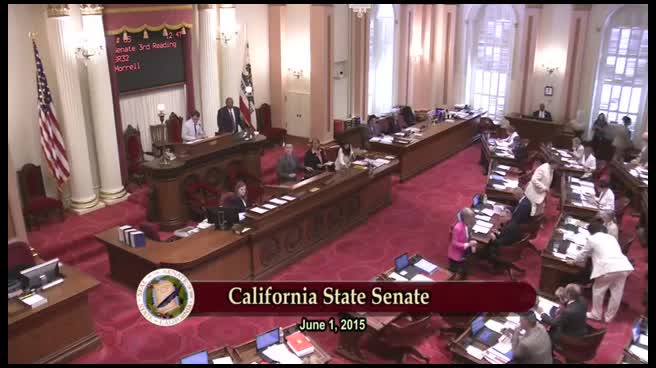 14MIN
Senate Floor
 18MIN
Senate Standing Committee on Environmental Quality
 23MIN
Senate Standing Committee on Natural Resources and Water
Bill Author
Bill Co-Author(s):