SB 202: Controlled substances: Synthetic cannabinoids.
- Session Year: 2015-2016
- House: Senate
- Latest Version Date: 2016-01-04
Existing law makes it a misdemeanor to sell, dispense, distribute, furnish, administer, or give, or offer to sell, dispense, distribute, furnish, administer, or give, or possess for sale, any synthetic stimulant compound or any specified synthetic stimulant derivative. Existing law also makes it a misdemeanor to sell, dispense, distribute, furnish, administer, or give, or offer to sell, dispense, distribute, furnish, administer, or give, or possess for sale, any synthetic cannabinoid compound or any synthetic cannabinoid derivative. derivative, as defined. Existing law, beginning January 1, 2016, law makes it an infraction to use or possess those drugs.
Existing law, the Consumers Legal Remedies Act, makes unlawful certain acts identified as unfair methods of competition and unfair or deceptive acts or practices undertaken by any person in a transaction intended to result or which results in the sale or lease of goods to any consumer. Existing law, among other remedies, authorizes consumer class action lawsuits and injunctive relief for alleged violations of the act and provides for senior citizens and disabled persons to receive an award of punitive damages and attorneys fees, as specified, for successful actions brought under these provisions.
This bill would add to that list of unlawful acts the act of advertising or offering for sale products that contain synthetic cannabinoids or synthetic stimulants, as defined.
This bill would authorize the California State Board of Pharmacy to determine, upon adoption of a regulation, that additional substances are synthetic cannabinoid compounds, according to specified criteria. The bill would require the board to fund that activity by moneys appropriated by the Legislature. This bill would deem the adoption of regulations to add substances to the definition of synthetic cannabinoid compound an emergency. By expanding the definition of a crime, this bill would impose a state-mandated local program.
The California Constitution requires the state to reimburse local agencies and school districts for certain costs mandated by the state. Statutory provisions establish procedures for making that reimbursement.
This bill would provide that no reimbursement is required by this act for a specified reason.
Existing law makes it a misdemeanor to sell, dispense, distribute, furnish, administer, or give, or offer to sell, dispense, distribute, furnish, administer, or give, or possess for sale, any synthetic stimulant compound or any specified synthetic stimulant derivative. Existing law also makes it a misdemeanor to sell, dispense, distribute, furnish, administer, or give, or offer to sell, dispense, distribute, furnish, administer, or give, or possess for sale, any synthetic cannabinoid compound or any synthetic cannabinoid derivative. Existing law, beginning January 1, 2016, makes it an infraction to use or possess those drugs.
This bill would state the intent of the Legislature to enact legislation relating to the deceptive packaging and marketing of synthetic drugs.
Existing law, the Consumers Legal Remedies Act, makes unlawful certain acts identified as unfair methods of competition and unfair or deceptive acts or practices undertaken by any person in a transaction intended to result or which results in the sale or lease of goods to any consumer. Existing law, among other remedies, authorizes consumer class action lawsuits and injunctive relief for alleged violations of the act and provides for senior citizens and disabled persons to receive an award of punitive damages and attorneys fees, as specified, for successful actions brought under these provisions.
This bill would add to that list of unlawful acts the act of advertising or offering for sale products that contain synthetic cannabinoids or synthetic stimulants, as defined.
Existing law makes it a misdemeanor to sell, dispense, distribute, furnish, administer, or give, or offer to sell, dispense, distribute, furnish, administer, or give, or possess for sale, any synthetic stimulant compound or any specified synthetic stimulant derivative. Existing law also makes it a misdemeanor to sell, dispense, distribute, furnish, administer, or give, or offer to sell, dispense, distribute, furnish, administer, or give, or possess for sale, any synthetic cannabinoid compound or any synthetic cannabinoid derivative. Existing law, beginning January 1, 2016, makes it an infraction to use or possess those drugs.
This bill would state the intent of the Legislature to enact legislation relating to the deceptive packaging and marketing of synthetic drugs.
(a)Every person who sells, dispenses, distributes, furnishes, administers, or gives, or offers to sell, dispense, distribute, furnish, administer, or give, or possesses for sale any synthetic cannabinoid compound, or any synthetic cannabinoid derivative, to any person, is guilty of a misdemeanor, punishable by imprisonment in a county jail not to exceed six months, or by a fine not to exceed one thousand dollars ($1,000), or by both that fine and imprisonment.
(b)Every person who uses or possesses any synthetic cannabinoid compound, or any synthetic cannabinoid derivative, is guilty of an infraction, punishable by a fine not to exceed two hundred fifty dollars ($250).
(c)As used in this section, the term synthetic cannabinoid compound refers to any of the following substances:
(1)1-pentyl-3-(1-naphthoyl)indole (JWH-018).
(2)1-butyl-3-(1-naphthoyl)indole (JWH-073).
(3)1-[2-(4-morpholinyl)ethyl]-3-(1-naphthoyl)indole (JWH-200).
(4)5-(1,1-dimethylheptyl)-2-[(1R,3S)-3-hydroxycyclohexyl]-phenol (CP-47,497).
(5)5-(1,1-dimethyloctyl)-2-[(1R,3S)-3-hydroxycyclohexyl]-phenol (cannabicyclohexanol; CP-47,497 C8 homologue).
(d)This section shall become operative on January 1, 2016.
(6)(A)The California State Board of Pharmacy may include any other substance as a synthetic cannabinoid compound prohibited by this section upon adoption of a regulation. In determining if a substance shall be included as a synthetic cannabinoid compound, the California State Board of Pharmacy shall consider:
(i)The substances actual or relative potential for abuse.
(ii)Scientific evidence of the substances pharmacological effect, if known.
(iii)The state of current scientific knowledge regarding the substance.
(iv)The substances history and current pattern of abuse.
(v)The scope, duration, and significance of abuse of the substance.
(vi)The risk to public health caused by the substance.
(vii)The substances potential to produce psychological or physiological dependence.
(viii)Whether the substance is an immediate precursor of a substance already included in this subdivision.
(ix)The substances similarity to other substances already considered synthetic cannabinoid compounds under this subdivision.
(B)The board may adopt emergency regulations pursuant to this paragraph. The adoption of regulations pursuant to this paragraph shall be deemed to be an emergency and necessary for the immediate preservation of the public peace, health, safety, or general welfare. The emergency regulations authorized by this paragraph are exempt from review by the Office of Administrative Law. The emergency regulations authorized by this paragraph shall be submitted to the Office of Administrative Law for filing with the Secretary of State and shall remain in effect until the earlier of 180 days following their effective date or the effective date of regulations adopted pursuant to subparagraph (A).
(C)The board shall fund the activities authorized by this paragraph by moneys appropriated by the Legislature.
SEC. 2.No reimbursement is required by this act pursuant to Section 6 of Article XIIIB of the California Constitution because the only costs that may be incurred by a local agency or school district will be incurred because this act creates a new crime or infraction, eliminates a crime or infraction, or changes the penalty for a crime or infraction, within the meaning of Section 17556 of the Government Code, or changes the definition of a crime within the meaning of Section 6 of Article XIIIB of the California Constitution.
SECTION 1.Section 1770 of the Civil Code is amended to read:1770.(a)The following unfair methods of competition and unfair or deceptive acts or practices undertaken by any person in a transaction intended to result or which results in the sale or lease of goods or services to any consumer are unlawful:
(1)Passing off goods or services as those of another.
(2)Misrepresenting the source, sponsorship, approval, or certification of goods or services.
(3)Misrepresenting the affiliation, connection, or association with, or certification by, another.
(4)Using deceptive representations or designations of geographic origin in connection with goods or services.
(5)Representing that goods or services have sponsorship, approval, characteristics, ingredients, uses, benefits, or quantities which they do not have or that a person has a sponsorship, approval, status, affiliation, or connection which he or she does not have.
(6)Representing that goods are original or new if they have deteriorated unreasonably or are altered, reconditioned, reclaimed, used, or secondhand.
(7)Representing that goods or services are of a particular standard, quality, or grade, or that goods are of a particular style or model, if they are of another.
(8)Disparaging the goods, services, or business of another by false or misleading representation of fact.
(9)Advertising goods or services with intent not to sell them as advertised.
(10)Advertising goods or services with intent not to supply reasonably expectable demand, unless the advertisement discloses a limitation of quantity.
(11)Advertising furniture without clearly indicating that it is unassembled if that is the case.
(12)Advertising the price of unassembled furniture without clearly indicating the assembled price of that furniture if the same furniture is available assembled from the seller.
(13)Making false or misleading statements of fact concerning reasons for, existence of, or amounts of price reductions.
(14)Representing that a transaction confers or involves rights, remedies, or obligations which it does not have or involve, or which are prohibited by law.
(15)Representing that a part, replacement, or repair service is needed when it is not.
(16)Representing that the subject of a transaction has been supplied in accordance with a previous representation when it has not.
(17)Representing that the consumer will receive a rebate, discount, or other economic benefit, if the earning of the benefit is contingent on an event to occur subsequent to the consummation of the transaction.
(18)Misrepresenting the authority of a salesperson, representative, or agent to negotiate the final terms of a transaction with a consumer.
(19)Inserting an unconscionable provision in the contract.
(20)Advertising that a product is being offered at a specific price plus a specific percentage of that price unless (A) the total price is set forth in the advertisement, which may include, but is not limited to, shelf tags, displays, and media advertising, in a size larger than any other price in that advertisement, and (B) the specific price plus a specific percentage of that price represents a markup from the sellers costs or from the wholesale price of the product. This subdivision shall not apply to in-store advertising by businesses which are open only to members or cooperative organizations organized pursuant to Division 3 (commencing with Section 12000) of Title 1 of the Corporations Code where more than 50 percent of purchases are made at the specific price set forth in the advertisement.
(21)Selling or leasing goods in violation of Chapter 4 (commencing with Section 1797.8) of Title 1.7.
(22)(A)Disseminating an unsolicited prerecorded message by telephone without an unrecorded, natural voice first informing the person answering the telephone of the name of the caller or the organization being represented, and either the address or the telephone number of the caller, and without obtaining the consent of that person to listen to the prerecorded message.
(B)This subdivision does not apply to a message disseminated to a business associate, customer, or other person having an established relationship with the person or organization making the call, to a call for the purpose of collecting an existing obligation, or to any call generated at the request of the recipient.
(23)The home solicitation, as defined in subdivision (h) of Section 1761, of a consumer who is a senior citizen where a loan is made encumbering the primary residence of that consumer for the purposes of paying for home improvements and where the transaction is part of a pattern or practice in violation of either subsection (h) or (i) of Section 1639 of Title 15 of the United States Code or paragraph (e) of Section 226.32 of Title 12 of the Code of Federal Regulations.
A third party shall not be liable under this subdivision unless (A) there was an agency relationship between the party who engaged in home solicitation and the third party or (B) the third party had actual knowledge of, or participated in, the unfair or deceptive transaction. A third party who is a holder in due course under a home solicitation transaction shall not be liable under this subdivision.
(24)(A)Charging or receiving an unreasonable fee to prepare, aid, or advise any prospective applicant, applicant, or recipient in the procurement, maintenance, or securing of public social services.
(B)For purposes of this paragraph, the following definitions shall apply:
(i)Public social services means those activities and functions of state and local government administered or supervised by the State Department of Health Care Services, the State Department of Public Health, or the State Department of Social Services, and involved in providing aid or services, or both, including health care services, and medical assistance, to those persons who, because of their economic circumstances or social condition, are in need of that aid or those services and may benefit from them.
(ii)Public social services also includes activities and functions administered or supervised by the United States Department of Veterans Affairs or the California Department of Veterans Affairs involved in providing aid or services, or both, to veterans, including pension benefits.
(iii)Unreasonable fee means a fee that is exorbitant and disproportionate to the services performed. Factors to be considered, when appropriate, in determining the reasonableness of a fee, are based on the circumstances existing at the time of the service and shall include, but not be limited to, all of the following:
(I)The time and effort required.
(II)The novelty and difficulty of the services.
(III)The skill required to perform the services.
(IV)The nature and length of the professional relationship.
(V)The experience, reputation, and ability of the person providing the services.
(C)This paragraph shall not apply to attorneys licensed to practice law in California, who are subject to the California Rules of Professional Conduct and to the mandatory fee arbitration provisions of Article 13 (commencing with Section 6200) of Chapter 4 of Division 3 of the Business and Professions Code, when the fees charged or received are for providing representation in administrative agency appeal proceedings or court proceedings for purposes of procuring, maintaining, or securing public social services on behalf of a person or group of persons.
(25)(A)Advertising or promoting any event, presentation, seminar, workshop, or other public gathering regarding veterans benefits or entitlements that does not include the following statement in the same type size and font as the term veteran or any variation of that term:
(i)I am not authorized to file an initial application for Veterans Aid and Attendance benefits on your behalf, or to represent you before the Board of Veterans Appeals within the United States Department of Veterans Affairs in any proceeding on any matter, including an application for such benefits. It would be illegal for me to accept a fee for preparing that application on your behalf. The requirements of this clause do not apply to a person licensed to act as an agent or attorney in proceedings before the Agency of Original Jurisdiction and the Board of Veterans Appeals within the United States Department of Veterans Affairs when that person is offering those services at the advertised event.
(ii)The statement in clause (i) shall also be disseminated, both orally and in writing, at the beginning of any event, presentation, seminar, workshop, or public gathering regarding veterans benefits or entitlements.
(B)Advertising or promoting any event, presentation, seminar, workshop, or other public gathering regarding veterans benefits or entitlements which is not sponsored by, or affiliated with, the United States Department of Veterans Affairs, the California Department of Veterans Affairs, or any other congressionally chartered or recognized organization of honorably discharged members of the Armed Forces of the United States, or any of their auxiliaries that does not include the following statement, in the same type size and font as the term veteran or the variation of that term:
This event is not sponsored by, or affiliated with, the United States Department of Veterans Affairs, the California Department of Veterans Affairs, or any other congressionally chartered or recognized organization of honorably discharged members of the Armed Forces of the United States, or any of their auxiliaries. None of the insurance products promoted at this sales event are endorsed by those organizations, all of which offer free advice to veterans about how to qualify and apply for benefits.
(i)The statement in this subparagraph shall be disseminated, both orally and in writing, at the beginning of any event, presentation, seminar, workshop, or public gathering regarding veterans benefits or entitlements.
(ii)The requirements of this subparagraph shall not apply in a case where the United States Department of Veterans Affairs, the California Department of Veterans Affairs, or other congressionally chartered or recognized organization of honorably discharged members of the Armed Forces of the United States, or any of their auxiliaries have granted written permission to the advertiser or promoter for the use of its name, symbol, or insignia to advertise or promote the event, presentation, seminar, workshop, or other public gathering.
(26)Representing that a product is made in California by using a Made in California label created pursuant to Section 12098.10 of the Government Code, unless the product complies with Section 12098.10 of the Government Code.
(27)Advertising, distributing, or selling a product for use by a consumer that contains synthetic cannabinoids, as defined in Section 11357.5 of the Health and Safety Code, or synthetic stimulants, as defined in Section 11375.5 of the Health and Safety Code.
(b)(1)It is an unfair or deceptive act or practice for a mortgage broker or lender, directly or indirectly, to use a home improvement contractor to negotiate the terms of any loan that is secured, whether in whole or in part, by the residence of the borrower and which is used to finance a home improvement contract or any portion thereof. For purposes of this subdivision, mortgage broker or lender includes a finance lender licensed pursuant to the California Finance Lenders Law (Division 9 (commencing with Section 22000) of the Financial Code), a residential mortgage lender licensed pursuant to the California Residential Mortgage Lending Act (Division 20 (commencing with Section 50000) of the Financial Code), or a real estate broker licensed under the Real Estate Law (Division 4 (commencing with Section 10000) of the Business and Professions Code).
(2)This section shall not be construed to either authorize or prohibit a home improvement contractor from referring a consumer to a mortgage broker or lender by this subdivision. However, a home improvement contractor may refer a consumer to a mortgage lender or broker if that referral does not violate Section 7157 of the Business and Professions Code or any other provision of law. A mortgage lender or broker may purchase an executed home improvement contract if that purchase does not violate Section 7157 of the Business and Professions Code or any other provision of law. Nothing in this paragraph shall have any effect on the application of Chapter 1 (commencing with Section 1801) of Title 2 to a home improvement transaction or the financing thereof.
(a)The following unfair methods of competition and unfair or deceptive acts or practices undertaken by any person in a transaction intended to result or which results in the sale or lease of goods or services to any consumer are unlawful:
(1)Passing off goods or services as those of another.
(2)Misrepresenting the source, sponsorship, approval, or certification of goods or services.
(3)Misrepresenting the affiliation, connection, or association with, or certification by, another.
(4)Using deceptive representations or designations of geographic origin in connection with goods or services.
(5)Representing that goods or services have sponsorship, approval, characteristics, ingredients, uses, benefits, or quantities which they do not have or that a person has a sponsorship, approval, status, affiliation, or connection which he or she does not have.
(6)Representing that goods are original or new if they have deteriorated unreasonably or are altered, reconditioned, reclaimed, used, or secondhand.
(7)Representing that goods or services are of a particular standard, quality, or grade, or that goods are of a particular style or model, if they are of another.
(8)Disparaging the goods, services, or business of another by false or misleading representation of fact.
(9)Advertising goods or services with intent not to sell them as advertised.
(10)Advertising goods or services with intent not to supply reasonably expectable demand, unless the advertisement discloses a limitation of quantity.
(11)Advertising furniture without clearly indicating that it is unassembled if that is the case.
(12)Advertising the price of unassembled furniture without clearly indicating the assembled price of that furniture if the same furniture is available assembled from the seller.
(13)Making false or misleading statements of fact concerning reasons for, existence of, or amounts of price reductions.
(14)Representing that a transaction confers or involves rights, remedies, or obligations which it does not have or involve, or which are prohibited by law.
(15)Representing that a part, replacement, or repair service is needed when it is not.
(16)Representing that the subject of a transaction has been supplied in accordance with a previous representation when it has not.
(17)Representing that the consumer will receive a rebate, discount, or other economic benefit, if the earning of the benefit is contingent on an event to occur subsequent to the consummation of the transaction.
(18)Misrepresenting the authority of a salesperson, representative, or agent to negotiate the final terms of a transaction with a consumer.
(19)Inserting an unconscionable provision in the contract.
(20)Advertising that a product is being offered at a specific price plus a specific percentage of that price unless (A) the total price is set forth in the advertisement, which may include, but is not limited to, shelf tags, displays, and media advertising, in a size larger than any other price in that advertisement, and (B) the specific price plus a specific percentage of that price represents a markup from the sellers costs or from the wholesale price of the product. This subdivision shall not apply to in-store advertising by businesses which are open only to members or cooperative organizations organized pursuant to Division 3 (commencing with Section 12000) of Title 1 of the Corporations Code where more than 50 percent of purchases are made at the specific price set forth in the advertisement.
(21)Selling or leasing goods in violation of Chapter 4 (commencing with Section 1797.8) of Title 1.7.
(22)(A)Disseminating an unsolicited prerecorded message by telephone without an unrecorded, natural voice first informing the person answering the telephone of the name of the caller or the organization being represented, and either the address or the telephone number of the caller, and without obtaining the consent of that person to listen to the prerecorded message.
(B)This subdivision does not apply to a message disseminated to a business associate, customer, or other person having an established relationship with the person or organization making the call, to a call for the purpose of collecting an existing obligation, or to any call generated at the request of the recipient.
(23)The home solicitation, as defined in subdivision (h) of Section 1761, of a consumer who is a senior citizen where a loan is made encumbering the primary residence of that consumer for the purposes of paying for home improvements and where the transaction is part of a pattern or practice in violation of either subsection (h) or (i) of Section 1639 of Title 15 of the United States Code or paragraph (e) of Section 226.32 of Title 12 of the Code of Federal Regulations.
A third party shall not be liable under this subdivision unless (A) there was an agency relationship between the party who engaged in home solicitation and the third party or (B) the third party had actual knowledge of, or participated in, the unfair or deceptive transaction. A third party who is a holder in due course under a home solicitation transaction shall not be liable under this subdivision.
(24)(A)Charging or receiving an unreasonable fee to prepare, aid, or advise any prospective applicant, applicant, or recipient in the procurement, maintenance, or securing of public social services.
(B)For purposes of this paragraph, the following definitions shall apply:
(i)Public social services means those activities and functions of state and local government administered or supervised by the State Department of Health Care Services, the State Department of Public Health, or the State Department of Social Services, and involved in providing aid or services, or both, including health care services, and medical assistance, to those persons who, because of their economic circumstances or social condition, are in need of that aid or those services and may benefit from them.
(ii)Public social services also includes activities and functions administered or supervised by the United States Department of Veterans Affairs or the California Department of Veterans Affairs involved in providing aid or services, or both, to veterans, including pension benefits.
(iii)Unreasonable fee means a fee that is exorbitant and disproportionate to the services performed. Factors to be considered, when appropriate, in determining the reasonableness of a fee, are based on the circumstances existing at the time of the service and shall include, but not be limited to, all of the following:
(I)The time and effort required.
(II)The novelty and difficulty of the services.
(III)The skill required to perform the services.
(IV)The nature and length of the professional relationship.
(V)The experience, reputation, and ability of the person providing the services.
(C)This paragraph shall not apply to attorneys licensed to practice law in California, who are subject to the California Rules of Professional Conduct and to the mandatory fee arbitration provisions of Article 13 (commencing with Section 6200) of Chapter 4 of Division 3 of the Business and Professions Code, when the fees charged or received are for providing representation in administrative agency appeal proceedings or court proceedings for purposes of procuring, maintaining, or securing public social services on behalf of a person or group of persons.
(25)(A)Advertising or promoting any event, presentation, seminar, workshop, or other public gathering regarding veterans benefits or entitlements that does not include the following statement in the same type size and font as the term veteran or any variation of that term:
(i)I am not authorized to file an initial application for Veterans Aid and Attendance benefits on your behalf, or to represent you before the Board of Veterans Appeals within the United States Department of Veterans Affairs in any proceeding on any matter, including an application for such benefits. It would be illegal for me to accept a fee for preparing that application on your behalf. The requirements of this clause do not apply to a person licensed to act as an agent or attorney in proceedings before the Agency of Original Jurisdiction and the Board of Veterans Appeals within the United States Department of Veterans Affairs when that person is offering those services at the advertised event.
(ii)The statement in clause (i) shall also be disseminated, both orally and in writing, at the beginning of any event, presentation, seminar, workshop, or public gathering regarding veterans benefits or entitlements.
(B)Advertising or promoting any event, presentation, seminar, workshop, or other public gathering regarding veterans benefits or entitlements which is not sponsored by, or affiliated with, the United States Department of Veterans Affairs, the California Department of Veterans Affairs, or any other congressionally chartered or recognized organization of honorably discharged members of the Armed Forces of the United States, or any of their auxiliaries that does not include the following statement, in the same type size and font as the term veteran or the variation of that term:
This event is not sponsored by, or affiliated with, the United States Department of Veterans Affairs, the California Department of Veterans Affairs, or any other congressionally chartered or recognized organization of honorably discharged members of the Armed Forces of the United States, or any of their auxiliaries. None of the insurance products promoted at this sales event are endorsed by those organizations, all of which offer free advice to veterans about how to qualify and apply for benefits.
(i)The statement in this subparagraph shall be disseminated, both orally and in writing, at the beginning of any event, presentation, seminar, workshop, or public gathering regarding veterans benefits or entitlements.
(ii)The requirements of this subparagraph shall not apply in a case where the United States Department of Veterans Affairs, the California Department of Veterans Affairs, or other congressionally chartered or recognized organization of honorably discharged members of the Armed Forces of the United States, or any of their auxiliaries have granted written permission to the advertiser or promoter for the use of its name, symbol, or insignia to advertise or promote the event, presentation, seminar, workshop, or other public gathering.
(26)Representing that a product is made in California by using a Made in California label created pursuant to Section 12098.10 of the Government Code, unless the product complies with Section 12098.10 of the Government Code.
(27)Advertising, distributing, or selling a product for use by a consumer that contains synthetic cannabinoids, as defined in Section 11357.5 of the Health and Safety Code, or synthetic stimulants, as defined in Section 11375.5 of the Health and Safety Code.
(b)(1)It is an unfair or deceptive act or practice for a mortgage broker or lender, directly or indirectly, to use a home improvement contractor to negotiate the terms of any loan that is secured, whether in whole or in part, by the residence of the borrower and which is used to finance a home improvement contract or any portion thereof. For purposes of this subdivision, mortgage broker or lender includes a finance lender licensed pursuant to the California Finance Lenders Law (Division 9 (commencing with Section 22000) of the Financial Code), a residential mortgage lender licensed pursuant to the California Residential Mortgage Lending Act (Division 20 (commencing with Section 50000) of the Financial Code), or a real estate broker licensed under the Real Estate Law (Division 4 (commencing with Section 10000) of the Business and Professions Code).
(2)This section shall not be construed to either authorize or prohibit a home improvement contractor from referring a consumer to a mortgage broker or lender by this subdivision. However, a home improvement contractor may refer a consumer to a mortgage lender or broker if that referral does not violate Section 7157 of the Business and Professions Code or any other provision of law. A mortgage lender or broker may purchase an executed home improvement contract if that purchase does not violate Section 7157 of the Business and Professions Code or any other provision of law. Nothing in this paragraph shall have any effect on the application of Chapter 1 (commencing with Section 1801) of Title 2 to a home improvement transaction or the financing thereof.
SECTION 1.It is the intent of the Legislature to enact legislation relating to the deceptive packaging and marketing of synthetic drugs.
It is the intent of the Legislature to enact legislation relating to the deceptive packaging and marketing of synthetic drugs.
|
Date
|
Status
|
|---|---|
| Feb 1, 2016 | Returned to Secretary of Senate pursuant to Joint Rule 56. |
| Jan 11, 2016 | January 11 set for first hearing canceled at the request of author. |
| Jan 8, 2016 | Set for hearing January 12 in PUB. S. pending receipt. |
| Jan 7, 2016 | Set for hearing January 11. |
| Jan 6, 2016 | Re-referred to Coms. on B., P. & E.D. and PUB. S. |
| Jan 4, 2016 | Re-referred to Com. on RLS. |
| Jan 4, 2016 | Withdrawn from committee. |
| Jan 4, 2016 | From committee with author's amendments. Read second time and amended. Re-referred to Com. on JUD. |
| Mar 18, 2015 | Re-referred to Com. on JUD. |
| Mar 16, 2015 | From committee with author's amendments. Read second time and amended. Re-referred to Com. on RLS. |
| Feb 19, 2015 | Referred to Com. on RLS. |
| Feb 11, 2015 | From printer. May be acted upon on or after March 13. |
| Feb 10, 2015 | Introduced. Read first time. To Com. on RLS. for assignment. To print. |
This list shows positions taken on this bill by organizations on the date displayed, which is linked to the original source.
Positions by individuals are not included.
SENATE COMMITTEE ON
BUSINESS, PROFESSIONS AND ECONOMIC DEVELOPMENT
Senator Jerry Hill, Chair
2015 - 2016 Regular
Bill No: SB 202 Hearing Date: January 11, 2016
Author: | Hernandez | ||
Version: |
| ||
Urgency: | Fiscal: | ||
Consultant: | and Nicole Billington | ||
Subject: Controlled substances: Synthetic cannabinoids
SUMMARY: Authorizes the California State Board of Pharmacy to include any other substance, in addition to those outlined under current law, as a synthetic cannabinoid compound through the adoption of a regulation. Sets forth various considerations the Board must make in determining if a substance is included as a synthetic cannabinoid compound.
Existing law:
- Establishes the Pharmacy Law which provides for the licensure and regulation of pharmacies, pharmacists and wholesalers of dangerous drugs or devices by the Board of Pharmacy (Board) within the Department of Consumer Affairs (DCA). (Business and Professions Code § 4000 et seq.)
- Establishes the California Uniform Controlled Substances Act which regulates controlled substances. (Health and Safety Code (HSC) § 11000 et seq.)
- Classifies controlled substances in five schedules according to their danger and potential for abuse. (HSC §§ 11054-11058)
- Provides that every person who sells, dispenses, distributes, furnishes, administers, or gives, or offers to sell, dispense, distribute, furnish, administer, or give, or possesses for sale any synthetic cannabinoid compound (SCC), or any synthetic cannabinoid (SC) derivative, to any person, is guilty of a misdemeanor, punishable by imprisonment in a county jail not to exceed six months, or by a fine up to $1,000, or by both that fine and imprisonment. (HSC § 11357.5.)
- Provides that every person who uses or possesses any SCC, or any SC derivative, is guilty of an infraction, punishable by a fine not to exceed $250. (Id.)
- Defines SCC, for purposes of the penalties outlined above, as any of the following substances:
- 1-pentyl-3-(1-naphthoyl)indole (JWH-018);
- 1-butyl-3-(1-naphthoyl)indole (JWH-073);
- 1-[2-(4-morpholinyl)ethyl]-3-(1-naphthoyl)indole (JWH-200);
- 5-(1,1-dimethylheptyl)-2-[(1R,3S)-3-hydroxycyclohexyl]-phenol (CP-47,497) and ;
- 5-(1,1-dimethyloctyl)-2-[(1R,3S)-3-hydroxycyclohexyl]-phenol (cannabicyclohexanol; CP-47,497 C8 homologue) (Id.)
This bill:
- Authorizes the California State Board of Pharmacy to include any other substance, in addition to those outlined under current law, as a SCC through the adoption of a regulation and authorizes the Board to do so through emergency regulations. Sets forth various considerations the Board must make in determining if a substance is included as a SCC, including:
- The substance’s actual or relative potential for abuse;
- Scientific evidence of the substance’s pharmacological effect, if known;
- The state of current scientific knowledge regarding the substance;
- The substance’s history and current pattern of abuse;
- The scope, duration, and significance of abuse of the substance;
- The risk to public health caused by the substance;
- The substance’s potential to produce psychological or physiological dependence;
- Whether the substance is an immediate precursor of a substance already included in this subdivision; and,
- The substance’s similarity to other substances already considered SCCs.
FISCAL EFFECT: Unknown. This bill is keyed fiscal by Legislative Counsel.
COMMENTS:
- Purpose. The Author is the Sponsor of this bill. According to the Author, the dangers of synthetic marijuana have been well documented and multiple horror stories of the effects of these chemicals have been reported in recent years. Synthetic cannabinoids, which refer to a growing number of man-made mind-altering chemicals that are either sprayed on dried, shredded plant material so they can be smoked (herbal incense), or sold as liquids to be vaporized and inhaled in e-cigarettes and other devices (liquid incense), are sometimes misleadingly called “synthetic marijuana” or “fake weed” and marketed as safe, legal alternatives to that drug. The Author states that these chemicals may actually affect the brain much more powerfully than marijuana and that their effects are unpredictable, and in some cases, severe or even life threatening.
While existing law bans a certain chemical makeup of synthetic marijuana, the Author is concerned that the manufacturers of synthetic marijuana stay one step ahead of the law by changing the active ingredients in their products, thereby keeping the product legal. Given how rapidly different product variations change and the inability of the legislative process to move as quickly to keep up to outlaw the new formulations, the Author believes it is necessary for swifter action to be taken. The adoption of emergency regulations by the Board of Pharmacy to add specific chemicals to the definition of a synthetic cannabinoid compound will ensure that dangerous substances are made illegal so that penalties for selling and distributing these will apply.
- Background. According the White House Office of National Drug Control Policy, synthetic cannabinoids are the second only to marijuana on the list of most frequently used drug among 12th grade students in the United States. In 2012, one in nine high school seniors reported use of synthetic cannabinoids in the past year. The Centers for Disease Control (CDC) reported that between January and May 2015, poison centers in 48 states reported receiving 3,572 calls related to synthetic cannabinoid use, a 229 percent increase from the 1,085 calls received during the same January through May period in 2014. The 2015 figures included a spike of 1,501 calls in April, and 15 reported deaths, a three-fold increase over the five deaths that were reported in 2014. According to CDC, “The increasing number of synthetic cannabinoid variants available, higher toxicity of new variants, and the potentially increased use as indicated by calls to poison centers might suggest that synthetic cannabinoids pose an emerging public health threat. Multiple other recent outbreaks suggest a need for greater public health surveillance and awareness, targeted public health messaging, and enhanced efforts to remove these products from the market.”
As the use of synthetic cannabinoids has become increasingly pervasive, regulation has struggled to provide an adequate response. On the federal level, the Controlled Substances Act of 1970 (Act) regulates the manufacture, importation, distribution, possession, and use of certain controlled substances. The Act contains five classifications called “Schedules” with varying qualifications for inclusion in each class. Often considered the most serious, Schedule I controlled substances have a high potential for abuse and no currently accepted use in United States medical treatments. Until 2012, synthetic cannabinoids were not permanently covered under the Act.
The Controlled Substance Analogue Enforcement Act of 1986 (AEA) allowed a drug not covered under the Act to be treated as a controlled substance if it is chemically and/or pharmacologically similar to a Schedule I or Schedule II controlled substance. However, AEA may only be applied to substances intended for human consumption. Many synthetic cannabinoids are labeled as “not intended for human consumption” in an attempt to circumvent the AEA. Therefore, the AEA has provided only weak authority over many of these substances.
The United States Attorney General, in consultation with the federal Drug Enforcement Administration has the authority to temporarily place a substance onto Schedule I of the Act if the substance poses an imminent hazard to public safety. Before the Synthetic Drug Abuse Prevention Act of 2012, the temporary scheduling of a substance could last only one year with a possible six month extension. The Synthetic Drug Abuse Prevention Act, however, extended this temporary scheduling limit to two years, with a one year possible extension. Throughout the past five years, the Attorney General has exercised this authority for many variations of synthetic cannabinoids. The use of temporary scheduling has proved challenging, though, as the formula for synthetic cannabinoids are often shifted and different substances used in order to avoid being captured as a Schedule I substance.
Currently, there are two methods by which a substance may be permanently scheduled under the Act. Administratively, substances may be scheduled by the Attorney General in consultation with the Secretary of Health and Human Services. Congress may also schedule substances through legislative action. The 2012 Synthetic Drug Abuse Prevention Act was an example of the latter. In addition to doubling the maximum time period for temporary scheduling, the Synthetic Drug Abuse Prevention Act permanently added five classes of synthetic cannabinoids as Schedule I drugs under the Act. These classes were broad structural categories of synthetic cannabinoids, and therefore provide a more general application of the law.
- Efforts in Other States to Deal with the Dangers of Synthetic Cannabinoids. At the state level, several regulatory approaches have been used. The majority of states have taken legislative action to ban specific versions of synthetic cannabinoids by adding individual substances to the state’s controlled substances schedule. However, these specific bans can be ineffective due to the continuously evolving formulas of the products. As a result, some states have moved to general bans that prohibit synthetic drugs by describing only the general chemical makeup and/or by failing to list individual substances. Colorado, for example, defines a “synthetic cannabinoid” as, “any chemical compound that is chemically synthesized and either: (I) Has been demonstrated to have binding activity at one or more cannabinoid receptors; or (II) is a chemical analog or isomer of a compound that has been demonstrated to have binding activity at one or more cannabinoid receptors” (NCSL). Other laws use chemical “classes” to describe groupings of similar drugs.
Another method of combating synthetic cannabinoids in a more general manner is via analog laws, which ban drugs of sufficiently similar chemical structure or pharmacological effect as that of a controlled substance. Generally, these laws require that the analog drug be substantially similar in chemical structure and have similar intoxicating (pharmacological) effects as a scheduled controlled substance. According to the National Alliance for Model State Drug Laws, 34 states have analog laws, and a number of states have amended their analog laws to specifically address emerging synthetic substances.
Recently, some states have gone further to restrict the labeling, display, and advertising of synthetic cannabinoids through consumer protection laws. Illinois, for example, created criminal penalties for false advertising or misbranding “synthetic drug products.” Other states have created civil penalties or are utilizing business licensing and other regulations to sanction businesses that illegally sell these substances.
States have also used administrative action by delegating scheduling authority to pharmacy boards or other agencies as a means of quickly banning substances in these products when they are identified. Some state legislatures have authorized agencies to pass temporary bans that will then be reviewed and codified by the legislature after a specified period of time, while others have given agency bans the full force and effect of statutory law. For example, in 2012, Minnesota authorized its Board of Pharmacy to use an expedited rule-making process to temporarily add substances to Schedule I. The Minnesota Legislature must subsequently approve these new additions. Alternatively, New York statute authorizes the Commissioner of the Department of Health to make any permanent rules and regulations that further the purpose of the public health code. The Commissioner has banned the manufacture, sale and use of numerous synthetic drugs.
- Current Related Legislation. SB 139 (Galgiani) makes it an infraction to use or possess specified SC or stimulant drugs and expands the definition of a SCC and SC to include numerous chemical families or classes and a myriad of individual chemicals. (Status: The bill is currently pending in the Assembly.)
- Prior Related Legislation. SB 253 (Hueso) of 2013 would have added SC possession, sale or furnishing or being under the influence or selling or arranging the sale of a SC or synthetic stimulant to the offenses for which a pupil can be recommended for suspension or expulsion. The bill also would have expanded penalties for possession of any SC and synthetic stimulant compound or synthetic stimulant derivative and would have expanded the definition of SC for purposes of prohibitions that include additional compounds to those outlined under current law. (Status: The bill was never heard in a policy committee of the Senate.)
SB 1283 (Hernandez, Chapter 372, Statutes of 2013) created an infraction, with a maximum fine of $250, for use and possession of specified SCCs and SC derivatives.
SB 420 (Hernandez, Chapter 420, Statutes of 2011) established the provisions under current law that every person who sells, dispenses, distributes, furnishes, administers, or gives, or offers to sell, dispense, distribute, furnish, administer, or give, or possesses for sale any SCC or SC derivative, to any person, is guilty of a misdemeanor punishable by imprisonment in a county jail not exceeding six months, or by a fine not exceeding $1,000, or by both that fine and imprisonment.
AB 2420 (Hueso) of 2011 was similar to SB 253 above. (Status: The bill failed passage in the Assembly Committee on Public Safety.)
ACR 69 (Hueso, Resolution Chapter 84, Statutes of 2011) urged law enforcement, first responders, schools, local elected officials, and parents to educate youth and raise awareness about the risks associated with synthetic drugs.
NOTE: Double-referral to Senate Committee on Public Safety
SUPPORT AND OPPOSITION:
Support: None on file as of January 6, 2016.
Opposition: None on file as of January 6, 2016.
-- END --
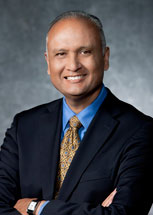
Bill Author
Bill Co-Author(s):