SB 221: State public employees: sick leave: veterans with service-related disabilities.
- Session Year: 2015-2016
- House: Senate
- Latest Version Date: 2015-10-11
Existing law prescribes the general workweek policy for state employees, subject to specified exceptions, and the terms and conditions for accrual of vacation and sick leave. Existing law generally provides that a state officer or employee who is employed full time accrues one day of credit for sick leave for each calendar month of service. Existing law requires that if these provisions conflict with an adopted memorandum of understanding, the memorandum of understanding controls, as specified.
This bill would enact the California Wounded Warriors Transitional Leave Act. The bill would grant a state officer or employee who is a military veteran hired on or after January 1, 2016, with a military service-connected disability rated at 30% or more by the United States Department of Veterans Affairs an additional credit for sick leave with pay of up to 96 hours for the purpose of undergoing medical treatment for his or her military service-related disability. The bill would require that the sick leave be credited to a qualifying officer or employee on the first day of employment and remain available for use for the following 12 months of employment. The bill would prohibit this sick leave from being carried over after the 12-month period and would permit submission of satisfactory proof that the sick leave is being used for treatment of a military service-connected disability to be required, as specified.
Existing law prescribes the general workweek policy for state employees, subject to specified exceptions, and the terms and conditions for accrual of vacation and sick leave. Existing law generally provides that a state officer or employee who is employed full time accrues one day of credit for sick leave for each calendar month of service. Existing law requires that if these provisions conflict with an adopted memorandum of understanding, the memorandum of understanding controls, as specified.
This bill would enact the California Wounded Warriors Transitional Leave Act. The bill would grant a state officer or employee who is a military veteran hired on or after January 1, 2016, with a military service-connected disability rated at 30% or more by the United States Department of Veterans Affairs an additional credit for sick leave with pay of up to 96 hours for the purpose of undergoing medical treatment for his or her military service-related disability. The bill would require that the sick leave be credited to a qualifying officer or employee on the first day of employment and remain available for use for the following 12 months of employment. The bill would prohibit this sick leave from being carried over after 12 months the 12-month period and would permit submission of satisfactory proof that the sick leave is being used for treatment of a military service-connected disability to be required, as specified.
Existing law prescribes the general work week workweek policy for state employees, subject to specified exceptions, and the terms and conditions for accrual of vacation and sick leave. Existing law generally provides that a state officer or employee who is employed full time accrues one day of credit for sick leave for each calendar month of service. Existing law requires that if these provisions conflict with an adopted memorandum of understanding, the memorandum of understanding controls, as specified.
This bill would grant a state officer or employee who is a military veteran hired on or after January 1, 2016, with a military service-connected disability rated at 30% or more by the United States Department of Veterans Affairs an additional credit for sick leave with pay of up to 96 hours for the purpose of undergoing medical treatment for his or her military service-related disability. The bill would require that the sick leave be credited to a qualifying officer or employee on the first day of employment and remain available for use for the following 12 months of employment. The bill would prohibit this sick leave from being carried over after 12 months and would permit submission of satisfactory proof that the sick leave is being used for treatment of a military service-connected disability to be required, as specified.
Existing law prescribes the general work week policy for state employees, subject to specified exceptions, and the terms and conditions for accrual of vacation and sick leave. Existing law generally provides that a state officer or employee who is employed full time accrues one day of credit for sick leave for each calendar month of service. Existing law requires that if these provisions conflict with an adopted memorandum of understanding, the memorandum of understanding controls, as specified.
This bill would grant a state officer or employee who is a military veteran with a service-connected disability rated at 30% or more by the United States Department of Veterans Affairs an additional credit for sick leave with pay of up to 96 hours for the purpose of undergoing medical treatment for his or her service-related disability. The bill would require that the sick leave be credited to a qualifying officer or employee on the first day of employment and remain available for use for the following 12 months of employment. The bill would prohibit this sick leave from being carried over after 12 months and would permit submission of satisfactory proof that the sick leave is being used for treatment of a service-connected disability to be required, as specified.
This act shall be known, and may be cited, as the California Wounded Warriors Transitional Leave Act.
SEC. 2.Section 19859 of the Government Code is amended to read:19859.(a)Following completion of one month of continuous service, except as otherwise provided in Section 19863.1, each state officer and employee who is employed full time shall be allowed one day of credit for sick leave with pay. Thereafter, for each additional calendar month of service, except as provided in Section 19861, one day of credit for sick leave with pay shall be allowed. Each state officer or employee is entitled to this leave with pay, on the submission of satisfactory proof of the necessity for sick leave as provided by rule of the department. For purposes of computing sick leave, each employee shall be considered to work not more than five days each week. The department shall provide by rule for the regulation and method of accumulation of sick leave for civil service employees, and may provide sick leave for those who work less than full time. Subject to department rule, sick leave may be granted to employees for the purpose of physical examinations.
(b)In addition to any other entitlement for sick leave with pay, a state officer or employee hired on or after January 1, 2016, who is a military veteran with a military service-connected disability rated at 30 percent or more by the United States Department of Veterans Affairs shall be entitled to additional credit for sick leave with pay of up to 96 hours for the purpose of undergoing medical treatment for his or her military service-connected disability. Credit for sick leave granted under this subdivision shall be credited to a qualifying officer or employee on the first day of employment and shall remain available for use for the following 12 months of employment. Sick leave credited pursuant to this subdivision that is not used during the 12-month period shall not be carried over and shall be forfeited. Submission of satisfactory proof that sick leave granted under this subdivision is used for treatment of a military service-connected disability may be required pursuant to rules adopted by the department.
(c)If the provisions of this section are in conflict with the provisions of a memorandum of understanding reached pursuant to Section 3517.5, the memorandum of understanding shall be controlling without further legislative action, except that if the provisions of a memorandum of understanding require the expenditure of funds, the provisions shall not become effective unless approved by the Legislature in the annual Budget Act.
This act shall be known, and may be cited, as the California Wounded Warriors Transitional Leave Act.
SECTION 1.SEC. 2.Section 19859 of the Government Code is amended to read:19859.(a)Following completion of one month of continuous service, except as otherwise provided in Section 19863.1, each state officer and employee who is employed full time shall be allowed one day of credit for sick leave with pay. Thereafter, for each additional calendar month of service, except as provided in Section 19861, one day of credit for sick leave with pay shall be allowed. Each state officer or employee is entitled to this leave with pay, on the submission of satisfactory proof of the necessity for sick leave as provided by rule of the department. For purposes of computing sick leave, each employee shall be considered to work not more than five days each week. The department shall provide by rule for the regulation and method of accumulation of sick leave for civil service employees, and may provide sick leave for those who work less than full time. Subject to department rule, sick leave may be granted to employees for the purpose of physical examinations.
(b)In addition to any other entitlement for sick leave with pay, a state officer or employee hired on or after January 1, 2016, who is a military veteran with a military service-connected disability rated at 30 percent or more by the United States Department of Veterans Affairs shall be entitled to additional credit for sick leave with pay of up to 96 hours for the purpose of undergoing medical treatment for his or her military service-connected disability. Credit for sick leave granted under this subdivision shall be credited to a qualifying officer or employee on the first day of employment and shall remain available for use for the following 12 months of employment. Sick leave credited pursuant to this subdivision that is not used during the 12-month period shall not be carried over and shall be forfeited. Submission of satisfactory proof that sick leave granted under this subdivision is used for treatment of a military service-connected disability may be required pursuant to rules adopted by the department.
(c)If the provisions of this section are in conflict with the provisions of a memorandum of understanding reached pursuant to Section 3517.5, the memorandum of understanding shall be controlling without further legislative action, except that if the provisions of a memorandum of understanding require the expenditure of funds, the provisions shall not become effective unless approved by the Legislature in the annual Budget Act.
(a)Following completion of one month of continuous service, except as otherwise provided in Section 19863.1, each state officer and employee who is employed full time shall be allowed one day of credit for sick leave with pay. Thereafter, for each additional calendar month of service, except as provided in Section 19861, one day of credit for sick leave with pay shall be allowed. Each state officer or employee is entitled to this leave with pay, on the submission of satisfactory proof of the necessity for sick leave as provided by rule of the department. For purposes of computing sick leave, each employee shall be considered to work not more than five days each week. The department shall provide by rule for the regulation and method of accumulation of sick leave for civil service employees, and may provide sick leave for those who work less than full time. Subject to department rule rule, sick leave may be granted to employees for the purpose of physical examinations.
(b)In addition to any other entitlement for sick leave with pay, a state officer or employee hired on or after January 1, 2016, who is a military veteran with a military service-connected disability rated at 30 percent or more by the United States Department of Veterans Affairs shall be entitled to additional credit for sick leave with pay of up to 96 hours for the purpose of undergoing medical treatment for his or her military service-connected disability. Credit for sick leave granted under this subdivision shall be credited to a qualifying officer or employee on the first day of employment and shall remain available for use for the following 12 months of employment. Sick leave credited pursuant to this subdivision that is not used during the 12-month period shall not be carried over and shall be forfeited. Submission of satisfactory proof that sick leave granted under this subdivision is used for treatment of a military service-connected disability may be required pursuant to rules adopted by the employing department or agency. department.
(c)If the provisions of this section are in conflict with the provisions of a memorandum of understanding reached pursuant to Section 3517.5, the memorandum of understanding shall be controlling without further legislative action, except that if the provisions of a memorandum of understanding require the expenditure of funds, the provisions shall not become effective unless approved by the Legislature in the annual Budget Act.
(a)Following completion of one month of continuous service, except as otherwise provided in Section 19863.1, each state officer and employee who is employed full time shall be allowed one day of credit for sick leave with pay. Thereafter, for each additional calendar month of service, except as provided in Section 19861, one day of credit for sick leave with pay shall be allowed. Each state officer or employee is entitled to this leave with pay, on the submission of satisfactory proof of the necessity for sick leave as provided by rule of the department. For purposes of computing sick leave, each employee shall be considered to work not more than five days each week. The department shall provide by rule for the regulation and method of accumulation of sick leave for civil service employees, and may provide sick leave for those who work less than full time. Subject to department rule sick leave may be granted to employees for the purpose of physical examinations.
(b)In addition to any other entitlement for sick leave with pay, a state officer or employee who is a military veteran with a service-connected disability rated at 30 percent or more by the United States Department of Veterans Affairs shall be entitled to additional credit for sick leave with pay of up to 96 hours for the purpose of undergoing medical treatment for his or her service-connected disability. Credit for sick leave granted under this subdivision shall be credited to a qualifying officer or employee on the first day of employment and shall remain available for use for the following 12 months of employment. Sick leave credited pursuant to this subdivision that is not used during the 12-month period shall not be carried over and shall be forfeited. Submission of satisfactory proof that sick leave granted under this subdivision is used for treatment of a service-connected disability may be required pursuant to rules adopted by the employing department or agency.
(b)
(c)If the provisions of this section are in conflict with the provisions of a memorandum of understanding reached pursuant to Section 3517.5, the memorandum of understanding shall be controlling without further legislative action, except that if the provisions of a memorandum of understanding require the expenditure of funds, the provisions shall not become effective unless approved by the Legislature in the annual Budget Act.
|
Date
|
Status
|
|---|---|
| Oct 11, 2015 | Chaptered by Secretary of State. Chapter 794, Statutes of 2015. |
| Oct 11, 2015 | Approved by the Governor. |
| Sep 8, 2015 | Enrolled and presented to the Governor at 4:30 p.m. |
| Sep 2, 2015 | Assembly amendments concurred in. (Ayes 40. Noes 0. Page 2423.) Ordered to engrossing and enrolling. |
| Sep 2, 2015 | Assembly amendments concurred in. (Ayes 40. Noes 0.) Ordered to engrossing and enrolling. |
| Sep 1, 2015 | Read third time. Passed. (Ayes 80. Noes 0. Page 2720.) Ordered to the Senate. |
| Sep 1, 2015 | In Senate. Concurrence in Assembly amendments pending. |
| Sep 1, 2015 | Read third time. Passed. Ordered to the Senate. |
| Aug 28, 2015 | Read second time. Ordered to third reading. |
| Aug 28, 2015 | From committee: Do pass. (Ayes 17. Noes 0.) (August 27). |
| Jul 15, 2015 | July 15 set for first hearing. Placed on APPR. suspense file. |
| Jul 9, 2015 | From committee with author's amendments. Read second time and amended. Re-referred to Com. on APPR. |
| Jul 1, 2015 | From committee: Do pass and re-refer to Com. on APPR. (Ayes 8. Noes 0.) (June 30). Re-referred to Com. on APPR. |
| Jun 24, 2015 | From committee: Do pass and re-refer to Com. on V.A. with recommendation: To consent calendar. (Ayes 6. Noes 0.) (June 24). Re-referred to Com. on V.A. |
| Jun 15, 2015 | Referred to Coms. on P.E., R., & S.S. and V.A. |
| Jun 2, 2015 | In Assembly. Read first time. Held at Desk. |
| Jun 1, 2015 | Read third time. Passed. (Ayes 40. Noes 0. Page 1198.) Ordered to the Assembly. |
| Jun 1, 2015 | Read third time. Passed. (Ayes 40. Noes 0.) Ordered to the Assembly. |
| May 28, 2015 | Read second time. Ordered to third reading. |
| May 28, 2015 | From committee: Do pass. (Ayes 7. Noes 0. Page 1149.) (May 28). |
| May 28, 2015 | From committee: Do pass. (Ayes 7. Noes 0.) (May 28). |
| May 23, 2015 | Set for hearing May 28. |
| May 11, 2015 | May 11 hearing: Placed on APPR. suspense file. |
| May 1, 2015 | Set for hearing May 11. |
| Apr 28, 2015 | From committee: Do pass and re-refer to Com. on APPR. (Ayes 5. Noes 0. Page 797.) (April 27). Re-referred to Com. on APPR. |
| Apr 20, 2015 | From committee with author's amendments. Read second time and amended. Re-referred to Com. on P.E. & R. |
| Apr 17, 2015 | Set for hearing April 27. |
| Apr 14, 2015 | From committee: Do pass and re-refer to Com. on P.E. & R. (Ayes 5. Noes 0. Page 596.) (April 14). Re-referred to Com. on P.E. & R. |
| Mar 27, 2015 | Set for hearing April 14. |
| Feb 26, 2015 | Referred to Coms. on V.A. and P.E. & R. |
| Feb 13, 2015 | From printer. May be acted upon on or after March 15. |
| Feb 12, 2015 | Introduced. Read first time. To Com. on RLS. for assignment. To print. |
|
Date
|
Description
|
Location
|
Votes
|
|
|---|---|---|---|---|
| Sep 2, 2015 | Unfinished Business SB221 Jackson Concurrence | Senate Floor |
Passed |
|
| Sep 1, 2015 | SB 221 Jackson Senate Third Reading By IRWIN | Assembly Floor |
Passed |
|
| Aug 27, 2015 | Do pass. | Assembly Standing Committee on Appropriations |
Passed |
|
| Jun 30, 2015 | Do pass and be re-referred to the Committee on [Appropriations] | Assembly Standing Committee on Veterans Affairs |
Passed |
|
| Jun 24, 2015 | Do pass and be re-referred to the Committee on [Veterans Affairs] with recommendation: To Consent Calendar | Assembly Standing Committee on Public Employees, Retirement, and Social Security |
Passed |
|
| Jun 1, 2015 | Senate 3rd Reading SB221 Jackson | Senate Floor |
Passed |
|
| May 28, 2015 | Do pass | Senate Standing Committee on Appropriations |
Passed |
|
| May 11, 2015 | Placed on suspense file | Senate Standing Committee on Appropriations |
Passed |
|
| Apr 27, 2015 | Do pass, but first be re-referred to the Committee on [Appropriations] | Senate Standing Committee on Public Employment and Retirement |
Passed |
|
| Apr 14, 2015 | Do pass, but first be re-referred to the Committee on [Public Employment and Retirement] | Senate Standing Committee on Veterans Affairs |
Passed |
This list shows positions taken on this bill by organizations on the date displayed, which is linked to the original source.
Positions by individuals are not included.
SB 221
Page 5
|
Office of Senate Floor Analyses (916) 651-1520 Fax: (916) 327-4478 |
UNFINISHED BUSINESS
Bill No: SB 221
Amended: 7/9/15
SENATE VETERANS AFFAIRS COMMITTEE: 5-0, 4/14/15
AYES: Nielsen, Hueso, Allen, Nguyen, Roth
SENATE PUBLIC EMP. & RET. COMMITTEE: 5-0, 4/27/15
AYES: Pan, Morrell, Beall, Fuller, Hall
SENATE APPROPRIATIONS COMMITTEE: 7-0, 5/28/15
AYES: Lara, Bates, Beall, Hill, Leyva, Mendoza, Nielsen
SENATE FLOOR: 40-0, 6/1/15
AYES: Allen, Anderson, Bates, Beall, Berryhill, Block, Cannella, De León, Fuller, Gaines, Galgiani, Glazer, Hall, Hancock, Hernandez, Hertzberg, Hill, Hueso, Huff, Jackson, Lara, Leno, Leyva, Liu, McGuire, Mendoza, Mitchell, Monning, Moorlach, Morrell, Nguyen, Nielsen, Pan, Pavley, Roth, Runner, Stone, Vidak, Wieckowski, Wolk
ASSEMBLY FLOOR: 80-0, 9/1/15 - See last page for vote
SUBJECT: State public employees: sick leave: veterans with service-related disabilities
DIGEST: This bill permits state employees, who are military veterans with service-connected disabilities, to receive 96 hours of additional sick leave dedicated to health care treatment of those disabilities.
Assembly Amendments add the name “The California Wounded Warriors Transitional Leave Act” to this program, and add coauthors.
ANALYSIS: Existing federal law directs the United States Department of Veterans Affairs (USDVA) to analyze and rate the service-connected disabilities of qualified military veterans, and to provide health care treatment and monetary compensation to veterans with rated, service-connected disabilities.
Existing state law:
Provides that state agency employees may accrue and apply sick leave, and establishes procedures for agency administration of those sick leave benefits.
Authorizes the Legislature to provide preferences to veterans and their surviving spouses in state employment. (California Constitution)
This bill:
Enacts the California Wounded Warriors Transitional Leave Act.
Grants a state officer or employee, who is a military veteran with a service-connected disability rated at 30% or more by USDVA, and is hired on or after January 1, 2016, an additional credit for sick leave with pay of up to 96 hours.
Limits use of this sick leave to medical treatment of the employee’s military service-connected disability.
Requires that this sick leave be credited on the first day of employment and remain available for use for the following 12 months of employment.
Prohibits this sick leave from being carried over after 12 months.
Permits employing agencies to require “submission of satisfactory proof” that the sick leave is being used for treatment of a service-connected disability, pursuant to rules adopted by the Department of Human Resources (CalHR).
Background
Sick leave for state employees. Employees of California state government agencies are eligible to accrue sick leave credits, which they may use to take time off from work at full pay. Provided they have sufficient accrued credits, sick leave compensates employees during periods of absence due to:
Being physically or mentally unable to work due to illness or injury.
Obtaining professional diagnosis of treatment for a medical condition.
Other medical reasons, such as pregnancy or obtaining a physical examination.
Attending to illness of a child, parent, spouse, or domestic partner.
The Government and Labor codes contain provisions for sick leave with actual benefits for represented employees further specified by collective bargaining agreements or memorandums of understanding. Benefits for nonrepresented employees – those designated as managerial, supervisory, and confidential – are further specified in CalHR regulations.
Federal benefits for service-connected disabilities. USDVA provides health care treatment and monetary compensation to veterans with service-connected disabilities.
Health care: USDVA’s Veterans Health Administration (VHA) operates the nation’s largest integrated health care system with over 1,700 sites of care, serving 8.76 million veterans each year. California veterans are served by the numerous hospitals and clinics owned, operated, and administered by the VHA.
Disability compensation: USDVA’s Veterans Benefits Administration provides disability compensation as a tax-free monetary benefit to veterans rated with disabilities incurred or aggravated during active military service. Compensation may also be paid for post-service disabilities that are considered related or secondary to disabilities occurring in service and for disabilities presumed to be related to circumstances of military service, even though they may arise after service. The degrees of disability specified are also designed to compensate for considerable loss of working time from exacerbations or illnesses.
USDVA disability ratings. The USDVA rates disabilities to facilitate health care and compensation claims for injuries or diseases that happened during active duty, or were made worse by active military service. The amount of basic benefit paid varies depending on the rated severity of the condition.
A veteran need not be totally disabled in order to be eligible for compensation. USDVA rates disability along a continuum of 0% to 100% in 10% increments, depending upon the level of disability determined. The disability percentage also can be derived by analyzing the composite condition of an individual veteran with multiple disabilities.
The 10% rating is the lowest for which compensable income is awarded. A veteran with a 100% rating will have one or more disabilities that significantly interfere with normal life functions. A veteran with a 0% rating may have a service-connected condition, but the condition does not interfere with normal life functions. The majority of disabled veterans are rated between 10% to 30%.
As time passes, a veteran’s disability claim may require re-rating. Re-ratings can be triggered by changes in law, advances in medical knowledge, or fluctuations in the veteran’s physical or mental condition. A re-rating can cause an individual’s percentage to go up or down.
Prior Legislation
AB 1522 (Gonzalez, Chapter 317, Statutes of 2014), the “Healthy Workplaces, Healthy Families Act of 2014,” among other things:
Provides, for the purposes of the Act, that “employer” includes the state, political subdivisions of the state, and municipalities.
Entitles an employee, who works in California for seven or more days in a calendar year, to paid sick days, as specified, on and after July 1, 2015.
Provides that an employee shall accrue paid sick days at the rate of not less than one hour per every 30 hours worked, beginning at the commencement of employment or the operative date of the bill, whichever is later.
Provides that an employee shall be entitled to use accrued paid sick days beginning on the 90th calendar day of employment, after which the employee may use paid sick days as they are accrued.
Provides that an “employee” does not include an employee covered by a valid collective bargaining agreement that expressly provides for paid sick days or similar policy, as specified.
AB 1397 (Committee on Veterans Affairs, Chapter 645, Statutes of 2014) adds veterans preference to the list of selection devices that CalHR must review and examine the validity of, and adds veterans status to the list of specified data collected in order to determine utilization of certain groups.
FISCAL EFFECT: Appropriation: No Fiscal Com.: Yes Local: No
According to the Assembly Appropriations Committee:
Unknown, but potentially significant General and Special Fund costs to state agencies, in excess of $150,000, as a result of granting additional sick leave credit; potentially minor administrative costs to modify systems and procedures and monitor compliance.
Potential cost savings to state agencies that provide services to disabled veterans to the extent the additional sick leave affords those veterans greater access to their federal veterans benefits.
American Legion - Department of California
AMVETS - Department of California
California Association of County Veterans Service Officers
California School Employees Association, AFL-CIO
California State Commanders Veteran Council
Military Officers Association of America - California Council of Chapters
National Association of Social Workers – California Chapter
Veterans of Foreign Wars - Department of California
Vietnam Veterans of American - California State Council
None received
AYES: Achadjian, Alejo, Travis Allen, Baker, Bigelow, Bloom, Bonilla, Bonta, Brough, Brown, Burke, Calderon, Campos, Chang, Chau, Chávez, Chiu, Chu, Cooley, Cooper, Dababneh, Dahle, Daly, Dodd, Eggman, Frazier, Beth Gaines, Gallagher, Cristina Garcia, Eduardo Garcia, Gatto, Gipson, Gomez, Gonzalez, Gordon, Gray, Grove, Hadley, Harper, Roger Hernández, Holden, Irwin, Jones, Jones-Sawyer, Kim, Lackey, Levine, Linder, Lopez, Low, Maienschein, Mathis, Mayes, McCarty, Medina, Melendez, Mullin, Nazarian, Obernolte, O'Donnell, Olsen, Patterson, Perea, Quirk, Rendon, Ridley-Thomas, Rodriguez, Salas, Santiago, Steinorth, Mark Stone, Thurmond, Ting, Wagner, Waldron, Weber, Wilk, Williams, Wood, Atkins
Prepared by: Wade Cooper Teasdale / V.A. / (916) 651-1503
9/1/15 21:35:20
**** END ****
SB 221
Page 2
SENATE THIRD READING
SB 221
(Jackson)
As Amended July 9, 2015
Majority vote
SENATE VOTE: 40-0
Committee |
Votes |
Ayes |
Noes |
Public Employees |
6-0 |
Bonta, Waldron, Cooley, Jones-Sawyer, O'Donnell, Rendon |
|
Veterans Affairs |
8-0 |
Irwin, Mathis, Alejo, Brough, Brown, Daly, Frazier, Salas |
|
Appropriations |
17-0 |
Gomez, Bigelow, Bloom, Bonta, Calderon, Chang, Nazarian, Eggman, Gallagher, Eduardo Garcia, Holden, Jones, Quirk, Rendon, Wagner, Weber, Wood |
|
SUMMARY: Provides any state employee who is hired on or after January 1, 2016, and who is a military veteran with a military service-connected disability rated at 30% or more with additional credit for sick leave with pay of up to 96 hours, as specified. Specifically, this bill:
Provides, in addition to any other entitlement for sick leave with pay, an additional credit for sick leave with pay of up to 96 hours to a state officer or employee hired after January 1, 2016, who is a military veteran with a military service-connected disability rated at 30% or more by the United States Department of Veterans Affairs.
Requires the additional sick leave be for the purposes of undergoing medical treatment for a military service-connected disability.
Requires the additional sick leave to be credited on the first day of the eligible employee's employment and be available for use for the following 12 months of employment.
Prohibits any portion of the 96 hours of additional leave not used during the 12 month period from accruing to the employee and provides that any unused leave upon termination of the 12 month period will be forfeited.
Permits employing agencies to require "submission of satisfactory proof" that the sick leave is being used for treatment of a service-connected disability, pursuant to rules adopted by the Department of Human Resources.
Specifies that this act shall be known, and may be cited, as the California Wounded Warriors Transitional Leave Act.
EXISTING LAW provides each state officer and employee who is employed full time with one day of credit for sick leave with pay following the completion of one month of continuous service. Each state officer or employee is entitled to this leave with pay, on the submission of satisfactory proof of the necessity for sick leave as provided by rule of the department. Unused sick leave accumulates throughout the individual's employment.
FISCAL EFFECT: According to the Assembly Appropriations Committee:
Unknown, but potentially significant General and Special Fund costs to state agencies, in excess of $150,000, as a result of granting additional sick leave credit; potentially minor administrative costs to modify systems and procedures and monitor compliance.
Potential cost savings to state agencies that provide services to disabled veterans to the extent the additional sick leave affords those veterans greater access to their federal Veterans Affairs benefits.
COMMENTS: According to the author, "Newly hired state employees begin their careers with no sick leave, and accrue it slowly, after their first month of employment, at a rate of 8 hours per month. As a result, disabled veterans who have recently entered the workforce may not have sufficient sick leave to attend medical appointments on a regular basis."
"Many veterans are returning from Iraq and Afghanistan with physical and mental health issues that require medical attention. VA appointments can be very hard to get and very difficult to reschedule. A shortage of mental health specialists in the VA makes it particularly important to follow up and attend appointments as soon as they are received."
The author concludes, "For these disabled veterans, SB 221 will mean an easier transition from military to state service. For the state, this will mean a healthier and more productive workforce, and a way to show our continued commitment to the men and women who have served our country."
Analysis Prepared by: Karon Green / P.E.,R., & S.S. / (916) 319-3957 FN: 0001639
Date of Hearing: July 15, 2015
ASSEMBLY COMMITTEE ON APPROPRIATIONS
Jimmy Gomez, Chair
SB 221
(Jackson) – As Amended July 9, 2015
Policy Committee: |
Public Employees, Retirement/Soc Sec |
Vote: |
6 - 0 |
|
Veterans Affairs |
|
8 - 0 |
Urgency: No State Mandated Local Program: No Reimbursable: No
SUMMARY:
This bill provides additional credit for sick leave with pay of up to 96 hours for state employees hired on or after January 1, 2016, who are military veterans with military service-connected disabilities rated at 30% or more by the US Department of Veterans Affairs (VA), and requires the additional sick leave be used for undergoing medical treatment for the military service-connected disabilities. The additional sick leave may be used for the first 12 months of employment, but cannot be carried forward beyond those initial 12 months.
FISCAL EFFECT:
1) Unknown, but potentially significant General and Special Fund costs to state agencies, in excess of $150,000, as a result of granting additional sick leave credit; potentially minor administrative costs to modify systems and procedures and monitor compliance.
2) Potential cost savings to state agencies that provide services to disabled veterans to the extent the additional sick leave affords those veterans greater access to their federal VA benefits.
COMMENTS:
1) Purpose. According to the author, newly-hired disabled veterans may not have sufficient sick leave to attend medical appointments on a regular basis. New state employees begin with no sick leave and accrue it, only after their first month of employment, at a rate of eight hours per month. The author contends VA appointments can be difficult to schedule and reschedule, and it is often important for veterans with physical or mental health issues to receive their scheduled medical attention. SB 221 is intended to make it easier for disabled veterans to transition into state service.
2) Disabled Veteran Employees. California has approximately 230,000 state employees, though it is unknown what percentage of those are veterans or have a military service-connected disability. According to the VA, there are approximately 1 million working-age veterans living in California, which represents approximately 4% of the state's total working-age population. If military veterans were similarly represented among state employees, approximately 9,200 may be veterans, though given the number of veterans who work as peace officers, this number may be higher. While it is unknown how many of those veterans may have a military service-connected disability rated at 30% or more by the VA, even a small percentage could result in significant costs to state agencies.
Analysis Prepared by: Joel Tashjian / APPR. / (916) 319-2081
SB 221
Page 3
Date of Hearing: June 30, 2015
ASSEMBLY COMMITTEE ON VETERANS AFFAIRS
Jacqui Irwin, Chair
SB 221
(Jackson) – As Amended April 20, 2015
SENATE VOTE: 40-0
SUBJECT: State public employees: sick leave: veterans with service-related disabilities
SUMMARY: Creates a new category of sick leave available to newly hired state disabled veteran employees. Specifically, this bill:
Requires that in addition to any other entitlement for sick leave with pay, a state officer or employee hired on or after January 1, 2016, who is a military veteran with a military service-connected disability rated at 30 percent or more by the United States Department of Veterans Affairs shall be entitled to additional credit for sick leave with pay of up to 96 hours for the purpose of undergoing medical treatment for his or her military service-connected disability.
States that credit for sick leave granted under this subdivision shall be credited to a qualifying officer or employee on the first day of employment and shall remain available for use for the following 12 months of employment.
Clarifies that sick leave credited pursuant to this subdivision that is not used during the 12-month period shall not be carried over and shall be forfeited.
Allows a department to require submission of satisfactory proof that sick leave granted under this subdivision is used for treatment of a military service-connected disability
Clarifies that if the provisions of this section are in conflict with the provisions of a memorandum of understanding reached pursuant to Section 3517.5 of the Government Code, the memorandum of understanding shall be controlling without further legislative action, except that if the provisions of a memorandum of understanding require the expenditure of funds, the provisions shall not become effective unless approved by the Legislature in the annual Budget Act.
EXISTING LAW:
Requires that each state officer and employee who is employed full time be allowed one day of credit for sick leave with pay following completion of one month of continuous service and one day of credit for sick leave with pay for each additional calendar month of service thereafter.
Provides that each state officer or employee is entitled to this leave with pay, on the submission of satisfactory proof of the necessity for sick leave as provided by rule of the California Department of Human Resources (CalHR).
Authorizes CalHR to provide by rule for the regulation and method of accumulation of sick leave for civil service employees.
Provides that CalHR may provide by rule for sick leave or annual leave without pay for those employees who have used all sick leave or annual leave with pay to which they are entitled.
States that a memorandum of understanding governing sick leave shall be controlling without further legislative action, except that if the provisions of the a memorandum of understanding require the expenditure of funds, the provisions shall not become effective unless approved by the Legislature in the annual Budget Act.
FISCAL EFFECT: Unknown at this time, however, Senate Appropriations Committee estimated:
Fiscal Impact:
Unknown, potentially over $50,000 for sick leave credit (General/Special Funds)
Unknown, potentially minor, administrative costs (General)
Exact costs will depend on the number of military veterans who are hired into state service and who have a service-connected disability rated at 30 percent or higher. Additionally, the source of funding (General or Special) will depend on the department that hires the veteran. Assuming the new employee has a monthly salary of $4,000, the cost of an additional 96 hours in sick leave would be approximately $2,220 per employee. There will be additional, unknown but likely minor, costs for administering and tracking this new benefit. According to CalHR, there were 121 disabled veterans hired in 2013, and 147 disabled veterans hired in 2014. It is not known if these individuals have a disability rated at 30 percent or more because the department is not currently tracking this information. …
COMMENTS: According to the author:
Newly hired state employees begin their careers with no sick leave, and accrue it slowly, after their first month of employment, at a rate of 8 hours per month. As a result, disabled veterans who have recently entered the workforce may not have sufficient sick leave to attend medical appointments on a regular basis.
Many veterans are returning from Iraq and Afghanistan with physical and mental health issues that require medical attention. VA appointments can be very hard to get and very difficult to reschedule. A shortage of mental health specialists in the VA makes it particularly important to follow up and attend appointments as soon as they are received. …
For these disabled veterans, SB 221 will mean an easier transition from military to state service. For the state, this will mean a healthier and more productive workforce, and a way to show our continued commitment to the men and women who have served our country.
The State of California has a long standing policy of embracing diversity in its workforce, including embracing diversity far beyond the efforts of the federal government and other states. This holds true in terms of California's hiring of people with disabilities and reducing barriers to their successful participation in state employment. There has also been a consistent state policy, including various versions of a hiring preference, to support the hiring of veterans both out of recognition of their service and sacrifice as well as, unfortunately, what has historically been a higher than average rate of unemployment. This bill aligns with all of the foregoing policy considerations. California has also been at the forefront of expanding the categories of people entitled to protection from employment discrimination in housing and employment.
People with disabilities would generally be entitled to reasonable accommodation under both the federal Americans with Disabilities Act (ADA) and the California Fair Employment and Housing Act (FEHA). Military and Veteran status is also a separate protected category under FEHA. A reasonable accommodation for any person with a disability could include time off to attend medical treatment. Reasonable accommodation is generally the result of a dialog between the employer and employee and when that dialog works well, it should not be a cumbersome process most of the time.
However, this bill would remove the need for a request for reasonable accommodation to attend treatment for a service connected 30% or greater disability and remove the need for every similarly situated employee to make similar requests. Moreover, it will grant the employee paid leave, which would generally not be the case for leave granted as a reasonable accommodation.
The author has clearly crafted this measure to strike a balance between employer and employee. The author has also considered the costs of implementation and the reasonable need for the employer to guard against abuse. Careful choices have been made about allowing the leave to carry over, requiring a 30% disability minimum, permitting documentation of disability, and considering the interplay with collective bargaining.
REGISTERED SUPPORT / OPPOSITION:
Support
American Legion-Department of California
AMVETS- Department of California
California Association of County Veterans Service Officers
California State Commanders Veterans Council
Military Officers Association of America- California Council of Chapters
National Association of Social Workers
VFW-Department of California
Vietnam Veterans of America-California State Council
Opposition
None on File.
Analysis Prepared by: John Spangler / V.A. / (916) 319-3550
SB 221
Page 2
Date of Hearing: June 24, 2015
ASSEMBLY COMMITTEE ON PUBLIC EMPLOYEES, RETIREMENT, AND SOCIAL SECURITY
Rob Bonta, Chair
SB 221
(Jackson) – As Amended April 20, 2015
SENATE VOTE: 40-0
SUBJECT: State public employees: sick leave: veterans with service-related disabilities.
SUMMARY: Provides any state employee who is hired on or after January 1, 2016 and who is a military veteran with a military service-connected disability rated at 30% or more with additional credit for sick leave with pay of up to 96 hours, as specified. Specifically, this bill:
Provides, in addition to any other entitlement for sick leave with pay, an additional credit for sick leave with pay of up to 96 hours to a state officer or employee hired after January 1, 2016, who is a military veteran with a military service-connected disability rated at 30% or more by the United States Department of Veterans Affairs.
Requires the additional sick leave be for the purposes of undergoing medical treatment for a military service-connected disability.
Requires the additional sick leave to be credited on the first day of the eligible employee's employment and be available for use for the following 12 months of employment.
Prohibits any portion of the 96 hours of additional leave not used during the 12 month period from accruing to the employee and provides that any unused leave upon termination of the 12 month period will be forfeited.
Permits employing agencies to require "submission of satisfactory proof" that the sick leave is being used for treatment of a service-connected disability, pursuant to rules adopted by the Department of Human Resources.
EXISTING LAW
provides each state officer and employee who is employed full time
with one day of credit for sick leave with pay following the
completion of one month of continuous service. Each state officer or
employee is entitled to this leave with pay, on the submission of
satisfactory proof of the necessity for sick leave as provided by
rule of the department. Unused sick leave accumulates throughout the
individual's employment.
FISCAL EFFECT: According to the Senate Appropriations Committee:
"Unknown, potentially over $50,000 for sick leave credit (General/Special Funds) and unknown, potentially minor, administrative costs (General).
"Exact costs will depend on the number of military veterans who are hired into state service and who have a service-connected disability rated at 30 percent or higher. Additionally, the source of funding (General or Special) will depend on the department that hires the veteran. Assuming the new employee has a monthly salary of $4,000, the cost of an additional 96 hours in sick leave would be approximately $2,220 per employee. There will be additional, unknown but likely minor, costs for administering and tracking this new benefit."
COMMENTS: According to the author, "Newly hired state employees begin their careers with no sick leave, and accrue it slowly, after their first month of employment, at a rate of 8 hours per month. As a result, disabled veterans who have recently entered the workforce may not have sufficient sick leave to attend medical appointments on a regular basis."
"Many veterans are returning from Iraq and Afghanistan with physical and mental health issues that require medical attention. VA appointments can be very hard to get and very difficult to reschedule. A shortage of mental health specialists in the VA makes it particularly important to follow up and attend appointments as soon as they are received."
The author concludes, "For these disabled veterans, SB 221 will mean an easier transition from military to state service. For the state, this will mean a healthier and more productive workforce, and a way to show our continued commitment to the men and women who have served our country."
REGISTERED SUPPORT / OPPOSITION:
Support
American
Legion-Department of California
AMVETS-Department of California
California
Association of County Veterans Service Officers
California
School Employees Association
California State Commanders Veterans Council
Military Officers Association of America, California Council of Chapters
National Association of Social Workers
VFW-Department of California
Vietnam Veterans of America-California State Council
Opposition
None on file
Analysis Prepared by: Karon Green / P.E.,R., & S.S. / (916) 319-3957
SB 221
Page 5
|
Office of Senate Floor Analyses (916) 651-1520 Fax: (916) 327-4478 |
THIRD READING
Bill No: SB 221
Amended: 4/20/15
SENATE VETERANS AFFAIRS COMMITTEE: 5-0, 4/14/15
AYES: Nielsen, Hueso, Allen, Nguyen, Roth
SENATE PUBLIC EMP. & RET. COMMITTEE: 5-0, 4/27/15
AYES: Pan, Morrell, Beall, Fuller, Hall
SENATE APPROPRIATIONS COMMITTEE: 7-0, 5/28/15
AYES: Lara, Bates, Beall, Hill, Leyva, Mendoza, Nielsen
SUBJECT: State public employees: sick leave: veterans with service-related disabilities
DIGEST: This bill permits state employees, who are military veterans with service-connected disabilities, to receive 96 hours of additional sick leave dedicated to health care treatment of those disabilities.
ANALYSIS: Existing federal law directs the United States Department of Veterans Affairs (USDVA) to analyze and rate the service-connected disabilities of qualified military veterans, and to provide health care treatment and monetary compensation to veterans with rated, service-connected disabilities.
Existing state law:
Provides that state agency employees may accrue and apply sick leave, and establishes procedures for agency administration of those sick leave benefits.
Authorizes the Legislature to provide preferences to veterans and their surviving spouses in state employment. (California Constitution)
This bill:
Grants a state officer or employee, who is a military veteran with a service-connected disability rated at 30% or more by USDVA, and who is hired on or after January 1, 2016, an additional credit for sick leave with pay of up to 96 hours.
Limits use of this sick leave to medical treatment of the employee’s military service-connected disability.
Requires that this sick leave be credited on the first day of employment and remain available for use for the following 12 months of employment.
Prohibits this sick leave from being carried over after 12 months.
Permits employing agencies to require “submission of satisfactory proof” that the sick leave is being used for treatment of a service-connected disability, pursuant to rules adopted by the Department of Human Resources (CalHR).
Background
Sick leave for state employees. Employees of California state government agencies are eligible to accrue sick leave credits, which they may use to take time off from work at full pay. Provided they have sufficient accrued credits, sick leave compensates employees during periods of absence due to:
Being physically or mentally unable to work due to illness or injury.
Obtaining professional diagnosis of treatment for a medical condition.
Other medical reasons, such as pregnancy or obtaining a physical examination.
Attending to illness of a child, parent, spouse, or domestic partner.
The Government and Labor codes contain provisions for sick leave with actual benefits for represented employees further specified by collective bargaining agreements or memorandums of understanding. Benefits for nonrepresented employees, who are designated as managerial, supervisory, and confidential, are further specified in CalHR regulations.
Federal benefits for service-connected disabilities. USDVA provides health care treatment and monetary compensation to veterans with service-connected disabilities.
Health care: USDVA’s Veterans Health Administration (VHA) operates the nation’s largest integrated health care system with over 1,700 sites of care, serving 8.76 million veterans each year. California veterans are served by the numerous hospitals and clinics owned, operated, and regionally administered by the VHA.
Disability compensation: USDVA’s Veterans Benefits Administration provides disability compensation as a tax-free monetary benefit to veterans rated with disabilities incurred or aggravated during active military service. Compensation may also be paid for post-service disabilities that are considered related or secondary to disabilities occurring in service and for disabilities presumed to be related to circumstances of military service, even though they may arise after service. Generally, the degrees of disability specified are also designed to compensate for considerable loss of working time from exacerbations or illnesses.
USDVA disability ratings. The USDVA rates disabilities to facilitate health care and compensation claims for injuries or diseases that happened during active duty, or were made worse by active military service. The amount of basic benefit paid varies depending on the rated severity of the condition.
A veteran need not be totally disabled in order to be eligible for compensation. USDVA rates disability along a continuum of 0%-to-100% in 10% increments, depending upon the level of disability determined. The disability percentage also can be derived by analyzing the composite condition of an individual veteran with multiple disabilities.
The 10% rating is the lowest for which compensable income is awarded. A veteran with a 100% rating will have one or more disabilities that significantly interfere with normal life functions. A veteran with a 0% rating may have a service-connected condition, but the condition does not interfere with normal life functions. The majority of disabled veterans are rated between 10% to 30%.
As time passes, a veteran’s disability claim may require re-rating. Re-ratings can be caused by changes in law, advances in medical knowledge, or fluctuations in the veteran’s physical or mental condition. A re-rating can cause an individual’s percentage to go up or down.
Related Legislation
AB 1522 (Gonzalez, Chapter 317, Statutes of 2014), the “Healthy Workplaces, Healthy Families Act of 2014,” among other things:
Provides, for the purposes of the Act, that “employer” includes the state, political subdivisions of the state, and municipalities.
Provides that an employee, who works in California for seven or more days in a calendar year, is entitled to paid sick days, as specified, on and after July 1, 2015.
Provides that an employee shall accrue paid sick days at the rate of not less than one hour per every 30 hours worked, beginning at the commencement of employment or the operative date of the bill, whichever is later.
Provides that an employee shall be entitled to use accrued paid sick days beginning on the 90th calendar day of employment, after which the employee may use paid sick days as they are accrued.
Provides that an “employee” does not include an employee covered by a valid collective bargaining agreement that expressly provides for paid sick days or similar policy, as specified.
AB 1397 (Committee on Veterans Affairs, Chapter 645, Statutes of 2014) adds veterans preference to the list of selection devices that CalHR must review and examine the validity of, and adds veterans status to the list of specified data collected in order to determine utilization of certain groups.
FISCAL EFFECT: Appropriation: No Fiscal Com.: Yes Local: No
According to the Senate Appropriations Committee:
Unknown, potentially over $50,000 for sick leave credit (General/Special Funds)
Unknown, potentially minor, administrative costs (General)
Exact costs will depend on the number of military veterans who are hired into state service and who have a service-connected disability rated at 30 percent or higher. Additionally, the source of funding (General or Special) will depend on the department that hires the veteran. Assuming the new employee has a monthly salary of $4,000, the cost of an additional 96 hours in sick leave would be approximately $2,220 per employee. There will be additional, unknown but likely minor, costs for administering and tracking this new benefit.
American Legion - Department of California
AMVETS - Department of California
California Association of County Veterans Service Officers
California School Employees Association, AFL-CIO
California State Commanders Veteran Council
Military Officers Association of America - California Council of Chapters
National Association of Social Workers – California Chapter
Veterans of Foreign Wars - Department of California
Vietnam Veterans of American - California State Council
OPPOSITION: (Verified 5/28/15)
None received
Prepared by: Wade Cooper Teasdale / V.A. / (916) 651-1503
6/1/15 10:51:23
**** END ****
SB 221
Page 5
|
Office of Senate Floor Analyses (916) 651-1520 Fax: (916) 327-4478 |
THIRD READING
Bill No: SB 221
Amended: 4/20/15
SENATE VETERANS AFFAIRS COMMITTEE: 5-0, 4/14/15
AYES: Nielsen, Hueso, Allen, Nguyen, Roth
SENATE PUBLIC EMP. & RET. COMMITTEE: 5-0, 4/27/15
AYES: Pan, Morrell, Beall, Fuller, Hall
SENATE APPROPRIATIONS COMMITTEE: 7-0, 5/28/15
AYES: Lara, Bates, Beall, Hill, Leyva, Mendoza, Nielsen
SUBJECT: State public employees: sick leave: veterans with service-related disabilities
DIGEST: This bill permits state employees, who are military veterans with service-connected disabilities, to receive 96 hours of additional sick leave dedicated to health care treatment of those disabilities.
ANALYSIS: Existing federal law directs the United States Department of Veterans Affairs (USDVA) to analyze and rate the service-connected disabilities of qualified military veterans, and to provide health care treatment and monetary compensation to veterans with rated, service-connected disabilities.
Existing state law:
Provides that state agency employees may accrue and apply sick leave, and establishes procedures for agency administration of those sick leave benefits.
Authorizes the Legislature to provide preferences to veterans and their surviving spouses in state employment. (California Constitution)
This bill:
Grants a state officer or employee, who is a military veteran with a service-connected disability rated at 30% or more by USDVA, and who is hired on or after January 1, 2016, an additional credit for sick leave with pay of up to 96 hours.
Limits use of this sick leave to medical treatment of the employee’s military service-connected disability.
Requires that this sick leave be credited on the first day of employment and remain available for use for the following 12 months of employment.
Prohibits this sick leave from being carried over after 12 months.
Permits employing agencies to require “submission of satisfactory proof” that the sick leave is being used for treatment of a service-connected disability, pursuant to rules adopted by the Department of Human Resources (CalHR).
Background
Sick leave for state employees. Employees of California state government agencies are eligible to accrue sick leave credits, which they may use to take time off from work at full pay. Provided they have sufficient accrued credits, sick leave compensates employees during periods of absence due to:
Being physically or mentally unable to work due to illness or injury.
Obtaining professional diagnosis of treatment for a medical condition.
Other medical reasons, such as pregnancy or obtaining a physical examination.
Attending to illness of a child, parent, spouse, or domestic partner.
The Government and Labor codes contain provisions for sick leave with actual benefits for represented employees further specified by collective bargaining agreements or memorandums of understanding. Benefits for nonrepresented employees, who are designated as managerial, supervisory, and confidential, are further specified in CalHR regulations.
Federal benefits for service-connected disabilities. USDVA provides health care treatment and monetary compensation to veterans with service-connected disabilities.
Health care: USDVA’s Veterans Health Administration (VHA) operates the nation’s largest integrated health care system with over 1,700 sites of care, serving 8.76 million veterans each year. California veterans are served by the numerous hospitals and clinics owned, operated, and regionally administered by the VHA.
Disability compensation: USDVA’s Veterans Benefits Administration provides disability compensation as a tax-free monetary benefit to veterans rated with disabilities incurred or aggravated during active military service. Compensation may also be paid for post-service disabilities that are considered related or secondary to disabilities occurring in service and for disabilities presumed to be related to circumstances of military service, even though they may arise after service. Generally, the degrees of disability specified are also designed to compensate for considerable loss of working time from exacerbations or illnesses.
USDVA disability ratings. The USDVA rates disabilities to facilitate health care and compensation claims for injuries or diseases that happened during active duty, or were made worse by active military service. The amount of basic benefit paid varies depending on the rated severity of the condition.
A veteran need not be totally disabled in order to be eligible for compensation. USDVA rates disability along a continuum of 0%-to-100% in 10% increments, depending upon the level of disability determined. The disability percentage also can be derived by analyzing the composite condition of an individual veteran with multiple disabilities.
The 10% rating is the lowest for which compensable income is awarded. A veteran with a 100% rating will have one or more disabilities that significantly interfere with normal life functions. A veteran with a 0% rating may have a service-connected condition, but the condition does not interfere with normal life functions. The majority of disabled veterans are rated between 10% to 30%.
As time passes, a veteran’s disability claim may require re-rating. Re-ratings can be caused by changes in law, advances in medical knowledge, or fluctuations in the veteran’s physical or mental condition. A re-rating can cause an individual’s percentage to go up or down.
Related Legislation
AB 1522 (Gonzalez, Chapter 317, Statutes of 2014), the “Healthy Workplaces, Healthy Families Act of 2014,” among other things:
Provides, for the purposes of the Act, that “employer” includes the state, political subdivisions of the state, and municipalities.
Provides that an employee, who works in California for seven or more days in a calendar year, is entitled to paid sick days, as specified, on and after July 1, 2015.
Provides that an employee shall accrue paid sick days at the rate of not less than one hour per every 30 hours worked, beginning at the commencement of employment or the operative date of the bill, whichever is later.
Provides that an employee shall be entitled to use accrued paid sick days beginning on the 90th calendar day of employment, after which the employee may use paid sick days as they are accrued.
Provides that an “employee” does not include an employee covered by a valid collective bargaining agreement that expressly provides for paid sick days or similar policy, as specified.
AB 1397 (Committee on Veterans Affairs, Chapter 645, Statutes of 2014) adds veterans preference to the list of selection devices that CalHR must review and examine the validity of, and adds veterans status to the list of specified data collected in order to determine utilization of certain groups.
FISCAL EFFECT: Appropriation: No Fiscal Com.: Yes Local: No
According to the Senate Appropriations Committee:
Unknown, potentially over $50,000 for sick leave credit (General/Special Funds)
Unknown, potentially minor, administrative costs (General)
Exact costs will depend on the number of military veterans who are hired into state service and who have a service-connected disability rated at 30 percent or higher. Additionally, the source of funding (General or Special) will depend on the department that hires the veteran. Assuming the new employee has a monthly salary of $4,000, the cost of an additional 96 hours in sick leave would be approximately $2,220 per employee. There will be additional, unknown but likely minor, costs for administering and tracking this new benefit.
American Legion - Department of California
AMVETS - Department of California
California Association of County Veterans Service Officers
California State Commanders Veteran Council
Military Officers Association of America - California Council of Chapters
National Association of Social Workers – California Chapter
Veterans of Foreign Wars - Department of California
Vietnam Veterans of American - California State Council
OPPOSITION: (Verified 5/28/15)
None received
Prepared by: Wade Cooper Teasdale / V.A. / (916) 651-1503
5/30/15 17:22:06
**** END ****
SB 221 (Jackson) Page 2 of 2
SENATE COMMITTEE ON APPROPRIATIONS
Senator Ricardo Lara, Chair
2015 - 2016 Regular Session
SB 221 (Jackson) - State public employees: sick leave: veterans with service-related disabilities
|
|
Version: April 20, 2015 |
Policy Vote: V.A. 5 - 0, P.E. & R. 5 - 0 |
Urgency: No |
Mandate: No |
Hearing Date: May 28, 2015 |
Consultant: Maureen Ortiz |
SUSPENSE FILE.
Bill Summary:
SB 221 provides any state employee who is hired on or after January 1, 2016 and who is a military veteran with a military service-connected disability rated at 30 percent or more with additional credit for sick leave with pay of up to 96 hours, as specified.
Fiscal Impact:
Unknown, potentially over $50,000 for sick leave credit (General/Special Funds)
Unknown, potentially minor, administrative costs (General)
Exact costs will depend on the number of military veterans who are hired into state service and who have a service-connected disability rated at 30 percent or higher. Additionally, the source of funding (General or Special) will depend on the department that hires the veteran. Assuming the new employee has a monthly salary of $4,000, the cost of an additional 96 hours in sick leave would be approximately $2,220 per employee. There will be additional, unknown but likely minor, costs for administering and tracking this new benefit. According to CalHR, there were 121 disabled veterans hired in 2013, and 147 disabled veterans hired in 2014. It is not known if these individuals have a disability rated at 30 percent or more because the department is not currently tracking this information.
Background:
Existing law provides each state officer and employee who is employed full time with one day of credit for sick leave with pay following the completion of one month of continuous service. Each state officer or employee is entitled to this leave with pay, on the submission of satisfactory proof of the necessity for sick leave as provided by rule of the department. Unused sick leave accumulates throughout the individual’s employment.
Proposed Law:
SB 221 provides that in addition to any other entitlement for sick leave with pay, a state officer or employee hired on or after January 1, 2016, who is a military veteran with a military service-connected disability rated at 30 percent or more by the United States Department of Veterans Affairs shall be entitled to additional credit for sick leave with pay of up to 96 hours for the purpose of undergoing medical treatment for his or her military service-connected disability.
The additional sick leave shall be credited to the employee on the first day of employment and shall remain available for use for 12 months. Sick leave provided for this purpose which is not used during the first 12 months of employment may not be carried over and will be forfeited. SB 221 allows each department to require satisfactory proof that the sick leave was used for treatment of a military service-connected disability.
Staff Comments:
The costs of providing the additional sick leave credits will be borne by the individual departments and therefore could be either a General Fund cost or come from a variety of Special Funds. It is unknown how many employees will be hired annually who are military veterans with a service-connected disability of 30 percent or more
Additionally, CalHR currently is not tracking which military veterans are also disabled because the prior practice of awarding veterans and those with disabilities extra exam points has been replaced by a statute that allows any veteran who passes a state exam to automatically get placed at the top of the ranks. Therefore, it is unknown if the state application form will need to be modified, or a new form developed to identify applicants who have a 30 percent or greater service-connected disability. Also, employers will need to track the sick leave usage of these employees separately because at the end of one year, any unused hours that had been allotted toward service-connected disability medical treatment will need to be forfeited.
SB 221 is intended to assist new state employees who have served in the military and have a service connected disability of 30 percent or more. These individuals are often receiving continuing treatment for their injuries and would otherwise have to choose between taking time off without pay which would cause an economic hardship, or possibly forgoing their health care treatment. Under current law, a new state employee receives one day of sick leave after completing one full month of service. This bill will provide these individuals with 96 hours (12 days) upfront to be used as needed.
-- END --
SB 221 (Jackson) Page 2 of 2
SENATE COMMITTEE ON APPROPRIATIONS
Senator Ricardo Lara, Chair
2015 - 2016 Regular Session
SB 221 (Jackson) - State public employees: sick leave: veterans with service-related disabilities
|
|
Version: April 20, 2015 |
Policy Vote: V.A. 5 - 0, P.E. & R. 5 - 0 |
Urgency: No |
Mandate: No |
Hearing Date: May 11, 2015 |
Consultant: Maureen Ortiz |
This bill meets the criteria for referral to the Suspense File.
Bill Summary:
SB 221 provides any state employee who is hired on or after January 1, 2016 and who is a military veteran with a military service-connected disability rated at 30 percent or more with additional credit for sick leave with pay of up to 96 hours, as specified.
Fiscal Impact:
Unknown, potentially over $50,000 for sick leave credit (General/Special Funds)
Unknown, potentially minor, administrative costs (General)
Exact costs will depend on the number of military veterans who are hired into state service and who have a service-connected disability rated at 30 percent or higher. Additionally, the source of funding (General or Special) will depend on the department that hires the veteran. Assuming the new employee has a monthly salary of $4,000, the cost of an additional 96 hours in sick leave would be approximately $2,220 per employee. There will be additional, unknown but likely minor, costs for administering and tracking this new benefit.
Background:
Existing law provides each state officer and employee who is employed full time with one day of credit for sick leave with pay following the completion of one month of continuous service. Each state officer or employee is entitled to this leave with pay, on the submission of satisfactory proof of the necessity for sick leave as provided by rule of the department. Unused sick leave accumulates throughout the individual’s employment.
Proposed Law:
SB 221 provides that in addition to any other entitlement for sick leave with pay, a state officer or employee hired on or after January 1, 2016, who is a military veteran with a military service-connected disability rated at 30 percent or more by the United States Department of Veterans Affairs shall be entitled to additional credit for sick leave with pay of up to 96 hours for the purpose of undergoing medical treatment for his or her military service-connected disability.
The additional sick leave shall be credited to the employee on the first day of employment and shall remain available for use for 12 months. Sick leave provided for this purpose which is not used during the first 12 months of employment may not be carried over and will be forfeited. SB 221 allows each department to require satisfactory proof that the sick leave was used for treatment of a military service-connected disability.
Staff Comments:
The costs of providing the additional sick leave credits will be borne by the individual departments and therefore could be either a General Fund cost or come from a variety of Special Funds. It is unknown how many employees will be hired annually who are military veterans with a service-connected disability of 30 percent or more
Additionally, CalHR currently is not tracking which military veterans are also disabled because the prior practice of awarding veterans and those with disabilities extra exam points has been replaced by a statute that allows any veteran who passes a state exam to automatically get placed at the top of the ranks. Therefore, it is unknown if the state application form will need to be modified, or a new form developed to identify applicants who have a 30 percent or greater service-connected disability. Also, employers will need to track the sick leave usage of these employees separately because at the end of one year, any unused hours that had been allotted toward service-connected disability medical treatment will need to be forfeited.
SB 221 is intended to assist new state employees who have served in the military and have a service connected disability of 30 percent or more. These individuals are often receiving continuing treatment for their injuries and would otherwise have to choose between taking time off without pay which would cause an economic hardship, or possibly forgoing their health care treatment. Under current law, a new state employee receives one day of sick leave after completing one full month of service. This bill will provide these individuals with 96 hours (12 days) upfront to be used as needed.
-- END --
221 (Pan) Page 3 of 3
SENATE COMMITTEE ON
PUBLIC EMPLOYMENT AND RETIREMENT
Dr. Richard Pan, Chair
2015 - 2016 Regular
Bill No: SB 221 Hearing Date: 4/27/15
Author: |
Jackson |
||
Version: |
4/20/15 As amended |
||
Urgency: |
No |
Fiscal: |
Yes |
Consultant: |
Glenn Miles |
||
Subject: State public employees: sick leave: veterans with service-related disabilities
SOURCE: Author
DIGEST: This bill provides, in addition to any other entitlement for sick leave with pay, an additional credit for sick leave with pay of up to 96 hours to state officers or employees hired after January 1, 2016, who are disabled veterans, as specified. The additional sick leave shall be for the purposes of undergoing medical treatment for a military service-connected disability and shall be credited on the first day of employment and be available for use for the following 12 months of employment. Leave not used during the 12 month period shall not accrue to the employee and shall be forfeited.
ANALYSIS:
Existing law:
1) Requires that each state officer and employee who is employed full time be allowed one day of credit for sick leave with pay following completion of one month of continuous service and one day of credit for sick leave with pay for each additional calendar month of service thereafter.
2) Provides that each state officer or employee is entitled to this leave with pay, on the submission of satisfactory proof of the necessity for sick leave as provided by rule of the California Department of Human Resources (CalHR).
3) Authorizes CalHR to provide by rule for the regulation and method of accumulation of sick leave for civil service employees.
4) Provides that CalHR may provide by rule for sick leave or annual leave without pay for those employees who have used all sick leave or annual leave with pay to which they are entitled.
5) States that a memorandum of understanding governing sick leave shall be controlling without further legislative action, except that if the provisions of the a memorandum of understanding require the expenditure of funds, the provisions shall not become effective unless approved by the Legislature in the annual Budget Act.
This bill:
1) Provides, in addition to any other entitlement for sick leave with pay, an additional credit for sick leave with pay of up to 96 hours to state officers or employees hired after January 1, 2016, who are disabled veterans, as specified.
2) Requires the additional sick leave be for the purposes of undergoing medical treatment for a military service-connected disability.
3) Requires the additional sick leave shall be credited on the first day of the eligible employee’s employment and be available for use for the following 12 months of employment.
4) Prohibits any portion of the 96 hours of additional leave not used during the 12 month period from accruing to the employee and provides that any unused leave upon termination of the 12 month period shall be forfeited.
Background
According to the author, new state employees who have served in the military and have a military service-related disability require initial and ongoing medical treatment for their disability, but because they are new employees, they do not yet have any reserve of sick leave. This situation requires them to choose either missing their medical appointments or forgoing pay for the period they are undergoing treatment. In some case, the employee may have to choose between treatment and employment, thereby creating undue tension between rehabilitation and economic wellbeing.
By authorizing an initial bank of sick leave for a specific use, this bill would allow eligible employees to receive their necessary medical treatment and avoid undue economic stress. The author also states that the bill would aid in reintegrating the employees into the workforce while increasing employee morale and productivity.
FISCAL EFFECT: Appropriation: No Fiscal Com.: Yes Local: No
SUPPORT:
American Legion-Department of California
AMVETS - Department of California
California Association of County Veterans Service Officers
California State Commanders Veterans Council
Military Officers Association of America-California Council of Chapters
Veterans of Foreign Wars-Department of California
Vietnam Veterans of American-California State Council
OPPOSITION:
None received
ARGUMENTS IN SUPPORT: According to the author “disabled veterans who have recently entered the workforce may not have sufficient sick leave to attend medical appointments on a regular basis.”
“Many veterans are returning from Iraq and Afghanistan with physical and mental health issues that require medical attention. VA appointments can be very hard to get and very difficult to reschedule. A shortage of mental health specialists in the VA makes it particularly important to follow up and attend appointments as soon as they are received.”
SB 221 would enable disabled veterans “to attend medically necessary appointments for their service-related disability.”
SB 221 (Jackson) Page 6 of 6
SENATE COMMITTEE ON VETERANS AFFAIRS
Senator Jim Nielsen, Chair
2015 - 2016 Regular
Bill No: SB 221 Hearing Date: 4/14/15
Author: |
Jackson |
||
Version: |
2/12/15 |
||
Urgency: |
No |
Fiscal: |
Yes |
Consultant: |
Wade Teasdale |
||
Subject: State public employees: sick leave: veterans with service-related disabilities
DESCRIPTION
Summary:
Permits state employees, who are military veterans with service-connected disabilities, to receive additional sick leave dedicated to health care treatment of those disabilities.
Existing law:
Federal:
Directs the United States Department of Veterans Affairs (USDVA) to analyze and rate the service-connected disabilities of qualified military veterans.
Directs USDVA to provide health care treatment and monetary compensation to veterans with rated, service-connected disabilities.
State:
Authorizes the Legislature to provide preferences to veterans and their surviving spouses in state employment.
Provides that state agency employers provide employees with the ability to accrue and apply sick leave and establishes procedures for agency administration of those sick leave benefits.
This bill:
Grants a state officer or employee, who is a military veteran with a service-connected disability rated at 30% or more by USDVA, an additional credit for sick leave with pay of up to 96 hours.
Limits use of this sick leave to medical treatment of the employee’s military service-related disability.
Requires that this sick leave be credited on the first day of employment and remain available for use for the following 12 months of employment.
Prohibits this sick leave from being carried over after 12 months.
Permits employing agencies to adopt rules requiring “submission of satisfactory proof” that the sick leave is being used for treatment of a service-connected disability.
BACKGROUND
Sick Leave for State Employees
Employees of California state government agencies are eligible to accrue sick leave credits, which they may use to take time off from work at full pay. Provided they have sufficient accrued credits, sick leave compensates employees during periods of absence due to:
Being physically or mentally unable to work due to illness or injury.
Obtaining professional diagnosis of treatment for a medical condition.
Other medical reasons, such as pregnancy or obtaining a physical examination.
Attending to illness of a child, parent, spouse, or domestic partner.
The Government and Labor codes contain provisions for sick leave with actual benefits for represented employees are further specified by collective bargaining agreements or memorandums of understanding (MOU). Benefits for nonrepresented employees designated as managerial, supervisory, and confidential are further specified in California Department of Human Resources (CalHR) regulations.
Federal Benefits for Service-Connected Disabilities
USDVA provides health care treatment and monetary compensation to veterans with service-connected disabilities.
Health Care:
USDVA’s Veterans Health Administration (VHA) operates the nation’s largest integrated health care system with over 1,700 sites of care, serving 8.76 million veterans each year. California veterans are served by the numerous hospitals and clinics owned, operated and regionally administered by the VHA.
VHA’s Sierra Pacific Network (VISN 21) is responsible for serving Northern California veterans, while Southern Californians are served by VHA’s Desert Pacific Healthcare Network (VISN 22).
In addition to direct health treatment services, VHA administers the Veterans Choice Program. The Choice Program is a new, temporary benefit that allows eligible veterans an option to receive health care within their local communities rather than waiting for a backlogged VHA appointment or traveling to a distant VHA-owned facility.
Disability Compensation:
USDVA’s Veterans Benefits Administration (VBA) provides disability compensation as a tax-free monetary benefit to veterans rated with disabilities incurred or aggravated during active military service. Compensation may also be paid for post-service disabilities that are considered related or secondary to disabilities occurring in service and for disabilities presumed to be related to circumstances of military service, even though they may arise after service. Generally, the degrees of disability specified are also designed to compensate for considerable loss of working time from exacerbations or illnesses.
Recent Trends: Veterans with Service-Connected Disabilities
Of the nearly 1.9 million “post-9/11” veterans separated from the military after one or more deployments to Iraq and/or Afghanistan:1
1,126,173 (60%) have obtained USDVA health care since FY 2002 (cumulative).
685,668 (61%) of 1,121,675 former Active Duty
440,505 (59%) of 744,453 Reserve/National Guard
Among the veterans who received health care since FY 2002:
1,039,313 of 1,126,173 (92%) have been seen only as outpatients by USDVA.
86,860 of 1,126,173 (8%) have been hospitalized at least once in a USDVA facility.
USDVA Disability Ratings
The USDVA rates disabilities to facilitate health care and compensation claims for injuries or diseases that happened during active duty, or were made worse by active military service. The amount of basic benefit paid varies depending on the rated severity of the condition.
A veteran need not be totally disabled in order to be eligible for compensation. USDVA rates disability along a continuum of 0%-to-100% in 10% increments, depending upon the level of disability determined. The disability percentage also can be derived by analyzing the composite condition of an individual veteran with multiple disabilities.
The 10% rating is the lowest for which compensable income is awarded. A veteran with a 100% rating will have one or more disabilities that significantly interfere with normal life functions. A veteran with a 0% rating may have a service-connected condition, but the condition does not interfere with normal life functions. The majority of disabled veterans are rated between10% to 30%.
In general, it makes sense for a veteran to seek evaluation, even for a condition likely to receive a 0% rating (which is not monetarily compensable). The reason is that the veteran, at a minimum, will have documented a service-connected health condition, which may deteriorate later into a more serious, perhaps compensable disability. In addition, individuals with a 0% rating may be eligible for federal and state veterans’ benefits other than monetary compensation.
As
time passes, a veteran’s disability claim may require re-ratings.
The re-ratings can be caused by changes in law, advances in medical
knowledge, or fluctuations in the veteran’s physical or mental
condition. A re-rating can cause an individual’s percentage to go
up or down.
COMMENT
Author’s Statement:
Newly hired state employees begin their careers with no sick leave, and accrue it slowly, after their first month of employment, at a rate of 8 hours per month. As a result, disabled veterans who have recently entered the state workforce may not have sufficient sick leave to attend medical appointments, and may struggle with the demands of a disability on top of those of a new job. Disabled veterans should not have to take unpaid leave to attend their VA or medical appointments or be forced to cancel difficult-to-schedule VA appointments. SB 221 will help ease the transition from military service to state service by allowing disabled veterans who are state workers to take the time they need to get regular medical or psychiatric care.
Committee Staff Comments:
The author notes that “(a)ccording to CalHR, there are 12,441 veterans in state civil service, and approximately 1,739 self-identify as disabled." These existing state employee veterans would consist primarily of older, pre-9/11 veterans, including “Desert Shield/Storm” (1991) veterans and Vietnam veterans. These older veterans did not apply for USDVA disability ratings and health treatment at the much higher rates observed in the younger, emerging post-9/11 veterans, many of whom have experienced multiple deployments to Iraq and/or Afghanistan. For example, the Congressional Research Service states that 27 percent of U.S. military personnel returning from Afghanistan and Iraq warrant the diagnosis of post-traumatic stress disorder (PTSD).2
State agencies have a vested interest in facilitating the quick health recovery of newly hired veterans. In addition to meeting any inherent moral obligation to support veterans, agencies benefit generally from the efficiency and work climate associated with a healthier work force.
Potential Amendments for Consideration: As written, the bill permits a qualifying officer or employee to receive the sick leave credit “on the first day of employment” and provides that the credit “shall remain available for use for the following 12 months of employment.”
One-time benefit? If the author intends this to be a one-time benefit received upon initial entry into state service, is the existing language sufficiently clear? Should the bill be clarified to prevent the possibility of a qualifying employee triggering a new round of sick leave credits whenever the employee switches to a job in a different state agency? In other words, clarify the benefit’s association with “first day of employment in state service” as opposed to “first day of employment with the agency.”
Existing employees? The medical treatment protocols associated with some disabilities can extend for years into the future. As noted under Staff Comment #1 above, there are existing, perhaps long-time state employees, who are disabled veterans, who have been receiving ongoing USDVA treatment for service-connected disabilities, and whose initial years of state service predate the effective date of this measure, if enacted. Many disabilities worsen over time as the individual ages. An existing state employee may work in an agency for years with a USDVA rating lower than 30 percent, but eventually be re-rated to a level that meets or exceeds the 30-percent threshold. Furthermore, many service-connected disabilities are never diagnosed at all until years, sometimes decades after military service was completed. Even now Vietnam Era and older veterans are receiving initial diagnoses of service-connected disabilities and receiving first-time eligibility for USDVA health treatment.
Should this bill be amended to extend this sick leave credit to existing employees or should the credit be restricted to new hires?
Consistent rules of proof? The bill permits employing agencies to adopt rules that require “(s)ubmission of satisfactory proof that sick leave granted under this subdivision is used for treatment of a service-connected disability.” In order to avoid a patchwork of inconsistent rules across myriad state employers:
Should the bill be amended to enact a single standard of proof (a) that establishes that a participating employee has a current USDVA disability rating of at least 30-percent and (b) that each medical appointment applied toward this sick leave benefit is documented as treating only health conditions associated with the service-connected disability?
Alternatively, should the bill direct CalHR to promulgate a common “submission of proof” rule that covers all state employers?
Related Legislation:
AB 1522 (Gonzales, Ch. 317, Stats. 2014)
Among other things, the “Healthy Workplaces, Healthy Families Act of 2014”:
Provides, for the purposes of this program, that "employer" includes the state, political subdivisions of the state, and municipalities.
Provides that an employee who works in California for seven or more days in a calendar year is entitled to paid sick days, as specified, on and after July 1, 2015.
Provides that an employee shall accrue paid sick days at the rate of not less than one hour per every 30 hours worked, beginning at the commencement of employment or the operative date of this bill, whichever is later.
Provides that an employee shall be entitled to use accrued paid sick days beginning on the 90th calendar day of employment, after which the employee may use paid sick days as they are accrued.
Provides that an "employee" does not include an employee covered by a valid collective bargaining agreement that expressly provides for paid sick days or similar policy, as specified.
AB 1397 (Committee on Veterans Affairs, Ch. 645, Stats. 2014) adds veterans preference to the list of selection devices that CalHR must review and examine the validity of, and adds veterans status to the list of specified data collected in order to determine utilization of certain groups.
SB 1563 (Cannella, Ch. 768, Stats. 2012) requires that a veteran who has completed acceptable training in the U.S. Armed Forces as a military law enforcement officer shall receive 15 preference points in an examination for an open peace officer position in state employment, and states legislative intent with regard to veterans' abilities to become state peace officers.
AB 1729 (Yamada, Ch. 237, Stats. 2010) extends, from six months to 12 months, the amount of time a veteran may receive preference points on employment lists resulting from open, nonpromotional civil service examinations.
SB 644 (Denham, Ch. 357, Stats. 2009) increases the veterans preference points provided on open, non-promotional state civil service entrance examinations from 10 to 15 points for disabled veterans; and from five to 10 points for all other veterans.
AB 2550 (Blakeslee, Ch. 494, Stats. of 2006) Provided qualified members of the California National Guard, or a widow, widower, or spouse of a qualified member, preference points, as specified, for any civil service employment.
SB 637 (Baca, Ch. 404, Stats.1999) made revisions to existing law providing special preferences for the appointment of disabled veterans.
POSITIONS
Sponsor: Author
Support:
National Association of Social Workers (NASW) – CA Chapter
American Legion - Department of CA
AMVETS - Department of CA
CA Association of County Veterans Service Officers (CACVSO)
CA State Commanders Veteran Council
Military Officers Association of America - CA Council of Chapters
Veterans of Foreign Wars - Department of CA
Vietnam Veterans of American - CA State Council
Oppose:
None on file
-- END --
1 Epidemiology Program, Post-Deployment Health Group, Office of Public Health, “Analysis of VA Health Care Utilization among Operation Enduring Freedom (OEF), Operation Iraqi Freedom (OIF), and Operation New Dawn (OND) Veterans: Cumulative from 1st Qtr FY 2002 through 4th Qtr FY 2014 (October 1, 2001 - September 30, 2014)”, Veterans Health Administration, Department of Veterans Affairs, January 2015, pg 5.
2 Blakely, K. and Jansen, D., “Post-Traumatic Stress Disorder and Other Mental Health Problems in the Military: Oversight Issues for Congress,” Congressional Research Service, August 8, 2013.
Discussed in Hearing
 1MIN
Senate Floor
 59SEC
Assembly Floor
 3MIN
Assembly Standing Committee on Appropriations
 5MIN
Assembly Standing Committee on Veterans Affairs
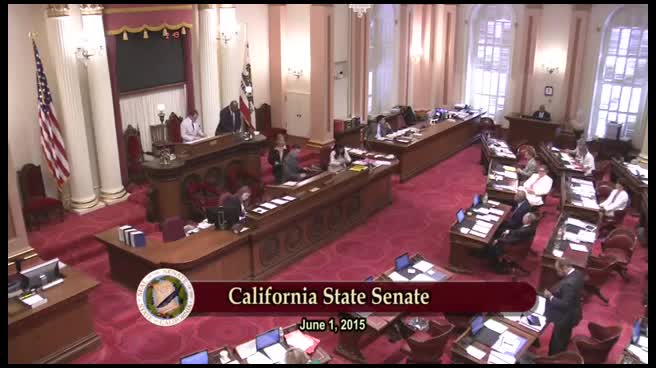 2MIN
Senate Floor
 7MIN
Senate Standing Committee on Public Employment and Retirement
Bill Author


