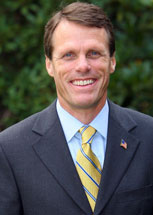
AB 1347: Public contracts: claims.
- Session Year: 2015-2016
- House: Assembly
- Latest Version Date: 2015-09-16
(1)Existing law prescribes various requirements regarding the formation, content, and enforcement of state and local public contracts. Existing law applicable to state public contracts generally requires that the resolution of claims related to those contracts be subject to arbitration. Existing law applicable to local agency contracts prescribes a process for the resolution of claims related to those contracts of $375,000 or less.
This bill would establish, for contracts entered into on or after January 1, 2016, a claim resolution process applicable to all claims by contractors in connection with public works. The bill would define a claim as a separate demand by the contractor for one or more of the following: a time extension for relief from damages or penalties for delay, payment of money or damages arising from work done pursuant to the contract for a public work, or payment of an amount disputed by the public entity, as specified.
The bill would require a public entity, defined to exclude certain state entities, upon receipt of a claim sent by registered or certified mail, to review it and, within 45 days, provide a written statement identifying the disputed and undisputed portions of the claim. The 45-day period may be extended by mutual agreement. The bill would require any payment due on an undisputed portion of the claim to be processed within 60 days, as specified. The bill, if the public entity fails to issue the written statement, would require that the claim be deemed rejected in its entirety. The bill would authorize, if the claimant disputes the public entitys written response or if the public entity fails to respond to a claim within the time prescribed, the claimant to demand to meet and confer for settlement of the issues in dispute. The bill would require any disputed portion of the claim that remains in dispute after the meet and confer conference to be subject to nonbinding mediation, as specified. The bill would provide that unpaid claim amounts accrue interest at 7% per annum. The bill would prescribe a procedure by which a subcontractor or lower tier contractor may make a claim through the contractor. The bill would require the text of these provisions or a summary of them to be set forth in the plans or specifications for any public work which may give rise to a claim. The bill would specify that a waiver of the rights granted by its provisions is void and contrary to public policy, except as specified. The bill would also specify that it does not impose liability on a public entity that makes loans or grants available through a competitive application process, for the failure of an awardee to meet its contractual obligations. By increasing the duties of local agencies and officials, this bill would impose a state-mandated local program.
This bill would, on January 1, 2019, repeal the provision establishing the claim resolution process.
(2)The California Constitution requires the state to reimburse local agencies and school districts for certain costs mandated by the state. Statutory provisions establish procedures for making that reimbursement.
This bill would provide that, if the Commission on State Mandates determines that the bill contains costs mandated by the state, reimbursement for those costs shall be made pursuant to these statutory provisions.
(1)Existing law prescribes various requirements regarding the formation, content, and enforcement of state and local public contracts. Existing law applicable to state public contracts generally requires that the resolution of claims related to those contracts be subject to arbitration. Existing law applicable to local agency contracts prescribes a process for the resolution of claims related to those contracts of $375,000 or less.
This bill would establish, for contracts entered into on or after January 1, 2016, a claim resolution process applicable to all claims by contractors in connection with public works. The bill would define a claim as a separate demand by the contractor for one or more of: of the following: a time extension for relief from damages or penalties for delay, payment of money or damages arising from work done pursuant to the contract for a public work, or payment of an amount disputed by the public entity, as specified.
The bill would require a public entity, defined to exclude certain state entities, upon receipt of a claim sent by registered or certified mail, to review it and, within 45 days, provide a written statement identifying the disputed and undisputed portions of the claim. The 45-day period may be extended by mutual agreement. The bill would require any payment due on an undisputed portion of the claim to be processed within 60 days, as specified. The bill, if the public entity fails to issue the written statement, would require that the claim be deemed rejected in its entirety. The bill would authorize, if the claimant disputes the public entitys written response or if the public entity fails to respond to a claim within the time prescribed, the claimant to demand to meet and confer for settlement of the issues in dispute. The bill would require any disputed portion of the claim that remains in dispute after the meet and confer conference to be subject to nonbinding mediation, as specified. The bill would provide that unpaid claim amounts accrue interest at 7% per annum. The bill would prescribe a procedure by which a subcontractor or lower tier contractor may make a claim through the contractor. The bill would require the text of these provisions or a summary of them to be set forth in the plans or specifications for any public work which may give rise to a claim. The bill would specify that a waiver of the rights granted by its provisions is void and contrary to public policy, except as specified. The bill would also specify that it does not impose liability on a public entity that makes loans or grants available through a competitive application process, for the failure of an awardee to meet its contractual obligations. By increasing the duties of local agencies and officials, this bill would impose a state-mandated local program.
This bill would, on January 1, 2019, repeal the provision establishing the claim resolution process.
(2)The California Constitution requires the state to reimburse local agencies and school districts for certain costs mandated by the state. Statutory provisions establish procedures for making that reimbursement.
This bill would provide that, if the Commission on State Mandates determines that the bill contains costs mandated by the state, reimbursement for those costs shall be made pursuant to these statutory provisions.
(1)Existing law prescribes various requirements regarding the formation, content, and enforcement of state and local public contracts. Existing law applicable to state public contracts generally requires that the resolution of claims related to those contracts be subject to arbitration. Existing law applicable to local agency contracts prescribes a process for the resolution of claims related to those contracts of $375,000 or less.
This bill would establish, for contracts entered into on or after January 1, 2016, a claim resolution process applicable to all claims by contractors in connection with public works. The bill would define a claim as a separate demand by the contractor for one or more of: a time extension for relief from damages or penalties for delay, payment of money or damages arising from work done pursuant to the contract for a public work, or payment of an amount disputed by the public entity, as specified.
The bill would require a public entity, upon receipt of a claim sent by registered or certified mail, to review it and, within 45 days, provide a written statement identifying the disputed and undisputed portions of the claim. The 45-day period may be extended by mutual agreement. The bill would require any payment due on an undisputed portion of the claim to be processed within 60 days, as specified. The bill, if the public entity fails to issue the written statement, would require that the claim be deemed rejected in its entirety. The bill would authorize, if the claimant disputes the public entitys written response or if the public entity fails to respond to a claim within the time prescribed, the claimant to demand to meet and confer for settlement of the issues in dispute. The bill would require any disputed portion of the claim that remains in dispute after the meet and confer conference to be subject to nonbinding mediation, as specified. The bill would provide that unpaid claim amounts accrue interest at 7% per annum. The bill would prescribe a procedure by which a subcontractor or lower tier contractor may make a claim through the contractor. The bill would require the text of these provisions or a summary of them to be set forth in the plans or specifications for any public work which may give rise to a claim. The bill would specify that a waiver of the rights granted by its provisions is void and contrary to public policy, except as specified. The bill would also specify that it does not impose liability on a public entity that makes loans or grants available through a competitive application process, for the failure of an awardee to meet its contractual obligations. By increasing the duties of local agencies and officials, this bill would impose a state-mandated local program.
This bill would, on January 1, 2019, repeal the provision establishing the claim resolution process.
(2)The California Constitution requires the state to reimburse local agencies and school districts for certain costs mandated by the state. Statutory provisions establish procedures for making that reimbursement.
This bill would provide that, if the Commission on State Mandates determines that the bill contains costs mandated by the state, reimbursement for those costs shall be made pursuant to these statutory provisions.
(1)Existing law prescribes various requirements regarding the formation, content, and enforcement of state and local public contracts. Existing law applicable to state public contracts generally requires that the resolution of claims related to those contracts be subject to arbitration. Existing law applicable to local agency contracts prescribes a process for the resolution of claims related to those contracts of $375,000 or less.
This bill would establish, for contracts entered into on or after January 1, 2016, a claim resolution process applicable to all claims by contractors in connection with public works. The bill would define a claim as a separate demand by the contractor for one or more of: a time extension for relief from damages or penalties for delay, payment of money or damages arising from work done pursuant to the contract for a public work, or payment of an amount disputed by the public entity, as specified.
The bill would require a public entity, upon receipt of a claim sent by registered or certified mail, to review it and, within 30 45 days, provide a written statement identifying the disputed and undisputed portions of the claim. The 45-day period may be extended by mutual agreement. The bill would require any payment due on an undisputed portion of the claim to be processed within 30 60 days, as specified. The bill, if the public entity fails to issue the written statement, would require that the claim be deemed rejected in its entirety. The bill would authorize, if the claimant disputes the public entitys written response or if the public entity fails to respond to a claim within the time prescribed, the claimant to demand to meet and confer for settlement of the issues in dispute. The bill would require any disputed portion of the claim that remains in dispute after the meet and confer conference to be subject to nonbinding mediation, as specified. The bill would provide that unpaid claim amounts accrue interest at 7% per annum. The bill would prescribe a procedure by which a subcontractor or lower tier contractor may make a claim through the contractor. The bill would require the text of these provisions or a summary of them to be set forth in the plans or specifications for any public work which may give rise to a claim. The bill would specify that a waiver of the rights granted by its provisions is void and contrary to public policy. policy, except as specified. The bill would also specify that it does not impose liability on a public entity that makes loans or grants available through a competitive application process, for the failure of an awardee to meet its contractual obligations. By increasing the duties of local agencies and officials, this bill would impose a state-mandated local program.
(2)The California Constitution requires the state to reimburse local agencies and school districts for certain costs mandated by the state. Statutory provisions establish procedures for making that reimbursement.
This bill would provide that, if the Commission on State Mandates determines that the bill contains costs mandated by the state, reimbursement for those costs shall be made pursuant to these statutory provisions.
(1)Existing law prescribes various requirements regarding the formation, content, and enforcement of state and local public contracts. Existing law applicable to state public contracts generally requires that the resolution of claims related to those contracts be subject to arbitration. Existing law applicable to local agency contracts prescribes a process for the resolution of claims related to those contracts of $375,000 or less.
This bill would establish, for contracts entered into on or after January 1, 2016, a claim resolution process applicable to all claims by contractors in connection with public works. The bill would define a claim as a separate demand by the contractor for one or more of: a time extension for relief from damages or penalties for delay, payment of money or damages arising from work done pursuant to the contract for a public work, or payment of an amount disputed by the public entity, as specified.
The bill would require a public entity, upon receipt of a claim sent by registered mail, to review it and, within 30 days, provide a written statement addressing what parts of the claim are disputed and what parts are undisputed. identifying the disputed and undisputed portions of the claim. The bill would require any payment due on an undisputed portion of the claim to be processed within 30 days, as specified. The bill, if the public entity fails to issue the written statement, would require that the claim be deemed rejected in its entirety. The bill would authorize, if the claimant disputes the public entitys written response or if the public entity fails to respond to a claim within the time prescribed, the claimant to demand to meet and confer for settlement of the issues in dispute. The bill would require any disputed portion of the claim that remains in dispute after the meet and confer conference to be subject to nonbinding mediation, as specified. The bill would provide that unpaid claim amounts accrue interest at 7% per annum. The bill would prescribe a procedure by which a subcontractor or lower tier contractor may make a claim through the contractor. The bill would require the text of these provisions or a summary of them to be set forth in the plans or specifications for any public work which may give rise to a claim. The bill would specify that a waiver of the rights granted by its provisions is void and contrary to public policy. By increasing the duties of local agencies and officials, this bill would impose a state-mandated local program.
(2)The California Constitution requires the state to reimburse local agencies and school districts for certain costs mandated by the state. Statutory provisions establish procedures for making that reimbursement.
This bill would provide that, if the Commission on State Mandates determines that the bill contains costs mandated by the state, reimbursement for those costs shall be made pursuant to these statutory provisions.
(1)Existing law prescribes various requirements regarding the formation, content, and enforcement of state and local public contracts. Existing law applicable to state public contracts generally requires that the resolution of claims related to those contracts be subject to arbitration. Existing law applicable to local agency contracts prescribes a process for the resolution of claims related to those contracts of $375,000 or less.
This bill would establish, for contracts entered into on or after January 1, 2016, a claim resolution process applicable to all public entity contracts. claims by contractors in connection with public works. The bill would define a claim as a separate demand by the contractor for one or more of: a time extension for relief from damages or penalties for delay, payment of money or damages arising from work done pursuant to the contract for a public work, or payment of an amount disputed by the local agency, public entity, as specified.
The bill would require a public entity, upon receipt of a claim sent by registered mail, to review it and, within 30 days, provide a written statement addressing what parts of the claim are disputed and what parts are undisputed. The bill would require any payment due on an undisputed portion of the claim to be processed within 30 days, as specified. The bill would provide an alternative procedure The bill, if the public entity fails to issue the written statement and statement, would require that the claim be deemed approved rejected in its entirety. The bill would authorize, if the claimant disputes the public entitys written response or if the public entity fails to respond to a claim within the time prescribed, the claimant to demand to meet and confer for settlement of the issues in dispute. The bill would require disputed parts any disputed portion of the claim that remains in dispute after the meet and confer conference to be subject to nonbinding mediation, as specified. The bill would provide that unpaid claim amounts accrue interest at a statutorily prescribed rate. 7% per annum. The bill would prescribe a procedure by which a subcontractor or lower tier contractor may make a claim through the contractor. The bill would require that the text of these provisions or a summary of them to be set forth in the plans or specifications for any public work which may give rise to a claim. The bill would specify that a waiver of the rights granted by its provisions is void and contrary to public policy. By increasing the duties of local agencies and officials, this bill would impose a state-mandated local program.
(2)The California Constitution requires the state to reimburse local agencies and school districts for certain costs mandated by the state. Statutory provisions establish procedures for making that reimbursement.
This bill would provide that, if the Commission on State Mandates determines that the bill contains costs mandated by the state, reimbursement for those costs shall be made pursuant to these statutory provisions.
(1)Existing law prescribes various requirements regarding the formation, content, and enforcement of state and local public contracts. Existing law applicable to state public contracts generally requires that the resolution of claims related to those contracts be subject to arbitration. Existing law applicable to local agency contracts prescribes a process for the resolution of claims related to those contracts of $375,000 or less.
This bill would establish, for contracts entered into on or after January 1, 2016, a claim resolution process applicable to all public entity contracts. The bill would define a claim as a contractors written demand or assertion, including a request for a modification, contract amendment, or change order, seeking an adjustment or interpretation of the terms of the contract documents, payment of money, extension of time, or other relief, including a determination of disputes or matters arising out of, or related to, the contract documents or the performance of work on a public work. a separate demand by the contractor for one or more of: a time extension for relief from damages or penalties for delay, payment of money or damages arising from work done pursuant to the contract for a public work, or payment of an amount disputed by the local agency, as specified.
The bill would require a public entity, upon receipt of a claim sent by registered mail, to review it and, within 30 days, provide a written statement addressing what parts of the claim are disputed and what parts are undisputed. The bill would require any payment due on an undisputed portion of the claim to be processed within 7 30 days, as specified. The bill would provide an alternative procedure if the public entity fails to issue the written statement and would require that the claim be deemed approved in its entirety. The bill would require disputed parts of the claim to be subject to nonbinding mediation, as specified. The bill would provide that unpaid claim amounts accrue interest at a statutorily prescribed rate. The bill would proscribe prescribe a procedure by which a subcontractor or lower tier contractor may make a claim through the contractor. The bill would require that the text of these provisions or a summary of them to be set forth in the plans or specifications for any public work which may give rise to a claim. The bill would except these provisions from laws relating to false claims. The bill would specify that a waiver of the rights granted by its provisions is void and contrary to public policy. By increasing the duties of local agencies and officials, this bill would impose a state-mandated local program.
(2)The California Constitution requires the state to reimburse local agencies and school districts for certain costs mandated by the state. Statutory provisions establish procedures for making that reimbursement.
This bill would provide that, if the Commission on State Mandates determines that the bill contains costs mandated by the state, reimbursement for those costs shall be made pursuant to these statutory provisions.
(1)Existing law prescribes various requirements regarding the formation, content, and enforcement of state and local public contracts. Existing law applicable to state public contracts generally requires that the resolution of claims related to those contracts be subject to arbitration. Existing law applicable to local agency contracts prescribes a process for the resolution of claims related to those contracts of $375,000 or less.
This bill would establish, for contracts entered into on or after January 1, 2016, a claim resolution process applicable to all public entity contracts. The bill would define a claim as a contractors written demand or assertion, including a request for a modification, contract amendment, or change order, seeking an adjustment or interpretation of the terms of the contract documents, payment of money, extension of time, or other relief, including a determination of disputes or matters arising out of, or related to, the contract documents or the performance of work on a public work.
The bill would require a public entity, upon receipt of a claim sent by registered mail, to review it and, within 30 days, provide a written statement addressing what parts of the claim are disputed and what parts are undisputed. The bill would require any payment due on an undisputed portion of the claim to be processed within 7 days, as specified. The bill would provide an alternative procedure if the public entity fails to issue the written statement and would require that the claim be deemed approved in its entirety. The bill would require disputed parts of the claim to be subject to nonbinding mediation. The bill would provide that unpaid claim amounts accrue interest at a statutorily prescribed rate. The bill would proscribe a procedure by which a subcontractor or lower tier contractor may make a claim through the contractor. The bill would require that the text of these provisions or a summary of them to be set forth in the plans or specifications for any public work which may give rise to a claim. The bill would except these provisions from laws relating to false claims. The bill would specify that a waiver of the rights granted by its provisions is void and contrary to public policy. By increasing the duties of local agencies and officials, this bill would impose a state-mandated local program.
(2)The California Constitution requires the state to reimburse local agencies and school districts for certain costs mandated by the state. Statutory provisions establish procedures for making that reimbursement.
This bill would provide that, if the Commission on State Mandates determines that the bill contains costs mandated by the state, reimbursement for those costs shall be made pursuant to these statutory provisions.
(a)The Legislature finds and declares that it is in the best interests of the state and its citizens to ensure that all construction business performed on public works in the state that is complete and not in dispute is paid in full and in a timely manner.
(b)Notwithstanding any other law, including, but not limited to, Article 7.1 (commencing with Section 10240) of Chapter 1 of Part 2, Chapter 10 (commencing with Section 19100) of Part 2, and Article 1.5 (commencing with Section 20104) of Chapter 1 of Part 3, this section shall apply to all claims by contractors in connection with public works.
(c)For purposes of this section:
(1)Claim means a separate demand by the contractor sent by registered mail or certified mail with return receipt requested, for one or more of the following:
(A)A time extension, including, without limitation, for relief from damages or penalties for delay assessed by a public entity under a public works contract.
(B)Payment by the public entity of money or damages arising from work done by, or on behalf of, the contractor pursuant to the contract for a public work and payment for which is not otherwise expressly provided or to which the claimant is not otherwise entitled.
(C)Payment of an amount that is disputed by the public entity.
(2)Contractor means any type of contractor within the meaning of Chapter 9 (commencing with Section 7000) of Division 3 of the Business and Professions Code who has entered into a direct contract with a public entity for public works.
(3)(A)Public entity means, without limitation, a state agency, department, office, division, bureau, board, or commission, the California State University, the University of California, a city, including a charter city, county, including a charter county, city and county, including a charter city and county, district, special district, public authority, political subdivision, public corporation, or nonprofit transit corporation wholly owned by a public agency and formed to carry out the purposes of the public agency.
(B)Public entity shall not include the following:
(i)The Department of Water Resources as to any project under the jurisdiction of that department.
(ii)The Division of Boating and Waterways in the Department of Parks and Recreation as to any project under the jurisdiction of that division pursuant to Article 2.5 (commencing with Section 65) of Chapter 2 of Division 1 of the Harbors and Navigation Code.
(iii)The Department of Corrections and Rehabilitation with respect to any project under its jurisdiction pursuant to Chapter 11 (commencing with Section 7000) of Title 7 of Part 3 of the Penal Code.
(iv)The Military Department as to any project under the jurisdiction of that department.
(v)The Department of General Services as to all other projects.
(vi)The High-Speed Rail Authority.
(4)Public work means the erection, construction, alteration, repair, or improvement of any public structure, building, road, or other public improvement of any kind.
(5)Subcontractor means any type of contractor within the meaning of Chapter 9 (commencing with Section 7000) of Division 3 of the Business and Professions Code who either is in direct contract with a contractor or is a lower tier subcontractor.
(d)(1)(A)Upon receipt of a claim pursuant to this section, the public entity to which the claim applies shall conduct a reasonable review of the claim and, within a period not to exceed 45 days, shall provide the claimant a written statement identifying what portion of the claim is disputed and what portion is undisputed. Upon receipt of a claim, a public entity and a contractor may, by mutual agreement, extend the time period provided in this subdivision.
(B)The claimant shall furnish reasonable documentation to support the claim.
(C)If the public entity needs approval from its governing body to provide the claimant a written statement identifying the disputed portion and the undisputed portion of the claim, and the governing body does not meet within the 45 days or within the mutually agreed to extension of time following receipt of a claim sent by registered mail or certified mail, return receipt requested, the public entity shall have up to three days following the next duly publicly noticed meeting of the governing body after the 45-day period, or extension, expires to provide the claimant a written statement identifying the disputed portion and the undisputed portion.
(D)Any payment due on an undisputed portion of the claim shall be processed and made within 60 days after the public entity issues its written statement. If the public entity fails to issue a written statement, paragraph (3) shall apply.
(2)(A)If the claimant disputes the public entitys written response, or if the public entity fails to respond to a claim issued pursuant to this section within the time prescribed, the claimant may demand in writing an informal conference to meet and confer for settlement of the issues in dispute. Upon receipt of a demand in writing sent by registered mail or certified mail, return receipt requested, the public entity shall schedule a meet and confer conference within 30 days for settlement of the dispute.
(B)Within 10 business days following the conclusion of the meet and confer conference, if the claim or any portion of the claim remains in dispute, the public entity shall provide the claimant a written statement identifying the portion of the claim that remains in dispute and the portion that is undisputed. Any payment due on an undisputed portion of the claim shall be processed and made within 60 days after the public entity issues its written statement. Any disputed portion of the claim, as identified by the contractor in writing, shall be submitted to nonbinding mediation, with the public entity and the claimant sharing the associated costs equally. The public entity and claimant shall mutually agree to a mediator within 10 business days after the disputed portion of the claim has been identified in writing. If the parties cannot agree upon a mediator, each party shall select a mediator and those mediators shall select a qualified neutral third party to mediate with regard to the disputed portion of the claim. Each party shall bear the fees and costs charged by its respective mediator in connection with the selection of the neutral mediator. If mediation is unsuccessful, the parts of the claim remaining in dispute shall be subject to applicable procedures outside this section.
(C)For purposes of this section, mediation includes any nonbinding process, such as neutral evaluation or a dispute review board, in which an independent third party or board assists the parties in dispute resolution through negotiation or by issuance of an evaluation. Any mediation utilized shall conform to the timeframes in this section.
(D)Unless otherwise agreed to by the public entity and the contractor in writing, the mediation conducted pursuant to this section shall excuse any further obligation under Section 20104.4 to mediate after litigation has been commenced.
(E)This section does not preclude a public entity from requiring arbitration of disputes under private arbitration or the Public Works Contract Arbitration Program, if mediation under this section does not resolve the parties dispute.
(3)Failure by the public entity to respond to a claim from a contractor within the time periods described in this subdivision or to otherwise meet the time requirements of this section shall result in the claim being deemed rejected in its entirety. A claim that is denied by reason of the public entitys failure to have responded to a claim, or its failure to otherwise meet the time requirements of this section, shall not constitute an adverse finding with regard to the merits of the claim or the responsibility or qualifications of the claimant.
(4)Amounts not paid in a timely manner as required by this section shall bear interest at 7 percent per annum.
(5)If a subcontractor or a lower tier subcontractor lacks legal standing to assert a claim against a public entity because privity of contract does not exist, the contractor may present to the public entity a claim on behalf of a subcontractor or lower tier subcontractor. A subcontractor may request in writing, either on his or her own behalf or on behalf of a lower tier subcontractor, that the contractor present a claim for work which was performed by the subcontractor or by a lower tier subcontractor on behalf of the subcontractor. The subcontractor requesting that the claim be presented to the public entity shall furnish reasonable documentation to support the claim. Within 45 days of receipt of this written request, the contractor shall notify the subcontractor in writing as to whether the contractor presented the claim to the public entity and, if the original contractor did not present the claim, provide the subcontractor with a statement of the reasons for not having done so.
(e)The text of this section or a summary of it shall be set forth in the plans or specifications for any public works project that may give rise to a claim under this section.
(f)A waiver of the rights granted by this section is void and contrary to public policy, provided, however, that (1) upon receipt of a claim, the parties may mutually agree to waive, in writing, mediation and proceed directly to the commencement of a civil action or binding arbitration, as applicable; and (2) a public entity in its public works contracts may include dispute resolution provisions that comply with this section, including the timeframes set forth herein, and that prescribe additional reasonable and equitable terms regarding actions or procedures to be taken by the parties.
(g)This section applies to contracts entered into on or after January 1, 2016.
(h)Nothing in this section shall impose liability upon a public entity that makes loans or grants available through a competitive application process, for the failure of an awardee to meet its contractual obligations.
(i)This section shall remain in effect only until January 1, 2019, and as of that date is repealed, unless a later enacted statute, that is enacted before January 1, 2019, deletes or extends that date.
SEC. 2.If the Commission on State Mandates determines that this act contains costs mandated by the state, reimbursement to local agencies and school districts for those costs shall be made pursuant to Part 7 (commencing with Section 17500) of Division 4 of Title 2 of the Government Code.
(a)The Legislature finds and declares that it is in the best interests of the state and its citizens to ensure that all construction business performed on public works in the state that is complete and not in dispute is paid in full and in a timely manner.
(b)Notwithstanding any other law, including, but not limited to, Article 7.1 (commencing with Section 10240) of Chapter 1 of Part 2, Chapter 10 (commencing with Section 19100) of Part 2, and Article 1.5 (commencing with Section 20104) of Chapter 1 of Part 3, this section shall apply to all claims by contractors in connection with public works.
(c)For purposes of this section:
(1)Claim means a separate demand by the contractor sent by registered mail or certified mail with return receipt requested, for one or more of the following:
(A)A time extension, including, without limitation, for relief from damages or penalties for delay assessed by a public entity under a public works contract.
(B)Payment by the public entity of money or damages arising from work done by, or on behalf of, the contractor pursuant to the contract for a public work and payment for which is not otherwise expressly provided or to which the claimant is not otherwise entitled.
(C)Payment of an amount that is disputed by the public entity.
(2)Contractor means any type of contractor within the meaning of Chapter 9 (commencing with Section 7000) of Division 3 of the Business and Professions Code who has entered into a direct contract with a public entity for public works.
(3)Public entity means, without limitation, a state agency, department, office, division, bureau, board, or commission, the California State University, the University of California, a city, including a charter city, county, including a charter county, city and county, including a charter city and county, district, special district, public authority, political subdivision, public corporation, or nonprofit transit corporation wholly owned by a public agency and formed to carry out the purposes of the public agency.
(4)Public work means the erection, construction, alteration, repair, or improvement of any public structure, building, road, or other public improvement of any kind.
(5)Subcontractor means any type of contractor within the meaning of Chapter 9 (commencing with Section 7000) of Division 3 of the Business and Professions Code who either is in direct contract with a contractor or is a lower tier subcontractor.
(d)(1)(A)Upon receipt of a claim pursuant to this section, the public entity to which the claim applies shall conduct a reasonable review of the claim and, within a period not to exceed 45 days, shall provide the claimant a written statement identifying what portion of the claim is disputed and what portion is undisputed. Upon receipt of a claim, a public entity and a contractor may, by mutual agreement, extend the time period provided in this subdivision.
(B)The claimant shall furnish reasonable documentation to support the claim.
(C)If the public entity needs approval from its governing body to provide the claimant a written statement identifying the disputed portion and the undisputed portion of the claim, and the governing body does not meet within the 45 days or within the mutually agreed to extension of time following receipt of a claim sent by registered mail or certified mail, return receipt requested, the public entity shall have up to three days following the next duly publicly noticed meeting of the governing body after the 45-day period, or extension, expires to provide the claimant a written statement identifying the disputed portion and the undisputed portion.
(D)Any payment due on an undisputed portion of the claim shall be processed and made within 60 days after the public entity issues its written statement. If the public entity fails to issue a written statement, paragraph (3) shall apply.
(2)(A)If the claimant disputes the public entitys written response, or if the public entity fails to respond to a claim issued pursuant to this section within the time prescribed, the claimant may demand in writing an informal conference to meet and confer for settlement of the issues in dispute. Upon receipt of a demand in writing sent by registered mail or certified mail, return receipt requested, the public entity shall schedule a meet and confer conference within 30 days for settlement of the dispute.
(B)Within 10 business days following the conclusion of the meet and confer conference, if the claim or any portion of the claim remains in dispute, the public entity shall provide the claimant a written statement identifying the portion of the claim that remains in dispute and the portion that is undisputed. Any payment due on an undisputed portion of the claim shall be processed and made within 60 days after the public entity issues its written statement. Any disputed portion of the claim, as identified by the contractor in writing, shall be submitted to nonbinding mediation, with the public entity and the claimant sharing the associated costs equally. The public entity and claimant shall mutually agree to a mediator within 10 business days after the disputed portion of the claim has been identified in writing. If the parties cannot agree upon a mediator, each party shall select a mediator and those mediators shall select a qualified neutral third party to mediate with regard to the disputed portion of the claim. Each party shall bear the fees and costs charged by its respective mediator in connection with the selection of the neutral mediator. If mediation is unsuccessful, the parts of the claim remaining in dispute shall be subject to applicable procedures outside this section.
(C)For purposes of this section, mediation includes any nonbinding process, such as neutral evaluation or a dispute review board, in which an independent third party or board assists the parties in dispute resolution through negotiation or by issuance of an evaluation. Any mediation utilized shall conform to the timeframes in this section.
(D)Unless otherwise agreed to by the public entity and the contractor in writing, the mediation conducted pursuant to this section shall excuse any further obligation under Section 20104.4 to mediate after litigation has been commenced.
(E)This section does not preclude a public entity from requiring arbitration of disputes under private arbitration or the Public Works Contract Arbitration Program, if mediation under this section does not resolve the parties dispute.
(3)Failure by the public entity to respond to a claim from a contractor within the time periods described in this subdivision or to otherwise meet the time requirements of this section shall result in the claim being deemed rejected in its entirety. A claim that is denied by reason of the public entitys failure to have responded to a claim, or its failure to otherwise meet the time requirements of this section, shall not constitute an adverse finding with regard to the merits of the claim or the responsibility or qualifications of the claimant.
(4)Amounts not paid in a timely manner as required by this section shall bear interest at 7 percent per annum.
(5)If a subcontractor or a lower tier subcontractor lacks legal standing to assert a claim against a public entity because privity of contract does not exist, the contractor may present to the public entity a claim on behalf of a subcontractor or lower tier subcontractor. A subcontractor may request in writing, either on his or her own behalf or on behalf of a lower tier subcontractor, that the contractor present a claim for work which was performed by the subcontractor or by a lower tier subcontractor on behalf of the subcontractor. The subcontractor requesting that the claim be presented to the public entity shall furnish reasonable documentation to support the claim. Within 45 days of receipt of this written request, the contractor shall notify the subcontractor in writing as to whether the contractor presented the claim to the public entity and, if the original contractor did not present the claim, provide the subcontractor with a statement of the reasons for not having done so.
(e)The text of this section or a summary of it shall be set forth in the plans or specifications for any public works project that may give rise to a claim under this section.
(f)A waiver of the rights granted by this section is void and contrary to public policy, provided, however, that (1) upon receipt of a claim, the parties may mutually agree to waive, in writing, mediation and proceed directly to the commencement of a civil action or binding arbitration, as applicable; and (2) a public entity in its public works contracts may include dispute resolution provisions that comply with this section, including the timeframes set forth herein, and that prescribe additional reasonable and equitable terms regarding actions or procedures to be taken by the parties.
(g)This section applies to contracts entered into on or after January 1, 2016.
(h)Nothing in this section shall impose liability upon a public entity that makes loans or grants available through a competitive application process, for the failure of an awardee to meet its contractual obligations.
(i)This section shall remain in effect only until January 1, 2019, and as of that date is repealed, unless a later enacted statute, that is enacted before January 1, 2019, deletes or extends that date.
SEC. 2.If the Commission on State Mandates determines that this act contains costs mandated by the state, reimbursement to local agencies and school districts for those costs shall be made pursuant to Part 7 (commencing with Section 17500) of Division 4 of Title 2 of the Government Code.
(a)The Legislature finds and declares that it is in the best interests of the state and its citizens to ensure that all construction business performed on public works in the state that is complete and not in dispute is paid in full and in a timely manner.
(b)Notwithstanding any other law, including, but not limited to, Article 7.1 (commencing with Section 10240) of Chapter 1 of Part 2, Chapter 10 (commencing with Section 19100) of Part 2, and Article 1.5 (commencing with Section 20104) of Chapter 1 of Part 3, this section shall apply to all claims by contractors in connection with public works.
(c)For purposes of this section:
(1)Claim means a separate demand by the contractor sent by registered mail or certified mail with return receipt requested, for one or more of the following:
(A)A time extension, including, without limitation, for relief from damages or penalties for delay. delay assessed by a public entity under a public works contract.
(B)Payment by the public entity of money or damages arising from work done by, or on behalf of, the contractor pursuant to the contract for a public work and payment for which is not otherwise expressly provided or to which the claimant is not otherwise entitled.
(C)Payment of an amount that is disputed by the public entity.
(2)Contractor means any type of contractor within the meaning of Chapter 9 (commencing with Section 7000) of Division 3 of the Business and Professions Code who has entered into a direct contract with a public entity for public works.
(3)Public entity means, without limitation, a state agency, department, office, division, bureau, board, or commission, the California State University, the University of California, a city, including a charter city, county, including a charter county, city and county, including a charter city and county, district, special district, public authority, political subdivision, public corporation, or nonprofit transit corporation wholly owned by a public agency and formed to carry out the purposes of the public agency.
(4)Public work means the erection, construction, alteration, repair, or improvement of any public structure, building, road, or other public improvement of any kind.
(5)Subcontractor means any type of contractor within the meaning of Chapter 9 (commencing with Section 7000) of Division 3 of the Business and Professions Code who either is in direct contract with a contractor or is a lower tier subcontractor.
(d)(1)(A)Upon receipt of a claim sent by registered mail, pursuant to this section, the public entity to which the claim applies shall conduct a reasonable review of the claim and, within a period not to exceed 30 45 days, shall provide the claimant a written statement identifying what portion of the claim is disputed and what portion is undisputed. Upon receipt of a claim, a public entity and a contractor may, by mutual agreement, extend the time period provided in this subdivision.
(B)The claimant shall furnish reasonable documentation to support the claim.
(C)If the public entity needs approval from its governing body to provide the claimant a written statement identifying the disputed portion and the undisputed portion of the claim, and the governing body does not meet within the 30 45 days or within the mutually agreed to extension of time following receipt of a claim sent by registered mail, mail or certified mail, return receipt requested, the public agency entity shall have up to three days following the next duly publicly noticed meeting of the governing body after the 45-day period, or extension, expires to provide the claimant a written statement identifying the disputed portion and the undisputed portion.
(D)Any payment due on an undisputed portion of the claim shall be processed and made within 30 60 days after the public entity issues its written statement. If the public entity fails to issue a written statement, paragraph (3) shall apply.
(2)(A)If the claimant disputes the public entitys written response, or if the public entity fails to respond to a claim issued pursuant to this section within the time prescribed, the claimant may demand in writing an informal conference to meet and confer for settlement of the issues in dispute. Upon receipt of a demand in writing sent by registered mail, mail or certified mail, return receipt requested, the public entity shall schedule a meet and confer conference within 30 days for settlement of the dispute.
(B)Within five 10 business days following the conclusion of the meet and confer conference, if the claim or any portion of the claim remains in dispute, the public entity shall provide the claimant a written statement identifying the portion of the claim that remains in dispute and the portion that is undisputed. Any payment due on an undisputed portion of the claim shall be processed and made within 30 60 days after the public entity issues its written statement. Any disputed portion of the claim, as identified by the contractor in writing, shall be submitted to nonbinding mediation, with the public entity and the claimant sharing the associated costs equally. The public entity and claimant shall mutually agree to a mediator within 10 business days after the disputed portion of the claim has been identified in writing. If the parties cannot agree upon a mediator, each party shall select a mediator and those mediators shall select a qualified neutral third party to mediate with regard to the disputed portion of the claim. If either of the parties rejects the mediators decision regarding all or part of the disputed portion of the claim, Each party shall bear the fees and costs charged by its respective mediator in connection with the selection of the neutral mediator. If mediation is unsuccessful, the parts of the claim remaining in dispute shall be subject to applicable procedures outside this section.
(C)For purposes of this section, mediation includes any nonbinding process, such as neutral evaluation or a dispute review board, in which an independent third party or board assists the parties in dispute resolution through negotiation or by issuance of an evaluation. Any mediation utilized must shall conform to the timeframes in this section.
(D)The Unless otherwise agreed to by the public entity and the contractor in writing, the mediation conducted pursuant to this section shall excuse any further obligation under Section 20104.4 to mediate (meet and confer) after litigation has been commenced.
(E)This section does not preclude an agency a public entity from requiring arbitration of disputes under private arbitration or the Public Works Contract Arbitration Program, if mediation under this section does not resolve the parties dispute.
(3)Failure by the public entity to respond to a claim from a contractor within the time period periods described in this subdivision or to otherwise meet the time requirements of this section shall result in the claim being deemed rejected in its entirety. A claim that is denied by reason of the public entitys failure to have responded to a claim, or its failure to otherwise meet the time requirements of this section, shall not constitute an adverse finding with regard to the merits of the claim or the responsibility or qualifications of the claimant.
(4)Amounts not paid in a timely manner as required by this section shall bear interest at 7 percent per annum.
(5)If a subcontractor or a lower tier subcontractor lacks legal standing to assert a claim against a public entity because privity of contract does not exist, the contractor may present to the public entity a claim on behalf of a subcontractor or lower tier subcontractor. A subcontractor may request in writing, either on his or her own behalf or on behalf of a lower tier subcontractor, that the contractor present a claim for work which was performed by the subcontractor or by a lower tier subcontractor on behalf of the subcontractor. The subcontractor requesting that the claim be presented to the public entity shall furnish reasonable documentation to support the claim. Within 45 days of receipt of this written request, the contractor shall notify the subcontractor in writing as to whether the contractor presented the claim to the public entity and, if the original contractor did not present the claim, provide the subcontractor with a statement of the reasons for not having done so.
(e)The text of this section or a summary of it shall be set forth in the plans or specifications for any public works project that may give rise to a claim under this section.
(f)A waiver of the rights granted by this section is void and contrary to public policy. policy, provided, however, that (1) upon receipt of a claim, the parties may mutually agree to waive, in writing, mediation and proceed directly to the commencement of a civil action or binding arbitration, as applicable; and (2) a public entity in its public works contracts may include dispute resolution provisions that comply with this section, including the timeframes set forth herein, and that prescribe additional reasonable and equitable terms regarding actions or procedures to be taken by the parties.
(g)This section applies to contracts entered into on or after January 1, 2016.
(h)Nothing in this section shall impose liability upon a public entity that makes loans or grants available through a competitive application process, for the failure of an awardee to meet its contractual obligations.
SEC. 2.If the Commission on State Mandates determines that this act contains costs mandated by the state, reimbursement to local agencies and school districts for those costs shall be made pursuant to Part 7 (commencing with Section 17500) of Division 4 of Title 2 of the Government Code.
(a)The Legislature finds and declares that it is in the best interests of the state and its citizens to ensure that all construction business performed on public works in the state that is complete and not in dispute is paid in full and in a timely manner.
(b)Notwithstanding any other law, including, but not limited to, Article 7.1 (commencing with Section 10240) of Chapter 1 of Part 2, Chapter 10 (commencing with Section 19100) of Part 2, and Article 1.5 (commencing with Section 20104) of Chapter 1 of Part 3, this section shall apply to all claims by contractors in connection with public works.
(c)For purposes of this section:
(1)Claim means a separate demand by the contractor for one or more of the following:
(A)A time extension, including, without limitation, for relief from damages or penalties for delay.
(B)Payment of money or damages arising from work done by, or on behalf of, the contractor pursuant to the contract for a public work and payment for which is not otherwise expressly provided or to which the claimant is not otherwise entitled.
(C)Payment of an amount that is disputed by the public entity.
(2)Contractor means any type of contractor within the meaning of Chapter 9 (commencing with Section 7000) of Division 3 of the Business and Professions Code who has entered into a direct contract with a public entity for public works.
(3)Public entity means, without limitation, a state agency, department, office, division, bureau, board, or commission, the California State University, the University of California, a city, including a charter city, county, including a charter county, city and county, including a charter city and county, district, special district, public authority, political subdivision, public corporation, or nonprofit transit corporation wholly owned by a public agency and formed to carry out the purposes of the public agency.
(4)Public work means public works contract as defined in Section 1101. the erection, construction, alteration, repair, or improvement of any public structure, building, road, or other public improvement of any kind.
(5)Subcontractor means any type of contractor within the meaning of Chapter 9 (commencing with Section 7000) of Division 3 of the Business and Professions Code who either is in direct contract with a contractor or is a lower tier subcontractor.
(d)(1)(A)Upon receipt of a claim sent by registered mail, the public entity to which the claim applies shall conduct a reasonable review of the claim and, within a period not to exceed 30 days, shall provide the claimant a written statement identifying what portion of the claim is disputed and what portion is undisputed.
(B)The claimant shall furnish reasonable documentation to support the claim.
(C)If the public entity needs approval from its governing body to provide the claimant a written statement identifying the disputed portion and the undisputed portion of the claim, and the governing body does not meet within the 30 days following receipt of a claim sent by registered mail, the public agency shall have up to three days following the next duly publicly noticed meeting of the governing body to provide the claimant a written statement identifying the disputed portion and the undisputed portion.
(D)Any payment due on an undisputed portion of the claim shall be processed and made within 30 days after the public entity issues its written statement. If the public entity fails to issue a written statement, paragraph (3) shall apply.
(2)(A)If the claimant disputes the public entitys written response, or if the public entity fails to respond to a claim issued pursuant to this section within the time prescribed, the claimant may demand in writing an informal conference to meet and confer for settlement of the issues in dispute. Upon receipt of a demand in writing sent by registered mail, the public entity shall schedule a meet and confer conference within 30 days for settlement of the dispute.
(B)Within five days following the conclusion of the meet and confer conference, if the claim or any portion of the claim remains in dispute, the public entity shall provide the claimant a written statement identifying the portion of the claim that remains in dispute and the portion that is undisputed. Any payment due on an undisputed portion of the claim shall be processed and made within 30 days after the public entity issues its written statement. Any disputed portion of the claim, as identified in writing, shall be submitted to nonbinding mediation, with the public entity and the claimant sharing the associated costs equally. The public entity and claimant shall mutually agree to a mediator within 10 days after the disputed portion of the claim has been identified in writing. If the parties cannot agree upon a mediator, each party shall select a mediator and those mediators shall select a qualified neutral third party to mediate with regard to the disputed portion of the claim. If either of the parties rejects the mediators decision regarding all or part of the disputed portion of the claim, the parts of the claim remaining in dispute shall be subject to applicable procedures outside this section.
(C)For purposes of this section, mediation includes any nonbinding process, such as neutral evaluation or a dispute review board, in which an independent third party or board assists the parties in dispute resolution through negotiation or by issuance of an evaluation. Any mediation utilized must conform to the time frames timeframes in this section.
(D)The mediation conducted pursuant to this section shall excuse any further obligation under Section 20104.4 to mediate (meet and confer) after litigation has been commenced.
(E)This section does not preclude an agency from requiring arbitration of disputes under private arbitration or the Public Works Contract Arbitration Program, if mediation does not resolve the parties dispute.
(3)Failure by the public entity to respond to a claim from a contractor within the time period described in this subdivision shall result in the claim being deemed rejected in its entirety.
(4)Amounts not paid in a timely manner as required by this section shall bear interest at 7 percent per annum.
(5)If a subcontractor or a lower tier subcontractor lacks legal standing to assert a claim against a public entity because privity of contract does not exist, the contractor may present to the public entity a claim on behalf of a subcontractor or lower tier subcontractor. A subcontractor may request in writing, either on his or her own behalf or on behalf of a lower tier subcontractor, that the contractor present a claim for work which was performed by the subcontractor or by a lower tier subcontractor on behalf of the subcontractor. The subcontractor requesting that the claim be presented to the public entity shall furnish reasonable documentation to support the claim. Within 45 days of receipt of this written request, the contractor shall notify the subcontractor in writing as to whether the contractor presented the claim to the public entity and, if the original contractor did not present the claim, provide the subcontractor with a statement of the reasons for not having done so.
(e)The text of this section or a summary of it shall be set forth in the plans or specifications for any public works that may give rise to a claim under this section.
(f)A waiver of the rights granted by this section is void and contrary to public policy.
(g)This section applies to contracts entered into on or after January 1, 2016.
SEC. 2.If the Commission on State Mandates determines that this act contains costs mandated by the state, reimbursement to local agencies and school districts for those costs shall be made pursuant to Part 7 (commencing with Section 17500) of Division 4 of Title 2 of the Government Code.
(a)The Legislature finds and declares that it is in the best interests of the state and its citizens to ensure that all construction business performed on public works in the state that is complete and not in dispute is paid in full and in a timely manner.
(b)Notwithstanding any other law, including, but not limited to, Article 7.1 (commencing with Section 10240) of Chapter 1 of Part 2, Chapter 10 (commencing with Section 19100) of Part 2, and Article 1.5 (commencing with Section 20104) of Chapter 1 of Part 3, this section shall apply to all claims by contractors in connection with public works.
(c)For purposes of this section:
(1)Claim means a separate demand by the contractor for one or more of the following:
(A)A time extension, including including, without limitation, for relief from damages or penalties for delay.
(B)Payment of money or damages arising from work done by, or on behalf of, the contractor pursuant to the contract for a public work and payment for which is not otherwise expressly provided or to which the claimant is not otherwise entitled.
(C)Payment of an amount that is disputed by the local agency. public entity.
(2)Contractor means any type of contractor within the meaning of Chapter 9 (commencing with Section 7000) of Division 3 of the Business and Professions Code who has entered into a direct contract with a public entity for public works.
(3)Public entity means, without limitation, a state agency, department, office, division, bureau, board, or commission, the California State University, the University of California, a city, including a charter city, county, including a charter county, city and county, including a charter city and county, district, special district, public authority, political subdivision, public corporation, or nonprofit transit corporation wholly owned by a public agency and formed to carry out the purposes of the public agency.
(4)Public work means public works contract as defined in Section 1101.
(5)Subcontractor means any type of contractor within the meaning of Chapter 9 (commencing with Section 7000) of Division 3 of the Business and Professions Code who either is in direct contract with a contractor or is a lower tier subcontractor.
(d)(1)(A)Upon receipt of a claim sent by registered mail, the public entity to which the claim applies shall conduct a reasonable review of the claim and, within a period not to exceed 30 days, shall provide the claimant a written statement identifying what portion of the claim is disputed and what portion is undisputed.
(B)The claimant shall furnish reasonable documentation to support the claim.
(B)
(C)If the public entity needs approval from its governing body to provide the claimant a written statement identifying the disputed portion and the undisputed portion of the claim, and the governing body does not meet within the 30 days following receipt of a claim sent by registered mail, the public agency shall have up to three days following the next duly publicly noticed meeting of the governing body to provide the claimant a written statement identifying the disputed portion and the undisputed portion.
(C)
(D)Any payment due on an undisputed portion of the claim shall be processed and made within 30 days after the public entity issues its written statement. If the public entity fails to issue a written statement, paragraph (3) shall apply.
(2)(A)Any disputed portion of the claim, as identified in writing, shall be submitted to nonbinding mediation. The public entity and contractor shall mutually agree to a mediator within 10 days after the disputed portion of the claim has been identified in writing. If the parties cannot agree upon a mediator, each party shall select a mediator and those mediators shall select a qualified neutral third party to mediate with regard to the disputed portion of the claim. If either of the parties reject the mediators decision regarding all or part of the disputed portion of the claim, the parts of the claim remaining in dispute shall be subject to applicable procedures outside this section.
(2)(A)If the claimant disputes the public entitys written response, or if the public entity fails to respond to a claim issued pursuant to this section within the time prescribed, the claimant may demand in writing an informal conference to meet and confer for settlement of the issues in dispute. Upon receipt of a demand in writing sent by registered mail, the public entity shall schedule a meet and confer conference within 30 days for settlement of the dispute.
(B)Within five days following the conclusion of the meet and confer conference, if the claim or any portion of the claim remains in dispute, the public entity shall provide the claimant a written statement identifying the portion of the claim that remains in dispute and the portion that is undisputed. Any payment due on an undisputed portion of the claim shall be processed and made within 30 days after the public entity issues its written statement. Any disputed portion of the claim, as identified in writing, shall be submitted to nonbinding mediation, with the public entity and the claimant sharing the associated costs equally. The public entity and claimant shall mutually agree to a mediator within 10 days after the disputed portion of the claim has been identified in writing. If the parties cannot agree upon a mediator, each party shall select a mediator and those mediators shall select a qualified neutral third party to mediate with regard to the disputed portion of the claim. If either of the parties rejects the mediators decision regarding all or part of the disputed portion of the claim, the parts of the claim remaining in dispute shall be subject to applicable procedures outside this section.
(B)
(C)For purposes of this section, mediation includes any nonbinding process, such as neutral evaluation or a dispute review board, in which an independent third party or board assists the parties in dispute resolution through negotiation or by issuance of an evaluation. Any mediation utilized must conform to the time frames in this section.
(C)
(D)The mediation conducted pursuant to this section shall excuse any further obligation under Section 20104.4 to mediate (meet and confer) after litigation has been commenced.
(D)
(E)This section does not preclude an agency from requiring arbitration of disputes under private arbitration or the Public Works Contract Arbitration Program, if mediation does not resolve the parties dispute.
(3)Failure by the public entity to respond to a claim from a contractor within the time period described in this subdivision shall result in the claim being deemed approved in its entirety, with the claim to be processed and paid within 30 days from the expiration of the time period described in this subdivision or as mutually extended by the parties. rejected in its entirety.
(4)Amounts not paid in a timely manner as required by this section shall bear interest at the legal rate prescribed by subdivision (a) of Section 685.010 of the Code of Civil Procedure.
(4)Amounts not paid in a timely manner as required by this section shall bear interest at 7 percent per annum.
(5)If a subcontractor or a lower tier subcontractor lacks legal standings standing to assert a claim against a public entity because privity of contract does not exist, the contractor may present to the public entity a claim on behalf of a subcontractor or lower tier subcontractor. A subcontractor may request in writing, either on his or her own behalf or on behalf of a lower tier subcontractor, that the contractor present a claim for work which was performed by the subcontractor or by a lower tier subcontractor on behalf of the subcontractor. The subcontractor requesting that the claim be presented to the public entity shall furnish reasonable documentation to support the claim. Within 45 days of receipt of this written request, the contractor shall notify the subcontractor in writing as to whether the contractor presented the claim to the public entity and, if the original contractor did not present the claim, provide the subcontractor with a statement of the reasons for not having done so.
(e)The text of this section or a summary of it shall be set forth in the plans or specifications for any public works that may give rise to a claim under this section.
(f)A waiver of the rights granted by this section is void and contrary to public policy.
(g)This section applies to contracts entered into on or after January 1, 2016.
SEC. 2.If the Commission on State Mandates determines that this act contains costs mandated by the state, reimbursement to local agencies and school districts for those costs shall be made pursuant to Part 7 (commencing with Section 17500) of Division 4 of Title 2 of the Government Code.
(a)The Legislature finds and declares that it is in the best interests of the state and its citizens to ensure that all construction business performed on public works in the state that is complete and not in dispute is paid in full and in a timely manner.
(b)Notwithstanding any other law, including, but not limited to, Article 7.1 (commencing with Section 10240) of Chapter 1 of Part 2, Chapter 10 (commencing with Section 19100) of Part 2, and Article 1.5 (commencing with Section 20104) of Chapter 1 of Part 3, this section shall apply to all claims by contractors in connection with public works.
(c)For purposes of this section:
(1)Claim means a written demand or assertion by a contractor, including a request for a modification, contract amendment, or change order, seeking an adjustment or interpretation of the terms of the contract documents, payment of money, extension of time, or other relief, including a determination of disputes or matters arising out of, or related to, the contract documents or the performance of work on a public work.
(1)Claim means a separate demand by the contractor for one or more of the following:
(A)A time extension, including without limitation, for relief from damages or penalties for delay.
(B)Payment of money or damages arising from work done by, or on behalf of, the contractor pursuant to the contract for a public work and payment for which is not otherwise expressly provided or to which the claimant is not otherwise entitled.
(C)Payment of an amount that is disputed by the local agency.
(2)Contractor means any type of contractor within the meaning of Chapter 9 (commencing with Section 7000) of Division 3 of the Business and Professions Code who has entered into a direct contract with a public entity for public works.
(3)Public entity means, without limitation, a state agency, department, office, division, bureau, board, or commission, the California State University, the University of California, a city, including a charter city, county, including a charter county, city and county, including a charter city and county, district, special district, public authority, political subdivision, public corporation, or nonprofit transit corporation wholly owned by a public agency and formed to carry out the purposes of the public agency.
(4)Public works has the meaning provided in Section 1720 of the Labor Code.
(4)Public work means public works contract as defined in Section 1101.
(5)Subcontractor means any type of contractor within the meaning of Chapter 9 (commencing with Section 7000) of Division 3 of the Business and Professions Code who either is in direct contract with a contractor or is a lower tier subcontractor.
(d)(1)(A)Upon receipt of a claim sent by registered mail, the public entity to which the claim applies shall conduct a reasonable review of the claim and, within a period not to exceed 30 days, shall provide the claimant a written statement identifying what portion of the claim is disputed and what portion is undisputed. Any
(B)If the public entity needs approval from its governing body to provide the claimant a written statement identifying the disputed portion and the undisputed portion of the claim, and the governing body does not meet within the 30 days following receipt of a claim sent by registered mail, the public agency shall have up to three days following the next duly publicly noticed meeting of the governing body to provide the claimant a written statement identifying the disputed portion and the undisputed portion.
(C)Any payment due on an undisputed portion of the claim shall be processed and made within seven 30 days after the public entity issues its written statement. If the public entity fails to issue a written statement, paragraph (3) shall apply.
(2)(A)Any disputed portion of the claim, as identified in writing, shall be submitted to nonbinding mediation. The public entity and contractor shall mutually agree to a mediator within 10 days after the disputed portion of the claim has been identified in writing. If the parties cannot agree upon a mediator, each party shall select a mediator and those mediators shall select a qualified neutral third party to mediate with regard to the disputed portion of the claim. If either of the parties reject the mediators decision regarding all or part of the disputed portion of the claim, the parts of the claim remaining in dispute shall be subject to applicable procedures outside this section.
(B)For purposes of this section, mediation includes any nonbinding process, such as neutral evaluation or a dispute review board, in which an independent third party or board assists the parties in dispute resolution through negotiation or by issuance of an evaluation. Any mediation utilized must conform to the time frames in this section.
(C)The mediation conducted pursuant to this section shall excuse any further obligation under Section 20104.4 to mediate (meet and confer) after litigation has been commenced.
(D)This section does not preclude an agency from requiring arbitration of disputes under private arbitration or the Public Works Contract Arbitration Program, if mediation does not resolve the parties dispute.
(3)Failure by the public entity to respond to a claim from a contractor within the 30-day time period described in paragraph (1) this subdivision shall result in the claim being deemed approved in its entirety, with the claim to be processed and paid within seven 30 days from the expiration of the 30-day time period described in paragraph (1) this subdivision or as mutually extended by the parties.
(4)Amounts not paid in a timely manner as required by this section shall bear interest at the legal rate prescribed by subdivision (a) of Section 685.010 of the Code of Civil Procedure.
(5)If a subcontractor or a lower tier subcontractor lacks legal standings to assert a claim against a public entity because privity of contract does not exist, the contractor may present to the public entity a claim on behalf of a subcontractor or lower tier subcontractor. A subcontractor may request in writing, either on his or her own behalf or on behalf of a lower tier subcontractor, that the contractor present a claim for work which was performed by the subcontractor or by a lower tier subcontractor on behalf of the subcontractor. The subcontractor requesting that the claim be presented to the public entity shall furnish reasonable documentation to support the claim. Within 45 days of receipt of this written request, the contractor shall notify the subcontractor in writing as to whether the contractor presented the claim to the public entity and, if the original contractor did not present the claim, provide the subcontractor with a statement of the reasons for not having done so.
(e)The provisions of the California False Claims Act (Article 9 (commencing with Section 12650) of Chapter 6 or Part 2 of Division 3 of Title 2 of Government Code) shall not apply to claims made under this section.
(f)
(e)The text of this section or a summary of it shall be set forth in the plans or specifications for any public works that may give rise to a claim under this section.
(g)
(f)A waiver of the rights granted by this section is void and contrary to public policy.
(h)
(g)This section applies to contracts entered into on or after January 1, 2016.
SEC. 2.If the Commission on State Mandates determines that this act contains costs mandated by the state, reimbursement to local agencies and school districts for those costs shall be made pursuant to Part 7 (commencing with Section 17500) of Division 4 of Title 2 of the Government Code.
(a)The Legislature finds and declares that it is in the best interests of the state and its citizens to ensure that all construction business performed on public works in the state that is complete and not in dispute is paid in full and in a timely manner.
(b)Notwithstanding any other law, including, but not limited to, Article 7.1 (commencing with Section 10240) of Chapter 1 of Part 2, Chapter 10 (commencing with Section 19100) of Part 2, and Article 1.5 (commencing with Section 20104) of Chapter 1 of Part 3, this section shall apply to all claims by contractors in connection with public works.
(c)For purposes of this section:
(1)Claim means a written demand or assertion by a contractor, including a request for a modification, contract amendment, or change order, seeking an adjustment or interpretation of the terms of the contract documents, payment of money, extension of time, or other relief, including a determination of disputes or matters arising out of, or related to, the contract documents or the performance of work on a public work.
(2)Contractor means any type of contractor within the meaning of Chapter 9 (commencing with Section 7000) of Division 3 of the Business and Professions Code who has entered into a direct contract with a public entity for public works.
(3)Public entity means, without limitation, a state agency, department, office, division, bureau, board, or commission, the California State University, the University of California, a city, including a charter city, county, including a charter county, city and county, including a charter city and county, district, special district, public authority, political subdivision, public corporation, or nonprofit transit corporation wholly owned by a public agency and formed to carry out the purposes of the public agency.
(4)Public works has the meaning provided in Section 1720 of the Labor Code.
(5)Subcontractor means any type of contractor within the meaning of Chapter 9 (commencing with Section 7000) of Division 3 of the Business and Professions Code who either is in direct contract with a contractor or is a lower tier subcontractor.
(d)(1)Upon receipt of a claim sent by registered mail, the public entity to which the claim applies shall conduct a reasonable review of the claim and, within a period not to exceed 30 days, shall provide the claimant a written statement identifying what portion of the claim is disputed and what portion is undisputed. Any payment due on an undisputed portion of the claim shall be processed and made within seven days after the public entity issues its written statement. If the public entity fails to issue a written statement, paragraph (3) shall apply.
(2)Any disputed portion of the claim, as identified in writing, shall be submitted to nonbinding mediation. The public entity and contractor shall mutually agree to a mediator within 10 days after the disputed portion of the claim has been identified in writing. If the parties cannot agree upon a mediator, each party shall select a mediator and those mediators shall select a qualified neutral third party to mediate with regard to the disputed portion of the claim. If either of the parties reject the mediators decision regarding all or part of the disputed portion of the claim, the parts of the claim remaining in dispute shall be subject to applicable procedures outside this section.
(3)Failure by the public entity to respond to a claim from a contractor within the 30-day period described in paragraph (1) shall result in the claim being deemed approved in its entirety, with the claim to be processed and paid within seven days from the expiration of the 30-day period in paragraph (1) or as mutually extended by the parties.
(4)Amounts not paid in a timely manner as required by this section shall bear interest at the legal rate prescribed by subdivision (a) of Section 685.010 of the Code of Civil Procedure.
(5)If a subcontractor or a lower tier subcontractor lacks legal standings to assert a claim against a public entity because privity of contract does not exist, the contractor may present to the public entity a claim on behalf of a subcontractor or lower tier subcontractor. A subcontractor may request in writing, either on his or her own behalf or on behalf of a lower tier subcontractor, that the contractor present a claim for work which was performed by the subcontractor or by a lower tier subcontractor on behalf of the subcontractor. The subcontractor requesting that the claim be presented to the public entity shall furnish reasonable documentation to support the claim. Within 45 days of receipt of this written request, the contractor shall notify the subcontractor in writing as to whether the contractor presented the claim to the public entity and, if the original contractor did not present the claim, provide the subcontractor with a statement of the reasons for not having done so.
(e)The provisions of the California False Claims Act (Article 9 (commencing with Section 12650) of Chapter 6 or Part 2 of Division 3 of Title 2 of Government Code) shall not apply to claims made under this section.
(f)The text of this section or a summary of it shall be set forth in the plans or specifications for any public works that may give rise to a claim under this section.
(g)A waiver of the rights granted by this section is void and contrary to public policy.
(h)This section applies to contracts entered into on or after January 1, 2016.
SEC. 2.If the Commission on State Mandates determines that this act contains costs mandated by the state, reimbursement to local agencies and school districts for those costs shall be made pursuant to Part 7 (commencing with Section 17500) of Division 4 of Title 2 of the Government Code.
|
Date
|
Status
|
|---|---|
| Jan 15, 2016 | Consideration of Governor's veto stricken from file. |
| Oct 11, 2015 | Vetoed by Governor. |
| Sep 25, 2015 | Enrolled and presented to the Governor at 2 p.m. |
| Sep 11, 2015 | Senate amendments concurred in. To Engrossing and Enrolling. (Ayes 77. Noes 0. Page 3147.). |
| Sep 11, 2015 | Senate amendments concurred in. To Engrossing and Enrolling. (Ayes 77. Noes 0.). |
| Sep 11, 2015 | Senate amendments concurred in. To Engrossing and Enrolling. |
| Sep 10, 2015 | Read third time. Passed. Ordered to the Assembly. (Ayes 40. Noes 0. Page 2691.). |
| Sep 10, 2015 | In Assembly. Concurrence in Senate amendments pending. |
| Sep 10, 2015 | Read third time. Passed. Ordered to the Assembly. |
| Sep 8, 2015 | Read second time. Ordered to third reading. |
| Sep 4, 2015 | Read third time and amended. Ordered to second reading. |
| Sep 1, 2015 | Read second time and amended. Ordered to third reading. |
| Aug 31, 2015 | From committee: Amend, and do pass as amended. (Ayes 7. Noes 0.) (August 27). |
| Aug 24, 2015 | In committee: Referred to APPR. suspense file. |
| Aug 17, 2015 | From committee chair, with author's amendments: Amend, and re-refer to committee. Read second time, amended, and re-referred to Com. on APPR. |
| Aug 17, 2015 | In committee: Hearing postponed by committee. |
| Jul 6, 2015 | Read second time and amended. Re-referred to Com. on APPR. |
| Jul 2, 2015 | From committee: Amend, and do pass as amended and re-refer to Com. on APPR. (Ayes 7. Noes 0.) (June 30). |
| Jun 18, 2015 | Referred to Com. on JUD. |
| Jun 3, 2015 | Read third time. Passed. Ordered to the Senate. (Ayes 76. Noes 0. Page 1880.) |
| Jun 3, 2015 | In Senate. Read first time. To Com. on RLS. for assignment. |
| Jun 2, 2015 | Read second time. Ordered to third reading. |
| Jun 1, 2015 | Read second time and amended. Ordered returned to second reading. |
| May 28, 2015 | From committee: Amend, and do pass as amended. (Ayes 15. Noes 2.) (May 28). |
| May 20, 2015 | In committee: Set, first hearing. Referred to APPR. suspense file. |
| May 20, 2015 | In committee: Set, first hearing. Referred to suspense file. |
| Apr 29, 2015 | From committee: Do pass and re-refer to Com. on APPR. (Ayes 9. Noes 0.) (April 29). Re-referred to Com. on APPR. |
| Apr 22, 2015 | Re-referred to Com. on A. & A.R. |
| Apr 21, 2015 | From committee chair, with author's amendments: Amend, and re-refer to Com. on A. & A.R. Read second time and amended. |
| Apr 9, 2015 | In committee: Set, first hearing. Hearing canceled at the request of author. |
| Mar 23, 2015 | Referred to Com. on A. & A.R. |
| Mar 2, 2015 | Read first time. |
| Mar 1, 2015 | From printer. May be heard in committee March 31. |
| Feb 27, 2015 | Introduced. To print. |
|
Date
|
Description
|
Location
|
Votes
|
|
|---|---|---|---|---|
| Sep 11, 2015 | AB 1347 CHIU Concurrence in Senate Amendments | Assembly Floor |
Passed |
|
| Sep 10, 2015 | Assembly 3rd Reading AB1347 Chiu By Galgiani | Senate Floor |
Passed |
|
| Aug 27, 2015 | Do pass as amended | Senate Standing Committee on Appropriations |
Passed |
|
| Aug 24, 2015 | Placed on suspense file | Senate Standing Committee on Appropriations |
Passed |
|
| Jun 30, 2015 | Do pass as amended, but first amend, and re-refer to the Committee on [Appropriations] | Senate Standing Committee on Judiciary |
Passed |
|
| Jun 3, 2015 | AB 1347 CHIU Assembly Third Reading | Assembly Floor |
Passed |
|
| May 28, 2015 | Do pass as amended. | Assembly Standing Committee on Appropriations |
Passed |
|
| Apr 29, 2015 | Do pass and be re-referred to the Committee on [Appropriations] | Assembly Standing Committee on Accountability and Administrative Review |
Passed |
This list shows positions taken on this bill by organizations on the date displayed, which is linked to the original source.
Positions by individuals are not included.
GOVERNOR'S VETO
AB 1347
(Chiu)
As Enrolled September 16, 2015
2/3 vote
ASSEMBLY: |
76-0 |
(June 3, 2015) |
SENATE: |
40-0 |
(September 10, 2015) |
ASSEMBLY: |
77-0 |
(September 11, 2015) |
|
|
|
Original Committee Reference: A. & A.R.
SUMMARY: Establishes a claims resolution process for public works contracts by which a general contractor may seek public agency review of the claim.
The Senate amendments:
Exclude the following state entities from the requirements of this bill:
Department of Water Resources;
Division of Boating and Waterways in the Department of Parks and Recreation;
Department of Corrections and Rehabilitation;
Military Department;
Department of General Services; and
High-Speed Rail Authority.
Define public work to mean the erection, construction, alteration, repair, or improvement of any public structure, building, road, or other public improvement of any kind.
Require claims from contractors or responded to by public entities to be sent by either certified or registered mail.
Clarify what constitutes a claim.
Change timeframe for public entities to respond to claims from 30 days to 45 days with a statement that identifies disputed and undisputed amounts.
Allow parties to mutually agree to extend the time period to respond to a claim.
Extend the payment due for undisputed amounts from 30 days to 60 days after the public entity issues its statement.
Extend from five days to 10 business days after the end of the meet and confer conference for a public entity to provide a claimant with a statement identifying disputed and undisputed amounts.
Extend the payment due for undisputed amounts from 30 days to 60 days after the public entity issues its statement.
Specify how mediators are paid.
State that, unless otherwise agreed to by both parties in writing, the mediation specified by this bill will excuse the obligation to mediate specified in another section.
Specify that the failure of a public entity to respond to a claim during specified periods shall not constitute an adverse finding regarding the merit of the claim.
Allow parties to mutually agree to waive, in writing, mediation and proceed directly to a civil action or binding arbitration.
Sunset the provisions of this bill on January 1, 2019.
Make other clarifying and nonsubstantive changes.
EXISTING LAW:
Sets a resolution process for disputes between contractors and state entities for public works contracts that relies primarily on arbitration.
Sets a separate resolution process for disputes between contractors and local entities for public works contracts for claims of $375,000 or less.
FISCAL EFFECT: According to the Senate Appropriations Committee:
Major costs potentially in the millions of dollars (General Fund) to numerous state agencies engaged in significant public works contracts for claims review and resolution, which will result in additional administrative costs to review, evaluate, and respond to claims within 45 days, and for mandated mediation. State agencies are currently not subject to any statutory timelines for claims review and resolution, and unresolved claims are subject to arbitration. Caltrans, which has over 600 ongoing contracts valued at over $10 billion, expects it would need additional personnel at an annual cost of approximately $11.5 million. Other agencies that would be significantly impacted include but are not limited to the Departments of General Services, Department of Water Resources, the Department of Corrections and Rehabilitation, the University of California, and the California State University.
Potentially major state-reimbursable costs in the tens of millions of dollars (General Fund) to local agencies engaged in public works projects to the extent this new process results in higher administrative costs, including any increase in administrative costs incurred under the existing process for resolution of claims under $375,000.
Additional costs to state and local agencies for additional interest costs accrued on late payments under the timelines prescribed in this bill.
COMMENTS: Senate amendments generally provide public entities more time to respond to and pay claims. Additionally, they sunset the provisions of this bill on January 1, 2019, and make other clarifying changes.
This bill creates, for three years, a new dispute resolution process under which contractors could seek public agency review of claims that arise during public works projects.
Contractors who perform work for public agencies should be paid promptly. Swift resolution of payment disputes is in the best interest of contractors, workers, and the public agencies that are charged with efficiently managing taxpayer funds. I'm not convinced, however, that the procedures contemplated by this bill are an improvement over current law.
I am committed, however, to ensuring timely payment for work ordered by public agencies. In the interest of furthering that goal I am directing my departments to immediately work with industry partners and the proponents of this bill on ways of improving our prompt payment policies.
Analysis Prepared by: Scott Herbstman / A. & A.R. / (916) 319-3600 FN: 0002513
AB 1347
Page 2
CONCURRENCE IN SENATE AMENDMENTS
AB 1347
(Chiu)
As Amended September 4, 2015
Majority vote
ASSEMBLY: |
76-0 |
(June 3, 2015) |
SENATE: |
40-0 |
(September 10, 2015) |
Original Committee Reference: A. & A.R.
SUMMARY: Establishes a claims resolution process for public works contracts by which a general contractor may seek public agency review of the claim.
The Senate amendments:
Exclude the following state entities from the requirements of this bill:
Department of Water Resources,
Division of Boating and Waterways in the Department of Parks and Recreation,
Department of Corrections and Rehabilitation,
Military Department,
Department of General Services, and
High-Speed Rail Authority.
Define public work to mean the erection, construction, alteration, repair, or improvement of any public structure, building, road, or other public improvement of any kind.
Require claims from contractors or responded to by public entities to be sent by either certified or registered mail.
Clarify what constitutes a claim.
Change timeframe for public entities to respond to claims from 30 days to 45 days with a statement that identifies disputed and undisputed amounts.
Allow parties to mutually agree to extend the time period to respond to a claim.
Extend the payment due for undisputed amounts from 30 days to 60 days after the public entity issues its statement.
Extend from five days to 10 business days after the end of the meet and confer conference for a public entity to provide a claimant with a statement identifying disputed and undisputed amounts.
Extend the payment due for undisputed amounts from 30 days to 60 days after the public entity issues its statement.
Specify how mediators are paid.
State that, unless otherwise agreed to by both parties in writing, the mediation specified by this bill will excuse the obligation to mediate specified in another section.
Specify that the failure of a public entity to respond to a claim during specified periods shall not constitute an adverse finding regarding the merit of the claim.
Allow parties to mutually agree to waive, in writing, mediation and proceed directly to a civil action or binding arbitration.
Sunset the provisions of this bill on January 1, 2019.
Make other clarifying and nonsubstantive changes.
EXISTING LAW:
Sets a resolution process for disputes between contractors and state entities for public works contracts that relies primarily on arbitration.
Sets a separate resolution process for disputes between contractors and local entities for public works contracts for claims of $375,000 or less.
FISCAL EFFECT: According to the Senate Appropriation Committee:
Major costs potentially in the millions of dollars (General Fund) to numerous state agencies engaged in significant public works contracts for claims review and resolution, which will result in additional administrative costs to review, evaluate, and respond to claims within 45 days, and for mandated mediation. State agencies are currently not subject to any statutory timelines for claims review and resolution, and unresolved claims are subject to arbitration. Caltrans, which has over 600 ongoing contracts valued at over $10 billion, expects it would need additional personnel at an annual cost of approximately $11.5 million. Other agencies that would be significantly impacted include but are not limited to the Departments of General Services, Department of Water Resources, the Department of Corrections and Rehabilitation, the University of California, and the California State University.
Potentially major state-reimbursable costs in the tens of millions of dollars (General Fund) to local agencies engaged in public works projects to the extent this new process results in higher administrative costs, including any increase in administrative costs incurred under the existing process for resolution of claims under $375,000.
Additional costs to state and local agencies for additional interest costs accrued on late payments under the timelines prescribed in this bill.
COMMENTS: Senate amendments generally provide public entities more time to respond to and pay claims. Additionally, they sunset the provisions of this bill on January 1, 2019, and make other clarifying changes.
Analysis Prepared by: Scott Herbstman / A. & A.R. / (916) 319-3600 FN: 0002367
AB 1347
Page 8
|
Office of Senate Floor Analyses (916) 651-1520 Fax: (916) 327-4478 |
THIRD READING
Bill No: AB 1347
Amended: 9/4/15 in Senate
SENATE JUDICIARY COMMITTEE: 7-0, 6/30/15
AYES: Jackson, Moorlach, Anderson, Hertzberg, Leno, Monning, Wieckowski
SENATE APPROPRIATIONS COMMITTEE: 7-0, 8/27/15
AYES: Lara, Bates, Beall, Hill, Leyva, Mendoza, Nielsen
ASSEMBLY FLOOR: 76-0, 6/3/15 - See last page for vote
SUBJECT: Public contracts: claims
SOURCE: California Chapters of the National Electrical Contractors Association
California-Nevada Conference of Operating Engineers
California State Council of Laborers
State Building and Construction Trades Council of California
United Contractors
DIGEST: This bill, until January 1, 2019, establishes, for public works contracts entered into on or after January 1, 2016, a claim resolution procedure by which a general contractor can seek public agency review of the claim. This bill also prescribes a procedure by which a subcontractor or lower tier contractor may make a claim against the public agency through the general contractor.
Senate Floor Amendments of 9/4/15 exclude the Department of Water Resources, Division of Boating and Waterways in the Department of Parks and Recreation, as specified, Department of Corrections and Rehabilitation, as specified, Military Department, Department of General Services as to all other projects, and the High-Speed Rail Authority from the claim resolution procedures established in this bill.
Existing law:
Provides that, in the event that a dispute arises between the local public entity and the contractor whether the conditions materially differ, or involve hazardous waste, or cause a decrease or increase in the contractor’s cost of, or time required for, performance of any part of the work, the contractor is not excused from any scheduled completion date provided for by the contract.
Provides that the contractor retains any and all rights provided either by contract or by law which pertain to the resolution of disputes and protests between the contracting parties.
Authorizes public agencies to make changes in construction contracts for public improvements in the course of construction, and requires the contractor to be paid for the changes in accordance with the provisions of the contract governing payment for changes in the work.
Authorizes, pursuant to contract terms and by mutual consent of the contracting parties, any public agency to terminate, amend, or modify any contract within the scope of such authority; however, this provision does not apply to contracts entered into pursuant to any statute expressly requiring that contracts be let or awarded on the basis of competitive bids.
Prohibits, except as otherwise provided, a suit for money or damages against a public entity on a cause of action for which a claim is required to be presented until a written claim therefor has been presented to the public entity and has been acted upon or rejected by the board.
Prescribes a contract claims resolution process for contracts entered into with a state agency and requires arbitration of a claim, defined to mean a demand for monetary compensation or damages, arising under or relating to the performance of contracts with a state agency.
Authorizes a claimant to initiate arbitration no later than 90 days after the date of personal or mail service on the claimant of the final written decision by the appropriate public agency department (department) on the claim; however, this limitation does not apply to any claim founded on any cost audit, latent defect, warranty, or guarantee under the contract.
Prohibits arbitration until the claimant pursues diligently and exhausts, as to the claim, the required administrative procedures set forth in the contract under which the claim arose, as specified.
Authorizes a party to the contract to join in the arbitration as a party, any supplier, subcontractor, design professional, surety, or other person who has so agreed and if the joinder is necessary to prevent a substantial risk of the party otherwise being subjected to inconsistent obligations or decisions.
This bill:
Precludes, until January 1, 2019, any other claim resolution provision, applies to all claims by contractors in connection with public works, and applies to a state agency, department, office, division, bureau, board, or commission, the California State University, the University of California, a city, including a charter city, county, including a charter county, city and county, including a charter city and county, district, special district, public authority, political subdivision, public corporation, or nonprofit transit corporation wholly owned by a public agency and formed to carry out the purposes of the public agency.
This bill does not apply to: a) the Department of Water Resources as to any project under the jurisdiction of that department; b) the Division of Boating and Waterways in the Department of Parks and Recreation as to any project under the jurisdiction of that division, as specified; c) the Department of Corrections and Rehabilitation with respect to any project under its jurisdiction, as specified; d) the Military Department as to any project under the jurisdiction of that department; e) the Department of General Services as to all other projects; and f) the High-Speed Rail Authority.
Requires, upon receipt of a claim, the public entity to which the claim applies to conduct a reasonable review of the claim and, within a period not to exceed 45 days, provide the claimant a written statement identifying what portion of the claim is disputed and what portion is undisputed.
Requires the claimant to furnish reasonable documentation to support the claim, and provides, if the public entity needs approval from its governing body to provide the claimant a written statement identifying the disputed portion and the undisputed portion of the claim, and the governing body does not meet within the 45 days following receipt of a claim or within a mutually agreed to extension of time, the public agency up to three days following the next duly publicly noticed meeting of the governing body after the 45-day period, or extension, expires to provide the claimant a written statement identifying the disputed portion and the undisputed portion.
Requires any payment due on an undisputed portion of the claim to be processed and made within 60 days after the public entity issues its written statement; if the public entity fails to issue a written statement, the claim would be deemed rejected in its entirety.
Authorizes, if the claimant disputes the public entity’s written response, or if the public entity fails to respond to a claim issued within the time prescribed, the claimant to demand in writing an informal conference to meet and confer for settlement of the issues in dispute, and, upon receipt of a demand in writing, the public entity would be required to schedule a meet and confer conference within 30 days for settlement of the dispute.
Requires, within 10 business days following the conclusion of the meet and confer conference, if the claim or any portion of the claim remains in dispute, the public entity to provide the claimant a written statement identifying the portion of the claim that remains in dispute and the portion that is undisputed.
Requires any payment due on an undisputed portion of the claim to be processed and made within 60 days after the public entity issues its written statement, and requires any disputed portion of the claim, as identified by the contractor in writing, to be submitted to nonbinding mediation, with the public entity and the claimant sharing the associated costs equally.
Requires the public entity and claimant to mutually agree to a mediator within 10 business days after the disputed portion of the claim has been identified in writing, and, if the parties cannot agree upon a mediator, each party would select a mediator and those mediators would select a qualified neutral third party to mediate with regard to the disputed portion of the claim.
Requires each party to bear the fees and costs charged by its respective mediator in connection with the selection of the neutral mediator, and if mediation is unsuccessful, the parts of the claim remaining in dispute would be subject to other applicable claim resolution procedures.
Specifies that mediation includes any nonbinding process, such as neutral evaluation or a dispute review board, in which an independent third party or board assists the parties in dispute resolution through negotiation or by issuance of an evaluation, and any mediation utilized shall conform to the time frames provided in this bill.
Requires, unless otherwise agreed to by the public entity and the contractor in writing, the mediation conducted pursuant to this bill to excuse any further obligation to mediate (meet and confer) after litigation has been commenced.
Does not preclude a public entity from requiring arbitration of disputes under private arbitration or the Public Works Contract Arbitration Program, if mediation does not resolve the parties’ dispute.
Specifies that failure by the public entity to respond to a claim from a contractor within the time periods described would result in the claim being deemed rejected in its entirety, and a claim denied by reason of the public entity’s failure to have responded to a claim, or its failure to otherwise meet the time requirements, do not constitute an adverse finding with regard to the merits of the claim or the responsibility or qualifications of the claimant.
Authorizes, if a subcontractor or a lower tier subcontractor lacks legal standing to assert a claim against a public entity because privity of contract does not exist, the contractor to present to the public entity a claim on behalf of a subcontractor or lower tier subcontractor.
Authorizes a subcontractor to request in writing, either on his or her own behalf or on behalf of a lower tier subcontractor, that the contractor present a claim for work which was performed by the subcontractor or by a lower tier subcontractor on behalf of the subcontractor.
Requires the subcontractor requesting that the claim be presented to the public entity to furnish reasonable documentation to support the claim, and requires, within 45 days of receipt of that written request, the contractor to notify the subcontractor in writing as to whether the contractor presented the claim to the public entity and, if the original contractor did not present the claim, provide the subcontractor with a statement of the reasons for not having done so.
Requires the text of the provisions provided under this bill or a summary of it to be set forth in the plans or specifications for any public works project that may give rise to a claim under this bill.
Makes a waiver of the rights granted by this bill void and contrary to public policy, as specified, and only applies to contracts entered into on or after January 1, 2016.
Background
In general, public works refers to construction, alteration, demolition, installation, or repair work (including maintenance) of any public structure, building, road, or other improvement done under contract and paid by public funds, or if private funds are used, more than 50 percent of the square footage is leased to a public entity. Because of this, there are laws regarding many aspects of the construction projects to protect the public’s interest. Public works projects do not include those done by a public agency with its own employees.
On public works projects, a public agency contracts with a general contractor, who has submitted a bid or estimated cost to provide the materials and services for the construction, alteration, demolition, installation, or repair work. If the cost of the materials and services is more than the general contractor’s bid due to changes in the project, which may be attributed to inaccurate or incomplete project plans and specifications, the public agency orders extra work to be performed, or unexpected difficulties arise. These increases in costs may be submitted to the public agency for payment. Typically, unless a change order is issued by the public agency or its legislative body or appropriate department approving the increase in cost, the general contractor, who may not be responsible for the underlying cause of the increase in costs but has accrued the expense for the sake of completing the project, will be unable to resolve a claim dispute outside of arbitration or civil action. Further, a subcontractor, who has performed additional services or provided materials outside the scope of the original contract with the general contractor but necessary to the completion of the project, may be seeking payment from the public agency. Multiple legislative attempts to address pre-litigation claim disputes have failed.
Comments
The author writes:
There is no law in place requiring agencies to pay claims, in a timely manner, made by contractors for extra work performed and approved by the agency, even when the public agency acknowledges that it owes the contractor for work performed. This places contractors and their workers in difficult financial circumstances.
Furthermore, there is a lack in uniformity for disputing a claim. In many cases, some public agencies have no requirements to respond to a claim or respond to a claim in a timely manner. The breakdown of communication between the public agency and the contractor adds to the burden on the contractor and meeting their payroll obligations.
AB 1347 creates a process that requires agencies to respond to a contractor’s claim, to pay out portions of the work they acknowledge and agree they owe the contractor, and to resolve disputed portions of payment through non-binding mediation.
FISCAL EFFECT: Appropriation: No Fiscal Com.: Yes Local: Yes
According to the Senate Appropriations Committee, this bill creates major costs potentially in the millions of dollars (General Fund) to numerous state agencies engaged in significant public works contracts. Caltrans expects it would need additional personnel at an annual cost of approximately $11.5 million. Other agencies significantly impacted include the Departments of General Services, Water Resources, Corrections and Rehabilitation, the University of California, and the California State University. This bill potentially creates major state-reimbursable costs in the tens of millions of dollars (General Fund) to local agencies engaged in public works projects, including any increase in administrative costs incurred under the existing process for resolution of claims under $375,000. Further, this bill may result in additional costs to state and local agencies for additional interest costs accrued on late payments.
California Chapters of the National Electrical Contractors Association (co-source)
California-Nevada Conference of Operating Engineers (co-source)
California State Council of Laborers (co-source)
State Building and Construction Trades Council of California (co-source)
United Contractors (co-source)
Air Conditioning Sheet Metal Association
Air-Conditioning & Refrigeration Contractors Association
Associated General Contractors
Associated General Contractors, California Chapters
Associated Plumbing & Mechanical Contractors
California Association of Sheet Metal and Air Conditioning Contractors’ National Association
California Landscape & Irrigation Council
California Legislative Conference of the Plumbing, Heating and Piping Industry
California Plumbing and Mechanical Contractors Association
California State Association of Electrical Workers
California State Pipe Trades Council
Finishing Contractors Association of Southern California
Northern California Mechanical Contractors Association
Small Business California
Southern California Contractors Association
Union Roofing Contractors Association
Wall and Ceiling Alliance
Western States Council of Sheet Metal Workers
California Chapters of the American Public Works Association
California School Boards Association
City of Camarillo
City of Indian Wells
City of San Carlos
Port of Long Beach
Santa Clara Valley Water District
ASSEMBLY FLOOR: 76-0, 6/3/15
AYES: Achadjian, Alejo, Travis Allen, Baker, Bigelow, Bloom, Bonilla, Bonta, Brough, Brown, Burke, Calderon, Campos, Chang, Chau, Chávez, Chiu, Chu, Cooley, Cooper, Dababneh, Dahle, Daly, Dodd, Eggman, Frazier, Beth Gaines, Cristina Garcia, Eduardo Garcia, Gatto, Gipson, Gomez, Gonzalez, Gordon, Gray, Grove, Hadley, Harper, Roger Hernández, Holden, Irwin, Jones, Kim, Lackey, Levine, Linder, Lopez, Low, Maienschein, Mathis, McCarty, Medina, Melendez, Mullin, Nazarian, Obernolte, O'Donnell, Olsen, Patterson, Perea, Quirk, Rendon, Ridley-Thomas, Rodriguez, Salas, Santiago, Steinorth, Mark Stone, Ting, Wagner, Waldron, Weber, Wilk, Williams, Wood, Atkins
NO VOTE RECORDED: Gallagher, Jones-Sawyer, Mayes, Thurmond
Prepared by: Tara Welch / JUD. / (916) 651-4113
9/9/15 9:38:35
AB 1347
Page 8
|
Office of Senate Floor Analyses (916) 651-1520 Fax: (916) 327-4478 |
THIRD READING
Bill No: AB 1347
Amended: 9/1/15 in Senate
SENATE JUDICIARY COMMITTEE: 7-0, 6/30/15
AYES: Jackson, Moorlach, Anderson, Hertzberg, Leno, Monning, Wieckowski
SENATE APPROPRIATIONS COMMITTEE: 7-0, 8/27/15
AYES: Lara, Bates, Beall, Hill, Leyva, Mendoza, Nielsen
ASSEMBLY FLOOR: 76-0, 6/3/15 - See last page for vote
SUBJECT: Public contracts: claims
SOURCE: California Chapters of the National Electrical Contractors Association
California-Nevada Conference of Operating Engineers
California State Council of Laborers
State Building and Construction Trades Council of California
United Contractors
DIGEST: This bill, until January 1, 2019, establishes, for public works contracts entered into on or after January 1, 2016, a claim resolution procedure by which a general contractor can seek public agency review of the claim. This bill also prescribes a procedure by which a subcontractor or lower tier contractor may make a claim against the public agency through the general contractor.
Existing law:
Provides that, in the event that a dispute arises between the local public entity and the contractor whether the conditions materially differ, or involve hazardous waste, or cause a decrease or increase in the contractor’s cost of, or time required for, performance of any part of the work, the contractor is not excused from any scheduled completion date provided for by the contract.
Provides that the contractor retains any and all rights provided either by contract or by law which pertain to the resolution of disputes and protests between the contracting parties.
Authorizes public agencies to make changes in construction contracts for public improvements in the course of construction, and requires the contractor to be paid for the changes in accordance with the provisions of the contract governing payment for changes in the work.
Authorizes, pursuant to contract terms and by mutual consent of the contracting parties, any public agency to terminate, amend, or modify any contract within the scope of such authority; however, this provision does not apply to contracts entered into pursuant to any statute expressly requiring that contracts be let or awarded on the basis of competitive bids.
Prohibits, except as otherwise provided, a suit for money or damages against a public entity on a cause of action for which a claim is required to be presented until a written claim therefor has been presented to the public entity and has been acted upon or rejected by the board.
Prescribes a contract claims resolution process for contracts entered into with a state agency and requires arbitration of a claim, defined to mean a demand for monetary compensation or damages, arising under or relating to the performance of contracts with a state agency.
Authorizes a claimant to initiate arbitration no later than 90 days after the date of personal or mail service on the claimant of the final written decision by the appropriate public agency department (department) on the claim; however, this limitation does not apply to any claim founded on any cost audit, latent defect, warranty, or guarantee under the contract.
Prohibits arbitration until the claimant pursues diligently and exhausts, as to the claim, the required administrative procedures set forth in the contract under which the claim arose, as specified.
Authorizes a party to the contract to join in the arbitration as a party, any supplier, subcontractor, design professional, surety, or other person who has so agreed and if the joinder is necessary to prevent a substantial risk of the party otherwise being subjected to inconsistent obligations or decisions.
This bill:
Precludes, until January 1, 2019, any other claim resolution provision, applies to all claims by contractors in connection with public works, and applies to a state agency, department, office, division, bureau, board, or commission, the California State University, the University of California, a city, including a charter city, county, including a charter county, city and county, including a charter city and county, district, special district, public authority, political subdivision, public corporation, or nonprofit transit corporation wholly owned by a public agency and formed to carry out the purposes of the public agency.
Requires, upon receipt of a claim, the public entity to which the claim applies to conduct a reasonable review of the claim and, within a period not to exceed 45 days, provide the claimant a written statement identifying what portion of the claim is disputed and what portion is undisputed.
Requires the claimant to furnish reasonable documentation to support the claim, and provides, if the public entity needs approval from its governing body to provide the claimant a written statement identifying the disputed portion and the undisputed portion of the claim, and the governing body does not meet within the 45 days following receipt of a claim or within a mutually agreed to extension of time, the public agency up to three days following the next duly publicly noticed meeting of the governing body after the 45-day period, or extension, expires to provide the claimant a written statement identifying the disputed portion and the undisputed portion.
Requires any payment due on an undisputed portion of the claim to be processed and made within 60 days after the public entity issues its written statement; if the public entity fails to issue a written statement, the claim would be deemed rejected in its entirety.
Authorizes, if the claimant disputes the public entity’s written response, or if the public entity fails to respond to a claim issued within the time prescribed, the claimant to demand in writing an informal conference to meet and confer for settlement of the issues in dispute, and, upon receipt of a demand in writing, the public entity would be required to schedule a meet and confer conference within 30 days for settlement of the dispute.
Requires, within 10 business days following the conclusion of the meet and confer conference, if the claim or any portion of the claim remains in dispute, the public entity to provide the claimant a written statement identifying the portion of the claim that remains in dispute and the portion that is undisputed.
Requires any payment due on an undisputed portion of the claim to be processed and made within 60 days after the public entity issues its written statement, and requires any disputed portion of the claim, as identified by the contractor in writing, to be submitted to nonbinding mediation, with the public entity and the claimant sharing the associated costs equally.
Requires the public entity and claimant to mutually agree to a mediator within 10 business days after the disputed portion of the claim has been identified in writing, and, if the parties cannot agree upon a mediator, each party would select a mediator and those mediators would select a qualified neutral third party to mediate with regard to the disputed portion of the claim.
Requires each party to bear the fees and costs charged by its respective mediator in connection with the selection of the neutral mediator, and if mediation is unsuccessful, the parts of the claim remaining in dispute would be subject to other applicable claim resolution procedures.
Specifies that mediation includes any nonbinding process, such as neutral evaluation or a dispute review board, in which an independent third party or board assists the parties in dispute resolution through negotiation or by issuance of an evaluation, and any mediation utilized shall conform to the time frames provided in this bill.
Requires, unless otherwise agreed to by the public entity and the contractor in writing, the mediation conducted pursuant to this bill to excuse any further obligation to mediate (meet and confer) after litigation has been commenced.
Does not preclude a public entity from requiring arbitration of disputes under private arbitration or the Public Works Contract Arbitration Program, if mediation does not resolve the parties’ dispute.
Specifies that failure by the public entity to respond to a claim from a contractor within the time periods described would result in the claim being deemed rejected in its entirety, and a claim denied by reason of the public entity’s failure to have responded to a claim, or its failure to otherwise meet the time requirements, do not constitute an adverse finding with regard to the merits of the claim or the responsibility or qualifications of the claimant.
Authorizes, if a subcontractor or a lower tier subcontractor lacks legal standing to assert a claim against a public entity because privity of contract does not exist, the contractor to present to the public entity a claim on behalf of a subcontractor or lower tier subcontractor.
Authorizes a subcontractor to request in writing, either on his or her own behalf or on behalf of a lower tier subcontractor, that the contractor present a claim for work which was performed by the subcontractor or by a lower tier subcontractor on behalf of the subcontractor.
Requires the subcontractor requesting that the claim be presented to the public entity to furnish reasonable documentation to support the claim, and requires, within 45 days of receipt of that written request, the contractor to notify the subcontractor in writing as to whether the contractor presented the claim to the public entity and, if the original contractor did not present the claim, provide the subcontractor with a statement of the reasons for not having done so.
Requires the text of the provisions provided under this bill or a summary of it to be set forth in the plans or specifications for any public works project that may give rise to a claim under this bill.
Makes a waiver of the rights granted by this bill void and contrary to public policy, as specified, and only applies to contracts entered into on or after January 1, 2016.
Background
In general, public works refers to construction, alteration, demolition, installation, or repair work (including maintenance) of any public structure, building, road, or other improvement done under contract and paid by public funds, or if private funds are used, more than 50 percent of the square footage is leased to a public entity. Because of this, there are laws regarding many aspects of the construction projects to protect the public’s interest. Public works projects do not include those done by a public agency with its own employees.
On public works projects, a public agency contracts with a general contractor, who has submitted a bid or estimated cost to provide the materials and services for the construction, alteration, demolition, installation, or repair work. If the cost of the materials and services is more than the general contractor’s bid due to changes in the project, which may be attributed to inaccurate or incomplete project plans and specifications, the public agency orders extra work to be performed, or unexpected difficulties arise. These increases in costs may be submitted to the public agency for payment. Typically, unless a change order is issued by the public agency or its legislative body or appropriate department approving the increase in cost, the general contractor, who may not be responsible for the underlying cause of the increase in costs but has accrued the expense for the sake of completing the project, will be unable to resolve a claim dispute outside of arbitration or civil action. Further, a subcontractor, who has performed additional services or provided materials outside the scope of the original contract with the general contractor but necessary to the completion of the project, may be seeking payment from the public agency. Multiple legislative attempts to address pre-litigation claim disputes have failed.
Comments
The author writes:
There is no law in place requiring agencies to pay claims, in a timely manner, made by contractors for extra work performed and approved by the agency, even when the public agency acknowledges that it owes the contractor for work performed. This places contractors and their workers in difficult financial circumstances.
Furthermore, there is a lack in uniformity for disputing a claim. In many cases, some public agencies have no requirements to respond to a claim or respond to a claim in a timely manner. The breakdown of communication between the public agency and the contractor adds to the burden on the contractor and meeting their payroll obligations.
AB 1347 creates a process that requires agencies to respond to a contractor’s claim, to pay out portions of the work they acknowledge and agree they owe the contractor, and to resolve disputed portions of payment through non-binding mediation.
Prior Legislation
AB 2471 (Frazier, 2014), which died in the Senate Appropriations Committee, would have required state and local public entities engaged in a public works contract awarded to the lowest bidder to promptly issue change orders when extra work is required of the contractor or subcontractor.
AB 2096 (Miller, 2010) and AB 541 (Duvall, 2009), which both died in the Assembly Judiciary Committee, would have allowed a public agency and a contractor to mutually agree to resolve a claim through independent arbitration.
AB 216 (Beall, 2009), which was held under submission in the Assembly Appropriations Committee, would have reformed pre-litigation claims resolution procedures for local public works projects.
FISCAL EFFECT: Appropriation: No Fiscal Com.: Yes Local: Yes
According to the Senate Appropriations Committee, this bill creates major costs potentially in the millions of dollars (General Fund) to numerous state agencies engaged in significant public works contracts. Caltrans expects it would need additional personnel at an annual cost of approximately $11.5 million. Other agencies significantly impacted include the Departments of General Services, Water Resources, Corrections and Rehabilitation, the University of California, and the California State University. This bill potentially creates major state-reimbursable costs in the tens of millions of dollars (General Fund) to local agencies engaged in public works projects, including any increase in administrative costs incurred under the existing process for resolution of claims under $375,000. Further, this bill may result in additional costs to state and local agencies for additional interest costs accrued on late payments.
California Chapters of the National Electrical Contractors Association (co-source)
California-Nevada Conference of Operating Engineers (co-source)
California State Council of Laborers (co-source)
State Building and Construction Trades Council of California (co-source)
United Contractors (co-source)
Air Conditioning Sheet Metal Association
Air-Conditioning & Refrigeration Contractors Association
Associated General Contractors
Associated General Contractors, California Chapters
Associated Plumbing & Mechanical Contractors
California Association of Sheet Metal and Air Conditioning Contractors’ National Association
California Landscape & Irrigation Council
California Legislative Conference of the Plumbing, Heating and Piping Industry
California Plumbing and Mechanical Contractors Association
California State Association of Electrical Workers
California State Pipe Trades Council
Finishing Contractors Association of Southern California
Northern California Mechanical Contractors Association
Small Business California
Southern California Contractors Association
Union Roofing Contractors Association
Wall and Ceiling Alliance
Western States Council of Sheet Metal Workers
OPPOSITION: (Verified 8/28/15)
California Chapters of the American Public Works Association
California School Boards Association
City of Camarillo
City of Indian Wells
City of San Carlos
Port of Long Beach
Santa Clara Valley Water District
ASSEMBLY FLOOR: 76-0, 6/3/15
AYES: Achadjian, Alejo, Travis Allen, Baker, Bigelow, Bloom, Bonilla, Bonta, Brough, Brown, Burke, Calderon, Campos, Chang, Chau, Chávez, Chiu, Chu, Cooley, Cooper, Dababneh, Dahle, Daly, Dodd, Eggman, Frazier, Beth Gaines, Cristina Garcia, Eduardo Garcia, Gatto, Gipson, Gomez, Gonzalez, Gordon, Gray, Grove, Hadley, Harper, Roger Hernández, Holden, Irwin, Jones, Kim, Lackey, Levine, Linder, Lopez, Low, Maienschein, Mathis, McCarty, Medina, Melendez, Mullin, Nazarian, Obernolte, O'Donnell, Olsen, Patterson, Perea, Quirk, Rendon, Ridley-Thomas, Rodriguez, Salas, Santiago, Steinorth, Mark Stone, Ting, Wagner, Waldron, Weber, Wilk, Williams, Wood, Atkins
NO VOTE RECORDED: Gallagher, Jones-Sawyer, Mayes, Thurmond
Prepared by: Tara Welch / JUD. / (916) 651-4113
9/1/15 20:25:12
AB 1347 (Chiu) Page 0 of 1
SENATE COMMITTEE ON APPROPRIATIONS
Senator Ricardo Lara, Chair
2015 - 2016 Regular Session
AB 1347 (Chiu) - Public contracts: claims
|
|
Version: August 17, 2015 |
Policy Vote: JUD. 7 - 0 |
Urgency: No |
Mandate: Yes |
Hearing Date: August 27, 2015 |
Consultant: Jolie Onodera |
*********** ANALYSIS ADDENDUM – SUSPENSE FILE ***********
The following information is revised to reflect amendments
adopted by the committee on August 27, 2015
Bill Summary:
AB 1347 would establish, until January 1, 2019, a claims resolution process for public works contracts entered into on or after January 1, 2016, by which a general contractor may seek public agency review of the claim.
Fiscal Impact:
Major costs potentially in the millions of dollars (General Fund) to numerous state agencies engaged in significant public works contracts for claims review and resolution, which will result in additional administrative costs to review, evaluate, and respond to claims within 45 days, and for mandated mediation. State agencies are currently not subject to any statutory timelines for claims review and resolution, and unresolved claims are subject to arbitration. Caltrans, which has over 600 ongoing contracts valued at over $10 billion, expects it would need additional personnel at an annual cost of approximately $11.5 million. Other agencies that would be significantly impacted include but are not limited to the Departments of General Services, Department of Water Resources, the Department of Corrections and Rehabilitation, the University of California, and the California State University.
Potentially major state-reimbursable costs in the tens of millions of dollars (General Fund) to local agencies engaged in public works projects to the extent this new process results in higher administrative costs, including any increase in administrative costs incurred under the existing process for resolution of claims under $375,000.
Additional costs to state and local agencies for additional interest costs accrued on late payments under the timelines prescribed in this bill.
Committee Amendments:
Sunset the provisions of the bill on January 1, 2019.
-- END --
AB 1347 (Chiu) Page 5 of 5
SENATE COMMITTEE ON APPROPRIATIONS
Senator Ricardo Lara, Chair
2015 - 2016 Regular Session
AB 1347 (Chiu) - Public contracts: claims
|
|
Version: August 17, 2015 |
Policy Vote: JUD. 7 - 0 |
Urgency: No |
Mandate: Yes |
Hearing Date: August 24, 2015 |
Consultant: Jolie Onodera |
This bill meets the criteria for referral to the Suspense File.
Bill Summary:
AB 1347 would establish a claims resolution process for public works contracts entered into on or after January 1, 2016, by which a general contractor may seek public agency review of the claim.
Fiscal Impact:
Major ongoing costs potentially in the millions of dollars (General Fund) to numerous state agencies engaged in significant public works contracts for claims review and resolution, which will result in additional administrative costs to review, evaluate, and respond to claims within 45 days, and for mandated mediation. State agencies are currently not subject to any statutory timelines for claims review and resolution, and unresolved claims are subject to arbitration. Caltrans, which has over 600 ongoing contracts valued at over $10 billion, expects it would need additional personnel at an annual cost of approximately $11.5 million. Other agencies that would be significantly impacted include but are not limited to the Departments of General Services, Department of Water Resources, the Department of Corrections and Rehabilitation , the University of California, and the California State University.
Potentially major ongoing state-reimbursable costs in the millions of dollars (General Fund) to local agencies engaged in public works projects to the extent this new process results in higher administrative costs, including any increase in administrative costs incurred under the existing process for resolution of claims under $375,000.
Additional costs to state and local agencies for additional interest costs accrued on late payments under the timelines prescribed in this bill.
Background:
Existing law prescribes various requirements regarding the formation, content, and enforcement of state and local public contracts. Existing law applicable to state public contracts generally requires that the resolution of claims related to those contracts be subject to arbitration. Existing law for local agency public works requires all claims made for work arising out of the contract, but not expressly provided for in that contract, that are $375,000 or less to first be resolved through administrative resolution procedures. However, if the contract provides for arbitration, the claim will have to be arbitrated according to express arbitration statutes. The arbitration statutes apply to both local agency and state agency public work contracts.
This bill prescribes a new claims resolution process by which a contractor can submit a claim to a public entity.
Proposed Law:
This bill would establish a claims resolution process for public works contracts entered into on or after January 1, 2016, as follows:
Precludes any other claim resolution provision and applies to all claims by contractors in connection with public works.
Provides the following definitions:
“Claim” means a separate demand by the contractor sent by registered or certified mail for one or more of the following: (a) a time extension, including, without limitation, for relief from damages or penalties for delay assessed by a public entity under a public works contract; (b) payment by the public entity of money or damages arising from work done by, or on behalf of, the contractor pursuant to the contract for a public work and payment for which is not otherwise expressly provided or to which the claimant is not otherwise entitled; or (c) payment of an amount that is disputed by the public entity;
“Contractor” means any type of contractor subject to the Contractor’s State License Law who has entered into a direct contract with a public entity for public works;
“Public entity” means, without limitation, a state agency, department, office, division, bureau, board, or commission, the California State University, the University of California, a city, including a charter city, county, including a charter county, city and county, including a charter city and county, district, special district, public authority, political subdivision, public corporation, or nonprofit transit corporation wholly owned by a public agency and formed to carry out the purposes of the public agency;
“Public work” means the erection, construction, alteration, repair, or improvement of any public structure, building, road, or other public improvement of any kind;
“Subcontractor” means any type of contractor subject to the Contractor’s State License Law who either is in direct contract with a contractor or is a lower tier subcontractor.
Upon receipt of a claim sent by registered mail, requires a public entity to which the claim applies to conduct a reasonable review of the claim and, within a period not to exceed 45 days, provide the claimant a written statement identifying what portion of the claim is disputed and what portion is undisputed. Authorizes a public entity and a contractor to, by mutual agreement, extend the 45-day time period.
If the public entity needs approval from its governing body to provide the claimant the written statement, and the governing body does not meet within the 45 days or within the mutually agreed to extension of time following receipt of a claim sent by registered mail, provides the public agency up to three days following the next duly publicly noticed meeting of the governing body to provide the claimant a written statement identifying the disputed portion and the undisputed portion.
Requires any payment due on an undisputed portion of the claim to be processed and made within 60 days after the public entity issues its written statement; if the public entity fails to issue a written statement, the claim would be deemed rejected in its entirety.
If the claimant disputes the public entity’s written response, or if the public entity fails to respond to a claim issued within the time prescribed, authorizes the claimant to demand in writing an informal conference to meet and confer for settlement of the issues in dispute, and, upon receipt of a demand in writing sent by registered or certified mail, the public entity would be required to schedule a meet and confer conference within 30 days for settlement of the dispute.
Within 10 business days following the conclusion of the meet and confer conference, if the claim or any portion of the claim remains in dispute, requires the public entity to provide the claimant a written statement identifying the portion of the claim that remains in dispute and the portion that is undisputed.
Requires any payment due on an undisputed portion of the claim to be processed and made within 60 days after the public entity issues its written statement, and any disputed portion of the claim, as identified by the contractor in writing, would be required to be submitted to nonbinding mediation, with the public entity and the claimant sharing the associated costs equally.
Requires the public entity and claimant to mutually agree to a mediator within 10 business days after the disputed portion of the claim has been identified in writing, and, if the parties cannot agree upon a mediator, each party would select a mediator and those mediators would select a qualified neutral third party to mediate with regard to the disputed portion of the claim.
Requires each party to bear the fees and costs charged by its respective mediator, as specified. If mediation is unsuccessful, requires the parts of the claim remaining in dispute to be subject to other applicable claim resolution procedures.
Unless otherwise agreed to by the public entity and the contractor in writing, requires the mediation conducted pursuant to this bill to excuse any further obligation to mediate after litigation has been commenced.
Does not preclude a public entity from requiring arbitration of disputes under private arbitration or the Public Works Contract Arbitration Program, if mediation does not resolve the parties’ dispute.
Specifies that failure by the public entity to respond to a claim from a contractor within the time periods described would result in the claim being deemed rejected in its entirety. Provides that a claim denied by reason of a public entity’s failure to have responded to a claim, or its failure to otherwise meet the time requirements shall not constitute an adverse finding with regard to the merits of the claim or the responsibility or qualifications of the claimant.
Requires amounts not paid in a timely manner to bear interest at 7 percent per annum.
If a subcontractor or a lower tier subcontractor lacks legal standing to assert a claim against a public entity because privity of contract does not exist, authorizes the contractor to present to the public entity a claim on behalf of a subcontractor or lower tier subcontractor.
Authorizes a subcontractor to request in writing, either on his or her own behalf or on behalf of a lower tier subcontractor, that the contractor present a claim for work which was performed by the subcontractor or by a lower tier subcontractor on behalf of the subcontractor.
Requires the subcontractor requesting that the claim be presented to the public entity to furnish reasonable documentation to support the claim.
Within 45 days of receipt of that written request, requires the contractor to notify the subcontractor in writing as to whether the contractor presented the claim to the public entity and, if the original contractor did not present the claim, provide the subcontractor with a statement of the reasons for not having done so.
Requires the text of the provisions provided under this bill or a summary of it to be set forth in the plans or specifications for any public works that may give rise to a claim under this bill.
Makes a waiver of the rights granted by this bill void and contrary to public policy, subject to specified conditions.
Provides that nothing in this bill shall impose a liability upon a public entity that makes loans or grants available through a competitive application process, for the failure of the awardee to meet its contractual obligations.
Related Legislation:
AB 2471 (Frazier) 2014 would have required state and local public entities engaged in a public works contract awarded to the lowest bidder to promptly issue change orders when extra work was required of the contractor or subcontractor. This bill stalled in this Committee without a hearing.
AB 2096 (Miller) 2010 would have allowed a public agency and a contractor to mutually agree to resolve a claim through independent arbitration. This bill failed passage in the Assembly Committee on Judiciary.
Staff Comments:
Caltrans has indicated the provisions of this bill could result in significantly increased personnel costs for evaluation, response, coordination, and oversight activities related to submitted claims requiring action within the prescribed timeframes of this measure.
In addition to one-time costs of approximately $450,000 to rewrite specifications, policy, construction and oversight manuals, forms, and provide training, ongoing resource needs of approximately $11.5 million are estimated to address the workload involved with submitted claims. This estimate includes the costs associated with an increase in oversight support costs for Caltrans on projects performed by local agencies on Caltrans right of way.
This bill requires that the "associated cost" of the mediation to be shared equally between the public entity and the claimant. Caltrans notes, however, that these costs are not limited as they are in the current Caltrans Standard Specifications. The current Caltrans specifications also specifically preclude each party's preparation and participation costs from the shared costs. As the associated costs are not so defined under the provisions of this bill, Caltrans could potentially be required to pay for half of the costs of the contractor's legal staff to prepare a case against Caltrans.
By requiring local agencies to adhere to the claims resolution process specified in this measure, this bill creates a state-mandated local program, potentially resulting in major ongoing state-reimbursable costs in excess of millions of dollars (General Fund) annually to local agencies engaged in public works projects. While the magnitude of costs to local agencies cannot be estimated with certainty, given the volume of local public works projects and claims subject to this resolution process, costs are likely substantial.
-- END --
AB 1347 (Chiu)
Page 18 of 18
Senator Hannah-Beth Jackson, Chair
2015-2016 Regular Session
AB 1347 (Chiu)
Version: June 1, 2015
Hearing Date: June 30, 2015
Fiscal: Yes
Urgency: No
TMW
SUBJECT
Public contracts: claims
DESCRIPTION
This bill would establish, for public works contracts entered into on or after January 1, 2016, a claim resolution procedure by which a general contractor can seek public agency review of the claim. This bill would also prescribe a procedure by which a subcontractor or lower tier contractor may make a claim against the public agency through the general contractor.
(This analysis reflects author’s amendments to be offered in Committee.)
BACKGROUND
In general, public works refers to construction, alteration, demolition, installation, or repair work (including maintenance) of any public structure, building, road, or other improvement done under contract and paid by public funds, or if private funds are used, more than 50 percent of the square footage is leased to a public entity. Because of this, there are laws regarding many aspects of the construction projects to protect the public’s interest. Public works projects do not include those done by a public agency with its own employees.
On public works projects, a public agency contracts with a general contractor, who has submitted a bid or estimated cost to provide the materials and services for the construction, alteration, demolition, installation, or repair work. At times, the cost of the materials and services is more than the general contractor’s bid due to changes in the project, which may be attributed to inaccurate or incomplete project plans and specifications, the public agency orders extra work to be performed, or unexpected difficulties arise. These increases in costs may be submitted to the public agency for payment. Typically, unless a change order is issued by the public agency or its legislative body or appropriate department approving the increase in cost, the general contractor, who may not be responsible for the underlying cause of the increase in costs but has accrued the expense for the sake of completing the project, will be unable to resolve a claim dispute outside of arbitration or civil action. Further, a subcontractor, who has performed additional services or provided materials outside the scope of the original contract with the general contractor but necessary to the completion of the project, may be seeking payment from the public agency. Delays in payment for the extra work provided by the contractor or subcontractor may place the contractor or subcontractor at financial risk with their employees or continued work on the public work. Additionally, the failure of the public agency to issue a change order or the denial of claims has resulted in costly litigation for the public agency, contractors, and subcontractors. Multiple legislative attempts to address pre-litigation claim disputes have failed.
Existing law authorizes state agencies to arbitrate claim disputes, while local agencies are subject to a different claims resolution process. Subcontractors must rely on submitting their claims for payment through the general contractor or other subcontractor through which they have contracted for services or materials to be provided on the public works project. However, depending upon the general contractor and its desire, on one hand, to help the subcontractor get paid, or, on the other hand, to maintain positive relations with the public agency, the subcontractor may or may not receive an answer from the general contractor as to whether the claim was submitted to the public agency.
This bill seeks to provide a simplified, cost-effective claims resolution procedure to resolve contractor claims prior to arbitration or civil action. This bill would also provide a clear process for a subcontractor to submit claims through a general contractor in order to provide the subcontractor with information as to whether the general contractor has rejected the request to submit the subcontractor’s claim to the public agency.
CHANGES TO EXISTING LAW
Existing law prohibits a local public entity, charter city, or charter county from requiring a bidder (i.e., general contractor) to assume responsibility for the completeness and accuracy of architectural or engineering plans and specifications on public works projects, except on clearly designated design build projects. (Pub. Contract Code Sec. 1104.) However, the local public entity, charter city, or charter county may require a bidder to review architectural or engineering plans and specifications prior to submission of a bid, and report any errors and omissions noted by the contractor to the architect or owner. (Id.) The review by the contractor shall be confined to the contractor’s capacity as a contractor, and not as a licensed design professional. (Id.)
Existing law, prior to the commencement of the public work costing more than $15,000, other than maintenance work or work occasioned by emergency, requires the engineer to prepare and file in his office either full, complete and accurate plans and specifications or a work authorization approved by the engineer describing the work to be performed, and an estimate of the cost thereof, except where other and adequate provision is made by law requiring the preparation and filing of such plans, specifications and estimates of cost by some other officer or in some other office. (Gov. Code Sec. 4004.)
Existing law requires any public works contract of a local public entity which involves digging trenches or other excavations that extend deeper than four feet below the surface to contain a clause which provides the following:
that the contractor shall promptly, and before the following conditions are disturbed, notify the local public entity, in writing, of any material that may be hazardous waste, as specified, subsurface or latent physical conditions at the site differing from those indicated by information about the site made available to bidders prior to the deadline for submitting bids, and unknown physical conditions at the site of any unusual nature, different materially from those ordinarily encountered and generally recognized as inherent in work of the character provided for in the contract;
that the local public entity shall promptly investigate the conditions, and if it finds that the conditions do materially so differ, or do involve hazardous waste, and cause a decrease or increase in the contractor’s cost of, or the time required for, performance of any part of the work shall issue a change order under the procedures described in the contract; and
that, in the event that a dispute arises between the local public entity and the contractor whether the conditions materially differ, or involve hazardous waste, or cause a decrease or increase in the contractor’s cost of, or time required for, performance of any part of the work, the contractor shall not be excused from any scheduled completion date provided for by the contract, but shall proceed with all work to be performed under the contract. (Pub. Contract Code Sec. 7104.)
Existing law provides that the contractor retains any and all rights provided either by contract or by law which pertain to the resolution of disputes and protests between the contracting parties. (Pub. Contract Code Sec. 7104.)
Existing law prohibits a public agency, including the state, the Regents of the University of California, a city, county, district, public authority, public agency, municipal utility, and any other political subdivision or public corporation of the state, from requiring the contractor to be responsible for the cost of repairing or restoring damage to the work, which damage is determined to have been proximately caused by an act of God (earthquakes in excess of a magnitude of 3.5 on the Richter Scale and tidal waves) in excess of 5 percent of the contracted amount, provided, that the work damaged is built in accordance with accepted and applicable building standards and the plans and specifications of the awarding authority. (Pub. Contract Code Sec. 7105(a).)
Existing law authorizes public agencies to make changes in construction contracts for public improvements in the course of construction to bring the completed improvements into compliance with environmental requirements or standards established by state and federal statutes and regulations enacted after the contract has been awarded or entered into. The contractor is required to be paid for the changes in accordance with the provisions of the contract governing payment for changes in the work or, if no provisions are set forth in the contract, payment shall be as agreed to by the parties. (Pub. Contract Code Sec. 7105(c).)
Existing law provides that where authority to contract is vested in any public agency, excluding the state, the authority includes the power, by mutual consent of the contracting parties, to terminate, amend, or modify any contract within the scope of such authority. (Pub. Contract Code Sec. 7105(d).) However, this provision does not apply to contracts entered into pursuant to any statute expressly requiring that contracts be let or awarded on the basis of competitive bids. (Id.) Contracts of public agencies, excluding the state, required to be let or awarded on the basis of competitive bids pursuant to any statute may be terminated, amended, or modified only if the termination, amendment, or modification is so provided in the contract or is authorized under provision of law. (Id.)
Existing law provides that the compensation payable, if any, for amendments and modifications shall be determined as provided in the contract, and the compensation payable, if any, in the event the contract is so terminated shall be determined as provided in the contract or applicable statutory provision providing for the termination. (Pub. Contract Code Sec. 7105(d).)
Existing law, except as otherwise provided, prohibits a suit for money or damages against a public entity on a cause of action for which a claim is required to be presented until a written claim therefor has been presented to the public entity and has been acted upon by the board, or has been deemed to have been rejected by the board. (Gov. Code Sec. 945.4.)
Existing law prescribes a contract claims resolution process for contracts entered into with a state agency. (Pub. Contract Code Sec. 10240 et seq.)
Existing law requires arbitration of a claim, defined to mean a demand for monetary compensation or damages, arising under or relating to the performance of contracts with a state agency. (Pub. Contract Code Sec. 10240.)
Existing law authorizes a claimant to initiate arbitration no later than 90 days after the date of personal or mail service on the claimant of the final written decision by the appropriate public agency department on the claim; however, this limitation does not apply to any claim founded on any cost audit, latent defect, warranty, or guarantee under the contract. (Pub. Contract Code Sec. 10240.1.)
Existing law prohibits arbitration until the claimant pursues diligently and exhausts, as to the claim, the required administrative procedures set forth in the contract under which the claim arose, unless more than 240 days have elapsed since acceptance of the work by the department. (Pub. Contract Code Sec. 10240.2.)
Existing law provides that unless otherwise agreed by the parties, the arbitration shall be conducted by a single arbitrator selected by the parties from the certified list created by the Public Works Contract Arbitration Committee. (Pub. Contract Code Sec. 10240.3.) If the parties cannot agree on the arbitrator, either party may petition the superior court to appoint one from the panel of arbitrators certified by the Public Works Contract Arbitration Committee. (Id.)
Existing law specifies that no decision made by a department shall be conclusive on any issue in the arbitration. (Pub. Contract Code Sec. 10240.4.)
Existing law requires the Departments of General Services, Transportation, and Water Resources to jointly adopt and may, from time to time, modify, revise, or repeal uniform regulations to implement arbitration provisions and may include, but need not be limited to:
the method of initiating arbitration;
the place of hearing based upon the convenience of the parties;
procedures for the selection of a neutral arbitrator;
the form and content of any pleading;
procedure for conducting hearings;
the providing of experts to assist the arbitrator in the event the assistance is needed;
the content of the award; and
simplified procedures for claims of fifty thousand dollars ($50,000) or less. (Pub. Contract Code Sec. 10240.5.)
Existing law authorizes a party to the contract to join in the arbitration as a party, any supplier, subcontractor, design professional, surety, or other person who has so agreed and if the joinder is necessary to prevent a substantial risk of the party otherwise being subjected to inconsistent obligations or decisions. (Pub. Contract Code Sec. 10240.9.)
Existing law does not prevent the parties to the contract, after the claim has arisen, from mutually agreeing in writing to waive the arbitration statutes and to have the claim litigated in a court of competent jurisdiction. (Pub. Contract Code Sec. 10240.10.)
Existing law, within the applicable time periods and upon specified grounds, authorizes a party to petition the court to confirm, correct, or vacate the award rendered by the arbitrator; however, no department may petition to vacate an award without the prior written authorization of its agency secretary. (Pub. Contract Code Sec. 10240.12.) Except where the parties agree not to have the arbitration decision rendered as specified, a court shall vacate the award, or part thereof, if it determines either that the award, or part thereof, is not supported by substantial evidence or that it is not decided under or in accordance with the laws of this state, in which case, the court may order a rehearing before the original arbitrator or remand to the original arbitrator that portion of the dispute which the court concludes the arbitrator failed to determine. (Id.)
Existing law provides that the costs of conducting the arbitration shall be borne equally by the parties, but the arbitrator may allow the prevailing party to recover its costs and necessary disbursements, with interest, other than attorney’s fees, on the same basis as is allowed in civil actions. (Pub. Contract Code Sec. 10240.13.)
Existing law provides a public entity with full authority to compromise or otherwise settle any claim relating to a contract at any time. (Pub. Contract Code Sec. 9201(a).) The public entity is required to include provisions in a public works contract for timely notification of the contractor of the receipt of any third-party claim relating to the contract. (Pub. Contract Code Sec. 9201(b).)
This bill would preclude any other claim resolution provision and apply to all claims by contractors in connection with public works.
This bill would provide the following definitions:
“claim” means a separate demand by the contractor for one or more of the following: (a) a time extension, including, without limitation, for relief from damages or penalties for delay; (b) payment of money or damages arising from work done by, or on behalf of, the contractor pursuant to the contract for a public work and payment for which is not otherwise expressly provided or to which the claimant is not otherwise entitled; or (c) payment of an amount that is disputed by the public entity;
“contractor” means any type of contractor subject to the Contractor’s State License Law who has entered into a direct contract with a public entity for public works;
“public entity” means, without limitation, a state agency, department, office, division, bureau, board, or commission, the California State University, the University of California, a city, including a charter city, county, including a charter county, city and county, including a charter city and county, district, special district, public authority, political subdivision, public corporation, or nonprofit transit corporation wholly owned by a public agency and formed to carry out the purposes of the public agency;
“public work” means the erection, construction, alteration, repair, or improvement of any public structure, building, road, or other public improvement of any kind; and
“subcontractor” means any type of contractor subject to the Contractor’s State License Law who either is in direct contract with a contractor or is a lower tier subcontractor.
This bill, upon receipt of a claim sent by registered mail, would require the public entity to which the claim applies to conduct a reasonable review of the claim and, within a period not to exceed 30 days, provide the claimant a written statement identifying what portion of the claim is disputed and what portion is undisputed.
This bill would require the claimant to furnish reasonable documentation to support the claim.
This bill, if the public entity needs approval from its governing body to provide the claimant a written statement identifying the disputed portion and the undisputed portion of the claim, and the governing body does not meet within the 30 days following receipt of a claim sent by registered mail, would provide the public agency up to three days following the next duly publicly noticed meeting of the governing body to provide the claimant a written statement identifying the disputed portion and the undisputed portion.
This bill would require any payment due on an undisputed portion of the claim to be processed and made within 30 days after the public entity issues its written statement; if the public entity fails to issue a written statement, the claim would be deemed rejected in its entirety.
This bill, if the claimant disputes the public entity’s written response, or if the public entity fails to respond to a claim issued within the time prescribed, would authorize the claimant to demand in writing an informal conference to meet and confer for settlement of the issues in dispute, and, upon receipt of a demand in writing sent by registered mail, the public entity would be required to schedule a meet and confer conference within 30 days for settlement of the dispute.
This bill, within five days following the conclusion of the meet and confer conference, if the claim or any portion of the claim remains in dispute, would require the public entity to provide the claimant a written statement identifying the portion of the claim that remains in dispute and the portion that is undisputed.
This bill would require any payment due on an undisputed portion of the claim to be processed and made within 30 days after the public entity issues its written statement, and any disputed portion of the claim, as identified in writing, would be required to be submitted to nonbinding mediation, with the public entity and the claimant sharing the associated costs equally.
This bill would require the public entity and claimant to mutually agree to a mediator within 10 days after the disputed portion of the claim has been identified in writing, and, if the parties cannot agree upon a mediator, each party would select a mediator and those mediators would select a qualified neutral third party to mediate with regard to the disputed portion of the claim.
This bill would provide that if either of the parties rejects the mediator’s decision regarding all or part of the disputed portion of the claim, the parts of the claim remaining in dispute would be subject to other applicable claim resolution procedures.
This bill would specify that mediation includes any nonbinding process, such as neutral evaluation or a dispute review board, in which an independent third party or board assists the parties in dispute resolution through negotiation or by issuance of an evaluation, and any mediation utilized must conform to the time frames provided in this bill.
This bill would require the mediation conducted pursuant to this bill to excuse any further obligation to mediate (meet and confer) after litigation has been commenced.
This bill would not preclude an agency from requiring arbitration of disputes under private arbitration or the Public Works Contract Arbitration Program, if mediation does not resolve the parties’ dispute.
This bill would specify that failure by the public entity to respond to a claim from a contractor within the time period described would result in the claim being deemed rejected in its entirety.
This bill would require amounts not paid in a timely manner to bear interest at 7 percent per annum.
This bill, if a subcontractor or a lower tier subcontractor lacks legal standing to assert a claim against a public entity because privity of contract does not exist, would authorize the contractor to present to the public entity a claim on behalf of a subcontractor or lower tier subcontractor.
This bill would authorize a subcontractor to request in writing, either on his or her own behalf or on behalf of a lower tier subcontractor, that the contractor present a claim for work which was performed by the subcontractor or by a lower tier subcontractor on behalf of the subcontractor.
This bill would require the subcontractor requesting that the claim be presented to the public entity to furnish reasonable documentation to support the claim.
This bill, within 45 days of receipt of that written request, would require the contractor to notify the subcontractor in writing as to whether the contractor presented the claim to the public entity and, if the original contractor did not present the claim, provide the subcontractor with a statement of the reasons for not having done so.
This bill would require the text of the provisions provided under this bill or a summary of it to be set forth in the plans or specifications for any public works that may give rise to a claim under this bill.
This bill would make a waiver of the rights granted by this bill void and contrary to public policy.
This bill would apply to contracts entered into on or after January 1, 2016.
This bill would find and declare that it is in the best interests of the state and its citizens to ensure that all construction business performed on public works in the state that is complete and not in dispute is paid in full and in a timely manner.
COMMENT
1. Stated need for the bill
The author writes:
There is no law in place requiring agencies to pay claims, in a timely manner, made by contractors for extra work performed and approved by the agency, even when the public agency acknowledges that it owes the contractor for work performed. This places contractors and their workers in difficult financial circumstances.
Furthermore, there is a lack in uniformity for disputing a claim. In many cases, some public agencies have no requirements to respond to a claim or respond to a claim in a timely manner. The breakdown of communication between the public agency and the contractor adds to the burden on the contractor and meeting their payroll obligations.
AB 1347 creates a process that requires agencies to respond to a contractor’s claim, to pay out portions of the work they acknowledge and agree they owe the contractor, and to resolve disputed portions of payment through non-binding mediation.
Specifically, the bill would require a public agency to respond in 30 days to a claim. If the public agency does not respond within 30 days then the claim is deemed denied. If the contractor wishes to continue the claim, then the contractor must respond via registered mail. The public agency then has 30 days to meet & confer with the contractor.
If there is no agreement with the claim then the public agency has 10 days to find a mutually agreed upon mediator. The public agency has 30 days to pay for any undisputed portions of the claim.
2. Public works contracts and change orders
Change orders are at the heart of the controversy involving this bill. When a public work requires extra work unanticipated by the contractor, a change order may be necessary, signed by the public agency and the contractor, to amend the contract to provide that the contractor is performing additional work for which the public agency will pay. When a change order is not executed by the public agency, or its governing body or responsible department, the contractor, having provided the necessary extra work or materials, submits a claim to the public agency alleging the public agency owes the contractor payment for the extra work.
Several cases provide the responsibilities of the contracting parties that emerge when a public work requires additional material or services than originally expected by the contractor. First, case law has established that “a contractor that has agreed to a particular performance at a specified price may not avoid its contractual obligations or seek additional compensation for performing them because unanticipated difficulties are encountered.” (United States v. Spearin (1918) 248 U.S. 132, 136.) However, case law has also settled that a “contractor of public works who, acting reasonably, is misled by incorrect plans and specifications issued by the public authorities as the basis for bids and who, as a result, submits a bid which is lower than he would have otherwise made may recover in a contract action for extra work or expenses necessitated by the conditions being other than as represented.” (Suiza & McCue Constr. Co. v. Superior Court (1962) 57 Cal.2d 508, 510.) Although Public Contract Code Section 7104 requires change orders related to unanticipated difficulties from site conditions to be included in public work contracts, there is no statute requiring change orders resulting from other kinds of unanticipated conditions to be included in public work contracts. Specifically, case law has established that there are two types of differing site conditions that a public entity cannot circumvent or otherwise disclaim liability for through other provisions in the contract: (1) Type 1 differing site conditions, in which the actual site conditions differ from those originally described to bidders; and (2) Type 2 differing site conditions, in which the actual site conditions differ from the conditions ordinarily encountered in the particular type of work in the particular locality. (Condon-Johnson & Associates v. Sacramento Municipal Utility District (2007) 149 Cal.App.4th 1384.) For other unanticipated difficulties not associated with the site conditions for which a change order is not executed, the contractor is left to file a claim for the work performed.
3. Providing informal procedures to submit claims to public agency
Existing law prescribes various requirements regarding the formation, content, and enforcement of state and local public contracts. Existing law applicable to state public contracts generally requires that the resolution of claims related to those contracts be subject to arbitration. Existing law for local agency public works requires all claims made for work arising out of the contract, but not expressly provided for in that contract, that are $375,000 or less to first be resolved through administrative resolution procedures. However, if the contract provides for arbitration, the claim will have to be arbitrated according to express arbitration statutes. The arbitration statutes apply to both local agency and state agency public work contracts.
This bill would prescribe a new claims resolution process by which a contractor can submit a claim to a public entity as follows:
applies to all claims submitted by a contractor to a public entity, as specified;
the contractor must furnish reasonable documentation to support the claim;
the public entity must conduct a reasonable review of the claim and, within 30 days, provide the contractor with a written statement identifying what portion of the claim is disputed and what portion is undisputed;
the time frame may be extended for public entities that need approval from its governing body;
any payment due on an undisputed portion of the claim must be processed and made within 30 days of issuance of the written statement;
if no statement is issued by the public agency, the claim is rejected in its entirety;
the claimant may demand an informal meet-and-confer conference for settlement of the issues in dispute; and
establishes time frames for payment of settled claims and provide for nonbinding mediation for disputed claims.
Proponents of this bill state that existing laws protect public agencies from having to pay any unfair or unjust claims made by a contractor. However, proponents argue, these conflict resolution statutes do not require the public agency to pay contractors in a timely manner for extra work performed on public works contracts, even when that work was requested by the owner and subsequently performed by the contract in good faith. Proponents contend that “contractors who perform extra work put themselves in great financial risk. California public works contractors often have to wait months, and in some cases up to years, for payment for work. Contractors who perform this work to the benefit of the public agency must still pay for their construction materials, employee wages and benefits and their overhead. Not being compensated in a timely manner can result in a contractor being forced to reduce capacity, or worse, close their business.”
Proponents contend that this bill would put a process in place that requires public agencies to respond to a contractor claim, would require the agency to pay out portions of the work they acknowledge or agree they owe to the contractor, and implements a fair process for resolving any disputed portions of the claim. The proponents note that this bill does not require public agencies to pay for any work it does not request, accept, or approve but allows the public agency to deny or dispute any claim for payment. Yet, the delay of trust fund contributions with respect to trade unions can cause the loss of health insurance due to a contractor’s inability to make payments, and the lack of prompt payment for extra work leaves many contractors without the necessary resources needed to bid the next project and continue doing business, which ultimately diminishes work opportunities.
4. Providing clarity for subcontractor pass-through claims
On public work projects, the public entity typically contracts directly with a general contractor to perform the work. The general contractor then contracts with subcontractors, such as roofers, excavators, and plumbers, who perform specialized work on the project. In this way, a subcontractor does not have a direct contract with the public agency and therefore lacks privity of contract. Accordingly, the subcontractor seeking payment on extra work performed must rely on one of a few methods for payment.
First, the subcontractor may attempt to recover payment from the general contractor. However, depending upon the public agency’s position on which party is responsible for the extra work needed to continue or complete the project, the public agency may have failed to pay the general contractor for extra work, and the general contractor may be unable to pay the subcontractor for the extra work.
Second, the subcontractor may submit a stop notice to the public entity to withhold a portion of the construction funds sufficient to satisfy the subcontractor’s claim. Rather than attaching to real property, the stop notice attaches to the construction loan fund, or to money in the hands of the public entity that otherwise is to be paid to the general contractor. The stop notice has the effect of intercepting these funds, and the ultimate result of the enforcement of a stop notice is entry of a judgment against the public agency for the amount claimed in the stop notice. This procedure is not preferred as it does not provide payment to the subcontractor in a timely fashion. As discussed above, a subcontractor who is unable to recover payment for work or materials provided in a good faith effort to keep the public project moving forward or reaching completion puts himself or herself at risk if the payment is necessary to pay employees, purchase materials, or bid on other contracts.
Another method for recovering payment is to request the claim be presented to the public agency through the general contractor, known as a “pass-through” claim. Case law provides that “[a]s a matter of law, a general contractor can present a subcontractor’s claim on a pass-through basis. (Maurice L. Bein, Inc. v. Housing Authority (1958) 157 Cal.App.2d 670. . . .) When a public agency breaches a construction contract with a contractor, damage often ensues to a subcontractor. In such a situation, the subcontractor may not have legal standing to assert a claim directly against the public agency due to a lack of privity of contract, but may assert a claim directly against the general contractor. In such a case, a general contractor is permitted to present a pass-through claim on behalf of the subcontractor against the public agency. (Citation omitted.)” (Howard Contracting, Inc. v. G.A. MacDonald Construction Co., Inc. (1998) 71 Cal.App.4th 38, 60.) In the Howard case, the City of Los Angeles was held to have failed to disclose material information to the general contractor and its subcontractors concerning project restrictions and difficulties, failed to timely obtain construction permits from regulatory agencies, and failed to provide access to the work site. (Id. at p. 48.) The Howard case provides a poignant example of the types of situations in which the general contractor and subcontractor has performed their duties under their respective contracts in good faith, yet the public agency created delays that required the extra work performed, then failed and refused to pay the general contractor work performed, who had then failed to pay the subcontractor.
In these situations, the quickest method for a subcontractor to receive payment for extra work performed is to request that the general contractor submit the claim for payment to the public agency. Although a subcontractor can already attempt this line of recourse, the general contractor is under no obligation to submit the claim to the public agency. Further, the general contractor, who may also be attempting to recover payment for extra work from the public agency, may decide against submitting the claim in order to maintain positive communication with the public agency. The general contractor is under no obligation to advise the subcontractor whether or not the claim was submitted to the public agency for payment. Accordingly, this bill would allow the subcontractor to submit the claim through the general contractor, but establish a timeframe of 45 days of receipt of the written request for the general contractor to notify the subcontractor whether the general contractor presented the claim to the public agency. Further, if the general contractor opted against presenting the claim to the public agency, the bill would require the general contractor to provide the subcontractor a statement of reasons for not presenting the claim. These provisions would provide better clarity of the claim review process and important claim information for general contractors and subcontractors.
5. “Home Rule” Doctrine
The California Constitution, Article XI, Section 7, provides that a county or city may make and enforce within its limits all local, policy, sanitary, and other ordinances and regulations not in conflict with general laws. However, a charter city is provided the ability to make and enforce all ordinances and regulations in respect to municipal affairs, subject only to restrictions and limitations provided in its several charters, and, in respect to other matters, the charter city is subject to general laws. (Cal. Const., art. XI, sec. 5.) A city charter or municipal law which may have precedence over a conflicting state statute purporting to regulate a municipal matter is known as the “home rule” doctrine.
In Dibbs v. County of San Diego (1994) 8 Cal.4th 1200, the California Supreme Court in contracting the home rule authority of charter cities and chartered counties stated that, whereas charter county “home rule” authority is limited to matters concerning the structure and operation of local government, the version of “home rule” afforded to a charter city is substantially more expansive. However, the California Constitution does not define what constitutes a municipal affair. Accordingly, courts must determine whether the facts of each case implicate a matter under municipal or state concern. (County of Riverside v. Superior Court (2003) 30 Cal.4th 278, 292.)
The “home rule” doctrine becomes important in a public work if the public agency is a charter city asserting that a state statute does not apply to the charter city. Such was the case in Howard Contracting, Inc. v. G.A. MacDonald Construction Co. (1998) 71 Cal.App.4th 38, 51, in which the City of Los Angeles claimed not to be subject to a state law interfering with the City’s public work contract. At issue was Public Contract Code Section 7102, which provides that contract provisions in public works construction contracts, and the subcontracts thereunder, which attempt to limit the public entity’s liability for delays it causes, do not preclude the recovery of damages by the contractor or subcontractor. The statute also provides that a public agency cannot require the waiver, alteration, or limitation of the applicability of this section. However, the statute cannot be construed to void any provision in a public works construction contract that requires notice of delays or provides for liquidated damages.
In the Howard case, the court discussed the City’s claim under the home rule doctrine of immunity from liability for damages caused by its own delays:
In California Federal, the Supreme Court established a test to determine whether the state has infringed upon a charter city’s sovereignty under the “home rule” doctrine. (54 Cal. 3d at pp. 16-18.) Under the first prong of the test, the existence of an actual conflict between a state statute and a local measure must be ascertained. Once a conflict is found to exist, a further determination must be made whether the subject matter of the statutory enactment is more properly characterized as a local or statewide concern.
In this case, the purported conflict with a provision of a state statute does not relate to a charter provision or municipal enactment, but to a “no damage for delay” clause contained in the Standard Specifications of the contract between MacDonald Construction and the City. Because the City fails to establish a conflict between the Public Contract Code and any charter provision or municipal enactment, Public Contract Code section 7102 applies. As a consequence, the contract clause purporting to exempt the City from liability for damages resulting from delays caused by the City is unenforceable under section 7102. (Id.)
Because the Howard case established that charter city public work contracts are subject to state statutes under the Public Contract Code, the provisions in this bill would likely not be superseded by a city’s charter or municipal laws because the provisions of the bill involve a statewide concern, are not solely aimed at regulating charter cities, and the bill’s provisions likely do not relate to a city’s charter or municipal laws but rather relate to public work contracts and obligations thereon.
6. Author’s amendment
This bill provides a definition of “public work” that is defined as a “public works contract.” A public work is typically the project to build, alter, or repair a building, road, structure, or other public improvement, while a public works contract is the document reflecting the agreement between a public agency and, in this case, a contractor. Although the definition is similar to that contained in Public Contract Code Section 20104, which is not revised by this bill, this bill should be amended to provide a clearer definition of “public work.” Accordingly, the author offers the following amendment in Committee to clarify the definition of “public work:”
Author’s amendment:
On page 3, in lines 32 through 33, strike ““public works contract” as defined in Section 1101” and insert “the erection, construction, alteration, repair, or improvement of any public structure, building, road, or other public improvement of any kind.”
7. Opposition concerns
This bill was recently amended to address multiple concerns and several prior opponents have now taken neutral positions on this bill. However, the California Chapters of the American Public Works Association and the California School Boards Association submitted letters in opposition following the recent amendments. These opponents contend that this bill places a difficult 30-day time restriction to respond to claims received from contractors and will have a negative impact on taxpayers as it will divert limited local government monies away from road safety and maintenance projects by shifting the liability to local governments and the cost onto taxpayers. Opponents also argue that this bill requires disputed claim amounts to be identified within a cumbersome 30-day time frame and requires that interest on those amounts be assessed.
Further, opponents argue that this bill requires all construction projects to use non-binding mediation since nearly all construction projects have a least one claim in dispute and will create another cost for which there is no funding source. Opponents contend that this bill allows lower-tier subcontractors to make claims, which creates an untenable increased risk to public agencies on matters that are under the direct supervision and legal responsibility of the prime contractor. The opposition notes that this bill requires that the text of the bill appear on plans and specifications, yet no other requirement exists to place the text of state law on contract plans. Opponents also contend that Caltrans expects it would need several dozen more personnel at an annual cost exceeding $10 million and other agencies (the Departments of General Services, Water Resources, and Corrections and Rehabilitation, the University of California, and the California State University) could experience similar impacts from this bill.
The Santa Clara Valley Water District (SCVWD), opposed unless amended, argues that the current dispute resolution process between a public entity and a general contractor or subcontractor works to the benefit and protection of both parties. Further, SCVWD states existing law requires contractors to certify any claim, but this bill merely calls for reasonable documentation to support the claim, a much lower standard. SCVWD requests the bill to be amended to clarify that all parties to the non-binding mediation share equally in the cost of the mediation, unless they agree otherwise, and require a claimant to comply with all other requirements set forth in the construction contract with the owner.
In response, the author points out that several groups, including the California State Association of Counties, the California Special Districts Association, California’s Coalition for Adequate School Housing, the Community College Facility Coalition, and the County School Facilities Consortium, previously in opposition to a prior version of the bill, now contend that the latest version of the bill provides public agencies appropriate time and control to review claims for work performed under a public contract prior to payment to a contractor. In particular, the now-neutral groups agree that the provision deeming a claim rejected in its entirety when a public agency fails to respond to the claim will ensure counties and claimants meet and confer and enter into non-binding mediation before the agency is required to pay disputed claims. Further, the decreased interest rate from 10 percent to 7 percent was appropriate, and this compromise rate will still be an effective incentive for public agencies to pay undisputed claims within the timelines prescribed by this bill.
Support: Air Conditioning Sheet Metal Association; Air-Conditioning & Refrigeration Contractors Association; Associated General Contractors; Associated General Contractors, California Chapters; Associated Plumbing & Mechanical Contractors; California Association of Sheet Metal and Air Conditioning Contractors’ National Association; California Landscape & Irrigation Council; California Legislative Conference of the Plumbing, Heating and Piping Industry; California Plumbing and Mechanical Contractors Association; California State Association of Electrical Workers; California State Pipe Trades Council; Finishing Contractors Association of Southern California; Northern California Mechanical Contractors Association; Small Business California; Southern California Contractors Association; Union Roofing Contractors Association; Wall and Ceiling Alliance; Western States Council of Sheet Metal Workers
Opposition: California Chapters of the American Public Works Association; California School Boards Association; City of Camarillo (prior version); City of Indian Wells (prior version); City of San Carlos (prior version); Orange County Transportation Authority Board of Directors (prior version); Santa Clara Valley Water District
HISTORY
Source: California Chapters of the National Electrical Contractors Association; California-Nevada Conference of Operating Engineers; California State Council of Laborers; State Building and Construction Trades Council of California; United Contractors
Related Pending Legislation: None Known
Prior Legislation:
AB 2471 (Frazier, 2014) would have required state and local public entities engaged in a public works contract awarded to the lowest bidder to promptly issue change orders when extra work is required of the contractor or subcontractor. AB 2471 died in the Senate Appropriations Committee without a hearing.
AB 2096 (Miller, 2010) would have allowed a public agency and a contractor to mutually agree to resolve a claim through independent arbitration. AB 2096 died in the Assembly Judiciary Committee without a hearing.
AB 541 (Duvall, 2009) was substantially similar to AB 2096 and died in the Assembly Judiciary Committee without a hearing.
AB 216 (Beall, 2009) would have reformed pre-litigation claims resolution procedures for local public works projects. AB 216 was held under submission in the Assembly Appropriations Committee.
SB 1642 (Yee, 2008) would have established alternative dispute resolution procedures for local public works projects costing over $50,000. SB 1642 was held under submission in the Senate Appropriations Committee.
Prior Vote:
Assembly Floor (Ayes 76, Noes 0)
Assembly Appropriations Committee (Ayes 15, Noes 2)
Assembly Accountability and Administrative Review Committee (Ayes 9, Noes 0)
**************
AB 1347
Page 3
ASSEMBLY THIRD READING
AB 1347
(Chiu)
As Amended June 1, 2015
Majority vote
Committee |
Votes |
Ayes |
Noes |
Accountability |
9-0 |
Salas, Lackey, Brough, Burke, Frazier, Beth Gaines, Irwin, Medina, Rodriguez |
|
Appropriations |
15-2 |
Gomez, Bonta, Calderon, Chang, Daly, Eggman, Eduardo Garcia, Gordon, Holden, Jones, Quirk, Rendon, Wagner, Weber, Wood |
Bigelow, Gallagher |
SUMMARY: Establishes a claim resolution process for public works contracts when contractors and public entities are in dispute. Specifically, this bill:
Establishes that provisions of this bill supersede other code sections related to local and state contracting disputes.
Defines what constitutes a claim.
Specifies that the claimant shall provide reasonable documentation to support the claim.
Requires a public agency to respond with a written statement to a claim within 30 days following receipt that identifies which parts of the claim are disputed and undisputed.
Creates an exception to the 30-day timeframe if a governing board does not meet during that time.
Requires payment of the undisputed portion within 30 days after the public entity's issuance of the written statement.
Deems that the claim is considered rejected in its entirety if the public entity does not respond by the specified timeframe to the claim with a determination of disputed and undisputed amounts.
Allows the claimant to demand an informal conference to meet and confer to settle issues in dispute if the claimant disputes the public entity's written response or if the public entity does not respond to the claim within the specified timeframe.
Establishes a non-binding mediation process if agreements are not reached in the meet and confer conference.
Subjects public entities to interest payments for late payments.
Allows contractors to file claims on behalf of subcontractors.
EXISTING LAW:
Sets a resolution process for disputes between contractors and state entities for public works contracts that relies primarily on arbitration.
Sets a separate resolution process for disputes between contractors and local entities for public works contracts for claims of $375,000 or less.
FISCAL EFFECT: According to the Assembly Appropriation Committee:
State agencies are currently not subject to any statutory timelines for claims review and resolution, thus it is unclear to what extent the bill's procedures are more stringent than agencies current practices. Caltrans, which has 600 ongoing contracts valued at over $10 billion, expects it would need several dozen more personnel at an annual cost exceeding $10 million. It is unclear to what extent the most recent amendments would reduce these costs. Other agencies that could experience similar impacts are the Departments of General Services, Water Resources, and Corrections and Rehabilitation, the University of California, and the California State University.
For local governments, current law provides a process, including timelines, for claims resolution for claims under $375,000 – a threshold first established in 1990. (This bill does not amend this process, but establishes a different process applying to all state and local public works and to claims regardless of the amount.) To the extent this new process results in higher administrative cost, these costs would be state reimbursable.
State and local agencies could also incur additional associated contract costs and higher interest costs on late payments.
COMMENTS: This bill creates a claim resolution process for public works contracts when contractors and public entities are in dispute. It applies to both state and local public entities and specifies that the new section added by this bill takes precedence over the current resolution of claims processes described in Public Contract Code Sections 10240 to 10240.13 and 20100 to 20929.
This bill defines a claim as one or more of the following: a time extension, including, without limitation, for relief from damages or penalties for delay; payment of money or damages arising from work done by, or on behalf of, the contractor pursuant to the contract for a public work and payment for which is not otherwise expressly provided or to which the claimant is not otherwise entitled; or payment of an amount that is disputed by the public entity.
The author explains that this bill is meant to ensure contractors are paid in a timely manner for work, which is not specified in the original contract, but becomes necessary to complete a public works project.
According to the author, this bill "addresses the indefinite delay of payment to California’s public works contractors for extra work performed. There is a loophole in current prompt payment law when it comes to resolving disputes in the claims process." The author states that some contractors have to wait months or even years until they are paid.
This bill allows contractors to submit claims to public entities and requires an entity to respond within 30 days following receipt with a written statement identifying which parts of the claim are disputed and undisputed. This bill extends the 30-day timeframe if the public entity needs approval from its governing board and the board does not meet within the 30 days following receipt of the claim. In such a case, the response would instead be due three days after the next publicly noticed meeting of the governing body.
For amounts determined to be undisputed, this bill would require the public entity to pay the contractor within 30 days after the public entity's issuance of the written statement. If the entity does not reply within 30 days or the extended time provided due to governing body meeting dates, the entire claim is deemed rejected.
If a claimant disputes the public entity's written response or if the public entity fails to respond in the specified timeframe, the claimant can demand in writing an informal conference to meet and confer in order to resolve the issues in dispute. After receiving the demand through registered mail, the public entity must schedule a meet and confer conference within 30 days.
If the entire claim is not resolved during the meet and confer conference, this bill establishes a non-binding mediation process. Within five days of the conclusion of the meet and confer conference, a public entity must provide the claimant a written statement identifying the disputed and undisputed portions of the claim. Undisputed portions must be paid within 30 days after the statement is issued.
Disputed portions are submitted to nonbinding mediation in which the claimant and public entity split the mediation costs equally. The claimant and public entity must agree to a mediator within 10 days after the disputed portion of the claim has been identified in writing. If both sides cannot agree on a mediator, they are each required to choose a mediator and those mediators decide on a neutral third party to mediate the disputed portion of the claim.
If an agreement cannot be reached in mediation, other procedures already set forth in existing law would apply.
This bill specifies that amounts not paid in a timely manner would accrue interest at the rate at 7% per year.
In addition to allowing contractors to submit claims, this bill lets contractors submit claims on behalf of a subcontractor. Within 45 days of receiving the claim from a subcontractor, the contractor must notify the subcontractor in writing as to whether or not the contractor presented the claim to the public entity. If the claim was not presented, the contractor must provide the subcontractor with a statement explaining why the claim was not submitted.
Analysis Prepared by: Scott Herbstman / A. & A.R. / (916) 319-3600 FN: 0000790
AB 1347
Page 3
Date of Hearing: May 20, 2015
ASSEMBLY COMMITTEE ON APPROPRIATIONS
Jimmy Gomez, Chair
AB 1347
(Chiu) – As Amended April 21, 2015
Policy Committee: |
Accountability and Administrative Review |
Vote: |
9 - 0 |
|
|
|
|
|
|
|
|
Urgency: No State Mandated Local Program: Yes Reimbursable: Yes
SUMMARY:
This bill establishes a claims resolution process for state and local government public works contracts entered into after January 1, 2016. Specifically, this bill:
Defines "claim" as a separate demand by a contractor for one or more of the following:
A time extension, including relief from damages or penalties for delay.
Payment for money or damages arising from work done by the contractor for which payment is not otherwise expressly provided or to which the claimant is not entitled.
Payment of the amount disputed by a local agency.
Requires a contracting agency, upon receipt of a written claim, to review and, within 30 days inform the claimant in writing what portion of the claim is in dispute and what portion is undisputed. If the agency's governing body must approve the notification and the governing body does not meet within the 30 days, the agency has three days following the meeting to respond to the claim. Failure of the agency to respond within 30 days deems the claim approved, upon which the agency must pay the claim within another 30 days.
Stipulates that a payment on the undisputed portion of the claim is due within 30 days following the contracting agency's response to the claimant.
Requires the disputed portion of the claim to be submitted to nonbinding mediation, as specified. Portions of the claim still in dispute following the mediation are subject to applicable procedures of current law.
Stipulates that amounts not paid in a timely manner shall bear interest at 10% annually on the unpaid principal.
Requires a subcontractor requesting that a claim be presented to the public agency must furnish reasonable documentation to the contractor to support the claim, after which the contractor has 45 days to notify the subcontractor whether the contractor presented the claim to the public agency.
FISCAL EFFECT:
State agencies with significant public works activity would incur major costs to implement this bill. State agencies are currently not subject to any statutory timelines for claims review and resolution, and unresolved claims are subject to arbitration. The bill, will therefore, result in additional administrative costs to review, evaluate, and respond to claims within 30 days, and for mandated mediation. Caltrans, which has 600 ongoing contracts valued at over $10 billion, expects it would need several dozen more personnel at an annual cost exceeding $10 million. Other agencies that would experience similar impacts are the Departments of General Services, Water Resources, and Corrections and Rehabilitation, the University of California, and the California State University.
For local governments, current law provides a process, including timelines, for claims resolution for claims under $375,000—a threshold first established in 1990. (This bill does not amend this process, but establishes a different process applying to all state and local public works and to claims regardless of the amount.) To the extent this new process results in higher administrative cost, these costs would be state reimbursable. Given the massive volume of public works done by cities, counties, school and community college districts and special districts, these ongoing costs would be major.
State and local agencies could also incur additional associated contract costs and higher interest costs on late payments.
COMMENTS:
Purpose. The author explains that this bill is meant to ensure contractors are paid in a timely manner for work, which is not specified in the original contract, but becomes necessary to complete a public works project.
According to the author, this bill "addresses the indefinite delay of payment to California’s public works contractors for extra work performed. There is a loophole in current prompt payment law when it comes to resolving disputes in the claims process." The author states that some contractors have to wait months or even years until they are paid. This bill is supported by numerous contractor associations.
Opposition. Several organizations representing local governments and special districts, as well as individual counties and special districts, have expressed several concerns about this bill. Specifically, opponents assert the bill is redundant because there are already claims resolution processes in place under current law; the timelines are not feasible for public entities as some claims are complex and might not include enough supporting documents from the contractor; the 10% interest rate for late payments is inappropriate; and deeming the claim approved for missing a response deadline puts public agencies, and therefore taxpayers, at financial risk.
Prior Legislation. AB 2471 (Frazier) of 2014, which would have required a public entity to pay a contractor for a change order for extra work that occurred in a public works project within 60 days of the completion of the work, was held on Suspense in Senate Appropriations.
Analysis Prepared by: Chuck Nicol / APPR. / (916) 319-2081
AB 1347
Page 4
Date of Hearing: April 29, 2015
ASSEMBLY COMMITTEE ON ACCOUNTABILITY AND ADMINISTRATIVE REVIEW
Rudy Salas, Chair
AB 1347
Chiu – As Amended April 21, 2015
SUBJECT: Public contracts: claims
SUMMARY: Establishes a claim resolution process for public works contracts when contractors and public entities are in dispute. Specifically, this bill:
Establishes that provisions of this bill supersede other code sections related to local and state contracting disputes.
Defines what constitutes a claim.
Requires a public agency to respond with a written statement to a claim within 30 days following receipt that identifies which parts of the claim are disputed and undisputed.
Creates an exception to the 30-day timeframe if a governing board does not meet during that time.
Requires payment of the undisputed portion within 30 days after the public entity's issuance of the written statement.
Deems the total amount in the claim due to the contractor if the public entity does not respond to the claim with a determination of disputed and undisputed amounts.
Requires the contractor and public entity to enter non-binding mediation within 10 days after the disputed portion of the claim has been identified in writing.
Subjects public entities to interest payments for late payments.
Allows contractors to file claims on behalf of subcontractors.
EXISTING LAW:
Sets a resolution process for disputes between contractors and state entities for public works contracts that relies primarily on arbitration.
Sets a separate resolution process for disputes between contractors and local entities for public works contracts for claims of $375,000 or less.
FISCAL EFFECT: Unknown
COMMENTS: This bill creates a claim resolution process for public works contracts when contractors and public entities are in dispute. It applies to both state and local public entities and specifies that the new section added by this bill takes precedence over the current resolution of claims processes described in Public Contract Code sections 10240-10240.13 and 20100-20929.
This bill defines a claim as one or more of the following: a time extension, including without limitation, for relief from damages or penalties for delay; payment of money or damages arising from work done by, or on behalf of, the contractor pursuant to the contract for a public work and payment for which is not otherwise expressly provided or to which the claimant is not otherwise entitled; or payment of an amount that is disputed by the local agency.
The author explains that this bill is meant to ensure contractors are paid in a timely manner for work, which is not specified in the original contract, but becomes necessary to complete a public works project.
According to the author, this bill "addresses the indefinite delay of payment to California’s public works contractors for extra work performed. There is a loophole in current prompt payment law when it comes to resolving disputes in the claims process." The author states that some contractors have to wait months or even years until they are paid.
This bill allows contractors to submit claims to public entities and requires an entity to respond within 30 days following receipt with a written statement identifying which parts of the claim are disputed and undisputed. This bill extends the 30-day timeframe if the public entity needs approval from its governing board and the board does not meet within the 30 days following receipt of the claim. In such a case, the response would instead be due three days after the next publicly noticed meeting of the governing body.
For amounts determined to be undisputed, this bill would require the public entity to pay the contractor within 30 days after the public entity's issuance of the written statement. If the entity does not reply within 30 days or the extended time provided due to governing body meeting dates, the entire claim is deemed approved. Payments would be due to the contractor 30 days after the expiration of the time period.
For disputed portions of a claim, this bill requires the contractor and public entity to enter non-binding mediation within 10 days after the disputed portion of the claim has been identified in writing. If both sides cannot agree on a mediator, they are each required to choose a mediator and those mediators decide on a neutral third party to mediate the disputed portion of the claim. If an agreement cannot be reached in mediation, other procedures already set forth in existing law would apply.
This bill specifies that amounts not paid in a timely manner would accrue interest at the rate specified by a section in the Code of Civil Procedure. This section sets the interest rate at 10% per year.
In addition to allowing contractors to submit claims, this bill lets contractors submit claims on behalf of a subcontractor. Within 45 days of receiving the claim from a subcontractor, the contractor must notify the subcontractor in writing as to whether or not the contractor presented the claim to the public entity. If the claim was not presented, the contractor must provide the subcontractor with a statement explaining why the claim was not submitted.
Opposition to this bill, which primarily includes organizations that represent local governments and special districts as well as individual counties and special districts, have expressed several concerns about this bill.
Specifically, the opponents state that this bill is redundant because there are already claims resolution processes in place under current law; the timelines are not feasible for public entities as some claims are complex and might not include enough supporting documents from the contractor; the 10% interest rate for late payments is inappropriate; and deeming the claim approved for missing a response deadline puts public agencies and therefore taxpayers at financial risk.
An opposition letter from a coalition that includes the California State Association of Counties (CSAC) and 16 others, says "Overall, we are very concerned with the new claims resolution process envisioned by AB 1347 as it will only add time and squander taxpayer funding by usurping a process which works well a significant majority of the time."
In response to identified concerns, the author recently took amendments, which are incorporated in this analysis. However, no groups that registered opposition contacted the committee to remove their opposition.
PRIOR LEGISLATION: AB 2471 (Frazier) of 2014 would have required a public entity to pay a contractor for a change order for extra work that occurred in a public works project within 60 days of the completion of the work. AB 2471 was held in the Senate Appropriations Committee.
REGISTERED SUPPORT / OPPOSITION:
Support
United Contractors (co-sponsor)
California Chapters of the National Electrical Contractors Association (co-sponsor)
California State Council of Laborers (co-sponsor)
California-Nevada Conference of Operating Engineers (co-sponsor)
State Building and Construction Trades Council of California (co-sponsor)
Air Conditioning Sheet Metal Association (prior version)
Air-conditioning & Refrigeration Contractors Association (prior version)
Associated General Contractors, California Chapters (prior version)
American Subcontractors Association, California
California Association of Sheet Metal and Air Conditioning Contractors (prior version)
California Landscape & Irrigation Council (prior version)
California Legislative Conference of the Plumbing, Heating and Piping Industry (prior version)
California State Association of Electrical Workers (prior version)
California State Pipe Trades Council (prior version)
California Plumbing and Mechanical Contractors Association (prior version)
Finishing Contractors Association of Southern California (prior version)
Union Roofing Contractors Association (prior version)
Western Line Constructors (prior version)
Western States Council of Sheet Metal Workers (prior version)
Opposition
Alameda County Board of Supervisors
Alpine County Board of Supervisors (prior version)
Association of California Healthcare Districts
Association of California School Administrators
California Airports Council (prior version)
California Association of Sanitation Agencies
California Association of School Business Officials
California Special Districts Association
California State University
Coalition for Adequate School Housing
Community College Facility Coalition
Contra Costa County Board of Supervisors (prior version)
County of San Bernardino (prior version)
County of Tulare (prior version)
County School Facilities Consortium
CSAC
Desert Water Agency
El Dorado Irrigation District
Kern County Board of Supervisors (prior version)
League of California Cities
Los Angeles County Board of Supervisors (prior version)
Mendocino County (prior version)
Modoc County Board of Supervisors (prior version)
Municipal Water District of Orange County
Rural County Representatives of California
Sacramento County Board of Supervisors (prior version)
Three Valleys MWD
Urban Counties Caucus
Ventura County Board of Supervisors
Yuba County Board of Supervisors (prior version)
Analysis Prepared by: Scott Herbstman / A. & A.R. / (916) 319-3600
Discussed in Hearing
 1MIN
Assembly Floor
 1MIN
Senate Floor
 42SEC
Senate Standing Committee on Appropriations
 3MIN
Assembly Floor
Bill Author

Bill Co-Author(s):