SB 242: School security: surplus military equipment.
- Session Year: 2015-2016
- House: Senate
- Latest Version Date: 2015-07-13
Existing law authorizes the governing board of a school district to establish a security department under the supervision of a chief of security, or a police department under the supervision of a school chief of police.
The Federal Surplus Property Acquisition Law of 1945 authorizes a local agency, as defined, to acquire surplus federal property without regard to any law which requires posting of notices or advertising for bids, inviting or receiving bids, delivery of purchases before payment, or prevents the local agency from bidding on federal surplus property. Existing federal law authorizes the Department of Defense to transfer surplus personal property, including arms and ammunition, to federal or state agencies for use in law enforcement activities, subject to specified conditions, at no cost to the acquiring agency.
This bill would require the governing board of a school district that has established a school police department to prohibit that school police department from receiving surplus military equipment pursuant to the above-described federal law unless specified conditions are satisfied.
Existing law authorizes the governing board of a school district to establish a security department under the supervision of a chief of security, or a police department under the supervision of a school chief of police.
The Federal Surplus Property Acquisition Law of 1945 authorizes a local agency, as defined, to acquire surplus federal property without regard to any law which requires posting of notices or advertising for bids, inviting or receiving bids, delivery of purchases before payment, or prevents the local agency from bidding on federal surplus property. Existing federal law authorizes the Department of Defense to transfer surplus personal property, including arms and ammunition, to federal or state agencies for use in law enforcement activities, subject to specified conditions, at no cost to the acquiring agency.
This bill would require the governing board of a school districts district that have has established a school police department to prohibit that school police department from receiving surplus military equipment pursuant to the above-described federal law unless specified conditions are satisfied.
Existing law authorizes the governing board of a school district to establish a security department under the supervision of a chief of security, or a police department under the supervision of a school chief of police.
The Federal Surplus Property Acquisition Law of 1945 authorizes a local agency, as defined, to acquire surplus federal property without regard to any law which requires posting of notices or advertising for bids, inviting or receiving bids, delivery of purchases before payment, or prevents the local agency from bidding on federal surplus property. Existing federal law authorizes the Department of Defense to transfer surplus personal property, including arms and ammunition, to federal or state agencies for use in law enforcement activities, subject to specified conditions, at no cost to the acquiring agency.
This bill would require the governing board of school districts that have established a school police department to prohibit that school police department from receiving surplus military equipment pursuant to the above-described federal law unless specified conditions are satisfied.
The governing board of a school district that establishes a school police department shall not permit the school police department to receive surplus military equipment pursuant to Section 2576a of Title 10 of the United States Code, unless the governing board of the school district does all of the following:
(a)Votes to approve the acquisition of surplus military equipment at a regularly scheduled public board meeting.
(b)Provides parents or guardians of pupils, and other members of the public, a chance to comment at a regularly scheduled public board meeting on the proposed acquisition of surplus military equipment, and, clearly and in a manner recognizable to the general public, identify in the agenda the topic to be discussed at the meeting.
(c)Provides a detailed description of the function and purpose of the surplus military equipment to be received.
(d)Identifies safe and secure storage for surplus military equipment to be received by a school police department.
(e)Ensures that peace officers employed by a school police department possess adequate training in the safe use and handling of the surplus military equipment to be received.
The governing board of a school district that establishes a school police department shall not permit the school police department to receive surplus military equipment pursuant to Section 2576a of Title 10 of the Unites United States Code, unless the governing board of the school district does all of the following:
(a)Votes to approve the acquisition of surplus military equipment at a regularly scheduled public board meeting.
(b)Provides parents or guardians of pupils, and other members of the public, a chance to comment at a regularly scheduled public board meeting on the proposed acquisition of surplus military equipment, and, clearly and in a manner recognizable to the general public, identify in the agenda the topic to be discussed at the meeting.
(c)Provides a detailed description of the function and purpose of the surplus military equipment to be received.
(c)
(d)Identifies safe and secure storage for surplus military equipment to be received by a school police department.
(d)
(e)Ensures that peace officers employed by a school police department possess adequate training in the safe use and handling of the surplus military equipment to be received.
The governing board of a school district that establishes a school police department shall not permit the school police department to receive surplus military equipment pursuant to Section 2576a of Title 10 of the Unites States Code, unless the governing board of the school district does all of the following:
(a)Votes to approve the acquisition of surplus military equipment at a regularly scheduled public board meeting.
(b)Provides parents or guardians of pupils, and other members of the public, a chance to comment at a regularly scheduled public board meeting on the proposed acquisition of surplus military equipment, and and, clearly and in a manner recognizable to the general public, identify in the agenda the topic to be discussed at the meeting.
(c)Provides written notice to the parents or guardians of pupils of what surplus military equipment the school police department will receive, and a detailed description of the function and purpose of that equipment.
(d)
(c)Identifies safe and secure storage for surplus military equipment to be received by a school police department.
(e)
(d)Ensures that peace officers employed by a school police department possess adequate training in the safe use and handling of the surplus military equipment to be received.
The governing board of a school district that establishes a school police department shall not permit the school police department to receive surplus military equipment pursuant to Section 2576a of Title 10 of the Unites States Code, unless the governing board of the school district does all of the following:
(a)Votes to approve the acquisition of surplus military equipment at a regularly scheduled public board meeting.
(b)Provides parents or guardians of pupils, and other members of the public, a chance to comment at a regularly scheduled public board meeting on the proposed acquisition of surplus military equipment, and clearly and in a manner recognizable to the general public, identify in the agenda the topic to be discussed at the meeting.
(c)Provides written notice to the parents or guardians of pupils of what surplus military equipment the school police department will receive, and a detailed description of the function and purpose of that equipment.
(d)Identifies safe and secure storage for surplus military equipment to be received by a school police department.
(e)Ensures that peace officers employed by a school police department possess adequate training in the safe use and handling of the surplus military equipment to be received.
|
Date
|
Status
|
|---|---|
| Jul 13, 2015 | Chaptered by Secretary of State. Chapter 79, Statutes of 2015. |
| Jul 13, 2015 | Approved by the Governor. |
| Jul 1, 2015 | Enrolled and presented to the Governor at 4:45 p.m. |
| Jun 29, 2015 | Assembly amendments concurred in. (Ayes 34. Noes 4. Page 1660.) Ordered to engrossing and enrolling. |
| Jun 29, 2015 | Assembly amendments concurred in. (Ayes 34. Noes 4.) Ordered to engrossing and enrolling. |
| Jun 25, 2015 | In Senate. Concurrence in Assembly amendments pending. |
| Jun 25, 2015 | Read third time. Passed. (Ayes 64. Noes 0. Page 2148.) Ordered to the Senate. |
| Jun 25, 2015 | Read third time. Passed. Ordered to the Senate. |
| Jun 23, 2015 | Read second time. Ordered to third reading. |
| Jun 22, 2015 | Read second time and amended. Ordered to second reading. |
| Jun 19, 2015 | From committee: Do pass as amended. (Ayes 6. Noes 1.) (June 17). |
| May 14, 2015 | Referred to Com. on ED. |
| Apr 30, 2015 | In Assembly. Read first time. Held at Desk. |
| Apr 30, 2015 | Read third time. Passed. (Ayes 31. Noes 5. Page 836.) Ordered to the Assembly. |
| Apr 30, 2015 | Read third time. Passed. (Ayes 31. Noes 5.) Ordered to the Assembly. |
| Apr 23, 2015 | Read second time. Ordered to third reading. |
| Apr 22, 2015 | From committee: Do pass. (Ayes 6. Noes 1. Page 729.) (April 21). |
| Apr 9, 2015 | Set for hearing April 21. |
| Apr 7, 2015 | Read second time and amended. Re-referred to Com. on PUB. S. |
| Apr 6, 2015 | From committee: Do pass as amended and re-refer to Com. on PUB. S. (Ayes 7. Noes 1. Page 418.) (March 25). |
| Mar 13, 2015 | Set for hearing March 25. |
| Feb 26, 2015 | Referred to Coms. on ED. and PUB. S. |
| Feb 18, 2015 | From printer. May be acted upon on or after March 20. |
| Feb 17, 2015 | Introduced. Read first time. To Com. on RLS. for assignment. To print. |
|
Date
|
Description
|
Location
|
Votes
|
|
|---|---|---|---|---|
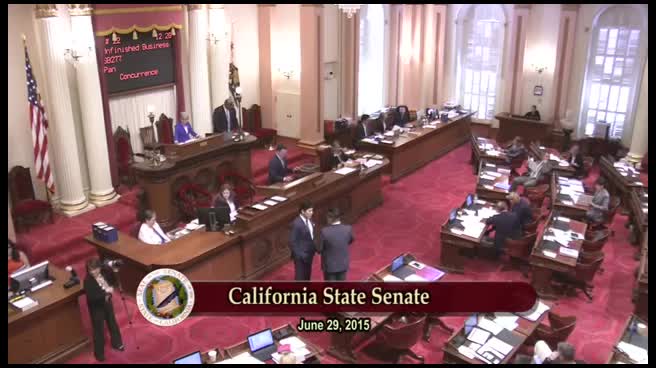
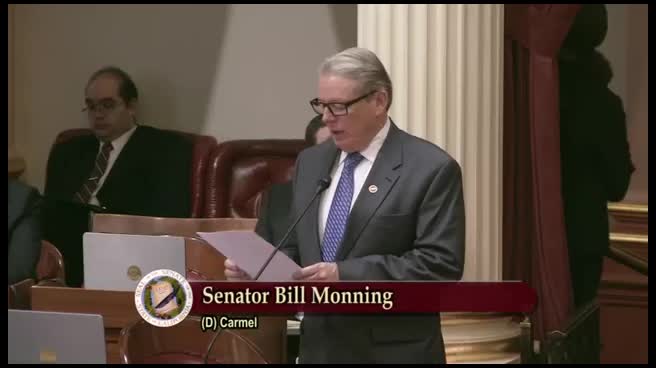
| Jun 29, 2015 | Unfinished Business SB242 Monning Concurrence | Senate Floor |
Passed |
|
| Jun 25, 2015 | SB 242 Monning Senate Third Reading By WEBER | Assembly Floor |
Passed |
|
| Jun 17, 2015 | Do pass as amended. | Assembly Standing Committee on Education |
Passed |
|
| Apr 30, 2015 | Senate 3rd Reading SB242 Monning | Senate Floor |
Passed |
|
| Apr 21, 2015 | Do pass | Senate Standing Committee on Public Safety |
Passed |
|
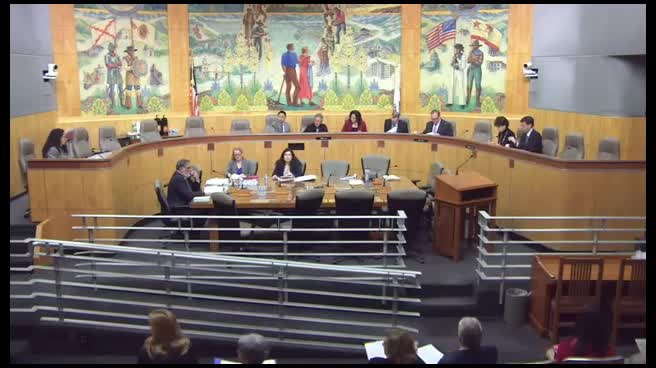
| Mar 25, 2015 | Do pass as amended, but first amend, and re-refer to the Committee on [Public Safety] | Senate Standing Committee on Education |
Passed |
This list shows positions taken on this bill by organizations on the date displayed, which is linked to the original source.
Positions by individuals are not included.
SB 242
Page 4
|
Office of Senate Floor Analyses (916) 651-1520 Fax: (916) 327-4478 |
UNFINISHED BUSINESS
Bill No: SB 242
Amended: 6/22/15
SENATE EDUCATION COMMITTEE: 7-1, 3/25/15
AYES: Liu, Block, Hancock, Leyva, Mendoza, Pan, Vidak
NOES: Huff
SENATE PUBLIC SAFETY COMMITTEE: 6-1, 4/21/15
AYES: Hancock, Anderson, Leno, Liu, McGuire, Monning
NOES: Stone
SENATE FLOOR: 31-5, 4/30/15
AYES: Allen, Anderson, Bates, Beall, Block, Cannella, De León, Gaines, Galgiani, Hall, Hancock, Hernandez, Hertzberg, Hill, Hueso, Jackson, Lara, Leno, Leyva, Liu, McGuire, Mendoza, Mitchell, Monning, Moorlach, Nguyen, Pan, Pavley, Roth, Wieckowski, Wolk
NOES: Berryhill, Huff, Morrell, Nielsen, Stone
NO VOTE RECORDED: Fuller, Runner, Vidak
ASSEMBLY FLOOR: 64-14, 6/25/15 - See last page for vote
SUBJECT: School security: surplus military equipment
DIGEST: This bill requires a school district’s police department to obtain approval from its governing board prior to receiving federal surplus military equipment.
Assembly Amendments require the governing board of a school district to provide a detailed description of the function and purpose of the military equipment being acquired.
ANALYSIS: Existing federal law authorizes, through the National Defense Authorization Act, the Secretary of Defense to transfer excess Department of Defense personal property that it determines suitable for use in law enforcement activities to federal, state, and local law enforcement jurisdictions, with special emphasis given to counter drug and counter terrorism (commonly referred to as the 1033 Program). The authorities granted to the Secretary of Defense have been delegated to the Defense Logistics Agency Law Enforcement Support Office in determining whether property is suitable for use by these agencies. The Defense Logistics Agency defines law enforcement activities as those performed by government agencies whose primary function is the enforcement of applicable federal, state, and local laws and whose compensated law enforcement officers have powers of arrest and apprehension. The law enforcement agencies must be authorized and certified annually to participate.
Existing state law:
Allows the governing board of a school district to establish a school district police department. These police departments are fully accredited with sworn peace officers. Approximately 20 school districts in the state have established police departments. (Education Code § 38000)
Provides the Governor’s Office of Emergency Services implement the 1033 Program in California and conduct management and oversight of the program through the California Public Safety Procurement Program. The Office of Emergency Services also provides support and technical assistance to law enforcement agencies participating (or interested in participating) in the program.
This bill prohibits the governing board of a school district that establishes a school police department from permitting the school police department to receive federal surplus military equipment, as specified, unless the governing board does all of the following:
Votes to approve the acquisition of surplus military equipment at a regularly scheduled public board meeting.
Provides parents or guardians and other members of the public a chance to comment at a regularly scheduled public board meeting on the proposed acquisition of surplus military equipment, and clearly and in a manner recognizable to the general public, identify in the agenda the topic to be discussed at the meeting.
Provides a detailed description of the function and purpose of the surplus military equipment to be received.
Identifies safe and secure storage for surplus military equipment to be received by a school police department.
Ensures that peace officers employed by a school police department possess adequate training in the safe use and handling of the surplus military equipment to be received.
Comments
Need for the bill. According to the author’s office, when school police departments receive surplus military equipment, there is often no training provided on the proper use of the equipment. Additionally, the weapons and supplies that are received often occur without the approval or knowledge of the elected school boards and with almost no inclusion or input from community members and parents about the decision to acquire the equipment which will be used in policing the schools. The author’s office cites the San Diego Unified School District’s (SDUSD) receipt of a 14 ton Mine Resistant and Ambush Proof (MRAP) vehicle worth over $700,000 and the Los Angeles Unified School District’s (LAUSD) receipt of an MRAP vehicle along with sixty-one M-16 automatic rifles and three 40mm M-79 grenade launchers. The bill is intended to ensure community involvement and a parental voice in decisions made by school district police departments and require greater transparency in the acquisition of surplus military equipment.
Public Criticism. There has been national media attention surrounding the federal 1033 Program and the transfer of surplus military weaponry to school police departments, including coverage in the Fall of 2014 on the SDUSD and LAUSD. Some questioned the appropriateness of having military-grade weapons, such as the M-16 automatic rifles that LAUSD received (but modified to semiautomatic), on others went on to trigger a broader conversation of having militarized local school police departments and how it can create or increase tension between students and school police.
Since 1997, the 1033 Program has provided over $5.1 billion of military equipment to thousands of local law enforcement agencies throughout the country, including more than 120 school district police departments that serve K-12 students.
FISCAL EFFECT: Appropriation: No Fiscal Com.: No Local: No
California Parents and Teachers Association
California State Conference of the National Association for the Advancement of Colored People
OPPOSITION: (Verified 6/25/15)
California Police Chiefs Association
ASSEMBLY FLOOR: 64-14, 6/25/15
AYES: Achadjian, Alejo, Bloom, Bonilla, Bonta, Brown, Burke, Calderon, Campos, Chau, Chávez, Chiu, Chu, Cooley, Cooper, Dababneh, Dahle, Daly, Dodd, Eggman, Frazier, Cristina Garcia, Eduardo Garcia, Gatto, Gipson, Gomez, Gonzalez, Gordon, Gray, Hadley, Roger Hernández, Holden, Irwin, Jones-Sawyer, Lackey, Levine, Linder, Lopez, Low, Maienschein, Mayes, McCarty, Medina, Mullin, Nazarian, Obernolte, O'Donnell, Olsen, Perea, Quirk, Rendon, Ridley-Thomas, Rodriguez, Salas, Santiago, Steinorth, Mark Stone, Thurmond, Ting, Weber, Wilk, Williams, Wood, Atkins
NOES: Travis Allen, Baker, Bigelow, Brough, Chang, Beth Gaines, Gallagher, Grove, Harper, Kim, Mathis, Patterson, Wagner, Waldron
NO VOTE RECORDED: Jones, Melendez
Prepared by: Lenin Del Castillo / ED. / (916) 651-4105
6/26/15 13:27:31
**** END ****
SB 242
Page 3
SENATE THIRD READING
SB 242
(Monning)
As Amended June 22, 2015
Majority vote
SENATE VOTE: 31-5
Committee |
Votes |
Ayes |
Noes |
Education |
6-1 |
O'Donnell, Chávez, McCarty, Santiago, Thurmond, Weber |
Kim |
SUMMARY: Requires the governing board of a school district that establishes a school police department to prohibit the school police department from receiving surplus military equipment pursuant to United States Code Title 10, Section 257a unless the school district does all of the following:
Votes to approve the acquisition of surplus military equipment at a regularly scheduled public board meeting.
Provides parents or guardians of pupils, and other members of the public, a chance to comment at a regularly scheduled public board meeting on the proposed acquisition of surplus military equipment, and, clearly and in a manner recognizable to the general public, identify in the agenda the topic to be discussed at the meeting.
Provides a detailed description of the function and purpose of the surplus military equipment to be received.
Identifies safe and secure storage for surplus military equipment to be received by a school police department.
Ensures that peace officers employed by a school police department possess adequate training in the safe use and handling of the surplus military equipment to be received.
FISCAL EFFECT: None. This bill is keyed non-fiscal by the Legislative Counsel.
COMMENTS: School security and police departments. Governing boards are authorized to establish security departments headed by a Chief of Security and a police department headed by a chief of police. Security departments are considered supplementary to city and county law enforcement agencies and are not vested with general police powers. Individuals employed and compensated as members of a police department of a school district, when appointed and duly sworn, are considered peace officers with arrest powers. There is no data on the number of school districts that maintain school police departments; the estimate is about 22. Larger districts are more likely than smaller districts to have school police departments.
What does this bill do? This bill specifies that the governing board of a school district that maintains a school police department shall not permit the school police department to receive federal surplus military equipment unless the governing board of the school district votes to approve the acquisition of the equipment at a regularly scheduled public board meeting, provides specified information, and gives the public a chance to comment on the proposed acquisition at the board meeting.
The author states, "The weapons and supplies received by school police departments are often sought without the approval or knowledge of the elected school boards that have statutory control over them. There is also almost no inclusion or input from community members and parents about the decision to acquire the military equipment that will be used in policing schools. This lack of transparency can be frustrating for parents who believe they should be notified when military-grade equipment may be used around students who can be as young as 5 years old in a K-12 school setting."
Federal 1033 program. The National Defense Authorization Act authorizes the Secretary of Defense to transfer excess property that it determines suitable for use in law enforcement activities to federal, state, and local law enforcement jurisdictions. This is referred to as the 1033 Program. The Defense Logistics Agency (DLA) Law Enforcement Support Office is assigned to determine whether property is suitable for use by these agencies. The DLA defines law enforcement activities as those performed by government agencies whose primary function is the enforcement of applicable federal, state, and local laws and whose compensated law enforcement officers have powers of arrest and apprehension. The law enforcement agencies must be authorized and certified annually to participate.
The Governor’s Office of Emergency Services implements the 1033 Program in California and conducts management and oversight of the program through the California Public Safety Procurement Program. The Office of Emergency Services also provides support and technical assistance to law enforcement agencies participating (or interested in participating) in the program.
Since 1997, the 1033 Program has provided over $5.1 billion of military equipment to thousands of local law enforcement agencies throughout the country, including more than 120 school district police departments that serve K-12 students. According to a September 12, 2014, article by the Huffington Post, the following school districts in California have received federal surplus military equipment:
Baldwin Park School Police Department |
|
Kern High School District Police |
|
Los Angeles School Police Department |
|
Oakland Unified School Police |
|
San Diego Unified Schools Police |
|
Executive Order. Last month, President Obama issued an executive order based on recommendations from the Law Enforcement Equipment Working Group, formed following the death of Michael Brown and the outcry from the local community and social justice organizations over police use of federal military equipment to confront protectors in Ferguson, Missouri.
The Executive Order established a "prohibited equipment list" that would not be available to any local law enforcement agency, including tracked armored vehicles, bayonets, grenade launchers, large caliber weapons and ammunition. The Executive Order also established a "controlled equipment list," which are categories of equipment that local law enforcement agencies may acquire, if they provide specified information and meet specified requirements. The controlled list includes wheeled armored or tactical vehicles, specialized firearms and ammunition, explosives and pyrotechnics, and riot equipment. However, the executive order appears to specifically exclude law enforcement agencies that solely serve K-12 schools from acquiring any equipment. The Governor's Office of Emergency Services is waiting for guidance from the federal law enforcement support office on the interpretation of the Executive Order.
The author's office states that even if the Executive Order halts the future acquisition of military equipment by school police departments, it would be the result of an Executive Order, which could be changed or eliminated at any time. The author believes that enacting state law requiring a local governing board to deliberate whether a school district police department should acquire military equipment will ensure that there is an opportunity to provide community input in the event the Executive Order is changed or removed.
Arguments in support. The California State Conference of the National Association for the Advancement of Colored People states, "The militarization of campus law enforcement agencies is becoming increasingly disturbing. Often times, there is little to no training provided for the equipment that the campus law enforcement agencies request. [SB] 242 is good policy in that it will ensure that governing boards, parents, and teachers are aware of law enforcements access to military equipment."
Arguments in opposition. The California Police Chiefs Association opposes this bill and states, "The California Police Chiefs Association supports transparency, community involvement, and responsible decision making. Unfortunately, SB 242 puts California school law enforcement at a significant disadvantage. While other law enforcement agencies around the country can quickly apply to receive surplus military equipment, interested California school agencies will be stalled and frozen out of the process."
Analysis Prepared by: Sophia Kwong Kim / ED. / (916) 319-2087 FN: 0001074
SB 242
Page 4
Date of Hearing: June 17, 2015
ASSEMBLY COMMITTEE ON EDUCATION
Patrick O'Donnell, Chair
SB 242
(Monning) – As Amended April 7, 2015
SENATE VOTE: 31-5
SUBJECT: School security: surplus military equipment.
SUMMARY: Requires the governing board of a school district that establishes a school police department to prohibit the school police department from receiving surplus military equipment pursuant to Section 257a of Title 10 of the United States Code unless the school district does all of the following:
Votes to approve the acquisition of surplus military equipment at a regularly scheduled public board meeting.
Provides parents or guardians of pupils, and other members of the public, a chance to comment at a regularly scheduled public board meeting on the proposed acquisition of surplus military equipment, and, clearly and in a manner recognizable to the general public, identify in the agenda the topic to be discussed at the meeting.
Identifies safe and secure storage for surplus military equipment to be received by a school police department.
Ensures that peace officers employed by a school police department possess adequate training in the safe use and handling of the surplus military equipment to be received.
EXISTING LAW:
Authorizes the governing board of any school district to establish a security department under the supervision of a chief of security or a police department under the supervision of a chief of police, as designated by, and under the direction of, the superintendent of the school district.
Authorizes the governing board of a school district to establish a school police reserve officer corps to supplement a police department
Specifies that individuals employed by a police department, when appointed and duly sworn, are peace officers and may carry firearms.
Requires the governing board of a school district that establishes a security department or a police department to set minimum qualifications of employment for the chief of security or school chief of police, respectively, including, but not limited to, prior employment as a peace officer or completion of a peace officer training course approved by the Commission on Peace Officer Standards and Training.
Authorizes the governing board of a school district which establishes a security or police department to provide and maintain motor vehicles for the use of the department. Specifies that any vehicle, when operated in the performance of his or her duties by any member of the police department, is an authorized emergency vehicle and may be equipped and operated as such as provided by the Vehicle Code.
FISCAL EFFECT: None. This bill is keyed non-fiscal by the Legislative Counsel.
COMMENTS: School security and police departments. Governing boards are authorized to establish security departments headed by a Chief of Security and a police department headed by a chief of police. Security departments are considered supplementary to city and county law enforcement agencies and are not vested with general police powers. Individuals employed and compensated as members of a police department of a school district, when appointed and duly sworn, are considered peace officers with arrest powers. There is no data on the number of school districts that maintain school police departments; the estimate is about 22. Larger districts are more likely than smaller districts to have school police departments.
What does this bill do? This bill specifies that the governing board of a school district that maintains a school police department shall not permit the school police department to receive federal surplus military equipment, unless the governing board of the school district does all of the following:
Votes to approve the acquisition of the equipment at a regularly scheduled public board meeting.
Provides parents or guardians of pupils, and other members of the public, a chance to comment at a regularly scheduled public board meeting on the proposed acquisition of surplus military equipment, and clearly and in a manner recognizable to the general public, identify the topic to be discussed at the meeting.
Identifies safe and secure storage for surplus military equipment to be received by a school police department.
Ensures that peace officers employed by a school police department possess adequate training in the safe use and handling of the surplus military equipment to be received
The author states, "The weapons and supplies received by school police departments are often sought without the approval or knowledge of the elected school boards that have statutory control over them. There is also almost no inclusion or input from community members and parents about the decision to acquire the military equipment that will be used in policing schools. This lack of transparency can be frustrating for parents who believe they should be notified when military-grade equipment may be used around students who can be as young as 5 years old in a K-12 school setting."
Federal 1033 program. The National Defense Authorization Act authorizes the Secretary of Defense to transfer excess property that it determines suitable for use in law enforcement activities to federal, state, and local law enforcement jurisdictions. This is referred to as the 1033 Program. The Defense Logistics Agency (DLA) Law Enforcement Support Office is assigned to determine whether property is suitable for use by these agencies. The DLA defines law enforcement activities as those performed by government agencies whose primary function is the enforcement of applicable federal, state, and local laws and whose compensated law enforcement officers have powers of arrest and apprehension. The law enforcement agencies must be authorized and certified annually to participate.
The Governor’s Office of Emergency Services implements the 1033 Program in California and conducts management and oversight of the program through the California Public Safety Procurement Program. The Office of Emergency Services also provides support and technical assistance to law enforcement agencies participating (or interested in participating) in the program.
Since 1997, the 1033 Program has provided over $5.1 billion of military equipment to thousands of local law enforcement agencies throughout the country, including more than 120 school district police departments that serve K-12 students. According to a September 12, 2014 article by the Huffington Post, the following school districts in California have received federal surplus military equipment:
Baldwin Park School Police Department: 3 M16 assault rifles
Kern High School District Police: 30 magazine pouches for M4 assault rifle
ammunition
Los Angeles School Police Department: 61 M16 assault rifles, 3 M79 grenade
launchers, 1 mine-resistant vehicle (Los
Angeles Unified School District
announced later that it was returning the
three grenade launchers)
Oakland Unified School Police: tactical utility truck
San Diego Unified Schools Police: 1 mine-resistant vehicle
Executive Order. Last month, President Obama issued an executive order based on recommendations from the Law Enforcement Equipment Working Group, formed following the death of Michael Brown and the outcry from the local community and social justice organizations over police use of federal military equipment to confront protectors in Ferguson, Missouri.
The Executive Order established a "prohibited equipment list" that would not be available to any local law enforcement agency, including tracked armored vehicles, bayonets, grenade launchers, large caliber weapons and ammunition. The Executive Order also established a "controlled equipment list," which are categories of equipment that local law enforcement agencies may acquire, if they provide specified information and meet specified requirements. The controlled list includes wheeled armored or tactical vehicles, specialized firearms and ammunition, explosives and pyrotechnics, and riot equipment. However, the executive order appears to specifically exclude law enforcement agencies that solely serve schools with grades ranging from kindergarten through grade 12 from acquiring any equipment. The Governor's Office of Emergency Services is waiting for guidance from the federal law enforcement support office on the interpretation of the Executive Order.
The author's office states that even if the Executive Order halts the future acquisition of military equipment by school police departments, it would be the result of an Executive Order, which could be changed or eliminated at any time. The author believes that enacting state law requiring a local governing board to deliberate whether a school district police department should acquire military equipment will ensure that there is an opportunity to provide community input in the event the Executive Order is changed or removed.
Committee amendment. A prior version of this bill required the governing board to provide a detailed description of the function and purpose of the equipment. Staff recommends reinstating this requirement.
Arguments in support. The California State Conference of the National Association for the Advancement of Colored People states, "The militarization of campus law enforcement agencies is becoming increasingly disturbing. Often times, there is little to no training provided for the equipment that the campus law enforcement agencies request. AB 242 is good policy in that it will ensure that governing boards, parents, and teachers are aware of law enforcements access to military equipment."
Arguments in opposition. The California Police Chiefs Association opposes the bill and states, "The California Police Chiefs Association supports transparency, community involvement, and responsible decision making. Unfortunately, SB 242 puts California school law enforcement at a significant disadvantage. While other law enforcement agencies around the country can quickly apply to receive surplus military equipment, interested California school agencies will be stalled and frozen out of the process."
Related legislation. AB 36 (Campos), pending in the Senate Governance and Finance Committee, prohibits county, whether general law or chartered, city and county, town, school district, municipal corporation, district, political subdivision, or any board, commission, or agency thereof, or other local public agency from receiving surplus military equipment from the federal government, unless the acquisition is approved at a regular meeting by the legislative body of the agency.
REGISTERED SUPPORT / OPPOSITION:
Support
California State Conference of the NAACP
California State PTA
Opposition
California Police Chiefs Association
Analysis Prepared by: Sophia Kwong Kim / ED. / (916) 319-2087
SB 242
Page 4
|
Office of Senate Floor Analyses (916) 651-1520 Fax: (916) 327-4478 |
THIRD READING
Bill No: SB 242
Amended: 4/7/15
SENATE EDUCATION COMMITTEE: 7-1, 3/25/15
AYES: Liu, Block, Hancock, Leyva, Mendoza, Pan, Vidak
NOES: Huff
SENATE PUBLIC SAFETY COMMITTEE: 6-1, 4/21/15
AYES: Hancock, Anderson, Leno, Liu, McGuire, Monning
NOES: Stone
SUBJECT: School security: surplus military equipment
DIGEST: This bill requires a school district’s police department to obtain approval from its governing board prior to receiving federal surplus military equipment.
ANALYSIS: Existing federal law authorizes, through the National Defense Authorization Act, the Secretary of Defense to transfer excess Department of Defense personal property that it determines suitable for use in law enforcement activities to federal, state, and local law enforcement jurisdictions, with special emphasis given to counter drug and counter terrorism (commonly referred to as the 1033 Program). The authorities granted to the Secretary of Defense have been delegated to the Defense Logistics Agency Law Enforcement Support Office in determining whether property is suitable for use by these agencies. The Defense Logistics Agency defines law enforcement activities as those performed by government agencies whose primary function is the enforcement of applicable federal, state, and local laws and whose compensated law enforcement officers have powers of arrest and apprehension. The law enforcement agencies must be authorized and certified annually to participate.
Existing state law:
Allows the governing board of a school district to establish a school district police department. These police departments are fully accredited with sworn peace officers. Approximately 20 school districts in the state have established police departments. (Education Code § 38000)
Provides the Governor’s Office of Emergency Services implement the 1033 Program in California and conduct management and oversight of the program through the California Public Safety Procurement Program. The Office of Emergency Services also provides support and technical assistance to law enforcement agencies participating (or interested in participating) in the program.
This bill prohibits the governing board of a school district that establishes a school police department from permitting the school police department to receive federal surplus military equipment, as specified, unless the governing board does all of the following:
Votes to approve the acquisition of surplus military equipment at a regularly scheduled public board meeting.
Provides parents or guardians and other members of the public a chance to comment at a regularly scheduled public board meeting on the proposed acquisition of surplus military equipment, and clearly and in a manner recognizable to the general public, identify in the agenda the topic to be discussed at the meeting.
Identifies safe and secure storage for surplus military equipment to be received by a school police department.
Ensures that peace officers employed by a school police department possess adequate training in the safe use and handling of the surplus military equipment to be received.
Comments
Need for the bill. According to the author’s office, when school police departments receive surplus military equipment, there is often no training provided on the proper use of the equipment. Additionally, the weapons and supplies that are received often occur without the approval or knowledge of the elected school boards and with almost no inclusion or input from community members and parents about the decision to acquire the equipment which will be used in policing the schools. The author’s office cites the San Diego Unified School District’s (SDUSD) receipt of a 14 ton Mine Resistant and Ambush Proof (MRAP) vehicle worth over $700,000 and the Los Angeles Unified School District’s (LAUSD) receipt of an MRAP vehicle along with sixty-one M-16 automatic rifles and three 40mm M-79 grenade launchers. The bill is intended to ensure community involvement and a parental voice in decisions made by school district police departments and require greater transparency in the acquisition of surplus military equipment.
Public Criticism. There has been national media attention surrounding the federal 1033 Program and the transfer of surplus military weaponry to school police departments, including coverage in the Fall of 2014 on the SDUSD and LAUSD. Some questioned the appropriateness of having military-grade weapons, such as the M-16 automatic rifles that LAUSD received (but modified to semiautomatic), on others went on to trigger a broader conversation of having militarized local school police departments and how it can create or increase tension between students and school police.
Since 1997, the 1033 Program has provided over $5.1 billion of military equipment to thousands of local law enforcement agencies throughout the country, including more than 120 school district police departments that serve K-12 students.
FISCAL EFFECT: Appropriation: No Fiscal Com.: No Local: No
California State Conference of the National Association for the Advancement of Colored People
California Parents and Teachers Association
OPPOSITION: (Verified 4/22/15)
None received
ARGUMENTS IN SUPPORT: Supporters argue that this bill seeks to ensure community involvement and greater transparency if a school police department elects to acquire military equipment. In turn, this could help a school district make more informed decisions and also prevent public outcry and concerns from the community.
Prepared by: Lenin Del Castillo / ED. / (916) 651-4105
4/24/15 16:13:11
**** END ****
SB 242 (Monning ) Page 6 of 6
SENATE COMMITTEE ON PUBLIC SAFETY
Senator Loni Hancock, Chair
2015 - 2016 Regular
Bill No: SB 242 Hearing Date: April 21, 2015
Author: |
Monning |
||
Version: |
April 7, 2015 |
||
Urgency: |
No |
Fiscal: |
No |
Consultant: |
JRD |
||
Subject: School Security: Surplus Military Equipment.
HISTORY
Source: Author
Prior Legislation: None known
Support: California State Conference of the National Association for the Advancement of Colored People; California Parents and Teachers Association
Opposition: None known
PURPOSE
The purpose of the bill is to require a school district’s police department to obtain approval from its governing board prior to receiving federal surplus military equipment.
Under existing law the governing board of a school district may establish a school police department under the supervision of a school chief of police and may employ peace officers, as specified, to ensure the safety of school district personnel and pupils, and the security of the real and personal property of the school district. (Education Code § 38000(b).)
Under existing law the governing board of a school district that establishes a police department must set minimum qualifications of employment for the school chief of police, including, but not limited to, prior employment as a peace officer or completion of a peace officer training course approved by the Commission on Peace Officer Standards and Training. (Education Code § 38000(c).)
Under existing law persons employed and compensated as members of a police department of a school district, when appointed and duly sworn, are peace officers, for the purposes of carrying out their duties of employment pursuant to Section 830.32 of the Penal Code. (Education Code §38001.)
Under existing law following persons are peace officers whose authority extends to any place in the state for the purpose of performing their primary duty, or when making an arrest as to any public offense with respect to which there is immediate danger to person or property, or of the escape of the perpetrator of that offense, as specified. These peace officers may carry firearms only if authorized and under terms and conditions specified by their employing agency. These peace officers include:
Members of a California Community College police department, as specified.
Persons employed as members of a police department of a school district, as specified.
Any peace officer employed by a K-12 public school district or California Community College district, as specified.
(Penal Code § 830.32.)
This bill prohibits the governing board of a school district that establishes a school police department from permitting the school police department to receive federal surplus military equipment, as specified, unless the governing board does all of the following:
Votes to approve the acquisition of surplus military equipment at a regularly scheduled public board meeting;
Provides parents or guardians and other members of the public a chance to comment at a regularly scheduled public board meeting on the proposed acquisition of surplus military equipment, and clearly and in a manner recognizable to the general public, identify in the agenda the topic to be discussed at the meeting;
Identifies safe and secure storage for surplus military equipment to be received by a school police department; and,
Ensures that peace officers employed by a school police department possess adequate training in the safe use and handling of the surplus military equipment to be received.
RECEIVERSHIP/OVERCROWDING CRISIS AGGRAVATION
For the past eight years, this Committee has scrutinized legislation referred to its jurisdiction for any potential impact on prison overcrowding. Mindful of the United States Supreme Court ruling and federal court orders relating to the state’s ability to provide a constitutional level of health care to its inmate population and the related issue of prison overcrowding, this Committee has applied its “ROCA” policy as a content-neutral, provisional measure necessary to ensure that the Legislature does not erode progress in reducing prison overcrowding.
On February 10, 2014, the federal court ordered California to reduce its in-state adult institution population to 137.5% of design capacity by February 28, 2016, as follows:
143% of design bed capacity by June 30, 2014;
141.5% of design bed capacity by February 28, 2015; and,
137.5% of design bed capacity by February 28, 2016.
In February of this year the administration reported that as “of February 11, 2015, 112,993 inmates were housed in the State’s 34 adult institutions, which amounts to 136.6% of design bed capacity, and 8,828 inmates were housed in out-of-state facilities. This current population is now below the court-ordered reduction to 137.5% of design bed capacity.”( Defendants’ February 2015 Status Report In Response To February 10, 2014 Order, 2:90-cv-00520 KJM DAD PC, 3-Judge Court, Coleman v. Brown, Plata v. Brown (fn. omitted).
While significant gains have been made in reducing the prison population, the state now must stabilize these advances and demonstrate to the federal court that California has in place the “durable solution” to prison overcrowding “consistently demanded” by the court. (Opinion Re: Order Granting in Part and Denying in Part Defendants’ Request For Extension of December 31, 2013 Deadline, NO. 2:90-cv-0520 LKK DAD (PC), 3-Judge Court, Coleman v. Brown, Plata v. Brown (2-10-14). The Committee’s consideration of bills that may impact the prison population therefore will be informed by the following questions:
Whether a proposal erodes a measure which has contributed to reducing the prison population;
Whether a proposal addresses a major area of public safety or criminal activity for which there is no other reasonable, appropriate remedy;
Whether a proposal addresses a crime which is directly dangerous to the physical safety of others for which there is no other reasonably appropriate sanction;
Whether a proposal corrects a constitutional problem or legislative drafting error; and
Whether a proposal proposes penalties which are proportionate, and cannot be achieved through any other reasonably appropriate remedy.
COMMENTS
1. Need for Legislation
According to the Author:
Education Code Section 38000 allows for a school district board to establish a police department to service a school district and the surrounding community. The police officers who serve in these departments are fully trained, POST-certified peace officers. Some of these school district police departments have elected to apply for and receive military surplus and weapons through the US Department of Defense’s 1033 Program, coordinated through the Governor's Office of Emergency Services in California.
The 1033 program has provided over $5.1 billion worth of military weapons and supplies to law enforcement agencies throughout the county, including over 120 school district police departments. In California, there have been a number of high-profile instances where school districts have received these items such as with San Diego Unified School District, which received a 14-ton Mine Resistant and Ambush Proof (MRAP) vehicle, and Los Angeles Unified School District, which also received an MRAP, sixty-one M-16 automatic rifles, and three 40mm M-79 grenade launchers. While school boards have statutory authority over the school police departments they authorize, the weapons and supplies received by these school police departments are often sought without the approval or knowledge of their elected school boards. This lack of notification is made worse by not including parents, teachers, and community members in the discussion of whether these materials should even be part of the school or community policing strategy.
SB 242 seeks to remedy this lack of transparency and ensure community involvement and a parental voice in policing decisions made by school district police departments. The measure will require that before a school district police department is permitted to receive military surplus items through the Federal 1033 Program, the governing school board must: publicly vote to approve the acquisition of equipment; provide parents, guardians, and community members a chance to publicly comment on the proposal at a regularly scheduled meeting of the board; provide parents with written notice and a detailed description of the military equipment’s functions and purpose; and identify safe storage of the equipment.
2. Effect of the Legislation
The National Defense Authorization Act authorizes the Secretary of Defense to transfer excess property that it determines suitable for use in law enforcement activities to federal, state, and local law enforcement jurisdictions. This is referred to as the 1033 Program. The Defense Logistics Agency (DLA) Law Enforcement Support Office in assigned to determine whether property is suitable for use by these agencies. The DLA defines law enforcement activities as those performed by government agencies whose primary function is the enforcement of applicable federal, state, and local laws and whose compensated law enforcement officers have powers of arrest and apprehension. The law enforcement agencies must be authorized and certified annually to participate.
The Governor’s Office of Emergency Services implements the 1033 Program in California and conducts management and oversight of the program through the California Public Safety Procurement Program. The Office of Emergency Services also provides support and technical assistance to law enforcement agencies participating (or interested in participating) in the program.
Since 1997, the 1033 Program has provided over $5.1 billion of military equipment to thousands of local law enforcement agencies throughout the country, including more than 120 school district police departments that serve K-12 students.
There has been national media attention surrounding the 1033 Program and the transfer of surplus military weaponry to school police departments.
[S]ix California school district police departments received equipment from the Department of Defense Excess Property Program, also known as the 1033 Program. The details:
Baldwin Park School Police Department: 3 M16 assault rifles
Kern High School District Police: 30 magazine pouches for M4 assault rifle ammunition
Los Angeles School Police Department: 61 M16 assault rifles, 3 M79 grenade launchers, 1 mine-resistant vehicle
Oakland Unified School Police: utility truck
San Diego Unified Schools Police: 1 mine-resistant vehicle
The M16s were valued at $499 each, the grenade launchers at $720, and the mine-resistant vehicles, or MRAPs, at $733,000.
The Pentagon has been giving surplus military equipment to state and local law enforcement agencies for more than a decade. The militarized police response in Ferguson, Missouri, to protests over the police killing of teenager Michael Brown has prompted some lawmakers to question the use of the military equipment by police. A recent poll found that 51 percent of Americans think it's unnecessary for police to use military weapons for law enforcement.
“The only thing that I know of is a rescue vehicle,” Los Angeles School Police Department Sgt. Steve Mayoral explained to The Huffington Post when asked about the rifles, grenade launchers and armored vehicle -- by far the largest haul by a school police department in the state. Mayoral said school police intend to use the mine-resistant vehicle for rescue emergencies. He said he could not confirm the status of the rifles and grenade launchers.
A Los Angeles Unified School District spokesperson who requested anonymity confirmed school police received the gear noted in the report. The district, which has 400 sworn officers, has been receiving military weaponry since 2001, the spokesperson said.
The M16 rifles the district received have been modified to fire only one shot with each pull of the trigger, and have only been used in training, the spokesperson said. An officer must complete 40 hours of training before using the military rifle, the spokesperson said.
The spokesperson said the grenade launchers are the type some police departments use for tear gas and have never been used by the school district, which doesn’t have munitions for them. The armored vehicle was received over the summer and hasn’t been deployed yet.
The spokesperson said one reason the school district sought the military gear was to prepare for a mass shooting incident like Columbine High School or Sandy Hook Elementary School.
The other California school district that received a mine-resistant vehicle was the San Diego Unified School District Police Department, which, according to NBC San Diego, intends to convert it into a “victim rescue vehicle.”
“We recognize the public concern over perceived ‘militarization of law enforcement,’ but nothing could be further from the truth for School Police,” San Diego school police Capt. Joseph Florentino explained, NBC San Diego reported.
(California School Cops Received Military Rifles, Grenade Launchers, Armored Vehicles, Matt Ferner, Huffington Post, September 12, 2014, http://www.huffingtonpost.com/2014/09/12/ militarized-police-california_n_5813014.html.)
This bill would not prevent school police departments from accessing surplus military equipment. The bill, instead, seeks to ensure community involvement and greater transparency if a school police department elects to acquire military equipment.
-- END –
SB 242 (Monning) Page 3 of 3
SENATE COMMITTEE ON EDUCATION
Senator Carol Liu, Chair
2015 - 2016 Regular
Bill No: SB 242
Author: |
Monning |
||
Version: |
February 17, 2015 Hearing Date: March 25, 2015 |
||
Urgency: |
No |
Fiscal: |
No |
Consultant: |
Lenin Del Castillo |
||
Subject: School security: surplus military equipment
NOTE: This bill has been referred to the Committees on Education and Public Safety. ………… A "do pass" motion should include referral to the Committee on Public Safety.
SUMMARY
This bill would require a school district’s police department to obtain approval from its governing board prior to receiving federal surplus military equipment.
BACKGROUND
Existing law allows the governing board of a school district to establish a school district police department. These police departments are fully accredited with sworn peace officers. Approximately 20 school districts in the state have established police departments. (Education Code § 38000)
The National Defense Authorization Act authorizes the Secretary of Defense to transfer excess Department of Defense personal property that it determines suitable for use in law enforcement activities to federal, state, and local law enforcement jurisdictions, with special emphasis given to counter drug and counter terrorism (commonly referred to as the 1033 Program). The authorities granted to the Secretary of Defense have been delegated to the Defense Logistics Agency (DLA) Law Enforcement Support Office in determining whether property is suitable for use by these agencies. The DLA defines law enforcement activities as those performed by government agencies whose primary function is the enforcement of applicable federal, state, and local laws and whose compensated law enforcement officers have powers of arrest and apprehension. The law enforcement agencies must be authorized and certified annually to participate.
The Governor’s Office of Emergency Services implements the 1033 Program in California and conducts management and oversight of the program through the California Public Safety Procurement Program. The Office of Emergency Services also provides support and technical assistance to law enforcement agencies participating (or interested in participating) in the program.
Since 1997, the 1033 Program has provided over $5.1 billion of military equipment to thousands of local law enforcement agencies throughout the country, including more than 120 school district police departments that serve K-12 students.
ANALYSIS
This bill prohibits the governing board of a school district that establishes a school police department from permitting the school police department to receive federal surplus military equipment, as specified, unless the governing board does all of the following:
Votes to approve the acquisition of surplus military equipment at a regularly scheduled public board meeting.
Provides parents or guardians and other members of the public a chance to comment at a regularly scheduled public board meeting on the proposed acquisition of surplus military equipment, and clearly and in a manner recognizable to the general public, identify in the agenda the topic to be discussed at the meeting.
Provides written notice to the parents or guardians of what surplus military equipment the school police department will receive, and a detailed description of the function and purpose of that equipment.
Identifies safe and secure storage for surplus military equipment to be received by a school police department.
Ensures that peace officers employed by a school police department possess adequate training in the safe use and handling of the surplus military equipment to be received.
STAFF COMMENTS
Need for the bill. According to the author’s office, when school police departments receive surplus military equipment, there is often no training provided on the proper use of the equipment. Additionally, the weapons and supplies that are received often occur without the approval or knowledge of the elected school boards and with almost no inclusion or input from community members and parents about the decision to acquire the equipment which will be used in policing the schools. The author’s office cites the San Diego Unified School District’s (SDUSD) receipt of a 14 ton Mine Resistant and Ambush Proof (MRAP) vehicle worth over $700,000 and the Los Angeles Unified School District’s (LAUSD) receipt of an MRAP vehicle along with sixty-one M-16 automatic rifles and three 40mm M-79 grenade launchers.
The bill is intended to ensure community involvement and a parental voice in decisions made by school district police departments and require greater transparency in the acquisition of surplus military equipment.
Public Criticism. There has been national media attention surrounding the federal 1033 Program and the transfer of surplus military weaponry to school police departments, including coverage in the Fall of 2014 on the SDUSD and LAUSD. Some questioned the appropriateness of having military-grade
weapons, such as the M-16 automatic rifles that LAUSD received (but modified to semiautomatic), on others went on to trigger a broader conversation of having militarized local school police departments and how it can create or increase tension between students and school police.
This bill does not propose to prevent school police departments from accessing surplus military equipment, which can also include more than weapons, such as computers, tools, and apparel. Rather, the bill seeks to ensure community involvement and greater transparency if a school police department elects to acquire military equipment. In turn, this could help a school district make more informed decisions and also prevent public outcry and concerns from the community. However, staff notes that the bill’s provision requiring written notice to all parents of what surplus equipment the school police department will receive appears to be excessive and costly at the same time. This requirement would be in addition to the requirement for the district’s governing board to provide parents and other members of the public with an opportunity to comment a regularly scheduled board meeting, which should be sufficient. For this reason, staff recommends an amendment to remove the written notice requirement.
Related and prior legislation.
AB 36 (Campos) would require approval of a local governing board, including county, city, and school district jurisdictions, prior to receiving military surplus property through the federal 1033 Program. This bill is pending before the Assembly Local Government Committee.
SUPPORT
None received.
OPPOSITION
None received.
-- END --
Discussed in Hearing
 3MIN
Senate Floor
 1MIN
Assembly Floor
 8MIN
Senate Floor
 9MIN
Senate Standing Committee on Education
Bill Author

Bill Co-Author(s):