SB 285: Pawnbrokers: compensation: loans.
- Session Year: 2015-2016
- House: Senate
- Latest Version Date: 2015-09-02
Existing law regulates pawnbrokers and sets the maximum compensation charged or received by pawnbrokers on loans to their customers. A knowing violation of the provisions regulating pawnbrokers is a crime.
Existing law provides a schedule of maximum charges for 21 loan brackets for the first 3 months of any loan.
This bill, in that schedule, would consolidate the 21 loan brackets into 6 and set maximum charges within those brackets.
Existing law, among other things, limits the charge for the 4th and subsequent months of a loan to 2.5% per month on the unpaid balance, as specified.
This bill would increase the charge limit for the 4th and subsequent months to 3% per month.
Existing law permits a loan setup fee of the greater of $5 or 2% of the loan amount, not to exceed $10.
This bill would adjust the permitted loan setup fee to the greater of either $5 or 3% of the loan amount, not to exceed $30.
Existing law establishes the maximum amount, irrespective of the duration of the loan, that may be charged based on size of pawned articles, as specified, and prohibits a storage charge for any article that can be contained within one cubic foot.
This bill would permit a pawnbroker to additionally charge a maximum of $1 for handling and storage of any article that can be contained within one cubic foot.
Existing law requires a written contract that provides a 4-month loan period for every loan made by a pawnbroker for which goods are received in pledge as security and, under specified circumstances, requires a pawnbroker to notify the borrower at his or her last known address of the termination of the loan period, by a means for which verification of mailing or delivery of the notification can be provided by the pawnbroker, and provides for extending the right of redemption for a period of 10 days from the date that notice is mailed.
This bill instead would require a minimum 4-month loan period and would require the pawnbroker to provide that notification to the pledgor at his or her last known mailing or electronic address, by a means for which verification of mailing or, at the sole option of the pledgor, electronic transmission of the notification can be provided by the pawnbroker, as specified.
This bill also would require representatives of the pawnbroker industry to poll their members annually to gather data relating to the current financial condition of the California pawn industry.
Because a knowing violation of these provisions by a pawnbroker would be a crime, this bill would impose a state-mandated local program.
The California Constitution requires the state to reimburse local agencies and school districts for certain costs mandated by the state. Statutory provisions establish procedures for making that reimbursement.
This bill would provide that no reimbursement is required by this act for a specified reason.
Existing law regulates pawnbrokers and sets the maximum compensation charged or received by pawnbrokers on loans to their customers. A knowing violation of the provisions regulating pawnbrokers is a crime.
Existing law provides a schedule of maximum charges for 21 loan brackets for the first 3 months of any loan.
This bill, in that schedule, would consolidate the 21 loan brackets into 6 and set maximum charges within those brackets.
Existing law, among other things, limits the charge for the 4th and subsequent months of a loan to 2.5% per month on the unpaid balance, as specified.
This bill would increase the charge limit for the 4th and subsequent months to 3% per month.
Existing law permits a loan setup fee of the greater of $5 or 2% of the loan amount, not to exceed $10.
This bill would adjust the permitted loan setup fee to the greater of either $5 or 3% of the loan amount, not to exceed $30.
Existing law establishes the maximum amount, irrespective of the duration of the loan, that may be charged based on size of pawned articles, as specified, and prohibits a storage charge for any article that can be contained within one cubic foot.
This bill would permit a pawnbroker to additionally charge a maximum of $1 for handling and storage of any article that can be contained within one cubic foot.
Existing law requires a written contract that provides a 4-month loan period for every loan made by a pawnbroker for which goods are received in pledge as security and, under specified circumstances, requires a pawnbroker to notify the borrower at his or her last known address of the termination of the loan period, by a means for which verification of mailing or delivery of the notification can be provided by the pawnbroker, and provides for extending the right of redemption for a period of 10 days from the date that notice is mailed.
This bill would instead instead would require a minimum 4-month loan period and would require the pawnbroker to provide that notification to the pledgor at his or her last known mailing or electronic address, by a means for which verification of mailing or, at the sole option of the pledgor, electronic transmission of the notification can be provided by the pawnbroker, as specified.
This bill also would require representatives of the pawnbroker industry to poll their members annually to gather data relating to the current financial condition of the California pawn industry.
Because a knowing violation of these provisions by a pawnbroker would be a crime, this bill would impose a state-mandated local program.
The California Constitution requires the state to reimburse local agencies and school districts for certain costs mandated by the state. Statutory provisions establish procedures for making that reimbursement.
This bill would provide that no reimbursement is required by this act for a specified reason.
Existing law regulates pawnbrokers and sets the maximum compensation charged or received by pawnbrokers on loans to their customers. A knowing violation of the provisions regulating pawnbrokers is a crime.
Existing law provides a schedule of maximum charges for 21 loan brackets for the first 3 months of any loan.
This bill, in that schedule, would consolidate the 21 loan brackets into 6 and set maximum charges within those brackets.
Existing law, among other things, limits the charge for the 4th and subsequent months of a loan to 2.5% per month on the unpaid balance, as specified.
This bill would increase the charge limit for the 4th and subsequent months to 3% per month.
Existing law permits a loan setup fee of the greater of $5 or 2% of the loan amount, not to exceed $10.
This bill would adjust the permitted loan setup fee to the greater of either $5 or 3% of the loan amount, not to exceed $30.
Existing law permits a pawnbroker to collect a handling and storage charge for certain pawned articles at the time property is redeemed. Existing law establishes the maximum amount, irrespective of the duration of the loan, that may be charged based on size of pawned articles, as specified, and prohibits a storage charge for any article that can be contained within one cubic foot.
This bill would instead provide that a pawnbroker may include the handling and storage charge when the pawnbroker issues a loan or any subsequent loan, as specified. This bill would permit a pawnbroker to additionally charge a maximum of $1 for handling and storage of any article that can be contained within one cubic foot.
Existing law requires a pawnbroker to notify the borrower at his or her last known address of the termination of the loan period, by a means for which verification of mailing or delivery of the notification can be provided by the pawnbroker, and provides for extending the right of redemption for a period of 10 days from the date that notice is mailed.
This bill would instead require the pawnbroker to provide that notification to the pledgor at his or her last known mailing or electronic address, by a means for which verification of mailing or, at the sole option of the pledgor, electronic transmission of the notification can be provided by the pawnbroker, as specified.
Because a knowing violation of these provisions by a pawnbroker would be a crime, this bill would impose a state-mandated local program.
The California Constitution requires the state to reimburse local agencies and school districts for certain costs mandated by the state. Statutory provisions establish procedures for making that reimbursement.
This bill would provide that no reimbursement is required by this act for a specified reason.
(a)Except as otherwise provided in this chapter, no pawnbroker shall charge or receive compensation at a rate exceeding the sum of the following:
(1)Three percent per month on the unpaid principal balance of any loan.
(2)A charge not exceeding three dollars ($3) a month on any loan when the monthly charge permitted by paragraph (1) would otherwise be less.
(b)One months interest may be charged for any part of the month in which pawned property is redeemed.
SEC. 2.Section 21200.1 of the Financial Code is amended to read:21200.1.A loan setup fee of five dollars ($5) or 3 percent, whichever is greater, may be charged for each loan. However, the maximum loan setup fee shall not exceed thirty dollars ($30). Loan setup fees are in addition to any other allowed charges.
SEC. 3.Section 21200.5 of the Financial Code is amended to read:21200.5.A pawnbroker may charge as prescribed in the following schedule:
Schedule of Charges
(a)A charge not exceeding three dollars ($3) may be made on any loan for not more than three months which does not exceed nineteen dollars and ninety-nine cents ($19.99).
(b)A charge not exceeding six dollars ($6) may be made on any loan for not more than three months of twenty dollars ($20) or more, but not exceeding forty-nine dollars and ninety-nine cents ($49.99).
(c)A charge not exceeding nine dollars ($9) may be made on any loan for not more than three months of fifty dollars ($50) or more, but not exceeding seventy-four dollars and ninety-nine cents ($74.99).
(d)A charge not exceeding twelve dollars ($12) may be made on any loan for not more than three months of seventy-five dollars ($75) or more, but not exceeding ninety-nine dollars and ninety-nine cents ($99.99).
(e)A charge not exceeding fifteen dollars ($15) may be made on any loan for not more than three months of one hundred dollars ($100) or more, but not exceeding one hundred seventy-four dollars and ninety-nine cents ($174.99).
(f)A charge not exceeding 9 percent may be made on any loan for not more than three months on any loan of one hundred seventy-five dollars ($175) or more, but not exceeding two thousand four hundred ninety-nine dollars and ninety-nine cents ($2,499.99).
(g)The monthly charge for any extension of a written contract required by Section 21201 or 21201.5 shall be computed in accordance with the provisions of Section 21200.
(h)The schedule of charges prescribed by this section shall be posted in a place clearly visible to the general public.
SEC. 4.Section 21200.6 of the Financial Code is amended to read:21200.6.(a)In addition to other allowed charges, at the time property is redeemed or a replacement loan is issued pursuant to Section 21201.5, the pawnbroker may collect a handling and storage charge for pawned articles. The maximum amount that may be charged pursuant to this section is in accordance with the following schedule:
(1)One dollar ($1) for any article that can be contained within one cubic foot.
(2)Five dollars ($5) for any article that cannot be contained within one cubic foot but can be contained within three cubic feet.
(3)Ten dollars ($10) for any article that cannot be contained within three cubic feet but can be contained within six cubic feet.
(4)Twenty dollars ($20) for any article that cannot be contained within six cubic feet and one dollar ($1) for each additional cubic foot in excess of six cubic feet.
(b)For purposes of this section, cubic feet shall be determined by multiplying the width of an article, at its greatest width, by the depth of an article, at its greatest depth, by the height of an article, at its greatest height.
SEC. 5.Section 21201 of the Financial Code is amended to read:21201.(a)Every loan made by a pawnbroker for which goods are received in pledge as security shall be evidenced by a written contract, a copy of which shall be furnished to the pledgor. The loan contract shall provide a loan period that is a minimum of four months, shall set forth the loan period and the date on which the loan is due and payable, and shall clearly inform the pledgor of his or her right to redeem the pledge during the loan period.
(b)Every loan contract shall contain the following
notice, in at least 8-point boldface type and circumscribed by a box, immediately above the space for the pledgors signature:
You may redeem the property you have pledged at any time
until the close of business on ____ [fill in date no less than four months from date loan begins]. To redeem, you must pay the amount of the loan and the applicable charges which have accrued through the date on which you redeem.
(c)Every pawnbroker shall retain in his or her possession every article pledged to him or her for the duration of the loan period. During such period the pledgor may redeem the articles upon payment of the amount of the loan and the applicable charges. If the pledgor and the pawnbroker agree in writing that the pawned property may be stored off premises, following the request for redemption of the loan, the pawnbroker shall return the pledged property to the pledgor the next calendar day when both the pawnbrokers store and the storage facility are open, not to exceed two business days.
(d)If any pledged article is not redeemed during the loan period as provided herein, and the pledgor and pawnbroker do not mutually agree in writing to extend the loan period, the pawnbroker shall notify the pledgor within one month after expiration of the loan period. If the pawnbroker fails to notify the pledgor within one month after the expiration of the loan period, the pawnbroker shall not charge interest from the day after the expiration of the one-month period. The pawnbroker shall notify the pledgor at his or her last known mailing or electronic address of the termination of the loan period, by a means for which verification of mailing or, at the sole option of the pledgor, electronic transmission of the notification can be provided by the pawnbroker, and extending the right of redemption, during posted business hours, for a period of 10 days from date of mailing or electronic transmission of that notice. Electronic notice of the termination of the loan period shall be valid if the pledgor has previously responded to an electronic communication sent by the pawnbroker to the pledgors last known electronic address provided by the pledgor. Upon the initiation of each new or replacement loan, the pledgor shall affirm that the current electronic address on file with the pawnbroker is valid. The 10-day notice shall state, in substantially the same format as the following: If the tenth day falls on a day when the pawnshop is closed, the time period is extended to the next day that the pawnshop is open.
(e)The posted schedule of charges required pursuant to Section 21200.5 shall contain a notice informing the pledgor that if he or she desires, the pawnbroker shall send the notice of termination of the loan period by registered or certified mail with return receipt requested, upon prepayment of the mailing costs.
(f)If any pledged article is not redeemed within the 10-day notice period, the pawnbroker shall become vested with all right, title, and interest of the pledgor, or his or her assigns, to the pledged article, to hold and dispose of as his or her own property. Any other provision of law relating to the foreclosure and sale of pledges shall not be applicable to any pledge the title to which is transferred in accordance with this section. The pawnbroker shall not sell any article of pledged property until he or she has become vested with the title to that property pursuant to this section.
(g)The sale of pledged property is a misdemeanor pursuant to Section 21209.
SEC. 6.Section 21201.2 of the Financial Code is amended to read:21201.2.If the pledgor fails to redeem any pawned item during the loan period, thereby obliging the pawnbroker to mail or electronically transmit the notice required under Section 21201, the pawnbroker may charge a fee of up to three dollars ($3) for services and costs pertaining to the preparation of the notice, in addition to any other allowed charges.
SEC. 7.Section 21205 is added to the Financial Code, to read:21205.Representatives of the pawnbroker industry shall poll their members annually to gather data relating to the current financial condition of the California pawn industry.
SEC. 8.No reimbursement is required by this act pursuant to Section 6 of Article XIIIB of the California Constitution because the only costs that may be incurred by a local agency or school district will be incurred because this act creates a new crime or infraction, eliminates a crime or infraction, or changes the penalty for a crime or infraction, within the meaning of Section 17556 of the Government Code, or changes the definition of a crime within the meaning of Section 6 of Article XIIIB of the California Constitution.
(a)Except as otherwise provided in this chapter, no pawnbroker shall charge or receive compensation at a rate exceeding the sum of the following:
(1)Three percent per month on the unpaid principal balance of any loan.
(2)A charge not exceeding three dollars ($3) a month on any loan when the monthly charge permitted by paragraph (1) would otherwise be less.
(b)One months interest may be charged for any part of the month in which pawned property is redeemed.
SEC. 2.Section 21200.1 of the Financial Code is amended to read:21200.1.A loan setup fee of five dollars ($5) or 3 percent, whichever is greater, may be charged for each loan. However, the maximum loan setup fee shall not exceed thirty dollars ($30). Loan setup fees are in addition to any other allowed charges.
SEC. 3.Section 21200.5 of the Financial Code is amended to read:21200.5.A pawnbroker may charge as prescribed in the following schedule:
Schedule of Charges
(a)A charge not exceeding three dollars ($3) may be made on any loan for not more than three months which does not exceed nineteen dollars and ninety-nine cents ($19.99).
(b)A charge not exceeding six dollars ($6) may be made on any loan for not more than three months of twenty dollars ($20) or more, but not exceeding forty-nine dollars and ninety-nine cents ($49.99).
(c)A charge not exceeding nine dollars ($9) may be made on any loan for not more than three months of fifty dollars ($50) or more, but not exceeding seventy-four dollars and ninety-nine cents ($74.99).
(d)A charge not exceeding twelve dollars ($12) may be made on any loan for not more than three months of seventy-five dollars ($75) or more, but not exceeding ninety-nine dollars and ninety-nine cents ($99.99).
(e)A charge not exceeding fifteen dollars ($15) may be made on any loan for not more than three months of one hundred dollars ($100) or more, but not exceeding one hundred seventy-four dollars and ninety-nine cents ($174.99).
(f)A charge not exceeding 9 percent may be made on any loan for not more than three months on any loan of one hundred seventy-five dollars ($175) or more, but not exceeding two thousand four hundred ninety-nine dollars and ninety-nine cents ($2,499.99).
(g)The monthly charge for any extension of a written contract required by Section 21201 or 21201.5 shall be computed in accordance with the provisions of Section 21200.
(h)The schedule of charges prescribed by this section shall be posted in a place clearly visible to the general public.
SEC. 4.Section 21200.6 of the Financial Code is amended to read:21200.6.(a)In addition to other allowed charges, at the time property is redeemed, a redeemed or a replacement loan is issued pursuant to Section 21201.5, the pawnbroker may collect a handling and storage charge for pawned articles. For any loan issued pursuant to Section 21201 or subsequent loan issued pursuant to Section 21201.5, the The maximum amount that may be charged pursuant to this section is in accordance with the following schedule:
(1)One dollar ($1) for any article that can be contained within one cubic foot.
(2)Five dollars ($5) for any article that cannot be contained within one cubic foot but can be contained within three cubic feet.
(3)Ten dollars ($10) for any article that cannot be contained within three cubic feet but can be contained within six cubic feet.
(4)Twenty dollars ($20) for any article that cannot be contained within six cubic feet and one dollar ($1) for each additional cubic foot in excess of six cubic feet.
(b)For purposes of this section, cubic feet shall be determined by multiplying the width of an article, at its greatest width, by the depth of an article, at its greatest depth, by the height of an article, at its greatest height.
SEC. 5.Section 21201 of the Financial Code is amended to read:21201.(a)Every loan made by a pawnbroker for which goods are received in pledge as security shall be evidenced by a written contract, a copy of which shall be furnished to the pledgor. The loan contract shall provide a four-month loan period, loan period that is a minimum of four months, shall set forth the loan period and the date on which the loan is due and payable, and shall clearly inform the pledgor of his or her right to redeem the pledge during the loan period.
(b)Every loan contract shall contain the following
notice, in at least 8-point boldface type and circumscribed by a box, immediately above the space for the pledgors signature:
You may redeem the property you have pledged at any time
until the close of business on ____ [fill in date no less than four months from date loan begins]. To redeem, you must pay the amount of the loan and the applicable charges which have accrued through the date on which you redeem.
(c)Every pawnbroker shall retain in his or her possession every article pledged to him or her for a period of four months. the duration of the loan period. During such period the pledgor may redeem the articles upon payment of the amount of the loan and the applicable charges. If the pledgor and the pawnbroker agree in writing that the pawned property may be stored off premises, following the request for redemption of the loan, the pawnbroker shall return the pledged property to the pledgor the next calendar day when both the pawnbrokers store and the storage facility are open, not to exceed two business days.
(d)If any pledged article is not redeemed during the four-month loan period as provided herein, and the pledgor and pawnbroker do not mutually agree in writing to extend the loan period, the pawnbroker shall notify the pledgor within one month after expiration of the loan period. If the pawnbroker fails to notify the pledgor within one month after the expiration of the loan period, the pawnbroker shall not charge interest from the day after the expiration of the one-month period. The pawnbroker shall notify the pledgor at his or her last known mailing or electronic address of the termination of the loan period, by a means for which verification of mailing or, at the sole option of the pledgor, electronic transmission of the notification can be provided by the pawnbroker, and extending the right of redemption, during posted business hours, for a period of 10 days from date of mailing or electronic transmission of that notice. Electronic notice of the termination of the loan period shall be valid if the pledgor has previously responded to an electronic communication sent by the pawnbroker to the pledgors last known electronic address provided by the pledgor. Upon the initiation of each new or replacement loan, the pledgor shall affirm that the current electronic address on file with the pawnbroker is valid. The 10-day notice shall state, in substantially the same format as the following: If the tenth day falls on a day when the pawnshop is closed, the time period is extended to the next day that the pawnshop is open.
(e)The posted schedule of charges required pursuant to Section 21200.5 shall contain a notice informing the pledgor that if he or she desires, the pawnbroker shall send the notice of termination of the loan period by registered or certified mail with return receipt requested, upon prepayment of the mailing costs.
(f)If any pledged article is not redeemed within the 10-day notice period, the pawnbroker shall become vested with all right, title, and interest of the pledgor, or his or her assigns, to the pledged article, to hold and dispose of as his or her own property. Any other provision of law relating to the foreclosure and sale of pledges shall not be applicable to any pledge the title to which is transferred in accordance with this section. The pawnbroker shall not sell any article of pledged property until he or she has become vested with the title to that property pursuant to this section.
(g)The sale of pledged property is a misdemeanor pursuant to Section 21209.
SEC. 6.Section 21201.2 of the Financial Code is amended to read:21201.2.If the pledgor fails to redeem any pawned item during the loan period, thereby obliging the pawnbroker to mail or electronically transmit the notice required under Section 21201, the pawnbroker may charge a fee of up to three dollars ($3) for services and costs pertaining to the preparation of the notice, in addition to any other allowed charges.
SEC. 7.Section 21205 is added to the Financial Code, to read:21205.Representatives of the pawnbroker industry shall poll their members annually to gather data relating to the current financial condition of the California pawn industry.
SEC. 7.SEC. 8.No reimbursement is required by this act pursuant to Section 6 of Article XIIIB of the California Constitution because the only costs that may be incurred by a local agency or school district will be incurred because this act creates a new crime or infraction, eliminates a crime or infraction, or changes the penalty for a crime or infraction, within the meaning of Section 17556 of the Government Code, or changes the definition of a crime within the meaning of Section 6 of Article XIIIB of the California Constitution.
(a)Except as otherwise provided in this chapter, no pawnbroker shall charge or receive compensation at a rate exceeding the sum of the following:
(1)Three percent per month on the unpaid principal balance of any loan.
(2)A charge not exceeding three dollars ($3) a month on any loan when the monthly charge permitted by paragraph (1) would otherwise be less.
(b)One months interest may be charged for any part of the month in which pawned property is redeemed.
SEC. 2.Section 21200.1 of the Financial Code is amended to read:21200.1.A loan setup fee of five dollars ($5) or 3 percent, whichever is greater, may be charged for each loan. However, the maximum loan setup fee shall not exceed thirty dollars ($30). Loan setup fees are in addition to any other allowed charges.
SEC. 3.Section 21200.5 of the Financial Code is amended to read:21200.5.A pawnbroker may charge as prescribed in the following schedule:
Schedule of Charges
(a)A charge not exceeding three dollars ($3) may be made on any loan for not more than three months which does not exceed nineteen dollars and ninety-nine cents ($19.99).
(b)A charge not exceeding six dollars ($6) may be made on any loan for not more than three months of twenty dollars ($20) or more, but not exceeding forty-nine dollars and ninety-nine cents ($49.99).
(c)A charge not exceeding nine dollars ($9) may be made on any loan for not more than three months of fifty dollars ($50) or more, but not exceeding seventy-four dollars and ninety-nine cents ($74.99).
(d)A charge not exceeding twelve dollars ($12) may be made on any loan for not more than three months of seventy-five dollars ($75) or more, but not exceeding ninety-nine dollars and ninety-nine cents ($99.99).
(e)A charge not exceeding fifteen dollars ($15) may be made on any loan for not more than three months of one hundred dollars ($100) or more, but not exceeding one hundred seventy-four dollars and ninety-nine cents ($174.99).
(f)A charge not exceeding 9 percent may be made on any loan for not more than three months on any loan of one hundred seventy-five dollars ($175) or more, but not exceeding two thousand four hundred ninety-nine dollars and ninety-nine cents ($2,499.99).
(g)The monthly charge for any extension of a written contract required by Section 21201 or 21201.5 shall be computed in accordance with the provisions of Section 21200.
(h)The schedule of charges prescribed by this section shall be posted in a place clearly visible to the general public.
SEC. 4.Section 21200.6 of the Financial Code is amended to read:21200.6.(a)In addition to other allowed charges, when a pawnbroker issues a loan or any subsequent loan as permitted by Section 21201.5, the pawnbroker may include a handling and storage charge for pawned articles. at the time property is redeemed, a pawnbroker may collect a handling and storage charge for pawned articles. For any loan issued pursuant to Section 21201 or subsequent loan issued pursuant to Section 21201.5, the maximum amount that may be charged pursuant to this section is in accordance with the following schedule:
(1)One dollar ($1) for any article that can be contained within one cubic foot.
(2)Five dollars ($5) for any article that cannot be contained within one cubic foot but can be contained within three cubic feet.
(3)Ten dollars ($10) for any article that cannot be contained within three cubic feet but can be contained within six cubic feet.
(4)Twenty dollars ($20) for any article that cannot be contained within six cubic feet and one dollar ($1) for each additional cubic foot in excess of six cubic feet.
(b)For purposes of this section, cubic feet shall be determined by multiplying the width of an article, at its greatest width, by the depth of an article, at its greatest depth, by the height of an article, at its greatest height.
SEC. 5.Section 21201 of the Financial Code is amended to read:21201.(a)Every loan made by a pawnbroker for which goods are received in pledge as security shall be evidenced by a written contract, a copy of which shall be furnished to the pledgor. The loan contract shall provide a four-month loan period, shall set forth the loan period and the date on which the loan is due and payable, and shall clearly inform the pledgor of his or her right to redeem the pledge during the loan period.
(b)Every loan contract shall contain the following notice, in at least 8-point boldface type and circumscribed by a box, immediately above the space for the pledgors signature:
You may redeem the property you
have pledged at any time
until the close of business on ____ [fill in date four months from date loan begins]. To redeem, you must pay the amount of the loan and the applicable charges which have accrued through the date on which you redeem.
(c)Every pawnbroker shall retain in his or her possession every article pledged to him or her for a period of four months. During such period the pledgor may redeem the articles upon payment of the amount of the loan and the applicable charges. If the pledgor and the pawnbroker agree in writing that the pawned property may be stored off premises, following the request for redemption of the loan, the pawnbroker shall return the pledged property to the pledgor the next calendar day when both the pawnbrokers store and the storage facility are open, not to exceed two business days.
(d)If any pledged article is not redeemed during the four-month loan period as provided herein, and the pledgor and pawnbroker do not mutually agree in writing to extend the loan period, the pawnbroker shall notify the pledgor within one month after expiration of the loan period. If the pawnbroker fails to notify the pledgor within one month after the expiration of the loan period, the pawnbroker shall not charge interest from the day after the expiration of the one-month period. The pawnbroker shall notify the pledgor at his or her last known mailing or electronic address of the termination of the loan period, by a means for which verification of mailing or, at the sole option of the pledgor, electronic transmission of the notification can be provided by the pawnbroker, and extending the right of redemption, during posted business hours, for a period of 10 days from date of mailing or electronic transmission of that notice. Electronic notice of the termination of the loan period shall be valid if the pledgor has previously responded to an electronic communication sent by the pawnbroker to the pledgors last known electronic address provided by the pledgor. Upon the initiation of each new or replacement loan, the pledgor shall affirm that the current electronic address on file with the pawnbroker is valid. The 10-day notice shall state, in substantially the same format as the following: If the tenth day falls on a day when the pawnshop is closed, the time period is extended to the next day that the pawnshop is open.
(e)The posted schedule of charges required pursuant to Section 21200.5 shall contain a notice informing the pledgor that if he or she desires, the pawnbroker shall send the notice of termination of the loan period by registered or certified mail with return receipt requested, upon prepayment of the mailing costs.
(f)If any pledged article is not redeemed within the 10-day notice period, the pawnbroker shall become vested with all right, title, and interest of the pledgor, or his or her assigns, to the pledged article, to hold and dispose of as his or her own property. Any other provision of law relating to the foreclosure and sale of pledges shall not be applicable to any pledge the title to which is transferred in accordance with this section. The pawnbroker shall not sell any article of pledged property until he or she has become vested with the title to that property pursuant to this section.
(g)The sale of pledged property is a misdemeanor pursuant to Section 21209.
SEC. 6.Section 21201.2 of the Financial Code is amended to read:21201.2.If the pledgor fails to redeem any pawned item during the loan period, thereby obliging the pawnbroker to mail or electronically transmit the notice required under Section 21201, the pawnbroker may charge a fee of up to three dollars ($3) for services and costs pertaining to the preparation of the notice, in addition to any other allowed charges.
SEC. 7.No reimbursement is required by this act pursuant to Section 6 of Article XIIIB of the California Constitution because the only costs that may be incurred by a local agency or school district will be incurred because this act creates a new crime or infraction, eliminates a crime or infraction, or changes the penalty for a crime or infraction, within the meaning of Section 17556 of the Government Code, or changes the definition of a crime within the meaning of Section 6 of Article XIIIB of the California Constitution.
(a)Except as otherwise provided in this chapter, no pawnbroker shall charge or receive compensation at a rate exceeding the sum of the following:
(1)Two and one-half Three percent per month on the unpaid principal balance of any loan.
(2)A charge not exceeding three dollars ($3) a month on any loan when the monthly charge permitted by paragraph (1) would otherwise be less.
(b)One months interest may be charged for any part of the month in which pawned property is redeemed.
SEC. 2.Section 21200.1 of the Financial Code is amended to read:21200.1.A loan setup fee not to exceed of five dollars ($5) or 2 3 percent, whichever is greater, may be charged for each loan. However, the maximum loan setup fee shall not exceed ten dollars ($10) thirty dollars ($30). Loan setup fees are in addition to any other allowed charges.
SEC. 3.Section 21200.5 of the Financial Code is amended to read:21200.5.A pawnbroker may charge as prescribed in the following schedule:
Schedule of Charges
(a)A charge not exceeding one dollar ($1) per month for the first three months may be made on any loan three dollars ($3) may be made on any loan for not more than three months which does not exceed fourteen nineteen dollars and ninety-nine cents ($14. 99) ($19.99).
(b)A charge not exceeding three dollars ($3) six dollars ($6) may be made on any loan for not more than three months of fifteen dollars ($15) twenty dollars ($20) or more, but not exceeding nineteen forty-nine dollars and ninety-nine cents ($19.99) ($49.99).
(c)A charge not exceeding four dollars ($4) nine dollars ($9) may be made on any loan for not more than three months of twenty dollars ($20) fifty dollars ($50) or more, but not exceeding twenty-four seventy-four dollars and ninety-nine cents ($24.99) ($74.99).
(d)A charge not exceeding five dollars ($5) twelve dollars ($12) may be made on any loan for not more than three months of twenty-five dollars ($25) seventy-five dollars ($75) or more, but not exceeding thirty-nine ninety-nine dollars and ninety-nine cents ($39.99) ($99.99).
(e)A charge not exceeding six dollars ($6) fifteen dollars ($15) may be made on any loan for not more than three months of forty dollars ($40) one hundred dollars ($100) or more, but not exceeding forty-nine one hundred seventy-four dollars and ninety-nine cents ($49.99) ($174.99).
(f)A charge not exceeding seven dollars and fifty cents ($7.50) 9 percent may be made on any loan for not more than three months on any loan of fifty dollars ($50) one hundred seventy-five dollars ($175) or more, but not exceeding sixty-four two thousand four hundred ninety-nine dollars and ninety-nine cents ($64.99) ($2,499.99).
(g)A charge not exceeding eight dollars and fifty cents ($8.50) may be made on any loan for not more than three months of sixty-five dollars ($65) or more, but not exceeding seventy-four dollars and ninety-nine cents ($74.99).
(h)A charge not exceeding ten dollars ($10) may be made on any loan for not more than three months of seventy-five dollars ($75) or more, but not exceeding ninety-nine dollars and ninety-nine cents ($99.99).
(i)A charge not exceeding twelve dollars and fifty cents ($12.50) may be made on any loan for not more than three months of one hundred dollars ($100) or more, but not exceeding one hundred twenty-four dollars and ninety-nine cents ($124.99).
(j)A charge not exceeding thirteen dollars and fifty cents ($13.50) may be made on any loan for not more than three months of one hundred twenty-five dollars ($125) or more, but not exceeding one hundred forty-nine dollars and ninety-nine cents ($149.99).
(k)A charge not exceeding fifteen dollars ($15) may be made on any loan for not more than three months of one hundred fifty dollars ($150) or more, but not exceeding two hundred twenty-four dollars and ninety-nine cents ($224.99).
(l)A charge not exceeding twenty dollars ($20) may be made on any loan for not more than three months of two hundred twenty-five dollars ($225) or more, but not exceeding three hundred twenty-four dollars and ninety-nine cents ($324.99).
(m)A charge not exceeding twenty-five dollars ($25) may be made on any loan for not more than three months of three hundred twenty-five dollars ($325) or more, but not exceeding four hundred forty-nine dollars and ninety-nine cents ($449.99).
(n)A charge not exceeding thirty-five dollars ($35) may be made on any loan for not more than three months of four hundred fifty dollars ($450) or more, but not exceeding five hundred ninety-nine dollars and ninety-nine cents ($599.99).
(o)A charge not exceeding forty-five dollars ($45) may be made on any loan for not more than three months of six hundred dollars ($600) or more, but not exceeding seven hundred ninety-nine dollars and ninety-nine cents ($799.99).
(p)A charge not exceeding fifty-five dollars ($55) may be made on any loan for not more than three months of eight hundred dollars ($800) or more, but not exceeding nine hundred ninety-nine dollars and ninety-nine cents ($999.99).
(q)A charge not exceeding seventy dollars ($70) may be made in any loan for not more than three months of one thousand dollars ($1,000) or more, but not exceeding eleven hundred ninety-nine dollars and ninety-nine cents ($1,199.99).
(r)A charge not exceeding eighty-five dollars ($85) may be made on any loan for not more than three months of twelve hundred dollars ($1,200) or more, but not exceeding fourteen hundred ninety-nine dollars and ninety-nine cents ($1,499.99).
(s)A charge not exceeding one hundred dollars ($100) may be made on any loan for not more than three months of fifteen hundred dollars ($1,500) or more, but not exceeding seventeen hundred ninety-nine dollars and ninety-nine cents ($1,799.99).
(t)A charge not exceeding one hundred twenty dollars ($120) may be made on any loan for not more than three months of eighteen hundred dollars ($1,800) or more, but not exceeding two thousand ninety-nine dollars and ninety-nine cents ($2,099.99).
(u)A charge not exceeding one hundred forty dollars ($140) may be made on any loan for not more than three months of twenty-one hundred dollars ($2,100) or more, but not exceeding twenty-four hundred ninety-nine dollars and ninety-nine cents ($2,499.99).
(v)
(g)The monthly charge for any extension of a written contract required by Section 21201 or 21201.5 shall be computed in accordance with the provisions of Section 21200.
The
(h)The schedule of charges prescribed by this section shall be posted in a place clearly visible to the general public.
SEC. 4.Section 21200.6 of the Financial Code is amended to read:21200.6.(a)In addition to other allowed charges, at the time property is redeemed when a pawnbroker issues a loan or any subsequent loan as permitted by Section 21201.5, the pawnbroker may collect include a handling and storage charge for certain pawned articles. Irrespective of the duration of the loan, For any loan issued pursuant to Section 21201 or subsequent loan issued pursuant to Section 21201.5, the maximum amount that may be charged pursuant to this section is in accordance with the following schedule:
(1)One dollar ($1) for any article that can be contained within one cubic foot.
(1)
(2)Five dollars ($5) for any article that cannot be contained within one cubic foot but can be contained within three cubic feet.
(2)
(3)Ten dollars ($10) for any article that cannot be contained within three cubic feet but can be contained within six cubic feet.
(3)
(4)Twenty dollars ($20) for any article that cannot be contained within six cubic feet and one dollar ($1) for each additional cubic foot in excess of six cubic feet.
(b)No storage charge is allowed for any article that can be contained within one cubic foot.
(c)
(b)For purposes of this section, cubic feet shall be determined by multiplying the width of an article, at its greatest width, by the depth of an article, at its greatest depth, by the height of an article, at its greatest height.
SEC. 5.Section 21201 of the Financial Code is amended to read:21201.(a)Every loan made by a pawnbroker for which goods are received in pledge as security shall be evidenced by a written contract, a copy of which shall be furnished to the borrower pledgor. The loan contract shall provide a four-month loan period, shall set forth the loan period and the date on which the loan is due and payable, and shall clearly inform the borrower pledgor of his or her right to redeem the pledge during the loan period.
Every
(b)Every loan contract shall contain the following notice, in at least 8-point boldface type and circumscribed by a box, immediately above the space for the borrowers pledgors signature:
You may redeem the property you have pledged at any time
until the close of business on ____ [fill in date four months from date loan begins]. To redeem, you must pay the amount of the loan and the applicable charges which have accrued through the date on which you redeem.
Every
(c)Every pawnbroker shall retain in his or her possession every article pledged to him or her for a period of four months. During such period the borrower pledgor may redeem the articles upon payment of the amount of the loan and the applicable charges. If the borrower pledgor and the pawnbroker agree in writing that the pawned property may be stored off premises, following the request for redemption of the loan, the pawnbroker shall return the pledged property to the consumer pledgor the next calendar day when both the pawnbrokers store and the storage facility are open, not to exceed two business days.
If
(d)If any pledged article is not redeemed during the four-month loan period as provided herein, and the borrower pledgor and pawnbroker do not mutually agree in writing to extend the loan period, the pawnbroker shall notify the borrower pledgor within one month after expiration of the loan period. If the pawnbroker fails to notify the borrower pledgor within one month after the expiration of the loan period, the pawnbroker shall not charge interest from the day after the expiration of the one-month period. The pawnbroker shall notify the borrower pledgor at his or her last known mailing or electronic address of the termination of the loan period, by a means for which verification of mailing or delivery or, at the sole option of the pledgor, electronic transmission of the notification can be provided by the pawnbroker, and extending the right of redemption, during posted business hours, for a period of 10 days from date of mailing or electronic transmission of that notice. The 10-day notice shall include a statement that: state, in substantially the same format as the following: If the tenth day falls on a day when the pawnshop is closed, the time period is extended to the next day that the pawnshop is open.
However, the
(e)The posted schedule of charges required pursuant to Section 21200.5 shall contain a notice informing the borrower pledgor that if he or she desires, the pawnbroker shall send the notice of termination of the loan period by registered or certified mail with return receipt requested, upon prepayment of the mailing costs. If
(f)If any pledged article is not redeemed within the 10-day notice period, the pawnbroker shall become vested with all right, title, and interest of the pledgor, or his or her assigns, to the pledged article, to hold and dispose of as his or her own property. Any other provision of law relating to the foreclosure and sale of pledges shall not be applicable to any pledge the title to which is transferred in accordance with this section. The pawnbroker shall not sell any article of pledged property until he or she has become vested with the title to that property pursuant to this section. The
(g)The sale of pledged property is a misdemeanor pursuant to Section 21209.
SEC. 6.Section 21201.2 of the Financial Code is amended to read:21201.2.If the pledgor fails to redeem any pawned item during the loan period, thereby obliging the pawnbroker to mail or electronically transmit the notice required under Section 21201, the pawnbroker may charge a fee of up to three dollars ($3) for services and costs pertaining to the preparation of the notice, in addition to any other allowed charges.
SEC. 7.No reimbursement is required by this act pursuant to Section 6 of Article XIIIB of the California Constitution because the only costs that may be incurred by a local agency or school district will be incurred because this act creates a new crime or infraction, eliminates a crime or infraction, or changes the penalty for a crime or infraction, within the meaning of Section 17556 of the Government Code, or changes the definition of a crime within the meaning of Section 6 of Article XIIIB of the California Constitution.
|
Date
|
Status
|
|---|---|
| Sep 2, 2015 | Approved by the Governor. |
| Sep 2, 2015 | Chaptered by Secretary of State. Chapter 245, Statutes of 2015. |
| Aug 26, 2015 | Enrolled and presented to the Governor at 4:30 p.m. |
| Aug 20, 2015 | Assembly amendments concurred in. (Ayes 38. Noes 0.) Ordered to engrossing and enrolling. |
| Aug 19, 2015 | Ordered to special consent calendar. |
| Jul 16, 2015 | In Senate. Concurrence in Assembly amendments pending. |
| Jul 16, 2015 | Read third time. Passed. (Ayes 79. Noes 0. Page 2432.) Ordered to the Senate. |
| Jul 16, 2015 | Read third time. Passed. Ordered to the Senate. |
| Jul 9, 2015 | Read second time. Ordered to consent calendar. |
| Jul 8, 2015 | From committee: Do pass. Ordered to consent calendar. (Ayes 14. Noes 0.) (July 8). |
| Jun 23, 2015 | From committee: Do pass and re-refer to Com. on APPR. (Ayes 12. Noes 0.) (June 22). Re-referred to Com. on APPR. |
| Jun 4, 2015 | From committee with author's amendments. Read second time and amended. Re-referred to Com. on B. & F. |
| Jun 4, 2015 | Referred to Com. on B. & F. |
| May 22, 2015 | In Assembly. Read first time. Held at Desk. |
| May 22, 2015 | Read third time. Passed. (Ayes 39. Noes 0. Page 1065.) Ordered to the Assembly. |
| May 22, 2015 | Read third time. Passed. (Ayes 39. Noes 0.) Ordered to the Assembly. |
| May 19, 2015 | Read second time. Ordered to third reading. |
| May 18, 2015 | From committee: Be ordered to second reading pursuant to Senate Rule 28.8. |
| May 8, 2015 | Set for hearing May 18. |
| May 5, 2015 | Read second time and amended. Re-referred to Com. on APPR. |
| May 4, 2015 | From committee: Do pass as amended and re-refer to Com. on APPR. (Ayes 6. Noes 0. Page 819.) (April 28). |
| Apr 21, 2015 | Set for hearing April 28. |
| Apr 15, 2015 | From committee: Do pass and re-refer to Com. on JUD. (Ayes 7. Noes 0. Page 617.) (April 15). Re-referred to Com. on JUD. |
| Mar 10, 2015 | Set for hearing April 15. |
| Mar 5, 2015 | Referred to Coms. on B. & F.I. and JUD. |
| Feb 20, 2015 | From printer. May be acted upon on or after March 22. |
| Feb 19, 2015 | Introduced. Read first time. To Com. on RLS. for assignment. To print. |
|
Date
|
Description
|
Location
|
Votes
|
|
|---|---|---|---|---|
| Aug 20, 2015 | Special Consent #6 SB285 Block | Senate Floor |
Passed |
|
| Jul 16, 2015 | SB 285 Block Consent Calendar Second Day Regular Session | Assembly Floor |
Passed |
|
| Jul 8, 2015 | Do pass. To Consent Calendar. | Assembly Standing Committee on Appropriations |
Passed |
|
| Jun 22, 2015 | Do pass and be re-referred to the Committee on [Appropriations] | Assembly 1st Extraordinary Session on Finance |
Passed |
|
| May 22, 2015 | Senate 3rd Reading SB285 Block | Senate Floor |
Passed |
|
| Apr 28, 2015 | Do pass as amended, but first amend, and re-refer to the Committee on [Appropriations] | Senate Standing Committee on Judiciary |
Passed |
|
| Apr 15, 2015 | Do pass, but first be re-referred to the Committee on [Judiciary] | Senate Standing Committee on Banking and Financial Institutions |
Passed |
This list shows positions taken on this bill by organizations on the date displayed, which is linked to the original source.
Positions by individuals are not included.
SB 285
Page 5
|
Office of Senate Floor Analyses (916) 651-1520 Fax: (916) 327-4478 |
UNFINISHED BUSINESS
Bill No: SB 285
Amended: 6/4/15
SENATE BANKING & F.I. COMMITTEE: 7-0, 4/15/15
AYES: Block, Vidak, Galgiani, Hall, Hueso, Lara, Morrell
SENATE JUDICIARY COMMITTEE: 6-0, 4/28/15
AYES: Jackson, Anderson, Hertzberg, Leno, Monning, Wieckowski
NO VOTE RECORDED: Moorlach
SENATE APPROPRIATIONS COMMITTEE: Senate Rule 28.8
SENATE FLOOR: 39-0, 5/22/15
AYES: Allen, Anderson, Bates, Beall, Berryhill, Block, Cannella, De León, Fuller, Gaines, Galgiani, Hall, Hancock, Hernandez, Hertzberg, Hill, Hueso, Huff, Jackson, Lara, Leno, Leyva, Liu, McGuire, Mendoza, Mitchell, Monning, Moorlach, Morrell, Nguyen, Nielsen, Pan, Pavley, Roth, Runner, Stone, Vidak, Wieckowski, Wolk
ASSEMBLY FLOOR: 79-0, 7/16/15 (Consent) - See last page for vote
SUBJECT: Pawnbrokers: compensation: loans
SOURCE: California Pawnbrokers Association
DIGEST: This bill increases the maximum rates and fees that may be charged by California pawnbrokers and allows pawnbrokers to substitute electronic notices for mailed notices, as specified.
Assembly Amendments require representatives of the pawnbroker industry to poll their members annually to gather data relating to the current financial condition of the California pawn industry and make technical and clarifying changes.
ANALYSIS:
Existing law:
Defines a pawnbroker as any person engaged in the business of receiving goods, including motor vehicles, in pledge as security for a loan, and defines pledged property as property held as security for a loan, the title to which remains with the pledgor and not the pawnbroker (Financial Code Sections 21000 and 21002).
Specifies, generally, a loan length of four months, and caps the compensation that may be charged by pawnbrokers on loans of up to $2,500, as specified.
Requires a pawnbroker to notify a pledgor (i.e., a borrower) in writing, at his or her last known address, regarding the termination of the pledgor’s loan period, by a means for which verification of mailing can be provided by the pawnbroker (Financial Code Section 21201).
This bill:
Authorizes a storage fee of up to $1 per month on items less than one cubic foot in size (at present, no storage fee is allowed on these small items).
Increases the maximum allowable loan set-up fee to the greater of $5 or 3% of the loan principal, not to exceed $30 (up from the greater of $5 or 2% of the loan principal, not to exceed $10).
Collapses the 21-tier rate schedule that currently applies during the first three months of a pawn loan into the following six-tier rate schedule:
Maximum Charge for First Three Months |
Size of Pawn Loan |
$3 |
<$20 |
$6 |
$20 to $49.99 |
$9 |
$50 to $74.99 |
$12 |
$75 to $99.99 |
$15 |
$100 to $174.99 |
9% of principal amount |
$175 to $2,499 |
Increases the maximum allowable interest rate that may be charged during the fourth month and any subsequent months of a pawn loan to 3% of the loan principal (up from 2.5%).
Authorizes a pawnbroker to notify a pledgor electronically regarding the termination of the pledgor’s loan period, if such method of notice delivery is acceptable to the pledgor, and if the pledgor has previously responded to an electronic communication sent by the pawnbroker to the pledgor’s last known electronic address.
Requires representatives of the pawnbroker industry to poll their members annually to gather data relating to the current financial condition of the California pawn industry.
Background
SB
285 increases the rates and fees that California pawnbrokers may
charge their customers, to help sustain the long-term viability of
the pawn industry in California. According to the California
Pawnbrokers Association (CAPA), California’s interest rate and fee
caps on pawn loans of up to $2,500 are among the lowest in the
country. California currently ranks 48th out of 51, when our
allowable pawnbroker compensation is compared to the other states and
the District of Columbia. Many of California’s pawnbrokers
—particularly our smallest ones – are struggling to remain in
business in a state whose cost of living and cost of doing business
is among the highest in the country.
CAPA, sponsor of
this bill, counts approximately half of California’s licensed
pawnbrokers among its membership. In 2014 alone, 13 of CAPA’s
members shut their doors, unable to make ends meet. Without an
increase in allowable compensation, CAPA asserts that California’s
pawn industry will not survive.
Comments
The
following table illustrates the cost of various sizes of pawn loans,
if SB 285 is enacted.
Amount Borrowed |
Cost to Borrower at End of Four-Month Loan Period * |
Annual Percentage Rate |
$100 |
$24.00 |
72.00 |
$250 |
$38.50 |
46.20 |
$500 |
$76.00 |
45.60 |
$1,000 |
$151.00 |
45.30 |
$1,500 |
$226.00 |
45.20 |
$2,000 |
$301.00 |
45.15 |
$2,499 |
$330.88 |
39.72 |
*Assumes
a storage fee of $1.
FISCAL EFFECT: Appropriation: No Fiscal Com.: Yes Local: Yes
California Pawnbrokers Association (source)
OPPOSITION: (Verified 7/21/15)
None received
ARGUMENTS
IN SUPPORT: CAPA is sponsoring this bill to help ensure the
survival of California’s pawn industry. CAPA asserts that pawn
loans are among the least expensive, short-term credit options
available to individuals who are having trouble making ends meet, and
provide more flexibility to borrowers than other types of short-term
credit options. For example, pawn loans are available in a variety
of different sizes to best meet the needs of the borrower. They are
typically less expensive than payday loans, provide consumers with
access to borrowed money for a longer period of time than payday
loans (at least four months for a pawn loan, versus a maximum of 30
days for a payday loan), and allow the payment of fees and interest
at the end of the loan period, rather than up-front.
CAPA
also believes that consumers are far better pawning an item than
falling behind on one or more of their utility bills, rent, or
mortgage payments, or than allowing a check to bounce. Service
restoration charges imposed by utilities, insufficient funds fees
charged by banks, and late payment penalties imposed by landlords and
mortgage lenders exceed the cost of pawning a possession to avoid
these charges.
ASSEMBLY FLOOR: 79-0, 7/16/15
AYES: Achadjian, Alejo, Travis Allen, Baker, Bigelow, Bloom, Bonilla, Bonta, Brough, Brown, Burke, Calderon, Campos, Chang, Chau, Chávez, Chiu, Chu, Cooley, Cooper, Dababneh, Dahle, Daly, Dodd, Eggman, Frazier, Beth Gaines, Gallagher, Cristina Garcia, Eduardo Garcia, Gatto, Gipson, Gomez, Gonzalez, Gray, Grove, Hadley, Harper, Roger Hernández, Holden, Irwin, Jones, Jones-Sawyer, Kim, Lackey, Levine, Linder, Lopez, Low, Maienschein, Mathis, Mayes, McCarty, Medina, Melendez, Mullin, Nazarian, Obernolte, O'Donnell, Olsen, Patterson, Perea, Quirk, Rendon, Ridley-Thomas, Rodriguez, Salas, Santiago, Steinorth, Mark Stone, Thurmond, Ting, Wagner, Waldron, Weber, Wilk, Williams, Wood, Atkins
NO VOTE RECORDED: Gordon
Prepared by: Eileen Newhall / B. & F.I. / (916) 651-4102
8/13/15 13:38:36
**** END ****
Date of Hearing: July 8, 2015
ASSEMBLY COMMITTEE ON APPROPRIATIONS
Jimmy Gomez, Chair
SB 285
(Block) – As Amended June 4, 2015
Policy Committee: |
Banking and Finance |
Vote: |
12 - 0 |
Urgency: No State Mandated Local Program: Yes Reimbursable: No
SUMMARY:
This bill increases the maximum rates and fees that pawnbrokers may charge on loans; simplifies the rate and fee structure for pawnbroker loans, and allows pawnbrokers to deliver, at the option of the pledgor, certain notices by email. Specifically, this bill:
1) Increases the loan setup fee from 2.0% to 3.0% of the loan, and increases the maximum loan setup fee from $10.00 to $30.00;
2) Increases the maximum amounts that may be charged during the first 3 months of any loan, including a maximum charge of 9.0% for loans of $175.00 up to $2,499.99 (the maximum loan), and consolidates the maximum 3-month charge amounts to 6 loan brackets from 21;
3) Increases the maximum amount that may be charged after the first 3 months from 2.5% to 3.0% of the remaining unpaid principal of the loan per month; and
4) Includes a new $1.00 storage and handling charge for articles that can be contained within one cubic foot.
FISCAL EFFECT:
Insignificant additional enforcement costs to the Department of Justice.
COMMENTS:
Purpose. According to the author, this bill helps sustain the long-term viability of the pawn industry in California. Pawn lending rates and fees are established in statute and have been increased periodically to adjust for increases in business costs, the last having occurred in 2011.
According to the California Pawnbroker's Association (CAPA), California interest rates and fee caps are among the lowest in the United States, ranking 48th out of 51 states and the District of Columbia. Rising business costs and the high cost of living in California have reduced pawnbroking margins, and CAPA contends even with the increases proposed in this bill, California interest rates and fee caps will remain among the cheapest in the country.
Analysis Prepared by: Joel Tashjian / APPR. / (916) 319-2081
SB 285
Page 5
Date of Hearing: June 22, 2015
ASSEMBLY COMMITTEE ON BANKING AND FINANCE
Matthew Dababneh, Chair
SB 285
(Block) – As Amended June 4, 2015
SENATE VOTE: 39-0
SUBJECT: Pawnbrokers: compensation: loans.
SUMMARY: Increases the maximum rates and fees that may be charged by California pawnbrokers and allows pawnbrokers to substitute electronic notices for mailed notices, as specified. Specifically, this bill:
Allows for the following changes to rates and fees charged by pawnbrokers:
Increase certain amounts that may be charged during the first three months of any loan less than $2,500 by consolidating the existing 21 loan brackets into 6 and setting new maximum charges within those brackets;
Increase from 2.5 percent to 3 percent the maximum monthly rate of compensation that may be charged for the fourth and subsequent months on the unpaid principal balance of any loan;
Increase from 2 percent to 3 percent the allowable loan setup fee for each loan, and increase from $10 to $30 the maximum allowable loan setup fee; and
Increase the amount that may be charged for the handling and storage of pawned articles.
Authorizes a pawnbroker to deliver, at the sole option of the pledgor, specified notices via electronic mail.
EXISTING LAW:
Defines “pawnbroker” as every person engaged in the business of receiving goods, including motor vehicles, in pledge as security for a loan. (Fin. Code Sec. 21000.)
Requires every loan made by a pawnbroker to be evidenced by a written contract that provides for a four-month loan period, as specified. If a pledged article is not redeemed during the four-month period, and there is not a written agreement to extend the loan period, the pawnbroker must notify the borrower at his or her last known address within 30 days after expiration of the loan period and provide a 10 day extension to redeem the pledged property, as specified. Existing law provides that if the pawnbroker fails to notify the borrower within 30 days after the expiration of the loan period, the pawnbroker shall not charge interest from the day after the expiration of the one month period. (Fin. Code Sec. 21201.)
Permits a pawnbroker to charge fees pursuant to a set schedule of charges that are based upon the amount of the loan, including a charge not exceeding one dollar per month for any loan that does not exceed $14.99. (Fin. Code Sec. 21200.5.) Existing law provides that charges for the first 90 days of a loan shall be determined by that schedule of charges. Charges for any period of time following the first 90 days of the loan shall not exceed the lesser of $3 per month or 2.5 percent of the unpaid principal balance. (Fin. Code Secs. 21200, 21201.4.)
Provides that a loan setup fee not to exceed $5 or 2 percent, whichever is greater, may be charged for each loan. However, the maximum loan setup fee shall not exceed $10. (Fin. Code Sec. 21200.1)
Provides that, in addition to other allowed charges, at the time property is redeemed a pawnbroker may collect a handling and storage charge for pawned articles pursuant to a set schedule of charges based on the volume of the pawned item, including a charge of $5 for any article that cannot be contained within one cubic foot. Existing law prohibits the collection of a storage charge for any article that can be contained within one cubic foot. (Fin. Code Sec. 21200.6)
FISCAL EFFECT: Unknown
COMMENTS:
The author writes:
SB 285 would increase the rates and fees that California pawnbrokers may charge their customers, helping sustain the long-term viability of the pawn industry in California. California’s pawn lending rates and fees are set by statute and have periodically been increased over the years to keep up with the cost of doing business. The last increase occurred in 2011 (AB 424, Eng, Chapter 318, Statutes of 2011).
According to [the California Pawnbroker’s Association,] CAPA, California’s interest rate and fee caps on pawn loans of up to $2,500 are among the lowest in the country. California currently ranks 48th out of 51, when our allowable pawnbroker compensation is compared to the other states and the District of Columbia. Many of California’s pawnbrokers - particularly our smallest ones – are struggling to remain in business in a state whose cost of living and cost of doing business is among the highest in the country.
CAPA, sponsor of this bill, counts approximately half of California’s licensed pawnbrokers among its membership. In 2014 alone, thirteen of CAPA’s members shut their doors, unable to make ends meet. Without an increase in allowable compensation, CAPA asserts that California’s pawn industry will not survive.
According to national figures provided by CAPA, about 80 [percent] of pawn customers are repeat customers. Repayment rates nationally are in the 70 [percent] to 80 [percent] range, with California trending toward the upper level of that range.
SB 285 is the latest in a series of bills sponsored by CAPA that seeks to increase the fees and charges associated with pawn transactions due to rising business costs and other economic impacts. Even with the increases in SB 285 California pawn transaction rates would still remain among the cheapest among all 50 states. Unlike other forms of small dollar lending a pawnbroker must have sufficient liquidity to fund the loan but also must store the property for the term of the loan.
SB 285 institutes the following key changes:
Increases from 2.5 percent to 3 percent the maximum monthly rate of compensation that may be charged for the fourth and subsequent months on the unpaid principal balance of any loan. Increases from 2 percent to 3 percent the allowable loan setup fee for each loan, and increase from $10 to $30 the maximum allowable loan setup fee.
Permits the collection of a $1 handling and storage charge for any article that can be contained within one cubic foot, and would authorize the collection of handling and storage charges at the time a loan is issued instead of when the property is redeemed.
Allows a pawnbroker to notify the pledgor at his or her last known electronic address of the termination of the loan period at the sole option of the pledgor by a means for which verification of electronic transmission of the notification can be provided by the pawnbroker.
Specifically this bill would revise and consolidate the current loan charges by reducing from 21 brackets to 6 brackets the schedule of charges a pawnbroker may charge for the first 90 days of the loan. The new 6-tier rate structure would be the following:
Maximum Charge for First Three Months |
Size of Loan |
$3 |
<$20 |
$6 |
$20-$49.99 |
$9 |
$50 to $74.99 |
$12 |
$75 to $99.99 |
$15 |
$100 to $174.99 |
9% of principal amount |
|
If SB 285 becomes law the following demonstrates the new loan charges on a pawn transaction, assuming a $1 storage fee:
Amount Borrowed |
Cost to Borrower at End of Four-Month Loan Period* |
Annual Percentage Rate |
$100 |
$24.00 |
72.00 |
$250 |
$38.50 |
46.20 |
$500 |
$76.00 |
45.60 |
$1000 |
$151.00 |
45.30 |
$1500 |
$226.00 |
45.20 |
$2000 |
$301.00 |
45.15 |
$2499 |
$330.88 |
39.72 |
*Assumes a storage fee of $1.
Prior Legislation:
AB 424 (Eng, Chapter 318, Statutes of 2011) authorized pawnbrokers to charge borrowers the greater of three dollars per month or 2.5 percent per month on the unpaid principal balance of loans below $2,500 that are greater than three months old. This bill also defined a month for purposes of the laws governing pawnbrokers as a period of time consisting of 30 consecutive days.
SB 217 (Vargas, Chapter 444, Statutes of 2011) would have authorized pawnbrokers to charge borrowers the greater of three dollars per month or 2.5 percent per month on the unpaid principal balance of loans below $2,500 that are greater than three months old. This bill was gutted and amended to address a different subject.
SB 212 (DeLeon, 2011) would have clarified the circumstances under which replacement pawn loans could be taken out by individuals who are unable to undertake these transactions in person. This bill died in the Senate Banking & Financial Institutions Committee.
AB 1357 (Coto, 2009) would have increased the maximum fee a pawnbroker may charge or receive on the entire unpaid principal balance of loans over 90 days to 2.5 percent per month. This bill was vetoed by Governor Schwarzenegger.
SB 580 (Calderon, Chapter 340, Statutes of 2008), increased the allowable loan set-up fee from $3 to $5 and increased the minimum monthly charge from $1 to $3.
AB 264 (Mendoza, 2007), as introduced, would have increased the maximum rate that may be charged on loans over 90 days by instituting a flat 2.5 percent a month interest rate, and increased the loan setup fee to a maximum of $50, as specified. The bill was gutted and amended after being held in the Senate Judiciary Committee.
AB 1297 (Papan, Chapter 505, Statutes of 2001), increased the maximum loan setup fee on loans of up to $50 from $2 to $3; increased allowable handling and storage fees from $3, $9, and $18, to $5, $10, and $20, depending on the size of the object; and increased the maximum allowable fee for costs relating to sending a loan expiration notice from $2 to $3
Support
California Pawnbrokers Association (Sponsor)
Opposition
None on file.
Analysis Prepared by: Mark Farouk / B. & F. / (916) 319-3081
SB 285
Page 4
|
Office of Senate Floor Analyses (916) 651-1520 Fax: (916) 327-4478 |
THIRD READING
Bill No: SB 285
Amended: 5/5/15
SENATE BANKING & F.I. COMMITTEE: 7-0, 4/15/15
AYES: Block, Vidak, Galgiani, Hall, Hueso, Lara, Morrell
SENATE JUDICIARY COMMITTEE: 6-0, 4/28/15
AYES: Jackson, Anderson, Hertzberg, Leno, Monning, Wieckowski
NO VOTE RECORDED: Moorlach
SENATE APPROPRIATIONS COMMITTEE: Senate Rule 28.8
SUBJECT: Pawnbrokers: compensation: loans
SOURCE: California Pawnbrokers Association
DIGEST: This bill increases the maximum rates and fees that may be charged by California pawnbrokers and allows pawnbrokers to substitute electronic notices for mailed notices, as specified.
Existing law:
Defines a pawnbroker as any person engaged in the business of receiving goods, including motor vehicles, in pledge as security for a loan, and defines pledged property as property held as security for a loan, the title to which remains with the pledgor and not the pawnbroker (Financial Code Sections 21000 and 21002).
Specifies, generally, a loan length of four months, and caps the compensation that may be charged by pawnbrokers on loans of up to $2,500, as specified.
Requires a pawnbroker to notify a pledgor (i.e., a borrower) in writing, at his or her last known address, regarding the termination of the borrower’s loan period, by a means for which verification of mailing can be provided by the pawnbroker (Financial Code Section 21201).
This bill:
Authorizes a storage fee of up to $1 per month on items less than one cubic foot in size (at present, no storage fee is allowed on these small items).
Increases the maximum allowable loan set-up fee to the greater of $5 or 3% of the loan principal, not to exceed $30 (up from the greater of $5 or 2% of the loan principal, not to exceed $10).
Collapses the 21-tier rate schedule that currently applies during the first three months of a pawn loan into the following six-tier rate schedule:
Maximum Charge for First Three Months |
Size of Pawn Loan |
$3 |
<$20 |
$6 |
$20 to $49.99 |
$9 |
$50 to $74.99 |
$12 |
$75 to $99.99 |
$15 |
$100 to $174.99 |
9% of principal amount |
$175 to $2,499 |
Increases the maximum allowable interest rate that may be charged during the fourth month and any subsequent months of a pawn loan to 3% of the loan principal (up from 2.5%).
Authorizes a pawnbroker to notify a pledgor (i.e., a borrower) electronically regarding the termination of the pledgor’s loan period, if such method of notice delivery is acceptable to the pledgor.
Background
SB
285 increases the rates and fees that California pawnbrokers may
charge their customers, to help sustain the long-term viability of
the pawn industry in California. According to the California
Pawnbrokers Association (CAPA), California’s interest rate and fee
caps on pawn loans of up to $2,500 are among the lowest in the
country. California currently ranks 48th out of 51, when our
allowable pawnbroker compensation is compared to the other states and
the District of Columbia. Many of California’s pawnbrokers –
particularly our smallest ones – are struggling to remain in
business in a state whose cost of living and cost of doing business
is among the highest in the country.
CAPA, sponsor of
this bill, counts approximately half of California’s licensed
pawnbrokers among its membership. In 2014 alone, 13 of CAPA’s
members shut their doors, unable to make ends meet. Without an
increase in allowable compensation, CAPA asserts that California’s
pawn industry will not survive.
Comments
The
following table illustrates the cost of various sizes of pawn loans,
if SB 285 is enacted.
Amount Borrowed |
Cost to Borrower at End of Four-Month Loan Period* |
Annual Percentage Rate |
$100 |
$24.00 |
72.00 |
$250 |
$38.50 |
46.20 |
$500 |
$76.00 |
45.60 |
$1000 |
$151.00 |
45.30 |
$1500 |
$226.00 |
45.20 |
$2000 |
$301.00 |
45.15 |
$2499 |
$330.88 |
39.72 |
*Assumes a storage fee of $1.
Prior/Related Legislation
AB
424 (Eng, Chapter 318, Statutes of 2011) defined a month for purposes
of the Pawnbroker Law as a period of 30 consecutive days, and
replaced a tiered interest rate model that had previously applied to
loans older than three months with a uniform charge equal to the
greater of $3 per month or 2.5% per month on the unpaid principal
balance of the loan.
SB
580 (Calderon, Chapter 340, Statutes of 2008) increased the minimum
monthly interest charge from $1 to $3 on loans older than 90 days and
changed the cap on loan set-up fees to the greater of $5 or 2%,
capped at $10 (up from $3 on loans of $50 and below and $5 on loans
above $50).
AB
1297 (Papan, Chapter 505, Statutes of 2001) increased the maximum
loan set-up fee on loans of up to $50 from $2 to $3; increased
allowable handling and storage fees from $3, $9, and $18, to $5, $10,
and $20, depending on the size of the object; and increased the
maximum allowable fee for costs relating to sending a loan expiration
notice from $2 to $3.
FISCAL EFFECT: Appropriation: No Fiscal Com.: Yes Local: Yes
California Pawnbrokers Association (source)
OPPOSITION: (Verified 5/15/15)
None received
ARGUMENTS
IN SUPPORT: CAPA is sponsoring this bill to help ensure the
survival of California’s pawn industry. CAPA asserts that pawn
loans are among the least expensive, short-term credit options
available to individuals who are having trouble making ends meet, and
provide more flexibility to borrowers than other types of short-term
credit options. For example, pawn loans are available in a variety
of different sizes to best meet the needs of the borrower. They are
typically less expensive than payday loans, provide consumers with
access to borrowed money for a longer period of time than payday
loans (at least four months for a pawn loan, versus a maximum of 30
days for a payday loan), and allow the payment of fees and interest
at the end of the loan period, rather than up-front.
CAPA
also believes that consumers are far better pawning an item than
falling behind on one or more of their utility bills, rent, or
mortgage payments, or than allowing a check to bounce. Service
restoration charges imposed by utilities, insufficient funds fees
charged by banks, and late payment penalties imposed by landlords and
mortgage lenders exceed the cost of pawning a possession to avoid
these charges.
Prepared by: Eileen Newhall / B. & F.I. / (916) 651-4102
5/19/15 9:45:07
SB 285 (Block)
Page 10 of 10
Senator Hannah-Beth Jackson, Chair
2015 - 2016 Regular Session
SB 285 (Block)
Version: February 19, 2015
Hearing Date: April 28, 2015
Fiscal: Yes
Urgency: No
TH
SUBJECT
Pawnbrokers: Compensation: Loans
DESCRIPTION
Existing law regulates pawnbrokers and sets the maximum compensation that may be charged or received for loans to their customers. This bill would increase the maximum compensation levels authorized under current law. Specifically, this bill would:
increase certain amounts that may be charged during the first three months of any loan less than $2,500 by consolidating the existing 21 loan brackets into 6 and setting new maximum charges within those brackets;
increase from 2.5 percent to 3 percent the maximum monthly rate of compensation that may be charged for the fourth and subsequent months on the unpaid principal balance of any loan;
increase from 2 percent to 3 percent the allowable loan setup fee for each loan, and increase from $10 to $30 the maximum allowable loan setup fee; and
increase the amount that may be charged for the handling and storage of pawned articles.
This bill would also authorize a pawnbroker to deliver, at the sole option of the pledgor, specified notices via electronic mail.
BACKGROUND
Pawnbrokers generally function by offering loans to individuals in exchange for items of value. Those individuals may, within a certain period of time, purchase the items back for the amount of the loan plus interest and certain specified fees. If the time elapses without that payment, the pawnbroker receives title to the item and may then sell it to recoup the amount of the loan, which is usually only a fraction of the item’s market value. Pawnbrokers may also choose to purchase the item outright.
Current law limits the amount of compensation pawnbrokers may charge or receive for providing their services. Under Financial Code Section 21200.5, a pawnbroker is allowed to charge a specified amount for the first 90 days of a loan depending on the principal balance, while charges after the first 90 days are allowed to reach up to 2.5 percent per month on the unpaid loan balance, in accordance with Section 21200. Existing law also sets the maximum amount that may be charged as a loan setup fee and for the handling and storage of pawned items.
This bill would consolidate from 21 to 6 the existing brackets that set the maximum charge a pawnbroker can receive during the first three months of a loan. This bill would also increase the amounts that may be charged for the fourth and subsequent months on the unpaid principal balance of any loan, as a loan setup fee, and for the handling and storage of pawned articles. This bill would also authorize a pawnbroker to deliver, at the sole option of the pledgor, a notice indicating the termination of a loan period via electronic mail.
This bill was approved by the Senate Banking and Financial Institutions Committee on April 15, 2015.
CHANGES TO EXISTING LAW
Existing law defines “pawnbroker” as every person engaged in the business of receiving goods, including motor vehicles, in pledge as security for a loan. (Fin. Code Sec. 21000.)
Existing law requires every loan made by a pawnbroker to be evidenced by a written contract that provides for a four-month loan period, as specified. If a pledged article is not redeemed during the four-month period, and there is not a written agreement to extend the loan period, the pawnbroker must notify the borrower at his or her last known address within 30 days after expiration of the loan period and provide a 10 day extension to redeem the pledged property, as specified. Existing law provides that if the pawnbroker fails to notify the borrower within 30 days after the expiration of the loan period, the pawnbroker shall not charge interest from the day after the expiration of the one month period. (Fin. Code Sec. 21201.)
Existing law permits a pawnbroker to charge fees pursuant to a set schedule of charges that are based upon the amount of the loan, including a charge not exceeding one dollar per month for any loan that does not exceed $14.99. (Fin. Code Sec. 21200.5.) Existing law provides that charges for the first 90 days of a loan shall be determined by that schedule of charges. Charges for any period of time following the first 90 days of the loan shall not exceed the lesser of $3 per month or 2.5 percent of the unpaid principal balance. (Fin. Code Secs. 21200, 21201.4.)
Existing law provides that a loan setup fee not to exceed $5 or 2 percent, whichever is greater, may be charged for each loan. However, the maximum loan setup fee shall not exceed $10. (Fin. Code Sec. 21200.1)
Existing law provides that, in addition to other allowed charges, at the time property is redeemed a pawnbroker may collect a handling and storage charge for pawned articles pursuant to a set schedule of charges based on the volume of the pawned item, including a charge of $5 for any article that cannot be contained within one cubic foot. Existing law prohibits the collection of a storage charge for any article that can be contained within one cubic foot. (Fin. Code Sec. 21200.6)
This bill would consolidate from 21 loan brackets into 6 the existing schedule of maximum charges a pawnbroker may charge for the first 90 days of a loan, and would set new maximum charges within those loan brackets.
This bill would increase from 2.5 percent to 3 percent the maximum monthly rate of compensation that may be charged for the fourth and subsequent months on the unpaid principal balance of any loan.
This bill would increase from 2 percent to 3 percent the allowable loan setup fee for each loan, and increase from $10 to $30 the maximum allowable loan setup fee.
This bill would permit the collection of a $1 handling and storage charge for any article that can be contained within one cubic foot, and would authorize the collection of handling and storage charges at the time a loan is issued instead of when the property is redeemed.
This bill would provide that a pawnbroker may notify the pledgor at his or her last known electronic address of the termination of the loan period at the sole option of the pledgor by a means for which verification of electronic transmission of the notification can be provided by the pawnbroker.
This bill would make other technical and clarifying changes.
COMMENT
Stated need for the bill
The author writes:
SB 285 would increase the rates and fees that California pawnbrokers may charge their customers, helping sustain the long-term viability of the pawn industry in California. California’s pawn lending rates and fees are set by statute and have periodically been increased over the years to keep up with the cost of doing business. The last increase occurred in 2011 (AB 424, Eng, Chapter 318, Statutes of 2011).
According to [the California Pawnbroker’s Association,] CAPA, California’s interest rate and fee caps on pawn loans of up to $2,500 are among the lowest in the country. California currently ranks 48th out of 51, when our allowable pawnbroker compensation is compared to the other states and the District of Columbia. Many of California’s pawnbrokers - particularly our smallest ones – are struggling to remain in business in a state whose cost of living and cost of doing business is among the highest in the country.
CAPA, sponsor of this bill, counts approximately half of California’s licensed pawnbrokers among its membership. In 2014 alone, thirteen of CAPA’s members shut their doors, unable to make ends meet. Without an increase in allowable compensation, CAPA asserts that California’s pawn industry will not survive.
According to national figures provided by CAPA, about 80 [percent] of pawn customers are repeat customers. Repayment rates nationally are in the 70 [percent] to 80 [percent] range, with California trending toward the upper level of that range.
Consumer Protection
The Legislature has long considered consumer protection to be a matter of high importance. State law is replete with statutes aimed at protecting California consumers from unfair, dishonest, or harmful market practices. For example, the Consumers Legal Remedies Act was enacted “to protect the statute’s beneficiaries from deceptive and unfair business practices,” and to provide aggrieved consumers with “strong remedial provisions for violations of the statute.” (Am. Online, Inc. v. Superior Court (2001) 90 Cal.App.4th 1, 11.) Similarly, for over 70 years, California’s Unfair Practices Act (Bus. & Prof. Code Sec. 17000 et seq.) has protected California consumers from “unlawful, unfair or fraudulent business act[s] or practice[s].” (Bus. & Prof. Code Sec. 17200.)
Consumer protection in the pawnbroking industry is no less a matter of fundamental public policy. California law protects consumers from unscrupulous business practices by, among other things, limiting the maximum compensation a pawnbroker can charge for a loan secured by a borrower’s tangible property. In the past, this Committee has viewed an annualized interest rate cap of 36 percent on small dollar loan products as an appropriate consumer safeguard. The benchmark 36 percent rate cap for small dollar lending emerged in the first half of the twentieth century as a mechanism to control the then-extant “black market for illegal usurious small loans[] run by loan sharks.” (Saunders, Why 36 [Percent]?: The History, Use, and Purpose of the 36 [Percent] Interest Rate Cap (April 2013) <https://www.nclc.org/images/pdf/pr-reports/why36pct.pdf> [as of April 19, 2015].) As of 2013, “over 35 jurisdictions – 70 [percent] of states – still provide for annual interest rate caps at the 36 [percent] benchmark or less within their statutory schemes governing small-dollar installment loans by nonbank lenders.” (Id.) The 36 percent rate cap has endured because it “works on a practical level.” A 36 percent interest rate cap results in payments that “borrowers are more likely to be able to make while actually paying off the loan,” and also “forces lenders to offer longer term loans with a more affordable structure and to more carefully consider ability to pay to avoid write offs” prior to lending. (Id.)
The rate increases proposed in this bill would, at their maximum, increase the interest rate due on pawnbroker loans to 36 percent. However, when combined with other allowable fees and charges, such as loan setup fees and storage fees, the effective annual percentage rate of pawn loans would likely exceed 36 percent.
Economic Justification for Increases
In its support letter, the California Pawnbroker’s Association (CAPA) states that the pawnbroking industry “is losing ground in the battle to keep pace with rising costs” and that the rate and fee increases proposed in this bill “will help in that effort.” They state that, based on California industry averages, a number of business costs borne by pawnbrokers have gone up since 2011, the last time the Legislature authorized increases. The figures they cite include a 24 percent increase in payroll costs, a 97 percent increase in storage costs, and a 143 percent increase in automobile and fuel costs. CAPA also points out that, based on its findings, California currently ranks 48th out of the 50 states and the District of Columbia in terms of allowable pawnbroker compensation, and that 13 of its member businesses closed in 2014.
Importantly, CAPA does not provide any information regarding the profitability of pawnbroking in California under the current regulatory scheme, nor does it offer any data specific to the pawnbroking industry showing that it has become unprofitable due to increases in the general cost of doing business in California. CAPA does not indicate whether changes in lending activity have offset any of these costs, or how these costs impact the pawnbroker industry specifically. Also missing is any data showing that the businesses that closed in 2014 represent an increase over prior years, or that these closures were offset by the startup of new businesses.
Pawnbrokers represent a valuable source of short-term credit to those who may not be able to, or do not desire to, seek a costly credit-card advance or payday loan. The policy question presented by this bill is whether fees should be increased on consumers who rely upon pawnbrokers as a source of credit: those individuals may not otherwise have credit, savings, or money to pay for day-to-day expenses. Given the fact that the rate increases proposed in this bill would likely fall on California residents who are among the least financially able to absorb them, the Committee may wish to investigate more thoroughly whether the increases proposed in this bill are economically warranted.
Rate Increases in Detail
This bill proposes to increase the allowable fees and costs pawnbrokers may charge in four broad areas. First, the bill would increase from 2.5 percent to 3 percent the maximum monthly rate of compensation that may be charged for the fourth and subsequent months on the unpaid principal balance of any loan. Expressed as a yearly rate, this provision would increase from 30 percent to 36 percent the maximum annual percentage rate (APR) authorized for pawn loans beyond the first 90 days.
Second, this bill would increase from 2 percent to 3 percent the allowable loan setup fee for each pawn loan, and increase from $10 to $30 the maximum allowable loan setup fee. This maximum $30 charge would be in addition to all other charges and fees due on a pawn loan.
Third, this bill would authorize pawnbrokers to collect a $1 handling and storage charge for any article that can be contained within one cubic foot. Under current law, articles less than one cubic foot in volume may not be assessed a storage charge. Additionally, this bill would authorize the collection of storage charges at the time a loan is issued instead of when the property is redeemed, resulting in both lower loan disbursements to pawn customers as well as extending these charges for the first time to customers who choose not to redeem pawned articles.
Finally, this bill would modify the existing schedule of 21 loan brackets that set the maximum charges a pawnbroker may charge for the first 90 days of a loan. Under existing law, loans fall within a loan bracket based on their principal amount. For example, a loan not exceeding $19.99 may only incur a $3 charge for the first three months, and a loan not exceeding $99.99 may only incur a $10 charge for the first three months. This bill would consolidate the existing schedule of 21 loan brackets into 6 and would set new maximum allowable charges within these loan brackets. The first five new loan brackets – covering loans less than $175 – would largely follow the existing schedule, authorizing a charge equivalent to between 8.5 and 15 percent of the loan balance. The last loan bracket – covering loans in excess of $175 but less than $2,500 – would increase the allowable charge from between 5.6 and 6.7 percent of the loan to a flat rate of 9 percent. Expressed as a yearly rate, this would authorize an increase in APR from between 16.8 and 20 percent during the first 90 days to 36 percent.
To lessen the financial impact these increases might have on pledgors, the Committee may want to consider the following amendments that would reduce the fee increases proposed in this bill and move the point at which storage fees may be collected back to the time a pledged item is redeemed. These changes would, among other things, ensure that the annual percentage rate authorized for pawn loans beyond the first 90 days remains below 36 percent.
Suggested Amendments:
On page 2, line 6, strike “three percent” and insert “two and three quarters percent”
On page 4, between lines 3 and 4, insert: “A charge not exceeding twenty dollars ($20) may be made on any loan for not more than three months of one hundred seventy five dollars ($175) or more, but not exceeding two hundred ninety-nine dollars and ninety-nine cents ($299.99).”
On page 4, line 5, strike “9 percent” and insert “7.75 percent”
On page 4, lines 6 and 7, strike “one hundred seventy-five dollars ($175)” and insert “three hundred dollars ($300)”
On page 6, lines 1 through 5, strike “In addition to other allowed charges, when a pawnbroker issues a loan or any subsequent loan as permitted by Section 21201.5, the pawnbroker may include a handling and storage charge for pawned articles.” and insert “In addition to other allowed charges, at the time property is redeemed a pawnbroker may collect a handling and storage charge for pawned articles.”
Electronic Notification
Under existing law, if a pledged article is not redeemed during the set pawn loan period and the pledgor and pawnbroker do not mutually agree to extend the loan period, the pawnbroker must notify the pledgor at his or her last known address of the termination of the loan period. The mailing of this notice by the pawnbroker begins a ten-day period within which the pledgor has the right to redeem his or her pledged property. (See Fin. Code Sec. 21201.) This bill would authorize a pawnbroker to instead provide the required notification using either the pledgor’s last known mailing address or, at the pledgor’s option, an electronic address, provided the pawnbroker has a means for verifying the electronic transmission of the notification.
Staff notes that the Legislature has previously authorized consumers to receive certain notices by electronic mail, including under the Davis-Stirling Common Interest Development Act, which allows homeowners to receive documents from a homeowners association by electronic delivery if the recipient has consented, in writing, to that method of delivery. (See Civ. Code Sec. 4040.) Like that provision, this bill requires the express consent of the pledgor before a pawnbroker may deliver notices by electronic mail. Unlike postal mail, electronic mail allows a pledgor and pawnbroker to communicate almost instantaneously about critical issues such as the redemption of pledged property. By not having to wait for postal delivery of a notice indicating the termination of a loan period, this provision arguably helps consumers react to and address problems with pledged property more quickly than would be possible using postal mail, and eliminates the possibility that consumers will be harmed by adverse events that could have been avoided had the consumer received notice more promptly. However, unlike postal mail, consumers may not be effectively alerted to the receipt of electronic notices since they are not physically delivered to the recipient, but instead require a recipient to access their electronic mail system. Further, some consumers may not be aware that they have received a time sensitive notice from a pawnbroker if the message is automatically filtered into a less-often accessed part of the electronic mail system, such as a “spam” folder.
To better ensure that pledgors receive notices of termination by electronic delivery, the Committee may want to consider the following amendment.
Suggested Amendment:
On page 7, line 35, following “notice.” insert: “Electronic notice of the termination of the loan period shall be valid if the pledgor has previously responded to an electronic communication sent by the pawnbroker to the pledgor’s last known electronic address provided by the pledgor. Upon the initiation of each new or replacement loan, the pledgor shall affirm that the current electronic address on file with the pawnbroker is valid.
Support: A L & L Inc.; All Pawn; Clyde’s Auction Service
Opposition: None Known
HISTORY
Source: California Pawnbroker’s Association
Related Pending Legislation: SB 300 (Mendoza) would authorize a pawnbroker to execute a written contract for a loan for which goods are received in pledge as security if the contract and transaction comply with the provisions of the Uniform Electronic Transactions Act. This bill would also require a pawnbroker who has issued a loan electronically, instead of obtaining and reporting the customer’s fingerprint, to electronically deposit the loan proceeds into a deposit account held in the name of the pledgor at a depository institution located in the United States. This bill would additionally authorize a pawnbroker to deliver, at the sole option of the pledgor, specified notices via electronic mail. This bill is set for hearing in the Senate Judiciary Committee.
Prior Legislation:
AB 424 (Eng, Ch. 318, Stats. 2011) authorized pawnbrokers to charge borrowers the greater of three dollars per month or 2.5 percent per month on the unpaid principal balance of loans below $2,500 that are greater than three months old. This bill also defined a month for purposes of the laws governing pawnbrokers as a period of time consisting of 30 consecutive days.
SB 217 (Vargas, 2011) would have authorized pawnbrokers to charge borrowers the greater of three dollars per month or 2.5 percent per month on the unpaid principal balance of loans below $2,500 that are greater than three months old. This bill was gutted and amended to address a different subject.
SB 212 (DeLeon, 2011) would have clarified the circumstances under which replacement pawn loans could be taken out by individuals who are unable to undertake these transactions in person. This bill died in the Senate Banking & Financial Institutions Committee.
AB 1357 (Coto, 2009) would have increased the maximum fee a pawnbroker may charge or receive on the entire unpaid principal balance of loans over 90 days to 2.5 percent per month. This bill was vetoed by Governor Schwarzenegger.
SB 580 (Calderon, Ch. 340, Stats. 2008), increased the allowable loan set-up fee from $3 to $5 and increased the minimum monthly charge from $1 to $3.
AB 264 (Mendoza, 2007), as introduced, would have increased the maximum rate that may be charged on loans over 90 days by instituting a flat 2.5 percent a month interest rate, and increased the loan setup fee to a maximum of $50, as specified. The bill was gutted and amended after being held in the Senate Judiciary Committee.
AB 1297 (Papan, Ch. 505, Stats. 2001), increased the maximum loan setup fee on loans of up to $50 from $2 to $3; increased allowable handling and storage fees from $3, $9, and $18, to $5, $10, and $20, depending on the size of the object; and increased the maximum allowable fee for costs relating to sending a loan expiration notice from $2 to $3.
Prior Vote: Senate Banking and Financial Institutions Committee (Ayes 7, Noes 0)
**************
SB 285 (Block) Page 5 of 5
SENATE COMMITTEE ON
BANKING AND FINANCIAL INSTITUTIONS
Senator Block, Chair
2015 - 2016 Regular
Bill No: SB 285 Hearing Date: April 15, 2015
Author: |
Block |
||
Version: |
February 19, 2015 |
|
|
Urgency: |
No |
Fiscal: |
Yes |
Consultant: |
Eileen Newhall |
||
Subject: Pawnbrokers: compensation: loans
SUMMARY
Increases the maximum rates and fees that may be charged by California pawnbrokers and allows pawnbrokers to substitute electronic notices for mailed notices, as specified.
DESCRIPTION
Authorizes pawnbrokers to charge a storage fee when they issue a new loan or a subsequent loan (at present, the storage fee may only be collected upon redemption of an item).
Authorizes a storage fee of up to $1 per month on items less than one cubic foot in size (at present, no storage fee is allowed on these small items).
Increases the maximum allowable loan set-up fee to the greater of $5 or 3% of the loan principal, not to exceed $30 (up from the greater of $5 or 2% of the loan principal, not to exceed $10).
Collapses the 21-tier rate schedule that currently applies during the first three months of a pawn loan into the following 6-tier rate schedule:
Maximum Charge For First Three Months |
Size of Pawn Loan |
$3 |
<$20 |
$6 |
$20 to $49.99 |
$9 |
$50 to $74.99 |
$12 |
$75 to $99.99 |
$15 |
$100 to $174.99 |
9% of principal amount |
$175 to $2,499 |
Increases the maximum allowable interest rate that may be charged during the fourth month and any subsequent months of a pawn loan to 3% of the loan principal (up from 2.5%).
Authorizes a pawnbroker to notify a pledgor (i.e., a borrower) electronically regarding the termination of the pledgor’s loan period, if such method of notice delivery is acceptable to the pledgor.
EXISTING LAW
Defines a pawnbroker as any person engaged in the business of receiving goods, including motor vehicles, in pledge as security for a loan, and defines pledged property as property held as security for a loan, the title to which remains with the pledgor and not the pawnbroker (Financial Code Sections 21000 and 21002).
Provides for the licensing of pawnbrokers by a chief of police, sheriff, or police commission (Section 21300).
Generally specifies a loan length of four months, and caps the compensation that may be charged by pawnbrokers on loans of up to $2,500, as follows:
During the first three months of the loan, pawnbrokers may charge borrowers between $1 and $140, depending on the dollar amount of the loan (Sections 21200.5 and 21201.4).
Maximum Charge For First Three Months |
Size of Pawn Loan |
$1 |
<$15 |
$3 |
$15 to $19.99 |
$4 |
$20 to 24.99 |
$5 |
$25 to $39.99 |
$6 |
$40 to $49.99 |
$7 |
$50 to $64.99 |
$8.50 |
$65 to $74.99 |
$10 |
$75 to $99.99 |
$12.50 |
$100 to $124.99 |
$13.50 |
$125 to $149.99 |
$15 |
$150 to $224.99 |
$20 |
$225 to $324.99 |
$25 |
$325 to $449.99 |
$35 |
$450 to $599.99 |
$45 |
$600 to $799.99 |
$55 |
$800 to $999.99 |
$70 |
$1,000 to $1,199.99 |
$85 |
$1,200 to $1,499.99 |
$100 |
$1,500 to $1,799.99 |
$120 |
$1,800 to $2.099.99 |
$140 |
$2,100 to $2,499.99 |
During the fourth and subsequent months, pawnbrokers may charge a maximum of 2.5% per month, or $3 per month, whichever is greater (Sections 21200 and 21201.4).
Pawnbrokers may charge a loan setup fee not to exceed the greater of $5 or 2% of the loan amount, capped at $10 (Section 21200.1).
Pawnbrokers may also charge a handling and storage fee upon property redemption. This storage fee equals $5 for items greater than one cubic foot and up to three cubic feet, $10 for items greater than three cubic feet and up to six cubic feet, $20 for items greater than six cubic feet, plus one additional dollar for each additional cubic foot in excess of 6 cubic feet.
Pawnbrokers may charge a processing fee of $4 for each firearm pawned (Section 21200.8).
If the borrower fails to redeem a pawned item during the loan period, pawnbrokers may charge of up to $3 for services and costs relating to providing required notices of loan expiration to the borrower (Section 21201.2).
Provides that the limits on rates and charges listed above do not apply to any loan of a bona fide principal amount of $2,500 or more (Section 21051).
Requires all licensed pawnbrokers to post their fees and charges in a place clearly visible to the general public (Sections 21200.5 and 21200.7).
Requires a pawnbroker to notify a pledgor (i.e., a borrower) in writing, at his or her last known address, regarding the termination of the borrower’s loan period, by a means for which verification of mailing can be provided by the pawnbroker. This notification must inform the borrower that they are entitled to an extra ten days in which to redeem their pawned item, beginning on the date the notice is mailed, and must clarify that if the tenth day falls on a day that the pawn shop is closed, the time period is extended to the next day the pawn shop is open (Section 21201).
Allows a borrower to request, and a pawnbroker to consent, to a replacement loan to take effect before title to the pawned property passes to the pawnbroker. To obtain a replacement loan, the borrower must pay all charges and interest due under the original loan. The principal amount of the replacement loan may be lower than, the same as, or higher than the loan being replaced (Section 21201.5).
COMMENTS
Purpose: This bill is sponsored by the California Pawnbroker’s Association (CAPA) to help ensure the survival of California’s pawn industry.
Background:
SB 285 would increase the rates and fees that California pawnbrokers
may charge their customers, helping sustain the long-term viability
of the pawn industry in California. California’s pawn lending
rates and fees are set by statute and have periodically been
increased over the years to keep up with the cost of doing business.
The last increase occurred in 2011 (AB 424, Eng, Chapter 318,
Statutes of 2011).
According to CAPA, California’s
interest rate and fee caps on pawn loans of up to $2,500 are among
the lowest in the country. California currently ranks 48th out of
51, when our allowable pawnbroker compensation is compared to the
other states and the District of Columbia. Many of California’s
pawnbrokers --- particularly our smallest ones – are struggling to
remain in business in a state whose cost of living and cost of doing
business is among the highest in the country.
CAPA,
sponsor of this bill, counts approximately half of California’s
licensed pawnbrokers among its membership. In 2014 alone, thirteen
of CAPA’s members shut their doors, unable to make ends meet.
Without an increase in allowable compensation, CAPA asserts that
California’s pawn industry will not survive.
According
to national figures provided by CAPA, about 80% of pawn customers are
repeat customers. Repayment rates nationally are in the 70% to 80%
range, with California trending toward the upper level of that range.
The Cost Of A Pawn Loan, If This Bill Is Enacted: The out-of-pocket cost and annual percentage rate of various sizes of pawn loans is summarized below.
AMOUNT BORROWED |
COST TO BORROWER AT END OF FOUR-MONTH LOAN PERIOD* |
ANNUAL PERCENTAGE RATE |
$100 |
$24.00 |
72.00 |
$250 |
$38.50 |
46.20 |
$500 |
$76.00 |
45.60 |
$1000 |
$151.00 |
45.30 |
$1500 |
$226.00 |
45.20 |
$2000 |
$301.00 |
45.15 |
$2499 |
$330.88 |
39.72 |
*Assumes a storage fee of $1.
Summary of Arguments in Support: CAPA is sponsoring this bill to help ensure the survival of California’s pawn industry. CAPA asserts that pawn loans are among the least expensive, short-term credit options available to individuals who are having trouble making ends meet, and provide more flexibility to borrowers than other types of short-term credit options. For example, pawn loans are available in a variety of different sizes to best meet the needs of the borrower. They are typically less expensive than payday loans, provide consumers with access to borrowed money for a longer period of time than payday loans (at least four months for a pawn loan, versus a maximum of 30 days for a payday loan), and allow the payment of fees and interest at the end of the loan period, rather than up-front.
CAPA also believes that consumers are far better pawning an item than falling behind on one or more of their utility bills, rent, or mortgage payments, or than allowing a check to bounce. Service restoration charges imposed by utilities, insufficient funds fees charged by banks, and late payment penalties imposed by landlords and mortgage lenders exceed the cost of pawning a possession to avoid these charges.
Summary of Arguments in Opposition: None received.
Amendments: Although no amendments are recommended at this time, amendments will eventually be necessary to avoid chaptering problems, if both SB 285 and SB 300 advance to the Governor.
Prior and Related Legislation:
AB 424 (Eng), Chapter 318, Statutes of 2011: Defined a month for purposes of the Pawnbroker Law as a period of thirty consecutive days, and replaced a tiered interest rate model that had previously applied to loans older than three months with a uniform charge equal to the greater of $3 per month or 2.5% per month on the unpaid principal balance of the loan.
SB 580 (Calderon), Chapter 340, Statutes of 2008): Increased the minimum monthly interest charge from $1 to $3 on loans older than 90 days and changed the cap on loan set-up fees to the greater of $5 or 2%, capped at $10 (up from $3 on loans of $50 and below and $5 on loans above $50).
AB 1297 (Papan, Chapter 505, Statutes of 2001): Increased the maximum loan setup fee on loans of up to $50 from $2 to $3; increased allowable handling and storage fees from $3, $9, and $18, to $5, $10, and $20, depending on the size of the object; and increased the maximum allowable fee for costs relating to sending a loan expiration notice from $2 to $3.
LIST OF REGISTERED SUPPORT/OPPOSITION
Support
California Pawnbrokers Association (sponsor)
Opposition
None received
-- END --
Discussed in Hearing
View Older Hearings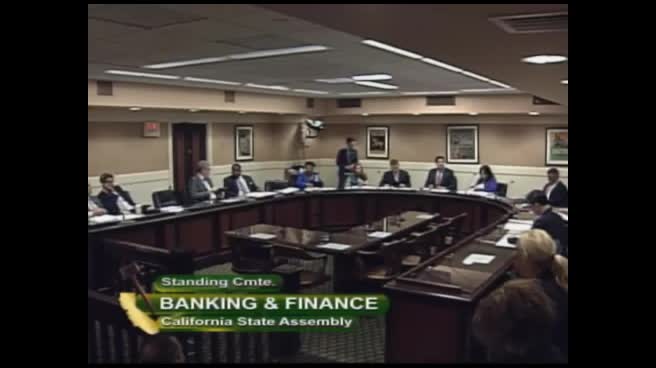
Bill Author