SB 297: Medical marijuana.
- Session Year: 2015-2016
- House: Senate
- Latest Version Date: 2015-09-11
Existing law, the Compassionate Use Act of 1996, an initiative measure enacted by the approval of Proposition 215 at the November 5, 1996, statewide general election, authorizes the use and cultivation of marijuana for medical purposes. Existing law makes it a crime to plant, cultivate, harvest, dry, or process marijuana, except as otherwise authorized by law. Under existing law, qualified patients, persons with valid identification cards, and the designated primary caregivers of qualified patients and persons with identification cards, who associate in order collectively and cooperatively to cultivate marijuana for medical purposes, are not subject to criminal sanctions solely on the basis of that fact.
This bill would state that it is the intent of the Legislature to enact legislation that imposes an excise tax on medical marijuana at the point of sale.
(1)Existing law provides for financial and food assistance benefits to needy Californians including, among other programs, the California Work Opportunity and Responsibility to Kids (CalWORKs) program and CalFresh, under which each county provides for financial and food assistance benefits to qualified individuals who meet specified eligibility criteria.
This bill would require the State Department of Social Services to develop and make available to the Statewide Automated Welfare System an electronic verification process that allows county human services agency eligibility workers to, at their option, access data available electronically from public and private agencies and programs for use in connection with the determination of eligibility for specified means-tested public benefit programs.
(2)Existing federal law provides for the federal Supplemental Nutrition Assistance Program (SNAP), known in California as CalFresh, formerly the Food Stamp Program, under which supplemental nutrition assistance benefits allocated to the state by the federal government are distributed to eligible individuals by each county. Under existing law, county human services agencies administer CalFresh.
Existing law requires each county human services agency, to the extent permitted by federal law, to exempt a household from complying with face-to-face interview requirements at initial application and recertification, and authorizes a person eligible for an exemption from the face-to-face interview requirement to request a face-to-face interview to establish initial eligibility or comply with recertification requirements.
This bill would instead require a county human services agency to conduct a telephone interview for purposes of determining eligibility at initial application and recertification, except as provided, and would require a county human services agency to facilitate submission of required documents using electronic and telephone technologies to the greatest extent possible. The bill would also expand the circumstances under which a face-to-face interview is required, and would authorize an electronic interview to be conducted if the county human services agency and the applicant or recipient both have the capacity to participate in an electronic interview. The bill would require the department to issue guidance for recording and storing electronic and telephonic signatures. By increasing the duties of county human services agencies administering CalFresh, this bill would impose a state-mandated local program.
The bill would require the State Department of Social Services to coordinate with county human services agencies to make available a standard technological solution that has the capacity to store telephonic and electronic signatures, as specified.
(3)The California Constitution requires the state to reimburse local agencies and school districts for certain costs mandated by the state. Statutory provisions establish procedures for making that reimbursement.
This bill would provide that, if the Commission on State Mandates determines that the bill contains costs mandated by the state, reimbursement for those costs shall be made pursuant to these statutory provisions.
(1)Existing law provides for financial and food assistance benefits to needy Californians including, among other programs, the California Work Opportunity and Responsibility to Kids (CalWORKs) program and CalFresh, under which each county provides for financial and food assistance benefits to qualified individuals who meet specified eligibility criteria.
This bill would require the State Department of Social Services to develop and make available to county human services agencies, for use at their option, the Statewide Automated Welfare System an electronic verification system process that allows the county human services agency eligibility workers to, at their option, access data available electronically from other state public and private agencies and programs for use in connection with the determination of eligibility for specified means-tested public benefit programs.
(2)Existing federal law provides for the federal Supplemental Nutrition Assistance Program (SNAP), known in California as CalFresh, formerly the Food Stamp Program, under which supplemental nutrition assistance benefits allocated to the state by the federal government are distributed to eligible individuals by each county. Under existing law, county human services agencies administer CalFresh. Existing law requires the county human services agency to provide CalFresh benefits on an expedited basis to households determined to be in immediate need of food assistance, and requires the department to develop and implement for expedited issuance a uniform procedure for verifying information required of an application.
This bill would require this verification procedure to include guidance on verifying the identify of an applicant using information available through the Medi-Cal Eligibility Determination System (MEDS) or the verification system developed pursuant to this bill. The bill would require the State Department of Social Services to develop and implement a uniform procedure for processing applications to provide benefits on an expedited basis, as specified.
Existing law requires each county human services agency, to the extent permitted by federal law, to exempt a household from complying with face-to-face interview requirements at initial application and recertification, and authorizes a person eligible for an exemption from the face-to-face interview requirement to request a face-to-face interview to establish initial eligibility or comply with recertification requirements.
This bill would instead require a county human services agency to conduct a telephone interview for purposes of determining eligibility at initial application and recertification, except as provided, and would require a county human services agency to facilitate submission of required documents using electronic and telephone technologies for the purpose of determining eligibility, and to the greatest extent possible. The bill would also expand the circumstances under which a face-to-face interview is required. required, and would authorize an electronic interview to be conducted if the county human services agency and the applicant or recipient both have the capacity to participate in an electronic interview. The bill would require the department to issue guidance for recording and storing electronic and telephonic signatures. By increasing the duties of county human services agencies administering CalFresh, this bill would impose a state-mandated local program.
The bill would require the State Department of Social Services to coordinate with county human services agencies to develop a system make available a standard technological solution that has the capacity to store telephonic and electronic signatures, as specified.
(3)The California Constitution requires the state to reimburse local agencies and school districts for certain costs mandated by the state. Statutory provisions establish procedures for making that reimbursement.
This bill would provide that, if the Commission on State Mandates determines that the bill contains costs mandated by the state, reimbursement for those costs shall be made pursuant to these statutory provisions.
(1)Existing law provides for financial and food assistance benefits to needy Californians including, among other programs, the California Work Opportunity and Responsibility to Kids (CalWORKs) program and CalFresh, under which each county provides for financial and food assistance benefits to qualified individuals who meet specified eligibility criteria.
This bill would require the State Department of Social Services to develop and make available to county human services agencies, for use at their option, an electronic verification system that allows the county human services agency eligibility workers to access data available electronically from other state agencies and programs for use in connection with the determination of eligibility for means-tested public benefit programs.
(2)Existing federal law provides for the federal Supplemental Nutrition Assistance Program (SNAP), known in California as CalFresh, formerly the Food Stamp Program, under which supplemental nutrition assistance benefits allocated to the state by the federal government are distributed to eligible individuals by each county. Under existing law, county human services agencies administer CalFresh. Existing law requires the county human services agency to provide CalFresh benefits on an expedited basis to households determined to be in immediate need of food assistance, and requires the department to develop and implement for expedited issuance a uniform procedure for verifying information required of an application.
This bill would require this verification procedure to include guidance on verifying the identify of an applicant using information available through the Medi-Cal Eligibility Determination System (MEDS) or the verification system developed pursuant to this bill. The bill would require the State Department of Social Services to develop and implement a uniform procedure for processing applications to provide benefits on an expedited basis, as specified.
Existing law requires each county human services agency, to the extent permitted by federal law, to exempt a household from complying with face-to-face interview requirements at initial application and recertification, and authorizes a person eligible for an exemption from the face-to-face interview requirement to request a face-to-face interview to establish initial eligibility or comply with recertification requirements.
This bill would require a county human services agency to facilitate submission of required documents using electronic and telephone technologies for the purpose of determining eligibility, and would also expand the circumstances under which a face-to-face interview is required. The bill would require the department to issue guidance for recording and storing electronic and telephonic signatures. By increasing the duties of county human services agencies administering CalFresh, this bill would impose a state-mandated local program.
The bill would require the State Department of Social Services to coordinate with county human services agencies to develop a system that has the capacity to store telephonic and electronic signatures, as specified.
(3)The California Constitution requires the state to reimburse local agencies and school districts for certain costs mandated by the state. Statutory provisions establish procedures for making that reimbursement.
This bill would provide that, if the Commission on State Mandates determines that the bill contains costs mandated by the state, reimbursement for those costs shall be made pursuant to these statutory provisions.
It is the intent of the Legislature to enact legislation that imposes an excise tax on medical marijuana at the point of sale.
SECTION 1.Section 10508 is added to the Welfare and Institutions Code, to read:10508.(a)In order to ensure timely and accurate decisions on applications for means-tested public benefit programs under this division, the department shall develop and make available to the Statewide Automated Welfare System established pursuant to Section 10823, an electronic verification process that allows county human services agency eligibility workers to, at their option, access data available electronically from appropriate public and private agencies and programs for use in connection with the determination of eligibility for means-tested public benefit programs under this division. In developing this electronic verification process, the department shall consult with county human services agencies, eligibility workers, representatives of the Statewide Automated Welfare System, and client advocates. It is the intent of the Legislature that the electronic verification process be utilized to the greatest extent possible prior to requesting verification of data elements from an applicant or recipient.
(b)The electronic verification process identified in subdivision (a) shall be completed no later than the expiration of the federal waiver for Office of Management and Budget Circular A-87, which requires states to evenly allocate the development costs for systems that are federally funded.
(c)(1)If the electronic verification process developed pursuant to subdivision (a) includes information obtained from an agency that is subject to the requirements of either the federal Fair Credit Reporting Act (15 U.S.C. Sec. 1681 et seq.) or the Consumer Credit Reporting Agencies Act (Title 1.6 (commencing with Section 1785.1) of Part 4 of Division 3 of the Civil Code), the department shall report to the Legislature regarding the ways in which the electronic verification process guarantees the rights established under these laws to protect individuals from negative actions resulting from incorrect information.
(2)A report submitted pursuant to this subdivision shall be submitted in compliance with Section 9795 of the Government Code.
SEC. 2.Section 18901.10 of the Welfare and Institutions Code is amended to read:18901.10.(a)To the extent permitted by federal law, and except as provided in paragraphs (1) and (2), each county human services agency shall conduct a telephone interview for purposes of determining eligibility at initial application and recertification and shall facilitate submission of required documents using electronic and telephone technologies to the greatest extent possible.
(1)A face-to-face interview shall be conducted if any of the following occur:
(A)A face-to-face interview is requested by the applicant, recipient, or authorized representative.
(B)On a case-by-case basis, a face-to-face interview is deemed necessary by the county to clarify a condition of eligibility.
(C)A face-to-face interview is required in order to make timely and reasonable accommodations to serve a household with a person who has a disability, is advanced in age, or is homeless. For purposes of this subparagraph, the face-to-face interview shall be conducted in a mutually acceptable location.
(2)An electronic interview may be conducted in place of a telephone or face-to-face interview if the county human services agency and the applicant or recipient both have the capacity to participate in an electronic interview.
(3)A face-to-face, telephone, or electronic interview shall be conducted by a county human services agency eligibility worker.
(b)(1)In order to facilitate submission of required information by applicants and recipients, the department shall issue guidance for recording and the storing of electronic and telephonic signatures.
(2)The department shall coordinate with county human services agencies to make available a standard technological solution that has the capacity to store telephonic and electronic signatures. The department shall, in identifying this solution, work with county human services agencies, client advocates, the Statewide Automated Welfare System, and the Office of Systems Integration to ensure maximum compatibility with the Statewide Automated Welfare System and to provide that the telephonic and electronic signatures will be stored within the Statewide Automated Welfare System, as appropriate.
(3)A county shall not be required to use the solution identified pursuant to paragraph (2) if the county is complying with the guidance established by the department pursuant to paragraph (1). It is the intent of the Legislature that this section ensure that applicants and recipients in all counties have the ability to utilize telephonic and electronic signatures.
(c)The state shall not, nor shall any county, allow an eligibility interview to be conducted by anyone other than a county human services agency eligibility worker.
SEC. 3.If the Commission on State Mandates determines that this act contains costs mandated by the state, reimbursement to local agencies and school districts for those costs shall be made pursuant to Part 7 (commencing with Section 17500) of Division 4 of Title 2 of the Government Code.
(a)In order to ensure timely and accurate decisions on applications for means-tested public benefit programs, programs under this division, the department shall develop and make available to county human services agencies, for use at their option, the Statewide Automated Welfare System established pursuant to Section 10823, an electronic verification system process that allows county human services agency eligibility workers to, at their option, access data available electronically from other state appropriate public and private agencies and programs for use in connection with the determination of eligibility for means-tested public benefit programs. programs under this division. In developing this electronic verification system, process, the department shall consult with county human services agencies, eligibility workers, representatives of the Statewide Automated Welfare System, and client advocates. It is the intent of the Legislature that the electronic verification process be utilized to the greatest extent possible prior to requesting verification of data elements from an applicant or recipient.
(b)The electronic verification system process identified in subdivision (a) shall be completed no later than the expiration of the federal waiver for Office of Management and Budget Circular A-87, which requires states to evenly allocate the development costs for systems that are federally funded.
(c)(1)If the electronic verification system process developed pursuant to subdivision (a) includes information obtained from an agency that is subject to the requirements of either the federal Fair Credit Reporting Act (15 U.S.C. Sec. 1681 et seq.) or the Consumer Credit Reporting Agencies Act (Title 1.6 (commencing with Section 1785.1) of Part 4 of Division 3 of the Civil Code), the department shall report to the Legislature regarding the ways in which the electronic verification system process guarantees the rights established under these laws to protect individuals from negative actions resulting from incorrect information.
(2)A report submitted pursuant to this subdivision shall be submitted in compliance with Section 9795 of the Government Code.
SEC. 2.Section 18901.10 of the Welfare and Institutions Code is amended to read:18901.10.(a)To the extent permitted by federal law, and subject to the limitation except as provided in paragraph (1), paragraphs (1) and (2), each county human services agency shall exempt a household from complying with face-to-face interview requirements conduct a telephone interview for purposes of determining eligibility at initial application and recertification, recertification and shall facilitate submission of required documents using electronic and telephone technologies. technologies to the greatest extent possible.
(1)A face-to-face interview shall be required conducted if any of the following occur:
(A)A face-to-face interview is requested by the applicant, recipient, or authorized representative.
(B)On a case-by-case basis, it a face-to-face interview is deemed necessary by the county to clarify a condition of eligibility.
(C)A face-to-face interview is required in order to make timely and reasonable accommodations to serve a household with a person who has a disability, is advanced in age, or is homeless. For purposes of this subparagraph, a the face-to-face interview shall be conducted in a mutually acceptable location.
(2)When a face-to-face interview is not required pursuant to this subdivision, a telephone interview shall be conducted.
(2)An electronic interview may be conducted in place of a telephone or face-to-face interview if the county human services agency and the applicant or recipient both have the capacity to participate in an electronic interview.
(3)A face-to-face interview and telephone face-to-face, telephone, or electronic interview shall be conducted by a county human services agency staff. eligibility worker.
(b)(1)In order to facilitate submission of required information by applicants and recipients, the department shall issue guidance for recording and the storing of electronic and telephonic signatures.
(2)The department shall coordinate with county human services agencies to create a system make available a standard technological solution that has the capacity to store telephonic and electronic signatures. The department shall, in developing this system, identifying this solution, work with county human services agencies, client advocates, the Statewide Automated Welfare System, and with the Office of Systems Integration to ensure this system is designed to be directly accessed through the statewide automated welfare system developed pursuant to Section 10823 and that maximum compatibility with the Statewide Automated Welfare System and to provide that the telephonic and electronic signatures would will be stored within the statewide automated welfare system, if appropriate. Statewide Automated Welfare System, as appropriate.
(3)A county shall not be required to use this system the solution identified pursuant to paragraph (2) if the county is complying with the guidance established by the department pursuant to paragraph (1). It is the intent of the Legislature that this section ensure that applicants and recipients in all counties have the ability to utilize telephonic and electronic signatures.
(c)The state shall not, nor shall any county, enact a waiver of federal law that allows allow an eligibility interview to be conducted by anyone other than a county human services agency staff. eligibility worker.
SEC. 3.Section 18914 of the Welfare and Institutions Code is amended to read:18914.(a)In accordance with, and to the extent provided by, federal law, the county human services agency shall provide CalFresh benefits on an expedited basis as provided in subdivision (b) to households determined to be in immediate need of food assistance.
(b)Pursuant to the federal requirements of Section 273.2(i)(2) of Title 7 of the Code of Federal Regulations, the county human services agency shall screen all CalFresh applications for entitlement to expedited service. Applicants who meet the federal criteria for expedited service as defined in Section 273.2(i)(1) of Title 7 of the Code of Federal Regulations shall receive either a manual authorization to participate or automated card or the immediate issuance of CalFresh benefits no later than the third day following the date the application was filed. To the maximum extent permitted by federal law, the amount of income to be received from any source shall be deemed to be uncertain and exempt from consideration in the determination of entitlement for expedited service. For purposes of this subdivision, a weekend shall be considered one calendar day.
(c)The State Department of Social Services shall develop and implement for expedited issuance a uniform procedure for verifying information required of an applicant. This verification procedure shall include guidance on verifying the identity of an applicant using information available through the Medi-Cal Eligibility Determination System (MEDS) or the verification system developed pursuant to Section 10508.
(d)The department shall develop and implement a uniform procedure for processing applications to provide benefits on an expedited basis that are submitted electronically or by telephone and conducting interviews by telephone that are consistent with the process established pursuant to Section 18901.10.
SEC. 4.SEC. 3.If the Commission on State Mandates determines that this act contains costs mandated by the state, reimbursement to local agencies and school districts for those costs shall be made pursuant to Part 7 (commencing with Section 17500) of Division 4 of Title 2 of the Government Code.
(a)In order to ensure timely and accurate decisions on applications for means-tested public benefit programs, the department shall develop and make available to county human services agencies, for use at their option, an electronic verification system that allows eligibility workers to access data available electronically from other state agencies and programs for use in connection with the determination of eligibility for means-tested public benefit programs. In developing this electronic verification system, the department shall consult with county human services agencies, eligibility workers, and client advocates.
(b)The electronic verification system identified in subdivision (a) shall be completed no later than the expiration of the federal waiver for Office of Management and Budget Circular A-87, which requires states to evenly allocate the development costs for systems that are federally funded.
(c)(1)If the electronic verification system developed pursuant to subdivision (a) includes information obtained from an agency that is subject to the requirements of either the federal Fair Credit Reporting Act (15 U.S.C. Sec. 1681 et seq.) or the Consumer Credit Reporting Agencies Act (Title 1.6 (commencing with Section 1785.1) of Part 4 of Division 3 of the Civil Code), the department shall report to the Legislature regarding the ways in which the electronic verification system guarantees the rights established under these laws to protect individuals from negative actions resulting from incorrect information.
(2)A report submitted pursuant to this subdivision shall be submitted in compliance with Section 9795 of the Government Code.
SEC. 2.Section 18901.10 of the Welfare and Institutions Code is amended to read:18901.10.(a)To the extent permitted by federal law, and subject to the limitation in subdivision (c), paragraph (1), each county welfare department shall, if appropriate, human services agency shall exempt a household from complying with face-to-face interview requirements for purposes of determining eligibility at initial application and recertification, according to the following: and shall facilitate submission of required documents using electronic and telephone technologies.
(a)The county welfare department shall screen each households need for exemption status at application and recertification.
(b)A person eligible for an exemption under this section may request a face-to-face interview to establish initial eligibility or to comply with recertification requirements .
(c)Nothing in this section shall limit a countys ability to require an applicant or recipient to make a personal appearance at a county welfare department office if the applicant or recipient no longer qualifies for an exemption or for other good cause.
(1)A face-to-face interview shall be required if any of the following occur:
(A)A face-to-face interview is requested by the applicant, recipient, or authorized representative.
(B)On a case-by-case basis, it is deemed necessary by the county to clarify a condition of eligibility.
(C)A face-to-face interview is required in order to make timely and reasonable accommodations to serve a household with a person who has a disability, is advanced in age, or is homeless. For purposes of this subparagraph, a face-to-face interview shall be conducted in a mutually acceptable location.
(2)When a face-to-face interview is not required pursuant to this subdivision, a telephone interview shall be conducted.
(3)A face-to-face interview and telephone interview shall be conducted by county human services agency staff.
(b)(1)In order to facilitate submission of required information by applicants and recipients, the department shall issue guidance for recording and the storing of electronic and telephonic signatures.
(2)The department shall coordinate with county human services agencies to create a system that has the capacity to store telephonic and electronic signatures. The department shall, in developing this system, work with county human services agencies and with the Office of Systems Integration to ensure this system is designed to be directly accessed through the statewide automated welfare system developed pursuant to Section 10823 and that the telephonic and electronic signatures would be stored within the statewide automated welfare system, if appropriate.
(3)A county shall not be required to use this system if the county is complying with the guidance established by the department pursuant to paragraph (1).
(c)The state shall not, nor shall any county, enact a waiver of federal law that allows an eligibility interview to be conducted by anyone other than a county human services agency staff.
SEC. 3.Section 18914 of the Welfare and Institutions Code is amended to read:18914.(a)In accordance with, and to the extent provided by, federal law, the county human services agency shall provide CalFresh benefits on an expedited basis as provided in subdivision (b) to households determined to be in immediate need of food assistance.
(b)Pursuant to the federal requirements of Section 273.2(i)(2) of Title 7 of the Code of Federal Regulations, the county human services agency shall screen all CalFresh applications for entitlement to expedited service. Applicants who meet the federal criteria for expedited service as defined in Section 273.2(i)(1) of Title 7 of the Code of Federal Regulations shall receive either a manual authorization to participate or automated card or the immediate issuance of CalFresh benefits no later than the third day following the date the application was filed. To the maximum extent permitted by federal law, the amount of income to be received from any source shall be deemed to be uncertain and exempt from consideration in the determination of entitlement for expedited service. For purposes of this subdivision, a weekend shall be considered one calendar day.
(c)The State Department of Social Services shall develop and implement for expedited issuance a uniform procedure for verifying information required of an applicant. This verification procedure shall include guidance on verifying the identity of an applicant using information available through the Medi-Cal Eligibility Determination System (MEDS) or the verification system developed pursuant to Section 10508.
(d)The department shall develop and implement a uniform procedure for processing applications to provide benefits on an expedited basis that are submitted electronically or by telephone and conducting interviews by telephone that are consistent with the process established pursuant to Section 18901.10.
SEC. 4.If the Commission on State Mandates determines that this act contains costs mandated by the state, reimbursement to local agencies and school districts for those costs shall be made pursuant to Part 7 (commencing with Section 17500) of Division 4 of Title 2 of the Government Code.
|
Date
|
Status
|
|---|---|
| Feb 1, 2016 | Returned to Secretary of Senate pursuant to Joint Rule 56. |
| Sep 11, 2015 | Senate Rule 29.3(b) suspended. (Ayes 23. Noes 13. Page 2791.) |
| Sep 11, 2015 | From committee with author's amendments. Read second time and amended. Re-referred to Com. on APPR. |
| Sep 11, 2015 | Senate Rule 29.3(b) suspended. (Ayes 23. Noes 13.) |
| May 28, 2015 | May 28 hearing: Held in committee and under submission. |
| May 23, 2015 | Set for hearing May 28. |
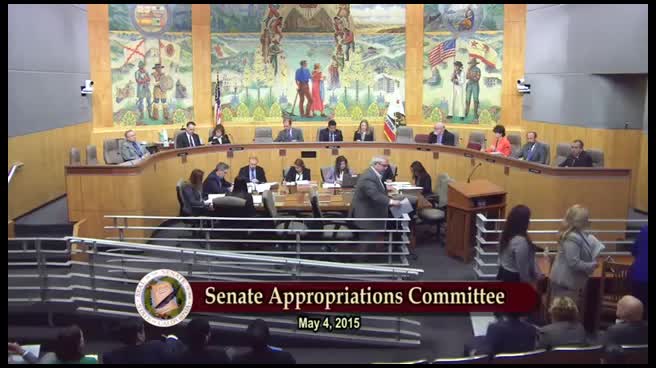
| May 4, 2015 | May 4 hearing: Placed on APPR. suspense file. |
| Apr 24, 2015 | Set for hearing May 4. |
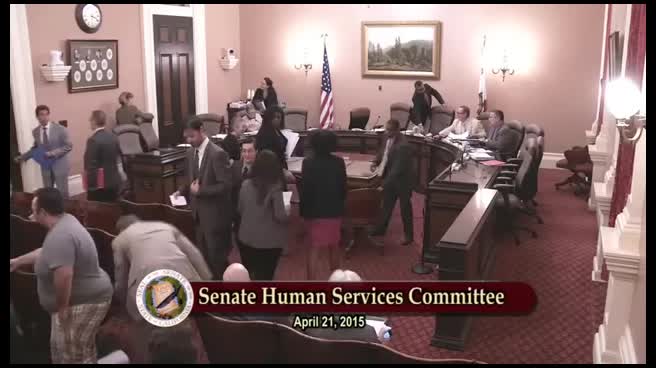
| Apr 22, 2015 | From committee: Do pass and re-refer to Com. on APPR. (Ayes 3. Noes 1. Page 726.) (April 21). Re-referred to Com. on APPR. |
| Apr 15, 2015 | Set for hearing April 21. |
| Apr 14, 2015 | April 14 hearing postponed by committee. |
| Mar 26, 2015 | From committee with author's amendments. Read second time and amended. Re-referred to Com. on HUMAN S. |
| Mar 6, 2015 | Set for hearing April 14. |
| Mar 5, 2015 | Referred to Com. on HUMAN S. |
| Feb 24, 2015 | From printer. May be acted upon on or after March 26. |
| Feb 23, 2015 | Introduced. Read first time. To Com. on RLS. for assignment. To print. |
|
Date
|
Description
|
Location
|
Votes
|
|
|---|---|---|---|---|
| May 4, 2015 | Placed on suspense file | Senate Standing Committee on Appropriations |
Passed |
|
| Apr 21, 2015 | Do pass, but first be re-referred to the Committee on [Appropriations] | Senate Standing Committee on Human Services |
Passed |
This list shows positions taken on this bill by organizations on the date displayed, which is linked to the original source.
Positions by individuals are not included.
SB 297 (McGuire) Page 5 of 5
SENATE COMMITTEE ON APPROPRIATIONS
Senator Ricardo Lara, Chair
2015 - 2016 Regular Session
SB 297 (McGuire) - Public benefits: eligibility determinations
|
|
Version: March 26, 2015 |
Policy Vote: HUMAN S. 3 - 1 |
Urgency: No |
Mandate: Yes |
Hearing Date: May 4, 2015 |
Consultant: Jolie Onodera |
This bill meets the criteria for referral to the Suspense File.
Bill Summary:
SB 297 would do the following:
Require the Department of Social Services (DSS) to enhance the Statewide Automated Welfare System (SAWS) through the development of an electronic verification system for use in connection with the eligibility determinations for means-tested public benefit programs, as specified.
Require a county human services agency to conduct a telephone interview at initial application and recertification for CalFresh and facilitate submission of required documents using electronic and telephone technologies, as specified.
Expand the circumstances under which a face-to-face interview to determine CalFresh eligibility is required.
Authorize counties to conduct an electronic interview in place of a telephone or face-to-face interview, as specified.
Require the DSS to issue guidance for recording and the storing of electronic and telephonic signatures, and coordinate with county human services agencies to make available a standard technological solution that has the capacity to store telephonic and electronic signatures.
Fiscal Impact:
Electronic verification system: One-time major costs for development of the electronic verification system, potentially in the millions of dollars (General Fund). While the bill mandates the system be completed by December 2018 to enable potential federal support of 90 percent, it is unknown at this time whether the necessary automation enhancements could feasibly be completed within this timeframe or if expenditures would be approved for federal funding.
CalFresh face-to-face interviews: Potential increase in local agency costs to conduct interviews for “a household with a person who has a disability, is advanced in age, or is homeless” in a mutually acceptable location. To the extent local agency expenditures qualify as a reimbursable state mandate, agencies could claim reimbursement of those costs (General Fund).
Telephonic/electronic signature storage: Unknown, potentially significant one-time costs (General Fund) to enhance SAWS to enable electronic signature storage statewide. Costs to local agencies would be dependent on the information specified in the guidance required to be issued by DSS. While the bill provides that local agencies would not be required to utilize the state’s telephonic storage if complying with DSS guidance, to the extent the guidance requires local agencies to incur new costs or additional workload, these costs could qualify as a reimbursable state mandate (General Fund).
Background:
Existing law provides for the CalFresh program which provides for food assistance benefits to qualified individuals who meet specified eligibility criteria.
Under existing law, a county welfare department is required, if appropriate, to exempt a household from complying with face-to-face interview requirements for purposes of determining CalFresh eligibility at initial application and recertification, however, a person eligible for an exemption may request a face-to-face interview to establish initial eligibility or to comply with recertification requirements. Under existing law, a county may require an applicant or recipient to make a personal appearance at a county welfare office if the applicant or recipient no longer qualifies for an exemption or for other good cause. (Welfare and Institutions Code § 18901.10.)
In 2011, the Centers for Medicare and Medicaid Services (CMS) authorized an enhancement to the federal Medicaid matching rate for eligibility and enrollment systems modernization – increasing the level of federal support from 50 percent to 90 percent for new systems builds and from 50 percent to 75 percent for maintenance and operations.
The OMB also offered a waiver of OMB Circular A-87 cost allocation rules to support the integration of eligibility systems between health and human services programs, such as SNAP and TANF. This waiver allowed States that wished to build integrated systems to do so without having to allocate the costs of developing shared eligibility services to human services programs. Human services programs retained responsibility for covering any costs particular to their program needs.
On October 28, 2014, CMS announced a three-year extension of the A-87 waiver authority to enable states to complete their work on eligibility and enrollment systems integration through December 2018.
Proposed Law:
This bill would require DSS to enhance the SAWS through the development of an electronic verification system that would allow county human services agency eligibility workers to access data available electronically from public and private agencies/programs for use in connection with the determination of eligibility for means-tested public benefit programs, as defined. In addition, this bill:
Requires DSS, in developing this electronic verification process, to consult with county human services agencies, eligibility workers, representatives of SAWS, and client advocates.
Includes codified Legislative intent language stating that the electronic verification process be utilized to the greatest extent possible prior to requesting verification of data elements from an applicant or recipient.
Requires the electronic verification process to be completed no later than the expiration of the federal waiver for OMB Circular A-87, which requires states to evenly allocate the development costs for systems that are federally funded and enables the state to apply for 90 percent federal funding for IT systems.
Revises language in existing statute regarding a county’s requirement to conduct a telephone interview for an applicant or for recertification of CalFresh benefits and requires that submission of required documents shall be done using electronic and telephone technologies to the greatest extent possible.
Requires a face-to-face interview be conducted if any of the following occur:
A face-to-face interview is requested by the applicant, recipient, or authorized representative.
On a case-by-case basis, a face-to-face interview is deemed necessary by the county to clarify a condition of eligibility.
A face-to-face interview is required in order to make timely and reasonable accommodations to serve a household with a person who has a disability, is advanced in age, or is homeless. For purposes of this subparagraph, the face-to-face interview shall be conducted in a mutually acceptable location.
An electronic interview may be conducted in place of a telephone or face-to-face interview if the county human services agency and the applicant/recipient both have the capacity to participate in an electronic interview.
Requires DSS to issue guidance for recording and the storing of electronic and telephonic signatures in order to facilitate submission of required information by applicants and recipients.
Requires DSS to coordinate with county human services agencies to make available a standard technological solution that has the capacity to store telephonic and electronic signatures.
Requires DSS, in identifying this solution, to work with county human services agencies, client advocates, SAWS, and the Office of Systems Integration to ensure maximum compatibility with the SAWS and to provide that the telephonic and electronic signatures will be stored within the SAWS, as appropriate.
Clarifies that a county would not be required to use the state’s telephonic storage if the county is complying with the state’s guidance on recording and storing signatures.
Includes codified Legislative intent language to ensure that applicants and recipients in all counties have the ability to utilize telephonic and electronic signatures.
Prohibits the state and counties from allowing an eligibility interview to be conducted by anyone other than a county human services agency eligibility worker.
Related Legislation:
SB 312 (Pan) 2015 would authorize a county welfare department to conduct a required personal interview with an applicant for CalWORKs benefits either telephonically or through electronic means, as specified. This bill is pending hearing in this Committee.
Prior Legislation: AB 1970 (Skinner) 2014 would have permitted counties to use electronic methods of communication for the application and recertification processes in CalWORKs and CalFresh, and would have established alternatives to in-person interviews for applications and redeterminations. This bill was held on the Suspense File of this Committee.
AB 6 (Fuentes) Chapter 501/2011 removed the fingerprinting requirement for the CalFresh program, modified reporting requirements from quarterly to semi-annually, and required DSS and CSD to design, implement and maintain a "Heat and Eat" program.
Staff Comments:
This bill requires the DSS to develop an electronic verification system compatible with SAWS that would allow county eligibility workers to access data from various sources to use in conjunction with the determination of eligibility for means-tested pubic benefit programs under Division 9 of WIC, which would encompass all public social services programs including but not limited to CalWORKs, CalFresh, foster care, child welfare services, SSI/SSP, IHSS, Medi-Cal, and the county-administered and funded General Assistance (GA) program. The development of such a system is likely to require a significant investment of state funding, potentially in the millions to tens of millions of dollars.
This bill requires the DSS to complete the electronic verification system no later than the “expiration of the federal waiver for OMB Circular A-87,” which would require the system to be completed by December 2018. While the bill mandates the system be completed by December 2018 to enable potential federal support of 90 percent, it is unknown at this time whether the necessary automation enhancements could feasibly be completed within this timeframe or if expenditures would ultimately be approved for federal funding.
This bill changes the default method of conducting CalFresh interviews from face-to-face to telephonic. Since 2009, counties have had the option of waiving the face-to-face interview for all non-assistance CalFresh applicants and recipients, as the State has been operating under a federal waiver that permits this practice. While mandating telephonic interviews may be generally consistent with current practices, it would also appear to remove the discretion of the county to offer the option. While this provision creates a mandate on local agencies, it is likely to result in operational cost savings.
According to DSS regulations for CalFresh administration,“If everyone in a CalFresh case is older than 60 years of age or is a person with a disability, then the county is required to waive the face-to-face interview. The interview can be conducted by phone or, in some cases, the county can do a home visit.” However, this bill appears to potentially be in conflict with regulations by mandating a face-to-face interview in order to make timely and reasonable accommodations for this population, specifically, “a household with a person who has a disability, is advanced in age, or is homeless. The face-to-face interview shall be conducted in a mutually acceptable location.” To the extent increased local expenditures qualify as a reimbursable state mandate, agencies could claim reimbursement of those costs (General Fund).
This bill also mandates county human services agencies to facilitate submission of required documents using electronic and telephone technologies, as specified. To the extent local agencies incur additional up-front and ongoing costs that exceed the cost savings resulting from these efforts, costs could potentially be reimbursable by the state.
It is estimated the DSS will incur one-time costs of an unknown, but potentially significant amount to enhance SAWS to enable electronic signature storage statewide. Costs would vary by county and would be dependent on the additional needs by each county to meet the minimum requirements provided in the DSS guidance. While the bill provides that local agencies would not be required to utilize the state’s telephonic storage system if complying with DSS guidance, to the extent the guidance requires local agencies to incur new costs or additional workload, these costs could potentially qualify as a reimbursable state mandate (General Fund).
Recommended Amendments:
This bill contains two codified statements of Legislative intent language in two sections of the bill. Staff recommends an amendment to replace with direct language or remove entirely from the bill’s provisions.
-- END --
SB 297 (McGuire) Page 8 of 8
SENATE COMMITTEE ON HUMAN SERVICES
Senator McGuire, Chair
2015 - 2016 Regular
Bill No: SB 297
Author: |
McGuire |
||
Version: |
March 26, 2015 |
Hearing Date: |
April 21, 2015 |
Urgency: |
No |
Fiscal: |
Yes |
Consultant: |
Mareva Brown |
||
Subject: Public benefits: eligibility determinations
SUMMARY
This bill would require the California Department of Social Services (CDSS) to develop and make available to the Statewide Automated Welfare System (SAWS) an electronic verification process that allows county human services agency eligibility workers to, at their option, access data available electronically from public and private sources to determine eligibility for specified means-tested public benefit programs. It would clarify when an eligibility worker should conduct a telephone, or a face-to-face interview with a CalFresh applicant. Additionally, the bill would require the department to issue guidance for recording and storing electronic and telephonic signatures and would require CDSS to coordinate with county human services agencies to make available a standard technological solution with the capacity to store telephonic and electronic signatures, as specified.
ABSTRACT
Existing law:
Establishes in California a variety of public social services programs to provide for protection, care, and assistance to the people of the state who are in need, to promote the welfare and happiness of all of the people of the state by providing appropriate aid and services to all of its needy and distressed and to provide general rules for the administration of these programs. It is the legislative intent that aid shall be administered and services provided promptly and humanely, with due regard for the preservation of family life, and without discrimination. (WIC 10000 et seq).
Establishes a Statewide Automated Welfare System (SAWS) with the goals of prompt and accurate verification of eligibility, reduction of administrative complexity, and requires the state to coordinate efforts with the statewide Med-Cal eligibility system to ensure the mutual benefits of SAWS. (WIC 10816, WIC 10823)
Establishes rights in federal and state credit reporting acts for consumers to correct information that is reported incorrectly. ((15 U.S.C. Sec. 1681 et seq.)
Establishes under federal law the Supplemental Nutrition Assistance Program (SNAP) within the US Department of Agriculture (USDA) to promote the general welfare and to safeguard the health and wellbeing of the nation’s population by raising the levels of nutrition among low-income households. It establishes SNAP eligibility requirements, including income that is at or below 130 percent of the federal poverty level and is determined to be a substantial limiting factor in permitting a recipient to obtain a more nutritious diet (7 CFR 271.1; 7 CFR 273.9)
Establishes in California statute the CalFresh program to administer the provision of federal SNAP benefits to families and individuals meeting specified criteria. (WIC 18900 et seq.)
Requires the personal interview to be conducted promptly following the application for assistance. If an applicant is incapable of acting in his or her own behalf, the county department shall verify this fact by personal contact with the applicant before aid is authorized. (WIC 11052.5)
Establishes in CalFresh statute the option for a county welfare department to exempt an applicant for food benefits from complying with face-to-face interview requirements for purposes of determining eligibility at initial application and recertification. (WIC 18901.1)
This bill:
Requires CDSS to develop and make available to the SAWS system an electronic verification process that allows county human services agency eligibility workers to, at their option, access data available electronically from appropriate public and private agencies and programs for use in connection with the determination of eligibility for means-tested public benefit programs, as defined.
Requires CDSS, in developing this electronic verification process, to consult with county human services agencies, eligibility workers, representatives of SAWS, and client advocates.
States Legislative intent that the electronic verification process be utilized to the greatest extent possible prior to requesting verification of data elements from an applicant or recipient.
Requires the electronic verification process to be completed no later than the expiration of the federal waiver for Office of Management and Budget Circular A-87, which requires states to evenly allocate the development costs for systems that are federally funded and enables the state to apply for 90 percent federal funding for IT systems.
Requires that, if information obtained from an agency through the verification process is subject to the requirements of either the federal Fair Credit Reporting Act (15 U.S.C. Sec. 1681 et seq.) or the Consumer Credit Reporting Agencies Act (Title 1.6 (commencing with Section 1785.1) of Part 4 of Division 3 of the Civil Code), CDSS shall report to the Legislature, in a manner specified, the ways in which the electronic verification process guarantees the rights established under these laws to protect individuals from negative actions resulting from incorrect information.
Revises language in existing statute regarding a county’s requirement to conduct a telephone interview for an applicant or for recertification of CalFresh benefits and requires that submission of required documents shall be done using electronic and telephone technologies to the greatest extent possible.
Requires a face-to-face interview be conducted if any of the following occur:
A face-to-face interview is requested by the applicant, recipient, or authorized representative.
On a case-by-case basis, a face-to-face interview is deemed necessary by the county to clarify a condition of eligibility.
A face-to-face interview is required in order to make timely and reasonable accommodations to serve a household with a person who has a disability, is advanced in age, or is homeless. For purposes of this subparagraph, the face-to-face interview shall be conducted in a mutually acceptable location.
An electronic interview may be conducted in place of a telephone or face-to-face interview if the county human services agency and the applicant or recipient both have the capacity to participate in an electronic interview.
Requires a face-to-face, telephone, or electronic interview to be conducted by a county human services agency eligibility worker.
Requires CDSS to issue guidance for recording and the storing of electronic and telephonic signatures in order to facilitate submission of required information by applicants and recipients.
Requires CDSS to coordinate with county human services agencies to make available a standard technological solution that has the capacity to store telephonic and electronic signatures. Requires the department, in identifying this solution, to work with county human services agencies, client advocates, the Statewide Automated Welfare System, and the Office of Systems Integration to ensure maximum compatibility with the Statewide Automated Welfare System and to provide that the telephonic and electronic signatures will be stored within the Statewide Automated Welfare System, as appropriate.
Clarifies that a county is not be required to use the state’s telephonic storage if the county is complying with the state’s guidance on recording and storing signatures.
States Legislative intent that this section ensures that applicants and recipients in all counties have the ability to utilize telephonic and electronic signatures.
Prohibits the state and counties from allowing an eligibility interview to be conducted by anyone other than a county human services agency eligibility worker.
FISCAL IMPACT
This bill has not been analyzed by a fiscal committee.
BACKGROUND AND DISCUSSION
Purpose of the bill:
The author states that while California has made great strides in streamlining the application and recertification processes for Californians who access CalFresh nutrition benefits, the state still lags far behind the nation in providing food to eligible children and families. Recent Legislation and administrative efforts to identify unnecessary barriers to food benefits have resulted in technological advances and a slight increase in the state’s participation rate. This bill takes two critical steps toward continuing this process, according to the author.
First, it requires the state to establish a data verification process that could be used to immediately verify income and other required information on applications for CalFresh, Medi-Cal, CalWORKs and other eligibility programs. The author states that by requiring the state to complete planning in time to remain eligible for federal 90/10 funding established under the ACA, it would enable this process to be completed with a minimum of state funding.
Additionally, the bill requires CDSS to establish and make available to counties the capacity to store telephonic and electronic signatures. Current law and practice requires counties to conduct required CalFresh intake interviews over the telephone in most circumstances. However, according to the author, only seven counties have the capacity to store voice signatures. This means that once an applicant applies online and completes a telephone interview, their interview is typically printed, sent to them through the mail for signature, and required to be mailed back within 30 days of the initial application. The author states this process is unnecessarily cumbersome and results in applicants who qualify for benefits being dropped without receiving benefits if they do not meet the paperwork deadline.
Hunger
Nationally, the USDA reported an estimated 14.3 percent of American households were food insecure at least some time during the year in 2013, meaning they lacked access to enough food for an active, healthy life for all household members.1
A 2012 policy brief released by the National Poverty Center, titled "Extreme Poverty in the United States, 1996 to 2011,"2 found that SNAP (CalFresh) benefits were effective in reducing extreme poverty within that time period and noted that expansion of SNAP programs could be particularly beneficial in reducing extreme poverty in nonelderly households with children.
The report defined a new group of poor as families who experienced unemployment in the Great Recession but are unable access to means-tested income support programs. The report dubbed these families as “extreme poor” and defined it as subsiding on $2 or less per person, per day and estimated that the number of households that were extremely poor in a given month numbered about 1.46 million in 2011, including 2.8 million children – or 16 percent of all children in poverty. Since the Great Recession, according to researchers at the USDA, inflation has kept the number of families who are not able to afford sufficient food at approximately the same rate, even with an increase in employment nationwide.3
CalFresh
SNAP funds 100 percent of food benefits to eligible households nationwide. California, its 58 counties and the federal government share the cost of administering the program, which is known as CalFresh. Specific eligibility requirements are set by the USDA, including gross- and net-income asset tests for most recipients, work requirements and specific documentation requirements. The maximum gross income allowed to be eligible for the SNAP program is 130 percent of the federal poverty level, or $26,117 for a family of four in 2015. The average monthly benefit for a CalFresh recipient in 2014 was $141.99 per month, or $4.73 per day, according to the USDA.
CalFresh Participation
California historically has had an exceptionally low rate of participation in the program -- ranked last or near last in the country for years. The dismal participation rate prompted concerns from the USDA, stories in the state’s newspapers and two Legislative hearings in last year, including a joint Senate and Assembly Human Services committee hearing on March 11, 2014. In 2012, California’s SNAP participation rate was 63 percent of eligible individuals, moving the state up into the second-lowest ranking in the country, slightly above Wyoming. California’s rate was 20 percentage points lower than the national average. Meanwhile, just 49 percent of California’s eligible working poor families received CalFresh benefits, the worst rate in the country, compared to a national average of 72 percent.4
CalFresh Refresh
As pressure mounted to increase California’s participation rate, the state embarked on a series of strategies to improve and make consistent eligibility practices statewide. The effort, nicknamed CalFresh Refresh by CDSS, was prompted by legislative changes, CDSS initiative and an ongoing series of meetings between the Department, counties and advocates.
The focus was to streamline the application and re-certification processes and to reduce churn in the program, which typically was the result of a participant not submitting the proper paperwork on time, being dropped from the program, and then submitting the documents and being reinstated. Changes included moving from quarterly to semi-annual reporting requirements for participants to remain eligible, screening all applicants for expedited service and removing a state requirement that all CalFresh applicants had to submit their fingerprint images in order to receive benefits. At the same time, the state moved from requiring a face-to-face interview to a telephone interview option.
Use of telephone interviews
Under a federal USDA waiver,5 and under current regulatory requirements,6 California’s county human services agencies have the option to allow CalFresh applicants to satisfy the interview requirement over the telephone rather than mandating a face-to-face interview.
CDSS informed counties in February 20147 that they were permitted to complete a telephone interview without having an applicant schedule an appointment by calling a county call center or other number specified by the county. The applicant also has the option of scheduling appointments or requesting an accommodation, if they have special needs.
Counties have implemented the telephone interviews statewide, however, many counties say they have not been able to secure a signature over the telephone because of either a lack of clarity around what constitutes a legal telephone signature, or a lack of data storage capacity to record and store the full interview. Seven counties independently have created methods for storing electronic signatures through their call centers.
Without the ability to store telephonic signatures as part of the interview process, county eligibility workers are left to mail the completed application and interview to the client, ask the client to review and sign it and then to mail it back to the county. If this process is not completed within 30 days, the application is closed.
Fiscal benefit to CalFresh benefits
According Moody’s Economics, an independent provider of credit ratings and financial services research, CalFresh benefits have the highest economic multiplier effect out of all government programs or fiscal policy tools that stimulate the economy. In testimony before Congress in 2008, as the nation tried to mitigate effects of the deepening recession, Moody’s chief economist Max Zandi said that extending food stamps is the most effective way to prime the economy's pump. A $1 increase in food stamp payments boosts GDP by $1.73. People who receive these benefits are very hard-pressed and will spend any financial aid they receive within a few weeks (on local goods and services). Because these programs are already operating, increased benefits can be quickly delivered to recipients.8 To the extent that this bill increases CalFresh participation, the state could expect to receive additional state General Fund revenues due to increased taxable purchases by recipients.
Data verification
County eligibility workers verify an applicant’s CalFresh application through a variety of sources, including the applicant Income Eligibility and Verification System (IEVS), a federally required system that matches social security numbers with income information. IEVS performs data matches against several agency data bases to verify certain types of income and/or property. These matches use the applicant’s name and Social Security Number (SSN) and include: the Employment Development Department’s wage, unemployment and disability benefit information, as well as information reported to the Franchise Tax Board, Social Security Administration and other sources of information. Information retrieved from IEVS can take up to a week after the date of request to process various data matches and to send an abstract report to the requesting county. From there, a county eligibility worker reviews and compares the IEVS reported data with the case record and the application. Any significant differences must be clarified with the applicant.
During the recent construction of the Medi-Cal CalHEERS application processing hub, required by and largely financed by the Affordable Care Act, various state departments and advocates discussed the need to integrate all the state’s eligibility systems and to streamline the verification process. While the CalHEERS system processes information quickly, it does not include an immediate verification component. Various state programs are separately paying for and accessing similar sources of information – EDD matches, for example – that could be brought into a single hub, eliminating duplicated efforts and saving caseworker and applicant time.
The ACA envisioned instant verification for Medicaid and other eligibility program, and some states are moving to use of verification hubs using federal, state and appropriate private sources of income and other information. This bill would move California toward that hub before the expiration of the federal government’s generous 90/10 funding program for ACA-related technology.
Related legislation:
SB 312 (Pan, 2015) would authorize a county welfare department to conduct a required personal interview with an applicant for CalWORKs benefits either telephonically or through electronic means, as specified.
AB 1970 (Skinner, 2012) would have permitted counties to use electronic methods of communication for the application and recertification processes in CalWORKs and CalFresh, and would have established alternatives to in-person interviews for applications and redeterminations. It died in the Senate Appropriations Committee.
AB 6 (Fuentes, Chapter 501, Statutes of 2011) removed the CalFresh fingerprinting requirement, modified reporting requirements from quarterly to semi-annually, and made other changes.
AB 231 (Steinberg, Chapter 743, Statutes of 2003) permitted counties to exempt a household from complying with the face-to-face interview required by a CalFresh applicant, in addition to other policy changes.
POSITIONS
Support:
California Association of Food Banks
California Catholic Conference
California Food Policy Advocates
California Hunger Action
Californians United for a Responsible Budget (CURB)
Children Now
Coalition of California Welfare Rights Organizations
Community Food and Justice Coalition
Hunger Action Los Angeles
Hunger Advocacy Network
National; Association of Social Workers
Redwood Empire Food Bank
Sacramento Hunger Coalition
San Diego Hunger Coalition
United Ways of California
Western Center on Law & Poverty
Oppose:
None.
-- END --
1 USDA, Economic Research Report No. (ERR-173) 41 pp, September 2014
2 http://www.npc.umich.edu/publications/policy_briefs/brief28/policybrief28.pdf
3 Nord, Mark, et al, “Prevalence of U.S. Food Insecurity Is Related to Changes in Unemployment, Inflation, and the Price of Food,” Economic Research Report No. (ERR-167) June 2014
4 USDA, “Reaching Those in Need: Estimates of State Supplemental Nutrition Assistance Program Participation Rates in 2012,” February 2015
5 USDA Food and Nutrition Services Waiver #2130007, implemented August 1, 2013.
6 US 7 CFR 273.2(e)(3) and California Manual of Policies and Procedures Section 63-300.46
7 CDSS All County Letter # 14-20, February 27, 2014
8 https://www.economy.com/mark-zandi/documents/Small%20Business_7_24_08.pdf
Discussed in Hearing
 5MIN
Senate Standing Committee on Appropriations
 12MIN
Senate Standing Committee on Human Services
Bill Author

Bill Co-Author(s):