SB 3: Minimum wage: in-home supportive services: paid sick days.
- Session Year: 2015-2016
- House: Senate
- Latest Version Date: 2016-04-04
(1)Under existing law, the Healthy Workplaces, Healthy Families Act of 2014, an employee who, on or after July 1, 2015, works in California for the same employer for 30 or more days within a year from the commencement of employment is entitled to paid sick days, as specified. Existing law requires an employee to accrue paid sick days at the rate of not less than one hour per every 30 hours worked subject to specified use and accrual limitations. For the purposes of the act, an employee does not include a provider of in-home supportive services, as described.
This bill, on and after July 1, 2018, would entitle a provider of in-home supportive services who works in California for 30 or more days within a year from the commencement of employment to paid sick days, subject to specified full amount of leave time amounts and that rate of accrual. The bill would require the State Department of Social Services, in consultation with stakeholders, to convene a workgroup to implement paid sick leave for in-home supportive services providers and to issue guidance in that regard by December 1, 2017. The bill would authorize the department to implement that paid sick leave without complying with the Administrative Procedure Act.
(2)On and after July 1, 2014, existing law requires the minimum wage for all industries to be not less than $9 per hour. On and after January 1, 2016, existing law requires the minimum wage for all industries to be not less than $10 per hour.
This bill would require the minimum wage for all industries to not be less than specified amounts to be increased from January 1, 2017, to January 1, 2022, inclusive, for employers employing 26 or more employees and from January 1, 2018, to January 1, 2023, inclusive, for employers employing 25 or fewer employees, except when the scheduled increases are temporarily suspended by the Governor, based on certain determinations. The bill would also require the Director of Finance, after the last scheduled minimum wage increase, to annually adjust the minimum wage under a specified formula.
On or before July 28, 2017, and on or before every July 28 thereafter until the minimum wage is a specified amount for employers employing 26 or more employees, the bill would require the Director of Finance to annually determine, based on certain factors, whether economic conditions can support a scheduled minimum wage increase and certify that determination to the Governor and the Legislature. The bill would also require the State Board of Equalization to publish specified retail sales and use tax information on its Internet Web site to be used by the Director of Finance in making that determination.
On or before July 28, 2017, and on or before every July 28 thereafter until the minimum wage is a specified amount for employers employing 26 or more employees, in order to ensure that the General Fund can support the next scheduled minimum wage increase, the bill would also require the Director of Finance to annually determine and certify to the Governor and the Legislature whether the General Fund would be in a deficit in the current fiscal year, or in either of the following 2 fiscal years.
(1)Under existing law, the Healthy Workplaces, Healthy Families Act of 2014, an employee who, on or after July 1, 2015, works in California for the same employer for 30 or more days within a year from the commencement of employment is entitled to paid sick days, as specified. Existing law requires an employee to accrue paid sick days at the rate of not less than one hour per every 30 hours worked subject to specified use and accrual limitations. For the purposes of the act, an employee does not include a provider of in-home supportive services, as described.
This bill, on and after July 1, 2018, would entitle a provider of in-home supportive services who works in California for 30 or more days within a year from the commencement of employment to paid sick days, subject to specified full amount of leave time amounts and that rate of accrual. The bill would require the State Department of Social Services, in consultation with stakeholders, to convene a workgroup to implement paid sick leave for in-home supportive services providers and to issue guidance in that regard by December 1, 2017. The bill would authorize the department to implement that paid sick leave without complying with the Administrative Procedure Act.
(2)On and after July 1, 2014, existing law requires the minimum wage for all industries to be not less than $9 per hour. On and after January 1, 2016, existing law requires the minimum wage for all industries to be not less than $10 per hour.
This bill would require the minimum wage for all industries to not be less than specified amounts to be increased from January 1, 2017 to January 1, 2022, inclusive, for employers employing 26 or more employees and from January 1, 2018 to January 1, 2023, inclusive, for employers employing 25 or fewer employees, except when the scheduled increases are temporarily suspended by the Governor, based on certain determinations. This bill would also require the Director of Finance, after the last scheduled minimum wage increase, to annually adjust the minimum wage under a specified formula.
On or before July 28, 2017, and on or before every July 28 thereafter until the minimum wage is a specified amount for employers employing 26 or more employees, the bill would require the Director of Finance to annually determine, based on certain factors, whether economic conditions can support a scheduled minimum wage increase and certify that determination to the Governor and the Legislature. The bill would also require the State Board of Equalization to publish specified retail sales and use tax information on its Internet Web site to be used by the Director of Finance in making that determination.
On or before July 28, 2017, and on or before every July 28 thereafter until the minimum wage is a specified amount for employers employing 26 or more employees, in order to ensure that the state General Fund can support the next scheduled minimum wage increase, the bill would also require the Director of Finance to annually determine and certify to the Governor and the Legislature whether the state General Fund would be in a deficit in the current fiscal year, or in either of the following 2 fiscal years.
Existing law provides that it is the continuing duty of the Industrial Welfare Commission to ascertain the wages paid to all employees in this state, to ascertain the hours and conditions of labor and employment in the various occupations, trades, and industries in which employees are employed in this state, and to investigate the health, safety, and welfare of those employees. Existing law establishes the Division of Labor Standards Enforcement in the Department of Industrial Relations for the enforcement of labor laws, including minimum wage fixed by statute and the wage orders of the Industrial Welfare Commission. Existing law requires that, on and after July 1, 2014, the minimum wage for all industries be not less than $9 per hour. Existing law further increases the minimum wage, on and after January 1, 2016, to not less than $10 per hour.
This bill would increase the minimum wage, on and after January 1, 2016, to not less than $11 per hour, and on and after July 1, 2017, to not less than $13 per hour. The bill would require, commencing January 1, 2019, the annual automatic adjustment of the minimum wage to maintain employee purchasing power diminished by the rate of inflation during the previous year. The adjustment would be calculated using the California Consumer Price Index, as specified. The bill would prohibit the commission from reducing the minimum wage and from adjusting the minimum wage if the average percentage of inflation for the previous year was negative. The bill would require the Division of Labor Standards Enforcement to publicize the automatically adjusted minimum wage.
The bill would provide that its provisions not be construed to preclude an increase in the minimum wage by the commission to an amount greater than the formula would provide, to result in a reduction in the minimum wage, or to preclude or supersede an increase of the minimum wage by any local government or tribal government that is greater than the state minimum wage.
The bill would apply to all industries, including public and private employment.
Existing law provides that it is the continuing duty of the Industrial Welfare Commission to ascertain the wages paid to all employees in this state, to ascertain the hours and conditions of labor and employment in the various occupations, trades, and industries in which employees are employed in this state, and to investigate the health, safety, and welfare of those employees. Existing law establishes the Division of Labor Standards Enforcement in the Department of Industrial Relations for the enforcement of labor laws, including minimum wage fixed by statute and the wage orders of the Industrial Welfare Commission. Existing law requires that, on and after July 1, 2014, the minimum wage for all industries be not less than $9 per hour. Existing law further increases the minimum wage, on and after January 1, 2016, to not less than $10 per hour.
This bill would increase the minimum wage, on and after January 1, 2016, to not less than $11 per hour, and on and after July 1, 2017, to not less than $13 per hour. The bill would require require, commencing January 1, 2019, the annual automatic adjustment of the minimum wage, commencing January 1, 2019, wage to maintain employee purchasing power diminished by the rate of inflation during the previous year. The adjustment would be calculated using the California Consumer Price Index, as specified. The bill would prohibit the Industrial Welfare Commission (IWC) commission from adjusting reducing the minimum wage downward and from adjusting the minimum wage if the average percentage of inflation for the previous year was negative. The bill would require the IWC Division of Labor Standards Enforcement to publicize the automatically adjusted minimum wage.
The bill would provide that its provisions not be construed to preclude an increase in the minimum wage by the IWC commission to an amount greater than the formula would provide, to result in a reduction in the minimum wage, or to preclude or supersede an increase of the minimum wage by any local government or tribal government that is greater than the state minimum wage by any local government or tribal government. wage.
The bill would apply to all industries, including public and private employment.
Existing law requires that, on and after July 1, 2014, the minimum wage for all industries be not less than $9 per hour. Existing law further increases the minimum wage, on and after January 1, 2016, to not less than $10 per hour.
This bill would increase the minimum wage, on and after January 1, 2016, to not less than $11 per hour, on and after July 1, 2017, to not less than $13 per hour. The bill would require the annual automatic adjustment of the minimum wage, commencing January 1, 2019, to maintain employee purchasing power diminished by the rate of inflation during the previous year. The adjustment would be calculated using the California Consumer Price Index, as specified. The bill would prohibit the Industrial Welfare Commission (IWC) from adjusting the minimum wage downward and from adjusting the minimum wage if the average percentage of inflation for the previous year was negative. The bill would require the IWC to publicize the automatically adjusted minimum wage.
The bill would provide that its provisions not be construed to preclude an increase in the minimum wage by the IWC to an amount greater than the formula would provide, to result in a reduction in the minimum wage, or to preclude or supersede an increase of the minimum wage that is greater than the state minimum wage by any local government or tribal government.
The bill would apply to all industries, including public and private employment.
As used in this article:
(a)Employee does not include the following:
(1)An employee covered by a valid collective bargaining agreement if the agreement expressly provides for the wages, hours of work, and working conditions of employees, and expressly provides for paid sick days or a paid leave or paid time off policy that permits the use of sick days for those employees, final and binding arbitration of disputes concerning the application of its paid sick days provisions, premium wage rates for all overtime hours worked, and regular hourly rate of pay of not less than 30 percent more than the state minimum wage rate.
(2)An employee in the construction industry covered by a valid collective bargaining agreement if the agreement expressly provides for the wages, hours of work, and working conditions of employees, premium wage rates for all overtime hours worked, and regular hourly pay of not less than 30 percent more than the state minimum wage rate, and the agreement either (A) was entered into before January 1, 2015, or (B) expressly waives the requirements of this article in clear and unambiguous terms. For purposes of this subparagraph, employee in the construction industry means an employee performing work associated with construction, including work involving alteration, demolition, building, excavation, renovation, remodeling, maintenance, improvement, repair work, and any other work as described by Chapter 9 (commencing with Section 7000) of Division 3 of the Business and Professions Code, and other similar or related occupations or trades.
(3)An individual employed by an air carrier as a flight deck or cabin crew member that is subject to the provisions of Title II of the federal Railway Labor Act (45 U.S.C. Sec. 151 et seq.), provided that the individual is provided with compensated time off equal to or exceeding the amount established in paragraph (1) of subdivision (b) of Section 246.
(4)An employee of the state, city, county, city and county, district, or any other public entity who is a recipient of a retirement allowance and employed without reinstatement into his or her respective retirement system pursuant to either Article 8 (commencing with Section 21220) of Chapter 12 of Part 3 of Division 5 of Title 2 of the Government Code, or Article 8 (commencing with Section 31680) of Chapter 3 of Part 3 of Division 4 of Title 3 of the Government Code.
(b)Employer means any person employing another under any appointment or contract of hire and includes the state, political subdivisions of the state, and municipalities.
(c)Family member means any of the following:
(1)A child, which for purposes of this article means a biological, adopted, or foster child, stepchild, legal ward, or a child to whom the employee stands in loco parentis. This definition of a child is applicable regardless of age or dependency status.
(2)A biological, adoptive, or foster parent, stepparent, or legal guardian of an employee or the employees spouse or registered domestic partner, or a person who stood in loco parentis when the employee was a minor child.
(3)A spouse.
(4)A registered domestic partner.
(5)A grandparent.
(6)A grandchild.
(7)A sibling.
(d)Health care provider has the same meaning as defined in paragraph (6) of subdivision (c) of Section 12945.2 of the Government Code.
(e)Paid sick days means time that is compensated at the same wage as the employee normally earns during regular work hours and is provided by an employer to an employee for the purposes described in Section 246.5.
SEC. 2.Section 246 of the Labor Code is amended to read:246.(a)(1)An employee who, on or after July 1, 2015, works in California for the same employer for 30 or more days within a year from the commencement of employment is entitled to paid sick days as specified in this section.
(2)On and after July 1, 2018, a provider of in-home supportive services under Section 14132.95, 14132.952, or 14132.956 of, or Article 7 (commencing with Section 12300) of Chapter 3 of Part 3 of Division 9 of, the Welfare and Institutions Code, who works in California for 30 or more days within a year from the commencement of employment is entitled to paid sick days as specified in subdivision (e) and subject to the rate of accrual in paragraph (1) of subdivision (b).
(b)(1)An employee shall accrue paid sick days at the rate of not less than one hour per every 30 hours worked, beginning at the commencement of employment or the operative date of this article, whichever is later, subject to the use and accrual limitations set forth in this section.
(2)An employee who is exempt from overtime requirements as an administrative, executive, or professional employee under a wage order of the Industrial Welfare Commission is deemed to work 40 hours per workweek for the purposes of this section, unless the employees normal workweek is less than 40 hours, in which case the employee shall accrue paid sick days based upon that normal workweek.
(3)An employer may use a different accrual method, other than providing one hour per every 30 hours worked, provided that the accrual is on a regular basis so that an employee has no less than 24 hours of accrued sick leave or paid time off by the 120th calendar day of employment or each calendar year, or in each 12-month period.
(4)An employer may satisfy the accrual requirements of this section by providing not less than 24 hours or three days of paid sick leave that is available to the employee to use by the completion of his or her 120th calendar day of employment.
(c)An employee shall be entitled to use accrued paid sick days beginning on the 90th day of employment, after which day the employee may use paid sick days as they are accrued.
(d)Accrued paid sick days shall carry over to the following year of employment. However, an employer may limit an employees use of accrued paid sick days to 24 hours or three days in each year of employment, calendar year, or 12-month period. This section shall be satisfied and no accrual or carryover is required if the full amount of leave is received at the beginning of each year of employment, calendar year, or 12-month period. The term full amount of leave means three days or 24 hours.
(e)For a provider of in-home supportive services under Section 14132.95, 14132.952, or 14132.956 of, or Article 7 (commencing with Section 12300) of Chapter 3 of Part 3 of Division 9 of, the Welfare and Institutions Code, the term full amount of leave is defined as follows:
(1)Eight hours or one day in each year of employment, calendar year, or 12-month period beginning July 1, 2018.
(2)Sixteen hours or two days in each year of employment, calendar year, or 12-month period beginning when the minimum wage, as set forth in paragraph (1) of subdivision (b) of Section 1182.12 and accounting for any years postponed under subparagraph (D) of paragraph (3) of subdivision (d) of Section 1182.12, has reached thirteen dollars ($13) per hour.
(3)Twenty-four hours or three days in each year of employment, calendar year, or 12-month period beginning when the minimum wage, as set forth in paragraph (1) of subdivision (b) of Section 1182.12 and accounting for any years postponed under subparagraph (D) of paragraph (3) of subdivision (d) of Section 1182.12, has reached fifteen dollars ($15) per hour.
(f)An employer is not required to provide additional paid sick days pursuant to this section if the employer has a paid leave policy or paid time off policy, the employer makes available an amount of leave applicable to employees that may be used for the same purposes and under the same conditions as specified in this section, and the policy satisfies one of the following:
(1)Satisfies the accrual, carryover, and use requirements of this section.
(2)Provided paid sick leave or paid time off to a class of employees before January 1, 2015, pursuant to a sick leave policy or paid time off policy that used an accrual method different than providing one hour per 30 hours worked, provided that the accrual is on a regular basis so that an employee, including an employee hired into that class after January 1, 2015, has no less than one day or eight hours of accrued sick leave or paid time off within three months of employment of each calendar year, or each 12-month period, and the employee was eligible to earn at least three days or 24 hours of sick leave or paid time off within nine months of employment. If an employer modifies the accrual method used in the policy it had in place prior to January 1, 2015, the employer shall comply with any accrual method set forth in subdivision (b) or provide the full amount of leave at the beginning of each year of employment, calendar year, or 12-month period. This section does not prohibit the employer from increasing the accrual amount or rate for a class of employees covered by this subdivision.
(3)Notwithstanding any other law, sick leave benefits provided pursuant to the provisions of Sections 19859 to 19868.3, inclusive, of the Government Code, or annual leave benefits provided pursuant to the provisions of Sections 19858.3 to 19858.7, inclusive, of the Government Code, or by provisions of a memorandum of understanding reached pursuant to Section 3517.5 that incorporate or supersede provisions of Section 19859 to 19868.3, inclusive, or Sections 19858.3 to 19858.7, inclusive of the Government Code, meet the requirements of this section.
(g)(1)Except as specified in paragraph (2), an employer is not required to provide compensation to an employee for accrued, unused paid sick days upon termination, resignation, retirement, or other separation from employment.
(2)If an employee separates from an employer and is rehired by the employer within one year from the date of separation, previously accrued and unused paid sick days shall be reinstated. The employee shall be entitled to use those previously accrued and unused paid sick days and to accrue additional paid sick days upon rehiring, subject to the use and accrual limitations set forth in this section. An employer is not required to reinstate accrued paid time off to an employee that was paid out at the time of termination, resignation, or separation of employment.
(h)An employer may lend paid sick days to an employee in advance of accrual, at the employers discretion and with proper documentation.
(i)An employer shall provide an employee with written notice that sets forth the amount of paid sick leave available, or paid time off leave an employer provides in lieu of sick leave, for use on either the employees itemized wage statement described in Section 226 or in a separate writing provided on the designated pay date with the employees payment of wages. If an employer provides unlimited paid sick leave or unlimited paid time off to an employee, the employer may satisfy this section by indicating on the notice or the employees itemized wage statement unlimited. The penalties described in this article for a violation of this subdivision shall be in lieu of the penalties for a violation of Section 226. This subdivision shall apply to employers covered by Wage Order 11 or 12 of the Industrial Welfare Commission only on and after January 21, 2016.
(j)An employer has no obligation under this section to allow an employees total accrual of paid sick leave to exceed 48 hours or 6 days, provided that an employees rights to accrue and use paid sick leave are not limited other than as allowed under this section.
(k)An employee may determine how much paid sick leave he or she needs to use, provided that an employer may set a reasonable minimum increment, not to exceed two hours, for the use of paid sick leave.
(l)For the purposes of this section, an employer shall calculate paid sick leave using any of the following calculations:
(1)Paid sick time for nonexempt employees shall be calculated in the same manner as the regular rate of pay for the workweek in which the employee uses paid sick time, whether or not the employee actually works overtime in that workweek.
(2)Paid sick time for nonexempt employees shall be calculated by dividing the employees total wages, not including overtime premium pay, by the employees total hours worked in the full pay periods of the prior 90 days of employment.
(3)Paid sick time for exempt employees shall be calculated in the same manner as the employer calculates wages for other forms of paid leave time.
(m)If the need for paid sick leave is foreseeable, the employee shall provide reasonable advance notification. If the need for paid sick leave is unforeseeable, the employee shall provide notice of the need for the leave as soon as practicable.
(n)An employer shall provide payment for sick leave taken by an employee no later than the payday for the next regular payroll period after the sick leave was taken.
(o)The State Department of Social Services, in consultation with stakeholders, shall convene a workgroup to implement paid sick leave for in-home supportive services providers as specified in this section. This workgroup shall finish its implementation work by November 1, 2017, and the State Department of Social Services shall issue guidance such as an all-county letter or similar instructions by December 1, 2017.
(p)Notwithstanding the rulemaking provisions of the Administrative Procedure Act (Chapter 3.5 (commencing with Section 11340) of Part 1 of Division 3 of Title 2 of the Government Code), the State Department of Social Services may implement, interpret, or make specific this section by means of an all-county letter, or similar instructions, without taking any regulatory action.
SEC. 3.Section 1182.12 of the Labor Code is amended to read:1182.12.(a)Notwithstanding any other provision of this part, on and after July 1, 2014, the minimum wage for all industries shall be not less than nine dollars ($9) per hour, and on and after January 1, 2016, the minimum wage for all industries shall be not less than ten dollars ($10) per hour.
(b)Notwithstanding subdivision (a), the minimum wage for all industries shall not be less than the amounts set forth in this subdivision, except when the scheduled increases in paragraphs (1) and (2) are temporarily suspended under subdivision (d).
(1)For any employer who employs 26 or more employees, the minimum wage shall be as follows:
(A)From January 1, 2017, to December 31, 2017, inclusive,ten dollars and fifty cents ($10.50) per hour.
(B)From January 1, 2018, to December 31, 2018, inclusive,eleven dollars ($11) per hour.
(C)From January 1, 2019, to December 31, 2019, inclusive,twelve dollars ($12) per hour.
(D)From January 1, 2020, to December 31, 2020, inclusive,thirteen dollars ($13) per hour.
(E)From January 1, 2021, to December 31, 2021, inclusive,fourteen dollars ($14) per hour.
(F)From January 1, 2022, and until adjusted by subdivision (c)fifteen dollars ($15) per hour.
(2)For any employer who employs 25 or fewer employees, the minimum wage shall be as follows:
(A)From January 1, 2018, to December 31, 2018, inclusive,ten dollars and fifty cents ($10.50) per hour.
(B)From January 1, 2019, to December 31, 2019, inclusive,eleven dollars ($11) per hour.
(C)From January 1, 2020, to December 31, 2020, inclusive,twelve dollars ($12) per hour.
(D)From January 1, 2021, to December 31, 2021, inclusive,thirteen dollars ($13) per hour.
(E)From January 1, 2022, to December 31, 2022, inclusive,fourteen dollars ($14) per hour.
(F)From January 1, 2023, and until adjusted by subdivision (c)fifteen dollars ($15) per hour.
(3)For purposes of this subdivision, employer means any person who directly or indirectly, or through an agent or any other person, employs or exercises control over the wages, hours, or working conditions of any person. For purposes of this subdivision, employer includes the state, political subdivisions of the state, and municipalities.
(4)Employees who are treated as employed by a single qualified taxpayer under subdivision (h) of Section 23626 of the Revenue and Taxation Code, as it read on the effective date of this section, shall be considered employees of that taxpayer for purposes of this subdivision.
(c)(1)Following the implementation of the minimum wage increase specified in subparagraph (F) of paragraph (2) of subdivision (b), on or before August 1 of that year, and on or before each August 1 thereafter, the Director of Finance shall calculate an adjusted minimum wage. The calculation shall increase the minimum wage by the lesser of 3.5 percent and the rate of change in the averages of the most recent July 1 to June 30, inclusive, period over the preceding July 1 to June 30, inclusive, period for the United States Bureau of Labor Statistics nonseasonally adjusted United States Consumer Price Index for Urban Wage Earners and Clerical Workers (U.S. CPI-W). The result shall be rounded to the nearest ten cents ($0.10). Each adjusted minimum wage increase calculated under this subdivision shall take effect on the following January 1.
(2)If the rate of change in the averages of the most recent July 1 to June 30, inclusive, period over the preceding July 1 to June 30, inclusive, period for the United States Bureau of Labor Statistics nonseasonally adjusted U.S. CPI-W is negative, there shall be no increase or decrease in the minimum wage pursuant to this subdivision on the following January 1.
(3)(A)Notwithstanding the implementation timing described in paragraph (1) of this subdivision, if the rate of change in the averages of the most recent July 1 to June 30, inclusive, period over the preceding July 1 to June 30, inclusive, period for the United States Bureau of Labor Statistics nonseasonally adjusted U.S. CPI-W exceeds 7 percent in the first year that the minimum wage specified in subparagraph (F) of paragraph (1) of subdivision (b) is implemented, the indexing provisions described in paragraph (1) of this subdivision shall be implemented immediately, such that the indexing will be effective on the following January 1.
(B)If the rate of change in the averages of the most recent July 1 to June 30, inclusive, period over the preceding July 1 to June 30, inclusive, period for the United States Bureau of Labor Statistics nonseasonally adjusted U.S. CPI-W exceeds 7 percent in the first year that the minimum wage specified in subparagraph (F) of paragraph (1) of subdivision (b) is implemented, notwithstanding any other law, for employers with 25 or fewer employees the minimum wage shall be set equal to the minimum wage for employers with 26 or more employees, effective on the following January 1, and the minimum wage increase specified in subparagraph (F) of paragraph (2) of subdivision (b) shall be considered to have been implemented for purposes of this subdivision.
(d)(1)On or before July 28, 2017, and on or before every July 28 thereafter until the minimum wage is fifteen dollars ($15) per hour pursuant to paragraph (1) of subdivision (b), to ensure that economic conditions can support a minimum wage increase, the Director of Finance shall annually make a determination and certify to the Governor and the Legislature whether each of the following conditions is met:
(A)Total nonfarm employment for California, seasonally adjusted, decreased over the three-month period from April to June, inclusive, prior to the July 28 determination. This calculation shall compare seasonally adjusted total nonfarm employment in June to seasonally adjusted total nonfarm employment in March, as reported by the Employment Development Department.
(B)Total nonfarm employment for California, seasonally adjusted, decreased over the six-month period from January to June, inclusive, prior to the July 28 determination. This calculation shall compare seasonally adjusted total nonfarm employment in June to seasonally adjusted total nonfarm employment in December, as reported by the Employment Development Department.
(C)Retail sales and use tax cash receipts from a 3.9375-percent tax rate for the July 1 to June 30, inclusive, period ending one month prior to the July 28 determination is less than retail sales and use tax cash receipts from a 3.9375-percent tax rate for the July 1 to June 30, inclusive, period ending 13 months prior to the July 28 determination. The calculation for the condition specified in this subparagraph shall be made as follows:
(i)The State Board of Equalization shall publish by the 10th of each month on its Internet Web site the total retail sales (sales before adjustments) for the prior month derived from their daily retail sales and use tax reports.
(ii)The State Board of Equalization shall publish by the 10th of each month on its Internet Web site the monthly factor required to convert the prior months retail sales and use tax total from all tax rates to a retail sales and use tax total from a 3.9375-percent tax rate.
(iii)The Department of Finance shall multiply the monthly total from clause (i) by the monthly factor from clause (ii) for each month.
(iv)The Department of Finance shall sum the monthly totals calculated in clause (iii) to calculate the 12-month July 1 to June 30, inclusive, totals needed for the comparison in this subparagraph.
(2)(A)On or before July 28, 2017, and on or before every July 28 thereafter until the minimum wage is fifteen dollars ($15) per hour pursuant to paragraph (1) of subdivision (b), to ensure that the state General Fund fiscal condition can support the next scheduled minimum wage increase, the Director of Finance shall annually make a determination and certify to the Governor and the Legislature whether the state General Fund would be in a deficit in the current fiscal year, or in either of the following two fiscal years.
(B)For purposes of this subdivision, deficit is defined as a negative balance in the Special Fund for Economic Uncertainties, as provided for in Section 16418 of the Government Code, that exceeds, in absolute value, 1 percent of total state General Fund revenue and transfers, based on the most recent Department of Finance estimates required by Section 12.5 of Article IV of the California Constitution. For purposes of this subdivision, the estimates shall include the assumption that only the minimum wage increases scheduled for the following calendar year pursuant to subdivision (b) will be implemented.
(3)(A) (i)If, for any year, the condition in either subparagraph (A) or (B) of paragraph (1) is met, and if the condition in subparagraph (C) of paragraph (1) is met, the Governor may, on or before August 1 of that year, notify the Legislature of an initial determination to temporarily suspend the minimum wage increases scheduled pursuant to subdivision (b) for the following year.
(ii)If the Director of Finance certifies under paragraph (2) that the state General Fund would be in a deficit in the current fiscal year, or in either of the following two fiscal years, the Governor may, on or before August 1 of that fiscal year, notify the Legislature of an initial determination to temporarily suspend the minimum wage increases scheduled pursuant to subdivision (b) for the following year.
(B)If the Governor provides notice to the Legislature pursuant to subparagraph (A), the Governor shall, on September 1 of any such year, make a final determination whether to temporarily suspend the minimum wage increases scheduled pursuant to subdivision (b) for the following year. The determination to temporarily suspend the minimum wage increases scheduled pursuant to subdivision (b) for the following year shall be made by proclamation.
(C)The Governor may temporarily suspend scheduled minimum wage increases pursuant to clause (ii) of subparagraph (A) no more than two times.
(D)If the Governor makes a final determination to temporarily suspend the scheduled minimum wage increases pursuant to subdivision (b) for the following year, all dates specified in subdivision (b) that are subsequent to the September 1 final determination date shall be postponed by an additional year.
As used in this article:
(a)Employee does not include the following:
(1)An employee covered by a valid collective bargaining agreement if the agreement expressly provides for the wages, hours of work, and working conditions of employees, and expressly provides for paid sick days or a paid leave or paid time off policy that permits the use of sick days for those employees, final and binding arbitration of disputes concerning the application of its paid sick days provisions, premium wage rates for all overtime hours worked, and regular hourly rate of pay of not less than 30 percent more than the state minimum wage rate.
(2)An employee in the construction industry covered by a valid collective bargaining agreement if the agreement expressly provides for the wages, hours of work, and working conditions of employees, premium wage rates for all overtime hours worked, and regular hourly pay of not less than 30 percent more than the state minimum wage rate, and the agreement either (A) was entered into before January 1, 2015, or (B) expressly waives the requirements of this article in clear and unambiguous terms. For purposes of this subparagraph, employee in the construction industry means an employee performing work associated with construction, including work involving alteration, demolition, building, excavation, renovation, remodeling, maintenance, improvement, repair work, and any other work as described by Chapter 9 (commencing with Section 7000) of Division 3 of the Business and Professions Code, and other similar or related occupations or trades.
(3)A provider of in-home supportive services under Section 14132.95, 14132.952, or 14132.956 of, or Article 7 (commencing with Section 12300) of Chapter 3 of Part 3 of Division 9 of, the Welfare and Institutions Code.
(4)
(3)An individual employed by an air carrier as a flight deck or cabin crew member that is subject to the provisions of Title II of the federal Railway Labor Act (45 U.S.C. Sec. 151 et seq.), provided that the individual is provided with compensated time off equal to or exceeding the amount established in paragraph (1) of subdivision (b) of Section 246.
(5)
(4)An employee of the state, city, county, city and county, district, or any other public entity who is a recipient of a retirement allowance and employed without reinstatement into his or her respective retirement system pursuant to either Article 8 (commencing with Section 21220) of Chapter 12 of Part 3 of Division 5 of Title 2 of the Government Code, or Article 8 (commencing with Section 31680) of Chapter 3 of Part 3 of Division 4 of Title 3 of the Government Code.
(b)Employer means any person employing another under any appointment or contract of hire and includes the state, political subdivisions of the state, and municipalities.
(c)Family member means any of the following:
(1)A child, which for purposes of this article means a biological, adopted, or foster child, stepchild, legal ward, or a child to whom the employee stands in loco parentis. This definition of a child is applicable regardless of age or dependency status.
(2)A biological, adoptive, or foster parent, stepparent, or legal guardian of an employee or the employees spouse or registered domestic partner, or a person who stood in loco parentis when the employee was a minor child.
(3)A spouse.
(4)A registered domestic partner.
(5)A grandparent.
(6)A grandchild.
(7)A sibling.
(d)Health care provider has the same meaning as defined in paragraph (6) of subdivision (c) of Section 12945.2 of the Government Code.
(e)Paid sick days means time that is compensated at the same wage as the employee normally earns during regular work hours and is provided by an employer to an employee for the purposes described in Section 246.5.
SEC. 2.Section 246 of the Labor Code is amended to read:246.(a)(1)An employee who, on or after July 1, 2015, works in California for the same employer for 30 or more days within a year from the commencement of employment is entitled to paid sick days as specified in this section.
(2)On and after July 1, 2018, a provider of in-home supportive services under Section 14132.95, 14132.952, or 14132.956 of, or Article 7 (commencing with Section 12300) of Chapter 3 of Part 3 of Division 9 of, the Welfare and Institutions Code, who works in California for 30 or more days within a year from the commencement of employment is entitled to paid sick days as specified in subdivision (e) and subject to the rate of accrual in paragraph (1) of subdivision (b).
(b)(1)An employee shall accrue paid sick days at the rate of not less than one hour per every 30 hours worked, beginning at the commencement of employment or the operative date of this article, whichever is later, subject to the use and accrual limitations set forth in this section.
(2)An employee who is exempt from overtime requirements as an administrative, executive, or professional employee under a wage order of the Industrial Welfare Commission is deemed to work 40 hours per workweek for the purposes of this section, unless the employees normal workweek is less than 40 hours, in which case the employee shall accrue paid sick days based upon that normal workweek.
(3)An employer may use a different accrual method, other than providing one hour per every 30 hours worked, provided that the accrual is on a regular basis so that an employee has no less than 24 hours of accrued sick leave or paid time off by the 120th calendar day of employment or each calendar year, or in each 12-month period.
(4)An employer may satisfy the accrual requirements of this section by providing not less than 24 hours or three days of paid sick leave that is available to the employee to use by the completion of his or her 120th calendar day of employment.
(c)An employee shall be entitled to use accrued paid sick days beginning on the 90th day of employment, after which day the employee may use paid sick days as they are accrued.
(d)Accrued paid sick days shall carry over to the following year of employment. However, an employer may limit an employees use of accrued paid sick days to 24 hours or three days in each year of employment, calendar year, or 12-month period. This section shall be satisfied and no accrual or carryover is required if the full amount of leave is received at the beginning of each year of employment, calendar year, or 12-month period. The term full amount of leave means three days or 24 hours.
(e)For a provider of in-home supportive services under Section 14132.95, 14132.952, or 14132.956 of, or Article 7 (commencing with Section 12300) of Chapter 3 of Part 3 of Division 9 of, the Welfare and Institutions Code, the term full amount of leave is defined as follows:
(1)Eight hours or one day in each year of employment, calendar year, or 12-month period beginning July 1, 2018.
(2)Sixteen hours or two days in each year of employment, calendar year, or 12-month period beginning when the minimum wage, as set forth in paragraph (1) of subdivision (b) of Section 1182.12 and accounting for any years postponed under subparagraph (D) of paragraph (3) of subdivision (d) of Section 1182.12, has reached $13.00 per hour.
(3)Twenty-four hours or three days in each year of employment, calendar year, or 12-month period beginning when the minimum wage, as set forth in paragraph (1) of subdivision (b) of Section 1182.12 and accounting for any years postponed under subparagraph (D) of paragraph (3) of subdivision (d) of Section 1182.12, has reached $15.00 per hour.
(e)
(f)An employer is not required to provide additional paid sick days pursuant to this section if the employer has a paid leave policy or paid time off policy, the employer makes available an amount of leave applicable to employees that may be used for the same purposes and under the same conditions as specified in this section, and the policy satisfies one of the following:
(1)Satisfies the accrual, carryover, and use requirements of this section.
(2)Provided paid sick leave or paid time off to a class of employees before January 1, 2015, pursuant to a sick leave policy or paid time off policy that used an accrual method different than providing one hour per 30 hours worked, provided that the accrual is on a regular basis so that an employee, including an employee hired into that class after January 1, 2015, has no less than one day or eight hours of accrued sick leave or paid time off within three months of employment of each calendar year, or each 12-month period, and the employee was eligible to earn at least three days or 24 hours of sick leave or paid time off within nine months of employment. If an employer modifies the accrual method used in the policy it had in place prior to January 1, 2015, the employer shall comply with any accrual method set forth in subdivision (b) or provide the full amount of leave at the beginning of each year of employment, calendar year, or 12-month period. This section does not prohibit the employer from increasing the accrual amount or rate for a class of employees covered by this subdivision.
(3)Notwithstanding any other law, sick leave benefits provided pursuant to the provisions of Sections 19859 to 19868.3, inclusive, of the Government Code, or annual leave benefits provided pursuant to the provisions of Sections 19858.3 to 19858.7, inclusive, of the Government Code, or by provisions of a memorandum of understanding reached pursuant to Section 3517.5 that incorporate or supersede provisions of Section 19859 to 19868.3, inclusive, or Sections 19858.3 to 19858.7, inclusive of the Government Code, meet the requirements of this section.
(f)
(g)(1)Except as specified in paragraph (2), an employer is not required to provide compensation to an employee for accrued, unused paid sick days upon termination, resignation, retirement, or other separation from employment.
(2)If an employee separates from an employer and is rehired by the employer within one year from the date of separation, previously accrued and unused paid sick days shall be reinstated. The employee shall be entitled to use those previously accrued and unused paid sick days and to accrue additional paid sick days upon rehiring, subject to the use and accrual limitations set forth in this section. An employer is not required to reinstate accrued paid time off to an employee that was paid out at the time of termination, resignation, or separation of employment.
(g)
(h)An employer may lend paid sick days to an employee in advance of accrual, at the employers discretion and with proper documentation.
(h)
(i)An employer shall provide an employee with written notice that sets forth the amount of paid sick leave available, or paid time off leave an employer provides in lieu of sick leave, for use on either the employees itemized wage statement described in Section 226 or in a separate writing provided on the designated pay date with the employees payment of wages. If an employer provides unlimited paid sick leave or unlimited paid time off to an employee, the employer may satisfy this section by indicating on the notice or the employees itemized wage statement unlimited. The penalties described in this article for a violation of this subdivision shall be in lieu of the penalties for a violation of Section 226. This subdivision shall apply to employers covered by Wage Order 11 or 12 of the Industrial Welfare Commission only on and after January 21, 2016.
(i)
(j)An employer has no obligation under this section to allow an employees total accrual of paid sick leave to exceed 48 hours or 6 days, provided that an employees rights to accrue and use paid sick leave are not limited other than as allowed under this section.
(j)
(k)An employee may determine how much paid sick leave he or she needs to use, provided that an employer may set a reasonable minimum increment, not to exceed two hours, for the use of paid sick leave.
(k)
(l)For the purposes of this section, an employer shall calculate paid sick leave using any of the following calculations:
(1)Paid sick time for nonexempt employees shall be calculated in the same manner as the regular rate of pay for the workweek in which the employee uses paid sick time, whether or not the employee actually works overtime in that workweek.
(2)Paid sick time for nonexempt employees shall be calculated by dividing the employees total wages, not including overtime premium pay, by the employees total hours worked in the full pay periods of the prior 90 days of employment.
(3)Paid sick time for exempt employees shall be calculated in the same manner as the employer calculates wages for other forms of paid leave time.
(l)
(m)If the need for paid sick leave is foreseeable, the employee shall provide reasonable advance notification. If the need for paid sick leave is unforeseeable, the employee shall provide notice of the need for the leave as soon as practicable.
(m)
(n)An employer shall provide payment for sick leave taken by an employee no later than the payday for the next regular payroll period after the sick leave was taken.
(o)The State Department of Social Services, in consultation with stakeholders, shall convene a workgroup to implement paid sick leave for in-home supportive services providers as specified in this section. This workgroup shall finish its implementation work by November 1, 2017, and the State Department of Social Services shall issue guidance such as an all-county letter or similar instructions by December 1, 2017.
(p)Notwithstanding the rulemaking provisions of the Administrative Procedure Act (Chapter 3.5 (commencing with Section 11340) of Part 1 of Division 3 of Title 2 of the Government Code), the State Department of Social Services may implement, interpret, or make specific this section by means of an all-county letter, or similar instructions, without taking any regulatory action.
SEC. 3.Section 1182.12 of the Labor Code is amended to read:1182.12.(a)Notwithstanding any other provision of this part, on and after July 1, 2014, the minimum wage for all industries shall be not less than nine dollars ($9) per hour, and on and after January 1, 2016, the minimum wage for all industries shall be not less than ten dollars ($10) per hour.
(b)Notwithstanding subdivision (a), the minimum wage for all industries shall not be less than the amounts set forth in this subdivision, except when the scheduled increases in paragraphs (1) and (2) are temporarily suspended under subdivision (d).
(1)For any employer who employs 26 or more employees, the minimum wage shall be as follows:
(A)From January 1, 2017, to December 31, 2017, inclusive,ten dollars and fifty cents ($10.50) per hour.
(B)From January 1, 2018, to December 31, 2018, inclusive,eleven dollars ($11) per hour.
(C)From January 1, 2019, to December 31, 2019, inclusive,twelve dollars ($12) per hour.
(D)From January 1, 2020, to December 31, 2020, inclusive,thirteen dollars ($13) per hour.
(E)From January 1, 2021, to December 31, 2021, inclusive,fourteen dollars ($14) per hour.
(F)From January 1, 2022, and until adjusted by subdivision (c)fifteen dollars ($15) per hour.
(2)For any employer who employs 25 or fewer employees, the minimum wage shall be as follows:
(A)From January 1, 2018, to December 31, 2018, inclusive,ten dollars and fifty cents ($10.50) per hour.
(B)From January 1, 2019, to December 31, 2019, inclusive,eleven dollars ($11) per hour.
(C)From January 1, 2020, to December 31, 2020, inclusive,twelve dollars ($12) per hour.
(D)From January 1, 2021, to December 31, 2021, inclusive,thirteen dollars ($13) per hour.
(E)From January 1, 2022, to December 31, 2022, inclusive,fourteen dollars ($14) per hour.
(F)From January 1, 2023, and until adjusted by subdivision (c)fifteen dollars ($15) per hour.
(3)For purposes of this subdivision, employer means any person who directly or indirectly, or through an agent or any other person, employs or exercises control over the wages, hours, or working conditions of any person. For purposes of this subdivision, employer includes the state, political subdivisions of the state, and municipalities.
(4)Employees who are treated as employed by a single qualified taxpayer under subdivision (h) of Section 23626 of the Revenue and Taxation Code, as it read on the effective date of this section, shall be considered employees of that taxpayer for purposes of this subdivision.
(c)(1)Following the implementation of the minimum wage increase specified in subparagraph (F) of paragraph (2) of subdivision (b), on or before August 1 of that year, and on or before each August 1 thereafter, the Director of Finance shall calculate an adjusted minimum wage. The calculation shall increase the minimum wage by the lesser of three and one-half percent (3.5%) and the rate of change in the averages of the most recent July 1 to June 30, inclusive, period over the preceding July 1 to June 30, inclusive, period for the United States Bureau of Labor Statistics nonseasonally adjusted United States Consumer Price Index for Urban Wage Earners and Clerical Workers (U.S. CPI-W). The result shall be rounded to the nearest ten cents ($0.10). Each adjusted minimum wage increase calculated under this subdivision shall take effect on the following January 1.
(2)If the rate of change in the averages of the most recent July 1 to June 30, inclusive, period over the preceding July 1 to June 30, inclusive, period for the United States Bureau of Labor Statistics nonseasonally adjusted U.S. CPI-W is negative, there shall be no increase or decrease in the minimum wage pursuant to this subdivision on the following January 1.
(3)(A)Notwithstanding the implementation timing described in paragraph (1) of this subdivision, if the rate of change in the averages of the most recent July 1 to June 30, inclusive, period over the preceding July 1 to June 30, inclusive, period for the United States Bureau of Labor Statistics nonseasonally adjusted U.S. CPI-W exceeds 7 percent (7%) in the first year that the minimum wage specified in subparagraph (F) of paragraph (1) of subdivision (b) is implemented, the indexing provisions described in paragraph (1) of this subdivision shall be implemented immediately, such that the indexing will be effective on the following January 1.
(B)If the rate of change in the averages of the most recent July 1 to June 30, inclusive, period over the preceding July 1 to June 30, inclusive, period for the United States Bureau of Labor Statistics nonseasonally adjusted U.S. CPI-W exceeds 7 percent (7%) in the first year that the minimum wage specified in subparagraph (F) of paragraph (1) of subdivision (b) is implemented, notwithstanding any other law, for employers with 25 or fewer employees the minimum wage shall be set equal to the minimum wage for employers with 26 or more employees, effective on the following January 1, and the minimum wage increase specified in subparagraph (F) of paragraph (2) of subdivision (b) shall be considered to have been implemented for purposes of this subdivision.
(d)(1)On or before July 28, 2017, and on or before every July 28 thereafter until the minimum wage is fifteen dollars ($15) per hour pursuant to paragraph (1) of subdivision (b), to ensure that economic conditions can support a minimum wage increase, the Director of Finance shall annually make a determination and certify to the Governor and the Legislature whether each of the following conditions is met:
(A)Total nonfarm employment for California, seasonally adjusted, decreased over the three-month period from April to June, inclusive, prior to the July 28 determination. This calculation shall compare seasonally adjusted total nonfarm employment in June to seasonally adjusted total nonfarm employment in March, as reported by the Employment Development Department.
(B)Total nonfarm employment for California, seasonally adjusted, decreased over the six-month period from January to June, inclusive, prior to the July 28 determination. This calculation shall compare seasonally adjusted total nonfarm employment in June to seasonally adjusted total nonfarm employment in December, as reported by the Employment Development Department.
(C)Retail sales and use tax cash receipts from a 3.9375-percent tax rate for the July 1 to June 30, inclusive, period ending one month prior to the July 28 determination is less than retail sales and use tax cash receipts from a 3.9375-percent tax rate for the July 1 to June 30, inclusive, period ending 13 months prior to the July 28 determination. The calculation for the condition specified in this subparagraph shall be made as follows:
(i)The State Board of Equalization shall publish by the 10th of each month on its Internet Web site the total retail sales (sales before adjustments) for the prior month derived from their daily retail sales and use tax reports.
(ii)The State Board of Equalization shall publish by the 10th of each month on its Internet Web site the monthly factor required to convert the prior months retail sales and use tax total from all tax rates to a retail sales and use tax total from a 3.9375-percent tax rate.
(iii)The Department of Finance shall multiply the monthly total from clause (i) by the monthly factor from clause (ii) for each month.
(iv)The Department of Finance shall sum the monthly totals calculated in clause (iii) to calculate the 12-month July 1 to June 30, inclusive, totals needed for the comparison in this subparagraph.
(2)(A)On or before July 28, 2017, and on or before every July 28 thereafter until the minimum wage is fifteen dollars ($15) per hour pursuant to paragraph (1) of subdivision (b), to ensure that the state General Fund fiscal condition can support the next scheduled minimum wage increase, the Director of Finance shall annually make a determination and certify to the Governor and the Legislature whether the state General Fund would be in a deficit in the current fiscal year, or in either of the following two fiscal years.
(B)For purposes of this subdivision, deficit is defined as a negative balance in the Special Fund for Economic Uncertainties, as provided for in Section 16418 of the Government Code, that exceeds, in absolute value, 1 percent of total state General Fund revenue and transfers, based on the most recent Department of Finance estimates required by Section 12.5 of Article IV of the California Constitution. For purposes of this subdivision, the estimates shall include the assumption that only the minimum wage increases scheduled for the following calendar year pursuant to subdivision (b) will be implemented.
(3)(A) (i)If, for any year, the condition in either subparagraph (A) or (B) of paragraph (1) is met, and if the condition in subparagraph (C) of paragraph (1) is met, the Governor may, on or before August 1 of that year, notify the Legislature of an initial determination to temporarily suspend the minimum wage increases scheduled pursuant to subdivision (b) for the following year.
(ii)If the Director of Finance certifies under paragraph (2) that the state General Fund would be in a deficit in the current fiscal year, or in either of the following two fiscal years, the Governor may, on or before August 1 of that fiscal year, notify the Legislature of an initial determination to temporarily suspend the minimum wage increases scheduled pursuant to subdivision (b) for the following year.
(B)If the Governor provides notice to the Legislature pursuant to subparagraph (A), the Governor shall, on September 1 of any such year, make a final determination whether to temporarily suspend the minimum wage increases scheduled pursuant to subdivision (b) for the following year. The determination to temporarily suspend the minimum wage increases scheduled pursuant to subdivision (b) for the following year shall be made by proclamation.
(C)The Governor may temporarily suspend scheduled minimum wage increases pursuant to clause (ii) of subparagraph (A) no more than two times.
(D)If the Governor makes a final determination to temporarily suspend the scheduled minimum wage increases pursuant to subdivision (b) for the following year, all dates specified in subdivision (b) that are subsequent to the September 1 final determination date shall be postponed by an additional year.
SECTION 1.Section 1182.12 of the Labor Code is amended to read:1182.12.(a)Notwithstanding any other provision of this part, on and after July 1, 2014, the minimum wage for all industries shall be not less than nine dollars ($9) per hour, on and after January 1, 2016, the minimum wage for all industries shall be not less than eleven dollars ($11) per hour, and on and after July 1, 2017, the minimum wage for all industries shall be not less than thirteen dollars ($13) per hour.
(b)(1)Except as provided in paragraph (3), commencing on January 1, 2019, the minimum wage shall be automatically adjusted on January 1 of each year to maintain employee purchasing power diminished by the rate of inflation that occurred during the previous year.
(2)The minimum wage adjustment shall be made by multiplying the minimum wage in effect on December 31 of the previous year by the percentage rate of inflation that occurred during that year, and by adding the product to the wage in effect during that year. The resulting total shall be rounded off to the nearest five cents ($0.05). The Division of Labor Standards Enforcement shall publicize the automatically adjusted minimum wage.
(3)The Industrial Welfare Commission shall not adjust the minimum wage pursuant to this subdivision if the average percentage of inflation for the previous year was negative.
(4)For purposes of this subdivision:
(A)Percentage rate of inflation means the percentage rate of inflation specified in the California Consumer Price Index for All Urban Consumers, as published by the Department of Industrial Relations, Office of Policy, Research and Legislation, or its successor index.
(B)Previous year means the 12-month period that ends on August 31 of the calendar year prior to the adjustment.
(c)The Industrial Welfare Commission shall not reduce the minimum wage prescribed by this section.
(d)This section shall not be construed to preclude an increase of the minimum wage by the Industrial Welfare Commission to an amount that is greater than the rate calculated pursuant to subdivision (b) or to preclude or supersede an increase of the minimum wage by any local government or tribal government that is greater than the state minimum wage.
(e)This section applies to all industries, including public and private employment.
HeadingLines 3, 7 and 8. TextPages 6, 7, 11 and 12.(a)Notwithstanding any other provision of this part, on and after July 1, 2014, the minimum wage for all industries shall be not less than nine dollars ($9) per hour, on and after January 1, 2016, the minimum wage for all industries shall be not less than eleven dollars ($11) per hour, and on and after July 1, 2017, the minimum wage for all industries shall be not less than thirteen dollars ($13) per hour.
(b)(1)Except as provided in paragraph (3), commencing on January 1, 2019, the minimum wage shall be automatically adjusted on January 1 of each year, commencing on January 1, 2019, year to maintain employee purchasing power diminished by the rate of inflation that occurred during the previous year.
(2)The minimum wage adjustment shall be made by multiplying the minimum wage in effect on December 31 of the previous year by the percentage rate of inflation that occurred during that year, and by adding the product to the wage in effect during that year. The resulting total shall be rounded off to the nearest five cents ($0.05). The Industrial Welfare Commission Division of Labor Standards Enforcement shall publicize the automatically adjusted minimum wage.
(3)The Industrial Welfare Commission shall not adjust the minimum wage pursuant to this subdivision if the average percentage of inflation for the previous year was negative.
(4)For purposes of this subdivision:
(A)Percentage rate of inflation means the percentage rate of inflation specified in the California Consumer Price Index for All Urban Consumers, as published by the Department of Industrial Relations, Office of Policy, Research and Legislation, or its successor index.
(B)Previous year means the 12-month period that ends on August 31 of the calendar year prior to the adjustment.
(c)The Industrial Welfare Commission shall not reduce the minimum wage prescribed by this section.
(d)This section shall not be construed to preclude an increase of the minimum wage by the Industrial Welfare Commission to an amount that is greater than the rate calculated pursuant to subdivision (b) or to preclude or supersede an increase of the minimum wage by any local government or tribal government that is greater than the state minimum wage by any local government or tribal government. wage.
(e)This section applies to all industries, including public and private employment.
(a)Notwithstanding any other provision of this part, on and after July 1, 2014, the minimum wage for all industries shall be not less than nine dollars ($9) per hour, and on and after January 1, 2016, the minimum wage for all industries shall be not less than ten dollars ($10) per eleven dollars ($11) per hour, and on and after July 1, 2017, the minimum wage for all industries shall be not less than thirteen dollars ($13) per hour.
(b)(1)Except as provided in paragraph (3), the minimum wage shall be automatically adjusted on January 1 of each year, commencing on January 1, 2019, to maintain employee purchasing power diminished by the rate of inflation that occurred during the previous year.
(2)The minimum wage adjustment shall be made by multiplying the minimum wage in effect on December 31 of the previous year by the percentage rate of inflation that occurred during that year, and by adding the product to the wage in effect during that year. The resulting total shall be rounded off to the nearest five cents ($0.05). The Industrial Welfare Commission shall publicize the automatically adjusted minimum wage.
(3)The Industrial Welfare Commission shall not adjust the minimum wage pursuant to this subdivision if the average percentage of inflation for the previous year was negative.
(4)For purposes of this subdivision:
(A)Percentage rate of inflation means the percentage rate of inflation specified in the California Consumer Price Index for All Urban Consumers, as published by the Department of Industrial Relations, Office of Policy, Research and Legislation, or its successor index.
(B)Previous year means the 12-month period that ends on August 31 of the calendar year prior to the adjustment.
(c)The Industrial Welfare Commission shall not reduce the minimum wage prescribed by this section.
(d)This section shall not be construed to preclude an increase of the minimum wage by the Industrial Welfare Commission to an amount that is greater than the rate calculated pursuant to subdivision (b) or to preclude or supersede an increase of the minimum wage that is greater than the state minimum wage by any local government or tribal government.
(e)This section applies to all industries, including public and private employment.
|
Date
|
Status
|
|---|---|
| Apr 4, 2016 | Chaptered by Secretary of State. Chapter 4, Statutes of 2016. |
| Apr 4, 2016 | Approved by the Governor. |
| Mar 31, 2016 | Assembly amendments concurred in. (Ayes 26. Noes 12. Page 3356.) Ordered to engrossing and enrolling. |
| Mar 31, 2016 | From committee: That the Assembly amendments be concurred in. (Ayes 4. Noes 1. Page 3361.) |
| Mar 31, 2016 | From committee: Be re-referred to Com. on L. & I.R. pursuant to Senate Rule 29.10(d). (Ayes 3. Noes 1. Page 3354.) Re-referred to Com. on L. & I.R. |
| Mar 31, 2016 | Read third time. Passed. (Ayes 48. Noes 26. Page 4122.) Ordered to the Senate. |
| Mar 31, 2016 | Assembly Rule 63 suspended. (Ayes 50. Noes 23. Page 4120.) |
| Mar 31, 2016 | Enrolled and presented to the Governor at 5 p.m. |
| Mar 31, 2016 | Read second time. Ordered to third reading. |
| Mar 31, 2016 | Assembly amendments concurred in. (Ayes 26. Noes 12.) Ordered to engrossing and enrolling. |
| Mar 31, 2016 | From committee: That the Assembly amendments be concurred in. (Ayes 4. Noes 1.) |
| Mar 31, 2016 | From committee: Be re-referred to Com. on L. & I.R. pursuant to Senate Rule 29.10(d). (Ayes 3. Noes 1.) Re-referred to Com. on L. & I.R. |
| Mar 31, 2016 | Re-referred to Com. on RLS. pursuant to Senate Rule 29.10(d). |
| Mar 31, 2016 | In Senate. Concurrence in Assembly amendments pending. |
| Mar 31, 2016 | Read third time. Passed. Ordered to the Senate. |
| Mar 31, 2016 | Assembly Rule 63 suspended. |
| Mar 30, 2016 | From committee: Do pass. (Ayes 12. Noes 7.) (March 30). |
| Mar 28, 2016 | (Corrected March 29). |
| Mar 28, 2016 | From committee with author's amendments. Read second time and amended. Re-referred to Com. on APPR. |
| Mar 28, 2016 | Joint Rule 62(a) suspended. |
| Aug 27, 2015 | August 27 hearing postponed by committee. |
| Aug 19, 2015 | August 19 set for first hearing. Placed on APPR. suspense file. |
| Jul 9, 2015 | From committee: Do pass and re-refer to Com. on APPR. (Ayes 5. Noes 2.) (July 8). Re-referred to Com. on APPR. |
| Jun 15, 2015 | Referred to Com. on L. & E. |
| Jun 2, 2015 | In Assembly. Read first time. Held at Desk. |
| Jun 1, 2015 | Read third time. Passed. (Ayes 23. Noes 15. Page 1212.) Ordered to the Assembly. |
| Jun 1, 2015 | Read third time. Passed. (Ayes 23. Noes 15.) Ordered to the Assembly. |
| May 28, 2015 | Read second time. Ordered to third reading. |
| May 28, 2015 | From committee: Do pass. (Ayes 5. Noes 2. Page 1145.) (May 28). |
| May 28, 2015 | From committee: Do pass. (Ayes 5. Noes 2.) (May 28). |
| May 23, 2015 | Set for hearing May 28. |
| Apr 20, 2015 | April 20 hearing: Placed on APPR. suspense file. |
| Apr 10, 2015 | Set for hearing April 20. |
| Apr 8, 2015 | From committee: Do pass and re-refer to Com. on APPR. (Ayes 4. Noes 1. Page 1702.) (April 8). Re-referred to Com. on APPR. |
| Apr 8, 2015 | From committee: Do pass and re-refer to Com. on APPR. (Ayes 4. Noes 1.) (April 8). Re-referred to Com. on APPR. |
| Mar 27, 2015 | Set for hearing April 8. |
| Mar 11, 2015 | From committee with author's amendments. Read second time and amended. Re-referred to Com. on L. & I.R. |
| Jan 15, 2015 | Referred to Com. on L. & I.R. |
| Dec 2, 2014 | From printer. May be acted upon on or after January 1. |
| Dec 1, 2014 | Introduced. Read first time. To Com. on RLS. for assignment. To print. |
|
Date
|
Description
|
Location
|
Votes
|
|
|---|---|---|---|---|
| Mar 31, 2016 | Unfinished Business (Supplemental File 1) SB3 Leno, et al. Concurrence | Senate Floor |
Passed |
|
| Mar 31, 2016 | SB 3 Leno Senate Third Reading By HERNÁNDEZ | Assembly Floor |
Passed |
|
| Mar 31, 2016 | That the Assembly amendments be concurred in | Senate Standing Committee on Labor and Industrial Relations |
Passed |
|
| Mar 30, 2016 | Do pass. | Assembly Standing Committee on Appropriations |
Passed |
|
| Jul 8, 2015 | Do pass and be re-referred to the Committee on [Appropriations] | Assembly Standing Committee on Labor and Employment |
Passed |
|
| Jun 1, 2015 | Senate 3rd Reading SB3 Leno | Senate Floor |
Passed |
|
| May 28, 2015 | Do pass | Senate Standing Committee on Appropriations |
Passed |
|
| Apr 20, 2015 | Placed on suspense file | Senate Standing Committee on Appropriations |
Passed |
|
| Apr 8, 2015 | Do pass, but first be re-referred to the Committee on [Appropriations] | Senate Standing Committee on Labor and Industrial Relations |
Passed |
This list shows positions taken on this bill by organizations on the date displayed, which is linked to the original source.
Positions by individuals are not included.
(Without Reference to File)
SENATE THIRD READING
STR Bill Id:SB 3
Author:(Leno, et al.)
As Amended Ver:March 28, 2016
Majority vote
SENATE VOTE: (Vote not relevant)
Committee | Votes | Ayes | Noes |
Labor (Vote not relevant) |
|
|
|
Appropriations | 12-7 | Gonzalez, Bloom, Bonilla, Bonta, Calderon, Eduardo Garcia, Roger Hernández, Holden, Quirk, Santiago, Weber, Wood | Bigelow, Chang, Daly, Gallagher, Jones, Obernolte, Wagner |
SUMMARY: Increases the state minimum wage, ultimately to $15 per hour, indexes the minimum wage thereafter, and provides for paid sick days to providers of in-home supportive services (IHSS), as specified. Specifically, this bill:
- Increases the minimum wage as follows:
- To $10.50 per hour on January 1, 2017 (and for employers with 25 employees or less on January 1, 2018).
- To $11 per hour on January 2, 2018 (and for employers with 25 employees or less on January 1, 2019).
- To $12 per hour on January 1, 2019 (and for employers with 25 employees or less on January 1, 2020).
- To $13 per hour on January 1, 2020 (and for employers with 25 employees or less on January 1, 2021).
- To $14 per hour on January 1, 2021 (and for employers with 25 employees or less on January 1, 2022).
- To $15 per hour on January 1, 2022 (and for employers with 25 employees or less on January 1, 2023).
- Defines "employer" to mean any person who directly or indirectly, or through an agent or any other person, employs or exercises control over the wages, hours or working conditions of any person (consistent with the definition contained in the Industrial Welfare Commission Wage Orders). "Employer" includes the state, political subdivisions of the state, and municipalities.
- Provides that employees who are treated as employed by a "single qualified taxpayer" under a specified provision of the Revenue and Taxation Code shall be considered employees of that taxpayer for purposes of this bill.
- Provides for two potential "off-ramps" whereby the Governor can temporarily suspend a scheduled increase to the minimum wage set forth above as follows:
Economic Conditions "Off-Ramp"
- On or before July 28, 2017, and on or before every July 28 until the minimum wage is $15 per hour, to ensure that economic conditions can support a minimum wage increase, the Director of Finance shall annually make a determination and certify to the Governor and Legislature whether each of the following conditions is met:
- Total nonfarm employment for California decreased over the three-month period from April to June, prior to the July 28 determination, as specified.
- Total nonfarm employment for California decreased over the six-month period from January to June, prior to the July 28 determination, as specified.
- Retail sales and use tax cash receipts, as specified, for a specified period ending one months prior to the July 28 determination date is less than the retail sales and use tax cash receipts, as specified, for a specified period ending 13 months prior to the July 28 determination.
- If, for any year, either of the nonfarm employment criteria above are met and the retail sales and use tax criteria is met, the Governor may, by August 1, notify the Legislature of an initial determination to temporarily suspend the scheduled minimum wage increase for the following year. The Governor shall make a final determination by proclamation whether to temporarily suspend the scheduled minimum wage increase on September 1.
- On or before July 28, 2017, and on or before every July 28 until the minimum wage is $15 per hour, to ensure that economic conditions can support a minimum wage increase, the Director of Finance shall annually make a determination and certify to the Governor and Legislature whether each of the following conditions is met:
Budget Deficit "Off-Ramp"
- On or before July 28, 2017, and on or before every July 28 until the minimum wage is $15 per hour, to ensure that the state General Fund fiscal condition can support the next scheduled minimum wage increase, the Director of Finance shall annually make a determination and certify to the Governor and Legislature whether the state General Fund would be in a deficit in the current fiscal year, or in either of the following two fiscal years, as specified. "Deficit" is defined as a negative balance that exceeds 1 percent of the total state General Fund revenues and transfers, as specified.
- If the Director of Finance makes the above determination, the Governor may, by August 1, notify the Legislature of an initial determination to temporarily suspend the scheduled minimum wage increase for the following year. The Governor shall make a final determination by proclamation whether to temporarily suspend the scheduled minimum wage increase on September 1. The Governor may temporarily suspend a scheduled minimum wage increase related to a General Fund deficit no more than two times.
- Provides that if the Governor makes a final determination to temporarily suspend the scheduled minimum wage increase pursuant to the "off-ramps" described above, all dates specified above for scheduled minimum wage increases that are subsequent to that final determination shall be postponed by one additional year.
- Provides that, following implementation of the $15 per hour minimum wage for all employers, on or before August 1 of that year (and each year thereafter), the Director of Finance shall calculate an adjusted minimum wage (indexing).
- Provides that that calculation shall increase the minimum wage by the lesser of: a) 3.5 %, or b) the rate of change in the United States Consumer Price Index for Urban Wage Earners and Clerical Workers (US CPI-W), as specified. The result shall be rounded to the nearest $0.10.
- Provides that each adjusted minimum wage calculated shall take effect on the following January 1.
- Provides that if the rate of change in the US CPI-W, as specified, is negative, there shall be no increase or decrease in the minimum wage.
- Provides that if the rate of change in the US CPI-W, as specified, exceeds seven percent in the first year of implementation of the $15 per hour minimum wage for employers with 26 or more employees, the indexing provisions described above shall be implemented immediately, such that indexing will be effective the following January 1.
- Further provides that if that occurs, for employers with 25 or fewer employees, the minimum wage shall be set equal to the minimum wage for employers with 26 or more employees, effective on the following January 1. For those employers, the $15 per hour minimum wage shall be considered to have been implemented.
- Provides that on an after July 1, 2018, a provider of IHSS services who works in California for 30 or more days within a year is entitled to paid sick days as follows:
- Eight hours or one day beginning July 1, 2018.
- Sixteen hours or two days beginning when the minimum wage (accounting for any temporary suspension described above) for employers with 26 or more employees has reached $13 per hour.
- Twenty-four hours or three days beginning when the minimum wage (accounting for any temporary suspension described above) for employers with 26 or more employees has reached $15 per hour.
- Requires the State Department of Social Services (DSS), in consultation with stakeholders, to convene a working group to implement paid sick leave for IHSS providers. The workgroup shall finish its implementation work by November 1, 2017, and DSS shall issue guidance such as an all-county letter or similar instruction by December 1, 2017.
- Makes related and conforming changes.
EXISTING LAW:
- Establishes the minimum wage under federal law as $7.25 per hour. (Fair Labor Standards Act of 1938, 29 United States Code Chapter 8).
- Effective January 1, 2016, establishes the minimum wage in California for all industries as not less than $10 per hour. (Labor Code Section 1182.12).
- Provides for the provision of paid sick days for employees, as specified, but excludes from the definition of "employee" a provider of IHSS services.
FISCAL EFFECT: According to the Assembly Appropriations Committee:
- Current year costs of approximately $19 million General Fund (GF), and Budget Year costs of approximately $40 million GF, to increase state minimum wages for IHSS, Department of Developmental Services and civil service employees from $10 an hour to $10.50 an hour starting January 1, 2017. These costs include offsetting savings to Medi-Cal and CalWORKS programs, assuming increases in the minimum wage will result in individuals and families no longer qualifying for all or a portion of these services. The Administration estimates costs of $3.6 billion GF assuming a minimum wage of $15 an hour is provided by 2022-23.
- General Fund costs of approximately $90 million GF in 2018-19 to provide one day of sick leave to the approximately 468,000 IHSS providers in California. These costs are estimated to increase to approximately $227 million GF in 2022-23, when the state provides three paid sick days per year. Medi-Cal does not provide federal funding for services not rendered by IHSS providers, therefore, the state is responsible for the costs of a provider's wage while on paid sick leave. These cost estimates also include back up provider costs, Case Management, Information and Payroll System (CMIPS) automation changes and Department of Social Services administrative costs.
COMMENTS: In recent years, much debate at the national, state, and local level has centered around efforts to increase the minimum wage as an effort to address income inequality and raise individuals out of poverty.
Although under federal law the minimum wage is currently $7.25 per hour, many state governments and some local governments have established higher minimum wage rates.
California first established a statewide minimum wage in 1916, and has increased the minimum wage several times over the years. California's current minimum wage is $10 per hour (which was enacted pursuant to AB 10 (Alejo) of 2013). According to the National Conference of State Legislatures, as of January 1, 2016, California and Massachusetts had minimum wages of $10 per hour. The District of Columbia has a minimum wage of $10.50 per hour. An additional nine states have minimum wages above $9 per hour.
Although the state's minimum wage has never declined, it has often grown more slowly than inflation. Unlike California, current laws in 15 states and the District of Columbia establish minimum wages that automatically increase (or index) proportionally to some measure of inflation.
Some cities in California have established minimum wages that are higher than the current statewide minimum wage. For example, the cities of San Francisco, Oakland, and Emeryville all have minimum wages higher than $12 per hour. The Los Angeles City Council recently voted to raise that city's minimum wage to $15 per hour by 2020.
In summary, this bill would increase California’s statewide minimum wage from the current $10 per hour to $15 per hour, over the course of the next six years. There would be a one-year lag in the increase for small businesses with 25 or fewer employees. For these businesses, the first increase (to $10.50) will begin in 2018, and the $15 would be achieved in 2023. The bill permits a temporary "pause" in the scheduled statewide increase to $15 per hour should the State's economic or budgetary conditions deteriorate. In addition, this bill would provide for annual "indexing" of the statewide minimum wage (to account for rising costs of living) in the future, starting after the $15 wage level is reached.
In addition to the minimum wage proposals, this bill would also provide for three days of paid sick leave to IHSS workers, bringing these workers the same benefits provided to other workers in California pursuant to AB 1522 (Gonzalez), Chapter 317, Statutes of 2014, the Health Workplaces, Healthy Families Act of 2014, which went into effect on July 1, 2015. According to the Assembly Appropriations Committee, "Providers of IHSS were originally included in AB 1522 but were excluded towards the end of the Legislative process due to cost concerns. These cost concerns have been addressed by phasing in the provision of paid sick days, consistent with increases in the minimum wage."
Arguments in Support
Supporters of this bill, including the California Labor Federation, AFL-CIO, argue that it represents a reasonable and responsible proposal. This proposal is phased in over a long period of time. Small businesses are given an additional year to catch up. Indexing only applies after initial wage increases are implemented. The Governor will be able to temporarily pause the increase if we are in a recession or the budget is in significant deficit.
Supporters also argue that this proposal guarantees that, while our economy is growing, workers are sharing in the economic gains. Both the wage increases and the indexing guarantee that workers will not have inflation swallowing their raises. No one who works full-time should live in poverty. This proposal takes a responsible approach to lifting millions of working Californians out of poverty.
They note that, thanks to worker organizing, we have higher minimum wages in some cities and counties of California. This patchwork creates situations where a worker on one side of the street makes less than a worker doing the same job on the other side of the street. Workers also live in different cities from where they work. This bill raises the floor for all workers and addresses growing inequities between local minimum wages.
Supporters also contend that this bill will create predictability and stability for employers and workers. No longer will our state's minimum wage be subject to politics. Indexing allows for businesses to plan for incremental increases and workers to plan for family budgets. Rather than large legislative jumps going forward, incremental increases can be planned for.
Supporters conclude by stating that, under this bill, nearly 6 million California workers will receive a raise, which represents over one third of our total workforce. They note that, already, more than 750,000 workers will reach $15 under local minimum wage laws. Taken together, 6.5 million Californians will get a raise. Supporters state that workers will, on average, get a $3700 annual raise under this proposal. Of those workers, 96% are over 20 years old, 36% have kids, 74% are workers of color, 55% are Latino, 44% are immigrants, and more than two-thirds (67%) work full-time.
Arguments in Opposition
Opponents, including the California Chamber of Commerce, argue that this unprecedented increase in the minimum wage will simply overwhelm many businesses that are already struggling with the current minimum wage increase and will limit job growth in this state.
Opponents argue that not all regions of California can absorb the increase to the minimum wage proposed by this bill. They state that, while California's overall unemployment rate is at 5.7%, there are still many regions of the state (more than one dozen counties) where the unemployment rate is 10% or higher. Imposing such a significant increase in the minimum wage on employers in these areas that are still trying to recover from the "Great Recession" will further inhibit job growth. They argue that, as evidenced by the 16 local jurisdictions in California which have adopted their own local minimum wage ordinances, regions that believe they can afford a higher minimum wage without impacting job growth or the local economy have done so.
Opponents also argue that the "off-ramps" to suspend the scheduled minimum wage increases are discretionary and limited. The suspension is not mandatory and, for a budget deficit, can only be utilized twice. Moreover, once the minimum wage reaches $15 an hour and is adjusted to national inflation, there is no "off-ramp" available. They argue that, in order to protect California's economy, this bill should have mandatory off-ramps when the job market or state revenue has declined, is stagnant, or is not increasing at the same rate as the proposed minimum wage increase.
In addition, opponents contend that raising the minimum wage creates job loss for untrained workers and those who are new to the job market. This bill will negatively impact economic recovery by either limiting available jobs, hours of work or, worse, creating further job loss, especially for vulnerable workers who are untrained and new to the job market. An increase in the minimum wage also significantly impacts teenage employees who are new to the job and untrained. Opponents also cite to evidence that they argue suggests that increasing the minimum wage does not target those in actual need. They state that increasing the minimum wage does not assist those actually living in poverty and could potentially harm them further if low-wage jobs are reduced due to the increased cost on businesses.
The California Restaurant Association, writing in opposition to this bill, argues that "a minimum wage is a starting wage – not a forever wage." They contend that minimum wage increases often have a perverse effect on the restaurant community. Wage increases typically benefit those who are the best paid individuals; minimum wage earners are often tipped well above the minimum wage. The added cost pressure from the mandatory annual wage increase for the employees already earning the most takes finite dollars an operator may have and reduces, if not eliminates, their ability to provide non-tipped employees with a wage increase.
Analysis Prepared by: Ben Ebbink / L. & E. / (916) 319-2091 FN: 0002667
SENATE COMMITTEE ON LABOR AND INDUSTRIAL RELATIONS
Senator Tony Mendoza, Chair
2015 - 2016 Regular
Bill No: SB 3 Hearing Date: March 31, 2016
Author: | Leno | ||
Version: | March 28, 2016 | ||
Urgency: | No | Fiscal: | Yes |
Consultant: | Gideon Baum | ||
Subject: Minimum wage: in-home supportive services: paid sick days
KEY ISSUE
Should the Legislature create a schedule for a phased increase in the minimum wage from $10.50 per hour to $15 per hour over 7 years, depending on the size of the employer and general economic conditions, and link the minimum wage to the U.S. Consumer Price Index once the minimum wage reaches $15 per hour?
Should the Legislature require paid sick days for In-Home Supportive Services (IHSS) workers and create a schedule for the annual accrual of paid sick days for IHSS workers?
ANALYSIS
Existing federal law sets the minimum wage at $7.25 an hour.
(Fair Labor Standards Act of 1938, 29 U.S.C. Chapter 8)
Existing law states that when state and federal laws differ, one must comply with the more restrictive requirement. In California, the minimum wage is $10.00 an hour. (Labor Code §1182.12)
Existing law excludes In-Home Supportive Services (IHSS) employers from the requirement that employers provide paid sick days (Labor Code §245.5)
This bill incrementally increases the state’s minimum wage, depending on the size of the employer, and then ties annual minimum wage increases to the U.S. Consumer Price Index (CPI), which is a measure of inflation.
Specifically, this bill phases in the following increase for employers with 26 or more employees:
- From January 1, 2017, to December 31, 2017, inclusive,—ten dollars and fifty cents ($10.50) per hour.
- From January 1, 2018, to December 31, 2018, inclusive,—eleven dollars ($11) per hour.
- From January 1, 2019, to December 31, 2019, inclusive,—twelve dollars ($12) per hour.
- From January 1, 2020, to December 31, 2020, inclusive,—thirteen dollars ($13) per hour.
- From January 1, 2021, to December 31, 2021, inclusive,—fourteen dollars ($14) per hour.
- From January 1, 2022, and until adjusted by the U.S. Consumer Price Index (CPI)—fifteen dollars ($15) per hour.
Specifically, this bill phases in the following increase for employers with 25 or fewer employees:
- From January 1, 2018, to December 31, 2018, inclusive,—ten dollars and fifty cents ($10.50) per hour.
- From January 1, 2019, to December 31, 2019, inclusive,—eleven dollars ($11) per hour.
- From January 1, 2020, to December 31, 2020, inclusive,—twelve dollars ($12) per hour.
- From January 1, 2021, to December 31, 2021, inclusive,—thirteen dollars ($13) per hour.
- From January 1, 2022, to December 31, 2022, inclusive,—fourteen dollars ($14) per hour.
- From January 1, 2023, and until adjusted by the U.S. Consumer Price Index (CPI)—fifteen dollars ($15) per hour.
This bill requires that, after January 1, 2023, the minimum wage will be increased annually from the seasonally adjusted U.S. Consumer Price Index, but no more than 3.5% in a year, with the resulting amount rounded to the nearest $0.10. The increase shall be calculated on August 1st to take effect on January 1st of the following year.
This bill would allow the Governor to suspend the incremental minimum wage increases if the following occurs:
- Total nonfarm employment for California, seasonally adjusted, decreased over the three-month period from April to June, inclusive; or
- Total nonfarm employment for California, seasonally adjusted, decreased over the six-month period from January to June, inclusive;
And:
- Retail sales and use tax cash receipts from July 1 to June 30, inclusive, period is less than retail sales and use tax cash receipts for the July 1 to June 30, inclusive, period ending 13 months prior to the July 28 determination.
Or:
- The Director of Finance finds that a minimum wage increase would push the state budget into deficit in the current fiscal year, or in either of the following two fiscal years. The Governor may suspend the minimum wage increase due to a General Fund deficit only twice.
Minimum wage suspensions may occur until the minimum wage reaches $15 per hour. If suspended, all remaining phased minimum wage increases are advanced by a year.
This bill would also:
- Remove the exemption for IHSS workers from the paid sick days statute;
- Set the paid sick days annual accrual rate for IHSS workers to 8 hours or 1 paid sick day in 2018;
- Set the paid sick days annual accrual rate for IHSS workers to 16 hours or two days in 2019, or when the minimum wage hits $13.00 per hour for employers of 26 employees or more, whichever is later;
- Set the paid sick days annual accrual rate for IHSS workers to 24 hours or 3 paid sick days in 2020, or when the minimum wage hits $15 per hour for employers of 26 employees or more, whichever is later.
COMMENTS
1. The Federal Minimum Wage and the Minimum Wage in Other States:
In 1938, the Fair Labor Standards Act established a national minimum wage for workers in the United States. On a federal level, the minimum wage has been periodically raised. Beginning in the 1980s and 1990s, the federal minimum wage saw few significant increases which led to more than half of the states to enact higher state-level minimum wages, including California. According to the National Conference of State Legislatures, as of February 24, 2015, 29 states and D.C. have minimum wages above the federal minimum wage of $7.25.
Additionally, 15 states, plus the District of Columbia, index their minimum wage to rise automatically with cost of living. Eleven states, including all of California’s neighbors, currently index minimum wage increases each year: Arizona, Colorado, Florida, Missouri, Montana, Nevada, New Jersey, Ohio, Oregon, South Dakota, and Washington. Four more states, plus the District of Columbia, will index minimum wage increases annually beginning in future years: Alaska (2017), Michigan (2019), Minnesota (2018), and Vermont (2019).
2. Impact of Minimum Wage on Employment: Research Findings
Conventional economic theory would predict that a rise in minimum wage leads perfectly competitive employers to reduce their workforce. David Card and Alan Krueger authored a minimum wage study in 1992 entitled “Minimum Wages and Employment: A Case Study of the Fast-Food Industry in New Jersey and Pennsylvania” which evaluated the effects of New Jersey and Pennsylvania’s minimum wage on employment. The authors also compared employment, wages, and prices at stores before and after the wage increase in both states and found no evidence that the rise in New Jersey’s minimum wage reduced employment at fast-food restaurants in the state.
In a more recent economic study published in 2012 by Arindrajity Dube, T. William Lester, and Michael Reich looked at the effects of minimum wages on employment flows in the U.S. labor market in “Minimum Wage Shocks, Employment Flows and Labor Market Frictions.” They used nationally representative data to provide the minimum wage elasticities of earnings as well as employment flows and stocks for teens and the restaurant industry. Dube, Lester, and Reich concluded that minimum wage increases can reduce the turnover that characterizes the low-wage segment of the labor market and even allows for the possibility of improving the structure and functioning of the low wage labor market without substantially affecting employment.
A Center on Wage and Employment Dynamics policy brief from the Institute for Research on Labor and Employment at University of California, Berkeley compared the effects of state minimum wage increases in California, specifically the effects of $10, AB 10 (Alejo 2013) and $13 minimum wage SB 935 (Leno 2014). Entitled “Ten Dollars or Thirteen Dollars? Comparing the Effects of State Minimum Wage Increases in California,” the report found that while AB 10 restores some of the lost ground in recent years, it maintains the inflation-adjusted minimum wage at about the same level as in 1988. The authors found that an increase to $13 goes farther, raising the real minimum wage to just about the peak value obtained in 1968. The authors concluded that California businesses are likely to absorb the increased labor costs of an increase in the minimum wage with offsets from increased worker productivity, declines in recruitment and retention costs, and with small price increases in the restaurant industry.
3. What is the U.S. Consumer Price Index (CPI)?
As was noted above, annual increases to the minimum wage after it reaches $15 per hour are tied to increases in the Consumer Price Index (CPI). CPI is a measure of the average change over time in the prices paid by urban consumers for a market basket of consumer goods and services. This market basket is based on 200 categories in 8 major goods and services groups. The groups are:
- FOOD AND BEVERAGES (breakfast cereal, milk, coffee, chicken, wine, full service meals, snacks)
- HOUSING (rent of primary residence, owners' equivalent rent, fuel oil, bedroom furniture)
- APPAREL (men's shirts and sweaters, women's dresses, jewelry)
- TRANSPORTATION (new vehicles, airline fares, gasoline, motor vehicle insurance)
- MEDICAL CARE (prescription drugs and medical supplies, physicians' services, eyeglasses and eye care, hospital services)
- RECREATION (televisions, toys, pets and pet products, sports equipment, admissions);
- EDUCATION AND COMMUNICATION (college tuition, postage, telephone services, computer software and accessories);
- OTHER GOODS AND SERVICES (tobacco and smoking products, haircuts and other personal services, funeral expenses).
The CPI is calculated by the federal Department of Labor every year from detailed spending information from families and individuals. The specific CPI index used for annual minimum wage increases is Consumer Price Index for Urban Wage Earners and Clerical Workers (CPI-W), which is a subset of the total CPI the measures spending for families and individuals where more than one-half of the household's income must come from clerical or wage occupations, and at least one of the household's earners must have been employed for at least 37 weeks during the previous 12 months. The CPI-W population represents about 32 percent of the total U.S. population. As such, CPI-W can be seen as a cost-of-living index for the purchase price of goods and services, such as food, clothing, and housing, for working individuals and families.
4. Proponent Arguments:
Proponents note that SB 3 will raise the minimum wage gradually to $15 per hour, as well as grant paid sick days to IHSS workers. Proponents argue that the existing minimum wage is simply too little for a family to survive on, noting that a minimum wage worker currently earns less than $21,000 per year, assuming her or she works 40 hours in a workweek. Proponents also cite a recent study that found the current minimum wage, when adjusted to inflation, is at about the same as the minimum wage paid in 1988 and far from the inflation-adjusted minimum wage paid in 1968. Proponents argue that SB 3 will ensure that the minimum wage is sufficient to keep families above the poverty line by increasing the minimum wage to $15 per hour and tying the minimum wage to the U.S. Consumer Price Index (CPI). Yet, Proponents also argue that SB 3 includes important “pause” provisions that will ensure that the minimum wage increase will be delayed in the event of a recession or budget deficit.
5. Opponent Arguments:
Opponents argue that SB 3 is an unacceptably large wage increase in a short period of time, threatening to overwhelm California’s small businesses. Specifically, opponents note that a $15 per hour minimum wage will impact different areas of the state differently, as some areas of the state have completely emerged from the Great Recession and others have not. Opponents also note that the “off-ramps” which suspend the increases to the minimum wage are discretionary and not applicable once the minimum wage crosses the $15 per hour threshold, which opponents argue is not sufficient protecting for California’s economy. Opponents also cite several studies which suggest that increasing the minimum wage creates job losses for unskilled labor and does not target individuals living in poverty.
6. Prior Legislation:
AB 10 (Alejo), Chapter 351, Statutes of 2013, gradually raised the minimum wage to $10 per hour in 2016.
SUPPORT
Western Center on Law and Poverty (co-sponsor)
United Food and Commercial Workers (co-sponsor)
SEIU—CA State Council (co-sponsor)
9to5 California, National Association of Working Women
ACLU
AFSCME Council 57
AFSCME, AFL-CIO
Alliance of Californians for Community Empowerment (ACCE Action)
American Academy of Pediatrics, California
CA School Employees Association
California Alliance for Retired Americans (CARA)
California Association of Food Banks
California Catholic Conference of Bishops
California Communities United Institute
California Conference Board of the Amalgamated Transit Union
California Conference of Machinists
California Employment Lawyers Association
California Equity Leaders Network
California Federation of Teachers
California Hunger Action Coalition
California Immigrant Policy Center
California Labor Federation
California Nonprofits
California Partnership
California Rural Legal Assistance Foundation
California Teachers Association
California Teamsters Public Affairs Council
Californians United for a Responsible Budget (CURB)
Children’s Defense Fund-California (CDF-CA)
Cities Association of Board of Directors
City and County of San Francisco
City of Long Beach
City of Los Angeles
City of Mountain View
City of San Jose
City of Sunnyvale
Coalition of California Welfare Rights Organizations, Inc.
Community Food and Justice Coalition
Consumer Federation of California
County of Napa
County Welfare Directors Association of California
Engineers and Scientists of CA, IFPTE Local 20, AFL-CIO
Family Economic Security Partnership (FESP)
Friends Committee on Legislation
Glendale City Employees Association
Insurance Commissioner Dave Jones
International Longshore and Warehouse Union
Long Beach Mayor Robert Garcia
Los Angeles Mayor Eric Garcetti
National Association of Social Workers, California Chapter
National Employment Law Project
Oakland Mayor Libby Shaaf
Older Women’s League Sacramento Capitol
Organization of SMU Employees,
Organize Sacramento
Professional and Technical Engineers, IFPTE Local 21, AFL-CIO
Redlands Area Democratic Club
Roots of Change
Sacramento Central Labor Council, AFL-CIO
San Bernardino Public Employees Association
San Diego County Court Employees
San Diego Hunger Coalition
San Francisco Mayor Ed Lee
San Francisco Unified School District
San Jose Mayor Sam Liccardo
San Luis Obispo County Employees Association
Santa Ana Mayor Miguel Pulido
The Women’s Foundation of California
United Domestic Workers of America AFSCME Local 3930
UNITE-HERE, AFL-CIO
Utility Workers Union of America
Western Regional Advocacy Project (WRAP)
Young Invincibles
OPPOSITION
Agricultural Council of California
Air Conditioning Trade Association
Alhambra Chamber of Commerce
American Pistachio Growers
Associated Builders and Contractors – San Diego Chapter
Association of California Egg Farmers
Auburn Chamber of Commerce
Brea Chamber of Commerce
California Agricultural Aircraft Association
California Ambulance Association
California Asian Pacific Chamber of Commerce
California Association of Nurseries and Garden Centers
California Association of Wheat Growers
California Association of Winegrape Growers
California Attractions and Parks Association
California Bean Shippers Association
California Building Industry Association
California Business Properties Association
California Chamber of Commerce
California Citrus Mutual
California Cotton Ginners Association
California Cotton Growers Association
California Craft Brewers Association
California Dairies, Inc.
California Farm Bureau Federation
California Grain and Feed Association
California Grocers Association
California League of Food Processors
California Pear Growers Association
California Pool and Spa Association
California Professional Association of Specialty Contractors
California Restaurant Association
California Retailers Association
California Seed Association
California State Floral Association
California Taxpayers Association
Camarillo Chamber of Commerce
Carlsbad Chamber of Commerce
Chamber of Commerce Alliance of Ventura and Santa Barbara Counties
Culver City Chamber of Commerce
Desert Hot Springs Chamber of Commerce
El Centro Chamber of Commerce
El Dorado Hills Chamber of Commerce and California Welcome Center
Family Business Association of California
Greater Bakersfield Chamber of Commerce
Greater Conejo Valley Chamber of Commerce
Greater Fresno Area Chamber of Commerce
Greater Riverside Chamber of Commerce
International Franchise Association
Irvine Chamber of Commerce
Lake Elsinore Chamber of Commerce
Los Angeles Area Chamber of Commerce
Molly Maid of Placer County
Montclair Chamber of Commerce
Murrieta Chamber of Commerce
National Federation of Independent Business
Nisei Farmers League
North Orange County Chamber of Commerce
Official Police Garages Association of Los Angeles
Ojai Valley Chamber of Commerce
Orange County Business Council
Oxnard Chamber of Commerce
Palm Desert Area Chamber of Commerce
Plumbing-Heating-Cooling Contractors Association of California
Porterville Chamber of Commerce
Redondo Beach Chamber of Commerce & Visitors Bureau
Roseville Area Chamber of Commerce
Santa Ana Chamber of Commerce
Santa Maria Valley Chamber of Commerce Visitor & Convention Bureau
South Bay Association of Chambers of Commerce
Temecula Chamber of Commerce
The Chamber of the Santa Barbara Region
The Greater Corona Valley Chamber of Commerce
Torrance Area Chamber of Commerce
United Ag
Valley Industry & Commerce Association
Victor Valley Chamber of Commerce
VinoPRO
Western Agricultural Processors Association
Western Electrical Contractors Association
Western Growers Association
-- END --
Office of Senate Floor Analyses (916) 651-1520 Fax: (916) 327-4478 | SB 3 |
UNFINISHED BUSINESS
Bill No: SB 3
Author: Leno (D), De León (D), and Leyva (D), et al.
Amended: 3/28/16
SENATE LABOR AND IND. REL. COMMITTEE: 4-1, 4/8/15
AYES: Mendoza, Jackson, Leno, Mitchell
NOES: Stone
SENATE APPROPRIATIONS COMMITTEE: 5-2, 5/28/15
AYES: Lara, Beall, Hill, Leyva, Mendoza
NOES: Bates, Nielsen
SENATE FLOOR: 23-15, 6/1/15
AYES: Allen, Beall, Block, De León, Hall, Hancock, Hernandez, Hertzberg, Hill, Hueso, Jackson, Lara, Leno, Leyva, Liu, McGuire, Mendoza, Mitchell, Monning, Pan, Pavley, Wieckowski, Wolk
NOES: Anderson, Bates, Berryhill, Cannella, Fuller, Gaines, Huff, Moorlach, Morrell, Nguyen, Nielsen, Roth, Runner, Stone, Vidak
NO VOTE RECORDED: Galgiani, Glazer
SENATE LABOR AND IND. REL. COMMITTEE: 4-1, 3/31/16 (pursuant to Senate Rule 29.10)
AYES: Mendoza, Jackson, Leno, Mitchell
NOES: Stone
ASSEMBLY FLOOR: 48-26, 3/31/16
(ROLL CALL NOT AVAILABLE)
SUBJECT: Minimum wage: in-home supportive services: paid sick days
DIGEST: This bill requires paid sick days for the In-Home Supportive Services (IHSS) workers, creates a schedule for a phased increase in the minimum wage from $10.50 per hour to $15 per hour over seven years, depending on the size of the employer and general economic conditions, and links the minimum wage to the U.S. Consumer Price Index (CPI) once the minimum wage reaches $15 per hour.
Assembly Amendments create a schedule for a phased increase in the minimum wage from $10.50 per hour to $15 per hour over seven years, depending on the size of the employer and general economic conditions, specify annual increase of the minimum wage to the CPI once the minimum wage reaches $15 per hour, require paid sick days for IHSS workers, and create a schedule for the annual accrual of paid sick days for IHSS workers.
ANALYSIS: Existing federal law sets the minimum wage at $7.25 an hour.
(Fair Labor Standards Act of 1938, 29 U.S.C. Chapter 8)
Existing state law:
- States that when state and federal laws differ, one must comply with the more restrictive requirement. In California, the minimum wage is $10.00 an hour. (Labor Code §1182.12)
- Excludes In-Home Supportive Services (IHSS) employers from the requirement that employers provide paid sick days. (Labor Code §245.5)
This bill incrementally increases the state’s minimum wage, depending on the size of the employer, and then ties annual minimum wage increases to the CPI, which is a measure of inflation.
This bill phases in the following increase for employers with 26 or more employees:
- From January 1, 2017, to December 31, 2017, inclusive,— $10.50 per hour.
- From January 1, 2018, to December 31, 2018, inclusive,— $11 per hour.
- From January 1, 2019, to December 31, 2019, inclusive,— $12 per hour.
- From January 1, 2020, to December 31, 2020, inclusive,— $13 per hour.
- From January 1, 2021, to December 31, 2021, inclusive,— $14 per hour.
- From January 1, 2022, and until adjusted by the CPI—$15 per hour.
This bill phases in the following increase for employers with 25 or fewer employees:
- From January 1, 2018, to December 31, 2018, inclusive,— $10.50 per hour.
- From January 1, 2019, to December 31, 2019, inclusive,— $11 per hour.
- From January 1, 2020, to December 31, 2020, inclusive,— $12 per hour.
- From January 1, 2021, to December 31, 2021, inclusive,— $13 per hour.
- From January 1, 2022, to December 31, 2022, inclusive,— $14 per hour.
- From January 1, 2023, and until adjusted by the CPI—$15 per hour.
This bill requires that, after January 1, 2023, the minimum wage will be increased annually from the seasonally adjusted the CPI, but no more than 3.5% in a year, with the resulting amount rounded to the nearest $0.10. The increase shall be calculated on August 1 to take effect on January 1 of the following year.
This bill allows the Governor to suspend the incremental minimum wage increases if the following occurs:
- Total nonfarm employment for California, seasonally adjusted, decreased over the three-month period from April to June, inclusive; or
- Total nonfarm employment for California, seasonally adjusted, decreased over the six-month period from January to June, inclusive.
And:
- Retail sales and use tax cash receipts from July 1 to June 30, inclusive, period is less than retail sales and use tax cash receipts for the July 1 to June 30, inclusive, period ending 13 months prior to the July 28 determination.
Or:
- The Director of Finance finds that a minimum wage increase would push the state budget into deficit in the current fiscal year, or in either of the following two fiscal years. The Governor may suspend the minimum wage increase due to a General Fund deficit only twice.
Minimum wage suspensions may occur until the minimum wage reaches $15 per hour. If suspended, all remaining phased minimum wage increases are advanced by a year.
This bill also:
- Removes the exemption for IHSS workers from the paid sick days statute;
- Sets the paid sick days annual accrual rate for IHSS workers to eight hours or one paid sick day in 2018;
- Sets the paid sick days annual accrual rate for IHSS workers to 16 hours or two days in 2019, or when the minimum wage hits $13.00 per hour for employers of 26 employees or more, whichever is later; and
- Sets the paid sick days annual accrual rate for IHSS workers to 24 hours or three paid sick days in 2020, or when the minimum wage hits $15 per hour for employers of 26 employees or more, whichever is later.
Comments
- Minimum Wage Federally and in Other States
In 1938, the Fair Labor Standards Act established a national minimum wage for workers in the United States. On a federal level, the minimum wage has been periodically raised. Beginning in the 1980s and 1990s, the federal minimum wage saw few significant increases which led to more than half of the states to enact higher state-level minimum wages, including California. According to the National Conference of State Legislatures, as of February 24, 2015, 29 states and D.C. have minimum wages above the federal minimum wage of $7.25.
Additionally, 15 states, plus the District of Columbia, index their minimum wage to rise automatically with cost of living. Eleven states, including all of California’s neighbors, currently index minimum wage increases each year: Arizona, Colorado, Florida, Missouri, Montana, Nevada, New Jersey, Ohio, Oregon, South Dakota, and Washington. Four more states, plus the District of Columbia, will index minimum wage increases annually beginning in future years: Alaska (2017), Michigan (2019), Minnesota (2018), and Vermont (2019).
- Impact of Minimum Wage on Employment: Research Findings
Conventional economic theory would predict that a rise in minimum wage leads perfectly competitive employers to reduce their workforce. David Card and Alan Krueger authored a minimum wage study in 1992 entitled “Minimum Wages and Employment: A Case Study of the Fast-Food Industry in New Jersey and Pennsylvania” which evaluated the effects of New Jersey and Pennsylvania’s minimum wage on employment. The authors also compared employment, wages, and prices at stores before and after the wage increase in both states and found no evidence that the rise in New Jersey’s minimum wage reduced employment at fast-food restaurants in the state.
In a more recent economic study published in 2012 by Arindrajity Dube, T. William Lester, and Michael Reich looked at the effects of minimum wages on employment flows in the U.S. labor market in “Minimum Wage Shocks, Employment Flows and Labor Market Frictions.” They used nationally representative data to provide the minimum wage elasticities of earnings as well as employment flows and stocks for teens and the restaurant industry. Dube, Lester, and Reich concluded that minimum wage increases can reduce the turnover that characterizes the low-wage segment of the labor market and even allows for the possibility of improving the structure and functioning of the low wage labor market without substantially affecting employment.
A Center on Wage and Employment Dynamics policy brief from the Institute for Research on Labor and Employment at University of California, Berkeley compared the effects of state minimum wage increases in California, specifically the effects of $10, AB 10 (Alejo 2013) and $13 minimum wage SB 935 (Leno 2014). Entitled “Ten Dollars or Thirteen Dollars? Comparing the Effects of State Minimum Wage Increases in California,” the report found that while AB 10 restores some of the lost ground in recent years, it maintains the inflation-adjusted minimum wage at about the same level as in 1988. The authors found that an increase to $13 goes farther, raising the real minimum wage to just about the peak value obtained in 1968. The authors concluded that California businesses are likely to absorb the increased labor costs of an increase in the minimum wage with offsets from increased worker productivity, declines in recruitment and retention costs, and with small price increases in the restaurant industry.
- What is the CPI?
As was noted above, annual increases to the minimum wage after it reaches $15 per hour are tied to increases in the CPI. CPI is a measure of the average change over time in the prices paid by urban consumers for a market basket of consumer goods and services. This market basket is based on 200 categories in eight major goods and services groups. The groups are:
- FOOD AND BEVERAGES (breakfast cereal, milk, coffee, chicken, wine, full service meals, snacks);
- HOUSING (rent of primary residence, owners' equivalent rent, fuel oil, bedroom furniture);
- APPAREL (men's shirts and sweaters, women's dresses, jewelry);
- TRANSPORTATION (new vehicles, airline fares, gasoline, motor vehicle insurance);
- MEDICAL CARE (prescription drugs and medical supplies, physicians' services, eyeglasses and eye care, hospital services);
- RECREATION (televisions, toys, pets and pet products, sports equipment, admissions);
- EDUCATION AND COMMUNICATION (college tuition, postage, telephone services, computer software and accessories); and
- OTHER GOODS AND SERVICES (tobacco and smoking products, haircuts and other personal services, funeral expenses).
The CPI is calculated by the federal Department of Labor every year from detailed spending information from families and individuals. The specific CPI used for annual minimum wage increases is Consumer Price Index for Urban Wage Earners and Clerical Workers (CPI-W), which is a subset of the total CPI the measures spending for families and individuals where more than one-half of the household's income must come from clerical or wage occupations, and at least one of the household's earners must have been employed for at least 37 weeks during the previous 12 months. The CPI-W population represents about 32 percent of the total U.S. population. As such, CPI-W can be seen as a cost-of-living index for the purchase price of goods and services, such as food, clothing, and housing, for working individuals and families.
FISCAL EFFECT: Appropriation: No Fiscal Com.: Yes Local: No
According to the Assembly Appropriations Committee:
- Current year costs of approximately $19 million General Fund (GF), and Budget Year costs of approximately $40 million GF, to increase state minimum wages for IHSS, Department of Developmental Services and civil service employees from $10 an hour to $10.50 an hour starting January 1, 2017. These costs include offsetting savings to Medi-Cal and CalWORKS programs, assuming increases in the minimum wage will result in individuals and families no longer qualifying for all or a portion of these services. The Administration estimates costs of $3.6 billion GF assuming a minimum wage of $15 an hour is provided by 2022-23.
- GF costs of approximately $90 million GF in 2018-19 to provide one day of sick leave to the approximately 468,000 IHSS providers in California. These costs are estimated to increase to approximately $227 million GF in 2022-23, when the state provides three paid sick days per year. Medi-Cal does not provide federal funding for services not rendered by IHSS providers, therefore, the state is responsible for the costs of a provider's wage while on paid sick leave. These cost estimates also include back up provider costs, Case Management, Information and Payroll System automation changes and Department of Social Services administrative costs.
SEIU - California State Council (co-source)
United Food and Commercial Workers (co-source)
Western Center on Law and Poverty (co-source)
Insurance Commissioner Dave Jones
9to5 California, National Association of Working Women
ACLU
AFSCME Council 57
AFSCME, AFL-CIO
Alliance of Californians for Community Empowerment
American Academy of Pediatrics, California
California Alliance for Retired Americans
California Association of Food Banks
California Catholic Conference of Bishops
California Communities United Institute
California Conference Board of the Amalgamated Transit Union
California Conference of Machinists
California Employment Lawyers Association
California Equity Leaders Network
California Federation of Teachers
California Hunger Action Coalition
California Immigrant Policy Center
California Labor Federation
California Nonprofits
California Partnership
California Rural Legal Assistance Foundation
California School Employees Association
California Teachers Association
California Teamsters Public Affairs Council
Californians United for a Responsible Budget
Children’s Defense Fund-California
Cities Association of Board of Directors
City and County of San Francisco
City of Long Beach
City of Los Angeles
City of Mountain View
City of San Jose
City of Sunnyvale
Coalition of California Welfare Rights Organizations, Inc.
Community Food and Justice Coalition
Consumer Federation of California
County of Napa
County Welfare Directors Association of California
Engineers and Scientists of California, IFPTE Local 20, AFL-CIO
Family Economic Security Partnership
Friends Committee on Legislation
Glendale City Employees Association
International Longshore and Warehouse Union
Long Beach Mayor Robert Garcia
Los Angeles Mayor Eric Garcetti
National Association of Social Workers, California Chapter
National Employment Law Project
Oakland Mayor Libby Shaaf
Older Women’s League Sacramento Capitol
Organization of SMU Employees
Organize Sacramento
Professional and Technical Engineers, IFPTE Local 21, AFL-CIO
Redlands Area Democratic Club
Roots of Change
Sacramento Central Labor Council, AFL-CIO
San Bernardino Public Employees Association
San Diego County Court Employees
San Diego Hunger Coalition
San Francisco Mayor Ed Lee
San Francisco Unified School District
San Jose Mayor Sam Liccardo
San Luis Obispo County Employees Association
Santa Ana Mayor Miguel Pulido
The Women’s Foundation of California
United Domestic Workers of America AFSCME Local 3930
UNITE-HERE, AFL-CIO
Utility Workers Union of America
Western Regional Advocacy Project
Young Invincibles
OPPOSITION: (Verified 3/31/16)
Agricultural Council of California
Air Conditioning Trade Association
Alhambra Chamber of Commerce
American Pistachio Growers
Associated Builders and Contractors – San Diego Chapter
Association of California Egg Farmers
Auburn Chamber of Commerce
Brea Chamber of Commerce
California Agricultural Aircraft Association
California Ambulance Association
California Asian Pacific Chamber of Commerce
California Association of Nurseries and Garden Centers
California Association of Wheat Growers
California Association of Winegrape Growers
California Attractions and Parks Association
California Bean Shippers Association
California Building Industry Association
California Business Properties Association
California Chamber of Commerce
California Citrus Mutual
California Cotton Ginners Association
California Cotton Growers Association
California Craft Brewers Association
California Dairies, Inc.
California Farm Bureau Federation
California Grain and Feed Association
California Grocers Association
California League of Food Processors
California Pear Growers Association
California Pool and Spa Association
California Professional Association of Specialty Contractors
California Restaurant Association
California Retailers Association
California Seed Association
California State Floral Association
California Taxpayers Association
Camarillo Chamber of Commerce
Carlsbad Chamber of Commerce
Chamber of Commerce Alliance of Ventura and Santa Barbara Counties
Culver City Chamber of Commerce
Desert Hot Springs Chamber of Commerce
El Centro Chamber of Commerce
El Dorado Hills Chamber of Commerce and California Welcome Center
Family Business Association of California
Greater Bakersfield Chamber of Commerce
Greater Conejo Valley Chamber of Commerce
Greater Fresno Area Chamber of Commerce
Greater Riverside Chamber of Commerce
International Franchise Association
Irvine Chamber of Commerce
Lake Elsinore Chamber of Commerce
Los Angeles Area Chamber of Commerce
Molly Maid of Placer County
Montclair Chamber of Commerce
Murrieta Chamber of Commerce
National Federation of Independent Business
Nisei Farmers League
North Orange County Chamber of Commerce
Official Police Garages Association of Los Angeles
Ojai Valley Chamber of Commerce
Orange County Business Council
Oxnard Chamber of Commerce
Palm Desert Area Chamber of Commerce
Plumbing-Heating-Cooling Contractors Association of California
Porterville Chamber of Commerce
Redondo Beach Chamber of Commerce & Visitors Bureau
Roseville Area Chamber of Commerce
Santa Ana Chamber of Commerce
Santa Maria Valley Chamber of Commerce Visitor & Convention Bureau
South Bay Association of Chambers of Commerce
Temecula Chamber of Commerce
The Chamber of the Santa Barbara Region
The Greater Corona Valley Chamber of Commerce
Torrance Area Chamber of Commerce
United Ag
Valley Industry & Commerce Association
Victor Valley Chamber of Commerce
VinoPRO
Western Agricultural Processors Association
Western Electrical Contractors Association
Western Growers Association
ARGUMENTS IN SUPPORT: Proponents note that SB 3 will raise the minimum wage gradually to $15 per hour, as well as grant paid sick days to IHSS workers. Proponents argue that the existing minimum wage is simply too little for a family to survive on, noting that a minimum wage worker currently earns less than $21,000 per year, assuming he or she works 40 hours in a workweek. Proponents also cite a recent study that found the current minimum wage, when adjusted to inflation, is at about the same as the minimum wage paid in 1988 and far from the inflation-adjusted minimum wage paid in 1968. Proponents argue that SB 3 will ensure that the minimum wage is sufficient to keep families above the poverty line by increasing the minimum wage to $15 per hour and tying the minimum wage to the CPI. Yet, Proponents also argue that SB 3 includes important “pause” provisions that will ensure that the minimum wage increase will be delayed in the event of a recession or budget deficit.
ARGUMENTS IN OPPOSITION: Opponents argue that SB 3 is an unacceptably large wage increase in a short period of time, threatening to overwhelm California’s small businesses. Specifically, opponents note that a $15 per hour minimum wage will impact different areas of the state differently, as some areas of the state have completely emerged from the Great Recession and others have not. Opponents also note that the “off-ramps” which suspend the increases to the minimum wage are discretionary and not applicable once the minimum wage crosses the $15 per hour threshold, which opponents argue is not sufficient protecting for California’s economy. Opponents also cite several studies which suggest that increasing the minimum wage creates job losses for unskilled labor and does not target individuals living in poverty.
Prepared by: Gideon Baum / L. & I.R. / (916) 651-1556
3/31/16 12:34:14
Date of Hearing: March 30, 2016
ASSEMBLY COMMITTEE ON APPROPRIATIONS
Lorena Gonzalez, Chair
SBPCA Bill Id:SB 3
Author:(Leno) – As Amended Ver:March 28, 2016
Policy Committee: | Labor and Employment | Vote: | Vote not relevant |
|
| ||
|
|
Urgency: No State Mandated Local Program: No Reimbursable: No
SUMMARY:
This bill increases the state minimum wage from $10 an hour to $10.50 an hour starting January 1, 2017. Starting January 1, 2018, this bill increases to the state minimum wage by $1 each year until the wage reaches $15 an hour, subject to certain economic conditions. This bill also provides a timeline to provide three sick days for In Home Support Services (IHSS) providers. Specifically, this bill:
- Provides the following scheduled increases to the state minimum wage for employers who employ 26 or more employees:
- Starting January 1, 2017 increases the minimum wage to $10.50 per hour.
- Starting January 1, 2018 increases the minimum wage to $11 per hour.
- Starting January 1, 2019, increases the minimum wage to $12 per hour.
- Starting January 1, 2020, increases the minimum wage to $13 per hour.
- Starting January 1, 2021, increases the minimum wage to $14 per hour.
- Starting January 1, 2022, increases the minimum wage to $15 per hour.
- Delays the above scheduled increases by one year for businesses who employ 25 or fewer employees.
- Defines "employer" to mean any person who directly or indirectly, or through an agent or any other person, employs or exercises control over the wages, hours or working conditions of any person (consistent with the definition contained in the Industrial Welfare Commission Wage Orders). "Employer" includes the state, political subdivisions of the state, and municipalities.
- Provides that employees who are treated as employed by a "single qualified taxpayer" under a specified provision of the Revenue and Taxation Code shall be considered employees of that taxpayer for purposes of this bill.
- Authorizes the Governor to temporarily suspend a scheduled increase to the state minimum wage if the Director of Finance determines certain economic conditions or budget conditions cannot support a scheduled increase as follows:
- Economic Conditions: On or before July 28, 2017, and each year thereafter until the minimum wage is $15 per hour, the Director of Finance is required to determine and certify to the Governor and Legislature whether statewide job growth for the previous three and six month period and sales tax receipts for the preceding 12 months are negative. If these negative conditions are met, the bill authorizes the Governor to provide initial notice to the Legislature of a temporary suspension of the scheduled wage increase. If the Governor makes an initial notification to suspend the wage increase, a final determination by proclamation shall be made by the Governor by September 1.
- Budget Conditions: On or before July 28, 2017, and each year thereafter until the minimum wage is $15 per hour, the Director of Finance is required to make a determination and certify to the Governor and Legislature whether the state General Fund would be in a deficit in the current fiscal year, or in either of the following two fiscal years. "Deficit" is defined as a negative balance that exceeds 1 percent of the total state General Fund revenues and transfers.
If this negative condition is met, the bill authorizes the Governor to provide initial notice to the Legislature of a temporary suspension of the scheduled wage increase. If the Governor makes an initial notification to suspend the wage increase, a final determination by proclamation shall be made by the Governor by September 1.
The Governor may temporarily suspend a scheduled minimum wage increase related to a General Fund deficit no more than two times.
- Specifies, if a scheduled state minimum wage increase is suspended, all dates specified for scheduled increases that are subsequent to the final determination must be postponed by one additional year.
- Provides that, following implementation of the $15 per hour minimum wage for all employers, on or before August 1 of that year (and each year thereafter), the Director of Finance is required to calculate an adjusted minimum wage (indexing). Specifies this calculation must increase the minimum wage by the lesser of 3.5 percent, or the rate of change in the United States Consumer Price Index for Urban Wage Earners and Clerical Workers (US CPI-W), as specified. The result will be rounded to the nearest ten cents. Each adjusted minimum wage calculated will take effect on the following January 1.
- Specifies, if the rate of change in the US CPI-W is negative, there shall be no increase or decrease in the minimum wage.
- Specifies, if the rate of change in the US CPI-W exceeds 7% in the first year of implementation of the $15 per hour minimum wage for employers with 26 or more employees, the indexing provisions described above shall be implemented immediately, such that indexing will be effective the following January 1.
- Revises the definition of an employee under the Healthy Workplaces, Healthy Families Act of 2014 to include providers of in-home support services (IHSS). This change in law allows IHSS providers to accrue one hour of sick leave for every 30 hours worked.
- Entitles a provider of IHSS services who works in California for 30 or more days within a year to paid sick days as follows:
- Eight hours or one day beginning July 1, 2018.
- Sixteen hours or two days beginning when the minimum wage for employers with 26 or more employees has reached $13 per hour.
- Twenty-four hours or three days beginning when the minimum wage for employers with 26 or more employees has reached $15 per hour.
- Requires the State Department of Social Services (DSS), in consultation with stakeholders, to convene a working group to implement paid sick leave for IHSS providers. The workgroup shall finish its implementation work by November 1, 2017, and DSS shall issue guidance such as an all-county letter or similar instruction by December 1, 2017.
FISCAL EFFECT:
- Current year costs of approximately $19 million General Fund (GF), and Budget Year costs of approximately $40 million GF, to increase state minimum wages for IHSS, Department of Developmental Services and civil service employees from $10 an hour to $10.50 an hour starting January 1, 2017. These costs include offsetting savings to Medi-Cal and CalWORKS programs, assuming increases in the minimum wage will result in individuals and families no longer qualifying for all or a portion of these services. The Administration estimates costs of $3.6 billion GF assuming a minimum wage of $15 an hour is provided by 2022-23.
- General Fund costs of approximately $90 million GF in 2018-19 to provide one day of sick leave to the approximately 468,000 IHSS providers in California. These costs are estimated to increase to approximately $227 million GF in 2022-23, when the state provides three paid sick days per year. Medi-Cal does not provide federal funding for services not rendered by IHSS providers, therefore, the state is responsible for the costs of a provider's wage while on paid sick leave. These cost estimates also include back up provider costs, Case Management, Information and Payroll System (CMIPS) automation changes and Department of Social Services administrative costs.
COMMENTS:
- Purpose. There are approximately 7 million hourly workers in California, of which about 2.2 million earn the minimum wage. This bill, supported by Governor Brown and several labor organizations including the California Labor Federation and SEIU United Long Term Care Workers, would make California the first state in the nation to commit to raising the minimum wage to $15 per hour statewide.
The Administration has expressed concerns over prior Legislative proposals to raise the minimum wage due to costs. This plan differs from prior proposals since it allows for increases to be phased in over a six year period, consistent with economic expansion, and includes mechanisms to "pause" the scheduled increases if there is a forecasted budget deficit or poor economic conditions. Once the minimum wage reaches $15 per hour for all businesses, wages would be increased each year by up to 3.5 percent (rounded to the nearest 10 cents) for inflation.
- Expansion of sick days to IHSS workers. This bill also provides sick leave for In-Home Supportive Services workers starting in July 2018. AB 1522 (Gonzalez), Chapter 317, Statutes of 2014, enacted the Health Workplaces, Healthy Families Act of 2014 and provided paid sick days to approximately 6.5 million California employees starting July 1, 2015. Providers of IHSS were originally included in AB 1522 but were excluded towards the end of the Legislative process due to cost concerns. These cost concerns have been addressed by phasing in the provision of paid sick days, consistent with increases in the minimum wage.
Analysis Prepared by: Misty Feusahrens / APPR. / (916) 319-2081
Date of Hearing: August 19, 2015
ASSEMBLY COMMITTEE ON APPROPRIATIONS
Jimmy Gomez, Chair
SB 3
(Leno) – As Amended March 11, 2015
Policy Committee: |
Labor and Employment |
Vote: |
5 - 2 |
|
|
|
|
|
|
|
|
Urgency: No State Mandated Local Program: No Reimbursable: No
SUMMARY:
This bill increases the minimum wage to $11 per hour starting January 1, 2016 and $13 per hour starting July 1, 2017. Beginning in January 1, 2019, this bill requires the minimum wage to be increased annually based on inflation as measured by the California Consumer Price Index (CCPI). Specifically, this bill:
Requires, starting January 1, 2019, the minimum wage to be calculated annually by multiplying the minimum wage in effect on December 31 of the previous year by the percentage of inflation (as measured by the CCPI) that occurred during that year and adding that product to the minimum wage.
Requires the Division of Labor Standards and Enforcement (DLSE) to publicize the automatically adjusted minimum wage.
Prohibits the Industrial Welfare Commission from reducing the minimum wage but does not preclude the commission from increasing the minimum wage.
States that the minimum wage applies to all industries, including public and private employment.
FISCAL EFFECT:
Administrative costs of approximately $500,000 (Labor Enforcement Compliance Fund) for the Department of Industrial Relations to print and mail wage orders to approximately 800,000 employees. These costs would be incurred each time the minimum wage is increased.
Ongoing costs in the low tens of millions of dollars (General Fund and various special funds) to provide minimum wage increases, primarily to seasonal and intermittent staff, at the Department of Fish and Wildlife, California Conservation Corps, California Science Center, the Department of Parks and Recreation and Cal Fire. Additionally, Cal Fire anticipates increased costs to the Emergency Fund due to changes in unplanned overtime.
Ongoing General Fund and federal fund costs, likely in the hundreds of millions, to support minimum wage increases to individuals who provide certain services at the local level (heath care, social services, after-school programs, etc.). For example, the Department of Social Services estimates General Fund costs of approximately $36 million starting in 2015-16 to support wage increases for regional center consumers. This cost is estimated to increase to approximately $430 million by 2017-18. General Fund costs due to wage increases will be partially offset by savings to Medi-Cal and CalWORKS programs to the extent minimum wage increases result in individuals and families no longer qualify for these services or qualify for a reduction in services.
Unknown, potentially significant cost pressures to increase wages for state employees who at present earn slightly more than the current minimum wage to avoid salary compaction.
COMMENTS:
Purpose. In 2013, AB 10 (Alejo) was signed into law and authorized a minimum wage increase of $9 an hour starting July 1, 2014. An increase to $10 an hour is scheduled to begin January 1, 2016.
Sponsors of this bill, including the Service Employees International Union – California State Council, the United Food and Commercial Workers Union, and the Western Center on Law and Poverty, acknowledge AB 10 was an important step in reducing the degree of poverty in California and that it has contributed to a national conversation about income inequality. Not only have many jurisdictions passed minimum wage increases that exceed the provisions of AB 10 but large employers like Walmart and McDonalds have announced plans to increase their wages also.
Supporters also state that, beginning in 2017, the AB 10 minimum wage will begin to lose ground to the Federal Poverty Level (FPL) because there is no COLA provided. Supporters maintain that under SB 3, families of three will be lifted out of poverty starting in 2016 and will rise to 127% of the FPL by 2017. Under SB 3, by 2017 they predict families of four will be at 105% of the FPL. Beginning in 2019, SB 3 requires the Industrial Welfare Commission to provide annual cost of living increases so that the minimum wage will not drop below the federal poverty level for most families. Supporters also note that raising the minimum wage will benefit the state by reducing state spending on health care through moving individuals' eligibility from Medi-Cal to Covered California.
Opposition. Opponents, including the California Chamber of Commerce, argue that this bill will overwhelm many businesses that are already struggling with the current minimum wage increase under AB 10 and will result in job losses. Opponents contend that indexing the minimum wage to inflation is a concern to the business community because it fails to take into account other economic factors or cumulative costs. Additionally, opponents argue that another increase in the minimum wage will negatively impact economic recovery either by limiting available jobs or creating further job losses. Opponents also note that while low-wage workers would receive a higher income through the increase, other low wage jobs would probably be eliminated, thereby creating a net loss of jobs.
The California Restaurant Association (CRA) also opposes this bill on the basis that it does not include mitigating measures, such as a "total compensation" concept that accounts for tips and gratuities, establishing a youth wage, and a mechanism for periodic economic review before additional increases. The CRA notes that the minimum wage has a perverse effect on the restaurant industry. Wages typically benefit those who are the best paid individuals; minimum wage earners that are often tipped well above the minimum wage. The CRA also notes the impact of a minimum wage increase is compounded by other recent mandates such as the paid sick leave law and impacts of the federal Affordable Care Act.
Some school groups have also expressed opposition to this bill, including the California School Funding Coalition and the California School Boards Association. They note that increasing the minimum wage will impact school district salary schedules, given that the minimum wage establishes the baseline for the wages of all other employees. They also note compounding effects such as the sick leave law, retirement contributions and health care costs may mean districts will have to make program cuts or reduce staffing levels to accommodate higher wages.
Analysis Prepared by: Misty Feusahrens / APPR. / (916) 319-2081
SB 3
Page 9
Date of Hearing: July 8, 2015
ASSEMBLY COMMITTEE ON LABOR AND EMPLOYMENT
Roger Hernández, Chair
SB 3
(Leno) – As Amended March 11, 2015
SENATE VOTE: 23-15
SUBJECT: Minimum wage: adjustment.
SUMMARY: Increases the state’s minimum wage in two increments over two years then ties the wage increases to inflation annually. Specifically, this bill:
Increases the minimum wage to $11 an hour beginning on January 1, 2016.
Increases the minimum wage to $13 an hour beginning July 1, 2017.
Indexes automatically the minimum wage to inflation annually beginning January 1, 2019.
Requires the minimum wage to be calculated annually by multiplying the minimum wage in effect on December 31 of the previous year by the percentage of inflation that occurred during that year and adding that product to the minimum wage.
States that the minimum wage applies to all industries, including public and private employment.
EXISTING LAW:
Set minimum wage at $7.25 an hour under federal law. (Fair Labor Standards Act of 1938, 29 U.S.C. Chapter 8)
States under state law that when state and federal laws differ, one must comply with the more restrictive requirement. In California, the minimum wage is $9.00 an hour. (Labor Code §1182.12)
States under state law that on January 1, 2016, the minimum wage in California will increase to $10.00 an hour. (Labor Code §1182.12)
FISCAL EFFECT: According to the Senate Appropriations Committee:
The Department of Industrial Relations will incur costs (materials, printing and postage) of about $500,000 (General Fund) to issue new Minimum Wage Orders to approximately 800,000 employers statewide each time the minimum wage is adjusted pursuant to this bill.
State Controller’s Office data previously supplied to the Senate Appropriations Committee indicated that state government employs approximately 4,500 minimum wage workers, mostly student assistants and seasonal employees. Based on this figure, as a direct employer, this bill leads to an estimated increase in the low tens of millions of dollars (General Fund, and various special funds). Because of this bill’s annual inflation adjustment, state payroll costs would continue to rise relative to existing law in the out-years and will be driven by future inflation rates.
Additionally, the state pays the minimum wage to private individuals who provide certain services at the local level (heath care, social services, after-school programs, etc.). The related impact of this bill’s raising the minimum wage is unknown (and partially dependent on interactions with the federal government), but likely to be in the hundreds of millions of dollars annually (primarily General Fund and federal funds).
This bill will result in cost pressures to increase wages for state employees who at present earn slightly more than the current minimum wage to avoid salary compaction.
COMMENTS: According to the author, although California took an important and much needed first step in 2013 with the passage of AB 10 (Alejo), it is essential that California increase the speed with which boosts in the minimum wage will occur, and it is equally essential that future annual increases be automatic and tied to the rate of inflation in order to protect low wage employees’ purchasing power. The current federal minimum wage is $7.25. According to the Congressional Research Service, the purchasing power of the federal minimum wage has decreased steadily since 1968 when it was equal to about $10.77 in today’s dollars. Under existing law, California will reach a minimum wage of $10 in 2016, still below the inflation purchasing power of the federal minimum wage in 1968. The author contends that SB 3 will reduce the state’s level of income inequality while boosting the economy by increasing the minimum wage to $11 per hour in January 2016 and $13 per hour in July 2017. Beginning in January 2019, the statewide minimum wage would be increased annually based on inflation.
There are 16 states including District of Columbia that have adopted an automatic indexing system to determining minimum wages. According to National Conference on State Legislatures June 1, 2015 web posting titled “State Minimum Wages: 2015 Minimum Wage by State,” of the 16 automatically indexing minimum wage states, 7 states use the Consumer Price Index (“CPI”) as is proposed in this bill. Furthermore, the states who do not use the CPI, instead use cost of living or another form of annual indexing.
A 2012 data brief by National Employment Law Project (NELP) titled, “The Low-Wage Recovery and Growing Inequality,” reports there was a significant loss of jobs during the recession of 2007-2009 in mid-wage jobs, however there has been an increased rate of employment in minimum wages jobs. Most of these jobs are provided by service sector businesses like fast food, retail stores, and home health care services. (NELP). One interpretation is that a higher minimum wage will result in less of a turn-over rate because of increased employee satisfaction and because the cost to hire and re-train an employee will be greater than the cost of keeping an existing employee.
ARGUMENTS IN SUPPORT
This bill is co-sponsored by the Service Employees International Union – California State Council, the United Food and Commercial Workers Union, and the Western Center on Law and Poverty. They argue that this bill will help lift Californians out of poverty by increasing the state's minimum wage in two steps and, beginning in 2019, would adjust the minimum wage annually to the rate of inflation. They argue that it is essential that California increase the speed with which boosts in the minimum wage will occur, and it is essential that future increases be indexed in order to protect low-wage employees' purchasing power.
The Western Center on Law and Poverty (WCLP) particularly notes this bill's potential to help lift individuals and families out of poverty. It cites research by Greg Duncan and Katherine Magnuson of Stanford University that suggests that children are hindered in school and their earnings as adults shrink due to poverty at a young age. For example, it reports that children are less likely to finish high school, more likely to be poor, less likely to be working as a young adult, and that the longer children are poor during their early years, the worse are the adult outcomes. WCLP contends that this bill reduces poverty now and poverty in the future when young children become adults.
Additionally, evidence suggests that an increase in household income has a positive impact of health. A Health Impact Partners (HIP) report on SB 935 (Leno), a minimum wage bill that failed passage in 2014, and its health effects suggests that minimum wages have a direct relationship with employees’ poor health relative to employees at three times the poverty level. Such health outcomes include exercise, smoking rates, and mental health. An increase in minimum wages may improve health and well-being by the fulfillment of material needs, living conditions, access to health care, and interpersonal relationships. (HIP). According to predictions by the federal Congressional Budget Office in 2014 regarding the impacts of raising federal minimum wage, the majority of low-wage workers would have higher wages and a greater family income as a result of such an increase. Overall, according to the CBO predictions cited in the HIP report, net incomes would increase for families with incomes less than six times the poverty threshold.
Supporters also argue that raising the minimum wage will benefit the state by reducing state spending on health care through moving individuals' eligibility from Medi-Cal to Covered California. According to a recent study by UC Berkeley economists Sylvia Allegretto and Michael Reich, and Rachel West of the Center for American Progress, state health care spending is projected to be reduced as a result of an increased minimum wage. This study contends that because of increased wages, there will be a lifting of individuals from Medi-Cal coverage to qualify for Affordable Care Act’s (ACA) Covered California. Those using Covered California as a vehicle to have health insurance at lower costs, where more than three-quarters of current enrollees (77%) pay less than $150 per month, do so by receiving premium federal subsidies meant to keep health care affordable. They argue that the state may benefit from workers using Medi-Cal, paid by the state and federal government, now being eligible for subsidized private coverage through Covered California. In addition, parents in some households affected by wage increases will remain eligible for Medi-Cal but will shift from a pre-ACA category where state and federal government split the costs to a “newly eligible” category under the ACA that’s almost entirely federally-funded.
In addition, the California Labor Federation, AFL-CIO is in support of this bill and presents evidence of how many persons will be affected positively by a minimum wage increase and annual indexing as well as why this bill will not cause lost jobs. It cites an Economic Policy Institute from June 30, 2013 entitled, "The demographics of workers who would be affected by a federal minimum wage increase state-by-state." This study states that 92% of workers affected by a minimum wage increase are over 20 years old and that 25% of all children live in a house with at least one minimum wage earning parent. This amounts to around 2.4 million California children who would benefit from this raise. Lastly, it cites a Center for American Progress study that compared minimum wages with job growth figures and found no correlation between minimum wage increases and job losses.
Finally, the California Catholic Conference of Bishops supports this bill, quoting Pope Francis as follows: "For it is through free, creative, participatory and mutually supportive labor that human beings express and enhance the dignity of their lives. A just wage enables them to have adequate access to all other goods which are destined for our common use."
ARGUMENTS IN OPPOSITION
Opponents, including the California Chamber of Commerce, argue that this bill will overwhelm many businesses that are already struggling with the current minimum wage increase under AB 10 and will result in job loss. Opponents contend that indexing the minimum wage to inflation has always been troubling to the business community because it fails to take into account other economic factors or cumulative costs to which employers may be subjected to including higher taxes under Proposition 30, paid sick leave, and increased costs associated with the implementation of the Affordable Healthcare Act.
Additionally, opponents argue that another increase in the minimum wage will negatively impact any economic recovery either by limiting available jobs or creating further job loss, pointing to various articles and studies. Opponents point to an article, “Minimum Wages: A Poor Way to Reduce Poverty” (Joseph Sabia) as well as a January 2015 study from Professor Jonathan Meer from Texas A&M and Jeremey West from MIT that reached similar conclusions: increasing the minimum wage reduces the number of jobs available, most likely harming low-wage workers. Opponents note the findings in these reports that increasing the minimum wage could potentially harm those living in poverty if low-wage jobs are reduced due to the increase cost on businesses. Opponents also bring attention to a Congressional Budget Office report from February 2014 regarding the impact of a $10.10 federal minimum wage which concluded that while low-wage workers would receive a higher income through the increase, other low wage jobs would probably be eliminated, resulting in the income of most workers who became jobless to fall substantially. Therefore, a result in a net job loss could be caused by a limitation to business operations from raising minimum wage and potential that an employer may no longer be able to employ as many individuals due to limited resources.
Further, opponents contend that an increase in the minimum wage would not only increase hourly employees’ wages, but also salaried employees’ compensation as well. They note that for employees to qualify as “exempt” they must pass the salary-basis test, which is two times the monthly minimum wage. Opponents contend that if this bill passes, in January 2017 the “exempt” salary amount will rise from $34,560 to $49,920 – which is an increased cost to employers of over $15,000 per exempt employee. Opponents argue that such an increase will significantly burden companies that may not pay the minimum wage, yet will suffer a negative impact as a result of this bill. For example, where an employer has employees working at the minimum wage and just above it, it may be liable to raise the pay for each of those employees. Therefore some business interests argue that an increased minimum wage is not only an additional cost but also a burden on doing business.
The California Restaurant Association (CRA) also opposes this bill, arguing that the restaurant industry has been struggling for the last several years to cope with one of the worst economies since the great depression. CRA contends that the minimum wage is a starting wage - not a forever wage. Minimum wage increases often have a perverse effect on the restaurant industry. CRA argues that wage increases typically benefit those who are the best paid individuals - minimum wage earners that are often tipped well above and beyond minimum wage. A minimum wage increase would ultimately hurt those it intends to help - hardworking non-tipped employees who are paid an hourly wage greater than the minimum wage, but are still at the lower end of the pay scale. Tipped employees earn substantially more than the state minimum wage. The added cost pressure from the mandatory annual wage increase for the employees already earning the most takes the finite labor dollars an operator may have and reduces, if not eliminates, their ability to provide non-tipped employees with a wage increase. CRA notes that, to help lessen this negative effect, 43 other states acknowledge tips to offset the unintended detrimental effects of a minimum wage increase. However, California is one of just a few states that lack such a provision. In addition, CRA argues that arbitrarily increased minimum wage rates eliminate jobs for young workers, and cites a 2014 Brookings Institution report that states that California is home to six of the nation's ten worst regions for teen employment.
A number of groups, including the California School Funding Coalition and the California School Boards Association, oppose this bill and/or express concerns regarding the impact it will have on public school districts in California. First, they argue that the proposed timeline for implementation will have significant short and long term fiscal impacts on school districts' operating budgets. Second, they note that increasing the minimum wage will impact school districts' entire salary schedules, given that the minimum wage establishes the baseline for the wages of all other employees. Third, they argue that combined with other "new "costs, the "erosion" of the Local Control Funding Formula growth dollars will be accelerated. In addition, they contend that this bill further erodes the principle of local control by mandating wages rather than allowing for collaborative agreements between school employees and school boards. They conclude that, unless schools are provided funding to pay for the significant new costs associated with this bill, school districts will be forced to either make cuts in other programs or reduce staffing.
OPPOSE UNLESS AMENDED
A number of organizations that support individuals with intellectual and developmental disabilities in a wide variety of programs throughout the state oppose this bill unless amended. These organizations include, but are not limited to, The Alliance, The Arc & United Cerebral Palsy California Collaboration, the California Disability Services Association, the California Respite Association, and Easter Seals.
They argue that direct service workers supporting people with intellectual and developmental disabilities are among the lowest paid workers in the state. However, they note that their agencies are forced to pay these low wages because the state, for the past two decades, has either cut or frozen rates and funding to these programs. Increasing the minimum wage without providing adequate funding will further push these organizations toward insolvency and collapse.
They state that while recent budget proposals would have included language to provide payment to such organizations for such costs, the budget that was ultimately signed by the Governor did not contain such language. Instead, they state that the only relevant budget language requires the Department of Developmental Services to report back to the Legislature during the 2016-17 budget process, "long after the dramatic impact of this bill would be felt by our community."
Therefore, they request that the bill be amended to fully fund specified budget items, including all direct and indirect costs increases associated with raising the minimum wage, address wage scale compaction, and cover minimum wage increases that occur at the state or local level.
REGISTERED SUPPORT / OPPOSITION:
Support
9to5 California, National Association of Working Women
ACLU
AFSCME
Alliance of Californians for Community Empowerment
American Academy of Pediatrics, California
American Association of University Women, CA
CA Child Care Resource and Referral Network
CA School Employees Association
California Alliance for Retired Americans
California Association of Food Banks
California Catholic Conference of Bishops
California Communities United Institute
California Conference Board of the Amalgamated Transit Union
California Conference of Machinists
California Employment Lawyers Association
California Federation of Teachers
California Hunger Action Coalition
California Immigrant Policy Center
California Labor Federation, AFL-CIO
California Nonprofits
California Partnership
California Rural Legal Assistance Foundation
California School Employees Association
California Teachers Association
California Teamsters Public Affairs Council
California Women's Law Center
California Work and Family Coalition
Californians United for a Responsible Budget
Career Ladders Project
Child Care Law Center
Children’s Defense Fund-California
Cities Association of Board of Directors, Santa Clara County
Cities of Long Beach, Los Angeles, Mountain View, Santa Ana, Oakland and San Jose
City and County of San Francisco
City of Sunnyvale
Coalition of California Welfare Rights Organizations, Inc.
Consumer Federation of California
County of Napa
County Welfare Directors Association of California
Courage Campaign
Engineers and Scientists of CA, IFPTE Local 20, AFL-CIO
Equal Rights Advocates
Family Economic Security Partnership
Friends Committee on Legislation
International Longshore and Warehouse Union
LIUNA Locals 777 & 792
Long Beach Mayor Robert Garcia
Lutheran Office of Public Policy - California
Mayor Eric Garcetti, Los Angeles
Mujeres Unidas Y Activas
Napa County Board of Supervisors
National Association of Social Workers, California Chapter
National Council of Jewish Women
National Domestic Workers Alliance
National Employment Law Project
Oakland Mayor Libby Shaaf
Older Women’s League Sacramento Capitol
Organization of SMUD Employees,
Organize Sacramento
Parent Voices
Peace and Freedom Party of California
Professional and Technical Engineers, IFPTE Local 21, AFL-CIO
Raising California Together
Roots of Change
Sacramento Central Labor Council, AFL-CIO
San Bernardino Public Employees Association
San Diego County Court Employees Association
San Diego Hunger Coalition
San Francisco Mayor Ed Lee
San Francisco Unified School District
San Jose Mayor Sam Liccardo
San Luis Obispo County Employees Association
Santa Ana Mayor Miguel Pulido
SEIU—California State Council (co-sponsor)
Some Individuals
The Center for Popular Democracy
The Women’s Foundation of California
TradesWomen Inc.
Ultra Violet
United Domestic Workers of America/AFSCME Local 3930
United Food and Commercial Workers (co-sponsor)
UNITE-HERE, AFL-CIO
Utility Workers Union of America
Ventura County Board of Supervisors
Western Center on Law and Poverty (co-sponsor)
Western Regional Advocacy Project
Young Invincibles
Oppose Unless Amended
California Respite Association
California Supported Living Network
Easter Seals Superior California
Harmony Home, Associated
New Advances for People with Disabilities
Pleasantview Industries
ResCoalition
Strategies to Empower People
The Alliance
The Arc California and United Cerebral Palsy CA Collaboration
Vocation Plus Services, Inc.
Opposition
Agricultural Council of California
Air Conditioning Trade Association
Alhambra Chamber of Commerce
American Pistachio Growers
Auburn Chamber of Commerce
Automotive Service Councils of California
California Agricultural Aircraft Association
California Ambulance Association
California Association of Bed and Breakfast Inns
California Association of Health Services at Home
California Association of Nurseries and Garden Centers
California Association of School Business Officials (Concerns)
California Association of Winegrape Growers
California Attractions and Parks Association
California Autobody Association
California Automotive Business Association
California Business Properties Association
California Chamber of Commerce
California Citrus Mutual
California Cotton Ginners Association
California Cotton Growers Association
California Dairies, Inc.
California Delivery Association
California Disability Services Association
California Farm Bureau Federation
California Fresh Fruit Association
California Golf Course Owners Association
California Grocers Association
California Hotel and Lodging Association
California Landscape Contractors Association
California League of Food Processors
California Manufacturers and Technology Association
California Professional Association of Specialty Contractors
California Restaurant Association
California Retailers Association
California School Boards Association
California School Funding Coalition
California Taxpayers Association
California Travel Association
Camarillo Recycling, Inc
CAWA – Representing the Automotive Parts Industry
Chamber of Commerce Alliance of Ventura and Santa Barbara Counties
Compass
Culver City Chamber of Commerce
El Dorado Hills Chamber of Commerce and California Welcome Center
Family Business Association
Fullerton Chamber of Commerce
Greater Bakersfield Chamber of Commerce
Greater Fresno Area Chamber of Commerce
Greater Riverside Chambers of Commerce
Howard Jarvis Taxpayers Association
InHome Care Solutions
Innovative Healthcare Consultants
Irvine Chamber of Commerce
Long Beach Area Chamber of Commerce
National Federation of Independent Business
Nisei Farmers League
Numerous Individuals
Official Police Garages Association of Los Angeles
Orange County Business Council
Oxnard Chamber of Commerce
Pleasantview Industries, Inc.
Plumbing-Heating-Cooling Contractors Association of California
Redondo Beach Chamber of Commerce & Visitors Bureau
Roseville Chamber of Commerce
Sacramento Metropolitan Chamber of Commerce
San Diego Regional Chamber of Commerce
Santa Clara Chamber of Commerce & Convention/Visitors Bureau
South Bay Association of Chambers of Commerce
Southwest California Legislative Council
The Greater Corona Valley Chamber of Commerce
Torrance Area Chamber of Commerce
Valley Industry & Commerce Association
Western Agricultural Processors Association
Western Carwash Association
Western Electrical Contractors Association
Western Growers Association
Western United Dairymen
Zia's Italian Caffe & Gelato Bar
Analysis Prepared by: Diego Vera / Ben Ebbink / L. & E. / (916) 319-2091
SB 3
Page 10
|
Office of Senate Floor Analyses (916) 651-1520 Fax: (916) 327-4478 |
THIRD READING
Bill No: SB 3
Author: Leno (D) and Leyva (D), et al.
Amended: 3/11/15
SENATE LABOR & IND. REL. COMMITTEE: 4-1, 4/8/15
AYES: Mendoza, Jackson, Leno, Mitchell
NOES: Stone
SENATE APPROPRIATIONS COMMITTEE: 5-2, 5/28/15
AYES: Lara, Beall, Hill, Leyva, Mendoza
NOES: Bates, Nielsen
SUBJECT: Minimum wage: adjustment
SOURCE: SEIU—California State Council
United Food and Commercial Workers
Western Center on Law and Poverty
DIGEST: This bill increases the minimum wage to $11 per hour in January 2016 and $13 per hour in July 2017. Beginning in January 2019, this bill requires the minimum wage to be increased annually based on inflation.
ANALYSIS: Existing federal law sets the minimum wage at $7.25 an hour. (Fair Labor Standards Act of 1938, 29 U.S.C. Chapter 8)
Existing state law states that when state and federal laws differ, one must comply with the more restrictive requirement. In California, the minimum wage is $9.00 an hour. (Labor Code §1182.12)
Existing state law states that on January 1, 2016, the minimum wage in California will increase to $10.00 an hour. (Labor Code §1182.12)
This bill increases the state’s minimum wage in two increments over two years then ties the wage increases to inflation annually. Specifically, this bill:
Increases the minimum wage to $11 an hour beginning on January 1, 2016.
Increases the minimum wage to $13 an hour beginning July 1, 2017.
Automatically indexes the minimum wage to inflation annually beginning January 1, 2019.
Requires the minimum wage to be calculated annually by multiplying the minimum wage in effect on December 31 of the previous year by the percentage of inflation that occurred during that year and adding that product to the minimum wage.
Also states that the minimum wage applies to all industries, including public and private employment.
Background
1. Minimum Wage Federally and in Other States
In 1938, the Fair Labor Standards Act established a national minimum wage for workers in the United States. On a federal level, the minimum wage has been periodically raised. Beginning in the 1980s and 1990s, the federal minimum wage saw few significant increases which led to more than half of the states to enact higher state-level minimum wages, including California. According to the National Conference of State Legislatures, as of February 24, 2015, 29 states and D.C. have minimum wages above the federal minimum wage of $7.25. Additionally, 15 states, plus the District of Columbia, index their minimum wage to rise automatically with cost of living. 10 states currently index minimum wage increases each year: Arizona, Colorado, Florida, Missouri, Montana, Nevada, New Jersey, Ohio, Oregon, and Washington. Five more states, plus the District of Columbia, will index minimum wage increases annually beginning in future years: Alaska (2017), Michigan (2019), Minnesota (2018), South Dakota (2016) and Vermont (2019). California’s first minimum wage increase in five years, AB 10 (Alejo, Chapter 351, Statutes of 2013), increased the minimum wage to $9.00 an hour on July 1, 2014 and will increase the wage to $10.00 an hour on January 1, 2016.
2. Impact of Minimum Wage on Employment: Research Findings
Conventional economic theory would predict that a rise in minimum wage leads perfectly competitive employers to reduce their workforce. David Card and Alan Krueger authored a minimum wage study in 1992 entitled “Minimum Wages and Employment: A Case Study of the Fast-Food Industry in New Jersey and Pennsylvania” which evaluated the effects of New Jersey and Pennsylvania’s minimum wage on employment. The authors also compared employment, wages, and prices at stores before and after the wage increase in both states and found no evidence that the rise in New Jersey’s minimum wage reduced employment at fast-food restaurants in the state.
In a more recent economic study published in 2012 by Arindrajity Dube, T. William Lester, and Michael Reich looked at the effects of minimum wages on employment flows in the U.S. labor market in “Minimum Wage Shocks, Employment Flows and Labor Market Frictions.” They used nationally representative data to provide the minimum wage elasticities of earnings as well as employment flows and stocks for teens and the restaurant industry. Dube, Lester, and Reich concluded that minimum wage increases can reduce the turnover that characterizes the low-wage segment of the labor market and even allows for the possibility of improving the structure and functioning of the low wage labor market without substantially affecting employment.
A Center on Wage and Employment Dynamics policy brief from the
Institute for Research on Labor and Employment at University of
California, Berkeley compared the effects of state minimum wage
increases in California, specifically the effects of $10, AB 10
(Alejo 2013) and $13 minimum wage SB 935 (Leno, 2014). Entitled “Ten
Dollars or Thirteen Dollars? Comparing the Effects of State Minimum
Wage Increases in California,” the report found that while AB 10
restores some of the lost ground in recent years, it maintains the
inflation-adjusted minimum wage at about the same level as in 1988.
The authors found that an increase to $13 goes farther, raising the
real minimum wage to just about the peak value obtained in 1968. The
authors concluded that California businesses are likely to absorb the
increased labor costs of an increase in the minimum wage with offsets
from increased worker productivity, declines in recruitment and
retention costs, and with small price increases in the restaurant
industry.
Comments
According to the author, although California took an important and much needed first step in 2013 with the passage of AB 10 (Alejo), it is essential that California increase the speed with which boosts in the minimum wage will occur, and it is equally essential that future annual increases be automatic and tied to the rate of inflation in order to protect low wage employees’ purchasing power. The current federal minimum wage is $7.25 and has only experienced three increases in the last 30 years. According to the Congressional Research Service, the purchasing power of the federal minimum wage has decreased steadily since 1968 when it was equal to about $10.77 in today’s dollars. Under existing law, California will reach a minimum wage of $10 in 2016, still below the inflation purchasing power of the federal minimum wage in 1968. The author contends that SB 3 will reduce the state’s level of income inequality while boosting the economy by increasing the minimum wage to $11 per hour in January 2016 and $13 per hour in July 2017. Beginning in January 2019, the statewide minimum wage would be increased annually based on inflation.
FISCAL EFFECT: Appropriation: No Fiscal Com.: Yes Local: No
According to the Senate Appropriations Committee:
1) The Department of Industrial Relations will incur costs (materials, printing and postage) of about $500,000 (General Fund) to issue new Minimum Wage Orders to approximately 800,000 employers statewide each time the minimum wage is adjusted pursuant to this bill.
2) State Controller’s Office data previously supplied to the Senate Appropriations Committee indicated that state government employs approximately 4,500 minimum wage workers, mostly student assistants and seasonal employees. Based on this figure, as a direct employer, this bill leads to an estimated increase in the low tens of millions of dollars (General Fund, and various special funds). Because of this bill’s annual inflation adjustment, state payroll costs would continue to rise relative to existing law in the out-years and will be driven by future inflation rates.
3) Additionally, the state pays the minimum wage to private individuals who provide certain services at the local level (heath care, social services, after-school programs, etc.). The related impact of this bill’s raising the minimum wage is unknown (and partially dependent on interactions with the federal government), but likely to be in the hundreds of millions of dollars annually (primarily General Fund and federal funds).
4) This bill will result in cost pressures to increase wages for state employees who at present earn slightly more than the current minimum wage to avoid salary compaction.
SEIU—California State Council (co-source)
United Food and Commercial Workers (co-source)
Western Center on Law and Poverty (co-source)
9to5 California, National Association of Working Women
ACLU
AFSCME, AFL-CIO
Alliance of Californians for Community Empowerment
American Academy of Pediatrics, California
CA School Employees Association
California Alliance for Retired Americans
California Association of Food Banks
California Catholic Conference of Bishops
California Communities United Institute
California Conference Board of the Amalgamated Transit Union
California Conference of Machinists
California Employment Lawyers Association
California Federation of Teachers
California Hunger Action Coalition
California Immigrant Policy Center
California Labor Federation
California Nonprofits
California Partnership
California Teachers Association
California Teamsters Public Affairs Council
Californians United for a Responsible Budget
Children’s Defense Fund-California
Cities Association of Board of Directors
City and County of San Francisco
Cities of Long Beach, Los Angeles, Mountain View and San Jose
Coalition of California Welfare Rights Organizations, Inc.
Consumer Federation of California
County of Napa
County Welfare Directors Association of California
Engineers and Scientists of CA, IFPTE Local 20, AFL-CIO
Family Economic Security Partnership
Friends Committee on Legislation
Glendale City Employees Association
International Longshore and Warehouse Union
Long Beach Mayor Robert Garcia
Los Angeles Mayor Eric Garcetti
National Association of Social Workers, California Chapter
National Employment Law Project
Oakland Mayor Libby Shaaf
Older Women’s League Sacramento Capitol
Organization of SMU Employees,
Organize Sacramento
Professional and Technical Engineers, IFPTE Local 21, AFL-CIO
Roots of Change
Sacramento Central Labor Council, AFL-CIO
San Bernardino Public Employees Association
San Diego County Court Employees
San Diego Hunger Coalition
San Francisco Mayor Ed Lee
San Francisco Unified School District
San Jose Mayor Sam Liccardo
San Luis Obispo County Employees Association
Santa Ana Mayor Miguel Pulido
The Women’s Foundation of California
United Domestic Workers of America AFSCME Local 3930
UNITE-HERE, AFL-CIO
Utility Workers Union of America
Western Regional Advocacy Project
Young Invincibles
OPPOSITION: (Verified 5/29/15)
Agricultural
Council of California
Air Conditioning Trade Association
American
Pistachio Growers
Auburn Chamber of Commerce
Automotive
Service Councils of California
CAWA – Representing the
Automotive Parts Industry
California Agricultural Aircraft Association
California Ambulance Association
California Association of Bed and Breakfast Inns
California Association of Health Services at Home
California
Association of Nurseries and Garden Centers
California
Association of Winegrape Growers
California Attractions and Parks Association
California Autobody Association
California Business Properties Association
California Chamber of Commerce
California Citrus Mutual
California Cotton Ginners Association
California Cotton Growers Association
California Dairies, Inc.
California Farm Bureau Federation
California Fresh Fruit Association
California Golf Course Owners Association
California Grocers Association
California
Hotel and Lodging Association
California Landscape Contractors
Association
California League of Food Processors
California Manufacturers and Technology Association
California Professional Association of Specialty Contractors
California Restaurant Association
California
Retailers Association
California Taxpayers Association
California Travel Association
Chamber of Commerce Alliance of Ventura and Santa Barbara Counties
Culver City Chamber of Commerce
El
Dorado Hills Chamber of Commerce and California Welcome Center
Family
Business Association
Fullerton Chamber of Commerce
Greater Bakersfield Chamber of Commerce
Greater Fresno Area Chamber of Commerce
Greater Riverside Chambers of Commerce
Irvine Chamber of Commerce
Long Beach Area Chamber of Commerce
National Federation of Independent Business
Nisei Farmers League
Orange County Business Council
Oxnard
Chamber of Commerce
Plumbing-Heating-Cooling Contractors
Association of California
Pleasantview Industries, Inc.
Redondo
Beach Chamber of Commerce & Visitors Bureau
Roseville
Chamber of Commerce
Sacramento Metropolitan Chamber of Commerce
San Diego Regional Chamber of Commerce
Santa Clara Chamber of Commerce & Convention/Visitors Bureau
South Bay Association of Chambers of Commerce
Southwest California Legislative Council
The Greater Corona Valley Chamber of Commerce
Torrance Area Chamber of Commerce
Western Agricultural Processors Association
Western
Carwash Association
Western Electrical Contractors
Association
Western Growers Association
Western United
Dairymen
ARGUMENTS IN SUPPORT: According to the proponents, the enactment of AB 10 (Alejo) to increase the minimum wage to $10 in 2016 took a critical step towards lifting the state’s lowest wage workers out of poverty and public assistance – and the raises in SB 3 build on this initial victory to truly strengthen the middle class and eradicate poverty by uplifting California’s low-wage workers. Proponents note that over recent decades the real value of worker earnings has collapsed as the purchasing power of the California minimum wage fell 29% between 1968 and 2014, with over a third of that decline occurring since 2008. Proponents argue that this has resulted in workers having to take multiple jobs to make ends meet as a full-time minimum wage worker in California earns $18,720 per year –well below the $19,790 poverty line for a family of three. Proponents argue that SB 3 will reduce the use of public assistance such as CalWORKS as such public assistance increases or decreases based on the income of the family. Proponents note that as income increases due to minimum wage increasing families will more quickly reach the exit point of CalWORKS and the number of families on assistance will decline – saving the state money.
Further, proponents argue that an increase in the minimum wage does not solely help workers. Rather, proponents contend that such an increase will stimulate consumer spending, specifically pointing to a finding from the Chicago Federal Reserve Bank. A 2011 study by the Chicago Federal Reserve Bank found that every dollar increase for a minimum wage worker results in $2,800 of new consumer spending by his or her household over the following year. Proponents also contend that SB 3 reflects the proven economic principle that small minimum wage hikes do not harm employment figures, but actually boost economic activity. Proponents note that numerous studies comparing minimum wage increases have no evidence that increases cost jobs, and that states that raised their minimum wage outperformed states that did not.
Lastly, proponents argue that inflation is in large part to blame for California’s growing income inequality and contend that is why 10 states currently tie their minimum wage standards to a relevant consumer price index. Proponents argue that rather than depending on wage increases from the Legislature, these states recognize the importance in allowing the market to dictate what the wage should be.
ARGUMENTS IN OPPOSITION: Opponents argue that that SB 3 will overwhelm many businesses that are already struggling with the current minimum wage increase under AB 10 and will result in job loss. Opponents contend that indexing the minimum wage to inflation has always been troubling to the business community because it fails to take into account other economic factors or cumulative costs to which employers may be subjected to including higher taxes under Proposition 30, paid sick leave, and increased costs associated with the implementation of the Affordable Healthcare Act.
Additionally, opponents argue that another increase in the minimum wage will negatively impact any economic recovery either by limiting available jobs or creating further job loss, pointing to various articles and studies. Opponents point to an article, “Minimum Wages: A Poor Way to Reduce Poverty” (Joseph Sabia) as well as a January 2015 study from Professor Jonathan Meer from Texas A&M and Jeremey West from MIT that reached similar conclusions: increasing the minimum wage reduces the number of jobs available, most likely harming low-wage workers. Opponents note the findings in these reports that increasing the minimum wage could potentially harm those living in poverty if low-wage jobs are reduced due to the increase cost on businesses. Opponents also bring attention to a Congressional Budget Office report from February 2014 regarding the impact of a $10.10 federal minimum wage which concluded that while low-wage workers would receive a higher income through the increase, other low wage jobs would probably be eliminated, resulting in the income of most workers who became jobless to fall substantially.
Further, opponents contend that an increase in the minimum wage would not only increase hourly employees’ wages, but also salaried employees’ compensation as well. They note that for employees to qualify as “exempt” they must pass the salary-basis test, which is two times the monthly minimum wage. Opponents contend that if SB 3 passes that then in January 2017 the “exempt” salary amount will rise from $34,560 to $49,920 – which is an increased cost to employers of over $15,000 per exempt employee. Opponents argue that such an increase will significantly burden companies that may not pay the minimum wage, yet will suffer a negative impact as a result of SB 3.
Prepared by: Deanna Ping / L. & I.R. / (916) 651-1556
5/29/15 15:30:21
**** END ****
SB 3 (Leno) Page 3 of 3
SENATE COMMITTEE ON APPROPRIATIONS
Senator Ricardo Lara, Chair
2015 - 2016 Regular
SB 3 (Leno) - Minimum wage: adjustment
|
|
Version: March 11, 2015 |
Policy Vote: L. & I.R. 4 - 1 |
Urgency: No |
Mandate: No |
Hearing Date: April 20, 2015 |
Consultant: Robert Ingenito |
This bill meets the criteria for referral to the Suspense File.
Bill Summary: Under current law, the State’s minimum wage will be increased from $9.00 per hour to $10.00 per hour on January 1, 2016. This bill would instead set the minimum wage as follows:
$11.00 per hour on January 1, 2016.
$13.00 per hour on July 1, 2017.
Beginning in 2019, increases to minimum wage would be indexed annually to the change in the California Consumer Price Index (CCPI), as specified.
Fiscal Impact:
The Department of Industrial Relations (DIR) would incur costs (materials, printing and postage) of about $500,000 (General Fund) to issue new Minimum Wage Orders to approximately 800,000 employers statewide each time the minimum wage is adjusted pursuant to this bill.
State Controller’s Office (SCO) data previously supplied to this Committee indicated that state government employs approximately 4,500 minimum wage workers, mostly student assistants and seasonal employees. Based on this figure, as a direct employer, this bill would lead to an estimated increase in the low tens of millions of dollars (General Fund, and various special funds). Because of the bill’s annual inflation adjustment, state payroll costs would continue to rise relative to current law in the out-years and would be driven by future inflation rates.
Additionally, the State pays the minimum wage to private individuals who provide certain services at the local level (heath care, social services, after-school programs, etc.). The related impact of this bill’s raising the minimum wage is unknown (and partially dependent on interactions with the federal government), but likely to be in the hundreds of millions of dollars annually (primarily General Fund and federal funds).
The bill would result in cost pressures to increase wages for state employees who at present earn slightly more than the current minimum wage to avoid salary compaction.
See the Staff Comments section for a general discussion of the impact of this measure to the economy and revenues.
Background: The California minimum wage was established at $0.16 per hour in 1916. The California minimum wage was $0.33 per hour when the federal minimum wage of $0.25 per hour was created in 1938. The California minimum wage has been increased 27 times since its inception, and has been $9.00 per hour since mid-2014. As noted above, under current law, the minimum wage will increase to increase to $10.00 per hour on January 1, 2016. Because of increases in the overall cost of living, when the minimum wage is unchanged for several years, its purchasing power declines.
Proposed Law: This bill would replace the scheduled increase to $10.00 per hour effective January 1 2016, and instead would (1) increase the state's minimum wage to $13.00 per hour by 2017, (2) provide for the automatic adjustment of the minimum wage each year by the percentage change in the CCPI, beginning January 1, 2019. Specifically, this bill would:
Increase the minimum wage to $11.00 beginning January 1, 2016, and to $13.00 per hour beginning July 1, 2017.
Require the minimum wage adjustment to be made based on the change in the CCPI, as specified. This measure also would require the Industrial Welfare Commission (IWC) to publicize the adjusted wage.
Prohibit the IWC from adjusting the minimum wage, if the change in the CCPI is negative.
Define percentage of inflation as the percentage of inflation specified in the CPI for All Urban Consumers (CPI-U), as published the Department of Industrial Relations (DIR), or its successor.
Define “previous year” as the 12-month period that ends on August 31 of the calendar year prior to the adjustment.
Related Legislation: SB 935 (Leno, 2014), would have increased the minimum wage in a similar pattern to this bill. SB 935 failed passage in the Assembly Labor and Employment Committee.
Staff Comments: Relative to the current-law level of $10.00 per hour scheduled to occur in about 12 months, this measure would raise California’s minimum wage by 30 percent by 2017; this amount is in addition to the $2 per hour increase implemented by AB 10 (Alejo, 2013). Assuming an annual inflation rate of 3 percent, the indexing provisions of the bill would raise the minimum wage by about 40 cents per year beginning in 2019.
The fiscal impacts of raising the minimum wage (nationally, in California, and in other states) has become a source of much debate. A myriad of studies from academia, private consultants and the Congressional Budget Office present conflicting findings with respect to the impact on employment levels, income levels, and tax revenue.
Unclear though they are, much of the fiscal impacts of this measure would be related to its various effects on the economy, including changes in employment, prices, and profits. For example:
Most employees earning less than the proposed minimum wage would earn more. Consequently, they would spend more on goods and services, thereby generating certain increases in economic activity.
At the same time, however, employers would face higher wage costs, which they would either absorb in the form of lower profits or attempt to offset through a variety of means. For instance, they may attempt to shift the costs of the higher wages to consumers by raising prices of the goods and services they sell. Alternatively, some employers may offset the costs of the increase in wages by automating, hiring fewer workers (or reducing workers' hours), or limiting fringe benefits. Some businesses that are not able to shift the effects of the higher minimum wage may reduce economic activity in California. This would most likely occur in industries that have a large share of expenses for low-wage workers or that are subject to competition from other states and other countries.
The measure would have varying impacts on state and local revenues. For instance, a reduction in business activity, employment, and income in California would result in lower income tax revenues. These declines could be offset, however, by increased spending on goods subject to the sales tax. Higher sales taxes would occur if businesses raised prices of taxed goods in response to the increase in the minimum wage, and this increase is not offset by reduced quantities of goods sold. Sales taxes could also increase if those receiving the higher minimum wage spent a relatively high portion of their new earnings on goods subject to the sales tax. The net impact on state and local revenues is unknown.
State and local governments provide various public services -- primarily in the health and welfare area -- that use low-wage, private sector employees. The increase in the minimum wage would directly raise these costs by an unknown amount, but likely in the hundreds of millions of dollars annually.
Families with limited income currently qualify for public assistance in California, with benefit levels generally being phased out as a recipient's income rises. By raising the earnings of some public assistance recipients, this measure would result in reduced state costs. These savings, primarily in the Medi-Cal and CalWORKs programs, are unknown. On the other hand, the measure's impact on business activity would increase public assistance payments to some people who lose their jobs. These costs would partially offset the public assistance savings noted above.
The higher minimum wage could increase state and local government costs in other ways. For instance, to the extent that the measure results in a slight increase in inflation, the public sector could incur added costs for expenses indexed for inflation, such as building leases and welfare payments. Additionally, a higher minimum wage would make the State incur higher unemployment benefits paid out by the Employment Development Department, as well as increased disability insurance premiums. The amounts are unknown, but likely in the low millions of dollars of annually.
SB 3 (Leno) Page 8 of 8
SENATE COMMITTEE ON LABOR AND INDUSTRIAL RELATIONS
Senator Tony Mendoza, Chair
2015 - 2016 Regular
Bill No: SB 3 Hearing Date: April 8, 2015
Author: |
Leno |
||
Version: |
March 11, 2015 |
||
Urgency: |
No |
Fiscal: |
Yes |
Consultant: |
Deanna Ping |
||
Subject: Minimum wage: adjustment
KEY ISSUE
Should the Legislature approve two annual minimum wage increases, from $11 an hour in 2016 to $13 an hour in 2017?
Should the Legislature approve an annual adjustment based on the Consumer Price Index to the minimum wage starting in 2019?
ANALYSIS
Existing federal law sets the minimum wage at $7.25 an hour.
(Fair Labor Standards Act of 1938, 29 U.S.C. Chapter 8)
Existing
law states that when
state and federal laws differ, one must comply with the more
restrictive requirement. In
California, the minimum wage is $9.00 an hour.
(Labor Code §1182.12)
Existing law states that on January 1, 2016, the minimum wage in California will increase to $10.00 an hour. (Labor Code §1182.12)
This Bill increases the state’s minimum wage in two increments over two years then ties the wage increases to inflation annually. Specifically, this bill:
Increases the minimum wage to $11 an hour beginning on January 1, 2016
Increases the minimum wage to $13 an hour beginning July 1, 2017
Automatically indexes the minimum wage to inflation annually beginning January 1, 2019
Requires the minimum wage to be calculated annually by multiplying the minimum wage in effect on December 31 of the previous year by the percentage of inflation that occurred during that year and adding that product to the minimum wage.
Also states that the minimum wage applies to all industries, including public and private employment.
COMMENTS
1. Background on Minimum Wage Federally and in Other States
In 1938, the Fair Labor Standards Act established a national minimum wage for workers in the United States. On a federal level, the minimum wage has been periodically raised. Beginning in the 1980s and 1990s, the federal minimum wage saw few significant increases which led to more than half of the states to enact higher state-level minimum wages, including California. According to the National Conference of State Legislatures, as of February 24, 2015, 29 states and D.C. have minimum wages above the federal minimum wage of $7.25. Additionally, 15 states, plus the District of Columbia, index their minimum wage to rise automatically with cost of living. Ten states currently index minimum wage increases each year: Arizona, Colorado, Florida, Missouri, Montana, Nevada, New Jersey, Ohio, Oregon, and Washington. Five more states, plus the District of Columbia, will index minimum wage increases annually beginning in future years: Alaska (2017), Michigan (2019), Minnesota (2018), South Dakota (2016) and Vermont (2019). California’s first minimum wage increase in five years, AB 10 (Alejo), increased the minimum wage to $9.00 an hour on July 1, 2014 and will increase the wage to $10.00 an hour on January 1, 2016.
2. Impact of Minimum Wage on Employment: Research Findings
Conventional economic theory would predict that a rise in minimum wage leads perfectly competitive employers to reduce their workforce. David Card and Alan Krueger authored a minimum wage study in 1992 entitled “Minimum Wages and Employment: A Case Study of the Fast-Food Industry in New Jersey and Pennsylvania” which evaluated the effects of New Jersey and Pennsylvania’s minimum wage on employment. The authors also compared employment, wages, and prices at stores before and after the wage increase in both states and found no evidence that the rise in New Jersey’s minimum wage reduced employment at fast-food restaurants in the state.
A more recent economic study published in 2010 by Arindrajit Dube, T. William Lester, and Michael Reich entitled, “Minimum Wage Effects Across State Borders: Estimates Using Contiguous Counties,” evaluated minimum wage by studying paired neighboring counties across state-lines with differential minimum wages. The authors concluded that increasing the minimum wage resulted in strong earnings effects with no effect on employment and explained that researchers have sometimes found a negative effect on jobs from minimum wage increases because previous studies have failed to take into account regional differences in states’ economies such as deindustrialization, technological change, or other causes unrelated to the increased minimum wage.
In 2012 the same authors looked at the effects of minimum wages on employment flows in the U.S. labor market in “Minimum Wage Shocks, Employment Flows and Labor Market Frictions.” They used nationally representative data to provide the minimum wage elasticities of earnings as well as employment flows and stocks for teens and the restaurant industry. Dube, Lester, and Reich concluded that minimum wage increases can reduce the turnover that characterizes the low-wage segment of the labor market and even allows for the possibility of improving the structure and functioning of the low wage labor market without substantially affecting employment.
A Center on Wage and Employment Dynamics policy brief from the Institute for Research on Labor and Employment at University of California, Berkeley compared the effects of state minimum wage increases in California, specifically the effects of $10, AB 10 (Alejo 2013) and $13 minimum wage SB 935 (Leno 2014). Entitled “Ten Dollars or Thirteen Dollars? Comparing the Effects of State Minimum Wage Increases in California,” the report found that while AB 10 restores some of the lost ground in recent years, it maintains the inflation-adjusted minimum wage at about the same level as in 1988. The authors found that an increase to $13 goes farther, raising the real minimum wage to just about the peak value obtained in 1968. The authors concluded that California businesses are likely to absorb the increased labor costs of an increase in the minimum wage with offsets from increased worker productivity, declines in recruitment and retention costs, and with small price increases in the restaurant industry.
3. Need for this bill?
According to the author, although California took an important and much needed first step in 2013 with the passage of AB 10 (Alejo), it is essential that California increase the speed with which boosts in the minimum wage will occur, and it is equally essential that future annual increases be automatic and tied to the rate of inflation in order to protect low wage employees’ purchasing power. The current federal minimum wage is $7.25 and has only experienced three increases in the last 30 years. According to the Congressional Research Service, the purchasing power of the federal minimum wage has decreased steadily since 1968 when it was equal to about $10.77 in today’s dollars. Under current law, California will reach a minimum wage of $10 in 2016, still below the inflation purchasing power of the federal minimum wage in 1968. The author contends that SB 3 will reduce the state’s level of income inequality while boosting the economy by increasing the minimum wage to $11 per hour in January 2016 and $13 per hour in July 2017. Beginning in January 2019, the statewide minimum wage would be increased annually based on inflation.
5. Proponent Arguments:
According to proponents, the enactment of AB 10 (Alejo) to increase the minimum wage to $10 in 2016 took a critical step towards lifting the state’s lowest wage workers out of poverty and public assistance – and the raises in SB 3 build on this initial victory to truly strengthen the middle class and eradicate poverty by uplifting California’s low-wage workers. Proponents also argue that SB 3 indexes the minimum wage, thereby depoliticizing the issue and finally allowing workers and employers the predictability offered by small but reliable raises.
Proponents note that over recent decades the real value of worker earnings has collapsed as the purchasing power of the California minimum wage fell 29% between 1968 and 2014, with over a third of that decline occurring since 2008. Proponents argue that this has resulted in workers having to take multiple jobs to make ends meet as a full-time minimum wage worker in California earns $18,720 per year –well below the $19,790 poverty line for a family of three. Proponents argue that SB 3 will reduce the use of public assistance such as CalWORKS as such public assistance increases or decreases based on the income of the family. Proponents note that as income increases due to minimum wage increasing families will more quickly reach the exit point of CalWorks and the number of families on assistance will decline – saving the state money.
Further, proponents argue that an increase in the minimum wage does not solely help workers. Rather, proponents contend that such an increase will stimulate consumer spending, specifically pointing to a finding from the Chicago Federal Reserve Bank. A 2011 study by the Chicago Federal Reserve Bank found that every dollar increase for a minimum wage worker results in $2,800 of new consumer spending by his or her household over the following year. Proponents also contend that SB 3 reflects the proven economic principle that small minimum wage hikes do not harm employment figures, but actually boost economic activity. Proponents note that numerous studies comparing minimum wage increases have no evidence that increases cost jobs, and that states that raised their minimum wage outperformed states that did not.
Lastly, proponents argue that inflation is in large part to blame for California’s growing income inequality and contend that is why ten states currently tie their minimum wage standards to a relevant consumer price index. Proponents argue that rather than depending on wage increases from the legislature, these states recognize the importance in allowing the market to dictate what the wage should be.
6. Opponent Arguments:
Opponents argue that that SB 3 will overwhelm many businesses that are already struggling with the current minimum wage increase under AB 10 and will result in job loss. Opponents contend that indexing the minimum wage to inflation has always been troubling to the business community because it fails to take into account other economic factors or cumulative costs to which employers may be subjected to including higher taxes under Prop 30, paid sick leave, and increased costs associated with the implementation of the Affordable Healthcare Act.
Additionally, opponents argue that another increase in the minimum wage will negatively impact any economic recovery either by limiting available jobs or creating further job loss, pointing to various articles and studies. Opponents point to an article, “Minimum Wages: A Poor Way to Reduce Poverty” (Joseph Sabia) as well as a January 2015 study from Professor Jonathan Meer from Texas A&M and Jeremey West from MIT that reached similar conclusions: increasing the minimum wage reduces the number of jobs available, most likely harming low-wage workers. Opponents note the findings in these reports that increasing the minimum wage could potentially harm those living in poverty if low-wage jobs are reduced due to the increase cost on businesses. Opponents also bring attention to a Congressional Budget Office report from February 2014 regarding the impact of a $10.10 federal minimum wage which concluded that while low-wage workers would receive a higher income through the increase, other low wage jobs would probably be eliminated, resulting in the income of most workers who became jobless to fall substantially.
Further, opponents contend that an increase in the minimum wage would not only increase hourly employees’ wages, but also salaried employees’ compensation as well. They note that for employees to qualify as “exempt” they must pass the salary-basis test, which is two times the monthly minimum wage. Opponents contend that if SB 3 passes that then in January 2017 the “exempt” salary amount will rise from $34,560 to $49,920 – which is an increased cost to employers of over $15,000 per exempt employee. Opponents argue that such an increase will significantly burden companies that may not pay the minimum wage, yet will suffer a negative impact as a result of SB 3.
Lastly, opponents in industries where employees receive tips argue that tipped employees earn substantially more than the state minimum wage. Such opponents contend that an increase in the minimum wage ignores this fact as California does not have a provision establishing a ‘tipped wage or credit.’
7. Prior Legislation:
SB 935 (Leno) of 2014 would have increased the minimum wage to $11 an hour in 2015, $12 an hour in 2016, and $13 an hour in 2017. It also would have indexed the minimum wage to inflation in 2018. The bill was held in the Assembly Labor and Employment Committee.
AB 10 (Alejo), Chapter 351, Statutes of 2014 increased the minimum wage to $9.00 an hour on July 1, 2014 and to $10.00 an hour on January 1, 2016.
AB 1439 (Alejo) of 2012 would have increased the minimum wage to $8.50 per hour and provided for the automatic adjustment of the wage each year by the rate of inflation as measured by the California Consumer Price Index for all Urban Consumers. The bill was held in the Assembly Appropriations Committee.
AB 196 (Alejo) of 2011 would have increased the minimum wage to $8.50 per hour and provided for the automatic adjustment of the wage each year by the rate of inflation as measured by the California Consumer Price Index for all Urban Consumers. The bill was held in the Assembly Labor and Employment Committee.
AB 1835 (Lieber), Chapter 230, Statutes of 2006, increased the minimum wage to $7.50 per hour effective January 1, 2007, and to $8.00 per hour, effective January 1, 2008.
AB 1844 (Chavez) of 2006 would have increased the state minimum wage in 2006 of $6.75 per hour to $7.25 per hour as of July 1, 2007, and to $7.75 as of July 1, 2008, and provided for the automatic adjustment of the minimum wage each year by the rate of inflation as measured by the California Consumer Price Index for All Urban Consumers, beginning January 1, 2009. This bill was held in the Assembly Appropriation Committee.
AB 48 (Lieber) of 2005 would have increased the minimum wage to $7.25 per hour effective on and after July 1, 2006, and to $7.75 per hour effective on and after July 1, 2007, and provided for the automatic adjustment of the minimum wage on January 1 of each year thereafter, beginning in 2008, by multiplying the minimum wage by the previous year's rate of inflation as measured by the California Consumer Price Index. AB 48 was vetoed by the Governor.
SUPPORT
Western Center on Law and Poverty (Co-Sponsor)
The California State Council of the Service Employees International Union (SEIU) (Co-Sponsor)
American Civil Liberties Union of California
California Alliance for Retired Americans
California Catholic Conference
California Communities United Institute
California Conference Board of Amalgamated Transit Union
California Conference of Machinists
California Employment Lawyers Association
California Hunger Action Coalition
California Immigrant Policy Center
California Labor Federation AFL-CIO
California Rural Legal Assistance Foundation
California School Employees Association
California Teamsters Public Affairs Council
California United for a Responsible Budget
CalNonProfits
Children’s Defense Fund-California
City and County of San Francisco
City of Long Beach, Office of the Mayor
City of Los Angeles, Office of the Mayor
City of Oakland, Office of the Mayor
City of San Jose, Office of the Mayor
City of Santa Ana, Office of the Mayor
Coalition of California Welfare Rights Organizations, Inc.
Engineers and Scientists of California, IFPTE Local 20, AFL-CIO
Family Economic Security Partnership
Friends Committee on Legislation of California
International Longshore and Warehouse Union
National Association of Social Workers-California Chapter
National Employment Law Project
Organization of SMUD Employees
Organize Sacramento
Professional and Technical Engineers, IFPTE Local 21, AFL-CIO
Roots of Change
Sacramento Central Labor Council AFL-CIO
San Bernardino Public Employees Association
San Diego Court Employees Association
San Diego Hunger Coalition
San Francisco Unified School District
San Luis Obispo County Employees Association
The American Federation of State, County and Municipal Employees
The California Federation of Teachers-AFT, AFL-CIO
The California Labor Federation, AFL-CIO
The Glendale City Employees Association
The Peace and Freedom Party of California
UNITE HERE, AFL-CIO
United Domestic Workers of America/AFSCME Local 3930, AFL-CIO
Utility Workers Union of America
Western Regional Advocacy Project
Young Invincibles
9to5 California, National Association of Working Women
OPPOSITION
Agricultural Council of California
American Pistachio Growers
Automotive Service Councils of California
California Agricultural Aircraft Association
California Ambulance Association
California Association of Bed and Breakfast Inns
California Association of Health Services at Home
California Association of Nurseries and Garden Centers
California Attractions and Parks Association
California Autobody Association
California Business Properties Association
California Chamber of Commerce
California Citrus Mutual
California Cotton Ginners Association
California Cotton Growers Association
California Dairies, Inc.
California Farm Bureau Federation
California Fresh Fruit Association
California Golf Course Owners Association
California Grocers Association
California Hotel and Lodging Association
California League of Food Processors
California Manufacturers and Technology Association
California Professional Association of Specialty Contractors
California Restaurant Association
California Retailers Association
California Travel Association
Chamber of Commerce Alliance of Ventura and Santa Barbara Counties
Culver City Chamber of Commerce
El Dorado Hills Chamber of Commerce and California Welcome Center
Fullerton Chamber of Commerce
Greater Bakersfield Chamber of Commerce
Greater Fresno Area Chamber of Commerce
Greater Riverside Chambers of Commerce
Irvine Chamber of Commerce
Long Beach Area Chamber of Commerce
National Federation of Independent Business
Nisei Farmers League
Orange County Business Council
Oxnard Chamber of Commerce
Redondo Beach Chamber of Commerce & Visitors Bureau
Sacramento Metropolitan Chamber of Commerce
San Diego Regional Chamber of Commerce
Santa Clara Chamber of Commerce & Convention/Visitors Bureau
South Bay Association of Chambers of Commerce
Southwest California Legislative Council
The ARC and United Cerebral Palsy California Collaboration
The California Restaurant Association
The Greater Corona Valley Chamber of Commerce
The Southwest California Legislative Council
Torrance Area Chamber of Commerce
Western Agricultural Processors Association
Western Carwash Association
Western Growers Association
-- END --
Discussed in Hearing
 29MIN
Senate Standing Committee on Labor and Industrial Relations
 1H
Assembly Floor
 2H
Senate Floor
 1H
Assembly Standing Committee on Appropriations
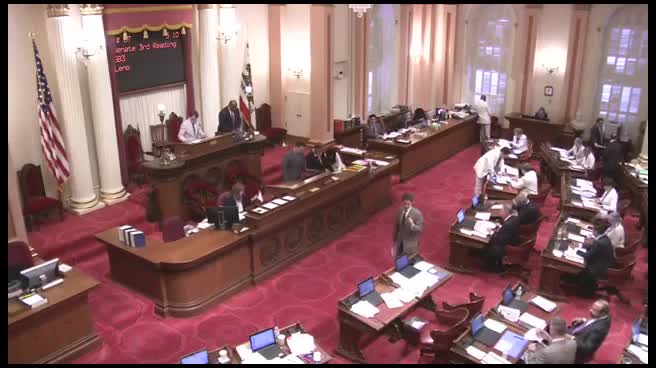 27MIN
Senate Floor
 44MIN
Senate Standing Committee on Appropriations
 1H
Senate Standing Committee on Labor and Industrial Relations

Bill Co-Author(s):