SB 308: Debtor exemptions.
- Session Year: 2015-2016
- House: Senate
- Latest Version Date: 2016-08-19
Existing law prohibits the seller or holder of a conditional sale contract for a motor vehicle from accelerating the maturity of any part or all of the amount due under the contract or repossessing the vehicle in the absence of default in the performance of any of the buyers obligations under the contract.
This bill would provide that neither the act of filing a bankruptcy petition by the buyer or other person liable on the contract nor the status of either of those persons as a debtor in bankruptcy constitutes a default in the performance of any of the buyers obligations under the contract and neither may be used as a basis for accelerating the maturity of any part or all of the amount due under the contract or for repossessing the motor vehicle.
Existing law identifies various types of property of a judgment debtor that are exempt from the enforcement of a money judgment. Existing law provides that property described in statute as exempt may be claimed within the time and in the manner prescribed in the applicable enforcement procedure, and property described in statute as exempt without making a claim is not subject to any procedure for enforcement of a money judgment. These general exemptions are available to a debtor in a federal bankruptcy case, whether a money judgment is being enforced by execution sale or other procedure, unless the debtor elects certain alternative exemptions.
Existing law requires the Judicial Council to, every 3 years, adjust the amount of the exemptions applicable to exempt property based on the change in the annual California Consumer Price Index for All Urban Consumers, and to prepare conforming forms for those adjustments.
This bill would increase the statutory amounts of various exemptions to reflect the amounts of the exemptions as adjusted by the Judicial Council effective April 1, 2013.
Existing law authorizes a husband and wife who jointly file a bankruptcy petition to jointly elect to utilize the general exemptions or the alternative exemptions, but not both. The general exemptions are applicable if a bankruptcy petition is filed individually, and not jointly, for a husband or a wife, except that the husband and wife may jointly waive in writing their right to claim, during the period the case commenced by filing the petition is pending, the general exemptions and instead elect to utilize the alternative exemptions.
This bill would provide that a joint waiver is not required from a debtor who is separated from his or her spouse as of the date the bankruptcy petition is filed, unless, on the petition date, the debtor and the debtors spouse shared an ownership interest in property that could be exempted as a homestead, as specified.
Existing law includes an alternative exemption for the debtors right to receive a payment under a stock bonus, pension, profit-sharing, annuity, or similar plan or contract on account of illness, disability, death, age, or length of service to the extent reasonably necessary for the support of the debtor and any dependent of the debtor, unless all of several specified conditions apply, including that the plan or contract does not qualify under specified provisions of the federal Internal Revenue Code of 1986.
This bill would provide that a plan or contract covered by this alternative exemption would be exempt even if it did not qualify under the specified provisions of the federal Internal Revenue Code of 1986 so long as the sole basis for the failure to qualify is a technical defect.
Existing law includes alternative exemptions for the debtors right to receive, or property that is traceable to, a payment on account of the wrongful death of an individual of whom the debtor was a dependent and a payment under a life insurance contract that insured the life of an individual of whom the debtor was a dependent on the date of that individuals death.
This bill would make these exemptions applicable, as well, to payments regarding an individual of whom the debtor was a spouse.
Existing law includes an alternative exemption for the debtors right to receive, or property that is traceable to, a payment on account of personal bodily injury of the debtor or an individual of whom the debtor is a dependent. Existing law sets this amount as $25,575, as adjusted by the Judicial Council.
This bill would make this exemption applicable, as well, to a payment on account of personal bodily injury of the spouse of the debtor.
Existing law includes an alternative exemption for the debtors right to receive, or property that is traceable to, a payment in compensation of loss of future earnings of the debtor or an individual of whom the debtor is or was a dependent to the extent reasonably necessary for the support of the debtor and a dependent of the debtor.
This bill would make this exemption applicable, as well, to a payment regarding an individual of whom the debtor is or was a spouse, and would provide that the exemption applies to the extent reasonably necessary for the support of the debtor and a spouse or dependent of the debtor.
Existing law provides that vacation credits, as defined, are exempt from enforcement of a money judgment without making a claim.
This bill would delete the definition of vacation credits set forth in these provisions and expand this general exemption to also include accrued or unused vacation pay, sick leave, and family leave. The bill also would add an alternative exemption for the debtors right to receive these expanded assets.
Existing law exempts any combination of aggregate equity in motor vehicles, the proceeds of an execution sale of a motor vehicle, and the proceeds of insurance or other indemnification for the loss, damage, or destruction of a motor vehicle. Existing law sets this amount of this exemption, as adjusted by the Judicial Council, at $2,900. Existing law includes an alternative exemption for up to $5,100, as adjusted by the Judicial Council, of the debtors interest in one or more motor vehicles.
This bill would increase the amount of the general and alternative exemption for motor vehicle equity to $6,000, and make conforming changes.
This bill would provide that the aggregate interest of a debtor who is engaged in business, not to exceed $5,000 in cash or deposit accounts, accounts receivable, and inventory of the business is exempt.
Existing law includes an alternative exemption for the debtors right to receive alimony, support, or separate maintenance, to the extent reasonably necessary for the support of the debtor and any dependent of the debtor.
This bill would provide that these assets are exempt, thereby adding a general exemption matching the existing alternative exemption.
Existing law provides that all amounts held, controlled, or in process of distribution by a private retirement plan, for the payment of benefits as an annuity, pension, retirement allowance, disability payment, or death benefit from a private retirement plan are exempt. Existing law defines private retirement plan to include self-employed retirement plans and individual retirement annuities or accounts provided for in the federal Internal Revenue Code of 1986, including individual retirement accounts qualified under specified provisions of that code.
This bill would expand this exemption to also include individual retirement accounts that do not qualify under those specified provisions on the basis of a technical defect alone.
Existing law provides that various causes of action and awards of damages or settlements arising out of those actions are exempt to varying extent, as specified.
This bill would provide that a cause of action arising out of or regarding the violation of any law relating to the judgment debtors employment is exempt without making a claim, except as provided in specified statutory provisions, and an award of damages or a settlement arising out of or regarding the violation of any law relating to the judgment debtors employment is exempt to the extent necessary for the support of the judgment debtor and the spouse and dependents of the judgment debtor. The bill also would add identical alternative exemptions in this regard.
Existing law provides that the proceeds of sale or of insurance or other indemnification for damage or destruction of a homestead, the proceeds received as compensation for a homestead acquired for public use, or the proceeds from a voluntary sale of a declared homestead, are exempt in the amount of the homestead exemption provided in a specified statute for a period of 6 months after the time the proceeds are actually received by the judgment debtor, except as provided.
This bill would specify that, in a case under Title 11 of the United States Code, regardless of whether the sale is voluntary or involuntary, the expiration of the 6-month period at any time after the filing of the case does not terminate the exempt status of the homestead or its proceeds.
Existing law provides that a specified portion of equity in a homestead, as defined, is exempt from execution to satisfy a judgment debt and prescribes that the amount of the homestead exemption is either $75,000, $100,000, or $175,000, depending on certain characteristics of the homesteads residents.
This bill would increase these exemptions to $100,000, $150,000, or $300,000, respectively.
Existing law provides that, in the absence of default in the performance of a borrowers obligations under a loan secured in whole or in part by a lien on a motor vehicle, as defined, a licensee may not accelerate the maturity of any or all of the amount due on the loan or repossess the motor vehicle.
This bill would provide that neither the act of filing a bankruptcy petition by the borrower or other person liable on the loan nor the status of either of those persons as a debtor in bankruptcy constitutes a default in the performance of any of the borrowers obligations under the loan and neither may be used as a basis for accelerating the maturity of any part or all of the amount due under the loan or for repossessing the motor vehicle.
This bill would incorporate changes to Section 703.140 of the Code of Civil Procedure proposed by both this bill and SB 1005, which would become operative only if both bills are enacted and become effective on or before January 1, 2017, and this bill is chaptered last.
Existing law prohibits the seller or holder of a conditional sale contract for a motor vehicle from accelerating the maturity of any part or all of the amount due under the contract or repossessing the vehicle in the absence of default in the performance of any of the buyers obligations under the contract.
This bill would provide that neither the act of filing a bankruptcy petition by the buyer or other person liable on the contract nor the status of either of those persons as a debtor in bankruptcy constitutes a default in the performance of any of the buyers obligations under the contract and neither may be used as a basis for accelerating the maturity of any part or all of the amount due under the contract or for repossessing the motor vehicle.
Existing law identifies various types of property of a judgment debtor that are exempt from the enforcement of a money judgment. Existing law provides that property described in statute as exempt may be claimed within the time and in the manner prescribed in the applicable enforcement procedure, and property described in statute as exempt without making a claim is not subject to any procedure for enforcement of a money judgment. These general exemptions are available to a debtor in a federal bankruptcy case, whether a money judgment is being enforced by execution sale or other procedure, unless the debtor elects certain alternative exemptions.
Existing law requires the Judicial Council to, every 3 years, adjust the amount of the exemptions applicable to exempt property based on the change in the annual California Consumer Price Index for All Urban Consumers, and to prepare conforming forms for those adjustments.
This bill would increase the statutory amounts of various exemptions to reflect the amounts of the exemptions as adjusted by the Judicial Council effective April 1, 2013.
Existing law authorizes a husband and wife who jointly file a bankruptcy petition to jointly elect to utilize the general exemptions or the alternative exemptions, but not both. The general exemptions are applicable if a bankruptcy petition is filed individually, and not jointly, for a husband or a wife, except that the husband and wife may jointly waive in writing their right to claim, during the period the case commenced by filing the petition is pending, the general exemptions and instead elect to utilize the alternative exemptions.
This bill would provide that a joint waiver is not required from a debtor who is separated from his or her spouse as of the date the bankruptcy petition is filed, unless, on the petition date, the debtor and the debtors spouse shared an ownership interest in property that could be exempted as a homestead, as specified.
Existing law includes an alternative exemption for the debtors right to receive a payment under a stock bonus, pension, profit-sharing, annuity, or similar plan or contract on account of illness, disability, death, age, or length of service to the extent reasonably necessary for the support of the debtor and any dependent of the debtor, unless all of several specified conditions apply, including that the plan or contract does not qualify under specified provisions of the federal Internal Revenue Code of 1986.
This bill would provide that a plan or contract covered by this alternative exemption would be exempt even if it did not qualify under the specified provisions of the federal Internal Revenue Code of 1986 so long as the sole basis for the failure to qualify is a technical defect.
Existing law includes alternative exemptions for the debtors right to receive, or property that is traceable to, a payment on account of the wrongful death of an individual of whom the debtor was a dependent and a payment under a life insurance contract that insured the life of an individual of whom the debtor was a dependent on the date of that individuals death.
This bill would make these exemptions applicable, as well, to payments regarding an individual of whom the debtor was a spouse.
Existing law includes an alternative exemption for the debtors right to receive, or property that is traceable to, a payment on account of personal bodily injury of the debtor or an individual of whom the debtor is a dependent. Existing law sets this amount as $25,575, as adjusted by the Judicial Council.
This bill would make this exemption applicable, as well, to a payment on account of personal bodily injury of the spouse of the debtor.
Existing law includes an alternative exemption for the debtors right to receive, or property that is traceable to, a payment in compensation of loss of future earnings of the debtor or an individual of whom the debtor is or was a dependent to the extent reasonably necessary for the support of the debtor and a dependent of the debtor.
This bill would make this exemption applicable, as well, to a payment regarding an individual of whom the debtor is or was a spouse, and would provide that the exemption applies to the extent reasonably necessary for the support of the debtor and a spouse or dependent of the debtor.
Existing law provides that vacation credits, as defined, are exempt from enforcement of a money judgment without making a claim.
This bill would delete the definition of vacation credits set forth in these provisions and expand this general exemption to also include accrued or unused vacation pay, sick leave, and family leave. The bill also would add an alternative exemption for the debtors right to receive these expanded assets.
Existing law exempts any combination of aggregate equity in motor vehicles, the proceeds of an execution sale of a motor vehicle, and the proceeds of insurance or other indemnification for the loss, damage, or destruction of a motor vehicle. Existing law sets this amount of this exemption, as adjusted by the Judicial Council, at $2,900. Existing law includes an alternative exemption for up to $5,100, as adjusted by the Judicial Council, of the debtors interest in one or more motor vehicles.
This bill would increase the amount of the general and alternative exemption for motor vehicle equity to $6,000, and make conforming changes.
This bill would provide that the aggregate interest of a debtor who is engaged in business, not to exceed $5,000 in cash or deposit accounts, accounts receivable, and inventory of the business is exempt.
Existing law includes an alternative exemption for the debtors right to receive alimony, support, or separate maintenance, to the extent reasonably necessary for the support of the debtor and any dependent of the debtor.
This bill would provide that these assets are exempt, thereby adding a general exemption matching the existing alternative exemption.
Existing law provides that all amounts held, controlled, or in process of distribution by a private retirement plan, for the payment of benefits as an annuity, pension, retirement allowance, disability payment, or death benefit from a private retirement plan are exempt. Existing law defines private retirement plan to include self-employed retirement plans and individual retirement annuities or accounts provided for in the federal Internal Revenue Code of 1986, including individual retirement accounts qualified under specified provisions of that code.
This bill would expand this exemption to also include individual retirement accounts that do not qualify under those specified provisions on the basis of a technical defect alone.
Existing law provides that various causes of action and awards of damages or settlements arising out of those actions are exempt to varying extent, as specified.
This bill would provide that a cause of action arising out of or regarding the violation of any law relating to the judgment debtors employment is exempt without making a claim, except as provided in specified statutory provisions, and an award of damages or a settlement arising out of or regarding the violation of any law relating to the judgment debtors employment is exempt to the extent necessary for the support of the judgment debtor and the spouse and dependents of the judgment debtor. The bill also would add identical alternative exemptions in this regard.
Existing law provides that the proceeds of sale or of insurance or other indemnification for damage or destruction of a homestead, the proceeds received as compensation for a homestead acquired for public use, or the proceeds from a voluntary sale of a declared homestead, are exempt in the amount of the homestead exemption provided in a specified statute for a period of 6 months after the time the proceeds are actually received by the judgment debtor, except as provided.
This bill would specify that, in a case under Title 11 of the United States Code, regardless of whether the sale is voluntary or involuntary, the expiration of the 6-month period at any time after the filing of the case does not terminate the exempt status of the homestead or its proceeds.
Existing law provides that a specified portion of equity in a homestead, as defined, is exempt from execution to satisfy a judgment debt and prescribes that the amount of the homestead exemption is either $75,000, $100,000, or $175,000, depending on certain characteristics of the homesteads residents.
This bill would increase these exemptions to $100,000, $150,000, or $300,000, respectively.
Existing law provides that, in the absence of default in the performance of a borrowers obligations under a loan secured in whole or in part by a lien on a motor vehicle, as defined, a licensee may not accelerate the maturity of any or all of the amount due on the loan or repossess the motor vehicle.
This bill would provide that neither the act of filing a bankruptcy petition by the borrower or other person liable on the loan nor the status of either of those persons as a debtor in bankruptcy constitutes a default in the performance of any of the borrowers obligations under the loan and neither may be used as a basis for accelerating the maturity of any part or all of the amount due under the loan or for repossessing the motor vehicle.
Existing law prohibits the seller or holder of a conditional sale contract for a motor vehicle from accelerating the maturity of any part or all of the amount due under the contract or repossessing the vehicle in the absence of default in the performance of any of the buyers obligations under the contract.
This bill would provide that neither the act of filing a bankruptcy petition by the buyer or other person liable on the contract nor the status of either of those persons as a debtor in bankruptcy constitutes a default in the performance of any of the buyers obligations under the contract and neither may be used as a basis for accelerating the maturity of any part or all of the amount due under the contract or for repossessing the motor vehicle.
Existing law identifies various types of property of a judgment debtor that are exempt from the enforcement of a money judgment. Existing law provides that property described in statute as exempt may be claimed within the time and in the manner prescribed in the applicable enforcement procedure, and property described in statute as exempt without making a claim is not subject to any procedure for enforcement of a money judgment. These general exemptions are available to a debtor in a federal bankruptcy case, whether a money judgment is being enforced by execution sale or other procedure, unless the debtor elects certain alternative exemptions.
Existing law requires the Judicial Council to, every 3 years, adjust the amount of the exemptions applicable to exempt property based on the change in the annual California Consumer Price Index for All Urban Consumers, and to prepare conforming forms for those adjustments.
This bill would increase the statutory amounts of various exemptions to reflect the amounts of the exemptions as adjusted by the Judicial Council effective April 1, 2013.
Existing law authorizes a husband and wife who jointly file a bankruptcy petition to jointly elect to utilize the general exemptions or the alternative exemptions, but not both. The general exemptions are applicable if a bankruptcy petition is filed individually, and not jointly, for a husband or a wife, except that the husband and wife may jointly waive in writing their right to claim, during the period the case commenced by filing the petition is pending, the general exemptions and instead elect to utilize the alternative exemptions.
This bill would provide that a joint waiver is not required from a debtor who is separated from his or her spouse as of the date the bankruptcy petition is filed, unless, on the petition date, the debtor and the debtors spouse shared an ownership interest in property that could be exempted as a homestead, as specified.
Existing law includes an alternative exemption for the debtors right to receive a payment under a stock bonus, pension, profit-sharing, annuity, or similar plan or contract on account of illness, disability, death, age, or length of service to the extent reasonably necessary for the support of the debtor and any dependent of the debtor, unless all of several specified conditions apply, including that the plan or contract does not qualify under specified provisions of the federal Internal Revenue Code of 1986.
This bill would provide that a plan or contract covered by this alternative exemption would be exempt even if it did not qualify under the specified provisions of the federal Internal Revenue Code of 1986 so long as the sole basis for the failure to qualify is a technical defect.
Existing law includes alternative exemptions for the debtors right to receive, or property that is traceable to, a payment on account of the wrongful death of an individual of whom the debtor was a dependent and a payment under a life insurance contract that insured the life of an individual of whom the debtor was a dependent on the date of that individuals death.
This bill would make these exemptions applicable, as well, to payments regarding an individual of whom the debtor was a spouse.
Existing law includes an alternative exemption for the debtors right to receive, or property that is traceable to, a payment on account of personal bodily injury of the debtor or an individual of whom the debtor is a dependent. Existing law sets this amount as $25,575, as adjusted by the Judicial Council.
This bill would make this exemption applicable, as well, to a payment on account of personal bodily injury of the spouse of the debtor.
Existing law includes an alternative exemption for the debtors right to receive, or property that is traceable to, a payment in compensation of loss of future earnings of the debtor or an individual of whom the debtor is or was a dependent to the extent reasonably necessary for the support of the debtor and a dependent of the debtor.
This bill would make this exemption applicable, as well, to a payment regarding an individual of whom the debtor is or was a spouse, and would provide that the exemption applies to the extent reasonably necessary for the support of the debtor and a spouse or dependent of the debtor.
Existing law provides that vacation credits, as defined, are exempt from enforcement of a money judgment without making a claim.
This bill would delete the definition of vacation credits set forth in these provisions and expand this general exemption to also include accrued or unused vacation pay, sick leave, and family leave. The bill also would add an alternative exemption for the debtors right to receive these expanded assets.
Existing law exempts any combination of aggregate equity in motor vehicles, the proceeds of an execution sale of a motor vehicle, and the proceeds of insurance or other indemnification for the loss, damage, or destruction of a motor vehicle. Existing law sets this amount of this exemption, as adjusted by the Judicial Council, at $2,900. Existing law includes an alternative exemption for up to $5,100, as adjusted by the Judicial Council, of the debtors interest in one or more motor vehicles.
This bill would increase the amount of the general and alternative exemption for motor vehicle equity to $6,000, and make conforming changes.
This bill would provide that the aggregate interest of a debtor who is engaged in business, not to exceed $5,000 in cash or deposit accounts, accounts receivable, and inventory of the business is exempt.
Existing law includes an alternative exemption for the debtors right to receive alimony, support, or separate maintenance, to the extent reasonably necessary for the support of the debtor and any dependent of the debtor.
This bill would provide that these assets are exempt, thereby adding a general exemption matching the existing alternative exemption.
Existing law provides that all amounts held, controlled, or in process of distribution by a private retirement plan, for the payment of benefits as an annuity, pension, retirement allowance, disability payment, or death benefit from a private retirement plan are exempt. Existing law defines private retirement plan to include self-employed retirement plans and individual retirement annuities or accounts provided for in the federal Internal Revenue Code of 1986, including individual retirement accounts qualified under specified provisions of that code.
This bill would expand this exemption to also include individual retirement accounts that do not qualify under those specified provisions on the basis of a technical defect alone.
Existing law provides that various causes of action and awards of damages or settlements arising out of those actions are exempt to varying extent, as specified.
This bill would provide that a cause of action arising out of or regarding the violation of any law relating to the judgment debtors employment is exempt without making a claim, except as provided in specified statutory provisions, and an award of damages or a settlement arising out of or regarding the violation of any law relating to the judgment debtors employment is exempt to the extent necessary for the support of the judgment debtor and the spouse and dependents of the judgment debtor. The bill also would add identical alternative exemptions in this regard.
Existing law provides that the proceeds of sale or of insurance or other indemnification for damage or destruction of a homestead, the proceeds received as compensation for a homestead acquired for public use, or the proceeds from a voluntary sale of a declared homestead, are exempt in the amount of the homestead exemption provided in a specified statute for a period of 6 months after the time the proceeds are actually received by the judgment debtor, except as provided.
This bill would specify that, in a case under Title 11 of the United States Code, regardless of whether the sale is voluntary or involuntary, the expiration of the six-month 6-month period at any time after the filing of the case does not terminate the exempt status of the homestead or its proceeds.
Existing law provides that a specified portion of equity in a homestead, as defined, is exempt from execution to satisfy a judgment debt and prescribes that the amount of the homestead exemption is either $75,000, $100,000, or $175,000, depending on certain characteristics of the homesteads residents.
This bill would increase these exemptions to $100,000, $150,000 $150,000, or $300,000, respectively.
Existing law provides that, in the absence of default in the performance of a borrowers obligations under a loan secured in whole or in part by a lien on a motor vehicle, as defined, a licensee may not accelerate the maturity of any or all of the amount due on the loan or repossess the motor vehicle.
This bill would provide that neither the act of filing a bankruptcy petition by the borrower or other person liable on the loan nor the status of either of those persons as a debtor in bankruptcy constitutes a default in the performance of any of the borrowers obligations under the loan and neither may be used as a basis for accelerating the maturity of any part or all of the amount due under the loan or for repossessing the motor vehicle.
Existing law prohibits the seller or holder of a conditional sale contract for a motor vehicle from accelerating the maturity of any part or all of the amount due under the contract or repossessing the vehicle in the absence of default in the performance of any of the buyers obligations under the contract.
This bill would provide that neither the act of filing a bankruptcy petition by the buyer or other individual person liable on the contract nor the status of either of those persons as a debtor in bankruptcy constitutes a default in the performance of any of the buyers obligations under the contract and neither may be used as a basis for accelerating the maturity of any part or all of the amount due under the contract or for repossessing the motor vehicle.
Existing law identifies various types of property of a judgment debtor that are exempt from the enforcement of a money judgment. Existing law provides that property described in statute as exempt may be claimed within the time and in the manner prescribed in the applicable enforcement procedure, and property described in statute as exempt without making a claim is not subject to any procedure for enforcement of a money judgment. These general exemptions are available to a debtor in a federal bankruptcy case, whether a money judgment is being enforced by execution sale or other procedure, unless the debtor elects certain alternative exemptions.
Existing law requires the Judicial Council to, every 3 years, adjust the amount of the exemptions applicable to exempt property based on the change in the annual California Consumer Price Index for All Urban Consumers, and to prepare conforming forms for those adjustments.
This bill would increase the statutory amounts of various exemptions to reflect the amounts of the exemptions as adjusted by the Judicial Council effective April 1, 2013.
Existing law authorizes a husband and wife who jointly file a bankruptcy petition to jointly elect to utilize the general exemptions or the alternative exemptions, but not both. The general exemptions are applicable if a bankruptcy petition is filed individually, and not jointly, for a husband or a wife, except that the husband and wife may jointly waive in writing their right to claim, during the period the case commenced by filing the petition is pending, the general exemptions and instead elect to utilize the alternative exemptions.
This bill would provide that a joint waiver is not required from a debtor who is separated from his or her spouse as of the date the bankruptcy petition is filed. filed, unless, on the petition date, the debtor and the debtors spouse shared an ownership interest in property that could be exempted as a homestead, as specified.
Existing law includes an alternative exemption for the debtors right to receive a payment under a stock bonus, pension, profit-sharing, annuity, or similar plan or contract on account of illness, disability, death, age, or length of service to the extent reasonably necessary for the support of the debtor and any dependent of the debtor, unless all of several specified conditions apply, including that the plan or contract does not qualify under specified provisions of the federal Internal Revenue Code of 1986.
This bill would provide that a plan or contract covered by this alternative exemption would be exempt even if it did not qualify under the specified provisions of the federal Internal Revenue Code of 1986 so long as the sole basis for the failure to qualify is a technical defect.
Existing law includes alternative exemptions for the debtors right to receive, or property that is traceable to, a payment on account of the wrongful death of an individual of whom the debtor was a dependent and a payment under a life insurance contract that insured the life of an individual of whom the debtor was a dependent on the date of that individuals death.
This bill would make these exemptions applicable, as well, to payments regarding an individual of whom the debtor was a spouse.
Existing law includes an alternative exemption for the debtors right to receive, or property that is traceable to, a payment on account of personal bodily injury of the debtor or an individual of whom the debtor is a dependent. Existing law sets this amount as $25,575, as adjusted by the Judicial Council.
This bill would make this exemption applicable, as well, to a payment on account of personal bodily injury of the spouse of the debtor.
Existing law includes an alternative exemption for the debtors right to receive, or property that is traceable to, a payment in compensation of loss of future earnings of the debtor or an individual of whom the debtor is or was a dependent to the extent reasonably necessary for the support of the debtor and a dependent of the debtor.
This bill would make this exemption applicable, as well, to a payment regarding an individual of whom the debtor is or was a spouse, and would provide that the exemption applies to the extent reasonably necessary for the support of the debtor and a spouse or dependent of the debtor.
Existing law provides that vacation credits, as defined, are exempt from enforcement of a money judgment without making a claim.
This bill would delete the definition of vacation credits set forth in these provisions and expand this general exemption to also include accrued or unused vacation pay, sick leave, and family leave. The bill also would add an alternative exemption for the debtors right to receive these expanded assets.
Existing law exempts any combination of aggregate equity in motor vehicles, the proceeds of an execution sale of a motor vehicle, and the proceeds of insurance or other indemnification for the loss, damage, or destruction of a motor vehicle. Existing law sets this amount of this exemption, as adjusted by the Judicial Council, at $2,900. Existing law includes an alternative exemption for up to $5,100, as adjusted by the Judicial Council, of the debtors interest in one or more motor vehicles.
This bill would increase the amount of the general and alternative exemption for motor vehicle equity to $6,000, and make conforming changes.
This bill would provide that the aggregate interest of a debtor who is engaged in business, not to exceed $5,000 in cash or deposit accounts, accounts receivable, and inventory of the business is exempt.
Existing law includes an alternative exemption for the debtors right to receive alimony, support, or separate maintenance, to the extent reasonably necessary for the support of the debtor and any dependent of the debtor.
This bill would provide that these assets are exempt, thereby adding a general exemption matching the existing alternative exemption.
Existing law provides that all amounts held, controlled, or in process of distribution by a private retirement plan, for the payment of benefits as an annuity, pension, retirement allowance, disability payment, or death benefit from a private retirement plan are exempt. Existing law defines private retirement plan to include self-employed retirement plans and individual retirement annuities or accounts provided for in the federal Internal Revenue Code of 1986, including individual retirement accounts qualified under specified provisions of that code.
This bill would expand this exemption to also include individual retirement accounts that do not qualify under those specified provisions on the basis of a technical defect alone.
Existing law provides that various causes of action and awards of damages or settlements arising out of those actions are exempt to varying extent, as specified.
This bill would provide that a cause of action arising out of or regarding the violation of any law relating to the judgment debtors employment is exempt without making a claim, except as provided in specified statutory provisions, and an award of damages or a settlement arising out of or regarding the violation of any law relating to the judgment debtors employment is exempt to the extent necessary for the support of the judgment debtor and the spouse and dependents of the judgment debtor. The bill also would add identical alternative exemptions in this regard.
Existing law provides that the proceeds of sale or of insurance or other indemnification for damage or destruction of a homestead, the proceeds received as compensation for a homestead acquired for public use, or the proceeds from a voluntary sale of a declared homestead, are exempt in the amount of the homestead exemption provided in a specified statute for a period of 6 months after the time the proceeds are actually received by the judgment debtor, except as provided.
This bill would delete the 6-month limitation on these exemptions, thereby making these proceeds exempt indefinitely, and make conforming changes specify that, in a case under Title 11 of the United States Code, regardless of whether the sale is voluntary or involuntary, the expiration of the six-month period at any time after the filing of the case does not terminate the exempt status of the homestead or its proceeds.
Existing law provides that a specified portion of equity in a homestead, as defined, is exempt from execution to satisfy a judgment debt and prescribes that the amount of the homestead exemption is either $75,000, $100,000, or $175,000, depending on certain characteristics of the homesteads residents.
This bill would increase these exemptions to $175,000, $250,000, $100,000, $150,000 or $300,000, respectively.
Existing law provides that, in the absence of default in the performance of a borrowers obligations under a loan secured in whole or in part by a lien on a motor vehicle, as defined, a licensee may not accelerate the maturity of any or all of the amount due on the loan or repossess the motor vehicle.
This bill would provide that neither the act of filing a bankruptcy petition by the borrower or other person liable on the loan nor the status of either of those persons as a debtor in bankruptcy constitutes a default in the performance of any of the borrowers obligations under the loan and neither may be used as a basis for accelerating the maturity of any part or all of the amount due under the loan or for repossessing the motor vehicle.
Existing law prohibits the seller or holder of a conditional sale contract for a motor vehicle from accelerating the maturity of any part or all of the amount due under the contract or repossessing the vehicle in the absence of default in the performance of any of the buyers obligations under the contract.
This bill would provide that neither the act of filing a bankruptcy petition by the buyer or other individual liable on the contract nor the status of either of those persons as a debtor in bankruptcy constitutes a default in the performance of any of the buyers obligations under the contract and neither may be used as a basis for accelerating the maturity of any part or all of the amount due under the contract or for repossessing the motor vehicle.
Existing law identifies various types of property of a judgment debtor that are exempt from the enforcement of a money judgment. Existing law provides that property described in statute as exempt may be claimed within the time and in the manner prescribed in the applicable enforcement procedure, and property described in statute as exempt without making a claim is not subject to any procedure for enforcement of a money judgment. These general exemptions are available to a debtor in a federal bankruptcy case, whether a money judgment is being enforced by execution sale or other procedure, unless the debtor elects certain alternative exemptions.
Existing law requires the Judicial Council to, every 3 years, adjust the amount of the exemptions applicable to exempt property based on the change in the annual California Consumer Price Index for All Urban Consumers, and to prepare conforming forms for those adjustments.
This bill would increase the statutory amounts of various exemptions to reflect the amounts of the exemptions as adjusted by the Judicial Council effective April 1, 2013.
Existing law authorizes a husband and wife who jointly file a bankruptcy petition to jointly elect to utilize the general exemptions or the alternative exemptions, but not both. The general exemptions are applicable if a bankruptcy petition is filed individually, and not jointly, for a husband or a wife, except that the husband and wife may jointly waive in writing their right to claim, during the period the case commenced by filing the petition is pending, the general exemptions and instead elect to utilize the alternative exemptions.
This bill would provide that a joint waiver is not required from a debtor who is separated from his or her spouse as of the date the bankruptcy petition is filed.
Existing law includes an alternative exemption for the debtors right to receive a payment under a stock bonus, pension, profit-sharing, annuity, or similar plan or contract on account of illness, disability, death, age, or length of service to the extent reasonably necessary for the support of the debtor and any dependent of the debtor, unless all of several specified conditions apply, including that the plan or contract does not qualify under specified provisions of the federal Internal Revenue Code of 1986.
This bill would provide that a plan or contract covered by this alternative exemption would be exempt even if it did not qualify under the specified provisions of the federal Internal Revenue Code of 1986 so long as the sole basis for the failure to qualify is a technical defect.
Existing law includes alternative exemptions for the debtors right to receive, or property that is traceable to, a payment on account of the wrongful death of an individual of whom the debtor was a dependent and a payment under a life insurance contract that insured the life of an individual of whom the debtor was a dependent on the date of that individuals death.
This bill would make these exemptions applicable, as well, to payments regarding an individual of whom the debtor was a spouse.
Existing law includes an alternative exemption for the debtors right to receive, or property that is traceable to, a payment on account of personal bodily injury of the debtor or an individual of whom the debtor is a dependent. Existing law sets this amount as $25,575, as adjusted by the Judicial Council.
This bill would make this exemption applicable, as well, to a payment on account of personal bodily injury of the spouse of the debtor.
Existing law includes an alternative exemption for the debtors right to receive, or property that is traceable to, a payment in compensation of loss of future earnings of the debtor or an individual of whom the debtor is or was a dependent to the extent reasonably necessary for the support of the debtor and a dependent of the debtor.
This bill would make this exemption applicable, as well, to a payment regarding an individual of whom the debtor is or was a spouse, and would provide that the exemption applies to the extent reasonably necessary for the support of the debtor and a spouse or dependent of the debtor.
Existing law provides that vacation credits, as defined, are exempt from enforcement of a money judgment without making a claim.
This bill would delete the definition of vacation credits set forth in these provisions and expand this general exemption to also include accrued or unused vacation pay, sick leave, and family leave. The bill also would add an alternative exemption for the debtors right to receive these expanded assets.
Existing law exempts any combination of aggregate equity in motor vehicles, the proceeds of an execution sale of a motor vehicle, and the proceeds of insurance or other indemnification for the loss, damage, or destruction of a motor vehicle. Existing law sets this amount of this exemption, as adjusted by the Judicial Council, at $2,900. Existing law includes an alternative exemption for up to $5,100, as adjusted by the Judicial Council, of the debtors interest in one or more motor vehicles.
This bill would increase the amount of the general and alternative exemption for motor vehicle equity to $6,000, and make conforming changes.
This bill would provide that the aggregate interest of a debtor who is engaged in business, not to exceed $5,000 in cash or deposit accounts, accounts receivable, and inventory of the business is exempt.
Existing law includes an alternative exemption for the debtors right to receive alimony, support, or separate maintenance, to the extent reasonably necessary for the support of the debtor and any dependent of the debtor.
This bill would provide that these assets are exempt, thereby adding a general exemption matching the existing alternative exemption.
Existing law provides that all amounts held, controlled, or in process of distribution by a private retirement plan, for the payment of benefits as an annuity, pension, retirement allowance, disability payment, or death benefit from a private retirement plan are exempt. Existing law defines private retirement plan to include self-employed retirement plans and individual retirement annuities or accounts provided for in the federal Internal Revenue Code of 1986, including individual retirement accounts qualified under specified provisions of that code.
This bill would expand this exemption to also include individual retirement accounts that do not qualify under those specified provisions on the basis of a technical defect alone.
Existing law provides that various causes of action and awards of damages or settlements arising out of those actions are exempt to varying extent, as specified.
This bill would provide that a cause of action arising out of or regarding the violation of any law relating to the judgment debtors employment is exempt without making a claim, except as provided in specified statutory provisions, and an award of damages or a settlement arising out of or regarding the violation of any law relating to the judgment debtors employment is exempt to the extent necessary for the support of the judgment debtor and the spouse and dependents of the judgment debtor. The bill also would add identical alternative exemptions in this regard.
Existing law provides that the proceeds of sale or of insurance or other indemnification for damage or destruction of a homestead, the proceeds received as compensation for a homestead acquired for public use, or the proceeds from a voluntary sale of a declared homestead, are exempt in the amount of the homestead exemption provided in a specified statute for a period of 6 months after the time the proceeds are actually received by the judgment debtor, except as provided.
This bill would delete the 6-month limitation on these exemptions, thereby making these proceeds exempt indefinitely, and make conforming changes.
Existing law provides that a specified portion of equity in a homestead, as defined, is exempt from execution to satisfy a judgment debt and prescribes that the amount of the homestead exemption is either $75,000, $100,000, or $175,000, depending on certain characteristics of the homesteads residents.
This bill would instead provide that the homestead exemption may not exceed $300,000. increase these exemptions to $175,000, $250,000, or $300,000, respectively.
Existing law prohibits the seller or holder of a conditional sale contract for a motor vehicle from accelerating the maturity of any part or all of the amount due under the contract or repossessing the vehicle in the absence of default in the performance of any of the buyers obligations under the contract.
This bill would provide that neither the act of filing a bankruptcy petition by the buyer or other individual liable on the contract nor the status of either of those persons as a debtor in bankruptcy constitutes a default in the performance of any of the buyers obligations under the contract and neither may be used as a basis for accelerating the maturity of any part or all of the amount due under the contract or for repossessing the motor vehicle.
Existing law identifies various types of property of a judgment debtor that are exempt from the enforcement of a money judgment. Existing law provides that property described in statute as exempt may be claimed within the time and in the manner prescribed in the applicable enforcement procedure, and property described in statute as exempt without making a claim is not subject to any procedure for enforcement of a money judgment. These general exemptions are available to a debtor in a federal bankruptcy case, whether a money judgment is being enforced by execution sale or other procedure, unless the debtor elects certain alternative exemptions.
Existing law requires the Judicial Council to, every 3 years, adjust the amount of the exemptions applicable to exempt property based on the change in the annual California Consumer Price Index for All Urban Consumers, and to prepare conforming forms for those adjustments.
This bill would increase the statutory amounts of various exemptions to reflect the amounts of the exemptions as adjusted by the Judicial Council effective April 1, 2013.
Existing law authorizes a husband and wife who jointly file a bankruptcy petition to jointly elect to utilize the general exemptions or the alternative exemptions, but not both. The general exemptions are applicable if a bankruptcy petition is filed individually, and not jointly, for a husband or a wife, except that the husband and wife may jointly waive in writing their right to claim, during the period the case commenced by filing the petition is pending, the general exemptions and instead elect to utilize the alternative exemptions.
This bill would provide that a joint waiver is not required from a debtor who is separated from his or her spouse as of the date the bankruptcy petition is filed.
Existing law includes an alternative exemption for the debtors right to receive a payment under a stock bonus, pension, profit-sharing, annuity, or similar plan or contract on account of illness, disability, death, age, or length of service to the extent reasonably necessary for the support of the debtor and any dependent of the debtor, unless all of several specified conditions apply, including that the plan or contract does not qualify under specified provisions of the federal Internal Revenue Code of 1986.
This bill would provide that a plan or contract covered by this alternative exemption would be exempt even if it did not qualify under the specified provisions of the federal Internal Revenue Code of 1986 so long as the sole basis for the failure to qualify is a technical defect.
Existing law includes alternative exemptions for the debtors right to receive, or property that is traceable to, a payment on account of the wrongful death of an individual of whom the debtor was a dependent and a payment under a life insurance contract that insured the life of an individual of whom the debtor was a dependent on the date of that individuals death.
This bill would make these exemptions applicable, as well, to payments regarding an individual of whom the debtor was a spouse.
Existing law includes an alternative exemption for the debtors right to receive, or property that is traceable to, a payment on account of personal bodily injury of the debtor or an individual of whom the debtor is a dependent. Existing law sets this amount as $25,575, as adjusted by the Judicial Council.
This bill would make this exemption applicable, as well, to a payment on account of personal bodily injury of the spouse of the debtor.
Existing law includes an alternative exemption for the debtors right to receive, or property that is traceable to, a payment in compensation of loss of future earnings of the debtor or an individual of whom the debtor is or was a dependent to the extent reasonably necessary for the support of the debtor and a dependent of the debtor.
This bill would make this exemption applicable, as well, to a payment regarding an individual of whom the debtor is or was a spouse, and would provide that the exemption applies to the extent reasonably necessary for the support of the debtor and a spouse or dependent of the debtor.
Existing law provides that vacation credits, as defined, are exempt from enforcement of a money judgment without making a claim.
This bill would delete the definition of vacation credits set forth in these provisions and expand this general exemption to also include accrued or unused vacation pay, sick leave, and family leave. The bill also would add an alternative exemption for the debtors right to receive these expanded assets.
Existing law exempts any combination of aggregate equity in motor vehicles, the proceeds of an execution sale of a motor vehicle, and the proceeds of insurance or other indemnification for the loss, damage, or destruction of a motor vehicle. Existing law sets this amount of this exemption, as adjusted by the Judicial Council, at $2,900. Existing law includes an alternative exemption for up to $5,100, as adjusted by the Judicial Council, of the debtors interest in one or more motor vehicles.
This bill would increase the amount of the general and alternative exemption for motor vehicle equity to $6,000, and make conforming changes.
This bill would provide that the aggregate interest of a debtor who is engaged in business, not to exceed ($5,000), $5,000 in cash or deposit accounts, accounts receivable, and inventory of the business is exempt.
Existing law includes an alternative exemption for the debtors right to receive alimony, support, or separate maintenance, to the extent reasonably necessary for the support of the debtor and any dependent of the debtor.
This bill would provide that these assets are exempt, thereby adding a general exemption matching the existing alternative exemption.
Existing law provides that all amounts held, controlled, or in process of distribution by a private retirement plan, for the payment of benefits as an annuity, pension, retirement allowance, disability payment, or death benefit from a private retirement plan are exempt. Existing law defines private retirement plan to include self-employed retirement plans and individual retirement annuities or accounts provided for in the federal Internal Revenue Code of 1986, including individual retirement accounts qualified under specified provisions of that code.
This bill would expand this exemption to also include individual retirement accounts that do not qualify under those specified provisions on the basis of a technical defect alone.
Existing law provides that various causes of action and awards of damages or settlements arising out of those actions are exempt to varying extent, as specified.
This bill would provide that a cause of action arising out of or regarding the violation of any law relating to the judgment debtors employment is exempt without making a claim, except as provided in specified statutory provisions, and an award of damages or a settlement arising out of or regarding the violation of any law relating to the judgment debtors employment is exempt to the extent necessary for the support of the judgment debtor and the spouse and dependents of the judgment debtor. The bill also would add identical alternative exemptions in this regard.
Existing law provides that the proceeds of sale or of insurance or other indemnification for damage or destruction of a homestead, the proceeds received as compensation for a homestead acquired for public use, or the proceeds from a voluntary sale of a declared homestead, are exempt in the amount of the homestead exemption provided in a specified statute for a period of 6 months after the time the proceeds are actually received by the judgment debtor, except as provided.
This bill would delete the 6-month limitation on these exemptions, thereby making these proceeds exempt indefinitely, and make conforming changes.
Existing law provides that a specified portion of equity in a homestead, as defined, is exempt from execution to satisfy a judgment debt and prescribes that the amount of the homestead exemption is either $75,000, $100,000, or $175,000, depending on certain characteristics of the homesteads residents.
This bill would instead provide that the homestead exemption may not exceed $700,000 unless the homestead is no greater than 320 acres and is used primarily for agricultural purposes, in which case the homestead exemption would be unlimited $300,000.
Existing law provides prohibits the seller or holder of a conditional sale contract for a motor vehicle from accelerating the maturity of any part or all of the amount due under the contract or repossessing the vehicle in the absence of default in the performance of any of the buyers obligations under the contract.
This bill would provide that neither the act of filing a bankruptcy petition by the buyer or other individual liable on the contract nor the status of either of those persons as a debtor in bankruptcy constitutes a default in the performance of any of the buyers obligations under the contract and neither may be used as a basis for accelerating the maturity of any part or all of the amount due under the contract or for repossessing the motor vehicle.
Existing law identifies various types of property of a judgment debtor that are exempt from the enforcement of a money judgment. Existing law provides that property described in statute as exempt may be claimed within the time and in the manner prescribed in the applicable enforcement procedure, and property described in statute as exempt without making a claim is not subject to any procedure for enforcement of a money judgment. These general exemptions are available to a debtor in a federal bankruptcy case, whether a money judgment is being enforced by execution sale or other procedure, unless the debtor elects certain alternative exemptions.
Existing law requires the Judicial Council to, every 3 years, adjust the amount of the exemptions applicable to exempt property based on the change in the annual California Consumer Price Index for All Urban Consumers, and to prepare conforming forms for those adjustments.
This bill would increase the statutory amounts of various exemptions to reflect the amounts of the exemptions as adjusted by the Judicial Council effective April 1, 2013.
Existing law authorizes a husband and wife who jointly file a bankruptcy petition to jointly elect to utilize the general exemptions or the alternative exemptions, but not both. The general exemptions are applicable if a bankruptcy petition is filed individually, and not jointly, for a husband or a wife, except that the husband and wife may jointly waive in writing their right to claim, during the period the case commenced by filing the petition is pending, the general exemptions and instead elect to utilize the alternative exemptions.
This bill would provide that a joint waiver is not required from a debtor who is separated from his or her spouse as of the date the bankruptcy petition is filed.
Existing law includes an alternative exemption for the debtors right to receive a payment under a stock bonus, pension, profit-sharing, annuity, or similar plan or contract on account of illness, disability, death, age, or length of service to the extent reasonably necessary for the support of the debtor and any dependent of the debtor, unless all of several specified conditions apply, including that the plan or contract does not qualify under specified provisions of the federal Internal Revenue Code of 1986.
This bill would provide that a plan or contract covered by this alternative exemption would be exempt even if it did not qualify under the specified provisions of the federal Internal Revenue Code of 1986 so long as the sole basis for the failure to qualify is a technical defect.
Existing law includes alternative exemptions for the debtors right to receive, or property that is traceable to, a payment on account of the wrongful death of an individual of whom the debtor was a dependent and a payment under a life insurance contract that insured the life of an individual of whom the debtor was a dependent on the date of that individuals death.
This bill would make these exemptions applicable, as well, to payments regarding an individual of whom the debtor was a spouse.
Existing law includes an alternative exemption for the debtors right to receive, or property that is traceable to, a payment up to $24,060 on account of personal bodily injury of the debtor or an individual of whom the debtor is a dependent. Existing law sets this amount as $25,575, as adjusted by the Judicial Council.
This bill would make this exemption applicable, as well, to a payment on account of personal bodily injury of the spouse of the debtor.
Existing law includes an alternative exemption for the debtors right to receive, or property that is traceable to, a payment in compensation of loss of future earnings of the debtor or an individual of whom the debtor is or was a dependent to the extent reasonably necessary for the support of the debtor and a dependent of the debtor.
This bill would make this exemption applicable, as well, to a payment regarding an individual of whom the debtor is or was a spouse, and would provide that the exemption applies to the extent reasonably necessary for the support of the debtor and a spouse or dependent of the debtor.
Existing law provides that vacation credits, as defined, are exempt from enforcement of a money judgment without making a claim.
This bill would delete the definition of vacation credits set forth in these provisions and expand this general exemption to also include accrued or unused vacation pay, sick leave, and family leave. The bill also would add an alternative exemption for the debtors right to receive these expanded assets.
Existing law provides that up to $2,300 of exempts any combination of aggregate equity in motor vehicles, the proceeds of an execution sale of a motor vehicle, and the proceeds of insurance or other indemnification for the loss, damage, or destruction of a motor vehicle, is exempt. vehicle. Existing law sets this amount of this exemption, as adjusted by the Judicial Council, at $2,900. Existing law includes an alternative exemption for up to $4,800 $5,100, as adjusted by the Judicial Council, of the debtors interest in one or more motor vehicles.
This bill would increase the amount of the general and alternative exemption for motor vehicle equity to $6,000, and make conforming changes.
This bill would provide that the aggregate interest of a debtor who is engaged in business, not to exceed five thousand dollars ($5,000), in cash or deposit accounts, accounts receivable, and inventory of the business is exempt.
Existing law includes an alternative exemption for the debtors right to receive alimony, support, or separate maintenance, to the extent reasonably necessary for the support of the debtor and any dependent of the debtor.
This bill would provide that these assets are exempt, thereby adding a general exemption matching the existing alternative exemption.
Existing law provides that all amounts held, controlled, or in process of distribution by a private retirement plan, for the payment of benefits as an annuity, pension, retirement allowance, disability payment, or death benefit from a private retirement plan are exempt. Existing law defines private retirement plan to include self-employed retirement plans and individual retirement annuities or accounts provided for in the federal Internal Revenue Code of 1986, including individual retirement accounts qualified under specified provisions of that code.
This bill would expand this exemption to also include individual retirement accounts that do not qualify under those specified provisions on the basis of a technical defect alone.
Existing law provides that various causes of action and awards of damages or settlements arising out of those actions are exempt to varying extent, as specified.
This bill would provide that a cause of action arising out of or regarding the violation of any law relating to the judgment debtors employment is exempt without making a claim, except as provided in specified statutory provisions, and an award of damages or a settlement arising out of or regarding the violation of any law relating to the judgment debtors employment is exempt to the extent necessary for the support of the judgment debtor and the spouse and dependents of the judgment debtor. The bill also would add identical alternative exemptions in this regard.
Existing law provides that the proceeds of sale or of insurance or other indemnification for damage or destruction of a homestead, the proceeds received as compensation for a homestead acquired for public use, or the proceeds from a voluntary sale of a declared homestead, are exempt in the amount of the homestead exemption provided in a specified statute for a period of six 6 months after the time the proceeds are actually received by the judgment debtor, except as provided.
This bill would delete the six 6-month limitation on these exemptions, thereby making these proceeds exempt indefinitely, and make conforming changes.
Existing law provides that a specified portion of equity in a homestead, as defined, is exempt from execution to satisfy a judgment debt and prescribes that the amount of the homestead exemption is either $75,000, $100,000, or $175,000, depending on certain characteristics of the homesteads residents.
This bill would instead provide that the homestead exemption may not exceed $700,000 unless the homestead is no greater than 320 acres and is used primarily for agricultural purposes, in which case the homestead exemption would be unlimited.
Existing law provides prohibits the seller or holder of a conditional sale contract for a motor vehicle from accelerating the maturity of any part or all of the amount due under the contract or repossessing the vehicle in the absence of default in the performance of any of the buyers obligations under the contract.
This bill would provide that neither the act of filing a bankruptcy petition by the buyer or other individual liable on the contract nor the status of either of those persons as a debtor in bankruptcy constitutes a default in the performance of any of the buyers obligations under the contract and neither may be used as a basis for accelerating the maturity of any part or all of the amount due under the contract or for repossessing the motor vehicle.
Existing law identifies various types of property of a judgment debtor that are exempt from the enforcement of a money judgment. Existing law provides that property described in statute as exempt may be claimed within the time and in the manner prescribed in the applicable enforcement procedure, and property described in statute as exempt without making a claim is not subject to any procedure for enforcement of a money judgment. These general exemptions are available to a debtor in a federal bankruptcy case, whether a money judgment is being enforced by execution sale or other procedure, unless the debtor elects certain alternative exemptions.
Existing law authorizes a husband and wife who jointly file a bankruptcy petition to jointly elect to utilize the general exemptions or the alternative exemptions, but not both. The general exemptions are applicable if a bankruptcy petition is filed individually, and not jointly, for a husband or a wife, except that the husband and wife may jointly waive in writing their right to claim, during the period the case commenced by filing the petition is pending, the general exemptions and instead elect to utilize the alternative exemptions.
This bill would provide that a joint waiver is not required from a debtor who is separated from his or her spouse as of the date the bankruptcy petition is filed.
Existing law includes an alternative exemption for the debtors right to receive a payment under a stock bonus, pension, profit-sharing, annuity, or similar plan or contract on account of illness, disability, death, age, or length of service to the extent reasonably necessary for the support of the debtor and any dependent of the debtor, unless all of several specified conditions apply, including that the plan or contract does not qualify under specified provisions of the federal Internal Revenue Code of 1986.
This bill would provide that a plan or contract covered by this alternative exemption would be exempt even if it did not qualify under the specified provisions of the federal Internal Revenue Code of 1986 so long as the sole basis for the failure to qualify is a technical defect.
Existing law includes alternative exemptions for the debtors right to receive, or property that is traceable to, a payment on account of the wrongful death of an individual of whom the debtor was a dependent and a payment under a life insurance contract that insured the life of an individual of whom the debtor was a dependent on the date of that individuals death.
This bill would make these exemptions applicable, as well, to payments regarding an individual of whom the debtor was a spouse.
Existing law includes an alternative exemption for the debtors right to receive, or property that is traceable to, a payment up to $24,060 on account of personal bodily injury of the debtor or an individual of whom the debtor is a dependent.
This bill would make this exemption applicable, as well, to a payment on account of personal bodily injury of the spouse of the debtor.
Existing law includes an alternative exemption for the debtors right to receive, or property that is traceable to, a payment in compensation of loss of future earnings of the debtor or an individual of whom the debtor is or was a dependent to the extent reasonably necessary for the support of the debtor and a dependent of the debtor.
This bill would make this exemption applicable, as well, to a payment regarding an individual of whom the debtor is or was a spouse, and would provide that the exemption applies to the extent reasonably necessary for the support of the debtor and a spouse or dependent of the debtor.
Existing law provides that vacation credits, as defined, are exempt from enforcement of a money judgment without making a claim.
This bill would delete the definition of vacation credits set forth in these provisions and expand this general exemption to also include accrued or unused vacation pay, sick leave, and family leave. The bill also would add an alternative exemption for the debtors right to receive these expanded assets.
Existing law provides that up to $2,300 of any combination of aggregate equity in motor vehicles, the proceeds of an execution sale of a motor vehicle, and the proceeds of insurance or other indemnification for the loss, damage, or destruction of a motor vehicle, is exempt. Existing law includes an alternative exemption for up to $4,800 of the debtors interest in one or more motor vehicles.
This bill would increase the amount of the general and alternative exemption for motor vehicle equity to $6,000, and make conforming changes.
This bill would provide that the aggregate interest of a debtor who is engaged in business, not to exceed five thousand dollars ($5,000), in cash or deposit accounts, accounts receivable, and inventory of the business is exempt.
Existing law includes an alternative exemption for the debtors right to receive alimony, support, or separate maintenance, to the extent reasonably necessary for the support of the debtor and any dependent of the debtor.
This bill would provide that these assets are exempt, thereby adding a general exemption matching the existing alternative exemption.
Existing law provides that all amounts held, controlled, or in process of distribution by a private retirement plan, for the payment of benefits as an annuity, pension, retirement allowance, disability payment, or death benefit from a private retirement plan are exempt. Existing law defines private retirement plan to include self-employed retirement plans and individual retirement annuities or accounts provided for in the federal Internal Revenue Code of 1986, including individual retirement accounts qualified under specified provisions of that code.
This bill would expand this exemption to also include individual retirement accounts that do not qualify under those specified provisions on the basis of a technical defect alone.
Existing law provides that various causes of action and awards of damages or settlements arising out of those actions are exempt to varying extent, as specified.
This bill would provide that a cause of action arising out of or regarding the violation of any law relating to the judgment debtors employment is exempt without making a claim, except as provided in specified statutory provisions, and an award of damages or a settlement arising out of or regarding the violation of any law relating to the judgment debtors employment is exempt to the extent necessary for the support of the judgment debtor and the spouse and dependents of the judgment debtor. The bill also would add identical alternative exemptions in this regard.
Existing law provides that the proceeds of sale or of insurance or other indemnification for damage or destruction of a homestead, the proceeds received as compensation for a homestead acquired for public use, or the proceeds from a voluntary sale of a declared homestead, are exempt in the amount of the homestead exemption provided in a specified statute for a period of six months after the time the proceeds are actually received by the judgment debtor, except as provided.
This bill would delete the six-month limitation on these exemptions, thereby making these proceeds exempt indefinitely, and make conforming changes.
Existing law provides that a specified portion of equity in a homestead, as defined, is exempt from execution to satisfy a judgment debt and prescribes that the amount of the homestead exemption is either $75,000, $100,000, or $175,000, depending on certain characteristics of the homesteads residents.
This bill would instead provide that the homestead exemption may not exceed $700,000 unless the homestead is no greater than 320 acres and is used primarily for agricultural purposes, in which case the homestead exemption would be unlimited.
(a)(1)In the absence of default in the performance of any of the buyers obligations under the contract, the seller or holder may not accelerate the maturity of any part or all of the amount due thereunder or repossess the motor vehicle.
(2)Neither the act of filing a petition commencing a case for bankruptcy under Title 11 of the United States Code by the buyer or other person liable on the contract nor the status of either of those persons as a debtor in bankruptcy constitutes a default in the performance of any of the buyers obligations under the contract, and neither may be used as a basis for accelerating the maturity of any part or all of the amount due under the contract or for repossessing the motor vehicle.
(b)If after default by the buyer, the seller or holder repossesses or voluntarily accepts surrender of the motor vehicle, any person liable on the contract shall have a right to reinstate the contract and the seller or holder shall not accelerate the maturity of any part or all of the contract prior to expiration of the right to reinstate, unless the seller or holder reasonably and in good faith determines that any of the following has occurred:
(1)The buyer or any other person liable on the contract by omission or commission intentionally provided false or misleading information of material importance on his or her credit application.
(2)The buyer, any other person liable on the contract, or any permissive user in possession of the motor vehicle, in order to avoid repossession has concealed the motor vehicle or removed it from the state.
(3)The buyer, any other person liable on the contract, or any permissive user in possession of the motor vehicle, has committed or threatens to commit acts of destruction, or has failed to take care of the motor vehicle in a reasonable manner, so that the motor vehicle has become substantially impaired in value, or the buyer, any other person liable on the contract, or any nonoccasional permissive user in possession of the motor vehicle has failed to take care of the motor vehicle in a reasonable manner, so that the motor vehicle may become substantially impaired in value.
(4)The buyer or any other person liable on the contract has committed, attempted to commit, or threatened to commit criminal acts of violence or bodily harm against an agent, employee, or officer of the seller or holder in connection with the sellers or holders repossession of or attempt to repossess the motor vehicle.
(5)The buyer has knowingly used the motor vehicle, or has knowingly permitted it to be used, in connection with the commission of a criminal offense, other than an infraction, as a consequence of which the motor vehicle has been seized by a federal, state, or local agency or authority pursuant to federal, state, or local law.
(6)The motor vehicle has been seized by a federal, state, or local public agency or authority pursuant to (A) Section 1324 of Title 8 of the United States Code or Part 274 of Title 8 of the Code of Federal Regulations, (B) Section 881 of Title 21 of the United States Code or Part 9 of Title 28 of the Code of Federal Regulations, or (C) other federal, state, or local law, including regulations, and, pursuant to that other law, the seizing authority, as a precondition to the return of the motor vehicle to the seller or holder, prohibits the return of the motor vehicle to the buyer or other person liable on the contract or any third person claiming the motor vehicle by or through them or otherwise effects or requires the termination of the property rights in the motor vehicle of the buyer or other person liable on the contract or claimants by or through them.
(c)Exercise of the right to reinstate the contract shall be limited to once in any 12-month period and twice during the term of the contract.
(d)The provisions of this subdivision cover the method by which a contract shall be reinstated with respect to curing events of default which were a ground for repossession or occurred subsequent to repossession:
(1)Where the default is the result of the buyers failure to make any payment due under the contract, the buyer or any other person liable on the contract shall make the defaulted payments and pay any applicable delinquency charges.
(2)Where the default is the result of the buyers failure to keep and maintain the motor vehicle free from all encumbrances and liens of every kind, the buyer or any other person liable on the contract shall either satisfy all encumbrances and liens or, in the event the seller or holder satisfies the encumbrances and liens, the buyer or any other person liable on the contract shall reimburse the seller or holder for all reasonable costs and expenses incurred therefor.
(3)Where the default is the result of the buyers failure to keep and maintain insurance on the motor vehicle, the buyer or any other person liable on the contract shall either obtain the insurance or, in the event the seller or holder has obtained the insurance, the buyer or any other person liable on the contract shall reimburse the seller or holder for premiums paid and all reasonable costs and expenses, including, but not limited to, any finance charge in connection with the premiums permitted by Section 2982.8, incurred therefor.
(4)Where the default is the result of the buyers failure to perform any other obligation under the contract, unless the seller or holder has made a good faith determination that the default is so substantial as to be incurable, the buyer or any other person liable on the contract shall either cure the default or, if the seller or holder has performed the obligation, reimburse the seller or holder for all reasonable costs and expenses incurred in connection therewith.
(5)Additionally, the buyer or any other person liable on the contract shall, in all cases, reimburse the seller or holder for all reasonable and necessary collection and repossession costs and fees incurred, including attorneys fees and legal expenses expended in retaking and holding the vehicle.
(e)If the seller or holder denies the right to reinstatement under subdivision (b) or paragraph (4) of subdivision (d), the seller or holder shall have the burden of proof that the denial was justified in that it was reasonable and made in good faith. If the seller or holder fails to sustain the burden of proof, the seller or holder shall not be entitled to a deficiency, but it shall not be presumed that the buyer is entitled to damages by reason of the failure of the seller or holder to sustain the burden of proof.
(f)This section shall not apply to a loan made by a lender licensed under Division 9 (commencing with Section 22000) or Division 10 (commencing with Section 24000) of the Financial Code.
SEC. 2.SECTION 1.Section 703.140 of the Code of Civil Procedure is amended to read:703.140.(a)In a case under Title 11 of the United States Code, all of the exemptions provided by this chapter, including the homestead exemption, other than the provisions of subdivision (b) are applicable regardless of whether there is a money judgment against the debtor or whether a money judgment is being enforced by execution sale or any other procedure, but the exemptions provided by subdivision (b) may be elected in lieu of all other exemptions provided by this chapter, as follows:
(1)If a husband and wife are joined in the petition, they jointly may elect to utilize the applicable exemption provisions of this chapter other than the provisions of subdivision (b), or to utilize the applicable exemptions set forth in subdivision (b), but not both.
(2)(A)If the petition is filed individually, and not jointly, for a husband or a wife, the exemptions provided by this chapter other than the provisions of subdivision (b) are applicable, except that, if both the husband and the wife effectively waive in writing the right to claim, during the period the case commenced by filing the petition is pending, the exemptions provided by the applicable exemption provisions of this chapter, other than subdivision (b), in any case commenced by filing a petition for either of them under Title 11 of the United States Code, then they may elect to instead utilize the applicable exemptions set forth in subdivision (b).
(B)Notwithstanding subparagraph (A), a waiver is not required from a debtor who is separated from his or her spouse as of the date the petition commencing the case under Title 11 of the United States Code is filed, unless, on the petition date, the debtor and the debtors spouse shared an ownership interest in property that could be exempted as a homestead under Article 4 of this chapter.
(3)If the petition is filed for an unmarried person, that person may elect to utilize the applicable exemption provisions of this chapter other than subdivision (b), or to utilize the applicable exemptions set forth in subdivision (b), but not both.
(b)The following exemptions may be elected as provided in subdivision (a):
(1)The debtors aggregate interest, not to exceed twenty-five thousand five hundred seventy-five dollars ($25,575) in value, in real property or personal property that the debtor or a dependent of the debtor uses as a residence, in a cooperative that owns property that the debtor or a dependent of the debtor uses as a residence.
(2)The debtors interest, not to exceed six thousand dollars ($6,000) in value, in one or more motor vehicles.
(3)The debtors interest, not to exceed six hundred fifty dollars ($650) in value in any particular item, in household furnishings, household goods, wearing apparel, appliances, books, animals, crops, or musical instruments, that are held primarily for the personal, family, or household use of the debtor or a dependent of the debtor.
(4)The debtors aggregate interest, not to exceed one thousand five hundred twenty-five dollars ($1,525) in value, in jewelry held primarily for the personal, family, or household use of the debtor or a dependent of the debtor.
(5)The debtors aggregate interest, not to exceed in value one thousand three hundred fifty dollars ($1,350) plus any unused amount of the exemption provided under paragraph (1), in any property.
(6)The debtors aggregate interest, not to exceed seven thousand six hundred twenty-five dollars ($7,625) in value, in any implements, professional books, or tools of the trade of the debtor or the trade of a dependent of the debtor.
(7)Any unmatured life insurance contract owned by the debtor, other than a credit life insurance contract.
(8)The debtors aggregate interest, not to exceed in value thirteen thousand six hundred seventy-five dollars ($13,675), in any accrued dividend or interest under, or loan value of, any unmatured life insurance contract owned by the debtor under which the insured is the debtor or an individual of whom the debtor is a dependent.
(9)Professionally prescribed health aids for the debtor or a dependent of the debtor.
(10)The debtors right to receive any of the following:
(A)A social security benefit, unemployment compensation, or a local public assistance benefit.
(B)A veterans benefit.
(C)A disability, illness, or unemployment benefit.
(D)Alimony, support, or separate maintenance, to the extent reasonably necessary for the support of the debtor and any dependent of the debtor.
(E)A payment under a stock bonus, pension, profit-sharing, annuity, or similar plan or contract on account of illness, disability, death, age, or length of service, to the extent reasonably necessary for the support of the debtor and any dependent of the debtor, unless all of the following apply:
(i)That plan or contract was established by or under the auspices of an insider that employed the debtor at the time the debtors rights under the plan or contract arose.
(ii)The payment is on account of age or length of service.
(iii)That plan or contract does not qualify under Section 401(a), 403(a), 403(b), 408, or 408A of the Internal Revenue Code of 1986, as amended, on a basis other than a technical defect alone.
(F)Vacation credits or accrued, or unused, vacation pay, sick leave, or family leave.
(11)The debtors right to receive, or property that is traceable to, any of the following:
(A)An award under a crime victims reparation law.
(B)A payment on account of the wrongful death of an individual of whom the debtor was a spouse or dependent, to the extent reasonably necessary for the support of the debtor and any dependent of the debtor.
(C)A payment under a life insurance contract that insured the life of an individual of whom the debtor was a spouse or dependent on the date of that individuals death, to the extent reasonably necessary for the support of the debtor and any dependent of the debtor.
(D)A payment, not to exceed twenty-five thousand five hundred seventy-five dollars ($25,575), on account of personal bodily injury of the debtor, the spouse of the debtor, or an individual of whom the debtor is a dependent.
(E)A payment in compensation of loss of future earnings of the debtor or an individual of whom the debtor is or was a spouse or dependent, to the extent reasonably necessary for the support of the debtor and a spouse or dependent of the debtor.
(12)(A)Except as provided in Article 5 (commencing with Section 708.410) of Chapter 6, a cause of action arising out of or regarding the violation of any law relating to the judgment debtors employment is exempt without making a claim.
(B)An award of damages from or a settlement arising out of or regarding the violation of any law relating to the judgment debtors employment is exempt to the extent necessary for the support of the judgment debtor and the spouse and dependents of the judgment debtor.
SEC. 1.5.Section 703.140 of the Code of Civil Procedure is amended to read:703.140.(a)In a case under Title 11 of the United States Code, all of the exemptions provided by this chapter, including the homestead exemption, other than the provisions of subdivision (b) are applicable regardless of whether there is a money judgment against the debtor or whether a money judgment is being enforced by execution sale or any other procedure, but the exemptions provided by subdivision (b) may be elected in lieu of all other exemptions provided by this chapter, as follows:
(1)If a husband and wife spouses are joined in the petition, they jointly may elect to utilize the applicable exemption provisions of this chapter other than the provisions of subdivision (b), or to utilize the applicable exemptions set forth in subdivision (b), but not both.
(2)(A)If the petition is filed individually, and not jointly, for a husband or a wife, spouse, the exemptions provided by this chapter other than the provisions of subdivision (b) are applicable, except that, if both the husband and the wife of the spouses effectively waive in writing the right to claim, during the period the case commenced by filing the petition is pending, the exemptions provided by the applicable exemption provisions of this chapter, other than subdivision (b), in any case commenced by filing a petition for either of them under Title 11 of the United States Code, then they may elect to instead utilize the applicable exemptions set forth in subdivision (b).
(B)Notwithstanding subparagraph (A), a waiver is not required from a debtor who is separated from his or her spouse as of the date the petition commencing the case under Title 11 of the United States Code is filed, unless, on the petition date, the debtor and the debtors spouse shared an ownership interest in property that could be exempted as a homestead under Article 4 of this chapter.
(3)If the petition is filed for an unmarried person, that person may elect to utilize the applicable exemption provisions of this chapter other than subdivision (b), or to utilize the applicable exemptions set forth in subdivision (b), but not both.
(b)The following exemptions may be elected as provided in subdivision (a):
(1)The debtors aggregate interest, not to exceed twenty-four thousand sixty dollars ($24,060) twenty-five thousand five hundred seventy-five dollars ($25,575) in value, in real property or personal property that the debtor or a dependent of the debtor uses as a residence, in a cooperative that owns property that the debtor or a dependent of the debtor uses as a residence.
(2)The debtors interest, not to exceed four thousand eight hundred dollars ($4,800) six thousand dollars ($6,000) in value, in one or more motor vehicles.
(3)The debtors interest, not to exceed six hundred dollars ($600) fifty dollars ($650) in value in any particular item, in household furnishings, household goods, wearing apparel, appliances, books, animals, crops, or musical instruments, that are held primarily for the personal, family, or household use of the debtor or a dependent of the debtor.
(4)The debtors aggregate interest, not to exceed one thousand four hundred twenty-five dollars ($1,425) five hundred twenty-five dollars ($1,525) in value, in jewelry held primarily for the personal, family, or household use of the debtor or a dependent of the debtor.
(5)The debtors aggregate interest, not to exceed in value one thousand two hundred eighty dollars ($1,280) three hundred fifty dollars ($1,350) plus any unused amount of the exemption provided under paragraph (1), in any property.
(6)The debtors aggregate interest, not to exceed seven thousand one hundred seventy-five dollars ($7,175) six hundred twenty-five dollars ($7,625) in value, in any implements, professional books, or tools of the trade of the debtor or the trade of a dependent of the debtor.
(7)Any unmatured life insurance contract owned by the debtor, other than a credit life insurance contract.
(8)The debtors aggregate interest, not to exceed in value twelve thousand eight hundred sixty dollars ($12,860), thirteen thousand six hundred seventy-five dollars ($13,675), in any accrued dividend or interest under, or loan value of, any unmatured life insurance contract owned by the debtor under which the insured is the debtor or an individual of whom the debtor is a dependent.
(9)Professionally prescribed health aids for the debtor or a dependent of the debtor.
(10)The debtors right to receive any of the following:
(A)A social security benefit, unemployment compensation, or a local public assistance benefit.
(B)A veterans benefit.
(C)A disability, illness, or unemployment benefit.
(D)Alimony, support, or separate maintenance, to the extent reasonably necessary for the support of the debtor and any dependent of the debtor.
(E)A payment under a stock bonus, pension, profit-sharing, annuity, or similar plan or contract on account of illness, disability, death, age, or length of service, to the extent reasonably necessary for the support of the debtor and any dependent of the debtor, unless all of the following apply:
(i)That plan or contract was established by or under the auspices of an insider that employed the debtor at the time the debtors rights under the plan or contract arose.
(ii)The payment is on account of age or length of service.
(iii)That plan or contract does not qualify under Section 401(a), 403(a), 403(b), 408, or 408A of the Internal Revenue Code of 1986. 1986, as amended, on a basis other than a technical defect alone.
(F)Vacation credits or accrued, or unused, vacation pay, sick leave, or family leave.
(11)The debtors right to receive, or property that is traceable to, any of the following:
(A)An award under a crime victims reparation law.
(B)A payment on account of the wrongful death of an individual of whom the debtor was a spouse or dependent, to the extent reasonably necessary for the support of the debtor and any dependent of the debtor.
(C)A payment under a life insurance contract that insured the life of an individual of whom the debtor was a spouse or dependent on the date of that individuals death, to the extent reasonably necessary for the support of the debtor and any dependent of the debtor.
(D)A payment, not to exceed twenty-four thousand sixty dollars ($24,060), twenty-five thousand five hundred seventy-five dollars ($25,575), on account of personal bodily injury of the debtor debtor, the spouse of the debtor, or an individual of whom the debtor is a dependent.
(E)A payment in compensation of loss of future earnings of the debtor or an individual of whom the debtor is or was a spouse or dependent, to the extent reasonably necessary for the support of the debtor and any spouse or dependent of the debtor.
(12)(A) Except as provided in Article 5 (commencing with Section 708.410) of Chapter 6, a cause of action arising out of or regarding the violation of any law relating to the judgment debtors employment is exempt without making a claim.
(B)An award of damages from or a settlement arising out of or regarding the violation of any law relating to the judgment debtors employment is exempt to the extent necessary for the support of the judgment debtor and the spouse and dependents of the judgment debtor.
SEC. 3.SEC. 2.Section 704.010 of the Code of Civil Procedure is amended to read:704.010.(a)Any combination of the following is exempt in the amount of six thousand dollars ($6,000):
(1)The aggregate equity in motor vehicles.
(2)The proceeds of an execution sale of a motor vehicle.
(3)The proceeds of insurance or other indemnification for the loss, damage, or destruction of a motor vehicle.
(b)Proceeds exempt under subdivision (a) are exempt for a period of 90 days after the time the proceeds are actually received by the judgment debtor.
(c)For the purpose of determining the equity, the fair market value of a motor vehicle shall be determined by reference to used car price guides customarily used by California automobile dealers unless the motor vehicle is not listed in such price guides.
(d)If the judgment debtor has only one motor vehicle and it is sold at an execution sale, the proceeds of the execution sale are exempt in the amount of six thousand dollars ($6,000) without making a claim. The levying officer shall consult and may rely upon the records of the Department of Motor Vehicles in determining whether the judgment debtor has only one motor vehicle. In the case covered by this subdivision, the exemption provided by subdivision (a) is not available.
SEC. 4.SEC. 3.Section 704.085 is added to the Code of Civil Procedure, to read:704.085.The aggregate interest of a debtor who is engaged in a business, not to exceed five thousand dollars ($5,000), in cash or deposit accounts, accounts receivable, and inventory of the business is exempt.
SEC. 5.SEC. 4.Section 704.111 is added to the Code of Civil Procedure, to read:704.111.Alimony, support, and separate maintenance, to the extent reasonably necessary for the support of the debtor and any dependent of the debtor, are exempt.
SEC. 6.SEC. 5.Section 704.113 of the Code of Civil Procedure is amended to read:704.113.(a)All vacation credits or accrued, or unused, vacation pay, sick leave, or family leave is exempt without making a claim.
(b)Amounts paid periodically or as a lump sum representing vacation credits are subject to any earnings withholding order served under Chapter 5 (commencing with Section 706.010) or any earnings assignment order for support as defined in Section 706.011 and are exempt to the same extent as earnings of a judgment debtor.
SEC. 7.SEC. 6.Section 704.115 of the Code of Civil Procedure is amended to read:704.115.(a)As used in this section, private retirement plan means:
(1)Private retirement plans, including, but not limited to, union retirement plans.
(2)Profit-sharing plans designed and used for retirement purposes.
(3)Self-employed retirement plans and individual retirement annuities or accounts provided for in the Internal Revenue Code of 1986, as amended, including individual retirement accounts qualified under Section 408 or 408A of that code and accounts that do not qualify on the basis of a technical defect alone, to the extent the amounts held in the plans, annuities, or accounts do not exceed the maximum amounts exempt from federal income taxation under that code.
(b)All amounts held, controlled, or in process of distribution by a private retirement plan, for the payment of benefits as an annuity, pension, retirement allowance, disability payment, or death benefit from a private retirement plan are exempt.
(c)Notwithstanding subdivision (b), where an amount described in subdivision (b) becomes payable to a person and is sought to be applied to the satisfaction of a judgment for child, family, or spousal support against that person:
(1)Except as provided in paragraph (2), the amount is exempt only to the extent that the court determines under subdivision (c) of Section 703.070.
(2)If the amount sought to be applied to the satisfaction of the judgment is payable periodically, the amount payable is subject to an earnings assignment order for support as defined in Section 706.011 or any other applicable enforcement procedure, but the amount to be withheld pursuant to the assignment order or other procedure shall not exceed the amount permitted to be withheld on an earnings withholding order for support under Section 706.052.
(d)After payment, the amounts described in subdivision (b) and all contributions and interest thereon returned to any member of a private retirement plan are exempt.
(e)Notwithstanding subdivisions (b) and (d), except as provided in subdivision (f), the amounts described in paragraph (3) of subdivision (a) are exempt only to the extent necessary to provide for the support of the judgment debtor when the judgment debtor retires and for the support of the spouse and dependents of the judgment debtor, taking into account all resources that are likely to be available for the support of the judgment debtor when the judgment debtor retires. In determining the amount to be exempt under this subdivision, the court shall allow the judgment debtor such additional amount as is necessary to pay any federal and state income taxes payable as a result of the applying of an amount described in paragraph (3) of subdivision (a) to the satisfaction of the money judgment.
(f)Where the amounts described in paragraph (3) of subdivision (a) are payable periodically, the amount of the periodic payment that may be applied to the satisfaction of a money judgment is the amount that may be withheld from a like amount of earnings under Chapter 5 (commencing with Section 706.010). To the extent a lump-sum distribution from an individual retirement account is treated differently from a periodic distribution under this subdivision, any lump-sum distribution from an account qualified under Section 408A of the Internal Revenue Code shall be treated the same as a lump-sum distribution from an account qualified under Section 408 of the Internal Revenue Code for purposes of determining whether any of that payment may be applied to the satisfaction of a money judgment.
SEC. 8.SEC. 7.Section 704.165 is added to the Code of Civil Procedure, to read:704.165.(a)Except as provided in Article 5 (commencing with Section 708.410) of Chapter 6, a cause of action arising out of or regarding the violation of any law relating to the judgment debtors employment is exempt without making a claim.
(b)An award of damages from or a settlement arising out of or regarding the violation of any law relating to the judgment debtors employment is exempt to the extent necessary for the support of the judgment debtor and the spouse and dependents of the judgment debtor.
SEC. 9.SEC. 8.Section 704.720 of the Code of Civil Procedure is amended to read:704.720.(a)A homestead is exempt from sale under this division to the extent provided in Section 704.800.
(b)(1)If a homestead is sold under this division or is damaged or destroyed or is acquired for public use, the proceeds of sale or of insurance or other indemnification for damage or destruction of the homestead or the proceeds received as compensation for a homestead acquired for public use are exempt in the amount of the homestead exemption provided in Section 704.730 for a period of six months after the time the proceeds are actually received by the judgment debtor, except as provided in paragraph (2).
(2)If a homestead exemption is applied to other property of the judgment debtor or the judgment debtors spouse during the six-month period described in paragraph (1), the proceeds thereafter are not exempt.
(3)In a case under Title 11 of the United States Code, regardless of whether the sale is voluntary or involuntary, the expiration of the six-month period described in paragraph (1) at any time after the filing of the case shall not terminate the exempt status of the homestead or its proceeds.
(c)If the judgment debtor and spouse of the judgment debtor reside in separate homesteads, only the homestead of one of the spouses is exempt and only the proceeds of the exempt homestead are exempt.
(d)(1)If a judgment debtor is not currently residing in the homestead, but his or her separated or former spouse continues to reside in or exercise control over possession of the homestead, that judgment debtor continues to be entitled to an exemption under this article until entry of judgment or other legally enforceable agreement dividing the community property between the judgment debtor and the separated or former spouse, or until a later time period as specified by court order.
(2)Nothing in this subdivision shall entitle the judgment debtor to more than one exempt homestead.
(3)Notwithstanding subdivision (d) of Section 704.710, for purposes of this article, spouse may include a separated or former spouse consistent with this subdivision.
SEC. 10.SEC. 9.Section 704.730 of the Code of Civil Procedure is amended to read:704.730.(a)The amount of the homestead exemption is one of the following:
(1)One hundred thousand dollars ($100,000) unless the judgment debtor or spouse of the judgment debtor who resides in the homestead is a person described in paragraph (2) or (3).
(2)One hundred fifty thousand dollars ($150,000) if the judgment debtor or spouse of the judgment debtor who resides in the homestead is at the time of the attempted sale of the homestead a member of a family unit, and there is at least one member of the family unit who owns no interest in the homestead or whose only interest in the homestead is a community property interest with the judgment debtor.
(3)Three hundred thousand dollars ($300,000) if the judgment debtor or spouse of the judgment debtor who resides in the homestead is at the time of the attempted sale of the homestead any one of the following:
(A)A person 65 years of age or older.
(B)A person physically or mentally disabled who as a result of that disability is unable to engage in substantial gainful employment. There is a rebuttable presumption affecting the burden of proof that a person receiving disability insurance benefit payments under Title II or supplemental security income payments under Title XVI of the federal Social Security Act satisfies the requirements of this paragraph as to his or her inability to engage in substantial gainful employment.
(C)A person 55 years of age or older with a gross annual income of not more than twenty-five thousand dollars ($25,000) or, if the judgment debtor is married, a gross annual income, including the gross annual income of the judgment debtors spouse, of not more than thirty-five thousand dollars ($35,000) and the sale is an involuntary sale.
(b)Notwithstanding any other provision of this section, the combined homestead exemptions of spouses on the same judgment shall not exceed the amount specified in paragraph (2) or (3) of subdivision (a), regardless of whether the spouses are jointly obligated on the judgment and regardless of whether the homestead consists of community or separate property or both. Notwithstanding any other provision of this article, if both spouses are entitled to a homestead exemption, the exemption of proceeds of the homestead shall be apportioned between the spouses on the basis of their proportionate interests in the homestead.
(c)A person who knowingly executes, or attempts to execute, a scheme or artifice to do either of the following is not entitled to a homestead exemption under this chapter:
(1)Defraud any person in connection with any commodity for future delivery, or any option on a commodity for future delivery, or any security of an issuer with a class of securities registered under Section 12 of the federal Securities Exchange Act of 1934 or who is required to file reports under Section 15(d) of that act.
(2)Obtain, by means of false or fraudulent pretenses, representations, or promises, any money or property in connection with the purchase or sale of any commodity for future delivery, or any option on a commodity for future delivery, or any security of an issuer with a class of securities registered under Section 12 of the federal Securities Exchange Act of 1934 or who is required to file reports under Section 15(d) of that act.
SEC. 11.SEC. 10.Section 704.960 of the Code of Civil Procedure is amended to read:704.960.(a)(1)If a declared homestead is voluntarily sold, the proceeds of sale are exempt in the amount provided by Section 704.730 for a period of six months after the date of the sale.
(2)In a case under Title 11 of the United States Code, regardless of whether the sale is voluntary or involuntary, the expiration of the six-month period described in paragraph (1) at any time after the filing of such case shall not terminate the exempt status of the homestead or its proceeds.
(b)If the proceeds of a declared homestead are invested in a new dwelling within six months after the date of a voluntary sale or within six months after proceeds of an execution sale or of insurance or other indemnification for damage or destruction are received, the new dwelling may be selected as a declared homestead by recording a homestead declaration within the applicable six-month period. In that case, the homestead declaration shall have the same effect as if it had been recorded at the time the prior homestead declaration was recorded.
SEC. 12.Section 22329 of the Financial Code is amended to read:22329.(a)This section applies to a loan secured in whole or in part by a lien on a motor vehicle as defined by subdivision (k) of Section 2981 of the Civil Code.
(b)(1)In the absence of default in the performance of any of the borrowers obligations under the loan, the licensee may not accelerate the maturity of any part or all of the amount due thereunder or repossess the motor vehicle.
(2)Neither the act of filing a petition commencing a case for bankruptcy under Title 11 of the United States Code by the borrower or other person liable on the loan nor the status of either of those persons as a debtor in bankruptcy constitutes a default in the performance of any of the borrowers obligations under the loan, and neither may be used as a basis for accelerating the maturity of any part or all of the amount due under the loan or for repossessing the motor vehicle.
(c)If, after default by the borrower, the licensee repossesses or voluntarily accepts surrender of the motor vehicle, any person liable on the loan shall have a right to reinstate the loan and the licensee shall not accelerate the maturity of any part or all of the loan prior to the expiration of the right to reinstate, unless the licensee reasonably and in good faith determines that:
(1)The borrower or any other person liable on the loan by omission or commission intentionally provided false or misleading information of material importance on his or her credit application.
(2)The borrower or any other person liable on the loan has concealed the motor vehicle or removed it from the state in order to avoid repossession.
(3)The borrower or any other person liable on the loan has committed or threatens to commit acts of destruction, or has failed to take care of the motor vehicle in a reasonable manner, so that the motor vehicle has or may become substantially impaired in value.
(d)Exercise of the right to reinstate the loan shall be limited to once in any 12-month period and twice during the term of the loan.
(e)The provisions of this subdivision shall govern the method by which a loan shall be reinstated with respect to curing events of default that were grounds for repossession or that occurred subsequent to repossession.
(1)Where the default is the result of the borrowers failure to make any payment due under the loan, the borrower or any other person liable on the loan shall make the defaulted payments and pay any applicable delinquency charges.
(2)Where the default is the result of the borrowers failure to keep and maintain the motor vehicle free from all encumbrances and liens of every kind, the borrower or any person liable on the loan shall either satisfy all the encumbrances and liens or, in the event the licensee satisfies the encumbrances and liens, the borrower or any other person liable on the loan shall reimburse the licensee for all reasonable costs and expenses incurred therefor.
(3)Where the default is the result of the borrowers failure to keep and maintain insurance on the motor vehicle, the borrower or any other person liable on the loan shall either obtain the insurance or, in the event the licensee has obtained the insurance, the borrower or any other person liable on the loan shall reimburse the licensee for premiums paid and all reasonable costs and expenses incurred therefor.
(4)Where the default is the result of the borrowers failure to perform any other obligation under the loan, unless the licensee has made a good faith determination that the default is so substantial as to be incurable, the borrower or any other person liable on the loan shall reimburse the licensee for all reasonable costs and expenses incurred therefor.
(5)Additionally, the borrower or any other person liable on the loan shall reimburse the licensee for actual and necessary fees in an amount not exceeding the amount specified in subdivision (f) of Section 22202 paid in connection with the repossession of a motor vehicle to a repossession agency licensed pursuant to Chapter 11 (commencing with Section 7500) of Division 3 of the Business and Professions Code, and actual fees in conformity with Sections 26751 and 41612 of the Government Code in an amount not exceeding the amount specified in those sections of the Government Code.
(f)If the licensee denies the right to reinstatement under subdivision (c) or paragraph (4) of subdivision (e), the licensee shall have the burden of proof that the denial was justified in that it was reasonable and made in good faith. If the licensee fails to sustain the burden of proof, the licensee shall not be entitled to a deficiency.
SEC. 11.Section 1.5 of this bill incorporates amendments to Section 703.140 of the Code of Civil Procedure proposed by both this bill and SB 1005. It shall only become operative if (1) both bills are enacted and become effective on or before January 1, 2017, (2) each bill amends Section 703.140 of the Code of Civil Procedure, and (3) this bill is enacted after SB 1005, in which case Section 1 of this bill shall not become operative.
(a)(1)In the absence of default in the performance of any of the buyers obligations under the contract, the seller or holder may not accelerate the maturity of any part or all of the amount due thereunder or repossess the motor vehicle.
(2)Neither the act of filing a petition commencing a case for bankruptcy under Title 11 of the United States Code by the buyer or other person liable on the contract nor the status of either of those persons as a debtor in bankruptcy constitutes a default in the performance of any of the buyers obligations under the contract, and neither may be used as a basis for accelerating the maturity of any part or all of the amount due under the contract or for repossessing the motor vehicle.
(b)If after default by the buyer, the seller or holder repossesses or voluntarily accepts surrender of the motor vehicle, any person liable on the contract shall have a right to reinstate the contract and the seller or holder shall not accelerate the maturity of any part or all of the contract prior to expiration of the right to reinstate, unless the seller or holder reasonably and in good faith determines that any of the following has occurred:
(1)The buyer or any other person liable on the contract by omission or commission intentionally provided false or misleading information of material importance on his or her credit application.
(2)The buyer, any other person liable on the contract, or any permissive user in possession of the motor vehicle, in order to avoid repossession has concealed the motor vehicle or removed it from the state.
(3)The buyer, any other person liable on the contract, or any permissive user in possession of the motor vehicle, has committed or threatens to commit acts of destruction, or has failed to take care of the motor vehicle in a reasonable manner, so that the motor vehicle has become substantially impaired in value, or the buyer, any other person liable on the contract, or any nonoccasional permissive user in possession of the motor vehicle has failed to take care of the motor vehicle in a reasonable manner, so that the motor vehicle may become substantially impaired in value.
(4)The buyer or any other person liable on the contract has committed, attempted to commit, or threatened to commit criminal acts of violence or bodily harm against an agent, employee, or officer of the seller or holder in connection with the sellers or holders repossession of or attempt to repossess the motor vehicle.
(5)The buyer has knowingly used the motor vehicle, or has knowingly permitted it to be used, in connection with the commission of a criminal offense, other than an infraction, as a consequence of which the motor vehicle has been seized by a federal, state, or local agency or authority pursuant to federal, state, or local law.
(6)The motor vehicle has been seized by a federal, state, or local public agency or authority pursuant to (A) Section 1324 of Title 8 of the United States Code or Part 274 of Title 8 of the Code of Federal Regulations, (B) Section 881 of Title 21 of the United States Code or Part 9 of Title 28 of the Code of Federal Regulations, or (C) other federal, state, or local law, including regulations, and, pursuant to that other law, the seizing authority, as a precondition to the return of the motor vehicle to the seller or holder, prohibits the return of the motor vehicle to the buyer or other person liable on the contract or any third person claiming the motor vehicle by or through them or otherwise effects or requires the termination of the property rights in the motor vehicle of the buyer or other person liable on the contract or claimants by or through them.
(c)Exercise of the right to reinstate the contract shall be limited to once in any 12-month period and twice during the term of the contract.
(d)The provisions of this subdivision cover the method by which a contract shall be reinstated with respect to curing events of default which were a ground for repossession or occurred subsequent to repossession:
(1)Where the default is the result of the buyers failure to make any payment due under the contract, the buyer or any other person liable on the contract shall make the defaulted payments and pay any applicable delinquency charges.
(2)Where the default is the result of the buyers failure to keep and maintain the motor vehicle free from all encumbrances and liens of every kind, the buyer or any other person liable on the contract shall either satisfy all encumbrances and liens or, in the event the seller or holder satisfies the encumbrances and liens, the buyer or any other person liable on the contract shall reimburse the seller or holder for all reasonable costs and expenses incurred therefor.
(3)Where the default is the result of the buyers failure to keep and maintain insurance on the motor vehicle, the buyer or any other person liable on the contract shall either obtain the insurance or, in the event the seller or holder has obtained the insurance, the buyer or any other person liable on the contract shall reimburse the seller or holder for premiums paid and all reasonable costs and expenses, including, but not limited to, any finance charge in connection with the premiums permitted by Section 2982.8, incurred therefor.
(4)Where the default is the result of the buyers failure to perform any other obligation under the contract, unless the seller or holder has made a good faith determination that the default is so substantial as to be incurable, the buyer or any other person liable on the contract shall either cure the default or, if the seller or holder has performed the obligation, reimburse the seller or holder for all reasonable costs and expenses incurred in connection therewith.
(5)Additionally, the buyer or any other person liable on the contract shall, in all cases, reimburse the seller or holder for all reasonable and necessary collection and repossession costs and fees incurred, including attorneys fees and legal expenses expended in retaking and holding the vehicle.
(e)If the seller or holder denies the right to reinstatement under subdivision (b) or paragraph (4) of subdivision (d), the seller or holder shall have the burden of proof that the denial was justified in that it was reasonable and made in good faith. If the seller or holder fails to sustain the burden of proof, the seller or holder shall not be entitled to a deficiency, but it shall not be presumed that the buyer is entitled to damages by reason of the failure of the seller or holder to sustain the burden of proof.
(f)This section shall not apply to a loan made by a lender licensed under Division 9 (commencing with Section 22000) or Division 10 (commencing with Section 24000) of the Financial Code.
SECTION 1.SEC. 2.Section 703.140 of the Code of Civil Procedure is amended to read:703.140.(a)In a case under Title 11 of the United States Code, all of the exemptions provided by this chapter, including the homestead exemption, other than the provisions of subdivision (b) are applicable regardless of whether there is a money judgment against the debtor or whether a money judgment is being enforced by execution sale or any other procedure, but the exemptions provided by subdivision (b) may be elected in lieu of all other exemptions provided by this chapter, as follows:
(1)If a husband and wife are joined in the petition, they jointly may elect to utilize the applicable exemption provisions of this chapter other than the provisions of subdivision (b), or to utilize the applicable exemptions set forth in subdivision (b), but not both.
(2)(A)If the petition is filed individually, and not jointly, for a husband or a wife, the exemptions provided by this chapter other than the provisions of subdivision (b) are applicable, except that, if both the husband and the wife effectively waive in writing the right to claim, during the period the case commenced by filing the petition is pending, the exemptions provided by the applicable exemption provisions of this chapter, other than subdivision (b), in any case commenced by filing a petition for either of them under Title 11 of the United States Code, then they may elect to instead utilize the applicable exemptions set forth in subdivision (b).
(B)Notwithstanding subparagraph (A), a waiver is not required from a debtor who is separated from his or her spouse as of the date the petition commencing the case under Title 11 of the United States Code is filed, unless, on the petition date, the debtor and the debtors spouse shared an ownership interest in property that could be exempted as a homestead under Article 4 of this chapter.
(3)If the petition is filed for an unmarried person, that person may elect to utilize the applicable exemption provisions of this chapter other than subdivision (b), or to utilize the applicable exemptions set forth in subdivision (b), but not both.
(b)The following exemptions may be elected as provided in subdivision (a):
(1)The debtors aggregate interest, not to exceed twenty-five thousand five hundred seventy-five dollars ($25,575) in value, in real property or personal property that the debtor or a dependent of the debtor uses as a residence, in a cooperative that owns property that the debtor or a dependent of the debtor uses as a residence.
(2)The debtors interest, not to exceed six thousand dollars ($6,000) in value, in one or more motor vehicles.
(3)The debtors interest, not to exceed six hundred fifty dollars ($650) in value in any particular item, in household furnishings, household goods, wearing apparel, appliances, books, animals, crops, or musical instruments, that are held primarily for the personal, family, or household use of the debtor or a dependent of the debtor.
(4)The debtors aggregate interest, not to exceed one thousand five hundred twenty-five dollars ($1,525) in value, in jewelry held primarily for the personal, family, or household use of the debtor or a dependent of the debtor.
(5)The debtors aggregate interest, not to exceed in value one thousand three hundred fifty dollars ($1,350) plus any unused amount of the exemption provided under paragraph (1), in any property.
(6)The debtors aggregate interest, not to exceed seven thousand six hundred twenty-five dollars ($7,625) in value, in any implements, professional books, or tools of the trade of the debtor or the trade of a dependent of the debtor.
(7)Any unmatured life insurance contract owned by the debtor, other than a credit life insurance contract.
(8)The debtors aggregate interest, not to exceed in value thirteen thousand six hundred seventy-five dollars ($13,675), in any accrued dividend or interest under, or loan value of, any unmatured life insurance contract owned by the debtor under which the insured is the debtor or an individual of whom the debtor is a dependent.
(9)Professionally prescribed health aids for the debtor or a dependent of the debtor.
(10)The debtors right to receive any of the following:
(A)A social security benefit, unemployment compensation, or a local public assistance benefit.
(B)A veterans benefit.
(C)A disability, illness, or unemployment benefit.
(D)Alimony, support, or separate maintenance, to the extent reasonably necessary for the support of the debtor and any dependent of the debtor.
(E)A payment under a stock bonus, pension, profit-sharing, annuity, or similar plan or contract on account of illness, disability, death, age, or length of service, to the extent reasonably necessary for the support of the debtor and any dependent of the debtor, unless all of the following apply:
(i)That plan or contract was established by or under the auspices of an insider that employed the debtor at the time the debtors rights under the plan or contract arose.
(ii)The payment is on account of age or length of service.
(iii)That plan or contract does not qualify under Section 401(a), 403(a), 403(b), 408, or 408A of the Internal Revenue Code of 1986, as amended, on a basis other than a technical defect alone.
(F)Vacation credits or accrued, or unused, vacation pay, sick leave, or family leave.
(11)The debtors right to receive, or property that is traceable to, any of the following:
(A)An award under a crime victims reparation law.
(B)A payment on account of the wrongful death of an individual of whom the debtor was a spouse or dependent, to the extent reasonably necessary for the support of the debtor and any dependent of the debtor.
(C)A payment under a life insurance contract that insured the life of an individual of whom the debtor was a spouse or dependent on the date of that individuals death, to the extent reasonably necessary for the support of the debtor and any dependent of the debtor.
(D)A payment, not to exceed twenty-five thousand five hundred seventy-five dollars ($25,575), on account of personal bodily injury of the debtor, the spouse of the debtor, or an individual of whom the debtor is a dependent.
(E)A payment in compensation of loss of future earnings of the debtor or an individual of whom the debtor is or was a spouse or dependent, to the extent reasonably necessary for the support of the debtor and a spouse or dependent of the debtor.
(12)(A)Except as provided in Article 5 (commencing with Section 708.410) of Chapter 6, a cause of action arising out of or regarding the violation of any law relating to the judgment debtors employment is exempt without making a claim.
(B)An award of damages from or a settlement arising out of or regarding the violation of any law relating to the judgment debtors employment is exempt to the extent necessary for the support of the judgment debtor and the spouse and dependents of the judgment debtor.
SEC. 2.SEC. 3.Section 704.010 of the Code of Civil Procedure is amended to read:704.010.(a)Any combination of the following is exempt in the amount of six thousand dollars ($6,000):
(1)The aggregate equity in motor vehicles.
(2)The proceeds of an execution sale of a motor vehicle.
(3)The proceeds of insurance or other indemnification for the loss, damage, or destruction of a motor vehicle.
(b)Proceeds exempt under subdivision (a) are exempt for a period of 90 days after the time the proceeds are actually received by the judgment debtor.
(c)For the purpose of determining the equity, the fair market value of a motor vehicle shall be determined by reference to used car price guides customarily used by California automobile dealers unless the motor vehicle is not listed in such price guides.
(d)If the judgment debtor has only one motor vehicle and it is sold at an execution sale, the proceeds of the execution sale are exempt in the amount of six thousand dollars ($6,000) without making a claim. The levying officer shall consult and may rely upon the records of the Department of Motor Vehicles in determining whether the judgment debtor has only one motor vehicle. In the case covered by this subdivision, the exemption provided by subdivision (a) is not available.
SEC. 3.SEC. 4.Section 704.085 is added to the Code of Civil Procedure, to read:704.085.The aggregate interest of a debtor who is engaged in a business, not to exceed five thousand dollars ($5,000), in cash or deposit accounts, accounts receivable, and inventory of the business is exempt.
SEC. 4.SEC. 5.Section 704.111 is added to the Code of Civil Procedure, to read:704.111.Alimony, support, and separate maintenance, to the extent reasonably necessary for the support of the debtor and any dependent of the debtor, are exempt.
SEC. 5.SEC. 6.Section 704.113 of the Code of Civil Procedure is amended to read:704.113.(a)All vacation credits or accrued, or unused, vacation pay, sick leave, or family leave is exempt without making a claim.
(b)Amounts paid periodically or as a lump sum representing vacation credits are subject to any earnings withholding order served under Chapter 5 (commencing with Section 706.010) or any earnings assignment order for support as defined in Section 706.011 and are exempt to the same extent as earnings of a judgment debtor.
SEC. 6.SEC. 7.Section 704.115 of the Code of Civil Procedure is amended to read:704.115.(a)As used in this section, private retirement plan means:
(1)Private retirement plans, including, but not limited to, union retirement plans.
(2)Profit-sharing plans designed and used for retirement purposes.
(3)Self-employed retirement plans and individual retirement annuities or accounts provided for in the Internal Revenue Code of 1986, as amended, including individual retirement accounts qualified under Section 408 or 408A of that code and accounts that do not qualify on the basis of a technical defect alone, to the extent the amounts held in the plans, annuities, or accounts do not exceed the maximum amounts exempt from federal income taxation under that code.
(b)All amounts held, controlled, or in process of distribution by a private retirement plan, for the payment of benefits as an annuity, pension, retirement allowance, disability payment, or death benefit from a private retirement plan are exempt.
(c)Notwithstanding subdivision (b), where an amount described in subdivision (b) becomes payable to a person and is sought to be applied to the satisfaction of a judgment for child, family, or spousal support against that person:
(1)Except as provided in paragraph (2), the amount is exempt only to the extent that the court determines under subdivision (c) of Section 703.070.
(2)If the amount sought to be applied to the satisfaction of the judgment is payable periodically, the amount payable is subject to an earnings assignment order for support as defined in Section 706.011 or any other applicable enforcement procedure, but the amount to be withheld pursuant to the assignment order or other procedure shall not exceed the amount permitted to be withheld on an earnings withholding order for support under Section 706.052.
(d)After payment, the amounts described in subdivision (b) and all contributions and interest thereon returned to any member of a private retirement plan are exempt.
(e)Notwithstanding subdivisions (b) and (d), except as provided in subdivision (f), the amounts described in paragraph (3) of subdivision (a) are exempt only to the extent necessary to provide for the support of the judgment debtor when the judgment debtor retires and for the support of the spouse and dependents of the judgment debtor, taking into account all resources that are likely to be available for the support of the judgment debtor when the judgment debtor retires. In determining the amount to be exempt under this subdivision, the court shall allow the judgment debtor such additional amount as is necessary to pay any federal and state income taxes payable as a result of the applying of an amount described in paragraph (3) of subdivision (a) to the satisfaction of the money judgment.
(f)Where the amounts described in paragraph (3) of subdivision (a) are payable periodically, the amount of the periodic payment that may be applied to the satisfaction of a money judgment is the amount that may be withheld from a like amount of earnings under Chapter 5 (commencing with Section 706.010). To the extent a lump-sum distribution from an individual retirement account is treated differently from a periodic distribution under this subdivision, any lump-sum distribution from an account qualified under Section 408A of the Internal Revenue Code shall be treated the same as a lump-sum distribution from an account qualified under Section 408 of the Internal Revenue Code for purposes of determining whether any of that payment may be applied to the satisfaction of a money judgment.
SEC. 7.SEC. 8.Section 704.165 is added to the Code of Civil Procedure, to read:704.165.(a)Except as provided in Article 5 (commencing with Section 708.410) of Chapter 6, a cause of action arising out of or regarding the violation of any law relating to the judgment debtors employment is exempt without making a claim.
(b)An award of damages from or a settlement arising out of or regarding the violation of any law relating to the judgment debtors employment is exempt to the extent necessary for the support of the judgment debtor and the spouse and dependents of the judgment debtor.
SEC. 8.SEC. 9.Section 704.720 of the Code of Civil Procedure is amended to read:704.720.(a)A homestead is exempt from sale under this division to the extent provided in Section 704.800.
(b)(1)If a homestead is sold under this division or is damaged or destroyed or is acquired for public use, the proceeds of sale or of insurance or other indemnification for damage or destruction of the homestead or the proceeds received as compensation for a homestead acquired for public use are exempt in the amount of the homestead exemption provided in Section 704.730 for a period of six months after the time the proceeds are actually received by the judgment debtor, except as provided in paragraph (2).
(2)If a homestead exemption is applied to other property of the judgment debtor or the judgment debtors spouse during the six-month period described in paragraph (1), the proceeds thereafter are not exempt.
(3)In a case under Title 11 of the United States Code, regardless of whether the sale is voluntary or involuntary, the expiration of the six-month period described in paragraph (1) at any time after the filing of the case shall not terminate the exempt status of the homestead or its proceeds.
(c)If the judgment debtor and spouse of the judgment debtor reside in separate homesteads, only the homestead of one of the spouses is exempt and only the proceeds of the exempt homestead are exempt.
(d)(1)If a judgment debtor is not currently residing in the homestead, but his or her separated or former spouse continues to reside in or exercise control over possession of the homestead, that judgment debtor continues to be entitled to an exemption under this article until entry of judgment or other legally enforceable agreement dividing the community property between the judgment debtor and the separated or former spouse, or until a later time period as specified by court order.
(2)Nothing in this subdivision shall entitle the judgment debtor to more than one exempt homestead.
(3)Notwithstanding subdivision (d) of Section 704.710, for purposes of this article, spouse may include a separated or former spouse consistent with this subdivision.
SEC. 9.SEC. 10.Section 704.730 of the Code of Civil Procedure is amended to read:704.730.(a)The amount of the homestead exemption is one of the following:
(1)One hundred thousand dollars ($100,000) unless the judgment debtor or spouse of the judgment debtor who resides in the homestead is a person described in paragraph (2) or (3).
(2)One hundred fifty thousand dollars ($150,000) if the judgment debtor or spouse of the judgment debtor who resides in the homestead is at the time of the attempted sale of the homestead a member of a family unit, and there is at least one member of the family unit who owns no interest in the homestead or whose only interest in the homestead is a community property interest with the judgment debtor.
(3)Three hundred thousand dollars ($300,000) if the judgment debtor or spouse of the judgment debtor who resides in the homestead is at the time of the attempted sale of the homestead any one of the following:
(A)A person 65 years of age or older.
(B)A person physically or mentally disabled who as a result of that disability is unable to engage in substantial gainful employment. There is a rebuttable presumption affecting the burden of proof that a person receiving disability insurance benefit payments under Title II or supplemental security income payments under Title XVI of the federal Social Security Act satisfies the requirements of this paragraph as to his or her inability to engage in substantial gainful employment.
(C)A person 55 years of age or older with a gross annual income of not more than twenty-five thousand dollars ($25,000) or, if the judgment debtor is married, a gross annual income, including the gross annual income of the judgment debtors spouse, of not more than thirty-five thousand dollars ($35,000) and the sale is an involuntary sale.
(b)Notwithstanding any other provision of this section, the combined homestead exemptions of spouses on the same judgment shall not exceed the amount specified in paragraph (2) or (3) of subdivision (a), regardless of whether the spouses are jointly obligated on the judgment and regardless of whether the homestead consists of community or separate property or both. Notwithstanding any other provision of this article, if both spouses are entitled to a homestead exemption, the exemption of proceeds of the homestead shall be apportioned between the spouses on the basis of their proportionate interests in the homestead.
(c)A person who knowingly executes, or attempts to execute, a scheme or artifice to do either of the following is not entitled to a homestead exemption under this chapter:
(1)Defraud any person in connection with any commodity for future delivery, or any option on a commodity for future delivery, or any security of an issuer with a class of securities registered under Section 12 of the federal Securities Exchange Act of 1934 or who is required to file reports under Section 15(d) of that act.
(2)Obtain, by means of false or fraudulent pretenses, representations, or promises, any money or property in connection with the purchase or sale of any commodity for future delivery, or any option on a commodity for future delivery, or any security of an issuer with a class of securities registered under Section 12 of the federal Securities Exchange Act of 1934 or who is required to file reports under Section 15(d) of that act.
SEC. 10.SEC. 11.Section 704.960 of the Code of Civil Procedure is amended to read:704.960.(a)(1)If a declared homestead is voluntarily sold, the proceeds of sale are exempt in the amount provided by Section 704.730 for a period of six months after the date of the sale.
(2)In a case under Title 11 of the United States Code, regardless of whether the sale is voluntary or involuntary, the expiration of the six-month period described in paragraph (1) at any time after the filing of such case shall not terminate the exempt status of the homestead or its proceeds.
(b)If the proceeds of a declared homestead are invested in a new dwelling within six months after the date of a voluntary sale or within six months after proceeds of an execution sale or of insurance or other indemnification for damage or destruction are received, the new dwelling may be selected as a declared homestead by recording a homestead declaration within the applicable six-month period. In that case, the homestead declaration shall have the same effect as if it had been recorded at the time the prior homestead declaration was recorded.
SEC. 12.Section 22329 of the Financial Code is amended to read:22329.(a)This section applies to a loan secured in whole or in part by a lien on a motor vehicle as defined by subdivision (k) of Section 2981 of the Civil Code.
(b)(1)In the absence of default in the performance of any of the borrowers obligations under the loan, the licensee may not accelerate the maturity of any part or all of the amount due thereunder or repossess the motor vehicle.
(2)Neither the act of filing a petition commencing a case for bankruptcy under Title 11 of the United States Code by the borrower or other person liable on the loan nor the status of either of those persons as a debtor in bankruptcy constitutes a default in the performance of any of the borrowers obligations under the loan, and neither may be used as a basis for accelerating the maturity of any part or all of the amount due under the loan or for repossessing the motor vehicle.
(c)If, after default by the borrower, the licensee repossesses or voluntarily accepts surrender of the motor vehicle, any person liable on the loan shall have a right to reinstate the loan and the licensee shall not accelerate the maturity of any part or all of the loan prior to the expiration of the right to reinstate, unless the licensee reasonably and in good faith determines that:
(1)The borrower or any other person liable on the loan by omission or commission intentionally provided false or misleading information of material importance on his or her credit application.
(2)The borrower or any other person liable on the loan has concealed the motor vehicle or removed it from the state in order to avoid repossession.
(3)The borrower or any other person liable on the loan has committed or threatens to commit acts of destruction, or has failed to take care of the motor vehicle in a reasonable manner, so that the motor vehicle has or may become substantially impaired in value.
(d)Exercise of the right to reinstate the loan shall be limited to once in any 12-month period and twice during the term of the loan.
(e)The provisions of this subdivision shall govern the method by which a loan shall be reinstated with respect to curing events of default that were grounds for repossession or that occurred subsequent to repossession.
(1)Where the default is the result of the borrowers failure to make any payment due under the loan, the borrower or any other person liable on the loan shall make the defaulted payments and pay any applicable delinquency charges.
(2)Where the default is the result of the borrowers failure to keep and maintain the motor vehicle free from all encumbrances and liens of every kind, the borrower or any person liable on the loan shall either satisfy all the encumbrances and liens or, in the event the licensee satisfies the encumbrances and liens, the borrower or any other person liable on the loan shall reimburse the licensee for all reasonable costs and expenses incurred therefor.
(3)Where the default is the result of the borrowers failure to keep and maintain insurance on the motor vehicle, the borrower or any other person liable on the loan shall either obtain the insurance or, in the event the licensee has obtained the insurance, the borrower or any other person liable on the loan shall reimburse the licensee for premiums paid and all reasonable costs and expenses incurred therefor.
(4)Where the default is the result of the borrowers failure to perform any other obligation under the loan, unless the licensee has made a good faith determination that the default is so substantial as to be incurable, the borrower or any other person liable on the loan shall reimburse the licensee for all reasonable costs and expenses incurred therefor.
(5)Additionally, the borrower or any other person liable on the loan shall reimburse the licensee for actual and necessary fees in an amount not exceeding the amount specified in subdivision (f) of Section 22202 paid in connection with the repossession of a motor vehicle to a repossession agency licensed pursuant to Chapter 11 (commencing with Section 7500) of Division 3 of the Business and Professions Code, and actual fees in conformity with Sections 26751 and 41612 of the Government Code in an amount not exceeding the amount specified in those sections of the Government Code.
(f)If the licensee denies the right to reinstatement under subdivision (c) or paragraph (4) of subdivision (e), the licensee shall have the burden of proof that the denial was justified in that it was reasonable and made in good faith. If the licensee fails to sustain the burden of proof, the licensee shall not be entitled to a deficiency.
(a)(1)In the absence of default in the performance of any of the buyers obligations under the contract, the seller or holder may not accelerate the maturity of any part or all of the amount due thereunder or repossess the motor vehicle.
(2)Neither the act of filing a petition commencing a case for bankruptcy under Title 11 of the United States Code by the buyer or other person liable on the contract nor the status of either of those persons as a debtor in bankruptcy constitutes a default in the performance of any of the buyers obligations under the contract, and neither may be used as a basis for accelerating the maturity of any part or all of the amount due under the contract or for repossessing the motor vehicle.
(b)If after default by the buyer, the seller or holder repossesses or voluntarily accepts surrender of the motor vehicle, any person liable on the contract shall have a right to reinstate the contract and the seller or holder shall not accelerate the maturity of any part or all of the contract prior to expiration of the right to reinstate, unless the seller or holder reasonably and in good faith determines that any of the following has occurred:
(1)The buyer or any other person liable on the contract by omission or commission intentionally provided false or misleading information of material importance on his or her credit application.
(2)The buyer, any other person liable on the contract, or any permissive user in possession of the motor vehicle, in order to avoid repossession has concealed the motor vehicle or removed it from the state.
(3)The buyer, any other person liable on the contract, or any permissive user in possession of the motor vehicle, has committed or threatens to commit acts of destruction, or has failed to take care of the motor vehicle in a reasonable manner, so that the motor vehicle has become substantially impaired in value, or the buyer, any other person liable on the contract, or any nonoccasional permissive user in possession of the motor vehicle has failed to take care of the motor vehicle in a reasonable manner, so that the motor vehicle may become substantially impaired in value.
(4)The buyer or any other person liable on the contract has committed, attempted to commit, or threatened to commit criminal acts of violence or bodily harm against an agent, employee, or officer of the seller or holder in connection with the sellers or holders repossession of or attempt to repossess the motor vehicle.
(5)The buyer has knowingly used the motor vehicle, or has knowingly permitted it to be used, in connection with the commission of a criminal offense, other than an infraction, as a consequence of which the motor vehicle has been seized by a federal, state, or local agency or authority pursuant to federal, state, or local law.
(6)The motor vehicle has been seized by a federal, state, or local public agency or authority pursuant to (A) Section 1324 of Title 8 of the United States Code or Part 274 of Title 8 of the Code of Federal Regulations, (B) Section 881 of Title 21 of the United States Code or Part 9 of Title 28 of the Code of Federal Regulations, or (C) other federal, state, or local law, including regulations, and, pursuant to that other law, the seizing authority, as a precondition to the return of the motor vehicle to the seller or holder, prohibits the return of the motor vehicle to the buyer or other person liable on the contract or any third person claiming the motor vehicle by or through them or otherwise effects or requires the termination of the property rights in the motor vehicle of the buyer or other person liable on the contract or claimants by or through them.
(c)Exercise of the right to reinstate the contract shall be limited to once in any 12-month period and twice during the term of the contract.
(d)The provisions of this subdivision cover the method by which a contract shall be reinstated with respect to curing events of default which were a ground for repossession or occurred subsequent to repossession:
(1)Where the default is the result of the buyers failure to make any payment due under the contract, the buyer or any other person liable on the contract shall make the defaulted payments and pay any applicable delinquency charges.
(2)Where the default is the result of the buyers failure to keep and maintain the motor vehicle free from all encumbrances and liens of every kind, the buyer or any other person liable on the contract shall either satisfy all encumbrances and liens or, in the event the seller or holder satisfies the encumbrances and liens, the buyer or any other person liable on the contract shall reimburse the seller or holder for all reasonable costs and expenses incurred therefor.
(3)Where the default is the result of the buyers failure to keep and maintain insurance on the motor vehicle, the buyer or any other person liable on the contract shall either obtain the insurance or, in the event the seller or holder has obtained the insurance, the buyer or any other person liable on the contract shall reimburse the seller or holder for premiums paid and all reasonable costs and expenses, including, but not limited to, any finance charge in connection with the premiums permitted by Section 2982.8, incurred therefor.
(4)Where the default is the result of the buyers failure to perform any other obligation under the contract, unless the seller or holder has made a good faith determination that the default is so substantial as to be incurable, the buyer or any other person liable on the contract shall either cure the default or, if the seller or holder has performed the obligation, reimburse the seller or holder for all reasonable costs and expenses incurred in connection therewith.
(5)Additionally, the buyer or any other person liable on the contract shall, in all cases, reimburse the seller or holder for all reasonable and necessary collection and repossession costs and fees incurred, including attorneys fees and legal expenses expended in retaking and holding the vehicle.
(e)If the seller or holder denies the right to reinstatement under subdivision (b) or paragraph (4) of subdivision (d), the seller or holder shall have the burden of proof that the denial was justified in that it was reasonable and made in good faith. If the seller or holder fails to sustain the burden of proof, the seller or holder shall not be entitled to a deficiency, but it shall not be presumed that the buyer is entitled to damages by reason of the failure of the seller or holder to sustain the burden of proof.
(f)This section shall not apply to a loan made by a lender licensed under Division 9 (commencing with Section 22000) of the Financial Code.
SEC. 2.SECTION 1.Section 703.140 of the Code of Civil Procedure is amended to read:703.140.(a)In a case under Title 11 of the United States Code, all of the exemptions provided by this chapter, including the homestead exemption, other than the provisions of subdivision (b) are applicable regardless of whether there is a money judgment against the debtor or whether a money judgment is being enforced by execution sale or any other procedure, but the exemptions provided by subdivision (b) may be elected in lieu of all other exemptions provided by this chapter, as follows:
(1)If a husband and wife are joined in the petition, they jointly may elect to utilize the applicable exemption provisions of this chapter other than the provisions of subdivision (b), or to utilize the applicable exemptions set forth in subdivision (b), but not both.
(2)(A)If the petition is filed individually, and not jointly, for a husband or a wife, the exemptions provided by this chapter other than the provisions of subdivision (b) are applicable, except that, if both the husband and the wife effectively waive in writing the right to claim, during the period the case commenced by filing the petition is pending, the exemptions provided by the applicable exemption provisions of this chapter, other than subdivision (b), in any case commenced by filing a petition for either of them under Title 11 of the United States Code, then they may elect to instead utilize the applicable exemptions set forth in subdivision (b).
(B)Notwithstanding subparagraph (A), a waiver is not required from a debtor who is separated from his or her spouse as of the date the petition commencing the case under Title 11 of the United States Code is filed, unless, on the petition date, the debtor and the debtors spouse shared an ownership interest in property that could be exempted as a homestead under Article 4 of this chapter.
(3)If the petition is filed for an unmarried person, that person may elect to utilize the applicable exemption provisions of this chapter other than subdivision (b), or to utilize the applicable exemptions set forth in subdivision (b), but not both.
(b)The following exemptions may be elected as provided in subdivision (a):
(1)The debtors aggregate interest, not to exceed twenty-five thousand five hundred seventy-five dollars ($25,575) in value, in real property or personal property that the debtor or a dependent of the debtor uses as a residence, in a cooperative that owns property that the debtor or a dependent of the debtor uses as a residence.
(2)The debtors interest, not to exceed six thousand dollars ($6,000) in value, in one or more motor vehicles.
(3)The debtors interest, not to exceed six hundred fifty dollars ($650) in value in any particular item, in household furnishings, household goods, wearing apparel, appliances, books, animals, crops, or musical instruments, that are held primarily for the personal, family, or household use of the debtor or a dependent of the debtor.
(4)The debtors aggregate interest, not to exceed one thousand five hundred twenty-five dollars ($1,525) in value, in jewelry held primarily for the personal, family, or household use of the debtor or a dependent of the debtor.
(5)The debtors aggregate interest, not to exceed in value one thousand three hundred fifty dollars ($1,350) plus any unused amount of the exemption provided under paragraph (1), in any property.
(6)The debtors aggregate interest, not to exceed seven thousand six hundred twenty-five dollars ($7,625) in value, in any implements, professional books, or tools of the trade of the debtor or the trade of a dependent of the debtor.
(7)Any unmatured life insurance contract owned by the debtor, other than a credit life insurance contract.
(8)The debtors aggregate interest, not to exceed in value thirteen thousand six hundred seventy-five dollars ($13,675), in any accrued dividend or interest under, or loan value of, any unmatured life insurance contract owned by the debtor under which the insured is the debtor or an individual of whom the debtor is a dependent.
(9)Professionally prescribed health aids for the debtor or a dependent of the debtor.
(10)The debtors right to receive any of the following:
(A)A social security benefit, unemployment compensation, or a local public assistance benefit.
(B)A veterans benefit.
(C)A disability, illness, or unemployment benefit.
(D)Alimony, support, or separate maintenance, to the extent reasonably necessary for the support of the debtor and any dependent of the debtor.
(E)A payment under a stock bonus, pension, profit-sharing, annuity, or similar plan or contract on account of illness, disability, death, age, or length of service, to the extent reasonably necessary for the support of the debtor and any dependent of the debtor, unless all of the following apply:
(i)That plan or contract was established by or under the auspices of an insider that employed the debtor at the time the debtors rights under the plan or contract arose.
(ii)The payment is on account of age or length of service.
(iii)That plan or contract does not qualify under Section 401(a), 403(a), 403(b), 408, or 408A of the Internal Revenue Code of 1986, as amended, on a basis other than a technical defect alone.
(F)Vacation credits or accrued, or unused, vacation pay, sick leave, or family leave.
(11)The debtors right to receive, or property that is traceable to, any of the following:
(A)An award under a crime victims reparation law.
(B)A payment on account of the wrongful death of an individual of whom the debtor was a spouse or dependent, to the extent reasonably necessary for the support of the debtor and any dependent of the debtor.
(C)A payment under a life insurance contract that insured the life of an individual of whom the debtor was a spouse or dependent on the date of that individuals death, to the extent reasonably necessary for the support of the debtor and any dependent of the debtor.
(D)A payment, not to exceed twenty-five thousand five hundred seventy-five dollars ($25,575), on account of personal bodily injury of the debtor, the spouse of the debtor, or an individual of whom the debtor is a dependent.
(E)A payment in compensation of loss of future earnings of the debtor or an individual of whom the debtor is or was a spouse or dependent, to the extent reasonably necessary for the support of the debtor and a spouse or dependent of the debtor.
(12)(A)Except as provided in Article 5 (commencing with Section 708.410) of Chapter 6, a cause of action arising out of or regarding the violation of any law relating to the judgment debtors employment is exempt without making a claim.
(B)An award of damages from or a settlement arising out of or regarding the violation of any law relating to the judgment debtors employment is exempt to the extent necessary for the support of the judgment debtor and the spouse and dependents of the judgment debtor.
SEC. 3.SEC. 2.Section 704.010 of the Code of Civil Procedure is amended to read:704.010.(a)Any combination of the following is exempt in the amount of six thousand dollars ($6,000):
(1)The aggregate equity in motor vehicles.
(2)The proceeds of an execution sale of a motor vehicle.
(3)The proceeds of insurance or other indemnification for the loss, damage, or destruction of a motor vehicle.
(b)Proceeds exempt under subdivision (a) are exempt for a period of 90 days after the time the proceeds are actually received by the judgment debtor.
(c)For the purpose of determining the equity, the fair market value of a motor vehicle shall be determined by reference to used car price guides customarily used by California automobile dealers unless the motor vehicle is not listed in such price guides.
(d)If the judgment debtor has only one motor vehicle and it is sold at an execution sale, the proceeds of the execution sale are exempt in the amount of six thousand dollars ($6,000) without making a claim. The levying officer shall consult and may rely upon the records of the Department of Motor Vehicles in determining whether the judgment debtor has only one motor vehicle. In the case covered by this subdivision, the exemption provided by subdivision (a) is not available.
SEC. 4.SEC. 3.Section 704.085 is added to the Code of Civil Procedure, to read:704.085.The aggregate interest of a debtor who is engaged in a business, not to exceed five thousand dollars ($5,000), in cash or deposit accounts, accounts receivable, and inventory of the business is exempt.
SEC. 5.SEC. 4.Section 704.111 is added to the Code of Civil Procedure, to read:704.111.Alimony, support, and separate maintenance, to the extent reasonably necessary for the support of the debtor and any dependent of the debtor, are exempt.
SEC. 6.SEC. 5.Section 704.113 of the Code of Civil Procedure is amended to read:704.113.(a)All vacation credits or accrued, or unused, vacation pay, sick leave, or family leave is exempt without making a claim.
(b)Amounts paid periodically or as a lump sum representing vacation credits are subject to any earnings withholding order served under Chapter 5 (commencing with Section 706.010) or any earnings assignment order for support as defined in Section 706.011 and are exempt to the same extent as earnings of a judgment debtor.
SEC. 7.SEC. 6.Section 704.115 of the Code of Civil Procedure is amended to read:704.115.(a)As used in this section, private retirement plan means:
(1)Private retirement plans, including, but not limited to, union retirement plans.
(2)Profit-sharing plans designed and used for retirement purposes.
(3)Self-employed retirement plans and individual retirement annuities or accounts provided for in the Internal Revenue Code of 1986, as amended, including individual retirement accounts qualified under Section 408 or 408A of that code and accounts that do not qualify on the basis of a technical defect alone, to the extent the amounts held in the plans, annuities, or accounts do not exceed the maximum amounts exempt from federal income taxation under that code.
(b)All amounts held, controlled, or in process of distribution by a private retirement plan, for the payment of benefits as an annuity, pension, retirement allowance, disability payment, or death benefit from a private retirement plan are exempt.
(c)Notwithstanding subdivision (b), where an amount described in subdivision (b) becomes payable to a person and is sought to be applied to the satisfaction of a judgment for child, family, or spousal support against that person:
(1)Except as provided in paragraph (2), the amount is exempt only to the extent that the court determines under subdivision (c) of Section 703.070.
(2)If the amount sought to be applied to the satisfaction of the judgment is payable periodically, the amount payable is subject to an earnings assignment order for support as defined in Section 706.011 or any other applicable enforcement procedure, but the amount to be withheld pursuant to the assignment order or other procedure shall not exceed the amount permitted to be withheld on an earnings withholding order for support under Section 706.052.
(d)After payment, the amounts described in subdivision (b) and all contributions and interest thereon returned to any member of a private retirement plan are exempt.
(e)Notwithstanding subdivisions (b) and (d), except as provided in subdivision (f), the amounts described in paragraph (3) of subdivision (a) are exempt only to the extent necessary to provide for the support of the judgment debtor when the judgment debtor retires and for the support of the spouse and dependents of the judgment debtor, taking into account all resources that are likely to be available for the support of the judgment debtor when the judgment debtor retires. In determining the amount to be exempt under this subdivision, the court shall allow the judgment debtor such additional amount as is necessary to pay any federal and state income taxes payable as a result of the applying of an amount described in paragraph (3) of subdivision (a) to the satisfaction of the money judgment.
(f)Where the amounts described in paragraph (3) of subdivision (a) are payable periodically, the amount of the periodic payment that may be applied to the satisfaction of a money judgment is the amount that may be withheld from a like amount of earnings under Chapter 5 (commencing with Section 706.010). To the extent a lump-sum distribution from an individual retirement account is treated differently from a periodic distribution under this subdivision, any lump-sum distribution from an account qualified under Section 408A of the Internal Revenue Code shall be treated the same as a lump-sum distribution from an account qualified under Section 408 of the Internal Revenue Code for purposes of determining whether any of that payment may be applied to the satisfaction of a money judgment.
SEC. 8.SEC. 7.Section 704.165 is added to the Code of Civil Procedure, to read:704.165.(a)Except as provided in Article 5 (commencing with Section 708.410) of Chapter 6, a cause of action arising out of or regarding the violation of any law relating to the judgment debtors employment is exempt without making a claim.
(b)An award of damages from or a settlement arising out of or regarding the violation of any law relating to the judgment debtors employment is exempt to the extent necessary for the support of the judgment debtor and the spouse and dependents of the judgment debtor.
SEC. 9.SEC. 8.Section 704.720 of the Code of Civil Procedure is amended to read:704.720.(a)A homestead is exempt from sale under this division to the extent provided in Section 704.800.
(b)(1)If a homestead is sold under this division or is damaged or destroyed or is acquired for public use, the proceeds of sale or of insurance or other indemnification for damage or destruction of the homestead or the proceeds received as compensation for a homestead acquired for public use are exempt in the amount of the homestead exemption provided in Section 704.730 for a period of six months after the time the proceeds are actually received by the judgment debtor, except as provided in paragraph (2).
(2)If a homestead exemption is applied to other property of the judgment debtor or the judgment debtors spouse during the six-month period described in paragraph (1), the proceeds thereafter are not exempt.
(3)In a case under Title 11 of the United States Code, regardless of whether the sale is voluntary or involuntary, the expiration of the six-month period described in paragraph (1) at any time after the filing of the case shall not terminate the exempt status of the homestead or its proceeds.
(c)If the judgment debtor and spouse of the judgment debtor reside in separate homesteads, only the homestead of one of the spouses is exempt and only the proceeds of the exempt homestead are exempt.
(d)(1)If a judgment debtor is not currently residing in the homestead, but his or her separated or former spouse continues to reside in or exercise control over possession of the homestead, that judgment debtor continues to be entitled to an exemption under this article until entry of judgment or other legally enforceable agreement dividing the community property between the judgment debtor and the separated or former spouse, or until a later time period as specified by court order.
(2)Nothing in this subdivision shall entitle the judgment debtor to more than one exempt homestead.
(3)Notwithstanding subdivision (d) of Section 704.710, for purposes of this article, spouse may include a separated or former spouse consistent with this subdivision.
SEC. 10.SEC. 9.Section 704.730 of the Code of Civil Procedure is amended to read:704.730.(a)The amount of the homestead exemption is one of the following:
(1)One hundred thousand dollars ($100,000) unless the judgment debtor or spouse of the judgment debtor who resides in the homestead is a person described in paragraph (2) or (3).
(2)One hundred fifty thousand dollars ($150,000) if the judgment debtor or spouse of the judgment debtor who resides in the homestead is at the time of the attempted sale of the homestead a member of a family unit, and there is at least one member of the family unit who owns no interest in the homestead or whose only interest in the homestead is a community property interest with the judgment debtor.
(3)Three hundred thousand dollars ($300,000) if the judgment debtor or spouse of the judgment debtor who resides in the homestead is at the time of the attempted sale of the homestead any one of the following:
(A)A person 65 years of age or older.
(B)A person physically or mentally disabled who as a result of that disability is unable to engage in substantial gainful employment. There is a rebuttable presumption affecting the burden of proof that a person receiving disability insurance benefit payments under Title II or supplemental security income payments under Title XVI of the federal Social Security Act satisfies the requirements of this paragraph as to his or her inability to engage in substantial gainful employment.
(C)A person 55 years of age or older with a gross annual income of not more than twenty-five thousand dollars ($25,000) or, if the judgment debtor is married, a gross annual income, including the gross annual income of the judgment debtors spouse, of not more than thirty-five thousand dollars ($35,000) and the sale is an involuntary sale.
(b)Notwithstanding any other provision of this section, the combined homestead exemptions of spouses on the same judgment shall not exceed the amount specified in paragraph (2) or (3) of subdivision (a), regardless of whether the spouses are jointly obligated on the judgment and regardless of whether the homestead consists of community or separate property or both. Notwithstanding any other provision of this article, if both spouses are entitled to a homestead exemption, the exemption of proceeds of the homestead shall be apportioned between the spouses on the basis of their proportionate interests in the homestead.
SEC. 11.SEC. 10.Section 704.960 of the Code of Civil Procedure is amended to read:704.960.(a)(1)If a declared homestead is voluntarily sold, the proceeds of sale are exempt in the amount provided by Section 704.730 for a period of six months after the date of the sale.
(2)In a case under Title 11 of the United States Code, regardless of whether the sale is voluntary or involuntary, the expiration of the six-month period described in paragraph (1) at any time after the filing of such case shall not terminate the exempt status of the homestead or its proceeds.
(b)If the proceeds of a declared homestead are invested in a new dwelling within six months after the date of a voluntary sale or within six months after proceeds of an execution sale or of insurance or other indemnification for damage or destruction are received, the new dwelling may be selected as a declared homestead by recording a homestead declaration within the applicable six-month period. In that case, the homestead declaration shall have the same effect as if it had been recorded at the time the prior homestead declaration was recorded.
SEC. 12.Section 22329 of the Financial Code is amended to read:22329.(a)This section applies to a loan secured in whole or in part by a lien on a motor vehicle as defined by subdivision (k) of Section 2981 of the Civil Code.
(b)(1)In the absence of default in the performance of any of the borrowers obligations under the loan, the licensee may not accelerate the maturity of any part or all of the amount due thereunder or repossess the motor vehicle.
(2)Neither the act of filing a petition commencing a case for bankruptcy under Title 11 of the United States Code by the borrower or other person liable on the loan nor the status of either of those persons as a debtor in bankruptcy constitutes a default in the performance of any of the borrowers obligations under the loan, and neither may be used as a basis for accelerating the maturity of any part or all of the amount due under the loan or for repossessing the motor vehicle.
(c)If, after default by the borrower, the licensee repossesses or voluntarily accepts surrender of the motor vehicle, any person liable on the loan shall have a right to reinstate the loan and the licensee shall not accelerate the maturity of any part or all of the loan prior to the expiration of the right to reinstate, unless the licensee reasonably and in good faith determines that:
(1)The borrower or any other person liable on the loan by omission or commission intentionally provided false or misleading information of material importance on his or her credit application.
(2)The borrower or any other person liable on the loan has concealed the motor vehicle or removed it from the state in order to avoid repossession.
(3)The borrower or any other person liable on the loan has committed or threatens to commit acts of destruction, or has failed to take care of the motor vehicle in a reasonable manner, so that the motor vehicle has or may become substantially impaired in value.
(d)Exercise of the right to reinstate the loan shall be limited to once in any 12-month period and twice during the term of the loan.
(e)The provisions of this subdivision shall govern the method by which a loan shall be reinstated with respect to curing events of default that were grounds for repossession or that occurred subsequent to repossession.
(1)Where the default is the result of the borrowers failure to make any payment due under the loan, the borrower or any other person liable on the loan shall make the defaulted payments and pay any applicable delinquency charges.
(2)Where the default is the result of the borrowers failure to keep and maintain the motor vehicle free from all encumbrances and liens of every kind, the borrower or any person liable on the loan shall either satisfy all the encumbrances and liens or, in the event the licensee satisfies the encumbrances and liens, the borrower or any other person liable on the loan shall reimburse the licensee for all reasonable costs and expenses incurred therefor.
(3)Where the default is the result of the borrowers failure to keep and maintain insurance on the motor vehicle, the borrower or any other person liable on the loan shall either obtain the insurance or, in the event the licensee has obtained the insurance, the borrower or any other person liable on the loan shall reimburse the licensee for premiums paid and all reasonable costs and expenses incurred therefor.
(4)Where the default is the result of the borrowers failure to perform any other obligation under the loan, unless the licensee has made a good faith determination that the default is so substantial as to be incurable, the borrower or any other person liable on the loan shall reimburse the licensee for all reasonable costs and expenses incurred therefor.
(5)Additionally, the borrower or any other person liable on the loan shall reimburse the licensee for actual and necessary fees in an amount not exceeding the amount specified in subdivision (f) of Section 22202 paid in connection with the repossession of a motor vehicle to a repossession agency licensed pursuant to Chapter 11 (commencing with Section 7500) of Division 3 of the Business and Professions Code, and actual fees in conformity with Sections 26751 and 41612 of the Government Code in an amount not exceeding the amount specified in those sections of the Government Code.
(f)If the licensee denies the right to reinstatement under subdivision (c) or paragraph (4) of subdivision (e), the licensee shall have the burden of proof that the denial was justified in that it was reasonable and made in good faith. If the licensee fails to sustain the burden of proof, the licensee shall not be entitled to a deficiency.
(a)(1)In the absence of default in the performance of any of the buyers obligations under the contract, the seller or holder may not accelerate the maturity of any part or all of the amount due thereunder or repossess the motor vehicle.
(2)Neither the act of filing a petition commencing a case for bankruptcy under Title 11 of the United States Code by the buyer or other individual person liable on the contract nor the status of either of those persons as a debtor in bankruptcy constitutes a default in the performance of any of the buyers obligations under the contract, and neither may be used as a basis for accelerating the maturity of any part or all of the amount due under the contract or for repossessing the motor vehicle.
(b)If after default by the buyer, the seller or holder repossesses or voluntarily accepts surrender of the motor vehicle, any person liable on the contract shall have a right to reinstate the contract and the seller or holder shall not accelerate the maturity of any part or all of the contract prior to expiration of the right to reinstate, unless the seller or holder reasonably and in good faith determines that any of the following has occurred:
(1)The buyer or any other person liable on the contract by omission or commission intentionally provided false or misleading information of material importance on his or her credit application.
(2)The buyer, any other person liable on the contract, or any permissive user in possession of the motor vehicle, in order to avoid repossession has concealed the motor vehicle or removed it from the state.
(3)The buyer, any other person liable on the contract, or any permissive user in possession of the motor vehicle, has committed or threatens to commit acts of destruction, or has failed to take care of the motor vehicle in a reasonable manner, so that the motor vehicle has become substantially impaired in value, or the buyer, any other person liable on the contract, or any nonoccasional permissive user in possession of the motor vehicle has failed to take care of the motor vehicle in a reasonable manner, so that the motor vehicle may become substantially impaired in value.
(4)The buyer or any other person liable on the contract has committed, attempted to commit, or threatened to commit criminal acts of violence or bodily harm against an agent, employee, or officer of the seller or holder in connection with the sellers or holders repossession of or attempt to repossess the motor vehicle.
(5)The buyer has knowingly used the motor vehicle, or has knowingly permitted it to be used, in connection with the commission of a criminal offense, other than an infraction, as a consequence of which the motor vehicle has been seized by a federal, state, or local agency or authority pursuant to federal, state, or local law.
(6)The motor vehicle has been seized by a federal, state, or local public agency or authority pursuant to (A) Section 1324 of Title 8 of the United States Code or Part 274 of Title 8 of the Code of Federal Regulations, (B) Section 881 of Title 21 of the United States Code or Part 9 of Title 28 of the Code of Federal Regulations, or (C) other federal, state, or local law, including regulations, and, pursuant to that other law, the seizing authority, as a precondition to the return of the motor vehicle to the seller or holder, prohibits the return of the motor vehicle to the buyer or other person liable on the contract or any third person claiming the motor vehicle by or through them or otherwise effects or requires the termination of the property rights in the motor vehicle of the buyer or other person liable on the contract or claimants by or through them.
(c)Exercise of the right to reinstate the contract shall be limited to once in any 12-month period and twice during the term of the contract.
(d)The provisions of this subdivision cover the method by which a contract shall be reinstated with respect to curing events of default which were a ground for repossession or occurred subsequent to repossession:
(1)Where the default is the result of the buyers failure to make any payment due under the contract, the buyer or any other person liable on the contract shall make the defaulted payments and pay any applicable delinquency charges.
(2)Where the default is the result of the buyers failure to keep and maintain the motor vehicle free from all encumbrances and liens of every kind, the buyer or any other person liable on the contract shall either satisfy all encumbrances and liens or, in the event the seller or holder satisfies the encumbrances and liens, the buyer or any other person liable on the contract shall reimburse the seller or holder for all reasonable costs and expenses incurred therefor.
(3)Where the default is the result of the buyers failure to keep and maintain insurance on the motor vehicle, the buyer or any other person liable on the contract shall either obtain the insurance or, in the event the seller or holder has obtained the insurance, the buyer or any other person liable on the contract shall reimburse the seller or holder for premiums paid and all reasonable costs and expenses, including, but not limited to, any finance charge in connection with the premiums permitted by Section 2982.8, incurred therefor.
(4)Where the default is the result of the buyers failure to perform any other obligation under the contract, unless the seller or holder has made a good faith determination that the default is so substantial as to be incurable, the buyer or any other person liable on the contract shall either cure the default or, if the seller or holder has performed the obligation, reimburse the seller or holder for all reasonable costs and expenses incurred in connection therewith.
(5)Additionally, the buyer or any other person liable on the contract shall, in all cases, reimburse the seller or holder for all reasonable and necessary collection and repossession costs and fees incurred, including attorneys fees and legal expenses expended in retaking and holding the vehicle.
(e)If the seller or holder denies the right to reinstatement under subdivision (b) or paragraph (4) of subdivision (d), the seller or holder shall have the burden of proof that the denial was justified in that it was reasonable and made in good faith. If the seller or holder fails to sustain the burden of proof, the seller or holder shall not be entitled to a deficiency, but it shall not be presumed that the buyer is entitled to damages by reason of the failure of the seller or holder to sustain the burden of proof.
(f)This section shall not apply to a loan made by a lender licensed under Division 9 (commencing with Section 22000) of the Financial Code.
SEC. 2.Section 703.140 of the Code of Civil Procedure is amended to read:703.140.(a)In a case under Title 11 of the United States Code, all of the exemptions provided by this chapter, including the homestead exemption, other than the provisions of subdivision (b) are applicable regardless of whether there is a money judgment against the debtor or whether a money judgment is being enforced by execution sale or any other procedure, but the exemptions provided by subdivision (b) may be elected in lieu of all other exemptions provided by this chapter, as follows:
(1)If a husband and wife are joined in the petition, they jointly may elect to utilize the applicable exemption provisions of this chapter other than the provisions of subdivision (b), or to utilize the applicable exemptions set forth in subdivision (b), but not both.
(2)(A)If the petition is filed individually, and not jointly, for a husband or a wife, the exemptions provided by this chapter other than the provisions of subdivision (b) are applicable, except that, if both the husband and the wife effectively waive in writing the right to claim, during the period the case commenced by filing the petition is pending, the exemptions provided by the applicable exemption provisions of this chapter, other than subdivision (b), in any case commenced by filing a petition for either of them under Title 11 of the United States Code, then they may elect to instead utilize the applicable exemptions set forth in subdivision (b). A
(B)Notwithstanding subparagraph (A), a waiver is not required, however, required from a debtor who is separated from his or her spouse as of the date the petition commencing the case under Title 11 of the United States Code is filed. filed, unless, on the petition date, the debtor and the debtors spouse shared an ownership interest in property that could be exempted as a homestead under Article 4 of this chapter.
(3)If the petition is filed for an unmarried person, that person may elect to utilize the applicable exemption provisions of this chapter other than subdivision (b), or to utilize the applicable exemptions set forth in subdivision (b), but not both.
(b)The following exemptions may be elected as provided in subdivision (a):
(1)The debtors aggregate interest, not to exceed twenty-five thousand five hundred seventy-five dollars ($25,575) in value, in real property or personal property that the debtor or a dependent of the debtor uses as a residence, in a cooperative that owns property that the debtor or a dependent of the debtor uses as a residence.
(2)The debtors interest, not to exceed six thousand dollars ($6,000) in value, in one or more motor vehicles.
(3)The debtors interest, not to exceed six hundred fifty dollars ($650) in value in any particular item, in household furnishings, household goods, wearing apparel, appliances, books, animals, crops, or musical instruments, that are held primarily for the personal, family, or household use of the debtor or a dependent of the debtor.
(4)The debtors aggregate interest, not to exceed one thousand five hundred twenty-five dollars ($1,525) in value, in jewelry held primarily for the personal, family, or household use of the debtor or a dependent of the debtor.
(5)The debtors aggregate interest, not to exceed in value one thousand three hundred fifty dollars ($1,350) plus any unused amount of the exemption provided under paragraph (1), in any property.
(6)The debtors aggregate interest, not to exceed seven thousand six hundred twenty-five dollars ($7,625) in value, in any implements, professional books, or tools of the trade of the debtor or the trade of a dependent of the debtor.
(7)Any unmatured life insurance contract owned by the debtor, other than a credit life insurance contract.
(8)The debtors aggregate interest, not to exceed in value thirteen thousand six hundred seventy-five dollars ($13,675), in any accrued dividend or interest under, or loan value of, any unmatured life insurance contract owned by the debtor under which the insured is the debtor or an individual of whom the debtor is a dependent.
(9)Professionally prescribed health aids for the debtor or a dependent of the debtor.
(10)The debtors right to receive any of the following:
(A)A social security benefit, unemployment compensation, or a local public assistance benefit.
(B)A veterans benefit.
(C)A disability, illness, or unemployment benefit.
(D)Alimony, support, or separate maintenance, to the extent reasonably necessary for the support of the debtor and any dependent of the debtor.
(E)A payment under a stock bonus, pension, profit-sharing, annuity, or similar plan or contract on account of illness, disability, death, age, or length of service, to the extent reasonably necessary for the support of the debtor and any dependent of the debtor, unless all of the following apply:
(i)That plan or contract was established by or under the auspices of an insider that employed the debtor at the time the debtors rights under the plan or contract arose.
(ii)The payment is on account of age or length of service.
(iii)That plan or contract does not qualify under Section 401(a), 403(a), 403(b), 408, or 408A of the Internal Revenue Code of 1986, as amended, on a basis other than a technical defect alone.
(F)Vacation credits or accrued, or unused, vacation pay, sick leave, or family leave.
(11)The debtors right to receive, or property that is traceable to, any of the following:
(A)An award under a crime victims reparation law.
(B)A payment on account of the wrongful death of an individual of whom the debtor was a spouse or dependent, to the extent reasonably necessary for the support of the debtor and any dependent of the debtor.
(C)A payment under a life insurance contract that insured the life of an individual of whom the debtor was a spouse or dependent on the date of that individuals death, to the extent reasonably necessary for the support of the debtor and any dependent of the debtor.
(D)A payment, not to exceed twenty-five thousand five hundred seventy-five dollars ($25,575), on account of personal bodily injury of the debtor, the spouse of the debtor, or an individual of whom the debtor is a dependent.
(E)A payment in compensation of loss of future earnings of the debtor or an individual of whom the debtor is or was a spouse or dependent, to the extent reasonably necessary for the support of the debtor and a spouse or dependent of the debtor.
(12)(A)Except as provided in Article 5 (commencing with Section 708.410) of Chapter 6, a cause of action arising out of or regarding the violation of any law relating to the judgment debtors employment is exempt without making a claim.
(B)An award of damages from or a settlement arising out of or regarding the violation of any law relating to the judgment debtors employment is exempt to the extent necessary for the support of the judgment debtor and the spouse and dependents of the judgment debtor.
SEC. 3.Section 704.010 of the Code of Civil Procedure is amended to read:704.010.(a)Any combination of the following is exempt in the amount of six thousand dollars ($6,000):
(1)The aggregate equity in motor vehicles.
(2)The proceeds of an execution sale of a motor vehicle.
(3)The proceeds of insurance or other indemnification for the loss, damage, or destruction of a motor vehicle.
(b)Proceeds exempt under subdivision (a) are exempt for a period of 90 days after the time the proceeds are actually received by the judgment debtor.
(c)For the purpose of determining the equity, the fair market value of a motor vehicle shall be determined by reference to used car price guides customarily used by California automobile dealers unless the motor vehicle is not listed in such price guides.
(d)If the judgment debtor has only one motor vehicle and it is sold at an execution sale, the proceeds of the execution sale are exempt in the amount of six thousand dollars ($6,000) without making a claim. The levying officer shall consult and may rely upon the records of the Department of Motor Vehicles in determining whether the judgment debtor has only one motor vehicle. In the case covered by this subdivision, the exemption provided by subdivision (a) is not available.
SEC. 4.Section 704.085 is added to the Code of Civil Procedure, to read:704.085.The aggregate interest of a debtor who is engaged in a business, not to exceed five thousand dollars ($5,000), in cash or deposit accounts, accounts receivable, and inventory of the business is exempt.
SEC. 5.Section 704.111 is added to the Code of Civil Procedure, to read:704.111.Alimony, support, and separate maintenance, to the extent reasonably necessary for the support of the debtor and any dependent of the debtor, are exempt.
SEC. 6.Section 704.113 of the Code of Civil Procedure is amended to read:704.113.(a)All vacation credits or accrued, or unused, vacation pay, sick leave, or family leave is exempt without making a claim.
(b)Amounts paid periodically or as a lump sum representing vacation credits are subject to any earnings withholding order served under Chapter 5 (commencing with Section 706.010) or any earnings assignment order for support as defined in Section 706.011 and are exempt to the same extent as earnings of a judgment debtor.
SEC. 7.Section 704.115 of the Code of Civil Procedure is amended to read:704.115.(a)As used in this section, private retirement plan means:
(1)Private retirement plans, including, but not limited to, union retirement plans.
(2)Profit-sharing plans designed and used for retirement purposes.
(3)Self-employed retirement plans and individual retirement annuities or accounts provided for in the Internal Revenue Code of 1986, as amended, including individual retirement accounts qualified under Section 408 or 408A of that code and accounts that do not qualify on the basis of a technical defect alone, to the extent the amounts held in the plans, annuities, or accounts do not exceed the maximum amounts exempt from federal income taxation under that code.
(b)All amounts held, controlled, or in process of distribution by a private retirement plan, for the payment of benefits as an annuity, pension, retirement allowance, disability payment, or death benefit from a private retirement plan are exempt.
(c)Notwithstanding subdivision (b), where an amount described in subdivision (b) becomes payable to a person and is sought to be applied to the satisfaction of a judgment for child, family, or spousal support against that person:
(1)Except as provided in paragraph (2), the amount is exempt only to the extent that the court determines under subdivision (c) of Section 703.070.
(2)If the amount sought to be applied to the satisfaction of the judgment is payable periodically, the amount payable is subject to an earnings assignment order for support as defined in Section 706.011 or any other applicable enforcement procedure, but the amount to be withheld pursuant to the assignment order or other procedure shall not exceed the amount permitted to be withheld on an earnings withholding order for support under Section 706.052.
(d)After payment, the amounts described in subdivision (b) and all contributions and interest thereon returned to any member of a private retirement plan are exempt.
(e)Notwithstanding subdivisions (b) and (d), except as provided in subdivision (f), the amounts described in paragraph (3) of subdivision (a) are exempt only to the extent necessary to provide for the support of the judgment debtor when the judgment debtor retires and for the support of the spouse and dependents of the judgment debtor, taking into account all resources that are likely to be available for the support of the judgment debtor when the judgment debtor retires. In determining the amount to be exempt under this subdivision, the court shall allow the judgment debtor such additional amount as is necessary to pay any federal and state income taxes payable as a result of the applying of an amount described in paragraph (3) of subdivision (a) to the satisfaction of the money judgment.
(f)Where the amounts described in paragraph (3) of subdivision (a) are payable periodically, the amount of the periodic payment that may be applied to the satisfaction of a money judgment is the amount that may be withheld from a like amount of earnings under Chapter 5 (commencing with Section 706.010). To the extent a lump-sum distribution from an individual retirement account is treated differently from a periodic distribution under this subdivision, any lump-sum distribution from an account qualified under Section 408A of the Internal Revenue Code shall be treated the same as a lump-sum distribution from an account qualified under Section 408 of the Internal Revenue Code for purposes of determining whether any of that payment may be applied to the satisfaction of a money judgment.
SEC. 8.Section 704.165 is added to the Code of Civil Procedure, to read:704.165.(a)Except as provided in Article 5 (commencing with Section 708.410) of Chapter 6, a cause of action arising out of or regarding the violation of any law relating to the judgment debtors employment is exempt without making a claim.
(b)An award of damages from or a settlement arising out of or regarding the violation of any law relating to the judgment debtors employment is exempt to the extent necessary for the support of the judgment debtor and the spouse and dependents of the judgment debtor.
SEC. 9.Section 704.720 of the Code of Civil Procedure is amended to read:704.720.(a)A homestead is exempt from sale under this division to the extent provided in Section 704.800.
(b)(1)If a homestead is sold under this division or is damaged or destroyed or is acquired for public use, the proceeds of sale or of insurance or other indemnification for damage or destruction of the homestead or the proceeds received as compensation for a homestead acquired for public use are exempt in the amount of the homestead exemption provided in Section 704.730. 704.730 for a period of six months after the time the proceeds are actually received by the judgment debtor, except as provided in paragraph (2).
(2)If a homestead exemption is applied to other property of the judgment debtor or the judgment debtors spouse during the six-month period described in paragraph (1), the proceeds thereafter are not exempt.
(3)In a case under Title 11 of the United States Code, regardless of whether the sale is voluntary or involuntary, the expiration of the six-month period described in paragraph (1) at any time after the filing of the case shall not terminate the exempt status of the homestead or its proceeds.
(c)If the judgment debtor and spouse of the judgment debtor reside in separate homesteads, only the homestead of one of the spouses is exempt and only the proceeds of the exempt homestead are exempt.
(d)(1)If a judgment debtor is not currently residing in the homestead, but his or her separated or former spouse continues to reside in or exercise control over possession of the homestead, that judgment debtor continues to be entitled to an exemption under this article until entry of judgment or other legally enforceable agreement dividing the community property between the judgment debtor and the separated or former spouse, or until a later time period as specified by court order. Nothing
(2)Nothing in this subdivision shall entitle the judgment debtor to more than one exempt homestead. Notwithstanding
(3)Notwithstanding subdivision (d) of Section 704.710, for purposes of this article, spouse may include a separated or former spouse consistent with this subdivision.
SEC. 10.Section 704.730 of the Code of Civil Procedure is amended to read:704.730.(a)The amount of the homestead exemption is one of the following:
(1)One hundred seventy-five thousand dollars ($175,000) ($100,000) unless the judgment debtor or spouse of the judgment debtor who resides in the homestead is a person described in paragraph (2) or (3).
(2)Two One hundred fifty thousand dollars ($250,000)($150,000) if the judgment debtor or spouse of the judgment debtor who resides in the homestead is at the time of the attempted sale of the homestead a member of a family unit, and there is at least one member of the family unit who owns no interest in the homestead or whose only interest in the homestead is a community property interest with the judgment debtor.
(3)Three hundred thousand dollars ($300,000) if the judgment debtor or spouse of the judgment debtor who resides in the homestead is at the time of the attempted sale of the homestead any one of the following:
(A)A person 65 years of age or older.
(B)A person physically or mentally disabled who as a result of that disability is unable to engage in substantial gainful employment. There is a rebuttable presumption affecting the burden of proof that a person receiving disability insurance benefit payments under Title II or supplemental security income payments under Title XVI of the federal Social Security Act satisfies the requirements of this paragraph as to his or her inability to engage in substantial gainful employment.
(C)A person 55 years of age or older with a gross annual income of not more than twenty-five thousand dollars ($25,000) or, if the judgment debtor is married, a gross annual income, including the gross annual income of the judgment debtors spouse, of not more than thirty-five thousand dollars ($35,000) and the sale is an involuntary sale.
(b)Notwithstanding any other provision of this section, the combined homestead exemptions of spouses on the same judgment shall not exceed the amount specified in paragraph (2) or (3) of subdivision (a), regardless of whether the spouses are jointly obligated on the judgment and regardless of whether the homestead consists of community or separate property or both. Notwithstanding any other provision of this article, if both spouses are entitled to a homestead exemption, the exemption of proceeds of the homestead shall be apportioned between the spouses on the basis of their proportionate interests in the homestead.
SEC. 11.Section 704.960 of the Code of Civil Procedure is amended to read:704.960.(a)(1)If a declared homestead is voluntarily sold, the proceeds of sale are exempt in the amount provided by Section 704.730. 704.730 for a period of six months after the date of the sale.
(2)In a case under Title 11 of the United States Code, regardless of whether the sale is voluntary or involuntary, the expiration of the six-month period described in paragraph (1) at any time after the filing of such case shall not terminate the exempt status of the homestead or its proceeds.
(b)If the proceeds of a declared homestead are invested in a new dwelling within six months after the date of a voluntary sale or within six months after proceeds of an execution sale or of insurance or other indemnification for damage or destruction are received, the new dwelling may be selected as a declared homestead by recording a homestead declaration within the applicable six-month period. In that case, the homestead declaration shall have the same effect as if it had been recorded at the time the prior homestead declaration was recorded.
SEC. 12.Section 22329 of the Financial Code is amended to read:22329.(a)This section applies to a loan secured in whole or in part by a lien on a motor vehicle as defined by subdivision (k) of Section 2981 of the Civil Code.
(b)(1)In the absence of default in the performance of any of the borrowers obligations under the loan, the licensee may not accelerate the maturity of any part or all of the amount due thereunder or repossess the motor vehicle.
(2)Neither the act of filing a petition commencing a case for bankruptcy under Title 11 of the United States Code by the borrower or other person liable on the loan nor the status of either of those persons as a debtor in bankruptcy constitutes a default in the performance of any of the borrowers obligations under the loan, and neither may be used as a basis for accelerating the maturity of any part or all of the amount due under the loan or for repossessing the motor vehicle.
(c)If, after default by the borrower, the licensee repossesses or voluntarily accepts surrender of the motor vehicle, any person liable on the loan shall have a right to reinstate the loan and the licensee shall not accelerate the maturity of any part or all of the loan prior to the expiration of the right to reinstate, unless the licensee reasonably and in good faith determines that:
(1)The borrower or any other person liable on the loan by omission or commission intentionally provided false or misleading information of material importance on his or her credit application.
(2)The borrower or any other person liable on the loan has concealed the motor vehicle or removed it from the state in order to avoid repossession.
(3)The borrower or any other person liable on the loan has committed or threatens to commit acts of destruction, or has failed to take care of the motor vehicle in a reasonable manner, so that the motor vehicle has or may become substantially impaired in value.
(d)Exercise of the right to reinstate the loan shall be limited to once in any 12-month period and twice during the term of the loan.
(e)The provisions of this subdivision shall govern the method by which a loan shall be reinstated with respect to curing events of default that were grounds for repossession or that occurred subsequent to repossession.
(1)Where the default is the result of the borrowers failure to make any payment due under the loan, the borrower or any other person liable on the loan shall make the defaulted payments and pay any applicable delinquency charges.
(2)Where the default is the result of the borrowers failure to keep and maintain the motor vehicle free from all encumbrances and liens of every kind, the borrower or any person liable on the loan shall either satisfy all the encumbrances and liens or, in the event the licensee satisfies the encumbrances and liens, the borrower or any other person liable on the loan shall reimburse the licensee for all reasonable costs and expenses incurred therefor.
(3)Where the default is the result of the borrowers failure to keep and maintain insurance on the motor vehicle, the borrower or any other person liable on the loan shall either obtain the insurance or, in the event the licensee has obtained the insurance, the borrower or any other person liable on the loan shall reimburse the licensee for premiums paid and all reasonable costs and expenses incurred therefor.
(4)Where the default is the result of the borrowers failure to perform any other obligation under the loan, unless the licensee has made a good faith determination that the default is so substantial as to be incurable, the borrower or any other person liable on the loan shall reimburse the licensee for all reasonable costs and expenses incurred therefor.
(5)Additionally, the borrower or any other person liable on the loan shall reimburse the licensee for actual and necessary fees in an amount not exceeding the amount specified in subdivision (f) of Section 22202 paid in connection with the repossession of a motor vehicle to a repossession agency licensed pursuant to Chapter 11 (commencing with Section 7500) of Division 3 of the Business and Professions Code, and actual fees in conformity with Sections 26751 and 41612 of the Government Code in an amount not exceeding the amount specified in those sections of the Government Code.
(f)If the licensee denies the right to reinstatement under subdivision (c) or paragraph (4) of subdivision (e), the licensee shall have the burden of proof that the denial was justified in that it was reasonable and made in good faith. If the licensee fails to sustain the burden of proof, the licensee shall not be entitled to a deficiency.
(a)(1)In the absence of default in the performance of any of the buyers obligations under the contract, the seller or holder may not accelerate the maturity of any part or all of the amount due thereunder or repossess the motor vehicle.
(2)Neither the act of filing a petition commencing a case for bankruptcy under Title 11 of the United States Code by the buyer or other individual liable on the contract nor the status of either of those persons as a debtor in bankruptcy constitutes a default in the performance of any of the buyers obligations under the contract, and neither may be used as a basis for accelerating the maturity of any part or all of the amount due under the contract or for repossessing the motor vehicle.
(b)If after default by the buyer, the seller or holder repossesses or voluntarily accepts surrender of the motor vehicle, any person liable on the contract shall have a right to reinstate the contract and the seller or holder shall not accelerate the maturity of any part or all of the contract prior to expiration of the right to reinstate, unless the seller or holder reasonably and in good faith determines that any of the following has occurred:
(1)The buyer or any other person liable on the contract by omission or commission intentionally provided false or misleading information of material importance on his or her credit application.
(2)The buyer, any other person liable on the contract, or any permissive user in possession of the motor vehicle, in order to avoid repossession has concealed the motor vehicle or removed it from the state.
(3)The buyer, any other person liable on the contract, or any permissive user in possession of the motor vehicle, has committed or threatens to commit acts of destruction, or has failed to take care of the motor vehicle in a reasonable manner, so that the motor vehicle has become substantially impaired in value, or the buyer, any other person liable on the contract, or any nonoccasional permissive user in possession of the motor vehicle has failed to take care of the motor vehicle in a reasonable manner, so that the motor vehicle may become substantially impaired in value.
(4)The buyer or any other person liable on the contract has committed, attempted to commit, or threatened to commit criminal acts of violence or bodily harm against an agent, employee, or officer of the seller or holder in connection with the sellers or holders repossession of or attempt to repossess the motor vehicle.
(5)The buyer has knowingly used the motor vehicle, or has knowingly permitted it to be used, in connection with the commission of a criminal offense, other than an infraction, as a consequence of which the motor vehicle has been seized by a federal, state, or local agency or authority pursuant to federal, state, or local law.
(6)The motor vehicle has been seized by a federal, state, or local public agency or authority pursuant to (A) Section 1324 of Title 8 of the United States Code or Part 274 of Title 8 of the Code of Federal Regulations, (B) Section 881 of Title 21 of the United States Code or Part 9 of Title 28 of the Code of Federal Regulations, or (C) other federal, state, or local law, including regulations, and, pursuant to that other law, the seizing authority, as a precondition to the return of the motor vehicle to the seller or holder, prohibits the return of the motor vehicle to the buyer or other person liable on the contract or any third person claiming the motor vehicle by or through them or otherwise effects or requires the termination of the property rights in the motor vehicle of the buyer or other person liable on the contract or claimants by or through them.
(c)Exercise of the right to reinstate the contract shall be limited to once in any 12-month period and twice during the term of the contract.
(d)The provisions of this subdivision cover the method by which a contract shall be reinstated with respect to curing events of default which were a ground for repossession or occurred subsequent to repossession:
(1)Where the default is the result of the buyers failure to make any payment due under the contract, the buyer or any other person liable on the contract shall make the defaulted payments and pay any applicable delinquency charges.
(2)Where the default is the result of the buyers failure to keep and maintain the motor vehicle free from all encumbrances and liens of every kind, the buyer or any other person liable on the contract shall either satisfy all encumbrances and liens or, in the event the seller or holder satisfies the encumbrances and liens, the buyer or any other person liable on the contract shall reimburse the seller or holder for all reasonable costs and expenses incurred therefor.
(3)Where the default is the result of the buyers failure to keep and maintain insurance on the motor vehicle, the buyer or any other person liable on the contract shall either obtain the insurance or, in the event the seller or holder has obtained the insurance, the buyer or any other person liable on the contract shall reimburse the seller or holder for premiums paid and all reasonable costs and expenses, including, but not limited to, any finance charge in connection with the premiums permitted by Section 2982.8, incurred therefor.
(4)Where the default is the result of the buyers failure to perform any other obligation under the contract, unless the seller or holder has made a good faith determination that the default is so substantial as to be incurable, the buyer or any other person liable on the contract shall either cure the default or, if the seller or holder has performed the obligation, reimburse the seller or holder for all reasonable costs and expenses incurred in connection therewith.
(5)Additionally, the buyer or any other person liable on the contract shall, in all cases, reimburse the seller or holder for all reasonable and necessary collection and repossession costs and fees incurred, including attorneys fees and legal expenses expended in retaking and holding the vehicle.
(e)If the seller or holder denies the right to reinstatement under subdivision (b) or paragraph (4) of subdivision (d), the seller or holder shall have the burden of proof that the denial was justified in that it was reasonable and made in good faith. If the seller or holder fails to sustain the burden of proof, the seller or holder shall not be entitled to a deficiency, but it shall not be presumed that the buyer is entitled to damages by reason of the failure of the seller or holder to sustain the burden of proof.
(f)This section shall not apply to a loan made by a lender licensed under Division 9 (commencing with Section 22000) of the Financial Code.
SEC. 2.Section 703.140 of the Code of Civil Procedure is amended to read:703.140.(a)In a case under Title 11 of the United States Code, all of the exemptions provided by this chapter, including the homestead exemption, other than the provisions of subdivision (b) are applicable regardless of whether there is a money judgment against the debtor or whether a money judgment is being enforced by execution sale or any other procedure, but the exemptions provided by subdivision (b) may be elected in lieu of all other exemptions provided by this chapter, as follows:
(1)If a husband and wife are joined in the petition, they jointly may elect to utilize the applicable exemption provisions of this chapter other than the provisions of subdivision (b), or to utilize the applicable exemptions set forth in subdivision (b), but not both.
(2)If the petition is filed individually, and not jointly, for a husband or a wife, the exemptions provided by this chapter other than the provisions of subdivision (b) are applicable, except that, if both the husband and the wife effectively waive in writing the right to claim, during the period the case commenced by filing the petition is pending, the exemptions provided by the applicable exemption provisions of this chapter, other than subdivision (b), in any case commenced by filing a petition for either of them under Title 11 of the United States Code, then they may elect to instead utilize the applicable exemptions set forth in subdivision (b). A waiver is not required, however, from a debtor who is separated from his or her spouse as of the date the petition commencing the case under Title 11 of the United States Code is filed.
(3)If the petition is filed for an unmarried person, that person may elect to utilize the applicable exemption provisions of this chapter other than subdivision (b), or to utilize the applicable exemptions set forth in subdivision (b), but not both.
(b)The following exemptions may be elected as provided in subdivision (a):
(1)The debtors aggregate interest, not to exceed twenty-five thousand five hundred seventy-five dollars ($25,575) in value, in real property or personal property that the debtor or a dependent of the debtor uses as a residence, in a cooperative that owns property that the debtor or a dependent of the debtor uses as a residence.
(2)The debtors interest, not to exceed six thousand dollars ($6,000) in value, in one or more motor vehicles.
(3)The debtors interest, not to exceed six hundred fifty dollars ($650) in value in any particular item, in household furnishings, household goods, wearing apparel, appliances, books, animals, crops, or musical instruments, that are held primarily for the personal, family, or household use of the debtor or a dependent of the debtor.
(4)The debtors aggregate interest, not to exceed one thousand five hundred twenty-five dollars ($1,525) in value, in jewelry held primarily for the personal, family, or household use of the debtor or a dependent of the debtor.
(5)The debtors aggregate interest, not to exceed in value one thousand three hundred fifty dollars ($1,350) plus any unused amount of the exemption provided under paragraph (1), in any property.
(6)The debtors aggregate interest, not to exceed seven thousand six hundred twenty-five dollars ($7,625) in value, in any implements, professional books, or tools of the trade of the debtor or the trade of a dependent of the debtor.
(7)Any unmatured life insurance contract owned by the debtor, other than a credit life insurance contract.
(8)The debtors aggregate interest, not to exceed in value thirteen thousand six hundred seventy-five dollars ($13,675), in any accrued dividend or interest under, or loan value of, any unmatured life insurance contract owned by the debtor under which the insured is the debtor or an individual of whom the debtor is a dependent.
(9)Professionally prescribed health aids for the debtor or a dependent of the debtor.
(10)The debtors right to receive any of the following:
(A)A social security benefit, unemployment compensation, or a local public assistance benefit.
(B)A veterans benefit.
(C)A disability, illness, or unemployment benefit.
(D)Alimony, support, or separate maintenance, to the extent reasonably necessary for the support of the debtor and any dependent of the debtor.
(E)A payment under a stock bonus, pension, profit-sharing, annuity, or similar plan or contract on account of illness, disability, death, age, or length of service, to the extent reasonably necessary for the support of the debtor and any dependent of the debtor, unless all of the following apply:
(i)That plan or contract was established by or under the auspices of an insider that employed the debtor at the time the debtors rights under the plan or contract arose.
(ii)The payment is on account of age or length of service.
(iii)That plan or contract does not qualify under Section 401(a), 403(a), 403(b), 408, or 408A of the Internal Revenue Code of 1986, as amended, on a basis other than a technical defect alone.
(F)Vacation credits or accrued, or unused, vacation pay, sick leave, or family leave.
(11)The debtors right to receive, or property that is traceable to, any of the following:
(A)An award under a crime victims reparation law.
(B)A payment on account of the wrongful death of an individual of whom the debtor was a spouse or dependent, to the extent reasonably necessary for the support of the debtor and any dependent of the debtor.
(C)A payment under a life insurance contract that insured the life of an individual of whom the debtor was a spouse or dependent on the date of that individuals death, to the extent reasonably necessary for the support of the debtor and any dependent of the debtor.
(D)A payment, not to exceed twenty-five thousand five hundred seventy-five dollars ($25,575), on account of personal bodily injury of the debtor, the spouse of the debtor, or an individual of whom the debtor is a dependent.
(E)A payment in compensation of loss of future earnings of the debtor or an individual of whom the debtor is or was a spouse or dependent, to the extent reasonably necessary for the support of the debtor and a spouse or dependent of the debtor.
(12)(A)Except as provided in Article 5 (commencing with Section 708.410) of Chapter 6, a cause of action arising out of or regarding the violation of any law relating to the judgment debtors employment is exempt without making a claim.
(B)An award of damages from or a settlement arising out of or regarding the violation of any law relating to the judgment debtors employment is exempt to the extent necessary for the support of the judgment debtor and the spouse and dependents of the judgment debtor.
SEC. 3.Section 704.010 of the Code of Civil Procedure is amended to read:704.010.(a)Any combination of the following is exempt in the amount of six thousand dollars ($6,000):
(1)The aggregate equity in motor vehicles.
(2)The proceeds of an execution sale of a motor vehicle.
(3)The proceeds of insurance or other indemnification for the loss, damage, or destruction of a motor vehicle.
(b)Proceeds exempt under subdivision (a) are exempt for a period of 90 days after the time the proceeds are actually received by the judgment debtor.
(c)For the purpose of determining the equity, the fair market value of a motor vehicle shall be determined by reference to used car price guides customarily used by California automobile dealers unless the motor vehicle is not listed in such price guides.
(d)If the judgment debtor has only one motor vehicle and it is sold at an execution sale, the proceeds of the execution sale are exempt in the amount of six thousand dollars ($6,000) without making a claim. The levying officer shall consult and may rely upon the records of the Department of Motor Vehicles in determining whether the judgment debtor has only one motor vehicle. In the case covered by this subdivision, the exemption provided by subdivision (a) is not available.
SEC. 4.Section 704.085 is added to the Code of Civil Procedure, to read:704.085.The aggregate interest of a debtor who is engaged in a business, not to exceed five thousand dollars ($5,000), in cash or deposit accounts, accounts receivable, and inventory of the business is exempt.
SEC. 5.Section 704.111 is added to the Code of Civil Procedure, to read:704.111.Alimony, support, and separate maintenance, to the extent reasonably necessary for the support of the debtor and any dependent of the debtor, are exempt.
SEC. 6.Section 704.113 of the Code of Civil Procedure is amended to read:704.113.(a)All vacation credits or accrued, or unused, vacation pay, sick leave, or family leave is exempt without making a claim.
(b)Amounts paid periodically or as a lump sum representing vacation credits are subject to any earnings withholding order served under Chapter 5 (commencing with Section 706.010) or any earnings assignment order for support as defined in Section 706.011 and are exempt to the same extent as earnings of a judgment debtor.
SEC. 7.Section 704.115 of the Code of Civil Procedure is amended to read:704.115.(a)As used in this section, private retirement plan means:
(1)Private retirement plans, including, but not limited to, union retirement plans.
(2)Profit-sharing plans designed and used for retirement purposes.
(3)Self-employed retirement plans and individual retirement annuities or accounts provided for in the Internal Revenue Code of 1986, as amended, including individual retirement accounts qualified under Section 408 or 408A of that code and accounts that do not qualify on the basis of a technical defect alone, to the extent the amounts held in the plans, annuities, or accounts do not exceed the maximum amounts exempt from federal income taxation under that code.
(b)All amounts held, controlled, or in process of distribution by a private retirement plan, for the payment of benefits as an annuity, pension, retirement allowance, disability payment, or death benefit from a private retirement plan are exempt.
(c)Notwithstanding subdivision (b), where an amount described in subdivision (b) becomes payable to a person and is sought to be applied to the satisfaction of a judgment for child, family, or spousal support against that person:
(1)Except as provided in paragraph (2), the amount is exempt only to the extent that the court determines under subdivision (c) of Section 703.070.
(2)If the amount sought to be applied to the satisfaction of the judgment is payable periodically, the amount payable is subject to an earnings assignment order for support as defined in Section 706.011 or any other applicable enforcement procedure, but the amount to be withheld pursuant to the assignment order or other procedure shall not exceed the amount permitted to be withheld on an earnings withholding order for support under Section 706.052.
(d)After payment, the amounts described in subdivision (b) and all contributions and interest thereon returned to any member of a private retirement plan are exempt.
(e)Notwithstanding subdivisions (b) and (d), except as provided in subdivision (f), the amounts described in paragraph (3) of subdivision (a) are exempt only to the extent necessary to provide for the support of the judgment debtor when the judgment debtor retires and for the support of the spouse and dependents of the judgment debtor, taking into account all resources that are likely to be available for the support of the judgment debtor when the judgment debtor retires. In determining the amount to be exempt under this subdivision, the court shall allow the judgment debtor such additional amount as is necessary to pay any federal and state income taxes payable as a result of the applying of an amount described in paragraph (3) of subdivision (a) to the satisfaction of the money judgment.
(f)Where the amounts described in paragraph (3) of subdivision (a) are payable periodically, the amount of the periodic payment that may be applied to the satisfaction of a money judgment is the amount that may be withheld from a like amount of earnings under Chapter 5 (commencing with Section 706.010). To the extent a lump-sum distribution from an individual retirement account is treated differently from a periodic distribution under this subdivision, any lump-sum distribution from an account qualified under Section 408A of the Internal Revenue Code shall be treated the same as a lump-sum distribution from an account qualified under Section 408 of the Internal Revenue Code for purposes of determining whether any of that payment may be applied to the satisfaction of a money judgment.
SEC. 8.Section 704.165 is added to the Code of Civil Procedure, to read:704.165.(a)Except as provided in Article 5 (commencing with Section 708.410) of Chapter 6, a cause of action arising out of or regarding the violation of any law relating to the judgment debtors employment is exempt without making a claim.
(b)An award of damages from or a settlement arising out of or regarding the violation of any law relating to the judgment debtors employment is exempt to the extent necessary for the support of the judgment debtor and the spouse and dependents of the judgment debtor.
SEC. 9.Section 704.720 of the Code of Civil Procedure is amended to read:704.720.(a)A homestead is exempt from sale under this division to the extent provided in Section 704.800.
(b)If a homestead is sold under this division or is damaged or destroyed or is acquired for public use, the proceeds of sale or of insurance or other indemnification for damage or destruction of the homestead or the proceeds received as compensation for a homestead acquired for public use are exempt in the amount of the homestead exemption provided in Section 704.730.
(c)If the judgment debtor and spouse of the judgment debtor reside in separate homesteads, only the homestead of one of the spouses is exempt and only the proceeds of the exempt homestead are exempt.
(d)If a judgment debtor is not currently residing in the homestead, but his or her separated or former spouse continues to reside in or exercise control over possession of the homestead, that judgment debtor continues to be entitled to an exemption under this article until entry of judgment or other legally enforceable agreement dividing the community property between the judgment debtor and the separated or former spouse, or until a later time period as specified by court order. Nothing in this subdivision shall entitle the judgment debtor to more than one exempt homestead. Notwithstanding subdivision (d) of Section 704.710, for purposes of this article, spouse may include a separated or former spouse consistent with this subdivision.
SEC. 10.Section 704.730 of the Code of Civil Procedure is amended to read:704.730.(a)The amount of the homestead exemption shall not exceed three hundred thousand dollars ($300,000). is one of the following:
(1)One hundred seventy-five thousand dollars ($175,000) unless the judgment debtor or spouse of the judgment debtor who resides in the homestead is a person described in paragraph (2) or (3).
(2)Two hundred fifty thousand dollars ($250,000) if the judgment debtor or spouse of the judgment debtor who resides in the homestead is at the time of the attempted sale of the homestead a member of a family unit, and there is at least one member of the family unit who owns no interest in the homestead or whose only interest in the homestead is a community property interest with the judgment debtor.
(3)Three hundred thousand dollars ($300,000) if the judgment debtor or spouse of the judgment debtor who resides in the homestead is at the time of the attempted sale of the homestead any one of the following:
(A)A person 65 years of age or older.
(B)A person physically or mentally disabled who as a result of that disability is unable to engage in substantial gainful employment. There is a rebuttable presumption affecting the burden of proof that a person receiving disability insurance benefit payments under Title II or supplemental security income payments under Title XVI of the federal Social Security Act satisfies the requirements of this paragraph as to his or her inability to engage in substantial gainful employment.
(C)A person 55 years of age or older with a gross annual income of not more than twenty-five thousand dollars ($25,000) or, if the judgment debtor is married, a gross annual income, including the gross annual income of the judgment debtors spouse, of not more than thirty-five thousand dollars ($35,000) and the sale is an involuntary sale.
(b)Notwithstanding any other provision of this section, the combined homestead exemptions of spouses on the same judgment shall not exceed the amount specified in paragraph (2) or (3) of subdivision (a), regardless of whether the spouses are jointly obligated on the judgment and regardless of whether the homestead consists of community or separate property or both. Notwithstanding any other provision of this article, if both spouses are entitled to a homestead exemption, the exemption of proceeds of the homestead shall be apportioned between the spouses on the basis of their proportionate interests in the homestead.
SEC. 11.Section 704.960 of the Code of Civil Procedure is amended to read:704.960.If a declared homestead is voluntarily sold, the proceeds of sale are exempt in the amount provided by Section 704.730.
(a)(1)In the absence of default in the performance of any of the buyers obligations under the contract, the seller or holder may not accelerate the maturity of any part or all of the amount due thereunder or repossess the motor vehicle.
(2)Neither the act of filing a petition commencing a case for bankruptcy under Title 11 of the United States Code by the buyer or other individual liable on the contract nor the status of either of those persons as a debtor in bankruptcy constitutes a default in the performance of any of the buyers obligations under the contract, and neither may be used as a basis for accelerating the maturity of any part or all of the amount due under the contract or for repossessing the motor vehicle.
(b)If after default by the buyer, the seller or holder repossesses or voluntarily accepts surrender of the motor vehicle, any person liable on the contract shall have a right to reinstate the contract and the seller or holder shall not accelerate the maturity of any part or all of the contract prior to expiration of the right to reinstate, unless the seller or holder reasonably and in good faith determines that any of the following has occurred:
(1)The buyer or any other person liable on the contract by omission or commission intentionally provided false or misleading information of material importance on his or her credit application.
(2)The buyer, any other person liable on the contract, or any permissive user in possession of the motor vehicle, in order to avoid repossession has concealed the motor vehicle or removed it from the state.
(3)The buyer, any other person liable on the contract, or any permissive user in possession of the motor vehicle, has committed or threatens to commit acts of destruction, or has failed to take care of the motor vehicle in a reasonable manner, so that the motor vehicle has become substantially impaired in value, or the buyer, any other person liable on the contract, or any nonoccasional permissive user in possession of the motor vehicle has failed to take care of the motor vehicle in a reasonable manner, so that the motor vehicle may become substantially impaired in value.
(4)The buyer or any other person liable on the contract has committed, attempted to commit, or threatened to commit criminal acts of violence or bodily harm against an agent, employee, or officer of the seller or holder in connection with the sellers or holders repossession of or attempt to repossess the motor vehicle.
(5)The buyer has knowingly used the motor vehicle, or has knowingly permitted it to be used, in connection with the commission of a criminal offense, other than an infraction, as a consequence of which the motor vehicle has been seized by a federal, state, or local agency or authority pursuant to federal, state, or local law.
(6)The motor vehicle has been seized by a federal, state, or local public agency or authority pursuant to (A) Section 1324 of Title 8 of the United States Code or Part 274 of Title 8 of the Code of Federal Regulations, (B) Section 881 of Title 21 of the United States Code or Part 9 of Title 28 of the Code of Federal Regulations, or (C) other federal, state, or local law, including regulations, and, pursuant to that other law, the seizing authority, as a precondition to the return of the motor vehicle to the seller or holder, prohibits the return of the motor vehicle to the buyer or other person liable on the contract or any third person claiming the motor vehicle by or through them or otherwise effects or requires the termination of the property rights in the motor vehicle of the buyer or other person liable on the contract or claimants by or through them.
(c)Exercise of the right to reinstate the contract shall be limited to once in any 12-month period and twice during the term of the contract.
(d)The provisions of this subdivision cover the method by which a contract shall be reinstated with respect to curing events of default which were a ground for repossession or occurred subsequent to repossession:
(1)Where the default is the result of the buyers failure to make any payment due under the contract, the buyer or any other person liable on the contract shall make the defaulted payments and pay any applicable delinquency charges.
(2)Where the default is the result of the buyers failure to keep and maintain the motor vehicle free from all encumbrances and liens of every kind, the buyer or any other person liable on the contract shall either satisfy all encumbrances and liens or, in the event the seller or holder satisfies the encumbrances and liens, the buyer or any other person liable on the contract shall reimburse the seller or holder for all reasonable costs and expenses incurred therefor.
(3)Where the default is the result of the buyers failure to keep and maintain insurance on the motor vehicle, the buyer or any other person liable on the contract shall either obtain the insurance or, in the event the seller or holder has obtained the insurance, the buyer or any other person liable on the contract shall reimburse the seller or holder for premiums paid and all reasonable costs and expenses, including, but not limited to, any finance charge in connection with the premiums permitted by Section 2982.8, incurred therefor.
(4)Where the default is the result of the buyers failure to perform any other obligation under the contract, unless the seller or holder has made a good faith determination that the default is so substantial as to be incurable, the buyer or any other person liable on the contract shall either cure the default or, if the seller or holder has performed the obligation, reimburse the seller or holder for all reasonable costs and expenses incurred in connection therewith.
(5)Additionally, the buyer or any other person liable on the contract shall, in all cases, reimburse the seller or holder for all reasonable and necessary collection and repossession costs and fees incurred, including attorneys fees and legal expenses expended in retaking and holding the vehicle.
(e)If the seller or holder denies the right to reinstatement under subdivision (b) or paragraph (4) of subdivision (d), the seller or holder shall have the burden of proof that the denial was justified in that it was reasonable and made in good faith. If the seller or holder fails to sustain the burden of proof, the seller or holder shall not be entitled to a deficiency, but it shall not be presumed that the buyer is entitled to damages by reason of the failure of the seller or holder to sustain the burden of proof.
(f)This section shall not apply to a loan made by a lender licensed under Division 9 (commencing with Section 22000) of the Financial Code.
SEC. 2.Section 703.140 of the Code of Civil Procedure is amended to read:703.140.(a)In a case under Title 11 of the United States Code, all of the exemptions provided by this chapter, including the homestead exemption, other than the provisions of subdivision (b) are applicable regardless of whether there is a money judgment against the debtor or whether a money judgment is being enforced by execution sale or any other procedure, but the exemptions provided by subdivision (b) may be elected in lieu of all other exemptions provided by this chapter, as follows:
(1)If a husband and wife are joined in the petition, they jointly may elect to utilize the applicable exemption provisions of this chapter other than the provisions of subdivision (b), or to utilize the applicable exemptions set forth in subdivision (b), but not both.
(2)If the petition is filed individually, and not jointly, for a husband or a wife, the exemptions provided by this chapter other than the provisions of subdivision (b) are applicable, except that, if both the husband and the wife effectively waive in writing the right to claim, during the period the case commenced by filing the petition is pending, the exemptions provided by the applicable exemption provisions of this chapter, other than subdivision (b), in any case commenced by filing a petition for either of them under Title 11 of the United States Code, then they may elect to instead utilize the applicable exemptions set forth in subdivision (b). A waiver is not required, however, from a debtor who is separated from his or her spouse as of the date the petition commencing the case under Title 11 of the United States Code is filed.
(3)If the petition is filed for an unmarried person, that person may elect to utilize the applicable exemption provisions of this chapter other than subdivision (b), or to utilize the applicable exemptions set forth in subdivision (b), but not both.
(b)The following exemptions may be elected as provided in subdivision (a):
(1)The debtors aggregate interest, not to exceed twenty-five thousand five hundred seventy-five dollars ($25,575) in value, in real property or personal property that the debtor or a dependent of the debtor uses as a residence, in a cooperative that owns property that the debtor or a dependent of the debtor uses as a residence.
(2)The debtors interest, not to exceed six thousand dollars ($6,000) in value, in one or more motor vehicles.
(3)The debtors interest, not to exceed six hundred fifty dollars ($650) in value in any particular item, in household furnishings, household goods, wearing apparel, appliances, books, animals, crops, or musical instruments, that are held primarily for the personal, family, or household use of the debtor or a dependent of the debtor.
(4)The debtors aggregate interest, not to exceed one thousand five hundred twenty-five dollars ($1,525) in value, in jewelry held primarily for the personal, family, or household use of the debtor or a dependent of the debtor.
(5)The debtors aggregate interest, not to exceed in value one thousand three hundred fifty dollars ($1,350) plus any unused amount of the exemption provided under paragraph (1), in any property.
(6)The debtors aggregate interest, not to exceed seven thousand six hundred twenty-five dollars ($7,625) in value, in any implements, professional books, or tools of the trade of the debtor or the trade of a dependent of the debtor.
(7)Any unmatured life insurance contract owned by the debtor, other than a credit life insurance contract.
(8)The debtors aggregate interest, not to exceed in value thirteen thousand six hundred seventy-five dollars ($13,675), in any accrued dividend or interest under, or loan value of, any unmatured life insurance contract owned by the debtor under which the insured is the debtor or an individual of whom the debtor is a dependent.
(9)Professionally prescribed health aids for the debtor or a dependent of the debtor.
(10)The debtors right to receive any of the following:
(A)A social security benefit, unemployment compensation, or a local public assistance benefit.
(B)A veterans benefit.
(C)A disability, illness, or unemployment benefit.
(D)Alimony, support, or separate maintenance, to the extent reasonably necessary for the support of the debtor and any dependent of the debtor.
(E)A payment under a stock bonus, pension, profit-sharing, annuity, or similar plan or contract on account of illness, disability, death, age, or length of service, to the extent reasonably necessary for the support of the debtor and any dependent of the debtor, unless all of the following apply:
(i)That plan or contract was established by or under the auspices of an insider that employed the debtor at the time the debtors rights under the plan or contract arose.
(ii)The payment is on account of age or length of service.
(iii)That plan or contract does not qualify under Section 401(a), 403(a), 403(b), 408, or 408A of the Internal Revenue Code of 1986, as amended, on a basis other than a technical defect alone.
(F)Vacation credits or accrued, or unused, vacation pay, sick leave, or family leave.
(11)The debtors right to receive, or property that is traceable to, any of the following:
(A)An award under a crime victims reparation law.
(B)A payment on account of the wrongful death of an individual of whom the debtor was a spouse or dependent, to the extent reasonably necessary for the support of the debtor and any dependent of the debtor.
(C)A payment under a life insurance contract that insured the life of an individual of whom the debtor was a spouse or dependent on the date of that individuals death, to the extent reasonably necessary for the support of the debtor and any dependent of the debtor.
(D)A payment, not to exceed twenty-five thousand five hundred seventy-five dollars ($25,575), on account of personal bodily injury of the debtor, the spouse of the debtor, or an individual of whom the debtor is a dependent.
(E)A payment in compensation of loss of future earnings of the debtor or an individual of whom the debtor is or was a spouse or dependent, to the extent reasonably necessary for the support of the debtor and a spouse or dependent of the debtor.
(12)(A)Except as provided in Article 5 (commencing with Section 708.410) of Chapter 6, a cause of action arising out of or regarding the violation of any law relating to the judgment debtors employment is exempt without making a claim.
(B)An award of damages from or a settlement arising out of or regarding the violation of any law relating to the judgment debtors employment is exempt to the extent necessary for the support of the judgment debtor and the spouse and dependents of the judgment debtor.
SEC. 3.Section 704.010 of the Code of Civil Procedure is amended to read:704.010.(a)Any combination of the following is exempt in the amount of six thousand dollars ($6,000):
(1)The aggregate equity in motor vehicles.
(2)The proceeds of an execution sale of a motor vehicle.
(3)The proceeds of insurance or other indemnification for the loss, damage, or destruction of a motor vehicle.
(b)Proceeds exempt under subdivision (a) are exempt for a period of 90 days after the time the proceeds are actually received by the judgment debtor.
(c)For the purpose of determining the equity, the fair market value of a motor vehicle shall be determined by reference to used car price guides customarily used by California automobile dealers unless the motor vehicle is not listed in such price guides.
(d)If the judgment debtor has only one motor vehicle and it is sold at an execution sale, the proceeds of the execution sale are exempt in the amount of six thousand dollars ($6,000) without making a claim. The levying officer shall consult and may rely upon the records of the Department of Motor Vehicles in determining whether the judgment debtor has only one motor vehicle. In the case covered by this subdivision, the exemption provided by subdivision (a) is not available.
SEC. 4.Section 704.085 is added to the Code of Civil Procedure, to read:704.085.The aggregate interest of a debtor who is engaged in a business, not to exceed five thousand dollars ($5,000), in cash or deposit accounts, accounts receivable, and inventory of the business is exempt.
SEC. 5.Section 704.111 is added to the Code of Civil Procedure, to read:704.111.Alimony, support, and separate maintenance, to the extent reasonably necessary for the support of the debtor and any dependent of the debtor, are exempt.
SEC. 6.Section 704.113 of the Code of Civil Procedure is amended to read:704.113.(a)All vacation credits or accrued, or unused, vacation pay, sick leave, or family leave is exempt without making a claim.
(b)Amounts paid periodically or as a lump sum representing vacation credits are subject to any earnings withholding order served under Chapter 5 (commencing with Section 706.010) or any earnings assignment order for support as defined in Section 706.011 and are exempt to the same extent as earnings of a judgment debtor.
SEC. 7.Section 704.115 of the Code of Civil Procedure is amended to read:704.115.(a)As used in this section, private retirement plan means:
(1)Private retirement plans, including, but not limited to, union retirement plans.
(2)Profit-sharing plans designed and used for retirement purposes.
(3)Self-employed retirement plans and individual retirement annuities or accounts provided for in the Internal Revenue Code of 1986, as amended, including individual retirement accounts qualified under Section 408 or 408A of that code and accounts that do not qualify on the basis of a technical defect alone, to the extent the amounts held in the plans, annuities, or accounts do not exceed the maximum amounts exempt from federal income taxation under that code.
(b)All amounts held, controlled, or in process of distribution by a private retirement plan, for the payment of benefits as an annuity, pension, retirement allowance, disability payment, or death benefit from a private retirement plan are exempt.
(c)Notwithstanding subdivision (b), where an amount described in subdivision (b) becomes payable to a person and is sought to be applied to the satisfaction of a judgment for child, family, or spousal support against that person:
(1)Except as provided in paragraph (2), the amount is exempt only to the extent that the court determines under subdivision (c) of Section 703.070.
(2)If the amount sought to be applied to the satisfaction of the judgment is payable periodically, the amount payable is subject to an earnings assignment order for support as defined in Section 706.011 or any other applicable enforcement procedure, but the amount to be withheld pursuant to the assignment order or other procedure shall not exceed the amount permitted to be withheld on an earnings withholding order for support under Section 706.052.
(d)After payment, the amounts described in subdivision (b) and all contributions and interest thereon returned to any member of a private retirement plan are exempt.
(e)Notwithstanding subdivisions (b) and (d), except as provided in subdivision (f), the amounts described in paragraph (3) of subdivision (a) are exempt only to the extent necessary to provide for the support of the judgment debtor when the judgment debtor retires and for the support of the spouse and dependents of the judgment debtor, taking into account all resources that are likely to be available for the support of the judgment debtor when the judgment debtor retires. In determining the amount to be exempt under this subdivision, the court shall allow the judgment debtor such additional amount as is necessary to pay any federal and state income taxes payable as a result of the applying of an amount described in paragraph (3) of subdivision (a) to the satisfaction of the money judgment.
(f)Where the amounts described in paragraph (3) of subdivision (a) are payable periodically, the amount of the periodic payment that may be applied to the satisfaction of a money judgment is the amount that may be withheld from a like amount of earnings under Chapter 5 (commencing with Section 706.010). To the extent a lump-sum distribution from an individual retirement account is treated differently from a periodic distribution under this subdivision, any lump-sum distribution from an account qualified under Section 408A of the Internal Revenue Code shall be treated the same as a lump-sum distribution from an account qualified under Section 408 of the Internal Revenue Code for purposes of determining whether any of that payment may be applied to the satisfaction of a money judgment.
SEC. 8.Section 704.165 is added to the Code of Civil Procedure, to read:704.165.(a)Except as provided in Article 5 (commencing with Section 708.410) of Chapter 6, a cause of action arising out of or regarding the violation of any law relating to the judgment debtors employment is exempt without making a claim.
(b)An award of damages from or a settlement arising out of or regarding the violation of any law relating to the judgment debtors employment is exempt to the extent necessary for the support of the judgment debtor and the spouse and dependents of the judgment debtor.
SEC. 9.Section 704.720 of the Code of Civil Procedure is amended to read:704.720.(a)A homestead is exempt from sale under this division to the extent provided in Section 704.800.
(b)If a homestead is sold under this division or is damaged or destroyed or is acquired for public use, the proceeds of sale or of insurance or other indemnification for damage or destruction of the homestead or the proceeds received as compensation for a homestead acquired for public use are exempt in the amount of the homestead exemption provided in Section 704.730.
(c)If the judgment debtor and spouse of the judgment debtor reside in separate homesteads, only the homestead of one of the spouses is exempt and only the proceeds of the exempt homestead are exempt.
(d)If a judgment debtor is not currently residing in the homestead, but his or her separated or former spouse continues to reside in or exercise control over possession of the homestead, that judgment debtor continues to be entitled to an exemption under this article until entry of judgment or other legally enforceable agreement dividing the community property between the judgment debtor and the separated or former spouse, or until a later time period as specified by court order. Nothing in this subdivision shall entitle the judgment debtor to more than one exempt homestead. Notwithstanding subdivision (d) of Section 704.710, for purposes of this article, spouse may include a separated or former spouse consistent with this subdivision.
SEC. 10.Section 704.730 of the Code of Civil Procedure is amended to read:704.730.(a)(1)Except as provided in paragraph (2), theThe amount of the homestead exemption shall not exceed seven three hundred thousand dollars ($700,000) ($300,000).
(2)If a homestead is no greater than 320 acres and is primarily used for agricultural purposes, the homestead exemption is unlimited.
(b)Notwithstanding any other provision of this section, the combined homestead exemptions of spouses on the same judgment shall not exceed the amount specified in subdivision (a), regardless of whether the spouses are jointly obligated on the judgment and regardless of whether the homestead consists of community or separate property or both. Notwithstanding any other provision of this article, if both spouses are entitled to a homestead exemption, the exemption of proceeds of the homestead shall be apportioned between the spouses on the basis of their proportionate interests in the homestead.
SEC. 11.Section 704.960 of the Code of Civil Procedure is amended to read:704.960.If a declared homestead is voluntarily sold, the proceeds of sale are exempt in the amount provided by Section 704.730.
(a)(1)In the absence of default in the performance of any of the buyers obligations under the contract, the seller or holder may not accelerate the maturity of any part or all of the amount due thereunder or repossess the motor vehicle.
(2)Neither the act of filing a petition commencing a case for bankruptcy under Title 11 of the United States Code by the buyer or other individual liable on the contract nor the status of either of those persons as a debtor in bankruptcy constitutes a default in the performance of any of the buyers obligations under the contract, and neither may be used as a basis for accelerating the maturity of any part or all of the amount due under the contract or for repossessing the motor vehicle.
(b)If after default by the buyer, the seller or holder repossesses or voluntarily accepts surrender of the motor vehicle, any person liable on the contract shall have a right to reinstate the contract and the seller or holder shall not accelerate the maturity of any part or all of the contract prior to expiration of the right to reinstate, unless the seller or holder reasonably and in good faith determines that any of the following has occurred:
(1)The buyer or any other person liable on the contract by omission or commission intentionally provided false or misleading information of material importance on his or her credit application.
(2)The buyer, any other person liable on the contract, or any permissive user in possession of the motor vehicle, in order to avoid repossession has concealed the motor vehicle or removed it from the state.
(3)The buyer, any other person liable on the contract, or any permissive user in possession of the motor vehicle, has committed or threatens to commit acts of destruction, or has failed to take care of the motor vehicle in a reasonable manner, so that the motor vehicle has become substantially impaired in value, or the buyer, any other person liable on the contract, or any nonoccasional permissive user in possession of the motor vehicle has failed to take care of the motor vehicle in a reasonable manner, so that the motor vehicle may become substantially impaired in value.
(4)The buyer or any other person liable on the contract has committed, attempted to commit, or threatened to commit criminal acts of violence or bodily harm against an agent, employee, or officer of the seller or holder in connection with the sellers or holders repossession of or attempt to repossess the motor vehicle.
(5)The buyer has knowingly used the motor vehicle, or has knowingly permitted it to be used, in connection with the commission of a criminal offense, other than an infraction, as a consequence of which the motor vehicle has been seized by a federal, state, or local agency or authority pursuant to federal, state, or local law.
(6)The motor vehicle has been seized by a federal, state, or local public agency or authority pursuant to (A) Section 1324 of Title 8 of the United States Code or Part 274 of Title 8 of the Code of Federal Regulations, (B) Section 881 of Title 21 of the United States Code or Part 9 of Title 28 of the Code of Federal Regulations, or (C) other federal, state, or local law, including regulations, and, pursuant to that other law, the seizing authority, as a precondition to the return of the motor vehicle to the seller or holder, prohibits the return of the motor vehicle to the buyer or other person liable on the contract or any third person claiming the motor vehicle by or through them or otherwise effects or requires the termination of the property rights in the motor vehicle of the buyer or other person liable on the contract or claimants by or through them.
(c)Exercise of the right to reinstate the contract shall be limited to once in any 12-month period and twice during the term of the contract.
(d)The provisions of this subdivision cover the method by which a contract shall be reinstated with respect to curing events of default which were a ground for repossession or occurred subsequent to repossession:
(1)Where the default is the result of the buyers failure to make any payment due under the contract, the buyer or any other person liable on the contract shall make the defaulted payments and pay any applicable delinquency charges.
(2)Where the default is the result of the buyers failure to keep and maintain the motor vehicle free from all encumbrances and liens of every kind, the buyer or any other person liable on the contract shall either satisfy all encumbrances and liens or, in the event the seller or holder satisfies the encumbrances and liens, the buyer or any other person liable on the contract shall reimburse the seller or holder for all reasonable costs and expenses incurred therefor.
(3)Where the default is the result of the buyers failure to keep and maintain insurance on the motor vehicle, the buyer or any other person liable on the contract shall either obtain the insurance or, in the event the seller or holder has obtained the insurance, the buyer or any other person liable on the contract shall reimburse the seller or holder for premiums paid and all reasonable costs and expenses, including, but not limited to, any finance charge in connection with the premiums permitted by Section 2982.8, incurred therefor.
(4)Where the default is the result of the buyers failure to perform any other obligation under the contract, unless the seller or holder has made a good faith determination that the default is so substantial as to be incurable, the buyer or any other person liable on the contract shall either cure the default or, if the seller or holder has performed the obligation, reimburse the seller or holder for all reasonable costs and expenses incurred in connection therewith.
(5)Additionally, the buyer or any other person liable on the contract shall, in all cases, reimburse the seller or holder for all reasonable and necessary collection and repossession costs and fees incurred, including attorneys fees and legal expenses expended in retaking and holding the vehicle.
(e)If the seller or holder denies the right to reinstatement under subdivision (b) or paragraph (4) of subdivision (d), the seller or holder shall have the burden of proof that the denial was justified in that it was reasonable and made in good faith. If the seller or holder fails to sustain the burden of proof, the seller or holder shall not be entitled to a deficiency, but it shall not be presumed that the buyer is entitled to damages by reason of the failure of the seller or holder to sustain the burden of proof.
(f)This section shall not apply to a loan made by a lender licensed under Division 9 (commencing with Section 22000) of the Financial Code.
SEC. 2.Section 703.140 of the Code of Civil Procedure is amended to read:703.140.(a)In a case under Title 11 of the United States Code, all of the exemptions provided by this chapter, including the homestead exemption, other than the provisions of subdivision (b) are applicable regardless of whether there is a money judgment against the debtor or whether a money judgment is being enforced by execution sale or any other procedure, but the exemptions provided by subdivision (b) may be elected in lieu of all other exemptions provided by this chapter, as follows:
(1)If a husband and wife are joined in the petition, they jointly may elect to utilize the applicable exemption provisions of this chapter other than the provisions of subdivision (b), or to utilize the applicable exemptions set forth in subdivision (b), but not both.
(2)If the petition is filed individually, and not jointly, for a husband or a wife, the exemptions provided by this chapter other than the provisions of subdivision (b) are applicable, except that, if both the husband and the wife effectively waive in writing the right to claim, during the period the case commenced by filing the petition is pending, the exemptions provided by the applicable exemption provisions of this chapter, other than subdivision (b), in any case commenced by filing a petition for either of them under Title 11 of the United States Code, then they may elect to instead utilize the applicable exemptions set forth in subdivision (b). A waiver is not required, however, from a debtor who is separated from his or her spouse as of the date the petition commencing the case under Title 11 of the United States Code is filed.
(3)If the petition is filed for an unmarried person, that person may elect to utilize the applicable exemption provisions of this chapter other than subdivision (b), or to utilize the applicable exemptions set forth in subdivision (b), but not both.
(b)The following exemptions may be elected as provided in subdivision (a):
(1)The debtors aggregate interest, not to exceed twenty-four thousand sixty dollars ($24,060) twenty-five thousand five hundred seventy-five dollars ($25,575) in value, in real property or personal property that the debtor or a dependent of the debtor uses as a residence, in a cooperative that owns property that the debtor or a dependent of the debtor uses as a residence.
(2)The debtors interest, not to exceed six thousand dollars ($6,000) in value, in one or more motor vehicles.
(3)The debtors interest, not to exceed six hundred fifty dollars ($600) ($650) in value in any particular item, in household furnishings, household goods, wearing apparel, appliances, books, animals, crops, or musical instruments, that are held primarily for the personal, family, or household use of the debtor or a dependent of the debtor.
(4)The debtors aggregate interest, not to exceed one thousand four five hundred twenty-five dollars ($1,425) ($1,525) in value, in jewelry held primarily for the personal, family, or household use of the debtor or a dependent of the debtor.
(5)The debtors aggregate interest, not to exceed in value one thousand two three hundred eighty fifty dollars ($1,280) ($1,350) plus any unused amount of the exemption provided under paragraph (1), in any property.
(6)The debtors aggregate interest, not to exceed seven thousand one hundred seventy-five dollars ($7,175) seven thousand six hundred twenty-five dollars ($7,625) in value, in any implements, professional books, or tools of the trade of the debtor or the trade of a dependent of the debtor.
(7)Any unmatured life insurance contract owned by the debtor, other than a credit life insurance contract.
(8)The debtors aggregate interest, not to exceed in value twelve thirteen thousand eight six hundred sixty seventy-five dollars ($12,860), ($13,675), in any accrued dividend or interest under, or loan value of, any unmatured life insurance contract owned by the debtor under which the insured is the debtor or an individual of whom the debtor is a dependent.
(9)Professionally prescribed health aids for the debtor or a dependent of the debtor.
(10)The debtors right to receive any of the following:
(A)A social security benefit, unemployment compensation, or a local public assistance benefit.
(B)A veterans benefit.
(C)A disability, illness, or unemployment benefit.
(D)Alimony, support, or separate maintenance, to the extent reasonably necessary for the support of the debtor and any dependent of the debtor.
(E)A payment under a stock bonus, pension, profit-sharing, annuity, or similar plan or contract on account of illness, disability, death, age, or length of service, to the extent reasonably necessary for the support of the debtor and any dependent of the debtor, unless all of the following apply:
(i)That plan or contract was established by or under the auspices of an insider that employed the debtor at the time the debtors rights under the plan or contract arose.
(ii)The payment is on account of age or length of service.
(iii)That plan or contract does not qualify under Section 401(a), 403(a), 403(b), 408, or 408A of the Internal Revenue Code of 1986, as amended, on a basis other than a technical defect alone.
(F)Vacation credits or accrued, or unused, vacation pay, sick leave, or family leave.
(11)The debtors right to receive, or property that is traceable to, any of the following:
(A)An award under a crime victims reparation law.
(B)A payment on account of the wrongful death of an individual of whom the debtor was a spouse or dependent, to the extent reasonably necessary for the support of the debtor and any dependent of the debtor.
(C)A payment under a life insurance contract that insured the life of an individual of whom the debtor was a spouse or dependent on the date of that individuals death, to the extent reasonably necessary for the support of the debtor and any dependent of the debtor.
(D)A payment, not to exceed twenty-four twenty-five thousand sixty five hundred seventy-five dollars ($24,060), ($25,575), on account of personal bodily injury of the debtor, the spouse of the debtor, or an individual of whom the debtor is a dependent.
(E)A payment in compensation of loss of future earnings of the debtor or an individual of whom the debtor is or was a spouse or dependent, to the extent reasonably necessary for the support of the debtor and a spouse or dependent of the debtor.
(12)(A)Except as provided in Article 5 (commencing with Section 708.410) of Chapter 6, a cause of action arising out of or regarding the violation of any law relating to the judgment debtors employment is exempt without making a claim.
(B)An award of damages from or a settlement arising out of or regarding the violation of any law relating to the judgment debtors employment is exempt to the extent necessary for the support of the judgment debtor and the spouse and dependents of the judgment debtor.
SEC. 3.Section 704.010 of the Code of Civil Procedure is amended to read:704.010.(a)Any combination of the following is exempt in the amount of six thousand dollars ($6,000):
(1)The aggregate equity in motor vehicles.
(2)The proceeds of an execution sale of a motor vehicle.
(3)The proceeds of insurance or other indemnification for the loss, damage, or destruction of a motor vehicle.
(b)Proceeds exempt under subdivision (a) are exempt for a period of 90 days after the time the proceeds are actually received by the judgment debtor.
(c)For the purpose of determining the equity, the fair market value of a motor vehicle shall be determined by reference to used car price guides customarily used by California automobile dealers unless the motor vehicle is not listed in such price guides.
(d)If the judgment debtor has only one motor vehicle and it is sold at an execution sale, the proceeds of the execution sale are exempt in the amount of six thousand dollars ($6,000) without making a claim. The levying officer shall consult and may rely upon the records of the Department of Motor Vehicles in determining whether the judgment debtor has only one motor vehicle. In the case covered by this subdivision, the exemption provided by subdivision (a) is not available.
SEC. 4.Section 704.085 is added to the Code of Civil Procedure, to read:704.085.The aggregate interest of a debtor who is engaged in a business, not to exceed five thousand dollars ($5,000), in cash or deposit accounts, accounts receivable, and inventory of the business is exempt.
SEC. 5.Section 704.111 is added to the Code of Civil Procedure, to read:704.111.Alimony, support, and separate maintenance, to the extent reasonably necessary for the support of the debtor and any dependent of the debtor, are exempt.
SEC. 6.Section 704.113 of the Code of Civil Procedure is amended to read:704.113.(a)All vacation credits or accrued, or unused, vacation pay, sick leave, or family leave is exempt without making a claim.
(b)Amounts paid periodically or as a lump sum representing vacation credits are subject to any earnings withholding order served under Chapter 5 (commencing with Section 706.010) or any earnings assignment order for support as defined in Section 706.011 and are exempt to the same extent as earnings of a judgment debtor.
SEC. 7.Section 704.115 of the Code of Civil Procedure is amended to read:704.115.(a)As used in this section, private retirement plan means:
(1)Private retirement plans, including, but not limited to, union retirement plans.
(2)Profit-sharing plans designed and used for retirement purposes.
(3)Self-employed retirement plans and individual retirement annuities or accounts provided for in the Internal Revenue Code of 1986, as amended, including individual retirement accounts qualified under Section 408 or 408A of that code and accounts that do not qualify on the basis of a technical defect alone, to the extent the amounts held in the plans, annuities, or accounts do not exceed the maximum amounts exempt from federal income taxation under that code.
(b)All amounts held, controlled, or in process of distribution by a private retirement plan, for the payment of benefits as an annuity, pension, retirement allowance, disability payment, or death benefit from a private retirement plan are exempt.
(c)Notwithstanding subdivision (b), where an amount described in subdivision (b) becomes payable to a person and is sought to be applied to the satisfaction of a judgment for child, family, or spousal support against that person:
(1)Except as provided in paragraph (2), the amount is exempt only to the extent that the court determines under subdivision (c) of Section 703.070.
(2)If the amount sought to be applied to the satisfaction of the judgment is payable periodically, the amount payable is subject to an earnings assignment order for support as defined in Section 706.011 or any other applicable enforcement procedure, but the amount to be withheld pursuant to the assignment order or other procedure shall not exceed the amount permitted to be withheld on an earnings withholding order for support under Section 706.052.
(d)After payment, the amounts described in subdivision (b) and all contributions and interest thereon returned to any member of a private retirement plan are exempt.
(e)Notwithstanding subdivisions (b) and (d), except as provided in subdivision (f), the amounts described in paragraph (3) of subdivision (a) are exempt only to the extent necessary to provide for the support of the judgment debtor when the judgment debtor retires and for the support of the spouse and dependents of the judgment debtor, taking into account all resources that are likely to be available for the support of the judgment debtor when the judgment debtor retires. In determining the amount to be exempt under this subdivision, the court shall allow the judgment debtor such additional amount as is necessary to pay any federal and state income taxes payable as a result of the applying of an amount described in paragraph (3) of subdivision (a) to the satisfaction of the money judgment.
(f)Where the amounts described in paragraph (3) of subdivision (a) are payable periodically, the amount of the periodic payment that may be applied to the satisfaction of a money judgment is the amount that may be withheld from a like amount of earnings under Chapter 5 (commencing with Section 706.010). To the extent a lump-sum distribution from an individual retirement account is treated differently from a periodic distribution under this subdivision, any lump-sum distribution from an account qualified under Section 408A of the Internal Revenue Code shall be treated the same as a lump-sum distribution from an account qualified under Section 408 of the Internal Revenue Code for purposes of determining whether any of that payment may be applied to the satisfaction of a money judgment.
SEC. 8.Section 704.165 is added to the Code of Civil Procedure, to read:704.165.(a)Except as provided in Article 5 (commencing with Section 708.410) of Chapter 6, a cause of action arising out of or regarding the violation of any law relating to the judgment debtors employment is exempt without making a claim.
(b)An award of damages from or a settlement arising out of or regarding the violation of any law relating to the judgment debtors employment is exempt to the extent necessary for the support of the judgment debtor and the spouse and dependents of the judgment debtor.
SEC. 9.Section 704.720 of the Code of Civil Procedure is amended to read:704.720.(a)A homestead is exempt from sale under this division to the extent provided in Section 704.800.
(b)If a homestead is sold under this division or is damaged or destroyed or is acquired for public use, the proceeds of sale or of insurance or other indemnification for damage or destruction of the homestead or the proceeds received as compensation for a homestead acquired for public use are exempt in the amount of the homestead exemption provided in Section 704.730.
(c)If the judgment debtor and spouse of the judgment debtor reside in separate homesteads, only the homestead of one of the spouses is exempt and only the proceeds of the exempt homestead are exempt.
(d)If a judgment debtor is not currently residing in the homestead, but his or her separated or former spouse continues to reside in or exercise control over possession of the homestead, that judgment debtor continues to be entitled to an exemption under this article until entry of judgment or other legally enforceable agreement dividing the community property between the judgment debtor and the separated or former spouse, or until a later time period as specified by court order. Nothing in this subdivision shall entitle the judgment debtor to more than one exempt homestead. Notwithstanding subdivision (d) of Section 704.710, for purposes of this article, spouse may include a separated or former spouse consistent with this subdivision.
SEC. 10.Section 704.730 of the Code of Civil Procedure is amended to read:704.730.(a)(1)Except as provided in paragraph (2), the amount of the homestead exemption shall not exceed $700,000 seven hundred thousand dollars ($700,000).
(2)If a homestead is no greater than 320 acres and is primarily used for agricultural purposes, the homestead exemption is unlimited.
(b)Notwithstanding any other provision of this section, the combined homestead exemptions of spouses on the same judgment shall not exceed the amount specified in subdivision (a), regardless of whether the spouses are jointly obligated on the judgment and regardless of whether the homestead consists of community or separate property or both. Notwithstanding any other provision of this article, if both spouses are entitled to a homestead exemption, the exemption of proceeds of the homestead shall be apportioned between the spouses on the basis of their proportionate interests in the homestead.
SEC. 11.Section 704.960 of the Code of Civil Procedure is amended to read:704.960.If a declared homestead is voluntarily sold, the proceeds of sale are exempt in the amount provided by Section 704.730.
(a)(1)In the absence of default in the performance of any of the buyers obligations under the contract, the seller or holder may not accelerate the maturity of any part or all of the amount due thereunder or repossess the motor vehicle.
(2)Neither the act of filing a petition commencing a case for bankruptcy under Title 11 of the United States Code by the buyer or other individual liable on the contract nor the status of either of those persons as a debtor in bankruptcy constitutes a default in the performance of any of the buyers obligations under the contract, and neither may be used as a basis for accelerating the maturity of any part or all of the amount due under the contract or for repossessing the motor vehicle.
(b)If after default by the buyer, the seller or holder repossesses or voluntarily accepts surrender of the motor vehicle, any person liable on the contract shall have a right to reinstate the contract and the seller or holder shall not accelerate the maturity of any part or all of the contract prior to expiration of the right to reinstate, unless the seller or holder reasonably and in good faith determines that any of the following has occurred:
(1)The buyer or any other person liable on the contract by omission or commission intentionally provided false or misleading information of material importance on his or her credit application.
(2)The buyer, any other person liable on the contract, or any permissive user in possession of the motor vehicle, in order to avoid repossession has concealed the motor vehicle or removed it from the state.
(3)The buyer, any other person liable on the contract, or any permissive user in possession of the motor vehicle, has committed or threatens to commit acts of destruction, or has failed to take care of the motor vehicle in a reasonable manner, so that the motor vehicle has become substantially impaired in value, or the buyer, any other person liable on the contract, or any nonoccasional permissive user in possession of the motor vehicle has failed to take care of the motor vehicle in a reasonable manner, so that the motor vehicle may become substantially impaired in value.
(4)The buyer or any other person liable on the contract has committed, attempted to commit, or threatened to commit criminal acts of violence or bodily harm against an agent, employee, or officer of the seller or holder in connection with the sellers or holders repossession of or attempt to repossess the motor vehicle.
(5)The buyer has knowingly used the motor vehicle, or has knowingly permitted it to be used, in connection with the commission of a criminal offense, other than an infraction, as a consequence of which the motor vehicle has been seized by a federal, state, or local agency or authority pursuant to federal, state, or local law.
(6)The motor vehicle has been seized by a federal, state, or local public agency or authority pursuant to (A) Section 1324 of Title 8 of the United States Code or Part 274 of Title 8 of the Code of Federal Regulations, (B) Section 881 of Title 21 of the United States Code or Part 9 of Title 28 of the Code of Federal Regulations, or (C) other federal, state, or local law, including regulations, and, pursuant to that other law, the seizing authority, as a precondition to the return of the motor vehicle to the seller or holder, prohibits the return of the motor vehicle to the buyer or other person liable on the contract or any third person claiming the motor vehicle by or through them or otherwise effects or requires the termination of the property rights in the motor vehicle of the buyer or other person liable on the contract or claimants by or through them.
(c)Exercise of the right to reinstate the contract shall be limited to once in any 12-month period and twice during the term of the contract.
(d)The provisions of this subdivision cover the method by which a contract shall be reinstated with respect to curing events of default which were a ground for repossession or occurred subsequent to repossession:
(1)Where the default is the result of the buyers failure to make any payment due under the contract, the buyer or any other person liable on the contract shall make the defaulted payments and pay any applicable delinquency charges.
(2)Where the default is the result of the buyers failure to keep and maintain the motor vehicle free from all encumbrances and liens of every kind, the buyer or any other person liable on the contract shall either satisfy all encumbrances and liens or, in the event the seller or holder satisfies the encumbrances and liens, the buyer or any other person liable on the contract shall reimburse the seller or holder for all reasonable costs and expenses incurred therefor.
(3)Where the default is the result of the buyers failure to keep and maintain insurance on the motor vehicle, the buyer or any other person liable on the contract shall either obtain the insurance or, in the event the seller or holder has obtained the insurance, the buyer or any other person liable on the contract shall reimburse the seller or holder for premiums paid and all reasonable costs and expenses, including, but not limited to, any finance charge in connection with the premiums permitted by Section 2982.8, incurred therefor.
(4)Where the default is the result of the buyers failure to perform any other obligation under the contract, unless the seller or holder has made a good faith determination that the default is so substantial as to be incurable, the buyer or any other person liable on the contract shall either cure the default or, if the seller or holder has performed the obligation, reimburse the seller or holder for all reasonable costs and expenses incurred in connection therewith.
(5)Additionally, the buyer or any other person liable on the contract shall, in all cases, reimburse the seller or holder for all reasonable and necessary collection and repossession costs and fees incurred, including attorneys fees and legal expenses expended in retaking and holding the vehicle.
(e)If the seller or holder denies the right to reinstatement under subdivision (b) or paragraph (4) of subdivision (d), the seller or holder shall have the burden of proof that the denial was justified in that it was reasonable and made in good faith. If the seller or holder fails to sustain the burden of proof, the seller or holder shall not be entitled to a deficiency, but it shall not be presumed that the buyer is entitled to damages by reason of the failure of the seller or holder to sustain the burden of proof.
(f)This section shall not apply to a loan made by a lender licensed under Division 9 (commencing with Section 22000) or Division 10 (commencing with Section 24000) of the Financial Code.
SEC. 2.Section 703.140 of the Code of Civil Procedure is amended to read:703.140.(a)In a case under Title 11 of the United States Code, all of the exemptions provided by this chapter, including the homestead exemption, other than the provisions of subdivision (b) are applicable regardless of whether there is a money judgment against the debtor or whether a money judgment is being enforced by execution sale or any other procedure, but the exemptions provided by subdivision (b) may be elected in lieu of all other exemptions provided by this chapter, as follows:
(1)If a husband and wife are joined in the petition, they jointly may elect to utilize the applicable exemption provisions of this chapter other than the provisions of subdivision (b), or to utilize the applicable exemptions set forth in subdivision (b), but not both.
(2)If the petition is filed individually, and not jointly, for a husband or a wife, the exemptions provided by this chapter other than the provisions of subdivision (b) are applicable, except that, if both the husband and the wife effectively waive in writing the right to claim, during the period the case commenced by filing the petition is pending, the exemptions provided by the applicable exemption provisions of this chapter, other than subdivision (b), in any case commenced by filing a petition for either of them under Title 11 of the United States Code, then they may elect to instead utilize the applicable exemptions set forth in subdivision (b). A waiver is not required, however, from a debtor who is separated from his or her spouse as of the date the petition commencing the case under Title 11 of the United States Code is filed.
(3)If the petition is filed for an unmarried person, that person may elect to utilize the applicable exemption provisions of this chapter other than subdivision (b), or to utilize the applicable exemptions set forth in subdivision (b), but not both.
(b)The following exemptions may be elected as provided in subdivision (a):
(1)The debtors aggregate interest, not to exceed twenty-four thousand sixty dollars ($24,060) in value, in real property or personal property that the debtor or a dependent of the debtor uses as a residence, in a cooperative that owns property that the debtor or a dependent of the debtor uses as a residence.
(2)The debtors interest, not to exceed four six thousand eight hundred dollars ($4,800) ($6,000) in value, in one or more motor vehicles.
(3)The debtors interest, not to exceed six hundred dollars ($600) in value in any particular item, in household furnishings, household goods, wearing apparel, appliances, books, animals, crops, or musical instruments, that are held primarily for the personal, family, or household use of the debtor or a dependent of the debtor.
(4)The debtors aggregate interest, not to exceed one thousand four hundred twenty-five dollars ($1,425) in value, in jewelry held primarily for the personal, family, or household use of the debtor or a dependent of the debtor.
(5)The debtors aggregate interest, not to exceed in value one thousand two hundred eighty dollars ($1,280) plus any unused amount of the exemption provided under paragraph (1), in any property.
(6)The debtors aggregate interest, not to exceed seven thousand one hundred seventy-five dollars ($7,175) in value, in any implements, professional books, or tools of the trade of the debtor or the trade of a dependent of the debtor.
(7)Any unmatured life insurance contract owned by the debtor, other than a credit life insurance contract.
(8)The debtors aggregate interest, not to exceed in value twelve thousand eight hundred sixty dollars ($12,860), in any accrued dividend or interest under, or loan value of, any unmatured life insurance contract owned by the debtor under which the insured is the debtor or an individual of whom the debtor is a dependent.
(9)Professionally prescribed health aids for the debtor or a dependent of the debtor.
(10)The debtors right to receive any of the following:
(A)A social security benefit, unemployment compensation, or a local public assistance benefit.
(B)A veterans benefit.
(C)A disability, illness, or unemployment benefit.
(D)Alimony, support, or separate maintenance, to the extent reasonably necessary for the support of the debtor and any dependent of the debtor.
(E)A payment under a stock bonus, pension, profit-sharing, annuity, or similar plan or contract on account of illness, disability, death, age, or length of service, to the extent reasonably necessary for the support of the debtor and any dependent of the debtor, unless all of the following apply:
(i)That plan or contract was established by or under the auspices of an insider that employed the debtor at the time the debtors rights under the plan or contract arose.
(ii)The payment is on account of age or length of service.
(iii)That plan or contract does not qualify under Section 401(a), 403(a), 403(b), 408, or 408A of the Internal Revenue Code of 1986. 1986, as amended, on a basis other than a technical defect alone.
(F)Vacation credits or accrued, or unused, vacation pay, sick leave, or family leave.
(11)The debtors right to receive, or property that is traceable to, any of the following:
(A)An award under a crime victims reparation law.
(B)A payment on account of the wrongful death of an individual of whom the debtor was a spouse or dependent, to the extent reasonably necessary for the support of the debtor and any dependent of the debtor.
(C)A payment under a life insurance contract that insured the life of an individual of whom the debtor was a spouse or dependent on the date of that individuals death, to the extent reasonably necessary for the support of the debtor and any dependent of the debtor.
(D)A payment, not to exceed twenty-four thousand sixty dollars ($24,060), on account of personal bodily injury of the debtor debtor, the spouse of the debtor, or an individual of whom the debtor is a dependent.
(E)A payment in compensation of loss of future earnings of the debtor or an individual of whom the debtor is or was a spouse or dependent, to the extent reasonably necessary for the support of the debtor and any a spouse or dependent of the debtor.
(12)(A)Except as provided in Article 5 (commencing with Section 708.410) of Chapter 6, a cause of action arising out of or regarding the violation of any law relating to the judgment debtors employment is exempt without making a claim.
(B)An award of damages from or a settlement arising out of or regarding the violation of any law relating to the judgment debtors employment is exempt to the extent necessary for the support of the judgment debtor and the spouse and dependents of the judgment debtor.
SEC. 3.Section 704.010 of the Code of Civil Procedure is amended to read:704.010.(a)Any combination of the following is exempt in the amount of two six thousand three hundred dollars ($2,300): ($6,000):
(1)The aggregate equity in motor vehicles.
(2)The proceeds of an execution sale of a motor vehicle.
(3)The proceeds of insurance or other indemnification for the loss, damage, or destruction of a motor vehicle.
(b)Proceeds exempt under subdivision (a) are exempt for a period of 90 days after the time the proceeds are actually received by the judgment debtor.
(c)For the purpose of determining the equity, the fair market value of a motor vehicle shall be determined by reference to used car price guides customarily used by California automobile dealers unless the motor vehicle is not listed in such price guides.
(d)If the judgment debtor has only one motor vehicle and it is sold at an execution sale, the proceeds of the execution sale are exempt in the amount of two six thousand three hundred dollars ($2,300) ($6,000) without making a claim. The levying officer shall consult and may rely upon the records of the Department of Motor Vehicles in determining whether the judgment debtor has only one motor vehicle. In the case covered by this subdivision, the exemption provided by subdivision (a) is not available.
SEC. 4.Section 704.085 is added to the Code of Civil Procedure, to read:704.085.The aggregate interest of a debtor who is engaged in a business, not to exceed five thousand dollars ($5,000), in cash or deposit accounts, accounts receivable, and inventory of the business is exempt.
SEC. 5.Section 704.111 is added to the Code of Civil Procedure, to read:704.111.Alimony, support, and separate maintenance, to the extent reasonably necessary for the support of the debtor and any dependent of the debtor, are exempt.
SEC. 6.Section 704.113 of the Code of Civil Procedure is amended to read:704.113.(a)As used in this section, vacation credits means vacation credits accumulated by a state employee pursuant to Section 18050 of the Government Code or by any other public employee pursuant to any law for the accumulation of vacation credits applicable to the employee.
(b)
704.113.(a)All vacation credits are or accrued, or unused, vacation pay, sick leave, or family leave is exempt without making a claim.
(c)
(b)Amounts paid periodically or as a lump sum representing vacation credits are subject to any earnings withholding order served under Chapter 5 (commencing with Section 706.010) or any earnings assignment order for support as defined in Section 706.011 and are exempt to the same extent as earnings of a judgment debtor.
SEC. 7.Section 704.115 of the Code of Civil Procedure is amended to read:704.115.(a)As used in this section, private retirement plan means:
(1)Private retirement plans, including, but not limited to, union retirement plans.
(2)Profit-sharing plans designed and used for retirement purposes.
(3)Self-employed retirement plans and individual retirement annuities or accounts provided for in the Internal Revenue Code of 1986, as amended, including individual retirement accounts qualified under Section 408 or 408A of that code, code and accounts that do not qualify on the basis of a technical defect alone, to the extent the amounts held in the plans, annuities, or accounts do not exceed the maximum amounts exempt from federal income taxation under that code.
(b)All amounts held, controlled, or in process of distribution by a private retirement plan, for the payment of benefits as an annuity, pension, retirement allowance, disability payment, or death benefit from a private retirement plan are exempt.
(c)Notwithstanding subdivision (b), where an amount described in subdivision (b) becomes payable to a person and is sought to be applied to the satisfaction of a judgment for child, family, or spousal support against that person:
(1)Except as provided in paragraph (2), the amount is exempt only to the extent that the court determines under subdivision (c) of Section 703.070.
(2)If the amount sought to be applied to the satisfaction of the judgment is payable periodically, the amount payable is subject to an earnings assignment order for support as defined in Section 706.011 or any other applicable enforcement procedure, but the amount to be withheld pursuant to the assignment order or other procedure shall not exceed the amount permitted to be withheld on an earnings withholding order for support under Section 706.052.
(d)After payment, the amounts described in subdivision (b) and all contributions and interest thereon returned to any member of a private retirement plan are exempt.
(e)Notwithstanding subdivisions (b) and (d), except as provided in subdivision (f), the amounts described in paragraph (3) of subdivision (a) are exempt only to the extent necessary to provide for the support of the judgment debtor when the judgment debtor retires and for the support of the spouse and dependents of the judgment debtor, taking into account all resources that are likely to be available for the support of the judgment debtor when the judgment debtor retires. In determining the amount to be exempt under this subdivision, the court shall allow the judgment debtor such additional amount as is necessary to pay any federal and state income taxes payable as a result of the applying of an amount described in paragraph (3) of subdivision (a) to the satisfaction of the money judgment.
(f)Where the amounts described in paragraph (3) of subdivision (a) are payable periodically, the amount of the periodic payment that may be applied to the satisfaction of a money judgment is the amount that may be withheld from a like amount of earnings under Chapter 5 (commencing with Section 706.010) (Wage Garnishment Law). 706.010). To the extent a lump-sum distribution from an individual retirement account is treated differently from a periodic distribution under this subdivision, any lump-sum distribution from an account qualified under Section 408A of the Internal Revenue Code shall be treated the same as a lump-sum distribution from an account qualified under Section 408 of the Internal Revenue Code for purposes of determining whether any of that payment may be applied to the satisfaction of a money judgment.
SEC. 8.Section 704.165 is added to the Code of Civil Procedure, to read:704.165.(a)Except as provided in Article 5 (commencing with Section 708.410) of Chapter 6, a cause of action arising out of or regarding the violation of any law relating to the judgment debtors employment is exempt without making a claim.
(b)An award of damages from or a settlement arising out of or regarding the violation of any law relating to the judgment debtors employment is exempt to the extent necessary for the support of the judgment debtor and the spouse and dependents of the judgment debtor.
SEC. 9.Section 704.720 of the Code of Civil Procedure is amended to read:704.720.(a)A homestead is exempt from sale under this division to the extent provided in Section 704.800.
(b)If a homestead is sold under this division or is damaged or destroyed or is acquired for public use, the proceeds of sale or of insurance or other indemnification for damage or destruction of the homestead or the proceeds received as compensation for a homestead acquired for public use are exempt in the amount of the homestead exemption provided in Section 704.730. The proceeds are exempt for a period of six months after the time the proceeds are actually received by the judgment debtor, except that, if a homestead exemption is applied to other property of the judgment debtor or the judgment debtors spouse during that period, the proceeds thereafter are not exempt.
(c)If the judgment debtor and spouse of the judgment debtor reside in separate homesteads, only the homestead of one of the spouses is exempt and only the proceeds of the exempt homestead are exempt.
(d)If a judgment debtor is not currently residing in the homestead, but his or her separated or former spouse continues to reside in or exercise control over possession of the homestead, that judgment debtor continues to be entitled to an exemption under this article until entry of judgment or other legally enforceable agreement dividing the community property between the judgment debtor and the separated or former spouse, or until a later time period as specified by court order. Nothing in this subdivision shall entitle the judgment debtor to more than one exempt homestead. Notwithstanding subdivision (d) of Section 704.710, for purposes of this article, spouse may include a separated or former spouse consistent with this subdivision.
SEC. 10.Section 704.730 of the Code of Civil Procedure is amended to read:704.730.(a)The (1)Except as provided in paragraph (2), the amount of the homestead exemption is one of the following: shall not exceed $700,000.
(1)Seventy-five thousand dollars ($75,000) unless the judgment debtor or spouse of the judgment debtor who resides in the homestead is a person described in paragraph (2) or (3).
(2)One hundred thousand dollars ($100,000) if the judgment debtor or spouse of the judgment debtor who resides in the homestead is at the time of the attempted sale of the homestead a member of a family unit, and there is at least one member of the family unit who owns no interest in the homestead or whose only interest in the homestead is a community property interest with the judgment debtor.
(3)One hundred seventy-five thousand dollars ($175,000) if the judgment debtor or spouse of the judgment debtor who resides in the homestead is at the time of the attempted sale of the homestead any one of the following:
(A)A person 65 years of age or older.
(B)A person physically or mentally disabled who as a result of that disability is unable to engage in substantial gainful employment. There is a rebuttable presumption affecting the burden of proof that a person receiving disability insurance benefit payments under Title II or supplemental security income payments under Title XVI of the federal Social Security Act satisfies the requirements of this paragraph as to his or her inability to engage in substantial gainful employment.
(C)A person 55 years of age or older with a gross annual income of not more than twenty-five thousand dollars ($25,000) or, if the judgment debtor is married, a gross annual income, including the gross annual income of the judgment debtors spouse, of not more than thirty-five thousand dollars ($35,000) and the sale is an involuntary sale.
(2)If a homestead is no greater than 320 acres and is primarily used for agricultural purposes, the homestead exemption is unlimited.
(b)Notwithstanding any other provision of this section, the combined homestead exemptions of spouses on the same judgment shall not exceed the amount specified in paragraph (2) or (3), whichever is applicable, of subdivision (a), regardless of whether the spouses are jointly obligated on the judgment and regardless of whether the homestead consists of community or separate property or both. Notwithstanding any other provision of this article, if both spouses are entitled to a homestead exemption, the exemption of proceeds of the homestead shall be apportioned between the spouses on the basis of their proportionate interests in the homestead.
SEC. 11.Section 704.960 of the Code of Civil Procedure is amended to read:704.960.(a)If a declared homestead is voluntarily sold, the proceeds of sale are exempt in the amount provided by Section 704.730 for a period of six months after the date of sale. 704.730.
(b)If the proceeds of a declared homestead are invested in a new dwelling within six months after the date of a voluntary sale or within six months after proceeds of an execution sale or of insurance or other indemnification for damage or destruction are received, the new dwelling may be selected as a declared homestead by recording a homestead declaration within the applicable six-month period. In such case, the homestead declaration has the same effect as if it had been recorded at the time the prior homestead declaration was recorded.
|
Date
|
Status
|
|---|---|
| Aug 25, 2016 | Read third time. Refused passage. (Ayes 31. Noes 32. Page 6308.) |
| Aug 25, 2016 | From Assembly without further action. |
| Aug 25, 2016 | Read third time. Refused passage. |
| Aug 19, 2016 | Reconsideration granted. (Ayes 48. Noes 22. Page 5979.) |
| Aug 19, 2016 | Ordered to third reading. |
| Aug 19, 2016 | Read third time and amended. |
| Aug 19, 2016 | Reconsideration granted. |
| Jun 13, 2016 | Motion to reconsider made by Assembly Member Mark Stone. |
| Jun 13, 2016 | Read third time. Refused passage. |
| Jun 6, 2016 | Read third time and amended. (Ayes 40. Noes 24. Page 5277.) |
| Jun 6, 2016 | Ordered to third reading. |
| Jun 6, 2016 | Read third time and amended. |
| Jun 1, 2016 | Ordered to third reading. |
| Jun 1, 2016 | From inactive file. |
| May 31, 2016 | Notice of intention to remove from inactive file given by Assembly Member Calderon. |
| Sep 10, 2015 | Ordered to inactive file on request of Assembly Member Holden. |
| Sep 10, 2015 | Ordered to inactive file on request of Assembly Member Mullin. |
| Sep 10, 2015 | Reconsideration granted. |
| Sep 9, 2015 | Read third time. Refused passage. (Ayes 21. Noes 35. Page 3033.) |
| Sep 9, 2015 | Motion to reconsider made by Assembly Member Bloom. |
| Sep 9, 2015 | Read third time. Refused passage. |
| Sep 4, 2015 | Ordered to third reading. |
| Sep 4, 2015 | Read third time and amended. |
| Aug 27, 2015 | Read second time. Ordered to third reading. |
| Aug 26, 2015 | From committee: Do pass. (Ayes 12. Noes 5.) (August 26). |
| Aug 19, 2015 | August 19 hearing postponed by committee. |
| Aug 17, 2015 | From committee with author's amendments. Read second time and amended. Re-referred to Com. on APPR. |
| Jul 6, 2015 | Read second time and amended. Re-referred to Com. on APPR. |
| Jul 2, 2015 | From committee: Do pass as amended and re-refer to Com. on APPR. (Ayes 6. Noes 3.) (June 30). |
| Jun 11, 2015 | Referred to Com. on JUD. |
| May 22, 2015 | In Assembly. Read first time. Held at Desk. |
| May 22, 2015 | Read third time. Passed. (Ayes 23. Noes 13. Page 1062.) Ordered to the Assembly. |
| May 22, 2015 | Read third time. Passed. (Ayes 23. Noes 13.) Ordered to the Assembly. |
| May 19, 2015 | Read second time. Ordered to third reading. |
| May 18, 2015 | From committee: Be ordered to second reading pursuant to Senate Rule 28.8. |
| May 8, 2015 | Set for hearing May 18. |
| May 5, 2015 | Read second time and amended. Re-referred to Com. on APPR. |
| May 4, 2015 | From committee: Do pass as amended and re-refer to Com. on APPR. (Ayes 5. Noes 1. Page 819.) (April 28). |
| Apr 21, 2015 | Set for hearing April 28. |
| Apr 14, 2015 | April 14 set for first hearing canceled at the request of author. |
| Apr 6, 2015 | From committee with author's amendments. Read second time and amended. Re-referred to Com. on JUD. |
| Apr 2, 2015 | Set for hearing April 14. |
| Mar 5, 2015 | Referred to Com. on JUD. |
| Feb 24, 2015 | From printer. May be acted upon on or after March 26. |
| Feb 23, 2015 | Introduced. Read first time. To Com. on RLS. for assignment. To print. |
|
Date
|
Description
|
Location
|
Votes
|
|
|---|---|---|---|---|
| Aug 25, 2016 | SB 308 Wieckowski Senate Third Reading By STONE | Assembly Floor |
Failed |
|
| Aug 19, 2016 | SB 308 Wieckowski Motion to Reconsider By STONE | Assembly Floor |
Passed |
|
| Jun 13, 2016 | SB 308 Wieckowski Senate Third Reading By STONE | Assembly Floor |
Failed |
|
| Jun 6, 2016 | SB 308 Wieckowski Senate Third Reading Amend By STONE Set #1 | Assembly Floor |
Passed |
|
| Sep 9, 2015 | SB 308 Wieckowski Senate Third Reading By BLOOM | Assembly Floor |
Failed |
|
| Aug 26, 2015 | Do pass. | Assembly Standing Committee on Appropriations |
Passed |
|
| Jun 30, 2015 | Do pass as amended and be re-referred to the Committee on [Appropriations] | Assembly Standing Committee on Judiciary |
Passed |
|
| May 22, 2015 | Senate 3rd Reading SB308 Wieckowski | Senate Floor |
Passed |
|
| Apr 28, 2015 | Do pass as amended, but first amend, and re-refer to the Committee on [Appropriations] | Senate Standing Committee on Judiciary |
Passed |
This list shows positions taken on this bill by organizations on the date displayed, which is linked to the original source.
Positions by individuals are not included.
SENATE THIRD READING
STR Bill Id:SB 308
Author:(Wieckowski)
As Amended Ver:August 19, 2016
Majority vote
SENATE VOTE: 23-13
Committee | Votes | Ayes | Noes |
Judiciary | 6-3 | Mark Stone, Chau, Chiu, Cristina Garcia, Holden, O'Donnell | Wagner, Gallagher, Maienschein |
Appropriations | 12-5 | Gomez, Bloom, Bonta, Calderon, Gordon, Eggman, Eduardo Garcia, Holden, Quirk, Rendon, Weber, Wood | Bigelow, Chang, Gallagher, Jones, Wagner |
SUMMARY: Increases the amounts of the homestead exemption, removes the homestead reinvestment requirement, and revises and increases various amounts in various categories of property exemptions that are available to debtors. Specifically, this bill:
- Increases the amounts of the homestead exemption under Code of Civil Procedure Section 704.730, as specified:
- Increases the base homestead exemption from $75,000 to $100,000 for a single, non-disabled person under the age of 55.
- Increases the exemption from $100,000 to $150,000 for a married couple who resides in the homestead.
- Increases the exemption from $175,000 to $300,000 for a judgment debtor or spouse who resides in the homestead and is at least 55 years of age, or cannot work because of a physical or mental disability.
- Deletes statutory provisions requiring the debtor to reinvest proceeds from the sale of a homestead into a new dwelling within six months, or else lose exempt status for those proceeds.
- Provides that a person is not entitled to a homestead exemption at all if he or she knowingly executes, or attempts to execute, certain acts of fraud that constitute violations of the federal Securities Exchange Act, as specified.
- Increases the amount of the following California-only property exemptions available to bankruptcy debtors ("Code of Civil Procedure Section 703 exemptions"):
- The exemption for the debtor's aggregate interest in real or personal property, not to exceed $25,575 (an increase from $24,060).
- The exemption for the debtor's interest in a motor vehicle or vehicles, not to exceed $6,000 (an increase from $4,800 for a single vehicle).
- The exemption for the debtor's interest in any particular item, in household furnishings, household goods, wearing apparel, appliances, books, animals, crops, or musical instruments, not to exceed $650 (an increase from $600).
- The exemption for the debtor's aggregate interest in jewelry, not to exceed $1,525 (an increase from $1,425).
- The exemption for the debtor's aggregate interest in any property, not to exceed $1,350 (an increase from $1,280).
- The exemption for the debtor's aggregate interest in implements, professional books, or tools of the trade of the debtor or the trade of a dependent of the debtor, not to exceed $7,625 (an increase from $7,175).
- The exemption for the debtor's aggregate interest in any unmatured life insurance contract, not to exceed $13,675 in value (an increase from $12,860).
- The exemption for the debtor's receipt of payment on account of personal bodily injury, not to exceed $25,575 (an increase from $24,060).
- Revises the property exemptions available to all debtors ("Code of Civil Procedure Section 704 exemptions") to include:
- An exemption for the debtor's vacation credits or accrued, or unused, vacation pay, sick leave, or family leave.
- An exemption up to $5,000 in aggregate interest in cash or deposit accounts, accounts receivable, and business inventory for a debtor who is engaged in a business.
- An exemption for alimony, support and separate maintenance, to the extent reasonably necessary for the support of the debtor and any dependent.
- An increased exemption for equity or sale proceeds from a motor vehicle (an increase from $2,300 to $6,000).
- With respect to both the Code of Civil Procedure Section 703 and Section 704 set of exemptions:
- Creates a new exemption for the debtor's vacation credits or accrued, or unused, vacation pay, sick leave, or family leave.
- Provides a cause of action for an employment law violation is exempt without making a claim, and that an award of damages or settlement arising out of an employment law violation is exempt to the extent necessary for the support of the debtor and the debtor's spouse and dependents.
- Provides that a waiver of Code of Civil Procedure Section 704 exemptions is not required from a debtor who is separated from his or her spouse as of the date the bankruptcy petition is commenced in order for the debtor to elect to utilize the applicable Code of Civil Procedure Section 703 exemptions.
FISCAL EFFECT: According to the Assembly Appropriations Committee, any impacts on state and local revenues should be minor. In general, government has a priority claim on debts and such claims are paid prior to monies being set aside for exemptions. While the increase in the homestead exemption provided in this bill may lead to a greater use of this option, the number of annual bankruptcy cases where homestead exemptions are applied is very small, and the number of those cases with exemptions exceeding the homestead limits and also involving government claims is even smaller. For example, in 2013, only 36 bankruptcy cases statewide included a homestead exemption exceeding $50,000 and only seven of these cases also included government claims, with the majority of such government claims being from the Internal Revenue Service.
COMMENTS: This bill seeks to make a number of changes to California laws that collectively permit debtors to exempt various types of property, in specified amounts, from enforcement of a money judgment. First, this bill would increase the categorical amounts of the homestead exemption, which protect the equity value of debtors in their principal residence. In addition, this bill would remove the requirement that proceeds from the forced sale of the home be reinvested in another home within six months ("reinvestment requirement"). Among other things, this bill also seeks to expand exemptions for benefits from matured life insurance policies, including endowment and annuity policies, and vacation credits or accrued or unused vacation pay.
This bill is supported by numerous consumer bankruptcy attorneys and Attorney General Kamala Harris, among others, who contend that "current bankruptcy law does not leave debtors with sufficient assets to achieve a 'fresh start.' This bill allows debtors to retain a little more of their assets... [and] as a result, they will have a more realistic opportunity to become self-sufficient again, rather than assuming more debt, filing again for bankruptcy, or becoming dependent on public assistance." In support of the contention that current bankruptcy laws do not leave debtors with enough assets to achieve a fresh start, the author cites the findings of a 2006 study in the Cornell Law Review which analyzed original, longitudinal data of Chapter 7 debtors to evaluate the effect of having gone through bankruptcy upon postbankruptcy financial experiences. The report found that one year after bankruptcy, one in four debtors was struggling to pay routine bills, and one in three debtors reported an overall financial situation similar to, or worse than, what they faced when they filed for bankruptcy. Accordingly, the author contends, this bill seeks to modestly increase various debtor exemptions to ensure that typical middle-class families have sufficient assets after bankruptcy to pay routine bills and costs of life without borrowing themselves back into debt.
Increasing the homestead exemption amounts available to all debtors. The purpose of the homestead exemption is to protect the sanctity of the family home against a loss caused by a forced sale by creditors, and to ensure that insolvent debtors and their families are not rendered homeless by the sale of the homes they occupy. (Title Trust Deed Service Co. v. Pearson (2005) 132 Cal. App.4th 168.) The homestead exemption protects a portion of any equity that the debtor has in the home from claims by creditors. This bill seeks to increase the base homestead exemption for a single, non-disabled person under the age of 55 from $75,000 to $100,000; increase the exemption from $100,000 to $150,000 for a married couple who resides in the homestead; and increase the exemption from $175,000 to $300,000 for a judgment debtor or spouse who resides in the homestead and is at least 55 years of age, or cannot work because of a physical or mental disability.
This bill, and the proposed change to the homestead exemption in particular, are strongly opposed by the California Bankers Association and the California Association of Collectors, who charge that the homestead exemption increases proposed by this bill would allow debtors to shield hundreds of thousands of dollars in assets from recovery by creditors, potentially benefitting "a special class of higher income individuals." The bill is also opposed by numerous individual bankruptcy trustees and attorneys. A representative opposition letter from Malcolm Cisneros, A Law Corporation, reads: "SB 308 would shield an absurdly high amount of equity in residences from being available to pay creditors. It would only benefit wealthy individuals who want to shield their assets from the claims of creditors."
Proponents contend that the homestead exemption amounts in California warrant an increase because they do not yet represent a fair baseline amount to sufficiently protect a debtor's equity interest in the home, especially given current home values in this state. The author cites data indicating that the median home price in California is now estimated to be $441,000 and that even at that lowest point of the housing market in California after the recession, the median price of a home bottomed out at $310,000. Finally, the author contends that significantly increasing the homestead exemption is appropriate given these figures, and promotes the correct public policy of encouraging Californians to become homeowners and invest in their homes.
Elimination of the homestead reinvestment requirement. Under existing law, a debtor with sufficient equity in the home who claims the homestead exemption is able to keep that dollar amount after the trustee sells the home. However, existing law also requires the debtor to reinvest that money into another property within six months of the date of sale. If not reinvested, the trustee can leave the case open and seize the equity that person had in the home.
The purpose of exempting the proceeds of the sale of the homestead property from creditors for six months is generally to allow the debtor to substitute one home for another, without losing the exemption. (See Ortale v. Mulhern (1976) 58 Cal.App.3d 861.) According to the author, the six-month reinvestment rule should be reconsidered because it fails to take into account that most debtors coming out of a bankruptcy cannot secure financing for another home so quickly, particularly when the six-month period overlaps with the period when the debtor is going through the bankruptcy process. By removing this requirement, the author contends, debtors who have experienced a forced sale of their home may be better off by being able to either save the money to invest in property after their credit is repaired, or to use the proceeds for other essential living expenses. The author states "SB 308 would permit people to use their percentage of equity from the forced sale of their home for housing and other necessities. It is important to remember that this is whatever money is left over from the forced selling of a person's home after creditors have been paid off. It is incomprehensible to force the sale of one's home in order to extract the equity the debtor had saved for years in the home all to satisfy creditors who never collateralized against that house when issuing the credit, wait six months, then come back and take that money as well."
In opposing this bill, the bankers and debt collectors question whether the bill might help wealthier individuals take advantage of the homestead exemption as a potential loophole to shield money from creditors. Under this scenario, the bankers argue that this bill could encourage wealthy debtors to stealthily shield their liquid assets by paying down their mortgage prior to bankruptcy. Without a requirement to reinvest the money in another home within six months, they contend, wealthier individuals who are less likely to need their homestead exemption funds for another home would effectively be able to pocket a greater amount of money to avoid paying their debts.
Exemption of vacation credits and vacation pay. Section 704.113 currently exempts vacation credits without a claim, but this provision only applies to vacation credits accumulated by a state or public employee pursuant to applicable law. This bill seeks to expand this exemption to include accrued, or unused, vacation pay, sick leave, and family leave, and seeks to make the exemption available to bankruptcy debtors under the Section 703 slate of exemptions. According to the proponents of this bill, vacation time is not time that can be cashed in for most employees, but existing law nevertheless allows a bankruptcy trustee to keep the case open indefinitely and, when the debtor is eligible to take vacation time, then demand that pay received for that time is turned over. The author contends that requiring a debtor to lose accrued vacation time or vacation credits in order to satisfy a debt is absurd (because most vacation time cannot be converted to cash) and bad public policy. The bankers and collectors contend, however, that because professionals and other highly paid individuals may accrue large amounts of vacation pay that is payable upon retirement or separation, this bill creates another loophole that will potentially help the wealthy to shield assets from collection.
Assembly amendments to this bill respond to concerns that bad actors may seek to "game the system" in order to improperly shield assets from creditors. As amended, the bill provides that a person is not entitled to a homestead exemption at all if he or she knowingly executes, or attempts to execute, a scheme or artifice to commit certain acts of fraud that constitute violations of the federal Securities Exchange Act, as specified.
Exemption for employment law claims. This bill seeks to establish a new exemption for any cause of action arising out of, or regarding, the violation of any law relating to the debtor's employment, specifying that the exemption would automatically apply without the debtor having to make a claim. In addition, the bill provides that an award of damages from a settlement arising out of, or regarding, the violation would be exempt to the extent necessary for the support of the debtor and the debtor's spouse and dependents. The author contends that without these specific exemptions, a bankruptcy trustee could take a debtor's lawsuit from her, settle it for whatever amount they decide, and use that money to pay off the debt. Moreover, the author asserts that a person who, for example, experienced harassment, discrimination, or retaliation for being a whistleblower, or who was denied her wages should not have to give up her claim to a creditor simply because she is in financial straits.
This bill would mirror the cause of action exemptions that currently exist for causes of action for personal injury, wrongful death, and workers' compensation under Sections 704.140, 704.150, and 704.160, respectively, of the Code of Civil Procedure. These existing exemptions protect causes-of-action from being taken from the debtor and settled at less than their true worth simply to generate revenue to pay off debt. Like those other exemptions for causes of action, this bill would specifically protect an employment law cause of action, leaving the debtor the right to pursue his or her own claim (for example, for employment discrimination or labor violations) and use any award of damages or settlement monies to pay routine bills and costs of living.
Opponents contend that this exemption "allows debtors to keep an unlimited amount of money from a lawsuit relating to a debtor's employment, regardless of the frivolous nature of the suit," but do not elaborate further. It is not clear, however, how a frivolous employment law claim by a debtor could result in a large sum of money, or any sum at all, that the debtor would then seek to exempt from his or her creditors under this bill.
Exemption of $5,000 for small business debtors. This bill creates a new exemption intended to allow small business owners to claim an exemption of up to a total of $5,000 for cash or deposit accounts, accounts receivable, and business inventory if they elect to use the Section 704 exemptions. Proponents state that while wage-earners can exempt paid and unpaid earnings under the Section 704 exemptions, there is no corresponding protection available for small business debtors under existing law. They contend that adding this new protection for small business owners will allow them to retain the modest amount of assets necessary to resume business operations. Opponents contend, however, that this new exemption creates a set of new unresolved issues over whether the exempted funds came from the business or somewhere else.
Spousal Waiver. This bill seeks to clarify that a spouse who is separated (but not yet divorced) at the time of filing a bankruptcy is not prohibited from using the 703 exemptions solely because he or she was unable to secure approval from the other spouse. According to the author, current law may cause significant hardship for women who find themselves unable to get sign-off from their spouses. The author notes this could be for any one of several reasons; for example, the woman may not know where her estranged husband is living; the husband may refuse to permit her to file for bankruptcy out of spite, even though they are separated; or she may not be able to approach him without risking her own safety. Consequently, even if not homeowners, these women are forced to use the 704 homeowners' exemption slate, often to their own detriment. To make matters worse, the author contends, it is not uncommon for the woman to be in financial difficulty because of problems caused by her husband during the marriage, or caused by her having to flee an unhealthy or abusive marriage. Accordingly, the bill provides that a waiver of Section 704 exemptions is not required from a debtor who is separated from his or her spouse as of the date when the bankruptcy petition is commenced, allowing the debtor to elect to utilize the applicable Section 703 exemptions.
Technical amendments. The most recent Assembly amendments delete proposed amendments to the Civil Code and Financial Code that would have prohibited a person's declaration of bankruptcy or status as a debtor in bankruptcy from being treated as a default on a car loan contract to which that person is obligated, or from being considered grounds for accelerating the maturity of the amount due or for repossessing the vehicle. In addition, these amendments include technical language to avoid a chaptering-out problem with SB 1005 (Jackson) of the current legislative session, with respect to amendments to Code of Civil Procedure Section 703.140 proposed by both this bill and SB 1005.
Analysis Prepared by: Anthony Lew / JUD. / (916) 319-2334 FN: 0004854
SB 308
Page 6
SENATE THIRD READING
SB 308
(Wieckowski)
As Amended September 4, 2015
Majority vote
SENATE VOTE: 23-13
Committee |
Votes |
Ayes |
Noes |
Judiciary |
6-3 |
Mark Stone, Chau, Chiu, Cristina Garcia, Holden, O'Donnell |
Wagner, Gallagher, Maienschein |
Appropriations |
12-5 |
Gomez, Bloom, Bonta, Calderon, Gordon, Eggman, Eduardo Garcia, Holden, Quirk, Rendon, Weber, Wood |
Bigelow, Chang, Gallagher, Jones, Wagner |
SUMMARY: Increases the amounts of the homestead exemption, removes the homestead reinvestment requirement, and revises and increases various amounts in various categories of property exemptions that are available to debtors. Specifically, this bill:
Increases the amounts of the homestead exemption under Code of Civil Procedure Section 704.730, as specified:
Increases the base homestead exemption from $75,000 to $175,000 for a single, non-disabled person under the age of 55.
Increases the exemption from $100,000 to $250,000 for a married couple who resides in the homestead.
Increases the exemption from $175,000 to $300,000 for a judgment debtor or spouse who resides in the homestead and is at least 55 years of age, or cannot work because of a physical or mental disability.
Deletes statutory provisions requiring the debtor to reinvest proceeds from the sale of a homestead into a new dwelling within six months, or else lose exempt status for those proceeds.
Increases the amount of the following California-only property exemptions available to bankruptcy debtors ("Code of Civil Procedure Section 703 exemptions"):
The exemption for the debtor's aggregate interest in real or personal property, not to exceed $25,575 (an increase from $24,060).
The exemption for the debtor's interest in a motor vehicle or vehicles, not to exceed $6,000 (an increase from $4,800 for a single vehicle).
The exemption for the debtor's interest in any particular item, in household furnishings, household goods, wearing apparel, appliances, books, animals, crops, or musical instruments, not to exceed $650 (an increase from $600).
The exemption for the debtor's aggregate interest in jewelry, not to exceed $1,525 (an increase from $1,425).
The exemption for the debtor's aggregate interest in any property, not to exceed $1,350 (an increase from $1,280).
The exemption for the debtor's aggregate interest in implements, professional books, or tools of the trade of the debtor or the trade of a dependent of the debtor, not to exceed $7,625 (an increase from $7,175).
The exemption for the debtor's aggregate interest in any unmatured life insurance contract, not to exceed $13,675 in value (an increase from $12,860).
The exemption for the debtor's receipt of payment on account of personal bodily injury, not to exceed $25,575 (an increase from $24,060).
Revises the property exemptions available to all debtors ("Code of Civil Procedure Section 704 exemptions") to include:
An exemption for the debtor's vacation credits or accrued, or unused, vacation pay, sick leave, or family leave.
An exemption up to $5,000 in aggregate interest in cash or deposit accounts, accounts receivable, and business inventory for a debtor who is engaged in a business.
An exemption for alimony, support and separate maintenance, to the extent reasonably necessary for the support of the debtor and any dependent.
An increased exemption for equity or sale proceeds from a motor vehicle (an increase from $2,300 to $6,000).
With respect to both the Code of Civil Procedure Section 703 and Section 704 set of exemptions:
Creates a new exemption for the debtor's vacation credits or accrued, or unused, vacation pay, sick leave, or family leave.
Provides a cause of action for an employment law violation is exempt without making a claim, and that an award of damages or settlement arising out of an employment law violation is exempt to the extent necessary for the support of the debtor and the debtor's spouse and dependents.
Provides that a waiver of Code of Civil Procedure Section 704 exemptions is not required from a debtor who is separated from his or her spouse as of the date the bankruptcy petition is commenced in order for the debtor to elect to utilize the applicable Code of Civil Procedure Section 703 exemptions.
FISCAL EFFECT: According to the Assembly Appropriations Committee, any impacts on state and local revenues should be minor. In general, government has a priority claim on debts and such claims are paid prior to monies being set aside for exemptions. While the increase in the homestead exemption provided in this bill may lead to a greater use of this option, the number of annual bankruptcy cases where homestead exemptions are applied is very small, and the number of those cases with exemptions exceeding the homestead limits and also involving government claims is even smaller. For example, in 2013, only 36 bankruptcy cases statewide included a homestead exemption exceeding $50,000 and only seven of these cases also included government claims, with the majority of such government claims being from the Internal Revenue Service.
COMMENTS: This bill seeks to make a number of changes to California laws that collectively permit debtors to exempt various types of property, in specified amounts, from enforcement of a money judgment. First, this bill would increase the categorical amounts of the homestead exemption, which protect the equity value of debtors in their principal residence. In addition, this bill would remove the requirement that proceeds from the forced sale of the home be reinvested in another home within six months ("reinvestment requirement"). Among other things, this bill also seeks to expand exemptions for benefits from matured life insurance policies, including endowment and annuity policies, and vacation credits or accrued or unused vacation pay.
The bill is supported by numerous consumer bankruptcy attorneys and Attorney General Kamala Harris, among others, who contend that "current bankruptcy law does not leave debtors with sufficient assets to achieve a 'fresh start.' This bill allows debtors to retain a little more of their assets... [and] as a result, they will have a more realistic opportunity to become self-sufficient again, rather than assuming more debt, filing again for bankruptcy, or becoming dependent on public assistance." In support of the contention that current bankruptcy laws do not leave debtors with enough assets to achieve a fresh start, the author cites the findings of a 2006 study in the Cornell Law Review which analyzed original, longitudinal data of Chapter 7 debtors to evaluate the effect of having gone through bankruptcy upon postbankruptcy financial experiences. The report found that one year after bankruptcy, one in four debtors was struggling to pay routine bills, and one in three debtors reported an overall financial situation similar to, or worse than, what they faced when they filed for bankruptcy. Accordingly, the author contends, this bill seeks to modestly increase various debtor exemptions to ensure that typical middle-class families have sufficient assets after bankruptcy to pay routine bills and costs of life without borrowing themselves back into debt.
Increasing the homestead exemption amounts available to all debtors. The purpose of the homestead exemption is to protect the sanctity of the family home against a loss caused by a forced sale by creditors, and to ensure that insolvent debtors and their families are not rendered homeless by the sale of the homes they occupy. (Title Trust Deed Service Co. v. Pearson (2005) 132 Cal. App.4th 168.) The homestead exemption protects a portion of any equity that the debtor has in the home from claims by creditors. This bill seeks to increase the base homestead exemption for a single, non-disabled person under the age of 55 from $75,000 to $175,000; increase the exemption from $100,000 to $250,000 for a married couple who resides in the homestead; and increase the exemption from $175,000 to $300,000 for a judgment debtor or spouse who resides in the homestead and is at least 55 years of age, or cannot work because of a physical or mental disability.
This bill, and the proposed change to the homestead exemption in particular, are strongly opposed by the California Bankers Association and the California Association of Collectors, who charge that the homestead exemption increases proposed by this bill would allow debtors to shield hundreds of thousands of dollars in assets from recovery by creditors, potentially benefitting "a special class of higher income individuals." The bill is also opposed by numerous individual bankruptcy trustees and attorneys. A representative opposition letter from Malcolm Cisneros, A Law Corporation, reads: "SB 308 would shield an absurdly high amount of equity in residences from being available to pay creditors. It would only benefit wealthy individuals who want to shield their assets from the claims of creditors."
Proponents contend that the homestead exemption amounts in California warrant an increase because they do not yet represent a fair baseline amount to sufficiently protect a debtor's equity interest in the home, especially given current home values in this state. The author cites data indicating that the median home price in California is now estimated to be $441,000 and that even at that lowest point of the housing market in California after the recession, the median price of a home bottomed out at $310,000. Finally, the author contends that significantly increasing the homestead exemption is appropriate given these figures, and promotes the correct public policy of encouraging Californians to become homeowners and invest in their homes.
Elimination of the homestead reinvestment requirement. Under existing law, a debtor with sufficient equity in the home who claims the homestead exemption is able to keep that dollar amount after the trustee sells the home. However, existing law also requires the debtor to reinvest that money into another property within six months of the date of sale. If not reinvested, the trustee can leave the case open and seize the equity that person had in the home.
The purpose of exempting the proceeds of the sale of the homestead property from creditors for six months is generally to allow the debtor to substitute one home for another, without losing the exemption. (See Ortale v. Mulhern (1976) 58 Cal.App.3d 861.) According to the author, the six-month reinvestment rule should be reconsidered because it fails to take into account that most debtors coming out of a bankruptcy cannot secure financing for another home so quickly, particularly when the six-month period overlaps with the period when the debtor is going through the bankruptcy process. By removing this requirement, the author contends, debtors who have experienced a forced sale of their home may be better off by being able to either save the money to invest in property after their credit is repaired, or to use the proceeds for other essential living expenses. The author states "SB 308 would permit people to use their percentage of equity from the forced sale of their home for housing and other necessities. It is important to remember that this is whatever money is left over from the forced selling of a person's home after creditors have been paid off. It is incomprehensible to force the sale of one's home in order to extract the equity the debtor had saved for years in the home all to satisfy creditors who never collateralized against that house when issuing the credit, wait six months, then come back and take that money as well."
In opposing this bill, the bankers and debt collectors question whether the bill might help wealthier individuals take advantage of the homestead exemption as a potential loophole to shield money from creditors. Under this scenario, the bankers argue that this bill could encourage wealthy debtors to stealthily shield their liquid assets by paying down their mortgage prior to bankruptcy. Without a requirement to reinvest the money in another home within six months, they contend, wealthier individuals who are less likely to need their homestead exemption funds for another home would effectively be able to pocket a greater amount of money to avoid paying their debts.
Exemption of vacation credits and vacation pay. Section 704.113 currently exempts vacation credits without a claim, but this provision only applies to vacation credits accumulated by a state or public employee pursuant to applicable law. This bill seeks to expand this exemption to include accrued, or unused, vacation pay, sick leave, and family leave, and seeks to make the exemption available to bankruptcy debtors under the Section 703 slate of exemptions. According to the proponents of this bill, vacation time is not time that can be cashed in for most employees, but existing law nevertheless allows a bankruptcy trustee to keep the case open indefinitely and, when the debtor is eligible to take vacation time, then demand that pay received for that time is turned over. The author contends that requiring a debtor to lose accrued vacation time or vacation credits in order to satisfy a debt is absurd (because most vacation time cannot be converted to cash) and bad public policy. The bankers and collectors contend, however, that because professionals and other highly paid individuals may accrue large amounts of vacation pay that is payable upon retirement or separation, this bill creates another loophole that will potentially help the wealthy to shield assets from collection.
Exemption for employment law claims. This bill seeks to establish a new exemption for any cause of action arising out of, or regarding, the violation of any law relating to the debtor’s employment, specifying that the exemption would automatically apply without the debtor having to make a claim. In addition, the bill provides that an award of damages from a settlement arising out of, or regarding, the violation would be exempt to the extent necessary for the support of the debtor and the debtor’s spouse and dependents. The author contends that without these specific exemptions, a bankruptcy trustee could take a debtor's lawsuit from her, settle it for whatever amount they decide, and use that money to pay off the debt. Moreover, the author asserts that a person who, for example, experienced harassment, discrimination, or retaliation for being a whistleblower, or who was denied her wages should not have to give up her claim to a creditor simply because she is in financial straits.
This bill would mirror the cause of action exemptions that currently exist for causes of action for personal injury, wrongful death, and workers' compensation under Sections 704.140, 704.150, and 704.160, respectively, of the Code of Civil Procedure. These existing exemptions protect causes-of-action from being taken from the debtor and settled at less than their true worth simply to generate revenue to pay off debt. Like those other exemptions for causes of action, this bill would specifically protect an employment law cause of action, leaving the debtor the right to pursue his or her own claim (for example, for employment discrimination or labor violations) and use any award of damages or settlement monies to pay routine bills and costs of living.
Opponents contend that this exemption "allows debtors to keep an unlimited amount of money from a lawsuit relating to a debtor's employment, regardless of the frivolous nature of the suit," but do not elaborate further. It is not clear, however, how a frivolous employment law claim by a debtor could result in a large sum of money, or any sum at all, that the debtor would then seek to exempt from his or her creditors under this bill.
Exemption of $5,000 for small business debtors. This bill creates a new exemption intended to allow small business owners to claim an exemption of up to a total of $5,000 for cash or deposit accounts, accounts receivable, and business inventory if they elect to use the Section 704 exemptions. Proponents state that while wage-earners can exempt paid and unpaid earnings under the Section 704 exemptions, there is no corresponding protection available for small business debtors under existing law. They contend that adding this new protection for small business owners will allow them to retain the modest amount of assets necessary to resume business operations. Opponents contend, however, that this new exemption creates a set of new unresolved issues over whether the exempted funds came from the business or somewhere else.
Spousal Waiver. This bill seeks to clarify that a spouse who is separated (but not yet divorced) at the time of filing a bankruptcy is not prohibited from using the 703 exemptions solely because he or she was unable to secure approval from the other spouse. According to the author, current law may cause significant hardship for women who find themselves unable to get sign-off from their spouses. The author notes this could be for any one of several reasons; for example, the woman may not know where her estranged husband is living; the husband may refuse to permit her to file for bankruptcy out of spite, even though they are separated; or she may not be able to approach him without risking her own safety. Consequently, even if not homeowners, these women are forced to use the 704 homeowners' exemption slate, often to their own detriment. To make matters worse, the author contends, it is not uncommon for the woman to be in financial difficulty because of problems caused by her husband during the marriage, or caused by her having to flee an unhealthy or abusive marriage. Accordingly, the bill provides that a waiver of Section 704 exemptions is not required from a debtor who is separated from his or her spouse as of the date when the bankruptcy petition is commenced, allowing the debtor to elect to utilize the applicable Section 703 exemptions.
Analysis Prepared by: Anthony Lew / JUD. / (916) 319-2334 FN: 0002149
SB 308
Page 6
SENATE THIRD READING
SB 308
(Wieckowski)
As Amended August 17, 2015
Majority vote
SENATE VOTE: 23-13
Committee |
Votes |
Ayes |
Noes |
Judiciary |
6-3 |
Mark Stone, Chau, Chiu, Cristina Garcia, Holden, O'Donnell |
Wagner, Gallagher, Maienschein |
Appropriations |
12-5 |
Gomez, Bloom, Bonta, Calderon, Gordon, Eggman, Eduardo Garcia, Holden, Quirk, Rendon, Weber, Wood |
Bigelow, Chang, Gallagher, Jones, Wagner |
SUMMARY: Increases the amounts of the homestead exemption, removes the homestead reinvestment requirement, and revises and increases various amounts in various categories of property exemptions that are available to debtors. Specifically, this bill:
Increases the amounts of the homestead exemption under Code of Civil Procedure Section 704.730, as specified:
Increases the base homestead exemption from $75,000 to $175,000 for a single, non-disabled person under the age of 55.
Increases the exemption from $100,000 to $250,000 for a married couple who resides in the homestead.
Increases the exemption from $175,000 to $300,000 for a judgment debtor or spouse who resides in the homestead and is at least 55 years of age, or cannot work because of a physical or mental disability.
Deletes statutory provisions requiring the debtor to reinvest proceeds from the sale of a homestead into a new dwelling within six months, or else lose exempt status for those proceeds.
Provides that a person's declaration of bankruptcy or status as a debtor in bankruptcy may not be treated as a default on a car loan contract to which that person is obligated, and may not be the grounds for accelerating the maturity of the amount due or for repossessing the vehicle.
Increases the amount of the following California-only property exemptions available to bankruptcy debtors ("Code of Civil Procedure Section 703 exemptions"):
The exemption for the debtor's aggregate interest in real or personal property, not to exceed $25,575 (an increase from $24,060).
The exemption for the debtor's interest in a motor vehicle or vehicles, not to exceed $6,000 (an increase from $4,800 for a single vehicle).
The exemption for the debtor's interest in any particular item, in household furnishings, household goods, wearing apparel, appliances, books, animals, crops, or musical instruments, not to exceed $650 (an increase from $600).
The exemption for the debtor's aggregate interest in jewelry, not to exceed $1,525 (an increase from $1,425).
The exemption for the debtor's aggregate interest in any property, not to exceed $1,350 (an increase from $1,280).
The exemption for the debtor's aggregate interest in implements, professional books, or tools of the trade of the debtor or the trade of a dependent of the debtor, not to exceed $7,625 (an increase from $7,175).
The exemption for the debtor's aggregate interest in any unmatured life insurance contract, not to exceed $13,675 in value (an increase from $12,860).
The exemption for the debtor's receipt of payment on account of personal bodily injury, not to exceed $25,575 (an increase from $24,060).
Revises the property exemptions available to all debtors ("Code of Civil Procedure Section 704 exemptions") to include:
An exemption for the debtor's vacation credits or accrued, or unused, vacation pay, sick leave, or family leave.
An exemption up to $5,000 in aggregate interest in cash or deposit accounts, accounts receivable, and business inventory for a debtor who is engaged in a business.
An exemption for alimony, support and separate maintenance, to the extent reasonably necessary for the support of the debtor and any dependent.
An increased exemption for equity or sale proceeds from a motor vehicle (an increase from $2,300 to $6,000).
With respect to both the Code of Civil Procedure Section 703 and Section 704 set of exemptions:
Creates a new exemption for the debtor's vacation credits or accrued, or unused, vacation pay, sick leave, or family leave.
Provides a cause of action for an employment law violation is exempt without making a claim, and that an award of damages or settlement arising out of an employment law violation is exempt to the extent necessary for the support of the debtor and the debtor's spouse and dependents.
Provides that a waiver of Code of Civil Procedure Section 704 exemptions is not required from a debtor who is separated from his or her spouse as of the date the bankruptcy petition is commenced in order for the debtor to elect to utilize the applicable Code of Civil Procedure Section 703 exemptions.
FISCAL EFFECT: According to the Assembly Appropriations Committee, any impacts on state and local revenues should be minor. In general, government has a priority claim on debts and such claims are paid prior to monies being set aside for exemptions. While the increase in the homestead exemption provided in this bill may lead to a greater use of this option, the number of annual bankruptcy cases where homestead exemptions are applied is very small, and the number of those cases with exemptions exceeding the homestead limits and also involving government claims is even smaller. For example, in 2013, only 36 bankruptcy cases statewide included a homestead exemption exceeding $50,000 and only seven of these cases also included government claims, with the majority of such government claims being from the Internal Revenue Service.
COMMENTS: This bill seeks to make a number of changes to California laws that collectively permit debtors to exempt various types of property, in specified amounts, from enforcement of a money judgment. First, this bill would increase the categorical amounts of the homestead exemption, which protect the equity value of debtors in their principal residence. In addition, this bill would remove the requirement that proceeds from the forced sale of the home be reinvested in another home within six months ("reinvestment requirement"). Among other things, this bill also seeks to expand exemptions for benefits from matured life insurance policies, including endowment and annuity policies, and vacation credits or accrued or unused vacation pay.
The bill is supported by numerous consumer bankruptcy attorneys and Attorney General Kamala Harris, among others, who contend that "current bankruptcy law does not leave debtors with sufficient assets to achieve a 'fresh start.' This bill allows debtors to retain a little more of their assets . . . [and] as a result, they will have a more realistic opportunity to become self-sufficient again, rather than assuming more debt, filing again for bankruptcy, or becoming dependent on public assistance." In support of the contention that current bankruptcy laws do not leave debtors with enough assets to achieve a fresh start, the author cites the findings of a 2006 study in the Cornell Law Review which analyzed original, longitudinal data of Chapter 7 debtors to evaluate the effect of having gone through bankruptcy upon postbankruptcy financial experiences. The report found that one year after bankruptcy, one in four debtors was struggling to pay routine bills, and one in three debtors reported an overall financial situation similar to, or worse than, what they faced when they filed for bankruptcy. Accordingly, the author contends, this bill seeks to modestly increase various debtor exemptions to ensure that typical middle-class families have sufficient assets after bankruptcy to pay routine bills and costs of life without borrowing themselves back into debt.
Increasing the homestead exemption amounts available to all debtors. The purpose of the homestead exemption is to protect the sanctity of the family home against a loss caused by a forced sale by creditors, and to ensure that insolvent debtors and their families are not rendered homeless by the sale of the homes they occupy. (Title Trust Deed Service Co. v. Pearson (2005) 132 Cal. App.4th 168.) The homestead exemption protects a portion of any equity that the debtor has in the home from claims by creditors. This bill seeks to increase the base homestead exemption for a single, non-disabled person under the age of 55 from $75,000 to $175,000; increase the exemption from $100,000 to $250,000 for a married couple who resides in the homestead; and increase the exemption from $175,000 to $300,000 for a judgment debtor or spouse who resides in the homestead and is at least 55 years of age, or cannot work because of a physical or mental disability.
This bill, and the proposed change to the homestead exemption in particular, are strongly opposed by the California Bankers Association and the California Association of Collectors, who charge that the homestead exemption increases proposed by this bill would allow debtors to shield hundreds of thousands of dollars in assets from recovery by creditors, potentially benefitting "a special class of higher income individuals." The bill is also opposed by numerous individual bankruptcy trustees and attorneys. A representative opposition letter from Malcolm Cisneros, A Law Corporation, reads: "SB 308 would shield an absurdly high amount of equity in residences from being available to pay creditors. It would only benefit wealthy individuals who want to shield their assets from the claims of creditors."
Proponents contend that the homestead exemption amounts in California warrant an increase because they do not yet represent a fair baseline amount to sufficiently protect a debtor's equity interest in the home, especially given current home values in this state. The author cites data indicating that the median home price in California is now estimated to be $441,000 and that even at that lowest point of the housing market in California after the recession, the median price of a home bottomed out at $310,000. Finally, the author contends that significantly increasing the homestead exemption is appropriate given these figures, and promotes the correct public policy of encouraging Californians to become homeowners and invest in their homes.
Elimination of the homestead reinvestment requirement. Under existing law, a debtor with sufficient equity in the home who claims the homestead exemption is able to keep that dollar amount after the trustee sells the home. However, existing law also requires the debtor to reinvest that money into another property within six months of the date of sale. If not reinvested, the trustee can leave the case open and seize the equity that person had in the home.
The purpose of exempting the proceeds of the sale of the homestead property from creditors for six months is generally to allow the debtor to substitute one home for another, without losing the exemption. (See Ortale v. Mulhern (1976) 58 Cal.App.3d 861.) According to the author, the six-month reinvestment rule should be reconsidered because it fails to take into account that most debtors coming out of a bankruptcy cannot secure financing for another home so quickly, particularly when the six-month period overlaps with the period when the debtor is going through the bankruptcy process. By removing this requirement, the author contends, debtors who have experienced a forced sale of their home may be better off by being able to either save the money to invest in property after their credit is repaired, or to use the proceeds for other essential living expenses. The author states "SB 308 would permit people to use their percentage of equity from the forced sale of their home for housing and other necessities. It is important to remember that this is whatever money is left over from the forced selling of a person's home after creditors have been paid off. It is incomprehensible to force the sale of one's home in order to extract the equity the debtor had saved for years in the home all to satisfy creditors who never collateralized against that house when issuing the credit, wait six months, then come back and take that money as well."
In opposing this bill, the bankers and debt collectors question whether the bill might help wealthier individuals take advantage of the homestead exemption as a potential loophole to shield money from creditors. Under this scenario, the bankers argue that this bill could encourage wealthy debtors to stealthily shield their liquid assets by paying down their mortgage prior to bankruptcy. Without a requirement to reinvest the money in another home within six months, they contend, wealthier individuals who are less likely to need their homestead exemption funds for another home would effectively be able to pocket a greater amount of money to avoid paying their debts.
Exemption of vacation credits and vacation pay. Section 704.113 currently exempts vacation credits without a claim, but this provision only applies to vacation credits accumulated by a state or public employee pursuant to applicable law. This bill seeks to expand this exemption to include accrued, or unused, vacation pay, sick leave, and family leave, and seeks to make the exemption available to bankruptcy debtors under the Section 703 slate of exemptions. According to the proponents of this bill, vacation time is not time that can be cashed in for most employees, but existing law nevertheless allows a bankruptcy trustee to keep the case open indefinitely and, when the debtor is eligible to take vacation time, then demand that pay received for that time is turned over. The author contends that requiring a debtor to lose accrued vacation time or vacation credits in order to satisfy a debt is absurd (because most vacation time cannot be converted to cash) and bad public policy. The bankers and collectors contend, however, that because professionals and other highly paid individuals may accrue large amounts of vacation pay that is payable upon retirement or separation, this bill creates another loophole that will potentially help the wealthy to shield assets from collection.
Exemption for employment law claims. This bill seeks to establish a new exemption for any cause of action arising out of, or regarding, the violation of any law relating to the debtor’s employment, specifying that the exemption would automatically apply without the debtor having to make a claim. In addition, the bill provides that an award of damages from a settlement arising out of, or regarding, the violation would be exempt to the extent necessary for the support of the debtor and the debtor’s spouse and dependents. The author contends that without these specific exemptions, a bankruptcy trustee could take a debtor's lawsuit from her, settle it for whatever amount they decide, and use that money to pay off the debt. Moreover, the author asserts that a person who, for example, experienced harassment, discrimination, or retaliation for being a whistleblower, or who was denied her wages should not have to give up her claim to a creditor simply because she is in financial straits.
This bill would mirror the cause of action exemptions that currently exist for causes of action for personal injury, wrongful death, and workers' compensation under Sections 704.140, 704.150, and 704.160, respectively, of the Code of Civil Procedure. These existing exemptions protect causes-of-action from being taken from the debtor and settled at less than their true worth simply to generate revenue to pay off debt. Like those other exemptions for causes of action, this bill would specifically protect an employment law cause of action, leaving the debtor the right to pursue his or her own claim (for example, for employment discrimination or labor violations) and use any award of damages or settlement monies to pay routine bills and costs of living.
Opponents contend that this exemption "allows debtors to keep an unlimited amount of money from a lawsuit relating to a debtor's employment, regardless of the frivolous nature of the suit," but do not elaborate further. It is not clear, however, how a frivolous employment law claim by a debtor could result in a large sum of money, or any sum at all, that the debtor would then seek to exempt from his or her creditors under this bill.
Exemption of $5,000 for small business debtors. This bill creates a new exemption intended to allow small business owners to claim an exemption of up to a total of $5,000 for cash or deposit accounts, accounts receivable, and business inventory if they elect to use the Section 704 exemptions. Proponents state that while wage-earners can exempt paid and unpaid earnings under the Section 704 exemptions, there is no corresponding protection available for small business debtors under existing law. They contend that adding this new protection for small business owners will allow them to retain the modest amount of assets necessary to resume business operations. Opponents contend, however, that this new exemption creates a set of new unresolved issues over whether the exempted funds came from the business or somewhere else.
Spousal Waiver. This bill seeks to clarify that a spouse who is separated (but not yet divorced) at the time of filing a bankruptcy is not prohibited from using the 703 exemptions solely because he or she was unable to secure approval from the other spouse. According to the author, current law may cause significant hardship for women who find themselves unable to get sign-off from their spouses. The author notes this could be for any one of several reasons; for example, the woman may not know where her estranged husband is living; the husband may refuse to permit her to file for bankruptcy out of spite, even though they are separated; or she may not be able to approach him without risking her own safety. Consequently, even if not homeowners, these women are forced to use the 704 homeowners' exemption slate, often to their own detriment. To make matters worse, the author contends, it is not uncommon for the woman to be in financial difficulty because of problems caused by her husband during the marriage, or caused by her having to flee an unhealthy or abusive marriage. Accordingly, the bill provides that a waiver of Section 704 exemptions is not required from a debtor who is separated from his or her spouse as of the date when the bankruptcy petition is commenced, allowing the debtor to elect to utilize the applicable Section 703 exemptions.
Analysis Prepared by: Anthony Lew / JUD. / (916) 319-2334 FN: 0001544
Date of Hearing: August 26, 2015
ASSEMBLY COMMITTEE ON APPROPRIATIONS
Jimmy Gomez, Chair
SB 308
(Wieckowski) – As Amended August 17, 2015
Policy Committee: |
Judiciary |
Vote: |
6 - 3 |
|
|
|
|
|
|
|
|
Urgency: No State Mandated Local Program: No Reimbursable: No
SUMMARY:
This bill increases various existing exemptions, and establishes new exemptions, from creditor claims, for the assets of bankruptcy debtors (Code of Civil Procedure "Section 703 exemptions") and all debtors (Code of Civil Procedure "Section 704 exemptions). Specifically, this bill:
Increases the amounts of home equity exempt under Code of Civil Procedure Section 704.730 as follows:
Increases the base homestead exemption (for a single, non-disabled person under the age of 55) from $75,000 to $100,000.
Increases the exemption from $100,000 to $150,000 for a married couple who resides in the homestead.
Increases the exemption from $175,000 to $300,000 for a judgment debtor who is 65 or older, 55 or older with limited income, or who cannot work because of a physical or mental disability.
Provides that the existing requirement for a debtor to reinvest proceeds from the sale of a homestead into a new dwelling within six months, or else lose exempt status for those proceeds, does not apply in the event of a bankruptcy filing.
Increases the amount of eight specific Section 703 exemptions, mostly by around six percent.
Modifies the following Section 704 exemptions:
Adds an exemption of up to $5,000 in aggregate interest in cash or deposit accounts, accounts receivable, and business inventory for a debtor who is engaged in a business.
Adds an exemption for alimony, support and separate maintenance, to the extent reasonably necessary for the support of the debtor and any dependent.
Increases the exemption for equity or sale proceeds from a motor vehicle from $2,300 to $6,000.
With respect to both the Section 703 and Section 704 exemptions:
Creates a new exemption for the debtor's vacation credits or accrued, or unused, vacation pay, sick leave, or family leave.
Provides that a cause of action for an employment law violation is exempt without making a claim, and that an award of damages or settlement arising out of an employment law violation is exempt to the extent necessary for the support of the debtor and the debtor's spouse and dependents
Provides that a waiver of Section 704 exemptions is not required from a debtor who is separated from his or her spouse as of the date the bankruptcy petition is commenced in order for the debtor to elect to utilize the applicable Section 703 exemptions, unless the debtor and spouse share an ownership interest in property eligible for a homestead exemption at the time the bankruptcy petition is filed.
FISCAL EFFECT:
Any impacts on state and local revenues should be minor. In general, government has a priority claim on debts and such claims are paid prior to monies being set aside for exemptions. While the increase in the homestead exemption provided in this bill may lead to a greater use of this option, the number of annual bankruptcy cases where homestead exemptions are applied is very small, and the number of those cases with exemptions exceeding the homestead limits and also involving government claims is even smaller. For example, in 2013, only 36 bankruptcy cases statewide included a homestead exemption exceeding $50,000 and only 7 of these cases also included government claims, with the majority such government claims being from the federal Internal Revenue Service.
COMMENTS:
Background. Both the federal Bankruptcy Code and California law provide numerous exemptions that are intended to save bankruptcy debtors and their families from extreme hardship. Under state law, California bankruptcy debtors must choose between two sets of exemption options: one set of state law non-bankruptcy exemptions ("Section 704 exemptions") and a second set modeled after federal bankruptcy exemptions ("Section 703 exemptions"). A comparison between these two sets of exemptions reveals that the Section 704 exemptions are more numerous and better protect debtors who own homes because of the more generous homestead exemption provided by Section 704.730. Section 704 exemptions are not limited to bankruptcy cases, but are generally available to debtors in California who seek to exempt certain property from enforcement of a money judgment.
Purpose. According to the author, "The purpose of bankruptcy is to allow a 'fresh start' to honest, hard-working but unfortunate debtors while allowing creditors to be repaid for some of their losses. Despite the stated purpose of a 'fresh start,' current bankruptcy law falls short of effectively leaving a debtor with enough assets to get back on his feet, and successfully move forward again. This is due to the fact that many exemptions in the law have been allowed to languish behind the times. The exemptions do not reflect our economic reality and so debtors continue to struggle post-bankruptcy in spite of their supposed 'fresh start.' SB 308 moves California closer to fully restoring the original purpose of bankruptcy and will allow for the proper “fresh start” that was always intended in the law."
The author contends, this bill seeks to modestly increase various debtor exemptions to ensure that typical middle-class families have sufficient assets after bankruptcy to pay routine bills and essentials of life without borrowing themselves back into debt. This bill is supported by the AARP, and National Association of Consumer Bankruptcy Attorneys (NACBA) and numerous law firms and individuals.
Increasing the Homestead Exemption. The purpose of the homestead exemption is to protect the sanctity of the family home against a loss caused by a forced sale by creditors, and to ensure that insolvent debtors and their families are not rendered homeless by the sale of the home they occupy. (Title Trust Deed Service Co. v. Pearson (2005) 132 Cal. App.4th 168.) The exemption amounts were most recently increased by $25,000 by AB 1046 (Anderson)/Chapter 499 of 2009. That legislation also required the Judicial Council to report every three years on the amounts that the homestead exemptions could be increased to adjust for inflation based on changes in the California Consumer Price Index. Any such adjustment is subject to legislative approval, however.
According to the author, the homestead exemptions warrant further increases as proposed in SB 308 because the exemption amounts do not yet represent a fair baseline amount that sufficiently protects a debtor's interest in the home, especially given home values in California. (The author cites data from the California Association of Realtors indicating that the median home price in California in 2012 was $317,000.) The author contends that increasing the homestead exemption promotes the correct public policy of encouraging Californians to become homeowners and invest in their homes.
Homestead Reinvestment Requirement. A debtor with sufficient equity in the home who claims the homestead exemption is able to keep that dollar amount after the trustee sells the home. However, existing law also requires the debtor to reinvest that money into another property within six months of the date of sale. This is intended to allow the debtor to substitute one home for another, without losing the exemption. According to the author, this rule should be reconsidered, as it fails to take into account that most debtors coming out of a bankruptcy cannot secure financing for another home so quickly, particularly when the six-month period overlaps with the period when the debtor is going through the bankruptcy process. This bill removes the reinvestment requirement for bankruptcy debtors. According to representatives of NACBA, this change restores what was common practice prior to the 2012 Federal 9th Circuit Court decision (In re Jacobson, 676 F.3d 1193).
Exemption of Vacation Credits and Vacation Pay. According to proponents of the bill, vacation time is not time that can be cashed in for most employees, but existing law nevertheless allows a bankruptcy trustee to keep the case open indefinitely and, when the debtor is eligible to take vacation time, then demand that pay received for that time is turned over. The author contends that requiring a debtor to lose their accrued vacation time or vacation credits in order to satisfy a debt is simply unconscionable and bad public policy.
Opposition. The California Bankers Association and the California Association of Collectors note that debtors' assets above exemption amounts are used to reimburse a variety of creditors and obligors, which can include tax payments, employee wages, businesses, and child and spousal support payments. They argue that allowing debtors to shield larger amounts of assets, for example with regard to home equity and removing the six-month reinvestment requirement in bankruptcy cases, could allow some debtors to shield hundreds of thousands of dollars in assets from recovery by creditors, and will potentially have the effect of benefitting “a special class of higher income individuals.” These opponents make a similar argument with respect to the bill's other provisions.
The California Association of County Treasurers and Tax Collectors, noting public agencies' frequent interest as a creditor in bankruptcy proceedings, particularly related to delinquent property tax payments, argues that this expansion of exemptions will diminish counties' ability to recover those taxes, resulting in a revenue loss to education and other local government services.
Prior Legislation. AB 1853 (Wieckowski) of 2014, which would have removed the homestead reinvestment requirement and created additional property exemptions, including exemptions to protect vacation pay and matured life insurance policies, among other things, was held on this committee's Suspense file.
AB 198 (Wieckowski) of 2013, a similar bill to AB 1853, was also held on this committee's Suspense file.
AB 929 Wieckowski/Chapter 678, Statutes of 2012, increased the dollar amount of the exemptions for a debtor's interest in motor vehicles, jewelry, and implements, professional books, or tools of the trade of the debtor or the debtor's dependent, and also increased the amount of the homestead exemption for persons 55 years of age or older who meet specified low-income criteria.
Analysis Prepared by: Chuck Nicol / APPR. / (916) 319-2081
SB 308
Page 14
Date of Hearing: June 30, 2015
ASSEMBLY COMMITTEE ON JUDICIARY
Mark Stone, Chair
SB 308
(Wieckowski) – As Amended May 5, 2015
As Proposed to Be Amended
SENATE VOTE: 23-13
SUBJECT: DEBTOR EXEMPTIONS
KEY ISSUES:
SHOULD THE HOMESTEAD EXEMPTION, WHICH PROTECTS A SPECIFIED AMOUNT OF HOME EQUITY FROM CREDITORS, BE INCREASED AND SHOULD THE REQUIREMENT FOR THE DEBTOR TO REINVEST THOSE PROCEEDS INTO ANOTHER PROPERTY WITHIN SIX MONTHS (AT RISK OF LOSING THE EXEMPTION) BE ELIMINATED, IN LIGHT OF THE LEGAL AND PRACTICAL IMPEDIMENTS TO DEBTORS IN OBTAINING CREDIT AND PURCHASING OTHER PROPERTY?
SHOULD ADDITIONAL PROPERTY EXEMPTIONS BE CREATED THAT WOULD ENABLE DEBTORS TO PROTECT MATURED LIFE INSURANCE POLICIES AND VACATION PAY, AMONG OTHER THINGS, FROM BEING RELINQUISHED TO CREDITORS IN ORDER TO SATISFY DEBTS?
SYNOPSIS
According to the author, further revisions to the state's bankruptcy exemption laws are necessary in order to assist debtors in California, especially in light of still challenging economic conditions. This bill is sponsored by the National Association of Consumer Bankruptcy Attorneys and supported by Public Law Center, Public Counsel, and over 60 consumer bankruptcy law firms (representing debtors). Among its key provisions, this bill seeks to increase the amounts of the homestead exemptions that allow debtors to exempt a certain amount of the equity in their homes from creditors. The author asserts that the homestead exemption amounts should be increased because they do not represent a fair baseline amount to sufficiently protect a debtor's interest in the home, especially given relatively high home values in California. Proposed amendments to the bill would retain the three-tiered exemption structure that is in existing law, and make more modest increases to each of the three tiers. Specifically, the base $75,000 exemption for unmarried persons would increase to $175,000; the $100,000 exemption for married couples who reside in the home would increase to $250,000; and the $175,000 exemption for debtors who are seniors or disabled, as specified, would increase to $300,000. Bankers, debt collectors and bankruptcy trustees all strongly opposed the previous version of the bill that sought a blanket $300,000 homestead exemption for all debtors. With respect to that version of the bill, opponents alleged that the bill allowed debtors to unfairly shield hundreds of thousands of dollars in assets from recovery by creditors, thereby primarily benefitting wealthy debtors. While the proposed amendments are intended to address the opponents' concerns, it is not known at this time whether opponents have revised their position on this aspect of the bill.
This bill also seeks to remove the requirement that a debtor reinvests homestead exemption funds into another property within six months of the date when the homestead property is sold, or else lose those funds. According to the author, the six-month reinvestment rule should be eliminated because it fails to take into account the reality that debtors coming out of a bankruptcy are not able to secure financing for another home so quickly. The author notes that even if a consumer wanted to take the homestead exemption proceeds and immediately reinvest them into a new home, under federal lending rules, he or she wouldn’t be able to secure an FHA loan for at least two years from the date of the discharge of the debt and would be required to establish good credit. Nevertheless, opponents characterize this provision of the bill as something primarily benefitting wealthy investors by enabling them to shield hundreds of thousands of dollars from creditors with no requirement to reinvest the funds in property.
Among many other things, this bill also seeks to exempt benefits paid to debtors from their matured life insurance policies and vacation credits, or accrued or unused vacation pay, from collection. The bill also makes modest increases to a number of property exemption amounts, based on inflationary adjustments, including exemptions for vehicles, jewelry and tools of the trade. Opponents of the bill contend that these additional exemptions create loopholes that will allow primarily higher income individuals to unfairly shield assets from creditors by, for example, paying down a mortgage just prior to claiming bankruptcy.
SUMMARY: Increases the amount of the homestead exemption, removes the homestead reinvestment requirement, and revises and increases various amounts in various categories of property exemptions that are available to debtors. Specifically, this bill:
Increases the amounts of the homestead exemption under Code of Civil Procedure Section 704.730, as specified:
Increases the base homestead exemption (for a single, non-disabled person under the age of 55) from $75,000 to $175,000.
Increases the exemption from $100,000 to $250,000 for a married couple who resides in the homestead.
Increases the exemption from $175,000 to $300,000 for a judgment debtor or spouse who resides in the homestead and is at least 55 years of age, or cannot work because of a physical or mental disability.
Deletes statutory provisions requiring the debtor to reinvest proceeds from the sale of a homestead into a new dwelling within six months, or else lose exempt status for those proceeds.
Provides that a person's declaration of bankruptcy or status as a debtor in bankruptcy may not be treated as a default on a car loan contract to which that person is obligated, and may not be the grounds for accelerating the maturity of the amount due or for repossessing the vehicle.
Increases the amount of the following California-only property exemptions available to bankruptcy debtors ("Section 703 exemptions"):
The exemption for the debtor’s aggregate interest in real or personal property, not to exceed $25,575 (an increase from $24,060).
The exemption for the debtor’s interest in a motor vehicle or vehicles, not to exceed $6,000 (an increase from $4,800 for a single vehicle).
The exemption for the debtor’s interest in any particular item, in household furnishings, household goods, wearing apparel, appliances, books, animals, crops, or musical instruments, not to exceed $650 (an increase from $600).
The exemption for the debtor’s aggregate interest in jewelry, not to exceed $1,525 (an increase from $1,425).
The exemption for the debtor’s aggregate interest in any property, not to exceed $1,350 (an increase from $1,280).
The exemption for the debtor’s aggregate interest in implements, professional books, or tools of the trade of the debtor or the trade of a dependent of the debtor, not to exceed $7,625 (an increase from $7,175).
The exemption for the debtor’s aggregate interest in any unmatured life insurance contract, not to exceed $13,675 in value (an increase from $12,860).
The exemption for the debtor’s receipt of payment on account of personal bodily injury, not to exceed $25,575 (an increase from $24,060).
Revises the property exemptions available to all debtors ("Section 704 exemptions") to include:
An exemption for the debtor's vacation credits or accrued, or unused, vacation pay, sick leave, or family leave.
An exemption up to $5,000 in aggregate interest in cash or deposit accounts, accounts receivable, and business inventory for a debtor who is engaged in a business.
An exemption for alimony, support and separate maintenance, to the extent reasonably necessary for the support of the debtor and any dependent.
An increased exemption for equity or sale proceeds from a motor vehicle (an increase from $2,300 to $6,000).
With respect to both the Section 703 and Section 704 set of exemptions:
Creates a new exemption for the debtor's vacation credits or accrued, or unused, vacation pay, sick leave, or family leave.
Provides a cause of action for an employment law violation is exempt without making a claim, and that an award of damages or settlement arising out of an employment law violation is exempt to the extent necessary for the support of the debtor and the debtor's spouse and dependents.
Provides that a waiver of Section 704 exemptions is not required from a debtor who is separated from his or her spouse as of the date the bankruptcy petition is commenced in order for the debtor to elect to utilize the applicable Section 703 exemptions.
EXISTING LAW:
Permits debtors who file for bankruptcy to elect either the regular exemptions available to all debtors ("Section 704 exemptions"), or special California exemptions available only to bankruptcy debtors ("Section 703 exemptions"). (Code of Civil Procedure Section 703.140(a). Unless otherwise stated, all further references are to this code.)
Describes eleven categories of exemptions ("Section 703 exemptions"), modeled after federal law (11 U.S.C. § 522, subd. (d)) which the bankruptcy debtor may elect pursuant to Section 703.140(a). (Section 703.140(b), paragraphs (1)-(11).)
Pursuant to Article 3 (Exempt Property) of Chapter 4 of Division 2 of Title 9 of Part 2 of the Code of Civil Procedure, specifies 21 different types of property and the conditions under and amount of which a debtor may claim an exemption from enforcement of a money judgment. (Sections 704.010 through 704.210.)
Requires, on April 1, 2004, and at each three-year interval thereafter, the Section 703 property exemptions to be adjusted in accordance with the change in the annual California Consumer Price Index for All Urban Consumers. Further requires, on April 1, 2007, and at each three-year interval thereafter, the Section 704 exemptions to be adjusted in accordance with the change in the annual California Consumer Price Index for All Urban Consumers. (Section 703.150, subd. (a) and (b).)
Requires the Judicial Council, on April 1, 2013, and at each three-year interval thereafter, to submit to the Legislature the amount the homestead exemption may be increased based on changes in the California Consumer Price Index, and provides that those increases shall not take effect unless they are approved by the Legislature. (Section 703.150 (d).)
Provides that the amount of the homestead exemption is one of the following:
An exemption for $75,000 as the base homestead exemption.
An exemption for $100,000 for a married couple who resides in the homestead;
An exemption for $175,000 if the judgment debtor or spouse who resides in the homestead is 65 years of age or older, disabled, or 55 years of age or older with a limited income, as specified. (Section 704.730(a).)
Provides that if a homestead is sold to satisfy a money judgment, the proceeds of the sale are exempt in the amount of the homestead exemption as provided in Section 704.730. Exemption of the proceeds is only for a period of six months after the time the proceeds are actually received by the judgment debtor, except that, if a homestead exemption is applied to other property of the judgment debtor or the judgment debtor’s spouse during that period, the proceeds thereafter are not exempt. (Section 704.720(b).)
FISCAL EFFECT: As currently in print this bill is keyed fiscal.
COMMENTS: This bill seeks to make a number of changes to California laws that collectively permit debtors to exempt various types of property, in specified amounts, from enforcement of a money judgment. As proposed to be amended, this bill would increase the categorical amounts of the homestead exemption, which protect the equity value of debtors in their principal residence. In addition, the bill would remove the requirement that proceeds from the forced sale of the home be reinvested in another home within six months ("reinvestment requirement"). Among other things, this bill also seeks to exempt benefits from matured life insurance policies, including endowment and annuity policies, and vacation credits or accrued or unused vacation pay, from collection to satisfy a debt.
Stated Need for the Bill: According to the author:
SB 308 makes much needed changes to the area of bankruptcy law. As California’s economy continues to recover from the biggest downturn since the Great Depression, it continues to present serious challenges for honest, hardworking men and women. Long-term unemployment and underemployment have devastated the financial health of families throughout the state. For these families who face collection lawsuits, home foreclosures, and garnished wages, bankruptcy is the final and best hope for protecting most basic household assets and modest incomes. SB 308 is an important piece of the legislative protections desperately needed by those families struggling to recover from the downturn and restructuring of our economy.
The purpose of bankruptcy is to allow a “fresh start” to honest, hard-working but unfortunate debtors while allowing creditors to be repaid for some of their losses. Despite the stated purpose of a “fresh start,” current bankruptcy law falls short of effectively leaving a debtor with enough assets to get back on his feet, and successfully move forward again. This is due to the fact that many exemptions in the law have been allowed to languish behind the times. The exemptions do not reflect our economic reality and so debtors continue to struggle post-bankruptcy in spite of their supposed “fresh start.” SB 308 moves California closer to fully restoring the original purpose of bankruptcy and will allow for the proper “fresh start” that was always intended in the law.
In support of the contention that current bankruptcy laws do not leave debtors with enough assets to achieve a fresh start, the author cites the findings of a 2006 study in the Cornell Law Review which analyzed original, longitudinal data of Chapter 7 debtors to evaluate the effect of having gone through bankruptcy upon postbankruptcy financial experiences. The report found that one year after bankruptcy, one in four debtors was struggling to pay routine bills, and one in three debtors reported an overall financial situation similar to, or worse than, what they faced when they filed for bankruptcy. According to the report, the data "demonstrated that steady and sufficient income is the key to improved post-bankruptcy financial health," further stating:
The postbankruptcy expenses that families struggled to pay were mundane. More than one-third of the families reported that it was difficult to pay their monthly utility bills, such as heat, electricity, water, phone, or garbage. Approximately one in three families struggled with car payments or car repairs. [ . . . ] Even more alarming, about one-fourth of families found it hard to make their mortgage or rent payments after bankruptcy.
These data illustrate another important point: These families are not struggling because they are misusing credit. Rather, the debts that worry these families, such as utilities, transportation, housing, and taxes, are mostly for necessities and are frequently not even "credit" purchases; utilities, housing and transportation are normally prepaid or carry a deposit to protect the merchant. Credit cards were a problem for fewer than one in six families. One year postbankruptcy, families are not borrowing themselves back into debt. Their difficulties arise from trying to meet typical middle-class expenses: keeping a roof over their family's heads, fixing their car's radiator, or repaying the family doctor. (Porter and Thorne, Cornell Law Review (Vol. 92, 2006) The Failure of Bankruptcy's Fresh Start, p.85-86.)
Accordingly, the author contends, this bill seeks to modestly increase various debtor exemptions to ensure that typical middle-class families have sufficient assets after bankruptcy to pay routine bills and essentials of life without borrowing themselves back into debt.
Brief background on exemption statutes. Both the federal Bankruptcy Code and California law provide numerous exemptions that are intended to save bankruptcy debtors and their families from extreme hardship. "The fundamental purpose behind exemptions in bankruptcy is to ensure that the debtor is not left destitute and dependent upon the public purse after distribution of his assets to creditors. Along with the discharge of debts, exemptions are the principal means by which the bankruptcy proceeding allows the debtor to rehabilitate himself and his family financially. Thus, exemptions provide the debtor with a fresh start, and 'shift the burden of providing the debtor with minimal financial support from society to the debtor's creditors.'" (Exemptions Under the Bankruptcy Code: Using California's New Homestead Law as a Medium for Analysis, 72 California Law Review 922 (1984).)
The exemption provision of the U.S. Bankruptcy Code has two key provisions. The first permits the debtor to choose between the Code's exemptions and those provided by the debtor's state of domicile. The second exemption provision of the Code, however, allows the states to completely negate the Code's exemptions and instead apply only their own exemption provisions to the bankruptcy case. (72 California Law Review, at p. 925.) Under this so-called "opt-out provision," California has chosen to opt-out of the federal exemption scheme, so California residents filing for bankruptcy are limited to the exemptions afforded under state law. (In re Rolland, Bkrtcy. (C.D.Cal.2004) 317 B.R. 402.)
Under state law, California bankruptcy debtors must choose between two sets of exemption options: one set of state law nonbankruptcy exemptions (hereafter "Section 704 exemptions") and a second set modeled after federal bankruptcy exemptions (hereafter "Section 703 exemptions"). (In re Steward (9th Cir. BAP Cal. 1998) 227 B.R. 895.) A comparison between these two sets of exemptions reveals that the Section 704 exemptions are more numerous and better protect debtors who own homes because of the more generous homestead exemption provided by Section 704.730. It provides a $75,000 base level, whereas its counterpart under Section 703.140(b) provides only $24,060. Section 704 exemptions are not limited to bankruptcy cases, but are generally available to debtors in California who seek to exempt certain property from enforcement of a money judgment.
Increasing the homestead exemption amounts available to all debtors. The purpose of the homestead exemption is to protect the sanctity of the family home against a loss caused by a forced sale by creditors, and to ensure that insolvent debtors and their families are not rendered homeless by the sale of the homes they occupy. (Title Trust Deed Service Co. v. Pearson (2005) 132 Cal. App.4th 168.) The homestead exemption protects a portion of any equity that the debtor has in the home from claims by creditors. Existing law sets a $75,000 base amount, which increases to $100,000 for married couples who reside in the home at the time of attempted sale, and up to $175,000 if the judgment debtor or spouse residing in the home at the time of the sale is either 65 years of age or older, disabled, or 55 years of age or older and living on a limited income, as specified. As currently in print, this bill would delete the three-tiered homestead exemption and provide a uniform homestead exemption of up to $300,000, applicable to all debtors regardless of age and marital status.
The bill, and the proposed change to the homestead exemption in particular, are strongly opposed by the California Bankers Association and the California Association of Collectors, who charge that the homestead exemption increases proposed by this bill would allow debtors to shield hundreds of thousands of dollars in assets from recovery by creditors, potentially benefitting "a special class of higher income individuals." The Committee has also received opposition letters from the offices of nearly twenty different bankruptcy trustees and attorneys objecting to the proposed $300,000 homestead exemption. A representative letter from these opponents, in this case from Malcolm Cisneros, A Law Corporation, reads: "SB 308 would shield an absurdly high amount of equity in residences from being available to pay creditors. It would only benefit wealthy individuals who want to shield their assets from the claims of creditors. The average consumer does not have $300,000 in equity in a residence."
Opponents also contend that this bill would cause California to have one of the most generous homestead exemptions in the nation. They state: "If SB 308 is enacted, California will truly be on the fringes with an individual homestead exemption that will be higher than the individual homestead exemptions in 38 states, and only four states (Minnesota, Massachusetts, Nevada, and Rhode Island) will have a higher homestead exemption. The remaining states have homestead exemptions based on the dimensions of the exempted property." The author notes that in those states where the homestead exemption is only limited by the size of the property (including Florida, Iowa, Kansas, Oklahoma, Texas, South Dakota, and Louisiana), the median home values are much lower than in California (ranging in estimate from $120,000 to $175,000). California’s home values are much more in line with the values in states such as Massachusetts and Rhode Island that have levels even higher than those proposed by the bill as it is now in print.
The author and supporters contend that the homestead exemption amounts in California warrant an increase because they do not yet represent a fair baseline amount to sufficiently protect a debtor's equity interest in the home, especially given current home values in this state. The author cites data indicating that the median home price in California is now estimated to be $441,000 (See: http://www.zillow.com/ ca/home-values/), and that even at that lowest point of the housing market in California after the recession, the median price of a home bottomed out at $310,000.
The author contends that significantly increasing the homestead exemption is appropriate given these figures, and promotes the correct public policy of encouraging Californians to become homeowners and invest in their homes. The author cites a 2003 research study indicating that in states with high or unlimited homestead exemptions, homeowners are 35% more likely to be self-employed as compared to states with low exemption levels. (Journal of Law and Economics, “Personal Bankruptcy and the Level of Entrepreneurial Activity" (2003) 46(2), pp. 543-567.) The author contends that this study supports the idea that raising the homestead exemption to a level reflecting challenging current economic conditions would help encourage entrepreneurial activity in the state because homeowners would have less fear of losing their homes if things do not go as well as hoped for in their business enterprises.
Proposed amendment to retain the three-tiered homestead exemption structure with more modest increases to each tier. Nevertheless, to address concerns raised by the opposition that the uniform $300,000 homestead exemption in the current version of the bill is too high, the author proposes to amend the bill to retain the three-tiered exemption structure in existing law, with more modest increases to each tier, proposed as follows:
(1) The base $75,000 exemption for unmarried persons would increase to $175,000.
(2) The $100,000 exemption for married couples who reside in the home at the time of attempted sale would increase to $250,000.
(3) The $175,000 exemption for the debtor or spouse who resides at the home at the time of the sale, is either 65 years of age or older, disabled, or 55 years of age or older and living on a limited income, would increase to $300,000.
The Committee notes that by restoring a tiered exemption structure, the proposed author's amendments represent a more narrowly tailored approach to the homestead exemption. The tiered system recognizes and takes into account that seniors and disabled persons, who would enjoy the highest available exemption amount, have less future earning potential after emerging from bankruptcy, compared to younger and non-disabled individuals who likely have many more years of earning potential in front of them. In addition, the proposed amendments reflect a balanced compromise by the author that would extend a $300,000 exemption to seniors and disabled persons, but only a $175,000 and $250,000 exemption to the other tiers. This represents a significant decrease from the amount of $700,000 originally sought in the introduced version of the bill, as well as from $300,000 in the last amended version of the bill. The Committee notes the proposed levels would place California in the middle of the pack with respect to other states in terms of homestead exemption amounts. The proposed amendments are:
On page 15, strike lines 5 to 20 inclusive, and replace with:
704.730. (a) The amount of the homestead exemption is one of the following:
(1) One hundred seventy-five thousand dollars ($175,000) unless the judgment debtor or spouse of the judgment debtor who resides in the homestead is a person described in paragraph (2) or (3).
(2) Two hundred fifty thousand dollars ($250,000) if the judgment debtor or spouse of the judgment debtor who resides in the homestead is at the time of the attempted sale of the homestead a member of a family unit, and there is at least one member of the family unit who owns no interest in the homestead or whose only interest in the homestead is a community property interest with the judgment debtor.
(3) Three hundred thousand dollars ($300,000) if the judgment debtor or spouse of the judgment debtor who resides in the homestead is at the time of the attempted sale of the homestead any one of the following:
(A) A person 65 years of age or older.
(B) A person physically or mentally disabled who as a result of that disability is unable to engage in substantial gainful employment. There is a rebuttable presumption affecting the burden of proof that a person receiving disability insurance benefit payments under Title II or supplemental security income payments under Title XVI of the federal Social Security Act satisfies the requirements of this paragraph as to his or her inability to engage in substantial gainful employment.
(C) A person 55 years of age or older with a gross annual income of not more than twenty-five thousand dollars ($25,000) or, if the judgment debtor is married, a gross annual income, including the gross annual income of the judgment debtor’s spouse, of not more than thirty-five thousand dollars ($35,000) and the sale is an involuntary sale.
(b) Notwithstanding any other provision of this section, the combined homestead exemptions of spouses on the same judgment shall not exceed the amount specified in paragraph (2) or (3), whichever is applicable, of subdivision (a), regardless of whether the spouses are jointly obligated on the judgment and regardless of whether the homestead consists of community or separate property or both. Notwithstanding any other provision of this article, if both spouses are entitled to a homestead exemption, the exemption of proceeds of the homestead shall be apportioned between the spouses on the basis of their proportionate interests in the homestead.
Elimination of the homestead reinvestment requirement. Under existing law, a debtor with sufficient equity in the home who claims the homestead exemption is able to keep that dollar amount after the trustee sells the home. However, existing law also requires the debtor to reinvest that money into another property within six months of the date of sale. If not reinvested, the trustee can leave the case open and seize the equity that person had in the home.
The purpose of exempting the proceeds of the sale of the homestead property from creditors for six months is generally to allow the debtor to substitute one home for another, without losing the exemption. (See Ortale v. Mulhern (1976) 58 Cal.App.3d 861.) According to the author, the six-month reinvestment rule should be reconsidered because it fails to take into account that most debtors coming out of a bankruptcy cannot secure financing for another home so quickly, particularly when the six-month period overlaps with the period when the debtor is going through the bankruptcy process. By removing this requirement, the author contends, debtors who have experienced a forced sale of their home may be better off by being able to either save the money to invest in property after their credit is repaired, or to use the proceeds for other essential living expenses. The author writes:
The reinvestment requirement does not comport with the realities of today’s lending world. Even if a consumer wanted to take her homestead exemption proceeds and immediately reinvest in a new home, she wouldn’t be able to secure an FHA loan for at least two years from the date of the discharge along with a re-establishing of good credit. Fannie Mae and Freddie Mac require a four year waiting period from the dismissal date unless the debtor can prove extenuating circumstances. (See: (https://www.fanniemae.com/content/guide/selling /b3/5.3/07.html and http://www.freddiemac.com/learn/pdfs/
uw/caution_remind.pdf.)
In addition to the impossibility of securing lending before six months expires, people emerging from a bankruptcy are trying to get back on track and really need the flexibility to use some of that homestead exemption money for rent, groceries, their children’s schooling, and other essential living and medical expenses. SB 308 would permit people to use their percentage of equity from the forced sale of their home for housing and other necessities. It is important to remember that this is whatever money is left over from the forced selling of a person's home after creditors have been paid off: It is incomprehensible to force the sale of one's home in order to extract the equity the debtor had saved for years in the home all to satisfy creditors who never collateralized against that house when issuing the credit, wait 6 months, then come back and take that money as well.
In opposing the bill, the bankers and debt collectors question whether the bill might help wealthier individuals take advantage of the homestead exemption as a potential loophole to shield money from creditors. Under this scenario, the bankers argue that the bill could encourage wealthy debtors to stealthily shield their liquid assets by paying down their mortgage prior to bankruptcy. Without a requirement to reinvest the money in another home within six months, the bankers contend, wealthier individuals who are less likely to need their homestead exemption funds for another home would effectively be able to pocket a greater amount of money to avoid paying their debts.
The Committee notes that by definition, the reinvestment requirement only applies in cases where sale of the home was unavoidable, presumably because the debtor did not have enough equity or other assets to keep the home. If the amounts of the homestead exemptions were increased, as proposed by this bill, and debtors were allowed to exempt more equity in their residences, fewer forced sales of homesteads would likely occur, meaning that more debtors could stay in their homes, instead of looking for new homes, and the reinvestment rule (and opportunity for mischief) would apply in far fewer situations. Furthermore, the purpose of the homestead exemption would be furthered if the exemption were not premised on the highly unlikely scenario that a debtor is able to reinvest proceeds (by qualifying for a mortgage) within six months of being subject to a forced sale.
Exemption of vacation credits & vacation pay. Section 704.113 currently exempts vacation credits without a claim, but this provision only applies to vacation credits accumulated by a state or public employee pursuant to applicable law. This bill seeks to expand this exemption to include accrued, or unused, vacation pay, sick leave, and family leave, and seeks to make the exemption available to bankruptcy debtors under the Section 703 slate of exemptions. According to the proponents of this bill, vacation time is not time that can be cashed in for most employees, but existing law nevertheless allows a bankruptcy trustee to keep the case open indefinitely and, when the debtor is eligible to take vacation time, then demand that pay received for that time is turned over. The author contends that requiring a debtor to lose accrued vacation time or vacation credits in order to satisfy a debt is absurd (because most vacation time cannot be converted to cash) and bad public policy. The bankers and collectors contend, however, that because professionals and other highly paid individuals may accrue large amounts of vacation pay that is payable upon retirement or separation, this bill creates another loophole that will potentially help the wealthy to shield assets from collection.
Exemption for employment law claims. This bill seeks to establish a new exemption for any cause of action arising out of, or regarding, the violation of any law relating to the debtor’s employment, specifying that the exemption would automatically apply without the debtor having to make a claim. In addition, the bill provides that an award of damages from a settlement arising out of, or regarding, the violation would be exempt to the extent necessary for the support of the debtor and the debtor’s spouse and dependents. The author contends that without these specific exemptions, a bankruptcy trustee could take a debtor’s lawsuit from her, settle it for whatever amount they decide, and use that money to pay off the debt.
Moreover, the author asserts that a person who, for example, experienced harassment, discrimination, or retaliation for being a whistleblower, or who was denied her wages should not have to give up her claim to a creditor simply because she is in financial straits. According to a Massachusetts Bar Association journal article cited by the author:
[It] is not uncommon for potential plaintiffs in civil actions to find themselves in desperate financial circumstances. Indeed, in many instances their financial plight may be the direct result of tortious or wrongful conduct, which gives rise to their legal claims. This is often the case with regard to plaintiffs who believe they have been wrongfully discharged from their employment. Oftentimes, terminated employees who believe that they may have a claim for wrongful discharge resulting from race, age, sex, national origin, religion, handicap, or some other unlawful reason are unable to find new employment or employment at a level of compensation comparable to their prior job. As a consequence, these individuals and their families become financially stressed and must resort to a bankruptcy filing.” (B. Hardy, The Bankrupt’s Employment Claim – List It or Lose It (2003) Massachusetts Bar Association.)
This bill would mirror the cause of action exemptions that currently exist for causes of action for personal injury, wrongful death, and workers’ compensation under Sections 704.140, 704.150, and 704.160, respectively, of the Code of Civil Procedure. These existing exemptions protect causes-of-action from being taken from the debtor and settled at less than their true worth simply to generate revenue to pay off debt. Like those other exemptions for causes of action, this bill would specifically protect an employment law cause of action, leaving the debtor the right to pursue his or her own claim (for example, for employment discrimination or labor violations) and use any award of damages or settlement monies to pay everyday bills and other life essentials.
Opponents contend that this exemption "allows debtors to keep an unlimited amount of money from a lawsuit relating to a debtor's employment, regardless of the frivolous nature of the suit," but do not elaborate further. It is not clear to the Committee how a frivolous employment law claim by a debtor could result in a large sum of money, or any sum at all, that the debtor would then seek to exempt from his or her creditors under this bill.
Exemption of $5,000 for small business debtors. This bill creates a new exemption intended to allow small business owners to claim an exemption of up to a total of $5,000 for cash or deposit accounts, accounts receivable, and business inventory if they elect to use the Section 704 exemptions. Proponents state that while wage-earners can exempt paid and unpaid earnings under the Section 704 exemptions, there is no corresponding protection available for small business debtors under existing law. They contend that adding this new protection for small business owners will allow them to retain the modest amount of assets necessary to resume business operations. Opponents contend, however, that this new exemption creates a set of new unresolved issues over whether the case and bank account funds came from the business, or somewhere else.
Spousal Waiver. This bill seeks to clarify that a spouse who is separated (but not yet divorced) at the time of filing a bankruptcy is not prohibited from using the 703 exemptions solely because he or she was unable to secure approval from the other spouse. According to the author, current law may cause significant hardship for women who find themselves unable to get sign-off from their spouses. The author notes this could be for any one of several reasons; for example, the woman may not know where her estranged husband is living; the husband may refuse to permit her to file for bankruptcy out of spite, even though they are separated; or she may not be able to approach him without risking her own safety. Consequently, even if not homeowners, these women are forced to use the 704 homeowners’ exemption slate, often to their own detriment. To make matters worse, the author contends, it is not uncommon for the woman to be in financial difficulty because of problems caused by her husband during the marriage, or caused by her having to flee an unhealthy or abusive marriage.
Accordingly, the bill provides that a waiver of Section 704 exemptions is not required from a debtor who is separated from his or her spouse as of the date when the bankruptcy petition is commenced, allowing the debtor to elect to utilize the applicable Section 703 exemptions.
Prior Related Legislation. AB 1853 (Wieckowski) of 2014 would have removed the homestead reinvestment requirement and created additional property exemptions, including exemptions to protect vacation pay and matured life insurance policies, among other things. AB 1853 died in Assembly Appropriations.
AB 198 (Wieckowski) of 2013 would have increased the amounts of the homestead exemption, removed the homestead reinvestment requirement, and created additional property exemptions for debtors, as specified. This bill also died in Assembly Appropriations.
AB 929 (Wieckowski), Chap. 678, Stats. 2012 increased the dollar amount of the exemptions for a debtor’s interest in motor vehicles, jewelry, and implements, professional books, or tools of the trade of the debtor or the debtor’s dependent. The bill also increased the amount of the homestead exemptions for persons 55 years of age or older who meet specified income criteria, and requires the Judicial Council every three years (beginning in 2013) to submit to the Legislature the amount by which the amounts of the homestead exemptions may be adjusted based on the change in the annual California Consumer Price Index for All Urban Consumers, as specified.
AB 1046 (Anderson), Chap. 499, Stats. 2009 raised the amounts of a debtor’s homestead exemption by $25,000 in each available category, establishing the current statutory levels of $75,000, $150,000, and $175,000.
REGISTERED SUPPORT / OPPOSITION:
Support
National Association of Consumer Bankruptcy Attorneys (NACBA) (sponsor)
Acuna, Regli & Klein, LLP
Arizmendi Law Firm
Alvarado Law Group
Boring Law Offices
Borowitz & Clark, LLP
Blonsley Law
Bruce R. Babcock
Christiansen Law Offices
Christine C. Quinquileria
Conference of California Bar Associations (CCBA)
DeosLaw, P.C.
EBankruptcy Assistants, Inc.
Frank L. Kuccers, Esq.
Gold and Hammes
Hale Andrew Antico
James A. Michel
Javed Ellahie Jeral Smith
JC Law Group PC
John A. Vos
Jon Cooper, Esq.
Law Office of Gerald White
Law Offices of Jeffery S. Styers
Law Office of Pere M. Lively
Law Offices of Mark J. Markus
Law Office of Michael J. Primus
Law Office of Michael T. O’Halloran
Law Office of Virginia Lopez
Law Offices of John C. Colwell
Law Office of Asaph Abrams
Lawrence L. Szabo
Law Offices of W. Kirk Moore
Law Offices of Jon G. Brooks
Law Offices of Deborah L. Raymond
Law Offices of Gerald L. Bohart, A.P.C.
Law Offices of Jenny L. Doling
Lenderman & Salorio
Mlnarik Law Group, Inc.
Michael G. David
Public Counsel
Public Law Center
Patricia Blackmon
Rounds and Sutter, LLP
Ramos Law Firm
Ross S. Heckmann
Shulman Law Office
Southern California Law Advocates
Tamela Kinstle
Wendy W. Smith
Opposition
Berkshire Hathaway
California Association of County Treasurers and Tax Collectors (CACTTC)
California Bankers Association
California Association of Collectors
Office of C.R. Barclay, Trustee
David M. Goodrich, Trustee
DBA International
Elissa D. Miller, Trustee
Gary E. Slater, Slater and Truxa, LLP
Gerald H. Davis, U.S. Bankruptcy Trustee
Howard M. Ehrenber, Trustee
John P. Pringle, Roquemore, Pringle & Moore, Inc.
Karthyn M. Otto, Esq.
Law Office of Carolyn A. Dye
Law Office of Marlene G. Weinstein
Law Office of Thomas H. Casey
Linda S. Green, Bankruptcy Trustee
Lynda T. Bui, Chapter 7 Trustee
Malcom Cisneros, Law Corporation
Marc Del Piero, Esq.
Richard A. Marchack, Marchack Hays LLP
Ronald E. Stadtmueller, Chapter 7 Trustee
Shulman, Hodges & Bastain LLP
Analysis Prepared by: Anthony Lew / JUD. / (916) 319-2334
SB 308
Page 9
|
Office of Senate Floor Analyses (916) 651-1520 Fax: (916) 327-4478 |
THIRD READING
Bill No: SB 308
Amended: 5/5/15
SENATE JUDICIARY COMMITTEE: 5-1, 4/28/15
AYES: Jackson, Hertzberg, Leno, Monning, Wieckowski
NOES: Anderson
NO VOTE RECORDED: Moorlach
SENATE APPROPRIATIONS COMMITTEE: Senate Rule 28.8
DIGEST: This bill increases the amounts of all of the specific asset exemptions available to bankruptcy debtors (the “703 exemptions”) and increases certain amounts and expands the list of exempt specified property regarding monetary judgments (the “704 exemptions”). This bill also removes the six-month homestead reinvestment requirements and deletes the three-tiered homestead exemption and, instead, provides for a single homestead exemption of up to $300,000.
Existing law:
Prohibits, in the absence of default, a motor vehicle seller or holder of a contract from accelerating the maturity of any part or all of the amount due under the contract or repossess the motor vehicle.
Allows, after default by a motor vehicle buyer, the seller or holder to repossess or voluntarily accept surrender of the motor vehicle and any person liable on the contract has a right to reinstate the contract or the seller or holder cannot accelerate the maturity of any part or all of the contract prior to the expiration of the right to reinstate, except under specified conditions.
Does not apply those protections for loans made pursuant to the California Finance Lenders Law.
Provides that, except as otherwise provided by law, all property of the judgment debtor is subject to enforcement of a money judgment.
Provides that in a case under Title 11 of the United States Code (relating to bankruptcy), all of the exemptions, other than Code of Civil Procedure Section 703.140(b) exemptions, are applicable regardless of whether there is a money judgment against the debtor or whether a money judgment is being enforced by execution sale or any other procedure. The Section 703.140(b) exemptions may be elected in lieu of all other available exemptions, as specified.
Provides for 11 categories of exemptions (the 703 exemptions), modeled after federal law, which the bankruptcy debtor may elect to use in lieu of the 704 exemptions. Those exemptions include:
the debtor’s aggregate interest, not to exceed $24,060 in value, in real property or personal property that the debtor or a dependent of the debtor uses as a residence, in a cooperative that owns property that the debtor or a dependent of the debtor uses as a residence, or in a burial plot for the debtor or a dependent of the debtor;
the debtor’s interest, not to exceed $4,800 in value, in one motor vehicle;
the debtor’s interest, not to exceed $600 in value in any particular item, in household furnishings, household goods, wearing apparel, appliances, books, animals, crops, or musical instruments, that are held primarily for the personal, family, or household use of the debtor or a dependent of the debtor;
the debtor’s aggregate interest, not to exceed $1,425 in value, in jewelry held primarily for the personal, family, or household use of the debtor or a dependent of the debtor;
the debtor’s aggregate interest, not to exceed $1,280, as specified, in any property;
the debtor’s aggregate interest, not to exceed $7,175 in value, in any implements, professional books, or tools of the trade of the debtor or the trade of a dependent of the debtor;
the debtor’s aggregate interest not to exceed $12,860 in value, in any accrued dividend or interest under, or loan value of, any unmatured life insurance contract owned by the debtor under which the insured is the debtor or an individual of whom the debtor is a dependent;
the debtor’s right to receive payment under a stock bonus, pension, profit-sharing, annuity, or similar plan or contract on account of illness, disability, death, age, or length of service, to the extent reasonably necessary for the support of the debtor and any dependent of the debtor, unless the plan or contract was established by or under the auspices of an insider that employed the debtor at the time the debtor’s rights under the plan or contract arose, the payment is on account of age or length of service, and the plan or contract does not otherwise qualify, as specified, under the Internal Revenue Code; and
the debtor’s rights to receive, or property that is traceable to, a payment, not to exceed $24,060, on account of personal bodily injury of the debtor, or an individual of whom the debtor is a dependent.
Requires, if a bankruptcy petition is filed individually and not jointly, for a husband or a wife, the husband and wife to waive the right to claim 704 exemptions in order to elect to instead utilize the applicable 703 exemptions.
Requires the Judicial Council to adjust the 703 exemptions at every three-year interval ending on April 1 thereafter, as specified, based on the change in the annual California Consumer Price Index for All Urban Consumers, as specified.
Requires, under the California Constitution, the Legislature to protect, by law, a certain portion of the homestead and other property, from forced sale.
Specifies 21 different types of property and the conditions under an amount of which a debtor may claim an exemption from enforcement of a money judgment. Those exemptions (the 704 exemptions) include motor vehicles, up to $2,300, vacation credits, and self-employed retirement plans and individual retirement annuities, as specified.
Contains both an automatic and a declared homestead exemption that serve to protect a portion of equity in a debtor’s home from creditors. Existing law states that the automatic homestead exemption applies to the principal dwelling in which the judgment debtor, or spouse, continuously resided from the date of attachment of the judgment creditor’s lien until a court determination that the dwelling is a homestead. A declared homestead exemption applies, as specified, to a dwelling specified in a recorded homestead declaration.
Sets the three-tiered amount of the homestead exemption as follows:
$75,000, unless the judgment debtor or spouse of the judgment debtor who resides in the homestead is a person described below;
$100,000 if the judgment debtor or spouse of the judgment debtor who resides in the homestead at the time of sale is a member of the family unit, and there is at least one member of the family unit who owns no interest in the homestead or whose only interest in the homestead is a community property interest with the judgment debtor; or
$175,000 if the judgment debtor or spouse of the judgment debtor who resides in the homestead at the time of sale is either: (a) a person 65 years of age or older; (b) a person physically or mentally disabled and as a result of that disability is unable to engage in substantial gainful employment, as specified; or (c) a person 55 years of age or older with a limited gross annual income.
Provides that if a declared homestead is voluntarily sold, the proceeds of the sale are exempt in the declared homestead exemptions for a period of six months after the date of sale. Existing law provides that if the proceeds of a declared homestead are invested in a new dwelling within six months after the date of the voluntary sale or within six months after proceeds of an execution sale or of insurance or other indemnification for damage or destruction are received, the new dwelling may be selected as a declared homestead by recording a homestead declaration within the applicable six month period. In that case, existing law provides that the homestead has the same effect as if it had been recorded at the time the prior homestead declaration was recorded.
Requires, on April 1, 2007, and at each three-year interval thereafter, the 704 exemptions for motor vehicles and homesteads to be adjusted in accordance with the change in the annual California Consumer Price Index for All Urban Consumers. Existing law requires the Judicial Council, on April 1, 2013, and at each three-year interval thereafter, to submit to the Legislature the amount by which the dollar amounts of the above homestead exemptions may be increased based on the change in the annual California Consumer Price Index for All Urban Consumers. Those increases shall not take effect unless they are approved by the Legislature.
This bill:
Provides that neither the act of filing a bankruptcy petition by the buyer or other individual liable on the contract nor the status of either of those persons as a debtor in bankruptcy constitutes a default in the performance of any of the buyer’s obligations under the contract, and neither may be used as a basis for accelerating the maturity of any part or all of the amount due under the contract or for repossessing the motor vehicle.
Provides that a waiver of 704 exemptions is not required from a debtor who is separated from his or her spouse as of the date the bankruptcy petition is commenced in order for the debtor to elect to utilize the applicable 703 exemptions.
Increases the dollar amounts of the following 703 exemptions:
the exemption for the debtor’s aggregate interest in real or personal property, not to exceed $25,575 (an increase from $24,060);
the exemption for the debtor’s interest in a motor vehicle or vehicles, not to exceed $6,000 (an increase from $4,800 for a single vehicle);
the exemption for the debtor’s interest in any particular item, in household furnishings, household goods, wearing apparel, appliances, books, animals, crops, or musical instruments, not to exceed $650 (an increase from $600);
the exemption for the debtor’s aggregate interest in jewelry, not to exceed $1,525 (an increase from $1,425);
the exemption for the debtor’s aggregate interest in any property, not to exceed $1,350 (an increase from $1,280);
the exemption for the debtor’s aggregate interest in implements, professional books, or tools of the trade of the debtor or the trade of a dependent of the debtor, not to exceed $7,625 (an increase from $7,175);
the exemption for the debtor’s aggregate interest in any unmatured life insurance contract, up to $13,675 in value (increased from $12,860); and
the exemption for the debtor’s receipt of payment on account of personal bodily injury, not to exceed $25,575 (an increase from $24,060).
Revises the exemption for stock bonus, pension, profit-sharing, annuity, or similar plan or contract on account of illness, disability, death, age, or length of service, if the plan or contract does not otherwise qualify under the Internal Revenue Code, on a basis other than a technical defect alone.
Adds the following additional exemptions for the following: (a) vacation credits or accrued, or unused, vacation pay, sick leave, or family leave; (b) a cause of action arising out of or regarding the violation of any law relating to the debtor’s employment; and (c) an award of damages from or a settlement arising out of or regarding the violation of any law relating to the debtor’s employment, to the extent necessary for the support of the debtor and the spouse and dependents of the debtor.
Increases the dollar amount of the exemption for the debtor’s motor vehicles up to $6,000 (an increase from $2,300) and:
adds an exemption for the debtor’s aggregate interest in cash or deposit accounts, accounts receivable, and inventory of a business, not to exceed $5,000;
adds exemptions for alimony, support, and separate maintenance, to the extent reasonably necessary for the support of the debtor and any dependent of the debtor;
expands the exemption for the debtor’s vacation credits to also include accrued, or unused, vacation pay, sick leave, or family leave;
expands the exemption for the debtor’s self-employed retirement plans and individual retirement annuities or accounts provided for in the Internal Revenue Code for accounts that do not qualify on the basis of a technical defect alone; and
adds exemptions for a cause of action arising out of or regarding the violation of any law relating to the judgment debtor’s employment and an award of damages from or a settlement arising out of or regarding the violation of any law relating to the judgment debtor’s employment, to the extent necessary for the support of the judgment debtor and the spouse and dependents of the judgment debtor.
Deletes the homestead exemption providing that proceeds are exempt for a period of six months after the time the proceeds are actually received by the judgment debtor, except that, if a homestead exemption is applied to other property of the judgment debtor or the judgment debtor’s spouse during that period, the proceeds thereafter are not exempt.
Repeals the three tiers of the homestead exemption to instead provide a homestead exemption up to $300,000.
Removes the restriction that proceeds of the sale of a declared homestead are exempt only for a period of six months after the sale and remove the six-month limitations on claiming an exemption for the voluntary sale of a declared homestead.
Comments
In a bankruptcy action, exemptions generally allow a person to protect certain types of assets during the bankruptcy process. If an asset is exempt, the asset can generally not be taken to pay creditors’ claims. These property exemptions are designed to ensure that a debtor maintains the ability to support himself or herself, as well as dependent family members, after the entry of judgment, and also to facilitate the debtor’s financial recovery.
Under the federal Bankruptcy Code, states may either adopt the federal exemptions listed in the Bankruptcy Code or opt out of those exemptions and create different judgment exemptions. (See 11 U.S.C. Sec. 522(b)(1).) California has not authorized the use of the exemptions in the federal Bankruptcy Code, so California residents filing for bankruptcy are limited to the exemptions allowable to California residents under nonbankruptcy law. (See Code Civ. Proc. Sec. 703.130.)
Individuals filing bankruptcy in California can choose between two different sets of exemptions: the 703 exemptions or the 704 exemptions. The “703 exemptions,” located in Code of Civil Procedure Section 703.140(b), consist of 11 categories that are modeled after federal bankruptcy law. In comparison, the “704 exemptions,” contained in Code of Civil Procedure Sections 704.010 through 704.210, provide 21 different types of exemptions that protect a wider range of property. The homestead exemption, which generally seeks to protect the residence of a debtor from forced sale to satisfy debts, is also significantly greater, providing a base exemption of $75,000, $100,000 for married individuals, and $175,000 for seniors and disabled individuals, as specified. Notably, the 703 exemptions are specific exemptions that a bankruptcy debtor may elect in lieu of all other exemptions while the 704 exemptions are available to all debtors in California seeking to exempt specified property from enforcement of a money judgment.
This bill increases the 703 and 704 exemption amounts in accordance with cost of living increases and revises the 704 homestead exemption to remove the three-tiered provisions, and, instead, provides for one homestead exemption up to $300,000. This bill also provides debtor protection from motor vehicle repossession or loan maturity acceleration.
FISCAL EFFECT: Appropriation: No Fiscal Com.: Yes Local: No
National Association of Consumer Bankruptcy Attorneys
One individual
OPPOSITION: (Verified 5/18/15)
California Association of Collectors, Inc.
California Bankers Association
DBA International
One individual
ARGUMENTS IN SUPPORT: The author writes: “Many sections [of] California’s bankruptcy provisions have been untouched since their enactment. SB 308 makes updates to both the 703 exemptions and 704 exemptions in light of changing case law and also makes changes so that the 703 exemptions more closely mirror existing protections under the 704 exemptions. SB 308 increases exemption amounts for many areas under both the 703 and 704 exemptions. The bill ensures that a bankruptcy filing alone does not trigger a default in an auto loan. The bill also collapses the three homestead exemption categories and provides for one homestead [exemption] that applies to all debtors, regardless of family situation, age[,] or other characteristics. SB 308 increases the homestead exemption to $[3]00,000.”
The National Association of Consumer Bankruptcy Attorneys (NACBA), in support, argue that this bill will allow small business owners to retain a modest amount of assets, which are essential to resume business operations, and is particularly important given the fact that many underemployed workers attempt to start home-based business in order to put food on the family table. One individual argues that the cost of living increases in this bill are appropriate because the current exemptions are too low. Further, that individual contends that because California is a car society, having the ability to exempt your car is a necessity. NACBA also argues that the “current exemption of $2,900 is wholly inadequate today to protect a modest vehicle in good working condition.”
ARGUMENTS IN OPPOSITION: Opponents of this bill argue that “[t]he purpose of the homestead exemption is for homeowners to protect some equity in their homes, both before and after bankruptcy, so they can use those funds to purchase another home. The purpose of this statute is not to allow wealthy individuals to use their homestead exemption as a loophole to shield money. . . . Although wealthy individuals may not need their homestead exemption funds for another home, they would be able to pocket those funds to avoid paying their debts.” Opponents also argue that this bill “shields investments in vehicles, vacation credits and accrued or unused vacation pay. Considering the amount of vacation pay professionals or highly paid individuals may receive, this amount of pay may be significantly large. This is another loophole that wealthy and highly compensated people can shield from collection.”
Prepared by: Tara Welch / JUD. / (916) 651-4113
5/18/15 16:24:15
**** END ****
SB 308 (Wieckowski)
Page 16 of 16
Senator Hannah-Beth Jackson, Chair
2015 - 2016 Regular Session
SB 308 (Wieckowski)
Version: April 6, 2015
Hearing Date: April 28, 2015
Fiscal: Yes
Urgency: No
TMW
SUBJECT
Debtor exemptions
DESCRIPTION
Existing law identifies property of a debtor that is exempt from all procedures for enforcement of a money judgment. Under existing law, those exemptions (the “704 exemptions”) are available to a debtor in a federal bankruptcy case, whether a money judgment is being enforced by execution sale or other procedure, unless the debtor elects certain alternative exemptions (the “703 exemptions”).
This bill would increase the amounts of all of the 703 exemptions and increase the amounts of 704 exemptions for motor vehicles. This bill would expand the list of 704 exemptions to include a debtor’s interest in business, alimony, support, and separate maintenance, accrued, or unused, vacation pay, sick leave, and family leave, and causes of action and awards or settlements thereto arising out of or regarding the violation of any law relating to the judgment debtor’s employment. This bill would also remove the six-month homestead reinvestment requirements and delete the three-tiered homestead exemption and, instead, provide for a single homestead exemption of up to $700,000 or an unlimited exemption for specified agricultural property.
With respect to a debtor’s obligations under a motor vehicle contract, this bill would provide that the bankruptcy status of the debtor or other individual liable on the contract would not constitute a default of the obligations under the contract and the bankruptcy status could not be used as a basis for accelerating the maturity of any part or all of the amount due under the contract or for repossessing the motor vehicle.
BACKGROUND
In a bankruptcy action, exemptions generally allow a person to protect certain types of assets during the bankruptcy process. If an asset is exempt, the asset can generally not be taken to pay creditors’ claims. These property exemptions are designed to ensure that a debtor maintains the ability to support himself or herself, as well as dependent family members, after the entry of judgment, and also to facilitate the debtor’s financial recovery.
Under the federal Bankruptcy Code, states may either adopt the federal exemptions listed in the Bankruptcy Code or opt out of those exemptions and create different judgment exemptions. (See 11 U.S.C. Sec. 522(b)(1).) California has not authorized the use of the exemptions in the federal Bankruptcy Code, so California residents filing for bankruptcy are limited to the exemptions allowable to California residents under nonbankruptcy law. (See Code Civ. Proc. Sec. 703.130.)
Individuals filing bankruptcy in California can choose between two different sets of exemptions: the 703 exemptions or the 704 exemptions. The “703 exemptions,” located in Code of Civil Procedure Section 703.140(b), consist of 11 categories that are modeled after federal bankruptcy law. In comparison, the “704 exemptions,” contained in Code of Civil Procedure Sections 704.010 through 704.210, provide 21 different types of exemptions that protect a wider range of property. The homestead exemption, which generally seeks to protect the residence of a debtor from forced sale to satisfy debts, is also significantly greater, providing a base exemption of $75,000, $100,000 for married individuals, and $175,000 for seniors and disabled individuals, as specified. Notably, the 703 exemptions are specific exemptions that a bankruptcy debtor may elect in lieu of all other exemptions while the 704 exemptions are available to all debtors in California seeking to exempt specified property from enforcement of a money judgment.
AB 198 (Wieckowski, 2013) would have created additional categories of property exemptions available to debtors, raised the amount of the homestead exemption from between $75,000 and $175,000 to between $200,000 and $400,000, and removed the requirement that judgment debtors reinvest homestead exemption money into another property within six months from the date the home was sold, or else lose their judgment exemption status. AB 198 was substantially similar to AB 1853 (Wieckowski, 2014), and both of those bills were held in the Assembly Committee on Appropriations.
This bill is substantially similar to AB 198 and AB 1853, and would also increase the 703 and 704 exemption amounts in accordance with cost of living increases and revise the 704 homestead exemption to remove the three-tiered provisions and instead provide for one homestead exemption up to $700,000. This bill would also provide debtor protection from motor vehicle repossession or loan maturity acceleration.
CHANGES TO EXISTING LAW
1. Existing law, in the absence of default, prohibits a motor vehicle seller or holder of a contract from accelerating the maturity of any part or all of the amount due under the contract or repossess the motor vehicle. (Civ. Code Sec. 2983.3(a).)
Existing law, after default by a motor vehicle buyer, allows the seller or holder to repossess or voluntarily accept surrender of the motor vehicle and any person liable on the contract has a right to reinstate the contract or the seller or holder cannot accelerate the maturity of any part or all of the contract prior to the expiration of the right to reinstate, except under specified conditions. (Civ. Code Sec. 2983.3(b).)
Existing law does not apply those protections for loans made pursuant to the California Finance Lenders Law. (Civ. Code Sec. 2983.3(f).)
This bill would provide that neither the act of filing a bankruptcy petition by the buyer or other individual liable on the contract nor the status of either of those persons as a debtor in bankruptcy constitutes a default in the performance of any of the buyer’s obligations under the contract, and neither may be used as a basis for accelerating the maturity of any part or all of the amount due under the contract or for repossessing the motor vehicle.
This bill would delete a cross-reference to a repealed section of the Finance Code.
2. Existing law provides that, except as otherwise provided by law, all property of the judgment debtor is subject to enforcement of a money judgment. (Code Civ. Proc. Sec. 695.010(a).)
Existing law provides that in a case under Title 11 of the United States Code (relating to bankruptcy), all of the exemptions, other than Code of Civil Procedure Section 703.140(b) exemptions, are applicable regardless of whether there is a money judgment against the debtor or whether a money judgment is being enforced by execution sale or any other procedure. The Section 703.140(b) exemptions may be elected in lieu of all other available exemptions, as specified. (Code Civ. Proc. Sec. 703.140(a).)
Existing law, the 703 exemptions, provides for 11 categories of exemptions, modeled after federal law, which the bankruptcy debtor may elect to use in lieu of the 704 exemptions. Those exemptions include:
the debtor’s aggregate interest, not to exceed $24,060 in value, in real property or personal property that the debtor or a dependent of the debtor uses as a residence, in a cooperative that owns property that the debtor or a dependent of the debtor uses as a residence, or in a burial plot for the debtor or a dependent of the debtor;
the debtor’s interest, not to exceed $4,800 in value, in one motor vehicle;
the debtor’s interest, not to exceed $650 in value in any particular item, in household furnishings, household goods, wearing apparel, appliances, books, animals, crops, or musical instruments, that are held primarily for the personal, family, or household use of the debtor or a dependent of the debtor;
the debtor’s aggregate interest, not to exceed $1,425 in value, in jewelry held primarily for the personal, family, or household use of the debtor or a dependent of the debtor;
the debtor’s aggregate interest, not to exceed $1,280, as specified, in any property;
the debtor’s aggregate interest, not to exceed $7,175 in value, in any implements, professional books, or tools of the trade of the debtor or the trade of a dependent of the debtor;
the debtor’s aggregate interest not to exceed $12,860 in value, in any accrued dividend or interest under, or loan value of, any unmatured life insurance contract owned by the debtor under which the insured is the debtor or an individual of whom the debtor is a dependent;
the debtor’s right to receive payment under a stock bonus, pension, profit-sharing, annuity, or similar plan or contract on account of illness, disability, death, age, or length of service, to the extent reasonably necessary for the support of the debtor and any dependent of the debtor, unless the plan or contract was established by or under the auspices of an insider that employed the debtor at the time the debtor’s rights under the plan or contract arose, the payment is on account of age or length of service, and the plan or contract does not otherwise qualify, as specified, under the Internal Revenue Code; and
the debtor’s rights to receive, or property that is traceable to, a payment, not to exceed $24,060, on account of personal bodily injury of the debtor, or an individual of whom the debtor is a dependent. (Code Civ. Proc. Sec. 703.140(b).)
Existing law, if a bankruptcy petition is filed individually and not jointly, for a husband or a wife, requires the husband and wife to waive the right to claim 704 exemptions in order to elect to instead utilize the applicable 703 exemptions. (Code Civ. Proc. Sec. 703.140(a)(2).)
Existing law requires the Judicial Council to adjust the 703 exemptions at every three-year interval ending on April 1 thereafter, as specified, based on the change in the annual California Consumer Price Index for All Urban Consumers, as specified. (Code Civ. Proc. Sec. 703.150(a).)
This bill would provide that a waiver of 704 exemptions is not required from a debtor who is separated from his or her spouse as of the date the bankruptcy petition is commenced in order for the debtor to elect to utilize the applicable 703 exemptions.
This bill would increase the dollar amounts of the following 703 exemptions:
the exemption for the debtor’s aggregate interest in real or personal property, not to exceed $25,575 (an increase from $24,060);
the exemption for the debtor’s interest in a motor vehicle or vehicles, not to exceed $5,100 (an increase from $4,800 for a single vehicle);
the exemption for the debtor’s interest in any particular item, in household furnishings, household goods, wearing apparel, appliances, books, animals, crops, or musical instruments, not to exceed $650 (an increase from $600);
the exemption for the debtor’s aggregate interest in jewelry, not to exceed $1,525 (an increase from $1,425);
the exemption for the debtor’s aggregate interest in any property, not to exceed $1,350 (an increase from $1,280);
the exemption for the debtor’s aggregate interest in implements, professional books, or tools of the trade of the debtor or the trade of a dependent of the debtor, not to exceed $7,175 (an increase from $7,265);
the exemption for the debtor’s aggregate interest in any unmatured life insurance contract, not to exceed $13,675 in value (an increase from $12,860); and
the exemption for the debtor’s receipt of payment on account of personal bodily injury, not to exceed $25,575 (an increase from $24,060).
This bill would revise the exemption for stock bonus, pension, profit-sharing, annuity, or similar plan or contract on account of illness, disability, death, age, or length of service, if the plan or contract does not otherwise qualify under the Internal Revenue Code, on a basis other than a technical defect alone.
This bill would add the following additional exemptions for the following: (1) vacation credits or accrued, or unused, vacation pay, sick leave, or family leave; (2) a cause of action arising out of or regarding the violation of any law relating to the debtor’s employment; and (3) an award of damages from or a settlement arising out of or regarding the violation of any law relating to the debtor’s employment, to the extent necessary for the support of the debtor and the spouse and dependents of the debtor.
This bill would make technical revisions to incorporate a debtor’s status as a spouse.
3. Existing law, the California Constitution, requires the Legislature to protect, by law, a certain portion of the homestead and other property, from forced sale. (Cal. Const, art. XX, Sec. 1.5.)
Existing law, the 704 exemptions, specify 21 different types of property and the conditions under and amount of which a debtor may claim an exemption from enforcement of a money judgment. (Code Civ. Proc. Secs. 704.010 through 704.210.) Those exemptions include motor vehicles, up to $2,300, vacation credits, and self-employed retirement plans and individual retirement annuities, as specified.
Existing law contains both an automatic and a declared homestead exemption that serve to protect a portion of equity in a debtor’s home from creditors. (Code Civ. Proc. Secs. 704.710 et seq., 704.910 et seq.) Existing law states that the automatic homestead exemption applies to the principal dwelling in which the judgment debtor, or spouse, continuously resided from the date of attachment of the judgment creditor’s lien until a court determination that the dwelling is a homestead. (Code Civ. Proc. Sec. 704.710.) A declared homestead exemption applies, as specified, to a dwelling specified in a recorded homestead declaration. (Code Civ. Proc. Secs. 704.910, 704.920.)
Existing law sets the three-tiered amount of the homestead exemption as follows:
$75,000, unless the judgment debtor or spouse of the judgment debtor who resides in the homestead is a person described below;
$100,000 if the judgment debtor or spouse of the judgment debtor who resides in the homestead at the time of sale is a member of the family unit, and there is at least one member of the family unit who owns no interest in the homestead or whose only interest in the homestead is a community property interest with the judgment debtor; or
$175,000 if the judgment debtor or spouse of the judgment debtor who resides in the homestead at the time of sale is either: (1) a person 65 years of age or older; (2) a person physically or mentally disabled and as a result of that disability is unable to engage in substantial gainful employment, as specified; or (3) a person 55 years of age or older with a limited gross annual income, as specified. (Code Civ. Proc. Sec. 704.730.)
Existing law provides that if a declared homestead is voluntarily sold, the proceeds of the sale are exempt in the declared homestead exemptions for a period of six months after the date of sale. Existing law provides that if the proceeds of a declared homestead are invested in a new dwelling within six months after the date of the voluntary sale or within six months after proceeds of an execution sale or of insurance or other indemnification for damage or destruction are received, the new dwelling may be selected as a declared homestead by recording a homestead declaration within the applicable six month period. In that case, existing law provides that the homestead has the same effect as if it had been recorded at the time the prior homestead declaration was recorded. (Code Civ. Proc. Sec. 704.960.)
Existing law requires, on April 1, 2007, and at each three-year interval thereafter, the 704 exemptions for motor vehicles and homesteads to be adjusted in accordance with the change in the annual California Consumer Price Index for All Urban Consumers. (Code Civ. Proc. Sec. 703.150(b).) Existing law requires the Judicial Council, on April 1, 2013, and at each three-year interval thereafter, to submit to the Legislature the amount by which the dollar amounts of the above homestead exemptions may be increased based on the change in the annual California Consumer Price Index for All Urban Consumers. Those increases shall not take effect unless they are approved by the Legislature. (Code Civ. Proc. Sec. 703.150(c).)
This bill would increase the dollar amount of the exemption for the debtor’s motor vehicles up to $6,900 (an increase from $6,000).
This bill would:
add an exemption for the debtor’s aggregate interest in cash or deposit accounts, accounts receivable, and inventory of a business, not to exceed $5,000;
add exemptions for alimony, support, and separate maintenance, to the extent reasonably necessary for the support of the debtor and any dependent of the debtor;
expand the exemption for the debtor’s vacation credits to also include accrued, or unused, vacation pay, sick leave, or family leave;
expand the exemption for the debtor’s self-employed retirement plans and individual retirement annuities or accounts provided for in the Internal Revenue Code for accounts that do not qualify on the basis of a technical defect alone; and
add exemptions for a cause of action arising out of or regarding the violation of any law relating to the judgment debtor’s employment and an award of damages from or a settlement arising out of or regarding the violation of any law relating to the judgment debtor’s employment, to the extent necessary for the support of the judgment debtor and the spouse and dependents of the judgment debtor.
This bill would delete the homestead exemption providing that proceeds are exempt for a period of six months after the time the proceeds are actually received by the judgment debtor, except that, if a homestead exemption is applied to other property of the judgment debtor or the judgment debtor’s spouse during that period, the proceeds thereafter are not exempt.
This bill would repeal the three tiers of the homestead exemption to instead provide a homestead exemption up to $700,000; however, if a homestead is no greater than 320 acres and is primarily used for agricultural purposes, the homestead exemption would be unlimited.
This bill would remove the restriction that proceeds of the sale of a declared homestead are exempt only for a period of six months after the sale and remove the six-month limitations on claiming an exemption for the voluntary sale of a declared homestead.
COMMENT
1. Stated need for the bill
The author writes:
California debtors must select between two code sections when determining which exemptions they are permitted. Code of Civil Procedure [Section] 703.140 et. seq. closely mirrors the old federal bankruptcy code (11 U.S.C. [Section] 522). Code of Civil Procedure [Section] 704.010 et. seq. represents the state exemptions that have been codified, as California has opted out of the federal exemption scheme. Many sections [of] California’s bankruptcy provisions have been untouched since their enactment. SB 308 makes updates to both the 703 exemptions and 704 exemptions in light of changing case law and also makes changes so that the 703 exemptions more closely mirror existing protections under the 704 exemptions.
SB 308 increases exemption amounts for many areas under both the 703 and 704 exemptions. The bill ensures that a bankruptcy filing alone does not trigger a default in an auto loan. The bill also collapses the three homestead exemption categories and provides for one homestead [exemption] that applies to all debtors, regardless of family situation, age[,] or other characteristics. SB 308 increases the homestead exemption to $700,000.
2. Removing three-tiered system for the homestead exemption
The 704 homestead exemption generally seeks to protect the residence of a debtor from forced sale to satisfy debts and provides debtors with significantly greater protection in the equity of their homes than the 703 exemptions. The homestead exemption provides a three-tiered exemption system of $75,000, $100,000 for married individuals, and $175,000 for seniors and disabled individuals, as specified. (Code Civ. Proc. Sec. 704.730.) This bill would delete the three-tiered system and, instead, provide a homestead exemption up to $700,000, regardless of the debtor’s or other resident’s marital status, age, or disability, and add an unlimited exemption if the property is no greater than 320 acres and is primarily used for agricultural purposes.
a. Background on homestead exemptions
Pursuant to Section 1.5 of article XX of the California Constitution, the Legislature is required to protect a portion of a homestead, and other select property, from forced sale. Furthermore, the California Supreme Court has stated that:
The object of all homestead legislation is to provide a place for the family and its surviving members, where they may reside and enjoy the comforts of a home, freed from any anxiety that it may be taken from them against their will, either by reason of their own necessity or improvidence, or from the importunity of their creditors. In re Estate of Fath (1901) 132 Cal. 609, 613.
Thus, existing law provides that a person or family unit may protect a specified portion of the value of their principal dwelling (“homestead”) from being sold pursuant to a court order to satisfy a debt to creditors. If the dwelling cannot be sold for an amount that exceeds the exemption (plus liens and encumbrances on the property itself), it may not be sold to satisfy the judgment.
b. Current homestead exemption structure under the 704 exemptions
Existing law provides a three-tier system for the homestead exemptions with a base exemption of $75,000. The base exemption applies if neither the family unit nor the exemption relating to seniors and the disabled applies. A $100,000 exemption applies if the judgment debtor or spouse resides in the homestead and there is at least one other member of the family unit also residing in the homestead. Finally, a $175,000 exemption applies if the judgment debtor or spouse is age 65 or older, disabled, or age 55 or older with limited income, as specified. Those exemptions were last adjusted in 2009, when the above exemptions were raised from $50,000, $75,000, and $150,000, respectively. (AB 1046 (Anderson, Chapter 499, Statutes of 2009).)
Regarding the increases proposed by AB 1046, this Committee’s analysis noted that:
. . . the first two increases proposed by [AB 1046] are less than the change in the Consumer Price Index [(CPI)] since their last adjustment. The Bureau of Labor Statistics’ inflation calculator states that $50,000 in 1990 is today’s equivalent of $81,576.13, and $75,000 is equivalent to $122,364.19. The third proposed increase (from $150,000 to $175,000) almost exactly reflects the change in CPI between 2003 and 2009 (today’s equivalent is $173,836.96). Accordingly, the proposed changes appear to be modest adjustments in response to changes in the CPI since their last increase.
AB 929 (Wieckowski, Chapter 678, Statutes of 2012) would have increased those same exemptions to $150,000, $250,000, and $350,000, respectively. The Committee’s analysis noted that “[g]iven that the current homestead exemptions have been in place since January 1, 2010, and that inflation alone would only justify a small increase ($100,000 in 2010 is roughly equivalent to $103,140 in 2011), the proposed increases must be justified by a different policy rationale than prior proposed increases.” In support of the proposed increases, the author based the rationale for the increases on the median home price ($286,000 in 2011) and a 2003 study indicating that states with high or unlimited homestead exemptions had homeowners who were 35 percent more likely to be self-employed than in states with low exemptions, which supported the idea that raising the homestead exemption to a level reflective of current conditions would foster entrepreneurial activity. The homestead exemption increases proposed in AB 929 were subsequently stricken from the bill.
As the increase proposed by this bill is significantly higher than the amount that is supported by inflation alone, the author points to the following rationale for the increase:
The average cost of a home in the state of California is $387,000. But even in the least expensive California county (Del Norte), a married couple will have their home forcibly sold to satisfy an unsecured debt. In other words, almost nobody can hope to retain his home when filing for bankruptcy in California; [y]ou would need to be over 65 or completely disabled and living in one of the poorest counties in the state. These counties also happen to be some of the least populated counties so alas, even the highest homestead exemption would shield exceedingly few Californians from a forced sale.
The author further asserts that this bill seeks “to restore the original purpose of having codified homestead exemptions by protecting those who have shrewdly accrued some equity in their homes. Even at the $700,000 exemption contained in SB 308, homes could still be forcibly sold from millions of Californians who live in the Bay Area and Los Angeles area.”
The California Association of Collectors, Inc., the California Bankers Association, and DBA International, in opposition, note that the homestead exemption applies to the equity in the home, and assert that “[t]o ensure there is no misunderstanding, this bill applies to $700,000 of equity in a home. A millionaire with a $1.3 million mortgage on a $2 million home can shield up to $700,000 in their home.” The opposition further argues that “[i]n January 2010, California increased its homestead exemption from $50,000 to $75,000 for a single person; $75,000 to $100,000 for a family unit; and from $150,000 to $175,000 for seniors and the disabled. Those increases were accompanied by a mechanism for review every three years by the Judicial Council for increases to homestead exemptions due to inflation. This bill circumvents the existing statutory system by eliminating the tiered exemption structure and establishing an across the board $700,000 homestead exemption. This astronomical exemption benefits the wealthy by enabling them to shield their fortune in their mansions.”
In order to address concerns that this bill would create a way for wealthy debtors to shield assets because of the large homestead exemption provided in this bill, the author offers the following amendments, which would decrease the homestead exemption from $700,000 to $300,000.
Author’s amendments:
On page 15, in line 8, delete “seven” and insert “three”
On page 15, in line 8, delete “$700,000” and insert “$300,000”
c. Federal Bankruptcy Code cap on homestead exemption
It is important to note that the federal Bankruptcy Code was amended in 2005 and enacted the Bankruptcy Abuse Prevention and Consumer Protection Act of 2005. Part of that Act was Section 522(p), which provides a federal cap of $125,000 (subsequently adjusted to $155,675) for a homestead exemption if the claimed property was acquired by the debtor within three years and four months preceding the filing of the bankruptcy petition. That cap was intended to “address the well-documented and often-expressed concern by members of Congress about the so-called ‘mansion loophole’ by which wealthy individuals could shield millions of dollars from creditors by filing bankruptcy after converting nonexempt assets into expensive and exempt homesteads in one of the handful of states that have unlimited homestead exemptions.” (In re Greene (2009) 583 F.3d 614, 619, citing In re Kane (2006) 336 B.R. 477, 482.) Further, it was found that deference to state law exemptions had created a system that multiplied the opportunities for debtor forum shopping and prebankruptcy asset conversion. (Id.) Accordingly, California debtors, who have purchased a home within three years and four months of filing for bankruptcy, would have a homestead exemption capped at $155,675, regardless of the $700,000 exemption provided in this bill.
3. Removing the homestead exemption six-month reinvestment requirement
Existing law provides that if a debtor’s home is sold involuntarily by the trustee or voluntarily by the debtor, the debtor may claim an exemption for the proceeds of the sale, as specified, provided that the proceeds are then reinvested in another home within six months of the date of the voluntary sale or the date proceeds are received from an involuntary sale of the original home. The purpose of this exemption is to ensure that debtors and their families do not become homeless (Webb v. Trippet (1991) 235 Cal.App.3d 647, 650), and reinvestment is required to prevent the debtor from squandering the proceeds for nonexempt purposes (In re Golden (1986) 789 F.2d 698, 700).
The author argues that the removal of the reinvestment requirement is necessary because not many debtors coming out of a bankruptcy can secure financing for another home quickly. The author suggests that many people trying to get back on track following bankruptcy could use the homestead exemption money for other essential living and medical expenses, and this bill would permit people to use their percentage of equity from the sale of their home as they see fit. The author notes that the amount of the exemption is whatever money is left over from the forced sale of selling a debtor’s home after creditors have been paid off. The author questions the equitability of the reinvestment requirement when the debtor’s home is sold in order to extract the equity the debtor had saved in the home to satisfy unsecured creditors, wait six months, then return to the debtor to take the exemption amount from the debtor who failed to purchase another home.
Opponents of the bill argue that “[t]he purpose of the homestead exemption is for homeowners to protect some equity in their homes, both before and after bankruptcy, so they can use those funds to purchase another home. The purpose of this statute is not to allow wealthy individuals to use their homestead exemption as a loophole to shield money. With establishing this excessive $700,000 exemption, wealthy debtors may stealthily shield their liquid assets by paying down their mortgage prior to claiming bankruptcy. Although wealthy individuals may not need their homestead exemption funds for another home, they would be able to pocket those funds to avoid paying their debts.”
4. Additional 703 and 704 exemptions
In 2012, the 703 exemptions were expanded to include workers compensation benefits, relocation benefits, motor vehicles, jewelry, and tools of the trade. (See AB 929 (Wieckowski, Chapter 678, Statutes of 2012).) Those additions conformed to the 704 exemptions. This bill would expand the 703 and 704 exemptions as follows.
a. Proposed changes to the 704 exemptions
This bill would essentially make four types of changes to the 704 exemptions. First, the bill would add a new exemption for the aggregate interest of a debtor who is engaged in business, up to $5,000, in cash or deposit accounts, accounts receivable, and inventory of the business. The National Association of Consumer Bankruptcy Attorneys (NACBA), in support, argue that this provision will allow small business owners to retain a modest amount of assets, which are essential to resume business operations, and is particularly important given the fact that many underemployed workers attempt to start home-based business in order to put food on the family table.
Second, the bill would add a new exemption for alimony, support, and separate maintenance, to the extent reasonably necessary for the support of the debtor and any dependent of the debtor, which conforms to the same 703 exemption. (See Code Civ. Proc. Sec. 703.140(b)(10)(D).)
Third, the bill would expand the vacation credit exemption to include accrued, or unused, vacation pay, sick leave, and family leave. For this exemption, the author argues that “a debtor should not have to pay a creditor for the value of her vacation time she has accrued over years of work; the employee’s vacation credits are recorded as time, not money, and forcing an employee to cash out the value of these to satisfy a debt is absurd.”
Fourth, the bill would add an exemption for a cause of action arising out of or regarding the violation of any law relating to the debtor’s employment, and an award of damages from or a settlement arising out of or regarding the violation would be exempt to the extent necessary for the support of the debtor and the debtor’s spouse and dependents. On this point, the author argues that if these provisions are not specifically exempted, bankruptcy trustees can take a debtor’s lawsuit from her, settle it for whatever amount they decide, and use that money to pay off a debt.
Further, the author argues that a person who was sexually harassed, racially discriminated against, retaliated against for being a whistleblower, or has been denied her wages should not have to give up her claim to a creditor because she is in financial straits. The author points to a State Bar article, which noted that “[i]t is not uncommon for potential plaintiffs in civil actions to find themselves in desperate financial circumstances. Indeed, in many instances their financial plight may be the direct result of tortious or wrongful conduct, which gives rise to their legal claims. This is often the case with regard to plaintiffs who believe they have been wrongfully discharged from their employment. Oftentimes, terminated employees who believe that they may have a claim for wrongful discharge resulting from race, age, sex, national origin, religion, handicap, or some other unlawful reason are unable to find new employment or employment at a level of compensation comparable to their prior job. As a consequence, these individuals and their families become financially stressed and must resort to a bankruptcy filing.” (See B. Hardy, The Bankrupt’s Employment Claim – List It or Lose It, Massachusetts Bar Association (2003) <http://www.massbar.org/publications/ section-review/2003/v5-n2/the-bankrupts-employment-claim---list> [as of Apr. 6, 2015].)
This bill would mirror the new employment cause of action exemptions that currently exist for causes of action for personal injury, wrongful death, and workers’ compensation. (Code Civ. Proc. Secs. 704.140, 704.150, 704.160.) Notably, the existing cause-of-action exemption reflect a significant change in the debtor’s ability to work and pay his or her bills, and this bill would further provide a debtor protection relating to the debtor’s potential inability to pay bills because of an employment action against the debtor.
a. Proposed changes to the 703 exemptions
This bill would essentially make three types of changes to the 703 exemptions. First, the bill would add an exemption for vacation credits, as currently exists under the 704 exemption, and expand that credit exemption to include accrued, or unused, vacation pay, sick leave, and family leave in the same manner as the bill expands the 704 exemption. Second, the bill would add the same exemption discussed above for a cause of action arising out of or regarding the violation of any law relating to the debtor’s employment, and an award of damages from or a settlement arising out of or regarding the violation would be exempt to the extent necessary for the support of the debtor and the debtor’s spouse and dependents.
While the proposed exemptions would, in fact, provide struggling individuals with greater protection when selecting the 703 exemptions, the policy question raised by this bill is whether the proposed changes strike the appropriate balance between the debtor and creditors. Regarding the issues raised in bankruptcy, the Ninth Circuit Court of Appeals in Beezley v. California Land Title Co. (1993) 994 F.2d 1433 noted:
It cannot be overemphasized that we deal here with matters that are absolutely fundamental to the integrity of the Bankruptcy Code: the balance struck between the rights of creditors on the one hand, and the policy of affording the debtor a fresh start on the other. How to strike that balance is an inordinately difficult question - a question of public policy - as to which reasonable minds may and quite frequently do differ. Id. at 1439-40.
Opponents of this bill argue that it “shields investments in vehicles, vacation credits and accrued or unused vacation pay. Considering the amount of vacation pay professionals or highly paid individuals may receive, this amount of pay may be significantly large. This is another loophole that wealthy and highly compensated people can shield from collection.”
5. Cost of living increases
Existing law requires the Judicial Council to adjust, at three-year intervals, the 703 and 704 exemptions that have specified dollar amounts based on the change in the annual California Consumer Price Index for All Urban Consumers (CPI), as specified. (Code Civ. Proc. Sec. 703.150.) This bill would codify CPI increases reflected in the Judicial Council exemption increases effective April 1, 2013, for all of the 703 exemptions. It is important to note that this bill increases the 703 motor vehicle exemption from $4,800 to $6,000, although the CPI adjustment for this exemption would only be $5,100. This bill also increases the 704 combined property exemption, which includes the aggregate equity in motor vehicles, from $2,300 to $6,900. One individual argues that these increases are appropriate because the current exemption is too low. Further, that individual contends that because California is a car society, having the ability to exempt your car is a necessity. Further, NACBA argues that the “current exemption of $2,900 is wholly inadequate today to protect a modest vehicle in good working condition.”
Support: National Association of Consumer Bankruptcy Attorneys; one individual
Opposition: California Association of Collectors, Inc.; California Bankers Association; DBA International; one individual
HISTORY
Source: Author
Related Pending Legislation: None Known
Prior Legislation:
AB 1853 (Wieckowski, 2014) See Background.
AB 198 (Wieckowski, 2013) See Background.
AB 929 (Wieckowski, Chapter 678, Statutes of 2012) See Comments 2b and 4.
AB 1046 (Anderson, Chapter 499, Statutes of 2009) raised the amounts of a debtor’s homestead exemption by $25,000 in each available category, establishing the current statutory levels of $75,000, $150,000, and $175,000.
AB 182 (Harman, Chapter 379, Statutes of 2003), on or before April 1, 2003, and at three-year intervals thereafter, required the Judicial Council to adjust the amount of the exemptions applicable to exempt property based on changes in the annual California Consumer Price Index for All Urban Consumers, and increased the statutory value of various forms of real and personal property a debtor may claim for exemptions from enforcement of a money judgment and in bankruptcy actions.
SB 832 (Kopp, Chapter 196, Statutes of 1995) raised the dollar amounts a debtor may claim for exemptions from enforcement of a money judgment and in bankruptcy actions.
AB 2885 (Committee on Banking and Finance, Chapter 1115, Statutes of 1994) repealed the Personal Property Brokers Law, the Consumer Finance Lenders Law, and the Commercial Finance Lenders Law, consolidated those laws, and reenacted them as the California Finance Lenders Law.
AB 707 (McAlister, Chapter 1364, Statutes of 1982) codified the Enforcement of Judgments Law (Code Civ. Proc. Sec. 680.010 et seq.), including the statutory dollar amount of personal property exempted from the enforcement of monetary judgments.
**************
Discussed in Hearing
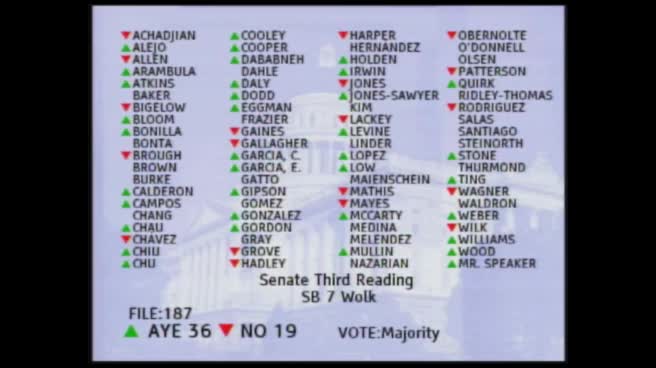 3MIN
Assembly Floor
 2MIN
Assembly Floor
 5MIN
Assembly Floor
 1MIN
Assembly Floor
 5MIN
Assembly Floor
 29SEC
Assembly Floor
 4MIN
Assembly Standing Committee on Appropriations
 45MIN
Assembly Standing Committee on Judiciary
Bill Author
Bill Co-Author(s):