SB 317: The Safe Neighborhood Parks, Rivers, and Coastal Protection Bond Act of 2016.
- Session Year: 2015-2016
- House: Senate
- Latest Version Date: 2015-05-05
Under existing law, various measures have been approved by the voters to provide funds for park, river, and coastal protections and programs.
This bill would enact the Safe Neighborhood Parks, Rivers, and Coastal Protection Bond Act of 2016, which, if adopted by the voters at the November 8, 2016, statewide general election, would authorize the issuance of bonds in the total amount of $2,450,000,000 pursuant to the State General Obligation Bond Law to finance a safe neighborhood parks, rivers, and coastal protection program.
This bill would declare that it is to take effect immediately as an urgency statute.
Under existing law, various measures have been approved by the voters to provide funds for park, river, and coastal protections and programs.
This bill would enact the Safe Neighborhood Parks, Rivers, and Coastal Protection Bond Act of 2016, which, if adopted by the voters at the November 8, 2016, statewide general election, would authorize the issuance of bonds in an unspecified amount the total amount of $2,450,000,000 pursuant to the State General Obligation Bond Law to finance a safe neighborhood parks, rivers, and coastal protection program.
Under existing law, various measures have been approved by the voters to provide funds for park, river, and coastal protections and programs.
This bill would enact the Safe Neighborhood Parks, Rivers, and Coastal Protection Bond Act of 2016, which, if adopted by the voters at the November 8, 2016, statewide general election, would authorize the issuance of bonds in an unspecified amount pursuant to the State General Obligation Bond Law to finance a safe neighborhood parks, rivers, and coastal protection program.
The Legislature finds and declares as follows:
(a)Californians value parks and the natural lands of the state.
(b)Demand for local parks has exceeded available funding by a factor of eight to one, with particularly high demand in urban, disadvantaged communities.
(c)Many Californians across the state lack access to safe parks and recreation areas, which limits their ability to experience the outdoors, improve their physical and emotional health, exercise, and connect with their communities. Investments to create and improve parks and recreation areas will help ensure all Californians have access to safe places to exercise and recreate.
(d)Continued investment in the states parks, natural resources, and in greening urban areas will mitigate the effects of climate change, making cities more livable, and protecting Californias natural resources for future generations.
(e)Investments to protect and restore the states rivers, lakes, streams, and coastal waters and their related watersheds will improve water quality and reliability, enhance fish and wildlife habitats, and provide recreational, economic, and public health benefits to Californians.
SEC. 2.Chapter 14 (commencing with Section 5880) is added to Division 5 of the Public Resources Code, to read:14.The Safe Neighborhood Parks, Rivers, and Coastal Protection Bond Act of 20161.Title5880.This chapter shall be known, and may be cited, as the Safe Neighborhood Parks, Rivers, and Coastal Protection Bond Act of 2016.
2.Definitions5880.5.As used in this chapter, the following terms have the following meanings:
(a)Acquisition means the acquisition of a fee interest or any other interest in real property including easements, leases, and development rights.
(b)Board means the Wildlife Conservation Board.
(c)Department means the Department of Parks and Recreation.
(d)Development includes, but is not limited to, the physical improvement of real property, including the construction of facilities or structures.
(e)Disadvantaged community means a community with a median household income less than 80 percent of the statewide average.
(f)Greenprint means a plan for providing parks, greenspace, and urban forestry within an urbanized area to enhance climate resilience, improve public health and living conditions, and or protect open-space lands around a developed area to support an adopted sustainable communities strategy.
(g)Interpretation includes, but is not limited to, a visitor serving amenity that enhances the ability to understand and appreciate the significance and value of natural, historical, and cultural resources and that may utilize educational materials in multiple languages, digital information, and the expertise of a naturalist or other specialist skilled at educational interpretation.
(h)Nonprofit organization means an organization qualified to do business in California and qualified under Section 501(c)(3) of the Internal Revenue Code.
(i)Preservation means rehabilitation, stabilization, restoration, development, and reconstruction, or any combination of those activities.
(j)Protection means those actions necessary to prevent harm or damage to persons, property, or natural resources natural, cultural, and historic resources, actions to improve access to public open-space areas, or actions to allow the continued use and enjoyment of property or natural natural, cultural, and historic resources, and includes acquisition, development, restoration, preservation, and interpretation.
(k)Restoration means the improvement of physical structures or facilities and, in the case of natural systems and landscape features, includes, but is not limited to, projects for the control of erosion, the control and elimination of exotic species, removal of waste and debris, prescribed burning, fuel hazard reduction, fencing out threats to existing or restored natural resources, road elimination, and other plant and wildlife habitat improvements to increase the natural system value of the property.
3.General Provisions5881.The proceeds of bonds issued and sold pursuant to this chapter shall be deposited in the Safe Neighborhood Parks, Rivers, and Coastal Protection Fund of 2016, which is hereby created in the State Treasury. Except as specifically provided in this chapter, moneys in the fund shall be available for appropriation by the Legislature in the manner and for the purposes set forth in this chapter in accordance with the following schedule:
(a)The sum of one billion four hundred fifty million dollars ($1,450,000,000) for parks in accordance with Article 4 (commencing with Section 5882).
(b)The sum of three hundred seventy million dollars ($370,000,000) for rivers, lakes, and streams in accordance with Article 5 (commencing with Section 5883).
(c)The sum of three hundred fifty million dollars ($350,000,000) for coast and ocean protection in accordance with Article 6 (commencing with Section 5884).
(d)The sum of two hundred eighty million dollars ($280,000,000) for climate resilience in accordance with Article 7 (commencing with Section 5885).
5881.5.(a)Projects funded with proceeds of bonds issued and sold pursuant to this chapter shall promote state planning priorities consistent with Section 65041.1 of the Government Code and sustainable communities strategies consistent with subparagraph (B) of paragraph (2) of subdivision (b) of Section 65080 of the Government Code.
(b)To the extent feasible in implementing this chapter, state agencies shall seek to achieve wildlife conservation objectives through projects on public lands or voluntary projects on private lands. Funds may be used, in consultation with the Department of Fish and Wildlife, for payments for the creation of measurable habitat improvements or other improvements to the condition of endangered or threatened species including through the development and implementation of habitat credit exchanges.
(c)In evaluating projects for protection of natural resources and wildlife, priority shall be given to projects that implement adopted natural community conservation plans or endangered species recovery plans.
(d)Restoration projects shall include the planning, monitoring, and reporting necessary to ensure successful implementation of the project objectives.
5881.6.An amount that equals not more than 5 percent of the funds allocated for a grant program pursuant to this chapter may be used to pay the administrative costs of that program.
5881.7.Unless otherwise specified, up to 10 percent of funds allocated for each program funded by this chapter may be expended for planning and monitoring necessary for the successful design, selection, and implementation of the projects authorized under that program. This section shall not otherwise restrict funds ordinarily used by an agency for preliminary plans, working drawings, and construction as defined in the annual Budget Act for a capital outlay project or grant project.
4.Parks5882.The sum of eight hundred million dollars ($800,000,000) from the fund shall be available to the department for the creation and expansion of safe neighborhood parks in park-poor neighborhoods in accordance with Chapter 3.3 (commencing with Section 5640).
5882.5.The sum of two hundred million dollars ($200,000,000) from the fund shall be available to the department for grants for local park rehabilitation and improvement to local governments on a per capita basis.
5882.6.The sum of two hundred million dollars ($200,000,000) from the fund shall be available to the department for grants for the restoration, preservation preservation, and protection of regional parks and parklands, including state parks whose operation and management have been taken over by local or regional agencies, and other parks and parklands operated by regional park districts, counties, open-space districts, and open-space authorities, and parks and parklands operated through cooperative agreements or pursuant to joint power authorities that include state and local agencies.
5882.7.The sum of two hundred million dollars ($200,000,000) from the fund shall be available to the department for restoration and preservation of existing state park facilities and units to preserve and increase public access and to protect natural natural, cultural, and historic resources.
5882.8.The sum of fifty million dollars ($50,000,000) from the fund shall be available to the department for enterprise activities that increase revenue generation to support operations of the department.
5.Rivers, Lakes, and Streams5883.Funds allocated in this article shall be available for the protection and restoration of rivers, lakes, streams and associated watersheds of the state to safeguard sources of safe drinking water, to protect the fish and wildlife resources of the state, and to provide access to these resources to the people of California.
5883.5.The sum of one hundred million dollars ($100,000,000) from the fund shall be available to the Natural Resources Agency for the restoration, protection, expansion and development of river parkways in accordance with Chapter 3.8 (commencing with Section 5750).
5883.6.The sum of one hundred million dollars ($100,000,000) from the fund shall be available to the California Tahoe Conservancy Conservancy, established pursuant to Article 6 (commencing with Section 5096.351) of Chapter 1.692 Title 7.42 (commencing with Section 66905) of the Government Code, for the implementation implementation, and to further the goals and purposes, of the Lake Tahoe Environmental Improvement Program. Program, pursuant to Article 6 (commencing with Section 5096.351) of Chapter 1.692.
5883.7.The sum of one hundred million dollars ($100,000,000) from the fund shall be available for protection and restoration projects, and for the development of river parkway projects on the Los Angeles River and its tributaries, pursuant to Division 22.8 (commencing with Section 32600) and Division 23 (commencing with Section 33000).
5883.8.The sum of fifty million dollars ($50,000,000) from the fund shall be available for deposit into the Salton Sea Restoration Fund, pursuant to Section 2932 of the Fish and Game Code, and for expenditures consistent with the requirements of that fund.
5883.9.The sum of twenty million dollars ($20,000,000) from the fund shall be available for urban stream restoration pursuant to Section 7048 of the Water Code.
6.Coast and Ocean Protection5884.Funds allocated in this article shall be available for projects to protect and restore coastal watersheds, bays, marine estuaries, and nearshore ecosystems.
5884.1.The sum of three hundred million dollars ($300,000,000) from the fund shall be available to the State Coastal Conservancy for the protection of beaches, bays, and coastal watershed resources including the protection of coastal agricultural resources pursuant to Section 31150 and projects to complete the California Coastal Trail pursuant to Section 31408.
5884.2.The sum of fifty million dollars ($50,000,000) from the fund shall be available to the Santa Monica Mountains Conservancy for the protection of coastal watersheds of the Santa Monica Mountains.
7.Climate Resilience5885.Funds allocated in this article shall be available for projects that improve the climate resilience of urban areas and natural resources, provide for climate adaptation and reduce vulnerability to climate impacts of the states water, forest, and agricultural resources, and improve the ability of natural systems to buffer the impacts of climate change.
5885.1.The sum of one hundred million dollars ($100,000,000) from the fund shall be available to the Strategic Growth Council for grants to develop or implement a regional or local greenprint or climate adaptation plan, or update or develop a climate adaptation element for a general plan, or add climate adaption to a general plan, and for the protection of agricultural and open-space resources that support adopted sustainable communities strategies.
5885.2.The sum of one hundred fifty million dollars ($150,000,000) from the fund shall be available to the Wildlife Conservation Board for grants for the protection and expansion of wildlife corridors including projects to improve connectivity between habitat areas, for projects to improve climate adaptation and resilience of natural systems, and for projects to protect and improve existing open space corridors and trail linkages related to utility or transportation infrastructure that provide habitat connectivity and public access or trails.
5885.3.The sum of thirty million dollars ($30,000,000) from the fund shall be available to the Department of Forestry and Fire Protection for grants pursuant to Chapter 2 (commencing with Section 4799.06) of Part 2.5 of Division 4. These grants shall complement existing urban forestry expenditures by covering areas not included for funding from the Greenhouse Gas Reduction Fund, established pursuant to Section 16428.8 of the Government Code.
8.Fiscal Provisions5889.(a)Bonds in the total amount of two billion four hundred and fifty million dollars ($2,450,000,000), or so much thereof as is necessary, not including the amount of any refunding bonds issued in accordance with Section 5895 may be issued and sold to provide a fund to be used for carrying out the purposes expressed in this chapter and to reimburse the General Obligation Bond Expense Revolving Fund pursuant to Section 16724.5 of the Government Code. The bonds, when sold, shall be and constitute a valid and binding obligation of the State of California, and the full faith and credit of the State of California is hereby pledged for the punctual payment of both principal of, and interest on, the bonds as the principal and interest become due and payable.
(b)The Treasurer shall sell the bonds authorized by the committee pursuant to this section. The bonds shall be sold upon the terms and conditions specified in a resolution to be adopted by the committee pursuant to Section 16731 of the Government Code.
5889.5.The bonds authorized by this chapter shall be prepared, executed, issued, sold, paid, and redeemed as provided in the State General Obligation Bond Law (Chapter 4 (commencing with Section 16720) of Part 3 of Division 4 of Title 2 of the Government Code), and all of the provisions of that law apply to the bonds and to this chapter and are hereby incorporated in this chapter as though set forth in full in this chapter, except subdivisions (a) and (b) of Section 16727 of the Government Code.
5890.(a)Solely for the purpose of authorizing the issuance and sale pursuant to the State General Obligation Bond Law (Chapter 4 (commencing with Section 16720) of Part 3 of Division 4 of Title 2 of the Government Code) of the bonds authorized by this chapter, the Safe Neighborhood Parks, Rivers, and Coastal Protection Finance Committee is hereby created. For purposes of this chapter, the Safe Neighborhood Parks, Rivers, and Coastal Protection Finance Committee is the committee as that term is used in the State General Obligation Bond Law.
(b)The committee consists of the ____, ____, ____, ____, and ____. Notwithstanding any other provision of law, any member may designate a representative to act as that member in his or her place for all purposes, as though the member were personally present.
(c)The ____ shall serve as chairperson of the committee.
(d)A majority of the committee may act for the committee.
5890.5.The committee shall determine whether or not it is necessary or desirable to issue bonds authorized pursuant to this chapter in order to carry out the actions specified in this chapter and, if so, the amount of bonds to be issued and sold. Successive issues of bonds may be authorized and sold to carry out those actions progressively, and it is not necessary that all of the bonds authorized to be issued be sold at any one time.
5891.For purposes of the State General Obligation Bond Law, board, as defined in Section 16722 of the Government Code, means the ____.
5891.5.There shall be collected each year and in the same manner and at the same time as other state revenue is collected, in addition to the ordinary revenues of the state, a sum in an amount required to pay the principal of, and interest on, the bonds each year. It is the duty of all officers charged by law with any duty in regard to the collection of the revenue to do and perform each and every act that is necessary to collect that additional sum.
5892.Notwithstanding Section 13340 of the Government Code, there is hereby appropriated from the General Fund in the State Treasury, for the purposes of this chapter, an amount that will equal the total of the following:
(a)The sum annually necessary to pay the principal of, and interest on, bonds issued and sold pursuant to this chapter, as the principal and interest become due and payable.
(b)The sum that is necessary to carry out the provisions of Section 5893.5, appropriated without regard to fiscal years.
5892.5.The board may request the Pooled Money Investment Board to make a loan from the Pooled Money Investment Account in accordance with Section 16312 of the Government Code for the purpose of carrying out this chapter less any amount withdrawn pursuant to Section 5893.5. The amount of the request shall not exceed the amount of the unsold bonds that the committee has, by resolution, authorized to be sold for the purpose of carrying out this chapter. The board shall execute those documents required by the Pooled Money Investment Board to obtain and repay the loan. Any amounts loaned shall be deposited in the fund to be allocated in accordance with this chapter.
5893.Notwithstanding any other provision of this chapter, or of the State General Obligation Bond Law, if the Treasurer sells bonds that include a bond counsel opinion to the effect that the interest on the bonds is excluded from gross income for federal tax purposes under designated conditions or is otherwise entitled to any federal tax advantage, the Treasurer may maintain separate accounts for the bond proceeds invested and for the investment earnings on those proceeds, and may use or direct the use of those proceeds or earnings to pay any rebate, penalty, or other payment required under federal law or take any other action with respect to the investment and use of those bond proceeds, as may be required or desirable under federal law in order to maintain the tax-exempt status of those bonds and to obtain any other advantage under federal law on behalf of the funds of this state.
5893.5.For the purposes of carrying out this chapter, the Director of Finance may authorize the withdrawal from the General Fund of an amount or amounts not to exceed the amount of the unsold bonds that have been authorized by the committee to be sold for the purpose of carrying out this chapter less any amount borrowed pursuant to Section 5892.5. Any amounts withdrawn shall be deposited in the fund. Any money made available under this section shall be returned to the General Fund, with interest at the rate earned by the money in the Pooled Money Investment Account, from proceeds received from the sale of bonds for the purpose of carrying out this chapter.
5894.All money deposited in the fund that is derived from premium and accrued interest on bonds sold pursuant to this chapter shall be reserved in the fund and shall be available for transfer to the General Fund as a credit to expenditures for bond interest, except that amounts derived from premium may be reserved and used to pay the cost of bond issuance prior to any transfer to the General Fund.
5894.5.Pursuant to Chapter 4 (commencing with Section 16720) of Part 3 of Division 4 of Title 2 of the Government Code, the cost of bond issuance shall be paid out of the bond proceeds, including premium, if any. To the extent the cost of bond issuance is not paid from premiums received from the sale of bonds, these costs shall be shared proportionately by each program funded through this chapter by the applicable bond sale.
5895.The bonds issued and sold pursuant to this chapter may be refunded in accordance with Article 6 (commencing with Section 16780) of Chapter 4 of Part 3 of Division 4 of Title 2 of the Government Code, which is a part of the State General Obligation Bond Law. Approval by the voters of the state for the issuance of the bonds under this chapter shall include approval of the issuance of any bonds issued to refund any bonds originally issued under this chapter or any previously issued refunding bonds.
5895.5.The proceeds from the sale of bonds authorized by this chapter are not proceeds of taxes as that term is used in Article XIII B of the California Constitution, and the disbursement of these proceeds is not subject to the limitations imposed by that article.
SEC. 3.Section 2 of this act shall take effect upon the approval by the voters of the Safe Neighborhood Parks, Rivers, and Coastal Protection Bond Act of 2016, as set forth in that section, which shall be submitted to the voters at the November 8, 2016, statewide general election.
SEC. 4.This act is an urgency statute necessary for the immediate preservation of the public peace, health, or safety within the meaning of Article IV of the Constitution and shall go into immediate effect. The facts constituting the necessity are:
In order to ensure that the Safe Neighborhood Parks, Rivers, and Coastal Protection Bond Act of 2016 appears on the November 8, 2016 statewide general election ballot, it is necessary that this act take effect immediately.
The Legislature finds and declares as follows:
(a)Californians value parks and the natural lands of the state.
(b)Demand for local parks has exceeded available funding by a factor of eight to one, with particularly high demand in urban, disadvantaged communities.
(c)Many Californians across the state lack access to safe parks and recreation areas, which limits their ability to experience the outdoors, improve their physical and emotional health, exercise, and connect with their communities. Investments to create and improve parks and recreation areas will help ensure all Californians have access to safe places to exercise and recreate.
(d)Continued investment in the states parks, natural resources, and in greening urban areas will mitigate the effects of climate change, making cities more livable, and protecting Californias natural resources for future generations.
(e)Investments to protect and restore the states rivers, lakes, streams, and coastal waters and their related watersheds will improve water quality and reliability, enhance fish and wildlife habitats, and provide recreational, economic, and public health benefits to Californians.
SEC. 2.Chapter 14 (commencing with Section 5880) is added to Division 5 of the Public Resources Code, to read:14.The Safe Neighborhood Parks, Rivers, and Coastal Protection Bond Act of 20161.Title5880.This chapter shall be known, and may be cited, as the Safe Neighborhood Parks, Rivers, and Coastal Protection Bond Act of 2016.
2.Definitions5880.5.As used in this chapter, the following terms have the following meanings:
(a)Acquisition means the acquisition of a fee interest or any other interest in real property including easements, leases, and development rights.
(b)Board means the Wildlife Conservation Board.
(c)Department means the Department of Parks and Recreation.
(d)Development includes, but is not limited to, the physical improvement of real property, including the construction of facilities or structures.
(e)Disadvantaged community means a community with a median household income less than 80 percent of the statewide average.
(f)Greenprint means a plan for providing parks, greenspace, and urban forestry within an urbanized area to enhance climate resilience, improve public health and living conditions, and protect open-space lands around a developed area to support an adopted sustainable communities strategy.
(g)Interpretation includes, but is not limited to, a visitor serving amenity that enhances the ability to understand and appreciate the significance and value of natural, historical, and cultural resources and that may utilize educational materials in multiple languages, digital information, and the expertise of a naturalist or other specialist skilled at educational interpretation.
(h)Nonprofit organization means an organization qualified to do business in California and qualified under Section 501(c)(3) of the Internal Revenue Code.
(i)Preservation means rehabilitation, stabilization, restoration, development, and reconstruction, or any combination of those activities.
(j)Protection means those actions necessary to prevent harm or damage to persons, property, or natural resources or to allow the continued use and enjoyment of property or natural resources, and includes acquisition, development, restoration, preservation, and interpretation.
(k)Restoration means the improvement of physical structures or facilities and, in the case of natural systems and landscape features, includes, but is not limited to, projects for the control of erosion, the control and elimination of exotic species, prescribed burning, fuel hazard reduction, fencing out threats to existing or restored natural resources, road elimination, and other plant and wildlife habitat improvements to increase the natural system value of the property.
3.General Provisions5881.The proceeds of bonds issued and sold pursuant to this chapter shall be deposited in the Safe Neighborhood Parks, Rivers, and Coastal Protection Fund of 2016, which is hereby created in the State Treasury. Except as specifically provided in this chapter, moneys in the fund shall be available for appropriation by the Legislature in the manner and for the purposes set forth in this chapter in accordance with the following schedule:
(a)The sum of one billion four hundred fifty million dollars ($1,450,000,000) for parks in accordance with Article 4 (commencing with Section 5882).
(b)The sum of three hundred seventy million dollars ($370,000,000) for rivers, lakes, and streams in accordance with Article 5 (commencing with Section 5883).
(c)The sum of three hundred fifty million dollars ($350,000,000) for coast and ocean protection in accordance with Article 6 (commencing with Section 5884).
(d)The sum of two hundred eighty million dollars ($280,000,000) for climate resilience in accordance with Article 7 (commencing with Section 5885).
5881.5.(a)Projects funded with proceeds of bonds issued and sold pursuant to this chapter shall promote state planning priorities consistent with Section 65041.1 of the Government Code and sustainable communities strategies consistent with subparagraph (B) of paragraph (2) of subdivision (b) of Section 65080 of the Government Code.
(b)To the extent feasible in implementing this chapter, state agencies shall seek to achieve wildlife conservation objectives through projects on public lands or voluntary projects on private lands. Funds may be used, in consultation with the Department of Fish and Wildlife, for payments for the creation of measurable habitat improvements or other improvements to the condition of endangered or threatened species including through the development and implementation of habitat credit exchanges.
(c)In evaluating projects for protection of natural resources and wildlife, priority shall be given to projects that implement adopted natural community conservation plans or endangered species recovery plans.
(d)Restoration projects shall include the planning, monitoring, and reporting necessary to ensure successful implementation of the project objectives.
4.Parks5882.The sum of eight hundred million dollars ($800,000,000) from the fund shall be available to the department for the creation and expansion of safe neighborhood parks in park-poor neighborhoods in accordance with Chapter 3.3 (commencing with Section 5640).
5882.5.The sum of two hundred million dollars ($200,000,000) from the fund shall be available to the department for grants for local park rehabilitation and improvement to local governments on a per capita basis.
5882.6.The sum of two hundred million dollars ($200,000,000) from the fund shall be available to the department for grants for the restoration, preservation and protection of regional parks and parklands, including state parks whose operation and management have been taken over by local or regional agencies, and other parks operated through cooperative agreements or pursuant to joint power authorities that include state and local agencies.
5882.7.The sum of two hundred million dollars ($200,000,000) from the fund shall be available to the department for restoration and preservation of existing state park facilities and units to preserve and increase public access and to protect natural resources.
5882.8.The sum of fifty million dollars ($50,000,000) from the fund shall be available to the department for enterprise activities that increase revenue generation to support operations of the department.
5.Rivers, Lakes, and Streams5883.Funds allocated in this article shall be available for the protection and restoration of rivers, lakes, streams and associated watersheds of the state to safeguard sources of safe drinking water, to protect the fish and wildlife resources of the state, and to provide access to these resources to the people of California.
5883.5.The sum of one hundred million dollars ($100,000,000) from the fund shall be available to the Natural Resources Agency for the restoration, protection, expansion and development of river parkways in accordance with Chapter 3.8 (commencing with Section 5750).
5883.6.The sum of one hundred million dollars ($100,000,000) from the fund shall be available to the California Tahoe Conservancy pursuant to Article 6 (commencing with Section 5096.351) of Chapter 1.692 for the implementation of the Lake Tahoe Environmental Improvement Program.
5883.7.The sum of one hundred million dollars ($100,000,000) from the fund shall be available for protection and restoration projects, and for the development of river parkway projects on the Los Angeles River and its tributaries, pursuant to Division 22.8 (commencing with Section 32600) and Division 23 (commencing with Section 33000).
5883.8.The sum of fifty million dollars ($50,000,000) from the fund shall be available for deposit into the Salton Sea Restoration Fund, pursuant to Section 2932 of the Fish and Game Code, and for expenditures consistent with the requirements of that fund.
5883.9.The sum of twenty million dollars ($20,000,000) from the fund shall be available for urban stream restoration pursuant to Section 7048 of the Water Code.
6.Coast and Ocean Protection5884.Funds allocated in this article shall be available for projects to protect and restore coastal watersheds, bays, marine estuaries, and nearshore ecosystems.
5884.1.The sum of three hundred million dollars ($300,000,000) from the fund shall be available to the State Coastal Conservancy for the protection of beaches, bays, and coastal watershed resources including the protection of coastal agricultural resources pursuant to Section 31150 and projects to complete the California Coastal Trail pursuant to Section 31408.
5884.2.The sum of fifty million dollars ($50,000,000) from the fund shall be available to the Santa Monica Mountains Conservancy for the protection of coastal watersheds of the Santa Monica Mountains.
7.Climate Resilience5885.Funds allocated in this article shall be available for projects that improve the climate resilience of urban areas and natural resources, provide for climate adaptation and reduce vulnerability to climate impacts of the states water, forest, and agricultural resources, and improve the ability of natural systems to buffer the impacts of climate change.
5885.1.The sum of one hundred million dollars ($100,000,000) from the fund shall be available to the Strategic Growth Council for grants to develop or implement a regional or local greenprint or climate adaptation plan, or update or develop a climate adaptation element for a general plan, and for the protection of agricultural and open-space resources that support adopted sustainable communities strategies.
5885.2.The sum of one hundred fifty million dollars ($150,000,000) from the fund shall be available to the Wildlife Conservation Board for grants for the protection and expansion of wildlife corridors including projects to improve connectivity between habitat areas, for projects to improve climate adaptation and resilience of natural systems, and for projects to protect and improve existing open space corridors and trail linkages related to utility or transportation infrastructure that provide habitat connectivity and public access or trails.
5885.3.The sum of thirty million dollars ($30,000,000) from the fund shall be available to the Department of Forestry and Fire Protection for grants pursuant to Chapter 2 (commencing with Section 4799.06) of Part 2.5 of Division 4. These grants shall complement existing urban forestry expenditures by covering areas not included for funding from the Greenhouse Gas Reduction Fund, established pursuant to Section 16428.8 of the Government Code.
8.Fiscal Provisions5889.(a)Bonds in the total amount of two billion four hundred and fifty million dollars ($2,450,000,000), or so much thereof as is necessary, not including the amount of any refunding bonds issued in accordance with Section 5895 may be issued and sold to provide a fund to be used for carrying out the purposes expressed in this chapter and to reimburse the General Obligation Bond Expense Revolving Fund pursuant to Section 16724.5 of the Government Code. The bonds, when sold, shall be and constitute a valid and binding obligation of the State of California, and the full faith and credit of the State of California is hereby pledged for the punctual payment of both principal of, and interest on, the bonds as the principal and interest become due and payable.
(b)The Treasurer shall sell the bonds authorized by the committee pursuant to this section. The bonds shall be sold upon the terms and conditions specified in a resolution to be adopted by the committee pursuant to Section 16731 of the Government Code.
5889.5.The bonds authorized by this chapter shall be prepared, executed, issued, sold, paid, and redeemed as provided in the State General Obligation Bond Law (Chapter 4 (commencing with Section 16720) of Part 3 of Division 4 of Title 2 of the Government Code), and all of the provisions of that law apply to the bonds and to this chapter and are hereby incorporated in this chapter as though set forth in full in this chapter, except subdivisions (a) and (b) of Section 16727 of the Government Code.
5890.(a)Solely for the purpose of authorizing the issuance and sale pursuant to the State General Obligation Bond Law (Chapter 4 (commencing with Section 16720) of Part 3 of Division 4 of Title 2 of the Government Code) of the bonds authorized by this chapter, the Safe Neighborhood Parks, Rivers, and Coastal Protection Finance Committee is hereby created. For purposes of this chapter, the Safe Neighborhood Parks, Rivers, and Coastal Protection Finance Committee is the committee as that term is used in the State General Obligation Bond Law.
(b)The committee consists of the ____, ____, ____, ____, and ____. Notwithstanding any other provision of law, any member may designate a representative to act as that member in his or her place for all purposes, as though the member were personally present.
(c)The ____ shall serve as chairperson of the committee.
(d)A majority of the committee may act for the committee.
5890.5.The committee shall determine whether or not it is necessary or desirable to issue bonds authorized pursuant to this chapter in order to carry out the actions specified in this chapter and, if so, the amount of bonds to be issued and sold. Successive issues of bonds may be authorized and sold to carry out those actions progressively, and it is not necessary that all of the bonds authorized to be issued be sold at any one time.
5891.For purposes of the State General Obligation Bond Law, board, as defined in Section 16722 of the Government Code, means the ____.
5891.5.There shall be collected each year and in the same manner and at the same time as other state revenue is collected, in addition to the ordinary revenues of the state, a sum in an amount required to pay the principal of, and interest on, the bonds each year. It is the duty of all officers charged by law with any duty in regard to the collection of the revenue to do and perform each and every act that is necessary to collect that additional sum.
5892.Notwithstanding Section 13340 of the Government Code, there is hereby appropriated from the General Fund in the State Treasury, for the purposes of this chapter, an amount that will equal the total of the following:
(a)The sum annually necessary to pay the principal of, and interest on, bonds issued and sold pursuant to this chapter, as the principal and interest become due and payable.
(b)The sum that is necessary to carry out the provisions of Section 5893.5, appropriated without regard to fiscal years.
5892.5.The board may request the Pooled Money Investment Board to make a loan from the Pooled Money Investment Account in accordance with Section 16312 of the Government Code for the purpose of carrying out this chapter less any amount withdrawn pursuant to Section 5893.5. The amount of the request shall not exceed the amount of the unsold bonds that the committee has, by resolution, authorized to be sold for the purpose of carrying out this chapter. The board shall execute those documents required by the Pooled Money Investment Board to obtain and repay the loan. Any amounts loaned shall be deposited in the fund to be allocated in accordance with this chapter.
5893.Notwithstanding any other provision of this chapter, or of the State General Obligation Bond Law, if the Treasurer sells bonds that include a bond counsel opinion to the effect that the interest on the bonds is excluded from gross income for federal tax purposes under designated conditions or is otherwise entitled to any federal tax advantage, the Treasurer may maintain separate accounts for the bond proceeds invested and for the investment earnings on those proceeds, and may use or direct the use of those proceeds or earnings to pay any rebate, penalty, or other payment required under federal law or take any other action with respect to the investment and use of those bond proceeds, as may be required or desirable under federal law in order to maintain the tax-exempt status of those bonds and to obtain any other advantage under federal law on behalf of the funds of this state.
5893.5.For the purposes of carrying out this chapter, the Director of Finance may authorize the withdrawal from the General Fund of an amount or amounts not to exceed the amount of the unsold bonds that have been authorized by the committee to be sold for the purpose of carrying out this chapter less any amount borrowed pursuant to Section 5892.5. Any amounts withdrawn shall be deposited in the fund. Any money made available under this section shall be returned to the General Fund, with interest at the rate earned by the money in the Pooled Money Investment Account, from proceeds received from the sale of bonds for the purpose of carrying out this chapter.
5894.All money deposited in the fund that is derived from premium and accrued interest on bonds sold pursuant to this chapter shall be reserved in the fund and shall be available for transfer to the General Fund as a credit to expenditures for bond interest, except that amounts derived from premium may be reserved and used to pay the cost of bond issuance prior to any transfer to the General Fund.
5894.5.Pursuant to Chapter 4 (commencing with Section 16720) of Part 3 of Division 4 of Title 2 of the Government Code, the cost of bond issuance shall be paid out of the bond proceeds, including premium, if any. To the extent the cost of bond issuance is not paid from premiums received from the sale of bonds, these costs shall be shared proportionately by each program funded through this chapter by the applicable bond sale.
5895.The bonds issued and sold pursuant to this chapter may be refunded in accordance with Article 6 (commencing with Section 16780) of Chapter 4 of Part 3 of Division 4 of Title 2 of the Government Code, which is a part of the State General Obligation Bond Law. Approval by the voters of the state for the issuance of the bonds under this chapter shall include approval of the issuance of any bonds issued to refund any bonds originally issued under this chapter or any previously issued refunding bonds.
5895.5.The proceeds from the sale of bonds authorized by this chapter are not proceeds of taxes as that term is used in Article XIII B of the California Constitution, and the disbursement of these proceeds is not subject to the limitations imposed by that article.
SEC. 3.Section 2 of this act shall take effect upon the approval by the voters of the Safe Neighborhood Parks, Rivers, and Coastal Protection Bond Act of 2016, as set forth in that section, which shall be submitted to the voters at the November 8, 2016, statewide general election.
SEC. 4.This act is an urgency statute necessary for the immediate preservation of the public peace, health, or safety within the meaning of Article IV of the Constitution and shall go into immediate effect. The facts constituting the necessity are:
In order to ensure that the Safe Neighborhood Parks, Rivers, and Coastal Protection Bond Act of 2016 appears on the November 8, 2016 statewide general election ballot, it is necessary that this act take effect immediately.
The Legislature finds and declares as follows:
(a)Californians value parks and the natural lands of the state.
(b)Demand for local parks has exceeded available funding by a factor of eight to one, with particularly high demand in urban, disadvantaged communities.
(c)Many Californians across the state lack access to safe parks and recreation areas, which limits their ability to experience the outdoors, improve their physical and emotional health, exercise, and connect with their communities. Investments to create and improve parks and recreation areas will help ensure all Californians have access to safe places to exercise and recreate.
(d)Continued investment in the states parks, natural resources, and in greening urban areas will mitigate the effects of climate change, making cities more livable, and protecting Californias natural resources for future generations.
(e)Investments to protect and restore the states rivers, lakes, streams, and coastal waters and their related watersheds will improve water quality and reliability, enhance fish and wildlife habitats, and provide recreational, economic, and public health benefits to Californians.
SEC. 2.Chapter 14 (commencing with Section 5880) is added to Division 5 of the Public Resources Code, to read:14.The Safe Neighborhood Parks, Rivers, and Coastal Protection Bond Act of 20161.Title5880.This chapter shall be known, and may be cited, as the Safe Neighborhood Parks, Rivers, and Coastal Protection Bond Act of 2016.
2.Definitions5880.5.As used in this chapter, the following terms have the following meanings:
(a)Acquisition means the acquisition of a fee interest or any other interest in real property including easements, leases, and development rights.
(b)Board means the Wildlife Conservation Board.
(c)Department means the Department of Parks and Recreation.
(d)Development includes, but is not limited to, the physical improvement of real property, including the construction of facilities or structures.
(e)Disadvantaged community means a community with a median household income less than 80 percent of the statewide average.
(f)Greenprint means a plan for providing parks, greenspace, and urban forestry within an urbanized area to enhance climate resilience, improve public health and living conditions, and protect open-space lands around a developed area to support an adopted sustainable communities strategy.
(g)Interpretation includes, but is not limited to, a visitor serving amenity that enhances the ability to understand and appreciate the significance and value of natural, historical, and cultural resources and that may utilize educational materials in multiple languages, digital information, and the expertise of a naturalist or other specialist skilled at educational interpretation.
(h)Nonprofit organization means an organization qualified to do business in California and qualified under Section 501(c)(3) of the Internal Revenue Code.
(i)Preservation means rehabilitation, stabilization, restoration, development, and reconstruction, or any combination of those activities.
(j)Protection means those actions necessary to prevent harm or damage to persons, property, or natural resources or to allow the continued use and enjoyment of property or natural resources, and includes acquisition, development, restoration, preservation, and interpretation.
(k)Restoration means the improvement of physical structures or facilities and, in the case of natural systems and landscape features, includes, but is not limited to, projects for the control of erosion, the control and elimination of exotic species, prescribed burning, fuel hazard reduction, fencing out threats to existing or restored natural resources, road elimination, and other plant and wildlife habitat improvements to increase the natural system value of the property.
3.General Provisions5881.The proceeds of bonds issued and sold pursuant to this chapter shall be deposited in the Safe Neighborhood Parks, Rivers, and Coastal Protection Fund of 2016, which is hereby created in the State Treasury. Except as specifically provided in this chapter, moneys in the fund shall be available for appropriation by the Legislature in the manner and for the purposes set forth in this chapter. chapter in accordance with the following schedule:
(a)The sum of one billion four hundred fifty million dollars ($1,450,000,000) for parks in accordance with Article 4 (commencing with Section 5882).
(b)The sum of three hundred seventy million dollars ($370,000,000) for rivers, lakes, and streams in accordance with Article 5 (commencing with Section 5883).
(c)The sum of three hundred fifty million dollars ($350,000,000) for coast and ocean protection in accordance with Article 6 (commencing with Section 5884).
(d)The sum of two hundred eighty million dollars ($280,000,000) for climate resilience in accordance with Article 7 (commencing with Section 5885).
5881.5.(a)Projects funded with proceeds of bonds issued and sold pursuant to this chapter shall promote state planning priorities consistent with Section 65041.1 of the Government Code and sustainable communities strategies consistent with subparagraph (B) of paragraph (2) of subdivision (b) of Section 65080 of the Government Code.
(b)To the extent feasible in implementing this chapter, state agencies shall seek to achieve wildlife conservation objectives through projects on public lands or voluntary projects on private lands. Funds may be used, in consultation with the Department of Fish and Wildlife, for payments for the creation of measurable habitat improvements or other improvements to the condition of endangered or threatened species including through the development and implementation of habitat credit exchanges.
(c)In evaluating projects for protection of natural resources and wildlife, priority shall be given to projects that implement adopted natural community conservation plans or endangered species recovery plans.
(d)The Natural Resources Agency shall develop and adopt a statewide resource protection plan to identify priorities for expending funds provided pursuant to this chapter that reflects statewide and regional resource protection, and public access and availability to underserved populations. Conservation plans developed and adopted by departments and conservancies shall be consistent with statewide priorities adopted by the Natural Resources Agency.
(e)
(d)Restoration projects shall include the planning, monitoring, and reporting necessary to ensure successful implementation of the project objectives.
4.Parks5882.The sum of ____ dollars ($____) eight hundred million dollars ($800,000,000) from the fund shall be available to the department for the creation and expansion of safe neighborhood parks in critically underserved communities park-poor neighborhoods in accordance with Chapter 3.3 (commencing with Section 5640).
5882.5.The sum of two hundred million dollars ($200,000,000) from the fund shall be available to the department for grants for local park rehabilitation and improvement to local governments on a per capita basis.
5882.6.The sum of two hundred million dollars ($200,000,000) from the fund shall be available to the department for grants for the restoration, preservation and protection of regional parks and parklands, including state parks whose operation and management have been taken over by local or regional agencies, and other parks operated through cooperative agreements or pursuant to joint power authorities that include state and local agencies.
5882.7.The sum of two hundred million dollars ($200,000,000) from the fund shall be available to the department for restoration and preservation of existing state park facilities and units to preserve and increase public access and to protect natural resources.
5882.8.The sum of fifty million dollars ($50,000,000) from the fund shall be available to the department for enterprise activities that increase revenue generation to support operations of the department.
5.Rivers, Lakes, and Streams5883.The sum of ____ dollars ($____) from the fund shall be available for the protection of rivers, lakes, streams, and their watersheds. Funds allocated in this article shall be available for the protection and restoration of rivers, lakes, streams and associated watersheds of the state to safeguard sources of safe drinking water, to protect the fish and wildlife resources of the state, and to provide access to these resources to the people of California.5883.5.The sum of one hundred million dollars ($100,000,000) from the fund shall be available to the Natural Resources Agency for the restoration, protection, expansion and development of river parkways in accordance with Chapter 3.8 (commencing with Section 5750).
5883.6.The sum of one hundred million dollars ($100,000,000) from the fund shall be available to the California Tahoe Conservancy pursuant to Article 6 (commencing with Section 5096.351) of Chapter 1.692 for the implementation of the Lake Tahoe Environmental Improvement Program.
5883.7.The sum of one hundred million dollars ($100,000,000) from the fund shall be available for protection and restoration projects, and for the development of river parkway projects on the Los Angeles River and its tributaries, pursuant to Division 22.8 (commencing with Section 32600) and Division 23 (commencing with Section 33000).
5883.8.The sum of fifty million dollars ($50,000,000) from the fund shall be available for deposit into the Salton Sea Restoration Fund, pursuant to Section 2932 of the Fish and Game Code, and for expenditures consistent with the requirements of that fund.
5883.9.The sum of twenty million dollars ($20,000,000) from the fund shall be available for urban stream restoration pursuant to Section 7048 of the Water Code.
6.Coast and Ocean Protection5884.The sum of ____ dollars ($____) from the fund shall be available for the protection of beaches, bays, and coastal resources.
5884.Funds allocated in this article shall be available for projects to protect and restore coastal watersheds, bays, marine estuaries, and nearshore ecosystems.
5884.1.The sum of three hundred million dollars ($300,000,000) from the fund shall be available to the State Coastal Conservancy for the protection of beaches, bays, and coastal watershed resources including the protection of coastal agricultural resources pursuant to Section 31150 and projects to complete the California Coastal Trail pursuant to Section 31408.
5884.2.The sum of fifty million dollars ($50,000,000) from the fund shall be available to the Santa Monica Mountains Conservancy for the protection of coastal watersheds of the Santa Monica Mountains.
7.Climate Resilience5885.Funds allocated in this article shall be available for projects that improve the climate resilience of urban areas and natural resources, provide for climate adaptation and reduce vulnerability to climate impacts of the states water, forest, and agricultural resources, and improve the ability of natural systems to buffer the impacts of climate change.
5885. 5885.1.The sum of ____ dollars ($____) one hundred million dollars ($100,000,000) from the fund shall be available to the Strategic Growth Council for grants to improve the climate resilience of urban areas and natural resources including, but not limited to, projects that do the following: develop or implement a regional or local greenprint or climate adaptation plan, or update or develop a climate adaptation element for a general plan, and for the protection of agricultural and open-space resources that support adopted sustainable communities strategies.
(a)Develop or implement a regional or local greenprint.
(b)Expand or protect urban forests, and provide urban greening to reduce urban heat island effect and mitigate climate change impacts in populated areas.
(c)Improve forest conditions to reduce wildfires, increase carbon sequestration, and improve forest health.
(d)Use natural systems to improve resilience to climate change including protection and restoration of watersheds and coastal wetlands.
5885.2.The sum of one hundred fifty million dollars ($150,000,000) from the fund shall be available to the Wildlife Conservation Board for grants for the protection and expansion of wildlife corridors including projects to improve connectivity between habitat areas, for projects to improve climate adaptation and resilience of natural systems, and for projects to protect and improve existing open space corridors and trail linkages related to utility or transportation infrastructure that provide habitat connectivity and public access or trails.
5885.3.The sum of thirty million dollars ($30,000,000) from the fund shall be available to the Department of Forestry and Fire Protection for grants pursuant to Chapter 2 (commencing with Section 4799.06) of Part 2.5 of Division 4. These grants shall complement existing urban forestry expenditures by covering areas not included for funding from the Greenhouse Gas Reduction Fund, established pursuant to Section 16428.8 of the Government Code.
8.Fiscal Provisions5889.(a)Bonds in the total amount of ____ dollars ($____) two billion four hundred and fifty million dollars ($2,450,000,000), or so much thereof as is necessary, not including the amount of any refunding bonds issued in accordance with Section 5895 may be issued and sold to provide a fund to be used for carrying out the purposes expressed in this chapter and to reimburse the General Obligation Bond Expense Revolving Fund pursuant to Section 16724.5 of the Government Code. The bonds, when sold, shall be and constitute a valid and binding obligation of the State of California, and the full faith and credit of the State of California is hereby pledged for the punctual payment of both principal of, and interest on, the bonds as the principal and interest become due and payable.
(b)The Treasurer shall sell the bonds authorized by the committee pursuant to this section. The bonds shall be sold upon the terms and conditions specified in a resolution to be adopted by the committee pursuant to Section 16731 of the Government Code.
5889.5.The bonds authorized by this chapter shall be prepared, executed, issued, sold, paid, and redeemed as provided in the State General Obligation Bond Law (Chapter 4 (commencing with Section 16720) of Part 3 of Division 4 of Title 2 of the Government Code), and all of the provisions of that law apply to the bonds and to this chapter and are hereby incorporated in this chapter as though set forth in full in this chapter, except subdivisions (a) and (b) of Section 16727 of the Government Code.
5890.(a)Solely for the purpose of authorizing the issuance and sale pursuant to the State General Obligation Bond Law (Chapter 4 (commencing with Section 16720) of Part 3 of Division 4 of Title 2 of the Government Code) of the bonds authorized by this chapter, the Safe Neighborhood Parks, Rivers, and Coastal Protection Finance Committee is hereby created. For purposes of this chapter, the Safe Neighborhood Parks, Rivers, and Coastal Protection Finance Committee is the committee as that term is used in the State General Obligation Bond Law.
(b)The committee consists of the ____, ____, ____, ____, and ____. Notwithstanding any other provision of law, any member may designate a representative to act as that member in his or her place for all purposes, as though the member were personally present.
(c)The ____ shall serve as chairperson of the committee.
(d)A majority of the committee may act for the committee.
5890.5.The committee shall determine whether or not it is necessary or desirable to issue bonds authorized pursuant to this chapter in order to carry out the actions specified in this chapter and, if so, the amount of bonds to be issued and sold. Successive issues of bonds may be authorized and sold to carry out those actions progressively, and it is not necessary that all of the bonds authorized to be issued be sold at any one time.
5891.For purposes of the State General Obligation Bond Law, board, as defined in Section 16722 of the Government Code, means the ____.
5891.5.There shall be collected each year and in the same manner and at the same time as other state revenue is collected, in addition to the ordinary revenues of the state, a sum in an amount required to pay the principal of, and interest on, the bonds each year. It is the duty of all officers charged by law with any duty in regard to the collection of the revenue to do and perform each and every act that is necessary to collect that additional sum.
5892.Notwithstanding Section 13340 of the Government Code, there is hereby appropriated from the General Fund in the State Treasury, for the purposes of this chapter, an amount that will equal the total of the following:
(a)The sum annually necessary to pay the principal of, and interest on, bonds issued and sold pursuant to this chapter, as the principal and interest become due and payable.
(b)The sum that is necessary to carry out the provisions of Section 5893.5, appropriated without regard to fiscal years.
5892.5.The board may request the Pooled Money Investment Board to make a loan from the Pooled Money Investment Account in accordance with Section 16312 of the Government Code for the purpose of carrying out this chapter less any amount withdrawn pursuant to Section 5893.5. The amount of the request shall not exceed the amount of the unsold bonds that the committee has, by resolution, authorized to be sold for the purpose of carrying out this chapter. The board shall execute those documents required by the Pooled Money Investment Board to obtain and repay the loan. Any amounts loaned shall be deposited in the fund to be allocated in accordance with this chapter.
5893.Notwithstanding any other provision of this chapter, or of the State General Obligation Bond Law, if the Treasurer sells bonds that include a bond counsel opinion to the effect that the interest on the bonds is excluded from gross income for federal tax purposes under designated conditions or is otherwise entitled to any federal tax advantage, the Treasurer may maintain separate accounts for the bond proceeds invested and for the investment earnings on those proceeds, and may use or direct the use of those proceeds or earnings to pay any rebate, penalty, or other payment required under federal law or take any other action with respect to the investment and use of those bond proceeds, as may be required or desirable under federal law in order to maintain the tax-exempt status of those bonds and to obtain any other advantage under federal law on behalf of the funds of this state.
5893.5.For the purposes of carrying out this chapter, the Director of Finance may authorize the withdrawal from the General Fund of an amount or amounts not to exceed the amount of the unsold bonds that have been authorized by the committee to be sold for the purpose of carrying out this chapter less any amount borrowed pursuant to Section 5892.5. Any amounts withdrawn shall be deposited in the fund. Any money made available under this section shall be returned to the General Fund, with interest at the rate earned by the money in the Pooled Money Investment Account, from proceeds received from the sale of bonds for the purpose of carrying out this chapter.
5894.All money deposited in the fund that is derived from premium and accrued interest on bonds sold pursuant to this chapter shall be reserved in the fund and shall be available for transfer to the General Fund as a credit to expenditures for bond interest, except that amounts derived from premium may be reserved and used to pay the cost of bond issuance prior to any transfer to the General Fund.
5894.5.Pursuant to Chapter 4 (commencing with Section 16720) of Part 3 of Division 4 of Title 2 of the Government Code, the cost of bond issuance shall be paid out of the bond proceeds, including premium, if any. To the extent the cost of bond issuance is not paid from premiums received from the sale of bonds, these costs shall be shared proportionately by each program funded through this chapter by the applicable bond sale.
5895.The bonds issued and sold pursuant to this chapter may be refunded in accordance with Article 6 (commencing with Section 16780) of Chapter 4 of Part 3 of Division 4 of Title 2 of the Government Code, which is a part of the State General Obligation Bond Law. Approval by the voters of the state for the issuance of the bonds under this chapter shall include approval of the issuance of any bonds issued to refund any bonds originally issued under this chapter or any previously issued refunding bonds.
5895.5.The proceeds from the sale of bonds authorized by this chapter are not proceeds of taxes as that term is used in Article XIII B of the California Constitution, and the disbursement of these proceeds is not subject to the limitations imposed by that article.
SEC. 3.Section 2 of this act shall take effect upon the approval by the voters of the Safe Neighborhood Parks, Rivers, and Coastal Protection Bond Act of 2016, as set forth in that section, which shall be submitted to the voters at the November 8, 2016, statewide general election.
TextPages 3, 6, and 7.The Legislature finds and declares as follows:
(a)Californians value parks and the natural lands of the state.
(b)Demand for local parks has exceeded available funding by a factor of eight to one, with particularly high demand in urban, disadvantaged communities.
(c)Many Californians across the state lack access to safe parks and recreation areas, which limits their ability to experience the outdoors, improve their physical and emotional health, exercise, and connect with their communities. Investments to create and improve parks and recreation areas will help ensure all Californians have access to safe places to exercise and recreate.
(d)Continued investment in the states parks, natural resources, and in greening urban areas will mitigate the effects of climate change, making cities more livable, and protecting Californias natural resources for future generations.
(e)Investments to protect and restore the states rivers, lakes, streams, and coastal waters and their related watersheds will improve water quality and reliability, enhance fish and wildlife habitats, and provide recreational, economic, and public health benefits to Californians.
SEC. 2.Chapter 14 (commencing with Section 5880) is added to Division 5 of the Public Resources Code, to read:14.The Safe Neighborhood Parks, Rivers, and Coastal Protection Bond Act of 20161.Title5880.This chapter shall be known, and may be cited, as the Safe Neighborhood Parks, Rivers, and Coastal Protection Bond Act of 2016.
2.Definitions5880.5.As used in this chapter, the following terms have the following meanings:
(a)Acquisition means the acquisition of a fee interest or any other interest in real property including easements, leases, and development rights.
(b)Board means the Wildlife Conservation Board.
(c)Department means the Department of Parks and Recreation.
(d)Development includes, but is not limited to, the physical improvement of real property including the construction of facilities or structures.
(e)Disadvantaged community means a community with a median household income less than 80 percent of the statewide average.
(f)Greenprint means a plan for providing parks, greenspace, and urban forestry within an urbanized area to enhance climate resilience, improve public health and living conditions, and protect open-space lands around a developed area to support an adopted sustainable communities strategy.
(g)Interpretation includes, but is not limited to, a visitor-serving amenity that enhances the ability to understand and appreciate the significance and value of natural, historical, and cultural resources and that may utilize educational materials in multiple languages, digital information, and the expertise of a naturalist or other specialist skilled at educational interpretation.
(h)Nonprofit organization means an organization qualified to do business in California and qualified under Section 501(c)(3) of the Internal Revenue Code.
(i)Preservation means rehabilitation, stabilization, restoration, development, and reconstruction, or any combination of those activities.
(j)Protection means those actions necessary to prevent harm or damage to persons, property, or natural resources or to allow the continued use and enjoyment of property or natural resources, and includes acquisition, development, restoration, preservation, and interpretation.
(k)Restoration means the improvement of physical structures or facilities and, in the case of natural systems and landscape features, includes, but is not limited to, projects for the control of erosion, the control and elimination of exotic species, prescribed burning, fuel hazard reduction, fencing out threats to existing or restored natural resources, road elimination, and other plant and wildlife habitat improvements to increase the natural system value of the property.
3.General Provisions5881.The proceeds of bonds issued and sold pursuant to this chapter shall be deposited in the Safe Neighborhood Parks, Rivers, and Coastal Protection Fund of 2016, which is hereby created in the State Treasury. Except as specifically provided in this chapter, moneys in the fund shall be available for appropriation by the Legislature in the manner and for the purposes set forth in this chapter.
5881.5.(a)Projects funded with proceeds of bonds issued and sold pursuant to this chapter shall promote state planning priorities consistent with Section 65041.1 of the Government Code and sustainable communities strategies consistent with subparagraph (B) of paragraph (2) of subdivision (b) of Section 65080 of the Government Code.
(b)To the extent feasible in implementing this chapter, state agencies shall seek to achieve wildlife conservation objectives through projects on public lands or voluntary projects on private lands. Funds may be used, in consultation with the Department of Fish and Wildlife, for payments for the creation of measurable habitat improvements or other improvements to the condition of endangered or threatened species including through the development and implementation of habitat credit exchanges.
(c)In evaluating projects for protection of natural resources and wildlife, priority shall be given to projects that implement adopted natural community conservation plans or endangered species recovery plans.
(d)The Natural Resources Agency shall develop and adopt a statewide resource protection plan to identify priorities for expending funds provided pursuant to this chapter that reflects statewide and regional resource protection, and public access and availability to underserved populations. Conservation plans developed and adopted by departments and conservancies shall be consistent with statewide priorities adopted by the Natural Resources Agency.
(e)Restoration projects shall include the planning, monitoring, and reporting necessary to ensure successful implementation of the project objectives.
4.Parks5882.The sum of ____ dollars ($____) from the fund shall be available to the department for the creation and expansion of safe neighborhood parks in critically underserved communities in accordance with Chapter 3.3 (commencing with Section 5640).
5.Rivers, Lakes, and Streams5883.The sum of ____ dollars ($____) from the fund shall be available for the protection of rivers, lakes, streams, and their watersheds.
6.Coast and Ocean Protection5884.The sum of ____ dollars ($____) from the fund shall be available for the protection of beaches, bays, and coastal resources.
7.Climate Resilience5885.The sum of ____ dollars ($____) from the fund shall be available for grants to improve the climate resilience of urban areas and natural resources including, but not limited to, projects that do the following:
(a)Develop or implement a regional or local greenprint.
(b)Expand or protect urban forests, and provide urban greening to reduce urban heat island effect and mitigate climate change impacts in populated areas.
(c)Improve forest conditions to reduce wildfires, increase carbon sequestration, and improve forest health.
(d)Use natural systems to improve resilience to climate change including protection and restoration of watersheds and coastal wetlands.
8.Fiscal Provisions5889.(a)Bonds in the total amount of ____ dollars ($____), or so much thereof as is necessary, not including the amount of any refunding bonds issued in accordance with Section 5895 may be issued and sold to provide a fund to be used for carrying out the purposes expressed in this chapter and to reimburse the General Obligation Bond Expense Revolving Fund pursuant to Section 16724.5 of the Government Code. The bonds, when sold, shall be and constitute a valid and binding obligation of the State of California, and the full faith and credit of the State of California is hereby pledged for the punctual payment of both principal of, and interest on, the bonds as the principal and interest become due and payable.
(b)The Treasurer shall sell the bonds authorized by the committee pursuant to this section. The bonds shall be sold upon the terms and conditions specified in a resolution to be adopted by the committee pursuant to Section 16731 of the Government Code.
5889.5.The bonds authorized by this chapter shall be prepared, executed, issued, sold, paid, and redeemed as provided in the State General Obligation Bond Law (Chapter 4 (commencing with Section 16720) of Part 3 of Division 4 of Title 2 of the Government Code), and all of the provisions of that law apply to the bonds and to this chapter and are hereby incorporated in this chapter as though set forth in full in this chapter, except subdivisions (a) and (b) of Section 16727 of the Government Code.
5890.(a)Solely for the purpose of authorizing the issuance and sale pursuant to the State General Obligation Bond Law (Chapter 4 (commencing with Section 16720) of Part 3 of Division 4 of Title 2 of the Government Code) of the bonds authorized by this chapter, the Safe Neighborhood Parks, Rivers, and Coastal Protection Finance Committee is hereby created. For purposes of this chapter, the Safe Neighborhood Parks, Rivers, and Coastal Protection Finance Committee is the committee as that term is used in the State General Obligation Bond Law.
(b)The committee consists of the ____, ____, ____, ____, and ____. Notwithstanding any other provision of law, any member may designate a representative to act as that member in his or her place for all purposes, as though the member were personally present.
(c)The ____ shall serve as chairperson of the committee.
(d)A majority of the committee may act for the committee.
5890.5.The committee shall determine whether or not it is necessary or desirable to issue bonds authorized pursuant to this chapter in order to carry out the actions specified in this chapter and, if so, the amount of bonds to be issued and sold. Successive issues of bonds may be authorized and sold to carry out those actions progressively, and it is not necessary that all of the bonds authorized to be issued be sold at any one time.
5891.For purposes of the State General Obligation Bond Law, board, as defined in Section 16722 of the Government Code, means the ____.
5891.5.There shall be collected each year and in the same manner and at the same time as other state revenue is collected, in addition to the ordinary revenues of the state, a sum in an amount required to pay the principal of, and interest on, the bonds each year. It is the duty of all officers charged by law with any duty in regard to the collection of the revenue to do and perform each and every act that is necessary to collect that additional sum.
5892.Notwithstanding Section 13340 of the Government Code, there is hereby appropriated from the General Fund in the State Treasury, for the purposes of this chapter, an amount that will equal the total of the following:
(a)The sum annually necessary to pay the principal of, and interest on, bonds issued and sold pursuant to this chapter, as the principal and interest become due and payable.
(b)The sum that is necessary to carry out the provisions of Section 5893.5, appropriated without regard to fiscal years.
5892.5.The board may request the Pooled Money Investment Board to make a loan from the Pooled Money Investment Account in accordance with Section 16312 of the Government Code for the purpose of carrying out this chapter less any amount withdrawn pursuant to Section 5893.5. The amount of the request shall not exceed the amount of the unsold bonds that the committee has, by resolution, authorized to be sold for the purpose of carrying out this chapter. The board shall execute those documents required by the Pooled Money Investment Board to obtain and repay the loan. Any amounts loaned shall be deposited in the fund to be allocated in accordance with this chapter.
5893.Notwithstanding any other provision of this chapter, or of the State General Obligation Bond Law, if the Treasurer sells bonds that include a bond counsel opinion to the effect that the interest on the bonds is excluded from gross income for federal tax purposes under designated conditions or is otherwise entitled to any federal tax advantage, the Treasurer may maintain separate accounts for the bond proceeds invested and for the investment earnings on those proceeds, and may use or direct the use of those proceeds or earnings to pay any rebate, penalty, or other payment required under federal law or take any other action with respect to the investment and use of those bond proceeds, as may be required or desirable under federal law in order to maintain the tax-exempt status of those bonds and to obtain any other advantage under federal law on behalf of the funds of this state.
5893.5.For the purposes of carrying out this chapter, the Director of Finance may authorize the withdrawal from the General Fund of an amount or amounts not to exceed the amount of the unsold bonds that have been authorized by the committee to be sold for the purpose of carrying out this chapter less any amount borrowed pursuant to Section 5892.5. Any amounts withdrawn shall be deposited in the fund. Any money made available under this section shall be returned to the General Fund, with interest at the rate earned by the money in the Pooled Money Investment Account, from proceeds received from the sale of bonds for the purpose of carrying out this chapter.
5894.All money deposited in the fund that is derived from premium and accrued interest on bonds sold pursuant to this chapter shall be reserved in the fund and shall be available for transfer to the General Fund as a credit to expenditures for bond interest, except that amounts derived from premium may be reserved and used to pay the cost of bond issuance prior to any transfer to the General Fund.
5894.5.Pursuant to Chapter 4 (commencing with Section 16720) of Part 3 of Division 4 of Title 2 of the Government Code, the cost of bond issuance shall be paid out of the bond proceeds, including premium, if any. To the extent the cost of bond issuance is not paid from premiums received from the sale of bonds, these costs shall be shared proportionately by each program funded through this chapter by the applicable bond sale.
5895.The bonds issued and sold pursuant to this chapter may be refunded in accordance with Article 6 (commencing with Section 16780) of Chapter 4 of Part 3 of Division 4 of Title 2 of the Government Code, which is a part of the State General Obligation Bond Law. Approval by the voters of the state for the issuance of the bonds under this chapter shall include approval of the issuance of any bonds issued to refund any bonds originally issued under this chapter or any previously issued refunding bonds.
5895.5.The proceeds from the sale of bonds authorized by this chapter are not proceeds of taxes as that term is used in Article XIII B of the California Constitution, and the disbursement of these proceeds is not subject to the limitations imposed by that article.
SEC. 3.Section 2 of this act shall take effect upon the approval by the voters of the Safe Neighborhood Parks, Rivers, and Coastal Protection Bond Act of 2016, as set forth in that section, which shall be submitted to the voters at the November 8, 2016, statewide general election.
|
Date
|
Status
|
|---|---|
| Feb 1, 2016 | Died on file pursuant to Joint Rule 56. |
| Sep 11, 2015 | Ordered to inactive file on request of Senator Mitchell. |
| May 28, 2015 | From committee: Do pass. (Ayes 5. Noes 1. Page 1151.) (May 28). |
| May 28, 2015 | Read second time. Ordered to third reading. |
| May 23, 2015 | Set for hearing May 28. |
| May 18, 2015 | May 18 hearing: Placed on APPR. suspense file. |
| May 8, 2015 | Set for hearing May 18. |
| May 6, 2015 | From committee: Do pass and re-refer to Com. on APPR. (Ayes 5. Noes 1. Page 920.) (May 6). Re-referred to Com. on APPR. |
| May 6, 2015 | From committee: Do pass and re-refer to Com. on APPR. (Ayes 5. Noes 1.) (May 6). Re-referred to Com. on APPR. |
| May 5, 2015 | Read second time and amended. Re-referred to Com. on GOV. & F. |
| May 4, 2015 | Set for hearing May 6 in GOV. & F. pending receipt. |
| May 4, 2015 | From committee: Do pass as amended and re-refer to Com. on GOV. & F. (Ayes 7. Noes 1. Page 820.) (April 28). |
| Apr 28, 2015 | April 29 hearing postponed by committee. |
| Apr 24, 2015 | Set for hearing April 29 in GOV. & F. pending receipt. |
| Apr 23, 2015 | From committee with author's amendments. Read second time and amended. Re-referred to Com. on N.R. & W. |
| Apr 23, 2015 | Set for hearing April 28. |
| Apr 14, 2015 | April 14 set for first hearing canceled at the request of author. |
| Apr 6, 2015 | (Corrected April 15). |
| Apr 6, 2015 | From committee with author's amendments. Read second time and amended. Re-referred to Com. on N.R. & W. |
| Mar 18, 2015 | Set for hearing April 14. |
| Mar 5, 2015 | Referred to Coms. on N.R. & W. and GOV. & F. |
| Feb 24, 2015 | From printer. May be acted upon on or after March 26. |
| Feb 23, 2015 | Introduced. Read first time. To Com. on RLS. for assignment. To print. |
|
Date
|
Description
|
Location
|
Votes
|
|
|---|---|---|---|---|
| May 28, 2015 | Do pass | Senate Standing Committee on Appropriations |
Passed |
|
| May 18, 2015 | Placed on suspense file | Senate Standing Committee on Appropriations |
Passed |
|
| May 6, 2015 | Do pass, but first be re-referred to the Committee on [Appropriations] | Senate Standing Committee on Governance and Finance |
Passed |
|
| Apr 28, 2015 | Do pass as amended, but first amend, and re-refer to the Committee on [Governance and Finance] | Senate Standing Committee on Natural Resources and Water |
Passed |
This list shows positions taken on this bill by organizations on the date displayed, which is linked to the original source.
Positions by individuals are not included.
SB 317
Page 11
|
Office of Senate Floor Analyses (916) 651-1520 Fax: (916) 327-4478 |
THIRD READING
Bill No: SB 317
Amended: 5/5/15
SENATE NATURAL RES. & WATER COMMITTEE: 7-1, 4/28/15
AYES: Pavley, Allen, Hertzberg, Hueso, Jackson, Monning, Wolk
NOES: Stone
NO VOTE RECORDED: Vidak
SENATE GOVERNANCE & FIN. COMMITTEE: 5-1, 5/6/15
AYES: Hertzberg, Beall, Hernandez, Lara, Pavley
NOES: Moorlach
NO VOTE RECORDED: Nguyen
SENATE APPROPRIATIONS COMMITTEE: 5-1, 5/28/15
AYES: Lara, Beall, Hill, Leyva, Mendoza
NOES: Nielsen
NO VOTE RECORDED: Bates
SUBJECT: The Safe Neighborhood Parks, Rivers, and Coastal Protection Bond Act of 2016
DIGEST: This bill enacts the Safe Neighborhood Parks, Rivers, and Coastal Protection Bond Act of 2016 which, if approved by the voters at the November 8, 2016 general election, authorizes the sale of general obligation bonds to benefit state and local parks in the amount of $2.45 billion.
ANALYSIS: Existing law (Government Code §16727) provides that general obligation bonds are to be used for capital purposes. This provision aims to ensure that the benefits of a project at least roughly match the period during which the bond must be repaid. Bonds are best used for large, discrete capital projects that would ordinarily not be able to be supported by ongoing funding mechanisms and that meet a need over several decades. Using bond funds to pay for operations and maintenance or for short-lived projects in essence dramatically increases the cost of that project compared to using non-bond funds.
This bill is divided into four areas of emphasis:
Parks ($1.45 billion)
$800 million to the Department of Parks and Recreation (DPR) for the creation of neighborhood parks in park poor communities;
$200 million to DPR for local park rehabilitation, allocated on a per capita basis;
$200 million to DPR for restoration, preservation and protection of regional parks;
$200 million to DPR for the restoration and preservation of existing state parks; and
$50 million to DPR for revenue generation activities at state parks.
Rivers, Lakes, and Streams ($370 million)
$100 million to the Natural Resources Agency for the protection, restoration, and development of river parkways;
$100 million for implementation of the Lake Tahoe Environmental Improvement Program;
$100 million for protection, restoration, and development of Los Angeles River parkway projects;
$50 million for the Salton Sea Restoration Fund; and
$20 million for urban stream restoration.
Coast and Ocean Protection ($350 million)
$300 million to the Coastal Conservancy for protection of beaches, bays and coastal watersheds, including protection of coastal agricultural land and California Coastal Trail projects; and
$50 million to the Santa Monica Mountains Conservancy for the protection of coastal watersheds of the Santa Monica Mountains.
Climate Resilience ($280 million)
$100 million to the Strategic Growth Council for the development or implementation of regional or local greenprints or climate adaptation plans and for the protection of open space and agricultural resources;
$150 million to the Wildlife Conservation Board for the protection and expansion of wildlife corridors; and
$30 million for the Department of Forestry and Fire Protection for urban forestry grants.
In its general provisions, the following criteria will apply to all grants made with bond funds:
All funds will be required to promote the state’s planning priorities and the sustainable communities strategies.
The wildlife conservation objectives would occur on public lands or through voluntary projects on private lands.
Priority would be given to wildlife and habitat projects that implement natural community conservation plans or endangered species recovery plans.
Restoration projects would include the planning, monitoring, and reporting necessary to ensure successful implementation of the project objectives.
Further explanation of the four major funding categories:
Parks. The largest single funding source in the proposed bond is for the creation and expansion of safe neighborhood parks in park-poor neighborhoods pursuant to AB 31 (De Leon, Chapter 623, Statutes of 2008) that is called “The Statewide Park Development and Community Revitalization Act of 2008.”
Although it does not have a dedicated funding source, AB 31 was major legislation that highlighted the need for new and expanded local parks in critically underserved communities. This need was recently re-emphasized by the Parks Forward Commission final report. These communities are defined as communities with less than three acres of usable parkland per 1,000 residents or a disadvantaged community which is defined in Section 75005(g) of the Public Resources Code as a community with a median household income less than 80% of the statewide average.
Eligible entities that could receive grants under AB 31 include local governments, regional parks district, local recreation and parks districts, joint powers authorities, community service districts, nonprofit organizations, and others.
Grants could be used to establish places for organized team sports, outdoor recreation, nonmotorized trails, permanent play structures, landscaping, community gardens, and many other activities including activities tailored for youth, seniors, and other population groups.
Grants would be awarded on a competitive basis. Joint partnership projects between two or more agencies (including school districts, nonprofits, and local governments) would be encouraged. DPR is authorized to provide technical assistance to grant applicants, which is important to communities that do not have professional staff savvy in the ways of grant applications.
Projects would also be designed to provide for efficient use of water, including storm water capture and reuse, reduced uses of pesticides and fertilizers, permeable surfaces, and uses of recycled materials.
This section of the bond will also fund a $200 million per capita grants program for which all local governments may apply for purposes of local park rehabilitation and improvements.
It will also fund $200 million in grants for restoration, preservation, and protection of regional parks, including state parks that are operated by and managed by regional or local entities.
DPR will receive $200 million for its deferred maintenance projects that will “increase public access and to protect natural resources.”
Lastly, this article of the bond provides $50 million to DPR for its enterprise activities that increase revenue generation in state parks. This is also a key recommendation of the recent Parks Forward Commission and builds on earlier legislation that created the revenue generation program at DPR.
Article 5 of the proposed bond will fund categories related to rivers, lakes, and streams. The Natural Resources Agency will receive $100 million for grants for the river parkways program. The California Tahoe Conservancy will receive $100 million for California’s partial fulfillment of its share of the Lake Tahoe Environmental Improvement Program. (Nevada recently fully funded its share in its current legislative session.) The protection and restoration of the LA River will receive $100 million to complement the aggressive plans of the affected local governments in that region. The final two categories in this article are $50 million for assisting with the state’s statutory obligations as the Salton Sea, and $20 million for urban stream restoration grants pursuant to Section 7048 of the Water Code.
Article 6 of the proposed bond will allocate $300 million for coast and ocean protection projects at the State Coastal Conservancy, with the provisos that this funding include projects to protect coastal agricultural resources as well as projects to complete the California Coastal Trail. The existing statute requires the Conservancy to focus its conservation efforts on agricultural lands threatened by development. Additionally, $50 million will be allocated to the Santa Monica Mountains Conservancy for the protection of coastal watersheds of the Santa Monica Mountains.
The article entitled “Climate Resilience” will allocate $100 million to the Strategic Growth Council for a wide variety projects that will reduce vulnerability to climate change across the state’s water, forest, and agricultural resources. These funds could also be used to develop local greenprints which are defined as those plans for providing parks, greenspace, and urban forestry within an urbanized area to enhance climate resilience, improve public health, and protect open-space lands around a developed area to support an adopted sustainable communities strategy. The Wildlife Conservation Board will receive $150 million for protecting and expanding wildlife corridors, for climate adaptation projects, and for projects to protect and improve existing open space corridors and trail linkages related to utility or transportation infrastructure that provides habitat connectivity and public access or trails. Finally, $30 million will go to the Department of Forestry and Fire Protection for urban forestry projects that are not eligible for funding from the Greenhouse Gas Reduction Fund.
The final provisions of the bond contain the procedural requirements that apply to the State Treasurer who will sell these general obligation bonds, establish the committee that will determine whether or not it is necessary or desirable to issue bonds, and other fiscal provisions.
FISCAL EFFECT: Appropriation: No Fiscal Com.: Yes Local: No
According to the Senate Appropriations Committee, there are estimated annual costs of $159 million for 30 years to the General Fund for a total of $4.781 billion in current dollars.
Amigos de Bolsa Chica
Amigos de los Rios
Anahuak Youth Sports Association
Anderson Marsh Interpretive Association
Anza-Borrego Foundation
Association of California Water Agencies
Audubon California
Bear Yuba Land Trust
Benicia State Parks Association
Benicia Tree Foundation
Big Sur Land Trust
Bolsa Chica Land Trust
California Association of Local Conservation Corps
California Association of Park and Recreation Commissioners and Board Members
California Association of Recreation and Park Districts
California Climate and Agriculture Network
California Council of Land Trusts
California League of Conservation Voters
California League of Parks Associations
California Park and Recreation Society
California ReLeaf
California State Parks Foundation
California State Railroad Museum Foundation
California Tahoe Alliance
California Trout
California Urban Forests Council
California Yacht Brokers Association
Californians for Western Wilderness
Canopy
Carbon Cycle Institute
Central Coast Lighthouse Keepers
Chino Hills State Park interpretive Association
Cities of Benicia, Encinitas, Lakewood, and Torrance
Clean Water Action
Common Vision
Community Services Employment Training
Conejo Recreation and Park District
Counties of Kern
County of Placer
County of Santa Clara
Crystal Cove Alliance
Defenders of Wildlife
Ducks Unlimited
East Bay Regional Park District
Eco Farm
Empire Mine Park Association
Environment California
Environmental Defense Fund
Environmental Justice Coalition for Water
Fiesta de Reyes
Fort Tejon Historical Association
Friends of Balboa Park
Friends of China Camp
Friends of Lakes Folsom and Natoma
Friends of Mt. Tam
Friends of Palomar State Park
Friends of Pico State Park
Friends of Santa Cruz State Parks
Friends of Sutter’s Fort
Friends of the Folsom Powerhouse Association
Friends of the Urban Forest
Hills for Everyone
Hollywood Beautification Team
Humboldt Redwoods Interpretive Association
Huntington Beach Tree Society
John Marsh Historic Trust
Just one Tree
Keep Eureka Beautiful
Koreatown Youth and Community Center
Land Trust of Santa Cruz County
Latino Outdoors
Los Angeles Conservation Corps
Malibu Creek Docents
Marin Agricultural Land Trust
Marina Recreation Association
Mendocino Woodlands Camp Association
Midpeninsula Regional Open Space District
Mojave River Natural History Association
Mono Lake Committee
Mountains Recreation and Conservation Authority
Napa County Regional Park and Open Space District
National Marine Manufacturers Association
National Parks Conservation Association
National Trust for Historic Preservation
Natural Resources Defense Council
Nature Conservancy
North East Trees
Occidental Arts and Ecology Center
Our City Forest
OutDoor Afro
Outdoor Outreach
Pacific Forest Trust
Palos Verdes South Bay Audubon
Paradise Recreation and Park District
Peninsula Open Space Trust
Pine Ridge Association
Placer Land Trust
Plumas-Eureka State Park Association
Point Cabrillo Lightkeepers Association
Poppy Reserve/Mojave Desert Interpretive Association
Portola and Castle Rock Foundation
Richmond Trees
Roseville Urban Forest Foundation
Sacramento Tree Foundation
San Francisco Parks Alliance
San Francisco Recreation and Park District
Santa Ana River Trail and Parkway Partnership
Santa Clara Valley Open Space Authority
Save Our Forest
Save Our Shores
Save the Bay
Save the Redwoods League
Sea and Desert Interpretive Association
Sequoia Riverlands Trust
Shasta historical Society
Sierra Business Council
Sierra Club California
Sierra Foothill Conservancy
Sierra State Parks Foundation
Solano Advocates Green Environments
Sonoma County Regional Parks
Sonoma County Trails Council
Sonoma Ecology Center
Sonoma Land Trust
South Yuba River Citizens League
Southern California Mountains Foundation
Sports Leisure Vacations, LLC
State Park Partners Coalition
Stewards of the Coast and Redwoods
Sustainable Tahoe
Tahoe Resource Conservation District
Team Sugarloaf
The Malibu Adamson House Foundation
The Trust for Public Land
Topanga Canyon Docents
Torrey Pines Association
Tree Davis
Tree Foundation of Kern
Tree Fresno
Tree Lodi
Tree Musketeers
Tree Partners Foundation
Tree People
Tree San Deigo
Trout Unlimited
Truckee Donner Land Trust
Urban Conservation Corps of the Inland Empire
Urban ReLeaf
Urban Tree Foundation
Valley of the Moon Observatory Association
Victoria Avenue Forever
Waddell Creek Association
Watershed Conservation Authority
West Hollywood Tree Preservation Society
West Marine Environmental Action Committee
Western Chapter, international Society of Aboriculture
Western Region, Rail-to-Trails Conservancy
Will Rogers Ranch Foundation
Woodland Tree Foundation
Worldwide Boaters Safety Group
Your Children’s Trees
OPPOSITION: (Verified 5/29/15)
None received
ARGUMENTS IN SUPPORT: The very large list of supporters attests to the popularity of this proposed bond. Several large coalitions and many other single organizations are in support of this bill.
There is widespread support for the focus on park-poor communities that is the centerpiece of this bond. There is also widespread support for the per capita program (which many wish to see an increase in funding), as well as the deferred maintenance projects at the DPR. Another area of the bond receiving significant mention in these letters are the programs to support working landscapes, the funding of the state conservancies, and the restoration of the Salton Sea.
Environmental Defense Fund supports the use of habitat exchanges through which private landowners are compensated for making measurable improvements to critical habitats while preserving agricultural production and viability.
The Nature Conservancy supports the bond and encourages the author to consider additional funding for the upper watersheds in the Sierra Nevada. Several other organizations share this concern and are identified as such in the list of supporters.
Other supporters suggested more funding for DPR, although many letters were received prior the amendments that provided the department $200 million for deferred maintenance and $50 million for its enterprise activities.
Prepared by: William Craven / N.R. & W. / (916) 651-4116
6/17/15 11:37:09
**** END ****
SB 317
Page 11
|
Office of Senate Floor Analyses (916) 651-1520 Fax: (916) 327-4478 |
THIRD READING
Bill No: SB 317
Amended: 5/5/15
SENATE NATURAL RES. & WATER COMMITTEE: 7-1, 4/28/15
AYES: Pavley, Allen, Hertzberg, Hueso, Jackson, Monning, Wolk
NOES: Stone
NO VOTE RECORDED: Vidak
SENATE GOVERNANCE & FIN. COMMITTEE: 5-1, 5/6/15
AYES: Hertzberg, Beall, Hernandez, Lara, Pavley
NOES: Moorlach
NO VOTE RECORDED: Nguyen
SENATE APPROPRIATIONS COMMITTEE: 5-1, 5/28/15
AYES: Lara, Beall, Hill, Leyva, Mendoza
NOES: Nielsen
NO VOTE RECORDED: Bates
SUBJECT: The Safe Neighborhood Parks, Rivers, and Coastal Protection Bond Act of 2016
DIGEST: This bill enacts the Safe Neighborhood Parks, Rivers, and Coastal Protection Bond Act of 2016 which, if approved by the voters at the November 8, 2016 general election, authorizes the sale of general obligation bonds to benefit state and local parks in the amount of $2.45 billion.
ANALYSIS: Existing law (Government Code §16727) provides that general obligation bonds are to be used for capital purposes. This provision aims to ensure that the benefits of a project at least roughly match the period during which the bond must be repaid. Bonds are best used for large, discrete capital projects that would ordinarily not be able to be supported by ongoing funding mechanisms and that meet a need over several decades. Using bond funds to pay for operations and maintenance or for short-lived projects in essence dramatically increases the cost of that project compared to using non-bond funds.
This bill is divided into four areas of emphasis:
Parks ($1.45 billion)
$800 million to the Department of Parks and Recreation (DPR) for the creation of neighborhood parks in park poor communities;
$200 million to DPR for local park rehabilitation, allocated on a per capita basis;
$200 million to DPR for restoration, preservation and protection of regional parks;
$200 million to DPR for the restoration and preservation of existing state parks; and
$50 million to DPR for revenue generation activities at state parks.
Rivers, Lakes, and Streams ($370 million)
$100 million to the Natural Resources Agency for the protection, restoration, and development of river parkways;
$100 million for implementation of the Lake Tahoe Environmental Improvement Program;
$100 million for protection, restoration, and development of Los Angeles River parkway projects;
$50 million for the Salton Sea Restoration Fund; and
$20 million for urban stream restoration.
Coast and Ocean Protection ($350 million)
$300 million to the Coastal Conservancy for protection of beaches, bays and coastal watersheds, including protection of coastal agricultural land and California Coastal Trail projects; and
$50 million to the Santa Monica Mountains Conservancy for the protection of coastal watersheds of the Santa Monica Mountains.
Climate Resilience ($280 million)
$100 million to the Strategic Growth Council for the development or implementation of regional or local greenprints or climate adaptation plans and for the protection of open space and agricultural resources;
$150 million to the Wildlife Conservation Board for the protection and expansion of wildlife corridors; and
$30 million for the Department of Forestry and Fire Protection for urban forestry grants.
In its general provisions, the following criteria will apply to all grants made with bond funds:
All funds will be required to promote the state’s planning priorities and the sustainable communities strategies.
The wildlife conservation objectives would occur on public lands or through voluntary projects on private lands.
Priority would be given to wildlife and habitat projects that implement natural community conservation plans or endangered species recovery plans.
Restoration projects would include the planning, monitoring, and reporting necessary to ensure successful implementation of the project objectives.
Further explanation of the four major funding categories:
Parks. The largest single funding source in the proposed bond is for the creation and expansion of safe neighborhood parks in park-poor neighborhoods pursuant to AB 31 (De Leon, Chapter 623, Statutes of 2008) that is called “The Statewide Park Development and Community Revitalization Act of 2008.”
Although it does not have a dedicated funding source, AB 31 was major legislation that highlighted the need for new and expanded local parks in critically underserved communities. This need was recently re-emphasized by the Parks Forward Commission final report. These communities are defined as communities with less than three acres of usable parkland per 1,000 residents or a disadvantaged community which is defined in Section 75005(g) of the Public Resources Code as a community with a median household income less than 80% of the statewide average.
Eligible entities that could receive grants under AB 31 include local governments, regional parks district, local recreation and parks districts, joint powers authorities, community service districts, nonprofit organizations, and others.
Grants could be used to establish places for organized team sports, outdoor recreation, nonmotorized trails, permanent play structures, landscaping, community gardens, and many other activities including activities tailored for youth, seniors, and other population groups.
Grants would be awarded on a competitive basis. Joint partnership projects between two or more agencies (including school districts, nonprofits, and local governments) would be encouraged. DPR is authorized to provide technical assistance to grant applicants, which is important to communities that do not have professional staff savvy in the ways of grant applications.
Projects would also be designed to provide for efficient use of water, including storm water capture and reuse, reduced uses of pesticides and fertilizers, permeable surfaces, and uses of recycled materials.
This section of the bond will also fund a $200 million per capita grants program for which all local governments may apply for purposes of local park rehabilitation and improvements.
It will also fund $200 million in grants for restoration, preservation, and protection of regional parks, including state parks that are operated by and managed by regional or local entities.
DPR will receive $200 million for its deferred maintenance projects that will “increase public access and to protect natural resources.”
Lastly, this article of the bond provides $50 million to DPR for its enterprise activities that increase revenue generation in state parks. This is also a key recommendation of the recent Parks Forward Commission and builds on earlier legislation that created the revenue generation program at DPR.
Article 5 of the proposed bond will fund categories related to rivers, lakes, and streams. The Natural Resources Agency will receive $100 million for grants for the river parkways program. The California Tahoe Conservancy will receive $100 million for California’s partial fulfillment of its share of the Lake Tahoe Environmental Improvement Program. (Nevada recently fully funded its share in its current legislative session.) The protection and restoration of the LA River will receive $100 million to complement the aggressive plans of the affected local governments in that region. The final two categories in this article are $50 million for assisting with the state’s statutory obligations as the Salton Sea, and $20 million for urban stream restoration grants pursuant to Section 7048 of the Water Code.
Article 6 of the proposed bond will allocate $300 million for coast and ocean protection projects at the State Coastal Conservancy, with the provisos that this funding include projects to protect coastal agricultural resources as well as projects to complete the California Coastal Trail. The existing statute requires the Conservancy to focus its conservation efforts on agricultural lands threatened by development. Additionally, $50 million will be allocated to the Santa Monica Mountains Conservancy for the protection of coastal watersheds of the Santa Monica Mountains.
The article entitled “Climate Resilience” will allocate $100 million to the Strategic Growth Council for a wide variety projects that will reduce vulnerability to climate change across the state’s water, forest, and agricultural resources. These funds could also be used to develop local greenprints which are defined as those plans for providing parks, greenspace, and urban forestry within an urbanized area to enhance climate resilience, improve public health, and protect open-space lands around a developed area to support an adopted sustainable communities strategy. The Wildlife Conservation Board will receive $150 million for protecting and expanding wildlife corridors, for climate adaptation projects, and for projects to protect and improve existing open space corridors and trail linkages related to utility or transportation infrastructure that provides habitat connectivity and public access or trails. Finally, $30 million will go to the Department of Forestry and Fire Protection for urban forestry projects that are not eligible for funding from the Greenhouse Gas Reduction Fund.
The final provisions of the bond contain the procedural requirements that apply to the State Treasurer who will sell these general obligation bonds, establish the committee that will determine whether or not it is necessary or desirable to issue bonds, and other fiscal provisions.
FISCAL EFFECT: Appropriation: No Fiscal Com.: Yes Local: No
According to the Senate Appropriations Committee, there are estimated annual costs of $159 million for 30 years to the General Fund for a total of $4.781 billion in current dollars.
Amigos de Bolsa Chica
Amigos de los Rios
Anahuak Youth Sports Association
Anderson Marsh Interpretive Association
Anza-Borrego Foundation
Association of California Water Agencies
Audubon California
Bear Yuba Land Trust
Benicia State Parks Association
Benicia Tree Foundation
Big Sur Land Trust
Bolsa Chica Land Trust
California Association of Local Conservation Corps
California Association of Park and Recreation Commissioners and Board Members
California Association of Recreation and Park Districts
California Climate and Agriculture Network
California Council of Land Trusts
California League of Conservation Voters
California League of Parks Associations
California Park and Recreation Society
California ReLeaf
California State Parks Foundation
California State Railroad Museum Foundation
California Tahoe Alliance
California Trout
California Urban Forests Council
California Yacht Brokers Association
Californians for Western Wilderness
Canopy
Carbon Cycle Institute
Central Coast Lighthouse Keepers
Chino Hills State Park interpretive Association
City of Benicia
City of Encinitas
Clean Water Action
Common Vision
Community Services Employment Training
Conejo Recreation and Park District
Counties of Kern
County of Placer
County of Santa Clara
Crystal Cove Alliance
Defenders of Wildlife
Ducks Unlimited
East Bay Regional Park District
Eco Farm
Empire Mine Park Association
Environment California
Environmental Defense Fund
Environmental Justice Coalition for Water
Fiesta de Reyes
Fort Tejon Historical Association
Friends of Balboa Park
Friends of China Camp
Friends of Lakes Folsom and Natoma
Friends of Mt. Tam
Friends of Palomar State Park
Friends of Pico State Park
Friends of Santa Cruz State Parks
Friends of Sutter’s Fort
Friends of the Folsom Powerhouse Association
Friends of the Urban Forest
Hills for Everyone
Hollywood Beautification Team
Humboldt Redwoods Interpretive Association
Huntington Beach Tree Society
John Marsh Historic Trust
Just one Tree
Keep Eureka Beautiful
Koreatown Youth and Community Center
Land Trust of Santa Cruz County
Latino Outdoors
Los Angeles Conservation Corps
Malibu Creek Docents
Marin Agricultural Land Trust
Marina Recreation Association
Mendocino Woodlands Camp Association
Midpeninsula Regional Open Space District
Mojave River Natural History Association
Mono Lake Committee
Mountains Recreation and Conservation Authority
Napa County Regional Park and Open Space District
National Marine Manufacturers Association
National Parks Conservation Association
National Trust for Historic Preservation
Natural Resources Defense Council
Nature Conservancy
North East Trees
Occidental Arts and Ecology Center
Our City Forest
OutDoor Afro
Outdoor Outreach
Pacific Forest Trust
Palos Verdes South Bay Audubon
Paradise Recreation and Park District
Peninsula Open Space Trust
Pine Ridge Association
Placer Land Trust
Plumas-Eureka State Park Association
Point Cabrillo Lightkeepers Association
Poppy Reserve/Mojave Desert Interpretive Association
Portola and Castle Rock Foundation
Richmond Trees
Roseville Urban Forest Foundation
Sacramento Tree Foundation
San Francisco Parks Alliance
San Francisco Recreation and Park District
Santa Ana River Trail and Parkway Partnership
Santa Clara Valley Open Space Authority
Save Our Forest
Save Our Shores
Save the Bay
Save the Redwoods League
Sea and Desert Interpretive Association
Sequoia Riverlands Trust
Shasta historical Society
Sierra Business Council
Sierra Club California
Sierra Foothill Conservancy
Sierra State Parks Foundation
Solano Advocates Green Environments
Sonoma County Regional Parks
Sonoma County Trails Council
Sonoma Ecology Center
Sonoma Land Trust
South Yuba River Citizens League
Southern California Mountains Foundation
Sports Leisure Vacations, LLC
State Park Partners Coalition
Stewards of the Coast and Redwoods
Sustainable Tahoe
Tahoe Resource Conservation District
Team Sugarloaf
The Malibu Adamson House Foundation
The Trust for Public Land
Topanga Canyon Docents
Torrey Pines Association
Tree Davis
Tree Foundation of Kern
Tree Fresno
Tree Lodi
Tree Musketeers
Tree Partners Foundation
Tree People
Tree San Deigo
Trout Unlimited
Truckee Donner Land Trust
Urban Conservation Corps of the Inland Empire
Urban ReLeaf
Urban Tree Foundation
Valley of the Moon Observatory Association
Victoria Avenue Forever
Waddell Creek Association
Watershed Conservation Authority
West Hollywood Tree Preservation Society
West Marine Environmental Action Committee
Western Chapter, international Society of Aboriculture
Western Region, Rail-to-Trails Conservancy
Will Rogers Ranch Foundation
Woodland Tree Foundation
Worldwide Boaters Safety Group
Your Children’s Trees
OPPOSITION: (Verified 5/29/15)
None received
ARGUMENTS IN SUPPORT: The very large list of supporters attests to the popularity of this proposed bond. Several large coalitions and many other single organizations are in support of this bill.
There is widespread support for the focus on park-poor communities that is the centerpiece of this bond. There is also widespread support for the per capita program (which many wish to see an increase in funding), as well as the deferred maintenance projects at the DPR. Another area of the bond receiving significant mention in these letters are the programs to support working landscapes, the funding of the state conservancies, and the restoration of the Salton Sea.
Environmental Defense Fund supports the use of habitat exchanges through which private landowners are compensated for making measurable improvements to critical habitats while preserving agricultural production and viability.
The Nature Conservancy supports the bond and encourages the author to consider additional funding for the upper watersheds in the Sierra Nevada. Several other organizations share this concern and are identified as such in the list of supporters.
Other supporters suggested more funding for DPR, although many letters were received prior the amendments that provided the department $200 million for deferred maintenance and $50 million for its enterprise activities.
Prepared by: William Craven / N.R. & W. / (916) 651-4116
5/31/15 9:23:32
**** END ****
SENATE COMMITTEE ON APPROPRIATIONS
Senator Ricardo Lara, Chair
2015 - 2016 Regular Session
SB 317 (De León) - The Safe Neighborhood Parks, Rivers, and Coastal Protection Bond Act of 2016.
|
|
Version: May 5, 2015 |
Policy Vote: N.R. & W. 7 - 1, GOV. & F. 5 - 1 |
Urgency: Yes |
Mandate: No |
Hearing Date: May 18, 2015 |
Consultant: Marie Liu |
This bill meets the criteria for referral to the Suspense File.
Bill Summary:
SB 317 would put before the voters the Safe Neighborhood Parks, Rivers, and Coastal Protection Bond Act of 2016
Fiscal Impact:
Estimated annual costs of $159 million for 30 years to the General Fund for a total of $4.781 billion in current dollars.
Background:
In 2000 and 2002, the Legislature passed two parks bond measures that were subsequently ratified by the voters. Prop 12 passed in 2000 and Prop 40 passed in 2002. These bonds invested in state parks, local parks, conservancies, and a variety of other resource programs. These were the last two parks bonds that were approved by the voters that focused exclusively on parks and resources funding. According the LAO, 95% of Prop 12 has been expended; 88% of Prop 40 has been expended.
Prop 84, passed by the voters in 2006 as a citizen initiative, contained some funding for parks and other resource protection programs but was primarily focused on water projects. All of the remaining Prop 84 funds were later encumbered by the State Water Resources Control Board.
Proposed Law:
SB 317 is an urgency measure that if approved by the Legislature and signed by the Governor, would authorize the sale of general obligation bonds in the amount of $2.45 billion. The bond is presently divided into four areas of emphasis: (1) parks; (2) rivers, lakes, and streams; (3) coast and ocean protection; and (4) climate resilience as follows:
Parks ($1.45 billion)
$800 million to the Department of Parks and Recreation (DPR) for the creation of neighborhood parks in park-poor communities
$200 million to the DPR for local park rehabilitation, allocated on a per capita basis
$200 million to the DPR for restoration, preservation and protection of regional parks
$200 million to the DPR for the restoration and preservation of existing state parks
$50 million to the DPR for revenue generation activities at state parks
Rivers, Lakes, and Streams ($370 million)
$100 million to the Natural Resources Agency for the protection, restoration, and development of river parkways
$100 million for implementation of the Lake Tahoe Environmental Improvement Program
$100 million for protection, restoration, and development of Los Angeles River parkway projects
$50 million for the Salton Sea Restoration Fund
$20 million for urban stream restoration
Coast and Ocean Protection ($350 million)
$300 million to the Coastal Conservancy for protection of beaches, bays and coastal watersheds, including protection of coastal agricultural land and California Coastal Trail projects
$50 million to the Santa Monica Mountains Conservancy for the protection of coastal watersheds of the Santa Monica Mountains
Climate Resilience ($280 million)
$100 million to the Strategic Growth Council for grants to:
Develop or implement a regional or local greenprint or climate adaptation plan,
Update or add climate adaptation to a general plan,
Protect agricultural and open-space resources that support adopted sustainable communities strategies.
$150 million to the Wildlife Conservation Board for the protection and expansion of wildlife corridors
$30 million for the Department of Forestry and Fire Protection for urban forestry grants
In its general provisions, the following criteria would apply to all grants made with bond funds:
All funds would be required to promote the state’s planning priorities and the sustainable communities strategies.
The wildlife conservation objectives would occur on public lands or through voluntary projects on private lands.
Allow funds to be used for habitat credit exchanges.
Priority would be given to wildlife and habitat projects that implement natural community conservation plans or endangered species recovery plans.
Restoration projects would include the planning, monitoring, and reporting necessary to ensure successful implementation of the project objectives.
Related Legislation:
SB 1086 (de Leon) would have enact the “Safe Neighborhood Parks, Rivers, and Coastal Protection Bond Act of 2014,” which authorizes the sale of an unspecified amount of bonds for parks, state conservancies, coastal and ocean programs, urban forestry, river parkways and urban rivers, and other resource protection and restoration efforts. SB 1086 died on the Senate Floor inactive file.
Staff Comments:
Bond indebtedness: Assuming an interest rate of 5%, the debt service as a result of this bond would be approximately $159 million annually for 30 years. This amount will vary depending on when the bonds to fund this bill’s programs are actually issued.
As noted by the Senate Governance and Finance Committee, this bond is an in amount that is consistent with the last two legislatively enacted park bonds and can be considered affordable by the state. However, the committee noted that the more the state must spend to debt service, there will be less funding available to other priorities.
Furthermore, as noted by the Senate Governance and Finance Committee, there are nearly $30.4 billion in bonds that have been authorized but not issued. These previously approved bonds may slow the availability of bond money for the purposes set by this bill should it be passed by the Legislature and the voters.
Do the benefits of the project last the length of the bond? Existing law (GOV §16727) essentially provides that general obligation bonds, such as the one in this bill, are to be used for capital purposes. This provision aims to ensure that the benefits of a project at least roughly match the period during which the bond must be repaid. Bonds are best used for large, discrete capital projects that would ordinarily not be able to be supported by ongoing funding mechanisms and that meet a need over several decades. Using bond funds to pay for operations and maintenance or for short-lived projects in essence dramatically increases the cost of that project compared to using non-bond funds.
The useful life of resource investments are often more difficult to project compared to other infrastructure projects (for example, projecting the useful life of highway bridge is easier than projecting the useful life of an urban forestry project). While most of the funding categories in this bill appear to be for capital projects, staff notes several provisions that merit consideration on whether the useful life of the expenditure is an appropriate use of bond funds, including:
“Habitat credit exchanges” – This bill would allow funds to be used for payments for the creation of measurable habitat improvements through the development of “habitat credit exchanges.” Staff notes that are no guiding state statutes regarding such exchanges and no requirements that the improvements be lasting.
Planning grants to the Strategic Growth Council – The $100 million allocated to the Strategic Growth Council could be used to assist local governments in the development of a “greenprint” (which is an undefined document with no existing guiding state statutes), a climate adaption plan, or a general plan. Arguably planning activities can have lasting impacts if they are followed and implemented; however, with the exception of Proposition 84, bond monies have not been used for planning projects. Projects with planning as a component, on the other hand, have been funded.
To some extent, ensuring that spending is limited to capital outlay will be done in the Legislature’s appropriation of these funds. However, additional specificity could be added to this bill to aid this process.
In this vein, in past park bonds, there have been discussions on what should be considered a capital cost, specifically as it relates to park revitalization. In many communities, there may be an existing park that is either underutilized or not usable by the community because of a multitude of issues such as deferred maintenance needs. Presumably this bill speaks to this issue by making a specific pot of money for local park rehabilitation, though this term is not defined.
-- END --
SB 317 (deLeón) 4/23/15 Page 8 of 8
SENATE COMMITTEE ON GOVERNANCE AND FINANCE
Senator Robert M. Hertzberg, Chair
2015 - 2016 Regular
Bill No: |
SB 317 |
Hearing Date: |
5/6/15 |
Author: |
De León |
Tax Levy: |
No |
Version: |
4/23/15 |
Fiscal: |
Yes |
Consultant: |
Grinnell |
||
THE SAFE NEIGHBORHOOD PARKS, RIVERS, AND COASTAL PROTECTION BOND ACT OF 2016 (URGENCY)
Enacts the Safe Neighborhood Parks, Rivers, and Coastal Protection Bond Act of 2016, which places a $2.45 billion bond on the November, 2016, ballot.
Background and Existing Law
I. Bond Acts. When public agencies issue bonds, they essentially borrow money from investors, who provide cash in exchange for the agencies’ commitment to repay the principal amount of the bond plus interest. Bonds are usually either revenue bonds, which repay investors out of revenue generated from the project the agency buys with bond proceeds, or general obligation bonds, which the public agency pays out of general revenues and are guaranteed by its full faith and credit.
Section 1 of Article XVI of the California Constitution and the state’s General Obligation Bond Law guide the issuance of the state’s general obligation debt. The Constitution allows the Legislature to place general obligation bonds on the ballot for specific purposes with a two-thirds vote of the Assembly and Senate. Voters also can place bonds on the ballot by initiative, as they have for parks, water projects, high-speed rail, and stem cell research, among others. Either way, general obligation bonds must be ratified by majority vote of the state’s electorate. Unlike local general obligation bonds, the state’s electorate doesn’t automatically trigger an increased tax to repay the bonds when they approve a state general obligation bond. Article XVI of the California Constitution commits the state to repay investors from general revenues above all other claims, except payments to public education. California voters approved $38.4 billion of general obligation bonds between 1974 and 1999, but approximately $95 billion since 2000. Additionally, the Legislature enacted and voters approved Proposition 1, which authorized $7.1 billion in bonds for water quality and supply infrastructure (AB 1471, Rendon, 2014).
Bond acts have standard provisions that authorize the Treasurer to sell a specified amount of bonds, and generally include several uniform provisions that:
Establish the state’s obligation to repay them, and pledge its full faith and credit to repayment,
Set forth issuance procedures, and link the bond act to the state’s General Obligation Bond Law,
Create a finance committee with specified membership, chaired by the State Treasurer,
Charge the committee to determine whether it is “necessary or desirable” to issue the bonds,
Add other mechanisms necessary for the Treasurer and the Department of Finance to implement the bond act, including allowing the board to re-quest a loan from the Pooled Money Investment Board to advance funds for bond-funded programs prior to the bond sale, among others.
In bond acts, the Legislature generally:
Sets forth categories of projects eligible for bond funds, such as library construction or school facility modernization,
Chooses an administrative agency to award the funds, such as the State Librarian or the State Allocation Board,
Details the criteria to guide the administrative agency’s funding in each category,
Enacts enforcement and audit provisions, and
Provide for an election to approve the bond act.
Should the voters approve the bond act, the Legislature then appropriates funds to the chosen agencies to fund projects consistent with the criteria, generally as part of the Budget Act. The Department of Finance then surveys agencies to determine need for bond funds based on a project’s readiness, and then asks the Treasurer to sell bonds in a specified amount. After the bond sale, the Department of Finance determines which bond acts and agencies receive bond proceeds.
In recent years, the Legislature has enacted, and voters approved the following bonds for parks:
Safe Neighborhood Parks, Clean Water, Clean Air, and Coastal Protection Act of 2000 of $2.1 billion (AB 18, Villaraigosa), and
California Clean Water, Clean air, Safe neighborhood parks, and Coastal Protection Act of 2002 of $2.6 billion (AB 1602, Keeley),
The following bond act was placed on the ballot by initiative:
The Safe Drinking Water, Water Quality and Supply, Flood Control, River and Coastal Protection Bond Act of 2006 of $5.4 billion (Proposition 84).
Proposed Law
Senate Bill 317 enacts the Safe Neighborhood Parks, Rivers, and Coastal Protection Bond Act of 2016, which places a $2.45 billion bond on the November, 2016, ballot. After bonds are issued and sold, the measure allows the Legislature to appropriate funds according to the following schedule:
$1.45 billion for parks in the following categories:
$800 million to the Department of Parks and Recreation for creating and expanding safe neighborhood parks in park-poor neighborhoods, in accordance with the Safe Park Development and Community Revitalization Act of 2008 (AB 31, De Leon, 2008)
$200 million for grants for local governments for local park rehabilitation and improvement, allocated on a per capita basis,
$200 million to the Department for grants for the restoration, preservation, and protection of regional parks and parklands,
$200 million to the Department for restoration and preservation of existing state park facilities, and units to preserve and increase public access and to protect natural resources, and
$50 million to the Department for enterprise activities to increase revenue generation to support the department.
$370 million for rivers, lakes, and streams in the following categories:
$100 million to the Natural Resources Agency to restore, protect, and expand river parkways,
$100 million to the Agency to implement the Lake Tahoe Environmental Improvement Program,
$100 million for restoration and protection projects, and the development of river parkway projects on the Los Angeles River and its tributaries,
$50 million for deposit into the Salton Sea Restoration Fund.
$20 million for urban stream restoration pursuant to AB 2704 (Aroner, 2002).
$350 million for coast and ocean protection to fund protection in two categories:
$300 million to the state coastal conservancy to protect beaches, bays, and coastal watershed resources, including agricultural resources and to complete the California Coastal Trail,
$50 million to the Santa Monica Mountains Conservancy to protect Santa Monica Mountain coastal watersheds,
$280 million for climate resilience in three categories:
$100 million to the Strategic Growth Council to develop or implement regional or local greenprint or climate adaption plans, or update or develop a climate adaptation element for a general plan. The Council can also use funds to protect agricultural and open-space resources that support adopted sustainable communities strategies.
$150 million to the wildlife conservation board for grants to protect and expand wildlife corridors,
$30 million to the Department of Forestry and Fire Protection for grants to complement existing urban forestry expenditures by covering areas not included from funding in SB 1018 (Committee on Budget and Fiscal Review, 2012).
The measure incorporates standard provisions in general obligation bond law either explicitly or by reference, including charging the finance committee with determining whether it’s necessary and desirable to issue the bonds; however, the measure neither specifies the members of the finance committee, nor its Chair.
State agencies must seek to achieve wildlife conservation objectives through projects on public lands or voluntary projects on private land to the extent feasible. State agencies can use funds for payments to create measureable habitat or other improvements in consultation with the Department of Fish and Wildlife, including habitat exchanges. Priority shall be given to projects that implement Natural Community Conservation Plans and endangered species recovery plans. Restoration projects must include planning, monitoring, and reporting necessary to ensure successful implementation.
The measure defines many of its terms, and also makes legislative finding and declarations supporting its purposes.
State Revenue Impact
No estimate.
Comments
1. Purpose of the bill. According to the author, “SB 317 enacts into law the Safe Neighborhood Parks, Rivers, and Coastal Protection Act of 2016, otherwise referred to as the Parks Bond. The bond is a $2.45 billion measure that would appear on the November 2016 ballot if it becomes law. If enacted, SB 317 would be the first parks bond passed by this legislature in over 15 years (Proposition 84 of 2006 had some parks funding in it, but it was a broader water and climate bond as well). Investing in community parks and infrastructure is vital to communities throughout the state. It is particularly important in areas where children have no green space and few recreational opportunities. The last time the Legislature provided funding to help communities in parks poor areas, there were four times as many requests as there were dollars. Over time, that need has only become greater. SB 317 is focused on underserved communities but it also provides funds for all areas, from San Diego to Crescent City. It reflects the fact that every region of our state has different needs but all regions need parks and open space.”
2. Sixteen tons. Debt is an essential part of almost every government, business, and personal balance sheet, as borrowers seek funds from lenders in exchange for a future commitment to repay them. However, evaluating the State’s general obligation debt is difficult; both the State Treasurer and the Legislative Analyst’s Office suggest there’s no correct amount. Instead, experts suggest that states should look at three criteria: affordability, comparability, and optimality1:
California’s debt is affordable. The State Treasurer estimates that the state will spend $6.4 billion in 2014-15, and $6.8 billion in 2015-16. However, these costs reduce the funding that is available for other priorities. Debt service is one of the fastest growing state costs, expected to reach $8.6 billion in 2017-18 assuming no new authorizations, according to the Governor’s Five-Year Infrastructure Plan. The Plan proposes no new general obligation bonds, instead relying on more limited lease-revenue bonds because of this increased debt burden.
California’s comparability to other states is less favorable, but improving. The State Treasurer’s 2014 Debt Affordability Report contains the following chart, adjusted for recent upgrades:
Debt Ratios Of 10 Most Populous States, Ranked By Ratio Of Debt To Personal Income |
||||
State |
Moody’s/
S&P/ |
Debt To Personal Income(b) |
Debt Per Capita(b) |
Debt
As A % |
Texas |
Aaa/AAA/AAA |
1.5% |
$614 |
1.2% |
Michigan |
Aa2/AA-/AA |
2.1% |
$785 |
1.9% |
North Carolina |
Aaa/AAA/AAA |
2.1% |
$806 |
1.7% |
Florida |
Aa1/AAA/AAA |
2.5% |
$1,088 |
2.5% |
Pennsylvania |
Aa3/AA/AA |
2.6% |
$1,172 |
2.5% |
Ohio |
Aa1/AA+/AA+ |
2.7% |
$1,087 |
2.5% |
Georgia |
Aaa/AAA/AAA |
2.9% |
$1,064 |
2.5% |
California |
Aa3/A+/A+ |
5.3% |
$2,465 |
4.7% |
Illinois |
A3/A-/A- |
5.6% |
$2,580 |
4.8% |
New York |
Aa1/AA+/AA+ |
6.0% |
$3,204 |
5.2% |
|
|
|
|
|
Moody’s Median All States |
|
2.6% |
$1,054 |
2.4% |
Median For The 10 Most Populous States |
|
2.7% |
$1,076 |
2.5% |
(a) Moody’s, Standard & Poor’s, and Fitch Ratings as of August 2014 (b) Figures as reported by Moody’s in its 2013 State Debt Medians Report released May 2014. As of calendar year end 2012. © State GDP numbers have a one-year lag. |
|
|
|
|
Determining optimality or whether government is investing in the quantity and quality of public capital desired by residents, and financing the appropriate share with debt, is very difficult. LAO recommends that the Legislature consider the recently released Five-Year Infrastructure Plan as a starting point to developing a coordinated approach to infrastructure funding, and establish a committee to focus on statewide infrastructure.
3. The good news. Investors ultimately determine a state’s creditworthiness and the interest rate paid on a bond when they bid to purchase one. However, ratings issued from the three major ratings agencies often inform investors and the public regarding the investment risk of purchasing a California general obligation bond. These ratings change over time in response to a state’s fiscal situation and economy, among other factors. Last year, ratings agencies Standard and Poor’s and Moody’s both raised its ratings, and ratings agency Fitch has increased the state’s rating twice in the last three years. Agencies identified improving revenues and fiscal discipline when making the upgrade. Additionally, California sold $1.2 billion of general-obligation bonds in November with its lowest relative borrowing cost measured by interest rate since 2007.
4. The bad news. SB 317’s bond authorization amount of $2.45 billion is consistent with the two most recent legislatively enacted park bonds, less than half of the last bond enacted by initiative, and modest compared with other recently enacted bonds. However, California has a distinct problem: of the $135 billion that voters have authorized, almost $30.4 billion hasn’t been issued yet. The state hasn’t issued almost $4.5 billion in transportation bonds, and $9 billion in high speed rail bonds, plus $7.5 billion from the recent water bond. The principal reason for this amount is that many bond-funded projects have not received required approvals. The Treasurer generally sells about $1 billion in new money bonds twice per year, so even if the Legislature enacts and the voters approve SB 317, many of its purposes may have to wait several years for funding as projects funded by previously authorized bonds get up and running.
5. Consistent? California generally repays general obligation bonds over a 30 year period, reflecting sound public finance principles whereby a borrower repays debt incurred to construct an asset over its useful life. Many projects Californian built with bond proceeds are still in use long after the bonds have been repaid. While SB 317’s funds parks with that will provide long-term benefits to many communities across the state, it does propose to fund planning efforts by the Strategic Growth Councilv (SGC) and local agencies to implement regional or local greenprint plans, climate adaptation plans, or to update or develop a climate adaptation element for a general plan. While these plans will have long-term impacts, they’re not a traditional use of bond proceeds, which have typically been for infrastructure projects like high speed rail, levees, and housing. The Legislature could more easily fund these planning efforts by appropriating funds in the Budget Act.
6.
Another.
The Committee approved SB 114 (Liu) at its April 15th
hearing, which places a bond of an unspecified amount on the
November, 2016, ballot to fund K-12 school facilities.
7. Incoming! The Senate Committee on Natural Resources approved SB 317 on April 28th, 2015 by a vote of 7 to 1.
8. Urgency. On April 23rd, the author amended SB 317 to insert an urgency clause. As an urgency statute, SB 317 would take effect immediately.
Support and Opposition (4/30/15)
SUPPORT
Advanced California Park & Recreation Profession
Amigos de Bolsa Chica
Amigos de los Rios
Anahuak Youth Sports Association
Anderson Marsh Interpretive Association
Association of California Water Agencies
Audubon California
Anza-Borrego Foundation
Audubon California
Benicia State Parks Association
Benicia Tree Foundation
Big Sur Land Trust
Bolsa Chica Land Trust
California Association of Local
California Association of Commissioners & Board Members
California Association of Recreation and Park District
Conservation Corps
California Climate and Agriculture Network
California Council of Land Trusts
California League of Conservation Voters
California League of Parks Associations
California ReLeaf
California State Parks Foundation
California State Railroad Museum Foundation
California Tahoe Alliance
California Trout
California Urban Forests Council
California Yacht Brokers Association
Californians for Western Wilderness
Canopy
Central Coast Lighthouse Keepers
Chino Hills State Park interpretive Association
City of Benicia
City of Encinitas
Clean Water Action
Common Vision
Community Services Employment Training
Conejo Recreation and Park District
County of Placer
Crystal Cove Alliance
Defenders of Wildlife
Ducks Unlimited
East Bay Regional Park District
Eco Farm
Empire Mine Park Association
Environment California
Environmental Defense Fund
Environmental Justice Coalition for Water
Fiesta de Reyes
Fort Tejon Historical Association
Friends of Balboa Park
Friends of China Camp
Friends of Lakes Folsom and Natoma
Friends of Mt. Tam
Friends of Palomar State Park
Friends of Pico State Park
Friends of Santa Cruz State Parks
Friends of Sutter’s Fort
Friends of the Folsom Powerhouse Association
Friends of the Urban Forest
Hills for Everyone
Hollywood Beautification Team
Humboldt Redwoods Interpretive Association
Huntington Beach Tree Society
John Marsh Historic Trust
Just one Tree
Keep Eureka Beautiful
Koreatown Youth and Community Center
Land Trust of Santa Cruz County
Latino Outdoors
Los Angeles Conservation Corps
Malibu Creek Docents
Marina Recreation Association
Marin Agricultural Land Trust
Mendocino Woodlands Camp Association
Mid Peninsula Regional Open Space
Mojave River Natural History Association
Mono Lake Committee
Mountains Recreation and Conservation Authority
Napa County Regional Park and Open Space District
National Marine Manufacturers Association
National Parks Conservation Association
National Trust for Historic Preservation
Natural Resources Defense Council
Nature Conservancy
North East Trees
Occidental Arts and Ecology Center
Open Space Authority Santa Clara Valley
Our City Forest
Outdoor Afro
Outdoor Outreach
Pacific Forest Trust
Palos Verdes South Bay Audubon
Paradise Recreation and Park District
Peninsula Open Space Trust
Pine Ridge Association
Plumas-Eureka State Park Association
Point Cabrillo Lightkeepers Association
Poppy Reserve/Mojave Desert Interpretive Association
Portola and Castle Rock Foundation
Rails to Trails Conservancy
Regional Parks Sonoma County
Richmond Trees
Roseville Urban Forest Foundation
Sacramento Tree Foundation
Santa Ana River Trail and Parkway
Santa Clara County Parks Partnership
San Francisco Parks Alliance
San Francisco Recreation & Parks
Santa Clara Valley Open Space Authority
Save Our Forest
Save Our Shores
Save the Bay
Save the Redwoods League
Sea and Desert Interpretive Association
Shasta historical Society
Sierra Club California
Sierra State Parks Foundation
Solano Advocates Green Environments
Sonoma County Trails Council
Sonoma Ecology Center
Sonoma Land Trust
South Yuba River Citizens League
Southern California Mountains Foundation
Sports Leisure Vacations, LLC
State Parks Partner Coalition
Stewards of the Coast and Redwoods
Sustainable Tahoe
Tahoe Resource Conservation District
Team Sugarloaf
The Malibu Adamson House Foundation
The Trust for Public Land
Topanga Canyon Docents
Torrey Pines Association
Tree Davis
Tree Foundation of Kern
Tree Fresno
Tree Lodi
Tree Musketeers
Tree Partners Foundation
Tree People
Tree San Deigo
Trout Unlimited
Urban Conservation Corps of the Inland Empire
Urban ReLeaf
Urban Tree Foundation
Valley of the Moon Observatory Association
Victoria Avenue Forever
Waddell Creek Association
Watershed Conservation Authority
West Hollywood Tree Preservation Society
West Marine Environmental Action Committee
Western Chapter, international Society of Aboriculture
Will Rogers Ranch Foundation
Woodland Tree Foundation
Worldwide Boaters Safety Group
Your
Children’s Trees
Support in Concept or with Concerns
Bear Yuba Land Trust
California Association of Park and Recreation Commissioners and Board Members
California Association of Recreation and Park Districts
California Park and Recreation Society
Carbon Cycle Institute
County of Kern
County of Santa Clara
East Bay Regional Park District
Latino Outdoors
Midpeninsula Regional Open Space District
OutDoor Afro
Placer Land Trust
San Francisco Parks Alliance
San Francisco Recreation and Park District
Sequoia Riverlands Trust
Sierra Business Council
Sierra Foothill Conservancy
Sonoma County Regional Parks
State Park Partners Coalition
Truckee Donner Land Trust
Watershed Conservation Authority
Western Region, Tail-to-Trails Conservancy
OPPOSITION
Unknown
-- END --
1 Robert Wassmer and Ronald Fisher “Debt Burdens of California State and Local Governments: Past, Present and Future.” As requested and supported by the California Debt and Investment Advisory Commission. July 2011.
SENATE COMMITTEE ON NATURAL RESOURCES AND WATER
Senator Fran Pavley, Chair
2015 - 2016 Regular
Bill No: SB 317 Hearing Date: April 14, 2015
Author: |
De León |
|
|
Version: |
April 23, 2015 Amended |
||
Urgency: |
Yes |
Fiscal: |
Yes |
Consultant: |
William Craven |
||
Subject: The Safe Neighborhood Parks, Rivers, and Coastal Protection Bond Act of 2016.
BACKGROUND AND EXISTING LAW
In 2000 and 2002, the Legislature passed two parks bond measures that were subsequently ratified by the voters. Prop 12 passed in 2000 and Prop 40 passed in 2002. These bonds invested in state parks, local parks, conservancies, and a variety of other resource programs. These were the last two parks bonds that were approved by the voters that focused exclusively on parks and resources funding. According the LAO, 95% of Prop 12 has been expended; 88% of Prop 40 has been expended.
Prop 84, passed by the voters in 2006 as a citizen initiative, contained some funding for parks and other resource protection programs but was primarily focused on water projects. All of the remaining Prop 84 funds were later encumbered by the State Water Resources Control Board.
While there are differences in emphasis among these last three bonds, there are also several common themes: The two parks and resources bonds prioritized funding for local parks, for grants on a per capita basis to all local governments with parks programs, for the state’s conservancies, for ocean and working landscape protection, and for other recreational and educational opportunities such as soccer fields, zoos and aquaria, non-motorized trails, river parkways and watershed protections, etc. Prop 84 introduced the concept of funding sustainable communities planning and projects to help meet the state’s climate goals under AB 32 and SB 375. SB 317 would continue that approach with funding for projects that would improve climate resilience of urban areas and natural resources. The bonds have all de-emphasized acquisition of new state parks acreage in favor of more funding for deferred maintenance projects.
PROPOSED LAW
SB 317 is an urgency measure that if approved by the Legislature and signed by the Governor, would authorize the sale of general obligation bonds in the amount of $2.45 billion. The bond is presently divided into four areas of emphasis: (1) parks; (2) rivers, lakes, and streams; (3) coast and ocean protection; and (4) climate resilience. A snapshot of the bond looks like this:
Parks ($1.45 billion)
$800 million to the Department of Parks and Recreation for the creation of neighborhood parks in park poor communities
$200 million to the Department of Parks and Recreation for local park rehabilitation, allocated on a per capita basis
$200 million to the Department of Parks and Recreation for restoration, preservation and protection of regional parks
$200 million to the Department of Parks and Recreation for the restoration and preservation of existing state parks
$50 million to the Department of Parks and Recreation for revenue generation activities at state parks
Rivers, Lakes, and Streams ($370 million)
$100 million to the Natural Resources Agency for the protection, restoration, and development of river parkways
$100 million for implementation of the Lake Tahoe Environmental Improvement Program
$100 million for protection, restoration, and development of Los Angeles River parkway projects
$50 million for the Salton Sea Restoration Fund
$20 million for urban stream restoration
Coast and Ocean Protection ($350 million)
$300 million to the Coastal Conservancy for protection of beaches, bays and coastal watersheds, including protection of coastal agricultural land and California Coastal Trail projects
$50 million to the Santa Monica Mountains Conservancy for the protection of coastal watersheds of the Santa Monica Mountains
Climate Resilience ($280 million)
$100 million to the Strategic Growth Council for the development or implementation of regional or local greenprints or climate adaptation plans and for the protection of open space and agricultural resources
$150 million to the Wildlife Conservation Board for the protection and expansion of wildlife corridors
$30 million for the Department of Forestry and Fire Protection for urban forestry grants
In its general provisions, the following criteria would apply to all grants made with bond funds:
●All funds would be required to promote the state’s planning priorities and the sustainable communities strategies.
●The wildlife conservation objectives would occur on public lands or through voluntary projects on private lands.
●Priority would be given to wildlife and habitat projects that implement natural community conservation plans or endangered species recovery plans.
●Restoration projects would include the planning, monitoring, and reporting necessary to ensure successful implementation of the project objectives.
The four major funding categories:
1. Parks. The largest single funding source in the proposed bond is for the creation and expansion of safe neighborhood parks in park-poor neighborhoods pursuant to AB 31, legislation authored by then-Assemblymember De Leon in 2008 that is called “The Statewide Park Development and Community Revitalization Act of 2008.”
Although it does not have a dedicated funding source, AB 31 was major legislation that highlighted the need for new and expanded local parks in critically underserved communities. This need was recently re-emphasized by the Parks Forward Commission final report. These communities are defined as communities with less than 3 acres of usable parkland per 1,000 residents or a disadvantaged community which is defined in section 75005(g) of the Public Resources Code as a community with a median household income less than 80% of the statewide average.
Eligible entities that could receive grants under AB 31 include local governments, regional parks district, local recreation and parks districts, joint powers authorities, community service districts, nonprofit organizations, and others.
Grants could be used to establish places for organized team sports, outdoor recreation, nonmotorized trails, permanent play structures, landscaping, community gardens, and many other activities including activities tailored for youth, seniors, and other population groups.
Grants would be awarded on a competitive basis. Joint partnership projects between two or more agencies (including school districts, nonprofits, and local governments) would be encouraged. The department is authorized to provide technical assistance to grant applicants, which is important to communities that do not have professional staff savvy in the ways of grant applications.
Projects would also be designed to provide for efficient use of water, including stormwater capture and reuse, reduced uses of pesticides and fertilizers, permeable surfaces, and uses of recycled materials.
This section of the bond would also fund a $200 million per capita grants program for which all local governments may apply for purposes of local park rehabilitation and improvements.
It would also fund $200 million in grants for restoration, preservation, and protection of regional parks, including state parks that are operated by and managed by regional or local entities.
The state Department of Parks would receive $200 million for its deferred maintenance projects that would “increase public access and to protect natural resources.”
Lastly, this article of the bond provides $50 million to the department for its enterprise activities that increase revenue generation in state parks. This is also a key recommendation of the recent Parks Forward Commission and builds on earlier legislation that created the revenue generation program at the department.
2. Article 5 of the proposed bond would fund categories related to rivers, lakes, and streams. The Natural Resources Agency would receive $100 million for grants for the river parkways program. The California Tahoe Conservancy would receive $100 million for California’s partial fulfillment of its share of the Lake Tahoe Environmental Improvement Program. (Nevada recently fully funded its share in its current legislative session.) The protection and restoration of the LA River would receive $100 million to complement the aggressive plans of the affected local governments in that region. The final two categories in this article are $50 million for assisting with the state’s statutory obligations as the Salton Sea, and $20 million for urban stream restoration grants pursuant to section 7048 of the Water Code.
3. Article 6 of the proposed bond would allocate $300 million for coast and ocean protection projects at the state coastal conservancy, with the provisos that this funding include projects to protect coastal agricultural resources as well as projects to complete the California Coastal Trail. The existing statute requires the conservancy to focus its conservation efforts on agricultural lands threatened by development. Additionally, $50 million would be allocated to the Santa Monica Mountains Conservancy for the protection of coastal watersheds of the Santa Monica Mountains.
4. The article entitled “Climate Resilience” would allocate $100 million to the Strategic Growth Council for a wide variety projects that would reduce vulnerability to climate change across the state’s water, forest, and agricultural resources. These funds could also be used to develop local greenprints which are defined as those plans for providing parks, greenspace, and urban forestry within an urbanized area to enhance climate resilience, improve public health, and protect open-space lands around a developed area to support an adopted sustainable communities strategy. The Wildlife Conservation Board would receive $150 million for protecting and expanding wildlife corridors, for climate adaptation projects, and for projects to protect and improve existing open space corridors and trail linkages related to utility or transportation infrastructure that provides habitat connectivity and public access or trails. Finally, $30 million would go the Department of Forestry and Fire Protection for urban forestry projects that are not eligible for funding from the Greenhouse Gas Reduction Fund.
The final provisions of the bond contain the procedural requirements that apply to the State Treasurer who would sell these general obligation bonds, establish the committee that will determine whether or not it is necessary or desirable to issue bonds, and other fiscal provisions.
ARGUMENTS IN SUPPORT
The very large list of supporters attests to the popularity of this proposed bond. Several large coalitions and many other single organizations are in support of this measure.
There is widespread support for the focus on park-poor communities that is the centerpiece of this bond. There is also widespread support for the per capita program (which many wish to see an increase in funding), as well as the deferred maintenance projects at the Department of Parks. Another area of the bond receiving significant mention in these letters are the programs to support working landscapes, the funding of the state conservancies, and the restoration of the Salton Sea.
Environmental Defense Fund supports the use of habitat exchanges through which private landowners are compensated for making measurable improvements to critical habitats while preserving agricultural production and viability.
The Nature Conservancy supports the bond and encourages the author to consider additional funding for the upper watersheds in the Sierra Nevada. Several other organizations share this concern and are identified as such in the list of supporters.
Other supporters suggested more funding for the Department of Parks, although many letters were received prior the amendments that provided the department $200 million for deferred maintenance and $50 million for its enterprise activities.
ARGUMENTS IN OPPOSITION
None received
COMMENTS
The bill is a serious effort to establish a framework for a parks bond that could be presented to the voters. It is clearly not a finished product. Several aspects of the bill will require additional work, which is not unexpected given that the bill is being heard for the first time.
It is also clear that the author will be the recipient of many requests to adjust the funding in the identified categories and to create funding options for categories yet to come. That too is not unexpected, especially at this early stage. In fact, those requests will likely continue throughout the legislative process for the lifespan of this measure. The author, of course, will also need to carefully calculate the size of the bond, obtain support within the administration, and keep an eye on the likelihood of ultimate voter approval.
The Committee expects to remain active with this bill as it proceeds through the legislative process and reserves the right to re-hear it an appropriate time, which is a customary practice.
The suggested amendments below are largely technical, and also add co-authors.
Amendments 5 and 6 impose a cap on administrative expenses and authorize up to 10 percent of a grant to be used for planning. These same provisions were included in Prop 1.
SUGGESTED AMENDMENTS
1. Add Senator Pavley as principal co-author, and Senators Allen, Hertzberg, Hill, Hueso, Jackson, Monning, and Wieckowski as co-authors.
2. Page 3, line 15. Change “and” to “or.”
3. 5880.5 (j) “Protection” means those actions necessary to prevent harm or damage to persons, property, or natural and cultural resources, actions to improve access to public open space areas or actions to allow the continued use and enjoyment of property or natural ,cultural, and historic resources, and includes acquisition, development, restoration, preservation, and interpretation.
4. 5880.5 (k)“Restoration” means the improvement of physical structures or facilities and, in the case of natural systems and landscape features, includes, but is not limited to, projects for the control of erosion, the control and elimination of exotic species, removal of waste and debris, prescribed burning, fuel hazard reduction, fencing out threats to existing or restored natural resources, road elimination, and other plant and wildlife habitat improvements to increase the natural system value of the property.
5. Amend 5882.6: The sum of two hundred million dollars ($200,000,000) from the fund shall be available to the department for grants for the restoration, preservation and protection of regional parks and parklands, including state parks whose operation and management have been taken over by local or regional agencies, and other parks and parklands operated by regional park districts, counties, open space districts and open space authorities, and parks and parklands operated through cooperative agreements or pursuant to joint power authorities that include state and local agencies.
6. 5882.7. Add cultural and historic resources at page 5, line 39.
7. page 6, line 23. Correct a cross reference to the Tahoe Conservancy by substituting Title 7.42 of the Government Code, beginning with Section 66905, that furthers the goals and purposes of the Lake Tahoe Environmental Improvement Program.
8.
Amend 5885.1 : The
sum of one
hundred million dollars ($100,000,000) from
the fund shall be available to
the Strategic Growth Council for
grants to develop
or implement a regional or local greenprint or climate adaptation
plan, or update or
develop a climate adaptation element for a general plan,
or
add climate adaptation to a general plan
and for the protection of agricultural and open space resources that
support adopted sustainable communities strategies.
9. 79703. An amount that equals not more than 5 percent of the funds allocated for a grant program pursuant to this division may be used to pay the administrative costs of that program.
10. 79704. Unless otherwise specified, up to 10 percent of funds allocated for each program funded by this division may be expended for planning and monitoring necessary for the successful design, selection, and implementation of the projects authorized under that program. This section shall not otherwise restrict funds ordinarily used by an agency for “preliminary plans,” “working drawings,” and “construction” as defined in the annual Budget Act for a capital outlay project or grant project.
Double Referral
The Senate Rules Committee referred this bill to both the Committee on Natural Resources and Water and to the Committee on Governance and Finance. Therefore, if this measure is approved by this committee, the motion will include an action to re-refer the bill to the Senate Committee on Governance and Finance, which will consider the issues within their jurisdiction.
SUPPORT
Amigos de Bolsa Chica
Amigos de los Rios
Anahuak Youth Sports Association
Anderson Marsh Interpretive Association
Association of California Water Agencies
Audubon California
Anza-Borrego Foundation
Audubon California
Benicia State Parks Association
Benicia Tree Foundation
Big Sur Land Trust
Bolsa Chica Land Trust
California Association of Local Conservation Corps
California Climate and Agriculture Network
California Council of Land Trusts
California League of Conservation Voters
California League of Parks Associations
California ReLeaf
California State Parks Foundation
California State Railroad Museum Foundation
California Tahoe Alliance
California Trout
California Urban Forests Council
California Yacht Brokers Association
Californians for Western Wilderness
Canopy
Central Coast Lighthouse Keepers
Chino Hills State Park interpretive Association
City of Benicia
City of Encinitas
Clean Water Action
Common Vision
Community Services Employment Training
Conejo Recreation and Park District
County of Placer
Crystal Cove Alliance
Defenders of Wildlife
Ducks Unlimited
Eco Farm
Empire Mine Park Association
Environment California
Environmental Defense Fund
Environmental Justice Coalition for Water
Fiesta de Reyes
Fort Tejon Historical Association
Friends of Balboa Park
Friends of China Camp
Friends of Lakes Folsom and Natoma
Friends of Mt. Tam
Friends of Palomar State Park
Friends of Pico State Park
Friends of Santa Cruz State Parks
Friends of Sutter’s Fort
Friends of the Folsom Powerhouse Association
Friends of the Urban Forest
Hills for Everyone
Hollywood Beautification Team
Humboldt Redwoods Interpretive Association
Huntington Beach Tree Society
John Marsh Historic Trust
Just one Tree
Keep Eureka Beautiful
Koreatown Youth and Community Center
Land Trust of Santa Cruz County
Los Angeles Conservation Corps
Malibu Creek Docents
Marina Recreation Association
Marin Agricultural Land Trust
Mendocino Woodlands Camp Association
Mojave River Natural History Association
Mono Lake Committee
Mountains Recreation and Conservation Authority
Napa County Regional Park and Open Space District
National Marine Manufacturers Association
National Parks Conservation Association
National Trust for Historic Preservation
Natural Resources Defense Council
Nature Conservancy
North East Trees
Occidental Arts and Ecology Center
Our City Forest
Outdoor Outreach
Pacific Forest Trust
Palos Verdes South Bay Audubon
Paradise Recreation and Park District
Peninsula Open Space Trust
Pine Ridge Association
Plumas-Eureka State Park Association
Point Cabrillo Lightkeepers Association
Poppy Reserve/Mojave Desert Interpretive Association
Portola and Castle Rock Foundation
Richmond Trees
Roseville Urban Forest Foundation
Sacramento Tree Foundation
Santa Ana River Trail and Parkway Partnership
Santa Clara Valley Open Space Authority
Save Our Forest
Save Our Shores
Save the Bay
Save the Redwoods League
Sea and Desert Interpretive Association
Shasta historical Society
Sierra Club California
Sierra State Parks Foundation
Solano Advocates Green Environments
Sonoma County Trails Council
Sonoma Ecology Center
Sonoma Land Trust
South Yuba River Citizens League
Southern California Mountains Foundation
Sports Leisure Vacations, LLC
Stewards of the Coast and Redwoods
Sustainable Tahoe
Tahoe Resource Conservation District
Team Sugarloaf
The Malibu Adamson House Foundation
The Trust for Public Land
Topanga Canyon Docents
Torrey Pines Association
Tree Davis
Tree Foundation of Kern
Tree Fresno
Tree Lodi
Tree Musketeers
Tree Partners Foundation
Tree People
Tree San Deigo
Trout Unlimited
Urban Conservation Corps of the Inland Empire
Urban ReLeaf
Urban Tree Foundation
Valley of the Moon Observatory Association
Victoria Avenue Forever
Waddell Creek Association
West Hollywood Tree Preservation Society
West Marine Environmental Action Committee
Western Chapter, international Society of Aboriculture
Will Rogers Ranch Foundation
Woodland Tree Foundation
Worldwide Boaters Safety Group
Your Children’s Trees
Support in Concept or with Concerns
Bear Yuba Land Trust
California Association of Park and Recreation Commissioners and Board Members
California Association of Recreation and Park Districts
California Park and Recreation Society
Carbon Cycle Institute
County of Kern
County of Santa Clara
East Bay Regional Park District
Latino Outdoors
Midpeninsula Regional Open Space District
OutDoor Afro
Placer Land Trust
San Francisco Parks Alliance
San Francisco Recreation and Park District
Sequoia Riverlands Trust
Sierra Business Council
Sierra Foothill Conservancy
Sonoma County Regional Parks
State Park Partners Coalition
Truckee Donner Land Trust
Watershed Conservation Authority
Western Region, Tail-to-Trails Conservancy
OPPOSITION
None Received
-- END --
Discussed in Hearing
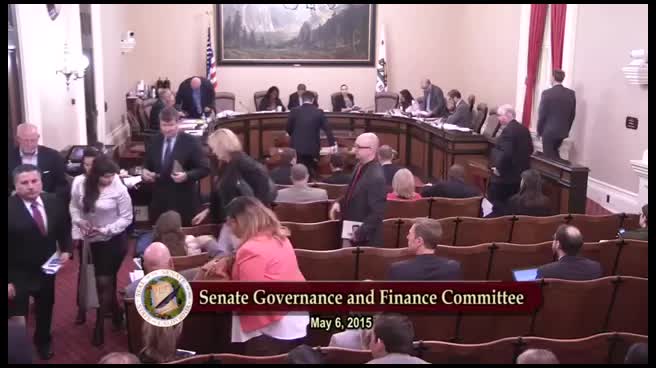 16MIN
Senate Standing Committee on Governance and Finance
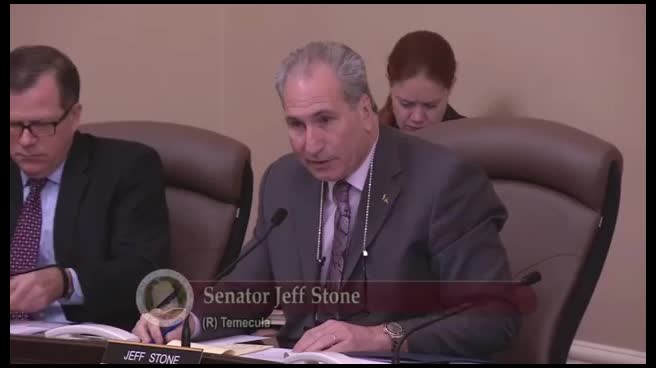 32MIN
Senate Standing Committee on Natural Resources and Water
Bill Author
Bill Co-Author(s):