SB 331: Public contracts: local agencies: negotiations.
- Session Year: 2015-2016
- House: Senate
- Latest Version Date: 2015-10-09
Existing law relating to public contracts requires local agencies, including cities and counties, to comply with specified procedures for public contracting for public construction.
The Meyers-Milias-Brown Act requires the governing body of a local public agency to meet and confer in good faith regarding wages, hours, and other terms and conditions of employment with representatives of a recognized employee organization.
This bill would enact the Civic Reporting Openness in Negotiations Efficiency Act to establish specific procedures for the negotiation and approval of certain contracts valued at $250,000 or more for goods or services by cities, counties, cities and counties, or special districts that have adopted a civic openness in negotiations ordinance, or COIN ordinance, defined as an ordinance imposing specified requirements as part of any collective bargaining process undertaken pursuant to the Meyers-Milias-Brown Act. The act would require the designation of an independent auditor to review and report on the cost of any proposed contract. The act would require a city, county, city and county, or special district to disclose prescribed information relating to the contract and contract negotiations on its Internet Web site. The act would prohibit a final determination by the governing body regarding approval of any contract until the matter has been heard at a minimum of 2 public meetings of the governing body.
The act would exempt from its provisions contracts required to respond to, recover from, or mitigate the effects of a temporary public safety emergency declared by the chief law enforcement officer of a city, county, city and county, or special district, or a state of war emergency, state of emergency, or local emergency, as those terms are defined in the California Emergency Services Act. The act would also exempt from its provisions a renewal of a contract if the employees performing the services are covered by a collective bargaining agreement that is governed by the National Labor Relations Act.
By imposing new requirements on cities, counties, cities and counties, and special districts, this bill would impose a state-mandated local program.
The California Constitution requires local agencies, for the purpose of ensuring public access to the meetings of public bodies and the writings of public officials and agencies, to comply with a statutory enactment that amends or enacts laws relating to public records or open meetings and contains findings demonstrating that the enactment furthers the constitutional requirements relating to this purpose.
This bill would make legislative findings to that effect.
The California Constitution requires the state to reimburse local agencies and school districts for certain costs mandated by the state. Statutory provisions establish procedures for making that reimbursement.
This bill would provide that no reimbursement is required by this act for a specified reason.
Existing law relating to public contracts requires local agencies, including cities and counties, to comply with specified procedures for public contracting for public construction.
The Meyers-Milias-Brown Act requires the governing body of a local public agency to meet and confer in good faith regarding wages, hours, and other terms and conditions of employment with representatives of a recognized employee organization.
This bill would enact the Civic Reporting Openness in Negotiations Efficiency Act to establish specific procedures for the negotiation and approval of certain contracts valued at $250,000 or more for goods or services by cities, counties, cities and counties, or special districts that have adopted a civic openness in negotiations ordinance, or COIN ordinance, defined as an ordinance imposing specified requirements as part of any collective bargaining process undertaken pursuant to the Meyers-Milias-Brown Act. The act would require the designation of an independent auditor to review and report on the cost of any proposed contract. The act would require a city, county, city and county, or special district to disclose prescribed information relating to the contract and contract negotiations on its Internet Web site. The act would prohibit a final determination by the governing body regarding approval of any contract until the matter has been heard at a minimum of 2 public meetings of the governing body. The
The act would exempt from its provisions contracts required to respond to, recover from, or mitigate the effects of a temporary public safety emergency declared by the chief law enforcement officer of a city, county, city and county, or special district, or a state of war emergency, state of emergency, or local emergency, as those terms are defined in the California Emergency Services Act. By The act would also exempt from its provisions a renewal of a contract if the employees performing the services are covered by a collective bargaining agreement that is governed by the National Labor Relations Act.
By imposing new requirements on cities, counties, cities and counties, and special districts, this bill would impose a state-mandated local program.
The California Constitution requires local agencies, for the purpose of ensuring public access to the meetings of public bodies and the writings of public officials and agencies, to comply with a statutory enactment that amends or enacts laws relating to public records or open meetings and contains findings demonstrating that the enactment furthers the constitutional requirements relating to this purpose.
This bill would make legislative findings to that effect.
The California Constitution requires the state to reimburse local agencies and school districts for certain costs mandated by the state. Statutory provisions establish procedures for making that reimbursement.
This bill would provide that no reimbursement is required by this act for a specified reason.
Existing law relating to public contracts requires local agencies, including cities and counties, to comply with specified procedures for public contracting for public construction.
The Meyers-Milias-Brown Act requires the governing body of a local public agency to meet and confer in good faith regarding wages, hours, and other terms and conditions of employment with representatives of a recognized employee organization.
This bill would enact the Civic Reporting Openness in Negotiations Efficiency Act to establish specific procedures for the negotiation and approval of certain contracts valued at $50,000 $250,000 or more for goods or services by cities, counties, cities and counties, or special districts that have adopted a civic openness in negotiations ordinance, or COIN ordinance, defined as an ordinance imposing specified requirements as part of any collective bargaining process undertaken pursuant to the Meyers-Milias-Brown Act. The act would require the designation of an independent auditor to review and report on the cost of any proposed contract. The act would require a city, county, city and county, or special district to disclose prescribed information relating to the contract and contract negotiations on its Internet Web site. The act would prohibit a final determination by the governing body regarding approval of any contract until the matter has been heard at a minimum of 2 public meetings of the governing body. The act would exempt from its provisions contracts required to respond to, recover from, or mitigate the effects of a temporary public safety emergency declared by the chief law enforcement officer of a city, county, city and county, or special district, or a state of war emergency, state of emergency, or local emergency, as those terms are defined in the California Emergency Services Act. By imposing new requirements on cities, counties, cities and counties, and special districts, this bill would impose a state-mandated local program.
The California Constitution requires local agencies, for the purpose of ensuring public access to the meetings of public bodies and the writings of public officials and agencies, to comply with a statutory enactment that amends or enacts laws relating to public records or open meetings and contains findings demonstrating that the enactment furthers the constitutional requirements relating to this purpose.
This bill would make legislative findings to that effect.
The California Constitution requires the state to reimburse local agencies and school districts for certain costs mandated by the state. Statutory provisions establish procedures for making that reimbursement.
This bill would provide that no reimbursement is required by this act for a specified reason.
Existing law relating to public contracts requires local agencies, including cities and counties, to comply with specified procedures for public contracting for public construction.
The Meyers-Milias-Brown Act requires the governing body of a local public agency to meet and confer in good faith regarding wages, hours, and other terms and conditions of employment with representatives of a recognized employee organization.
This bill would enact the Civic Reporting Openness in Negotiations Efficiency Act to establish specific procedures for the negotiation and approval of certain contracts valued at $50,000 or more for goods or services by cities, counties, cities and counties, or special districts that have adopted a civic openness in negotiations ordinance, or COIN ordinance, defined as an ordinance imposing specified requirements as part of any collective bargaining process undertaken pursuant to the Meyers-Milias-Brown Act. The act would require the appointment designation of an independent auditor to review and report on the cost of any proposed contract. The act would require a city, county, city and county, or special district to disclose prescribed information relating to the contract and contract negotiations on its Internet Web site. The act would prohibit a final determination by the governing body regarding approval of any contract until the matter has been heard at a minimum of 2 public meetings of the governing body. By imposing new requirements on cities, counties, cities and counties, and special districts, this bill would impose a state-mandated local program.
The California Constitution requires local agencies, for the purpose of ensuring public access to the meetings of public bodies and the writings of public officials and agencies, to comply with a statutory enactment that amends or enacts laws relating to public records or open meetings and contains findings demonstrating that the enactment furthers the constitutional requirements relating to this purpose.
This bill would make legislative findings to that effect.
The California Constitution requires the state to reimburse local agencies and school districts for certain costs mandated by the state. Statutory provisions establish procedures for making that reimbursement.
This bill would provide that no reimbursement is required by this act for a specified reason.
Existing law relating to public contracts requires local agencies, including cities and counties, to comply with specified procedures for public contracting for public construction.
The Meyers-Milias-Brown Act requires the governing body of a local public agency to meet and confer in good faith regarding wages, hours, and other terms and conditions of employment with representatives of a recognized employee organization.
This bill would enact the Civic Reporting Openness in Negotiations Efficiency Act to establish specific procedures for the negotiation and approval of contracts valued at $50,000 or more for goods or services by cities, counties, or cities and counties counties, or special districts that have adopted a civic openness in negotiations ordinance, or COIN ordinance, defined as an ordinance imposing specified requirements as part of any collective bargaining process undertaken pursuant to the Meyers-Milias-Brown Act. The act would require the appointment of an independent auditor to review and report on the cost of any proposed private sector contract. The act would require a city, county, or city and county county, or special district to disclose prescribed information relating to the contract and contract negotiations on its Internet Web site. The act would prohibit a final determination by the governing body regarding approval of any private sector contract until the matter has been heard at a minimum of 2 public meetings of the governing body. By imposing new requirements on cities, counties, and cities and counties, and special districts, this bill would impose a state-mandated local program.
The California Constitution requires local agencies, for the purpose of ensuring public access to the meetings of public bodies and the writings of public officials and agencies, to comply with a statutory enactment that amends or enacts laws relating to public records or open meetings and contains findings demonstrating that the enactment furthers the constitutional requirements relating to this purpose.
This bill would make legislative findings to that effect.
The California Constitution requires the state to reimburse local agencies and school districts for certain costs mandated by the state. Statutory provisions establish procedures for making that reimbursement.
This bill would provide that no reimbursement is required by this act for a specified reason.
Existing law relating to public contracts requires local agencies, including cities and counties, to comply with specified procedures for public contracting for public construction.
The Meyers-Milias-Brown Act requires the governing body of a local public agency to meet and confer in good faith regarding wages, hours, and other terms and conditions of employment with representatives of a recognized employee organization.
This bill would enact the Civic Reporting Openness in Negotiations Efficiency Act to establish specific procedures for the negotiation and approval of contracts for goods or services by cities, counties, or cities and counties that have adopted a civic openness in negotiations ordinance, or COIN ordinance, defined as an ordinance imposing specified requirements as part of any collective bargaining process undertaken pursuant to the Meyers-Milias-Brown Act. The act would require the appointment of an independent auditor to review and report on the cost of any proposed private sector contract. The act would require a city, county, or city and county to disclose prescribed information relating to the contract and contract negotiations on its Internet Web site. The act would prohibit a final determination by the governing body regarding approval of any private sector contract until the matter has been heard at a minimum of 2 public meetings of the governing body. By imposing new requirements on cities, counties, and cities and counties, this bill would impose a state-mandated local program.
The California Constitution requires local agencies, for the purpose of ensuring public access to the meetings of public bodies and the writings of public officials and agencies, to comply with a statutory enactment that amends or enacts laws relating to public records or open meetings and contains findings demonstrating that the enactment furthers the constitutional requirements relating to this purpose.
This bill would make legislative findings to that effect.
The California Constitution requires the state to reimburse local agencies and school districts for certain costs mandated by the state. Statutory provisions establish procedures for making that reimbursement.
This bill would provide that no reimbursement is required by this act for a specified reason.
The California Public Records Act requires that the public records of a local agency be open to inspection and provides that every person has a right to inspect any public record, except as specified. The Ralph M. Brown Act requires that all meetings of a legislative body, as defined, of a local agency be open and public and all persons permitted to attend unless a closed session is authorized.
This bill would express the intent of the Legislature to enact legislation that would increase transparency in local government.
This chapter shall be known, and may be cited, as the Civic Reporting Openness in Negotiations Efficiency Act, or CRONEY.
22176.As used in this chapter, civic openness in negotiations ordinance or COIN ordinance means an ordinance adopted by a city, county, city and county, or special district that requires any of the following as a part of any collective bargaining process undertaken pursuant to the Meyers-Milias-Brown Act (Chapter 10 (commencing with Section 3500) of Division 4 of Title 1 of the Government Code):
(a)The preparation of an independent economic analysis describing the fiscal costs of benefit and pay components currently provided to members of a recognized employee organization, as defined in Section 3501 of the Government Code.
(b)The completion of the independent economic analysis prior to the presentation of an opening proposal by the public employer.
(c)Availability for review by the public of the independent economic analysis before presentation of an opening proposal by the public employer.
(d)Updating of the independent economic analysis to reflect the annual or cumulative costs of each proposal made by the public employer or recognized employee organization.
(e)Updating of the independent economic analysis to reflect any absolute amount or change from the current actuarially computed unfunded liability associated with the pension or postretirement health benefits.
(f)The report from a closed session of a meeting of the public employers governing body of offers, counteroffers, or supposals made by the public employer or the recognized employee organization and communicated during that closed session.
(g)The report from a closed session of a meeting of the public employers governing body of any list of names of persons in attendance during any negotiations session, the date of the session, the length of the session, the location of the session, or pertinent facts regarding the negotiations that occurred during a session.
22177.(a)This chapter applies only to a city, county, city and county, or special district that has adopted a COIN ordinance, which is effective and operative. This chapter shall not apply if the city, county, city and county, or special district suspends, repeals, or revokes its COIN ordinance.
(b)This chapter shall not apply to a contract if the contract is required to respond to, recover from, or mitigate the effects of any of the following:
(1)A temporary public safety emergency declared by the chief law enforcement officer of a city, county, city and county, or special district.
(2)A state of war emergency, state of emergency, or local emergency, as those terms are defined in Section 8558 of the Government Code.
(c)This chapter shall not apply to a renewal of a contract if the employees performing the services are covered by a collective bargaining agreement that is governed by the National Labor Relations Act (29 U.S.C. Sec. 151 et seq.).
22178.(a)This chapter shall apply to any contracts with a value of at least two hundred fifty thousand dollars ($250,000), and to any contracts with a person or entity, or related person or entity, with a cumulative value of at least two hundred fifty thousand dollars ($250,000) within the fiscal year of the city, county, city and county, or special district, being negotiated between the city, county, city and county, or special district, and any person or entity that seeks to provide services or goods to the city, county, city and county, or special district, in the following areas: accounting, financing, hardware and software maintenance, health care, human resources, human services, information technology, telecommunications, janitorial maintenance, legal services, lobbying, marketing, office equipment maintenance, passenger vehicle maintenance, property leasing, public relations, public safety, social services, transportation, or waste removal.
(b)The city, county, city and county, or special district shall designate an unbiased independent auditor to review the cost of any proposed contract. The independent auditor shall prepare a report on the cost of the contract and provide the report to all parties and make it available to the public before the governing body takes any action to approve or disapprove the contract. The report shall comply with the following:
(1)The report shall include a recommendation regarding the viability of the contract, including any supplemental data upon which the report is based, and shall determine the fiscal impacts attributable to each term and condition of the contract.
(2)The report shall be made available to the public at least 30 days before the issue can be heard before the governing body and at least 60 days before any action to approve or disapprove the contract by the governing body.
(3)Any proposed changes to the contract after it has been approved by the governing body shall adhere to the same approval requirements as the original contract. The changes shall not go into effect until all of the requirements of this subdivision are met.
(c)The city, county, city and county, or special district shall disclose all offers and counteroffers to the public within 24 hours on its Internet Web site.
(d)Before approving any contract, the city, county, city and county, or special district shall release a list of names of all persons in attendance, whether in person or by electronic means, during any negotiation session regarding the contract, the date of the session, the length of the session, the location where the session took place, and any pertinent facts regarding the negotiations that occurred in that session.
(e)Representatives of the governing body shall advise the governing body of all offers, counteroffers, information, or statements of position discussed by the contracting person or entity and city, county, city and county, or special district representatives participating in negotiations regarding any contract.
(f)Each governing body member and staff members of governing body offices shall disclose publicly all verbal, written, electronic, or other communications regarding a subject matter related to the negotiations or pending negotiations they have had with any official or unofficial representative of the private entity within 24 hours after the communication occurs.
(g)A final governing body determination regarding approval of any contract shall be undertaken only after the matter has been heard at a minimum of two meetings of the governing body wherein the public has had the opportunity to review and comment on the matter.
SEC. 2.The Legislature finds and declares that Section 1 of this act, which adds Chapter 4.5 (commencing with Section 22175) to Part 3 of Division 2 of the Public Contract Code, furthers, within the meaning of paragraph (7) of subdivision (b) of Section 3 of Article I of the California Constitution, the purposes of that constitutional section as it relates to the right of public access to the meetings of local public bodies or the writings of local public officials and local agencies. Pursuant to paragraph (7) of subdivision (b) of Section 3 of Article I of the California Constitution, the Legislature makes the following findings:
This act ensures that members of the public have the opportunity to be informed of, and meaningfully participate in, the negotiation and approval of contracts for goods and services by a city, county, city and county, or special district that has adopted a civic openness in negotiations (COIN) ordinance, thereby furthering the purposes of Section 3 of Article I of the California Constitution.
SEC. 3.No reimbursement is required by this act pursuant to Section 6 of Article XIIIB of the California Constitution because the only costs that may be incurred by a local agency or school district under this act would result from a legislative mandate that is within the scope of paragraph (7) of subdivision (b) of Section 3 of Article I of the California Constitution.
This chapter shall be known, and may be cited, as the Civic Reporting Openness in Negotiations Efficiency Act, or CRONEY.
22176.As used in this chapter, civic openness in negotiations ordinance or COIN ordinance means an ordinance adopted by a city, county, city and county, or special district that requires any of the following as a part of any collective bargaining process undertaken pursuant to the Meyers-Milias-Brown Act (Chapter 10 (commencing with Section 3500) of Division 4 of Title 1 of the Government Code):
(a)The preparation of an independent economic analysis describing the fiscal costs of benefit and pay components currently provided to members of a recognized employee organization, as defined in Section 3501 of the Government Code.
(b)The completion of the independent economic analysis prior to the presentation of an opening proposal by the public employer.
(c)Availability for review by the public of the independent economic analysis before presentation of an opening proposal by the public employer.
(d)Updating of the independent economic analysis to reflect the annual or cumulative costs of each proposal made by the public employer or recognized employee organization.
(e)Updating of the independent economic analysis to reflect any absolute amount or change from the current actuarially computed unfunded liability associated with the pension or postretirement health benefits.
(f)The report from a closed session of a meeting of the public employers governing body of offers, counteroffers, or supposals made by the public employer or the recognized employee organization and communicated during that closed session.
(g)The report from a closed session of a meeting of the public employers governing body of any list of names of persons in attendance during any negotiations session, the date of the session, the length of the session, the location of the session, or pertinent facts regarding the negotiations that occurred during a session.
22177.(a)This chapter applies only to a city, county, city and county, or special district that has adopted a COIN ordinance, which is effective and operative. This chapter shall not apply if the city, county, city and county, or special district suspends, repeals, or revokes its COIN ordinance.
(b)This chapter shall not apply to a contract if the contract is required to respond to, recover from, or mitigate the effects of any of the following:
(1)A temporary public safety emergency declared by the chief law enforcement officer of a city, county, city and county, or special district.
(2)A state of war emergency, state of emergency, or local emergency, as those terms are defined in Section 8558 of the Government Code.
22178.(a)This chapter shall apply to any contracts with a value of at least fifty thousand dollars ($50,000), two hundred fifty thousand dollars ($250,000), and to any contracts with a person or entity, or related person or entity, with a cumulative value of at least fifty thousand dollars ($50,000) two hundred fifty thousand dollars ($250,000) within the fiscal year of the city, county, city and county, or special district, being negotiated between the city, county, city and county, or special district, and any person or entity that seeks to provide services or goods to the city, county, city and county, or special district, in the following areas: accounting, financing, hardware and software maintenance, healthcare, health care, human resources, human services, information technology, telecommunications, janitorial maintenance, legal services, lobbying, marketing, office equipment maintenance, passenger vehicle maintenance, property leasing, public relations, public safety, social services, transportation, or waste removal.
(b)The city, county, city and county, or special district shall designate an unbiased independent auditor to review the cost of any proposed contract. The independent auditor shall prepare a report on the cost of the contract and provide the report to all parties and make it available to the public before the governing body takes any action to approve or disapprove the contract. The report shall comply with the following:
(1)The report shall include a recommendation regarding the viability of the contract, including any supplemental data upon which the report is based, and shall determine the fiscal impacts attributable to each term and condition of the contract.
(2)The report shall be made available to the public at least 30 days before the issue can be heard before the governing body and at least 60 days before any action to approve or disapprove the contract by the governing body.
(3)Any proposed changes to the contract after it has been approved by the governing body shall adhere to the same approval requirements as the original contract. The changes shall not go into effect until all of the requirements of this subdivision are met.
(c)The city, county, city and county, or special district shall disclose all offers and counteroffers to the public within 24 hours on its Internet Web site.
(d)Before approving any contract, the city, county, city and county, or special district shall release a list of names of all persons in attendance, whether in person or by electronic means, during any negotiation session regarding the contract, the date of the session, the length of the session, the location where the session took place, and any pertinent facts regarding the negotiations that occurred in that session.
(e)Representatives of the governing body shall advise the governing body of all offers, counteroffers, information, or statements of position discussed by the contracting person or entity and city, county, city and county, or special district representatives participating in negotiations regarding any contract.
(f)Each governing body member and staff members of governing body offices shall disclose publicly all verbal, written, electronic, or other communications regarding a subject matter related to the negotiations or pending negotiations they have had with any official or unofficial representative of the private entity within 24 hours after the communication occurs.
(g)A final governing body determination regarding approval of any contract shall be undertaken only after the matter has been heard at a minimum of two meetings of the governing body wherein the public has had the opportunity to review and comment on the matter.
SEC. 2.The Legislature finds and declares that Section 1 of this act, which adds Chapter 4.5 (commencing with Section 22175) to Part 3 of Division 2 of the Public Contract Code, furthers, within the meaning of paragraph (7) of subdivision (b) of Section 3 of Article I of the California Constitution, the purposes of that constitutional section as it relates to the right of public access to the meetings of local public bodies or the writings of local public officials and local agencies. Pursuant to paragraph (7) of subdivision (b) of Section 3 of Article I of the California Constitution, the Legislature makes the following findings:
This act ensures that members of the public have the opportunity to be informed of, and meaningfully participate in, the negotiation and approval of contracts for goods and services by a city, county, city and county, or special district that has adopted a civic openness in negotiations (COIN) ordinance, thereby furthering the purposes of Section 3 of Article I of the California Constitution.
SEC. 3.No reimbursement is required by this act pursuant to Section 6 of Article XIIIB of the California Constitution because the only costs that may be incurred by a local agency or school district under this act would result from a legislative mandate that is within the scope of paragraph (7) of subdivision (b) of Section 3 of Article I of the California Constitution.
This chapter shall be known, and may be cited, as the Civic Reporting Openness in Negotiations Efficiency Act, or CRONEY.
22176.As used in this chapter, civic openness in negotiations ordinance or COIN ordinance means an ordinance adopted by a city, county, city and county, or special district that requires any of the following as a part of any collective bargaining process undertaken pursuant to the Meyers-Milias-Brown Act (Chapter 10 (commencing with Section 3500) of Division 4 of Title 1 of the Government Code):
(a)The preparation of an independent economic analysis describing the fiscal costs of benefit and pay components currently provided to members of a recognized employee organization, as defined in Section 3501 of the Government Code.
(b)The completion of the independent economic analysis prior to the presentation of an opening proposal by the public employer.
(c)Availability for review by the public of the independent economic analysis before presentation of an opening proposal by the public employer.
(d)Updating of the independent economic analysis to reflect the annual or cumulative costs of each proposal made by the public employer or recognized employee organization.
(e)Updating of the independent economic analysis to reflect any absolute amount or change from the current actuarially computed unfunded liability associated with the pension or postretirement health benefits.
(f)The report from a closed session of a meeting of the public employers governing body of offers, counteroffers, or supposals made by the public employer or the recognized employee organization and communicated during that closed session.
(g)The report from a closed session of a meeting of the public employers governing body of any list of names of persons in attendance during any negotiations session, the date of the session, the length of the session, the location of the session, or pertinent facts regarding the negotiations that occurred during a session.
22177.This chapter applies only to a city, county, city and county, or special district that has adopted a COIN ordinance, which is effective and operative. This chapter shall not apply if the city, county, city and county, or special district suspends, repeals, or revokes its COIN ordinance.
22178.(a)This chapter shall apply to any contracts with a value of at least fifty thousand dollars ($50,000), and to any contracts with a person or entity, or related person or entity, with a cumulative value of at least fifty thousand dollars ($50,000) within the fiscal year of the city, county, city and county, or special district, being negotiated between the city, county, city and county, or special district, and any private person or entity that seeks to provide services or goods to the city, county, city and county, or special district. district, in the following areas: accounting, financing, hardware and software maintenance, healthcare, human resources, human services, information technology, telecommunications, janitorial maintenance, legal services, lobbying, marketing, office equipment maintenance, passenger vehicle maintenance, property leasing, public relations, public safety, social services, transportation, or waste removal.
(b)The city, county, city and county, or special district shall appoint designate an unbiased independent auditor to review the cost of any proposed contract. The independent auditor shall prepare a report on the cost of the contract and provide the report to all parties and make it available to the public before the governing body takes any action to approve or disapprove the contract. The report shall comply with the following:
(1)The report shall include a recommendation regarding the viability of the contract, including any supplemental data upon which the report is based, and shall determine the fiscal impacts attributable to each term and condition of the contract.
(2)The report shall be made available to the public at least 30 days before the issue can be heard before the governing body and at least 60 days before any action to approve or disapprove the contract by the governing body.
(3)Any proposed changes to the contract after it has been approved by the governing body shall adhere to the same approval requirements as the original contract. The changes shall not go into effect until all of the requirements of this subdivision are met.
(c)The city, county, city and county, or special district shall disclose all offers and counteroffers to the public within 24 hours on its Internet Web site.
(d)Before approving any contract, the city, county, city and county, or special district shall release a list of names of all persons in attendance, whether in person or by electronic means, during any negotiation session regarding the contract, the date of the session, the length of the session, the location where the session took place, and any pertinent facts regarding the negotiations that occurred in that session.
(e)Representatives of the governing body shall advise the governing body of all offers, counteroffers, information, or statements of position discussed by the contracting person or entity and city, county, city and county, or special district representatives participating in negotiations regarding any contract.
(f)Each governing body member and staff members of governing body offices shall disclose publicly all verbal, written, electronic, or other communications regarding a subject matter related to the negotiations or pending negotiations they have had with any official or unofficial representative of the private entity within 24 hours after the communication occurs.
(g)A final governing body determination regarding approval of any contract shall be undertaken only after the matter has been heard at a minimum of two meetings of the governing body wherein the public has had the opportunity to review and comment on the matter.
SEC. 2.The Legislature finds and declares that Section 1 of this act, which adds Chapter 4.5 (commencing with Section 22175) to Part 3 of Division 2 of the Public Contract Code, furthers, within the meaning of paragraph (7) of subdivision (b) of Section 3 of Article I of the California Constitution, the purposes of that constitutional section as it relates to the right of public access to the meetings of local public bodies or the writings of local public officials and local agencies. Pursuant to paragraph (7) of subdivision (b) of Section 3 of Article I of the California Constitution, the Legislature makes the following findings:
This act ensures that members of the public have the opportunity to be informed of, and meaningfully participate in, the negotiation and approval of contracts for goods and services by a city, county, city and county, or special district that has adopted a civic openness in negotiations (COIN) ordinance, thereby furthering the purposes of Section 3 of Article I of the California Constitution.
SEC. 3.No reimbursement is required by this act pursuant to Section 6 of Article XIIIB of the California Constitution because the only costs that may be incurred by a local agency or school district under this act would result from a legislative mandate that is within the scope of paragraph (7) of subdivision (b) of Section 3 of Article I of the California Constitution.
This chapter shall be known, and may be cited, as the Civic Reporting Openness in Negotiations Efficiency Act, or CRONE. CRONEY.
22176.As used in this chapter, civic openness in negotiations ordinance or COIN ordinance means an ordinance adopted by a city, county, or city and county county, or special district that requires any of the following as a part of any collective bargaining process undertaken pursuant to the Meyers-Milias-Brown Act (Chapter 10 (commencing with Section 3500) of Division 4 of Title 1 of the Government Code):
(a)The preparation of an independent economic analysis describing the fiscal costs of benefit and pay components currently provided to members of a recognized employee organization, as defined in Section 3501 of the Government Code.
(b)The completion of the independent economic analysis prior to the presentation of an opening proposal by the public employer.
(c)Availability for review by the public of the independent economic analysis before presentation of an opening proposal by the public employer.
(d)Updating of the independent economic analysis to reflect the annual or cumulative costs of each proposal made by the public employer or recognized employee organization.
(e)Updating of the independent economic analysis to reflect any absolute amount or change from the current actuarially computed unfunded liability associated with the pension or postretirement health benefits.
(f)The report from a closed session of a meeting of the public employers governing body of offers, counteroffers, or supposals made by the public employer or the recognized employee organization and communicated during that closed session.
(g)The report from a closed session of a meeting of the public employers governing body of any list of names of persons in attendance during any negotiations session, the date of the session, the length of the session, the location of the session, or pertinent facts regarding the negotiations that occurred during a session.
22177.This chapter applies only to a city, county, or city and county county, or special district that has adopted a COIN ordinance, which is effective and operative. This chapter shall not apply if the city, county, or city and county county, or special district suspends, repeals, or revokes its COIN ordinance.
22178.(a)This chapter shall apply to all private sector any contracts with a value of at least fifty thousand dollars ($50,000), and to any contracts with a person or entity, or related person or entity, with a cumulative value of at least fifty thousand dollars ($50,000) within the fiscal year of the city, county, city and county, or special district, being negotiated between the city, county, or city and county, or special district, and any private person or entity that seeks to provide services or goods to the city, county, or city and county. county, or special district.
(b)The city, county, or city and county county, or special district shall appoint an unbiased independent auditor to review the cost of any proposed private sector contract. The independent auditor shall prepare a report on the cost of the contract and provide the report to all parties and make it available to the public before the governing body takes any action to approve or disapprove the contract. The report shall comply with the following:
(1)The report shall include a recommendation regarding the viability of the contract, including any supplemental data upon which the report is based, and shall determine the fiscal impacts attributable to each term and condition of the contract.
(2)The report shall be made available to the public at least 30 days before the issue can be heard before the governing body and at least 60 days before any action to approve or disapprove the contract by the governing body.
(3)Any proposed changes to the contract after it has been approved by the governing body shall adhere to the same approval requirements as the original contract. The changes shall not go into effect until all of the requirements of this subdivision are met.
(c)The city, county, or city and county county, or special district shall disclose all offers and counteroffers to the public within 24 hours on its Internet Web site.
(d)Before entering into approving any private sector contract, the city, county, or city and county county, or special district shall release a list of names of all persons in attendance, whether in person or by electronic means, during any negotiation session regarding the contract, the date of the session, the length of the session, the location where the session took place, and any pertinent facts regarding the negotiations that occurred in that session.
(e)Representatives of the governing body shall advise the governing body of all offers, counteroffers, information, or statements of position discussed by the private contracting person or entity and city, county, or city and county county, or special district representatives participating in negotiations regarding any private sector contract.
(f)The governing body shall publish future proposals directed by the governing body and the analytical thought process utilized by the governing body.
(g)
(f)Each governing body member and staff members of governing body offices shall disclose publicly all verbal, written, electronic, or other communications regarding a subject matter related to the negotiations or pending negotiations they have had with any official or unofficial representative of the private entity within 24 hours after the communication occurs.
(h)
(g)A final governing body determination regarding approval of any private sector contract shall be undertaken only after the matter has been heard at a minimum of two meetings of the governing body wherein the public has had the opportunity to review and comment on the matter. Not less than seven days before the first governing body meeting when the matter shall be heard, the city, county, or city and county shall post on its Internet Web site the contract under consideration for adoption.
SEC. 2.The Legislature finds and declares that Section 1 of this act, which adds Chapter 4.5 (commencing with Section 22175) to Part 3 of Division 2 of the Public Contract Code, furthers, within the meaning of paragraph (7) of subdivision (b) of Section 3 of Article I of the California Constitution, the purposes of that constitutional section as it relates to the right of public access to the meetings of local public bodies or the writings of local public officials and local agencies. Pursuant to paragraph (7) of subdivision (b) of Section 3 of Article I of the California Constitution, the Legislature makes the following findings:
This act ensures that members of the public have the opportunity to be informed of, and meaningfully participate in, the negotiation and approval of contracts for goods and services by a city, county, or city and county county, or special district that has adopted a civic openness in negotiations (COIN) ordinance, thereby furthering the purposes of Section 3 of Article I of the California Constitution.
SEC. 3.No reimbursement is required by this act pursuant to Section 6 of Article XIIIB of the California Constitution because the only costs that may be incurred by a local agency or school district under this act would result from a legislative mandate that is within the scope of paragraph (7) of subdivision (b) of Section 3 of Article I of the California Constitution.
This chapter shall be known, and may be cited, as the Civic Reporting Openness in Negotiations Efficiency Act, or CRONE.
22176.As used in this chapter, civic openness in negotiations ordinance or COIN ordinance means an ordinance adopted by a city, county, or city and county that requires any of the following as a part of any collective bargaining process undertaken pursuant to the Meyers-Milias-Brown Act (Chapter 10 (commencing with Section 3500) of Division 4 of Title 1 of the Government Code):
(a)The preparation of an independent economic analysis describing the fiscal costs of benefit and pay components currently provided to members of a recognized employee organization, as defined in Section 3501 of the Government Code.
(b)The completion of the independent economic analysis prior to the presentation of an opening proposal by the public employer.
(c)Availability for review by the public of the independent economic analysis before presentation of an opening proposal by the public employer.
(d)Updating of the independent economic analysis to reflect the annual or cumulative costs of each proposal made by the public employer or recognized employee organization.
(e)Updating of the independent economic analysis to reflect any absolute amount or change from the current actuarially computed unfunded liability associated with the pension or postretirement health benefits.
(f)The report from a closed session of a meeting of the public employers governing body of offers, counteroffers, or supposals made by the public employer or the recognized employee organization and communicated during that closed session.
(g)The report from a closed session of a meeting of the public employers governing body of any list of names of persons in attendance during any negotiations session, the date of the session, the length of the session, the location of the session, or pertinent facts regarding the negotiations that occurred during a session.
22177.This chapter applies only to a city, county, or city and county that has adopted a COIN ordinance, which is effective and operative. This chapter shall not apply if the city, county, or city and county suspends, repeals, or revokes its COIN ordinance.
22178.(a)This chapter shall apply to all private sector contracts being negotiated between the city, county, or city and county, and any private person or entity that seeks to provide services or goods to the city, county, or city and county.
(b)The city, county, or city and county shall appoint an unbiased independent auditor to review the cost of any proposed private sector contract. The independent auditor shall prepare a report on the cost of the contract and provide the report to all parties and make it available to the public before the governing body takes any action to approve or disapprove the contract. The report shall comply with the following:
(1)The report shall include a recommendation regarding the viability of the contract, including any supplemental data upon which the report is based, and shall determine the fiscal impacts attributable to each term and condition of the contract.
(2)The report shall be made available to the public at least 30 days before the issue can be heard before the governing body and at least 60 days before any action to approve or disapprove the contract by the governing body.
(3)Any proposed changes to the contract after it has been approved by the governing body shall adhere to the same approval requirements as the original contract. The changes shall not go into effect until all of the requirements of this subdivision are met.
(c)The city, county, or city and county shall disclose all offers and counteroffers to the public within 24 hours on its Internet Web site.
(d)Before entering into any private sector contract, the city, county, or city and county shall release a list of names of all persons in attendance, whether in person or by electronic means, during any negotiation session regarding the contract, the date of the session, the length of the session, the location where the session took place, and any pertinent facts regarding the negotiations that occurred in that session.
(e)Representatives of the governing body shall advise the governing body of all offers, counteroffers, information, or statements of position discussed by the private entity and city, county, or city and county representatives participating in negotiations regarding any private sector contract.
(f)The governing body shall publish future proposals directed by the governing body and the analytical thought process utilized by the governing body.
(g)Each governing body member and staff members of governing body offices shall disclose publicly all verbal, written, electronic, or other communications regarding a subject matter related to the negotiations or pending negotiations they have had with any official or unofficial representative of the private entity within 24 hours after the communication occurs.
(h)A final governing body determination regarding approval of any private sector contract shall be undertaken only after the matter has been heard at a minimum of two meetings of the governing body wherein the public has had the opportunity to review and comment on the matter. Not less than seven days before the first governing body meeting when the matter shall be heard, the city, county, or city and county shall post on its Internet Web site the contract under consideration for adoption.
SEC. 2.The Legislature finds and declares that Section 1 of this act, which adds Chapter 4.5 (commencing with Section 22175) to Part 3 of Division 2 of the Public Contract Code, furthers, within the meaning of paragraph (7) of subdivision (b) of Section 3 of Article I of the California Constitution, the purposes of that constitutional section as it relates to the right of public access to the meetings of local public bodies or the writings of local public officials and local agencies. Pursuant to paragraph (7) of subdivision (b) of Section 3 of Article I of the California Constitution, the Legislature makes the following findings:
This act ensures that members of the public have the opportunity to be informed of, and meaningfully participate in, the negotiation and approval of contracts for goods and services by a city, county, or city and county that has adopted a civic openness in negotiations (COIN) ordinance, thereby furthering the purposes of Section 3 of Article I of the California Constitution.
SEC. 3.No reimbursement is required by this act pursuant to Section 6 of Article XIIIB of the California Constitution because the only costs that may be incurred by a local agency or school district under this act would result from a legislative mandate that is within the scope of paragraph (7) of subdivision (b) of Section 3 of Article I of the California Constitution.
SECTION 1.It is the intent of the Legislature to enact legislation that would increase transparency in local government.
It is the intent of the Legislature to enact legislation that would increase transparency in local government.
|
Date
|
Status
|
|---|---|
| Oct 9, 2015 | Approved by the Governor. |
| Oct 9, 2015 | Chaptered by Secretary of State. Chapter 714, Statutes of 2015. |
| Sep 11, 2015 | Enrolled and presented to the Governor at 10:45 p.m. |
| Sep 10, 2015 | Assembly amendments concurred in. (Ayes 22. Noes 15. Page 2673.) Ordered to engrossing and enrolling. |
| Sep 10, 2015 | Assembly amendments concurred in. (Ayes 22. Noes 15.) Ordered to engrossing and enrolling. |
| Sep 10, 2015 | Assembly amendments concurred in. (Ayes 21. Noes 15.) Ordered to engrossing and enrolling. |
| Sep 8, 2015 | Read third time. Passed. (Ayes 48. Noes 29. Page 2969.) Ordered to the Senate. |
| Sep 8, 2015 | In Senate. Concurrence in Assembly amendments pending. |
| Sep 8, 2015 | Read third time. Passed. Ordered to the Senate. |
| Aug 31, 2015 | Read second time. Ordered to third reading. |
| Aug 28, 2015 | From committee: Do pass. (Ayes 12. Noes 5.) (August 27). |
| Aug 19, 2015 | August 19 set for first hearing. Placed on APPR. suspense file. |
| Aug 17, 2015 | From committee with author's amendments. Read second time and amended. Re-referred to Com. on APPR. |
| Jul 15, 2015 | July 15 hearing postponed by committee. |
| Jul 13, 2015 | From committee with author's amendments. Read second time and amended. Re-referred to Com. on APPR. |
| Jul 2, 2015 | From committee: Do pass and re-refer to Com. on APPR. (Ayes 5. Noes 4.) (July 1). Re-referred to Com. on APPR. |
| Jun 23, 2015 | From committee with author's amendments. Read second time and amended. Re-referred to Com. on L. GOV. |
| Jun 11, 2015 | Referred to Com. on L. GOV. |
| May 22, 2015 | In Assembly. Read first time. Held at Desk. |
| May 22, 2015 | Read third time. Passed. (Ayes 25. Noes 14. Page 1066.) Ordered to the Assembly. |
| May 22, 2015 | Read third time. Passed. (Ayes 25. Noes 14.) Ordered to the Assembly. |
| May 19, 2015 | Read second time. Ordered to third reading. |
| May 18, 2015 | From committee: Be ordered to second reading pursuant to Senate Rule 28.8. |
| May 8, 2015 | Set for hearing May 18. |
| Apr 29, 2015 | From committee: Do pass and re-refer to Com. on APPR. (Ayes 5. Noes 1. Page 815.) (April 29). Re-referred to Com. on APPR. |
| Apr 29, 2015 | From committee: Do pass and re-refer to Com. on APPR. (Ayes 5. Noes 1.) (April 29). Re-referred to Com. on APPR. |
| Apr 22, 2015 | From committee with author's amendments. Read second time and amended. Re-referred to Com. on GOV. & F. |
| Apr 21, 2015 | Set for hearing April 29. |
| Apr 16, 2015 | Re-referred to Com. on GOV. & F. |
| Apr 6, 2015 | From committee with author's amendments. Read second time and amended. Re-referred to Com. on RLS. |
| Mar 5, 2015 | Referred to Com. on RLS. |
| Feb 24, 2015 | From printer. May be acted upon on or after March 26. |
| Feb 23, 2015 | Introduced. Read first time. To Com. on RLS. for assignment. To print. |
|
Date
|
Description
|
Location
|
Votes
|
|
|---|---|---|---|---|
| Sep 10, 2015 | Unfinished Business SB331 Mendoza Concurrence | Senate Floor |
Passed |
|
| Sep 8, 2015 | SB 331 Mendoza Senate Third Reading By GONZALEZ | Assembly Floor |
Passed |
|
| Aug 27, 2015 | Do pass. | Assembly Standing Committee on Appropriations |
Passed |
|
| Jul 1, 2015 | Do pass and be re-referred to the Committee on [Appropriations] | Assembly Standing Committee on Local Government |
Passed |
|
| May 22, 2015 | Senate 3rd Reading SB331 Mendoza | Senate Floor |
Passed |
|
| Apr 29, 2015 | Do pass, but first be re-referred to the Committee on [Appropriations] | Senate Standing Committee on Governance and Finance |
Passed |
This list shows positions taken on this bill by organizations on the date displayed, which is linked to the original source.
Positions by individuals are not included.
SB 331
Page 9
|
Office of Senate Floor Analyses (916) 651-1520 Fax: (916) 327-4478 |
UNFINISHED BUSINESS
Bill No: SB 331
Amended: 8/17/15
SENATE GOVERNANCE & FIN. COMMITTEE: 5-1, 4/29/15
AYES: Hertzberg, Beall, Hernandez, Lara, Pavley
NOES: Nguyen
NO VOTE RECORDED: Moorlach
SENATE APPROPRIATIONS COMMITTEE: Senate Rule 28.8
SENATE FLOOR: 25-14, 5/22/15
AYES: Allen, Beall, Block, Cannella, De León, Galgiani, Hall, Hancock, Hernandez, Hertzberg, Hill, Hueso, Jackson, Lara, Leno, Leyva, Liu, McGuire, Mendoza, Mitchell, Monning, Pan, Pavley, Wieckowski, Wolk
NOES: Anderson, Bates, Berryhill, Fuller, Gaines, Huff, Moorlach, Morrell, Nguyen, Nielsen, Roth, Runner, Stone, Vidak
ASSEMBLY FLOOR: 48-29, 9/8/15 - See last page for vote
SUBJECT: Public contracts: local agencies: negotiations
SOURCE: American Federation of State, County & Municipal Employees
AFL-CIO
Orange County Employees Association
DIGEST: This bill requires counties and cities that have adopted a civic openness in negotiating (COIN) ordinance, as defined, to comply with specified disclosure requirements relating to contract negotiations with private entities.
Assembly Amendments 1) exempt contracts that meet specified conditions from the bill’s provisions, 2) increase the value of contracts that are subject to the bill’s provisions from $50,000 to $250,000, and 3) specify 19 types of goods and service contracts that are subject to the bill’s provisions.
Existing law:
Enacts the Meyers-Milias-Brown Act (MMBA) which governs the relations between local governments and their employees. The MMBA applies to counties, cities, and special districts, but not school districts.
Establishes, under the MMBA, the framework under which local agencies’ employees who are represented by unions can collectively bargain over wages, hours, and terms and conditions of employment through a specified meet and confer process.
Enacts the Ralph M. Brown Act (Brown Act) which requires local agencies' meetings to be "open and public," with specific exceptions.
Allows, under the Brown Act, local governments’ legislative bodies to meet in closed sessions for some aspects of labor negotiations. For example, a legislative body may meet in closed session to instruct its bargaining representatives, which may be one or more of its members, on employee salaries and fringe benefits for both union and non-union employees.
Requires the approval of an agreement concluding labor negotiations with represented employees must be reported after the agreement is final and has been accepted or ratified by the other party. The report must identify the item approved and the other party or parties to the negotiation.
This bill:
Requires a city, county, city and county, or special district that has adopted a COIN ordinance that is effective and operative to comply with requirements related to contracts that the local government negotiates with any private person or entity that seeks to provide services or goods to the local government.
Directs that its provisions do not apply to a contract if the contract is required to respond to, recover from, or mitigate the effects of any of the following:
A temporary public safety emergency declared by the chief law enforcement officer of a city, county, city and county, or special district.
A state of war emergency, state of emergency, or local emergency, as those terms are defined in Section 8558 of the Government Code.
Exempts the renewal of a contract if the employees performing the services are covered by a collective bargaining agreement that is governed by a specified federal law.
Specifies that its provisions apply to local governments’ contracts of a value of $250,000 or more and to any contracts with a person or entity (or any related person or entity) of a cumulative value of $250,000 or more in any fiscal year being negotiated between the local government and any private person or entity that seeks to provide services or goods to the local government if the services or goods fall within one of 19 specified categories.
Defines a “civic openness in negotiations ordinance” or “COIN ordinance” as an ordinance adopted by a local government that requires any of the following as a part of any collective bargaining process undertaken pursuant to the MMBA:
The preparation of an independent economic analysis describing the fiscal costs of benefit and pay components currently provided to members of a recognized employee organization.
The completion of the independent economic analysis prior to the presentation of an opening proposal by the public employer.
Availability for review by the public of the independent economic analysis before presentation of an opening proposal by the public employer.
Updating of the independent economic analysis to reflect the annual or cumulative costs of each proposal made by the public employer or recognized employee organization.
Updating of the independent economic analysis to reflect any absolute amount or change from the current actuarially computed unfunded liability associated with the pension or postretirement health benefits.
The report from a closed session of a meeting of the public employer’s governing body of offers, counteroffers, or supposals made by the public employer or the recognized employee organization and communicated during that closed session.
The report from a closed session of a meeting of the public employer’s governing body of any list of names of persons in attendance during any negotiations session, the date of the session, the length of the session, the location of the session, or pertinent facts regarding the negotiations that occurred during a session.
Requires a local government that has adopted a COIN ordinance to comply with the following requirements for all contracts being negotiated between the local government and any private person or entity that seeks to provide services or goods to the local government:
The city, county, or city and county must designate an unbiased independent auditor to review the cost of any proposed contract. The independent auditor must prepare a report on the cost of the contract and provide the report to all parties and make it available to the public before the governing body takes any action to approve or disapprove the contract. The report must comply with the following:
The report must include a recommendation regarding the viability of the contract, including any supplemental data upon which the report is based, and must determine the fiscal impacts attributable to each term and condition of the contract.
The report must be made available to the public at least 30 days before the issue can be heard before the governing body and at least 60 days before any action to approve or disapprove the contract by the governing body.
Any proposed changes to the contract after it has been approved by the governing body must adhere to the same approval requirements as the original contract. The changes must not go into effect until all of the requirements of this subdivision are met.
The local government must disclose all offers and counteroffers to the public within 24 hours on its Internet Web site.
Before approving any contract, the local government must release a list of names of all persons in attendance, whether in person or by electronic means, during any negotiation session regarding the contract, the date of the session, the length of the session, the location where the session took place, and any pertinent facts regarding the negotiations that occurred in that session.
Representatives of the governing body must advise the governing body of all offers, counteroffers, information, or statements of position discussed by the private entity and local government representatives participating in negotiations regarding any contract.
Each governing body member and staff members of governing body offices must disclose publicly all verbal, written, electronic, or other communications regarding a subject matter related to the negotiations or pending negotiations they have had with any official or unofficial representative of the private entity within 24 hours after the communication occurs.
A final governing body determination regarding approval of any contract must be undertaken only after the matter has been heard at a minimum of two meetings of the governing body wherein the public has had the opportunity to review and comment on the matter.
States that its provisions do not apply in a local government that suspends, repeals, or revokes its COIN ordinance.
Declares that the statutes that it enacts shall be known, and may be cited, as the Civic Reporting Openness in Negotiations Efficiency Act, or CRONEY.
Background
In response to the confidentiality that surrounds local governments’ labor contract negotiations, several California local governments recently have adopted COIN ordinances that impose requirements on local governments’ contract negotiations with represented employees’ bargaining units. The ordinances typically require the local government to:
Hire an independent negotiator.
Obtain an independent analysis of the costs of contract proposals.
Require public disclosure, within 24 hours, of offers and counteroffers made during the negotiations.
Disclose communications that elected local government officials have with representatives of recognized employee organizations.
Public disclosure of a proposed contract before it is placed on an agenda for approval by a local legislative body.
Ordinances imposing some or all of these requirements have been adopted by Orange County, the cities of Cost Mesa, Fullerton, and Beverly Hills, and the East Bay Municipal Utility District. The COIN ordinances’ proponents argue that the local requirements are necessary because the secrecy that shields labor contract negotiations results in labor agreements’ being approved by elected officials without sufficient opportunities for the public scrutiny.
Local COIN ordinances have been opposed by local governments’ recognized employee organizations, whose members argue that the ordinances unfairly focus only on labor contracts, while failing to extend similar provisions to local governments’ contract negotiations for goods and services provided by private third-parties. Unions representing local government employees want the Legislature to require that any community in which COIN ordinance requirements are imposed on labor negotiations must also impose similar requirements on other contract negotiations.
Comments
Purpose of this bill. This bill advances the cause of transparency in public contracting. Greater public scrutiny of contracts negotiated by public agencies can improve outcomes. However, some local governments have adopted “COIN” ordinances that focus transparency requirements only on labor contracts negotiated through the collective bargaining process. Problems resulting from conflicts-of interest, unexpected costs, and ill-considered contract provisions certainly are not exclusive to local governments’ labor contracts. As a result, transparency requirements should not be limited to a single interest group. This bill will establish parity in local governments’ contract transparency requirements by ensuring that a jurisdiction that imposes openness requirements on labor negotiations must apply a similar degree of openness to its negotiations of contracts for goods and services provided by private third-parties.
Elevating form over function. In theory, applying roughly similar transparency requirements to all local government contract negotiations may seem fair. However, in practice, it is problematic to apply one-size-fits-all requirements to a wide variety of contract negotiations that are not alike. The exemptions from statutory open meeting requirements that state law grants to labor contract negotiations do not apply to most other types of local government contracts for goods and services. This is not to suggest that favoritism, payoffs, or bad judgment can’t influence local governments’ contract awards for goods and services. But, the problems with those contract negotiations may not relate to a lack of public notice or discussion in public hearings. For example, in contrast with the collective bargaining process, the details of solicitations for public works contracts are circulated well in advance of the bidding process and contracts are typically awarded to the lowest responsible bidder through a public process, with minimal opportunities to alter the details of the contract. By applying similar openness requirements on all local government contracts, this bill may only achieve parity in form, while failing to address the different policy responses that may be necessary to respond to different types of undesirable contract negotiation practices.
Timing is everything. In July of 2014, three of Orange County's recognized employee organizations filed unfair practice charges with California's Public Employment Relations Board (PERB). In November 2014, PERB issued complaints in all three cases alleging that Orange County's adoption of its COIN ordinance violated the MMBA and PERB regulations. PERB issued its proposed decision on June 16, 2015, finding that some components of Orange County's COIN ordinance, as well as the process by which it was introduced and adopted, violate the MMBA and PERB regulations. PERB ordered Orange County to do the following: rescind from its COIN ordinance those components found to violate the MMBA and PERB regulations; cease and desist from activities found to violate the MMBA and PERB regulations; and, post notices of PERB's orders. Orange County on July 13, 2015, filed an exception to PERB's proposed decision, which initiates PERB's appeal process. It is unknown when PERB will finalize its decision. In light of the ongoing PERB complaint process, it is unclear whether this bill’s changes to state law governing COIN ordinances are premature.
FISCAL EFFECT: Appropriation: No Fiscal Com.: Yes Local: Yes
According to the Assembly Appropriations Committee:
Unknown, but likely significant costs to impacted local agencies for independent auditor reviews and required reports for each impacted contract. These mandated costs are potentially reimbursable by the state, but may fall under Proposition 42. Should local agencies seek reimbursement from the Commission on State Mandates and prevail, the cost to the state is potentially in the millions of dollars (GF) statewide.
Unknown, non-reimbursable costs to local agencies to comply with new public disclosure and meeting requirements. These costs would likely fall under Proposition 42 and, therefore, are not reimbursable.
American Federation of State, County & Municipal Employees
AFL-CIO (co-source)
Orange County Employees Association (co-source)
Association of Deputy District Attorneys
Association of Orange County Deputy Sheriffs
AFSCME District Council 36
CA Association of Professional Employees
California Professional Firefighters
California Teachers Association
Glendale City Employees Association
International Union of Operating Engineers, Local 501, AFL-CIO
In the Public Trust
LIUNA Local 777
LIUNA Local 792
Orange County Professional Firefighters Association IAFF Local 3631
Organization of SMUD Employees
Peace Officers Research Association of CA
San Bernardino Public Employees Association
San Diego County Court Employees Association
San Luis Obispo County Employees Association
United Domestic Workers of America, AFSCME Local 3930, AFL-CIO
California Chamber of Commerce
City of Huntington Beach
Inland Empire Disposal Association
League of California Cities
League of California Cities, Orange County Division
Los Angeles County Waste Management Association
Orange County Board of Supervisors
Rural County Representatives of California
Sandra Hutchens, Sheriff-Coroner, Orange County Sheriff's Department
Solid Waste Association of Orange County
ASSEMBLY FLOOR: 48-29, 9/08/15
AYES: Alejo, Bloom, Bonilla, Bonta, Brown, Burke, Calderon, Campos, Chau, Chiu, Chu, Dababneh, Daly, Dodd, Frazier, Cristina Garcia, Eduardo Garcia, Gatto, Gipson, Gomez, Gonzalez, Gordon, Gray, Roger Hernández, Holden, Irwin, Jones-Sawyer, Lopez, Low, McCarty, Medina, Mullin, Nazarian, O'Donnell, Perea, Quirk, Rendon, Ridley-Thomas, Rodriguez, Salas, Santiago, Mark Stone, Thurmond, Ting, Weber, Williams, Wood, Atkins
NOES: Achadjian, Travis Allen, Baker, Bigelow, Brough, Chang, Cooley, Dahle, Beth Gaines, Gallagher, Grove, Hadley, Harper, Jones, Kim, Lackey, Levine, Linder, Maienschein, Mathis, Mayes, Melendez, Obernolte, Olsen, Patterson, Steinorth, Wagner, Waldron, Wilk
NO VOTE RECORDED: Chávez, Cooper, Eggman
Prepared by: Brian Weinberger / GOV. & F. / (916) 651-4119
9/9/15 9:43:30
**** END ****
SB 331
Page 8
SENATE THIRD READING
SB 331
(Mendoza)
As Amended August 17, 2015
Majority vote
SENATE VOTE: 25-14
Committee |
Votes |
Ayes |
Noes |
Local Government |
5-4 |
Gonzalez, Alejo, Chiu, Gordon, Holden |
Maienschein, Cooley, Linder, Waldron |
Appropriations |
12-5 |
Gomez, Bloom, Bonta, Calderon, Nazarian, Eggman, Eduardo Garcia, Holden, Quirk, Rendon, Weber, Wood |
Bigelow, Chang, Gallagher, Jones, Wagner |
SUMMARY: Requires local agencies that have adopted a Civic Openness in Negotiations (COIN) ordinance for their labor contracts to use a similar process to evaluate, negotiate, and approve specified contracts for goods or services valued at $250,000 or more. Specifically, this bill:
Enacts the Civic Reporting Openness in Negotiations Efficiency Act, or CRONEY.
Provides that CRONEY applies only to a city, county, city and county, or special district that has adopted a COIN ordinance, which is effective and operative. CRONEY shall not apply if the city, county, city and county, or special district suspends, repeals, or revokes its COIN ordinance.
Provides that CRONEY shall not apply to a contract if the contract is required to respond to, recover from, or mitigate the effects of any of the following:
A temporary public safety emergency declared by the chief law enforcement officer of a city, county, city and county, or special district; and,
A state of war emergency, state of emergency, or local emergency, as specified.
Provides that CRONEY shall not apply to a renewal of a contract if the employees performing the services are covered by a collective bargaining agreement that is governed by the National Labor Relations Act, as specified.
Provides that CRONEY shall apply to any contracts with a value of at least $250,000, and to any contracts with a person or entity, or related person or entity, with a cumulative value of at least $250,000 within the fiscal year of the city, county, city and county, or special district, being negotiated between the city, county, city and county, or special district, and any private person or entity that seeks to provide services or goods to the city, county, city and county, or special district, in the following areas: accounting, financing, hardware and software maintenance, health care, human resources, human services, information technology, telecommunications, janitorial maintenance, legal services, lobbying, marketing, office equipment maintenance, passenger vehicle maintenance, property leasing, public relations, public safety, social services, transportation, or waste removal.
Requires the city, county, city and county, or special district to designate an unbiased independent auditor to review the cost of any proposed contract, who must prepare a report on the cost of the contract and provide the report to all parties and make it available to the public before the governing body takes any action to approve or disapprove the contract.
Requires the report specified above to comply with the following:
The report shall include a recommendation regarding the viability of the contract, including any supplemental data upon which the report is based, and shall determine the fiscal impacts attributable to each term and condition of the contract;
The report shall be made available to the public at least 30 days before the issue can be heard before the governing body and at least 60 days before any action to approve or disapprove the contract by the governing body; and,
Any proposed changes to the contract after it has been approved by the governing body shall adhere to the same approval requirements as the original contract. The changes shall not go into effect until all of the requirements of 6) and 7) above, are met.
Requires the city, county, city and county, or special district to disclose all offers and counteroffers to the public within 24 hours on its Internet Web site (website).
Requires, before approving any contract, the city, county, city and county, or special district to release a list of names of all persons in attendance, whether in person or by electronic means, during any negotiation session regarding the contract, the date of the session, the length of the session, the location where the session took place, and any pertinent facts regarding the negotiations that occurred in that session.
Requires representatives of the governing body to advise the governing body of all offers, counteroffers, information, or statements of position discussed by the contracting person or entity and city, county, city and county, or special district representatives participating in negotiations regarding any contract.
Requires each governing body member and staff members of governing body offices to disclose publicly all verbal, written, electronic, or other communications regarding a subject matter related to the negotiations or pending negotiations they have had with any official or unofficial representative of the private entity within 24 hours after the communication occurs.
Requires a final governing body determination regarding approval of any contract to be undertaken only after the matter has been heard at a minimum of two meetings of the governing body wherein the public has had the opportunity to review and comment on the matter.
Finds and declares that Section 1 of the bill furthers, within the meaning of paragraph (7) of subdivision (b) of Section 3 of Article I of the California Constitution, the purposes of that constitutional section as it relates to the right of public access to the meetings of local public bodies or the writings of local public officials and local agencies, and declares, pursuant to paragraph (7) of subdivision (b) of Section 3 of Article I of the California Constitution, that the Legislature makes the following findings:
This act ensures that members of the public have the opportunity to be informed of, and meaningfully participate in, the negotiation and approval of contracts for goods and services by a city, county, city and county, or special district that has adopted a civic openness in negotiations (COIN) ordinance, thereby furthering the purposes of Section 3 of Article I of the California Constitution.
Provides that no reimbursement is required by this bill because the only costs that may be incurred by a local agency or school district under this bill would result from a legislative mandate that is within the scope of paragraph (7) of subdivision (b) of Section 3 of Article I of the California Constitution.
Defines "civic openness in negotiations ordinance" or "COIN ordinance" to mean an ordinance adopted by a city, county, city and county, or special district that requires any of the following as a part of any collective bargaining process undertaken pursuant to the Meyers-Milias-Brown Act (MMBA):
The preparation of an independent economic analysis describing the fiscal costs of benefit and pay components currently provided to members of a recognized employee organization, as defined in existing law governing local public employee organizations;
The completion of the independent economic analysis prior to the presentation of an opening proposal by the public employer;
Availability for review by the public of the independent economic analysis before presentation of an opening proposal by the public employer;
Updating of the independent economic analysis to reflect the annual or cumulative costs of each proposal made by the public employer or recognized employee organization;
Updating of the independent economic analysis to reflect any absolute amount or change from the current actuarially computed unfunded liability associated with the pension or postretirement health benefits;
The report from a closed session of a meeting of the public employer's governing body of offers, counteroffers, or supposals made by the public employer or the recognized employee organization and communicated during that closed session; or,
The report from a closed session of a meeting of the public employer’s governing body of any list of names of persons in attendance during any negotiations session, the date of the session, the length of the session, the location of the session, or pertinent facts regarding the negotiations that occurred during a session.
EXISTING LAW:
Authorizes the legislative body of any public or municipal corporation or district to contract with and employ any persons for the furnishing to the corporation or district special services and advice in financial, economic, accounting, engineering, legal, or administrative matters if the persons are specially trained and experienced and competent to perform the special services required.
Enacts the MMBA, which governs the relations between local governments and their employees. The MMBA applies to counties, cities, and special districts.
Establishes, under the MMBA, the framework under which local agencies’ employees who are represented by unions can collectively bargain over wages, hours, and terms and conditions of employment through a specified meet and confer process.
Enacts the Ralph M. Brown Act (Brown Act), which requires local agencies' meetings to be "open and public," with specific exceptions.
Allows, under the Brown Act, local governments’ legislative bodies to meet in closed sessions for some aspects of labor negotiations. For example, a legislative body may meet in closed session to instruct its bargaining representatives, which may be one or more of its members, on employee salaries and fringe benefits for both union and non-union employees.
Requires the approval of an agreement concluding labor negotiations with represented employees to be publicly reported after the agreement is final and has been accepted or ratified by the other party. The report must identify the item approved and the other party or parties to the negotiation.
Requires public agencies, pursuant to the California Public Records Act (CPRA), to make their records available for public inspection and, upon request, to provide a copy of a public record, unless the record is exempt from disclosure, and allows a public agency to charge to the requester the direct cost of producing the electronic public record.
Provides, pursuant to the California Constitution, that the people have the right of access to information concerning the conduct of the people’s business, and, therefore, the meetings of public bodies and the writings of public officials and agencies shall be open to public scrutiny.
Provides, pursuant to the California Constitution (as amended by Proposition 42 in 2014), that in order to ensure public access to the meetings of public bodies and the writings of public officials and agencies, each local agency is required to comply with the CPRA and the Brown Act, and with any subsequent statutory enactment amending either act, enacting a successor act, or amending any successor act that contains findings demonstrating that the statutory enactment furthers the purposes of the California Constitution that govern public access to the meetings of public bodies and the writings of public officials and agencies.
FISCAL EFFECT: According to the Assembly Appropriations Committee:
Unknown, but likely significant costs to impacted local agencies for independent auditor reviews and required reports for each impacted contract. These mandated costs are potentially reimbursable by the state, but may fall under Proposition 42. Should local agencies seek reimbursement from the Commission on State Mandates and prevail, the cost to the state is potentially in the millions of dollars (GF) statewide.
Unknown, non-reimbursable costs to local agencies to comply with new public disclosure and meeting requirements. These costs would likely fall under Proposition 42 and, therefore, are not reimbursable.
COMMENTS:
Bill Summary. This bill requires local agencies that have adopted a COIN ordinance for their labor contracts to use a similar process to evaluate, negotiate, and approve contracts for goods or services valued at $250,000 or more in the following areas: accounting, financing, hardware and software maintenance, health care, human resources, human services, information technology, telecommunications, janitorial maintenance, legal services, lobbying, marketing, office equipment maintenance, passenger vehicle maintenance, property leasing, public relations, public safety, social services, transportation, or waste removal.
The requirements of this bill would not apply if the city, county, city and county, or special district suspends, repeals, or revokes its COIN ordinance. In addition, the bill would not apply to a contract if the contract is required to respond to, recover from, or mitigate the effects of any of the following:
A temporary public safety emergency declared by the chief law enforcement officer of a city, county, city and county, or special district; and,
A state of war emergency, state of emergency, or local emergency, as specified.
The bill also does not apply to a renewal of a contract if the employees performing the services are covered by a collective bargaining agreement that is governed by the National Labor Relations Act, as specified. This bill is sponsored by the American Federation of State, County and Municipal Employees, AFL-CIO, and the Orange County Employees Association.
Background. Several local governments have recently approved COIN ordinances or similar legislation in a stated attempt to increase public awareness and involvement in their labor contract negotiations. The City of Costa Mesa in 2012 was the first jurisdiction to adopt a COIN ordinance, driven in part by its unfunded pension obligations. Orange County also has a COIN ordinance and the cities of Beverly Hills, Fullerton and Palos Verdes have similar ordinances in place. Similar ordinances have been considered in the cities of Gilroy, Sunnyvale and Yorba Linda, in Marin County, and by the Orange County Fire Authority.
A COIN ordinance usually requires the local government to do several things in the course of its labor contract negotiations, including:
Hiring an independent negotiator;
Obtaining an analysis of the costs of contract proposals;
Requiring public disclosure of offers and counter-offers made during negotiations;
Disclosing communications between elected local government officials and representatives of recognized employee organizations; and,
Disclosing a proposed contract before it is placed on an agenda for approval by a local legislative body.
Proponents of COIN ordinances argue that these requirements are necessary to provide opportunities for the public to be informed about labor contract negotiations before they are approved by their elected officials.
Opponents of COIN ordinances argue that these ordinances unfairly focus only on labor contracts, while failing to extend similar provisions to local governments’ contract negotiations for goods and services provided by private third-parties.
Author's Statement. According to the author, "SB 331 will increase transparency in public contracting by establishing the Civic Reporting Openness in Negotiations Efficiency Act. The bill applies to local jurisdictions where a Civic Openness in Negotiations Ordinances (COIN) has been approved and will ensure that the same openness requirements apply to all contracts whether they are labor contracts or contracts with private entities for goods and services.
"Under the bill, a local jurisdiction where a COIN ordinance exists will be required to expand transparency to all contracts with private entities for goods and services…Transparency in public contracting is needed in ALL public contracting, and can't be effectively directed at just one interest group."
COIN in Orange County. Orange County's COIN ordinance was proposed and approved last year amid heated controversy. Proponents argued that there was a long history of labor negotiations being held in closed session and then contracts being approved immediately thereafter, depriving constituents and voters of any input into the County's labor contracts. Opponents criticized Orange County's Board of Supervisors for failing to have the COIN ordinance cover all government contracting, including contracts with private companies. They cited an Orange County Grand Jury report, entitled "Improving the County of Orange Government's Multi-Billion Dollar Contracting Operations," which found that most of the county’s budget, or $3.1 billion out of $5.4 billion, is spent on private sector contracts. In
response, proponents of COIN noted that the process and dollar amounts for labor contracts are dramatically different from negotiations for other kinds of contracts. The Association of Orange County Deputy Sheriff's also alleged that the ordinance was unconstitutional and that its language and timing constituted an unfair labor practice.COIN Case at the Public Employment Relations Board. In July of 2014, three of Orange County's recognized employee organizations filed unfair practice charges with California's Public Employment Relations Board (PERB). In November 2014, PERB issued complaints in all three cases alleging that Orange County's adoption of its COIN ordinance violated the MMBA and PERB regulations.
PERB issued its proposed decision on June 16, 2015, finding that some components of Orange County's COIN ordinance, as well as the process by which it was introduced and adopted, violate the MMBA and PERB regulations. PERB ordered Orange County to do the following: rescind from its COIN ordinance those components found to violate the MMBA and PERB regulations; cease and desist from activities found to violate the MMBA and PERB regulations; and, post notices of PERB's orders.
Orange County on July 13, 2015, filed an exception to PERB's proposed decision, which initiates PERB's appeal process. It is unknown when PERB will finalize its decision.
Proposition 42. Proposition 42, approved by voters on June 3, 2014, amended the California Constitution by requiring all local governments to comply with the CPRA and the Brown Act, and with any subsequent changes to those Acts. Proposition 42 also eliminated reimbursement to local agencies for the costs of complying with the CPRA and the Brown Act.
This bill contains language stating that the Legislature finds and declares that Section 1 of the bill furthers the purpose of the California Constitution as it relates to the right of public access to the meetings of local public bodies or the writings of local public officials and local agencies. The bill also includes a finding, pursuant to paragraph (7) of subdivision (b) of Section 3 of Article I of the Constitution (which was added by Proposition 42), that states, "This act ensures that members of the public have the opportunity to be informed of, and meaningfully participate in, the negotiation and approval of contracts for goods and services by a city, county, city and county, or special district that has adopted a civic openness in negotiations (COIN) ordinance, thereby furthering the purposes of Section 3 of Article I of the California Constitution."
Section 3 of the bill specifies that no reimbursement for local agencies to implement the bill's provisions is necessary because "the only costs that may be incurred by a local agency or school district…would result from a legislative mandate that is within the scope of paragraph (7) of subdivision (b) of Section 3 of Article I of the California Constitution."
That said, the provisions of this bill have been placed in the Public Contract Code, rather than the statutes that contain the CPRA and the Brown Act. It is unclear whether the provisions of this bill would fall under the requirements of Proposition 42.
Policy Considerations. The Legislature may wish to consider the following:
Pending PERB Decision. As noted above, a COIN ordinance decision is pending with PERB. The Legislature may wish to consider whether it is premature to enact legislation affecting this issue before this decision is finalized, and whether a more appropriate remedy at that time might be to prohibit COIN ordinances from containing any provisions that PERB found to violate the MMRA and PERB regulations.
Applying COIN Provisions to Non-Labor Contracts. The Senate Governance and Finance Committee analysis of this bill notes, "In theory, applying roughly similar transparency requirements to all local government contract negotiations may seem fair. However, in practice, it is problematic to apply one-size-fits-all requirements to a wide variety of contract negotiations that are not alike. The exemptions from statutory open meeting requirements that state law grants to labor contract negotiations do not apply to most other types of local government contracts for goods and services. This is not to suggest that favoritism, payoffs, or bad judgment can’t influence local governments' contract awards for goods and services. But, the problems with those contract negotiations may not relate to a lack of public notice or discussion in public hearings. For example, in contrast with the collective bargaining process, the details of solicitations for public works contracts are circulated well in advance of the bidding process and contracts are typically awarded to the lowest responsible bidder through a public process, with minimal opportunities to alter the details of the contract. By applying similar openness requirements on all local government contracts, SB 331 may only achieve parity in form, while failing to address the different policy responses that may be necessary to respond to different types of undesirable contract negotiation practices."
Previous Legislation. AB 1333 (Roger Hernández) of 2013 would have required a local legislative body to adopt a resolution to either exercise, or decline to exercise, an option to rescind an "evergreen" contract or memorandum of understanding with a total annual value of $250,000. AB 1333 was held in the Senate Governance and Finance Committee.
AB 834 (Roger Hernández) of 2011 was similar to AB 1333. AB 834 failed passage on the Assembly Floor.
Arguments in Support. The American Federation of State, County and Municipal Employees, AFL-CIO, co-sponsor of this measure, writes, "While some transparency measures are already present during many of the labor contracts in California, even in the absence of COIN, private companies contracting with cities and counties for public dollars are rarely held to the same standard. If municipalities are contracting with private entities for public services, then taxpayers have a right to know how their money is being used in private contracts; if taxpayers are going to trust a for-profit company to provide vital services, that company should be able to prove it can be trusted. SB 331 is a piece of municipal legislation that would bring maximum transparency to contract negotiations with private entities for public services, which have a long-standing and increasing history of being done outside of public view."
Arguments in Opposition. The Orange County Board of Supervisors, in opposition, states, "SB 331 imposes far greater restrictions on the Board's ability to conduct its business than what is required of collective bargaining under COIN, the most egregious of which would prohibit approval of any contracts for no less than sixty days. This proposed state mandate on a local government would essentially stifle the Board's primary responsibility to fund critical contracts that keep county operations functioning… The mandates proposed in SB 331 will only lead to increased costs due to delays in the contracting process and unreasonable administrative burdens. Most importantly, this bill punishes two groups: the people who work here, and the people relying on the timely provision of County services. While transparency is a worthy policy goal, the size, scope and structure of this bill demonstrates that it is more about retribution than it is a sweeping policy aimed at transparency and openness."
Analysis Prepared by: Angela Mapp / L. GOV. / (916) 319-3958 FN: 0001609
Date of Hearing: August 19, 2015
ASSEMBLY COMMITTEE ON APPROPRIATIONS
Jimmy Gomez, Chair
SB 331
(Mendoza) – As Amended August 17, 2015
Policy Committee: |
Local Government |
Vote: |
5 - 4 |
|
|
|
|
|
|
|
|
Urgency: No State Mandated Local Program: Yes Reimbursable: Yes
SUMMARY: This bill requires local agencies that have adopted a Civic Openness in Negotiations (COIN) ordinance for their labor contracts to use a similar process to evaluate, negotiate, and approve specified goods or services contracts valued at $250,000 or more. Specifically, this bill:
Enacts the Civic Reporting Openness in Negotiations Efficiency Act, or CRONEY.
Provides that CRONEY applies only to a city, county, city and county, or special district (local agency) that has adopted a COIN ordinance, which is effective and operative. CRONEY is not required if the local agency suspends, repeals, or revokes its COIN ordinance.
Provides that CRONEY is not applicable to any contract that is required to respond to, recover from, or mitigate the effects of a temporary public safety emergency or other state of emergency, as specified.
Provides that CRONEY applies to any contracts with a value of at least $250,000, and to any contracts with a person or entity, or related person or entity, with a cumulative value of at least $250,000 within the fiscal year being negotiated between the local agency, and any private person or entity that seeks to provide services or goods to the local agency, as specified.
Specifies that the bill's provisions do not apply to a renewal contract if the employees performing the services are covered by a collective bargaining agreement that is governed by the National Labor Relations Act.
FISCAL EFFECT:
Unknown, but likely significant costs to impacted local agencies for independent auditor reviews and required reports for each impacted contract. These mandated costs are potentially reimbursable by the state, but may fall under Proposition 42. Should local agencies seek reimbursement from the Commission on State Mandates and prevail, the cost to the state is potentially in the millions of dollars (GF) statewide.
Unknown, non-reimbursable costs to local agencies to comply with new public disclosure and meeting requirements. These costs would likely fall under Proposition 42 and, therefore, are not reimbursable.
COMMENTS:
Purpose. According to the author, "SB 331 will increase transparency in public contracting by establishing the Civic Reporting Openness in Negotiations Efficiency Act. The bill applies to local jurisdictions where a COIN has been approved and will ensure that the same openness requirements apply to all contracts, whether they are labor contracts or contracts with private entities for goods and services.
Background. Orange County, Costa Mesa, Fullerton, and the City of Beverly Hills have adopted what they call COIN ordinances requiring that certain aspects of collective bargaining engaged in by the city, county, or city and county to be open to the public in an attempt to increase public awareness and involvement in their labor contract negotiations. A COIN ordinance imposes various requirements on a local government regarding its labor contract negotiations, including hiring an independent negotiator, obtaining an independent analysis of the costs of contract proposals, requiring public disclosure, within 24 hours, of offers and counter-offers made during negotiations, as well as other disclosure requirements.
Arguments in Support. AFSCME, AFL-CIO writes, "While some transparency measures are already present during many of the labor contracts in California, even in the absence of COIN, private companies contracting with cities and counties for public dollars are rarely held to the same standard. If municipalities are contracting with private entities for public services, then taxpayers have a right to know how their money is being used in private contracts; if taxpayers are going to trust a for-profit company to provide vital services, that company should be able to prove it can be trusted. SB 331 would bring maximum transparency to contract negotiations with private entities for public services."
Arguments in Opposition. The Orange County Board of Supervisors, in opposition, states, "SB 331 imposes far greater restrictions on the Board's ability to conduct its business than what is required of collective bargaining under COIN, the most egregious of which would prohibit approval of any contracts for no less than sixty days. This proposed state mandate on a local government would essentially stifle the Board's primary responsibility to fund critical contracts that keep county operations functioning…The mandates proposed in SB 331 will only lead to increased costs due to delays in the contracting process and unreasonable administrative burdens."
Proposition 42. Proposition 42 was passed by voters on June 3, 2014, amended the state Constitution to require all local governments to comply with the California Public Records Act and the Ralph M. Brown Act and with any subsequent changes to those Acts. Proposition 42 also eliminated reimbursement to local agencies for costs of complying with the California Public Records Act and the Ralph M. Brown Act.
Prior Legislation.
AB 1333 (R. Hernández) of 2013 would have required a local legislative body to adopt a resolution to either exercise, or decline to exercise, an option to rescind an "evergreen" contract or MOU with a total annual value of $250,000. AB 1333 was held in the Senate Governance and Finance Committee.
AB 834 (Hernández) of 2011 was similar to AB 1333. AB 834 failed passage on the Assembly floor.
Analysis Prepared by: Jennifer Swenson / APPR. / (916) 319-2081
SB 331
Page 8
Date of Hearing: July 1, 2015
ASSEMBLY COMMITTEE ON LOCAL GOVERNMENT
Brian Maienschein, Chair
SB 331
(Mendoza) – As Amended June 23, 2015
SENATE VOTE: 25-14
SUBJECT: Public contracts: local agencies: negotiations.
SUMMARY: Requires local agencies that have adopted a Civic Openness in Negotiations (COIN) ordinance for their labor contracts to use a similar process to evaluate, negotiate, and approve specified goods or services contracts valued at $50,000 or more. Specifically, this bill:
Enacts the Civic Reporting Openness in Negotiations Efficiency Act, or CRONEY.
Provides that CRONEY applies only to a city, county, city and county, or special district that has adopted a COIN ordinance, which is effective and operative. CRONEY shall not apply
if the city, county, city and county, or special district suspends, repeals, or revokes its COIN ordinance.
Provides that CRONEY shall apply to any contracts with a value of at least $50,000, and to any contracts with a person or entity, or related person or entity, with a cumulative value of at least $50,000 within the fiscal year of the city, county, city and county, or special district, being negotiated between the city, county, city and county, or special district, and any private person or entity that seeks to provide services or goods to the city, county, city and county, or special district, in the following areas: accounting, financing, hardware and software maintenance, healthcare, human resources, human services, information technology, telecommunications, janitorial maintenance, legal services, lobbying, marketing, office equipment maintenance, passenger vehicle maintenance, property leasing, public relations, public safety, social services, transportation, or waste removal.
Requires the city, county, city and county, or special district to designate an unbiased independent auditor to review the cost of any proposed contract, who must prepare a report on the cost of the contract and provide the report to all parties and make it available to the public before the governing body takes any action to approve or disapprove the contract.
Requires the report specified above to comply with the following:
The report shall include a recommendation regarding the viability of the contract, including any supplemental data upon which the report is based, and shall determine the fiscal impacts attributable to each term and condition of the contract;
The report shall be made available to the public at least 30 days before the issue can be heard before the governing body and at least 60 days before any action to approve or disapprove the contract by the governing body; and,
Any proposed changes to the contract after it has been approved by the governing body shall adhere to the same approval requirements as the original contract. The changes shall not go into effect until all of the requirements of 4) and 5), above, are met.
Requires the city, county, city and county, or special district to disclose all offers and counteroffers to the public within 24 hours on its Internet Web site (website).
Requires, before approving any contract, the city, county, city and county, or special district to release a list of names of all persons in attendance, whether in person or by electronic means, during any negotiation session regarding the contract, the date of the session, the length of the session, the location where the session took place, and any pertinent facts regarding the negotiations that occurred in that session.
Requires representatives of the governing body to advise the governing body of all offers, counteroffers, information, or statements of position discussed by the contracting person or entity and city, county, city and county, or special district representatives participating in negotiations regarding any contract.
Requires each governing body member and staff members of governing body offices to disclose publicly all verbal, written, electronic, or other communications regarding a subject matter related to the negotiations or pending negotiations they have had with any official or unofficial representative of the private entity within 24 hours after the communication occurs.
Requires a final governing body determination regarding approval of any contract to be undertaken only after the matter has been heard at a minimum of two meetings of the governing body wherein the public has had the opportunity to review and comment on the matter.
Finds and declares that Section 1 of the bill furthers, within the meaning of paragraph (7) of subdivision (b) of Section 3 of Article I of the California Constitution, the purposes of that constitutional section as it relates to the right of public access to the meetings of local public bodies or the writings of local public officials and local agencies, and declares, pursuant to paragraph (7) of subdivision (b) of Section 3 of Article I of the California Constitution, that the Legislature makes the following findings:
This act ensures that members of the public have the opportunity to be informed of, and meaningfully participate in, the negotiation and approval of contracts for goods and services by a city, county, city and county, or special district that has adopted a civic openness in negotiations (COIN) ordinance, thereby furthering the purposes of Section 3 of Article I of the California Constitution.
Provides that no reimbursement is required by this bill because the only costs that may be incurred by a local agency or school district under this bill would result from a legislative mandate that is within the scope of paragraph (7) of subdivision (b) of Section 3 of Article I of the California Constitution.
Defines “civic openness in negotiations ordinance” or “COIN ordinance” to mean an ordinance adopted by a city, county, city and county, or special district that requires any
of the following as a part of any collective bargaining process undertaken pursuant to the Meyers-Milias-Brown Act (MMBA):
The preparation of an independent economic analysis describing the fiscal costs of benefit and pay components currently provided to members of a recognized employee organization, as defined in existing law governing local public employee organizations;
The completion of the independent economic analysis prior to the presentation of an opening proposal by the public employer;
Availability for review by the public of the independent economic analysis before presentation of an opening proposal by the public employer;
Updating of the independent economic analysis to reflect the annual or cumulative costs of each proposal made by the public employer or recognized employee organization;
Updating of the independent economic analysis to reflect any absolute amount or change from the current actuarially computed unfunded liability associated with the pension or postretirement health benefits;
The report from a closed session of a meeting of the public employer’s governing body
of offers, counteroffers, or supposals made by the public employer or the recognized employee organization and communicated during that closed session; or,
The report from a closed session of a meeting of the public employer’s governing body
of any list of names of persons in attendance during any negotiations session, the date
of the session, the length of the session, the location of the session, or pertinent facts regarding the negotiations that occurred during a session.
EXISTING LAW:
Authorizes the legislative body of any public or municipal corporation or district to contract with and employ any persons for the furnishing to the corporation or district special services and advice in financial, economic, accounting, engineering, legal, or administrative matters
if the persons are specially trained and experienced and competent to perform the special services required.
Enacts the Meyers-Milias-Brown Act (MMBA), which governs the relations between local governments and their employees. The MMBA applies to counties, cities, and special districts.
Establishes, under the MMBA, the framework under which local agencies’ employees who are represented by unions can collectively bargain over wages, hours, and terms and conditions of employment through a specified meet and confer process.
Enacts the Ralph M. Brown Act (Brown Act), which requires local agencies' meetings to be "open and public," with specific exceptions.
Allows, under the Brown Act, local governments’ legislative bodies to meet in closed sessions for some aspects of labor negotiations. For example, a legislative body may meet in closed session to instruct its bargaining representatives, which may be one or more of its members, on employee salaries and fringe benefits for both union and non-union employees.
Requires the approval of an agreement concluding labor negotiations with represented employees to be publicly reported after the agreement is final and has been accepted or ratified by the other party. The report must identify the item approved and the other party or parties to the negotiation.
Requires public agencies, pursuant to the California Public Records Act (CPRA), to make their records available for public inspection and, upon request, to provide a copy of a public record, unless the record is exempt from disclosure, and allows a public agency to charge to the requester the direct cost of producing the electronic public record.
Provides, pursuant to the California Constitution, that the people have the right of access to information concerning the conduct of the people’s business, and, therefore, the meetings of public bodies and the writings of public officials and agencies shall be open to public scrutiny.
Provides, pursuant to the California Constitution (as amended by Proposition 42 in 2014), that in order to ensure public access to the meetings of public bodies and the writings of public officials and agencies, each local agency is required to comply with the CPRA and the Brown Act, and with any subsequent statutory enactment amending either act, enacting a successor act, or amending any successor act that contains findings demonstrating that the statutory enactment furthers the purposes of the California Constitution that govern public access to the meetings of public bodies and the writings of public officials and agencies.
FISCAL EFFECT: According to the Senate Appropriations Committee, pursuant to Senate Rule 28.8, negligible state costs.
COMMENTS:
Bill Summary. This bill requires local agencies that have adopted a COIN ordinance for their labor contracts to use a similar process to evaluate, negotiate, and approve goods or services contracts valued at $50,000 or more in the following areas: accounting, financing, hardware and software maintenance, healthcare, human resources, human services, information technology, telecommunications, janitorial maintenance, legal services, lobbying, marketing, office equipment maintenance, passenger vehicle maintenance, property leasing, public relations, public safety, social services, transportation, or waste removal. This bill is sponsored by the American Federation of State, County and Municipal Employees, AFL-CIO, and the Orange County Employees Association.
Background. Several local governments have recently approved COIN ordinances in a stated attempt to increase public awareness and involvement in their labor contract negotiations. The City of Costa Mesa was the first jurisdiction to adopt a COIN ordinance, driven in part by its unfunded pension obligations. Orange County, the cities of Fullerton and Beverly Hills, and the East Bay Municipal Utility District (East Bay MUD) also have COIN ordinances in place.
A COIN ordinance usually requires the local government to do several things in the course of its labor contract negotiations, including:
Hiring an independent negotiator;
Obtaining an independent analysis of the costs of contract proposals;
Requiring public disclosure, within 24 hours, of offers and counter-offers made during negotiations;
Disclosing communications between elected local government officials and representatives of recognized employee organizations; and,
Disclosing a proposed contract before it is placed on an agenda for approval by a local legislative body.
Proponents of COIN ordinances argue that these requirements are necessary to provide opportunities for the public to be informed about labor contract negotiations before they are approved by their elected officials.
Opponents of COIN ordinances argue that these ordinances unfairly focus only on labor contracts, while failing to extend similar provisions to local governments’ contract negotiations for goods and services provided by private third-parties.
Author's Statement. According to the author, "SB 331 will increase transparency in public contracting by establishing the Civic Reporting Openness in Negotiations Efficiency Act. The bill applies to local jurisdictions where a Civic Openness in Negotiations Ordinances (COIN) has been approved and will ensure that the same openness requirements apply to all contracts whether they are labor contracts or contracts with private entities for goods and services.
"Orange County, Costa Mesa, Fullerton, East Bay MUD, and the City of Beverly Hills have adopted what they call COIN ordinances requiring that certain aspects of collective bargaining engaged in by the city, county, or city and county to be open to the public…Under the bill, a local jurisdiction where a COIN ordinance exists will be required to expand transparency to all contracts with private entities for goods and services…Transparency in public contracting is needed in ALL public contracting, and can't be effectively directed at just one interest group."
COIN in Orange County. Orange County's COIN ordinance was proposed and approved last year amid heated controversy. Proponents argued that there was a long history of labor negotiations being held in closed session and then contracts being approved immediately thereafter, depriving constituents and voters of any input into the County's labor contracts. Opponents criticized Orange County's Board of Supervisors for failing to have the COIN ordinance cover all government contracting, including contracts with private companies. They cited an Orange County Grand Jury report, entitled "Improving the County of Orange Government's Multi-Billion Dollar Contracting Operations," which found that most of the county’s budget, or $3.1 billion out of $5.4 billion, is spent on private sector contracts. In
response, proponents of COIN noted that the process and dollar amounts for labor contracts are dramatically different from negotiations for other kinds of contracts. The Association of Orange County Deputy Sheriff's also alleged that the ordinance was unconstitutional and that its language and timing constituted an unfair labor practice.
COIN Case at the Public Employment Relations Board. In July of 2014, three of Orange County's recognized employee organizations filed unfair practice charges with California's Public Employment Relations Board (PERB). In November 2014, PERB issued complaints in all three cases alleging that Orange County's adoption of its COIN ordinance violated the MMBA and PERB regulations. PERB issued its proposed decision on June 16, 2015, finding that some components of Orange County's COIN ordinance, as well as the process by which it was introduced and adopted, violate the MMBA and PERB regulations. PERB ordered Orange County to rescind from its COIN ordinance those components found to violate the MMBA and PERB regulations; cease and desist from activities found to violate the MMBA and PERB regulations; and, post notices of PERB's orders.
PERB's proposed decision becomes final, unless a party files a statement of exceptions with PERB within 20 days of service of the decision. This time period has not yet expired, and it is unknown whether any party to the case will exercise this appeal option.
Proposition 42. Proposition 42, approved by voters on June 3, 2014, amended the California Constitution by requiring all local governments to comply with the CPRA and the Brown Act, and with any subsequent changes to those Acts. Proposition 42 also eliminated reimbursement to local agencies for the costs of complying with the CPRA and the Brown Act.
This bill contains language stating that the Legislature finds and declares that Section 1 of the bill furthers the purpose of the California Constitution as it relates to the right of public access to the meetings of local public bodies or the writings of local public officials and local agencies. The bill also includes a finding, pursuant to paragraph (7) of subdivision (b) of Section 3 of Article I of the Constitution (which was added by Proposition 42), that states, "This act ensures that members of the public have the opportunity to be informed of, and meaningfully participate in, the negotiation and approval of contracts for goods and services by a city, county, city and county, or special district that has adopted a civic openness in negotiations (COIN) ordinance, thereby furthering the purposes of Section 3 of Article I of the California Constitution."
Section 3 of the bill specifies that no reimbursement for local agencies to implement the bill's provisions is necessary because "the only costs that may be incurred by a local agency or school district…would result from a legislative mandate that is within the scope of paragraph (7) of subdivision (b) of Section 3 of Article I of the California Constitution."
Policy Considerations. The Committee may wish to consider the following:
Pending Litigation. As noted above, a COIN ordinance case is pending with PERB. The Committee may wish to consider whether it is premature to enact legislation affecting this issue before this case is finalized, and whether a more appropriate remedy at that time might be to prohibit COIN ordinances from containing any provisions that PERB found to violate the MMRA and PERB regulations.
Applying COIN Provisions to Non-Labor Contracts. The Senate Governance and Finance Committee analysis of this bill notes, "In theory, applying roughly similar transparency requirements to all local government contract negotiations may seem fair. However, in practice, it is problematic to apply one-size-fits-all requirements to a wide variety of contract negotiations that are not alike. The exemptions from statutory open meeting requirements that state law grants to labor contract negotiations do not apply to most other types of local government contracts for goods and services. This is not to suggest that favoritism, payoffs, or bad judgment can’t influence local governments’ contract awards for goods and services. But, the problems with those contract negotiations may not relate to a lack of public notice or discussion in public hearings. For example, in contrast with the collective bargaining process, the details of solicitations for public works contracts are circulated well in advance of the bidding process and contracts are typically awarded to the lowest responsible bidder through a public process, with minimal opportunities to alter the details of the contract. By applying similar openness requirements on all local government contracts, SB 331 may only achieve parity in form, while failing to address the different policy responses that may be necessary to respond to different types of undesirable contract negotiation practices."
Previous Legislation. AB 1333 (R. Hernández) of 2013 would have required a local legislative body to adopt a resolution to either exercise, or decline to exercise, an option to rescind an "evergreen" contract or memorandum of understanding with a total annual value of $250,000. AB 1333 was held in the Senate Governance and Finance Committee.
AB 834 (Hernández) of 2011 was similar to AB 1333. AB 834 failed passage on the Assembly floor.
Arguments in Support. The American Federation of State, County and Municipal Employees, AFL-CIO, co-sponsor of this measure, writes, "While some transparency measures are already present during many of the labor contracts in California, even in the absence of COIN, private companies contracting with cities and counties for public dollars are rarely held to the same standard. If municipalities are contracting with private entities for public services, then taxpayers have a right to know how their money is being used in private contracts; if taxpayers are going to trust a for-profit company to provide vital services, that company should be able to prove it can be trusted. SB 331 is a piece of municipal legislation that would bring maximum transparency to contract negotiations with private entities for public services, which have a long-standing and increasing history of being done outside of public view."
Arguments in Opposition. The Orange County Board of Supervisors, in opposition, states, "SB 331 imposes far greater restrictions on the Board's ability to conduct its business than what is required of collective bargaining under COIN, the most egregious of which would prohibit approval of any contracts for no less than sixty days. This proposed state mandate on a local government would essentially stifle the Board's primary responsibility to fund critical contracts that keep county operations functioning…The mandates proposed in
SB 331 will only lead to increased costs due to delays in the contracting process and unreasonable administrative burdens. Most importantly, this bill punishes two groups:
the people who work here, and the people relying on the timely provision of County
services. While transparency is a worthy policy goal, the size, scope and structure of this bill demonstrates that it is more about retribution than it is a sweeping policy aimed at transparency and openness."
REGISTERED SUPPORT / OPPOSITION:
Support
American Federation of State, County and Municipal Employees, AFL-CIO [CO-SPONSOR]
Orange County Employees Association [CO-SPONSOR]
AFSCME District Council 36
Association of Deputy District Attorneys
Association of Orange County Deputy Sheriffs
California Association of Professional Employees
California Professional Firefighters
California Teachers Association
Glendale City Employees Association
In the Public Interest
International Union of Operating Engineers, Local 501
LIUNA Locals 777 and 792
Orange County Professional Firefighters Local 3631
Organization of SMUD Employees
Peace Officers Research Association of California
San Bernardino Public Employees Association
San Diego County Court Employees Association
San Luis Obispo County Employees Association
UDW/AFSCME Local 3930
Opposition
California Chamber of Commerce
League of California Cities, Orange County Division
Orange County Board of Supervisors
Sandra Hutchens, Sheriff-Coroner, Orange County Sheriff's Department
Analysis Prepared by: Angela Mapp / L. GOV. / (916) 319-3958
SB 331
Page 7
|
Office of Senate Floor Analyses (916) 651-1520 Fax: (916) 327-4478 |
THIRD READING
Bill No: SB 331
Amended: 4/22/15
SENATE GOVERNANCE & FIN. COMMITTEE: 5-1, 4/29/15
AYES: Hertzberg, Beall, Hernandez, Lara, Pavley
NOES: Nguyen
NO VOTE RECORDED: Moorlach
SENATE APPROPRIATIONS COMMITTEE: Senate Rule 28.8
SUBJECT: Public contracts: local agencies: negotiations
DIGEST: This bill requires counties and cities that have adopted a civic openness in negotiating (COIN) ordinance, as defined, to comply with specified disclosure requirements relating to contract negotiations with private entities.
Existing law:
Enacts the Meyers-Milias-Brown Act (MMBA) which governs the relations between local governments and their employees. The MMBA applies to counties, cities, and special districts, but not school districts.
Establishes, under the MMBA, the framework under which local agencies’ employees who are represented by unions can collectively bargain over wages, hours, and terms and conditions of employment through a specified meet and confer process.
Enacts the Ralph M. Brown Act (Brown Act) which requires local agencies' meetings to be "open and public," with specific exceptions.
Allows, under the Brown Act, local governments’ legislative bodies to meet in closed sessions for some aspects of labor negotiations. For example, a legislative body may meet in closed session to instruct its bargaining representatives, which may be one or more of its members, on employee salaries and fringe benefits for both union and non-union employees.
Requires the approval of an agreement concluding labor negotiations with represented employees must be reported after the agreement is final and has been accepted or ratified by the other party. The report must identify the item approved and the other party or parties to the negotiation.
This bill:
Requires a city, county, city and county, or special district that has adopted a COIN ordinance that is effective and operative to comply with requirements related to contracts that the local government negotiates with any private person or entity that seeks to provide services or goods to the local government.
Specifies that its provisions apply to local governments’ contracts of a value of $50,000 or more and to any contracts with a person or entity (or any related person or entity) of a cumulative value of $50,000 or more in any fiscal year being negotiated between the local government and any private person or entity that seeks to provide services or goods to the local government.
Defines a “civic openness in negotiations ordinance” or “COIN ordinance” as an ordinance adopted by a local government that requires any of the following as a part of any collective bargaining process undertaken pursuant to the MMBA:
The preparation of an independent economic analysis describing the fiscal costs of benefit and pay components currently provided to members of a recognized employee organization.
The completion of the independent economic analysis prior to the presentation of an opening proposal by the public employer.
Availability for review by the public of the independent economic analysis before presentation of an opening proposal by the public employer.
Updating of the independent economic analysis to reflect the annual or cumulative costs of each proposal made by the public employer or recognized employee organization.
Updating of the independent economic analysis to reflect any absolute amount or change from the current actuarially computed unfunded liability associated with the pension or postretirement health benefits.
The report from a closed session of a meeting of the public employer’s governing body of offers, counteroffers, or supposals made by the public employer or the recognized employee organization and communicated during that closed session.
The report from a closed session of a meeting of the public employer’s governing body of any list of names of persons in attendance during any negotiations session, the date of the session, the length of the session, the location of the session, or pertinent facts regarding the negotiations that occurred during a session.
Requires a local government that has adopted a COIN ordinance to comply with the following requirements for all contracts being negotiated between the local government and any private person or entity that seeks to provide services or goods to the local government:
The city, county, or city and county must designate an unbiased independent auditor to review the cost of any proposed contract. The independent auditor must prepare a report on the cost of the contract and provide the report to all parties and make it available to the public before the governing body takes any action to approve or disapprove the contract. The report must comply with the following:
The report must include a recommendation regarding the viability of the contract, including any supplemental data upon which the report is based, and must determine the fiscal impacts attributable to each term and condition of the contract.
The report must be made available to the public at least 30 days before the issue can be heard before the governing body and at least 60 days before any action to approve or disapprove the contract by the governing body.
Any proposed changes to the contract after it has been approved by the governing body must adhere to the same approval requirements as the original contract. The changes must not go into effect until all of the requirements of this subdivision are met.
The local government must disclose all offers and counteroffers to the public within 24 hours on its Internet Web site.
Before approving any contract, the local government must release a list of names of all persons in attendance, whether in person or by electronic means, during any negotiation session regarding the contract, the date of the session, the length of the session, the location where the session took place, and any pertinent facts regarding the negotiations that occurred in that session.
Representatives of the governing body must advise the governing body of all offers, counteroffers, information, or statements of position discussed by the private entity and local government representatives participating in negotiations regarding any contract.
Each governing body member and staff members of governing body offices must disclose publicly all verbal, written, electronic, or other communications regarding a subject matter related to the negotiations or pending negotiations they have had with any official or unofficial representative of the private entity within 24 hours after the communication occurs.
A final governing body determination regarding approval of any contract must be undertaken only after the matter has been heard at a minimum of two meetings of the governing body wherein the public has had the opportunity to review and comment on the matter.
States that its provisions do not apply in a local government that suspends, repeals, or revokes its COIN ordinance.
Declares that the statutes that it enacts shall be known, and may be cited, as the Civic Reporting Openness in Negotiations Efficiency Act, or CRONEY.
Background
In response to the confidentiality that surrounds local governments’ labor contract negotiations, several California local governments recently have adopted COIN ordinances that impose requirements on local governments’ contract negotiations with represented employees’ bargaining units. The ordinances typically require the local government to:
Hire an independent negotiator.
Obtain an independent analysis of the costs of contract proposals.
Require public disclosure, within 24 hours, of offers and counteroffers made during the negotiations.
Disclose communications that elected local government officials have with representatives of recognized employee organizations.
Public disclosure of a proposed contract before it is placed on an agenda for approval by a local legislative body.
Ordinances imposing some or all of these requirements have been adopted by Orange County, the cities of Cost Mesa, Fullerton, and Beverly Hills, and the East Bay Municipal Utility District. The COIN ordinances’ proponents argue that the local requirements are necessary because the secrecy that shields labor contract negotiations results in labor agreements’ being approved by elected officials without sufficient opportunities for the public scrutiny.
Local COIN ordinances have been opposed by local governments’ recognized employee organizations, whose members argue that the ordinances unfairly focus only on labor contracts, while failing to extend similar provisions to local governments’ contract negotiations for goods and services provided by private third-parties. Unions representing local government employees want the Legislature to require that any community in which COIN ordinance requirements are imposed on labor negotiations must also impose similar requirements on other contract negotiations.
Comments
1. Purpose of this bill. SB 331 advances the cause of transparency in public contracting. Greater public scrutiny of contracts negotiated by public agencies can improve outcomes. However, some local governments have adopted “COIN” ordinances that focus transparency requirements only on labor contracts negotiated through the collective bargaining process. Problems resulting from conflicts-of interest, unexpected costs, and ill-considered contract provisions certainly are not exclusive to local governments’ labor contracts. As a result, transparency requirements should not be limited to a single interest group. SB 331 will establish parity in local governments’ contract transparency requirements by ensuring that a jurisdiction that imposes openness requirements on labor negotiations must apply a similar degree of openness to its negotiations of contracts for goods and services provided by private third-parties.
2. Elevating form over function. In theory, applying roughly similar transparency requirements to all local government contract negotiations may seem fair. However, in practice, it is problematic to apply one-size-fits-all requirements to a wide variety of contract negotiations that are not alike. The exemptions from statutory open meeting requirements that state law grants to labor contract negotiations do not apply to most other types of local government contracts for goods and services. This is not to suggest that favoritism, payoffs, or bad judgment can’t influence local governments’ contract awards for goods and services. But, the problems with those contract negotiations may not relate to a lack of public notice or discussion in public hearings. For example, in contrast with the collective bargaining process, the details of solicitations for public works contracts are circulated well in advance of the bidding process and contracts are typically awarded to the lowest responsible bidder through a public process, with minimal opportunities to alter the details of the contract. By applying similar openness requirements on all local government contracts, SB 331 may only achieve parity in form, while failing to address the different policy responses that may be necessary to respond to different types of undesirable contract negotiation practices.
FISCAL EFFECT: Appropriation: No Fiscal Com.: Yes Local: Yes
AFSCME District Council 36
American Federation of State, County, and Municipal Employees
Association for Los Angeles Deputy Sheriffs
Association of Deputy District Attorneys
Association of Orange County Deputy Sheriffs
California Association of Professional Employees
California Professional Firefighters
Glendale City Employees Association
In the Public Trust
International Union of Operating Engineers, Local 501, AFL-CIO
LIUNA Local 777
LIUNA Local 792
Los Angeles Police Protective League
Los Angeles Probation Officers’ Union
Orange County Employees Association
Orange County Professional Firefighters Association IAFF Local 3631
Organization of SMUD Employees
Peace Officers Research Association of California
Riverside Sheriffs Association
San Bernardino Public Employees Association
San Diego County Court Employees Association
San Luis Obispo County Employees Association
United Domestic Workers of America, AFSCME Local 3930, AFL-CIO
OPPOSITION: (Verified 5/19/15)
California Chamber of Commerce
Prepared by: Brian Weinberger / GOV. & F. / (916) 651-4119
5/20/15 17:16:09
**** END ****
SB 331 (Mendoza) 4/22/15 Page 5 of 5
SENATE COMMITTEE ON GOVERNANCE AND FINANCE
Senator Robert M. Hertzberg, Chair
2015 - 2016 Regular
Bill No: |
SB 331 |
Hearing Date: |
4/29/15 |
Author: |
Mendoza |
Tax Levy: |
No |
Version: |
4/22/15 |
Fiscal: |
Yes |
Consultant: |
Weinberger |
||
LOCAL GOVERNMENTS' CONTRACT NEGOTIATIONS
Requires counties and cities that have adopted a COIN ordinance, as defined, to comply with specified disclosure requirements relating to contract negotiations with private entities.
Background and Existing Law
The Meyers-Milias-Brown Act governs the relations between local governments and their employees. The Act applies to counties, cities, and special districts, but not school districts (AB 2375, Brown, 1961). The Meyers-Milias-Brown Act establishes the framework under which local agencies’ employees who are represented by unions can collectively bargain over wages, hours, and terms and conditions of employment through a specified meet and confer process.
The Ralph M. Brown Act requires local agencies' meetings to be "open and public," with specific exceptions. The Brown Act allows local governments’ legislative bodies to meet in closed sessions for some aspects of labor negotiations. For example, a legislative body may meet in closed session to instruct its bargaining representatives, which may be one or more of its members, on employee salaries and fringe benefits for both union and non-union employees. The approval of an agreement concluding labor negotiations with represented employees must be reported after the agreement is final and has been accepted or ratified by the other party. The report must identify the item approved and the other party or parties to the negotiation.
In response to the confidentiality that surrounds local governments’ labor contract negotiations, several California local governments recently have adopted “Civic Openness in Negotiation” (COIN) ordinances that impose requirements on local governments’ contract negotiations with represented employees’ bargaining units. The ordinances typically require the local government to:
Hire an independent negotiator.
Obtain an independent analysis of the costs of contract proposals.
Require public disclosure, within 24 hours, of offers and counteroffers made during the negotiations.
Disclose communications that elected local government officials have with representatives of recognized employee organizations.
Public disclosure of a proposed contract before it is placed on an agenda for approval by a local legislative body.
Ordinances imposing some or all of these requirements have been adopted by Orange County, the cities of Cost Mesa, Fullerton, and Beverly Hills, and the East Bay Municipal Utility District. The COIN ordinances’ proponents argue that the local requirements are necessary because the secrecy that shields labor contract negotiations results in labor agreements’ being approved by elected officials without sufficient opportunities for the public scrutiny.
Local COIN ordinances have been opposed by local governments’ recognized employee organizations, arguing that the ordinances unfairly focus only on labor contracts, while failing to extend similar provisions to local governments’ contract negotiations for goods and services provided by private third-parties. Unions representing local government employees want the Legislature to require that any community in which COIN ordinance requirements are imposed on labor negotiations must also impose similar requirements on other contract negotiations.
Proposed Law
Senate Bill 331 requires a city, county, city and county, or special district that has adopted a COIN ordinance that is effective and operative to comply with requirements related to contracts that the local government negotiates with any private person or entity that seeks to provide services or goods to the local government.
Specifically, SB 331’s provisions apply to local governments’ contracts of a value of $50,000 or more and to any contracts with a person or entity (or any related person or entity) of a cumulative value of $50,000 or more in any fiscal year being negotiated between the local government and any private person or entity that seeks to provide services or goods to the local government.
SB 331 defines a “civic openness in negotiations ordinance” or “COIN ordinance” as an ordinance adopted by a local government that requires any of the following as a part of any collective bargaining process undertaken pursuant to the Meyers-Milias-Brown Act:
The preparation of an independent economic analysis describing the fiscal costs of benefit and pay components currently provided to members of a recognized employee organization.
The completion of the independent economic analysis prior to the presentation of an opening proposal by the public employer.
Availability for review by the public of the independent economic analysis before presentation of an opening proposal by the public employer.
Updating of the independent economic analysis to reflect the annual or cumulative costs of each proposal made by the public employer or recognized employee organization.
Updating of the independent economic analysis to reflect any absolute amount or change from the current actuarially computed unfunded liability associated with the pension or postretirement health benefits.
The report from a closed session of a meeting of the public employer’s governing body of offers, counteroffers, or supposals made by the public employer or the recognized employee organization and communicated during that closed session.
The report from a closed session of a meeting of the public employer’s governing body of any list of names of persons in attendance during any negotiations session, the date of the session, the length of the session, the location of the session, or pertinent facts regarding the negotiations that occurred during a session.
SB 331 requires a local government that has adopted a COIN ordinance to comply with the following requirements for all contracts being negotiated between the local government and any private person or entity that seeks to provide services or goods to the local government:
The city, county, or city and county must designate an unbiased independent auditor to review the cost of any proposed contract. The independent auditor must prepare a report on the cost of the contract and provide the report to all parties and make it available to the public before the governing body takes any action to approve or disapprove the contract. The report must comply with the following:
The report must include a recommendation regarding the viability of the contract, including any supplemental data upon which the report is based, and must determine the fiscal impacts attributable to each term and condition of the contract.
The report must be made available to the public at least 30 days before the issue can be heard before the governing body and at least 60 days before any action to approve or disapprove the contract by the governing body.
Any proposed changes to the contract after it has been approved by the governing body must adhere to the same approval requirements as the original contract. The changes must not go into effect until all of the requirements of this subdivision are met.
The local government must disclose all offers and counteroffers to the public within 24 hours on its Internet Web site.
Before approving any contract, the local government must release a list of names of all persons in attendance, whether in person or by electronic means, during any negotiation session regarding the contract, the date of the session, the length of the session, the location where the session took place, and any pertinent facts regarding the negotiations that occurred in that session.
Representatives of the governing body must advise the governing body of all offers, counteroffers, information, or statements of position discussed by the private entity and local government representatives participating in negotiations regarding any contract.
Each governing body member and staff members of governing body offices must disclose publicly all verbal, written, electronic, or other communications regarding a subject matter related to the negotiations or pending negotiations they have had with any official or unofficial representative of the private entity within 24 hours after the communication occurs.
A final governing body determination regarding approval of any contract must be undertaken only after the matter has been heard at a minimum of two meetings of the governing body wherein the public has had the opportunity to review and comment on the matter.
SB 331 states that its provisions do not apply in a local government that suspends, repeals, or revokes its COIN ordinance.
The bill declares that the statutes that it enacts chapter shall be known, and may be cited, as the Civic Reporting Openness in Negotiations Efficiency Act, or CRONEY.
State Revenue Impact
No estimate.
Comments
1. Purpose of the bill. SB 331 advances the cause of transparency in public contracting. Greater public scrutiny of contracts negotiated by public agencies can improve outcomes. However, some local governments have adopted “COIN” ordinances that focus transparency requirements only on labor contracts negotiated through the collective bargaining process. Problems resulting from conflicts-of interest, unexpected costs, and ill-considered contract provisions certainly are not exclusive to local governments’ labor contracts. As a result, transparency requirements should not be limited to a single interest group. SB 331 will establish parity in local governments’ contract transparency requirements by ensuring that a jurisdiction that imposes openness requirements on labor negotiations must apply a similar degree of openness to its negotiations of contracts for goods and services provided by private third-parties.
2. Elevating form over function. In theory, applying roughly similar transparency requirements to all local government contract negotiations may seem fair. However, in practice, it is problematic to apply one-size-fits-all requirements to a wide variety of contract negotiations that are not alike. The exemptions from statutory open meeting requirements that state law grants to labor contract negotiations do not apply to most other types of local government contracts for goods and services. This is not to suggest that favoritism, payoffs, or bad judgment can’t influence local governments’ contract awards for goods and services. But, the problems with those contract negotiations may not relate to a lack of public notice or discussion in public hearings. For example, in contrast with the collective bargaining process, the details of solicitations for public works contracts are circulated well in advance of the bidding process and contracts are typically awarded to the lowest responsible bidder through a public process, with minimal opportunities to alter the details of the contract. By applying similar openness requirements on all local government contracts, SB 331 may only achieve parity in form, while failing to address the different policy responses that may be necessary to respond to different types of undesirable contract negotiation practices.
3. Mandate. The Legislative Counsel’s Office says that SB 331 would impose a state-mandated local program because it requires local government officials to perform additional duties related to negotiating contracts. The California Constitution generally requires the state government to reimburse the costs of new or expanded state mandated local programs. However, on June 3, 2014, California voters approved Proposition 42, which amended the California Constitution to require local agencies to comply with the California Public Records Act. Proposition 42 also requires local agencies to comply with any subsequent statutory enactment amending the Public Records Act that contains specified findings that the newly enacted statute furthers specified constitutional provisions guaranteeing public access to public agency meetings and records. SB 331 contains legislative findings that the bill furthers the purpose of Section 3 of Article I of the California Constitution by ensuring that members of the public have the opportunity to be informed of, and meaningfully participate in, the negotiation and approval of contracts for goods and services by a local government that has adopted a civic openness in negotiations (COIN) ordinance. As a result, SB 331 disclaims the state’s responsibility for reimbursing local governments’ costs of complying with the bill’s requirements.
Support and Opposition
(4/23/15)
Support: American Federation of State, County, and Municipal Employees; California Association of Professional Employees; California Professional Firefighters; Association of Deputy District Attorneys; Glendale City Employees Association; LIUNA Local 777; LIUNA Local 792; Association for Los Angeles Deputy Sheriffs; Los Angeles Probation Officers’ Union; Los Angeles Police Protective League; Orange County Employees Association; Organization of SMUD Employees; Peace Officers Research Association of California; Riverside Sheriffs Association; San Bernardino Public Employees Association; San Diego County Court Employees Association; San Luis Obispo County Employees Association.
Opposition: Unknown.
-- END --
Discussed in Hearing
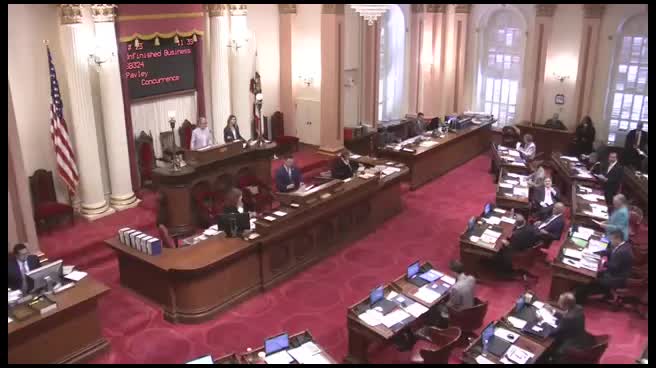 4MIN
Senate Floor
 2MIN
Assembly Floor
 15MIN
Assembly Standing Committee on Local Government
 7MIN
Senate Floor
Bill Author

Bill Co-Author(s):