SB 358: Conditions of employment: gender wage differential.
- Session Year: 2015-2016
- House: Senate
- Latest Version Date: 2015-10-06
Existing law regulates the payment of compensation to employees by employers and prohibits an employer from conditioning employment on requiring an employee to refrain from disclosing the amount of his or her wages, signing a waiver of the right to disclose the amount of those wages, or discriminating against an employee for making such a disclosure.
Existing law generally prohibits an employer from paying an employee at wage rates less than the rates paid to employees of the opposite sex in the same establishment for equal work on jobs the performance of which requires equal skill, effort, and responsibility, and which are performed under similar working conditions. Existing law establishes exceptions to that prohibition where the payment is made pursuant to a seniority system, a merit system, a system which measures earnings by quantity or quality of production, or a differential based on any bona fide factor other than sex. Existing law makes it a misdemeanor for an employer or other person acting either individually or as an officer, agent, or employee of another person to pay or cause to be paid to any employee a wage less than the rate paid to an employee of the opposite sex as required by these provisions, or who reduces the wages of any employee in order to comply with these provisions.
This bill would revise that prohibition to eliminate the requirement that the wage differential be within the same establishment, and instead would prohibit an employer from paying any of its employees at wage rates less than those paid to employees of the opposite sex for substantially similar work, when viewed as a composite of skill, effort, and responsibility, as specified. The bill would revise and recast the exceptions to require the employer to affirmatively demonstrate that a wage differential is based upon one or more specified factors, including a seniority system, a merit system, a system that measures earnings by quantity or quality of production, or a bona fide factor other than sex, as specified. The bill would also require the employer to demonstrate that each factor relied upon is applied reasonably, and that the one or more factors relied upon account for the entire differential. The bill would prohibit an employer from discharging, or in any manner discriminating or retaliating against, any employee by reason of any action taken by the employee to invoke or assist in any manner the enforcement of these provisions. The bill would authorize an employee who has been discharged or discriminated or retaliated against, in the terms and conditions of his or her employment because the employee engaged in any conduct delineated in these provisions, to recover in a civil action reinstatement and reimbursement for lost wages and work benefits caused by the acts of the employer, including interest thereon, as well as appropriate equitable relief. The bill would prohibit an employer from prohibiting an employee from disclosing the employees own wages, discussing the wages of others, inquiring about another employees wages, or aiding or encouraging any other employee to exercise his or her rights under these provisions. The bill would also increase the duration of employer recordkeeping requirements from 2 years to 3 years. By changing the definition of a crime, this bill would impose a state-mandated local program.
The California Constitution requires the state to reimburse local agencies and school districts for certain costs mandated by the state. Statutory provisions establish procedures for making that reimbursement.
This bill would provide that no reimbursement is required by this act for a specified reason.
Existing law regulates the payment of compensation to employees by employers and prohibits an employer from conditioning employment on requiring an employee to refrain from disclosing the amount of his or her wages, signing a waiver of the right to disclose the amount of those wages, or discriminating against an employee for making such a disclosure.
Existing law generally prohibits an employer from paying an employee at wage rates less than the rates paid to employees of the opposite sex in the same establishment for equal work on jobs the performance of which requires equal skill, effort, and responsibility, and which are performed under similar working conditions. Existing law establishes exceptions to that prohibition where the payment is made pursuant to a seniority system, a merit system, a system which measures earnings by quantity or quality of production, or a differential based on any bona fide factor other than sex. Existing law makes it a misdemeanor for an employer or other person acting either individually or as an officer, agent, or employee of another person to pay or cause to be paid to any employee a wage less than the rate paid to an employee of the opposite sex as required by these provisions, or who reduces the wages of any employee in order to comply with these provisions.
This bill would revise that prohibition to eliminate the requirement that the wage differential be within the same establishment, and instead would prohibit an employer from paying any of its employees at wage rates less than those paid to employees of the opposite sex for substantially similar work, when viewed as a composite of skill, effort, and responsibility, as specified. The bill would revise and recast the exceptions to require the employer to affirmatively demonstrate that a wage differential is based upon one or more specified factors, including a seniority system, a merit system, a system that measures earnings by quantity or quality of production, or a bona fide factor that is not based on or derived from a sex-based differential in compensation and is consistent with a business necessity, as defined. other than sex, as specified. The bill would also require the employer to demonstrate that each factor relied upon is applied reasonably, and that the one or more factors relied upon account for the entire differential. The bill would prohibit an employer from discharging, or in any manner discriminating or retaliating against, any employee by reason of any action taken by the employee to invoke or assist in any manner the enforcement of these provisions. The bill would authorize an employee who has been discharged or discriminated or retaliated against, in the terms and conditions of his or her employment because the employee engaged in any conduct delineated in these provisions, to recover in a civil action reinstatement and reimbursement for lost wages and work benefits caused by the acts of the employer, including interest thereon, as well as appropriate equitable relief. The bill would prohibit an employer from prohibiting an employee from disclosing the employees own wages, discussing the wages of others, inquiring about another employees wages, or aiding or encouraging any other employee to exercise his or her rights under these provisions. The bill would also increase the duration of employer recordkeeping requirements from 2 years to 3 years. By changing the definition of a crime, this bill would impose a state-mandated local program.
The California Constitution requires the state to reimburse local agencies and school districts for certain costs mandated by the state. Statutory provisions establish procedures for making that reimbursement.
This bill would provide that no reimbursement is required by this act for a specified reason.
Existing law regulates the payment of compensation to employees by employers and prohibits an employer from conditioning employment on requiring an employee to refrain from disclosing the amount of his or her wages, signing a waiver of the right to disclose the amount of those wages, or discriminating against an employee for making such a disclosure.
Existing law generally prohibits an employer from paying an employee at wage rates less than the rates paid to employees of the opposite sex in the same establishment for equal work on jobs the performance of which requires equal skill, effort, and responsibility, and which are performed under similar working conditions. Existing law establishes exceptions to that prohibition where the payment is made pursuant to a seniority system, a merit system, a system which measures earnings by quantity or quality of production, or a differential based on any bona fide factor other than sex. Existing law makes it a misdemeanor for an employer or other person acting either individually or as an officer, agent, or employee of another person to pay or cause to be paid to any employee a wage less than the rate paid to an employee of the opposite sex as required by these provisions, or who reduces the wages of any employee in order to comply with these provisions.
This bill would revise that prohibition to eliminate the requirement that the pay wage differential be within the same establishment, and instead would prohibit an employer from paying any of its employees at wage rates less than those paid to employees of the opposite sex for substantially similar work, when viewed as a composite of skill, effort, and responsibility, as specified. The bill would revise and recast the exceptions to require the employer to affirmatively demonstrate that a pay wage differential is based upon one or more specified factors, including a seniority system, a merit system, a system that measures earnings by quantity or quality of production, or a bona fide factor that is not based on or derived from a sex-based differential in compensation and is consistent with a business necessity, as defined. The bill would also require the employer to demonstrate that each factor relied upon is applied reasonably, and that the one or more factors relied upon account for the entire differential. The bill would prohibit an employer from discharging, or in any manner discriminating or retaliating against, any employee by reason of any action taken by the employee to invoke or assist in any manner the enforcement of these provisions. The bill would authorize an employee who has been discharged or discriminated or retaliated against, in the terms and conditions of his or her employment because the employee engaged in any conduct delineated in these provisions, to recover in a civil action reinstatement and reimbursement for lost wages and work benefits caused by the acts of the employer, including interest thereon, as well as appropriate equitable relief. The bill would prohibit an employer from prohibiting an employee from disclosing the employees own wages, discussing the wages of others, or inquiring about another employees wages if the purpose of the disclosure, discussion, or inquiry is to invoke or enforce the rights granted by wages, or aiding or encouraging any other employee to exercise his or her rights under these provisions. The bill would also increase the duration of employer recordkeeping requirements from 2 years to 3 years. By changing the definition of a crime, this bill would impose a state-mandated local program.
The California Constitution requires the state to reimburse local agencies and school districts for certain costs mandated by the state. Statutory provisions establish procedures for making that reimbursement.
This bill would provide that no reimbursement is required by this act for a specified reason.
Existing law regulates the payment of compensation to employees by employers and prohibits an employer from conditioning employment on requiring an employee to refrain from disclosing the amount of his or her wages, signing a waiver of the right to disclose the amount of those wages, or discriminating against an employee for making such a disclosure.
Existing law generally prohibits an employer from paying an employee at wage rates less than the rates paid to employees of the opposite sex in the same establishment for equal work on jobs the performance of which requires equal skill, effort, and responsibility, and which are performed under similar working conditions. Existing law establishes exceptions to that prohibition where the payment is made pursuant to a seniority system, a merit system, a system which measures earnings by quantity or quality of production, or a differential based on any bona fide factor other than sex. Existing law makes it a misdemeanor for an employer or other person acting either individually or as an officer, agent, or employee of another person to pay or cause to be paid to any employee a wage less than the rate paid to an employee of the opposite sex as required by these provisions, or who reduces the wages of any employee in order to comply with these provisions.
This bill would revise that prohibition to eliminate the requirement that the pay differential be within the same establishment, and would replace the terms equal work with work of a comparable character equal skill, effort, and responsibility comparable skill, effort, and responsibility. instead would prohibit an employer from paying any of its employees at wage rates less than those paid to employees of the opposite sex for substantially similar work, when viewed as a composite of skill, effort, and responsibility, as specified. The bill would revise and recast the exceptions to require the employer to affirmatively demonstrate that a pay differential is based upon one or more specified factors, including a seniority system, a merit system, a system that measures earnings by quantity or quality of production, cost-of-living differences due to geographic location, or a bona fide factor that is not based on or derived from a sex-based differential in compensation and is consistent with a business necessity, as defined. The bill would also require the employer to demonstrate that each factor relied upon is applied reasonably, and that the one or more factors relied upon account for the entire differential. The bill would prohibit an employer from discharging, or in any manner discriminating or retaliating against, any employee by reason of any action taken by the employee to invoke or assist in any manner the enforcement of these provisions. The bill would authorize an employee who has been discharged or discriminated or retaliated against, in the terms and conditions of his or her employment because the employee engaged in any conduct delineated in these provisions, to recover in a civil action reinstatement and reimbursement for lost wages and work benefits caused by the acts of the employer, including interest thereon, as well as appropriate equitable relief. The bill would prohibit an employer from prohibiting an employee from disclosing the employees own wages, discussing the wages of others, or inquiring about another employees wages if the purpose of the disclosure, discussion, or inquiry is to invoke or enforce the rights granted by these provisions. The bill would also increase the duration of employer recordkeeping requirements from 2 years to 3 years. By changing the definition of a crime, this bill would impose a state-mandated local program.
The California Constitution requires the state to reimburse local agencies and school districts for certain costs mandated by the state. Statutory provisions establish procedures for making that reimbursement.
This bill would provide that no reimbursement is required by this act for a specified reason.
Existing law regulates the payment of compensation to employees by employers and prohibits an employer from conditioning employment on requiring an employee to refrain from disclosing the amount of his or her wages, signing a waiver of the right to disclose the amount of those wages, or discharging discriminating against an employee for making such a disclosure. Existing law establishes similar prohibitions in connection with disclosing an employers workplace conditions.
This bill would extend the prohibitions described above to discussions and inquiries regarding the wages of an employee, the wages of other employees, and workplace conditions. The bill would require an employer to post these provisions in a conspicuous location frequented by employees during the hours of the workday.
Existing law generally prohibits an employer from paying an employee at wage rates less than the rates paid to employees of the opposite sex in the same establishment for equal work on jobs the performance of which requires equal skill, effort, and responsibility, and which are performed under similar working conditions. Existing law establishes exceptions to that prohibition where the payment is made pursuant to a seniority system, a merit system, a system which measures earnings by quantity or quality of production, or a differential based on any bona fide factor other than sex. Existing law makes it a misdemeanor for an employer or other person acting either individually or as an officer, agent, or employee of another person to pay or cause to be paid to any employee a wage less than the rate paid to an employee of the opposite sex as required by these provisions, or who reduces the wages of any employee in order to comply with these provisions.
This bill would revise that prohibition to eliminate the requirement that the pay differential be within the same establishment, and would replace the terms equal work and equal skill, effort, and responsibility with comparable work and comparable skill, effort, and responsibility. equal work with work of a comparable character equal skill, effort, and responsibility comparable skill, effort, and responsibility. The bill would revise and recast the exceptions to require the employer to affirmatively demonstrate that a pay differential is based upon one or more specified factors, including a seniority system, a merit system, a system that measures earnings by quantity or quality of production, or that work is performed at different geographic locations, on different shifts, or at different times of day. cost-of-living differences due to geographic location, or a bona fide factor that is not based on or derived from a sex-based differential in compensation and is consistent with a business necessity, as defined. The bill would also require the employer to demonstrate that each factor relied upon is applied reasonably, and that the one or more factors relied upon account for the entire differential. The bill would prohibit an employer from discharging, or in any manner discriminating or retaliating against, any employee by reason of any action taken by the employee to invoke or assist in any manner the enforcement of these provisions. The bill would prohibit an employer from prohibiting an employee from disclosing the employees own wages, discussing the wages of others, or inquiring about another employees wages if the purpose of the disclosure, discussion, or inquiry is to invoke or enforce the rights granted by these provisions. By changing the definition of a crime, this bill would impose a state-mandated local program.
The California Constitution requires the state to reimburse local agencies and school districts for certain costs mandated by the state. Statutory provisions establish procedures for making that reimbursement.
This bill would provide that no reimbursement is required by this act for a specified reason.
Existing law regulates the payment of compensation to employees by employers and prohibits an employer from conditioning employment on requiring an employee to refrain from disclosing the amount of his or her wages, signing a waiver of the right to disclose the amount of those wages, or discharging an employee for making such a disclosure. Existing law establishes similar prohibitions in connection with disclosing an employers workplace conditions.
This bill would extend the prohibitions described above to discussions and inquiries regarding the wages of an employee, the wages of other employees, and workplace conditions. The bill would require an employer to post these provisions in a conspicuous location frequented by employees during the hours of the workday.
Existing law generally prohibits an employer from paying an employee at wage rates less than the rates paid to employees of the opposite sex in the same establishment for equal work on jobs the performance of which requires equal skill, effort, and responsibility, and which are performed under similar working conditions. Existing law establishes exceptions to that prohibition where the payment is made pursuant to a seniority system, a merit system, a system which measures earnings by quantity or quality of production, or a differential based on any bona fide factor other than sex. Existing law makes it a misdemeanor for an employer or other person acting either individually or as an officer, agent, or employee of another person to pay or cause to be paid to any employee a wage less than the rate paid to an employee of the opposite sex as required by these provisions, or who reduces the wages of any employee in order to comply with these provisions.
This bill would revise that prohibition to eliminate the requirement that the pay differential be within the same establishment, and would replace the terms equal work and equal skill, effort, and responsibility with comparable work and comparable skill, effort, and responsibility. The bill would revise and recast the exceptions to require the employer to affirmatively demonstrate that a pay differential is based upon one or more specified factors, including seniority system, a merit system, a system that measures earnings by quantity or quality of production, or that work is performed at different geographic locations, on different shifts, or at different times of day. The bill would also require the employer to demonstrate that each factor relied upon is applied reasonably, and that the one or more factors relied upon account for the entire differential. By changing the definition of a crime, this bill would impose a state-mandated local program.
The California Constitution requires the state to reimburse local agencies and school districts for certain costs mandated by the state. Statutory provisions establish procedures for making that reimbursement.
This bill would provide that no reimbursement is required by this act for a specified reason.
The Legislature finds and declares the following:
(a)In 2014, the gender wage gap in California stood at 16 cents on the dollar. A woman working full time year round earned an average of 84 cents to every dollar a man earned. This wage gap extends across almost all occupations reporting in California. This gap is far worse for women of color; Latina women in California make only 44 cents for every dollar a white male makes, the biggest gap for Latina women in the nation.
(b)While the states overall wage gap is slightly lower than the national average of 78 cents to the dollar, the persistent disparity in earnings still has a significant impact on the economic security and welfare of millions of working women and their families. Collectively, women working full time in California lose approximately $33,650,294,544 each year due to the gender wage gap. The wage gap contributes to the higher statewide poverty rate among women, which stands at 18 percent, compared to approximately 15 percent for men, and the poverty rate is even higher for women of color and single women living with children.
(c)California has prohibited gender-based wage discrimination since 1949. Section 1197.5 of the Labor Code was enacted to redress the segregation of women into historically undervalued occupations, but it has evolved over the last four decades so that it is now virtually identical to the federal Equal Pay Act of 1963 (29 U.S.C. Sec. 206(d)). However, the state provisions are rarely utilized because the current statutory language makes it difficult to establish a successful claim.
(d)Pay secrecy also contributes to the gender wage gap, because women cannot challenge wage discrimination that they do not know exists. Although California law prohibits employers from banning wage disclosures and retaliating against employees for engaging in this activity, in practice many employees are unaware of these protections and others are afraid to exercise these rights due to potential retaliation.
(e)To eliminate the gender wage gap in California, the states equal pay provisions and laws regarding wage disclosures must be improved.
SEC. 2.Section 1197.5 of the Labor Code is amended to read:1197.5.(a)An employer shall not pay any of its employees at wage rates less than the rates paid to employees of the opposite sex for substantially similar work, when viewed as a composite of skill, effort, and responsibility, and performed under similar working conditions, except where the employer demonstrates:
(1)The wage differential is based upon one or more of the following factors:
(A)A seniority system.
(B)A merit system.
(C)A system that measures earnings by quantity or quality of production.
(D)A bona fide factor other than sex, such as education, training, or experience. This factor shall apply only if the employer demonstrates that the factor is not based on or derived from a sex-based differential in compensation, is job related with respect to the position in question, and is consistent with a business necessity. For purposes of this subparagraph, business necessity means an overriding legitimate business purpose such that the factor relied upon effectively fulfills the business purpose it is supposed to serve. This defense shall not apply if the employee demonstrates that an alternative business practice exists that would serve the same business purpose without producing the wage differential.
(2)Each factor relied upon is applied reasonably.
(3)The one or more factors relied upon account for the entire wage differential.
(b)Any employer who violates subdivision (a) is liable to the employee affected in the amount of the wages, and interest thereon, of which the employee is deprived by reason of the violation, and an additional equal amount as liquidated damages.
(c)The Division of Labor Standards Enforcement shall administer and enforce this section. If the division finds that an employer has violated this section, it may supervise the payment of wages and interest found to be due and unpaid to employees under subdivision (a). Acceptance of payment in full made by an employer and approved by the division shall constitute a waiver on the part of the employee of the employees cause of action under subdivision (g).
(d)Every employer shall maintain records of the wages and wage rates, job classifications, and other terms and conditions of employment of the persons employed by the employer. All of the records shall be kept on file for a period of three years.
(e)Any employee may file a complaint with the division that the wages paid are less than the wages to which the employee is entitled under subdivision (a) or that the employer is in violation of subdivision (j). The complaint shall be investigated as provided in subdivision (b) of Section 98.7. The division shall keep confidential the name of any employee who submits to the division a complaint regarding an alleged violation of subdivision (a) or (j) until the division establishes the validity of the complaint, unless the division must abridge confidentiality to investigate the complaint. The name of the complaining employee shall remain confidential if the complaint is withdrawn before the confidentiality is abridged by the division. The division shall take all proceedings necessary to enforce the payment of any sums found to be due and unpaid to these employees.
(f)The department or division may commence and prosecute, unless otherwise requested by the employee or affected group of employees, a civil action on behalf of the employee and on behalf of a similarly affected group of employees to recover unpaid wages and liquidated damages under subdivision (a), and in addition shall be entitled to recover costs of suit. The consent of any employee to the bringing of any action shall constitute a waiver on the part of the employee of the employees cause of action under subdivision (g) unless the action is dismissed without prejudice by the department or the division, except that the employee may intervene in the suit or may initiate independent action if the suit has not been determined within 180 days from the date of the filing of the complaint.
(g)Any employee receiving less than the wage to which the employee is entitled under this section may recover in a civil action the balance of the wages, including interest thereon, and an equal amount as liquidated damages, together with the costs of the suit and reasonable attorneys fees, notwithstanding any agreement to work for a lesser wage.
(h)A civil action to recover wages under subdivision (a) may be commenced no later than two years after the cause of action occurs, except that a cause of action arising out of a willful violation may be commenced no later than three years after the cause of action occurs.
(i)If an employee recovers amounts due the employee under subdivision (b), and also files a complaint or brings an action under subdivision (d) of Section 206 of Title 29 of the United States Code which results in an additional recovery under federal law for the same violation, the employee shall return to the employer the amounts recovered under subdivision (b), or the amounts recovered under federal law, whichever is less.
(j)(1)An employer shall not discharge, or in any manner discriminate or retaliate against, any employee by reason of any action taken by the employee to invoke or assist in any manner the enforcement of this section. An employer shall not prohibit an employee from disclosing the employees own wages, discussing the wages of others, inquiring about another employees wages, or aiding or encouraging any other employee to exercise his or her rights under this section. Nothing in this section creates an obligation to disclose wages.
(2)Any employee who has been discharged, discriminated or retaliated against, in the terms and conditions of his or her employment because the employee engaged in any conduct delineated in this section may recover in a civil action reinstatement and reimbursement for lost wages and work benefits caused by the acts of the employer, including interest thereon, as well as appropriate equitable relief.
(3)A civil action brought under this subdivision may be commenced no later than one year after the cause of action occurs.
SEC. 3.No reimbursement is required by this act pursuant to Section 6 of Article XIIIB of the California Constitution because the only costs that may be incurred by a local agency or school district will be incurred because this act creates a new crime or infraction, eliminates a crime or infraction, or changes the penalty for a crime or infraction, within the meaning of Section 17556 of the Government Code, or changes the definition of a crime within the meaning of Section 6 of Article XIIIB of the California Constitution.
The Legislature finds and declares the following:
(a)In 2014, the gender wage gap in California stood at 16 cents on the dollar. A woman working full time year round earned an average of 84 cents to every dollar a man earned. This wage gap extends across almost all occupations reporting in California. This gap is far worse for women of color; Latina women in California make only 44 cents for every dollar a white male makes, the biggest gap for Latina women in the nation.
(b)While the states overall wage gap is slightly lower than the national average of 78 cents to the dollar, the persistent disparity in earnings still has a significant impact on the economic security and welfare of millions of working women and their families. Collectively, women working full time in California lose approximately $33,650,294,544 each year due to the gender wage gap. The wage gap contributes to the higher statewide poverty rate among women, which stands at 18 percent, compared to approximately 15 percent for men, and the poverty rate is even higher for women of color and single women living with children.
(c)California has prohibited gender-based wage discrimination since 1949. Section 1197.5 of the Labor Code was enacted to redress the segregation of women into historically undervalued occupations, but it has evolved over the last four decades so that it is now virtually identical to the federal Equal Pay Act of 1963 (29 U.S.C. Sec. 206(d)). However, the state provisions are rarely utilized because the current statutory language makes it difficult to establish a successful claim.
(d)Pay secrecy also contributes to the gender wage gap, because women cannot challenge wage discrimination that they do not know exists. Although California law prohibits employers from banning wage disclosures and retaliating against employees for engaging in this activity, in practice many employees are unaware of these protections and others are afraid to exercise these rights due to potential retaliation.
(e)To eliminate the gender wage gap in California, the states equal pay provisions and laws regarding wage disclosures must be improved.
SEC. 2.Section 1197.5 of the Labor Code is amended to read:1197.5.(a)An employer shall not pay any of its employees at wage rates less than the rates paid to employees of the opposite sex for substantially similar work, when viewed as a composite of skill, effort, and responsibility, and performed under similar working conditions, except where the employer demonstrates:
(1)The wage differential is based upon one or more of the following factors:
(A)A seniority system.
(B)A merit system.
(C)A system that measures earnings by quantity or quality of production.
(D)A bona fide factor other than sex, such as education, training, or experience. This factor shall apply only if the employer demonstrates that the factor is not based on or derived from a sex-based differential in compensation and compensation, is job related with respect to the position in question, and is consistent with a business necessity, such as a difference in education, training, or experience that is job related with respect to the position in question. necessity. For purposes of this subparagraph, business necessity means an overriding legitimate business purpose such that the factor relied upon effectively fulfills the business purpose it is supposed to serve. This defense shall not apply if the employee demonstrates that an alternative employment business practice exists that would serve the same business purpose without producing the wage differential.
(2)Each factor relied upon is applied reasonably.
(3)The one or more factors relied upon account for the entire wage differential.
(b)Any employer who violates subdivision (a) is liable to the employee affected in the amount of the wages, and interest thereon, of which the employee is deprived by reason of the violation, and an additional equal amount as liquidated damages.
(c)The Division of Labor Standards Enforcement shall administer and enforce this section. If the division finds that an employer has violated this section, it may supervise the payment of wages and interest found to be due and unpaid to employees under subdivision (a). Acceptance of payment in full made by an employer and approved by the division shall constitute a waiver on the part of the employee of the employees cause of action under subdivision (g).
(d)Every employer shall maintain records of the wages and wage rates, job classifications, and other terms and conditions of employment of the persons employed by the employer. All of the records shall be kept on file for a period of three years.
(e)Any employee may file a complaint with the division that the wages paid are less than the wages to which the employee is entitled under subdivision (a) or that the employer is in violation of subdivision (j). The complaint shall be investigated as provided in subdivision (b) of Section 98.7. The division shall keep confidential the name of any employee who submits to the division a complaint regarding an alleged violation of subdivision (a) or (j) until the division establishes the validity of the complaint, unless the division must abridge confidentiality to investigate the complaint. The name of the complaining employee shall remain confidential if the complaint is withdrawn before the confidentiality is abridged by the division. The division shall take all proceedings necessary to enforce the payment of any sums found to be due and unpaid to these employees.
(f)The department or division may commence and prosecute, unless otherwise requested by the employee or affected group of employees, a civil action on behalf of the employee and on behalf of a similarly affected group of employees to recover unpaid wages and liquidated damages under subdivision (a), and in addition shall be entitled to recover costs of suit. The consent of any employee to the bringing of any action shall constitute a waiver on the part of the employee of the employees cause of action under subdivision (g) unless the action is dismissed without prejudice by the department or the division, except that the employee may intervene in the suit or may initiate independent action if the suit has not been determined within 180 days from the date of the filing of the complaint.
(g)Any employee receiving less than the wage to which the employee is entitled under this section may recover in a civil action the balance of the wages, including interest thereon, and an equal amount as liquidated damages, together with the costs of the suit and reasonable attorneys fees, notwithstanding any agreement to work for a lesser wage.
(h)A civil action to recover wages under subdivision (a) may be commenced no later than two years after the cause of action occurs, except that a cause of action arising out of a willful violation may be commenced no later than three years after the cause of action occurs.
(i)If an employee recovers amounts due the employee under subdivision (b), and also files a complaint or brings an action under subdivision (d) of Section 206 of Title 29 of the United States Code which results in an additional recovery under federal law for the same violation, the employee shall return to the employer the amounts recovered under subdivision (b), or the amounts recovered under federal law, whichever is less.
(j)(1)An employer shall not discharge, or in any manner discriminate or retaliate against, any employee by reason of any action taken by the employee to invoke or assist in any manner the enforcement of this section. An employer shall not prohibit an employee from disclosing the employees own wages, discussing the wages of others, inquiring about another employees wages, or aiding or encouraging any other employee to exercise his or her rights under this section. Nothing in this section creates an obligation to disclose wages.
(2)Any employee who has been discharged, discriminated or retaliated against, in the terms and conditions of his or her employment because the employee engaged in any conduct delineated in this section may recover in a civil action reinstatement and reimbursement for lost wages and work benefits caused by the acts of the employer, including interest thereon, as well as appropriate equitable relief.
(3)A civil action brought under this subdivision may be commenced no later than one year after the cause of action occurs.
SEC. 3.No reimbursement is required by this act pursuant to Section 6 of Article XIIIB of the California Constitution because the only costs that may be incurred by a local agency or school district will be incurred because this act creates a new crime or infraction, eliminates a crime or infraction, or changes the penalty for a crime or infraction, within the meaning of Section 17556 of the Government Code, or changes the definition of a crime within the meaning of Section 6 of Article XIIIB of the California Constitution.
The Legislature finds and declares the following:
(a)In 2014, the gender wage gap in California stood at 16 cents on the dollar. A woman working full time year round earned an average of 84 cents to every dollar a man earned. This wage gap extends across almost all occupations reporting in California. This gap is far worse for women of color; Latina women in California make only 44 cents for every dollar a white male makes, the biggest gap for Latina women in the nation.
(b)While the states overall wage gap is slightly lower than the national average of 78 cents to the dollar, the persistent disparity in earnings still has a significant impact on the economic security and welfare of millions of working women and their families. Collectively, women working full time in California lose approximately $33,650,294,544 each year due to the gender wage gap. The wage gap contributes to the higher statewide poverty rate among women, which stands at 18 percent, compared to approximately 15 percent for men, and the poverty rate is even higher for women of color and single women living with children.
(c)California has prohibited gender-based pay wage discrimination since 1949. Section 1197.5 of the Labor Code was enacted to redress the segregation of women into historically undervalued occupations, but it has evolved over the last four decades so that it is now virtually identical to the federal Equal Pay Act of 1963 (29 U.S.C. Sec. 206(d)). However, the state provisions are rarely utilized because many loopholes make it nearly impossible the current statutory language makes it difficult to establish a successful claim.
(d)Pay secrecy also contributes to the gender pay wage gap, because women cannot challenge pay wage discrimination that they do not know exists. Although California law prohibits employers from banning pay wage disclosures and retaliating against employees for engaging in this activity, in practice many employees are unaware of these protections and others are afraid to exercise these rights due to potential retaliation.
(e)To eliminate the gender wage gap in California, the states equal pay provisions and laws regarding pay wage disclosures must be improved.
SEC. 2.Section 1197.5 of the Labor Code is amended to read:1197.5.(a)An employer shall not pay any of its employees at wage rates less than the rates paid to employees of the opposite sex for substantially similar work, when viewed as a composite of skill, effort, and responsibility, and performed under similar working conditions, except where the employer demonstrates:
(1)The pay wage differential is based upon one or more of the following factors:
(A)A seniority system.
(B)A merit system.
(C)A system that measures earnings by quantity or quality of production.
(D)A bona fide factor that is not based on or derived from a sex-based differential in compensation and is consistent with a business necessity, such as a difference in education, training, or experience that is job related with respect to the position in question. For purposes of this subparagraph, business necessity means an overriding legitimate business purpose such that the factor relied upon effectively fulfills the business purpose it is supposed to serve, and no alternative employment practice would serve the same legitimate business purpose without producing a compensation differential. serve. This defense shall not apply if the employee demonstrates that an alternative employment practice exists that would serve the same business purpose without producing the wage differential.
(2)Each factor relied upon is applied reasonably.
(3)The one or more factors relied upon account for the entire pay wage differential.
(b)Any employer who violates subdivision (a) is liable to the employee affected in the amount of the wages, and interest thereon, of which the employee is deprived by reason of the violation, and an additional equal amount as liquidated damages.
(c)The Division of Labor Standards Enforcement shall administer and enforce this section. If the division finds that an employer has violated this section, it may supervise the payment of wages and interest found to be due and unpaid to employees under subdivision (a). Acceptance of payment in full made by an employer and approved by the division shall constitute a waiver on the part of the employee of the employees cause of action under subdivision (g).
(d)Every employer shall maintain records of the wages and wage rates, job classifications, and other terms and conditions of employment of the persons employed by the employer. All of the records shall be kept on file for a period of three years.
(e)Any employee may file a complaint with the division that the wages paid are less than the wages to which the employee is entitled under subdivision (a) or that the employer is in violation of subdivision (j). The complaint shall be investigated as provided in subdivision (b) of Section 98.7. The division shall keep confidential the name of any employee who submits to the division a complaint regarding an alleged violation of subdivision (a) or (j) until the division establishes the validity of the complaint, unless the division must abridge confidentiality to investigate the complaint. The name of the complaining employee shall remain confidential if the complaint is withdrawn before the confidentiality is abridged by the division. The division shall take all proceedings necessary to enforce the payment of any sums found to be due and unpaid to these employees.
(f)The department or division may commence and prosecute, unless otherwise requested by the employee or affected group of employees, a civil action on behalf of the employee and on behalf of a similarly affected group of employees to recover unpaid wages and liquidated damages under subdivision (a), and in addition shall be entitled to recover costs of suit. The consent of any employee to the bringing of any action shall constitute a waiver on the part of the employee of the employees cause of action under subdivision (g) unless the action is dismissed without prejudice by the department or the division, except that the employee may intervene in the suit or may initiate independent action if the suit has not been determined within 180 days from the date of the filing of the complaint.
(g)Any employee receiving less than the wage to which the employee is entitled under this section may recover in a civil action the balance of the wages, including interest thereon, and an equal amount as liquidated damages, together with the costs of the suit and reasonable attorneys fees, notwithstanding any agreement to work for a lesser wage.
(h)A civil action to recover wages under subdivision (a) may be commenced no later than two years after the cause of action occurs, except that a cause of action arising out of a willful violation may be commenced no later than three years after the cause of action occurs.
(i)If an employee recovers amounts due the employee under subdivision (b), and also files a complaint or brings an action under subdivision (d) of Section 206 of Title 29 of the United States Code which results in an additional recovery under federal law for the same violation, the employee shall return to the employer the amounts recovered under subdivision (b), or the amounts recovered under federal law, whichever is less.
(j)(1)An employer shall not discharge, or in any manner discriminate or retaliate against, any employee by reason of any action taken by the employee to invoke or assist in any manner the enforcement of this section. An employer shall not prohibit an employee from disclosing the employees own wages, discussing the wages of others, or inquiring about another employees wages if the purpose of the disclosure, discussion, or inquiry is to invoke or enforce the rights granted by wages, or aiding or encouraging any other employee to exercise his or her rights under this section. Nothing in this section creates an obligation to disclose wages.
(2)Any employee who has been discharged, discriminated or retaliated against, in the terms and conditions of his or her employment because the employee engaged in any conduct delineated in this section may recover in a civil action reinstatement and reimbursement for lost wages and work benefits caused by the acts of the employer, including interest thereon, as well as appropriate equitable relief.
(3)A civil action to recover wages brought under this subdivision may be commenced no later than one year after the cause of action occurs.
SEC. 3.No reimbursement is required by this act pursuant to Section 6 of Article XIIIB of the California Constitution because the only costs that may be incurred by a local agency or school district will be incurred because this act creates a new crime or infraction, eliminates a crime or infraction, or changes the penalty for a crime or infraction, within the meaning of Section 17556 of the Government Code, or changes the definition of a crime within the meaning of Section 6 of Article XIIIB of the California Constitution.
The Legislature finds and declares the following:
(a)In 2014, the gender wage gap in California stood at 16 cents on the dollar. A woman working full time year round earned an average of 84 cents to every dollar a man earned. This wage gap extends across almost all occupations reporting in California. This gap is far worse for women of color; Latina women in California make only 44 cents for every dollar a white male makes, the biggest gap for Latina women in the nation.
(b)While the states overall wage gap is slightly lower than the national average of 78 cents to the dollar, the persistent disparity in earnings still has a significant impact on the economic security and welfare of millions of working women and their families. Collectively, women working full time in California lose approximately $33,650,294,544 each year due to the gender wage gap. The wage gap contributes to the higher statewide poverty rate among women, which stands at 18 percent, compared to approximately 15 percent for men, and the poverty rate is even higher for women of color and single women living with children.
(c)California has prohibited gender-based pay discrimination since 1949. Section 1197.5 of the Labor Code was enacted to redress the segregation of women into historically undervalued occupations, but it has evolved over the last four decades so that it is now virtually identical to the federal Equal Pay Act of 1963 (29 U.S.C. Sec. 206(d)). However, the state provisions are rarely utilized because many loopholes make it nearly impossible to establish a successful claim.
(d)Pay secrecy also contributes to the gender pay gap, because women cannot challenge pay discrimination that they do not know exists. Although California law prohibits employers from banning pay disclosures and retaliating against employees for engaging in this activity, in practice many employees are unaware of these protections and others are afraid to exercise these rights due to potential retaliation.
(e)To eliminate the gender wage gap in California, the states equal pay provisions and laws regarding pay disclosures must be improved.
SEC. 2.Section 1197.5 of the Labor Code is amended to read:1197.5.(a)An employer shall not pay any employee of its employees at wage rates less than the rates paid to employees of the opposite sex for work of a comparable character on jobs the performance of which requires comparable substantially similar work, when viewed as a composite of skill, effort, and responsibility, and that are performed under similar working conditions, except where the employer demonstrates:
(1)The pay differential is based upon one or more of the following factors:
(A)A seniority system.
(B)A merit system.
(C)A system that measures earnings by quantity or quality of production.
(D)Cost-of-living differences due to geographic location.
(E)
(D)A bona fide factor that is not based on or derived from a sex-based differential in compensation and is consistent with a business necessity, such as a difference in education, training, or experience that is job related with respect to the position in question. For purposes of this subparagraph, business necessity means an overriding legitimate business purpose such that the factor relied upon is necessary to the safe and efficient operation of the business, that the factor relied upon effectively fulfills the business purpose it is supposed to serve, and there is no alternative practice to the factor relied upon that would accomplish the business purpose. no alternative employment practice would serve the same legitimate business purpose without producing a compensation differential.
(2)Each factor relied upon is applied reasonably.
(3)The one or more factors relied upon account for the entire pay differential.
(b)Any employer who violates subdivision (a) is liable to the employee affected in the amount of the wages, and interest thereon, of which the employee is deprived by reason of the violation, and an additional equal amount as liquidated damages.
(c)The Division of Labor Standards Enforcement shall administer and enforce this section. If the division finds that an employer has violated this section, it may supervise the payment of wages and interest found to be due and unpaid to employees under subdivision (a). Acceptance of payment in full made by an employer and approved by the division shall constitute a waiver on the part of the employee of the employees cause of action under subdivision (g).
(d)Every employer shall maintain records of the wages and wage rates, job classifications, and other terms and conditions of employment of the persons employed by the employer. All of the records shall be kept on file for a period of two three years.
(e)Any employee may file a complaint with the division that the wages paid are less than the wages to which the employee is entitled under subdivision (a). (a) or that the employer is in violation of subdivision (j). The complaint shall be investigated as provided in subdivision (b) of Section 98.7. The division shall keep confidential the name of any employee who submits to the division a complaint regarding an alleged violation of subdivision (a) or (j) until the division establishes the validity of the complaint, unless the division must abridge confidentiality to investigate the complaint. The name of the complaining employee shall remain confidential if the complaint is withdrawn before the confidentiality is abridged by the division. The division shall take all proceedings necessary to enforce the payment of any sums found to be due and unpaid to these employees.
(f)The department or division may commence and prosecute, unless otherwise requested by the employee or affected group of employees, a civil action on behalf of the employee and on behalf of a similarly affected group of employees to recover unpaid wages and liquidated damages under subdivision (a), and in addition shall be entitled to recover costs of suit. The consent of any employee to the bringing of any action shall constitute a waiver on the part of the employee of the employees cause of action under subdivision (g) unless the action is dismissed without prejudice by the department or the division, except that the employee may intervene in the suit or may initiate independent action if the suit has not been determined within 180 days from the date of the filing of the complaint.
(g)Any employee receiving less than the wage to which the employee is entitled under this section may recover in a civil action the balance of the wages, including interest thereon, and an equal amount as liquidated damages, together with the costs of the suit and reasonable attorneys fees, notwithstanding any agreement to work for a lesser wage.
(h)A civil action to recover wages under subdivision (a) may be commenced no later than two years after the cause of action occurs, except that a cause of action arising out of a willful violation may be commenced no later than three years after the cause of action occurs.
(i)If an employee recovers amounts due the employee under subdivision (b), and also files a complaint or brings an action under subdivision (d) of Section 206 of Title 29 of the United States Code which results in an additional recovery under federal law for the same violation, the employee shall return to the employer the amounts recovered under subdivision (b), or the amounts recovered under federal law, whichever is less.
(j)(1)An employer shall not discharge, or in any manner discriminate or retaliate against, any employee by reason of any action taken by the employee to invoke or assist in any manner the enforcement of this section. An employer shall not prohibit an employee from disclosing the employees own wages, discussing the wages of others, or inquiring about another employees wages if the purpose of the disclosure, discussion, or inquiry is to invoke or enforce the rights granted by this section. Nothing in this section creates an obligation to disclose wages.
(k)As used in subdivision (a), work of a comparable character means work, the requirements of which, are substantially equivalent when viewed as a composite of level of skills, effort, responsibility, and working conditions.
(2)Any employee who has been discharged, discriminated or retaliated against, in the terms and conditions of his or her employment because the employee engaged in any conduct delineated in this section may recover in a civil action reinstatement and reimbursement for lost wages and work benefits caused by the acts of the employer, including interest thereon, as well as appropriate equitable relief.
(3)A civil action to recover wages under this subdivision may be commenced no later than one year after the cause of action occurs.
SEC. 3.No reimbursement is required by this act pursuant to Section 6 of Article XIIIB of the California Constitution because the only costs that may be incurred by a local agency or school district will be incurred because this act creates a new crime or infraction, eliminates a crime or infraction, or changes the penalty for a crime or infraction, within the meaning of Section 17556 of the Government Code, or changes the definition of a crime within the meaning of Section 6 of Article XIIIB of the California Constitution.
The Legislature finds and declares the following:
(a)In 2013, 2014, the gender wage gap in California stood at 16 cents on the dollar. A woman working full time year round earned an average of 84 cents to every dollar a man earned. This wage gap extends across almost all occupations reporting in California. This gap is far worse for women of color; Latina women in California make only 44 cents for every dollar a white male makes, the biggest gap for Latina women in the nation.
(b)While the states overall wage gap is slightly lower than the national average of 77 78 cents to the dollar, the persistent disparity in earnings still has a significant impact on the economic security and welfare of millions of working women and their families. Collectively, women working full time in California lose approximately $36,971,379,159 $33,650,294,544 each year due to the gender wage gap. The wage gap contributes to the higher statewide poverty rate among women, which stands at 18 percent, compared to approximately 15 percent for men, and the poverty rate is even higher for women of color and single women living with children.
(c)California has prohibited gender-based pay discrimination since 1949. Section 1197.5 of the Labor Code was enacted to redress the segregation of women into historically undervalued occupations, but it has evolved over the last four decades so that it is now virtually identical to the federal Equal Pay Act of 1963 (29 U.S.C. Sec. 206(d)). However, the state provisions are rarely utilized because many loopholes make it nearly impossible to establish a successful claim.
(d)Pay secrecy also contributes to the gender pay gap, because women cannot challenge pay discrimination that they do not know exists. Although California law prohibits employers from banning pay disclosures and retaliating against employees for engaging in this activity, in practice many employees are unaware of these protections and others are afraid to exercise these rights due to potential retaliation.
(e)To eliminate the gender wage gap in California, the states equal pay provisions and laws regarding pay disclosures must be improved.
SEC. 2.Section 232 of the Labor Code is amended to read:232.An employer shall not do any of the following:
(a)Bar an employee from disclosing, discussing, or inquiring about the amount of his or her wages, or from inquiring about or discussing the wages of other employees.
(b)Require an employee to sign a waiver or other document that purports to deny the employee the right to disclose, inquire about, or discuss the amount of his or her wages, or to inquire about or discuss the wages of other employees.
(c)Discharge, discipline, or otherwise discriminate against an employee who discloses, discusses, or inquires about the amount of his or her wages, or who discusses or inquires about the wages of other employees.
(d)An employer shall post a copy of this section and keep it posted in a conspicuous location frequented by employees during the hours of the workday.
SEC. 3.Section 232.5 of the Labor Code is amended to read:232.5.An employer shall not do any of the following:
(a)Bar an employee from disclosing, discussing, or inquiring about the employers working conditions.
(b)Require an employee to sign a waiver or other document that purports to deny the employee the right to disclose, discuss, or inquire about information about the employers working conditions.
(c)Discharge, discipline, or otherwise discriminate against an employee who discloses, discusses, or inquires about information about the employers working conditions.
(d)This section is not intended to permit an employee to disclose proprietary information, trade secret information, or information that is otherwise subject to a legal privilege without the consent of his or her employer.
(e)An employer shall post a copy of this section and keep it posted in a conspicuous location frequented by employees during the hours of the workday.
SEC. 4.SEC. 2.Section 1197.5 of the Labor Code is amended to read:1197.5.(a)An employer shall not pay any employee at wage rates less than the rates paid to employees of the opposite sex for comparable work of a comparable character on jobs the performance of which requires comparable skill, effort, and responsibility, and which that are performed under similar working conditions, except where the employer demonstrates:
(1)The pay differential is based upon one or more of the following factors:
(A)A seniority system.
(B)A merit system.
(C)A system that measures earnings by quantity or quality of production.
(D)Work is performed at different geographic locations.
(E)Work is performed on different shifts or at different times of day.
(D)Cost-of-living differences due to geographic location.
(E)A bona fide factor that is not based on or derived from a sex-based differential in compensation and is consistent with a business necessity, such as a difference in education, training, or experience that is job related with respect to the position in question. For purposes of this subparagraph, business necessity means an overriding legitimate business purpose such that the factor relied upon is necessary to the safe and efficient operation of the business, that the factor relied upon effectively fulfills the business purpose it is supposed to serve, and there is no alternative practice to the factor relied upon that would accomplish the business purpose.
(2)Each factor relied upon is applied reasonably.
(3)The one or more factors relied upon account for the entire differential.
(b)Any employer who violates subdivision (a) is liable to the employee affected in the amount of the wages, and interest thereon, of which the employee is deprived by reason of the violation, and in an additional equal amount as liquidated damages.
(c)The Division of Labor Standards Enforcement shall administer and enforce this section. If the division finds that an employer has violated this section, it may supervise the payment of wages and interest found to be due and unpaid to employees under subdivision (a). Acceptance of payment in full made by an employer and approved by the division shall constitute a waiver on the part of the employee of the employees cause of action under subdivision (g).
(d)Every employer shall maintain records of the wages and wage rates, job classifications, and other terms and conditions of employment of the persons employed by the employer. All of the records shall be kept on file for a period of two years.
(e)Any employee may file a complaint with the division that the wages paid are less than the wages to which the employee is entitled under subdivision (a). The complaint shall be investigated as provided in subdivision (b) of Section 98.7. The division shall keep confidential the name of any employee who submits to the division a complaint regarding an alleged violation of subdivision (a) until the division establishes the validity of the complaint, unless the division must abridge confidentiality to investigate the complaint. The name of the complaining employee shall remain confidential if the complaint is withdrawn before the confidentiality is abridged by the division. The division shall take all proceedings necessary to enforce the payment of any sums found to be due and unpaid to these employees.
(f)The department or division may commence and prosecute, unless otherwise requested by the employee or affected group of employees, a civil action on behalf of the employee and on behalf of a similarly affected group of employees to recover unpaid wages and liquidated damages under subdivision (a), and in addition shall be entitled to recover costs of suit. The consent of any employee to the bringing of any action shall constitute a waiver on the part of the employee of the employees cause of action under subdivision (g) unless the action is dismissed without prejudice by the department or the division, except that the employee may intervene in the suit or may initiate independent action if the suit has not been determined within 180 days from the date of the filing of the complaint.
(g)Any employee receiving less than the wage to which the employee is entitled under this section may recover in a civil action the balance of the wages, including interest thereon, and an equal amount as liquidated damages, together with the costs of the suit and reasonable attorneys fees, notwithstanding any agreement to work for a lesser wage.
(h)A civil action to recover wages under subdivision (a) may be commenced no later than two years after the cause of action occurs, except that a cause of action arising out of a willful violation may be commenced no later than three years after the cause of action occurs.
(i)If an employee recovers amounts due the employee under subdivision (b), and also files a complaint or brings an action under subdivision (d) of Section 206 of Title 29 of the United States Code which results in an additional recovery under federal law for the same violation, the employee shall return to the employer the amounts recovered under subdivision (b), or the amounts recovered under federal law, whichever is less.
(j)An employer shall not discharge, or in any manner discriminate or retaliate against, any employee by reason of any action taken by the employee to invoke or assist in any manner the enforcement of this section. An employer shall not prohibit an employee from disclosing the employees own wages, discussing the wages of others, or inquiring about another employees wages if the purpose of the disclosure, discussion, or inquiry is to invoke or enforce the rights granted by this section. Nothing in this section creates an obligation to disclose wages.
(k)As used in subdivision (a), work of a comparable character means work, the requirements of which, are substantially equivalent when viewed as a composite of level of skills, effort, responsibility, and working conditions.
SEC. 5.SEC. 3.No reimbursement is required by this act pursuant to Section 6 of Article XIIIB of the California Constitution because the only costs that may be incurred by a local agency or school district will be incurred because this act creates a new crime or infraction, eliminates a crime or infraction, or changes the penalty for a crime or infraction, within the meaning of Section 17556 of the Government Code, or changes the definition of a crime within the meaning of Section 6 of Article XIIIB of the California Constitution.
The Legislature finds and declares the following:
(a)In 2013, the gender wage gap in California stood at 16 cents on the dollar. A woman working full-time year-round earned an average of 84 cents to every dollar a man earned. This wage gap extends across almost all occupations reporting in California. This gap is far worse for women of color; Latina women in California make only 44 cents for every dollar a white male makes, the biggest gap for Latina women in the nation.
(b)While the states overall wage gap is slightly lower than the national average of 77 cents to the dollar, the persistent disparity in earnings still has a significant impact on the economic security and welfare of millions of working women and their families. Collectively, women working full-time in California lose approximately $36,971,379,159 each year due to the gender wage gap. The wage gap contributes to the higher statewide poverty rate among women, which stands at 18 percent, compared to approximately 15 percent for men, and the poverty rate is even higher for women of color and single women living with children.
(c)California has prohibited gender-based pay discrimination since 1949. Section 1197.5 of the Labor Code was enacted to redress the segregation of women into historically undervalued occupations, but it has evolved over the last four decades so that it is now virtually identical to the federal Equal Pay Act of 1963 (29 U.S.C. Sec. 206(d)). However, the state provisions are rarely utilized because many loopholes make it nearly impossible to establish a successful claim.
(d)Pay secrecy also contributes to the gender pay gap, because women cannot challenge pay discrimination that they do not know exists. Although California law prohibits employers from banning pay disclosures and retaliating against employees for engaging in this activity, in practice many employees are unaware of these protections and others are afraid to exercise these rights due to potential retaliation.
(e)To eliminate the gender wage gap in California, the states equal pay provisions and laws regarding pay disclosures must be improved.
SEC. 2.Section 232 of the Labor Code is amended to read:232.No An employer may shall not do any of the following:
(a)Require, as a condition of employment, that Bar an employee refrain from disclosing disclosing, discussing, or inquiring about the amount of his or her wages. wages, or from inquiring about or discussing the wages of other employees.
(b)Require an employee to sign a waiver or other document that purports to deny the employee the right to disclose disclose, inquire about, or discuss the amount of his or her wages. wages, or to inquire about or discuss the wages of other employees.
(c)Discharge, formally discipline, or otherwise discriminate against an employee who discloses discloses, discusses, or inquires about the amount of his or her wages. wages, or who discusses or inquires about the wages of other employees.
(d)An employer shall post a copy of this section and keep it posted in a conspicuous location frequented by employees during the hours of the workday.
SEC. 3.Section 232.5 of the Labor Code is amended to read:232.5.No An employer may shall not do any of the following:
(a)Require, as a condition of employment, that Bar an employee refrain from disclosing information about disclosing, discussing, or inquiring about the employers working conditions.
(b)Require an employee to sign a waiver or other document that purports to deny the employee the right to disclose disclose, discuss, or inquire about information about the employers working conditions.
(c)Discharge, formally discipline, or otherwise discriminate against an employee who discloses discloses, discusses, or inquires about information about the employers working conditions.
(d)This section is not intended to permit an employee to disclose proprietary information, trade secret information, or information that is otherwise subject to a legal privilege without the consent of his or her employer.
(e)An employer shall post a copy of this section and keep it posted in a conspicuous location frequented by employees during the hours of the workday.
SEC. 4.Section 1197.5 of the Labor Code is amended to read:1197.5.(a)No An employer shall not pay any individual in the employers employ employee at wage rates less than the rates paid to employees of the opposite sex in the same establishment for equal comparable work on jobs the performance of which requires equal comparable skill, effort, and responsibility, and which are performed under similar working conditions, except where the payment is made pursuant to a seniority system, a merit system, a system which measures earnings by quantity or quality of production, or a differential based on any bona fide factor other than sex. the employer demonstrates:
(1)The pay differential is based upon one or more of the following factors:
(A)A seniority system.
(B)A merit system.
(C)A system that measures earnings by quantity or quality of production.
(D)Work is performed at different geographic locations.
(E)Work is performed on different shifts or at different times of day.
(2)Each factor relied upon is applied reasonably.
(3)The one or more factors relied upon account for the entire differential.
(b)Any employer who violates subdivision (a) is liable to the employee affected in the amount of the wages, and interest thereon, of which the employee is deprived by reason of the violation, and in an additional equal amount as liquidated damages.
(c)The provisions of Division of Labor Standards Enforcement shall administer and enforce this section shall be administered and enforced by the Division of Labor Standards Enforcement. section. If the division finds that an employer has violated this section, it may supervise the payment of wages and interest found to be due and unpaid to employees under subdivision (a). Acceptance of payment in full made by an employer and approved by the division shall constitute a waiver on the part of the employee of the employees cause of action under subdivision (g).
(d)Every employer shall maintain records of the wages and wage rates, job classifications, and other terms and conditions of employment of the persons employed by the employer. All of the records shall be kept on file for a period of two years.
(e)Any employee may file a complaint with the division that the wages paid are less than the wages to which the employee is entitled under subdivision (a). These complaints The complaint shall be investigated as provided in subdivision (b) of Section 98.7. The division shall keep confidential the name of any employee who submits to the division a complaint regarding an alleged violation of subdivision (a) shall be kept confidential by the division until the division establishes the validity of the complaint is established by the division, or complaint, unless the division must abridge confidentiality must be abridged by the division in order to investigate the complaint. The name of the complaining employee shall remain confidential if the complaint is withdrawn before the confidentiality is abridged by the division. The division shall take all proceedings necessary to enforce the payment of any sums found to be due and unpaid to these employees.
(f)The department or division may commence and prosecute, unless otherwise requested by the employee or affected group of employees, a civil action on behalf of the employee and on behalf of a similarly affected group of employees to recover unpaid wages and liquidated damages under subdivision (a), and in addition shall be entitled to recover costs of suit. The consent of any employee to the bringing of any action shall constitute a waiver on the part of the employee of the employees cause of action under subdivision (g) unless the action is dismissed without prejudice by the department or the division, except that the employee may intervene in the suit or may initiate independent action if the suit has not been determined within 180 days from the date of the filing of the complaint.
(g)Any employee receiving less than the wage to which the employee is entitled under this section may recover in a civil action the balance of the wages, including interest thereon, and an equal amount as liquidated damages, together with the costs of the suit and reasonable attorneys fees, notwithstanding any agreement to work for a lesser wage.
(h)A civil action to recover wages under subdivision (a) may be commenced no later than two years after the cause of action occurs, except that a cause of action arising out of a willful violation may be commenced no later than three years after the cause of action occurs.
(i)If an employee recovers amounts due the employee under subdivision (b), and also files a complaint or brings an action under subdivision (d) of Section 206 of Title 29 of the United States Code which results in an additional recovery under federal law for the same violation, the employee shall return to the employer the amounts recovered under subdivision (b), or the amounts recovered under federal law, whichever is less.
SEC. 5.No reimbursement is required by this act pursuant to Section 6 of Article XIIIB of the California Constitution because the only costs that may be incurred by a local agency or school district will be incurred because this act creates a new crime or infraction, eliminates a crime or infraction, or changes the penalty for a crime or infraction, within the meaning of Section 17556 of the Government Code, or changes the definition of a crime within the meaning of Section 6 of Article XIIIB of the California Constitution.
|
Date
|
Status
|
|---|---|
| Oct 6, 2015 | Chaptered by Secretary of State. Chapter 546, Statutes of 2015. |
| Oct 6, 2015 | Approved by the Governor. |
| Sep 1, 2015 | Enrolled and presented to the Governor at 4:30 p.m. |
| Aug 31, 2015 | Assembly amendments concurred in. (Ayes 40. Noes 0. Page 2299.) Ordered to engrossing and enrolling. |
| Aug 31, 2015 | (Ayes 40. Noes 0. Page 2299.) |
| Aug 31, 2015 | Assembly amendments concurred in. (Ayes 39. Noes 0. Page 2270.) Ordered to engrossing and enrolling. |
| Aug 31, 2015 | Assembly amendments concurred in. (Ayes 40. Noes 0.) Ordered to engrossing and enrolling. |
| Aug 31, 2015 | (Ayes 40. Noes 0.) |
| Aug 31, 2015 | Reconsideration granted. |
| Aug 31, 2015 | Motion to reconsider made by Senator Jackson. |
| Aug 31, 2015 | Assembly amendments concurred in. (Ayes 39. Noes 0.) Ordered to engrossing and enrolling. |
| Aug 27, 2015 | Read third time. Passed. (Ayes 76. Noes 2. Page 2631.) Ordered to the Senate. |
| Aug 27, 2015 | In Senate. Concurrence in Assembly amendments pending. |
| Aug 27, 2015 | Read third time. Passed. Ordered to the Senate. |
| Aug 20, 2015 | Read second time. Ordered to third reading. |
| Aug 19, 2015 | From committee: Do pass. (Ayes 17. Noes 0.) (August 19). |
| Jul 9, 2015 | Read second time and amended. Re-referred to Com. on APPR. |
| Jul 8, 2015 | From committee: Do pass as amended and re-refer to Com. on APPR. (Ayes 10. Noes 0.) (July 7). |
| Jun 25, 2015 | From committee: Do pass and re-refer to Com. on JUD. (Ayes 6. Noes 1.) (June 24). Re-referred to Com. on JUD. |
| Jun 11, 2015 | Referred to Com. on L. & E. |
| May 26, 2015 | In Assembly. Read first time. Held at Desk. |
| May 26, 2015 | Read third time. Passed. (Ayes 38. Noes 0. Page 1098.) Ordered to the Assembly. |
| May 26, 2015 | Read third time. Passed. (Ayes 38. Noes 0.) Ordered to the Assembly. |
| May 19, 2015 | Read second time. Ordered to third reading. |
| May 18, 2015 | From committee: Do pass. (Ayes 5. Noes 0. Page 1033.) (May 18). |
| May 18, 2015 | From committee: Do pass. (Ayes 5. Noes 0.) (May 18). |
| May 12, 2015 | From committee with author's amendments. Read second time and amended. Re-referred to Com. on APPR. |
| May 8, 2015 | Set for hearing May 18. |
| May 5, 2015 | Read second time and amended. Re-referred to Com. on APPR. |
| May 4, 2015 | From committee: Do pass as amended and re-refer to Com. on APPR. (Ayes 5. Noes 1. Page 819.) (April 28). |
| Apr 24, 2015 | Set for hearing April 28. |
| Apr 23, 2015 | Re-referred to Com. on JUD. |
| Apr 22, 2015 | From committee: Do pass and re-refer to Com. on RLS. (Ayes 4. Noes 0. Page 728.) (April 22). Re-referred to Com. on RLS. |
| Apr 6, 2015 | From committee with author's amendments. Read second time and amended. Re-referred to Com. on L. & I.R. |
| Mar 27, 2015 | Set for hearing April 22. |
| Mar 5, 2015 | Referred to Com. on L. & I.R. |
| Feb 25, 2015 | From printer. May be acted upon on or after March 27. |
| Feb 24, 2015 | Introduced. Read first time. To Com. on RLS. for assignment. To print. |
|
Date
|
Description
|
Location
|
Votes
|
|
|---|---|---|---|---|
| Aug 31, 2015 | Unfinished Business SB358 Jackson Concurrence | Senate Floor |
Passed |
|
| Aug 31, 2015 | Unfinished Business SB358 Jackson Concurrence Reconsider | Senate Floor |
Passed |
|
| Aug 31, 2015 | Unfinished Business SB358 Jackson Concurrence | Senate Floor |
Passed |
|
| Aug 27, 2015 | SB 358 Jackson Senate Third Reading By GARCIA, C. | Assembly Floor |
Passed |
|
| Aug 19, 2015 | Do pass. | Assembly Standing Committee on Appropriations |
Passed |
|
| Jul 7, 2015 | Do pass as amended and be re-referred to the Committee on [Appropriations] | Assembly Standing Committee on Judiciary |
Passed |
|
| Jun 24, 2015 | Do pass and be re-referred to the Committee on [Judiciary] | Assembly Standing Committee on Labor and Employment |
Passed |
|
| May 26, 2015 | Senate 3rd Reading SB358 Jackson | Senate Floor |
Passed |
|
| May 18, 2015 | Do pass | Senate Standing Committee on Appropriations |
Passed |
|
| Apr 28, 2015 | Do pass as amended, but first amend, and re-refer to the Committee on [Appropriations] | Senate Standing Committee on Judiciary |
Passed |
|
| Apr 22, 2015 | Do pass, but first be re-referred to the Committee on [Rules] | Senate Standing Committee on Labor and Industrial Relations |
Passed |
This list shows positions taken on this bill by organizations on the date displayed, which is linked to the original source.
Positions by individuals are not included.
SB 358
Page 8
|
Office of Senate Floor Analyses (916) 651-1520 Fax: (916) 327-4478 |
UNFINISHED BUSINESS
Bill No: SB 358
Amended: 7/9/15
SENATE LABOR & IND. REL. COMMITTEE: 4-0, 4/22/15
AYES: Mendoza, Jackson, Leno, Mitchell
NO VOTE RECORDED: Stone
SENATE JUDICIARY COMMITTEE: 5-1, 4/28/15
AYES: Jackson, Hertzberg, Leno, Monning, Wieckowski
NOES: Anderson
NO VOTE RECORDED: Moorlach
SENATE APPROPRIATIONS COMMITTEE: 5-0, 5/18/15
AYES: Lara, Beall, Hill, Leyva, Mendoza
NO VOTE RECORDED: Bates, Nielsen
SENATE FLOOR: 38-0, 5/26/15
AYES: Allen, Anderson, Bates, Beall, Berryhill, Block, Cannella, De León, Fuller, Gaines, Galgiani, Hancock, Hernandez, Hertzberg, Hill, Hueso, Huff, Jackson, Lara, Leno, Leyva, Liu, McGuire, Mendoza, Mitchell, Monning, Moorlach, Morrell, Nguyen, Nielsen, Pan, Pavley, Roth, Runner, Stone, Vidak, Wieckowski, Wolk
NO VOTE RECORDED: Hall
ASSEMBLY FLOOR: 76-2, 8/27/15 - See last page for vote
SUBJECT: Conditions of employment: gender wage differential
DIGEST: This bill makes various changes to the California Equal Pay Act related to gender wage inequality.
Assembly Amendments clarify the bona fide factor affirmative defense.
ANALYSIS: Existing law, under the California Equal Pay Act (Act):
Prohibits an employer from paying any employee at wage rates less than the rates paid to employees of the opposite sex in the same establishment for equal work on jobs the performance of which requires equal skill, effort, and responsibility, and which are performed under similar working conditions, except where the payment is made pursuant to a seniority system, a merit system, a system which measures earnings by quantity or quality of production, or a differential based on any bona fide factor other than sex. (Labor Code §1197.5(a).)
States that any employer who violates the above section is liable to the amount of the employee’s wages and interest that the employee is deprived in addition to liquidated damages, administered and enforced by the Division of Labor Standards Enforcement (DLSE) which may supervise the payment of wages and interest found to be due. (Labor Code §1197.5)
Requires every employer to maintain records of the wages and wage rates, job classifications, and other terms and conditions of employment of the persons employed by the employer, which must be kept on file for two years. (Labor Code §1197.5(d).)
Authorizes any employee to file a complaint with the DLSE that the wages paid are less than the wages to which the employee is entitled under the Act, and the DLSE is required to investigate these complaints, as specified. (Labor Code §1197.5(e).)
Authorizes the Department of Industrial Relations (DIR) or the DLSE to commence and prosecute, unless otherwise requested by the employee or affected group of employees, a civil action on behalf of the employee and on behalf of a similarly affected group of employees to recover unpaid wages and liquidated damages for violations of the Act, and are entitled to recover costs of suit. (Labor Code §1197.5(f).)
Provides that any employee receiving less than the wage to which the employee is entitled may recover in a civil action the balance of the wages, including interest thereon, and an equal amount as liquidated damages, together with the costs of the suit and reasonable attorney’s fees, notwithstanding any agreement to work for a lesser wage. (Labor Code §1197.5(g).)
Provides that a civil action to recover wages under the Act may be commenced no later than two years after the cause of action occurs, except that a cause of action arising out of a willful violation may be commenced no later than three years after the cause of action occurs. (Labor Code §1197.5(h).)
Bars an employer from requiring an employee to refrain from disclosing the amount of his or her wages, requiring an employee to sign a waiver or other document that denies the employee the right to disclose the amount of his or her wages or discharge, or formally disciplining, or otherwise discriminating against an employee who discloses the amount of his or her wages. (Labor Code §232)
This bill:
Prohibits an employer from paying any of its employees at wage rates less than the rates paid to employees of the opposite sex for substantially similar work, when viewed as a composite of skill, effort, and responsibility, and performed under similar working conditions, except where the employer demonstrates:
The wage differential is based upon one or more of the following factors:
A seniority system;
A merit system;
A system that measures earnings by quantity or quality of production; or
A bona fide factor other than sex, such as education, training, or experience. This factor shall apply only if the employer demonstrates that the factor is not based on or derived from a sex-based differential in compensation, is job related with respect to the position in question, and is consistent with a business necessity.
A business necessity is defined as an overriding legitimate business purpose such that the factor relied upon effectively fulfills the business purpose it is supposed to serve.
Each factor relied upon is applied reasonably; and
The one or more factors relied upon account for the entire pay differential.
Extends the employer’s record retention requirement from two to three years.
Prohibits an employer from discharging, or in any manner discriminating or retaliating against, any employee by reason of any action taken by the employee to invoke or assist in any manner the enforcement of the Act.
Makes it unlawful for an employer to prohibit an employee from disclosing the employee’s own wages, discussing the wages of others, or inquiring about another employee’s wages if the purpose of the disclosure, discussion, or inquiry is to invoke or enforce the rights granted by this bill.
Extends the existing enforcement mechanisms, as specified, for wage discrimination under the Act to claims for retaliation, and provides a one-year statute of limitations for retaliation claims.
Authorizes any employee who has been discharged, discriminated or retaliated against, in the terms and conditions of his or her employment because the employee engaged in any conduct delineated in the Act to recover in a civil action reinstatement and reimbursement for lost wages and work benefits, caused by the acts of the employer, including interest thereon, as well as appropriate equitable relief. Also requires a civil action to recover wages for retaliation to be commenced no later than one-year after the cause of action occurs.
Makes various related legislative findings and declarations and makes several technical, non-substantive changes.
Background
Research on gender pay disparity. According to the American Association of University Women (AAUW) for full-time year-round work today that number stands at 78% for women compared to their male counterparts. AAUW also ranked the wage gap for individual states in the U.S., California ranking 5th with a gap of 84%. AAUW also noted that the pay gap is worse for women of color, with Hispanic and African American women making 54% and 64% of white men’s earnings respectively.
This gap has narrowed due to various factors, including women’s progress in education as well as workforce participation. A study from Francine D. Blau and Lawrence M. Khan, “The Gender Pay Gap: Have Women Gone as Far as They Can?” discuss that while factors such as educational attainment, experience, demographic characteristics, job type, industry, or union status explain about 49% of the wage gap, 41% of the gap is not explained by such factors. Meaning if women had the same education, experience, demographic characteristics, industrial and occupational distribution, and union coverage as men, the wage ratio would rise to about 91% of men’s wages – an 8% unexplained difference that researchers suggest could be influenced by discrimination. A 2013 Congressional Research Service report “Pay Equity: Legislative and Legal Developments” referenced a study commissioned by the U.S. Department of Labor that used a different data source than Blau and Kahn from 2007 and a slightly different set of personal and human capital characteristic controls. The study found an unexplained earnings differential between 5% and 7%.
FISCAL EFFECT: Appropriation: No Fiscal Com.: Yes Local: Yes
According to
the Assembly Appropriations Committee, one-time administrative costs
of approximately $127,000 (Labor Enforcement Compliance Fund –
LECF) and ongoing costs of approximately $120,000 (LECF) for DIR to
monitor and enforce provisions of this bill.
9to5 California, National Association of Working Women
9to5, National Association of Working Women
Alliance of Californians for Community Empowerment
American Association of University Women
American Association of University Women - California
American Civil Liberties Union of California
Bay Area Council
Bet Tzedek Legal Services
Business & Professional Women of Nevada County
CalAsian Chamber of Commerce
California Chamber of Commerce
California Child Care Resource and Referral Network
California Employer Law Center
California Federation of Teachers, AFT, AFL-CIO
California Hospital Association
California Immigrant Policy Center
California Labor Federation, AFL-CIO
California Newspaper Publishers Association
California Nurses Association
California Partnership
California Professional Firefighters
California Rural Legal Assistance Foundation, Inc.
California School Employees Association, AFL-CIO
California Women Lawyers
California Women’s Law Center
California Work and Family Coalition
Career Ladders Project
Center for Popular Democracy
Centro Legal de la Raza
Child Care Law Center
City of West Hollywood
Civil Justice Association of California
Communications Workers of America, AFL-CIO, CLC Local 9003
Communications Workers of America, ALF-CIO, District 9
Community Action Fund of Planned Parenthood of Orange and San Bernardino Counties
Computing Technology Industry Association
Consumer Attorneys of California
Council on American-Islamic Relations, California Chapter
County of Santa Cruz, Board of Supervisors
Courage Campaign
Glendale City Employees Association
La Raza Centro Legal
Maintenance Cooperation Trust Fund
Monterrey County Board of Supervisors
Mujeres Unidas y Activas
National Council of Jewish Women - California
National Domestic Workers Alliance
National Organization for Women
National Partnership for Women & Families
National Women’s Law Center
Organization of SMUD Employees
Parent Voices
Planned Parenthood Action Fund of Santa Barbara, Ventura & San Luis Obispo Counties
Planned Parenthood Action Fund of the Pacific Southwest
Planned Parenthood Affiliates of California
Planned Parenthood Northern California Action Fund
Raising California Together
Redlands Area Democratic Club
Restaurant Opportunities Centers United
San Bernardino Public Employees Association
San Diego County Court Employees Association
San Francisco Unified School District
San Luis Obispo County Employees Association
TradesWomen Inc.
Ultra Violet
Western Center on Law and Poverty
Women In Non Traditional Employment Roles
Women’s Foundation of California
Women’s Law Project
OPPOSITION: (Verified 8/28/15)
California National Organization for Women
ARGUMENTS IN SUPPORT: Proponents note that ending the gender wage gap would cut the poverty rate for working single mothers by nearly half, from 28.7 percent to 15 percent. They note that as a group working women in California lose over $33 billion each year, with the problem even worse for women of color. Proponents argue that existing laws have been ineffective in closing the gender-based pay gap, noting that the California Equal Pay Act has been in effect for over 65 years, with the last revision in 1985. Proponents contend that its protections sorely need to be strengthened and updated. Proponents argue that SB 358 will strengthen California’s existing Equal Pay Act by eliminating loopholes that prevent effective enforcement and powering employees to discuss pay without fear of retaliation. Proponents specifically argue that SB 358 will ensure employees performing substantially equivalent work are paid fairly by requiring equal pay for work of a comparable character, eliminating the outdated same establishment requirement, by replacing the any bona fide factor other than sex catch-all defense with more specific affirmative defenses and strengthen protections for workers who inquire about or discuss their wages or those of their coworkers.
ARGUMENTS IN OPPOSITION: The California National Organization for Women (CA NOW) opposes this bill unless amended to include protections for wage discrimination for categories such as race, ethnicity, LGBTQ and disability status. CA NOW acknowledges the bill goes a long way towards addressing the substantive inequities of the original Equal Pay Act, however, these improvements "must be accompanied by a broadening of claimants to include all forms of invidious wage discrimination." According to CA NOW, it is wrong to deny certain employees full protection under the California Equal Pay Act because these groups are afforded protections from other anti-discrimination laws. What makes the Equal Pay Act different from other anti-discrimination laws is the burden of proof placed on employers. Therefore, Cal NOW opposes this bill, unless amended to include protections for wage discrimination based on these additional categories.
ASSEMBLY FLOOR: 76-2, 8/27/15
AYES: Achadjian, Alejo, Travis Allen, Baker, Bigelow, Bloom, Bonilla, Bonta, Brown, Burke, Calderon, Campos, Chang, Chau, Chávez, Chiu, Chu, Cooley, Cooper, Dababneh, Dahle, Daly, Dodd, Eggman, Beth Gaines, Gallagher, Cristina Garcia, Eduardo Garcia, Gatto, Gipson, Gomez, Gonzalez, Gordon, Gray, Grove, Hadley, Roger Hernández, Holden, Irwin, Jones, Jones-Sawyer, Kim, Lackey, Levine, Linder, Lopez, Low, Maienschein, Mathis, Mayes, McCarty, Medina, Melendez, Mullin, Nazarian, O'Donnell, Olsen, Patterson, Perea, Quirk, Rendon, Ridley-Thomas, Rodriguez, Salas, Santiago, Steinorth, Mark Stone, Thurmond, Ting, Wagner, Waldron, Weber, Wilk, Williams, Wood, Atkins
NOES: Brough, Harper
NO VOTE RECORDED: Frazier, Obernolte
Prepared by: Deanna Ping / L. & I.R. / (916) 651-1556
8/29/15 10:09:45
**** END ****
SB 358
Page 3
SENATE THIRD READING
SB 358
(Jackson)
As Amended July 9, 2015
Majority vote
SENATE VOTE: 38-0
Committee |
Votes |
Ayes |
Noes |
Labor |
6-1 |
Roger Hernández, Chu, Low, McCarty, Patterson, Thurmond |
Harper |
Judiciary |
10-0 |
Mark Stone, Wagner, Alejo, Chau, Chiu, Gallagher, Cristina Garcia, Holden, Maienschein, O'Donnell |
|
Appropriations |
17-0 |
Gomez, Bigelow, Bloom, Bonta, Calderon, Chang, Daly, Eggman, Gallagher, Eduardo Garcia, Holden, Jones, Quirk, Rendon, Wagner, Weber, Wood |
|
SUMMARY: Makes various changes to the California Equal Pay Act related to gender wage inequality. Specifically, this bill:
Prohibits an employer from paying any of its employees at wage rates less than the rates paid to employees of the opposite sex for substantially similar work, when viewed as a composite of skill, effort, and responsibility, and performed under similar working conditions, except where the employer demonstrates:
The pay differential is based upon one or more of the following factors:
A seniority system;
A merit system;
A system that measures earnings by quantity or quality of production; or
A bona fide factor other than sex (such as education, training, or experience) that is not based on or derived from a sex-based differential in compensation, is job related with respect to the position in question, and is consistent with a business necessity;
Each factor relied upon is applied reasonably.
The one or more factors relied upon account for the entire wage differential.
Extends the employer's record retention requirement from two to three years.
Prohibits an employer from discharging, or in any manner discriminating or retaliating against, any employee by reason of any action taken by the employee to invoke or assist in any manner the enforcement of the law.
Makes it unlawful for an employer to prohibit an employee from disclosing the employee's own wages, discussing the wages of others, inquiring about another employee's wages, or aiding or encouraging any other employee to exercise his or her rights under the law.
Extends the existing enforcement mechanisms, as specified, for wage discrimination under existing law to claims for retaliation, and provides a one year statute of limitations for retaliation claims.
Authorizes any employee who has been discharged, discriminated or retaliated against, in the terms and conditions of his or her employment because the employee engaged in any conduct delineated in the law to recover in a civil action reinstatement and reimbursement for lost wages and work benefits, caused by the acts of the employer, including interest thereon, as well as appropriate equitable relief.
Makes related legislative findings and declarations.
Makes several technical, non-substantive changes.
FISCAL EFFECT: According to the Assembly Appropriations Committee, one-time administrative costs of approximately $127,000 (Labor Enforcement Compliance Fund – LECF) and ongoing costs of approximately $120,000 (LECF) for the Department of Industrial Relations to monitor and enforce provisions of the bill.
COMMENTS: According to the author, while California has laws which attempt to address pay inequality (including the California Equal Pay Act), these provisions contain out-of-date terms as well as loopholes that make it difficult to enforce in practice. In addition, while other Labor Code provisions prohibit retaliation against employees for disclosing wages, there is currently no specific protection for inquiring about the wages of other employees if the purpose of such inquiry is to exercise one's right to be paid equally for equal work.
Therefore, this bill would require equal pay for work "of a comparable character," revise other provisions of existing law and discourage pay secrecy by explicitly prohibiting retaliation or discrimination against employees who disclose, discuss, or inquire about their own or co-workers' wages for the purpose of enforcing their rights under the Equal Pay Act.
Supporters argue that this bill will strengthen California's existing Equal Pay Act by eliminating loopholes that prevent effective enforcement and powering employees to discuss pay without fear of retaliation. Supporters specifically argue that this bill will ensure employees performing substantially equivalent work are paid fairly by requiring equal pay for work of a comparable character, eliminating the outdated same establishment requirement, by replacing the any bona fide factor other than sex catch-all defense with more specific affirmative defenses and strengthen protections for workers who inquire about or discuss their wages or those of their coworkers.
The California National Organization for Women (NOW) writes that while this bill goes a long way towards addressing the substantive inequities of the original Equal Pay Act, these improvements "must be accompanied by a broadening of claimants to include all forms of invidious wage discrimination." Therefore, California NOW opposes this bill unless amended to include protections for wage discrimination based on these additional categories.
Analysis Prepared by: Ben Ebbink / L. & E. / (916) 319-2091 FN: 0001369
Date of Hearing: August 19, 2015
ASSEMBLY COMMITTEE ON APPROPRIATIONS
Jimmy Gomez, Chair
SB 358
(Jackson) – As Amended July 9, 2015
Policy Committee: |
Labor and Employment |
Vote: |
6 - 1 |
|
|
|
|
|
|
|
|
Urgency: No State Mandated Local Program: Yes Reimbursable: No
SUMMARY:
This bill makes various changes to the California Equal Pay Act related to gender wage inequality. Specifically, this bill:
Modifies an existing prohibition on sex-based wage discrimination by prohibiting an employer from paying any of its employees at wage rates less than the rates paid to employees of the opposite sex for "substantially similar work" (as opposed to "equal work") when viewed as a composite of skill, effort, and responsibility, and performed under similar working conditions, except where the employer demonstrates:
The pay differential is based upon a seniority system; a merit system; a system that measures earnings by quantity or quality of production; or a bona fide factor other than sex, such as education, training, or experience. A bona fide factor applies only if the employer demonstrates that the factor is not based on or derived from a sex-based differential in compensation, is job related with respect to the position in question, and is consistent with a business necessity, as defined. This defense shall not apply if the employee demonstrates that an alternative business practice exists that would serve the same business purpose without producing the wage differential.
Each factor that is relied upon is applied reasonably.
The one or more factors relied upon account for the entire wage differential.
Eliminates a requirement in the existing Equal Pay Act that the claim of discrimination be based upon a comparison of the wages of employees in "the same establishment."
Increases, from two years to three, the period of time that the employer must maintain records relating to wages and job classifications, and other conditions of employment of the employees.
Prohibits an employer from taking any adverse action against an employee that seeks to enforce the provisions of the Equal Pay Act. Provides that an employer cannot prohibit an employee from disclosing the employee's own wages, discussing the wages of others, inquiring about another employee's wages, or aiding or encouraging another employee to exercise his or her rights under the provisions of the Equal Pay Act.
Extends the existing enforcement mechanisms, as specified, for wage discrimination under existing law to claims for retaliation, and provides a one-year statute of limitations for retaliation claims.
Authorizes any employee who has been discharged, discriminated or retaliated against in violation of the Equal Pay Act to recover, in a civil action, reinstatement, lost wages and work benefits, including interest, and appropriate equitable relief.
FISCAL EFFECT:
One-time administrative costs of approximately $127,000 (Labor Enforcement Compliance Fund - LECF) and ongoing costs of approximately $120,000 (LECF) for the Department of Industrial Relations to monitor and enforce provisions of the bill.
COMMENTS:
Purpose. This bill, sponsored by Equal Rights Advocates, California Employment Lawyers Association and Legal Aid Society-Employment Law Center, enacts the California Fair Pay Act to discourage pay secrecy by explicitly prohibiting retaliation or discrimination against employees who disclose, discuss, or inquire about their own or co-workers’ wages for the purpose of enforcing their rights under the Equal Pay Act.
Background. According to the author, working women in California lose over $33 billion each year due to the wage gap. In 2013, the average woman in California working full-time, year-round earned a median of 84 cents to every dollar earned by a man. Wage discrimination is often hidden, and pay secrecy undermines attempts to reduce the gender wage gap. Workers who lack information about pay, or who are prohibited from discussing or asking about the wages of other employees doing the same or substantially equal work, cannot discover pay discrimination. Workers are also less likely to inquire or complain about pay disparities if they fear punishment or retaliation from their employer for doing so.
California enacted the California Equal Pay Act in 1949 with “equal pay for equal work” language. Although current law prohibits retaliation against employees for disclosing their own wages, there is currently no specific protection for inquiring about the wages of other employees, if the purpose of such inquiry is to exercise one’s right to be paid equally for equal work.
Oppose unless amended. The California National Organization for Women (CA NOW) opposes this bill unless amended to include protections for wage discrimination for categories such as race, ethnicity, LGBTQ and disability status. CA NOW acknowledges the bill goes a long way towards addressing the substantive inequities of the original Equal Pay Act, however, these improvements "must be accompanied by a broadening of claimants to include all forms of invidious wage discrimination." According to CA NOW, it is wrong to deny certain employees full protection under the California Equal Pay Act because these groups are afforded protections from other anti-discrimination laws. What makes the Equal Pay Act different from other anti-discrimination laws is the burden of proof placed on employers. Therefore, Cal NOW opposes this bill, unless amended to include protections for wage discrimination based on these additional categories.
Analysis Prepared by: Misty Feusahrens / APPR. / (916) 319-2081
SB 358
Page 8
Date of Hearing: July 7, 2015
ASSEMBLY COMMITTEE ON JUDICIARY
Mark Stone, Chair
SB 358
(Jackson) – As Amended May 12, 2015
SENATE VOTE: 38-0
SUBJECT: Conditions of employment: gender wage differential
KEY ISSUES:
Should California's Equal Pay Act be amended to ensure that employees receive equal pay for "substantially similar work" (as opposed to "equal work") regardless of their Sex?
Should the California Equal Pay Act be clarified to expressly state that the employer has the burden of proving that a wage disparity is based on a legitimate factor, other than sex, as opposed TO the plaintiff having the burden of proving that the wage differential is not justified?
Should an employer be prohibited from taking adverse actions against employees who invoke either their rights under the Equal Pay Act, or who discuss their wages with fellow employees?
SYNOPSIS
Enacted in 1949, California's Equal Pay Act targets wage discrimination against women by prohibiting an employer from paying an employee a wage rate that is less than the rate of an employee of the opposite sex who does comparable work. Although the language of the Equal Pay Act is gender neutral (i.e. it would prohibit paying a woman more than a man for the same work), the Act was designed to address wage discrimination against women. As the author notes, despite some considerable improvement since 1949, women still make less than men, even when they perform substantially the same work as men. The author believes that certain ambiguities and outdated terms have made the equal pay law less effective than it might otherwise be. SB 358, therefore, proposes a number of procedural and substantive changes to the Equal Pay Act in order to make it easier for a victim of wage discrimination to identify an unlawful wage disparity and seek an appropriate remedy. Most notably, the bill changes terminology so that an employee can more reasonably prove that he or she received lower wages for "substantially similar" work; clarifies the employer's burden to demonstrate that a wage disparity is based on some legitimate factor other than sex; and prohibits employers from interfering with employees' ability to discuss and share information about their wages. The bill is supported by an array of groups representing women, labor, community service organizations, business, and consumer and employment lawyers. The bill is opposed by the California chapter of the National Organization of Women, unless it is amended to extend the Equal Pay Act's provisions to wage discrimination based on racial, ethnic, LGBTQ, and disability status. The bill recently passed out of the Assembly Labor and Employment Committee on a 6-1 vote. The Committee suggests a clarifying amendment that the author may wish to consider.
SUMMARY: Seeks to strengthen the California Equal Pay Act by, among other things, clarifying the relative burdens of proof and prohibiting retaliation against employees for disclosing or discussing their wages with co-workers. Specifically, this bill:
Makes findings and declarations relating to the continuing, persistent, and structural disparities in wages between men and women.
Modifies an existing prohibition on sex-based wage discrimination by prohibiting an employer from paying any of its employees at wage rates less than the rates paid to employees of the opposite sex for "substantially similar work" (as opposed to "equal work") when viewed as a composite of skill, effort, and responsibility, and performed under similar working conditions, except where the employer demonstrates:
The pay differential is based upon one or more of the following:
A seniority system.
A merit system.
A system that measures earnings by quantity or quality of production.
A bona fide factor that is not based on sex, as specified, and is consistent with a business necessity, as defined, such as a difference in job-related education, training, or experience. However this defense shall not apply if the employee demonstrates that an alternative employment practice exists that would serve the same business purpose without producing the wage differential.
Each factor that is relied upon is applied reasonably.
The one or more factors relied upon account for the entire wage differential.
Eliminates a requirement in the existing Equal Pay Act that the claim of discrimination be based upon a comparison of the wages of employees in "the same establishment."
Increases, from two years to three, the period of time that the employer must maintain records relating to wages and job classifications, and other conditions of employment of the employees.
Prohibits an employer from taking any adverse action against an employee that seeks to enforce the provisions of the Equal Pay Act. Nor shall an employer prohibit an employee from disclosing the employee's own wages, discussing the wages of others, inquiring about another employee's wages, or aiding or encouraging another employee to exercise his or her rights under the provisions of the Equal Pay Act.
Extends the existing enforcement mechanisms, as specified, for wage discrimination under existing law to claims for retaliation, and provides a one-year statute of limitations for retaliation claims.
Authorizes any employee who has been discharged, discriminated or retaliated against in violation of the Equal Pay Act to recover, in a civil action, reinstatement, lost wages and work benefits, including interest, and appropriate equitable relief.
EXISTING LAW:
Prohibits an employer from paying any employee at wage rates less than the rates paid to employees of the opposite sex in the same establishment for equal work on jobs that require equal skill, effort, and responsibility, and that are performed under similar working conditions, except where the payment is made pursuant to a seniority system, a merit system, a system which measures earnings by quantity or quality of production, or a differential based on any bona fide factor other than sex. (Labor Code Section 1197.5(a); all other section numbers refer to the Labor Code, unless otherwise indicated.)
States that any employer who violates the above is liable to the amount of the employee’s wages and interest that the employee is deprived in addition to liquidated damages, administered and enforced by the Division of Labor Standards Enforcement (DLSE) which may supervise the payment of wages and interest found to be due. (Section 1197.5 (b)-(c).)
Requires every employer to maintain records of the wages and wage rates, job classifications, and other terms and conditions of employment of the persons employed for two years. (Section 1197.5 (d).)
Authorizes any employee to file a complaint with the DLSE that the wages paid are less than the wages to which the employee is entitled under the law, and the DLSE is required to investigate these complaints, as specified. (Section 1197.5 (e).)
Authorizes the Department of Industrial Relations (DIR) or the DLSE to commence and prosecute, except as specified, a civil action on behalf of the employee and on behalf of a similarly affected group of employees to recover unpaid wages, liquidated damages, and costs. (Section 1197.5 (f).)
Provides that any employee receiving less than the wage to which he or she is entitled may recover in a civil action the balance of the wages, including interest, and an equal amount as liquidated damages, together with the costs of the suit and reasonable attorney’s fees, notwithstanding any agreement to work for a lesser wage. (Section 1197.5(g).)
Provides that a civil action to recover wages may be commenced no later than two years after the cause of action occurs, except that an action arising out of a willful violation may be commenced no later than three years after the cause of action occurs. (Section 1197.5(h).)
Bars an employer from requiring an employee to refrain from disclosing the amount of his or her wages, requiring an employee to sign a waiver or other document that denies the employee the right to disclose the amount of his or her wages or discharge, or formally disciplining, or otherwise discriminating against an employee who discloses the amount of his or her wages. (Section 232.)
FISCAL EFFECT: As currently in print this bill is keyed fiscal.
COMMENTS: Sponsored by Equal Rights Advocates, SB 358 would strengthen California's Equal Pay Act. Enacted in 1949, the Equal Pay Act requires employers to pay men and women equal wages if they perform equal work in the same establishment. Although the law is gender-neutral on its face, it was intended to correct a long history of wage discrimination against women. The author and sponsor contend that even though the gender wage gap has lessened in recent years, studies show that women's wages still lag far behind those of men. The author believes that certain outdated terms and loopholes in the Equal Pay Act have rendered the Act ineffective and unenforceable in practice. According to the bill's findings and declarations, California's Equal Pay Act has evolved, albeit incompletely, to mirror the federal Equal Pay Act of 1963 (29 U.S.C. Section 206 (d).) Pending legislation first introduced in 2013 by U.S. Senator Barbara Mikulski (S. 84, 113th Congress, 2013-2014 session) seeks to make similar changes in the federal law. This bill, as currently print, draws from the language of the federal bill.
In an effort to address some of these inadequacies of the California Equal Pay Act, SB 358 proposes to make a number of procedural and substantive changes, relating to required elements and permitted defenses, and the employee's ability to discover wage disparities and seek appropriate remedies. Specifically, this bill seeks to address the following:
Equal Work vs. Substantially Similar Work: The Equal Pay Act currently prohibits an employer from paying an employee at a wage rate that is less than the rate paid to an employee of the opposite sex for "equal work" that requires the same level of skill and is performed under similar conditions. Existing law, that is, seeks to realize the reasonable demand of "equal pay for equal work." The problem, however, is that in the modern, highly differentiated workplaces, the work performed by two employees may never be completely "equal," due to minor variations in work assignments. Thus, an employer subject to a wage discrimination challenge under the Equal Pay Act could argue that the jobs performed by persons of opposite sex were not "equal" in every way. This bill seeks to address this problem by prohibiting employers from paying men and women different wages for "substantially similar work, when viewed as a composite of skill, effort, and responsibility, and performed under similar work conditions." This change would require the employee to receive equal pay for performing a job that is "substantially similar," though perhaps not identical, to a job performed by a higher-paid employee of the opposite sex.
The "Same Establishment" Restriction: The Equal Pay Act currently prohibits the employer from paying men and women different wages for equal work only if the comparable employees work in the "same establishment." Therefore, under existing law, if a female manager at a department store discovered that a similarly situated male manager at a branch across town earned higher wages, she could not invoke the Equal Pay Act because she and the male manager did not work at the "same establishment." This bill remedies this disparity by deleting the reference to the "same establishment." It need only be the same employer and involve substantially similar work, regardless of the location of the establishment where they work.
The Employer's Burden of Proof: The Equal Pay Act currently permits certain exceptions to the "equal pay for equal work" requirement. For example, an employer may pay one employee more than another employee of the opposite sex, even if the two employees do the same job, as long as the wage difference is based on some factor other than sex, such as seniority, merit, or differences in the quality or quantity of work performed. This bill would clarify that the burden of proof is on the employer to demonstrate the existence of one of these other factors. That is, the employee should not have the burden of proving that the difference in wages is based on sex. Although it might be implicit that the burden is on the employer to demonstrate some legitimate reason for the wage disparity, the existing statute is silent on this point. This bill would expressly state that the employer must demonstrate the existence of legitimate factors, other than the sex of the employees, for the disparity in pay.
Prohibitions on "Pay Secrecy:" Existing law (Labor Code Section 232) prohibits an employer from conditioning employment on the demand that an employee refrain from disclosing the amount of his or her wages, or discriminating against an employee for making such a disclosure. Existing law also prohibits an employer from requiring an employee to waive his or her right to disclose wages. This bill would expressly incorporate those provisions into the Equal Pay Act and strengthen the Act by barring the employer from prohibiting an employee from discussing the wages of other employees, inquiring about another employee's wages, or aiding or encouraging any other employee to exercise his or her rights under the Equal Pay Act.
Other Changes: In addition to the changes noted above, this bill also extends the period of time for which an employer must maintain an employee's wage and job classification and other work records from two years to three years, and extends the existing enforcement mechanisms for wage discrimination to claims for retaliation.
Should the Equal Pay Act be extended to other forms of discrimination? As noted below, the California National Organization of Women (Cal NOW) believes that the Equal Pay Act should be updated and made more inclusive by also prohibiting wage discrimination on the additional bases of gender, race, ethnicity, LBGTQ, or disability status. (Cal NOW notes that while "sex" and "gender" are often used interchangeably, the former refers to biology and the latter to identity, and thus both should be included.) The author, however, has informed the Committee that, at least at this point, the bill is intended to make significant procedural and substantive improvements to the Equal Pay Act – which only prohibits wage discrimination based on sex – not to fundamentally alter the scope of the Equal Pay Act.
Possible Clarifying Amendment: This bill is apparently modeled on U.S. Senator Mikulski's proposed federal legislation (S. 84 113th Cong., 2013-2014) and draws much of its language from that bill, which seeks to amend 29 U.S.C. Section 206 (d)(1) regarding gender-based pay differentials. However, because SB 358 draws upon language in the federal bill, but not its corresponding structure, the bill’s language is not as clear as it could be. Therefore, the Committee recommends the following non-substantive amendment to better track both the language of S.84 and the corresponding structure of that legislation. In the opinion of the Committee, this amendment would not affect meaning and would only improve readability (and thus, the enforceability of the law, if the bill were to become law):
Delete the subparagraph (D) on page 4 lines 23-35 and replace it with the following:
(D) A bona fide factor other than sex, such as education, training or experience. This factor shall apply only if the employer demonstrates that such a factor is not based upon or derived from a sex-based differential in compensation, is job-related with respect to the position in question, and is consistent with a business necessity. For purposes of this subparagraph, "business necessity" means an overriding legitimate business purpose such that the factor relied upon effectively fulfills the business purpose it is supposed to serve. This defense shall not apply if the employee demonstrates that an alternative business practice exists that would serve the same business purpose without producing such differential.
ARGUMENTS IN SUPPORT: This bill is supported by scores of organizations representing women, labor, business, community service groups, local governments, legal aid societies, and consumer and employment lawyers. Supporters claim that ending the gender wage gap would cut the poverty rate for working single mothers by nearly half, from 28.7 percent to 15 percent. They claim that working women and women of color are especially vulnerable to low wages and wage discrimination. Supporters believe that SB 358 will strengthen California’s existing Equal Pay Act and help to close the gender gap in a number of important ways. First, SB 358 will change outdated terminology by requiring equal pay for "substantially similar work," instead of the much harder to establish "equal work." Second, this bill will clarify that the burden is on employers to demonstrate that wage differentials are based on some factor other than sex. Third, this bill will allow employees overcome the problem of "pay secrecy" by prohibiting employers from taking adverse action against employees who discuss wages with one another, as well as prohibiting employers from retaliating against employees who invoke the Equal Pay Act, or encourage co-workers to do so.
ARGUMENTS IN OPPOSITION UNLESS AMENDED: The California National Organization for Women (Cal NOW) writes that while this bill goes a long way towards addressing the substantive inequities of the original Equal Pay Act, these improvements "must be accompanied by a broadening of claimants to include all forms of invidious wage discrimination." Cal NOW asserts:
There is no excuse in 2015 for limiting redress for compensation differentials to a select group of women workers. Women of color, who are paid less than white women, should be able to make a claim under California’s Equal Pay Act. Men of color, who are paid less than white men, should be able to make a claim under California’s Equal Pay Act. Members of the LGBTQ or disabled community paid less than their cis-gender or able bodied counterparts should be able to make a claim under California’s Equal Pay Act.
Therefore, Cal NOW opposes this bill, unless amended to include protections for wage discrimination based on these additional categories.
REGISTERED SUPPORT / OPPOSITION:
Support
California Employment Lawyer's Association (co-sponsor)
Equal Rights Advocates (co-sponsor)
Legal Aid Society Employment Law Center (co-sponsor)
9to5 California, National Association of Working Women
9to5, National Association of Working Women
Alliance of Californians for Community Empowerment
American Association of University Women
American Association of University Women - California
Bet Tzedek Legal Services
Business & Professional Women of Nevada County
California Chamber of Commerce
CalAsian Chamber of Commerce
California Child Care Resource and Referral Network
California Employer Law Center
California Federation of Teachers, AFT, AFL-CIO
California Hospital Association
California Immigrant Policy Center
California Labor Federation, AFL-CIO
California Newspaper Publishers Association
California Nurses Association
California Partnership
California Professional Firefighters
California Rural Legal Assistance Foundation, Inc.
California School Employees Association, AFL-CIO
California Women Lawyers
California Women’s Law Center
California Work and Family Coalition
Career Ladders Project
Center for Popular Democracy
Centro Legal de la Raza
Child Care Law Center
City of West Hollywood
Civil Justice Association of California
Communications Workers of America, AFL-CIO, CLC Local 9003
Communications Workers of America, ALF-CIO, District 9
Community Action Fund of Planned Parenthood of Orange and San Bernardino Counties
Consumer Attorneys of California
Council on American-Islamic Relations, California Chapter
County of Santa Cruz, Board of Supervisors
Courage Campaign
Glendale City Employees Association
La Raza Centro Legal
Maintenance Cooperation Trust Fund
Monterrey County Board of Supervisors
Mujeres Unidas y Activas
National Association of Social Workers, CA Chapter
National Council of Jewish Women-CA
National Domestic Workers Alliance
National Partnership for Women & Families
National Women’s Law Center
Numerous Individuals
Organization of SMUD Employees
Parent Voices
Planned Parenthood Action Fund of Santa Barbara, Ventura & San Luis Obispo Counties
Planned Parenthood Action Fund of the Pacific Southwest
Planned Parenthood Affiliates of California
Planned Parenthood Northern California Action Fund
Raising California Together
Redlands Area Democratic Club
Restaurant Opportunities Centers United
San Bernardino Public Employees Association
San Diego County Court Employees Association
San Francisco Unified School District
San Luis Obispo County Employees Association
TradesWomen Inc.
Ultra Violet
Western Center on Law and Poverty
Women in Non Traditional Employment Roles
Women’s Foundation of California
Women’s Law Project
Opposition (Unless Amended)
California NOW
Analysis Prepared by: Thomas Clark / JUD. / (916) 319-2334
SB 358
Page 7
Date of Hearing: June 24, 2015
ASSEMBLY COMMITTEE ON LABOR AND EMPLOYMENT
Roger Hernández, Chair
SB 358
(Jackson) – As Amended May 12, 2015
SENATE VOTE: 38-0
SUBJECT: Conditions of employment: gender wage differential.
SUMMARY: Makes various changes to the California Equal Pay Act related to gender wage inequality. Specifically, this bill:
Prohibits an employer from paying any of its employees at wage rates less than the rates paid to employees of the opposite sex for substantially similar work, when viewed as a composite of skill, effort, and responsibility, and performed under similar working conditions, except where the employer demonstrates:
The pay differential is based upon one or more of the following factors:
A seniority system;
A merit system;
A system that measures earnings by quantity or quality of production; or
A bona fide factor that is not based on or derived from a sex-based differential in compensation and is consistent with a business necessity, as defined, such as a difference in education, training, or experience that is job related with respect to the position in question;
Each factor relied upon is applied reasonably.
The one or more factors relied upon account for the entire wage differential.
Extends the employer’s record retention requirement from two to three years.
Prohibits an employer from discharging, or in any manner discriminating or retaliating against, any employee by reason of any action taken by the employee to invoke or assist in any manner the enforcement of the law.
Makes it unlawful for an employer to prohibit an employee from disclosing the employee’s own wages, discussing the wages of others, inquiring about another employee’s wages, or aiding or encouraging any other employee to exercise his or her rights under the law.
Extends the existing enforcement mechanisms, as specified, for wage discrimination under existing law to claims for retaliation, and provides a one-year statute of limitations for retaliation claims.
Authorizes any employee who has been discharged, discriminated or retaliated against, in the terms and conditions of his or her employment because the employee engaged in any conduct delineated in the law to recover in a civil action reinstatement and reimbursement for lost wages and work benefits, caused by the acts of the employer, including interest thereon, as well as appropriate equitable relief.
Makes related legislative findings and declarations.
Makes several technical, non-substantive changes.
EXISTING LAW:
Prohibits an employer from paying any employee at wage rates less than the rates paid to employees of the opposite sex in the same establishment for equal work on jobs the performance of which requires equal skill, effort, and responsibility, and which are performed under similar working conditions, except where the payment is made pursuant to a seniority system, a merit system, a system which measures earnings by quantity or quality of production, or a differential based on any bona fide factor other than sex. (Labor Code §1197.5(a).)
States that any employer who violates the above section is liable to the amount of the employee’s wages and interest that the employee is deprived in addition to liquidated damages, administered and enforced by the Division of Labor Standards Enforcement (DLSE) which may supervise the payment of wages and interest found to be due. (Labor Code §1197.5)
Requires every employer to maintain records of the wages and wage rates, job classifications, and other terms and conditions of employment of the persons employed by the employer, which must be kept on file for two years. (Labor Code §1197.5(d).)
Authorizes any employee to file a complaint with the DLSE that the wages paid are less than the wages to which the employee is entitled under the law, and the DLSE is required to investigate these complaints, as specified. (Labor Code §1197.5(e).)
Authorizes the Department of Industrial Relations (DIR) or the DLSE to commence and prosecute, unless otherwise requested by the employee or affected group of employees, a civil action on behalf of the employee and on behalf of a similarly affected group of employees to recover unpaid wages and liquidated damages for violations of the law, and are entitled to recover costs of suit. (Labor Code §1197.5(f).)
Provides that any employee receiving less than the wage to which the employee is entitled may recover in a civil action the balance of the wages, including interest thereon, and an equal amount as liquidated damages, together with the costs of the suit and reasonable attorney’s fees, notwithstanding any agreement to work for a lesser wage. (Labor Code §1197.5(g).)
Provides that a civil action to recover wages may be commenced no later than two years after the cause of action occurs, except that a cause of action arising out of a willful violation may be commenced no later than three years after the cause of action occurs. (Labor Code §1197.5(h).)
Bars an employer from requiring an employee to refrain from disclosing the amount of his or her wages, requiring an employee to sign a waiver or other document that denies the employee the right to disclose the amount of his or her wages or discharge, or formally disciplining, or otherwise discriminating against an employee who discloses the amount of his or her wages. (Labor Code §232)
FISCAL EFFECT: According to the Senate Appropriations Committee, the Department of Industrial Relations indicates that it will incur costs of $127,000 in 2015-16 and $120,000 ongoing (special funds) to implement the provisions of this bill.
COMMENTS: According to the author, while California has laws which attempt to address pay inequality (including the California Equal Pay Act), these provisions contain out-of-date terms as well as loopholes that make it difficult to enforce in practice. In addition, while other Labor Code provisions prohibit retaliation against employees for disclosing wages, there is currently no specific protection for inquiring about the wages of other employees if the purpose of such inquiry is to exercise one’s right to be paid equally for equal work.
Therefore, this bill would require equal pay for work “of a comparable character,” revise other provisions of existing law and discourage pay secrecy by explicitly prohibiting retaliation or discrimination against employees who disclose, discuss, or inquire about their own or co-workers’ wages for the purpose of enforcing their rights under the Equal Pay Act.
The legislative findings and declarations contained in this bill state:
"In 2014, the gender wage gap in California stood at 16 cents on the dollar. A woman working full time year round earned an average of 84 cents to every dollar a man earned. This wage gap extends across almost all occupations reporting in California. This gap is far worse for women of color; Latina women in California make only 44 cents for every dollar a white male makes, the biggest gap for Latina women in the nation.
While the state’s overall wage gap is slightly lower than the national average of 78 cents to the dollar, the persistent disparity in earnings still has a significant impact on the economic security and welfare of millions of working women and their families. Collectively, women working full time in California lose approximately $33,650,294,544 each year due to the gender wage gap. The wage gap contributes to the higher statewide poverty rate among women, which stands at 18 percent, compared to approximately 15 percent for men, and the poverty rate is even higher for women of color and single women living with children.
California has prohibited gender-based wage discrimination since 1949. Section 1197.5 of the Labor Code was enacted to redress the segregation of women into historically undervalued occupations, but it has evolved over the last four decades so that it is now virtually identical to the federal Equal Pay Act of 1963 (29 U.S.C. Sec. 206(d)). However, the state provisions are rarely utilized because the current statutory language makes it difficult to establish a successful claim.
Pay secrecy also contributes to the gender wage gap, because women cannot challenge wage discrimination that they do not know exists. Although California law prohibits employers from banning wage disclosures and retaliating against employees for engaging in this activity, in practice many employees are unaware of these protections and others are afraid to exercise these rights due to potential retaliation."
Recent Research on Gender Pay Disparity
According to the American Association of University Women (AAUW) a woman working full-time for year-round work earns 78 cents for every dollar earned by a male counterpart. AAUW also ranked the wage gap for individual states in the U.S. and found that California ranks fifth with a gap of 84 percent. AAUW also noted that the pay gap is worse for women of color, with Hispanic and African American women making 54 percent and 64 percent of white men’s earnings respectively.
This gap has narrowed due to various factors, including women’s progress in education as well as workforce participation. A recent study notes that, while factors such as educational attainment, experience, demographic characteristics, job type, industry, or union status explain about half of the wage gap, 41 percent of the gap is not explained by such factors. This means that if women had the same education, experience, demographic characteristics, industrial and occupational distribution, and union coverage as men, the wage ratio would rise to about 91 percent of men’s wages – an 8 percent unexplained difference that researchers suggest could be influenced by discrimination. A 2013 Congressional Research Service report entitled “Pay Equity: Legislative and Legal Developments,” found an unexplained earnings differential of between 5 percent and 7 percent.
Federal and State Legislative Efforts
At the federal level, the Equal Pay Act of 1963 prohibits covered employers from paying lower wages to female employees than male employees for “equal work” on jobs requiring “equal skill, effort, and responsibility” and performed under similar working conditions at the same location. The most recent piece of pay equity legislation signed into law by President Obama was the Lilly Ledbetter Act of 2009, which extends the time period in which an employee can file a claim to recover lost wages due to discrimination. Other pay equity bills that are under consideration at the federal level include the Paycheck Fairness Act which would provide greater wage transparency as well as the Fair Pay Act which would substitute “equivalent jobs” for the “equal” work standard.
California enacted the California Equal Pay Act in 1949 with “equal pay for equal work” language, similar to the federal Equal Pay Act of 1963. States such as Alaska, Arkansas, Idaho, Illinois, Maine, Maryland, Massachusetts, North Dakota, Oklahoma, Oregon, South Dakota, Tennessee, West Virginia, have state Equal Pay Acts with standards of equal pay for work of a substantially similar or comparable character.
ARGUMENTS IN SUPPORT
Supporters state that ending the gender wage gap would cut the poverty rate for working single mothers by nearly half, from 28.7 percent to 15 percent. They note that as a group working women in California lose over $33 billion each year, with the problem even worse for women of color. Supporters argue that existing laws have been ineffective in closing the gender-based pay gap, noting that the California Equal Pay Act has been in effect for over 65 years, with the last revision in 1985. Supporters contend that its protections sorely need to be strengthened and updated.
Supporters argue
that this bill will strengthen California’s existing Equal Pay Act
by eliminating loopholes that prevent effective enforcement and
powering employees to discuss pay without fear of retaliation.
Supporters specifically argue that this bill will ensure employees
performing substantially equivalent work are paid fairly by requiring
equal pay for work of a comparable character, eliminating the
outdated same establishment requirement, by replacing the any bona
fide factor other than sex catch-all defense with more specific
affirmative defenses and strengthen protections for workers who
inquire about or discuss their wages or those of their coworkers.
OPPOSE UNLESS AMENDED
The California National Organization for Women (NOW) writes that while this bill goes a long way towards addressing the substantive inequities of the original Equal Pay Act, these improvements "must be accompanied by a broadening of claimants to include all forms of invidious wage discrimination." They go on to state:
"There is no excuse in 2015 for limiting redress for compensation differentials to a select group of women workers. Women of color, who are paid less than white women, should be able to make a claim under California’s Equal Pay Act. Men of color, who are paid less than white men, should be able to make a claim under California’s Equal Pay Act. Members of the LGBTQ or disabled community paid less than their cis-gender or able bodied counterparts should be able to make a claim under California’s Equal Pay Act."
Therefore, California NOW opposes this bill unless amended to include protections for wage discrimination based on these additional categories.
In response, the author's office has provided the following statement:
“The author notes that the letter submitted by the California National Organization for Women (California NOW) states that “SB 358, in its current state goes a long way in addressing the substantive inequities of the original Equal Pay Act’s elements and defenses. . . .” This was the intended scope of this bill. In addition, on June 29, 2014, the National Organization for Women submitted a resolution supporting the federal Fair Paycheck Act, the provisions of which were used to model this bill, and lobbied Congress to pass that Act. (See National Organization for Women, Resolution on the Fair Paycheck Act (June 29, 2014) …Accordingly, the author is unable to further respond as to why the California chapter of that organization is opposed to enacting state legislation that is not only described as beneficial in the letter from the California chapter, but also furthers the national organization’s resolution.”
REGISTERED SUPPORT / OPPOSITION:
Support
9to5 California, National Association of Working Women
9to5, National Association of Working Women
Alliance of Californians for Community Empowerment
American Association of University Women
American Association of University Women - California
Bet Tzedek Legal Services
Business & Professional Women of Nevada County
California Chamber
of Commerce
CalAsian Chamber of Commerce
California Child Care Resource and Referral Network
California Employer Law Center
California Employment Lawyers Association (co-sponsor)
California Federation of Teachers, AFT, AFL-CIO
California Hospital Association
California Immigrant Policy Center
California Labor Federation, AFL-CIO
California Newspaper Publishers Association
California Nurses Association
California Partnership
California Rural Legal Assistance Foundation, Inc.
California School Employees Association, AFL-CIO
California Women Lawyers
California Women’s Law Center
California Work and Family Coalition
Career Ladders Project
Center for Popular Democracy
Centro Legal de la Raza
Child Care Law Center
Civil Justice Association of California
Communications Workers of America, AFL-CIO, CLC Local 9003
Communications Workers of America, ALF-CIO, District 9
Community Action Fund of Planned Parenthood of Orange and San Bernardino Counties
Consumer Attorneys of California
Council on American-Islamic Relations, California Chapter
County of Santa Cruz, Board of Supervisors
Courage Campaign
Equal Rights Advocates (co-sponsor)
Glendale City Employees Association
La Raza Centro Legal
Legal Aid Society Employment Law Center (co-sponsor)
Maintenance Cooperation Trust Fund
Monterrey County Board of Supervisors
Mujeres Unidas y Activas
National Association of Social Workers, CA Chapter
National Council of Jewish Women-CA
National Domestic Workers Alliance
National Partnership for Women & Families
National Women’s Law Center
Numerous Individuals
Organization of SMUD Employees
Parent Voices
Planned Parenthood Action Fund of Santa Barbara, Ventura & San Luis Obispo Counties
Planned Parenthood Action Fund of the Pacific Southwest
Planned Parenthood Affiliates of California
Planned Parenthood Northern California Action Fund
Raising California Together
Redlands Area Democratic Club
Restaurant Opportunities Centers United
San Bernardino Public Employees Association
San Diego County Court Employees Association
San Francisco Unified School District
San Luis Obispo County Employees Association
TradesWomen Inc.
Ultra Violet
Western Center on Law and Poverty
Women in Non Traditional Employment Roles
Women’s Foundation of California
Women’s Law Project
Opposition (unless amended)
California National Organization of Women
Analysis Prepared by: Ben Ebbink / L. & E. / (916) 319-2091
SB 358
Page 8
|
Office of Senate Floor Analyses (916) 651-1520 Fax: (916) 327-4478 |
THIRD READING
Bill No: SB 358
Amended: 5/12/15
SENATE LABOR & IND. REL. COMMITTEE: 4-0, 4/22/15
AYES: Mendoza, Jackson, Leno, Mitchell
NO VOTE RECORDED: Stone
SENATE JUDICIARY COMMITTEE: 5-1, 4/28/15
AYES: Jackson, Hertzberg, Leno, Monning, Wieckowski
NOES: Anderson
NO VOTE RECORDED: Moorlach
SENATE APPROPRIATIONS COMMITTEE: 5-0, 5/18/15
AYES: Lara, Beall, Hill, Leyva, Mendoza
NO VOTE RECORDED: Bates, Nielsen
SUBJECT: Conditions of employment: gender wage differential
DIGEST: This bill revises the California Equal Pay Act to prohibit an employer from paying any of its employees at wage rates less than rates paid to employees of the opposite sex for substantially similar work, when viewed as a composite of skill, effort, and responsibility, and performed under similar working conditions. This bill also revises the “bona fide factor” exception in existing law to require the employer to prove: (1) the factor is not based on or derived from a sex-based differential in compensation and is consistent with a business necessity, as specified; such as difference in education, training, or experience that is job related with respect to the position in question; (2) each factor relied upon is applied reasonably; and (3) the factors relied upon account for the entire pay differential. This bill defines “business necessity” as an overriding legitimate business purpose such that the factor relied upon effectively fulfills the business purpose it is supposed to serve. This bill also prohibits discrimination or retaliation against an employee who inquires about the wages paid to other employees.
Existing law, under the California Equal Pay Act (Act):
Prohibits an employer from paying any employee at wage rates less than the rates paid to employees of the opposite sex in the same establishment for equal work on jobs the performance of which requires equal skill, effort, and responsibility, and which are performed under similar working conditions, except where the payment is made pursuant to a seniority system, a merit system, a system which measures earnings by quantity or quality of production, or a differential based on any bona fide factor other than sex. (Labor Code §1197.5(a).)
States that any employer who violates the above section is liable to the amount of the employee’s wages and interest that the employee is deprived in addition to liquidated damages, administered and enforced by the Division of Labor Standards Enforcement (DLSE) which may supervise the payment of wages and interest found to be due. (Labor Code §1197.5)
Requires every employer to maintain records of the wages and wage rates, job classifications, and other terms and conditions of employment of the persons employed by the employer, which must be kept on file for two years. (Labor Code §1197.5(d).)
Authorizes any employee to file a complaint with the DLSE that the wages paid are less than the wages to which the employee is entitled under the Act, and the DLSE is required to investigate these complaints, as specified. (Labor Code §1197.5(e).)
Authorizes the Department of Industrial Relations (DIR) or the DLSE to commence and prosecute, unless otherwise requested by the employee or affected group of employees, a civil action on behalf of the employee and on behalf of a similarly affected group of employees to recover unpaid wages and liquidated damages for violations of the Act, and are entitled to recover costs of suit. (Labor Code §1197.5(f).)
Provides that any employee receiving less than the wage to which the employee is entitled may recover in a civil action the balance of the wages, including interest thereon, and an equal amount as liquidated damages, together with the costs of the suit and reasonable attorney’s fees, notwithstanding any agreement to work for a lesser wage. (Labor Code §1197.5(g).)
Provides that a civil action to recover wages under the Act may be commenced no later than two years after the cause of action occurs, except that a cause of action arising out of a willful violation may be commenced no later than three years after the cause of action occurs. (Labor Code §1197.5(h).)
Bars an employer from requiring an employee to refrain from disclosing the amount of his or her wages, requiring an employee to sign a waiver or other document that denies the employee the right to disclose the amount of his or her wages or discharge, or formally disciplining, or otherwise discriminating against an employee who discloses the amount of his or her wages. (Labor Code §232)
This bill:
Prohibits an employer from paying any of its employees at wage rates less than the rates paid to employees of the opposite sex for substantially similar work, when viewed as a composite of skill, effort, and responsibility, and performed under similar working conditions, except where the employer demonstrates:
The pay differential is based upon one or more of the following factors:
A seniority system;
A merit system;
A system that measures earnings by quantity or quality of production; or
A bona fide factor that is not based on or derived from a sex-based differential in compensation and is consistent with a business necessity, as defined, such as a difference in education, training, or experience that is job related with respect to the position in question;
Each factor relied upon is applied reasonably; and
The one or more factors relied upon account for the entire pay differential.
Extends the employer’s record retention requirement from two to three years.
Prohibits an employer from discharging, or in any manner discriminating or retaliating against, any employee by reason of any action taken by the employee to invoke or assist in any manner the enforcement of the Act.
Makes it unlawful for an employer to prohibit an employee from disclosing the employee’s own wages, discussing the wages of others, or inquiring about another employee’s wages if the purpose of the disclosure, discussion, or inquiry is to invoke or enforce the rights granted by this bill.
Extends the existing enforcement mechanisms, as specified, for wage discrimination under the Act to claims for retaliation, and provides a one-year statute of limitations for retaliation claims.
Authorizes any employee who has been discharged, discriminated or retaliated against, in the terms and conditions of his or her employment because the employee engaged in any conduct delineated in the Act to recover in a civil action reinstatement and reimbursement for lost wages and work benefits, caused by the acts of the employer, including interest thereon, as well as appropriate equitable relief. Also requires a civil action to recover wages for retaliation to be commenced no later than one-year after the cause of action occurs.
Makes various related legislative findings and declarations and makes several technical, non-substantive changes.
Background
Research on gender pay disparity . According to the American Association of University Women (AAUW) for full-time year-round work today that number stands at 78% for women compared to their male counterparts. AAUW also ranked the wage gap for individual states in the U.S., California ranking 5th with a gap of 84%. AAUW also noted that the pay gap is worse for women of color, with Hispanic and African American women making 54% and 64% of white men’s earnings respectively.
This gap has narrowed due to various factors, including women’s progress in education as well as workforce participation. A study from Francine D. Blau and Lawrence M. Khan, “The Gender Pay Gap: Have Women Gone as Far as They Can?” discuss that while factors such as educational attainment, experience, demographic characteristics, job type, industry, or union status explain about 49% of the wage gap, 41% of the gap is not explained by such factors. Meaning if women had the same education, experience, demographic characteristics, industrial and occupational distribution, and union coverage as men, the wage ratio would rise to about 91% of men’s wages – an 8% unexplained difference that researchers suggest could be influenced by discrimination. A 2013 Congressional Research Service report “Pay Equity: Legislative and Legal Developments” referenced a study commissioned by the U.S. Department of Labor that used a different data source than Blau and Kahn from 2007 and a slightly different set of personal and human capital characteristic controls. The study found an unexplained earnings differential between 5% and 7%.
Legislative efforts for pay equity. On a federal level, the Equal Pay Act of 1963 prohibits covered employers from paying lower wages to female employees than male employees for “equal work” on jobs requiring “equal skill, effort, and responsibility” and performed under similar working conditions at the same location. The most recent piece of pay equity legislation signed into law by President Obama was the Lilly Ledbetter Act of 2009 which extends the time period in which an employee can file a claim to recover lost wages due to discrimination. Other pay equity bills that are under consideration at the federal level include the Paycheck Fairness Act which would provide greater wage transparency as well as the Fair Pay Act which would substitute “equivalent jobs” for the “equal” work standard.
California
enacted the California Equal Pay Act in 1949 with “equal pay for
equal work” language, similar to the federal Equal Pay Act of 1963.
States such as Alaska, Arkansas, Idaho, Illinois, Maine, Maryland,
Massachusetts, North Dakota, Oklahoma, Oregon, South Dakota,
Tennessee, West Virginia, have state Equal Pay Acts with standards of
equal pay for work of a substantially similar or comparable
character.
FISCAL EFFECT: Appropriation: No Fiscal Com.: Yes Local: Yes
According to the Senate Appropriations Committee, the DIR indicates that it will incur costs of $127,000 in 2015-16 and $120,000 ongoing (special funds) to implement the provisions of this bill.
9to5 California, National Association of Working Women
9to5, National Association of Working Women
Alliance of Californians for Community Empowerment
American Association of University Women
American Association of University Women - California
Bet Tzedek Legal Services
Business & Professional Women of Nevada County
California Chamber of Commerce
California Child Care Resource and Referral Network
California Employer Law Center
California Federation of Teachers, AFT, AFL-CIO
California Labor Federation, AFL-CIO
California Nurses Association
California Partnership
California Rural Legal Assistance Foundation, Inc.
California School Employees Association, AFL-CIO
California Women Lawyers
California Women’s Law Center
California Work and Family Coalition
Career Ladders Project
Center for Popular Democracy
Centro Legal de la Raza
Child Care Law Center
Communications Workers of America, AFL-CIO, CLC Local 9003
Communications Workers of America, ALF-CIO, District 9
Community Action Fund of Planned Parenthood of Orange and San Bernardino Counties
Consumer Attorneys of California
Council on American-Islamic Relations, California Chapter
County of Santa Cruz, Board of Supervisors
Courage Campaign
Glendale City Employees Association
La Raza Centro Legal
Maintenance Cooperation Trust Fund
Monterrey County Board of Supervisors
Mujeres Unidas y Activas
National Council of Jewish Women-CA
National Domestic Workers Alliance
National Partnership for Women & Families
National Women’s Law Center
Organization of SMUD Employees
Parent Voices
Planned Parenthood Action Fund of Santa Barbara, Ventura & San Luis Obispo Counties
Planned Parenthood Action Fund of the Pacific Southwest
Planned Parenthood Affiliates of California
Planned Parenthood Northern California Action Fund
Raising California Together
Redlands Area Democratic Club
Restaurant Opportunities Centers United
San Bernardino Public Employees Association
San Diego County Court Employees Association
San Francisco Unified School District
San Luis Obispo County Employees Association
TradesWomen Inc.
Ultra Violet
Western Center on Law and Poverty
Women in Non Traditional Employment Roles
Women’s Foundation of California
Women’s Law Project
OPPOSITION: (Verified 5/20/15)
None received
ARGUMENTS IN SUPPORT: Proponents note that ending the gender
wage gap would cut the poverty rate for working single mothers by
nearly half, from 28.7% to 15%. They note that as a group working
women in California lose over $33 billion each year, with the problem
even worse for women of color. Proponents argue that existing laws
have been ineffective in closing the gender-based pay gap, noting
that the California Equal Pay Act has been in effect for over 65
years, with the last revision in 1985. Proponents contend that its
protections sorely need to be strengthened and updated. Proponents
argue that SB 358 will strengthen California’s existing Equal Pay
Act by eliminating loopholes that prevent effective enforcement and
powering employees to discuss pay without fear of retaliation.
Proponents specifically argue that SB 358 will ensure employees
performing substantially equivalent work are paid fairly by requiring
equal pay for work of a comparable character, eliminating the
outdated same establishment requirement, by replacing the any bona
fide factor other than sex catch-all defense with more specific
affirmative defenses and strengthen protections for workers who
inquire about or discuss their wages or those of their coworkers.
Prepared by: Deanna Ping / L. & I.R. / (916) 651-1556
5/22/15 10:47:19
SB 358
Page 8
|
Office of Senate Floor Analyses (916) 651-1520 Fax: (916) 327-4478 |
THIRD READING
Bill No: SB 358
Amended: 5/12/15
SENATE LABOR & IND. REL. COMMITTEE: 4-0, 4/22/15
AYES: Mendoza, Jackson, Leno, Mitchell
NO VOTE RECORDED: Stone
SENATE JUDICIARY COMMITTEE: 5-1, 4/28/15
AYES: Jackson, Hertzberg, Leno, Monning, Wieckowski
NOES: Anderson
NO VOTE RECORDED: Moorlach
SENATE APPROPRIATIONS COMMITTEE: 5-0, 5/18/15
AYES: Lara, Beall, Hill, Leyva, Mendoza
NO VOTE RECORDED: Bates, Nielsen
SUBJECT: Conditions of employment: gender wage differential
DIGEST: This bill revises the California Equal Pay Act to prohibit an employer from paying any of its employees at wage rates less than rates paid to employees of the opposite sex for substantially similar work, when viewed as a composite of skill, effort, and responsibility, and performed under similar working conditions. This bill also revises the “bona fide factor” exception in existing law to require the employer to prove: (1) the factor is not based on or derived from a sex-based differential in compensation and is consistent with a business necessity, as specified; such as difference in education, training, or experience that is job related with respect to the position in question; (2) each factor relied upon is applied reasonably; and (3) the factors relied upon account for the entire pay differential. This bill defines “business necessity” as an overriding legitimate business purpose such that the factor relied upon effectively fulfills the business purpose it is supposed to serve. This bill also prohibits discrimination or retaliation against an employee who inquires about the wages paid to other employees.
Existing law, under the California Equal Pay Act (Act):
Prohibits an employer from paying any employee at wage rates less than the rates paid to employees of the opposite sex in the same establishment for equal work on jobs the performance of which requires equal skill, effort, and responsibility, and which are performed under similar working conditions, except where the payment is made pursuant to a seniority system, a merit system, a system which measures earnings by quantity or quality of production, or a differential based on any bona fide factor other than sex. (Labor Code §1197.5(a).)
States that any employer who violates the above section is liable to the amount of the employee’s wages and interest that the employee is deprived in addition to liquidated damages, administered and enforced by the Division of Labor Standards Enforcement (DLSE) which may supervise the payment of wages and interest found to be due. (Labor Code §1197.5)
Requires every employer to maintain records of the wages and wage rates, job classifications, and other terms and conditions of employment of the persons employed by the employer, which must be kept on file for two years. (Labor Code §1197.5(d).)
Authorizes any employee to file a complaint with the DLSE that the wages paid are less than the wages to which the employee is entitled under the Act, and the DLSE is required to investigate these complaints, as specified. (Labor Code §1197.5(e).)
Authorizes the Department of Industrial Relations (DIR) or the DLSE to commence and prosecute, unless otherwise requested by the employee or affected group of employees, a civil action on behalf of the employee and on behalf of a similarly affected group of employees to recover unpaid wages and liquidated damages for violations of the Act, and are entitled to recover costs of suit. (Labor Code §1197.5(f).)
Provides that any employee receiving less than the wage to which the employee is entitled may recover in a civil action the balance of the wages, including interest thereon, and an equal amount as liquidated damages, together with the costs of the suit and reasonable attorney’s fees, notwithstanding any agreement to work for a lesser wage. (Labor Code §1197.5(g).)
Provides that a civil action to recover wages under the Act may be commenced no later than two years after the cause of action occurs, except that a cause of action arising out of a willful violation may be commenced no later than three years after the cause of action occurs. (Labor Code §1197.5(h).)
Bars an employer from requiring an employee to refrain from disclosing the amount of his or her wages, requiring an employee to sign a waiver or other document that denies the employee the right to disclose the amount of his or her wages or discharge, or formally disciplining, or otherwise discriminating against an employee who discloses the amount of his or her wages. (Labor Code §232)
This bill:
Prohibits an employer from paying any of its employees at wage rates less than the rates paid to employees of the opposite sex for substantially similar work, when viewed as a composite of skill, effort, and responsibility, and performed under similar working conditions, except where the employer demonstrates:
The pay differential is based upon one or more of the following factors:
A seniority system;
A merit system;
A system that measures earnings by quantity or quality of production; or
A bona fide factor that is not based on or derived from a sex-based differential in compensation and is consistent with a business necessity, as defined, such as a difference in education, training, or experience that is job related with respect to the position in question;
Each factor relied upon is applied reasonably; and
The one or more factors relied upon account for the entire pay differential.
Extends the employer’s record retention requirement from two to three years.
Prohibits an employer from discharging, or in any manner discriminating or retaliating against, any employee by reason of any action taken by the employee to invoke or assist in any manner the enforcement of the Act.
Makes it unlawful for an employer to prohibit an employee from disclosing the employee’s own wages, discussing the wages of others, or inquiring about another employee’s wages if the purpose of the disclosure, discussion, or inquiry is to invoke or enforce the rights granted by this bill.
Extends the existing enforcement mechanisms, as specified, for wage discrimination under the Act to claims for retaliation, and provides a one-year statute of limitations for retaliation claims.
Authorizes any employee who has been discharged, discriminated or retaliated against, in the terms and conditions of his or her employment because the employee engaged in any conduct delineated in the Act to recover in a civil action reinstatement and reimbursement for lost wages and work benefits, caused by the acts of the employer, including interest thereon, as well as appropriate equitable relief. Also requires a civil action to recover wages for retaliation to be commenced no later than one-year after the cause of action occurs.
Makes various related legislative findings and declarations and makes several technical, non-substantive changes.
Background
Research on gender pay disparity . According to the American Association of University Women (AAUW) for full-time year-round work today that number stands at 78% for women compared to their male counterparts. AAUW also ranked the wage gap for individual states in the U.S., California ranking 5th with a gap of 84%. AAUW also noted that the pay gap is worse for women of color, with Hispanic and African American women making 54% and 64% of white men’s earnings respectively.
This gap has narrowed due to various factors, including women’s progress in education as well as workforce participation. A study from Francine D. Blau and Lawrence M. Khan, “The Gender Pay Gap: Have Women Gone as Far as They Can?” discuss that while factors such as educational attainment, experience, demographic characteristics, job type, industry, or union status explain about 49% of the wage gap, 41% of the gap is not explained by such factors. Meaning if women had the same education, experience, demographic characteristics, industrial and occupational distribution, and union coverage as men, the wage ratio would rise to about 91% of men’s wages – an 8% unexplained difference that researchers suggest could be influenced by discrimination. A 2013 Congressional Research Service report “Pay Equity: Legislative and Legal Developments” referenced a study commissioned by the U.S. Department of Labor that used a different data source than Blau and Kahn from 2007 and a slightly different set of personal and human capital characteristic controls. The study found an unexplained earnings differential between 5% and 7%.
Legislative efforts for pay equity. On a federal level, the Equal Pay Act of 1963 prohibits covered employers from paying lower wages to female employees than male employees for “equal work” on jobs requiring “equal skill, effort, and responsibility” and performed under similar working conditions at the same location. The most recent piece of pay equity legislation signed into law by President Obama was the Lilly Ledbetter Act of 2009 which extends the time period in which an employee can file a claim to recover lost wages due to discrimination. Other pay equity bills that are under consideration at the federal level include the Paycheck Fairness Act which would provide greater wage transparency as well as the Fair Pay Act which would substitute “equivalent jobs” for the “equal” work standard.
California
enacted the California Equal Pay Act in 1949 with “equal pay for
equal work” language, similar to the federal Equal Pay Act of 1963.
States such as Alaska, Arkansas, Idaho, Illinois, Maine, Maryland,
Massachusetts, North Dakota, Oklahoma, Oregon, South Dakota,
Tennessee, West Virginia, have state Equal Pay Acts with standards of
equal pay for work of a substantially similar or comparable
character.
FISCAL EFFECT: Appropriation: No Fiscal Com.: Yes Local: Yes
According to the Senate Appropriations Committee, the DIR indicates that it will incur costs of $127,000 in 2015-16 and $120,000 ongoing (special funds) to implement the provisions of this bill.
9to5 California, National Association of Working Women
9to5, National Association of Working Women
Alliance of Californians for Community Empowerment
American Association of University Women
American Association of University Women - California
Bet Tzedek Legal Services
Business & Professional Women of Nevada County
California Child Care Resource and Referral Network
California Employer Law Center
California Federation of Teachers, AFT, AFL-CIO
California Labor Federation, AFL-CIO
California Nurses Association
California Partnership
California Rural Legal Assistance Foundation, Inc.
California School Employees Association, AFL-CIO
California Women Lawyers
California Women’s Law Center
California Work and Family Coalition
Career Ladders Project
Center for Popular Democracy
Centro Legal de la Raza
Child Care Law Center
Communications Workers of America, AFL-CIO, CLC Local 9003
Communications Workers of America, ALF-CIO, District 9
Community Action Fund of Planned Parenthood of Orange and San Bernardino Counties
Consumer Attorneys of California
Council on American-Islamic Relations, California Chapter
County of Santa Cruz, Board of Supervisors
Courage Campaign
Glendale City Employees Association
La Raza Centro Legal
Maintenance Cooperation Trust Fund
Monterrey County Board of Supervisors
Mujeres Unidas y Activas
National Council of Jewish Women-CA
National Domestic Workers Alliance
National Partnership for Women & Families
National Women’s Law Center
Organization of SMUD Employees
Parent Voices
Planned Parenthood Action Fund of Santa Barbara, Ventura & San Luis Obispo Counties
Planned Parenthood Action Fund of the Pacific Southwest
Planned Parenthood Affiliates of California
Planned Parenthood Northern California Action Fund
Raising California Together
Redlands Area Democratic Club
Restaurant Opportunities Centers United
San Bernardino Public Employees Association
San Diego County Court Employees Association
San Francisco Unified School District
San Luis Obispo County Employees Association
TradesWomen Inc.
Ultra Violet
Western Center on Law and Poverty
Women in Non Traditional Employment Roles
Women’s Foundation of California
Women’s Law Project
OPPOSITION: (Verified 5/20/15)
None received
ARGUMENTS IN SUPPORT: Proponents note that ending the gender
wage gap would cut the poverty rate for working single mothers by
nearly half, from 28.7% to 15%. They note that as a group working
women in California lose over $33 billion each year, with the problem
even worse for women of color. Proponents argue that existing laws
have been ineffective in closing the gender-based pay gap, noting
that the California Equal Pay Act has been in effect for over 65
years, with the last revision in 1985. Proponents contend that its
protections sorely need to be strengthened and updated. Proponents
argue that SB 358 will strengthen California’s existing Equal Pay
Act by eliminating loopholes that prevent effective enforcement and
powering employees to discuss pay without fear of retaliation.
Proponents specifically argue that SB 358 will ensure employees
performing substantially equivalent work are paid fairly by requiring
equal pay for work of a comparable character, eliminating the
outdated same establishment requirement, by replacing the any bona
fide factor other than sex catch-all defense with more specific
affirmative defenses and strengthen protections for workers who
inquire about or discuss their wages or those of their coworkers.
Prepared by: Deanna Ping / L. & I.R. / (916) 651-1556
5/20/15 16:50:31
SB 358 (Jackson) Page 3 of 3
SENATE COMMITTEE ON APPROPRIATIONS
Senator Ricardo Lara, Chair
2015 - 2016 Regular Session
SB 358 (Jackson) - Conditions of employment: gender wage differential.
|
|
Version: May 12, 2015 |
Policy Vote: L. & I.R. 4 - 0, JUD. 5 - 1 |
Urgency: No |
Mandate: Yes |
Hearing Date: May 18, 2015 |
Consultant: Robert Ingenito |
This bill does not meet the criteria for referral to the Suspense File.
Bill Summary:
SB 358 would, among other things, revise the California Equal Pay Act such that when a pay differential exists between two people of the opposite sex, the employer must demonstrate one of a series of specified factors as justification for the differential.
Fiscal Impact:
The Department of Industrial Relations (DIR) indicates that it would incur costs of $127,000 in 2015-16 and $120,000 ongoing (special funds) to implement the provisions of the bill.
Background:
The California Equal Pay Act was first established in 1949 and requires that men and women in the same workplace be given equal pay for equal work. Nevertheless, studies show that women are still paid less than their male counterparts, resulting in what is referred to as the “gender wage gap.”
Each year, the United States Census Bureau and the United States Bureau of Labor Statistics provide an estimate of the wage gap using annual earnings based on survey data. Although the gender wage gap has narrowed in recent decades, female workers nationwide earned 78 percent of what male workers were paid as of 2013, implying a wage gap of 22 cents. In 2014, the gap narrowed further but was still 16 cents.
Recent federal legislation has been attempted to eliminate the national gender wage gap. The Fair Pay Act (H.R. 438/S. 168, 113th Congress) would have expanded the scope of the EPA to include racial and ethnic minority protection and narrowed the “factors other than sex” upon which an employer could rely to justify a wage differential. Those bills would also have substituted “equivalent jobs” for an “equal” work standard. Equivalent jobs are those whose composite of skill, effort, responsibility, and working conditions are equivalent in value (or worth to the employer), even if the jobs are dissimilar. Those prior federal efforts failed to move out of their respective houses. The Fair Pay Act has been reintroduced this year as H.R. 1787 (Norton, 114th Congress) and is in its first committee.
Proposed Law:
This bill would do all of the following:
Prohibit an employer from paying any of its employees at wage rates less than the rates paid to employees of the opposite sex for substantially similar work, when viewed as a composite of skill, effort, and responsibility, and performed under similar working conditions, except where the employer demonstrates:
The pay differential is based upon one or more of the following factors: (1) a seniority system; (2) a merit system; (3) a system that measures earnings by quantity or quality of production; or (4) a bona fide factor that is not based on or derived from a sex-based differential in compensation and is consistent with a business necessity, as defined, such as a difference in education, training, or experience that is job related with respect to the position in question.
Each factor relied upon is applied reasonably.
The one or more factors relied upon account for the entire pay differential.
This bill would modify the Equal Protection Act terms by replacing the term “equal work” with “substantially similar work."
This bill would extend the employer’s record retention requirement from two to three years.
This bill would prohibit an employer from discharging, or in any manner discriminating or retaliating against, any employee by reason of any action taken by the employee to invoke or assist in any manner the enforcement of the Equal Pay Act.
This bill would make it unlawful for an employer to prohibit an employee from disclosing the employee’s own wages, discussing the wages of others, inquiring about another employee’s wages, or aiding or encouraging any other employee to exercise her or her related rights.
This bill would extend the existing enforcement mechanisms, as specified, for wage discrimination under the Act to claims for retaliation, and would provide a one-year statute of limitations for retaliation claims.
This bill would authorize any employee who has been discharged, discriminated or retaliated against, in the terms and conditions of his or her employment because the employee engaged in any conduct delineated in the Act to recover in a civil action reinstatement and reimbursement for lost wages and work benefits, caused by the acts of the employer, including interest thereon, as well as appropriate equitable relief.
This bill would require a civil action to recover wages for retaliation to be commenced no later than one-year after the cause of action occurs.
Related Legislation:
AB 1354 (Dodd, 2015) would enact the Equal Pay for Equal Work Act of 2015 and require an employer with 100 or more employees, prior to becoming a contractor or subcontractor with the state, to submit an income equality program to the Department of Fair Employment and Housing for approval and certification and require the income equality program to include the collection of summary data on the compensation paid to employees, including data sorted by gender and race, and policies designed to ensure income equality and prevent unlawful discrimination. AB 1354 is currently in the Assembly Appropriations Committee.
Staff Comments:
Any local government costs resulting from the mandate in this measure are not state-reimbursable because the mandate only involves the definition of a crime or the penalty for conviction of a crime.
-- END --
SB 358 (Jackson)
Page 12 of 12
Senator Hannah-Beth Jackson, Chair
2015 - 2016 Regular Session
SB 358 (Jackson)
Version: April 6, 2015
Hearing Date: April 28, 2015
Fiscal: Yes
Urgency: No
TMW
SUBJECT
Conditions of employment: gender wage differential
DESCRIPTION
This bill would revise the California Equal Pay Act to prohibit an employer from paying any of its employees at wage rates less than rates paid to employees of the opposite sex for substantially similar work, when viewed as a composite of skill, effort, and responsibility, and performed under similar working conditions. This bill would revise the “bona fide factor” exception in existing law to require the employer to prove: (1) the factor is not based on or derived from a sex-based differential in compensation and is consistent with a business necessity, as specified, such as a difference in education, training, or experience that is job related with respect to the position in question; (2) each factor relied upon is applied reasonably; and (3) the factors relied upon account for the entire pay differential. This bill would also prohibit discrimination or retaliation against an employee who inquires about the wages paid to other employees.
(This analysis reflects author’s amendments to be offered in Committee.)
BACKGROUND
The California Equal Pay Act (Act) was first established in 1949 and requires that men and women in the same workplace be given equal pay for equal work. Although the Act requires gender-neutral pay practices, studies show that women are still paid less than their male counterparts, resulting in what is referred to as the “gender wage gap.” The term “gender wage gap” refers to the difference in earnings between male and female workers.
Each year, the United States Census Bureau and the United States Bureau of Labor Statistics provide an estimate of the wage gap using annual earnings based on the Current Population Survey Annual Social and Economic Supplement data. Although the gender wage gap has narrowed since the 1960s, after the passage of the federal Equal Pay Act of 1963 (EPA), female workers nationwide earned 78 percent of what male workers were paid as of 2013. (DeNavas-Walt, Carmen, and Proctor, Income, Poverty, and Health Insurance Coverage in the United States: 2013 (2014) U.S. Census Bureau, Current Population Reports (Sept. 2014) <http://www.census.gov/content/ dam/Census/library/publications/2014/demo/p60-249.pdf> [as of Apr. 23, 2014) p. 10.) This translates into a wage gap of 22 cents. In 2014, the gender wage gap in California stood at 16 cents on the dollar. (AAUW, The Gender Pay Gap: California (Sept. 2014) <http://www.aauw.org/files/ 2014/09/California-Pay-Gap-2014.pdf> [as of Apr. 23, 2015].)
Recent federal legislation has been attempted to eliminate the national gender wage gap. The Pay Check Fairness Act (H.R. 377/S. 844, 113th Congress) would have increased penalties for employers who pay different wages to men and women for “equal work” and would add programs for training, research, technical assistance, and pay equity employer recognition awards. Those bills, among other things, would have provided safeguards to protect employees from retaliation for making inquiries or disclosures concerning employee wages. Those bills would also have established more restrictive standards by requiring an employer to establish that a factor used by the employer to pay an employee more than an employee of the opposite sex was job related, consistent with business necessity, and not derived from a sex-based differential in compensation, and that the employer’s purpose could not be accomplished by less discriminatory alternative means.
The Fair Pay Act (H.R. 438/S. 168, 113th Congress) would have expanded the scope of the EPA to include racial and ethnic minority protection and narrowed the “factors other than sex” upon which an employer could rely to justify a wage differential. Those bills would also have substituted “equivalent jobs” for an “equal” work standard. Equivalent jobs are those whose composite of skill, effort, responsibility, and working conditions are equivalent in value (or worth to the employer), even if the jobs are dissimilar. Those prior federal efforts failed to move out of their respective houses. The Fair Pay Act has been reintroduced this year as H.R. 1787 (Norton, 114th Congress) and is in its first committee.
This bill seeks to eliminate the gender wage gap by prohibiting pay differentials between men and women for substantially similar work, as well as prohibiting retaliation against employees who discuss their wages.
This bill was heard by the Senate Labor and Industrial Relations Committee on April 22, 2015, and passed out on a vote of 4-0.
CHANGES TO EXISTING LAW
Existing law, the California Equal Pay Act (Act), prohibits an employer from paying any employee at wage rates less than the rates paid to employees of the opposite sex in the same establishment for equal work on jobs the performance of which requires equal skill, effort, and responsibility, and which are performed under similar working conditions, except where the payment is made pursuant to a seniority system, a merit system, a system which measures earnings by quantity or quality of production, or a differential based on any bona fide factor other than sex. (Lab. Code Sec. 1197.5(a).)
Existing law provides that any employer who discriminates in the payment of wages based on gender is liable to the employee affected in the amount of the wages, and interest thereon, of which the employee is deprived by reason of the violation, and in an additional equal amount as liquidated damages. (Lab. Code Sec. 1197.5(b).)
Existing law requires the Division of Labor Standards Enforcement (DLSE) to administer and enforce the Act. (Lab. Code Sec. 1197.5(c).)
Existing law requires every employer to maintain records of the wages and wage rates, job classifications, and other terms and conditions of employment of the persons employed by the employer, which must be kept on file for two years. (Lab. Code Sec. 1197.5(d).)
Existing law authorizes any employee to file a complaint with the DLSE that the wages paid are less than the wages to which the employee is entitled under the Act, and the DLSE is required to investigate these complaints, as specified. (Lab. Code Sec. 1197.5(e).)
Existing law authorizes the Department of Industrial Relations (DIR) or the DLSE to commence and prosecute, unless otherwise requested by the employee or affected group of employees, a civil action on behalf of the employee and on behalf of a similarly affected group of employees to recover unpaid wages and liquidated damages for violations of the Act, and are entitled to recover costs of suit. (Lab. Code Sec. 1197.5(f).)
Existing law provides that any employee receiving less than the wage to which the employee is entitled under this section may recover in a civil action the balance of the wages, including interest thereon, and an equal amount as liquidated damages, together with the costs of the suit and reasonable attorney’s fees, notwithstanding any agreement to work for a lesser wage. (Lab. Code Sec. 1197.5(g).)
Existing law provides that a civil action to recover wages under the Act may be commenced no later than two years after the cause of action occurs, except that a cause of action arising out of a willful violation may be commenced no later than three years after the cause of action occurs. (Lab. Code Sec. 1197.5(h).)
This bill would prohibit an employer from paying any of its employees at wage rates less than the rates paid to employees of the opposite sex for substantially similar work, when viewed as a composite of skill, effort, and responsibility, and performed under similar working conditions, except where the employer demonstrates:
the pay differential is based upon one or more of the following factors:
a seniority system;
a merit system;
a system that measures earnings by quantity or quality of production; or
a bona fide factor that is not based on or derived from a sex-based differential in compensation and is consistent with a business necessity, as defined, such as a difference in education, training, or experience that is job related with respect to the position in question;
each factor relied upon is applied reasonably; and
the one or more factors relied upon account for the entire pay differential.
This bill would extend the employer’s record retention requirement from two to three years.
This bill would prohibit an employer from discharging, or in any manner discriminating or retaliating against, any employee by reason of any action taken by the employee to invoke or assist in any manner the enforcement of the Act.
This bill would make it unlawful for an employer to prohibit an employee from disclosing the employee’s own wages, discussing the wages of others, or inquiring about another employee’s wages if the purpose of the disclosure, discussion, or inquiry is to invoke or enforce the rights granted by this section.
This bill would extend the existing enforcement mechanisms, as specified, for wage discrimination under the Act to claims for retaliation, and would provide a one-year statute of limitations for retaliation claims.
This bill would authorize any employee who has been discharged, discriminated or retaliated against, in the terms and conditions of his or her employment because the employee engaged in any conduct delineated in the Act to recover in a civil action reinstatement and reimbursement for lost wages and work benefits, caused by the acts of the employer, including interest thereon, as well as appropriate equitable relief.
This bill would require a civil action to recover wages for retaliation to be commenced no later than one-year after the cause of action occurs.
This bill would make various related legislative findings and declarations and make several technical, non-substantive changes.
COMMENT
1. Stated need for the bill
The author writes:
Working women in California continue to make less than men for the same or substantially equal work. The persistent disparity in earnings across every occupation has a significant impact on the welfare and economic security of millions of women and their families in our state and contributes to the higher poverty rate among women—especially among women of color and single women living with children. As a group, working women in California lose over $33 billion each year due to the wage gap. In 2013, the average woman in California working full-time, year-round earned a median of 84 cents to every dollar earned by a man. The problem is even worse for women of color: for example, African American and Latina women working full-time in California make an average of just 64 cents and 44 cents, respectively, for every dollar earned by white men. California has the worst Latina gender wage gap in the nation.
SB 358 will strengthen the state’s existing equal pay law by eliminating loopholes that prevent effective enforcement and empower employees to discuss pay without fear of retaliation.
Bet Tzedek Legal Services, in support, writes: “We see on a daily basis how the pay disparity affects women’s everyday lives. Over 66 percent of our clients are low-income women, often women of color and single women living with children. In our employment unit, we regularly represent women who are not only paid below the minimum wage, but even within that setting are paid far less than their underpaid male counterparts. In this low-wage context, any disparity in pay can be the difference in whether or not they can make rent or buy groceries. For our clients, this issue is far from symbolic.”
2. Burdens of proof
In order for a plaintiff employee to allege a wage gap claim, the California Equal Pay Act (Act) requires the plaintiff to prove that the employer is discriminating against the employee based on gender because the employee is paying an employee of the opposite sex wage rates that are higher than those paid to the plaintiff for work performed in the same establishment for equal work on jobs which require equal skill, effort, or responsibility and which are performed under similar working conditions. The burden of proof then shifts to the defendant employer to disprove wage discrimination by showing that the wages were paid pursuant to a seniority system, a merit system, a system which measures earnings by quantity or quality of production, or a differential based on any bona fide factor other than sex. This bill would revise those burdens of proof in several significant ways, discussed further below.
Plaintiff employee’s burden of proof
This bill would clarify and update the burden of proof on the plaintiff in several ways. First, the bill would eliminate the restriction that a plaintiff employee can only make a wage gap claim based on the wages of workers in the same establishment. The California Employment Lawyers Association (CELA) argues that the same establishment requirement in existing law is outdated and contributes to the difficulty of female workers to enforce California’s equal pay laws. As an example, CELA states the “’same establishment” provision could prevent a woman who works at a facility in Oakland, California from comparing her pay to that of a man who works in the same position and for the same company, but at a facility a mile away in Berkeley.” This bill would allow that woman to substantiate a wage gap claim by comparing her wages to those paid to the men in the other facility. Notably, this bill would not alter the ability of an employer to provide a bona fide factor for paying different wages based on the cost of living if the claim was made comparing the wages in one facility located in a rural community with a lower cost of living against another facility located in an expensive city.
Second, this bill would clarify the scope of a wage gap claim by basing the job comparison on substantially similar work, when viewed as a composite of skill, effort, and responsibility. Existing case law has developed in such a way as to make it unclear whether “equal work” means exactly the same job or substantially similar job. Given the various ways in which one person, who is performing primarily the same job as another person of the opposite sex, could have one or two additional duties that are secondary to his or her primary duties, it is arguably appropriate to expand the scope of the meaning of work. An example of this issue is where a female secretary’s primary duties are to answer telephone calls, make copies of documents, and transmit correspondence. A male assistant, however, answers telephone calls and transmits documents, but he performs light filing tasks. The plaintiff in this case would not have to prove that the jobs were equal in order to be paid the same wages; rather, the plaintiff’s burden would be to show that the man and woman should be paid the same wages because, when viewed as a composite of skill, effort, and responsibility, they were performing substantially similar jobs. In this way, the bill would better accomplish the intended equality goals of the Act by requiring the plaintiff to prove the job performed by the plaintiff is substantially similar to the job performed by another employee of the opposite sex.
Defendant employer’s burden of proof
Existing law provides a defendant employer with four reasons for which the employer may claim a legitimate wage disparity – seniority, merit, a system which measures earnings by quantity or quality of production, or a differential based on any bona fide factor other than sex. This bill would revise the affirmative defenses that may be used by an employer to disprove a plaintiff’s claim of wage discrimination.
Business & Professional Women of Nevada County, in support, argue that “[c]learly, current laws have been ineffective in closing the gender-based pay gap. The [Act] has been in effect for over 65 years, with the last revision in 1985. Its protections sorely need to be strengthened and updated, with an eye to current employment and human resources practices. Loopholes or outdated provisions that prevent effective enforcement in today’s labor markets must be recognized and eliminated.” Proponents argue that the loopholes in the law are contained within the “bona fide factor” affirmative defense, which requires very little evidence of legitimacy. Further, proponents contend that because the “bona fide factor loophole” is so broad and ambiguous, most wage gap claims do not survive summary judgment resulting in continued wage disparity. Proponents also argue that, because existing law fails to require the employer to provide legitimate, business related reasons for wage disparities, employers are not encouraged to examine their pay practices, before a wage discrimination claim is even necessary, to make sure they are paying their workers equal wages.
This bill seeks to close the bona fide factor loopholes by requiring an employer, who claims the affirmative defense of bona fide factor, to provide evidence that the bona fide factor is not based on or derived from a sex-based differential in compensation and is consistent with a business necessity. The bill would provide that differences in education, training, or experience would be legitimate bona fide factors, in order to provide the court and parties to the action guidance on acceptable, non-gender based factors. This bill would also provide a definition of “business necessity” that is consistent with case law and the California Code of Regulations, Title 2, Division 4.1, Subchapter 2, Article 1, Section 11010.
Notably, Section 11010 provides that the bona fide factor “may still be impermissible where it is shown that there is an alternative practice that would accomplish the business purpose equally well with a lesser discriminatory impact.” Although most case law attributes this proof of an alternative practice to the plaintiff to rebut the defendant’s affirmative defense, that section does not assign responsibility for making this claim. This bill would take the alternative practice provision and affirmatively assign it to the employer to prove.
The author argues that requiring the employer to show that the pay practice utilized by the employer does not result in a discriminatory wage disparity accomplishes two important purposes. One, it would encourage employers to prospectively examine their pay practices, prior to a plaintiff having to make a wage claim, and determine whether the practice is discriminatory based on gender. An example of a current problem with employer wage practices is the practice of basing a starting salary on the employee’s prior salary. Proponents argue that the job market is inherently gender-biased, as proven by the continued wage gap, currently at 16 percent. The author argues that employers should have control over the way they determine wages, and the employers should be choosing methods that do not have intentional or inherent wage discrimination.
Second, a defendant employer is in the best position to determine the facts regarding its pay practices, so the employer should provide that evidence to the court. On the other hand, requiring the plaintiff to attempt to invalidate an unknown pay practice, to which the bona fide factor is then added, is unrealistic. Accordingly, this bill would place the burden on the employer to prove that the practice used by the employer was non-discriminatory, serves the legitimate business purpose, and there was no alternative practice that would serve that purpose without producing a compensation differential. In order to provide employees better protection from wage discrimination, this bill provides better specificity to the employer’s burden of proving a lawful reason for a wage disparity.
3. Retaliation protections
The Act does not currently provide for discrimination or retaliation protection to an employee who inquires about his or her wages in order to determine whether he or she is being paid wages less than those paid to employees of the opposite sex. This bill would prohibit an employer from discharging, discriminating, or retaliating against an employee because the employee engaged in conduct protected under the Act.
CELA argues that “[o]ne obstacle to effective enforcement [of the Act] is that pay discrimination often is ‘hidden from sight.’ The current culture of pay secrecy undermines attempts to reduce the wage gap. Studies have found that a majority of employees are either prohibited or actively discouraged from discussing their pay. Workers are less likely to inquire about pay if they fear retaliation from their employer for doing so. This secrecy means that workers are unlikely even to discover ongoing pay discrimination, much less to be able to fight against it.”
Further, the Legal Aid Society – Employment Law Center, co-sponsor, states that “[o]ur organization has worked directly on cases involving state and federal equal pay violations. The deleterious effects that pay inequities have on our clients and their families are devastatingly clear. Unfortunately, identifying such unlawful pay violations can be quite difficult for our clients, most of whom simply are not privy to information regarding their employer’s pay practices and are reluctant to seek out this information for fear of retaliation. . . . By strengthening the enforcement of existing equal pay legislation and empowering workers to gather information and self-advocate, SB 358 is an important step forward in closing the wage gap.”
This bill seeks to strengthen the Act by helping employees gain access to wage rate information to determine whether they are being paid unequally based on gender. This bill would also authorize the employee to file a complaint with the Division of Labor Standards and Enforcement for enforcement of the Act, as well as provide for a civil action for enforcement that must be filed within one year of the retaliation, discharge, or discriminatory act made against the employee.
4. Author’s amendments
In order to address concerns raised by opponents, the author offers amendments in Committee that would:
simplify the characteristics of the work being compared between the plaintiff and employee of the opposite sex;
simplify the factors upon which the employer could lawfully rely when determining wage rates paid to employees;
simplify the definition of business necessity; and
clarify the employer’s burden of proof.
The amendments also extend the employer’s record retention requirement from two to three years, and provide for retaliation claims enforcement, including a one-year statute of limitations for bringing a civil action.
5. Oppositions’ concerns
The California Chamber of Commerce and Civil Justice Association of California, opposed unless amended, raise concerns regarding the bill’s use of, and definitions for, “work of a comparable character” and “business necessity.” The author is offering amendments in Committee to remove the provisions for work of a comparable character in favor of the opposition’s preference of “substantially similar work.” The author is also amending the bill to remove the “safe and efficient operation of the business” provision from the definition of “business necessity.” The author is also taking several other technical amendments requested by the opposition.
The opposition also expressed concern about requiring an employer to prove a negative, that no other alternative practice could have been used to determine employee wages, which, they argue, would be extremely difficult and unlikely for the employer to accomplish. The opposition prefers to delete the “no alternative practice language” provision in its entirety, which would maintain the existing burden of proving an alternative practice that is currently required to be proven by the plaintiff employee. In response, the author is amending the bill to allow the employer to prove that no alternative practice would serve the same legitimate business purpose without producing a compensation differential. The author believes that the responsibility for ensuring non-discriminatory business practices rests on the employer, and the employee should not have to prove that the employer could have found another way to pay wages that would not have resulted in discriminatory compensation.
The National Federation of Independent Business, also in opposition, argues that this bill would give employees full-scale decision making authority and the ability to adjust elements of employment positions that already have fair state and federal protections. They argue this bill would increase frivolous lawsuits against small employers and only serves to advance financial gain for attorneys without solving any workplace problems.
Support: 9to5 California, National Association of Working Women; 9to5, National Association of Working Women; American Association of University Women – California; Bet Tzedek Legal Services; Business & Professional Women of Nevada County; California Federation of Teachers, AFT, AFL-CIO; California Labor Federation, AFL-CIO; California Nurses Association; California Rural Legal Assistance Foundation, Inc.; California Women Lawyers; California Women’s Law Center; Centro Legal de la Raza; Communications Workers of America, ALF-CIO, District 9; Communications Workers of America, AFL-CIO, CLC Local 9003; Community Action Fund of Planned Parenthood of Orange and San Bernardino Counties; Consumer Attorneys of California; County of Santa Cruz, Board of Supervisors; Glendale City Employees Association; La Raza Centro Legal; Maintenance Cooperation Trust Fund; National Council of Jewish Women-CA; National Partnership for Women & Families; National Women’s Law Center; Organization of SMUD Employees; Planned Parenthood Action Fund of Santa Barbara, Ventura & San Luis Obispo Counties; Planned Parenthood Action Fund of the Pacific Southwest; Planned Parenthood Affiliates of California; Planned Parenthood Northern California Action Fund; San Bernardino Public Employees Association; San Diego County Court Employees Association; San Luis Obispo County Employees Association; Women In Non Traditional Employment Roles; Women’s Foundation of California; Women’s Law Project; 82 individuals
Opposition: California Chamber of Commerce; Civil Justice Association of California; National Federation of Independent Business
HISTORY
Source: California Employment Lawyers Association; Equal Rights Advocates; Legal Aid Society-Employment Law Center
Related Pending Legislation:
AB 1354 (Dodd, 2015) would enact the Equal Pay for Equal Work Act of 2015 and require an employer with 100 or more employees, prior to becoming a contractor or subcontractor with the state, to submit an income equality program to the Department of Fair Employment and Housing for approval and certification and require the income equality program to include the collection of summary data on the compensation paid to employees, including data sorted by gender and race, and policies designed to ensure income equality and prevent unlawful discrimination. AB 1354 is currently in the Assembly Appropriations Committee.
ACR 50 (Gonzalez, 2015) would proclaim April 14, 2015, as Equal Pay Day in recognition of the need to eliminate the gender gap in earnings by women and to promote policies to ensure equal pay for all. ACR 50 is currently on the Senate Floor.
Prior Legislation:
AB 2555 (Oropeza, 2006) would have revised the California Equal Pay Act to authorize an award of civil penalties to be paid to the Labor and Workforce Development Agency and would have required specified employers to provide annual statements to employees setting forth job title, wage rate, and how the wages were calculated. AB 2555 would have required the creation of the Equal Pay Commission to study and report wage disparities between men and women and between minorities and nonminorities. Governor Schwarzenegger vetoed this bill because he believed that, although the historical trend of women earning less than men for doing the same work must be stopped, the provisions of the bill would not help achieve this goal. Governor Schwarzenegger noted that both state and federal law already provide criminal and civil penalties for an employer that pays discriminatory wage rates to employees on account of gender, which were increased significantly in 2003. Since then, there had been only 15 gender-based wage discrimination complaints filed with the Labor Commissioner, which Governor Schwarzenegger said suggested that increased civil penalties are not the best way to ensure wage equity; rather the provisions of the bill would do little more than increase frivolous litigation, a result that benefits no employer or worker, regardless of gender.
AB 169 (Oropeza, 2005) would have authorized an award of EPA violation civil penalties with 75 percent of the penalties going to the DLSE and 25 percent going to the employee. Governor Schwarzenegger vetoed this bill because, although he remained supportive of reasonable efforts to eradicate the historical trend of women earning less than men for doing the same work, he did not believe the bill was necessary in order to achieve this goal. Governor Schwarzenegger then noted that current state and federal laws forbid paying an individual lower wages on account of gender and provide stiff civil and criminal penalties against employers that do so. He argued that the bill’s elimination of judicial discretion to modify the penalty coupled with the massive increases in fines would do nothing more than increase frivolous litigation and could lead to the same shakedown lawsuits that the citizens of California voted to curb when they passed Proposition 64 in 2004.
AB 2317 (Oropeza, 2004) would have increased liquidated damages payable by an employer to an employee for violating the California EPA, from an amount equal to the pay differential to treble that amount. AB 2317 would have further increased the liquidated damages to five times the amount of the pay differential, if it is determined that the employer willfully violated this provision. Governor Schwarzenegger vetoed the bill because he did not believe it was necessary in order to achieve pay equity. He noted that current state and federal laws forbid and provide civil and criminal penalties for an employer that pays discriminatory wage rates to employees on account of gender, and the civil penalty for violation of the equal pay requirement was doubled in 2003. He also noted that he recently signed SB 1809 (Dunn, Ch. 221, Stats. 2004), which classified the violation of equal pay requirements as one of the more serious labor law violations for which an employee can bring a private civil action. He wanted to allow these new laws time to work before considering additional penalties.
Prior Vote: Senate Labor and Industrial Relations Committee (Ayes 4, Noes 0)
**************
SB 358 (Jackson) Page 6 of 6
SENATE COMMITTEE ON LABOR AND INDUSTRIAL RELATIONS
Senator Tony Mendoza, Chair
2015 - 2016 Regular
Bill No: SB 358 Hearing Date: April 22, 2015
Author: |
Jackson |
||
Version: |
April 6, 2015 |
||
Urgency: |
No |
Fiscal: |
Yes |
Consultant: |
Deanna Ping |
||
Subject: Conditions of employment: gender wage differential
KEY ISSUE
Should the Legislature amend the Equal Pay Act to require employees receive equal pay for work of a comparable character and remove the “same establishment” provision?
Should the Legislature revise the “bona fide factor other than sex provision” in the Equal Pay Act to require the employer to prove a business necessity for a pay differential?
Should the Legislature explicitly prohibit retaliation or discrimination against employees who disclose, discuss, or inquire about their own or co-workers’ wages for the purpose of enforcing their rights under the Equal Pay Act?
ANALYSIS
Existing law bars an employer from requiring an employee to refrain from disclosing the amount of his or her wages, requiring an employee to sign a waiver or other document that denies the employee the right to disclose the amount of his or her wages or discharge, or formally disciplining, or otherwise discriminating against an employee who discloses the amount of his or her wages. (Labor Code §232)
Existing law prohibits an employer from paying an employee at wage rates less than the rates paid to employees of the opposite sex in the same establishment for equal work on jobs the performance of which requires equal skill, effort, and responsibility and which are performed under similar working conditions, except where the payment is made pursuant to a:
a seniority system
merit system
system which measures earnings by quantity or quality of production, or a differential based on any bona fide factor other than sex.
(Labor Code §1197.5)
Existing law states that any employer who violates the above section is liable to the amount of the employee’s wages and interest that the employee is deprived in addition to liquidated damages, administered and enforced by the Division of Labor Standards Enforcement which may supervise the payment of wages and interest found to be due. (Labor Code §1197.5)
Existing law requires employers to maintain records to the wages and wage rates, job classifications, and other terms and conditions of employment of the persons employed by the employer. All of the records shall be kept on file for a period of two years. (Labor Code §1197.5)
Existing law states the Division of Labor Standards Enforcement may also commence and prosecute a civil action on behalf of the employee and on behalf of a similarly affected group of employees to recover unpaid wages and liquidated damages. A civil action to recover wages may be commenced no later than two years after the cause of action occurs, except that a cause of action arising out of a willful violation may be commenced no later than three years after the cause of action occurs. (Labor Code §1197.5)
Existing law states that an employer that pays or causes to be paid any employee a wage less than the rate paid to an employee of the opposite sex and required by Section 1197.5 is guilty of a misdemeanor and is punishable by a fine of not more than ten thousand dollars or by imprisonment for not more than six months. (Labor Code §1199.5)
This Bill prohibits an employer from paying any employee at wage rates less than the rates paid to employees of the opposite sex for work of a comparable character on jobs the performance of which requires comparable skills, effort, and responsibility, and that are performed under similar working conditions, except where the employer demonstrates:
1) That the pay differential is based upon one or more of the following factors:
A seniority system
A merit system
A system that measures earnings by quantity or quality of production
Cost-of-living differences due to geographic location
A bona fide factor that is not based on or derived from a sex-based differential in compensation and is consistent with a business necessity such as a difference in education, training, or experience that is job related.
2) Each factor relied upon is applied reasonably.
3) That one of more factors relied upon account for the entire differential.
This bill also:
Removes the same establishment requirement
Defines “business necessity” as an overriding legitimate business purpose that the factor is necessary to the safe and efficient operation of the business, that the factor relied upon effectively fulfills the business purpose it is supposed to serve, and there is no alternative practice to the factor relied upon that would accomplish the business purpose.
Defines “work of a comparable character” as work, the requirements of which, are substantially equivalent when viewed as a composite of level of skills, effort, responsibility, and working conditions.
Prohibits an employer from discharging, discriminating or retaliating against, any employee by reason of any action taken by the employee to invoke or assist in any manner the enforcement of this section.
States that an employer shall not prohibit an employee from disclosing the employee’s own wages, discussing the wages of others, or inquiring about another employee’s wages if the purpose of the disclosure, discussion, or inquiry is to invoke or enforce the rights under the Equal Pay Act.
COMMENTS
1. Research on Gender Pay Disparity
There have been numerous studies dedicated to calculating disparities in earnings between men and women in the workplace over the last fifty years. In 1963, women who worked full-time year-round made 59 cents on average for every dollar earned by a man and according to the American Association of University Women (AAUW) for full-time year-round work today that number stands at 78 percent for women compared to their male counterparts, a gap of 22 cents. AAUW also ranked the wage gap for individual states in the US, California ranking 5th with a gap of 84 percent. AAUW also notes that the pay gap is worse for women of color, with Hispanic and African American women making 54 percent and 64 percent of white men’s earnings respectively. Although the gap narrowed between the 1970s and 1990s, it has largely remained between 76 and 78 cents since 2001.
This gap has narrowed due to various factors, including women’s progress in education as well as workforce participation. A study from Francine D. Blau and Lawrence M. Khan, “The Gender Pay Gap: Have Women Gone as Far as They Can?” discuss that while factors such as educational attainment, experience, demographic characteristics, job type, industry, or union status explain about 49 percent of the wage gap, 41 percent of the gap is not explained by such factors. Meaning if women had the same education, experience, demographic characteristics, industrial and occupational distribution, and union coverage as men, the wage ratio would rise to about 91 percent of men’s wages – an 8 percent unexplained difference that researchers suggest could be influenced by discrimination. A 2013 Congressional Research Service report “Pay Equity: Legislative and Legal Developments” referenced a study commissioned by the U.S. Department of Labor that used a different data source than Blau and Kahn from 2007 and a slightly different set of personal and human capital characteristic controls. The study found an unexplained earnings differential between 5 and 7 percent.
2. Legislative Effort for Pay Equity
On a federal level, the Equal Pay Act of 1963 prohibits covered employers from paying lower wages to female employees than male employees for “equal work” on jobs requiring “equal skill, effort, and responsibility” and performed under similar working conditions at the same location. The most recent piece of pay equity legislation signed into law by President Obama was the Lilly Ledbetter Act of 2009 which extends the time period in which an employee can file a claim to recover lost wages due to discrimination. Other pay equity bills that are under consideration at the federal level include the Paycheck Fairness Act which would provide greater wage transparency as well as the Fair Pay Act which would substitute “equivalent jobs” for the “equal” work standard.
California enacted the California Equal Pay Act in 1949 with “equal pay for equal work” language, similar to the federal Equal Pay Act of 1963. States such as Alaska, Arkansas, Idaho, Illinois, Maine, Maryland, Massachusetts, North Dakota, Oklahoma, Oregon, South Dakota, Tennessee, West Virginia, have state Equal Pay Acts with standards of equal pay for work of a substantially similar or comparable character. And according to a Fact Sheet from the Women’s Bureau ten states, including California, have enacted state laws to address employer wage secrecy policies and increase wage transparency.
3. Need for this bill?
According to the author’s office, working women in California continue to make less than men for the same or substantially equal work and such a persistent disparity in earnings across every occupation has a significant impact on the welfare and economic security of millions of women and their families. As a group, working women in California earn a median of 84 cents to every dollar earned by a man.
The author’s office states that while California has laws which attempt to address pay inequality, including the California Equal Pay Act, labor code provisions codifying the Act contain out-of-date terms as well as loopholes that make it difficult to enforce in practice. In addition, while other Labor Code provisions prohibit retaliation against employees for disclosing wages, there is currently no specific protection for inquiring about the wages of other employees if the purpose of such inquiry is to exercise one’s right to be paid equally for equal work.
SB 358 would require equal pay for work “of a comparable character” and eliminate the same establishment requirement, revise the bona fide factor other than sex defense to require the employer to prove a business necessity, and discourage pay secrecy by explicitly prohibiting retaliation or discrimination against employees who disclose, discuss, or inquire about their own or co-workers’ wages for the purpose of enforcing their rights under the Equal Pay Act.
4. Proponent Arguments:
Proponents note that ending the gender wage gap would cut the poverty rate for working single mothers by nearly half, from 28.7 percent to 15 percent. They note that as a group working women in California lose over $33 billion each year, with the problem even worse for women of color. Proponents specifically bring attention to the fact that the Latina gender wage gap in higher in California than any other state in the union. Proponents argue that California’s pay disparities are unfair and adversely affect women’s and families’ financial health and economic opportunities for the duration of each working woman’s lifetime.
Proponents argue that current laws have been ineffective in closing the gender-based pay gap, noting that the California Equal Pay Act has been in effect for over 65 years, with the last revision in 1985. Proponents contend that its protections sorely need to be strengthened and updated. Proponents argue that SB 358 will strengthen California’s existing Equal Pay Act by eliminating loopholes that prevent effective enforcement and powering employees to discuss pay without fear of retaliation. Proponents specifically argue that SB 358 will ensure employees performing substantially equivalent work are paid fairly by requiring equal pay for work of a comparable character, eliminating the outdated same establishment requirement, by replacing the any bona fide factor other than sex catch-all defense with more specific affirmative defenses and strengthen protections for workers who inquire about or discuss their wages or those of their coworkers.
5. Opponent Arguments:
Opponents such as the California Chamber of Commerce and Civil Justice Association of California take an oppose unless amended position on SB 358, arguing the current language will create unnecessary litigation and limit an employer’s ability to compensate employees for their skill, experience and education. They present various concerns and suggestions for SB 358 including: determining “comparable” work for different job duties can be extremely subjective, leading to different interpretations and, thus the potential for litigation and propose “substantially similar” instead, the definition of “business necessity” has been used in specific circumstances in state regulations and propose the definition under Title VII, and lastly express concern with the listed bona fide factors arguing it would be difficult to prove education, training, or experience as “necessary” for the “safe” operation of the business.
Opponents such as the National Federation of Independent Businesses argue that California employees are currently afforded significant liberties in the workplace as it relates to their rights and opportunities and their ability to review their wages, benefits, hours and other circumstances. They contend that there are circumstances however, in which employers have the right and responsibility to protect their workplace and employees from invasion of privacy and other malfeasance.
6. Prior Legislation:
AB 2555 of 2006 (Oropeza) – would have increased the damages for which an employer may be liable for gender-based pay discrimination and impose a civil penalty for violations of law, as specified; establish a state Equal Pay Commission as specified; require employers of 50 or more to provide each employee with a written job statement. This bill was vetoed by Governor Schwarzenegger.
AB 169of 2005 (Oropeza) – would have increased the amount of liquidated damages due to employees who are paid unfairly in violation of existing law relating to gender-based payment discrimination. This bill was vetoed by Governor Schwarzenegger.
AB 2317 of 2004 (Oropeza) –would have increased the amount of liquidated damages paid for violations of state law prohibiting gender-based pay discrimination. This bill was vetoed by Governor Schwarzenegger.
SUPPORT
California Employment Lawyers Association (Co-Sponsor)
Equal Rights Advocates (Co-Sponsor)
Legal Aid Society-Employment Law Center (Co-Sponsor)
Bet Tzedek Legal Services
Business & Professional Women of Nevada County
California Applicants’ Attorneys Association
California Federation of Teachers, AFL-CIO
California Labor Federation, AFL-CIO
California Rural Legal Assistance Foundation
California Women’s Law Center
Centro Legal de la Raza
Communication Workers of America, Local 9003
Consumer Attorneys of California
County of Santa Cruz Board of Supervisors
National Council of Jewish Women-CA
Organization of SMUD Employees
Planned Parenthood Action Fund of Orange and San Bernardino Counties
Planned Parenthood Action Fund of Santa Barbara, Ventura & San Luis Obispo Counties
Planned Parenthood Action Fund of the Pacific Southwest
Planned Parenthood Affiliates of California
San Bernardino Public Employees Association
San Diego County Court Employees Association
San Luis Obispo County Employees Association
The Glendale City Employees Association
The Maintenance Cooperation Trust Fund
The Women’s Foundation of California
Women in Non Traditional Employment Roles
Women’s Law Project
9to5 Los Angeles
OPPOSITION
California Chamber of Commerce
Civil Justice Association of California
The National Federation of Independent Business
-- END --
Discussed in Hearing
 1MIN
Senate Floor
 9MIN
Senate Floor
 4MIN
Assembly Floor
 4MIN
Assembly Standing Committee on Appropriations
 17MIN
Assembly Standing Committee on Judiciary
 18MIN
Senate Floor
 3MIN
Senate Standing Committee on Appropriations
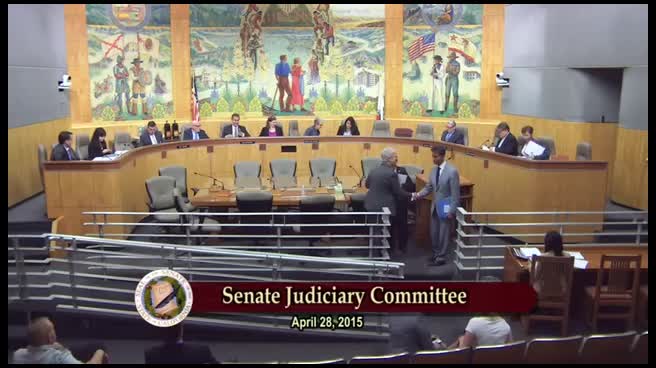 16MIN