SB 364: Residential real property: withdrawal of accommodations.
- Session Year: 2015-2016
- House: Senate
- Latest Version Date: 2016-01-04
Existing law, commonly known as the Ellis Act, generally prohibits public entities from adopting any statute, ordinance, or regulation, or taking any administrative action, to compel the owner of residential real property to offer or to continue to offer accommodations, as defined, in the property for rent or lease.
This bill would authorize the City and County of San Francisco to prohibit an owner of accommodations from filing a notice of an intent to withdraw accommodations or prosecuting an action to recover possession of accommodations, or threatening these actions, unless all the owners of the accommodations have been owners of record for 5 continuous years or more, except as specified, or from doing so with respect to property that the owner acquired within 10 years after providing notice of an intent to withdraw accommodations at a different property. The bill would also permit the city and county to require an owner of accommodations notifying the city and county of an intention to withdraw accommodations from rent or lease to identify each person or entity with an ownership interest in the accommodations, and to identify all persons or entities with an ownership interest in an entity. This information would be available for public inspection. The bill would provide specified, nonexclusive remedies that the city and county would be authorized to impose for a violation of these provisions.
This bill would make legislative findings and declarations as to the necessity of a special statute for the City and County of San Francisco.
Existing law, commonly known as the Ellis Act, generally prohibits public entities from adopting any statute, ordinance, or regulation, or taking any administrative action, to compel the owner of residential real property to offer or to continue to offer accommodations, as defined, in the property for rent or lease.
This bill would authorize the City and County of San Francisco to prohibit an owner of accommodations from filing a notice of an intent to withdraw accommodations or prosecuting an action to recover possession of accommodations, or threatening these actions, unless all the owners of the accommodations have been owners of record for 5 continuous years or more, except as specified, or with respect to property that the owner acquired within 10 years after providing notice of an intent to withdraw accommodations at a different property. The bill would also permit the city and county to require an owner of accommodations notifying the city and county of an intention to withdraw accommodations from rent or lease to identify each person or entity with an ownership interest in the accommodations and to identify all persons or entities with an ownership interest in an entity. This information would be available for public inspection. The bill would provide specified, nonexclusive remedies that the city and county would be authorized to impose for a violation of these provisions.
This bill would make legislative findings and declarations as to the necessity of a special statute for the City and County of San Francisco.
(a)This section shall apply only to a city that is also a county.
(b)Notwithstanding any other provision of this chapter, the city and county by ordinance or ballot measure may provide that:
(1)(A)An owner of accommodations shall not file a notice with a public entity of an intent to withdraw accommodations pursuant to this chapter, prosecute an action to recover possession of accommodations pursuant to this chapter, or threaten to do either of these things, unless all the owners of the accommodations have been owners of record for five continuous years or more. If an owner of record is not a natural person, then all persons or entities with an ownership interest in that entity shall have held that interest for five continuous years. The For purposes of determining whether all the owners of the accommodations have been owners of record for five continuous years or more, a change in the owner of record shall not occur under either of the following circumstances:
(i)When a revocable trust is created and the accommodations are transferred to the trust.
(ii)When the accommodations are inherited by a spouse, child or children, or grandchild or grandchildren.
(B)The five-year ownership requirement in this paragraph shall not apply to an owner of accommodations who is a natural person, person or persons, who owns no more than two properties, and who owns no more than a total of four residential units. For purposes of this subparagraph, an owner of accommodations who is a natural person or persons includes an owner of accommodations held by a revocable trust in which the beneficiary or beneficiaries is a natural person or persons.
(2)If an owner of accommodations files a notice of intent with the public entity to withdraw accommodations under this chapter, and the owner subsequently acquires a new property containing accommodations within 10 years of that filing, the owner shall not withdraw accommodations pursuant to this chapter, prosecute an action to recover possession of accommodations pursuant to this chapter, or threaten to do either of these things, with respect to the later acquired property. For purposes of this paragraph, an owner of accommodations includes any person or entity with an ownership interest in an entity that owns the accommodations.
(3)An owner of accommodations, or any person or entity with an ownership interest in an entity that owns the accommodations, shall not act in concert with a coowner, successor owner, prospective owner, agent, employee, or assignee, to circumvent the limitations of paragraph (1) or (2).
(4)An owner of accommodations notifying the city and county of an intention to withdraw accommodations from rent or lease shall identify each person or entity with an ownership interest in the accommodations, and if any entity is not a natural person, identify all persons or entities with an ownership interest in that entity. This information shall not be confidential and shall be available for public inspection.
(c)The city and county may provide that a person or entity that violates the provisions described in subdivision (b) is liable to the tenant or lessee for actual damages, special damages of not less than two thousand dollars ($2,000) for each violation, and reasonable attorney fees and costs in an amount fixed by the court. The remedy provided by this section is not exclusive and shall not preclude either the tenant or lessee from pursuing any other remedy provided by law.
SEC. 2.The Legislature finds and declares that a special law is necessary and that a general law cannot be made applicable within the meaning of Section 16 of Article IV of the California Constitution because of the recent significant increase in the evictions under the Ellis Act in the City and County of San Francisco and the consequent displacement of long-time residents and severe reduction of availability of affordable rental housing in San Francisco.
(a)This section shall apply only to a city that is also a county.
(b)Notwithstanding any other provision of this chapter, the city and county by ordinance or ballot measure may provide that:
(1)An owner of accommodations shall not file a notice with a public entity of an intent to withdraw accommodations pursuant to this chapter, prosecute an action to recover possession of accommodations pursuant to this chapter, or threaten to do either of these things, unless all the owners of the accommodations have been owners of record for five continuous years or more. If an owner of record is not a natural person, then all persons or entities with an ownership interest in that entity shall have held that interest for five continuous years. The five-year ownership requirement in this paragraph shall not apply to an owner of accommodations who is a natural person, who owns no more than two properties, and who owns no more than a total of four residential units.
(2)If an owner of accommodations files a notice of intent with the public entity to withdraw accommodations under this chapter, and the owner subsequently acquires a new property containing accommodations within 10 years of that filing, the owner shall not withdraw accommodations pursuant to this chapter, prosecute an action to recover possession of accommodations pursuant to this chapter, or threaten to do either of these things, with respect to the later acquired property. For purposes of this paragraph, an owner of accommodations includes any person or entity with an ownership interest in an entity that owns the accommodations.
(3)An owner of accommodations, or any person or entity with an ownership interest in an entity that owns the accommodations, shall not act in concert with a coowner, successor owner, prospective owner, agent, employee, or assignee, to circumvent the limitations of paragraph (1) or (2).
(4)An owner of accommodations notifying the city and county of an intention to withdraw accommodations from rent or lease shall identify each person or entity with an ownership interest in the accommodations, and if any entity is not a natural person, identify all persons or entities with an ownership interest in that entity. This information shall not be confidential and shall be available for public inspection.
(c)The city and county may provide that a person or entity that violates the provisions described in subdivision (b) is liable to the tenant or lessee for actual damages, special damages of not less than two thousand dollars ($2,000) for each violation, and reasonable attorney fees and costs in an amount fixed by the court. The remedy provided by this section is not exclusive and shall not preclude either the tenant or lessee from pursuing any other remedy provided by law.
SEC. 2.The Legislature finds and declares that a special law is necessary and that a general law cannot be made applicable within the meaning of Section 16 of Article IV of the California Constitution because of the recent significant increase in the evictions under the Ellis Act in the City and County of San Francisco and the consequent displacement of long-time residents and severe reduction of availability of affordable rental housing in San Francisco.
|
Date
|
Status
|
|---|---|
| Feb 1, 2016 | Returned to Secretary of Senate pursuant to Joint Rule 56. |
| Jan 4, 2016 | From committee with author's amendments. Read second time and amended. Re-referred to Com. on T. & H. |
| Dec 16, 2015 | January 5 hearing postponed by committee. |
| Dec 10, 2015 | Set for hearing January 5. |
| Apr 15, 2015 | April 14 set for first hearing. Failed passage in committee. (Ayes 5. Noes 6. Page 620.) Reconsideration granted. |
| Mar 25, 2015 | Set for hearing April 14. |
| Mar 24, 2015 | April 7 hearing postponed by committee. |
| Mar 18, 2015 | Set for hearing April 7. |
| Mar 5, 2015 | Referred to Coms. on T. & H. and JUD. |
| Feb 25, 2015 | From printer. May be acted upon on or after March 27. |
| Feb 24, 2015 | Introduced. Read first time. To Com. on RLS. for assignment. To print. |
|
Date
|
Description
|
Location
|
Votes
|
|
|---|---|---|---|---|
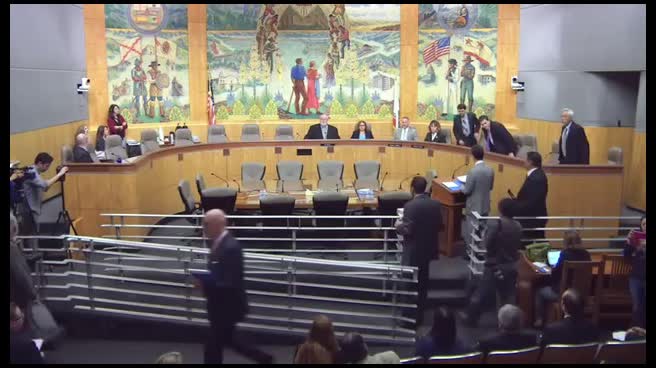
| Apr 14, 2015 | [First] hearing set for [04-14-2015]: Failed passage in Committee. Reconsideration granted | Senate Standing Committee on Transportation and Housing |
Passed |
|
| Apr 14, 2015 | Do pass, but first be re-referred to the Committee on [Judiciary] | Senate Standing Committee on Transportation and Housing |
Failed |
This list shows positions taken on this bill by organizations on the date displayed, which is linked to the original source.
Positions by individuals are not included.
SB 364 (Leno) Page 6 of 6
SENATE COMMITTEE ON TRANSPORTATION AND HOUSING
Senator Jim Beall, Chair
2015 - 2016 Regular
Bill No: SB 364 Hearing Date: 4/14/2015
Author: |
Leno |
||
Version: |
2/24/2015 |
||
Urgency: |
No |
Fiscal: |
No |
Consultant: |
Alison Dinmore |
||
SUBJECT: Residential real property: withdrawal of accommodations
DIGEST: This bill allows San Francisco to prohibit, by ordinance or ballot measure, a rental housing owner from removing a building from the market pursuant to the Ellis Act unless all owners in the property have held their ownership interest for at least five years.
ANALYSIS:
Existing law, under the Ellis Act (Act), prohibits a public entity, by statute, ordinance, or regulation, from compelling an owner of any residential real property, except for a residential hotel, to continue to offer the rental units for rental housing. The Act maintains the authority for a public entity to regulate the subsequent use of the property and mitigate any adverse impacts on people who are displaced from the withdrawal of a property from the rental market. The Act only applies when an owner seeks to remove all units from rent or lease in a building, or all units on a property with a building containing three or fewer units.
In rent-control jurisdictions, such as the city and county of San Francisco, the Act established procedures that public entities can impose upon owners prior to withdrawing property from the rental market. If a city or county requires the owner to give notice before withdrawing the building from the market, the owner must provide 120 days’ notice — or one year’s notice in the case of tenants who are disabled or more than 62 years old — before terminating the tenancy. Owners who seek to re-rent the units within two years after withdrawal are liable to displaced tenants for actual and exemplary damages and required to offer the units to displaced tenants under the prior rent-controlled lease terms. Public entities may also require an owner for up to 10 years to offer re-rented units to displaced tenants. If the owner demolishes the old units and constructs new rental units on the same property within five years of withdrawal, a city or county may subject the new units to its rent-control ordinance.
This bill allows San Francisco, by ordinance or ballot measure, to:
Prohibit an owner from withdrawing a property unless all the owners have been owners of record for five continuous years or more. This five-year ownership requirement does not apply to an owner who is a natural person, who owns no more than two properties and no more than four total residential units.
Prohibit an owner who withdraws a property under the Act from withdrawing a subsequently acquired property if it is purchased within 10 years of the initial filing.
Prohibit any person with an ownership interest in a property from acting in concert with a co-owner, successor owner, prospective owner, agent, employee, or assignee to circumvent the above provisions.
Require an owner notifying the city and county of San Francisco of an intention to withdraw a property under the Act to include in the notice the identity of each person, entity, and members of the entity with an ownership interest in the property.
Provide that a person or entity that violates the provisions above is liable to the tenant or lessee for actual damages, special damages of no less than $2,000 per violation, and reasonable attorney’s fees and costs determined by the court. This remedy is not exclusive and shall not preclude the tenant or lessee from pursing any other remedy provided by law.
COMMENTS:
1. Purpose of the bill. According to the author and sponsors, this bill closes a loophole in the Act and will prevent the displacement of long-term San Franciscans by real estate speculators looking to re-sell rent-controlled buildings at a higher price. The Act was intended to allow landlords to exit the rental business and is being misused to evict tenants such as families, seniors, teachers, and the disabled, groups that are generally unable to afford to relocate within the city. To date, 3,610 units have been subject to Ellis Act evictions. In 2014, these evictions tripled and 300 units were taken off the market. In 2013, the city states that 50% of evictions were by owners who had owned the property for less than one year before invoking the Act, the majority occurring during the first six months of ownership. While the city has seen a decline in Ellis Act evictions so far this year, this bill would allow San Francisco to respond in the future to the unique conditions it is experiencing by authorizing the city to enact additional measures to stop misuses of the Act by speculators.
In addition to this bill, the city has set an ambitious plan to build and rehabilitate 30,000 more homes by 2020, with at least one-third available at below-market rates and more than half at an affordable rate to lower- and middle-class families. This bill will help protect the city’s existing affordable housing stock and keep long-term residents housed.
2. History of the Ellis Act. The Act was adopted in
response to the California Supreme Court’s decision in Nash v.
City of Santa Monica, 37 Cal.3d 97 (1984). In that case, the
court upheld the power of a city, through a land use ordinance, to
require a residential real property owner to obtain a removal permit,
under specified criteria, before the owner could demolish his or her
rental property and cause its removal from the marketplace. The next
year,
SB 505 (Ellis, Chapter 1509, Statutes of 1985) preempted
that ruling by providing that no public entity shall “compel the
owner of any residential real property to offer, or to continue to
offer, accommodations in the property for rent or lease.”
Effectively, SB 505 gave landlords a statutory right to exit the
rental housing business.
The Act only applies when an owner seeks to remove all units within a building or all units in a property with a building containing three or fewer units, from the market and only has real effect in cities and counties with rent control and just-cause evictions. Additionally, the Act authorizes local governments to place restrictions on how property owners can “Ellis” a building and exit the rental housing market.
3. Limited to San Francisco. While there are about a dozen cities in the state that have rent-control laws, this bill expressly applies only to the city and county of San Francisco. Arguably, San Francisco has one of the most competitive housing markets in the nation. The influx of high-paying technology jobs in the city and surrounding communities has drastically expanded the housing demand even as housing developers are struggling to build rental units with the loss of redevelopment funding. This has resulted in greater Ellis Act activity in San Francisco than other affected cities.
4. Exemption for small property owners. This bill would exempt from the five-year ownership requirement a property owner who is a “natural person,” owns no more than two properties, and who owns no more than a total of four residential units. “Natural person” is not defined in the bill and could be interpreted to limit the exemption to one person (i.e., would not include properties that are owned by a married couple). This exemption might also not cover a living trust established for the benefit of family members. The author will accept amendments in committee clarifying that the exemption may cover more than one person and living trusts.
5. Clarifying the owner of record clock. This bill would allow the city and county of San Francisco to require that all owners of record of a rental property hold their interest in the property for five continuous years or more before withdrawing the property from the rental market. If, after five years’ time, a property owner places the property in a living trust, this may trigger a change in “owner of record” and start the five-year clock again. Additionally, a child inheriting property from their parent may not be treated as having owned the property for the time it was owned by their parent and the clock would restart. The author will accept amendments in committee to clarify that the creation of a living trust and inheriting property would not be considered a change in “owner of record” and would not restart the five-year ownership clock.
6. Opposition. According to opponents, there has been a decline in the number of owners who have used the Act. From July 2014 through January 2015 there were only 33 units converted, which, in a city of 281,000 rental units, amounts to 0.015% of all rental units. Opponents contend that this bill would reduce the value of rental property by limiting the ability of owners to sell or convert their properties. Additionally, the exemption would fail to protect small property owners.
Opponents also state that this bill would prevent small property owners from moving into their own homes. According to the opponents, under San Francisco’s Owner Move-in Law: 1) only one owner per building can move in; 2) the owner must occupy the property for at least three consecutive years and move in within three months of the tenant moving out; and 3) the owner must own at least 25% of the property to reside in the building. This means that if two or more owners purchase a property, these owners together may only occupy one unit. Furthermore, opponents state that there are already strong protections in place that local governments can impose on owners who desire to exit the rental market.
7. Double-referral. The Senate Rules Committee has referred this bill to both this committee and the Judiciary Committee.
RELATED LEGISLATION:
SB 1439 (Leno, 2014) — would have allowed the city and county of San Francisco to prohibit, by ordinance or ballot measure, a rental housing owner from removing a building from the market pursuant to the Act unless all owners in the property have held their ownership interest for at least five years. This bill failed passage in the Assembly Housing and Community Development Committee.
SB 464 (Kuehl, 2007) — would have limited the ability of a rental property owner to exercise their Ellis Act rights to cases where the owner has owned the property for at least three years and acquired ownership of the property on or after March 27, 2007. This bill died on the Senate Floor.
FISCAL EFFECT: Appropriation: No Fiscal Com.: No Local: No
POSITIONS: (Communicated to the committee before noon on Wednesday,
April 8, 2015.)
SUPPORT:
San Francisco Mayor Ed Lee (Sponsor)
Asian Americans Advancing Justice – Asian Law Caucus
California Alliance for Retired Americans
California Federation of Teachers
California Labor Federation
California State Association of Counties
California State Association of Electrical Workers
California State Pipe Trades Council
Causa Justa – Just Cause
Council of Community Housing Organizations
Housing Rights Committee of San Francisco
San Francisco Citizens Initiative for Technology and Innovation
San Francisco Labor Council
Tenants Together
Tenderloin Housing Clinic
Urban Counties Caucus
Western Center on Law and Poverty
Western States Council of Sheet Metal Workers
OPPOSITION:
Apartment Association, California Southern Cities
Apartment Association of Greater Los Angeles
Apartment Association of Orange County
California Apartment Association
California Association of Realtors
California Building Industry Association
California Chamber of Commerce
Civil Justice Association of California
East Bay Rental Housing Association
Nor Cal Rental Property Association
North Valley Property Owners Association
Small Property Owners of San Francisco Institute
San Diego Apartment Association
Santa Barbara Rental Property Association
-- END --
Discussed in Hearing
 1H
Senate Standing Committee on Transportation and Housing
Bill Author

Bill Co-Author(s):
