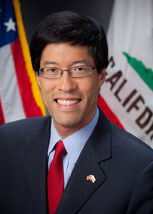
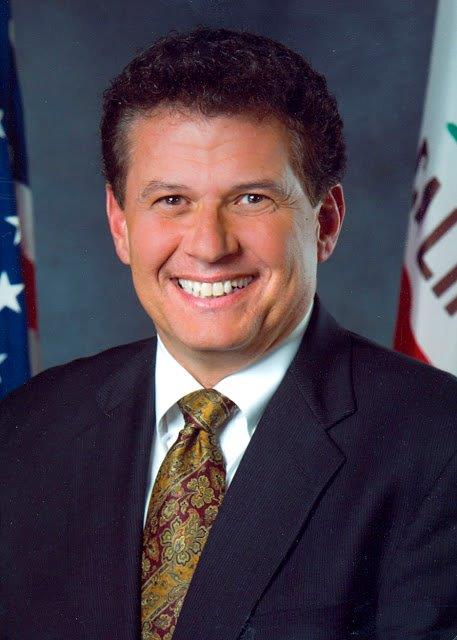
SB 373: California Community Colleges: full-time faculty percentage.
- Session Year: 2015-2016
- House: Senate
- Latest Version Date: 2015-04-06
Existing law establishes the California Community Colleges, under the administration of the Board of Governors of the California Community Colleges, as one of the segments of public postsecondary education in this state. Existing law establishes community college districts, administered by governing boards, throughout the state, and authorizes these districts to provide instruction to students at the community college campuses maintained by the districts. Existing law authorizes the employment of community college faculty and establishes certain rights for these employees.
This bill would require community college districts to report to the board of governors, by March 31, 2016, the total number of full-time equivalent faculty (FTEF) positions staffed by faculty teaching overload assignments attributable to part-time temporary faculty and to contract or regular faculty while working on overload assignments during the period of July 1, 2014, to June 30, 2015, inclusive. Effective July 1, 2016, the bill would require that reported number to become that districts maximum allowable number of FTEF positions that may be staffed by faculty teaching overload assignments part-time temporary faculty and by contract or regular faculty while working on overload assignments until the districts full-time faculty percentage is greater than or equal to 75%. Upon reaching the 75% threshold, the bill would require a district to maintain a full-time faculty percentage of 75% or higher, or not exceed the districts previously calculated maximum allowable number of FTEF positions that may be staffed by faculty teaching overload assignments. part-time temporary faculty and by contract or regular faculty while working on overload assignments. The bill would require the governing board to determine if a district has failed to comply with the above requirements, and, if so, to designate a specified amount of the districts apportionment or apportionments that would be required to be deposited in the county treasury, but unavailable to the district. The bill would authorize a district to submit an application for an exemption from the requirements of the bill in cases of serious hardship, as specified. Upon receipt of the exemption application, the bill would require the governing board to grant exemptions, as specified. The bill would require the amount exempted to be immediately available for expenditure by the governing board and the amount not exempted to be returned to the State School Fund. The bill would require the board of governors to enforce the requirements of the bill and would authorize them to adopt necessary rules and regulations.
This bill would prohibit a district from assigning a person hired as a contract faculty member after July 1, 2016, to teach any overload assignment in excess of the equivalent of a full-time teaching load until the person achieves tenured status as a full-time regular faculty member.
By placing additional requirements on community college districts, this bill would impose a state-mandated local program.
The California Constitution requires the state to reimburse local agencies and school districts for certain costs mandated by the state. Statutory provisions establish procedures for making that reimbursement.
This bill would provide that, if the Commission on State Mandates determines that the bill contains costs mandated by the state, reimbursement for those costs shall be made pursuant to these statutory provisions.
Existing law establishes the California Community Colleges, under the administration of the Board of Governors of the California Community Colleges, as one of the segments of public postsecondary education in this state. Existing law establishes community college districts, administered by governing boards, throughout the state, and authorizes these districts to provide instruction to students at the community college campuses maintained by the districts. Existing law authorizes the employment of community college faculty and establishes certain rights for these employees.
This bill would require community college districts to report to the board of governors, by March 31, 2016, the total number of full-time equivalent faculty (FTEF) positions staffed by faculty teaching overload assignments during the period July 1, 2014, to June 30, 2015, inclusive. Effective July 1, 2016, the bill would require that reported number to become that districts maximum allowable number of FTEF positions that may be staffed by faculty teaching overload assignments until the districts full-time faculty percentage is greater than or equal to 75%. Upon reaching the 75% threshold, the bill would require a district to maintain a full-time faculty percentage of 75% or higher, or not exceed the districts previously calculated maximum allowable number of FTEF positions that may be staffed by faculty teaching overload assignments. The bill would require the governing board to determine if a district has failed to comply with the above requirements, and, if so, to designate a specified amount of the districts apportionment or apportionments that would be required to be deposited in the county treasury, but unavailable to the district. The bill would authorize a district to submit an application for an exemption from the requirements of the bill in cases of serious hardship, as specified. Upon receipt of the exemption application, the bill would require the governing board to grant exemptions, as specified. The bill would require the amount exempted to be immediately available for expenditure by the governing board and the amount not exempted to be returned to the State School Fund. The bill would require the board of governors to enforce the requirements of the bill and would authorize them to adopt necessary rules and regulations.
This bill would prohibit a district from assigning a person hired as a contract faculty member after July 1, 2016, to teach any overload assignment in excess of the equivalent of a full-time teaching load until the person achieves tenured status as a full-time faculty member.
By placing additional requirements on community college districts, this bill would impose a state-mandated local program.
The California Constitution requires the state to reimburse local agencies and school districts for certain costs mandated by the state. Statutory provisions establish procedures for making that reimbursement.
This bill would provide that, if the Commission on State Mandates determines that the bill contains costs mandated by the state, reimbursement for those costs shall be made pursuant to these statutory provisions.
In consideration of the diminished numbers of full-time faculty in the community college system due to the state recession and the concomitant budget cuts in public education generally and community colleges specifically, it is the intent of the Legislature to improve and enhance the mission of the community colleges and the services and opportunities provided to students by increasing the number of full-time faculty in the California Community Colleges to better situate the community colleges to realize their mission goals and the goals and recommendations set forth by the Student Success Task Force report of 2012.
SEC. 2.Section 84362.5 is added to the Education Code, to read:84362.5.(a)This section shall be known, and may be cited, as the Community College Excellence in Education Act.
(b)All districts shall report to the board of governors, by March 31, 2016, the total number of classroom and nonclassroom full-time equivalent faculty (FTEF) positions staffed by faculty teaching overload assignments attributable to hours worked by part-time temporary faculty, and by contract or regular faculty while working on overload assignments, during the period of July 1, 2014, to June 30, 2015, inclusive.
(c)Effective July 1, 2016, each districts calculation pursuant to subdivision (b) shall become that districts maximum allowable number of classroom and nonclassroom FTEF positions that may be staffed by faculty teaching overload assignments part-time temporary faculty and by contract or regular faculty while working on overload assignments until the districts full-time faculty percentage, as calculated pursuant to Section 53308 of Title 5 of the California Code of Regulations, is greater than or equal to 75 percent.
(d)Upon reaching the 75-percent threshold pursuant to subdivision (c), a district shall do either of the following:
(1)Maintain a full-time faculty percentage of 75 percent or greater.
(2)Not exceed its maximum allowable number of classroom and nonclassroom FTEF positions that may be staffed by faculty teaching overload assignments, as part-time temporary faculty and by contract or regular faculty while working on overload assignments, which shall be the number calculated pursuant to subdivision (b).
(e)(1)The board of governors shall determine whether a district failed to comply with subdivision (b), (c), or (d) during the preceding fiscal year, and, if so, shall, in apportionments made to the district from the State School Fund after April 15 of the current fiscal year, designate an amount of the districts apportionment or apportionments that is equal to the difference between the current fiscal year apportionment or apportionments and the lesser of the districts apportionment for the 201415 fiscal year or for the preceding fiscal year.
(2)The amount designated pursuant to paragraph (1) shall be deposited in the county treasury to the credit of the district, but shall be unavailable for expenditure by the district pending the determination to be made by the board of governors pursuant to subdivision (g).
(f)(1)If it appears to the governing board of a district that the application of this section will result in a serious hardship to the district, the governing board of the district may apply in writing to the board of governors for exemption from the requirements of this section by no later than September 15 of the fiscal year immediately succeeding the serious hardship.
(2)Immediately upon applying for an exemption described in paragraph (1), the governing board of the district shall provide the exclusive representative of the districts academic employees or, if none exists, the district or community college academic senate, and all academic employee organizations eligible for a payroll dues deduction, with a copy of the application. Those persons may, within 30 days of receipt of the application, transmit to the board of governors a written statement opposing the application, setting forth reasons for its opposition.
(g)Upon receipt of the application and statement of opposition, if any, described in subdivision (f), the board of governors shall do either of the following:
(1)Grant the district an exemption for any amount that is less than one thousand dollars ($1,000), which shall be immediately available for expenditure by the governing board.
(2)Grant an exemption of one thousand dollars ($1,000) or more if a majority of the members of the board of governors finds, in writing, that the district will in fact suffer serious hardship unless the district is granted an exemption. If the exemption is granted, the exempted amount shall be immediately available for expenditure by the governing board of the district.
(h)If no application for exemption is made pursuant to subdivision (f), or a portion of the exemption is denied, the board of governors shall order the entire designated amount, or the amount not exempted, as applicable, to be returned to the State School Fund.
(i)The board of governors shall enforce the requirements prescribed by this section, and may adopt necessary rules and regulations, which may require, among other things, district governing boards to submit reports and information throughout the academic year.
(j)A district shall not assign a person hired as a contract faculty member after July 1, 2016, to teach any overload assignment in excess of the equivalent of a full-time teaching load until the person has achieved tenured status as a full-time regular faculty member.
SEC. 3.If the Commission on State Mandates determines that this act contains costs mandated by the state, reimbursement to local agencies and school districts for those costs shall be made pursuant to Part 7 (commencing with Section 17500) of Division 4 of Title 2 of the Government Code.
In consideration of the diminished numbers of full-time faculty in the community college system due to the state recession and the concomitant budget cuts in public education generally and community colleges specifically, it is the intent of the Legislature to improve and enhance the mission of the community colleges and the services and opportunities provided to students by increasing the number of full-time faculty in the California Community Colleges to better situate the community colleges to realize their mission goals and the goals and recommendations set forth by the Student Success Task Force report of 2012.
SEC. 2.Section 84362.5 is added to the Education Code, to read:84362.5.(a)This section shall be known, and may be cited, as the Community College Excellence in Education Act.
(b)All districts shall report to the board of governors, by March 31, 2016, the total number of full-time equivalent faculty (FTEF) positions staffed by faculty teaching overload assignments during the period July 1, 2014, to June 30, 2015, inclusive.
(c)Effective July 1, 2016, each districts calculation pursuant to subdivision (b) shall become that districts maximum allowable number of FTEF positions that may be staffed by faculty teaching overload assignments until the districts full-time faculty percentage, as calculated pursuant to Section 53308 of Title 5 of the California Code of Regulations, is greater than or equal to 75 percent.
(d)Upon reaching the 75-percent threshold pursuant to subdivision (c), a district shall do either of the following:
(1)Maintain a full-time faculty percentage of 75 percent or greater.
(2)Not exceed its maximum allowable number of FTEF positions that may be staffed by faculty teaching overload assignments, as calculated pursuant to subdivision (b).
(e)(1)The board of governors shall determine whether a district failed to comply with subdivision (b), (c), or (d) during the preceding fiscal year, and, if so, shall, in apportionments made to the district from the State School Fund after April 15 of the current fiscal year, designate an amount of the districts apportionment or apportionments that is equal to the difference between the current fiscal year apportionment or apportionments and the lesser of the districts apportionment for the 201415 fiscal year or for the preceding fiscal year.
(2)The amount designated pursuant to paragraph (1) shall be deposited in the county treasury to the credit of the district, but shall be unavailable for expenditure by the district pending the determination to be made by the board of governors pursuant to subdivision (g).
(f)(1)If it appears to the governing board of a district that the application of this section will result in a serious hardship to the district, the governing board of the district may apply in writing to the board of governors for exemption from the requirements of this section by no later than September 15 of the fiscal year immediately succeeding the serious hardship.
(2)Immediately upon applying for an exemption described in paragraph (1), the governing board of the district shall provide the exclusive representative of the districts academic employees or, if none exists, the district or community college academic senate, and all academic employee organizations eligible for a payroll dues deduction, with a copy of the application. Those persons may, within 30 days of receipt of the application, transmit to the board of governors a written statement opposing the application, setting forth reasons for its opposition.
(g)Upon receipt of the application and statement of opposition, if any, described in subdivision (f), the board of governors shall do either of the following:
(1)Grant the district an exemption for any amount that is less than one thousand dollars ($1,000), which shall be immediately available for expenditure by the governing board.
(2)Grant an exemption of one thousand dollars ($1,000) or more if a majority of the members of the board of governors finds, in writing, that the district will in fact suffer serious hardship unless the district is granted an exemption. If the exemption is granted, the exempted amount shall be immediately available for expenditure by the governing board of the district.
(h)If no application for exemption is made pursuant to subdivision (f), or a portion of the exemption is denied, the board of governors shall order the entire designated amount, or the amount not exempted, as applicable, to be returned to the State School Fund.
(i)The board of governors shall enforce the requirements prescribed by this section, and may adopt necessary rules and regulations, which may require, among other things, district governing boards to submit reports and information throughout the academic year.
(j)A district shall not assign a person hired as a contract faculty member after July 1, 2016, to teach any overload assignment in excess of the equivalent of a full-time teaching load until the person has achieved tenured status as a full-time faculty member.
SEC. 3.If the Commission on State Mandates determines that this act contains costs mandated by the state, reimbursement to local agencies and school districts for those costs shall be made pursuant to Part 7 (commencing with Section 17500) of Division 4 of Title 2 of the Government Code.
|
Date
|
Status
|
|---|---|
| Feb 1, 2016 | Returned to Secretary of Senate pursuant to Joint Rule 56. |
| May 28, 2015 | May 28 hearing: Held in committee and under submission. |
| May 23, 2015 | Set for hearing May 28. |
| May 4, 2015 | May 4 hearing: Placed on APPR. suspense file. |
| Apr 24, 2015 | Set for hearing May 4. |
| Apr 8, 2015 | From committee: Do pass and re-refer to Com. on APPR. (Ayes 5. Noes 2. Page 521.) (April 8). Re-referred to Com. on APPR. |
| Apr 6, 2015 | From committee with author's amendments. Read second time and amended. Re-referred to Com. on ED. |
| Mar 20, 2015 | Set for hearing April 8. |
| Mar 5, 2015 | Referred to Com. on ED. |
| Feb 25, 2015 | From printer. May be acted upon on or after March 27. |
| Feb 24, 2015 | Introduced. Read first time. To Com. on RLS. for assignment. To print. |
|
Date
|
Description
|
Location
|
Votes
|
|
|---|---|---|---|---|
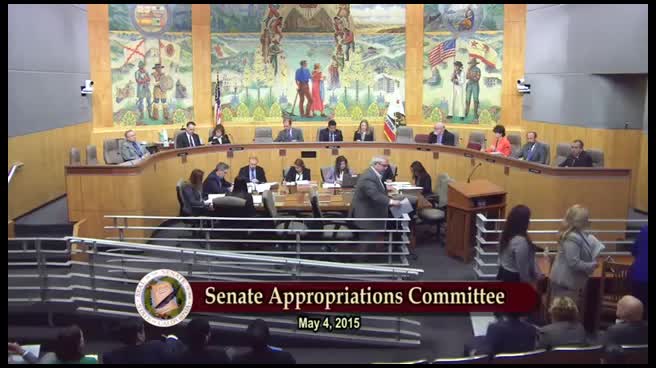
| May 4, 2015 | Placed on suspense file | Senate Standing Committee on Appropriations |
Passed |
|
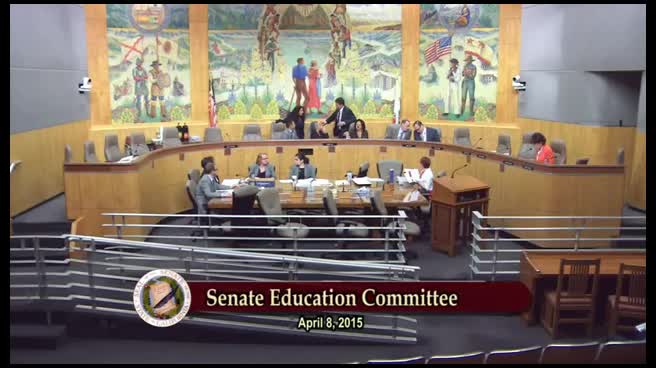
| Apr 8, 2015 | Do pass, but first be re-referred to the Committee on [Appropriations] | Senate Standing Committee on Education |
Passed |
This list shows positions taken on this bill by organizations on the date displayed, which is linked to the original source.
Positions by individuals are not included.
SB 373 (Pan) Page 2 of 2
SENATE COMMITTEE ON APPROPRIATIONS
Senator Ricardo Lara, Chair
2015 - 2016 Regular Session
SB 373 (Pan) - California Community Colleges: full-time faculty percentage
|
|
Version: April 6, 2015 |
Policy Vote: ED. 5 - 2 |
Urgency: No |
Mandate: Yes |
Hearing Date: May 4, 2015 |
Consultant: Jillian Kissee |
This bill meets the criteria for referral to the Suspense File.
Bill Summary:
This bill establishes the Community College Excellence in Education Act and sets a cap on the number of part-time faculty for each community college district based on the 2014-15 fiscal year, thereby limiting new hires to only full-time faculty until the district reaches a 75 percent threshold of full-time faculty. This bill also prohibits new tenure-track faculty from performing overload assignments during their probationary period. Finally, this bill sets forth a series of provisions governing how the threshold is maintained and repercussions in cases when it is not maintained.
Fiscal Impact:
Mandate: This bill may impose a new reimbursable mandate on California Community College (CCC) districts. The Chancellor’s Office indicates that this bill results in estimated statewide annual costs of about $550 million Proposition 98 General Fund for additional full-time faculty to meet the threshold required by this bill. Additional, potentially significant, costs could be incurred for districts to report faculty information to the Board of Governors and to hire additional faculty if needed to shift overload assignments to tenure-track faculty.
Costs to enforce the requirements of this bill are estimated to be absorbable by the Chancellor’s Office.
Background:
Existing law
defines “faculty” as those employees of a community college
district who are employed in academic positions that are not
designated as supervisory or management, as specified. Faculty
include, but are not limited to, instructors, librarians, counselors,
community college health services professionals, disabled student
programs and services professionals, and extended opportunity
programs and services professionals. (Education Code § 87003)
Existing law defines a temporary (part-time) employee to be any person who is employed to teach for not more than 67 percent of the hours per week considered to be a full-time assignment. (Education Code § 87482.5 and § 87882)
The
Board of Governors of the CCC has had a longstanding policy that at
least 75 percent of the hours of credit instruction in the CCC, as a
system, should be taught by full-time instructors (commonly referred
to as “75/25”). CCC districts with less than 75 percent full-time
faculty are required to provide a portion of their growth funds to
hiring more full-time faculty. (Education Code § 87482.6)
Proposed
Law:
This bill requires all districts to report to the Board of Governors
by March 31, 2016 the total number of classroom and nonclassroom
full-time equivalent faculty attributable to hours worked by
part-time temporary faculty, and by contract or regular faculty while
working on overload assignments during the 2014-15 fiscal year. This
calculation represents the district’s maximum allowable number of
classroom and nonclassroom full-time equivalent faculty that may be
staffed by these types of faculty until the district’s full-time
faculty percentage is greater than or equal to 75 percent. Once a
district reaches this threshold, district must either maintain this
threshold or not exceed its maximum allowable number as calculated
above.
If the Board of Governors determines that a district does not comply with the provisions of this bill, it must designate an amount of the district’s apportionment, as specified, to be deposited in the county treasury to be available to the district once a determination is made by the Board of Governors.
If the governing board of a district determines this will result in a serious hardship to the district, it may apply to the Board of Governors for exemption. Upon applying for exemption the district must provide the exclusive representative of the district’s academic employees and all academic employee organizations eligible for a payroll dues deduction with a copy of the application.
The Board of Governors must either grant the district an exemption of less than $1,000 or of $1,000 or more if a majority of the members of the Board of Governors finds that the district will suffer serious hardship. If no application for exemption is provided or a portion of the exemption is denied, the applicable funds will not be available to the district.
Finally, this bill prohibits new tenure-track faculty from performing overload assignments during their probationary period. The term “overload assignments” refers to the practice of full-time faculty electing to teach additional courses (with additional pay) beyond their normal full-time teaching load. Policies regarding overload assignments vary significantly among community colleges and departments.
Related
Legislation:
AB 950 (Chau, 2013)
proposed that a full-time faculty member for a community college
district not be assigned workload that includes overload or extra
assignments if they exceed 50 percent of a full-time workload in a
semester or quarter, as specified. AB 950 failed passage in this
committee.
AB 1826 (Hernandez, 2012), similar to AB 950,
failed passage in this committee.
-- END --
SB 373 (Pan) Page 6 of 6
SENATE COMMITTEE ON EDUCATION
Senator Carol Liu, Chair
2015 - 2016 Regular
Bill No: SB 373
Author: |
Pan |
||
Version: |
April 06, 2015 Hearing Date: April 8, 2015 |
||
Urgency: |
No |
Fiscal: |
Yes |
Consultant: |
Lenin Del Castillo |
||
Subject: California Community Colleges: overload assignments and full-time faculty percentage
SUMMARY
This bill would establish the Community College Excellence in Education Act and set a cap on the number of part-time faculty for each community college district based on the 2014-15 fiscal year, thereby limiting new hires to only full-time faculty until the district reaches a 75 percent threshold of full-time faculty. This bill would also prohibit new tenure-track faculty from performing overload assignments during their probationary period.
BACKGROUND
Existing law defines “faculty” as those employees of a community college district who are employed in academic positions that are not designated as supervisory or management, as specified. Faculty include, but are not limited to, instructors, librarians, counselors, community college health services professionals, handicapped student programs and services professionals, and extended opportunity programs and services professionals. (Education Code § 87003)
Existing law defines any person who is employed to teach for not more than 67% of the hours per week considered a full-time assignment to be a temporary (part-time) employee. (Education Code § 87482.5 and § 87882)
The Board of Governors (BOG) of the California Community Colleges (CCC) has had a longstanding policy that at least 75 percent of the hours of credit instruction in the CCC, as a system, should be taught by full-time instructors (commonly referred to as “75/25”). Existing law requires the BOG to adopt regulations regarding the percent of credit instruction taught by full-time faculty and authorizes CCC districts with less than 75% full-time instructors to apply a portion of their “program improvement” funds toward reaching a 75 percent goal. However, the state has stopped providing program improvement funds and the BOG has since required CCC districts to provide a portion of their growth funds to hiring more full-time faculty. (Education Code § 87482.6)
ANALYSIS
This bill:
Adds legislative intent to improve and enhance the mission of the community colleges and the services and opportunities provided to students by increasing the number of full-time faculty in the California Community Colleges to better situate the community colleges to realize their mission goals and the goals and recommendations set forth by the Student Success Task Force report of 2012.
Establishes the Community College Excellence in Education Act.
Requires all community college districts to report to the board of governors, by March 31, 2016, the total number of classroom and non-classroom full-time equivalent faculty attributable to hours worked by part-time temporary faculty and by contract or regular faculty while working on overload assignments during the 2014-15 fiscal year.
Provides that effective July 1, 2016, each district’s calculation specified above shall become that district’s maximum allowable number of classroom and non-classroom full-time equivalent faculty that may be staffed by part-time temporary faculty and by contract or regular faculty while working on overload assignments until the district’s full time faculty percentage, as specified, is greater than or equal to 75 percent.
Requires a community college district, upon reaching the 75 percent threshold, to do either of the following:
Maintain a full-time faculty percentage of 75 percent or greater.
Not exceed its maximum allowable number of classroom and non-classroom full-time equivalent faculty that may be staffed by part-time temporary faculty and by contract or regular faculty while working on overload assignments.
Requires the board of governors to determine whether a community college district failed to comply with the bill’s provisions during the preceding fiscal year and if so, shall designate an amount of the district’s apportionment, after April 15 of the current fiscal year, that is equal to the difference between the current fiscal year apportionment and the lesser of the district’s apportionment for the 2014-15 fiscal year or for the preceding fiscal year.
Provides that the apportionment amount that the board of governors identifies shall be deposited in the county treasury to the credit of the district, but unavailable for expenditure by the district pending a determination to be made by the board of governors.
Allows a community college district to apply in writing to the board of governors for an exemption, as specified, by no later than September 15 if it appears that withholding the apportionment will result in a serious hardship to the district.
Requires a community college district that applies for an exemption to provide the exclusive representative of the district’s academic employees or academic senate and all academic employee organizations eligible for a payroll dues deduction with a copy of the application. These persons may transmit a written statement opposing the application, setting forth reasons for its opposition.
Requires the board of governors, upon receipt of the application and statement of opposition, to do either of the following:
Grant the district an exemption for any amount that is less than $1,000, which shall be immediately available for expenditure by the governing board.
Grant an exemption of $1,000 or more if a majority of the members of the board of governors finds that the district will suffer serious hardship unless it is granted an exemption.
Requires the board of governors, if no application for exemption is made, to order the entire designated amount, or the amount not exempted, to be returned.
Requires the board of governors to enforce the requirements prescribed in this bill and allows then to adopt necessary rules and regulations.
Prohibits a community college district from assigning a person hired as a contract faculty member, after July 1, 2016, to teach any overload assignment in excess of the equivalent of a full-time teaching load until the person has achieved tenured status as a regular faculty member.
STAFF
COMMENTS
Need for the bill. According to the author’s office, only 51-56 percent of community college courses are taught by full-time faculty which has disproportionately affected community colleges serving large numbers of first generation college students, low-income, and/or unrepresented groups. Further, the decrease in full-time faculty has resulted in decreased student engagement services shown to increase retention, graduation, and transfer rates. For example, part-time faculty, who are pressed for time, spend zero to few hours in a typical week advising students, even though advising is one of the most sought after services by students. The author’s office indicates that full-time professors can help alleviate this high need by helping provide academic and career guidance to students during office hours. In addition, full-time faculty are available to meet and counsel students, participate in curriculum review and updating, serve as advisors for student organizations, and serve on committees to fulfill the complete mission of the community college.
Is this the appropriate remedy? The bill’s objective to increase full-time faculty is consistent with AB 1725 (Vasconcellos, 1988) which established the goal of ensuring that 75 percent of all community college courses be delivered by full-time faculty. While it is difficult to dispute the importance of full-time faculty and their ability to provide student support services and serve in leadership capacities in the campus community, the Committee may wish to consider whether the proposed strategy would be effective without providing additional resources. For example, to the extent that a local community college is looking to offer additional courses due to high demand, the district may not be able to do so if it lacks the resources necessary to hire a full-time faculty member and is prohibited from hiring a part-time faculty member to teach the course. In this scenario, the bill could have an unintended consequence of reducing the flexibility of the district to meet its local needs and quickly respond to changing market demands. Could the bill also have the effect of reducing access for students if the colleges are unable to expand course offerings? Districts that offer unique programs where the number of experts available to teach may be limited could find it particularly challenging to comply with the requirements of this bill. One could also argue the bill infringes upon local decision-making of the community college districts and removes some of their discretion in hiring.
Shift from “outcomes” to “inputs”? Pursuant to Chapter 409, Statutes of 2010 (SB 1143, Liu) the Board of Governors of the California Community Colleges created the Student Success Task Force (SSTF); 20 members (community college chief executive officers, faculty, students, researchers, staff and external stake holders) who spent a year researching, studying and debating the best methods to improve student outcomes at the community colleges. It was their goal to identify best practices for promoting student success and to develop statewide strategies to take these approaches to scale while ensuring that educational opportunity for historically underrepresented students would not just be maintained, but bolstered. The report noted that while a number of disturbing statistics around student completion reflect the challenges faced by the students they serve, they also clearly demonstrate the need for the system to recommit to finding new and better ways to serve its students. The SSTF efforts resulted in 22 specific recommendations which were to be implemented through regulatory changes, system-wide administrative policies, local best practices and legislation.
Additionally, in its commitment to increase transfer and degree and certificate attainment, the Board of Governors of the California Community Colleges created the Student Success Scorecard, a performance measurement system that tracks student success at all of the 112 community colleges. The data available in the scorecard is intended to tell how well the colleges are doing in remedial instruction, job training programs, retention of students, and graduation and completion rates.
The Committee may wish to consider whether this bill, by focusing on “inputs”, represents a departure from these efforts which are aimed at improving the educational outcomes of students and workforce preparedness.
Implications on local bargaining. The average percentage of full-time faculty statewide is approximately 56 percent. The difference between part-time and full-time faculty is left to local discretion and each of the community college districts may decide differently. By forcing districts to only hire full-time faculty under specified circumstances and prohibiting new tenure-track full-time faculty from teaching overload assignments, this bill could be in conflict with existing local bargaining agreements.
Overload assignments. The term “overload assignments” refers to the practice of full-time faculty electing to teach additional courses (with additional pay) beyond their normal full-time teaching load. While policies regarding overload assignments can vary significantly among community colleges and departments, they are generally designed to ensure that the primary responsibilities of faculty are not compromised by the overload assignments. Some colleges require individual assignments to be approved by department deans while others have negotiated district-wide caps that range from one course to 67% of a full-time load. According to the CCC Chancellor’s Office, a recent survey revealed that 13 of 44 responding colleges indicated that they have a policy or bargaining agreement allowing full-time faculty to have more than a 50% overload. According to the Chancellor’s Office, for the Fall 2011 semester, of the 14,489 tenured or tenured track faculty teaching California Community College (CCC) classes, 172 (1.2%) had an overload exceeding 50%. Note that the Los Angeles Community College District, which encompasses about 8% of statewide CCC enrollment, was not included in this data.
This bill prohibits newly hired tenure-track faculty from teaching overload
assignments. While prohibiting excessive overload assignments may make it easier for part-time faculty to continue teaching, this provision could reduce the flexibility of districts to meet local needs and also have local bargaining implications.
Related and prior legislation.
AB 950 (Chau, 2013) proposed that a full-time faculty member, as defined, for a community college district shall not be assigned a workload that includes overload or extra assignments if the overload or extra assignments exceed fifty percent of a full-time workload in a semester or quarter that commences on or after January 1, 2014, with several exceptions, as specified. AB 950 passed this Committee but subsequently failed passage in the Senate Appropriations Committee.
AB 1826 (Hernandez, 2012) would have prohibited a full-time faculty
member from being assigned a workload with an overload or extra assignments exceeding 50% of the full-time semester or quarter workload, as specified. AB 1826 passed this Committee but subsequently failed passage in the Senate Appropriations Committee.
SUPPORT
California Federation of Teachers (sponsor)
California Teachers Association
Faculty Association of California Community Colleges
San Diego County Board of Education
San Ysidro School District
OPPOSITION
Community College League of California
Kern Community College District
Los Rios Community College District
Pasadena Community College District
Peralta Community College District
San Diego Community College District
South Orange Community College District
Yuba Community College District
-- END --
Discussed in Hearing
 3MIN
Senate Standing Committee on Appropriations
 27MIN
Senate Standing Committee on Education
Bill Author