SB 383: Civil actions: objections to pleadings.
- Session Year: 2015-2016
- House: Senate
- Latest Version Date: 2015-10-01
Under existing law, a party in a civil action may object to a complaint, cross-complaint, or answer by demurrer, as specified. Existing law authorizes a party to amend a pleading once without leave of the court at any time before an answer or demurrer is filed, or after a demurrer is filed and before the trial of the issue of law thereon.
This bill would require a demurring party in certain civil actions, before filing the demurrer, to engage in a specified meet and confer process with the party who filed the pleading demurred to for the purpose of determining whether an agreement can be reached as to the filing of an amended pleading that would resolve the objections to be raised in the demurrer. The bill would prohibit a party from amending a complaint or cross-complaint more than 3 times in response to a demurrer filed before the case is at issue, except as specified. The bill would prohibit a party from demurring to a pleading that is amended following a sustained demurrer as to any portion of the amended pleading on grounds that could have been raised by the prior demurrer.
This bill would also authorize a party to amend a pleading after a demurrer is filed but before it is heard by the court if the amended pleading is filed and served before the date for filing an opposition to the demurrer. The bill would authorize a party to amend a pleading after the date for filing an opposition to the demurrer upon stipulation by the parties.
The bill would repeal its provisions on January 1, 2021.
The bill would require a demurring party, in some circumstances, to file a declaration under penalty of perjury. By expanding the scope of the crime of perjury, this bill would impose a state-mandated local program.
The California Constitution requires the state to reimburse local agencies and school districts for certain costs mandated by the state. Statutory provisions establish procedures for making that reimbursement.
This bill would provide that no reimbursement is required by this act for a specified reason.
Under existing law, a party in a civil action may object to a complaint, cross-complaint, or answer by demurrer, as specified. Existing law authorizes a party to amend a pleading once without leave of the court at any time before an answer or demurrer is filed, or after a demurrer is filed and before the trial of the issue of law thereon.
This bill, until January 1, 2021, bill would require a demurring party in certain civil actions, before filing the demurrer, to engage in a specified meet and confer process with the party who filed the pleading demurred to for the purpose of determining whether an agreement can be reached as to the filing of an amended pleading that would resolve the objections to be raised in the demurrer. The bill would prohibit a party from amending a complaint or cross-complaint more than 3 times in response to a demurrer filed before the case is at issue, except as specified. The bill would prohibit a party from demurring to a pleading that is amended following a sustained demurrer as to any portion of the amended pleading on grounds that could have been raised by the prior demurrer.
This bill would also authorize a party to amend a pleading after a demurrer is filed but before it is heard by the court if the amended pleading is filed and served before the date for filing an opposition to the demurrer. The bill would authorize a party to amend a pleading after the date for filing an opposition to the demurrer upon stipulation by the parties.
The bill would repeals its provisions on January 1, 2021.
The bill would require the a demurring party, in some circumstances, to file a declaration under penalty of perjury. By expanding the scope of the crime of perjury, this bill would impose a state-mandated local program.
The California Constitution requires the state to reimburse local agencies and school districts for certain costs mandated by the state. Statutory provisions establish procedures for making that reimbursement.
This bill would provide that no reimbursement is required by this act for a specified reason.
Under existing law, a party in a civil action may object to a complaint, cross-complaint, or answer by demurrer, as specified.
This bill, until January 1, 2021, would require a demurring party, before filing the demurrer, to engage in a specified meet and confer process with the party who filed the pleading demurred to for the purpose of determining whether an agreement can be reached as to the filing of an amended pleading that would resolve the objections to be raised in the demurrer.
The bill would require the demurring party, in some circumstances, to file a declaration under penalty of perjury. By expanding the scope of the crime of perjury, this bill would impose a state-mandated local program.
The California Constitution requires the state to reimburse local agencies and school districts for certain costs mandated by the state. Statutory provisions establish procedures for making that reimbursement.
This bill would provide that no reimbursement is required by this act for a specified reason.
Under existing law, a party in a civil action may object to a complaint, cross-complaint, or answer by demurrer, as specified.
This bill would require a demurring party, before filing the demurrer, to engage in a specified meet and confer process with the party who filed the pleading demurred to for the purpose of determining whether an agreement can be reached as to the filing of an amended pleading that would resolve the objections to be raised in the demurrer.
The bill would require the demurring party, in some circumstances, to file a declaration under penalty of perjury. By expanding the scope of the crime of perjury, this bill would impose a state-mandated local program.
The California Constitution requires the state to reimburse local agencies and school districts for certain costs mandated by the state. Statutory provisions establish procedures for making that reimbursement.
This bill would provide that no reimbursement is required by this act for a specified reason.
Under existing law, a party in a civil action may object to a complaint, cross-complaint, or answer by demurrer if the ground for the objection appears on the face of the pleading or is from a matter of which the court must or may take judicial notice. If the ground for the objection does not appear on the face of the pleading, existing law permits the objection to be taken by answer. Existing law permits a party objecting to a complaint or cross-complaint to demur and answer at the same time.
This bill would require a party to meet and confer with an opposing party, as specified, before filing a demurrer. This bill would permit a party who is unable to fulfill this requirement to file a declaration with the court evidencing his or her good faith attempt to meet and confer, and it would require the court, upon receipt of a timely declaration, to grant a 30-day extension to the filing party to file a responsive pleading. This bill would also permit a court to grant an additional extension of time upon a showing of good cause.
Under existing law, a party in a civil action may object to a complaint, cross-complaint, or answer by demurrer if the ground for the objection appears on the face of the pleading or is from a matter of which the court must or may take judicial notice. If the ground for the objection does not appear on the face of the pleading, existing law permits the objection to be taken by answer. Existing law permits a party objecting to a complaint or cross-complaint to demur and answer at the same time.
This bill would require a party to meet and confer with an opposing party, as specified, before filing a demurrer. This bill would permit a party who is unable to fulfill this requirement to file a declaration with the court evidencing his or her good faith attempt to meet and confer, and it would require the court, upon receipt of a timely declaration demonstrating good cause, declaration, to grant a 30-day extension to the filing party to file a responsive pleading. This bill would also permit a court to grant an additional extension of time upon a showing of good cause.
Under existing law, a party in a civil action may object to a complaint, cross-complaint, or answer by demurrer if the ground for the objection appears on the face of the pleading or is from a matter of which the court must or may take judicial notice. If the ground for the objection does not appear on the face of the pleading, existing law permits the objection to be taken by answer. Existing law permits a party objecting to a complaint or cross-complaint to demur and answer at the same time.
This bill would make a technical, nonsubstantive change to these provisions.
This bill would require a party to meet and confer with an opposing party, as specified, before filing a demurrer. This bill would permit a party who is unable to fulfill this requirement to file a declaration with the court evidencing his or her good faith attempt to meet and confer, and it would require the court, upon receipt of a timely declaration demonstrating good cause, to grant a 30-day extension to the filing party to file a responsive pleading. This bill would also permit a court to grant an additional extension of time upon a showing of good cause.
Under existing law, a party in a civil action may object to a complaint, cross-complaint, or answer by demurrer if the ground for the objection appears on the face of the pleading or is from a matter of which the court must or may take judicial notice. If the ground for the objection does not appear on the face of the pleading, existing law permits the objection to be taken by answer. Existing law permits a party objecting to a complaint or cross-complaint to demur and answer at the same time.
This bill would make a technical, nonsubstantive change to these provisions.
(a)Before filing a demurrer pursuant to this chapter, the demurring party shall meet and confer in person or by telephone with the party who filed the pleading that is subject to demurrer for the purpose of determining whether an agreement can be reached that would resolve the objections to be raised in the demurrer. If an amended complaint, cross-complaint, or answer is filed, the responding party shall meet and confer again with the party who filed the amended pleading before filing a demurrer to the amended pleading.
(1)As part of the meet and confer process, the demurring party shall identify all of the specific causes of action that it believes are subject to demurrer and identify with legal support the basis of the deficiencies. The party who filed the complaint, cross-complaint, or answer shall provide legal support for its position that the pleading is legally sufficient or, in the alternative, how the complaint, cross-complaint, or answer could be amended to cure any legal insufficiency.
(2)The parties shall meet and confer at least five days before the date the responsive pleading is due. If the parties are not able to meet and confer at least five days prior to the date the responsive pleading is due, the demurring party shall be granted an automatic 30-day extension of time within which to file a responsive pleading, by filing and serving, on or before the date on which a demurrer would be due, a declaration stating under penalty of perjury that a good faith attempt to meet and confer was made and explaining the reasons why the parties could not meet and confer. The 30-day extension shall commence from the date the responsive pleading was previously due, and the demurring party shall not be subject to default during the period of the extension. Any further extensions shall be obtained by court order upon a showing of good cause.
(3)The demurring party shall file and serve with the demurrer a declaration stating either of the following:
(A)The means by which the demurring party met and conferred with the party who filed the pleading subject to demurrer, and that the parties did not reach an agreement resolving the objections raised in the demurrer.
(B)That the party who filed the pleading subject to demurrer failed to respond to the meet and confer request of the demurring party or otherwise failed to meet and confer in good faith.
(4)Any determination by the court that the meet and confer process was insufficient shall not be grounds to overrule or sustain a demurrer.
(b)A party demurring to a pleading that has been amended after a demurrer to an earlier version of the pleading was sustained shall not demur to any portion of the amended complaint, cross-complaint, or answer on grounds that could have been raised by demurrer to the earlier version of the complaint, cross-complaint, or answer.
(c)If a court sustains a demurrer to one or more causes of action and grants leave to amend, the court may order a conference of the parties before an amended complaint or cross-complaint or a demurrer to an amended complaint or cross-complaint, may be filed. If a conference is held, the court shall not preclude a party from filing a demurrer and the time to file a demurrer shall not begin until after the conference has concluded. Nothing in this section prohibits the court from ordering a conference on its own motion at any time or prevents a party from requesting that the court order a conference to be held.
(d)This section does not apply to the following civil actions:
(1)An action in which a party not represented by counsel is incarcerated in a local, state, or federal correctional institution.
(2)A proceeding in forcible entry, forcible detainer, or unlawful detainer.
(e)(1)In response to a demurrer and prior to the case being at issue, a complaint or cross-complaint shall not be amended more than three times, absent an offer to the trial court as to such additional facts to be pleaded that there is a reasonable possibility the defect can be cured to state a cause of action. The three-amendment limit shall not include an amendment made without leave of the court pursuant to Section 472, provided the amendment is made before a demurrer to the original complaint or cross-complaint is filed.
(2)Nothing in this section affects the rights of a party to amend its pleading or respond to an amended pleading after the case is at issue.
(f)Nothing in this section affects appellate review or the rights of a party pursuant to Section 430.80.
(g)If a demurrer is overruled as to a cause of action and that cause of action is not further amended, the demurring party preserves its right to appeal after final judgment without filing a further demurrer.
(h)This section shall remain in effect only until January 1, 2021, and as of that date is repealed, unless a later enacted statute, that is enacted before January 1, 2021, deletes or extends that date.
SEC. 2.Section 472 of the Code of Civil Procedure is amended to read:472.(a)A party may amend its pleading once without leave of the court at any time before the answer or demurrer is filed, or after a demurrer is filed but before the demurrer is heard if the amended complaint, cross-complaint, or answer is filed and served no later than the date for filing an opposition to the demurrer. A party may amend the complaint, cross-complaint, or answer after the date for filing an opposition to the demurrer, upon stipulation by the parties. The time for responding to an amended pleading shall be computed from the date of service of the amended pleading.
(b)This section shall remain in effect only until January 1, 2021, and as of that date is repealed, unless a later enacted statute, that is enacted before January 1, 2021, deletes or extends that date.
SEC. 3.Section 472 is added to the Code of Civil Procedure, to read:472.(a)Any pleading may be amended once by the party of course, and without costs, at any time before the answer or demurrer is filed, or after demurrer and before the trial of the issue of law thereon, by filing the same as amended and serving a copy on the adverse party, and the time in which the adverse party must respond thereto shall be computed from the date of notice of the amendment.
(b)This section shall become operative on January 1, 2021.
SEC. 4.Section 472a of the Code of Civil Procedure is amended to read:472a.(a)A demurrer is not waived by an answer filed at the same time.
(b)Except as otherwise provided by rule adopted by the Judicial Council, if a demurrer to a complaint or to a cross-complaint is overruled and there is no answer filed, the court shall allow an answer to be filed upon such terms as may be just. If a demurrer to the answer is overruled, the action shall proceed as if no demurrer had been interposed, and the facts alleged in the answer shall be considered as denied to the extent mentioned in Section 431.20.
(c)Subject to the limitations imposed by subdivision (e) of Section 430.41, if a demurrer is sustained, the court may grant leave to amend the pleading upon any terms as may be just and shall fix the time within which the amendment or amended pleading shall be filed. If a demurrer is stricken pursuant to Section 436 and there is no answer filed, the court shall allow an answer to be filed on terms that are just.
(d)If a motion to strike is granted pursuant to Section 436, the court may order that an amendment or amended pleading be filed upon terms it deems proper. If a motion to strike a complaint or cross-complaint, or portion thereof, is denied, the court shall allow the party filing the motion to strike to file an answer.
(e)If a motion to dismiss an action pursuant to Article 2 (commencing with Section 583.210) of Chapter 1.5 of Title 8 is denied, the court shall allow a pleading to be filed.
(f)This section shall remain in effect only until January 1, 2021, and as of that date is repealed, unless a later enacted statute, that is enacted before January 1, 2021, deletes or extends that date.
SEC. 5.Section 472a is added to the Code of Civil Procedure, to read:472a.(a)A demurrer is not waived by an answer filed at the same time.
(b)Except as otherwise provided by rule adopted by the Judicial Council, if a demurrer to a complaint or to a cross-complaint is overruled and there is no answer filed, the court shall allow an answer to be filed upon such terms as may be just. If a demurrer to the answer is overruled, the action shall proceed as if no demurrer had been interposed, and the facts alleged in the answer shall be considered as denied to the extent mentioned in Section 431.20.
(c)Subject to the limitations imposed by subdivision (e) of Section 430.41, if a demurrer is sustained, the court may grant leave to amend the pleading upon any terms as may be just and shall fix the time within which the amendment or amended pleading shall be filed. If a demurrer is stricken pursuant to Section 436 and there is no answer filed, the court shall allow an answer to be filed on terms that are just.
(d)If a motion to strike is granted pursuant to Section 436, the court may order that an amendment or amended pleading be filed upon terms it deems proper. If a motion to strike a complaint or cross-complaint, or portion thereof, is denied, the court shall allow the party filing the motion to strike to file an answer.
(e)If a motion to dismiss an action pursuant to Article 2 (commencing with Section 583.210) of Chapter 1.5 of Title 8 is denied, the court shall allow a pleading to be filed.
(f)This section shall become operative on January 1, 2021.
SEC. 6.No reimbursement is required by this act pursuant to Section 6 of Article XIIIB of the California Constitution because the only costs that may be incurred by a local agency or school district will be incurred because this act creates a new crime or infraction, eliminates a crime or infraction, or changes the penalty for a crime or infraction, within the meaning of Section 17556 of the Government Code, or changes the definition of a crime within the meaning of Section 6 of Article XIIIB of the California Constitution.
(a)Before filing a demurrer pursuant to this chapter, the demurring party shall meet and confer in person or by telephone with the party who filed the pleading that is subject to demurrer for the purpose of determining whether an agreement can be reached that would resolve the objections to be raised in the demurrer. If an amended complaint, cross-complaint, or answer is filed, the responding party shall meet and confer again with the party who filed the amended pleading before filing a demurrer to the amended pleading.
(1)As part of the meet and confer process, the demurring party shall identify all of the specific causes of action that it believes are subject to demurrer and identify with legal support the basis of the deficiencies. The party who filed the complaint, cross-complaint, or answer shall provide legal support for its position that the pleading is legally sufficient or, in the alternative, how the complaint, cross-complaint, or answer could be amended to cure any legal insufficiency.
(2)The parties shall meet and confer at least five days before the date the responsive pleading is due. If the parties are not able to meet and confer at least five days prior to the date the responsive pleading is due, the demurring party shall be granted an automatic 30-day extension of time within which to file a responsive pleading, by filing and serving, on or before the date on which a demurrer would be due, a declaration stating under penalty of perjury that a good faith attempt to meet and confer was made and explaining the reasons why the parties could not meet and confer. The 30-day extension shall commence from the date the responsive pleading was previously due, and the demurring party shall not be subject to default during the period of the extension. Any further extensions shall be obtained by court order upon a showing of good cause.
(3)The demurring party shall file and serve with the demurrer a declaration stating either of the following:
(A)The means by which the demurring party met and conferred with the party who filed the pleading subject to demurrer, and that the parties did not reach an agreement as to amendment of all challenged portions of the pleading. resolving the objections raised in the demurrer.
(B)That opposing counsel the party who filed the pleading subject to demurrer failed to respond to the meet and confer request of the demurring party or otherwise failed to meet and confer in good faith.
(4)Any determination by the court that the meet and confer process was insufficient shall not be grounds to overrule or sustain a demurrer.
(b)(1)A party demurring to a pleading that has been amended after a demurrer to an earlier version of the pleading was sustained shall not demur to any portion of the amended complaint, cross-complaint, or answer on grounds that could have been raised by demurrer to the earlier version of the complaint, cross-complaint, or answer.
(2)If a demurrer is overruled as to a cause of action and that cause of action is not further amended, the demurring party preserves its right to appeal after final judgment without filing a further demurrer.
(c)If a court sustains a demurrer to one or more causes of action and grants leave to amend, the court may order a conference of the parties before an amended complaint or cross-complaint or a demurrer to an amended complaint or cross-complaint, may be filed. If a conference is held, the court shall not preclude a party from filing a demurrer and the time to file a demurrer shall not begin until after the conference has concluded. Nothing in this section prohibits the court from ordering a conference on its own motion at any time or prevents a party from requesting that the court order a conference to be held.
(d)This section does not apply to the following civil actions:
(1)An action in which a party not represented by counsel is incarcerated in a local, state, or federal correctional institution.
(2)A proceeding in forcible entry, forcible detainer, or unlawful detainer.
(e)(1)In response to a demurrer and prior to the case being at issue, a complaint or cross-complaint shall not be amended more than three times, absent an offer to the trial court as to such additional facts to be pleaded that there is a reasonable possibility the defect can be cured to state a cause of action. The three-amendment limit shall not include an amendment made without leave of the court pursuant to Section 472, provided the amendment is made before a demurrer to the original complaint or cross-complaint is filed.
(2)Nothing in this section affects the rights of a party to amend its pleading or respond to an amended pleading after the case is at issue.
(f)Nothing in this section affects appellate review or the rights of a party pursuant to Section 430.80.
(g)If a demurrer is overruled as to a cause of action and that cause of action is not further amended, the demurring party preserves its right to appeal after final judgment without filing a further demurrer.
(e)
(h)This section shall remain in effect only until January 1, 2021, and as of that date is repealed, unless a later enacted statute, that is enacted before January 1, 2021, deletes or extends that date.
SEC. 2.Section 472 of the Code of Civil Procedure is amended to read:472.(a)A party may amend its pleading once without leave of the court at any time before the answer or demurrer is filed, or after a demurrer is filed but before the demurrer is heard if the amended complaint, cross-complaint, or answer is filed and served no later than the date for filing an opposition to the demurrer. A party may amend the complaint, cross-complaint, or answer after the date for filing an opposition to the demurrer, upon stipulation by the parties. The time for responding to an amended pleading shall be computed from the date of service of the amended pleading.
(b)This section shall remain in effect only until January 1, 2021, and as of that date is repealed, unless a later enacted statute, that is enacted before January 1, 2021, deletes or extends that date.
SEC. 3.Section 472 is added to the Code of Civil Procedure, to read:472.(a)Any pleading may be amended once by the party of course, and without costs, at any time before the answer or demurrer is filed, or after demurrer and before the trial of the issue of law thereon, by filing the same as amended and serving a copy on the adverse party, and the time in which the adverse party must respond thereto shall be computed from the date of notice of the amendment.
(b)This section shall become operative on January 1, 2021.
SEC. 4.Section 472a of the Code of Civil Procedure is amended to read:472a.(a)A demurrer is not waived by an answer filed at the same time.
(b)Except as otherwise provided by rule adopted by the Judicial Council, when if a demurrer to a complaint or to a cross-complaint is overruled and there is no answer filed, the court shall allow an answer to be filed upon such terms as may be just. If a demurrer to the answer is overruled, the action shall proceed as if no demurrer had been interposed, and the facts alleged in the answer shall be considered as denied to the extent mentioned in Section 431.20.
(c)When Subject to the limitations imposed by subdivision (e) of Section 430.41, if a demurrer is sustained, the court may grant leave to amend the pleading upon any terms as may be just and shall fix the time within which the amendment or amended pleading shall be filed. When If a demurrer is stricken pursuant to Section 436 and there is no answer filed, the court shall allow an answer to be filed on terms that are just.
(d)When If a motion to strike is granted pursuant to Section 436, the court may order that an amendment or amended pleading be filed upon terms it deems proper. When If a motion to strike a complaint or cross-complaint, or portion thereof, is denied, the court shall allow the party filing the motion to strike to file an answer.
(e)When If a motion to dismiss an action pursuant to Article 2 (commencing with Section 583.210) of Chapter 1.5 of Title 8 is denied, the court shall allow a pleading to be filed.
(f)This section shall remain in effect only until January 1, 2021, and as of that date is repealed, unless a later enacted statute, that is enacted before January 1, 2021, deletes or extends that date.
SEC. 5.Section 472a is added to the Code of Civil Procedure, to read:472a.(a)A demurrer is not waived by an answer filed at the same time.
(b)Except as otherwise provided by rule adopted by the Judicial Council, if a demurrer to a complaint or to a cross-complaint is overruled and there is no answer filed, the court shall allow an answer to be filed upon such terms as may be just. If a demurrer to the answer is overruled, the action shall proceed as if no demurrer had been interposed, and the facts alleged in the answer shall be considered as denied to the extent mentioned in Section 431.20.
(c)Subject to the limitations imposed by subdivision (e) of Section 430.41, if a demurrer is sustained, the court may grant leave to amend the pleading upon any terms as may be just and shall fix the time within which the amendment or amended pleading shall be filed. If a demurrer is stricken pursuant to Section 436 and there is no answer filed, the court shall allow an answer to be filed on terms that are just.
(d)If a motion to strike is granted pursuant to Section 436, the court may order that an amendment or amended pleading be filed upon terms it deems proper. If a motion to strike a complaint or cross-complaint, or portion thereof, is denied, the court shall allow the party filing the motion to strike to file an answer.
(e)If a motion to dismiss an action pursuant to Article 2 (commencing with Section 583.210) of Chapter 1.5 of Title 8 is denied, the court shall allow a pleading to be filed.
(f)This section shall become operative on January 1, 2021.
SEC. 3.SEC. 6.No reimbursement is required by this act pursuant to Section 6 of Article XIIIB of the California Constitution because the only costs that may be incurred by a local agency or school district will be incurred because this act creates a new crime or infraction, eliminates a crime or infraction, or changes the penalty for a crime or infraction, within the meaning of Section 17556 of the Government Code, or changes the definition of a crime within the meaning of Section 6 of Article XIIIB of the California Constitution.
(a)A person against whom a complaint or cross-complaint has been filed may, within 30 days after service of the complaint or cross-complaint, demur to the complaint or cross-complaint.
(b)A party who has filed a complaint or cross-complaint may, within 10 days after service of the answer to the pleading, demur to the answer.
(c)Before filing a demurrer, the demurring party shall meet and confer in person or by telephone with the party who filed the pleading that is subject to demurrer for the purpose of determining whether an agreement can be reached that would resolve the objections to be raised in the demurrer. If an amended complaint, cross-complaint, or answer is filed, the responding party shall meet and confer again with the party who filed the amended pleading before filing a demurrer to the amended pleading.
(1)As part of the meet and confer process, the demurring party shall identify all of the specific paragraphs that it believes are subject to demurrer and identify with legal support any causes of action that are claimed to have not been sufficiently stated. The party who filed the complaint, cross-complaint, or answer shall provide legal support for its position that the pleading is legally sufficient or, in the alternative, how the complaint, cross-complaint, or answer could be amended to cure any legal insufficiency.
(2)The parties shall meet and confer at least five days before the date the responsive pleading is due. If the parties are not able to meet and confer at least five days prior to the date the responsive pleading is due, the demurring party may obtain a 30-day extension of time within which to file a responsive pleading, by filing and serving, on or before the date on which a demurrer would be due, a declaration stating under penalty of perjury that a good faith attempt to meet and confer was made and explaining the reasons why the parties could not meet and confer. Any further extensions shall be obtained by court order upon a showing of good cause.
(3)The demurring party shall file and serve with the demurrer a declaration stating the means by which the demurring party met and conferred with the party who filed the pleading subject to demurrer, and that the parties did not reach an agreement as to amendment of all challenged portions of the pleading.
(4)Any determination by the court that the meet and confer process was insufficient shall not be grounds to overrule or sustain a demurrer. However, the court may continue the hearing on the demurrer and order the parties to meet and confer in compliance with this subdivision.
(d)(1)A party demurring to a pleading that has been amended after a demurrer to an earlier version of the pleading was sustained shall not demur to any portion of the amended complaint, cross-complaint, or answer on grounds that could have raised by demurrer to the earlier version of the complaint, cross-complaint, or answer.
(2)If a demurrer is overruled as to a cause of action and that cause of action is not further amended, the demurring party preserves its right to appeal after final judgment without filing a further demurrer.
(e)If a court sustains a demurrer to one or more causes of action and grants leave to amend, the court may order a conference of the parties before an amended complaint or cross-complaint or a demurrer to an amended complaint or cross-complaint, may be filed. If a conference is held, the court shall not preclude a party from filing a demurrer and the time to file a demurrer shall not begin until after the conference has concluded. Nothing in this section prohibits the court from ordering a conference on its own motion at any time or prevents a party from requesting that the court order a conference to be held.
SECTION 1.Section 430.41 is added to the Code of Civil Procedure, to read:430.41.(a)Before filing a demurrer pursuant to this chapter, the demurring party shall meet and confer in person or by telephone with the party who filed the pleading that is subject to demurrer for the purpose of determining whether an agreement can be reached that would resolve the objections to be raised in the demurrer. If an amended complaint, cross-complaint, or answer is filed, the responding party shall meet and confer again with the party who filed the amended pleading before filing a demurrer to the amended pleading.
(1)As part of the meet and confer process, the demurring party shall identify all of the specific causes of action that it believes are subject to demurrer and identify with legal support the basis of the deficiencies. The party who filed the complaint, cross-complaint, or answer shall provide legal support for its position that the pleading is legally sufficient or, in the alternative, how the complaint, cross-complaint, or answer could be amended to cure any legal insufficiency.
(2)The parties shall meet and confer at least five days before the date the responsive pleading is due. If the parties are not able to meet and confer at least five days prior to the date the responsive pleading is due, the demurring party shall be granted an automatic 30-day extension of time within which to file a responsive pleading, by filing and serving, on or before the date on which a demurrer would be due, a declaration stating under penalty of perjury that a good faith attempt to meet and confer was made and explaining the reasons why the parties could not meet and confer. The 30-day extension shall commence from the date the responsive pleading was previously due, and the demurring party shall not be subject to default during the period of the extension. Any further extensions shall be obtained by court order upon a showing of good cause.
(3)The demurring party shall file and serve with the demurrer a declaration stating either of the following:
(A)The means by which the demurring party met and conferred with the party who filed the pleading subject to demurrer, and that the parties did not reach an agreement as to amendment of all challenged portions of the pleading.
(B)That opposing counsel failed to respond to the meet and confer request of the demurring party or otherwise failed to meet and confer in good faith.
(4)Any determination by the court that the meet and confer process was insufficient shall not be grounds to overrule or sustain a demurrer.
(b)(1)A party demurring to a pleading that has been amended after a demurrer to an earlier version of the pleading was sustained shall not demur to any portion of the amended complaint, cross-complaint, or answer on grounds that could have been raised by demurrer to the earlier version of the complaint, cross-complaint, or answer.
(2)If a demurrer is overruled as to a cause of action and that cause of action is not further amended, the demurring party preserves its right to appeal after final judgment without filing a further demurrer.
(c)If a court sustains a demurrer to one or more causes of action and grants leave to amend, the court may order a conference of the parties before an amended complaint or cross-complaint or a demurrer to an amended complaint or cross-complaint, may be filed. If a conference is held, the court shall not preclude a party from filing a demurrer and the time to file a demurrer shall not begin until after the conference has concluded. Nothing in this section prohibits the court from ordering a conference on its own motion at any time or prevents a party from requesting that the court order a conference to be held.
(d)This section does not apply to the following civil actions:
(1)An action in which a party not represented by counsel is incarcerated in a local, state, or federal correctional institution.
(2)A proceeding in forcible entry, forcible detainer, or unlawful detainer.
(e)This section shall remain in effect only until January 1, 2021, and as of that date is repealed, unless a later enacted statute, that is enacted before January 1, 2021, deletes or extends that date.
SEC. 2.Section 472 of the Code of Civil Procedure is amended to read:472.A party may amend its pleading once without leave of the court at any time before the answer or demurrer is filed, or after a demurrer is filed but before the demurrer is heard if the amended complaint, cross-complaint, or answer is filed and served no later than the date for filing an opposition to the demurrer. A party may amend the complaint, cross-complaint, or answer after the date for filing an opposition to the demurrer, upon stipulation by the parties. The time for responding to an amended pleading shall be computed from the date of filing of a notice service of the amended pleading.
SEC. 3.No reimbursement is required by this act pursuant to Section 6 of Article XIIIB of the California Constitution because the only costs that may be incurred by a local agency or school district will be incurred because this act creates a new crime or infraction, eliminates a crime or infraction, or changes the penalty for a crime or infraction, within the meaning of Section 17556 of the Government Code, or changes the definition of a crime within the meaning of Section 6 of Article XIIIB of the California Constitution.
Amended HousePage 1.(a)A person against whom a complaint or cross-complaint has been filed may, within 30 days after service of the complaint or cross-complaint, demur to the complaint or cross-complaint.
(b)A party who has filed a complaint or cross-complaint may, within 10 days after service of the answer to his the pleading, demur to the answer.
(c)Before filing a demurrer, the demurring party shall meet and confer in person or by telephone with the party who filed the pleading that is subject to demurrer for the purpose of determining whether an agreement can be reached that would resolve the objections to be raised in the demurrer. If an amended complaint, cross-complaint, or answer is filed, the responding party shall meet and confer again with the party who filed the amended pleading before filing a demurrer to the amended pleading.
(1)As part of the meet and confer process, the demurring party shall identify all of the specific paragraphs that it believes are subject to demurrer and identify with legal support any causes of action that are claimed to have not been sufficiently stated. The party who filed the complaint, cross-complaint, or answer shall provide legal support for its position that the pleading is legally sufficient or, in the alternative, how the complaint, cross-complaint, or answer could be amended to cure any legal insufficiency.
(2)The parties shall meet and confer at least five days before the date the responsive pleading is due. If the parties are not able to meet and confer at least five days prior to the date the responsive pleading is due, the demurring party may obtain a 30-day extension of time within which to file a responsive pleading, by filing and serving, on or before the date on which a demurrer would be due, a declaration stating under penalty of perjury that a good faith attempt to meet and confer was made and explaining the reasons why the parties could not meet and confer. Any further extensions shall be obtained by court order upon a showing of good cause.
(3)The demurring party shall file and serve with the demurrer a declaration stating the means by which the demurring party met and conferred with the party who filed the pleading subject to demurrer, and that the parties did not reach an agreement as to amendment of all challenged portions of the pleading.
(4)Any determination by the court that the meet and confer process was insufficient shall not be grounds to overrule or sustain a demurrer. However, the court may continue the hearing on the demurrer and order the parties to meet and confer in compliance with this subdivision.
(d)(1)A party demurring to a pleading that has been amended after a demurrer to an earlier version of the pleading was sustained shall not demur to any portion of the amended complaint, cross-complaint, or answer on grounds that could have raised by demurrer to the earlier version of the complaint, cross-complaint, or answer.
(2)If a demurrer is overruled as to a cause of action and that cause of action is not further amended, the demurring party preserves its right to appeal after final judgment without filing a further demurrer.
(e)If a court sustains a demurrer to one or more causes of action and grants leave to amend, the court may order a conference of the parties before an amended complaint or cross-complaint or a demurrer to an amended complaint or cross-complaint, may be filed. If a conference is held, the court shall not preclude a party from filing a demurrer and the time to file a demurrer shall not begin until after the conference has concluded. Nothing in this section prohibits the court from ordering a conference on its own motion at any time or prevents a party from requesting that the court order a conference to be held.
SEC. 2.Section 472 of the Code of Civil Procedure is amended to read:472.Any pleading may be amended once by the party of course, and without costs, A party may amend its pleading once without leave of the court at any time before the answer or demurrer is filed, or after a demurrer and before the trial of the issue of law thereon, by filing the same as amended and serving a copy on the adverse party, and the time in which the adverse party must respond thereto shall be computed from the date of notice of the amendment. is filed but before the demurrer is heard if the amended complaint, cross-complaint, or answer is filed and served no later than the date for filing an opposition to the demurrer. The time for responding to an amended pleading shall be computed from the date of filing of a notice of the amended pleading.
SEC. 3.No reimbursement is required by this act pursuant to Section 6 of Article XIIIB of the California Constitution because the only costs that may be incurred by a local agency or school district will be incurred because this act creates a new crime or infraction, eliminates a crime or infraction, or changes the penalty for a crime or infraction, within the meaning of Section 17556 of the Government Code, or changes the definition of a crime within the meaning of Section 6 of Article XIIIB of the California Constitution.
SECTION 1.Section 430.30 of the Code of Civil Procedure is amended to read:430.30.(a)If a ground for objection to a complaint, cross-complaint, or answer appears on the face thereof, or from any matter of which the court is required to or may take judicial notice, the objection on that ground may be taken by a demurrer to the pleading.
(b)If a ground for objection to a complaint or cross-complaint does not appear on the face of the pleading, the objection may be taken by answer.
(c)A party objecting to a complaint or cross-complaint may demur and answer at the same time.
(d)(1)Before filing a demurrer, a party shall meet and confer, in person or by telephone, with the opposing party who filed the pleading subject to demurrer.
(2)Notwithstanding Section 430.40, the time to file a responsive pleading shall be extended by 30 days if both of the following conditions are met:
(A)The parties are unable to meet and confer within the time specified in Section 430.40 to file a responsive pleading.
(B)The party seeking to file a demurrer files a declaration stating that he or she made a good faith attempt to meet and confer with the opposing party within the time specified in Section 430.40.
(3)A court may grant an additional extension of time upon a showing of good cause.
(a)If a ground for objection to a complaint, cross-complaint, or answer appears on the face thereof, or from any matter of which the court is required to or may take judicial notice, the objection on that ground may be taken by a demurrer to the pleading.
(b)If a ground for objection to a complaint or cross-complaint does not appear on the face of the pleading, the objection may be taken by answer.
(c)A party objecting to a complaint or cross-complaint may demur and answer at the same time.
(d)(1)Before filing a demurrer, a party shall meet and confer, in person or by telephone, with the opposing party who filed the pleading subject to demurrer.
(2)Notwithstanding Section 430.40, the time to file a responsive pleading shall be extended by 30 days if both of the following conditions are met:
(2)
(A)The parties are unable to meet and confer within the time specified in Section 430.40 to file a responsive pleading.
(B)A The party who is unable seeking to file a timely demurrer due to a failure to meet and confer may, within the time specified in Section 430.40, file files a declaration stating that he or she made a good faith attempt to meet and confer with the opposing party within the time specified in Section 430.40.
(3)Upon receipt of a timely declaration demonstrating good cause pursuant to paragraph (2), a court shall grant the filing party a 30-day extension to file a responsive pleading. A court may grant an additional extension of time upon a showing of good cause.
(a)If a ground for objection to a complaint, cross-complaint, or answer appears on the face thereof, or from any matter of which the court is required to or may take judicial notice, the objection on that ground may be taken by a demurrer to the pleading.
(b)If a ground for objection to a complaint or cross-complaint does not appear on the face of the pleading, the objection may be taken by answer.
(c)A party objecting to a complaint or cross-complaint may demur and answer at the same time.
(d)(1)Before filing a demurrer, a party shall meet and confer, in person or by telephone, with the opposing party who filed the pleading subject to demurrer.
(2)A party who is unable to file a timely demurrer due to a failure to meet and confer may, within the time specified in Section 430.40, file a declaration stating that he or she made good faith attempt to meet and confer with the opposing party.
(3)Upon receipt of a timely declaration demonstrating good cause pursuant to paragraph (2), a court shall grant the filing party a 30-day extension to file a responsive pleading. A court may grant an additional extension of time upon a showing of good cause.
(a)When any If a ground for objection to a complaint, cross-complaint, or answer appears on the face thereof, or from any matter of which the court is required to or may take judicial notice, the objection on that ground may be taken by a demurrer to the pleading.
(b)When any If a ground for objection to a complaint or cross-complaint does not appear on the face of the pleading, the objection may be taken by answer.
(c)A party objecting to a complaint or cross-complaint may demur and answer at the same time.
|
Date
|
Status
|
|---|---|
| Oct 1, 2015 | Chaptered by Secretary of State. Chapter 418, Statutes of 2015. |
| Oct 1, 2015 | Approved by the Governor. |
| Sep 11, 2015 | Enrolled and presented to the Governor at 5 p.m. |
| Sep 8, 2015 | Assembly amendments concurred in. (Ayes 27. Noes 13. Page 2565.) Ordered to engrossing and enrolling. |
| Sep 8, 2015 | Assembly amendments concurred in. (Ayes 27. Noes 13.) Ordered to engrossing and enrolling. |
| Sep 4, 2015 | Read third time. Passed. (Ayes 49. Noes 20. Page 2923.) Ordered to the Senate. |
| Sep 4, 2015 | In Senate. Concurrence in Assembly amendments pending. |
| Sep 4, 2015 | Read third time. Passed. Ordered to the Senate. |
| Sep 2, 2015 | Ordered to third reading. |
| Sep 2, 2015 | Read third time and amended. |
| Aug 20, 2015 | Read second time. Ordered to third reading. |
| Aug 19, 2015 | From committee: Do pass. (Ayes 14. Noes 2.) (August 19). |
| Aug 17, 2015 | (Corrected August 17) |
| Aug 17, 2015 | From committee with author's amendments. Read second time and amended. Re-referred to Com. on APPR. |
| Jul 14, 2015 | From committee: Do pass and re-refer to Com. on APPR. (Ayes 10. Noes 0.) (July 14). Re-referred to Com. on APPR. |
| Jul 9, 2015 | From committee with author's amendments. Read second time and amended. Re-referred to Com. on JUD. |
| Jun 4, 2015 | Referred to Com. on JUD. |
| May 22, 2015 | In Assembly. Read first time. Held at Desk. |
| May 22, 2015 | Read third time. Passed. (Ayes 38. Noes 0. Page 1072.) Ordered to the Assembly. |
| May 22, 2015 | Read third time. Passed. (Ayes 38. Noes 0.) Ordered to the Assembly. |
| May 19, 2015 | Read second time and amended. Ordered to consent calendar. |
| May 18, 2015 | From committee: Do pass as amended. Ordered to consent calendar. (Ayes 7. Noes 0. Page 983.) (May 12). |
| May 1, 2015 | Set for hearing May 12. |
| Apr 9, 2015 | Re-referred to Com. on JUD. |
| Apr 6, 2015 | From committee with author's amendments. Read second time and amended. Re-referred to Com. on RLS. |
| Mar 5, 2015 | Referred to Com. on RLS. |
| Feb 25, 2015 | From printer. May be acted upon on or after March 27. |
| Feb 24, 2015 | Introduced. Read first time. To Com. on RLS. for assignment. To print. |
|
Date
|
Description
|
Location
|
Votes
|
|
|---|---|---|---|---|
| Sep 8, 2015 | Unfinished Business SB383 Wieckowski Concurrence | Senate Floor |
Passed |
|
| Sep 4, 2015 | SB 383 Wieckowski Senate Third Reading By BONTA | Assembly Floor |
Passed |
|
| Aug 19, 2015 | Do pass. | Assembly Standing Committee on Appropriations |
Passed |
|
| Jul 14, 2015 | Do pass and be re-referred to the Committee on [Appropriations] | Assembly Standing Committee on Judiciary |
Passed |
|
| May 22, 2015 | Consent Calendar 2nd SB383 Wieckowski | Senate Floor |
Passed |
|
| May 12, 2015 | Do pass as amended, and be ordered to the Consent Calendar | Senate Standing Committee on Judiciary |
Passed |
This list shows positions taken on this bill by organizations on the date displayed, which is linked to the original source.
Positions by individuals are not included.
SB 383
Page 9
|
Office of Senate Floor Analyses (916) 651-1520 Fax: (916) 327-4478 |
UNFINISHED BUSINESS
Bill No: SB 383
Amended: 9/2/15
SENATE JUDICIARY COMMITTEE: 7-0, 5/12/15
AYES: Jackson, Moorlach, Anderson, Hertzberg, Leno, Monning, Wieckowski
SENATE FLOOR: 38-0, 5/22/15 (Consent)
AYES: Allen, Anderson, Bates, Beall, Berryhill, Block, Cannella, De León, Gaines, Galgiani, Hall, Hancock, Hernandez, Hertzberg, Hill, Hueso, Huff, Jackson, Lara, Leno, Leyva, Liu, McGuire, Mendoza, Mitchell, Monning, Moorlach, Morrell, Nguyen, Nielsen, Pan, Pavley, Roth, Runner, Stone, Vidak, Wieckowski, Wolk
NO VOTE RECORDED: Fuller
ASSEMBLY FLOOR: 49-20, 9/4/15 - See last page for vote
SUBJECT: Civil actions: objections to pleadings
SOURCE: California Defense Counsel
California Judges Association
Consumer Attorneys of California
DIGEST: This bill, for purposes of most civil actions, generally requires that before filing a demurrer in response to a complaint or cross-complaint, a party must meet and confer with the opposing party who filed the pleading subject to demurrer, as specified. This bill also: (1) prohibits a party from amending a complaint or cross-complaint more than three times in response to a demurrer filed before the case is at issue; (2) prohibits a party from demurring to a pleading that is amended following a sustained demurrer as to any portion of the amended pleading on grounds that could have been raised by the prior demurrer; (3) authorizes a party to amend a pleading after a demurrer is filed but before it is heard by the court if the amended pleading is filed and served before the date for filing an opposition to the demurrer; and (4) authorizes a party to amend a pleading after the date for filing an opposition to the demurrer upon stipulation by the parties.
Assembly Amendments (1) exempt certain types of civil actions from the bill’s “meet and confer” demurrer requirements; (2) limit the number of times that a complaint or cross-complaint may be amended in response to a demurrer and prior to the case being at-issue, absent an offer as to such additional facts to be pleaded that there is a reasonable possibility the defect can be cured to state a cause of action; (3) establish other provisions governing the ability of parties to amend a pleading; (4) add a January 1, 2021 sunset date; and (5) make other technical or clarifying changes.
Existing law:
Governs objections to pleadings by way of demurrer or answers.
Provides that when any ground for objection to a complaint, cross-complaint, or answer appears on the face thereof, or from any matter of which the court is required to or may take judicial notice, the objection on that ground may be taken by a demurrer to the pleading. Provides that when any ground for objection to a complaint or cross-complaint does not appear on the face of the pleading, the objection may be taken by answer. Allows for a party objecting to a complaint or cross-complaint to demur and answer at the same time.
Provides that the party against whom a complaint or cross-complaint has been filed may object, by demurrer or answer specified above, to the pleading on any one or more of the following grounds, among others:
The court has no jurisdiction of the subject of the cause of action alleged in the pleading;
The person who filed the pleading does not have the legal capacity to sue;
There is another action pending between the same parties on the same cause of action;
There is a defect or misjoinder of parties;
The pleading does not state facts sufficient to constitute a cause of action;
The pleading is “uncertain” (which includes ambiguous and unintelligible); or
In an action founded upon a contract, it cannot be ascertained from the pleading whether the contract is written, is oral, or is implied by conduct.
Provides that a party against whom an answer has been filed may object, by demurrer as specified above, to the answer upon any one or more of the following grounds:
The answer does not state facts sufficient to constitute a defense;
The answer is “uncertain” (which includes ambiguous and unintelligible); or
Where the answer pleads a contract, it cannot be ascertained from the answer whether the contract is written or oral.
Provides that a person against whom a complaint or cross-complaint has been filed may, within 30 days after service of the complaint or cross-complaint, demur to the complaint or cross-complaint. Provides that a party who has filed a complaint or cross-complaint may, within 10 days after service of the answer to his pleading, demur to the answer.
Permits, under Section 472 of the Code of Civil Procedure, that any pleading to be amended once by the party of course, and without costs, at any time before the answer or demurrer is filed, or after demurrer and before the trial of the issue of law thereon, by filing the same as amended and serving a copy on the adverse party, and the time in which the adverse party must respond thereto shall be computed from the date of notice of the amendment.
Provides, under Section 472a of the Code of Civil Procedure, that a demurrer is not waived by an answer filed at the same time. Provides that, except as otherwise provided by rule adopted by the Judicial Council, when a demurrer to a complaint or to a cross-complaint is overruled and there is no answer filed, the court shall allow an answer to be filed upon such terms as may be just. If a demurrer to the answer is overruled, the action shall proceed as if no demurrer had been interposed, and the facts alleged in the answer shall be considered as denied to the extent mentioned under specified law.
Provides, under Section 472a, that when a demurrer is sustained, the court may grant leave to amend the pleading upon any terms as may be just and shall fix the time within which the amendment or amended pleading shall be filed. When a demurrer is stricken pursuant to speciified law, and there is no answer filed, the court shall allow an answer to be filed on terms that are just.
Provides, under Section 472a, that when a motion to strike is granted pursuant to specified law, the court may order that an amendment or amended pleading be filed upon terms it deems proper. When a motion to strike a complaint or cross-complaint, or portion thereof, is denied, the court shall allow the party filing the motion to strike to file an answer.
Requires, under Section 472a, that the court allow a pleading to be filed when a motion to dismiss an action pursuant to specified law is denied.
This bill:
Requires, before filing a demurrer, that the demurring party meet and onfer in person or by telephone with the party who filed the pleading that is subject to demurrer for the purpose of determining whether an agreement can be reached that would resolve the objections to be raised in the demurrer. If an amended complaint, cross-complaint, or answer is filed, the responding party is required to meet and confer again with the party who filed the amended pleading before filing a demurrer to the amended pleading.
Requires, as part of the meet and confer process, that the demurring party identify all of the specific causes of action that it believes are subject to demurrer and identify with legal support the basis of the deficiencies. Requires, in turn, that the party who filed the complaint, cross-complaint, or answer provide legal support for its position that the pleading is legally sufficient or, in the alternative, how the complaint, cross-complaint, or answer could be amended to cure any legal insufficiency.
Requires that the parties meet and confer at least five days before the date the responsive pleading is due. If the parties are not able to meet and confer at least five days prior to the date the responsive pleading is due, the demurring party shall be granted an automatic 30-day extension of time within which to file a responsive pleading, as specified.
Requires the demurring party to file and serve with the demurrer a declaration, as specified.
Prohibits a party demurring to a pleading that has been amended after a demurrer to an earlier version of the pleading was sustained from demurring to any portion of the amended complaint, cross-complaint, or answer on grounds that could have been raised by demurrer to the earlier version of the complaint, cross-complaint, or answer.
Provides that if a court sustains a demurrer to one or more causes of action and grants leave to amend, the court may order a conference of the parties before an amended complaint or cross-complaint or a demurrer to an amended complaint or cross-complaint, may be filed, as specied.
Exempts the following civil actions from all of the above provisions: (a) an action in which a party not represented by counsel is incarcerated in a local, state, or federal correctional institution; and (b) a proceeding in forcible entry, forcible detainer, or unlawful detainer.
Provides that, in response to a demurrer and prior to the case being at issue, a complaint or cross-complaint shall not be amended more than three times, absent an offer to the trial court as to such additional facts to be pleaded that there is a reasonable possibility the defect can be cured to state a cause of action.
Provides that nothing in the above provisions affects the rights of a party to amend its pleading or respond to an amended pleading after the case is at issue, as specified.
Provides that, if a demurrer is overruled as to a cause of action and that cause of action is not further amended, the demurring party preserves its right to appeal after final judgment without filing a further demurrer.
Provides that a party may amend its pleading once without leave of the court at any time before the answer or demurrer is filed, or after a demurrer is filed but before the demurrer is heard if the amended complaint, cross-complaint, or answer is filed and served no later than the date for filing an opposition to the demurrer. A party may amend the complaint, cross-complaint, or answer after the date for filing an opposition to the demurrer, upon stipulation by the parties. The time for responding to an amended pleading shall be computed from the date of service of the amended pleading.
Provides for a January 1, 2021 sunset date for the above provisions.
Background
For a defendant to a lawsuit, filing a response to the pleading (including complaints and cross-complaints) is the first step in contesting the case and requiring the plaintiff to prove their case at trial. Usually, a defendant has 30 days from receiving service of the filing of the complaint to respond in order to avoid a default judgment in favor of the plaintiff. Responses can take a variety of forms, depending on the situation, including: answers, general denial, demurrer, motion to quash, motion to strike, motion to change venue, and cross-complaints.
Demurrers, which are the subject of this bill, can generally be filed against a complaint or cross-complaint within 30 days after service upon the defendant. (See Code Civ. Proc. Sec. 430.40.) An “all or nothing” procedure (i.e. a party cannot demur to a portion of the cause of action), the demurrer may be to the whole complaint or cross-complaint, or to any of the causes of action stated therein; and does not test the evidence or the facts alleged, but rather, tests only the pleading and the sufficiency of the allegations in a complaint as a matter of law. Questions of fact, in other words, are not normally resolvable on demurrer. (See 49A Cal.Jur.3d (2015) Pleadings, Secs. 128-129.) Sections 430.10 through 430.90 of California’s Code of Civil Procedure govern demurrers, including the timing and the exclusive grounds upon which a defendant may demure to the complaint or cross complaint. Those sections, by and large, have not been amended since they were enacted in the 1970s. Generally speaking, a party may object by demurrer to the pleading on certain grounds, including:
The court has no jurisdiction of the subject of the cause of action alleged in the pleading;
The person who filed the pleading does not have the legal capacity to sue;
There is another action pending between the same parties on the same cause of action;
There is a defect or misjoinder of parties;
The pleading does not state facts sufficient to constitute a cause of action; or
The pleading is “uncertain” (which includes ambiguous and unintelligible).
Recognizing that parties may be able to resolve some of these objections without the involvement of the courts, this bill represents a joint effort by the California Defense Counsel, the Consumer Attorneys of California, and the California Judges Association to add meet and confer requirements to the existing statute authorizing parties to object to a complaint, cross-complaint, or answer by a demurrer.
Comments
As stated by the author:
California’s demurrer process for objecting to or challenging pleadings in civil court has historically worked well for parties to litigation, enhancing the quality of litigation between the parties before cases reach court, and improving judicial economy for the courts. Increasingly, some attorneys fail to make common sense, good-faith efforts to resolve conflicts and work out pre-litigation issues, instead choosing to take most or all of the 30 days of time allowed for filing an amended complaint immediately prior to the demurrer hearing, thus wasting court resources. Attorneys may also amend a demurrer one time prior to the demurrer hearing which must usually be held 35 days after the demurrer is filed. Attorneys may use these time periods to delay litigation and harass opponents, incurring high costs. This does not achieve the good-faith, shared goal of producing well-pleaded complaints and documents with the court that accurately reflect the intentions of the parties and ultimately wastes court time and party resources.
FISCAL EFFECT: Appropriation: No Fiscal Com.: Yes Local: Yes
According to the Assembly Appropriations Committee, insignificant costs to the courts and Judicial Council, possible minor administrative cost savings if the revised procedures result in fewer court hearings.
California Defense Counsel (co-source)
California Judges Association (co-source)
Consumer Attorneys of California (co-source)
Alliance of California Judges
Judicial Council
Los
Angeles Superior Court
One individual
American Insurance Association
Association of California Insurance Companies
California Apartment Association
California Assisted Living Association
California Association of Health Facilities
California Bankers Association
California Building Industry Association
California Chamber of Commerce
California Citizens Against Lawsuit Abuse
California Credit Union League
California Restaurant Association
Civil Justice Association of California
Cooperative of American Physicians
LeadingAge California
Personal Insurance Federation of California
Pharmaceutical Research and Manufacturers of America
TechNet
ARGUMENTS IN SUPPORT: The sponsors of this bill, the California Defense Counsel, California Judges Association, and the Consumer Attorneys of California state:
In civil litigation, a heavy volume of demurrers are filed with the trial courts. In a majority of cases, the initial demurrer is sustained with leave to amend. Delays resulting from overburdened courts have affected civil litigation disproportionately, and the need to address the issues raised by the large volume of these demurrers may hinder finalizing the pleadings, to the detriment of all litigants. If a meet and confer between counsel is a prerequisite to filing to the demurrer, often matters related to the pleadings can be more timely resolved.
SB 383 is intended to provide a simple meet and confer requirement that would require a party to meet and confer with an opposing party before filing a demurrer, and would include, providing a prior good faith attempt had been made, a 30-day extension if needed.
SB 383 is a modest proposal that is expected to incrementally improve trial and court-related efficiencies.
ARGUMENTS IN OPPOSITION: A coalition of opponents, led by the Civil Justice Association of California, write in opposition to this bill, asserting that it will simply result in further delays to resolving baseless claims, particularly because the bill lacks any mechanism to hold attorneys accountable. Additionally, the opponents write that of significant concern is that a defendant can no longer assert a ground for a possible demurrer if the defendant misses it the first time: “New law may come down during a case or a party may have not included one of several grounds the first time around; however, in either case, like subject matter jurisdiction which can be raised throughout a case, a person should not lose the ability to plead a legal ground that applies to the case. The bill inappropriately lumps special demurrers together with general demurrers, a significant change in the law.”
ASSEMBLY FLOOR: 49-20, 9/4/15
AYES: Bloom, Bonilla, Bonta, Brown, Calderon, Campos, Chau, Chávez, Chiu, Chu, Cooley, Dababneh, Dahle, Daly, Eggman, Frazier, Gallagher, Cristina Garcia, Gomez, Gonzalez, Gordon, Gray, Hadley, Roger Hernández, Holden, Irwin, Linder, Lopez, Low, Maienschein, Mathis, McCarty, Medina, Mullin, Nazarian, Obernolte, Olsen, Perea, Quirk, Rendon, Salas, Mark Stone, Thurmond, Ting, Wagner, Waldron, Weber, Williams, Atkins
NOES: Achadjian, Travis Allen, Baker, Bigelow, Brough, Chang, Dodd, Beth Gaines, Gatto, Grove, Harper, Jones, Kim, Lackey, Levine, Mayes, Melendez, Patterson, Steinorth, Wilk
NO VOTE RECORDED: Alejo, Burke, Cooper, Eduardo Garcia, Gipson, Jones-Sawyer, O'Donnell, Ridley-Thomas, Rodriguez, Santiago, Wood
Prepared by: Ronak Daylami / JUD. / (916) 651-4113
9/4/15 18:01:47
**** END ****
SB 383
Page 5
SENATE THIRD READING
SB 383
(Wieckowski)
As Amended September 2, 2015
Majority vote
SENATE VOTE: 38-0
Committee |
Votes |
Ayes |
Noes |
Judiciary |
10-0 |
Mark Stone, Weber, Wagner, Alejo, Chau, Chiu, Gallagher, Cristina Garcia, Maienschein, Thurmond |
|
Appropriations |
14-2 |
Gomez, Bloom, Bonta, Calderon, Daly, Eggman, Gallagher, Eduardo Garcia, Holden, Quirk, Rendon, Wagner, Weber, Wood |
Bigelow, Jones |
SUMMARY: Establishes new civil procedure requirements for filing, amending, and resolving demurrers. Specifically, this bill:
Provides that before filing a demurrer, the demurring party shall meet and confer in person or by telephone with the party who filed the pleading that is subject to demurrer for the purpose of determining whether an agreement can be reached that would resolve the objections raised in the demurrer. If an amended complaint, cross-complaint, or answer is filed, the responding party shall meet and confer again with the party who filed the amended pleading before filing a demurrer to the amended pleading.
With respect to the meet and confer process, requires the demurring party to identify all of the specific causes of action that it believes are subject to demurrer and identify with legal support the basis of the deficiencies. Further requires the party who filed the complaint, cross-complaint, or answer to provide legal support for its position that the pleading is legally sufficient or, in the alternative, how the complaint, cross-complaint, or answer could be amended to cure any legal insufficiency.
Requires the parties to meet and confer at least five days before the date the responsive pleading is due. Provides that if the parties are not able to meet and confer at least five days prior to the date the responsive pleading is due, the demurring party may obtain a 30-day extension of time within which to file a responsive pleading, by filing and serving, on or before the date on which a demurrer would be due, a declaration stating under penalty of perjury that a good faith attempt to meet and confer was made and explaining the reasons why the parties could not meet and confer. Any further extensions shall be obtained by court order upon a showing of good cause.
Requires the demurring party to file and serve with the demurrer a declaration stating either of the following: a) the means by which the demurring party met and conferred with the party who filed the pleading subject to demurrer, and that the parties did not reach an agreement as to amendment of all challenged portions of the pleading; or b) that opposing counsel failed to respond to the meet and confer request of the demurring party or otherwise failed to meet and confer in good faith.
Provides that any determination by the court that the meet and confer process was insufficient shall not be grounds to overrule or sustain a demurrer.
Provides that a party demurring to a pleading that has been amended after a demurrer to an earlier version of the pleading was sustained shall not demur to any portion of the amended complaint, cross-complaint, or answer on grounds that could have been raised by demurrer to the earlier version of the complaint, cross-complaint, or answer.
Provides that if a demurrer is overruled as to a cause of action and that cause of action is not further amended, the demurring party preserves its right to appeal after final judgment without filing a further demurrer.
Provides that if a court sustains a demurrer to one or more causes of action and grants leave to amend, the court may order a conference of the parties before an amended complaint or cross-complaint or a demurrer to an amended complaint or cross-complaint, may be filed. Further provides that if a conference is held, the court shall not preclude a party from filing a demurrer and the time to file a demurrer shall not begin until after the conference has concluded.
Provides that, in response to a demurrer and prior to the case being at-issue, a complaint or cross-complaint may be amended no more than three times, absent an offer as to such additional facts to be pleaded that there is a reasonable possibility the defect can be cured to state a cause of action; and further, that this three-amendment limit shall not include an amendment made without leave of the court under Code of Civil Procedure (CCP) Section 472, provided it is made before a demurrer is filed to the original complaint or cross-complaint.
Clarifies that the court's authority under CCP Section 472a to grant leave to amend a pleading if a demurrer is sustained remains subject to the three-amendment limit described above.
Clarifies that nothing in this bill is intended to affect the rights of a party to amend its pleading or respond to an amended pleading after the case has been at-issue, nor intended to affect the rights of a party under CCP Section 430.80 (regarding non-waivable defenses) or appellate review.
Permits a party to amend its pleading once without leave of the court at any time before the answer or demurrer is filed, or after a demurrer is filed but before the demurrer is heard if the amended complaint, cross-complaint, or answer is filed and served no later than the date for filing an opposition to the demurrer. Clarifies that, upon stipulation by the parties, a party may amend the complaint, cross-complaint, or answer after the date for filing an opposition to the demurrer.
Provides that these procedural requirements do not apply to any civil action in which a party not represented by counsel is incarcerated in a local, state, or federal correctional institution, and do not apply to any proceeding in forcible entry, forcible detainer, or unlawful detainer.
Establishes a sunset date of January 1, 2021, for all of the provisions in this bill, unless a later enacted statute, that is enacted before January 1, 2021, deletes or extends that date.
FISCAL EFFECT: According to the Assembly Appropriations Committee, insignificant costs to the courts and Judicial Council, possible minor administrative cost savings if the revised procedures result in fewer court hearings.
COMMENTS: This bill represents the fruits of extended negotiation between the Consumer Attorneys, California Defense Counsel, and the California Judges Association. Working closely together, the three co-sponsors have produced a bill that seeks to establish a thoughtful update of California’s civil procedure law regarding demurrers. Among other things, this bill for the first time requires the parties to meet-and-confer, in person or by telephone, before the demurring party may file a demurrer. It also seeks to establish streamlined procedures and timelines for the court and the parties to follow to resolve demurrers more efficiently. According to the author:
Demurrers often present complicated issues involving multiple and sometimes overlapping causes of action. Delays resulting from overburdened courts have affected litigation disproportionally. SB 383 will help courts deal with the overloaded dockets they face in the wake of budget cuts by enabling parties to resolve some of the demurrer objections out of court, and will improve trial and court-related efficiencies by providing procedures and deadlines to streamline the demurrer process so that cases can move efficiently through the judicial system.
Meet-and-confer requirement. This bill seeks to establish a number of new procedural requirements in order to streamline the handling of demurrers. First, this bill creates a mandatory meet-and-confer process prior to hearing a demurrer to allow the parties to consider whether amending the pleading would be appropriate. According to the author, the meet-and-confer is intended to increase judicial economy by requiring parties engaged in litigation to work out issues amongst themselves prior to coming to court in pre-trial stages or trial stages of civil litigation. At the meet-and-confer, the demurring party must specify the portions of the pleading to which it intends to demur, and provide legal support as to why the cause of action is legally insufficient. The bill requires the party who filed the complaint or cross-complaint to also provide legal support for their position that the pleading is legally sufficient, or how the pleading can be corrected to cure any insufficiencies. In short, this bill establishes a process that seeks to ensure both parties provide support for their arguments and discuss the merits of the demurrer prior to going to court.
With respect to the timing of this new process, this bill requires the meet-and-confer to take place at least five days before the responsive pleading is due. If the meet-and-confer cannot take place five days prior to the due date for the responsive pleading, the parties may obtain a 30-day extension (without an additional hearing to grant the extension) if they file a declaration stating that a good faith effort to meet and confer was made. In addition, this bill requires the demurring party to serve and file with the demurrer a declaration stating the means by which the demurring party met and conferred with the opposing party, and that the parties did not reach an agreement as to amendment of all challenged portions of the pleading. Lastly, this bill provides that even if the court determines that the meet-and-confer process was insufficient, that determination is not grounds to overrule or sustain the demurrer.
Changes to rules for amending pleadings and repeated demurring. This bill also seeks to limit the time when a plaintiff may amend a pleading without leave of court. Specifically, this bill allows a party to amend its pleading once before the answer or demurrer is filed or after a demurrer is filed but before the demurrer is heard if the amended complaint is filed and served no later than the date for filing an opposition to the demurrer. According to proponents, this provision is intended to prevent attorneys from waiting until right before a court hearing on a demurrer, then filing an amended complaint, thereby mooting out the hearing on the demurrer and wasting both court and attorney resources. California Defense Counsel contends that judges should not be "working up" demurrers and preparing tentative rulings, only to have complaints amended at the last minute, creating inefficiency and prolonging the case.
Similarly, this bill would prohibit a demurring party from demurring again to the same cause of action, unless the cause of action itself is amended. Specifically, when demurring to a pleading amended after a demurrer has been ruled on, this bill would not allow a party to demur to causes of action or defenses that were not amended, and would not allow a party to raise any issue which could have been raised earlier. If a demurrer is overruled and the pleading is not amended, the demurring party preserves the right to appeal after trial. This is intended to prevent parties from bringing demurrers on the same issues in an attempt to delay the case.
Recent amendments establish a limit of three times that a complaint or cross-complaint may be amended in response to a demurrer and prior to the case being at-issue, absent an offer as to such additional facts to be pleaded that there is a reasonable possibility the defect can be cured to state a cause of action. Proponents contend this three-amendment limit will help prevent delay caused by unnecessary amendments and promote greater efficiency. As amended, this bill also clarifies that the three-amendment limit shall not include an amendment made without leave of the court under CCP Section 472, provided it is made before a demurrer is filed to the original complaint or cross-complaint, and that the court's authority under CCP Section 472a to grant leave to amend a pleading if a demurrer is sustained is subject to this same three-amendment limit.
Enabling courts to streamline the demurrer process. This bill provides the court with a number of tools to help streamline the demurrer process. For example, this bill allows a court to continue the demurrer and order the parties to meet and confer under the procedures established by this bill. When a court sustains a demurrer with leave to amend the cause of action at issue, the court may order a conference with the parties before the complaint may be amended or another demurrer may be filed. In addition, after the first hearing at which the court rules on the merits of the demurrer, this bill allows the court to order a conference with the parties before the complaint may be amended or another demurrer be filed. Finally, under this bill the court may order a conference on its own motion at any time, and any party may request the court to order a conference.
Exemptions and sunset date. Recent amendments to this bill exempt certain types of civil actions from these new procedural requirements, namely 1) any civil action in which a party is unrepresented by counsel and is incarcerated in jail or prison, and 2) any proceeding for forcible entry, forcible detainer, or unlawful detainer. In the case of the latter, the exemption is appropriate because these proceedings to recover possession of real property are summary in nature and under existing law are already subject to expedited court deadlines which irreconcilably conflict with the timelines proposed by this bill. Finally, in order to allow legislative evaluation of these proposed new changes, recent amendments establish a sunset date of January 1, 2021 for all amendments made by this bill, rather than just some of them, and make corresponding technical changes to restore now-existing law after that sunset date, unless the sunset date is deleted or extended by the Legislature in the future.
Analysis Prepared by: Anthony Lew / JUD. / (916) 319-2334 FN: 0001986
SB 383
Page 4
SENATE THIRD READING
SB 383
(Wieckowski)
As Amended August 17, 2015
Majority vote
SENATE VOTE: 38-0
Committee |
Votes |
Ayes |
Noes |
Judiciary |
10-0 |
Mark Stone, Weber, Wagner, Alejo, Chau, Chiu, Gallagher, Cristina Garcia, Maienschein, Thurmond |
|
Appropriations |
14-2 |
Gomez, Bloom, Bonta, Calderon, Daly, Eggman, Gallagher, Eduardo Garcia, Holden, Quirk, Rendon, Wagner, Weber, Wood |
Bigelow, Jones |
SUMMARY: Establishes new civil procedure requirements for filing, amending, and resolving demurrers. Specifically, this bill:
Provides that before filing a demurrer, the demurring party shall meet and confer in person or by telephone with the party who filed the pleading that is subject to demurrer for the purpose of determining whether an agreement can be reached that would resolve the objections raised in the demurrer. If an amended complaint, cross-complaint, or answer is filed, the responding party shall meet and confer again with the party who filed the amended pleading before filing a demurrer to the amended pleading.
With respect to the meet and confer process, requires the demurring party to identify all of the specific causes of action that it believes are subject to demurrer and identify with legal support the basis of the deficiencies. Further requires the party who filed the complaint, cross-complaint, or answer to provide legal support for its position that the pleading is legally sufficient or, in the alternative, how the complaint, cross-complaint, or answer could be amended to cure any legal insufficiency.
Requires the parties to meet and confer at least five days before the date the responsive pleading is due. Provides that if the parties are not able to meet and confer at least five days prior to the date the responsive pleading is due, the demurring party may obtain a 30-day extension of time within which to file a responsive pleading, by filing and serving, on or before the date on which a demurrer would be due, a declaration stating under penalty of perjury that a good faith attempt to meet and confer was made and explaining the reasons why the parties could not meet and confer. Any further extensions shall be obtained by court order upon a showing of good cause.
Requires the demurring party to file and serve with the demurrer a declaration stating either of the following: a) the means by which the demurring party met and conferred with the party who filed the pleading subject to demurrer, and that the parties did not reach an agreement as to amendment of all challenged portions of the pleading; or b) that opposing counsel failed to respond to the meet and confer request of the demurring party or otherwise failed to meet and confer in good faith.
Provides that any determination by the court that the meet and confer process was insufficient shall not be grounds to overrule or sustain a demurrer.
Provides that a party demurring to a pleading that has been amended after a demurrer to an earlier version of the pleading was sustained shall not demur to any portion of the amended complaint, cross-complaint, or answer on grounds that could have been raised by demurrer to the earlier version of the complaint, cross-complaint, or answer.
Provides that if a demurrer is overruled as to a cause of action and that cause of action is not further amended, the demurring party preserves its right to appeal after final judgment without filing a further demurrer.
Provides that if a court sustains a demurrer to one or more causes of action and grants leave to amend, the court may order a conference of the parties before an amended complaint or cross-complaint or a demurrer to an amended complaint or cross-complaint, may be filed. Further provides that if a conference is held, the court shall not preclude a party from filing a demurrer and the time to file a demurrer shall not begin until after the conference has concluded.
Provides that these procedural requirements do not apply to any civil action in which a party not represented by counsel is incarcerated in a local, state, or federal correctional institution, and do not apply to any proceeding in forcible entry, forcible detainer, or unlawful detainer.
Establishes a sunset date for these provisions of January 1, 2021, unless a later enacted statute, that is enacted before January 1, 2021, deletes or extends that date.
FISCAL EFFECT: According to the Assembly Appropriations Committee, insignificant costs to the courts and Judicial Council, possible minor administrative cost savings if the revised procedures result in fewer court hearings.
COMMENTS: This bill represents the fruits of extended negotiation between the Consumer Attorneys, California Defense Counsel, and the California Judges Association. Working closely together, the three co-sponsors have produced a bill that seeks to establish a thoughtful and comprehensive update of California’s civil procedure law regarding demurrers. Among other things, this bill for the first time requires the parties to meet-and-confer, in person or by telephone, before the demurring party may file a demurrer. It also seeks to establish streamlined procedures and timelines for the court and the parties to follow to resolve demurrers more efficiently. According to the proponents:
Demurrers often present complicated issues involving multiple and sometimes overlapping causes of action. Delays resulting from overburdened courts have affected litigation disproportionally. SB 383 will help courts deal with the overloaded dockets they face in the wake of budget cuts by enabling parties to resolve some of the demurrer objections out of court. SB 383 will improve trial and court-related efficiencies by providing procedures and deadlines to streamline the demurrer process so that cases can move efficiently through the judicial system.
Current demurrer procedure. For a defendant to a lawsuit, filing a response to the complaint is the first step in contesting the case and requiring the plaintiff to prove their case at trial. In order to avoid a default judgment in favor of the plaintiff, a defendant in most cases has 30 days from receiving service of the filing of the complaint to respond. Responses can take a variety of forms, depending on the case, including filing an answer, general denial, demurrer, motion to quash, motion to strike, motion to change venue, or a cross-complaint.
Under existing law, a demurrer can generally be filed against a complaint or cross-complaint within 30 days after service upon the defendant. The demurrer may be to the whole complaint or cross-complaint, or to any of the causes of action stated therein, but the party cannot demur only to a portion of the cause of action. The demurrer does not test the evidence or the facts allege. It only tests the pleading and the sufficiency of the allegations in a complaint as a matter of law. Questions of fact, in other words, are not normally resolvable on demurrer. (See 49A Cal.Jur.3d (2015) Pleadings, Secs. 128-129.)
Code of Civil Procedure Sections 430.10 through 430.90 govern demurrers generally, including the timing and the exclusive grounds upon which a defendant may demur to the complaint or cross complaint. Generally speaking, a party may object to a complaint by demurrer on certain grounds specified by statute, including, among other things, that 1) the court has no jurisdiction of the subject of the cause of action alleged in the pleading; 2) the person who filed the pleading does not have the legal capacity to sue; 3) there is another action pending between the same parties on the same cause of action; 4) there is a defect or misjoinder of parties; 5) the pleading does not state facts sufficient to constitute a cause of action; or 6) the pleading is uncertain, ambiguous or unintelligible.
Meet-and-confer requirement. This bill seeks to establish a number of new procedural requirements in order to streamline the handling of demurrers. First, this bill creates a mandatory meet-and-confer process prior to hearing a demurrer to allow the parties to consider whether amending the pleading would be appropriate. According to the author, the meet-and-confer is intended to increase judicial economy by requiring parties engaged in litigation to work out issues amongst themselves prior to coming to court in pre-trial stages or trial stages of civil litigation. At the meet-and-confer, the demurring party must specify the portions of the pleading to which it intends to demur, and provide legal support as to why the cause of action is legally insufficient. The bill requires the party who filed the complaint or cross-complaint to also provide legal support for their position that the pleading is legally sufficient, or how the pleading can be corrected to cure any insufficiencies. In short, this bill establishes a process that seeks to ensure both parties provide support for their arguments and discuss the merits of the demurrer prior to going to court.
With respect to the timing of this new process, this bill requires the meet-and-confer to take place at least five days before the responsive pleading is due. If the meet-and-confer cannot take place five days prior to the due date for the responsive pleading, the parties may obtain a 30-day extension (without an additional hearing to grant the extension) if they file a declaration stating that a good faith effort to meet and confer was made. In addition, this bill requires the demurring party to serve and file with the demurrer a declaration stating the means by which the demurring party met and conferred with the opposing party, and that the parties did not reach an agreement as to amendment of all challenged portions of the pleading. Lastly, this bill provides that even if the court determines that the meet-and-confer process was insufficient, that determination is not grounds to overrule or sustain the demurrer.
Changes to rules for amending pleadings and repeated demurring. This bill also seeks to limit the time when a plaintiff may amend a pleading without leave of court. Specifically, this bill allows a party to amend its pleading once before the answer or demurrer is filed or after a demurrer is filed but before the demurrer is heard if the amended complaint is filed and served no later than the date for filing an opposition to the demurrer. According to proponents, this provision is intended to prevent attorneys from waiting until right before a court hearing on a demurrer, then filing an amended complaint, thereby mooting out the hearing on the demurrer and wasting both court and attorney resources. California Defense Counsel contends that judges should not be "working up" demurrers and preparing tentative rulings, only to have complaints amended at the last minute, creating inefficiency and prolonging the case.
Similarly, this bill would prohibit a demurring party from demurring again to the same cause of action, unless the cause of action itself is amended. Specifically, when demurring to a pleading amended after a demurrer has been ruled on, this bill would not allow a party to demur to causes of action or defenses that were not amended, and would not allow a party to raise any issue which could have been raised earlier. If a demurrer is overruled and the pleading is not amended, the demurring party preserves the right to appeal after trial. This is intended to prevent parties from bringing demurrers on the same issues in an attempt to delay the case.
Enabling courts to streamline the demurrer process. This bill provides the court with a number of tools to help streamline the demurrer process. For example, this bill allows a court to continue the demurrer and order the parties to meet and confer under the procedures established by this bill. When a court sustains a demurrer with leave to amend the cause of action at issue, the court may order a conference with the parties before the complaint may be amended or another demurrer may be filed. In addition, after the first hearing at which the court rules on the merits of the demurrer, this bill allows the court to order a conference with the parties before the complaint may be amended or another demurrer be filed. Finally, under this bill the court may order a conference on its own motion at any time, and any party may request the court to order a conference.
Exemptions and sunset date. Recent amendments to this bill exempt certain types of civil actions from these new procedural requirements, namely 1) any civil action in which a party is unrepresented by counsel and is incarcerated in jail or prison, and 2) any proceeding for forcible entry, forcible detainer, or unlawful detainer. In the case of the latter, the exemption is appropriate because these proceedings to recover possession of real property are summary in nature and under existing law are already subject to expedited court deadlines which irreconcilably conflict with the timelines proposed by this bill. Finally, in order to allow legislative evaluation of these proposed new changes, recent amendments establish a sunset date of January 1, 2021.
Analysis Prepared by: Anthony Lew / JUD. / (916) 319-2334 FN: 0001404
Date of Hearing: August 19, 2015
ASSEMBLY COMMITTEE ON APPROPRIATIONS
Jimmy Gomez, Chair
SB 383
(Wieckowski) – As Amended August 17, 2015
Policy Committee: |
Judiciary |
Vote: |
10 - 0 |
Urgency: No State Mandated Local Program: Yes Reimbursable: No
SUMMARY:
This bill establishes new civil procedure requirements for filing, amending, and resolving demurrers, requiring parties to meet and confer before a party may file a demurrer, and streamlining procedures for resolving demurrers. The bill requires a demurring party to file a declaration stating the means by which the parties met and conferred, or state the other party failed to meet and confer in good faith, but specifies that any determination by the court that the process was insufficient shall not be grounds to overrule or sustain a demurrer. The bill exempts certain specified civil actions from the new demurrer procedure, and sunsets on January 1, 2021.
FISCAL EFFECT:
Insignificant costs to the courts and Judicial Council, possible minor administrative cost savings if the revised procedures result in fewer court hearings.
COMMENTS:
1) Purpose. According to the author, some attorneys use the demurrer process to delay litigation and harass opponents, maximizing the time allotted to file and amend demurrers without a good faith effort to resolve the complaints. The procedures in this bill are intended to prevent attorneys from waiting until immediately before a court hearing on a demurrer to file an amended complaint, thereby mooting the hearing on the demurrer and wasting court and party resources. Opponents, led by the Civil Justice Association of California, assert the new procedures will simply result in further delays to resolving baseless claims.
2) Demurrers. Defendants to a lawsuit generally have 30 days from receiving service of a complaint to respond. Possible legal responses include an answer, general denial, demurrer, and certain procedural motions. Demurrers challenge the sufficiency of allegations in a complaint as a matter of law, for example that the complaint does not state all the required elements of a claim or is not legally cognizable (i.e., the claim is nonsense). Questions of fact are not normally resolvable on demurrer.
3) Meet and Confer. This bill's meet and confer requirement is intended to streamline the handling of demurrers, allowing parties to consider whether amending pleadings to resolve deficiencies prior to hearing is appropriate. The bill requires both parties to discuss the merits of the pleading and the demurrer prior to any court hearing, establishing a timetable for meetings and extension of meeting times if necessary.
Analysis Prepared by: Joel Tashjian / APPR. / (916) 319-2081
SB 383
Page 6
Date of Hearing: July 14, 2015
ASSEMBLY COMMITTEE ON JUDICIARY
Mark Stone, Chair
SB 383
(Wieckowski) – As Amended July 9, 2015
SENATE VOTE: 38-0
SUBJECT: CIVIL ACTIONS: OBJECTIONS TO PLEADINGS
KEY ISSUE: IN ORDER TO INCREASE JUDICIAL EFFICIENCY in resolving demurrers, SHOULD VARIOUS PROCEDURAL CHANGES BE MADE TO streamline the demurrer process, including requiring THE PARTIES TO initially MEET AND CONFER PRIOR TO FILING A DEMURRER?
SYNOPSIS
This bill represents the fruits of collaboration between the Consumer Attorneys and the California Defense Counsel, representing the plaintiff and defense bars, respectively, and the California Judges Association. According to these proponents, a heavy volume of demurrers are filed in civil litigation, and in a majority of cases, the initial demurrer is sustained with leave to amend. Delays resulting from overburdened courts have affected civil litigation disproportionately, and the need to address the issues raised by the large volume of these demurrers may hinder finalizing the pleadings, to the detriment of all litigants. Working closely together, the three co-sponsors have produced a bill that seeks to establish a thoughtful and comprehensive update of California civil procedure regarding demurrers. This bill, for the first time, requires parties to meet-and-confer, in person or by telephone, before the demurring party may file a demurrer, and establishes streamlined procedures and timelines for the court and the parties to follow in resolving demurrers. Among other things, the bill adopts new procedures intended to prevent attorneys from waiting until right before a court hearing on a demurrer, then filing an amended complaint, thereby mooting out the hearing on the demurrer, and wasting both court and attorney resources. A previous, less detailed version of this bill was passed unanimously by the Senate. This bill has no known opposition.
SUMMARY: Establishes new civil procedure requirements for filing, amending, and resolving demurrers. Specifically, this bill:
Provides that before filing a demurrer, the demurring party shall meet and confer in person or by telephone with the party who filed the pleading that is subject to demurrer for the purpose of determining whether an agreement can be reached that would resolve the objections raised in the demurrer. If an amended complaint, cross-complaint, or answer is filed, the responding party shall meet and confer again with the party who filed the amended pleading before filing a demurrer to the amended pleading.
With respect to the meet and confer process, requires the demurring party to identify all of the specific paragraphs that it believes are subject to demurrer and identify with legal support any causes of action that are claimed but not sufficiently stated. Further requires the party who filed the complaint, cross-complaint, or answer to provide legal support for its position that the pleading is legally sufficient or, in the alternative, how the complaint, cross-complaint, or answer could be amended to cure any legal insufficiency.
Requires the parties to meet and confer at least five days before the date the responsive pleading is due. Provides that if the parties are not able to meet and confer at least five days prior to the date the responsive pleading is due, the demurring party may obtain a 30-day extension of time within which to file a responsive pleading, by filing and serving, on or before the date on which a demurrer would be due, a declaration stating under penalty of perjury that a good faith attempt to meet and confer was made and explaining the reasons why the parties could not meet and confer. Any further extensions shall be obtained by court order upon a showing of good cause.
Requires the demurring party to file and serve with the demurrer a declaration stating the means by which the demurring party met and conferred with the party who filed the pleading subject to demurrer, and that the parties did not reach an agreement as to amendment of all challenged portions of the pleading.
Provides that any determination by the court that the meet and confer process was insufficient shall not be grounds to overrule or sustain a demurrer. However, the court may continue the hearing on the demurrer and order the parties to meet and confer in compliance with this subdivision.
Provides that a party demurring to a pleading that has been amended after a demurrer to an earlier version of the pleading was sustained shall not demur to any portion of the amended complaint, cross-complaint, or answer on grounds that could have been raised by demurrer to the earlier version of the complaint, cross-complaint, or answer.
Provides that if a demurrer is overruled as to a cause of action and that cause of action is not further amended, the demurring party preserves its right to appeal after final judgment without filing a further demurrer.
Provides that if a court sustains a demurrer to one or more causes of action and grants leave to amend, the court may order a conference of the parties before an amended complaint or cross-complaint or a demurrer to an amended complaint or cross-complaint, may be filed. Further provides that if a conference is held, the court shall not preclude a party from filing a demurrer and the time to file a demurrer shall not begin until after the conference has concluded.
EXISTING LAW:
Provides that the party against whom a complaint or cross-complaint is filed may object, by demurrer or answer specified above, to the pleading on any one or more of several specified grounds, including but not limited to the following:
The court has no jurisdiction of the subject of the cause of action alleged in the pleading;
The person who filed the pleading does not have the legal capacity to sue;
There is another action pending between the same parties on the same cause of action;
There is a defect or misjoinder of parties.
The pleading does not state facts sufficient to constitute a cause of action.
(Code of Civil Procedure Section 430.10. All further references are to this code, unless otherwise stated.)
Permits a party against whom an answer is filed to object, by demurrer, to the answer upon any one or more of the following grounds:
The answer does not state facts sufficient to constitute a defense;
The answer is “uncertain” (which includes ambiguous and unintelligible); or
Where the answer pleads a contract, it cannot be ascertained from the answer whether the contract is written or oral. (Section 430.20.)
Provides that when any ground for objection to a complaint, cross-complaint, or answer appears on the face thereof, or from any matter of which the court is required to or may take judicial notice, the objection on that ground may be taken by a demurrer to the pleading. Further provides that when any ground for objection to a complaint or cross-complaint does not appear on the face of the pleading, the objection may be taken by answer. Permits a party objecting to a complaint or cross-complaint to demur and answer at the same time. (Section 430.30.)
Provides that a person against whom a complaint or cross-complaint has been filed may, within 30 days after service of the complaint or cross-complaint, demur to the complaint or cross-complaint. Further provides that a party who has filed a complaint or cross-complaint may, within 10 days after service of the answer to his pleading, demur to the answer. (Section 430.40.)
Provides that any pleading may be amended once by the party of course, and without costs, at any time before the answer or demurrer is filed, or after demurrer and before the trial of the issue of law thereon, by filing the same as amended and serving a copy on the adverse party, and the time in which the adverse party must respond thereto shall be computed from the date of notice of the amendment. (Section 472.)
FISCAL EFFECT: As currently in print this bill is keyed fiscal.
COMMENTS: This bill represents the fruits of extended negotiation between the Consumer Attorneys, California Defense Counsel, and the California Judges Association. Working closely together, the three co-sponsors have produced a bill that seeks to establish a thoughtful and comprehensive update of California’s civil procedure law regarding demurrers. Among other things, this bill for the first time requires the parties to meet-and-confer, in person or by telephone, before the demurring party may file a demurrer. It also establishes streamlined procedures and timelines for the court and the parties to follow to resolve demurrers more efficiently.
Author's Statement. According to the author:
California’s demurrer process for objecting to or challenging pleadings in civil court has historically worked well for parties to litigation, enhancing the quality of litigation between the parties before cases reach court, and improving judicial economy for the courts. Increasingly, however, some attorneys fail to make common sense, good-faith efforts to resolve conflicts and work out pre-litigation issues, instead choosing to take most or all of the 30 days of time allowed for filing a demurrer in response to a complaint. [Existing law allows] attorneys to amend a demurrer one time prior to the demurrer hearing, which must usually be held 35 days after the demurrer is filed.
Attorneys may use these time periods to delay litigation and harass opponents, incurring high costs. This does not achieve the good-faith, shared goal of producing well-pleaded complaints and documents with the court that accurately reflect the intentions of the parties, and ultimately wastes court time and party resources. When used constructively, the demurrer is an important tool for attorneys and the public interest in judicial economy. When abused, the demurrer can be used to harass, delay, and waste an opponent's time.
Current demurrer procedure. For a defendant to a lawsuit, filing a response to the complaint is the first step in contesting the case and requiring the plaintiff to prove their case at trial. In order to avoid a default judgment in favor of the plaintiff, a defendant in most cases has 30 days from receiving service of the filing of the complaint to respond. Responses can take a variety of forms, depending on the case, including filing an answer, general denial, demurrer, motion to quash, motion to strike, motion to change venue, or a cross-complaint.
Under existing law, a demurrer can generally be filed against a complaint or cross-complaint within 30 days after service upon the defendant. (Section 430.40.) The demurrer may be to the whole complaint or cross-complaint, or to any of the causes of action stated therein, but the party cannot demur only to a portion of the cause of action. The demurrer does not test the evidence or the facts allege. It only tests the pleading and the sufficiency of the allegations in a complaint as a matter of law. Questions of fact, in other words, are not normally resolvable on demurrer. (See 49A Cal.Jur.3d (2015) Pleadings, Secs. 128-129.)
Code of Civil Procedure Sections 430.10 through 430.90 govern demurrers generally, including the timing and the exclusive grounds upon which a defendant may demur to the complaint or cross complaint. Generally speaking, a party may object to a complaint by demurrer on certain grounds specified by statute, including, among other things, that (1) the court has no jurisdiction of the subject of the cause of action alleged in the pleading; (2) the person who filed the pleading does not have the legal capacity to sue; (3) there is another action pending between the same parties on the same cause of action; (4) there is a defect or misjoinder of parties; (5) the pleading does not state facts sufficient to constitute a cause of action; or (6) the pleading is uncertain, ambiguous or unintelligible. (Section 430.10.)
Meet-and-confer requirement. This bill seeks to establish a number of new procedural requirements in order to streamline the handling of demurrers. First, this bill creates a mandatory meet-and-confer process prior to hearing a demurrer to allow the parties to consider whether amending the pleading would be appropriate. According to the author, the meet-and-confer is intended to increase judicial economy by requiring parties engaged in litigation to work out issues amongst themselves prior to coming to court in pre-trial stages or trial stages of civil litigation. At the meet-and-confer, the demurring party must specify the portions of the pleading to which it intends to demur, and provide legal support as to why the cause of action is legally insufficient. The bill requires the party who filed the complaint or cross-complaint to also provide legal support for their position that the pleading is legally sufficient, or how the pleading can be corrected to cure any insufficiencies. In short, the bill establishes a process that seeks to ensure both parties provide support for their arguments and discuss the merits of the demurrer prior to going to court.
With respect to the timing of this new process, the bill requires the meet-and-confer to take place at least five days before the responsive pleading is due. If the meet-and-confer cannot take place five days prior to the due date for the responsive pleading, the parties may obtain a 30-day extension (without an additional hearing to grant the extension) if they file a declaration stating that a good faith effort to meet and confer was made. In addition, the bill requires the demurring party to serve and file with the demurrer a declaration stating the means by which the demurring party met and conferred with the opposing party, and that the parties did not reach an agreement as to amendment of all challenged portions of the pleading.
The bill provides that even if the court determines that the meet-and-confer process was insufficient, that determination is not grounds to overrule or sustain the demurrer. The court may continue the demurrer and order the parties to meet and confer further.
Changes to rules for amending pleadings and repeated demurring. This bill also seeks to limit the time when a plaintiff may amend a pleading without leave of court. Specifically, this bill allows a party to amend its pleading once before the answer or demurrer is filed or after a demurrer is filed but before the demurrer is heard if the amended complaint is filed and served no later than the date for filing an opposition to the demurrer. According to proponents, this provision is intended to prevent attorneys from waiting until right before a court hearing on a demurrer, then filing an amended complaint, thereby mooting out the hearing on the demurrer and wasting both court and attorney resources. The California Defense Counsel contends that judges and research attorneys should not be “working up” demurrers and preparing tentative rulings, only to have complaints amended at the last minute, creating inefficiency and prolonging the case.
Similarly, the bill would prohibit a demurring party from demurring again to the same cause of action, unless the cause of action itself is amended. Specifically, when demurring to a pleading amended after a demurrer has been ruled on, the bill would not allow a party to demur to causes of action or defenses that were not amended, and would not allow a party to raise any issue which could have been raised earlier. If a demurrer is overruled and the pleading is not amended, the demurring party preserves the right to appeal after trial. This is intended to prevent parties from bringing demurrers on the same issues in an attempt to delay the case.
Enabling courts to streamline the demurrer process. This bill provides the court with a number of tools to help streamline the demurrer process. For example, the bill allows a court to continue the demurrer and order the parties to meet and confer under the procedures established by this bill. When a court sustains a demurrer with leave to amend the cause of action at issue, the court may order a conference with the parties before the complaint may be amended or another demurrer may be filed. In addition, after the first hearing at which the court rules on the merits of the demurrer, this bill allows the court to order a conference with the parties before the complaint may be amended or another demurrer be filed. Finally, under this bill the court may order a conference on its own motion at any time, and any party may request the court to order a conference. According to proponents, these measures enable the court to streamline the demurrer process and promote efficiency in resolving demurrers.
ARGUMENTS IN SUPPORT: The bill is co-sponsored by the Consumer Attorneys and the California Defense Counsel. In support of the bill, the co-sponsors write:
Consumer Attorneys has been working closely with California Defense Counsel in order to address the heavy volume of demurrers that are filed with the trial courts. Demurrers often present complicated issues involving multiple and sometimes overlapping causes of action. Delays resulting from overburdened courts have affected litigation disproportionally.
SB 383 will help courts deal with the overloaded dockets they face in the wake of budget cuts by enabling parties to resolve some of the demurrer objections out of court. SB 383 will improve trial and court-related efficiencies by providing procedures and deadlines to streamline the demurrer process so that cases can move efficiently through the judicial system.
REGISTERED SUPPORT / OPPOSITION:
Support
California Judges Association (co-sponsor)
California Defense Counsel (co-sponsor)
Consumer Attorneys of California (CAOC) (co-sponsor)
Opposition
None on file
Analysis Prepared by: Anthony Lew / JUD. / (916) 319-2334
SB 383
Page 5
|
Office of Senate Floor Analyses (916) 651-1520 Fax: (916) 327-4478 |
CONSENT
Bill No: SB 383
Amended: 5/19/15
SENATE JUDICIARY COMMITTEE: 7-0, 5/12/15
AYES: Jackson, Moorlach, Anderson, Hertzberg, Leno, Monning, Wieckowski
SUBJECT: Civil actions: objections to pleadings
SOURCE: California Defense Counsel
California Judges Association
Consumer Attorneys of California
DIGEST: This bill requires that, before filing a demurrer in response to a complaint or cross-complaint, a party must meet and confer with the opposing party who filed the pleading subject to demurrer, by telephone or in person. This bill allows for certain extensions to the general 30-day timeline to file a response to a pleading by way of demurrer under existing law, if: (1) the parties are unable to meet and confer; and (2) the party that seeks the demurrer files a declaration, in the time allowed to file a demurrer under existing law, stating that a good faith attempt to meet and confer with the opposing party was made.
Existing law:
Governs objections to pleadings by way of demurrer or answers.
Provides that when any ground for objection to a complaint, cross-complaint, or answer appears on the face thereof, or from any matter of which the court is required to or may take judicial notice, the objection on that ground may be taken by a demurrer to the pleading. Provides that when any ground for objection to a complaint or cross-complaint does not appear on the face of the pleading, the objection may be taken by answer. Allows for a party objecting to a complaint or cross-complaint to demur and answer at the same time.
Provides that the party against whom a complaint or cross-complaint has been filed may object, by demurrer or answer specified above, to the pleading on any one or more of the following grounds, among others:
The court has no jurisdiction of the subject of the cause of action alleged in the pleading;
The person who filed the pleading does not have the legal capacity to sue;
There is another action pending between the same parties on the same cause of action;
There is a defect or misjoinder of parties;
The pleading does not state facts sufficient to constitute a cause of action;
The pleading is “uncertain” (which includes ambiguous and unintelligible); or
In an action founded upon a contract, it cannot be ascertained from the pleading whether the contract is written, is oral, or is implied by conduct.
Provides that a party against whom an answer has been filed may object, by demurrer as specified above, to the answer upon any one or more of the following grounds:
The answer does not state facts sufficient to constitute a defense;
The answer is “uncertain” (which includes ambiguous and unintelligible); or
Where the answer pleads a contract, it cannot be ascertained from the answer whether the contract is written or oral.
Provides that a person against whom a complaint or cross-complaint has been filed may, within 30 days after service of the complaint or cross-complaint, demur to the complaint or cross-complaint. Provides that a party who has filed a complaint or cross-complaint may, within 10 days after service of the answer to his pleading, demur to the answer.
This bill:
Requires, before filing a demurrer, that the party meet and confer, in person or by telephone, with the opposing party who filed the pleading subject to demurrer.
Specifies that notwithstanding the provision above allowing a party to demur to a complaint or cross-complaint within 30 days after service of the complaint or cross complaint, the time to file a responsive pleading shall be extended by 30 days if: (a) the parties are unable to meet and confer within the existing law 30-day time period to file a responsive pleading; and (b) the party seeking to file a demurrer files a declaration stating that he or she made a good faith attempt to meet and confer with the opposing party within the existing 30-day time period, and also authorizes the court to provide an additional extension upon a showing of good cause.
Background
For a defendant to a lawsuit, filing a response to the pleading (including complaints and cross-complaints) is the first step in contesting the case and requiring the plaintiff to prove their case at trial. Usually, a defendant has 30 days from receiving service of the filing of the complaint to respond in order to avoid a default judgment in favor of the plaintiff. Responses can take a variety of forms, depending on the situation, including: answers, general denial, demurrer, motion to quash, motion to strike, motion to change venue, and cross-complaints.
Demurrers, which are the subject of this bill, can generally be filed against a complaint or cross-complaint within 30 days after service upon the defendant. (See Code Civ. Proc. Sec. 430.40.) An “all or nothing” procedure (i.e. a party cannot demur to a portion of the cause of action), the demurrer may be to the whole complaint or cross-complaint, or to any of the causes of action stated therein; and does not test the evidence or the facts alleged, but rather, tests only the pleading and the sufficiency of the allegations in a complaint as a matter of law. Questions of fact, in other words, are not normally resolvable on demurrer. (See 49A Cal.Jur.3d (2015) Pleadings, Secs. 128-129.) Sections 430.10 through 430.90 of California’s Code of Civil Procedure govern demurrers, including the timing and the exclusive grounds upon which a defendant may demure to the complaint or cross complaint. Those sections, by and large, have not been amended since they were enacted in the 1970s. Generally speaking, a party may object by demurrer to the pleading on certain grounds, including:
The court has no jurisdiction of the subject of the cause of action alleged in the pleading;
The person who filed the pleading does not have the legal capacity to sue;
There is another action pending between the same parties on the same cause of action;
There is a defect or misjoinder of parties;
The pleading does not state facts sufficient to constitute a cause of action; or
The pleading is “uncertain” (which includes ambiguous and unintelligible).
Recognizing that parties may be able to resolve some of these objections without the involvement of the courts, this bill represents a joint effort by the California Defense Counsel, the Consumer Attorneys of California, and the California Judges Association to add meet and confer requirements to the existing statute authorizing parties to object to a complaint, cross-complaint, or answer by a demurrer.
Comment
As stated by the author:
California’s demurrer process for objecting to or challenging pleadings in civil court has historically worked well for parties to litigation, enhancing the quality of litigation between the parties before cases reach court, and improving judicial economy for the courts. Increasingly, some attorneys fail to make common sense, good-faith efforts to resolve conflicts and work out pre-litigation issues, instead choosing to take most or all of the 30 days of time allowed for filing an amended complaint immediately prior to the demurrer hearing, thus wasting court resources. Attorneys may also amend a demurrer one time prior to the demurrer hearing which must usually be held 35 days after the demurrer is filed. Attorneys may use these time periods to delay litigation and harass opponents, incurring high costs. This does not achieve the good-faith, shared goal of producing well-pleaded complaints and documents with the court that accurately reflect the intentions of the parties and ultimately wastes court time and party resources.
SB 383 currently contains language mandating a meet-and-confer meeting prior to filing a demurrer pending agreement on more substantive amendments to the bill. SB 383 represents ongoing discussions between the California Defense Counsel, the Consumer Attorneys of California, the California Judges Association, and others. While there is currently no agreement on specific changes to California’s demurrer process, there is some preliminary agreement about mandating a meet-and-confer meeting between opposing counsel either during the 30 day window for filing a demurrer or prior to the 35 day deadline for holding a hearing for the court to consider and rule on the substance of the demurrer. This would reflect the best, good-faith practices of most attorneys in practice today and produce better outcomes for judicial economy. While other amendments to the demurrer process may be included in the future, productive discussions between plaintiff and defense attorneys are still under way.
FISCAL EFFECT: Appropriation: No Fiscal Com.: No Local: No
California Defense Counsel (co-source)
California Judges Association (co-source)
Consumer Attorneys of California (co-source)
OPPOSITION: (Verified 5/21/15)
None received
ARGUMENTS IN SUPPORT: >
Prepared by: Ronak Daylami / JUD. / (916) 651-4113
5/21/15 11:58:20
**** END ****
SB 383 (Wieckowski)
Page 7 of 7
Senator Hannah-Beth Jackson, Chair
2015 - 2016 Regular Session
SB 383 (Wieckowski)
Version: April 6, 2015
Hearing Date: May 12, 2015
Fiscal: No
Urgency: No
RD
SUBJECT
Civil actions: objections to pleadings
DESCRIPTION
Existing law allows for a party, within 30 days after service of a complaint or cross-complaint, to object to the pleading on certain grounds by way of a “demurrer.” This bill would provide that, before filing a demurrer in response to a complaint or cross-complaint, a party must meet and confer with the opposing party who filed the pleading subject to demurrer, by telephone or in person.
This bill would allow for certain extensions to the general 30-day timeline to file a response to a pleading by way of demurrer under existing law, if: (1) the parties are unable to meet and confer; and (2) the party that seeks the demurrer files a declaration, in the time allowed to file a demurrer under existing law, stating that a good faith attempt to meet and confer with the opposing party was made.
(This analysis reflects author’s amendments to be taken in Committee.)
BACKGROUND
For a defendant to a lawsuit, filing a response to the pleading (including complaints and cross-complaints) is the first step in contesting the case and requiring the plaintiff to prove their case at trial. Usually, a defendant has 30 days from receiving service of the filing of the complaint to respond in order to avoid a default judgment in favor of the plaintiff. Responses can take a variety of forms, depending on the situation, including: answers, general denial, demurrer, motion to quash, motion to strike, motion to change venue, and cross-complaints.
Demurrers, which are the subject of this bill, can generally be filed against a complaint or cross-complaint within 30 days after service upon the defendant. (See Code Civ. Proc. Sec. 430.40.) An “all or nothing” procedure (i.e. a party cannot demur to a portion of the cause of action), the demurrer may be to the whole complaint or cross-complaint, or to any of the causes of action stated therein; and does not test the evidence or the facts alleged, but rather, tests only the pleading and the sufficiency of the allegations in a complaint as a matter of law. Questions of fact, in other words, are not normally resolvable on demurrer. (See 49A Cal.Jur.3d (2015) Pleadings, Secs. 128-129.) Sections 430.10 through 430.90 of California’s Code of Civil Procedure govern demurrers, including the timing and the exclusive grounds upon which a defendant may demure to the complaint or cross complaint. Those sections, by and large, have not been amended since they were enacted in the 1970s. Generally speaking, a party may object by demurrer to the pleading on certain grounds, including:
the court has no jurisdiction of the subject of the cause of action alleged in the pleading;
the person who filed the pleading does not have the legal capacity to sue;
there is another action pending between the same parties on the same cause of action;
there is a defect or misjoinder of parties;
the pleading does not state facts sufficient to constitute a cause of action; or
the pleading is “uncertain” (which includes ambiguous and unintelligible).
Recognizing that parties may be able to resolve some of these objections without the involvement of the courts, this bill represents a joint effort by the California Defense Counsel, the Consumer Attorneys of California, and the California Judges Association to add meet and confer requirements to the existing statute authorizing parties to object to a complaint, cross-complaint, or answer by a demurrer.
CHANGES TO EXISTING LAW
Existing law governs objections to pleadings by way of demurrer or answers. (Code Civ. Proc. Sec. 430.10 et seq.)
Existing law provides that when any ground for objection to a complaint, cross-complaint, or answer appears on the face thereof, or from any matter of which the court is required to or may take judicial notice, the objection on that ground may be taken by a demurrer to the pleading. Existing law provides that when any ground for objection to a complaint or cross-complaint does not appear on the face of the pleading, the objection may be taken by answer. Existing law allows for a party objecting to a complaint or cross-complaint to demur and answer at the same time. (Code Civ. Proc. Sec. 430.30.)
Existing law provides that the party against whom a complaint or cross-complaint has been filed may object, by demurrer or answer specified above, to the pleading on any one or more of the following grounds, among others:
the court has no jurisdiction of the subject of the cause of action alleged in the pleading;
the person who filed the pleading does not have the legal capacity to sue;
there is another action pending between the same parties on the same cause of action;
there is a defect or misjoinder of parties.
the pleading does not state facts sufficient to constitute a cause of action;
the pleading is “uncertain” (which includes ambiguous and unintelligible); or
in an action founded upon a contract, it cannot be ascertained from the pleading whether the contract is written, is oral, or is implied by conduct. (Code Civ. Proc. Sec. 430.10.)
Existing law provides that a party against whom an answer has been filed may object, by demurrer as specified above, to the answer upon any one or more of the following grounds:
the answer does not state facts sufficient to constitute a defense;
the answer is “uncertain” (which includes ambiguous and unintelligible); or
where the answer pleads a contract, it cannot be ascertained from the answer whether the contract is written or oral. (Code Civ. Proc. Sec. 430.20.)
Existing law provides that a person against whom a complaint or cross-complaint has been filed may, within 30 days after service of the complaint or cross-complaint, demur to the complaint or cross-complaint. Existing law provides that a party who has filed a complaint or cross-complaint may, within 10 days after service of the answer to his pleading, demur to the answer. (Code Civ. Proc. Sec. 430.40.)
This bill would require, before filing a demurrer, that the party meet and confer, in person or by telephone, with the opposing party who filed the pleading subject to demurrer.
This bill would specify that notwithstanding the provision above allowing a party to demur to a complaint or cross-complaint within 30 days after service of the complaint or cross complaint, the time to file a responsive pleading shall be extended by 30 days if
(1) the parties are unable to meet and confer within the existing law 30-day time period to file a responsive pleading, and (2) the party seeking to file a demurrer files a declaration stating that he or she made a good faith attempt to meet and confer with the opposing party within the existing 30-day time period. This bill would authorize the court to provide an additional extension upon a showing of good cause.
COMMENT
1. Stated need for the bill
According to the author:
California’s demurrer process for objecting to or challenging pleadings in civil court has historically worked well for parties to litigation, enhancing the quality of litigation between the parties before cases reach court, and improving judicial economy for the courts. Increasingly, some attorneys fail to make common sense, good-faith efforts to resolve conflicts and work out pre-litigation issues, instead choosing to take most or all of the 30 days of time allowed for filing an amended complaint immediately prior to the demurrer hearing, thus wasting court resources. Attorneys may also amend a demurrer one time prior to the demurrer hearing which must usually be held 35 days after the demurrer is filed. Attorneys may use these time periods to delay litigation and harass opponents, incurring high costs. This does not achieve the good-faith, shared goal of producing well-pleaded complaints and documents with the court that accurately reflect the intentions of the parties and ultimately wastes court time and party resources.
SB 383 currently contains language mandating a meet-and-confer meeting prior to filing a demurrer pending agreement on more substantive amendments to the bill. SB 383 represents ongoing discussions between the California Defense Counsel, the Consumer Attorneys of California, the California Judges Association, and others. While there is currently no agreement on specific changes to California’s demurrer process, there is some preliminary agreement about mandating a meet-and-confer meeting between opposing counsel either during the 30 day window for filing a demurrer or prior to the 35 day deadline for holding a hearing for the court to consider and rule on the substance of the demurrer. This would reflect the best, good-faith practices of most attorneys in practice today and produce better outcomes for judicial economy. While other amendments to the demurrer process may be included in the future, productive discussions between plaintiff and defense attorneys are still under way.
The sponsors of this bill, the California Defense Counsel, California Judges Association, and the Consumer Attorneys of California write in support:
In civil litigation, a heavy volume of demurrers are filed with the trial courts. In a majority of cases, the initial demurrer is sustained with leave to amend. Delays resulting from overburdened courts have affected civil litigation disproportionately, and the need to address the issues raised by the large volume of these demurrers may hinder finalizing the pleadings, to the detriment of all litigants. If a meet and confer between counsel is a prerequisite to filing to the demurrer, often matters related to the pleadings can be more timely resolved.
SB 383 is intended to provide a simple meet and confer requirement that would require a party to meet and confer with an opposing party before filing a demurrer, and would include, providing a prior good faith attempt had been made, a 30-day extension if needed.
SB 383 is a modest proposal that is expected to incrementally improve trial and court-related efficiencies. SB 383 represents the collaboration of the defense bar, trial attorneys, and judges, and continues to be a work in progress. Some of the matters still to be resolved include:
Developing effective techniques to curb frivolous demurrers;
Addressing the timing of opposition to demurrers versus amended complaints and the issue of those received right before the hearing and should those be required to be received earlier; and
Should there be an outright limit on demurrers or amended complaints without leave?
2. Consensus effort to increase judicial economy in relation to demurrers
As noted in Comment 1, this bill seeks to address a problem seen with the volume of demurrers filed with the trial courts, which are generally overburdened in civil litigation. According to the sponsors, there is a need to address the issues raised by the large volume of these demurrers which may hinder finalizing the pleadings, to the detriment of all litigants. Seeking to find a consensus bill that would reduce the burdens on the court in relation to demurrers and benefit litigants on each side alike, the California Judges Association, the California Defense Counsel and the Consumer Attorneys of California agree that a meet and confer process between counsel, as a prerequisite to filing the demurrer, could help matters related to the pleadings to be resolved in a more timely fashion.
This bill reflects that agreement, and would add to the existing statute authorizing demurrers as a response to pleadings, a requirement that, before filing a demurrer, a party must meet and confer with the opposing party who filed the pleading that is subject to the demurrer, as specified. If the parties are unable to meet and confer within the 30-day period allowed by existing law for filing a demurrer, the bill seeks to provide a 30-day extension to file the pleading, as long as the party: (1) made a good faith attempt to meet and confer with the opposing party that filed the complaint or cross-complaint; and (2) files a declaration to that end within the original 30-day deadline for filing the demurrer. Lastly, the bill seeks to allow courts, in their discretion, to grant an additional extension of time if there is a showing of good cause. As a matter of public policy, it is important to find efficiencies in existing processes that can maximize the courts’ time and resources so as to reduce delays in justice for the litigants that are caused by overburdened courts.
3. Author’s amendment
The following amendments would ensure that the bill does not unintentionally create additional burdens for the courts, by clarifying that the 30 day extension is statutorily authorized as long as (1) the parties were unable to meet and confer in the 30 day time period that existing law allows for responses to be filed to a complaint or cross-complaint, and (2) the party seeking the demurrer files a declaration, before the 30 day time period has run out, reflecting that he or she made a good faith effort to meet and confer with the opposing party.
Author’s Amendment:
On page 2, lines 13-24, amend the bill to read:
13 (d) (1) Before filing a demurrer, a party shall meet and confer,
14 in person or by telephone, with the opposing party who filed the
15 pleading subject to demurrer.
16
(2)
A
party who is unable to file a timely demurrer due to a
17
failure
to meet and confer may,
Notwithstanding
Section 430.40, the time to file a responsive pleading shall be
extended by 30 days if:
(i) the parties are unable to meet and confer within the time specified in Section 430.40 to file a responsive pleading, and
(ii) the party seeking to file a demurrer files a declaration stating that he or she made a good faith attempt to meet and confer with the opposing party within the time specified in Section
18
430.40,
file a declaration stating that he or she made good faith
19
attempt
to meet and confer with the opposing party.
20
(3)
Upon
receipt of a timely declaration demonstrating good
21 cause
pursuant to paragraph (2), a court shall grant the filing
22 party
a 30-day extension to file a responsive pleading. A
court
23 may grant an additional extension of time upon a showing of good
24 cause.
Support: None Known
Opposition: None Known
HISTORY
Source: California Defense Counsel; California Judges Association; Consumer Attorneys of California
Related Pending Legislation: None Known
Prior Legislation: None Known
**************
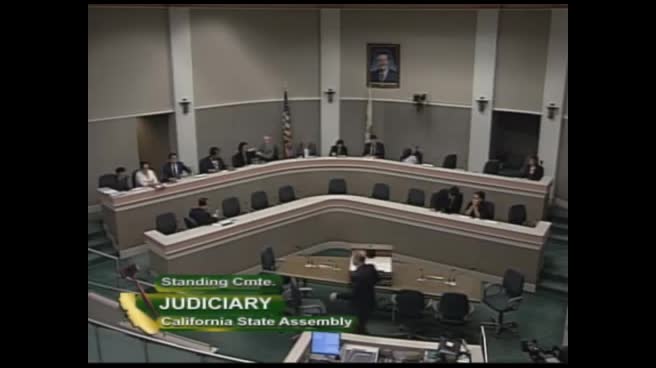
Bill Author
Bill Co-Author(s):