SB 39: Vehicles: high-occupancy vehicle lanes.
- Session Year: 2015-2016
- House: Senate
- Latest Version Date: 2015-04-08
Existing federal law, until September 30, 2017, authorizes a state to allow specified labeled vehicles to use lanes designated for high-occupancy vehicles (HOVs).
Existing law authorizes the Department of Transportation to designate certain lanes for the exclusive use of HOVs. Under existing law, until January 1, 2019, or until federal authorization expires, or until the Secretary of State receives a specified notice, those lanes may be used by certain vehicles not carrying the requisite number of passengers otherwise required for the use of an HOV lane, if the vehicle displays a valid identifier issued by the Department of Motor Vehicles (DMV). Until January 1, 2015, existing law authorizes the DMV to issue no more than 55,000 of those identifiers. On and after January 1, 2015, existing Existing law authorizes the DMV to issue no more than 70,000 of those identifiers.
This bill would increase the number of those identifiers that the DMV is authorized to issue to an unspecified amount. 85,000.
This bill would declare that it is to take effect immediately as an urgency statute.
Existing federal law, until September 30, 2017, authorizes a state to allow specified labeled vehicles to use lanes designated for high-occupancy vehicles (HOVs).
Existing law authorizes the Department of Transportation to designate certain lanes for the exclusive use of HOVs. Under existing law, until January 1, 2019, or until federal authorization expires, or until the Secretary of State receives a specified notice, those lanes may be used by certain vehicles not carrying the requisite number of passengers otherwise required for the use of an HOV lane, if the vehicle displays a valid identifier issued by the Department of Motor Vehicles (DMV). Until January 1, 2015, existing law authorizes the DMV to issue no more than 55,000 of those identifiers. On and after January 1, 2015, existing law authorizes the DMV to issue no more than 70,000 of those identifiers.
This bill would increase the number of those identifiers that the DMV is authorized to issue to an unspecified amount.
This bill would declare that it is to take effect immediately as an urgency statute.
(a)For purposes of implementing Section 21655.9, the department shall make available for issuance, for a fee determined by the department to be sufficient to reimburse the department for the actual costs incurred pursuant to this section, distinctive decals, labels, and other identifiers that clearly distinguish the following vehicles from other vehicles:
(1)A vehicle that meets Californias super ultra-low emission vehicle (SULEV) standard for exhaust emissions and the federal inherently low-emission vehicle (ILEV) evaporative emission standard, as defined in Part 88 (commencing with Section 88.101-94) of Title 40 of the Code of Federal Regulations.
(2)A vehicle that was produced during the 2004 model-year or earlier and meets Californias ultra-low emission vehicle (ULEV) standard for exhaust emissions and the federal ILEV standard.
(3)A vehicle that meets Californias enhanced advanced technology partial zero-emission vehicle (enhanced AT PZEV) standard or transitional zero-emission vehicle (TZEV) standard.
(b)The department shall include a summary of the provisions of this section on each motor vehicle registration renewal notice, or on a separate insert, if space is available and the summary can be included without incurring additional printing or postage costs.
(c)The Department of Transportation shall remove individual HOV lanes, or portions of those lanes, during periods of peak congestion from the access provisions provided in subdivision (a), following a finding by the Department of Transportation as follows:
(1)The lane, or portion thereof, exceeds a level of service C, as discussed in subdivision (b) of Section 65089 of the Government Code.
(2)The operation or projected operation of the vehicles described in subdivision (a) in these lanes, or portions thereof, will significantly increase congestion.
(3)The finding shall also demonstrate the infeasibility of alleviating the congestion by other means, including, but not limited to, reducing the use of the lane by noneligible vehicles or further increasing vehicle occupancy.
(d)The State Air Resources Board shall publish and maintain a listing of all vehicles eligible for participation in the programs described in this section. The board shall provide that listing to the department.
(e)(1)For purposes of subdivision (a), the Department of the California Highway Patrol and the department, in consultation with the Department of Transportation, shall design and specify the placement of the decal, label, or other identifier on the vehicle. Each decal, label, or other identifier issued for a vehicle shall display a unique number, which number shall be printed on, or affixed to, the vehicle registration.
(2)Decals, labels, or other identifiers designed pursuant to this subdivision for a vehicle described in paragraph (3) of subdivision (a) shall be distinguishable from the decals, labels, or other identifiers that are designed for vehicles described in paragraphs (1) and (2) of subdivision (a).
(f)(1)Except as provided in paragraph (2), for purposes of paragraph (3) of subdivision (a), the department shall issue no more than _____ 85,000 distinctive decals, labels, or other identifiers that clearly distinguish a vehicle specified in paragraph (3) of subdivision (a).
(2)The department may issue a decal, label, or other identifier for a vehicle that satisfies all of the following conditions:
(A)The vehicle is of a type identified in paragraph (3) of subdivision (a).
(B)The owner of the vehicle is the owner of a vehicle for which a decal, label, or other identifier described in paragraph (1) was previously issued and that vehicle for which the decal, label, or other identifier was previously issued is determined by the department, on the basis of satisfactory proof submitted by the owner to the department, to be a nonrepairable vehicle or a total loss salvage vehicle.
(C)The owner of the vehicle applied for a decal, label, or other identifier pursuant to this paragraph within six months of the date on which the vehicle for which a decal, label, or other identifier was previously issued is declared to be a nonrepairable vehicle or a total loss salvage vehicle.
(g)If the Metropolitan Transportation Commission, serving as the Bay Area Toll Authority, grants toll-free and reduced-rate passage on toll bridges under its jurisdiction to a vehicle pursuant to Section 30102.5 of the Streets and Highways Code, it shall also grant the same toll-free and reduced-rate passage to a vehicle displaying an identifier issued by the department pursuant to paragraph (1) or (2) of subdivision (a).
(h)(1)Notwithstanding Section 21655.9, and except as provided in paragraph (2), a vehicle described in subdivision (a) that displays a decal, label, or identifier issued pursuant to this section shall be granted a toll-free or reduced-rate passage in high-occupancy toll lanes as described in Section 149.7 of the Streets and Highways Code unless prohibited by federal law.
(2)(A)Paragraph (1) does not apply to the imposition of a toll imposed for passage on a toll road or toll highway, that is not a high-occupancy toll lane as described in Section 149.7 of the Streets and Highways Code.
(B)On or before March 1, 2014, paragraph (1) does not apply to the imposition of a toll imposed for passage in lanes designated for tolls pursuant to the federally supported value pricing and transit development demonstration program operated pursuant to Section 149.9 of the Streets and Highways Code for State Highway Route 10 or 110.
(C)Paragraph (1) does not apply to the imposition of a toll charged for crossing a state-owned bridge.
(i)If the Director of Transportation determines that federal law does not authorize the state to allow vehicles that are identified by distinctive decals, labels, or other identifiers on vehicles described in subdivision (a) to use highway lanes or highway access ramps for high-occupancy vehicles regardless of vehicle occupancy, the Director of Transportation shall submit a notice of that determination to the Secretary of State.
(j)This section shall become inoperative on January 1, 2019, or the date the federal authorization pursuant to Section 166 of Title 23 of the United States Code expires, or the date the Secretary of State receives the notice described in subdivision (i), whichever occurs first, and, as of January 1, 2019, is repealed, unless a later enacted statute, that becomes operative on or before January 1, 2019, deletes or extends the dates on which it becomes inoperative and is repealed.
SEC. 2.This act is an urgency statute necessary for the immediate preservation of the public peace, health, or safety within the meaning of Article IV of the Constitution and shall go into immediate effect. The facts constituting the necessity are:
In order to ensure, at the earliest possible time, that new owners of certain qualifying clean alternative fuel vehicles will be eligible for participation in the program, and to provide long-term incentives for consumers of clean alternative fuel vehicles, it is necessary that this act take effect immediately.
(a)For purposes of implementing Section 21655.9, the department shall make available for issuance, for a fee determined by the department to be sufficient to reimburse the department for the actual costs incurred pursuant to this section, distinctive decals, labels, and other identifiers that clearly distinguish the following vehicles from other vehicles:
(1)A vehicle that meets Californias super ultra-low emission vehicle (SULEV) standard for exhaust emissions and the federal inherently low-emission vehicle (ILEV) evaporative emission standard, as defined in Part 88 (commencing with Section 88.101-94) of Title 40 of the Code of Federal Regulations.
(2)A vehicle that was produced during the 2004 model-year or earlier and meets Californias ultra-low emission vehicle (ULEV) standard for exhaust emissions and the federal ILEV standard.
(3)A vehicle that meets Californias enhanced advanced technology partial zero-emission vehicle (enhanced AT PZEV) standard or transitional zero-emission vehicle (TZEV) standard.
(b)The department shall include a summary of the provisions of this section on each motor vehicle registration renewal notice, or on a separate insert, if space is available and the summary can be included without incurring additional printing or postage costs.
(c)The Department of Transportation shall remove individual HOV lanes, or portions of those lanes, during periods of peak congestion from the access provisions provided in subdivision (a), following a finding by the Department of Transportation as follows:
(1)The lane, or portion thereof, exceeds a level of service C, as discussed in subdivision (b) of Section 65089 of the Government Code.
(2)The operation or projected operation of the vehicles described in subdivision (a) in these lanes, or portions thereof, will significantly increase congestion.
(3)The finding shall also demonstrate the infeasibility of alleviating the congestion by other means, including, but not limited to, reducing the use of the lane by noneligible vehicles or further increasing vehicle occupancy.
(d)The State Air Resources Board shall publish and maintain a listing of all vehicles eligible for participation in the programs described in this section. The board shall provide that listing to the department.
(e)(1)For purposes of subdivision (a), the Department of the California Highway Patrol and the department, in consultation with the Department of Transportation, shall design and specify the placement of the decal, label, or other identifier on the vehicle. Each decal, label, or other identifier issued for a vehicle shall display a unique number, which number shall be printed on, or affixed to, the vehicle registration.
(2)Decals, labels, or other identifiers designed pursuant to this subdivision for a vehicle described in paragraph (3) of subdivision (a) shall be distinguishable from the decals, labels, or other identifiers that are designed for vehicles described in paragraphs (1) and (2) of subdivision (a).
(f)(1)Except as provided in paragraph (2), for purposes of paragraph (3) of subdivision (a), the department shall issue no more than 70,000 _____ distinctive decals, labels, or other identifiers that clearly distinguish a vehicle specified in paragraph (3) of subdivision (a).
(2)The department may issue a decal, label, or other identifier for a vehicle that satisfies all of the following conditions:
(A)The vehicle is of a type identified in paragraph (3) of subdivision (a).
(B)The owner of the vehicle is the owner of a vehicle for which a decal, label, or other identifier described in paragraph (1) was previously issued and that vehicle for which the decal, label, or other identifier was previously issued is determined by the department, on the basis of satisfactory proof submitted by the owner to the department, to be a nonrepairable vehicle or a total loss salvage vehicle.
(C)The owner of the vehicle applied for a decal, label, or other identifier pursuant to this paragraph within six months of the date on which the vehicle for which a decal, label, or other identifier was previously issued is declared to be a nonrepairable vehicle or a total loss salvage vehicle.
(g)If the Metropolitan Transportation Commission, serving as the Bay Area Toll Authority, grants toll-free and reduced-rate passage on toll bridges under its jurisdiction to a vehicle pursuant to Section 30102.5 of the Streets and Highways Code, it shall also grant the same toll-free and reduced-rate passage to a vehicle displaying an identifier issued by the department pursuant to paragraph (1) or (2) of subdivision (a).
(h)(1)Notwithstanding Section 21655.9, and except as provided in paragraph (2), a vehicle described in subdivision (a) that displays a decal, label, or identifier issued pursuant to this section shall be granted a toll-free or reduced-rate passage in high-occupancy toll lanes as described in Section 149.7 of the Streets and Highways Code unless prohibited by federal law.
(2)(A)Paragraph (1) does not apply to the imposition of a toll imposed for passage on a toll road or toll highway, that is not a high-occupancy toll lane as described in Section 149.7 of the Streets and Highways Code.
(B)On or before March 1, 2014, paragraph (1) does not apply to the imposition of a toll imposed for passage in lanes designated for tolls pursuant to the federally supported value pricing and transit development demonstration program operated pursuant to Section 149.9 of the Streets and Highways Code for State Highway Route 10 or 110.
(C)Paragraph (1) does not apply to the imposition of a toll charged for crossing a state-owned bridge.
(i)If the Director of Transportation determines that federal law does not authorize the state to allow vehicles that are identified by distinctive decals, labels, or other identifiers on vehicles described in subdivision (a) to use highway lanes or highway access ramps for high-occupancy vehicles regardless of vehicle occupancy, the Director of Transportation shall submit a notice of that determination to the Secretary of State.
(j)This section shall become inoperative on January 1, 2019, or the date the federal authorization pursuant to Section 166 of Title 23 of the United States Code expires, or the date the Secretary of State receives the notice described in subdivision (i), whichever occurs first, and, as of January 1, 2019, is repealed, unless a later enacted statute, that becomes operative on or before January 1, 2019, deletes or extends the dates on which it becomes inoperative and is repealed.
SEC. 2.This act is an urgency statute necessary for the immediate preservation of the public peace, health, or safety within the meaning of Article IV of the Constitution and shall go into immediate effect. The facts constituting the necessity are:
In order to ensure, at the earliest possible time, that new owners of certain qualifying clean alternative fuel vehicles will be eligible for participation in the program, and to provide long-term incentives for consumers of clean alternative fuel vehicles, it is necessary that this act take effect immediately.
|
Date
|
Status
|
|---|---|
| May 22, 2015 | Referred to Com. on TRANS. |
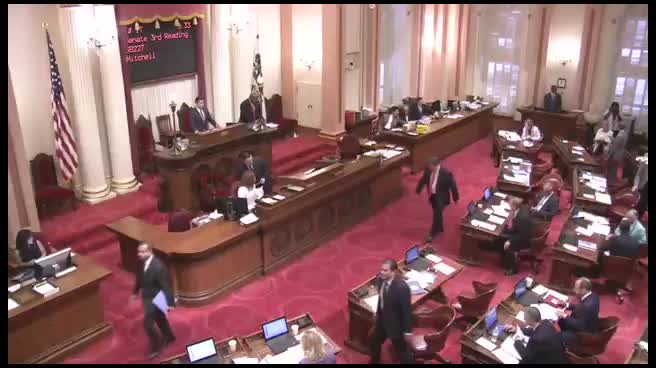
| May 7, 2015 | Read third time. Urgency clause adopted. Passed. (Ayes 29. Noes 7. Page 928.) Ordered to the Assembly. |
| May 7, 2015 | In Assembly. Read first time. Held at Desk. |
| May 5, 2015 | Read second time. Ordered to third reading. |
| May 4, 2015 | From committee: Be ordered to second reading pursuant to Senate Rule 28.8. |
| Apr 30, 2015 | Set for hearing May 4. |
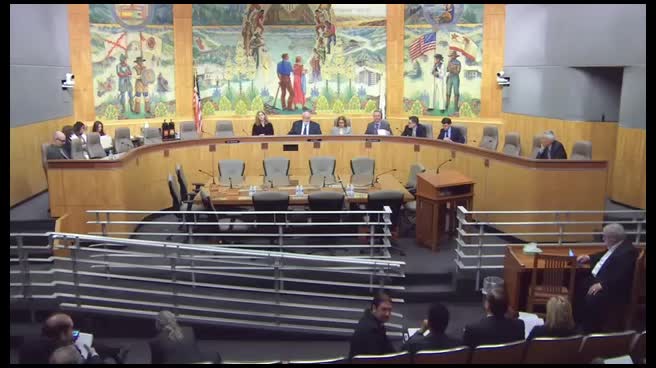
| Apr 22, 2015 | From committee: Do pass and re-refer to Com. on APPR. (Ayes 9. Noes 1. Page 731.) (April 21). Re-referred to Com. on APPR. |
| Apr 9, 2015 | Set for hearing April 21. |
| Apr 8, 2015 | From committee with author's amendments. Read second time and amended. Re-referred to Com. on T. & H. |
| Jan 15, 2015 | Referred to Com. on T. & H. |
| Dec 2, 2014 | From printer. May be acted upon on or after January 1. |
| Dec 1, 2014 | Introduced. Read first time. To Com. on RLS. for assignment. To print. |
|
Date
|
Description
|
Location
|
Votes
|
|
|---|---|---|---|---|
| May 7, 2015 | Senate 3rd Reading SB39 Pavley Urgency Clause | Senate Floor |
Passed |
|
| Apr 21, 2015 | Do pass, but first be re-referred to the Committee on [Appropriations] | Senate Standing Committee on Transportation and Housing |
Passed |
This list shows positions taken on this bill by organizations on the date displayed, which is linked to the original source.
Positions by individuals are not included.
SB 39
Page 6
|
Office of Senate Floor Analyses (916) 651-1520 Fax: (916) 327-4478 |
THIRD READING
Bill No: SB 39
Amended: 4/8/15
SENATE TRANS. & HOUSING COMMITTEE: 9-1, 4/21/15
AYES: Beall, Cannella, Allen, Galgiani, Leyva, McGuire, Mendoza, Roth, Wieckowski
NOES: Bates
NO VOTE RECORDED: Gaines
SENATE APPROPRIATIONS COMMITTEE: Senate Rule 28.8
SUBJECT: Vehicles: high-occupancy vehicle lanes
SOURCE: Alliance of Automobile Manufacturers
Association of Global Automakers
DIGEST: This bill raises the cap on the “green sticker” Clean Air Vehicle program, which allows certain low-emission vehicles to access high-occupancy vehicle (HOV) lanes with a single occupant.
ANALYSIS: Existing law provides that an HOV lane, also known as a carpool lane, aims to promote and encourage ridesharing, thereby alleviating traffic congestion and improving air quality. Depending on the particular HOV lane, a vehicle must have a minimum of either two or three occupants in order to access the lane.
Existing federal law:
Authorizes states, until September 30, 2017, to allow certain low-emission and energy-efficient vehicles with a single occupant to use HOV lanes. A state that enacts such a policy must monitor its HOV system and report to the Federal Highway Administration (FHWA) on the impact these vehicles have on highway operations. If these vehicles cause a degradation of HOV lane operations, the state must limit or discontinue clean-air vehicle use of the lanes.
Deems that an HOV lane is degraded if vehicles operating in the lane fail to maintain a minimum average operating speed (generally 45 mph) during 90% of the time over a consecutive 180-day period during morning or evening weekday peak-hour periods. Federal law requires states to take action on degraded facilities within 180 days of identifying them as degraded. If a state fails to comply, FHWA may impose sanctions, including withholding payment of federal funds and withholding approval of projects.
Existing state law:
Exempts certain clean, alternative-fuel vehicles from HOV lane occupancy requirements, so that a vehicle with just one occupant may use an HOV lane if it displays a Clean Air Vehicle sticker. The state has implemented three clean-air vehicle HOV sticker programs in recent years:
White HOV stickers. AB 71 (Cunneen, Chapter 330, Statutes of 1999) established the “white sticker program,” which allows vehicles that meet certain strict emission standards to drive in carpool lanes with a single occupant. These vehicles are typically pure battery electric vehicles, dedicated compressed natural gas or liquid petroleum gas vehicles, and hydrogen fuel cell vehicles, such as the Fiat 500e, Honda Civic CNG, Nissan Leaf, Tesla Model S, and Toyota RAV 4 EV, among others. State law does not limit the number of white stickers; as of May 4, 2015, the Department of Motor Vehicles (DMV) had issued 72,835 white stickers. Pursuant to legislation passed last year, AB 266 (Blumenfield, Chapter 405, Statutes of 2013), white stickers expire on January 1, 2019.
Yellow HOV stickers (expired). AB 2618 (Pavley, Chapter 725, Statutes of 2004) established the “yellow sticker program,” which granted HOV lane access to certain single-occupant, hybrid, or alternatively fueled vehicles. The number of vehicles that might be issued these stickers was ultimately capped at 85,000, a limit that was reached in 2007; all yellow stickers expired on July 1, 2011.
Green HOV stickers. SB 535 (Yee, Chapter 215, Statutes of 2010)
Authorizes, pursuant to federal law, the state Department of Transportation (Caltrans), if it is able to attribute unacceptable congestion levels to clean vehicles, to ban them from HOV lanes.
This urgency bill raises the cap on the green sticker program to 85,000.
Comments
Purpose. The author states that the supply of green stickers for plug-in hybrids has not kept up with demand. On May 9, 2014, DMV issued the last green sticker allowed pursuant to the 40,000 cap. Legislation passed last year, AB 2013 (Muratsuchi, Chapter 527, Statutes of 2014), raised the cap to 55,000, which was reached on September 23, 2014. Additional legislation, SB 853 (Committee on Budget and Fiscal Review, Chapter 27, Statutes of 2014), raised the cap again, to 70,000, effective January 1, 2015. The author states that even the additional allotment will soon run out; more than 5,000 stickers were issued in January 2015. Governor Brown issued an Executive Order in March 2012 setting a goal of 1.5 million zero-emission vehicles (ZEVs) on California roads by 2025. The author states that with only 200,000 ZEVs currently on the road, and a temporary softening of market demand for ZEVs due to lower gas prices, green stickers are a critical incentive to maintain consumer demand and help the state meet its long-term ZEV goals.
Do single-occupant vehicles clog carpool lanes? Caltrans submitted its most recent HOV lane degradation report to FHWA in December 2014. This report indicates that approximately 54% of HOV lanes in California were degraded during the first half of the year, and 59% during the second half of the year. According to Caltrans, this increase is associated with a seasonal increase in traffic volume. Caltrans identifies key causes of HOV lane congestion as vehicles from HOV lanes merging into general-purpose lanes at the end of the HOV lane, highway congestion, lane change conflicts when drivers attempt to enter or exit the HOV lane, traffic incidents on the freeway, and severe weather resulting in lower speeds. In Caltrans’ action report to the FHWA, also submitted in December 2014, Caltrans states that it is not considering prohibiting clean vehicles from HOV lanes because they account for a relatively small percentage of peak-hour HOV volume.
Should the cap be lifted? As noted on the state Air Resources Board (ARB) Web site regarding the yellow sticker program, “The California legislature limited the time of this early hybrid vehicle program to help promote and encourage development of newer plug-in hybrid and other zero-emissions technologies.” Automakers are already working to develop these technologies in response to the federal Corporate Average Fuel Economy and greenhouse gas emissions standards, which aim to increase fuel economy to the equivalent of 54.5 miles per gallon for cars and light-duty trucks by 2025. Automakers argue, however, that producing the cars does no good if consumers are not motivated to buy them; the green sticker program provides an incentive to do so.
Does HOV access incentivize clean car purchases? It appears that HOV lane access is no longer a primary driver of clean car purchases. The Center for Sustainable Energy (CSE) released a set of survey results at the Governor’s ZEV summit in March 2014 indicating that HOV lane access accounted for none of Tesla purchases and only 15% of Nissan Leaf, 20% of Chevy Volt, and 34% of Toyota Prius purchases or leases in the fourth quarter of 2013. For fourth quarter 2013, nearly half of Nissan Leaf (48%) and Chevy Volt (48%) purchases or leases, as well as 34% of Toyota Prius purchases or leases, were attributable to a desire to save money on fuel (this factor was not in evidence in Tesla purchases).
Time to narrow the program? The Coalition for Clean Air (CCA) has taken a “support if amended” position on this bill. CCA points out that a recent research report from the Institute of Transportation Studies at the University of California, Davis (ITS) found that drivers who purchased a plug-in vehicle with HOV lane access as the main motivation are not choosing a vehicle battery size to maximize electric vehicle miles traveled during their commute days as compared to drivers who purchased their car for other reasons. ITS found that the car with the lowest electric range, the Prius, was driven less than one electric mile for every mile on an HOV lane, as compared to four electric miles for every mile driven on an HOV lane for the Leaf. CCA recommends amending this bill to limit green stickers to vehicles capable of traveling at least 20 miles per charge.
How many incentives are enough? The ARB’s Clean Vehicle Rebate Program (CVRP) provides rebates of up to $2,500 for the purchase or lease of a new ZEV or plug-in hybrid electric vehicle. CVRP is so heavily utilized that the program ran out of funds midyear in 2014; the ARB maintained a waiting list until the program could start up again in June with the new fiscal year. In addition, the U.S. Department of Energy offers a $7,500 federal tax credit for the purchase of an electric vehicle. Clean vehicle owners also tend to enjoy free parking in commercial garages, among other benefits.
HOT lanes. A high-occupancy toll (HOT) lane, also known as an express lane, allows single-occupant vehicles to access an HOV lane by paying a toll. State law originally exempted all vehicles with green or white stickers from paying tolls in HOT lanes. AB 1721 (Linder, Chapter 526, Statutes of 2014) authorizes a toll agency to impose reduced-rate tolls (but not full tolls) on vehicles with a green or white sticker accessing the agency’s HOT lanes. Writing in opposition to this bill, the Metropolitan Transportation Commission (MTC) states that express lanes are designed to maintain the time savings benefits of HOV lanes, but also to allow single-occupant vehicles to use the lanes for a fee. MTC states that with congestion levels up to almost 40% in the Bay Area as compared to 2010, now is not the time to expand the number of single-occupant vehicles allowed in HOV or express lanes unless they pay the same toll as other single-occupant vehicles.
Social equity concerns. For a variety of reasons, low-emission vehicles often have higher purchase prices than comparable gasoline-powered vehicles. These higher purchase prices generally make low-emission vehicles that qualify for HOV lane access unaffordable for low-income drivers. (Note that the CSE survey referenced above indicated that over half of CVRP recipients earn more than $150,000 per year.) Some may question whether it is appropriate to be able to “buy” single-occupant lane access to lanes that are intended to promote ridesharing.
FISCAL EFFECT: Appropriation: No Fiscal Com.: Yes Local: No
Alliance of Automobile Manufacturers (co-source)
Association of Global Automakers (co-source)
CalETC
CALSTART
California Municipal Utilities Association
Ford Motor Company
General Motors
Sacramento Municipal Utility District
Metropolitan Transportation Commission
ARGUMENTS IN SUPPORT: The Association of Global Automakers states that the availability of the HOV lane access incentive has been cited by consumers as a key consideration in the purchase of a ZEV. The Association states that California’s strong support of advanced technology is essential to the development and commercialization of these vehicles, and cannot be achieved without the help of proven incentives like access to HOV lanes.
ARGUMENTS IN OPPOSITION: The Metropolitan Transportation Commission expresses concern that if the Legislature continues to expand this program, it could undermine a lynchpin of California’s long-term mobility strategy; namely, express lanes. MTC also urges the Legislature to consider placing a cap on the white sticker program, now that sales of alternative fuel vehicles are growing quite rapidly.
Prepared by: Erin Riches / T. & H. / (916) 651-4121
5/7/15 8:49:52
**** END ****
SB 39
Page 6
|
Office of Senate Floor Analyses (916) 651-1520 Fax: (916) 327-4478 |
THIRD READING
Bill No: SB 39
Amended: 4/8/15
SENATE TRANS. & HOUSING COMMITTEE: 9-1, 4/21/15
AYES: Beall, Cannella, Allen, Galgiani, Leyva, McGuire, Mendoza, Roth, Wieckowski
NOES: Bates
NO VOTE RECORDED: Gaines
SENATE APPROPRIATIONS COMMITTEE: Senate Rule 28.8
SUBJECT: High-occupancy vehicle lanes: low-emission vehicles
SOURCE: Alliance of Automobile Manufacturers
Association of Global Automakers
DIGEST: This bill raises the cap on the “green sticker” Clean Air Vehicle program, which allows certain low-emission vehicles to access high-occupancy vehicle (HOV) lanes with a single occupant.
ANALYSIS: Existing law provides that an HOV lane, also known as a carpool lane, aims to promote and encourage ridesharing, thereby alleviating traffic congestion and improving air quality. Depending on the particular HOV lane, a vehicle must have a minimum of either two or three occupants in order to access the lane.
Existing federal law:
Authorizes states, until September 30, 2017, to allow certain low-emission and energy-efficient vehicles with a single occupant to use HOV lanes. A state that enacts such a policy must monitor its HOV system and report to the Federal Highway Administration (FHWA) on the impact these vehicles have on highway operations. If these vehicles cause a degradation of HOV lane operations, the state must limit or discontinue clean-air vehicle use of the lanes.
Deems that an HOV lane is degraded if vehicles operating in the lane fail to maintain a minimum average operating speed (generally 45 mph) during 90% of the time over a consecutive 180-day period during morning or evening weekday peak-hour periods. Federal law requires states to take action on degraded facilities within 180 days of identifying them as degraded. If a state fails to comply, FHWA may impose sanctions, including withholding payment of federal funds and withholding approval of projects.
Existing state law:
Exempts certain clean, alternative-fuel vehicles from HOV lane occupancy requirements, so that a vehicle with just one occupant may use an HOV lane if it displays a Clean Air Vehicle sticker. The state has implemented three clean-air vehicle HOV sticker programs in recent years:
White HOV stickers. AB 71 (Cunneen, Chapter 330, Statutes of 1999) established the “white sticker program,” which allows vehicles that meet certain strict emission standards to drive in carpool lanes with a single occupant. These vehicles are typically pure battery electric vehicles, dedicated compressed natural gas or liquid petroleum gas vehicles, and hydrogen fuel cell vehicles, such as the Fiat 500e, Honda Civic CNG, Nissan Leaf, Tesla Model S, and Toyota RAV 4 EV, among others. State law does not limit the number of white stickers; as of May 4, 2015, the Department of Motor Vehicles (DMV) had issued 72,835 white stickers. Pursuant to legislation passed last year, AB 266 (Blumenfield, Chapter 405, Statutes of 2013), white stickers expire on January 1, 2019.
Yellow HOV stickers (expired). AB 2618 (Pavley, Chapter 725, Statutes of 2004) established the “yellow sticker program,” which granted HOV lane access to certain single-occupant, hybrid, or alternatively fueled vehicles. The number of vehicles that might be issued these stickers was ultimately capped at 85,000, a limit that was reached in 2007; all yellow stickers expired on July 1, 2011.
Green HOV stickers. SB 535 (Yee, Chapter 215, Statutes of 2010)
Authorizes, pursuant to federal law, the state Department of Transportation (Caltrans), if it is able to attribute unacceptable congestion levels to clean vehicles, to ban them from HOV lanes.
This urgency bill raises the cap on the green sticker program to 85,000.
Comments
Purpose. The author states that the supply of green stickers for plug-in hybrids has not kept up with demand. On May 9, 2014, DMV issued the last green sticker allowed pursuant to the 40,000 cap. Legislation passed last year, AB 2013 (Muratsuchi, Chapter 527, Statutes of 2014), raised the cap to 55,000, which was reached on September 23, 2014. Additional legislation, SB 853 (Committee on Budget and Fiscal Review, Chapter 27, Statutes of 2014), raised the cap again, to 70,000, effective January 1, 2015. The author states that even the additional allotment will soon run out; more than 5,000 stickers were issued in January 2015. Governor Brown issued an Executive Order in March 2012 setting a goal of 1.5 million zero-emission vehicles (ZEVs) on California roads by 2025. The author states that with only 200,000 ZEVs currently on the road, and a temporary softening of market demand for ZEVs due to lower gas prices, green stickers are a critical incentive to maintain consumer demand and help the state meet its long-term ZEV goals.
Do single-occupant vehicles clog carpool lanes? Caltrans submitted its most recent HOV lane degradation report to FHWA in December 2014. This report indicates that approximately 54% of HOV lanes in California were degraded during the first half of the year, and 59% during the second half of the year. According to Caltrans, this increase is associated with a seasonal increase in traffic volume. Caltrans identifies key causes of HOV lane congestion as vehicles from HOV lanes merging into general-purpose lanes at the end of the HOV lane, highway congestion, lane change conflicts when drivers attempt to enter or exit the HOV lane, traffic incidents on the freeway, and severe weather resulting in lower speeds. In Caltrans’ action report to the FHWA, also submitted in December 2014, Caltrans states that it is not considering prohibiting clean vehicles from HOV lanes because they account for a relatively small percentage of peak-hour HOV volume.
Should the cap be lifted? As noted on the state Air Resources Board (ARB) Web site regarding the yellow sticker program, “The California legislature limited the time of this early hybrid vehicle program to help promote and encourage development of newer plug-in hybrid and other zero-emissions technologies.” Automakers are already working to develop these technologies in response to the federal Corporate Average Fuel Economy and greenhouse gas emissions standards, which aim to increase fuel economy to the equivalent of 54.5 miles per gallon for cars and light-duty trucks by 2025. Automakers argue, however, that producing the cars does no good if consumers are not motivated to buy them; the green sticker program provides an incentive to do so.
Does HOV access incentivize clean car purchases? It appears that HOV lane access is no longer a primary driver of clean car purchases. The Center for Sustainable Energy (CSE) released a set of survey results at the Governor’s ZEV summit in March 2014 indicating that HOV lane access accounted for none of Tesla purchases and only 15% of Nissan Leaf, 20% of Chevy Volt, and 34% of Toyota Prius purchases or leases in the fourth quarter of 2013. For fourth quarter 2013, nearly half of Nissan Leaf (48%) and Chevy Volt (48%) purchases or leases, as well as 34% of Toyota Prius purchases or leases, were attributable to a desire to save money on fuel (this factor was not in evidence in Tesla purchases).
Time to narrow the program? The Coalition for Clean Air (CCA) has taken a “support if amended” position on this bill. CCA points out that a recent research report from the Institute of Transportation Studies at the University of California, Davis (ITS) found that drivers who purchased a plug-in vehicle with HOV lane access as the main motivation are not choosing a vehicle battery size to maximize electric vehicle miles traveled during their commute days as compared to drivers who purchased their car for other reasons. ITS found that the car with the lowest electric range, the Prius, was driven less than one electric mile for every mile on an HOV lane, as compared to four electric miles for every mile driven on an HOV lane for the Leaf. CCA recommends amending this bill to limit green stickers to vehicles capable of traveling at least 20 miles per charge.
How many incentives are enough? The ARB’s Clean Vehicle Rebate Program (CVRP) provides rebates of up to $2,500 for the purchase or lease of a new ZEV or plug-in hybrid electric vehicle. CVRP is so heavily utilized that the program ran out of funds midyear in 2014; the ARB maintained a waiting list until the program could start up again in June with the new fiscal year. In addition, the U.S. Department of Energy offers a $7,500 federal tax credit for the purchase of an electric vehicle. Clean vehicle owners also tend to enjoy free parking in commercial garages, among other benefits.
HOT lanes. A high-occupancy toll (HOT) lane, also known as an express lane, allows single-occupant vehicles to access an HOV lane by paying a toll. State law originally exempted all vehicles with green or white stickers from paying tolls in HOT lanes. AB 1721 (Linder, Chapter 526, Statutes of 2014) authorizes a toll agency to impose reduced-rate tolls (but not full tolls) on vehicles with a green or white sticker accessing the agency’s HOT lanes. Writing in opposition to this bill, the Metropolitan Transportation Commission (MTC) states that express lanes are designed to maintain the time savings benefits of HOV lanes, but also to allow single-occupant vehicles to use the lanes for a fee. MTC states that with congestion levels up to almost 40% in the Bay Area as compared to 2010, now is not the time to expand the number of single-occupant vehicles allowed in HOV or express lanes unless they pay the same toll as other single-occupant vehicles.
Social equity concerns. For a variety of reasons, low-emission vehicles often have higher purchase prices than comparable gasoline-powered vehicles. These higher purchase prices generally make low-emission vehicles that qualify for HOV lane access unaffordable for low-income drivers. (Note that the CSE survey referenced above indicated that over half of CVRP recipients earn more than $150,000 per year.) Some may question whether it is appropriate to be able to “buy” single-occupant lane access to lanes that are intended to promote ridesharing.
FISCAL EFFECT: Appropriation: No Fiscal Com.: Yes Local: No
Alliance of Automobile Manufacturers (co-source)
Association of Global Automakers (co-source)
CalETC
CALSTART
California Municipal Utilities Association
Ford Motor Company
Sacramento Municipal Utility District
Metropolitan Transportation Commission
ARGUMENTS IN SUPPORT: The Association of Global Automakers states that the availability of the HOV lane access incentive has been cited by consumers as a key consideration in the purchase of a ZEV. The Association states that California’s strong support of advanced technology is essential to the development and commercialization of these vehicles, and cannot be achieved without the help of proven incentives like access to HOV lanes.
ARGUMENTS IN OPPOSITION: The Metropolitan Transportation Commission expresses concern that if the Legislature continues to expand this program, it could undermine a lynchpin of California’s long-term mobility strategy; namely, express lanes. MTC also urges the Legislature to consider placing a cap on the white sticker program, now that sales of alternative fuel vehicles are growing quite rapidly.
Prepared by: Erin Riches / T. & H. / (916) 651-4121
5/6/15 16:16:12
**** END ****
SB 39 (Pavley) Page 6 of 6
SENATE COMMITTEE ON TRANSPORTATION AND HOUSING
Senator Jim Beall, Chair
2015 - 2016 Regular
Bill No: SB 39 Hearing Date: 4/21/2015
Author: |
Pavley |
||
Version: |
4/8/2015 |
||
Urgency: |
Yes |
Fiscal: |
Yes |
Consultant: |
Erin Riches |
||
SUBJECT: High-occupancy vehicle (HOV) lanes: low-emission vehicles
DIGEST: This bill raises the cap on the “green sticker” Clean Air Vehicle program, which allows certain low-emission vehicles to access HOV lanes with a single occupant.
ANALYSIS:
An HOV lane, also known as a carpool lane, aims to promote and encourage ridesharing, thereby alleviating traffic congestion and improving air quality. Depending on the particular HOV lane, a vehicle must have a minimum of either two or three occupants in order to access the lane.
Existing federal law authorizes states, until September 30, 2017, to allow certain low-emission and energy-efficient vehicles with a single occupant to use HOV lanes. A state that enacts such a policy must monitor its HOV system and report to the Federal Highway Administration (FHWA) on the impact these vehicles have on highway operations. If these vehicles cause a degradation of HOV lane operations, the state must limit or discontinue clean-air vehicle use of the lanes. Federal law deems that an HOV lane is degraded if vehicles operating in the lane fail to maintain a minimum average operating speed (generally 45 mph) during 90% of the time over a consecutive 180-day period during morning or evening weekday peak-hour periods. Federal law requires states to take action on degraded facilities within 180 days of identifying them as degraded. If a state fails to comply, FHWA may impose sanctions, including withholding payment of federal funds and withholding approval of projects.
Existing state law exempts certain clean, alternative-fuel vehicles from HOV lane occupancy requirements, so that a vehicle with just one occupant may use an HOV lane if it displays a Clean Air Vehicle sticker. The state has implemented three clean-air vehicle HOV sticker programs in recent years:
White HOV stickers. AB 71 (Cunneen), Chapter 330, Statutes of 1999, established the “white sticker program,” which allows vehicles that meet certain strict emission standards to drive in carpool lanes with a single occupant. These vehicles are typically pure battery electric vehicles, dedicated compressed natural gas or liquid petroleum gas vehicles, and hydrogen fuel cell vehicles, such as the Fiat 500e, Honda Civic CNG, Nissan Leaf, Tesla Model S, and Toyota RAV 4 EV, among others. State law does not limit the number of white stickers; as of March 31, 2015, DMV had issued 70,978 white stickers. White stickers expire on January 1, 2019.
Yellow HOV stickers (expired). AB 2618 (Pavley), Chapter 725, Statutes of 2004, established the “yellow sticker program,” which granted HOV lane access to certain single-occupant, hybrid or alternatively fueled vehicles. The number of vehicles that might be issued these stickers was ultimately capped at 85,000, a limit that was reached in 2007; all yellow stickers expired on July 1, 2011.
Green HOV stickers. SB 535 (Yee), Chapter 215, Statutes of 2010, established the “green sticker program,” which allows certain single-occupant vehicles – generally, plug-in hybrid vehicles – to drive in carpool lanes. Eligible vehicles include the BMW i3 Rex, Cadillac ELR, Chevrolet Volt, Ford C-Max Energi, Ford Fusion Energi, Honda Accord Plug-in Hybrid, and Toyota Prius Plug-in. State law limits the number of green stickers that DMV may issue to 70,000. The green sticker program began on January 1, 2012; as of March 31, 2015, DMV had issued 62,973 green stickers. Green stickers expire on January 1, 2019.
Pursuant to federal law, state law authorizes the state Department of Transportation (Caltrans), if it is able to attribute unacceptable congestion levels to clean vehicles, to ban them from HOV lanes.
This urgency bill raises the cap on the green sticker program to 85,000.
COMMENTS:
Purpose. The author states that the supply of green stickers for plug-in hybrids has not kept up with demand. On May 9, 2014, DMV issued the last green sticker allowed pursuant to the 40,000 cap. Legislation passed last year (see below) raised the cap to 55,000, which was reached on September 23, 2014. Additional legislation raised the cap again, to 70,000, effective January 1, 2015. The author states that even the additional allotment will soon run out; more than 5,000 stickers were issued in January. Governor Brown issued an Executive Order in March 2012 setting a goal of 1.5 million zero-emission vehicles (ZEVs) on California roads by 2025. The author states that with only 200,000 ZEVs currently on the road, and a temporary softening of market demand for ZEVs due to lower gas prices, green stickers are a critical incentive to maintain consumer demand and help the state meet its long-term ZEV goals.
Do single-occupant vehicles clog carpool lanes? Caltrans submitted its most recent HOV lane degradation report to FHWA in December 2014. This report indicates that approximately 54% of HOV lanes in California were degraded during the first half of the year, and 59% during the second half of the year. According to Caltrans, this increase is associated with a seasonal increase in traffic volume. Caltrans identifies key causes of HOV lane congestion as vehicles from HOV lanes merging into general-purpose lanes at the end of the HOV lane, highway congestion, lane change conflicts when drivers attempt to enter or exit the HOV lane, traffic incidents on the freeway, and severe weather resulting in lower speeds. In Caltrans’ action report to the FHWA, also submitted in December 2014, Caltrans states that it is not considering prohibiting clean vehicles from HOV lanes because they account for a relatively small percentage of peak-hour HOV volume.
Should the cap be lifted? As noted on the ARB website regarding the yellow sticker program, “The California legislature limited the time of this early hybrid vehicle program to help promote and encourage development of newer plug-in hybrid and other zero-emissions technologies.” Automakers are already working to develop these technologies in response to the federal Corporate Average Fuel Economy (CAFE) and greenhouse gas emissions standards, which aim to increase fuel economy to the equivalent of 54.5 miles per gallon for cars and light-duty trucks by 2025. Automakers argue, however, that producing the cars does no good if consumers are not motivated to buy them; the green sticker program provides an incentive to do so.
Does HOV access incentivize clean car purchases? It appears that HOV lane access is no longer a primary driver of clean car purchases. The Center for Sustainable Energy (CSE) released a set of survey results at the Governor’s ZEV summit in March 2014 indicating that HOV lane access accounted for none of Tesla purchases and only 15% of Nissan Leaf, 20% of Chevy Volt, and 34% of Toyota Prius purchases or leases in the fourth quarter of 2013. For fourth quarter 2013, nearly half of Nissan Leaf (48%) and Chevy Volt (48%) purchases or leases, as well as 34% of Toyota Prius purchases or leases, were attributable to a desire to save money on fuel (this factor was not in evidence in Tesla purchases).
Time to narrow the program? The Coalition for Clean Air (CCA) has taken a “support if amended” position on this bill. CCA points out that a recent research report from the Institute of Transportation Studies at the University of California, Davis (ITS) found that drivers who purchased a plug-in vehicle with HOV lane access as the main motivation are not choosing a vehicle battery size to maximize electric vehicle miles traveled during their commute days as compared to drivers who purchased their car for other reasons. ITS found that the car with the lowest electric range, the Prius, was driven less than one electric mile for every mile on an HOV lane, as compared to four electric miles for every mile driven on an HOV lane for the Leaf. CCA recommends amending this bill to limit green stickers to vehicles capable of traveling at least 20 miles per charge.
How many incentives are enough? The state Air Resources Board’s (ARB) Clean Vehicle Rebate Program (CVRP) provides rebates of up to $2,500 for the purchase or lease of a new zero-emission vehicle or plug-in hybrid electric vehicle. CVRP is so heavily utilized that the program ran out of funds midyear in 2014; the ARB maintained a waiting list until the program could start up again in June with the new fiscal year. In addition, the U.S. Department of Energy offers a $7,500 federal tax credit for the purchase of an electric vehicle. Clean vehicle owners also tend to enjoy free parking in commercial garages, among other benefits.
HOT lanes. A high-occupancy toll (HOT) lane, also known as an express lane, allows single-occupant vehicles to access an HOV lane by paying a toll. State law originally exempted all vehicles with green or white stickers from paying tolls in HOT lanes. AB 1721 (Linder), Chapter 526, Statutes of 2014, authorizes a toll agency to impose reduced-rate tolls (but not full tolls) on vehicles with a green or white sticker accessing the agency’s HOT lanes. Writing in opposition to this bill, the Metropolitan Transportation Commission (MTC) states that express lanes are designed to maintain the time savings benefits of HOV lanes, but also to allow single-occupant vehicles to use the lanes for a fee. MTC states that with congestion levels up to almost 40% in the Bay Area as compared to 2010, now is not the time to expand the number of single-occupant vehicles allowed in HOV or express lanes unless they pay the same toll as other single-occupant vehicles.
Social equity concerns. For a variety of reasons, low-emission vehicles often have higher purchase prices than comparable gasoline-powered vehicles. These higher purchase prices generally make low-emission vehicles that qualify for HOV lane access unaffordable for low-income drivers. (Note that the CCSE survey referenced above indicated that over half of CVRP recipients earn more than $150,000 per year.) Some may question whether it is appropriate to be able to “buy” single-occupant lane access to lanes that are intended to promote ridesharing.
Related Legislation:
AB 914 (Brown), which will be heard in the Assembly Transportation Committee later this month, authorizes the San Bernardino County Transportation Commission to construct and operate toll facilities on State Highway Routes 10 and 15, and, upon agreement, in Los Angeles and Riverside Counties. AB 914 includes a provision that green- and white-sticker vehicles would not be exempt from tolls on these toll facilities.
AB 2013 (Muratsuchi, Chapter 527, Statutes of 2014) — raised the cap on the green sticker program from 55,000 to 70,000, effective January 1, 2015.
SB 853 (Committee on Budget and Fiscal Review, Chapter 27, Statutes of 2014) — raised the cap on the green sticker program from 40,000 to 55,000, effective immediately.
SB 286 (Yee, Chapter 414, Statutes of 2013) — extended the sunset on the green sticker program from January 1, 2015, to January 1, 2019 or until federal authorization expires, whichever comes first.
SB 535 (Yee, Chapter 215, Statutes of 2014) — extended the sunset on the white sticker program from January 1, 2015 to January 1, 2019 or until federal authorization expires, whichever comes first.
FISCAL EFFECT: Appropriation: No Fiscal Com.: Yes Local: No
POSITIONS: (Communicated to the committee before noon on Wednesday,
April 15, 2015.)
SUPPORT:
Alliance of Automobile Manufacturers (sponsor)
Association of Global Automakers
California Electric Transportation Coalition
California Municipal Utilities Association
Sacramento Municipal Utility District
OPPOSITION:
Coalition for Clean Air
Metropolitan Transportation Commission
-- END --
Discussed in Hearing
 7MIN
Senate Floor
 11MIN
Senate Standing Committee on Transportation and Housing
Bill Author