SB 4: Health care coverage: immigration status.
- Session Year: 2015-2016
- House: Senate
- Latest Version Date: 2015-10-09
Existing law provides for the Medi-Cal program, which is administered by the State Department of Health Care Services, under which qualified low-income individuals receive health care services. The Medi-Cal program is, in part, governed and funded by federal Medicaid program provisions. Existing law extends eligibility for full-scope Medi-Cal benefits to individuals under 19 years of age who do not have, or are unable to establish, satisfactory immigration status, commencing after the Director of Health Care Services determines that systems have been programmed for implementation of this extension, but in no case sooner than May 1, 2016. Existing law requires these individuals to enroll in a Medi-Cal managed care health plan in those counties in which a Medi-Cal managed care health plan is available.
This bill would require individuals under 19 years of age enrolled in restricted-scope Medi-Cal at the time the director makes the above-described determination to be enrolled in the full scope of Medi-Cal benefits, if otherwise eligible, pursuant to an eligibility and enrollment plan, as specified. The bill would require the department, beginning January 31, 2016, and until the director makes the above-described determination, to provide monthly updates to the policy and fiscal committees of the Legislature, as specified. The bill would also require that an individual who is eligible pursuant to these provisions enroll in a Medi-Cal managed care health plan. The bill would not preclude a beneficiary from being enrolled in any other childrens Medi-Cal specialty program that he or she would otherwise be eligible for.
Existing law provides for the Medi-Cal program, which is administered by the State Department of Health Care Services, under which qualified low-income individuals receive health care services. The Medi-Cal program is, in part, governed and funded by federal Medicaid program provisions. Existing law extends eligibility for full-scope Medi-Cal benefits to individuals under 19 years of age who do not have, or are unable to establish, satisfactory immigration status, commencing after the Director of Health Care Services determines that systems have been programmed for implementation of this extension, but in no case sooner than May 1, 2016. Existing law requires these individuals to enroll in a Medi-Cal managed care health plan in those counties in which a Medi-Cal managed care health plan is available.
This bill would require individuals under 19 years of age enrolled in restricted-scope Medi-Cal at the time the director makes the above-described determination to be enrolled in the full scope of Medi-Cal benefits, if otherwise eligible, pursuant to an eligibility and enrollment plan, as specified. The bill would require the department, beginning January 31, 2016, and until the director makes the above-described determination, to provide monthly updates to the policy and fiscal committees of the Legislature, as specified. The bill would also require that an individual who is eligible pursuant to these provisions enroll in a Medi-Cal managed care health plan. The bill would not preclude a beneficiary from being enrolled in any other childrens Medi-Cal specialty program that he or she would otherwise be eligible for.
Existing law provides for the Medi-Cal program, which is administered by the State Department of Health Care Services, under which qualified low-income individuals receive health care services. The Medi-Cal program is, in part, governed and funded by federal Medicaid Program provisions. Existing law extends eligibility for full-scope Medi-Cal benefits to individuals under 19 years of age who do not have, or are unable to establish, satisfactory immigration status, commencing after the Director of Health Care Services determines that systems have been programmed for implementation of this extension, but in no case sooner than May 1, 2016. Existing law requires these individuals to enroll in a Medi-Cal managed care health plan in those counties in which a Medi-Cal managed care health plan is available.
This bill would require individuals under 19 years of age enrolled in restricted-scope Medi-Cal at the time the director makes the above-described determination to be enrolled in the full scope of Medi-Cal benefits, if otherwise eligible, pursuant to an eligibility and enrollment plan, as specified. The bill would require the department, beginning January 31, 2016, and until the director makes the above-described determination, to provide monthly updates to the policy and fiscal committees of the Legislature, as specified. The bill would also require that an individual who is eligible pursuant to these provisions enroll in a Medi-Cal managed care health plan. The bill would not preclude a beneficiary from being enrolled in any other childrens Medi-Cal specialty program that he or she would otherwise be eligible for.
Existing law, the federal Patient Protection and Affordable Care Act (PPACA), requires each state to establish an American Health Benefit Exchange that facilitates the purchase of qualified health plans by qualified individuals and qualified small employers, and meets certain other requirements. PPACA specifies that an individual who is not a citizen or national of the United States or an alien lawfully present in the United States shall not be treated as a qualified individual and may not be covered under a qualified health plan offered through an exchange. Existing law creates the California Health Benefit Exchange for the purpose of facilitating the enrollment of qualified individuals and qualified small employers in qualified health plans as required under PPACA.
This bill would require the Secretary of the California Health and Human Services Agency to apply to the United States Department of Health and Human Services for a waiver to allow individuals who are not eligible to obtain health coverage because of their immigration status to obtain coverage from the California Health Benefit Exchange. The bill would require, after that waiver has been granted, the California Health Benefit Exchange to offer California qualified health benefit plans, as specified, to these individuals. The bill would require that individuals eligible to purchase California qualified health plans pay the cost of coverage without federal assistance.
Existing law provides for the Medi-Cal program, which is administered by the State Department of Health Care Services, under which qualified low-income individuals receive health care services. The Medi-Cal program is, in part, governed and funded by federal Medicaid Program provisions. Existing law extends eligibility for full-scope Medi-Cal benefits to individuals under 19 years of age who do not have, or are unable to establish, satisfactory immigration status, commencing after the Director of Health Care Services determines that systems have been programmed for implementation of this extension, but in no case sooner than May 1, 2016. Existing law requires these individuals to enroll in a Medi-Cal managed care health plan in those counties in which a Medi-Cal managed care health plan is available.
This bill would require individuals under 19 years of age enrolled in restricted-scope Medi-Cal at the time the director makes the above-described determination to be transitioned to full-scope Medi-Cal within 30 days of that determination. enrolled in the full scope of Medi-Cal benefits, if otherwise eligible, pursuant to an eligibility and enrollment plan, as specified. The bill would also require that an individual who is eligible pursuant to these provisions enroll in a Medi-Cal managed care health plan if the individual would otherwise have been required to enroll in that plan. The bill would not preclude a beneficiary from being enrolled in any other childrens Medi-Cal specialty program that he or she would otherwise be eligible for.
Existing law, the federal Patient Protection and Affordable Care Act (PPACA), requires each state to establish an American Health Benefit Exchange that facilitates the purchase of qualified health plans by qualified individuals and qualified small employers, and meets certain other requirements. PPACA specifies that an individual who is not a citizen or national of the United States or an alien lawfully present in the United States shall not be treated as a qualified individual and may not be covered under a qualified health plan offered through an exchange. Existing law creates the California Health Benefit Exchange for the purpose of facilitating the enrollment of qualified individuals and qualified small employers in qualified health plans as required under PPACA.
This bill would require the Secretary of the California Health and Human Services Agency to apply to the United States Department of Health and Human Services for a waiver to allow individuals who are not eligible to obtain health coverage because of their immigration status to obtain coverage from the California Health Benefit Exchange. The bill would require, after that waiver has been granted, the California Health Benefit Exchange to offer California qualified health benefit plans, as specified, to these individuals. The bill would require that individuals eligible to purchase California qualified health plans pay the cost of coverage without federal assistance.
Existing law provides for the Medi-Cal program, which is administered by the State Department of Health Care Services, under which qualified low-income individuals receive health care services. The Medi-Cal program is, in part, governed and funded by federal Medicaid Program provisions. Existing law extends eligibility for full-scope Medi-Cal benefits to individuals under 19 years of age who do not have, or are unable to establish, satisfactory immigration status, commencing after the Director of Health Care Services determines that systems have been programmed for implementation of this extension, but in no case sooner than May 1, 2016. Existing law requires these individuals to enroll in a Medi-Cal managed care health plan in those counties in which a Medi-Cal managed care health plan is available.
This bill would require individuals under 19 years of age enrolled in restricted-scope Medi-Cal at the time the director makes the above-described determination to be transitioned to full-scope Medi-Cal within 30 days of that determination. The bill would also require that an individual who is eligible pursuant to these provisions enroll in a Medi-Cal managed care health plan if the individual would otherwise have been required to enroll in that plan.
Existing law, the federal Patient Protection and Affordable Care Act (PPACA), requires each state to establish an American Health Benefit Exchange that facilitates the purchase of qualified health plans by qualified individuals and qualified small employers, and meets certain other requirements. PPACA specifies that an individual who is not a citizen or national of the United States or an alien lawfully present in the United States shall not be treated as a qualified individual and may not be covered under a qualified health plan offered through an exchange. Existing law creates the California Health Benefit Exchange for the purpose of facilitating the enrollment of qualified individuals and qualified small employers in qualified health plans as required under PPACA.
This bill would require the Secretary of the California Health and Human Services Agency to apply to the United States Department of Health and Human Services for a waiver to allow individuals who are not eligible to obtain health coverage because of their immigration status to obtain coverage from the California Health Benefit Exchange. The bill would require, after that waiver has been granted, the California Health Benefit Exchange to offer California qualified health benefit plans, as specified, to these individuals. The bill would require that individuals eligible to purchase California qualified health plans pay the cost of coverage without federal assistance.
Existing law provides for the Medi-Cal program, which is administered by the State Department of Health Care Services, under which qualified low-income individuals receive health care services. The Medi-Cal program is, in part, governed and funded by federal Medicaid Program provisions. Existing law extends eligibility for full-scope Medi-Cal benefits to individuals under 19 years of age who do not have, or are unable to establish, satisfactory immigration status, commencing after the Director of Health Care Services determines that systems have been programmed for implementation of this extension, but in no case sooner than May 1, 2016. Existing law requires these individuals to enroll in a Medi-Cal managed care health plan in those counties in which a Medi-Cal managed care health plan is available.
This bill would require individuals under 19 years of age enrolled in restricted-scope Medi-Cal at the time the director makes the above-described determination to be transitioned to full-scope Medi-Cal within 30 days of that determination. The bill would also require that an individual who is eligible pursuant to these provisions enroll in a Medi-Cal managed care health plan if the individual would otherwise have been required to enroll in that plan.
Existing law, the federal Patient Protection and Affordable Care Act (PPACA), requires each state to establish an American Health Benefit Exchange that facilitates the purchase of qualified health plans by qualified individuals and qualified small employers, and meets certain other requirements. PPACA specifies that an individual who is not a citizen or national of the United States or an alien lawfully present in the United States shall not be treated as a qualified individual and may not be covered under a qualified health plan offered through an exchange. Existing law creates the California Health Benefit Exchange for the purpose of facilitating the enrollment of qualified individuals and qualified small employers in qualified health plans as required under PPACA.
Existing law governs health care service plans and insurers. A willful violation of the provisions governing health care service plans is a crime.
This bill would require the Secretary of the California Health and Human Services Agency to apply to the United States Department of Health and Human Services for a waiver to allow individuals who are not eligible to obtain health coverage because of their immigration status to obtain coverage from the California Health Benefit Exchange. The bill would require, after that waiver has been granted, the California Health Benefit Exchange to offer California qualified health benefit plans, as specified, to these individuals. The bill would require that individuals eligible to purchase California qualified health plans pay the cost of coverage without federal assistance. These requirements would become operative when federal approval of the waiver is granted.
Existing law provides for the Medi-Cal program, which is administered by the State Department of Health Care Services, under which qualified low-income individuals receive health care services. The Medi-Cal program is, in part, governed and funded by federal Medicaid Program provisions. The federal Medicaid Program provisions prohibit payment to a state for medical assistance furnished to an alien who is not lawfully admitted for permanent residence or otherwise permanently residing in the United States under color of law. Existing law extends eligibility for full-scope Medi-Cal benefits to individuals under 19 years of age who do not have, or are unable to establish, satisfactory immigration status, commencing after the Director of Health Care Services determines that systems have been programmed for implementation of this extension, but in no case sooner than May 1, 2016. Existing law requires these individuals to enroll in a Medi-Cal managed care health plan in those counties in which a Medi-Cal managed care health plan is available.
This bill would extend eligibility for full-scope Medi-Cal benefits to individuals under 19 years of age who are otherwise eligible for those benefits but for their immigration status. The bill would also extend eligibility for either limited scope Medi-Cal benefits or full-scope Medi-Cal benefits to individuals 19 years of age and older who are otherwise eligible for those benefits but for their immigration status if the department determines that sufficient funding is available. The bill would require these individuals to enroll into Medi-Cal managed care health plans, and to pay copayments and premium contributions, to the extent required of otherwise eligible Medi-Cal recipients who are similarly situated. The bill would require that benefits for those services be provided with state-only funds only if federal financial participation is not available. Because counties are required to make Medi-Cal eligibility determinations and this bill would expand Medi-Cal eligibility, the bill would impose a state-mandated local program.
This bill would require the State Department of Health Care Services to develop a transition plan for individuals under 19 years of age who are enrolled in restricted-scope Medi-Cal as of the effective date of the bill, and who are otherwise eligible for full-scope Medi-Cal coverage but for their immigration status, to transition directly to full-scope Medi-Cal coverage. The bill would require the department to notify these individuals, as specified.
The California Constitution requires the state to reimburse local agencies and school districts for certain costs mandated by the state. Statutory provisions establish procedures for making that reimbursement.
This bill would provide that with regard to certain mandates no reimbursement is required by this act for a specified reason.
With regard to any other mandates, this bill would provide that, if the Commission on State Mandates determines that the bill contains costs so mandated by the state, reimbursement for those costs shall be made pursuant to the statutory provisions noted above.
This bill would require individuals enrolled in restricted-scope Medi-Cal at the time the director makes the above-described determination to be transitioned to full-scope Medi-Cal within 30 days of that determination. The bill would also require that an individual who is eligible pursuant to these provisions enroll in a Medi-Cal managed care health plan if the individual would otherwise have been required to enroll in that plan.
Existing law, the federal Patient Protection and Affordable Care Act (PPACA), requires each state to establish an American Health Benefit Exchange that facilitates the purchase of qualified health plans by qualified individuals and qualified small employers, and meets certain other requirements. PPACA specifies that an individual who is not a citizen or national of the United States or an alien lawfully present in the United States shall not be treated as a qualified individual and may not be covered under a qualified health plan offered through an exchange. Existing law creates the California Health Benefit Exchange for the purpose of facilitating the enrollment of qualified individual individuals and qualified small employers in qualified health plans as required under PPACA.
Existing law governs health care service plans and insurers. A willful violation of the provisions governing health care service plans is a crime.
This bill would require the Secretary of California Health and Human Services to apply to the United States Department of Health and Human Services for a waiver to allow individuals who are not eligible to obtain health coverage because of their immigration status to obtain coverage from the California Health Benefit Exchange. The bill would require the California Health Benefit Exchange to offer qualified health benefit plans, as specified, to these individuals. The bill would require that individuals eligible to purchase California qualified health plans pay the cost of coverage without federal assistance. These requirements would become operative when federal approval of the waiver is granted. If federal approval is not granted on or before January 1, 2017, the bill would create the California Health Exchange Program For All Californians within state government.
The bill would require that the California Health Exchange Program For All Californians (Program) be governed by the executive board that governs the California Health Benefit Exchange. The bill would specify the duties of the board relative to the program and would require the board to, by a specified date, facilitate the enrollment into qualified health plans of individuals who are not eligible for full-scope Medi-Cal coverage and would have been eligible to purchase coverage through the Exchange but for their immigration status. The bill would create the California Health Trust Fund For All Californians as a continuously appropriated fund, thereby making an appropriation, would require the board to assess a charge on qualified health plans, and would make the implementation of the programs provisions contingent on a determination by the board that sufficient financial resources exist or will exist in the fund. The bill would enact other related provisions.
The bill would require health care service plans and health insurers to fairly and affirmatively offer, market, and sell in the program at least one product within each of the 5 levels of coverage, as specified. Because a violation of the requirements imposed on health care service plans would be a crime, the bill would impose a state-mandated local program.
Existing law provides for the Medi-Cal program, which is administered by the State Department of Health Care Services, under which qualified low-income individuals receive health care services. The Medi-Cal program is, in part, governed and funded by federal Medicaid Program provisions. The federal Medicaid Program provisions prohibit payment to a state for medical assistance furnished to an alien who is not lawfully admitted for permanent residence or otherwise permanently residing in the United States under color of law.
This bill would extend eligibility for full-scope Medi-Cal benefits to individuals under 19 years of age who are otherwise eligible for those benefits but for their immigration status. The bill would also extend eligibility for either limited scope Medi-Cal benefits or full-scope Medi-Cal benefits to individuals 19 years of age and older who are otherwise eligible for those benefits but for their immigration status if the department determines that sufficient funding is available. The bill would require these individuals to enroll into Medi-Cal managed care health plans, and to pay copayments and premium contributions, to the extent required of otherwise eligible Medi-Cal recipients who are similarly situated. The bill would require that benefits for those services be provided with state-only funds only if federal financial participation is not available. Because counties are required to make Medi-Cal eligibility determinations and this bill would expand Medi-Cal eligibility, the bill would impose a state-mandated local program.
The
This bill would require the State Department of Health Care Services to develop a transition plan for individuals under 19 years of age who are enrolled in restricted-scope Medi-Cal as of a specified date, the effective date of the bill, and who are otherwise eligible for full-scope Medi-Cal coverage but for their immigration status, to transition directly to full-scope Medi-Cal coverage. The bill would require the department to notify these individuals, as specified.
The California Constitution requires the state to reimburse local agencies and school districts for certain costs mandated by the state. Statutory provisions establish procedures for making that reimbursement.
This bill would provide that with regard to certain mandates no reimbursement is required by this act for a specified reason.
With regard to any other mandates, this bill would provide that, if the Commission on State Mandates determines that the bill contains costs so mandated by the state, reimbursement for those costs shall be made pursuant to the statutory provisions noted above.
Existing law, the federal Patient Protection and Affordable Care Act (PPACA), requires each state to establish an American Health Benefit Exchange that facilitates the purchase of qualified health plans by qualified individuals and qualified small employers, and meets certain other requirements. PPACA specifies that an individual who is not a citizen or national of the United States or an alien lawfully present in the United States shall not be treated as a qualified individual and may not be covered under a qualified health plan offered through an exchange. Existing law creates the California Health Benefit Exchange for the purpose of facilitating the enrollment of qualified individual and qualified small employers in qualified health plans as required under PPACA.
Existing law governs health care service plans and insurers. A willful violation of the provisions governing health care service plans is a crime.
This bill would require the Secretary of California Health and Human Services to apply to the United States Department of Health and Human Services for a waiver to allow individuals who are not eligible to obtain health coverage because of their immigration status to obtain coverage from the California Health Benefit Exchange. The bill would require the California Health Benefit Exchange to offer qualified health benefit plans, as specified, to these individuals. The bill would require that individuals eligible to purchase California qualified health plans pay the cost of coverage without federal assistance. These requirements would become operative when federal approval of the waiver is granted. If federal approval is not granted on or before January 1, 2017, the bill would create the California Health Exchange Program for all For All Californians within state government.
The bill would require that the California Health Exchange Program for For All Californians (Program) be governed by the executive board that governs the California Health Benefit Exchange. The bill would specify the duties of the board relative to the Program program and would require the board to, by a specified date, facilitate the enrollment into qualified health plans of individuals who are not eligible for full-scope Medi-Cal coverage and would have been eligible to purchase coverage through the Exchange but for their immigration status. The bill would require the board to provide premium subsidies and cost-sharing reductions to eligible individuals that are the same as the premium assistance and cost-sharing reductions the individuals would have received through the Exchange. The bill would create the California Health Trust Fund For All Californians as a continuously appropriated fund, thereby making an appropriation, would require the board to assess a charge on qualified health plans, and would make the implementation of the Programs programs provisions contingent on a determination by the board that sufficient financial resources exist or will exist in the fund. The bill would enact other related provisions.
The bill would require health care services service plans and health insurers to fairly and affirmatively offer, market, and sell in the Program program at least one product within each of the 5 levels of coverage, as specified. Because a violation of the requirements imposed on health care service plans would be a crime, the bill would impose a state-mandated local program.
Existing law provides for the Medi-Cal program, which is administered by the State Department of Health Care Services, under which qualified low-income individuals receive health care services. The Medi-Cal program is, in part, governed and funded by federal Medicaid Program provisions. The federal Medicaid Program provisions prohibit payment to a state for medical assistance furnished to an alien who is not lawfully admitted for permanent residence or otherwise permanently residing in the United States under color of law.
This bill would extend eligibility for full-scope Medi-Cal benefits to individuals who are otherwise eligible for those benefits but for their immigration status. The bill would require these individuals to enroll into Medi-Cal managed care health plans, and to pay copayments and premium contributions, to the extent required of otherwise eligible Medi-Cal recipients who are similarly situated. The bill would require that benefits for those services be provided with state-only funds only if federal financial participation is not available. Because counties are required to make Medi-Cal eligibility determinations and this bill would expand Medi-Cal eligibility, the bill would impose a state-mandated local program.
The bill would require the State Department of Health Care Services to develop a transition plan for individuals who are enrolled in restricted-scope Medi-Cal as of a specified date, and who are otherwise eligible for full-scope Medi-Cal coverage but for their immigration status, to transition directly to full-scope Medi-Cal coverage. The bill would require the department to notify these individuals, as specified.
The California Constitution requires the state to reimburse local agencies and school districts for certain costs mandated by the state. Statutory provisions establish procedures for making that reimbursement.
This bill would provide that with regard to certain mandates no reimbursement is required by this act for a specified reason.
With regard to any other mandates, this bill would provide that, if the Commission on State Mandates determines that the bill contains costs so mandated by the state, reimbursement for those costs shall be made pursuant to the statutory provisions noted above.
Existing law, the federal Patient Protection and Affordable Care Act (PPACA), requires each state to establish an American Health Benefit Exchange that facilitates the purchase of qualified health plans by qualified individuals and qualified small employers, and meets certain other requirements. PPACA specifies that an individual who is not a citizen or national of the United States or an alien lawfully present in the United States shall not be treated as a qualified individual and may not be covered under a qualified health plan offered through an exchange. Existing law creates the California Health Benefit Exchange for the purpose of facilitating the enrollment of qualified individual and qualified small employers in qualified health plans as required under PPACA.
Existing law governs health care service plans and insurers. A willful violation of the provisions governing health care service plans is a crime.
This bill would require the Secretary of California Health and Human Services to apply to the United States Department of Health and Human Services for a waiver to allow individuals who are not eligible to obtain health coverage because of their immigration status to obtain coverage from the California Health Benefit Exchange. The bill would require the California Health Benefit Exchange to offer qualified health benefit plans, as specified, to these individuals. The bill would require that individuals eligible to purchase California qualified health plans pay the cost of coverage without federal assistance. These requirements would become operative when federal approval of the waiver is granted. If federal approval is not granted on or before January 1, 2017, the bill would create the California Health Exchange Program for all Californians within state government.
The bill would require that the California Health Exchange Program for All Californians (Program) be governed by the executive board that governs the California Health Benefit Exchange. The bill would specify the duties of the board relative to the Program and would require the board to, by a specified date, facilitate the enrollment into qualified health plans of individuals who are not eligible for full-scope Medi-Cal coverage and would have been eligible to purchase coverage through the Exchange but for their immigration status. The bill would require the board to provide premium subsidies and cost-sharing reductions to eligible individuals that are the same as the premium assistance and cost-sharing reductions the individuals would have received through the Exchange. The bill would create the California Health Trust Fund For All Californians as a continuously appropriated fund, thereby making an appropriation, would require the board to assess a charge on qualified health plans, and would make the implementation of the Programs provisions contingent on a determination by the board that sufficient financial resources exist or will exist in the fund. The bill would enact other related provisions.
The bill would require health care services plans and health insurers to fairly and affirmatively offer, market, and sell in the Program at least one product within each of the 5 levels of coverage, as specified. Because a violation of the requirements imposed on health care service plans would be a crime, the bill would impose a state-mandated local program.
Existing law provides for the Medi-Cal program, which is administered by the State Department of Health Care Services, under which qualified low-income individuals receive health care services. The Medi-Cal program is, in part, governed and funded by federal Medicaid Program provisions. The federal Medicaid Program provisions prohibit payment to a state for medical assistance furnished to an alien who is not lawfully admitted for permanent residence or otherwise permanently residing in the United States under color of law.
This bill would extend eligibility for full-scope Medi-Cal benefits to individuals who are otherwise eligible for those benefits but for their immigration status. The bill would require these individuals to enroll into Medi-Cal managed care health plans, and to pay copayments and premium contributions, to the extent required of otherwise eligible Medi-Cal recipients who are similarly situated. The bill would require that benefits for those services be provided with state-only funds only if federal financial participation is not available. Because counties are required to make Medi-Cal eligibility determinations and this bill would expand Medi-Cal eligibility, the bill would impose a state-mandated local program.
The bill would require the State Department of Health Care Services to develop a transition plan for individuals who are enrolled in restricted-scope Medi-Cal as of a specified date, and who are otherwise eligible for full-scope Medi-Cal coverage but for their immigration status, to transition directly to full-scope Medi-Cal coverage. The bill would require the department to notify these individuals, as specified.
The California Constitution requires the state to reimburse local agencies and school districts for certain costs mandated by the state. Statutory provisions establish procedures for making that reimbursement.
This bill would provide that with regard to certain mandates no reimbursement is required by this act for a specified reason.
With regard to any other mandates, this bill would provide that, if the Commission on State Mandates determines that the bill contains costs so mandated by the state, reimbursement for those costs shall be made pursuant to the statutory provisions noted above.
Existing law creates the California Health Benefit Exchange for the purpose of facilitating the enrollment of qualified individuals and small employers in qualified health care plans. Existing law also provides for the Medi-Cal program, under which qualified low-income individuals receive health care services.
This bill would declare the intent of the Legislature all Californians, regardless of immigration status, have access to affordable health coverage and care.
Existing law creates the California Health Benefit Exchange for the purpose of facilitating the enrollment of qualified individuals and small employers in qualified health care plans. Existing law also provides for the Medi-Cal program, under which qualified low-income individuals receive health care services.
This bill would declare the intent of the Legislature all Californians, regardless of immigration status, have access to affordable health coverage and care.
The Legislature finds and declares all of the following:
(a)No child in California should endure suffering and pain due to a lack of access to health care services.
(b)Expanding access and increasing enrollment in comprehensive health care coverage benefits the health and welfare of all Californians.
(c)Through the enactment of Senate Bill 75, the California Legislature has extended eligibility for full-scope Medi-Cal benefits to all children in California, regardless of immigration status.
SEC. 2.Section 14007.8 of the Welfare and Institutions Code is amended to read:14007.8.(a)(1)After the director determines, and communicates that determination in writing to the Department of Finance, that systems have been programmed for implementation of this section, but no sooner than May 1, 2016, an individual who is under 19 years of age and who does not have satisfactory immigration status or is unable to establish satisfactory immigration status as required by Section 14011.2 shall be eligible for the full scope of Medi-Cal benefits, if he or she is otherwise eligible for benefits under this chapter.
(2)(A)Individuals under 19 years of age enrolled in Medi-Cal pursuant to subdivision (d) of Section 14007.5 at the time the director makes the determination described in paragraph (1) shall be enrolled in the full scope of Medi-Cal benefits, if otherwise eligible, pursuant to an eligibility and enrollment plan. This plan shall include outreach strategies developed by the department in consultation with interested stakeholders, including, but not limited to, counties, health care service plans, consumer advocates, and the Legislature. Individuals subject to this subparagraph shall not be required to file a new application for Medi-Cal.
(B)The effective date of enrollment into Medi-Cal for individuals described in subparagraph (A) shall be on the same day on which the systems are operational to begin processing new applications pursuant to the directors determination described in paragraph (1).
(C)Beginning January 31, 2016, and until the director makes the determination described in paragraph (1), the department shall provide monthly updates to the appropriate policy and fiscal committees of the Legislature on the status of the implementation of this section.
(b)To the extent permitted by state and federal law, an individual eligible under this section shall be required to enroll in a Medi-Cal managed care health plan. Enrollment in a Medi-Cal managed care health plan shall not preclude a beneficiary from being enrolled in any other childrens Medi-Cal specialty program that he or she would otherwise be eligible for.
(c)The department shall seek any necessary federal approvals to obtain federal financial participation in implementing this section. Benefits for services under this section shall be provided with state-only funds only if federal financial participation is not available for those services.
(d)The department shall maximize federal financial participation in implementing this section to the extent allowable.
(e)This section shall be implemented only to the extent it is in compliance with Section 1621(d) of Title 8 of the United States Code.
(f)(1)Notwithstanding Chapter 3.5 (commencing with Section 11340) of Part 1 of Division 3 of Title 2 of the Government Code, the department, without taking any further regulatory action, shall implement, interpret, or make specific this section by means of all-county letters, plan letters, plan or provider bulletins, or similar instructions until the time any necessary regulations are adopted. Thereafter, the department shall adopt regulations in accordance with the requirements of Chapter 3.5 (commencing with Section 11340) of Part 1 of Division 3 of Title 2 of the Government Code.
(2)Commencing six months after the effective date of this section, and notwithstanding Section 10231.5 of the Government Code, the department shall provide a status report to the Legislature on a semiannual basis, in compliance with Section 9795 of the Government Code, until regulations have been adopted.
(g)In implementing this section, the department may contract, as necessary, on a bid or nonbid basis. This subdivision establishes an accelerated process for issuing contracts pursuant to this section. Those contracts, and any other contracts entered into pursuant to this subdivision, may be on a noncompetitive bid basis and shall be exempt from the following:
(1)Part 2 (commencing with Section 10100) of Division 2 of the Public Contract Code and any policies, procedures, or regulations authorized by that part.
(2)Article 4 (commencing with Section 19130) of Chapter 5 of Part 2 of Division 5 of Title 2 of the Government Code.
(3)Review or approval of contracts by the Department of General Services.
The Legislature finds and declares all of the following:
(a)No child in California should endure suffering and pain due to a lack of access to health care services.
(b)Expanding access and increasing enrollment in comprehensive health care coverage benefits the health and welfare of all Californians.
(c)Through the enactment of Senate Bill 75, the California Legislature has extended eligibility for full-scope Medi-Cal benefits to all children in California, regardless of immigration status.
SEC. 2.Section 14007.8 of the Welfare and Institutions Code is amended to read:14007.8.(a)(1)After the director determines, and communicates that determination in writing to the Department of Finance, that systems have been programmed for implementation of this section, but no sooner than May 1, 2016, an individual who is under 19 years of age and who does not have satisfactory immigration status or is unable to establish satisfactory immigration status as required by Section 14011.2 shall be eligible for the full scope of Medi-Cal benefits, if he or she is otherwise eligible for benefits under this chapter.
(2)(A)Individuals under 19 years of age enrolled in Medi-Cal pursuant to subdivision (d) of Section 14007.5 at the time the director makes the determination described in paragraph (1) shall be enrolled in the full scope of Medi-Cal benefits, if otherwise eligible, pursuant to an eligibility and enrollment plan. This plan shall include outreach strategies developed by the department in consultation with interested stakeholders, including, but not limited to, counties, health care service plans, consumer advocates, and the Legislature. Individuals subject to this subparagraph shall not be required to file a new application for Medi-Cal.
(B)The effective date of enrollment into Medi-Cal for individuals described in subparagraph (A) shall be on the same day on which the systems are operational to begin processing new applications pursuant to the directors determination described in paragraph (1).
(C)Beginning January 31, 2016, and until the director makes the determination described in paragraph (1), the department shall provide monthly updates to the appropriate policy and fiscal committees of the Legislature on the status of the implementation of this section.
(b)To the extent permitted by state and federal law, an individual eligible under this section shall be required to enroll in a Medi-Cal managed care health plan. Enrollment in a Medi-Cal managed care health plan shall not preclude a beneficiary from being enrolled in any other childrens Medi-Cal specialty program that he or she would otherwise be eligible for.
(c)The department shall seek any necessary federal approvals to obtain federal financial participation in implementing this section. Benefits for services under this section shall be provided with state-only funds only if federal financial participation is not available for those services.
(d)The department shall maximize federal financial participation in implementing this section to the extent allowable.
(e)This section shall be implemented only to the extent it is in compliance with Section 1621(d) of Title 8 of the United States Code.
(f)(1)Notwithstanding Chapter 3.5 (commencing with Section 11340) of Part 1 of Division 3 of Title 2 of the Government Code, the department, without taking any further regulatory action, shall implement, interpret, or make specific this section by means of all-county letters, plan letters, plan or provider bulletins, or similar instructions until the time any necessary regulations are adopted. Thereafter, the department shall adopt regulations in accordance with the requirements of Chapter 3.5 (commencing with Section 11340) of Part 1 of Division 3 of Title 2 of the Government Code.
(2)Commencing six months after the effective date of this section, and notwithstanding Section 10231.5 of the Government Code, the department shall provide a status report to the Legislature on a semiannual basis, in compliance with Section 9795 of the Government Code, until regulations have been adopted.
(g)In implementing this section, the department may contract, as necessary, on a bid or nonbid basis. This subdivision establishes an accelerated process for issuing contracts pursuant to this section. Those contracts, and any other contracts entered into pursuant to this subdivision, may be on a noncompetitive bid basis and shall be exempt from the following:
(1)Part 2 (commencing with Section 10100) of Division 2 of the Public Contract Code and any policies, procedures, or regulations authorized by that part.
(2)Article 4 (commencing with Section 19130) of Chapter 5 of Part 2 of Division 5 of Title 2 of the Government Code.
(3)Review or approval of contracts by the Department of General Services.
The Legislature finds and declares all of the following:
(a)No child in California should endure suffering and pain due to a lack of access to health care services.
(b)Expanding access and increasing enrollment in comprehensive health care coverage benefits the health and welfare of all Californians.
(c)Through the enactment of Senate Bill 75, the California Legislature has extended eligibility for full-scope Medi-Cal benefits to all children in California, regardless of immigration status.
SEC. 2.Section 14007.8 of the Welfare and Institutions Code is amended to read:14007.8.(a)(1)After the director determines, and communicates that determination in writing to the Department of Finance, that systems have been programmed for implementation of this section, but no sooner than May 1, 2016, an individual who is under 19 years of age and who does not have satisfactory immigration status or is unable to establish satisfactory immigration status as required by Section 14011.2 shall be eligible for the full scope of Medi-Cal benefits, if he or she is otherwise eligible for benefits under this chapter.
(2)(A)Individuals under 19 years of age enrolled in Medi-Cal pursuant to subdivision (d) of Section 14007.5 at the time the director makes the determination described in paragraph (1) shall be enrolled in the full scope of Medi-Cal benefits, if otherwise eligible, pursuant to an eligibility and enrollment plan. This plan shall include outreach strategies developed by the department in consultation with interested stakeholders, including, but not limited to, counties, health care service plans, consumer advocates, and the Legislature. Individuals subject to this subparagraph shall not be required to file a new application for Medi-Cal.
(B)The effective date of enrollment into Medi-Cal for individuals described in subparagraph (A) shall be on the same day on which the systems are operational to begin processing new applications pursuant to the directors determination described in paragraph (1).
(C)Beginning January 31, 2016, and until the director makes the determination described in paragraph (1), the department shall provide monthly updates to the appropriate policy and fiscal committees of the Legislature on the status of the implementation of this section.
(b)To the extent permitted by state and federal law, an individual eligible under this section shall be required to enroll in a Medi-Cal managed care health plan. Enrollment in a Medi-Cal managed care health plan shall not preclude a beneficiary from being enrolled in any other childrens Medi-Cal specialty program that he or she would otherwise be eligible for.
(c)The department shall seek any necessary federal approvals to obtain federal financial participation in implementing this section. Benefits for services under this section shall be provided with state-only funds only if federal financial participation is not available for those services.
(d)The department shall maximize federal financial participation in implementing this section to the extent allowable.
(e)This section shall be implemented only to the extent it is in compliance with Section 1621(d) of Title 8 of the United States Code.
(f)(1)Notwithstanding Chapter 3.5 (commencing with Section 11340) of Part 1 of Division 3 of Title 2 of the Government Code, the department, without taking any further regulatory action, shall implement, interpret, or make specific this section by means of all-county letters, plan letters, plan or provider bulletins, or similar instructions until the time any necessary regulations are adopted. Thereafter, the department shall adopt regulations in accordance with the requirements of Chapter 3.5 (commencing with Section 11340) of Part 1 of Division 3 of Title 2 of the Government Code.
(2)Commencing six months after the effective date of this section, and notwithstanding Section 10231.5 of the Government Code, the department shall provide a status report to the Legislature on a semiannual basis, in compliance with Section 9795 of the Government Code, until regulations have been adopted.
(g)In implementing this section, the department may contract, as necessary, on a bid or nonbid basis. This subdivision establishes an accelerated process for issuing contracts pursuant to this section. Those contracts, and any other contracts entered into pursuant to this subdivision, may be on a noncompetitive bid basis and shall be exempt from the following:
(1)Part 2 (commencing with Section 10100) of Division 2 of the Public Contract Code and any policies, procedures, or regulations authorized by that part.
(2)Article 4 (commencing with Section 19130) of Chapter 5 of Part 2 of Division 5 of Title 2 of the Government Code.
(3)Review or approval of contracts by the Department of General Services.
(a)The Legislature finds and declares all of the following:
(1)
(a)No child in California should endure suffering and pain due to a lack of access to health care services.
(2)No individual in California should be excluded from obtaining coverage through the California Health Benefit Exchange by reason of immigration status.
(3)
(b)Expanding access and increasing enrollment in comprehensive health care coverage benefits the health and welfare of all Californians.
(b)It is the intent of the Legislature to ensure that all Californians are eligible to obtain health care coverage through the Exchange.
(c)It is further the intent of the Legislature to increase opportunities for enrollment in comprehensive coverage for adults, regardless of immigration status, through the enactment of this bill.
(d)It is further the intent of the Legislature that all Californians who are otherwise eligible for Medi-Cal, a qualified health plan offered through the California Health Benefit Exchange, or affordable employer-based health coverage, enroll in that coverage, and obtain the care that they need.
(c)Through the enactment of Senate Bill 75, the California Legislature has extended eligibility for full-scope Medi-Cal benefits to all children in California, regardless of immigration status.
SEC. 2.Section 100522 is added to the Government Code, to read:100522.(a)The Secretary of California Health and Human Services shall apply to the United States Department of Health and Human Services for a waiver authorized under Section 1332 of the federal act as defined in subdivision (e) of Section 100501 in order to allow persons otherwise not able to obtain coverage by reason of immigration status through the Exchange to obtain coverage from the Exchange by waiving the requirement that the Exchange offer only qualified health plans solely for the purpose of offering coverage to persons otherwise not able to obtain coverage by reason of immigration status.
(b)The Exchange shall offer California qualified health plans that shall be subject to the requirements of this title, including all of those requirements applicable to qualified health plans. In addition, California qualified health plans shall be subject to the requirements of Section 1366.6 of the Health and Safety Code and Section 10112.3 of the Insurance Code in the same manner as qualified health plans.
(c)Persons eligible to purchase California qualified health plans shall pay the cost of coverage without federal advanced premium tax credit, federal cost-sharing reduction, or any other federal assistance.
(d)Subdivisions (b) and (c) of this section shall become operative upon federal approval of the waiver pursuant to subdivision (a).
(e)For purposes of this section, a California qualified health plan means a product offered to persons not otherwise eligible to purchase coverage from the Exchange by reason of immigration status and that comply with each of the requirements of state law and the Exchange for a qualified health plan.
SEC. 3.SEC. 2.Section 14007.8 of the Welfare and Institutions Code is amended to read:14007.8.(a)(1)After the director determines, and communicates that determination in writing to the Department of Finance, that systems have been programmed for implementation of this section, but no sooner than May 1, 2016, an individual who is under 19 years of age and who does not have satisfactory immigration status or is unable to establish satisfactory immigration status as required by Section 14011.2 shall be eligible for the full scope of Medi-Cal benefits, if he or she is otherwise eligible for benefits under this chapter.
(2)Individuals under 19 years of age enrolled in restricted-scope Medi-Cal pursuant to subdivision (d) of Section 14007.5 at the time the director makes the determination described in paragraph (1) shall be transitioned to full-scope Medi-Cal within 30 days of the directors determination. enrolled in the full scope of Medi-Cal benefits, if otherwise eligible, pursuant to an eligibility and enrollment plan. This plan shall include outreach strategies developed by the department in consultation with interested stakeholders, including, but not limited to, counties, health care service plans, consumer advocates, and the Legislature.
(b)To the extent permitted by state and federal law, an individual eligible under this section shall be required to enroll in a Medi-Cal managed care health plan if the individual would otherwise have been required to enroll in the plan. plan. Enrollment in a Medi-Cal managed care health plan shall not preclude a beneficiary from being enrolled in any other childrens Medi-Cal specialty program that he or she would otherwise be eligible for.
(c)The department shall seek any necessary federal approvals to obtain federal financial participation in implementing this section. Benefits for services under this section shall be provided with state-only funds only if federal financial participation is not available for those services.
(d)The department shall maximize federal financial participation in implementing this section to the extent allowable.
(e)This section shall be implemented only to the extent it is in compliance with Section 1621(d) of Title 8 of the United States Code.
(f)(1)Notwithstanding Chapter 3.5 (commencing with Section 11340) of Part 1 of Division 3 of Title 2 of the Government Code, the department, without taking any further regulatory action, shall implement, interpret, or make specific this section by means of all-county letters, plan letters, plan or provider bulletins, or similar instructions until the time any necessary regulations are adopted. Thereafter, the department shall adopt regulations in accordance with the requirements of Chapter 3.5 (commencing with Section 11340) of Part 1 of Division 3 of Title 2 of the Government Code.
(2)Commencing six months after the effective date of this section, and notwithstanding Section 10231.5 of the Government Code, the department shall provide a status report to the Legislature on a semiannual basis, in compliance with Section 9795 of the Government Code, until regulations have been adopted.
(g)In implementing this section, the department may contract, as necessary, on a bid or nonbid basis. This subdivision establishes an accelerated process for issuing contracts pursuant to this section. Those contracts, and any other contracts entered into pursuant to this subdivision, may be on a noncompetitive bid basis and shall be exempt from the following:
(1)Part 2 (commencing with Section 10100) of Division 2 of the Public Contract Code and any policies, procedures, or regulations authorized by that part.
(2)Article 4 (commencing with Section 19130) of Chapter 5 of Part 2 of Division 5 of Title 2 of the Government Code.
(3)Review or approval of contracts by the Department of General Services.
(a)The Legislature finds and declares all of the following:
(1)No child in California should endure suffering and pain due to a lack of access to health care services.
(2)No individual in California should be excluded from obtaining coverage through the California Health Benefit Exchange by reason of immigration status.
(3)Expanding access and increasing enrollment in comprehensive health care coverage benefits the health and welfare of all Californians.
(b)It is the intent of the Legislature to ensure that all Californians are eligible to obtain health care coverage through the Exchange.
(c)It is further the intent of the Legislature to increase opportunities for enrollment in comprehensive coverage for adults, regardless of immigration status, through the enactment of this bill.
(d)It is further the intent of the Legislature that all Californians who are otherwise eligible for Medi-Cal, a qualified health plan offered through the California Health Benefit Exchange, or affordable employer-based health coverage, enroll in that coverage, and obtain the care that they need.
SEC. 2.Section 100522 is added to the Government Code, to read:100522.(a)The Secretary of California Health and Human Services shall apply to the United States Department of Health and Human Services for a waiver authorized under Section 1332 of the federal act as defined in subdivision (e) of Section 100501 in order to allow persons otherwise not able to obtain coverage by reason of immigration status through the Exchange to obtain coverage from the Exchange by waiving the requirement that the Exchange offer only qualified health plans solely for the purpose of offering coverage to persons otherwise not able to obtain coverage by reason of immigration status.
(b)The Exchange shall offer California qualified health plans that shall be subject to the requirements of this title, including all of those requirements applicable to qualified health plans. In addition, California qualified health plans shall be subject to the requirements of Section 1366.6 of the Health and Safety Code and Section 10112.3 of the Insurance Code in the same manner as qualified health plans.
(c)Persons eligible to purchase California qualified health plans shall pay the cost of coverage without federal advanced premium tax credit, federal cost-sharing reduction, or any other federal assistance.
(d)Subdivisions (b) and (c) of this section shall become operative upon federal approval of the waiver pursuant to subdivision (a).
(e)For purposes of this section, a California qualified health plan means a product offered to those persons not otherwise eligible to purchase coverage from the Exchange by reason of immigration status and that comply with each of the requirements of state law and the Exchange for a qualified health plan.
SEC. 3.Section 14007.8 of the Welfare and Institutions Code is amended to read:14007.8.(a)(1)After the director determines, and communicates that determination in writing to the Department of Finance, that systems have been programmed for implementation of this section, but no sooner than May 1, 2016, an individual who is under 19 years of age and who does not have satisfactory immigration status or is unable to establish satisfactory immigration status as required by Section 14011.2 shall be eligible for the full scope of Medi-Cal benefits, if he or she is otherwise eligible for benefits under this chapter.
(2)Individuals under 19 years of age enrolled in restricted-scope Medi-Cal at the time the director makes the determination described in paragraph (1) shall be transitioned to full-scope Medi-Cal within 30 days of the directors determination.
(b)To the extent permitted by state and federal law, an individual eligible under this section shall be required to enroll in a Medi-Cal managed care health plan if the individual would otherwise have been required to enroll in the plan.
(c)The department shall seek any necessary federal approvals to obtain federal financial participation in implementing this section. Benefits for services under this section shall be provided with state-only funds only if federal financial participation is not available for those services.
(d)The department shall maximize federal financial participation in implementing this section to the extent allowable.
(e)This section shall be implemented only to the extent it is in compliance with Section 1621(d) of Title 8 of the United States Code.
(f)(1)Notwithstanding Chapter 3.5 (commencing with Section 11340) of Part 1 of Division 3 of Title 2 of the Government Code, the department, without taking any further regulatory action, shall implement, interpret, or make specific this section by means of all-county letters, plan letters, plan or provider bulletins, or similar instructions until the time any necessary regulations are adopted. Thereafter, the department shall adopt regulations in accordance with the requirements of Chapter 3.5 (commencing with Section 11340) of Part 1 of Division 3 of Title 2 of the Government Code.
(2)Commencing six months after the effective date of this section, and notwithstanding Section 10231.5 of the Government Code, the department shall provide a status report to the Legislature on a semiannual basis, in compliance with Section 9795 of the Government Code, until regulations have been adopted.
(g)In implementing this section, the department may contract, as necessary, on a bid or nonbid basis. This subdivision establishes an accelerated process for issuing contracts pursuant to this section. Those contracts, and any other contracts entered into pursuant to this subdivision, may be on a noncompetitive bid basis and shall be exempt from the following:
(1)Part 2 (commencing with Section 10100) of Division 2 of the Public Contract Code and any policies, procedures procedures, or regulations authorized by that part.
(2)Article 4 (commencing with Section 19130) of Chapter 5 of Part 2 of Division 5 of Title 2 of the Government Code.
(3)Review or approval of contracts by the Department of General Services.
(a)The Legislature finds and declares all of the following:
(1)No child in California should endure suffering and pain due to a lack of access to health care services.
(2)No individual in California should be excluded from obtaining coverage through the California Health Benefit Exchange by reason of immigration status.
(3)Expanding access and increasing enrollment in comprehensive health care coverage benefits the health and welfare of all Californians.
(b)It is the intent of the Legislature to ensure that all Californians are eligible to obtain health care coverage through the Exchange.
(c)It is further the intent of the Legislature to increase opportunities for enrollment in comprehensive coverage for adults, regardless of immigration status, through the enactment of this bill.
(d)It is further the intent of the Legislature that all Californians who are otherwise eligible for Medi-Cal, a qualified health plan offered through the California Health Benefit Exchange, or affordable employer-based health coverage, enroll in that coverage, and obtain the care that they need.
SEC. 2.Section 100522 is added to the Government Code, to read:100522.(a)The Secretary of California Health and Human Services shall apply to the United States Department of Health and Human Services for a waiver authorized under Section 1332 of the federal act as defined in subdivision (e) of Section 100501 in order to allow persons otherwise not able to obtain coverage by reason of immigration status through the Exchange to obtain coverage from the Exchange by waiving the requirement that the Exchange offer only qualified health plans solely for the purpose of offering coverage to persons otherwise not able to obtain coverage by reason of immigration status.
(b)The Exchange shall offer California qualified health plans that shall be subject to the requirements of this title, including all of those requirements applicable to qualified health plans. In addition, California qualified health plans shall be subject to the requirements of Section 1366.6 of the Health and Safety Code and Section 10112.3 of the Insurance Code in the same manner as qualified health plans.
(c)Persons eligible to purchase California qualified health plans shall pay the cost of coverage without federal advanced premium tax credit, federal cost-sharing reduction, or any other federal assistance.
(d)Subdivisions (b) and (c) of this section shall become operative upon federal approval of the waiver pursuant to subdivision (a).
(e)For purposes of this section, a California qualified health plan means a product offered to those not otherwise eligible to purchase coverage from the Exchange by reason of immigration status and that comply with each of the requirements of state law and the Exchange for a qualified health plan.
SEC. 3.Section 14007.8 of the Welfare and Institutions Code is amended to read:14007.8.(a)(1)After the director determines, and communicates that determination in writing to the Department of Finance, that systems have been programmed for implementation of this section, but no sooner than May 1, 2016, an individual who is under 19 years of age and who does not have satisfactory immigration status or is unable to establish satisfactory immigration status as required by Section 14011.2 shall be eligible for the full scope of Medi-Cal benefits, if he or she is otherwise eligible for benefits under this chapter.
(2)Individuals under 19 years of age enrolled in restricted-scope Medi-Cal at the time the director makes the determination described in paragraph (1) shall be transitioned to full-scope Medi-Cal within 30 days of the directors determination.
(b)To the extent permitted by state and federal law, an individual eligible under this section shall be required to enroll in a Medi-Cal managed care health plan if the individual would otherwise have been required to enroll in the plan.
(c)The department shall seek any necessary federal approvals to obtain federal financial participation in implementing this section. Benefits for services under this section shall be provided with state-only funds only if federal financial participation is not available for those services.
(d)The department shall maximize federal financial participation in implementing this section to the extent allowable.
(e)This section shall be implemented only to the extent it is in compliance with Section 1621(d) of Title 8 of the United States Code.
(f)(1)Notwithstanding Chapter 3.5 (commencing with Section 11340) of Part 1 of Division 3 of Title 2 of the Government Code, the department, without taking any further regulatory action, shall implement, interpret, or make specific this section by means of all-county letters, plan letters, plan or provider bulletins, or similar instructions until the time any necessary regulations are adopted. Thereafter, the department shall adopt regulations in accordance with the requirements of Chapter 3.5 (commencing with Section 11340) of Part 1 of Division 3 of Title 2 of the Government Code.
(2)Commencing six months after the effective date of this section, and notwithstanding Section 10231.5 of the Government Code, the department shall provide a status report to the Legislature on a semiannual basis, in compliance with Section 9795 of the Government Code, until regulations have been adopted.
(g)In implementing this section, the department may contract, as necessary, on a bid or nonbid basis. This subdivision establishes an accelerated process for issuing contracts pursuant to this section. Those contracts, and any other contracts entered into pursuant to this subdivision, may be on a noncompetitive bid basis and shall be exempt from the following:
(1)Part 2 (commencing with Section 10100) of Division 2 of the Public Contract Code and any policies, procedures or regulations authorized by that part.
(2)Article 4 (commencing with Section 19130) of Chapter 5 of Part 2 of Division 5 of Title 2 of the Government Code.
(3)Review or approval of contracts by the Department of General Services.
(a)The Legislature finds and declares all of the following:
(1)No child in California should endure suffering and pain due to a lack of access to health care services.
(2)No individual in California should be excluded from obtaining coverage through the California Health Benefit Exchange by reason of immigration status.
(3)Expanding access and increasing enrollment in comprehensive health care coverage benefits the health and welfare of all Californians.
(4)Longstanding California law provides full-scope Medi-Cal to United States citizens, lawful permanent residents, and individuals permanently residing in the United States under color of law, including those granted deferred action.
(b)It is the intent of the Legislature in enacting this act to extend full-scope Medi-Cal eligibility to every child in California who is currently ineligible for Medi-Cal due to his or her immigration status, as long as he or she meets the other requirements of the Medi-Cal program.
(c)
(b)It is further the intent of the Legislature to ensure that all Californians are eligible to obtain health care coverage through the exchange. Exchange.
(d)
(c)It is further the intent of the Legislature to increase opportunities for enrollment in comprehensive coverage for adults, regardless of immigration status, through the enactment of this bill.
(e)
(d)It is further the intent of the Legislature that all Californians who are otherwise eligible for Medi-Cal, a qualified health plan offered through the California Health Benefit Exchange, or affordable employer-based health coverage, enroll in that coverage, and obtain the care that they need.
SEC. 2.Section 100522 is added to the Government Code, to read:100522.(a)The Secretary of California Health and Human Services shall apply to the United States Department of Health and Human Services for a waiver authorized under Section 1332 of the federal act as defined in subdivision (e) of Section 100501 in order to allow persons otherwise not able to obtain coverage by reason of immigration status through the Exchange to obtain coverage from the Exchange by waiving the requirement that the Exchange offer only qualified health plans solely for the purpose of offering coverage to persons otherwise not able to obtain coverage by reason of immigration status.
(b)The Exchange shall offer California qualified health benefit plans that shall be subject to the requirements of this title, including all of those requirements applicable to qualified health plans. In addition, California qualified health plans shall be subject to the requirements of Section 1366.6 of the Health and Safety Code and Section 10112.3 of the Insurance Code in the same manner as qualified health plans.
(c)Persons eligible to purchase California qualified health plans shall pay the cost of coverage without federal advanced premium tax credit, federal cost-sharing reduction, or any other federal assistance.
(d)Subdivisions (b) and (c) of this section shall become operative upon federal approval of the waiver pursuant to subdivision (a).
(e)For purposes of this section, a California qualified health plan means a product offered to those not otherwise eligible to purchase coverage from the Exchange by reason of immigration status and that comply with each of the requirements of state law and the Exchange for a qualified health plan.
SEC. 3.Section 14102.1 is added to the Welfare and Institutions Code, to read:14102.1.(a)(1)Notwithstanding any other law, an individual under 19 years of age who meets all of the eligibility requirements for full-scope Medi-Cal benefits under this chapter, but for his or her immigration status, shall be eligible for full-scope Medi-Cal benefits.
(2)Notwithstanding any other law, an individual 19 years of age or older who meets all of the eligibility requirements for full-scope Medi-Cal benefits under this chapter, but for his or her immigration status, may be enrolled for full-scope Medi-Cal benefits, pursuant to paragraph (3).
(3)When a county completes the Medi-Cal eligibility determination process for an individual 19 years of age or older who meets all of the eligibility requirements for full-scope Medi-Cal benefits under this chapter, but for his or her immigration status, the county shall transmit this information to the department to determine if sufficient funding is available for this individual to receive full-scope Medi-Cal benefits. If sufficient funding is available, the individual shall be eligible for full-scope benefits. If sufficient funding is not available, the individual shall be eligible for limited scope Medi-Cal benefits.
(b)This section shall not apply to individuals eligible for coverage pursuant to Section 14102.
(c)Individuals who are eligible under subdivision (a) shall be required to enroll into Medi-Cal managed care health plans to the extent required of otherwise eligible Medi-Cal recipients who are similarly situated.
(d)Individuals who are eligible under subdivision (a) shall pay copayments and premium contributions to the extent required of otherwise eligible Medi-Cal recipients who are similarly situated.
(e)Benefits for services under this section shall be provided with state-only funds only if federal financial participation is not available for those services. The department shall maximize federal financial participation in implementing this section to the extent allowable.
(f)Eligibility for full-scope benefits for an individual 19 years of age or older pursuant to subdivision (a) shall not be an entitlement. The department shall have the authority to determine eligibility, determine the number of individuals who may be enrolled, establish limits on the number enrolled, and establish processes for waiting lists needed to maintain program expenditures within available funds.
(g)Notwithstanding Chapter 3.5 (commencing with Section 11340) of Part 1 of Division 3 of Title 2 of the Government Code, the department, without taking any further regulatory action, shall implement, interpret, or make specific this section by means of all-county letters, plan letters, plan or provider bulletins, or similar instructions until the time regulations are adopted. The department shall adopt regulations by July 1, 2018, in accordance with the requirements of Chapter 3.5 (commencing with Section 11340) of Part 1 of Division 3 of Title 2 of the Government Code. Commencing July 1, 2016, and notwithstanding Section 10231.5 of the Government Code, the department shall provide a status report to the Legislature on a semiannual basis, in compliance with Section 9795 of the Government Code, until regulations have been adopted pursuant to Section 14102.2.
SEC. 4.Section 14102.2 is added to the Welfare and Institutions Code, to read:14102.2.(a)(1)Except as provided in subdivision (c), individuals under 19 years of age who are enrolled in restricted scope Medi-Cal as of December 31, 2015, and who are eligible under Section 14102.1, shall be transitioned directly to full-scope coverage under the Medi-Cal program in accordance with the requirements of this section. The department shall develop a transition plan for those individuals under 19 years of age who are enrolled in restricted scope Medi-Cal as of the effective date of the act adding this section.
(2)For purposes of this section, an emergency care provider is defined as a hospital in the county of the individuals residence where he or she received emergency care, if any.
(b)Except as provided in subdivision (c), with respect to managed care health plan enrollment, a restricted-scope enrollee who is under 19 years of age and who applies and is determined eligible before October 1, 2015, shall be notified by the department at least 60 days before January 1, 2016, in accordance with the departments transition plan of all of the following:
(1)Which Medi-Cal managed care health plan or plans contain his or her existing emergency care provider, if the department has this information and the emergency care provider is contracted with a Medi-Cal managed care health plan.
(2)That the restricted scope enrollee who is under 19 years of age, subject to his or her ability to change as described in paragraph (3), will be assigned to a health plan that includes his or her emergency care provider and enrolled effective January 1, 2014. If the enrollee who is under 19 years of age wants to keep his or her emergency care provider, no additional action shall be required if the emergency care provider is contracted with a Medi-Cal managed care health plan.
(3)That the restricted scope enrollee who is under 19 years of age may choose any available Medi-Cal managed care health plan and primary care provider in his or her county of residence before January 1, 2016, if more than one such plan is available in the county where he or she resides, and he or she will receive all provider and health plan information required to be sent to new enrollees and instructions on how to choose or change his or her health plan and primary care provider.
(4)That in counties with more than one Medi-Cal managed care health plan, if the restricted scope enrollee who is under 19 years of age does not affirmatively choose a plan within 30 days of receipt of the notice, he or she shall be enrolled into the Medi-Cal managed care health plan that contains his or her emergency care provider as part of the Medi-Cal managed care contracted network, if the department has this information about the emergency care provider, and the emergency care provider is contracted with a Medi-Cal managed care health plan. If the emergency care provider is contracted with more than one Medi-Cal managed care health plan, then the restricted scope enrollee who is under 19 years of age shall be assigned to one of the health plans containing his or her emergency care provider in accordance with an assignment process established to ensure the linkage.
(5)That the enrollee who is under 19 years of age shall receive all provider and health plan information required to be sent to new enrollees. If the restricted scope enrollee who is under 19 years of age is not assigned to two Medi-Cal managed care health plans pursuant to paragraph (2), and does not affirmatively select one of the available Medi-Cal managed care health plans within 30 days of receipt of the notice, he or she shall automatically be assigned a plan through the department-prescribed auto-assignment process.
(6)That the restricted scope enrollee who is under 19 years of age does not need to take any action to be transitioned to full-scope Medi-Cal or to retain his or her emergency care provider, if the emergency care provider is available pursuant to paragraph (2).
(7)That the restricted scope enrollee who is under 19 years of age may choose not to transition to the full-scope Medi-Cal program, and what this choice will mean for his or her health care coverage and access to health care services.
(c)Individuals who are under 19 years of age, who qualify under subdivision (a), and who apply and are determined eligible for restricted scope after the date identified by the department, which is not later than October 1, 2015, shall be considered late enrollees. Late enrollees shall be notified in accordance with subdivision (b), except according to a different timeframe, but will transition to full-scope Medi-Cal coverage on January 1, 2016. Late enrollees after the date identified in this subdivision shall be transitioned pursuant to the departments restricted scope transition plan process.
(d)Emergency care providers that receive reimbursement for restricted scope coverage shall work with the department and its designees during the 2015 and 2016 calendar years to facilitate enrollment and data sharing for the purposes of delivering Medi-Cal services in the 2016 calendar year.
SEC. 5.No reimbursement is required by this act pursuant to Section 6 of Article XIIIB of the California Constitution for certain costs that may be incurred by a local agency or school district because, in that regard, this act creates a new crime or infraction, eliminates a crime or infraction, or changes the penalty for a crime or infraction, within the meaning of Section 17556 of the Government Code, or changes the definition of a crime within the meaning of Section 6 of Article XIIIB of the California Constitution.
However, if the Commission on State Mandates determines that this act contains other costs mandated by the state, reimbursement to local agencies and school districts for those costs shall be made pursuant to Part 7 (commencing with Section 17500) of Division 4 of Title 2 of the Government Code.
SEC. 3.Section 14007.8 of the Welfare and Institutions Code is amended to read:14007.8.(a)(1)After the director determines, and communicates that determination in writing to the Department of Finance, that systems have been programmed for implementation of this section, but no sooner than May 1, 2016, an individual who is under 19 years of age and who does not have satisfactory immigration status or is unable to establish satisfactory immigration status as required by Section 14011.2 shall be eligible for the full scope of Medi-Cal benefits, if he or she is otherwise eligible for benefits under this chapter.
(2)Individuals enrolled in restricted-scope Medi-Cal at the time the director makes the determination described in paragraph (1) shall be transitioned to full-scope Medi-Cal within 30 days of the directors determination.
(b)To the extent permitted by state and federal law, an individual eligible under this section shall be required to enroll in a Medi-Cal managed care health plan in those counties in which a Medi-Cal managed care health plan is available. if the individual would otherwise have been required to enroll in the plan.
(c)The department shall seek any necessary federal approvals to obtain federal financial participation in implementing this section. Benefits for services under this section shall be provided with state-only funds only if federal financial participation is not available for those services.
(d)The department shall maximize federal financial participation in implementing this section to the extent allowable.
(e)This section shall be implemented only to the extent it is in compliance with Section 1621(d) of Title 8 of the United States Code.
(f)(1)Notwithstanding Chapter 3.5 (commencing with Section 11340) of Part 1 of Division 3 of Title 2 of the Government Code, the department, without taking any further regulatory action, shall implement, interpret, or make specific this section by means of all-county letters, plan letters, plan or provider bulletins, or similar instructions until the time any necessary regulations are adopted. Thereafter, the department shall adopt regulations in accordance with the requirements of Chapter 3.5 (commencing with Section 11340) of Part 1 of Division 3 of Title 2 of the Government Code.
(2)Commencing six months after the effective date of this section, and notwithstanding Section 10231.5 of the Government Code, the department shall provide a status report to the Legislature on a semiannual basis, in compliance with Section 9795 of the Government Code, until regulations have been adopted.
(g)In implementing this section, the department may contract, as necessary, on a bid or nonbid basis. This subdivision establishes an accelerated process for issuing contracts pursuant to this section. Those contracts, and any other contracts entered into pursuant to this subdivision, may be on a noncompetitive bid basis and shall be exempt from the following:
(1)Part 2 (commencing with Section 10100) of Division 2 of the Public Contract Code and any policies, procedures or regulations authorized by that part.
(2)Article 4 (commencing with Section 19130) of Chapter 5 of Part 2 of Division 5 of Title 2 of the Government Code.
(3)Review or approval of contracts by the Department of General Services.
(a)(1)The Legislature finds and declares that longstanding California law provides full-scope Medi-Cal to United States citizens, lawful permanent residents, and individuals permanently residing in the United States under color of law, including those granted deferred action.
(2)It is the intent of the Legislature in enacting this act to extend full-scope Medi-Cal eligibility to California residents who are currently ineligible for Medi-Cal due to their immigration status, as long as they meet the other requirements of the Medi-Cal program.
(b)It is the intent of the Legislature that all Californians, regardless of immigration status, have access to health coverage and care.
(c)It is the intent of the Legislature that all Californians who are otherwise eligible for Medi-Cal, a qualified health plan offered through the California Health Benefit Exchange, or affordable employer-based health coverage, enroll in that coverage and obtain the care that they need.
(d)It is further the intent of the Legislature to ensure that all Californians be included in eligibility for coverage without regard to immigration status.
SECTION 1.(a)The Legislature finds and declares all of the following:
(1)No child in California should endure suffering and pain due to a lack of access to health care services.
(2)No individual in California should be excluded from obtaining coverage through the California Health Benefit Exchange by reason of immigration status.
(3)Expanding access and increasing enrollment in comprehensive health care coverage benefits the health and welfare of all Californians.
(4)Longstanding California law provides full-scope Medi-Cal to United States citizens, lawful permanent residents, and individuals permanently residing in the United States under color of law, including those granted deferred action.
(b)It is the intent of the Legislature in enacting this act to extend full-scope Medi-Cal eligibility to every child in California who is currently ineligible for Medi-Cal due to his or her immigration status, as long as he or she meets the other requirements of the Medi-Cal program.
(c)It is further the intent of the Legislature to ensure that all Californians are eligible to obtain health care coverage through the exchange.
(d)It is further the intent of the Legislature to increase opportunities for enrollment in comprehensive coverage for adults, regardless of immigration status, through the enactment of this bill.
(e)It is further the intent of the Legislature that all Californians who are otherwise eligible for Medi-Cal, a qualified health plan offered through the California Health Benefit Exchange, or affordable employer-based health coverage, enroll in that coverage, and obtain the care that they need.
SEC. 2.Section 100522 is added to the Government Code, to read:100522.(a)The Secretary of California Health and Human Services shall apply to the United States Department of Health and Human Services for a waiver authorized under Section 1332 of the federal act as defined in subdivision (e) of Section 100501 in order to allow persons otherwise not able to obtain coverage by reason of immigration status through the Exchange to obtain coverage from the Exchange by waiving the requirement that the Exchange offer only qualified health plans.
(b)The Exchange shall offer qualified health benefit plans which that shall be subject to the requirements of this title, including all of those requirements applicable to qualified health plans. In addition, California qualified health plans shall be subject to the requirements of Section 1366.6 of the Health and Safety Code and Section 10112.3 of the Insurance Code in the same manner as qualified health plans.
(c)Persons eligible to purchase California qualified health plans shall pay the cost of coverage without federal advanced premium tax credit, federal cost-sharing reduction, or any other federal assistance.
(d)Subdivisions (b) and (c) of this section shall become operative upon federal approval of the waiver pursuant to subdivision (a). If subdivisions (b) and (c) of this section do not become operative on or before January 1, 2017, Title 22.5 (commencing with Section 100530) shall become operative, and as of that date, this section is repealed, unless a later enacted statute, that is enacted before January 1, 2017, deletes or extends that date.
(e)For purposes of this section, a California qualified health plan means a product offered to those not otherwise eligible to purchase coverage from the Exchange by reason of immigration status and that comply with each of the requirements of state law and the Exchange for a qualified health plan.
SEC. 3.Title 22.5 (commencing with Section 100530) is added to the Government Code, to read:22.5.California Health Exchange Program for All Californians100530.(a)There is in state government the California Health Exchange Program For All Californians, an independent public entity not affiliated with an agency or department.
(b)The program shall be governed by the executive board established pursuant to Section 100500. The board shall be subject to Section 100500.
(c)It is the intent of the Legislature in enacting the program to provide coverage for Californians who would be eligible to enroll in the California Health Benefit Exchange established under Title 22 (commencing with Section 100500) but for their immigration status.
(d)This title shall become operative only if federal approval of the waiver described in subdivision (a) of Section 100522 is not granted on or before January 1, 2017. If this title does not become operative by January 1, 2017, as of that date, this title is repealed, unless a later enacted statute, that is enacted before January 1, 2017, deletes or extends that date.
100531.For purposes of this title, the following definitions shall apply:
(a)Board means the executive board described in subdivision (b) of Section 100530.
(b)Carrier means either a private health insurer holding a valid outstanding certificate of authority from the Insurance Commissioner or a health care service plan, as defined under subdivision (f) of Section 1345 of the Health and Safety Code, licensed by the Department of Managed Health Care.
(c)Eligible individual means an individual who would have been eligible to purchase coverage through the Exchange but for his or her immigration status and who is not eligible for full-scope Medi-Cal coverage under state law.
(d)Exchange means the California Health Benefit Exchange established by Section 100500.
(e)Federal act means the federal Patient Protection and Affordable Care Act (Public Law 111-148), as amended by the federal Health Care and Education Reconciliation Act of 2010 (Public Law 111-152), and any amendments to, or regulations or guidance issued under, those acts.
(f)Fund means the California Health Trust Fund For All Californians established by Section 100540.
(g)Health plan and qualified health plan shall be identical to health plan and qualified health plan as defined in Title 22 (commencing with Section 100500).
(h)Medi-Cal coverage means coverage under the Medi-Cal program pursuant to Chapter 7 (commencing with Section 14000) of Part 3 of Division 9 of the Welfare and Institutions Code.
(i)Product means one of the following:
(1)A health care service plan contract subject to Article 11.8 (commencing with Section 1399.845) of Chapter 2.2 of Division 2 of the Health and Safety Code.
(2)An individual policy of health insurance as defined in Section 106 of the Insurance Code, subject to Chapter 9.9 (commencing with Section 10965) of Part 2 of Division 2 of the Insurance Code.
(j)Program means the California Health Exchange Program For All Californians.
(k)Supplemental coverage means coverage through a specialized health care service plan contract, as defined in subdivision (o) of Section 1345 of the Health and Safety Code, or a specialized health insurance policy, as defined in Section 106 of the Insurance Code.
100532.The board shall, at a minimum, do all of the following:
(a)Enroll individuals into coverage who would be eligible to enroll in the Exchange but for immigration status.
(b)Implement procedures for the certification, recertification, and decertification, of health plans as qualified health plans. The board shall require health plans seeking certification as qualified health plans to do all of the following:
(1)Submit a justification for any premium increase before implementation of the increase consistent with Article 6.2 (commencing with Section 1385.01) of Chapter 2.2 of Division 2 of the Health and Safety Code and Article 4.5 (commencing with Section 10181) of Chapter 1 of Part 2 of Division 2 of the Insurance Code.
(2)(A)Make available to the public and submit to the board accurate and timely disclosure of the following information:
(i)Claims payment policies and practices.
(ii)Periodic financial disclosures.
(iii)Data on enrollment.
(iv)Data on disenrollment.
(v)Data on the number of claims that are denied.
(vi)Data on rating practices.
(vii)Information on cost sharing and payments with respect to any out-of-network coverage.
(viii)Information on enrollee and participant rights under state law.
(B)The information required under subparagraph (A) shall be provided in plain language.
(3)Permit individuals to learn, in a timely manner upon the request of the individual, the amount of cost sharing, including, but not limited to, deductibles, copayments, and coinsurance, under the individuals plan or coverage that the individual would be responsible for paying with respect to the furnishing of a specific item or service by a participating provider. At a minimum, this information shall be made available to the individual through an Internet Web site and through other means for individuals without access to the Internet.
(c)Provide for the operation of a toll-free telephone hotline to respond to requests for assistance.
(d)Maintain an Internet Web site through which enrollees and prospective enrollees of qualified health plans may obtain standardized comparative information on those plans.
(e)Assign a rating to each qualified health plan offered through the program in accordance with the criteria developed by the board.
(f)Utilize a standardized format for presenting health benefits plan options in the program.
(g)Inform individuals of eligibility requirements for the Medi-Cal program, the Exchange, or any applicable state or local public program and, if through screening of the application by the program, the program determines that an individual is eligible for the state or local program, enroll that individual in that program.
(h)Establish and make available by electronic means a calculator to determine the actual cost of coverage.
(i)Establish a navigator program. Any entity chosen by the board as a navigator under this subdivision shall do all of the following:
(1)Conduct public education activities to raise awareness of the availability of qualified health plans through the program.
(2)Distribute fair and impartial information concerning enrollment in qualified health plans.
(3)Facilitate enrollment in qualified health plans.
(4)Provide referrals to any applicable office of health insurance consumer assistance or health insurance ombudsman established under Section 2793 of the federal Public Health Service Act (42 U.S.C. Sec. 300gg-93), or any other appropriate state agency or agencies, for any enrollee with a grievance, complaint, or question regarding his or her health plan, coverage, or a determination under that plan or coverage.
(5)Provide information in a manner that is culturally and linguistically appropriate to the needs of the population being served by the program.
100533.In addition to meeting the requirements of Section 100532, the board shall do all of the following:
(a)Determine the criteria and process for eligibility, enrollment, and disenrollment of enrollees and potential enrollees in the program and coordinate that process with the state and local government entities administering other health care coverage programs, including the Exchange, the State Department of Health Care Services, and California counties, in order to ensure consistent eligibility and enrollment processes and seamless transitions between coverage.
(b)Develop processes to coordinate with the county entities that administer eligibility for the Medi-Cal program.
(c)Determine the minimum requirements a carrier must meet to be considered for participation in the program, and the standards and criteria for selecting qualified health plans to be offered through the program that are in the best interests of qualified individuals. The board shall consistently and uniformly apply these requirements, standards, and criteria to all carriers. In the course of selectively contracting for health care coverage offered to qualified individuals through the program, the board shall seek to contract with carriers so as to provide health care coverage choices that offer the optimal combination of choice, value, quality, and service.
(d)Provide, in each region of the state, a choice of qualified health plans at each of the five levels of coverage contained in Section 1302(d) and (e) of the federal act.
(e)Require, as a condition of participation in the program, carriers to fairly and affirmatively offer, market, and sell in the program at least one product within each of the five levels of coverage contained in Section 1302(d) and (e) of the federal act. The board may require carriers to offer additional products within each of those five levels of coverage. This subdivision shall not apply to a carrier that solely offers supplemental coverage in the program under paragraph (10) of subdivision (a) of Section 100534.
(f)(1)Except as otherwise provided in this section, require, as a condition of participation in the program, carriers that sell any products outside the program to fairly and affirmatively offer, market, and sell all products made available to individuals in the program to individuals purchasing coverage outside the program.
(2)For purposes of this subdivision, product does not include contracts entered into pursuant to Chapter 7 (commencing with Section 14000) or Chapter 8 (commencing with Section 14200) of Part 3 of Division 9 of the Welfare and Institutions Code between the State Department of Health Care Services and carriers for enrolled Medi-Cal beneficiaries.
(g)Determine when an enrollees coverage commences and the extent and scope of coverage.
(h)Provide for the processing of applications and the enrollment and disenrollment of enrollees.
(i)Determine and approve cost-sharing provisions for qualified health plans.
(j)Establish uniform billing and payment policies for qualified health plans offered in the program to ensure consistent enrollment and disenrollment activities for individuals enrolled in the program.
(k)Undertake activities necessary to market and publicize the availability of health care coverage through the program. The board shall also undertake outreach and enrollment activities that seek to assist enrollees and potential enrollees with enrolling and reenrolling in the program in the least burdensome manner, including populations that may experience barriers to enrollment, such as the disabled and those with limited English language proficiency.
(l)Select and set performance standards and compensation for navigators selected under subdivision (j) of Section 100532.
(m)Employ necessary staff. The board shall employ staff consistent with the applicable requirements imposed under subdivision (m) of Section 100503.
(n)Assess a charge on the qualified health plans offered by carriers that is reasonable and necessary to support the development, operations, and prudent cash management of the program.
(o)Authorize expenditures, as necessary, from the fund to pay program expenses to administer the program.
(p)Keep an accurate accounting of all activities, receipts, and expenditures. Commencing January 1, 2017, the board shall conduct an annual audit.
(q)(1)Notwithstanding Section 10231.5, annually prepare a written report on the implementation and performance of the program functions during the preceding fiscal year, including, at a minimum, the manner in which funds were expended and the progress toward, and the achievement of, the requirements of this title. This report shall be transmitted to the Legislature and the Governor and shall be made available to the public on the Internet Web site of the program. A report made to the Legislature pursuant to this subdivision shall be submitted pursuant to Section 9795.
(2)In addition to the report described in paragraph (1), the board shall be responsive to requests for additional information from the Legislature, including providing testimony and commenting on proposed state legislation or policy issues. The Legislature finds and declares that activities, including, but not limited to, responding to legislative or executive inquiries, tracking and commenting on legislation and regulatory activities, and preparing reports on the implementation of this title and the performance of the program, are necessary state requirements and are distinct from the promotion of legislative or regulatory modifications referred to in subdivision (c) of Section 100540.
(r)Maintain enrollment and expenditures to ensure that expenditures do not exceed the amount of revenue in the fund, and if sufficient revenue is not available to pay estimated expenditures, institute appropriate measures to ensure fiscal solvency.
(s)Exercise all powers reasonably necessary to carry out and comply with the duties, responsibilities, and requirements of this title.
(t)Consult with stakeholders relevant to carrying out the activities under this title, including, but not limited to, all of the following:
(1)Health care consumers who are enrolled in health plans.
(2)Individuals and entities with experience in facilitating enrollment in health plans.
(3)The executive director of the Exchange.
(4)The State Medi-Cal Director.
(5)Advocates for enrolling hard-to-reach populations.
(u)Facilitate the purchase of qualified health plans in the program by qualified individuals no later than January 1, 2016.
(v)Require carriers participating in the program to immediately notify the program, under the terms and conditions established by the board when an individual is or will be enrolled in or disenrolled from any qualified health plan offered by the carrier.
(w)Ensure that the program provides oral interpretation services in any language for individuals seeking coverage through the program and makes available a toll-free telephone number for the hearing and speech impaired. The board shall ensure that written information made available by the program is presented in a plainly worded, easily understandable format and made available in prevalent languages.
100534.(a)The board may do the following:
(1)Collect premiums.
(2)Enter into contracts.
(3)Sue and be sued.
(4)Receive and accept gifts, grants, or donations of moneys from any agency of the United States, any agency of the state, or any municipality, county, or other political subdivision of the state.
(5)Receive and accept gifts, grants, or donations from individuals, associations, private foundations, or corporations, in compliance with the conflict-of-interest provisions to be adopted by the board at a public meeting.
(6)Adopt rules and regulations, as necessary. Until January 1, 2018, any necessary rules and regulations may be adopted as emergency regulations in accordance with the Administrative Procedure Act (Chapter 3.5 (commencing with Section 11340) of Part 1 of Division 3 of Title 2). The adoption of these regulations shall be deemed to be an emergency and necessary for the immediate preservation of the public peace, health and safety, or general welfare.
(7)Collaborate with the Exchange and the State Department of Health Care Services, to the extent possible, to allow an individual the option to remain enrolled with his or her carrier and provider network in the event the individual experiences a loss of eligibility for enrollment in a qualified health plan under this title and becomes eligible for the Exchange or the Medi-Cal program, or loses eligibility for the Medi-Cal program and becomes eligible for a qualified health plan through the program.
(8)Share information with relevant state departments, consistent with the applicable laws governing confidentiality, necessary for the administration of the program.
(9)Require carriers participating in the program to make available to the program and regularly update an electronic directory of contracting health care providers so that individuals seeking coverage through the program can search by health care provider name to determine which health plans in the program include that health care provider in their network. The board may also require a carrier to provide regularly updated information to the program as to whether a health care provider is accepting new patients for a particular health plan. The program may provide an integrated and uniform consumer directory of health care providers indicating which carriers the providers contract with and whether the providers are currently accepting new patients. The program may also establish methods by which health care providers may transmit relevant information directly to the program, rather than through a carrier.
(10)Make available supplemental coverage for enrollees of the program to the extent permitted by available funding. Any supplemental coverage offered in the program shall be subject to the charge imposed under subdivision (n) of Section 100533.
(b)(1)An applicant for health care coverage shall be required to provide only the information strictly necessary to authenticate identity, determine eligibility, and determine the amount of the credit or reduction.
(2)Any person who receives information provided by an applicant pursuant to paragraph (1), whether directly or by another person at the request of the applicant, or otherwise obtains information about the applicant through the program process shall do both of the following:
(A)Use the information only for the purposes of, and to the extent necessary in, ensuring the efficient operation of the program, including verifying the eligibility of an individual to enroll through the program.
(B)Not disclose the information to any other person except as provided in this section.
(c)The board shall have the authority to standardize products to be offered through the program.
100535.The board shall establish and use a competitive process to select participating carriers and any other contractors under this title. Any contract entered into pursuant to this title shall be exempt from Chapter 1 (commencing with Section 10100) of Part 2 of Division 2 of the Public Contract Code, and shall be exempt from the review or approval of any division of the Department of General Services.
100536.(a)The board shall establish an appeals process for prospective and current enrollees of the program.
(b)The board shall not be required to provide an appeal if the subject of the appeal is within the jurisdiction of the Department of Managed Health Care pursuant to the Knox-Keene Health Care Service Plan Act of 1975 (Chapter 2.2 (commencing with Section 1340) of Division 2 of the Health and Safety Code) and its implementing regulations, or within the jurisdiction of the Department of Insurance pursuant to the Insurance Code and its implementing regulations.
100537.(a)Notwithstanding any other law, the program shall not be subject to licensure or regulation by the Department of Insurance or the Department of Managed Health Care.
(b)Carriers that contract with the program shall have a license or certificate of authority from, and shall be in good standing with, their respective regulatory agencies.
100538.(a)Records of the program that reveal the deliberative processes, discussions, communications, or any other portion of the negotiations with entities contracting or seeking to contract with the program, entities with which the program is considering a contract, or entities with which the program is considering or enters into any other arrangement under which the program provides, receives, or arranges services or reimbursement shall be exempt from disclosure under the California Public Records Act (Chapter 3.5 (commencing with Section 6250) of Division 7 of Title 1).
(b)The following records of the program shall be exempt from disclosure under the California Public Records Act (Chapter 3.5 (commencing with Section 6250) of Division 7 of Title 1) as follows:
(1)(A)Except for the portion of a contract that contains the rates of payments, contracts with participating carriers entered into pursuant to this title on or after the date the act that added this subparagraph becomes effective, shall be open to inspection one year after the effective dates of the contracts.
(B)If contracts with participating carriers entered into pursuant to this title are amended, the amendments shall be open to inspection one year after the effective date of the amendments.
(c)Three years after a contract or amendment is open to inspection pursuant to subdivision (b), the portion of the contract or amendment containing the rates of payment shall be open to inspection.
(d)Notwithstanding any other law, entire contracts with participating carriers or amendments to contracts with participating carriers shall be open to inspection by the Joint Legislative Audit Committee. The committee shall maintain the confidentiality of the contracts and amendments until the contracts or amendments to a contract are open to inspection pursuant to subdivisions (b) and (c).
100539.(a)No individual or entity shall hold himself, herself, or itself out as representing, constituting, or otherwise providing services on behalf of the program unless that individual or entity has a valid agreement with the program to engage in those activities.
(b)Any individual or entity who aids or abets another individual or entity in violation of this section shall also be in violation of this section.
100540.(a)The California Health Trust Fund For All Californians is hereby created in the State Treasury for the purpose of this title. Notwithstanding Section 13340, all moneys in the fund shall be continuously appropriated without regard to fiscal year for the purposes of this title. Any moneys in the fund that are unexpended or unencumbered at the end of a fiscal year may be carried forward to the next succeeding fiscal year.
(b)The board of the program shall establish and maintain a prudent reserve in the fund.
(c)The board or staff of the program shall not utilize any funds intended for the administrative and operational expenses of the program for staff retreats, promotional giveaways, excessive executive compensation, or promotion of federal or state legislative or regulatory modifications.
(d)Notwithstanding Section 16305.7, all interest earned on the moneys that have been deposited into the fund shall be retained in the fund and used for purposes consistent with the fund.
(e)Effective January 1, 2018, if at the end of any fiscal year, the fund has unencumbered funds in an amount that equals or is more than the board approved operating budget of the program for the next fiscal year, the board shall reduce the charges imposed under subdivision (n) of Section 100533 during the following fiscal year in an amount that will reduce any surplus funds of the program to an amount that is equal to the agencys operating budget for the next fiscal year.
100541.(a)The board shall ensure that the establishment, operation, and administrative functions of the program do not exceed the combination of state funds, private donations, and other non-General Fund moneys available for this purpose.
(b)The implementation of the provisions of this title, other than this section, Section 100530, and paragraphs (4) and (5) of subdivision (a) of Section 100534, shall be contingent on a determination by the board that sufficient financial resources exist or will exist in the fund.
(c)If the board determines that the level of resources in the fund cannot support the actions and responsibilities described in subdivision (a), it shall provide the Department of Finance and the Joint Legislative Budget Committee a detailed report on the changes to the functions, contracts, or staffing necessary to address the fiscal deficiency along with any contingency plan should it be impossible to operate the program without the use of General Fund moneys.
(d)The board shall assess the impact of the programs operations and policies on other publicly funded health programs administered by the state and the impact of publicly funded health programs administered by the state on the programs operations and policies. This assessment shall include, at a minimum, an analysis of potential cost shifts or cost increases in other programs that may be due to program policies or operations. The assessment shall be completed on at least an annual basis and submitted to the Secretary of California Health and Human Services and the Director of Finance.
SEC. 4.Section 1366.7 is added to the Health and Safety Code, to read:1366.7.(a)For purposes of this section, the following definitions shall apply:
(1)Federal act means the federal Patient Protection and Affordable Care Act (Public Law 111-148), as amended by the federal Health Care and Education Reconciliation Act of 2010 (Public Law 111-152), and any amendments to, or regulations or guidance issued under, those acts.
(2)Health plan has the same meaning as that term is defined in subdivision (g) of Section 100530 of the Government Code.
(3)Program means the California Health Exchange Program For All Californians established in Title 22.5 (commencing with Section 100530) of the Government Code.
(b)Health care service plans participating in the program shall fairly and affirmatively offer, market, and sell in the program at least one product within each of the five levels of coverage contained in Section 1302(d) and (e) of the federal act. The executive board established under Section 100530 of the Government Code may require plans to sell additional products within each of those levels of coverage. This subdivision shall not apply to a plan that solely offers supplemental coverage in the program under paragraph (10) of subdivision (a) of Section 100534 of the Government Code.
(c)(1)Health care service plans participating in the program that sell any products outside the program shall fairly and affirmatively offer, market, and sell all products made available to individuals in the program to individuals purchasing coverage outside the program.
(2)For purposes of this subdivision, product does not include contracts entered into pursuant to Chapter 8 (commencing with Section 14200) of Part 3 of Division 9 of the Welfare and Institutions Code between the State Department of Health Care Services and health care service plans for enrolled Medi-Cal beneficiaries.
(d)Commencing January 1, 2015, a health care service plan shall, with respect to plan contracts that cover hospital, medical, or surgical benefits, only sell the five levels of coverage contained in Section 1302(d) and (e) of the federal act, except that a health care service plan that does not participate in the program shall, with respect to plan contracts that cover hospital, medical, or surgical benefits, only sell the four levels of coverage contained in Section 1302(d) of the federal act.
(e)Commencing January 1, 2015, a health care service plan that does not participate in the program shall, with respect to plan contracts that cover hospital, medical, or surgical benefits, offer at least one standardized product that has been designated by the program in each of the four levels of coverage contained in Section 1302(d) of the federal act. This subdivision shall only apply if the executive board of the program exercises its authority under subdivision (c) of Section 100534 of the Government Code. Nothing in this subdivision shall require a plan that does not participate in the program to offer standardized products in the small employer market if the plan only sells products in the individual market. Nothing in this subdivision shall require a plan that does not participate in the program to offer standardized products in the individual market if the plan only sells products in the small employer market. This subdivision shall not be construed to prohibit the plan from offering other products provided that it complies with subdivision (d).
(f)A health care service plan participating in the program shall charge the same rate for the same product whether that product is offered through the program or in the outside market notwithstanding any charge imposed by the program pursuant to subdivision (n) of Section 100533 of the Government Code.
(g)This section shall become operative only if Title 22.5 (commencing with Section 100530) of the Government Code becomes operative on or before January 1, 2017. If this section does not become operative by January 1, 2017, as of that date, this section is repealed, unless a later enacted statute, that is enacted before January 1, 2017, deletes or extends that date.
SEC. 5.Section 10112.31 is added to the Insurance Code, to read:10112.31.(a)For purposes of this section, the following definitions shall apply:
(1)Federal act means the federal Patient Protection and Affordable Care Act (Public Law 111-148), as amended by the federal Health Care and Education Reconciliation Act of 2010 (Public Law 111-152), and any amendments to, or regulations or guidance issued under, those acts.
(2)Health plan has the same meaning as that term is defined in subdivision (g) of Section 100530 of the Government Code.
(3)Program means the California Health Exchange Program For All Californians established in Title 22.5 (commencing with Section 100530) of the Government Code.
(b)Health insurers participating in the program shall fairly and affirmatively offer, market, and sell in the program at least one product within each of the five levels of coverage contained in Section 1302(d) and (e) of the federal act. The executive board established under Section 100530 of the Government Code may require insurers to sell additional products within each of those levels of coverage. This subdivision shall not apply to an insurer that solely offers supplemental coverage in the program under paragraph (10) of subdivision (a) of Section 100534 of the Government Code.
(c)(1)Health insurers participating in the program that sell any products outside the program shall fairly and affirmatively offer, market, and sell all products made available to individuals in the program to individuals purchasing coverage outside the program.
(2)For purposes of this subdivision, product does not include contracts entered into pursuant to Chapter 8 (commencing with Section 14200) of Part 3 of Division 9 of the Welfare and Institutions Code between the State Department of Health Care Services and health insurers for enrolled Medi-Cal beneficiaries.
(d)Commencing January 1, 2015, an insurer shall, with respect to policies that cover hospital, medical, or surgical benefits, only sell the five levels of coverage contained in Section 1302(d) and (e) of the federal act, except that an insurer that does not participate in the program shall, with respect to policies that cover hospital, medical, or surgical benefits, only sell the four levels of coverage contained in Section 1302(d) of the federal act.
(e)Commencing January 1, 2015, an insurer that does not participate in the program shall, with respect to policies that cover hospital, medical, or surgical benefits, offer at least one standardized product that has been designated by the program in each of the four levels of coverage contained in Section 1302(d) of the federal act. This subdivision shall only apply if the board of the program exercises its authority under subdivision (c) of Section 100534 of the Government Code. Nothing in this subdivision shall require an insurer that does not participate in the program to offer standardized products in the small employer market if the insurer only sells products in the individual market. Nothing in this subdivision shall require an insurer that does not participate in the program to offer standardized products in the individual market if the insurer only sells products in the small employer market. This subdivision shall not be construed to prohibit the insurer from offering other products provided that it complies with subdivision (d).
(f)An insurer participating in the program shall charge the same rate for the same product whether that product is offered through the program or in the outside market notwithstanding any charge imposed by the program pursuant to subdivision (n) of Section 100533 of the Government Code.
(g)This section shall become operative only if Title 22.5 (commencing with Section 100530) of the Government Code becomes operative on or before January 1, 2017. If this section does not become operative by January 1, 2017, as of that date, this section is repealed, unless a later enacted statute, that is enacted before January 1, 2017, deletes or extends that date.
SEC. 6.SEC. 3.Section 14102.1 is added to the Welfare and Institutions Code, to read:14102.1.(a)Notwithstanding any other law, individuals who meet all of the eligibility requirements for full-scope Medi-Cal benefits under this chapter, but for their immigration status, shall be eligible for full-scope Medi-Cal benefits.
14102.1.(a)(1)Notwithstanding any other law, an individual under 19 years of age who meets all of the eligibility requirements for full-scope Medi-Cal benefits under this chapter, but for his or her immigration status, shall be eligible for full-scope Medi-Cal benefits.
(2)Notwithstanding any other law, an individual 19 years of age or older who meets all of the eligibility requirements for full-scope Medi-Cal benefits under this chapter, but for his or her immigration status, may be enrolled for full-scope Medi-Cal benefits, pursuant to paragraph (3).
(3)When a county completes the Medi-Cal eligibility determination process for an individual 19 years of age or older who meets all of the eligibility requirements for full-scope Medi-Cal benefits under this chapter, but for his or her immigration status, the county shall transmit this information to the department to determine if sufficient funding is available for this individual to receive full-scope Medi-Cal benefits. If sufficient funding is available, the individual shall be eligible for full-scope benefits. If sufficient funding is not available, the individual shall be eligible for limited scope Medi-Cal benefits.
(b)This section shall not apply to individuals eligible for coverage pursuant to Section 14102.
(c)Individuals who are eligible under subdivision (a) shall be required to enroll into Medi-Cal managed care health plans to the extent required of otherwise eligible Medi-Cal recipients who are similarly situated.
(d)Individuals who are eligible under subdivision (a) shall pay copayments and premium contributions to the extent required of otherwise eligible Medi-Cal recipients who are similarly situated.
(e)Benefits for services under this section shall be provided with state-only funds only if federal financial participation is not available for those services. The department shall maximize federal financial participation in implementing this section to the extent allowable.
(f)Eligibility for full-scope benefits for an individual 19 years of age or older pursuant to subdivision (a) shall not be an entitlement. The department shall have the authority to determine eligibility, determine the number of individuals who may be enrolled, establish limits on the number enrolled, and establish processes for waiting lists needed to maintain program expenditures within available funds.
(f)
(g)Notwithstanding Chapter 3.5 (commencing with Section 11340) of Part 1 of Division 3 of Title 2 of the Government Code, the department, without taking any further regulatory action, shall implement, interpret, or make specific this section by means of all-county letters, plan letters, plan or provider bulletins, or similar instructions until the time regulations are adopted. The department shall adopt regulations by July 1, 2018, in accordance with the requirements of Chapter 3.5 (commencing with Section 11340) of Part 1 of Division 3 of Title 2 of the Government Code. Commencing July 1, 2016, and notwithstanding Section 10231.5 of the Government Code, the department shall provide a status report to the Legislature on a semiannual basis, in compliance with Section 9795 of the Government Code, until regulations have been adopted pursuant to Section 14102.2.
SEC. 7.SEC. 4.Section 14102.2 is added to the Welfare and Institutions Code, to read:14102.2.(a)(1)Except as provided in subdivision (c), individuals under 19 years of age who are enrolled in restricted scope Medi-Cal as of December 31, 2015, and who are eligible under Section 14102.1 14102.1, shall be transitioned directly to full-scope coverage under the Medi-Cal program in accordance with the requirements of this section. The department shall develop a transition plan for those currently enrolled individuals under 19 years of age who are enrolled in restricted scope Medi-Cal. Medi-Cal as of the effective date of the act adding this section.
(2)For purposes of this section, an emergency care provider is defined as a hospital in the county of his or her the individuals residence where the individual he or she received emergency care, if any.
(b)Except as provided in subdivision (c), with respect to managed care health plan enrollment, a restricted-scope enrollee who is under 19 years of age and who applies and is determined eligible before October 1, 2015, shall be notified by the department at least 60 days before January 1, 2016, in accordance with the departments transition plan of all of the following:
(1)Which Medi-Cal managed care health plan or plans contain his or her existing emergency care provider, if the department has this information and the emergency care provider is contracted with a Medi-Cal managed care health plan.
(2)That the restricted scope enrollee who is under 19 years of age, subject to his or her ability to change as described in paragraph (3), will be assigned to a health plan that includes his or her emergency care provider and enrolled effective January 1, 2014. If the enrollee who is under 19 years of age wants to keep his or her emergency care provider, no additional action shall be required if the emergency care provider is contracted with a Medi-Cal managed care health plan.
(3)That the restricted scope enrollee who is under 19 years of age may choose any available Medi-Cal managed care health plan and primary care provider in his or her county of residence before January 1, 2016, if more than one such plan is available in the county where he or she resides, and he or she will receive all provider and health plan information required to be sent to new enrollees and instructions on how to choose or change his or her health plan and primary care provider.
(4)That in counties with more than one Medi-Cal managed care health plan, if the restricted scope enrollee who is under 19 years of age does not affirmatively choose a plan within 30 days of receipt of the notice, he or she shall be enrolled into the Medi-Cal managed care health plan that contains his or her emergency care provider as part of the Medi-Cal managed care contracted network, if the department has this information about the emergency care provider, and the emergency care provider is contracted with a Medi-Cal managed care health plan. If the emergency care provider is contracted with more than one Medi-Cal managed care health plan, then the restricted scope enrollee who is under 19 years of age shall be assigned to one of the health plans containing his or her emergency care provider in accordance with an assignment process established to ensure the linkage.
(5)That the enrollee subject to this section who is under 19 years of age shall receive all provider and health plan information required to be sent to new enrollees. If the restricted scope enrollee who is under 19 years of age is not assigned to two Medi-Cal managed care health plans pursuant to paragraph (2), and does not affirmatively select one of the available Medi-Cal managed care health plans within 30 days of receipt of the notice, he or she shall automatically be assigned a plan through the department-prescribed auto-assignment process.
(6)That the restricted scope enrollee who is under 19 years of age does not need to take any action to be transitioned to full-scope Medi-Cal or to retain his or her emergency care provider, if the emergency care provider is available pursuant to paragraph (2).
(7)That the restricted scope enrollee who is under 19 years of age may choose not to transition to the full-scope Medi-Cal program, and what this choice will mean for his or her health care coverage and access to health care services.
(c)Individuals who are under 19 years of age, who qualify under subdivision (a) subdivision (a), and who apply and are determined eligible for restricted scope after the date identified by the department, that which is not later than October 1, 2015, shall be considered late enrollees. Late enrollees shall be notified in accordance with subdivision (b), except according to a different timeframe, but will transition to full-scope Medi-Cal coverage on January 1, 2016. Late enrollees after the date identified in this subdivision shall be transitioned pursuant to the departments restricted scope transition plan process.
(d)Emergency care providers that receive reimbursement for restricted scope coverage shall work with the department and its designees during the 2015 and 2016 calendar years to facilitate enrollment and data sharing for the purposes of delivering Medi-Cal services in the 2016 calendar year.
SEC. 8.The Legislature finds and declares that Section 100538 of the Government Code, as added by Section 3 of this act, imposes a limitation on the publics right of access to the meetings of public bodies or the writings of public officials and agencies within the meaning of Section 3 of Article I of the California Constitution. Pursuant to that constitutional provision, the Legislature makes the following findings to demonstrate the interest protected by this limitation and the need for protecting that interest:
In order to ensure that the California Health Exchange Program For All Californians is not constrained in exercising its fiduciary powers and obligations to negotiate on behalf of the public, the limitations on the publics right of access imposed by Section 3 of this act are necessary.
SEC. 9.SEC. 5.No reimbursement is required by this act pursuant to Section 6 of Article XIIIB of the California Constitution for certain costs that may be incurred by a local agency or school district because, in that regard, this act creates a new crime or infraction, eliminates a crime or infraction, or changes the penalty for a crime or infraction, within the meaning of Section 17556 of the Government Code, or changes the definition of a crime within the meaning of Section 6 of Article XIIIB of the California Constitution.
However, if the Commission on State Mandates determines that this act contains other costs mandated by the state, reimbursement to local agencies and school districts for those costs shall be made pursuant to Part 7 (commencing with Section 17500) of Division 4 of Title 2 of the Government Code.
(a)(1)The Legislature finds and declares that longstanding California law provides full-scope Medi-Cal to United States citizens, lawful permanent residents, and individuals permanently residing in the United States under color of law, including those granted deferred action.
(2)It is the intent of the Legislature in enacting this act to extend full-scope Medi-Cal eligibility to California residents who are currently ineligible for Medi-Cal due to their immigration status, as long as they meet the other requirements of the Medi-Cal program.
(b)It is the intent of the Legislature that all Californians, regardless of immigration status, have access to health coverage and care.
(c)It is the intent of the Legislature that all Californians who are otherwise eligible for Medi-Cal, a qualified health plan offered through the California Health Benefits Benefit Exchange, or affordable employer-based health coverage, enroll in that coverage and obtain the care that they need.
(d)It is further the intent of the Legislature to ensure that all Californians be included in eligibility for coverage without regard to immigration status.
SEC. 2.Section 100522 is added to the Government Code, to read:100522.(a)The Secretary of California Health and Human Services shall apply to the United States Department of Health and Human Services for a waiver authorized under Section 1332 of the federal act as defined in subdivision (e) of Section 100501 in order to allow persons otherwise not able to obtain coverage by reason of immigration status through the Exchange to obtain coverage from the Exchange by waiving the requirement that the Exchange offer only qualified health plans.
(b)The Exchange shall offer qualified health benefit plans which shall be subject to the requirements of this title, including all of those requirements applicable to qualified health plans. In addition, California qualified health plans shall be subject to the requirements of Section 1366.6 of the Health and Safety Code and Section 10112.3 of the Insurance Code in the same manner as qualified health plans.
(c)Persons eligible to purchase California qualified health plans shall pay the cost of coverage without federal advanced premium tax credit, federal cost-sharing reduction, or any other federal assistance.
(d)Subdivisions (b) and (c) of this section shall become operative upon federal approval of the waiver pursuant to subdivision (a). If subdivisions (b) and (c) of this section do not become operative on or before January 1, 2017, Title 22.5 (commencing with Section 100530) shall become operative, and as of that date, this section is repealed, unless a later enacted statute, that is enacted before January 1, 2017, deletes or extends that date.
(e)For purposes of this section, a California qualified health plan means a product offered to those not otherwise eligible to purchase coverage from the Exchange by reason of immigration and that comply with each of the requirements of state law and the Exchange for a qualified health plan.
SEC. 3.Title 22.5 (commencing with Section 100530) is added to the Government Code, to read:22.5.California Health Exchange Program for All Californians100530.(a)There is in state government the California Health Exchange Program For All Californians, an independent public entity not affiliated with an agency or department.
(b)The program shall be governed by the executive board established pursuant to Section 100500. The board shall be subject to Section 100500.
(c)It is the intent of the Legislature in enacting the program to provide coverage for Californians who would be eligible for coverage and premium subsidies under to enroll in the California Health Benefit Exchange established under Title 22 (commencing with Section 100500) but for their immigration status.
(d)This title shall become operative only if federal approval of the waiver described in subdivision (a) of Section 100522 is not granted on or before January 1, 2017. If this title does not become operative by January 1, 2017, as of that date, this title is repealed, unless a later enacted statute, that is enacted before January 1, 2017, deletes or extends that date.
100531.For purposes of this title, the following definitions shall apply:
(a)Board means the executive board described in subdivision (b) of Section 100530.
(b)Carrier means either a private health insurer holding a valid outstanding certificate of authority from the Insurance Commissioner or a health care service plan, as defined under subdivision (f) of Section 1345 of the Health and Safety Code, licensed by the Department of Managed Health Care.
(c)Eligible individual means an individual who would have been eligible to purchase coverage through the Exchange but for his or her immigration status and who is not eligible for full-scope Medi-Cal coverage under state law.
(d)Exchange means the California Health Benefit Exchange established by Section 100500.
(e)Federal act means the federal Patient Protection and Affordable Care Act (Public Law 111-148), as amended by the federal Health Care and Education Reconciliation Act of 2010 (Public Law 111-152), and any amendments to, or regulations or guidance issued under, those acts.
(f)Fund means the California Health Trust Fund For All Californians established by Section 100540.
(g)Health plan and qualified health plan have the same meanings as those terms are defined in Section 1301 of the federal act. shall be identical to health plan and qualified health plan as defined in Title 22 (commencing with Section 100500).
(h)Medi-Cal coverage means coverage under the Medi-Cal program pursuant to Chapter 7 (commencing with Section 14000) of Part 3 of Division 9 of the Welfare and Institutions Code.
(i)Product means one of the following:
(1)A health care service plan contract subject to Article 11.8 (commencing with Section 1399.845) of Chapter 2.2 of Division 2 of the Health and Safety Code.
(2)An individual policy of health insurance as defined in Section 106 of the Insurance Code, subject to Chapter 9.9 (commencing with Section 10965) of Part 2 of Division 2 of the Insurance Code.
(j)Program means the California Health Exchange Program For All Californians.
(k)Supplemental coverage means coverage through a specialized health care service plan contract, as defined in subdivision (o) of Section 1345 of the Health and Safety Code, or a specialized health insurance policy, as defined in Section 106 of the Insurance Code.
100532.The board shall, at a minimum, do all of the following:
(a)Enroll individuals into coverage who would be eligible to enroll in the Exchange but for immigration status.
(b)Implement procedures for the certification, recertification, and decertification, of health plans as qualified health plans. The board shall require health plans seeking certification as qualified health plans to do all of the following:
(1)Submit a justification for any premium increase before implementation of the increase consistent with Article 6.2 (commencing with Section 1385.01) of Chapter 2.2 of Division 2 of the Health and Safety Code and Article 4.5 (commencing with Section 10181) of Chapter 1 of Part 2 of Division 2 of the Insurance Code.
(2)(A)Make available to the public and submit to the board accurate and timely disclosure of the following information:
(i)Claims payment policies and practices.
(ii)Periodic financial disclosures.
(iii)Data on enrollment.
(iv)Data on disenrollment.
(v)Data on the number of claims that are denied.
(vi)Data on rating practices.
(vii)Information on cost sharing and payments with respect to any out-of-network coverage.
(viii)Information on enrollee and participant rights under state law.
(B)The information required under subparagraph (A) shall be provided in plain language.
(3)Permit individuals to learn, in a timely manner upon the request of the individual, the amount of cost sharing, including, but not limited to, deductibles, copayments, and coinsurance, under the individuals plan or coverage that the individual would be responsible for paying with respect to the furnishing of a specific item or service by a participating provider. At a minimum, this information shall be made available to the individual through an Internet Web site and through other means for individuals without access to the Internet.
(c)Provide for the operation of a toll-free telephone hotline to respond to requests for assistance.
(d)Maintain an Internet Web site through which enrollees and prospective enrollees of qualified health plans may obtain standardized comparative information on those plans.
(e)Assign a rating to each qualified health plan offered through the program in accordance with the criteria developed by the board.
(f)Utilize a standardized format for presenting health benefits plan options in the program.
(g)Inform individuals of eligibility requirements for the Medi-Cal program, the Exchange, or any applicable state or local public program and, if through screening of the application by the program, the program determines that an individual is eligible for the state or local program, enroll that individual in that program.
(h)Establish and make available by electronic means a calculator to determine the actual cost of coverage.
(i)Establish a navigator program. Any entity chosen by the board as a navigator under this subdivision shall do all of the following:
(1)Conduct public education activities to raise awareness of the availability of qualified health plans through the program.
(2)Distribute fair and impartial information concerning enrollment in qualified health plans, and the availability of premium subsidies and cost-sharing reductions through the program plans.
(3)Facilitate enrollment in qualified health plans.
(4)Provide referrals to any applicable office of health insurance consumer assistance or health insurance ombudsman established under Section 2793 of the federal Public Health Service Act (42 U.S.C. Sec. 300gg-93), or any other appropriate state agency or agencies, for any enrollee with a grievance, complaint, or question regarding his or her health plan, coverage, or a determination under that plan or coverage.
(5)Provide information in a manner that is culturally and linguistically appropriate to the needs of the population being served by the program.
100533.In addition to meeting the requirements of Section 100532, the board shall do all of the following:
(a)Determine the criteria and process for eligibility, enrollment, and disenrollment of enrollees and potential enrollees in the program and coordinate that process with the state and local government entities administering other health care coverage programs, including the Exchange, the State Department of Health Care Services, and California counties, in order to ensure consistent eligibility and enrollment processes and seamless transitions between coverage.
(b)Develop processes to coordinate with the county entities that administer eligibility for the Medi-Cal program.
(c)Determine the minimum requirements a carrier must meet to be considered for participation in the program, and the standards and criteria for selecting qualified health plans to be offered through the program that are in the best interests of qualified individuals. The board shall consistently and uniformly apply these requirements, standards, and criteria to all carriers. In the course of selectively contracting for health care coverage offered to qualified individuals through the program, the board shall seek to contract with carriers so as to provide health care coverage choices that offer the optimal combination of choice, value, quality, and service.
(d)Provide, in each region of the state, a choice of qualified health plans at each of the five levels of coverage contained in Section 1302(d) and (e) of the federal act.
(e)Require, as a condition of participation in the program, carriers to fairly and affirmatively offer, market, and sell in the program at least one product within each of the five levels of coverage contained in Section 1302(d) and (e) of the federal act. The board may require carriers to offer additional products within each of those five levels of coverage. This subdivision shall not apply to a carrier that solely offers supplemental coverage in the program under paragraph (10) of subdivision (a) of Section 100534.
(f)(1)Except as otherwise provided in this section, require, as a condition of participation in the program, carriers that sell any products outside the program to fairly and affirmatively offer, market, and sell all products made available to individuals in the program to individuals purchasing coverage outside the program.
(2)For purposes of this subdivision, product does not include contracts entered into pursuant to Chapter 7 (commencing with Section 14000) or Chapter 8 (commencing with Section 14200) of Part 3 of Division 9 of the Welfare and Institutions Code between the State Department of Health Care Services and carriers for enrolled Medi-Cal beneficiaries. Product also does not include a bridge plan product offered pursuant to Section 100504.5.
(g)Determine when an enrollees coverage commences and the extent and scope of coverage.
(h)Provide for the processing of applications and the enrollment and disenrollment of enrollees.
(i)Determine and approve cost-sharing provisions for qualified health plans.
(j)Establish uniform billing and payment policies for qualified health plans offered in the program to ensure consistent enrollment and disenrollment activities for individuals enrolled in the program.
(k)Undertake activities necessary to market and publicize the availability of health care coverage and subsidies through the program. The board shall also undertake outreach and enrollment activities that seek to assist enrollees and potential enrollees with enrolling and reenrolling in the program in the least burdensome manner, including populations that may experience barriers to enrollment, such as the disabled and those with limited English language proficiency.
(l)Select and set performance standards and compensation for navigators selected under subdivision (j) of Section 100532.
(m)Employ necessary staff. The board shall employ staff consistent with the applicable requirements imposed under subdivision (m) of Section 100503.
(n)Assess a charge on the qualified health plans offered by carriers that is reasonable and necessary to support the development, operations, and prudent cash management of the program.
(o)Authorize expenditures, as necessary, from the fund to pay program expenses to administer the program.
(p)Keep an accurate accounting of all activities, receipts, and expenditures. Commencing January 1, 2017, the board shall conduct an annual audit.
(q)(1)Notwithstanding Section 10231.5, annually prepare a written report on the implementation and performance of the program functions during the preceding fiscal year, including, at a minimum, the manner in which funds were expended and the progress toward, and the achievement of, the requirements of this title. The report shall also include data provided by health care service plans and health insurers offering bridge plan products regarding the extent of health care provider and health facility overlap in their Medi-Cal networks as compared to the health care provider and health facility networks contracting with the plan or insurer in their bridge plan contracts. This report shall be transmitted to the Legislature and the Governor and shall be made available to the public on the Internet Web site of the program. A report made to the Legislature pursuant to this subdivision shall be submitted pursuant to Section 9795.
(2)In addition to the report described in paragraph (1), the board shall be responsive to requests for additional information from the Legislature, including providing testimony and commenting on proposed state legislation or policy issues. The Legislature finds and declares that activities, including, but not limited to, responding to legislative or executive inquiries, tracking and commenting on legislation and regulatory activities, and preparing reports on the implementation of this title and the performance of the program, are necessary state requirements and are distinct from the promotion of legislative or regulatory modifications referred to in subdivision (c) of Section 100540.
(r)Maintain enrollment and expenditures to ensure that expenditures do not exceed the amount of revenue in the fund, and if sufficient revenue is not available to pay estimated expenditures, institute appropriate measures to ensure fiscal solvency.
(s)Exercise all powers reasonably necessary to carry out and comply with the duties, responsibilities, and requirements of this title.
(t)Consult with stakeholders relevant to carrying out the activities under this title, including, but not limited to, all of the following:
(1)Health care consumers who are enrolled in health plans.
(2)Individuals and entities with experience in facilitating enrollment in health plans.
(3)The executive director of the Exchange.
(4)The State Medi-Cal Director.
(5)Advocates for enrolling hard-to-reach populations.
(u)Facilitate the purchase of qualified health plans in the program by qualified individuals no later than January 1, 2016.
(v)Require carriers participating in the program to immediately notify the program, under the terms and conditions established by the board when an individual is or will be enrolled in or disenrolled from any qualified health plan offered by the carrier.
(w)Ensure that the program provides oral interpretation services in any language for individuals seeking coverage through the program and makes available a toll-free telephone number for the hearing and speech impaired. The board shall ensure that written information made available by the program is presented in a plainly worded, easily understandable format and made available in prevalent languages.
100534.(a)The board may do the following:
(1)Collect premiums.
(2)Enter into contracts.
(3)Sue and be sued.
(4)Receive and accept gifts, grants, or donations of moneys from any agency of the United States, any agency of the state, or any municipality, county, or other political subdivision of the state.
(5)Receive and accept gifts, grants, or donations from individuals, associations, private foundations, or corporations, in compliance with the conflict-of-interest provisions to be adopted by the board at a public meeting.
(6)Adopt rules and regulations, as necessary. Until January 1, 2018, any necessary rules and regulations may be adopted as emergency regulations in accordance with the Administrative Procedure Act (Chapter 3.5 (commencing with Section 11340) of Part 1 of Division 3 of Title 2). The adoption of these regulations shall be deemed to be an emergency and necessary for the immediate preservation of the public peace, health and safety, or general welfare.
(7)Collaborate with the Exchange and the State Department of Health Care Services, to the extent possible, to allow an individual the option to remain enrolled with his or her carrier and provider network in the event the individual experiences a loss of eligibility for enrollment in a qualified health plan under this title and becomes eligible for the Exchange or the Medi-Cal program, or loses eligibility for the Medi-Cal program and becomes eligible for a qualified health plan through the program.
(8)Share information with relevant state departments, consistent with the applicable laws governing confidentiality, necessary for the administration of the program.
(9)Require carriers participating in the program to make available to the program and regularly update an electronic directory of contracting health care providers so that individuals seeking coverage through the program can search by health care provider name to determine which health plans in the program include that health care provider in their network. The board may also require a carrier to provide regularly updated information to the program as to whether a health care provider is accepting new patients for a particular health plan. The program may provide an integrated and uniform consumer directory of health care providers indicating which carriers the providers contract with and whether the providers are currently accepting new patients. The program may also establish methods by which health care providers may transmit relevant information directly to the program, rather than through a carrier.
(10)Make available supplemental coverage for enrollees of the program to the extent permitted by available funding. Any supplemental coverage offered in the program shall be subject to the charge imposed under subdivision (n) of Section 100533.
(11)Make available premium subsidies and cost-sharing reductions to the extent funding is available.
(b)(1)An applicant for health care coverage shall be required to provide only the information strictly necessary to authenticate identity, determine eligibility, and determine the amount of the credit or reduction.
(2)Any person who receives information provided by an applicant pursuant to paragraph (1), whether directly or by another person at the request of the applicant, or otherwise obtains information about the applicant through the program process shall do both of the following:
(A)Use the information only for the purposes of, and to the extent necessary in, ensuring the efficient operation of the program, including verifying the eligibility of an individual to enroll through the program.
(B)Not disclose the information to any other person except as provided in this section.
(c)The board shall have the authority to standardize products to be offered through the program.
100535.The board shall establish and use a competitive process to select participating carriers and any other contractors under this title. Any contract entered into pursuant to this title shall be exempt from Chapter 1 (commencing with Section 10100) of Part 2 of Division 2 of the Public Contract Code, and shall be exempt from the review or approval of any division of the Department of General Services.
100536.(a)The board shall establish an appeals process for prospective and current enrollees of the program.
(b)The board shall not be required to provide an appeal if the subject of the appeal is within the jurisdiction of the Department of Managed Health Care pursuant to the Knox-Keene Health Care Service Plan Act of 1975 (Chapter 2.2 (commencing with Section 1340) of Division 2 of the Health and Safety Code) and its implementing regulations, or within the jurisdiction of the Department of Insurance pursuant to the Insurance Code and its implementing regulations.
100537.(a)Notwithstanding any other law, the program shall not be subject to licensure or regulation by the Department of Insurance or the Department of Managed Health Care.
(b)Carriers that contract with the program shall have a license or certificate of authority from, and shall be in good standing with, their respective regulatory agencies.
100538.(a)Records of the program that reveal the deliberative processes, discussions, communications, or any other portion of the negotiations with entities contracting or seeking to contract with the program, entities with which the program is considering a contract, or entities with which the program is considering or enters into any other arrangement under which the program provides, receives, or arranges services or reimbursement shall be exempt from disclosure under the California Public Records Act (Chapter 3.5 (commencing with Section 6250) of Division 7 of Title 1).
(b)The following records of the program shall be exempt from disclosure under the California Public Records Act (Chapter 3.5 (commencing with Section 6250) of Division 7 of Title 1) as follows:
(1)(A)Except for the portion of a contract that contains the rates of payments, contracts with participating carriers entered into pursuant to this title on or after the date the act that added this subparagraph becomes effective, shall be open to inspection one year after the effective dates of the contracts.
(B)If contracts with participating carriers entered into pursuant to this title are amended, the amendments shall be open to inspection one year after the effective date of the amendments.
(c)Three years after a contract or amendment is open to inspection pursuant to subdivision (b), the portion of the contract or amendment containing the rates of payment shall be open to inspection.
(d)Notwithstanding any other law, entire contracts with participating carriers or amendments to contracts with participating carriers shall be open to inspection by the Joint Legislative Audit Committee. The committee shall maintain the confidentiality of the contracts and amendments until the contracts or amendments to a contract are open to inspection pursuant to subdivisions (b) and (c).
100539.(a)No individual or entity shall hold himself, herself, or itself out as representing, constituting, or otherwise providing services on behalf of the program unless that individual or entity has a valid agreement with the program to engage in those activities.
(b)Any individual or entity who aids or abets another individual or entity in violation of this section shall also be in violation of this section.
100540.(a)The California Health Trust Fund For All Californians is hereby created in the State Treasury for the purpose of this title. Notwithstanding Section 13340, all moneys in the fund shall be continuously appropriated without regard to fiscal year for the purposes of this title. Any moneys in the fund that are unexpended or unencumbered at the end of a fiscal year may be carried forward to the next succeeding fiscal year.
(b)The board of the program shall establish and maintain a prudent reserve in the fund.
(c)The board or staff of the program shall not utilize any funds intended for the administrative and operational expenses of the program for staff retreats, promotional giveaways, excessive executive compensation, or promotion of federal or state legislative or regulatory modifications.
(d)Notwithstanding Section 16305.7, all interest earned on the moneys that have been deposited into the fund shall be retained in the fund and used for purposes consistent with the fund.
(e)Effective January 1, 2018, if at the end of any fiscal year, the fund has unencumbered funds in an amount that equals or is more than the board approved operating budget of the program for the next fiscal year, the board shall reduce the charges imposed under subdivision (n) of Section 100533 during the following fiscal year in an amount that will reduce any surplus funds of the program to an amount that is equal to the agencys operating budget for the next fiscal year.
100541.(a)The board shall ensure that the establishment, operation, and administrative functions of the program do not exceed the combination of state funds, private donations, and other non-General Fund moneys available for this purpose.
(b)The implementation of the provisions of this title, other than this section, Section 100530, and paragraphs (4) and (5) of subdivision (a) of Section 100534, shall be contingent on a determination by the board that sufficient financial resources exist or will exist in the fund. The determination shall be based on at least the following:
(1)Financial projections identifying that sufficient resources exist or will exist in the fund to implement the program.
(2)A comparison of the projected resources available to support the program and the projected costs of activities required by this title.
(3)The financial projections demonstrate the sufficiency of resources for at least the first two years of operation under this title.
(c)The board shall provide notice to the Joint Legislative Budget Committee and the Director of Finance that sufficient financial resources exist in the fund to implement this title.
(d)
(c)If the board determines that the level of resources in the fund cannot support the actions and responsibilities described in subdivision (a), it shall provide the Department of Finance and the Joint Legislative Budget Committee a detailed report on the changes to the functions, contracts, or staffing necessary to address the fiscal deficiency along with any contingency plan should it be impossible to operate the program without the use of General Fund moneys.
(e)
(d)The board shall assess the impact of the programs operations and policies on other publicly funded health programs administered by the state and the impact of publicly funded health programs administered by the state on the programs operations and policies. This assessment shall include, at a minimum, an analysis of potential cost shifts or cost increases in other programs that may be due to program policies or operations. The assessment shall be completed on at least an annual basis and submitted to the Secretary of California Health and Human Services and the Director of Finance.
SEC. 4.Section 1366.7 is added to the Health and Safety Code, to read:1366.7.(a)For purposes of this section, the following definitions shall apply:
(1)Federal act means the federal Patient Protection and Affordable Care Act (Public Law 111-148), as amended by the federal Health Care and Education Reconciliation Act of 2010 (Public Law 111-152), and any amendments to, or regulations or guidance issued under, those acts.
(2)Health plan has the same meaning as that term is defined in subdivision (g) of Section 100530 of the Government Code.
(3)Program means the California Health Exchange Program For All Californians established in Title 22.5 (commencing with Section 100530) of the Government Code.
(b)Health care service plans participating in the program shall fairly and affirmatively offer, market, and sell in the program at least one product within each of the five levels of coverage contained in Section 1302(d) and (e) of the federal act. The executive board established under Section 100530 of the Government Code may require plans to sell additional products within each of those levels of coverage. This subdivision shall not apply to a plan that solely offers supplemental coverage in the program under paragraph (10) of subdivision (a) of Section 100534 of the Government Code.
(c)(1)Health care service plans participating in the program that sell any products outside the program shall fairly and affirmatively offer, market, and sell all products made available to individuals in the program to individuals purchasing coverage outside the program.
(2)For purposes of this subdivision, product does not include contracts entered into pursuant to Chapter 8 (commencing with Section 14200) of Part 3 of Division 9 of the Welfare and Institutions Code between the State Department of Health Care Services and health care service plans for enrolled Medi-Cal beneficiaries.
(d)Commencing January 1, 2015, a health care service plan shall, with respect to plan contracts that cover hospital, medical, or surgical benefits, only sell the five levels of coverage contained in Section 1302(d) and (e) of the federal act, except that a health care service plan that does not participate in the program shall, with respect to plan contracts that cover hospital, medical, or surgical benefits, only sell the four levels of coverage contained in Section 1302(d) of the federal act.
(e)Commencing January 1, 2015, a health care service plan that does not participate in the program shall, with respect to plan contracts that cover hospital, medical, or surgical benefits, offer at least one standardized product that has been designated by the program in each of the four levels of coverage contained in Section 1302(d) of the federal act. This subdivision shall only apply if the executive board of the program exercises its authority under subdivision (c) of Section 100534 of the Government Code. Nothing in this subdivision shall require a plan that does not participate in the program to offer standardized products in the small employer market if the plan only sells products in the individual market. Nothing in this subdivision shall require a plan that does not participate in the program to offer standardized products in the individual market if the plan only sells products in the small employer market. This subdivision shall not be construed to prohibit the plan from offering other products provided that it complies with subdivision (d).
(f)A health care service plan participating in the program shall charge the same rate for the same product whether that product is offered through the program or in the outside market notwithstanding any charge imposed by the program pursuant to subdivision (n) of Section 100533 of the Government Code.
(g)This section shall become operative only if Title 22.5 (commencing with Section 100530) of the Government Code becomes operative on or before January 1, 2017. If this section does not become operative by January 1, 2017, as of that date, this section is repealed, unless a later enacted statute, that is enacted before January 1, 2017, deletes or extends that date.
SEC. 5.Section 10112.31 is added to the Insurance Code, to read:10112.31.(a)For purposes of this section, the following definitions shall apply:
(1)Federal act means the federal Patient Protection and Affordable Care Act (Public Law 111-148), as amended by the federal Health Care and Education Reconciliation Act of 2010 (Public Law 111-152), and any amendments to, or regulations or guidance issued under, those acts.
(2)Health plan has the same meaning as that term is defined in subdivision (g) of Section 100530 of the Government Code.
(3)Program means the California Health Exchange Program For All Californians established in Title 22.5 (commencing with Section 100530) of the Government Code.
(b)Health insurers participating in the program shall fairly and affirmatively offer, market, and sell in the program at least one product within each of the five levels of coverage contained in Section 1302(d) and (e) of the federal act. The executive board established under Section 100530 of the Government Code may require insurers to sell additional products within each of those levels of coverage. This subdivision shall not apply to an insurer that solely offers supplemental coverage in the program under paragraph (10) of subdivision (a) of Section 100534 of the Government Code.
(c)(1)Health insurers participating in the program that sell any products outside the program shall fairly and affirmatively offer, market, and sell all products made available to individuals in the program to individuals purchasing coverage outside the program.
(2)For purposes of this subdivision, product does not include contracts entered into pursuant to Chapter 8 (commencing with Section 14200) of Part 3 of Division 9 of the Welfare and Institutions Code between the State Department of Health Care Services and health insurers for enrolled Medi-Cal beneficiaries.
(d)Commencing January 1, 2015, an insurer shall, with respect to policies that cover hospital, medical, or surgical benefits, only sell the five levels of coverage contained in Section 1302(d) and (e) of the federal act, except that an insurer that does not participate in the program shall, with respect to policies that cover hospital, medical, or surgical benefits, only sell the four levels of coverage contained in Section 1302(d) of the federal act.
(e)Commencing January 1, 2015, an insurer that does not participate in the program shall, with respect to policies that cover hospital, medical, or surgical benefits, offer at least one standardized product that has been designated by the program in each of the four levels of coverage contained in Section 1302(d) of the federal act. This subdivision shall only apply if the board of the program exercises its authority under subdivision (c) of Section 100534 of the Government Code. Nothing in this subdivision shall require an insurer that does not participate in the program to offer standardized products in the small employer market if the insurer only sells products in the individual market. Nothing in this subdivision shall require an insurer that does not participate in the program to offer standardized products in the individual market if the insurer only sells products in the small employer market. This subdivision shall not be construed to prohibit the insurer from offering other products provided that it complies with subdivision (d).
(f)An insurer participating in the program shall charge the same rate for the same product whether that product is offered through the program or in the outside market notwithstanding any charge imposed by the program pursuant to subdivision (n) of Section 100533 of the Government Code.
(g)This section shall become operative only if Title 22.5 (commencing with Section 100530) of the Government Code becomes operative on or before January 1, 2017. If this section does not become operative by January 1, 2017, as of that date, this section is repealed, unless a later enacted statute, that is enacted before January 1, 2017, deletes or extends that date.
SEC. 6.Section 14102.1 is added to the Welfare and Institutions Code, to read:14102.1.(a)Notwithstanding any other law, individuals who meet all of the eligibility requirements for full-scope Medi-Cal benefits under this chapter, but for their immigration status, shall be eligible for full-scope Medi-Cal benefits.
(b)This section shall not apply to individuals eligible for coverage pursuant to Section 14102.
(c)Individuals who are eligible under subdivision (a) shall be required to enroll into Medi-Cal managed care health plans to the extent required of otherwise eligible Medi-Cal recipients who are similarly situated.
(d)Individuals who are eligible under subdivision (a) shall pay copayments and premium contributions to the extent required of otherwise eligible Medi-Cal recipients who are similarly situated.
(e)Benefits for services under this section shall be provided with state-only funds only if federal financial participation is not available for those services. The department shall maximize federal financial participation in implementing this section to the extent allowable.
(f)Notwithstanding Chapter 3.5 (commencing with Section 11340) of Part 1 of Division 3 of Title 2 of the Government Code, the department, without taking any further regulatory action, shall implement, interpret, or make specific this section by means of all-county letters, plan letters, plan or provider bulletins, or similar instructions until the time regulations are adopted. The department shall adopt regulations by July 1, 2018, in accordance with the requirements of Chapter 3.5 (commencing with Section 11340) of Part 1 of Division 3 of Title 2 of the Government Code. Commencing July 1, 2016, and notwithstanding Section 10231.5 of the Government Code, the department shall provide a status report to the Legislature on a semiannual basis, in compliance with Section 9795 of the Government Code, until regulations have been adopted pursuant to Section 14102.2.
SEC. 7.Section 14102.2 is added to the Welfare and Institutions Code, to read:14102.2.(a)(1)Except as provided in subdivision (c), individuals who are enrolled in restricted scope Medi-Cal as of December 31, 2015, who are eligible under Section 14102.1 shall be transitioned directly to full-scope coverage under the Medi-Cal program in accordance with the requirements of this section. The department shall develop a transition plan for those currently enrolled in restricted scope Medi-Cal.
(2)For purposes of this section, an emergency care provider is defined as a hospital in the county of his or her residence where the individual received emergency care, if any.
(b)Except as provided in subdivision (c), with respect to managed care health plan enrollment, a restricted-scope enrollee who applies and is determined eligible before October 1, 2015, shall be notified by the department at least 60 days before January 1, 2016, in accordance with the departments transition plan of all of the following:
(1)Which Medi-Cal managed care health plan or plans contain his or her existing emergency care provider, if the department has this information and the emergency care provider is contracted with a Medi-Cal managed care health plan.
(2)That the restricted scope enrollee, subject to his or her ability to change as described in paragraph (3), will be assigned to a health plan that includes his or her emergency care provider and enrolled effective January 1, 2014. If the enrollee wants to keep his or her emergency care provider, no additional action shall be required if the emergency care provider is contracted with a Medi-Cal managed care health plan.
(3)That the restricted scope enrollee may choose any available Medi-Cal managed care health plan and primary care provider in his or her county of residence before January 1, 2016, if more than one such plan is available in the county where he or she resides, and he or she will receive all provider and health plan information required to be sent to new enrollees and instructions on how to choose or change his or her health plan and primary care provider.
(4)That in counties with more than one Medi-Cal managed care health plan, if the restricted scope enrollee does not affirmatively choose a plan within 30 days of receipt of the notice, he or she shall be enrolled into the Medi-Cal managed care health plan that contains his or her emergency care provider as part of the Medi-Cal managed care contracted network, if the department has this information about the emergency care provider, and the emergency care provider is contracted with a Medi-Cal managed care health plan. If the emergency care provider is contracted with more than one Medi-Cal managed care health plan, then the restricted scope enrollee shall be assigned to one of the health plans containing his or her emergency care provider in accordance with an assignment process established to ensure the linkage.
(5)That the enrollee subject to this section shall receive all provider and health plan information required to be sent to new enrollees. If the restricted scope enrollee is not assigned to two Medi-Cal managed care health plans pursuant to paragraph (2), and does not affirmatively select one of the available Medi-Cal managed care health plans within 30 days of receipt of the notice, he or she shall automatically be assigned a plan through the department-prescribed auto-assignment process.
(6)That the restricted scope enrollee does not need to take any action to be transitioned to full-scope Medi-Cal or to retain his or her emergency care provider, if the emergency care provider is available pursuant to paragraph (2).
(7)That the restricted scope enrollee may choose not to transition to the full-scope Medi-Cal program, and what this choice will mean for his or her health care coverage and access to health care services.
(c)Individuals who qualify under subdivision (a) and who apply and are determined eligible for restricted scope after the date identified by the department, that is not later than October 1, 2015, shall be considered late enrollees. Late enrollees shall be notified in accordance with subdivision (b), except according to a different timeframe, but will transition to full-scope Medi-Cal coverage on January 1, 2016. Late enrollees after the date identified in this subdivision shall be transitioned pursuant to the departments restricted scope transition plan process.
(d)Emergency care providers that receive reimbursement for restricted scope coverage shall work with the department and its designees during the 2015 and 2016 calendar years to facilitate enrollment and data sharing for the purposes of delivering Medi-Cal services in the 2016 calendar year.
SEC. 8.The Legislature finds and declares that Section 3 of this act, which adds Section 100538 to of the Government Code, as added by Section 3 of this act, imposes a limitation on the publics right of access to the meetings of public bodies or the writings of public officials and agencies within the meaning of Section 3 of Article I of the California Constitution. Pursuant to that constitutional provision, the Legislature makes the following findings to demonstrate the interest protected by this limitation and the need for protecting that interest:
In order to ensure that the California Health Exchange Program For All Californians is not constrained in exercising its fiduciary powers and obligations to negotiate on behalf of the public, the limitations on the publics right of access imposed by Section 3 of this act are necessary.
SEC. 9.No reimbursement is required by this act pursuant to Section 6 of Article XIIIB of the California Constitution for certain costs that may be incurred by a local agency or school district because, in that regard, this act creates a new crime or infraction, eliminates a crime or infraction, or changes the penalty for a crime or infraction, within the meaning of Section 17556 of the Government Code, or changes the definition of a crime within the meaning of Section 6 of Article XIIIB of the California Constitution.
However, if the Commission on State Mandates determines that this act contains other costs mandated by the state, reimbursement to local agencies and school districts for those costs shall be made pursuant to Part 7 (commencing with Section 17500) of Division 4 of Title 2 of the Government Code.
(a)(1)The Legislature finds and declares that longstanding California law provides full-scope Medi-Cal to United States citizens, lawful permanent residents, and individuals permanently residing in the United States under color of law, including those granted deferred action.
(2)It is the intent of the Legislature in enacting this act to extend full-scope Medi-Cal eligibility to California residents who are currently ineligible for Medi-Cal due to their immigration status, as long as they meet the other requirements of the Medi-Cal program.
(b)It is the intent of the Legislature that all Californians, regardless of immigration status, have access to health coverage and care.
(c)It is the intent of the Legislature that all Californians who are otherwise eligible for Medi-Cal, a qualified health plan offered through the California Health Benefits Exchange, or affordable employer-based health coverage, enroll in that coverage and obtain the care that they need.
(d)It is further the intent of the Legislature to ensure that all Californians be included in eligibility for coverage without regard to immigration status.
SEC. 2.Section 100522 is added to the Government Code, to read:100522.(a)The Secretary of California Health and Human Services shall apply to the United States Department of Health and Human Services for a waiver authorized under Section 1332 of the federal act as defined in subdivision (e) of Section 100501 in order to allow persons otherwise not able to obtain coverage by reason of immigration status through the Exchange to obtain coverage from the Exchange by waiving the requirement that the Exchange offer only qualified health plans.
(b)The Exchange shall offer qualified health benefit plans which shall be subject to the requirements of this title, including all of those requirements applicable to qualified health plans. In addition, California qualified health plans shall be subject to the requirements of Section 1366.6 of the Health and Safety Code and Section 10112.3 of the Insurance Code in the same manner as qualified health plans.
(c)Persons eligible to purchase California qualified health plans shall pay the cost of coverage without federal advanced premium tax credit, federal cost-sharing reduction, or any other federal assistance.
(d)Subdivisions (b) and (c) of this section shall become operative upon federal approval of the waiver pursuant to subdivision (a). If subdivisions (b) and (c) of this section do not become operative on or before January 1, 2017, Title 22.5 (commencing with Section 100530) shall become operative, and as of that date, this section is repealed, unless a later enacted statute, that is enacted before January 1, 2017, deletes or extends that date.
SEC. 3.Title 22.5 (commencing with Section 100530) is added to the Government Code, to read:22.5.California Health Exchange Program for All Californians100530.(a)There is in state government the California Health Exchange Program For All Californians, an independent public entity not affiliated with an agency or department.
(b)The program shall be governed by the executive board established pursuant to Section 100500. The board shall be subject to Section 100500.
(c)It is the intent of the Legislature in enacting the program to provide coverage for Californians who would be eligible for coverage and premium subsidies under the California Health Benefit Exchange established under Title 22 (commencing with Section 100500) but for their immigration status.
(d)This title shall become operative only if federal approval of the waiver described in subdivision (a) of Section 100522 is not granted on or before January 1, 2017. If this title does not become operative by January 1, 2017, as of that date, this title is repealed, unless a later enacted statute, that is enacted before January 1, 2017, deletes or extends that date.
100531.For purposes of this title, the following definitions shall apply:
(a)Board means the executive board described in subdivision (b) of Section 100530.
(b)Carrier means either a private health insurer holding a valid outstanding certificate of authority from the Insurance Commissioner or a health care service plan, as defined under subdivision (f) of Section 1345 of the Health and Safety Code, licensed by the Department of Managed Health Care.
(c)Eligible individual means an individual who would have been eligible to purchase coverage through the Exchange but for his or her immigration status and who is not eligible for full-scope Medi-Cal coverage under state law.
(d)Exchange means the California Health Benefit Exchange established by Section 100500.
(e)Federal act means the federal Patient Protection and Affordable Care Act (Public Law 111-148), as amended by the federal Health Care and Education Reconciliation Act of 2010 (Public Law 111-152), and any amendments to, or regulations or guidance issued under, those acts.
(f)Fund means the California Health Trust Fund For All Californians established by Section 100540.
(g)Health plan and qualified health plan have the same meanings as those terms are defined in Section 1301 of the federal act.
(h)Medi-Cal coverage means coverage under the Medi-Cal program pursuant to Chapter 7 (commencing with Section 14000) of Part 3 of Division 9 of the Welfare and Institutions Code.
(i)Product means one of the following:
(1)A health care service plan contract subject to Article 11.8 (commencing with Section 1399.845) of Chapter 2.2 of Division 2 of the Health and Safety Code.
(2)An individual policy of health insurance as defined in Section 106 of the Insurance Code, subject to Chapter 9.9 (commencing with Section 10965) of Part 2 of Division 2 of the Insurance Code.
(j)Program means the California Health Exchange Program For All Californians.
(k)Supplemental coverage means coverage through a specialized health care service plan contract, as defined in subdivision (o) of Section 1345 of the Health and Safety Code, or a specialized health insurance policy, as defined in Section 106 of the Insurance Code.
100532.The board shall, at a minimum, do all of the following:
(a)Enroll individuals into coverage who would be eligible to enroll in the Exchange but for immigration status.
(b)Implement procedures for the certification, recertification, and decertification, of health plans as qualified health plans. The board shall require health plans seeking certification as qualified health plans to do all of the following:
(1)Submit a justification for any premium increase before implementation of the increase consistent with Article 6.2 (commencing with Section 1385.01) of Chapter 2.2 of Division 2 of the Health and Safety Code and Article 4.5 (commencing with Section 10181) of Chapter 1 of Part 2 of Division 2 of the Insurance Code.
(2)(A)Make available to the public and submit to the board accurate and timely disclosure of the following information:
(i)Claims payment policies and practices.
(ii)Periodic financial disclosures.
(iii)Data on enrollment.
(iv)Data on disenrollment.
(v)Data on the number of claims that are denied.
(vi)Data on rating practices.
(vii)Information on cost sharing and payments with respect to any out-of-network coverage.
(viii)Information on enrollee and participant rights under state law.
(B)The information required under subparagraph (A) shall be provided in plain language.
(3)Permit individuals to learn, in a timely manner upon the request of the individual, the amount of cost sharing, including, but not limited to, deductibles, copayments, and coinsurance, under the individuals plan or coverage that the individual would be responsible for paying with respect to the furnishing of a specific item or service by a participating provider. At a minimum, this information shall be made available to the individual through an Internet Web site and through other means for individuals without access to the Internet.
(c)Provide for the operation of a toll-free telephone hotline to respond to requests for assistance.
(d)Maintain an Internet Web site through which enrollees and prospective enrollees of qualified health plans may obtain standardized comparative information on those plans.
(e)Assign a rating to each qualified health plan offered through the program in accordance with the criteria developed by the board.
(f)Utilize a standardized format for presenting health benefits plan options in the program.
(g)Inform individuals of eligibility requirements for the Medi-Cal program, the Exchange, or any applicable state or local public program and, if through screening of the application by the program, the program determines that an individual is eligible for the state or local program, enroll that individual in that program.
(h)Establish and make available by electronic means a calculator to determine the actual cost of coverage.
(i)Establish a navigator program. Any entity chosen by the board as a navigator under this subdivision shall do all of the following:
(1)Conduct public education activities to raise awareness of the availability of qualified health plans through the program.
(2)Distribute fair and impartial information concerning enrollment in qualified health plans, and the availability of premium subsidies and cost-sharing reductions through the program.
(3)Facilitate enrollment in qualified health plans.
(4)Provide referrals to any applicable office of health insurance consumer assistance or health insurance ombudsman established under Section 2793 of the federal Public Health Service Act (42 U.S.C. Sec. 300gg-93), or any other appropriate state agency or agencies, for any enrollee with a grievance, complaint, or question regarding his or her health plan, coverage, or a determination under that plan or coverage.
(5)Provide information in a manner that is culturally and linguistically appropriate to the needs of the population being served by the program.
100533.In addition to meeting the requirements of Section 100532, the board shall do all of the following:
(a)Determine the criteria and process for eligibility, enrollment, and disenrollment of enrollees and potential enrollees in the program and coordinate that process with the state and local government entities administering other health care coverage programs, including the Exchange, the State Department of Health Care Services, and California counties, in order to ensure consistent eligibility and enrollment processes and seamless transitions between coverage.
(b)Develop processes to coordinate with the county entities that administer eligibility for the Medi-Cal program.
(c)Determine the minimum requirements a carrier must meet to be considered for participation in the program, and the standards and criteria for selecting qualified health plans to be offered through the program that are in the best interests of qualified individuals. The board shall consistently and uniformly apply these requirements, standards, and criteria to all carriers. In the course of selectively contracting for health care coverage offered to qualified individuals through the program, the board shall seek to contract with carriers so as to provide health care coverage choices that offer the optimal combination of choice, value, quality, and service.
(d)Provide, in each region of the state, a choice of qualified health plans at each of the five levels of coverage contained in Section 1302(d) and (e) of the federal act.
(e)Require, as a condition of participation in the program, carriers to fairly and affirmatively offer, market, and sell in the program at least one product within each of the five levels of coverage contained in Section 1302(d) and (e) of the federal act. The board may require carriers to offer additional products within each of those five levels of coverage. This subdivision shall not apply to a carrier that solely offers supplemental coverage in the program under paragraph (10) of subdivision (a) of Section 100534.
(f)(1)Except as otherwise provided in this section, require, as a condition of participation in the program, carriers that sell any products outside the program to fairly and affirmatively offer, market, and sell all products made available to individuals in the program to individuals purchasing coverage outside the program.
(2)For purposes of this subdivision, product does not include contracts entered into pursuant to Chapter 7 (commencing with Section 14000) or Chapter 8 (commencing with Section 14200) of Part 3 of Division 9 of the Welfare and Institutions Code between the State Department of Health Care Services and carriers for enrolled Medi-Cal beneficiaries. Product also does not include a bridge plan product offered pursuant to Section 100504.5.
(g)Determine when an enrollees coverage commences and the extent and scope of coverage.
(h)Provide for the processing of applications and the enrollment and disenrollment of enrollees.
(i)Determine and approve cost-sharing provisions for qualified health plans.
(j)Establish uniform billing and payment policies for qualified health plans offered in the program to ensure consistent enrollment and disenrollment activities for individuals enrolled in the program.
(k)Undertake activities necessary to market and publicize the availability of health care coverage and subsidies through the program. The board shall also undertake outreach and enrollment activities that seek to assist enrollees and potential enrollees with enrolling and reenrolling in the program in the least burdensome manner, including populations that may experience barriers to enrollment, such as the disabled and those with limited English language proficiency.
(l)Select and set performance standards and compensation for navigators selected under subdivision (j) of Section 100532.
(m)Employ necessary staff. The board shall employ staff consistent with the applicable requirements imposed under subdivision (m) of Section 100503.
(n)Assess a charge on the qualified health plans offered by carriers that is reasonable and necessary to support the development, operations, and prudent cash management of the program.
(o)Authorize expenditures, as necessary, from the fund to pay program expenses to administer the program.
(p)Keep an accurate accounting of all activities, receipts, and expenditures. Commencing January 1, 2017, the board shall conduct an annual audit.
(q)(1)Notwithstanding Section 10231.5, annually prepare a written report on the implementation and performance of the program functions during the preceding fiscal year, including, at a minimum, the manner in which funds were expended and the progress toward, and the achievement of, the requirements of this title. The report shall also include data provided by health care service plans and health insurers offering bridge plan products regarding the extent of health care provider and health facility overlap in their Medi-Cal networks as compared to the health care provider and health facility networks contracting with the plan or insurer in their bridge plan contracts. This report shall be transmitted to the Legislature and the Governor and shall be made available to the public on the Internet Web site of the program. A report made to the Legislature pursuant to this subdivision shall be submitted pursuant to Section 9795.
(2)In addition to the report described in paragraph (1), the board shall be responsive to requests for additional information from the Legislature, including providing testimony and commenting on proposed state legislation or policy issues. The Legislature finds and declares that activities, including, but not limited to, responding to legislative or executive inquiries, tracking and commenting on legislation and regulatory activities, and preparing reports on the implementation of this title and the performance of the program, are necessary state requirements and are distinct from the promotion of legislative or regulatory modifications referred to in subdivision (c) of Section 100540.
(r)Maintain enrollment and expenditures to ensure that expenditures do not exceed the amount of revenue in the fund, and if sufficient revenue is not available to pay estimated expenditures, institute appropriate measures to ensure fiscal solvency.
(s)Exercise all powers reasonably necessary to carry out and comply with the duties, responsibilities, and requirements of this title.
(t)Consult with stakeholders relevant to carrying out the activities under this title, including, but not limited to, all of the following:
(1)Health care consumers who are enrolled in health plans.
(2)Individuals and entities with experience in facilitating enrollment in health plans.
(3)The executive director of the Exchange.
(4)The State Medi-Cal Director.
(5)Advocates for enrolling hard-to-reach populations.
(u)Facilitate the purchase of qualified health plans in the program by qualified individuals no later than January 1, 2016.
(v)Require carriers participating in the program to immediately notify the program, under the terms and conditions established by the board when an individual is or will be enrolled in or disenrolled from any qualified health plan offered by the carrier.
(w)Ensure that the program provides oral interpretation services in any language for individuals seeking coverage through the program and makes available a toll-free telephone number for the hearing and speech impaired. The board shall ensure that written information made available by the program is presented in a plainly worded, easily understandable format and made available in prevalent languages.
100534.(a)The board may do the following:
(1)Collect premiums.
(2)Enter into contracts.
(3)Sue and be sued.
(4)Receive and accept gifts, grants, or donations of moneys from any agency of the United States, any agency of the state, or any municipality, county, or other political subdivision of the state.
(5)Receive and accept gifts, grants, or donations from individuals, associations, private foundations, or corporations, in compliance with the conflict-of-interest provisions to be adopted by the board at a public meeting.
(6)Adopt rules and regulations, as necessary. Until January 1, 2018, any necessary rules and regulations may be adopted as emergency regulations in accordance with the Administrative Procedure Act (Chapter 3.5 (commencing with Section 11340) of Part 1 of Division 3 of Title 2). The adoption of these regulations shall be deemed to be an emergency and necessary for the immediate preservation of the public peace, health and safety, or general welfare.
(7)Collaborate with the Exchange and the State Department of Health Care Services, to the extent possible, to allow an individual the option to remain enrolled with his or her carrier and provider network in the event the individual experiences a loss of eligibility for enrollment in a qualified health plan under this title and becomes eligible for the Exchange or the Medi-Cal program, or loses eligibility for the Medi-Cal program and becomes eligible for a qualified health plan through the program.
(8)Share information with relevant state departments, consistent with the applicable laws governing confidentiality, necessary for the administration of the program.
(9)Require carriers participating in the program to make available to the program and regularly update an electronic directory of contracting health care providers so that individuals seeking coverage through the program can search by health care provider name to determine which health plans in the program include that health care provider in their network. The board may also require a carrier to provide regularly updated information to the program as to whether a health care provider is accepting new patients for a particular health plan. The program may provide an integrated and uniform consumer directory of health care providers indicating which carriers the providers contract with and whether the providers are currently accepting new patients. The program may also establish methods by which health care providers may transmit relevant information directly to the program, rather than through a carrier.
(10)Make available supplemental coverage for enrollees of the program to the extent permitted by available funding. Any supplemental coverage offered in the program shall be subject to the charge imposed under subdivision (n) of Section 100533.
(11)Make available premium subsidies and cost-sharing reductions to the extent funding is available.
(b)(1)An applicant for health care coverage shall be required to provide only the information strictly necessary to authenticate identity, determine eligibility, and determine the amount of the credit or reduction.
(2)Any person who receives information provided by an applicant pursuant to paragraph (1), whether directly or by another person at the request of the applicant, or otherwise obtains information about the applicant through the program process shall do both of the following:
(A)Use the information only for the purposes of, and to the extent necessary in, ensuring the efficient operation of the program, including verifying the eligibility of an individual to enroll through the program.
(B)Not disclose the information to any other person except as provided in this section.
(c)The board shall have the authority to standardize products to be offered through the program.
100535.The board shall establish and use a competitive process to select participating carriers and any other contractors under this title. Any contract entered into pursuant to this title shall be exempt from Chapter 1 (commencing with Section 10100) of Part 2 of Division 2 of the Public Contract Code, and shall be exempt from the review or approval of any division of the Department of General Services.
100536.(a)The board shall establish an appeals process for prospective and current enrollees of the program.
(b)The board shall not be required to provide an appeal if the subject of the appeal is within the jurisdiction of the Department of Managed Health Care pursuant to the Knox-Keene Health Care Service Plan Act of 1975 (Chapter 2.2 (commencing with Section 1340) of Division 2 of the Health and Safety Code) and its implementing regulations, or within the jurisdiction of the Department of Insurance pursuant to the Insurance Code and its implementing regulations.
100537.(a)Notwithstanding any other law, the program shall not be subject to licensure or regulation by the Department of Insurance or the Department of Managed Health Care.
(b)Carriers that contract with the program shall have a license or certificate of authority from, and shall be in good standing with, their respective regulatory agencies.
100538.(a)Records of the program that reveal the deliberative processes, discussions, communications, or any other portion of the negotiations with entities contracting or seeking to contract with the program, entities with which the program is considering a contract, or entities with which the program is considering or enters into any other arrangement under which the program provides, receives, or arranges services or reimbursement shall be exempt from disclosure under the California Public Records Act (Chapter 3.5 (commencing with Section 6250) of Division 7 of Title 1).
(b)The following records of the program shall be exempt from disclosure under the California Public Records Act (Chapter 3.5 (commencing with Section 6250) of Division 7 of Title 1) as follows:
(1)(A)Except for the portion of a contract that contains the rates of payments, contracts with participating carriers entered into pursuant to this title on or after the date the act that added this subparagraph becomes effective, shall be open to inspection one year after the effective dates of the contracts.
(B)If contracts with participating carriers entered into pursuant to this title are amended, the amendments shall be open to inspection one year after the effective date of the amendments.
(c)Three years after a contract or amendment is open to inspection pursuant to subdivision (b), the portion of the contract or amendment containing the rates of payment shall be open to inspection.
(d)Notwithstanding any other law, entire contracts with participating carriers or amendments to contracts with participating carriers shall be open to inspection by the Joint Legislative Audit Committee. The committee shall maintain the confidentiality of the contracts and amendments until the contracts or amendments to a contract are open to inspection pursuant to subdivisions (b) and (c).
100539.(a)No individual or entity shall hold himself, herself, or itself out as representing, constituting, or otherwise providing services on behalf of the program unless that individual or entity has a valid agreement with the program to engage in those activities.
(b)Any individual or entity who aids or abets another individual or entity in violation of this section shall also be in violation of this section.
100540.(a)The California Health Trust Fund For All Californians is hereby created in the State Treasury for the purpose of this title. Notwithstanding Section 13340, all moneys in the fund shall be continuously appropriated without regard to fiscal year for the purposes of this title. Any moneys in the fund that are unexpended or unencumbered at the end of a fiscal year may be carried forward to the next succeeding fiscal year.
(b)The board of the program shall establish and maintain a prudent reserve in the fund.
(c)The board or staff of the program shall not utilize any funds intended for the administrative and operational expenses of the program for staff retreats, promotional giveaways, excessive executive compensation, or promotion of federal or state legislative or regulatory modifications.
(d)Notwithstanding Section 16305.7, all interest earned on the moneys that have been deposited into the fund shall be retained in the fund and used for purposes consistent with the fund.
(e)Effective January 1, 2018, if at the end of any fiscal year, the fund has unencumbered funds in an amount that equals or is more than the board approved operating budget of the program for the next fiscal year, the board shall reduce the charges imposed under subdivision (n) of Section 100533 during the following fiscal year in an amount that will reduce any surplus funds of the program to an amount that is equal to the agencys operating budget for the next fiscal year.
100541.(a)The board shall ensure that the establishment, operation, and administrative functions of the program do not exceed the combination of state funds, private donations, and other non-General Fund moneys available for this purpose.
(b)The implementation of the provisions of this title, other than this section, Section 100530, and paragraphs (4) and (5) of subdivision (a) of Section 100534, shall be contingent on a determination by the board that sufficient financial resources exist or will exist in the fund. The determination shall be based on at least the following:
(1)Financial projections identifying that sufficient resources exist or will exist in the fund to implement the program.
(2)A comparison of the projected resources available to support the program and the projected costs of activities required by this title.
(3)The financial projections demonstrate the sufficiency of resources for at least the first two years of operation under this title.
(c)The board shall provide notice to the Joint Legislative Budget Committee and the Director of Finance that sufficient financial resources exist in the fund to implement this title.
(d)If the board determines that the level of resources in the fund cannot support the actions and responsibilities described in subdivision (a), it shall provide the Department of Finance and the Joint Legislative Budget Committee a detailed report on the changes to the functions, contracts, or staffing necessary to address the fiscal deficiency along with any contingency plan should it be impossible to operate the program without the use of General Fund moneys.
(e)The board shall assess the impact of the programs operations and policies on other publicly funded health programs administered by the state and the impact of publicly funded health programs administered by the state on the programs operations and policies. This assessment shall include, at a minimum, an analysis of potential cost shifts or cost increases in other programs that may be due to program policies or operations. The assessment shall be completed on at least an annual basis and submitted to the Secretary of California Health and Human Services and the Director of Finance.
SEC. 4.Section 1366.7 is added to the Health and Safety Code, to read:1366.7.(a)For purposes of this section, the following definitions shall apply:
(1)Federal act means the federal Patient Protection and Affordable Care Act (Public Law 111-148), as amended by the federal Health Care and Education Reconciliation Act of 2010 (Public Law 111-152), and any amendments to, or regulations or guidance issued under, those acts.
(2)Health plan has the same meaning as that term is defined in subdivision (g) of Section 100530 of the Government Code.
(3)Program means the California Health Exchange Program For All Californians established in Title 22.5 (commencing with Section 100530) of the Government Code.
(b)Health care service plans participating in the program shall fairly and affirmatively offer, market, and sell in the program at least one product within each of the five levels of coverage contained in Section 1302(d) and (e) of the federal act. The executive board established under Section 100530 of the Government Code may require plans to sell additional products within each of those levels of coverage. This subdivision shall not apply to a plan that solely offers supplemental coverage in the program under paragraph (10) of subdivision (a) of Section 100534 of the Government Code.
(c)(1)Health care service plans participating in the program that sell any products outside the program shall fairly and affirmatively offer, market, and sell all products made available to individuals in the program to individuals purchasing coverage outside the program.
(2)For purposes of this subdivision, product does not include contracts entered into pursuant to Chapter 8 (commencing with Section 14200) of Part 3 of Division 9 of the Welfare and Institutions Code between the State Department of Health Care Services and health care service plans for enrolled Medi-Cal beneficiaries.
(d)Commencing January 1, 2015, a health care service plan shall, with respect to plan contracts that cover hospital, medical, or surgical benefits, only sell the five levels of coverage contained in Section 1302(d) and (e) of the federal act, except that a health care service plan that does not participate in the program shall, with respect to plan contracts that cover hospital, medical, or surgical benefits, only sell the four levels of coverage contained in Section 1302(d) of the federal act.
(e)Commencing January 1, 2015, a health care service plan that does not participate in the program shall, with respect to plan contracts that cover hospital, medical, or surgical benefits, offer at least one standardized product that has been designated by the program in each of the four levels of coverage contained in Section 1302(d) of the federal act. This subdivision shall only apply if the executive board of the program exercises its authority under subdivision (c) of Section 100534 of the Government Code. Nothing in this subdivision shall require a plan that does not participate in the program to offer standardized products in the small employer market if the plan only sells products in the individual market. Nothing in this subdivision shall require a plan that does not participate in the program to offer standardized products in the individual market if the plan only sells products in the small employer market. This subdivision shall not be construed to prohibit the plan from offering other products provided that it complies with subdivision (d).
(f)A health care service plan participating in the program shall charge the same rate for the same product whether that product is offered through the program or in the outside market notwithstanding any charge imposed by the program pursuant to subdivision (n) of Section 100533 of the Government Code.
(g)This section shall become operative only if Title 22.5 (commencing with Section 100530) of the Government Code becomes operative on or before January 1, 2017. If this section does not become operative by January 1, 2017, as of that date, this section is repealed, unless a later enacted statute, that is enacted before January 1, 2017, deletes or extends that date.
SEC. 5.Section 10112.31 is added to the Insurance Code, to read:10112.31.(a)For purposes of this section, the following definitions shall apply:
(1)Federal act means the federal Patient Protection and Affordable Care Act (Public Law 111-148), as amended by the federal Health Care and Education Reconciliation Act of 2010 (Public Law 111-152), and any amendments to, or regulations or guidance issued under, those acts.
(2)Health plan has the same meaning as that term is defined in subdivision (g) of Section 100530 of the Government Code.
(3)Program means the California Health Exchange Program For All Californians established in Title 22.5 (commencing with Section 100530) of the Government Code.
(b)Health insurers participating in the program shall fairly and affirmatively offer, market, and sell in the program at least one product within each of the five levels of coverage contained in Section 1302(d) and (e) of the federal act. The executive board established under Section 100530 of the Government Code may require insurers to sell additional products within each of those levels of coverage. This subdivision shall not apply to an insurer that solely offers supplemental coverage in the program under paragraph (10) of subdivision (a) of Section 100534 of the Government Code.
(c)(1)Health insurers participating in the program that sell any products outside the program shall fairly and affirmatively offer, market, and sell all products made available to individuals in the program to individuals purchasing coverage outside the program.
(2)For purposes of this subdivision, product does not include contracts entered into pursuant to Chapter 8 (commencing with Section 14200) of Part 3 of Division 9 of the Welfare and Institutions Code between the State Department of Health Care Services and health insurers for enrolled Medi-Cal beneficiaries.
(d)Commencing January 1, 2015, an insurer shall, with respect to policies that cover hospital, medical, or surgical benefits, only sell the five levels of coverage contained in Section 1302(d) and (e) of the federal act, except that an insurer that does not participate in the program shall, with respect to policies that cover hospital, medical, or surgical benefits, only sell the four levels of coverage contained in Section 1302(d) of the federal act.
(e)Commencing January 1, 2015, an insurer that does not participate in the program shall, with respect to policies that cover hospital, medical, or surgical benefits, offer at least one standardized product that has been designated by the program in each of the four levels of coverage contained in Section 1302(d) of the federal act. This subdivision shall only apply if the board of the program exercises its authority under subdivision (c) of Section 100534 of the Government Code. Nothing in this subdivision shall require an insurer that does not participate in the program to offer standardized products in the small employer market if the insurer only sells products in the individual market. Nothing in this subdivision shall require an insurer that does not participate in the program to offer standardized products in the individual market if the insurer only sells products in the small employer market. This subdivision shall not be construed to prohibit the insurer from offering other products provided that it complies with subdivision (d).
(f)An insurer participating in the program shall charge the same rate for the same product whether that product is offered through the program or in the outside market notwithstanding any charge imposed by the program pursuant to subdivision (n) of Section 100533 of the Government Code.
(g)This section shall become operative only if Title 22.5 (commencing with Section 100530) of the Government Code becomes operative on or before January 1, 2017. If this section does not become operative by January 1, 2017, as of that date, this section is repealed, unless a later enacted statute, that is enacted before January 1, 2017, deletes or extends that date.
SEC. 6.Section 14102.1 is added to the Welfare and Institutions Code, to read:14102.1.(a)Notwithstanding any other law, individuals who meet all of the eligibility requirements for full-scope Medi-Cal benefits under this chapter, but for their immigration status, shall be eligible for full-scope Medi-Cal benefits.
(b)This section shall not apply to individuals eligible for coverage pursuant to Section 14102.
(c)Individuals who are eligible under subdivision (a) shall be required to enroll into Medi-Cal managed care health plans to the extent required of otherwise eligible Medi-Cal recipients who are similarly situated.
(d)Individuals who are eligible under subdivision (a) shall pay copayments and premium contributions to the extent required of otherwise eligible Medi-Cal recipients who are similarly situated.
(e)Benefits for services under this section shall be provided with state-only funds only if federal financial participation is not available for those services. The department shall maximize federal financial participation in implementing this section to the extent allowable.
(f)Notwithstanding Chapter 3.5 (commencing with Section 11340) of Part 1 of Division 3 of Title 2 of the Government Code, the department, without taking any further regulatory action, shall implement, interpret, or make specific this section by means of all-county letters, plan letters, plan or provider bulletins, or similar instructions until the time regulations are adopted. The department shall adopt regulations by July 1, 2018, in accordance with the requirements of Chapter 3.5 (commencing with Section 11340) of Part 1 of Division 3 of Title 2 of the Government Code. Commencing July 1, 2016, and notwithstanding Section 10231.5 of the Government Code, the department shall provide a status report to the Legislature on a semiannual basis, in compliance with Section 9795 of the Government Code, until regulations have been adopted.
SEC. 7.Section 14102.2 is added to the Welfare and Institutions Code, to read:14102.2.(a)(1)Except as provided in subdivision (c), individuals who are enrolled in restricted scope Medi-Cal as of December 31, 2015, who are eligible under Section 14102.1 shall be transitioned directly to full-scope coverage under the Medi-Cal program in accordance with the requirements of this section. The department shall develop a transition plan for those currently enrolled in restricted scope Medi-Cal.
(2)For purposes of this section, an emergency care provider is defined as a hospital in the county of his or her residence where the individual received emergency care, if any.
(b)Except as provided in subdivision (c), with respect to managed care health plan enrollment, a restricted-scope enrollee who applies and is determined eligible before October 1, 2015, shall be notified by the department at least 60 days before January 1, 2016, in accordance with the departments transition plan of all of the following:
(1)Which Medi-Cal managed care health plan or plans contain his or her existing emergency care provider, if the department has this information and the emergency care provider is contracted with a Medi-Cal managed care health plan.
(2)That the restricted scope enrollee, subject to his or her ability to change as described in paragraph (3), will be assigned to a health plan that includes his or her emergency care provider and enrolled effective January 1, 2014. If the enrollee wants to keep his or her emergency care provider, no additional action shall be required if the emergency care provider is contracted with a Medi-Cal managed care health plan.
(3)That the restricted scope enrollee may choose any available Medi-Cal managed care health plan and primary care provider in his or her county of residence before January 1, 2016, if more than one such plan is available in the county where he or she resides, and he or she will receive all provider and health plan information required to be sent to new enrollees and instructions on how to choose or change his or her health plan and primary care provider.
(4)That in counties with more than one Medi-Cal managed care health plan, if the restricted scope enrollee does not affirmatively choose a plan within 30 days of receipt of the notice, he or she shall be enrolled into the Medi-Cal managed care health plan that contains his or her emergency care provider as part of the Medi-Cal managed care contracted network, if the department has this information about the emergency care provider, and the emergency care provider is contracted with a Medi-Cal managed care health plan. If the emergency care provider is contracted with more than one Medi-Cal managed care health plan, then the restricted scope enrollee shall be assigned to one of the health plans containing his or her emergency care provider in accordance with an assignment process established to ensure the linkage.
(5)That the enrollee subject to this section shall receive all provider and health plan information required to be sent to new enrollees. If the restricted scope enrollee is not assigned to two pursuant to paragraph (2), and does not affirmatively select one of the available Medi-Cal managed care health plans within 30 days of receipt of the notice, he or she shall automatically be assigned a plan through the department-prescribed auto-assignment process.
(6)That the restricted scope enrollee does not need to take any action to be transitioned to full-scope Medi-Cal or to retain his or her emergency care provider, if the emergency care provider is available pursuant to paragraph (2).
(7)That the restricted scope enrollee may choose not to transition to the full-scope Medi-Cal program, and what this choice will mean for his or her health care coverage and access to health care services.
(c)Individuals who qualify under subdivision (a) and who apply and are determined eligible for restricted scope after the date identified by the department, that is not later than October 1, 2015, shall be considered late enrollees. Late enrollees shall be notified in accordance with subdivision (b), except according to a different timeframe, but will transition to full-scope Medi-Cal coverage on January 1, 2016. Late enrollees after the date identified in this subdivision shall be transitioned pursuant to the departments restricted scope transition plan process.
(d)Emergency care providers that receive reimbursement for restricted scope coverage shall work with the department and its designees during the 2015 and 2016 calendar years to facilitate enrollment and data sharing for the purposes of delivering Medi-Cal services in the 2016 calendar year.
SEC. 8.The Legislature finds and declares that Section 3 of this act, which adds Section 100538 to the Government Code, imposes a limitation on the publics right of access to the meetings of public bodies or the writings of public officials and agencies within the meaning of Section 3 of Article I of the California Constitution. Pursuant to that constitutional provision, the Legislature makes the following findings to demonstrate the interest protected by this limitation and the need for protecting that interest:
In order to ensure that the California Health Exchange Program For All Californians is not constrained in exercising its fiduciary powers and obligations to negotiate on behalf of the public, the limitations on the publics right of access imposed by Section 3 of this act are necessary.
SEC. 9.No reimbursement is required by this act pursuant to Section 6 of Article XIIIB of the California Constitution for certain costs that may be incurred by a local agency or school district because, in that regard, this act creates a new crime or infraction, eliminates a crime or infraction, or changes the penalty for a crime or infraction, within the meaning of Section 17556 of the Government Code, or changes the definition of a crime within the meaning of Section 6 of Article XIIIB of the California Constitution.
However, if the Commission on State Mandates determines that this act contains other costs mandated by the state, reimbursement to local agencies and school districts for those costs shall be made pursuant to Part 7 (commencing with Section 17500) of Division 4 of Title 2 of the Government Code.
SECTION 1.(a)It is the intent of the Legislature that all Californians, regardless of immigration status, have access to affordable health coverage and care.
(b)It is the intent of the Legislature that all Californians who are eligible for Medi-Cal, a qualified health plan offered through the California Health Benefits Exchange, or affordable employer-based health coverage, enroll in that coverage and obtain the care that they need.
(c)It is further the intent of the Legislature to ensure that all Californians be included in eligibility for coverage without regard to immigration status.
TextPages 5, 6, 8, 9, 10, 11, 12, 13, 14, 15, 16, 17, 18, 19, 20, and 23.(a)It is the intent of the Legislature that all Californians, regardless of immigration status, have access to affordable health coverage and care.
(b)It is the intent of the Legislature that all Californians who are eligible for Medi-Cal, a qualified health plan offered through the California Health Benefits Exchange, or affordable employer-based health coverage, enroll in that coverage and obtain the care that they need.
(c)It is further the intent of the Legislature to ensure that all Californians be included in eligibility for coverage without regard to immigration status.
|
Date
|
Status
|
|---|---|
| Oct 9, 2015 | Chaptered by Secretary of State. Chapter 709, Statutes of 2015. |
| Oct 9, 2015 | Approved by the Governor. |
| Sep 17, 2015 | Enrolled and presented to the Governor at 4:45 p.m. |
| Sep 11, 2015 | Assembly amendments concurred in. (Ayes 28. Noes 11. Page 2779.) Ordered to engrossing and enrolling. |
| Sep 11, 2015 | Read third time. Passed. (Ayes 52. Noes 23. Page 3186.) Ordered to the Senate. |
| Sep 11, 2015 | Assembly amendments concurred in. (Ayes 28. Noes 11.) Ordered to engrossing and enrolling. |
| Sep 11, 2015 | In Senate. Concurrence in Assembly amendments pending. |
| Sep 11, 2015 | Read third time. Passed. Ordered to the Senate. |
| Sep 11, 2015 | Assembly Rule 63 suspended. |
| Sep 11, 2015 | Read second time. Ordered to third reading. |
| Sep 10, 2015 | Read second time and amended. Ordered to second reading. |
| Sep 9, 2015 | From committee: Do pass as amended. (Ayes 13. Noes 5.) (September 9). |
| Sep 9, 2015 | Joint Rule 62(a) suspended. |
| Sep 4, 2015 | Re-referred to Com. on HEALTH pursuant to Assembly Rule 77.2. |
| Sep 4, 2015 | Ordered to third reading. |
| Sep 4, 2015 | Read third time and amended. |
| Sep 2, 2015 | Read second time. Ordered to third reading. |
| Sep 1, 2015 | Read second time and amended. Ordered to second reading. |
| Aug 31, 2015 | From committee: Do pass as amended. (Ayes 12. Noes 5.) (August 27). |
| Aug 19, 2015 | August 19 set for first hearing. Placed on APPR. suspense file. |
| Jul 16, 2015 | Read second time and amended. Re-referred to Com. on APPR. |
| Jul 15, 2015 | From committee: Do pass as amended and re-refer to Com. on APPR. (Ayes 12. Noes 6.) (July 14). |
| Jul 7, 2015 | July 7 set for first hearing canceled at the request of author. |
| Jul 7, 2015 | From committee with author's amendments. Read second time and amended. Re-referred to Com. on HEALTH. |
| Jun 15, 2015 | Referred to Com. on HEALTH. |
| Jun 2, 2015 | In Assembly. Read first time. Held at Desk. |
| Jun 2, 2015 | Read third time. Passed. (Ayes 28. Noes 11. Page 1241.) Ordered to the Assembly. |
| Jun 2, 2015 | Read third time. Passed. (Ayes 28. Noes 11.) Ordered to the Assembly. |
| Jun 1, 2015 | Read second time and amended. Ordered to third reading. |
| May 28, 2015 | From committee: Do pass as amended. (Ayes 5. Noes 2. Page 1145.) (May 28). |
| May 28, 2015 | From committee: Do pass as amended. (Ayes 5. Noes 2.) (May 28). |
| May 23, 2015 | Set for hearing May 28. |
| May 4, 2015 | May 4 hearing: Placed on APPR. suspense file. |
| Apr 28, 2015 | From committee with author's amendments. Read second time and amended. Re-referred to Com. on APPR. |
| Apr 24, 2015 | Set for hearing May 4. |
| Apr 16, 2015 | From committee: Do pass and re-refer to Com. on APPR. (Ayes 7. Noes 0. Page 650.) (April 15). Re-referred to Com. on APPR. |
| Apr 10, 2015 | Set for hearing April 15. |
| Apr 9, 2015 | Re-referred to Com. on HEALTH. |
| Apr 6, 2015 | (Corrected April 9). |
| Apr 6, 2015 | From committee with author's amendments. Read second time and amended. Re-referred to Com. on RLS. |
| Jan 15, 2015 | Referred to Com. on RLS. |
| Dec 2, 2014 | From printer. May be acted upon on or after January 1. |
| Dec 1, 2014 | Introduced. Read first time. To Com. on RLS. for assignment. To print. |
|
Date
|
Description
|
Location
|
Votes
|
|
|---|---|---|---|---|
| Sep 11, 2015 | Unfinished Business (Supplemental File 5) SB4 Lara Concurrence | Senate Floor |
Passed |
|
| Sep 11, 2015 | SB 4 Lara Senate Third Reading By BONTA | Assembly Floor |
Passed |
|
| Sep 9, 2015 | Do pass as amended. | Assembly Standing Committee on Health |
Passed |
|
| Aug 27, 2015 | Do pass as amended. | Assembly Standing Committee on Appropriations |
Passed |
|
| Jul 14, 2015 | Do pass as amended and be re-referred to the Committee on [Appropriations] | Assembly Standing Committee on Health |
Passed |
|
| Jun 2, 2015 | Senate 3rd Reading SB4 Lara | Senate Floor |
Passed |
|
| May 28, 2015 | Do pass as amended | Senate Standing Committee on Appropriations |
Passed |
|
| May 4, 2015 | Placed on suspense file | Senate Standing Committee on Appropriations |
Passed |
|
| Apr 15, 2015 | Do pass, but first be re-referred to the Committee on [Appropriations] | Senate Standing Committee on Health |
Passed |
This list shows positions taken on this bill by organizations on the date displayed, which is linked to the original source.
Positions by individuals are not included.
SB 4
Page 3
(Without Reference to File)
SENATE THIRD READING
SB 4
(Lara)
As Amended September 10, 2015
Majority vote
SENATE VOTE: Vote not relevant
Committee |
Votes |
Ayes |
Noes |
Health (vote not relevant) |
|
|
|
Appropriations (vote not relevant) |
|
|
|
Health |
13-5 |
Bonta, Bonilla, Burke, Chávez, Chiu, Gomez, Gonzalez, Nazarian, Ridley-Thomas, Rodriguez, Santiago, Thurmond, Wood |
Maienschein, Lackey, Patterson, Steinorth, Waldron |
SUMMARY: Requires children enrolled in restricted scope Medi-Cal be enrolled in full-scope Medi-Cal if otherwise eligible when 2015 Budget bill language making undocumented children under the age of 19 eligible for full-scope Medi-Cal benefits is implemented. Specifically, this bill:
Requires, when 2015 Budget bill language is implemented to make undocumented children under the age of 19 eligible for full scope Medi-Cal benefits, that children enrolled in restricted scope Medi-Cal at that time to be enrolled in full scope Medi-Cal if otherwise eligible, pursuant to an eligibility and enrollment plan, and specifies children subject to these provisions are not required to file a new application for Medi-Cal.
Requires children currently enrolled in restricted scope emergency Medi-Cal be transferred to full scope services immediately, as soon the program is operational (May 1, 2016).
Requires the eligibility and enrollment plan to include outreach strategies developed by the Department of Health Care Services (DHCS) in consultation with stakeholders including, but not limited to, counties, health care service plans, consumer advocates, and the Legislature.
Requires an individual made eligible for full-scope Medi-Cal under these provisions to enroll in a Medi-Cal managed care (MCMC) plan if the individual would otherwise have been required to enroll in the plan.
Specifies that enrollment in a MCMC health plan does not preclude a beneficiary from being enrolled in any other children's Medi-Cal specialty program that he or she would otherwise be eligible for.
Requires DHCS to seek any necessary federal approvals to obtain federal financial participation in implementing these provisions, and requires benefits for services under these provisions to be provided with state-only funds only if federal financial participation is not available for those services.
Requires DHCS to implement these provisions by means of all-county letters, plan letters, plan or provider bulletins, or similar instructions until the time any necessary regulations are adopted.
Requires DHCS, prior to implementation, to provide monthly updates to the appropriate policy and fiscal committees of the Legislature on the progress of implementation, and, commencing six months after the effective date of these provisions, to provide a status report to the Legislature on a semiannual basis, until regulations have been adopted.
Allows DHCS, in implementing these provisions, to contract as necessary on a bid, or nonbid basis.
FISCAL EFFECT: According to the Assembly Appropriations Committee, negligible increased costs associated with a 30-day timeline to transition children to full-scope Medi-Cal. The 2015-16 Budget assumed transition by June 1, 2016.
COMMENTS: According to the author, without access to affordable, quality health insurance, people are forced to rely on emergency care, which means they delay treatment until they are sicker and treatment is more expensive. The author also notes that the Legislature and the Governor, through the enactment of the Budget Act of 2015 (SB 97 (Budget and Fiscal Review Committee), Chapter 11, Statutes of 2015) expanded Medi-Cal eligibility for children under the age of 19, regardless of immigration status, to ensure that no child in California who is income-eligible will be denied access to health care coverage. These provisions are slated to go into effect some time on or after May 1, 2016. This bill will make certain that children currently eligible for limited scope Medi-Cal are quickly transitioned to full-scope Medi-Cal. The author concludes, we've made enormous strides to reduce California's uninsured population with the implementation of the Patient Protection and Affordable Care Act (ACA), but only when we include everyone can we have a truly healthy California.
Current scope of Medi-Cal coverage for immigrants. In order to be Medi-Cal eligible, an individual must be a state resident and generally must be low-income. Recent legal immigrants and undocumented immigrant adults who meet income and residency requirements are Medi-Cal-eligible, but the scope of that coverage depends on the immigration status of the immigrant. Under existing state and federal law, undocumented immigrants are not eligible for full scope services, and are instead eligible for "limited scope" Medi-Cal benefits. Limited-scope services are long-term care, pregnancy-related benefits, and emergency services. Medi-Cal also provides coverage for undocumented individuals needing breast and cervical cancer treatment, family planning services through the Family Planning, Access, Care, and Treatment program, and through temporary presumptive eligibility programs.
Presidential action on immigration. In November 2014, President Obama announced that the federal Department of Homeland Security (DHS) would not deport certain undocumented parents of United States (U.S.) citizens and parents of lawful permanent residents. President Obama also announced an expansion of the Deferred Action for Childhood Arrivals program for undocumented youth who came to the United States as children. Under a directive from the Secretary of DHS, these parents and youth may be granted a type of temporary permission to stay in the U.S. called "deferred action." Deferred action is a form of administrative relief from deportation whereby DHS authorizes a noncitizen to remain in the U.S. temporarily. These individuals may also apply for an employment authorization document (a work permit) during the deferred action period. A grant of deferred action is temporary and does not grant citizenship or permanent lawful status. However, a person granted deferred action is considered by the federal government to be lawfully present for as long as the grant of deferred action status. These actions are expected to affect up to 4.4 million people, according to DHS.
The ACA and the remaining uninsured. A January 2015 report from the UC Berkeley Center for Labor Research and Education and the UCLA Center for Health Policy Research estimated the ACA is expected to reduce California’s uninsured rate by at least half by 2019, at which time the ACA will be fully implemented, as they estimate 6.5 million Californians would have remained uninsured by 2019 without the ACA. The report indicates that between 2.7 and 3.4 million Californians will remain uninsured by 2019. Overall, between 1.4 and 1.5 million undocumented immigrants in California are projected to remain uninsured in 2019, comprising up to half of all Californians remaining uninsured.
Health Access California supports this bill as it is proposed to be amended because it would assure that kids do not need to reapply to transition from restricted scope Medi-Cal to full scope and kids who would not be in MCMC if they were citizens or lawful residents will not be required to enroll in Managed care. The National Immigration Law Center (NILC) states, individuals and communities suffer when people are uninsured. NILC notes, the uninsured are more likely to be diagnosed with cancer at an advanced state, to die after a heart attack or accident, and to suffer poor outcomes from a stroke. NILC concludes we are all better off when everyone has access to health insurance. The Western Center on Law and Poverty supports this bill, noting as California leads the way in implementing the ACA, providing comprehensive health coverage for undocumented children is just the humane thing to do.
We the People Rising opposes a previous version of this bill, stating that U.S. Veterans and their children, children in foster care, homeless families, and the unemployed should be the focus of legislation in Sacramento – not individuals residing unlawfully in California.
Analysis Prepared by: Lara Flynn / HEALTH / (916) 319-2097 FN: 0002340
SB 4
Page 6
|
Office of Senate Floor Analyses (916) 651-1520 Fax: (916) 327-4478 |
UNFINISHED BUSINESS
Bill No: SB 4
Amended: 9/10/15
SENATE HEALTH COMMITTEE: 7-0, 4/15/15
AYES: Hernandez, Hall, Mitchell, Monning, Pan, Roth, Wolk
NO VOTE RECORDED: Nguyen, Nielsen
SENATE APPROPRIATIONS COMMITTEE: 5-2, 5/28/15
AYES: Lara, Beall, Hill, Leyva, Mendoza
NOES: Bates, Nielsen
SENATE FLOOR: 28-11, 6/2/15
AYES: Allen, Beall, Block, Cannella, De León, Galgiani, Glazer, Hall, Hancock, Hernandez, Hertzberg, Hill, Hueso, Jackson, Lara, Leno, Leyva, Liu, McGuire, Mendoza, Mitchell, Monning, Pan, Pavley, Roth, Vidak, Wieckowski, Wolk
NOES: Anderson, Bates, Berryhill, Fuller, Gaines, Huff, Moorlach, Morrell, Nielsen, Runner, Stone
NO VOTE RECORDED: Nguyen
ASSEMBLY FLOOR: Not available
SUBJECT: Health care coverage: immigration status
DIGEST: This bill requires undocumented individuals under 19
years of age enrolled in Medi-Cal at the time the Director of Health
Care Services (director) makes the determination to be enrolled in
full scope of Medi-Cal benefits, if otherwise eligible, pursuant to
an eligibility and enrollment plan.
Assembly
Amendments delete provisions extending eligibility for full-scope
Medi-Cal benefits to individuals under age 19 who are otherwise
eligible for those benefits but for their immigration status (these
provisions were included in the health budget trailer bill),
provisions extending Medi-Cal eligibility for full-scope Medi-Cal
benefits to individuals age 19 and older if sufficient funding is
available, and provisions requiring the Secretary of California
Health and Human Services Agency to apply to the federal Department
of Health and Human Services for a Section 1332 innovation waiver in
order to allow persons otherwise not able to obtain coverage through
Covered California because of their immigration status to obtain
coverage without premium or cost-sharing subsidies.
Existing law:
Establishes the Medi-Cal program, administered by the Department of Health Care Services (DHCS), under which low income individuals are eligible for medical coverage. Medi-Cal provides coverage to adults to adults and parents with incomes up to 138 percent of the federal poverty level (FPL) who are under age 65, and to children with incomes up to 266 percent of the FPL.
Makes individuals who are under 19 years of age and who does not have satisfactory immigration status or who are unable to establish satisfactory immigration status eligible for the full scope of Medi-Cal benefits, if he or she is otherwise Medi-Cal eligible after the director determines that systems have been programmed for implementation, but no sooner than May 1, 2016. This provisions was contained this year’s health budget trailer bill.
Requires, to the extent permitted by state and federal law, an undocumented individual under age 19 eligible under SB 97 to enroll in a Medi-Cal managed care health plan.
This bill:
Requires undocumented individuals under 19 years of age enrolled in Medi-Cal at the time the director makes the determination to be enrolled in the full scope of Medi-Cal benefits, if otherwise eligible, pursuant to an eligibility and enrollment plan.
Requires this plan to include outreach strategies developed by the DHCS in consultation with interested stakeholders, including, but not limited to, counties, health care service plans, consumer advocates, and the Legislature.
Prohibits undocumented individuals under 19 years of age enrolled in Medi-Cal from being required to file a new application for Medi-Cal.
Prohibits enrollment in a Medi-Cal managed care plan from precluding a beneficiary from being enrolled in any other children’s Medi-Cal specialty program that he or she would otherwise be eligible for.
Makes legislative findings that no child in California should endure suffering and pain due to a lack of access to health care services, expanding access and increasing enrollment in comprehensive health care coverage benefits the health and welfare of all Californians, and through the enactment of SB 75 (Committee on Budget and Fiscal Review, Chapter 18, Statutes of 2015), the Legislature extended eligibility for full-scope Medi-Cal benefits to all children in California, regardless of immigration status.
Comments
Author’s statement. According to the author, this bill, the “Health for All Act”, expands access to healthcare coverage for undocumented Californian children. The bill makes important changes to ensure successful implementation of the recent Health for All Kids budget action that will cover all income-eligible children under the state Medi-Cal program.
Related Legislation
SB 75 (Committee on Budget and Fiscal Review, Chapter 18, Statutes of 2015), the health budget trailer bill, extended full-scope coverage to undocumented individuals under age 19 who are Medi-Cal eligible except for the immigration status, effective no sooner than May 1, 2015. Prior to this change, these individuals were eligible for limited-scope coverage, which is primarily coverage for pregnancy-related services and emergency services. An estimated 170,000 individuals under age 19 are eligible under this benefit expansion. To fund the expansion, the Legislature augmented the 2015-16 Budget by $40 million General Fund. Ongoing annual costs are estimated at $132 million General Fund.
FISCAL EFFECT: Appropriation: No Fiscal Com.: Yes Local: No
Unknown with latest amendments.
ACCESS Women’s Health Justice
ACT for Women and Girls
Advancement Project
Advancing Justice - Asian Law Caucus
AltaMed Health Services Corporation
American Academy of Pediatrics
American Civil Liberties Union of California
Asian Americans Advancing Justice Sacramento
Asian Health Services
ASPIRE Los Angeles
California Alliance of Retired Americans
California Asian Pacific Islander Budget Partnership
California Association of Public Hospitals and Health Systems
California Black Health Network
California Chapter National Association of Social Workers
California Chapter National Council of Jewish Women
California Communities United Institute
California Coverage and Health Initiatives
California Immigrant Policy Center
California Family Health Council
California Family Resource Association
California Labor Federation
California Latinas for Reproductive Justice
California Lesbian, Gay, Bisexual, and Transgender Health and Human Services Network
California Nurse-Midwife Association
California Nurses Association
California Pan-Ethnic Health Network
California Partnership
California Primary Care Association
California Program of All-Inclusive Care for the Elderly
California Rural Legal Assistance Foundation
California School Employees Association
California School-Based Health Alliance
California State Council of the Service Employees International Union
California Teachers Association
Cal-Islanders Humanitarian Association
Campaign for a Healthy California
Children’s Defense Fund California
Clínica Monseñor Oscar A. Romero
Community Clinic Consortium
Congregations Building Community
Consumers Union
Council of Mexican Federations
Educators for Fair Consideration
Equality California
Friends Committee on Legislation of California
Gray Panthers of San Francisco
Greenlining Institute
Having Our Say Coalition
Health Access
HOPE (Hispanas Organized for Political Equality)
Insurance Commissioner Dave Jones
Korean Resource Center
La Familia Family Counseling Center, Inc.
Latino Coalition for a Healthy California
Mexican American Legal Defense and Educational Fund
March of Dimes Foundation
National Council of La Raza
National Health Law Program
National Immigration Law Center
Orange County Immigrant Youth United
Planned Parenthood Affiliates of California
Planned Parenthood Mar Monte
Sacramento Covered
St. Anthony Foundation
St. John’s Well Child & Family Center
San Francisco Bay Area Physicians for Social Responsibility
SEIU California
The Children’s Partnership
United Christian Centers of the Greater Sacramento Area, Inc.
United Domestic Workers/AFSCME Local 3930
United Way Silicon Valley
United Ways of California
Western Center on Law & Poverty
Young Invincibles
None received
ARGUMENTS IN SUPPORT: Supporters of this bill include immigrant rights, consumer, labor and children’s groups, who argue that individuals and communities suffer when people are uninsured. Supporters argue the uninsured are more likely to be diagnosed with cancer at an advanced state, to die after a heart attack or accident, and to suffer poor outcomes from a stroke, and that Californians are better off when everyone has access to health insurance.
Prepared by: Scott Bain / HEALTH /
9/11/15 21:00:13
**** END ****
SB 4
Page 6
Date of Hearing: September 9, 2015
ASSEMBLY COMMITTEE ON HEALTH
Rob Bonta, Chair
SB 4
(Lara) – As Amended September 4, 2015
SENATE VOTE: Not relevant
SUBJECT: Health care coverage: immigration status.
SUMMARY: Requires children enrolled in restricted scope Medi-Cal be enrolled in full-scope Medi-Cal if otherwise eligible when 2015 Budget bill language making undocumented children under the age of 19 eligible for full-scope Medi-Cal benefits is implemented. Specifically, this bill:
Requires, when 2015 Budget bill language is implemented to make undocumented children under the age of 19 eligible for full scope Medi-Cal benefits, that children enrolled in restricted scope Medi-Cal at that time to be enrolled in full scope Medi-Cal if otherwise eligible, pursuant to an eligibility and enrollment plan.
Requires the eligibility and enrollment plan to include outreach strategies developed by the Department of Health Care Services (DHCS) in consultation with stakeholders including, but not limited to, counties, health care service plans, consumer advocates, and the Legislature.
Requires an individual made eligible for full-scope Medi-Cal under these provisions to enroll in a Medi-Cal managed care (MCMC) plan if the individual would otherwise have been required to enroll in the plan.
Specifies that enrollment in a MCMC health plan does not preclude a beneficiary from being enrolled in any other children's Medi-Cal specialty program that he or she would otherwise be eligible for.
Requires DHCS to seek any necessary federal approvals to obtain federal financial participation (FFP) in implementing these provisions, and requires benefits for services under these provisions to be provided with state-only funds only if federal financial participation is not available for those services.
Requires DHCS to implement these provisions by means of all-county letters, plan letters, plan or provider bulletins, or similar instructions until the time any necessary regulations are adopted.
Requires DHCS, commencing six months after the effective date of these provisions, to provide a status report to the Legislature on a semiannual basis, until regulations have been adopted.
Allows DHCS, in implementing these provisions, to contract as necessary on a bid, or nonbid basis.
EXISTING STATE LAW:
Establishes the Medi-Cal program, administered by DHCS, under which low income individuals are eligible for health care coverage.
Makes undocumented individuals, who are otherwise eligible for Medi-Cal services, eligible only for care and services that are necessary for the treatment of an emergency medical condition and medical care directly related to the emergency, as defined in federal law. Makes low-income undocumented individuals Medi-Cal eligible for pregnancy-only coverage, breast and cervical cancer-related treatment services, and long-term care services. These services are referred to as limited-scope Medi-Cal services.
Expands, through the 2015-16 Health Budget trailer bill, full-scope Medi-Cal coverage to children, regardless of immigration status, who currently would be eligible for Medi-Cal if not for immigration status, beginning when DHCS declares that systems are ready for implementation, but no sooner than May 1, 2016. Requires children eligible in this category to enroll in MCMC in those counties in which a managed care plan is available. Requires DHCS to seek federal financial participation (FFP), but requires coverage to be provided regardless of FFP. Requires DHCS to provide a semiannual status report to the Legislature until regulations have been adopted.
EXISTING FEDERAL LAW prohibits Medicaid matching funds for medical assistance for an undocumented individual, except for care and services necessary for the treatment of an emergency medical condition (as defined) for an individual who otherwise meets the eligibility requirements for medical assistance under the state’s Medicaid State Plan.
FISCAL EFFECT: According to the Assembly Appropriations Committee, negligible increased costs associated with a 30-day timeline to transition children to full-scope Medi-Cal. The 2015-16 Budget assumed transition by June 1, 2016.
COMMENTS:
PURPOSE OF THIS BILL. According to the author, without access to affordable, quality health insurance, people are forced to rely on emergency care, which means they delay treatment until they are sicker and treatment is more expensive. The author also notes that the Legislature and the Governor, through the enactment of the Budget Act of 2015 (SB 97 (Committee on Budget and Fiscal Review), Chapter 11, Statutes of 2015) expanded Medi-Cal eligibility for children under the age of 19, regardless of immigration status, to ensure that no child in California who is income-eligible will be denied access to health care coverage. These provisions are slated to go into effect some time on or after May 1, 2016. This bill will make certain that children currently eligible for limited scope Medi-Cal are quickly transitioned to full-scope Medi-Cal. The author concludes, we’ve made enormous strides to reduce California’s uninsured population with the implementation of the Patient Protection and Affordable Care Act (ACA), but only when we include everyone can we have a truly healthy California.
BACKGROUND.
Current scope of Medi-Cal coverage for immigrants. In order to be Medi-Cal eligible, an individual must be a state resident and generally must be low-income. Recent legal immigrants and undocumented immigrant adults who meet income and residency requirements are Medi-Cal-eligible, but the scope of that coverage depends on the immigration status of the immigrant. Under existing state and federal law, undocumented immigrants are not eligible for full scope services, and are instead eligible for “limited scope” Medi-Cal benefits. Limited-scope services are long-term care, pregnancy-related benefits, and emergency services. Medi-Cal also provides coverage for undocumented individuals needing breast and cervical cancer treatment, family planning services through the Family Planning, Access, Care, and Treatment program, and through temporary presumptive eligibility programs.
Presidential action on immigration. In November 2014, President Obama announced that the federal Department of Homeland Security (DHS) would not deport certain undocumented parents of U.S. citizens and parents of lawful permanent residents. President Obama also announced an expansion of the Deferred Action for Childhood Arrivals program for undocumented youth who came to the United States as children. Under a directive from the Secretary of DHS, these parents and youth may be granted a type of temporary permission to stay in the U.S. called “deferred action.” Deferred action is a form of administrative relief from deportation whereby DHS authorizes a noncitizen to remain in the U.S. temporarily. These individuals may also apply for an employment authorization document (a work permit) during the deferred action period. A grant of deferred action is temporary and does not grant citizenship or permanent lawful status. However, a person granted deferred action is considered by the federal government to be lawfully present for as long as the grant of deferred action status. These actions are expected to affect up to 4.4 million people, according to DHS.
The ACA and the remaining uninsured. A January 2015 report from the UC Berkeley Center for Labor Research and Education and the UCLA Center for Health Policy Research estimated the ACA is expected to reduce California’s uninsured rate by at least half by 2019, at which time the ACA will be fully implemented, as they estimate 6.5 million Californians would have remained uninsured by 2019 without the ACA. The report indicates that between 2.7 and 3.4 million Californians will remain uninsured by 2019. Overall, between 1.4 and 1.5 million undocumented immigrants in California are projected to remain uninsured in 2019, comprising up to half of all Californians remaining uninsured.
SUPPORT. Health Access California supports this bill as it is proposed to be amended because it would assure that kids do not need to reapply to transition from restricted scope Medi-Cal to full scope and kids who would not be in MCMC if they were citizens or lawful residents will not be required to enroll in Managed care. The National Immigration Law Center (NILC) states, individuals and communities suffer when people are uninsured. NILC notes, the uninsured are more likely to be diagnosed with cancer at an advanced state, to die after a heart attack or accident, and to suffer poor outcomes from a stroke. NILC concludes we are all better off when everyone has access to health insurance. The Western Center on Law and Poverty supports this bill, noting as California leads the way in implementing the ACA, providing comprehensive health coverage for undocumented children is just the humane thing to do.
OPPOSITION. We the People Rising opposes a previous version of this bill, stating that U.S. Veterans and their children, children in foster care, homeless families, and the unemployed should be the focus of legislation in Sacramento – not individuals residing unlawfully in California.
RELATED LEGISLATION. SB 10 (Lara) was recently amended to make individuals who meet all of the eligibility requirements for full-scope Medi-Cal benefits, except for their immigration status, eligible for full-scope Medi-Cal benefits. SB 10 is currently pending a hearing in the Assembly Judiciary Committee; however SB 10 will most likely be re-referred to Assembly Health Committee.
PREVIOUS LEGISLATION.
SB 1005 (Lara) of 2014 would have established the California Health Exchange Program for All Californians (CHEPFAC) within state government and would have required that CHEPFAC be governed by the executive board that governs Covered California. SB 1005 would have required Covered California, by January 1, 2016, to facilitate the enrollment of individuals who would have been eligible to purchase coverage through Covered California but for their immigration status and extend eligibility for full-scope Medi-Cal benefits to individuals who were otherwise eligible for those benefits but for their immigration status. SB 1005 was held on the Senate Appropriations suspense file.
SB 900 (Alquist), Chapter 659, Statutes of 2010, establishes Covered California as an independent public entity within state government, and requires Covered California to be governed by a board composed of the Secretary of California Health and Human Services Agency, or his or her designee, and four other members appointed by the Governor and the Legislature who meet specified criteria.
AB 1602 (John A. Pérez), Chapter 655, Statutes of 2010, specifies the powers and duties of Covered California relative to determining eligibility for enrollment in the Covered California and arranging for coverage under qualified health plans.
AB X1 1 (John A. Pérez), Chapter 3, Statutes of 2013-14 First Extraordinary Session, implemented specified Medicaid provisions of the ACA, including the expansion of federal Medicaid coverage to low-income adults with incomes between 0% and 138% of the federal poverty level. AB X1 1 also implemented a number of the Medicaid ACA provisions to simplify the eligibility, enrollment and renewal processes for Medi-Cal.
SB X1 1 (Ed Hernandez and Steinberg), Chapter 4, Statutes of 2013-14 First Extraordinary Session, established the existing Medi-Cal benefit package as the benefit package for the expansion population eligible under the ACA and expanded the Medi-Cal benefit package for the existing population and newly eligible under the ACA to include mental health services and substance use disorder services required under the essential health benefit legislation adopted in 2012 that were not currently covered by Medi-Cal.
SB
X1 1 also implemented a number of the Medicaid ACA-related provisions
to simplify the eligibility, enrollment and renewal processes for
Medi-Cal and also made recent immigrant childless adults, who would
be eligible for Medicaid funding under the ACA except for the
five-year bar who are enrolled in Covered California with an Advanced
Premium. Tax Credit, eligible for Medi-Cal benefits not covered by
their Covered California plan. For these individuals, DHCS would be
required to pay the individual’s premium and cost-sharing (referred
to as a “Medi-Cal wrap”). The Medi-Cal wrap has not yet been
implemented. Until it is, these recent legal immigrant adults are
Medi-Cal eligible.
TECHNICAL AMENDMENTS. The author is proposing technical and clarifying amendments which will:
Clarify that kids currently enrolled in restricted scope emergency Medi-Cal will not be required to submit a new application when they transition to full-scope coverage.
Ensure that kids currently enrolled in restricted scope emergency Medi-Cal will be transferred to full scope services immediately, as soon the program is operational (May 1, 2016).
Require DHCS to provide monthly updates to the appropriate policy and fiscal committees of the Legislature on the status of the implementation of these provisions.
REGISTERED SUPPORT / OPPOSITION:
Support (previous version)
Advancement Project
AIDS Project Los Angeles
Alliance for Boys and Men of Color
Alliance of Catholic Healthcare
American Civil Liberties Union of California
American Federation of State, County and
Municipal Employees
Anti-Defamation League
Asian Americans Advancing Justice
Sacramento
Asian Law Alliance
ASPIRE Los Angeles
California Alliance of Retired Americans
California Asian Pacific Islander Budget
Partnership
California Association of Public Hospitals and
Health Systems
California Black Health Network
California Chapter of the American College of
Emergency Physicians
California Communities United Institute
California Coverage and Health Initiatives
California Faculty Association
California Family Health Council
California Family Resource Association
California Healthy Nail Collaborative
California Immigrant Policy Center
California Labor Federation
California Latinas for Reproductive Justice
California Nurses Association
California Pan-Ethnic Health Network
California Partnership
California Primary Care Association
California Program of All-Inclusive Care for
the Elderly
California Rural Legal Assistance Foundation
California School Employees Association
California School-Based Health Alliance
California State Council of the Service
Employees International Union
California Teachers Association
Campaign for a Healthy California
Central California Alliance for Health
Center for Empowering Refugees and
Immigrants
Children Now
Children’s Defense Fund California
Children’s Partnership
Coalition for Humane Immigrant Rights of
Los Angeles
Community Action Fund of Planned
Parenthood of Orange and
San Bernardino Counties
Community Clinic Association of
Los Angeles County
Community Health Partnership
Consumers Union
Equality California
Friends Committee on Legislation of California
Health Access
Health Care for All – Contra Costa County
HOPE (Hispanas Organized for Political
Equality)
Instituto Familiar de la Raza, Inc.
Korean Resource Center
Lutheran Office of Public Policy, California
March of Dimes California
Mexican American Legal Defense and
Educational Fund
National Association of Social Workers,
California Chapter
National Health Law Program
National Immigrant Law Center
Pacific Asian Counseling Service
PICO California
Planned Parenthood Action Fund of Santa
Barbara, Ventura and San Luis Obispo
Counties
Planned Parenthood Action Fund of the Pacific
Southwest
Planned Parenthood Advocacy Project
Los Angeles County
Planned Parenthood Affiliates of California
Planned Parenthood Pasadena and
San Gabriel Valley
Planned Parenthood Northern California
Action Fund
Planned Parenthood Mar Monte
San Francisco Community Clinic Consortium
Santa Cruz Women's Health Center
St. Anthony Foundation
St. John’s Well Child & Family Center
San Francisco Bay Area Physicians for Social
Responsibility
United Domestic Workers/AFSCME
Local 3930
United Ways of California
Western Center on Law and Poverty
Young Invincibles
Opposition (previous version)
We The People Rising
Analysis Prepared by: Lara Flynn / HEALTH / (916) 319-2097
SB 4
Page 3
SENATE THIRD READING
SB 4
(Lara)
As Amended September 1, 2015
Majority vote
SENATE VOTE: 28-11
Committee |
Votes |
Ayes |
Noes |
Health |
12-6 |
Bonta, Bonilla, Burke, Chiu, Gomez, Gonzalez, Roger Hernández, Nazarian, Rodriguez, Santiago, Thurmond, Wood |
Maienschein, Chávez, Lackey, Patterson, Steinorth, Waldron |
Appropriations |
12-5 |
Gomez, Bloom, Bonta, Calderon, Nazarian, Eggman, Eduardo Garcia, Holden, Quirk, Rendon, Weber, Wood |
Bigelow, Chang, Gallagher, Jones, Wagner |
SUMMARY: Requires the Secretary of the California Health and Human Services Agency (CHHSA) to apply for a federal waiver in order to allow persons who are unable to obtain health insurance coverage through California's Health Benefit Exchange (Covered California) because of their immigration status, to do so. Requires, when 2015 Budget bill language making undocumented children under the age of 19 eligible for full scope Medi-Cal benefits is implemented, that individuals enrolled in restricted scope Medi-Cal at that time be transitioned to full scope Medi-Cal within 30 days.
FISCAL EFFECT: According to the Assembly Appropriations Committee, minor, absorbable costs to CHHSA and costs in the range of $100,000 to Covered California (California Health Trust Fund) to pursue a narrow federal waiver; minor, absorbable ongoing administrative costs to Covered California (California Health Trust Fund) to designate California qualified health plans (QHPs); significant Information Technology costs to Covered California, potentially in the millions (California Health Trust Fund), potentially significant, unknown ongoing costs from the same fund; and, negligible increased costs associated with a 30-day timeline for transition of children to full-scope Medi-Cal. The 2015-16 Budget assumed transition by June 1, 2016.
COMMENTS: According to the author, without access to affordable, quality health insurance, people are forced to rely on emergency care, which means they delay treatment until they are sicker and treatment is more expensive. The author states that 60% of Californians who have individual coverage have it through Covered California, and there is no reason why undocumented immigrants should not be able to purchase it through the Exchange as well.
The author also notes that the Legislature and the Governor, through the enactment of the Budget Act of 2015 (SB 97 (Budget and Fiscal Review Committee), Chapter 11, Statutes of 2015) expanded Medi-Cal eligibility for children under the age of 19, regardless of immigration status, to ensure that no child in California who is income eligible will be denied access to health care coverage. These provisions are slated to go into effect some time on or after May 1, 2016. This bill will make certain that children currently eligible for limited scope Medi-Cal are quickly transitioned to full-scope Medi-Cal. The author concludes, we've made enormous strides to reduce California’s uninsured population with the implementation of the Patient Protection and Affordable Care Act (ACA), but only when we include everyone can we have a truly healthy California.
Covered California and the individual market. As an active purchaser, Covered California chooses which plans and products to offer and negotiates rates in order to offer the best value for consumers. In contrast, most other state exchanges and the federal health care exchange accept all products that health insurance companies wish to offer, at the rates they want to charge, provided that they meet basic standards and have passed regulatory review. In the individual market outside Covered California, plans and insurers are required to fairly and affirmatively offer, market, and sell to all individuals and dependents in each service area in which the plan or insurer provides services. Plans and insurers are required to limit enrollment in individual products to open enrollment periods and special enrollment periods.
Undocumented immigrants are prohibited from purchasing coverage in Covered California under federal law. Because Advanced Premium Tax Credits and cost-sharing subsidies are only available for individuals purchasing coverage in Covered California, undocumented individuals are also not eligible for these subsidies intended to make health insurance and the cost of care more affordable.
This bill requires CHHSA to apply for a Section 1332 waiver in order to allow persons who cannot obtain coverage through Covered California because of their immigration status to obtain such coverage.
Section 1332 of the ACA permits states to apply to the federal government for a waiver of major provisions of the ACA beginning in 2017. Known as "innovation waivers" the provisions of the ACA that can be waived under Section 1332 include any or all parts of the provisions relating to QHPs (including the essential health benefits package requirement), the Exchanges, premium tax credits and cost-sharing reductions, the minimum coverage requirement (individual mandate), and the employer responsibility requirements.
In order to be Medi-Cal eligible, an individual must be a state resident and generally must be low-income. Recent legal immigrants and undocumented immigrant adults who meet income and residency requirements are Medi-Cal eligible, but the scope of that coverage depends on the immigration status of the immigrant. Under existing state and federal law, undocumented immigrants are not eligible for full scope services, and are instead eligible for "limited scope" Medi-Cal benefits. Limited scope services are long-term care, pregnancy-related benefits, and emergency services. Medi-Cal also provides coverage for undocumented individuals needing breast and cervical cancer treatment, family planning services through Family Planning, Access, Care, and Treatment program, and through temporary presumptive eligibility programs.
A January 2015 report from the University of California Berkeley Center for Labor Research and Education and the University of California Los Angeles Center for Health Policy Research estimated the ACA is expected to reduce California's uninsured rate by at least half by 2019, at which time the ACA will be fully implemented, as they estimate 6.5 million Californians would have remained uninsured by 2019 without the ACA. The report indicates that between 2.7 and 3.4 million Californians will remain uninsured by 2019. Overall, between 1.4 million and 1.5 million undocumented immigrants in California are projected to remain uninsured in 2019, comprising up to half of all Californians remaining uninsured.
Health Access California supports this bill stating, some of the 350,000-400,000 Californians with incomes above the Medi-Cal income threshold who are unauthorized and uninsured can afford to pay for their own coverage. Health Access notes, since the cost of coverage varies by age and geographic region, the ability to afford coverage varies as well, but for a family that makes less than 250% FPL, there is coverage at a very modest price for the adults who are citizens or lawful residents and the children, regardless of immigration status. To give an example of affordable coverage for a family, Health Access explains that, if the kids are on Medi-Cal and the mother who is lawful is in Covered California with a subsidy, the family that lives on $3,000-$4,000 a month may be able to afford to pay the $200-$300 a month for health insurance for the undocumented father who is the primary earner. Health Access concludes those who are unauthorized and uninsured should have the same opportunity as the rest of us.
The National Immigration Law Center (NILC) states, individuals and communities suffer when people are uninsured. NILC notes, the uninsured are more likely to be diagnosed with cancer at an advanced state, to die after a heart attack or accident, and to suffer poor outcomes from a stroke. NILC concludes, we are all better off when everyone has access to health insurance. The Western Center on Law and Poverty supports this bill, noting as California leads the way in implementing the ACA, providing comprehensive health coverage for undocumented children is just the humane thing to do.
We the People Rising states in opposition to a previous version of this bill, that United States Veterans and their children, children in foster care, homeless families, and the unemployed should be the focus of legislation in Sacramento – not individuals residing unlawfully in California.
Analysis Prepared by: Lara Flynn / HEALTH / (916) 319-2097 FN: 0001710
Date of Hearing: August 19, 2015
ASSEMBLY COMMITTEE ON APPROPRIATIONS
Jimmy Gomez, Chair
SB 4
(Lara) – As Amended July 16, 2015
Policy Committee: |
Health |
Vote: |
12 - 6 |
|
|
|
|
|
|
|
|
Urgency: No State Mandated Local Program: No Reimbursable: No
SUMMARY:
This bill contains two provisions related to expanding health care coverage to undocumented immigrants. Specifically, this bill:
Requires the state to apply for a waiver of federal law that bars undocumented immigrants from purchasing coverage through a state health insurance exchange, in order to allow such persons to purchase coverage through California's exchange (also known as Covered California) using their own financial resources.
Specifies a 30-day timeline for the Department of Health Care Services (DHCS) to transition a group of undocumented immigrant children who recently became eligible for full-scope Medi-Cal coverage to such coverage, based on a determination by DHCS that systems have been programmed such that implementation may proceed.
FISCAL EFFECT:
Minor, absorbable costs to the California Health and Human Services Agency (CHHSA), and costs in the range of $100,000 to Covered California (California Health Trust Fund) to pursue a narrow federal waiver that allows undocumented immigrants to purchase health care coverage through Covered California.
Minor, absorbable ongoing administrative costs to Covered California (California Health Trust Fund) to designate California qualified health plans (QHPs). As this bill specifies the California QHPs are subject to the same standards as federal QHPs, the designation appears to be mostly "in name only" for purposes of compliance with federal law and does not appear to require additional workload.
Significant Information Technology (IT) costs to Covered California. Potentially in the millions one-time costs, for planning, development, and testing of functionality to allow for designation of undocumented status (California Health Trust Fund). Potentially significant, unknown ongoing costs from the same fund.
Negligible increased costs associated with a 30-day timeline to transition children to full-scope Medi-Cal. The 2015-16 budget assumed transition by June 1, 2016.
COMMENTS:
Purpose. This bill intends to improve coverage for undocumented immigrants in California by addressing two separate issues. First, the author notes current federal law excludes undocumented immigrants from being able to purchase coverage through Covered California, even with their own resources. He notes, for example, mixed-status families cannot purchase coverage through Covered California as a family unit. The author believes this policy does not reflect our common values nor serve the common good, and proposes seeking a federal waiver of this exclusionary federal law.
Secondly, the author also notes the Budget Act of 2015 (SB 97 (Committee on Budget and Fiscal Review), Chapter 11, Statutes of 2015) expanded Medi-Cal eligibility for children under the age of 19, regardless of immigration status, to ensure that no child in California who is income-eligible will be denied access to health care coverage. These provisions are slated to go into effect some time on or after May 1, 2016. This bill will make certain that children currently eligible for limited scope Medi-Cal are quickly transitioned to full-scope Medi-Cal.
Background. Under existing state and federal law, undocumented adults who are otherwise income-qualified for Medi-Cal are not eligible for full scope services, and are instead eligible for “limited scope” Medi-Cal benefits. Limited scope services are long-term care, pregnancy-related benefits, and emergency services.
Undocumented immigrants are also prohibited from purchasing coverage in Covered California under federal law, and are ineligible for federal subsidies intended to make health insurance and the cost of care more affordable. However, California law requires health plans and insurers to make the same plans available inside and outside the exchange, meaning the plans available for purchase through Covered California are also offered outside on the non-Exchange market. The federal Patient Protection and Affordable Care Act (ACA) included a provision (Section 1332) that allows many ACA requirements to be waived in order to pursue innovation. Federal guidance related to Section 1332 waivers was recently released. Section 1332 allows states to pursue broad alternative approaches to expand coverage, or targeted changes like the one proposed in this bill.
This bill has been significantly scaled down from an earlier version, which extended full-scope Medi-Cal eligibility to all undocumented immigrants who would have been eligible except for their immigration status.
Related Legislation. SB 10 (Lara) was recently amended to make individuals who meet all of the eligibility requirements for full-scope Medi-Cal benefits, except for their immigration status, eligible for full-scope Medi-Cal benefits. SB 10 was referred to Rules Committee July 13, 2015 and is pending in that committee.
Prior Legislation. SB 1005 (Lara) of 2014, established the California Health Exchange Program for All Californians to facilitate the enrollment of individuals who would have been eligible to purchase coverage through Covered California but for their immigration status, and also extended eligibility for full-scope Medi-Cal benefits to individuals who were otherwise eligible for those benefits but for their immigration status. SB 1005 was held on the Senate Appropriations suspense file.
Staff Comments. Because undocumented individuals would remain ineligible for federal subsidies that offset the significant cost of care, and because they can purchase the same coverage from outside the exchange, the practical impact of allowing individuals to purchase coverage through Covered California may be somewhat limited. Coverage will still be unaffordable for many people, and those who can afford it can already purchase it outside the exchange. However, Covered California has numerous beneficial features, including shop-and-compare functions and the ability to purchase family coverage. Allowing undocumented individuals to purchase coverage through the Exchange directly would allow individuals to make use of these functions, could encourage greater enrollment, and could benefit families of mixed immigration status.
With respect to the 30-day transition timeline for children, it seems reasonable that children in restricted-scope Medi-Cal aid codes should be transitioned to full-scope coverage as quickly as possible after systems are programmed to allow children without satisfactory immigration status to enroll in Medi-Cal. However, staff notes administrative resources are finite and there may be policy goals that conflict with the goal of a 30-day transition, such as identifying and preserving relationships with a child's existing providers, or expanding coverage in phases to better manage the transition workload.
Analysis Prepared by: Lisa Murawski / APPR. / (916) 319-2081
SB 4
Page 8
Date of Hearing: July 14, 2015
ASSEMBLY COMMITTEE ON HEALTH
Rob Bonta, Chair
SB 4
(Lara) – As Amended July 7, 2015
SENATE VOTE: 28-11
SUBJECT: Health care coverage: immigration status.
SUMMARY: Requires the Secretary of the California Health and Human Services Agency (CHHSA) to apply for a federal waiver in order to allow persons who are unable to obtain health insurance coverage through California's Health Benefit Exchange (Covered California) because of their immigration status, to do so. Requires, when 2015 Budget bill language making undocumented children under the age of 19 eligible for full scope Medi-Cal benefits is implemented, that individuals enrolled in restricted scope Medi-Cal at that time be transitioned to full scope Medi-Cal within 30 days. Specifically, this bill:
Requires CHHSA to apply to the federal Department of Health and Human Services for a waiver in order to allow persons otherwise not able to obtain coverage by reason of immigration status through Covered California to obtain coverage from Covered California by waiving the requirement that Covered California offer only qualified health plans (QHPs).
Requires the Exchange to offer California QHPs, which are required to be subject to the requirements of the existing Covered California statute, including all of those requirements applicable to QHPs.
Requires persons eligible to purchase California QHPs to pay the cost of coverage without federal advanced premium tax credit, federal cost-sharing reduction, or any other federal assistance.
Makes enactment of these provisions contingent upon federal approval of the waiver.
Defines a California QHP as a product offered to those not otherwise eligible to purchase coverage from the Exchange by reason of immigration status and that comply with the requirements of current law for a QHP.
Requires, when 2015 Budget bill language is implemented to make undocumented children under the age of 19 eligible for full scope Medi-Cal benefits, that individuals enrolled in restricted scope Medi-Cal at that time to be transitioned to full scope Medi-Cal within 30 days.
Requires an individual made eligible for Medi-Cal under these provisions to enroll in a Medi-Cal managed care plan if the individual would otherwise have been required to enroll in the plan.
EXISTING STATE LAW:
Establishes Covered California in state government, and specifies its duties and authority. Requires Covered California to be governed by a board that includes the Secretary of CHHSA and four members with specified expertise who are appointed by the Governor and the Legislature.
Establishes the Medi-Cal program, administered by the Department of Health Care Services (DHCS), under which low income individuals are eligible for medical coverage.
Makes undocumented individuals, who are otherwise eligible for Medi-Cal services, eligible only for care and services that are necessary for the treatment of an emergency medical condition and medical care directly related to the emergency, as defined in federal law. Makes low-income undocumented individuals Medi-Cal eligible for pregnancy-only coverage, breast and cervical cancer-related treatment services, and long-term care services.
Expands, through the 2015-16 Health Budget trailer bill, full-scope Medi-Cal coverage to children, regardless of immigration status, who currently would be eligible for Medi-Cal if not for immigration status, beginning when DHCS declares that systems are ready for implementation, but no sooner than May 1, 2016. Requires children eligible in this category to enroll in Medi-Cal managed care in those counties in which a managed care plan is available. Requires DHCS to seek federal financial participation (FFP), but requires coverage to be provided regardless of FFP. Requires DHCS to provide a semiannual status report to the Legislature until regulations have been adopted.
EXISTING FEDERAL LAW.
Requires, under the Patient Protection and Affordable Care Act (ACA), as amended by the Health Care Education and Reconciliation Act of 2010, each state, by January 1, 2014, to establish an American Health Benefit Exchange that makes QHPs available to qualified individuals and qualified employers. Requires, if a state does not establish an Exchange, the federal government to administer the Exchange. Establishes requirements for the Exchange and for QHPs participating in the Exchange, and defines who is eligible to purchase coverage in the Exchange. Limits enrollment in the Exchanges to citizen or nationals of the United States, or an alien lawfully present in the United States.
Allows, under the ACA, and effective January 1, 2014, eligible individual taxpayers, whose household income is between 100% and 400% of the federal poverty level (FPL), an advanceable and refundable premium tax credit (APTC) based on the individual’s income for coverage under a QHP offered in the Exchange. Requires a reduction in cost-sharing for individuals with incomes below 250% of the FPL, and a lower maximum limit on out-of-pocket expenses for individuals whose incomes are between 100% and 400% of the FPL. Legal immigrants with household incomes less than 100% of the FPL who are ineligible for Medicaid because of their immigration status are also eligible for the APTC and the cost-sharing reductions.
Prohibits Medicaid matching funds for medical assistance for an undocumented individual, except for care and services necessary for the treatment of an emergency medical condition (as defined) for an individual who otherwise meets the eligibility requirements for medical assistance under the state’s Medicaid State Plan.
Authorizes, under Section 1332 of the ACA, waivers for state innovation under which states can seek federal approval to waive major provisions of the ACA, including the requirement for Exchanges, QHPs, premium tax credits and cost-sharing reductions, the individual mandate and the employer responsibility requirement, provided federal requirements are met for comprehensive benefits, affordability, and comparable coverage are met and the state proposal does not increase the federal deficit.
FISCAL EFFECT:
The July 7, 2015 version of this bill has not been analyzed by a
fiscal committee; however, the Senate Appropriations Committee notes
that the rates at which undocumented immigrants are likely to apply
for unsubsidized coverage are unknown at this time and are likely to
be heavily influenced by concerns over coming to the attention of
immigration authorities and language barriers.
Senate
Appropriations Committee also assumes that, on the low end, about 50%
of eligible undocumented immigrants under age 19 would enroll in
Medi-Cal under this bill – which is roughly the number of
undocumented immigrants under age 19, on average, who access
emergency- or pregnancy-related Medi-Cal services each year. On the
high end, Senate Appropriations assumes that about 60% of eligible
individuals under age 19 enroll in Medi-Cal – which is equal to the
pre-ACA enrollment rate for Medi-Cal eligible individuals in the
state.
COMMENTS:
PURPOSE OF THIS BILL. According to the author, without access to affordable, quality health insurance, people are forced to rely on emergency care, which means they delay treatment until they are sicker and treatment is more expensive. The author states that 60% of Californians who have individual coverage have it through Covered California, and there is no reason why undocumented immigrants should not be able to purchase it through the Exchange as well.
The author also notes that the Legislature and the Governor, through the enactment of the Budget Act of 2015 (SB 97 (Committee on Budget and Fiscal Review), Chapter 11, Statutes of 2015) expanded Medi-Cal eligibility for children under the age of 19, regardless of immigration status, to ensure that no child in California who is income eligible will be denied access to health care coverage. These provisions are slated to go into effect some time on or after May 1, 2016. This bill will make certain that children currently eligible for limited scope Medi-Cal are quickly transitioned to full-scope Medi-Cal. The author concludes, we’ve made enormous strides to reduce California’s uninsured population with the implementation of the ACA, but only when we include everyone can we have a truly healthy California.
BACKGROUND.
Covered California and the individual market. As an active purchaser, Covered California chooses which plans and products to offer and negotiates rates in order to offer the best value for consumers. In contrast, most other state exchanges and the federal health care exchange accept all products that health insurance companies wish to offer, at the rates they want to charge, provided that they meet basic standards and have passed regulatory review.
In the individual market outside Covered California, plans and
insurers are required to fairly and affirmatively offer, market, and
sell to all individuals and dependents in each service area in which
the plan or insurer provides services. Plans and insurers are
required to limit enrollment in individual products to open
enrollment periods and special enrollment periods.
Undocumented
immigrants are prohibited from purchasing coverage in Covered
California under federal law. Because APTCs and cost-sharing
subsidies are only available for individuals purchasing coverage in
Covered California, undocumented individuals are also not eligible
for these subsidies intended to make health insurance and the cost of
care more affordable.
Section 1332 Waivers. This bill requires CHHSA to apply for a Section 1332 waiver in order to allow persons who cannot obtain coverage through Covered California because of their immigration status to obtain such coverage.
Section 1332 of the ACA permits states to apply to the federal government for a waiver of major provisions of the ACA beginning in 2017. Known as “innovation waivers,” the provisions of the ACA that can be waived under Section 1332 include any or all parts of the provisions relating to QHPs (including the essential health benefits package requirement), the Exchanges, premium tax credits and cost-sharing reductions, the minimum coverage requirement (individual mandate), and the employer responsibility requirements.
If
a state is granted a Section 1332 waiver, the state can fund its
reforms through the aggregate amount of federal funding that
otherwise would have been paid out within the state for premium tax
credits, cost-sharing reduction payments, and small business tax
credits. However, to qualify for an innovation waiver, the state must
establish that its reform plan would provide coverage that:
Will provide coverage that is least as comprehensive as ACA coverage;
Will provide coverage and cost sharing protections against excessive out-of-pocket spending that are at least as affordable as the as ACA coverage;
Will provide coverage to at least a comparable number of its residents as the ACA would provide; and,
Will not increase the federal deficit.
Current scope of Medi-Cal coverage for immigrants. In order to be Medi-Cal eligible, an individual must be a state resident and generally must be low-income. Recent legal immigrants and undocumented immigrant adults who meet income and residency requirements are Medi-Cal eligible, but the scope of that coverage depends on the immigration status of the immigrant. Under existing state and federal law, undocumented immigrants are not eligible for full scope services, and are instead eligible for “limited scope” Medi-Cal benefits. Limited scope services are long-term care, pregnancy-related benefits, and emergency services. Medi-Cal also provides coverage for undocumented individuals needing breast and cervical cancer treatment, family planning services through Family Planning, Access, Care, and Treatment program, and through temporary presumptive eligibility programs.
Presidential action on immigration. In November 2014, President Obama announced that the federal Department of Homeland Security (DHS) would not deport certain undocumented parents of U.S. citizens and parents of lawful permanent residents. President Obama also announced an expansion of the Deferred Action for Childhood Arrivals program for youth who came to the United States as children. Under a directive from the Secretary of DHS, these parents and youth may be granted a type of temporary permission to stay in the U.S. called “deferred action.” Deferred action is a form of administrative relief from deportation whereby DHS authorizes a noncitizen to remain in the U.S. temporarily. These individuals may also apply for an employment authorization document (a work permit) during the deferred action period. A grant of deferred action is temporary and does not grant citizenship or permanent lawful status. However, a person granted deferred action is considered by the federal government to be lawfully present for as long as the grant of deferred action status. These actions are expected to affect up to 4.4 million people, according to DHS.
The ACA and the remaining uninsured. A January 2015 report from the UC Berkeley Center for Labor Research and Education and the UCLA Center for Health Policy Research estimated the ACA is expected to reduce California’s uninsured rate by at least half by 2019, at which time the ACA will be fully implemented, as they estimate 6.5 million Californians would have remained uninsured by 2019 without the ACA. The report indicates that between 2.7 and 3.4 million Californians will remain uninsured by 2019. Overall, between 1.4 and 1.5 million undocumented immigrants in California are projected to remain uninsured in 2019, comprising up to half of all Californians remaining uninsured.
SUPPORT. Health Access California supports this bill stating, some of the 350,000-400,000 Californians with incomes above the Medi-Cal income threshold who are unauthorized and uninsured can afford to pay for their own coverage. Health Access notes, since the cost of coverage varies by age and geographic region, the ability to afford coverage varies as well, but for a family that makes less than 250% FPL, there is coverage at a very modest price for the adults who are citizens or lawful residents and the children, regardless of immigration status. To give an example of affordable coverage for a family, Health Access explains that, if the kids are on Medi-Cal and the mother who is lawful is in Covered California with a subsidy, the family that lives on $3,000-$4,000 a month may be able to afford to pay the $200-$300 a month for health insurance for the undocumented father who is the primary earner. Health Access concludes those who are unauthorized and uninsured should have the same opportunity as the rest of us.
The National Immigration Law Center (NILC) states, individuals and
communities suffer when people are uninsured. NILC notes, the
uninsured are more likely to be diagnosed with cancer at an advanced
state, to die after a heart attack or accident, and to suffer poor
outcomes from a stroke. NILC concludes, we are all better off when
everyone has access to health insurance. The Western Center on Law
and Poverty supports this bill, noting as California leads the way in
implementing the ACA, providing comprehensive health coverage for
undocumented children is just the humane thing to do.
OPPOSITION. We the People Rising states in opposition to a previous version of this bill, that US Veterans and their children, children in foster care, homeless families, and the unemployed should be the focus of legislation in Sacramento – not individuals residing unlawfully in California.
RELATED LEGISLATION. SB 10 (Lara) was recently amended to make individuals who meet all of the eligibility requirements for full-scope Medi-Cal benefits, except for their immigration status, eligible for full-scope Medi-Cal benefits. SB 10 is currently pending a hearing in the Assembly Judiciary Committee; however the bill will most likely be re-referred to Assembly Health Committee.
PREVIOUS LEGISLATION.
SB 1005 (Lara) of 2014 would have established the California Health Exchange Program for All Californians (CHEPFAC) within state government and would have required that CHEPFAC be governed by the executive board that governs Covered California. SB 1005 would have required Covered California, by January 1, 2016, to facilitate the enrollment of individuals who would have been eligible to purchase coverage through Covered California but for their immigration status and extend eligibility for full-scope Medi-Cal benefits to individuals who were otherwise eligible for those benefits but for their immigration status. SB 1005 was held on the Senate Appropriations suspense file.
SB 900 (Alquist), Chapter 659, Statutes of 2010, establishes Covered California as an independent public entity within state government, and requires Covered California to be governed by a board composed of the Secretary of CHHSA, or his or her designee, and four other members appointed by the Governor and the Legislature who meet specified criteria.
AB 1602 (John A. Pérez), Chapter 655, Statutes of 2010, specifies the powers and duties of Covered California relative to determining eligibility for enrollment in the Covered California and arranging for coverage under QHPs.
AB X1 1 (John A.Pérez), Chapter 3, Statutes of 2013-14 First Extraordinary Session, implemented specified Medicaid provisions of the ACA, including the expansion of federal Medicaid coverage to low-income adults with incomes between 0% and 138% of the FPL. AB X1 1 also implemented a number of the Medicaid ACA provisions to simplify the eligibility, enrollment and renewal processes for Medi-Cal.
SB X1 1 (Ed Hernandez and Steinberg), Chapter 4, Statutes of 2013-14 First Extraordinary Session, established the existing Medi-Cal benefit package as the benefit package for the expansion population eligible under the ACA and expanded the Medi-Cal benefit package for the existing population and newly eligible under the ACA to include mental health services and substance use disorder services required under the essential health benefit legislation adopted in 2012 that were not currently covered by Medi-Cal.
SB
X1 1 also implemented a number of the Medicaid ACA-related provisions
to simplify the eligibility, enrollment and renewal processes for
Medi-Cal and also made recent immigrant childless adults, who would
be eligible for Medicaid funding under the ACA except for the
five-year bar who are enrolled in Covered California with an APTC,
eligible for Medi-Cal benefits not covered by their Covered
California plan. For these individuals, DHCS would be required to
pay the individual’s premium and cost-sharing (referred to as a
“Medi-Cal wrap”). The Medi-Cal wrap has not yet been
implemented. Until it is, these recent legal immigrant adults are
Medi-Cal eligible.
SUGGESTED TECHNICAL AMENDMENT. As currently drafted this bill requires, when 2015 Budget bill language making undocumented children under the age of 19 eligible for full scope Medi-Cal benefits is implemented, that individuals currently enrolled in restricted scope Medi-Cal be transitioned to full scope Medi-Cal within 30 days. The bill should be amended to clarify the authors' intent that the individuals required to be transitioned from restricted to full scope Medi-Cal are under the age of 19.
REGISTERED SUPPORT / OPPOSITION:
Support
Advancement Project
AIDS Project Los Angeles
Alliance of Catholic Healthcare
California Coverage and Health Initiatives
California Immigrant Policy Center
California Pan-Ethnic Health Network
California Rural Legal Assistance Foundation
California State Council of the Service
Employees International Union
California Teachers Association
Children Now
Children’s Defense Fund California
Children’s Partnership
Equality California
Health Access
Lutheran Office of Public Policy, California
March of Dimes California
National Immigrant Law Center
United Ways of California
Western Center on Law and Poverty
Support (previous version)
Alliance for Boys and Men of Color
American Civil Liberties Union of California
American Federation of State, County and
Municipal Employees
Anti-Defamation League
Asian Americans Advancing Justice
Sacramento
Asian Law Alliance
ASPIRE Los Angeles
California Alliance of Retired Americans
California Asian Pacific Islander Budget
Partnership
California Association of Public Hospitals and
Health Systems
California Black Health Network
California Chapter of the American College of
Emergency Physicians
California Communities United Institute
California Faculty Association
California Family Health Council
California Family Resource Association
California Healthy Nail Collaborative
California Labor Federation
California Latinas for Reproductive Justice
California Nurses Association
California Partnership
California Primary Care Association
California Program of All-Inclusive Care for
the Elderly
California School Employees Association
California School-Based Health Alliance
Campaign for a Healthy California
Central California Alliance for Health
Center for Empowering Refugees and
Immigrants
Coalition for Humane Immigrant Rights of
Los Angeles
Community Action Fund of Planned
Parenthood of Orange and
San Bernardino Counties
Community Clinic Association of
Los Angeles County
Community Health Partnership
Consumers Union
Friends Committee on Legislation of California
Health Care for All – Contra Costa County
HOPE (Hispanas Organized for Political
Equality)
Instituto Familiar de la Raza, Inc.
Korean Resource Center
Mexican American Legal Defense and
Educational Fund
National Association of Social Workers,
California Chapter
National Health Law Program
Pacific Asian Counseling Service
PICO California
Planned Parenthood Action Fund of Santa
Barbara, Ventura and San Luis Obispo
Counties
Planned Parenthood Action Fund of the Pacific
Southwest
Planned Parenthood Advocacy Project
Los Angeles County
Planned Parenthood Affiliates of California
Planned Parenthood Pasadena and
San Gabriel Valley
Planned Parenthood Northern California
Action Fund
Planned Parenthood Mar Monte
San Francisco Community Clinic Consortium
Santa Cruz Women's Health Center
St. Anthony Foundation
St. John’s Well Child & Family Center
San Francisco Bay Area Physicians for Social
Responsibility
United Domestic Workers/AFSCME
Local 3930
Young Invincibles
Opposition (previous version)
We The People Rising
Analysis Prepared by: Lara Flynn / HEALTH / (916) 319-2097
SB 4
Page 8
Date of Hearing: July 14, 2015
ASSEMBLY COMMITTEE ON HEALTH
Rob Bonta, Chair
SB 4
(Lara) – As Amended July 7, 2015
SENATE VOTE: 28-11
SUBJECT: Health care coverage: immigration status.
SUMMARY: Requires the Secretary of the California Health and Human Services Agency (CHHSA) to apply for a federal waiver in order to allow persons who are unable to obtain health insurance coverage through California's Health Benefit Exchange (Covered California) because of their immigration status, to do so. Requires, when 2015 Budget bill language making undocumented children under the age of 19 eligible for full scope Medi-Cal benefits is implemented, that individuals enrolled in restricted scope Medi-Cal at that time be transitioned to full scope Medi-Cal within 30 days. Specifically, this bill:
Requires CHHSA to apply to the federal Department of Health and Human Services for a waiver in order to allow persons otherwise not able to obtain coverage by reason of immigration status through Covered California to obtain coverage from Covered California by waiving the requirement that Covered California offer only qualified health plans (QHPs).
Requires the Exchange to offer California QHPs, which are required to be subject to the requirements of the existing Covered California statute, including all of those requirements applicable to QHPs.
Requires persons eligible to purchase California QHPs to pay the cost of coverage without federal advanced premium tax credit, federal cost-sharing reduction, or any other federal assistance.
Makes enactment of these provisions contingent upon federal approval of the waiver.
Defines a California QHP as a product offered to those not otherwise eligible to purchase coverage from the Exchange by reason of immigration status and that comply with the requirements of current law for a QHP.
Requires, when 2015 Budget bill language is implemented to make undocumented children under the age of 19 eligible for full scope Medi-Cal benefits, that individuals enrolled in restricted scope Medi-Cal at that time to be transitioned to full scope Medi-Cal within 30 days.
Requires an individual made eligible for Medi-Cal under these provisions to enroll in a Medi-Cal managed care plan if the individual would otherwise have been required to enroll in the plan.
EXISTING STATE LAW:
Establishes Covered California in state government, and specifies its duties and authority. Requires Covered California to be governed by a board that includes the Secretary of CHHSA and four members with specified expertise who are appointed by the Governor and the Legislature.
Establishes the Medi-Cal program, administered by the Department of Health Care Services (DHCS), under which low income individuals are eligible for medical coverage.
Makes undocumented individuals, who are otherwise eligible for Medi-Cal services, eligible only for care and services that are necessary for the treatment of an emergency medical condition and medical care directly related to the emergency, as defined in federal law. Makes low-income undocumented individuals Medi-Cal eligible for pregnancy-only coverage, breast and cervical cancer-related treatment services, and long-term care services.
Expands, through the 2015-16 Health Budget trailer bill, full-scope Medi-Cal coverage to children, regardless of immigration status, who currently would be eligible for Medi-Cal if not for immigration status, beginning when DHCS declares that systems are ready for implementation, but no sooner than May 1, 2016. Requires children eligible in this category to enroll in Medi-Cal managed care in those counties in which a managed care plan is available. Requires DHCS to seek federal financial participation (FFP), but requires coverage to be provided regardless of FFP. Requires DHCS to provide a semiannual status report to the Legislature until regulations have been adopted.
EXISTING FEDERAL LAW:
Requires, under the Patient Protection and Affordable Care Act (ACA), as amended by the Health Care Education and Reconciliation Act of 2010, each state, by January 1, 2014, to establish an American Health Benefit Exchange that makes QHPs available to qualified individuals and qualified employers. Requires, if a state does not establish an Exchange, the federal government to administer the Exchange. Establishes requirements for the Exchange and for QHPs participating in the Exchange, and defines who is eligible to purchase coverage in the Exchange. Limits enrollment in the Exchanges to citizen or nationals of the United States, or an alien lawfully present in the United States.
Allows, under the ACA, and effective January 1, 2014, eligible individual taxpayers, whose household income is between 100% and 400% of the federal poverty level (FPL), an advanceable and refundable premium tax credit (APTC) based on the individual’s income for coverage under a QHP offered in the Exchange. Requires a reduction in cost-sharing for individuals with incomes below 250% of the FPL, and a lower maximum limit on out-of-pocket expenses for individuals whose incomes are between 100% and 400% of the FPL. Legal immigrants with household incomes less than 100% of the FPL who are ineligible for Medicaid because of their immigration status are also eligible for the APTC and the cost-sharing reductions.
Prohibits Medicaid matching funds for medical assistance for an undocumented individual, except for care and services necessary for the treatment of an emergency medical condition (as defined) for an individual who otherwise meets the eligibility requirements for medical assistance under the state’s Medicaid State Plan.
Authorizes, under Section 1332 of the ACA, waivers for state innovation under which states can seek federal approval to waive major provisions of the ACA, including the requirement for Exchanges, QHPs, premium tax credits and cost-sharing reductions, the individual mandate and the employer responsibility requirement, provided federal requirements are met for comprehensive benefits, affordability, and comparable coverage are met and the state proposal does not increase the federal deficit.
FISCAL EFFECT:
The July 7, 2015 version of this bill has not been analyzed by a
fiscal committee; however, the Senate Appropriations Committee notes
that the rates at which undocumented immigrants are likely to apply
for unsubsidized coverage are unknown at this time and are likely to
be heavily influenced by concerns over coming to the attention of
immigration authorities and language barriers.
Senate
Appropriations Committee also assumes that, on the low end, about 50%
of eligible undocumented immigrants under age 19 would enroll in
Medi-Cal under this bill – which is roughly the number of
undocumented immigrants under age 19, on average, who access
emergency- or pregnancy-related Medi-Cal services each year. On the
high end, Senate Appropriations assumes that about 60% of eligible
individuals under age 19 enroll in Medi-Cal – which is equal to the
pre-ACA enrollment rate for Medi-Cal eligible individuals in the
state.
COMMENTS:
PURPOSE OF THIS BILL. According to the author, without access to affordable, quality health insurance, people are forced to rely on emergency care, which means they delay treatment until they are sicker and treatment is more expensive. The author states that 60% of Californians who have individual coverage have it through Covered California, and there is no reason why undocumented immigrants should not be able to purchase it through the Exchange as well.
The author also notes that the Legislature and the Governor, through the enactment of the Budget Act of 2015 (SB 97 (Committee on Budget and Fiscal Review), Chapter 11, Statutes of 2015) expanded Medi-Cal eligibility for children under the age of 19, regardless of immigration status, to ensure that no child in California who is income eligible will be denied access to health care coverage. These provisions are slated to go into effect some time on or after May 1, 2016. This bill will make certain that children currently eligible for limited scope Medi-Cal are quickly transitioned to full-scope Medi-Cal. The author concludes, we’ve made enormous strides to reduce California’s uninsured population with the implementation of the ACA, but only when we include everyone can we have a truly healthy California.
BACKGROUND.
Covered California and the individual market. As an active purchaser, Covered California chooses which plans and products to offer and negotiates rates in order to offer the best value for consumers. In contrast, most other state exchanges and the federal health care exchange accept all products that health insurance companies wish to offer, at the rates they want to charge, provided that they meet basic standards and have passed regulatory review.
In the individual market outside Covered California, plans and
insurers are required to fairly and affirmatively offer, market, and
sell to all individuals and dependents in each service area in which
the plan or insurer provides services. Plans and insurers are
required to limit enrollment in individual products to open
enrollment periods and special enrollment periods.
Undocumented
immigrants are prohibited from purchasing coverage in Covered
California under federal law. Because APTCs and cost-sharing
subsidies are only available for individuals purchasing coverage in
Covered California, undocumented individuals are also not eligible
for these subsidies intended to make health insurance and the cost of
care more affordable.
Section 1332 Waivers. This bill requires CHHSA to apply for a Section 1332 waiver in order to allow persons who cannot obtain coverage through Covered California because of their immigration status to obtain such coverage.
Section 1332 of the ACA permits states to apply to the federal government for a waiver of major provisions of the ACA beginning in 2017. Known as “innovation waivers,” the provisions of the ACA that can be waived under Section 1332 include any or all parts of the provisions relating to QHPs (including the essential health benefits package requirement), the Exchanges, premium tax credits and cost-sharing reductions, the minimum coverage requirement (individual mandate), and the employer responsibility requirements.
If
a state is granted a Section 1332 waiver, the state can fund its
reforms through the aggregate amount of federal funding that
otherwise would have been paid out within the state for premium tax
credits, cost-sharing reduction payments, and small business tax
credits. However, to qualify for an innovation waiver, the state must
establish that its reform plan would provide coverage that:
Will provide coverage that is least as comprehensive as ACA coverage;
Will provide coverage and cost sharing protections against excessive out-of-pocket spending that are at least as affordable as the as ACA coverage;
Will provide coverage to at least a comparable number of its residents as the ACA would provide; and,
Will not increase the federal deficit.
Current scope of Medi-Cal coverage for immigrants. In order to be Medi-Cal eligible, an individual must be a state resident and generally must be low-income. Recent legal immigrants and undocumented immigrant adults who meet income and residency requirements are Medi-Cal eligible, but the scope of that coverage depends on the immigration status of the immigrant. Under existing state and federal law, undocumented immigrants are not eligible for full scope services, and are instead eligible for “limited scope” Medi-Cal benefits. Limited scope services are long-term care, pregnancy-related benefits, and emergency services. Medi-Cal also provides coverage for undocumented individuals needing breast and cervical cancer treatment, family planning services through Family Planning, Access, Care, and Treatment program, and through temporary presumptive eligibility programs.
Presidential action on immigration. In November 2014, President Obama announced that the federal Department of Homeland Security (DHS) would not deport certain undocumented parents of U.S. citizens and parents of lawful permanent residents. President Obama also announced an expansion of the Deferred Action for Childhood Arrivals program for youth who came to the United States as children. Under a directive from the Secretary of DHS, these parents and youth may be granted a type of temporary permission to stay in the U.S. called “deferred action.” Deferred action is a form of administrative relief from deportation whereby DHS authorizes a noncitizen to remain in the U.S. temporarily. These individuals may also apply for an employment authorization document (a work permit) during the deferred action period. A grant of deferred action is temporary and does not grant citizenship or permanent lawful status. However, a person granted deferred action is considered by the federal government to be lawfully present for as long as the grant of deferred action status. These actions are expected to affect up to 4.4 million people, according to DHS.
The ACA and the remaining uninsured. A January 2015 report from the UC Berkeley Center for Labor Research and Education and the UCLA Center for Health Policy Research estimated the ACA is expected to reduce California’s uninsured rate by at least half by 2019, at which time the ACA will be fully implemented, as they estimate 6.5 million Californians would have remained uninsured by 2019 without the ACA. The report indicates that between 2.7 and 3.4 million Californians will remain uninsured by 2019. Overall, between 1.4 and 1.5 million undocumented immigrants in California are projected to remain uninsured in 2019, comprising up to half of all Californians remaining uninsured.
SUPPORT. Health Access California supports this bill stating, some of the 350,000-400,000 Californians with incomes above the Medi-Cal income threshold who are unauthorized and uninsured can afford to pay for their own coverage. Health Access notes, since the cost of coverage varies by age and geographic region, the ability to afford coverage varies as well, but for a family that makes less than 250% FPL, there is coverage at a very modest price for the adults who are citizens or lawful residents and the children, regardless of immigration status. To give an example of affordable coverage for a family, Health Access explains that, if the kids are on Medi-Cal and the mother who is lawful is in Covered California with a subsidy, the family that lives on $3,000-$4,000 a month may be able to afford to pay the $200-$300 a month for health insurance for the undocumented father who is the primary earner. Health Access concludes those who are unauthorized and uninsured should have the same opportunity as the rest of us.
The National Immigration Law Center (NILC) states, individuals and
communities suffer when people are uninsured. NILC notes, the
uninsured are more likely to be diagnosed with cancer at an advanced
state, to die after a heart attack or accident, and to suffer poor
outcomes from a stroke. NILC concludes, we are all better off when
everyone has access to health insurance. The Western Center on Law
and Poverty supports this bill, noting as California leads the way in
implementing the ACA, providing comprehensive health coverage for
undocumented children is just the humane thing to do.
OPPOSITION. We the People Rising states in opposition to a previous version of this bill, that US Veterans and their children, children in foster care, homeless families, and the unemployed should be the focus of legislation in Sacramento – not individuals residing unlawfully in California.
RELATED LEGISLATION. SB 10 (Lara) was recently amended to make individuals who meet all of the eligibility requirements for full-scope Medi-Cal benefits, except for their immigration status, eligible for full-scope Medi-Cal benefits. SB 10 is currently pending a hearing in the Assembly Judiciary Committee; however the bill will most likely be re-referred to Assembly Health Committee.
PREVIOUS LEGISLATION.
SB 1005 (Lara) of 2014 would have established the California Health Exchange Program for All Californians (CHEPFAC) within state government and would have required that CHEPFAC be governed by the executive board that governs Covered California. SB 1005 would have required Covered California, by January 1, 2016, to facilitate the enrollment of individuals who would have been eligible to purchase coverage through Covered California but for their immigration status and extend eligibility for full-scope Medi-Cal benefits to individuals who were otherwise eligible for those benefits but for their immigration status. SB 1005 was held on the Senate Appropriations suspense file.
SB 900 (Alquist), Chapter 659, Statutes of 2010, establishes Covered California as an independent public entity within state government, and requires Covered California to be governed by a board composed of the Secretary of CHHSA, or his or her designee, and four other members appointed by the Governor and the Legislature who meet specified criteria.
AB 1602 (John A. Pérez), Chapter 655, Statutes of 2010, specifies the powers and duties of Covered California relative to determining eligibility for enrollment in the Covered California and arranging for coverage under QHPs.
AB X1 1 (John A.Pérez), Chapter 3, Statutes of 2013-14 First Extraordinary Session, implemented specified Medicaid provisions of the ACA, including the expansion of federal Medicaid coverage to low-income adults with incomes between 0% and 138% of the FPL. AB X1 1 also implemented a number of the Medicaid ACA provisions to simplify the eligibility, enrollment and renewal processes for Medi-Cal.
SB X1 1 (Ed Hernandez and Steinberg), Chapter 4, Statutes of 2013-14 First Extraordinary Session, established the existing Medi-Cal benefit package as the benefit package for the expansion population eligible under the ACA and expanded the Medi-Cal benefit package for the existing population and newly eligible under the ACA to include mental health services and substance use disorder services required under the essential health benefit legislation adopted in 2012 that were not currently covered by Medi-Cal.
SB
X1 1 also implemented a number of the Medicaid ACA-related provisions
to simplify the eligibility, enrollment and renewal processes for
Medi-Cal and also made recent immigrant childless adults, who would
be eligible for Medicaid funding under the ACA except for the
five-year bar who are enrolled in Covered California with an APTC,
eligible for Medi-Cal benefits not covered by their Covered
California plan. For these individuals, DHCS would be required to
pay the individual’s premium and cost-sharing (referred to as a
“Medi-Cal wrap”). The Medi-Cal wrap has not yet been
implemented. Until it is, these recent legal immigrant adults are
Medi-Cal eligible.
SUGGESTED TECHNICAL AMENDMENT. As currently drafted this bill requires, when 2015 Budget bill language making undocumented children under the age of 19 eligible for full scope Medi-Cal benefits is implemented, that individuals currently enrolled in restricted scope Medi-Cal be transitioned to full scope Medi-Cal within 30 days. The bill should be amended to clarify the authors' intent that the individuals required to be transitioned from restricted to full scope Medi-Cal are under the age of 19.
REGISTERED SUPPORT / OPPOSITION:
Support
Advancement Project
AIDS Project Los Angeles
Alliance of Catholic Healthcare
California Coverage and Health Initiatives
California Immigrant Policy Center
California Pan-Ethnic Health Network
California Rural Legal Assistance Foundation
California State Council of the Service
Employees International Union
California Teachers Association
Children Now
Children’s Defense Fund California
Children’s Partnership
Equality California
Health Access
Lutheran Office of Public Policy, California
March of Dimes California
National Immigrant Law Center
United Ways of California
Western Center on Law and Poverty
Support (previous version)
Alliance for Boys and Men of Color
American Civil Liberties Union of California
American Federation of State, County and
Municipal Employees
Anti-Defamation League
Asian Americans Advancing Justice
Sacramento
Asian Law Alliance
ASPIRE Los Angeles
California Alliance of Retired Americans
California Asian Pacific Islander Budget
Partnership
California Association of Public Hospitals and
Health Systems
California Black Health Network
California Chapter of the American College of
Emergency Physicians
California Communities United Institute
California Faculty Association
California Family Health Council
California Family Resource Association
California Healthy Nail Collaborative
California Labor Federation
California Latinas for Reproductive Justice
California Nurses Association
California Partnership
California Primary Care Association
California Program of All-Inclusive Care for
the Elderly
California School Employees Association
California School-Based Health Alliance
Campaign for a Healthy California
Central California Alliance for Health
Center for Empowering Refugees and
Immigrants
Coalition for Humane Immigrant Rights of
Los Angeles
Community Action Fund of Planned
Parenthood of Orange and
San Bernardino Counties
Community Clinic Association of
Los Angeles County
Community Health Partnership
Consumers Union
Friends Committee on Legislation of California
Health Care for All – Contra Costa County
HOPE (Hispanas Organized for Political
Equality)
Instituto Familiar de la Raza, Inc.
Korean Resource Center
Mexican American Legal Defense and
Educational Fund
National Association of Social Workers,
California Chapter
National Health Law Program
Pacific Asian Counseling Service
PICO California
Planned Parenthood Action Fund of Santa
Barbara, Ventura and San Luis Obispo
Counties
Planned Parenthood Action Fund of the Pacific
Southwest
Planned Parenthood Advocacy Project
Los Angeles County
Planned Parenthood Affiliates of California
Planned Parenthood Pasadena and
San Gabriel Valley
Planned Parenthood Northern California
Action Fund
Planned Parenthood Mar Monte
San Francisco Community Clinic Consortium
Santa Cruz Women's Health Center
St. Anthony Foundation
St. John’s Well Child & Family Center
San Francisco Bay Area Physicians for Social
Responsibility
UC Berkeley Center for Labor Research and
Education
United Domestic Workers/AFSCME
Local 3930
Young Invincibles
Opposition (previous version)
We The People Rising
Analysis Prepared by: Lara Flynn / HEALTH / (916) 319-2097
SB 4
Page 11
|
Office of Senate Floor Analyses (916) 651-1520 Fax: (916) 327-4478 |
THIRD READING
Bill No: SB 4
Amended: 6/1/15
SENATE HEALTH COMMITTEE: 7-0, 4/15/15
AYES: Hernandez, Hall, Mitchell, Monning, Pan, Roth, Wolk
NO VOTE RECORDED: Nguyen, Nielsen
SENATE APPROPRIATIONS COMMITTEE: 5-2, 5/28/15
AYES: Lara, Beall, Hill, Leyva, Mendoza
NOES: Bates, Nielsen
SUBJECT: Health care coverage: immigration status
DIGEST: This bill extends eligibility for full-scope Medi-Cal benefits to individuals under age 19 who are otherwise eligible for those benefits but for their immigration status. Extends Medi -Cal eligibility for full-scope Medi-Cal benefits to individuals age 19 and older if sufficient funding is available, and grants the Department of Health Care Services the authority to determine the number of individuals who may be enrolled. Requires the Secretary of California Health and Human Services Agency to apply to the federal Department of Health and Human Services for a Section 1332 innovation waiver in order to allow persons otherwise not able to obtain coverage through Covered California because of their immigration status to obtain coverage without premium or cost-sharing subsidies by waiving the requirement that Covered California offer only qualified health plans (QHPs).
Existing law:
Establishes the California Health Benefit Exchange (Covered California) in state government, and specifies its duties and authority. Requires Covered California to be governed by a board that includes the Secretary of the California Health and Human Services Agency (Agency) and four members with specified expertise who are appointed by the Governor and the Legislature.
Establishes the Medi-Cal program, administered by the Department of Health Care Services (DHCS), under which low income individuals are eligible for medical coverage. Medi-Cal provides coverage to adults to adults and parents with incomes up to 138 percent of the FPL who are under age 65, and to children with incomes up to 266 percent of the FPL.
Makes undocumented individuals, who are otherwise eligible for Medi-Cal services, eligible only for care and services that are necessary for the treatment of an emergency medical condition and medical care directly related to the emergency, as defined in federal law. Makes low-income undocumented individuals Medi-Cal eligible for pregnancy-only coverage, breast and cervical cancer-related treatment services, and long-term care services.
Defines, under state law, an “emergency medical condition” as a medical condition (including emergency labor and delivery) manifesting itself by acute symptoms of sufficient severity (including severe pain) such that the absence of immediate medical attention could reasonably be expected to result in:
Placing the patient’s health in serious jeopardy;
Serious impairment to bodily functions; or,
Serious dysfunction of any bodily organ or part.
This bill:
Makes individuals under age 19 who meet all of the eligibility requirements for full-scope Medi-Cal benefits, except for their immigration status, eligible for full-scope Medi-Cal benefits.
Requires counties, for individuals age 19 and older who meet Medi-Cal eligibility requirements except for their immigration status, to transmit this information to DHCS to determine if sufficient funding is available for the individual to receive full-scope Medi-Cal benefits. Requires, if sufficient funding is available, the individual to be eligible for full-scope benefits, and if sufficient funding is not available, the individual to be eligible for limited scope Medi-Cal benefits.
Prohibits eligibility for full scope Medi-Cal benefits for individuals age 19 and older who meet Medi-Cal eligibility requirements except for their immigration status from being an entitlement. Grants DHCS the authority to determine eligibility, determine the number of individuals who may be enrolled, establish limits on the number of individuals who may be enrolled, and establish processes for waiting lists needed to maintain program expenditures within available funds.
Requires individuals eligible for full scope Medi-Cal benefits under this bill to enroll in Medi-Cal managed care health plans, and to pay copayments and premium contributions to the extent required of otherwise eligible Medi-Cal recipients who are similarly situated.
Requires Medi-Cal benefits for services to be provided with state-only funds only if federal financial participation (FFP) is not available for those services. Requires DHCS to maximize FFP in implementing this provision to the extent allowable.
Requires that individuals under age 19 who are enrolled in restricted scope Medi-Cal as of December 31, 2015, who are eligible under this bill to be transitioned directly to full-scope coverage under the Medi-Cal program. Requires DHCS to develop a transition plan for those individuals under age 19 who are currently enrolled in restricted scope Medi-Cal that provides notice, assigns them to a Medi-Cal managed care plan that contains their emergency care provider (defined as a hospital in the county of residence there the individual received emergency care), and that these individuals may choose any available Medi-Cal managed care plan and primary care provider.
Requires the Secretary of Agency to apply to the federal Department of Health and Human Services for a Section 1332 waiver in order to allow persons otherwise not able to obtain coverage by reason of immigration status through Covered California to obtain coverage from Covered California by waiving the requirement that Covered California offer only QHPs.
Requires Covered California to offer QHPs, which are required to be subject to the requirements of the existing Covered California statute, including all of those requirements applicable to qualified health plans.
Requires persons eligible to purchase California QHPs to pay the cost of coverage without federal advanced premium tax credit, federal cost sharing reduction, or any other federal assistance.
Makes the above-described Section 1332 waiver-related provisions operative upon federal approval of the waiver.
Comments
Author’s statement. According to the author, implementation of the ACA provided health care coverage to millions of Californians through Medi-Cal expansion and the Covered California health care exchange. But those reforms excluded undocumented immigrants from coverage provided through Medi-Cal, and even prohibited individuals from purchasing their own insurance through the health care exchange. Without access to affordable, quality health insurance, people are forced to rely on emergency care, which means they delay treatment until they are sicker and treatment is more expensive. This bill will allow undocumented Californians who are denied access to the Covered California exchange, to buy insurance with their own money through a federal waiver process. For children that qualify for Medi-Cal based on income level, this bill would allow children to enroll in Medi-Cal, and would create a capped enrollment program to extend coverage to undocumented adults with sufficient funding is available. Expanding access to health care will make a real difference in the lives of thousands of hard working Californian families. The author states the state has made enormous strides to reduce California’s uninsured population with the implementation of the ACA, but only when we include everyone can we have a truly healthy California.
Current scope of Medi-Cal coverage for immigrants. In order to be Medi-Cal eligible, an individual must be a state resident and generally must be low-income. Recent legal immigrants and undocumented immigrants who meet income and residency requirements are Medi-Cal eligible, but the scope of that coverage depends on the immigration status of the immigrant. Under existing law, undocumented immigrants are not eligible for full scope services, and are instead eligible for “limited scope” Medi-Cal benefits. Limited scope services are long-term care, pregnancy-related benefits, and emergency services. Medi-Cal also provides coverage for undocumented individuals needing breast and cervical cancer treatment, family planning services through Family PACT, and through temporary presumptive eligibility programs. In 2015-16, DHCS estimates providing Medi-Cal funded health care services to 786,600 undocumented individuals at a total funds cost of $1.4 billion ($690 million General Fund).
Covered California and the individual market. Undocumented immigrants are prohibited from purchasing coverage in Covered California under federal law. Because federal advance premium tax credits and cost-sharing subsidies are only available for individuals purchasing coverage in Covered California, undocumented individuals are also not eligible for these subsidies intended to make health insurance and the cost of care more affordable. In the individual market outside Covered California, plans and insurers are required to fairly and affirmatively offer, market and sell to all individuals and dependents in each service area the plan or insurer provides services. Plans and insurers are required to limit enrollment in individual products to open enrollment periods and special enrollment periods.
Section 1332 Waivers. This bill requires the Secretary of Agency to apply for a Section 1332 waiver in order to allow persons who cannot obtain coverage through Covered California because of their immigration status to obtain such coverage.
Section 1332 of the ACA permits states to apply to the federal government for a waiver of major provisions of the ACA beginning in 2017. Known as “innovation waivers,” the provisions of the ACA that can be waived under Section 1332 include any or all parts of the provisions relating to QHPs (including the essential health benefits package requirement), the Exchanges, premium tax credits and cost-sharing reductions, the minimum coverage requirement (individual mandate), and the employer responsibility requirements.
If a state is granted a Section 1332 waiver, the state can fund its reforms through the aggregate amount of federal funding that otherwise would have been paid out within the state for premium tax credits, cost-sharing reduction payments, and small business tax credits. However, to qualify for an innovation waiver, the state must establish that its reform plan would provide coverage that:
Will provide coverage that is least as comprehensive as ACA coverage;
Will provide coverage and cost sharing protections against excessive out-of-pocket spending that are at least as affordable as the as ACA coverage;
Will provide coverage to at least a comparable number of its residents as the ACA would provide; and,
Will not increase the federal deficit.
Presidential action on immigration. In November 2014, President Obama announced that the federal Department of Homeland Security (DHS) would not deport certain undocumented parents of U.S. citizens and parents of lawful permanent residents (LPRs). President Obama also announced an expansion of the Deferred Action for Childhood Arrivals (DACA) program for youth who came to the United States as children. Under a directive from the Secretary of DHS, these parents and youth may be granted a type of temporary permission to stay in the U.S. called “deferred action.” Deferred action is a form of administrative relief from deportation whereby DHS authorizes a noncitizen to remain in the U.S. temporarily. These individuals may also apply for an employment authorization document (a work permit) during the deferred action period. A grant of deferred action is temporary and does not grant citizenship or permanent lawful status. However, a person granted deferred action is considered by the federal government to be lawfully present for as long as the grant of deferred action status. These actions are expected to affect up to 4.4 million people, according to DHS.
The United States Citizenship and Immigration Services (USCIS)
announced that, due to a federal court order, it would not begin
accepting requests for the expansion of DACA on February 18, 2015 as
originally planned and has suspended implementation of Deferred
Action for Parents of Americans and Lawful Permanent Residents
(DAPA). The court's temporary injunction, issued February 16, 2015,
does not affect the existing DACA and individuals can continue to
request an initial grant of DACA or renewal of DACA under the
original guidelines.
If the President’s deferred action
proposal is implemented, it would reduce the state costs associated
with this bill as individuals eligible for deferred action are
eligible for full-scope Medi-Cal.
The ACA and the remaining uninsured. A January 2015 report from the UC Berkeley Center for Labor Research and Education and the UCLA Center for Health Policy Research estimated the ACA is expected to reduce California’s uninsured rate by at least half by 2019, at which time the ACA will be fully implemented, as they estimate 6.5 million Californians would have remained uninsured by 2019 without the ACA. The report indicates that between 2.7 and 3.4 million Californians will remain uninsured by 2019. Overall, between 1.4 and 1.5 million undocumented immigrants in California are projected to remain uninsured in 2019, comprising up to half of all Californians remaining uninsured. The model used to provide these estimates had not yet incorporated Medi-Cal eligibility and enrollment among immigrants with deferred action.
FISCAL EFFECT: Appropriation: Yes Fiscal Com.: Yes Local: Yes
According to the Senate Appropriations Committee, the fiscal estimates below are subject to a great deal of uncertainty. The rates at which undocumented immigrants are likely to apply for either Medi-Cal or unsubsidized coverage are unknown at this time and are likely to be heavily influenced by concerns over coming to the attention of immigration authorities and language barriers. In addition, the age and health status of those who ultimately would enroll in Medi-Cal will have a significant impact on the costs to provide coverage. At this time, there is limited information available to accurately project the cost to provide coverage to this population. Finally, a pending executive action by the President Obama would shield about half of California’s undocumented immigrant population from deportation. If that executive action stands, those individuals would be eligible for full-scope Medi-Cal coverage under current law.
The costs for the Medi-Cal expansion below reflect two scenarios. The first scenario does not assume that the courts uphold the President’s Executive Action and therefore the state’s current undocumented population remains the same. The second scenario assumes that the courts uphold the President’s Executive Action, which would make a significant number of undocumented immigrants eligible for full scope Medi-Cal under current law. This would significantly reduce the undocumented population who would be made eligible for full scope Medi-Cal under this bill.
Increased Medi-Cal costs for children without the President’s Executive Action. Likely annual increase in Medi-Cal spending between $7 million and $135 million per year (General Fund).
Under current law, undocumented immigrants are eligible for limited scope Medi-Cal benefits such as Emergency Medi-Cal and Pregnancy-Only Medi-Cal. Under current practice, the federal government provides funding for those services both in the fee-for-service system and for undocumented immigrants who are enrolled in managed care. Based on current practice, about 60 percent of Medi-Cal managed care costs for individuals covered by this bill would be eligible for federal matching funds (i.e. about 60 percent of Medi-Cal managed care costs for immigrants are for services such as emergency services and pregnancy-related services). This analysis assumes that on the low end about 50 percent of eligible undocumented immigrants under age 19 would enroll in Medi-Cal under the bill – which is roughly the number of undocumented immigrants under age 19, on average, who access emergency- or pregnancy-related Medi-Cal services each year. On the high end, this analysis assumes that about 60 percent of eligible individuals under age 19 enroll in Medi-Cal – which is equal to the pre-Affordable Care Act enrollment rate for Medi-Cal eligible individuals in the state.
The costs above reflect the annual cost to provide full-scope Medi-Cal coverage to the enrolling individuals, accounting for available federal matching funds, less the current state spending to provide limited scope Medi-Cal services, as the state is already incurring those costs. The analysis assumes that the per member per month cost to provide coverage to children will be similar to such costs for the existing Medi-Cal population.
The analysis also assumes that there will be reductions in state spending on certain state-only health care programs (such as FamilyPACT and the Every Woman Counts programs) due to undocumented immigrants currently receiving services from those programs shifting to full-scope Medi-Cal coverage. Finally, by shifting individuals from fee-for-service Medi-Cal into Medi-Cal managed care and enrolling additional individuals in managed care, the state will receive additional tax revenue under the Managed Care Organization Tax.
Increased Medi-Cal costs for children under the President’s Executive Action. Likely increase in Medi-Cal spending between $4 million and $83 million per year (General Fund). Based on estimates by the Pew Research Center, the pending Executive Action would protect about 900,000 of the state’s 2.5 million undocumented immigrants from deportation. Under current law, those individuals would be eligible for full-scope Medi-Cal. Thus, the cost to provide coverage to those individuals would not be attributable to this bill. The costs above reflect the projected cost to provide full-scope Medi-Cal to the remaining income-eligible undocumented population under 19 years of age who would not be protected from deportation (assuming similar enrollment rates as discussed above).
Unknown costs to provide full-scope Medi-Cal benefits to undocumented adults (General Fund). Under the amendments, DHCS would be authorized to enroll adults who would otherwise be eligible for Medi-Cal, but for their immigration status, if sufficient funding is available. In practice, DHCS would be authorized to enroll adults into full scope Medi-Cal based on the funding that is provided in the annual Budget Act, similar to previous state health care programs such as MRMIP and PCIP.
Unknown, but potentially significant savings to the state under realignment (General Fund). Under current law, the state has set up a system to direct funds from the counties to the state, under the premise that expansion of Medi-Cal will reduce county expenditures for health care services to the uninsured. This process is generally governed by formulas that take into account historic and actual expenses by the counties. Under the system, there is a maximum amount of funding that can be redirected to the state. By expanding Medi-Cal coverage, this bill will further reduce county health care expenditures (in counties that are currently providing health care services to the undocumented) and should increase redirected funding to the state. The size of this impact is unknown and would depend on enrollment in Medi-Cal, actual reductions in county spending, and the amount of additional redirections that would be allowed under the current system.
Annual, fee-supported costs in the tens of millions per year to provide coverage through Covered California (special fund). The bill authorizes undocumented immigrants to purchase health care coverage, without subsidy, through Covered California or a parallel exchange. Individuals who purchase such coverage would pay for the administrative costs of the Exchange, via a participation fee that Covered California assesses on qualified health plans. Because coverage through Covered California would be unsubsidized and because undocumented immigrants tend to be low-income, enrollment rates through Covered California are not likely to be high. If 20% of undocumented immigrants who are not income eligible for Medi-Cal enroll through Covered California, the administrative costs and the fees collected to pay those costs would be about $25 million per year.
ACT for Women and Girls
Advancement Project
Advancing
Justice - Asian Law Caucus
AltaMed Health Services Corporation
American
Academy of Pediatrics
American Civil Liberties Union of
California
Asian Americans Advancing Justice Sacramento
Asian
Health Services
ASPIRE Los Angeles
California Alliance of
Retired Americans
California Asian Pacific Islander Budget
Partnership
California Association of Public Hospitals and Health Systems
California Black Health Network
California Chapter National Association of Social Workers
California
Chapter National Council of Jewish Women
California Communities
United Institute
California
Coverage and Health Initiatives
California Immigrant Policy
Center
California Family Health Council
California
Family Resource Association
California Labor Federation
California Latinas for Reproductive Justice
California Lesbian, Gay, Bisexual, and Transgender Health and Human Services Network
California Nurse-Midwife Association
California Nurses Association
California Pan-Ethnic Health Network
California Partnership
California Primary Care Association
California Program of All-Inclusive Care for the Elderly
California Rural Legal Assistance Foundation
California School Employees Association
California School-Based Health Alliance
California State Council of the Service Employees International Union
California Teachers Association
Cal-Islanders
Humanitarian Association
Campaign for a Healthy California
Children’s Defense Fund California
Clínica Monseñor Oscar A. Romero
Community Clinic Consortium
Congregations Building Community
Consumers Union
Council
of Mexican Federations
Educators for Fair Consideration
Equality California
Friends Committee on Legislation of California
Gray Panthers of San Francisco
Greenlining Institute
Having
Our Say Coalition
Health Access
HOPE (Hispanas Organized for Political Equality)
Insurance Commissioner Dave Jones
Korean Resource Center
La
Familia Family Counseling Center, Inc.
Latino Coalition for a
Healthy California
Mexican American Legal Defense and
Educational Fund
March of Dimes Foundation
National
Council of La Raza
National Health Law Program
National Immigration Law Center
Orange County Immigrant Youth United
Planned Parenthood Affiliates of California
Planned Parenthood Mar Monte
Sacramento
Covered
St. Anthony Foundation
St. John’s Well Child &
Family Center
San Francisco Bay Area Physicians for Social Responsibility
SEIU California
The Children’s Partnership
United Christian Centers of the Greater Sacramento Area, Inc.
United Domestic Workers/AFSCME Local 3930
United
Way Silicon Valley
United Ways of California
Western
Center on Law & Poverty
Young Invincibles
OPPOSITION: Verified (5/27/15)
None received
Prepared by: Scott Bain / HEALTH /
6/1/15 19:05:03
**** END ****
SB 4 (Lara) Page 5 of 5
SENATE COMMITTEE ON APPROPRIATIONS
Senator Ricardo Lara, Chair
2015 - 2016 Regular Session
SB 4 (Lara) - Health care coverage: immigration status
|
|
Version: April 28, 2015 |
Policy Vote: HEALTH 7 - 0 |
Urgency: No |
Mandate: Yes |
Hearing Date: May 28, 2015 |
Consultant: Brendan McCarthy |
SUSPENSE FILE. AS AMENDED.
Bill Summary:
SB 4 would extend Medi-Cal eligibility to individuals who would otherwise be eligible, except for their immigration status. The bill would require the Health and Human Services agency to apply for federal authorization to offer unsubsidized health care coverage through the California Health Benefit Exchange (Covered California) for individuals who are currently prohibited from obtaining coverage due to their immigration status. If federal authorization is not received, the bill would create a parallel health exchange through which such individuals could purchase unsubsidized coverage.
Fiscal Impact (As approved on May 28, 2015):
The fiscal estimates below are subject to a great deal of uncertainty. The rates at which undocumented immigrants are likely to apply for either Medi-Cal or unsubsidized coverage are unknown at this time and are likely to be heavily influenced by concerns over coming to the attention of immigration authorities and language barriers. In addition, the age and health status of those who ultimately would enroll in Medi-Cal will have a significant impact on the costs to provide coverage. At this time, there is limited information available to accurately project the cost to provide coverage to this population. Finally, a pending executive action by the President Obama would shield about half of California’s undocumented immigrant population from deportation. If that executive action stands, those individuals would be eligible for full-scope Medi-Cal coverage under current law.
The costs for the Medi-Cal expansion below reflect two scenarios. The first scenario does not assume that the courts uphold the President’s Executive Action and therefore the state’s current undocumented population remains the same. The second scenario assumes that the courts uphold the President’s Executive Action, which would make a significant number of undocumented immigrants eligible for full scope Medi-Cal under current law. This would significantly reduce the undocumented population who would be made eligible for full scope Medi-Cal under this bill.
Increased Medi-Cal costs for children without the President’s Executive Action. Likely annual increase in Medi-Cal spending between $7 million and $135 million per year (General Fund).
Under current law, undocumented immigrants are eligible for limited scope Medi-Cal benefits such as Emergency Medi-Cal and Pregnancy-Only Medi-Cal. Under current practice, the federal government provides funding for those services both in the fee-for-service system and for undocumented immigrants who are enrolled in managed care. Based on current practice, about 60 percent of Medi-Cal managed care costs for individuals covered by this bill would be eligible for federal matching funds (i.e. about 60 percent of Medi-Cal managed care costs for immigrants are for services such as emergency services and pregnancy-related services). This analysis assumes that on the low end about 50 percent of eligible undocumented immigrants under age 19 would enroll in Medi-Cal under the bill – which is roughly the number of undocumented immigrants under age 19, on average, who access emergency- or pregnancy-related Medi-Cal services each year. On the high end, this analysis assumes that about 60 percent of eligible individuals under age 19 enroll in Medi-Cal – which is equal to the pre-Affordable Care Act enrollment rate for Medi-Cal eligible individuals in the state.
The costs above reflect the annual cost to provide full-scope Medi-Cal coverage to the enrolling individuals, accounting for available federal matching funds, less the current state spending to provide limited scope Medi-Cal services, as the state is already incurring those costs. The analysis assumes that the per member per month cost to provide coverage to children will be similar to such costs for the existing Medi-Cal population.
The analysis also assumes that there will be reductions in state spending on certain state-only health care programs (such as FamilyPACT and the Every Woman Counts programs) due to undocumented immigrants currently receiving services from those programs shifting to full-scope Medi-Cal coverage. Finally, by shifting individuals from fee-for-service Medi-Cal into Medi-Cal managed care and enrolling additional individuals in managed care, the state will receive additional tax revenue under the Managed Care Organization Tax.
Increased Medi-Cal costs for children under the President’s Executive Action. Likely increase in Medi-Cal spending between $4 million and $83 million per year (General Fund). Based on estimates by the Pew Research Center, the pending Executive Action would protect about 900,000 of the state’s 2.5 million undocumented immigrants from deportation. Under current law, those individuals would be eligible for full-scope Medi-Cal. Thus, the cost to provide coverage to those individuals would not be attributable to this bill. The costs above reflect the projected cost to provide full-scope Medi-Cal to the remaining income-eligible undocumented population under 19 years of age who would not be protected from deportation (assuming similar enrollment rates as discussed above).
Unknown costs to provide full-scope Medi-Cal benefits to undocumented adults (General Fund). Under the amendments, the Department of Health Care Services would be authorized to enroll adults who would otherwise be eligible for Medi-Cal, but for their immigration status, if sufficient funding is available. In practice, the Department would be authorized to enroll adults into full scope Medi-Cal based on the funding that is provided in the annual Budget Act, similar to previous state health care programs such as MRMIP and PCIP.
Unknown, but potentially significant savings to the state under realignment (General Fund). Under current law, the state has set up a system to direct funds from the counties to the state, under the premise that expansion of Medi-Cal will reduce county expenditures for health care services to the uninsured. This process is generally governed by formulas that take into account historic and actual expenses by the counties. Under the system, there is a maximum amount of funding that can be redirected to the state. By expanding Medi-Cal coverage, this bill will further reduce county health care expenditures (in counties that are currently providing health care services to the undocumented) and should increase redirected funding to the state. The size of this impact is unknown and would depend on enrollment in Medi-Cal, actual reductions in county spending, and the amount of additional redirections that would be allowed under the current system.
Annual, fee-supported costs in the tens of millions per year to provide coverage through Covered California (special fund). The bill authorizes undocumented immigrants to purchase health care coverage, without subsidy, through Covered California or a parallel exchange. Individuals who purchase such coverage would pay for the administrative costs of the Exchange, via a participation fee that Covered California assesses on qualified health plans. Because coverage through Covered California would be unsubsidized and because undocumented immigrants tend to be low-income, enrollment rates through Covered California are not likely to be high. If 20% of undocumented immigrants who are not income eligible for Medi-Cal enroll through Covered California, the administrative costs and the fees collected to pay those costs would be about $25 million per year.
Background:
Under state and federal law, the Department of Health Care Services operates the Medi-Cal program, which provides health care coverage to pregnant women, children and their parents with low incomes, as well as blind, disabled, and certain other populations. Generally, the federal government provides a 50 percent federal match for state expenditures.
Pursuant to the federal Affordable Care Act, California has opted to expand eligibility for Medi-Cal up to 138 percent of the federal poverty level and to include childless adults. The Affordable Care Act provides a significantly enhanced federal match for the Medi-Cal expansion. Under the law, the federal government will pay for 100 percent of the cost of the Medi-Cal expansion in 2013-14, declining to a 90 percent federal match in the 2020 federal fiscal year and thereafter.
With the exception of certain populations (for example, individuals eligible for limited scope Medi-Cal benefits or individuals dually eligible for Medi-Cal and Medicare in most counties), managed care is the primary system for providing Medi-Cal benefits. Currently, there are about 12.2 million Medi-Cal beneficiaries, more that 80 percent of whom are enrolled in Medi-Cal managed care.
Federal law generally prohibits the use of federal matching funds for services provided to undocumented immigrants (with certain exceptions such as emergency coverage or pregnancy-only coverage).
Under the federal Affordable Care Act states are required to establish American Health Benefit Exchanges. If a state does not create an Exchange, the federal government will do so. Within the Exchanges, individuals will be able to purchase health care coverage with standardized benefit packages and actuarial values. In addition, individuals with incomes between 100 percent and 400 percent of the federal poverty level will be eligible for subsidies for coverage purchased in the Exchanges.
California has established its own California Health Benefit Exchange (referred to as “Covered California”). In order to establish eligibility for subsidies, Covered California operates call centers, contracts with counties, and works with other groups to help consumers navigate the eligibility and enrollment process.
The Affordable care act prohibits undocumented immigrants from purchasing coverage through health benefit exchanges set up with federal grant funds or from receiving federal tax subsidies through the exchanges.
Proposed Law:
SB 4 would extend Medi-Cal eligibility to individuals who would otherwise be eligible, except for their immigration status. The bill would require the Health and Human Services agency to apply for federal authorization to offer unsubsidized health care coverage through the California Health Benefit Exchange (Covered California) for individuals who are currently prohibited from obtaining coverage due to their immigration status. If federal authorization is not received, the bill would create a parallel health exchange through which such individuals could purchase unsubsidized coverage.
Specific provisions of the bill would:
Require the Secretary of the Health and Human Services agency to apply to the federal government for a waiver of federal law to allow the state to offer health care coverage through Covered California, without any premium subsidies or cost sharing reductions;
If federal approval is not received, the bill would authorize in statute the creation of the California Health Exchange Program for All Californians, governed by the Covered California board and subject to most of the requirements governing the operation of Covered California;
Authorize the California Health Exchange Program for All Californians to provide health care coverage to individuals who would otherwise be eligible to purchase coverage through Covered California, but for their immigration status;
The bill does not authorize premium subsidies or reduced cost sharing for coverage through the California Health Exchange Program for All Californians;
Create a new, continuously appropriated special fund to pay for the operations of the California Health Exchange Program for All Californians, to be supported by fees assessed on coverage provided through the new exchange;
Make individuals who would be eligible for full-scope Medi-Cal benefits, but for their immigration status, eligible for those services;
Require the Department of Health Care Services to adopt regulations to implement the necessary changes to Medi-Cal by July 1, 2018, but also allow the Department to implement the bill through other means until regulations are adopted;
Require the Department of Health Care Services to transition individuals receiving limited scope Medi-Cal benefits to full-scope coverage.
Related Legislation:
SB 1005 (Lara, 2014) was substantially similar to this bill, except that bill required coverage provided through Covered California or a parallel exchange to include premium subsidies, to be paid with state funds. That bill was held on this committee’s Suspense File.
Staff Comments:
Under current practice, counties perform a significant amount of the enrollment and caseload management for the Medi-Cal program. By expanding Medi-Cal eligibility, this bill will significantly increase county enrollment costs. Those costs are paid through the Medi-Cal budget process.
Under current law, the state imposes a 3.9% tax on Medi-Cal managed care plans, which is used to draw down federal funding and support the Medi-Cal program. Recent federal guidance indicates that the state’s existing tax on Medi-Cal managed care plans is not allowed under federal rules, because it does not apply to managed care plans in general. The Governor has proposed to replace the existing tax with a tax on all managed care plans. This analysis assumes that managed care tax revenues would be about 1 percent of premiums.
Committee amendments (as adopted May 28, 2015): Would limit automatic eligibility for full scope Medi-Cal to individuals under the age of 19. The amendments would authorize the Department of Health Care Services to enroll adults in full-scope Medi-Cal, if sufficient funding is available.
-- END --
SB 4 (Lara) Page 5 of 5
SENATE COMMITTEE ON APPROPRIATIONS
Senator Ricardo Lara, Chair
2015 - 2016 Regular Session
SB 4 (Lara) - Health care coverage: immigration status
|
|
Version: April 28, 2015 |
Policy Vote: HEALTH 7 - 0 |
Urgency: No |
Mandate: Yes |
Hearing Date: May 4, 2015 |
Consultant: Brendan McCarthy |
This bill meets the criteria for referral to the Suspense File.
Bill Summary:
SB 4 would extend Medi-Cal eligibility to individuals who would otherwise be eligible, except for their immigration status. The bill would require the Health and Human Services agency to apply for federal authorization to offer unsubsidized health care coverage through the California Health Benefit Exchange (Covered California) for individuals who are currently prohibited from obtaining coverage due to their immigration status. If federal authorization is not received, the bill would create a parallel health exchange through which such individuals could purchase unsubsidized coverage.
Fiscal Impact:
The fiscal estimates below are subject to a great deal of uncertainty. The rates at which undocumented immigrants are likely to apply for either Medi-Cal or unsubsidized coverage are unknown at this time and are likely to be heavily influenced by concerns over coming to the attention of immigration authorities and language barriers. In addition, the age and health status of those who ultimately would enroll in Medi-Cal will have a significant impact on the costs to provide coverage. At this time, there is limited information available to accurately project the cost to provide coverage to this population. Finally, a pending executive action by the President Obama would shield about half of California’s undocumented immigrant population from deportation. If that executive action stands, those individuals would be eligible for full-scope Medi-Cal coverage under current law.
The costs for the Medi-Cal expansion below reflect two scenarios. The first scenario does not assume that the courts uphold the President’s Executive Action and therefore the state’s current undocumented population remains the same. The second scenario assumes that the courts uphold the President’s Executive Action, which would make a significant number of undocumented immigrants eligible for full scope Medi-Cal under current law. This would significantly reduce the undocumented population who would be made eligible for full scope Medi-Cal under this bill.
Increased Medi-Cal costs without the President’s Executive Action. Likely annual increase in Medi-Cal spending between $280 million and $740 million per year (General Fund).
Under current law, undocumented immigrants are eligible for limited scope Medi-Cal benefits such as Emergency Medi-Cal and Pregnancy-Only Medi-Cal. Under current practice, the federal government provides funding for those services both in the fee-for-service system and for undocumented immigrants who are enrolled in managed care. Based on current practice, about 60 percent of Medi-Cal managed care costs for individuals covered by this bill would be eligible for federal matching funds (i.e. about 60 percent of Medi-Cal managed care costs for immigrants are for services such as emergency services and pregnancy-related services). This analysis assumes that on the low end about 50 percent of eligible undocumented immigrants would enroll in Medi-Cal under the bill – which is roughly the number of undocumented immigrants, on average, who access emergency- or pregnancy-related Medi-Cal services each year. On the high end, this analysis assumes that about 60 percent of eligible individuals enroll in Medi-Cal – which is equal to the pre-Affordable Care Act enrollment rate for Medi-Cal eligible individuals in the state.
The costs above reflect the annual cost to provide full-scope Medi-Cal coverage to the enrolling individuals, accounting for available federal matching funds, less the current state spending to provide limited scope Medi-Cal services, as the state is already incurring those costs. The analysis assumes that the per member per month cost to provide coverage to parents and children will be similar to such costs for the existing Medi-Cal population. The analysis assumes that the per member per month cost to provide coverage to childless adults will range from 100 percent to 200 percent of the current cost to provide coverage for parents in the existing Medi-Cal population. (The administration indicates that the current costs to provide coverage for childless adults under the Medi-Cal expansion are significantly higher than has been the case for previously eligible adults. Given the limited experience of providing coverage for that population and the fact that immigrants are generally younger and healthier than the native born population, this analysis assumes costs to cover this population will be lower.)
The analysis also assumes that there will be reductions in state spending on certain state-only health care programs (such as FamilyPACT and the Every Woman Counts programs) due to undocumented immigrants currently receiving services from those programs shifting to full-scope Medi-Cal coverage. Finally, by shifting individuals from fee-for-service Medi-Cal into Medi-Cal managed care and enrolling additional individuals in managed care, the state will receive additional tax revenue under the Managed Care Organization Tax.
Increased Medi-Cal costs under the President’s Executive Action. Likely increase in Medi-Cal spending between $175 million and $455 million per year (General Fund). Based on estimates by the Pew Research Center, the pending Executive Action would protect about 900,000 of the state’s 2.5 million undocumented immigrants from deportation. Under current law, those individuals would be eligible for full-scope Medi-Cal. Thus, the cost to provide coverage to those individuals would not be attributable to this bill. The costs above reflect the projected cost to provide full-scope Medi-Cal to the remaining income-eligible undocumented population who would not be protected from deportation (assuming similar enrollment rates as discussed above).
Unknown, but potentially significant savings to the state under realignment (General Fund). Under current law, the state has set up a system to direct funds from the counties to the state, under the premise that expansion of Medi-Cal will reduce county expenditures for health care services to the uninsured. This process is generally governed by formulas that take into account historic and actual expenses by the counties. Under the system, there is a maximum amount of funding that can be redirected to the state. By expanding Medi-Cal coverage, this bill will further reduce county health care expenditures (in counties that are currently providing health care services to the undocumented) and should increase redirected funding to the state. The size of this impact is unknown and would depend on enrollment in Medi-Cal, actual reductions in county spending, and the amount of additional redirections that would be allowed under the current system.
Annual, fee-supported costs in the tens of millions per year to provide coverage through Covered California (special fund). The bill authorizes undocumented immigrants to purchase health care coverage, without subsidy, through Covered California or a parallel exchange. Individuals who purchase such coverage would pay for the administrative costs of the Exchange, via a participation fee that Covered California assesses on qualified health plans. Because coverage through Covered California would be unsubsidized and because undocumented immigrants tend to be low-income, enrollment rates through Covered California are not likely to be high. If 20% of undocumented immigrants who are not income eligible for Medi-Cal enroll through Covered California, the administrative costs and the fees collected to pay those costs would be about $25 million per year.
Background:
Under state and federal law, the Department of Health Care Services operates the Medi-Cal program, which provides health care coverage to pregnant women, children and their parents with low incomes, as well as blind, disabled, and certain other populations. Generally, the federal government provides a 50 percent federal match for state expenditures.
Pursuant to the federal Affordable Care Act, California has opted to expand eligibility for Medi-Cal up to 138 percent of the federal poverty level and to include childless adults. The Affordable Care Act provides a significantly enhanced federal match for the Medi-Cal expansion. Under the law, the federal government will pay for 100 percent of the cost of the Medi-Cal expansion in 2013-14, declining to a 90 percent federal match in the 2020 federal fiscal year and thereafter.
With the exception of certain populations (for example, individuals eligible for limited scope Medi-Cal benefits or individuals dually eligible for Medi-Cal and Medicare in most counties), managed care is the primary system for providing Medi-Cal benefits. Currently, there are about 12.2 million Medi-Cal beneficiaries, more that 80 percent of whom are enrolled in Medi-Cal managed care.
Federal law generally prohibits the use of federal matching funds for services provided to undocumented immigrants (with certain exceptions such as emergency coverage or pregnancy-only coverage).
Under the federal Affordable Care Act states are required to establish American Health Benefit Exchanges. If a state does not create an Exchange, the federal government will do so. Within the Exchanges, individuals will be able to purchase health care coverage with standardized benefit packages and actuarial values. In addition, individuals with incomes between 100 percent and 400 percent of the federal poverty level will be eligible for subsidies for coverage purchased in the Exchanges.
California has established its own California Health Benefit Exchange (referred to as “Covered California”). In order to establish eligibility for subsidies, Covered California operates call centers, contracts with counties, and works with other groups to help consumers navigate the eligibility and enrollment process.
The Affordable care act prohibits undocumented immigrants from purchasing coverage through health benefit exchanges set up with federal grant funds or from receiving federal tax subsidies through the exchanges.
Proposed Law:
SB 4 would extend Medi-Cal eligibility to individuals who would otherwise be eligible, except for their immigration status. The bill would require the Health and Human Services agency to apply for federal authorization to offer unsubsidized health care coverage through the California Health Benefit Exchange (Covered California) for individuals who are currently prohibited from obtaining coverage due to their immigration status. If federal authorization is not received, the bill would create a parallel health exchange through which such individuals could purchase unsubsidized coverage.
Specific provisions of the bill would:
Require the Secretary of the Health and Human Services agency to apply to the federal government for a waiver of federal law to allow the state to offer health care coverage through Covered California, without any premium subsidies or cost sharing reductions;
If federal approval is not received, the bill would authorize in statute the creation of the California Health Exchange Program for All Californians, governed by the Covered California board and subject to most of the requirements governing the operation of Covered California;
Authorize the California Health Exchange Program for All Californians to provide health care coverage to individuals who would otherwise be eligible to purchase coverage through Covered California, but for their immigration status;
The bill does not authorize premium subsidies or reduced cost sharing for coverage through the California Health Exchange Program for All Californians;
Create a new, continuously appropriated special fund to pay for the operations of the California Health Exchange Program for All Californians, to be supported by fees assessed on coverage provided through the new exchange;
Make individuals who would be eligible for full-scope Medi-Cal benefits, but for their immigration status, eligible for those services;
Require the Department of Health Care Services to adopt regulations to implement the necessary changes to Medi-Cal by July 1, 2018, but also allow the Department to implement the bill through other means until regulations are adopted;
Require the Department of Health Care Services to transition individuals receiving limited scope Medi-Cal benefits to full-scope coverage.
Related Legislation:
SB 1005 (Lara, 2014) was substantially similar to this bill, except that bill required coverage provided through Covered California or a parallel exchange to include premium subsidies, to be paid with state funds. That bill was held on this committee’s Suspense File.
Staff Comments:
Under current practice, counties perform a significant amount of the enrollment and caseload management for the Medi-Cal program. By expanding Medi-Cal eligibility, this bill will significantly increase county enrollment costs. Those costs are paid through the Medi-Cal budget process.
Under current law, the state imposes a 3.9% tax on Medi-Cal managed care plans, which is used to draw down federal funding and support the Medi-Cal program. Recent federal guidance indicates that the state’s existing tax on Medi-Cal managed care plans is not allowed under federal rules, because it does not apply to managed care plans in general. The Governor has proposed to replace the existing tax with a tax on all managed care plans. This analysis assumes that managed care tax revenues would be about 1 percent of premiums.
-- END --
SB 4 (Lara) Page 9 of 9
SENATE COMMITTEE ON HEALTH
Senator Ed Hernandez, O.D., Chair
BILL NO: SB 4
AUTHOR: |
Lara |
||
VERSION: |
April 6, 2015 |
||
HEARING DATE: |
April 15, 2015 |
|
|
CONSULTANT: |
Scott Bain |
||
SUBJECT: Health care coverage: immigration status
SUMMARY: Extends eligibility for full-scope Medi-Cal benefits to individuals who are otherwise eligible for those benefits but for their immigration status. Requires the Secretary of California Health and Human Services Agency to apply to the federal Department of Health and Human Services for a Section 1332 innovation waiver in order to allow persons otherwise not able to obtain coverage through Covered California because of their immigration status to obtain coverage without premium or cost-sharing subsidies by waiving the requirement that Covered California offer only qualified health plans. Establishes the California Health Exchange Program for All Californians as a state exchange for individuals ineligible for Covered California because of their immigration status in the event federal approval of the Section 1332 waiver is not granted.
Existing federal law:
Requires, under the Patient Protection and Affordable Care Act (ACA, Public Law 111-148), as amended by the Health Care Education and Reconciliation Act of 2010 (Public Law 111-152), each state, by January 1, 2014, to establish an American Health Benefit Exchange that makes qualified health plans (QHPs) available to qualified individuals and qualified employers. Requires, if a state does not establish an Exchange, the federal government to administer the Exchange. Establishes requirements for the Exchange and for QHPs participating in the Exchange, and defines who is eligible to purchase coverage in the Exchange. Limits enrollment in the Exchanges to citizen or nationals of the United States, or an alien lawfully present in the United States.
Allows, under the ACA and effective January 1, 2014, eligible individual taxpayers, whose household income is between 100 and 400 percent of the Federal Poverty Level (FPL), an advanceable and refundable premium tax credit (APTC) based on the individual’s income for coverage under a QHP offered in the Exchange. Requires a reduction in cost-sharing for individuals with incomes below 250 percent of the FPL, and a lower maximum limit on out-of-pocket expenses for individuals whose incomes are between 100 and 400 percent of the FPL. Legal immigrants with household incomes less than 100 percent of the FPL who are ineligible for Medicaid because of their immigration status are also eligible for the APTC and the cost-sharing reductions.
Prohibits Medicaid matching funds for medical assistance for an undocumented individual, except for care and services necessary for the treatment of an emergency medical condition (as defined) for an individual who otherwise meets the eligibility requirements for medical assistance under the state’s Medicaid State Plan.
Authorizes, under Section 1332 of the ACA, waivers for state innovation under which states can seek federal approval to waive major provisions of the ACA, including the requirement for Exchanges, QHPs, premium tax credits and cost-sharing reductions, the individual mandate and the employer responsibility requirement, provided federal requirements are met for comprehensive benefits, affordability, and comparable coverage are met and the state proposal does not increase the federal deficit.
Existing state law:
Establishes the California Health Benefit Exchange (Covered California) in state government, and specifies its duties and authority. Requires Covered California to be governed by a board that includes the Secretary of the California Health and Human Services Agency (Agency) and four members with specified expertise who are appointed by the Governor and the Legislature.
Establishes the Medi-Cal program, administered by the Department of Health Care Services (DHCS), under which low income individuals are eligible for medical coverage. Medi-Cal provides coverage to adults to adults and parents with incomes up to 138 percent of the FPL who are under age 65, and to children with incomes up to 266 percent of the FPL.
Makes undocumented individuals, who are otherwise eligible for Medi-Cal services, eligible only for care and services that are necessary for the treatment of an emergency medical condition and medical care directly related to the emergency, as defined in federal law. Makes low-income undocumented individuals Medi-Cal eligible for pregnancy-only coverage, breast and cervical cancer-related treatment services, and long-term care services.
Defines, under state law, an “emergency medical condition” as a medical condition (including emergency labor and delivery) manifesting itself by acute symptoms of sufficient severity (including severe pain) such that the absence of immediate medical attention could reasonably be expected to result in:
Placing the patient’s health in serious jeopardy;
Serious impairment to bodily functions; or,
Serious dysfunction of any bodily organ or part.
This bill:
Full-Scope Medi-Cal Benefits
Makes individuals who meet all of the eligibility requirements for full-scope Medi-Cal benefits, except for their immigration status, eligible for full-scope Medi-Cal benefits. Requires these individuals to enroll into Medi-Cal managed care health plans, and to pay copayments and premium contributions to the extent required of otherwise eligible Medi-Cal recipients who are similarly situated.
Requires Medi-Cal benefits for services to be provided with state-only funds only if federal financial participation (FFP) is not available for those services. Requires DHCS to maximize FFP in implementing this provision to the extent allowable.
Requires that individuals who are enrolled in restricted scope Medi-Cal as of December 31, 2015, who are eligible under this bill to be transitioned directly to full-scope coverage under the Medi-Cal program. Requires DHCS to develop a transition plan for those currently enrolled in restricted scope Medi-Cal that provides notice, assigns them to a Medi-Cal managed care plan that contains their emergency care provider (defined as a hospital in the county of residence there the individual received emergency care), and that the individuals may choose any available Medi-Cal managed care plan and primary care provider.
Section 1332 State Innovation Waiver provisions
Requires the Secretary of Agency to apply to the federal Department of Health and Human Services for a Section 1332 waiver in order to allow persons otherwise not able to obtain coverage by reason of immigration status through Covered California to obtain coverage from Covered California by waiving the requirement that Covered California offer only QHPs.
Requires Covered California to offer QHPs, which are required to be subject to the requirements of the existing Covered California statute, including all of those requirements applicable to qualified health plans.
Requires persons eligible to purchase California QHPs to pay the cost of coverage without federal advanced premium tax credit, federal cost sharing reduction, or any other federal assistance.
Makes the above-described Section 1332 waiver-related provisions operative upon federal approval of the waiver. Requires, if these provisions do not become operative on or before January 1, 2017, the California Health Exchange Program for All Californians (the Program) provisions of this bill to become operative. Sunsets the Section 1332 waiver-related provisions if the Program is implemented.
California Health Exchange Program for All Californians
Establishes in state government the California Health Exchange Program for All Californians as an independent public entity not affiliated with an agency or department and requires the Program to be covered by the Executive Board of Covered California.
Defines, for purposes of the Program, “eligible individuals” as individuals who would have been eligible to purchase coverage through Covered California but for his or her immigration status and who is not eligible for full-scope Medi-Cal coverage under state law.
Establishes the mandatory duties and discretionary duties of the Program board, which is generally modeled on the existing statute of Covered California. These include enrolling eligible individuals, certifying and contracting with health plans, facilitating enrollment, providing a choice of health plan coverage, employing staff, and assessing a charge on health plans to support the development and operations of the Program.
Authorizes the Program to make available premium subsidies and cost-sharing reductions to the extent funding is available.
Creates the California Health Trust Fund for All Californians as a continuously appropriated fund.
Requirements on Health Plans and Insurers in the Program
Places the same requirements on health plans and insurers (plans) participating in the Program as exists under existing law for Covered California-participating plans, including requirements to fairly and affirmatively offer, market and sell in the Program at least one product within each of the five levels of coverage, to sell products in the Program to individuals purchasing coverage outside the Program, and to require plans participating in the Program to charge the same rate for the same product whether that product is offered through the Program or in the outside market.
Findings and Declarations and Legislative Intent
Makes legislative findings and declarations that longstanding California law provides full-scope Medi-Cal to United States citizens, lawful permanent residents, and individuals permanently residing in the United States under color of law, including those granted deferred action.
States legislative intent in enacting this bill:
To extend full-scope Medi-Cal eligibility to California residents who are currently ineligible for Medi-Cal due to their immigration status, as long as they meet the other requirements of Medi-Cal;
That all Californians, regardless of immigration status, have access to health coverage and care;
That all Californians who are otherwise eligible for Medi-Cal, a QHP offered through Covered California, or affordable employer-based health coverage, enroll in that coverage and obtain the care that they need; and,
To ensure that all Californians be included in eligibility for coverage without regard to immigration status.
FISCAL EFFECT: This bill has not been analyzed by a fiscal committee.
COMMENTS:
Author’s statement. According to the author, implementation of the ACA provided health care coverage to millions of Californians through Medi-Cal expansion and the Covered California health care exchange. But those reforms excluded undocumented immigrants from coverage provided through Medi-Cal, and even prohibited individuals from purchasing their own insurance through the health care exchange. Without access to affordable, quality health insurance, people are forced to rely on emergency care, which means they delay treatment until they are sicker and treatment is more expensive. This bill will allow undocumented Californians who are denied access to the Covered California exchange, to buy insurance with their own money through a federal waiver process. For individuals that qualify for Medi-Cal, based on income level, this bill would allow them to enroll in Medi-Cal. Expanding access to health care will make a real difference in the lives of thousands of hard working Californian families. The author states we’ve made enormous strides to reduce California’s uninsured population with the implementation of the ACA, but only when we include everyone can we have a truly healthy California.
Current scope of Medi-Cal coverage for immigrants. In order to be Medi-Cal eligible, an individual must be a state resident and generally must be low-income. Recent legal immigrants and undocumented immigrants who meet income and residency requirements are Medi-Cal eligible, but the scope of that coverage depends on the immigration status of the immigrant. Under existing law, undocumented immigrants are not eligible for full scope services, and are instead eligible for “limited scope” Medi-Cal benefits. Limited scope services are long-term care, pregnancy-related benefits, and emergency services. Medi-Cal also provides coverage for undocumented individuals needing breast and cervical cancer treatment, family planning services through Family PACT, and through temporary presumptive eligibility programs. In 2015-16, DHCS estimates providing Medi-Cal funded health care services to 786,600 undocumented individuals at a total funds cost of $1.4 billion ($690 million GF).
Covered California and the individual market. Undocumented immigrants are prohibited from purchasing coverage in Covered California under federal law. Because APTCs and cost-sharing subsidies are only available for individuals purchasing coverage in Covered California, undocumented individuals are also not eligible for these subsidies intended to make health insurance and the cost of care more affordable. In the individual market outside Covered California, plans and insurers are required to fairly and affirmatively offer, market and sell to all individuals and dependents in each service area the plan or insurer provides services. Plans and insurers are required to limit enrollment in individual products to open enrollment periods and special enrollment periods.
Section 1332 Waivers. This bill requires the Secretary of Agency to apply for a Section 1332 waiver in order to allow persons who cannot obtain coverage through Covered California because of their immigration status to obtain such coverage.
Section 1332 of the ACA permits states to apply to the federal government for a waiver of major provisions of the ACA beginning in 2017. Known as “innovation waivers,” the provisions of the ACA that can be waived under Section 1332 include any or all parts of the provisions relating to QHPs (including the essential health benefits package requirement), the Exchanges, premium tax credits and cost-sharing reductions, the minimum coverage requirement (individual mandate), and the employer responsibility requirements.
If a state is granted a Section 1332 waiver, the state can fund its reforms through the aggregate amount of federal funding that otherwise would have been paid out within the state for premium tax credits, cost-sharing reduction payments, and small business tax credits. However, to qualify for an innovation waiver, the state must establish that its reform plan would provide coverage that:
Will provide coverage that is least as comprehensive as ACA coverage;
Will provide coverage and cost sharing protections against excessive out-of-pocket spending that are at least as affordable as the as ACA coverage;
Will provide coverage to at least a comparable number of its residents as the ACA would provide; and,
Will not increase the federal deficit.
Presidential action on immigration. In November 2014, President Obama announced that the federal Department of Homeland Security (DHS) would not deport certain undocumented parents of U.S. citizens and parents of lawful permanent residents (LPRs). President Obama also announced an expansion of the Deferred Action for Childhood Arrivals (DACA) program for youth who came to the United States as children. Under a directive from the secretary of DHS, these parents and youth may be granted a type of temporary permission to stay in the U.S. called “deferred action.” Deferred action is a form of administrative relief from deportation whereby DHS authorizes a noncitizen to remain in the U.S. temporarily. These individuals may also apply for an employment authorization document (a work permit) during the deferred action period. A grant of deferred action is temporary and does not grant citizenship or permanent lawful status. However, a person granted deferred action is considered by the federal government to be lawfully present for as long as the grant of deferred action status. These actions are expected to affect up to 4.4 million people, according to DHS.
The United States Citizenship and
Immigration Services (USCIS) announced that, due to a federal court
order, it would not begin accepting requests for the expansion of
DACA on February 18, 2015 as originally planned and has suspended
implementation of Deferred Action for Parents of Americans and Lawful
Permanent Residents (DAPA). The court's temporary injunction, issued
February 16, 2015, does not affect the existing DACA and individuals
can continue to request an initial grant of DACA or renewal of DACA
under the original guidelines.
If
the President’s deferred action proposal is implemented, it would
reduce the state costs associated with this bill as individuals
eligible for deferred action are eligible for full-scope Medi-Cal.
The ACA and the remaining uninsured. A January 2015 report from the UC Berkeley Center for Labor Research and Education and the UCLA Center for Health Policy Research estimated the ACA is expected to reduce California’s uninsured rate by at least half by 2019, at which time the ACA will be fully implemented, as they estimate 6.5 million Californians would have remained uninsured by 2019 without the ACA. The report indicates that between 2.7 and 3.4 million Californians will remain uninsured by 2019. Overall, between 1.4 and 1.5 million undocumented immigrants in California are projected to remain uninsured in 2019, comprising up to half of all Californians remaining uninsured. The model used to provide these estimates had not yet incorporated Medi-Cal eligibility and enrollment among immigrants with deferred action.
A March 2015 Policy Brief from the UC Berkeley Center for Labor Research and Education and the UCLA Center for Health Policy Research estimated that 1.25 million of the estimated 2.45 million undocumented residents in California would be eligible for DAPA or DACA. More than two-thirds (68 percent) of Californians eligible for DACA and 65 percent of those eligible for DAPA were low-income by Medi-Cal income eligibility standards in 2013. Up to 60 percent of Californians eligible for DACA and up to 56 percent of those eligible for DAPA were low-income, lacked health insurance, and are predicted to be eligible for Medi-Cal under state policy if granted relief (as previously indicated, individuals granted deferred action are eligible for full-scope Medi-Cal). The Policy Brief indicates that between 360,000 and 500,000 Californians in need of health insurance could be eligible for comprehensive Medi-Cal if between 50 and 70 percent of Californians eligible for DACA or DAPA are granted deferred action.
Prior legislation. SB 1005 (Lara), was similar to this bill, except SB 1005 would have provided the same amount of premium and cost-sharing subsidies as individuals receive in Covered California, using state funds instead of federal funds. In addition, SB 1005 did not require the state to seek a Section 1332 waiver. SB 1005 was held on the Senate Appropriations suspense file.
SB 900 (Alquist), Chapter 659, Statutes of 2010, establishes Covered California as an independent public entity within state government, and requires Covered California to be governed by a board composed of the Secretary of the Agency, or his or her designee, and four other members appointed by the Governor and the Legislature who meet specified criteria.
AB 1602 (John A. Pérez), Chapter
655, Statutes of 2010, specifies the powers and duties of Covered
California relative to determining eligibility for enrollment in the
Covered California and arranging for coverage under QHPs.
AB X1 1 (Perez), Chapter 3,
Statutes of 2013-14 First Extraordinary Session, implemented
specified Medicaid provisions of the ACA, including the expansion of
federal Medicaid coverage to low-income adults with incomes between 0
and 138 percent of the FPL. AB X1 1 also implemented a number of the
Medicaid ACA provisions to simplify the eligibility, enrollment and
renewal processes for Medi-Cal.
SB X1 1 (Hernandez and
Steinberg), Chapter 4, Statutes of 2013-14 First Extraordinary
Session, established the existing Medi-Cal benefit package as the
benefit package for the expansion population eligible under the ACA
and expanded the Medi-Cal benefit package for the existing population
and newly eligible under the ACA to include mental health services
and substance use disorder services required under the essential
health benefit legislation adopted in 2012 that were not currently
covered by Medi-Cal. SB X1 1 also implemented a number of the
Medicaid ACA-related provisions to simplify the eligibility,
enrollment and renewal processes for Medi-Cal.
SB X1 1
also makes recent
immigrant childless adults, who would be eligible for Medicaid
funding under the ACA except for the five-year bar who are enrolled
in Covered California with an APTC, also eligible for Medi-Cal
benefits not covered by their Covered California plan. For these
individuals, DHCS would be required to pay the individual’s premium
and cost-sharing (referred to as a “Medi-Cal wrap”). The Medi-Cal
wrap has not yet been implemented. Until this provision is
implemented, these recent legal immigrant adults are Medi-Cal
eligible.
Support. This bill is supported by individuals, low-income, labor, consumer, health care providers, immigrant, religious, and community groups who write the “Health For All Act” will address a critical need facing the state’s large immigrant communities by expanding access to health care coverage for all Californians, regardless of immigration status. Supporters argue an estimated 1.5 million Californians will remain uninsured who are not eligible for coverage due to immigration status following the implementation of the ACA, and these individuals cannot even use their own money to buy health insurance in Covered California. Supporters argue the prolonged and continued exclusion of undocumented immigrants, who contribute greatly to the state’s economy, from federal and state health programs is contrary to the long held American value of fairness and equal opportunity for integration, as well as promoting the health and well-being of everyone in society. Supporters argue it does not reflect the state’s values or serve the common good to leave hundreds of thousands of workers, students, and family members without treatment for preventable ailments. Proponents state that, in many cases, health problems that could have been avoided with preventive care or treated early for little cost become significant and costly health issues, resulting in lost productivity, increased demand on emergency services, and increased costs in the health care system. Supporters argue denying immigrants access to health care simply because of their immigration status is counter intuitive in ensuring the state has healthy residents and a healthy workforce, and this bill will ensure that everyone in the state has access to quality, affordable health care.
Amendments. This bill permits the change from limited scope to full scope Medi-Cal benefits to be implemented initially via policy letters or similar instructions and subsequently requires regulations to be adopted by July 1, 2018. Similar authority may need to be provided to DHCS to implement the Medi-Cal transition plan provisions of this bill.
This bill is intended to establish a “California QHP” that would meet the same requirements as a QHP and which would be offered to people in the Program. Amendments are needed to distinguish between the two different types of QHP. In addition, the Program established by this bill is generally modeled on the Covered California statute, but differs in several instances related to recently enacted legislation affecting Covered California that need clarifying.
SUPPORT AND OPPOSITION:
Support:
ACCESS Women’s Health Justice
ACT for Women and Girls
Advancement Project
Advancing
Justice - Asian Law Caucus
AltaMed Health Services Corporation
American
Academy of Pediatrics
American
Civil Liberties Union of California
Asian Americans Advancing Justice Sacramento
Asian
Health Services
ASPIRE
Los Angeles
California
Alliance of Retired Americans
California Asian Pacific Islander
Budget Partnership
California Chapter National Association of Social Workers
California
Chapter National Council of Jewish Women
California Communities
United Institute
California
Coverage and Health Initiatives
California Immigrant Policy
Center
California Family Health Council
California
Family Resource Association
California Labor Federation
California Latinas for Reproductive Justice
California Lesbian, Gay, Bisexual, and Transgender Health and Human Services Network
California Nurse-Midwife Association
California Nurses Association
California Pan-Ethnic Health Network
California Partnership
California Primary Care Association
California Program of All-Inclusive Care for the Elderly
California Rural Legal Assistance Foundation
California School-Based Health Alliance
California State Council of the Service Employees International Union
Cal-Islanders
Humanitarian Association
Campaign for a Healthy California
Children’s Defense Fund California
Clínica Monseñor Oscar A. Romero
Community Clinic Consortium
Congregations Building Community
Consumers Union
Council
of Mexican Federations
Educators for Fair Consideration
Friends
Committee on Legislation of California
Gray Panthers of San Francisco
Having
Our Say Coalition
Health
Access
Korean
Resource Center
La
Familia Family Counseling Center, Inc.
Latino Coalition for a
Healthy California
Mexican
American Legal Defense and Educational Fund
National
Council of La Raza
National
Health Law Program
National Immigration Law Center
Orange County Immigrant Youth United
Planned Parenthood Affiliates of California
Planned Parenthood Mar Monte
Sacramento
Covered
St.
Anthony Foundation
St.
John’s Well Child & Family Center
The Children’s Partnership
United Christian Centers of the Greater Sacramento Area, Inc.
United Domestic Workers/AFSCME Local 3930
United
Way Silicon Valley
United
Ways of California
Western Center on Law & Poverty
Young Invincibles
Oppose: None received
-- END --
Discussed in Hearing
 8MIN
Assembly Floor
 6MIN
Senate Floor
 58SEC
Assembly Floor
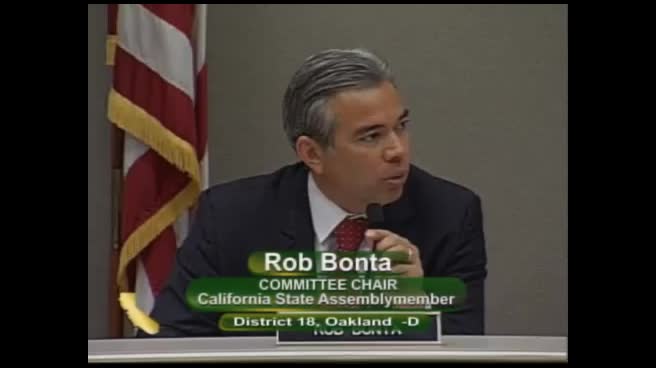 40MIN
Assembly Standing Committee on Health
 32MIN
Senate Floor
 15MIN
Senate Standing Committee on Appropriations
 42MIN
Senate Standing Committee on Health
Bill Author