SB 425: City of El Monte: maintenance of effort: streets and roads allocations.
- Session Year: 2015-2016
- House: Senate
- Latest Version Date: 2016-09-23
Existing law imposes a maintenance of effort requirement on cities and counties with respect to receipt of streets and roads funds from gasoline sales tax revenues in the Transportation Investment Fund. Under the maintenance of effort requirement applicable to this now-repealed source of revenues, a city or county was required to maintain annual streets and roads expenditures from its general fund equal to the annual average of its expenditures from that source during the 199697, 199798, and 199899 fiscal years. If a city or county failed to comply with the maintenance of effort requirement in a particular fiscal year, existing law provided that it could alternatively comply by expending in that year and the following fiscal year a combined total amount that is not less than the amount otherwise required to be expended in the 2 fiscal years. Existing law provides specified exceptions to the maintenance of effort requirement for the County of Fresno and the City of Santa Rosa.
This bill would give the City of El Monte until June 30, 2021, to meet the maintenance of effort requirement for receipt of streets and roads funds from the Transportation Investment Fund for any fiscal year between 200607 and 201011, inclusive.
The bill would make legislative findings and declarations as to the necessity of a special statute for the City of El Monte.
Existing law imposes a maintenance of effort requirement on cities and counties with respect to receipt of streets and roads funds from gasoline sales tax revenues in the Transportation Investment Fund. Under the maintenance of effort requirement applicable to this now-repealed source of revenues, a city or county was required to maintain annual streets and roads expenditures from its general fund equal to the annual average of its expenditures from that source during the 199697, 199798, and 199899 fiscal years. If a city or county failed to comply with the maintenance of effort requirement in a particular fiscal year, existing law provided that it could alternatively comply by expending in that year and the following fiscal year a combined total amount that is not less than the amount otherwise required to be expended in the 2 fiscal years. Existing law provides specified exceptions to the maintenance of effort requirement for the County of Fresno and the City of Santa Rosa.
This bill would give the City of El Monte until December 31, 2019, June 30, 2021, to meet the maintenance of effort requirement for receipt of streets and roads funds from the Transportation Investment Fund for any fiscal year between 200607 and 201011, inclusive.
The bill would make legislative findings and declarations as to the necessity of a special statute for the City of El Monte.
Existing law imposes a maintenance of effort requirement on cities and counties with respect to receipt of streets and roads funds from gasoline sales tax revenues in the Transportation Investment Fund. Under the maintenance of effort requirement applicable to this now-repealed source of revenues, a city or county was required to maintain annual streets and roads expenditures from its general fund equal to the annual average of its expenditures from that source during the 199697, 199798, and 199899 fiscal years. If a city or county failed to comply with the maintenance of effort requirement in a particular fiscal year, existing law provided that it could alternatively comply by expending in that year and the following fiscal year a combined total amount that is not less than the amount otherwise required to be expended in the 2 fiscal years. Existing law provides specified exceptions to the maintenance of effort requirement for the County of Fresno and the City of Santa Rosa.
This bill would give the City of El Monte until December 31, 2019, to meet the maintenance of effort requirement for receipt of streets and roads funds from the Transportation Investment Fund for any fiscal year between 200607 and 201011, inclusive.
The bill would make legislative findings and declarations as to the necessity of a special statute for the City of El Monte.
(1)Existing law authorizes various career technical education programs, including regional occupational centers and programs, specialized secondary programs, partnership academies, and agricultural career technical education programs.
The bill would authorize the Superintendent of Public Instruction to certify, by name, any regional occupational center or program, county office of education, or adult education program, that provides a program of training to prepare adult students for gainful employment in a recognized occupation, to legally authorize the center, program, or office to provide an educational program beyond secondary education, as specified.
(2)This bill would declare that it is to take effect immediately as an urgency statute.
(1)Existing law provides that the Legislature declares that a regional occupational center will serve the state and national interests in providing career technical and technical education to students, including, but not limited to, high school students.
This bill would instead provide that the Legislature declares that a regional occupational center and program or a county office of education will serve the state and national interests in providing secondary and postsecondary programs focused on career technical and technical education to those pupils. The bill would also express legislative recognition that, for purposes of participating in any student financial assistance program authorized by a specified federal statute, the Superintendent of Public Instruction may certify, by name, a regional occupational center and program or a county office of education.
(2)Existing law requires adult schools and evening high schools to consist of classes for adults, and authorizes minors to be admitted into those classes pursuant to policy adopted by the governing board of the school district and if those minors meet certain eligibility requirements.
This bill would authorize those classes to include postsecondary career technical education programs. The bill would, for purposes of participation in any student financial assistance program authorized by a specified federal statute, authorize the Superintendent to certify, by name, an adult school or evening high school.
(3)This bill would declare that it is to take effect immediately as an urgency statute.
(1)Existing law provides that the Legislature declares that a regional occupational center will serve the state and national interests in providing career technical and technical education to students, including, but not limited to, high school students.
This bill would instead provide that the Legislature declares that the a regional occupational center and program or a county office of education will serve the state and national interests in providing secondary and postsecondary programs focused on career technical and technical education to those pupils. The bill would also express legislative recognition that, for purposes of participating in any student financial assistance program authorized by a specified federal statute, the Superintendent of Public Instruction may certify, by name, a regional occupational center and program or a county office of education.
(2)Existing law requires adult schools and evening high schools to consist of classes for adults adults, and authorizes minors to be admitted into those classes pursuant to policy adopted by the governing board of the school district and if those minors meet certain eligibility requirements.
This bill would authorize those classes to include postsecondary career technical education programs. The bill would, for purposes of participation in any student financial assistance program authorized by a specified federal statute, authorize the Superintendent to certify, by name, an adult school or evening high school.
(3)This bill would declare that it is to take effect immediately as an urgency statute.
(1)Existing law provides that the Legislature declares that a regional occupational center will serve the state and national interests in providing career technical and technical education to students, including, but not limited to, high school students.
This bill would instead provide that the Legislature declares that the regional occupational center will serve the state and national interests in providing secondary and postsecondary career technical and technical education to those pupils.
(2)Existing law requires adult schools and evening high schools to consist of classes for adults and authorizes minors to be admitted into those classes pursuant to policy adopted by the governing board of the school district and if those minors meet certain eligibility requirements.
This bill would authorize those classes to include postsecondary career technical education programs.
(3)This bill would declare that it is to take effect immediately as an urgency statute.
(a)Notwithstanding subdivision (f) of Section 7104.2 of the Revenue and Taxation Code or any other provision of law, the City of El Monte shall have until June 30, 2021, to meet the maintenance of effort requirement applicable to cities in order to receive a streets and roads allocation from the Transportation Investment Fund for any fiscal year between 200607 and 201011, inclusive.
(b)The Legislature finds and declares that a special law is necessary and that a general law cannot be made applicable within the meaning of Section 16 of Article IV of the California Constitution because of the unique transportation funding needs in the City of El Monte.
(a)Notwithstanding subdivision (f) of Section 7104.2 of the Revenue and Taxation Code or any other provision of law, the City of El Monte shall have until December 31, 2019, June 30, 2021, to meet the maintenance of effort requirement applicable to cities in order to receive a streets and roads allocation from the Transportation Investment Fund for any fiscal year between 200607 and 201011, inclusive.
(b)The Legislature finds and declares that a special law is necessary and that a general law cannot be made applicable within the meaning of Section 16 of Article IV of the California Constitution because of the unique transportation funding needs in the City of El Monte.
(a)Notwithstanding subdivision (f) of Section 7104.2 of the Revenue and Taxation Code or any other provision of law, the City of El Monte shall have until December 31, 2019, to meet the maintenance of effort requirement applicable to cities in order to receive a streets and roads allocation from the Transportation Investment Fund for any fiscal year between 200607 and 201011, inclusive.
(b)The Legislature finds and declares that a special law is necessary and that a general law cannot be made applicable within the meaning of Section 16 of Article IV of the California Constitution because of the unique transportation funding needs in the City of El Monte.
SECTION 1.(a)The Legislature finds and declares all of the following:
(1)Career training for adults is an important part of workforce and economic development in California.
(2)Many of Californias neediest adult students require financial aid to support their career training.
(3)Historically, those neediest adult students have had access to federal financial aid under Title IV of the federal Elementary and Secondary Education Act (20 U.S.C. Sec. 6301 et seq.).
(4)Recent revisions in federal regulations governing Title IV of the federal Elementary and Secondary Education Act (20 U.S.C. Sec. 6301 et seq.) have eliminated the eligibility for financial aid for adult students in many of Californias career training programs operated by local educational agencies, even though adults in those programs have been historically eligible.
(b)The Legislature therefore supports all of the following:
(1)Adult students access to career training programs that will improve or expand their job skills and employability.
(2)Adult students access to federal financial aid that may be used for career training programs and services.
(3)Providers of career training programs for adult students, as those providers work to satisfy federal requirements necessary to establish federal financial aid eligibility for those adult students.
SEC. 2.Section 52334.7 is added to the Education Code, to read:52334.7.(a)The Superintendent may certify, by name, any regional occupational center or program, county office of education, or adult education program, that provides a program of training to prepare adult students for gainful employment in a recognized occupation, upon the center, program, or offices satisfaction of the requirements in subdivision (b), to legally authorize the center, program, or office to provide an educational program beyond secondary education, including an education program that leads to a degree or certificate, for purposes of the center, program, or office participating in any student financial assistance program authorized by Title IV of the Higher Education Act of 1965, as amended (20 U.S.C. Sec. 1070 et seq.).
(b)A regional occupational center or program, county office of education, or adult education program applying for certification pursuant to subdivision (a) shall comply with both of the following:
(1)Satisfying all applicable eligibility requirements specified in federal rulemaking pursuant to Sections 600.6, 600.7, and 600.9 of Title 34 of the Code of Federal Regulations, other than the authorization provided for in subdivision (a).
(2)Applying in writing to the Superintendent, as an individual center, program, or office, to be considered for certification pursuant to subdivision (a).
(c)Any person may file a complaint under the Uniform Complaint Procedures, as set forth in Title 5 of the California Code of Regulations, regarding an alleged violation by a local agency of federal or state law or regulations governing adult education programs or regional occupational centers and programs, including allegations of unlawful discrimination, harassment, intimidation, or bullying.
(d)The Superintendent shall adopt regulations that authorize any person to file a complaint under the Uniform Complaint Procedures, as set forth in Title 5 of the California Code of Regulations, regarding an alleged violation by a county office of education of federal or state law or regulations governing that county office of educations participation in any student financial assistance program authorized by Title IV of the Higher Education Act of 1965, as amended (20 U.S.C. Sec. 1070 et seq.), including allegations of unlawful discrimination, harassment, intimidation, or bullying.
(e)The Superintendent may decertify, for purposes of participating in any student financial assistance program authorized by Title IV of the Higher Education Act of 1965, as amended (20 U.S.C. Sec. 1070 et seq.), a regional occupational center or program, county office of education, or adult education program previously certified in accordance with subdivision (a) if the Superintendent determines that the regional occupational center or program, county office of education, or adult education program is no longer in compliance with the requirements outlined in subdivision (b).
SEC. 3.This act is an urgency statute necessary for the immediate preservation of the public peace, health, or safety within the meaning of Article IV of the Constitution and shall go into immediate effect. The facts constituting the necessity are:
In order for regional occupational centers and programs, county offices of education, adult schools, and evening high schools to satisfy federal requirements in order to participate in federal student aid programs, it is necessary for this act to take effect immediately.
(a)The Legislature finds and declares all of the following:
(1)Career training for adults is an important part of workforce and economic development in California.
(2)Many of Californias neediest adult students require financial aid to support their career training.
(3)Historically, those neediest adult students have had access to federal financial aid under Title IV of the federal Elementary and Secondary Education Act (20 U.S.C. Sec. 6301 et seq.).
(4)Recent revisions in federal regulations governing Title IV of the federal Elementary and Secondary Education Act (20 U.S.C. Sec. 6301 et seq.) have eliminated the eligibility for financial aid for adult students in many of Californias career training programs operated by local educational agencies, even though adults in those programs have been historically eligible.
(b)The Legislature therefore supports all of the following:
(1)Adult students access to career training programs that will improve or expand their job skills and employability.
(2)Adult students access to federal financial aid that may be used for career training programs and services.
(3)Providers of career training programs for adult students, as those providers work to satisfy federal requirements necessary to establish federal financial aid eligibility for those adult students.
SEC. 2.Section 52334.7 is added to the Education Code, to read:52334.7.(a)The Superintendent may certify, by name, any regional occupational center or program, county office of education, or adult education program, that provides a program of training to prepare adult students for gainful employment in a recognized occupation, upon the center, program, or offices satisfaction of the requirements in subdivision (b), to legally authorize the center, program, or office to provide an educational program beyond secondary education, including an education program that leads to a degree or certificate, for purposes of the center, program, or office participating in any student financial assistance program authorized by Title IV of the Higher Education Act of 1965, as amended (20 U.S.C. Sec. 1070 et seq.).
(b)A regional occupational center or program, county office of education, or adult education program applying for certification pursuant to subdivision (a) shall comply with both of the following:
(1)Satisfying all applicable eligibility requirements specified in federal rulemaking pursuant to Sections 600.6, 600.7, and 600.9 of Title 34 of the Code of Federal Regulations, other than the authorization provided for in subdivision (a).
(2)Applying in writing to the Superintendent, as an individual center, program, or office, to be considered for certification pursuant to subdivision (a).
(c)Any person may file a complaint under the Uniform Complaint Procedures, as set forth in Title 5 of the California Code of Regulations, regarding an alleged violation by a local agency of federal or state law or regulations governing adult education programs or regional occupational centers and programs, including allegations of unlawful discrimination, harassment, intimidation, or bullying.
(d)The Superintendent shall adopt regulations that authorize any person to file a complaint under the Uniform Complaint Procedures, as set forth in Title 5 of the California Code of Regulations, regarding an alleged violation by a county office of education of federal or state law or regulations governing that county office of educations participation in any student financial assistance program authorized by Title IV of the Higher Education Act of 1965, as amended (20 U.S.C. Sec. 1070 et seq.), including allegations of unlawful discrimination, harassment, intimidation, or bullying.
(e)The Superintendent may decertify, for purposes of participating in any student financial assistance program authorized by Title IV of the Higher Education Act of 1965, as amended (20 U.S.C. Sec. 1070 et seq.), a regional occupational center or program, county office of education, or adult education program previously certified in accordance with subdivision (a) if the Superintendent determines that the regional occupational center or program, county office of education, or adult education program is no longer in compliance with the requirements outlined in subdivision (b).
SEC. 3.This act is an urgency statute necessary for the immediate preservation of the public peace, health, or safety within the meaning of Article IV of the Constitution and shall go into immediate effect. The facts constituting the necessity are:
In order for regional occupational centers and programs, county offices of education, adult schools, and evening high schools to satisfy federal requirements in order to participate in federal student aid programs, it is necessary for this act to take effect immediately.
SECTION 1.Section 52300 of the Education Code is amended to read:52300.(a)(1)In enacting this article, it is the intent of the Legislature to provide qualified pupils with the opportunity to attend a technical school or enroll in a career technical or technical training program, regardless of the geographical location of their residence in a county or region.
(2)The Legislature hereby declares that a regional occupational center and program or a county office of education will serve the state and national interests in providing secondary and postsecondary programs focused on career technical and technical education to prepare pupils for an increasingly technological society in which generalized training and skills are insufficient to prepare high school pupils and graduates, and out-of-school youth and adults for the many employment opportunities that require special or technical training and skills.
(3)The Legislature also declares that regional occupational centers and programs or county offices of education will enable a broader curriculum in technical subjects to be offered, and will avoid unnecessary duplication of courses and expensive training equipment, and will provide a flexibility in operation that will facilitate rapid program adjustments and meeting changing training needs as they arise.
(b)It is recognized by the Legislature that career technical programs may achieve great flexibility of planning, scope, and operation by the conduct of these programs in a variety of physical facilities at various training locations.
(c)It is the further intent of the Legislature that regional occupational centers and programs or county offices of education provide career technical and occupational instruction related to the attainment of skills so that trainees are prepared for gainful employment in the area for which training was provided, or are upgraded so they have the higher level skills required because of new and changing technologies or so that they are prepared for enrollment in more advanced training programs.
(d)The Legislature further recognizes that, for purposes of participation in any student financial assistance program authorized by Title IV of the federal Higher Education Act of 1965, as amended (20 U.S.C. Sec. 1070 et seq.), the Superintendent may certify, by name, a regional occupational center and program or a county office of education.
SEC. 2.Section 52500 of the Education Code is amended to read:52500.(a)Adult schools and evening high schools shall consist of classes for adults, and may include postsecondary career technical education programs. Minors may be admitted to those classes pursuant to board policy and Section 52500.1.
(b)For purposes of participation in any student financial assistance program authorized by Title IV of the federal Higher Education Act of 1965, as amended (20 U.S.C. Sec. 1070 et seq.), the Superintendent may certify, by name, an adult school or an evening high school.
SEC. 3.This act is an urgency statute necessary for the immediate preservation of the public peace, health, or safety within the meaning of Article IV of the Constitution and shall go into immediate effect. The facts constituting the necessity are:
In order for regional occupational centers and programs, county offices of education, adult schools, and evening high schools to satisfy federal requirements in order to participate in federal student aid programs, it is necessary for this act to take effect immediately.
(a)(1)In enacting this article, it is the intent of the Legislature to provide qualified pupils with the opportunity to attend a technical school or enroll in a career technical or technical training program, regardless of the geographical location of their residence in a county or region. The
(2)The Legislature hereby declares that a regional occupational center and program or a county office of education will serve the state and national interests in providing secondary and postsecondary programs focused on career technical and technical education to prepare pupils for an increasingly technological society in which generalized training and skills are insufficient to prepare high school pupils and graduates, and out-of-school youth and adults for the many employment opportunities that require special or technical training and skills. The
(3)The Legislature also declares that regional occupational centers and programs or county offices of education will enable a broader curriculum in technical subjects to be offered, and will avoid unnecessary duplication of courses and expensive training equipment, and will provide a flexibility in operation that will facilitate rapid program adjustments and meeting changing training needs as they arise.
(b)It is recognized by the Legislature that career technical programs may achieve great flexibility of planning, scope scope, and operation by the conduct of these programs in a variety of physical facilities at various training locations.
(c)It is the further intent of the Legislature that regional occupational centers and programs or county offices of education provide career technical and occupational instruction related to the attainment of skills so that trainees are prepared for gainful employment in the area for which training was provided, or are upgraded so they have the higher level skills required because of new and changing technologies or so that they are prepared for enrollment in more advanced training programs.
(d)The Legislature further recognizes that, for purposes of participation in any student financial assistance program authorized by Title IV of the federal Higher Education Act of 1965, as amended (20 U.S.C. Sec. 1070 et seq.), the Superintendent may certify, by name, a regional occupational center and program or a county office of education.
SEC. 2.Section 52500 of the Education Code is amended to read:52500.(a)Adult schools and evening high schools shall consist of classes for adults adults, and may include postsecondary career technical education programs. Minors may be admitted to those classes pursuant to board policy and Section 52500.1.
(b)For purposes of participation in any student financial assistance program authorized by Title IV of the federal Higher Education Act of 1965, as amended (20 U.S.C. Sec. 1070 et seq.), the Superintendent may certify, by name, an adult school or an evening high school.
SEC. 3.This act is an urgency statute necessary for the immediate preservation of the public peace, health, or safety within the meaning of Article IV of the Constitution and shall go into immediate effect. The facts constituting the necessity are:
In order for regional occupational centers and programs, county offices of education, adult schools, and evening high schools to satisfy federal requirements in order to participate in federal student aid programs, it is necessary for this act to take effect immediately.
(a)In enacting this article, it is the intent of the Legislature to provide qualified students pupils with the opportunity to attend a technical school or enroll in a career technical or technical training program, regardless of the geographical location of their residence in a county or region. The Legislature hereby declares that a regional occupational center will serve the state and national interests in providing secondary and postsecondary career technical and technical education to prepare students pupils for an increasingly technological society in which generalized training and skills are insufficient to prepare high school students pupils and graduates, and out-of-school youth and adults for the many employment opportunities which that require special or technical training and skills. The Legislature also declares that regional occupational centers will enable a broader curriculum in technical subjects to be offered, and will avoid unnecessary duplication of courses and expensive training equipment, and will provide a flexibility in operation which that will facilitate rapid program adjustments and meeting changing training needs as they arise.
It
(b)It is recognized by the Legislature that career technical programs may achieve great flexibility of planning, scope and operation by the conduct of these programs in a variety of physical facilities at various training locations.
It
(c)It is the further intent of the Legislature that regional occupational centers and programs provide career technical and occupational instruction related to the attainment of skills so that trainees are prepared for gainful employment in the area for which training was provided, or are upgraded so they have the higher level skills required because of new and changing technologies or so that they are prepared for enrollment in more advanced training programs.
SEC. 2.Section 52500 of the Education Code is amended to read:52500.Adult schools and evening high schools shall consist of classes for adults and may include postsecondary career technical education programs. Minors may be admitted to those classes pursuant to board policy and Section 52500.1.
SEC. 3.This act is an urgency statute necessary for the immediate preservation of the public peace, health, or safety within the meaning of Article IV of the Constitution and shall go into immediate effect. The facts constituting the necessity are:
In order for regional occupational programs to satisfy federal requirements in order to participate in federal student aid programs, it is necessary for this act to take effect immediately.
|
Date
|
Status
|
|---|---|
| Sep 8, 2016 | Enrolled and presented to the Governor at 5 p.m. |
| Aug 29, 2016 | Assembly amendments concurred in. (Ayes 38. Noes 0. Page 5471.) Ordered to engrossing and enrolling. |
| Aug 29, 2016 | Assembly amendments concurred in. (Ayes 37. Noes 0.) Ordered to engrossing and enrolling. |
| Aug 25, 2016 | From committee: That the Assembly amendments be concurred in. (Ayes 11. Noes 0. Page 5376.) |
| Aug 25, 2016 | From committee: That the Assembly amendments be concurred in. (Ayes 11. Noes 0.) |
| Aug 23, 2016 | Set for hearing August 24. |
| Aug 22, 2016 | From committee: Be re-referred to Com. on T. & H. pursuant to Senate Rule 29.10(d). (Ayes 5. Noes 0. Page 5238.) Re-referred to Com. on T. & H. |
| Aug 22, 2016 | From committee: Be re-referred to Com. on T. & H. pursuant to Senate Rule 29.10(d). (Ayes 5. Noes 0.) Re-referred to Com. on T. & H. |
| Aug 22, 2016 | Re-referred to Com. on RLS. pursuant to Senate Rule 29.10(d). |
| Aug 19, 2016 | In Senate. Concurrence in Assembly amendments pending. |
| Aug 18, 2016 | Read third time. Passed. (Ayes 79. Noes 0. Page 5905.) Ordered to the Senate. |
| Aug 18, 2016 | Read third time. Passed. Ordered to the Senate. |
| Aug 15, 2016 | Read second time. Ordered to third reading. |
| Aug 12, 2016 | From committee: Do pass. (Ayes 20. Noes 0.) (August 11). |
| Aug 3, 2016 | August 3 set for first hearing. Placed on APPR. suspense file. |
| Jun 28, 2016 | From committee: Do pass and re-refer to Com. on APPR. with recommendation: To consent calendar. (Ayes 15. Noes 0.) (June 27). Re-referred to Com. on APPR. |
| Jun 20, 2016 | June 20 hearing postponed by committee. |
| Jun 14, 2016 | From committee with author's amendments. Read second time and amended. Re-referred to Com. on TRANS. |
| Jun 1, 2016 | From committee: Be re-referred to Com. on TRANS. (Ayes 11. Noes 0.) (June 1). Re-referred to Com. on TRANS. |
| Aug 24, 2015 | Re-referred to Com. on RLS. pursuant to Assembly Rule 96. |
| Aug 17, 2015 | From committee with author's amendments. Read second time and amended. Re-referred to Com. on HIGHER ED. |
| Jun 11, 2015 | Referred to Coms. on HIGHER ED. and ED. |
| Jun 2, 2015 | Read third time. Urgency clause adopted. Passed. (Ayes 39. Noes 0. Page 1244.) Ordered to the Assembly. |
| Jun 2, 2015 | In Assembly. Read first time. Held at Desk. |
| Jun 2, 2015 | Read third time. Urgency clause adopted. Passed. (Ayes 39. Noes 0.) Ordered to the Assembly. |
| May 28, 2015 | Read second time. Ordered to third reading. |
| May 28, 2015 | From committee: Do pass. (Ayes 7. Noes 0. Page 1153.) (May 28). |
| May 28, 2015 | From committee: Do pass. (Ayes 7. Noes 0.) (May 28). |
| May 23, 2015 | Set for hearing May 28. |
| May 18, 2015 | May 18 hearing: Placed on APPR. suspense file. |
| May 8, 2015 | Set for hearing May 18. |
| Apr 29, 2015 | From committee: Do pass and re-refer to Com. on APPR. with recommendation: To consent calendar. (Ayes 7. Noes 0. Page 814.) (April 29). Re-referred to Com. on APPR. |
| Apr 29, 2015 | From committee: Do pass and re-refer to Com. on APPR. with recommendation: To consent calendar. (Ayes 7. Noes 0.) (April 29). Re-referred to Com. on APPR. |
| Apr 21, 2015 | From committee with author's amendments. Read second time and amended. Re-referred to Com. on ED. |
| Apr 17, 2015 | Set for hearing April 29. |
| Apr 14, 2015 | April 22 set for second hearing canceled at the request of author. |
| Apr 10, 2015 | Set for hearing April 22. |
| Apr 8, 2015 | April 8 set for first hearing. Testimony taken. Further hearing to be set. |
| Apr 6, 2015 | From committee with author's amendments. Read second time and amended. Re-referred to Com. on ED. |
| Mar 20, 2015 | Set for hearing April 8. |
| Mar 5, 2015 | Referred to Com. on ED. |
| Feb 26, 2015 | From printer. May be acted upon on or after March 28. |
| Feb 25, 2015 | Introduced. Read first time. To Com. on RLS. for assignment. To print. |
|
Date
|
Description
|
Location
|
Votes
|
|
|---|---|---|---|---|
| Aug 29, 2016 | Unfinished Business SB425 Hernandez Concurrence | Senate Floor |
Passed |
|
| Aug 24, 2016 | That the Assembly amendments be concurred in | Senate Standing Committee on Transportation and Housing |
Passed |
|
| Aug 18, 2016 | SB 425 Hernandez Senate Third Reading By CHAU | Assembly Floor |
Passed |
|
| Aug 11, 2016 | Do pass. | Assembly Standing Committee on Appropriations |
Passed |
|
| Jun 27, 2016 | Do pass and be re-referred to the Committee on [Appropriations] with recommendation: To Consent Calendar | Assembly Standing Committee on Transportation |
Passed |
|
| Jun 1, 2016 | Be re-referred to the Committee on [Transportation] | Assembly Standing Committee on Rules |
Passed |
|
| Jun 2, 2015 | Senate 3rd Reading SB425 Hernandez Urgency Clause | Senate Floor |
Passed |
|
| May 28, 2015 | Do pass | Senate Standing Committee on Appropriations |
Passed |
|
| May 18, 2015 | Placed on suspense file | Senate Standing Committee on Appropriations |
Passed |
|
| Apr 29, 2015 | Do pass, but first be re-referred to the Committee on [Appropriations] with the recommendation: To Consent Calendar | Senate Standing Committee on Education |
Passed |
This list shows positions taken on this bill by organizations on the date displayed, which is linked to the original source.
Positions by individuals are not included.
Office of Senate Floor Analyses (916) 651-1520 Fax: (916) 327-4478 | SB |
UNFINISHED BUSINESS
Bill No: SB 425
:
PRIOR VOTES NOT RELEVANT
SENATE TRANS. & HOUSING COMMITTEE: 11-0, 8/24/16 (pursuant to Senate Rule 29.10)
AYES: Beall, Cannella, Allen, Bates, Gaines, Galgiani, Leyva, McGuire, Mendoza, Roth, Wieckowski
ASSEMBLY FLOOR: 79-0, 8/18/16 - See last page for vote
DIGEST: This bill extends the date for the City of El Monte to meet its maintenance of effort (MOE) requirement for funds received from the Transportation Investment Fund (TIF).
Assembly Amendments delete the Senate version of the bill and replace it with the current language.
Existing law:
- Directs the transfer of revenue from sales tax collected on motor vehicle fuel from the General Fund to the TIF; directs the revenue to be apportioned, in part, to cities and counties for rehabilitation and maintenance of local streets and roads.
- Establishes an MOE requirement for cities and counties as a condition of receiving TIF funds; specifically, in exchange for receiving TIF allocations, cities and counties were required to expend from their general fund for street, road, and highway purposes an amount not less than the annual average of their expenditures from their general fund during the 1996-97, 1997-98, and 1998-99 fiscal years, as reported to the State Controller’s Office (SCO).
- Provides that cities and counties had two fiscal years within which to meet their MOE requirement; cities and counties that failed to do so would have to return the TIF funds to the SCO for redistribution to other cities and counties.
- Replaces partially, per ABX8 6 (Committee on Budget, Chapter 11, Statutes of 2009-10 Eighth Extraordinary Session) and SB 70 (Committee on Budget and Fiscal Review, Chapter 9, Statutes of 2010), the sales tax on motor vehicle fuels with an excise tax and, as a result, rendered the TIF and related provisions obsolete.
This bill:
- Extends the date for City of El Monte to meet its MOE requirement for funds received from the TIF to June 30, 2021.
- Makes legislative findings and declarations regarding the need for a statutory extension for the City of El Monte.
Comments
- Purpose. The author notes, “Between 2006 and 2011, El Monte received funding from the State’s Traffic Congestion Relief Fund (TCRF), and as per state law, was required to contribute an MOE amount of approximately $2 million as a local match. Unfortunately, El Monte, as was the case with every other city in California, underwent a recession during this time. It was unable to contribute its MOE as a result. Since this was revealed in an audit in 2014, El Monte has attempted to reach an agreement with the state to repay its MOE, but was told that repayment after the fact required a statutory change.”
- SCO audit report. As noted by the author, in October 2014, the SCO released an audit on the City’s use of state transportation revenues. The SCO’s audit found that in the period from July 1, 2006, to June 30, 2011, the City did not meet its MOE requirements in return for monies from the TCRF for two of those years, totaling $2.05 million. As a result of this finding, the City would be required to return the $2.05 million back to the SCO. In response to the audit’s findings, the City requested that alternative arrangements be established to meet the TCRF’s MOE obligation; however, the SCO informed the City that existing law does not provide the flexibility for alternative arrangements and would require a legislative remedy in order for the City to be provided some relief.
- What is MOE? An MOE is a requirement in certain legislative, regulatory or administrative policies that a recipient of specific funds (e.g., state or federal transportation funds) must maintain a specified level of financial effort in that particular program area (e.g., funding for road rehabilitation) in order for these specified funds to be provided to the recipient. MOE requirements are usually given in terms of a previous base-year monetary amount and are typically established to ensure a recipient of the funds is committed to maintaining the same level of services it has been providing prior to receiving the additional revenue.
- Prior MOE relief to locals. Over the past six years, the Legislature has provided MOE extensions to several local entities. The County of Fresno also failed to meet its TIF MOE obligations and was subsequently statutorily authorized to fulfill that obligation by providing specialty medical services in conjunction with federally funded clinics to indigent individuals. Additionally, the City of Santa Rosa sought statutory relief, similar to this bill, to grant it more time to apply funds equal to its MOE requirements on local streets and roads.
FISCAL EFFECT: Appropriation: Fiscal Com.: Local:
According to the Assembly Appropriations Committee, absent this bill, the City would have to provide a $2 million reimbursement to the state, which would be reallocated among cities and counties for streets and roads. This bill requires the City to instead spend this amount from its general fund, by June 30, 2021, to maintain its own streets and roads.
City of El Monte (source)
OPPOSITION: (Verified 8/24/16)
None received
ASSEMBLY FLOOR: 79-0, 8/18/16
AYES: Achadjian, Alejo, Travis Allen, Arambula, Atkins, Baker, Bigelow, Bloom, Bonilla, Bonta, Brough, Brown, Burke, Calderon, Campos, Chang, Chau, Chávez, Chiu, Chu, Cooley, Cooper, Dababneh, Dahle, Daly, Dodd, Eggman, Frazier, Beth Gaines, Gallagher, Cristina Garcia, Eduardo Garcia, Gatto, Gipson, Gomez, Gonzalez, Gordon, Gray, Grove, Hadley, Harper, Holden, Irwin, Jones, Jones-Sawyer, Kim, Lackey, Levine, Linder, Lopez, Low, Maienschein, Mathis, Mayes, McCarty, Medina, Melendez, Mullin, Nazarian, Obernolte, O'Donnell, Olsen, Patterson, Quirk, Ridley-Thomas, Rodriguez, Salas, Santiago, Steinorth, Mark Stone, Thurmond, Ting, Wagner, Waldron, Weber, Wilk, Williams, Wood, Rendon
NO VOTE RECORDED: Roger Hernández
8/25/16 18:00:21
**** END ****
SENATE COMMITTEE ON TRANSPORTATION AND HOUSING
Senator Jim Beall, Chair
2015 - 2016 Regular
Bill No: Hearing Date: 8/24/2016
Author: | Hernandez | ||
Version: | 6/14/2016 | ||
Urgency: | No | Fiscal: | Yes |
Consultant: | Manny Leon | ||
SUBJECT:
DIGEST: This bill extends the date for the City of El Monte to meet its maintenance of effort (MOE) requirement for funds received from the Transportation Investment Fund (TIF).
ANALYSIS:
Existing law:
- Previously directed the transfer of revenue from sales tax collected on motor vehicle fuel from the General Fund to the TIF; directed the revenue to be apportioned, in part, to cities and counties for rehabilitation and maintenance of local streets and roads.
- Established an MOE requirement for cities and counties as a condition of receiving TIF funds; specifically, in exchange for receiving TIF allocations, cities and counties were required to expend from their general fund for street, road, and highway purposes an amount not less than the annual average of their expenditures from their general fund during the 1996–97, 1997–98, and 1998–99 fiscal years, as reported to the State Controller’s Office (SCO).
- Provided that cities and counties had two fiscal years within which to meet their MOE requirement; cities and counties that failed to do so would have to return the TIF funds to the SCO for redistribution to other cities and counties.
- Per ABX8 6 (Committee on Budget, Chapter 11, Statutes of 2010) and SB 70 (Committee on Budget and Fiscal Review, Chapter 9, Statutes of 2010), partially replaced the sales tax on motor vehicle fuels with an excise tax and, as a result, rendered the TIF and related provisions obsolete.
This bill:
- Extends the date for City of El Monte to meet its MOE requirement for funds received from the TIF to June 30, 2021.
- Makes legislative findings and declarations regarding the need for a statutory extension for the City of El Monte.
COMMENTS:
- Purpose. The author notes, “Between 2006 and 2011, El Monte received funding from the State’s Traffic Congestion Relief Fund, and as per state law, was required to contribute an MOE amount of approximately $2 million as a local match. Unfortunately, El Monte, as was the case with every other city in California, underwent a recession during this time. It was unable to contribute its MOE as a result. Since this was revealed in an audit in 2014, El Monte has attempted to reach an agreement with the State to repay its MOE, but was told that repayment after the fact required a statutory change.”
- SCO Audit report. As noted by the author, in October 2014, the SCO released an audit on the City’s use of state transportation revenues. The SCO’s audit found that in the period from July 1, 2006, to June 30, 2011, the City did not meet its MOE requirements in return for monies from the Traffic Congestion Relief Fund (TCRF) for two of those years, totaling $2.05 million. As a result of this finding, the City would be required to return the $2.05 million back to the SCO. In response to the audit’s findings, the City requested that alternative arrangements be established to meet the TCRF’s MOE obligation; however, the SCO informed the City that existing law does not provide the flexibility for alternative arrangements and would require a legislative remedy in order for the City to be provided some relief.
- What is MOE? An MOE is a requirement in certain legislative, regulatory or administrative policies that a recipient of specific funds (e.g., state or federal transportation funds) must maintain a specified level of financial effort in that particular program area (e.g., funding for road rehabilitation) in order for these specified funds to be provided to the recipient. MOE requirements are usually given in terms of a previous base-year monetary amount and are typically established to ensure a recipient of the funds is committed to maintaining the same level of services it has been providing prior to receiving the additional revenue.
- Prior MOE relief to locals. Over the past six years, the Legislature has provided MOE extensions to several local entities. The County of Fresno also failed to meet its TIF MOE obligations and was subsequently statutorily authorized to fulfill that obligation by providing specialty medical services in conjunction with federally funded clinics to indigent individuals. Additionally, the City of Santa Rosa sought statutory relief, similar to this bill, to grant it more time to apply funds equal to its MOE requirements on local streets and roads.
Related/Prior Legislation:
SB 524 (Cogdill, Chapter 716, Statutes of 2010) — granted Fresno County additional time to meet its TIF MOE commitment.
AB 115 (Committee on Budget, Chapter 38, Statutes of 2011) — provided the City of Santa Rosa a four-year extension to meet its TIF MOE obligations.
AB 2731 (Perea, Chapter 743, Statutes of 2014) — allowed Fresno County an additional five years to meet its TIF MOE commitment, under certain conditions.
FISCAL EFFECT: Appropriation: No Fiscal Com.: Yes Local: No
Assembly votes:
Floor: 70-0
Appr: 20-0
Trans 15-0
POSITIONS: (Communicated to the committee before noon on Wednesday,
August 23, 2016.)
SUPPORT:
City of El Monte (sponsor)
OPPOSITION:
None recieved
-- END --
SENATE THIRD READING
STR Bill Id:SB 425
Author:(Hernandez)
As Amended Ver:June 14, 2016
Majority vote
SENATE VOTE: 39-0
Committee | Votes | Ayes | Noes |
Transportation | 15-0 | Frazier, Linder, Baker, Bloom, Brown, Chu, Daly, Dodd, Eduardo Garcia, Gomez, Kim, Mathis, Melendez, Nazarian, O'Donnell | |
Appropriations | 20-0 | Gonzalez, Bigelow, Bloom, Bonilla, Bonta, Calderon, Chang, Daly, Eggman, Gallagher, Eduardo Garcia, Holden, Jones, Obernolte, Quirk, Santiago, Wagner, Weber, Wood, McCarty |
SUMMARY: Grants the City of El Monte and extended period of time, until June 30, 2021, to meet the maintenance of effort (MOE) requirement applicable to cities and counties as a condition of receiving an allocation for streets and roads from the Transportation Investment Fund (TIF).
EXISTING LAW:
- Previously directed the transfer of revenue from sales tax collected on motor vehicle fuel from the General Fund to the TIF; directed the revenue to be apportioned, in part, to cities and counties for rehabilitation and maintenance of local streets and roads.
- Established a maintenance of effort requirement for cities and counties as a condition of receiving TIF funds; specifically, in exchange for receiving TIF allocations, cities and counties were required to expend from their general fund for street, road, and highway purposes an amount not less than the annual average of their expenditures from their general fund during the 1996–97, 1997–98, and 1998–99 fiscal years, as reported to the State Controller's Office (SCO).
- Provided that cities and counties had two fiscal years within which to meet their MOE requirement; cities and counties that failed to do so would have to return the TIF funds to the SCO for redistribution to other cities and counties.
[Note: AB 6 X8 (Budget Committee), Chapter 11, Statutes of 2009-10 Eighth Extraordinary Session, and Senate Bill 70 (Budget and Fiscal Review Committee), Chapter 9, Statutes of 2010, partially replaced the sales tax on motor vehicle fuels with an excise tax and, thereafter, rendered the TIF and related provisions obsolete.]
FISCAL EFFECT: According to the Assembly Appropriations Committee, absent this bill, the city would have to provide a $2 million reimbursement to the state, which would be reallocated among cities and counties for streets and roads. This bill requires the city to instead spend this amount, by June 30, 2021, to maintain its own streets and roads.
COMMENTS: Between 2006 and 2011, the City of El Monte received funding from the TIF. As a condition of the receiving these funds, the city was obligated, under the MOE requirements, to spend approximately $2 million on local streets and roads from its general fund. A 2014 SCO audit found, however, that the city failed to comply with the MOE requirements.
According to the author, the City of El Monte failed to comply with the MOE requirement because it, like many other cities, struggled economically through the recession. The author introduced this bill to allow the city to meet its MOE requirement by applying the amount owed, $2,051,165, to its local streets and roads over the next five years, rather than having to repay that amount to the SCO.
The City of El Monte is not the first entity to struggle to comply with the MOE requirement of the TIF program. The County of Fresno also failed to meet its TIF MOE obligations and was subsequently statutorily authorized to fulfil that obligation by providing specialty medical services in conjunction with federally funded clinics to indigent individuals. Additionally, the City of Santa Rosa sought statutorily relief, similar to this bill, to grant it more time to apply funds equal to its MOE requirements on local streets and roads.
This bill is a reasonable resolution to the SCO's audit finding and will ensure that the city's MOE requirement is applied to local streets and roads as originally intended, albeit over a longer period of time.
Analysis Prepared by: Janet Dawson / TRANS. / (916) 319-2093 FN: 0004025
Date of Hearing: August 3, 2016
ASSEMBLY COMMITTEE ON APPROPRIATIONS
Lorena Gonzalez, Chair
SBPCA Bill Id:SB 425
Author:(Hernandez) – As Amended Ver:June 14, 2016
Policy Committee: | Transportation | Vote: | 15 - 0 |
Urgency: No State Mandated Local Program: No Reimbursable: No
SUMMARY:
This bill provides the City of El Monte until June 30, 2021, to meet the maintenance of effort (MOE) requirement applicable to cities and counties as a condition of receiving an allocation for maintenance of streets and roads from the Transportation Investment Fund (TIF).
FISCAL EFFECT:
Absent this bill, the city would have to provide a $2 million reimbursement to the state, which would be reallocated among cities and counties for streets and roads. This bill requires the city to instead spend this amount from its general fund, by June 30, 2021, to maintain its own streets and roads.
COMMENTS:
- Background. Prior law directed the transfer of revenue from sales tax collected on motor vehicle fuel from the General Fund to the TIF, and apportioned these revenues, in part, to cities and counties for rehabilitation and maintenance of local streets and roads. Receipt of these fund was conditioned on each local entity meeting a specified MOE requirement. Trailer bills to the 2010 Budget Act partially replaced the sale tax on motor fuels with an excise tax and, thereafter, rendered the TIF and related provisions obsolete.
Between 2006 and 2011, the City of El Monte received funding from the TIF, and based on the MOE requirement, was obligated to spend approximately $2 million on its streets and roads from its general fund. A 2014 State Controller's Office (SCO) audit found, however, that the city failed to comply with this MOE requirement.
- Purpose. According to the author, the city's failure to comply with the MOE requirement was due to budgetary struggles throughout the recession. SB 425 allows the city to meet its MOE requirement by applying the amount owed ($2,015,165) to its streets and roads over the next four-and-one-half years, rather than having to repay that amount to the SCO.
- Prior Legislation. The following entities have been granted similar statutory relief:
- Fresno County, though SB 524 (Cogdill) of 2010 and a further time extension through AB 273` (Perea) of 2014.
- City of Santa Rosa, through AB 115 (Committee on Budget) of 2011.
Analysis Prepared by: Chuck Nicol / APPR. / (916) 319-2081
Date of Hearing: June 20, 2016
ASSEMBLY COMMITTEE ON TRANSPORTATION
Jim Frazier, Chair
SBPCA Bill Id:SB 425
Author:(Hernandez) – As Amended Ver:June 14, 2016
SENATE VOTE: 39-0
SUBJECT: City of El Monte: maintenance of effort: streets and roads allocations
SUMMARY: Grants the City of El Monte and extended period of time, until June 30, 2021, to meet the maintenance of effort (MOE) requirement applicable to cities and counties as a condition of receiving an allocation for streets and roads from the Transportation Investment Fund (TIF).
EXISTING LAW:
- Previously directed the transfer of revenue from sales tax collected on motor vehicle fuel from the General Fund to the TIF; directed the revenue to be apportioned, in part, to cities and counties for rehabilitation and maintenance of local streets and roads.
- Established a maintenance of effort requirement for cities and counties as a condition of receiving TIF funds; specifically, in exchange for receiving TIF allocations, cities and counties were required to expend from their general fund for street, road, and highway purposes an amount not less than the annual average of their expenditures from their general fund during the 1996–97, 1997–98, and 1998–99 fiscal years, as reported to the State Controller’s Office (SCO).
- Provided that cities and counties had two fiscal years within which to meet their MOE requirement; cities and counties that failed to do so would have to return the TIF funds to the SCO for redistribution to other cities and counties.
[Note: Assembly Billx8 6 (Committee on Budget), Chapter 11, Statutes of 2010 and Senate Bill 70 (Committee on Budget and Fiscal Review), Chapter 9, Statutes of 2010, partially replaced the sales tax on motor vehicle fuels with an excise tax and, thereafter, rendered the TIF and related provisions obsolete.]
FISCAL EFFECT: Unknown
COMMENTS: Between 2006 and 2011, the City of El Monte received funding from the TIF. As a condition of the receiving these funds, the city was obligated, under the MOE requirements, to spend approximately $2 million on local streets and roads from its general fund. A 2014 SCO audit found, however, that the city failed to comply with the MOE requirements.
According to the author, the City of El Monte failed to comply with the MOE requirement because it, like many other cities, struggled economically through the recession. The author introduced SB 425 to allow the city to meet its MOE requirement by applying the amount owed, $2,051,165, to its local streets and roads over the next five years, rather than having to repay that amount to the SCO.
The City of El Monte is not the first entity to struggle to comply with the MOE requirement of the TIF program. The County of Fresno also failed to meet its TIF MOE obligations and was subsequently statutorily authorized to fulfil that obligation by providing specialty medical services in conjunction with federally funded clinics to indigent individuals. Additionally, the City of Santa Rosa sought statutorily relief, similar to this bill, to grant it more time to apply funds equal to its MOE requirements on local streets and roads.
SB 425 is a reasonable resolution to the SCO's audit finding and will ensure that the city's MOE requirement is applied to local streets and roads as originally intended, albeit over a longer period of time.
Previous legislation: SB 524 (Cogdill), Chapter 716, Statutes of 2010, granted Fresno County additional time to meet its TIF MOE commitment.
AB 115 (Committee on Budget), Chapter 38, Statutes of 2011, provided the City of Santa Rosa a four-year extension to meet its TIF MOE obligations.
AB 2731 (Perea), Chapter 743, Statutes of 2014, allowed Fresno County an additional five years to meet its TIF MOE commitment, under certain conditions.
REGISTERED SUPPORT / OPPOSITION:
Support:
None on file
Opposition:
None on file
Analysis Prepared by: Janet Dawson / TRANS. / (916) 319-2093
SB 425
Page 5
|
Office of Senate Floor Analyses (916) 651-1520 Fax: (916) 327-4478 |
THIRD READING
Bill No: SB 425
Amended: 4/21/15
SENATE EDUCATION COMMITTEE: 7-0, 4/29/15
AYES: Liu, Block, Hancock, Leyva, Mendoza, Monning, Pan
NO VOTE RECORDED: Runner, Vidak
SENATE APPROPRIATIONS COMMITTEE: 7-0, 5/28/15
AYES: Lara, Bates, Beall, Hill, Leyva, Mendoza, Nielsen
SUBJECT: Career training: adult students
DIGEST: This bill, an urgency measure, authorizes the Superintendent of Public Instruction (SPI), for purposes of participation in Title IV authorized federal student financial assistance programs, to: (1) certify by name, a regional occupational center and program, or a county office of education or an adult school; (2) adopt regulations that authorize a complaint process under the Uniform Complaint Procedures (UCPs) outlined in specified regulations; and (3) decertify any program no longer in compliance with specified federal regulations.
ANALYSIS: Existing federal law outlines the requirements for eligibility to participate in Title IV federal financial assistance programs for postsecondary education institutions. Federal regulations define postsecondary vocational institution for this purpose and, among other things, require that an educational institution be:
Legally authorized by a state to operate educational programs beyond secondary education.
Have a process to review and act appropriately on complaints concerning postsecondary institutions. (34 Code of Federal Regulations § 600.6, § 600.9)
Existing state law:
Authorizes school county superintendents to establish Regional Occupational Centers and Programs (ROCPs) that allow students from multiple schools or districts to participate in career technical training programs regardless of the geographical location of their residence in a county or region. (Education Code § 52300, et. seq.)
Authorizes a school district governing board, with the approval of the California Department of Education (CDE), to establish and maintain classes for adults, as specified, and outlines various requirements to be met by these programs. Adult schools and evening high schools are required to consist of classes for adults and authorized to admit minors if specified conditions are met. (Education Code § 52500-52610)
This bill, an urgency measure, authorizes the Superintendent of Public Instruction (SPI) to certify specified career training programs for the purpose of participating in Title IV authorized federal student financial assistance programs. More specifically it:
Authorizes the SPI to certify by name, any ROCP, county office of education, or adult education program, that provides a program of training to prepare adult students for gainful employment in a recognized occupation to legally authorize the center, program, or office to provide an educational program beyond secondary education, including an education program that leads to a degree or certificate.
Extends the authority in #1 exclusively for the purpose of participation in Title IV authorized federal student financial assistance programs.
Requires a ROCP, county office of education, or adult education program applying for certification to comply with both of the following:
Satisfy all applicable eligibility requirements specified in federal rulemaking pursuant to specified federal regulations.
Apply in writing to the SPI as an individual entity to be considered for certification.
Authorizes any person to file a complaint under the UCPs regarding an alleged violation by a local agency of federal or state law governing adult education programs or ROCPs, including allegations of unlawful discrimination, harassment, intimidation, or bullying, and requires the SPI to adopt regulations to implement this authorization.
Authorizes the SPI to decertify a ROCP, county office of education, or adult education program, for purposes of participation in Title IV authorized federal student financial assistance programs, upon a determination that the entity is no longer in compliance with the specified federal regulations.
Makes related findings and declarations.
Comments
Need for the bill. According to the author, this bill seeks to clarify and update California law by establishing authority and process for ROCPs, county offices of education, and adult schools to be able to participate in federal student financial aid programs. As the result of changes in the federal law, students receiving financial assistance to obtain career technical certification training through these entities may be ineligible for federal financial aid.
The sector. According to information from providers, ROCPs, county offices and adult schools have been participating in federal financial aid programs, some for as many as 20 years. Recent changes in the federal law regarding state authorization to offer postsecondary education programs puts about 27 of these programs currently approved to offer federal student aid, and the students they serve, at risk of losing eligibility for funds necessary to support students’ postsecondary workforce training. According to one provider, about 12,000 high school graduates enrolled in post-secondary career preparation programs at ROCPs, county offices and adult schools would no longer be able to access these funds without some change to California law.
State authorization. State authorization regulations were published in the Federal Register on October 29, 2010 (75 FR 66832) and schools were initially required to be in compliance with these rules by July 1, 2011. Since then, the U.S. Department of Education (USDE) has granted several extensions of the implementation date of these requirements, subject to a demonstration that institutions and states were making progress toward complying with and obtaining state authorization.
In May 2013, the USDE announced that it would extend the deadline for complying with a rule requiring states to authorize colleges within their borders by a year (July 1, 2014). In June 2014, the USDE further delayed (until July 1, 2015) the implementation date of the state authorization regulations for institutions of postsecondary education whose state authorization does not meet the requirements of these regulations, so long as the state is establishing an acceptable authorization process that is to take effect by the delayed implementation date.
This bill proposes an urgency measure to address the state authorization requirements for workforce training programs for adults offered by K-12 affiliated entities.
FISCAL EFFECT: Appropriation: No Fiscal Com.: Yes Local: No
According to the Senate Appropriations Committee:
This bill will create new one-time costs to CDE workload of $60,000 to $100,000, and ongoing workload of about $55,000 General Fund per year to create and maintain a certification process for adult education programs for the purpose of participation in Title IV authorized federal student financial assistance programs.
This bill also requires the CDE to adopt regulations authorizing complaints to be made through the UCP process which will create additional, potentially significant new workload, depending on how many complaints are received. These costs are unknown, but a recent law authorizing complaints to be filed for noncompliance with student fees, required additional staffing at CDE.
East San Gabriel Valley Regional Occupational Program and Technical Center
La Puente Valley Regional Occupational Program
Los Angeles County Office of Education
Riverside County Superintendent of Schools
ROP North Orange County
OPPOSITION: (Verified 5/28/15)
None received
Prepared by: Kathleen Chavira / ED. / (916) 651-4105
5/31/15 12:04:52
**** END ****
SB 425 (Hernandez) Page 3 of 3
SENATE COMMITTEE ON APPROPRIATIONS
Senator Ricardo Lara, Chair
2015 - 2016 Regular Session
SB 425 (Hernandez) - Career training: adult students.
|
|
Version: April 21, 2015 |
Policy Vote: ED. 7 - 0 |
Urgency: Yes |
Mandate: No |
Hearing Date: May 18, 2015 |
Consultant: Jillian Kissee |
This bill meets the criteria for referral to the Suspense File.
Bill Summary:
This bill, an urgency measure, authorizes the Superintendent of Public Instruction (SPI), for purposes of participation in Title IV authorized federal student financial assistance programs, to: 1) certify by name a regional occupational center and program, a county office of education, or an adult school; 2) adopt regulations that authorize a complaint process under the Uniform Complaint Procedures outlined in specified regulations; and to 3) decertify any program no longer in compliance with specified federal regulations.
Fiscal Impact:
This bill will create new one-time costs to CDE workload of $60,000 to $100,000, and ongoing workload of about $55,000 General Fund per year to create and maintain a certification process for adult education programs for the purpose of participation in Title IV authorized federal student financial assistance programs.
This bill also requires the CDE to adopt regulations authorizing complaints to be made through the Uniform Complaint Procedure process which will create additional, potentially significant new workload, depending on how many complaints are received. These costs are unknown, but a recent law authorizing complaints to be filed for noncompliance with student fees, required additional staffing at CDE.
Background:
Existing federal law outlines the requirements for eligibility to
participate in Title IV federal financial assistance programs for
postsecondary education institutions. Federal regulations define
postsecondary vocational institution for this purpose and, among
other things, require that an educational institution:
Be legally authorized by a state to operate educational programs beyond secondary education.
Have a process to review and act appropriately on complaints concerning postsecondary institutions. (34 Code of Federal Regulations § 600.6, § 600.9)
Existing
law authorizes school county superintendents to establish Regional
Occupational Centers and Programs (ROCPs) that allow students from multiple schools or districts to participate in career technical training programs regardless of the geographical location of their residence in a county or region. (Education Code § 52300, et. seq.)
Existing
law authorizes a school district governing board, with the approval
of the
CDE, to establish and maintain classes for adults, as specified, and outlines various requirements to be met by these programs. Adult schools and evening high schools are required to consist of classes for adults and are authorized to admit minors if specified conditions are met. (Education Code § 52500-52610)
Proposed Law:
This bill, an urgency measure, authorizes the SPI to certify
specified career training programs for the purpose of participating
in Title IV authorized federal student financial assistance programs.
Specifically it:
Authorizes the SPI to certify by name, any ROCP, county office of education, or adult education program, that provides a program of training to prepare adult students for gainful employment in a recognized occupation to legally authorize the center, program, or office to provide an educational program beyond secondary education, including an education program that leads to a degree or certificate.
Extends this authority exclusively for the purpose of participation in Title IV authorized federal student financial assistance programs.
Requires a ROCP, county office of education, or adult education program applying for certification to comply with both of the following:
Satisfy all applicable eligibility requirements in specified federal regulations.
Apply in writing to the SPI as an individual entity to be considered for certification.
Authorizes any person to file a complaint under the Uniform Complaint Procedures regarding an alleged violation by a local agency of federal or state law governing adult education programs or ROCPs, including allegations of unlawful discrimination, harassment, intimidation, or bullying, and requires the SPI to adopt regulations to implement this authorization.
Authorizes the SPI to decertify a ROCP, county office of education, or adult education program, for purposes of participation in Title IV authorized federal student financial assistance programs, upon a determination that the entity is no longer in compliance with the specified federal regulations.
Related Legislation:
AB 907 (Burke), almost identical to this bill, has been placed on the suspense file in the Assembly Appropriations Committee.
AB 1181 (Calderon) declares the Legislature’s intent that regional occupational centers will serve state and national interests in providing secondary and postsecondary career technical and technical education to students and authorizes adult schools and evening high schools to include postsecondary career technical education programs. AB 1181 is pending in the Assembly Education Committee.
-- END --
SB 425 (Hernandez) Page 4 of 4
SENATE COMMITTEE ON EDUCATION
Senator Carol Liu, Chair
2015 - 2016 Regular
Bill No: SB 425
Author: |
Hernandez |
||
Version: |
April 21, 2015 Hearing Date: April 29, 2015 |
||
Urgency: |
Yes |
Fiscal: |
Yes |
Consultant: |
Kathleen Chavira |
||
NOTE: This bill was previously heard by this Committee on April 8, 2015. No vote was taken. The author has amended the bill to respond to concerns raised in the prior committee analysis. The analysis has been updated to reflect those amendments.
Subject: Career training: adult students
SUMMARY
This bill, an urgency measure, authorizes the Superintendent of Public Instruction (SPI), for purposes of participation in Title IV authorized federal student financial assistance programs, to: 1) Certify by name, a regional occupational center and program, or a county office of education or an adult school; 2) Adopt regulations that authorize a complaint process under the Uniform Complaint Procedures outlined in specified regulations; and to 3) Decertify any program no longer in compliance with specified federal regulations.
BACKGROUND
Existing federal law outlines the requirements for eligibility to participate in Title IV federal financial assistance programs for postsecondary education institutions. Federal regulations define postsecondary vocational institution for this purpose and, among other things, require that an educational institution be:
Legally authorized by a state to operate educational programs beyond secondary education.
Have a process to review and act appropriately on complaints concerning postsecondary institutions. (34 Code of Federal Regulations § 600.6, § 600.9)
Existing law authorizes school county superintendents to establish Regional Occupational Centers and Programs (ROCPs) that allow students from multiple schools or districts to participate in career technical training programs regardless of the geographical location of their residence in a county or region.
(Education Code § 52300, et. seq.)
Existing law authorizes a school district governing board, with the approval of the California Department of Education, to establish and maintain classes for adults, as specified, and outlines various requirements to be met by these programs. Adult schools and evening high schools are required to consist of classes for adults and authorized to admit minors if specified conditions are met.
(Education Code § 52500-52610)
ANALYSIS
This bill, an urgency measure, authorizes the Superintendent of Public Instruction (SPI) to certify specified career training programs for the purpose of participating in Title IV authorized federal student financial assistance programs. More specifically it:
Authorizes the Superintendent of Public Instruction (SPI) to certify by name, any regional occupational center or program (ROC/P), county office of education, or adult education program, that provides a program of training to prepare adult students for gainful employment in a recognized occupation to legally authorize the center, program, or office to provide an educational program beyond secondary education, including an education program that leads to a degree or certificate.
Extends the authority in #1 exclusively for the purpose of participation in Title IV authorized federal student financial assistance programs.
Requires a regional occupational center or program, county office of education, or adult education program applying for certification to comply with both of the following:
Satisfy all applicable eligibility requirements specified in federal rulemaking pursuant to specified federal regulations.
Apply in writing to the SPI as an individual entity to be considered for certification.
Authorizes any person to file a complaint under the Uniform Complaint Procedures (UCPs) regarding an alleged violation by a local agency of federal or state law governing adult education programs or ROC/Ps, including allegations of unlawful discrimination, harassment, intimidation, or bullying, and requires the SPI to adopt regulations to implement this authorization.
Authorizes the SPI to decertify a regional occupational center or program, county office of education, or adult education program, for purposes of participation in Title IV authorized federal student financial assistance programs, upon a determination that the entity is no longer in compliance with the specified federal regulations.
Makes related findings and declarations.
STAFF COMMENTS
Need for the bill. According to the author, this bill seeks to clarify and update California law by establishing authority and process for ROCPs, county offices of education, and adult schools to be able to participate in federal student financial aid programs. As the result of changes in the federal law, students receiving financial assistance to obtain career technical certification training through these entities may be ineligible for federal financial aid.
The Sector. According to information from providers, regional occupational center or program (ROC/Ps), county offices and adult schools have been participating in federal financial aid programs, some for as many as 20 years. Recent changes in the federal law regarding state authorization to offer postsecondary education programs puts about 27 of these programs currently approved to offer federal student aid, and the students they serve, at risk of losing eligibility for funds necessary to support students’ postsecondary workforce training. According to one provider, about 12,000 high school graduates enrolled in post-secondary career preparation programs at ROCPs, county offices and adult schools would no longer be able to access these funds without some change to California law.
State authorization. State authorization regulations were published in the Federal Register on October 29, 2010 (75 FR 66832) and schools were initially required to be in compliance with these rules by July 1, 2011. Since then, the U.S. Department of Education (USDE) has granted several extensions of the implementation date of these requirements, subject to a demonstration that institutions and states were making progress toward complying with and obtaining state authorization.
In May 2013, the USDE announced that it would extend the deadline for complying with a rule requiring states to authorize colleges within their borders by a year (July 1, 2014). In June 2014, the Department further delayed (until July 1, 2015) the implementation date of the state authorization regulations for institutions of postsecondary education whose state authorization does not meet the requirements of these regulations, so long as the State is establishing an acceptable authorization process that is to take effect by the delayed implementation date.
This bill proposes an urgency measure to address the state authorization requirements for workforce training programs for adults offered by K-12 affiliated entities.
Related and prior legislation.
AB 907 (Burke) authorizes the Superintendent of Public Instruction to certify, by name, each regional occupational center or program, county office of education, or adult education program, that provides a program of training to prepare adult students for employment in a recognized occupation, and to “authorize” these entities for purposes of the center, program, or office participating in any student financial assistance program. The bill also requires these entities to meet specified requirements and authorizes individuals to use the uniform complaint process to allege violation of any state or federal laws. AB 907 is currently awaiting action in the Assembly Higher Education Committee. As amended, SB 425 is almost identical to AB 907.
AB 1181 (Calderon) declares the Legislature’s intent that regional occupational centers will serve the state and national interests in providing secondary and postsecondary career technical and technical education to students and authorizes adult schools and evening high schools to include postsecondary career technical education programs. AB 1181 is currently awaiting action in the Assembly Education Committee.
SUPPORT
East San Gabriel Valley Regional Occupational Program and Technical Center
La Puente Valley Regional Occupational Program
Los Angeles County Office of Education
Riverside County Superintendent of Schools
ROP North Orange County
OPPOSITION
None received.
-- END --
SB 425 (Hernandez) Page 4 of 4
SENATE COMMITTEE ON EDUCATION
Senator Carol Liu, Chair
2015 - 2016 Regular
Bill No: SB 425
Author: |
Hernandez |
||
Version: |
April 6, 2015 Hearing Date: April 8, 2015 |
||
Urgency: |
Yes |
Fiscal: |
Yes |
Consultant: |
Kathleen Chavira |
||
Subject: Career technical education; state authorization
SUMMARY
This bill, an urgency measure, authorizes adult schools and evening schools to include postsecondary career technical education programs, and authorizes the Superintendent of Public Instruction to certify by name, a regional occupational center and program, or a county office of education or an adult school or an evening high school, for purposes of participation in Title IV authorized federal student financial assistance programs.
BACKGROUND
Existing federal law outlines the requirements for eligibility to participate in Title IV federal financial assistance programs for postsecondary education institutions. Federal regulations define postsecondary vocational institution for this purpose and, among other things, require that an educational institution be:
A. Legally authorized by a state to operate educational programs beyond secondary education.
B. Have a process to review and act appropriately on complaints concerning postsecondary institutions. (34 CFR 600.6, 600.9)
Existing law authorizes school county superintendents to establish Regional Occupational Centers and Programs (ROCPs) that allow students from multiple schools or districts to participate in career technical training programs regardless of the geographical location of their residence in a county or region.
(Education Code § 52300 et. seq.)
Existing law authorizes a school district governing board, with the approval of the California Department of Education, to establish and maintain classes for adults, as specified, and outlines various requirements to be met by these programs. Adult schools and evening high schools are required to consist of classes for adults and authorized to admit minors if specified conditions are met.
(Education Code § 52500-52610)
ANALYSIS
This bill:
Declares the Legislature’s intent that Regional Occupational Centers and Programs (ROCPs), or a county office of education, serves state and national interests in providing postsecondary career technical education programs.
Declares the Legislature’s recognition that, for purposes of participation in any federal Title IV student financial aid program, the Superintendent of Public Instruction is authorized to certify, by name, a regional occupational center and program or a county office of education.
Expands existing authority relative to adult schools and evening high schools. Specifically it:
Authorizes adult schools and evening high schools to include postsecondary career technical education programs.
Authorizes the Superintendent of Public Instruction to certify them, by name, for purposes of participation in any federal Title IV student financial aid program.
Makes the bill an urgency measure in order to satisfy federal requirements for participation in federal student aid programs.
STAFF COMMENTS
Need for the bill. According to the author, this bill seeks to clarify and update California law by establishing authority and process for ROCPs, county offices of education, adult schools, and evening high schools to be able to participate in federal student financial aid programs. As the result of changes in the federal law, students receiving financial assistance to obtain career technical certification training through these entities may be ineligible for federal financial aid.
The Sector. According to information from providers, ROCPs, County Offices and Adult Schools have been participating in federal financial aid programs, some for as many as 20 years. Recent changes in the federal law regarding state authorization to offer postsecondary education programs puts about 27 of these programs currently approved to offer federal student aid, and the students they serve, at risk of losing eligibility for funds necessary to support students’ postsecondary workforce training. According to one provider, about 12,000 high school graduates enrolled in post-secondary career preparation programs at ROCPs, County Offices and Adult Schools would no longer be able to access these funds without some change to California law.
State authorization. State authorization regulations were published in the Federal Register on October 29, 2010 (75 FR 66832) and schools were initially required to be in compliance with these rules by July 1, 2011. Since then, the U.S. Department of Education (USDE) has granted several extensions of the implementation date of these requirements, subject to a demonstration that institutions and states were making progress toward complying with and obtaining state authorization.
In May 2013, the USDE announced that it would extend the deadline for complying with a rule requiring states to authorize colleges within their borders by a year (July 1, 2014). In June 2014, the Department further delayed (until July 1, 2015) the implementation date of the state authorization regulations for institutions of postsecondary education whose state authorization does not meet the requirements of these regulations, so long as the State is establishing an acceptable authorization process that is to take effect by the delayed implementation date.
This bill proposes an urgency measure to address the state authorization requirements for workforce training programs for adults offered by K-12 affiliated entities.
Needs more work? As drafted, this bill declares legislative intent and recognition around Regional Occupational Centers and Programs (ROCPs) and county offices of education relative to postsecondary programs and authorizes the Superintendent of Public Instruction (SPI) to certify specified types of programs by name so that they may offer postsecondary programs for purposes of federal financial aid participation. Staff notes that the federal law was intended to create an enhanced obligation for states to more proactively oversee entities offering postsecondary programs and accessing federal financial aid funds. It is unclear whether the language currently in the bill is sufficient to satisfy federal agencies that the specific requirements of the federal law have been met. Simply inserting language that declares legislative intent and extends broad authority to the SPI within existing state statutes may be insufficient.
The author may wish to consider creation of a new section of law that outlines authority and responsibility for the California Department of Education that more closely mirrors the federal regulations. The Committee may also wish to consider whether the bill should be advanced absent a more thorough statutory response to federal requirements.
Related legislation.
AB 907 (Burke) authorizes the Superintendent of Public Instruction to certify, by name, each regional occupational center or program, county office of education, or adult education program, that provides a program of training to prepare adult students for employment in a recognized occupation, and to “authorize” these entities for purposes of the center, program, or office participating in any student financial assistance program. The bill also requires these entities to meet specified requirements and authorizes individuals to use the uniform complaint process to allege violation of any state or federal laws. AB 907 is currently awaiting action in the Assembly Education Committee.
AB 1181 (Calderon) declares the Legislature’s intent that regional occupational centers will serve the state and national interests in providing secondary and postsecondary career technical and technical education to students and authorizes adult schools and evening high schools to include postsecondary career technical education programs. AB 1181 is currently awaiting action in the Assembly Education Committee.
SUPPORT
Alhambra Unified School District
Baldy View Regional Occupational Program
Bassett Unified School District
Butte County Office of Education
East San Gabriel Valley Regional Occupational Program and Technical Center
Gilleland Education & Training Services
Glendora Unified School District
Glenn Adult Program
Glenn County Regional Occupational Program
Hacienda La Puente Unified School District
Imperial Valley Regional Occupational Program
La Puente Valley Regional Occupational Program
North Orange County Regional Occupational Program
Office of Riverside County Superintendent of Schools
Placer County Office of Education
San Joaquin County Office of Education
SoCal ROC
OPPOSITION
None received.
-- END --
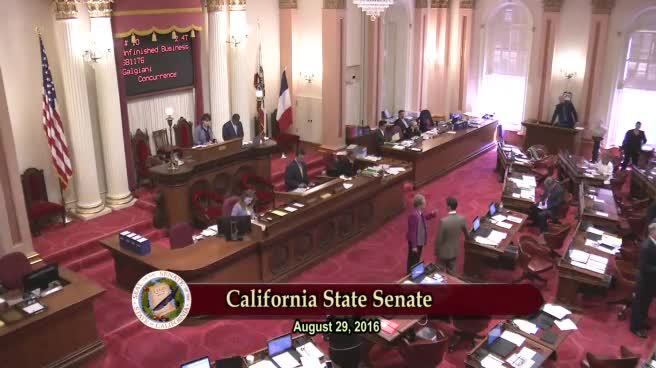
Bill Author