AB 1366: Public postsecondary education: Dream Resource Liaisons.
- Session Year: 2015-2016
- House: Assembly
- Latest Version Date: 2015-09-01
Existing law establishes the segments of the public postsecondary education system in the state, including the University of California administered by the Regents of the University of California, the California State University administered by the Trustees of the California State University, and the California Community Colleges administered by the Board of Governors of the California Community Colleges.
Existing law provides that a student, other than a nonimmigrant alien, as defined, who has attended high school in California for 3 or more years, who has graduated from a California high school or attained the equivalent thereof, who has registered at or attends an accredited institution of higher education in California not earlier than the fall semester or quarter of the 200102 academic year, and who, if he or she is an alien without lawful immigration status, has filed an affidavit, as specified, is exempt from paying nonresident tuition at the California Community Colleges and the California State University.
This bill would, commencing with the 201718 academic year, require would encourage the California Community Colleges and Colleges, the California State University, and would request the University of California, California to designate a Dream Resource Liaison on each of their campuses, as specified, to assist certain students by streamlining access to all available financial aid and academic opportunities for those students. The bill would encourage the governing board of each school district and each county office of education that maintains any of grades 9 to 12, inclusive, to have a Dream Resource Liaison at each of their respective campuses that includes any of those grades. The bill would authorize Dream Resource Centers to offer support services, including including, but not necessarily limited to, state and institutional financial aid assistance, academic counseling, peer support services, psychological counseling, referral services, and legal services. The bill would require encourage each campus of the California Community Colleges and the California State University to ensure that it has a staff person designated as a Dream Resource Liaison who is knowledgeable in available financial aid, services, and academic opportunities for all students meeting specified requirements, including undocumented students. By requiring community colleges to designate a Dream Resource Liaison, this bill would impose a state-mandated local program.
This bill would authorize the trustees, the board of governors, and the regents to seek and accept on behalf of the state any gift, bequest, devise, or donation whenever the gift and the terms and conditions thereof will aid in the creation and operation of Dream Resource Centers for their respective systems.
The California Constitution requires the state to reimburse local agencies and school districts for certain costs mandated by the state. Statutory provisions establish procedures for making that reimbursement.
This bill would provide that, if the Commission on State Mandates determines that the bill contains costs mandated by the state, reimbursement for those costs shall be made pursuant to these statutory provisions.
Existing law establishes the segments of the public postsecondary education system in the state, including the University of California administered by the Regents of the University of California, the California State University administered by the Trustees of the California State University, and the California Community Colleges administered by the Board of Governors of the California Community Colleges.
Existing law provides that a student, other than a nonimmigrant alien, as defined, who has attended high school in California for 3 or more years, who has graduated from a California high school or attained the equivalent thereof, who has registered at or attends an accredited institution of higher education in California not earlier than the fall semester or quarter of the 200102 academic year, and who, if he or she is an alien without lawful immigration status, has filed an affidavit, as specified, is exempt from paying nonresident tuition at the California Community Colleges and the California State University.
This bill would, commencing with the 201718 academic year, require the California Community Colleges and the California State University, and would request the University of California, to create designate a Dream Resource Centers Liaison on each of their campuses, as specified, to assist certain students by streamlining access to all available financial aid and academic opportunities for those students. The bill would authorize Dream Resource Centers to offer support services, including but not necessarily limited to, state and institutional financial aid assistance, academic counseling, peer support services, psychological counseling, referral services, and legal services. The bill would require each campus of the California Community Colleges and the California State University that is not required to have a Dream Resource Center to ensure that it has a designated staff person designated as a Dream Resource Liaison who is knowledgeable in available financial aid, services, and academic opportunities for all students meeting specified requirements , requirements, including undocumented students. By requiring community colleges to create designate a Dream Resource Centers, Liaison, this bill would impose a state-mandated local program.
This bill would authorize the trustees, the board of governors, and the regents to seek and accept on behalf of the state any gift, bequest, devise, or donation whenever the gift and the terms and conditions thereof will aid in the creation and operation of Dream Resource Centers for their respective systems.
The California Constitution requires the state to reimburse local agencies and school districts for certain costs mandated by the state. Statutory provisions establish procedures for making that reimbursement.
This bill would provide that, if the Commission on State Mandates determines that the bill contains costs mandated by the state, reimbursement for those costs shall be made pursuant to these statutory provisions.
Existing law establishes the segments of the public postsecondary education system in the state, including the University of California administered by the Regents of the University of California, the California State University administered by the Trustees of the California State University, and the California Community Colleges administered by the Board of Governors of the California Community Colleges.
Existing law provides that a student, other than a nonimmigrant alien, as defined, who has attended high school in California for 3 or more years, who has graduated from a California high school or attained the equivalent thereof, who has registered at or attends an accredited institution of higher education in California not earlier than the fall semester or quarter of the 200102 academic year, and who, if he or she is an alien without lawful immigration status, has filed an affidavit, as specified, is exempt from paying nonresident tuition at the California Community Colleges and the California State University.
This bill would, commencing with the 201718 academic year, require the California Community Colleges and the California State University, and would request the University of California, to create Dream Resource Centers on their campuses, as specified, to assist certain students by streamlining access to all available financial aid and academic opportunities for those students. The bill would authorize Dream Resource Centers to offer support services, including but not necessarily limited to, state and institutional financial aid assistance, academic counseling, peer support services, psychological counseling, referral services, and legal services. The bill would require each campus of the California Community Colleges and the California State University that is not required to have a Dream Resource Center to ensure that it has a designated staff person who is knowledgeable in available financial aid, services, and academic opportunities for all students meeting specified requirements , including undocumented students. By requiring community colleges to create Dream Resource Centers, this bill would impose a state-mandated local program.
This bill would authorize the trustees, the board of governors, and the regents to seek and accept on behalf of the state any gift, bequest, devise, or donation whenever the gift and the terms and conditions thereof will aid in the creation and operation of Dream Resource Centers for their respective systems.
The California Constitution requires the state to reimburse local agencies and school districts for certain costs mandated by the state. Statutory provisions establish procedures for making that reimbursement.
This bill would provide that, if the Commission on State Mandates determines that the bill contains costs mandated by the state, reimbursement for those costs shall be made pursuant to these statutory provisions.
Existing law establishes the segments of the public postsecondary education system in the state, including the University of California administered by the Regents of the University of California, the California State University administered by the Trustees of the California State University, and the California Community Colleges administered by the Board of Governors of the California Community Colleges.
Existing law provides that a student, other than a nonimmigrant alien, as defined, who has attended high school in California for 3 or more years, who has graduated from a California high school or attained the equivalent thereof, who has registered at or attends an accredited institution of higher education in California not earlier than the fall semester or quarter of the 200102 academic year, and who, if he or she is an alien without lawful immigration status, has filed an affidavit, as specified, is exempt from paying nonresident tuition at the California Community Colleges and the California State University.
This bill would would, commencing with the 201718 academic year, require the California Community Colleges and the California State University, and would request the University of California, to create Dream Resource Centers on each campus their campuses, as specified, to assist certain students by streamlining access to all available financial aid and academic opportunities for those students. The bill would require each campus of the California Community Colleges and the California State University that is not required to have a Dream Resource Center to ensure that it has a designated staff person who is knowledgeable in available financial aid, services, and academic opportunities for all students meeting specified requirements , including undocumented students. By requiring community colleges to create Dream Resource Centers, this bill would impose a state-mandated local program.
This bill would authorize the trustees, the board of governors, and the regents to seek and accept on behalf of the state any gift, bequest, devise, or donation whenever the gift and the terms and conditions thereof will aid in the creation and operation of Dream Resource Centers for their respective systems.
The California Constitution requires the state to reimburse local agencies and school districts for certain costs mandated by the state. Statutory provisions establish procedures for making that reimbursement.
This bill would provide that, if the Commission on State Mandates determines that the bill contains costs mandated by the state, reimbursement for those costs shall be made pursuant to these statutory provisions.
Existing law establishes the segments of the public postsecondary education system in the state, including the University of California administered by the Regents of the University of California, the California State University administered by the Trustees of the California State University, and the California Community Colleges administered by the Board of Governors of the California Community Colleges.
Existing law requires provides that a student, other than a nonimmigrant alien, as defined, who has attended high school in California for 3 or more years, who has graduated from a California high school or attained the equivalent thereof, who has registered at or attends an accredited institution of higher education in California not earlier than the fall semester or quarter of the 200102 academic year, and who, if he or she is an alien without lawful immigration status, has filed an affidavit, as specified, is exempt from paying nonresident tuition at the California Community Colleges and the California State University.
This bill would require the California Community Colleges and the California State University, and would request the University of California, to create Dream Resource Centers on each campus to assist certain students by streamlining access to all available financial aid and academic opportunities for those students. By requiring community colleges to create Dream Resource Centers, this bill would impose a state-mandated local program.
This bill would authorize the trustees, the board of governors, and the regents to seek and accept on behalf of the state any gift, bequest, devise, or donation whenever the gift and the terms and conditions thereof will aid in the creation and operation of Dream Resource Centers for their respective systems.
The California Constitution requires the state to reimburse local agencies and school districts for certain costs mandated by the state. Statutory provisions establish procedures for making that reimbursement.
This bill would provide that, if the Commission on State Mandates determines that the bill contains costs mandated by the state, reimbursement for those costs shall be made pursuant to these statutory provisions.
Existing law establishes the segments of the public postsecondary education system in the state, including the University of California administered by the Regents of the University of California, the California State University administered by the Trustees of the California State University, and the California Community Colleges administered by the Board of Governors of the California Community Colleges.
Existing law requires that a student, other than a nonimmigrant alien, as defined, who has attended high school in California for 3 or more years, who has graduated from a California high school or attained the equivalent thereof, who has registered at or attends an accredited institution of higher education in California not earlier than the fall semester or quarter of the 200102 academic year, and who, if he or she is an alien without lawful immigration status, has filed an affidavit, as specified, is exempt from paying nonresident tuition at the California Community Colleges and the California State University.
This bill would require the California Community Colleges and the California State University, and would request the University of California, to create Dream Resource Centers on each campus to assist certain students by streamlining access to all available financial aid and academic opportunities for those students. By requiring community colleges to create Dream Resource Centers, this bill would impose a state-mandated local program.
The California Constitution requires the state to reimburse local agencies and school districts for certain costs mandated by the state. Statutory provisions establish procedures for making that reimbursement.
This bill would provide that, if the Commission on State Mandates determines that the bill contains costs mandated by the state, reimbursement for those costs shall be made pursuant to these statutory provisions.
The Legislature finds and declares all of the following:
(a)It is the intent of the Legislature to increase enrollment and graduation rates among students meeting the requirements of Assembly Bill 540 of the 200102 Regular Session (Firebaugh, Ch. 814) by requiring the creation of Dream Resource Centers at public institutions of higher education.
(b)It is estimated that each year approximately 65,000 undocumented students graduate from high schools, and while California has been a leader in enacting innovative and bold laws to provide opportunities for undocumented youth to attain higher education, only 20 percent of these students attend college. Many undocumented youth and their families are unaware of recent policy changes, such as the enactment of Assembly Bill 540 of the 200102 Regular Session, the California Dream Act of 2011, and the federal Deferred Action for Childhood Arrivals (DACA), that make college graduation more attainable. Currently, the majority of college campuses do not have a centralized location that provides specialized support services and resources for students meeting the requirements of Assembly Bill 540 of the 200102 Regular Session.
(c)The creation of Dream Resource Centers would save staff time and resources by streamlining all available financial aid and academic opportunities for students meeting the requirements of Assembly Bill 540 of the 200102 Regular Session. These Dream Resource Centers would seek to empower and create a safe and welcoming environment for those students. These centers would increase enrollment, transfer, and graduation rates among this population.
(d)A number of college campuses have acknowledged the needs and challenges of these students and have created Dream Resource Centers. These include: the University of California, Los Angeles; the University of California, Davis; the California State University, Los Angeles; the California State University, Fullerton; and the California State University, Northridge. These centers provide, among other things, informational workshops, legal clinics, information on programs available to undocumented immigrants, and peer mentoring and support services to increase awareness of existing programs and available resources, enhance professional development, and increase employment opportunities.
SEC. 2.Chapter 3.67 (commencing with Section 44778) is added to Part 25 of Division 3 of Title 2 of the Education Code, to read:3.67.Dream Resource Liaison44778.The governing board of each school district and each county office of education that maintains any of grades 9 to 12, inclusive, are encouraged to have a Dream Resource Liaison, as described in Section 68130.6, at each of their respective campuses that includes any of those grades.
SEC. 2.SEC. 3.Section 68130.6 is added to the Education Code, to read:68130.6.(a)Commencing with the 201718 academic year, the The California Community Colleges and Colleges, the California State University shall, and University, and the University of California is requested to, are encouraged to designate a Dream Resource Liaison on each of their campuses, as specified in subdivision (b), to assist students meeting the requirements set forth in Section 68130.5 by streamlining access to all available financial aid and academic opportunities for those students.
(b)(1)Each campus of the California Community Colleges shall is encouraged to ensure that it has a staff person designated as a Dream Resource Liaison who is knowledgeable in available financial aid, services, and academic opportunities for all students meeting the requirements set forth in Section 68130.5, including undocumented students. The Legislature encourages each of these campuses to place this designated staff person in the campus extended opportunities opportunity programs and services office or financial aid office.
(2)Each campus of the California State University shall is encouraged to ensure that it has a staff person designated as a Dream Resource Liaison who is knowledgeable in available financial aid, services, and academic opportunities for all students meeting the requirements set forth in Section 68130.5, including undocumented students. The Legislature encourages each of these campuses to place this designated staff person in the campus educational opportunities opportunity programs and services office or financial aid office.
(3)The University of California is requested encouraged to designate a Dream Resource Liaison on each of its campuses.
(c)Dream Resource Centers may offer support services, including, but not necessarily limited to, state and institutional financial aid assistance, academic counseling, peer support services, psychological counseling, referral services, and legal services.
(d)(1)This section shall not be construed as requiring the construction of a new or separate space for Dream Resource Centers.
(2)Dream Resource Centers may be housed within existing student service or academic centers.
(3)The space in which the Dream Resource Liaison is located may be deemed a Dream Resource Center.
(e)Notwithstanding Section 11005 of the Government Code and any other law requiring approval by a state officer of gifts, bequests, devises, or donations, the Trustees of the California State University, the Board of Governors of the California Community Colleges, and the Regents of the University of California may seek and accept on behalf of the state any gift, bequest, devise, or donation whenever the gift and the terms and conditions thereof will aid in the creation and operation of Dream Resource Centers for their respective systems.
SEC. 3.If the Commission on State Mandates determines that this act contains costs mandated by the state, reimbursement to local agencies and school districts for those costs shall be made pursuant to Part 7 (commencing with Section 17500) of Division 4 of Title 2 of the Government Code.
The Legislature finds and declares all of the following:
(a)It is the intent of the Legislature to increase enrollment and graduation rates among students meeting the requirements of Assembly Bill 540 of the 200102 Regular Session (Firebaugh, Ch. 814) by requiring the creation of Dream Resource Centers at public institutions of higher education.
(b)It is estimated that each year approximately 65,000 undocumented students graduate from high schools, and while California has been a leader in enacting innovative and bold laws to provide opportunities for undocumented youth to attain higher education, only 20 percent of these students attend college. Many undocumented youth and their families are unaware of recent policy changes, such as the enactment of Assembly Bill 540 of the 200102 Regular Session, the California Dream Act of 2011, and the federal Deferred Action for Childhood Arrivals (DACA), that make college graduation more attainable. Currently, the majority of college campuses do not have a centralized location that provides specialized support services and resources for students meeting the requirements of Assembly Bill 540 of the 200102 Regular Session.
(c)The creation of Dream Resource Centers would save staff time and resources by streamlining all available financial aid and academic opportunities for students meeting the requirements of Assembly Bill 540 of the 200102 Regular Session. These Dream Resource Centers would seek to empower and create a safe and welcoming environment for those students. These centers would increase enrollment, transfer, and graduation rates among this population.
(d)A number of college campuses have acknowledged the needs and challenges of these students and have created Dream Resource Centers. These include: the University of California, Los Angeles; the University of California, Davis; the California State University, Los Angeles; the California State University, Fullerton; and the California State University, Northridge. These centers provide, among other things, informational workshops, legal clinics, information on programs available to undocumented immigrants, and peer mentoring and support services to increase awareness of existing programs and available resources, enhance professional development, and increase employment opportunities.
SEC. 2.Section 68130.6 is added to the Education Code, to read:68130.6.(a)Commencing with the 201718 academic year, the California Community Colleges and the California State University shall, and the University of California is requested to, create designate a Dream Resource Centers Liaison on each of their campuses, as specified in subdivision (b), to assist students meeting the requirements set forth in Section 68130.5 by streamlining access to all available financial aid and academic opportunities for those students.
(b)(1)(A)The California Community Colleges shall create Dream Resource Centers on any campus that has at least 500 currently enrolled students meeting the requirements set forth in Section 68130.5.
(B)Any
(b)(1)Each campus of the California Community Colleges that has less than 500 currently enrolled students meeting the requirements set forth in Section 68130.5 shall ensure that it has a designated staff person designated as a Dream Resource Liaison who is knowledgeable in available financial aid, services, and academic opportunities for all students meeting the requirements set forth in Section 68130.5, including undocumented students. The Legislature encourages each of these campuses to place this designated staff person in the campus extended opportunities programs and services office or financial aid office.
(2)(A)The California State University shall create Dream Resource Centers on any campus where any of its local feeder community colleges meets the requirement in subparagraph (A) of paragraph (1).
(B)Any
(2)Each campus of the California State University where none of its local feeder community colleges meet the requirement in subparagraph (A) of paragraph (1) shall ensure that it has a designated staff person designated as a Dream Resource Liaison who is knowledgeable in available financial aid, services, and academic opportunities for all students meeting the requirements set forth in Section 68130.5, including undocumented students. The Legislature encourages each of these campuses to place this designated staff person in the campus extended educational opportunities programs and services office or financial aid office.
(3)The University of California is requested to create designate a Dream Resource Centers Liaison on each of its campuses.
(c)Dream Resource Centers may offer support services, including, but not necessarily limited to, state and institutional financial aid assistance, academic counseling, peer support services, psychological counseling, referral services, and legal services.
(d)(1)This section shall not be construed as requiring the construction of a new or separate space for Dream Resource Centers.
(2)Dream Resource Centers may be housed within existing student service or academic centers.
(3)The space in which the Dream Resource Liaison is located may be deemed a Dream Resource Center.
(e)Notwithstanding Section 11005 of the Government Code and any other law requiring approval by a state officer of gifts, bequests, devises, or donations, the Trustees of the California State University, the Board of Governors of the California Community Colleges, and the Regents of the University of California may seek and accept on behalf of the state any gift, bequest, devise, or donation whenever the gift and the terms and conditions thereof will aid in the creation and operation of Dream Resource Centers for their respective systems.
SEC. 3.If the Commission on State Mandates determines that this act contains costs mandated by the state, reimbursement to local agencies and school districts for those costs shall be made pursuant to Part 7 (commencing with Section 17500) of Division 4 of Title 2 of the Government Code.
The Legislature finds and declares all of the following:
(a)It is the intent of the Legislature to increase enrollment and graduation rates among students meeting the requirements of Assembly Bill 540 of the 200102 Regular Session (Firebaugh, Ch. 814) by requiring the creation of Dream Resource Centers at public institutions of higher education.
(b)It is estimated that each year approximately 65,000 undocumented students graduate from high schools, and while California has been a leader in enacting innovative and bold laws to provide opportunities for undocumented youth to attain higher education, only 20 percent of these students attend college. Many undocumented youth and their families are unaware of recent policy changes, such as the enactment of Assembly Bill 540 of the 200102 Regular Session, the California Dream Act of 2011, and the federal Deferred Action for Childhood Arrivals (DACA), that make college graduation more attainable. Currently, the majority of college campuses do not have a centralized location that provides specialized support services and resources for students meeting the requirements of Assembly Bill 540 of the 200102 Regular Session.
(c)The creation of Dream Resource Centers would save staff time and resources by streamlining all available financial aid and academic opportunities for students meeting the requirements of Assembly Bill 540 of the 200102 Regular Session. These Dream Resource Centers would seek to empower and create a safe and welcoming environment for those students. These centers would increase enrollment, transfer, and graduation rates among this population.
(d)A number of college campuses have acknowledged the needs and challenges of these students and have created Dream Resource Centers. These include: the University of California, Los Angeles; the University of California, Davis; the California State University, Los Angeles; the California State University, Fullerton; and the California State University, Northridge. These centers provide, among other things, informational workshops, legal clinics, information on programs available to undocumented immigrants, and peer mentoring and support services to increase awareness of existing programs and available resources, enhance professional development, and increase employment opportunities.
SEC. 2.Section 68130.6 is added to the Education Code, to read:68130.6.(a)Commencing with the 201718 academic year, the California Community Colleges and the California State University shall, and the University of California is requested to, create Dream Resource Centers on their campuses, as specified in subdivision (b), to assist students meeting the requirements set forth in Section 68130.5 by streamlining access to all available financial aid and academic opportunities for those students.
(b)(1)(A)The California Community Colleges shall create Dream Resource Centers on any campus that has at least 500 currently enrolled students meeting the requirements set forth in Section 68130.5.
(B)Any campus of the California Community Colleges that has less than 500 currently enrolled students meeting the requirements set forth in Section 68130.5 shall ensure that it has a designated staff person who is knowledgeable in available financial aid, services, and academic opportunities for all students meeting the requirements set forth in Section 68130.5, including undocumented students. The Legislature encourages each of these campuses to place this designated staff person in the campus extended opportunities programs and services office or financial aid office.
(2)(A)The California State University shall create Dream Resource Centers on any campus where any of its local feeder community colleges meets the requirement in subparagraph (A) of paragraph (1).
(B)Any campus of the California State University where none of its local feeder community colleges meet the requirement in subparagraph (A) of paragraph (1) shall ensure that it has a designated staff person who is knowledgeable in available financial aid, services, and academic opportunities for all students meeting the requirements set forth in Section 68130.5, including undocumented students. The Legislature encourages each of these campuses to place this designated staff person in the campus extended opportunities programs and services office or financial aid office.
(3)The University of California is requested to create Dream Resource Centers on each of its campuses.
(c)Dream Resource Centers may offer support services, including, but not necessarily limited to, state and institutional financial aid assistance, academic counseling, peer support services, psychological counseling, referral services, and legal services.
(c)
(d)(1)This section shall not be construed as requiring the construction of a new or separate space for Dream Resource Centers.
(2)Dream Resource Centers may be housed within existing student service or academic centers.
(d)
(e)Notwithstanding Section 11005 of the Government Code and any other law requiring approval by a state officer of gifts, bequests, devises, or donations, the Trustees of the California State University, the Board of Governors of the California Community Colleges, and the Regents of the University of California may seek and accept on behalf of the state any gift, bequest, devise, or donation whenever the gift and the terms and conditions thereof will aid in the creation and operation of Dream Resource Centers for their respective systems.
SEC. 3.If the Commission on State Mandates determines that this act contains costs mandated by the state, reimbursement to local agencies and school districts for those costs shall be made pursuant to Part 7 (commencing with Section 17500) of Division 4 of Title 2 of the Government Code.
The Legislature finds and declares all of the following:
(a)It is the intent of the Legislature to increase enrollment and graduation rates among students meeting the requirements of Assembly Bill 540 of the 200102 Regular Session (Firebaugh, Ch. 814) by requiring the creation of Dream Resource Centers at public institutions of higher education.
(b)It is estimated that each year approximately 65,000 undocumented students graduate from high schools, and while California has been a leader in enacting innovative and bold laws to provide opportunities for undocumented youth to attain higher education, only 20 percent of these students attend college. Many undocumented youth and their families are unaware of recent policy changes, such as the enactment of Assembly Bill 540 of the 200102 Regular Session, the California Dream Act of 2011, and the federal Deferred Action for Childhood Arrivals (DACA), that make college graduation more attainable. Currently, the majority of college campuses do not have a centralized location that provides specialized support services and resources for students meeting the requirements of Assembly Bill 540 of the 200102 Regular Session.
(c)The creation of Dream Resource Centers would save staff time and resources by streamlining all available financial aid and academic opportunities for students meeting the requirements of Assembly Bill 540 of the 200102 Regular Session. These Dream Resource Centers would seek to empower and create a safe and welcoming environment for those students. These centers would increase enrollment, transfer, and graduation rates among this population.
(d)A number of college campuses have acknowledged the needs and challenges of these students and have created Dream Resource Centers. These include: the University of California, Los Angeles; the University of California, Davis; the California State University, Los Angeles; the California State University, Fullerton; and the California State University, Northridge. These centers provide, among other things, informational workshops, legal clinics, information on programs available to undocumented immigrants, and peer mentoring and support services to increase awareness of existing programs and available resources, enhance professional development, and increase employment opportunities.
SEC. 2.Section 68130.6 is added to the Education Code, to read:68130.6.(a)The Commencing with the 201718 academic year, the California Community Colleges and the California State University shall, and the University of California is requested to, create Dream Resource Centers on each campus their campuses, as specified in subdivision (b), to assist students meeting the requirements set forth in Section 68130.5 by streamlining access to all available financial aid and academic opportunities for those students.
(b)(1)(A)The California Community Colleges shall create Dream Resource Centers on any campus that has at least 500 currently enrolled students meeting the requirements set forth in Section 68130.5.
(B)Any campus of the California Community Colleges that has less than 500 currently enrolled students meeting the requirements set forth in Section 68130.5 shall ensure that it has a designated staff person who is knowledgeable in available financial aid, services, and academic opportunities for all students meeting the requirements set forth in Section 68130.5, including undocumented students. The Legislature encourages each of these campuses to place this designated staff person in the campus extended opportunities programs and services office or financial aid office.
(2)(A)The California State University shall create Dream Resource Centers on any campus where any of its local feeder community colleges meets the requirement in subparagraph (A) of paragraph (1).
(B)Any campus of the California State University where none of its local feeder community colleges meet the requirement in subparagraph (A) of paragraph (1) shall ensure that it has a designated staff person who is knowledgeable in available financial aid, services, and academic opportunities for all students meeting the requirements set forth in Section 68130.5, including undocumented students. The Legislature encourages each of these campuses to place this designated staff person in the campus extended opportunities programs and services office or financial aid office.
(3)The University of California is requested to create Dream Resource Centers on each of its campuses.
(c)(1)This section shall not be construed as requiring the construction of a new or separate space for Dream Resource Centers.
(2)Dream Resource Centers may be housed within existing student service or academic centers.
(b)
(d)Notwithstanding Section 11005 of the Government Code and any other law requiring approval by a state officer of gifts, bequests, devises, or donations, the Trustees of the California State University, the Board of Governors of the California Community Colleges, and the Regents of the University of California may seek and accept on behalf of the state any gift, bequest, devise, or donation whenever the gift and the terms and conditions thereof will aid in the creation and operation of Dream Resource Centers for their respective systems.
SEC. 3.If the Commission on State Mandates determines that this act contains costs mandated by the state, reimbursement to local agencies and school districts for those costs shall be made pursuant to Part 7 (commencing with Section 17500) of Division 4 of Title 2 of the Government Code.
The Legislature finds and declares all of the following:
(a)It is the intent of the Legislature to increase enrollment and graduation rates among students meeting the requirements of Assembly Bill 540 of the 200102 Regular Session (Firebaugh, Ch. 814) by requiring the creation of Dream Resource Centers at public institutions of higher education.
(b)It is estimated that each year approximately 65,000 undocumented students graduate from high schools, and while California has been a leader in enacting innovative and bold laws to provide opportunities for undocumented youth to attain higher education, only 20 percent of these students attend college. Many undocumented youth and their families are unaware of recent policy changes, such as the enactment of Assembly Bill 540 of the 200102 Regular Session, the California Dream Act of 2011, and the federal Deferred Action for Childhood Arrivals (DACA), that make college graduation more attainable. Currently, the majority of college campuses do not have a centralized location that provides specialized support services and resources for students meeting the requirements of Assembly Bill 540 of the 200102 Regular Session.
(c)The creation of Dream Resource Centers would save staff time and resources by streamlining all available financial aid and academic opportunities for students meeting the requirements of Assembly Bill 540 of the 200102 Regular Session. These Dream Resource Centers would seek to empower and create a safe and welcoming environment for those students. These centers would increase enrollment, transfer, and graduation rates among this population.
(d)A number of college campuses have acknowledged the needs and challenges of these students and have created Dream Resources Resource Centers. These include: the University of California, Los Angeles; the University of California, Davis; the California State University, Los Angeles; the California State University, Fullerton; and the California State University, Northridge. These centers provide, among other things, informational workshops, legal clinics, information on programs available to undocumented immigrants, and peer mentoring and support services to increase awareness of existing programs and available resources, enhance professional development, and increase employment opportunities.
SEC. 2.Section 68130.6 is added to the Education Code, to read:68130.6.(a)The California Community Colleges and the California State University shall, and the University of California is requested to, create Dream Resource Centers on each campus to assist students meeting the requirements set forth in Section 68130.5 by streamlining access to all available financial aid and academic opportunities for those students.
(b)Notwithstanding Section 11005 of the Government Code and any other law requiring approval by a state officer of gifts, bequests, devises, or donations, the Trustees of the California State University, the Board of Governors of the California Community Colleges, and the Regents of the University of California may seek and accept on behalf of the state any gift, bequest, devise, or donation whenever the gift and the terms and conditions thereof will aid in the creation and operation of Dream Resource Centers for their respective systems.
SEC. 3.If the Commission on State Mandates determines that this act contains costs mandated by the state, reimbursement to local agencies and school districts for those costs shall be made pursuant to Part 7 (commencing with Section 17500) of Division 4 of Title 2 of the Government Code.
The Legislature finds and declares all of the following:
(a)It is the intent of the Legislature to increase enrollment and graduation rates among students meeting the requirements of Assembly Bill 540 of the 200102 Regular Session (Firebaugh, Ch. 814) by requiring the creation of Dream Resource Centers at public institutions of higher education.
(b)It is estimated that each year approximately 65,000 undocumented students graduate from high schools, and while California has been a leader in enacting innovative and bold laws to provide opportunities for undocumented youth to attain higher education, only 20 percent of these students attend college. Many undocumented youth and their families are unaware of recent policy changes, such as the enactment of Assembly Bill 540 of the 200102 Regular Session, the California Dream Act of 2011, and the federal Deferred Action for Childhood Arrivals (DACA), that make college graduation more attainable. Currently, the majority of college campuses do not have a centralized location that provides specialized support services and resources for students meeting the requirements of Assembly Bill 540 of the 200102 Regular Session.
(c)The creation of Dream Resource Centers would save staff time and resources by streamlining all available financial aid and academic opportunities for students meeting the requirements of Assembly Bill 540 of the 200102 Regular Session. These Dream Resource Centers would seek to empower and create a safe and welcoming environment for those students. These centers would increase enrollment, transfer, and graduation rates among this population.
(d)A number of college campuses have acknowledged the needs and challenges of these students and have created Dream Resources Centers. These include: the University of California, Los Angeles; the University of California, Davis; the California State University, Los Angeles; the California State University, Fullerton; and the California State University, Northridge. These centers provide, among other things, informational workshops, legal clinics, information on programs available to undocumented immigrants, and peer mentoring and support services to increase awareness of existing programs and available resources, enhance professional development, and increase employment opportunities.
SEC. 2.Section 68130.6 is added to the Education Code, to read:68130.6.The California Community Colleges and the California State University shall, and the University of California is requested to, create Dream Resource Centers on each campus to assist students meeting the requirements set forth in Section 68130.5 by streamlining access to all available financial aid and academic opportunities for those students.
SEC. 3.If the Commission on State Mandates determines that this act contains costs mandated by the state, reimbursement to local agencies and school districts for those costs shall be made pursuant to Part 7 (commencing with Section 17500) of Division 4 of Title 2 of the Government Code.
|
Date
|
Status
|
|---|---|
| Sep 9, 2015 | Ordered to inactive file at the request of Senator Jackson. |
| Sep 1, 2015 | Read second time and amended. Ordered to third reading. |
| Aug 31, 2015 | From committee: Amend, and do pass as amended. (Ayes 5. Noes 2.) (August 27). |
| Aug 24, 2015 | In committee: Referred to APPR. suspense file. |
| Aug 18, 2015 | Read second time and amended. Re-referred to Com. on APPR. |
| Aug 17, 2015 | From committee: Amend, and do pass as amended and re-refer to Com. on APPR. (Ayes 8. Noes 1.) (July 15). |
| Jul 8, 2015 | From committee chair, with author's amendments: Amend, and re-refer to committee. Read second time, amended, and re-referred to Com. on ED. |
| Jun 18, 2015 | Referred to Com. on ED. |
| Jun 3, 2015 | In Senate. Read first time. To Com. on RLS. for assignment. |
| Jun 3, 2015 | Read third time. Passed. Ordered to the Senate. (Ayes 52. Noes 23. Page 1882.) |
| Jun 3, 2015 | Read third time. Passed. Ordered to the Senate. |
| Jun 2, 2015 | Read second time. Ordered to third reading. |
| Jun 1, 2015 | Read second time and amended. Ordered returned to second reading. |
| May 28, 2015 | From committee: Amend, and do pass as amended. (Ayes 12. Noes 5.) (May 28). |
| May 13, 2015 | In committee: Set, first hearing. Referred to APPR. suspense file. |
| May 11, 2015 | Re-referred to Com. on APPR. |
| May 7, 2015 | From committee chair, with author's amendments: Amend, and re-refer to Com. on APPR. Read second time and amended. |
| Apr 29, 2015 | From committee: Do pass and re-refer to Com. on APPR. (Ayes 10. Noes 2.) (April 28). Re-referred to Com. on APPR. |
| Mar 23, 2015 | Referred to Com. on HIGHER ED. |
| Mar 2, 2015 | Read first time. |
| Mar 1, 2015 | From printer. May be heard in committee March 31. |
| Feb 27, 2015 | Introduced. To print. |
|
Date
|
Description
|
Location
|
Votes
|
|
|---|---|---|---|---|
| Aug 27, 2015 | Do pass as amended | Senate Standing Committee on Appropriations |
Passed |
|
| Aug 24, 2015 | Placed on suspense file | Senate Standing Committee on Appropriations |
Passed |
|
| Jul 15, 2015 | Do pass as amended, but first amend, and re-refer to the Committee on [Appropriations] | Senate Standing Committee on Education |
Passed |
|
| Jun 3, 2015 | AB 1366 LOPEZ Assembly Third Reading | Assembly Floor |
Passed |
|
| May 28, 2015 | Do pass as amended. | Assembly Standing Committee on Appropriations |
Passed |
|
| Apr 28, 2015 | Do pass and be re-referred to the Committee on [Appropriations] | Assembly Standing Committee on Higher Education |
Passed |
This list shows positions taken on this bill by organizations on the date displayed, which is linked to the original source.
Positions by individuals are not included.
AB 1366
Page 6
|
Office of Senate Floor Analyses (916) 651-1520 Fax: (916) 327-4478 |
THIRD READING
Bill No: AB 1366
Amended: 9/1/15 in Senate
SENATE EDUCATION COMMITTEE: 8-1, 7/15/15
AYES: Liu, Block, Hancock, Leyva, Mendoza, Monning, Pan, Vidak
NOES: Runner
SENATE APPROPRIATIONS COMMITTEE: 5-2, 8/27/15
AYES: Lara, Beall, Hill, Leyva, Mendoza
NOES: Bates, Nielsen
ASSEMBLY FLOOR: 52-23, 6/3/15 - See last page for vote
SUBJECT: Public postsecondary education: Dream Resource Liaisons
DIGEST: This bill encourages schools that maintain grades 9 through 12, the California Community Colleges (CCC) and the California State University (CSU) and the University of California (UC) to designate a Dream Resource Liaison on each of their campuses and authorizes the governing boards of the segments to accept private funds to establish and operate centers.
Existing law:
Provides that, beginning January 1, 2013, AB 540 students are eligible to apply for, and participate in, any student financial aid program administered by the State of California to the full extent permitted by federal law. The California Student Aid Commission (CSAC) is required to establish procedures and forms that enable AB 540 students to apply for, and participate in, all student financial aid programs administered by the State of California to the full extent permitted by federal law. Current law prohibits AB 540 students from being eligible for Competitive Cal Grant A and B Awards unless specified conditions are met. (Education Code § 69508.5)
Provides that a student attending the CSU, the CCC, or the UC who is exempt from paying nonresident tuition under the provisions of AB 540 is eligible to receive a scholarship derived from non-state funds received, for the purpose of scholarships, by the segment at which he or she is a student. (EC § 66021.7)
Requires the Trustees of the CSU and the Board of Governors of the CCC, and requests the UC Regents, to establish procedures and forms that enable AB 540 students to apply for, and participate in, all student aid programs administered by these segments to the full extent permitted by federal law. (EC § 66021.6)
Establishes the California DREAM Loan Program intended to provide low interest loans to Dream Act students who are accessing the Cal Grant program and attending UC and CSU. These students are not eligible for federal student loans, making it difficult for some to cover the total costs of college. The law requires the state and UC and CSU to split the costs of launching the program. The state would need to provide about $4.7 million General Fund to begin the program. In 2014, the Governor signed SB 1210 (Lara, Chapter 754), but does not provide funding in the 2015-16 Budget for the program. (EC § 70030-70039)
This bill:
Encourages schools that maintain grades 9 through 12, the CCC and the CSU and the UC to designate a Dream Resource Liaison on each of their campuses.
Encourages the specified entities to designate Dream Resource Liaisons to assist students meeting the requirements set forth in Section 68130.5 of the Education Code (commonly known as AB 540).
Specifies that each CSU and CCC campus ensure the Dream Resource Liaison to be:
Knowledgeable in services and academic opportunity applicable to students who meet the specified requirements.
Placed in an extended opportunity program, educational opportunity program, or financial aid office.
Authorizes, specifically, the governing board of each school district and each county office of education that maintains any grades 9 through 12 to have a Dream Resource Liaison as described above at each of their respective campuses, as specified.
Specifies the following parameters for Dream Resource Centers:
May offer support services including, but not limited to, state and institutional financial aid assistance, academic counseling, peer support services, psychological counseling, referral services, and legal services.
May be housed within existing student service or academic center.
The space in which the Liaison is located may be deemed a Dream Resource Center.
Construction of a new or separate space is not required.
Authorizes the governing boards of the segments to accept private funds to establish and operate centers.
Makes a variety of legislative findings and declarations regarding increasing enrollment and graduation rates for students who meet the requirements established by AB 540 and the resources needed to support the unique needs of these students.
Comments
Need for the bill. According to the author, many undocumented youth and their families are unaware of recent policy changes, such as the enactment of AB 540 of the 2001-2002 Regular Session, the California Dream Act of 2011 and the federal deferred Action for Childhood Arrivals (DACA), that make college graduation more attainable. The author notes that the majority of college campuses do not have a centralized location that provides specialized support services and resources for students meeting requirements of AB 540. Furthermore, there are many unique barriers that this student population faces due to their residency status and a trust space designated for these students will encourage more youth to pursue postsecondary education to prepare them to enter California’s workforce. This bill seeks to create a centralized location for AB 540 students to access student support services and other applicable resources.
What currently exists? Each UC campus designates a point of contact specifically for providing information to undocumented students. All but three campuses have physical space designated for this purpose. Among the 23 campuses at the CSU, the method of delivering information varies. Some campuses have a designated location but most provide information through existing student support programs.
Similarly, information and services offered at community colleges changes from campus to campus. For the most part community colleges do not have a centralized location dedicated for AB 540 students. However, some campuses in Southern California are incorporating this group of students into their respective Student Equity Plans. These plans are developed in effort to close achievement gaps in access and success in underrepresented student groups. The 2015-16 Budget Act targeted funds for this purpose. It is unclear how many campuses have prioritized AB 540 students in the college Student Equity Plan or if they will establish a location similar to a Dream Resource Center as described by this bill.
Related Legislation
SB 247 (Lara, 2015) authorizes the governing board of a school district or county office of education that maintains grades 9 through 12, the governing board of a CCC district, and the Trustees of the CSU, and encourages the UC Regents to establish on-campus Dream Centers for the purposes of providing educational support services applicable to undocumented students.
FISCAL EFFECT: Appropriation: No Fiscal Com.: Yes Local: Yes
According to the Senate Appropriations Committee, this bill
creates
major cost pressures that would not be eligible for reimbursement as
a state mandate since its requirements are permissive.
Cost pressure in the tens of millions for Dream Resource Liaisons to be designated at each campus maintaining grades 9 through 12.
Cost pressure of $100,000 per campus ($11.3 million statewide) to the CCC to support a Dream Resource Liaison position to the extent campuses choose to designate one. (Proposition 98)
Cost pressure of $60,000 to the CCC Chancellor’s Office for one part-time position to support oversight of Dream Resource Centers to the extent they are established. (General Fund)
The CSU indicates that there may be a cost pressure to hire an additional staff member at some campuses at a cost of $70,000 each. (General Fund)
No costs to the UC because each campus currently has a Dream Resource Liaison.
California Dream Network
California Immigrant Policy Center
Coalition for Humane Immigrant Rights of Los Angeles
Espiritu de Nuestro Futuro at CSU, Dominguez Hills
Fullerton College Dream Team
Hispanic Association of Colleges and Universities
IDEAS at Mt. San Antonio College
Improving Dreams, Equity, Access and Success at San Francisco State
Lead Empower Achieve with Determination at Sacramento State University
National Association of Social Workers
RISE at Los Angeles Trade Tech
Rising Immigrant Scholars through Education at Berkeley
Scholars Promoting Education Awareness and Knowledge
Student Demand for Equality in Education at Cal Poly Pomona
Undocumented/AB 540 Educational Equity Task Force at San Francisco State University
Voices Organizing Immigrant Communities for Educational Success
OPPOSITION: (Verified 8/28/15)
None received
ASSEMBLY FLOOR: 52-23, 6/3/15
AYES: Alejo, Bloom, Bonilla, Bonta, Brown, Burke, Calderon, Campos, Chau, Chávez, Chiu, Chu, Cooley, Cooper, Dababneh, Dodd, Eggman, Frazier, Cristina Garcia, Eduardo Garcia, Gatto, Gipson, Gomez, Gonzalez, Gordon, Gray, Roger Hernández, Holden, Irwin, Jones-Sawyer, Lackey, Levine, Lopez, Low, McCarty, Medina, Mullin, Nazarian, O'Donnell, Perea, Quirk, Rendon, Ridley-Thomas, Rodriguez, Salas, Santiago, Mark Stone, Ting, Weber, Williams, Wood, Atkins
NOES: Achadjian, Travis Allen, Baker, Bigelow, Brough, Chang, Dahle, Beth Gaines, Gallagher, Grove, Harper, Jones, Kim, Maienschein, Mayes, Melendez, Obernolte, Olsen, Patterson, Steinorth, Wagner, Waldron, Wilk
NO VOTE RECORDED: Daly, Hadley, Linder, Mathis, Thurmond
Prepared by: Olgalilia Ramirez / ED. / (916) 651-4105
9/1/15 21:30:27
**** END ****
AB 1366 (Lopez) Page 0 of 1
SENATE COMMITTEE ON APPROPRIATIONS
Senator Ricardo Lara, Chair
2015 - 2016 Regular Session
AB 1366 (Lopez) - Public postsecondary education: Dream Resource Liaisons.
|
|
Version: August 18, 2015 |
Policy Vote: ED. 8 - 1 |
Urgency: No |
Mandate: Yes |
Hearing Date: August 27, 2015 |
Consultant: Jillian Kissee |
*********** ANALYSIS ADDENDUM – SUSPENSE FILE ***********
The following information is revised to reflect amendments
adopted by the committee on August 27, 2015
Bill Summary:
This bill authorizes schools that maintain grades 9 through 12, the California Community Colleges (CCC) and the California State University (CSU) and requests the University of California (UC) to designate a Dream Resource Liaison on each of their campuses and authorizes the governing boards of the segments to accept private funds to establish and operate centers.
Fiscal Impact:
This bill creates
major cost pressures that would not be eligible for reimbursement as
a state mandate since its requirements are permissive.
Cost pressure in the tens of millions for Dream Resource Liaisons to be designated at each campus maintaining grades 9 through 12.
Cost pressure of $100,000 per campus ($11.3 million statewide) to the CCC to support a Dream Resource Liaison position to the extent campuses choose to designate one. (Proposition 98)
Cost pressure of $60,000 to the CCC Chancellor’s Office for one part-time position to support oversight of Dream Resource Centers to the extent they are established. (General Fund)
The CSU indicates that there may be a cost pressure to hire an additional staff member at some campuses at a cost of $70,000 each. (General Fund)
No costs to the UC because each campus currently has a Dream Resource Liaison.
Committee Amendments:
Expand the bill to encourage school district and county offices of education governing boards that maintain grades 9 through 12 to have a Dream Resource Liaison at each campus. Amend to encourage, rather than require, the CCC and CSU campuses to designate a liaison to eliminate the reimbursable mandate for CCCs.
-- END --
AB 1366 (Lopez) Page 3 of 3
SENATE COMMITTEE ON APPROPRIATIONS
Senator Ricardo Lara, Chair
2015 - 2016 Regular Session
AB 1366 (Lopez) - Public postsecondary education: Dream Resource Liaisons.
|
|
Version: August 18, 2015 |
Policy Vote: ED. 8 - 1 |
Urgency: No |
Mandate: Yes |
Hearing Date: August 24, 2015 |
Consultant: Jillian Kissee |
This bill meets the criteria for referral to the Suspense File.
Bill Summary:
This bill requires the California Community Colleges (CCC) and the California State University (CSU) and requests the University of California (UC) to designate a Dream Resource Liaison on each of their campuses and authorizes the governing boards of the segments to accept private funds to establish and operate centers.
Fiscal Impact:
Reimbursable state mandate costs to the CCC of $100,000 per campus ($11.3 million statewide) to support a Dream Resource Liaison position to the extent the Commission on State Mandates determines this bill to impose a state mandate. If so determined, there would be pressure to increase the community college mandate block grant to reflect the inclusion of this mandate. (Proposition 98)
The CCC Chancellor’s Office indicates the need for one part-time position and $60,000 to support oversight of Dream Resource Centers. (General Fund)
The CSU indicates that there may be a cost pressure to hire an additional staff member at some campuses at a cost of $70,000 each. (General Fund)
No costs to the UC because each campus currently has a Dream Resource Liaison.
Background:
AB 540 (Chapter 814, 2001) exempts certain nonresident students, including undocumented students, from paying nonresident tuition at CCC and CSU if certain criteria are met. The UC has adopted this policy as well.
Students must have: (1) attended a California high school for three years or more or obtained equivalent number of units and attended at least three years in California elementary or secondary schools; (2) graduated from a high school in California; (3) registered at an accredited institution of higher education in California; and (4) for a person without lawful immigration status, filed an affidavit with the institution stating that the student has filed an application to legalize his or her immigration status. (Education Code § 68130.5)
The
California Dream Act allows undocumented and nonresident documented
students who meet certain provisions to apply for and receive private
scholarships funded through public universities, state-administered
financial aid, university grants, and community college fee waivers.
The California DREAM Loan Program is intended to provide low interest loans to Dream Act students who are accessing the state student financial aid program and attending UC and CSU. The California Dream Act Application is used by undocumented students who meet the eligibility requirements of AB 540. These students are not eligible for federal student loans, making it difficult for some to cover the total costs of college. (EC § 70030-70039)
According to the author’s office, this bill seeks to create a centralized location for AB 540 students to access student support services and other applicable resources.
Proposed Law:
This bill requires the CCC and the CSU, and requests the UC, to designate a Dream Resource Liaison on each of their campuses to assist students meeting the applicable requirements for being exempt from paying nonresident tuition at the CSU and CCC by streamlining access to all available financial aid and academic opportunities available to them.
Each CCC campus is required to ensure that it has a staff person designated as a Dream Resource Liaison who is knowledgeable in available financial aid, services, and academic opportunities for all students meeting the requirements for being exempt from paying nonresident tuition at the CSU and CCC, including undocumented students. This bill encourages the designated staff person to be placed in each CCC campus’ extended opportunities programs and services office or financial aid office and in each CSU campus’ educational opportunities programs and services office or financial aid office.
The Dream Resource Centers may offer support services, including state institutional financial aid assistance, academic counseling, peer support services, psychological counseling, referral services, and legal services.
Finally, this bill authorizes the CSU, CCC, and the UC to seek and accept any gift or donation for the creation and operation of Dream Resource Centers.
Related Legislation:
SB 247 (Lara, 2015) would have authorized the governing board of a school district or county office of education that maintains grades 9-12, the governing board of a CCC district, and the Trustees of the CSU, and encouraged the Regents of the UC to establish on-campus Dream Centers. SB 247 was placed on this committee’s Suspense File.
Staff Comments:
Each UC campus designates a point of contact specifically for providing information to undocumented students. All but three campuses have a physical space designated for this purpose. Among the twenty-three CSU campuses, four have a designated location and the rest provide information through existing student support programs. The CSU indicates that some campuses may feel compelled to hire an additional staff member to meet the intent of the bill.
Information and services offered at the CCC varies from campus to campus. For the most part the colleges do not have a centralized location dedicated for AB 540 students.
-- END --
AB 1366 (Lopez) Page 4 of 4
SENATE COMMITTEE ON EDUCATION
Senator Carol Liu, Chair
2015 - 2016 Regular
Bill No: AB 1366
Author: |
Lopez |
||
Version: |
July 8, 2015 Hearing Date: July 15, 2015 |
||
Urgency: |
No |
Fiscal: |
Yes |
Consultant: |
Olgalilia Ramirez |
||
Subject: Public postsecondary education: Dream Resource Centers
SUMMARY
This bill requires the California Community Colleges (CCC) and the California State University (CSU) and requests the University of California (UC) to establish Dream Resource Centers on their campuses, as specified to assist students meeting the requirements set forth in Section 68130.5 and authorizes the governing boards of the segments to accept private funds to establish and operate centers.
BACKGROUND
Existing law provides that, beginning January 1, 2013, AB 540 students are eligible to apply for, and participate in, any student financial aid program administered by the State of California to the full extent permitted by federal law. The California Student Aid Commission (CSAC) is required to establish procedures and forms that enable AB 540 students to apply for, and participate in, all student financial aid programs administered by the State of California to the full extent permitted by federal law. Current law prohibits AB 540 students from being eligible for Competitive Cal Grant A and B Awards unless specified conditions are met. (Education Code § 69508.5)
Existing law provides that a student attending the CSU, the CCC, or the UC who is exempt from paying nonresident tuition under the provisions of AB 540 is eligible to receive a scholarship derived from nonstate funds received, for the purpose of scholarships, by the segment at which he or she is a student. (EC § 66021.7)
Existing law requires the Trustees of the CSU and the Board of Governors of the CCC, and request the UC Regents, to establish procedures and forms that enable AB 540 students to apply for, and participate in, all student aid programs administered by these segments to the full extent permitted by federal law. (EC § 66021.6)
Existing law establishes the California DREAM Loan Program intended to provide low interest loans to Dream Act students who are accessing the Cal Grant program and attending UC and CSU. These students are not eligible for federal student loans, making it difficult for some to cover the total costs of college. The law requires the state and UC and CSU to split the costs of launching the program. The state would need to provide about $4.7 million General Fund to begin the program. In 2014, the Governor signed SB 1210 (Lara), Chapter 754, but does not provide funding in the 2015-16 budget for the program. (EC § 70030-70039)
ANALYSIS
This bill:
Requires, beginning 2017-18 the California Community Colleges (CCC) and the California State University (CSU) and requests the University of California (UC) to establish Dream Resource Centers on their campuses, as specified to assist students meeting the requirements set forth in Section 68130.5 of the Education Code.
Requires CCC to:
Establish a Dream Resource Center on any campus that has at least 500 currently enrolled students.
Ensure that CCCs with less than 500 students have a designated staff person who is knowledgeable in services and academic opportunities applicable to students who meet the specified requirements.
Encourage campuses to place the designated staff person, described in b), in the campus’ extended opportunities programs and services office or financial aid office.
Requires CSU to:
Establish Dream Resource Centers on any campus where any of its local feeder community colleges meet the requirement, as specified.
Ensure it has a designated staff person who is knowledgeable in services and academic opportunities applicable to students who meet the specified requirements if a CSU campus that does not have a community college feeder school meeting specified requirements.
Encourage campuses to place the designated staff person, described in b), in the campus’ extended opportunities programs and services office or financial aid office.
Specifies the following parameters for Dream Resource Centers:
May offer support services including, but not limited to, state and institutional financial aid assistance, academic counseling, peer support services, psychological counseling, referral services, and legal services.
May be housed within existing student service or academic centers.
Postsecondary institutions, as specified, are not required to construct new or separate spaces for Dream Resource Centers.
Authorizes the governing boards of the segments to accept private funds to establish and operate centers.
Establishes if the Commission on State Mandates determines that this act contains costs mandated by the state, the state will reimburse applicable entities.
STAFF COMMENTS
Need for the bill. According to the author, many undocumented youth and their families are unaware of recent policy changes, such as the enactment of AB 540 of 2001-2002 regular session, the California Dream Act of 2011 and the federal deferred Action for Childhood Arrivals (DACA), that make college graduation more attainable. The author notes that the majority of college campuses do not have a centralized location that provides specialized support services and resources for students meeting requirements of AB 540. Furthermore, there are many unique barriers that this student population faces due to their residency status and a trust space designated for these students will encourage more youth to purse postsecondary education to prepare them to enter the California’s workforce. This bill seeks to create a centralized location for AB 540 students to access student support services and other applicable resources.
What currently exists? Each University of California (UC) campus designates a point of contact specifically for providing information to undocumented students. All but three campuses have physical space designates for this purpose. Among the twenty-three campuses at the California State University (CSU), the method of delivering information varies. Some campuses have a designated location but most provide information through existing student support programs.
Similarly, information and services offered at Community Colleges changes from campus to campus. For the most part Community Colleges do not have a centralized location dedicated for AB 540 students. However, some campuses in southern California are incorporating this group of students into their respective Student Equity Plans. These plans are developed in effort to close achievement gaps in access and success in underrepresented student groups. The 2015-16 Budget Act targeted funds for this purpose. It is unclear how many campuses have prioritized AB 540 students in the college Student Equity Plan or if they will establish a location similar to a Dream Resource Center as described by the bill.
Feeder school? This bill would trigger a Dream Resource Center at a CSU campus if its local feeder community college has at least 500 enrolled students. The term feeder school is not defined in the bill and it is unclear which campus would meet this criteria.
What would it look like? As drafted, the bill stipulates that a campus with more than 500 enrolled students must establish a center that may offer specified services and may share a space within existing student services or academic centers. The bill specifically provides that new or separate spaces do not need to be constructed. Given these criteria, institutions could simply post materials and information within an existing center or office and be deemed to have complied with the bill’s provisions. In addition, while campuses with less than 500 enrolled AB 540 students would be required to identify a designated staff person, no such requirement would exist for a campus with more than 500 enrolled students.
Wouldn’t AB 540 students be better served by ensuring access to knowledgeable staff, rather than creating what might in essence be a passive space?
Staff recommends the bill be amended to require California Community College (CCC) and California State University (CSU) campuses to ensure that it has a designated staff person to be known as the Dream Resource Liaison, who is knowledgeable in available financial aid services and academic opportunities for AB 540 students. Staff further recommends that the space in which the Dream Resource Liaison is located may be deemed a Dream Resource Center.
Since these provisions would now apply to all community college and CSU campuses, staff also recommends the bill be amended to delete (b)(1)(A) and (b)(2)(A).
Related legislation. SB 247 (Lara, 2015) would have authorized the governing board of a school district or county office of education that maintain grades 9-12, the governing board of a CCC district, and the trustees of the CSU and encourages the Regents of the University of California (UC) to establish on-campus Dream Centers for the purposes of providing educational support services applicable to undocumented students. SB 247 passed this Committee and subsequently placed on the Senate Appropriations Committee suspense file.
SUPPORT
California Dream Network
California Immigrant Policy Center
Coalition for Humane Immigrant Rights of Los Angeles
Espiritu de Nuestro Futuro at CSU, Dominguez Hills
Fullerton College Dream Team
Hispanic Association of Colleges and Universities (HACU)
IDEAS at Mt. San Antonio College
Improving Dreams, Equity, Access and Success at San Francisco State (I.D.E.A.S
SFSU)
Lead Empower Achieve with Determination at Sacramento State University (LEAD)
RISE at Los Angeles Trade Tech
Rising Immigrant Scholars through Education (RISE) at Berkeley
Scholars Promoting Education Awareness and Knowledge (SPEAK)
Student Demand for Equality in Education at Cal Poly Pomona
Undocumented/AB 540 Educational Equity Task Force at San Francisco State University
Voices Organizing Immigrant Communities for Educational Success (VOICES)
OPPOSITION
None received.
-- END --
AB 1366
Page 4
ASSEMBLY THIRD READING
AB 1366
(Lopez)
As Amended June 1, 2015
Majority vote
Committee |
Votes |
Ayes |
Noes |
Higher Education |
10-2 |
Medina, Bloom, Chávez, Irwin, Jones-Sawyer, Levine, Low, Santiago, Weber, Williams |
Baker, Harper |
Appropriations |
12-5 |
Gomez, Bonta, Calderon, Daly, Eggman, Eduardo Garcia, Gordon, Holden, Quirk, Rendon, Weber, Wood |
Bigelow, Chang, Gallagher, Jones, Wagner |
SUMMARY: Requires the California Community Colleges (CCC) and the California State University (CSU), and requests the University of California (UC), to create Dream Resource Centers on each campus, as specified; and, authorizes the governing boards of the segments to accept private funds to establish and operate the centers. Specifically, this bill:
Finds and declares the following intent of the Legislature:
It is the intent of the Legislature to increase enrollment and graduation rates among students meeting the requirements of AB 540 (Firebaugh), Chapter 814, Statutes of 2001, by requiring the creation of Dream Resource Centers at public institutions of higher education;
It is estimated that each year approximately 65,000 undocumented students graduate from high schools, and while California has been a leader in enacting innovative and bold laws to provide opportunities for undocumented youth to attain higher education, only 20% of these students attend college. Many undocumented youth and their families are unaware of recent policy changes, such as the enactment of AB 540, the California Development, Relief, and Education for Alien Minors Act of 2011 (DREAM Act), and the federal Deferred Action for Childhood Arrivals (DACA), that make college graduation more attainable. Currently, the majority of college campuses do not have a centralized location that provides specialized support services and resources for students meeting the requirements of AB 540;
The creation of Dream Resource Centers would save staff time and resources by streamlining all available financial aid and academic opportunities for students meeting the requirements of AB 540. These Dream Resource Centers would seek to empower and create a safe and welcoming environment for those students. These centers would increase enrollment, transfer, and graduation rates among this population; and,
A number of college campuses have acknowledged the needs and challenges of these students and have created Dream Resources Centers. These include: the University of California, Los Angeles; the University of California, Davis; the California State University, Los Angeles; the California State University, Fullerton; and the California State University, Northridge. These centers provide, among other things, informational workshops, legal clinics, information on programs available to undocumented immigrants, and peer mentoring and support services to increase awareness of existing programs and available resources, enhance professional development, and increase employment opportunities.
Requires the CCC and the CSU, and requests the UC, commencing with the 2017-18 academic year, to create Dream Resource Centers on each campus to assist students meeting requirements, as set forth the Education Code (EC) Section 68130.5 by streamlining access to all available financial aid and academic opportunities for those students.
Authorizes the governing boards of the segments to accept private funds to establish and operate the Dream Resource Centers.
Specifies that the CCC shall create Dream Resource Centers on any campus that has at least 500 currently enrolled students meeting the requirements, as specified; and, shall ensure it has a designated staff person who is knowledgeable in available financial aid, services, and academic opportunities for all students meeting the requirements, as specified.
Specifies that the CSU shall create Dream Resources Centers on any campus where any of its local feeder community colleges meets the requirement, as specified; and, any CSU campus that does not have a community college feeder school meeting the requirements, shall ensure it has a designated staff person who is knowledgeable in available financial aid, services, and academic opportunities for all students meeting the requirements, as specified.
Specifies that the postsecondary institutions, as specified, are not required to construct new or separate spaces for Dream Resource Centers and that said centers may be housed within existing student service or academic centers.
Establishes if the Commission on State Mandates determines that this act contains costs mandated by the state, the state will need to reimburse applicable entities.
EXISTING LAW:
Qualifies for lower resident fee/tuition payments at the CCC, CSU, and UC, a student who attended high school in California for three (or equivalency) or more years, graduated (or equivalency) from a California high school, enrolled at an accredited institution of higher education in California not earlier than the fall semester or quarter of 2001–02, and files an affidavit with the institution of higher education stating that the student has filed an application to legalize his or her immigration status or will file an application as soon as he or she is eligible. These students are often referred to as "AB 540 students." (EC Section 68130.5)
Establishes the California (DREAM) Act to provide state, including the Cal Grant Program and the CCC Board of Governors Fee Waiver, and institutional financial aid to students who qualify the aforementioned exemption from non-resident tuition, students must apply by March 2 prior to the academic year; DREAM Act recipients receive Cal Grant Entitlement awards, but are not eligible for Competitive Cal Grant awards unless funding remains available after eligible California students have received awards. According to CSAC, in 2014-15, 38,473 students completed a DREAM Act Application, 8,195 awards were offered, and 4,206 awards paid (EC Section 69508.5).
Establishes the California DREAM Loan Program intended to provide low-interest loans to DREAM Act students who are accessing the Cal Grant program and attending UC and CSU. These students are not eligible for federal student loans, making it difficult for some to cover the total costs of college. The law requires the state and UC and CSU to split the costs of launching the program. The state would need to provide about $4.7 million General Fund to begin the program. In 2014, the Governor signed SB 1210 (Lara), Chapter 754, but does not provide funding in the 2015-16 budget for the program (EC Sections 70030-70039).
FEDERAL LAW: On June 15, 2012, the Secretary of Homeland Security, under the direction of President Obama, announced the Deferred Action for Childhood Arrivals (DACA) policy, providing certain people who came to the United States as children and meet several guidelines authority to request consideration of deferred action for a period of two years, subject to renewal. They are also eligible for work authorization. Deferred action is a use of prosecutorial discretion to defer removal action against an individual for a certain period of time. Deferred action does not provide lawful status.
Individuals may request consideration of DACA if they meet the following requirements:
Were under the age of 31 as of June 15, 2012;
Came to the United States before their 16th birthday;
Have continuously resided in the United States since June 15, 2007, up to the present time;
Were physically present in the United States on June 15, 2012, and at the time of making the request for consideration of deferred action;
Had no lawful status on June 15, 2012, meaning never had a lawful immigration status on or before June 15, 2012, or any lawful immigration status or parole obtained prior to June 15, 2012, that had expired as of June 15, 2012;
Currently in school, have graduated or obtained a certificate of completion from high school, have obtained a General Educational Development (GED) certificate, or are an honorably discharged veteran of the Coast Guard or Armed Forces of the United States; and,
Have not been convicted of a felony, a significant misdemeanor, three or more other misdemeanors, and do not otherwise pose a threat to national security or public safety.
FISCAL EFFECT: According to the Assembly Appropriations Committee:
CCC: Assuming costs at the approximately 50 community colleges with more than 500 AB 540 students would average 75% of CSU costs, total CCC costs would be $3 million ongoing, beginning in 2017-18, from the General Fund, Prop. 98.
CSU: Four of CSU's 23 campuses have centers. Assuming centers would be established at 12 more campuses, that have feeder community colleges with centers, and assuming ongoing costs averaging about $80,000, systemwide costs would be $960,000 annually, beginning in 2017-18.
UC: No additional costs, as UC indicates it has established a center at every campus, though some are in shared space.
COMMENTS: Purpose of this measure. According to the author, "There is no law that ensures that California public colleges and universities give adequate support to the undocumented student populations at their respective campuses to obtain their educational goals." The author contends, "This bill will address the problem by creating a centralized and trusted space that undocumented students will be able to utilize to access all resources and opportunities without discrimination due to their legal status."
Background. According to information provided by the author, it is estimated that each year approximately 65,000 undocumented students graduate from high schools in the United States. Since the passage of AB 540, California DREAM Act, Deferred Action for Childhood Arrivals, and other pieces of legislation, college affordability has become more attainable for undocumented students in the state.
The University of California, Los Angeles, created the first resource center to serve undocumented students. Since that time, several other campuses of the UC and CSU have created resource centers.
Analysis Prepared by: Jeanice Warden / HIGHER ED. / (916) 319-3960 FN: 0000762
AB 1366
Page 2
Date of Hearing: May 13, 2015
ASSEMBLY COMMITTEE ON APPROPRIATIONS
Jimmy Gomez, Chair
AB 1366
(Lopez) – As Amended May 7, 2015
Policy Committee: |
Higher Education |
Vote: |
10 - 2 |
|
|
|
|
|
|
|
|
Urgency: No State Mandated Local Program: Yes Reimbursable: Yes
SUMMARY:
This bill requires the California Community Colleges (CCC) and the California State University (CSU), and requests the University of California (UC), to create Dream Resource Centers on each campus. The bill authorizes the governing boards of the segments to accept private funds to establish and operate the center.
FISCAL EFFECT:
UC. No additional cost, as UC indicates it has established a center at every campus, though some are in shared space.
CSU. Four of CSU's 23 campuses have centers. It is assumed that establishing and staffing centers at the other 19 campuses would entail one-time start-up costs averaging $100,000 for hiring and recruitment of staff, space renovations, office furniture, and equipment and ongoing costs average about $80,000. Systemwide total costs would therefore be $1.9 million one-time and $1.6 million ongoing. [General Fund]
CCC. Assuming one-time costs at the 113 community colleges would average 50% of CSU costs and ongoing cost would be 75% of CSU costs, total CCC costs would be $5.6 million one-time and $6. 8 million ongoing. To the extent any community college already has established a Dream Resources Centers, the state mandate in this bill would require the state to pay the ongoing costs. [GF-Prop 98]
COMMENTS:
Purpose. According to the author, "There is no law that ensures that California public colleges and universities give adequate support to the undocumented student populations at their respective campuses to obtain their educational goals." The author contends, "This bill will address the problem by creating a centralized and trusted space that undocumented students will be able to utilize to access all resources and opportunities without discrimination due to their legal status."
Related Legislation. SB 247 (Lara), pending in Senate Appropriations, would, in part, authorize the governing board of a school district or county office of education that maintain grades 9-12, the governing board of a CCC district, and the CSU Trustees, and encourage the UC Regents to establish on-campus Dream Centers. Analysis Prepared by: Chuck Nicol / APPR. / (916) 319-2081
AB 1366
Page 4
Date of Hearing: April 28, 2015
ASSEMBLY COMMITTEE ON HIGHER EDUCATION
Jose Medina, Chair
AB 1366
(Lopez) – As Introduced February 27, 2015
SUBJECT: Public postsecondary education: Dream Resource Centers
SUMMARY: Requires the California Community Colleges (CCC) and the California State University (CSU), and requests the University of California (UC), to create Dream Resource Centers on each campus. Specifically, this bill:
Finds and declares the following intent of the Legislature:
It is the intent of the Legislature to increase enrollment and graduation rates among students meeting the requirements of Assembly Bill 540 of the 2001–02 Regular Session (Firebaugh, Ch. 814) by requiring the creation of Dream Resource Centers at public institutions of higher education;
It is estimated that each year approximately 65,000 undocumented students graduate from high schools, and while California has been a leader in enacting innovative and bold laws to provide opportunities for undocumented youth to attain higher education, only 20 percent of these students attend college. Many undocumented youth and their families are unaware of recent policy changes, such as the enactment of Assembly Bill 540 of the 2001–02 Regular Session, the California Dream Act of 2011, and the federal Deferred Action for Childhood Arrivals (DACA), that make college graduation more attainable. Currently, the majority of college campuses do not have a centralized location that provides specialized support services and resources for students meeting the requirements of Assembly Bill 540 of the 2001–02 Regular Session;
The creation of Dream Resource Centers would save staff time and resources by streamlining all available financial aid and academic opportunities for students meeting the requirements of Assembly Bill 540 of the 2001–02 Regular Session. These Dream Resource Centers would seek to empower and create a safe and welcoming environment for those students. These centers would increase enrollment, transfer, and graduation rates among this population; and,
A number of college campuses have acknowledged the needs and challenges of these students and have created Dream Resources Centers. These include: the University of California, Los Angeles; the University of California, Davis; the California State University, Los Angeles; the California State University, Fullerton; and the California State University, Northridge. These centers provide, among other things, informational workshops, legal clinics, information on programs available to undocumented immigrants, and peer mentoring and support services to increase awareness of existing programs and available resources, enhance professional development, and increase employment opportunities.
Requires the CCC and the CSU, and requests the UC, to create Dream Resource Centers on each campus to assist students meeting requirements, as set forth the Education Code (EC) Section 68130.5 by streamlining access to all available financial aid and academic opportunities for those students.
Establishes if the Commission on State Mandates determines that this act contains costs mandated by the state, the state will need to reimburse applicable entities.
EXISTING LAW:
Qualifies for lower resident fee/tuition payments at the CCC, CSU, and UC, a student who attended high school in California for three (or equivalency) or more years, graduated (or equivalency) from a California high school, enrolled at an accredited institution of higher education in California not earlier than the fall semester or quarter of 2001–02, and files an affidavit with the institution of higher education stating that the student has filed an application to legalize his or her immigration status or will file an application as soon as he or she is eligible. These students are often referred to as "AB 540 students." (EC Section 68130.5)
Establishes the California DREAM Act to provide state, including the Cal Grant Program and the CCC Board of Governors Fee Waiver, and institutional financial aid to students who qualify the aforementioned exemption from non-resident tuition, students must apply by March 2 prior to the academic year; Dream Act recipients receive Cal Grant Entitlement awards, but are not eligible for Competitive Cal Grant awards unless funding remains available after eligible California students have received awards. According to CSAC, in 2014-15, 38,473 students completed a Dream Act Application, 8,195 awards were offered, and 4,206 awards paid (EC Section 69508.5).
Establishes the California DREAM Loan Program intended to provide low-interest loans to Dream Act students who are accessing the Cal Grant program and attending UC and CSU. These students are not eligible for federal student loans, making it difficult for some to cover the total costs of college. The law requires the state and UC and CSU to split the costs of launching the program. The state would need to provide about $4.7 million General Fund to begin the program. In 2014, the Governor signed SB 1210 (Lara), Chapter 754, but does not provide funding in the 2015-16 budget for the program (EC Sections 70030-70039).
FEDERAL LAW: On June 15, 2012, the Secretary of Homeland Security, under the direction of President Obama, announced the Deferred Action for Childhood Arrivals (DACA) policy, providing certain people who came to the United States as children and meet several guidelines authority to request consideration of deferred action for a period of two years, subject to renewal. They are also eligible for work authorization. Deferred action is a use of prosecutorial discretion to defer removal action against an individual for a certain period of time. Deferred action does not provide lawful status.
Individuals may request consideration of DACA if they meet the following requirements:
Were under the age of 31 as of June 15, 2012;
Came to the United States before their 16th birthday;
Have continuously resided in the United States since June 15, 2007, up to the present time;
Were physically present in the United States on June 15, 2012, and at the time of making the request for consideration of deferred action;
Had no lawful status on June 15, 2012, meaning never had a lawful immigration status on or before June 15, 2012, or any lawful immigration status or parole obtained prior to June 15, 2012, that had expired as of June 15, 2012;
Currently in school, have graduated or obtained a certificate of completion from high school, have obtained a General Educational Development (GED) certificate, or are an honorably discharged veteran of the Coast Guard or Armed Forces of the United States; and,
Have not been convicted of a felony, a significant misdemeanor, three or more other misdemeanors, and do not otherwise pose a threat to national security or public safety.
FISCAL EFFECT: Unknown
COMMENTS: Purpose of this measure. According to the author, "There is no law that ensures that California public colleges and universities give adequate support to the undocumented student populations at their respective campuses to obtain their educational goals." The author contends, "This bill will address the problem by creating a centralized and trusted space that undocumented students will be able to utilize to access all resources and opportunities without discrimination due to their legal status."
Background. According to information provided by the author, it is estimated that each year approximately 65,000 undocumented students graduate from high schools in the United States. Since the passage of AB 540 (Firebaugh) Chapter 814, Statutes of 2001, California Dream Act, Deferred Action for Childhood Arrivals, and other pieces of legislation, college affordability has become more attainable for undocumented students in the state.
The University of California at Los Angeles created the first resource center to serve undocumented students. Since that time, several other campuses of the UC and CSU have created resource centers.
Committee considerations. As presently drafted, this measure will require all CSU and CCC campuses to create Dream Resource Centers. It is unclear as to whether or not all campuses have a need for a Dream Resource Center. The Committee may wish to consider asking the author to amend this measure to authorize the CCC Board of Governors and the CSU Trustees to establish Dream Resource Centers.
Additionally, once Dream Centers are established, it is presently unclear how each campus will ensure that the center is not just a place for students to hang out, but fully staffed with the appropriate people able to facilitate the varying needs of the students in which this measure seeks to serve. The Committee may wish to consider asking the author to amend this measure to add more specificity as to the nature of how the Dream Centers will function once established.
Lastly, this measure appears to have close similarities to SB 247 (Lara) (see "Related legislation" Section of this analysis).
Related legislation. Senate Bill 247 (Lara), which is awaiting a hearing in the Senate Appropriations Committee, would, among others, authorize the governing board of a school district or county office of education that maintain grades 9-12, the governing board of a CCC district, and the CSU Trustees, and encourage the UC Regents to establish on-campus Dream Centers for the purposes of providing educational support services applicable to undocumented students.
REGISTERED SUPPORT / OPPOSITION:
Support
Berkeley City College
California Dream Network
California Immigrant Policy Center
California League of United Latin American Citizens
California Student Aid Commission
Coalition for Humane Immigrant Rights of Los Angeles
DREAMS – UC at Irvine Chapter
Dreams to be Heard – CSU, Northridge Chapter
Educators for Fair Consideration
Espiritu de Nuestro Futuro – CSU, Dominguez Hills Chapter
Fullerton Dream Team
Improving Dreams, Equity, Access, & Success – San Francisco State University Chapter
Improving Dreams, Equity, Access, & Success – Southwestern Community College Chapter
National Association of Social Workers, California Chapter
Scholars Promoting Education, Awareness and Knowledge – UC at Davis Chapter
Services, Immigrant Rights, and Education Network
Voices Organizing Immigrant Communities for Educational Success – Glendale Community
College Chapter
Opposition
None on file.
Analysis Prepared by: Jeanice Warden / HIGHER ED. / (916) 319-3960
Discussed in Hearing
 5MIN
Senate Standing Committee on Appropriations
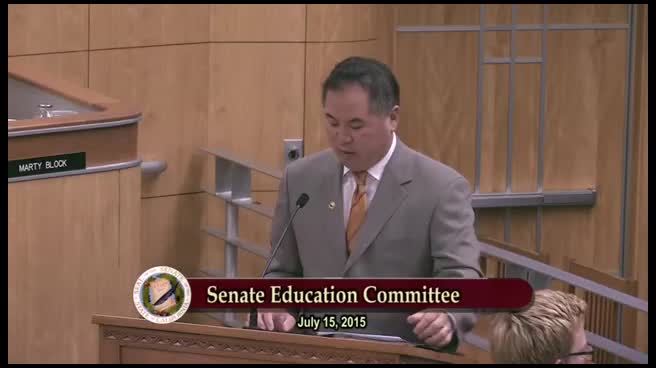 11MIN
Senate Standing Committee on Education
 2MIN
Assembly Floor
 3MIN
Assembly Standing Committee on Appropriations
 12MIN
Assembly Standing Committee on Higher Education
Bill Author


