SB 448: Sex offenders: Internet identifiers.
- Session Year: 2015-2016
- House: Senate
- Latest Version Date: 2016-09-28
Existing law, the Californians Against Sexual Exploitation Act, an initiative measure enacted by the approval of Proposition 35 at the November 6, 2012, statewide general election (CASE Act), requires a person who is subject to the Sex Offender Registration Act (the Act) to list any and all Internet identifiers established or used by the person and any and all Internet service providers used by the person on his or her sex offender registration. The CASE Act requires a person subject to sex offender registration to send written notice of any addition of, or change to, an Internet identifier or Internet service provider to the law enforcement agency with which he or she is currently registered within 24 hours. Existing case law currently enjoins the application of the above provisions of the CASE Act through the imposition of a preliminary injunction on the grounds that these provisions violate the First Amendment to the United States Constitution. The CASE Act allows its provisions to be amended by a statute in furtherance of its objectives passed in each house of the Legislature by a majority vote of the membership.
This bill would state the intent of the Legislature to amend the CASE Act to further its objectives. The bill would delete the requirement that a person subject to sex offender registration list on his or her sex offender registration all Internet service providers used by him or her. The bill would require a person who is convicted of a felony on or after January 1, 2017, that requires registration pursuant to the Act, and one or more specified circumstances, including that the person used the Internet to collect any private information to identify a victim of the crime to further the commission of the crime, to register his or her Internet identifiers, as defined, and to send written notice to the law enforcement agency or agencies with which he or she is currently registered within 30 days of establishing or changing an Internet identifier, as specified. The bill would require a law enforcement agency to which this information has been submitted to make the information available to the Department of Justice. The bill would require a designated law enforcement entity to only use an Internet identifier submitted pursuant to these provisions, or to release that Internet identifier to another law enforcement entity, for the purpose of investigating a sex-related crime, a kidnapping, or human trafficking. The bill would prohibit a designated law enforcement entity from disclosing or authorizing persons or entities to disclose an Internet identifier submitted pursuant to these provisions to the public or other persons, except as required by court order.
Existing law makes a person who is required to register under the Act based on a misdemeanor conviction or juvenile adjudication who willfully violates any requirement of the act guilty of a misdemeanor punishable by imprisonment in a county jail not exceeding one year.
This bill would make a person who fails to provide his or her Internet identifiers, as required by the bill, regardless of the offense upon which the duty to register is based, guilty of a misdemeanor punishable in a county jail not exceeding 6 months. By creating a new crime, the bill would impose a state-mandated local program.
The bill would make other technical, nonsubstantive changes.
Existing constitutional provisions require that a statute that limits the right of access to the meetings of public bodies or the writings of public officials and agencies be adopted with findings demonstrating the interest protected by the limitation and the need for protecting that interest.
This bill would make legislative findings to that effect.
The California Constitution requires the state to reimburse local agencies and school districts for certain costs mandated by the state. Statutory provisions establish procedures for making that reimbursement.
This bill would provide that no reimbursement is required by this act for a specified reason.
Existing law, the Californians Against Sexual Exploitation Act, an initiative measure enacted by the approval of Proposition 35 at the November 6, 2012, statewide general election (CASE Act), requires a person who is subject to the Sex Offender Registration Act (the Act) to list any and all Internet identifiers established or used by the person and any and all Internet service providers used by the person on his or her sex offender registration. The CASE Act requires a person subject to sex offender registration to send written notice of any addition of, or change to, an Internet identifier or Internet service provider to the law enforcement agency with which he or she is currently registered within 24 hours. Existing case law currently enjoins the application of the above provisions of the CASE Act through the imposition of a preliminary injunction on the grounds that these provisions violate the First Amendment to the United States Constitution. The CASE Act allows its provisions to be amended by a statute in furtherance of its objectives passed in each house of the Legislature by a majority vote of the membership.
This bill would state the intent of the Legislature to amend the CASE Act to further its objectives. The bill would delete the requirement that a person subject to sex offender registration list on his or her sex offender registration all Internet service providers used by him or her. The bill would require a person who is convicted of a felony on or after January 1, 2016, requiring 2017, that requires registration pursuant to the Act, under any one of and one or more specified circumstances, including when that the person used the Internet to collect any private information to identify a victim of the crime to further the commission of the crime, to register his or her Internet identifiers, as defined, and to send written notice to the law enforcement agency or agencies with which he or she is currently registered when he or she establishes or changes an Internet identifier within 30 working days of the addition or change, within 30 days of establishing or changing an Internet identifier, as specified. The bill would require a law enforcement agency to which this information has been submitted to make the information available to the Department of Justice. The bill would require a designated law enforcement entity to only use an Internet identifier submitted pursuant to these provisions, or to release that Internet identifier to another law enforcement entity, for the purpose of investigating a sex-related crime, a kidnapping, or human trafficking. The bill would prohibit a designated law enforcement entity from disclosing or authorizing persons or entities to disclose an Internet identifier submitted pursuant to these provisions to the public or other persons, except as required by court order.
Existing law makes a person who is required to register under the Act based on a misdemeanor conviction or juvenile adjudication who willfully violates any requirement of the act guilty of a misdemeanor punishable by imprisonment in a county jail not exceeding one year.
This bill would make a person who fails to provide his or her Internet identifiers, as required by the bill, regardless of the offense upon which the duty to register is based, guilty of a misdemeanor punishable in a county jail not exceeding 6 months. By creating a new crime, the bill would impose a state-mandated local program.
The bill would make other technical, nonsubstantive changes.
Existing constitutional provisions require that a statute that limits the right of access to the meetings of public bodies or the writings of public officials and agencies be adopted with findings demonstrating the interest protected by the limitation and the need for protecting that interest.
This bill would make legislative findings to that effect.
The California Constitution requires the state to reimburse local agencies and school districts for certain costs mandated by the state. Statutory provisions establish procedures for making that reimbursement.
This bill would provide that no reimbursement is required by this act for a specified reason.
Existing law, the Californians Against Sexual Exploitation Act, an initiative measure enacted by the approval of Proposition 35 at the November 6, 2012, statewide general election (CASE Act), requires a person who is subject to the Sex Offender Registration Act (the Act) to list any and all Internet identifiers established or used by the person and any and all Internet service providers used by the person on his or her sex offender registration. The CASE Act requires a person subject to sex offender registration to send written notice of any addition of, or change to, an Internet identifier or Internet service provider to the law enforcement agency with which he or she is currently registered within 24 hours. Existing case law currently enjoins the application of the above provisions of the CASE Act through the imposition of a preliminary injunction on the grounds that these provisions violate the First Amendment to the United States Constitution. The CASE Act allows its provisions to be amended by a statute in furtherance of its objectives passed in each house of the Legislature by a majority vote of the membership.
This bill would state the intent of the Legislature to amend the CASE Act to further its objectives. The bill would delete the requirement that a person subject to sex offender registration list on his or her sex offender registration all Internet service providers used by him or her. The bill would require a person who is convicted of a felony on or after January 1, 2016, requiring registration pursuant to the Act, under any one of specified circumstances, including when the person used the Internet to collect any private information to identify a victim of the crime to further the commission of the crime, to register his or her Internet identifiers, as defined, and to send written notice to the law enforcement agency or agencies with which he or she is currently registered when he or she establishes or changes an Internet identifier within 30 working days of the addition or change, as specified. The bill would require a law enforcement agency to which this information has been submitted to make the information available to the Department of Justice. The bill would require a designated law enforcement entity to only use an Internet identifier submitted pursuant to these provisions, or to release that Internet identifier to another law enforcement entity, for the purpose of investigating a sex-related crime, a kidnapping, or human trafficking. The bill would prohibit a designated law enforcement entity from disclosing or authorizing persons or entities to disclose an Internet identifier submitted pursuant to these provisions to the public or other persons, except as required by court order.
Existing law makes a person who is required to register under the Act based on a misdemeanor conviction or juvenile adjudication who willfully violates any requirement of the act guilty of a misdemeanor punishable by imprisonment in a county jail not exceeding one year.
This bill would make a person who fails to provide his or her Internet identifiers, as required by the bill, regardless of the offense upon which the duty to register is based, guilty of a misdemeanor punishable in a county jail not exceeding 6 months. By creating a new crime, the bill would impose a state-mandated local program.
The bill would make other technical, nonsubstantive changes.
Existing constitutional provisions require that a statute that limits the right of access to the meetings of public bodies or the writings of public officials and agencies be adopted with findings demonstrating the interest protected by the limitation and the need for protecting that interest.
This bill would make legislative findings to that effect.
This bill would declare that it is to take effect immediately as an urgency statute.
The California Constitution requires the state to reimburse local agencies and school districts for certain costs mandated by the state. Statutory provisions establish procedures for making that reimbursement.
This bill would provide that no reimbursement is required by this act for a specified reason.
Existing law, the Californians Against Sexual Exploitation Act, an initiative measure enacted by the approval of Proposition 35 at the November 6, 2012, statewide general election (CASE Act), requires a person who is subject to the Sex Offender Registration Act (the Act) to list any and all Internet identifiers established or used by the person and any and all Internet service providers used by the person on his or her sex offender registration. The CASE Act requires a person subject to sex offender registration to send written notice of any addition of, or change to, an Internet identifier or Internet service provider to the law enforcement agency with which he or she is currently registered within 24 hours. Existing case law currently enjoins the application of the above provisions of the CASE Act through the imposition of a preliminary injunction on the grounds that these provisions violate the First Amendment to the United States Constitution. The CASE Act allows its provisions to be amended by a statute in furtherance of its objectives passed in each house of the Legislature by a majority vote of the membership.
This bill would state the intent of the Legislature to amend the CASE Act to further its objectives. The bill would delete the requirement that a person subject to sex offender registration list on his or her sex offender registration all Internet service providers used by him or her. The bill would require a person subject to sex offender registration for a crime where the use of the Internet was essential to the commission of the crime to list only those Internet identifiers actually used to participate in online communications, as specified. The bill would require the registrant to send written notice of any addition of, or change to, an Internet identifier to any law enforcement agency with which he or she is currently registered within 5 working days. The bill would authorize a law enforcement agency to which this information has been submitted to make the information available to another law enforcement agency for the sole purpose of preventing or investigating a sex-related crime, a kidnapping, or human trafficking, and would prohibit a law enforcement agency from disclosing this information to the public. The bill would authorize the Attorney General to disclose the information to another person if the Attorney General determines, based on specific, articulable facts, that the disclosure is likely to protect members of the public from sex-related crimes, kidnappings, or human trafficking, and the person to whom the disclosure is made signs an oath, as specified. The bill would require a person who is convicted of a felony on or after January 1, 2016, requiring registration pursuant to the Act, under any one of specified circumstances, including when the person used the Internet to collect any private information to identify a victim of the crime to further the commission of the crime, to register his or her Internet identifiers, as defined, and to send written notice to the law enforcement agency or agencies with which he or she is currently registered when he or she establishes or changes an Internet identifier within 30 working days of the addition or change, as specified. The bill would require a law enforcement agency to which this information has been submitted to make the information available to the Department of Justice. The bill would require a designated law enforcement entity to only use an Internet identifier submitted pursuant to these provisions, or to release that Internet identifier to another law enforcement entity, for the purpose of investigating a sex-related crime, a kidnapping, or human trafficking. The bill would prohibit a designated law enforcement entity from disclosing or authorizing persons or entities to disclose an Internet identifier submitted pursuant to these provisions to the public or other persons, except as required by court order.
The bill would make other technical, nonsubstantive changes.
Existing constitutional provisions require that a statute that limits the right of access to the meetings of public bodies or the writings of public officials and agencies be adopted with findings demonstrating the interest protected by the limitation and the need for protecting that interest.
This bill would make legislative findings to that effect.
This bill would declare that it is to take effect immediately as an urgency statute.
Existing law, the Californians Against Sexual Exploitation Act, an initiative measure enacted by the approval of Proposition 35 at the November 6, 2012, statewide general election (CASE Act), requires a person who is subject to the Sex Offender Registration Act to list any and all Internet identifiers established or used by the person and any and all Internet service providers used by the person on his or her sex offender registration. The CASE Act requires a person subject to sex offender registration to send written notice of any addition of, or change to, an Internet identifier or Internet service provider to the law enforcement agency with which he or she is currently registered within 24 hours. Existing case law currently enjoins the application of the above provisions of the CASE Act through the imposition of a preliminary injunction on the grounds that these provisions violate the First Amendment to the United States Constitution. The CASE Act allows its provisions to be amended by a statute in furtherance of its objectives passed in each house of the Legislature by a majority vote of the membership.
This bill would state the intent of the Legislature to amend the CASE Act to further its purposes. objectives. The bill would delete the requirement that a person subject to sex offender registration list on his or her sex offender registration all Internet service providers used by him or her. The bill would require a person subject to sex offender registration for a crime where the use of the Internet was essential to the commission of the crime to list only those Internet identifiers actually used to participate in online communications, as specified. The bill would require the registrant to send written notice of any addition of, or change to, an Internet identifier to the any law enforcement agency with which he or she is currently registered within 5 working days. The bill would authorize a law enforcement agency to which this information has been submitted to make the information available to another law enforcement agency for the sole purpose of preventing or investigating a sex-related crime, a kidnapping, or human trafficking, and would prohibit a law enforcement agency from disclosing this information to the public. The bill would authorize the Attorney General to disclose the information to another person if the Attorney General determines, based on specific, articulable facts, that the disclosure is likely to protect members of the public from sex-related crimes, kidnappings, or human trafficking, and the person to whom the disclosure is made signs an oath, as specified.
The bill would make other technical, nonsubstantive changes.
Existing constitutional provisions require that a statute that limits the right of access to the meetings of public bodies or the writings of public officials and agencies be adopted with findings demonstrating the interest protected by the limitation and the need for protecting that interest.
This bill would make legislative findings to that effect.
This bill would declare that it is to take effect immediately as an urgency statute.
Existing law, the Californians Against Sexual Exploitation Act, an initiative measure enacted by the approval of Proposition 35 at the November 6, 2012, statewide general election (CASE Act), requires a person who is subject to the Sex Offender Registration Act to list any and all Internet identifiers established or used by the person and any and all Internet service providers used by the person on his or her sex offender registration. The CASE Act requires a person subject to sex offender registration to send written notice of any addition of, or change to, an Internet identifier or Internet service provider to the law enforcement agency with which he or she is currently registered within 24 hours. Existing case law currently enjoins the application of the above provisions of the CASE Act through the imposition of a preliminary injunction on the grounds that these provisions violate the First Amendment to the United States Constitution. The CASE Act allows its provisions to be amended by a statute in furtherance of its objectives passed in each house of the Legislature by a majority vote of the membership.
This bill would state the intent of the Legislature to amend the CASE Act to further its purposes. The bill would delete the requirement that a person subject to sex offender registration list on his or her sex offender registration all Internet service providers used by him or her. The bill would require a person subject to sex offender registration to list only those Internet identifiers actually used to participate in online communications, as specified. The bill would require the registrant to send written notice of any addition of, or change to, an Internet identifier to the law enforcement agency with which he or she is currently registered within 5 working days. The bill would authorize a law enforcement agency to which this information has been submitted to make the information available to another law enforcement agency for the sole purpose of preventing or investigating a sex-related crime, a kidnapping, or human trafficking, and would prohibit a law enforcement agency from disclosing this information to the public. The bill would authorize the Attorney General to disclose the information to another person if the Attorney General determines, based on specific, articulable facts, that the disclosure is likely to protect members of the public from sex-related crimes, kidnappings, or human trafficking, and the person to whom the disclosure is made signs an oath, as specified.
The bill would make other technical, nonsubstantive changes.
Existing constitutional provisions require that a statute that limits the right of access to the meetings of public bodies or the writings of public officials and agencies be adopted with findings demonstrating the interest protected by the limitation and the need for protecting that interest.
This bill would make legislative findings to that effect.
This bill would declare that it is to take effect immediately as an urgency statute.
Existing law establishes various prohibitions against eavesdropping and recording or intercepting certain communications. Violations of these prohibitions are crimes. Existing law provides that specified law enforcement officers are not prohibited by those provisions from overhearing or recording any communication that they could lawfully overhear or record prior to the enactment of those prohibitions.
This bill would add uniformed peace officers of the Department of Fish and Wildlife, the Department of Parks and Recreation, the State Department of Developmental Services, and the State Department of State Hospitals, and a special agent of the Attorney General or any district attorney, to the list of law enforcement officers to whom the prohibitions described above do not apply.
Existing law establishes various prohibitions against eavesdropping and recording or intercepting certain communications. Violations of these prohibitions are crimes. Existing law provides that specified law enforcement officers are not prohibited by those provisions from overhearing or recording any communication that they could lawfully overhear or record prior to the enactment of those prohibitions.
This bill would add, among others, add uniformed peace officers of the Department of Fish and Wildlife, the Department of Parks and Recreation, the Department of Forestry and Fire Protection, the Department of Alcoholic Beverage Control, and the California Exposition and State Fair, State Department of Developmental Services, and the State Department of State Hospitals, and a special agent of the Attorney General or any district attorney, to the list of law enforcement officers to whom the prohibitions described above do not apply.
Existing law establishes various prohibitions against eavesdropping and recording or intercepting certain communications. Violations of these prohibitions are crimes. Existing law provides that specified law enforcement officers are not prohibited by those provisions from overhearing or recording any communication that they could lawfully overhear or record prior to the enactment of those prohibitions.
This bill would add, among others, peace officers of the Department of Fish and Wildlife, the Department of Parks and Recreation, the Department of Forestry and Fire Protection, the Department of Alcoholic Beverage Control, and the California Exposition and State Fair, and a special agent of the Attorney General or any district attorney, to the list of law enforcement officers to whom the prohibitions described above do not apply.
It is the intent of the Legislature to further the objectives of the Californians Against Sexual Exploitation Act, an initiative measure enacted by the approval of Proposition 35 at the November 6, 2012, statewide general election, by amending its provisions to conform with the requirements of the court in the case of Doe v. Harris (Case numbers 13-15263 and 13-15267).
SEC. 2.Section 290.012 of the Penal Code is amended to read:290.012.(a)Beginning on his or her first birthday following registration or change of address, the person shall be required to register annually, within five working days of his or her birthday, to update his or her registration with the entities described in subdivision (b) of Section 290. At the annual update, the person shall provide current information as required on the Department of Justice annual update form, including the information described in paragraphs (1) to (4), inclusive, of subdivision (a) of Section 290.015. The registering agency shall give the registrant a copy of the registration requirements from the Department of Justice form.
(b)In addition, every person who has ever been adjudicated a sexually violent predator, as defined in Section 6600 of the Welfare and Institutions Code, shall, after his or her release from custody, verify his or her address no less than once every 90 days and place of employment, including the name and address of the employer, in a manner established by the Department of Justice. Every person who, as a sexually violent predator, is required to verify his or her registration every 90 days, shall be notified wherever he or she next registers of his or her increased registration obligations. This notice shall be provided in writing by the registering agency or agencies. Failure to receive this notice shall be a defense to the penalties prescribed in subdivision (f) of Section 290.018.
(c)In addition, every person subject to the Act, while living as a transient in California, shall update his or her registration at least every 30 days, in accordance with Section 290.011.
(d)No entity shall require a person to pay a fee to register or update his or her registration pursuant to this section. The registering agency shall submit registrations, including annual updates or changes of address, directly into the Department of Justice California Sex and Arson Registry (CSAR).
SEC. 3.Section 290.014 of the Penal Code is amended to read:290.014.(a)If any person who is required to register pursuant to the Act changes his or her name, the person shall inform, in person, the law enforcement agency or agencies with which he or she is currently registered within five working days. The law enforcement agency or agencies shall forward a copy of this information to the Department of Justice within three working days of its receipt.
(b)If any person who is required to register Internet identifiers pursuant to Section 290.024 adds or changes an Internet identifier, as defined in Section 290.024, the person shall send written notice by mail of the addition or change to the law enforcement agency or agencies with which he or she is currently registered within 30 working days of the addition or change. The law enforcement agency or agencies shall make the information available to the Department of Justice.
SEC. 4.Section 290.015 of the Penal Code, as amended November 6, 2012, by initiative Proposition 35, Section 12, is amended to read:290.015.(a)A person who is subject to the Act shall register, or reregister if he or she has previously registered, upon release from incarceration, placement, commitment, or release on probation pursuant to subdivision (b) of Section 290. This section shall not apply to a person who is incarcerated for less than 30 days if he or she has registered as required by the Act, he or she returns after incarceration to the last registered address, and the annual update of registration that is required to occur within five working days of his or her birthday, pursuant to subdivision (a) of Section 290.012, did not fall within that incarceration period. The registration shall consist of all of the following:
(1)A statement in writing signed by the person, giving information as shall be required by the Department of Justice and giving the name and address of the persons employer, and the address of the persons place of employment if that is different from the employers main address.
(2)The fingerprints and a current photograph of the person taken by the registering official.
(3)The license plate number of any vehicle owned by, regularly driven by, or registered in the name of the person.
(4)A list of all Internet identifiers actually used by the person, as required by Section 290.024.
(5)A statement in writing, signed by the person, acknowledging that the person is required to register and update the information in paragraph (4), as required by this chapter.
(6)Notice to the person that, in addition to the requirements of the Act, he or she may have a duty to register in any other state where he or she may relocate.
(7)Copies of adequate proof of residence, which shall be limited to a California drivers license, California identification card, recent rent or utility receipt, printed personalized checks or other recent banking documents showing that persons name and address, or any other information that the registering official believes is reliable. If the person has no residence and no reasonable expectation of obtaining a residence in the foreseeable future, the person shall so advise the registering official and shall sign a statement provided by the registering official stating that fact. Upon presentation of proof of residence to the registering official or a signed statement that the person has no residence, the person shall be allowed to register. If the person claims that he or she has a residence but does not have any proof of residence, he or she shall be allowed to register but shall furnish proof of residence within 30 days of the date he or she is allowed to register.
(b)Within three days thereafter, the registering law enforcement agency or agencies shall forward the statement, fingerprints, photograph, and vehicle license plate number, if any, to the Department of Justice.
(c)(1)If a person fails to register in accordance with subdivision (a) after release, the district attorney in the jurisdiction where the person was to be paroled or to be on probation may request that a warrant be issued for the persons arrest and shall have the authority to prosecute that person pursuant to Section 290.018.
(2)If the person was not on parole or probation or on postrelease community supervision or mandatory supervision at the time of release, the district attorney in the following applicable jurisdiction shall have the authority to prosecute that person pursuant to Section 290.018:
(A)If the person was previously registered, in the jurisdiction in which the person last registered.
(B)If there is no prior registration, but the person indicated on the Department of Justice notice of sex offender registration requirement form where he or she expected to reside, in the jurisdiction where he or she expected to reside.
(C)If neither subparagraph (A) nor (B) applies, in the jurisdiction where the offense subjecting the person to registration pursuant to this Act was committed.
SEC. 5.Section 290.015 of the Penal Code, as amended by Section 17 of Chapter 867 of the Statutes of 2012, is repealed.SEC. 6.Section 290.018 of the Penal Code is amended to read:290.018.(a)A person who is required to register under the Act based on a misdemeanor conviction or juvenile adjudication who willfully violates any requirement of the act is guilty of a misdemeanor punishable by imprisonment in a county jail not exceeding one year.
(b)Except as provided in subdivisions (f), (h), (i), and (k), a person who is required to register under the act based on a felony conviction or juvenile adjudication who willfully violates any requirement of the act or who has a prior conviction or juvenile adjudication for the offense of failing to register under the act and who subsequently and willfully violates any requirement of the act is guilty of a felony and shall be punished by imprisonment in the state prison for 16 months, or two or three years.
(c)If probation is granted or if the imposition or execution of sentence is suspended, it shall be a condition of the probation or suspension that the person serve at least 90 days in a county jail. The penalty described in subdivision (b) or this subdivision shall apply whether or not the person has been released on parole or has been discharged from parole.
(d)A person determined to be a mentally disordered sex offender or who has been found guilty in the guilt phase of trial for an offense for which registration is required under the act, but who has been found not guilty by reason of insanity in the sanity phase of the trial, or who has had a petition sustained in a juvenile adjudication for an offense for which registration is required pursuant to Section 290.008, but who has been found not guilty by reason of insanity, who willfully violates any requirement of the act is guilty of a misdemeanor and shall be punished by imprisonment in a county jail not exceeding one year. For any second or subsequent willful violation of any requirement of the act, the person is guilty of a felony and shall be punished by imprisonment in the state prison for 16 months, or two or three years.
(e)If, after discharge from parole, the person is convicted of a felony or suffers a juvenile adjudication as specified in this act, he or she shall be required to complete parole of at least one year, in addition to any other punishment imposed under this section. A person convicted of a felony as specified in this section may be granted probation only in the unusual case where the interests of justice would best be served. When probation is granted under this act, the court shall specify on the record and shall enter into the minutes the circumstances indicating that the interests of justice would best be served by the disposition.
(f)A person who has ever been adjudicated a sexually violent predator, as defined in Section 6600 of the Welfare and Institutions Code, and who fails to verify his or her registration every 90 days as required pursuant to subdivision (b) of Section 290.012, shall be punished by imprisonment in the state prison or in a county jail not exceeding one year.
(g)Except as otherwise provided in subdivision (f), a person who is required to register or reregister pursuant to Section 290.011 and willfully fails to comply with the requirement that he or she reregister no less than every 30 days is guilty of a misdemeanor and shall be punished by imprisonment in a county jail for at least 30 days, but not exceeding six months. A person who willfully fails to comply with the requirement that he or she reregister no less than every 30 days shall not be charged with this violation more often than once for a failure to register in any period of 90 days. A person who willfully commits a third or subsequent violation of the requirements of Section 290.011 that he or she reregister no less than every 30 days shall be punished in accordance with either subdivision (a) or (b).
(h)A person who fails to provide proof of residence as required by paragraph (7) of subdivision (a) of Section 290.015, regardless of the offense upon which the duty to register is based, is guilty of a misdemeanor punishable by imprisonment in a county jail not exceeding six months.
(i)A person who fails to provide his or her Internet identifiers, as required by paragraph (4) of subdivision (a) of Section 290.015, regardless of the offense upon which the duty to register is based, is guilty of a misdemeanor punishable in a county jail not exceeding six months.
(j)A person who is required to register under the act who willfully violates any requirement of the act is guilty of a continuing offense as to each requirement he or she violated.
(k)In addition to any other penalty imposed under this section, the failure to provide information required on registration and reregistration forms of the Department of Justice, or the provision of false information, is a crime punishable by imprisonment in a county jail for a period not exceeding one year. This subdivision shall not be construed to limit or prevent prosecution under any applicable law.
(l)Whenever a person is released on parole or probation and is required to register under the act but fails to do so within the time prescribed, the parole authority or the court, as the case may be, shall order the parole or probation of the person revoked. For purposes of this subdivision, parole authority has the same meaning as described in Section 3000.
SEC. 7.Section 290.024 of the Penal Code is amended to read:290.024.For purposes of this chapter:
(a)A person who is convicted of a felony on or after January 1, 2017, requiring registration pursuant to the Act, shall register his or her Internet identifiers if a court determines at the time of sentencing that any of the following apply:
(1)The person used the Internet to collect any private information to identify the victim of the crime to further the commission of the crime.
(2)The person was convicted of a felony pursuant to subdivision (b) or (c) of Section 236.1 and used the Internet to traffic the victim of the crime.
(3)The person was convicted of a felony pursuant to Chapter 7.5 (commencing with Section 311) and used the Internet to prepare, publish, distribute, send, exchange, or download the obscene matter or matter depicting a minor engaging in sexual conduct, as defined in subdivision (d) of Section 311.4.
(b)For purposes of this chapter:
(1)Internet identifier means any electronic mail address or user name used for instant messaging or social networking that is actually used for direct communication between users on the Internet in a manner that makes the communication not accessible to the general public. Internet identifier does not include Internet passwords, date of birth, social security number, or PIN number.
(2)Private information means any information that identifies or describes an individual, including, but not limited to, his or her name; electronic mail, chat, instant messenger, social networking, or similar name used for Internet communication; social security number; account numbers; passwords; personal identification numbers; physical description; physical location; home address; home telephone number; education; financial matters; medical or employment history; and statements made by, or attributed to, the individual.
SEC. 8.Section 290.45 of the Penal Code is amended to read:290.45.(a)(1)Notwithstanding any other law, and except as provided in paragraph (2), any designated law enforcement entity may provide information to the public about a person required to register as a sex offender pursuant to Section 290, by whatever means the entity deems appropriate, when necessary to ensure the public safety based upon information available to the entity concerning that specific person.
(2)The law enforcement entity shall include, with the disclosure, a statement that the purpose of the release of information is to allow members of the public to protect themselves and their children from sex offenders.
(3)Community notification by way of an Internet Web site shall be governed by Section 290.46, and a designated law enforcement entity may not post on an Internet Web site any information identifying an individual as a person required to register as a sex offender except as provided in that section unless there is a warrant outstanding for that persons arrest.
(b)Information that may be provided pursuant to subdivision (a) may include, but is not limited to, the offenders name, known aliases, gender, race, physical description, photograph, date of birth, address, which shall be verified prior to publication, description and license plate number of the offenders vehicles or vehicles the offender is known to drive, type of victim targeted by the offender, relevant parole or probation conditions, crimes resulting in classification under this section, and date of release from confinement, but excluding information that would identify the victim. It shall not include any Internet identifier submitted pursuant to this chapter.
(c)(1)The designated law enforcement entity may authorize persons and entities who receive the information pursuant to this section to disclose information to additional persons only if the entity determines that disclosure to the additional persons will enhance the public safety and identifies the appropriate scope of further disclosure. A law enforcement entity may not authorize any disclosure of this information by placing that information on an Internet Web site, and shall not authorize disclosure of Internet identifiers submitted pursuant to this chapter, except as provided in subdivision (h).
(2)A person who receives information from a law enforcement entity pursuant to paragraph (1) may disclose that information only in the manner and to the extent authorized by the law enforcement entity.
(d)(1)A designated law enforcement entity and its employees shall be immune from liability for good faith conduct under this section.
(2)A public or private educational institution, a day care facility, or a child care custodian described in Section 11165.7, or an employee of a public or private educational institution or day care facility which in good faith disseminates information as authorized pursuant to subdivision (c) shall be immune from civil liability.
(e)(1)A person who uses information disclosed pursuant to this section to commit a felony shall be punished, in addition and consecutive to any other punishment, by a five-year term of imprisonment pursuant to subdivision (h) of Section 1170.
(2)A person who uses information disclosed pursuant to this section to commit a misdemeanor shall be subject to, in addition to any other penalty or fine imposed, a fine of not less than five hundred dollars ($500) and not more than one thousand dollars ($1,000).
(f)For purposes of this section, designated law enforcement entity means the Department of Justice, every district attorney, the Department of Corrections, the Department of the Youth Authority, and every state or local agency expressly authorized by statute to investigate or prosecute law violators.
(g)The public notification provisions of this section are applicable to every person required to register pursuant to Section 290, without regard to when his or her crimes were committed or his or her duty to register pursuant to Section 290 arose, and to every offense described in Section 290, regardless of when it was committed.
(h)(1)Notwithstanding any other law, a designated law enforcement entity shall only use an Internet identifier submitted pursuant to this chapter, or release that Internet identifier to another law enforcement entity, for the purpose of investigating a sex-related crime, a kidnapping, or human trafficking.
(2)A designated law enforcement entity shall not disclose or authorize persons or entities to disclose an Internet identifier submitted pursuant to this chapter to the public or other persons, except as required by court order.
SEC. 9.The Legislature finds and declares that this act, which amends Section 290.45 of the Penal Code, imposes a limitation on the publics right of access to the meetings of public bodies or the writings of public officials and agencies within the meaning of Section 3 of Article I of the California Constitution. Pursuant to that constitutional provision, the Legislature makes the following findings to demonstrate the interest protected by this limitation and the need for protecting that interest:
In order to protect the rights afforded by the First Amendment to the United States Constitution, it is necessary that Internet identifier information provided to law enforcement agencies by registerable sex offenders as part of their registration not be made generally available to the public.
SEC. 10.No reimbursement is required by this act pursuant to Section 6 of Article XIIIB of the California Constitution because the only costs that may be incurred by a local agency or school district will be incurred because this act creates a new crime or infraction, eliminates a crime or infraction, or changes the penalty for a crime or infraction, within the meaning of Section 17556 of the Government Code, or changes the definition of a crime within the meaning of Section 6 of Article XIIIB of the California Constitution.
It is the intent of the Legislature to further the objectives of the Californians Against Sexual Exploitation Act, an initiative measure enacted by the approval of Proposition 35 at the November 6, 2012, statewide general election, by amending its provisions to conform with the requirements of the court in the case of Doe v. Harris (Case numbers 13-15263 and 13-15267).
SEC. 2.Section 290.012 of the Penal Code is amended to read:290.012.(a)Beginning on his or her first birthday following registration or change of address, the person shall be required to register annually, within five working days of his or her birthday, to update his or her registration with the entities described in subdivision (b) of Section 290. At the annual update, the person shall provide current information as required on the Department of Justice annual update form, including the information described in paragraphs (1) to (4), inclusive, of subdivision (a) of Section 290.015. The registering agency shall give the registrant a copy of the registration requirements from the Department of Justice form.
(b)In addition, every person who has ever been adjudicated a sexually violent predator, as defined in Section 6600 of the Welfare and Institutions Code, shall, after his or her release from custody, verify his or her address no less than once every 90 days and place of employment, including the name and address of the employer, in a manner established by the Department of Justice. Every person who, as a sexually violent predator, is required to verify his or her registration every 90 days, shall be notified wherever he or she next registers of his or her increased registration obligations. This notice shall be provided in writing by the registering agency or agencies. Failure to receive this notice shall be a defense to the penalties prescribed in subdivision (f) of Section 290.018.
(c)In addition, every person subject to the Act, while living as a transient in California, shall update his or her registration at least every 30 days, in accordance with Section 290.011.
(d)No entity shall require a person to pay a fee to register or update his or her registration pursuant to this section. The registering agency shall submit registrations, including annual updates or changes of address, directly into the Department of Justice California Sex and Arson Registry (CSAR).
SEC. 3.Section 290.014 of the Penal Code is amended to read:290.014.(a)If any person who is required to register pursuant to the Act changes his or her name, the person shall inform, in person, the law enforcement agency or agencies with which he or she is currently registered within five working days. The law enforcement agency or agencies shall forward a copy of this information to the Department of Justice within three working days of its receipt.
(b)If any person who is required to register Internet identifiers pursuant to Section 290.024 adds or changes an Internet identifier, as defined in Section 290.024, the person shall send written notice by mail of the addition or change to the law enforcement agency or agencies with which he or she is currently registered within 30 working days of the addition or change. The law enforcement agency or agencies shall make the information available to the Department of Justice.
SEC. 4.Section 290.015 of the Penal Code, as amended November 6, 2012, by initiative Proposition 35, Section 12, is amended to read:290.015.(a)A person who is subject to the Act shall register, or reregister if he or she has previously registered, upon release from incarceration, placement, commitment, or release on probation pursuant to subdivision (b) of Section 290. This section shall not apply to a person who is incarcerated for less than 30 days if he or she has registered as required by the Act, he or she returns after incarceration to the last registered address, and the annual update of registration that is required to occur within five working days of his or her birthday, pursuant to subdivision (a) of Section 290.012, did not fall within that incarceration period. The registration shall consist of all of the following:
(1)A statement in writing signed by the person, giving information as shall be required by the Department of Justice and giving the name and address of the persons employer, and the address of the persons place of employment if that is different from the employers main address.
(2)The fingerprints and a current photograph of the person taken by the registering official.
(3)The license plate number of any vehicle owned by, regularly driven by, or registered in the name of the person.
(4)A list of all Internet identifiers actually used by the person, as required by Section 290.024.
(5)A statement in writing, signed by the person, acknowledging that the person is required to register and update the information in paragraph (4), as required by this chapter.
(6)Notice to the person that, in addition to the requirements of the Act, he or she may have a duty to register in any other state where he or she may relocate.
(7)Copies of adequate proof of residence, which shall be limited to a California drivers license, California identification card, recent rent or utility receipt, printed personalized checks or other recent banking documents showing that persons name and address, or any other information that the registering official believes is reliable. If the person has no residence and no reasonable expectation of obtaining a residence in the foreseeable future, the person shall so advise the registering official and shall sign a statement provided by the registering official stating that fact. Upon presentation of proof of residence to the registering official or a signed statement that the person has no residence, the person shall be allowed to register. If the person claims that he or she has a residence but does not have any proof of residence, he or she shall be allowed to register but shall furnish proof of residence within 30 days of the date he or she is allowed to register.
(b)Within three days thereafter, the registering law enforcement agency or agencies shall forward the statement, fingerprints, photograph, and vehicle license plate number, if any, to the Department of Justice.
(c)(1)If a person fails to register in accordance with subdivision (a) after release, the district attorney in the jurisdiction where the person was to be paroled or to be on probation may request that a warrant be issued for the persons arrest and shall have the authority to prosecute that person pursuant to Section 290.018.
(2)If the person was not on parole or probation or on postrelease community supervision or mandatory supervision at the time of release, the district attorney in the following applicable jurisdiction shall have the authority to prosecute that person pursuant to Section 290.018:
(A)If the person was previously registered, in the jurisdiction in which the person last registered.
(B)If there is no prior registration, but the person indicated on the Department of Justice notice of sex offender registration requirement form where he or she expected to reside, in the jurisdiction where he or she expected to reside.
(C)If neither subparagraph (A) nor (B) applies, in the jurisdiction where the offense subjecting the person to registration pursuant to this Act was committed.
SEC. 5.Section 290.015 of the Penal Code, as amended by Section 17 of Chapter 867 of the Statutes of 2012, is repealed.SEC. 6.Section 290.018 of the Penal Code is amended to read:290.018.(a)Any A person who is required to register under the Act based on a misdemeanor conviction or juvenile adjudication who willfully violates any requirement of the act is guilty of a misdemeanor punishable by imprisonment in a county jail not exceeding one year.
(b)Except as provided in subdivisions (f), (h), (i), and (k), any a person who is required to register under the act based on a felony conviction or juvenile adjudication who willfully violates any requirement of the act or who has a prior conviction or juvenile adjudication for the offense of failing to register under the act and who subsequently and willfully violates any requirement of the act is guilty of a felony and shall be punished by imprisonment in the state prison for 16 months, or two or three years.
(c)If probation is granted or if the imposition or execution of sentence is suspended, it shall be a condition of the probation or suspension that the person serve at least 90 days in a county jail. The penalty described in subdivision (b) or this subdivision shall apply whether or not the person has been released on parole or has been discharged from parole.
(d)Any A person determined to be a mentally disordered sex offender or who has been found guilty in the guilt phase of trial for an offense for which registration is required under the act, but who has been found not guilty by reason of insanity in the sanity phase of the trial, or who has had a petition sustained in a juvenile adjudication for an offense for which registration is required pursuant to Section 290.008, but who has been found not guilty by reason of insanity, who willfully violates any requirement of the act is guilty of a misdemeanor and shall be punished by imprisonment in a county jail not exceeding one year. For any second or subsequent willful violation of any requirement of the act, the person is guilty of a felony and shall be punished by imprisonment in the state prison for 16 months, or two or three years.
(e)If, after discharge from parole, the person is convicted of a felony or suffers a juvenile adjudication as specified in this act, he or she shall be required to complete parole of at least one year, in addition to any other punishment imposed under this section. A person convicted of a felony as specified in this section may be granted probation only in the unusual case where the interests of justice would best be served. When probation is granted under this act, the court shall specify on the record and shall enter into the minutes the circumstances indicating that the interests of justice would best be served by the disposition.
(f)Any A person who has ever been adjudicated a sexually violent predator, as defined in Section 6600 of the Welfare and Institutions Code, and who fails to verify his or her registration every 90 days as required pursuant to subdivision (b) of Section 290.012, shall be punished by imprisonment in the state prison or in a county jail not exceeding one year.
(g)Except as otherwise provided in subdivision (f), any a person who is required to register or reregister pursuant to Section 290.011 and willfully fails to comply with the requirement that he or she reregister no less than every 30 days is guilty of a misdemeanor and shall be punished by imprisonment in a county jail for at least 30 days, but not exceeding six months. A person who willfully fails to comply with the requirement that he or she reregister no less than every 30 days shall not be charged with this violation more often than once for a failure to register in any period of 90 days. Any A person who willfully commits a third or subsequent violation of the requirements of Section 290.011 that he or she reregister no less than every 30 days shall be punished in accordance with either subdivision (a) or (b).
(h)Any A person who fails to provide proof of residence as required by paragraph (7) of subdivision (a) of Section 290.015, regardless of the offense upon which the duty to register is based, is guilty of a misdemeanor punishable by imprisonment in a county jail not exceeding six months.
(i)Any A person who fails to provide his or her Internet identifiers, as required by paragraph (4) of subdivision (a) of Section 290.015, regardless of the offense upon which the duty to register is based, is guilty of a misdemeanor punishable in a county jail not exceeding six months.
(j)Any A person who is required to register under the act who willfully violates any requirement of the act is guilty of a continuing offense as to each requirement he or she violated.
(k)In addition to any other penalty imposed under this section, the failure to provide information required on registration and reregistration forms of the Department of Justice, or the provision of false information, is a crime punishable by imprisonment in a county jail for a period not exceeding one year. Nothing in this subdivision shall This subdivision shall not be construed to limit or prevent prosecution under any applicable provision of law.
(l)Whenever any a person is released on parole or probation and is required to register under the act but fails to do so within the time prescribed, the parole authority or the court, as the case may be, shall order the parole or probation of the person revoked. For purposes of this subdivision, parole authority has the same meaning as described in Section 3000.
SEC. 7.Section 290.024 of the Penal Code is amended to read:290.024.For purposes of this chapter:
(a)A person who is convicted of a felony on or after January 1, 2017, requiring registration pursuant to the Act, shall register his or her Internet identifiers if a court determines at the time of sentencing that any of the following apply:
(1)The person used the Internet to collect any private information to identify the victim of the crime to further the commission of the crime.
(2)The person was convicted of a felony pursuant to subdivision (b) or (c) of Section 236.1 and used the Internet to traffic the victim of the crime.
(3)The person was convicted of a felony pursuant to Chapter 7.5 (commencing with Section 311) and used the Internet to prepare, publish, distribute, send, exchange, or download the obscene matter or matter depicting a minor engaging in sexual conduct, as defined in subdivision (d) of Section 311.4.
(b)For purposes of this chapter:
(1)Internet identifier means any electronic mail address or user name used for instant messaging or social networking that is actually used for direct communication between users on the Internet in a manner that makes the communication not accessible to the general public. Internet identifier does not include Internet passwords, date of birth, social security number, or PIN number.
(2)Private information means any information that identifies or describes an individual, including, but not limited to, his or her name; electronic mail, chat, instant messenger, social networking, or similar name used for Internet communication; social security number; account numbers; passwords; personal identification numbers; physical description; physical location; home address; home telephone number; education; financial matters; medical or employment history; and statements made by, or attributed to, the individual.
SEC. 8.Section 290.45 of the Penal Code is amended to read:290.45.(a)(1)Notwithstanding any other law, and except as provided in paragraph (2), any designated law enforcement entity may provide information to the public about a person required to register as a sex offender pursuant to Section 290, by whatever means the entity deems appropriate, when necessary to ensure the public safety based upon information available to the entity concerning that specific person.
(2)The law enforcement entity shall include, with the disclosure, a statement that the purpose of the release of information is to allow members of the public to protect themselves and their children from sex offenders.
(3)Community notification by way of an Internet Web site shall be governed by Section 290.46, and a designated law enforcement entity may not post on an Internet Web site any information identifying an individual as a person required to register as a sex offender except as provided in that section unless there is a warrant outstanding for that persons arrest.
(b)Information that may be provided pursuant to subdivision (a) may include, but is not limited to, the offenders name, known aliases, gender, race, physical description, photograph, date of birth, address, which shall be verified prior to publication, description and license plate number of the offenders vehicles or vehicles the offender is known to drive, type of victim targeted by the offender, relevant parole or probation conditions, crimes resulting in classification under this section, and date of release from confinement, but excluding information that would identify the victim. It shall not include any Internet identifier submitted pursuant to this chapter.
(c)(1)The designated law enforcement entity may authorize persons and entities who receive the information pursuant to this section to disclose information to additional persons only if the entity determines that disclosure to the additional persons will enhance the public safety and identifies the appropriate scope of further disclosure. A law enforcement entity may not authorize any disclosure of this information by placing that information on an Internet Web site, and shall not authorize disclosure of Internet identifiers submitted pursuant to this chapter, except as provided in subdivision (h).
(2)A person who receives information from a law enforcement entity pursuant to paragraph (1) may disclose that information only in the manner and to the extent authorized by the law enforcement entity.
(d)(1)A designated law enforcement entity and its employees shall be immune from liability for good faith conduct under this section.
(2)Any A public or private educational institution, a day care facility, or any a child care custodian described in Section 11165.7, or any an employee of a public or private educational institution or day care facility which in good faith disseminates information as authorized pursuant to subdivision (c) shall be immune from civil liability.
(e)(1)Any A person who uses information disclosed pursuant to this section to commit a felony shall be punished, in addition and consecutive to any other punishment, by a five-year term of imprisonment pursuant to subdivision (h) of Section 1170.
(2)Any A person who uses information disclosed pursuant to this section to commit a misdemeanor shall be subject to, in addition to any other penalty or fine imposed, a fine of not less than five hundred dollars ($500) and not more than one thousand dollars ($1,000).
(f)For purposes of this section, designated law enforcement entity means the Department of Justice, every district attorney, the Department of Corrections, the Department of the Youth Authority, and every state or local agency expressly authorized by statute to investigate or prosecute law violators.
(g)The public notification provisions of this section are applicable to every person required to register pursuant to Section 290, without regard to when his or her crimes were committed or his or her duty to register pursuant to Section 290 arose, and to every offense described in Section 290, regardless of when it was committed.
(h)(1)Notwithstanding any other law, a designated law enforcement entity shall only use an Internet identifier submitted pursuant to this chapter, or release that Internet identifier to another law enforcement entity, for the purpose of investigating a sex-related crime, a kidnapping, or human trafficking.
(2)A designated law enforcement entity shall not disclose or authorize persons or entities to disclose an Internet identifier submitted pursuant to this chapter to the public or other persons, except as required by court order.
SEC. 9.The Legislature finds and declares that this act, which amends Section 290.45 of the Penal Code, imposes a limitation on the publics right of access to the meetings of public bodies or the writings of public officials and agencies within the meaning of Section 3 of Article I of the California Constitution. Pursuant to that constitutional provision, the Legislature makes the following findings to demonstrate the interest protected by this limitation and the need for protecting that interest:
In order to protect the rights afforded by the First Amendment to the United States Constitution, it is necessary that Internet identifier information provided to law enforcement agencies by registerable sex offenders as part of their registration not be made generally available to the public.
SEC. 10.No reimbursement is required by this act pursuant to Section 6 of Article XIIIB of the California Constitution because the only costs that may be incurred by a local agency or school district will be incurred because this act creates a new crime or infraction, eliminates a crime or infraction, or changes the penalty for a crime or infraction, within the meaning of Section 17556 of the Government Code, or changes the definition of a crime within the meaning of Section 6 of Article XIIIB of the California Constitution.
It is the intent of the Legislature to further the objectives of the Californians Against Sexual Exploitation Act, an initiative measure enacted by the approval of Proposition 35 at the November 6, 2012, statewide general election, by amending its provisions to conform with the requirements of the court in the case of Doe v. Harris (Case numbers 13-15263 and 13-15267).
SEC. 2.Section 290.012 of the Penal Code is amended to read:290.012.(a)Beginning on his or her first birthday following registration or change of address, the person shall be required to register annually, within five working days of his or her birthday, to update his or her registration with the entities described in subdivision (b) of Section 290. At the annual update, the person shall provide current information as required on the Department of Justice annual update form, including the information described in paragraphs (1) to (4), inclusive, of subdivision (a) of Section 290.015. The registering agency shall give the registrant a copy of the registration requirements from the Department of Justice form.
(b)In addition, every person who has ever been adjudicated a sexually violent predator, as defined in Section 6600 of the Welfare and Institutions Code, shall, after his or her release from custody, verify his or her address no less than once every 90 days and place of employment, including the name and address of the employer, in a manner established by the Department of Justice. Every person who, as a sexually violent predator, is required to verify his or her registration every 90 days, shall be notified wherever he or she next registers of his or her increased registration obligations. This notice shall be provided in writing by the registering agency or agencies. Failure to receive this notice shall be a defense to the penalties prescribed in subdivision (f) of Section 290.018.
(c)In addition, every person subject to the Act, while living as a transient in California, shall update his or her registration at least every 30 days, in accordance with Section 290.011.
(d)No entity shall require a person to pay a fee to register or update his or her registration pursuant to this section. The registering agency shall submit registrations, including annual updates or changes of address, directly into the Department of Justice California Sex and Arson Registry (CSAR).
SEC. 3.Section 290.014 of the Penal Code is amended to read:290.014.(a)If any person who is required to register pursuant to the Act changes his or her name, the person shall inform, in person, the law enforcement agency or agencies with which he or she is currently registered within five working days. The law enforcement agency or agencies shall forward a copy of this information to the Department of Justice within three working days of its receipt.
(b)If any person who is required to register Internet identifiers pursuant to Section 290.024 adds or changes an Internet identifier, as defined in Section 290.024, the person shall send written notice by mail of the addition or change to the law enforcement agency or agencies with which he or she is currently registered within 30 working days of the addition or change. The law enforcement agency or agencies shall make the information available to the Department of Justice.
SEC. 4.Section 290.015 of the Penal Code, as amended November 6, 2012, by initiative Proposition 35, Section 12, is amended to read:290.015.(a)A person who is subject to the Act shall register, or reregister if he or she has previously registered, upon release from incarceration, placement, commitment, or release on probation pursuant to subdivision (b) of Section 290. This section shall not apply to a person who is incarcerated for less than 30 days if he or she has registered as required by the Act, he or she returns after incarceration to the last registered address, and the annual update of registration that is required to occur within five working days of his or her birthday, pursuant to subdivision (a) of Section 290.012, did not fall within that incarceration period. The registration shall consist of all of the following:
(1)A statement in writing signed by the person, giving information as shall be required by the Department of Justice and giving the name and address of the persons employer, and the address of the persons place of employment if that is different from the employers main address.
(2)The fingerprints and a current photograph of the person taken by the registering official.
(3)The license plate number of any vehicle owned by, regularly driven by, or registered in the name of the person.
(4)A list of all Internet identifiers actually used by the person, as required by Section 290.024.
(5)A statement in writing, signed by the person, acknowledging that the person is required to register and update the information in paragraph (4), as required by this chapter.
(6)Notice to the person that, in addition to the requirements of the Act, he or she may have a duty to register in any other state where he or she may relocate.
(7)Copies of adequate proof of residence, which shall be limited to a California drivers license, California identification card, recent rent or utility receipt, printed personalized checks or other recent banking documents showing that persons name and address, or any other information that the registering official believes is reliable. If the person has no residence and no reasonable expectation of obtaining a residence in the foreseeable future, the person shall so advise the registering official and shall sign a statement provided by the registering official stating that fact. Upon presentation of proof of residence to the registering official or a signed statement that the person has no residence, the person shall be allowed to register. If the person claims that he or she has a residence but does not have any proof of residence, he or she shall be allowed to register but shall furnish proof of residence within 30 days of the date he or she is allowed to register.
(b)Within three days thereafter, the registering law enforcement agency or agencies shall forward the statement, fingerprints, photograph, and vehicle license plate number, if any, to the Department of Justice.
(c)(1)If a person fails to register in accordance with subdivision (a) after release, the district attorney in the jurisdiction where the person was to be paroled or to be on probation may request that a warrant be issued for the persons arrest and shall have the authority to prosecute that person pursuant to Section 290.018.
(2)If the person was not on parole or probation or on postrelease community supervision or mandatory supervision at the time of release, the district attorney in the following applicable jurisdiction shall have the authority to prosecute that person pursuant to Section 290.018:
(A)If the person was previously registered, in the jurisdiction in which the person last registered.
(B)If there is no prior registration, but the person indicated on the Department of Justice notice of sex offender registration requirement form where he or she expected to reside, in the jurisdiction where he or she expected to reside.
(C)If neither subparagraph (A) nor (B) applies, in the jurisdiction where the offense subjecting the person to registration pursuant to this Act was committed.
SEC. 5.Section 290.015 of the Penal Code, as amended by Section 17 of Chapter 867 of the Statutes of 2012, is repealed.SEC. 6.Section 290.018 of the Penal Code is amended to read:290.018.(a)Any person who is required to register under the Act based on a misdemeanor conviction or juvenile adjudication who willfully violates any requirement of the act is guilty of a misdemeanor punishable by imprisonment in a county jail not exceeding one year.
(b)Except as provided in subdivisions (f), (h), and (j), (i), and (k), any person who is required to register under the act based on a felony conviction or juvenile adjudication who willfully violates any requirement of the act or who has a prior conviction or juvenile adjudication for the offense of failing to register under the act and who subsequently and willfully violates any requirement of the act is guilty of a felony and shall be punished by imprisonment in the state prison for 16 months, or two or three years.
(c)If probation is granted or if the imposition or execution of sentence is suspended, it shall be a condition of the probation or suspension that the person serve at least 90 days in a county jail. The penalty described in subdivision (b) or this subdivision shall apply whether or not the person has been released on parole or has been discharged from parole.
(d)Any person determined to be a mentally disordered sex offender or who has been found guilty in the guilt phase of trial for an offense for which registration is required under the act, but who has been found not guilty by reason of insanity in the sanity phase of the trial, or who has had a petition sustained in a juvenile adjudication for an offense for which registration is required pursuant to Section 290.008, but who has been found not guilty by reason of insanity, who willfully violates any requirement of the act is guilty of a misdemeanor and shall be punished by imprisonment in a county jail not exceeding one year. For any second or subsequent willful violation of any requirement of the act, the person is guilty of a felony and shall be punished by imprisonment in the state prison for 16 months, or two or three years.
(e)If, after discharge from parole, the person is convicted of a felony or suffers a juvenile adjudication as specified in this act, he or she shall be required to complete parole of at least one year, in addition to any other punishment imposed under this section. A person convicted of a felony as specified in this section may be granted probation only in the unusual case where the interests of justice would best be served. When probation is granted under this act, the court shall specify on the record and shall enter into the minutes the circumstances indicating that the interests of justice would best be served by the disposition.
(f)Any person who has ever been adjudicated a sexually violent predator, as defined in Section 6600 of the Welfare and Institutions Code, and who fails to verify his or her registration every 90 days as required pursuant to subdivision (b) of Section 290.012, shall be punished by imprisonment in the state prison or in a county jail not exceeding one year.
(g)Except as otherwise provided in subdivision (f), any person who is required to register or reregister pursuant to Section 290.011 and willfully fails to comply with the requirement that he or she reregister no less than every 30 days is guilty of a misdemeanor and shall be punished by imprisonment in a county jail for at least 30 days, but not exceeding six months. A person who willfully fails to comply with the requirement that he or she reregister no less than every 30 days shall not be charged with this violation more often than once for a failure to register in any period of 90 days. Any person who willfully commits a third or subsequent violation of the requirements of Section 290.011 that he or she reregister no less than every 30 days shall be punished in accordance with either subdivision (a) or (b).
(h)Any person who fails to provide proof of residence as required by paragraph (5) (7) of subdivision (a) of Section 290.015, regardless of the offense upon which the duty to register is based, is guilty of a misdemeanor punishable by imprisonment in a county jail not exceeding six months.
(i)Any person who fails to provide his or her Internet identifiers, as required by paragraph (4) of subdivision (a) of Section 290.015, regardless of the offense upon which the duty to register is based, is guilty of a misdemeanor punishable in a county jail not exceeding six months.
(j)Any person who is required to register under the act who willfully violates any requirement of the act is guilty of a continuing offense as to each requirement he or she violated.
(k)In addition to any other penalty imposed under this section, the failure to provide information required on registration and reregistration forms of the Department of Justice, or the provision of false information, is a crime punishable by imprisonment in a county jail for a period not exceeding one year. Nothing in this subdivision shall be construed to limit or prevent prosecution under any applicable provision of law.
(l)Whenever any person is released on parole or probation and is required to register under the act but fails to do so within the time prescribed, the parole authority or the court, as the case may be, shall order the parole or probation of the person revoked. For purposes of this subdivision, parole authority has the same meaning as described in Section 3000.
SEC. 7.Section 290.024 of the Penal Code is amended to read:290.024.For purposes of this chapter:
(a)A person who is convicted of a felony on or after January 1, 2017, requiring registration pursuant to the Act, shall register his or her Internet identifiers if a court determines at the time of sentencing that any of the following apply:
(1)The person used the Internet to collect any private information to identify the victim of the crime to further the commission of the crime.
(2)The person was convicted of a felony pursuant to subdivision (b) or (c) of Section 236.1 and used the Internet to traffic the victim of the crime.
(3)The person was convicted of a felony pursuant to Chapter 7.5 (commencing with Section 311) and used the Internet to prepare, publish, distribute, send, exchange, or download the obscene matter or matter depicting a minor engaging in sexual conduct, as defined in subdivision (d) of Section 311.4.
(b)For purposes of this chapter:
(1)Internet identifier means any electronic mail address or user name used for instant messaging or social networking that is actually used for direct communication between users on the Internet in a manner that makes the communication not accessible to the general public. Internet identifier does not include Internet passwords, date of birth, social security number, or PIN number.
(2)Private information means any information that identifies or describes an individual, including, but not limited to, his or her name; electronic mail, chat, instant messenger, social networking, or similar name used for Internet communication; social security number; account numbers; passwords; personal identification numbers; physical description; physical location; home address; home telephone number; education; financial matters; medical or employment history; and statements made by, or attributed to, the individual.
SEC. 8.Section 290.45 of the Penal Code is amended to read:290.45.(a)(1)Notwithstanding any other law, and except as provided in paragraph (2), any designated law enforcement entity may provide information to the public about a person required to register as a sex offender pursuant to Section 290, by whatever means the entity deems appropriate, when necessary to ensure the public safety based upon information available to the entity concerning that specific person.
(2)The law enforcement entity shall include, with the disclosure, a statement that the purpose of the release of information is to allow members of the public to protect themselves and their children from sex offenders.
(3)Community notification by way of an Internet Web site shall be governed by Section 290.46, and a designated law enforcement entity may not post on an Internet Web site any information identifying an individual as a person required to register as a sex offender except as provided in that section unless there is a warrant outstanding for that persons arrest.
(b)Information that may be provided pursuant to subdivision (a) may include, but is not limited to, the offenders name, known aliases, gender, race, physical description, photograph, date of birth, address, which shall be verified prior to publication, description and license plate number of the offenders vehicles or vehicles the offender is known to drive, type of victim targeted by the offender, relevant parole or probation conditions, crimes resulting in classification under this section, and date of release from confinement, but excluding information that would identify the victim. It shall not include any Internet identifier submitted pursuant to this chapter.
(c)(1)The designated law enforcement entity may authorize persons and entities who receive the information pursuant to this section to disclose information to additional persons only if the entity determines that disclosure to the additional persons will enhance the public safety and identifies the appropriate scope of further disclosure. A law enforcement entity may not authorize any disclosure of this information by placing that information on an Internet Web site, and shall not authorize disclosure of Internet identifiers submitted pursuant to this chapter, except as provided in subdivision (h).
(2)A person who receives information from a law enforcement entity pursuant to paragraph (1) may disclose that information only in the manner and to the extent authorized by the law enforcement entity.
(d)(1)A designated law enforcement entity and its employees shall be immune from liability for good faith conduct under this section.
(2)Any public or private educational institution, day care facility, or any child care custodian described in Section 11165.7, or any employee of a public or private educational institution or day care facility which in good faith disseminates information as authorized pursuant to subdivision (c) shall be immune from civil liability.
(e)(1)Any person who uses information disclosed pursuant to this section to commit a felony shall be punished, in addition and consecutive to any other punishment, by a five-year term of imprisonment pursuant to subdivision (h) of Section 1170.
(2)Any person who uses information disclosed pursuant to this section to commit a misdemeanor shall be subject to, in addition to any other penalty or fine imposed, a fine of not less than five hundred dollars ($500) and not more than one thousand dollars ($1,000).
(f)For purposes of this section, designated law enforcement entity means the Department of Justice, every district attorney, the Department of Corrections, the Department of the Youth Authority, and every state or local agency expressly authorized by statute to investigate or prosecute law violators.
(g)The public notification provisions of this section are applicable to every person required to register pursuant to Section 290, without regard to when his or her crimes were committed or his or her duty to register pursuant to Section 290 arose, and to every offense described in Section 290, regardless of when it was committed.
(h)(1)Notwithstanding any other law, a designated law enforcement entity shall only use an Internet identifier submitted pursuant to this chapter, or release that Internet identifier to another law enforcement entity, for the purpose of investigating a sex-related crime, a kidnapping, or human trafficking.
(2)A designated law enforcement entity shall not disclose or authorize persons or entities to disclose an Internet identifier submitted pursuant to this chapter to the public or other persons, except as required by court order.
SEC. 9.The Legislature finds and declares that this act, which amends Section 290.45 of the Penal Code, imposes a limitation on the publics right of access to the meetings of public bodies or the writings of public officials and agencies within the meaning of Section 3 of Article I of the California Constitution. Pursuant to that constitutional provision, the Legislature makes the following findings to demonstrate the interest protected by this limitation and the need for protecting that interest:
In order to protect the rights afforded by the First Amendment to the United States Constitution, it is necessary that Internet identifier information provided to law enforcement agencies by registerable sex offenders as part of their registration not be made generally available to the public.
SEC. 10.No reimbursement is required by this act pursuant to Section 6 of Article XIIIB of the California Constitution because the only costs that may be incurred by a local agency or school district will be incurred because this act creates a new crime or infraction, eliminates a crime or infraction, or changes the penalty for a crime or infraction, within the meaning of Section 17556 of the Government Code, or changes the definition of a crime within the meaning of Section 6 of Article XIIIB of the California Constitution.
It is the intent of the Legislature to further the objectives of the Californians Against Sexual Exploitation Act, an initiative measure enacted by the approval of Proposition 35 at the November 6, 2012, statewide general election, by amending its provisions to conform with the requirements of the court in the case of Doe v. Harris (Case numbers 13-15263 and 13-15267).
SEC. 2.Section 290.012 of the Penal Code is amended to read:290.012.(a)Beginning on his or her first birthday following registration or change of address, the person shall be required to register annually, within five working days of his or her birthday, to update his or her registration with the entities described in subdivision (b) of Section 290. At the annual update, the person shall provide current information as required on the Department of Justice annual update form, including the information described in paragraphs (1) to (4), inclusive, of subdivision (a) of Section 290.015. The registering agency shall give the registrant a copy of the registration requirements from the Department of Justice form.
(b)In addition, every person who has ever been adjudicated a sexually violent predator, as defined in Section 6600 of the Welfare and Institutions Code, shall, after his or her release from custody, verify his or her address no less than once every 90 days and place of employment, including the name and address of the employer, in a manner established by the Department of Justice. Every person who, as a sexually violent predator, is required to verify his or her registration every 90 days, shall be notified wherever he or she next registers of his or her increased registration obligations. This notice shall be provided in writing by the registering agency or agencies. Failure to receive this notice shall be a defense to the penalties prescribed in subdivision (f) of Section 290.018.
(c)In addition, every person subject to the Act, while living as a transient in California, shall update his or her registration at least every 30 days, in accordance with Section 290.011.
(d)No entity shall require a person to pay a fee to register or update his or her registration pursuant to this section. The registering agency shall submit registrations, including annual updates or changes of address, directly into the Department of Justice California Sex and Arson Registry (CSAR).
SEC. 3.Section 290.014 of the Penal Code is amended to read:290.014.(a)If any person who is required to register pursuant to the Act changes his or her name, the person shall inform, in person, the law enforcement agency or agencies with which he or she is currently registered within five working days. The law enforcement agency or agencies shall forward a copy of this information to the Department of Justice within three working days of its receipt.
(b)If any person who is required to register Internet identifiers pursuant to Section 290.024 adds or changes an Internet identifier, as defined in Section 290.024, the person shall send written notice by mail of the addition or change to the law enforcement agency or agencies with which he or she is currently registered within 30 working days of the addition or change. The law enforcement agency or agencies shall make the information available to the Department of Justice.
SEC. 4.Section 290.015 of the Penal Code, as amended November 6, 2012, by initiative Proposition 35, Section 12, is amended to read:290.015.(a)A person who is subject to the Act shall register, or reregister if he or she has previously registered, upon release from incarceration, placement, commitment, or release on probation pursuant to subdivision (b) of Section 290. This section shall not apply to a person who is incarcerated for less than 30 days if he or she has registered as required by the Act, he or she returns after incarceration to the last registered address, and the annual update of registration that is required to occur within five working days of his or her birthday, pursuant to subdivision (a) of Section 290.012, did not fall within that incarceration period. The registration shall consist of all of the following:
(1)A statement in writing signed by the person, giving information as shall be required by the Department of Justice and giving the name and address of the persons employer, and the address of the persons place of employment if that is different from the employers main address.
(2)The fingerprints and a current photograph of the person taken by the registering official.
(3)The license plate number of any vehicle owned by, regularly driven by, or registered in the name of the person.
(4)A list of all Internet identifiers actually used by the person, as required by Section 290.024.
(5)A statement in writing, signed by the person, acknowledging that the person is required to register and update the information in paragraph (4), as required by this chapter.
(6)Notice to the person that, in addition to the requirements of the Act, he or she may have a duty to register in any other state where he or she may relocate.
(7)Copies of adequate proof of residence, which shall be limited to a California drivers license, California identification card, recent rent or utility receipt, printed personalized checks or other recent banking documents showing that persons name and address, or any other information that the registering official believes is reliable. If the person has no residence and no reasonable expectation of obtaining a residence in the foreseeable future, the person shall so advise the registering official and shall sign a statement provided by the registering official stating that fact. Upon presentation of proof of residence to the registering official or a signed statement that the person has no residence, the person shall be allowed to register. If the person claims that he or she has a residence but does not have any proof of residence, he or she shall be allowed to register but shall furnish proof of residence within 30 days of the date he or she is allowed to register.
(b)Within three days thereafter, the registering law enforcement agency or agencies shall forward the statement, fingerprints, photograph, and vehicle license plate number, if any, to the Department of Justice.
(c)(1)If a person fails to register in accordance with subdivision (a) after release, the district attorney in the jurisdiction where the person was to be paroled or to be on probation may request that a warrant be issued for the persons arrest and shall have the authority to prosecute that person pursuant to Section 290.018.
(2)If the person was not on parole or probation or on postrelease community supervision or mandatory supervision at the time of release, the district attorney in the following applicable jurisdiction shall have the authority to prosecute that person pursuant to Section 290.018:
(A)If the person was previously registered, in the jurisdiction in which the person last registered.
(B)If there is no prior registration, but the person indicated on the Department of Justice notice of sex offender registration requirement form where he or she expected to reside, in the jurisdiction where he or she expected to reside.
(C)If neither subparagraph (A) nor (B) applies, in the jurisdiction where the offense subjecting the person to registration pursuant to this Act was committed.
SEC. 5.Section 290.015 of the Penal Code, as amended by Section 17 of Chapter 867 of the Statutes of 2012, is repealed.SEC. 6.Section 290.018 of the Penal Code is amended to read:290.018.(a)Any person who is required to register under the Act based on a misdemeanor conviction or juvenile adjudication who willfully violates any requirement of the act is guilty of a misdemeanor punishable by imprisonment in a county jail not exceeding one year.
(b)Except as provided in subdivisions (f), (h), and (j), any person who is required to register under the act based on a felony conviction or juvenile adjudication who willfully violates any requirement of the act or who has a prior conviction or juvenile adjudication for the offense of failing to register under the act and who subsequently and willfully violates any requirement of the act is guilty of a felony and shall be punished by imprisonment in the state prison for 16 months, or two or three years.
(c)If probation is granted or if the imposition or execution of sentence is suspended, it shall be a condition of the probation or suspension that the person serve at least 90 days in a county jail. The penalty described in subdivision (b) or this subdivision shall apply whether or not the person has been released on parole or has been discharged from parole.
(d)Any person determined to be a mentally disordered sex offender or who has been found guilty in the guilt phase of trial for an offense for which registration is required under the act, but who has been found not guilty by reason of insanity in the sanity phase of the trial, or who has had a petition sustained in a juvenile adjudication for an offense for which registration is required pursuant to Section 290.008, but who has been found not guilty by reason of insanity, who willfully violates any requirement of the act is guilty of a misdemeanor and shall be punished by imprisonment in a county jail not exceeding one year. For any second or subsequent willful violation of any requirement of the act, the person is guilty of a felony and shall be punished by imprisonment in the state prison for 16 months, or two or three years.
(e)If, after discharge from parole, the person is convicted of a felony or suffers a juvenile adjudication as specified in this act, he or she shall be required to complete parole of at least one year, in addition to any other punishment imposed under this section. A person convicted of a felony as specified in this section may be granted probation only in the unusual case where the interests of justice would best be served. When probation is granted under this act, the court shall specify on the record and shall enter into the minutes the circumstances indicating that the interests of justice would best be served by the disposition.
(f)Any person who has ever been adjudicated a sexually violent predator, as defined in Section 6600 of the Welfare and Institutions Code, and who fails to verify his or her registration every 90 days as required pursuant to subdivision (b) of Section 290.012, shall be punished by imprisonment in the state prison or in a county jail not exceeding one year.
(g)Except as otherwise provided in subdivision (f), any person who is required to register or reregister pursuant to Section 290.011 and willfully fails to comply with the requirement that he or she reregister no less than every 30 days is guilty of a misdemeanor and shall be punished by imprisonment in a county jail for at least 30 days, but not exceeding six months. A person who willfully fails to comply with the requirement that he or she reregister no less than every 30 days shall not be charged with this violation more often than once for a failure to register in any period of 90 days. Any person who willfully commits a third or subsequent violation of the requirements of Section 290.011 that he or she reregister no less than every 30 days shall be punished in accordance with either subdivision (a) or (b).
(h)Any person who fails to provide proof of residence as required by paragraph (5) of subdivision (a) of Section 290.015, regardless of the offense upon which the duty to register is based, is guilty of a misdemeanor punishable by imprisonment in a county jail not exceeding six months.
(i)Any person who fails to provide his or her Internet identifiers, as required by paragraph (4) of Section 290.015, regardless of the offense upon which the duty to register is based, is guilty of a misdemeanor punishable in a county jail not exceeding six months.
(i)
(j)Any person who is required to register under the act who willfully violates any requirement of the act is guilty of a continuing offense as to each requirement he or she violated.
(j)
(k)In addition to any other penalty imposed under this section, the failure to provide information required on registration and reregistration forms of the Department of Justice, or the provision of false information, is a crime punishable by imprisonment in a county jail for a period not exceeding one year. Nothing in this subdivision shall be construed to limit or prevent prosecution under any applicable provision of law.
(k)
(l)Whenever any person is released on parole or probation and is required to register under the act but fails to do so within the time prescribed, the parole authority or the court, as the case may be, shall order the parole or probation of the person revoked. For purposes of this subdivision, parole authority has the same meaning as described in Section 3000.
SEC. 6.SEC. 7.Section 290.024 of the Penal Code is amended to read:290.024.For purposes of this chapter:
(a)A person who is convicted of a felony on or after January 1, 2016, 2017, requiring registration pursuant to the Act, shall register his or her Internet identifiers if a court determines at the time of sentencing that any of the following apply:
(1)The person used the Internet to collect any private information to identify a the victim of the crime to further the commission of the crime.
(2)The person was convicted of a felony pursuant to subdivision (b) or (c) of Section 236.1 and used an electronic communication device, as defined under subdivision (b) of Section 653.2, to traffic a the Internet to traffic the victim of the crime.
(3)The person was convicted of a felony pursuant to Chapter 7.5 (commencing with Section 311) and used an electronic communication device, as defined under subdivision (b) of Section 653.2, the Internet to prepare, publish, distribute, send, exchange, or download the obscene matter or matter depicting a minor engaging in sexual conduct, as defined in subdivision (d) of Section 311.4.
(b)For purposes of this chapter:
(1)Internet identifier means any electronic mail address or user name used for instant messaging or social networking that is actually used for direct communication between users on the Internet in a manner that makes the communication not accessible to the general public. Internet identifier does not include Internet passwords, date of birth, social security number, or PIN number.
(2)Private information means any information that identifies or describes an individual, including, but not limited to, his or her name; electronic mail, chat, instant messenger, social networking, or similar name used for Internet communication; social security number; account numbers; passwords; personal identification numbers; physical description; physical location; home address; home telephone number; education; financial matters; medical or employment history; and statements made by, or attributed to, the individual.
SEC. 7.SEC. 8.Section 290.45 of the Penal Code is amended to read:290.45.(a)(1)Notwithstanding any other law, and except as provided in paragraph (2), any designated law enforcement entity may provide information to the public about a person required to register as a sex offender pursuant to Section 290, by whatever means the entity deems appropriate, when necessary to ensure the public safety based upon information available to the entity concerning that specific person.
(2)The law enforcement entity shall include, with the disclosure, a statement that the purpose of the release of information is to allow members of the public to protect themselves and their children from sex offenders.
(3)Community notification by way of an Internet Web site shall be governed by Section 290.46, and a designated law enforcement entity may not post on an Internet Web site any information identifying an individual as a person required to register as a sex offender except as provided in that section unless there is a warrant outstanding for that persons arrest.
(b)Information that may be provided pursuant to subdivision (a) may include, but is not limited to, the offenders name, known aliases, gender, race, physical description, photograph, date of birth, address, which shall be verified prior to publication, description and license plate number of the offenders vehicles or vehicles the offender is known to drive, type of victim targeted by the offender, relevant parole or probation conditions, crimes resulting in classification under this section, and date of release from confinement, but excluding information that would identify the victim. It shall not include any Internet identifier submitted pursuant to this chapter.
(c)(1)The designated law enforcement entity may authorize persons and entities who receive the information pursuant to this section to disclose information to additional persons only if the entity determines that disclosure to the additional persons will enhance the public safety and identifies the appropriate scope of further disclosure. A law enforcement entity may not authorize any disclosure of this information by placing that information on an Internet Web site, and shall not authorize disclosure of Internet identifiers submitted pursuant to this chapter, except as provided in subdivision (h).
(2)A person who receives information from a law enforcement entity pursuant to paragraph (1) may disclose that information only in the manner and to the extent authorized by the law enforcement entity.
(d)(1)A designated law enforcement entity and its employees shall be immune from liability for good faith conduct under this section.
(2)Any public or private educational institution, day care facility, or any child care custodian described in Section 11165.7, or any employee of a public or private educational institution or day care facility which in good faith disseminates information as authorized pursuant to subdivision (c) shall be immune from civil liability.
(e)(1)Any person who uses information disclosed pursuant to this section to commit a felony shall be punished, in addition and consecutive to any other punishment, by a five-year term of imprisonment pursuant to subdivision (h) of Section 1170.
(2)Any person who uses information disclosed pursuant to this section to commit a misdemeanor shall be subject to, in addition to any other penalty or fine imposed, a fine of not less than five hundred dollars ($500) and not more than one thousand dollars ($1,000).
(f)For purposes of this section, designated law enforcement entity means the Department of Justice, every district attorney, the Department of Corrections, the Department of the Youth Authority, and every state or local agency expressly authorized by statute to investigate or prosecute law violators.
(g)The public notification provisions of this section are applicable to every person required to register pursuant to Section 290, without regard to when his or her crimes were committed or his or her duty to register pursuant to Section 290 arose, and to every offense described in Section 290, regardless of when it was committed.
(h)(1)Notwithstanding any other law, a designated law enforcement entity shall only use an Internet identifier submitted pursuant to this chapter, or release that Internet identifier to another law enforcement entity, for the purpose of investigating a sex-related crime, a kidnapping, or human trafficking.
(2)A designated law enforcement entity shall not disclose or authorize persons or entities to disclose an Internet identifier submitted pursuant to this chapter to the public or other persons, except as required by court order.
SEC. 8.SEC. 9.The Legislature finds and declares that this act, which amends Section 290.45 of the Penal Code, imposes a limitation on the publics right of access to the meetings of public bodies or the writings of public officials and agencies within the meaning of Section 3 of Article I of the California Constitution. Pursuant to that constitutional provision, the Legislature makes the following findings to demonstrate the interest protected by this limitation and the need for protecting that interest:
In order to protect the rights afforded by the First Amendment to the United States Constitution, it is necessary that Internet identifier information provided to law enforcement agencies by registerable sex offenders as part of their registration not be made generally available to the public.
SEC. 9.This act is an urgency statute necessary for the immediate preservation of the public peace, health, or safety within the meaning of Article IV of the Constitution and shall go into immediate effect. The facts constituting the necessity are:
In order to protect the rights afforded by the First Amendment to the United States Constitution while furthering the objectives of the Californians Against Sexual Exploitation Act, an initiative measure enacted by the approval of Proposition 35 at the November 6, 2012, statewide general election, at the earliest possible time, it is necessary that this act take effect immediately.
SEC. 10.No reimbursement is required by this act pursuant to Section 6 of Article XIIIB of the California Constitution because the only costs that may be incurred by a local agency or school district will be incurred because this act creates a new crime or infraction, eliminates a crime or infraction, or changes the penalty for a crime or infraction, within the meaning of Section 17556 of the Government Code, or changes the definition of a crime within the meaning of Section 6 of Article XIIIB of the California Constitution.
It is the intent of the Legislature to further the objectives of the Californians Against Sexual Exploitation Act, an initiative measure enacted by the approval of Proposition 35 at the November 6, 2012, statewide general election, by amending its provisions to conform with the requirements of the court in the case of Doe v. Harris (Case numbers 13-15263 and 13-15267).
SEC. 2.Section 290.012 of the Penal Code is amended to read:290.012.(a)Beginning on his or her first birthday following registration or change of address, the person shall be required to register annually, within five working days of his or her birthday, to update his or her registration with the entities described in subdivision (b) of Section 290. At the annual update, the person shall provide current information as required on the Department of Justice annual update form, including the information described in paragraphs (1) to (4), inclusive, of subdivision (a) of Section 290.015. The registering agency shall give the registrant a copy of the registration requirements from the Department of Justice form.
(b)In addition, every person who has ever been adjudicated a sexually violent predator, as defined in Section 6600 of the Welfare and Institutions Code, shall, after his or her release from custody, verify his or her address no less than once every 90 days and place of employment, including the name and address of the employer, in a manner established by the Department of Justice. Every person who, as a sexually violent predator, is required to verify his or her registration every 90 days, shall be notified wherever he or she next registers of his or her increased registration obligations. This notice shall be provided in writing by the registering agency or agencies. Failure to receive this notice shall be a defense to the penalties prescribed in subdivision (f) of Section 290.018.
(c)In addition, every person subject to the Act, while living as a transient in California, shall update his or her registration at least every 30 days, in accordance with Section 290.011.
(d)No entity shall require a person to pay a fee to register or update his or her registration pursuant to this section. The registering agency shall submit registrations, including annual updates or changes of address, directly into the Department of Justice California Sex and Arson Registry (CSAR).
SEC. 3.Section 290.014 of the Penal Code is amended to read:290.014.(a)If any person who is required to register pursuant to the Act changes his or her name, the person shall inform, in person, the law enforcement agency or agencies with which he or she is currently registered within five working days. The law enforcement agency or agencies shall forward a copy of this information to the Department of Justice within three working days of its receipt.
(b)(1)If any person who is required to register pursuant to the Act for a crime where the use of the Internet was essential to the commission of the crime adds or changes an Internet identifier, as described in Section 290.024, the person shall send written notice of the addition or change to the law enforcement agency or agencies with which he or she is currently registered within five working days. Each person to whom this paragraph applies at the time this paragraph becomes effective shall immediately provide the information required by this paragraph within five working days.
(2)(A)A law enforcement agency to which an Internet identifier is submitted pursuant to this subdivision, Section 290.012, or Section 290.015 shall make the Internet identifier available to the Department of Justice.
(B)Except as provided in subparagraph (A), a law enforcement agency to which an Internet identifier is submitted pursuant to this subdivision, Section 290.012, or Section 290.015 may only release that Internet identifier to another law enforcement agency for the sole purpose of preventing or investigating a sex-related crime, a kidnapping, or human trafficking.
(C)Notwithstanding Sections 290.45 and 290.46, a law enforcement agency shall not disclose an Internet identifier submitted pursuant to this subdivision, Section 290.012, or Section 290.015 to the public, except that the Attorney General may disclose an Internet identifier to another person if the Attorney General has determined, based on specific, articulable facts, that the disclosure is likely to protect members of the public from sex-related crimes, kidnappings, or human trafficking, and the person to whom the disclosure is made signs an oath promising to use the information only for the identified purpose, to maintain the confidentiality of the information, and to refrain from disclosing the information to anyone who has not been granted access to the information by the Attorney General.
(b)If any person who is required to register Internet identifiers pursuant to Section 290.024 adds or changes an Internet identifier, as defined in Section 290.024, the person shall send written notice by mail of the addition or change to the law enforcement agency or agencies with which he or she is currently registered within 30 working days of the addition or change. The law enforcement agency or agencies shall make the information available to the Department of Justice.
SEC. 4.Section 290.015 of the Penal Code, as amended November 6, 2012, by initiative Proposition 35, Section 12, is amended to read:290.015.(a)A person who is subject to the Act shall register, or reregister if he or she has previously registered, upon release from incarceration, placement, commitment, or release on probation pursuant to subdivision (b) of Section 290. This section shall not apply to a person who is incarcerated for less than 30 days if he or she has registered as required by the Act, he or she returns after incarceration to the last registered address, and the annual update of registration that is required to occur within five working days of his or her birthday, pursuant to subdivision (a) of Section 290.012, did not fall within that incarceration period. The registration shall consist of all of the following:
(1)A statement in writing signed by the person, giving information as shall be required by the Department of Justice and giving the name and address of the persons employer, and the address of the persons place of employment if that is different from the employers main address.
(2)The fingerprints and a current photograph of the person taken by the registering official.
(3)The license plate number of any vehicle owned by, regularly driven by, or registered in the name of the person.
(4)If the person is required to register for a crime where the use of the Internet was essential to the commission of the crime, a list of any and all Internet identifiers used by the person for communicative purposes, as defined in Section 290.024.
(4)A list of all Internet identifiers actually used by the person, as required by Section 290.024.
(5)A statement in writing, signed by the person, acknowledging that the person is required to register and update the information in paragraph (4), as required by this chapter.
(6)Notice to the person that, in addition to the requirements of the Act, he or she may have a duty to register in any other state where he or she may relocate.
(7)Copies of adequate proof of residence, which shall be limited to a California drivers license, California identification card, recent rent or utility receipt, printed personalized checks or other recent banking documents showing that persons name and address, or any other information that the registering official believes is reliable. If the person has no residence and no reasonable expectation of obtaining a residence in the foreseeable future, the person shall so advise the registering official and shall sign a statement provided by the registering official stating that fact. Upon presentation of proof of residence to the registering official or a signed statement that the person has no residence, the person shall be allowed to register. If the person claims that he or she has a residence but does not have any proof of residence, he or she shall be allowed to register but shall furnish proof of residence within 30 days of the date he or she is allowed to register.
(b)Within three days thereafter, the registering law enforcement agency or agencies shall forward the statement, fingerprints, photograph, and vehicle license plate number, if any, to the Department of Justice.
(c)(1)If a person fails to register in accordance with subdivision (a) after release, the district attorney in the jurisdiction where the person was to be paroled or to be on probation may request that a warrant be issued for the persons arrest and shall have the authority to prosecute that person pursuant to Section 290.018.
(2)If the person was not on parole or probation or on postrelease community supervision or mandatory supervision at the time of release, the district attorney in the following applicable jurisdiction shall have the authority to prosecute that person pursuant to Section 290.018:
(A)If the person was previously registered, in the jurisdiction in which the person last registered.
(B)If there is no prior registration, but the person indicated on the Department of Justice notice of sex offender registration requirement form where he or she expected to reside, in the jurisdiction where he or she expected to reside.
(C)If neither subparagraph (A) nor (B) applies, in the jurisdiction where the offense subjecting the person to registration pursuant to this Act was committed.
SEC. 5.Section 290.015 of the Penal Code, as amended by Section 17 of Chapter 867 of the Statutes of 2012, is repealed.SEC. 6.Section 290.024 of the Penal Code is amended to read:290.024.For purposes of this chapter, chapter:
Internet identifier means an electronic mail address, user name, screen name, or similar identifier actually used to participate in online communications, including, but not limited to, Internet forum discussions, Internet chat room discussions, emailing, instant messaging, social networking, or similar methods of communicating online. For the purpose of this chapter, an Internet identifier does not include Internet passwords, or any electronic mail address, user name, screen name, or similar identifier used solely to read online content, or solely for transactions with a lawful commercial enterprise or government agency concerning a lawful commercial or governmental transaction with that enterprise or agency.
(a)A person who is convicted of a felony on or after January 1, 2016, requiring registration pursuant to the Act, shall register his or her Internet identifiers if a court determines at the time of sentencing that any of the following apply:
(1)The person used the Internet to collect any private information to identify a victim of the crime to further the commission of the crime.
(2)The person was convicted of a felony pursuant to subdivision (b) or (c) of Section 236.1 and used an electronic communication device, as defined under subdivision (b) of Section 653.2, to traffic a victim of the crime.
(3)The person was convicted of a felony pursuant to Chapter 7.5 (commencing with Section 311) and used an electronic communication device, as defined under subdivision (b) of Section 653.2, to prepare, publish, distribute, send, exchange, or download the obscene matter or matter depicting a minor engaging in sexual conduct, as defined in subdivision (d) of Section 311.4.
(b)For purposes of this chapter:
(1)Internet identifier means any electronic mail address or user name used for instant messaging or social networking that is actually used for direct communication between users on the Internet in a manner that makes the communication not accessible to the general public. Internet identifier does not include Internet passwords, date of birth, social security number, or PIN number.
(2)Private information means any information that identifies or describes an individual, including, but not limited to, his or her name; electronic mail, chat, instant messenger, social networking, or similar name used for Internet communication; social security number; account numbers; passwords; personal identification numbers; physical description; physical location; home address; home telephone number; education; financial matters; medical or employment history; and statements made by, or attributed to, the individual.
SEC. 7.Section 290.45 of the Penal Code is amended to read:290.45.(a)(1)Notwithstanding any other provision of law, and except as provided in paragraph (2), any designated law enforcement entity may provide information to the public about a person required to register as a sex offender pursuant to Section 290, by whatever means the entity deems appropriate, when necessary to ensure the public safety based upon information available to the entity concerning that specific person.
(2)The law enforcement entity shall include, with the disclosure, a statement that the purpose of the release of information is to allow members of the public to protect themselves and their children from sex offenders.
(3)Community notification by way of an Internet Web site shall be governed by Section 290.46, and a designated law enforcement entity may not post on an Internet Web site any information identifying an individual as a person required to register as a sex offender except as provided in that section unless there is a warrant outstanding for that persons arrest.
(b)Information that may be provided pursuant to subdivision (a) may include, but is not limited to, the offenders name, known aliases, gender, race, physical description, photograph, date of birth, address, which shall be verified prior to publication, description and license plate number of the offenders vehicles or vehicles the offender is known to drive, type of victim targeted by the offender, relevant parole or probation conditions, crimes resulting in classification under this section, and date of release from confinement, but excluding information that would identify the victim. It shall not include any Internet identifier submitted pursuant to this chapter.
(c)(1)The designated law enforcement entity may authorize persons and entities who receive the information pursuant to this section to disclose information to additional persons only if the entity determines that disclosure to the additional persons will enhance the public safety and identifies the appropriate scope of further disclosure. A law enforcement entity may not authorize any disclosure of this information by its placement placing that information on an Internet Web site. site, and shall not authorize disclosure of Internet identifiers submitted pursuant to this chapter, except as provided in subdivision (h).
(2)A person who receives information from a law enforcement entity pursuant to paragraph (1) may disclose that information only in the manner and to the extent authorized by the law enforcement entity.
(d)(1)A designated law enforcement entity and its employees shall be immune from liability for good faith conduct under this section.
(2)Any public or private educational institution, day care facility, or any child care custodian described in Section 11165.7, or any employee of a public or private educational institution or day care facility which in good faith disseminates information as authorized pursuant to subdivision (c) shall be immune from civil liability.
(e)(1)Any person who uses information disclosed pursuant to this section to commit a felony shall be punished, in addition and consecutive to any other punishment, by a five-year term of imprisonment pursuant to subdivision (h) of Section 1170.
(2)Any person who uses information disclosed pursuant to this section to commit a misdemeanor shall be subject to, in addition to any other penalty or fine imposed, a fine of not less than five hundred dollars ($500) and not more than one thousand dollars ($1,000).
(f)For purposes of this section, designated law enforcement entity means the Department of Justice, every district attorney, the Department of Corrections, the Department of the Youth Authority, and every state or local agency expressly authorized by statute to investigate or prosecute law violators.
(g)The public notification provisions of this section are applicable to every person required to register pursuant to Section 290, without regard to when his or her crimes were committed or his or her duty to register pursuant to Section 290 arose, and to every offense described in Section 290, regardless of when it was committed.
(h)(1)Notwithstanding any other law, a designated law enforcement entity shall only use an Internet identifier submitted pursuant to this chapter, or release that Internet identifier to another law enforcement entity, for the purpose of investigating a sex-related crime, a kidnapping, or human trafficking.
(2)A designated law enforcement entity shall not disclose or authorize persons or entities to disclose an Internet identifier submitted pursuant to this chapter to the public or other persons, except as required by court order.
SEC. 7.SEC. 8.The Legislature finds and declares that Section 3 of this act, which amends Section 290.014 290.45 of the Penal Code, imposes a limitation on the publics right of access to the meetings of public bodies or the writings of public officials and agencies within the meaning of Section 3 of Article I of the California Constitution. Pursuant to that constitutional provision, the Legislature makes the following findings to demonstrate the interest protected by this limitation and the need for protecting that interest:
In order to protect the rights afforded by the First Amendment to the United States Constitution, it is necessary that Internet identifier information provided to law enforcement agencies by registerable sex offenders as part of their registration not be made generally available to the public.
SEC. 8.SEC. 9.This act is an urgency statute necessary for the immediate preservation of the public peace, health, or safety within the meaning of Article IV of the Constitution and shall go into immediate effect. The facts constituting the necessity are:
In order to protect the rights afforded by the First Amendment to the United States Constitution while furthering the objectives of the Californians Against Sexual Exploitation Act, an initiative measure enacted by the approval of Proposition 35 at the November 6, 2012, statewide general election, at the earliest possible time, it is necessary that this act take effect immediately.
It is the intent of the Legislature to further the objectives of the Californians Against Sexual Exploitation Act, an initiative measure enacted by the approval of Proposition 35 at the November 6, 2012, statewide general election, by amending its provisions to conform with the requirements of the court in the case of Doe v. Harris (Case numbers 13-15263 and 13-15267).
SEC. 2.Section 290.012 of the Penal Code is amended to read:290.012.(a)Beginning on his or her first birthday following registration or change of address, the person shall be required to register annually, within five working days of his or her birthday, to update his or her registration with the entities described in subdivision (b) of Section 290. At the annual update, the person shall provide current information as required on the Department of Justice annual update form, including the information described in paragraphs (1) to (4), inclusive, of subdivision (a) of Section 290.015. The registering agency shall give the registrant a copy of the registration requirements from the Department of Justice form.
(b)In addition, every person who has ever been adjudicated a sexually violent predator, as defined in Section 6600 of the Welfare and Institutions Code, shall, after his or her release from custody, verify his or her address no less than once every 90 days and place of employment, including the name and address of the employer, in a manner established by the Department of Justice. Every person who, as a sexually violent predator, is required to verify his or her registration every 90 days, shall be notified wherever he or she next registers of his or her increased registration obligations. This notice shall be provided in writing by the registering agency or agencies. Failure to receive this notice shall be a defense to the penalties prescribed in subdivision (f) of Section 290.018.
(c)In addition, every person subject to the Act, while living as a transient in California, shall update his or her registration at least every 30 days, in accordance with Section 290.011.
(d)No entity shall require a person to pay a fee to register or update his or her registration pursuant to this section. The registering agency shall submit registrations, including annual updates or changes of address, directly into the Department of Justice California Sex and Arson Registry (CSAR).
SEC. 3.Section 290.014 of the Penal Code is amended to read:290.014.(a)If any person who is required to register pursuant to the Act changes his or her name, the person shall inform, in person, the law enforcement agency or agencies with which he or she is currently registered within five working days. The law enforcement agency or agencies shall forward a copy of this information to the Department of Justice within three working days of its receipt.
(b)(1)If any person who is required to register pursuant to the Act for a crime where the use of the Internet was essential to the commission of the crime adds or changes an Internet identifier, as described in Section 290.024, the person shall send written notice of the addition or change to the law enforcement agency or agencies with which he or she is currently registered within five working days. Each person to whom this paragraph applies at the time this paragraph becomes effective shall immediately provide the information required by this paragraph within five working days.
(2)(A)A law enforcement agency to which an Internet identifier is submitted pursuant to this subdivision, Section 290.012, or Section 290.015 shall make the Internet identifier available to the Department of Justice.
(B)A Except as provided in subparagraph (A), a law enforcement agency to which an Internet identifier is submitted pursuant to this subdivision, Section 290.012, or Section 290.015 may only release that Internet identifier to another law enforcement agency for the sole purpose of preventing or investigating a sex-related crime, a kidnapping, or human trafficking.
(C)Notwithstanding Sections 290.45 and 290.46, a law enforcement agency shall not disclose an Internet identifier submitted pursuant to this subdivision, Section 290.012, or Section 290.015 to the public, except that the Attorney General may disclose an Internet identifier to another person if the Attorney General has determined, based on specific, articulable facts, that the disclosure is likely to protect members of the public from sex-related crimes, kidnappings, or human trafficking, and the person to whom the disclosure is made signs an oath promising to use the information only for the identified purpose, to maintain the confidentiality of the information, and to refrain from disclosing the information to anyone who has not been granted access to the information by the Attorney General.
SEC. 4.Section 290.015 of the Penal Code, as amended November 6, 2012, by initiative Proposition 35, Section 12, is amended to read:290.015.(a)A person who is subject to the Act shall register, or reregister if he or she has previously registered, upon release from incarceration, placement, commitment, or release on probation pursuant to subdivision (b) of Section 290. This section shall not apply to a person who is incarcerated for less than 30 days if he or she has registered as required by the Act, he or she returns after incarceration to the last registered address, and the annual update of registration that is required to occur within five working days of his or her birthday, pursuant to subdivision (a) of Section 290.012, did not fall within that incarceration period. The registration shall consist of all of the following:
(1)A statement in writing signed by the person, giving information as shall be required by the Department of Justice and giving the name and address of the persons employer, and the address of the persons place of employment if that is different from the employers main address.
(2)The fingerprints and a current photograph of the person taken by the registering official.
(3)The license plate number of any vehicle owned by, regularly driven by, or registered in the name of the person.
(4)A If the person is required to register for a crime where the use of the Internet was essential to the commission of the crime, a list of any and all Internet identifiers used by the person for communicative purposes, as defined in Section 290.024.
(5)A statement in writing, signed by the person, acknowledging that the person is required to register and update the information in paragraph (4), as required by this chapter.
(6)Notice to the person that, in addition to the requirements of the Act, he or she may have a duty to register in any other state where he or she may relocate.
(7)Copies of adequate proof of residence, which shall be limited to a California drivers license, California identification card, recent rent or utility receipt, printed personalized checks or other recent banking documents showing that persons name and address, or any other information that the registering official believes is reliable. If the person has no residence and no reasonable expectation of obtaining a residence in the foreseeable future, the person shall so advise the registering official and shall sign a statement provided by the registering official stating that fact. Upon presentation of proof of residence to the registering official or a signed statement that the person has no residence, the person shall be allowed to register. If the person claims that he or she has a residence but does not have any proof of residence, he or she shall be allowed to register but shall furnish proof of residence within 30 days of the date he or she is allowed to register.
(b)Within three days thereafter, the registering law enforcement agency or agencies shall forward the statement, fingerprints, photograph, and vehicle license plate number, if any, to the Department of Justice.
(c)(1)If a person fails to register in accordance with subdivision (a) after release, the district attorney in the jurisdiction where the person was to be paroled or to be on probation may request that a warrant be issued for the persons arrest and shall have the authority to prosecute that person pursuant to Section 290.018.
(2)If the person was not on parole or probation or on postrelease community supervision or mandatory supervision at the time of release, the district attorney in the following applicable jurisdiction shall have the authority to prosecute that person pursuant to Section 290.018:
(A)If the person was previously registered, in the jurisdiction in which the person last registered.
(B)If there is no prior registration, but the person indicated on the Department of Justice notice of sex offender registration requirement form where he or she expected to reside, in the jurisdiction where he or she expected to reside.
(C)If neither subparagraph (A) nor (B) applies, in the jurisdiction where the offense subjecting the person to registration pursuant to this Act was committed.
SEC. 5.Section 290.015 of the Penal Code, as amended by Section 17 of Chapter 867 of the Statutes of 2012, is repealed.SEC. 6.Section 290.024 of the Penal Code is amended to read:290.024.For purposes of this chapter,
Internet identifier means an electronic mail address, user name, screen name, or similar identifier actually used to participate in online communications, including, but not limited to, Internet forum discussions, Internet chat room discussions, emailing, instant messaging, social networking, or similar methods of communicating online. For the purpose of this chapter, an Internet identifier does not include Internet passwords, or any electronic mail address, user name, screen name, or similar identifier used solely to read online content, or solely for transactions with a lawful commercial enterprise or government agency concerning a lawful commercial or governmental transaction with that enterprise or agency.
SEC. 7.The Legislature finds and declares that Section 3 of this act, which amends Section 290.014 of the Penal Code, imposes a limitation on the publics right of access to the meetings of public bodies or the writings of public officials and agencies within the meaning of Section 3 of Article I of the California Constitution. Pursuant to that constitutional provision, the Legislature makes the following findings to demonstrate the interest protected by this limitation and the need for protecting that interest:
In order to protect the rights afforded by the First Amendment to the United States Constitution, it is necessary that Internet identifier information provided to law enforcement agencies by registerable sex offenders as part of their registration not be made generally available to the public.
SEC. 8.This act is an urgency statute necessary for the immediate preservation of the public peace, health, or safety within the meaning of Article IV of the Constitution and shall go into immediate effect. The facts constituting the necessity are:
In order to protect the rights afforded by the First Amendment to the United States Constitution while furthering the objectives of the Californians Against Sexual Exploitation Act, an initiative measure enacted by the approval of Proposition 35 at the November 6, 2012, statewide general election, at the earliest possible time, it is necessary that this act take effect immediately.
It is the intent of the Legislature to further the objectives of the Californians Against Sexual Exploitation Act, an initiative measure enacted by the approval of Proposition 35 at the November 6, 2012, statewide general election, by amending its provisions to conform with the requirements of the court in the case of Doe v. Harris (Case numbers 13-15263 and 13-15267).
SEC. 2.Section 290.012 of the Penal Code is amended to read:290.012.(a)Beginning on his or her first birthday following registration or change of address, the person shall be required to register annually, within five working days of his or her birthday, to update his or her registration with the entities described in subdivision (b) of Section 290. At the annual update, the person shall provide current information as required on the Department of Justice annual update form, including the information described in paragraphs (1) to (5), inclusive (4), inclusive, of subdivision (a) of Section 290.015. The registering agency shall give the registrant a copy of the registration requirements from the Department of Justice form.
(b)In addition, every person who has ever been adjudicated a sexually violent predator, as defined in Section 6600 of the Welfare and Institutions Code, shall, after his or her release from custody, verify his or her address no less than once every 90 days and place of employment, including the name and address of the employer, in a manner established by the Department of Justice. Every person who, as a sexually violent predator, is required to verify his or her registration every 90 days, shall be notified wherever he or she next registers of his or her increased registration obligations. This notice shall be provided in writing by the registering agency or agencies. Failure to receive this notice shall be a defense to the penalties prescribed in subdivision (f) of Section 290.018.
(c)In addition, every person subject to the Act, while living as a transient in California, shall update his or her registration at least every 30 days, in accordance with Section 290.011.
(d)No entity shall require a person to pay a fee to register or update his or her registration pursuant to this section. The registering agency shall submit registrations, including annual updates or changes of address, directly into the Department of Justice California Sex and Arson Registry (CSAR).
SEC. 3.Section 290.014 of the Penal Code is amended to read:290.014.(a)If any person who is required to register pursuant to the Act changes his or her name, the person shall inform, in person, the law enforcement agency or agencies with which he or she is currently registered within five working days. The law enforcement agency or agencies shall forward a copy of this information to the Department of Justice within three working days of its receipt.
(b)(1)If any person who is required to register pursuant to the Act adds or changes his or her account with an Internet service provider or adds or changes an Internet identifier, as described in Section 290.024, the person shall send written notice of the addition or change to the law enforcement agency or agencies with which he or she is currently registered within 24 hours. The law enforcement agency or agencies shall make this information available to the Department of Justice. five working days. Each person to whom this subdivision paragraph applies at the time this subdivision paragraph becomes effective shall immediately provide the information required by this subdivision. paragraph within five working days.
(2)(A)A law enforcement agency to which an Internet identifier is submitted pursuant to this subdivision, Section 290.012, or Section 290.015 shall make the Internet identifier available to the Department of Justice.
(B)A law enforcement agency to which an Internet identifier is submitted pursuant to this subdivision, Section 290.012, or Section 290.015 may only release that Internet identifier to another law enforcement agency for the sole purpose of preventing or investigating a sex-related crime, a kidnapping, or human trafficking.
(C)Notwithstanding Sections 290.45 and 290.46, a law enforcement agency shall not disclose an Internet identifier submitted pursuant to this subdivision, Section 290.012, or Section 290.015 to the public, except that the Attorney General may disclose an Internet identifier to another person if the Attorney General has determined, based on specific, articulable facts, that the disclosure is likely to protect members of the public from sex-related crimes, kidnappings, or human trafficking, and the person to whom the disclosure is made signs an oath promising to use the information only for the identified purpose, to maintain the confidentiality of the information, and to refrain from disclosing the information to anyone who has not been granted access to the information by the Attorney General.
SEC. 4.Section 290.015 of the Penal Code, as amended November 6, 2012, by initiative Proposition 35, Section 12, is amended to read:290.015.(a)A person who is subject to the Act shall register, or reregister if he or she has previously registered, upon release from incarceration, placement, commitment, or release on probation pursuant to subdivision (b) of Section 290. This section shall not apply to a person who is incarcerated for less than 30 days if he or she has registered as required by the Act, he or she returns after incarceration to the last registered address, and the annual update of registration that is required to occur within five working days of his or her birthday, pursuant to subdivision (a) of Section 290.012, did not fall within that incarceration period. The registration shall consist of all of the following:
(1)A statement in writing signed by the person, giving information as shall be required by the Department of Justice and giving the name and address of the persons employer, and the address of the persons place of employment if that is different from the employers main address.
(2)The fingerprints and a current photograph of the person taken by the registering official.
(3)The license plate number of any vehicle owned by, regularly driven by, or registered in the name of the person.
(4)A list of any and all Internet identifiers established or used by the person. person for communicative purposes, as defined in Section 290.024.
(5)A list of any and all Internet service providers used by the person.
(6)
(5)A statement in writing, signed by the person, acknowledging that the person is required to register and update the information in paragraphs (4) and (5), paragraph (4), as required by this chapter.
(7)
(6)Notice to the person that, in addition to the requirements of the Act, he or she may have a duty to register in any other state where he or she may relocate.
(8)
(7)Copies of adequate proof of residence, which shall be limited to a California drivers license, California identification card, recent rent or utility receipt, printed personalized checks or other recent banking documents showing that persons name and address, or any other information that the registering official believes is reliable. If the person has no residence and no reasonable expectation of obtaining a residence in the foreseeable future, the person shall so advise the registering official and shall sign a statement provided by the registering official stating that fact. Upon presentation of proof of residence to the registering official or a signed statement that the person has no residence, the person shall be allowed to register. If the person claims that he or she has a residence but does not have any proof of residence, he or she shall be allowed to register but shall furnish proof of residence within 30 days of the date he or she is allowed to register.
(b)Within three days thereafter, the registering law enforcement agency or agencies shall forward the statement, fingerprints, photograph, and vehicle license plate number, if any, to the Department of Justice.
(c)(1) If a person fails to register in accordance with subdivision (a) after release, the district attorney in the jurisdiction where the person was to be paroled or to be on probation may request that a warrant be issued for the persons arrest and shall have the authority to prosecute that person pursuant to Section 290.018.
(2)If the person was not on parole or probation or on postrelease community supervision or mandatory supervision at the time of release, the district attorney in the following applicable jurisdiction shall have the authority to prosecute that person pursuant to Section 290.018:
(A)If the person was previously registered, in the jurisdiction in which the person last registered.
(B)If there is no prior registration, but the person indicated on the Department of Justice notice of sex offender registration requirement form where he or she expected to reside, in the jurisdiction where he or she expected to reside.
(C)If neither subparagraph (A) nor (B) applies, in the jurisdiction where the offense subjecting the person to registration pursuant to this Act was committed.
SEC. 5.Section 290.015 of the Penal Code, as amended by Section 17 of Chapter 867 of the Statutes of 2012, is repealed.290.015.(a)A person who is subject to the Act shall register, or reregister if he or she has previously registered, upon release from incarceration, placement, commitment, or release on probation pursuant to subdivision (b) of Section 290. This section shall not apply to a person who is incarcerated for less than 30 days if he or she has registered as required by the Act, he or she returns after incarceration to the last registered address, and the annual update of registration that is required to occur within five working days of his or her birthday, pursuant to subdivision (a) of Section 290.012, did not fall within that incarceration period. The registration shall consist of all of the following:
(1)A statement in writing signed by the person, giving information as shall be required by the Department of Justice and giving the name and address of the persons employer, and the address of the persons place of employment if that is different from the employers main address.
(2)The fingerprints and a current photograph of the person taken by the registering official.
(3)The license plate number of any vehicle owned by, regularly driven by, or registered in the name of the person.
(4)Notice to the person that, in addition to the requirements of the Act, he or she may have a duty to register in any other state where he or she may relocate.
(5)Copies of adequate proof of residence, which shall be limited to a California drivers license, California identification card, recent rent or utility receipt, printed personalized checks or other recent banking documents showing that persons name and address, or any other information that the registering official believes is reliable. If the person has no residence and no reasonable expectation of obtaining a residence in the foreseeable future, the person shall so advise the registering official and shall sign a statement provided by the registering official stating that fact. Upon presentation of proof of residence to the registering official or a signed statement that the person has no residence, the person shall be allowed to register. If the person claims that he or she has a residence but does not have any proof of residence, he or she shall be allowed to register but shall furnish proof of residence within 30 days of the date he or she is allowed to register.
(b)Within three days thereafter, the registering law enforcement agency or agencies shall forward the statement, fingerprints, photograph, and vehicle license plate number, if any, to the Department of Justice.
(c)(1)If a person fails to register in accordance with subdivision (a) after release, the district attorney in the jurisdiction where the person was to be paroled or to be on probation may request that a warrant be issued for the persons arrest and shall have the authority to prosecute that person pursuant to Section 290.018.
(2)If the person was not on parole or probation or on postrelease community supervision or mandatory supervision at the time of release, the district attorney in the following applicable jurisdiction shall have the authority to prosecute that person pursuant to Section 290.018:
(A)If the person was previously registered, in the jurisdiction in which the person last registered.
(B)If there is no prior registration, but the person indicated on the Department of Justice notice of sex offender registration requirement form where he or she expected to reside, in the jurisdiction where he or she expected to reside.
(C)If neither subparagraph (A) nor (B) applies, in the jurisdiction where the offense subjecting the person to registration pursuant to this Act was committed.
SEC. 6.Section 290.024 of the Penal Code is amended to read:290.024.For purposes of this chapter, the following terms apply:
(a)Internet service provider means a business, organization, or other entity providing a computer and communications facility directly to consumers through which a person may obtain access to the Internet. An Internet service provider does not include a business, organization, or other entity that provides only telecommunications services, cable services, or video services, or any system operated or services offered by a library or educational institution.
(b)Internet identifier means an electronic mail address, user name, screen name, or similar identifier actually used for the purpose of to participate in online communications, including, but not limited to, Internet forum discussions, Internet chat room discussions, emailing, instant messaging, social networking, or similar Internet communication. methods of communicating online. For the purpose of this chapter, an Internet identifier does not include Internet passwords, or any electronic mail address, user name, screen name, or similar identifier used solely to read online content, or solely for transactions with a lawful commercial enterprise or government agency concerning a lawful commercial or governmental transaction with that enterprise or agency.
SEC. 7.The Legislature finds and declares that Section 3 of this act, which amends Section 290.014 of the Penal Code, imposes a limitation on the publics right of access to the meetings of public bodies or the writings of public officials and agencies within the meaning of Section 3 of Article I of the California Constitution. Pursuant to that constitutional provision, the Legislature makes the following findings to demonstrate the interest protected by this limitation and the need for protecting that interest:
In order to protect the rights afforded by the First Amendment to the United States Constitution, it is necessary that Internet identifier information provided to law enforcement agencies by registrable sex offenders as part of their registration not be made generally available to the public.
SEC. 8.This act is an urgency statute necessary for the immediate preservation of the public peace, health, or safety within the meaning of Article IV of the Constitution and shall go into immediate effect. The facts constituting the necessity are:
In order to protect the rights afforded by the First Amendment to the United States Constitution while furthering the objectives of the Californians Against Sexual Exploitation Act, an initiative measure enacted by the approval of Proposition 35 at the November 6, 2012, statewide general election, at the earliest possible time, it is necessary that this act take effect immediately.
SECTION 1.Section 633 of the Penal Code is amended to read:633.(a)Nothing in Section 631, 632, 632.5, 632.6, or 632.7 prohibits the Attorney General, any district attorney, or any assistant, deputy, special agent, or investigator of the Attorney General or any district attorney, any officer of the California Highway Patrol, any uniformed peace officer of the Department of Fish and Wildlife, the Department of Parks and Recreation, the State Department of Developmental Services, or the State Department of State Hospitals, any chief of police, assistant chief of police, or police officer of a city or city and county, any sheriff, undersheriff, or deputy sheriff regularly employed and paid in that capacity by a county, any police officer of the County of Los Angeles, or any person acting pursuant to the direction of one of these law enforcement officers acting within the scope of his or her authority, from overhearing or recording any communication that they could lawfully overhear or record prior to the effective date of this chapter.
(b)Nothing in Section 631, 632, 632.5, 632.6, or 632.7 renders inadmissible any evidence obtained by the above-named persons by means of overhearing or recording any communication that they could lawfully overhear or record prior to the effective date of this chapter.
(a)Nothing in Section 631, 632, 632.5, 632.6, or 632.7 prohibits the Attorney General, any district attorney, or any assistant, deputy, special agent, or investigator of the Attorney General or any district attorney, any officer of the California Highway Patrol, any uniformed peace officer of the Department of Fish and Wildlife, the Department of Parks and Recreation, the Department of Forestry and Fire Protection, the Department of Alcoholic Beverage Control, or the California Exposition and State Fair, State Department of Developmental Services, or the State Department of State Hospitals, any chief of police, assistant chief of police, or police officer of a city or city and county, any sheriff, undersheriff, or deputy sheriff regularly employed and paid in that capacity by a county, any police officer of the County of Los Angeles, any peace officer identified in Section 830.3, 830.37, or 830.38, or any person acting pursuant to the direction of one of these law enforcement officers acting within the scope of his or her authority, from overhearing or recording any communication that they could lawfully overhear or record prior to the effective date of this chapter.
(b)Nothing in Section 631, 632, 632.5, 632.6, or 632.7 renders inadmissible any evidence obtained by the above-named persons by means of overhearing or recording any communication that they could lawfully overhear or record prior to the effective date of this chapter.
(a)Nothing in Section 631, 632, 632.5, 632.6, or 632.7 prohibits the Attorney General, any district attorney, or any assistant, deputy, special agent, or investigator of the Attorney General or any district attorney, any officer of the California Highway Patrol, any peace officer of the Department of Fish and Wildlife, the Department of Parks and Recreation, the Department of Forestry and Fire Protection, the Department of Alcoholic Beverage Control, or the California Exposition and State Fair, any chief of police, assistant chief of police, or police officer of a city or city and county, any sheriff, undersheriff, or deputy sheriff regularly employed and paid in that capacity by a county, police officer of the County of Los Angeles, any peace officer identified in Section 830.3, 830.37, or 830.38, or any person acting pursuant to the direction of one of these law enforcement officers acting within the scope of his or her authority, from overhearing or recording any communication that they could lawfully overhear or record prior to the effective date of this chapter.
Nothing
(b)Nothing in Section 631, 632, 632.5, 632.6, or 632.7 renders inadmissible any evidence obtained by the above-named persons by means of overhearing or recording any communication that they could lawfully overhear or record prior to the effective date of this chapter.
|
Date
|
Status
|
|---|---|
| Aug 30, 2016 | Enrolled and presented to the Governor at 1:30 p.m. |
| Aug 24, 2016 | Assembly amendments concurred in. (Ayes 39. Noes 0.) Ordered to engrossing and enrolling. |
| Aug 23, 2016 | Read third time. Passed. (Ayes 79. Noes 0. Page 6099.) Ordered to the Senate. |
| Aug 23, 2016 | In Senate. Concurrence in Assembly amendments pending. |
| Aug 23, 2016 | Read third time. Passed. Ordered to the Senate. |
| Aug 16, 2016 | Read second time. Ordered to third reading. |
| Aug 15, 2016 | Read second time and amended. Ordered to second reading. |
| Aug 12, 2016 | From committee: Do pass as amended. (Ayes 20. Noes 0.) (August 11). |
| Aug 11, 2016 | Joint Rule 62(a) suspended. |
| Aug 10, 2016 | August 10 set for first hearing. Placed on APPR. suspense file. |
| Aug 1, 2016 | Read third time and amended. (Ayes 74. Noes 0. Page 5642.) |
| Aug 1, 2016 | Re-referred to Com. on APPR. pursuant to Assembly Rule 77.2. |
| Aug 1, 2016 | Ordered to third reading. |
| Aug 1, 2016 | Read third time and amended. |
| Jun 28, 2016 | Read second time. Ordered to third reading. |
| Jun 27, 2016 | Read second time and amended. Ordered to second reading. |
| Jun 23, 2016 | From committee: Do pass as amended. (Ayes 7. Noes 0.) (June 21). |
| Jan 4, 2016 | From committee with author's amendments. Read second time and amended. Re-referred to Com. on PUB. S. |
| Sep 10, 2015 | (Ayes 77. Noes 0. Page 3103.) |
| Sep 10, 2015 | Joint Rule 61(a) suspended. (Ayes 75. Noes 0. Page 3102.) |
| Sep 10, 2015 | Joint Rule 61(a) suspended. |
| Sep 10, 2015 | Referred to Com. on PUB. S. |
| Sep 10, 2015 | Art. IV. Sec. 8(b) of the Constitution dispensed with. |
| Sep 1, 2015 | Read third time. Urgency clause adopted. Passed. (Ayes 39. Noes 0. Page 2363.) Ordered to the Assembly. |
| Sep 1, 2015 | In Assembly. Read first time. Held at Desk. |
| Sep 1, 2015 | Read third time. Urgency clause adopted. Passed. (Ayes 39. Noes 0.) Ordered to the Assembly. |
| Aug 31, 2015 | Read second time. Ordered to third reading. |
| Aug 27, 2015 | From committee: Do pass. (Ayes 7. Noes 0. Page 2216.) (August 27). |
| Aug 27, 2015 | From committee: Do pass. (Ayes 7. Noes 0.) (August 27). |
| Aug 24, 2015 | August 24 hearing: Placed on APPR. suspense file. |
| Aug 19, 2015 | Set for hearing August 24. |
| Aug 18, 2015 | Read second time and amended. Re-referred to Com. on APPR. |
| Aug 17, 2015 | From committee: Do pass as amended and re-refer to Com. on APPR. (Ayes 7. Noes 0. Page 1960.) (July 14). |
| Aug 17, 2015 | From committee: Do pass as amended and re-refer to Com. on APPR. (Ayes 7. Noes 0.) (July 14). |
| Jul 1, 2015 | Set for hearing July 14. |
| Jun 17, 2015 | From committee with author's amendments. Read second time and amended. Re-referred to Com. on PUB. S. |
| Apr 21, 2015 | April 21 set for second hearing canceled at the request of author. |
| Apr 16, 2015 | Set for hearing April 21. |
| Apr 15, 2015 | From committee with author's amendments. Read second time and amended. Re-referred to Com. on PUB. S. |
| Apr 14, 2015 | April 14 set for first hearing canceled at the request of author. |
| Mar 20, 2015 | Set for hearing April 14. |
| Mar 5, 2015 | Referred to Coms. on PUB. S. and APPR. |
| Feb 26, 2015 | From printer. May be acted upon on or after March 28. |
| Feb 25, 2015 | Introduced. Read first time. To Com. on RLS. for assignment. To print. |
|
Date
|
Description
|
Location
|
Votes
|
|
|---|---|---|---|---|
| Aug 24, 2016 | Unfinished Business SB448 Hueso Concurrence | Senate Floor |
Passed |
|
| Aug 23, 2016 | SB 448 Hueso Senate Third Reading By JONES-SAWYER | Assembly Floor |
Passed |
|
| Aug 11, 2016 | Do pass as amended. | Assembly Standing Committee on Appropriations |
Passed |
|
| Aug 1, 2016 | SB 448 Hueso Senate Third Reading Amend By JONES-SAWYER Set #1 | Assembly Floor |
Passed |
|
| Jun 21, 2016 | Do pass as amended. | Assembly Standing Committee on Public Safety |
Passed |
|
| Sep 1, 2015 | Senate 3rd Reading SB448 Hueso Urgency Clause | Senate Floor |
Passed |
|
| Aug 27, 2015 | Do pass | Senate Standing Committee on Appropriations |
Passed |
|
| Aug 24, 2015 | Placed on suspense file | Senate Standing Committee on Appropriations |
Passed |
|
| Jul 14, 2015 | Do pass as amended, but first amend, and re-refer to the Committee on [Appropriations] | Senate Standing Committee on Public Safety |
Passed |
This list shows positions taken on this bill by organizations on the date displayed, which is linked to the original source.
Positions by individuals are not included.
Office of Senate Floor Analyses (916) 651-1520 Fax: (916) 327-4478 | SB |
UNFINISHED BUSINESS
Bill No: SB 448
:
SENATE PUBLIC SAFETY COMMITTEE: 7-0, 7/14/15
AYES: Hancock, Anderson, Glazer, Leno, Liu, Monning, Stone
SENATE APPROPRIATIONS COMMITTEE: 7-0, 8/27/15
AYES: Lara, Bates, Beall, Hill, Leyva, Mendoza, Nielsen
SENATE FLOOR: 39-0, 9/1/15
AYES: Allen, Anderson, Bates, Beall, Berryhill, Block, Cannella, De León, Fuller, Gaines, Galgiani, Glazer, Hall, Hancock, Hernandez, Hertzberg, Hill, Hueso, Huff, Jackson, Lara, Leno, Leyva, Liu, McGuire, Mendoza, Mitchell, Monning, Morrell, Nguyen, Nielsen, Pan, Pavley, Roth, Runner, Stone, Vidak, Wieckowski, Wolk
NO VOTE RECORDED: Moorlach
ASSEMBLY FLOOR: 79-0, 8/23/16 - See last page for vote
SOURCE: Safer California Foundation
San Diego Police Officers Association Inc.
DIGEST: This bill requires a person convicted of a felony on or after January 1, 2017, for which the person must register as a sex offender, to register his or her Internet identifiers, as defined, to law enforcement if the person used the Internet to identify a victim, or to commit human trafficking or child pornography offenses; and authorizes law enforcement to use the information to investigate a sex crime, kidnapping or human trafficking, as specified.
Assembly Amendments (1) amend, consistent with discussions in the Senate Public Safety Committee, the Internet identifiers disclosure requirements for registered sex offenders enacted by Proposition 35 (Californians Against Sexual Exploitation Act) of the 2012 General Election to provide the following: A person convicted on or after 1/1/17 of a crime requiring sex offender registration shall be required to disclose his or her Internet identifiers, as defined, to the law enforcement agency where the person registers as a sex offender if the court finds that the defendant used the Internet to identify a victim, used the Internet to commit human trafficking, committed a child pornography crime in which he or she used the Internet to commit the offense, as specified; (2) define an Internet identifier as an e-mail address or social network or instant messaging user name for direct communication inaccessible to the public; and (3) authorize law enforcement to use the information only to investigate a sex crime, kidnapping or human trafficking.
Existing law:
- Requires a person convicted of enumerated sex offenses and sexually-related human trafficking crimes to register within five working days of coming into a city or county, with law enforcement officials, as specified.
- Provides generally that a person's sex offender registration must be updated annually, within five working days of a registrant's birthday.
- Specifies that a transient sex offender registrant must register in the jurisdiction where the registrant is physically present every 30 days, as specified, as well as annually, within five working days' of the registrant's birthday.
- States that sex offender registrants must provide the following information:
- A signed statement giving information as required by the Department of Justice (DOJ) and giving the name and address of the person's employer and place of employment;
- The fingerprints and a current photograph of the person taken by the registering official;
- The license plate number of any vehicle owned by, regularly driven by, or registered in the name of the person;
- A signed statement by the registrant acknowledging that he or she may have a duty to register in any other state upon relocation; and,
- Adequate proof of residence.
- Provides that it is a crime for any person who is required to register to willfully violate the requirements of the Sex Offender Registration Act.
- States that a person who is required to register as a sex offender based on a misdemeanor conviction who willfully violates any requirement of the Sex Offender Registration Act is guilty of a misdemeanor.
- Provides that a person who is required to register as a sex offender based on a felony conviction who willfully violates any requirement of the Sex Offender Registration Act is guilty of a felony.
- Specifies that any person who fails to provide proof of residence regardless of the offense upon which the duty to register is based, is guilty of a misdemeanor punishable by imprisonment in a county jail not exceeding six months.
This bill:
- Replaces sections enacted by Proposition 35, also known as the Californians Against Sexual Exploitation Act (CASE Act), approved by California voters on November 6, 2012, that have been enjoined by pending litigation.
- States that the provisions of this bill apply to a person who is convicted of a felony on or after January 1, 2017, requiring registration pursuant to the Sex Offender Registration Act, if a court determines at the time of sentencing that any of the following apply:
- The person used the Internet to collect any private information to identify a victim of the crime to further the commission of the crime;
- The person was convicted of specified sections prohibiting human trafficking and used the Internet to traffic a victim of the crime; or,
- The person was convicted of specified sections prohibiting child pornography and used the Internet to prepare, publish, distribute, send, exchange, or download the obscene matter or matter depicting a minor engaging in sexual conduct, as defined.
- Defines, for purposes of this bill, "Internet identifier" to mean "any electronic mail address or user name used for instant messaging or social networking that is actually used for direct communication between users on the Internet in a manner that makes the communication not accessible to the general public." "Internet identifier" does not include Internet passwords, date of birth, social security number, or PIN (personal identification number).
- Defines, for purposes of this bill, "private information" to mean "any information that identifies or describes an individual, including, but not limited to, his or her name; electronic mail, chat, instant messenger, social networking, or similar name used for Internet communication; social security number; account numbers; passwords; personal identification numbers; physical description; physical location; home address; home telephone number; education; financial matters; medical or employment history; and statements made by, or attributed to, the individual."
- Requires persons subject to the bill's provisions to send written notice to the law enforcement agency or agencies with which he or she is currently registered when he or she establishes or changes an Internet identifier within 30 working days of the addition or change, as specified, and requires the law enforcement agency to make this information available to the DOJ.
- Specifies that a person who fails to provide his or her Internet identifiers, as required by this bill, is guilty of a misdemeanor, punishable by imprisonment in the county jail not to exceed six months.
- Excludes Internet identifiers from the information that law enforcement may disclose to the public regarding a person required to register as a sex offender when necessary to ensure the public safety concerning that specific person.
- Provides, notwithstanding any other law, a designated law enforcement entity shall only use an Internet identifier or release that Internet identifier to another law enforcement entity, for the purpose of investigating a sex-related crime, a kidnapping, or human trafficking.
- Authorizes a designated law enforcement entity to disclose or authorize persons or entities to disclose an Internet identifier if required by court order.
- States the legislative finding and declaration that in order to protect the rights afforded by the First Amendment to the United States Constitution, it is necessary that Internet identifier information provided to law enforcement agencies by registrable sex offenders as part of their registration not be made generally available to the public.
- States that it is the intent of the Legislature to further the objectives of the CASE Act, an initiative measure enacted by the approval of Proposition 35 at the November 6, 2012, statewide general election, by amending its provisions to conform with the requirements of the court in the case of Doe v. Harris (Case numbers 13-15263 and 13-15267).
Background
According to the author:
In November of 2012 California voters overwhelmingly approved Proposition 35, also known as the Californians Against Sexual Exploitation Act (CASE Act). The act is the most popular initiative in California's history, and was approved with 81% of the vote and is the first initiative to receive over 10 million votes. California voters wanted to insure that sex offenders provide their online identities to law enforcement. Unfortunately, the 9th Circuit Court of Appeals has rendered that portion of the proposition unconstitutional. This bill addresses those concerns.
The Internet, with all of its benefits, has become a place for sexual predators to thrive. In June of this year the federal government in Operation Broken Heart arrested 1,140 child predators in 41 states that were using the Internet to distribute child pornography, entice children for sexual purposes, sell children into prostitution, and engage in sexual tourism. This bill would ensure that sex offenders who have already used the Internet in the commission of their crime provide their online identifiers to law enforcement. This vital tool will assist law enforcement if they ever have to investigate these individuals again for future violations.
In November of 2012, California voters enacted Proposition 35, which expanded the definition of human trafficking and increased penalties. The proposition also specified human trafficking fines are to be used for victim services and law enforcement and changed evidentiary rules in human trafficking trials to protect victims and expand what constitutes force in the trafficking of minors.
Proposition 35 also required all registered sex offenders to provide the names of their Internet providers and identifiers to local law enforcement agencies. Such identifiers include e-mail addresses, user names, screen names, or other personal identifiers for Internet communication and activity. The proposition required a registrant who changes his or her Internet service account or changes or adds an Internet identifier to notify law enforcement within 24 hours of such changes. (<http://www.voterguide.sos.ca.gov/past/2012/general/propositions/35/analysis.
htm (as of Apr. 22, 2015.)
Immediately following the passage of Proposition 35, a federal District Court enjoined implementation of the requirement that registered sex offenders provide identifying information about their online accounts to local law enforcement. On November 18, 2014, the Ninth Circuit Court affirmed the District Court’s order granting the preliminary injunction. (See Doe v. Harris, 2014 U.S. App. LEXIS 21808 (9th Cir. Nov. 18, 2014).)
In enjoining the Internet identifiers provisions, the court held that the statute violated the First Amendment by chilling speech in at least three ways: (1) the Act does not make clear what information sex offenders are required to report, (2) there are insufficient safeguards to prevent public release of the reported information, and (3) the 24-hour reporting requirement is onerous and overbroad. (Ibid.) This bill narrows the applicability of its requirements and limits when this information should be disclosed in order to address these specific concerns.
Because of the federal court orders, the Proposition 35 related to Internet identifiers provisions have never gone into effect. If enacted, the bill will likely be reviewed by the court that issued the injunction to determine whether the constitutional concerns have been addressed. This bill is intended to remedy or eliminate the provisions found to be unconstitutional.
FISCAL EFFECT: Appropriation: Fiscal Com.: Local:
According to the Assembly Appropriations Committee, additional costs (General Fund) to DOJ of $850,000 in 2016-17, $750,000 in 2017-18, and $430,000 annually thereafter. Additional staff will be required to update program procedures, provide training and outreach to the field on procedures for submission of required information to the DOJ, process/complete updates to sex registration, pre-registration or pending registration cycle additions and deletions, update and correct disposition information from court information obtained by the Violent Crime Information Center (VCIC), as well as create new records for sex registrants where no record exists and automate criminal history folders requested by the VCIC. Staff will be required to implement a new case management system to track and manage when Internet identifier information is released and to modify the existing California Sex and Arson Registry system.
Safer California Foundation (co-source)
San Diego Police Officers Association Inc. (co-source)
Association of Deputy District Attorneys
Association for Los Angeles Deputy Sheriffs
California Against Slavery
California Association of Code Enforcement Officers
California College and University Police Chiefs Association
California Narcotic Officers Association
California Teachers Association
Crime Victims United of California
Los Angeles County District Attorney's Office
Los Angeles County Probation Officers' Union AFCSME, Local 685
Los Angeles Deputy Sheriffs
Los Angeles Police Protective League
Peace Officers Research Association of California
Riverside Sheriffs' Association
Sacramento County District Attorney's Office
OPPOSITION: (Verified 8/23/16)
California Reform Sex Offender Laws
Legal Services for Prisoners with Children
15 individuals
ASSEMBLY FLOOR: 79-0, 8/23/16
AYES: Achadjian, Alejo, Travis Allen, Arambula, Atkins, Baker, Bigelow, Bloom, Bonilla, Bonta, Brough, Brown, Burke, Calderon, Campos, Chang, Chau, Chávez, Chiu, Chu, Cooley, Cooper, Dababneh, Dahle, Daly, Dodd, Eggman, Frazier, Beth Gaines, Gallagher, Cristina Garcia, Eduardo Garcia, Gatto, Gipson, Gomez, Gonzalez, Gordon, Grove, Hadley, Harper, Roger Hernández, Holden, Irwin, Jones, Jones-Sawyer, Kim, Lackey, Levine, Linder, Lopez, Low, Maienschein, Mathis, Mayes, McCarty, Medina, Melendez, Mullin, Nazarian, Obernolte, O'Donnell, Olsen, Patterson, Quirk, Ridley-Thomas, Rodriguez, Salas, Santiago, Steinorth, Mark Stone, Thurmond, Ting, Wagner, Waldron, Weber, Wilk, Williams, Wood, Rendon
NO VOTE RECORDED: Gray
Prepared by: Jerome McGuire / PUB. S. /
8/23/16 19:58:20
**** END ****
SENATE THIRD READING
STR Bill Id:SB 448
Author:(Hueso)
As Amended Ver:August 15, 2016
Majority vote
SENATE VOTE: 39-0
Committee | Votes | Ayes | Noes |
Public Safety | 7-0 | Jones-Sawyer, Melendez, Lackey, Lopez, Low, Quirk, Santiago | |
Appropriations | 20-0 | Gonzalez, Bigelow, Bloom, Bonilla, Bonta, Calderon, Chang, Daly, Eggman, Gallagher, Eduardo Garcia, Holden, Jones, Obernolte, Quirk, Santiago, Wagner, Weber, Wood, McCarty |
|
SUMMARY: Requires a person convicted of a felony, on or after January 1, 2017, for which the person is required to register as a sex offender, to register his or her Internet identifiers, as defined, to law enforcement. Specifically, this bill:
- Replaces sections enacted by Proposition 35, also known as the Californians Against Sexual Exploitation Act (CASE Act), approved by California voters on November 6, 2012, that have been enjoined by pending litigation.
- States that the provisions of this bill applies to a person who is convicted of a felony on or after January 1, 2017, requiring registration pursuant to the Sex Offender Registration Act, if a court determines at the time of sentencing that any of the following apply:
- The person used the Internet to collect any private information to identify a victim of the crime to further the commission of the crime;
- The person was convicted of specified sections prohibiting human trafficking and used the Internet to traffic a victim of the crime; or,
- The person was convicted of specified sections prohibiting child pornography and used the Internet to prepare, publish, distribute, send, exchange, or download the obscene matter or matter depicting a minor engaging in sexual conduct, as defined.
- Defines, for purposes of this bill, "Internet identifier" to mean "any electronic mail address or user name used for instant messaging or social networking that is actually used for direct communication between users on the Internet in a manner that makes the communication not accessible to the general public." "Internet identifier" does not include Internet passwords, date of birth, social security number, or PIN (personal identification number).
- Defines, for purposes of this bill, "private information" to mean "any information that identifies or describes an individual, including, but not limited to, his or her name; electronic mail, chat, instant messenger, social networking, or similar name used for Internet communication; social security number; account numbers; passwords; personal identification numbers; physical description; physical location; home address; home telephone number; education; financial matters; medical or employment history; and statements made by, or attributed to, the individual."
- Requires persons subject to the bill's provisions to send written notice to the law enforcement agency or agencies with which he or she is currently registered when he or she establishes or changes an Internet identifier within 30 working days of the addition or change, as specified, and requires the law enforcement agency to make this information available to the Department of Justice (DOJ).
- Specifies that a person who fails to provide his or her Internet identifiers, as required by this bill, is guilty of a misdemeanor, punishable by imprisonment in the county jail not to exceed six months.
- Excludes Internet identifiers from the information that law enforcement may disclose to the public regarding a person required to register as a sex offender when necessary to ensure the public safety concerning that specific person.
- Provides, notwithstanding any other law, a designated law enforcement entity shall only use an Internet identifier or release that Internet identifier to another law enforcement entity, for the purpose of investigating a sex-related crime, a kidnapping, or human trafficking.
- Authorizes a designated law enforcement entity to disclose or authorize persons or entities to disclose an Internet identifier if required by court order.
- States the Legislative finding and declaration that in order to protect the rights afforded by the First Amendment to the United States Constitution, it is necessary that Internet identifier information provided to law enforcement agencies by registrable sex offenders as part of their registration not be made generally available to the public.
- States that it is the intent of the Legislature to further the objectives of the CASE Act, an initiative measure enacted by the approval of Proposition 35 at the November 6, 2012, statewide general election, by amending its provisions to conform with the requirements of the court in the case of Doe v. Harris (Case numbers 13-15263 and 13-15267).
EXISTING LAW:
- Requires a person convicted of enumerated sex offenses and sexually-related human trafficking crimes to register within five working days of coming into a city or county, with law enforcement officials, as specified.
- Provides generally that a person's sex offender registration must be updated annually, within five working days of a registrant's birthday.
- Specifies that a transient sex offender registrant must register in the jurisdiction where the registrant is physically present every 30 days, as specified, as well as annually, within five working days' of the registrant's birthday.
- States that sex offender registrants must provide the following information:
- A signed statement giving information as required by the DOJ and giving the name and address of the person's employer and place of employment;
- The fingerprints and a current photograph of the person taken by the registering official;
- The license plate number of any vehicle owned by, regularly driven by, or registered in the name of the person;
- A signed statement by the registrant acknowledging that he or she may have a duty to register in any other state upon relocation; and,
- Adequate proof of residence.
- Provides that it is a crime for any person who is required to register to willfully violate the requirements of the Sex Offender Registration Act.
- States that a person who is required to register as a sex offender based on a misdemeanor conviction who willfully violates any requirement of the Sex Offender Registration Act is guilty of a misdemeanor.
- Provides that a person who is required to register as a sex offender based on a felony conviction who willfully violates any requirement of the Sex Offender Registration Act is guilty of a felony.
- Specifies that any person who fails to provide proof of residence regardless of the offense upon which the duty to register is based, is guilty of a misdemeanor punishable by imprisonment in a county jail not exceeding six months.
FISCAL EFFECT: According to the Assembly Appropriations Committee, additional cost (General Fund) to DOJ of $850,000 in 2016-17, $750,000 in 2017-18, and $430,000 annually thereafter. Additional staff will be required to update program procedures, provide training and outreach to the field on procedures for submission of required information to the DOJ, process/complete updates to sex registration, pre-registration or pending registration cycle additions and deletions, update and correct disposition information from court information obtained by the Violent Crime Information Center (VCIC), as well as create new records for sex registrants where no record exists and automate criminal history folders requested by the VCIC. In addition, staff will be required to implement a new case management system to track and manage when Internet identifier information is released and to modify the existing California Sex and Arson Registry system.
COMMENTS: According to the author, "In November of 2012 California voters overwhelmingly approved Proposition 35, also known as the Californians Against Sexual Exploitation Act (CASE Act). The act is the most popular initiative in California's history, and was approved with 81% of the vote and is the first initiative to receive over 10 million votes. California voters wanted to insure that sex offenders provide their online identities to law enforcement. Unfortunately, the 9th Circuit Court of Appeals has rendered that portion of the proposition unconstitutional. This bill addresses those constitutional concerns.
"The Internet, with all of its benefits, has become a place for sexual predators to thrive. In June of this year the federal government in Operation Broken Heart arrested 1,140 child predators in 41 states that were using the Internet to distribute child pornography, entice children for sexual purposes, sell children into prostitution, and engage in sexual tourism. This bill would ensure that sex offenders who have already used the Internet in the commission of their crime provide their online identifiers to law enforcement. This vital tool will assist law enforcement if they ever have to investigate these individuals again for future violations."
Please see the policy committee analysis for a full discussion of this bill.
Analysis Prepared by: Stella Choe / PUB. S. / (916) 319-3744 FN: 0004011
Date of Hearing: August 10, 2016
ASSEMBLY COMMITTEE ON APPROPRIATIONS
Lorena Gonzalez, Chair
SBPCA Bill Id:SB 448
Author:(Hueso) – As Amended Ver: August 1, 2016
Policy Committee: | Public Safety | Vote: | 7 - 0 |
Urgency: No State Mandated Local Program: Yes Reimbursable: No
SUMMARY:
This bill requires a person convicted of a felony, on or after January 1, 2017, for which the person is required to register as a sex offender, to register his or her Internet identifiers, as defined, to law enforcement. Also, persons subject to the bill's provisions are required to send written notice to the law enforcement agency or agencies with which he or she is currently registered when he or she establishes or changes an Internet identifier within 30 working days of the addition or change, as specified, and requires the law enforcement agency to make this information available to the Department of Justice (DOJ).
FISCAL EFFECT:
Additional cost (General Fund) to DOJ of $850,000 in 2016-17, $750,000 in 2017-18, and $430,000 annually thereafter. Additional staff will be required to update program procedures, provide training and outreach to the field on procedures for submission of required information to the DOJ, process/complete updates to sex registration, pre-registration or pending registration cycle additions and deletions, update and correct disposition information from court information obtained by the Violent Crime Information Center (VCIC), as well as create new records for sex registrants where no record exists and automate criminal history folders requested by the VCIC. In addition, staff will be required to implement a new case management system to track and manage when Internet identifier information is released and to modify the existing California Sex and Arson Registry system.
COMMENTS:
- Background and Purpose. According to the author, "In November of 2012 California voters overwhelmingly approved Proposition 35, also known as the Californians Against Sexual Exploitation Act (CASE Act). The act is the most popular initiative in California’s history, and was approved with 81% of the vote and is the first initiative to receive over 10 million votes. California voters wanted to insure that sex offenders provide their online identities to law enforcement. Unfortunately, the 9th Circuit Court of Appeals has rendered that portion of the proposition unconstitutional. This bill addresses those constitutional concerns.
"The internet, with all of its benefits, has become a place for sexual predators to thrive. In June of this year the federal government in Operation Broken Heart arrested 1,140 child predators in 41 states that were using the internet to distribute child pornography, entice children for sexual purposes, sell children into prostitution, and engage in sexual tourism. This bill would ensure that sex offenders who have already used the internet in the commission of their crime provide their online identifiers to law enforcement. This vital tool will assist law enforcement if they ever have to investigate these individuals again for future violations."
The provisions in the CASE Act that this bill seeks to replace have been found to violate the First Amendment. (Doe v. Harris (9th Cir. 2014) 772 F.3d 563.). The Court concluded that the statute violated the First Amendment by unnecessarily chilling speech in at least three ways: (1) the Act does not make clear what sex offenders are required to report, (2) there are insufficient safeguards preventing the public release of the information sex offenders do report, and (3) the 24-hour reporting requirement is onerous and overbroad. (Ibid.) This bill narrows the applicability of its requirements and places safeguards on when this information should be disclosed in order to address these specific concerns.
- Support: According to Safer California Foundation, a co-sponsor of this bill, “In the age of the internet, human trafficking has become increasingly easier for traffickers to find and abuse their victims. According to a 2012 report by the Attorney General, 'The business of sex trafficking, in particular, has moved online. Traffickers use the Internet to increase their reach, both in recruiting victims through social media and finding clients via advertisement posted on classified advertising websites."
- Opposition: According to California Reform Sex Offender Laws, "If SB 448 becomes law, the anonymity of registered citizens, who are unpopular individuals in today’s intolerant society, would be suppressed. That is, they will be unable to express their opinions on topics such as SB 448 due to fear of retaliation.”
- Prior Legislation:
- AB 653 and AB 755 (Galgiani), of the 2011-12 Legislation Session, among their many provisions, would have required every registered sex offender to inform the law enforcement agency with which he or she last registered of all Internet identifiers or service providers. AB 653 was not set for a hearing in Assembly Public Safety and AB 755 failed passage in that Committee.
- AB 1850 (Galgiani), of the 2009-10 Legislative Session, held in this Committee’s Suspense file, provided that any person sentenced to probation or released on parole for an offense that requires him or she to register as a sex offender, as specified, from using the Internet under certain circumstances.
- SB 1204 (Runner), of the 2009-10 Legislative Session, held in this Committee’s Suspense file, required every registered sex offender to inform the law enforcement agency with which he or she last registered of all of his or her online addresses, e-mail addresses, and IM user names by December 31, 2011 and thereafter at the time of original registration and within 30 days of establishing a new online account. This information, may, upon request, be shared with the DOJ or other law enforcement agencies.
- AB 653 and AB 755 (Galgiani), of the 2011-12 Legislation Session, among their many provisions, would have required every registered sex offender to inform the law enforcement agency with which he or she last registered of all Internet identifiers or service providers. AB 653 was not set for a hearing in Assembly Public Safety and AB 755 failed passage in that Committee.
Analysis Prepared by: Pedro Reyes / APPR. / (916) 319-2081
SENATE THIRD READING
STR Bill Id:SB 448
Author:(Hueso)
As Amended Ver:June 27, 2016
Majority vote
SENATE VOTE: 39-0
Committee | Votes | Ayes | Noes |
Public Safety | 7-0 | Jones-Sawyer, Melendez, Lackey, Lopez, Low, Quirk, Santiago |
SUMMARY: Requires a person convicted of a felony, on or after January 1, 2017, for which the person is required to register as a sex offender, to register his or her Internet identifiers, as defined, to law enforcement. Specifically, this bill:
- Replaces sections enacted by Proposition 35, also known as the Californians Against Sexual Exploitation Act (CASE Act), approved by California voters on November 6, 2012, that have been enjoined by pending litigation.
- States that the provisions of this bill applies to a person who is convicted of a felony on or after January 1, 2017, requiring registration pursuant to the Sex Offender Registration Act, if a court determines at the time of sentencing that any of the following apply:
- The person used the Internet to collect any private information to identify a victim of the crime to further the commission of the crime;
- The person was convicted of specified sections prohibiting human trafficking and used the Internet to traffic a victim of the crime; or,
- The person was convicted of specified sections prohibiting child pornography and used the Internet to prepare, publish, distribute, send, exchange, or download the obscene matter or matter depicting a minor engaging in sexual conduct, as defined.
- Defines, for purposes of this bill, "Internet identifier" to mean "any electronic mail address or user name used for instant messaging or social networking that is actually used for direct communication between users on the Internet in a manner that makes the communication not accessible to the general public." "Internet identifier" does not include Internet passwords, date of birth, social security number, or personal identification number (PIN).
- Defines, for purposes of this bill, "private information" to mean "any information that identifies or describes an individual, including, but not limited to, his or her name; electronic mail, chat, instant messenger, social networking, or similar name used for Internet communication; social security number; account numbers; passwords; personal identification numbers; physical description; physical location; home address; home telephone number; education; financial matters; medical or employment history; and statements made by, or attributed to, the individual."
- Requires persons subject to the bill's provisions to send written notice to the law enforcement agency or agencies with which he or she is currently registered when he or she establishes or changes an Internet identifier within 30 working days of the addition or change, as specified, and requires the law enforcement agency to make this information available to the Department of Justice (DOJ).
- Specifies that a person who fails to provide his or her Internet identifiers, as required by this bill, is guilty of a misdemeanor, punishable by imprisonment in the county jail not to exceed six months.
- Excludes Internet identifiers from the information that law enforcement may disclose to the public regarding a person required to register as a sex offender when necessary to ensure the public safety concerning that specific person.
- Provides, notwithstanding any other law, a designated law enforcement entity shall only use an Internet identifier or release that Internet identifier to another law enforcement entity, for the purpose of investigating a sex-related crime, a kidnapping, or human trafficking.
- Authorizes a designated law enforcement entity to disclose or authorize persons or entities to disclose an Internet identifier if required by court order.
- States the Legislative finding and declaration that in order to protect the rights afforded by the First Amendment to the United States Constitution, it is necessary that Internet identifier information provided to law enforcement agencies by registrable sex offenders as part of their registration not be made generally available to the public.
- States that it is the intent of the Legislature to further the objectives of the CASE Act, an initiative measure enacted by the approval of Proposition 35 at the November 6, 2012, statewide general election, by amending its provisions to conform with the requirements of the court in the case of Doe v. Harris (Case numbers 13-15263 and 13-15267).
EXISTING LAW:
- Requires a person convicted of enumerated sex offenses and sexually-related human trafficking crimes to register within five working days of coming into a city or county, with law enforcement officials, as specified.
- Provides generally that a person's sex offender registration must be updated annually, within five working days of a registrant's birthday.
- Specifies that a transient sex offender registrant must register in the jurisdiction where the registrant is physically present every 30 days, as specified, as well as annually, within five working days' of the registrant's birthday.
- States that sex offender registrants must provide the following information:
- A signed statement giving information as required by the DOJ and giving the name and address of the person's employer and place of employment;
- The fingerprints and a current photograph of the person taken by the registering official;
- The license plate number of any vehicle owned by, regularly driven by, or registered in the name of the person;
- A signed statement by the registrant acknowledging that he or she may have a duty to register in any other state upon relocation; and,
- Adequate proof of residence.
- Provides that it is a crime for any person who is required to register to willfully violate the requirements of the Sex Offender Registration Act.
- States that a person who is required to register as a sex offender based on a misdemeanor conviction who willfully violates any requirement of the Sex Offender Registration Act is guilty of a misdemeanor.
- Provides that a person who is required to register as a sex offender based on a felony conviction who willfully violates any requirement of the Sex Offender Registration Act is guilty of a felony.
- Specifies that any person who fails to provide proof of residence regardless of the offense upon which the duty to register is based, is guilty of a misdemeanor punishable by imprisonment in a county jail not exceeding six months.
FISCAL EFFECT: Unknown. This bill is keyed non-fiscal by the Legislative Counsel.
COMMENTS: According to the author, "In November of 2012 California voters overwhelmingly approved Proposition 35, also known as the Californians Against Sexual Exploitation Act (CASE Act). The act is the most popular initiative in California's history, and was approved with 81% of the vote and is the first initiative to receive over 10 million votes. California voters wanted to insure that sex offenders provide their online identities to law enforcement. Unfortunately, the 9th Circuit Court of Appeals has rendered that portion of the proposition unconstitutional. This bill addresses those constitutional concerns.
"The Internet, with all of its benefits, has become a place for sexual predators to thrive. In June of this year the federal government in Operation Broken Heart arrested 1140 child predators in 41 states that were using the Internet to distribute child pornography, entice children for sexual purposes, sell children into prostitution, and engage in sexual tourism. This bill would ensure that sex offenders who have already used the Internet in the commission of their crime provide their online identifiers to law enforcement. This vital tool will assist law enforcement if they ever have to investigate these individuals again for future violations."
Analysis Prepared by: Stella Choe / PUB. S. / (916) 319-3744 FN: 0003517
Date of Hearing: June 21, 2016
Counsel: Stella Choe
ASSEMBLY COMMITTEE ON PUBLIC SAFETY
Reginald Byron Jones-Sawyer, Sr., Chair
SBPCA Bill Id:SB 448
Author:(Hueso) – As Amended Ver:January 4, 2016
As Proposed to be Amended in Committee
SUMMARY: Requires a person convicted of a felony, on or after January 1, 2017, for which the person is required to register as a sex offender, to register his or her Internet identifiers, as defined, to law enforcement. Specifically, this bill:
- Replaces sections enacted by Proposition 35, also known as the Californians Against Sexual Exploitation Act (CASE Act), approved by California voters on November 6, 2012, that have been enjoined by pending litigation.
- States that the provisions of this bill applies to a person who is convicted of a felony on or after January 1, 2017, requiring registration pursuant to the Sex Offender Registration Act, if a court determines at the time of sentencing that any of the following apply:
- The person used the Internet to collect any private information to identify a victim of the crime to further the commission of the crime;
- The person was convicted of specified sections prohibiting human trafficking and used the internet to traffic a victim of the crime; or,
- The person was convicted of specified sections prohibiting child pornography and used the internet to prepare, publish, distribute, send, exchange, or download the obscene matter or matter depicting a minor engaging in sexual conduct, as defined.
- The person used the Internet to collect any private information to identify a victim of the crime to further the commission of the crime;
- Defines, for purposes of this bill, "Internet identifier" to mean "any electronic mail address or user name used for instant messaging or social networking that is actually used for direct communication between users on the Internet in a manner that makes the communication not accessible to the general public." "Internet identifier" does not include Internet passwords, date of birth, social security number, or PIN number.
- Defines, for purposes of this bill, "private information" to mean "any information that identifies or describes an individual, including, but not limited to, his or her name; electronic mail, chat, instant messenger, social networking, or similar name used for Internet communication; social security number; account numbers; passwords; personal identification numbers; physical description; physical location; home address; home telephone number; education; financial matters; medical or employment history; and statements made by, or attributed to, the individual."
- Requires persons subject to the bill's provisions to send written notice to the law enforcement agency or agencies with which he or she is currently registered when he or she establishes or changes an Internet identifier within 30 working days of the addition or change, as specified, and requires the law enforcement agency to make this information available to the Department of Justice (DOJ).
- Specifies that a person who fails to provide his or her Internet identifiers, as required by this bill, is guilty of a misdemeanor, punishable by imprisonment in the county jail not to exceed six months.
- Excludes Internet identifiers from the information that law enforcement may disclose to the public regarding a person required to register as a sex offender when necessary to ensure the public safety concerning that specific person.
- Provides, notwithstanding any other law, a designated law enforcement entity shall only use an Internet identifier or release that Internet identifier to another law enforcement entity, for the purpose of investigating a sex-related crime, a kidnapping, or human trafficking.
- Authorizes a designated law enforcement entity to disclose or authorize persons or entities to disclose an Internet identifier if required by court order.
- States the Legislative finding and declaration that in order to protect the rights afforded by the First Amendment to the United States Constitution, it is necessary that Internet identifier information provided to law enforcement agencies by registrable sex offenders as part of their registration not be made generally available to the public.
- States that it is the intent of the Legislature to further the objectives of the CASE Act, an initiative measure enacted by the approval of Proposition 35 at the November 6, 2012, statewide general election, by amending its provisions to conform with the requirements of the court in the case of Doe v. Harris (Case numbers 13-15263 and 13-15267).
EXISTING LAW:
- Requires a person convicted of enumerated sex offenses and sexually-related human trafficking crimes to register within five working days of coming into a city or county, with law enforcement officials, as specified. (Pen. Code, § 290.)
- Provides generally that a person's sex offender registration must be updated annually, within five working days of a registrant's birthday. (Pen. Code, § 290.012, subd. (a).)
- Specifies that a transient sex offender registrant must register in the jurisdiction where the registrant is physically present every 30 days, as specified, as well as annually, within five working days' of the registrant's birthday. (Pen. Code, § 290.011.)
- States that sex offender registrants must provide the following information:
- A signed statement giving information as required by the DOJ and giving the name and address of the person’s employer and place of employment;
- The fingerprints and a current photograph of the person taken by the registering official;
- The license plate number of any vehicle owned by, regularly driven by, or registered in the name of the person;
- A signed statement by the registrant acknowledging that he or she may have a duty to register in any other state upon relocation; and,
- Adequate proof of residence. (Pen. Code, § 290.015.)
- A signed statement giving information as required by the DOJ and giving the name and address of the person’s employer and place of employment;
- Provides that it is a crime for any person who is required to register to willfully violate the requirements of the Sex Offender Registration Act. (Pen. Code § 290.018.)
- States that a person who is required to register as a sex offender based on a misdemeanor conviction who willfully violates any requirement of the Sex Offender Registration Act is guilty of a misdemeanor. (Pen. Code § 290.018, subd. (a).)
- Provides that a person who is required to register as a sex offender based on a felony conviction who willfully violates any requirement of the Sex Offender Registration Act is guilty of a felony. (Pen. Code § 290.018, subd. (b).)
- Specifies that any person who fails to provide proof of residence regardless of the offense upon which the duty to register is based, is guilty of a misdemeanor punishable by imprisonment in a county jail not exceeding six months. (Pen. Code, § 290.018, subd. (h).)
FISCAL EFFECT: Unknown.
COMMENTS:
- Author's Statement: According to the author, "In November of 2012 California voters overwhelmingly approved Proposition 35, also known as the Californians Against Sexual Exploitation Act (CASE Act). The act is the most popular initiative in California’s history, and was approved with 81% of the vote and is the first initiative to receive over 10 million votes. California voters wanted to insure that sex offenders provide their online identities to law enforcement. Unfortunately, the 9th Circuit Court of Appeals has rendered that portion of the proposition unconstitutional. This bill addresses those constitutional concerns.
"The internet, with all of its benefits, has become a place for sexual predators to thrive. In June of this year the federal government in Operation Broken Heart arrested 1140 child predators in 41 states that were using the internet to distribute child pornography, entice children for sexual purposes, sell children into prostitution, and engage in sexual tourism. This bill would ensure that sex offenders who have already used the internet in the commission of their crime provide their online identifiers to law enforcement. This vital tool will assist law enforcement if they ever have to investigate these individuals again for future violations."
- Sex Offender Registration: Existing law specifies that if a person has been convicted of a sexually based offense, he or she is required to register as a sex offender. (Pen. Code, § 290, subd. (c) (includes all offenses where registration is required if committed on or after July 1, 1944).) California requires sex offenders to register for life, unlike some other jurisdictions that have a tiering system in place that dictates the duration of time an offender must register as a sex offender. This means that even after a person has completed probation or parole, the person will still be monitored as a sex offender for the rest of his or her life. (Pen. Code, § 290, subd. (b).)
"The purpose of [Penal Code Section 290] is to assure that persons convicted of the crimes enumerated therein shall be readily available for police surveillance at all times because the Legislature deemed them likely to commit similar offenses in the future. The statute is thus regulatory in nature, intended to accomplish the government's objective by mandating certain affirmative acts." (In re Leon Casey Alva (2004) 33 Cal.4th 254, 264.)
The registration statute does not distinguish crimes based on severity and instead requires any person convicted of a listed crime to register annually within five days of his or her birthday. (Pen. Code, § 290.012, subd. (a).) Transient offenders, however, must register every 30 days in addition to the annual registration. (Pen. Code, § 290.011.) Although most registerable offenses are felonies, there some alternate felony/misdemeanor penalties and a few straight misdemeanors. (Pen. Code, § 243.4 (sexual battery); Pen. Code, § 266c (obtaining sexual consent by fraud); Pen. Code, §§ 311.1, 311.2(c), 311.4, 311.11 (child pornography); Pen. Code, § 647.6 (annoying or molesting a child); and Pen. Code, § 314(1)(2) (indecent exposure).)
- Proposition 35: In November of 2012, California voters enacted Proposition 35, which modified many provisions of California's human trafficking laws. Specifically, Proposition 35 expanded the definition of human trafficking and increased criminal penalties and fines for human trafficking offenses. The proposition specified that the fines collected are to be used for victim services and law enforcement. In criminal trials, the proposition makes evidence of sexual conduct by a victim of human trafficking inadmissible for the purposes of attacking the victim's credibility or character in court. The proposition also lowered the evidentiary requirements for showing of force in cases of minors.
Proposition 35 also required all registered sex offenders to provide the names of their Internet providers and identifiers to local law enforcement agencies. Such identifiers include e-mail addresses, user names, screen names, or other personal identifiers for Internet communication and activity. The proposition required a registrant who changes his or her Internet service account or changes or adds an Internet identifier to notify law enforcement within 24 hours of such changes. (See Proposition 35 voter guide available at the Secretary of State's website, <http://www.voterguide.sos.ca.gov/past/2012/general/propositions/35/analysis.htm> (as of Apr. 22, 2015.)
Immediately following the passage of Proposition 35, a District Court granted an order enjoining the implementation of the parts of the proposition that requires registered sex offenders to provide identifying information about their online accounts to local law enforcement agencies. On November 18, 2014, the Ninth Circuit Court affirmed the District Court’s order granting the preliminary injunction, concluding that "Appellees are likely to succeed on the merits of their First Amendment challenge." (See Doe v. Harris, 2014 U.S. App. LEXIS 21808 (9th Cir. Nov. 18, 2014).)
Due to litigation, the provisions in Proposition 35 related to Internet identifiers have never gone into effect. Currently, these provisions are pending a permanent injunction because the court has declared them to violate the First Amendment of the United States Constitution and therefore cannot be enforced. (See Order Staying Case of April 7, 2015 and Scheduling Order of October 26, 2015, 12-cv-05713-THE, Doe v. Harris.) Should this bill be signed into law, the bill's contents will likely have to be reviewed by the lower court that issued the original injunction to determine whether the Constitutional concerns have been addressed.
- First Amendment Considerations: The First Amendment to the United States Constitution guarantees to all citizens the right to freedom of speech and association. The pertinent Clause of the First Amendment, applied to the States through the Fourteenth amendment. (Thornhill v. Alabama, 310 U.S. 88, 95 (1940) provides that "Congress shall make no law . . . abridging the freedom of speech . . . . " (United States Constitution. Amend. I.) Generally, sex offenders who have completed their terms of imprisonment and completed parole have all of the other rights and benefits accorded to all citizens.
In Reno v. ACLU (1997) 521 U.S. 844, the Supreme Court stated that "The Internet is an international network of interconnected computers . . . enab[ling] tens of millions of people to communicate with one another and to access vast amounts of information from around the world. The Internet is a unique and wholly new medium of worldwide human communication." (Id. at 850.)
"Anyone with access to the Internet may take advantage of a wide variety of communication and information retrieval methods. These methods are constantly evolving and difficult to categorize precisely. [A]ll of these methods can be used to transmit text; most can transmit sound, pictures and moving video images. Taken together, these tools constitute a unique medium – known to its members as cyberspace - located in no particular geographical location but available to anyone, anywhere in the world, with access to the Internet."
Following its expansive discussion of the many benefits of the Internet, the Court turned its attention to First Amendment issues, finding that the "CDA [Communications Decency Act] is a content-based regulation of speech. The vagueness of such a regulation raises special First Amendment concerns because of its obvious chilling effect on free speech," citing Gentile v. State Bar of Nevada (1991) 501 U.S. 1030, 1048-1051. The Court further stated that the CDA, as a criminal statute, "may well cause speakers to remain silent rather than communicate even arguably unlawful words, ideas, and images." As a practical matter, this increased deterrent effect, coupled with the risk of discriminatory enforcement of vague regulations, poses greater First Amendment concerns than those implicated by the civil regulations reviewed in Denver Area Educational Telecommunications Consortium, Inc. v. F.C.C., 518 U.S. 727 (1996).
"Given the vague contours of the statute, it unquestionably silences some speakers whose messages would be entitled to constitutional protection. The CDA's burden on protected speech cannot be justified if it could be avoided by a more carefully drafted statute. We are persuaded that the CDA lacks the precision that the First Amendment requires when a statute regulates the content of speech. In order to deny minors access to potentially harmful speech, the CDA effectively suppresses a large amount of speech that adults have a constitutional right to receive and to address to one another. That burden on adult speech is unacceptable if less restrictive alternatives would be at least as effective in achieving the legitimate purpose that the statute was enacted to serve." (Id. at 874.)
The Court further held that the Government may not reduce the adult population to only what is fit for children. "Regardless of the strength of the government's interest in protecting children, the level of discourse reaching a mailbox simply cannot be limited to that which would be suitable for a sandbox," citing Bolger v. Youngs Drug Products Corp., 463 U.S. 60, 74-75 (1983).
The Court concluded, "As a matter of constitutional tradition, in the absence of evidence to the contrary, we presume that governmental regulation of the content of speech is more likely to interfere with the free exchange of ideas than to encourage it. The interest in encouraging freedom of expression in a democratic society outweighs any theoretical but unproven benefit of censorship." (Id at 885.)
The United States Supreme Court reaffirmed the principles recited by Reno v. ACLU, supra, in Ashcroft v. ACLU (2004) 542 U.S. 656, when it stated, "The purpose [of the strict scrutiny test] is to ensure that speech is restricted no further than necessary to achieve the goal, for it is important to assure that legitimate speech is not chilled or punished. For that reason, the test does not begin with the status quo of existing regulations, then ask whether the challenged restriction has some additional ability to achieve Congress' legitimate interest. Any restriction on speech could be justified under that analysis. Instead, the court should ask whether the challenged regulation is the least restrictive means among available, effective alternatives." (Id.)
In Ashcroft v. The Free Speech Coalition (2002) 535 U.S. 234, the Supreme Court further stated that "the mere tendency of speech to encourage unlawful acts is not a sufficient reason for banning it. The government 'cannot constitutionally premise legislation on the desirability of controlling a person's private thoughts,' " citing Stanley v. Georgia (1969) 394 U.S. 557, 566. First amendment freedoms are most in danger when the government seeks to control thought or to justify its laws for that impermissible end. The right to think is the beginning of freedom, and speech must be protected from the government because speech is the beginning of thought.
"[T]he government may not prohibit speech because it increases the chances that an unlawful act will be committed at some indefinite future time," Ashcroft v. The Free Speech Coalition, supra, at 253, citing Hess v. Indiana, 414 U.S. 105, 108 (1973). "[T]he government has shown no more than a remote connection between speech that might encourage thoughts or impulses and any resulting child abuse. Without a significantly stronger, more direct connection, the Government may not prohibit speech on the ground that it may encourage pedophiles to engage in illegal conduct." (Ashcroft, supra, at 253–254.)
The provisions in the CASE Act that this bill seeks to replace have been found to violate the First Amendment. (Doe v. Harris (9th Cir. 2014) 772 F.3d 563.) To begin its analysis, the Ninth Circuit Court of Appeal determined the Act to be a content-neutral restriction, even though the Act singles out registered sex-offenders as a category of speakers. (Id. at 575.) The Court's rationale was that since the restrictions in the Act did not target certain types of speech, it was content-neutral, thus intermediate scrutiny was applied. In order to survive this standard, the Act must be "narrowly tailored to serve a significant governmental interest, and . . . leave open ample alternative channels for communication of the information." (Id. at 576-577, citing Ward v. Rock Against Racism (1989) 491 U.S. 781, 791.) The Court acknowledged that California has a substantial interest in protecting children from sex offenders who use the internet to facilitate the internet to facilitate that exploitation. (Id. at 577.) However, the statute must not "burden substantially more speech than is necessary to further the government's legitimate interests." (Ibid.)
The Court concluded that the statute violated the First Amendment by unnecessarily chilling speech in at least three ways: (1) the Act does not make clear what sex offenders are required to report, (2) there are insufficient safeguards preventing the public release of the information sex offenders do report, and (3) the 24-hour reporting requirement is onerous and overbroad. (Ibid.) This bill narrows the applicability of its requirements and places safeguards on when this information should be disclosed in order to address these specific concerns.
- Constitutional Challenges to Similar Policy in Other Jurisdictions: Recently similar statutes have been found to be unconstitutional in Illinois, Michigan and Nebraska. In Illinois, a state court ruled that an Illinois law that requires all email addresses and sites a sex
offender uses or plans to use, including Facebook and Ebay, to be registered with police is overly broad and therefore unconstitutional. The judge that issued the order stated that "ordering a sex offender to report all access to Internet sites 'clearly chills offenders from engaging in expressive activity that is otherwise perfectly proper, and the statute is therefore insufficiently narrow.'" He additionally noted that the purpose of restrictions on sex offenders who live in the community "are not meant as a penalty, but for the safety of those living around them." (Brady-Lunny, "Judge: Sex Offender Rule Unconstitutional" <http://www.pantagraph.com/news/judge-sex-offender-requirement-is-unconstitutional/article_8c569d46-b7a8-5175-8359-dfe58c0ab7a6.html> (June 11, 2015).)
Michigan and Nebraska have also had similar statutes enjoined or held unconstitutional. (Doe v. Snyder , 2015 U.S. Dist. LEXIS 41675 (E.D.Mich. Mar. 13, 2015); (Doe v. Nebraska (D.Neb. 2012) 898 F. Supp. 2d 1086).) On the other hand, the Tenth Circuit Court found that Utah's statute did not violate the Constitution. (Doe v. Schurtleff (10th Cir. 2010) 628 F.3d 1217.) The rulings by courts in these other jurisdictions are not binding on California courts. Thus, whether this bill adequately addresses the Ninth Circuit Court's concerns raised in Doe v. Harris (2014 U.S. App. LEXIS 21808 (9th Cir. Nov. 18, 2014)) is yet to be determined.
- Argument in Support: According to Safer California Foundation, a co-sponsor of this bill, "In order to provide law enforcement with a tool to investigate sex trafficking online, Proposition 35 required all registered sex offenders in California to submit their Internet identifiers to the local law enforcement agencies in the jurisdiction in which they are registered.
"Between July 1, 2010 and June 30, 2012, California's nine anti-trafficking task forces initiated 2,552 investigations, identified 1,277 victims of human trafficking, and arrested 1,798 individuals. 72% were Americans.
"In the age of the internet, human trafficking has become increasingly easier for traffickers to find and abuse their victims. According to a 2012 report by the Attorney General, 'The business of sex trafficking, in particular, has moved online. Traffickers use the Internet to increase their reach, both in recruiting victims through social media and finding clients via advertisement posted on classified advertising websites."
- Argument in Opposition: According to California Reform Sex Offender Laws, "Requiring an individual to reveal his or her internet identifier is a violation of that individual’s constitutional right of free speech. Specifically, it is a violation of the First Amendment of the U.S. Constitution which protects a person’s right to exercise free of speech 'anonymously.'
"The U.S. Supreme Court recently determined: 'Anonymity is a shield from the tyranny of the majority. It thus exemplifies the purpose behind the Bill of Rights and of the First Amendment in particular: to protect unpopular individuals from retaliation – and their ideas from suppression – at the hand of an intolerant society.' McIntyre v. Ohio Elections Commission, 514 U.S. 334, 357 (1995)
"If SB 448 becomes law, the anonymity of registered citizens, who are unpopular individuals in today’s intolerant society, would be suppressed. That is, they will be unable to express their opinions on topics such as SB 448 due to fear of retaliation.
"The right of anonymous speech is of great importance in the context of internet sites. The U.S. Supreme Court has strongly implied and lower appellate courts have affirmatively ruled that when accessed from one’s home the internet constitutes a “public forum” for purposes of the First Amendment. Doe v. Harris, 772 F.3d 563, 574 (9th Cir. 2014), quoting Reno v. ACLU, 521 U.S. 844, 870 (1997)."
- Prior Legislation:
- AB 755 (Galgiani), of the 2011-12 Legislation Session, would have required every registered sex offender to inform the law enforcement agency with which he or she last registered of all Internet identifiers or service providers and must sign a statement acknowledging this responsibility. AB 755 failed passage in this Committee.
- AB 543 (Torres), of the 2011-12 Session, would have made it a misdemeanor, punishable by up to six months in the county jail and/or a fine of not more than $1,000, for any person who is granted probation or placed on parole for the conviction of a crime that requires him or her to register as a sex offender to use any Internet social networking Web site, as defined, during that period of probation or parole if the victim of the offense was under 18 years of age at the time of the offense and the Internet was used in the commission of the crime. AB 543 failed passage in the Committee on Appropriations.
- AB 653 (Galgiani), of the 2011-12 Legislation Session, would have required a person required to register as a sex offender report his or her Internet accounts and Internet identifiers, defined to include e-mail addresses and designations used for the purposes of chatting, instant messaging, social networking, or other similar Internet communication, to local law enforcement. AB 653 died in this Committee.
- AB 179 (Portantino), of the 2009-10 Legislative Session, would have mandated a person required to register as a sex offender, or a person who is released as a sexually violent predator, as specified, to report all e-mail addresses and IM identities at the time of registration. AB 179 was considerably narrowed to address costs and was ultimately gutted and amended into a bill related to corporate taxation laws.
- AB 1850 (Galgiani), of the 2009-10 Legislative Session, provided that any person sentenced to probation or released on parole for an offense that requires him or she to register as a sex offender, as specified, from using the Internet under certain circumstances. AB 1850 was held on the Assembly Appropriations Committee's Suspense File.
- AB 2208 (Torres), of the 2009-10 Legislative Session, provided that, commencing January 1, 2011, in any case in which a defendant is granted probation or parole for an offense that requires him or her to register as a sex offender, as specified, and either the victim of the offense was under 18 years of age at the time of the offense, or the Internet was used in the commission of the crime, the defendant shall be prohibited from accessing an Internet social networking Web site during the period of time he or she is on probation or parole. AB 2208 was held on the Assembly Appropriations Committee's Suspense file.
- SB 1204 (Runner), of the 2009-10 Legislative Session, requires every registered sex offender to inform the law enforcement agency with which he or she last registered of all of his or her online addresses, e-mail addresses, and IM user names by December 31, 2011 and thereafter at the time of original registration and within 30 days of establishing a new online account. This information, may, upon request, be shared with the DOJ or other law enforcement agencies. SB 1204 was held on the Assembly Appropriations Committee's Suspense File.
- AB 841 (Portantino), of the 2007-08 Legislative Session, would have provided that any time a person required to register or re-register as a sex offender, as specified, he or she shall provide all e-mail addresses and IM addresses that he or she may use or is using. AB 841 was significantly narrowed in Assembly Appropriations Committee and ultimately gutted and amended in the Senate into a bill related to health care.
- AB 755 (Galgiani), of the 2011-12 Legislation Session, would have required every registered sex offender to inform the law enforcement agency with which he or she last registered of all Internet identifiers or service providers and must sign a statement acknowledging this responsibility. AB 755 failed passage in this Committee.
REGISTERED SUPPORT / OPPOSITION:
Support
Safer California Foundation (Co-Sponsor)
San Diego Police Officers Association Inc. (Co-Sponsor)
Association of Deputy District Attorneys
Association for Los Angeles Deputy Sheriffs
California Against Slavery
California Association of Code Enforcement Officers
California College and University Police Chiefs Association
California Narcotic Officers Association
Crime Victims United of California
Los Angeles County District Attorney's Office
Los Angeles County Probation Officers' Union AFCSME, Local 685
Los Angeles Deputy Sheriffs
Los Angeles Police Protective League
Peace Officers Research Association of California
Sacramento County District Attorney's Office
Riverside Sheriffs' Association
Opposition
California Reform Sex Offender Laws
Legal Services for Prisoners with Children
15 private individuals
Analysis Prepared by: Stella Choe / PUB. S. / (916) 319-3744
SB 448
Page 8
|
Office of Senate Floor Analyses (916) 651-1520 Fax: (916) 327-4478 |
THIRD READING
Bill No: SB 448
Amended: 8/18/15
SENATE PUBLIC SAFETY COMMITTEE: 7-0, 7/14/15
AYES: Hancock, Anderson, Glazer, Leno, Liu, Monning, Stone
SENATE APPROPRIATIONS COMMITTEE: 7-0, 8/27/15
AYES: Lara, Bates, Beall, Hill, Leyva, Mendoza, Nielsen
SUBJECT: Sex offenders: Internet identifiers
DIGEST: This bill requires a sex offender, when registering with local law enforcement, to report his or her Internet identifiers used for interactive communications, as specified if Internet use was essential to commission of the offense for which registration is required; provides that Internet identifiers do not include user names, screen names or e-mail addresses used solely to read content, purchase products or communicate with government on line; requires the registrant to notify law enforcement within five working days of any changes in these identifiers; provides that a law enforcement agency may only release the Internet identifier information to another law enforcement agency "for the sole purpose of preventing or investigating a sex-related crime, a kidnapping, or human trafficking”; and authorizes the Attorney General to disclose a registrant’s Internet identifiers to another person under specified limited circumstances.
Existing law:
1) Requires, generally, a person convicted of enumerated sex offenses and sexually-related human trafficking crimes to register within five working days of coming into a city or county, with law enforcement officials, as specified. (Pen. Code § 290.) Registration generally must be updated annually, within five working days of a registrant’s birthday. (Pen. Code § 290.012 (a).) In some instances, registration must be updated once every 30 or 90 days, as specified. (Pen. Code §§ 290.011, 290.012.)
2) Requires registrants to provide the following information:
a) A signed statement giving information as required by the Department of Justice (DOJ) and giving the name and address of the person’s employer and place of employment;
b) The fingerprints and a current photograph of the person taken by the registering official;
c) The license plate number of any vehicle owned by, regularly driven by, or registered in the name of the person;
d) A signed statement by the registrant acknowledging that he or she may have a duty to register in any other state upon relocation; and
e) Adequate proof of residence. (Pen. Code § 290.015.)
3) Provides that it is a crime for any person who is required to register to willfully violate the requirements of registration. (Pen. Code § 290.018.) Specifically, current statute includes the following provisions:
Misdemeanor underlying sex crime: Any person who is required to register based on a misdemeanor conviction or juvenile adjudication who willfully violates any registration requirement is guilty of a misdemeanor punishable by imprisonment in a county jail not exceeding one year. (Pen. Code § 290.018, subd. (a).)
Felony underlying sex crime: Except as provided, any person who is required to register under the Act based on a felony conviction or juvenile adjudication who willfully violates any requirement of the Act or who has a prior conviction or juvenile adjudication for the offense of failing to register under the Act and who subsequently and willfully violates any requirement of the Act is guilty of a felony and shall be punished by imprisonment in the state prison for 16 months, or two or three years. (Pen. Code § 290.018, subd. (b).)
Transient registrants: Transient registrants who willfully fail to comply with the requirement of registering no less than every 30 days is guilty of a misdemeanor, punishable by jail for at least 30 days, but not exceeding six months. A person who willfully fails to comply with the requirement that he or she reregister no less than every 30 days shall not be charged with this violation more often than once for a failure to register in any period of 90 days. Any person who willfully commits a third or subsequent violation of the (transient registration requirements) shall be punished (based on their underlying offense, as described above). (Pen. Code § 290.018, subd. (g).)
Sexually violent predator registrants: Any person who has ever been adjudicated to be a sexually violent predator (Welf. & Inst. Code § 6600) must verify his or her address and place of employment, including the name and address of the employer, no less than once every 90 days. (Pen Code § 290.12.)
4) Provides, with specified exceptions, that a law enforcement entity may inform the public about a registered sex offender by whatever means the entity deems appropriate, when necessary to ensure the public safety based upon information concerning that specific person. (Pen. Code § 290.45, subd. (a)(1).)
5) Requires DOJ to make available information concerning persons who are required to register as a sex offender to the public via an Internet Web site, as specified. (Pen. Code § 290.46, subd. (a)-(b)(1).)
6) Includes the Californians Against Sexual Slavery (CASE) Act, enacted pursuant to the passage of Proposition 35 in November of 2012 to expand the definition of human trafficking, increase human trafficking penalties and impose new requirements on persons required to register as sex offenders, as specified. As relevant to this bill, the CASE Act requires each person registered as a sex offender to provide the following information with his or her registration:
A list of any and all Internet identifiers he or she established or used;
A list of any and all Internet service providers he or she established or used; and
A statement signed by the registrant that he or she acknowledges the requirement to register and update the specified Internet-related information. (Pen. Code §§ 290, subd. (a) and 290.015, subd. (a)(4)-(6).)
7) Provides that a sex offender registrant must send written notice within 24 hours to his or her registering law enforcement agency if one or more of the following occur:
The registrant “adds or changes his or her account” with an Internet service provider;
The registrant “adds or changes an Internet identifier;” or
Directs law enforcement agencies to make information about any changes to a registrants’ Internet information available to DOJ. (Pen. Code § 290.014, subd. (b).)
8) Provides the following definitions applicable to registration of Internet information:
“Internet service provider” means a business, organization or entity providing a computer and communications facility directly to consumers through which consumers can access the Internet, but does not include an entity that provides only telecommunications services, cable services or video services, or any system operated by a library or educational institution.
“Internet identifier” means an electronic mail address, user name, screen name, or similar identifier used for the purpose of Internet forum discussions, Internet chat room discussions, instant messaging, social networking or similar Internet communications. (Pen. Code § 290.024.)
This bill:
States legislative intent to further objectives of the CASE Act by amending its provisions to conform with the requirements of the court in Doe v. Harris. (Case Nos. 13-15263 and 13-15267 -N. D, of Cal.; 9th Circuit Court of Appeals.)
2) Provides that a registered sex offenders who was convicted of a offense in which use of the Internet was essential to the commission of the offense must, in his or her annual registrations, include the Internet identifiers he or she uses for communicative purposes, as defined.
3) Defines an Internet identifier as an email address, user name, screenname or similar identifier actually used to participate in online communications, including, but not limited to Internet forum or chat room discussions, e-mailing, instant messaging, social networking or similar methods of online communication.
4) Provides that an Internet identifier does not include Internet passwords, or any e-mail address, user name screen name or similar identifier used solely to read content online or for "transactions with a lawful commercial enterprise or government agency concerning a lawful commercial or governmental transaction.”
5) Provides that where any person registered as a sex offender adds or changes an Internet identifier, as defined, he or she shall send written notice within five working days to law enforcement agency with which he or she currently registered.
6) Requires a law enforcement agency to which an Internet identifier is submitted to make the Internet identifier available to the DOJ.
7) Finds that restrictions on public disclosure of the Internet identifiers or registrants limits the public' right of access to meetings of public bodies and disclosure of the writings of public officials, as required by the Article I, Section 3 of the California Constitution.
8) Finds that the limits on public disclosure of Internet identifiers are necessary to protect the First Amendment rights of sex offender registrants.
9) Provides that a law enforcement agency that receives Internet identifiers from a registrant may only release the information to another law enforcement agency "for the sole purpose of preventing or investigation a sex-related crime, a kidnapping or human trafficking."
10) Prohibits a law enforcement agency from releasing a registrant's Internet identifiers to the public.
11) Authorizes DOJ to disclose an Internet identifier "to another person if the Attorney General has determined, based on specific, articulable facts, that the disclosure is likely to protect members of the public from sex-related crimes, kidnappings, or human trafficking, and the person to whom the disclosure is made signs an oath promising to use the information only for the identified purpose, to maintain the confidentiality of the information, and to refrain from disclosing the information to anyone who has not been granted access to the information by the Attorney General.”
Background
California Reform Sex Offender Laws, the ACLU and the Electronic Frontier sued in federal court to block enforcement of the provisions of the CASE Act (Proposition 35 of 2012) that required sex offenders to disclose Internet identifiers and service providers when registering with local law enforcement. On January 13, 2013, the United States District Court for the Northern District of California (San Francisco) granted a preliminary injunction barring enforcement of the Act.
The Attorney General and sponsors of the Initiative appealed the order to the Ninth Circuit Court of Appeals. On November 18, 2014, the Court of Appeals affirmed the district court order in full. On April 7, 2015, the District Court issued an order enjoining the Attorney General of California from enforcing the Internet identifiers provisions of the CASE Act. The court stayed enforcement of the injunction until September 15, 2015, to allow the Attorney General and the CASE Act sponsors to seek legislation resolving the matters before the court. The next hearing in Doe v. Harris is set for October 26, 2015. (Doe v. Harris, Case No.12-cv-05713-THE (April 7, 2015.)
The opinion of the Ninth Circuit Court noted that the CASE Act “sought to supplement and modernize” existing California law concerning registered sex offenders by adding the following requirements of registration:
Any and all Internet identifiers established or used by the person; 2)
Any and all Internet service providers used by the person; and 3) changes in the registrant's Internet service account or identifiers, within 24 hours of the change. (Roe v. Harris, No. 13-15263 D.C. No. 3:12-cv-05713-THE (Nov. 18, 2015) at 5.)
The court explained, the “CASE Act defines the term ‘Internet identifier’ as ‘an electronic mail address, username, screen name, or similar identifier used for the purpose of Internet forum discussions, Internet chat room discussions, instant messaging, social networking, or similar Internet communication.. . . . The Act defines ‘Internet service provider’ as ‘a business, organization, or other entity providing a computer and communications facility directly to consumers through which a person may obtain access to the Internet.’” (Id. at 7 (citations omitted).)
The court found that the sex offenders who are no longer on parole or probation have full First Amendment rights. (Id. at 10-11.) The court found that the Act did not violate the First Amendment by being facially overbroad, as the Act does not regulate the content of speech. (Id. at 22.) The Act is thus "content neutral." The court specifically found that while the Act regulated registered sex offenders as a class of speakers, it did not do so as a way of suppressing what registrants would or could say. Therefore, the Act need not be subjected to strict scrutiny, which would require the state to demonstrate a compelling state interest that could not be otherwise advanced. (Id.)
The court did find that the law burdened anonymous online speech. (Id. at 32.) The Act must therefore be subjected to "intermediate scrutiny" to determine if the law is "narrowly tailored to serve the government's legitimate, content-neutral interests." The specific test is whether the means chosen to advance the legitimate state interest "burden substantially more speech than is necessary" to advance the state's legitimate interest. (Id at 23.) The court concluded in part:
California has a substantial interest in protecting vulnerable individuals, particularly children, from sex offenders, and the use of the Internet to facilitate that exploitation is well known to this Court. … [T]he more difficult question is whether the means California has chosen "'burden[s] substantially more speech than is necessary to further the government's legitimate interests.'" . . . "The Constitution gives significant protection from overbroad laws that chill speech within the First Amendment's vast and privileged sphere." . . . The concern that an overbroad statute deters protected speech is especially strong where, as here, the statute imposes criminal sanctions. … [¶] ...[T]he CASE Act unnecessarily chills protected speech in at least three ways: The Act does not make clear what sex offenders are required to report, there are insufficient safeguards preventing the public release of the information sex offenders do report, and the 24-hour reporting requirement is onerous and overbroad. (Id. at 24-25, citations omitted).)
FISCAL EFFECT: Appropriation: No Fiscal Com.: No Local: No
According to the Senate Appropriations Committee, major one-time and ongoing costs (General Fund) of $2.3 million in 2015-16, $1.6 million in 2016-17, and $1.3 million in 2017-18 and annually thereafter for new activities by DOJ, including modification of the existing California Sex and Arson Registry (CSAR) system, implementation of a new case management system to track and manage information to be released, and ongoing workload related to case assessments of identifier information to be disclosed. Additionally, potential workload associated with litigation related to the release of this information.
Potentially significant one-time and ongoing state-reimbursable local law enforcement agency costs in the hundreds of thousands to millions of dollars (General Fund) annually to the extent the workload involved to make determinations, both retroactively and prospectively, of sex offender registrants who committed crimes where “the use of the internet was essential to the commission of the crime,” in order to determine required submission of internet identifiers, is considered a higher level of service. There are roughly 100,000 active sex offender registrants currently in the CSAR who may require this determination.
AFSCME, Local 685
Association of Deputy District Attorneys
Association for Los Angeles Deputy Sheriffs
Californians Against Slavery
California Association of Code Enforcement Officers
California College and University Police Chiefs Association
California Narcotics Association
Crime Victims United of California
Los Angeles Police Protective League
Los Angeles Probation Officers Union
Peace Officers Research Association of California
Riverside Sheriffs’ Association
Safer California Foundation
San Diego Police Officers Association
OPPOSITION: (Verified 8/28/15)
American Civil Liberties Union
California Reform Sex Offender Laws
California Civil Liberties Advocacy
Prepared by: Jerome McGuire / PUB. S. /
8/31/15 18:48:43
SB 448 (Hueso) Page 4 of 4
SENATE COMMITTEE ON APPROPRIATIONS
Senator Ricardo Lara, Chair
2015 - 2016 Regular Session
SB 448 (Hueso) - Sex offenders: Internet identifiers
|
|
Version: August 18, 2015 |
Policy Vote: PUB. S. 7 - 0 |
Urgency: Yes |
Mandate: No (See Staff Comments) |
Hearing Date: August 24, 2015 |
Consultant: Jolie Onodera |
This bill meets the criteria for referral to the Suspense File.
Bill Summary:
SB 448, an urgency measure, would delete the requirement that a person subject to sex offender registration list on his or her registration all internet service providers used by him or her. This bill would require a person subject to sex offender registration for a crime “where the use of the internet was essential to the commission of the crime” to list only those internet identifiers actually used to participate in online communications, as specified, and to notify law enforcement of any additions or changes within five working days. This bill would additionally authorize the Attorney General to disclose internet identifier information to other persons, as specified.
Fiscal Impact:
Department of Justice (DOJ): Major one-time and ongoing costs (General Fund) of $2.3 million in 2015-16, $1.6 million in 2016-17, and $1.3 million in 2017-18 and annually thereafter for new activities, including modification of the existing California Sex and Arson Registry (CSAR) system, implementation of a new case management system to track and manage information to be released, and ongoing workload related to case assessments of identifier information to be disclosed. Additionally, potential workload associated with litigation related to the release of this information.
Local law enforcement agencies: Potentially significant one-time and ongoing state-reimbursable local law enforcement agency costs in the hundreds of thousands to millions of dollars (General Fund) annually to the extent the workload involved to make determinations, both retroactively and prospectively, of sex offender registrants who committed crimes where “the use of the internet was essential to the commission of the crime,” in order to determine required submission of internet identifiers, is considered a higher level of service. There are roughly 100,000 active sex offender registrants currently in the CSAR who may require this determination.
Background:
In 2012, the voters approved Proposition 35, the Californians Against Sexual Exploitation (CASE) Act, which, among its provisions, expanded the definition and penalties for human trafficking, and imposed supplemental reporting obligations for registered sex offenders by requiring offenders to provide “[a] list of any and all Internet identifiers established or used by the person,” “[a] list of any and all Internet service providers used by the person,” and a statement signed by the registrant that he or she acknowledges the requirement to register and update the specified Internet-related information. (Penal Code § 290.015(a)(4)–(6).) The Act also requires registered sex offenders to send written notice to law enforcement within 24 hours of adding or changing an Internet identifier or an account with an Internet service provider.
On the day the CASE Act took effect, a class of registered sex offenders who regularly use the Internet to advocate anonymously on behalf of sex offenders and to comment on news articles filed suit, asserting that the CASE Act violates their First Amendment rights to freedom of speech and association and that the statutory provisions are void for vagueness in violation of the Fourteenth Amendment. In Doe v. Harris (2014), the appellate court concurred with the district court that the CASE Act unnecessarily chills protected speech in at least three ways: (1) it does not make clear what sex offenders are required to report; (2) it provides insufficient safeguards preventing the public release of the information sex offenders do report; and (3) the 24-hour reporting requirement is onerous and overbroad.
Proposed Law:
This bill states legislative intent to further the objectives of the CASE Act by amending its provisions to conform to the requirements of the court in Doe v. Harris. (Case Nos. 13-15263 and 13-15267 -N. D, of Cal.; 9th Circuit Court of Appeals.) Specifically, this bill:
Provides that if a registered sex offender is required to register for a crime where the use of the internet was essential to the commission of the crime, in his or her annual registration, he or she must include a list of any and all Internet identifiers he or she uses for communicative purposes, as defined.
Defines “Internet identifier” as an email address, user name, screen name or similar identifier actually used to participate in online communications, including, but not limited to Internet forum or chat room discussions, e-mailing, instant messaging, social networking or similar methods of online communication.
Provides that an Internet identifier does not include Internet passwords, or any e-mail address, user name screen name or similar identifier used solely to read content online or for "transactions with a lawful commercial enterprise or government agency concerning a lawful commercial or governmental transaction.”
Provides that where any person registered as a sex offender for a crime where the use of the Internet was essential to the commission of the crime adds or changes an Internet identifier, as defined, he or she shall send written notice within five working days to law enforcement agency with which he or she currently registered. (current law requires notice when add/change to identifier or provider within 24 hours)
Requires a law enforcement agency to which an Internet identifier is submitted to make the Internet identifier available to the DOJ.
Finds that restrictions on public disclosure of the Internet identifiers or registrants limits the public' right of access to meetings of public bodies and disclosure of the writings of public officials, as required by the Article I, Section 3 of the California Constitution.
Finds that the limits on public disclosure of Internet identifiers are necessary to protect the First Amendment rights of sex offender registrants.
Provides that a law enforcement agency that receives Internet identifiers from a registrant may only release the information to another law enforcement agency "for the sole purpose of preventing or investigation a sex-related crime, kidnapping, or human trafficking."
Prohibits a law enforcement agency from releasing a registrant's Internet identifiers to the public.
Authorizes DOJ to disclose an Internet identifier "to another person if the Attorney General has determined, based on specific, articulable facts, that the disclosure is likely to protect members of the public from sex-related crimes, kidnappings, or human trafficking, and the person to whom the disclosure is made signs an oath promising to use the information only for the identified purpose, to maintain the confidentiality of the information, and to refrain from disclosing the information to anyone who has not been granted access to the information by the Attorney General.”
Related Legislation:
Proposition 35 (2012), the CASE Act, among its provisions, expanded the definition and penalties for human trafficking, and imposed supplemental reporting obligations for registered sex offenders, as specified.
Staff Comments:
The DOJ has indicated General Fund costs of $2.3 million in 2015-16, $1.6 million in 2016-17, and $1.3 million in 2017-18 and annually thereafter to meet the requirements specified in this measure. Specifically, the Bureau of Criminal Identification and Investigative Services (BCIIS) anticipates the need for one Program Technician II to research and file court, crime report, and oath documentation, as well as perform data imaging and data entry into the new case management system.
The BCIIS also anticipates additional criminal intelligence specialists (CIS) required to log and respond to phone calls and inquiries from law enforcement agencies, sex offender registrants, and the public. The CIS would review and analyze documentation to evaluate and justify whether internet identifier information should be subject to disclosure.
Additional resources would be required on a limited-term basis to modify the existing CSAR system, as well as develop and implement a new case management system to track and manage the internet identifier information that is released. The DOJ has indicated these limited-term resources would be required to analyze, design, develop, test, and deploy the user interface modifications, reports and forms, and the database modifications.
The DOJ has also indicated an unknown, but potentially significant increase in workload due to possible litigation regarding the disclosure of internet identifier information of registered sex offenders.
This bill requires a registered sex offender for a crime “where the use of the internet was essential to the commission of the crime,” to provide his or her internet identifiers, as defined. It is estimated that local law enforcement will incur new workload to make such a determination for each registered sex offender, both retroactively for about 100,000 current active registrants, as well as prospectively, as new offenders are required to register. While it is unclear how this determination will be made in the absence of a definition of “essential” to clearly determine which registrants must provide their internet identifier information, to the extent the workload involved is considered a higher level of service on local agencies could result in significant one-time and ongoing state-reimbursable costs (General Fund). The magnitude of costs would be dependent on the number of registrants impacted and the workload involved to make the determination for each registrant, which would likely vary.
-- END --
SB 448 (Hueso ) Page 13 of 13
SENATE COMMITTEE ON PUBLIC SAFETY
Senator Loni Hancock, Chair
2015 - 2016 Regular
Bill No: SB 448 Hearing Date: July 14, 2015
Author: |
Hueso |
||
Version: |
June 17, 2015 |
||
Urgency: |
Yes |
Fiscal: |
No |
Consultant: |
JM |
||
Subject: Sex Offenders: Internet Identifiers; Proposition 35
HISTORY
Source: Safer California Foundation; San Diego Police Officers Association
Prior Legislation: Proposition 35 of the 2012 General Elections – Californians Against Sexual Slavery (CASE) Act
Support: AFSCME, Local 685; Association of Deputy District Attorneys; Association for Los Angeles Deputy Sheriffs; Californians Against Slavery; California Association of Code Enforcement Officers; California College and University Police Chiefs Association; California Narcotics Association; Crime Victims United of California; Los Angeles Police Protective League; Los Angeles Probation Officers Union; Peace Officers Research Association of California; Riverside Sheriffs Association; Safer California Foundation; San Diego Police Officers Association
Opposition: American Civil Liberties Union; California Reform Sex Offender Laws; California Civil Liberties Advocacy; One individual
PURPOSE
The purpose of this bill is to: 1) require a sex offender, when registering with local law enforcement, to report his or her Internet identifiers used for interactive communications, as specified; 2) provide that Internet identifiers do not include user names, screen names or e-mail addresses used solely to read content, purchase products or communicate with government on line; 3) require the registrant to notify law enforcement within five working days of any changes in these identifiers; 4) provide that a law enforcement agency may only release the Internet identifier information to another law enforcement agency "for the sole purpose of preventing or investigating a sex-related crime, a kidnapping, or human trafficking”; and 5) authorize the Attorney General to disclose a registrant’s Internet identifiers to another person under specified limited circumstances.
Existing law:
Generally requires a person convicted of enumerated sex offenses and sexually-related human trafficking crimes to register within five working days of coming into a city or county, with law enforcement officials, as specified. (Pen. Code § 290.) Registration generally must be updated annually, within five working days of a registrant’s birthday. (Pen. Code § 290.012 (a).) In some instances, registration must be updated once every 30 or 90 days, as specified. (Pen. Code §§ 290.011, 290.012.)
Requires registrants to provide the following information:
A signed statement giving information as required by the Department of Justice (DOJ) and giving the name and address of the person’s employer and place of employment;
The fingerprints and a current photograph of the person taken by the registering official;
The license plate number of any vehicle owned by, regularly driven by, or registered in the name of the person;
A signed statement by the registrant acknowledging that he or she may have a duty to register in any other state upon relocation; and
Adequate proof of residence. (Pen. Code § 290.015.)
Provides that it is a crime for any person who is required to register to willfully violate the requirements of registration. (Pen. Code § 290.018.) Specifically, current statute includes the following provisions:
Misdemeanor underlying sex crime: Any person who is required to register based on a misdemeanor conviction or juvenile adjudication who willfully violates any requirement of the Act is guilty of a misdemeanor punishable by imprisonment in a county jail not exceeding one year. (Pen. Code § 290.018, subd. (a).)
Felony underlying sex crime: Except as provided, any person who is required to register under the Act based on a felony conviction or juvenile adjudication who willfully violates any requirement of the Act or who has a prior conviction or juvenile adjudication for the offense of failing to register under the Act and who subsequently and willfully violates any requirement of the Act is guilty of a felony and shall be punished by imprisonment in the state prison for 16 months, or 2 or 3 years. (Pen. Code § 290.018, subd. (b).)
Transient registrants: Transient registrants who willfully fail to comply with the requirement of registering no less than every 30 days is guilty of a misdemeanor, punishably by jail for at least 30 days, but not exceeding six months. “A person who willfully fails to comply with the requirement that he or she reregister no less than every 30 days shall not be charged with this violation more often than once for a failure to register in any period of 90 days. Any person who willfully commits a third or subsequent violation of the (transient registration requirements) shall be punished (based on their underlying offense, as described above). (Pen. Code § 290.018, subd. (g).)
Sexually violent predator registrants: Any person who has ever been adjudicated to be a sexually violent predator (Welf. & Inst. Code § 6600) must verify his or her address and place of employment, including the name and address of the employer, no less than once every 90 days. (Pen Code § 290.12.)
Provides, with specified exceptions, that a law enforcement entity may inform the public about a registered sex offender by whatever means the entity deems appropriate, when necessary to ensure the public safety based upon information concerning that specific person. (Pen. Code § 290.45, subd. (a)(1).)
Requires the Department of Justice (DOJ) to make available information concerning persons who are required to register as a sex offender to the public via an Internet Web site, as specified. (Pen. Code § 290.46, subd. (a)-(b)(1).)
Includes the Californians Against Sexual Slavery (CASE) Act, enacted pursuant to the passage of Proposition 35 in November of 2012 to expand the definition of human trafficking, increase human trafficking penalties and impose new requirements on persons required to register as sex offenders, as specified. As relevant to this bill, the CASE Act requires each person registered as a sex offender to provide the following information with his or her registration:
A list of any and all Internet identifiers he or she established or used;
A list of any and all Internet service providers he or she established or used; and
A statement signed by the registrant that he or she acknowledges the requirement to register and update the specified Internet-related information. (Pen. Code §§ 290, subd. (a) and 290.015, subd. (a)(4)-(6).)
Provides that a sex offender registrant must send written notice within 24 hours to his or her registering law enforcement agency if one or more of the following occur:
The registrant “adds or changes his or her account” with an Internet service
Provider;
The registrant “adds or changes an Internet identifier;” or
Directs law enforcement agencies to make information about any changes to a
registrants’ Internet information available to the Department of Justice (DOJ). (Pen. Code § 290.014, subd. (b).)
Provides the following definitions applicable to registration of Internet information:
“Internet service provider” means a business, organization or entity providing a computer and communications facility directly to consumers through which consumers can access the Internet, but does not include an entity that provides only telecommunications services, cable services or video services, or any system operated by a library or educational institution.
“Internet identifier” means an electronic mail address, user name, screen name, or similar identifier used for the purpose of Internet forum discussions, Internet chat room discussions, instant messaging, social networking or similar Internet communications. (Pen. Code § 290.024.)
This bill:
States legislative intent to further objectives of the CASE Act by amending its provisions to conform with the requirements of the court in Doe v. Harris. (Case Nos. 13-15263 and 13-15267 -N. D, of Cal.; 9th Circuit Court of Appeals.)
Provides that a registered sex offender must, in his or her annual registration, include the Internet identifiers he or she uses for communicative purposes, as defined.
Defines an Internet identifier as an email address, user name, screen name or similar identifier actually used to participate in online communications, including, but not limited to Internet forum or chat room discussions, e-mailing, instant messaging, social networking or similar methods of online communication.
Provides that an Internet identifier does not include Internet passwords, or any e-mail address, user name screen name or similar identifier used solely to read content online or for "transactions with a lawful commercial enterprise or government agency concerning a lawful commercial or governmental transaction.”
Provides that where any person registered as a sex offender adds or changes an Internet identifier, as defined, he or she shall send written notice within five working days to law enforcement agency with which he or she currently registered.
Requires a law enforcement agency to which an Internet identifier is submitted to make the Internet identifier available to the DOJ.
Finds that restrictions on public disclosure of the Internet identifiers or registrants limits the public' right of access to meetings of public bodies and disclosure of the writings of public officials, as required by the Article I, Section 3 of the California Constitution.
Finds that the limits on public disclosure of Internet identifiers are necessary to protect the First Amendment rights of sex offender registrants.
Provides that a law enforcement agency that receives Internet identifiers from a registrant may only release the information to another law enforcement agency "for the sole purpose of preventing or investigation a sex-related crime, a kidnapping, or human trafficking."
Prohibits a law enforcement agency from releasing a registrant's Internet identifiers to the public.
Authorizes DOJ to disclose an Internet identifier "to another person if the Attorney General has determined, based on specific, articulable facts, that the disclosure is likely to protect members of the public from sex-related crimes, kidnappings, or human trafficking, and the person to whom the disclosure is made signs an oath promising to use the information only for the identified purpose, to maintain the confidentiality of the information, and to refrain from disclosing the information to anyone who has not been granted access to the information by the Attorney General.”
RECEIVERSHIP/OVERCROWDING CRISIS AGGRAVATION
For the past eight years, this Committee has scrutinized legislation referred to its jurisdiction for any potential impact on prison overcrowding. Mindful of the United States Supreme Court ruling and federal court orders relating to the state’s ability to provide a constitutional level of health care to its inmate population and the related issue of prison overcrowding, this Committee has applied its “ROCA” policy as a content-neutral, provisional measure necessary to ensure that the Legislature does not erode progress in reducing prison overcrowding.
On February 10, 2014, the federal court ordered California to reduce its in-state adult institution population to 137.5% of design capacity by February 28, 2016, as follows:
143% of design bed capacity by June 30, 2014;
141.5% of design bed capacity by February 28, 2015; and,
137.5% of design bed capacity by February 28, 2016.
In February of this year the administration reported that as “of February 11, 2015, 112,993 inmates were housed in the State’s 34 adult institutions, which amounts to 136.6% of design bed capacity, and 8,828 inmates were housed in out-of-state facilities. This current population is now below the court-ordered reduction to 137.5% of design bed capacity.”( Defendants’ February 2015 Status Report In Response To February 10, 2014 Order, 2:90-cv-00520 KJM DAD PC, 3-Judge Court, Coleman v. Brown, Plata v. Brown (fn. omitted).
While significant gains have been made in reducing the prison population, the state now must stabilize these advances and demonstrate to the federal court that California has in place the “durable solution” to prison overcrowding “consistently demanded” by the court. (Opinion Re: Order Granting in Part and Denying in Part Defendants’ Request For Extension of December 31, 2013 Deadline, NO. 2:90-cv-0520 LKK DAD (PC), 3-Judge Court, Coleman v. Brown, Plata v. Brown (2-10-14). The Committee’s consideration of bills that may impact the prison population therefore will be informed by the following questions:
Whether a proposal erodes a measure which has contributed to reducing the prison population;
Whether a proposal addresses a major area of public safety or criminal activity for which there is no other reasonable, appropriate remedy;
Whether a proposal addresses a crime which is directly dangerous to the physical safety of others for which there is no other reasonably appropriate sanction;
Whether a proposal corrects a constitutional problem or legislative drafting error; and
Whether a proposal proposes penalties which are proportionate, and cannot be achieved through any other reasonably appropriate remedy.
COMMENTS
Need for This Bill
According to the author:
In November of 2012 California voters approved Proposition 35, also known as the Californians Against Sexual Exploitation Act (CASE). The act was approved with 81% of the vote. In order to provide law enforcement with a tool to investigate sex trafficking online, Proposition 35 required all registered sex offenders in California to submit their internet identifiers to the local law enforcement agencies in the jurisdiction in which they are registered. Upon passage of the Case Act, the ACLU and the Electronic Frontier Foundation filed a lawsuit challenging the Internet registration provisions of Proposition 35. A temporary restraining was immediately granted. On November 18th of 2014 the
9th Circuit upheld the injunction against the provision, finding that it would most likely violate the 1st amendment on the grounds that:
The definition of an internet identifier was too vague and overly broad.
The act did not sufficiently protect anonymous speech
The one day reporting requirement was onerous and would have a chilling effect on speech.
On April 7th 2015, the district court gave the sponsors of Proposition until the end of this legislative session to address the concerns of the 9th circuit. This bill addresses those concerns in the following manner:
Provides for a clearer definition of Internet Identifier by striking the Internet Service Provider language and clarifying that internet identifiers only include those actually used to participate in online communications, including, but not limited to, Internet forum discussions, Internet chat room discussions, emailing, instant messaging, social networking, or similar
.methods of communicating online.Clarifies that Internet identifiers do not ”include Internet passwords, or any electronic mail address, user name, screen name, or similar identifier used solely to read online content, or solely for transactions with a lawful commercial enterprise or government agency concerning a lawful commercial or governmental.
Allows sex offenders to report their identifiers within five working days.
Prevents the release of the identifiers to members of the general public, but allows the Attorney General (AG) to share the identifiers with a member of the public if the AG determines, based upon specific facts, that the information will likely protect the public from sex related crimes, kidnappings, or human trafficking and the person receiving the information signs an oath promising to use the information only for the identified purpose and to maintain confidentiality.
Only allows a law enforcement agency to access Internet identifiers if the agency is investigating a sex related crime, a kidnapping or human trafficking.
Human Trafficking is a major problem in California. The AG has reported that between July 1, 2010 and June 30, 2012, California’s nine anti-trafficking task forces initiated 2,552 investigations, identified 1,277 victims of human trafficking, and arrested 1,798 individuals. In the age of the Internet, it has become easier for traffickers to find and abuse their victims. The AG reported in 2012: “The business of sex trafficking … has moved online. Traffickers use the Internet to increase their reach, both in recruiting victims through social media and finding clients via advertisements posted on classified advertising websites.”
Pending Federal Court Case; Permanent Injunction Barring Enforcement of Certain Provisions of the CASE Act Stayed Until September 15, 2015 Pending Legislative Fix
California Reform Sex Offender Laws, the ACLU and the Electronic Frontier sued in federal court to block enforcement of the provisions of the CASE Act (Prop. 35 of 2012) that required sex offenders to disclose Internet identifiers and service providers when registering with local law enforcement. On January 13, 2013, the United States District Court for the Northern District of California (San Francisco) granted a preliminary injunction barring enforcement of the Act.
The Attorney General and intervenors (sponsors of the Initiative) appealed the order to the 9th Circuit Court of Appeals. On November 18, 2014, the Court of Appeals affirmed the district court order in full. On April 7, 2015, the District Court issued an order enjoining the Attorney General of California from enforcing the Internet identifiers provisions of the CASE Act. The court stayed enforcement of the injunction until September 15, 2015 to allow the Attorney General and the CASE Act sponsors to seek legislation resolving the matters before the court. The next hearing in Doe v. Harris is set for October 26, 2015. (Doe v. Harris, Case No.12-cv-05713-THE (April 7, 2015.)
This bill was gutted and amended on June 17, 2015 to contain the provisions now before the Committee.
Ninth Circuit Opinion; Federal District Court Injunction Affirmed
In its opinion dated November 18, 2014, The Ninth Circuit Court of Appeals affirmed the district court’s order preliminarily enjoining provisions of the CASE Act. The court noted that the CASE Act “sought to supplement and modernize” existing California law concerning registered sex offenders by adding the following requirements of registration:
Any and all Internet identifiers established or used by the person;
Any and all Internet service providers used by the person; and
Any changes in the registrant's Internet service account or identifiers, within 24 hours of the change. (Roe v. Harris, No. 13-15263 D.C. No. 3:12-cv-05713-THE (Nov. 18, 2015) at 5.)
The court explained, the “CASE Act defines the term ‘Internet identifier’ as ‘an electronic mail
address, username, screen name, or similar identifier used for the purpose of Internet forum
discussions, Internet chat room discussions, instant messaging, social networking, or similar Internet communication.. . . . The Act defines ‘Internet service provider’ as ‘a
business, organization, or other entity providing a computer and communications facility
directly to consumers through which a person may obtain access to the Internet.’” (Id. at 7 (citations omitted).)
The court found that the sex offenders who are no longer on parole or probation have full First Amendment rights. (Id. at 10-11.) The court found that the Act did not violate the First Amendment by being facially overbroad, as the Act does not regulate the content of speech. (Id. at 22.) The Act is thus "content neutral." The court specifically found that while the Act regulated registered sex offenders as a class of speakers, it did not do so as a way of suppressing what registrants would or could say. Therefore, the Act need not be subjected to strict scrutiny, which would require the state to demonstrate a compelling state interest that could not be otherwise advanced. (Id.)
The court, however, found that the law did burden anonymous online speech. (Id. at 32.) The Act must therefore be subjected to "intermediate scrutiny" to determine if the law is "narrowly tailored to serve the government's legitimate, content-neutral interests." The specific test is whether the means chosen to advance the legitimate state interest "burden substantially more speech than is necessary" to advance the state's legitimate interest. (Id at 23.) The court concluded in part:
California has a substantial interest in protecting vulnerable individuals, particularly children, from sex offenders, and the use of the Internet to facilitate that exploitation is well known to this Court. . . .
Although California clearly has a legitimate interest, the more difficult question is whether the means California has chosen "'burden[s] substantially more speech than is necessary to further the government's legitimate interests.'" . . . "The Constitution gives significant protection from overbroad laws that chill speech within the First Amendment's vast and privileged sphere." . . . The concern that an overbroad statute deters protected speech is especially strong where, as here, the statute imposes criminal sanctions. . . .
We conclude that the CASE Act unnecessarily chills protected speech in at least three ways: the Act does not make clear what sex offenders are required to report, there are insufficient safeguards preventing the public release of the information sex offenders do report, and the 24-hour reporting requirement is onerous and overbroad. (Id. at 24-25 (citations omitted).)
District Court Order
The district court order affirmed by the Ninth Circuit, issued on January 11, 2013. stated that Internet identifiers that must be reported could be narrowed to identifiers actually used to post a comment, send e-mail, enter an Internet chat, or engage in another kind of Internet communication. With such narrowing, a registrant would not report identifiers used solely to buy products or read content online. (Or. pp. 8-9.)
The district court then considered when a registrant would be required to report an identifier that could be associated with interactive Internet use, but is used solely for purchases and reading content. The state told the court that the registrant would only need to report the identifier within 24 hours of using it for interactive communications. (Or. pp. 8-9.)
As to Internet service providers, the state told the court that the plain language of the Act requires the registrant to report only those providers with which the registrant has an account at the time of registration. The registrant would not be required to report providers he or she only accesses or uses without an account. The registrant must update his report on service providers only when he or she adds or changes an account. The court made no findings as to the state's description of the plain language of the Act. The court stated it was permissible to read the Act in that manner and would do so. (Or. p. 8.)
The court summarized its narrowed construction of the act: The registrant must report Internet service providers "with which the registrant has a current account at the time of registration or with which [he or she] later creates an account. He or she must report Internet identifiers "actually used by the registrant to engage in interactive communications with others" within 24 hours of use of the identifier for that purpose. (Or. p. 9.)
The District Court’s Application of Intermediate Scrutiny to a Narrowed Act
The district court addressed whether the Act as construed was sufficiently narrowly tailored to justify the burden it placed on speech in advancing the state's interests. The court found that the purposes of the Act were legitimate, content neutral state concerns and that the Internet information required by the Act could advance the legitimate state purpose. The purposes or goals of the Act are as follows:
To combat human trafficking;
To allow law enforcement to track and prevent online sex offenses and human trafficking; and
The Act also "expresses an interest in deterring predators from using the Internet to facilitate human trafficking and sexual exploitation.
The court noted that the Internet information could be used to find registrants who used the Internet to recruit human trafficking victims and to determine if a registrant perpetrated a sex offense. The court noted that these results could only occur if the perpetrator of human trafficking or a sex crime was a registrant and that the "re-offending registrant complied with" the Act. (Or. p. 10, fn. 8.) The court stated that although the government provided no "real-life examples ... of Internet information in a sex offender registry to prevent or solve a crime," the challenged provisions could conceivably advance the legitimate purposes of the Act. (Or. p. 10.)
The court, the parties and the interveners considered a Utah statute that had been initially found unconstitutional, but was later upheld as amended. (Doe v. Shurtleff (10th Cir. 2010) 628 F.3d 1217.) The Utah statute initially required registrants to report Internet identifiers and addresses that are similar to those in the Act. The law was struck down because it included no limits on the state's use of the information, "implicating protected speech and criminal activity alike." (Or. p. 11, quoting the district court in Shurtleff.)
The Utah law was substantially narrowed to limit use of the Internet information to investigations of committed kidnapping and sex-related crimes and apprehending the offenders. The legislature amended the state public records act to make reported Internet identifiers confidential, to be disclosed only pursuant to court order or legislative subpoena. The information could be shared only if the receiving government agency complied with the restrictions on use. The information could not be disclosed to the public. The Federal 10th Circuit Court of Appeals found the amended statute constitutional in that it did not unnecessarily interfere with a registrant’s freedom to speak anonymously.
California law enforcement may disclose the information to the public if the agency finds disclosure necessary to protect the public and their children from sex offenders. In this regard, the court found that the California registration disclosure law is comparable to the original, unconstitutional, Utah law. California law is also similar to an unconstitutional Georgia law that gave law enforcement wide discretion to disclose the information to "law enforcement agencies for law enforcement purposes" and to the public "as necessary" for public protection. Disclosures under Georgia law could allow members of the public to search and monitor communications by a registrant on matters of public policy, violating the First Amendment. (Or. pp. 12-13.)
The Attorney General in Doe v. Harris asserted that there must be some nexus between Internet information and criminal activity before law enforcement could access the information. However, no such nexus was required by the Act and the court could not presume that the state would comply with a self-imposed limitation. The Act thus improperly chilled speech because a registrant has no guarantee that the state would not share Internet identifiers the registrant could use for protected, anonymous speech. (Or. p. 13.)
A reporting time limit of 72 hours in the Georgia law improperly chilled speech. The chilling effect of the California law is "heightened" because disclosure of Internet identifiers could be made to law enforcement at the time the registrant speaks, or in no less than 24 hours, during which time the registrant's speech could be continuing. A contemporaneous disclosure requirement burdens speech more than an after-the-fact disclosure because contemporaneous disclosure directly ties the speaker to the message. (Or. p. 13.)
The court also found that California law also substantially chills speech because a violation of the Internet identifier reporting requirement is punishable by a prison term of up to three years.1 A registrant who is not certain what he or she must disclose could be very reluctant to speak anonymously online. The chilling effect is heightened further because the federal court's narrowing of the Act is not binding on California state courts.
The Act is not Narrowly Tailored, as it Applies to all Registrants, Regardless of Risk
The court stated that the chilling effect of the Act might be justified if the law was narrowly tailored, but it is not. All 75,000 California registrants must report their Internet identifiers. A registrant must report identifiers regardless of the risk he or she presents to reoffend generally and, in particular to reoffend through use of the Internet. The court noted that the majority of registrants paroled since 2005 tested as low or moderate-low risk on the Static-99 risk-classification instrument. The court also commented with some significance that the risk of re-offense is lower for online conduct than other offenses. (Or. pp. 13-15.)
The court rejected the Intervener’s argument that the Act's reporting requirements are justified because pedophiles who molest boys and rapists of adult women have recidivism rates of 52% and 39% respectively, or that overall recidivism rates for all registrants is between 14% and 20%.
The state argued that the Static 99 could not be used to limit the number of registrants who must provide Internet information because the instrument and the Act served different purposes. Specifically, the state argued that the purpose of the Act is to provide the ability "to find somebody if we need to," while Static-99 is used to estimate a sex offender's risk of re-offense after release. (Or. p. 16.)
The court found that the issue is not whether registrants recidivate. Instead, the problem is that the government has not explained why the collection of Internet-identifying information from registrants who present a low or moderately low risk of re-offending, and a potentially even lower risk of re-offending online, is narrowly tailored to the Act's purpose. Based on the State's own risk assessments, the uniform application of the CASE Act appears overbroad. (Or. p. 15.)
The court also found that if the Act were limited to registrants whose risk of recidivism justified Internet identifier reporting, the Act "extend[s] to too much speech." The court noted that the court in the case that struck down the Georgia statute - White v. Baker (N.D.Ga. 2010) 696 F.Supp.2d 1289 - found that online solicitation for sexual exploitation generally does not occur in communications that are posted publicly on sites dedicated to discussions of issues of public interest and concern. "The government has not shown the utility of requiring registration of Internet identifiers used" for such "public commentary. (Or. p. 16.) ¶ Nonetheless, the CASE Act... extend[s] to all such websites," improperly chilling anonymous commentary on matters of public, political and civic concern. (Or. p. 16.)
Comparing the Federal Court Order With This Bill
Internet Identifiers required under SB 448
This bill limits the information a registrant must provide to law enforcement. Specifically, the registrant must disclose identifiers for use in online communications - chat rooms, Internet forums and e-mail. These are forms of communication through which one could recruit human trafficking victims and lure sex crime victims, although they could be used for a wide range of other speech. The court noted that solicitation for sexual exploitation “generally does not occur” in publicly posted comments on sites dedicated to public, political or social issues. (Or. p. 16.) The provisions in SB 448 defining Internet identifiers subject to reporting include identifiers that could be used for publicly commenting on sites dedicated to public issues. It appears that SB 448 could be subject to a challenge that the required identifiers are overly broad.
Time Allotted to Report Internet Identifiers
The bill gives a registrant five working days to report Internet identifiers in an annual registration and when the registrant obtains a new identifier. The court clearly found that granting a registrant 24 hours to report was insufficient. A person would be forced to disclose his or her identifiers at the time he or she is would seek to speak anonymously on matters of public concern. The likelihood that the registrant's speech would be directly and contemporaneously tied to identifier has an improper chilling effect. The court did note that a 72-hour or 3-day requirement in a Georgia law was unconstitutional. It is not clear whether the court would approve the time frame in the bill of five working days. As noted, the court was particularly concerned about the chilling effect of requiring disclosure of identifiers while the registrant was still speaking on matters of public concern and intending to remain anonymous while doing so.
Requiring all Registrants to Report Internet Identifiers
The court found the CASE Act to be over-inclusive in requiring all registered sex offenders to report Internet identifiers to law enforcement when registering or updating registration. The court specifically questioned whether registered sex offenders should be screened or evaluated for risk or reoffending generally, but more importantly, risk of re-offending online.
The court noted that since 2005, the state's risk assessment tool - the Static 99 - assessed the majority of sex offenders released on parole to be at low or moderate-low risk for re-offense. Paroled offenders were not specifically assessed for risk of reoffending online. However, the court noted that the risk of online offense was lower than general re-offense.
The bill does not distinguish among registered sex offenders in determining which registrants must disclose Internet identifiers. As in the original version of the law, all registrants must provide their Internet identifiers. This appears to leave open the issue of whether the court would find the Act as amended by this bill over-inclusive as concerns those who must register.
Limits on Disclosure and use of Identifiers
The court faulted the Act for including insufficient limitations on disclosure of Internet information submitted by registrants to law enforcement. The court specifically noted that California law authorized a law enforcement agency to release sex offender registrant information to the public if the agency concluded that release was necessary to protect the public.
The bill authorizes a law enforcement agency to release the information only to another law enforcement agency, and only for preventing or investigating a sex-related crime, kidnapping or human trafficking.
The bill includes an exception to the prohibition on disclosure of the Internet information to the public. Specifically, the Attorney General may disclose the information "to another person" ... "based on specific, articulable facts, that the disclosure is likely to protect members of the public from sex-related crimes, kidnappings, or human trafficking, and the person to whom the disclosure is made signs an oath promising to use the information only for the identified purpose, to maintain the confidentiality of the information, and to refrain from disclosing the information to anyone who has not been granted access to the information by the Attorney General.”
The court compared the original Act unfavorably with a Utah statute that authorized disclosure of the information even to law enforcement only to investigate kidnappings or sex crimes that had already been committed and to apprehend the perpetrators. From the court's description of the constitutional Utah statute, it appears that law enforcement must obtain a warrant or legislative subpoena to access the information. The information may not be disclosed to the public.
This bill authorizes disclosure of the information to prevent or investigate human trafficking, kidnapping or a sex crime. Authorization of disclosure to prevent crimes is arguably a very broad standard. One of the basic stated purposes of the Act is to prevent the noted crimes. It appears that prevention could be based on information providing probable cause for a warrant, or prevention could mean use algorithmic analysis of the information provided by all registrants.
The authorization of the Attorney General to disclose the information is also relatively broad. The reference to disclosure to "another person" appears to mean any number of persons. It is not clear what would constitute specific, articulable facts to protect the public, and it appears that the Attorney General would determine if such facts exist. It is not clear what it means for a person receiving the disclosure to sign an oath promising to keep the information confidential and use it for authorized purposes. An oath is essentially an affirmation or declaration - an assertion generally made under penalty of perjury. (Civ. Code § 14; Code of Civ. Proc. § 17, subd. (a); Pen. Code §§ 7, 118-119.) It would appear that a promise is something less than that. This provision is arguably redundant or could be interpreted to mean that a person receiving the information would sign an oath stating that he or she would promise at some later point to keep the information confidential.
Members may wish to consider whether SB 448 adequately addresses the constitutional infirmities of the CASE Act found by the federal court. Further, members may wish to ask the sponsor and author what the next step will be in responding to the court’s granting of a stay on the effective date of the injunction prohibiting enforcement of the Internet identifier disclosure provisions of the CASE Act.
DOES THIS BILL RESOLVE THE CONSTITUTIONAL MATTERS BEFORE THE FEDERAL COURT?
WHAT FURTHER RECOURSE WILL BE AVAILABLE TO THE STATE IF THE STAY OF THE PERMANENT INJUNCTION IS LIFTED IN THE FALL?
-- END –
1 The court actually substantially understated the potential sentence a registrant faces for failing to report an identifier. Most crimes requiring registration are serious felonies. A person who has been previously convicted of a serious felony is subject to a doubled Two Strike sentence when convicted of any felony in the current case. Further, most registrants with two prior serious felony convictions would be subject to a sentence of 25-years-to-life for failing to report identifiers, although that crime is not a serious felony. While most defendants convicted in the current case of a non-serious felony are not subject to a life term Three Strike sentence, very many registrants have been convicted of a so-called "super strike," felony. A super strike includes any sex crime committed by force, duress, threats or deceit, and any conviction for a sexually motivated touching of a child under the age of 14.
SB 448 (Galgiani ) Page 5 of 5
SENATE COMMITTEE ON PUBLIC SAFETY
Senator Loni Hancock, Chair
2015 - 2016 Regular
Bill No: SB 448 Hearing Date: April 21, 2015
Author: |
Galgiani |
||
Version: |
April 15, 2015 |
||
Urgency: |
No |
Fiscal: |
No |
Consultant: |
MK |
||
Subject: Law Enforcement: Communications
HISTORY
Source: California Statewide Law Enforcement Association
Prior Legislation: SB 1454 (Gaines) Ch. 629, Stats 2014
AB 2623 (Allen) Vetoed 2012
AB 992 (Spitzer) failed Senate Public Safety 2005
AB 1884 (Spitzer) – 2004 vetoed
AB 1647 (Campbell) failed Assembly Public Safety 2001
AB 860 (Unruh) – Ch. 1509, Stats. 1967
Support: Fraternal Order of Police; California Lodge; Long Beach Police Officers Association; Los Angeles County Professional Peace Officers Association; Santa Ana Police Officers Association; Sacramento County Deputy Sheriffs’ Association
Opposition: American Civil Liberties Union; California Attorneys for Criminal Justice
PURPOSE
The purpose of this bill is to add any peace officer of the Department of Fish and Wildlife, the Department of Parks and Recreation, or any peace officer of the Department of State Hospitals to the provision that permits specific peace officers to wiretap.
Existing law declares legislative intent to protect the right of privacy of the People of California and recognizes that law enforcement agencies have a legitimate need to employ modern listening devices and techniques to investigate criminal conduct. (Penal Code § 630.)
Existing law generally prohibits wiretapping, eavesdropping, and using electronic devices to record or amplify a confidential communication. It further provides that any evidence so obtained is inadmissible in any judicial, administrative, or legislative proceeding. (Penal Code §§ 631, 632, 632.5, 632.6, and 632.7.)
Existing law permits one party of a confidential communication to record the communication for the purpose of obtaining evidence reasonably believed to relate to the commission by another party to the communication of the crime of extortion, kidnapping, bribery, any felony involving violence against the person, or a violation of the law against obscene, threatening, or annoying phone calls. Current law provides that any evidence so obtained is admissible in a prosecution for such crimes. (Penal Code § 633.5.)
Existing law provides that notwithstanding prohibitions regarding eavesdropping, etcetera, upon the request of a victim of domestic violence who is seeking a domestic violence restraining order, a judge issuing the order may include a provision in the order that permits the victim to record any prohibited communication made to him or her by the perpetrator. (Penal Code § 633.6.)
Existing law exempts the Attorney General, any district attorney, specified peace officers such as city police and county sheriffs, and a person acting under the direction of an exempt agency from the prohibitions against wiretapping and other related activities to the extent that they may overhear or record any communication that they were lawfully authorized to overhear or record prior to the enactment of the prohibitions. Current law provides that any evidence so obtained is admissible in any judicial, administrative, or legislative proceeding. (Penal Code § 633.)
This bill adds any peace officer of the Department of Fish and Wildlife, the Department of Parks and Recreation, or any peace officer of the Department of State Hospitals to the provision that permits specific peace officers to wiretap.
COMMENTS
1. Need for This Bill
According to the author:
The vast majority of peace officers employed in California are already permitted to overhear and/or record conversations with the public despite a general prohibition against recording conversations without permission. The peace officers who would gain this authority from this measure face many of the same situations seen by those currently with this authority. The public should have no expectation of privacy when interacting with a peace officer, especially since most peace officers already are permitted to record such conversations.
Recent events have demonstrated the value of such recordings in resolving issues that would otherwise degenerate to a struggle between two parties with different recalls of the interaction. In addition, modern technology has made such recordings more common place when recorded by third parties. This measure promotes additional transparency for interactions between the public and California’s peace officers.
2. Eavesdropping
Penal Code section 631 et seq. sets forth a comprehensive statutory scheme protecting the right of privacy by prohibiting unlawful wiretapping and other forms of illegal electronic eavesdropping. Unless a specific exception applies, persons may not intercept, record, or listen to confidential communications whether on a conventional, cordless, or cellular telephone.
A significant exception is described in Penal Code section 633. The Attorney General, any district attorney, specified peace officers, and any person acting pursuant to the direction of a law enforcement officer may lawfully overhear or record certain communications.
3. Addition of More Peace Officers
The eavesdropping section has been limited to those peace officers who had the authority to eavesdrop when the general prohibition was adopted in 1968. In spite of several attempts over the years to add officers to this section, it has not been expanded. This bill would add a number of peace officers. The policy question is whether each of these types of peace officers should have broad authority to eavesdrop or would there be a more limited approach to meeting the needs of these officers if such authority is necessary.
Peace Officers with the Department of Fish and Game
Should a peace officer with the Department of Fish and Wildlife have the authority to eavesdrop?
According to the author, officers from the Department of Fish and Wildlife have to “face the same day to day interactions with the public as the majority of sworn peace officers” and:
They are uniformed sworn peace officers.
These officers operate on Patrol in marked cars.
These officers police crimes, perform traffic stops. Make arrests. Take statements and make reports.
These officers initiate 120,000-230,000 law enforcement contacts a year.
These officers issue btw 7000 and 18,000 citations a year.
These officers execute over 100 search warrants a year.
These officers enter rough terrain interfacing with armed poachers.
Under Fish and Game Code Section 856.5 which was added last year by SB 1454 (Gaines), peace officers of the Department of Fish and Wildlife were given the authority to use dashboard cameras as an exception to the prohibition on eavesdropping. Before installing dash board cameras the Department of Fish and Game must develop a policy on their use and retention. Do these officers need a broader exception than the one that was created last year? Do they have a need to surreptitiously listen to phone calls? Do they have a need to surreptitiously wear a body wire?
Peace Officers with the Department of Parks and Recreation
Should a peace officer with the Department of Parks and Recreation have the authority to eavesdrop?
According to the author officers from the Department of Fish and Wildlife have the “face the same day to day interactions with the public as the majority of sworn peace officers” and:
They are uniformed sworn peace officers.
These officers operate outside on Patrol in marked cars.
These officers police crimes, perform traffic stops. Make arrests. Take statements and make reports.
These officers report to the scene of accidents.
These officers intervene in fights.
These officers frequently encounter intoxicated members of the public.
Do these officers need to surreptitiously listen to phone calls or surreptitiously tape encounters? Would less than a full exception, like the dash board camera authority given to the Fish and Game officers last year take care of their needs?
c . Officers of the State Hospital
This bill would also add the limited authority peace officers of a state hospital under the jurisdiction of the Department of State Hospitals or the State Department of Developmental Services to the list of peace officers that can eavesdrop. These officers have authority limited these as follows: “peace officers whose authority extends to any place in the state for the purpose of performing their primary duty or when making an arrest as to any public offense to which there is immediate danger to person or property or of the escape of the perpetrator of the offense. These peace officers may carry firearms only if authorized and under those terms and conditions as specified by their employing agencies.” These officers have not been authorized to carry guns.
According to the author officers from the Department of Fish and Wildlife have the “ face the same day to day interactions with the public as the majority of sworn peace officers” and:
They are uniformed sworn peace officers
These officers operate outside on Patrol in marked cars.
These officers police crimes, perform traffic stops. Make arrests. Take statements and make reports.
Some individual facilities see in excess of 40,000 people a day.
Many of these facilities are open campuses and in residential neighborhoods.
These facilities have dealt with murders and shootings.
Some of these facilities are 1500-2000 acre facilities.
File 1000’s of police reports a year
Do these officers need to surreptitiously listen to phone calls or surreptitiously tape encounters? Would less than a full exception, like the dash board camera authority given to the Fish and Game officers last year take care of their needs?
4. Opposition
The ACLU opposes this bill stating:
We do not believe the authority to engage in eavesdropping should be extended. Restrictions on the use of eavesdropping apparatus were originally enacted to ensure that such activities would be undertaken only in absolutely justifiable situations and under strict control. We have consistently opposed all previous efforts to expand this authority.
The officers included in SB 448 – officers not typically in the business of high-level electronic surveillance – lack the specific training, supervision, and accountability to help ensure that the broad powers granted by SB 448 would be used in a constitutionally acceptable manner. If an investigation is of sufficient importance as to merit electronic eavesdropping, these officers should seek the cooperation and assistance of those agencies that presently have the authority to do so. Creating further encouragement and incentive to engage in electronic surveillance is inconsistent with the legitimate expectation of privacy surrounding our personal and confidential communications.
-- END –
SB 448 (Galgiani ) Page 6 of 6
SENATE COMMITTEE ON PUBLIC SAFETY
Senator Loni Hancock, Chair
2015 - 2016 Regular
Bill No: SB 448 Hearing Date: April 14, 2015
Author: |
Galgiani |
||
Version: |
February 25, 2015 |
||
Urgency: |
No |
Fiscal: |
No |
Consultant: |
MK |
||
Subject: Law Enforcement: Communications
HISTORY
Source: California Statewide Law Enforcement Association
Prior Legislation: AB 992 (Spitzer) failed Senate Public Safety 2005
AB 1884 (Spitzer) – 2004 vetoed
AB 1647 (Campbell) failed Assembly Public Safety 2001
AB 860 (Unruh) – Ch. 1509, Stats. 1967
Support: Unknown
Opposition: American Civil Liberties Union
PURPOSE
The purpose of this bill is to add any peace officer of the Department of Fish and Wildlife, the Department of Parks and Recreation, the Department of Forestry and Fire Protection, the Department of Alcoholic and Beverage Control or the California Exposition and State Fair and any peace officer identified in Penal Code Section 830.3, 830.37 or 830.38 to the provision that allows specific peace officers to eavesdrop.
Existing law declares legislative intent to protect the right of privacy of the People of California and recognizes that law enforcement agencies have a legitimate need to employ modern listening devices and techniques to investigate criminal conduct. (Penal Code § 630.)
Existing law generally prohibits wiretapping, eavesdropping, and using electronic devices to record or amplify a confidential communication. It further provides that any evidence so obtained is inadmissible in any judicial, administrative, or legislative proceeding. (Penal Code §§ 631, 632, 632.5, 632.6, and 632.7.)
Existing law permits one party of a confidential communication to record the communication for the purpose of obtaining evidence reasonably believed to relate to the commission by another party to the communication of the crime of extortion, kidnapping, bribery, any felony involving violence against the person, or a violation of the law against obscene, threatening, or annoying phone calls. Current law provides that any evidence so obtained is admissible in a prosecution for such crimes. (Penal Code § 633.5.)
Existing law provides that notwithstanding prohibitions regarding eavesdropping, etcetera, upon the request of a victim of domestic violence who is seeking a domestic violence restraining order, a judge issuing the order may include a provision in the order that permits the victim to record any prohibited communication made to him or her by the perpetrator. (Penal Code § 633.6.)
Existing law exempts the Attorney General, any district attorney, specified peace officers such as city police and county sheriffs, and a person acting under the direction of an exempt agency from the prohibitions against wiretapping and other related activities to the extent that they may overhear or record any communication that they were lawfully authorized to overhear or record prior to the enactment of the prohibitions. Current law provides that any evidence so obtained is admissible in any judicial, administrative, or legislative proceeding. (Penal Code § 633.)
This bill adds any peace officer of the Department of Fish and Wildlife, the Department of Parks and Recreation, the Department of Forestry and Fire Protection, the Department of Alcoholic and Beverage Control or the California Exposition and State Fair and any peace officer identified in Penal Code Section 830.3, 830.37 or 830.38 to the provision that permits specific peace officers to wiretap.
COMMENTS
1. Need for This Bill
According to the author:
The vast majority of peace officers employed in California are already permitted to overhear and/or record conversations with the public despite a general prohibition against recording conversations without permission. The peace officers who would gain this authority from this measure face many of the same situations seen by those currently with this authority. The public should have no expectation of privacy when interacting with a peace officer, especially since most peace officers already are permitted to record such conversations.
Recent events have demonstrated the value of such recordings in resolving issues that would otherwise degenerate to a struggle between two parties with different recalls of the interaction. In addition, modern technology has made such recordings more common place when recorded by third parties. This measure promotes additional transparency for interactions between the public and California’s peace officers.
2. Eavesdropping
Penal Code section 631 et seq. sets forth a comprehensive statutory scheme protecting the right of privacy by prohibiting unlawful wiretapping and other forms of illegal electronic eavesdropping. Unless a specific exception applies, persons may not intercept, record, or listen to confidential communications whether on a conventional, cordless, or cellular telephone.
A significant exception is described in Penal Code section 633. The Attorney General, any district attorney, specified peace officers, and any person acting pursuant to the direction of a law enforcement officer may lawfully overhear or record certain communications.
3. Addition of More Peace Officers
The eavesdropping section has been limited to those peace officers who had the authority to eavesdrop when the general prohibition was adopted in 1968. In spite of several attempts over the years to add officers to this section, it has not been expanded. This bill would add a number of peace officers. The policy question is whether each of these types of peace officers should have broad authority to eavesdrop or would there be a more limited approach to meeting the needs of these officers if such authority is necessary.
Peace Officers with the Department of Fish and Game
Should a peace officer with the Department of Fish and Wildlife have the authority to eavesdrop? What purpose would eavesdropping serve for these peace officers? Would a member of the public expect that a peace officer with the Department of Fish and Wildlife to be potentially taping their statements without their knowledge?
Under Fish and Game Code Section 856.5 which was added last year by SB 1454 (Gaines), peace officers of the Department of Fish and Wildlife were given the authority to use dashboard cameras as an exception to the prohibition on eavesdropping; do these officers need a broader exception than the one that was created last year?
Peace Officers with the Department of Parks and Recreation
Should a peace officer with the Department of Parks and Recreation have the authority to eavesdrop? What purpose would eavesdropping serve for these peace officers? Would a member of the public expect that a peace officer with the Department of Parks and Recreation to be potentially taping their statements without their knowledge?
Peace Officers with the Department of Forestry and Fire Protection
Should a peace officer with the Department of Forestry and Fire Protection have the authority to eavesdrop? What purpose would eavesdropping serve for these peace officers? Would a member of the public expect that a peace officer with the Department of Forestry and Fire Protection to be potentially taping their statements without their knowledge?
Peace Officers with the Department of Alcoholic and Beverage Control
Should a peace officer with the Department of Alcoholic and Beverage Control have the authority to eavesdrop? What purpose would eavesdropping serve for these peace officers? Would a member of the public expect that a peace officer with the Department of Alcoholic and Beverage Control to be potentially taping their statements without their knowledge?
Peace Officers with the California Exposition and State Fair
Should a peace officer with the California Exposition and State Fair have the authority to eavesdrop? What purpose would eavesdropping serve for these peace officers? Would a member of the public expect that a peace officer with the California Exposition and State Fair to be potentially taping their statements without their knowledge?
4. Addition of Limited Authority Peace Officers Under Penal Code § 830.3
This bill would add any peace officer with limited peace officer status for the purpose of enforcing the regulatory laws pertaining to various departments of state government to conduct the eavesdropping provisions. (Peace officers under Penal Code Section 830.3.) Under existing law these officers can partner with a peace officer who has the authority to eavesdrop if that investigative tool is necessary.
According to Penal Code Section 830.3 these are “peace officers whose authority extends to any place in the state for the purpose of performing their primary duty or when making an arrest as to any public offense to which there is immediate danger to person or property or of the escape of the perpetrator of the offense. These peace officers may carry firearms only if authorized and under those terms and conditions as specified by their employing agencies.” Penal Code 830.3 includes the following peace officers.
Is it appropriate and necessary for each of these to have the authority to eavesdrop? What types of cases would eavesdropping be used for by each of these agencies? Are these the types of peace officers the general public would expect to be secretly taping them?
Persons employed by the Division of Investigation of the Department of Consumer Affairs and investigators of the Medical Board of California and the Board of Dental Examiners;
Voluntary fire wardens designated by the Director of Forestry and Fire Protection;
Employees of the Department of Motor Vehicles provided that the primary duty of these peace officers shall be the enforcement of the law;
Investigators of the California Horse Racing Board designated by the Board;
The State Fire Marshal and assistant or deputy state fire marshals;
Inspectors of the food and drug section designated by the chief of the section;
All investigators of the Division of Labor Standards
Enforcement designated by the Labor Commissioner;
All investigators of the Departments of Health Care Services, Public Health, Social Services, the Department of Toxic Substances Control; the Office of Statewide Health Planning and Development; and the Public Employees' Retirement System;
The Chief of the Bureau of Fraudulent Claims of the Department of Insurance and those investigators designated by the chief;
Employees of the Department of Housing and Community Development designated under Health and Safety Code Section 18023;
Investigators of the Office of the Controller;
Investigators of the Department of Business Oversight designated by the Commissioner of Business Oversight;
Persons employed by the Contractors' State License Board designated by the Director of Consumer Affairs;
The chief and coordinators of the Law Enforcement Division of the Office of Emergency Services;
Investigators of the office of the Secretary of State designated by the Secretary of State;
The Deputy Director for Security designated by Government Code Section 8880.38 and all lottery security personnel assigned to the California State Lottery and designated by the director;
Investigators employed by the Investigation Division of the Employment Development Department designated by the director of the department;
The chief and assistant chief of museum security and safety of the California Science Center; and,
Employees of the Franchise Tax Board designated by the Board.
5. Fire Department Arson Investigators and Other Fire Department Personnel
This bill would expand the eavesdropping provisions to limited authority peace officers under Penal Code Section 830.37. As with those listed in Comment 4, these are peace officers whose authority extends “to any place in the state for the purpose of performing their primary duty or when making an arrest as to any public offense to which there is immediate danger to person or property or of the escape of the perpetrator of the offense. These peace officers may carry firearms only if authorized and under those terms and conditions as specified by their employing agencies” Penal Code Section 830.7 includes:
Members of an arson-investigating unit of a fire department or fire protection agency if the primary duty is detection and apprehension of persons who have violated any fire law or committed insurance fraud.
Members other than members of an arson-investigating unit regularly paid and employed in that capacity of a fire department or fire protection agency if the primary duty, when acting in that capacity, is the enforcement of laws relating to fire prevention or fire suppression.
Voluntary fire wardens as designated by the Director of Forestry and Fire Protection provided that the primary duty shall be enforcement of the law as that duty is set forth in the Public Resources Code.
Firefighter/security guards by the Military Department, if the primary duty is the enforcement of the law in or about properties owned, operated or administered by the employing agency or when performing necessary duties with respect to patrons, employees and properties of the employing agency.
Should each of these limited authority peace officers have the authority to eavesdrop? Is such authority necessary and appropriate in the cases that these officers investigate? Are these the types of peace officers the general public would expect to be secretly taping them?
6. Officers of the State Hospital
This bill would also add the limited authority peace officers of a state hospital under the jurisdiction of the Department of State Hospitals or the State Department of Developmental Services to the list of peace officers that can eavesdrop. These officers have authority limited in the same manner as those in Comments 4 and 5, to any place for the purpose of performing their primary duty, arrest powers when there is immediate danger and firearms only with authorization of their employing agencies.
Should each of these limited authority peace officers have the authority to eavesdrop? Is such authority necessary and appropriate in the cases that these officers investigate? Are these the types of peace officers the general public would expect to be secretly taping them?
7. Opposition
The ACLU opposes this bill stating:
We do not believe the authority to engage in eavesdropping should be extended. Restrictions on the use of eavesdropping apparatus were originally enacted to ensure that such activities would be undertaken only in absolutely justifiable situations and under strict control. We have consistently opposed all previous efforts to expand this authority.
The officers included in SB 448—officers not typically in the business of high-level electronic surveillance--- lack the specific training, supervision and accountability to help ensure that the broad powers granted by SB 448 would be used in a constitutionally acceptable manner. If an investigation is of sufficient importance as to merit electronic eavesdropping, these officers should seek the cooperation and assistance of those agencies that presently have the authority to do so. Creating further encouragement and incentive to engage in electronic surveillance is inconsistent with the legitimate expectation of privacy surrounding our personal and confidential communications.
-- END –
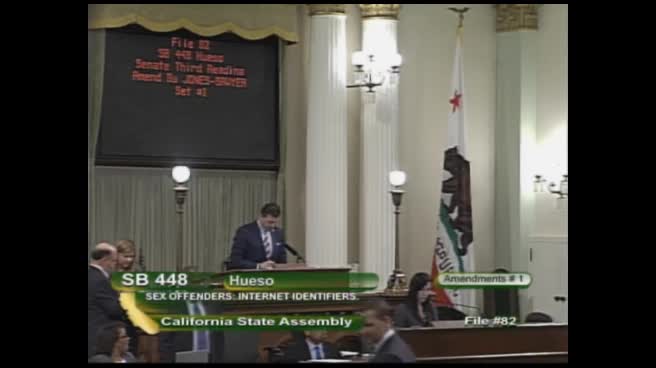


Bill Co-Author(s):