SB 462: Alcoholic beverages: tied house restrictions: Sonoma County.
- Session Year: 2015-2016
- House: Senate
- Latest Version Date: 2015-09-21
(1)The Alcoholic Beverage Control Act generally prohibits a manufacturer, winegrower, distiller, bottler, or wholesaler, among other licensees, or agents of these licensees, from paying a retailer for advertising. The act creates a variety of exceptions from this prohibition, including permitting specified licensees to purchase advertising space and time from, or on behalf of, an on-sale retail licensee that is an owner, manager, or major tenant of certain stadiums, parks, entertainment complexes, and arenas, subject to specified conditions. Existing law requires the purchase of advertising space or time in this context to be conducted pursuant to a written contract with the on-sale licensee, with a specified exception. Existing law defines a beer manufacturer for these specific purposes as including any holder of an out-of-state beer manufacturers certificate or any holder of a beer and wine importers general license. Existing law makes it a crime for an on-sale licensee to coerce certain licensees to purchase advertising space or time, as specified.
This bill would expand the exceptions described above to allow beer manufacturers, winegrowers, distilled spirits rectifiers, distilled spirits manufacturers, or distilled spirits manufacturers agents to purchase advertising space and time from, or on behalf of, on-sale retail licensees, as described above, at a specified complex located on the campus of, and owned by, Sonoma State University. The bill would permit the contract for purchasing space or time in this context to also be with an owner, long-term tenant of the venue, or licensee of the venue. By expanding the definition of a crime, this bill would impose a state-mandated local program.
(2)Existing law permits specified alcoholic beverage licensees to donate money and sponsor events at certain sites and facilities.
This bill would permit a holder of a winegrowers license, a beer manufacturer, as defined, a distilled spirits rectifier, a distilled spirits manufacturer, or distilled spirits manufacturers agent to donate wine, beer, or spirits, and make monetary contributions to a specified complex located on the campus of, and owned by, Sonoma State University, if certain conditions are met.
(3)This bill would incorporate changes to Section 25503.6 of the Business and Professions Code proposed by both this bill and SB 557, which would become operative only if both bills are enacted and become effective on or before January 1, 2016, and this bill is chaptered last.
(4)The California Constitution requires the state to reimburse local agencies and school districts for certain costs mandated by the state. Statutory provisions establish procedures for making that reimbursement.
This bill would provide that no reimbursement is required by this act for a specified reason.
(5)This bill would declare that it is to take effect immediately as an urgency statute.
(1)The Alcoholic Beverage Control Act generally prohibits a manufacturer, winegrower, distiller, bottler, or wholesaler, among other licensees, or agents of these licensees, from paying a retailer for advertising. The act creates a variety of exceptions from this prohibition, including permitting specified licensees to purchase advertising space and time from, or on behalf of, an on-sale retail licensee that is an owner, manager, or major tenant of certain stadiums, parks, entertainment complexes, and arenas, subject to specified conditions. Existing law requires the purchase of advertising space or time in this context to be conducted pursuant to a written contract with the on-sale licensee, with a specified exception. Existing law defines a beer manufacturer for these specific purposes as including any holder of an out-of-state beer manufacturers certificate or any holder of a beer and wine importers general license. Existing law makes it a crime for an on-sale licensee to coerce certain licensees to purchase advertising space or time, as specified.
This bill would expand the exceptions described above to allow beer manufacturers, winegrowers, distilled spirits rectifiers, distilled spirits manufacturers, or distilled spirits manufacturers agents to purchase advertising space and time from, or on behalf of, on-sale retail licensees, as described above, at a specified complex located on the campus of, and owned by, Sonoma State University. The bill would permit the contract for purchasing space or time in this context to also be with an owner, long-term tenant of the venue, or licensee of the venue. By expanding the definition of a crime, this bill would impose a state-mandated local program.
(2)Existing law permits specified alcoholic beverage licensees to donate money and sponsor events at certain sites and facilities.
This bill would permit a holder of a winegrowers license, a beer manufacturer, as defined, a distilled spirits rectifier, a distilled spirits manufacturer, or distilled spirits manufacturers agent to donate wine, beer, or spirits, and make monetary contributions to a specified complex located on the campus of, and owned by, Sonoma State University, if certain conditions are met.
(3)This bill would incorporate changes to Section 25503.6 of the Business and Professions Code proposed by both this bill and SB 557, which would become operative only if both bills are enacted and become effective on or before January 1, 2016, and this bill is chaptered last.
(3)
(4)The California Constitution requires the state to reimburse local agencies and school districts for certain costs mandated by the state. Statutory provisions establish procedures for making that reimbursement.
This bill would provide that no reimbursement is required by this act for a specified reason.
(4)
(5)This bill would declare that it is to take effect immediately as an urgency statute.
(1)The Alcoholic Beverage Control Act generally prohibits a manufacturer, winegrower, distiller, bottler, or wholesaler, among other licensees, or agents of these licensees, from paying a retailer for advertising. The act creates a variety of exceptions from this prohibition, including permitting specified licensees to purchase advertising space and time from, or on behalf of, an on-sale retail licensee that is an owner, manager, or major tenant of certain stadiums, parks, entertainment complexes, and arenas, subject to specified conditions. Existing law requires the purchase of advertising space or time in this context to be conducted pursuant to a written contract with the on-sale licensee, with a specified exception. Existing law defines a beer manufacturer for these specific purposes as including any holder of an out-of-state beer manufacturers certificate or any holder of a beer and wine importers general license. Existing law makes it a crime for an on-sale licensee to coerce certain licensees to purchase advertising space or time, as specified.
This bill would expand the exceptions described above to allow beer manufacturers, winegrowers, distilled spirits rectifiers, distilled spirits manufacturers, or distilled spirits manufacturers agents to purchase advertising space and time from, or on behalf of, on-sale retail licensees, as described above, at a specified complex located on the campus of, and owned by, Sonoma State University. The bill would permit the contract for purchasing space or time in this context to also be with an owner, long-term tenant of the venue, or licensee of the venue. The bill would also include within the exceptions described above generally, as well as for the Sonoma State University complex specifically, beer and wine wholesalers that also hold an off-sale beer and wine retail license and only sell wine. By expanding the definition of a crime, this bill would impose a state-mandated local program.
(2)Existing law permits specified alcoholic beverage licensees to donate money and sponsor events at certain sites and facilities.
This bill would permit a holder of a winegrowers license, a beer manufacturer, as defined, a distilled spirits rectifier, a distilled spirits manufacturer, or distilled spirits manufacturers agent to donate wine, beer, or spirits, and make monetary contributions to a specified complex located on the campus of, and owned by, Sonoma State University, if certain conditions are met. The bill would also include within this authorization generally, as well as for the Sonoma State University complex specifically, beer and wine wholesalers that also hold an off-sale beer and wine retail license and only sell wine, as specified.
(3)The California Constitution requires the state to reimburse local agencies and school districts for certain costs mandated by the state. Statutory provisions establish procedures for making that reimbursement.
This bill would provide that no reimbursement is required by this act for a specified reason.
(4)This bill would declare that it is to take effect immediately as an urgency statute.
The
(1)The Alcoholic Beverage Control Act generally prohibits a manufacturer, winegrower, distiller, bottler, or wholesaler, among other licensees, or agents of these licensees, from paying a retailer for advertising. The act creates a variety of exceptions from this prohibition, including permitting specified licensees to purchase advertising space and time from, or on behalf of, an on-sale retail licensee that is an owner, manager, or major tenant of certain stadiums, parks, entertainment complexes, and arenas, subject to specified conditions. Existing law requires the purchase of advertising space or time in this context to be conducted pursuant to a written contract with the on-sale licensee, with a specified exception. Existing law defines a beer manufacturer for these specific purposes as including any holder of an out-of-state beer manufacturers certificate or any holder of a beer and wine importers general license. Existing law makes it a crime for an on-sale licensee to coerce certain licensees to purchase advertising space or time, as specified.
This bill would expand the exceptions described above to allow beer manufacturers, winegrowers, distilled spirits rectifiers, distilled spirits manufacturers, or distilled spirits manufacturers agents to purchase advertising space and time from, or on behalf of, on-sale retail licensees, as described above, at a specified complex located in Sonoma County on the campus of, and owned by, Sonoma State University. The bill would permit the contract for purchasing space or time in this context to also be with an owner, longterm long-term tenant of the venue, or licensee of the venue. The bill would also include within the definition of beer manufacturer, for these purposes, a holder of a beer and wine wholesalers license within the exceptions described above generally, as well as for the Sonoma State University complex specifically, beer and wine wholesalers that also hold an off-sale beer and wine retail license and only sell wine. By expanding the definition of a crime, this bill would impose a state-mandated local program.
Existing
(2)Existing law permits specified alcoholic beverage licensees to donate money and sponsor events at certain sites and facilities.
This bill would permit a holder of a winegrowers license, a beer manufacturer, as defined, a distilled spirits rectifier, a distilled spirits manufacturer, or distilled spirits manufacturers agent to donate wine, beer, or spirits, and make monetary contributions to a specified complex located in Sonoma County, on the campus of, and owned by, Sonoma State University, if certain conditions are met. The bill would also include within this authorization generally, as well as for the Sonoma State University complex specifically, beer and wine wholesalers that also hold an off-sale beer and wine retail license and only sell wine, as specified.
(3)The California Constitution requires the state to reimburse local agencies and school districts for certain costs mandated by the state. Statutory provisions establish procedures for making that reimbursement.
This bill would provide that no reimbursement is required by this act for a specified reason.
The Alcoholic Beverage Control Act generally prohibits a manufacturer, winegrower, distiller, bottler, or wholesaler, among other licensees, or agents of these licensees, from paying a retailer for advertising. The act creates a variety of exceptions from this prohibition, including permitting specified licensees to purchase advertising space and time from, or on behalf of, an on-sale retail licensee that is an owner, manager, or major tenant of certain stadiums, parks, entertainment complexes, and arenas, subject to specified conditions. Existing law requires the purchase of advertising space or time in this context to be conducted pursuant to a written contract with the on-sale licensee, with a specified exception. Existing law defines a beer manufacturer for these specific purposes as including any holder of an out-of-state beer manufacturers certificate or any holder of a beer and wine importers general license.
This bill would expand the exceptions described above to allow beer manufacturers, winegrowers, distilled spirits rectifiers, distilled spirits manufacturers, or distilled spirits manufacturers agents to purchase advertising space and time from, or on behalf of, on-sale retail licensees, as described above, at a specified complex located in Sonoma County. The bill would permit the contract for purchasing space or time in this context to also be with an owner, longterm tenant of the venue, or licensee of the venue. The bill would include within the definition of beer manufacturer, for these purposes, a holder of a beer and wine wholesalers license.
Existing law permits specified alcoholic beverage licensees to donate money and sponsor events at certain sites and facilities.
This bill would permit a holder of a winegrowers license, a beer manufacturer, as defined, a distilled spirits rectifier, a distilled spirits manufacturer, or distilled spirits manufacturers agent to donate wine, beer, or spirits, and make monetary contributions to a specified complex located in Sonoma County, if certain conditions are met.
(a)Notwithstanding any other provision of this chapter, a beer manufacturer, the holder of a winegrowers license, a distilled spirits rectifier, a distilled spirits manufacturer, or distilled spirits manufacturers agent may purchase advertising space and time from, or on behalf of, an on-sale retail licensee subject to all of the following conditions:
(1)The on-sale licensee is the owner, manager, agent of the owner, assignee of the owners advertising rights, or the major tenant of the owner of any of the following:
(A)An outdoor stadium or a fully enclosed arena with a fixed seating capacity in excess of 10,000 seats located in Sacramento County or Alameda County.
(B)A fully enclosed arena with a fixed seating capacity in excess of 18,000 seats located in Orange County or Los Angeles County.
(C)An outdoor stadium or fully enclosed arena with a fixed seating capacity in excess of 8,500 seats located in Kern County.
(D)An exposition park of not less than 50 acres that includes an outdoor stadium with a fixed seating capacity in excess of 8,000 seats and a fully enclosed arena with an attendance capacity in excess of 4,500 people, located in San Bernardino County.
(E)An outdoor stadium with a fixed seating capacity in excess of 10,000 seats located in Yolo County.
(F)An outdoor stadium and a fully enclosed arena with fixed seating capacities in excess of 10,000 seats located in Fresno County.
(G)An athletic and entertainment complex of not less than 50 acres that includes within its boundaries an outdoor stadium with a fixed seating capacity of at least 8,000 seats and a second outdoor stadium with a fixed seating capacity of at least 3,500 seats located within Riverside County.
(H)An outdoor stadium with a fixed seating capacity in excess of 1,500 seats located in Tulare County.
(I)A motorsports entertainment complex of not less than 50 acres that includes within its boundaries an outdoor speedway with a fixed seating capacity of at least 50,000 seats, located within San Bernardino County.
(J)An exposition park, owned or operated by a bona fide nonprofit organization, of not less than 400 acres with facilities including a grandstand with a seating capacity of at least 8,000 people, at least one exhibition hall greater than 100,000 square feet, and at least four exhibition halls, each greater than 30,000 square feet, located in the City of Pomona or the City of La Verne in Los Angeles County.
(K)An outdoor soccer stadium with a fixed seating capacity of at least 25,000 seats, an outdoor tennis stadium with a fixed capacity of at least 7,000 seats, an outdoor track and field facility with a fixed seating capacity of at least 7,000 seats, and an indoor velodrome with a fixed seating capacity of at least 2,000 seats, all located within a sports and athletic complex built before January 1, 2005, within the City of Carson in Los Angeles County.
(L)An outdoor professional sports facility with a fixed seating capacity of at least 4,200 seats located within San Joaquin County.
(M)A fully enclosed arena with a fixed seating capacity in excess of 13,000 seats in the City of Inglewood.
(N)(i)An outdoor stadium with a fixed seating capacity of at least 68,000 seats located in the City of Santa Clara.
(ii)A beer manufacturer, the holder of a winegrowers license, a distilled spirits rectifier, a distilled spirits manufacturer, or distilled spirits manufacturers agent may purchase advertising space and time from, or on behalf of, a major tenant of an outdoor stadium described in clause (i), provided the major tenant does not hold a retail license, and the advertising may include the placement of advertising in an on-sale licensed premises operated at the outdoor stadium.
(O)A complex of not more than 50 acres located on the campus of, and owned by, Sonoma State University dedicated to presenting live artistic, musical, sports, food, beverage, culinary, lifestyle, or other cultural and entertainment events and performances with venues that include a concert hall with a seating capacity of approximately 1,500 seats, a second concert hall with a seating capacity of up to 300 seats, an outdoor area with a seating capacity of up to 5,000 seats, and a further outdoor area with a seating capacity of up to 10,000 seats. With respect to this complex, advertising space and time may also be purchased from or on behalf of the owner of the complex, a long-term tenant or licensee of the venue, whether or not the owner, long-term tenant, or licensee holds an on-sale license.
(2)The outdoor stadium or fully enclosed arena described in paragraph (1) is not owned by a community college district.
(3)The advertising space or time is purchased only in connection with the events to be held on the premises of the exposition park, stadium, or arena owned by the on-sale licensee. With respect to an exposition park as described in subparagraph (J) of paragraph (1) that includes at least one hotel, the advertising space or time shall not be displayed on or in any hotel located in the exposition park, or purchased in connection with the operation of any hotel located in the exposition park. With respect to the complex described in subparagraph (O) of paragraph (1), the advertising space or time shall be purchased only in connection with live artistic, musical, sports, food, beverage, culinary, lifestyle, or other cultural and entertainment events and performances to be held on the premises of the complex.
(4)The on-sale licensee serves other brands of beer distributed by a competing beer wholesaler in addition to the brand manufactured or marketed by the beer manufacturer, other brands of wine distributed by a competing wine wholesaler in addition to the brand produced by the winegrower, and other brands of distilled spirits distributed by a competing distilled spirits wholesaler in addition to the brand manufactured or marketed by the distilled spirits rectifier, the distilled spirits manufacturer, or the distilled spirits manufacturers agent that purchased the advertising space or time.
(b)Any purchase of advertising space or time pursuant to subdivision (a) shall be conducted pursuant to a written contract entered into by the beer manufacturer, the holder of the winegrowers license, the distilled spirits rectifier, the distilled spirits manufacturer, or the distilled spirits manufacturers agent and any of the following:
(1)The on-sale licensee.
(2)With respect to clause (ii) of subparagraph (N) of paragraph (1) of subdivision (a), the major tenant of the outdoor stadium.
(3)With respect to subparagraph (O) of paragraph (1) of subdivision (a), the owner, a long-term tenant of the complex, or licensee of the complex, whether or not the owner, long-term tenant, or licensee holds an on-sale license.
(c)Any beer manufacturer or holder of a winegrowers license, any distilled spirits rectifier, any distilled spirits manufacturer, or any distilled spirits manufacturers agent who, through coercion or other illegal means, induces, directly or indirectly, a holder of a wholesalers license to fulfill all or part of those contractual obligations entered into pursuant to subdivision (a) or (b) shall be guilty of a misdemeanor and shall be punished by imprisonment in the county jail not exceeding six months, or by a fine in an amount equal to the entire value of the advertising space, time, or costs involved in the contract, whichever is greater, plus ten thousand dollars ($10,000), or by both imprisonment and fine. The person shall also be subject to license revocation pursuant to Section 24200.
(d)Any on-sale retail licensee, as described in subdivision (a), who, directly or indirectly, solicits or coerces a holder of a wholesalers license to solicit a beer manufacturer, a holder of a winegrowers license, a distilled spirits rectifier, a distilled spirits manufacturer, or a distilled spirits manufacturers agent to purchase advertising space or time pursuant to subdivision (a) or (b) shall be guilty of a misdemeanor and shall be punished by imprisonment in the county jail not exceeding six months, or by a fine in an amount equal to the entire value of the advertising space or time involved in the contract, whichever is greater, plus ten thousand dollars ($10,000), or by both imprisonment and fine. The person shall also be subject to license revocation pursuant to Section 24200.
(e)For the purposes of this section, beer manufacturer includes any holder of a beer manufacturers license, any holder of an out-of-state beer manufacturers certificate, or any holder of a beer and wine importers general license.
(f)The Legislature finds that it is necessary and proper to require a separation among manufacturing interests, wholesale interests, and retail interests in the production and distribution of alcoholic beverages in order to prevent suppliers from dominating local markets through vertical integration and to prevent excessive sales of alcoholic beverages produced by overly aggressive marketing techniques. The Legislature further finds that the exceptions established by this section to the general prohibition against tied interests shall be limited to their express terms so as not to undermine the general prohibition and intends that this section be construed accordingly.
SEC. 1.5.Section 25503.6 of the Business and Professions Code is amended to read:25503.6.(a)Notwithstanding any other provision of this chapter, a beer manufacturer, the holder of a winegrowers license, a distilled spirits rectifier, a distilled spirits manufacturer, or distilled spirits manufacturers agent may purchase advertising space and time from, or on behalf of, an on-sale retail licensee subject to all of the following conditions:
(1)The on-sale licensee is the owner, manager, agent of the owner, assignee of the owners advertising rights, or the major tenant of the owner of any of the following:
(A)An outdoor stadium or a fully enclosed arena with a fixed seating capacity in excess of 10,000 seats located in Sacramento County or Alameda County.
(B)A fully enclosed arena with a fixed seating capacity in excess of 18,000 seats located in Orange County or Los Angeles County.
(C)An outdoor stadium or fully enclosed arena with a fixed seating capacity in excess of 8,500 seats located in Kern County.
(D)An exposition park of not less than 50 acres that includes an outdoor stadium with a fixed seating capacity in excess of 8,000 seats and a fully enclosed arena with an attendance capacity in excess of 4,500 people, located in San Bernardino County.
(E)An outdoor stadium with a fixed seating capacity in excess of 10,000 seats located in Yolo County.
(F)An outdoor stadium and a fully enclosed arena with fixed seating capacities in excess of 10,000 seats located in Fresno County.
(G)An athletic and entertainment complex of not less than 50 acres that includes within its boundaries an outdoor stadium with a fixed seating capacity of at least 8,000 seats and a second outdoor stadium with a fixed seating capacity of at least 3,500 seats located in Riverside County.
(H)An outdoor stadium with a fixed seating capacity in excess of 1,500 seats located in Tulare County.
(I)A motorsports entertainment complex of not less than 50 acres that includes within its boundaries an outdoor speedway with a fixed seating capacity of at least 50,000 seats, located in San Bernardino County.
(J)An exposition park, owned or operated by a bona fide nonprofit organization, of not less than 400 acres with facilities including a grandstand with a seating capacity of at least 8,000 people, at least one exhibition hall greater than 100,000 square feet, and at least four exhibition halls, each greater than 30,000 square feet, located in the City of Pomona or the City of La Verne in Los Angeles County.
(K)An outdoor soccer stadium with a fixed seating capacity of at least 25,000 seats, an outdoor tennis stadium with a fixed capacity of at least 7,000 seats, an outdoor track and field facility with a fixed seating capacity of at least 7,000 seats, and an indoor velodrome with a fixed seating capacity of at least 2,000 seats, all located within a sports and athletic complex built before January 1, 2005, in the City of Carson in Los Angeles County.
(L)An outdoor professional sports facility with a fixed seating capacity of at least 4,200 seats located in San Joaquin County.
(M)A fully enclosed arena with a fixed seating capacity in excess of 13,000 seats in the City of Inglewood.
(N)(i)An outdoor stadium with a fixed seating capacity of at least 68,000 seats located in the City of Santa Clara.
(ii)A beer manufacturer, the holder of a winegrowers license, a distilled spirits rectifier, a distilled spirits manufacturer, or distilled spirits manufacturers agent may purchase advertising space and time from, or on behalf of, a major tenant of an outdoor stadium described in clause (i), provided the major tenant does not hold a retail license, and the advertising may include the placement of advertising in an on-sale licensed premises operated at the outdoor stadium.
(O)A complex of not more than 50 acres located on the campus of, and owned by, Sonoma State University dedicated to presenting live artistic, musical, sports, food, beverage, culinary, lifestyle, or other cultural and entertainment events and performances with venues that include a concert hall with a seating capacity of approximately 1,500 seats, a second concert hall with a seating capacity of up to 300 seats, an outdoor area with a seating capacity of up to 5,000 seats, and a further outdoor area with a seating capacity of up to 10,000 seats. With respect to this complex, advertising space and time may also be purchased from or on behalf of the owner of the complex, a long-term tenant or licensee of the venue, whether or not the owner, long-term tenant, or licensee holds an on-sale license.
(P)A fairgrounds with a horse racetrack and equestrian and sports facilities located in San Diego County.
(2)The outdoor stadium or fully enclosed arena described in paragraph (1) is not owned by a community college district.
(3)The advertising space or time is purchased only in connection with the events to be held on the premises of the exposition park, stadium, or arena owned by the on-sale licensee. With respect to an exposition park as described in subparagraph (J) of paragraph (1) that includes at least one hotel, the advertising space or time shall not be displayed on or in any hotel located in the exposition park, or purchased in connection with the operation of any hotel located in the exposition park. With respect to the complex described in subparagraph (O) of paragraph (1), the advertising space or time shall be purchased only in connection with live artistic, musical, sports, food, beverage, culinary, lifestyle, or other cultural and entertainment events and performances to be held on the premises of the complex.
(4)The on-sale licensee serves other brands of beer distributed by a competing beer wholesaler in addition to the brand manufactured or marketed by the beer manufacturer, other brands of wine distributed by a competing wine wholesaler in addition to the brand produced by the winegrower, and other brands of distilled spirits distributed by a competing distilled spirits wholesaler in addition to the brand manufactured or marketed by the distilled spirits rectifier, the distilled spirits manufacturer, or the distilled spirits manufacturers agent that purchased the advertising space or time.
(b)Any purchase of advertising space or time pursuant to subdivision (a) shall be conducted pursuant to a written contract entered into by the beer manufacturer, the holder of the winegrowers license, the distilled spirits rectifier, the distilled spirits manufacturer, or the distilled spirits manufacturers agent and any of the following:
(1)The on-sale licensee.
(2)With respect to clause (ii) of subparagraph (N) of paragraph (1) of subdivision (a), the major tenant of the outdoor stadium.
(3)With respect to subparagraph (O) of paragraph (1) of subdivision (a), the owner, a long-term tenant of the complex, or licensee of the complex, whether or not the owner, long-term tenant, or licensee holds an on-sale license.
(c)Any beer manufacturer or holder of a winegrowers license, any distilled spirits rectifier, any distilled spirits manufacturer, or any distilled spirits manufacturers agent who, through coercion or other illegal means, induces, directly or indirectly, a holder of a wholesalers license to fulfill all or part of those contractual obligations entered into pursuant to subdivision (a) or (b) shall be guilty of a misdemeanor and shall be punished by imprisonment in the county jail not exceeding six months, or by a fine in an amount equal to the entire value of the advertising space, time, or costs involved in the contract, whichever is greater, plus ten thousand dollars ($10,000), or by both imprisonment and fine. The person shall also be subject to license revocation pursuant to Section 24200.
(d)Any on-sale retail licensee, as described in subdivision (a), who, directly or indirectly, solicits or coerces a holder of a wholesalers license to solicit a beer manufacturer, a holder of a winegrowers license, a distilled spirits rectifier, a distilled spirits manufacturer, or a distilled spirits manufacturers agent to purchase advertising space or time pursuant to subdivision (a) or (b) shall be guilty of a misdemeanor and shall be punished by imprisonment in the county jail not exceeding six months, or by a fine in an amount equal to the entire value of the advertising space or time involved in the contract, whichever is greater, plus ten thousand dollars ($10,000), or by both imprisonment and fine. The person shall also be subject to license revocation pursuant to Section 24200.
(e)For the purposes of this section, beer manufacturer includes any holder of a beer manufacturers license, any holder of an out-of-state beer manufacturers certificate, or any holder of a beer and wine importers general license.
(f)The Legislature finds that it is necessary and proper to require a separation among manufacturing interests, wholesale interests, and retail interests in the production and distribution of alcoholic beverages in order to prevent suppliers from dominating local markets through vertical integration and to prevent excessive sales of alcoholic beverages produced by overly aggressive marketing techniques. The Legislature further finds that the exceptions established by this section to the general prohibition against tied interests shall be limited to their express terms so as not to undermine the general prohibition and intends that this section be construed accordingly.
SEC. 2.Section 25503.34 is added to the Business and Professions Code, to read:25503.34.(a)A holder of a winegrowers license, a beer manufacturer as defined in subdivision (d), a distilled spirits rectifier, a distilled spirits manufacturer, or distilled spirits manufacturers agent may donate wine, beer, or spirits, and make monetary contributions to a complex dedicated to the presentation of live artistic, musical, sports, food, beverage, culinary, lifestyle, or other cultural entertainment events or performances, if all of the following conditions are met:
(1)The permanent retail on-sale licensee in the complex is a nonprofit charitable corporation or association exempt from payment of income taxes under the provisions of the Internal Revenue Code and Chapter 4 (commencing with Section 23701) of Part 11 of Division 2 of the Revenue and Taxation Code.
(2)The complex is of not more than 50 acres located on the campus of, and owned by, Sonoma State University dedicated to presenting live artistic, musical, sports, food, beverage, culinary, lifestyle, or other cultural and entertainment events and performances with venues that include a concert hall with a seating capacity of approximately 1,500 seats, a second concert hall with a seating capacity of up to 300 seats, an outdoor area with a seating capacity of up to 5,000 seats, and a further outdoor area with a seating capacity of up to 10,000 seats.
(3)The complex has a permanent retail on-sale license that is a long-term tenant of the complex.
(4)The donation or monetary contribution shall not be conditioned directly or indirectly, in any way, on the purchase, sale, or distribution of any alcoholic beverage manufactured or distributed by the holder of a winegrowers license, the beer manufacturer, the distilled spirits rectifier, the distilled spirits manufacturer, or the distilled spirits manufacturers agent by the licensee of the complex.
(5)The permanent retail on-sale licensee in the complex shall:
(A)Serve other brands of beer distributed by a competing beer wholesaler in addition to the brand manufactured or marketed by a contributing beer manufacturer.
(B)Serve other brands of wine distributed by a competing wine wholesaler in addition to the brand produced or distributed by a contributing winegrower.
(C)Serve other brands of distilled spirits distributed by a competing distilled spirits wholesaler in addition to the brand manufactured or marketed by the contributing distilled spirits manufacturer or distilled spirits manufacturers agent.
(6)Except as provided in paragraph (7), donated wine, beer, or spirits shall not be used or sold by the permanent retail licensee and a monetary contribution shall not be used in, or for the benefit of, the permanent retail on-sale licensee.
(7)Donated wine, beer, or spirits may only be used or sold in connection with fundraising activities held on or off the permanent licensed premises. Fundraising activities held in any area included in the licensed premises during which donated wine, beer, or spirits is used or sold shall not take place at the complex while the permanent retail licensee is exercising its license privileges and shall only be conducted pursuant to a temporary license issued by the department, provided however, that the permanent licensee shall surrender its license during the fundraising only for those areas of the complex where the fundraising activities are being presented and may continue to operate under its permanent license in other areas covered by the license where the fundraising is not taking place.
(b)The complex may acknowledge and thank a donating winegrower, beer manufacturer as defined in subdivision (d), distilled spirits rectifier, distilled spirits manufacturer, or distilled spirits manufacturers agent in the complexs event programs, on the complexs Internet Web site, and on stage at the permanent licensed premises during an event or performance.
(c)The Legislature finds that it is necessary and proper to require a separation among manufacturing interests, wholesale interests, and retail interests in the production and distribution of alcoholic beverages in order to prevent suppliers from dominating local markets through vertical integration and to prevent excessive sales of alcoholic beverages produced by overly aggressive marketing techniques. The Legislature further finds that the exceptions established by this section to the general prohibition against tied interests shall be limited to their express terms so as not to undermine the general prohibition and intends that this section be construed accordingly.
(d)For the purposes of this section, beer manufacturer includes any holder of a beer manufacturers license, any holder of an out-of-state beer manufacturers certificate, or any holder of a beer and wine importers general license.
SEC. 3.Section 1.5 of this bill incorporates amendments to Section 25503.6 of the Business and Professions Code proposed by both this bill and Senate Bill 557. It shall only become operative if (1) both bills are enacted and become effective on or before January 1, 2016, but this bill becomes operative first, (2) each bill amends Section 25503.6 of the Business and Professions Code, and (3) this bill is enacted after Senate Bill 557, in which case Section 25503.6 of the Business and Professions Code, as amended by Section 1 of this bill, shall remain operative only until the operative date of Senate Bill 557, at which time Section 1.5 of this bill shall become operative.
SEC. 4.No reimbursement is required by this act pursuant to Section 6 of Article XIIIB of the California Constitution because the only costs that may be incurred by a local agency or school district will be incurred because this act creates a new crime or infraction, eliminates a crime or infraction, or changes the penalty for a crime or infraction, within the meaning of Section 17556 of the Government Code, or changes the definition of a crime within the meaning of Section 6 of Article XIIIB of the California Constitution.
SEC. 5.This act is an urgency statute necessary for the immediate preservation of the public peace, health, or safety within the meaning of Article IV of the Constitution and shall go into immediate effect. The facts constituting the necessity are:
In order to allow the Green Music Center to continue to provide performing arts and to authorize the receipt of donations to facilitate that provision, it is necessary that this act take effect immediately.
(a)Notwithstanding any other provision of this chapter, a beer manufacturer, the holder of a winegrowers license, a distilled spirits rectifier, a distilled spirits manufacturer, or distilled spirits manufacturers agent may purchase advertising space and time from, or on behalf of, an on-sale retail licensee subject to all of the following conditions:
(1)The on-sale licensee is the owner, manager, agent of the owner, assignee of the owners advertising rights, or the major tenant of the owner of any of the following:
(A)An outdoor stadium or a fully enclosed arena with a fixed seating capacity in excess of 10,000 seats located in Sacramento County or Alameda County.
(B)A fully enclosed arena with a fixed seating capacity in excess of 18,000 seats located in Orange County or Los Angeles County.
(C)An outdoor stadium or fully enclosed arena with a fixed seating capacity in excess of 8,500 seats located in Kern County.
(D)An exposition park of not less than 50 acres that includes an outdoor stadium with a fixed seating capacity in excess of 8,000 seats and a fully enclosed arena with an attendance capacity in excess of 4,500 people, located in San Bernardino County.
(E)An outdoor stadium with a fixed seating capacity in excess of 10,000 seats located in Yolo County.
(F)An outdoor stadium and a fully enclosed arena with fixed seating capacities in excess of 10,000 seats located in Fresno County.
(G)An athletic and entertainment complex of not less than 50 acres that includes within its boundaries an outdoor stadium with a fixed seating capacity of at least 8,000 seats and a second outdoor stadium with a fixed seating capacity of at least 3,500 seats located within Riverside County.
(H)An outdoor stadium with a fixed seating capacity in excess of 1,500 seats located in Tulare County.
(I)A motorsports entertainment complex of not less than 50 acres that includes within its boundaries an outdoor speedway with a fixed seating capacity of at least 50,000 seats, located within San Bernardino County.
(J)An exposition park, owned or operated by a bona fide nonprofit organization, of not less than 400 acres with facilities including a grandstand with a seating capacity of at least 8,000 people, at least one exhibition hall greater than 100,000 square feet, and at least four exhibition halls, each greater than 30,000 square feet, located in the City of Pomona or the City of La Verne in Los Angeles County.
(K)An outdoor soccer stadium with a fixed seating capacity of at least 25,000 seats, an outdoor tennis stadium with a fixed capacity of at least 7,000 seats, an outdoor track and field facility with a fixed seating capacity of at least 7,000 seats, and an indoor velodrome with a fixed seating capacity of at least 2,000 seats, all located within a sports and athletic complex built before January 1, 2005, within the City of Carson in Los Angeles County.
(L)An outdoor professional sports facility with a fixed seating capacity of at least 4,200 seats located within San Joaquin County.
(M)A fully enclosed arena with a fixed seating capacity in excess of 13,000 seats in the City of Inglewood.
(N)(i)An outdoor stadium with a fixed seating capacity of at least 68,000 seats located in the City of Santa Clara.
(ii)A beer manufacturer, the holder of a winegrowers license, a distilled spirits rectifier, a distilled spirits manufacturer, or distilled spirits manufacturers agent may purchase advertising space and time from, or on behalf of, a major tenant of an outdoor stadium described in clause (i), provided the major tenant does not hold a retail license, and the advertising may include the placement of advertising in an on-sale licensed premises operated at the outdoor stadium.
(O)A complex of not more than 50 acres located on the campus of, and owned by, Sonoma State University dedicated to presenting live artistic, musical, sports, food, beverage, culinary, lifestyle, or other cultural and entertainment events and performances with venues that include a concert hall with a seating capacity of approximately 1,500 seats, a second concert hall with a seating capacity of up to 300 seats, an outdoor area with a seating capacity of up to 5,000 seats, and a further outdoor area with a seating capacity of up to 10,000 seats. With respect to this complex, advertising space and time may also be purchased from or on behalf of the owner of the complex, a long-term tenant or licensee of the venue, whether or not the owner, long-term tenant, or licensee holds an on-sale license.
(2)The outdoor stadium or fully enclosed arena described in paragraph (1) is not owned by a community college district.
(3)The advertising space or time is purchased only in connection with the events to be held on the premises of the exposition park, stadium, or arena owned by the on-sale licensee. With respect to an exposition park as described in subparagraph (J) of paragraph (1) that includes at least one hotel, the advertising space or time shall not be displayed on or in any hotel located in the exposition park, or purchased in connection with the operation of any hotel located in the exposition park. With respect to the complex described in subparagraph (O) of paragraph (1), the advertising space or time shall be purchased only in connection with live artistic, musical, sports, food, beverage, culinary, lifestyle, or other cultural and entertainment events and performances to be held on the premises of the complex.
(4)The on-sale licensee serves other brands of beer distributed by a competing beer wholesaler in addition to the brand manufactured or marketed by the beer manufacturer, other brands of wine distributed by a competing wine wholesaler in addition to the brand produced by the winegrower, and other brands of distilled spirits distributed by a competing distilled spirits wholesaler in addition to the brand manufactured or marketed by the distilled spirits rectifier, the distilled spirits manufacturer, or the distilled spirits manufacturers agent that purchased the advertising space or time.
(b)Any purchase of advertising space or time pursuant to subdivision (a) shall be conducted pursuant to a written contract entered into by the beer manufacturer, the holder of the winegrowers license, the distilled spirits rectifier, the distilled spirits manufacturer, or the distilled spirits manufacturers agent and any of the following:
(1)The on-sale licensee.
(2)With respect to clause (ii) of subparagraph (N) of paragraph (1) of subdivision (a), the major tenant of the outdoor stadium.
(3)With respect to subparagraph (O) of paragraph (1) of subdivision (a), the owner, a long-term tenant of the complex, or licensee of the complex, whether or not the owner, long-term tenant, or licensee holds an on-sale license.
(c)Any beer manufacturer or holder of a winegrowers license, any distilled spirits rectifier, any distilled spirits manufacturer, or any distilled spirits manufacturers agent who, through coercion or other illegal means, induces, directly or indirectly, a holder of a wholesalers license to fulfill all or part of those contractual obligations entered into pursuant to subdivision (a) or (b) shall be guilty of a misdemeanor and shall be punished by imprisonment in the county jail not exceeding six months, or by a fine in an amount equal to the entire value of the advertising space, time, or costs involved in the contract, whichever is greater, plus ten thousand dollars ($10,000), or by both imprisonment and fine. The person shall also be subject to license revocation pursuant to Section 24200.
(d)Any on-sale retail licensee, as described in subdivision (a), who, directly or indirectly, solicits or coerces a holder of a wholesalers license to solicit a beer manufacturer, a holder of a winegrowers license, a distilled spirits rectifier, a distilled spirits manufacturer, or a distilled spirits manufacturers agent to purchase advertising space or time pursuant to subdivision (a) or (b) shall be guilty of a misdemeanor and shall be punished by imprisonment in the county jail not exceeding six months, or by a fine in an amount equal to the entire value of the advertising space or time involved in the contract, whichever is greater, plus ten thousand dollars ($10,000), or by both imprisonment and fine. The person shall also be subject to license revocation pursuant to Section 24200.
(e)For the purposes of this section, beer manufacturer includes any holder of a beer manufacturers license, any holder of an out-of-state beer manufacturers certificate, or any holder of a beer and wine importers general license.
(f)The Legislature finds that it is necessary and proper to require a separation among manufacturing interests, wholesale interests, and retail interests in the production and distribution of alcoholic beverages in order to prevent suppliers from dominating local markets through vertical integration and to prevent excessive sales of alcoholic beverages produced by overly aggressive marketing techniques. The Legislature further finds that the exceptions established by this section to the general prohibition against tied interests shall be limited to their express terms so as not to undermine the general prohibition and intends that this section be construed accordingly.
SEC. 1.5.Section 25503.6 of the Business and Professions Code is amended to read:25503.6.(a)Notwithstanding any other provision of this chapter, a beer manufacturer, the holder of a winegrowers license, a distilled spirits rectifier, a distilled spirits manufacturer, or distilled spirits manufacturers agent may purchase advertising space and time from, or on behalf of, an on-sale retail licensee subject to all of the following conditions:
(1)The on-sale licensee is the owner, manager, agent of the owner, assignee of the owners advertising rights, or the major tenant of the owner of any of the following:
(A)An outdoor stadium or a fully enclosed arena with a fixed seating capacity in excess of 10,000 seats located in Sacramento County or Alameda County.
(B)A fully enclosed arena with a fixed seating capacity in excess of 18,000 seats located in Orange County or Los Angeles County.
(C)An outdoor stadium or fully enclosed arena with a fixed seating capacity in excess of 8,500 seats located in Kern County.
(D)An exposition park of not less than 50 acres that includes an outdoor stadium with a fixed seating capacity in excess of 8,000 seats and a fully enclosed arena with an attendance capacity in excess of 4,500 people, located in San Bernardino County.
(E)An outdoor stadium with a fixed seating capacity in excess of 10,000 seats located in Yolo County.
(F)An outdoor stadium and a fully enclosed arena with fixed seating capacities in excess of 10,000 seats located in Fresno County.
(G)An athletic and entertainment complex of not less than 50 acres that includes within its boundaries an outdoor stadium with a fixed seating capacity of at least 8,000 seats and a second outdoor stadium with a fixed seating capacity of at least 3,500 seats located within in Riverside County.
(H)An outdoor stadium with a fixed seating capacity in excess of 1,500 seats located in Tulare County.
(I)A motorsports entertainment complex of not less than 50 acres that includes within its boundaries an outdoor speedway with a fixed seating capacity of at least 50,000 seats, located within in San Bernardino County.
(J)An exposition park, owned or operated by a bona fide nonprofit organization, of not less than 400 acres with facilities including a grandstand with a seating capacity of at least 8,000 people, at least one exhibition hall greater than 100,000 square feet, and at least four exhibition halls, each greater than 30,000 square feet, located in the City of Pomona or the City of La Verne in Los Angeles County.
(K)An outdoor soccer stadium with a fixed seating capacity of at least 25,000 seats, an outdoor tennis stadium with a fixed capacity of at least 7,000 seats, an outdoor track and field facility with a fixed seating capacity of at least 7,000 seats, and an indoor velodrome with a fixed seating capacity of at least 2,000 seats, all located within a sports and athletic complex built before January 1, 2005, within in the City of Carson in Los Angeles County.
(L)An outdoor professional sports facility with a fixed seating capacity of at least 4,200 seats located within in San Joaquin County.
(M)A fully enclosed arena with a fixed seating capacity in excess of 13,000 seats in the City of Inglewood.
(N)(i)An outdoor stadium with a fixed seating capacity of at least 68,000 seats located in the City of Santa Clara.
(ii)A beer manufacturer, the holder of a winegrowers license, a distilled spirits rectifier, a distilled spirits manufacturer, or distilled spirits manufacturers agent may purchase advertising space and time from, or on behalf of, a major tenant of an outdoor stadium described in clause (i), provided the major tenant does not hold a retail license, and the advertising may include the placement of advertising in an on-sale licensed premises operated at the outdoor stadium.
(O)A complex of not more than 50 acres located on the campus of, and owned by, Sonoma State University dedicated to presenting live artistic, musical, sports, food, beverage, culinary, lifestyle, or other cultural and entertainment events and performances with venues that include a concert hall with a seating capacity of approximately 1,500 seats, a second concert hall with a seating capacity of up to 300 seats, an outdoor area with a seating capacity of up to 5,000 seats, and a further outdoor area with a seating capacity of up to 10,000 seats. With respect to this complex, advertising space and time may also be purchased from or on behalf of the owner of the complex, a long-term tenant or licensee of the venue, whether or not the owner, long-term tenant, or licensee holds an on-sale license.
(P)A fairgrounds with a horse racetrack and equestrian and sports facilities located in San Diego County.
(2)The outdoor stadium or fully enclosed arena described in paragraph (1) is not owned by a community college district.
(3)The advertising space or time is purchased only in connection with the events to be held on the premises of the exposition park, stadium, or arena owned by the on-sale licensee. With respect to an exposition park as described in subparagraph (J) of paragraph (1) that includes at least one hotel, the advertising space or time shall not be displayed on or in any hotel located in the exposition park, or purchased in connection with the operation of any hotel located in the exposition park. With respect to the complex described in subparagraph (O) of paragraph (1), the advertising space or time shall be purchased only in connection with live artistic, musical, sports, food, beverage, culinary, lifestyle, or other cultural and entertainment events and performances to be held on the premises of the complex.
(4)The on-sale licensee serves other brands of beer distributed by a competing beer wholesaler in addition to the brand manufactured or marketed by the beer manufacturer, other brands of wine distributed by a competing wine wholesaler in addition to the brand produced by the winegrower, and other brands of distilled spirits distributed by a competing distilled spirits wholesaler in addition to the brand manufactured or marketed by the distilled spirits rectifier, the distilled spirits manufacturer manufacturer, or the distilled spirits manufacturers agent that purchased the advertising space or time.
(b)Any purchase of advertising space or time pursuant to subdivision (a) shall be conducted pursuant to a written contract entered into by the beer manufacturer, the holder of the winegrowers license, the distilled spirits rectifier, the distilled spirits manufacturer, or the distilled spirits manufacturers agent and the on-sale licensee, or with respect to clause (ii) of subparagraph (N) of paragraph (1) of subdivision (a), the major tenant of the outdoor stadium. any of the following:
(1)The on-sale licensee.
(2)With respect to clause (ii) of subparagraph (N) of paragraph (1) of subdivision (a), the major tenant of the outdoor stadium.
(3)With respect to subparagraph (O) of paragraph (1) of subdivision (a), the owner, a long-term tenant of the complex, or licensee of the complex, whether or not the owner, long-term tenant, or licensee holds an on-sale license.
(c)Any beer manufacturer or holder of a winegrowers license, any distilled spirits rectifier, any distilled spirits manufacturer, or any distilled spirits manufacturers agent who, through coercion or other illegal means, induces, directly or indirectly, a holder of a wholesalers license to fulfill all or part of those contractual obligations entered into pursuant to subdivision (a) or (b) shall be guilty of a misdemeanor and shall be punished by imprisonment in the county jail not exceeding six months, or by a fine in an amount equal to the entire value of the advertising space, time, or costs involved in the contract, whichever is greater, plus ten thousand dollars ($10,000), or by both imprisonment and fine. The person shall also be subject to license revocation pursuant to Section 24200.
(d)Any on-sale retail licensee, as described in subdivision (a), who, directly or indirectly, solicits or coerces a holder of a wholesalers license to solicit a beer manufacturer, a holder of a winegrowers license, a distilled spirits rectifier, a distilled spirits manufacturer, or a distilled spirits manufacturers agent to purchase advertising space or time pursuant to subdivision (a) or (b) shall be guilty of a misdemeanor and shall be punished by imprisonment in the county jail not exceeding six months, or by a fine in an amount equal to the entire value of the advertising space or time involved in the contract, whichever is greater, plus ten thousand dollars ($10,000), or by both imprisonment and fine. The person shall also be subject to license revocation pursuant to Section 24200.
(e)For the purposes of this section, beer manufacturer includes any holder of a beer manufacturers license, any holder of an out-of-state beer manufacturers certificate, or any holder of a beer and wine importers general license.
(f)The Legislature finds that it is necessary and proper to require a separation among manufacturing interests, wholesale interests, and retail interests in the production and distribution of alcoholic beverages in order to prevent suppliers from dominating local markets through vertical integration and to prevent excessive sales of alcoholic beverages produced by overly aggressive marketing techniques. The Legislature further finds that the exceptions established by this section to the general prohibition against tied interests shall be limited to their express terms so as not to undermine the general prohibition and intends that this section be construed accordingly.
SEC. 2.Section 25503.34 is added to the Business and Professions Code, to read:25503.34.(a)A holder of a winegrowers license, a beer manufacturer as defined in subdivision (d), a distilled spirits rectifier, a distilled spirits manufacturer, or distilled spirits manufacturers agent may donate wine, beer, or spirits, and make monetary contributions to a complex dedicated to the presentation of live artistic, musical, sports, food, beverage, culinary, lifestyle, or other cultural entertainment events or performances, if all of the following conditions are met:
(1)The permanent retail on-sale licensee in the complex is a nonprofit charitable corporation or association exempt from payment of income taxes under the provisions of the Internal Revenue Code and Chapter 4 (commencing with Section 23701) of Part 11 of Division 2 of the Revenue and Taxation Code.
(2)The complex is of not more than 50 acres located on the campus of, and owned by, Sonoma State University dedicated to presenting live artistic, musical, sports, food, beverage, culinary, lifestyle, or other cultural and entertainment events and performances with venues that include a concert hall with a seating capacity of approximately 1,500 seats, a second concert hall with a seating capacity of up to 300 seats, an outdoor area with a seating capacity of up to 5,000 seats, and a further outdoor area with a seating capacity of up to 10,000 seats.
(3)The complex has a permanent retail on-sale license that is a long-term tenant of the complex.
(4)The donation or monetary contribution shall not be conditioned directly or indirectly, in any way, on the purchase, sale, or distribution of any alcoholic beverage manufactured or distributed by the holder of a winegrowers license, the beer manufacturer, the distilled spirits rectifier, the distilled spirits manufacturer, or the distilled spirits manufacturers agent by the licensee of the complex.
(5)The permanent retail on-sale licensee in the complex shall:
(A)Serve other brands of beer distributed by a competing beer wholesaler in addition to the brand manufactured or marketed by a contributing beer manufacturer.
(B)Serve other brands of wine distributed by a competing wine wholesaler in addition to the brand produced or distributed by a contributing winegrower.
(C)Serve other brands of distilled spirits distributed by a competing distilled spirits wholesaler in addition to the brand manufactured or marketed by the contributing distilled spirits manufacturer or distilled spirits manufacturers agent.
(6)Except as provided in paragraph (7), donated wine, beer, or spirits shall not be used or sold by the permanent retail licensee and a monetary contribution shall not be used in, or for the benefit of, the permanent retail on-sale licensee.
(7)Donated wine, beer, or spirits may only be used or sold in connection with fundraising activities held on or off the permanent licensed premises. Fundraising activities held in any area included in the licensed premises during which donated wine, beer, or spirits is used or sold shall not take place at the complex while the permanent retail licensee is exercising its license privileges and shall only be conducted pursuant to a temporary license issued by the department, provided however, that the permanent licensee shall surrender its license during the fundraising only for those areas of the complex where the fundraising activities are being presented and may continue to operate under its permanent license in other areas covered by the license where the fundraising is not taking place.
(b)The complex may acknowledge and thank a donating winegrower, beer manufacturer as defined in subdivision (d), distilled spirits rectifier, distilled spirits manufacturer, or distilled spirits manufacturers agent in the complexs event programs, on the complexs Internet Web site, and on stage at the permanent licensed premises during an event or performance.
(c)The Legislature finds that it is necessary and proper to require a separation among manufacturing interests, wholesale interests, and retail interests in the production and distribution of alcoholic beverages in order to prevent suppliers from dominating local markets through vertical integration and to prevent excessive sales of alcoholic beverages produced by overly aggressive marketing techniques. The Legislature further finds that the exceptions established by this section to the general prohibition against tied interests shall be limited to their express terms so as not to undermine the general prohibition and intends that this section be construed accordingly.
(d)For the purposes of this section, beer manufacturer includes any holder of a beer manufacturers license, any holder of an out-of-state beer manufacturers certificate, or any holder of a beer and wine importers general license.
SEC. 3.Section 1.5 of this bill incorporates amendments to Section 25503.6 of the Business and Professions Code proposed by both this bill and Senate Bill 557. It shall only become operative if (1) both bills are enacted and become effective on or before January 1, 2016, but this bill becomes operative first, (2) each bill amends Section 25503.6 of the Business and Professions Code, and (3) this bill is enacted after Senate Bill 557, in which case Section 25503.6 of the Business and Professions Code, as amended by Section 1 of this bill, shall remain operative only until the operative date of Senate Bill 557, at which time Section 1.5 of this bill shall become operative.
SEC. 3.SEC. 4.No reimbursement is required by this act pursuant to Section 6 of Article XIIIB of the California Constitution because the only costs that may be incurred by a local agency or school district will be incurred because this act creates a new crime or infraction, eliminates a crime or infraction, or changes the penalty for a crime or infraction, within the meaning of Section 17556 of the Government Code, or changes the definition of a crime within the meaning of Section 6 of Article XIIIB of the California Constitution.
SEC. 4.SEC. 5.This act is an urgency statute necessary for the immediate preservation of the public peace, health, or safety within the meaning of Article IV of the Constitution and shall go into immediate effect. The facts constituting the necessity are:
In order to allow the Green Music Center to continue to provide performing arts and to authorize the receipt of donations to facilitate that provision, it is necessary that this act take effect immediately.
(a)Notwithstanding any other provision of this chapter, a beer manufacturer, the holder of a winegrowers license, a beer and wine wholesaler that also holds an off-sale beer and wine retail license and only sells wine, a distilled spirits rectifier, a distilled spirits manufacturer, or distilled spirits manufacturers agent may purchase advertising space and time from, or on behalf of, an on-sale retail licensee subject to all of the following conditions:
(1)The on-sale licensee is the owner, manager, agent of the owner, assignee of the owners advertising rights, or the major tenant of the owner of any of the following:
(A)An outdoor stadium or a fully enclosed arena with a fixed seating capacity in excess of 10,000 seats located in Sacramento County or Alameda County.
(B)A fully enclosed arena with a fixed seating capacity in excess of 18,000 seats located in Orange County or Los Angeles County.
(C)An outdoor stadium or fully enclosed arena with a fixed seating capacity in excess of 8,500 seats located in Kern County.
(D)An exposition park of not less than 50 acres that includes an outdoor stadium with a fixed seating capacity in excess of 8,000 seats and a fully enclosed arena with an attendance capacity in excess of 4,500 people, located in San Bernardino County.
(E)An outdoor stadium with a fixed seating capacity in excess of 10,000 seats located in Yolo County.
(F)An outdoor stadium and a fully enclosed arena with fixed seating capacities in excess of 10,000 seats located in Fresno County.
(G)An athletic and entertainment complex of not less than 50 acres that includes within its boundaries an outdoor stadium with a fixed seating capacity of at least 8,000 seats and a second outdoor stadium with a fixed seating capacity of at least 3,500 seats located within Riverside County.
(H)An outdoor stadium with a fixed seating capacity in excess of 1,500 seats located in Tulare County.
(I)A motorsports entertainment complex of not less than 50 acres that includes within its boundaries an outdoor speedway with a fixed seating capacity of at least 50,000 seats, located within San Bernardino County.
(J)An exposition park, owned or operated by a bona fide nonprofit organization, of not less than 400 acres with facilities including a grandstand with a seating capacity of at least 8,000 people, at least one exhibition hall greater than 100,000 square feet, and at least four exhibition halls, each greater than 30,000 square feet, located in the City of Pomona or the City of La Verne in Los Angeles County.
(K)An outdoor soccer stadium with a fixed seating capacity of at least 25,000 seats, an outdoor tennis stadium with a fixed capacity of at least 7,000 seats, an outdoor track and field facility with a fixed seating capacity of at least 7,000 seats, and an indoor velodrome with a fixed seating capacity of at least 2,000 seats, all located within a sports and athletic complex built before January 1, 2005, within the City of Carson in Los Angeles County.
(L)An outdoor professional sports facility with a fixed seating capacity of at least 4,200 seats located within San Joaquin County.
(M)A fully enclosed arena with a fixed seating capacity in excess of 13,000 seats in the City of Inglewood.
(N)(i)An outdoor stadium with a fixed seating capacity of at least 68,000 seats located in the City of Santa Clara.
(ii)A beer manufacturer, the holder of a winegrowers license, a distilled spirits rectifier, a distilled spirits manufacturer, or distilled spirits manufacturers agent may purchase advertising space and time from, or on behalf of, a major tenant of an outdoor stadium described in clause (i), provided the major tenant does not hold a retail license, and the advertising may include the placement of advertising in an on-sale licensed premises operated at the outdoor stadium.
(O)A complex of not more than 50 acres located on the campus of, and owned by, Sonoma State University dedicated to presenting live artistic, musical, sports, food, beverage, culinary, lifestyle, or other cultural and entertainment events and performances with venues that include a concert hall with a seating capacity of approximately 1,500 seats, a second concert hall with a seating capacity of up to 300 seats, an outdoor area with a seating capacity of up to 5,000 seats, and a further outdoor area with a seating capacity of up to 10,000 seats. With respect to this complex, advertising space and time may also be purchased from or on behalf of the owner of the complex, a long-term tenant or licensee of the venue, whether or not the owner, long-term tenant, or licensee holds an on-sale license.
(2)The outdoor stadium or fully enclosed arena described in paragraph (1) is not owned by a community college district.
(3)The advertising space or time is purchased only in connection with the events to be held on the premises of the exposition park, stadium, or arena owned by the on-sale licensee. With respect to an exposition park as described in subparagraph (J) of paragraph (1) that includes at least one hotel, the advertising space or time shall not be displayed on or in any hotel located in the exposition park, or purchased in connection with the operation of any hotel located in the exposition park. With respect to the complex described in subparagraph (O) of paragraph (1), the advertising space or time shall be purchased only in connection with live artistic, musical, sports, food, beverage, culinary, lifestyle, or other cultural and entertainment events and performances to be held on the premises of the complex.
(4)The on-sale licensee serves other brands of beer distributed by a competing beer wholesaler in addition to the brand manufactured or marketed by the beer manufacturer, other brands of wine distributed by a competing wine wholesaler in addition to the brand produced by the winegrower or the beer and wine wholesaler that also holds an off-sale beer and wine retail license and only sells wine, winegrower, and other brands of distilled spirits distributed by a competing distilled spirits wholesaler in addition to the brand manufactured or marketed by the distilled spirits rectifier, the distilled spirits manufacturer, or the distilled spirits manufacturers agent that purchased the advertising space or time.
(b)Any purchase of advertising space or time pursuant to subdivision (a) shall be conducted pursuant to a written contract entered into by the beer manufacturer, the holder of the winegrowers license, the beer and wine wholesaler that also holds an off-sale beer and wine retail license and only sells wine, the distilled spirits rectifier, the distilled spirits manufacturer, or the distilled spirits manufacturers agent and any of the following:
(1)The on-sale licensee.
(2)With respect to clause (ii) of subparagraph (N) of paragraph (1) of subdivision (a), the major tenant of the outdoor stadium.
(3)With respect to subparagraph (O) of paragraph (1) of subdivision (a), the owner, a long-term tenant of the complex, or licensee of the complex, whether or not the owner, long-term tenant, or licensee holds an on-sale license.
(c)Any beer manufacturer, any manufacturer or holder of a winegrowers license, any beer and wine wholesaler that also holds an off-sale beer and wine retail license and only sells wine, any distilled spirits rectifier, any distilled spirits manufacturer, or any distilled spirits manufacturers agent who, through coercion or other illegal means, induces, directly or indirectly, a holder of a wholesalers license to fulfill all or part of those contractual obligations entered into pursuant to subdivision (a) or (b) shall be guilty of a misdemeanor and shall be punished by imprisonment in the county jail not exceeding six months, or by a fine in an amount equal to the entire value of the advertising space, time, or costs involved in the contract, whichever is greater, plus ten thousand dollars ($10,000), or by both imprisonment and fine. The person shall also be subject to license revocation pursuant to Section 24200.
(d)Any on-sale retail licensee, as described in subdivision (a), who, directly or indirectly, solicits or coerces a holder of a wholesalers license to solicit a beer manufacturer, a holder of a winegrowers license, a beer and wine wholesaler that also holds an off-sale beer and wine retail license and only sells wine, a distilled spirits rectifier, a distilled spirits manufacturer, or a distilled spirits manufacturers agent to purchase advertising space or time pursuant to subdivision (a) or (b) shall be guilty of a misdemeanor and shall be punished by imprisonment in the county jail not exceeding six months, or by a fine in an amount equal to the entire value of the advertising space or time involved in the contract, whichever is greater, plus ten thousand dollars ($10,000), or by both imprisonment and fine. The person shall also be subject to license revocation pursuant to Section 24200.
(e)For the purposes of this section, beer manufacturer includes any holder of a beer manufacturers license, any holder of an out-of-state beer manufacturers certificate, or any holder of a beer and wine importers general license.
(f)The Legislature finds that it is necessary and proper to require a separation among manufacturing interests, wholesale interests, and retail interests in the production and distribution of alcoholic beverages in order to prevent suppliers from dominating local markets through vertical integration and to prevent excessive sales of alcoholic beverages produced by overly aggressive marketing techniques. The Legislature further finds that the exceptions established by this section to the general prohibition against tied interests shall be limited to their express terms so as not to undermine the general prohibition and intends that this section be construed accordingly.
SEC. 2.Section 25503.34 is added to the Business and Professions Code, to read:25503.34.(a)A holder of a winegrowers license, a beer and wine wholesaler that also holds an off-sale beer and wine retail license and only sells wine, a beer manufacturer as defined in subdivision (d), a distilled spirits rectifier, a distilled spirits manufacturer, or distilled spirits manufacturers agent may donate wine, beer, or spirits, and make monetary contributions to a complex dedicated to the presentation of live artistic, musical, sports, food, beverage, culinary, lifestyle, or other cultural entertainment events or performances, if all of the following conditions are met:
(1)The permanent retail on-sale licensee in the complex is a nonprofit charitable corporation or association exempt from payment of income taxes under the provisions of the Internal Revenue Code and Chapter 4 (commencing with Section 23701) of Part 11 of Division 2 of the Revenue and Taxation Code.
(2)The complex is of not more than 50 acres located on the campus of, and owned by, Sonoma State University dedicated to presenting live artistic, musical, sports, food, beverage, culinary, lifestyle, or other cultural and entertainment events and performances with venues that include a concert hall with a seating capacity of approximately 1,500 seats, a second concert hall with a seating capacity of up to 300 seats, an outdoor area with a seating capacity of up to 5,000 seats, and a further outdoor area with a seating capacity of up to 10,000 seats.
(3)The complex has a permanent retail on-sale license that is a long-term tenant of the complex.
(4)The donation or monetary contribution shall not be conditioned directly or indirectly, in any way, on the purchase, sale, or distribution of any alcoholic beverage manufactured or distributed by the holder of a winegrowers license, the holder of a beer and wine wholesaler that also holds an off-sale beer and wine retail license and only sells wine, the beer manufacturer, the distilled spirits rectifier, the distilled spirits manufacturer, or the distilled spirits manufacturers agent by the licensee of the complex.
(5)The permanent retail on-sale licensee in the complex shall:
(A)Serve other brands of beer distributed by a competing beer wholesaler in addition to the brand manufactured or marketed by a contributing beer manufacturer.
(B)Serve other brands of wine distributed by a competing wine wholesaler in addition to the brand produced or distributed by a contributing winegrower.
(C)Serve other brands of distilled spirits distributed by a competing distilled spirits wholesaler in addition to the brand manufactured or marketed by the contributing distilled spirits manufacturer or distilled spirits manufacturers agent.
(5)
(6)Except as provided in paragraph (6), (7), donated wine, beer, or spirits shall not be used or sold by the permanent retail licensee and a monetary contribution shall not be used in, or for the benefit of, the permanent retail on-sale licensee.
(6)
(7)Donated wine, beer, or spirits may only be used or sold in connection with fundraising activities held on or off the permanent licensed premises. Fundraising activities held in any area included in the licensed premises during which donated wine, beer, or spirits is used or sold shall not take place at the complex while the permanent retail licensee is exercising its license privileges and shall only be conducted pursuant to a temporary license issued by the department, provided however, that the permanent licensee shall surrender its license during the fundraising only for those areas of the complex where the fundraising activities are being presented and may continue to operate under its permanent license in other areas covered by the license where the fundraising is not taking place.
(b)The complex may acknowledge and thank a donating winegrower, beer and wine wholesaler that also holds an off-sale beer and wine retail license and only sells wine, beer manufacturer as defined in subdivision (d), distilled spirits rectifier, distilled spirits manufacturer, or distilled spirits manufacturers agent in the complexs event programs, on the complexs Internet Web site, and on stage at the permanent licensed premises during an event or performance.
(c)The Legislature finds that it is necessary and proper to require a separation between among manufacturing interests, wholesale interests, and retail interests in the production and distribution of alcoholic beverages in order to prevent suppliers from dominating local markets through vertical integration and to prevent excessive sales of alcoholic beverages produced by overly aggressive marketing techniques. The Legislature further finds that the exceptions established by this section to the general prohibition against tied interests shall be limited to their express terms so as not to undermine the general prohibition, prohibition and intends that this section be construed accordingly.
(d)For the purposes of this section, beer manufacturer includes any holder of a beer manufacturers license, any holder of an out-of-state beer manufacturers certificate, or any holder of a beer and wine importers general license.
(e)The privilege granted by this section to a beer and wine wholesaler that also holds an off-sale beer and wine retail license and only sells wine shall apply only to wine produced for the donating licensee that is labeled with a brand owned exclusively by the donating licensee.
SEC. 3.No reimbursement is required by this act pursuant to Section 6 of Article XIIIB of the California Constitution because the only costs that may be incurred by a local agency or school district will be incurred because this act creates a new crime or infraction, eliminates a crime or infraction, or changes the penalty for a crime or infraction, within the meaning of Section 17556 of the Government Code, or changes the definition of a crime within the meaning of Section 6 of Article XIIIB of the California Constitution.
SEC. 4.This act is an urgency statute necessary for the immediate preservation of the public peace, health, or safety within the meaning of Article IV of the Constitution and shall go into immediate effect. The facts constituting the necessity are:
In order to allow the Green Music Center to continue to provide performing arts and to authorize the receipt of donations to facilitate that provision, it is necessary that this act take effect immediately.
(a)Notwithstanding any other provision of this chapter, a beer manufacturer, the holder of a winegrowers license, a beer and wine wholesaler that also holds an off-sale beer and wine retail license and only sells wine, a distilled spirits rectifier, a distilled spirits manufacturer, or distilled spirits manufacturers agent may purchase advertising space and time from, or on behalf of, an on-sale retail licensee subject to all of the following conditions:
(1)The on-sale licensee is the owner, manager, agent of the owner, assignee of the owners advertising rights, or the major tenant of the owner of any of the following:
(A)An outdoor stadium or a fully enclosed arena with a fixed seating capacity in excess of 10,000 seats located in Sacramento County or Alameda County.
(B)A fully enclosed arena with a fixed seating capacity in excess of 18,000 seats located in Orange County or Los Angeles County.
(C)An outdoor stadium or fully enclosed arena with a fixed seating capacity in excess of 8,500 seats located in Kern County.
(D)An exposition park of not less than 50 acres that includes an outdoor stadium with a fixed seating capacity in excess of 8,000 seats and a fully enclosed arena with an attendance capacity in excess of 4,500 people, located in San Bernardino County.
(E)An outdoor stadium with a fixed seating capacity in excess of 10,000 seats located in Yolo County.
(F)An outdoor stadium and a fully enclosed arena with fixed seating capacities in excess of 10,000 seats located in Fresno County.
(G)An athletic and entertainment complex of not less than 50 acres that includes within its boundaries an outdoor stadium with a fixed seating capacity of at least 8,000 seats and a second outdoor stadium with a fixed seating capacity of at least 3,500 seats located within Riverside County.
(H)An outdoor stadium with a fixed seating capacity in excess of 1,500 seats located in Tulare County.
(I)A motorsports entertainment complex of not less than 50 acres that includes within its boundaries an outdoor speedway with a fixed seating capacity of at least 50,000 seats, located within San Bernardino County.
(J)An exposition park, owned or operated by a bona fide nonprofit organization, of not less than 400 acres with facilities including a grandstand with a seating capacity of at least 8,000 people, at least one exhibition hall greater than 100,000 square feet, and at least four exhibition halls, each greater than 30,000 square feet, located in the City of Pomona or the City of La Verne in Los Angeles County.
(K)An outdoor soccer stadium with a fixed seating capacity of at least 25,000 seats, an outdoor tennis stadium with a fixed capacity of at least 7,000 seats, an outdoor track and field facility with a fixed seating capacity of at least 7,000 seats, and an indoor velodrome with a fixed seating capacity of at least 2,000 seats, all located within a sports and athletic complex built before January 1, 2005, within the City of Carson in Los Angeles County.
(L)An outdoor professional sports facility with a fixed seating capacity of at least 4,200 seats located within San Joaquin County.
(M)A fully enclosed arena with a fixed seating capacity in excess of 13,000 seats in the City of Inglewood.
(N)(i)An outdoor stadium with a fixed seating capacity of at least 68,000 seats located in the City of Santa Clara.
(ii)A beer manufacturer, the holder of a winegrowers license, a distilled spirits rectifier, a distilled spirits manufacturer, or distilled spirits manufacturers agent may purchase advertising space and time from, or on behalf of, a major tenant of an outdoor stadium described in clause (i), provided the major tenant does not hold a retail license, and the advertising may include the placement of advertising in an on-sale licensed premises operated at the outdoor stadium.
(O)A complex of not more than 50 acres located in Sonoma County on the campus of, and owned by, Sonoma State University dedicated to presenting live artistic, musical, sports, food, beverage, culinary, lifestyle, or other cultural and entertainment events and performances that includes with venues that include a concert hall with a seating capacity of approximately 1,500 seats, a second concert hall with a seating capacity of up to 300 seats, an outdoor area with a seating capacity of up to 5,000 seats, and a planned further outdoor facility area with a seating capacity of up to 10,000 seats. With respect to this venue, complex, advertising space and time may also be purchased from or on behalf of the owner of the complex, a longterm long-term tenant or licensee of the venue, whether or not the owner, longterm long-term tenant, or licensee holds an on-sale license.
(2)The outdoor stadium or fully enclosed arena described in paragraph (1) is not owned by a community college district.
(3)The advertising space or time is purchased only in connection with the events to be held on the premises of the exposition park, stadium, or arena owned by the on-sale licensee. With respect to an exposition park as described in subparagraph (J) of paragraph (1) that includes at least one hotel, the advertising space or time shall not be displayed on or in any hotel located in the exposition park, or purchased in connection with the operation of any hotel located in the exposition park. With respect to the complex described in subparagraph (O) of paragraph (1), the advertising space or time shall be purchased only in connection with live artistic, musical, sports, food, beverage, culinary, lifestyle, or other cultural and entertainment events and performances to be held on the premises of the complex.
(4)The on-sale licensee serves other brands of beer distributed by a competing beer wholesaler in addition to the brand manufactured or marketed by the beer manufacturer, other brands of wine distributed by a competing wine wholesaler in addition to the brand produced by the winegrower or the beer and wine wholesaler that also holds an off-sale beer and wine retail license and only sells wine, and other brands of distilled spirits distributed by a competing distilled spirits wholesaler in addition to the brand manufactured or marketed by the distilled spirits rectifier, the distilled spirits manufacturer manufacturer, or the distilled spirits manufacturers agent that purchased the advertising space or time.
(b)Any purchase of advertising space or time pursuant to subdivision (a) shall be conducted pursuant to a written contract entered into by the beer manufacturer, the holder of the winegrowers license, the beer and wine wholesaler that also holds an off-sale beer and wine retail license and only sells wine, the distilled spirits rectifier, the distilled spirits manufacturer, or the distilled spirits manufacturers agent and any of the following:
(1)The on-sale licensee.
(2)With respect to clause (ii) of subparagraph (N) of paragraph (1) of subdivision (a), the major tenant of the outdoor stadium.
(3)With respect to subparagraph (O) of paragraph (1) of subdivision (a), the owner, a longterm long-term tenant of the venue, complex, or licensee of the venue, complex, whether or not the owner, longterm long-term tenant, or licensee holds an on-sale license.
(c)Any beer manufacturer or manufacturer, any holder of a winegrowers license, any beer and wine wholesaler that also holds an off-sale beer and wine retail license and only sells wine, any distilled spirits rectifier, any distilled spirits manufacturer, or any distilled spirits manufacturers agent who, through coercion or other illegal means, induces, directly or indirectly, a holder of a wholesalers license to fulfill all or part of those contractual obligations entered into pursuant to subdivision (a) or (b) shall be guilty of a misdemeanor and shall be punished by imprisonment in the county jail not exceeding six months, or by a fine in an amount equal to the entire value of the advertising space, time, or costs involved in the contract, whichever is greater, plus ten thousand dollars ($10,000), or by both imprisonment and fine. The person shall also be subject to license revocation pursuant to Section 24200.
(d)Any on-sale retail licensee, as described in subdivision (a), who, directly or indirectly, solicits or coerces a holder of a wholesalers license to solicit a beer manufacturer, a holder of a winegrowers license, a beer and wine wholesaler that also holds an off-sale beer and wine retail license and only sells wine, a distilled spirits rectifier, a distilled spirits manufacturer, or a distilled spirits manufacturers agent to purchase advertising space or time pursuant to subdivision (a) or (b) shall be guilty of a misdemeanor and shall be punished by imprisonment in the county jail not exceeding six months, or by a fine in an amount equal to the entire value of the advertising space or time involved in the contract, whichever is greater, plus ten thousand dollars ($10,000), or by both imprisonment and fine. The person shall also be subject to license revocation pursuant to Section 24200.
(e)For the purposes of this section, beer manufacturer includes any holder of a beer manufacturers license, any holder of an out-of-state beer manufacturers certificate, any holder of a beer and wine wholesalers license, or any holder of a beer and wine importers general license.
SEC. 2.Section 25503.34 is added to the Business and Professions Code, to read:25503.34.(a)A holder of a winegrowers license, a beer and wine wholesaler that also holds an off-sale beer and wine retail license and only sells wine, a beer manufacturer as defined in subdivision (d), a distilled spirits rectifier, a distilled spirits manufacturer, or distilled spirits manufacturers agent may donate wine, beer, or spirits, and make monetary contributions to a complex dedicated to the presentation of live artistic, musical, sports, food, beverage, culinary, lifestyle, or other cultural entertainment events or performances, if all of the following conditions are met:
(1)The permanent retail on-sale licensee in the complex is a nonprofit charitable corporation or association exempt from payment of income taxes under the provisions of the Internal Revenue Code and Chapter 4 (commencing with Section 23701) of Part 11 of Division 2 of the Revenue and Taxation Code.
(2)The complex is of not more than 50 acres located in Sonoma County on the campus of, and owned by, Sonoma State University dedicated to presenting live artistic, musical, sports, food, beverage, culinary, lifestyle, or other cultural and entertainment events and performances that includes with venues that include a concert hall with a seating capacity of approximately 1,500 seats, a second concert hall with a seating capacity of up to 300 seats, an outdoor area with a seating capacity of up to 5,000 seats, and a planned further outdoor facility area with a seating capacity of up to 10,000 seats.
(3)The complex has a permanent retail on-sale license that is a long-term tenant of the complex.
(4)The donation or monetary contribution shall not be conditioned directly or indirectly, in any way, on the purchase, sale, or distribution of any alcoholic beverage manufactured or distributed by the holder of a winegrowers license, the holder of a beer and wine wholesaler that also holds an off-sale beer and wine retail license and only sells wine, the beer manufacturer, the distilled spirits rectifier, the distilled spirits manufacturer, or the distilled spirits manufacturers agent by the licensee of the complex.
(5)Except as provided in paragraph (6), donated wine, beer, or spirits shall not be used or sold by the permanent retail licensee and a monetary contribution shall not be used in, or for the benefit of, the permanent retail on-sale licensee.
(6)Donated wine, beer, or spirits may only be used or sold in connection with fundraising activities held on or off the permanent licensed premises. Fundraising activities held in any area included in the licensed premises during which donated wine, beer, or spirits is used or sold shall not take place at the complex while the permanent retail licensee is exercising its license privileges and shall only be conducted pursuant to a temporary license issued by the department, provided however, that the permanent licensee shall surrender its license during the fundraising only for those areas of the complex where the fundraising activities are being presented and may continue to operate under its permanent license in other areas covered by the license where the fundraising is not taking place.
(b)The complex may acknowledge and thank a donating winegrower, beer and wine wholesaler that also holds an off-sale beer and wine retail license and only sells wine, beer manufacturer as defined in subdivision (d), distilled spirits rectifier, distilled spirits manufacturer, or distilled spirits manufacturers agent in the complexs event programs, on the complexs Internet Web site, and on stage at the permanent licensed premises during an event or performance.
(c)The Legislature finds that it is necessary and proper to require a separation between manufacturing interests, wholesale interests, and retail interests in the production and distribution of alcoholic beverages in order to prevent suppliers from dominating local markets through vertical integration and to prevent excessive sales of alcoholic beverages produced by overly aggressive marketing techniques. The Legislature further finds that the exceptions established by this section to the general prohibition against tied interests shall be limited to their express terms so as not to undermine the general prohibition, and intends that this section be construed accordingly.
(d)For the purposes of this section, beer manufacturer includes any holder of a beer manufacturers license, any holder of an out-of-state beer manufacturers certificate, any holder of a beer and wine wholesalers license, or any holder of a beer and wine importers general license.
(e)The privilege granted by this section to a beer and wine wholesaler that also holds an off-sale beer and wine retail license and only sells wine shall apply only to wine produced for the donating licensee that is labeled with a brand owned exclusively by the donating licensee.
SEC. 3.No reimbursement is required by this act pursuant to Section 6 of Article XIIIB of the California Constitution because the only costs that may be incurred by a local agency or school district will be incurred because this act creates a new crime or infraction, eliminates a crime or infraction, or changes the penalty for a crime or infraction, within the meaning of Section 17556 of the Government Code, or changes the definition of a crime within the meaning of Section 6 of Article XIIIB of the California Constitution.
(a)Notwithstanding any other provision of this chapter, a beer manufacturer, the holder of a winegrowers license, a distilled spirits rectifier, a distilled spirits manufacturer, or distilled spirits manufacturers agent may purchase advertising space and time from, or on behalf of, an on-sale retail licensee subject to all of the following conditions:
(1)The on-sale licensee is the owner, manager, agent of the owner, assignee of the owners advertising rights, or the major tenant of the owner of any of the following:
(A)An outdoor stadium or a fully enclosed arena with a fixed seating capacity in excess of 10,000 seats located in Sacramento County or Alameda County.
(B)A fully enclosed arena with a fixed seating capacity in excess of 18,000 seats located in Orange County or Los Angeles County.
(C)An outdoor stadium or fully enclosed arena with a fixed seating capacity in excess of 8,500 seats located in Kern County.
(D)An exposition park of not less than 50 acres that includes an outdoor stadium with a fixed seating capacity in excess of 8,000 seats and a fully enclosed arena with an attendance capacity in excess of 4,500 people, located in San Bernardino County.
(E)An outdoor stadium with a fixed seating capacity in excess of 10,000 seats located in Yolo County.
(F)An outdoor stadium and a fully enclosed arena with fixed seating capacities in excess of 10,000 seats located in Fresno County.
(G)An athletic and entertainment complex of not less than 50 acres that includes within its boundaries an outdoor stadium with a fixed seating capacity of at least 8,000 seats and a second outdoor stadium with a fixed seating capacity of at least 3,500 seats located within Riverside County.
(H)An outdoor stadium with a fixed seating capacity in excess of 1,500 seats located in Tulare County.
(I)A motorsports entertainment complex of not less than 50 acres that includes within its boundaries an outdoor speedway with a fixed seating capacity of at least 50,000 seats, located within San Bernardino County.
(J)An exposition park, owned or operated by a bona fide nonprofit organization, of not less than 400 acres with facilities including a grandstand with a seating capacity of at least 8,000 people, at least one exhibition hall greater than 100,000 square feet, and at least four exhibition halls, each greater than 30,000 square feet, located in the City of Pomona or the City of La Verne in Los Angeles County.
(K)An outdoor soccer stadium with a fixed seating capacity of at least 25,000 seats, an outdoor tennis stadium with a fixed capacity of at least 7,000 seats, an outdoor track and field facility with a fixed seating capacity of at least 7,000 seats, and an indoor velodrome with a fixed seating capacity of at least 2,000 seats, all located within a sports and athletic complex built before January 1, 2005, within the City of Carson in Los Angeles County.
(L)An outdoor professional sports facility with a fixed seating capacity of at least 4,200 seats located within San Joaquin County.
(M)A fully enclosed arena with a fixed seating capacity in excess of 13,000 seats in the City of Inglewood.
(N)(i)An outdoor stadium with a fixed seating capacity of at least 68,000 seats located in the City of Santa Clara.
(ii)A beer manufacturer, the holder of a winegrowers license, a distilled spirits rectifier, a distilled spirits manufacturer, or distilled spirits manufacturers agent may purchase advertising space and time from, or on behalf of, a major tenant of an outdoor stadium described in clause (i), provided the major tenant does not hold a retail license, and the advertising may include the placement of advertising in an on-sale licensed premises operated at the outdoor stadium.
(O)A complex of not more than 50 acres located in Sonoma County dedicated to presenting live artistic, musical, sports, food, beverage, culinary, lifestyle, or other cultural and entertainment events and performances that includes a concert hall with a seating capacity of approximately 1,500 seats, a second concert hall with a seating capacity of up to 300 seats, an outdoor area with a seating capacity of up to 5,000 seats, and a planned further outdoor facility with a seating capacity of up to 10,000 seats. With respect to this venue, advertising space and time may also be purchased from or on behalf of the owner of the complex, a longterm tenant or licensee of the venue, whether or not the owner, longterm tenant, or licensee holds an on-sale license.
(2)The outdoor stadium or fully enclosed arena described in paragraph (1) is not owned by a community college district.
(3)The advertising space or time is purchased only in connection with the events to be held on the premises of the exposition park, stadium, or arena owned by the on-sale licensee. With respect to an exposition park as described in subparagraph (J) of paragraph (1) that includes at least one hotel, the advertising space or time shall not be displayed on or in any hotel located in the exposition park, or purchased in connection with the operation of any hotel located in the exposition park.
(4)The on-sale licensee serves other brands of beer distributed by a competing beer wholesaler in addition to the brand manufactured or marketed by the beer manufacturer, other brands of wine distributed by a competing wine wholesaler in addition to the brand produced by the winegrower, and other brands of distilled spirits distributed by a competing distilled spirits wholesaler in addition to the brand manufactured or marketed by the distilled spirits rectifier, the distilled spirits manufacturer or the distilled spirits manufacturers agent that purchased the advertising space or time.
(b)Any purchase of advertising space or time pursuant to subdivision (a) shall be conducted pursuant to a written contract entered into by the beer manufacturer, the holder of the winegrowers license, the distilled spirits rectifier, the distilled spirits manufacturer, or the distilled spirits manufacturers agent and the any of the following:
(1)The on-sale licensee, or with licensee.
(2)With respect to clause (ii) of subparagraph (N) of paragraph (1) of subdivision (a), the major tenant of the outdoor stadium.
(3)With respect to subparagraph (O) of paragraph (1) of subdivision (a), the owner, a longterm tenant of the venue, or licensee of the venue, whether or not the owner, longterm tenant, or licensee holds an on-sale license.
(c)Any beer manufacturer or holder of a winegrowers license, any distilled spirits rectifier, any distilled spirits manufacturer, or any distilled spirits manufacturers agent who, through coercion or other illegal means, induces, directly or indirectly, a holder of a wholesalers license to fulfill all or part of those contractual obligations entered into pursuant to subdivision (a) or (b) shall be guilty of a misdemeanor and shall be punished by imprisonment in the county jail not exceeding six months, or by a fine in an amount equal to the entire value of the advertising space, time, or costs involved in the contract, whichever is greater, plus ten thousand dollars ($10,000), or by both imprisonment and fine. The person shall also be subject to license revocation pursuant to Section 24200.
(d)Any on-sale retail licensee, as described in subdivision (a), who, directly or indirectly, solicits or coerces a holder of a wholesalers license to solicit a beer manufacturer, a holder of a winegrowers license, a distilled spirits rectifier, a distilled spirits manufacturer, or a distilled spirits manufacturers agent to purchase advertising space or time pursuant to subdivision (a) or (b) shall be guilty of a misdemeanor and shall be punished by imprisonment in the county jail not exceeding six months, or by a fine in an amount equal to the entire value of the advertising space or time involved in the contract, whichever is greater, plus ten thousand dollars ($10,000), or by both imprisonment and fine. The person shall also be subject to license revocation pursuant to Section 24200.
(e)For the purposes of this section, beer manufacturer includes any holder of a beer manufacturers license, any holder of an out-of-state beer manufacturers certificate, any holder of a beer and wine wholesalers license, or any holder of a beer and wine importers general license.
SEC. 2.Section 25503.34 is added to the Business and Professions Code, to read:25503.34.(a)A holder of a winegrowers license, a beer manufacturer as defined in subdivision (d), a distilled spirits rectifier, a distilled spirits manufacturer, or distilled spirits manufacturers agent may donate wine, beer, or spirits, and make monetary contributions to a complex dedicated to the presentation of live artistic, musical, sports, food, beverage, culinary, lifestyle, or other cultural entertainment events or performances, if all of the following conditions are met:
(1)The permanent retail on-sale licensee in the complex is a nonprofit charitable corporation or association exempt from payment of income taxes under the provisions of the Internal Revenue Code and Chapter 4 (commencing with Section 23701) of Part 11 of Division 2 of the Revenue and Taxation Code.
(2)The complex is of not more than 50 acres located in Sonoma County dedicated to presenting live artistic, musical, sports, food, beverage, culinary, lifestyle, or other cultural and entertainment events and performances that includes a concert hall with a seating capacity of approximately 1,500 seats, a second concert hall with a seating capacity of up to 300 seats, an outdoor area with a seating capacity of up to 5,000 seats, and a planned further outdoor facility with a seating capacity of up to 10,000 seats.
(3)The complex has a permanent retail on-sale license that is a long-term tenant of the complex.
(4)The donation or monetary contribution shall not be conditioned directly or indirectly, in any way, on the purchase, sale, or distribution of any alcoholic beverage manufactured or distributed by the holder of a winegrowers license, the beer manufacturer, the distilled spirits rectifier, the distilled spirits manufacturer, or the distilled spirits manufacturers agent by the licensee of the complex.
(5)Except as provided in paragraph (6), donated wine, beer, or spirits shall not be used or sold by the permanent retail licensee and a monetary contribution shall not be used in, or for the benefit of, the permanent retail on-sale licensee.
(6)Donated wine, beer, or spirits may only be used or sold in connection with fundraising activities held on or off the permanent licensed premises. Fundraising activities held in any area included in the licensed premises during which donated wine, beer, or spirits is used or sold shall not take place at the complex while the permanent retail licensee is exercising its license privileges and shall only be conducted pursuant to a temporary license issued by the department, provided however, that the permanent licensee shall surrender its license during the fundraising only for those areas of the complex where the fundraising activities are being presented and may continue to operate under its permanent license in other areas covered by the license where the fundraising is not taking place.
(b)The complex may acknowledge and thank a donating winegrower, beer manufacturer as defined in subdivision (d), distilled spirits rectifier, distilled spirits manufacturer, or distilled spirits manufacturers agent in the complexs event programs, on the complexs Internet Web site, and on stage at the permanent licensed premises during an event or performance.
(c)The Legislature finds that it is necessary and proper to require a separation between manufacturing interests, wholesale interests, and retail interests in the production and distribution of alcoholic beverages in order to prevent suppliers from dominating local markets through vertical integration and to prevent excessive sales of alcoholic beverages produced by overly aggressive marketing techniques. The Legislature further finds that the exceptions established by this section to the general prohibition against tied interests shall be limited to their express terms so as not to undermine the general prohibition, and intends that this section be construed accordingly.
(d)For the purposes of this section, beer manufacturer includes any holder of a beer manufacturers license, any holder of an out-of-state beer manufacturers certificate, any holder of a beer and wine wholesalers license, or any holder of a beer and wine importers general license.
|
Date
|
Status
|
|---|---|
| Sep 21, 2015 | Chaptered by Secretary of State. Chapter 315, Statutes of 2015. |
| Sep 21, 2015 | Approved by the Governor. |
| Sep 3, 2015 | Enrolled and presented to the Governor at 5:45 p.m. |
| Sep 1, 2015 | Assembly amendments concurred in. (Ayes 40. Noes 0. Page 2366.) Ordered to engrossing and enrolling. |
| Sep 1, 2015 | Assembly amendments concurred in. (Ayes 40. Noes 0.) Ordered to engrossing and enrolling. |
| Aug 31, 2015 | Read third time. Urgency clause adopted. Passed. (Ayes 79. Noes 0. Page 2687.) Ordered to the Senate. |
| Aug 31, 2015 | In Senate. Concurrence in Assembly amendments pending. |
| Aug 31, 2015 | Read third time. Urgency clause adopted. Passed. Ordered to the Senate. |
| Aug 27, 2015 | Ordered to third reading. |
| Aug 27, 2015 | Read third time and amended. |
| Aug 24, 2015 | Ordered to third reading. |
| Aug 24, 2015 | From consent calendar on motion of Assembly Member Cristina Garcia. |
| Aug 20, 2015 | Read second time. Ordered to consent calendar. |
| Aug 19, 2015 | From committee: Do pass. Ordered to consent calendar. (Ayes 17. Noes 0.) (August 19). |
| Jul 9, 2015 | From committee: Do pass and re-refer to Com. on APPR. (Ayes 19. Noes 0.) (July 8). Re-referred to Com. on APPR. |
| May 28, 2015 | Referred to Com. on G.O. |
| May 18, 2015 | In Assembly. Read first time. Held at Desk. |
| May 18, 2015 | Read third time. Urgency clause adopted. Passed. (Ayes 36. Noes 0. Page 1024.) Ordered to the Assembly. |
| May 18, 2015 | Read third time. Urgency clause adopted. Passed. (Ayes 36. Noes 0.) Ordered to the Assembly. |
| May 12, 2015 | Read second time. Ordered to third reading. |
| May 11, 2015 | Read third time and amended. |
| May 11, 2015 | Ordered to second reading. |
| Apr 28, 2015 | Read second time. Ordered to third reading. |
| Apr 27, 2015 | From committee: Be ordered to second reading pursuant to Senate Rule 28.8. |
| Apr 17, 2015 | Set for hearing April 27. |
| Apr 14, 2015 | From committee: Do pass and re-refer to Com. on APPR. (Ayes 9. Noes 0. Page 592.) (April 14). Re-referred to Com. on APPR. |
| Apr 8, 2015 | From committee with author's amendments. Read second time and amended. Re-referred to Com. on G.O. |
| Mar 12, 2015 | Set for hearing April 14. |
| Mar 5, 2015 | Referred to Com. on G.O. |
| Feb 26, 2015 | From printer. May be acted upon on or after March 28. |
| Feb 25, 2015 | Introduced. Read first time. To Com. on RLS. for assignment. To print. |
|
Date
|
Description
|
Location
|
Votes
|
|
|---|---|---|---|---|
| Sep 1, 2015 | Unfinished Business SB462 Wolk Urgency Clause Concurrence | Senate Floor |
Passed |
|
| Aug 31, 2015 | SB 462 Wolk Third Reading Urgency By DODD | Assembly Floor |
Passed |
|
| Aug 19, 2015 | Do pass. To Consent Calendar. | Assembly Standing Committee on Appropriations |
Passed |
|
| Jul 8, 2015 | Do pass and be re-referred to the Committee on [Appropriations] | Assembly Standing Committee on Governmental Organization |
Passed |
|
| May 18, 2015 | Senate 3rd Reading SB462 Wolk Urgency Clause | Senate Floor |
Passed |
|
| Apr 14, 2015 | Do pass, but first be re-referred to the Committee on [Appropriations] | Senate Standing Committee on Governmental Organization |
Passed |
This list shows positions taken on this bill by organizations on the date displayed, which is linked to the original source.
Positions by individuals are not included.
SB 462
Page 8
|
Office of Senate Floor Analyses (916) 651-1520 Fax: (916) 327-4478 |
UNFINISHED BUSINESS
Bill No: SB 462
Amended: 8/27/15
SENATE GOVERNMENTAL ORG. COMMITTEE: 9-0, 4/14/15
AYES: Hall, Berryhill, Block, Gaines, Hernandez, Hill, Lara, McGuire, Vidak
NO VOTE RECORDED: Galgiani, Hueso
SENATE FLOOR: 36-0, 5/18/15
AYES: Allen, Anderson, Bates, Beall, Block, Cannella, De León, Fuller, Gaines, Galgiani, Hancock, Hernandez, Hertzberg, Hill, Hueso, Huff, Jackson, Lara, Leno, Leyva, Liu, McGuire, Mendoza, Mitchell, Monning, Moorlach, Morrell, Nguyen, Nielsen, Pan, Roth, Runner, Stone, Vidak, Wieckowski, Wolk
NO VOTE RECORDED: Berryhill, Hall, Pavley
SENATE APPROPRIATIONS COMMITTEE: Senate Rule 28.8
ASSEMBLY FLOOR: 79-0, 8/31/15 - See last page for vote
SUBJECT: Alcoholic beverages: tied house restrictions: Sonoma County
DIGEST: This bill extends an existing “tied-house” exception in the Alcoholic Beverage Control (ABC) Act pertaining to the general prohibition against advertising arrangements between retail, wholesale and manufacturer licensees to include a specified entertainment complex, known as the Green Music Center, located on the campus of Sonoma State University. Additionally, this bill adds a new section of law to the ABC Act that allows alcoholic beverage licensees, as specified, to make monetary or alcoholic beverage contributions to the Green Music Center under certain conditions.
Assembly Amendments add double-jointing language to avoid chaptering out issues in the event that both this bill and SB 462 (Wolk), also amending Section 25503.6 of the Business & Professions Code, are enacted into law.
ANALYSIS:
Existing law:
Establishes the Department of ABC and grants it exclusive authority to administer the provisions of the ABC Act in accordance with laws enacted by the Legislature. This involves licensing individuals and businesses associated with the manufacture, importation and sale of alcoholic beverages in this state and the collection of license fees for this purpose.
Separates the alcoholic beverage industry into three component parts, or tiers (referred to as the “tied-house” law or “three-tier” system), of manufacturer (including breweries, wineries and distilleries), wholesaler, and retailer (both on-sale and off-sale). The original policy rationale for this body of law was to: (a) promote the state’s interest in an orderly market; (b) prohibit the vertical integration and dominance by a single producer in the market place; (c) prohibit commercial bribery and to protect the public from predatory marketing practices; and, (d) discourage and/or prevent the intemperate use of alcoholic beverages. Generally, other than exceptions granted by the Legislature, the holder of one type of license is not permitted to do business as another type of licensee within the “three-tier” system.
Prohibits, in general, an alcohol manufacturer, wholesaler, or any officer, director, or agent of any such person from owning, directly, or indirectly, any interest in any on-sale license, or from providing anything of value to retailers, be it free goods, services, or advertising.
Prohibits paid advertising by winegrowers, beer manufacturers and distilled spirits producers in cases where a retail licensee also owns a sports or entertainment venue. Over the years numerous exceptions to this prohibition have been added to the ABC Act [e.g., Sleep Train Arena (formerly known as ARCO Arena) in Sacramento, Oakland Coliseum in Oakland, Arrowhead Pond Arena in Anaheim, Kern County Arena in Bakersfield, the National Orange Show Event Center in San Bernardino, California Speedway in Fontana, Grizzly Stadium in downtown Fresno, Raley Field in West Sacramento, HP Pavilion in San Jose, the Home Depot Center in the City of Carson, Levi’s Stadium in the City of Santa Clara, and other venues].
Allows wineries, breweries, distilled spirits manufacturers, and importers to donate their product(s) to certain nonprofit organizations (e.g., fraternal orders, social organizations, civic leagues, veterans’ organizations, religious groups, horticultural organizations) for the purpose of assisting in fund-raising efforts.
Provides a narrow tied-house exception for certain alcoholic beverage licensees to make monetary and alcoholic beverage contributions to a symphony association (the San Francisco Symphony) that is a nonprofit charitable corporation or association, under specified conditions. The symphony association must hold a retail on-sale license in a portion of its premises and no such gift shall be used in or for the benefit of the symphony association’s retail on-sale license. Additionally, the symphony association must sell or serve competing brands of beer, wine, and spirits in addition to brands produced or marketed by the donating licensees. (B & P Code Section 25503.31)
Provides a narrow tied-house exception for the holder of a winegrower’s license whose licensed premises of production are located within the Counties of Lake, Mendocino, Napa, or Sonoma to donate wine and make monetary contributions to an opera house (the Napa Opera House) that is a nonprofit charitable corporation provided certain conditions are met. The opera house must hold a permanent retail on-sale license and no such donation or monetary contribution shall be used in or for the benefit of the permanent retail on-sale licensee. Also, donated wine may only be used or sold in connection with fundraising activities held on or off the permanent licensed premises. Additionally, the opera house is allowed to acknowledge and thank donating winegrowers on the opera house’s Internet Web site, event programs and on stage during an event. (B & P Code Section 25503.32)
This bill:
Expands an existing “tied-house” exception in the ABC Act pertaining to the general prohibition against advertising arrangements between retail, wholesale and manufacturer licensees to include a complex of not more than 50 acres located on the campus of Sonoma State University, in Sonoma County, dedicated to presenting live artistic, musical, sports, food, beverage, culinary, lifestyle, or other cultural and entertainment events and performances with venues that include a concert hall with a seating capacity of approximately 1,500 seats, a second concert hall with a seating capacity of up to 300 seats, an outdoor area with a seating capacity of 5,000 seats and a further outdoor area with a seating capacity of 10,000 seats.
Provides that, with respect to this complex, advertising space and time may also be purchased from or on behalf of the owner of the complex, a long-term tenant or licensee of the venue, whether or not the owner, long-term tenant, or licensee holds an on-sale license.
Makes it explicit that the advertising space or time shall be purchased only in connection with live, artistic, musical, sports, food, beverage, culinary, or other cultural entertainment events and performances to be held on the premises of the complex.
Creates a new section of law in the ABC Act that allows alcoholic beverage licensees, as specified, to make monetary or alcoholic beverage contributions to a complex dedicated to the presentation of live artistic, musical, sports, food, beverage, culinary, lifestyle, or other cultural entertainment events or performances, if all the following conditions are met:
The permanent retail on-sale licensee in the complex is a nonprofit charitable corporation or association;
The complex is not more than 50 acres located on the campus of , and owned by, Sonoma State University, in Sonoma County, dedicated to presenting live artistic, musical, sports, food, beverage, culinary, lifestyle, or other cultural and entertainment events and performances with venues that include a concert hall with a seating capacity of approximately 1,500 seats, a second concert hall with a seating capacity of up to 300 seats, an outdoor area with a seating capacity of 5,000 seats and a further outdoor area with a seating capacity of 10,000 seats;
The complex has a permanent retail on-sale license that is a long-term tenant of the complex;
The donated alcoholic beverages shall not be used or sold by the permanent retail licensee and a monetary contribution shall not be used in, or for the benefit of, the permanent retail on-sale licensee;
The donation or monetary contribution shall not be conditioned directly or indirectly, in any way, on the purchase, sale, or distribution of any alcoholic beverage manufactured or distributed by the holder of the license by the licensee of the complex;
The donated alcoholic beverages may only be used or sold in connection with fund raising activities held on or off the permanent licensed premises; and,
The permanent retail on-sale licensee in the complex must serve other brands of beer, wine or distilled spirits, distributed by competing wholesaler entities in addition to the brand that is donated.
Allows the complex to acknowledge and thank a donating alcoholic beverage licensee in event programs, on the complex’s Internet Web site, and on stage during an event or program.
Contains legislative findings (boiler plate language) with respect to the exceptions established by this bill to the general prohibition against tied house interests.
Contains an urgency clause to take effect immediately.
Makes other minor, conforming, and technical changes.
Contains double-jointing language to avoid chaptering out issues in the event that both this bill and SB 462 (Wolk), also amending B & P Code Section 25503.6, are enacted into law.
Background
Donald and Maureen Green Music Center. According to the author’s office, the Green Music Center is a focal point for arts in Sonoma County, presenting year-round programming of premier classical, contemporary, jazz, chamber and world music artists in concert. The Green Music Center complex, located on the campus of Sonoma State University, includes a 1,400+ seat concert hall (Weill Hall), an intimate 240+ seat second concert hall (Schroeder Hall), as well as an outdoor area with seating for up to 5,000. Patrons seated on Weill Lawn are offered a number of distinct experiences including a full-service gourmet meal on the dining terrace, table seating, or lawn seating where purchased food or picnics can be enjoyed.
Purpose of SB 462. The author’s office states that as with any performing arts venue, sponsorships and fund raising are critical components to the viability of the programs offered at the Green Center. Being located in Sonoma County, the local wine and beer community has been very supportive of the Green Center and would like to donate money or product and/or provide sponsorship for various activities. This bill allows certain alcoholic beverage producers to donate wine, beer, or spirits and also make monetary contributions to the Green Center, if certain conditions are met. The Green Center, in turn, would be allowed to sell those donated alcoholic beverages to patrons at fund raising events. The author’s office emphasizes that the Legislature in past years has granted similar ABC privileges to the San Francisco Symphony and the Napa Opera House. (See prior/related legislation listed below.)
The author’s office notes that the second component of this bill relates to existing tied-house laws and the general prohibition against advertising arrangements between retail, wholesale and manufacturer licensees. The author’s office points out that in order to allow local wineries and other producers and wholesalers of alcoholic beverages to pay for advertising at Green Center events, it is necessary to carve an exemption in the law. Over the years, numerous such exceptions have been incorporated into the ABC Act (see “existing law” item #4 above.) Thus, this bill amends BC tied-house provisions to include the Green Music Center complex on the list of exemptions in the law, thereby allowing the Center to develop certain alcoholic beverage sponsorships with various manufacturers and distributors.
Prior/Related Legislation
SB 1531 (Wolk, Chapter 334, Statutes of 2012) authorized, until January 1, 2018, the Napa Valley Opera House to accept wine and monetary donations from wineries located within the Counties of Napa, Sonoma, Lake, and Mendocino under specified conditions.
SB 131 (Wiggins, Chapter 638, Statutes of 2009) authorized alcoholic beverage licensees, until December 31, 2014, to make monetary or alcoholic beverage contributions to the San Francisco Symphony under specified conditions.
FISCAL EFFECT: Appropriation: No Fiscal Com.: Yes Local: Yes
According to the Assembly Appropriations Committee, minor and absorbable enforcement costs to the Department of ABC.
SUPPORT: (Verified 8/31/15)
California State University, Office of the Chancellor
California State University Sonoma, Office of the President
Family Winemakers of California
OPPOSITION: (Verified 8/31/15)
None received
ARGUMENTS IN SUPPORT: Writing in support, the California State University (CSU) states that Sonoma County wineries and breweries have been very supportive of the Green Music Center and would like the opportunity to partner with the Center for purposes of donating product and/or providing sponsorship for various activities. CSU believes that granting the Center an exemption similar to what others in the state have received would enable the campus to continue to support their Center and its mission.
Also writing in support, the Family Winemakers of California (FWC) states that traditionally, entertainment venues sell a variety of advertising signage that typically promote products for sale at the facility or site, including alcoholic beverages. Current advertising restrictions in the ABC Act would preclude any signage, paid for by the manufacturer, unless such an exception is created. This exception is patterned after one granted to the San Francisco Symphony in 2009, which has operated without incident. Furthermore, FWC notes that the exception does not change the existing requirement that other brands of beer, wine, or distilled spirits, distributed by competing wholesaler entities, be served at the venues in addition to the brand that is advertised which creates some equity for competing brands and wholesalers.
ASSEMBLY FLOOR: 79-0, 8/31/15
AYES: Achadjian, Alejo, Travis Allen, Baker, Bigelow, Bloom, Bonilla, Bonta, Brough, Brown, Burke, Calderon, Campos, Chang, Chau, Chávez, Chiu, Chu, Cooley, Cooper, Dababneh, Dahle, Daly, Dodd, Eggman, Frazier, Beth Gaines, Gallagher, Cristina Garcia, Eduardo Garcia, Gatto, Gipson, Gomez, Gonzalez, Gordon, Gray, Grove, Hadley, Harper, Roger Hernández, Holden, Irwin, Jones, Jones-Sawyer, Kim, Lackey, Levine, Linder, Lopez, Low, Maienschein, Mathis, Mayes, McCarty, Medina, Melendez, Mullin, Obernolte, O'Donnell, Olsen, Patterson, Perea, Quirk, Rendon, Ridley-Thomas, Rodriguez, Salas, Santiago, Steinorth, Mark Stone, Thurmond, Ting, Wagner, Waldron, Weber, Wilk, Williams, Wood, Atkins
NO VOTE RECORDED: Nazarian
Prepared by: Arthur Terzakis / G.O. / (916) 651-1530
8/31/15 19:58:25
**** END ****
SB 462
Page 4
SENATE THIRD READING
SB 462
(Wolk)
As Amended August 27, 2015
2/3 vote. Urgency
SENATE VOTE: 36-0
Committee |
Votes |
Ayes |
Noes |
Governmental Organization |
19-0 |
Gray, Linder, Achadjian, Alejo, Bigelow, Campos, Cooley, Cooper, Daly, Cristina Garcia, Eduardo Garcia, Jones-Sawyer, Levine, Mayes, Perea, Salas, Steinorth, Waldron, Wilk |
|
Appropriations |
17-0 |
Gomez, Bigelow, Bloom, Bonta, Calderon, Chang, Daly, Eggman, Gallagher, Eduardo Garcia, Holden, Jones, Quirk, Rendon, Wagner, Weber, Wood |
|
SUMMARY: Extends an existing tied-house exception in the Alcoholic Beverage Control Act (Act) pertaining to the general prohibition against advertising arrangements between retail, wholesale and manufacturer licensees to include a specified entertainment complex, known as the Green Music Center, located on the campus of Sonoma State University. Additionally, this bill adds a new section of law to the Act that allows alcoholic beverage licensees, as specified, to make monetary or alcoholic beverage contributions to the Green Music Center under certain conditions. Specifically, this bill:
Expands an existing "tied-house" exception in the Act pertaining to the general prohibition against advertising arrangements between retail, wholesale and manufacturer licensees to include a complex of not more than 50 acres located on the campus of Sonoma State University, in Sonoma County.
Provides that, with respect to this complex, advertising space and time may also be purchased from or on behalf of the owner of the complex, a long-term tenant or licensee of the venue, whether or not the owner, long-term tenant, or licensee holds an on-sale license.
Makes it explicit that the advertising space or time shall be purchased only in connection with live, artistic, musical, sports, food, beverage, culinary, or other cultural entertainment events and performances to be held on the premises of the complex.
Creates a new section of law in the Act that allows alcoholic beverage licensees, as specified, to make monetary or alcoholic beverage contributions to a complex dedicated to the presentation of live artistic, musical, sports, food, beverage, culinary, lifestyle, or other cultural entertainment events or performances, if all the following conditions are met:
The permanent retail on-sale licensee in the complex is a nonprofit charitable corporation or association;
The complex is not more than 50 acres located on the campus of , and owned by, Sonoma State University, in Sonoma County, dedicated to presenting live artistic, musical, sports, food, beverage, culinary, lifestyle, or other cultural and entertainment events and performances with venues that include a concert hall with a seating capacity of approximately 1,500 seats, a second concert hall with a seating capacity of up to 300 seats, an outdoor area with a seating capacity of 5,000 seats and a further outdoor area with a seating capacity of 10,000 seats;
The complex has a permanent retail on-sale license that is a long-term tenant of the complex;
The donated alcoholic beverages shall not be used or sold by the permanent retail licensee and a monetary contribution shall not be used in, or for the benefit of, the permanent retail on-sale licensee;
The donation or monetary contribution shall not be conditioned directly or indirectly, in any way, on the purchase, sale, or distribution of any alcoholic beverage manufactured or distributed by the holder of the license by the licensee of the complex;
The donated alcoholic beverages may only be used or sold in connection with fund raising activities held on or off the permanent licensed premises; and,
The permanent retail on-sale licensee in the complex must serve other brands of beer, wine or distilled spirits, distributed by competing wholesaler entities in addition to the brand that is donated.
Allows the complex to acknowledge and thank a donating alcoholic beverage licensee in event programs, on the complex's Internet Web site, and on stage during an event or program.
Contains legislative findings (boilerplate language) with respect to the exceptions established by this bill to the general prohibition against tied house interests.
Contains an urgency clause to take effect immediately.
Makes other minor, conforming, and technical changes.
Incorporates language to avoid a chaptering issue with SB 557 (Hall) of the current legislative session.
EXISTING LAW:
Establishes the Department of Alcoholic Beverage Control (ABC) and grants it exclusive authority to administer the provisions of the Act in accordance with laws enacted by the Legislature. This involves licensing individuals and businesses associated with the manufacture, importation and sale of alcoholic beverages in this state and the collection of license fees for this purpose.
Separates the alcoholic beverage industry into three component parts, or tiers (referred to as the "tied-house" law or "three-tier" system), of manufacturer (including breweries, wineries and distilleries), wholesaler, and retailer (both on-sale and off-sale). The original policy rationale for this body of law was to: a) promote the state's interest in an orderly market; b) prohibit the vertical integration and dominance by a single producer in the market place; c) prohibit commercial bribery and to protect the public from predatory marketing practices; and, d) discourage and/or prevent the intemperate use of alcoholic beverages. Generally, other than exceptions granted by the Legislature, the holder of one type of license is not permitted to do business as another type of licensee within the "three-tier" system.
Prohibits, in general, an alcohol manufacturer, wholesaler, or any officer, director, or agent of any such person from owning, directly, or indirectly, any interest in any on-sale license, or from providing anything of value to retailers, be it free goods, services, or advertising.
Prohibits paid advertising by winegrowers, beer manufacturers and distilled spirits producers in cases where a retail licensee also owns a sports or entertainment venue. Over the years numerous exceptions to this prohibition have been added to the ABC Act [e.g., Sleep Train Arena (formerly known as ARCO Arena) in Sacramento, Oakland Coliseum in Oakland, Arrowhead Pond Arena in Anaheim, Kern County Arena in Bakersfield, the National Orange Show Event Center in San Bernardino, California Speedway in Fontana, Grizzly Stadium in downtown Fresno, Raley Field in West Sacramento, HP Pavilion in San Jose, the Home Depot Center in the City of Carson, Levi’s Stadium in the City of Santa Clara, and other venues].
Allows wineries, breweries, distilled spirits manufacturers, and importers to donate their product(s) to certain nonprofit organizations (e.g., fraternal orders, social organizations, civic leagues, veterans’ organizations, religious groups, horticultural organizations) for the purpose of assisting in fund-raising efforts.
Provides a narrow tied-house exception for certain alcoholic beverage licensees to make monetary and alcoholic beverage contributions to a symphony association (the San Francisco Symphony) that is a nonprofit charitable corporation or association, under specified conditions. The symphony association must hold a retail on-sale license in a portion of its premises and no such gift shall be used in or for the benefit of the symphony association’s retail on-sale license. Additionally, the symphony association must sell or serve competing brands of beer, wine, and spirits in addition to brands produced or marketed by the donating licensees. (Business and Professions Code (B & P Code) Section 25503.31)
Provides a narrow tied-house exception for the holder of a winegrower’s license whose licensed premises of production are located within the Counties of Lake, Mendocino, Napa, or Sonoma to donate wine and make monetary contributions to an opera house (the Napa Opera House) that is a nonprofit charitable corporation provided certain conditions are met. The opera house must hold a permanent retail on-sale license and no such donation or monetary contribution shall be used in or for the benefit of the permanent retail on-sale licensee. In addition, donated wine may only be used or sold in connection with fundraising activities held on or off the permanent licensed premises. Additionally, the opera house is allowed to acknowledge and thank donating winegrowers on the opera house’s Internet Web site, event programs and on stage during an event. (B & P Code Section 25503.32)
FISCAL EFFECT: According to the Assembly Appropriations Committee, minor and absorbable enforcement costs to ABC.
COMMENTS:
Purpose of this bill. The author's office states that as with any performing arts venue, sponsorships and fund raising are critical components to the viability of the programs offered at the Green Center. Being located in Sonoma County, the local wine and beer community has been very supportive of the Green Center and would like to donate money or product and/or provide sponsorship for various activities. This bill allows certain alcoholic beverage producers to donate wine, beer, or spirits and also make monetary contributions to the Green Center, if certain conditions are met. The Green Center, in turn, would be allowed to sell those donated alcoholic beverages to patrons at fund raising events. The author’s office emphasizes that the Legislature in past years has granted similar ABC privileges to the San Francisco Symphony and the Napa Opera House.
The author's office notes that the second component of this bill relates to existing tied-house laws and the general prohibition against advertising arrangements between retail, wholesale and manufacturer licensees. The author’s office points out that in order to allow local wineries and other producers and wholesalers of alcoholic beverages to pay for advertising at Green Center events, it is necessary to carve an exemption in the law. Over the years, numerous such exceptions have been incorporated into the ABC Act (see "existing law" item 4) above.) Thus, this bill amends ABC tied-house provisions to include the Green Music Center complex on the list of exemptions in the law, thereby allowing the Center to develop certain alcoholic beverage sponsorships with various manufacturers and distributors.
Donald and Maureen Green Music Center. According to the author’s office, the Green Music Center is a focal point for arts in Sonoma County, presenting year-round programming of premier classical, contemporary, jazz, chamber and world music artists in concert. The Green Music Center complex, located on the campus of Sonoma State University, includes a 1,400+ seat concert hall (Weill Hall), an intimate 240+ seat second concert hall (Schroeder Hall), as well as an outdoor area with seating for up to 5,000. Patrons seated on Weill Lawn are offered a number of distinct experiences including a full-service gourmet meal on the dining terrace, table seating, or lawn seating where purchased food or picnics can be enjoyed.
Prior Legislation. SB 1531 (Wolk), Chapter 334, Statutes of 2012, authorized, until January 1, 2018, the Napa Valley Opera House to accept wine and monetary donations from wineries located within the Counties of Napa, Sonoma, Lake, and Mendocino under specified conditions.
SB 131 (Wiggins), Chapter 638, Statutes of 2009, authorized alcoholic beverage licensees, until December 31, 2014, to make monetary or alcoholic beverage contributions to the San Francisco Symphony under specified conditions.
Analysis Prepared by: Eric Johnson / G.O. / (916) 319-2531 FN: 0001587
SB 462
Page 4
SENATE THIRD READING
SB 462
(Wolk)
As Amended May 11, 2015
2/3 vote. Urgency
SENATE VOTE: 36-0
Committee |
Votes |
Ayes |
Noes |
Governmental Organization |
19-0 |
Gray, Linder, Achadjian, Alejo, Bigelow, Campos, Cooley, Cooper, Daly, Cristina Garcia, Eduardo Garcia, Jones-Sawyer, Levine, Mayes, Perea, Salas, Steinorth, Waldron, Wilk |
|
Appropriations |
17-0 |
Gomez, Bigelow, Bloom, Bonta, Calderon, Chang, Daly, Eggman, Gallagher, Eduardo Garcia, Holden, Jones, Quirk, Rendon, Wagner, Weber, Wood |
|
SUMMARY: Extends an existing tied-house exception in the Alcoholic Beverage Control Act (Act) pertaining to the general prohibition against advertising arrangements between retail, wholesale and manufacturer licensees to include a specified entertainment complex, known as the Green Music Center, located on the campus of Sonoma State University. Additionally, this bill adds a new section of law to the Act that allows alcoholic beverage licensees, as specified, to make monetary or alcoholic beverage contributions to the Green Music Center under certain conditions. Specifically, this bill:
Expands an existing "tied-house" exception in the Act pertaining to the general prohibition against advertising arrangements between retail, wholesale and manufacturer licensees to include a complex of not more than 50 acres located on the campus of Sonoma State University, in Sonoma County.
Provides that, with respect to this complex, advertising space and time may also be purchased from or on behalf of the owner of the complex, a long-term tenant or licensee of the venue, whether or not the owner, long-term tenant, or licensee holds an on-sale license.
Makes it explicit that the advertising space or time shall be purchased only in connection with live, artistic, musical, sports, food, beverage, culinary, or other cultural entertainment events and performances to be held on the premises of the complex.
Creates a new section of law in the Act that allows alcoholic beverage licensees, as specified, to make monetary or alcoholic beverage contributions to a complex dedicated to the presentation of live artistic, musical, sports, food, beverage, culinary, lifestyle, or other cultural entertainment events or performances, if all the following conditions are met:
The permanent retail on-sale licensee in the complex is a nonprofit charitable corporation or association;
The complex is not more than 50 acres located on the campus of , and owned by, Sonoma State University, in Sonoma County, dedicated to presenting live artistic, musical, sports, food, beverage, culinary, lifestyle, or other cultural and entertainment events and performances with venues that include a concert hall with a seating capacity of approximately 1,500 seats, a second concert hall with a seating capacity of up to 300 seats, an outdoor area with a seating capacity of 5,000 seats and a further outdoor area with a seating capacity of 10,000 seats;
The complex has a permanent retail on-sale license that is a long-term tenant of the complex;
The donated alcoholic beverages shall not be used or sold by the permanent retail licensee and a monetary contribution shall not be used in, or for the benefit of, the permanent retail on-sale licensee;
The donation or monetary contribution shall not be conditioned directly or indirectly, in any way, on the purchase, sale, or distribution of any alcoholic beverage manufactured or distributed by the holder of the license by the licensee of the complex;
The donated alcoholic beverages may only be used or sold in connection with fund raising activities held on or off the permanent licensed premises; and,
The permanent retail on-sale licensee in the complex must serve other brands of beer, wine or distilled spirits, distributed by competing wholesaler entities in addition to the brand that is donated.
Allows the complex to acknowledge and thank a donating alcoholic beverage licensee in event programs, on the complex's Internet Web site, and on stage during an event or program.
Contains legislative findings with respect to the exceptions established by this bill to the general prohibition against tied house interests.
Contains an urgency clause to take effect immediately.
Makes other minor, conforming, and technical changes.
EXISTING LAW:
Establishes the Department of Alcoholic Beverage Control (ABC) and grants it exclusive authority to administer the provisions of the Act in accordance with laws enacted by the Legislature. This involves licensing individuals and businesses associated with the manufacture, importation and sale of alcoholic beverages in this state and the collection of license fees for this purpose.
Separates the alcoholic beverage industry into three component parts, or tiers (referred to as the "tied-house" law or "three-tier" system), of manufacturer (including breweries, wineries and distilleries), wholesaler, and retailer (both on-sale and off-sale). The original policy rationale for this body of law was to: a) promote the state's interest in an orderly market; b) prohibit the vertical integration and dominance by a single producer in the market place; c) prohibit commercial bribery and to protect the public from predatory marketing practices; and, d) discourage and/or prevent the intemperate use of alcoholic beverages. Generally, other than exceptions granted by the Legislature, the holder of one type of license is not permitted to do business as another type of licensee within the "three-tier" system.
Prohibits, in general, an alcohol manufacturer, wholesaler, or any officer, director, or agent of any such person from owning, directly, or indirectly, any interest in any on-sale license, or from providing anything of value to retailers, be it free goods, services, or advertising.
Prohibits paid advertising by winegrowers, beer manufacturers and distilled spirits producers in cases where a retail licensee also owns a sports or entertainment venue. Over the years numerous exceptions to this prohibition have been added to the ABC Act [e.g., Sleep Train Arena (formerly known as ARCO Arena) in Sacramento, Oakland Coliseum in Oakland, Arrowhead Pond Arena in Anaheim, Kern County Arena in Bakersfield, the National Orange Show Event Center in San Bernardino, California Speedway in Fontana, Grizzly Stadium in downtown Fresno, Raley Field in West Sacramento, HP Pavilion in San Jose, the Home Depot Center in the City of Carson, Levi's Stadium in the City of Santa Clara, and other venues].
Allows wineries, breweries, distilled spirits manufacturers, and importers to donate their product(s) to certain nonprofit organizations (e.g., fraternal orders, social organizations, civic leagues, veterans' organizations, religious groups, horticultural organizations) for the purpose of assisting in fund-raising efforts.
Provides a narrow tied-house exception for certain alcoholic beverage licensees to make monetary and alcoholic beverage contributions to a symphony association (the San Francisco Symphony) that is a nonprofit charitable corporation or association, under specified conditions. The symphony association must hold a retail on-sale license in a portion of its premises and no such gift shall be used in or for the benefit of the symphony association's retail on-sale license. Additionally, the symphony association must sell or serve competing brands of beer, wine, and spirits in addition to brands produced or marketed by the donating licensees. (Business and Professions (B & P) Code Section 25503.31)
Provides a narrow tied-house exception for the holder of a winegrower's license whose licensed premises of production are located within the Counties of Lake, Mendocino, Napa, or Sonoma to donate wine and make monetary contributions to an opera house (the Napa Opera House) that is a nonprofit charitable corporation provided certain conditions are met. The opera house must hold a permanent retail on-sale license and no such donation or monetary contribution shall be used in or for the benefit of the permanent retail on-sale licensee. In addition, donated wine may only be used or sold in connection with fundraising activities held on or off the permanent licensed premises. Additionally, the opera house is allowed to acknowledge and thank donating winegrowers on the opera house's Internet Web site, event programs and on stage during an event. (B & P Code Section 25503.32)
FISCAL EFFECT: According to the Assembly Appropriations Committee, minor and absorbable enforcement costs to ABC.
COMMENTS:
Purpose of the bill. The author's office states that as with any performing arts venue, sponsorships and fund raising are critical components to the viability of the programs offered at the Green Center. Being located in Sonoma County, the local wine and beer community has been very supportive of the Green Center and would like to donate money or product and/or provide sponsorship for various activities. This bill allows certain alcoholic beverage producers to donate wine, beer, or spirits and also make monetary contributions to the Green Center, if certain conditions are met. The Green Center, in turn, would be allowed to sell those donated alcoholic beverages to patrons at fund raising events. The author's office emphasizes that the Legislature in past years has granted similar ABC privileges to the San Francisco Symphony and the Napa Opera House.
The author's office notes that the second component of this bill relates to existing tied-house laws and the general prohibition against advertising arrangements between retail, wholesale and manufacturer licensees. The author's office points out that in order to allow local wineries and other producers and wholesalers of alcoholic beverages to pay for advertising at Green Center events, it is necessary to carve an exemption in the law. Over the years, numerous such exceptions have been incorporated into the ABC Act (see "existing law" item 4 above.) Thus, this bill amends ABC tied-house provisions to include the Green Music Center complex on the list of exemptions in the law, thereby allowing the Center to develop certain alcoholic beverage sponsorships with various manufacturers and distributors.
Donald and Maureen Green Music Center. According to the author's office, the Green Music Center is a focal point for arts in Sonoma County, presenting year-round programming of premier classical, contemporary, jazz, chamber and world music artists in concert. The Green Music Center complex, located on the campus of Sonoma State University, includes a 1,400+-seat concert hall (Weill Hall), an intimate 240+ seat second concert hall (Schroeder Hall), as well as an outdoor area with seating for up to 5,000. Patrons seated on Weill Lawn are offered a number of distinct experiences including a full-service gourmet meal on the dining terrace, table seating, or lawn seating where purchased food or picnics can be enjoyed.
Prior Legislation. SB 1531 (Wolk), Chapter 334, Statutes of 2012, authorized, until January 1, 2018, the Napa Valley Opera House to accept wine and monetary donations from wineries located within the Counties of Napa, Sonoma, Lake, and Mendocino under specified conditions.
SB 131 (Wiggins), Chapter 638, Statutes of 2009, authorized alcoholic beverage licensees, until December 31, 2014, to make monetary or alcoholic beverage contributions to the San Francisco Symphony under specified conditions.
Analysis Prepared by: Eric Johnson / G.O. / (916) 319-2531 FN: 0001550
Date of Hearing: August 19, 2015
ASSEMBLY COMMITTEE ON APPROPRIATIONS
Jimmy Gomez, Chair
SB 462
(Wolk) – As Amended May 11, 2015
Policy Committee: |
Governmental Organization |
Vote: |
19 - 0 |
Urgency: Yes State Mandated Local Program: Yes Reimbursable: No
SUMMARY:
This bill creates a tied-house exception to the Alcoholic Beverage Control Act to allow alcohol manufacturers and their agents to purchase advertising space and time from the Green Music Center at Sonoma State University. The bill also allows alcoholic beverage licensees to make monetary or alcoholic beverage contributions to the Green Music Center under certain conditions.
FISCAL EFFECT:
Minor and absorbable enforcement costs to the Department of Alcoholic Beverage Control.
COMMENTS:
1) Purpose. According to the author, sponsorships and fund raising are critical to supporting the performing arts programs offered at the Green Center. As a result of its location in Sonoma County, the Green Center has attracted support from local wineries and breweries, and the author claims the wineries and breweries would like to donate money and products as part of their support efforts. This bill is intended to allow local wineries and breweries to sponsor events and pay for advertising as well as donate beverages to be sold at the Green Center, helping to raise additional funds to support the performing arts.
2) Green Music Center. According to the author, the Green Center presents year-round programming of classical, contemporary, jazz, and world music in two concert halls and an outdoor seating area. California State University confirms Sonoma County wineries and breweries have been supportive of Green Center activities and would like to provide additional sponsorship and in-kind contributions. The exception in this bill is patterned off a similar exception granted to the San Francisco Symphony in 2009.
Analysis Prepared by: Joel Tashjian / APPR. / (916) 319-2081
SB 462
Page 5
Date of Hearing: July 8, 2015
ASSEMBLY COMMITTEE ON GOVERNMENTAL ORGANIZATION
Adam Gray, Chair
SB 462
(Wolk) – As Amended May 11, 2015
SENATE VOTE: 36-0
SUBJECT: Alcoholic beverages: tied house restrictions: Sonoma County.
SUMMARY: Extends an existing tied-house exception in the Alcoholic Beverage Control Act (Act) pertaining to the general prohibition against advertising arrangements between retail, wholesale and manufacturer licensees to include a specified entertainment complex, known as the Green Music Center, located on the campus of Sonoma State University. Additionally, this bill adds a new section of law to the Act that allows alcoholic beverage licensees, as specified, to make monetary or alcoholic beverage contributions to the Green Music Center under certain conditions. Specifically, this bill:
1) Expands an existing “tied-house” exception in the Act pertaining to the general prohibition against advertising arrangements between retail, wholesale and manufacturer licensees to include a complex of not more than 50 acres located on the campus of Sonoma State University, in Sonoma County.
2) Provides that, with respect to this complex, advertising space and time may also be purchased from or on behalf of the owner of the complex, a long-term tenant or licensee of the venue, whether or not the owner, long-term tenant, or licensee holds an on-sale license.
3) Makes it explicit that the advertising space or time shall be purchased only in connection with live, artistic, musical, sports, food, beverage, culinary, or other cultural entertainment events and performances to be held on the premises of the complex.
4) Creates a new section of law in the Act that allows alcoholic beverage licensees, as specified, to make monetary or alcoholic beverage contributions to a complex dedicated to the presentation of live artistic, musical, sports, food, beverage, culinary, lifestyle, or other cultural entertainment events or performances, if all the following conditions are met:
a) The permanent retail on-sale licensee in the complex is a nonprofit charitable corporation or association;
b) The complex is not more than 50 acres located on the campus of , and owned by, Sonoma State University, in Sonoma County, dedicated to presenting live artistic, musical, sports, food, beverage, culinary, lifestyle, or other cultural and entertainment events and performances with venues that include a concert hall with a seating capacity of approximately 1,500 seats, a second concert hall with a seating capacity of up to 300 seats, an outdoor area with a seating capacity of 5,000 seats and a further outdoor area with a seating capacity of 10,000 seats;
c) The complex has a permanent retail on-sale license that is a long-term tenant of the complex;
d) The donated alcoholic beverages shall not be used or sold by the permanent retail licensee and a monetary contribution shall not be used in, or for the benefit of, the permanent retail on-sale licensee;
e) The donation or monetary contribution shall not be conditioned directly or indirectly, in any way, on the purchase, sale, or distribution of any alcoholic beverage manufactured or distributed by the holder of the license by the licensee of the complex;
f) The donated alcoholic beverages may only be used or sold in connection with fund raising activities held on or off the permanent licensed premises; and,
g) The permanent retail on-sale licensee in the complex must serve other brands of beer, wine or distilled spirits, distributed by competing wholesaler entities in addition to the brand that is donated.
5) Allows the complex to acknowledge and thank a donating alcoholic beverage licensee in event programs, on the complex’s Internet Web site, and on stage during an event or program.
6) Contains legislative findings (boilerplate language) with respect to the exceptions established by this bill to the general prohibition against tied house interests.
7) Contains an urgency clause to take effect immediately.
8) Makes other minor, conforming, and technical changes.
EXISTING LAW:
1) Establishes the Department of Alcoholic Beverage Control (ABC) and grants it exclusive authority to administer the provisions of the Act in accordance with laws enacted by the Legislature. This involves licensing individuals and businesses associated with the manufacture, importation and sale of alcoholic beverages in this state and the collection of license fees for this purpose.
2) Separates the alcoholic beverage industry into three component parts, or tiers (referred to as the “tied-house” law or “three-tier” system), of manufacturer (including breweries, wineries and distilleries), wholesaler, and retailer (both on-sale and off-sale). The original policy rationale for this body of law was to: (a) promote the state’s interest in an orderly market; (b) prohibit the vertical integration and dominance by a single producer in the market place; (c) prohibit commercial bribery and to protect the public from predatory marketing practices; and, (d) discourage and/or prevent the intemperate use of alcoholic beverages. Generally, other than exceptions granted by the Legislature, the holder of one type of license is not permitted to do business as another type of licensee within the “three-tier” system.
3) Prohibits, in general, an alcohol manufacturer, wholesaler, or any officer, director, or agent of any such person from owning, directly, or indirectly, any interest in any on-sale license, or from providing anything of value to retailers, be it free goods, services, or advertising.
4) Prohibits paid advertising by winegrowers, beer manufacturers and distilled spirits producers in cases where a retail licensee also owns a sports or entertainment venue. Over the years numerous exceptions to this prohibition have been added to the ABC Act [e.g., Sleep Train Arena (formerly known as ARCO Arena) in Sacramento, Oakland Coliseum in Oakland, Arrowhead Pond Arena in Anaheim, Kern County Arena in Bakersfield, the National Orange Show Event Center in San Bernardino, California Speedway in Fontana, Grizzly Stadium in downtown Fresno, Raley Field in West Sacramento, HP Pavilion in San Jose, the Home Depot Center in the City of Carson, Levi’s Stadium in the City of Santa Clara, and other venues].
5) Allows wineries, breweries, distilled spirits manufacturers, and importers to donate their product(s) to certain nonprofit organizations (e.g., fraternal orders, social organizations, civic leagues, veterans’ organizations, religious groups, horticultural organizations) for the purpose of assisting in fund-raising efforts.
6) Provides a narrow tied-house exception for certain alcoholic beverage licensees to make monetary and alcoholic beverage contributions to a symphony association (the San Francisco Symphony) that is a nonprofit charitable corporation or association, under specified conditions. The symphony association must hold a retail on-sale license in a portion of its premises and no such gift shall be used in or for the benefit of the symphony association’s retail on-sale license. Additionally, the symphony association must sell or serve competing brands of beer, wine, and spirits in addition to brands produced or marketed by the donating licensees. (B & P Code Section 25503.31)
7) Provides a narrow tied-house exception for the holder of a winegrower’s license whose licensed premises of production are located within the Counties of Lake, Mendocino, Napa, or Sonoma to donate wine and make monetary contributions to an opera house (the Napa Opera House) that is a nonprofit charitable corporation provided certain conditions are met. The opera house must hold a permanent retail on-sale license and no such donation or monetary contribution shall be used in or for the benefit of the permanent retail on-sale licensee. In addition, donated wine may only be used or sold in connection with fundraising activities held on or off the permanent licensed premises. Additionally, the opera house is allowed to acknowledge and thank donating winegrowers on the opera house’s Internet Web site, event programs and on stage during an event. (B & P Code Section 25503.32)
FISCAL EFFECT: Unknown
COMMENTS:
Purpose of the bill. The author’s office states that as with any performing arts venue, sponsorships and fund raising are critical components to the viability of the programs offered at the Green Center. Being located in Sonoma County, the local wine and beer community has been very supportive of the Green Center and would like to donate money or product and/or provide sponsorship for various activities. This bill allows certain alcoholic beverage producers to donate wine, beer, or spirits and also make monetary contributions to the Green Center, if certain conditions are met. The Green Center, in turn, would be allowed to sell those donated alcoholic beverages to patrons at fund raising events. The author’s office emphasizes that the Legislature in past years has granted similar ABC privileges to the San Francisco Symphony and the Napa Opera House.
The author’s office notes that the second component of this bill relates to existing tied-house laws and the general prohibition against advertising arrangements between retail, wholesale and manufacturer licensees. The author’s office points out that in order to allow local wineries and other producers and wholesalers of alcoholic beverages to pay for advertising at Green Center events, it is necessary to carve an exemption in the law. Over the years, numerous such exceptions have been incorporated into the ABC Act (see “existing law” item #4 above.) Thus, this bill amends ABC tied-house provisions to include the Green Music Center complex on the list of exemptions in the law, thereby allowing the Center to develop certain alcoholic beverage sponsorships with various manufacturers and distributors.
Donald and Maureen Green Music Center. According to the author’s office, the Green Music Center is a focal point for arts in Sonoma County, presenting year-round programming of premier classical, contemporary, jazz, chamber and world music artists in concert. The Green Music Center complex, located on the campus of Sonoma State University, includes a 1,400+ seat concert hall (Weill Hall), an intimate 240+ seat second concert hall (Schroeder Hall), as well as an outdoor area with seating for up to 5,000. Patrons seated on Weill Lawn are offered a number of distinct experiences including a full-service gourmet meal on the dining terrace, table seating, or lawn seating where purchased food or picnics can be enjoyed.
In support. Writing in support, the California State University (CSU) states that Sonoma County wineries and breweries have been very supportive of the Green Music Center and would like the opportunity to partner with the Center for purposes of donating product and/or providing sponsorship for various activities. CSU believes that granting the Center an exemption similar to what others in the state have received would enable the campus to continue to support their Center and its mission.
Also writing in support, the Family Winemakers of California states that traditionally, entertainment venues sell a variety of advertising signage that typically promote products for sale at the facility or site, including alcoholic beverages. Current advertising restrictions in the ABC Act would preclude any signage, paid for by the manufacturer, unless such an exception is created. This exception is patterned after one granted to the San Francisco Symphony in 2009, which has operated without incident. Furthermore, FWC notes that the exception does not change the existing requirement that other brands of beer, wine, or distilled spirits, distributed by competing wholesaler entities, be served at the venues in addition to the brand that is advertised which creates some equity for competing brands and wholesalers.
Prior Legislation. SB 1531 (Wolk, Chapter 334, Statutes of 2012) authorized, until January 1, 2018, the Napa Valley Opera House to accept wine and monetary donations from wineries located within the Counties of Napa, Sonoma, Lake, and Mendocino under specified conditions.
SB 131 (Wiggins, Chapter 638, Statutes of 2009) authorized alcoholic beverage licensees, until December 31, 2014, to make monetary or alcoholic beverage contributions to the San Francisco Symphony under specified conditions.
REGISTERED SUPPORT / OPPOSITION:
Support
California State University, Office of the Chancellor
California State University Sonoma
Family Winemakers of California
Opposition
None on file
Analysis Prepared by: Eric Johnson / G.O. / (916) 319-2531
SB 462
Page 7
|
Office of Senate Floor Analyses (916) 651-1520 Fax: (916) 327-4478 |
THIRD READING
Bill No: SB 462
Amended: 5/11/15
SENATE GOVERNMENTAL ORG. COMMITTEE: 9-0, 4/14/15
AYES: Hall, Berryhill, Block, Gaines, Hernandez, Hill, Lara, McGuire, Vidak
NO VOTE RECORDED: Galgiani, Hueso
SENATE APPROPRIATIONS COMMITTEE: Senate Rule 28.8
SUBJECT: Alcoholic beverages: tied house restrictions: Sonoma County
DIGEST: This bill extends an existing “tied-house” exception in the Alcoholic Beverage Control (ABC) Act pertaining to the general prohibition against advertising arrangements between retail, wholesale and manufacturer licensees to include a specified entertainment complex, known as the Green Music Center, located on the campus of Sonoma State University. Additionally, this bill adds a new section of law to the ABC Act that allows alcoholic beverage licensees, as specified, to make monetary or alcoholic beverage contributions to the Green Music Center under certain conditions.
Senate Floor Amendments of 5/11/15 (1) add a co-author; (2) add an urgency clause; (3) add language clarifying that other brands of beer, wine or distilled spirits, distributed by competing wholesaler entities, must be served at the complex venue in addition to the brand that is donated; (4) add legislative findings language to Section 1 of this bill (identical to language found in Section 2 of this bill) relative to the exceptions established by this bill to the general prohibition against tied-house interests; (5) strike reference to licensees who operate as a wholesaler in addition to selling wine to consumers (known as a type 17/20 combination license); and, (6) make other minor and technical changes.
ANALYSIS:
Existing law:
Establishes the Department of ABC and grants it exclusive authority to administer the provisions of the ABC Act in accordance with laws enacted by the Legislature. This involves licensing individuals and businesses associated with the manufacture, importation and sale of alcoholic beverages in this state and the collection of license fees for this purpose.
Separates the alcoholic beverage industry into three component parts, or tiers (referred to as the “tied-house” law or “three-tier” system), of manufacturer (including breweries, wineries and distilleries), wholesaler, and retailer (both on-sale and off-sale). The original policy rationale for this body of law was to: (a) promote the state’s interest in an orderly market; (b) prohibit the vertical integration and dominance by a single producer in the market place; (c) prohibit commercial bribery and to protect the public from predatory marketing practices; and, (d) discourage and/or prevent the intemperate use of alcoholic beverages. Generally, other than exceptions granted by the Legislature, the holder of one type of license is not permitted to do business as another type of licensee within the “three-tier” system.
Prohibits, in general, an alcohol manufacturer, wholesaler, or any officer, director, or agent of any such person from owning, directly, or indirectly, any interest in any on-sale license, or from providing anything of value to retailers, be it free goods, services, or advertising.
Prohibits paid advertising by winegrowers, beer manufacturers and distilled spirits producers in cases where a retail licensee also owns a sports or entertainment venue. Over the years numerous exceptions to this prohibition have been added to the ABC Act [e.g., Sleep Train Arena (formerly known as ARCO Arena) in Sacramento, Oakland Coliseum in Oakland, Arrowhead Pond Arena in Anaheim, Kern County Arena in Bakersfield, the National Orange Show Event Center in San Bernardino, California Speedway in Fontana, Grizzly Stadium in downtown Fresno, Raley Field in West Sacramento, HP Pavilion in San Jose, the Home Depot Center in the City of Carson, Levi’s Stadium in the City of Santa Clara, and other venues].
Allows wineries, breweries, distilled spirits manufacturers, and importers to donate their product(s) to certain nonprofit organizations (e.g., fraternal orders, social organizations, civic leagues, veterans’ organizations, religious groups, horticultural organizations) for the purpose of assisting in fund-raising efforts.
Provides a narrow tied-house exception for certain alcoholic beverage licensees to make monetary and alcoholic beverage contributions to a symphony association (the San Francisco Symphony) that is a nonprofit charitable corporation or association, under specified conditions. The symphony association must hold a retail on-sale license in a portion of its premises and no such gift shall be used in or for the benefit of the symphony association’s retail on-sale license. Additionally, the symphony association must sell or serve competing brands of beer, wine, and spirits in addition to brands produced or marketed by the donating licensees. (B & P Code Section 25503.31)
Provides a narrow tied-house exception for the holder of a winegrower’s license whose licensed premises of production are located within the Counties of Lake, Mendocino, Napa, or Sonoma to donate wine and make monetary contributions to an opera house (the Napa Opera House) that is a nonprofit charitable corporation provided certain conditions are met. The opera house must hold a permanent retail on-sale license and no such donation or monetary contribution shall be used in or for the benefit of the permanent retail on-sale licensee. Also, donated wine may only be used or sold in connection with fundraising activities held on or off the permanent licensed premises. Additionally, the opera house is allowed to acknowledge and thank donating winegrowers on the opera house’s Internet Web site, event programs and on stage during an event. (B & P Code Section 25503.32)
This bill:
Expands an existing “tied-house” exception in the ABC Act pertaining to the general prohibition against advertising arrangements between retail, wholesale and manufacturer licensees to include a complex of not more than 50 acres located on the campus of Sonoma State University, in Sonoma County, dedicated to presenting live artistic, musical, sports, food, beverage, culinary, lifestyle, or other cultural and entertainment events and performances with venues that include a concert hall with a seating capacity of approximately 1,500 seats, a second concert hall with a seating capacity of up to 300 seats, an outdoor area with a seating capacity of 5,000 seats and a further outdoor area with a seating capacity of 10,000 seats.
Provides that, with respect to this complex, advertising space and time may also be purchased from or on behalf of the owner of the complex, a long-term tenant or licensee of the venue, whether or not the owner, long-term tenant, or licensee holds an on-sale license.
Makes it explicit that the advertising space or time shall be purchased only in connection with live, artistic, musical, sports, food, beverage, culinary, or other cultural entertainment events and performances to be held on the premises of the complex.
Creates a new section of law in the ABC Act that allows alcoholic beverage licensees, as specified, to make monetary or alcoholic beverage contributions to a complex dedicated to the presentation of live artistic, musical, sports, food, beverage, culinary, lifestyle, or other cultural entertainment events or performances, if all the following conditions are met:
The permanent retail on-sale licensee in the complex is a nonprofit charitable corporation or association;
The complex is not more than 50 acres located on the campus of , and owned by, Sonoma State University, in Sonoma County, dedicated to presenting live artistic, musical, sports, food, beverage, culinary, lifestyle, or other cultural and entertainment events and performances with venues that include a concert hall with a seating capacity of approximately 1,500 seats, a second concert hall with a seating capacity of up to 300 seats, an outdoor area with a seating capacity of 5,000 seats and a further outdoor area with a seating capacity of 10,000 seats;
The complex has a permanent retail on-sale license that is a long-term tenant of the complex;
The donated alcoholic beverages shall not be used or sold by the permanent retail licensee and a monetary contribution shall not be used in, or for the benefit of, the permanent retail on-sale licensee;
The donation or monetary contribution shall not be conditioned directly or indirectly, in any way, on the purchase, sale, or distribution of any alcoholic beverage manufactured or distributed by the holder of the license by the licensee of the complex;
The donated alcoholic beverages may only be used or sold in connection with fund raising activities held on or off the permanent licensed premises; and,
The permanent retail on-sale licensee in the complex must serve other brands of beer, wine or distilled spirits, distributed by competing wholesaler entities in addition to the brand that is donated.
Allows the complex to acknowledge and thank a donating alcoholic beverage licensee in event programs, on the complex’s Internet Web site, and on stage during an event or program.
Contains legislative findings (boiler plate language) with respect to the exceptions established by this bill to the general prohibition against tied house interests.
Contains an urgency clause to take effect immediately.
Makes other minor, conforming, and technical changes.
Background
Donald and Maureen Green Music Center. According to the author’s office, the Green Music Center is a focal point for arts in Sonoma County, presenting year-round programming of premier classical, contemporary, jazz, chamber and world music artists in concert. The Green Music Center complex, located on the campus of Sonoma State University, includes a 1,400+ seat concert hall (Weill Hall), an intimate 240+ seat second concert hall (Schroeder Hall), as well as an outdoor area with seating for up to 5,000. Patrons seated on Weill Lawn are offered a number of distinct experiences including a full-service gourmet meal on the dining terrace, table seating, or lawn seating where purchased food or picnics can be enjoyed.
Purpose of SB 462. The author’s office states that as with any performing arts venue, sponsorships and fund raising are critical components to the viability of the programs offered at the Green Center. Being located in Sonoma County, the local wine and beer community has been very supportive of the Green Center and would like to donate money or product and/or provide sponsorship for various activities. This bill allows certain alcoholic beverage producers to donate wine, beer, or spirits and also make monetary contributions to the Green Center, if certain conditions are met. The Green Center, in turn, would be allowed to sell those donated alcoholic beverages to patrons at fund raising events. The author’s office emphasizes that the Legislature in past years has granted similar ABC privileges to the San Francisco Symphony and the Napa Opera House. (See prior/related legislation listed below.)
The author’s office notes that the second component of this bill relates to existing tied-house laws and the general prohibition against advertising arrangements between retail, wholesale and manufacturer licensees. The author’s office points out that in order to allow local wineries and other producers and wholesalers of alcoholic beverages to pay for advertising at Green Center events, it is necessary to carve an exemption in the law. Over the years, numerous such exceptions have been incorporated into the ABC Act (see “existing law” item #4 above.) Thus, this bill amends ABC tied-house provisions to include the Green Music Center complex on the list of exemptions in the law, thereby allowing the Center to develop certain alcoholic beverage sponsorships with various manufacturers and distributors.
Prior/Related Legislation
SB 1531 (Wolk, Chapter 334, Statutes of 2012) authorized, until January 1, 2018, the Napa Valley Opera House to accept wine and monetary donations from wineries located within the Counties of Napa, Sonoma, Lake, and Mendocino under specified conditions.
SB 131 (Wiggins, Chapter 638, Statutes of 2009) authorized alcoholic beverage licensees, until December 31, 2014, to make monetary or alcoholic beverage contributions to the San Francisco Symphony under specified conditions.
FISCAL EFFECT: Appropriation: No Fiscal Com.: Yes Local: No
SUPPORT: (Verified 5/11/15)
California State University, Office of the Chancellor
California State University Sonoma
Family Winemakers of California
OPPOSITION: (Verified 5/11/15)
None received
ARGUMENTS IN SUPPORT: Writing in support, the California State University (CSU) states that Sonoma County wineries and breweries have been very supportive of the Green Music Center and would like the opportunity to partner with the Center for purposes of donating product and/or providing sponsorship for various activities. CSU believes that granting the Center an exemption similar to what others in the state have received would enable the campus to continue to support their Center and its mission.
Also writing in support, the Family Winemakers of California (FWC) states that traditionally, entertainment venues sell a variety of advertising signage that typically promote products for sale at the facility or site, including alcoholic beverages. Current advertising restrictions in the ABC Act would preclude any signage, paid for by the manufacturer, unless such an exception is created. This exception is patterned after one granted to the San Francisco Symphony in 2009, which has operated without incident. Furthermore, FWC notes that the exception does not change the existing requirement that other brands of beer, wine, or distilled spirits, distributed by competing wholesaler entities, be served at the venues in addition to the brand that is advertised which creates some equity for competing brands and wholesalers.
Prepared by: Arthur Terzakis / G.O. / (916) 651-1530
5/13/15 16:56:02
**** END ****
SB 462
Page 7
|
Office of Senate Floor Analyses (916) 651-1520 Fax: (916) 327-4478 |
THIRD READING
Bill No: SB 462
Amended: 4/8/15
SENATE GOVERNMENTAL ORG. COMMITTEE: 9-0, 4/14/15
AYES: Hall, Berryhill, Block, Gaines, Hernandez, Hill, Lara, McGuire, Vidak
NO VOTE RECORDED: Galgiani, Hueso
SENATE APPROPRIATIONS COMMITTEE: Senate Rule 28.8
SUBJECT: Alcoholic beverages: tied house restrictions: Sonoma County
DIGEST: This bill extends an existing “tied-house” exception in the Alcoholic Beverage Control (ABC) Act pertaining to the general prohibition against advertising arrangements between retail, wholesale and manufacturer licensees to include a specified entertainment complex, known as the Green Music Center, located on the campus of Sonoma State University. Additionally, this bill adds a new section of law to the ABC Act that allows alcoholic beverage licensees, as specified, to make monetary or alcoholic beverage contributions to the Green Music Center under certain conditions.
ANALYSIS:
Existing law:
Establishes the Department of ABC and grants it exclusive authority to administer the provisions of the ABC Act in accordance with laws enacted by the Legislature. This involves licensing individuals and businesses associated with the manufacture, importation and sale of alcoholic beverages in this state and the collection of license fees for this purpose.
Separates the alcoholic beverage industry into three component parts, or tiers (referred to as the “tied-house” law or “three-tier” system), of manufacturer (including breweries, wineries and distilleries), wholesaler, and retailer (both on-sale and off-sale). The original policy rationale for this body of law was to: (a) promote the state’s interest in an orderly market; (b) prohibit the vertical integration and dominance by a single producer in the market place; (c) prohibit commercial bribery and to protect the public from predatory marketing practices; and, (d) discourage and/or prevent the intemperate use of alcoholic beverages. Generally, other than exceptions granted by the Legislature, the holder of one type of license is not permitted to do business as another type of licensee within the “three-tier” system.
Prohibits, in general, an alcohol manufacturer, wholesaler, or any officer, director, or agent of any such person from owning, directly, or indirectly, any interest in any on-sale license, or from providing anything of value to retailers, be it free goods, services, or advertising.
Prohibits paid advertising by winegrowers, beer manufacturers and distilled spirits producers in cases where a retail licensee also owns a sports or entertainment venue. Over the years numerous exceptions to this prohibition have been added to the ABC Act [e.g., Sleep Train Arena (formerly known as ARCO Arena) in Sacramento, Oakland Coliseum in Oakland, Arrowhead Pond Arena in Anaheim, Kern County Arena in Bakersfield, the National Orange Show Event Center in San Bernardino, California Speedway in Fontana, Grizzly Stadium in downtown Fresno, Raley Field in West Sacramento, HP Pavilion in San Jose, the Home Depot Center in the City of Carson, Levi’s Stadium in the City of Santa Clara, and other venues].
Allows wineries, breweries, distilled spirits manufacturers, and importers to donate their product(s) to certain nonprofit organizations (e.g., fraternal orders, social organizations, civic leagues, veterans’ organizations, religious groups, horticultural organizations) for the purpose of assisting in fund-raising efforts.
Provides a narrow tied-house exception for certain alcoholic beverage licensees to make monetary and alcoholic beverage contributions to a symphony association (the San Francisco Symphony) that is a nonprofit charitable corporation or association, under specified conditions. The symphony association must hold a retail on-sale license in a portion of its premises and no such gift shall be used in or for the benefit of the symphony association’s retail on-sale license. Additionally, the symphony association must sell or serve competing brands of beer, wine, and spirits in addition to brands produced or marketed by the donating licensees. (B & P Code Section 25503.31)
Provides a narrow tied-house exception for the holder of a winegrower’s license whose licensed premises of production are located within the Counties of Lake, Mendocino, Napa, or Sonoma to donate wine and make monetary contributions to an opera house (the Napa Opera House) that is a nonprofit charitable corporation provided certain conditions are met. The opera house must hold a permanent retail on-sale license and no such donation or monetary contribution shall be used in or for the benefit of the permanent retail on-sale licensee. Also, donated wine may only be used or sold in connection with fundraising activities held on or off the permanent licensed premises. Additionally, the opera house is allowed to acknowledge and thank donating winegrowers on the opera house’s Internet Web site, event programs and on stage during an event. (B & P Code Section 25503.32)
This bill:
Expands an existing “tied-house” exception in the ABC Act pertaining to the general prohibition against advertising arrangements between retail, wholesale and manufacturer licensees to include a complex of not more than 50 acres located on the campus of Sonoma State University, in Sonoma County, dedicated to presenting live artistic, musical, sports, food, beverage, culinary, lifestyle, or other cultural and entertainment events and performances with venues that include a concert hall with a seating capacity of approximately 1,500 seats, a second concert hall with a seating capacity of up to 300 seats, an outdoor area with a seating capacity of 5,000 seats and a further outdoor area with a seating capacity of 10,000 seats.
Provides that, with respect to this complex, advertising space and time may also be purchased from or on behalf of the owner of the complex, a long-term tenant or licensee of the venue, whether or not the owner, long-term tenant, or licensee holds an on-sale license.
Makes it explicit that the advertising space or time shall be purchased only in connection with live, artistic, musical, sports, food, beverage, culinary, or other cultural entertainment events and performances to be held on the premises of the complex.
Additionally, creates a new section of law in the ABC Act that allows alcoholic beverage licensees, as specified, to make monetary or alcoholic beverage contributions to a complex dedicated to the presentation of live artistic, musical, sports, food, beverage, culinary, lifestyle, or other cultural entertainment events or performances, if all the following conditions are met:
The permanent retail on-sale licensee in the complex is a nonprofit charitable corporation or association;
The complex is not more than 50 acres located on the campus of , and owned by, Sonoma State University, in Sonoma County, dedicated to presenting live artistic, musical, sports, food, beverage, culinary, lifestyle, or other cultural and entertainment events and performances with venues that include a concert hall with a seating capacity of approximately 1,500 seats, a second concert hall with a seating capacity of up to 300 seats, an outdoor area with a seating capacity of 5,000 seats and a further outdoor area with a seating capacity of 10,000 seats;
The complex has a permanent retail on-sale license that is a long-term tenant of the complex;
The donated alcoholic beverages shall not be used or sold by the permanent retail licensee and a monetary contribution shall not be used in, or for the benefit of, the permanent retail on-sale licensee;
The donation or monetary contribution shall not be conditioned directly or indirectly, in any way, on the purchase, sale, or distribution of any alcoholic beverage manufactured or distributed by the holder of the license by the licensee of the complex; and,
The donated alcoholic beverages may only be used or sold in connection with fund raising activities held on or off the permanent licensed premises.
Allows the complex to acknowledge and thank a donating alcoholic beverage licensee in event programs, on the complex’s Internet Web site, and on stage during an event or program.
Specifies that the privilege granted to a beer and wine wholesaler that also holds an off-sale beer and wine retail license and only sells wine shall apply only to wine produced for the donating licensee that is labeled with a brand owned exclusively by the donating licensee.
Contains legislative findings (boiler plate language) with respect to the exceptions established by this bill to the general prohibition against tied house interests.
Makes other minor, conforming, and technical changes.
Background
Donald and Maureen Green Music Center. According to the author’s office, the Green Music Center is a focal point for arts in Sonoma County, presenting year-round programming of premier classical, contemporary, jazz, chamber and world music artists in concert. The Green Music Center complex, located on the campus of Sonoma State University, includes a 1,400+ seat concert hall (Weill Hall), an intimate 240+ seat second concert hall (Schroeder Hall), as well as an outdoor area with seating for up to 5,000. Patrons seated on Weill Lawn are offered a number of distinct experiences including a full-service gourmet meal on the dining terrace, table seating, or lawn seating where purchased food or picnics can be enjoyed.
Purpose of SB 462. The author’s office states that as with any performing arts venue, sponsorships and fund raising are critical components to the viability of the programs offered at the Green Center. Being located in Sonoma County, the local wine and beer community has been very supportive of the Green Center and would like to donate money or product and/or provide sponsorship for various activities. This measure would allow certain alcoholic beverage producers to donate wine, beer, or spirits and also make monetary contributions to the Green Center, if certain conditions are met. The Green Center, in turn, would be allowed to sell those donated alcoholic beverages to patrons at fund raising events. The author’s office emphasizes that the Legislature in past years has granted similar ABC privileges to the San Francisco Symphony and the Napa Opera House. (See prior/related legislation listed below.)
The author’s office notes that the second component of this measure relates to existing tied-house laws and the general prohibition against advertising arrangements between retail, wholesale and manufacturer licensees. The author’s office points out that in order to allow local wineries and other producers and wholesalers of alcoholic beverages to pay for advertising at Green Center events, it is necessary to carve an exemption in the law. Over the years, numerous such exceptions have been incorporated into the ABC Act (see “existing law” item #4 above.) Thus, this measure would amend ABC tied-house provisions to include the Green Music Center complex on the list of exemptions in the law, thereby allowing the Center to develop certain alcoholic beverage sponsorships with various manufacturers and distributors.
Prior/Related Legislation
SB 1531 (Wolk, Chapter 334, Statutes of 2012) authorized, until January 1, 2018, the Napa Valley Opera House to accept wine and monetary donations from wineries located within the Counties of Napa, Sonoma, Lake, and Mendocino under specified conditions.
SB 131 (Wiggins, Chapter 638, Statutes of 2009) authorized alcoholic beverage licensees, until December 31, 2014, to make monetary or alcoholic beverage contributions to the San Francisco Symphony under specified conditions.
FISCAL EFFECT: Appropriation: No Fiscal Com.: Yes Local: No
SUPPORT: (Verified 4/28/15)
California State University, Office of the Chancellor
California State University Sonoma
Family Winemakers of California
OPPOSITION: (Verified 4/28/15)
None received
ARGUMENTS IN SUPPORT:
Writing in support, the California State University (CSU) states that Sonoma County wineries and breweries have been very supportive of the Green Music Center and would like the opportunity to partner with the Center for purposes of donating product and/or providing sponsorship for various activities. CSU believes that granting the Center an exemption similar to what others in the state have received would enable the campus to continue to support their Center and its mission.
Also writing in support, the Family Winemakers of California (FWC) states that traditionally, entertainment venues sell a variety of advertising signage that typically promote products for sale at the facility or site, including alcoholic beverages. Current advertising restrictions in the ABC Act would preclude any signage, paid for by the manufacturer, unless such an exception is created. This exception is patterned after one granted to the San Francisco Symphony in 2009, which has operated without incident. Furthermore, FWC notes that the exception does not change the existing requirement that other brands of beer, wine, or distilled spirits, distributed by competing wholesaler entities, be served at the venues in addition to the brand that is advertised which creates some equity for competing brands and wholesalers.
Prepared by: Arthur Terzakis / G.O. / (916) 651-1530
5/1/15 14:39:05
**** END ****
SB 462
Page 7
|
Office of Senate Floor Analyses (916) 651-1520 Fax: (916) 327-4478 |
THIRD READING
Bill No: SB 462
Amended: 4/8/15
SENATE GOVERNMENTAL ORG. COMMITTEE: 9-0, 4/14/15
AYES: Hall, Berryhill, Block, Gaines, Hernandez, Hill, Lara, McGuire, Vidak
NO VOTE RECORDED: Galgiani, Hueso
SENATE APPROPRIATIONS COMMITTEE: Senate Rule 28.8
SUBJECT: Alcoholic beverages: tied house restrictions: Sonoma County
DIGEST: This bill extends an existing “tied-house” exception in the Alcoholic Beverage Control (ABC) Act pertaining to the general prohibition against advertising arrangements between retail, wholesale and manufacturer licensees to include a specified entertainment complex, known as the Green Music Center, located on the campus of Sonoma State University. Additionally, this bill adds a new section of law to the ABC Act that allows alcoholic beverage licensees, as specified, to make monetary or alcoholic beverage contributions to the Green Music Center under certain conditions.
ANALYSIS:
Existing law:
Establishes the Department of ABC and grants it exclusive authority to administer the provisions of the ABC Act in accordance with laws enacted by the Legislature. This involves licensing individuals and businesses associated with the manufacture, importation and sale of alcoholic beverages in this state and the collection of license fees for this purpose.
Separates the alcoholic beverage industry into three component parts, or tiers (referred to as the “tied-house” law or “three-tier” system), of manufacturer (including breweries, wineries and distilleries), wholesaler, and retailer (both on-sale and off-sale). The original policy rationale for this body of law was to: (a) promote the state’s interest in an orderly market; (b) prohibit the vertical integration and dominance by a single producer in the market place; (c) prohibit commercial bribery and to protect the public from predatory marketing practices; and, (d) discourage and/or prevent the intemperate use of alcoholic beverages. Generally, other than exceptions granted by the Legislature, the holder of one type of license is not permitted to do business as another type of licensee within the “three-tier” system.
Prohibits, in general, an alcohol manufacturer, wholesaler, or any officer, director, or agent of any such person from owning, directly, or indirectly, any interest in any on-sale license, or from providing anything of value to retailers, be it free goods, services, or advertising.
Prohibits paid advertising by winegrowers, beer manufacturers and distilled spirits producers in cases where a retail licensee also owns a sports or entertainment venue. Over the years numerous exceptions to this prohibition have been added to the ABC Act [e.g., Sleep Train Arena (formerly known as ARCO Arena) in Sacramento, Oakland Coliseum in Oakland, Arrowhead Pond Arena in Anaheim, Kern County Arena in Bakersfield, the National Orange Show Event Center in San Bernardino, California Speedway in Fontana, Grizzly Stadium in downtown Fresno, Raley Field in West Sacramento, HP Pavilion in San Jose, the Home Depot Center in the City of Carson, Levi’s Stadium in the City of Santa Clara, and other venues].
Allows wineries, breweries, distilled spirits manufacturers, and importers to donate their product(s) to certain nonprofit organizations (e.g., fraternal orders, social organizations, civic leagues, veterans’ organizations, religious groups, horticultural organizations) for the purpose of assisting in fund-raising efforts.
Provides a narrow tied-house exception for certain alcoholic beverage licensees to make monetary and alcoholic beverage contributions to a symphony association (the San Francisco Symphony) that is a nonprofit charitable corporation or association, under specified conditions. The symphony association must hold a retail on-sale license in a portion of its premises and no such gift shall be used in or for the benefit of the symphony association’s retail on-sale license. Additionally, the symphony association must sell or serve competing brands of beer, wine, and spirits in addition to brands produced or marketed by the donating licensees. (B & P Code Section 25503.31)
Provides a narrow tied-house exception for the holder of a winegrower’s license whose licensed premises of production are located within the Counties of Lake, Mendocino, Napa, or Sonoma to donate wine and make monetary contributions to an opera house (the Napa Opera House) that is a nonprofit charitable corporation provided certain conditions are met. The opera house must hold a permanent retail on-sale license and no such donation or monetary contribution shall be used in or for the benefit of the permanent retail on-sale licensee. Also, donated wine may only be used or sold in connection with fundraising activities held on or off the permanent licensed premises. Additionally, the opera house is allowed to acknowledge and thank donating winegrowers on the opera house’s Internet Web site, event programs and on stage during an event. (B & P Code Section 25503.32)
This bill:
Expands an existing “tied-house” exception in the ABC Act pertaining to the general prohibition against advertising arrangements between retail, wholesale and manufacturer licensees to include a complex of not more than 50 acres located on the campus of Sonoma State University, in Sonoma County, dedicated to presenting live artistic, musical, sports, food, beverage, culinary, lifestyle, or other cultural and entertainment events and performances with venues that include a concert hall with a seating capacity of approximately 1,500 seats, a second concert hall with a seating capacity of up to 300 seats, an outdoor area with a seating capacity of 5,000 seats and a further outdoor area with a seating capacity of 10,000 seats.
Provides that, with respect to this complex, advertising space and time may also be purchased from or on behalf of the owner of the complex, a long-term tenant or licensee of the venue, whether or not the owner, long-term tenant, or licensee holds an on-sale license.
Makes it explicit that the advertising space or time shall be purchased only in connection with live, artistic, musical, sports, food, beverage, culinary, or other cultural entertainment events and performances to be held on the premises of the complex.
Additionally, creates a new section of law in the ABC Act that allows alcoholic beverage licensees, as specified, to make monetary or alcoholic beverage contributions to a complex dedicated to the presentation of live artistic, musical, sports, food, beverage, culinary, lifestyle, or other cultural entertainment events or performances, if all the following conditions are met:
The permanent retail on-sale licensee in the complex is a nonprofit charitable corporation or association;
The complex is not more than 50 acres located on the campus of , and owned by, Sonoma State University, in Sonoma County, dedicated to presenting live artistic, musical, sports, food, beverage, culinary, lifestyle, or other cultural and entertainment events and performances with venues that include a concert hall with a seating capacity of approximately 1,500 seats, a second concert hall with a seating capacity of up to 300 seats, an outdoor area with a seating capacity of 5,000 seats and a further outdoor area with a seating capacity of 10,000 seats;
The complex has a permanent retail on-sale license that is a long-term tenant of the complex;
The donated alcoholic beverages shall not be used or sold by the permanent retail licensee and a monetary contribution shall not be used in, or for the benefit of, the permanent retail on-sale licensee;
The donation or monetary contribution shall not be conditioned directly or indirectly, in any way, on the purchase, sale, or distribution of any alcoholic beverage manufactured or distributed by the holder of the license by the licensee of the complex; and,
The donated alcoholic beverages may only be used or sold in connection with fund raising activities held on or off the permanent licensed premises.
Allows the complex to acknowledge and thank a donating alcoholic beverage licensee in event programs, on the complex’s Internet Web site, and on stage during an event or program.
Specifies that the privilege granted to a beer and wine wholesaler that also holds an off-sale beer and wine retail license and only sells wine shall apply only to wine produced for the donating licensee that is labeled with a brand owned exclusively by the donating licensee.
Contains legislative findings (boiler plate language) with respect to the exceptions established by this bill to the general prohibition against tied house interests.
Makes other minor, conforming, and technical changes.
Background
Donald and Maureen Green Music Center. According to the author’s office, the Green Music Center is a focal point for arts in Sonoma County, presenting year-round programming of premier classical, contemporary, jazz, chamber and world music artists in concert. The Green Music Center complex, located on the campus of Sonoma State University, includes a 1,400+ seat concert hall (Weill Hall), an intimate 240+ seat second concert hall (Schroeder Hall), as well as an outdoor area with seating for up to 5,000. Patrons seated on Weill Lawn are offered a number of distinct experiences including a full-service gourmet meal on the dining terrace, table seating, or lawn seating where purchased food or picnics can be enjoyed.
Purpose of SB 462. The author’s office states that as with any performing arts venue, sponsorships and fund raising are critical components to the viability of the programs offered at the Green Center. Being located in Sonoma County, the local wine and beer community has been very supportive of the Green Center and would like to donate money or product and/or provide sponsorship for various activities. This measure would allow certain alcoholic beverage producers to donate wine, beer, or spirits and also make monetary contributions to the Green Center, if certain conditions are met. The Green Center, in turn, would be allowed to sell those donated alcoholic beverages to patrons at fund raising events. The author’s office emphasizes that the Legislature in past years has granted similar ABC privileges to the San Francisco Symphony and the Napa Opera House. (See prior/related legislation listed below.)
The author’s office notes that the second component of this measure relates to existing tied-house laws and the general prohibition against advertising arrangements between retail, wholesale and manufacturer licensees. The author’s office points out that in order to allow local wineries and other producers and wholesalers of alcoholic beverages to pay for advertising at Green Center events, it is necessary to carve an exemption in the law. Over the years, numerous such exceptions have been incorporated into the ABC Act (see “existing law” item #4 above.) Thus, this measure would amend ABC tied-house provisions to include the Green Music Center complex on the list of exemptions in the law, thereby allowing the Center to develop certain alcoholic beverage sponsorships with various manufacturers and distributors.
Prior/Related Legislation
SB 1531 (Wolk, Chapter 334, Statutes of 2012) authorized, until January 1, 2018, the Napa Valley Opera House to accept wine and monetary donations from wineries located within the Counties of Napa, Sonoma, Lake, and Mendocino under specified conditions.
SB 131 (Wiggins, Chapter 638, Statutes of 2009) authorized alcoholic beverage licensees, until December 31, 2014, to make monetary or alcoholic beverage contributions to the San Francisco Symphony under specified conditions.
FISCAL EFFECT: Appropriation: No Fiscal Com.: Yes Local: No
SUPPORT:
(Verified 4/28/15)
California State University, Office of the Chancellor
California State University Sonoma
Family Winemakers of California
OPPOSITION: (Verified 4/28/15)
None received
ARGUMENTS IN SUPPORT:
Writing in support, the California State University (CSU) states that Sonoma County wineries and breweries have been very supportive of the Green Music Center and would like the opportunity to partner with the Center for purposes of donating product and/or providing sponsorship for various activities. CSU believes that granting the Center an exemption similar to what others in the state have received would enable the campus to continue to support their Center and its mission.
Also writing in support, the Family Winemakers of California (FWC) states that traditionally, entertainment venues sell a variety of advertising signage that typically promote products for sale at the facility or site, including alcoholic beverages. Current advertising restrictions in the ABC Act would preclude any signage, paid for by the manufacturer, unless such an exception is created. This exception is patterned after one granted to the San Francisco Symphony in 2009, which has operated without incident. Furthermore, FWC notes that the exception does not change the existing requirement that other brands of beer, wine, or distilled spirits, distributed by competing wholesaler entities, be served at the venues in addition to the brand that is advertised which creates some equity for competing brands and wholesalers.
Prepared by: Arthur Terzakis / G.O. / (916) 651-1530
4/29/15 16:07:27
**** END ****
SB 462 (Wolk) Page 8 of 8
SENATE COMMITTEE ON GOVERNMENTAL ORGANIZATION
Senator Isadore Hall, III
Chair
2015 - 2016 Regular
Bill No: SB 462 Hearing Date: 4/14/2015
Author: |
Wolk |
||
Version: |
4/08/2015 |
||
Urgency: |
No |
Fiscal: |
Yes |
Consultant: |
Arthur Terzakis |
||
SUBJECT: Alcoholic beverages: tied house restrictions: Sonoma County.
DIGEST: This bill extends an existing “tied-house” exception in the Alcoholic Beverage Control (ABC) Act pertaining to the general prohibition against advertising arrangements between retail, wholesale and manufacturer licensees to include a specified entertainment complex, known as the Green Music Center, located on the campus of Sonoma State University. Additionally, this bill adds a new section of law to the ABC Act that allows alcoholic beverage licensees, as specified, to make monetary or alcoholic beverage contributions to the Green Music Center under certain conditions.
ANALYSIS:
Existing law:
Establishes the Department of Alcoholic Beverage Control (ABC) and grants it exclusive authority to administer the provisions of the ABC Act in accordance with laws enacted by the Legislature. This involves licensing individuals and businesses associated with the manufacture, importation and sale of alcoholic beverages in this state and the collection of license fees for this purpose.
(Referred to as the “tied-house” law or “three-tier” system), separates the alcoholic beverage industry into three component parts, or tiers, of manufacturer (including breweries, wineries and distilleries), wholesaler, and retailer (both on-sale and off-sale). The original policy rationale for this body of law was to: (a) promote the state’s interest in an orderly market; (b) prohibit the vertical integration and dominance by a single producer in the market place; (c) prohibit commercial bribery and to protect the public from predatory marketing practices; and, (d) discourage and/or prevent the intemperate use of alcoholic beverages. Generally, other than exceptions granted by the Legislature, the holder of one type of license is not permitted to do business as another type of licensee within the “three-tier” system.
Prohibits, in general, an alcohol manufacturer, wholesaler, or any officer, director, or agent of any such person from owning, directly, or indirectly, any interest in any on-sale license, or from providing anything of value to retailers, be it free goods, services, or advertising.
Prohibits paid advertising by winegrowers, beer manufacturers and distilled spirits producers in cases where a retail licensee also owns a sports or entertainment venue. Over the years numerous exceptions to this prohibition have been added to the ABC Act [e.g., Sleep Train Arena (formerly known as ARCO Arena) in Sacramento, Oakland Coliseum in Oakland, Arrowhead Pond Arena in Anaheim, Kern County Arena in Bakersfield, the National Orange Show Event Center in San Bernardino, California Speedway in Fontana, Grizzly Stadium in downtown Fresno, Raley Field in West Sacramento, HP Pavilion in San Jose, the Home Depot Center in the City of Carson, Levi’s Stadium in the City of Santa Clara, and other venues].
Allows wineries, breweries, distilled spirits manufacturers, and importers to donate their product(s) to certain nonprofit organizations (e.g., fraternal orders, social organizations, civic leagues, veterans’ organizations, religious groups, horticultural organizations) for the purpose of assisting in fund-raising efforts.
Provides a narrow tied-house exception for certain alcoholic beverage licensees to make monetary and alcoholic beverage contributions to a symphony association (the San Francisco Symphony) that is a nonprofit charitable corporation or association, under specified conditions. The symphony association must hold a retail on-sale license in a portion of its premises and no such gift shall be used in or for the benefit of the symphony association’s retail on-sale license. Additionally, the symphony association must sell or serve competing brands of beer, wine, and spirits in addition to brands produced or marketed by the donating licensees. (B & P Code Section 25503.31)
Provides a narrow tied-house exception for the holder of a winegrower’s license whose licensed premises of production are located within the Counties of Lake, Mendocino, Napa, or Sonoma to donate wine and make monetary contributions to an opera house (the Napa Opera House) that is a nonprofit charitable corporation provided certain conditions are met. The opera house must hold a permanent retail on-sale license and no such donation or monetary contribution shall be used in or for the benefit of the permanent retail on-sale licensee. Also, donated wine may only be used or sold in connection with fundraising activities held on or off the permanent licensed premises. Additionally, the opera house is allowed to acknowledge and thank donating winegrowers on the opera house’s Internet Web site, event programs and on stage during an event. (B & P Code Section 25503.32)
This bill:
Expands an existing “tied-house” exception in the ABC Act pertaining to the general prohibition against advertising arrangements between retail, wholesale and manufacturer licensees to include a complex of not more than 50 acres located on the campus of Sonoma State University, in Sonoma County, dedicated to presenting live artistic, musical, sports, food, beverage, culinary, lifestyle, or other cultural and entertainment events and performances with venues that include a concert hall with a seating capacity of approximately 1,500 seats, a second concert hall with a seating capacity of up to 300 seats, an outdoor area with a seating capacity of 5,000 seats and a further outdoor area with a seating capacity of 10,000 seats.
Provides that, with respect to this complex, advertising space and time may also be purchased from or on behalf of the owner of the complex, a long-term tenant or licensee of the venue, whether or not the owner, long-term tenant, or licensee holds an on-sale license.
Makes it explicit that the advertising space or time shall be purchased only in connection with live, artistic, musical, sports, food, beverage, culinary, or other cultural entertainment events and performances to be held on the premises of the complex.
Additionally, creates a new section of law in the ABC Act that allows alcoholic beverage licensees, as specified, to make monetary or alcoholic beverage contributions to a complex dedicated to the presentation of live artistic, musical, sports, food, beverage, culinary, lifestyle, or other cultural entertainment events or performances, if all the following conditions are met:
The permanent retail on-sale licensee in the complex is a nonprofit charitable corporation or association;
The complex is not more than 50 acres located on the campus of , and owned by, Sonoma State University, in Sonoma County, dedicated to presenting live artistic, musical, sports, food, beverage, culinary, lifestyle, or other cultural and entertainment events and performances with venues that include a concert hall with a seating capacity of approximately 1,500 seats, a second concert hall with a seating capacity of up to 300 seats, an outdoor area with a seating capacity of 5,000 seats and a further outdoor area with a seating capacity of 10,000 seats;
The complex has a permanent retail on-sale license that is a long-term tenant of the complex;
The donated alcoholic beverages shall not be used or sold by the permanent retail licensee and a monetary contribution shall not be used in, or for the benefit of, the permanent retail on-sale licensee;
The donation or monetary contribution shall not be conditioned directly or indirectly, in any way, on the purchase, sale, or distribution of any alcoholic beverage manufactured or distributed by the holder of the license by the licensee of the complex; and,
The donated alcoholic beverages may only be used or sold in connection with fund raising activities held on or off the permanent licensed premises.
Allows the complex to acknowledge and thank a donating alcoholic beverage licensee in event programs, on the complex’s Internet Web site, and on stage during an event or program.
Specifies that the privilege granted to a beer and wine wholesaler that also holds an off-sale beer and wine retail license and only sells wine shall apply only to wine produced for the donating licensee that is labeled with a brand owned exclusively by the donating licensee.
Contains legislative findings (boiler plate language) with respect to the exceptions established by this bill to the general prohibition against tied house interests.
Makes other minor, conforming, and technical changes.
Background
Donald and Maureen Green Music Center: According to the author’s office, the Green Music Center is a focal point for arts in Sonoma County, presenting year-round programming of premier classical, contemporary, jazz, chamber and world music artists in concert. The Green Music Center complex, located on the campus of Sonoma State University, includes a 1,400+ seat concert hall (Weill Hall), an intimate 240+ seat second concert hall (Schroeder Hall), as well as an outdoor area with seating for up to 5,000. Patrons seated on Weill Lawn are offered a number of distinct experiences including a full-service gourmet meal on the dining terrace, table seating, or lawn seating where purchased food or picnics can be enjoyed.
Purpose of SB 462: The author’s office states that as with any performing arts venue, sponsorships and fund raising are critical components to the viability of the programs offered at the Green Center. Being located in Sonoma County, the local wine and beer community has been very supportive of the Green Center and would like to donate money or product and/or provide sponsorship for various activities. This measure would allow certain alcoholic beverage producers to donate wine, beer, or spirits and also make monetary contributions to the Green Center, if certain conditions are met. The Green Center, in turn, would be allowed to sell those donated alcoholic beverages to patrons at fund raising events. The author’s office emphasizes that the Legislature in past years has granted similar ABC privileges to the San Francisco Symphony and the Napa Opera House. (See prior/related legislation listed below.)
The author’s office notes that the second component of this measure relates to existing tied-house laws and the general prohibition against advertising arrangements between retail, wholesale and manufacturer licensees. The author’s office points out that in order to allow local wineries and other producers and wholesalers of alcoholic beverages to pay for advertising at Green Center events, it is necessary to carve an exemption in the law. Over the years, numerous such exceptions have been incorporated into the ABC Act (see “existing law” item #4 above.) Thus, this measure would amend ABC tied-house provisions to include the Green Music Center complex on the list of exemptions in the law, thereby allowing the Center to develop certain alcoholic beverage sponsorships with various manufacturers and distributors.
Prior/Related Legislation
AB 600 (Bonta) Chapter 139, Statutes of 2014. Extended an existing “tied-house” exception in the ABC Act pertaining to the general prohibition against advertising arrangements between retail, wholesale and manufacturer licensees to include an outdoor stadium with a fixed seating capacity of at least 68,000 seats located in the City of Santa Clara (Levi’s Stadium – new home of the San Francisco 49ers).
SB 324 (Wright), Chapter 164, Statutes of 2013. Extended an existing tied-house exception pertaining to the general prohibition against advertising arrangements between retail, wholesale and manufacturer licensees to include a fully enclosed arena with a fixed seating capacity in excess of 13,000 seats (the Forum) in the City of Inglewood.
AB 1425 (Governmental Organization Committee), Chapter 463, Statutes of 2013. Among other things, deleted the December 31, 2014 repeal of an existing provision authorizing the San Francisco Symphony to accept monetary or alcoholic contributions from alcoholic beverage licensees, thereby authorizing such contributions indefinitely.
SB 1531 (Wolk), Chapter 334, Statutes of 2012. Authorized, until January 1, 2018, the Napa Valley Opera House to accept wine and monetary donations from wineries located within the Counties of Napa, Sonoma, Lake, and Mendocino under specified conditions.
SB 131 (Wiggins), Chapter 638, Statutes of 2009. Authorized alcoholic beverage licensees, until December 31, 2014, to make monetary or alcoholic beverage contributions to the San Francisco Symphony under specified conditions.
SB 351 (Negrete-McLeod), 2007-08 Session. Would have extended an existing “tied-house” exception pertaining to the general prohibition against advertising arrangements between retail, wholesale and manufacturer licensees so that alcoholic beverage manufacturers may purchase advertising from on-sale retail licensees in order to promote “safe ride home programs” at specified stadiums and arenas. (Placed on Assembly inactive file)
AB 776 (Aghazarian), Chapter 221, Statutes of 2007. Created a new tied-house exception by authorizing a beer manufacturer to sponsor or purchase advertising space and time from, or on behalf of, an off-sale retail licensee that is an owner or co-owner of a professional sports team (California Cougars indoor soccer team) that plays its home games, in an arena with a fixed seating capacity of 10,000 seats (Stockton Arena) located in San Joaquin County.
AB 663 (Galgiani), Chapter 745, Statutes of 2007. Extended an existing “tied-house” exception pertaining to the general prohibition against advertising arrangements between retail, wholesale and manufacturer licensees to include an outdoor professional sports facility with a fixed seating capacity of at least 4,200 (Banner Island Ballpark – home of the Stockton Ports Class A baseball team) located in San Joaquin County.
AB 3046 (Chavez), Chapter 587, Statutes of 2006. Extended an existing “tied-house” exception pertaining to the general prohibition against advertising arrangements between retail, wholesale and manufacturer licensees to the HP Pavilion in Santa Clara County.
AB 1442 (Horton), Chapter 617, Statutes of 2005. Extended an existing “tied-house” exception pertaining to the general prohibition against advertising arrangements between retail, wholesale and manufacturer licensees to the Home Depot Center, a sports and athletic complex within the City of Carson in Los Angeles and the Nokia Theater, located within the Los Angeles Sports and Entertainment District, adjacent to STAPLES Center.
SB 1647 (Perata), Chapter 275, Statutes of 2004. Extended an existing tied-house exception pertaining to the general prohibition against advertising arrangements between retail, wholesale and manufacturer licenses to the Oakland Coliseum in Alameda County.
SB 1189 (Costa), Chapter 47, Statutes of 2002. Extended an existing tied-house exception pertaining to the general prohibition against advertising arrangements between retail, wholesale and manufacturer licenses to: the Visalia Oaks Stadium in Visalia and the California Speedway in Fontana.
FISCAL EFFECT: Appropriation: No Fiscal Com.: Yes Local: No
SUPPORT:
California State University, Office of the Chancellor
California State University Sonoma
Family Winemakers of California
OPPOSITION:
None received
ARGUMENTS IN SUPPORT:
Writing in support, the California State University (CSU) states that Sonoma County wineries and breweries have been very supportive of the Green Music Center and would like the opportunity to partner with the Center for purposes of donating product and/or providing sponsorship for various activities. CSU believes that granting the Center an exemption similar to what others in the state have received would enable the campus to continue to support their Center and its mission.
Also writing in support, the Family Winemakers of California (FWC) states that traditionally, entertainment venues sell a variety of advertising signage that typically promote products for sale at the facility or site, including alcoholic beverages. Current advertising restrictions in the ABC Act would preclude any signage, paid for by the manufacturer, unless such an exception is created. This exception is patterned after one granted to the San Francisco Symphony in 2009, which has operated without incident. Furthermore, FWC notes that the exception does not change the existing requirement that other brands of beer, wine, or distilled spirits, distributed by competing wholesaler entities, be served at the venues in addition to the brand that is advertised which creates some equity for competing brands and wholesalers.
Discussed in Hearing
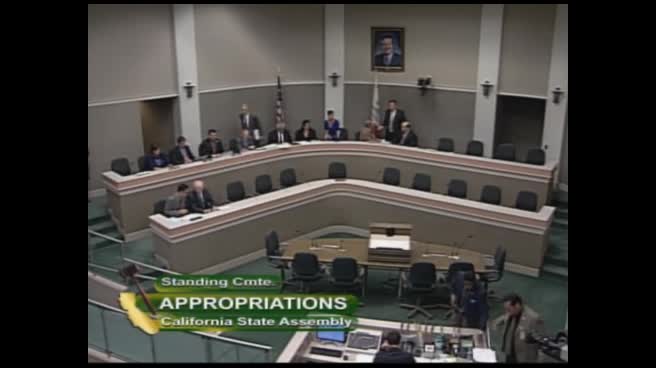 3MIN
Assembly Standing Committee on Appropriations
 1MIN
Senate Floor
 1MIN
Assembly Floor
 27SEC
Assembly Floor
 17MIN
Assembly Standing Committee on Governmental Organization
 1MIN
Senate Floor
 5MIN
Senate Standing Committee on Governmental Organization
Bill Author