SB 481: Local government: auditors: independence.
- Session Year: 2015-2016
- House: Senate
- Latest Version Date: 2015-08-24
Existing law requires, with certain exceptions, that all city, county, city and county, and district employees who conduct audits or that conduct audit activities of those respective agencies, conduct their work under the general and specified standards prescribed by the Institute of Internal Auditors or the Government Auditing Standards issued by the Comptroller General of the United States, as appropriate. Those standards generally provide, among other things, that auditors should be independent of the activities they audit. Existing law makes every willful omission to perform any duty enjoined by law upon any public officer, or person holding any public trust or employment, where no special provision is made for the punishment of that delinquency, a crime.
This bill would prohibit the general counsel of the city, county, city and county, or district, or the employees of the general counsel from having direct oversight over the city, county, city and county, and district employees that conduct audits or that conduct audit activities of those respective agencies.
By expanding the definition of an existing crime, this bill would impose a state-mandated local program.
The California Constitution requires the state to reimburse local agencies and school districts for certain costs mandated by the state. Statutory provisions establish procedures for making that reimbursement.
This bill would provide that no reimbursement is required by this act for a specified reason.
Existing law requires, with certain exceptions, that all city, county, city and county, and district employees who conduct audits or that conduct audit activities of those respective agencies, conduct their work under the general and specified standards prescribed by the Institute of Internal Auditors or the Government Auditing Standards issued by the Comptroller General of the United States, as appropriate. Those standards generally provide, among other things, that auditors should be independent of the activities they audit. Existing law makes every willful omission to perform any duty enjoined by law upon any public officer, or person holding any public trust or employment, where no special provision is made for the punishment of that delinquency, a crime.
This bill would prohibit the general counsel of the city, county, city and county, or district, or the employees of the general counsel from having direct oversight over the city, county, city and county, and district employees that conduct audits or that conduct audit activities of those respective agencies. This bill would also prohibit all city, county, city and county, and district employees that conduct audits or that conduct audit activities of those respective agencies from being required to report to the general counsel or any employees of the general counsel.
By expanding the definition of an existing crime, this bill would impose a state-mandated local program.
The California Constitution requires the state to reimburse local agencies and school districts for certain costs mandated by the state. Statutory provisions establish procedures for making that reimbursement.
This bill would provide that no reimbursement is required by this act for a specified reason.
Existing law requires, with certain exceptions, that all city, county, city and county, and district employees who conduct audits or that conduct audit activities of those respective agencies, conduct their work under the general and specified standards prescribed by the Institute of Internal Auditors or the Government Auditing Standards issued by the Comptroller General of the United States, as appropriate. Those standards generally provide, among other things, that auditors should be independent of the activities they audit. Existing law makes every willful omission to perform any duty enjoined by law upon any public officer, or person holding any public trust or employment, where no special provision is made for the punishment of that delinquency, a crime.
This bill would prohibit the general counsel of the city, county, city and county, or district, or the employees of the general counsel from having direct oversight over the city, county, city and county, and district employees that conduct audits or that conduct audit activities of those respective agencies. This bill would also prohibit all city, county, city and county, and district employees that conduct audits or that conduct audit activities of those respective agencies from being required to report to the general counsel or any employees of the general counsel.
This bill would require that all city, county, city and county, and district employees that conduct audits or that conduct audit activities of those respective agencies be considered to conduct their work under conditions that ensure independence, if the head of the auditing unit, branch, or group for which the employee works meets specified criteria.
By expanding the definition of an existing crime, this bill would impose a state-mandated local program.
The California Constitution requires the state to reimburse local agencies and school districts for certain costs mandated by the state. Statutory provisions establish procedures for making that reimbursement.
This bill would provide that no reimbursement is required by this act for a specified reason.
Existing law requires, with certain exceptions, that all city, county, city and county, and district employees who conduct audits or that conduct audit activities of those respective agencies, conduct their work under the general and specified standards prescribed by the Institute of Internal Auditors or the Government Auditing Standards issued by the Comptroller General of the United States, as appropriate. A willful violation of these provisions is a crime. Those standards generally provide, among other things, that auditors should be independent of the activities they audit. Existing law makes every willful omission to perform any duty enjoined by law upon any public officer, or person holding any public trust or employment, where no special provision is made for the punishment of that delinquency, a crime.
This bill would recast these provisions to prohibit these internal audit employees from working under the direct oversight of the general counsel or employees of the agency that they audit. The bill would require these employees to conduct their work under conditions that ensure their independence, as prescribed, including, but not limited to, the requirement that the head of the auditing unit, branch, or group for which he or she works be answerable directly to the head, deputy head, or governing board of the governmental agency being audited, is given direct access to that person or persons, as applicable, and is required to report the audit results to head, deputy head, or governing board.
This bill would prohibit the general counsel of the city, county, city and county, or district, or the employees of the general counsel from having direct oversight over the city, county, city and county, and district employees that conduct audits or that conduct audit activities of those respective agencies. This bill would also prohibit all city, county, city and county, and district employees that conduct audits or that conduct audit activities of those respective agencies from being required to report to the general counsel or any employees of the general counsel.
This bill would require that all city, county, city and county, and district employees that conduct audits or that conduct audit activities of those respective agencies be considered to conduct their work under conditions that ensure independence, if the head of the auditing unit, branch, or group for which the employee works meets specified criteria.
By expanding the definition of an existing crime, this bill would impose a state-mandated local program.
The California Constitution requires the state to reimburse local agencies and school districts for certain costs mandated by the state. Statutory provisions establish procedures for making that reimbursement.
This bill would provide that no reimbursement is required by this act for a specified reason.
Existing law requires, with certain exceptions, that all city, county, city and county, and district employees who conduct audits or that conduct audit activities of those respective agencies, conduct their work under the general and specified standards prescribed by the Institute of Internal Auditors or the Government Auditing Standards issued by the Comptroller General of the United States, as appropriate. A willful violation of these provisions is a crime.
This bill would recast these provisions to prohibit these internal audit employees from working under the direct oversight of the general counsel or employees of the agency that they audit. The bill would require these employees to conduct their work under conditions that ensure their independence, as prescribed, including, but not limited to, the requirement that the head of the auditing unit, branch, or group for which he or she works be answerable directly to the head, deputy head, or governing board of the governmental agency being audited, is given direct access to that person or persons, as applicable, and is required to report the audit results to head, deputy head, or governing board.
By expanding the definition of an existing crime, this bill would impose a state-mandated local program.
The California Constitution requires the state to reimburse local agencies and school districts for certain costs mandated by the state. Statutory provisions establish procedures for making that reimbursement.
This bill would provide that no reimbursement is required by this act for a specified reason.
(a)All city, county, city and county, and district employees that conduct audits or that conduct audit activities of those respective agencies shall conduct their work under the general and specified standards prescribed by the Institute of Internal Auditors or the Government Auditing Standards issued by the Comptroller General of the United States, as appropriate. The standards generally provide as follows:
(1)That auditors should be independent of the activities they audit.
(2)That audits should be performed with proficiency and due professional care.
(3)That the scope of the audit should encompass the examination and evaluation of the adequacy and effectiveness of the organizations system of internal control and the quality of performance in carrying out assigned responsibilities.
(4)That audit work should include planning the audit, examining and evaluating information, communicating results, and following up.
(5)That the chief auditor should properly manage the auditing department.
(b)Nothing in this section is intended to limit the rights or obligations of auditors to conduct audits and audit activities in accordance with other laws and regulations that may apply to a particular entity, as appropriate.
(c)The general counsel of the city, county, city and county, or district, or the employees of the general counsel shall not have direct oversight over the city, county, city and county, or district employees that conduct audits or that conduct audit activities of the respective agency.
SEC. 2.No reimbursement is required by this act pursuant to Section 6 of Article XIIIB of the California Constitution because the only costs that may be incurred by a local agency or school district will be incurred because this act creates a new crime or infraction, eliminates a crime or infraction, or changes the penalty for a crime or infraction, within the meaning of Section 17556 of the Government Code, or changes the definition of a crime within the meaning of Section 6 of Article XIIIB of the California Constitution.
(a)All city, county, city and county, and district employees that conduct audits or that conduct audit activities of those respective agencies shall conduct their work under the general and specified standards prescribed by the Institute of Internal Auditors or the Government Auditing Standards issued by the Comptroller General of the United States, as appropriate. The standards generally provide as follows:
(1)That auditors should be independent of the activities they audit.
(2)That audits should be performed with proficiency and due professional care.
(3)That the scope of the audit should encompass the examination and evaluation of the adequacy and effectiveness of the organizations system of internal control and the quality of performance in carrying out assigned responsibilities.
(4)That audit work should include planning the audit, examining and evaluating information, communicating results, and following up.
(5)That the chief auditor should properly manage the auditing department.
(b)Nothing in this section is intended to limit the rights or obligations of auditors to conduct audits and audit activities in accordance with other laws and regulations that may apply to a particular entity, as appropriate.
(c)The general counsel of the city, county, city and county, or district, or the employees of the general counsel shall not have direct oversight over the city, county, city and county, or district employees that conduct audits or that conduct audit activities of the respective agency. All city, county, city and county, and district employees that conduct audits or that conduct audit activities of those respective agencies shall not be required to report to the general counsel or any employees of the general counsel.
SEC. 2.No reimbursement is required by this act pursuant to Section 6 of Article XIIIB of the California Constitution because the only costs that may be incurred by a local agency or school district will be incurred because this act creates a new crime or infraction, eliminates a crime or infraction, or changes the penalty for a crime or infraction, within the meaning of Section 17556 of the Government Code, or changes the definition of a crime within the meaning of Section 6 of Article XIIIB of the California Constitution.
(a)All city, county, city and county, and district employees that conduct audits or that conduct audit activities of those respective agencies shall conduct their work under the general and specified standards prescribed by the Institute of Internal Auditors or the Government Auditing Standards issued by the Comptroller General of the United States, as appropriate. The standards generally provide as follows:
(1)That auditors should be independent of the activities they audit.
(2)That audits should be performed with proficiency and due professional care.
(3)That the scope of the audit should encompass the examination and evaluation of the adequacy and effectiveness of the organizations system of internal control and the quality of performance in carrying out assigned responsibilities.
(4)That audit work should include planning the audit, examining and evaluating information, communicating results, and following up.
(5)That the chief auditor should properly manage the auditing department.
(b)Nothing in this section is intended to limit the rights or obligations of auditors to conduct audits and audit activities in accordance with other laws and regulations that may apply to a particular entity, as appropriate.
(c)The general counsel of the city, county, city and county, or district, or the employees of the general counsel shall not have direct oversight over the city, county, city and county, or district employees that conduct audits or that conduct audit activities of the respective agency. All city, county, city and county, and district employees that conduct audits or that conduct audit activities of those respective agencies shall not be required to report to the general counsel or any employees of the general counsel.
(d)All city, county, city and county, and district employees that conduct audits or that conduct audit activities of those respective agencies shall be considered to conduct their work under conditions that ensure independence if the head of the auditing unit, branch, or group for which the employee works meets all of the following criteria:
(1)He or she is answerable directly to the head, deputy head, or governing board of the governmental agency being audited, and is given direct access to that person or persons, as applicable.
(2)He or she is required to report the audit results to the head or deputy head of the agency being audited, or to the governing board of that agency.
(3)He or she is organizationally placed outside of the staff or line-management function of the unit or function being audited.
(4)He or she is, as much as practicable, administratively situated in a manner that provides insulation from political or other pressures that could affect his or her ability to conduct audits and report findings, opinions, and conclusions objectively without fear of political or other reprisal.
SEC. 2.No reimbursement is required by this act pursuant to Section 6 of Article XIIIB of the California Constitution because the only costs that may be incurred by a local agency or school district will be incurred because this act creates a new crime or infraction, eliminates a crime or infraction, or changes the penalty for a crime or infraction, within the meaning of Section 17556 of the Government Code, or changes the definition of a crime within the meaning of Section 6 of Article XIIIB of the California Constitution.
(a)A city, county, city and county, and district employee who conducts audits or who conducts audit activities of those respective agencies shall conduct his or her work under conditions that ensure independence. The employee shall not work under the direct oversight of the general counsel or employees of the audited agency.
(b)A city, county, city and county, and district employee who conducts internal audit under the direction of the audited agencys management shall be considered independent for the purposes of subdivision (a) if all of the following conditions are met:
(1)The head of the auditing unit, branch, or group for which the internal auditor described in subdivision (a) works, meets all of the following criteria:
(A)He or she is answerable directly to the head, deputy head, or governing board of the governmental agency being audited, and is given direct access to that person or persons, as applicable.
(B)He or she is required to report the audit results to the head or deputy head of the agency being audited, or to the governing board of that agency.
(C)He or she is organizationally placed outside of the staff or line-management function of the unit or function being audited.
(D)He or she is, as much as practicable, administratively situated in a manner that provides insulation from political or other pressures that could affect his or her ability to conduct audits and report findings, opinions, and conclusions objectively without fear of political or other reprisal.
(2)The internal auditor conducts his or her work under the general and specified standards prescribed by the Institute of Internal Auditors or the Government Auditing Standards issued by the Comptroller General of the United States, as appropriate. The standards generally provide as follows:
(A)That auditors should be independent of the activities they audit.
(B)That audits should be performed with proficiency and due professional care.
(C)That the scope of the audit should encompass the examination and evaluation of the adequacy and effectiveness of the organizations system of internal control and the quality of performance in carrying out assigned responsibilities.
(D)That audit work should include planning the audit, examining and evaluating information, communicating results, and following up.
(E)That the chief auditor should properly manage the auditing department.
(c)Nothing in this section is intended to limit the rights or obligations of auditors to conduct audits and audit activities in accordance with other laws and regulations that may apply to a particular entity, as appropriate.
SECTION 1.Section 1236 of the Government Code is amended to read:1236.(a)All city, county, city and county, and district employees that conduct audits or that conduct audit activities of those respective agencies shall conduct their work under the general and specified standards prescribed by the Institute of Internal Auditors or the Government Auditing Standards issued by the Comptroller General of the United States, as appropriate. The standards generally provide as follows:
(1)That auditors should be independent of the activities they audit.
(2)That audits should be performed with proficiency and due professional care.
(3)That the scope of the audit should encompass the examination and evaluation of the adequacy and effectiveness of the organizations system of internal control and the quality of performance in carrying out assigned responsibilities.
(4)That audit work should include planning the audit, examining and evaluating information, communicating results, and following up.
(5)That the chief auditor should properly manage the auditing department.
(b)Nothing in this section is intended to limit the rights or obligations of auditors to conduct audits and audit activities in accordance with other laws and regulations that may apply to a particular entity, as appropriate.
(c)The general counsel of the city, county, city and county, or district, or the employees of the general counsel shall not have direct oversight over the city, county, city and county, or district employees that conduct audits or that conduct audit activities of the respective agency. All city, county, city and county, and district employees that conduct audits or that conduct audit activities of those respective agencies shall not be required to report to the general counsel or any employees of the general counsel.
(d)All city, county, city and county, and district employees that conduct audits or that conduct audit activities of those respective agencies shall be considered to conduct their work under conditions that ensure independence if the head of the auditing unit, branch, or group for which the employee works meets all of the following criteria:
(1)He or she is answerable directly to the head, deputy head, or governing board of the governmental agency being audited, and is given direct access to that person or persons, as applicable.
(2)He or she is required to report the audit results to the head or deputy head of the agency being audited, or to the governing board of that agency.
(3)He or she is organizationally placed outside of the staff or line-management function of the unit or function being audited.
(4)He or she is, as much as practicable, administratively situated in a manner that provides insulation from political or other pressures that could affect his or her ability to conduct audits and report findings, opinions, and conclusions objectively without fear of political or other reprisal.
SEC. 2.No reimbursement is required by this act pursuant to Section 6 of Article XIIIB of the California Constitution because the only costs that may be incurred by a local agency or school district will be incurred because this act creates a new crime or infraction, eliminates a crime or infraction, or changes the penalty for a crime or infraction, within the meaning of Section 17556 of the Government Code, or changes the definition of a crime within the meaning of Section 6 of Article XIIIB of the California Constitution.
(a)All A city, county, city and county, and district employees that conduct employee who conducts audits or that conduct who conducts audit activities of those respective agencies shall conduct their his or her work under the conditions that ensure independence. The employee shall not work under the direct oversight of the general counsel or employees of the audited agency.
(b)A city, county, city and county, and district employee who conducts internal audit under the direction of the audited agencys management shall be considered independent for the purposes of subdivision (a) if all of the following conditions are met:
(1)The head of the auditing unit, branch, or group for which the internal auditor described in subdivision (a) works, meets all of the following criteria:
(A)He or she is answerable directly to the head, deputy head, or governing board of the governmental agency being audited, and is given direct access to that person or persons, as applicable.
(B)He or she is required to report the audit results to the head or deputy head of the agency being audited, or to the governing board of that agency.
(C)He or she is organizationally placed outside of the staff or line-management function of the unit or function being audited.
(D)He or she is, as much as practicable, administratively situated in a manner that provides insulation from political or other pressures that could affect his or her ability to conduct audits and report findings, opinions, and conclusions objectively without fear of political or other reprisal.
(2)The internal auditor conducts his or her work under the general and specified standards prescribed by the Institute of Internal Auditors or the Government Auditing Standards issued by the Comptroller General of the United States, as appropriate. The standards generally provide as follows:
(1)
(A)That auditors should be independent of the activities they audit.
(2)
(B)That audits should be performed with proficiency and due professional care.
(3)
(C)That the scope of the audit should encompass the examination and evaluation of the adequacy and effectiveness of the organizations system of internal control and the quality of performance in carrying out assigned responsibilities.
(4)
(D)That audit work should include planning the audit, examining and evaluating information, communicating results, and following up.
(5)
(E)That the chief auditor should properly manage the auditing department.
(b)
(c)Nothing in this section is intended to limit the rights or obligations of auditors to conduct audits and audit activities in accordance with other laws and regulations that may apply to a particular entity, as appropriate.
SEC. 2.No reimbursement is required by this act pursuant to Section 6 of Article XIIIB of the California Constitution because the only costs that may be incurred by a local agency or school district will be incurred because this act creates a new crime or infraction, eliminates a crime or infraction, or changes the penalty for a crime or infraction, within the meaning of Section 17556 of the Government Code, or changes the definition of a crime within the meaning of Section 6 of Article XIIIB of the California Constitution.
|
Date
|
Status
|
|---|---|
| Apr 19, 2016 | Consideration of Governors veto expired pursuant to Joint Rule 58.5. |
| Apr 18, 2016 | Last day to consider Governor’s veto pursuant to Joint Rule 58.5. |
| Apr 18, 2016 | Last day to consider Governors veto pursuant to Joint Rule 58.5. |
| Sep 4, 2015 | In Senate. Consideration of Governor's veto pending. |
| Sep 4, 2015 | Vetoed by the Governor. |
| Aug 26, 2015 | Enrolled and presented to the Governor at 4:30 p.m. |
| Aug 20, 2015 | Assembly amendments concurred in. (Ayes 38. Noes 0. Page 2105.) Ordered to engrossing and enrolling. |
| Aug 20, 2015 | Assembly amendments concurred in. (Ayes 38. Noes 0.) Ordered to engrossing and enrolling. |
| Jul 16, 2015 | In Senate. Concurrence in Assembly amendments pending. |
| Jul 16, 2015 | Read third time. Passed. (Ayes 75. Noes 0. Page 2428.) Ordered to the Senate. |
| Jul 16, 2015 | Read third time. Passed. Ordered to the Senate. |
| Jul 9, 2015 | Read second time. Ordered to third reading. |
| Jul 8, 2015 | From committee: Do pass. (Ayes 14. Noes 0.) (July 8). |
| Jun 18, 2015 | Read second time and amended. Re-referred to Com. on APPR. |
| Jun 17, 2015 | From committee: Do pass as amended and re-refer to Com. on APPR. (Ayes 9. Noes 0.) (June 17). |
| May 14, 2015 | Referred to Com. on L. GOV. |
| Apr 30, 2015 | In Assembly. Read first time. Held at Desk. |
| Apr 30, 2015 | Read third time. Passed. (Ayes 29. Noes 0. Page 840.) Ordered to the Assembly. |
| Apr 30, 2015 | Read third time. Passed. (Ayes 29. Noes 0.) Ordered to the Assembly. |
| Apr 28, 2015 | Read second time. Ordered to third reading. |
| Apr 27, 2015 | From committee: Be ordered to second reading pursuant to Senate Rule 28.8. |
| Apr 17, 2015 | Set for hearing April 27. |
| Apr 15, 2015 | From committee: Do pass and re-refer to Com. on APPR. (Ayes 5. Noes 0. Page 618.) (April 15). Re-referred to Com. on APPR. |
| Apr 8, 2015 | From committee with author's amendments. Read second time and amended. Re-referred to Com. on GOV. & F. |
| Apr 6, 2015 | From committee with author's amendments. Read second time and amended. Re-referred to Com. on GOV. & F. |
| Mar 27, 2015 | Set for hearing April 15. |
| Mar 12, 2015 | Referred to Com. on GOV. & F. |
| Feb 27, 2015 | From printer. May be acted upon on or after March 29. |
| Feb 26, 2015 | Introduced. Read first time. To Com. on RLS. for assignment. To print. |
|
Date
|
Description
|
Location
|
Votes
|
|
|---|---|---|---|---|
| Aug 20, 2015 | Unfinished Business SB481 Hueso Concurrence | Senate Floor |
Passed |
|
| Jul 16, 2015 | SB 481 Hueso Senate Third Reading By WEBER | Assembly Floor |
Passed |
|
| Jul 8, 2015 | Do pass. | Assembly Standing Committee on Appropriations |
Passed |
|
| Jun 17, 2015 | Do pass as amended and be re-referred to the Committee on [Appropriations] | Assembly Standing Committee on Local Government |
Passed |
|
| Apr 30, 2015 | Senate 3rd Reading SB481 Hueso | Senate Floor |
Passed |
|
| Apr 15, 2015 | Do pass, but first be re-referred to the Committee on [Appropriations] | Senate Standing Committee on Governance and Finance |
Passed |
This list shows positions taken on this bill by organizations on the date displayed, which is linked to the original source.
Positions by individuals are not included.
SB 481
Page 4
|
Office of Senate Floor Analyses (916) 651-1520 Fax: (916) 327-4478 |
SB 481 |
VETO
Bill No: SB 481
Amended: 6/18/15
SENATE GOVERNANCE & FIN. COMMITTEE: 5-0, 4/15/15
AYES: Hertzberg, Beall, Hernandez, Lara, Pavley
NO VOTE RECORDED: Nguyen, Bates
SENATE APPROPRIATIONS COMMITTEE: Senate Rule 28.8
SENATE FLOOR: 29-0, 4/30/15
AYES: Allen, Anderson, Beall, Block, Cannella, De León, Fuller, Galgiani, Hall, Hancock, Hertzberg, Hill, Hueso, Huff, Jackson, Lara, Leno, Leyva, Liu, McGuire, Mendoza, Mitchell, Monning, Nielsen, Pan, Pavley, Roth, Wieckowski, Wolk
NO VOTE RECORDED: Bates, Berryhill, Gaines, Hernandez, Moorlach, Morrell, Nguyen, Runner, Stone, Vidak
SENATE FLOOR: 38-0, 8/20/15
AYES: Allen, Anderson, Bates, Beall, Berryhill, Block, Cannella, De León, Fuller, Gaines, Galgiani, Glazer, Hancock, Hernandez, Hertzberg, Hill, Hueso, Huff, Jackson, Lara, Leno, Leyva, Liu, McGuire, Mendoza, Mitchell, Monning, Moorlach, Morrell, Nielsen, Pan, Pavley, Roth, Runner, Stone, Vidak, Wieckowski, Wolk
NO VOTE RECORDED: Hall, Nguyen
ASSEMBLY FLOOR: 75-0, 7/16/15 - See last page for vote
SUBJECT: Local government: auditors: independence
DIGEST: This bill prohibits local agency employees who work on internal audits from being directly overseen by a local agency’s general counsel.
Existing law:
Requires local government employees who conduct audits or audit activities of their respective local government must conduct their work under the general and specified standards prescribed by the Institute of Internal Auditors or the Government Auditing Standards issued by the Comptroller General of the United States.
Enumerates the following general standards for local governments’ internal audits and audit activities:
Auditors should be independent of the activities they audit.
Audits should be performed with proficiency and due professional care.
The scope of the audit should encompass the examination and evaluation of the adequacy and effectiveness of the organization’s system of internal control and the quality of performance in carrying out assigned responsibilities.
Audit work should include planning the audit, examining and evaluating information, communicating results, and following up.
The chief auditor should properly manage the auditing department.
Declares that these internal audit standards do not limit the rights or obligations of auditors to conduct audits and audit activities in accordance with other laws and regulations that may apply to a particular entity.
Requires public records to be open to inspection during office hours and gives every person a right to inspect public records, with specific exceptions.
Creates an exception for records that are subject to the “attorney client privilege,” which allows communications between a public agency and its lawyers to be kept confidential.
This bill prohibits the general counsel of a city, county, city and county, or district, or the general counsels’ employees, from having direct oversight over city, county, city and county, or district employees who conduct audits or audits activities of the respective agency.
Background
Audits provide essential accountability and transparency over government programs. Given their importance, the public’s ability to access these reports is paramount. Employees who perform audits must choose from two sets of professional auditing standards. One standard, known as the yellow book, is published by the US Government Accountability Office. The other standard, known as the red book, is published by the Institute of Internal Auditors. Statute authorizes internal auditors to follow either standard. However, both standards fail to preserve complete transparency of internal audit reports. Some local governments are conducting internal audits under the direction of a General Counsel. By doing so, those reports are being classified as attorney-client privileged communications, which limits public disclosure of the audit reports. Neither the red book nor the yellow book prohibits this practice. This bill augments the auditing standards that apply to local governments’ internal audits to prevent local officials from using the attorney-client privilege to conceal audit information from members of the public.
FISCAL EFFECT: Appropriation: No Fiscal Com.: Yes Local: Yes
City of Berkeley City Auditor Ann-Marie Hogan
City of Calexico
City of El Centro City Manager Ruben A. Duran
City of San Diego City Auditor Eduardo Luna
El Centro Chamber of Commerce and Visitors Bureau
Imperial County Board of Supervisors
OPPOSITION: (Verified 7/21/15)
None received
GOVERNOR'S VETO MESSAGE:
I am returning Senate Bill 481 without my signature.
This bill prohibits the general counsel of a city, county, or district from having direct oversight of internal audit staff.
I commend the author's objective to secure the public's access to local agency audits.
However, there may be legitimate reasons for local agencies to have their general counsels oversee certain audits and I believe it is most appropriate to allow local governments to determine the level of oversight that best meets their unique civic needs.
ASSEMBLY FLOOR: 75-0, 7/16/15
AYES: Achadjian, Alejo, Baker, Bigelow, Bloom, Bonilla, Bonta, Brough, Brown, Burke, Calderon, Campos, Chang, Chau, Chávez, Chiu, Chu, Cooley, Cooper, Dababneh, Dahle, Daly, Dodd, Eggman, Frazier, Beth Gaines, Gallagher, Cristina Garcia, Eduardo Garcia, Gatto, Gipson, Gomez, Gonzalez, Gray, Grove, Hadley, Harper, Roger Hernández, Holden, Irwin, Jones, Jones-Sawyer, Kim, Lackey, Levine, Linder, Lopez, Low, Maienschein, Mathis, Mayes, McCarty, Medina, Melendez, Mullin, Nazarian, O'Donnell, Olsen, Perea, Quirk, Ridley-Thomas, Rodriguez, Salas, Santiago, Steinorth, Mark Stone, Thurmond, Ting, Wagner, Waldron, Weber, Wilk, Williams, Wood, Atkins
NO VOTE RECORDED: Travis Allen, Gordon, Obernolte, Patterson, Rendon
Prepared by: Brian Weinberger / GOV. & F. / (916) 651-4119
11/4/15 14:10:05
**** END ****
SB 481
Page 4
|
Office of Senate Floor Analyses (916) 651-1520 Fax: (916) 327-4478 |
UNFINISHED BUSINESS
Bill No: SB 481
Amended: 6/18/15
SENATE GOVERNANCE & FIN. COMMITTEE: 5-0, 4/15/15
AYES: Hertzberg, Beall, Hernandez, Lara, Pavley
NO VOTE RECORDED: Nguyen, Bates
SENATE APPROPRIATIONS COMMITTEE: Senate Rule 28.8
SENATE FLOOR: 29-0, 4/30/15
AYES: Allen, Anderson, Beall, Block, Cannella, De León, Fuller, Galgiani, Hall, Hancock, Hertzberg, Hill, Hueso, Huff, Jackson, Lara, Leno, Leyva, Liu, McGuire, Mendoza, Mitchell, Monning, Nielsen, Pan, Pavley, Roth, Wieckowski, Wolk
NO VOTE RECORDED: Bates, Berryhill, Gaines, Hernandez, Moorlach, Morrell, Nguyen, Runner, Stone, Vidak
ASSEMBLY FLOOR: 75-0, 7/16/15 - See last page for vote
SUBJECT: Local government: auditors: independence
DIGEST: This bill prohibits local agency employees who work on internal audits from being directly overseen by a local agency’s general counsel.
Assembly Amendments delete language prohibiting local agency employees who work on audits from being required to report to a general counsel or employees of the general counsel.
Existing law:
Requires local government employees who conduct audits or audit activities of their respective local government must conduct their work under the general and specified standards prescribed by the Institute of Internal Auditors or the Government Auditing Standards issued by the Comptroller General of the United States.
Enumerates the following general standards for local governments’ internal audits and audit activities:
Auditors should be independent of the activities they audit.
Audits should be performed with proficiency and due professional care.
The scope of the audit should encompass the examination and evaluation of the adequacy and effectiveness of the organization’s system of internal control and the quality of performance in carrying out assigned responsibilities.
Audit work should include planning the audit, examining and evaluating information, communicating results, and following up.
The chief auditor should properly manage the auditing department.
Declares that these internal audit standards do not limit the rights or obligations of auditors to conduct audits and audit activities in accordance with other laws and regulations that may apply to a particular entity.
Requires public records to be open to inspection during office hours and gives every person a right to inspect public records, with specific exceptions.
Creates an exception for records that are subject to the “attorney client privilege,” which allows communications between a public agency and its lawyers to be kept confidential.
This bill prohibits the general counsel of a city, county, city and county, or district, or the general counsels’ employees, from having direct oversight over city, county, city and county, or district employees who conduct audits or audits activities of the respective agency.
Background
Audits provide essential accountability and transparency over government programs. Given their importance, the public’s ability to access these reports is paramount. Employees who perform audits must choose from two sets of professional auditing standards. One standard, known as the yellow book, is published by the US Government Accountability Office. The other standard, known as the red book, is published by the Institute of Internal Auditors. Statute authorizes internal auditors to follow either standard. However, both standards fail to preserve complete transparency of internal audit reports. Some local governments are conducting internal audits under the direction of a General Counsel. By doing so, those reports are being classified as attorney-client privileged communications, which limits public disclosure of the audit reports. Neither the red book nor the yellow book prohibits this practice. This bill augments the auditing standards that apply to local governments’ internal audits to prevent local officials from using the attorney-client privilege to conceal audit information from members of the public.
FISCAL EFFECT: Appropriation: No Fiscal Com.: Yes Local: Yes
City of Berkeley City Auditor Ann-Marie Hogan
City of Calexico
City of El Centro City Manager Ruben A. Duran
City of San Diego City Auditor Eduardo Luna
El Centro Chamber of Commerce and Visitors Bureau
Imperial County Board of Supervisors
OPPOSITION: (Verified 7/21/15)
None received
ASSEMBLY FLOOR: 75-0, 7/16/15
AYES: Achadjian, Alejo, Baker, Bigelow, Bloom, Bonilla, Bonta, Brough, Brown, Burke, Calderon, Campos, Chang, Chau, Chávez, Chiu, Chu, Cooley, Cooper, Dababneh, Dahle, Daly, Dodd, Eggman, Frazier, Beth Gaines, Gallagher, Cristina Garcia, Eduardo Garcia, Gatto, Gipson, Gomez, Gonzalez, Gray, Grove, Hadley, Harper, Roger Hernández, Holden, Irwin, Jones, Jones-Sawyer, Kim, Lackey, Levine, Linder, Lopez, Low, Maienschein, Mathis, Mayes, McCarty, Medina, Melendez, Mullin, Nazarian, O'Donnell, Olsen, Perea, Quirk, Ridley-Thomas, Rodriguez, Salas, Santiago, Steinorth, Mark Stone, Thurmond, Ting, Wagner, Waldron, Weber, Wilk, Williams, Wood, Atkins
NO VOTE RECORDED: Travis Allen, Gordon, Obernolte, Patterson, Rendon
Prepared by: Brian Weinberger / GOV. & F. / (916) 651-4119
8/13/15 13:24:42
**** END ****
SB 481
Page 3
SENATE THIRD READING
SB 481
(Hueso)
As Amended June 18, 2015
Majority vote
SENATE VOTE: 29-0
Committee |
Votes |
Ayes |
Noes |
Local Government |
9-0 |
Maienschein, Gonzalez, Alejo, Chiu, Cooley, Gordon, Holden, Linder, Waldron |
|
Appropriations |
14-0 |
Gomez, Bigelow, Bloom, Bonta, Calderon, Chang, Eggman, Gallagher, Eduardo Garcia, Jones, Quirk, Rendon, Weber, Wood |
|
SUMMARY: Prohibits the general counsel of a local government from having direct oversight over that local government's auditors. Specifically, this bill:
Prohibits the general counsel of a city, county, city and county, or district, or the employees of the general counsel from having direct oversight over the city, county, city and county, or district employees that conduct audits or that conduct audit activities of the respective agency.
Provides that no reimbursement is required by this act, pursuant to California Constitution Article XIII B, Section 6, because the only costs that may be incurred by a local agency or school district will be incurred because this act creates a new crime or infraction, eliminates a crime or infraction, or changes the penalty for a crime or infraction, within the meaning of Government Code Section 17556, or changes the definition of a crime within the meaning of California Constitution Article XIII B, Section 6.
FISCAL EFFECT: According to the Assembly Appropriations Committee, negligible state costs.
COMMENTS:
Bill Summary. This bill prohibits the general counsel of a city, county, or district, or his or her employees, from having direct oversight over those agencies' employees who conduct audits. This bill is sponsored by San Diego City Auditor Eduardo Luna.
Author's Statement. According to the author, "SB 481 seeks to ensure transparency of government audit reports and the independence of internal auditors... This bill is a response to an existing practice that limits public access to audit reports. Some organizations require their internal auditors (to) be supervised by their general counsel. This structure, which requires an auditor to regularly report to the general counsel, weakens the independence and transparency of an auditor’s work. Such a structure makes it easier for organizations to render a report inaccessible to the public. They can do this by claiming that a particular audit report is a privileged communication between an attorney and client. Once something is deemed a client-privileged communication, the public no longer has access to it.
"Audits provide essential accountability and transparency over government programs and it is important that the public has access to them. This bill would address this issue by prohibiting a general counsel from having direct supervision over an auditor and ensure the public’s access to these audit reports."
Background. Existing law requires city, county and district auditors to conduct their work under standards prescribed by the Institute of Internal Auditors or the Government Auditing Standards issued by the Comptroller General of the United States.
The Institute of Internal Auditors (IIA) is an international professional association that publishes Standards for the Professional Practice of Internal Auditing, also known as the Red Book, for use in all types of organizations where internal auditors are found. The Red Book includes statements of basic requirements for the professional practice of internal auditing and for evaluating the effectiveness of its performance. The requirements are internationally applicable at organizational and individual levels.
The United States Government Accountability Office (GAO) is an independent, nonpartisan agency that works for Congress and investigates how the federal government spends taxpayer dollars. The head of the GAO is the Comptroller General of the United States. The GAO publishes Generally Accepted Government Auditing Standards, also known as the Yellow Book, which provide a framework for conducting high quality audits with competence, integrity, objectivity, and independence. The Yellow Book is for use by auditors of government entities, entities that receive government awards, and other audit organizations performing Yellow Book audits.
According to the 2011 revision of the Yellow Book, "Government auditing is essential in providing accountability to legislators, oversight bodies, those charged with governance, and the public. Audits provide an independent, objective, nonpartisan assessment of the stewardship, performance, or cost of government policies, programs, or operations, depending upon the type and scope of the audit."
The Yellow Book explains that a government audit organization can be structurally located within or outside the audited entity. "Audit organizations that are external to the audited entity and report to third parties are considered to be external audit organizations. Audit organizations that are accountable to senior management and those charged with governance of the audited entity, and do not generally issue their reports to third parties external to the audited entity, are considered internal audit organizations."
However, "Some government audit organizations represent a unique hybrid of external auditing and internal auditing in their oversight role for the entities they audit. These audit organizations have external reporting requirements consistent with the reporting requirements for external auditors while at the same time being part of their respective agencies. These audit organizations often have a dual reporting responsibility to their legislative body as well as to the agency head and management."
Neither the Red Book nor the Yellow Book prohibits audits from being reported to a general counsel.
California Public Records Act. The California Public Records Act (CPRA) requires public records to be open to inspection during office hours and gives every person a right to inspect public records, with specific exceptions. One exception to the CPRA’s disclosure requirements applies to records that are subject to the "attorney client privilege," which allows communications between a public agency and its lawyers to be kept confidential. Generally, the final reports of local agencies’ internal audits are public records that are open to inspection, pursuant to the CPRA.
Policy Considerations. The Legislature may wish to consider the following:
Prevalence. The author and sponsor have provided two examples of local agencies where the auditor reports directly to the agency's general counsel. The Legislature may wish to ask the author or sponsor to provide examples showing that these reporting relationships have resulted in curtailed independence for those auditors or where this reporting relationship led to the denial of a CPRA request based on attorney-client privilege. The Legislature may wish to consider whether, absent a prevalent statewide problem, this bill is necessary.
Attorney-Client Privilege. The Senate Governance and Finance Committee, in its analysis of this bill, noted the following: "…by prohibiting any local government internal audit activities from being conducted under the auspices of a general counsel, SB 481 may prevent local governments from performing internal audits that may justifiably be privileged communications. For example, should a local agency be prevented from having its general counsel’s office conduct an internal audit of personnel policies and practices to determine whether they expose the agency to potential legal liabilities? The Committee may wish to consider amending SB 481 to specify definitions or criteria that distinguish between legitimate and illegitimate applications of the attorney-client privilege to internal audits."
Arguments in Support. City of San Diego City Auditor Eduardo Luna, sponsor of this measure, writes, "Audits provide essential accountability and transparency over government programs. Given its importance, the public’s ability to access these reports are paramount. However, certain practices limit the public’s access to these audit reports. One such practice is the transmittal of internal audit reports to the organization’s General Counsel. When reports are issued to the General Counsel, those reports are then classified as attorney-client privileged communications, thereby limiting public disclosure. SB 481 is a good government bill and will ensure the public has access to the audit reports by prohibiting employees who perform audits from reporting organizationally to the General Counsel."
Arguments in Opposition. None on file.
Analysis Prepared by: Angela Mapp / L. GOV. / (916) 319-3958 FN: 0001164
Date of Hearing: July 8, 2015
ASSEMBLY COMMITTEE ON APPROPRIATIONS
Jimmy Gomez, Chair
SB 481
(Hueso) – As Amended June 18, 2015
Policy Committee: |
Local Government |
Vote: |
9 - 0 |
|
|
|
|
|
|
|
|
Urgency: No State Mandated Local Program: Yes Reimbursable: No
SUMMARY:
This bill prohibits local agency employees who work on internal audits from being directly overseen by a local agency’s general counsel.
FISCAL EFFECT:
Negligible state costs.
COMMENTS:
Purpose. According to the author, "Audits provide essential accountability and transparency over government programs and it is important that the public has access to them. Some organizations require their internal auditors (to) be supervised by their general counsel. This structure weakens the independence and transparency of an auditor’s work by making it easier for organizations to claim that a particular audit report is a privileged communication between an attorney and client, meaning the public no longer has access to it. This bill would address this issue by prohibiting a general counsel from having direct supervision over an auditor, thereby ensuring greater public access to these audit reports."
Background. Existing law requires local employees who perform audits or audit activities to operate under one of two sets of professional auditing standards. One standard, known as the yellow book, is published by the US Government Accountability Office. The other standard, known as the red book, is published by the Institute of Internal Auditors. While both standards indicate that auditors should be independent of the activities they audit, neither standard prohibits audits from being reported to a general counsel.
The California Public Records Act (CPRA) requires public records to be open to inspection during office hours and gives every person a right to inspect public records, with specific exceptions. One exception applies to records that are subject to the "attorney client privilege," which allows communications between a public agency and its lawyers to be kept confidential. Generally, the final reports of local agencies' internal audits are public records that are open to inspection pursuant to the CPRA.
Previous Legislation. SB 1452 (Speier), Chapter 452, Statutes of 2006, enacted a number of provisions to update auditing standards for local and state auditors, and to ensure the independence of internal auditors for state agencies specifically.
Analysis Prepared by: Jennifer Swenson / APPR. / (916) 319-2081
SB 481
Page 6
Date of Hearing: June 17, 2015
ASSEMBLY COMMITTEE ON LOCAL GOVERNMENT
Brian Maienschein, Chair
SB 481
(Hueso) – As Amended April 8, 2015
SENATE VOTE: 29-0
SUBJECT: Local government: auditors: independence.
SUMMARY: Prohibits the general counsel of a local government from having direct oversight over that local government's auditors. Specifically, this bill:
Prohibits the general counsel of a city, county, city and county, or district, or the employees of the general counsel from having direct oversight over the city, county, city and county, or district employees that conduct audits or that conduct audit activities of the respective agency.
Provides that all city, county, city and county, and district employees that conduct audits or that conduct audit activities of those respective agencies shall not be required to report to the general counsel or any employees of the general counsel.
Provides that no reimbursement is required by this act, pursuant to Section 6 of Article XIII B of the California Constitution, because the only costs that may be incurred by a local agency or school district will be incurred because this act creates a new crime or infraction, eliminates a crime or infraction, or changes the penalty for a crime or infraction, within the meaning of Section 17556 of the Government Code, or changes the definition of a crime within the meaning of Section 6 of Article XIII B of the California Constitution.
EXISTING LAW:
Requires all city, county, city and county, and district employees that conduct audits or that conduct audit activities of those respective agencies to conduct their work under the general and specified standards prescribed by the Institute of Internal Auditors or the Government Auditing Standards issued by the Comptroller General of the United States, as appropriate.
Enumerates the following general standards for local governments’ internal audits and audit activities:
That auditors should be independent of the activities they audit;
That audits should be performed with proficiency and due professional care;
That the scope of the audit should encompass the examination and evaluation of the adequacy and effectiveness of the organization’s system of internal control and the quality of performance in carrying out assigned responsibilities;
That audit work should include planning the audit, examining and evaluating information, communicating results, and following up; and,
That the chief auditor should properly manage the auditing department.
Provides that nothing in the above provisions is intended to limit the rights or obligations
of auditors to conduct audits and audit activities in accordance with other laws and regulations that may apply to a particular entity, as appropriate.Requires, pursuant to the California Public Records Act (CPRA), public records to be open to inspection and gives every person a right to inspect public records, with specific exceptions.
Creates an exception for records that are subject to the “attorney client privilege,” which allows communications between a public agency and its lawyers to be kept confidential.
Establishes requirements for internal auditor operations for state agencies in order to achieve independence and objectivity, as follows:
For any state agency that does not report to a governing body, the internal auditor operations shall meet all of the following requirements:
The chief internal auditor shall be accountable to the head or deputy head of the state agency;
The chief internal auditor shall report audit findings and recommendations made under his or her jurisdiction to the head or deputy head of the state agency and to the general counsel to the state agency, if applicable; and,
The operations shall be organizationally outside the staff or line management function of the unit under audit.
For any state agency that is overseen by a governing body, the internal audit operations shall meet all of the following requirements:
The chief internal auditor shall be accountable to the audit committee of the governing body;
The chief internal auditor shall report audit findings and recommendations made under his or her jurisdiction to the audit committee and the general counsel to the governing body; and,
The operations shall be organizationally outside the staff or line management function of the unit under audit.
FISCAL EFFECT: According to the Senate Appropriations Committee, pursuant to Senate Rule 28.8, negligible state costs.
COMMENTS:
Bill Summary. This bill prohibits the general counsel of a city, county, or district, or his or her employees, from having direct oversight over those agencies' employees who conduct audits. The bill also specifies that employees of those agencies who conduct audits must not be required to report to the general counsel or any employees of the general counsel. This bill is sponsored by San Diego City Auditor Eduardo Luna.
Author's Statement. According to the author, "SB 481 seeks to ensure transparency of government audit reports and the independence of internal auditors...This bill is a response to an existing practice that limits public access to audit reports. Some organizations require their internal auditors (to) be supervised by their general counsel. This structure, which requires an auditor to regularly report to the general counsel, weakens the independence and transparency of an auditor’s work. Such a structure makes it easier for organizations to render a report inaccessible to the public. They can do this by claiming that a particular audit report is a privileged communication between an attorney and client. Once something is deemed a client-privileged communication, the public no longer has access to it.
"Audits provide essential accountability and transparency over government programs and it is important that the public has access to them. This bill would address this issue by prohibiting a general counsel from having direct supervision over an auditor and ensure the public’s access to these audit reports."
Background. Existing law requires city, county and district auditors to conduct their work under standards prescribed by the Institute of Internal Auditors or the Government Auditing Standards issued by the Comptroller General of the United States.
The Institute of Internal Auditors (IIA) is an international professional association that publishes Standards for the Professional Practice of Internal Auditing, also known as the Red Book, for use in all types of organizations where internal auditors are found. The Red Book includes statements of basic requirements for the professional practice of internal auditing and for evaluating the effectiveness of its performance. The requirements are internationally applicable at organizational and individual levels.
The United States Government Accountability Office (GAO) is an independent, nonpartisan agency that works for Congress and investigates how the federal government spends taxpayer dollars. The head of the GAO is the Comptroller General of the United States. The GAO publishes Generally Accepted Government Auditing Standards, also known as the Yellow Book, which provide a framework for conducting high quality audits with competence, integrity, objectivity, and independence. The Yellow Book is for use by auditors of government entities, entities that receive government awards, and other audit organizations performing Yellow Book audits.
According to the 2011 revision of the Yellow Book, "Government auditing is essential in providing accountability to legislators, oversight bodies, those charged with governance, and the public. Audits provide an independent, objective, nonpartisan assessment of the stewardship, performance, or cost of government policies, programs, or operations, depending upon the type and scope of the audit.”
The Yellow Book explains that a government audit organization can be structurally located within or outside the audited entity. "Audit organizations that are external to the audited entity and report to third parties are considered to be external audit organizations. Audit organizations that are accountable to senior management and those charged with governance of the audited entity, and do not generally issue their reports to third parties external to the audited entity, are considered internal audit organizations."
However, "Some government audit organizations represent a unique hybrid of external auditing and internal auditing in their oversight role for the entities they audit. These audit organizations have external reporting requirements consistent with the reporting requirements for external auditors while at the same time being part of their respective agencies. These audit organizations often have a dual reporting responsibility to their legislative body as well as to the agency head and management."
Neither the Red Book nor the Yellow Book prohibits audits from being reported to a general counsel.
California Public Records Act. The CPRA requires public records to be open to inspection during office hours and gives every person a right to inspect public records, with specific exceptions. One exception to the CPRA’s disclosure requirements applies to records that are subject to the “attorney client privilege,” which allows communications between a public agency and its lawyers to be kept confidential. Generally, the final reports of local agencies’ internal audits are public records that are open to inspection, pursuant to the CPRA.
Independence for Auditors. SB 1452 (Speier), Chapter 452, Statutes of 2006, enacted a number of provisions to update auditing standards for local and state auditors, and to ensure the independence of internal auditors for state agencies specifically. SB 1452 was the result of hearings by the Senate Select Committee on Government Cost Control, which found evidence that auditors for the Department of Corrections and Rehabilitation were pressured to overlook certain expenditures, or that their findings were dismissed or eliminated from the Department's final report.
Provisions of SB 1452 protecting internal auditors of state agencies included the following requirements:
For state agencies that don't report to a governing body:
The chief internal auditor must be accountable to the head or deputy head of the state agency;
The chief internal auditor must report his or her audit findings and recommendations to the head or deputy head of the state agency and to the general counsel to the state agency, if applicable (emphasis added); and,
The operations must be organizationally outside the staff or line management function of the unit under audit.
For state agencies that are overseen by a governing body:
The chief internal auditor must be accountable to an audit committee of the governing body;
The chief internal auditor must report his or her audit findings and recommendations to the audit committee and the general counsel to the governing body (emphasis added); and,
The operations must be organizationally outside the staff or line management function of the unit under audit.
Local agency auditors are not subject to these requirements. Local agency auditors can be appointed by the local governing board, or they can be elected. In addition, some local jurisdictions have independent audit committees.
Policy Considerations. The Committee may wish to consider the following:
Prevalence. The author and sponsor have provided two examples of local agencies where the auditor reports directly to the agency's general counsel. The Committee may wish to ask the author or sponsor to provide examples showing that these reporting relationships have resulted in curtailed independence for those auditors or where this reporting relationship led to the denial of a CPRA request based on attorney-client privilege. The Committee may wish to consider whether, absent a prevalent statewide problem, this bill is necessary.
Reporting to General Counsel. Current law requires internal auditors of state agencies to report their findings and recommendations to their general counsels. This bill prohibits local agency auditors from reporting to their general counsels. This language is intended to address two stated concerns: maintaining independence for local auditors, and ensuring transparency of local public records (in this case, audits or audit information). This bill's language could create confusion regarding whether it applies to the submission of reports to a general counsel or whether it applies to a reporting relationship with a general counsel. The Committee may wish to consider striking this language or clarifying the language to specify a reporting relationship between audit staff and general counsel.
Attorney-Client Privilege. The Senate Governance and Finance Committee, in its analysis of this bill, noted the following: "…by prohibiting any local government internal audit activities from being conducted under the auspices of a general counsel, SB 481 may prevent local governments from performing internal audits that may justifiably be privileged communications. For example, should a local agency be prevented from having its general counsel’s office conduct an internal audit of personnel policies and practices to determine whether they expose the agency to potential legal liabilities? The Committee may wish to consider amending SB 481 to specify definitions or criteria that distinguish between legitimate and illegitimate applications of the attorney-client privilege to internal audits."
Arguments in Support. City of San Diego City Auditor Eduardo Luna, sponsor of this measure, writes, "Audits provide essential accountability and transparency over government programs. Given its importance, the public’s ability to access these reports are paramount. However, certain practices limit the public’s access to these audit reports. One such practice is the transmittal of internal audit reports to the organization’s General Counsel. When
reports are issued to the General Counsel, those reports are then classified as attorney-client privileged communications, thereby limiting public disclosure. SB 481 is a good government bill and will ensure the public has access to the audit reports by prohibiting employees who perform audits from reporting organizationally to the General Counsel."
Arguments in Opposition. None on file.
REGISTERED SUPPORT / OPPOSITION:
Support
City of San Diego City Auditor Eduardo Luna [SPONSOR]
City of Berkeley City Auditor Ann-Marie Hogan
City of Calexico
City of El Centro City Manager Ruben A. Duran
El Centro Chamber of Commerce and Visitors Bureau
Imperial County Board of Supervisors
Opposition
None on file
Analysis Prepared by: Angela Mapp / L. GOV. / (916) 319-3958
SB 481
Page 3
|
Office of Senate Floor Analyses (916) 651-1520 Fax: (916) 327-4478 |
THIRD READING
Bill No: SB 481
Amended: 4/8/15
SENATE GOVERNANCE & FIN. COMMITTEE: 5-0, 4/15/15
AYES: Hertzberg, Beall, Hernandez, Lara, Pavley
NO VOTE RECORDED: Nguyen, Bates
SENATE APPROPRIATIONS COMMITTEE: Senate Rule 28.8
SUBJECT: Local government: auditors: independence
DIGEST: This bill prohibits local agency employees who work on internal audits from reporting to, or being directly overseen by, a local agency’s general counsel.
Existing law:
Requires local government employees who conduct audits or audit activities of their respective local government must conduct their work under the general and specified standards prescribed by the Institute of Internal Auditors or the Government Auditing Standards issued by the Comptroller General of the United States.
Enumerates the following general standards for local governments’ internal audits and audit activities:
Auditors should be independent of the activities they audit.
Audits should be performed with proficiency and due professional care.
The scope of the audit should encompass the examination and evaluation of the adequacy and effectiveness of the organization’s system of internal control and the quality of performance in carrying out assigned responsibilities.
Audit work should include planning the audit, examining and evaluating information, communicating results, and following up.
The chief auditor should properly manage the auditing department.
Declares that these internal audit standards do not limit the rights or obligations of auditors to conduct audits and audit activities in accordance with other laws and regulations that may apply to a particular entity.
Requires public records to be open to inspection during office hours and gives every person a right to inspect public records, with specific exceptions.
Creates an exception for records that are subject to the “attorney client privilege,” which allows communications between a public agency and its lawyers to be kept confidential.
This bill:
Prohibits the general counsel of a city, county, city and county, or district, or the general counsels’ employees, from having direct oversight over city, county, city and county, or district employees who conduct audits or audits activities of the respective agency.
Prohibits all city, county, city and county, or district employees who conduct audits or audit activities of those respective agencies from being required to report to the general counsel or any employees of the general counsel.
Comments
Audits provide essential accountability and transparency over government programs. Given their importance, the public’s ability to access these reports is paramount. Currently, there are two sets of professional auditing standards that employees who perform audits must choose from. One standard, known as the yellow book, is published by the US Government Accountability Office. The other standard, known as the red book, is published by the Institute of Internal Auditors. Statute authorizes internal auditors to follow either standard. However, both standards fail to preserve complete transparency of internal audit reports. Some local governments are reporting their internal auditors’ reports to their General Counsel. By doing so, those reports are being classified as attorney-client privileged communications, which limits public disclosure of the audit reports. Neither the red book nor the yellow book prohibits this practice. This bill augments the auditing standards that apply to local governments’ internal audits to prevent local officials from using the attorney-client privilege to conceal audit information from members of the public.
FISCAL EFFECT: Appropriation: No Fiscal Com.: Yes Local: Yes
Berkeley City Auditor Ann-Marie Hogan
City of Calexico
City of El Centro
El Centro Chamber of Commerce & Visitor’s Bureau
Imperial County
San Diego City Auditor Eduardo Luna
OPPOSITION: (Verified 4/27/15)
None received
Prepared by: Brian Weinberger / GOV. & F. / (916) 651-4119
4/28/15 15:31:08
**** END ****
SB 481 (Hueso) 4/8/15 Page 3 of 3
SENATE COMMITTEE ON GOVERNANCE AND FINANCE
Senator Robert M. Hertzberg, Chair
2015 - 2016 Regular
Bill No: |
SB 481 |
Hearing Date: |
4/15/15 |
Author: |
Hueso |
Tax Levy: |
No |
Version: |
4/8/15 |
Fiscal: |
NYes |
Consultant: |
Weinberger |
||
LOCAL AGENCIES’ INTERNAL AUDITS
Prohibits local agency employees who work on internal audits from reporting to, or being directly overseen by, a local agency’s general counsel.
Background and Existing Law
Local government employees who conduct audits or audit activities of their respective local government must conduct their work under the general and specified standards prescribed by the Institute of Internal Auditors or the Government Auditing Standards issued by the Comptroller General of the United States. State law enumerates the following general standards for local governments’ internal audits and audit activities:
Auditors should be independent of the activities they audit.
Audits should be performed with proficiency and due professional care.
The scope of the audit should encompass the examination and evaluation of the adequacy and effectiveness of the organization’s system of internal control and the quality of performance in carrying out assigned responsibilities.
Audit work should include planning the audit, examining and evaluating information, communicating results, and following up.
The chief auditor should properly manage the auditing department.
These internal audit standards do not limit the rights or obligations of auditors to conduct audits and audit activities in accordance with other laws and regulations that may apply to a particular entity.
The California Public Records Act (CPRA) requires public records to be open to inspection during office hours and gives every person a right to inspect public records, with specific exceptions. One exception to the CPRA’s disclosure requirements applies to records that are subject to the “attorney client privilege,” which allows communications between a public agency and its lawyers to be kept confidential.
Generally, the final reports of local agencies’ internal audits are public records that are open to inspection pursuant to the CPRA. However, advocates for government transparency and accountability worry that local officials sometimes invoke attorney-client privilege to avoid publicly releasing potentially embarrassing or controversial internal audit reports. They want legislators to prohibit local agencies’ organizational structures from making internal audit employees answerable to an agency’s general counsel.
Proposed Law
Senate Bill 481 prohibits the general counsel of a city, county, city and county, or district, or the general counsels’ employees, from having direct oversight over city, county, city and county, or district employees who conduct audits or audits activities of the respective agency. SB 481 prohibits all city, county, city and county, or district employees who conduct audits or audit activities of those respective agencies from being required to report to the general counsel or any employees of the general counsel.
State Revenue Impact
No estimate.
Comments
1. Purpose of the bill. Audits provide essential accountability and transparency over government programs. Given their importance, the public’s ability to access these reports is paramount. Currently, there are two sets of professional auditing standards that employees who perform audits must choose from. One standard, known as the yellow book, is published by the US Government Accountability Office. The other standard, known as the red book, is published by the Institute of Internal Auditors. Statute authorizes internal auditors to follow either standard. However, both standards fail to preserve complete transparency of internal audit reports. Some local governments are reporting their internal auditors’ reports to their General Counsel. By doing so, those reports are being classified as attorney-client privileged communications, which limits public disclosure of the audit reports. Neither the red book nor the yellow book prohibits this practice. SB 481 augments the auditing standards that apply to local governments’ internal audits to prevent local officials from using the attorney-client privilege to conceal audit information from members of the public.
2. No exceptions? The public has a fundamental right to scrutinize information about the manner in which governments conduct the people's business. Clearly, public officials should not be allowed to invoke the attorney-client privilege opportunistically to prevent the release of information that officials simply don’t want the public to know. However, by prohibiting any local government internal audit activities from being conducted under the auspices of a general counsel, SB 481 may prevent local governments from performing internal audits that may justifiably be privileged communications. For example, should a local agency be prevented from having its general counsel’s office conduct an internal audit of personnel policies and practices to determine whether they expose the agency to potential legal liabilities? The Committee may wish to consider amending SB 481 to specify definitions or criteria that distinguish between legitimate and illegitimate applications of the attorney-client privilege to internal audits.
Support and Opposition
(4/9/15)
Support: El Centro Chamber of Commerce & Visitor’s Bureau; Imperial County; San Diego City Auditor Eduardo Luna.
Opposition: Unknown.
-- END --
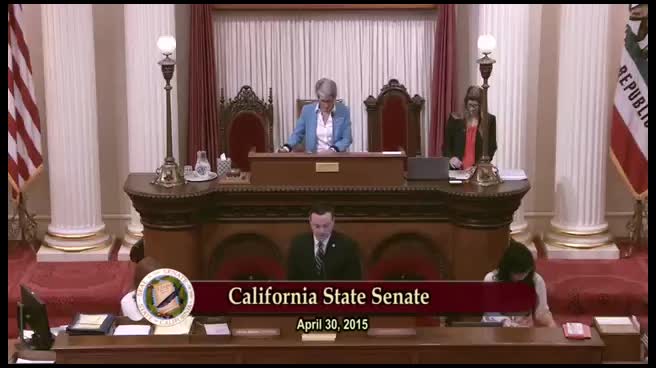
Bill Author
Bill Co-Author(s):