SB 485: County of Los Angeles: sanitation districts.
- Session Year: 2015-2016
- House: Senate
- Latest Version Date: 2015-10-09
The County Sanitation District Act authorizes a sanitation district to acquire, construct, and complete certain works, property, or structures necessary or convenient for sewage collection, treatment, and disposal.
This bill would authorize specified sanitation districts in the County of Los Angeles to acquire, construct, operate, maintain, and furnish facilities for the diversion, management, and treatment of stormwater and dry weather runoff, the discharge of the water to the stormwater drainage system, and the beneficial use of the water. The bill would require a district to consult with the Los Angeles County Flood Control District and the relevant watermaster or water replenishment district prior to initiating a stormwater or dry weather runoff program within the boundaries of an adjudicated groundwater basin or within the service area of a water replenishment district, as applicable. The bill would make related changes.
This bill would make legislative findings and declarations as to the necessity of a special statute for the County of Los Angeles.
The County Sanitation District Act authorizes a sanitation district to acquire, construct, and complete certain works, property, or structures necessary or convenient for sewage collection, treatment, and disposal.
This bill would authorize specified sanitation districts in the County of Los Angeles to acquire, construct, operate, maintain, and furnish facilities for the diversion, management, and treatment of stormwater and dry weather runoff, the discharge of the water to the stormwater drainage system, and the beneficial use of the water. The bill would require a district to consult with the Los Angeles County Flood Control District, or District and the relevant watermaster or water replenishment district prior to initiating a stormwater or dry weather runoff program within the boundaries of an adjudicated groundwater basin or within the service area of a water replenishment district, as applicable. The bill would make related changes.
This bill would make legislative findings and declarations as to the necessity of a special statute for the County of Los Angeles.
The County Sanitation District Act authorizes a sanitation district to acquire, construct, and complete certain works, property, or structures necessary or convenient for sewage collection, treatment, and disposal.
This bill would authorize specified sanitation districts in the County of Los Angeles to acquire, construct, operate, maintain, and furnish facilities for the diversion, management, and treatment of stormwater and dry weather runoff, the discharge of the water to the stormwater drainage system, and the beneficial use of the water. The bill would require a district to consult with the Los Angeles County Flood Control District, or the relevant watermaster or water replenishment district prior to initiating a stormwater or dry weather runoff program within the boundaries of an adjudicated groundwater basin or within the service area of a water replenishment district, as applicable. The bill would make related changes.
This bill would make legislative findings and declarations as to the necessity of a special statute for the County of Los Angeles.
The County Sanitation District Act authorizes a sanitation district to acquire, construct, and complete certain works, property, or structures necessary or convenient for sewage collection, treatment, and disposal.
This bill would authorize specified sanitation districts in the County of Los Angeles, Angeles to acquire, construct, operate, maintain, and furnish facilities for the diversion, management, and treatment of stormwater and dry weather runoff, the discharge of the water to the stormwater drainage system, and the beneficial use of the water. The bill would require a district to consult with the Los Angeles County Flood Control District, or the relevant watermaster or water replenishment district prior to initiating a stormwater or dry weather runoff program within the boundaries of an adjudicated groundwater basin. basin or within the service area of a water replenishment district, as applicable. The bill would make related changes.
This bill would make legislative findings and declarations as to the necessity of a special statute for the County of Los Angeles.
The County Sanitation District Act authorizes a sanitation district to acquire, construct, and complete certain works, property, or structures necessary or convenient for sewage collection, treatment, and disposal.
This bill would authorize specified sanitation districts in the County of Los Angeles, to acquire, construct, operate, maintain, and furnish facilities for the diversion, management, and treatment of stormwater and dry weather runoff, the discharge of the water to the stormwater drainage system, and the beneficial use of the water. The bill would require a district to consult with the relevant watermaster prior to initiating a stormwater or dry weather runoff program within the boundaries of an adjudicated groundwater basin. The bill would make related changes.
This bill would make legislative findings and declarations as to the necessity of a special statute for the County of Los Angeles.
The County Sanitation District Act authorizes a sanitation district to acquire, construct, and complete certain works, property, or structures necessary or convenient for sewage collection, treatment, and disposal.
This bill would authorize specified sanitation districts in the County of Los Angeles, to acquire, construct, operate, maintain, and furnish facilities for the diversion, management, and treatment of stormwater and dry weather runoff, the discharge of the water to the stormwater drainage system, and the beneficial use of the water.
This bill would make legislative findings and declarations as to the necessity of a special statute for the County of Los Angeles.
The Legislature hereby finds and declares all of the following:
(a)The county sanitation districts of Los Angeles County (sanitation districts) were established in 1923 under the County Sanitation District Act (Chapter 3 (commencing with Section 4700) of Part 3 of Division 5 of the Health and Safety Code).
(b)The sanitation districts provide regional solid waste management and wastewater collection and treatment services for 5.5 million people in 78 cities and unincorporated communities.
(c)Eighty-four cities in Los Angeles County, the Los Angeles County Flood Control District, and Los Angeles County unincorporated areas are all regulated under a permit for the Municipal Separate Storm Sewer System (MS4), the most recent of which was adopted by the California Regional Water Quality Control Board, Los Angeles Region, in December 2012.
(d)The City of Long Beach is regulated under its own permit for its MS4, the most recent of which was adopted by the regional board in February 2014.
(e)The MS4 is a large, interconnected system that encompasses over 3,000 square miles, and is operated and maintained in large part by the Los Angeles County Flood Control District and used by multiple cities along with Los Angeles County.
(f)The Los Angeles County Flood Control District is primarily focused on operation and maintenance of the MS4 infrastructure for the purposes of flood protection and water conservation.
(g)This extensive system conveys stormwater and nonstormwater across municipal boundaries where it is commingled within the MS4 and then discharged to receiving water bodies, such as the Los Angeles River and San Gabriel River.
(h)It will be necessary for the cities, Los Angeles County Flood Control District, and Los Angeles County to spend millions of dollars per year to comply with the Los Angeles Region MS4 permits.
(i)The Los Angeles Region MS4 permit prohibits the discharge of nonstormwater into the MS4, subject to specified exceptions, and one management technique that can be effective in cleaning up nonstormwater discharges is to divert dry weather runoff into the sanitary sewer system, if sewer and treatment plant capacity are available and other regulatory requirements are met.
(j)Many of the cities, the Los Angeles County Flood Control District, and Los Angeles County are preparing watershed management plans and enhanced watershed management plans in order to identify stormwater and dry weather urban runoff projects and activities that will improve the water quality in the downstream receiving water bodies.
(k)The presiding officers of the cities and the Chair of the Los Angeles County Board of Supervisors serve as members of the boards of directors of the sanitation districts.
(l)The administrative board of directors of the sanitation districts formally requested that the sanitation districts seek the authority to use its civil engineering and water quality expertise to help the cities and county manage stormwater and dry weather urban runoff in order to comply with the Los Angeles Region MS4 permit in an efficient and effective manner.
(m)The Legislature does not intend for the sanitation districts activities related to the management and treatment of stormwater and dry weather urban runoff to interfere with the existing water management, flood protection, groundwater replenishment, or water conservation activities of other local or regional agencies.
(n)Because of the unique circumstances of the sanitation districts and the Los Angeles Region MS4, special legislation is necessary to augment the sanitation districts powers under the County Sanitation District Act.
SEC. 2.Section 4730.68 is added to the Health and Safety Code, to read:4730.68.(a)This section applies only to county sanitation district numbers 1, 2, 3, 4, 5, 8, 9, 14, 15, 16, 17, 18, 19, 20, 21, 22, 23, 27, 28, 29, and 34 of Los Angeles County, Newhall Ranch Sanitation District of Los Angeles County, South Bay Cities Sanitation District of Los Angeles County, and Santa Clarita Valley Sanitation District of Los Angeles County. The powers granted in this section supplement the existing powers of each district.
(b)A district may acquire, construct, operate, maintain, and furnish facilities for any of the following purposes:
(1)The diversion of stormwater and dry weather runoff from the stormwater drainage system within the district.
(2)The management and treatment of the stormwater and dry weather runoff.
(3)The discharge of the water to the stormwater drainage system or receiving waters.
(4)The beneficial use of the water.
(c)In order to carry out the powers and purposes granted under this section, the district may exercise any of the powers otherwise granted to a district by this chapter to the extent those powers may be made applicable.
(d)(1)Prior to initiating a stormwater or dry weather runoff program or project within the boundaries of an adjudicated groundwater basin, a district shall consult with the relevant watermaster for a preliminary determination as to whether the project is inconsistent with the adjudication. If the watermaster deems the project to be inconsistent with the adjudication, the watermaster shall recommend, in writing, the measures that are necessary in order to conform the project to the adjudication.
(2)Prior to initiating a stormwater or dry weather runoff project within the service area of a water replenishment district, a district shall consult with the water replenishment district for the purpose of avoiding potential conflicts with water replenishment activities.
(3)Prior to initiating a stormwater or dry weather runoff project, a district shall consult with the Los Angeles County Flood Control District for the purpose of avoiding potential conflicts with flood protection and water conservation activities.
(e)This section does not affect any obligation of a district to obtain a permit that may be required by law for the activities undertaken pursuant to this section.
(f)For purposes of this section, stormwater and dry weather runoff have the same meaning as in Section 10561.5 of the Water Code.
(g)Nothing in this section shall be construed to require any local agency to participate, financially or otherwise, in a project pursued under the authority granted by this section.
(h)Nothing in this section shall be construed to alter or interfere with any of the following:
(1)Existing water rights to water from any source, including any adjudicated rights allocated by a court judgment or order, including any physical solution, rights issued by the state or a state agency, and rights acquired pursuant to any federal or state statute.
(2)Existing water rights law.
(3)Any rights, remedies, or obligations that may exist pursuant to Article 1 (commencing with Section 1200) or Article 1.5 (commencing with Section 1210) of Chapter 1 of Part 2 of Division 2 of the Water Code, Chapter 10 (commencing with Section 1700) of Part 2 of Division 2 of the Water Code, or Chapter 8.5 (commencing with Section 1501) of Part 1 of Division 1 of the Public Utilities Code.
SEC. 3.The Legislature finds and declares that a special law is necessary and that a general law cannot be made applicable within the meaning of Section 16 of Article IV of the California Constitution because of the unique circumstances of the county sanitation districts of Los Angeles County.
The Legislature hereby finds and declares all of the following:
(a)The county sanitation districts of Los Angeles County (sanitation districts) were established in 1923 under the County Sanitation District Act (Chapter 3 (commencing with Section 4700) of Part 3 of Division 5 of the Health and Safety Code).
(b)The sanitation districts provide regional solid waste management and wastewater collection and treatment services for 5.5 million people in 78 cities and unincorporated communities.
(c)Eighty-four cities in Los Angeles County, the Los Angeles County Flood Control District, and Los Angeles County unincorporated areas are all regulated under a permit for the Municipal Separate Storm Sewer System (MS4), the most recent of which was adopted by the California Regional Water Quality Control Board, Los Angeles Region, in December 2012.
(d)The City of Long Beach is regulated under its own permit for its MS4, the most recent of which was adopted by the regional board in February 2014.
(e)The MS4 is a large, interconnected system that encompasses over 3,000 square miles, and is operated and maintained in large part by the Los Angeles County Flood Control District and used by multiple cities along with Los Angeles County.
(f)The Los Angeles County Flood Control District is primarily focused on operation and maintenance of the MS4 infrastructure for the purposes of flood protection and water conservation.
(g)This extensive system conveys stormwater and nonstormwater across municipal boundaries where it is commingled within the MS4 and then discharged to receiving water bodies, such as the Los Angeles River and San Gabriel River.
(h)It will be necessary for the cities, Los Angeles County Flood Control District, and Los Angeles County to spend millions of dollars per year to comply with the Los Angeles Region MS4 permits.
(i)The Los Angeles Region MS4 permit prohibits the discharge of nonstormwater into the MS4, subject to specified exceptions, and one management technique that can be effective in cleaning up nonstormwater discharges is to divert dry weather runoff into the sanitary sewer system, if sewer and treatment plant capacity are available and other regulatory requirements are met.
(j)Many of the cities, the Los Angeles County Flood Control District, and Los Angeles County are preparing watershed management plans and enhanced watershed management plans in order to identify stormwater and dry weather urban runoff projects and activities that will improve the water quality in the downstream receiving water bodies.
(k)The presiding officers of the cities and the Chair of the Los Angeles County Board of Supervisors serve as members of the boards of directors of the sanitation districts.
(l)The administrative board of directors of the sanitation districts formally requested that the sanitation districts seek the authority to use its civil engineering and water quality expertise to help the cities and county manage stormwater and dry weather urban runoff in order to comply with the Los Angeles Region MS4 permit in an efficient and effective manner with the Los Angeles Region MS4 permit. manner.
(m)The Legislature does not intend for the sanitation districts activities related to the management and treatment of stormwater and dry weather urban runoff to interfere with the existing water management, flood protection, groundwater replenishment, or water conservation activities of other local or regional agencies.
(n)Because of the unique circumstances of the sanitation districts and the Los Angeles Region MS4, special legislation is necessary to augment the sanitation districts powers under the County Sanitation District Act.
SEC. 2.Section 4730.68 is added to the Health and Safety Code, to read:4730.68.(a)This section applies only to county sanitation district numbers 1, 2, 3, 4, 5, 8, 9, 14, 15, 16, 17, 18, 19, 20, 21, 22, 23, 27, 28, 29, and 34 of Los Angeles County, Newhall Ranch Sanitation District of Los Angeles County, South Bay Cities Sanitation District of Los Angeles County, and Santa Clarita Valley Sanitation District of Los Angeles County. The powers granted in this section supplement the existing powers of each district.
(b)A district may acquire, construct, operate, maintain, and furnish facilities for any of the following purposes:
(1)The diversion of stormwater and dry weather runoff from the stormwater drainage system within the district.
(2)The management and treatment of the stormwater and dry weather runoff.
(3)The discharge of the water to the stormwater drainage system or receiving waters.
(4)The beneficial use of the water.
(c)In order to carry out the powers and purposes granted under this section, the district may exercise any of the powers otherwise granted to a district by this chapter to the extent those powers may be made applicable.
(d)(1)Prior to initiating a stormwater or dry weather runoff program or project within the boundaries of an adjudicated groundwater basin, a district shall consult with the relevant watermaster for a preliminary determination as to whether the project is inconsistent with the adjudication. If the watermaster deems the project to be inconsistent with the adjudication, the watermaster shall recommend, in writing, the measures that are necessary in order to conform the project to the adjudication.
(2)Prior to initiating a stormwater or dry weather runoff project within the service area of a water replenishment district, a district shall consult with the water replenishment district for the purpose of avoiding potential conflicts with water replenishment activities.
(3)Prior to initiating a stormwater or dry weather runoff project, a district shall consult with the Los Angeles County Flood Control District for the purpose of avoiding potential conflicts with flood protection and water conservation activities.
(e)This section does not affect any obligation of a district to obtain a permit that may be required by law for the activities undertaken pursuant to this section.
(f)For purposes of this section, stormwater and dry weather runoff have the same meaning as in Section 10561.5 of the Water Code.
(g)Nothing in this section shall be construed to require any local agency to participate, financially or otherwise, in a project pursued under the authority granted by this section.
(h)Nothing in this section shall be construed to alter or interfere with any of the following:
(1)Existing water rights to water from any source, including any adjudicated rights allocated by a court judgment or order, including any physical solution, rights issued by the state or a state agency, and rights acquired pursuant to any federal or state statute.
(2)Existing water rights law.
(3)Any rights, remedies, or obligations that may exist pursuant to Article 1 (commencing with Section 1200) or Article 1.5 (commencing with Section 1210) of Chapter 1 of Part 2 of Division 2 of the Water Code, Chapter 10 (commencing with Section 1700) of Part 2 of Division 2 of the Water Code, or Chapter 8.5 (commencing with Section 1501) of Part 1 of Division 1 of the Public Utilities Code.
SEC. 3.The Legislature finds and declares that a special law is necessary and that a general law cannot be made applicable within the meaning of Section 16 of Article IV of the California Constitution because of the unique circumstances of the county sanitation districts of Los Angeles County.
The Legislature hereby finds and declares all of the following:
(a)The county sanitation districts of Los Angeles County (sanitation districts) were established in 1923 under the County Sanitation District Act (Chapter 3 (commencing with Section 4700) of Part 3 of Division 5 of the Health and Safety Code).
(b)The sanitation districts provide regional solid waste management and wastewater collection and treatment services for 5.5 million people in 78 cities and unincorporated communities.
(c)Eighty-four cities in Los Angeles County, the Los Angeles County Flood Control District, and Los Angeles County unincorporated areas are all regulated under a permit for the Municipal Separate Storm Sewer System (MS4), the most recent of which was adopted by the California Regional Water Quality Control Board, Los Angeles Region, in December 2012.
(d)The City of Long Beach is regulated under its own permit for its MS4, the most recent of which was adopted by the regional board in February 2014.
(e)The MS4 is a large, interconnected system that encompasses over 3,000 square miles, and is operated and maintained in large part by the Los Angeles County Flood Control District and used by multiple cities along with Los Angeles County.
(f)The Los Angeles County Flood Control District is primarily focused on operation and maintenance of the MS4 infrastructure for the purposes of flood protection and water conservation.
(g)This extensive system conveys stormwater and nonstormwater across municipal boundaries where it is commingled within the MS4 and then discharged to receiving water bodies, such as the Los Angeles River and San Gabriel River.
(h)It will be necessary for the cities, Los Angeles County Flood Control District, and Los Angeles County to spend millions of dollars per year to comply with the Los Angeles Region MS4 permits.
(i)The Los Angeles Region MS4 permit prohibits the discharge of nonstormwater into the MS4, subject to specified exceptions, and one management technique that can be effective in cleaning up nonstormwater discharges is to divert dry weather runoff into the sanitary sewer system, if sewer and treatment plant capacity are available and other regulatory requirements are met.
(j)Many of the cities, the Los Angeles County Flood Control District, and Los Angeles County are preparing watershed management plans and enhanced watershed management plans in order to identify stormwater and dry weather urban runoff projects and activities that will improve the water quality in the downstream receiving water bodies.
(k)The presiding officers of the cities and the chair Chair of the Los Angeles County Board of Supervisors serve as members of the boards of directors of the sanitation districts.
(l)The administrative board of directors of the sanitation districts formally requested that the sanitation districts seek the authority to use its civil engineering and water quality expertise to help the cities and county manage stormwater and dry weather urban runoff in order to comply in an efficient and effective manner with the Los Angeles Region MS4 permit.
(m)The Legislature does not intend for the sanitation districts activities related to the management and treatment of stormwater and dry weather urban runoff to interfere with the existing water management, flood protection, groundwater replenishment, or water conservation activities of other local or regional agencies.
(n)Because of the unique circumstances of the sanitation districts and the Los Angeles Region MS4, special legislation is necessary to augment the sanitation districts powers under the County Sanitation District Act.
SEC. 2.Section 4730.68 is added to the Health and Safety Code, to read:4730.68.(a)This section applies only to county sanitation district numbers 1, 2, 3, 4, 5, 8, 9, 14, 15, 16, 17, 18, 19, 20, 21, 22, 23, 27, 28, 29, and 34 of Los Angeles County, Newhall Ranch Sanitation District of Los Angeles County, South Bay Cities Sanitation District of Los Angeles County, and Santa Clarita Valley Sanitation District of Los Angeles County. The powers granted in this section supplement the existing powers of each district.
(b)A district may acquire, construct, operate, maintain, and furnish facilities for any of the following purposes:
(1)The diversion of stormwater and dry weather runoff from the stormwater drainage system within the district.
(2)The management and treatment of the stormwater and dry weather runoff.
(3)The discharge of the water to the stormwater drainage system or receiving waters.
(4)The beneficial use of the water.
(c)In order to carry out the powers and purposes granted under this section, the district may exercise any of the powers otherwise granted to a district by this chapter to the extent those powers may be made applicable.
(d)(1)Prior to initiating a stormwater or dry weather runoff program or project within the boundaries of an adjudicated groundwater basin, a district shall consult with the relevant watermaster for a preliminary determination as to whether the project is inconsistent with the adjudication. If the watermaster deems the project to be inconsistent with the adjudication, the watermaster shall recommend, in writing, the measures that are necessary in order to conform the project to the adjudication.
(2)Prior to initiating a stormwater or dry weather runoff project within the service area of a water replenishment district, a district shall consult with the water replenishment district for the purpose of avoiding potential conflicts with water replenishment activities.
(3)Prior to initiating a stormwater or dry weather runoff project, a district shall consult with the Los Angeles County Flood Control District for the purpose of avoiding potential conflicts with flood protection and water conservation activities.
(e)This section does not affect any obligation of a district to obtain a permit that may be required by law for the activities undertaken pursuant to this section.
(f)For purposes of this section, stormwater and dry weather runoff have the same meaning as in Section 10561.5 of the Water Code.
(g)Nothing in this section shall be construed to require any local agency to participate, financially or otherwise, in a project pursued under the authority granted by this section.
(h)Nothing in this section shall be construed to alter or interfere with any of the following:
(1)Existing water rights to water from any source, including any adjudicated rights allocated by a court judgment or order, including any physical solution, rights issued by the state or a state agency, and rights acquired pursuant to any federal or state statute.
(2)Existing water rights law.
(3)Any rights, remedies, or obligations that may exist pursuant to Article 1 (commencing with Section 1200) or Article 1.5 (commencing with Section 1210) of Chapter 1 of Part 2 of Division 2 of the Water Code, Chapter 10 (commencing with Section 1700) of Part 2 of Division 2 of the Water Code, or Chapter 8.5 (commencing with Section 1501) of Part 1 of Division 1 of the Public Utilities Code.
SEC. 3.The Legislature finds and declares that a special law is necessary and that a general law cannot be made applicable within the meaning of Section 16 of Article IV of the California Constitution because of the unique circumstances of the county sanitation districts of Los Angeles County.
The Legislature hereby finds and declares all of the following:
(a)The county sanitation districts of Los Angeles County (sanitation districts) were established in 1923 under the County Sanitation District Act (Chapter 3 (commencing with Section 4700) of Part 3 of Division 5 of the Health and Safety Code).
(b)The sanitation districts provide regional solid waste management and wastewater collection and treatment services for 5.5 million people in 78 cities and unincorporated communities.
(c)Eighty-four cities in Los Angeles County, the Los Angeles County Flood Control District, and Los Angeles County unincorporated areas are all regulated under a permit for the Municipal Separate Storm Sewer System (MS4), the most recent of which was adopted by the California Regional Water Quality Control Board, Los Angeles Region, in December 2012.
(d)The City of Long Beach is regulated under its own permit for its MS4, the most recent of which was adopted by the regional board in February 2014.
(e)The MS4 is a large, interconnected system that encompasses over 3,000 square miles, and is controlled operated and maintained in large part by the Los Angeles County Flood Control District and used by multiple cities along with Los Angeles County.
(f)The Los Angeles County Flood Control District is primarily focused on operation and maintenance of the larger, downstream MS4 infrastructure into which the smaller, upstream city MS4 infrastructure discharges. for the purposes of flood protection and water conservation.
(g)This extensive system conveys stormwater and nonstormwater across municipal boundaries where it is commingled within the MS4 and then discharged to receiving water bodies, such as the Los Angeles River and San Gabriel River.
(h)It will be necessary for the cities, Los Angeles County Flood Control District, and Los Angeles County to spend millions of dollars per year to comply with the Los Angeles Region MS4 permits.
(i)The Los Angeles Region MS4 permits prohibit permit prohibits the discharge of nonstormwater discharges to MS4 (unless authorized under another permit or specifically exempted from the MS4 permit), into the MS4, subject to specified exceptions, and one management technique that can be effective in cleaning up nonstormwater discharges is to divert dry weather runoff into the sanitary sewer system, if sewer and treatment plant capacity are available and other regulatory requirements are met.
(j)Many of the cities, the Los Angeles County Flood Control District, and Los Angeles County are preparing watershed management plans and enhanced watershed management plans in order to identify stormwater and dry weather urban runoff projects and activities that will bring the MS4 under their jurisdiction into compliance with the Los Angeles Region MS4 permits. improve the water quality in the downstream receiving water bodies.
(k)The presiding officers of the cities and the chair of the County Board of Supervisors serve as members of the boards of directors of the sanitation districts.
(l)The administrative board of directors of the sanitation districts formally requested that the sanitation districts seek the authority to use its civil engineering and water quality expertise to help the cities and county manage stormwater and dry weather urban runoff in order to comply in an efficient and effective manner with the Los Angeles Region MS4 permit.
(m)The Legislature does not intend for the sanitation districts activities related to the management and treatment of stormwater and dry weather urban runoff to interfere with the existing water management, flood protection, or water conservation activities of other local or regional agencies.
(m)
(n)Because of the unique circumstances of the sanitation districts and the Los Angeles Region MS4, special legislation is necessary to augment the sanitation districts powers under the County Sanitation District Act.
SEC. 2.Section 4730.68 is added to the Health and Safety Code, to read:4730.68.(a)This section applies only to county sanitation district numbers 1, 2, 3, 4, 5, 8, 9, 14, 15, 16, 17, 18, 19, 20, 21, 22, 23, 27, 28, 29, and 34 of Los Angeles County, Newhall Ranch Sanitation District of Los Angeles County, South Bay Cities Sanitation District of Los Angeles County, and Santa Clarita Valley Sanitation District of Los Angeles County, and any new county sanitation district subsequently formed in the County of Los Angeles. County. The powers granted in this section supplement the existing powers of each district.
(b)A district may acquire, construct, operate, maintain, and furnish facilities for any of the following purposes:
(1)The diversion of stormwater and dry weather runoff from the stormwater drainage system within the district.
(2)The management and treatment of the stormwater and dry weather runoff.
(3)The discharge of the water to the stormwater drainage system or receiving waters.
(4)The beneficial use of the water.
(c)In order to carry out the powers and purposes granted under this section, the district may exercise any of the powers otherwise granted to a district by this chapter to the extent those powers may be made applicable.
(d)(1)Prior to initiating a stormwater or dry weather runoff program or project within the boundaries of an adjudicated groundwater basin, a district shall consult with the relevant watermaster. watermaster for a preliminary determination as to whether the project is inconsistent with the adjudication. If the watermaster deems the project to be inconsistent with the adjudication, the watermaster shall recommend, in writing, the measures that are necessary in order to conform the project to the adjudication.
(2)Prior to initiating a stormwater or dry weather runoff project within the service area of a water replenishment district, a district shall consult with the water replenishment district for the purpose of avoiding potential conflicts with water replenishment activities.
(3)Prior to initiating a stormwater or dry weather runoff project, a district shall consult with the Los Angeles County Flood Control District for the purpose of avoiding potential conflicts with flood protection and water conservation activities.
(e)This section does not affect any obligation of a district to obtain a permit that may be required by law for the activities undertaken pursuant to this section.
(f)For purposes of this section, stormwater and dry weather runoff have the same meaning as in Section 10561.5 of the Water Code.
(g)Nothing in this section shall be construed to require any local agency to participate, financially or otherwise, in a project pursued under the authority granted by this section.
(h)Nothing in this section shall be construed to alter or interfere with any of the following:
(1)Existing water rights to water from any source, including any adjudicated rights allocated by a court judgment or order, including any physical solution, rights issued by the state or a state agency, and rights acquired pursuant to any federal or state statute.
(2)Existing water rights law.
(3)Any rights, remedies, or obligations that may exist pursuant to Article 1 (commencing with Section 1200) or Article 1.5 (commencing with Section 1210) of Chapter 1 of Part 2 of Division 2 of the Water Code, Chapter 10 (commencing with Section 1700) of Part 2 of Division 2 of the Water Code, or Chapter 8.5 (commencing with Section 1501) of Part 1 of Division 1 of the Public Utilities Code.
(i)Nothing in this section shall be construed to establish a right for a district to alter or interfere with either of the following:
(1)The operation, maintenance, or ownership of a water facility that is operated, maintained, or owned by a public agency or an entity regulated by the Public Utilities Commission.
(2)A judgment or court order, or an action by a watermaster or public agency, pursuant to an adjudication, adjudicated physical solution, or federal or state statute that affects water, water rights, flood control, water management, or water conservation.
SEC. 3.The Legislature finds and declares that a special law is necessary and that a general law cannot be made applicable within the meaning of Section 16 of Article IV of the California Constitution because of the unique circumstances of the County Sanitation Districts county sanitation districts of Los Angeles County.
The Legislature hereby finds and declares all of the following:
(a)The county sanitation districts of Los Angeles County (sanitation districts) were established in 1923 under the County Sanitation District Act (Chapter 3 (commencing with Section 4700) of Part 3 of Division 5 of the Health and Safety Code).
(b)The sanitation districts provide regional solid waste management and wastewater collection and treatment services for 5.5 million people in 78 cities and unincorporated communities.
(c)Eighty-four cities in Los Angeles County, the Los Angeles County Flood Control District, and Los Angeles County unincorporated areas are all regulated under a permit for the Municipal Separate Storm Sewer System (MS4), the most recent of which was adopted by the California Regional Water Quality Control Board, Los Angeles Region, in December 2012.
(d)The City of Long Beach is regulated under its own permit for its MS4, the most recent of which was adopted by the regional board in February 2014.
(e)The MS4 is a large large, interconnected system that encompasses over 3,000 square miles, and is controlled in large part by the Los Angeles County Flood Control District and used by multiple cities along with Los Angeles County.
(f)The Los Angeles County Flood Control District is primarily focused on operation and maintenance of the larger, downstream MS4 infrastructure into which the smaller, upstream city MS4 infrastructure discharges.
(g)This extensive system conveys stormwater and nonstormwater across municipal boundaries where it is commingled within the MS4 and then discharged to receiving water bodies, such as the Los Angeles River and San Gabriel River.
(h)It will be necessary for the cities, Los Angeles County Flood Control District, and Los Angeles County to spend millions of dollars per year to comply with the Los Angeles Region MS4 permits.
(i)The Los Angeles Region MS4 permits prohibit the discharge of nonstormwater discharges to MS4 (unless authorized under another permit or specifically exempted from the MS4 permit), and one management technique that can be effective in cleaning up nonstormwater discharges is to divert dry weather runoff into the sanitary sewer system, if sewer and treatment plant capacity are available and other regulatory requirements are met.
(j)Many of the cities, the Los Angeles County Flood Control District, and Los Angeles County are preparing watershed management plans and enhanced watershed management plans in order to identify stormwater and dry weather urban runoff projects and activities that will bring the MS4 under their jurisdiction into compliance with the Los Angeles Region MS4 permits.
(k)The presiding officers of the cities and the Chairman chair of the County Board of Supervisors serve as members of the boards of directors of the sanitation districts.
(l)The administrative board of directors of the sanitation districts formally requested that the Sanitation Districts sanitation districts seek the authority to use its civil engineering and water quality expertise to help the cities and county manage stormwater and dry weather urban runoff in order to comply in an efficient and effective manner with the Los Angeles Region MS4 permit.
(m)Because of the unique circumstances of the sanitation districts and the Los Angeles Region MS4, special legislation is necessary to augment the sanitation districts powers under the County Sanitation District Act.
SEC. 2.Section 4730.68 is added to the Health and Safety Code, to read:4730.68.(a)This section applies only to county sanitation district numbers 1, 2, 3, 4, 5, 8, 9, 14, 15, 16, 17, 18, 19, 20, 21, 22, 23, 27, 28, 29, and 34 of Los Angeles County, Newhall Ranch Sanitation District, District of Los Angeles County, South Bay Cities Sanitation District of Los Angeles County, and Santa Clarita Valley Sanitation District of Los Angeles County, and any new county sanitation district subsequently formed in the County of Los Angeles. The powers granted in this section supplement the existing powers of each district.
(b)A district may acquire, construct, operate, maintain, and furnish facilities for any of the following purposes:
(1)The diversion of stormwater and dry weather runoff from the stormwater drainage system within the district.
(2)The management and treatment of the stormwater and dry weather runoff.
(3)The discharge of the water to the stormwater drainage system or receiving waters.
(4)The beneficial use of the water.
(c)In order to carry out the powers and purposes granted under this section, the district may exercise any of the powers otherwise granted to a district by this chapter to the extent those powers may be made applicable.
(d)Prior to initiating a stormwater or dry weather runoff program or project within the boundaries of an adjudicated groundwater basin, a district shall consult with the relevant watermaster.
(d)
(e)This section does not affect any obligation of a district to obtain a permit that may be required by law for the activities undertaken pursuant to this section.
(e)
(f)For purposes of this section, stormwater and dry weather runoff have the same meaning as in Section 10561.5 of the Water Code.
(f)
(g)Nothing in this section shall be construed to require any local agency to participate, financially or otherwise, in a project pursued under the authority granted by this section.
(g)This section is not intended
(h)Nothing in this section shall be construed to alter or interfere with any of the following:
(1)Existing water rights, rights to water from any source, including any adjudicated rights. rights allocated by a court judgment or order, rights issued by the state or a state agency, and rights acquired pursuant to any federal or state statute.
(2)Existing water rights law.
(3)Any rights, remedies, or obligations that may exist pursuant to Article 1 (commencing with Section 1200) of or Article 1.5 (commencing with Section 1210) of Chapter 1 of Part 2 of Division 2 of the Water Code, Chapter 10 (commencing with Section 1700) of Part 2 of Division 2 of the Water Code, or Chapter 8.5 (commencing with Section 1501) of Part 1 of Division 1 of the Public Utilities Code.
(i)Nothing in this section shall be construed to establish a right for a district to alter or interfere with either of the following:
(1)The operation, maintenance, or ownership of a water facility that is operated, maintained, or owned by a public agency or an entity regulated by the Public Utilities Commission.
(2)A judgment or court order, or an action by a watermaster or public agency, pursuant to an adjudication, adjudicated physical solution, or federal or state statute that affects water, water rights, flood control, water management, or water conservation.
SEC. 3.The Legislature finds and declares that a special law is necessary and that a general law cannot be made applicable within the meaning of Section 16 of Article IV of the California Constitution because of the unique circumstances of the County Sanitation Districts of Los Angeles County.
The Legislature hereby finds and declares all of the following:
(a)The county sanitation districts of Los Angeles County (sanitation districts) were established in 1923 under the County Sanitation District Act (Chapter 3 (commencing with Section 4700) of Part 3 of Division 5 of the Health and Safety Code).
(b)The sanitation districts provide regional solid waste management and wastewater collection and treatment services for 5.5 million people in 78 cities and unincorporated communities.
(c)Eighty-four cities in Los Angeles County, the Los Angeles County Flood Control District, and Los Angeles County unincorporated areas are all regulated under a permit for the Municipal Separate Storm Sewer System (MS4), the most recent of which was adopted by the California Regional Water Quality Control Board, Los Angeles Region, in December 2012.
(d)The City of Long Beach is regulated under its own permit for its MS4, the most recent of which was adopted by the regional board in February 2014.
(e)The MS4 is a large interconnected system that encompasses over 3,000 square miles, and is controlled in large part by the Los Angeles County Flood Control District and used by multiple cities along with Los Angeles County.
(f)The Los Angeles County Flood Control District is primarily focused on operation and maintenance of the larger, downstream MS4 infrastructure into which the smaller, upstream city MS4 infrastructure discharges.
(g)This extensive system conveys stormwater and non-stormwater across municipal boundaries where it is commingled within the MS4 and then discharged to receiving water bodies, such as the Los Angeles River and San Gabriel River.
(h)It will be necessary for the cities, Los Angeles County Flood Control District, and Los Angeles County to spend millions of dollars per year to comply with the Los Angeles Region MS4 permits.
(i)The Los Angeles Region MS4 permits prohibit the discharge of non-stormwater discharges to MS4 (unless authorized under another permit or specifically exempted from the MS4 permit), and one management technique that can be effective in cleaning up non-stormwater discharges is to divert dry weather runoff into the sanitary sewer system, if sewer and treatment plant capacity are available and other regulatory requirements are met.
(j)Many of the cities, the Los Angeles County Flood Control District, and Los Angeles County are preparing watershed management plans and enhanced watershed management plans in order to identify stormwater and dry weather urban runoff projects and activities that will bring the MS4 under their jurisdiction into compliance with the Los Angeles Region MS4 permits.
(k)The presiding officers of the cities and the Chairman of the County Board of Supervisors serve as members of the boards of directors of the sanitation districts.
(l)The administrative board of directors of the sanitation districts formally requested that the Sanitation Districts seek the authority to use its civil engineering and water quality expertise to help the cities and county manage stormwater and dry weather urban runoff in order to comply in an efficient and effective manner with the Los Angeles Region MS4 permit.
(m)Because of the unique circumstances of the sanitation districts and the Los Angeles Region MS4, special legislation is necessary to augment the sanitation districts powers under the County Sanitation District Act.
SEC. 2.Section 4730.68 is added to the Health and Safety Code, to read:4730.68.(a)This section applies only to county sanitation district numbers 1, 2, 3, 4, 5, 8, 9, 14, 15, 16, 17, 18, 19, 20, 21, 22, 23, 27, 28, 29, and 34 of Los Angeles County, Newhall Ranch Sanitation District, South Bay Cities Sanitation District of Los Angeles County, and Santa Clarita Valley Sanitation District of Los Angeles County, and any new county sanitation district subsequently formed in the County of Los Angeles. The powers granted in this section supplement the existing powers of each district.
(b)A district may acquire, construct, operate, maintain, and furnish facilities for any of the following purposes:
(1)The diversion of stormwater and dry weather runoff from the stormwater drainage system within the district.
(2)The management and treatment of the stormwater and dry weather runoff.
(3)The discharge of the water to the stormwater drainage system or receiving waters.
(4)The beneficial use of the water.
(c)In order to carry out the powers and purposes granted under this section, the district may exercise any of the powers otherwise granted to a district by this chapter to the extent those powers may be made applicable.
(d)This section does not affect any obligation of a district to obtain a permit that may be required by law for the activities undertaken pursuant to this section.
(e)For purposes of this section, stormwater and dry weather runoff have the same meaning as in Section 10561.5 of the Water Code.
(f)Nothing in this section shall be construed to require any local agency to participate, financially or otherwise, in a project pursued under the authority granted by this section.
(g)This section is not intended to alter any of the following:
(1)Existing water rights, including any adjudicated rights.
(2)Existing water rights law.
(3)Any rights, remedies, or obligations that may exist pursuant to Article 1 (commencing with Section 1200) of Article 1.5 (commencing with Section 1210) of Chapter 1 of Part 2 of Division 2 of the Water Code, or Chapter 8.5 (commencing with Section 1501) of Part 1 of Division 1 of the Public Utilities Code.
SEC. 3.The Legislature finds and declares that a special law is necessary and that a general law cannot be made applicable within the meaning of Section 16 of Article IV of the California Constitution because of the unique circumstances of the County Sanitation Districts of Los Angeles County.
|
Date
|
Status
|
|---|---|
| Oct 9, 2015 | Chaptered by Secretary of State. Chapter 678, Statutes of 2015. |
| Oct 9, 2015 | Approved by the Governor. |
| Sep 3, 2015 | Enrolled and presented to the Governor at 5:45 p.m. |
| Sep 1, 2015 | Assembly amendments concurred in. (Ayes 40. Noes 0. Page 2370.) Ordered to engrossing and enrolling. |
| Sep 1, 2015 | Assembly amendments concurred in. (Ayes 40. Noes 0.) Ordered to engrossing and enrolling. |
| Aug 31, 2015 | Read third time. Passed. (Ayes 80. Noes 0. Page 2682.) Ordered to the Senate. |
| Aug 31, 2015 | In Senate. Concurrence in Assembly amendments pending. |
| Aug 31, 2015 | Read third time. Passed. Ordered to the Senate. |
| Aug 27, 2015 | Ordered to third reading. |
| Aug 27, 2015 | Read third time and amended. |
| Aug 20, 2015 | Read third time and amended. |
| Aug 20, 2015 | Ordered to third reading. |
| Aug 17, 2015 | Read second time. Ordered to third reading. |
| Jul 16, 2015 | From committee: Do pass. (Ayes 9. Noes 0.) (July 15). |
| Jul 7, 2015 | From committee with author's amendments. Read second time and amended. Re-referred to Com. on L. GOV. |
| Jul 1, 2015 | July 1 set for first hearing canceled at the request of author. |
| Jun 23, 2015 | From committee with author's amendments. Read second time and amended. Re-referred to Com. on L. GOV. |
| May 28, 2015 | Referred to Com. on L. GOV. |
| May 18, 2015 | In Assembly. Read first time. Held at Desk. |
| May 18, 2015 | Read third time. Passed. (Ayes 36. Noes 0. Page 1018.) Ordered to the Assembly. |
| May 18, 2015 | Read third time. Passed. (Ayes 36. Noes 0.) Ordered to the Assembly. |
| May 7, 2015 | Read second time. Ordered to third reading. |
| May 6, 2015 | From committee: Do pass. (Ayes 7. Noes 0. Page 920.) (May 6). |
| May 6, 2015 | From committee: Do pass. (Ayes 7. Noes 0.) (May 6). |
| Apr 24, 2015 | Set for hearing May 6. |
| Apr 16, 2015 | Re-referred to Com. on GOV. & F. |
| Mar 12, 2015 | Referred to Com. on RLS. |
| Feb 27, 2015 | From printer. May be acted upon on or after March 29. |
| Feb 26, 2015 | Introduced. Read first time. To Com. on RLS. for assignment. To print. |
|
Date
|
Description
|
Location
|
Votes
|
|
|---|---|---|---|---|
| Sep 1, 2015 | Unfinished Business SB485 Hernandez Concurrence | Senate Floor |
Passed |
|
| Aug 31, 2015 | SB 485 Hernandez Senate Third Reading By RENDON | Assembly Floor |
Passed |
|
| Jul 15, 2015 | Do pass. | Assembly Standing Committee on Local Government |
Passed |
|
| May 18, 2015 | Senate 3rd Reading SB485 Hernandez | Senate Floor |
Passed |
|
| May 6, 2015 | Do pass | Senate Standing Committee on Governance and Finance |
Passed |
This list shows positions taken on this bill by organizations on the date displayed, which is linked to the original source.
Positions by individuals are not included.
SB 485
Page 7
|
Office of Senate Floor Analyses (916) 651-1520 Fax: (916) 327-4478 |
UNFINISHED BUSINESS
Bill No: SB 485
Amended: 8/27/15
SENATE GOVERNANCE & FIN. COMMITTEE: 7-0, 5/6/15
AYES: Hertzberg, Nguyen, Beall, Hernandez, Lara, Moorlach, Pavley
SENATE FLOOR: 36-0, 5/18/15
AYES: Allen, Anderson, Bates, Beall, Block, Cannella, De León, Fuller, Gaines, Galgiani, Hancock, Hernandez, Hertzberg, Hill, Hueso, Huff, Jackson, Lara, Leno, Leyva, Liu, McGuire, Mendoza, Mitchell, Monning, Moorlach, Morrell, Nguyen, Nielsen, Pan, Roth, Runner, Stone, Vidak, Wieckowski, Wolk
NO VOTE RECORDED: Berryhill, Hall, Pavley
ASSEMBLY FLOOR: 80-0, 8/31/15 - See last page for vote
SUBJECT: County of Los Angeles: sanitation districts
DIGEST: This bill authorizes the Los Angeles County Sanitation Districts to divert, manage, treat, and discharge stormwater and dry weather runoff, as well as make beneficial use of the water.
Assembly Amendments require a sanitation district to consult with watermasters, water replenishment districts, and the Los Angeles County Flood Control District prior to initiating a stormwater or dry weather runoff project; the amendments further specify that this bill is not intended to alter or interfere with existing water rights allocated by a court judgment or order, as well as water rights from any physical solution, rights issued by the state or a state agency, or rights acquired pursuant to any federal or state statute.
Existing law:
Authorizes the formation of sanitation districts responsible for the construction, operation, and maintenance of facilities to collect, treat, and dispose of wastewater and industrial wastes.
Does not explicitly authorize county sanitation districts to collect, treat, and make use of stormwater and dry weather runoff.
Authorizes, through respective special statutes, the Irvine Ranch Water District and Orange County Sanitation District, to acquire, construct, and operate facilities that divert and treat urban runoff, that return the water to the drainage courses, and for the beneficial use of the water.
Requires municipalities that discharge water into rivers, lakes, and oceans to obtain and comply with a Municipal Separate Storm Sewer Systems (MS4) permit.
This bill:
Authorizes the Districts to acquire, construct, operate, maintain, and furnish facilities for any of the following purposes:
The diversion of stormwater and dry weather runoff from the stormwater drainage system within the district;
The management and treatment of the stormwater and dry weather runoff;
The discharge of the water to the stormwater drainage system or receiving waters; and,
The beneficial use of the water.
Requires a district, prior to initiating a stormwater or dry weather runoff program or project, to do the following:
Consult with the relevant watermaster, if within the boundaries of an adjudicated groundwater basin, for a preliminary determination as to whether the project is inconsistent with the adjudication. Requires the watermaster, if they deem the project to be inconsistent with the adjudication, to recommend in writing the necessary measure to conform the project to the adjudication;
Consult with a water replenishment district, if within the service area of a water replenishment district, for the purpose of avoiding potential conflicts with water replenishment activities; and,
Consult with the Los Angeles County Flood Control District for the purpose of avoiding potential conflicts with flood protection and water conservation activities.
States that this bill is not intended to alter or interfere with any of the following:
Existing water rights to water from any source, including any adjudicated rights allocated by a court judgment or order, including any physical solution, rights issued by the state or a state agency, and rights acquired, pursuant to any federal or state statute;
Existing water rights law; and,
Any rights, remedies, or obligations that may exist, pursuant to specified sections in current law.
Defines the following terms, pursuant to the Water Code:
"Stormwater" to mean "temporary surface water runoff and drainage generated by immediately preceding storms"; and,
"Dry weather runoff" to mean "surface waterflow and waterflow in storm drains, flood control channels, or other means of runoff conveyance produced by nonstormwater resulting from irrigation, residential, commercial, and industrial activities."
Authorizes a district to exercise any of the powers otherwise granted to a district under current law in order to carry out the powers and purposes granted by this bill.
Specifies that the powers granted by this bill do not affect any obligation of a district to obtain a permit that may be required by law for the activities undertaken, pursuant to this bill.
Prohibits this bill from being construed to require any local agency to participate financially or otherwise, in a project pursued under the authority granted by this bill.
Finds and declares that a special law is necessary and that a general law cannot be made applicable within the meaning of current law.
Makes other findings and declarations.
Background
Rainwater and runoff from manmade sources, such as irrigation, builds up on impermeable surfaces, picking up pollutants as it travels across urban landscapes, down rivers, and runs into lakes and the ocean. Left untreated, stormwater and (dry weather) urban runoff can create water quality issues. To protect rivers, lakes, and oceans, the federal Clean Water Act (CWA) requires the states to reduce pollution from stormwater and urban runoff. Under the CWA, municipalities that discharge water into rivers, lakes, and oceans must obtain and comply with a MS4 permit. In California, the federal government has delegated enforcement authority for the CWA to the State Water Resources Control Board (SWRCB). SWRCB and the nine Regional Water Quality Control Boards are increasingly pushing counties, cities, and special districts to reduce urban runoff and stormwater discharges under the MS4 permit requirements.
Cities in the Los Angeles region, as well as Los Angeles County and the Los Angeles County Flood Control District, are subject to especially heightened regulatory pressure under MS4 permit requirements. Los Angeles city officials estimate that compliance with these requirements could cost local governments billions of dollars.
In response to these challenges, several Los Angeles area cities, Los Angeles County, and the Los Angeles County Flood Control District are looking for innovative, cost-effective ways to bring the storm sewer systems under their control into compliance with the MS4 permit. One such proposal is to partner with the Los Angeles County Sanitation Districts (LACSD) on a case-by-case basis to manage and treat stormwater and dry weather urban runoff.
LACSD are a group of 24 special districts authorized to collect, treat, and dispose of wastewater and solid waste under the County Sanitation District Act. Because state law does not expressly authorize county sanitation districts to conduct stormwater management, LACSD now seeks explicit statutory authority to manage stormwater and urban runoff to help local governments in Los Angeles County comply with their MS4 requirements. In 2001 and 2002, respectively, the Legislature passed special legislation authorizing the Irvine Ranch Water District (AB 810, Campbell, Chapter 209, Statutes of 2001) and Orange County Sanitation District (AB 1892, Harman, Chapter 79, Statutes of 2002) to treat dry weather runoff for similar purposes.
Comments
Purpose of the bill. Urban runoff is a major contributor to pollution of California’s lakes, rivers, and the ocean. Cities in Los Angeles County and L.A. County Flood Control District are under especially heightened pressure to clean up stormwater and urban runoff before it reaches the ocean, due to recent court decisions and regulatory developments. In order to meet these regulatory requirements under federal and state law, local governments in the Los Angeles region need access to innovative approaches to stormwater and urban runoff management. Empowering the LACSD to assist cities and special districts in the Los Angeles region with urban runoff and stormwater management would result in cost savings and greater efficiency, while ensuring that local stormwater systems comply with evolving state and federal water quality regulations.
A drop in the ocean. SB 485 helps alleviate pressures on local governments in the Los Angeles region to comply with MS4 requirements. However, stormwater and urban runoff financing remains a serious issue for local governments across California. On February 25, 2015, the Senate Governance and Finance Committee held an informational hearing to examine how local governments are currently financing stormwater and dry weather runoff projects and investigate the state’s role in reducing obstacles to effective stormwater policies. Local governments have long relied on General Fund revenues to fund stormwater and dry weather runoff management, but regulatory burdens are rapidly evolving, stretching general fund budgets thin. The California Constitution also limits local governments’ ability to impose special taxes and benefit assessments, charges to property owners for a special benefit to the owner’s property, to fund water pollution prevention and stormwater management programs. For example, special taxes require 2/3 voter approval, while the benefit assessments must be directly related to the amount of benefit the property receives; local governments also have to obtain weighted-majority property owner approval before imposing a benefit assessment on real property. In light of these challenges, SB 485 is a creative solution to the Los Angeles region’s unique challenges, but other local governments almost certainly will need to come up with more innovative stormwater financing options statewide.
LAFCO approval. SB 485 does not allow the LACSD to unilaterally control urban runoff. The Cortese-Knox-Hertzberg Act requires special districts to get the approval of the local agency formation commission (LAFCO) before they can activate one of their latent powers. The LACSD must apply to the Los Angeles County LAFCO before it can use the new latent power granted by SB 485.
FISCAL EFFECT: Appropriation: No Fiscal Com.: No Local: No
Los Angeles County Sanitations Districts (source)
California Association of Sanitation Agencies
California Special Districts Association
City of Arcadia
City of Bell Gardens
City of Beverly Hills
City of Duarte
City of Glendora
City of Hawthorne
City of La Mirada
City of Norwalk
City of Palos Verdes Estates
City of Paramount
City of South El Monte
City of West Hollywood
City of Whittier
Council for Watershed Health
County Sanitation Districts of Los Angeles County (sponsor)
Gateway Cities Council of Governments
Gateway Water Management Authority
League of California Cities, Los Angeles County Division
Los Angeles County Solid Waste Management Committee, Integrated Waste Management Task Force
San Gabriel Valley Council of Governments
San Gabriel Valley Water Company
South Bay Cities Council of Governments
SouthWest Water Systems
Suburban Water Systems
The Metropolitan Water District of Southern California
Upper San Gabriel Valley Municipal Water District
Water Replenishment District of Southern California
OPPOSITION: (Verified 8/31/15)
None received
ASSEMBLY FLOOR: 80-0, 8/31/15
AYES: Achadjian, Alejo, Travis Allen, Baker, Bigelow, Bloom, Bonilla, Bonta, Brough, Brown, Burke, Calderon, Campos, Chang, Chau, Chávez, Chiu, Chu, Cooley, Cooper, Dababneh, Dahle, Daly, Dodd, Eggman, Frazier, Beth Gaines, Gallagher, Cristina Garcia, Eduardo Garcia, Gatto, Gipson, Gomez, Gonzalez, Gordon, Gray, Grove, Hadley, Harper, Roger Hernández, Holden, Irwin, Jones, Jones-Sawyer, Kim, Lackey, Levine, Linder, Lopez, Low, Maienschein, Mathis, Mayes, McCarty, Medina, Melendez, Mullin, Nazarian, Obernolte, O'Donnell, Olsen, Patterson, Perea, Quirk, Rendon, Ridley-Thomas, Rodriguez, Salas, Santiago, Steinorth, Mark Stone, Thurmond, Ting, Wagner, Waldron, Weber, Wilk, Williams, Wood, Atkins
Prepared by: Toren Lewis / GOV. & F. / (916) 651-4119
8/31/15 19:58:21
**** END ****
SB 485
Page 4
SENATE THIRD READING
SB 485
(Hernandez)
As Amended August 27, 2015
Majority vote
SENATE VOTE: 36-0
Committee |
Votes |
Ayes |
Noes |
Local Government |
9-0 |
Maienschein, Gonzalez, Alejo, Chiu, Cooley, Linder, Low, Mullin, Waldron |
|
SUMMARY: Authorizes the Los Angeles County Sanitation Districts (Districts) to acquire, construct, operate, maintain, and furnish facilities to divert, manage, and treat stormwater and dry weather runoff. Specifically, this bill:
Authorizes the Districts to acquire, construct, operate, maintain, and furnish facilities for any of the following purposes:
The diversion of stormwater and dry weather runoff from the stormwater drainage system within the district;
The management and treatment of the stormwater and dry weather runoff;
The discharge of the water to the stormwater drainage system or receiving waters; and,
The beneficial use of the water.
Requires a district, prior to initiating a stormwater or dry weather runoff program or project, to do the following:
Consult with the relevant watermaster, if within the boundaries of an adjudicated groundwater basin, for a preliminary determination as to whether the project is inconsistent with the adjudication. Requires the watermaster, if they deem the project to be inconsistent with the adjudication, to recommend in writing the necessary measure to conform the project to the adjudication;
Consult with a water replenishment district, if within the service area of a water replenishment district, for the purpose of avoiding potential conflicts with water replenishment activities; and,
Consult with the Los Angeles County Flood Control District for the purpose of avoiding potential conflicts with flood protection and water conservation activities.
States that this bill is not intended to alter or interfere with any of the following:
Existing water rights to water from any source, including any adjudicated rights allocated by a court judgment or order, including any physical solution, rights issued by the state or a state agency, and rights acquired, pursuant to any federal or state statute;
Existing water rights law; and,
Any rights, remedies, or obligations that may exist, pursuant to specified sections in current law.
Defines the following terms, pursuant to the Water Code:
"Stormwater" to mean "temporary surface water runoff and drainage generated by immediately preceding storms"; and,
"Dry weather runoff" to mean "surface waterflow and waterflow in storm drains, flood control channels, or other means of runoff conveyance produced by nonstormwater resulting from irrigation, residential, commercial, and industrial activities."
Authorizes a district to exercise any of the powers otherwise granted to a district under current law in order to carry out the powers and purposes granted by this bill.
Specifies that the powers granted by this bill do not affect any obligation of a district to obtain a permit that may be required by law for the activities undertaken, pursuant to this bill.
Prohibits this bill from being construed to require any local agency to participate financially or otherwise, in a project pursued under the authority granted by this bill.
Finds and declares that a special law is necessary and that a general law cannot be made applicable within the meaning of current law.
Makes other findings and declarations.
FISCAL EFFECT: None
COMMENTS:
Background. In 1948, Congress passed the first version of the Federal Water Pollution Control Act, or the Clean Water Act (Act). The National Pollutant Discharge Elimination System (NPDES) was amended into the Act in 1972, with a focus on point sources of pollution, such as sewage treatment and wastewater from industrial and manufacturing facilities. After 1972, studies began showing that non-point sources, including stormwater runoff, were a major contributor to surface water pollution. This led to further amendments to the Act that created a framework for regulating stormwater.
In California, the State Water Resource Board provides the policy and regulatory oversight on behalf of the federal government, including the regulation of Municipal Separate Storm Water Systems (MS4s). The MS4 permitting program regulates storm water discharges from municipalities that operate storm sewer systems. In order to reduce urban dry weather runoff and stormwater discharges, cities, counties, and special districts are required to comply with the MS4 permit requirements and are responsible for the costs associated with compliance.
Local governments face several barriers to funding for stormwater and dry weather runoff projects due to the constitutional requirements for special taxes, benefit assessments, and property-related fees. Many of the local governments that operate MS4 systems differ from water and wastewater utilities that existed prior to the passage of Proposition 218 (1996), which have in place service fees. On the other hand, many stormwater programs in cities and counties are funded by the general fund, primarily through property and local sales taxes. As regulatory burdens continue to increase, financially strapped local governments are forced to examine alternative funding mechanisms and regional strategies to address MS4 costs, which some cities in Los Angeles County are citing to be in the millions of dollars.
The Districts are a group of 24 independent special districts that work cooperatively under a Joint Administration Agreement and share administrative staff. The Districts provide solid waste and wastewater management services. The Districts construct, operate, and maintain regional facilities to collect, treat, recycle, and dispose of sewage and industrial wastes.
Author's Statement. According to the author, "This bill would provide local jurisdictions within the Sanitation Districts of Los Angeles County's [Districts] service area a unique tool to help them comply with costly MS4 permits. It has been estimated that compliance with the new MS4 permits will cost billions of dollars and cities are looking for any means to allay those costs. This bill would supplement [the District's] existing authority to manage wastewater and solid waste to include stormwater and dry weather runoff.
"This bill would allow [the Districts] to work with local jurisdictions, in a voluntary, case-by-case basis, for the purposes of designing, constructing, operating, and maintaining facilities for compliance with MS4 requirements. In a time of exceptional drought, this bill seeks to promote collaboration amongst the local agencies to develop a comprehensive approach to water supply and water quality."
Bill Summary. This bill grants the Districts the authority to acquire, construct, operate, maintain, and furnish facilities for the beneficial use of water and to divert, manage, treat, and discharge stormwater and dry weather runoff. Under this bill, a district would have to consult with several local agencies, and with the relevant watermaster for a preliminary determination as to whether the project is inconsistent with the adjudication prior to initiating a stormwater or dry weather runoff program or project within the boundaries of an adjudicated groundwater basin. Additionally, this bill requires the watermaster, if they deem the project is inconsistent with the adjudication, to recommend in writing the measures that are necessary in order to conform the project to the adjudication.
This bill also contains provisions to ensure that the authority granted by this bill is not construed to alter any existing water rights. Specifically, this bill states that nothing in the provisions shall be construed to alter or interfere with existing water rights law, rights remedies, or obligations, pursuant to specified sections in existing law and water rights from any source, including adjudicated rights allocated by a court judgment or order, rights issued by the state or a state agency, and rights acquired, pursuant to any federal or state statute.
This bill is sponsored by the Los Angeles County Sanitation Districts.
Local Agency Formation Commission (LAFCO). As special districts, the sanitation districts would need to get the approval of the local LAFCO in order to activate the powers contained in this bill. The Cortese-Knox-Hertzberg Act establishes the process to activate a latent power, including passing a resolution by a district's board, holding a public hearing, and submitting a petition to LAFCO, which includes a plan for services and the estimated cost of the new service.
Prior Legislation. AB 1892 (Harman), Chapter 79, Statutes of 2002, authorized the Orange County Sanitation District to acquire, construct, operate, maintain and furnish facilities for the diversion, treatment, and reuse of urban runoff.
AB 810 (Campbell), Chapter 209, Statutes of 2001, granted authority to develop and operate urban runoff treatment facilities to the Irvine Ranch Water District and the Santa Margarita Water District.
Arguments in Support. Supporters argue that this bill will provide another option or tool to assist cities in meeting the requirements of the Los Angeles region's municipal stormwater permit. Proponents of this bill argue that the districts can use their civil engineering and water quality expertise to help cities and the counties comply in an efficient and effective manner, which will allow for more water to be collected for reuse.
Arguments in Opposition. Unknown.
Analysis Prepared by: Misa Lennox / L. GOV. / (916) 319-3958 FN: 0001497
SB 485
Page 4
SENATE THIRD READING
SB 485
(Hernandez)
As Amended August 20, 2015
Majority vote
SENATE VOTE: 36-0
Committee |
Votes |
Ayes |
Noes |
Local Government |
9-0 |
Maienschein, Gonzalez, Alejo, Chiu, Cooley, Linder, Low, Mullin, Waldron |
|
SUMMARY: Authorizes the Los Angeles County Sanitation Districts (Districts) to acquire, construct, operate, maintain, and furnish facilities to divert, manage, and treat stormwater and dry weather runoff. Specifically, this bill:
Authorizes the Districts to acquire, construct, operate, maintain, and furnish facilities for any of the following purposes:
The diversion of stormwater and dry weather runoff from the stormwater drainage system within the district;
The management and treatment of the stormwater and dry weather runoff;
The discharge of the water to the stormwater drainage system or receiving waters; and,
The beneficial use of the water.
Requires a district, prior to initiating a stormwater or dry weather runoff program or project, to do the following:
Consult with the relevant watermaster, if within the boundaries of an adjudicated groundwater basin, for a preliminary determination as to whether the project is inconsistent with the adjudication. Requires the watermaster, if they deem the project to be inconsistent with the adjudication, to recommend in writing the necessary measure to conform the project to the adjudication;
Consult with a water replenishment district, if within the service area of a water replenishment district, for the purpose of avoiding potential conflicts with water replenishment activities; and,
Consult with the Los Angeles County Flood Control District for the purpose of avoiding potential conflicts with flood protection and water conservation activities.
States that this bill is not intended to alter or interfere with any of the following:
Existing water rights to water from any source, including any adjudicated rights allocated by a court judgment or order, including any physical solution, rights issued by the state or a state agency, and rights acquired, pursuant to any federal or state statute;
Existing water rights law; and,
Any rights, remedies, or obligations that may exist, pursuant to specified sections in current law.
Defines the following terms, pursuant to the Water Code:
"Stormwater" to mean "temporary surface water runoff and drainage generated by immediately preceding storms"; and,
"Dry weather runoff" to mean "surface waterflow and waterflow in storm drains, flood control channels, or other means of runoff conveyance produced by nonstormwater resulting from irrigation, residential, commercial, and industrial activities."
Authorizes a district to exercise any of the powers otherwise granted to a district under current law in order to carry out the powers and purposes granted by this bill.
Specifies that the powers granted by this bill do not affect any obligation of a district to obtain a permit that may be required by law for the activities undertaken, pursuant to this bill.
Prohibits this bill from being construed to require any local agency to participate financially or otherwise, in a project pursued under the authority granted by this bill.
Finds and declares that a special law is necessary and that a general law cannot be made applicable within the meaning of current law.
Makes other findings and declarations.
FISCAL EFFECT: None
COMMENTS:
Background. In 1948, Congress passed the first version of the Federal Water Pollution Control Act, or the Clean Water Act (Act). The National Pollutant Discharge Elimination System (NPDES) was amended into the Act in 1972, with a focus on point sources of pollution, such as sewage treatment and wastewater from industrial and manufacturing facilities. After 1972, studies began showing that non-point sources, including stormwater runoff, were a major contributor to surface water pollution. This led to further amendments to the Act that created a framework for regulating stormwater.
In California, the State Water Resource Board provides the policy and regulatory oversight on behalf of the federal government, including the regulation of Municipal Separate Storm Water Systems (MS4s). The MS4 permitting program regulates storm water discharges from municipalities that operate storm sewer systems. In order to reduce urban dry weather runoff and stormwater discharges, cities, counties, and special districts are required to comply with the MS4 permit requirements and are responsible for the costs associated with compliance.
Local governments face several barriers to funding for stormwater and dry weather runoff projects due to the constitutional requirements for special taxes, benefit assessments, and property-related fees. Many of the local governments that operate MS4 systems differ from water and wastewater utilities that existed prior to the passage of Proposition 218 (1996), which have in place service fees. On the other hand, many stormwater programs in cities and counties are funded by the general fund, primarily through property and local sales taxes. As regulatory burdens continue to increase, financially strapped local governments are forced to examine alternative funding mechanisms and regional strategies to address MS4 costs, which some cities in Los Angeles County are citing to be in the millions of dollars.
The Districts are a group of 24 independent special districts that work cooperatively under a Joint Administration Agreement and share administrative staff. The Districts provide solid waste and wastewater management services. The Districts construct, operate, and maintain regional facilities to collect, treat, recycle, and dispose of sewage and industrial wastes.
Author's Statement. According to the author, "This bill would provide local jurisdictions within the Sanitation Districts of Los Angeles County's [Districts] service area a unique tool to help them comply with costly MS4 permits. It has been estimated that compliance with the new MS4 permits will cost billions of dollars and cities are looking for any means to allay those costs. This bill would supplement [the District's] existing authority to manage wastewater and solid waste to include stormwater and dry weather runoff.
"This bill would allow [the Districts] to work with local jurisdictions, in a voluntary, case-by-case basis, for the purposes of designing, constructing, operating, and maintaining facilities for compliance with MS4 requirements. In a time of exceptional drought, this bill seeks to promote collaboration amongst the local agencies to develop a comprehensive approach to water supply and water quality."
Bill Summary. This bill grants the Los Angeles County Sanitation Districts the authority to acquire, construct, operate, maintain, and furnish facilities for the beneficial use of water and to divert, manage, treat, and discharge stormwater and dry weather runoff. Under this bill, a district would have to consult with several local agencies, and with the relevant watermaster for a preliminary determination as to whether the project is inconsistent with the adjudication prior to initiating a stormwater or dry weather runoff program or project within the boundaries of an adjudicated groundwater basin. Additionally, this bill requires the watermaster, if they deem the project is inconsistent with the adjudication, to recommend in writing the measures that are necessary in order to conform the project to the adjudication.
This bill also contains provisions to ensure that the authority granted by this bill is not construed to alter any existing water rights. Specifically, this bill states that nothing in the provisions shall be construed to alter or interfere with existing water rights law, rights remedies, or obligations, pursuant to specified sections in existing law and water rights from any source, including adjudicated rights allocated by a court judgment or order, rights issued by the state or a state agency, and rights acquired, pursuant to any federal or state statute.
This bill is sponsored by the Los Angeles County Sanitation Districts.
Local Agency Formation Commission (LAFCO). As special districts, the sanitation districts would need to get the approval of the local LAFCO in order to activate the powers contained in this bill. The Cortese-Knox-Hertzberg Act establishes the process to activate a latent power, including passing a resolution by a district's board, holding a public hearing, and submitting a petition to LAFCO, which includes a plan for services and the estimated cost of the new service.
Prior Legislation. AB 1892 (Harman), Chapter 79, Statutes of 2002, authorized the Orange County Sanitation District to acquire, construct, operate, maintain and furnish facilities for the diversion, treatment, and reuse of urban runoff.
AB 810 (Campbell), Chapter 209, Statutes of 2001, granted authority to develop and operate urban runoff treatment facilities to the Irvine Ranch Water District and the Santa Margarita Water District.
Arguments in Support. Supporters argue that this bill will provide another option or tool to assist cities in meeting the requirements of the Los Angeles region's municipal stormwater permit. Proponents of this bill argue that the districts can use their civil engineering and water quality expertise to help cities and the counties comply in an efficient and effective manner, which will allow for more water to be collected for reuse.
Arguments in Opposition. Unknown.
Analysis Prepared by: Misa Lennox / L. GOV. / (916) 319-3958 FN: 0001384
SB 485
Page 4
SENATE THIRD READING
SB 485
(Hernandez)
As Amended July 7, 2015
Majority vote
SENATE VOTE: 36-0
Committee |
Votes |
Ayes |
Noes |
Local Government |
9-0 |
Maienschein, Gonzalez, Alejo, Chiu, Cooley, Linder, Low, Mullin, Waldron |
|
SUMMARY: Authorizes the Los Angeles County Sanitation Districts (Districts) to acquire, construct, operate, maintain, and furnish facilities to divert, manage, and treat stormwater and dry weather runoff. Specifically, this bill:
Authorizes the Districts to acquire, construct, operate, maintain, and furnish facilities for any of the following purposes:
The diversion of stormwater and dry weather runoff from the stormwater drainage system within the district;
The management and treatment of the stormwater and dry weather runoff;
The discharge of the water to the stormwater drainage system or receiving waters; and,
The beneficial use of the water.
Requires a district, prior to initiating a stormwater or dry weather runoff program or project, to do the following:
Consult with the relevant watermaster, if within the boundaries of an adjudicated groundwater basin, for a preliminary determination as to whether the project is inconsistent with the adjudication. Requires the watermaster, if they deem the project to be inconsistent with the adjudication, to recommend in writing the necessary measure to conform the project to the adjudication;
Consult with a water replenishment district, if within the service area of a water replenishment district, for the purpose of avoiding potential conflicts with water replenishment activities; and,
Consult with the Los Angeles County Flood Control District for the purpose of avoiding potential conflicts with flood protection and water conservation activities.
States that this bill is not intended to alter or interfere with any of the following:
Existing water rights to water from any source, including any adjudicated rights allocated by a court judgment or order, including any physical solution, rights issued by the state or a state agency, and rights acquired, pursuant to any federal or state statute;
Existing water rights law; and,
Any rights, remedies, or obligations that may exist, pursuant to specified sections in current law.
Defines the following terms, pursuant to the Water Code:
"Stormwater" to mean "temporary surface water runoff and drainage generated by immediately preceding storms"; and,
"Dry weather runoff" to mean "surface waterflow and waterflow in storm drains, flood control channels, or other means of runoff conveyance produced by nonstormwater resulting from irrigation, residential, commercial, and industrial activities."
Authorizes a district to exercise any of the powers otherwise granted to a district under current law in order to carry out the powers and purposes granted by this bill.
Specifies that the powers granted by this bill do not affect any obligation of a district to obtain a permit that may be required by law for the activities undertaken, pursuant to this bill.
Prohibits this bill from being construed to require any local agency to participate financially or otherwise, in a project pursued under the authority granted by this bill.
Finds and declares that a special law is necessary and that a general law cannot be made applicable within the meaning of current law.
Makes other findings and declarations.
FISCAL EFFECT: None
COMMENTS:
Background. In 1948, Congress passed the first version of the Federal Water Pollution Control Act, or the Clean Water Act (Act). The National Pollutant Discharge Elimination System (NPDES) was amended into the Act in 1972, with a focus on point sources of pollution, such as sewage treatment and wastewater from industrial and manufacturing facilities. After 1972, studies began showing that non-point sources, including stormwater runoff, were a major contributor to surface water pollution. This led to further amendments to the Act that created a framework for regulating stormwater.
In California, the State Water Resource Board provides the policy and regulatory oversight on behalf of the federal government, including the regulation of Municipal Separate Storm Water Systems (MS4s). The MS4 permitting program regulates storm water discharges from municipalities that operate storm sewer systems. In order to reduce urban dry weather runoff and stormwater discharges, cities, counties, and special districts are required to comply with the MS4 permit requirements and are responsible for the costs associated with compliance.
Local governments face several barriers to funding for stormwater and dry weather runoff projects due to the constitutional requirements for special taxes, benefit assessments, and property-related fees. Many of the local governments that operate MS4 systems differ from water and wastewater utilities that existed prior to the passage of Proposition 218 (1996), which have in place service fees. On the other hand, many stormwater programs in cities and counties are funded by the general fund, primarily through property and local sales taxes. As regulatory burdens continue to increase, financially strapped local governments are forced to examine alternative funding mechanisms and regional strategies to address MS4 costs, which some cities in Los Angeles County are citing to be in the millions of dollars.
The Districts are a group of 24 independent special districts that work cooperatively under a Joint Administration Agreement and share administrative staff. The Districts provide solid waste and wastewater management services. The Districts construct, operate, and maintain regional facilities to collect, treat, recycle, and dispose of sewage and industrial wastes.
Author's Statement. According to the author, "This bill would provide local jurisdictions within the Sanitation Districts of Los Angeles County's [Districts] service area a unique tool to help them comply with costly MS4 permits. It has been estimated that compliance with the new MS4 permits will cost billions of dollars and cities are looking for any means to allay those costs. This bill would supplement [the District's] existing authority to manage wastewater and solid waste to include stormwater and dry weather runoff.
"This bill would allow [the Districts] to work with local jurisdictions, in a voluntary, case-by-case basis, for the purposes of designing, constructing, operating, and maintaining facilities for compliance with MS4 requirements. In a time of exceptional drought, this bill seeks to promote collaboration amongst the local agencies to develop a comprehensive approach to water supply and water quality."
Bill Summary. This bill grants the Los Angeles County Sanitation Districts the authority to acquire, construct, operate, maintain, and furnish facilities for the beneficial use of water and to divert, manage, treat, and discharge stormwater and dry weather runoff. Under this bill, a district would have to consult with several local agencies, and with the relevant watermaster for a preliminary determination as to whether the project is inconsistent with the adjudication prior to initiating a stormwater or dry weather runoff program or project within the boundaries of an adjudicated groundwater basin. Additionally, this bill requires the watermaster, if they deem the project is inconsistent with the adjudication, to recommend in writing the measures that are necessary in order to conform the project to the adjudication.
This bill also contains provisions to ensure that the authority granted by this bill is not construed to alter any existing water rights. Specifically, this bill states that nothing in the provisions shall be construed to alter or interfere with existing water rights law, rights remedies, or obligations, pursuant to specified sections in existing law and water rights from any source, including adjudicated rights allocated by a court judgment or order, rights issued by the state or a state agency, and rights acquired, pursuant to any federal or state statute.
This bill is sponsored by the Los Angeles County Sanitation Districts.
Local Agency Formation Commission (LAFCO). As special districts, the sanitation districts would need to get the approval of the local LAFCO in order to activate the powers contained in this bill. The Cortese-Knox-Hertzberg Act establishes the process to activate a latent power, including passing a resolution by a district's board, holding a public hearing, and submitting a petition to LAFCO, which includes a plan for services and the estimated cost of the new service.
Prior Legislation. AB 1892 (Harman), Chapter 79, Statutes of 2002, authorized the Orange County Sanitation District to acquire, construct, operate, maintain and furnish facilities for the diversion, treatment, and reuse of urban runoff.
AB 810 (Campbell), Chapter 209, Statutes of 2001, granted authority to develop and operate urban runoff treatment facilities to the Irvine Ranch Water District and the Santa Margarita Water District.
Arguments in Support. Supporters argue that this bill will provide another option or tool to assist cities in meeting the requirements of the Los Angeles region's municipal stormwater permit. Proponents of this bill argue that the districts can use their civil engineering and water quality expertise to help cities and the counties comply in an efficient and effective manner, which will allow for more water to be collected for reuse.
Arguments in Opposition. Unknown.
Analysis Prepared by: Misa Lennox / L. GOV. / (916) 319-3958 FN: 0001340
SB 485
Page 5
Date of Hearing: July 15, 2015
ASSEMBLY COMMITTEE ON LOCAL GOVERNMENT
Brian Maienschein, Chair
SB 485
(Hernandez) – As Amended July 7, 2015
SENATE VOTE: 36-0
SUBJECT: County of Los Angeles: sanitation districts.
SUMMARY: Authorizes the Los Angeles County Sanitation Districts to acquire, construct, operate, maintain, and furnish facilities to divert, manage, and treat stormwater and dry weather runoff. Specifically, this bill:
Authorizes the Los Angeles County Sanitation Districts (Districts) to acquire, construct, operate, maintain, and furnish facilities for any of the following purposes:
The diversion of stormwater and dry weather runoff from the stormwater drainage system within the district;
The management and treatment of the stormwater and dry weather runoff;
The discharge of the water to the stormwater drainage system or receiving waters; and,
The beneficial use of the water.
Requires a district, prior to initiating a stormwater or dry weather runoff program or project, to do the following:
Consult with the relevant watermaster, if within the boundaries of an adjudicated groundwater basin, for a preliminary determination as to whether the project is inconsistent with the adjudication. Requires the watermaster, if they deem the project to be inconsistent with the adjudication, to recommend in writing the necessary measure to conform the project to the adjudication;
Consult with a water replenishment district, if within the service area of a water replenishment district, for the purpose of avoiding potential conflicts with water replenishment activities; and,
Consult with the Los Angeles County Flood Control District for the purpose of avoiding potential conflicts with flood protection and water conservation activities.
States that this bill is not intended to alter or interfere with any of the following:
Existing water rights to water from any source, including any adjudicated rights allocated by a court judgment or order, including any physical solution, rights issued by the state or a state agency, and rights acquired, pursuant to any federal or state statute;
Existing water rights law; and,
Any rights, remedies, or obligations that may exist, pursuant to specified sections in current law.
Defines the following terms, pursuant to the Water Code:
"Stormwater" to mean "temporary surface water runoff and drainage generated by immediately preceding storms"; and,
"Dry weather runoff" to mean "surface waterflow and waterflow in storm drains, flood control channels, or other means of runoff conveyance produced by nonstormwater resulting from irrigation, residential, commercial, and industrial activities."
Authorizes a district to exercise any of the powers otherwise granted to a district under current law in order to carry out the powers and purposes granted by this bill.
Specifies that the powers granted by this bill do not affect any obligation of a district to obtain a permit that may be required by law for the activities undertaken, pursuant to this bill.
Prohibits this bill from being construed to require any local agency to participate financially or otherwise, in a project pursued under the authority granted by this bill.
Finds and declares that a special law is necessary and that a general law cannot be made applicable within the meaning of current law.
Makes other findings and declarations.
FISCAL EFFECT: None
COMMENTS:
Background. In 1948, Congress passed the first version of the Federal Water Pollution Control Act, or the Clean Water Act. The National Pollutant Discharge Elimination System (NPDES) was amended into the Act in 1972, with a focus on point sources of pollution, such as sewage treatment and wastewater from industrial and manufacturing facilities. After 1972, studies began showing that non-point sources, including stormwater runoff, were a major contributor to surface water pollution. This led to further amendments to the Act that created a framework for regulating stormwater.
In California, the State Water Resource Board provides the policy and regulatory oversight on behalf of the federal government, including the regulation of Municipal Separate Storm Water Systems (MS4s). The MS4 permitting program regulates storm water discharges from municipalities that operate storm sewer systems. In order to reduce urban dry weather runoff and stormwater discharges, cities, counties, and special districts are required to comply with the MS4 permit requirements and are responsible for the costs associated with compliance.
Local governments face several barriers to funding for stormwater and
dry weather runoff projects due to the constitutional requirements
for special taxes, benefit assessments, and property-related fees.
Many of the local governments that operate MS4 systems differ from
water and wastewater utilities that existed prior to the passage of
Proposition 218, which have in place service fees. On the other
hand, many stormwater programs in cities and counties are funded by
the general fund, primarily through property and local sales taxes.
As regulatory burdens continue to increase, financially
strapped local governments are forced to examine alternative funding
mechanisms and regional strategies to address MS4 costs, which some
cities in Los Angeles County are citing to be in the millions of
dollars.
The Districts are a group of 24 independent special districts that work cooperatively under a Joint Administration Agreement and share administrative staff. The Districts provide solid waste and wastewater management services. The Districts construct, operate, and maintain regional facilities to collect, treat, recycle, and dispose of sewage and industrial wastes.
Author's Statement. According to the author, "This bill would provide local jurisdictions within the Sanitation Districts of Los Angeles County’s [Districts] service area a unique tool to help them comply with costly MS4 permits. It has been estimated that compliance with the new MS4 permits will cost billions of dollars and cities are looking for any means to allay those costs. This bill would supplement [the District’s] existing authority to manage wastewater and solid waste to include stormwater and dry weather runoff.
"This bill would allow [the Districts] to work with local jurisdictions, in a voluntary, case-by-case basis, for the purposes of designing, constructing, operating, and maintaining facilities for compliance with MS4 requirements. In a time of exceptional drought, this bill seeks to promote collaboration amongst the local agencies to develop a comprehensive approach to water supply and water quality."
Bill Summary. This bill grants the Los Angeles County Sanitation Districts the authority to acquire, construct, operate, maintain, and furnish facilities for the beneficial use of water and to divert, manage, treat, and discharge stormwater and dry weather runoff. Under this bill, a district would have to consult with several local agencies, and with the relevant watermaster for a preliminary determination as to whether the project is inconsistent with the adjudication prior to initiating a stormwater or dry weather runoff program or project within the boundaries of an adjudicated groundwater basin. Additionally, this bill requires the watermaster, if they deem the project is inconsistent with the adjudication, to recommend in writing the measures that are necessary in order to conform the project to the adjudication.
This bill also contains provisions to ensure that the authority granted by this bill is not construed to alter any existing water rights. Specifically, this bill states that nothing in the provisions shall be construed to alter or interfere with existing water rights law, rights remedies, or obligations, pursuant to specified sections in existing law and water rights from any source, including adjudicated rights allocated by a court judgment or order, rights issued by the state or a state agency, and rights acquired, pursuant to any federal or state statute.
This bill is sponsored by the Los Angeles County Sanitation Districts.
Local Agency Formation Commission (LAFCO). As special districts, the sanitation districts would need to get the approval of the local LAFCO in order to activate the powers contained in this bill. The Cortese-Knox-Hertzberg Act establishes the process to activate a latent power, including passing a resolution by a district's board, holding a public hearing, and submitting a petition to LAFCO, which includes a plan for services and the estimated cost of the new service.
Prior Legislation. AB 1892 (Harman), Chapter 79, Statutes of 2002, authorized the Orange County Sanitation District to acquire, construct, operate, maintain and furnish facilities for the diversion, treatment, and reuse of urban runoff.
AB 810 (Campbell), Chapter 209, Statutes of 2001, granted authority to develop and operate urban runoff treatment facilities to the Irvine Ranch Water District and the Santa Margarita Water District.
Arguments in Support. Supporters argue that this bill will provide another option or tool to assist cities in meeting the requirements of the Los Angeles region's municipal stormwater permit. Proponents of this bill argue that the districts can use their civil engineering and water quality expertise to help cities and the counties comply in an efficient and effective manner, which will allow for more water to be collected for reuse.
Arguments in Opposition. The Water Replenishment District of Southern California, in opposition to a prior version of the bill, requests that the reference to “stormwater drainage” be changed to “MS4 system,” as it is defined in federal and state laws and regulations.
REGISTERED SUPPORT / OPPOSITION:
Support
County Sanitation Districts of Los Angeles County [SPONSOR]
California Association of Sanitation Agencies
California Contract Cities Association *
California Council for Environmental and Economic Balance
California Special Districts Association
Cities of Duarte, Glendora, Lakewood, La Mirada, Norwalk, Paramount, and Signal Hill
Cities of Alhambra, Arcadia, Azusa, Bell Gardens, Carson, Cerritos, Claremont, Commerce,
Culver City, Diamond Bar, Downey, El Segundo, Hermosa Beach, Industry, La Puente,
Lomita, Long Beach, Monterey Park, Palos Verdes Estates, Pasadena, Rancho Palos Verdes,
Rosemead, San Dimas, Santa Fe Springs, Sierra Madre, South El Monte, South Gate, Temple
City, Torrance, Walnut, West Covina, West Hollywood, and Whittier *
Council for Watershed Health
El Monte/South El Monte Chamber of Commerce *
Gateway Cities Council of Governments *
Gateway Water Management Authority
League of California Cities, Los Angeles County Division
Los Angeles County Board of Supervisors *
Los Angeles County Business Federation *
Los Angeles County Solid Waste Management/Integrated Waste Management Task Force
San Gabriel Valley Council of Governments *
San Gabriel Valley Municipal Water District *
San Gabriel Valley Water Association *
San Gabriel Valley Water Company
Sierra Club California *
South Bay Cities Council of Governments *
Southern California
Water Committee *
Suburban Water Systems
The Metropolitan Water District of Southern California
Three Valleys Municipal Water District *
Upper San Gabriel Valley Municipal Water District
Westside Cities Council of Governments *
Opposition
Water Replenishment District of Southern California (unless amended) *
* Position based on prior version of the bill.
Analysis Prepared by: Misa Lennox / L. GOV. / (916) 319-3958
SB 485
Page 5
Date of Hearing: July 1, 2015
ASSEMBLY COMMITTEE ON LOCAL GOVERNMENT
Brian Maienschein, Chair
SB 485
(Hernandez) – As Amended June 23, 2015
SENATE VOTE: 36-0
SUBJECT: County of Los Angeles: sanitation districts.
SUMMARY: Authorizes the Los Angeles County Sanitation Districts to acquire, construct, operate, maintain, and furnish facilities to divert, manage, and treat stormwater and dry weather runoff. Specifically, this bill:
Authorizes the Los Angeles County Sanitation Districts (Districts) to acquire, construct, operate, maintain, and furnish facilities for any of the following purposes:
The diversion of stormwater and dry weather runoff from the stormwater drainage system within the district;
The management and treatment of the stormwater and dry weather runoff;
The discharge of the water to the stormwater drainage system or receiving waters; and,
The beneficial use of the water.
Requires a district, prior to initiating a stormwater or dry weather runoff program or project within the boundaries of an adjudicated groundwater basin, to consult with the relevant watermaster.
States that this bill is not intended to alter or interfere with any of the following:
Existing water rights to water from any source, including any adjudicated rights allocated by a court judgment or order, rights issued by the state or a state agency, and rights acquired, pursuant to any federal or state statute;
Existing water rights law; and,
Any rights, remedies, or obligations that may exist, pursuant to specified sections in current law.
Specifies that nothing in the bill's provisions shall be construed to establish a right for a district to alter or interfere with either of the following:
The operation, maintenance, or ownership of a water facility that is operated, maintained, or owned by a public agency or an entity regulated by the Public Utilities Commission; or,
A judgment or court order, or an action by a watermaster or public agency, pursuant to an adjudication, adjudicated physical solution, or federal or state statute that affects water, water rights, flood control, water management, or water conservation.
Defines the following terms, pursuant to the Water Code:
"Stormwater" to mean "temporary surface water runoff and drainage generated by immediately preceding storms".
"Dry weather runoff" to mean "surface waterflow and waterflow in storm drains, flood control channels, or other means of runoff conveyance produced by nonstormwater resulting from irrigation, residential, commercial, and industrial activities".
Authorizes a district to exercise any of the powers otherwise granted to a district under current law in order to carry out the powers and purposes granted by this bill.
Specifies that the powers granted by this bill do not affect any obligation of a district to obtain a permit that may be required by law for the activities undertaken, pursuant to this bill.
Prohibits this bill from being construed to require any local agency to participate financially or otherwise, in a project pursued under the authority granted by this bill.
Makes findings and declarations.
Finds and declares that a special law is necessary and that a general law cannot be made applicable within the meaning of current law.
FISCAL EFFECT: None
COMMENTS:
Background. In 1948, Congress passed the first version of the Federal Water Pollution Control Act, or the Clean Water Act. The National Pollutant Discharge Elimination System (NPDES) was amended into the Act in 1972, with a focus on point sources of pollution, such as sewage treatment and wastewater from industrial and manufacturing facilities. After 1972, studies began showing that non-point sources, including stormwater runoff, were a major contributor to surface water pollution. This led to further amendments to the Act that created a framework for regulating stormwater.
In California, the State Water Resource Board provides the policy and regulatory oversight on behalf of the federal government, including the regulation of Municipal Separate Storm Water Systems (MS4s). The MS4 permitting program regulates storm water discharges from municipalities that operate storm sewer systems. In order to reduce urban dry weather runoff and stormwater discharges, cities, counties, and special districts are required to comply with the MS4 permit requirements and are responsible for the costs associated with compliance.
Local governments face several barriers to funding for stormwater and
dry weather runoff projects due to the constitutional requirements
for special taxes, benefit assessments, and property-related fees.
Many of the local governments that operate MS4 systems differ from
water and wastewater utilities that existed prior to the passage of
Proposition 218, which have in place service fees. On the other
hand, many stormwater programs in cities and counties are funded by
the general fund, primarily through property and local sales taxes.
As regulatory burdens continue to increase, financially
strapped local governments are forced to examine alternative funding
mechanisms and regional strategies to address MS4 costs which some
cities in Los Angeles County are citing to be in the millions of
dollars.
The Districts are a group of 24 independent special districts that work cooperatively under a Joint Administration Agreement and share administrative staff. The Districts provide solid waste and wastewater management services. The Districts construct, operate, and maintain regional facilities to collect, treat, recycle, and dispose of sewage and industrial wastes.
Author's Statement. According to the author, "This bill would provide local jurisdictions within the Sanitation Districts of Los Angeles County’s [Districts] service area a unique tool to help them comply with costly municipal separate stormwater system (MS4) permits. It has been estimated that compliance with the new MS4 permits will cost billions of dollars and cities are looking for any means to allay those costs. This bill would supplement [the District’s] existing authority to manage wastewater and solid waste to include stormwater and dry weather runoff.
"This bill would allow [the Districts] to work with local jurisdictions, in a voluntary, case-by-case basis, for the purposes of designing, constructing, operating, and maintaining facilities for compliance with MS4 requirements. In a time of exceptional drought, this bill seeks to promote collaboration amongst the local agencies to develop comprehensive approach to water supply and water quality."
Bill Summary. This bill grants the Los Angeles County Sanitation Districts the authority to acquire, construct, operate, maintain, and furnish facilities for the beneficial use of water and to divert, manage, treat, and discharge stormwater and dry weather runoff. Under this bill, a district would have to consult with the relevant watermaster prior to initiating a stormwater or dry weather runoff program or project within the boundaries of an adjudicated groundwater basin.
This bill also contains several provisions to ensure that the
authority granted by this bill is not construed to alter any existing
water rights. Specifically, this bill states that nothing in the
bill's provisions shall be construed to alter or interfere with
existing water rights law, rights remedies, or obligations, pursuant
to specified sections in existing law and water rights from any
source, including adjudicated rights allocated by a court judgment or
order, rights issued by the state or a state agency, and rights
acquired, pursuant to any federal or state statute.
In
addition to these assurances, this bill also states that nothing
shall be construed to establish a right for a district to alter or
interfere with the operation, maintenance, or ownership of a
specified water facility or the judgment or court order, or an action
by a watermaster or public agency, pursuant to an adjudication,
adjudicated physical solution or federal or state statute that
affects water, water rights, flood control, water management, or
water conservation.
This bill is sponsored by the Los Angeles County Sanitation Districts.
Local Agency Formation Commission (LAFCO). As special districts, the sanitation districts would need to get the approval of the local LAFCO in order to activate the powers contained in this bill. The Cortese-Knox-Hertzberg Act establishes the process to activate a latent power, including passing a resolution by the Board, holding a public hearing, and submitting a petition to LAFCO, which includes a plan for services and the estimated cost of the new service.
Prior Legislation. AB 1892 (Harman), Chapter 79, Statutes of 2002, authorized the Orange County Sanitation District to acquire, construct, operate, maintain and furnish facilities for the diversion, treatment, and reuse of urban runoff.
AB 810 (Campbell), Chapter 209, Statutes of 2001, granted authority to develop and operate urban runoff treatment facilities to the Irvine Ranch Water District and the Santa Margarita Water District.
Policy Considerations. The Committee may wish to consider the following:
To Alter or Interfere. The most recent set of amendments, per the request of the San Gabriel Valley Water Company, added an additional provision (Section 2, subdivision i) of the bill to state that nothing in this bill's provisions shall be construed to establish a right for a district to alter or interfere with a judgment or court order, or an action by a watermaster or public agency pursuant to an adjudication, adjudicated physical solution, or federal or state statute that affects water, water rights, flood control, water management, or water conservation. This provision is in addition to a savings clause (Section 2, subdivision h) that states that the bill shall not be construed to alter or interfere with existing water rights, including any adjudicated rights, and existing water rights law. The Committee may wish to ask the author why that savings clause language is not sufficient and to provide actual examples that warrant the need for the additional language. Absent specific answers warranting the need for the additional language in subdivision (i), the Committee may wish to ask the author to strike that subdivision from the bill.
Future sanitation districts. Under this bill any new county sanitation district formed in Los Angeles would be granted the authority to acquire, construct, operate, maintain, and furnish facilities to divert, manage, and treat stormwater and dry weather runoff. The Committee may wish to consider if it is appropriate to grant additional powers to districts that do not yet exist.
Arguments in Support. Supporters argue that this bill will provide another option or tool to assist cities in meeting the requirements of the Los Angeles Region's municipal stormwater permit. Proponents of this bill argue that the districts can use their civil engineering and water quality expertise to help cities and the counties comply in an efficient and effective manner which will allow for more water to be collected for reuse.
Arguments in Opposition. The Water Replenishment District of Southern California argues that this bill grants much-needed authority to the districts, however, they would like to require districts to consult with the water replenishment district prior to initiating stromwater or dry weather runoff program or project to avoid any potential conflicts with water replenishment activities.
REGISTERED SUPPORT / OPPOSITION:
Support
Los Angeles County Sanitation Districts [SPONSOR]
California Contract Cities Association
Cities of Alhambra, Arcadia, Azusa, Bell Gardens, Carson, Cerritos, Claremont, Commerce,
Culver City, Diamond Bar, Downey, Duarte, El Segundo, Glendora, Hermosa Beach, Industry, Lakewood, La Mirada, La Puente, Lomita, Long Beach, Monterey Park, Norwalk,
Palos Verdes Estates, Pasadena, Rancho Palos Verdes, Rosemead, San Dimas, Santa Fe
Springs, Sierra Madre, Signal Hill, South El Monte, South Gate, Temple City, Torrance,
Walnut, West Covina, West Hollywood, and Whittier
Council for Watershed Health
El Monte/South El Monte Chamber of Commerce
Gateway Cities Council of Governments
Gateway Water Management Authority
League of California Cities, Los Angeles County Division
Los Angeles County Board of Supervisors
Los Angeles County Business Federation
San Gabriel Valley Council of Governments
San Gabriel Valley Municipal Water District (conceptual)
San Gabriel Valley Water Association
Sierra Club California
South Bay Cities Council of Governments
Southern California Water Committee
Three Valleys Municipal Water District
Westside Cities Council of Governments
Concerns
San Gabriel Valley Water Company
Southwest Water Company
Suburban Water Systems
Opposition
Water Replenishment District of Southern California (unless amended)
Analysis Prepared by: Misa Lennox / L. GOV. / (916) 319-3958
SB 485
Page 5
|
Office of Senate Floor Analyses (916) 651-1520 Fax: (916) 327-4478 |
THIRD READING
Bill No: SB 485
Introduced: 2/26/15
SENATE GOVERNANCE & FIN. COMMITTEE: 7-0, 5/6/15
AYES: Hertzberg, Nguyen, Beall, Hernandez, Lara, Moorlach, Pavley
SUBJECT: County of Los Angeles: sanitation districts
SOURCE: Los Angeles County Sanitation Districts
DIGEST: This bill authorizes specified sanitation districts in the County of Los Angeles to acquire, construct, operate, maintain, and furnish facilities for the diversion, management, and treatment of stormwater and dry weather runoff, the discharge of the water to the stormwater drainage system, and the beneficial use of the water.
Existing law:
Authorizes the formation of sanitation districts responsible for the construction, operation, and maintenance of facilities to collect, treat, and dispose of wastewater and industrial wastes.
Does not explicitly authorize county sanitation districts to collect, treat, and make use of stormwater and dry weather runoff.
Authorizes, through respective special statutes, the Irvine Ranch Water District and Orange County Sanitation District, to acquire, construct, and operate facilities that divert and treat urban runoff, that return the water to the drainage courses, and for the beneficial use of the water.
Requires municipalities that discharge water into rivers, lakes, and oceans to obtain and comply with a Municipal Separate Storm Sewer Systems (MS4) permit.
This bill:
Authorizes specified sanitation districts in Los Angeles County to acquire, construct, operate, maintain, and furnish facilities for the purpose of:
Diverting stormwater and dry weather runoff from the stormwater drainage system;
Managing and treating stormwater and dry weather runoff;
Discharging the water into the stormwater drainage system or rivers, lakes, oceans and other watercourses; and
Beneficial use of the water.
Specifies that its provisions must not be construed to interfere with existing water rights or existing water rights law.
Makes legislative findings and declarations as to the necessity of a special statute for the County of Los Angeles.
Background
Rainwater and runoff from manmade sources, such as irrigation, builds up on impermeable surfaces, picking up pollutants as it travels across urban landscapes, down rivers, and runs into lakes and the ocean. Left untreated, stormwater and (dry weather) urban runoff can create water quality issues. To protect rivers, lakes, and oceans, the federal Clean Water Act (CWA) requires the states to reduce pollution from stormwater and urban runoff. Under the CWA, municipalities that discharge water into rivers, lakes, and oceans must obtain and comply with an MS4 permit. In California, the federal government has delegated enforcement authority for the CWA to the State Water Resources Control Board (SWRCB). SWRCB and the nine Regional Water Quality Control Boards are increasingly pushing counties, cities, and special districts to reduce urban runoff and stormwater discharges under the MS4 permit requirements.
Cities in the Los Angeles region, as well as Los Angeles County and the Los Angeles County Flood Control District, are subject to especially heightened regulatory pressure under MS4 permit requirements. Los Angeles city officials estimate that compliance with these requirements could cost local governments billions of dollars.
In response to these challenges, several Los Angeles area cities, Los Angeles County, and the Los Angeles County Flood Control District are looking for innovative, cost-effective ways to bring the storm sewer systems under their control into compliance with the MS4 permit. One such proposal is to partner with the Los Angeles County Sanitation Districts (LACSD) on a case-by-case basis to manage and treat stormwater and dry weather urban runoff.
LACSD are a group of 24 special districts authorized to collect, treat, and dispose of wastewater and solid waste under the County Sanitation District Act. Because state law does not expressly authorize county sanitation districts to conduct stormwater management, LACSD now seeks explicit statutory authority to manage stormwater and urban runoff to help local governments in Los Angeles County comply with their MS4 requirements. In 2001 and 2002, respectively, the Legislature passed special legislation authorizing the Irvine Ranch Water District (AB 810, Campbell, Chapter 209, Statutes of 2001) and Orange County Sanitation District (AB 1892, Harman, Chapter 79, Statutes of 2002) to treat dry weather runoff for similar purposes.
FISCAL EFFECT: Appropriation: No Fiscal Com.: No Local: No
California Contract Cities Association
Cities Council of Governments
City of Alhambra
City of Arcadia
City of Carson
City of Cerritos
City of Claremont
City of Culver City
City of Diamond Bar
City of Downey
City of Duarte
City of El Segundo
City of Glendora
City of Hermosa Beach
City of Industry
City of La Mirada
City of La Puente
City of Lakewood
City of Lomita
City of Long Beach
City of Monterey Park
City of Norwalk
City of Palos Verdes Estates
City of Pasadena
City of Ranchos Palos Verdes
City of Rosemead
City of San Dimas
City of Sierra Madre
City of Signal Hill
City of South El Monte
City of South Gate
City of Temple City
City of Torrance
City of Walnut
City of West Covina
City of West Hollywood
City of Whittier
Council for Watershed Health
County Sanitation District of Los Angeles County
El Monte/South El Monte Chamber of Commerce
Gateway
Gateway Water Management Authority
Los Angeles County Division League of California Cities
San Gabriel Valley Council of Governments
San Gabriel Valley Water Association
Sierra Club of California
South Bay Cities Council of Governments
Three Valleys Municipal Water District
Westside Cities Council of Governments
San Gabriel Valley Water Company
SouthWest Water Company
Suburban Water Systems
ARGUMENTS IN SUPPORT: According to the author, “Compliance with MS4 permit requirements have been estimated to cost billions of dollars. The requirements not only address stormwater but also prohibit discharge of dry weather runoff (such as over-irrigation). SB 485 would provide cost-effective flexibility to achieve compliance with municipal stormwater requirements through collaboration among existing local agencies in Los Angeles County by allowing the Sanitation Districts of Los Angeles County to assist local jurisdictions in Los Angeles County in stormwater and dry weather runoff management projects.”
ARGUMENTS IN OPPOSITION: Opponents have expressed concerns to the author regarding unintended consequences with respect to water rights in the San Gabriel Valley.
Prepared by: Toren Lewis / GOV. & F. / (916) 651-4119
5/14/15 12:33:01
**** END ****
SB 485
Page 5
|
Office of Senate Floor Analyses (916) 651-1520 Fax: (916) 327-4478 |
THIRD READING
Bill No: SB 485
Introduced: 2/26/15
SENATE GOVERNANCE & FIN. COMMITTEE: 7-0, 5/6/15
AYES: Hertzberg, Nguyen, Beall, Hernandez, Lara, Moorlach, Pavley
SUBJECT: County of Los Angeles: sanitation districts
SOURCE: Los Angeles County Sanitation Districts
DIGEST: This bill authorizes specified sanitation districts in the County of Los Angeles to acquire, construct, operate, maintain, and furnish facilities for the diversion, management, and treatment of stormwater and dry weather runoff, the discharge of the water to the stormwater drainage system, and the beneficial use of the water.
Existing law:
Authorizes the formation of sanitation districts responsible for the construction, operation, and maintenance of facilities to collect, treat, and dispose of wastewater and industrial wastes.
Does not explicitly authorize county sanitation districts to collect, treat, and make use of stormwater and dry weather runoff.
Authorizes, through respective special statutes, the Irvine Ranch Water District and Orange County Sanitation District, to acquire, construct, and operate facilities that divert and treat urban runoff, that return the water to the drainage courses, and for the beneficial use of the water.
Requires municipalities that discharge water into rivers, lakes, and oceans to obtain and comply with a Municipal Separate Storm Sewer Systems (MS4) permit.
This bill:
Authorizes specified sanitation districts in Los Angeles County to acquire, construct, operate, maintain, and furnish facilities for the purpose of:
Diverting stormwater and dry weather runoff from the stormwater drainage system;
Managing and treating stormwater and dry weather runoff;
Discharging the water into the stormwater drainage system or rivers, lakes, oceans and other watercourses; and
Beneficial use of the water.
Specifies that its provisions must not be construed to interfere with existing water rights or existing water rights law.
Makes legislative findings and declarations as to the necessity of a special statute for the County of Los Angeles.
Background
Rainwater and runoff from manmade sources, such as irrigation, builds up on impermeable surfaces, picking up pollutants as it travels across urban landscapes, down rivers, and runs into lakes and the ocean. Left untreated, stormwater and (dry weather) urban runoff can create water quality issues. To protect rivers, lakes, and oceans, the federal Clean Water Act (CWA) requires the states to reduce pollution from stormwater and urban runoff. Under the CWA, municipalities that discharge water into rivers, lakes, and oceans must obtain and comply with an MS4 permit. In California, the federal government has delegated enforcement authority for the CWA to the State Water Resources Control Board (SWRCB). SWRCB and the nine Regional Water Quality Control Boards are increasingly pushing counties, cities, and special districts to reduce urban runoff and stormwater discharges under the MS4 permit requirements.
Cities in the Los Angeles region, as well as Los Angeles County and the Los Angeles County Flood Control District, are subject to especially heightened regulatory pressure under MS4 permit requirements. Los Angeles city officials estimate that compliance with these requirements could cost local governments billions of dollars.
In response to these challenges, several Los Angeles area cities, Los Angeles County, and the Los Angeles County Flood Control District are looking for innovative, cost-effective ways to bring the storm sewer systems under their control into compliance with the MS4 permit. One such proposal is to partner with the Los Angeles County Sanitation Districts (LACSD) on a case-by-case basis to manage and treat stormwater and dry weather urban runoff.
LACSD are a group of 24 special districts authorized to collect, treat, and dispose of wastewater and solid waste under the County Sanitation District Act. Because state law does not expressly authorize county sanitation districts to conduct stormwater management, LACSD now seeks explicit statutory authority to manage stormwater and urban runoff to help local governments in Los Angeles County comply with their MS4 requirements. In 2001 and 2002, respectively, the Legislature passed special legislation authorizing the Irvine Ranch Water District (AB 810, Campbell, Chapter 209, Statutes of 2001) and Orange County Sanitation District (AB 1892, Harman, Chapter 79, Statutes of 2002) to treat dry weather runoff for similar purposes.
FISCAL EFFECT: Appropriation: No Fiscal Com.: No Local: No
California Contract Cities Association
Cities Council of Governments
City of Alhambra
City of Arcadia
City of Carson
City of Cerritos
City of Claremont
City of Culver City
City of Diamond Bar
City of Downey
City of Duarte
City of El Segundo
City of Glendora
City of Hermosa Beach
City of Industry
City of La Mirada
City of La Puente
City of Lakewood
City of Lomita
City of Long Beach
City of Monterey Park
City of Norwalk
City of Palos Verdes Estates
City of Pasadena
City of Ranchos Palos Verdes
City of Rosemead
City of San Dimas
City of Sierra Madre
City of Signal Hill
City of South El Monte
City of South Gate
City of Temple City
City of Torrance
City of Walnut
City of West Covina
City of West Hollywood
City of Whittier
Council for Watershed Health
County Sanitation District of Los Angeles County
El Monte/South El Monte Chamber of Commerce
Gateway
Gateway Water Management Authority
Los Angeles County Division League of California Cities
San Gabriel Valley Council of Governments
San Gabriel Valley Water Association
Sierra Club of California
South Bay Cities Council of Governments
Three Valleys Municipal Water District
Westside Cities Council of Governments
San Gabriel Valley Water Company
SouthWest Water Company
Suburban Water Systems
ARGUMENTS IN SUPPORT: According to the author, “Compliance with MS4 permit requirements have been estimated to cost billions of dollars. The requirements not only address stormwater but also prohibit discharge of dry weather runoff (such as over-irrigation). SB 485 would provide cost-effective flexibility to achieve compliance with municipal stormwater requirements through collaboration among existing local agencies in Los Angeles County by allowing the Sanitation Districts of Los Angeles County to assist local jurisdictions in Los Angeles County in stormwater and dry weather runoff management projects.”
ARGUMENTS IN OPPOSITION: Opponents have expressed concerns to the author regarding unintended consequences with respect to water rights in the San Gabriel Valley.
Prepared by: Toren Lewis / GOV. & F. / (916) 651-4119
5/13/15 17:30:47
SB 485
Page 5
|
Office of Senate Floor Analyses (916) 651-1520 Fax: (916) 327-4478 |
THIRD READING
Bill No: SB 485
Introduced: 2/26/15
SENATE GOVERNANCE & FIN. COMMITTEE: 7-0, 5/6/15
AYES: Hertzberg, Nguyen, Beall, Hernandez, Lara, Moorlach, Pavley
SUBJECT: County of Los Angeles: sanitation districts
SOURCE: Los Angeles County Sanitation Districts
DIGEST: This bill authorizes specified sanitation districts in the County of Los Angeles to acquire, construct, operate, maintain, and furnish facilities for the diversion, management, and treatment of stormwater and dry weather runoff, the discharge of the water to the stormwater drainage system, and the beneficial use of the water.
Existing law:
Authorizes the formation of sanitation districts responsible for the construction, operation, and maintenance of facilities to collect, treat, and dispose of wastewater and industrial wastes.
Does not explicitly authorize county sanitation districts to collect, treat, and make use of stormwater and dry weather runoff.
Authorizes, through respective special statutes, the Irvine Ranch Water District and Orange County Sanitation District, to acquire, construct, and operate facilities that divert and treat urban runoff, that return the water to the drainage courses, and for the beneficial use of the water.
Requires municipalities that discharge water into rivers, lakes, and oceans to obtain and comply with a Municipal Separate Storm Sewer Systems (MS4) permit.
This bill:
Authorizes specified sanitation districts in Los Angeles County to acquire, construct, operate, maintain, and furnish facilities for the purpose of:
Diverting stormwater and dry weather runoff from the stormwater drainage system;
Managing and treating stormwater and dry weather runoff;
Discharging the water into the stormwater drainage system or rivers, lakes, oceans and other watercourses; and
Beneficial use of the water.
Specifies that its provisions must not be construed to interfere with existing water rights or existing water rights law.
Makes legislative findings and declarations as to the necessity of a special statute for the County of Los Angeles.
Background
Rainwater and runoff from manmade sources, such as irrigation, builds up on impermeable surfaces, picking up pollutants as it travels across urban landscapes, down rivers, and runs into lakes and the ocean. Left untreated, stormwater and (dry weather) urban runoff can create water quality issues. To protect rivers, lakes, and oceans, the federal Clean Water Act (CWA) requires the states to reduce pollution from stormwater and urban runoff. Under the CWA, municipalities that discharge water into rivers, lakes, and oceans must obtain and comply with an MS4 permit. In California, the federal government has delegated enforcement authority for the CWA to the State Water Resources Control Board (SWRCB). SWRCB and the nine Regional Water Quality Control Boards are increasingly pushing counties, cities, and special districts to reduce urban runoff and stormwater discharges under the MS4 permit requirements.
Cities in the Los Angeles region, as well as Los Angeles County and the Los Angeles County Flood Control District, are subject to especially heightened regulatory pressure under MS4 permit requirements. Los Angeles city officials estimate that compliance with these requirements could cost local governments billions of dollars.
In response to these challenges, several Los Angeles area cities, Los Angeles County, and the Los Angeles County Flood Control District are looking for innovative, cost-effective ways to bring the storm sewer systems under their control into compliance with the MS4 permit. One such proposal is to partner with the Los Angeles County Sanitation Districts (LACSD) on a case-by-case basis to manage and treat stormwater and dry weather urban runoff.
LACSD are a group of 24 special districts authorized to collect, treat, and dispose of wastewater and solid waste under the County Sanitation District Act. Because state law does not expressly authorize county sanitation districts to conduct stormwater management, LACSD now seeks explicit statutory authority to manage stormwater and urban runoff to help local governments in Los Angeles County comply with their MS4 requirements. In 2001 and 2002, respectively, the Legislature passed special legislation authorizing the Irvine Ranch Water District (AB 810, Campbell, Chapter 209, Statutes of 2001) and Orange County Sanitation District (AB 1892, Harman, Chapter 79, Statutes of 2002) to treat dry weather runoff for similar purposes.
FISCAL EFFECT: Appropriation: No Fiscal Com.: No Local: No
California Contract Cities Association
Cities Council of Governments
City of Alhambra
City of Arcadia
City of Carson
City of Cerritos
City of Claremont
City of Culver City
City of Diamond Bar
City of Downey
City of Duarte
City of El Segundo
City of Glendora
City of Hermosa Beach
City of Industry
City of La Puente
City of Lakewood
City of Lomita
City of Long Beach
City of Monterey Park
City of Norwalk
City of Palos Verdes Estates
City of Pasadena
City of Ranchos Palos Verdes
City of Rosemead
City of San Dimas
City of Sierra Madre
City of Signal Hill
City of South El Monte
City of South Gate
City of Temple City
City of Torrance
City of Walnut
City of West Covina
City of West Hollywood
City of Whittier
Council for Watershed Health
County Sanitation District of Los Angeles County
El Monte/South El Monte Chamber of Commerce
Gateway
Gateway Water Management Authority
Los Angeles County Division League of California Cities
San Gabriel Valley Council of Governments
Sierra Club of California
South Bay Cities Council of Governments
Three Valleys Municipal Water District
Westside Cities Council of Governments
San Gabriel Valley Water Company
SouthWest Water Company
Suburban Water Systems
ARGUMENTS IN SUPPORT: According to the author, “Compliance with MS4 permit requirements have been estimated to cost billions of dollars. The requirements not only address stormwater but also prohibit discharge of dry weather runoff (such as over-irrigation). SB 485 would provide cost-effective flexibility to achieve compliance with municipal stormwater requirements through collaboration among existing local agencies in Los Angeles County by allowing the Sanitation Districts of Los Angeles County to assist local jurisdictions in Los Angeles County in stormwater and dry weather runoff management projects.”
ARGUMENTS IN OPPOSITION: Opponents have expressed concerns to the author regarding unintended consequences with respect to water rights in the San Gabriel Valley.
Prepared by: Toren Lewis / GOV. & F. / (916) 651-4119
5/8/15 15:36:37
SB 485 (Hernandez) 2/26/15 Page 3 of 3
SENATE COMMITTEE ON GOVERNANCE AND FINANCE
Senator Robert Hertzberg, Chair
2015 - 2016 Regular
Bill No: |
SB 485 |
Hearing Date: |
5/6/15 |
Author: |
Hernandez |
Tax Levy: |
No |
Version: |
2/26/15 |
Fiscal: |
No |
Consultant: |
Lewis |
||
County of Los Angeles: sanitation districts
Authorizes the Los Angeles County Sanitation Districts to divert, manage, treat, and discharge stormwater and dry weather runoff, as well as make beneficial use of the water.
Background and Existing Law
Rainwater and runoff from manmade sources, such as irrigation, builds up on impermeable surfaces, picking up pollutants as it travels across urban landscapes, down rivers, and runs into lakes and the ocean. Left untreated, stormwater and (dry weather) urban runoff can create water quality issues. To protect rivers, lakes, and oceans, the federal Clean Water Act (CWA) requires the states to reduce pollution from stormwater and urban runoff. Under the CWA, municipalities that discharge water into rivers, lakes, and oceans must obtain and comply with a Municipal Separate Storm Sewer Systems (MS4) permit. In California, the federal government has delegated enforcement authority for the CWA to the State Water Resources Control Board (SWRCB). SWRCB and the nine Regional Water Quality Control Boards (RWQCBs) are increasingly pushing counties, cities, and special districts to reduce urban runoff and stormwater discharges under the MS4 permit requirements.
Cities in the Los Angeles region, as well as Los Angeles County and the Los Angeles County Flood Control District, are subject to especially heightened regulatory pressure under MS4 permit requirements. Los Angeles city officials estimate that compliance with these requirements could cost local governments billions of dollars.
In response to these challenges, several Los Angeles area cities, Los Angeles County, and the Los Angeles County Flood Control District are looking for innovative, cost-effective ways to bring the storm sewer systems under their control into compliance with the MS4 permit. One such proposal is to partner with the Los Angeles County Sanitation Districts (LACSD) on a case-by-case basis to manage and treat stormwater and dry weather urban runoff.
LACSD are a group of 24 special districts authorized to collect, treat, and dispose of wastewater and solid waste under the County Sanitation District Act. Because state law does not expressly authorize county sanitation districts to conduct stormwater management, LACSD now seeks explicit statutory authority to manage stormwater and urban runoff to help local governments in L.A. County comply with their MS4 requirements. In 2001 and 2002, respectively, the Legislature passed special legislation authorizing the Irvine Ranch Water District (AB 810, Campbell, 2001) and Orange County Sanitation District (AB 1892, Harman, 2002) to treat dry weather runoff for similar purposes.
Proposed Law
Senate Bill 485 authorizes specified sanitation districts in Los Angeles County to acquire, construct, operate, maintain, and furnish facilities for the purpose of:
Diverting stormwater and dry weather runoff from the stormwater drainage system;
Managing and treating stormwater and dry weather runoff;
Discharging the water into the stormwater drainage system or rivers, lakes, oceans and other watercourses; and
Beneficial use of the water.
SB 485 specifies that its provisions must not be construed to interfere with an existing water right or existing water rights law.
The bill makes legislative findings and declarations as to the necessity of a special statute for the County of Los Angeles.
State Revenue Impact
No estimate.
Comments
Purpose of the bill. Urban runoff is a major contributor to pollution of California’s lakes, rivers, and the ocean. Cities in Los Angeles County and L.A. County Flood Control District are under especially heightened pressure to clean up stormwater and urban runoff before it reaches the ocean, due to recent court decisions and regulatory developments. In order to meet these regulatory requirements under federal and state law, local governments in the Los Angeles region need access to innovative approaches to storwmater and urban runoff management. Empowering the Los Angeles County Sanitation Districts to assist cities and special districts in the Los Angeles region with urban runoff and stormwater management would result in cost savings and greater efficiency, while ensuring that local stormwater systems comply with evolving state and federal water quality regulations.
Troubled waters ahead? Opponents of SB 485 are concerned that granting Los Angeles County sanitation districts the authority to capture, treat, and reuse runoff will reduce the amount of water that percolates into groundwater basins in the area. As a result, groundwater users in the area would not be able to take as much water from the basin and would have to purchase costly water from other parts of the state. The author and the opponents have negotiated amendments that would address these concerns. Specifically, the amendments would:
Prohibit interference with water rights established by a court, any water supply facility, judgment, court order, and action related to processes that establish water rights.
Require a sanitation district to consult with the local entity in charge of managing the groundwater basin, such as a watermaster, before implementing a project that would divert or use stormwater or urban runoff.
Direct the managing entity to determine whether the project affects or creates “new” water that would not otherwise flow into the basin.
Prohibit a sanitation district from diverting or using water that would reduce water flowing into the basin without the managing entity’s approval.
The Committee may wish amend SB 485 to include these provisions that address water manager’s concerns about the bill.
A drop in the ocean. SB 485 would help alleviate pressures on local governments in the Los Angeles region to comply with MS4 requirements. However, stormwater and urban runoff financing remains a serious issue for local governments across California. On February 25, 2015, the Committee held an informational hearing to examine how local governments are currently financing stormwater and dry weather runoff projects and investigate the state’s role in reducing obstacles to effective stormwater policies. Local governments have long relied on General Fund revenues to fund stormwater and dry weather runoff management, but regulatory burdens are rapidly evolving, stretching general fund budgets thin. The California Constitution also limits local governments’ ability to impose special taxes and benefit assessments, charges to property owners for a special benefit to the owner’s property, to fund water pollution prevention and stormwater management programs. For example, special taxes require 2/3 voter approval, while the benefit assessments must be directly related to the amount of benefit the property receives; local governments also have to obtain weighted-majority property owner approval before imposing a benefit assessment on real property. In light of these challenges, SB 485 is a creative solution to the Los Angeles region’s unique challenges, but other local governments almost certainly will need to come up with more innovative stormwater financing options statewide.
LAFCO approval. SB 485 does not allow the Los Angeles County Sanitation District to unilaterally control urban runoff. The Cortese-Knox-Hertzberg Act requires special districts to get the approval of the local agency formation commission (LAFCO) before they can activate one of their latent powers. The Los Angeles County Sanitation District must apply to the Los Angeles County LAFCO before it can use the new latent power granted by SB 485.
Support and Opposition
(4/30/15)
Support: California Association of Sanitation Agencies; California Contract Cities Association; California Special Districts Association; Cities of: Alhambra, Arcadia, Carson, Cerritos, Claremont, Diamond Bar, Downey, Glendora, Industry, Lakewood, Lomita, Long Beach, Monterey Park, Norwalk, Palos Verdes Estates, Pasadena, Rancho Palos Verdes, Rosemead, San Dimas, Sierra Madre, Signal Hill, South El Monte, South Gate, Torrance, Walnut, West Covina, Whittier; El Monte/South El Monte Chamber of Commerce; Gateway Cities Council of Governments; Gateway Water Management Authority; League of California Cities, Los Angeles Division; San Gabriel Valley Council of Governments; San Gabriel Valley Economic Partnership; San Gabriel Valley Municipal Water District; South Bay Cities Council of Governments; Southern California Water Committee; Three Valleys Municipal Water District.
Opposition: San Gabriel Valley Water Company; Suburban Water Systems; SouthWest Water Company.
-- END --
Discussed in Hearing
 5MIN
Assembly Standing Committee on Veterans Affairs
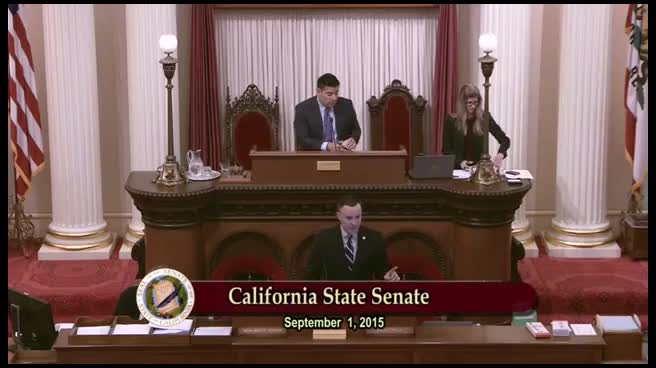 1MIN
Senate Floor
 1MIN
Assembly Floor
 51SEC
Assembly Floor
 1MIN
Assembly Floor
 3MIN
Senate Floor
 6MIN
Senate Standing Committee on Governance and Finance
Bill Author